โ–ท The world of Pets: Dogs, cats, birds, reptiles, amphibians

Bosnian Broken-haired Hound – Bosnian Broken-haired Hound
Bosnia FCI 155 . Medium-sized Hounds

Sabueso de bosnia de pelo duro - Barak

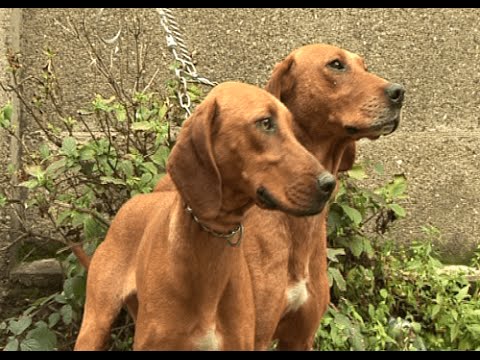
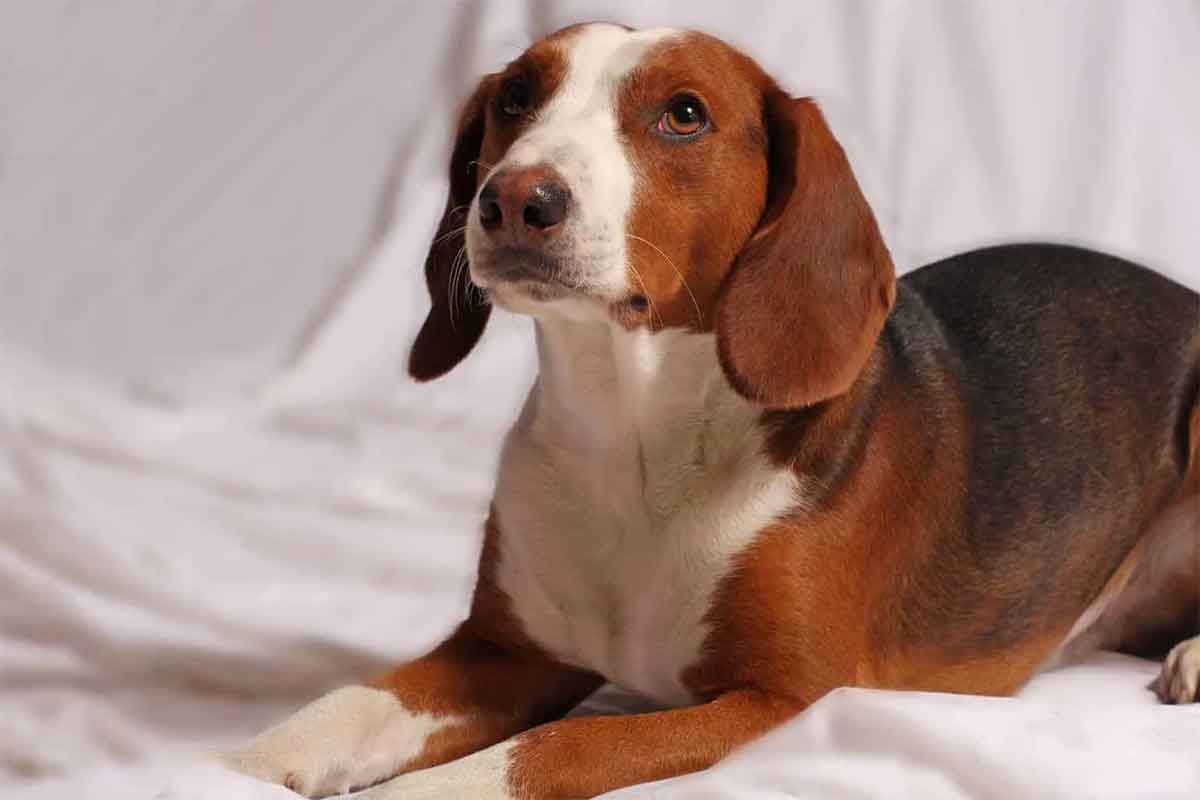
The Bosnian Hound, nicknamed Barak, It is a dog developed in Bosnia.

Content

History

This medium-sized breed of hound has been bred in Bosnia since the 19th century, at that time still under the name ยซHound of Illyriaยซ. Later the name was changed to ยซBosnian Broken-haired Hound – Bosnian Broken-haired Houndยซ. It is also called "Bracke Bosniaยซ. They have a full and deep bark.

Its origin dates back to the crossing of local dog breeds (for example, Pariah) and greyhounds, from the Mediterranean area. With his resilient and persevering nature, shows itself as an excellent hunting companion, but also serves in his home country as a companion, family and guard dog.

The famous ancestor of the Bosnian Hound is the St. Hubert Hound (or Bloodhound), It was par excellence the hunting dog in the 7th century.

Barak's name is believed to come from the Turkish word 'Barak', the nominaban dogs of hard hair or thick hair.

Physical characteristics

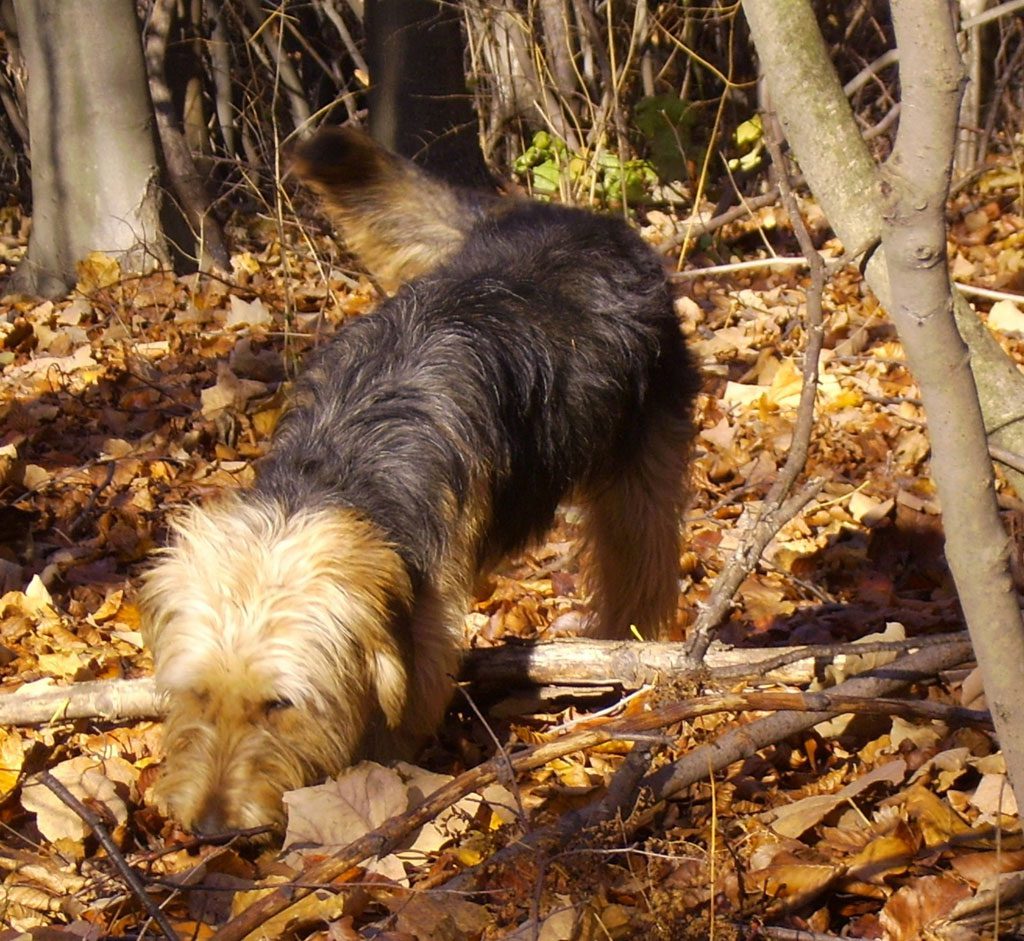
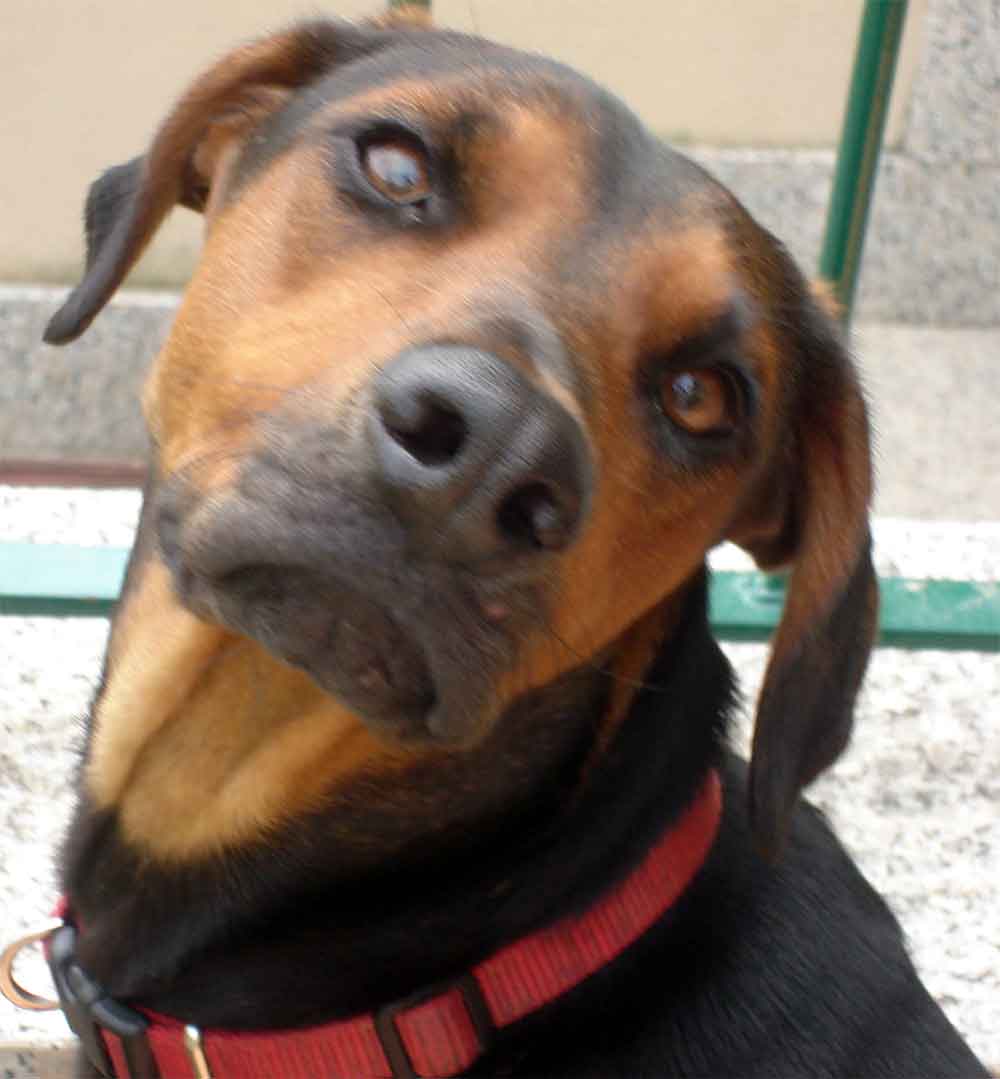
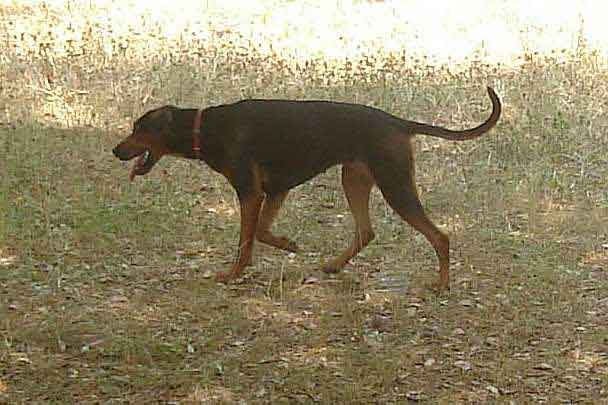
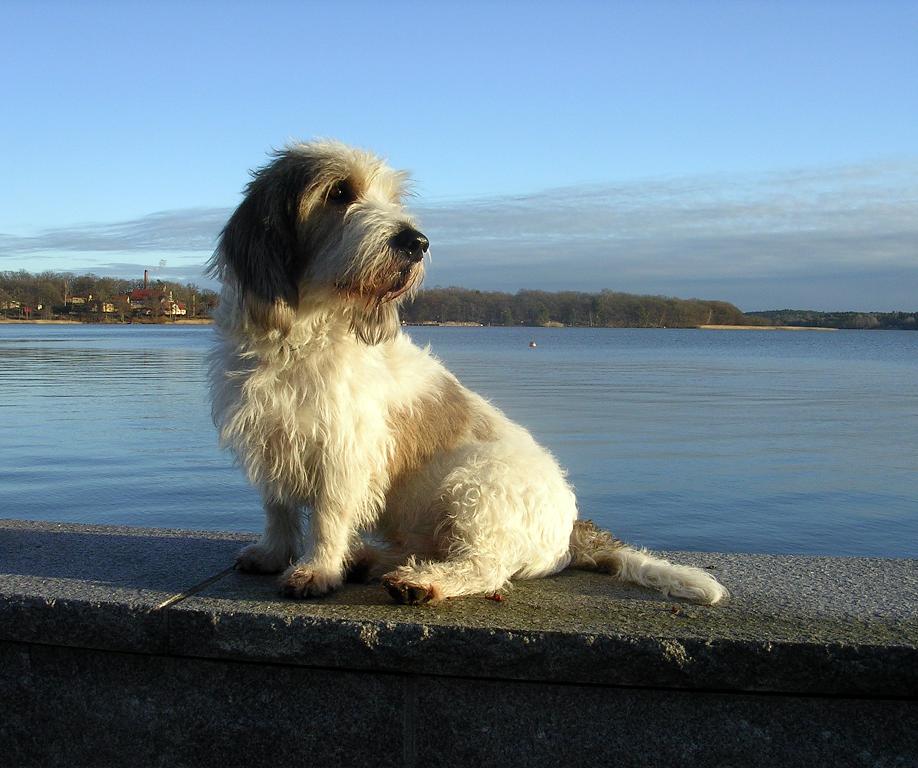
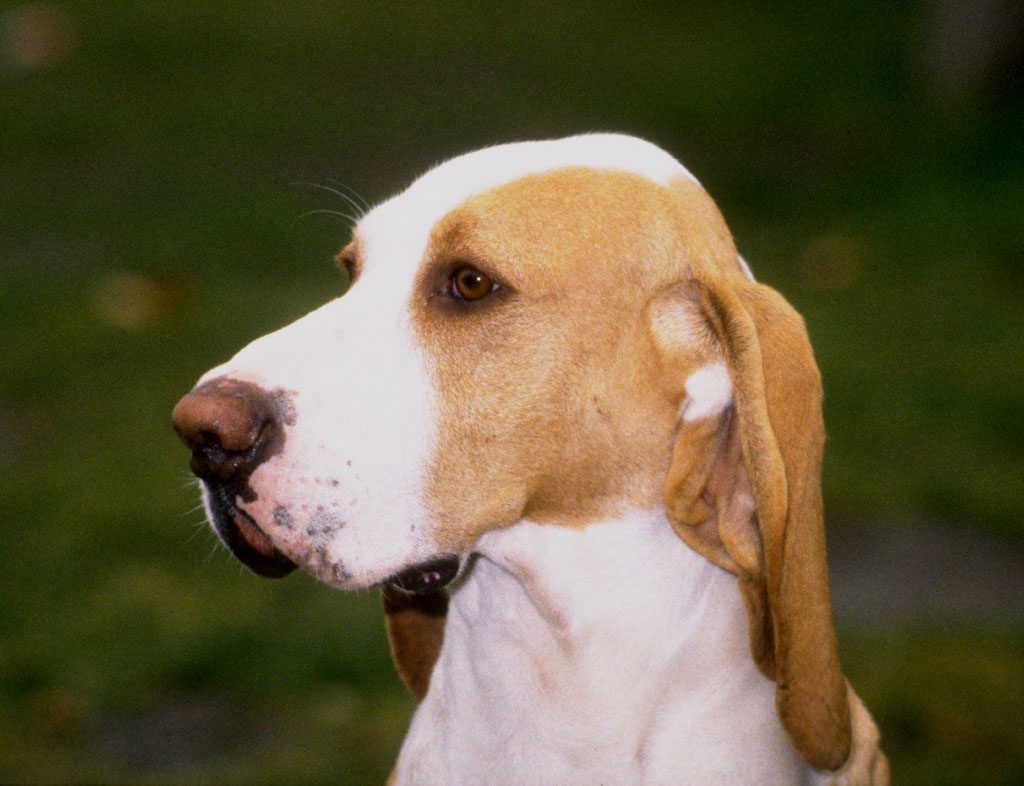
The Bosnian Broken-haired Hound – Bosnian Broken-haired Hound he is a very robust dog, with a long, somewhat broad head and bushy, pronounced eyebrows. So, a serious, partly strict but also cheerful facial expression develops in this breed. The back is very muscular and wide, the loin is short and also muscular, while the rump is broad and slightly sloping (especially in females). The so-called hip humps are slightly prominent. The ears are of medium height, wide, falls and a little thick. Towards the tip, they get thinner and in the end they get rounded.

The coat of the Bosnian hound it is very long, hard and hairy, with a lot of inner layer. So, It is especially in harsh climates and in cold and humid weather, broad protection.

The Bosnian Broken-haired Hound has a size of 46 to 56 cm with a weight of 16 to 24 kg. Their life expectancy is of 12 to 14 years.

Their fur can be yellow-red, wheat yellow, earth gray or a little blackish. There may be white marks on the head (fire or star), down the throat, below the neck, on the chest, under chest, on the tip of the tail or on the legs. Coat colors can also appear in different color combinations.

The Bosnian hound requires a bit more grooming, the coat must be combed regularly and freed from coarse dirt.

Character and skills

The Bosnian Broken-haired Hound – Bosnian Broken-haired Hound appears with a lively temperament, great resistance and a lot of courage. The breed is very hardy and was used as a sniffer dog in the mountainous landscape of Bosnia. But besides being a hunting dog, the Bosnian Broken-haired Hound it is also an excellent watchdog, that hardly ever breaks or bites. He is a typical working dog., where excellent skills are the main focus of parenting.

But, he is a friendly dog, that gets along well with children and their peers. So, he is also a great companion and a family dog, he likes to be close to his owners and is always happy to be caressed.

The Bosnian Broken-haired Hound – Bosnian Broken-haired Hound needs a lot of exercise and occupation possibilities daily. Whoever decides on a Bosnian Broken-haired Hound, you should consider that this breed is not at all suitable for a life as a city dog. The optimal would be to keep it in a rural area, with a large property and sufficient runoff area.
Also in breeding their owners must be consistent, because this breed has a certain stubbornness and a strong hunting instinct. But, if you use the docile nature of the Bosnian hound, you will get an anxious dog, loyal and hardworking, who likes to take on new challenges. Besides, scores with excellent social behavior and irresistible charm!

Observations:

It is virtually unknown outside the territory of the former Yugoslavia.

Images Bosnian Broken-haired Hound – Bosnian Broken-haired Hound

Videos Bosnian Broken-haired Hound – Bosnian Broken-haired Hound
Type and recognitions:

  • FCI CLASSIFICATION:
  • Group :
  • Section : . .

Federations:

  • FCI – Group 6: Scent hounds, and related breeds. – Section 1.2: Medium-sized Hounds. โ“˜
  • UKCScenthound Group โ“˜

FCI breed standard "Bosnian Broken-haired Hound – Bosnian Broken-haired Hound"

Origin:
Bosnia y Herzegovina

Date of publication of the valid original standard:
15/01/1973

Use:

Good working bloodhound dog, it is resistant and persistent, with a loud bark of high pitch and sometimes low pitch.


General appearance:

It is a robust dog; its fur is long and shaggy; long and moderately wide head, pronounced and bushy eyebrows. Serious expression, serious, but playful. The basic color is reddish yellow or earth gray with white markings in the lower regions.

IMPORTANT PROPORTIONS: The length of the body must exceed the height at the withers by a 10%.


Behavior / temperament:

It is a dog with a lively temperament, brave and persistent.

Head:

As a whole: Profile view, the occipital Protuberance is well developed, the frontal region is slightly convex and the moderate stop. Straight nose cane. Snout in a rectangular shape, covered with abundant a moustache and beard. View from the top, the head is of medium width, narrowing towards the nose. The muzzle is slightly longer than the skull. The total length of the head is of approximately 20 to 25 cm..

Cranial region:
  • Skull: Very pronounced supraorbital arches. To the touch, front Groove feels moderately developed.
  • Depression links (Stop): It presents a moderate pitch.

facial region:

  • Truffle: Long, with wide open Windows, pigmented dark brown or black.
  • Snout: Strong, long, deep, broader at its root, slimming to the truffle.
  • Lips: Stiff and a little thick.
  • Jaws / Teeth: Strong teeth; scissor bite, full dentition.
  • Eyes: Large, oval, Hazel, with a smart and playful expression.
  • Ears: Moderately high insertion, moderate and wide long. Pendulosas, slightly thick, being thin and rounded at the tip.

Neck:

  • Profile: The insertion in the head shows a sharp demarcation. The neck is oblique from the top down.
  • Form: Average width, increases its depth to the region of the chest. Muscular.
  • Skin: Adherent, flexible and covered with dense hair.


Body:

  • top line: It leans slightly towards the rump.
  • Cross: Moderately steep.
  • Back: Wide and muscular.
  • Lumbar region: Short and muscular.
  • Rump: Slightly inclined and wide (especially in females). The barely visible hip bones.
  • Breast : Long, average amplitude, slightly rounded ribs; its depth reaches at least up to elbows. Ample ribcage.
  • Belly and flanks: Slightly retracted belly.

Tail:

Properly inserted, thicker at its root, slimming to tip; it reaches up to the joint foot warm or slightly below. Held slightly curved upward in the form of scimitar. Well covered with hair.

Tips

PREVIOUS MEMBERS:

  • As a whole: Viewed in profile and from the front, the forelimbs are vertical, straight and parallel
  • Shoulder: Long, oblique and muscular.
  • Scapulohumeral angle: It must be 90ยฐ.
  • Arm: Long and muscular. Elbows set close to the body
  • Forearm: Vertical, straight, muscular and strong.
  • Articulation of the carpus: Just apparent.
  • Metacarpus: Short, vertical or slightly inclined at an angle of 10ยฐ with the vertical line.
  • Front feet: Cat feet, well United fingers, hard pads, strong and well pigmented nail.

LATER MEMBERS:

  • As a whole: Seen from the rear and profile, the hind limbs are vertical and parallel.
  • Thigh: Moderate long, wide and muscular.
  • Leg: Strong, long, oblique and muscular.
  • Warm-foot joint: Strong and well positioned.
  • Metatarsus: Perpendicular to the ground, short and strong.
  • Rear feet: Same as previous, but a little longer.

Movement:

Long and energetic steps.

Mantle

SKIN: Moderate thickness, elastic, adherent, well pigmented and covered with dense hair.

HAIR: Long, hard, Ogres, disheveled with a dense internal NAP.

COLOR: The basic color can be yellow wheat, yellow red, Earth grey or blackish. White markings on the head are often found (Star, list), under the throat, down neck, above or below the chest, lower parts of the members or at the tip of the tail. Color can be combined with bi-color or tri-color.


Size and weight:

  • Height to the cross: Of 46 to 56 cm., ideal height 52 cm., in the females a little less.
  • Weight: Of 16 to 24 kg, ideal weight 20 kg.


Fouls:

Any deviation from the aforementioned criteria is considered as a fault and the severity of this is considered to the degree of the deviation to the standard and its consequences on the health and well-being of the dog..

SERIOUS FAULTS:

  • Insufficient proportions between parts.
  • Light bone structure.
  • Weak muscles.
  • Head long and heavy than in the standard.
  • Bitefork clamp.
  • Inadequate pigmentation of the edges of the eyelids and the belfos.
  • Folded or erect ears.
  • Chin only slightly pronounced.
  • Slightly sunken or arched back.
  • Too wide or narrow chest.
  • Irregularities of the extremities and the angles joints.
  • Hare feet.
  • Not enough United fingers, presence of spurs.

MISS PLAYOFFS:

  • Aggressive or fearful dog.
  • Disproportion between the different parts of the body and especially between the height and the length of the body.
  • Non-typical head, excessively rough.
  • Depigmentation of the nose, the edges of the eyelids and the belfos.
  • Signs of degeneration of the dentition (lack of teeth), and of the jaws.
  • Very clear eyes or gazeos.
  • Diverted or curled tail.
  • Hocks cow or barrel-shaped.
  • Too long hair, woolly, wavy or curly.
  • All colors other than those listed, But first and foremost chocolate and black.
  • Height at the withers or too little.
  • Any dog โ€‹โ€‹showing clear signs of physical or behavioral abnormalities must be disqualified..


N.B.:

Males should have two normal-appearing testicles fully descended into the scrotum..

TRANSLATION: Federation Canรณfila Mexicana, A.C.

Source: F.C.I - International Cynological Federation

Alternative names:

1. Bosnian Broken-haired Hound, Bosnian Rough-haired Hound, Bosnian Rough-coated Hound, Bosnian Coarse-haired Hound, Bosnian Hound, Illyrian Hound, Barak (English).
2. Chien courant d’Illyrie, Barak (French).
3. Barak, Illyrischer Laufhund (German).
4. Sabujo-da-bรณsnia, Barak (Portuguese).
5. Cazador bosnio, Sabueso bosnio, Barak (espaรฑol).

โ–ท The world of Pets: Dogs, cats, birds, reptiles, amphibians

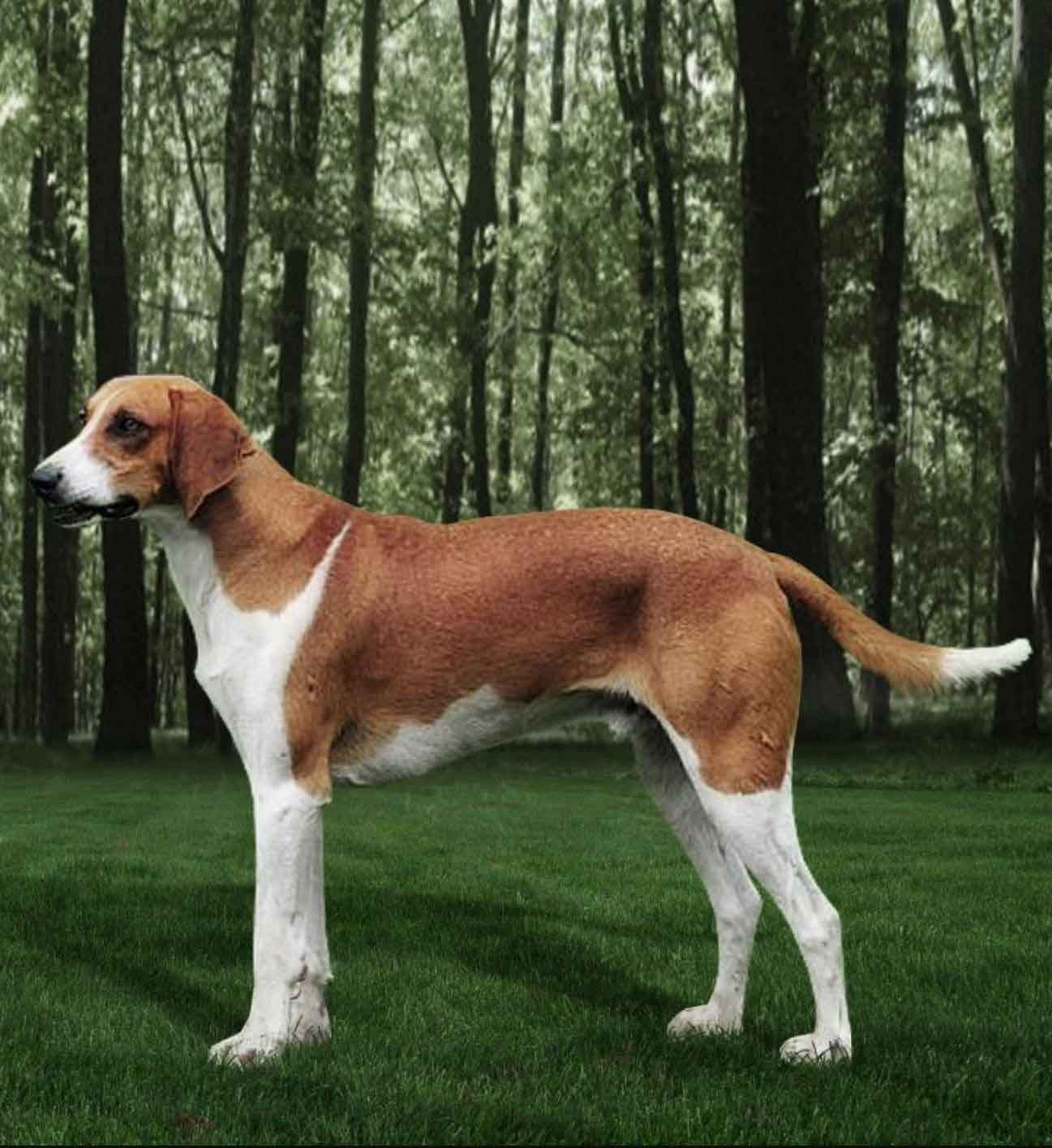
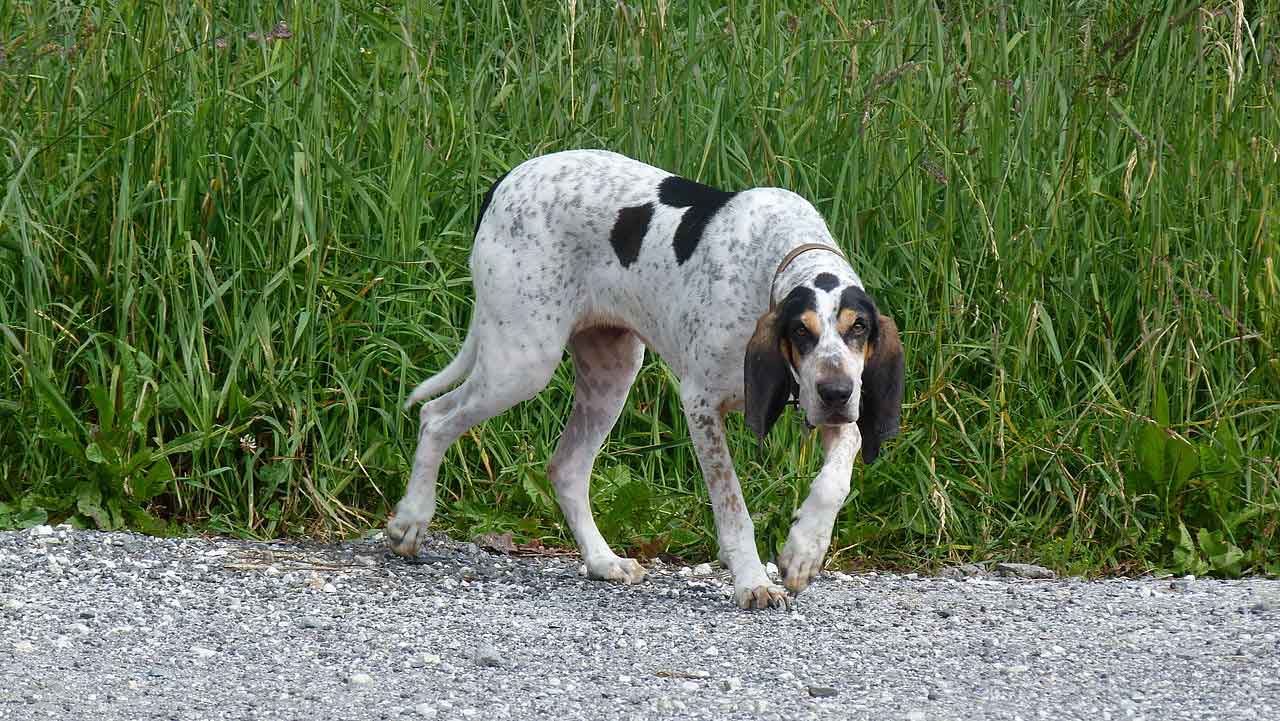
Great Anglo-French White and Orange Hound
Francia FCI 324 - Large-sized Hounds

l GREAT ORANGE AND WHITE ANGLO-FRENCH Hound

The Great Anglo-French White and Orange Hound it is considered little spread outside of France and little used even within its country.

Content

History Great Anglo-French White and Orange Hound

It probably dates from the 16th century and is originally from France, the Great Anglo-French White and Orange Hound comes from the cross between English Foxhound, French dogs and the addition of a contribution most likely from the Billy.

The addition of English and French blood produced a versatile all-rounder hunting dog that was particularly prized towards the end of the 19th century..

The boar, the Fox, deer and roe deer have been part of their specialties ever since.

Along with the Great Anglo-French White and Black Hound and the Great Anglo-French Tricolour Hound, it is one of the three French breeds that have been crossed with English blood.

Physical Characteristics Great White and Orange Anglo-French Hound

The Great Anglo-French White and Orange Hound it is a quite strong and powerful dog, with more English blood on his head than his tricolor counterpart. His eyes are big, brown and dark. The ears are quite thick, slightly turned and quite short. Its tail is quite long and sometimes slightly spied on.

His hair is short and not too thick, lemon white or orange white, as long as the orange is not too dark, tending towards red.

Height: 60 to 70 cm..
Weight: Of 30 to 35 kg.

Character and skills Great Anglo-French White and Black Hound

Solitary or in a pack, brave, tenacious, rapid, gentle and friendly, the Great White and Orange Anglo-French Hound is a sociable hunting dog with an obedient nature.

Usually, they are easy to learn, like your socialization.

Tenacious, vigorous, brave and fast in the hunt, they are tender and gentle with their family, including children in the home.

Health Great Anglo-French White and Black Hound

Quite robust and very solid, this large dog generally enjoys very good health.
He rarely gets sick and his longevity is still appreciable for a dog of his size..
The breed is not affected by any genetic defects or diseases.

Caring for Great Anglo-French White and Black Hound

Brush him from time to time, to remove dead hairs and keep the coat healthy and beautiful, It is more than enough.

Training Great Anglo-French White and Black Hound

Its socialization is easy, but your education must remain firm and adequate, although it requires less firmness than the other breeds in its category, because it is less dominant by nature than the other two.

His great intelligence also facilitates his education.

Exercise Great Anglo-French White and Black Hound

The Great Anglo-French White and Orange Hound is an extremely vigorous working dog, accustomed to very intense physical exercise. When not hunting, he must be given the opportunity to expend his excessive energy. This dog is an infamous cat hunter, so it should never be released without a leash until it is in a closed and secure area.

During the hunting season it is advisable to offer the dog some type of exercise that emulates its hunting behavior.. It is worth remembering that if the Great Anglo-French White and Orange Hound lacks opportunities to vent, will gradually turn into a rebellious animal, hyperactive and destructive.

Videos "Great Anglo-French White and Orange Hound"

HTTPS://youtube.com/watch?v=J0DEDEqOimA&list=PLcj6J71Gt710QwEM_fhrp9Eq6e4x6w06H&index=2
Horus sucht ein Zuhause
HTTPS://youtube.com/watch?v=UJjm2cAT46s
Grand Anglo Franรงais Blanc et Orange ?? Everything Dog Breeds ??

Type and recognitions:

  • FCI CLASSIFICATION:
  • Group :
  • Section : . .

Federations:

  • FCI – Group 6: Scent hounds, and related breeds. – Section 1.1: Large-sized Hounds. โ“˜
  • Central Canine Society โ“˜

FCI breed standard "Great Anglo-French White and Orange Hound"

Origin:
France

Date of publication of the valid original standard:
27.01.1983

Use:

Hound


General appearance:

It is a fairly strong and robust dog.. In his head the English blood stands out more than in that of his tricolor counterpart..


Behavior / temperament:

---

Head:

It is quite short and big.

Cranial region:
  • Craging: It is rather wide and flat, without occipital bulge. The eyebrows are not prominent.
  • Dnaso-frontal depression (Stop): Well marked.

facial region:

  • Trufa: It is black or brown-orange in color.
  • Snout: Rather short nasal passage.
  • Belves: They extend beyond the lower jaw and give the muzzle a slightly square appearance..

OJOS: They are large, brown and dark.

OREJAS: Fairly long implantation in the plane of the eye line or slightly higher. They are rather thick, slightly crooked and rather short.

Neck:

It is straight and has a slight dewlap.

Body:

  • Espalda: Wide and muscular.
  • Pork loin: Wide and rather short.
  • Rump: Rather rounded.
  • Pecho: Quite high and low. Long, slightly rounded ribs.
  • Flalso: Massifs.

Tail:

It is quite long and sometimes spindly (towards the tip of the tail around some longer and thicker hairs slightly separated in the shape of a spike).

Tips

PREVIOUS MEMBERS:

  • Ageneral appearance: They're strong, wide and well plumb.
  • Shoulder: They are close to the chest, but they are very muscular.
  • Pinis previous: Rather rounded.

LATER MEMBERS:

  • Thighs: Muscular and thick.
  • Corvejones: Somewhat angled and are located close to the ground.
  • Hind feet: Rather rounded.

Movement:

This is a dog that moves easily.

Mantle

PIEL: White with orange or yellow spots.

Plink: Short and not very thick.

Codor: White โ€“ lemon or white โ€“ orange, provided the orange is not too dark (pulling red)


Size and weight:

Altura to the cross: Of 60 to 70 cm..


Fouls:

Any deviation from the aforementioned criteria is considered as a fault and the severity of this is considered to the degree of the deviation to the standard and its consequences on the health and well-being of the dog..

  • Constitutional defects.
  • Partial depigmentation of the truffle
  • Nasal cane too narrow.
  • Upper or lower prognathism.
  • light eyes.
  • Excess double chin.
  • Tail curled or drawn to one side.
  • Fur of another color than the established one (black or red hair).

FALTAS DISQUALIFYERS:

  • Aggressiveness or extreme shyness.
  • Any dog โ€‹โ€‹showing clear signs of physical or behavioral abnormalities.


N.B.:
  • Males should have two normal-appearing testicles fully descended into the scrotum..
  • Only functionally and clinically healthy dogs, with the typical conformation of the breed, should be used for parenting.

Source: F.C.I - International Cynological Federation

Alternative names:

1. Chien Franรงais Blanc et Orange (English).
2. Franรงais blanc et orange (French).
3. Franรงais blanc et orange (German).
4. Grande sabujo francรชs branco e laranja (Portuguese).
5. Franรงais blanc et orange (espaรฑol).

โ–ท The world of Pets: Dogs, cats, birds, reptiles, amphibians

Serbian hound
Serbia FCI 150 . Medium-sized Hounds

Serbian hound

The Serbian hound, Also known as "Balkan Hound", is broadcast only in your country.

Content

History

This breed belongs to the group of hounds that spread throughout the Balkan territory. The hounds of Asia Minor are believed to have played an important role in its creation. The first description of this breed under the name "Balkan Hound" dates back to 1905 ; we owe it to Franz Laska, who described this breed among other hound dogs.

The first standard was written in 1924, but it wasn't until the Bled session of the 14 in May of 1940, that the F.C.I. adopted the standards already announced in Estol as in 1939, and among which was that of the "Balkan Hound". Since this is the most widespread breed in Serbia, it is the Yugoslav Cynological Association that controls its breeding and proceeds to the inscriptions in the official book of origins.

The 12 in November of 1996, during their meeting in Copenhagen, the General Committee of the F.C.I.. discussed the proposal accepted by the general assembly of the Yugoslav Cynological Association and accepted that the appellation "Balkan Hound" be replaced by Serbian hound.

Source: fci

Photo: Face of Serbian Hound female 2 year old by Android90, CC BY-SA 3.0, via Wikimedia Commons

Physical characteristics ยซSerbian houndยป

Serbian hound
Female Serbian Hound 2 years old by Android90, CC BY-SA 3.0, via Wikimedia Commons

The Serbian hound is a breed of hunting dog used in packs in Serbia, medium-sized, also known as "Balkan Hound".

his physique is strong, his lively and energetic charisma. The breed's shoulder height in males is between 46 and 56 cm., preferably between 51 and 52 cm.. Bitches have a height at the withers between 44 and 54 cm., being the ideal size of 48 to 49 cm.. The weight of the Serbian hound is between 11 and 22 kg.

Your head is flat and tilted, its pointed snout.

What attracts attention are the large floppy ears of the animals, which are typical of hunting dogs.

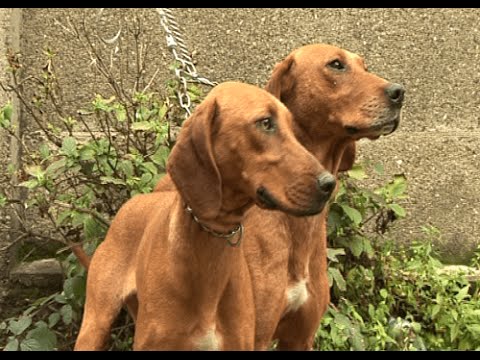
The coat of dogs is thick, luxurious and has undercoat. It is short and close to the body. Coat color is a shade of red ranging from yellowish red to fox red, and dogs often have a black coat or saddle.

As a whole, his fur is shiny.

Life expectancy Serbian hound is of 12 to 13 years.


Character and skills ยซSerbian Houndยป

Tireless, continuing with lively y, the Serbian hound they have a balanced temperament and good character.

They are also very docile dogs with a high and often deep voice..

These sturdy built dogs are calm and dignified, eager to please their master.

But, need firm authority in their training, space and lots of exercise.

The "Balkan Hound" can be a good companion dog, although its primary function is that of a hunting dog (running / searching or tracking). They are remarkably tenacious in the field.

Videos "Serbian hound"

Serbian Hound (Serbian Hound)
Serbian Hound (Srpski Goniฤ)
Serbian Hound (Serbian Gonic) - Breed of dog
Sabueso Serbio (Srpski Gonic) – Raza de Perro

Type and recognitions:

  • FCI CLASSIFICATION:
  • Group :
  • Section : . .

Federations:

  • FCI – Group 6: Scent hounds, and related breeds. – Section 1.2: Medium-sized Hounds. โ“˜

FCI breed standard "Serbian hound"

Origin:
Serbia

Date of publication of the valid original standard:
25.03.2003

Use:

Hound


General appearance:

He is of medium size and robust constitution. He has a great temperament and is full of energy and vitality..

IMPORTANT PROPORTIONS :
The length of the body, measured from the end of the shoulder to the end of the haunch, exceeds in a 10% the height at the withers. The perimeter of the chest exceeds the height at the withers by one 20%. The length of the head corresponds to a 45% the height at the withers.


Behavior / temperament:

It is nice, of an energetic temperament. Self-confidence, shows remarkable tenacity.

Head:

Dolicocephalic; the upper lines of the skull are divergent.

Cranial region:
  • Skull : Seen from the front and profile, is slightly arched and the frontal furrow is pronounced. The occipital crest is poorly marked. The width between the ears is less than or equal to the distance between the naso-frontal depression and the occipital protuberance. Superciliary arches are pronounced.
  • Depression links (Stop) : Bit strong.

facial region:

  • Truffle : Well developed. It is always black.
  • Snout : Cuneiform, somewhat shorter than the skull : a relationship of 9 to 10 between the length of the muzzle and the length of the skull. The muzzle progressively decreases from the naso-frontal depression to the nose. The nasal spout is straight.
  • Lips : They are moderately developed and moderately thick, They are well adapted to the jaw. The border must be black. The upper lip slightly exceeds the lower; the commissure is firm.
  • Jaws / Teeth : The jaws are powerful. Teeth are strong, with a uniform and complete scissor joint. Is accepted in the form of clip joint.
  • Cheeks : Flat.

Eyes : Medium in size and oval in shape. They appear slightly oblique. The edge of the eyelids is dark (preferably black). The iris should be as dark as possible.

Ears : High are presented. Moderately long and wide, pendants, well attached to the cheeks. Its limb is more or less oval in shape. They are thinner than thick.

Neck:

Powerful. Its length is approximately equal to that of the head. The top line is slightly arched. Forms an angle of 45 at 45ยฐ to the horizontal.

Body:

The body is elongated, its length exceeds by 10% the height at the withers.

  • Top margin : It is straight.
  • Cross : Little pronounced.
  • Back : She is very muscular, straight, powerful and long.
  • Pork loin : Well muscled. Its length is approximately equal to that of the rump.
  • Rump : Slightly inclined (of 20 at 25ยฐ relative to the horizontal). Is powerful, well muscled and wide.
  • Breast : Strong ; its height corresponds to 50% from the height to the cross and its perimeter exceeds this by a 20%.
  • Bottom margin and belly : The oval end of the sternum is slightly pronounced. The belly is slightly raised.

Tail:

Extends the line of the rump. It is thick at the ligament and gradually tapers to the limb, that reaches the level of the hock. Curls slightly upward and occurs below the back margin. It is covered by abundant hair.

Tips

PREVIOUS MEMBERS :

  • As a whole : Powerful, well muscled, parallel.
  • Omรณplato : Its length corresponds approximately to that of the arm. He's muscular, solid and well attached to the chest wall. Forms an angle of 45 at 50ยฐ relative to the horizontal.
  • Arm : Powerful, muscular, approximately the same length as the shoulder blade.
  • Elbow : Solid, well attached to the body. The distance from the elbow to the ground corresponds to a 50% the height of the cross.
  • Forearm : Powerful, flat and muscular.
  • Carpo : Solid.
  • Metacarpus : Powerful, slightly oblique (until 15% in relation to the vertical).
  • Previous foot : Jack's foot, with fingers together and solid. Nails are strong and black.

LATER MEMBERS :

  • As a whole : They're strong, plans, well muscular and parallel.
  • Thigh : Well muscular and flat.
  • Babilla : Solid, parallel to the median plane of the body. Its angle measures around 120ยฐ.
  • Leg : Well muscled. Its length is approximately equal to that of the thigh.
  • Hock : Powerful, well inclined. Its angle is 135 a 140ยฐ.
  • Metatarsus : Powerful, almost vertical.
  • Rear foot : A little longer than the previous one, with fingers together and solid. Nails are strong and black. The bearings are strong and sufficiently elastic.

Movement:

To step, a good extension of the forelimbs is observed. The preferred gait is the loose and brisk trot. The limbs move in a plane parallel to the median plane of the body.

Mantle

SKIN : It is elastic and well pigmented, adheres well to the body.

HAIR : Short, abundant, shiny and smooth over the whole body. An inner layer of hair is observed. The hair is slightly longer on the back edge of the thighs and on the underside of the tail..

COLOR : Red (like fox hair), ranges from yellowish red to a moldy hue, with a blanket or Chair black. The blanket or chair reaches up to the head, showing black marks on both sides of the temples ; a round white mark on the sill is acceptable that does not exceed a diameter of 2 cm..


Size and weight:

Height to the cross:

  • Males: of 46 to 56 cm., the ideal height is between 51 and 52 cm..
  • females: of 44 to 54 cm., the ideal height is between 48 and 49 cm..


Fouls:

Any deviation from the aforementioned criteria is considered as a fault and the severity of this is considered to the degree of the deviation to the standard and its consequences on the health and well-being of the dog..

MISS PLAYOFFS

โ€ข Aggressive or fearful dog.
โ€ข Absence of a tooth. The absence of two premolars is tolerated 1 (PM1).
โ€ข Upper or lower prognathism.
โ€ข Different colored eyes.
โ€ข Body too long.
โ€ข Curled tail, set high or hunched over the back. Tip of tail hook-shaped or diverted laterally.
โ€ข White spot on the sill larger than the accepted size or presence of a white spot elsewhere.
โ€ข Height at the withers higher or lower than that established by the standard.

Any dog โ€‹โ€‹showing clear signs of physical or behavioral abnormalities must be disqualified..


N.B.:

Males should have two normal-appearing testicles fully descended into the scrotum..

Source: F.C.I - International Cynological Federation

Alternative names:

1. (Serbian: ัั€ะฟัะบะธ ะณะพะฝะธั‡/srpski goniฤ), Balkan Hound (English).
2. Chien courant des Balkans (French).
3. Serbische Bracke, Balkanbracke (German).
4. (em sรฉrvio: srpski gonic) (Portuguese).
5. Cazador de los Balcanes, Sabueso de los Balcanes (espaรฑol).

โ–ท The world of Pets: Dogs, cats, birds, reptiles, amphibians

German Hound
Germany FCI 299 . Small-sized Hounds

German Hound

The German Hound it is a fairly common dog in its country but very rare outside its borders.

Content

History

The first written traces of the German Hound date from the 18th century. German breeders wanted to create a versatile hunting dog., but it is very difficult to define precisely the ancestry of the breed. But, the German Hound was originally a descendant of Beagle, English Pointer and English Foxhound. Other breeds like greyhounds, the hounds, he "Westphalian Dachsbrackeยซ, go โ€œHolzbracke de Sauerland tricolorโ€ (small hound for hunting in the forest) and local "Steinbracken" may have contributed to the breed.

Multipurpose hunting and hounds were booming in Germany at the time, after the dismantling of large hunting grounds and the abandonment of traditional hound hunting methods in favor of stalking and stalking.

Over the years, the German Hound has come to be known by a large number of regional variants under different names. The Deutscher Bracken Club was founded in Olpe (North Rhine-Westphalia) in 1896 and included all the varieties of the northwest of the country. In 1900, They were finally grouped into a single race called ยซDeutsche Brackeยป (German Hound).

But, was not up 1964 that was recognized by the Fรฉdรฉration Cynologique Internationale (FCI). The standard currently in force dates from 1987.

Sometimes known as the "Braque d’Olpeยป (the city where one of the variants of the breed was found and where the Deutscher Bracken Club), the German Hound still a very popular hunting dog in his native region, and even in the rest of Germany. But, its distribution outside of Germany remains highly confidential.

That does not prevent it from being recognized by the American Kennel Club (A.K.C.) and the United Kennel Club (U.K.C.) in the United States, as well as by the Kennel Club (K.C.) From great britain.

Photo: hundeo.com

Physical characteristics

The German Hound it is a light hunting dog, tall and elegant that, However, it is of solid construction. The head is noble and rather light, with medium-sized pendulous ears and a well-carried but relatively thick tail in relation to the line of the body. The abdomen is slightly folded.

The teething of the German Hound is particularly strong and regular, with powerful pointed incisors. The eyes, that are moderately large, they are clear and bright. The head, dry and moderately long, and relatively strong neck (compared to the head) follow each other to achieve a slightly arched top.

The coat is long, very dense and hard, and even covers the belly. It is tricolor: red or fawn, black and white. The saddle and / or coat must be black and well defined. The characteristic white markings of the breed are a continuous list on the muzzle., the neck (a totally white collar is particularly appreciated), chest and limbs. The tip of the tail is also white.

Character and skills

The German Hound He is a medium-sized dog that exudes a great joie de vivre. Attached and endowed with a stable character, is happy when put to work and has plenty of outdoor space. Being able to live in complete freedom in a large fenced garden is essential if your master is regularly away, since he likes to live outdoors and exercise. In fact, you need to vent at least two hours a day to be balanced. If you do not allow your partner to use your energy, the master has every chance of ending up with a stressed dog, overexcited, aggressive or even destructive.

German Hound

It also, even if you have enough opportunities to exercise, the risk of the dog escaping is high with the German Hound, who especially appreciates sneaking out of his house as soon as he gets the chance, whether to explore new environments or follow tempting smells.

The German Hound not at all a suitable breed of dog for apartment living. And unless you have a very large garden – and even then… – it is also not a suitable breed of dog for an elderly or sedentary person. You need an active owner, even sporty, to provide you with the exercise and outings you need.

Nice to live, It can be both a companion dog and a hunting dog, since it is able to adapt to many situations. But, although they love to wander in every corner of the garden, his great passion is still hunting, in which they excel thanks to their particularly developed sense of smell. The German Hound it is above all a tough tracking dog that needs to work hard and work hard. They excel in the pursuit of uninjured game and in the pursuit of wounded prey.

Due to his cautious behavior in front of strangers and his ability to be attentive and alert in any situation, also can, occasionally and as long as it does not last too long (your joviality is likely to regain control), occasionally assume the role of watchdog.

But, whatever your activity at that time, can be easily distracted from your mission by a pleasant smell, in which case it becomes difficult to attract your attention again.

These hunting dogs are passionate about stalking their prey, but they are also very sensitive. They are very close to their family and are very loyal to them. So, should be handled with care and never intimidated, although sometimes they are on guard. Particularly loyal, faithful and sociable, the German Hound proves to be the ideal companion for the whole family, and gets along so well with adults – whose authority and leadership you seek – as with small children, who likes to have fun with. But, should not be left alone with young children, since their overwhelming energy could inadvertently push them, knock them down or knock them unconscious.

Although the German Hound is generally friendly and balanced, meeting other dogs can be a problem in some cases. Although the German Hound has long been accustomed to living with other dogs due to its long use in hunting in packs, some dogs still tend to be dominant, especially when it comes to unfamiliar animals. For this reason, any outing synonymous with a possible dog encounter involves keeping your partner on a leash.

Regarding cohabitation with other pets, especially a cat, it can be hard too. In fact, unless you got used to it too soon, that is to say, created together, tends to regard other animals as potential prey. In other words, not really a recommended dog breed with a cat…

Finally, the German Hound is a noisy dog รขโ‚ฌโ€นรขโ‚ฌโ€นwhose voice extends far. This is a characteristic common to all hunting dogs., since they must communicate with their master at a distance. But this might not be to the taste of the neighbors, who might complain about the dog's barking. It is important to pay attention to this point when training the puppy, to prevent his barking from becoming a problem once he is an adult.

ยซGerman Houndยป Education

Although it is soft, stable and very nice, the German Hound not an easy dog รขโ‚ฌโ€นรขโ‚ฌโ€นbreed to train and obedient. So, requires a strong and early education, but of course without any brutality, as this could only backfire. To get the best of your partner, it is necessary to combine sweetness and firmness, and put special emphasis on the socialization of the dog.

Last, if it is to be used as a hunting dog, learning how to call your dog back is obviously of particular importance.

In any case, training sessions should be short and interesting enough, since the German Hound it can be annoying, especially if tempting smells distract your attention.

For all these reasons, should be reserved for experienced teachers: not a suitable breed as a first dog.

Health ยซGerman Houndยป

The German Hound it is a fairly robust and resistant dog.

But, you are particularly at risk of hip dysplasia, as well as the risk of inversion of the stomach (dilation-torsion).

Whatever the cause, a possible operation should be done with greater vigilance as this dog is very sensitive to anesthesia.

It also, as in any breed of dog with floppy ears, special attention should be paid to the risk of ear infections in the dog.

It also, the absence of descent of one or even both testicles into the scrotum (dog cryptorchidism) it is relatively frequent in this breed. Generally prevents the affected male from reproducing and makes it impossible to confirm the dog.

Finally, the German Hound are frequently found with eye problems, so it is advisable to also pay attention to this point.

ยซGerman Houndยป Care

The German Hound it is an easy breed of dog to keep. Its short coat requires only a minimum of grooming and regular maintenance.. Brushing your dog once a week should be enough to preserve the beauty of his coat.. It also, how the coat naturally repels dirt and water, bathing is not normally necessary.

It also, even during the molting period, loses very little hair.

It also, like any dog โ€‹โ€‹with floppy ears, the inside of them should also be carefully monitored to reduce the risk of ear infections.

This may be an opportunity to inspect your eyes at the same time., to be able to intervene quickly if there is a problem in this area.

Feeding ยซGerman Houndยป

As the German Hound it is a fairly resistant breed, feeding your dog shouldn't pose any particular problems. A meat-based diet, vegetables and starchy foods, or quality croquettes, it will be perfectly adequate.

But, Be careful with the volume of the portions!! If used as a hunting dog, it may certainly be appropriate to increase them by 10 to 20% during hunting season, when you are more active than usual. But they must also adapt to the dog's energy needs when they decrease, to avoid any risk of the dog becoming overweight.

It also, it is important to avoid giving too much food before the dog goes hunting, At risk, for example, to throw up. A little pre-hunt snack is a good thing, but the bulk of the daily ration should be given in the afternoon.

โ€œGerman Houndโ€ Activities

Although they can be nice companion dogs, the German Hound It, above all and by its very nature, a hunting dog specialized more specifically in tracking hares, badgers and big game, whether or not they are injured. These fine hounds are experts in difficult terrain and can withstand all kinds of weather conditions.. They like to chase their prey for hours and hours. Its long snout and extremely sensitive nose are its best allies in this task.. Once the prey has been hunted, its loud and clear bark is highly appreciated by hunters, since it allows them to point out the exact position of the hunted animal.

Although the German Hound it is very suitable for hunting alone, also excels in pairs or small groups of individuals. This is how the breed was originally used.

ยซGerman Houndยป Price

The price to adopt a puppy from German Hound is between 700 and 900 EUR.

Characteristics "German Hound"

Coexistence is important that you have with your new friend. Before considering the acquisition of a dog of the breed "German Hound" you know certain factors. Not all breeds of dogs are apt to live in an apartment, you must take into account his character, their need for exercise, their interaction with other pets, their care and if you have small children, their level of tolerance towards them.

Adaptation โ“˜

3,0 of 5 stars (based on 1 review)

friendly dog โ€‹โ€‹โ“˜

4,0 of 5 stars (based on 1 review)

hair loss โ“˜

1,0 of 5 stars (based on 1 review)

Affection level โ“˜

4,0 of 5 stars (based on 1 review)

Need for exercise โ“˜

5,0 of 5 stars (based on 1 review)

Social need โ“˜

4,0 of 5 stars (based on 1 review)

Home โ“˜

3,0 of 5 stars (based on 1 review)

Toilet โ“˜

1,0 of 5 stars (based on 1 review)

Friendly with strangers โ“˜

3,0 of 5 stars (based on 1 review)

barking โ“˜

5,0 of 5 stars (based on 1 review)

Health โ“˜

5,0 of 5 stars (based on 1 review)

Territorial โ“˜

4,0 of 5 stars (based on 1 review)

Cat friendly โ“˜

2,0 of 5 stars (based on 1 review)

Intelligence โ“˜

4,0 of 5 stars (based on 1 review)

Versatility โ“˜

3,0 of 5 stars (based on 1 review)

Child friendly โ“˜

5,0 of 5 stars (based on 1 review)

Surveillance โ“˜

3,0 of 5 stars (based on 1 review)

joy โ“˜

5,0 of 5 stars (based on 1 review)

Videos "German Hound"

German bracke

Deutsche Bracke
German Bracke Stรถberhund puppies territory excursion forest walk

Deutsche Bracke Stรถberhundwelpen district forest walk excursion

Type and recognitions:

  • FCI CLASSIFICATION:
  • Group :
  • Section : . .

Federations:

  • FCI – Group 6: Scent hounds, and related breeds. – Section 1.3: Small-sized Hounds. โ“˜
  • AKCHound โ“˜
  • โ€‹KCHoundy โ“˜
  • UKCScenthounds โ“˜

FCI breed standard "German Hound"

Origin:
Germany

Date of publication of the valid original standard:
24. 06. 1987

Use:

Hound


General appearance:

Head length in medium-sized dogs is approximately 21 cm., the muzzle to the region between the eyes measures about 9 cm..

GENERAL APPEARANCE:

It is a light and elegant hunting dog with long limbs., possessing a strong body structure with a noble head, relatively light, good ears and a well-carried tail, though strikingly thick in relation to the dog's general noble appearance; the belly is slightly retracted.


Behavior / temperament:

---

Head:

It's light, dry, elongated. View from the front, the head is narrow and elongated, skull only slightly wider than cheek region, which show a very slight transition to the muzzle and are not protruding.

Cranial region:
  • Skull : Slightly domed, occipital protuberance very unremarkable.
  • Depression links (Stop) : Minimum.

facial region:

  • Nose cane : Slightly arched.
  • Truffle : It has a light stripe almost flesh-colored in its middle part, while the nasal wings are pigmented of a more or less dark color.
  • Lips : Moderately hanging; small commissure.
  • Jaws / Teeth : Extremely strong and regular. The incisors overlap one another or the inner surface of the upper incisors is in close contact with the outer surface of the lower teeth. The fangs are especially highly developed.

Eyes : dark, clean, with kind expression.

Ears : long (approx.. 14 cm.) and spacious (approx.. 9 cm.); they are well attached to the head and are rounded at their tips.

Neck:

Moderately long and fairly strong relative to the head.

Body:

  • Back : Slightly arched.
  • Rump : Slightly descending.
  • Breast : Deep, reaches below the elbows; slightly arched with elongated rib cage.

Tail:

Long, not notably strong at its root. It is covered with long and thick hair to protect it against the friction of stems and branches; therefore it is relatively thick although it ends in a point; has a bit of a brush shape. The tail is carried hanging or gently curved upwards.

Tips

PREVIOUS MEMBERS: High, very well formed, skinny, of fine and tendinous bones.

  • Shoulder : Thin.
  • Elbows : Well attached to the body.

LATER MEMBERS:

  • Thighs : The thighs, viewed profile, They are wide and full.
  • Leg : The leg is long and not very wide, well angled.

FEET : Longer than cat's, hard, fingers tightly closed.

Movement:

---

Mantle

HAIR: For a short haired dog, is long, very dense, hard, almost double hair; also the belly is well covered with dense hair; at the bottom of the tail is almost always longer, forming an unremarkable brush; thighs well covered in ยซpantsยป

COLOR: From red to yellow with black saddle or coat and white markings typical of bloodhounds : uninterrupted list, white muzzle with a ring around the neck (it is desirable that the ring is complete), white breast as well as limbs and tip of tail.


Size and weight:

Height to the cross : Of 40 โ€“ 53 cm.. It is allowed to exceed this measurement to a minimum degree.


Fouls:

Any deviation from the aforementioned criteria is considered as a fault and the severity of this is considered to the degree of the deviation to the standard and its consequences on the health and well-being of the dog..

โ€ข Long and low body structure.
โ€ข Dachshund Head
โ€ข Pointy ears, pleated or short.
โ€ข Sickle-shaped or curled tail.
โ€ข Poorly formed limbs.
โ€ข Poorly formed feet, crushed.
โ€ข Color pardo chocolate.
โ€ข Spotted dogs.

Any dog โ€‹โ€‹showing clear signs of physical or behavioral abnormalities must be disqualified..


N.B.:

Males should have two normal-appearing testicles fully descended into the scrotum..

Source: F.C.I - International Cynological Federation

Alternative names:

1. Deutsche Bracke, German Bracke, Olper Bracke, Westphalian Bracke (English).
2. (deutsche bracke en allemand) (French).
3. Westfรคlische Bracke (German).
4. braco alemรฃo, (em alemรฃo: Deutsche Bracke) (Portuguese).
5. Sabueso de sangre de Baviera (espaรฑol).

โ–ท The world of Pets: Dogs, cats, birds, reptiles, amphibians

Petit Basset Griffon Vendรฉen
Francia FCI 67 . Small-sized Hounds

Basset Grifรณn Vandeano pequeรฑo

The Petit Basset Griffon Vendรฉen is a very strong race.

Content

History

The Petit Basset Griffon Vendรฉen It is a small size hunting dog (Petit), under (basset), hard hair (griffon) of French origin (in the region of the Vendรฉe), mainly used for hunting rabbits with his great sense of smell.
It was developed from the Grand Basset Griffon Vendรฉen, larger copy, heavy and long.

In the past, often to raise both races together. In 1975 are prohibited from crossing them, although puppies with characteristics of both breeds could still be born in the same litter. In France, It was a popular hunting dog for nearly a century (origin s. 16TH); However, the breed is relatively new in other regions.

Physical characteristics

Medium-sized, its height varies between the 33 and 38 cm and his weight between the 16 and 20 kg.
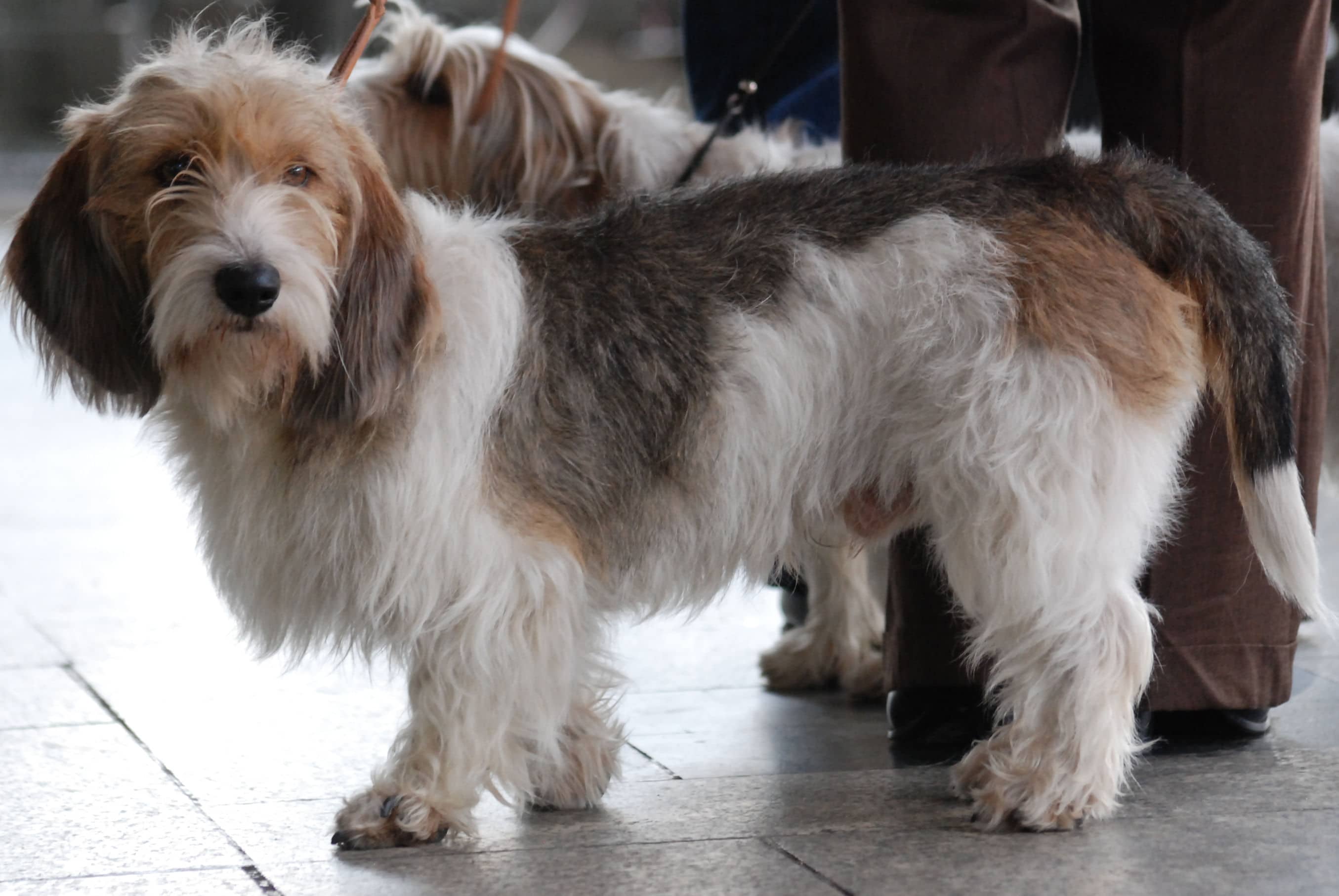
It is a small dog, rustic. Its aspect is neglected and natural. It has hard and rough hair with eyebrows, beard and whiskers woolly. White base, with black spots, Orange or grey.

Is well proportioned and is approximately a 50% longer than high. Wide tail at base, decreasing towards the tip thickness. It keeps it erect. Their ears are covered with hair; they are long but fail to reach the tip of the nose. Large nostrils. Its back is straight and slightly arched over the lumbar area.

It has large fame of Digger, jumper and escape expert, so you have to keep it in a safe enclosure.
Usually, is happy, friendly and always busy in their explorations. He is intelligent and can be stubborn. It's funny and has many security. Jealous and playful. Pretty crook.

Character and skills

He is good with children and quite friendly with strangers and although his obstinacy, it is a bit difficult to train, is not especially dependent or independent. Their dominance is moderate.

He is good with other dogs, but by his hunting instinct, It is not reliable with other pets. Being of small size, has a very loud bark, and tends to the howl.

Very strong race; serious genetic diseases are not known. prone to ear infections. Times, allergies have been given to insecticides.

It has hard hair and moved it very little, Although it needs a cleaning and brushing regularly to avoid entanglements.
It requires moderate exercise, being a good companion to run. At home he is very active and can only live in an apartment if he is sufficiently exercised.

As open space, a small garden is enough. Adaptable to most climates, prefer the coldest. Itร‚ยดs suitable for novice owners. Care properly has an average life of 10 to 14 years.

Petit Basset Griffon Vendรฉen pictures

Videos Basset Grifรณn Vandeano small

Alternative names:

Petit basset griffon vendรฉen / Kleiner basset griffon vendรฉen / small basset griffon vendรฉen

Type and recognitions:

  • FCI CLASSIFICATION:
  • Group :
  • Section : . .

Federations:

  • FCI โ“˜
  • AKC โ“˜
  • ANKC โ“˜
  • CKC โ“˜
  • โ€‹KC โ“˜
  • NZKC โ“˜
  • UKC โ“˜

  • FCI breed standard Petit Basset Griffon Vendรฉen

    FCIFCI - Petit Basset Griffon Vendรฉen
    Basset

    โ–ท The world of Pets: Dogs, cats, birds, reptiles, amphibians

    Spanish Hound
    Espaรฑa FCI 204 . Medium-sized Hounds

    Sabueso Espaรฑol

    The Spanish Hound It is described in the "Book of Monterรญa" of King Alfonso XI (1312-1350).

    Content

    HISTORY ยซSPANISH HOUSEยป

    Already in the fourteenth century, a dog of this breed was described by King Alfonso XI. But also other documents from this time referred to its existence.

    Due to the increasing isolation in the Iberian Peninsula, the breed was kept completely pure and there were no crosses with other dog breeds.

    Almost with all likelihood we are faced with a race descended from ยซCanis segusiusยซ, tracking dog used by Celtic peoples settled in central France.

    The first description of peninsular hounds appears in the โ€œBook of the Monterรญa of Alfonso XIโ€, King of Castile, written during the second half of the s. XIV, that in his chapter 39 talk about "which doneness should be the hounds and the sabuesasโ€.

    Over the years the Spanish Hound went repeatedly hunting small game, like hares, rabbits or foxes. He often hunted together with other dogs in the pack.

    It also, was used to recover the shooting game. But also in the police force he soon had a very important task.

    Full of enthusiasm for action, this spunky breed of dog proved to be a tracking dog, that already chased many trails. Due to his enormous eagerness to work and his resistance, was able to help clear up all the cases and make his teachers proud.

    Still used for those tasks, preferably in your home country, Spain.

    Physical characteristics "Spanish hound"

    The coat of the Spanish Hound often a bit reminiscent of a cow. Often has a white background on which there are various dots and patterns.

    These can be black, White, red or also multicolored. Most of the back is affected by color patterns, occasionally also the sides.

    Its pelage is short, thin but nevertheless dense. Doesn't have much underlayer, making it suitable for allergy sufferers.

    The Spanish Hound It belongs to the category of "medium -sized dogs". Males reach a shoulder height of up to 57 cm., the females up 53 cm.. The average weight is between 20 and 25 kg, females tend to be somewhat lighter.

    Character and skills "Spanish hound"

    The Spanish Hound he is a fearless hunter, eager and reliable, that nothing is lost so fast. Has an enormous need to move, who has to live regularly.

    It is a minor hunting dog, which is also used for wild boar hunting, roe deer, the deer, the wolf or the bear, because in addition to being very skilled in the search, I have a determination out of the ordinary. He is also gifted with the trail of blood. Excels in hare hunting, in which he transmits to the hunter the development of the search with his voice modulations.

    As a member of the family it is not very suitable, because the rhythm of life in a big city is not made for this active breed of dog. Under no circumstances do you want to be alone for hours every day.. Daily walks are mandatory with him.

    He is friendly and loyal to his human being and at home he is quite calm. And you need this calm even if you have been in nature for many hours.

    How do you want to find peace and quiet within the four walls of a home?, does not get along with young children. The over-excitement of children does not come at all well. But if your freedom is granted, he soon becomes a loving friend to them too. But there are certain limits!

    Suspicion of strangers, so it is also a good watchdog.

    The Spanish Hound is very independent and despite unconditional loyalty to his humans, always has a mind of its own.

    This is why it is so important that you get the right education from the start. This must be done consistently, but nevertheless with love and patience.

    Maintenance and care of the "Spanish hound"

    In a narrow city apartment, that possibly on a 5th floor, a Spanish Hound has as much to look for as an elephant in a china shop. I could possibly come here in the long run to a similar result. If our Scent hound you don't have your usual workload, it may be that he destroys the furniture for lack of challenge.

    A house with a large garden is an absolute must for this energetic hunter.. At the same time this aspect also relieves the owners, if our dog can let off steam regularly in the garden. Then he is already more relaxed and calm when he goes out for a walk, although he still has a lot of energy. Long walks are absolutely necessary for him.

    Care:

    His short coat does not require much care and his health is generally very good.

    However, there must be a competent veterinarian who regularly deals with tick treatments, deworming, caring for teeth and claws, your anal glands and also from routine blood tests.

    Characteristics "Spanish Hound"

    Coexistence is important that you have with your new friend. Before considering the acquisition of a dog of the breed "Spanish Hound" you know certain factors. Not all breeds of dogs are apt to live in an apartment, you must take into account his character, their need for exercise, their interaction with other pets, their care and if you have small children, their level of tolerance towards them.

    Vitality

    4,0 of 5 stars (based on 1 review)

    Ladrador

    3,0 of 5 stars (based on 1 review)

    Vigilance instinct

    2,0 of 5 stars (based on 1 review)

    Protection instinct

    1,0 of 5 stars (based on 1 review)

    Relationship with children

    3,0 of 5 stars (based on 1 review)

    Relationship with dogs

    4,0 of 5 stars (based on 1 review)

    Learning capacity

    3,0 of 5 stars (based on 1 review)

    Need exercise

    4,0 of 5 stars (based on 1 review)

    Friendly with strangers

    2,0 of 5 stars (based on 1 review)

    Health

    4,0 of 5 stars (based on 1 review)

    Friendly with cats

    2,0 of 5 stars (based on 1 review)

    Intelligence

    3,0 of 5 stars (based on 1 review)

    Images of the "Spanish hound"

    Videos of the "Spanish hound"

    Type and recognitions:

    • FCI CLASSIFICATION:
    • Group :
    • Section : . .

    Federations:

    • FCI – Group 6: Scent hounds, and related breeds. – Section 1.2: Medium-sized Hounds. โ“˜
    • The Royal Canine Society of Spain. โ“˜

    FCI breed standard "Spanish Hound"

    Origin:
    Spain

    Date of publication of the valid original standard:
    26/05/1982

    Use:

    Small game trail dog, though he doesn't despise the big game trail, either wild boar, deer, corzo, fox wolf or bear. The hunter, informed by voice (beat or beat) of the dog and its modulations, you will know the development of the trail hunt and its incidents such as old or recent trail, double trail, โ€ณ Stop beat or call dead โ€ณ. The Spanish hound is the great specialist in the Hunting of Liebres โ€ณ Vuelta โ€ณ and is extremely effective in the Rastro of Blood.


    General appearance:

    It is a medium-sized dog, eummetric and longilรญneo. With a beautiful head and long ears. Highlights the high thoracic perimeter of the race and the longitudinal diameter that widely exceeds the raised to the cross. Compact skeleton and strong members; fine hair, smooth and stuck. Fresh look, sad and noble.

    IMPORTANT PROPORTIONS: Longylรญnea Structure.

    โ€ข Longitudinal diameter widely (7 - 10 cm.) higher than the raised to the cross.
    โ€ข Skull-hocic relationship = 1:1, that is, equal in lengths.


    Behavior / temperament:

    Loving and meek, it is a beautiful animal, that in combat with big game pieces proves to possess a rare bravery and courage.

    Head:

    Harmonica, provided with the rest of the body and long. Divergent skull-facial lines. The joint facial craneo-region viewed from above should be very uniform and elongated, without giving feeling of pointed snout.

    Cranial region:
    • Skull: Average width, being higher in males. Convex profile. The width of the skull should be equal to its length. Seen from the front, It should be vaulted. Simply marked occipital Crest.
    • Depression links (Stop): Soft, little sharp.

    facial region:

    • Truffle: Grand, wet and wide and wide development windows. Its color ranges from a light brown to a deep black, always accompanying the color of mucous membranes.
    • Snout: Straight profile, admitting light subconvexidad in the terminal section. Seen from above it appears moderately rectangular, decreasing its width in direction to the truffle.
    • Lips: The superior must cover decidedly lower being loose and detached with moderation. The bottom is marked labial commissure. Mucous membranes must be of the same color that the truffle. Palate of color of mucous membranes with marked ridges.
    • Jaws / Teeth: Scissor bite. Teeth white and healthy; Canine well-developed; There are all the premolars.

    Eyes: Medium, macaroons, Hazelnut dark color. Sad looking, noble and intelligent. The color of the truffle pigmented eyelids; mucous membranes attached to the eyeball, admitting Dim relaxation resting.

    Ears: Large, long and falls. Of soft texture, rectangular and round tip; They are inserted below the line of the eyes and hang freely in Tirabuzรณn. Without exerting traction have widely exceed the truffle. Venous network visible and a flor de piel.

    Neck:

    Conical trunk, wide and powerful, muscular and flexible. Thick and very loose skin, that is marked and released but not exaggerated dewlap.

    Body:

    Strongly rectangular, very strong and robust, of a large chest perimeter that must be superior in 1/3 to the height at the withers: height at the withers 3, chest perimeter 4.

    • top line: Straight with slight concavity on the back and convexity on the spine, Race characteristics, but not ensillamiento.
    • Cross: Ahead and simply marked.
    • Back: Powerful, wide, accused length.
    • Pork loin: Very long, width, powerful and slightly raised.
    • Rump: Powerful, wide. With a tendency towards horizontal. The height at the Croup should be equal to or less than the height at the withers: taking into account the existing racial trend to be elevated, will be allowed slightly.
    • Breast : Highly developed, width, deep and high, widely reaching the elbow. Tip of the sternum marked. Ribs with intercostal of broad and rounded spaces, you are home a large rib cage.
    • Belly and flanks: Little collected belly, very notable and descended flanks and ample sidewalls.

    Tail:

    Thickness birth and average insertion. Strong and full of very short hair forming a small brush at the tip. At rest, your port is light, curved and low beyond the Hock; in work and movement, is high in Sabre without excess and mostra a continuous lateral movement of jig. Never straight up or resting on the rump.

    Tips

    PREVIOUS MEMBERS: Perfectly Plumb, straight, parallel; They give short and tendons are clearly appreciated. The length of the forearm must be equal to the shoulder.

    • Strong bone; with powerful Metacarpus and well bonded to the thorax elbows.
    • Shoulder: Oblique scapula, rounded, muscled and similar to the arm length. Scapular-humeral angle close to 100 degrees.
    • Arm: Strong.
    • Elbows: Stuck to the chest. Humer-Radial Angle near the hundred and twenty degrees.
    • Forearm: Straight, short and well poised. Strong bone.
    • Metacarpus: Strong bone and powerful. Seen little laterally inclined.
    • Previous feet: Of cat. Tight toes, high and strong phalanx. Hard and strong nails; spacious, resistant pads. Interdigital membrane moderate and provided with fine hair.

    LATER MEMBERS: Powerful, muscular and excellent angles. Correct limbs, hocks without deviations, long metatarsus and strong feet. Provide your pet force, agility and thrust required for slopes land very rough and with notable drop-offs.

    • Thigh: Strong and muscular. Coxal-femoral angle close to 100 degrees.
    • Leg: Half length, muscular. Stifle-tibial angle close to fifteen hundred grades.
    • Hocks: Well marked, with clear appreciation of the tendon. Angle of the open Hock, close to one hundred twenty degrees.
    • Hind feet: Of cat, slightly oval. More elongated than the previous feet. Presence or not of spurs that are usually simple, rarely double, admitting your amputation.

    Movement:

    Preferred movement is the trot, still a long, sustained and economic, without any tendency to laterality or amble. Particular attention to elbows and hocks will be presented during the movement. Exist during the March natural trends in the race walking sniffing with low head.

    Mantle

    SKIN: Highly elastic, thick, pink, by all zones, forming sometimes frontal wrinkles in head position low.

    HAIR: Bushy, short, fine and glued. Distributed by the body to interdigital spaces.

    COLOR: White and orange, with a predominance of one or another color and distributed in well-defined irregular spots and no speckle. The orange color can range from a tone lighter (lemon) to the strong reddish brownish.


    Size and weight:

    Seen in this race a high index of sexual dimorphism that is reflected in the difference in size between males and females, being females significantly more low and less girth.

    Height to the cross:

    • Males: of 52 to 57 cm..
    • females: of 48 to 53 cm..

    A centimeter of lodging tolerance is admitted for copies of excellent proportions.


    Fouls:

    Any deviation from the aforementioned criteria is considered as a fault and the severity of this is considered to the degree of the deviation to the standard and its consequences on the health and well-being of the dog..

    • Profile of the acarnerado snout, but without excess.
    • Bite in clamp; absence of any premolar.
    • Eyelids so relaxed cause little visible conjunctiva.
    • Weak and distorted upper line during march.
    • Elevation of the region of the spine, Although permitted, It should not be never exaggerated.

    SERIOUS FAULTS

    • Frail.
    • Snout blunt or pointed in excess.
    • Moderate upper prognathism. Absence of canine or Premolar, not due to trauma.
    • Entropion or ectropion.
    • Amputated ear.
    • Upper lines.
    • Height at the Croup very higher than the height at the withers.
    • Scarce thoracic perimeters.
    • Too high or resting on the rump tail. amputated tail.
    • Wrong limbs, weak or deviant.
    • Outgoing elbows during the March or in station.
    • Cow hocks.
    • Lateral braceos during operation.
    • Wavy hair, hard or mediumlength.
    • Barks.
    • Unbalanced character, excessive shyness, nervousness or aggressiveness.

    MISS PLAYOFFS

    • Aggressive or fearful dog.
    • Longitudinal diameter equal to or less than the height at the withers.
    • Split nose.
    • Excessive upper prognathism. Any degree of lower prognathism.
    • Hard or long hair. Woolly hairs indicating miscegenation.
    • Copies tri-color or with brands heat in beak and members.
    • Any dog โ€‹โ€‹showing clear signs of physical or behavioral abnormalities must be disqualified..


    N.B.:

    Males should have two normal-appearing testicles fully descended into the scrotum..

    Source: F.C.I - International Cynological Federation

    Alternative names:

    1. Spanish Scenthound (English).
    2. Sabueso espaรฑol (French).
    3. Sabueso Espaรฑol (German).
    4. Sabueso Espaรฑol (Portuguese).
    5. Sabueso Asturiano, Sabueso Navarro, Sabueso Santanderino, Sabueso Alavรฉs (espaรฑol).

    โ–ท The world of Pets: Dogs, cats, birds, reptiles, amphibians

    Petit Gascon Saintongeois
    Francia FCI 21 - Medium-sized Hounds

    Petit Gascon Saintongeois

    The Petit Gascon Saintongeois was destined, in its origins, mainly hunting the hare.

    Content

    History

    Of French origin, named after the provinces of Gascuรฑa and Saintonge.

    By mid-century 20, some large game hunters in the Southwest selected the smallest specimens from their litters of Gascon Saintongeois and they fixed this variety, destined, in its origins, mainly hunting the hare.

    Photo: Little Gascon de Saintonge by Jรฉrรดme BARDIAU, CC BY-SA 3.0, via Wikimedia Commons

    Physical characteristics

    Medium-sized dog, well proportioned and distinguished.

    Size:

    Males: 56 to 62 cm..
    females: 54 to 59 cm..

    Character and skills

    Multi-purpose dog used for rifle hunting. Because of its origin it hunts especially the hare, but it is also very good for hunting big game.

    Characteristics "Petit Gascon Saintongeois"

    Coexistence is important that you have with your new friend. Before considering the acquisition of a dog of the breed "Petit Gascon Saintongeois" you know certain factors. Not all breeds of dogs are apt to live in an apartment, you must take into account his character, their need for exercise, their interaction with other pets, their care and if you have small children, their level of tolerance towards them.

    Adaptation โ“˜

    2,0 of 5 stars (based on 1 review)

    friendly dog โ€‹โ€‹โ“˜

    3,0 of 5 stars (based on 1 review)

    hair loss โ“˜

    2,0 of 5 stars (based on 1 review)

    Affection level โ“˜

    2,0 of 5 stars (based on 1 review)

    Need for exercise โ“˜

    5,0 of 5 stars (based on 1 review)

    Social need โ“˜

    4,0 of 5 stars (based on 1 review)

    Home โ“˜

    2,0 of 5 stars (based on 1 review)

    Toilet โ“˜

    1,0 of 5 stars (based on 1 review)

    Friendly with strangers โ“˜

    2,0 of 5 stars (based on 1 review)

    barking โ“˜

    3,0 of 5 stars (based on 1 review)

    Health โ“˜

    4,0 of 5 stars (based on 1 review)

    Territorial โ“˜

    2,0 of 5 stars (based on 1 review)

    Cat friendly โ“˜

    2,0 of 5 stars (based on 1 review)

    Intelligence โ“˜

    4,0 of 5 stars (based on 1 review)

    Versatility โ“˜

    5,0 of 5 stars (based on 1 review)

    Child friendly โ“˜

    4,0 of 5 stars (based on 1 review)

    Surveillance โ“˜

    2,0 of 5 stars (based on 1 review)

    joy โ“˜

    4,0 of 5 stars (based on 1 review)

    Videos "Petit Gascon Saintongeois"

    HTTPS://youtube.com/watch?v=aM1D0Ttrupo
    Petit Gascon Saintongeois
    HTTPS://youtube.com/watch?v=p_qCOkxxHPs
    Little Gascon Saintongeois

    Type and recognitions:

    • FCI CLASSIFICATION:
    • Group :
    • Section : . .

    Federations:

    • FCI – Group 6: Scent hounds, and related breeds. – Section 1.2: Medium-sized Hounds. โ“˜
    • Central Canine Society โ“˜

    FCI breed standard "Petit Gascon Saintongeois"

    Origin:
    France

    Date of publication of the valid original standard:
    06.03.2007.

    Use:

    Gran Gascon Saintongeois: Used for rifle hunting and sometimes for small game, big game and also hare. It is generally used in a pack or alone, as a tracker.

    Pequeรฑo Gascon Saintongeois: Multi-purpose dog used for rifle hunting. Because of its origin it hunts especially the hare, but it is also very good for hunting big game.


    General appearance:

    Gedge: Very well built dog, which gives at the same time an impression of strength and elegance. He is of a very French type when it comes to the head, fur and expression.

    Psmall: Medium-sized dog, well proportioned and distinguished.

    PROPORCIONES IMPORTANT:

    Height at withers/scapulo-ischial length in a ratio of 10/10.5 The length of the muzzle is equal to the skull.


    Behavior / temperament:

    Pack dog par excellence, up to the sense of smell, bold, gifted with a beautiful voice. He joins the pack by instinct. It's calm, affectionate and obeys orders easily.

    Head:

    The lines of the skull and the nasal passage are divergent.

    Cranial region:
    • Craging: Seen from the front, It is arched and rather narrow; the occipital protuberance is well marked. Seen from above, the back has a pronounced ogival shape.
    • Dnaso-frontal depression: Little pointed.

    facial region:

    • Trufa: black, well developed, the windows wide open.
    • Labios: They cover the lower jaw, the corner is discreet. The edge of the lips is black.
    • Cnasal year: Powerful, slightly arched.
    • Jaws: Scissor joint. The incisors are at right angles to the jaws..
    • Cheeks: Thin.

    OJOS: Oval, browns. The edge of the eyelids is black. The expression is sweet and confident.

    OREJAS: Fine, bent. They must reach at least the end of the truffle. They occur below the eye line, quite far back, leaving the skull very clear.

    Neck:

    Of medium length and thickness. It is slightly arched and has little dewlap.

    Body:

    • lynand the top: It is firm and not excessively long.
    • Lomo: It is well attached to the body. It is slightly convex, quite muscular and not too long.
    • Glikeness: Slightly oblique, wide enough.
    • Pecho: Large, long, descends to the level of the elbows. The front part of the chest is quite open.
    • Costillas: Slightly rounded and long.
    • Flank: It's a little raised.

    Tail:

    It is thick at the base; very thin at its end. Reaches to the tip of the hock. The elegant bearing, Sabre-shaped.

    Tips

    PREVIOUS MEMBERS:

    • Ageneral appearance: The previous room is powerful.
    • Hshoulder: Rather long, muscular, moderately oblique.
    • Elbow: Well adhered to the body.
    • Aforearm: Strong bones.
    • Pinis previous: Slightly elongated oval shape. The fingers are thin and close together. The foot pads and nails are black.

    LATER MEMBERS:

    • Ageneral appearance: The hindquarters are well proportioned.
    • Thighs: Long and well muscled.
    • Corvejรณn: Width, well angled. Well inclined, visibly directed towards the axis of the body.
    • Pinis later: Slightly elongated oval shape. The fingers are thin and close together. The foot pads and nails are black.

    Movement:

    Uniform and loose.

    Mantle

    PIEL: Stretchy and not too thick. It is white with black spots.

    Plink: Short and dense.

    Codor: The background is white, with black spots; sometimes it is speckled, although not in excess. Two black spots are usually present on each side of the head.; cover the ears, surrounding the eyes and cheeks-reach. The cheeks are color fire, preferably pale.

    Two fire-colored brands, located on the top of the eyebrows, They simulate โ€œfour eyesโ€. They are also observed, tan traces on the inner surface of the ear and specks along the extremities. Some tawny hairs may appear on the top of the ear, without this giving the head a tricolor appearance. Sometimes a typical dead leaf spot is observed on the lower part of the thigh., known as โ€œroe deer markโ€.


    Size and weight:

    Height to the cross:

    Grand:

    • Males: 65 to 72 cm..
    • females:62 to 68 cm..

    Petit:

    • Males: 56 to 62 cm..
    • females: 54 to 59 cm..

      With a tolerance of approximately 1 cm..


    Fouls:

    Any deviation from the aforementioned criteria is considered as a fault and the severity of this is considered to the degree of the deviation to the standard and its consequences on the health and well-being of the dog..

    Cthey are not coming:

    • Short.
    • Wide skull.
    • Short ears; ears that stand high.
    • Total absence of fire color.

    Cfamily:

    • Absence of volume.
    • Flabby upper margin.
    • sunken croup.
    • Deviated tail.

    Members:

    • Bone structure that is not sufficiently developed.
    • Shoulders that are too oblique or too straight.
    • crushed feet.
    • Straight posterior angulation.
    • closed hock, seen from behind.

    FALTAS DISQUALIFYERS:

    • Aggressiveness or extreme shyness.
    • Any dog โ€‹โ€‹showing clear signs of physical or behavioral abnormalities.
    • Lack of type, and in particular wide and round skull.
    • Upper or lower prognathism.
    • light eyes.
    • Any other layer other than that established in the standard.


    N.B.:
    • Males should have two normal-appearing testicles fully descended into the scrotum..
    • Only functionally and clinically healthy dogs, with the typical conformation of the breed, should be used for parenting.

    Source: F.C.I - International Cynological Federation

    โ–ท The world of Pets: Dogs, cats, birds, reptiles, amphibians

    Hungarian hound (Transylvanian Scent Hound)
    Hungrรญa FCI 241 - Medium-sized Hounds

    Transylvanian Scent Hound

    It is used in hunting fox and hare; the larger size variety is used in wild boar hunting, deer and lynx.

    Content

    History

    The Transylvanian Scent Hound it is a very old hungarian breed, whose development has been influenced by climatic conditions, the nature of the terrain and hunting methods in this part of the world.

    The breed had its golden age in the Middle Ages, When the Hungarian hound He was the favorite hunting dog of the nobility. The development of agriculture and forestry moved away from hunting grounds, and its use moved to the inaccessible mountains and forests of the Carpathians.

    This change in territory and habit has led to the creation of two different varieties of Transylvanian Scent Hound: one bigger and one smaller.

    • Long-legged variety: height 56-66 cm.; black with white markings on the front, chest, feet and tip of tail. Used for fox and hare.
    • Short-legged variety: height 46-51 cm.; red-brown base color with white markings. Used in bear, deer and lynx.

    Both varieties were always bred together. Originally, the great Hungarian hound it was used to hunt big game: first buffalo, later bear, boar and lynx. The "small tone" were used to hunt minor hunting (foxes, hares) on covered land and to hunt "suede" in rocky areas.

    In the early 20th century, the threatened Transylvanian Scent Hound almost completely disappeared, but it was recovered in 1968. Today there are a large number of dogs of Transylvanian Scent Hound in Hungary and neighboring Romania. The variety of "small size" has been extinguished.

    Photos: Male, 1 year old Transylvanian Hound, in Hungary by Jahnna river, CC BY-SA 3.0, via Wikimedia Commons

    Physical characteristics "Transylvania's hound"

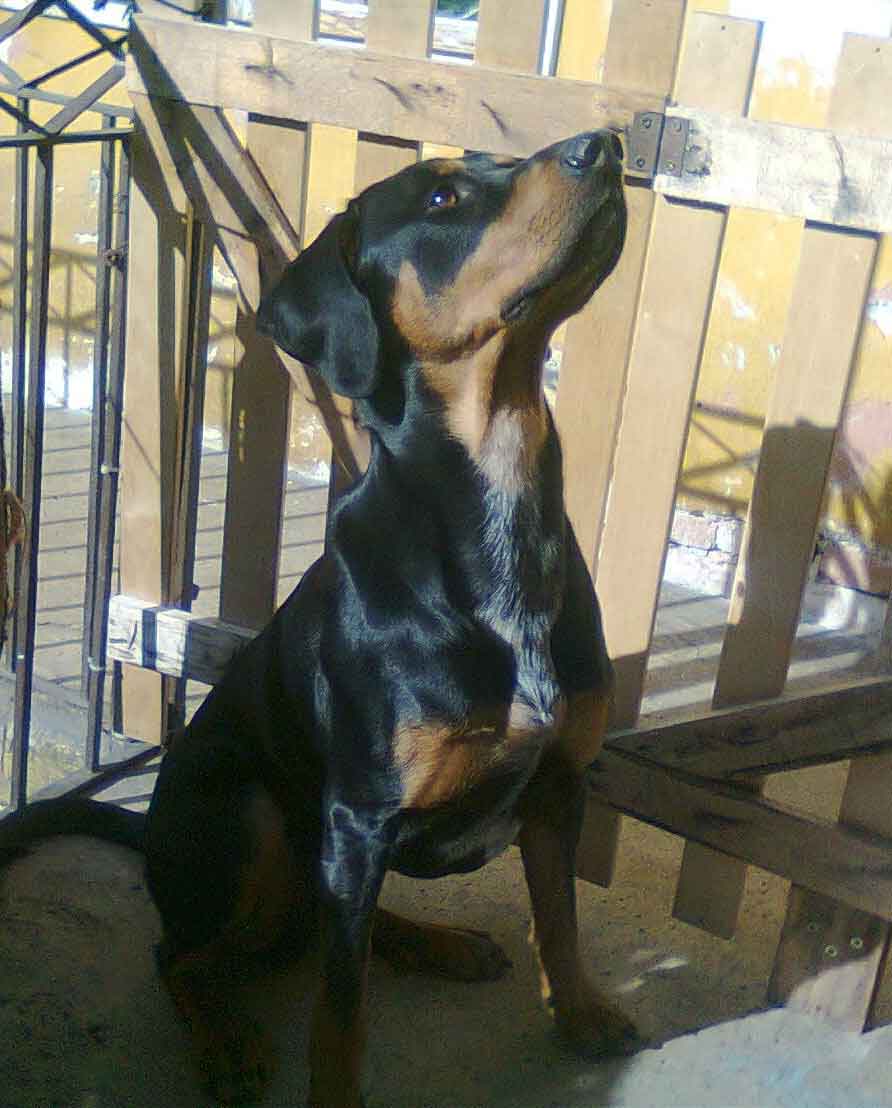
    The dog Carpathian Hound grows up 65 cm and weighs at least 25 kg. Whole body, including lower belly, is covered in short hair, dense, smooth and thick that rests well against the body. The basic color is black with tan on the muzzle and legs. The tail is and is carried above the top line when it wakes up, slightly bent up. The hanging ears, set at mid-height, lie close to the cheeks without wrinkles, put forward barely cover the eyes.

    Character and skills "Transylvania's hound"

    Expressive and loving nature – a dog with very good skills.

    Transylvanian hound female
    Transylvanian hound female by Lnko2323, CC BY-SA 3.0, via Wikimedia Commons

    The Transylvanian Scent Hound adapted perfectly to the extreme climatic conditions of his homeland. Here the robust breed had to contend not only with the cold and snowy winters, but also with the hot summer days. Hunting in the Carpathians was very demanding due to the dense and hardly accessible mountains. To be able to work all year round in these treacherous areas, the Hungarian hound developed not only his physical stature but also his mental abilities.

    With its marked sense of smell, his extraordinary sense of direction, his great resistance and his enormous dexterity, This race, in addition to qualities such as self-confidence and predatory instinct, provides everything an excellent hunting dog needs. They are capable of making smart decisions in almost all hunting situations and communicate their success with a clear voice. Like many hound dogs, the Hungarian hound is a professional at hard work.

    At home, the Transylvanian Scent Hound he is a very friendly and calm dog, that is closely tied to its owner, to children and family members. As it is also highly regarded as a guard dog, behaves suspicious of strangers, at first it tends to be a bit reserved, but it doesn't seem dangerous or aggressive at all.

    If the dog is well socialized and educated at a young age, relaxed demeanor is expressed, obedient and social, also together with the conspecifics.

    The Transylvanian Scent Hound need plenty of exercise, preferably combined with work, such as hunting. Their owners must have an active lifestyle to meet the requirements of keeping a hunting dog.. If sufficient conditions for exercise and employment are met, this breed can be kept in the house or apartment without problems.

    Characteristics "Hungarian hound (Transylvanian Scent Hound)"

    Coexistence is important that you have with your new friend. Before considering the acquisition of a dog of the breed "Hungarian hound (Transylvanian Scent Hound)" you know certain factors. Not all breeds of dogs are apt to live in an apartment, you must take into account his character, their need for exercise, their interaction with other pets, their care and if you have small children, their level of tolerance towards them.

    Adaptation โ“˜

    3,0 of 5 stars (based on 1 review)

    friendly dog โ€‹โ€‹โ“˜

    4,0 of 5 stars (based on 1 review)

    hair loss โ“˜

    4,0 of 5 stars (based on 1 review)

    Affection level โ“˜

    5,0 of 5 stars (based on 1 review)

    Need for exercise โ“˜

    3,0 of 5 stars (based on 1 review)

    Social need โ“˜

    4,0 of 5 stars (based on 1 review)

    Home โ“˜

    4,0 of 5 stars (based on 1 review)

    Toilet โ“˜

    3,0 of 5 stars (based on 1 review)

    Friendly with strangers โ“˜

    4,0 of 5 stars (based on 1 review)

    barking โ“˜

    4,0 of 5 stars (based on 1 review)

    Health โ“˜

    4,0 of 5 stars (based on 1 review)

    Territorial โ“˜

    5,0 of 5 stars (based on 1 review)

    Cat friendly โ“˜

    2,0 of 5 stars (based on 1 review)

    Intelligence โ“˜

    4,0 of 5 stars (based on 1 review)

    Versatility โ“˜

    4,0 of 5 stars (based on 1 review)

    Child friendly โ“˜

    2,0 of 5 stars (based on 1 review)

    Surveillance โ“˜

    5,0 of 5 stars (based on 1 review)

    joy โ“˜

    5,0 of 5 stars (based on 1 review)

    Videos "Hungarian hound (Transylvanian Scent Hound)"

    Transylvanian Hound - Wild boar Dogs [Transylvanian Hound]
    Transylvanian Hounds -Wild boar Dogs
    Hector - Transylvanian Hound - 3 Weeks Residential Dog Training
    Hector – Transylvanian Hound – 3 Weeks Residential Dog Training

    Type and recognitions:

    • FCI CLASSIFICATION:
    • Group :
    • Section : . .

    Federations:

    • FCI – Group 6: Scent hounds, and related breeds. – Section 1.2: Medium-sized Hounds. โ“˜
    • UKCScenthounds โ“˜

    FCI breed standard "Hungarian hound (Transylvanian Scent Hound)"

    Origin:
    Hungary

    Date of publication of the valid original standard:
    06.04.2000

    Use:

    Dog used for hunting (Hound). You are able to hunt a great distance from your guide. He is especially gifted at locating and following a trail. When you discover a fresh trail, emits high-pitched barks in a pitiful tone. During crawl, bark loudly with a resonant sound in the distance. After the beat, for the prey excellently. Usually works alone or with a partner.


    General appearance:

    The shape and bearing of the head, the proportions of the body, The powerful and muscular members and the insertion of the tail correspond to the characteristics of the type of hound of central Europe. It is a medium-sized hound. The structure of the Hungarian hound body adapts to work with long races ; is athletically built, neither heavy nor fine of bone.

    IMPORTANT PROPORTIONS

    โ€ข The relationship between the length of the skull and that of the snout is close to 1:1.
    โ€ข The relationship between the height to the cross and the length of the body is 10:11


    Behavior / temperament:

    Is of good temperament, brave, persistent. Essentially the behavior of the Hungarian hound is still, balanced, also determined and full of temperament. It is able to withstand extreme weather conditions.

    Head:

    The head is that of a hound, elongated but not pointed ; Differences according to sex are marked.

    Cranial region:

    The skin on the head is tight and wrinkle free.

    • Skull : Slightly domed. The occipital protuberance is not marked. Supraciliary arches are poorly developed.
    • Depression links (Stop) : Bit strong.

    facial region:

    • Truffle : The truffle is not cut too abruptly ; its color is black. The wings of the nostrils are mobile. Windows are wide.
    • Snout : The nasal helm is straight.
    • Lips : Dry and firmly adherent. The color of the mucosa is black.
    • Jaws / Teeth : The jaws are strong. Teeth are strong, well developed. Scissor bite, complete and in accordance with the dog's dental formula.
    • Cheeks : Rounded, only underdeveloped.

    Eyes : Medium size, macaroons, slightly oblique cut. Color is dark brown. The eyelids rest firmly on the eyeball.

    Ears : Inserted at medium height, not very heavy. They hang without wrinkles resting next to the cheeks. From their insertion they widen and then along their extension, fine-tune until ending in a rounded end. Put forward they cover their eyes, although in general, its length does not exceed them too much.

    Neck:

    Strongly muscled, long Middle. The skin is slightly wrinkled on the lower face of the neck. A slight double chin is admitted but not desired.

    Body:

    The body is shaped like a lying rectangle.

    • top line : Straight.
    • Cross : Marked Back : From the cross, straight and well developed musculature.
    • Pork loin : A slightly longer loin is allowed in females.
    • Rump : Slightly descending.
    • Breast : The sternum is not protruding. The rib cage is wide, long and not too deep. Sectional, the rib cage is oval, almost rounded, to allow good breathing.
    • Bottom line and belly : The belly is slightly tucked.

    Tail:

    Middle insertion, strong. At rest, the distal third of the tail curves gently upward ; it is desirable that it reaches 1-2 cm.. from tarsal level down. Being excited, The dog carries folded on the dorsal line ; however, it should not be rolled over the back. The tail must not be cut off.

    Tips

    PREVIOUS MEMBERS : The forelimbs support the body as if they were columns. Head on, forelimbs look parallel, depending on the wide thorax correspondingly separated.

    • Shoulder : The scapula is well muscled, correspondingly long and moderately oblique.
    • Elbow : Supported next to the rib cage.
    • Forearm : Straight and symmetrical.
    • Front feet : They are large, with fingers together, strong and arched. The pads are big, firm and well padded. Nails are strong and as black as possible.

    LATER MEMBERS : In stop position, the back is slightly stretched back, good muscular.

    • Thigh : Long.
    • Hock : Low.
    • Metatarsus : Straight and parallel.
    • Rear feet : The fingers are strong and close together. The pads are big, firm and well padded. Nails are strong and as black as possible. Spurs will need to be removed.

    Movement:

    Good range passage and good ground coverage, never with short steps. The trot is wide. During work he is remarkably constant in gallop.

    Mantle

    Hungarian hound skin is average thickness ; particularly around the neck somewhat loose, though never wrinkled. The skin is dark pigmented. Hairless areas of skin are black.

    HAIR : Whole body, including the belly area, it is covered by a short hair, thick, smooth and well supported. In the neck, on the cross, on the back edge of the thighs and on the underside of the tail, hair is slightly longer than the rest of the body. Features swirls and ridges in the hair. The coat feels coarse and is shiny. Under the outer layer of hairs, features internal wool.

    COLOR : The basic color of the Hungarian hound fur is black. Always have a tan brand not too dark, point-shaped, over the orbital arches. Tan markings on muzzle and extremities. Fire color must have well -differentiated limits of black. A white spot may appear on the nose ; It can be continued in line on the forehead, on the neck and button on the chest, under breast, under the limbs and on the feet. There may also be a white spot on the tip of the tail. It is not desirable for the white color to cover more than a fifth of the total surface of the body.


    Size and weight:

    HEIGHT AT THE WITHERS : of 55 until 65 cm..
    The height measured in centimeters, will not be in any way decisive, but the harmony of the whole.

    WEIGHT Minimum 25 kg.


    Fouls:

    Any deviation from the aforementioned criteria is considered as a fault and the severity of this is considered to the degree of the deviation to the standard and its consequences on the health and well-being of the dog..

    MISS PLAYOFFS

    โ€ข Aggressive or fearful dog.
    โ€ข Very narrow skull and facial region, very long or rounded.
    โ€ข Naso-frontal depression (Stop) soft or very marked.
    โ€ข Short snout
    โ€ข Incorrect bite
    โ€ข Light ears, terrier or lebrel.
    โ€ข Wire hair, soft fur, wavy, insufficient.
    โ€ข Brown or blue color with brands.

    Any dog โ€‹โ€‹showing clear signs of physical or behavioral abnormalities must be disqualified..


    N.B.:

    Males should have two normal-appearing testicles fully descended into the scrotum..

    Source: F.C.I - International Cynological Federation

    Alternative names:

    1. Hungarian: (Erdรฉlyi kopรณ), Transylvanian Bloodhound, Hungarian Hound (English).
    2. Hungarian: (Erdรฉlyi kopรณ), Brachet hongrois (French).
    3. Hungarian: (Erdรฉlyi kopรณ), Siebenbรผrger Bracke (German).
    4. Hungarian: (Erdรฉlyi kopรณ) (Portuguese).
    5. Hungarian: (Erdรฉlyi kopรณ), Braco hรบngaro, Cazador hรบngaro, Sabueso de los Cรกrpatos (espaรฑol).