โ–ท The world of Pets: Dogs, cats, birds, reptiles, amphibians

Otterhound
Inglaterra FCI 294 . Large-sized Hounds

Perro de Nutria

The Otterhound is the most endangered dog breed in the UK.

Content

History

The Otterhound It is a very old breed of dog from United Kingdom, has, among many other mixtures- within their ancestors to the race Airedale Terrier.

The name of this precious woolly, It just comes to the task for which it was created: the House of otters. This dog has a smell nearly as well developed as the Bloodhound. This breed was developed in England.

But like all dog breeds, changes and social advances always bring consequences in the case of Otterhound, It happened that the Otter hunting was banned in England, and if so few copies of this breed, with this ban the race saw very committed his existence.

Though, To avoid its extinction some race fans what they did was focus the hunting instinct of the Otterhoundtowards other types of prey.

The Otterhound It is a dog specializing in otters, extremely difficult and dangerous job.

Some experts suggest that the danger of the Otterhound is similar to the extinction of the Panda Bear.

It is a very small breed, It is estimated that they there are around 1.000 Otterhound in the world, of which from 350 and 400 they are in the U.S.. Even at the beginning of the 20th century, When was Otter hunting a popular sport, the Otterhound they were never numerous.

Today, this breed is considered as the most threatened by endangered United Kingdom, There are only 51 specimens born in 2006. Are on the list of most vulnerable native breeds of the UK Kennel Club and programmes are being carried out to save the race.

Physical characteristics

The Otterhound, is a dog large and strong, sometimes we could say, incombustible. It is capable of spending all day hunting in the water or running around the field, without showing even the slightest index of exhaustion.

It has a head big and strong with well marked bone.

Their eyes, intelligent and lively expression, vary in color depending on the coat. The ears, they are long, them it is hanging at the height of the eyes. They are set high and have a characteristic fold of the breed..

The tail, high insertion it takes her upright always to pay attention a State of alert, but when it is resting her leads hanging.

The hair of the Otterhound is long, has a length of 4 to 8 cm approximately. The mantle is double layer, the outdoor hair is dense, hard and waterproof and should be rough to the touch. The internal layer It is notorious and touch gives a feeling oilseed.

While, measures with respect to the height and weight, vary according to the club as a consensus we could say that the height the cross in the males is of approximately 69 cm and the females of 61 cm..

The average life expectancy the race is a little more than 10 years. A quarter tends to live in 12 to 15 years. Y, the case of a copy which he lived has been known to the 16 years of age.

Character and skills

The Otterhound, is a Hound very versatile, is generally used for the House of large dams, both individually and in a pack.

Its temperament It friendly and balanced, as long as you have enough physical exercise especially everything related to water, enjoy a lot swimming.

The Otterhound enjoy exercise, the routine. They are very good companion dogs for the family, but they must be kept in a secure property, that can jump fences of up 5 metres in height. They are not at all appropriate for life in apartment.

It is a excellent swimmer, he chased the otters swimming, using only the trail of bubbles that were leaving them diving as track.

This dog is a highly specialized breed who instinctively knows what has to do. Perhaps that is why they are a little stubborn and not always obedient.

They need plenty of exercise, preferably swimming. It is a working dog and needs to maintain a series of obligations or activities, a well-marked routine to avoid boredom and the emergence of destructive behaviors.

A good training is key to keep happy the dog and the family.

Observations

Despite having fame of stubborn, with a proper training is usually used also in civil defence tasks.

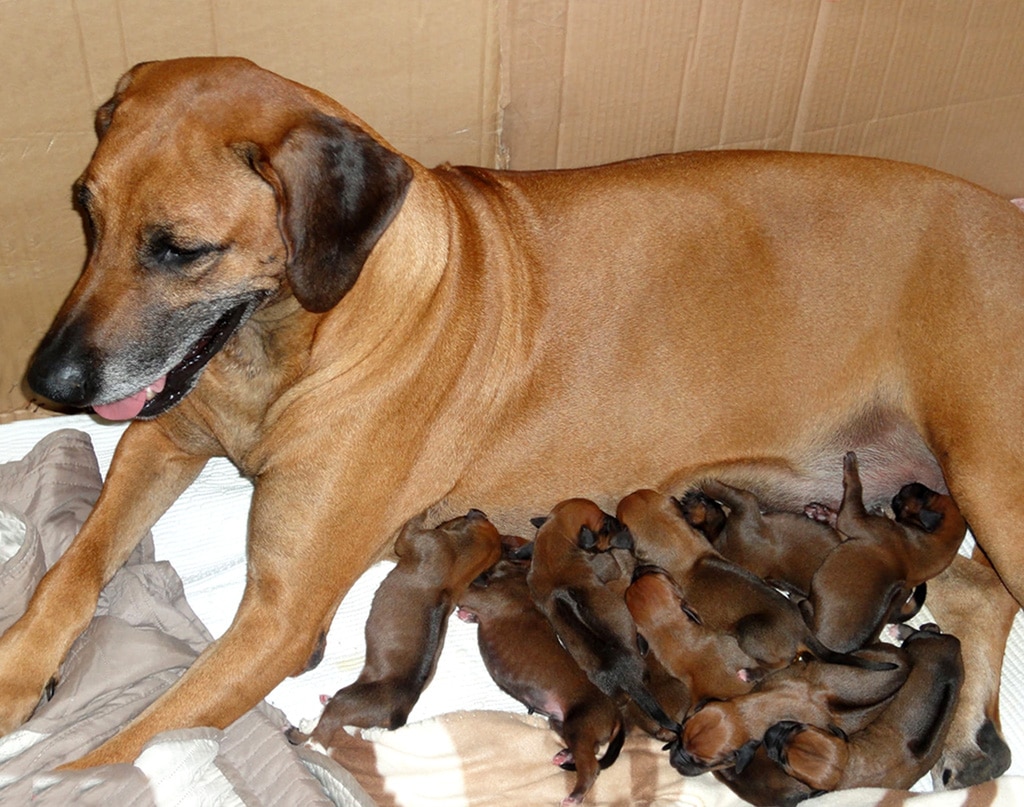
Otterhound Images

Otterhound Videos

Type and recognitions:

  • FCI CLASSIFICATION:
  • Group :
  • Section : . .

Federations:

  • FCI – Group 6: Scent hounds, and related breeds. – Section 1.1: Large-sized Hounds. โ“˜
  • AKCHound โ“˜
  • ANKCGroup 4 (Hounds) โ“˜
  • CKCGroup 2 – Hounds โ“˜
  • โ€‹KCHound โ“˜
  • NZKCHound โ“˜
  • UKCScenthounds โ“˜

FCI breed standard "Otterhound"

Origin:
England, United Kingdom

Date of publication of the valid original standard:
13.10.2010

Use:

Big hound, strong, Built primarily for a long day of work on the water, but able to gallop on land.


General appearance:

It is great, straight-limbed and robust, its coat is rough, has a majestic head and a strong body. It moves with loamy and loose strides. Rough double coat and big feet are essential. Easy movement.

IMPORTANT PROPORTIONS: The distance from the tip of the truffle to the naso-frontal depression is somewhat shorter than the distance from the depression to the occiput.


Behavior / temperament:

Friendly and balanced.Signs of aggression and nervousness should be severely penalized.

Head:

Clearly outlined, imposing, higher than wide. The forehead does not have a bump or a scowl ; the expression is open and friendly. Except the truffle, the whole head is well covered with coarse hair that forms light mustaches and beard.

Cranial region:
  • Skull: Delicately pumped, neither thick nor exaggerated; rises from the naso-frontal depression to the slightly marked occipital protuberance.
  • Depression links (Stop): Something marked, but without exaggeration.

facial region:

  • Truffle: Long, windows wide open. Snout: Strong and deep.
  • Lips: Belfos profusos, although not in excess.
  • Jaws / Teeth: The jaws are strong, wide. Teeth are well aligned, and the joint is scissor-shaped, that is to say, that the upper incisors closely overlap the lower ones and are vertically implanted in the maxillae.
  • Cheeks: Defined cheek bones.

EYES: They are of intelligent expression and moderately sunken. The conjunctiva is somewhat apparent. Eye color and eyelid edge pigment vary according to coat color (a blue and tan hound may have hazel eyes). Yellow eyes are not desirable.

EARS: They present unique characteristics of the breed. They are long, pendant and implanted at the level of the angle of the eye. They can reach the truffle when pulled forward, forming a characteristic fold. The tip bends or curls inwards giving a curious folded look. This is an essential point that should not go unnoticed. The ears are well covered with hair that forms bangs.

Neck:

It's long and powerful. It is delicately inserted in the well oblique and cleanly outlined shoulders . A slight double chin is acceptable.

Body:

Very strong.

  • top line : Level.
  • Back : wide.
  • Pork loin : Short and strong.
  • Breast : Deep ; rib cage is snug, quite deep and oval in shape ; not very wide, not too narrow. The ribs extend well back, which allows enough room for the heart and lungs.

Tail:

High implementation ; dog picks up when alert or on the move. Never curls over the back, but it can hang up when the dog is resting. It is thick at the base and tapers to the tip ; the caudal bones extend to the hock ; carries it straight, or in a slight curve. The hair on the lower part of the tail is longer and more abundant than that on the upper part.

Tips

PREVIOUS MEMBERS:

  • ShoulderDefinedand well oblique.
  • forearmsStrong bones, straight from elbow to ground
  • Metacarpus: Strong and well oblique.
  • Previous feet: Large, rounded, with well arched toes and thick pads; they do not deviate either outwards or inwards. The interdigital skin must be visible.

LATER MEMBERS:

  • General appearance: They are very strong and muscular; views from any angle, the position should not be too wide, not too narrow. Posterior angulation is moderate. When the dog maintains a natural position, the hind limbs, from hock to ground, they are perpendicular.
  • Thighs: They are very muscular.
  • Metatarsus: Hocksin very low position, and they do not deviate even inwards, nor out.
  • Hind feet: Only slightly smaller than the previous ones. Large, rounded, with well arched toes and thick pads; they do not deviate either outwards or inwards. The interdigital skin must be visible.

Movement:

To step, the movement is very loose with the feet close to the ground; immediately go into an active trot, agile, regular, of very long strides. The gallop is uniform and strides of exceptional length.

Mantle

Fur: It is long of 4 to 8 cm., dense, rough, hard, but not wire hair. It is waterproof, hair texture is between straight and rough. Smoother textured hair on the head and lower part of the limbs is natural. The undercoat of hairs is apparent, a slightly greasy texture may appear, both in the outer layer and in the inner layer of hairs. Hair must not be trimmed and trimmed for display; presentation must be natural.

Color: All recognized hound colors accepted: solid color, grey, sandy, red, wheat, blue. They may have slight white marks on the head, the chest, the feet and the tip of the tail.

White hounds may have slight lemon markings, blue or badger. black and tan, Blue and fire, black and cream, sometimes liver, fawn and liver, fawn and white. The following colors are not allowed: liver (brown) and white, a white hound with black patches and clearly separated tan markings. The pigment must harmonize, although not necessarily combined with the color of the coat; for example, a tawny hound may have brown eyes and noses. The slightly depigmented nose is allowed.


Size and weight:

Height to the cross :

  • In males approximately 69 cm. (27 inches),
  • In females approximately 61 cm. (24 inches).


Fouls:

Any deviation from the aforementioned criteria is considered as a fault and the severity of this is considered to the degree of the deviation to the standard and its consequences on the health and well-being of the dog..

FALTAS DESCALIFICANTES:

  • Aggressiveness or extreme shyness.

  • Any dog โ€‹โ€‹showing clear signs of physical or behavioral abnormalities.


N.B.:
  • Males should have two normal-appearing testicles fully descended into the scrotum..
  • Only functionally and clinically healthy dogs, with the typical conformation of the breed, should be used for parenting.

The latest changes are in bold.

Source: F.C.I - International Cynological Federation

Alternative names:

1. Otterhound (English).
2. Otterhound (French).
3. Otterhound (German).
4. Otterhound (Portuguese).
5. Otterhound (espaรฑol).

โ–ท The world of Pets: Dogs, cats, birds, reptiles, amphibians

Alpine Dachsbracke
Austria FCI 254 - Leash (scent) Hounds

Perro tejonero alpino

The Alpine Dachsbracke has a courageous personality, friendly and intelligent

Content

History

The appearance of this short-legged dog suggests a very ancient breed. The Alpine Dachsbracke it is one of the oldest breeds of hunting dogs in Central Europe. It was already mentioned in the seventeenth century and represented in paintings.

In the last quarter of the nineteenth century, Crown Prince Rudolf von Habsburg had this type of hunting dog run by his professional hunters.. The dog's appearance was unbalanced for a long time. Each canton raised its Alpine Dachsbracke differently.

But it is not a cross between a Sausage dog and Bracco, as the German name suggests ยซAlpenlรคndische Dachsbrackeยซ, but an independent race. Visually, the Alpine Dachsbracke gets closer to the Dachshund, but it's much bigger and stronger.

In the 19th century, there were numerous subspecies of Alpine Dachsbracke in the swiss alps, Bavarians and Austrians, that still differed greatly in appearance.

At the end of the 19th century, many breeders of this breed of dog were in the Erzgebirge, so the race kept calling Alpenlรคndische Erzgebirgler Dachsbracke until 1975. Another name is the Dachsbracke Austrian.

This is because the current Club Dachsbracken is located in Austria. The goal of breeding, both then and now, is to maintain the health and performance of this ancient breed of dog.

In order to establish a constant shape, a uniform appearance and appropriate breed characteristics, the first International Club of Dachsbracken was founded in Munich in 1896.

In 1908 the club disbanded again. In 1910 the Austrian Dachsbracke Club was founded, which is still engaged in the breeding of the Alpine Dachsbracke.

In 1932, the Alpine Dachsbracke was officially recognized by the Austrian Kennel Club (with him "Bavarian Mountain Hound" and the "Hanoverian Scenthoundยซ) like the third breed of hound.

In 1975 the Alpine Dachsbracke received recognition from the FCI, which finally classified the breed among the hounds in 1991.

A race is quite unknown outside Austria.

Physical characteristics

The Alpine Dachsbracke is a dog's size medium. Has relatively short legs, a strong constitution, firm muscles and strong bones.

The height to the cross is of 34 to 42 centimeters. Height at withers is measured from the ground to the shoulder in a loose dog. For males, the ideal size is between 37 and 38 centimeters of shoulder height; for females, are considered ideal 36 to 37 centimeters.

Great importance is attached to an optimal ratio of proportions. The relationship between the height of the shoulders and the torso is 2 : 3, the relationship between the face and the skull is 9 : 10.

The head is held proudly erect with a slight forward tilt. High-set dangling ears are straight-haired and fall loosely to the sides. They are wide, no wrinkles and medium length (approximately reaching the canines) and rounded at the bottom.

The nose, the eyelids and lips are black. The eyes are deep brown and slightly almond shaped. The Alpine Dachshund has the typical "dachshund look". The tail is placed high at the root, but it is slightly lowered.

In proportion to the strong body, legs are relatively short. The body is well muscled and with strong bones, with a pronounced rib cage but with a small waist.

The coat of the Alpine Dachsbracke it's dense and short, only the lower part of the tail is slightly longer. The slightly dull coat consists of a firm stick coat with a dense undercoat.

Allows good water repellency and a perfect air balance in summer and a high heat effect in winter. A dark deer red, often with a slight tinge, is the most common coat color.

There is also a black coloration with a tan tan outlined on the head). Small white marks are allowed on the chest. On the paws, ears and tail coat coloration may be darker.

Character and skills

The Alpine Dachsbracke he's a proven working dog, small to medium size, which serves hunters especially well. Hound dogs like Alpine Dachsbracke are used for post-shot search jobs.

The strong-minded dog is not distracted and confidently tracks injured game animals. At first sight, the Alpine Dachsbracke looks like a mongrel dog, but this robust breed is a highly specialized working and hunting dog.

The fine sense of smell, safe tracking with unconditional tracking will and high hunting acuity make this breed an ideal hunting companion, animal husbandry and forestry work in the forest and mountains. The Alpine Dachsbracke feels more comfortable outdoors.

Like city dog, the Alpine Dachsbracke it's completely inappropriate.

After the hunt is before the hunt. The dog would like to go out and look for hunting every day. Family contact is desirable, because then the friendly companion shows his almost touching love and attachment to "his" people. He gets along very well with children.

But, the Alpine Dachsbracke not suitable as a pure family dog. Also in the city this breed feels extremely uncomfortable. The Alpine Dachsbracke it is a forest and prairie dog, for whose fine smell the gases from car exhausts and in general, the smells of the city, they are a punishment.

If this breed stays in the big city, without the possibility of a daily run of several hours in the woods and meadows, owners can be called cruel to animals without euphemisms. This is certainly the reason why this breed of dog is never seen in the urban area.

For the Alpine Dachsbracke a task is vital. Although this dog needs a lot of exercise, not suitable for long runs or jumping due to short legs. It is a search dog, a typical tracking dog.

Outside the hunting season, this dog with strong nerves is excellent as a guard and yard dog. But, this shouldn't be your only task. The temporary maintenance of the kennel is not a problem for him, as long as he has regular contact with the family and is allowed into the house from time to time.

Within the four human walls the dog behaves in a balanced and calm way. But, if you are not used to much, tends to show behavior problems, complains a lot or seeks an alternative occupation.

Small animals, cats, rabbits, ornamental birds are seen as prey and bark at them extensively. The Alpine Dachsbracke he is friendly with other dogs.

Training and use ยซAlpine Dachshundยป

Hunting training is a basic requirement for living with a Alpine Dachsbracke, which is why this breed is only really found among active hunters.

This small hunting dog excels in hare and fox hunts, as well as in the tracking of deer and roe deer. With his very fine nose, the Alpine Dachsbracke shows an unconditional willingness to crawl, movement safety and quality control.
This agile hunting dog's drive to move requires a daily walk on the hunting ground. Attitude is possible so much in a spacious kennel, like in the house. The house itself should have a garden.

Staying in a small apartment in the city would be torture for the dog, even climbing stairs is not an option for him. Also with the yard or kennel attitude a close family connection comes in handy for this friendly dog..

The Alpine Dachsbracke watches the house and property carefully and makes reliable noises, so it does not tend to bite. The Alpine Dachsbracke it is considered very robust and insensitive to weather conditions. The robust dog shines with good attitude for life in good health.

This hound likes to work very much, hunting training is a basic requirement for living with a Alpine Dachsbracke, which is why this breed is only really found among active hunters.

This small hunting dog excels in hare and fox hunts, as well as in the tracking of deer and roe deer. With his very fine nose, the Alpine Dachsbracke shows an unconditional willingness to crawl, search security as well as very good visual acuity.

Education and care

Despite his innate sympathy, this breed of dog still requires consistent leadership from the puppy stage. Education takes a long time, so owners of dogs of this breed like to organize to exchange experiences.

Due to its typical breed nature, the Alpine Dachsbracke tends to be very stubborn. In the countryside, eventually you will have to make your own decisions without your master or mistress being able to intervene.

Empathy and consistency promise the best results in puppy rearing. What you have learned once, never forget it again.

Unfortunately, this also applies to mistreatment. An undesirable rarity is very difficult to unlearn.

Alpine Dachshund Grooming

Like every dog, this little hunting dog needs some grooming. The coat should be brushed from time to time to loosen the dense undercoat and remove loose hair.

No need to cut or trim. The dog doesn't like to bathe either, dirt usually falls off the coat on its own. After each walk through the territory, the coat of the small ruminant should be checked for branches, thorns and parasites.

Unfortunately, ticks also like the skin of Alpine Dachsbracke. Ears should be checked regularly for mite infestations. Too long claws indicate too little exercise. Normally, claws are sharp when walking and do not need to be cut.

Health ยซAlpine Dachshundยป

The Alpine Dachsbracke it is considered very resistant and has a stable skin. The robust dog shines in excellent health throughout his life if he is well maintained. But, annual vaccinations should never be lacking.

Typical diseases can be, as in any short-legged dog, back problems. A well-muscular body without excess weight will counteract the risk of back diseases.

When fed wet food, teeth unfortunately tend to form tartar. In this case, Regular brushing of the teeth is necessary to prevent gum and tooth diseases.

Chewy sticks and bones are gladly accepted, but they do not serve as a substitute activity. The ears should be checked and cleaned regularly.

How long does an "Alpine Dachshund" usually live??

Their life expectancy reaches an age of up to 15 years with good species-appropriate nutrition and typical breeding.

Occasionally, small dogs exceed this age and in rare cases even reach an age of more than 20 years. Underutilized animals can suffer from psychological problems that make them prone to disease and moody.

As a responsible dog owner, now you know what the Alpine Dachsbracke need to live a long life, healthy and happy.

Don't need a guardian, but a companion at eye level, who can take care of the needs of this working dog extensively.

Buy an โ€œAlpine Dachshundโ€

This dog is not a stuffed dog, despite its fairly manageable size. The breeders of this breed are mainly found in Germany and Austria. Usually the active breeders are the hunters or rangers themselves.

From the breeding associations the puppies of the Alpine Dachsbracke they occur mainly to active hunters. You can only buy that breed from a breeder.

If he Alpine Dachsbracke not used for hunting, it is essential to be a member of a sports club for dogs. Here the focus is on tracking.

As a children's playmate he is extremely patient, but he's not happy.

Walks with search and crawl games will also not meet the needs of this working dog, this is just not enough. For seniors who are not physically fit, as well as for singles working full-time, the Alpine Dachsbracke is absolutely unsuitable as a companion.

If you want to buy a Alpine Dachsbracke, you have to be a member of a local club. Outsiders hardly have a chance.

ยซAlpine dachshundยป images

โ€œAlpine Dachshundโ€ videos

Characteristics "Alpine Dachsbracke"

Coexistence is important that you have with your new friend. Before considering the acquisition of a dog of the breed "Alpine Dachsbracke" you know certain factors. Not all breeds of dogs are apt to live in an apartment, you must take into account his character, their need for exercise, their interaction with other pets, their care and if you have small children, their level of tolerance towards them.

Adaptation โ“˜

3,0 of 5 stars (based on 1 review)

friendly dog โ€‹โ€‹โ“˜

4,0 of 5 stars (based on 1 review)

hair loss โ“˜

1,0 of 5 stars (based on 1 review)

Affection level โ“˜

2,0 of 5 stars (based on 1 review)

Need for exercise โ“˜

4,0 of 5 stars (based on 1 review)

Social need โ“˜

3,0 of 5 stars (based on 1 review)

Home โ“˜

2,0 of 5 stars (based on 1 review)

Toilet โ“˜

2,0 of 5 stars (based on 1 review)

Friendly with strangers โ“˜

2,0 of 5 stars (based on 1 review)

barking โ“˜

3,0 of 5 stars (based on 1 review)

Health โ“˜

4,0 of 5 stars (based on 1 review)

Territorial โ“˜

4,0 of 5 stars (based on 1 review)

Cat friendly โ“˜

2,0 of 5 stars (based on 1 review)

Intelligence โ“˜

3,0 of 5 stars (based on 1 review)

Versatility โ“˜

3,0 of 5 stars (based on 1 review)

Child friendly โ“˜

4,0 of 5 stars (based on 1 review)

Surveillance โ“˜

4,0 of 5 stars (based on 1 review)

joy โ“˜

4,0 of 5 stars (based on 1 review)

Type and recognitions:

  • FCI CLASSIFICATION:
  • Group :
  • Section : . .

Federations:

  • FCI – Group 6: Scent hounds, and related breeds. – Section 2: Leash (scent) Hounds. โ“˜
  • UKCScenthound Group โ“˜

FCI breed standard "Alpine Dachsbracke"

Origin:
Austria

Date of publication of the valid original standard:
10.10.1995

Use:

The Alpine Dachsbracke is a robust and weather resistant dog, useful for the mountain hunter ; It is used as a tracker to search for wounded roe deer and as a hound when barking at hares and foxes..


General appearance:

Small hunting dog, strong, with robust body structure and heavy bones; dense fur, firm muscles.

IMPORTANT PROPORTIONS

โ€ข The proportion between the height of the withers and the length of the trunk is 2 : 3.
โ€ข The proportion between the facial region and the cranial region is 9 : 10.


Behavior / temperament:

Smart and friendly expression. Intrepid character.

Head:

---

Cranial region:
  • Skull : Slightly convex. Marked frontal groove, shallow occipital protrusion.
  • Depression links (Stop) : Marked.

facial region:

  • Truffle : Black.
  • Snout : Strong.
  • Lips : Well adherent with black pigmentation, moderately rounded lip arch.
  • Jaws / Teeth : Strong full scissor or pincer bite. You want a complete denture with 42 Dental parts ; the lack of total two PM1 or PM2 (premolars 1 or 2) is tolerated ; the M3 (molars 3) they are not taken into account.

Eyes : Dark brown iris; eyelids adherent to the eyeball and black pigmented.

Ears : High insertion, that fall wide and flat without forming folds; medium length (must reach to the fang) and well rounded at its lower edge.

Neck:

Not too long, muscular.

Body:

Broad trunk, strong and well muscled.

  • Cross : Moderately marked.
  • Back : Straight.
  • Pork loin : Short and broad.
  • Rump : Slightly inclined.
  • Breast : Deep and wide with a well-marked sill; the depth of the thorax should correspond to approximately half the height of the withers.
  • Belly : Moderately withdrawn.

Tail:

High insertion, thick at its root. On its underside it has a longer coat (brush glue) ; the tail is so long that it reaches almost to the ground ; takes it slightly inclined.

Tips

PREVIOUS MEMBERS : They are straight and strong. The limbs appear short in proportion to the rest of the body.

  • Shoulder : Adjacent, long, obliquely placed, with good musculature.

LATER MEMBERS : Muscular, strong and have good angulations ; seen from the back, the axis of the limbs is straight.

FEET : Front and rear feet are strong and round ; the fingers are very close together ; the pads are hard and the nails are black.

Movement:

During the movement covers the terrain, without kicking. His favorite step is the trot.

Mantle

SKIN : The skin is elastic and hard and does not form folds.

HAIR : double hair (Stockhaar), very dense, with thick undercoat ; covers the entire body and is well attached to the skin.

COLOR : The ideal color is dark fawn red, slightly speckled or not black, as well as the black color with fire spots, reddish-brown color) well defined in the head (four eyes), on the chest, limb, feet and on the underside of the tail; a white star is allowed on the sill.


Size and weight:

Height to the cross : 34 โ€“ 42 cm.. Ideal measure : Males : 37 โ€“ 38 cm.,females : 36 โ€“ 37 cm..


Fouls:

Any deviation from the aforementioned criteria is considered as a fault and the severity of this is considered to the degree of the deviation to the standard and its consequences on the health and well-being of the dog..

FAULTS

โ€ข Weak bones.
โ€ข Little muscle.
โ€ข Too pointed snout, short or long.
โ€ข Eye color too light, eyelids not glued.
โ€ข Short or pointed ears.
โ€ข Loose shoulders.
โ€ข Poor position of the forelimbs or hindlimbs.
โ€ข Very short or sparse coat.
โ€ข Minimal variations in color.

MISS PLAYOFFS

โ€ข Aggressive or fearful dog.
โ€ข All variations that are considered essentially detrimental to their usefulness in hunting.
โ€ข Absence of more than two premolars 1 or 2 (without taking into account the M3).
โ€ข Height at withers less than 34 cm or greater than 42 cm..
โ€ข Weak character.

Any dog โ€‹โ€‹showing clear signs of physical or behavioral abnormalities must be disqualified..


N.B.:

Males should have two normal-appearing testicles fully descended into the scrotum..

Source: F.C.I - International Cynological Federation

Alternative names:

1. (ger. Alpenlรคndische Dachsbracke) (English).
2. (alpenlรคndische dachsbracke) (French).
3. Alpenlรคndische-Erzgebirgler Dachsbracke, ร–sterreichische Dachsbracke (German).
4. Dachbraco alpino (Portuguese).
5. Tejonero de los Alpes, Basset de los Alpes, Dachsbracke de los Alpes (espaรฑol).

โ–ท The world of Pets: Dogs, cats, birds, reptiles, amphibians

Taiwan Dog
Taiwรกn FCI 348 . Primitive type - Hunting Dogs

Taiwan Dog

The Taiwan Dog is sponsored by Japan.

Content

History ยซDog of Taiwanยป

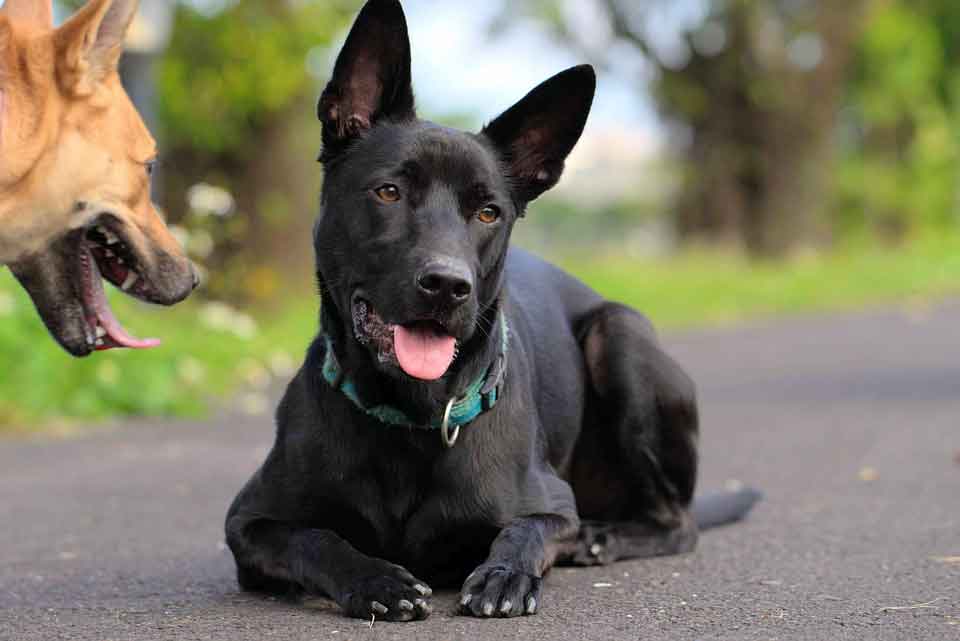
In 1980 the breed was the subject of a study by the University of Taiwan, Gifu University of Japan and Nagoya University. The aim of the study was to find out the origins of the Taiwan Dog. As such, the students examined 29 indigenous dog breeds and concluded that the Taiwan Dog current is a native breed that actually descends from Southeast Asian hunting dogs. This Asian dog breed is now popular throughout the island as a guard and companion dog.. In 2004 was officially recognized by the FCI.

Physical characteristics ยซTaiwan dogยป

The males of Taiwan Dog reach a withers height of up to 52 cm.. When fully grown they weigh 18 kg, while the females are about 5 cm smaller and 2 kg lighter. Muscular animals characteristically move with very wide strides., but they are fast and agile due to their pronounced musculature. The Taiwan Dog has a very tight coat of about 1,5 to 3 cm length. A variety of colors is allowed, including black, striped, yellow, white, black and white or white and brindle. Sponsorship of the breed was taken over by Japan.

Character and skills โ€œTaiwan Dogโ€

Sociable and loyal hunting companion.
His brave and intrepid character serves the Taiwan Dog in his role as hunting dog. Animals are known for their quick perception and the fact that they are faithful and loyal to their master.. They are also suitable as guard and dressage dogs and are considered extremely sociable.

TAIWAN DOG

They adapt very well to the environment and that is why they were able to live so incredibly well with primitive peoples in the past.. It also, these dogs can survive in the desert in the middle of the mountains, they can stand out excellently and can cope with almost all situations. All these strong qualities can be traced back to his previous harsh life with the prehistoric peoples of the mountains.. Your skills are also improved by working together with people. This builds trust between the dog and the man., friendships and shared experiences. The Taiwan Dog they are big and simple family dogs. Because of life in the desert, do not have a great demand for food. The Taiwan dogs they can even be used as protection dogs and as police dogs, because they have this unmistakable good sense of smell and are ready to defend themselves.

Until today these dogs are known mainly in the Asian region. In Europe they have not been able to arouse comparable popularity so far.

Health ยซTaiwan Dogยป

The Taiwan Dog are extremely resistant to disease.

Videos "Taiwan Dog"

HTTPS://youtube.com/watch?v=HhLEIjw4N-4
Taiwan Dog
HTTPS://youtube.com/watch?v=am_kkgYKXR4
Perro de montaรฑa de Formosa / Perro de Taiwan / Taiwan Dog – Raza de Perro / Dog Breed

Photos:

1 – Dog of Taiwan by https://pixabay.com/zh/photos/taiwan-dogs-dog-the-black-dog-4890098/

Type and recognitions:

  • FCI CLASSIFICATION:
  • Group :
  • Section : . .

Federations:

  • FCI – Group 5: Spitz-type dogs and primitive type – Section 7: Primitive type - Hunting Dogs. โ“˜

FCI breed standard "Taiwan Dog"

Origin:
Taiwan

Date of publication of the valid original standard:
09.11.2004

Use:

Hunting dog, on guard and company.


General appearance:

Medium size dog, triangular head, almond-shaped eyes, fine, erect ears and sickle-shaped tail. Dried, muscular, well balanced.

IMPORTANT PROPORTIONS:

  • chest depth : height at the withers = 4.5 โ€“ 4.7 : 10
  • Height to the cross: body length = 10 : 10.5 Females may be slightly longer.
  • Muzzle length : length of skull = 4.5 : 5.5


Behavior / temperament:

Extremely loyal to his master, acute senses, moving alert, brave and fearless.

Head:

---

Cranial region:
  • Forehead: wide, rounded, without wrinkles.
  • Skull: The skull is slightly longer than the muzzle.
  • Stop (Fronto-nasal depression): Well defined, with a slight groove.

facial region:

  • Nose: Moderate size. Large nostrils. Color black, may be slightly lighter in all colors except blacks.
  • Snout: Flat nasal bridge. Tight lips, no pendulosos. The muzzle tapers slightly from the base towards the nose, but it is not pointed.
  • Jaws / Teeth: Strong jaws. Scissor bite, teeth are inserted at right angles into the jaws.
  • Cheeks: Well developed and slightly prominent.

Eyes: Almond-shaped. dark brown color. Brown is also accepted, yellow or light eyes should be avoided.

Ears: erect, inserted on both sides of the skull at an angle of 45ยบ. The inside of the outline is straight while the outside of the outline is slightly rounded.

Neck:

Muscular, strong, long, slightly arched. No double chin.

Body:

  • General: Fibrous and muscular, almost square in shape.
  • Back: Straight, short. Well developed cross.
  • Pork loin: Tightly muscled.
  • Rump: Wide. Flat or very slightly sloping and short.
  • Breast : Quite deep but not reaching the elbows. Slightly marked forefinger. Well arched ribs.
  • Belly: Well withdrawn.

Tail:

Sickle shaped, high insertion, carried erect, active, with the tip curved forward.

Tips

PREVIOUS MEMBERS:

  • Shoulder: Well muscled. Scapulae sloping back. They should meet the humerus at an angle of 105 to 110 degrees.
  • Elbows: Close to the body.
  • Arms: Straight and parallel to each other.
  • Metacarpus: Firms.

LATER MEMBERS:

Hind legs should be thin, with good bone, well muscled and parallel to each other. The posterior angulation must be in balance with the anterior.

  • Thigh: Large, inclined and well angled with the knee.
  • Legs: It should be in balance with the thigh.
  • Metatarsus: Perpendicular to the ground.
  • Pads: Thick.

FEET: No deviations in or out. Firm and thick pads. Black nails but lighter colors are accepted in all colors except black.

Movement:

Powerful step, with scope. Agile enough to be able to turn 180ยบ quickly.

Mantle

Fur:Short and hard, glued to the body. Long between 1,5 and 3 cm..

Color:Negro, striped, Bayo, white, black and white, white and bay, white and brindle.


Size and weight:

Height:

  • Males: 48 cm.. โ€“ 52 cm..
  • females: 43 cm.. โ€“ 47 cm..

Weight:

  • Males: 14 kg. โ€“ 18 kg.
  • females: 12 kg. โ€“ 16 kg.


Fouls:

Any deviation from the aforementioned criteria is considered as a fault and the severity of this is considered to the degree of the deviation to the standard and its consequences on the health and well-being of the dog..

  • Shyness
  • Bite in clamp.
  • Missing teeth must be penalized but the lack of less than 3 PM1 is acceptable.
  • Protruding eyes.
  • Very straight front and rear angles.
  • Past or under marked size.

FALTAS DESCALIFICANTES:

  • Aggressiveness or extreme shyness.
  • Any dog โ€‹โ€‹showing clear signs of physical or behavioral abnormalities must be disqualified..
  • Prognathism.
  • Overshot.
  • Ears not erect.
  • Extremely long hair (exceeding 4,5 cm.).
  • Lack of any canine.
  • Threaded queue.


N.B.:
  • Males should have two normal-appearing testicles fully descended into the scrotum..
  • Only functionally and clinically healthy dogs, with the typical conformation of the breed, should be used for parenting.

Source: F.C.I - International Cynological Federation

Alternative names:

1. Formosan Mountain Dog, Takasago Dog, Taiwan Canis, Taiwanese Dog, Taiwanse Canis (English).
2. Chien de Taรฏwan (French).
3. Taiwan Dog (German).
4. Cรฃo de taiwan (Portuguese).
5. Perro de montaรฑa de Formosa (espaรฑol).

โ–ท The world of Pets: Dogs, cats, birds, reptiles, amphibians

Pomeranian
Alemania FCI 97 . European Spitz

Pomeranian

The Pomeranian very active, independent, Intelligent, brave and loyal.

Content

History

The Pomeranian (Deutscher Spitz;, Pomeranian Lulu or Deutscher Zwergspitz) It is a dog of the Spitz family, named for the region of Pomerania Central, Eastern Germany, and is classified as a dog ยซToyยป due to its small size.

The ancestors of the Pomerania were Iceland and Lapland sled dogs, He came to Europe because of Pomerania.

The region of Pomerania, bathed in the north by the Baltic Sea and bounded in the west by the island of Rรผgen and in the east by the Vistula River, It was occupied by many peoples, celts, Slavs, Poles, Swedes, Danish and Prussian. Its name comes from Pomore or Pommern, which means "by the sea", and it was given in times of Charlemagne. Is in Pomerania where the Spitz won fame as a pet and dog work.

Read more

โ–ท The world of Pets: Dogs, cats, birds, reptiles, amphibians

Greenland Dog
Dinamarca FCI 274 - Nordic Sledge Dogs

Greenlandรฉs

The Greenland Dog not an easy breed to control, it is necessary to thoroughly document their character.

Content

Characteristics "Greenland Dog"

Coexistence is important that you have with your new friend. Before considering the acquisition of a dog of the breed "Greenland Dog" you know certain factors. Not all breeds of dogs are apt to live in an apartment, you must take into account his character, their need for exercise, their interaction with other pets, their care and if you have small children, their level of tolerance towards them.

Adaptation โ“˜

2,0 of 5 stars (based on 1 review)

friendly dog โ€‹โ€‹โ“˜

4,0 of 5 stars (based on 1 review)

hair loss โ“˜

5,0 of 5 stars (based on 1 review)

Affection level โ“˜

3,0 of 5 stars (based on 1 review)

Need for exercise โ“˜

5,0 of 5 stars (based on 1 review)

Social need โ“˜

4,0 of 5 stars (based on 1 review)

Home โ“˜

4,0 of 5 stars (based on 1 review)

Toilet โ“˜

2,0 of 5 stars (based on 1 review)

Friendly with strangers โ“˜

2,0 of 5 stars (based on 1 review)

barking โ“˜

4,0 of 5 stars (based on 1 review)

Health โ“˜

4,0 of 5 stars (based on 1 review)

Territorial โ“˜

2,0 of 5 stars (based on 1 review)

Cat friendly โ“˜

1,0 of 5 stars (based on 1 review)

Intelligence โ“˜

4,0 of 5 stars (based on 1 review)

Versatility โ“˜

2,0 of 5 stars (based on 1 review)

Child friendly โ“˜

3,0 of 5 stars (based on 1 review)

Surveillance โ“˜

2,0 of 5 stars (based on 1 review)

joy โ“˜

5,0 of 5 stars (based on 1 review)

History

It belongs to the oldest dog breeds in the world.

For centuries, the Greenland Dog has accompanied the Inuit in their common homeland: It is said that more than 1.000 years he came with his ancestors from Siberia to North America. In the icy expanses it still serves the inhabitants as a versatile all-rounder and has always been bred specifically for its ability to work and its robustness.. Helped in hunting seals and polar bears, as well as in dragging loads through ice and snow, even over long distances. In times of need, it also served as food for the inhabitants in the past.

The outstanding physical abilities of the Greenland Dog they also sparked the interest of the first polar explorers, who saw him as an ideal companion for expeditions. These may include, Roald Amundsen, the most successful explorer of the Arctic and Antarctic, was also accompanied by Greenland dogs. The breed has its origin in Greenland and, therefore, is under the patronage of Denmark. Genetically, the Greenland Dog is identical to canadian eskimo dog, that is not recognized by the FCI. Today, the Greenland dog belongs to a total of four breeds of sled dogs. By his side are the Alaskan Malamute, the Samoyed and the Siberian Husky.

Physical characteristics

The characteristics of this dog have always been more important than its appearance. The strong build allows the Greenland Dog to drag loads through the snow for long periods of time. Size variations are possible, with males generally over 60 cm in height to the cross, females over 55 cm.. The ears are upright, triangular and slightly rounded at the tip. This sled dog wears its tail slightly curled on its back. The coat consists of a smooth undercoat and a fairly thick, smooth top coat. The fur is longer on the head, the legs and the lower part of the tail than the rest of the body. All coat colors except merle and albino are allowed. The eyes should be slightly slanted and dark – blue or different colored eyes lead to disqualification according to the standard.

Character and skills

From Greenland, the largest island in the world, this four-legged friend has conquered the hearts of many dog รขโ‚ฌโ€นรขโ‚ฌโ€นlovers. But, keeping a sled dog like this requires not only experience, but above all a lot of space and time to satisfy the need for movement of this robust worker.

The character of the breed is determined by its field of application: Like Inuit sled dogs, the greenlandic dogs they are very persistent and full of energy. It also, hunting companions are brave and show a pronounced hunting instinct. Because most of them lived in the pack and rendered their faithful services to several people, do not tend to bond strongly with people , but they are basically human friendly – and therefore are not suitable as watchdogs. But, they do not usually miss the opportunity to greet friends – or strangers – loudly and cheerfully.

Attention: The greenlandic dog may not bark much, but tends to howl a lot. He loves to live with other dogs in a pack.

Greenland Dog Education

Who wants to train a Greenland Dog need knowledge, experience with dogs and above all a lot of patience. A clear hierarchy is very important to the independent sled dog and will question it if the opportunity presents itself.. This applies to other dogs as well as their owners. You need a reliable consequence and a sensible education, accept your own head (stubborn) of the race. Exhausting this dog both physically and mentally is the basic requirement for a good education., as a little challenged sled dog will want to vent elsewhere, and this is probably not to the liking of its owners. It makes sense to go to puppy school with this dog, to be widely socialized with conspecifics of different sizes and breeds. If you want to train with the growing dog in a canine school, you should clarify in advance if the trainers have already had experience with the special character of sled dogs.

Greenland Dog Health

For centuries, robustness has been the main breeding objective of this four-legged friend, It is not surprising that the Greenland Dog be one of those breeds that have hardly any health restrictions. But, when i buy a puppy, look for parents who are free of hip dysplasia (HD) – some lines may have a slight tendency to this. As with all big dogs, the stomach can also be twisted, so it is important to take breaks after meals. Due to its origin and its fur, that adapts to icy conditions, These breeds are considered to be heat sensitive and, therefore, should not be kept in hot countries. Nor should you encourage your Greenland Dog to carry out sports activities above the 15 degrees Celsius. Your companion will feel correspondingly comfortable in the colder season. In winter, However, make sure you take proper care of the paws, as road salt can quickly lead to chapped or inflamed skin.

Greenland dog nutrition

One Greenland Dog in the use of sled dogs consumes enormous amounts of energy and needs an appropriately adapted diet. So, it is important to adapt the amount of food to the workload and the constitution of these dogs – information provided by manufacturers can only provide approximate guidelines. Of course, the puppy's energy requirement is not yet that high, since you should only move moderately anyway.

Feed your puppy three to four servings of a high-quality food per day.. Regardless of the age of your puppy, meat should be the first element of the diet and therefore the main component of food. It also, cereals have no place in dog food. If your quad performs well, increase the amount of food accordingly.

Food should be relatively high in fat and low in carbohydrates, as well as dietary fibers to supply your endurance athlete with sufficient energy. It is important that a session of physical activity is carried out with a time interval between the last meal – it is better to feed your Greenland dog three hours before training and in any case avoid too much exercise after feeding. This is the only way to minimize the risk of a life-threatening stomach twist. Of course, it is also important that fresh water is always available for your four-legged friend. On longer trips you should take adequate precautions and carry enough water with you.

Greenland dog care

A coarse-toothed comb is sufficient to comb the soft undercoat – this should be done regularly, especially during coat change, because the Greenland Dog misses – not only during this time – a relatively large amount of hair. If your partner has gotten dirty, usually it is enough to let the coat dry and then comb it well. Stubborn dirt should be gently rubbed off the coat with a damp cloth.. A bath is not normally necessary – if this happens, use a mild dog shampoo.

Especially with older dogs that move less, you should check if your partner is wearing out his claws enough and if necessary help with claw scissors. They also have eye and ear cleaners and dog tick tweezers ready to use when needed.. For dental care, for example, special dog treats are suitable. Or you can use a dog toothbrush and toothpaste, which is particularly effective in fighting tartar. Many dog รขโ‚ฌโ€นรขโ‚ฌโ€นowners perform this ritual for well-groomed small teeth regularly.. But, if you are considering this, you should get your puppy used to.

Employment for Greenland Dogs

Properly use a Greenland Dog in other latitudes it is a demanding task for which only a minority of dog lovers have enough time and space. Ideally, sled dog training should take place with him, which in turn is only possible to a very limited extent in most countries. An alternative is training with special trainers. As well โ“˜ Canicross offers sports owners the possibility to discover nature together with their partner. This four-legged friend also likes long walks through the woods as a supplement. Always be aware of your pronounced hunting instinct. It is essential that you have it under control to be able to enjoy relaxed walks. Always pay attention to an age-appropriate load and don't overload your four-legged companion.

Is a Greenland Dog right for me??

The Greenland Dog is a four-legged friend for sports connoisseurs who appreciate his independence and want to do many outdoor activities with him. Under no circumstances does this sled dog from the frozen expanses of Greenland belong to an apartment or even the city – nor does it belong to the warm regions of southern Europe. If you want to live with a greenlandic dog, you should think about buying two of them at once, because dogs like to be together with conspecifics. If you live in the country, you can keep your greenlandic dogs in a pack under the open sky in a leak-proof garden with an open kennel. So the heat sensitive sled dog can look for a shady spot in the summer – this should absolutely be available.

Of course, the Greenland Dog also happy with family connections. But, It is not the classic "one person dog". In any case, these companion animals are never primarily family or companion dogs, but rather working dogs – you should always be aware of this. If one can use your dog to his full capacity, they can live well with a family and so they are also extremely kid-friendly.

Cats or small animals are not suitable to live with this ambitious hunter. You don't have to be a professional dog if you decide to stay with this four-legged friend, but you must already have some experience with dogs and above all do not underestimate the time required for the workload. Due to these requirements, the Greenland Dog It is a breed for connoisseurs that can meet high maintenance demands.

Where do I find my desired Greenland dog??

One greenlandic dog is a rarity in Central Europe. So if you want a Greenland Dog move in with you, you should contact the Nordic dog breed clubs. They can arrange contacts with Greenland dog breeders – also abroad – and advise you on the breed requirements if necessary. If you are looking for a sled dog and cannot find one in your region, should consider whether one of the other three sled dog breeds would be an alternative: the Siberian Husky are much more common in Europe. With a little distance one also comes across relatively easily with breeders of malamutes de Alaska or samoyed. But: All breeds pose great challenges to their owners.

If you are looking for a greenlandic dog older and grown up, I should look for dogs of Nordic breeds, especially in animal shelters. Although you will most likely not find a purebred Greenlandic dog here, many Nordic dogs whose owners have underestimated their urge to move are waiting for a competent new home where they will be given enough occupancy. The most promising way to find them is to search the internet. If required, Nordic dog breed clubs can also give you tips on finding. Surely you will find a Nordic quadruped that will envelop you in a short time with its charm. Ideally, this person should not live too far from home., so that you and your potential new roommate can get to know each other before you decide to let her move in. Remember that these dogs live better with other dogs of the same species and clarify – with the breeder or the current foster home of the animal protection – how well the new dog fits in with an existing dog or if you decide to get a duo right away.

Images "Greenland Dog"

Photos:

1 – Lulo is the only Greenlandic dog kept as a pet in Upernavik, Groenlandia by Slaunger, edited by Thegreenj / CC BY-SA
2 – Greenland Dog by https://www.pikist.com/free-photo-sckxk
3 – Greenland Dog by https://www.needpix.com/photo/836500/greenland-dog-dog
4 – Greenland Dog by https://pixabay.com/es/photos/groenlandia-perro-de-groenlandia-1963005/
5 – Greenland Dog by https://www.pxfuel.com/en/free-photo-xodqt
6 – Greenland Dog by https://pixy.org/4674986/
7 – Greenland Dog by https://www.pikrepo.com/nemmp/brown-and-white-short-coated-dog-on-green-grass-during-daytime

Videos "Greenland Dog"

Type and recognitions:

  • FCI CLASSIFICATION:
  • Group :
  • Section : . .

Federations:

  • FCI – Group 5 – Section 1 Nordic Sledge Dogs. โ“˜
  • CKC – Nordic Sledge Dogs โ“˜
  • UKC – Nordic Sledge Dogs โ“˜

FCI breed standard "Greenland Dog"

Origin:
Denmark

Date of publication of the valid original standard:
03.11.2014

Use:

Sledge dog.


General appearance:

An extremely strong polar spitz, built to withstand tough sled dog work in arctic conditions. Some variation in size is allowed, assuming work ability and harmony are not affected.

IMPORTANT PROPORTIONS: The body is short and rectangular with a ratio of the height at the withers to the length of the body of 10 to 11. Slightly longer body is allowed in females.


Behavior / temperament:

The predominant temperamental qualities in the Greenland Dog are energy, mental strength and great courage. He is a passionate and tireless sled dog. With people โ€“ even strangers โ€“ he is friendly; because of his work as a sled dog, is not closely linked to a specific person and is therefore not suitable as a guard dog. When hunting seals and polar bears, he demonstrates a great hunting instinct..

Head:

---

Cranial region:
  • Skull: It is wide and slightly arched, wider between the ears.
  • Depression links (Stop): Defined, but not strongly marked.

facial region:

  • Truffle: big and dark, corresponding to coat color, Always brown (liver) in dogs with a red or brown coat and always dark in dogs with a sable coat.May turn pink during winter (โ€œsnow noseโ€).
  • Snout: Wedge shaped, wide at the base and tapering towards the nose, but without being pointed. The nasal bridge is straight and wide from the naso-frontal depression to the nose.
  • Lips: Slim and tight, very close to the teeth very strong. Jaws/Teeth: Powerful jaws with regular teeth, healthy and strong. Scissor bite.
  • Eyes: Dark eyes are preferred, but the color according to the coat is allowed. They are implanted in a slightly oblique position, but never sunken or bulging. The expression is frank and showing courage. Eyelids are tight.
  • Ears: Rather small, triangular, with rounded tips, carried firmly erect. The ears are very mobile and expressive regarding their position.

Neck:

Very powerful and rather short.

Body:

Strong and rather compact, slightly longer than the height at the withers.

  • top line: Horizontal or falling very slightly.
  • Back: Straight.
  • Pork loin: Width.
  • Rump: slightly sagging.
  • Breast : deep and wide, but the ribs should not be barreled.
  • Belly: Following the chest line. It is allowed to be slightly retracted.

Tail:

High implementation, thick and bushy. Carried in a curve or in a slight curl on the back.

Tips

PREVIOUS MEMBERS: Seen from the front the forelimbs are perfectly straight, with powerful muscles and heavy bones.

  • Shoulder: Moderately thrown back.
  • Arm: Straight and strong, slightly longer than scapulae. Elbow: Attached to the body, but allowing free movement.
  • Forearm: Straight and strong.
  • Articulation of the carpus: Strong and flexible.
  • Metacarpus: Strong and elastic, only slightly oblique.
  • Previous feet: Rather large, powerful and rounded, with strong nails and pads.

LATER MEMBERS: Seen from behind they are perfectly straight, very muscular, with powerful bones and moderate angulations.

  • Thighs: Powerful and very muscular.
  • Hock: Wide and strong, moderately angled. Hind feet: Same as previous feet.

Movement:

An efficient trot, harmonious, fluent and tireless is the most essential for a sled dog. On the track the dog should be presented on the free leash in a moderate trot to demonstrate good reach in front and good rear thrust. Seen head on when walking, the Greenland Dog does not move on a single track, but as the speed increases, the limbs gradually converge inward until the feet follow the center line.

Mantle

  • Fur: Double layer: soft, dense undercoat and straight, rough outer coat, no curls or ripples. On the head and the limbs the hair is rather short, on the body it is longer and more generous. The coat is long at the bottom of the tail, giving it a bushy appearance.
  • Color: Any color โ€“ solid or particolor โ€“ is allowed, except albinismand dogs with merle markingsthat should be disqualified.


Size and weight:

Height to the cross:

  • In males: 60 cm or more,
  • In females: 55 cm or more.


Fouls:

Any deviation from the aforementioned criteria is considered as a fault and the severity of this is considered to the degree of the deviation to the standard and its consequences on the health and well-being of the dog., and the dog's ability to perform its traditional task.

  • Light bones
  • Short members, close body of terrain.
  • Shy temperament.

SERIOUS FAULTS:

  • Conditions that negatively affect the general well-being of the dog.
  • Long, soft coat.
  • Ears that are not held firmly erect.

FALTAS DESCALIFICANTES:

  • Aggressiveness or extreme shyness.
  • Any dog โ€‹โ€‹showing clear signs of physical or behavioral abnormalities must be disqualified..
  • albinism.
  • Merle brands.
  • Eyes of different colour.
  • Blue eyes or gazeos.


N.B.:
  • Males should have two normal-appearing testicles fully descended into the scrotum..
  • Only functionally and clinically healthy dogs, with the typical conformation of the breed, should be used for parenting.

The latest changes are in bold.

TRADUCCION: Federation Canรณfila Mexicana, A.C. (Mvz Mauricio Martรญnez). Reviewed by Mr.. J. Nallem.

Source: F.C.I - International Cynological Federation

Alternative names:

1. Kalaallit qimmiat (Qimmeq), Grรธnlandshund, Grรผnlandshund, Esquimaux Dog (English).
2. Groenlandais (French).
3. Grรธnlandshund (German).
4. Gronlandshund (Portuguese).
5. Esquimal de Groenlandia, Groenlandรฉs (espaรฑol).

โ–ท The world of Pets: Dogs, cats, birds, reptiles, amphibians

Canarian Warren Hound
Espaรฑa FCI 329 . Primitive type - Hunting Dogs
Podenco Canario

The Canarian Warren Hound is brave, decided to, generous and extremely loyal to his master.

Content

History

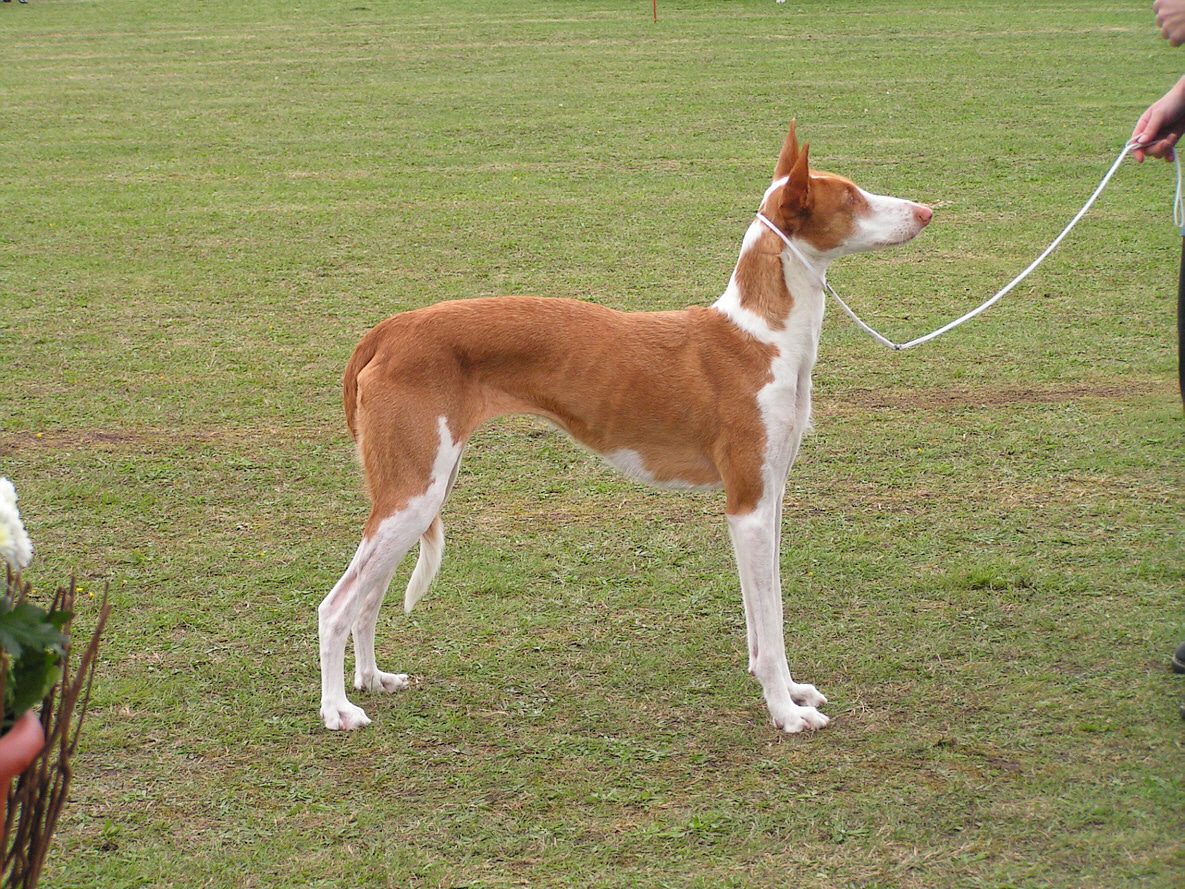
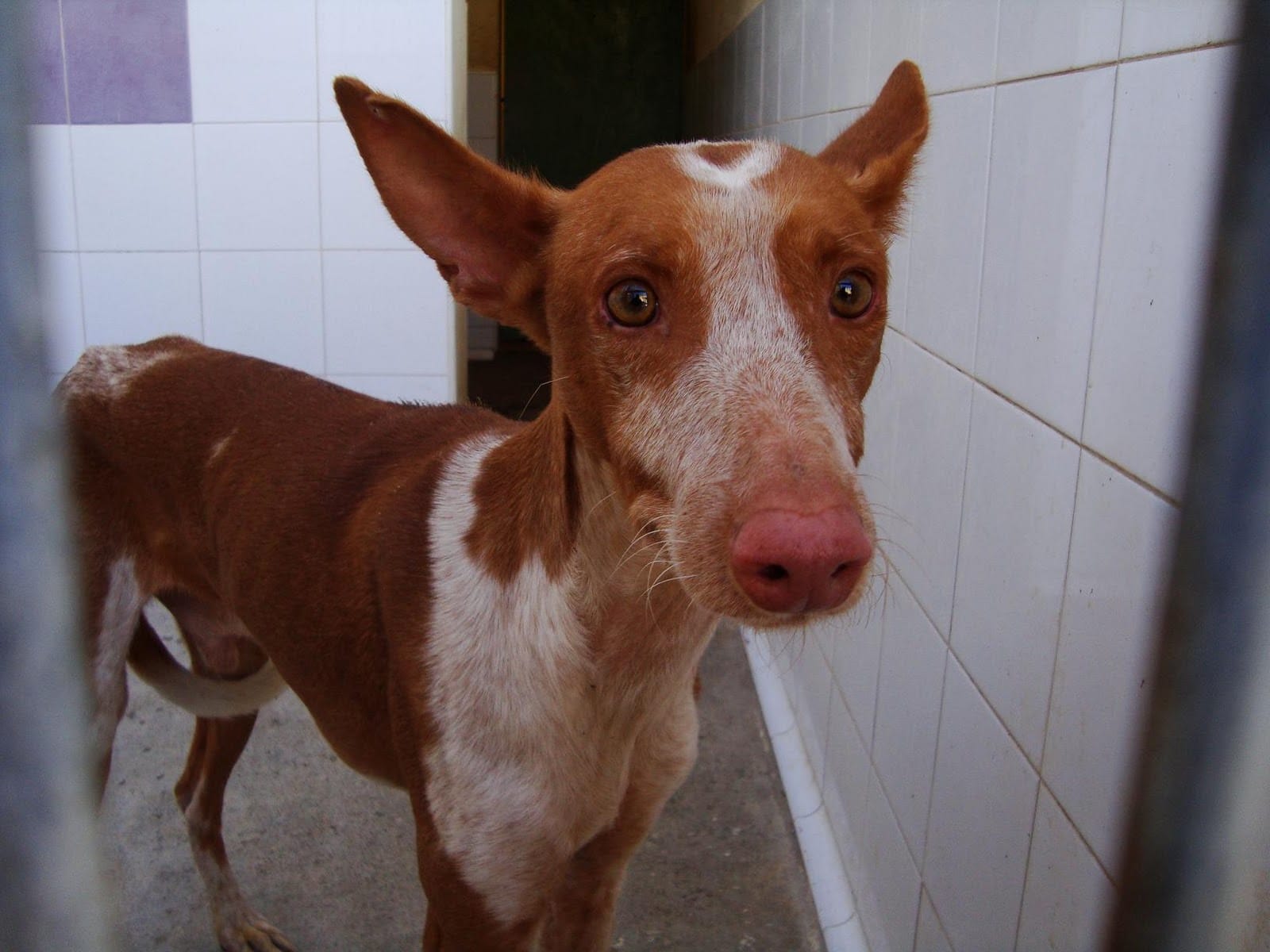
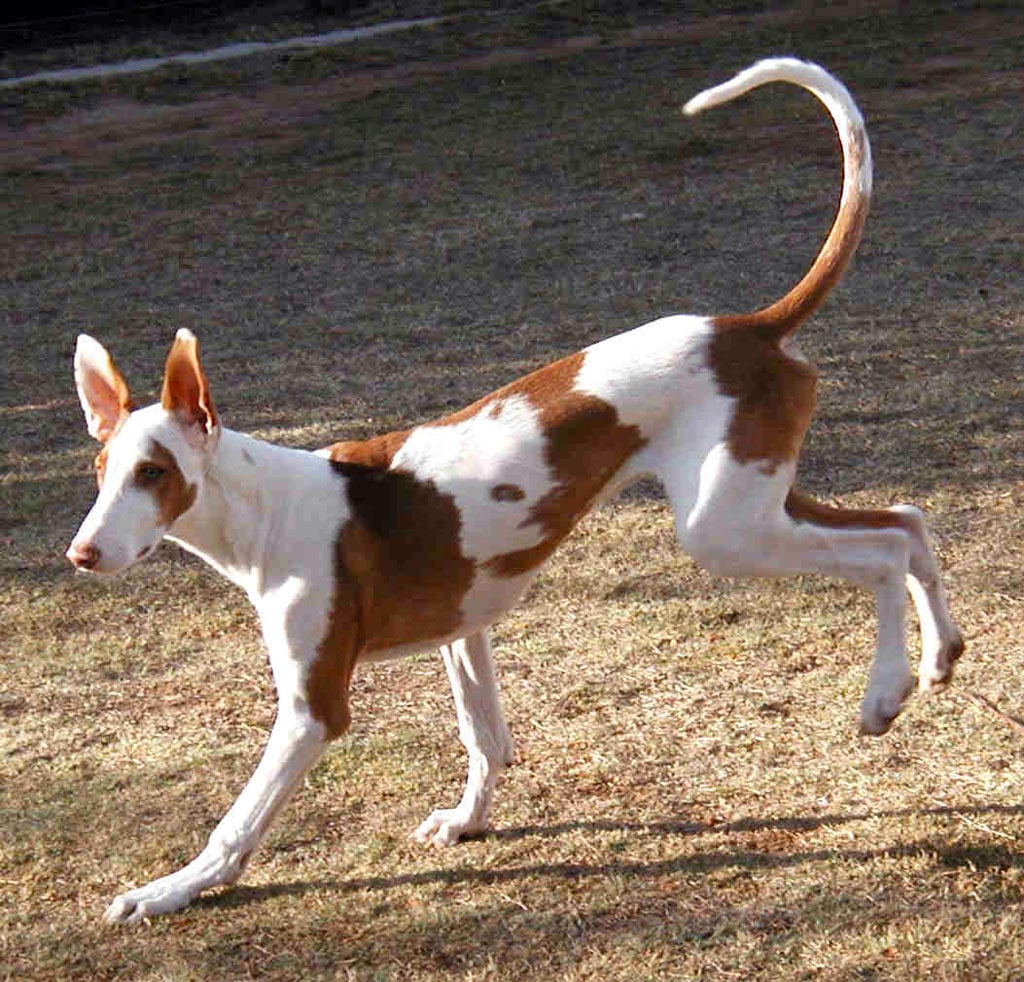
The Canarian Warren Hound It is a breed canine Spanish Canary.

The Canarian Warren Hound, It is one of the oldest breeds known today., According to scholars of the breed, it dates from approximately 7000 years. This realize the numerous found vestiges of its representation in engravings, statues and bas-reliefs.

A native of Egypt, probably, He was taken by the Phoenicians, greeks, the same Egyptians to the Canary Islands and Carthaginian, where it is currently easy to see in the larger islands (Gran Canaria and Tenerife).

Since its inception, the Canarian Warren Hound has been placed in the wild and in the possession of the peasant who needed to hunt to survive. Given the perfect hunting qualities of this dog: his sense of smell, his hearing and his clear vision, as his great speed in the race after the dam, the peasant has had, always, a wonderful ally, It has been able to take advantage of.

The Canarian Warren Hound, as its name suggests it is found in the Canary Islands, and a dog is little known and disseminated outside their place of origin, It is not easy to find puppies.

Today, is perfectly adapted, both the flat lands as stony and mountainous, sandy, or soft like the prairies or very hard; You can both enter caves that penetrates in Lava Tubes or galleries, in thickets or forests, in the end, does not shy away from any obstacle.

Outside the hunting season, the living conditions of animals are very different: Well-kept dogs can be found and fed on clean kennels, as well as miserably neglected and malnourished chained dogs. Animals that are not or are no longer fit for hunting often suffer a cruel fate.
For this reason, dogs are increasingly placed abroad by animal protection organizations and individuals – an understandable and well-meaning activity, What, However, brings with it some problems: Dogs, who are usually already grown up, sometimes they are taken out of their simple rural living environment and taken to big cities. Noise and haste can be very harsh for them, his frequent lack of trust in humans further complicates it. His pronounced passion for hunting makes the free will, which would be absolutely necessary for the maintenance of the animals and to reduce stress, is often difficult or impossible. It also, in many cases are infected with so-called travel or Mediterranean diseases, that often require long and costly treatment.

Physical characteristics

The Canarian Warren Hound, is a dog from size medium, very light but tough.

The height to the cross males will of 55 to 64 cm and the females of 53 to 60 cm.. These measures have 2 cm tolerance up or down.

Has the muscles hyper developed and as it does not present adipose panniculus it is very easy to appreciate the rib cage, the spine and hip bone.

Has the head elongated with little pronounced stop, the eyes are small, almond-shaped and oblique.

Their ears they are rather large, When the Earth State of arousal keeps them in erect and fall backwards when it is at rest, they are wide at the base and end up in tip.

The limb perfectly Plumb, they are straight, has fine but strong bones. The tail is low, You can take the low or sickle-shaped, but does not exceed Hock.

The hair the Podenco Canario is smooth, tight and short. In the layer color combinations within the following are supported colors: Red and white, with more or less intense red, and finally, Orange to mahogany.

Observations

:

These dogs start to hunt from an early age, giving cases of animals less than three months that show strong hunting instinct.

When they discover and/or they chase prey, emit a characteristic short, repetitive bark, known to local hunters as "singing a rabbit".

Character and skills

The Canarian Warren Hound is an animal that shows no aggression normally, extremely loyal and noble to teammate, restless, independent, stubborn, worker and intelligent.

Itร‚ยดs brave and decided to, the race is fast and very agile, generous and extremely fell to its owner.

There are no guard and defense attitudes, at home it is "friend of all strangers", what makes it ideal as a pet.

If raised inside a Home, Once overcome the first six months of hyperactive life, shown as a quiet animal and customize, attitude changes drastically once comes to the field of hunting.

In its role of Hunter It has always been dedicated to the rabbit house and its most important feature is its ability to adapt to any type of terrain. It is capable of detecting the presence of the press inside cracks thorny bushes or stone walls, the Podenco Canario only to follow the trail of the prey with the sense of smell but without catching it.

Observations:

In the Canary Islands is used in conjunction with the huron, since the latter catches the rabbit by the throat.

Caring for Canarian Warren Hound

As already mentioned, the dog should be given a housing environment that corresponds to its predisposition. Rural areas with low traffic and a manageable hunting density are appropriate.
Proper exercise in any weather with as much free running as possible is a must for this active dog.

The short coat is very easy to care for; just brush from time to time.

Canarian Warren Hound Health

The breed is basically a robust dog with low susceptibility to disease; therefore, breed-specific diseases are largely unknown.

But, the Canarian Warren Hound can suffer from the typical travel or Mediterranean diseases of dogs (among others, leishmaniosis, dirofilariasis, babesiosis, ehrlichiosis) like all the other dogs.
Many animals are chronically infected without showing symptoms of disease. But, these dogs are unhealthy and can infect other animals through vectors (ticks and blood-sucking insects).
So, imported dogs should always be thoroughly examined for the diseases mentioned (the so-called "travel profile").

The average life expectancy is about 12 years.

Images Canarian Warren Hound

Canarian Warren Hound videos

Type and recognitions:

  • FCI CLASSIFICATION:
  • Group :
  • Section : . .

Federations:

  • FCI – Group 5: Spitz-type dogs and primitive type – Section 7: Primitive type โ€“ Hunting dogs.. โ“˜

FCI breed standard "Canarian Warren Hound"

Origin:
Spain

Date of publication of the valid original standard:
24.06.1987

Use:

It is used for rabbit hunting and adapts perfectly to the multiple variations of the terrain for this purpose., using their prodigious sense of smell as well as sight and hearing. Withstands high temperatures and hunts tirelessly from dawn to dusk. You can detect the presence of rabbits inside cracks with your sense of smell or hearing., stone walls, majano, volcanic tubes and thorny scrub. Its extraordinary preservation is undoubtedly due to its gifts, which have made it necessary throughout the centuries.. It is primarily a trail dog and should not bark or flap the part during tracking.. It is also used with the help of a ferret, modality allowed on the islands. It also usually catches rabbits by tooth.


General appearance:

It is a medium-sized dog, slightly elongated, leptosomatico, light, very resistant. The skeleton is well developed. The absence of adipose panniculus allows us to appreciate the relief of the rib cage, spine and hip bones. The muscles are highly developed, spandrel, transluciendo contractions through the skin.

IMPORTANT PROPORTIONS: Slightly longer than high. Well developed chest, without reaching the elbow. Muzzle slightly longer than the skull.


Behavior / temperament:

Brave, nervous, restless and radiating a dynamism. Noble, never aggressive. Selflessly addicted to its owner. Stoically supports more rigorous sessions without the less fatigue.

Head:

Elongated. Truncated cone shaped, very provided with the body, measuring length 21 to 22 cm.. Parallel craniofacial lines.

Cranial region:
  • Skull: Longer than width, plane, with prominent occipital bone.
  • Depression links (Stop): Not very marked.

facial region:

  • Truffle: Wide, sand color, harmonized with the coat color, slightly open nostrils.
  • Snout: Prominent and wide, dull finish, flesh-colored with more or less intensity in harmony with the color of the coat.
  • Lips: Fine and collected, harmonized with the color of the nose.
  • Teeth: Bite in scissors, in perfect opposition and well-developed.
  • Eyes: Oblique, almond-shaped and small. More or less dark amber depending on the intensity of the color of the layer. His gaze is smart and noble.
  • Ears: Rather large. Carried erect in attention, slightly divergent. Take them back to sleep. Wide at its base and pointy at the end.

Neck:

Muscular, straight, with smooth skin, without jowl, rounded and flexible.

Body:

  • Back: Strong, muscular, suitable for the race and exercise of hunting.
  • Pork loin: Somewhat elongated.
  • Rump: Something solid bones of the rump, more visible in the exemplary weak or in full hunting season.
  • Breast : Chest with no outgoing sternum, well developed, But however it does not reach the elbow. Oval ribs.
  • Chest perimeter more in 5 to 8 cm as height on the cross.
  • Belly: picked up, without being the Greyhound. Well marked flanks.

Tail:

Lowest insertion, as a continuation of the rump. Rounded, It descends somewhat lower than the Hock. Fallen or carried in the shape of a sickle. Something sharp at the tip which is usually white in color. Never screwed. Desirable not to raise in excess to the March.

Tips

PREVIOUS MEMBERS: Perfectly Plumb, straight, vertical and parallel, fine but solid bone. Cat feet, generally something diverted outwards. Strong and somewhat oval pads.

Angles:

  • Angles scapulo-humeral: close to 110ยฐ.
  • Humeral-radial angles: close to 140ยฐ.

LATER MEMBERS: Plumb, straight, strong, muscular, rather high Hock (some 18 cm from the ground). Straight feet, of cat, with strong and slightly oval pads. Without the presence of spurs.

Angles:

  • Lame-femoral angle: about 110ยฐ.
  • Femoral-tibial angle: about 120ยฐ.
  • Hock angle: about 130ยฐ.

Movement:

You must have a fast trot, long and very light.

Mantle

SKIN: Consistent, attached to the body and without wrinkles.

HAIR: Smooth, short and tight.

COLOR: Preferably red and white, the Red can be more or less intense coming from Orange to dark red (Mahogany). All combinations of these colors.


Size and weight:

Height to the cross:

  • For males: of 55 to 64 cm..
  • for females: of 53 to 60 cm..

These measures may vary due to the different land where living and hunting, therefore to accept differences in 2 cm above or below the maximum or minimum size, as long as the specimens are typical and with the prototype of the breed.


Fouls:

Any deviation from the aforementioned criteria is considered as a fault and the severity of this is considered to the degree of the deviation to the standard and its consequences on the health and well-being of the dog..

SERIOUS FAULTS

  • Excessively wide head.
  • Too marked stop.
  • Hanging lips.
  • Lack of premolars.
  • Prognathism.
  • Ears very divergent.
  • Flat chest.
  • Outgoing sternum.
  • Threaded queue.
  • Low or cow hocks.
  • Crossing of front feet and hocks in gear.
  • Aggressive temperament.
  • Any dog โ€‹โ€‹showing clear signs of physical or behavioral abnormalities must be disqualified..

FALTAS DESCALIFICANTES:

โ€ข Aggressiveness or extreme shyness.
โ€ข Any dog โ€‹โ€‹showing clear signs of physical or behavioral abnormalities.


N.B.:

โ€ข Males must have two normal-appearing testicles fully descended into the scrotum..
โ€ข Only functionally and clinically healthy dogs, with the typical conformation of the breed, should be used for parenting.

Source: F.C.I - International Cynological Federation

Alternative names:

1. Canary Island Podenco, Canary Island Hound, Podenco Canario (English).
2. Podenco canario (French).
3. Podenco Canario (German).
4. Podenco Canario (Portuguese).
5. Podenco Canario (espaรฑol).

โ–ท The world of Pets: Dogs, cats, birds, reptiles, amphibians

Portuguese Podengo
Portugal FCI 94 . Primitive type - Hunting Dogs

Podenco Portuguรฉs

The Portuguese Podengo is a breed of dog that is in danger of extinction.

Content

History

The Portuguese Podengo It is considered one of the oldest dogs breeds, that has its origins in the Phoenicians, cultural matrix of which descend the Portuguese. It is a native breed of Portugal, with great skills for hunting, but also surveillance, It is commonly used on farms to alert of the presence of intruders.

The great family of the hound race, specialists in the topic raised it was in Portugal where most subjected to crossing and as a result, branched lineage. Within their ancestors argue that perhaps the closest the Ibizan Hound, and various types of dogs of traces of lived (They inhabit) throughout the Mediterranean area. Like all hound dogs, History shows that they are represented in Egyptian paintings of thousands of years ago.

according to size, There are three varieties of Portuguese Hound, Grand, Small and medium, being each variety, products of the different crossing, over time.

It is believed that the great variety has emerged the variety of Portuguese Podengo small and medium, the ancestor of the Grande variety is the Pharaoh Hound spread from North Africa to the Iberian Peninsula. Although other authors raise that it is possible that the hound descends from the small Iberian wolves. There is still controversy...

Although one of the theories suggests that the Medium Portuguese Podenco arises, of different Podenco dogs from North Africa, The most accepted theory is that this variety, directly descended from the Portuguese Podengo Grande.

The small Portuguese Hound, sometimes described as a Chihuahua heavier (There is no kinship between these two races), often collaborate in the tasks of hunting with their larger peers, what this dog does is get into the rabbit hole and scare them so that they come out and are hunted by their pack mates.

In the North of Portugal today it is still used for hunting rabbits and small vermin. Hunting in a pack or alone. Although this dog can be seen in the rest of the country, its popularity lies in the North of the same.

Physical characteristics

As specified above, according to size, There are three varieties of Portuguese Hound, Grand, Medium- and Petit:

  • Portuguese Podengo Grande: It is a very rare variety and is in danger of extinction, especially the smooth variety. They are usually used in packs to hunt large prey such as deer or wild boar.. It is the only Portuguese breed used for wild boar hunting. His cloak can be short and smooth (less common and on the verge of extinction) or rough and long.
  • Portuguese Podengo Medio: It is the fastest of the three varieties, excellent Hunter of rabbits and hares. You can hunt in a pack or alone. Like the great Portuguese Hound, their coats can be smooth or rough and short and long. Of the three varieties this is the most common, and the greatest concentration of these dogs is located in the North of Portugal.
  • Portuguese Podengo Pequeno: Like his brother medium is an excellent Hunter of rabbits and hares. Responsible for getting into the Burrows (Thanks to its size and agility) to drive away prey and be hunted down by his pack mates. The small Portuguese Podengo coat is short and smooth, only.

The varieties in the fur are related to the inclement weather and adaptation to the same, the smooth-haired variety is more common in northern Portugal, characterized by being a humid area, This soft and smooth coat is necessary because it is dried more easily after wet.

The variety of hair bristles found in drier areas, where the coat of hair has the function of protecting the dog from the sun's rays and cold weather in winter. Nature is wiseโ€ฆ

The hair short or long, thick medium and bright. In dogs with long hair and rough, the hairs of the snout are long (Beard). The predominant colors are yellow and the fawn (with its varieties of color clear, to very dark), and diluted or matte black; unicolores with or without white spots or white spotting.

Their life expectancy is around the 12 or 14 years, and it is a race that is rarely seen outside Portugal.

In general, is a medium-sized dog, well proportioned, muscular with good bone structure. It has long, narrow head, with moderately wide skull and the pointed snout.

The ears, large and triangular, they are carried erect. It has eyes expressive and little bulging in orbits, color honey or brown, according to coat color.

The pigmentation of eyelids is darker that the of the fur. The body is quite long, with ribs moderately arched.

The tail, is strong and pointed, long and medium length, It is held horizontal or slightly arched in activity.

Character and skills

The Portuguese Podengo, It is their three varieties has a cheerful character, intelligent and very sociable with other dogs. They are extremely affectionate with their owners, especially with the children.

They are very shy with strangers, always alert and constant surveillance of their territory, that makes them good guard dogs, although, It lacks the aggressiveness which may show a watchdog or defence.

Observations

Unfortunately, the Portuguese Podengo It is one of the canine breeds that today are found in danger of extinction, even in Portugal. It is not easy to see them out of Portugal.

Images of the ยซPortuguese Podencoยป

Videos of the ยซPortuguese Podencoยป

Type and recognitions:

  • FCI CLASSIFICATION:
  • Group :
  • Section : . .

Federations:

  • FCI – Group 5: Spitz-type dogs and primitive type – Section 7: Primitive type - Hunting Dogs. โ“˜

FCI breed standard "Portuguese Podengo"

Origin:
Portugal

Date of publication of the valid original standard:
04.11.2008

Use:

hunting dog, guard and companion dog


General appearance:

Quadrangular pyramidal head, erect ears, sickle-shaped tail, well proportioned with a solid build and well muscled. Very loving and intelligent, sober and rustic. It comes in three sizes with two varieties of hair: smooth and wired.

IMPORTANT PROPORTIONS:

Podenco Grande y Medio: Almost square (midline sub) with large to medium substance respectively.
Length of the body in relation to the height at the withers: 11 / 10 and depth of chest with respect to the height at the withers 1 / 2.

Little Podenco: Body somewhat longer than tall (long sub), small in stature. The length of the body is somewhat greater than its height at the withers in a proportion โ€“ length of the body / height to the cross: 6 / 5.
chest depth / height to the cross: 1 / 2.

In all varieties the length of the snout is less than the length of the skull.


Behavior / temperament:

Podenco Grande: Used for hunting big game.

Podenco Medio: Also known as Warren Hound, his natural aptitude as a rabbit hunter is well known. Hunt alone or in a pack.

Little Podenco: Used to search for rabbits in burrows and rocks.

All varieties are used as guard and companion dogs..

Head:

Thin, in the form of a quadrangular pyramid trunk. Its base is wide and its quite pointed end. The upper longitudinal axes skull facial differ.

Cranial region:
  • Skull: Annoying. The profile is almost straight. The eyebrows are prominent. The frontal furrow is little pronounced. The handset inter space is horizontal and the back of the head is prominent.
  • Depression front naso (Stop): Little pronounced.

facial region:

  • Nose: Thin. Se adelgaza y es truncada en forma oblicua; is prominent in its end. Its color is darker than the coat.
  • Nose cane: Rounded cross section; straight profile. It is shorter than the length of the skull and wider at the base than at its tip.
  • Lips: Are well applied to each other. They are fine, strong and well straight.
  • Jaws/teeth: Normal, scissor bite, with solid and white teeth. The two jaws have a regular opposition. Complete dentition in the large variety.
  • Cheeks: Thin or placed oblique views of front.
  • Eyes: They are expressive and little bulging in orbits. Its colour goes from the honey to Brown, according to coat color. They are small and oblique. The pigmentation of eyelids is darker than the coat.
  • Ears: Insertion oblique and medium. Straight and high mobility are. They are vertical to the front when the dog is alert. They are sharp, and wide at the base. Triangular shape, thin; a height larger than the base and considerable.

Neck:

Harmoniously joined with the head and trunk. It is straight, long, provided, strong and well muscled. It presents no Chin.

Body:

  • top line: It is straight, level.
  • Cross: Only slightly visible in relation to the neck and back.
  • Back: Straight. It is long.
  • Pork loin: Straight. It is wide and muscled.
  • Rump: Medium length. It is wide and muscled; straight, or little fall.
  • Breast : Breastwork muscular and low protrusion. It is not very broad. deep chest, medium-amplitude up to the level of the elbows. It is long, with the sternum inclined backwards and upwards. Ribs well arched and bent.
  • Belly and flanks: Thin; slightly agalgados.
  • bottom line: It is slightly high.

Tail:

Natural. Set rather high. It is strong, thick and pointy; medium length. During rest it falls between the buttocks, to the hock and is slightly curved. When the dog is moving rises horizontally, slightly arched, or folded vertically in the form of Scythe, Although never screwed.

Tips

PREVIOUS MEMBERS: Seen from the front and profile are appropriate limbs. They are muscular and thin.

  • Shoulder: Long, inclined, strong and muscular well, scapula โ€“ humerus angle of approximately 100ยบ.
  • Elbows: Parallel to the main line of the body.
  • Forearm: Vertical; long and muscled.
  • Carpo: Delgado, is not prominent.
  • Metacarpus: Strong; short, little oblique.
  • Front feet: Rounded. Long toes, strong, together, and well arched. Fingernails are short and strong, preferably dark. The pads are durable and hard.

LATER MEMBERS: Seen from the back and side are well Plumb. They are muscular and thin.

  • Thigh: Long; medium-amplitude and well muscled.
  • Knee joint: femur โ€“ tibia angle approximately 135ยบ.
  • Leg: It is oblique, long, thin, strong and muscled.
  • Hock: Medium tall. It is thin and strong. The hock angle is open approximately 135ยบ.
  • Metatarsus: It is strong, short, Spurs and oblique.
  • Rear feet: They are rounded, with long toes, strong, together, and well arched. Fingernails are short and strong, preferably dark. The pads are durable and hard.

Movement:

Fast and agile. Lightweight trot.

Mantle

SKIN: The mucous membranes are preferably black, or always darker than the coat. The skin is thin and stretched.

HAIR: Two varieties. The hair is short or long, medium-thick. The hair is smooth when it is short, or rough when long. Short hair is more abundant than the long hair.
In dogs with long hair and rough, the hairs of the snout are long (Beard). There is no presence of an internal layer of hairs.

COLOR: The predominant colors are yellow and the fawn (with its varieties of color clear, to very dark), and diluted or matte black); unicolores with or without white spots or white spotting.
In the small hound the following colors are accepted but are not preferred: black, Brown with or without white markings, or white with spots of these colors.


Size and weight:

Height to the cross:

  • Petit: 20 โ€“ 30 cm..
  • Medium: 40 โ€“ 54 cm..
  • Grand: 55 โ€“ 70 cm..

Weight:

  • Petit: 4 โ€“ 6 Kg.
  • Medium: 16 โ€“ 20 Kg.
  • Grand: 20 โ€“ 30 Kg.


Fouls:

Any deviation from the above criteria should be considered as missing and the severity of this is considered in proportion to the degree of deviation from the standard and its effect on the health and welfare of the dog.

  • Behavior: Signs of shyness.
  • Snout / Skull: Skull upper longitudinal axes parallel facial.
  • Jaws: Incorrect occlusion or improperly implanted teeth, bite clamp, incomplete dentition in the large variety.
  • Truffle: Partial absence of pigmentation.
  • Neck: Arcuate.
  • Body: Arched top line.
  • Rump: Too steep.
  • Spurs: Its existence is not appreciated.
  • Fur: Silky and / or Undercoat.

SEVERE FAULTS:

  • Snout / Skull: Upper longitudinal axes convergent facial skull.
  • Truffle: Total absence of pigmentation.
  • Ears: Rounded.
  • Belly: Very agalgado.
  • Tail: Threaded queue.

MISS PLAYOFFS:

  • Behavior: Aggressiveness or excessive shyness.
  • General aspect: Signs of crossing with a Greyhound (Spanish Hound) or a Perdiguero (Portuguese Braco).
  • Jaws: Improper opposition of the jaws.
  • Eyes: Eyes of different colour (heterochromia).
  • Ears: Bent or folded.
  • Color: Striped, black and tan, Tri-color or totally white.
  • Any dog โ€‹โ€‹showing clear signs of physical or behavioral abnormalities should be disqualified..


N.B.:

Males should have two normal-appearing testicles fully descended into the scrotum..

TRANSLATION: Rafael Santiago (Puerto Rico).
Technical review: Miguel Angel Martinez (Federation Cynologique Argentina).

Source: F.C.I - International Cynological Federation

Alternative names:

1. Portuguese Warren Hound (English).
2. Podengo portugais, Lรฉvrier portugais (French).
3. Podengo Portuguรชs (German).
4. Cรฃo-coelheiro (Portuguese).
5. Podengo portuguรชs (espaรฑol).

โ–ท The world of Pets: Dogs, cats, birds, reptiles, amphibians

Jรคmthund
Suecia FCI 42 - Nordic Hunting Dogs

Jรคmthund

Still very old, the Jรคmthund was not recognized until the year 1946, It was previously confused with the Gray Norwegian Elkhound

Content

History

Only in 1946 the Jรคmthund (Jรคmthund) was recognized as a breed. But, the Jรคmthund it is a very old breed of dog, which is already known since the north of Sweden is populated.

The reason for this belated recognition is that the small Gray Norwegian Elkhound and the jรคmthund they were judged by the same race. At the end, this trial turned out to be untenable. The Jรคmthund mainly used to hunt moose, but it has also been used to hunt bears and lynxes, especially in the past.

Today the FCI recognizes three different moose dogs:

All three are assigned to buffers and dogs of the original type (group 5) and in them they are assigned to the section 2 ยซNordic Hunting Dogsยป.

Physical characteristics

The Jรคmthund He is respected for his wolf-like appearance and his great and powerful stature. With a height at the cross of 57 to 65 centimeters and a weight of about 30 kg, It is the largest and heaviest of the three moose dogs recognized and at the same time the largest Nordic hunting dog. Throughout its long history, the Jรคmthund not only faced wolves, lynx and elk, but also adult bears, whom he faced fearlessly when hunting.

Character and skills

Blind obedience is a long way off for this self-assured and independent pedigree dog from the far north. After all, the Jรคmthund in Sweden has been hunting moose, lynxes and even bears bravely and on their own for thousands of years. Although he always keeps in touch with his hunter, this smart and independent breed doesn't need your orders.

Strong dog personality with many talents

Dog lovers who are interested in this breed should know that the practice of certain commands sometimes requires some effort. With stupid repetitions or even with force and violence you will not achieve anything with the Jรคmthund.

But, if you accept his character and thoughtful nature and have the skills to deal with such a strong personality, you can certainly train him to be a versatile companion and working dog. With inventiveness, patience, consistency and sensitivity, the persistent and powerful Jรคmthund can be trained not only to be a versatile hunting dog, but also an excellent herding dog, guardia, sled and rescue.

Very experienced hunting dog

Despite relatively late recognition as a separate breed, the origin of Jรคmthund goes back a long time. In the province of Jamtland, in central Sweden, which is decisive for his name, the type of dog has been known for thousands of years.

Even the first settlers in northern and central Sweden had dogs to hunt bears., Moose, lynxes and wolves. Hunters appreciated above all their enormous stamina and physical strength., with which the dog, independently and bravely, went out looking for game.

Today it is regarded in hunting circles as a fearless and energetic search dog., which is not only suitable for hunting loose hounds, it can also be used for hunting guide dogs. Search and pursue game in the dense forests of Scandinavia and remain silent until you have placed the animal. Only then does he give the hunter a signal through his barking that he can hit the target.. This type of hunting is called ยซstanding stillยซ.

The Jรคmthund as a family dog

Also as a family dog รขโ‚ฌโ€นรขโ‚ฌโ€นthe Jรคmthund it is very suitable, as long as enough space is given to the independent nature and great desire for freedom of this original hunting dog. So he's considered friendly, balanced, calm and fond of children. After an appropriate period of acclimatization, also accepts conspecifics, cats and other pets without any problem.

He meets strangers with a certain distrust according to his natural instinct for vigilance and protection.. Does not act nervous or aggressive. There is also no denying a certain joy of barking to this Nordic hunting dog.

Breeding and buying a Jรคmthund

In Sweden the Jรคmthund has long been known beyond hunting circles and is popular as a versatile utility and companion dog. In other countries of the world, However, the swedish pedigree dog is very rare. Although you can find breeders in Germany, Great Britain, the Netherlands and North America, searching and waiting for a purebred puppy can sometimes take years. So, it is advisable to contact a registered association for Nordic dogs, that can help you find breeders in Scandinavia.

What do I have to consider when buying a Jรคmthund?

Although the distance to the breeder is long, those interested should take the time to get to know the kennel, the animals and the breeder in detail before buying. Don't take home the first best puppy, Before making several visits, convince yourself that it is a serious parenting, that dogs are raised with a lot of experience and love.

In addition to health tests, vaccinations and the presence of all important papers and a pedigree, animals must grow up in a close relationship with their breeder from birth. The socialization of a Jรคmthund already begins in the first weeks of life. Living with his mother and brothers, but also with the breeder's family, puppies learn the most important rules of the nest.

What demands does the Jรคmthund to the owner?

One Jรคmthund need plenty of exercise. You must also be sufficiently disabled both physically and mentally. A life in gated communities, in the city and without a garden, it certainly doesn't do this kind of dog justice.

The Jรคmthund feels more comfortable in rural areas. There you can move freely and spend a lot of time in nature. If not used for hunting purposes, you should definitely offer alternative activities. Possible are examinations for companion dogs, dog tournaments or rescue dog training. Also bike rides, long walks or sledding shots in winter are suitable to satisfy the great momentum of movement of the Jรคmthund.

Is a suit for me Jรคmthund?

Before you start looking for a suitable breeder, you should ask yourself the following question: Is this nordic pedigree dog suitable for me and my life?

This becomes especially important if you don't want to keep Jรคmthund like a hunting dog, but exclusively as a family dog. In this case you must make sure that you have enough experience, time and space to satisfy this demanding and energetic four-legged friend.

When asking if this dog is a good match for me, of course you should also keep an eye on the costs. After all, owning a dog costs not only time but also money. In addition to the purchase price, dog tax and insurance, there are also equipment expenses, watch out, food and visits to the vet.

You may be interested in our article on this topic: Getting the puppies used to the new home: Basic equipment and tips.

What food does the Jรคmthund need?

More important than the price of the food should be the price of the ingredients. This does not mean that the most expensive food is always the best.. Much more important is that the composition is adjusted to the needs of your dog and these depend on quite individual criteria such as weight, age, activity level and health status.

Basically, the food of Jรคmthund, like all the other dogs, should consist mainly of meat. It is the most important energy supplier for the descendant of the wolf and must constitute at least the 80 percent of the diet. The meat is complemented with vegetables, important fruits and fats, that provide an optimal supply of nutrients.

The cereals, the sugar, artificial flavor enhancers and chemical preservatives, on the other hand, have no place in dog food, either dry food, wet food, even cooked or raw food (BARF).

ยซSwedish Elk Hunting Dogยป Care

The waterproof coat of the Jรคmthund repels dirt and moisture well, but still needs to be brushed regularly. It is best to comb your hair daily, especially during the layer change phase. This way you can remove dead hair in time and at the same time ensure that the amount of hair in your house stays within limits.. But, you should not expect meticulous cleaning in your home as the owner of this dog.

In addition to the toilet, claws should be trimmed regularly to avoid injury. Your roommate's ears and teeth should also be cleaned and checked at regular intervals., about two or three times a week.

Health ยซSwedish elk hunting dogยป

The Jรคmthunde they are very robust

Careful grooming is not just for cleanliness and hygiene, but above all for the health of your dog. Brush your dog regularly and check his ears, claws, eyes and teeth. This way you can quickly detect any changes and make an appointment with the vet on time.

Being overweight is a problem for all dog breeds and quickly causes more complaints. So, it is advisable to check your pet's weight regularly. Hand palpation is also a good way to determine if your dog is of normal weight.. You shouldn't be able to see your dog's ribs from a distance., but i should be able to feel them.

Otherwise, the health of Jรคmthund is very robust, and there is no need to fear the hereditary diseases typical of the breed. If you have time, experience, money and the desire to fully adapt to this breed, you will surely have many years of pleasure with him Jรคmthund.

Characteristics "Jรคmthund"

Coexistence is important that you have with your new friend. Before considering the acquisition of a dog of the breed "Jรคmthund" you know certain factors. Not all breeds of dogs are apt to live in an apartment, you must take into account his character, their need for exercise, their interaction with other pets, their care and if you have small children, their level of tolerance towards them.

Adaptation โ“˜

3,0 of 5 stars (based on 1 review)

friendly dog โ€‹โ€‹โ“˜

3,0 of 5 stars (based on 1 review)

hair loss โ“˜

4,0 of 5 stars (based on 1 review)

Affection level โ“˜

3,0 of 5 stars (based on 1 review)

Need for exercise โ“˜

5,0 of 5 stars (based on 1 review)

Social need โ“˜

3,0 of 5 stars (based on 1 review)

Home โ“˜

4,0 of 5 stars (based on 1 review)

Toilet โ“˜

3,0 of 5 stars (based on 1 review)

Friendly with strangers โ“˜

3,0 of 5 stars (based on 1 review)

barking โ“˜

5,0 of 5 stars (based on 1 review)

Health โ“˜

2,0 of 5 stars (based on 1 review)

Territorial โ“˜

4,0 of 5 stars (based on 1 review)

Cat friendly โ“˜

3,0 of 5 stars (based on 1 review)

Intelligence โ“˜

3,0 of 5 stars (based on 1 review)

Versatility โ“˜

3,0 of 5 stars (based on 1 review)

Child friendly โ“˜

4,0 of 5 stars (based on 1 review)

Surveillance โ“˜

4,0 of 5 stars (based on 1 review)

joy โ“˜

4,0 of 5 stars (based on 1 review)

Images "Jรคmthund"

Photos:

1 – Jรคmthund by Jorgen Blom / CC BY-SA
2 – Jรคmthund (Swedish Elkhound) in the woods. 2 years old male. by User:Arto Pรครคkkรถnen / CC BY-SA
3 – Jรคmthund by https://pxhere.com/es/photo/644232
4 – Jรคmthund by https://pxhere.com/es/photo/619009
5 – Jรคmthund by https://pxhere.com/es/photo/1289323
6 – Jรคmthund by https://pixabay.com/es/photos/perro-tronco-mascota-animales-2064314/
7 – Jรคmthund by HTTPS://pxhere.com/es/photo/753453

Videos "Jรคmthund"

Type and recognitions:

  • FCI CLASSIFICATION:
  • Group :
  • Section : . .

Federations:

  • FCI – Group 5 – Section 2 Nordic Hunting Dogs. โ“˜
  • UKC – Nordic Hunting Dogs. โ“˜

FCI breed standard "Jรคmthund"

Origin:
Sweden

Date of publication of the valid original standard:
25.03.2003

Use:

hunting dog.


General appearance:

Grand, spitz rectangular, defined cut, strong, with good substance but agile with good structure. He is strong and of solid constitution, but also agile and imposing looking. The body does not must give the impression of being very long, or too much heavy.


Behavior / temperament:

He is brave and energetic, but also stoically calm.

Head:

It is clearly defined and elongated, proportionally wide between the ears.

Cranial region:
Skull: It is slightly bulky.
Fronto depression-nasal (Stop): Clearly marked, but not too much deep.

facial region:

Snout: The distance from the naso-frontal depression to the nose is slightly shorter than from the naso-frontal depression to the occiput. Tapers progressively towards the tip of the nose. So much in profile, as front, should not give the impression of being pointed but flat. The muzzle is straight, wide and strong,wide nose.
Lips: Tight.
Jaws/Teeth: Scissor bite.
Cheeks: clean.
Eyes: Slightly oval, brown, the look is penetrating, but at the same time calm.
Ears: High insertion, perfectamente lifted, pointed and sensitive in use. Slightly longer than wide at the base.

Neck:

Long, clearly defined, powerful and good scope.

Body:

Powerful and well defined. Its length slightly exceeds its height at the withers.
Line top : Straight, with a slight inclination from the withers to the rump.
Pork loin: Wide and well developed.
Rump: Wide, only slightly inclined.
Breast : Deep well; the ribs are well arched.
Bottom line and belly: The belly is little collected.

Tail:

High implementation. Medium length and regular thickness. It is carried curled, but not firmaments bent over or near the back. Hair is abundant, although it does not form a fringe.

Tips

PREVIOUS MEMBERS:
  • Shoulder: The shoulder blades are long and well sloped back.
  • Elbows: Well attached to the rib cage.
  • forearms: Straight, well outlined and strong bone.
  • Front feet: Strong, slightly oval. They point straight ahead; fingers are good together.
 
LATER MEMBERS: Seen from the back, they are parallel.
  • Knee: Well angled.
  • Hock: Well angled.
  • Rear feet: With the same characteristics of the front feet.

Movement:

Must be powerful, free and wide-ranging. On the trot, the feet converge towards a midline (single tracking).

Mantle

HAIR: The outer layer is made up of a fairly tight hair, although not stretched. The undercoat is short haired, soft and clear, preferably cream colored. The hair is short on the head and the front of the limbs, and longer in the neck, the chest, the tail and back of the limbs and thighs.
 
COLOR: Light to dark gray. The characteristic brands are : light gray or cream on both sides of the muzzle, cheeks, the throat, chest, belly, limbs and under the tail.


Size and weight:

Height to the cross:
  • Males : 57 โ€“ 61 cm.. Ideal 61 cm..
  • females : 52 โ€“ 60 cm.. Ideal 56 cm..


Fouls:

Any deviation from the above mentioned criteria is considered to lack, and the gravity of this refers to the degree of deviation to the standard and its impact on the health and well-being of the dog.
  • Yellow eyes.
  • Twisted tail.
  • Cream marks covered in black.
  • Cloak too short.
  • Thin bone.
  • Short tail.
  • Straight tail.
 
SERIOUS FAULTS
  • Domed skull front and raised cheeks.
  • Pointed snout.
  • Dental missing apart from P1.
  • Square body shape.
  • Slim build.
  • Heavy, lymphatic construction.
  • flattened feet.
  • Entire white stripe from the throat to the tip of the sternum called "tie".
  • Insufficient posterior angulation.
  • Fine tail, whip type.
 
MISS PLAYOFFS
  • Aggressive or too shy.
  • Height at the withers different from those specified in the standard.
  • Enognatismo o prognatismo.
  • hanging ears.
  • Lack of characteristic cream-colored markings.
 
Any dog โ€‹โ€‹showing clear signs of physical or behavioral abnormalities must be disqualified..


N.B.:

Males should have two normal-appearing testicles fully descended into the scrotum..

The latest changes are in bold.

Source: F.C.I - International Cynological Federation

Alternative names:

1. Swedish Elkhound (English).
2. Jรคmthund (French).
3. Jรคmthund (German).
4. Jรคmthund, Elkhound sueco (Portuguese).
5. Elkhound sueco, Jรคmthund (espaรฑol).