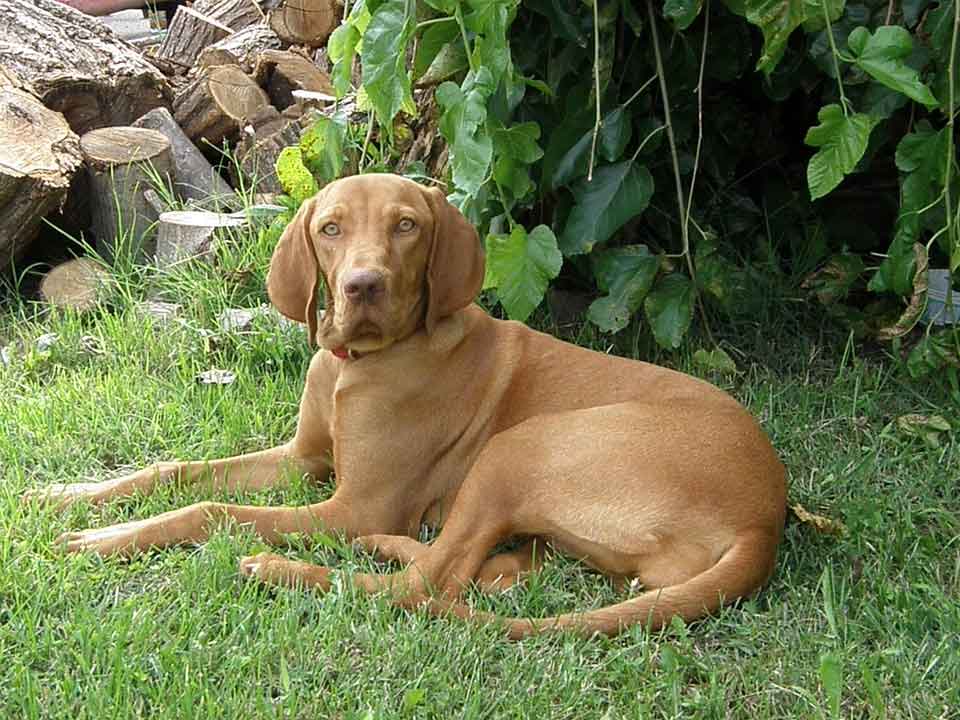
โ–ท The world of Pets: Dogs, cats, birds, reptiles, amphibians

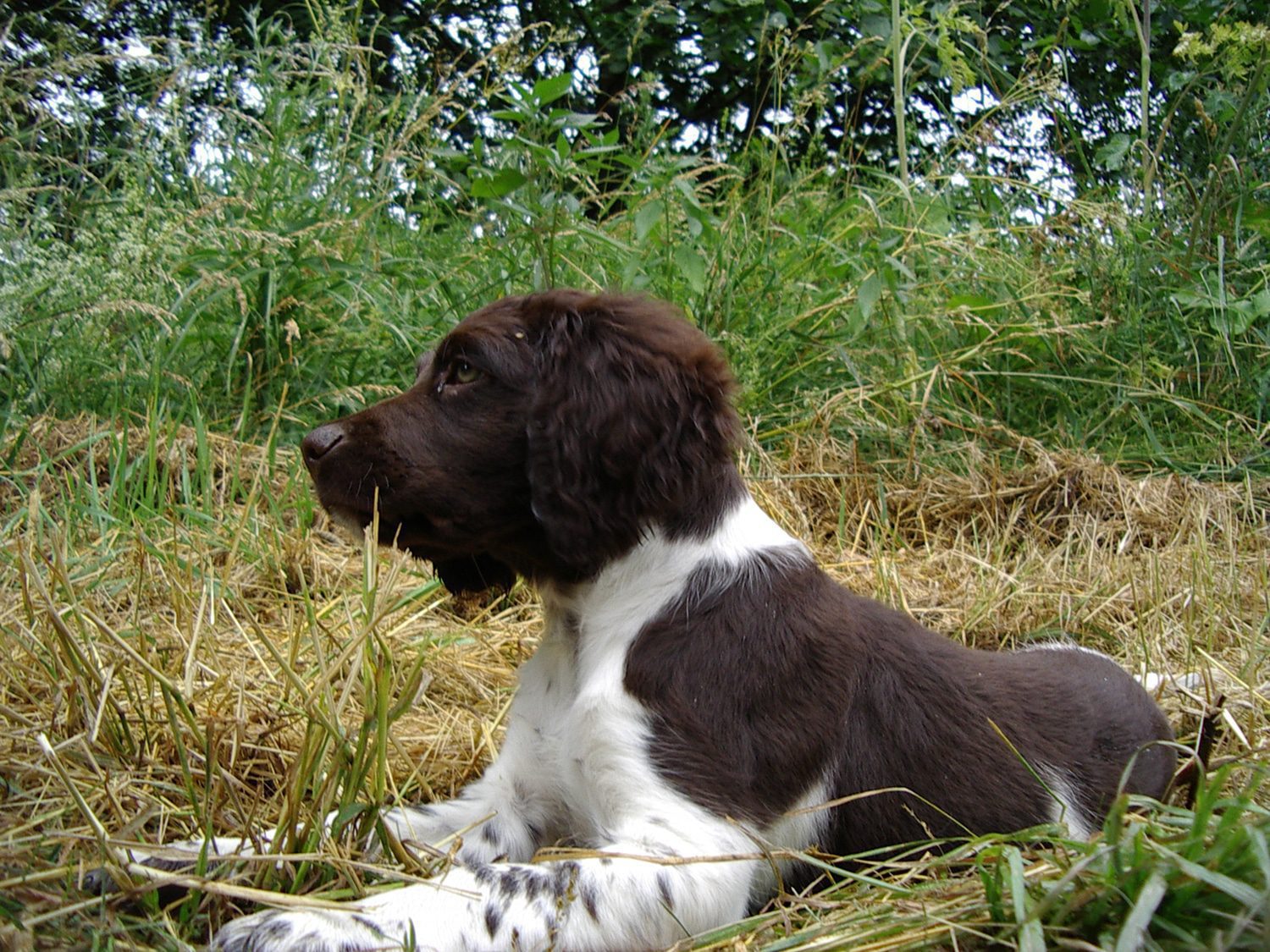
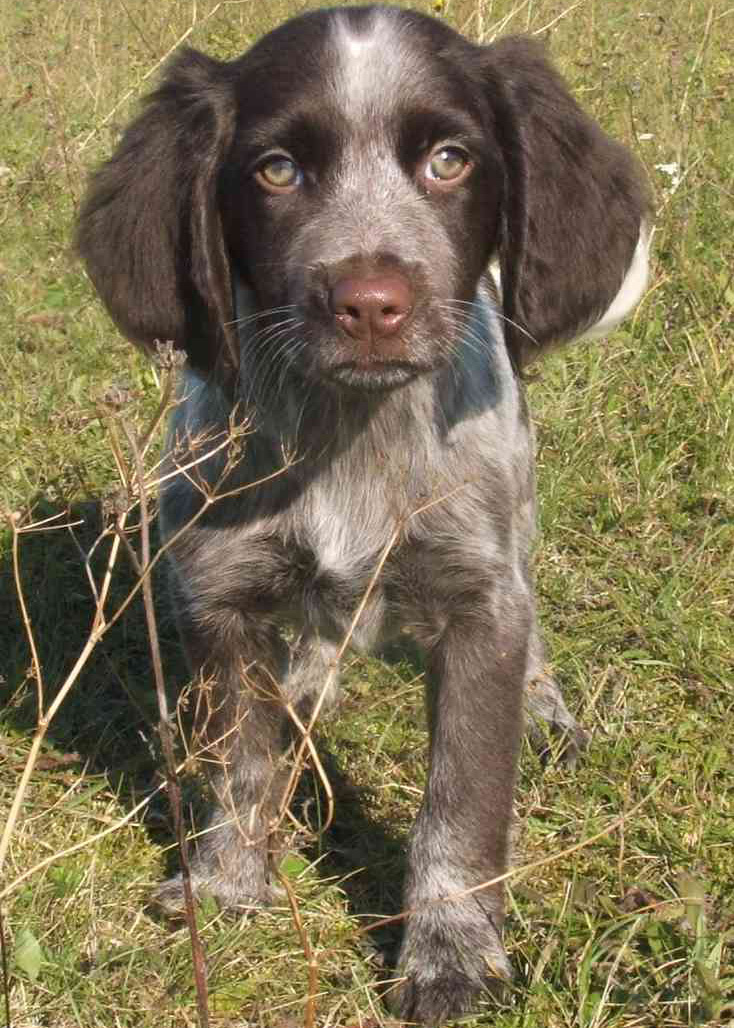
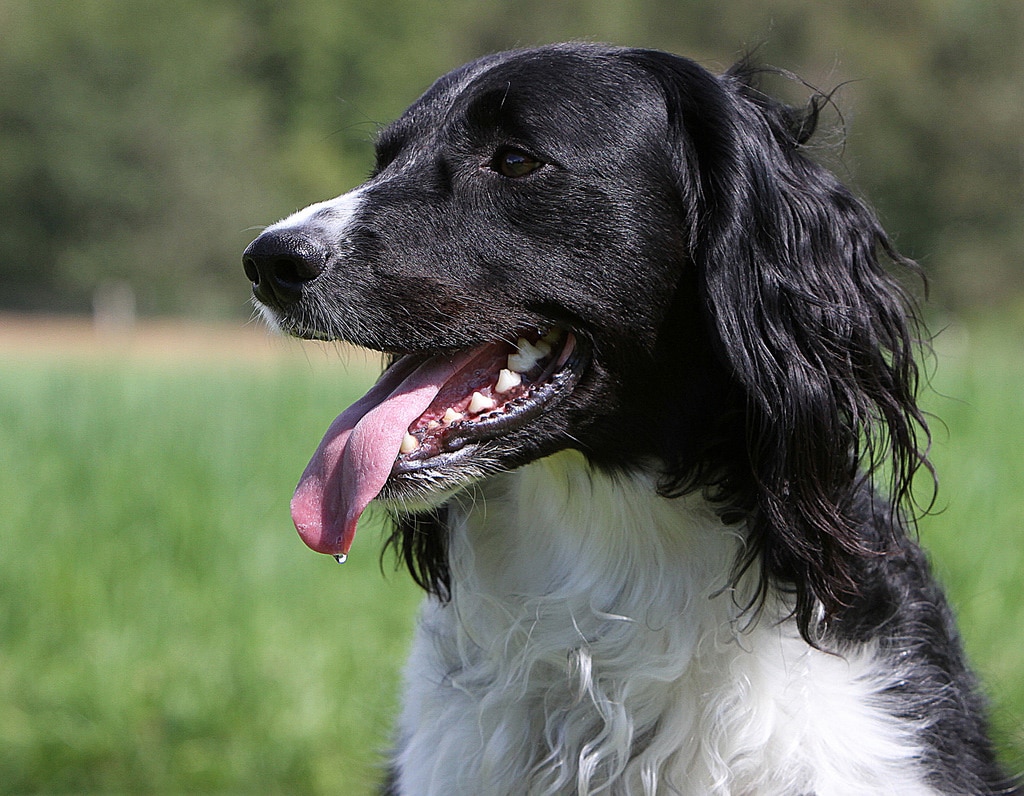
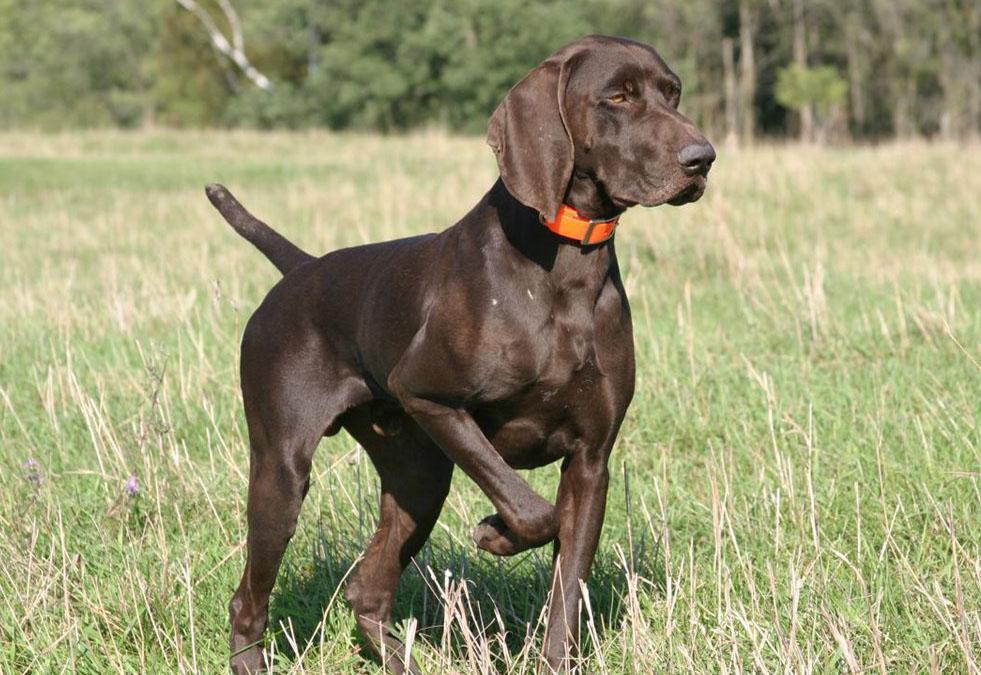
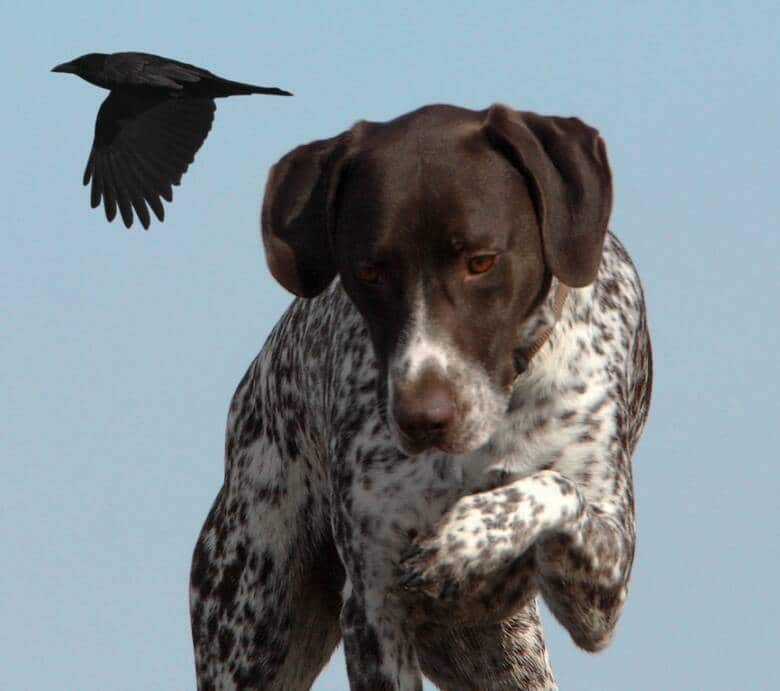
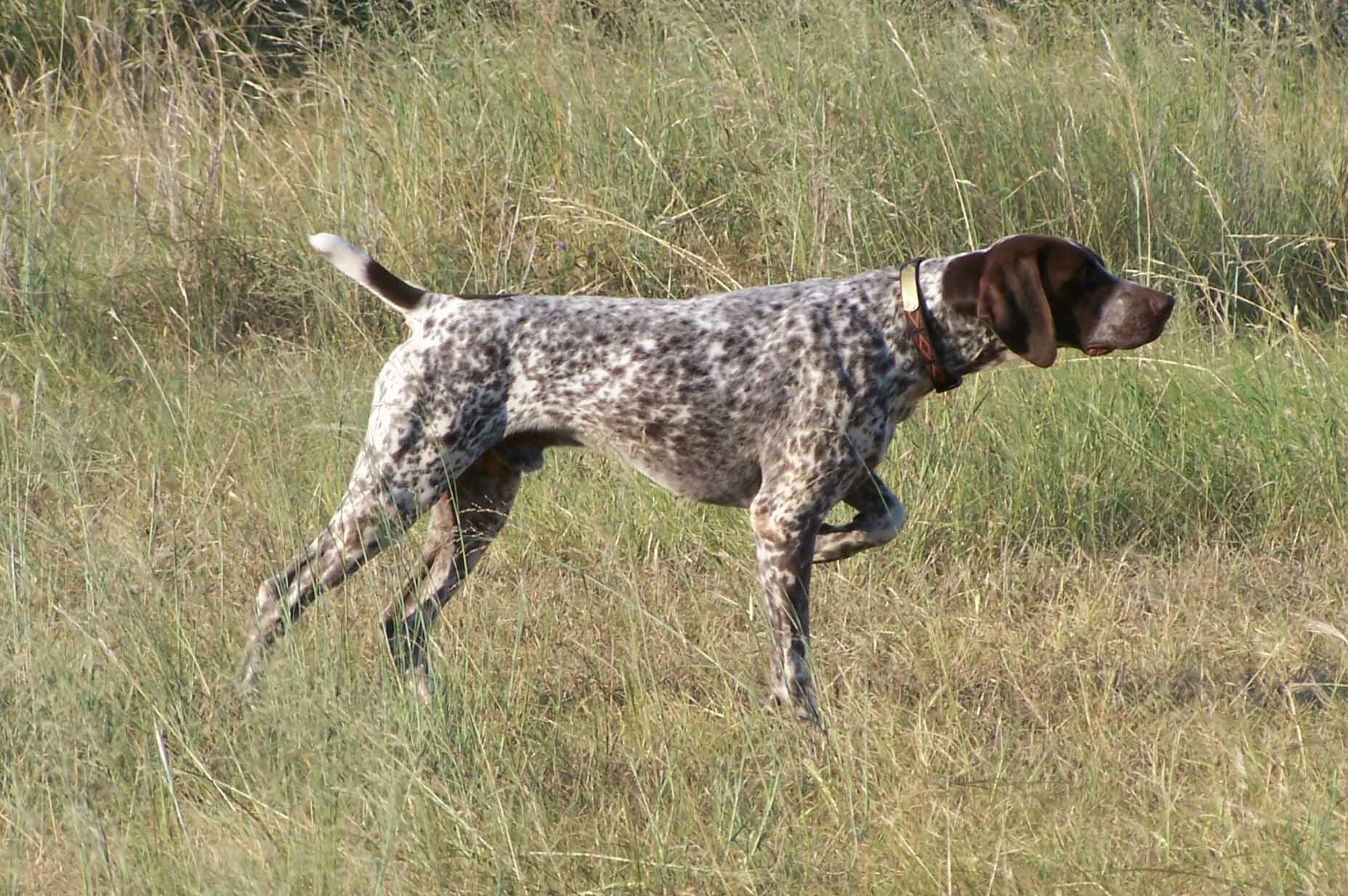
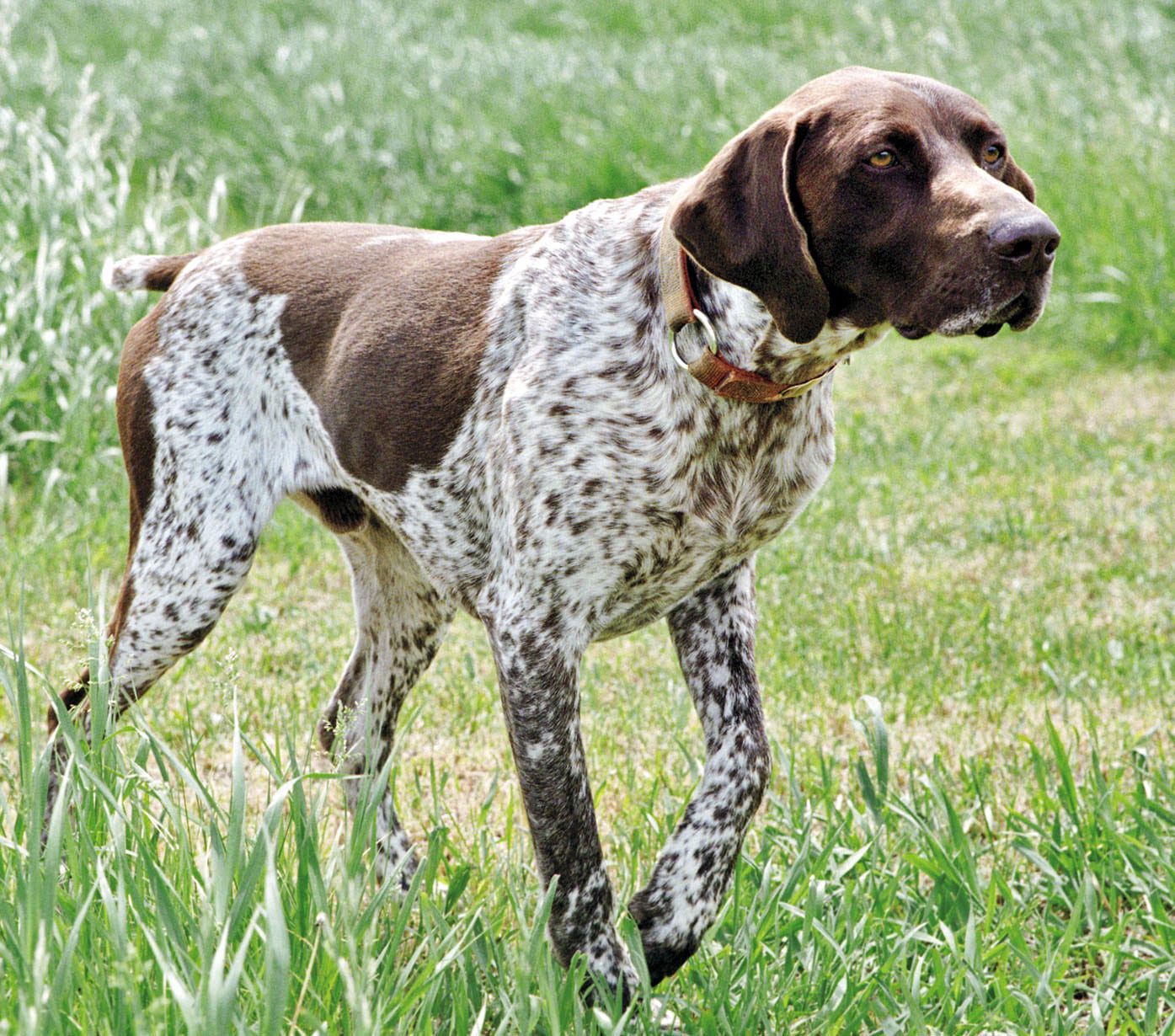
French Pointing Dog - Gascogne type
Francia FCI 133 . Braque Type

French Pointing Dog - Gascogne type

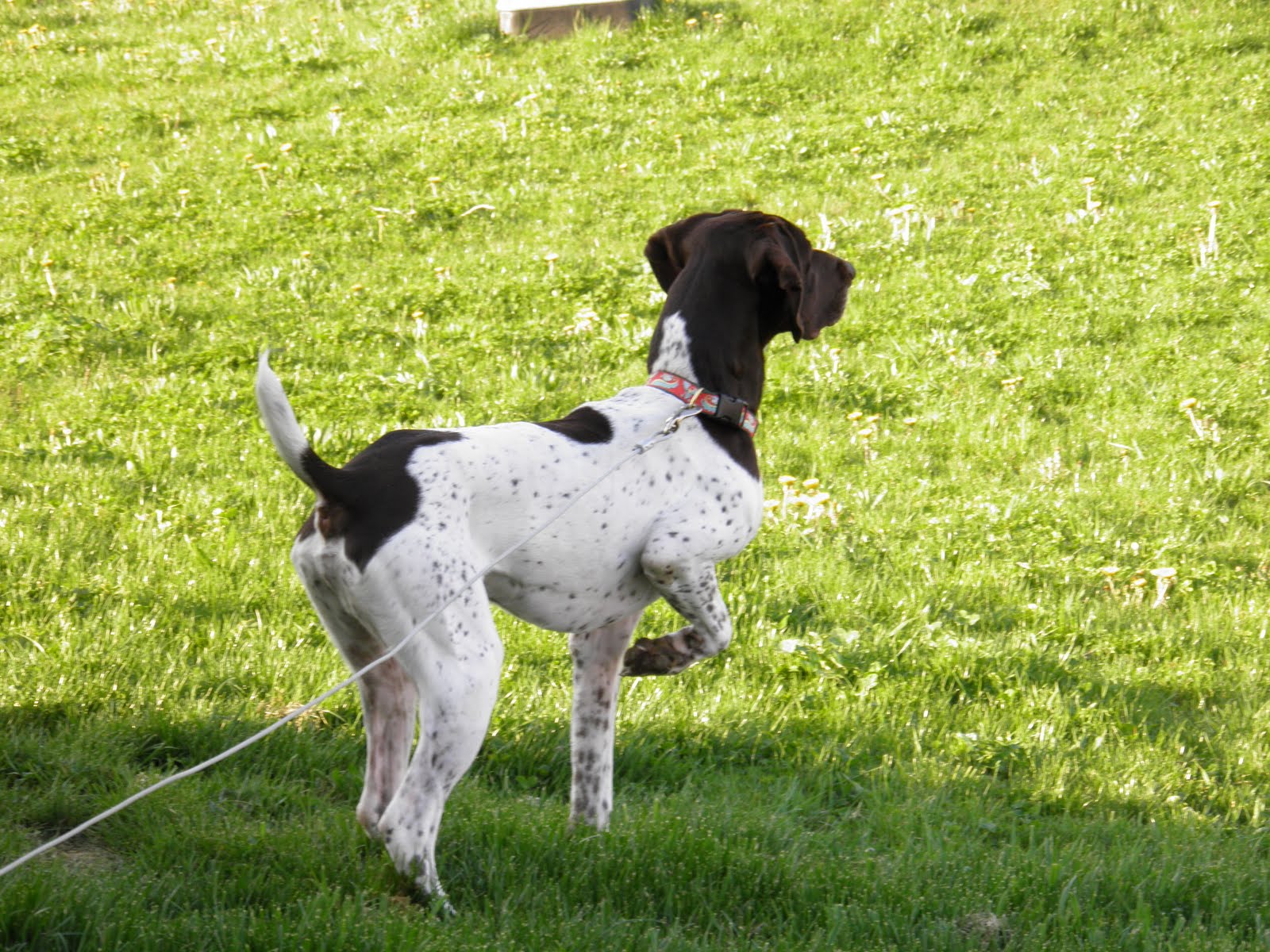
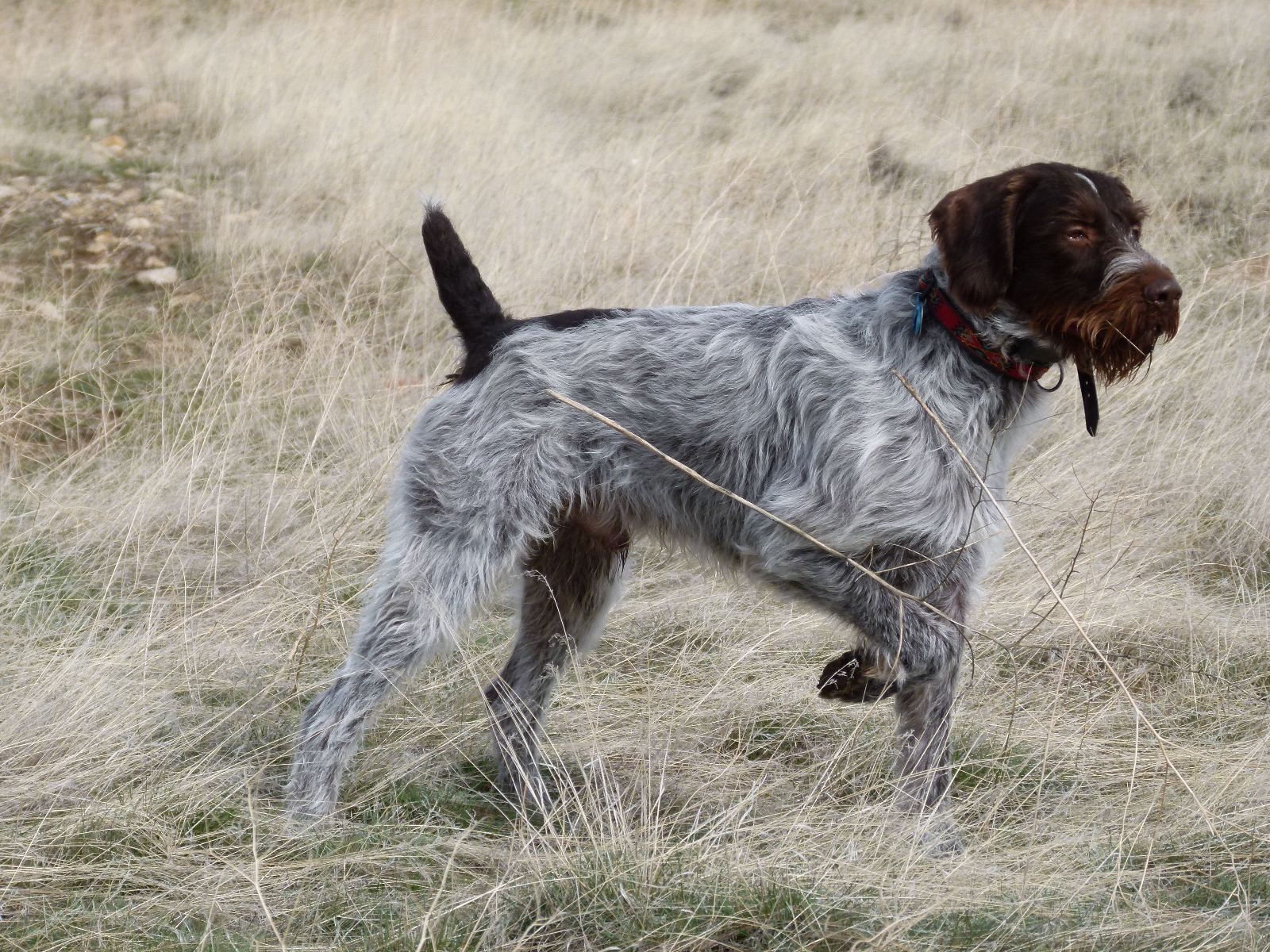
Some even say that the French Pointing Dog - Gascogne type it is a dog that was born trained.

Content

History

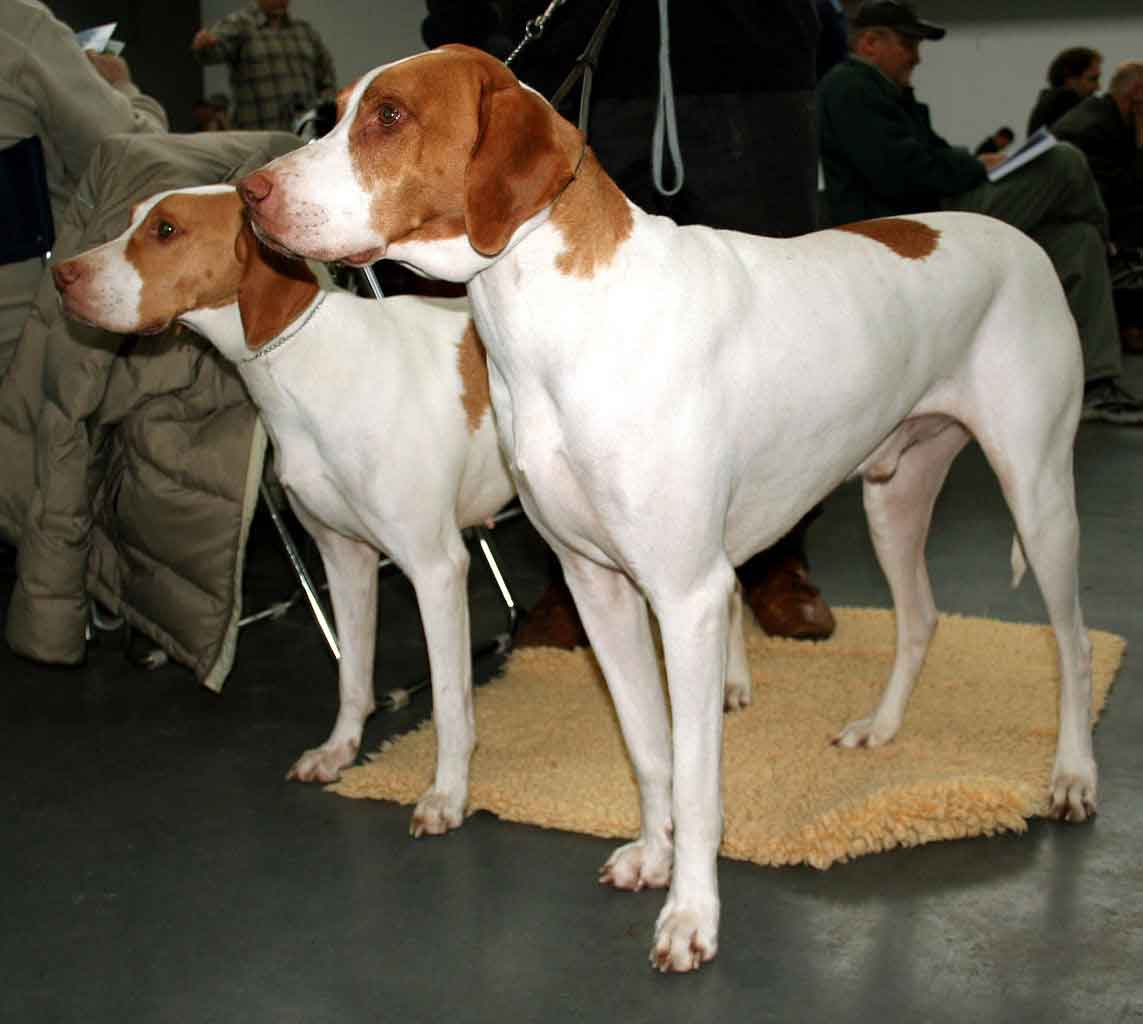
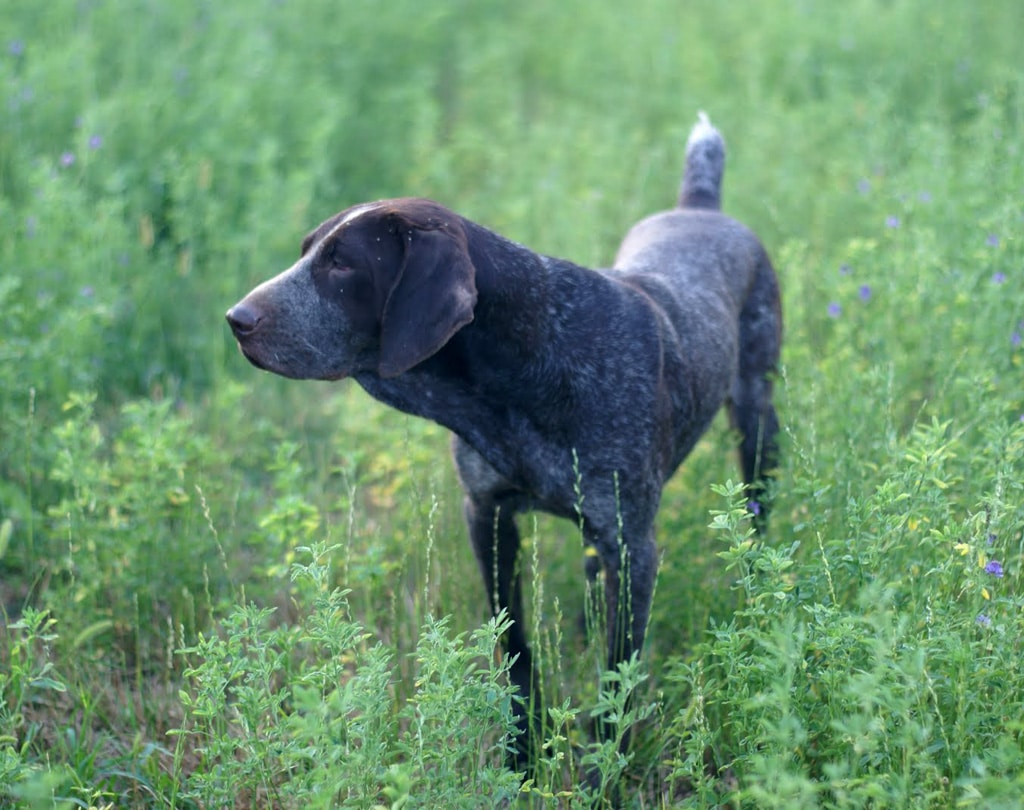
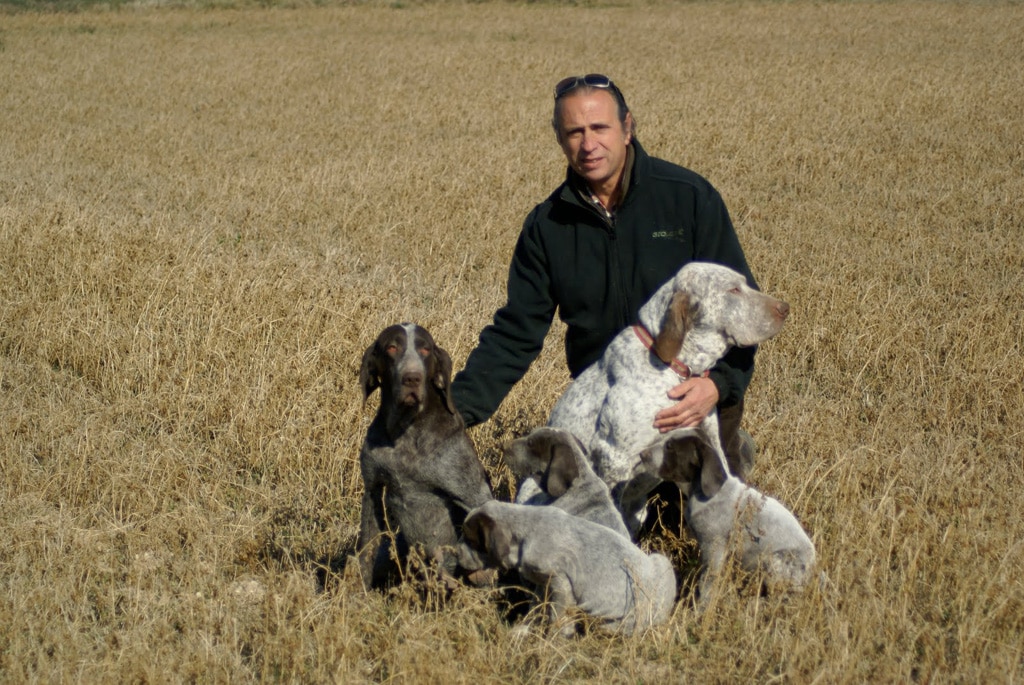
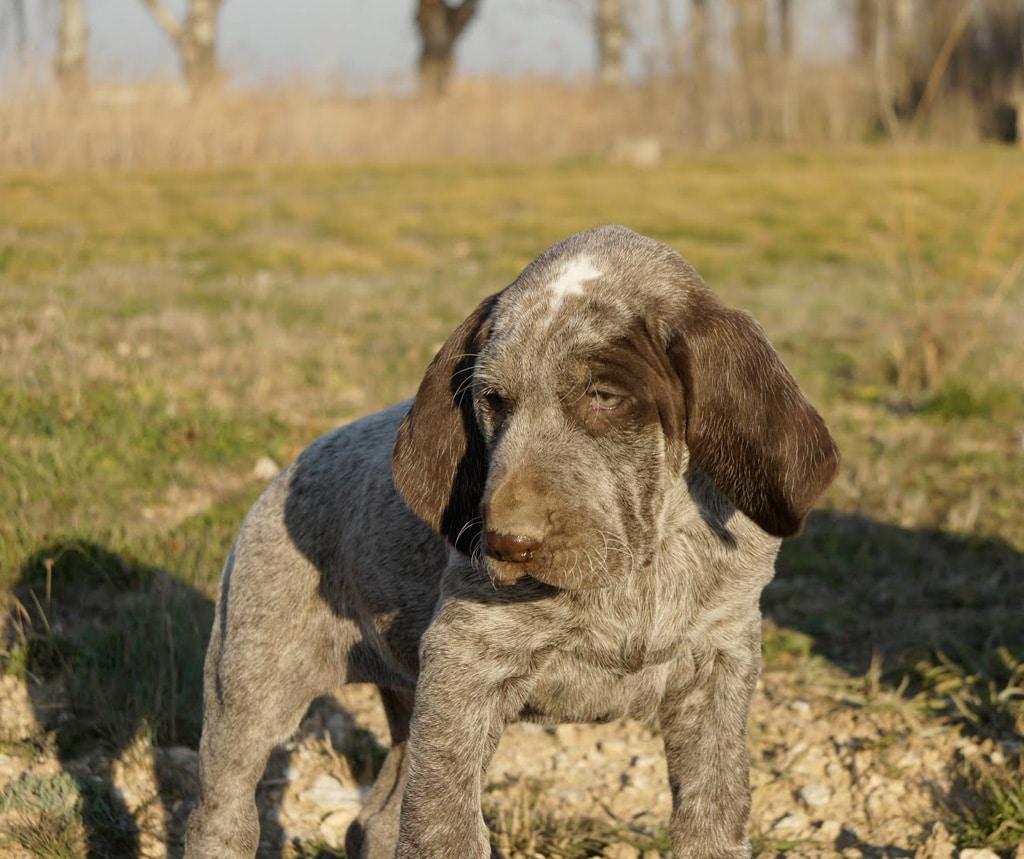
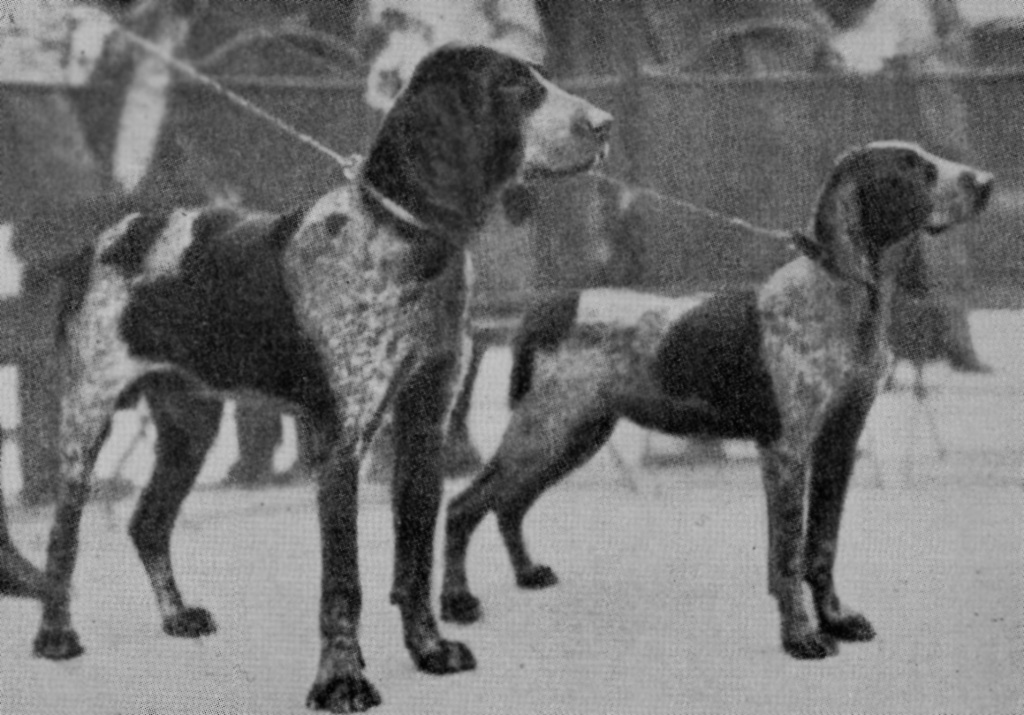
The type French Pointing Dog - Gascogne type grew up in the region of Gascuรฑa which bears his name. He is a direct descendant of the oldest known race of pointing dogs already described by Gaston PHEBUS, Count of Foix. This excellent pointing dog has managed to preserve its stamina. In the same way, It has maintained the efficiency of the days when dogs were raised only for the services they provided.

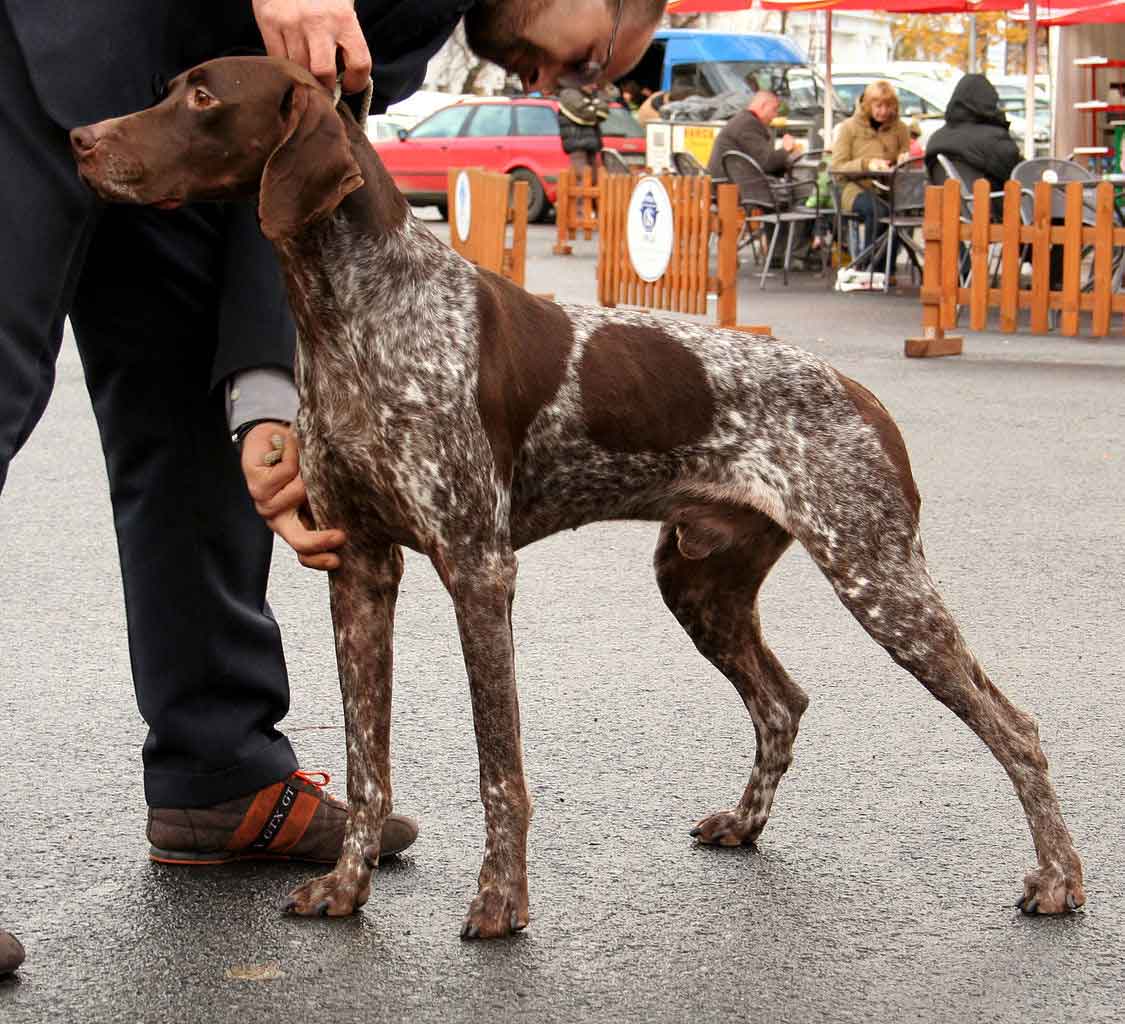
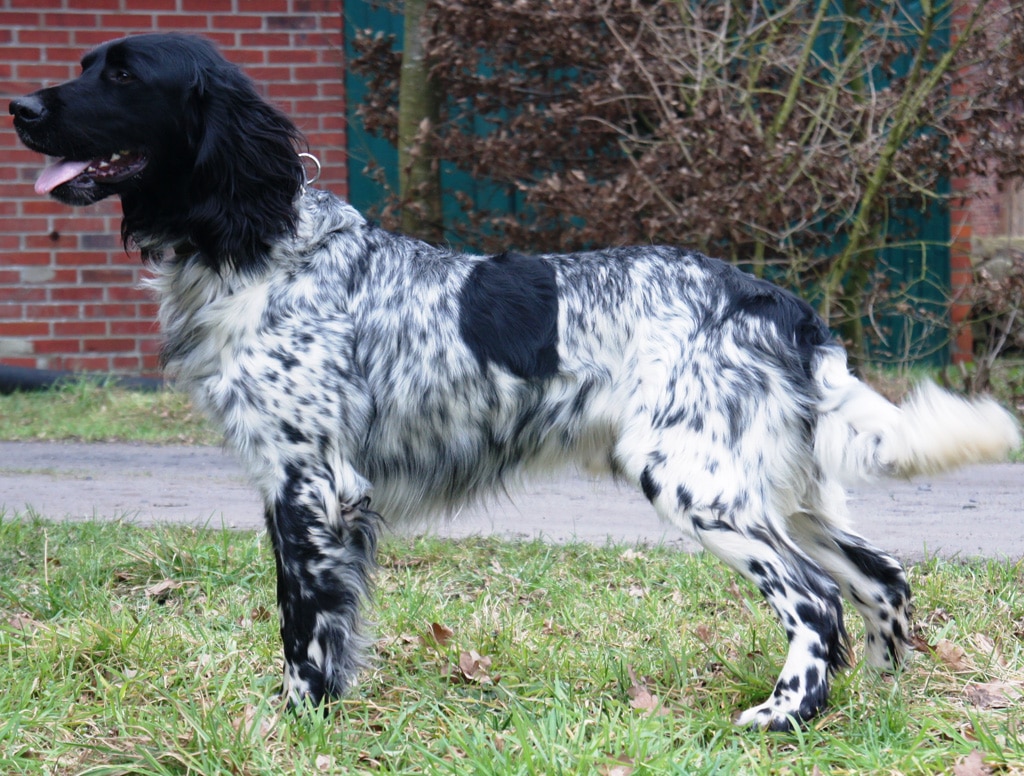
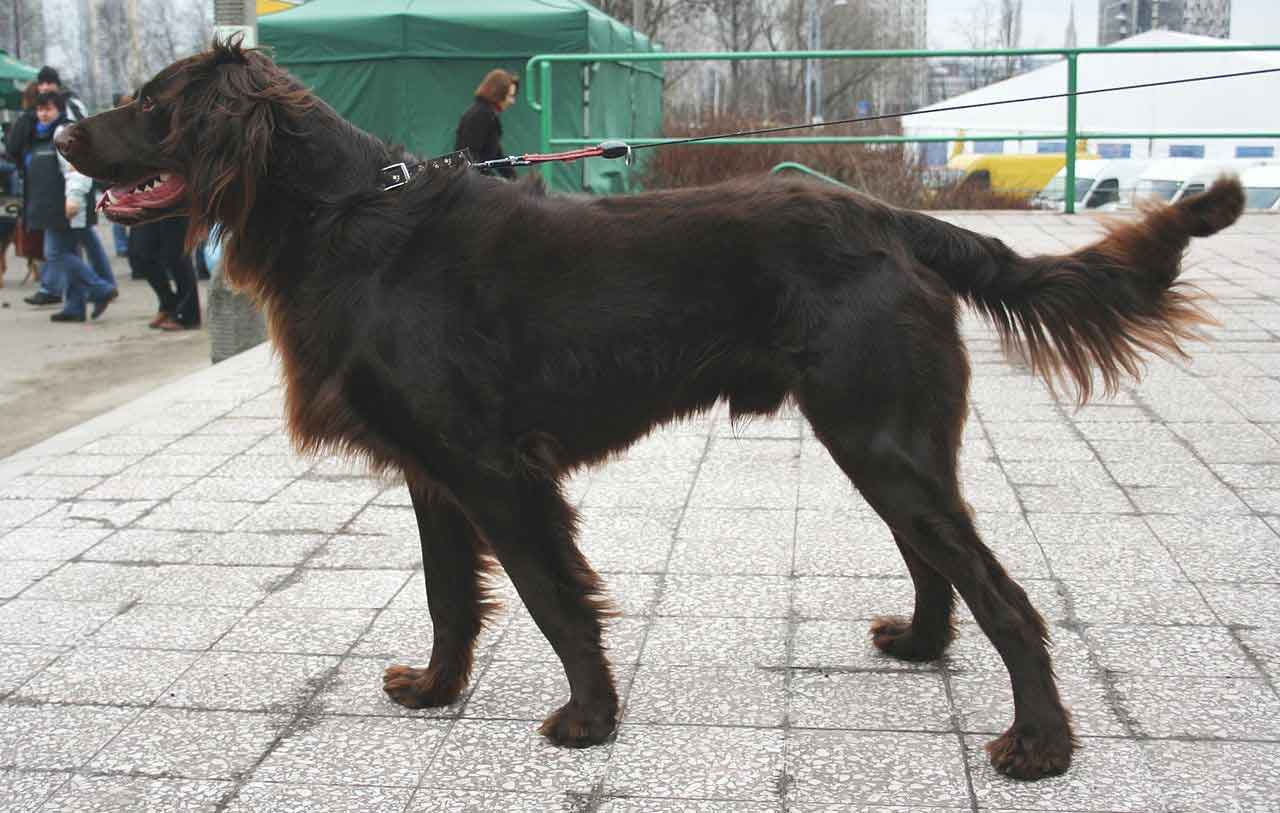
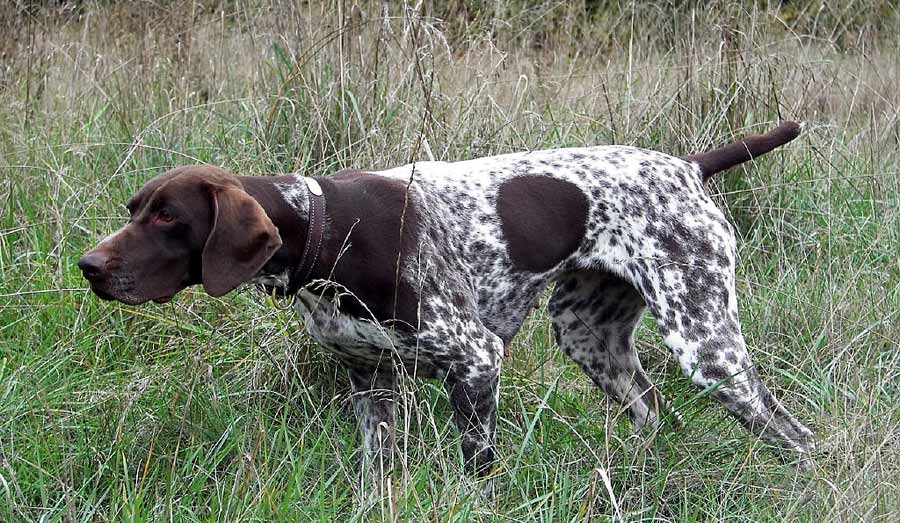
Photo: Pyrenean Pointer at the World Dog Show in Poznaล„ by Pleple2000, CC BY-SA 3.0, via Wikimedia Commons

Physical characteristics

Nose and muzzle
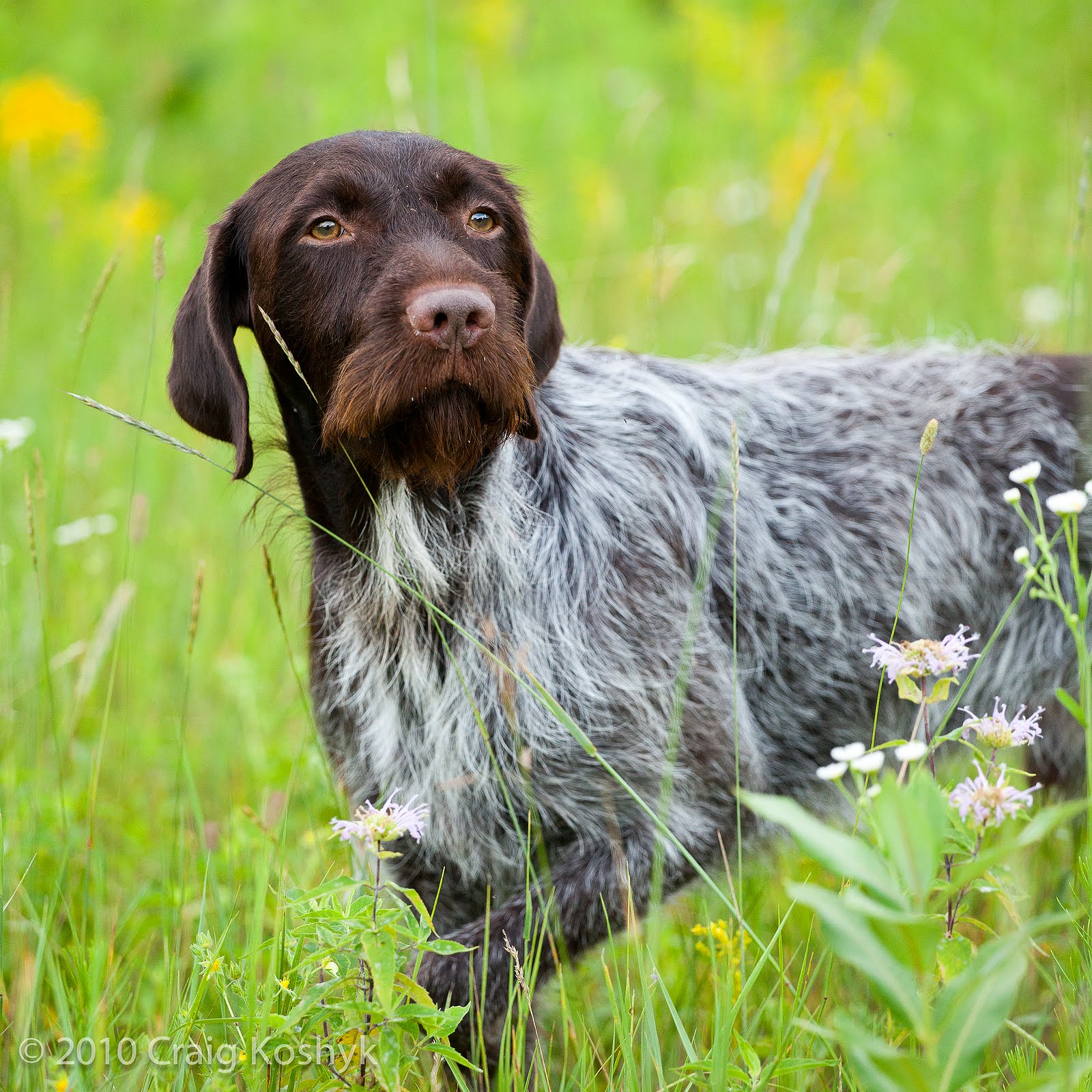
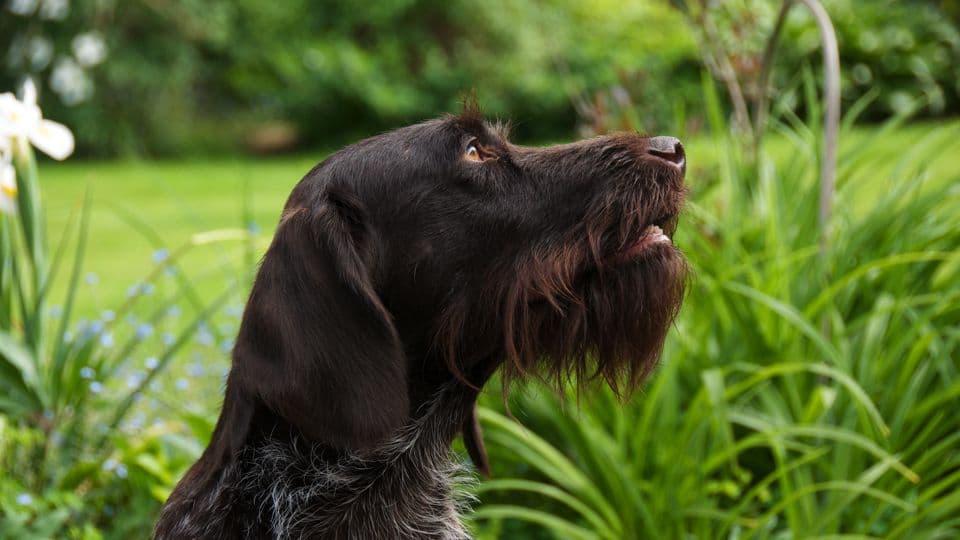
Has a big brown nose. Has a wide muzzle, rectangular, sometimes slightly convex.

Eyes
Has a frank look. Your brown or dark yellow eyes are wide.

Ears
The ears of the brave French Pointing Dog - Gascogne type they go well up to the tip of your nose. Slightly bent, turn round at the tip.

Fur
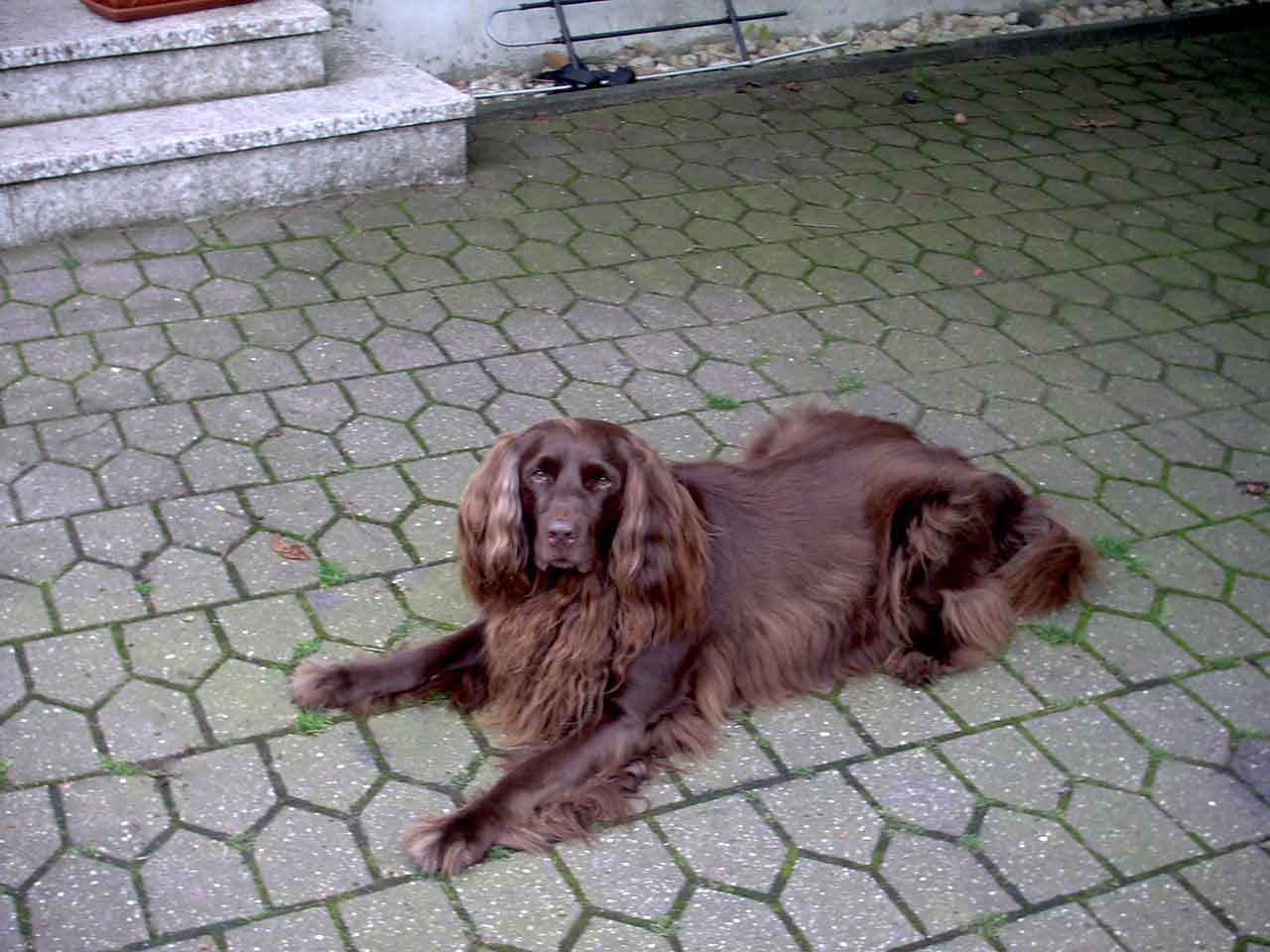
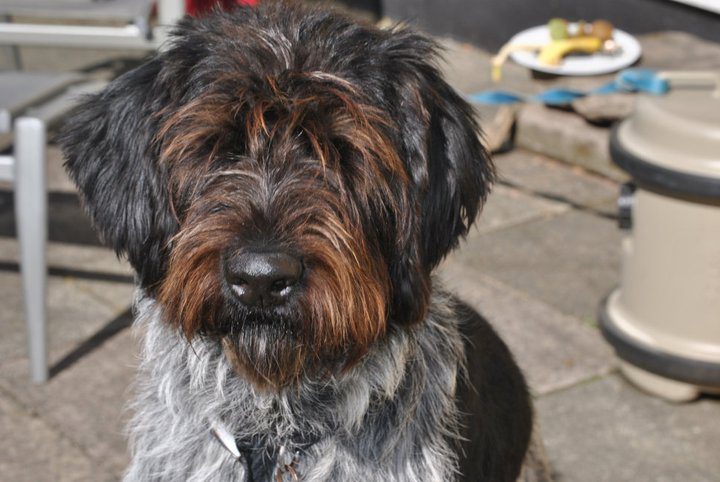
His hair French Pointing Dog - Gascogne type it is very thick. Their head and ears have finer hair.

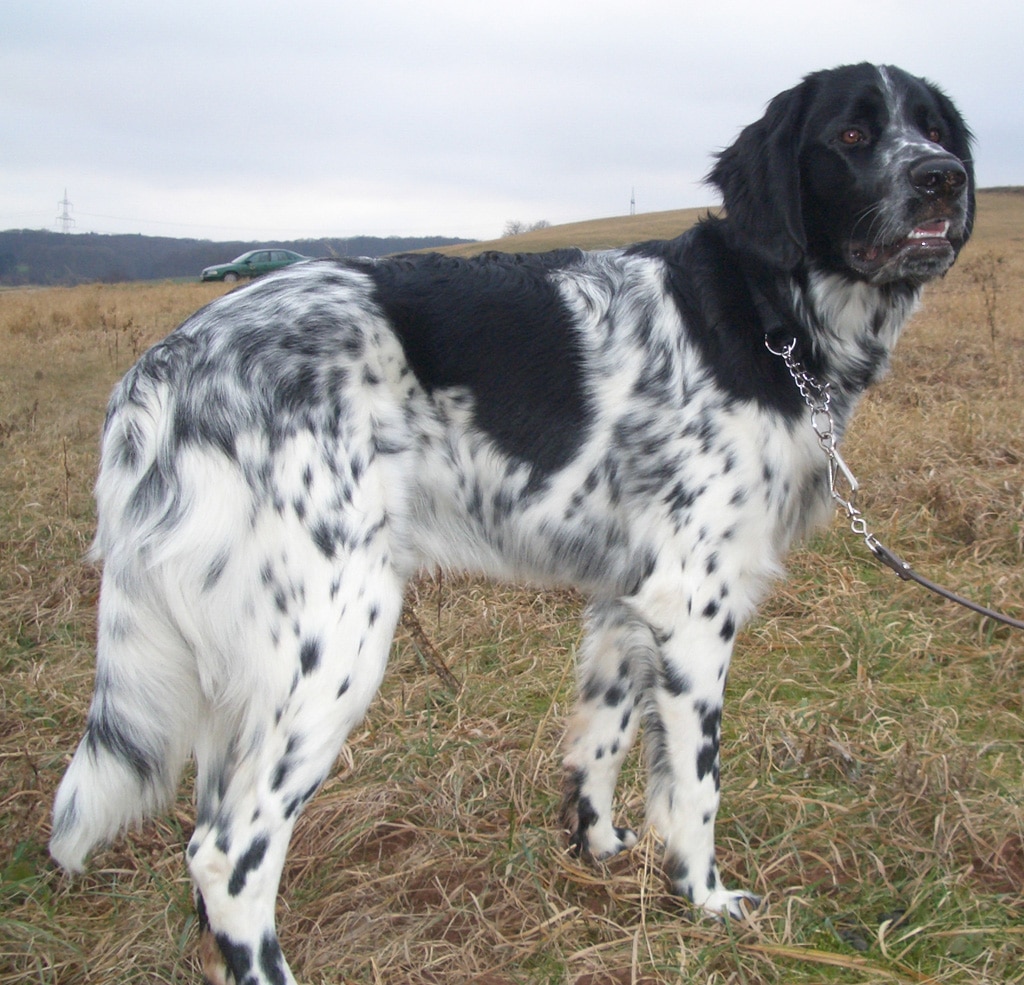
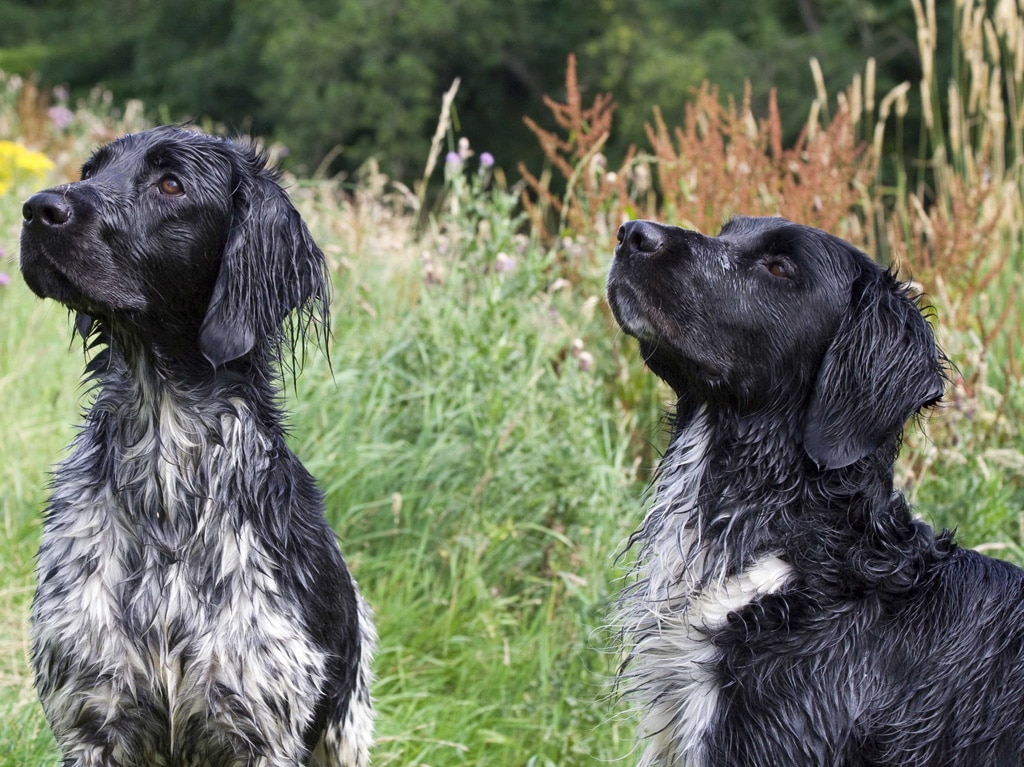
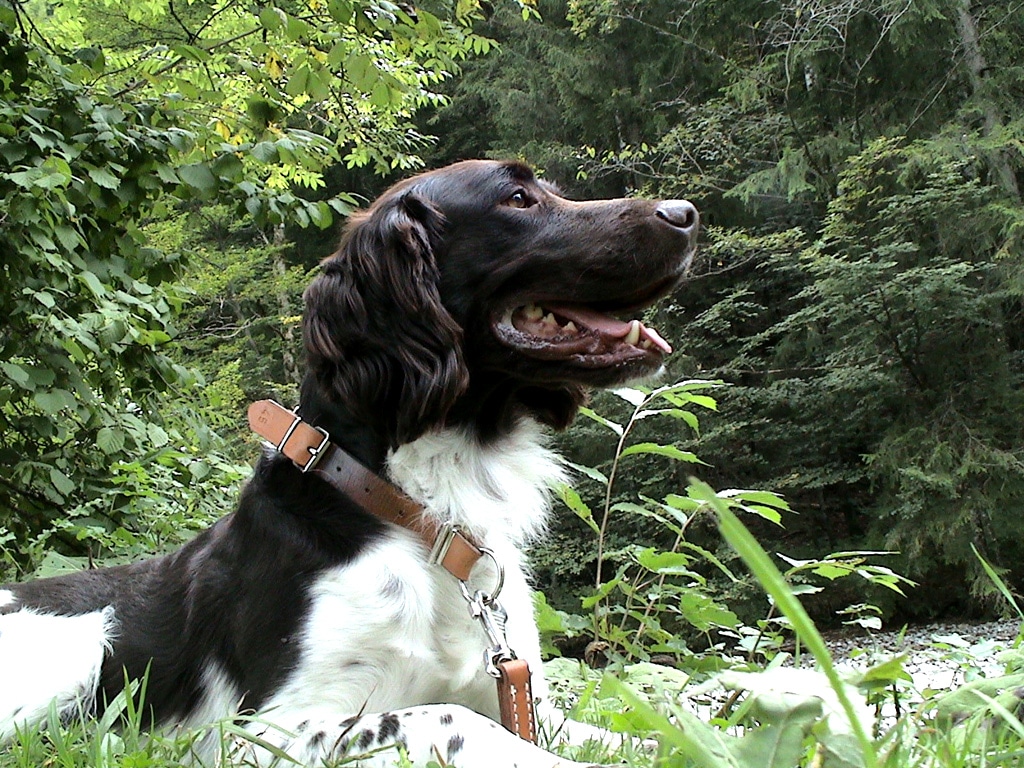
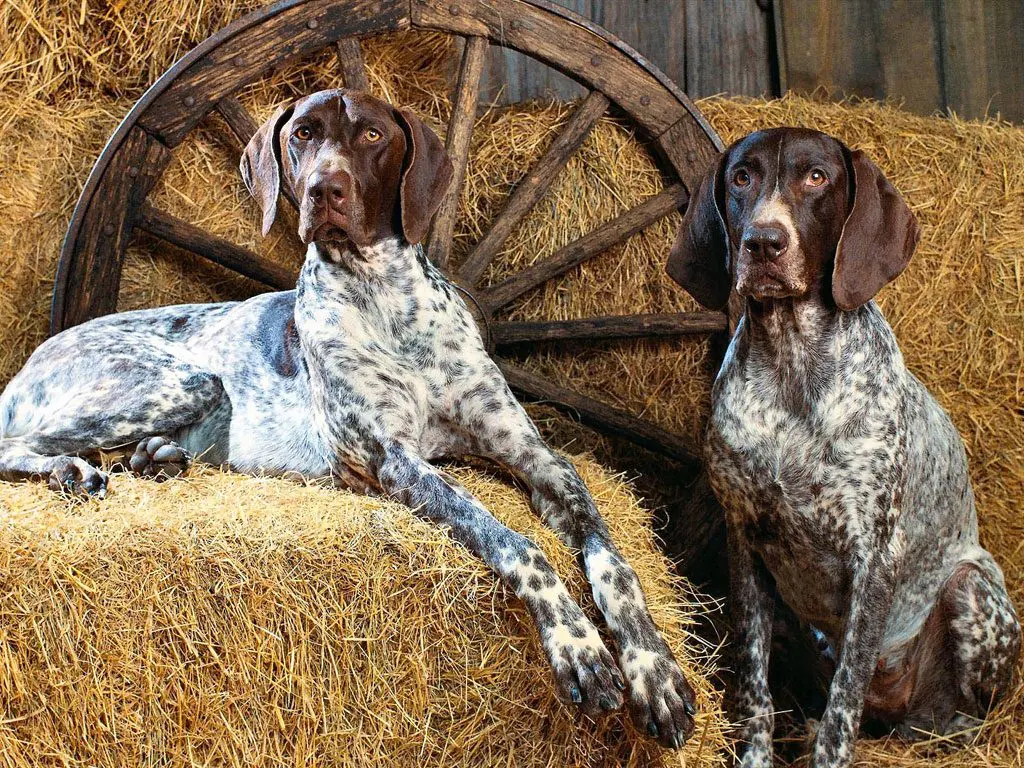
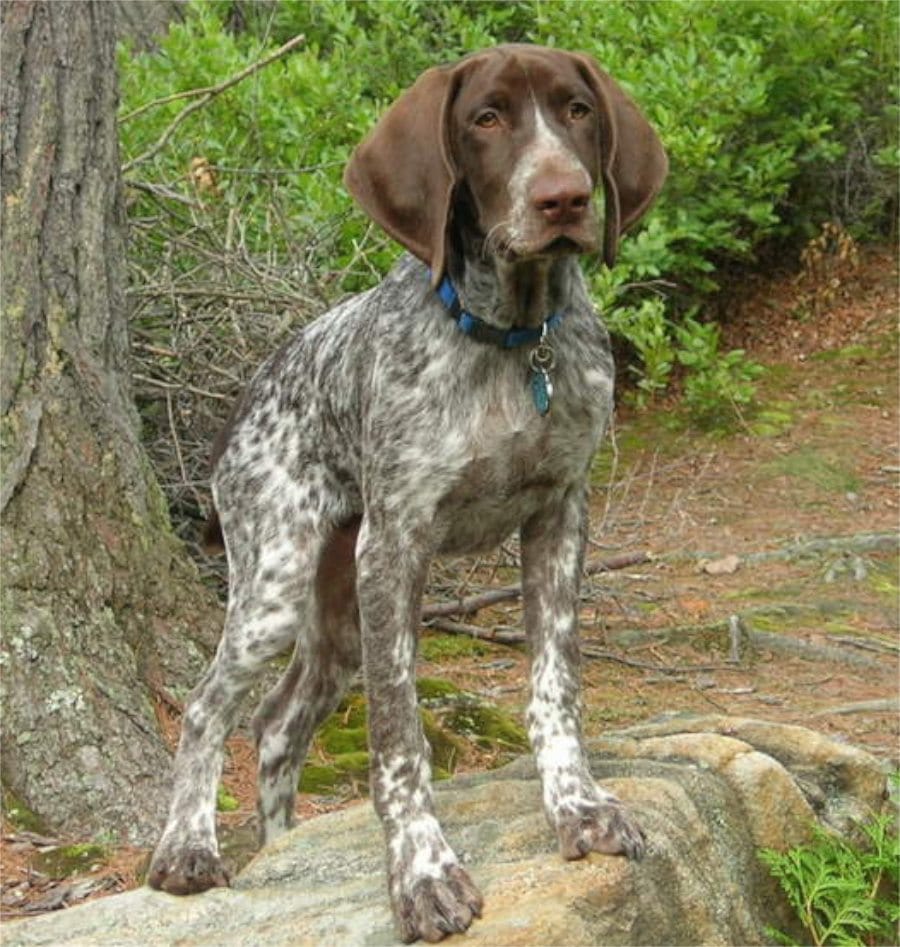
Their fur can be brown, Brown and white, mottled or spotted brown and white or brown with tawny markings above the eyes, lips and limbs.

Tail
The French Pointing Dog - Gascogne type has a generally docked tail, follows well the prolongation of the convex line of the croup. A long tail is not considered a defect, as long as it is well managed; neither the short tail of
birth

Character and skills

Smart, obedient and very attached to their master, the kind dogs French Pointing Dog - Gascogne type they are soft and calm. Some even say it is a dog that was born trained.

Your training will be smooth and early, since it is a very sensitive dog, even shy, and you have to get used to city noises very quickly. Let's not forget that he is an athlete and that he needs to "vent" regularly. Soft and calm, adapts very well to the city, as long as you get used to it at a young age. The French Pointing Dog - Gascogne type must live with his caregiver and is very affectionate with children.

Education

The reputation of French Pointing Dog - Gascogne type is well established. Like his cousin, the French Pointing Dog - Pyrenean type , "born trained", say his followers. Intelligent and very attached to his teacher, he will know how to learn all the tricks of a good education.

It is a sensitive dog with which you must use gentleness. This dog must understand the commandments to assimilate them. One of the reasons why coercive methods should be banned. This is also true for all dog breeds.

The French Pointing Dog - Gascogne type can be perfectly adapted to living in the city. But, will have to be introduced to noise and crowds at a very young age.

Characteristics "French Pointing Dog - Gascogne type"

Coexistence is important that you have with your new friend. Before considering the acquisition of a dog of the breed "French Pointing Dog - Gascogne type" you know certain factors. Not all breeds of dogs are apt to live in an apartment, you must take into account his character, their need for exercise, their interaction with other pets, their care and if you have small children, their level of tolerance towards them.

Adaptation โ“˜

3,0 of 5 stars (based on 1 review)

friendly dog โ€‹โ€‹โ“˜

5,0 of 5 stars (based on 1 review)

hair loss โ“˜

2,0 of 5 stars (based on 1 review)

Affection level โ“˜

4,0 of 5 stars (based on 1 review)

Need for exercise โ“˜

5,0 of 5 stars (based on 1 review)

Social need โ“˜

4,0 of 5 stars (based on 1 review)

Home โ“˜

3,0 of 5 stars (based on 1 review)

Toilet โ“˜

1,0 of 5 stars (based on 1 review)

Friendly with strangers โ“˜

4,0 of 5 stars (based on 1 review)

barking โ“˜

3,0 of 5 stars (based on 1 review)

Health โ“˜

5,0 of 5 stars (based on 1 review)

Territorial โ“˜

3,0 of 5 stars (based on 1 review)

Cat friendly โ“˜

3,0 of 5 stars (based on 1 review)

Intelligence โ“˜

5,0 of 5 stars (based on 1 review)

Versatility โ“˜

5,0 of 5 stars (based on 1 review)

Child friendly โ“˜

5,0 of 5 stars (based on 1 review)

Surveillance โ“˜

3,0 of 5 stars (based on 1 review)

joy โ“˜

4,0 of 5 stars (based on 1 review)

Videos "French Pointing Dog - Gascogne type"

French Shorthaired Pointer - Gascony type
Braque Francais-type Gascogne
Gascony French Pointer
Braque Francais-type Gascogne

Type and recognitions:

  • FCI CLASSIFICATION:
  • Group :
  • Section : . .

Federations:

  • – FCI – Group 7: Pointing Dogs. – Section 1: Continental Pointing Dogs. 1.1: Braque Type โ“˜

FCI breed standard "French Pointing Dog - Gascogne type"

Origin:
France

Date of publication of the valid original standard:
06.05.1988

Use:

Pointing Dogs.


General appearance:

The French Pointer is a medium-sized pointing dog., brachoid type, noble in appearance, robust but not very heavy; strong, with good members. Females are thinner. The skin is soft and quite loose.

IMPORTANT PROPORTIONS :
The length of the snout is a little less than that of the skull.


Behavior / temperament:

---

Head:

Quite big but not too heavy. The upper longitudinal axes of the skull and snout are slightly divergent.

Cranial region:
  • Skull : Almost flat or very slightly rounded; It has a not very deep median groove. The occipital protuberance is little accentuated.
  • Depression links (Stop) : It's sunken and accentuated.

facial region:

  • Truffle : Thick, brown; the windows are wide open.
  • Snout : Wide and rectangular; sometimes a little convex.
  • Lips : They descend a little until they form folds at the corners..
  • Jaws / Teeth : The denture must be complete. Pincer bite is tolerated.

Eyes : Wide open and well placed in their orbit. Brown or dark yellow in color. frank look.

Ears : Medium length, implanted at the level of the eye line, not too wide at their insertion point, framing the head well, slightly bent and rounded at the bottom edge. One or two vertical wrinkles may appear on the cheek at the level and slightly below the insertion of the ear.. The tips of the ears should reach the tip of the nose..

Neck:

suitably long, slightly arched at the top, has a little double chin.

Body:

  • Back : Wide, straight, sometimes a little long but always well held.
  • Pork loin : Short, muscular and slightly arched.
  • Rump : Slightly inclined in relation to the top line.
  • Breast : Seen from the front it is wide; in profile it is long; reaches up to elbow level; the ribs are arched without exaggeration.
  • Belly : Flattened flanks, slightly retracted belly.

Tail:

Usually cut, follows well the prolongation of the convex line of the croup. A long tail is not considered a defect, as long as it is well managed; nor the short tail from birth.

Tips

PREVIOUS MEMBERS : With good poise, They are wide and muscular.

  • Shoulder : Very muscular and moderately oblique.
  • Arms : Strong and muscular.
  • Elbows : Placed at the level of the sternum.
  • Previous feet : The fingers are closed and well arched, compact, almost round. Strong nails and thick pads.

LATER MEMBERS : Excellent poise.

  • Thighs : Strongly muscular.
  • Legs : Muscular.
  • Warm-tarsal joints : Medium angled.
  • Metatarsus : Pretty short.
  • Hind feet : compacts, almost round.

Movement:

---

Mantle

HAIR : Rather thick and dense; thinner on the head and ears.

COLOR :

โ€ข Brown.
โ€ข Brown and white.
โ€ข Heavily mottled brown and white.
โ€ข Brown and fawn tan (below the eyes, on the snout and limbs).


Size and weight:

  • Male : 58 to 69 cm..
  • Female : 56 to 68 cm..

Ideal size : 61 to 63 cm..


Fouls:

Any deviation from the aforementioned criteria is considered as a fault and the severity of this is considered to the degree of the deviation to the standard and its consequences on the health and well-being of the dog..

โ€ข General appearance very heavy or very light.
โ€ข Very pronounced occipital protuberance.
โ€ข Lips that are very thick or not hanging enough.
โ€ข Very round eyes due to the exaggeration of the zygomatic and supraorbital arches.
โ€ข Flat ears, too short or too coiled.
โ€ข Fat belly.
โ€ข Crushed feet.

MISS PLAYOFFS

โ€ข Aggressive or fearful dog.
โ€ข Marked divergence or convergence of the longitudinal craniofacial axes.
โ€ข Double nose, very depigmented truffle.
โ€ข Upper or lower prognathism.
โ€ข Entropion, ectropion. White spots on the eyelids.
โ€ข Absence of the tail.
โ€ข Syndactyly, polydactyly, adactyls.

Any dog โ€‹โ€‹showing clear signs of physical or behavioral abnormalities should be disqualified..


N.B.:

Males should have two normal-appearing testicles fully descended into the scrotum..

Source: F.C.I - International Cynological Federation

โ–ท The world of Pets: Dogs, cats, birds, reptiles, amphibians

Saint Germain Pointer
Francia FCI 115 . Braque Type

Saint Germain Pointer

The Saint Germain Pointer it is little known outside the French borders.

Content

History

A versatile hunting dog that has been used not only for aiming, but also to throw and recover, the Saint Germain Pointer can work with a variety of hunting, including rabbits and pheasants. Unlike most hunting dogs, traditionally, this breed has been popular at shows and has been bred to have a very uniform and specific appearance.

Originally bred in France mixing English Pointer with the French Pointing Dog - Gascogne type, This breed is believed to have developed in the early 1830 and claims to have a very elegant heritage. King Charles X of France was given two dogs English Pointer who were very talented hunters. The female, call miss, she was raised with a dog Braque Francais local, and the legacy of Saint Germain Pointer started. Initially, the breed was called Compiegne Pointers due to the location of the kennels in which they were raised, but this name was later altered when the kennels were moved to the region of Saint Germain. Many of the dogs produced were shown at dog shows throughout France and, at that time, they were the race of Pointer most shown in its native country.

The race Saint Germain Pointer was initially very popular and in 1913 a club was formed that aimed to increase its prevalence in France, as well as improve the breed. Unfortunately, the size of the breed's population Saint Germain Pointer was greatly reduced in every world war. They have never fully recovered from the drastic decline in population size that occurred in the first half of the 20th century., but they are still a breed that has a loyal follower and are not in danger of extinction today.

In recent years, the English Pointer enter the genetic pool of Saint Germain Pointer to increase their numbers and add some genetic diversity. Even though few, if there is any, of the breed members have been exported internationally, the UKC granted full recognition to the breed in 2006 within your group of hunting dogs.

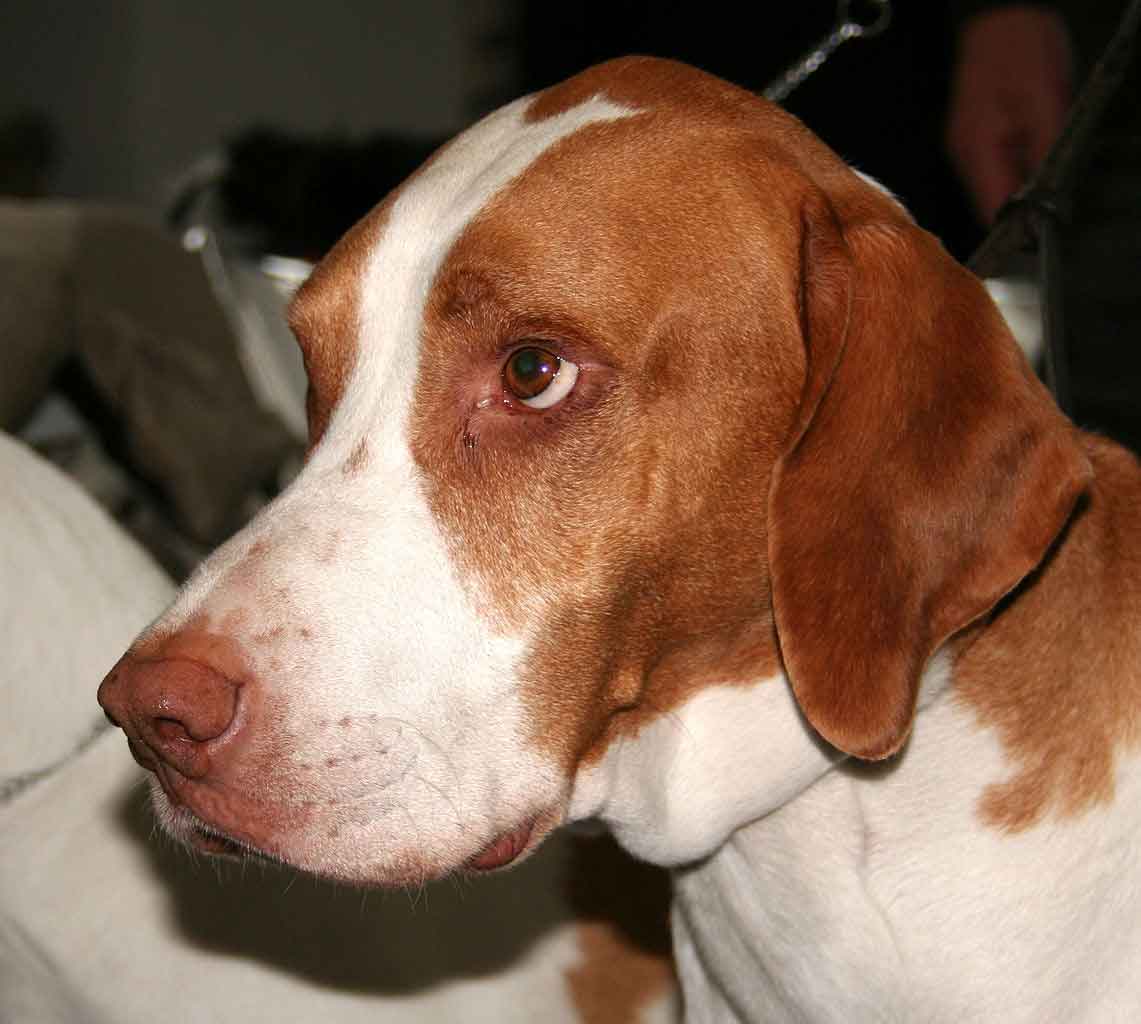
Photo: Braque_saint-germain at the World Dog Show in Poznaล„ by Pleple2000, CC BY-SA 3.0, via Wikimedia Commons

Physical characteristics

Braco Saint Germain
Braque saint-germain at the World Dog Show in Poznaล„ by Pleple2000, CC BY-SA 3.0, via Wikimedia Commons

The appearance of Saint Germain Pointer is particularly important for breeders, although it is mainly a hunting dog. Historically, have participated in a large number of French dog shows. Breed members must be of medium build, with good muscles and heavy bones. The dog's skull should be round and the same length as its muzzle.

Your pink nose should have wide open nostrils, while your big golden eyes should show a placid and relaxed expression. Their ears are curved at the tip and should not reach beyond eye level. The shoulders of the Saint Germain Pointer they are impressively long and their limbs must be robust and heavy. They have a broad chest and a straight back, although your rump will bow slightly. The dog's sharp tail is carried at a distinctive horizontal angle when in motion.

The short coat of the Saint Germain Pointer should be faded white with orange markings, and the ears are preferred to be orange everywhere. Unlike in the English Pointer, black hair is not tolerated. The males measure between 56 and 62 height cm, while the smaller females reach heights between 53 and 60 cm.. Most members of the breed will weigh between 18 and 27 kg.

Character and skills

While it is true that Saint Germain Pointer has traditionally excelled on the show floor, is primarily a hunting dog and, as such, has the character expected of a working animal. This breed is easy to train and loves to be kept active and given a task to do. They must have a "soft mouth", meaning they do not hurt or harm the prey they retrieve. They also tend to work in packs, which means that they normally get along with other dogs. Although it is undeniable that they have a natural instinct to chase small animals, anecdotally they get along well with the small pets in their house that they have been introduced to since childhood.

The Saint Germain Pointer he is truly a family dog โ€‹โ€‹and does best when kept indoors with human company. He is particularly affectionate with those he trusts and will bond closely with each member of his family.. They are not typically a breed that displays any aggression, which means they are adapted to children, although they would not be good guard dogs. While it is true that this breed will be willing to befriend any child it meets, Caution is advised with very young children who may not be able to resist brisk greetings and rowdy play!

Education

More than many other dog breeds, the Saint Germain Pointer can be a real treat to train. He is a willing dog to please his master and has the intelligence to complete most tasks with relative ease.. Trainers will be most successful when they focus on the breed's most natural behaviors, like recovery.

It is often said that the Saint Germain Pointer it is a hardy dog รขโ‚ฌโ€นรขโ‚ฌโ€นthat is much less sensitive than other closely related breeds. Trainers have the option to use firmer methods than might be expected, However, will continue to achieve the best results with the use of positive reinforcement techniques (instead of negatives).

Exercise

Not far behind when it comes to exercise, the Saint Germain Pointer is a dog that loves to be out of the house. He has great stamina when working and is able to run great distances for long periods of time without appearing to tire.. If kept solely as a pet, owners should be able to provide an hour or two of solid exercise each day and should also keep the dog stimulated with a variety of games and training sessions.

Any attempt to keep this breed in a small apartment or house or to exercise it for less time than recommended, will likely lead to a frustrated dog becoming a difficult pet. Anxiety is likely to develop in these situations, hyperactivity and destructive behaviors.

Health

Unfortunately, there is no specific information on the health of the Saint Germain Pointer, and to date there have been no studies on the breed. A working dog, it is generally accepted as a hardy breed. The prudent owner would be on the lookout for these possible health conditions.:

Hip Dysplasia

    Hip scoring should be performed by responsible breeders to ensure that the small population of the Saint Germain Pointer stay healthy. A simple x-ray of the hips will allow a veterinarian to assess the quality of the hip joints and inform the breeder if they are good enough to allow breeding..

Ear infections

    When the ear canal becomes clogged with a buildup of smelly debris, an infection is likely present. Ears may also be red, hot and sensitive. Affected dogs tend to shake their heads and rub their faces against the ground. Infections occur mainly due to the proliferation of bacteria and yeast, although they can also be due to a foreign body, such as a grass seed inside the ear canal or ear mites.

Grooming

The short coat of the Saint Germain Pointer does not need to be brushed more than once or twice a week. Toenails may need to be trimmed every few months, particularly if you don't walk on hard surfaces. The breed's clear claws make claw clipping easy, since the cut is visible, making it more avoidable than in dogs with dark pigmented claws.

The Most Important Grooming Duty An Owner Should Not Neglect, is maintaining good ear hygiene. Ears should be cleaned every one to two weeks with a dog ear cleaner. Owners should also ensure that the ears are dry inside and out after being exposed to water..

Characteristics "Saint Germain Pointer"

Coexistence is important that you have with your new friend. Before considering the acquisition of a dog of the breed "Saint Germain Pointer" you know certain factors. Not all breeds of dogs are apt to live in an apartment, you must take into account his character, their need for exercise, their interaction with other pets, their care and if you have small children, their level of tolerance towards them.

Adaptation โ“˜

3,0 of 5 stars (based on 1 review)

friendly dog โ€‹โ€‹โ“˜

4,0 of 5 stars (based on 1 review)

hair loss โ“˜

3,0 of 5 stars (based on 1 review)

Affection level โ“˜

4,0 of 5 stars (based on 1 review)

Need for exercise โ“˜

4,0 of 5 stars (based on 1 review)

Social need โ“˜

4,0 of 5 stars (based on 1 review)

Home โ“˜

4,0 of 5 stars (based on 1 review)

Toilet โ“˜

1,0 of 5 stars (based on 1 review)

Friendly with strangers โ“˜

4,0 of 5 stars (based on 1 review)

barking โ“˜

2,0 of 5 stars (based on 1 review)

Health โ“˜

4,0 of 5 stars (based on 1 review)

Territorial โ“˜

3,0 of 5 stars (based on 1 review)

Cat friendly โ“˜

2,0 of 5 stars (based on 1 review)

Intelligence โ“˜

4,0 of 5 stars (based on 1 review)

Versatility โ“˜

4,0 of 5 stars (based on 1 review)

Child friendly โ“˜

4,0 of 5 stars (based on 1 review)

Surveillance โ“˜

2,0 of 5 stars (based on 1 review)

joy โ“˜

4,0 of 5 stars (based on 1 review)

Videos "Saint Germain Pointer"

Saint Germain Pointer | Perfect Sense
Saint Germain Pointer
Saint Germain Pointer Dog Breed - Braque Saint Germain

Saint Germain Pointer Dog Breed – Braque Saint Germain

Type and recognitions:

  • FCI CLASSIFICATION:
  • Group :
  • Section : . .

Federations:

  • – FCI – Group 7: Pointing Dogs. – Section 1: Continental Pointing Dogs. 1.1: Braque Type โ“˜
  • – UKC – Gundog โ“˜

FCI breed standard "Saint Germain Pointer"

Origin:
France

Date of publication of the valid original standard:
25.03.2003

Use:

Pointing Dogs, mainly used for bird hunting, but it can also be used for hunting animals with fur..


General appearance:

Of medium proportions and parallel or very slightly divergent craniofacial lines and a moderately pronounced nasofrontal depression.. The bones are quite solid and the muscles are adapted to work that requires resistance.. Its fur is fawn and white., no presence of black. When is the dog in action, His search is of medium amplitude and his gallop is uniform and elastic..

TEMPERAMENT / BEHAVIOR : Hunter first and foremost, He is very sociable, balanced, affectionate, and he can't stand being treated roughly during his training. In summary, it is easy to train.

Hunt on all types of terrain and with passion, the pheasant, the partridge and the woodcock, who brings his master with gentleness. Since he is very affectionate with humans, appreciate family life.


Behavior / temperament:

Hunter first and foremost, He is very sociable, balanced, affectionate, and he can't stand being treated roughly during his training. In summary, it is easy to train.

Hunt on all types of terrain and with passion, the pheasant, the partridge and the woodcock, who brings his master with gentleness. Since he is very affectionate with humans, appreciate family life.

Head:

---

Cranial region:
  • Skull : Slightly arched, ogival at the back. The occiput is protruding. The zygomatic arch is little accentuated.
  • Depression links (Stop) : It is not very pronounced.

facial region:

  • Snout : The nasal passage is rectilinear or very slightly convex ; is the same length as the skull.
  • Truffle : Wide ; the nostrils are wide open and dark pink.
  • Lips : Completely covers the lower jaw. They are quite thin and do not have any black spots..
  • Jaws / Teeth : The jaws are robust and have the same length. Teeth are strong and well aligned. The joint is in the form of scissors.
  • Palate : Do not present any black spots.

Eyes : Wide open ; They are quite large and golden yellow in color.. They are well inserted in the orbits and their gaze is frank and sweet..

Ears : They occur at the level of the eye line and are not too long. The pavilion has a longitudinal fold. They have a round shape at the end and are slightly separated from the head..

Neck:

Muscular, quite long and slightly arched. A very slight double chin is tolerated.

Body:

  • Back : Horizontal.
  • Pork loin : Pretty short, width, robust.
  • Rump : Slightly inclined.
  • Breast : Long, height and width. The tip of the sternum is slightly prominent. The ribs are long and flexible.
  • Belly : Slightly raised ; progressively joins the chest, without interruption. Since the chest is elongated, the flank is short.

Tail:

It appears low and does not exceed the tip of the hock. It is thick at the base and ends in a point.. When is the dog in action, appears horizontally.

Tips

Good bone structure. During rest, muscles are visible under the skin.

PREVIOUS MEMBERS :

  • Shoulder : They're long, oblique, muscular, as those of a galloper should be.
  • Arms : They are slightly inclined.
  • forearms : Strong, muscular, vertical.
  • Metacarpus : Short, very little inclined, viewed profile.
  • Previous feet : Long, fingers together, the nails are very clear, and still white ; the bearings are solid.

LATER MEMBERS : Seen from behind, are perpendicular to the ground.

  • Thighs : They're long, and muscular.
  • Legs : Well muscled.
  • Hocks : They are wide and are located in the axis of the body.
  • Metatarsals : Short, vertical, skinny.
  • Hind feet : Identical to the previous ones.

Movement:

The normal movement is the gallop; this must be elastic, balanced and sustained, medium extension. During all movements, The head should be slightly above the margin of the back., never below. Braque Saint Germain covers the ground well, whatever the movement adopted.

Mantle

SKIN : It is rather fine.

HAIR : Short and not very thin.

COLOR : Matte white with orange spots (leonado); mottled color is accepted, although it is not the most desirable. The ears are fawn in color; a tiny part of white is acceptable, but it is not the most desirable.


Size and weight:

Height to the cross :

  • Males : 56 cm to 62 cm..
  • females : 54 cm to 59 cm..

With 2 extra cm for exceptional specimens.


Fouls:

Any deviation from the aforementioned criteria is considered as a fault and the severity of this is considered to the degree of the deviation to the standard and its consequences on the health and well-being of the dog..

โ€ข Skull : Too wide.
โ€ข Eyes : Small, with a lost look, lemon colored.
โ€ข Ears : Similar to the folded ears of bloodhound dogs..
โ€ข Group : Too steep.
โ€ข Pies : Crushed ; presence of spurs.

MISS PLAYOFFS

โ€ข Fearful or aggressive dog.
โ€ข Lack of type (any specimen whose characteristics separate it from its congeners).
โ€ข Presence of black color, above all in :
โ€ข The truffle
โ€ข The lips
โ€ข The palate
โ€ข The eyes (the brown color is also a qualifying foul).
โ€ข The ones.
โ€ข Missing more than one tooth, apart from PM1 ; prognastismo, misaligned teeth.
โ€ข Size that deviates from the limits.

Any dog โ€‹โ€‹showing clear signs of physical or behavioral abnormalities must be disqualified..


N.B.:

Males should have two normal-appearing testicles fully descended into the scrotum..

Source: F.C.I - International Cynological Federation

Alternative names:

1. St. Germain Pointing Dog (English).
2. Braque Saint-Germain (French).
3. Braque Charles bzw. Braque Compiegne (German).
4. (em francรชs: Braque Saint-Germain) (Portuguese).
5. Braco de Saint Germain (espaรฑol).

โ–ท The world of Pets: Dogs, cats, birds, reptiles, amphibians

Burgos Pointer
Espaรฑa FCI 90 . Braque Type

Perdiguero de Burgos

The Burgos Pointer is smart and learns easily, above all, tracking tasks.

Content

History

The Burgos Pointer It is a breed of dog Spain. Originally from Castile, especially in the province of Burgos, This rustic breed is intended for hunting and has exceptional characteristics for hunting small game..

It is an ancient breed from the Castilian tableland, is widespread, and according to some connoisseurs of the breed, it is likely that it has participated in the creation of other breeds of hunting dog, not only Spain.

The truth is that lot of documented material that speaks of this breed there is. Veterinary geneticist, Josรฉ Manuel Sanz rudder, has dedicated several lines to the history of this breed and in a document that appears cited in many web, speaks of the Origins and Ancient History (Until 1911). You can read the complete material on the website of the Spanish Association of el Perro Perdiguero de Burgos. Here we will only mention what refers to the word ยซPerdigueroยป and to the different theories about the origin but very briefly…

"The word ‘perdiguero‘ It occurs frequently in classical texts on venatoria and its reference corresponds to the generic Hunter dog of partridges, "perdicero" or "perdigero", but it cannot be lightly assumed that this dog was a Burgos Pointer. In numerous current texts we can read various theories about the origin of the race. The more absolute confusion arises from a whole once analysed separately. The most common mistakes that demonstrate a poor work of research are as follows:

  • Associate the word perdiguero the race Burgos Pointer.
  • Believing that the Pointing Dogs, as the Spanish classics tell us, they were Burgos Pointers and forget that they were other races.
  • Define like Burgos Pointer to the dogs that authors from Velรกzquez to Goya have been captured in numerous canvases where hunting dogs are reproduced.
  • Define incomprehensibly and lightly when Burgos Pointer as the origin of English Pointer, either in a display of patriotic enthusiasm, consider him further as the father of all European Braquesยซ.

"The authors, as often happens, they do not manage to agree on the theories about the origins of animals and while some affirm that the sample dog is originally from Italy, others say that France or Spain (according to the nationality of the author) which they were born.

On the formation of the current dog Burgos Pointer the news is null and we can only apply the parameters that are studied to form a race, they are:

  • Time and place of training.
  • Genetic basis provided the race.
  • Adaptation to the environment in which is born.
  • Geographical isolation and inbreeding operated.

With regard to the first of them, not a breed created by man ex process are being, with measured doses of one or another blood, both the time and the place of training are uncertain. A race not be based in short periods of time and having no initial selection at a single point, "We cannot think that the place of birth has only been a certain place."

(Author: Josรฉ Manuel Sanz rudder).

Physical characteristics

While the Burgos Pointer, It is not as robust and defined muscular level, like its relative the English Pointer, their appearance shows the strength of the race.

It has the ears long and the tail It tends to be cut one-third of its original length.

Its fur It has variants that can form different ranges within the basic color. The basic colors of the hair are the white and the liver. These colors mingle regularly, giving variegated layers that tend to liver, gray liver, mosqueados in liver and other various combinations, depending on whether the liver or white color is predominant and depending on whether the white spots are open or closed.

It is a very common feature (Although non-binding layer), that have a clear white spot on the forehead and the ears always spotted with a homogeneous liver color. Liver-colored hairs can form sharp, well-defined liver-colored patches, regularly distributed by the layer of the animal

Its the mantle is short, thick and soft. The hair is thinner in the head, ears and limbs.

The skin is elastic, but not printing, thick, abundant, pinkish spotless. All Oris they will be Brown, never black.

The height males will of 62 to 67 cm and females 59 to 64 cm to the cross. Thinking of 25 to 30 kg.

It is an animal that as all, It requires a dose of daily exercise. A long walk, and a few races in the open air will keep you happy.

Character and skills

It is a very friendly and quiet dog, not afraid easily. It is smart and learns easily, especially in tracking work.

It is not a dog that adapts very well to urban environments.

It is used for small game (rabbits, hares, etc.).

It's perfect for hunting in any field (no matter how hard it is), since it has an enviable physical resistance and a great speed.

The Burgos Pointer it is highly appreciated by hunters who want a rustic dog, hard in any terrain and type of hunting, obedient, strong and above all excellent winds and method of hunting, due to his calm and poise in the search, as well as his sample and his impeccable collection.

Although used for small game pieces not dismisses pieces of hunting trail, in which he demonstrates great bravery.

Characteristics "Burgos Pointer"

Coexistence is important that you have with your new friend. Before considering the acquisition of a dog of the breed "Burgos Pointer" you know certain factors. Not all breeds of dogs are apt to live in an apartment, you must take into account his character, their need for exercise, their interaction with other pets, their care and if you have small children, their level of tolerance towards them.

Adaptation โ“˜

3,0 of 5 stars (based on 1 review)

friendly dog โ€‹โ€‹โ“˜

3,0 of 5 stars (based on 1 review)

hair loss โ“˜

2,0 of 5 stars (based on 1 review)

Affection level โ“˜

3,0 of 5 stars (based on 1 review)

Need for exercise โ“˜

4,0 of 5 stars (based on 1 review)

Social need โ“˜

3,0 of 5 stars (based on 1 review)

Home โ“˜

2,0 of 5 stars (based on 1 review)

Toilet โ“˜

1,0 of 5 stars (based on 1 review)

Friendly with strangers โ“˜

3,0 of 5 stars (based on 1 review)

barking โ“˜

2,0 of 5 stars (based on 1 review)

Health โ“˜

3,0 of 5 stars (based on 1 review)

Territorial โ“˜

4,0 of 5 stars (based on 1 review)

Cat friendly โ“˜

2,0 of 5 stars (based on 1 review)

Intelligence โ“˜

4,0 of 5 stars (based on 1 review)

Versatility โ“˜

3,0 of 5 stars (based on 1 review)

Child friendly โ“˜

4,0 of 5 stars (based on 1 review)

Surveillance โ“˜

2,0 of 5 stars (based on 1 review)

joy โ“˜

4,0 of 5 stars (based on 1 review)

Images: Burgos Pointer

Videos: Burgos Pointer

Type and recognitions:

  • FCI CLASSIFICATION:
  • Group :
  • Section : . .

Federations:

  • – FCI – Group 7: Pointing Dogs. – Section 1: Continental Pointing Dogs. 1.1: Braque Type โ“˜

FCI breed standard "Burgos Pointer"

Origin:
Spain

Date of publication of the valid original standard:
26.05.1982

Use:

Hair and Feather Pointer Dog. The Perdiguero de Burgos is highly appreciated by hunters who want a rustic dog., hard in any terrain and type of hunting, obedient; strong and above all excellent winds and method of hunting, due to his calm and poise in the search, as well as his sample and his impeccable collection. Although used for small game game, does not discard the trail of game pieces, in which he demonstrates great bravery.


General appearance:

Hunting dog of good size, eumetric and medioline. Well developed head, compact trunk and strong limbs. Droopy ears and short hair. Longitudinal diameter as close as possible to the height at the withers. Proportionality and functional harmony must be sought, both in static and in motion


Behavior / temperament:

Rustic, balanced, calm and sitting; turns out to be a great show dog, especially suitable for hunting hair and feathers. Fresh look, very noble, it is a breed of excellent character, docility and intelligence.

Head:

As a whole : Big and strong, well developed skull; strong face and muzzle and corkscrew ears.

The cranium, seen from above, It must be moderately rectangular with a progressive decrease towards the nose, without giving feeling of pointed snout. The ratio of the length of the skull to that of the face is 6:5. The craniofacial lines are divergent.


Cranial region:
  • Skull : Width, strong, domed and convex profile; well marked central groove, shallow occipital crest. Accused frontal sinuses.
  • Depression links (Stop) : Soft, little sharp.

facial region:

  • Truffle : dark brown, wet, big and wide with wide open windows.
  • Snout : Straight profile or with a very slight curve towards the nose. Width throughout its length, it should not give the impression of being pointed. Wide muzzle.
  • Lips : Sagging without sagging. The upper one will cover the lower one well. The bottom is marked labial commissure. The mucous membranes must be brown.
  • Jaws / Teeth : Strong teeth, white and healthy; scissor bite. All premolars exist.
  • Eyes : Medium, macaroons, preferably dark hazelnut, noble and sweet look, sometimes giving a feeling of sadness. The skin of the eyelids is moderately thick, pigmented like the mucous membranes in brown. The lower eyelid should be as close as possible to the eyeball.
  • Ears : long, drooping and triangular in shape. Inserted at eye line level, at rest they fall gracefully in corkscrew. Without exerting traction, they must reach the corner of the mouth and will not reach the nose.. Soft and soft to the touch, they have fine skin and hair; marked venous network. In higher insertion care and flatter frontal conformation.
  • Palate : Pink mucous with well marked beads.

Neck:

Strong and powerful; wide part at the head and continues with a slight widening to the trunk. Slightly arched top edge. Lower border with well defined dewlap that, starting from both lip corners, It is presented double without being exaggerated.

Body:

  • As a whole : Square, strong and robust, powerful chest and ribs, giving a feeling of power and agility.
  • Cross : Well defined.
  • top line : Straight and horizontal or desirable with a slight drop from the withers. Never saddled and no oscillations during movement.
  • Back : Powerful and muscular.
  • Pork loin : Medium-, broad and muscular, giving a feeling of power.
  • Rump : Wide and strong. Its inclination will be less than 45ยฐ with respect to the dorsal lumbar line and the floor.. Height at the croup equal to or less than the height at the withers;
  • Breast : Wide and deep, reaches elbow level; muscular and powerful. Tip of the sternum marked. Well developed ribs, rounded, not flat. Well marked and wide intercostal spaces as we move towards the floating ribs. The chest perimeter must be equal to the height at the withers plus ยผ of it.
  • Bellies and flanks : Belly moderately tucked towards the genitals. Low sides and well marked flanks.

Tail:

Thickness birth and average insertion. It is amputated between a third and a half of its length.

Tips

PREVIOUS MEMBERS :

  • As a whole : Perfectly Plumb, straight and parallel. Strong bones with short pasterns and well developed feet.
  • Shoulder : Moderately oblique, muscular. The scapula should be approximately the same length as the arm
  • Arm : Strong and well muscled; its length will be 2/3 of the forearm.
  • Elbows : Glued to the trunk.
  • Forearm : Strong bone, with marked tendons. Straight and well plumb. Its length is double the total length from the carpus to the ground.
  • Metacarpus : Seen little laterally inclined, is practically the continuation of the forearm. Strong bone.
  • Front feet : Of cat, tight fingers, high and strong phalanx. dark nails. Robust plantar tuber, very wide and hard pads. Moderate interdigital membrane.
  • Angles : Scapulo-humeral angle close to 100ยฐ,Humero-radial angle close to 125ยฐ.

LATER MEMBERS :

  • As a whole : Powerful and muscular, strong bone and well poised with correct angles, well marked and angulated hocks, giving a feeling of power and solidity.
  • Thigh : Very strong and with a clear appreciation of the muscles, well marked and developed. Its length is ยพ of the leg.
  • Leg : Long and strong of bone twice the length of the metatarsal.
  • Hocks : Well marked with clear appreciation of the tendon.
  • Metatarsus : Strong bone and perpendicular to the ground.
  • Rear feet : Cat as in the forelimbs, although slightly more elongated.
  • Angles : Coxo-femoral angle close to 100ยฐ,Femoro-tibial angle close to 120ยฐ ,Open hock angle greater than 130ยฐ.

Movement:

The typical gait of the breed is an economical trot, loose and powerful without tendency to laterity and without ambling.

Mantle

SKIN :
Elastic but not detached, thick, abundant, pinkish spotless. All mucous membranes will be brown, never black.

HAIR : Bushy, medium thickness, short, smooth and distributed throughout the body to the interdigital spaces. Finer on the head, ears and limbs.

COLOR : The basic hair colors are white and liver.. These colors are mixed unevenly, giving marbled layers in liver, gray liver, liverwort and various other combinations, depending on whether the liver or white color is predominant and whether the white spots are more widespread or closed. A very common feature of the coat, although not necessary, It is the clear white spot on the forehead and the ears always stained with a homogeneous liver color.. Liver-colored hairs can form clear, well-defined spots of that color distributed irregularly across the animal's coat.. The same can happen with white hairs that can form gaps of this color on the coat without being extremely extended.. Black colorations or fires on the eyes and limbs are never allowed.


Size and weight:

Height to the cross :

  • Males of 62 to 67 cm.,
  • females of 59 to 64 cm..

A high rate of sexual dimorphism is observed in this breed., being the males more homogeneous and the females of more variable height and less corpulent in general.


Fouls:

Any deviation from the aforementioned criteria is considered as a fault and the severity of this is considered to the degree of the deviation to the standard and its consequences on the health and well-being of the dog..

MINOR FAULTS

โ€ข Profile of the snout fleshy without excess.
โ€ข Absence of any premolar.
โ€ข Pincer bite.
โ€ข Conjunctiva ligerรญsimamente visible.
โ€ข Belfos or double chin that, without being excessive, are very marked.
โ€ข Poorly solid dorso-lumbar line.
โ€ข Metacarpos, weak metatarsals or feet, but not excessively.
โ€ข Scars, wounds and abrasions during hunting season.

SERIOUS FAULTS

โ€ข Light appearance, fragile or excessively heavy and lymphatic.
โ€ข Parallel craniofacial axes.
โ€ข Poor or small heads.
โ€ข Narrow skull.
โ€ข Pointed snout.
โ€ข Absence of several premolars and canines not due to trauma.
โ€ข Very pronounced ectropion or entropion, light eyes.
โ€ข Ears that are too long or set too low.
โ€ข Belfos or exaggerated jowls.
โ€ข Saddled dorso-lumbar line.
โ€ข Height at the rump noticeably higher than the height at the withers.
โ€ข Incorrect positions, weak or deviant.
โ€ข Detached elbows.
โ€ข Cow hocks.
โ€ข Wavy or very long hair.
โ€ข Unbalanced character.

MISS PLAYOFFS

โ€ข Aggressive or fearful dog.
โ€ข Decidedly convergent craniofacial axes.
โ€ข Depigmentation in the truffle.
โ€ข Broken or black nose.
โ€ข Any degree of lower prognathism.
โ€ข Excessive upper prognathism.
โ€ข Albinism in the coat accompanied by the mucous membranes.

Any dog โ€‹โ€‹showing clear signs of physical or behavioral abnormalities must be disqualified..


N.B.:

Males should have two normal-appearing testicles fully descended into the scrotum..

Source: F.C.I - International Cynological Federation

Alternative names:

1. Perdiguero de Burgos, Burgalese Pointer (English).
2. Retriever de Burgos, Braque de Burgos, Perdiguero (French).
3. Burgos-Hรผhnerhund (German).
4. Pointer espanhol, Pointer de Burgos (Portuguese).
5. Perdiguera (espaรฑol).

โ–ท The world of Pets: Dogs, cats, birds, reptiles, amphibians

Hungarian Short-Haired Pointer (Vizsla)
Hungrรญa FCI 57 . Braque Type

Hungarian Short-Haired Pointer (Vizsla)

The Hungarian Short-Haired Pointer (Vizsla) They are very affectionate dogs and very attached to their family.

Content

History

The long history of Hungarian Braco (often called Vizsla, as in your home country) is inseparable from that of the Magyar tribes. In effect, the latter were already accompanied by their ancestors when their migrations through the Russian steppes and the Carpathians ended in the ninth century and settled in the Carpathian basin., region corresponding to modern Hungary.

Writings dating from the period of King Adelbert III (1235-1270) They already refer to a "yellowish dog called Vizslaยซ, used by the Hungarian people for hunting. Illustrations that appear in a 14th century Carmelite book, as well as a Gothic engraving of the fifteenth century, are considered the first representations of this dog. In the 16th century, it had become commonplace among the Hungarian aristocracy and nobility, that they used it both for hunting and for the companion dog.

Numerous crosses between hunting dogs took place since the 16th century and gave the Vizsla your current appearance. There is no clear information on the different breeds used, but several sources, including the reference book The Hungarian Vizsla, written by Gay Gottlieb and published in 1985, they mention Setter, German Shorthaired Pointer, Serbian hound, English Foxhound, English Greyhound, Sloughi and Romanian dog breeds. In any case, the goal was always to keep an aspect close to their ancestors, as evidenced by his yellow color and brown nose. The latter distinguishes it from most other pointer breeds., who have a black nose.

In 1924 a breeding club was formed in Hungary and the first individuals were recorded at that time. In the Decade of 1930 the development of Hungarian Short-Haired Pointer (Vizsla) raised fears that the characteristics of the breed would be lost, but a rigorous breeding program under the aegis of the breed club made it possible to separate the breeds and prevent their characteristics from being diluted through inappropriate crossbreeding..

Like many other races, the Vizsla suffered severely during World War II, but he quickly regained his health. Already in 1954 was recognized by the International Cynological Federation (FCI), which supervises the national organizations of a hundred countries, including France, Belgium and Switzerland.

It was also in the decade of 1950 when a first specimen was imported into the United States, despite the context of the cold war. This led to the recognition of the breed by the American Kennel Club (AKC) already in 1960.

The world's leading dog associations followed suit, like the British Kennel Club (KC) in 1971 and the American United Kennel Club (UKC) in 1984. El Canadian Kennel Club (CKC), as well as a large majority of national organizations around the world also recognize it.

Popularity

Known all over the world, the Hungarian Short-Haired Pointer (Vizsla) enjoys some popularity in general. But, There are, of course, significant differences between countries.

in hungary, your country of origin, It's very common. With a total of more than 8.000 individuals registered in the ยซMagyar Ebtenyรฉszt?k Orszรกgos Egyesรผleteinek Szรถvetsรฉgeยซ, the reference body of the country, it is even by far the most widespread indigenous breed. Its representatives are three times more numerous than those of the ยซHungarian Wire-haired Pointerยซ.

In France, made significant progress in the last decades of the 20th century. The number of births registered each year in the French Stud Book (LOF) in the early decade of 1970 increased from about 40 to more than double at the end of the decade. Exceeded 150 at the end of the Decade of 1980, and then entered the new millennium with more than 200 births per year. The number has remained practically stable since then, fluctuando between 200 and 300 annual records, with sometimes significant variations from one year to another. These figures are still relatively modest: to the Hungarian Short-Haired Pointer (Vizsla) struggles to make a name for himself among the most popular hunting dog breeds, although it is much more popular than its wire-haired counterpart. He "Hungarian Wire-haired Pointerยป usually does not have more than 50 births per year.

They are also quite discreet in Switzerland, since statistics from the Amicus database show that they are not among the 50 most numerous dog breeds in the country.

The situation is very different in Britain, where is an important and growing success. Has grown from around 1.000 annual registrations at the Kennel Club in the mid-1990s 2000 to 1.500 early in the decade 2010. This digit, already estimated, then doubled over the decade, to the point of approaching 3000 births per year.

It is also a great success in the United States, occupying the position 30 (almost 200) in the most popular breeds based on annual AKC registration statistics. His wire-haired counterpart is far behind, finishing near the bottom of the rankings at around 160th place.

It is also successful in some countries far from its homeland, like Argentina, where there is more than 4.000 specimens.

In any case, The NGO> Hungarian Braco of Short Hair is generally much better established than its descendant the ยซHungarian Wire-haired Pointerยซ. Perhaps the only exception is the Czech Republic, where there are some 5.000 of each race.

Physical characteristics

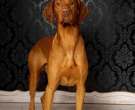
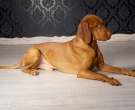
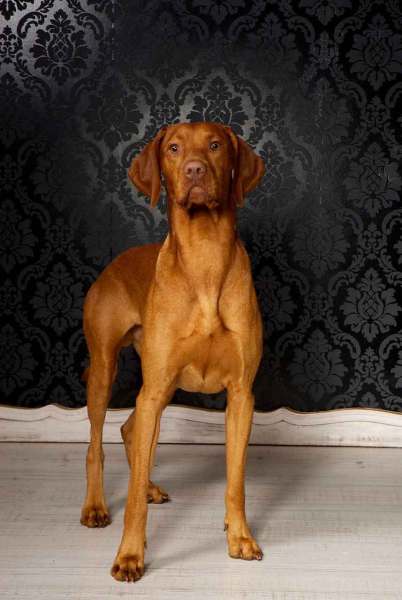
The Hungarian Short-Haired Pointer (Vizsla) it is a medium sized hunting dog. He looks a lot like his descendant the Hungarian Wire-haired Pointer, but with a shorter coat and a slightly less voluminous silhouette.

His body is almost square, slightly longer than tall, with lean, well-defined muscles that leave no room for superfluous curves. The legs are made of solid bones, well muscled and ending in slightly oval legs with brown nails.

The tail, set a little low and descending to the hock, is wide at the base and then gradually tapers towards the tip. Using this dog for hunting means that it has long been shortened by a quarter of its length to reduce the risk of injury. This practice of cutting off a dog's tail (tail docking) still practiced in some countries, but is currently banned in an increasing number of territories, including France, Belgium, Switzerland and Quebec.

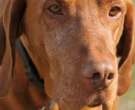
The head has a broad skull, moderately domed with a moderate stop. The ears, located on the back, they are quite long (about three-quarters of the length of the head) and hang along the cheeks. The eyes are oval and brown in color, as dark as possible. The snout, pretty short, is truncated (not pointed in any way) and ends in a big brown nose, darker than fur.

The top layer is, of course, short, as the breed name suggests, but also very close and rough to the touch. But, is finer and silkier on the face and ears, a little lighter on the belly and a little longer under the tail. It's important pointing that, unlike in the Hungarian Wire-haired Pointer, the Hungarian Short-Haired Pointer (Vizsla) does not have undercoat.

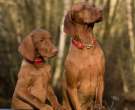
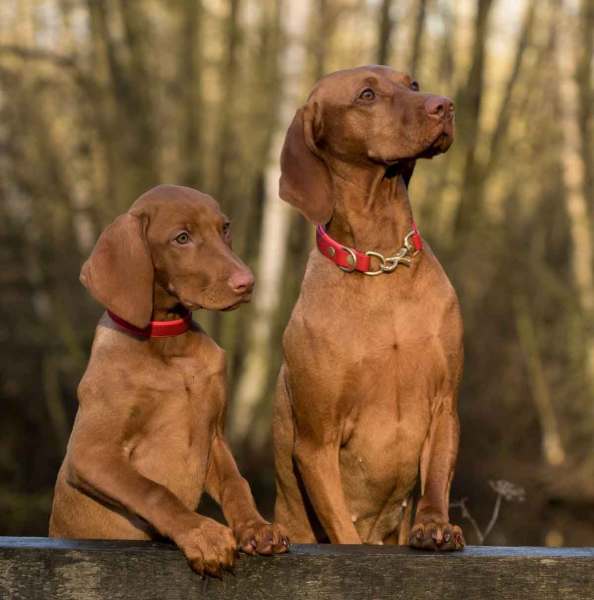
Whether it is short haired or wire haired, the Vizsla should have a uniform golden wheat color throughout the body except the ears, which are darker in color. Red tones are not desired, brown or discolored. A white mark on the chest or throat is acceptable, but should not exceed 5 cm..

Finally, sexual dimorphism is well marked in the Vizsla, the male being significantly larger and larger than the female.

Varieties:

The Hungarian Short-Haired Pointer (Vizsla) appeared in the decade of 1930 as a result of a cross between two females of Hungarian Short-Haired Pointer (Vizsla) and a male of German Shorthaired Pointer. Although they are very close, They are considered two separate breeds by international and national canine organizations that recognize them, and not two varieties of the same breed.

Apart from his longer hair and his characteristic goatee, the Hungarian Wire-haired Pointer are very similar, if they are not identical, to their ancestors.

But, specialists have found that on average they are slightly larger and heavier than their short-haired counterparts. This difference is also reflected in the rules of the American Kennel Club, that describes the Hungarian Short-Haired Pointer (Vizsla) as an average of 1 cm smaller than its descendant. On the other hand, the norm of the Fรฉdรฉration Cynologique Internationale (FCI) -which is used by the national canine organizations of reference in France, Belgium and Switzerland- does not mention that difference.

So, if there are some more or less subtle differences in terms of appearance, the same cannot be said in terms of character: in this field, the Hungarian Wire-haired Pointer hardly differs from his alter ego the Hungarian Short-Haired Pointer (Vizsla).

Character and skills

The temperament of Hungarian Short-Haired Pointer (Vizsla) does not differ by coat length. The Hungarian Wire-haired Pointer has the same character traits.

They are very affectionate dogs and very attached to their family. But, they always feel closer to a particular member of the household, who then becomes his favorite human, and they don't try to hide their prejudice.

In any case, is much less sociable with people who are not part of the home: he is not aggressive with them, but prefers to ignore them and act as if they are not there… at least as long as they don't represent a danger to him. In fact, his closeness to his family makes him protective of both his family and his territory. Reprimands in a deterrent way when a threat approaches, and does not hesitate to intervene if necessary.

With the kids, his attitude is similar: he is close and tender with those who live with him, for whom it is an excellent playmate, but ignore his friends who come to the house, or those you meet in the park. Even worse, if you mistakenly perceive certain games with the little one of the family as an aggression on their part, your protective instincts can lead you to react violently, mostly because he's always on the prowl. In any case, know it or not, you should never be left alone with a small child, without adult supervision. This is true for any dog, regardless of race.

The Hungarian Short-Haired Pointer (Vizsla) he is very sociable with his companions, whether they live under the same roof or with strangers you meet on a walk. Having him share your home with another dog is a good way to avoid boredom if his handlers are regularly absent..

The same cannot be said for a cohabitation with a small animal, that would quickly turn sour. If you have been used to being around the domestic cat from an early age, he has every chance of being considered a full member of your family, and therefore to be left alone. On the other hand, A bird, rodent or reptile is likely to awaken the hunting instinct that has accompanied it for generations. A small animal unknown to him and that he would have the bad idea to pass by during his pilgrimages would also have every chance of suffering a sad fate.. For the same reason, it is advisable to keep it on a leash in places where the probability of such encounters is quite high.

Bred for centuries to hunt in the wild, the Hungarian Short-Haired Pointer (Vizsla) they are active dogs that must be able to spend at least an hour a day to feel comfortable on their paws. But their resistance allows them to go much further, if given the opportunity. Daily walks are the best part of the day for him, and long weekend outings that allow you to spend several hours in the desert are probably the highlight of your week. If there is a lake or a river in the way, feel free to stop there: without being particularly fond of either, loves water and is a good swimmer. Hunting is, without a doubt, the activity that most allows him to mobilize his independent spirit and his remarkable sense of smell.. Itร‚ยดs, with much, his favorite, but you can also excel in dog sports that also allow these qualities to be expressed, like crawl or cavity. He is also perfectly capable of learning other disciplines, so much so that it is not uncommon to see representatives of the breed on the podiums of obedience or agility competitions.

Even more, his physical qualities and his resistance also make him a great companion for those who want to run with their dog, ride a bike with him and take him for a ride. On the other hand, given your significant need for exercise, not recommended at all for elderly or overly sedentary people.

In any case, best kept on a leash in urban or residential areas to avoid drama if small animals pass by, on the other hand, remove it in the wild, so you can run free and vent. This assumes that the withdrawal orders are perfectly acquired, but even when this is the case, it is difficult to fully trust his propensity to return without delay as soon as he is asked to do so. So, it is advisable to equip your dog with a GPS dog collar, so you can easily find it if you venture a little too far, especially since he might not be able to find his way back.

As long as you are able to exercise enough each day, the Hungarian Short-Haired Pointer (Vizsla) it is perfectly suitable for apartment living, If and when, of course, is the right size for your build. Having said that, the ideal for him is still a house with a garden. It goes without saying that the garden must be perfectly closed, to prevent any attempt to chase an animal. It also, although he greatly appreciates being able to go outside at any time to stretch his legs, this dog is not cut out for spending most of his time outdoors: although he can sleep outside, appreciates the comfort of home and the proximity of his family.

But, They are not the type of dog that will follow your wishes with finger and eye. Centuries of hunting with a high degree of autonomy have made it quite independent, which can be problematic if you are faced with an inexperienced owner or one who is not able to be firm enough to command respect for your dog.

Having said that, this independence of mind does not mean that he appreciates being left home alone for long periods of time. You can tolerate your family being normally away during the day as long as they pay attention to you at night, but risks destructive behavior if left alone for a whole weekend.

Last, the Hungarian Short-Haired Pointer (Vizsla) has a powerful voice, but rarely heard. Usually, barks only when threatened, or feel that something really important should be reported.

Education

The training of a Hungarian Short-Haired Pointer (Vizsla) can be problematic for a caregiver who does not know how to command respect and authority. With his independent character and his intelligence above the average, this dog can quickly turn things around and take control if given the opportunity.

Clear rules that are established at the beginning and that are consistent over time and among family members help establish discipline that is easy to understand and respect.. Establishing and enforcing these rules is crucial to having a dog that knows what is expected of him and follows it.. But, should not be done in one way; in particular, traditional training techniques should not be used, as they can traumatize the dog and cause blockages. On the other hand, educational methods based on positive reinforcement give much better results.

At the end, the training of Hungarian Short-Haired Pointer (Vizsla) generally does not present any difficulties, not even for a beginning caregiver, as long as the hierarchy is well established. This is all the more true since he is not one of those who question it systematically afterwards.

So, learning how to call back should be a priority, so that it can be allowed to run freely when the environment is suitable (forest, etc.), instead of having to keep it on a leash at all times. Having said that, it is difficult to expect complete reliability in this matter, given the strength of his hunting instinct.

Like any other race, the Hungarian Short-Haired Pointer (Vizsla) you should start socializing as soon as you get to your new home. This is generally done without problems, his curious and open nature helps him to quickly get acquainted with different people, animals and situations you may encounter, either occasionally or more regularly. This period should be used to get to know people (friends, neighbors, veterinary, etc.) and the human beings you will meet more or less frequently in your life. It is also the right time to get him used to meeting all kinds of unfamiliar humans and dogs., so you know how to behave in all circumstances.

Health

The Hungarian Short-Haired Pointer (Vizsla) they are generally robust, with a life expectancy of around 12-14 years, which is in line with the average of dogs of their size.

Their short coat protects them from both heat and cold, allowing them to live in a wide variety of climates. But, not adapted to extremes, and can't sleep outside when freezing, for example, or run in the sun in the middle of a summer heat wave.

No dog is immune to disease, and the Hungarian Short-Haired Pointer (Vizsla) is no exception. In this case, to which it is most exposed are ..:

  • The Hip Dysplasia, a joint problem often favored by a hereditary predisposition, causing pain and difficulty in movement, as well as osteoarthritis with age;
  • Elbow dysplasia, a malformation of the joint, which is also possibly related to a predisposition inherited from parents, and that also causes pain and lameness;
  • Epilepsy, a nervous system disease of often hereditary origin, responsible for more or less frequent and intense seizures. The disease cannot be cured on its own, but your symptoms can be relieved with the help of medication;
  • Addison's disease, a hormonal deficiency that is usually inherited from the parents and manifests itself in various ways: weakness, vomiting, diarrhea, weightloss… The most severe form of the disease is usually fatal, while the chronic form can be kept under control with lifelong treatment;
  • Hemophilia type A, an inherited disorder that prevents blood from clotting properly, and that affects men more than women. May manifest in heavy bleeding, bruising or blood in the urine;
  • Hyperuricosia, a disease also inherited from the parents. Corresponds to an excess of uric acid, leading to the formation of crystals in the urine, which in turn can cause bleeding and kidney failure;
  • Allergies, that can be caused by factors as different as food, the environment or parasites. Allergies can be caused by factors as different as food, the environment or parasites, and most often manifest as itching and redness of the skin;
  • Ear infections, as in most breeds of dogs with drooping ears.

The Hungarian Short-Haired Pointer (Vizsla) it is also particularly susceptible to various diseases of the eyes:

  • Progressive retinal atrophy, a degeneration of eye tissue that causes irreparable loss of sight, first at night and then also during the day;
  • Entropion, a defect in the position of the eyelid that can be inherited and causes irritation of the eyeball. The problem can be treated with surgery;
  • Ectropiรณn, an eyelid curl problem also inherited from parents, which also causes eye irritation. Also in this case, an operation remedies the problem;
  • Glaucoma, often hereditary, which is a painful increase in the pressure inside the eye. This leads to blindness if it is not operated as soon as possible.

It also, people who are used to hunt are particularly exposed to the risk of injuries that this activity implies.

Since many of the diseases to which the breed is predisposed are or may be hereditary, the adoption of a strict breeder of Hungarian Short-Haired Pointer (Vizsla) maximizes the probability of getting a healthy animal, and one that stays that way. In fact, a professional breeder not only ensures that puppies are well socialized from their first weeks of life, but also that they do not inherit a hereditary defect from their parents. To achieve this goal, causes various genetic tests to be systematically performed on the breeding stock in question, and excludes all those who could present any risk. You can also have the resulting puppies examined to confirm the absence of a hereditary condition.. In any case, must be able to present the results of the tests performed, plus a certificate of good health from a veterinarian and the puppy's health or vaccination record, that includes all vaccines that have been administered.

It also, from the moment he arrives home until the end of his life, it is essential to allow your dog to be regularly examined by a veterinarian for a complete health check. This is necessary at least once a year, and more often as you get older, as it allows early detection of a potential problem and action accordingly. These visits are also an opportunity to have immunizations increased when needed.. At the same time, It is also necessary to ensure that the "child's" antiparasitic treatments are renewed throughout the year., so you are never unprotected at this level.

Grooming

The Hungarian Short-Haired Pointer (Vizsla) it is an easy dog รขโ‚ฌโ€นรขโ‚ฌโ€นto keep, especially when it comes to fur. A quick weekly brushing is enough to keep the coat clean and healthy. But, frequency should be increased during the two seasonal moulting periods, in spring and autumn. To help remove dead hairs, daily brushing is recommended.

It is also necessary to bathe from time to time, although the frequency required depends largely on the lifestyle of the animal. If your dog often lives in the woods for long hours and gets very dirty, it may help to give him a bath every month. On the other hand, if you spend most of your time in parks and have little exposure to the elements, bathe him 2 or 3 times a year is potentially sufficient. In all cases, it is imperative to always use a shampoo designed specifically for dogs, since the pH of your skin differs from that of humans.

Your ears are the part of your body that requires the most vigilance, since its drooping shape facilitates the accumulation of dirt and moisture, and therefore the development of infections (ear infections, etc.). So, must be checked and cleaned every week, as well as drying out every time you have bathed in a lake or river or come back from a long period of time in a humid environment.

The weekly maintenance session of the Hungarian Short-Haired Pointer (Vizsla) should also include an exam and, if necessary, cleaning the eyes, to prevent dirt from building up and causing infection.

It also, like all the other dogs, the Hungarian Short-Haired Pointer (Vizsla) is not immune to tartar and its accompanying problems: bad breath, oral diseases… Brushing the teeth with a toothpaste for canine use is necessary at least once a week, but even more frequent brushing is recommended, even daily.

The claws of the Hungarian Short-Haired Pointer (Vizsla) they are particularly hard and therefore do not wear out much, even though he is very active. So, they need to be trimmed every month or so to prevent them from getting in your way or even hurting you. In any case, as soon as you hear them rubbing on the ground when you walk, it's time to take care of them.

Finally, another good habit to adopt is to check their fur, ears and pads after every long walk in nature, to detect any cuts or scratches, parasites, thorns…

Take care of a Hungarian Short-Haired Pointer (Vizsla) not particularly complex, but knowing how to do it well allows you to be more efficient and at the same time minimize the risks of hurting your pet, or even hurt her. So, it may be a good idea to learn them the first time from a professional groomer or vet. In any case, it is advisable not to wait to accustom your pet to these different manipulations, so that you accept them without hesitation throughout your life.

Food

The Hungarian Short-Haired Pointer (Vizsla) fits very well with commercially available industrial dog food. Both the choice of products and the definition of the given daily ration must be determined by age, the health status and activity level of the animal.

The latter can vary from one period to another., particularly in the case of individuals used for hunting. Servings must be adjusted accordingly, to ensure that the animal always provides all the energy it needs. But, this applies both up and down: for example, for a hunting dog, it is essential to return to normal portions once the hunting season is over, otherwise, overweight individuals may become overweight.

Obesity is not common in the Hungarian Short-Haired Pointer (Vizsla), but no dog is immune, especially if you've been spayed or neutered. A good habit is to weigh it every month. If the weight gain is confirmed or even accentuated by the following measures, it is necessary to visit the vet. In effect, only the vet can reliably determine the cause (it may not be related to your diet or activity level, but it may be caused, for example, due to illness or reaction to drug treatment), and propose a solution based on it.

It also, it is better to divide your daily ration into at least two meals: this makes digestion easier and reduces your propensity to claim, since then he knows he will be fed again later in the day.

It is also important to avoid giving your pet food intended for humans randomly, although it is very imploring when its owners are at the table, for example. In effect, unless you are sure that this is so, it is likely not meeting your nutritional needs and, therefore, cause more harm than good, especially, of course, if it contains dangerous foods for the canine population.

Last, like any of their races, the Hungarian Short-Haired Pointer (Vizsla) must be able to quench their thirst at will and have permanent access to fresh water.

Use

Historically, the main function of Hungarian Short-Haired Pointer (Vizsla) it was hunting. Can be used as pointers, runners or recuperators and are capable of working on all types of terrain, without hesitation to get into the water if necessary. It also, can attack both animals and game birds, acting alone or in tandem. But, it's unusual to find her performing in a pack. In any case, its hunting qualities continue to seduce and be used throughout the world today.

They also allow you to shine in certain canine sports disciplines, starting with the crawl, obedience or agility.

His popularity can also be explained by his attachment and energy, which make him a wonderful companion dog for a sporty family. A caretaker adept at hiking, on horseback riding or mountain biking you will find in him a tireless companion always ready for new adventures. On the other hand, its need for activity makes it much less suitable for the most sedentary or elderly.

Last, the Hungarian Short-Haired Pointer (Vizsla) it is also an effective watchdog, whose very protective instinct compensates for a less impressive size than that of some of its races also capable of fulfilling this role.

Buy a ยซHungarian Shorthaired Pointerยป

The price of a puppy Hungarian Short-Haired Pointer (Vizsla) is an average of 900 EUR, for both males and females. But, some exceptional individuals fetch much higher prices – until 2.000 euros for those with exceptional characteristics and pedigree.

in any country, and as in all dog breeds, the price charged depends largely on the more or less prestigious ancestry of the animal, as well as the reputation of the kennel that offers it. But, its intrinsic characteristics continue to be the main determinant of the price of a puppy of Hungarian Short-Haired Pointer (Vizsla). Individuals with the best character traits and physical characteristics closest to the standard are the most sought after, which explains why there can sometimes be significant differences within the same litter.

Characteristics "Hungarian Short-Haired Pointer (Vizsla)"
Coexistence is important that you have with your new friend. Before considering the acquisition of a dog of the breed "Hungarian Short-Haired Pointer (Vizsla)" you know certain factors. Not all breeds of dogs are apt to live in an apartment, you must take into account his character, their need for exercise, their interaction with other pets, their care and if you have small children, their level of tolerance towards them.

Adaptation โ“˜

3,0 of 5 stars (based on 1 review)

friendly dog โ€‹โ€‹โ“˜

3,0 of 5 stars (based on 1 review)

hair loss โ“˜

3,0 of 5 stars (based on 1 review)

Affection level โ“˜

5,0 of 5 stars (based on 1 review)

Need for exercise โ“˜

4,0 of 5 stars (based on 1 review)

Social need โ“˜

4,0 of 5 stars (based on 1 review)

Home โ“˜

4,0 of 5 stars (based on 1 review)

Toilet โ“˜

1,0 of 5 stars (based on 1 review)

Friendly with strangers โ“˜

2,0 of 5 stars (based on 1 review)

barking โ“˜

2,0 of 5 stars (based on 1 review)

Health โ“˜

3,0 of 5 stars (based on 1 review)

Territorial โ“˜

4,0 of 5 stars (based on 1 review)

Cat friendly โ“˜

2,0 of 5 stars (based on 1 review)

Intelligence โ“˜

4,0 of 5 stars (based on 1 review)

Versatility โ“˜

4,0 of 5 stars (based on 1 review)

Child friendly โ“˜

4,0 of 5 stars (based on 1 review)

Surveillance โ“˜

3,0 of 5 stars (based on 1 review)

joy โ“˜

4,0 of 5 stars (based on 1 review)

Images "Hungarian Short-Haired Pointer (Vizsla)"

Videos "Hungarian Short-Haired Pointer (Vizsla)"

Type and recognitions:

  • FCI CLASSIFICATION:
  • Group :
  • Section : . .

Federations:

  • – FCI – Group 7: Pointing Dogs. – Section 1: Continental Pointing Dogs. 1.1: Braque Type โ“˜
  • – AKC – Group 1 (Sports) โ“˜
  • – CKC – Group 1 (Sports) โ“˜
  • – โ€‹KC – Gun Dog โ“˜
  • – NZKC – Gun Dog Group โ“˜
  • – UKC – Gun Dog Group โ“˜

FCI breed standard "Hungarian Short-Haired Pointer (Vizsla)"

Origin:
Hungary

Date of publication of the valid original standard:
06.04.2000

Use:

It is a dog that has repeatedly proven to be a utilitarian hunter.. Both in the field and in the forest, or in the water, has proven to be useful given the typical characteristics it has: highly developed sense of the trail, venteador firm, excellent conduct or behavior to bring the prey, indefatigable chaser of the trail even swimming due to its natural affinity with water. It is capable of surviving extreme weather conditions as well as in the most varied soils.. As a complete hunting dog, the fear of shooting or wild animals is a fault that manifests itself for example in the gathering of prey. Lack of affinity to water is also highly undesirable. Given its unproblematic nature and normal adaptability, It is an excellent dog to live with in the house.


General appearance:

Elegant hunting dog with aristocratic appearance, medium size and short hair of yellowish seed color. The construction, rather light, dry, spandrel, gives the image of harmony, of beauty and strength united.

IMPORTANT PROPORTIONS

โ€ข The length of the body is somewhat greater than the height at the withers.
โ€ข The depth of the chest reaches a little less than half the height at the withers..
โ€ข The snout is a little shorter than half the total length of the head.


Behavior / temperament:

Lively, friendly, balanced, easily trainable. The outstanding ability to always be ready, is one of its essential characteristics. Does not support rude or rough training as they can lead to aggressive or shy behavior.

Head:

Dry, aristocratic shapely.

Cranial region:
  • Skull : Moderately wide, gently domed, on the skull a delicate groove that runs from the moderate occiput to the stop. Supraorbital arches are moderately developed.
  • Depression links (stop) : Moderate.

facial region:

  • Truffle : Wide and well developed nose, if possible with wide open nostrils. The truffle color harmonizes with the hair color in a shade a little darker than the coat.
  • Snout : Romo, not pointed, with powerful and heavily muscled jaws. The nasal helm is straight.
  • Belfos : Firms, adherents with nothing hanging.
  • Jaws/Teeth : Powerful jaws with a scissor bite, perfect, regular and complete. There should be no space between the upper and lower incisors The teeth are inserted more or less at right angles to the jaws, 42 healthy teeth and according to the dog's dental formula.
  • Cheeks : Powerful, good muscular.

Eyes : Gently oval, medium-sized. The eyelids are well adherent to the eyeball. The look is lively and intelligent. The color of the eyes is brown and harmonizes with the color of the coat, preferred when the eyes are as dark as possible.

Ears : Insertion slightly back and at medium height. The ear is thin and rests on the cheek, ending downwards in a rounded "V". Its length is approximately three-quarters of the length of the head.

Neck:

Medium length and in harmony with the whole of the dog. Very muscular and gently arched nape. Throat skin is firmly attached.

Body:

  • Cross : Notorious and muscular.
  • Back : companies, well muscled, strong and straight. The bony apices of the vertebrae must be covered by musculature.
  • Pork loin : Short, width, strong, muscular, straight or gently arched. The passage from back to back is firm and compact.
  • Rump : Wide and long enough, it does not cut, gently descends towards the tail, well muscled.
  • Breast : deep and wide, with a moderately developed sill, well drawn and muscular. Sternum pushed back as far back as possible. The sternum and the elbow joints should be at the same height. Ribs moderately sprung. Back ribs with good reach up.
  • Bottom line and belly : Glides firmly back with a graceful, slightly tucked curve.

Tail:

Insertion a little low, strong at the start and tapering towards the tip. In countries where there is no formal ban on tail docking, it will be cut into a quarter of its length for hunting purposes. As long as it cannot be cut, reaches hock height. It is straight and its bearing is light saber. In motion the tail rises to the height of the horizontal. The tail must be well covered by good hair and bushy.

Tips

PREVIOUS MEMBERS : Seen from the front they are parallel. In profile they are seen straight to the ground and located well under the body. Good bone structure and strong muscles.

  • Shoulder : Long scapulae, ideally sloped back and flat. Elastic in movement. Dry and powerful muscles. Good angulation between the scapula and the arm.
  • Arm : As long as possible and well muscled.
  • Elbow : Next to the body, though not tight or turned in or out. Good angulation between arm and forearm.
  • Forearm : Long, straight, good muscular. Powerful bones, not heavy or rough.
  • Carpo : Dried, firm.
  • Metacarpus : Short, only with a very slight incline in your posture.
  • Front feet : Slightly oval, with fingers together and well arched ; strong brown nails. Strong pads, powerful, resistant and slate gray. The feet are kept parallel both in immobility and during movement.

LATER MEMBERS : Viewed from behind they look straight and parallel. Good angulations. Strong bones.

  • Thigh : Long and well muscled. Good angulation between hip and femur.
  • Knee : Good angulation of the thigh with the leg.
  • Leg : Long, well muscled, fibrous. Its length is approximately equal to the length of the thigh. Good angulation between the leg and the metatarsal.
  • Hock : Strong, dry and stringy. Located relatively low.
  • Metatarsus : Straight, short and dry.
  • Rear feet : Same as forwards.

Movement:

His typical gait is a powerful, flowing trot., elegant and with good ground cover, with great rear propulsion and very good front extension. During the search in the field, a voluntary gallop is customary.. The back is firm and the topline remains straight., without loosening. The bearing is well upright. Pasuqueo is not desirable.

Mantle

SKIN : companies, adherent, without wrinkles. The skin must be well pigmented.

HAIR : Short and bushy, it should be rustic and hard to the touch. On the head and on the ears it should be finer, silky and shorter, on the underside of the tail it may be somewhat longer but not too long. It must cover the whole body, in the belly it is less dense. Has no undercoat.

COLOR : Different shades of yellow seed. Ears may be a little darker, although staying within the coloration. Red colors are not desirable, browned, or very light tones. A small white spot on the chest or throat will not be considered fouls, provided that its diameter does not exceed 5 cm., nor will white marks on the fingers be considered missing. The color of the lips and the edges of the eyelids harmonizes with the color of the nose.


Size and weight:

HEIGHT AT THE WITHERS

  • Males 58-64 cm..
  • females 54-60 cm..

It is unproductive to increase the height at the withers. A medium size is the goal. The set and the symmetry both in static and in movement are by far more important to the size measured in centimeters.


Fouls:

Any deviation from the aforementioned criteria is considered as a fault and the severity of this is considered to the degree of the deviation to the standard and its consequences on the health and well-being of the dog..

MISS PLAYOFFS

โ€ข Any weakness in an essential characteristic of character.
โ€ข Sensitive deviation from racial characteristics.
โ€ข Notable deviation from the characteristics of their sex.
โ€ข Atypical head.
โ€ข Spotted truffle.
โ€ข Hanging or slimy lips.
โ€ข Upper or lower prognathism, deviated arch of the incisors and any other option that is not correct.
โ€ข Missing one or more incisors and/or fangs and/or premolars (2-4) and / or molars (1-2) ; lack of more than two PM1, M3 will not be taken into account or considered. Teeth that are not visible will be considered as missing teeth.
โ€ข Supernumerary teeth outside the tooth line.
โ€ข Split palate, harelip.
โ€ข Light yellow eyes, noticeably loose eyelids ; ectropion, entropion, disksis (double lash line).
โ€ข Excessive double chin.
โ€ข Dewclaws.
โ€ข Very serious offenses that prevent normal movement.
โ€ข Atypical fur.
โ€ข Dark brown or faded yellow ; more than one color, color disappeared ; white spot on the chest of more than 5 cm..
โ€ข White feet.
โ€ข Lack of pigmentation both on the skin and on the edges of the lips and eyelids.
โ€ข More of 2 cm.. deviation of the maximum and minimum measurements.

Any dog โ€‹โ€‹showing clear signs of physical or behavioral abnormalities must be disqualified..


N.B.:

Males should have two normal-appearing testicles fully descended into the scrotum..

Source: F.C.I - International Cynological Federation

Alternative names:

1. Hungarian Short-Haired Pointer (Vizsla), Vizsla, Vizslak (English).
2. Braque Hongrois ร  poil court (Vizsla), Vizsla, (en hongrois rรถvidszล‘rลฑ magyar vizsla) (French).
3. Kurzhaariger Ungarischer Vorstehhund (Vizsla), Vizsla, Magyar Vizsla Kurzhaar, (ungarisch Rรถvidszล‘rลฑ magyar vizsla) (German).
4. Braco hรบngaro de pelo curto, Vizsla, (em hรบngaro: Rรถvidszรถrรผ magyar vizsla) (Portuguese).
5. Vizsla, Braco hรบngaro (espaรฑol).

โ–ท The world of Pets: Dogs, cats, birds, reptiles, amphibians

Large Mรผnsterlรคnder
Alemania FCI 118 . Spaniel type

Mรผnsterlรคnder Grande

Nature Large Mรผnsterlรคnder is lively but not express nervousness.

Content

History

Historically, the Large Mรผnsterlรคnder, It was a dog used to hunt birds and hawks in the middle ages, its origins are located in the trackers and retrievers, as well as sample of 19th century dogs.

The Large Mรผnsterlรคnder is considered to be, similar to the Small Munsterlander and the German Longhaired Pointer as part of the family of Pointing Dogs germans, whose professional parenting was beginning around the end of the 19th century.

After the ยซDeutscher-Langhaar-Vereinยป definitively excluded the black dog in 1909, the "Association for the Pure Breeding of the Long-Haired Black-White Mรผnsterlรคnder Pointing Dog", founded in 1919, assumed the raising of the black and white Longhair. Once the remaining, still extant dogs of this long-haired native breed were documented in an original list, mostly from the eastern Mรผnster region and Lower Saxony, the Association began in 1922 planned parenting Large Mรผnsterlรคnder.

The founding list comprised 83 dogs. Descendants of the dogs on the original list were entered into the record book for the Large Mรผnsterlรคnder. The club that kept the record book was the โ€œAssociation of Large Munsterlandersโ€, to date organized eight independent regional groups. The Club of the Large Mรผnsterlรคnder is a member of the VDH and the Federation of Working Gundogs (JGHV)

Physical characteristics

It is a dog with strong and muscular body structure, with a stylized picture; expression of intelligence and nobility.

Has a step and trot elastic, covers the ground, with a wide range. Elastic Gallop, with great momentum and thrust of the later members, and broad jump.

Video of โ€œMรผnsterlรคnder Grandeโ€
Large Munsterlander Wilson Hunting duck retrieve

The skin is adherent. Her hair is long and dense, Although smooth; It is not wavy or separated, because this could be an impediment to perform its function in the hunt. typical broad hair.

The hair, both the male and the female, It must be especially long and dense in the posterior region of members before and after (with good feather). Also on the tail the hair must be especially long. The longest boom in the queue must be half the length of this.

The hair of the ears It should be long (with good formation of stripes) and it must be so long that it symmetrically exceeds the lower edge of the ears (never leather ears). In the rest of the head hair should be short and adherent.

It is of color White with plates and black spots, or a black splash. Black head, eventually with a spot or a whitelist.

Character and skills

El Munsterlander Grande, is a versatile hunting dog, his greatest skill is at work to perform after the firing of the Hunter.

Its main characteristics are docility, ability to learn and reliable utility for hunting. Its nature is lively but not obvious nervousness.

It can be perfectly adapted to the home life, from which you will greatly enjoy the warmth of your family, but you also need to run in the field to feel completely happy moments.

Observations

You need to do plenty of exercise, It is an ideal companion to go out running.

Use

Due to its versatility, it is necessary that the Large Mรผnsterlรคnder be placed regularly in the most varied fields. His medium head size has made him a specialist in the search for injured game animals, on the plains and in the woods. His main job is to, after the shot, avoids unnecessary suffering of the injured animal to some extent. The goal is to have a very good all-terrain dog; therefore, it is necessary to maintain in him these natural qualities.

Health

The Large Mรผnsterlรคnder he is a robust dog, living a long time and generally in very good health.
This dog is not predisposed to being overweight. Their activities should be oriented to humid environments (swamps) in hot weather. It is not afraid of the cold and can even live outside in a kennel..

Comprar a โ€œMรผnsterlรคnder Grandeโ€

The price of a Large Mรผnsterlรคnder varies according to their origins, age and gender. The limited diffusion of the breed on French soil does not allow knowing the average price of a puppy of Large Mรผnsterlรคnder registered in the LOF (Sociรฉtรฉ Centrale Canine).

Characteristics "Large Mรผnsterlรคnder"

Coexistence is important that you have with your new friend. Before considering the acquisition of a dog of the breed "Large Mรผnsterlรคnder" you know certain factors. Not all breeds of dogs are apt to live in an apartment, you must take into account his character, their need for exercise, their interaction with other pets, their care and if you have small children, their level of tolerance towards them.

Adaptation โ“˜

4,0 of 5 stars (based on 1 review)

friendly dog โ€‹โ€‹โ“˜

4,0 of 5 stars (based on 1 review)

hair loss โ“˜

3,0 of 5 stars (based on 1 review)

Affection level โ“˜

5,0 of 5 stars (based on 1 review)

Need for exercise โ“˜

4,0 of 5 stars (based on 1 review)

Social need โ“˜

3,0 of 5 stars (based on 1 review)

Home โ“˜

2,0 of 5 stars (based on 1 review)

Toilet โ“˜

3,0 of 5 stars (based on 1 review)

Friendly with strangers โ“˜

3,0 of 5 stars (based on 1 review)

barking โ“˜

3,0 of 5 stars (based on 1 review)

Health โ“˜

3,0 of 5 stars (based on 1 review)

Territorial โ“˜

3,0 of 5 stars (based on 1 review)

Cat friendly โ“˜

2,0 of 5 stars (based on 1 review)

Intelligence โ“˜

5,0 of 5 stars (based on 1 review)

Versatility โ“˜

4,0 of 5 stars (based on 1 review)

Child friendly โ“˜

5,0 of 5 stars (based on 1 review)

Surveillance โ“˜

3,0 of 5 stars (based on 1 review)

joy โ“˜

5,0 of 5 stars (based on 1 review)

Images of the โ€œLarge Mรผnsterlรคnderโ€

Videos of โ€œMรผnsterlรคnder Grandeโ€

Type and recognitions:

  • FCI CLASSIFICATION:
  • Group :
  • Section : . .

Federations:

  • – FCI – Group 7: Pointing Dogs. – Section 1: Continental Pointing Dogs. 1.2: Spaniel type โ“˜
  • – ANKC – Group 3 (Gundogs) โ“˜
  • – โ€‹KC – Gundogs โ“˜
  • – NZKC – Hunting dogs โ“˜
  • – UKC – Gun Dog โ“˜

FCI breed standard "Large Mรผnsterlรคnder"

Origin:
Germany

Date of publication of the valid original standard:
29.10.2013

Use:

According to its hunting needs as a versatile dog, the Great Munsterlander must meet all the necessary challenges and must be able to work in the field., forest and water before and after shooting.


General appearance:

Strong and muscular body, bold overall impression. Expression of intelligence and nobility. Clean exterior lines.

IMPORTANT PROPORTIONS:

The height at the withers and the length of the body must be as equal as possible. The length of the body may exceed the height at the withers by 2 cm..


Behavior / temperament:

The most important qualities are: be manageable and easy to teach, reliable for use as a hunting dog particularly after shooting. Loving temperament without being nervous.

Head:

Noble and elongated with intelligent expression. Defined chin with good muscles.

Cranial region:
  • Stop: moderate.

facial region:

  • Nose: Pronounced black nose.
  • Snout: Strong, long and well developed for use. Right nasal bridge.
  • Lips: not hanging.
  • Jaws/Teeth: Strong bite and full dentition (42 teeth) with well-formed canines and a perfect scissor bite.

Eyes: The darker the better, tight-fitting eyelids. Ears: Wide, medium high insertion, rounded tips, adjusted

Ears: Wide, medium high insertion, rounded tips, adjusted.

Neck:

Strong and well muscled with a noble curve.

Body:

  • Cross: moderately high, long, good musculature.
  • Back: Short, firm, straight. Pork loin: Pronounced, protected by tight muscles.
  • Rump: Long, wide, only slightly inclined, good musculature.
  • Breast : Width seen from the front, deep viewed from the side with a marked parapet. Bottom line and belly: slightly ascending, tight, slender. Short flanks and set high.

Tail:

Carriage horizontally or slightly higher. Side view in continuation with the upper line without break.

Tips

PREVIOUS MEMBERS:

  • Right limbs, strong and well muscled. Correct angulations.
  • Shoulder: Scapulae tightly fitting to ribs.
  • Arm: Must be strong and well muscled.
  • Forearm: Right limbs, strong and well muscled.
  • Metacarpus: elastic.
  • Previous feet: Moderately long and rounded, tight fingers, No Spurs.

LATER MEMBERS:

  • General appearance: Strong, tight muscles, vertical position.
  • Knee: correctal angulation.
  • The Hock joint: correct angulation.
  • Hind feet: Moderately long and rounded, tight fingers, No Spurs.

Movement:

Elastic in the walk and trot, covering the surface with long strides. Gallop: elastic, animated with the necessary push and long reach.

Mantle

SKIN: tight.

Fur: Long and bushy, straight and not wavy or standing as it hampers hunting ability. typical broad hair. The hair must be especially long and dense on the back of the forelimbs and hindquarters.. (Well covered in feathers) both males and females. In the tail the hair must be particularly long. The area most heavily feathered should be in the middle of its length. The hair in the ears must be long (good fringes) and arrive clearly and evenly on the tips of the ears (leather at the end of the ears is not desirable). The hair on the head is short and soft.

Color: The three varieties of color are:

  • White with black patches and spots,
  • roan blue,
  • pure black.

The head is always black, a cutout or white star is possible.


Size and weight:

Height to the cross (average):

  • Males 60 โ€“ 65 cm.
  • females 58 โ€“ 63 cm.

Tolerated 2 cm above specified size.

Weight: About 30 kg.


Fouls:

Any deviation from the aforementioned criteria is considered a fault and its severity is considered to the degree of deviation from the standard and its consequences on the health and well-being of the dog and the dog's ability to perform its traditional task..

โ€ข Skull too wide. Too much stop, snout
too short.
โ€ข Roman nose or plate face, complete absence of
pigmentation or just spots.
โ€ข Swollen or pendulous lips.
โ€ข Slight missing teeth and bite; bite clamp, double PM 1, absence of 1-2 premolars (PM1) or 3 molar (M3) (Maximum 2 teeth)
โ€ข Eyes too light. Visible red membrane. Loose eyelids.
โ€ข Low set ears, separated from the head. Ears that are too short or folded back showing cartilage.
โ€ข Neck too short, too long, very thick, very thin, Spada.
โ€ข Cross too low, very short.
โ€ข Back too long, sunken or hooded.
โ€ข Loin with loose muscles. Non-harmonious transition of the croup; over built.
โ€ข Short croup, close, with abrupt fall.
โ€ข Barrel-shaped chest, Strait, not deep enough, lack of sill,
โ€ข Abdomen too ascending or too low
โ€ข Carrying the tail to one side, rolled up, broken or ring-shaped tail.
โ€ข Forelimbs: too steep angles, protruding or crooked elbows. Stupid Carpos. Forehead too narrow or too wide.
โ€ข Hind limbs: too steep angles, cow hock or bow legs as well as a rear that is too open or closed.
โ€ข Round cat foot, long hare, flatfoot. Pigeon fingers or violin forehead.
โ€ข Walk and short trot, rigid or remilded. Gallop: hard heels, little push.

FALTAS DESCALIFICANTES:

โ€ข Aggressiveness or extreme shyness.
โ€ข Any dog โ€‹โ€‹showing clear signs of physical or behavioral abnormalities.
โ€ข Pale nose.
โ€ข Entropion, ectropion.
โ€ข Prognathic or enognathic mouth, mouth crossed, absence of incisors or canines, absence of molars or premolars (except 2 PM1 the 1 M3)
โ€ข Colors not in accordance with the breed standard.
โ€ข Dogs above or below the indicated height.
โ€ข Fearful or sensitive to triggering to any degree. Fear of prey, teether out of fear, fearful of strangers.


N.B.:

โ€ข Males must have two normal-appearing testicles fully descended into the scrotum..
โ€ข Only functionally and clinically healthy dogs, with the typical conformation of the breed, should be used for parenting.

Source: F.C.I - International Cynological Federation

Alternative names:

1. GroรŸer Mรผnsterlรคnder (English).
2. Grand mรผnsterlรคnder (French).
3. GroรŸer Mรผnsterlรคnder Vorstehhund (German).
4. (em alemรฃo: Grosser mรผnsterlรคnder) (Portuguese).
5. (en alemรกn GroรŸer Mรผnsterlรคnder), Gran Munsterlander (espaรฑol).

โ–ท The world of Pets: Dogs, cats, birds, reptiles, amphibians

German Longhaired Pointer
Alemania FCI 117 . Spaniel type

German Longhaired Pointer

The first thing to keep in mind is that the German Longhaired Pointer is a head to toe hunting dog.

Content

History

The German Longhaired Pointer It is one of the oldest German pointing breeds. Long-haired hunting dogs can already be seen in ancient hunting paintings and tapestries from the Middle Ages, which are very similar to the current German "sample dogs". These dogs were used primarily as hunting dogs to stalk, but also for catching small game in nets.

It is purebred since 1879. On the occasion of an exhibition of the association for the refinement of dog breeds in Hannover, the characteristics of the breed were established, the breed standard. The breed was based on five different breeding lines, that bore the names of authorized stallions that already corresponded to the breed standard at that time.

The German Longhaired Pointer The name of "old forest dog" has been won in particular for his ability to do very good tracking jobs, to warn the hunter with loud barks when searching and to bring lost animals by following their blood trail. Working in the water is also one of its strengths, which is appreciated by hunters.

Photo: A German long hair called Falko by Wikimedia

Physical characteristics

The breed is bred in brown, Brown and white, and brown and white. The best known and most common is German Longhaired Pointer pure brown, which may also have white markings on the chest or legs. Taupe comes in gradations from light gray to dark gray and the rare trout gray color variant.

The German Longhaired Pointer it is usually a strong dog, muscular, low constitution and with harmonious body shapes. Males usually have a shoulder height of 63 – 66 cm., the females of 60 – 63 cm.. Has brown eyes, long, well-edged hocks and a tail with a beautiful flag. Your coat should be of medium length and not too lush.

Character and skills

The first thing to keep in mind is that the German Longhaired Pointer he's a hunting dog from head to toe. In the hands of a knowledgeable trainer, is a useful helper on the hunt and then on a second job, a very good family dog. The breed is very fond of children and family. But this should not be misunderstood at all. Because "familiarly friendly" does not mean "family dog". It is a fairly pronounced working dog. The German Longhaired Pointer has the strong drive and willingness to work, either on the hunt or, if required, your substitute in the form of dog sports of all kinds. So, It is not a dog for beginners nor a dog for people who do not want or cannot work intensively with it.

German Longhaired Pointer
ยซGerman hair showed dogยป during the international canine exposure in Katowice, Poland

In the practice of hunting, the German Longhaired Pointer is especially praised for its pronounced calm. He is a lead dog, resistant to nerves and of a calm and even-tempered nature. At the same time, he is a kind and peaceful friend with a high threshold for irritation.. But, the German Longhaired Pointer needs a consistent education, competent and sensitive to direct his high intelligence, alert senses and their pronounced willingness to act in the right channels. With such an appropriate atmosphere of character, this breed of dog is a great friend of children, a great family companion also outside of hunting or sports work and in any case a wonderful experience of the association of man and dog.

Aptitudes:

If occasionally offered simply as a family and apartment dog, one should approach such sellers with the utmost caution. Such offers certainly come from dubious sources. as a rule, a German Longhaired Pointer belongs to the hands of a hunter who works with him professionally. If you are not kept for the hunt, must be kept busy with long walks in nature or challenges in dog sports. It also, needs a personal connection with caregiver and family. If the hunting dog is not physically or mentally challenged, in the long run this will lead to serious behavior problems. It does not belong to a multi-story building and not to the big city. Otherwise, he has no problems and his attitude is undemanding.

Education

One German Longhaired Pointer should only be trained by an experienced owner. It must come absolutely from a recognized upbringing of the German association of "shows", where parents and puppies were already socialized for their tasks from the litter box onwards. It also, you need to train and work professionally for hunting or suitable sporting purposes. Only dogs that have successfully passed the demanding tests of autumn breeding of "Schorlemer" are admitted for breeding. You have to ask in the breeding clubs of the German Longhaired Pointer.

Health

The race German Longhaired Pointer is cared for in an exemplary manner by its breeding clubs organized in the Deutsch-Langhaar-Verband. Therefore, average dog health has no problem.

Grooming

Caring for a German Longhaired Pointer is undemanding. Regular brushing of the coat is sufficient.

Buy a "German hair dog"

If you are thinking of buying a German Longhaired Pointer, You should be wondering if you can meet the requirements for an attitude of character appropriate to this hunting dog.. And what during 12 years and more will be your companion on a daily basis. Then you must contact local breeders who are members of the ยซDeutsch-Langhaar-Verbandยซ. A puppy of this breed costs around 1000 EUR.

Characteristics "German Longhaired Pointer"

Coexistence is important that you have with your new friend. Before considering the acquisition of a dog of the breed "German Longhaired Pointer" you know certain factors. Not all breeds of dogs are apt to live in an apartment, you must take into account his character, their need for exercise, their interaction with other pets, their care and if you have small children, their level of tolerance towards them.

Adaptation โ“˜

3,0 of 5 stars (based on 1 review)

friendly dog โ€‹โ€‹โ“˜

3,0 of 5 stars (based on 1 review)

hair loss โ“˜

2,0 of 5 stars (based on 1 review)

Affection level โ“˜

5,0 of 5 stars (based on 1 review)

Need for exercise โ“˜

5,0 of 5 stars (based on 1 review)

Social need โ“˜

2,0 of 5 stars (based on 1 review)

Home โ“˜

2,0 of 5 stars (based on 1 review)

Toilet โ“˜

2,0 of 5 stars (based on 1 review)

Friendly with strangers โ“˜

3,0 of 5 stars (based on 1 review)

barking โ“˜

3,0 of 5 stars (based on 1 review)

Health โ“˜

3,0 of 5 stars (based on 1 review)

Territorial โ“˜

4,0 of 5 stars (based on 1 review)

Cat friendly โ“˜

2,0 of 5 stars (based on 1 review)

Intelligence โ“˜

3,0 of 5 stars (based on 1 review)

Versatility โ“˜

3,0 of 5 stars (based on 1 review)

Child friendly โ“˜

4,0 of 5 stars (based on 1 review)

Surveillance โ“˜

3,0 of 5 stars (based on 1 review)

joy โ“˜

4,0 of 5 stars (based on 1 review)

Videos "German Longhaired Pointer"

Obenstaat Kennels - German Langhaar Puppies 1st intro. to Water

Kennels Obenstaat – Puppies German Longhaired Pointer – Introduction to water

Apport impressions hunting dogs German long hair from Veybach
"German hair dog"

Type and recognitions:

  • FCI CLASSIFICATION:
  • Group :
  • Section : . .

Federations:

  • – FCI – Group 7: Pointing Dogs. – Section 1: Continental Pointing Dogs. 1.2: Spaniel type โ“˜
  • – CKC – Grupo 1 – Sporting โ“˜
  • – โ€‹KC – Hunting dog โ“˜
  • – UKC – Gun Dog โ“˜

FCI breed standard "German Longhaired Pointer"

Origin:
Germany

Date of publication of the valid original standard:
25.10.2000

Use:

Variable utility dog in hunting.


General appearance:

It is strong, muscular, under, of flowing lines. In small dogs, much substance is required. Heavy and compact dogs are not desirable.

IMPORTANT PROPORTIONS :
The snout and the skull have the same length; In your posterior region it is not too high, Because the shoulders are somewhat higher than the rump.


Behavior / temperament:

It is well balanced, quiet, With a regular temperament, Kind, easy guide.

Head:

Special emphasis should be placed on the beautiful long hair covered. Is elongated and noble appearance.

Cranial region:
  • Skull : Slightly rounded.
  • Depression links (Stop) : Naso-fontal depression rises slightly, Without interrupting in an abrupt way.

facial region:

  • Truffle : Brown in color, a mild depigmentation is allowed.
  • Nose cane : Slightly arched, Not too narrow.
  • Lips : They don't overcome too much.
  • Mandible / teeth : Non -refined jaw. Well developed teeth. Complete bite (42 teeth) scissor -shaped, that is to say that the upper incisors closely cover the lower.
  • Dental formula : 3 1 4 2 x 2 = 423 1 4 3
  • Cheeks : The cheekbones do not stand out much.

Eyes : Brown in color, as dark as possible; eyelids closely attached to the eyeball, No visible red nicming membrane. Neither sunk nor jums.

Ears : Your insert is not very low; They are slightly folded forward.

Neck:

Strong and noble, without jowl; extends widening to the chest forming a beautiful line; It is not too short.

Body:

  • Back : Straight, firm, not too long.
  • Pork loin : Especially muscular.
  • Rump : Long, Descend moderately.
  • Breast : Well developed sill; The rib cage is wide and deep; Reach at least the elbow.

Tail:

It does not have it too steep. It must take it horizontal with the last slightly raised third upward.

Tips

PREVIOUS MEMBERS :

  • As a whole : The dog standing, The arm, The forearm and metacarpo must form a line close to the vertical when they are observed from the front.
  • Shoulder : Well glued. Seen sideways and at rest, The scapula and the arm should form an angle approaching as much as possible at a right angle.
  • Elbows : Well glued.
  • Articulation of the carpus : Slightly hunched.
  • Metacarpus : Not completely straight.

LATER MEMBERS :

  • As a whole : Seen from the back, The iliac bump, thigh, The leg and metatarsal form a vertical line.
  • Warm-foot joint : It is very important to form a good angulation.
  • Spurs : They must be removed immediately after birth.

FEET : Hard, durable pads.

Movement:

It covers the terrain with good impulse of the posterior members.

Mantle

HAIR :

The correct fur is very important which should not be excessive or too short. On the sides of the back and trunk the hair must be 3,5 cm long, good paste. In the lower region of the neck, In the chest and abdomen the hairs can be longer.

โ€ข Abdomen : Well -covered with hair.
โ€ข Ears : Wavy hair.
โ€ข Cola : With good pen, hair cover.
โ€ข Rear region of the previous members : Feathers cover.
โ€ข posterior region of the posterior members: Feathers cover(pants).
โ€ข Below the warm-tarsian joint : Hair is considerably shorter. Excess hair stripes is not desirable. The space between the fingers must have dense and short hair.
โ€ข Head : Hair is much shorter, although longer than that of the German hair dog. The formation of a lock in the cranial region is not desirable.
โ€ข In the body : Hair is firm, smooth, Recty The Flucky Farming, Very close. Dense with good amount of internal lanilla.

COLOR :

โ€ข Brown unicolor.
โ€ข Brown with white or splashed marks (especially in the chest and feet).
โ€ข Dark Roan (With more or less large or less small brown plates; brown head, eventually with a list, a small spot or a white star).
โ€ข Clear Roan (with more or less large or less small brown plates; brown head, eventually with a list, a small spot or a white star).
โ€ข Salpized (Many small brown spots on a white background. Brown head, eventually with a list, a small spot or a white star).
โ€ข Blanquecino brown, either totally whitish brown or, With very few small spots (Large brown plates, in a chair or coat; Brown head, eventually with a list, a small spot or a white star).
โ€ข In isolation the yellow fire color can be presented as an ancient heritage of the hound.


Size and weight:

Height to the cross :

  • Males : 60 โ€“ 70 cm., ideal measure 63 โ€“ 66 cm..
  • females : 58 โ€“ 66 cm., ideal measure 60 โ€“ 63 cm..

Weight : It is approximately 30 kg


Fouls:

Any deviation from the aforementioned criteria should be considered as lack and the severity of this is considered the degree of deviation to the standard and its consequences on the health and well -being of the dog.

โ€ข Clear hawk eyes, oblique placement.
โ€ข Uncoated ears, ends without hair (Leather).
โ€ข Convex or defeated back.
โ€ข Tonel -shaped thorax, Too close.
โ€ข Hook -shaped tail.
โ€ข Previous members : Scapulo-Humeral joint too open; Metacarpo too straight.
โ€ข Rear members in the form of a cow or barrel.
โ€ข Feet with separate fingers, cat or penal foot.
โ€ข Fur : Longer hairs in the beard, abundant eyebrows, curly hair.

MISS PLAYOFFS :

โ€ข Aggressive or fearful dog.
โ€ข General appearance: Dogs with Osamanta and weak muscles.
โ€ข Head : Dogs with different head shapes to the type.
โ€ข Eyes : Ectropiรณn (eyelids turned out), entropion (eyelids turned in), Corrected eyelids are also considered as missing.

Any dog โ€‹โ€‹showing clear signs of physical or behavioral abnormalities must be disqualified..


N.B.:

Males should have two normal-appearing testicles fully descended into the scrotum..

Source: F.C.I - International Cynological Federation

Alternative names:

1. GLP, Pointer (German Longhaired), Langhaar (English).
2. Langhaar (French).
3. Deutsch-Langhaar (German).
4. (em alemรฃo: Deutsch Langhaar Vorstehhund) (Portuguese).
5. Pointer de pelo largo (espaรฑol).

โ–ท The world of Pets: Dogs, cats, birds, reptiles, amphibians

German Shorthaired Pointer
Alemania FCI 119 . Braque Type

Braco Alemรกn de Pelo Corto

A strong hunting instinct is the most important characteristic of the German Shorthaired Pointer

Content

History

The German Shorthaired Pointer (Deutscher Kurzhaariger Vorstehhund, It is a breed of dog developed in the 1800 in Germany, used for hunting.

The exact origin of the German Shorthaired it is not clear. In accordance with the American Kennel Club, it is likely that the German Shorthaired Pointer is a descendant of a race known as German Bird Dog, which in turn is connected with the Old Spanish Pointer introduced in Germany in the 17TH century.

It is also likely that within their ancestors are German dogs and other tracking dogs, as the English Pointer. But, as the first studbook was not created until 1870, It is impossible to identify all the dogs that were needed to create this race.

Physical characteristics

It is a versatile dog, without a doubt the most complete and efficient for hunting breed, thanks to their physical qualities and innate aptitudes, Standing out mainly in:

  • Find and display the birds elegantly.
  • Collect both land and water without distinguishing between the hair and feather.
  • It is the best companion of the bird of prey and the most characteristic in the art of falconry..
  • Prove your courage facing animals as temperamental and determined as the wild boar.
  • Able to follow a trail of blood as well as a Bloodhound.
  • In the home is the faithful, patient and excellent companion of children.

The breed emerged in the 19th century due to the need for a versatile dog, that serve for the various forms of hunting, instead of having a different race for each specialty. With the hunting characteristics set, German breeders began the work of selecting dogs for its kind, and arriving at the end of the 19th century to the first racial standard, which over time, It has undergone changes to adapt to the natural evolution of forms of hunting.

Its main characteristics are:

  • A special smell.
  • A persistent and effective search.
  • Great passion for work in water.
  • Elegant style.
  • Great physical resistance.
  • The courage to face large and aggressive animals without hesitation.
  • Higher than normal canine intelligence (ranks 17 in Stanley Coren's list: "The Intelligence of Dogs").
  • The males measure of 62 to 66 cm and females in 58 to 63 cm., and weigh in 25 to 30 Kg.
  • Coupled with this and its easy training, It is currently one of the most prized hunting worldwide breeds.

The sample in the German Shorthaired Pointer it is par excellence a moment of great beauty and emotion, a true expression of the hunting art. It is the culmination of an extensive search, in which the dog after traveling many kilometers, among bushes, thorns, slopes, ravines or immense Plains, Locate the bird carried by their emanations, this makes the German Shorthaired Pointer the best and inseparable companion of the versatile hunter.

The layer of German Shorthaired Pointer, it is short and flat with a dense coat protected by stiff hairs to make the coat waterproof and allow the dog to keep warm in cold climates. The color can be dark brown which in English is defined as "liver" color (incorrectly as "chocolate" or "chestnut"), black (Despite any area of black it is grounds for disqualification in American Kennel Club), either liver and black or black and white.

Commonly the head is a solid or almost solid color with the body being mottled or "marked" with liver and white., sometimes with large solid-colored spots called "saddle".

Although the standard of German Shorthaired Pointer allows a slightly sandy coloring (โ€œMarca Gelberโ€) in the extremities, This color is rare, any yellow coloration in contests of sample is by the AKC and the CKC, and the dog is disqualified.

The German Shorthaired Pointer has a longer life expectancy than many breeds of the same size, generally they live between 12 and 14 years, There have been cases of copies that have lived in 16 to 18 years.

The characteristic coloration of German Shorthaired Pointer provides you with unrivaled camouflage in winter seasons. To be standing next to dead trees and in the dirty snow, the mixture of the colors of Brown layer, black and white makes the dog bit visible.

Character and skills

The race generally along well with other dogs, Although females seem to be much more dominant in the interaction. A strong hunting instinct is the most important characteristic of this breed., It is not always good if you share a home with other small pets such as cats and rabbits.

But with a proper training, the German Shorthaired Pointer, You will learn to distinguish what is the prey and what is not, which is why, You can live in a friendly manner with other family pets.

The German Shorthaired Pointer needs a good daily dose of exercise, since it is an energetic animal and needs to spend that accumulated energy, if he is not given physical activity he will seem hyperactive and may develop destructive tendencies.

It is good to take into account that this race is not a pet suitable for a home of sedentary or owners without experience.

The German Shorthaired Pointer he is good with children, but be careful because the breed can be a little gross, especially when they are puppies.

Characteristics "German Shorthaired Pointer"

Coexistence is important that you have with your new friend. Before considering the acquisition of a dog of the breed "German Shorthaired Pointer" you know certain factors. Not all breeds of dogs are apt to live in an apartment, you must take into account his character, their need for exercise, their interaction with other pets, their care and if you have small children, their level of tolerance towards them.

Adaptation โ“˜

3,0 of 5 stars (based on 1 review)

friendly dog โ€‹โ€‹โ“˜

4,0 of 5 stars (based on 1 review)

hair loss โ“˜

3,0 of 5 stars (based on 1 review)

Affection level โ“˜

4,0 of 5 stars (based on 1 review)

Need for exercise โ“˜

5,0 of 5 stars (based on 1 review)

Social need โ“˜

4,0 of 5 stars (based on 1 review)

Home โ“˜

1,0 of 5 stars (based on 1 review)

Toilet โ“˜

2,0 of 5 stars (based on 1 review)

Friendly with strangers โ“˜

4,0 of 5 stars (based on 1 review)

barking โ“˜

3,0 of 5 stars (based on 1 review)

Health โ“˜

4,0 of 5 stars (based on 1 review)

Territorial โ“˜

3,0 of 5 stars (based on 1 review)

Cat friendly โ“˜

2,0 of 5 stars (based on 1 review)

Intelligence โ“˜

4,0 of 5 stars (based on 1 review)

Versatility โ“˜

3,0 of 5 stars (based on 1 review)

Child friendly โ“˜

4,0 of 5 stars (based on 1 review)

Surveillance โ“˜

2,0 of 5 stars (based on 1 review)

joy โ“˜

5,0 of 5 stars (based on 1 review)

Photos ยซGerman Shorthaired Pointerยป

โ€œGerman Shorthaired Pointerโ€ Videos

Type and recognitions:

  • FCI CLASSIFICATION:
  • Group :
  • Section : . .

Federations:

FCI โ“˜, AKC โ“˜, ANKC โ“˜, CKC โ“˜, โ€‹KC โ“˜, NZKC โ“˜, UKC โ“˜

FCI breed standard "German Shorthaired Pointer"

Origin:
Germany

Date of publication of the valid original standard:
25.10.2000

Use:

Versatile hunting dog.


General appearance:

It is a noble and harmonious dog, whose constitution indicates strength, endurance and speed. His upright bearing, its fluid lines, his lean head, its good tail bearing, its stiff and shiny coat, Just as its broad and harmonious movements highlight its nobility..

IMPORTANT PROPORTIONS: The length of the trunk should slightly exceed the height of the withers.


Behavior / temperament:

Energetic, balanced, reliable and submissive, nor nervous, nor shy, nor aggressive.

Head:

Enjuta, marked, neither too light nor too heavy; corresponding in length and volume to the shape of the body and sex.

Cranial region:
  • Skull: Wide enough, slightly domed, little pronounced occipital process, not very deep frontal furrow, visibly well-developed brow ridges.
  • Depression links (Stop): Moderately developed.

facial region:

  • Truffle: A little outstanding, with sufficiently open nostrils, wide and mobile. Basically brown, but black in black or black-roan dogs. A truffle with spots or color Meat is allowed only in dogs whose coat has a white background.
  • Snout: It is long, width, deep and strong to facilitate the correct collection of the prey. The nasal cannula shows a slight convexity in profile., which can range from a nobly arched shape to a slight elevation in relation to the horizontal, all of this much more accentuated in males. A straight nose cane, equally admissible, is less appreciated. The concave nasal cannula constitutes a serious fault.
  • Lips: Adherents, not too saggy, well pigmented. From the truffle, the lips fall almost vertically to the point where they separate and then extend with a slight curve to the moderately marked corners of the lips.
  • Jaws / Teeth: The jaws must be robust with perfect teeth, regular and complete, scissor articulated, that is to say that the upper incisors must cover the lower incisors in close contact. Should have 42 healthy teeth placed vertically in the jaws.
  • Cheeks: Strong, with good musculature.

EYES: Medium-sized, no bumps, or sunk. The ideal color is brown. The eyelids should be well adjusted.

EARS: Of average length, high and wide implantation, smooth, they hang flat and close to the sides of the head, with rounded tips. Not very meaty, not too thin. forward positions, they arrive near the corner of the mouth.

Neck:

Of length proportional to the body, progressively widening towards the shoulders. The neck is very muscular and slightly arched.. The skin of the throat rigorously adherent to it.

Body:

  • top line: Straight and slightly descending. Cross: Marked.
  • Back: Strong, with good musculature. The spinous processes must be covered by musculature.
  • Pork loin: Short, width, muscular, straight or slightly arched. The solid and compact dorso-lumbar transition.
  • Rump: Wide and long enough, without ending abruptly, but leaning only slightly towards the tail. Well muscled.
  • Chest: Deeper than wide, with well-marked parapet; the sternum reaching back as far as possible. The sternum and elbow joint should be placed at the same height. Well arched ribs, neither flattened nor barrel-shaped. Posterior ribs well descending.
  • bottom line: Enjuta, rising slightly with a graceful curve back.

Tail:

High implementation, strong at insertion with gradual thinning to the tip, medium length. For use in hunting it should be cut approximately in half. At rest it falls; in movement he carries it horizontally and not too much above the line of the back; should never be considerably bent. (In countries where legislation prohibits tail docking, it can remain in its natural form. It should reach up to the hock and be carried horizontally or slightly saber-shaped.).

Tips

PREVIOUS MEMBERS:

  • General appearance: Viewed from the front they are straight and parallel; in profile they can be seen well placed below the body.
  • Shoulder: Oblique and well attached scapulae, leaning back. Vigorous and tight muscles. Good angulation between the scapula and the arm.
  • Arm: as long as possible, with good muscles that are not thick.
  • Elbows: Close to the body but not too tight; They do not present outward or inward deviations; They are placed well back. Proper angulation between the arm and forearm. Forearm: Straight, with enough muscles. Strong bones, but not thick.
  • Articulation of the carpus: Strong.
  • Metacarpus: Minimum angulation between the forearm and the metacarpus, never in a vertical position.
  • Previous feet: They can be round or spoon-shaped., with fingers well together and sufficiently arched. Strong nails. Hard, durable pads. Their positions are parallel, without deviations outwards or inwards, both at rest and in motion.

LATER MEMBERS:

  • General appearance: Seen from behind they are straight and parallel, with good angles. Your bones are strong.
  • Thighs: Long, wide and muscular. With good angulation between the hip and thigh.
  • Knees: Powerful, with good angulation between thigh and leg. Legs: long, muscular and sinewy. Good angulation between the leg and the metatarsal.
  • Warm-foot joint (Hock): Powerful. Metatarsus: Strong and upright.
  • Hind feet: According to the previous.

Movement:

Spacious with a lot of drive, with a corresponding stride. Front and hind limbs straight and parallel. Stand upright. Amble is not desirable.

Mantle

SKIN: Well stuck, without forming folds.

Fur: short and tight, It should be rough and hard to the touch. On the head and ears it should be thinner and shorter. Not visibly longer at the bottom of the tail. It must cover the whole body.

Color:

  • Brown, without stains.
  • Brown with small white spots or mottling on the chest and limbs.
  • Brown roan with brown head; plates or mottled brown.

The basic color of a dog described in this way is neither brown with white nor white with brown., But the coat forms such an intimate mixture of white and brown that it results in a discreet exterior appearance much appreciated for practical use during hunting.. The color is often lighter on the inside of the hind limbs as well as on the tip of the tail..

  • Light brown roan with brown head, plates or mottled brown, the sin plates. In this type of color, the brown hairs are less numerous and the white ones dominate.
  • White, with brown head, with brown plaques or mottling.
  • Black color with the same nuances as brown or roan colors.

    Yellow fire stains are allowed.
    An elongated, striped white spot on the forehead and red lips are allowed..


Size and weight:

Height to the cross:

  • Males: 62 to 66 cm..
  • females: 58 to 63 cm..


Fouls:

Any deviation from the aforementioned criteria is considered as a fault and the severity of this is considered to the degree of the deviation to the standard and its consequences on the health and well-being of the dog..

  • Faults in general construction, insufficiency in the type inherent to the sex.
  • Too short snout.
  • Very heavy lips, or very light.
  • Missing two teeth (PM1 y M3), That is, the four PM1 and the two M3 cannot be missing more than two teeth at most..
  • Eyes too light, raptor eyes (light yellow).
  • Very long ears, or very short, or very heavy, or very narrow insertion, or curled ears.
  • Sagging skin in the throat.
  • Slightly convex back (carp back).
  • Croup too short.
  • Chest too deep.
  • Tail carried too high above the dorsal line or tail very bent.
  • Elbows or feet turned outward or inward. Fingers too open or too closed.
  • Too straight rear angles.
  • Slightly barrel hocks, cow or cerrado.

SERIOUS FAULTS:

  • Heavy general constitution, lymphatic, coarse bones.
  • Stop marked.
  • Flesh-colored or spotted nose (except dogs with white fur).
  • Pointed snout, concave muzzle.
  • Partial or complete pincer bite. (In dogs older than 4 years does not influence its assessment the presence of the so-called age clamp, provided that a German Shorthaired Pointer Club has confirmed the presence of a correct bite at previous shows).
  • Noticeably arched back. Slightly bowed back.
  • Lack of chest depth, little marked parapet. Rib cage too narrow or too wide (in barrel).
  • Elbows turned too far out or in.
  • Loose carpal joint, too relaxed.
  • Metacarpo vertical.
  • Cow or barrel corvejones, both at rest and in motion.
  • Croup and hind limbs too high.
  • Fingers too far apart.
  • Flat feet.
  • walk hard, heavy.

Variations of more than 2 cm at the aforementioned heights of the cross.

FALTAS DESCALIFICANTES:

  • Aggressiveness or extreme shyness.
  • Any dog โ€‹โ€‹showing clear signs of physical or behavioral abnormalities.
  • Severely atypical sexual characteristics.
  • Missing more than two teeth out of the total 4 PM1 y 2 M3. Missing one or more teeth (except PM1 and M3). Teeth that are not visible are considered missing., unless a German Shorthaired Pointer Club has confirmed its presence at a previous show.
  • Upper or lower prognathism. Deviated incisor arch and all transitional forms.
  • Supernumerary teeth or teeth outside the dental line.
  • Harelip, split palate.
  • very loose eyelids, ectropion, entropion. Distichisis (double lash line).
  • Marked lordosis. Deformation of the spine (scoliosis)
  • Deformed rib cage, p. e.g.. "reduced chest".
  • Dewclaws with or without bones.
  • Any lack of character.


N.B.:

Males should have two normal-appearing testicles fully descended into the scrotum..
Only functionally and clinically healthy dogs, with the typical conformation of the breed, should be used for parenting.

The latest changes are in bold.

Source: F.C.I - International Cynological Federation

Alternative names:

1. GSP, DK (English).
2. GSP, DK (French).
3. Deutscher kurzhaariger, Vorstehhund, Deutsch Kurzhaar, Kurzhaar, GSP, DK (German).
4. Pointer alemรฃo, Perdigueiro (Portuguese).
5. GSP, DK (espaรฑol).

โ–ท The world of Pets: Dogs, cats, birds, reptiles, amphibians

German Wirehaired Pointer
Alemania FCI 98 . Braque Type

Braco Alemรกn de Pelo Duro

The German Wirehaired Pointer is very affectionate, active and intelligent.

Content

History

The German Wirehaired Pointer (Drahthaar) es una raza de origen alemรกn.

In this long-haired Hunter dog is gathers the blood of hounds, hunters of birds, water dogs and hunting with Falcons and therefore has a tendency to great versatility.

The origin of this breed has barely a century. A group of breeders set out to obtain Pointing Dogs hard hair. Pointing Dogs rough-haired Germans, the Pudelpointer, the Griffon and the German Shorthaired Pointer they contributed to the formation of the breed. Some experts added to the Airedale Terrier and to the Italian Rough-Haired Hound to this list of participants in the creation of the German Wirehaired Pointer.

As of the year 1879 pure breeding was carried out and the essential characteristics of the breed were established.

In the year 1897, the Baron Schorlemer established the first standard of the German Wirehaired Pointer and this was the basis for the current pure breeding. It became one of the main hunting breeds in Germany in the latter part of the 20th century..

Physical characteristics

It is strong, muscular, under, of flowing lines, is medium-sized. Heavy dogs are not desirable. Some specimens are likely to develop hip dysplasia, ear infections, genetic eye diseases and skin cancer.

Coat colors vary, can be solid liver color, black and white with liver markings, liver color with white markings, solid black and a mixture of three colors.

The coat of the German Wirehaired Pointer, has as the most distinctive characteristic of the breed, the functional hirsute. A dog must have a correct fur to be of the correct type. The layer is resistant to weathering and, to some extent, water repellent. The inner layer is dense enough to insulate you from the cold winter, but it is fine in summer. The distinctive outer layer of the breed is straight, hard, rough to the touch and lisa. In the ears, the head and legs the hair is smoother.

The weight of the males is of 34 to 40 kg. And in females, of 30 to 36 kg. Measuring the males of 61 to 68 cm and females 57 to 64 cm..

Character and skills

The German Wirehaired Pointer is very affectionate, active and intelligent. It seems that you have always wanted to learn and is very loyal to his family, You need a reference person who knows how to set the limits. Like it to be occupied and enjoy working with its owner. They are friendly with people who know and reserved with strangers, They must be socialized at an early age.

They need plenty of exercise, any type of game that includes searching for objects on any type of terrain, will be your happy Pointer. It has a very fine sense of smell that allows it to track and recover any object both on land and in the water..

Characteristics "German Wirehaired Pointer"

Coexistence is important that you have with your new friend. Before considering the acquisition of a dog of the breed "German Wirehaired Pointer" you know certain factors. Not all breeds of dogs are apt to live in an apartment, you must take into account his character, their need for exercise, their interaction with other pets, their care and if you have small children, their level of tolerance towards them.

Adaptation โ“˜

3,0 of 5 stars (based on 1 review)

friendly dog โ€‹โ€‹โ“˜

4,0 of 5 stars (based on 1 review)

hair loss โ“˜

2,0 of 5 stars (based on 1 review)

Affection level โ“˜

5,0 of 5 stars (based on 1 review)

Need for exercise โ“˜

4,0 of 5 stars (based on 1 review)

Social need โ“˜

4,0 of 5 stars (based on 1 review)

Home โ“˜

2,0 of 5 stars (based on 1 review)

Toilet โ“˜

2,0 of 5 stars (based on 1 review)

Friendly with strangers โ“˜

4,0 of 5 stars (based on 1 review)

barking โ“˜

4,0 of 5 stars (based on 1 review)

Health โ“˜

4,0 of 5 stars (based on 1 review)

Territorial โ“˜

3,0 of 5 stars (based on 1 review)

Cat friendly โ“˜

2,0 of 5 stars (based on 1 review)

Intelligence โ“˜

4,0 of 5 stars (based on 1 review)

Versatility โ“˜

3,0 of 5 stars (based on 1 review)

Child friendly โ“˜

5,0 of 5 stars (based on 1 review)

Surveillance โ“˜

2,0 of 5 stars (based on 1 review)

joy โ“˜

4,0 of 5 stars (based on 1 review)

Photos ยซGerman Wirehaired Pointerยป

Videos ยซBraco Alemรกn de Pelo Duroยป

Type and recognitions:

  • FCI CLASSIFICATION:
  • Group :
  • Section : . .

Federations:

FCI โ“˜, AKC โ“˜, ANKC โ“˜, CKC โ“˜, โ€‹KC โ“˜, NZKC โ“˜, UKC โ“˜

  • FCI nomenclature race "German Wirehaired Pointer"

  • FCI breed standard "German Wirehaired Pointer"

    Origin:
    Germany

    Date of publication of the valid original standard:
    25.10.2000

    Use:

    According to the objective, it was the creation of a versatile hunting dog, the German Wirehaired Pointer, must display all qualifications required for field hunting work, the forest and in the water, before and after shot.


    General appearance:

    Pointer dog of noble appearance, with hard fur, perfect skin protector, with attentive and energetic expression. Your movements must be harmonic, fluids, broad and full of strength.

    IMPORTANT PROPORTIONS: Body length and withers height should preferably be equal. The length of the body can exceed the height of the withers up to 3 cm..


    Behavior / temperament:

    companies, with self-control, balanced, unafraid of the hunt. Must not be shy or aggressive.

    Head:

    proportionate to body size and gender. The axes of the skull and nasal bridge are slightly divergent..

    Cranial region:
    • Skull: Plano, only slightly rounded on the sides; moderately wide; the supra-orbital arch visibly developed.
    • Fronto-nasal depression (Stop): Very notorious.

    facial region:

    • Truffle: Strongly pigmented corresponding to coat color; well open nostrils.
    • Snout: Long, broad, strong and deep. Slightly convex muzzle.
    • Lips: Thick, adjacent and not hanging. Good pigmentation corresponding to the color of the hair.
    • Jaws/Teeth: Big teeth. Strong JAWS, with an even and complete scissor bite, that is to say that the upper incisors fall exactly in front of the lower ones, the teeth being implanted perpendicular to the jaws. The dental formula consists of 42 parts.

    EYES: as dark as possible, neither bulging nor sunken, with a lively and alert expression. Well adjoining eyelids, with well-pigmented edges.

    EARS: Medium-sized, high and wide implantation, in the twisted.

    Neck:

    Medium length, heavily muscled; slightly arched topline, clean bottom line.

    Body:

    • top line: Straight and slightly drooping. Cross: notorious.
    • Back: Strong, well muscled. Loins: Short, widths, muscular.
    • Rump: Long and wide, slightly droopy and well muscled. wide pelvis.
    • Breast : Broad and deep, with well-known sill and the sternum reaching as far back as possible. Well arched ribs.
    • bottom line: Dry, forming a graceful arc back; slightly tucked abdomen.

    Tail:

    Following the back line, preferably carried horizontally or slightly upwards, without looking steep. Neither too thick nor too thin. For use in hunting, the tail is conveniently shortened. (In those countries where the law prohibits amputation, the tail can appear natural: should reach to the hock and be carried slightly saber-shaped).

    Tips

    PREVIOUS MEMBERS:

    • General appearance: Seen from the front, straight and parallel; seen from the sides, well positioned under the body. The distance from the floor to the elbows should be about the same as the distance from the elbows to the withers.
    • Shoulder: Shoulder blade tilted and directed backwards, heavily muscled. Good angulation between the scapula and the arm.
    • Arm: as long as possible, dry, good muscular.
    • Elbows: Adjacent to the body, without being twisted in or out, with good angulation between the arm and forearm. Forearm: Dried, perpendicular, strong bone.
    • carpal joint: Strong.
    • Metacarpus: Moderately forward leaning.
    • Previous feet: Oval, closed, with well-pigmented pads, thick enough, compact and resistant. Parallel position without turning in or out, both in static and in motion.

    LATER MEMBERS:

    • General appearance: Seen from behind, straight and parallel, with good knee and hock angulations. Strong bones.
    • Thighs: Long, broad and muscular, with good angulation between
    • pelvis and thigh.
    • Knee: Strong, with good angulation between thigh and leg. Legs: long, muscular and sinewy.
    • Hock: Strong.
    • Metatarsus: Short, perpendicular position.
    • Hind feet: Oval, well closed, with well-pigmented pads, thick enough, compact and resistant. parallel position, no turning in or out, both in static and in motion.

    Movement:

    Large, with good previous tread and good push; movement of the fore and hind limbs straight and parallel; distinguished bearing.

    Mantle

    SKIN: Tight, well adherent, no formation of wrinkles and folds.

    Fur: Wire-haired (wire), dense and tight. The outer shell is about 2 to 4 cm length. With a dense internal waterproof fleece. Body contours should not be hidden under longer fur. The hair, Due to its hardness and density, it should offer good protection against inclement weather and against injuries.. The lower parts of the extremities, as well as the chest and abdomen must have shorter and yet dense hair. The head and ears have shorter and denser hair., but no softer. Highlighted eyebrows and a noticeable beard, not very long and with even harder hair, increase the energetic expression of the face.

    Color:

    • speckled brown, with or without plates.
    • splattered black, with or without plates
    • Brown with or without white marking on the chest.
    • light roan (mixture of dominant white with brown or black hairs).

      Other colors are not acceptable.


    Size and weight:

    cross height:

    • Males 61 - 68 cm..
    • females 57 - 64 cm..


    Fouls:

    Any deviation from the above mentioned criteria is considered to lack, and the gravity of this refers to the degree of deviation to the standard and its impact on the health and well-being of the dog.

    SERIOUS FAULTS:

    • Short snout, thin or pointed.
    • weak bite.
    • very loose eyelids.
    • Overturned or convex back.
    • Markedly overbuilt dog.
    • Obviously twisted elbows in or out.
    • Cow hocks, very close together or clubbed legs both in static and in movement. continuous amble step, walking or jogging, numb or stumbling.
    • thin cloak, insufficient undercoat.

    FALTAS DESCALIFICANTES:

    • Aggressiveness or extreme shyness.
    • Any dog โ€‹โ€‹showing clear signs of physical or behavioral abnormalities.
    • weak temper, not stable to shot or shy; aggressiveness, restless temper, dog biting out of fear.
    • Upper or lower prognathism, twisted bite. Missing teeth except PM 1; canine tips too close together.
    • Entropion or ectropion, different colored eyes.
    • Without birth tail or with stump, twisted tail.
    • wrong pigmentation.


    N.B.:
    • Males should have two normal-appearing testicles fully descended into the scrotum..
    • Only functionally and clinically healthy dogs, with the typical conformation of the breed, should be used for parenting.

    The latest changes are in bold.

    Source: F.C.I - International Cynological Federation

    Alternative names:

    1. Deutsch Drahthaar, Deutscher Drahthaariger, Vorstehhund Drahthaar (English).
    2. Chien d’arrรชt allemand ร  poil long (French).
    3. auch Deutsch-Drahthaar (German).
    4. Drahthaar (Portuguese).
    5. Braco Alemรกn de Pelo Duro (espaรฑol).