โ–ท The world of Pets: Dogs, cats, birds, reptiles, amphibians

Thai Ridgeback
Tailandia FCI 338 . Primitive type - Hunting Dogs
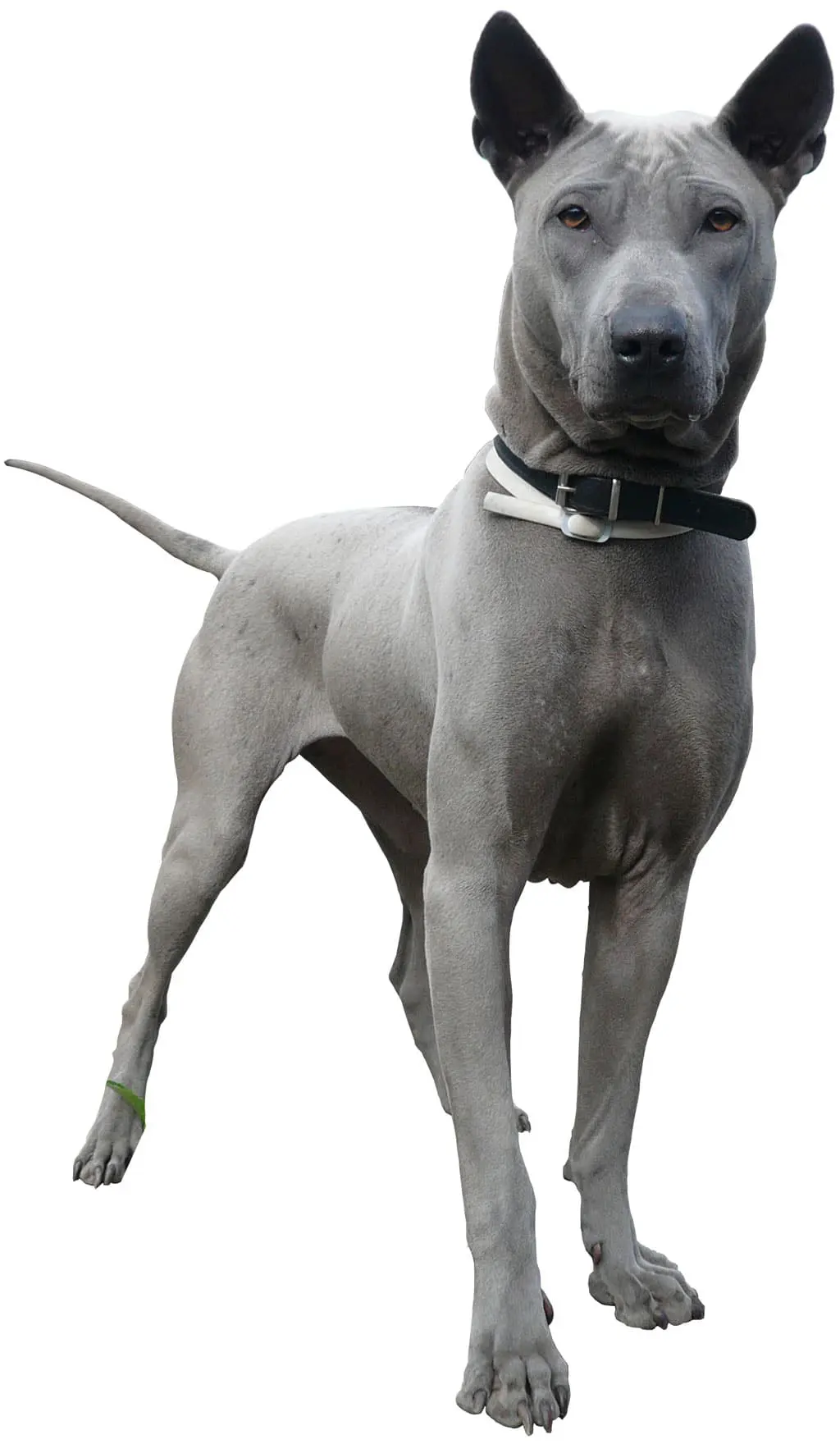
Ridgeback Tailandรฉs

The Thai Ridgeback is attached to its owner., resistant, active and loves to jump.

Content

History

The Thai Ridgeback is a breed of dog to dogs section primitive type.

This elegant and attractive breed of dog appears cited from ago 360 years and according to the scholars of the race, kept as it was in the beginning.

The crucial reason why the Thai Ridgeback, has kept its characteristics intact was the insulation that for so long, suffered Thailand, which has led that race does not mix with others and be kept pure.

It comes exactly from the eastern part of Thailand, or at least, There was where was more used as a watchdog, as in charge of defending carts against the attack of bandits and as an assistant in the hunt for wild boars and snakes.

Some experts, they maintain that the Thai Ridgeback It is one of the ancestors of many of the current Asian breeds that share some characteristics with it., how are he Chongqing dog, the Shar Pei or the Chow Chow.

It is one of the oldest breeds that exist today.

This currently enjoying more widespread as a pet, although it is virtually unknown outside its country of origin. And even in Thailand is a rare breed, or little-known.

Physical characteristics

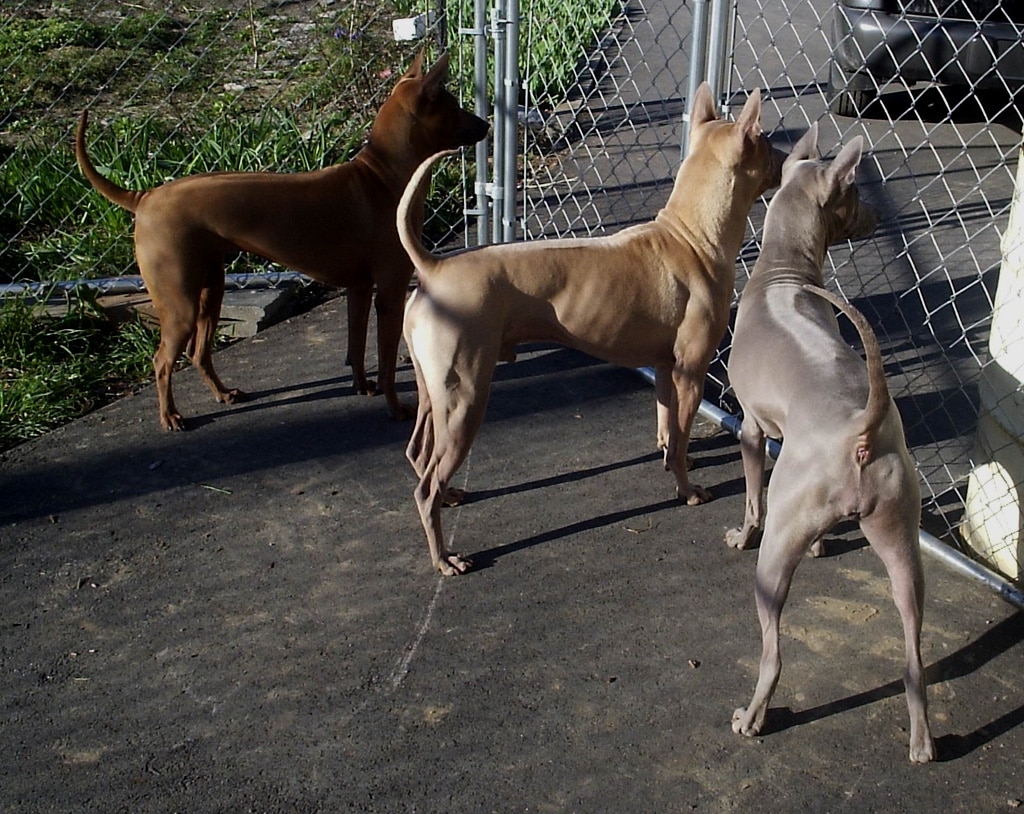
The Thai Ridgeback it is a medium-sized dog with short hair, that forms a ridge on the back. Their highly developed muscles and anatomical structure are suitable for their activity as hunting dogs.. The eyes are medium in size, almendrada form, dark brown; in blue or silver colored dogs, amber eyes are allowed. The ears are attached to the top of the skull, which is very wide between the ears. Triangular, very large, are leaning forward and very straight. The tail, thick at the root, gradually tapers towards the tip. Carried vertically straight or curved like a sickle.

Fur: Short and smooth. At the rear, the crest is made up of hair deviated from the rest of the body. The boundary between the ridge and neighboring regions must be well defined.. The ridge can have different shapes, but symmetric is preferred.

Color: Uniform. Light brown red, black, silver and blue.

Size: Males 56-61 cm., females 51-56 cm..

Weight: 25 to 30 kg for the male and 20 to 25 kg for females

Character and skills

The Thai Ridgeback is a dog strong, powerful, tremendously, Active and vigorous. It is very distrustful with strangers and very attached to his master.

Due to the characteristics of its fur, great efforts are not required in its conservation., a weekly brushing will be more than enough.

Something important to keep in mind is the dose the daily activity This dog is needed, at least one hour of outdoor exercise, since otherwise it could become destructive with the furniture of the house.

You need to run, feel free… tire. Then in the home usually a dog very quiet and protector.

Observations

One of the passions of Thai Ridgeback, and perhaps the most striking, is that She loves to jump, enjoys jumping without stopping.

It's one little-known race, even in your country of origin.

Health ยซThai Ridgebackยป

Resistant / robust :
The Thai Ridgeback it is a robust dog but it can hardly bear the low temperatures.

Withstands heat:
Due to its origins, this dog is not afraid of high temperatures.

supports the cold:
His short coat does not give him good protection against bad weather.

Tendency to gain weight:
The breed is not concerned with overweight problems.

Frequent illnesses:
Seno dermoide
Hip dysplasia

Price of a โ€œThai Ridgebackโ€

The price of a Thai Ridgeback varies according to its origin, age and gender. The weak diffusion of the breed outside its country of origin does not allow us to know the average price of a puppy of the Thai Ridgeback.

Regarding the average budget to cover the needs of a dog of this size, you have to count roughly 40 euros / my.

ยซThai Ridgebackยป Images

ยซThai Ridgebackยป Videos

Type and recognitions:

  • FCI CLASSIFICATION:
  • Group :
  • Section : . .

Federations:

  • – FCI – Group 5: Spitz-type dogs and primitive type – Section 7: Primitive type - Hunting Dogs. โ“˜

FCI breed standard "Thai Ridgeback"

Origin:
Thailand

Date of publication of the valid original standard:
26.05.2003

Use:

Hunting and companion dog.


General appearance:

Short-haired dog forming a ledge on the back. Medium-sized, whose body length is slightly longer than its height at the withers. The muscles are well developed and their anatomical structure is adequate for their function.

IMPORTANT PROPORTIONS:

  • Over the body: height to the cross: 11 : 10
  • Chest depth: height to the cross: 5 : 10


Behavior / temperament:

Strong and active with excellent jumping ability. A very loyal and family dog.

Head:

---

Cranial region:
  • Skull: The skull is flat between the ears, but a little rounded when viewed from the side.
  • Forehead: With wrinkles when the dog is attentive.
  • Depression links (Stop): Clearly defined but moderate.

facial region:

  • Nose: Black color, in blue dogs nose be bluish.
  • Nasal bridge: Straight and long.
  • Snout: Wedge shaped; slightly shorter than the skull.
  • Lips: Well glued with good pigmentation.
  • Mouth: Preferably with a black spot on the tongue.
  • Mandible: Upper and lower jaws are strong.
  • Teeth: White and strong. With scissor bite.

Eyes: Medium-sized and almond shape. dark colored. In the blue and silver, the amber eyes is allowed.

Ears: Located on both sides of the skull. Preferably medium-sized and triangular, securely upright and leaning forward. Do not cut.

Neck:

A medium-long, strong, muscular, slightly arched and holding his head up.

Body:

  • Back: Strong and level.
  • Pork loin: Strong and wide.
  • Rump: Moderately inclined.
  • Breast : Deep enough to reach the elbows. Well developed ribs, but not barrel-shaped.
  • Abdomen: Tucked well stomach.

Tail:

With a thick base and decreasing towards the tip. The tip can reach hocks (โ€œhocksโ€). Holding it vertically or slightly curved.

Tips

FRONT MEMBER:

  • Shoulder: Well located to the rear.
  • Forearm: Straight.
  • Metacarpus: Straight when you look at them from the front and slightly inclined when seen from the side.
  • Pies: Oval.
  • Nail: Black, but they can be more clear depending on the color of the hair.

LATER MEMBERS:

  • Hips: Well developed and steep curves knees.
  • Hocks: Strong and well descended.
  • Metatarsals: Straight and parallel seen from the back.
  • Pies: oval.

Movement:

Step with good range, not bent or balancing the body side to side. Stepping on, forms two straight parallel lines. Seen from the front, the front legs move in a straight line, so that the shoulder, elbow and Metacarpus ("pastern") they are approximately in line with each other. Seen from the back, knee and hip joint, they are approximately aligned. Moves in a straight line forward in a straight pattern without sticking the feet in or out, allowing a long step and a powerful propulsion. The movement is consistent, well-cadenced and easy.

Mantle

SKIN: Soft and tender, with tight skin, throat without jowl.

HAIR: Short and smooth. The outgoing (Ridge) on the back and the spine is formed by hairs that grow in the opposite direction from the rest of the coat; the edge of the protrusion must be clearly defined. The projection may have various shapes and different lengths, but you prefer an outgoing symmetrical on either side of the spine and within the width of the spine. Crowns or eddies at the beginning of the outbound is acceptable.

COLOR: Solid color: red, black, Brown and blue clear. You prefer the black mask in red.


Size and weight:

Height to the cross: Tolerance is plus or minus 2,5 cm. (one inch).

  • Males: 56 to 61 cm. (22 โ€“ 24 inches)
  • females: 51 to 56 cm. (20 โ€“ 22 inches)


Fouls:

Any departure from the foregoing points should be considered a fault and the seriousness of it is a standard and its consequences considered in proportion to the deviation on the health and welfare of the dog.

  • Bite anyone who is not scissor.
  • An outgoing (โ€œridgeโ€) unbalanced.

MISS PLAYOFFS:

  • Aggressive or fearful dogs.
  • Dogs who do not submit outbound (โ€œridgeโ€).
  • Long hair.
  • Any dog โ€‹โ€‹showing clear signs of physical or behavioral abnormalities must be disqualified..


N.B.:

โ€ข Males must have two normal-appearing testicles fully descended into the scrotum..
โ€ข Only functionally and clinically healthy dogs, with the typical conformation of the breed, should be used for parenting.

Source: F.C.I - International Cynological Federation

Alternative names:

1. Thaรฏ Dog (English).
2. Mah Taรฏ, Chien thaรฏlandais ร  crรชte dorsale, Thaรฏ Dog, Thai Ridgeback (French).
3. Thai Ridgeback (German).
4. Cรฃo-tailandรชs-de-crista-dorsal (Portuguese).
5. Perro tailandรฉs con cresta (espaรฑol).

โ–ท The world of Pets: Dogs, cats, birds, reptiles, amphibians

Chow Chow
FCI 205 - Asian Spitz and related breeds
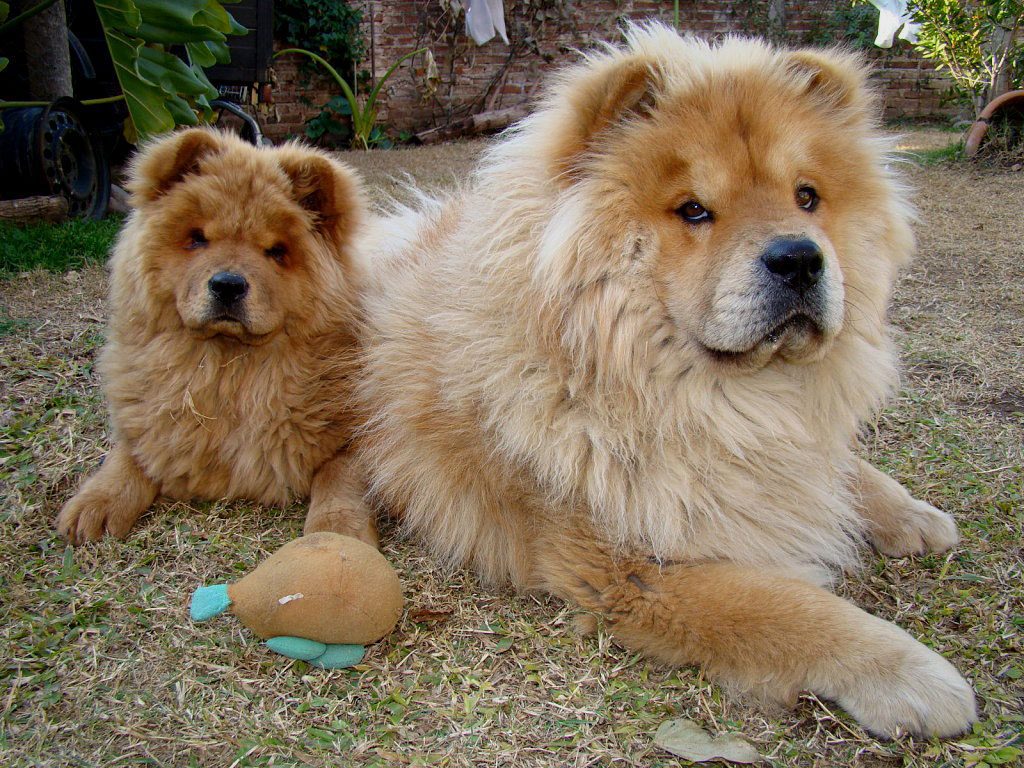
Chow Chow

The Chow Chow are distinguished by their unusual blue-black tongue

Content

History

The Chow Chow has been known for more than 2500 years in China, where it is represented in bas-reliefs of the time. Dog of mysterious origin, belongs to the Spitz family. Some believe it is a cross between a Tibetan Mastiff and a Samoyed., while others think it is more of an original dog, that is to say, that comes from the Nordic dogs (internal temperature above average, particular shape of the bony structure of your skull…). In any case, stories about the origins of Chow Chow they are usually just hypotheses.

In Manchuria and Mongolia it was used as a war dog, to watch over herds or rushes and as a draft animal. The Chow Chow they were also found in Tibetan monasteries: his function was to defend the monks. Occasionally it was a hunting dog, it was eaten in some parts of china, and his skin was also traded.

It was introduced in Europe in 1865, when Queen Victoria of England received one as a gift and started raising it. It was officially recognized by the Kennel Club English little less than 30 years later, in 1894. Today, only used as a pet.

The term ยซChow Chowยซ has appeared recently. In fact, during the interwar period, the Chow-Chow It was known in the West as the "Hong Kong dog".

Despite some other blood additions over the years 50, the Chow Chow is a breed that has remained pure.

Physical characteristics

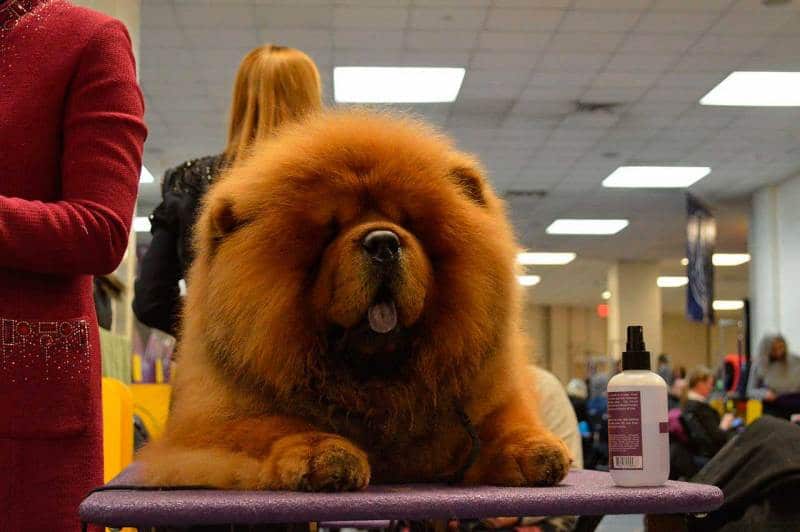
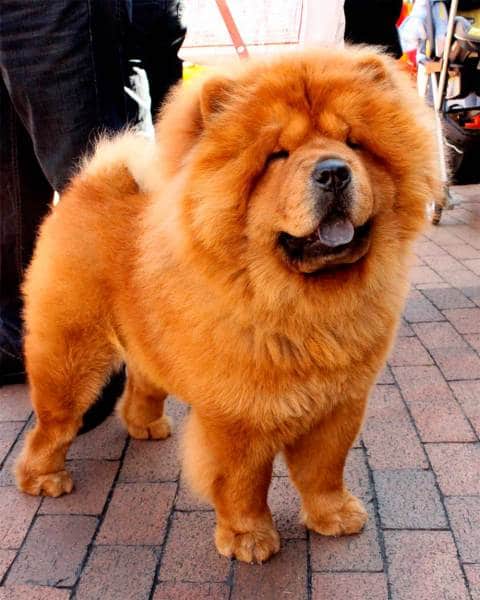
The Chow Chow It is a dog with a robust body that goes hand in hand with its wide skull and its small triangular ears slightly rounded at the tip and it carries them apart with the tip slightly inclined forward which are always erect. His eyes are dark, from Brown to black always small, almendrada form. The nose is completely black and wide except in color Chow cream and white, which supports the color pink. The mouth is wide and strong. They have a characteristic "stilt" movement, due to the peculiar conformation of their hind legs, which lack angle, and it makes it look like walking on stilts.

It is a dog of agile and balanced movement. By joining the legs in parallel to two in the movement. This breed has a very dense fur that can be rough or soft, which it accumulates more around his neck, giving it its distinctive frill or horsehair. Its fur can be red, black, Blue and cream. Those who have spotted or multi-coloured fur are considered outside the standards of the breed.

The Chow Chow They are distinguished by their unusual bluish-black or purple tongue and strong legs.. The gene for the bluish-black or purple tongue is usually dominant in this breed, and so it also tends to be in from mixed races of a Chow Chow.

A legend that says, When the gods placed the stars in the firmament, pieces of the sky fell that the Chow Chow licked and since that day he has had a blue tongue..

Character and skills

Today, the Chow Chow is commonly a companion dog. His strong sense of ownership of their homes with their - sometimes- intriguing approach to strangers may be misinterpreted by those who do not belong to his family. But, signs of shyness and aggression are not characteristic of this breed. Copies of the sex opposite usually coexist with less tension than with those of the same sex, but it is not uncommon to see Chow Chow of different sexes living together peacefully.

They are extremely loyal to their family and it costs change masters. Affection usually shown only to people you know, so visitors should not push them physically as they will not immediately accept strangers as quickly as they do with their family members.

They are not a very active breed. Life in an apartment suits them, if they are given the opportunity to get enough physical activity daily. The owners must take daily walks with their Chow Chow, so be it in a small place, to maintain their physical and mental abilities in a healthy way.

Although this breed shows low energy most of the time, needs a routine to be able to explore their environment and thus maintain a loving nature. Its typical behavior resembles that of a domestic cat more than that of a dog., for cleaning and its enigmatic nature.

Grooming

Grooming requirements depend on the type of fur. A Chow straight hair needs to be brushed weekly only. One with a rough coat should be brushed every other day. Both varieties molt twice a year, during which the coat will abundantly. Rarely need a bath, although a hot bath followed by a thorough drying can help remove the coat you're missing.

The rest is basic care. Trim nails as needed, usually once a month. Brush your teeth frequently for general good health and fresh breath. Check ears weekly for dirt, redness or odor that may indicate an infection. If the ears look dirty, clean them with a damp cotton ball and a mild ear cleaner recommended by your vet.

Health

The Chow Chow is the breed of dog most affected by Dysplasia elbow. It is also vulnerable to hip dysplasia, dislocation of patella, thyroid disease, Pemphigus Foliaceus and ocular disorders such as entropion and ectropion. The risk of these disorders increases exponentially when they are purchased at pet stores unscrupulous caregivers who do not test their dogs to see if there is existence of genetic disorders. Like this, a potential buyer of this breed should ask about the health status of the pet to buy. Animal caretakers must provide the client with a guarantee of the dog's health. But despite his delicate health, It is an excellent companion dog for humans..

Characteristics "Chow Chow"

Coexistence is important that you have with your new friend. Before considering the acquisition of a dog of the breed "Chow Chow" you know certain factors. Not all breeds of dogs are apt to live in an apartment, you must take into account his character, their need for exercise, their interaction with other pets, their care and if you have small children, their level of tolerance towards them.

Adaptation โ“˜

2,0 of 5 stars (based on 1 review)

friendly dog โ€‹โ€‹โ“˜

1,0 of 5 stars (based on 1 review)

hair loss โ“˜

5,0 of 5 stars (based on 1 review)

Affection level โ“˜

2,0 of 5 stars (based on 1 review)

Need for exercise โ“˜

2,0 of 5 stars (based on 1 review)

Social need โ“˜

2,0 of 5 stars (based on 1 review)

Home โ“˜

3,0 of 5 stars (based on 1 review)

Toilet โ“˜

5,0 of 5 stars (based on 1 review)

Friendly with strangers โ“˜

1,0 of 5 stars (based on 1 review)

barking โ“˜

5,0 of 5 stars (based on 1 review)

Health โ“˜

4,0 of 5 stars (based on 1 review)

Territorial โ“˜

3,0 of 5 stars (based on 1 review)

Cat friendly โ“˜

2,0 of 5 stars (based on 1 review)

Intelligence โ“˜

2,0 of 5 stars (based on 1 review)

Versatility โ“˜

2,0 of 5 stars (based on 1 review)

Child friendly โ“˜

2,0 of 5 stars (based on 1 review)

Surveillance โ“˜

2,0 of 5 stars (based on 1 review)

joy โ“˜

3,0 of 5 stars (based on 1 review)

Images "Chow Chow"

credits:

1 – Flickr: Chowdren
2 – International Dog Show, Szczecin 2007 by Remigiusz Jรณzefowicz
3 – Pets Adviser from Brooklyn, USA / CC BY – www.petsadviser.com
4 – by https://pxhere.com/es/photo/234926
5 – Flickr: Bokeh the Chow by Luigi Borromeo
6 – Flickr: Chowdren (chow chow) by Seongbin Im
7 – by https://www.needpix.com/photo/371158/chow-chow-dog-snow-canine-domestic-pet-portrait-looking-attentive
8 – Russian: photo from the exhibition by Vladimir gubanov

Videos "Chow Chow"

Type and recognitions:

  • FCI CLASSIFICATION:
  • Group :
  • Section : . .

Federations:

  • Federations: FCI โ“˜, AKC โ“˜, ANKC โ“˜, CKC โ“˜, โ€‹KC โ“˜, NZKC โ“˜, UKC โ“˜

  • FCI breed standard Chow Chow

    FCIFCI - Chow Chow
    CHOW

    Alternative names:

    1. Chow (English).
    2. Chow (French).
    3. Chow (German).
    4. Chow (Portuguese).
    5. Chow (espaรฑol).

    โ–ท The world of Pets: Dogs, cats, birds, reptiles, amphibians

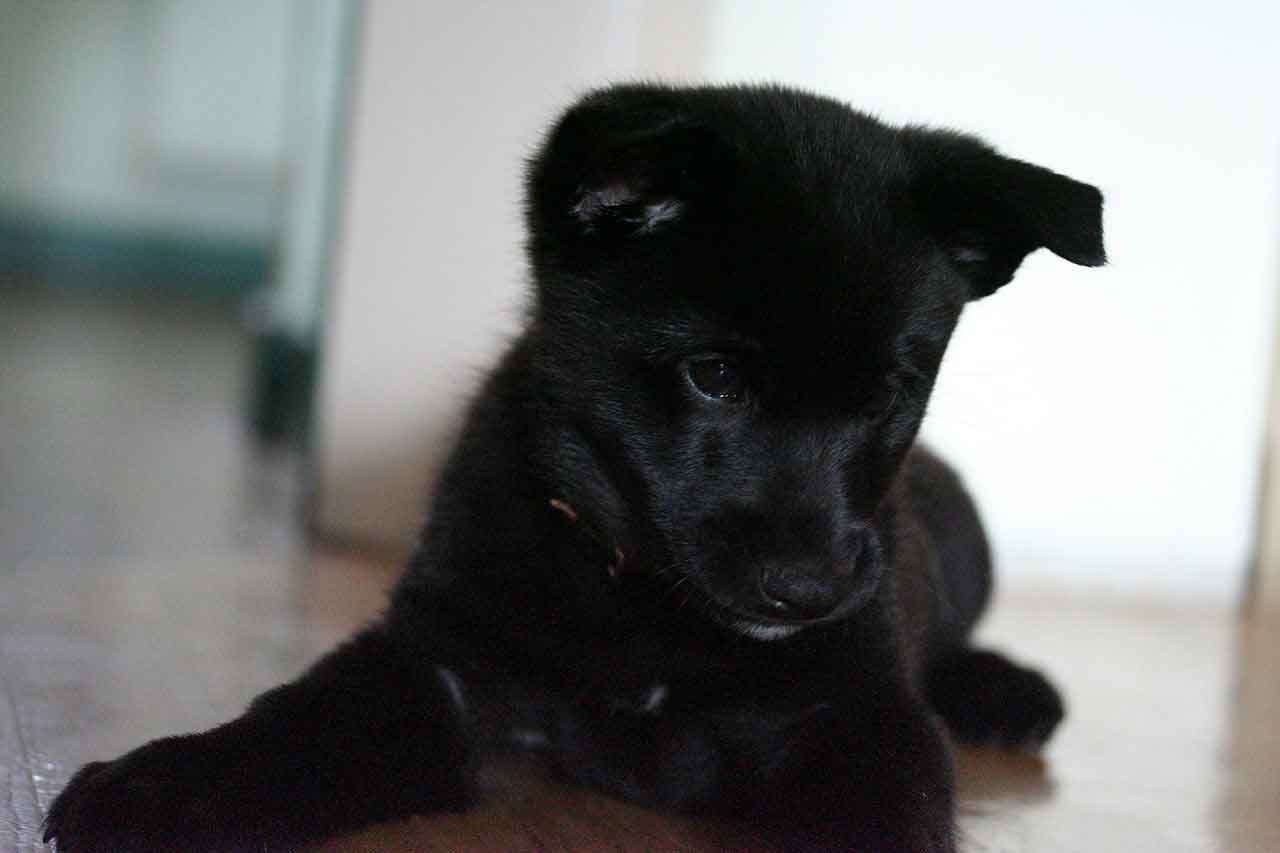
    Black Norwegian Elkhound
    Noruega FCI 268 - Nordic Hunting Dogs

    Black Norwegian Elkhound

    The Black Norwegian Elkhound joins closely with his people and is very loyal

    .

    Content

    History

    Among the three moose hunters of the North (Black Norwegian Elkhound, Gray Norwegian Elkhound and Jรคmthund), the Black Norwegian is probably the one receiving the least attention. But the agile and friendly hunter is an attractive breed to many dog รขโ‚ฌโ€นรขโ‚ฌโ€นowners..

    Its origins go back far back along with those of the Gray Norwegian Elkhound: These self-assured four-legged friends of the Spitz type belong to the time-honoured breeds, because a similar dog look can be tried up to the stone age in Scandinavia.

    The Black Norwegian Elkhound is a modern variant of Gray Norwegian Elkhound and has been officially recognized as an independent breed since 1877. An advantage of him Black Norwegian Elkhound during hunting is that it is clearly visible in the white snow. But, These clever four-legged friends have always been used as guard dogs or pack protection dogs.

    Physical characteristics

    Despite the similarity of name, the Black Norwegian Elkhound it's a separate breed, but closely related to the Gray Norwegian Elkhound. But, the Black Norwegian Elkhound it is much less common.

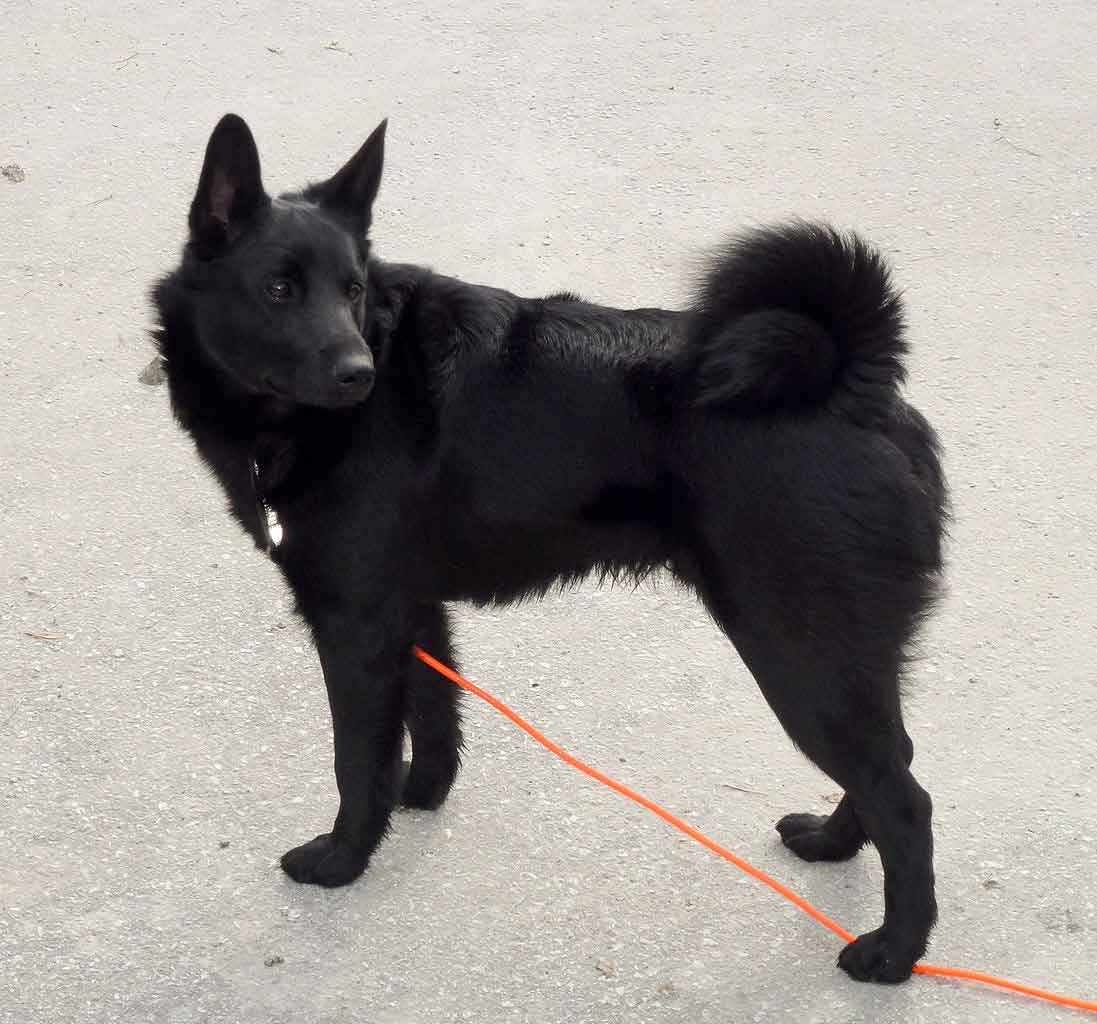
    The Black Norwegian Elkhound it is optically a typical Spitz and has a compact, square build with upright ears. He wears his tail rolled up on his back like other dogs Moose hunter from adulthood. It is smaller and more agile than the Gray Norwegian Elkhound and weighs around 18 kg with a height of 47 cm to the cross. As the name already indicates, this dog's short coat is black, but white spots on legs and chest are allowed as per standard. Also the eyes are dark. The pelage is dense, very sticky and consists of a rough top coat with a soft bottom coat.

    Character and skills

    Multifaceted character

    The Black Norwegian Elkhound he is very loyal to his people. This does not mean that this independent partner is subordinate. Abroad, these dogs are lively, curious and open to all common adventures. But, the busy Black Norwegian Elkhound they also enjoy cozy hugs on a quiet afternoon.

    They are playful, brave and very smart. Like many Nordic dogs, They are good "alarm systems", but only limited good watchdogs: They indicate to strangers – loudly and persistently – but it may happen that they then run towards a potential intruder with a wagging tail. These proud four-legged friends don't always get along with other dogs of the same species.. Proper conditioning and socialization is important

    Educating the Black Norwegian Elkhound

    Easily educated with knowledge

    His intelligence and humanity contribute to the education of this Black Norwegian Elkhound don't present big obstacles.

    He likes to work with "his" people and does what they say, as long as you find it useful too. Because you always have to take into account the small stubbornness of this independent hunter when training him. Be consistent and pay special attention to recoverability and bark control. Strength and toughness are absolutely out of place in the upbringing of this sensitive four-legged friend.

    Usually reacts very quickly and strongly to harsh words and reproaches, so use them sparingly. The Black Norwegian Elkhound can be better motivated by the principle of positive reinforcement – clicker training can also be of great help here. A visit to the puppy school helps improve this companion's social streak, which is sometimes a bit belligerent compared to other dogs. It can also be very useful to attend training classes at the dog school. – it is better to choose a suitable dog school where you and your companion feel comfortable before the puppy arrives.

    Health ยซBlack Norwegian Elk Hunterยป

    In general, the breed is considered to be quite robust and, as long as it is raised responsibly, is largely free of genetic diseases. Representatives of the breed can reach the 13 years old in good health. This energetic four-legged friend needs a species-appropriate diet, which should consist mainly of meat: So, you must choose a food in which meat is the first element of the declaration and preferably cereals are not included. Your dog's energy needs depend on his constitution and how much he consumes through exercise, so keep an eye on your slim waist and adjust daily servings as needed.

    Important: Just like us humans, small snacks move quickly to the hips too – plan your dog's snacks in the general ration. Healthy snacks include dry dog โ€‹โ€‹chews or sugar-free dental care snacks and freeze-dried meat snacks. Water must always be freely available.

    โ€œBlack Norwegian Elk Hunterโ€ Care

    The coat of the Black Norwegian Elkhound it is very important to the furry four legged friend, because it performs an outstanding protective function in the harsh northern climate and protects it from extensive autumn rains as well as icy winds. Help your companion keep his coat in a tidy condition by brushing every few days to remove any dead hairs.. You can also brush daily during the coat change, so your roommate loses less hair in the apartment. Coat dirt can be brushed off as soon as it has dried.

    You should only bathe your roommate if it can't be helped, use a mild dog shampoo for this purpose. When brushing, routinely check ears and clean with a mild shampoo if necessary. Some dog owners have chosen to brush their roommates' teeth with a dog toothbrush and toothpaste.. It is a good way to prevent tartar and its secondary diseases until the dog is old enough. But, you should already accustom your puppy to the ritual. Also check the claws of older dogs from time to time – if they no longer wear enough, you need to shorten them accordingly with a pair of dog claw pliers.

    Activities ยซBlack Norwegian Elk Hunterยป

    Although his original task was to accompany the hunter when hunting moose and bears, but also smaller animals like foxes, the Black Norwegian Elkhound it is a versatile all-rounder: Loves outdoor exercise and is considered very persistent. This is why you can easily take your four-legged adult friend with you to training sessions. jogging.

    Outdoor activities can be relaxed, especially if you have trained your Black Norwegian Elkhound so it doesn't run away with every rabbit. Apart from recovery exercises – that only very few moose hunters enjoy – the docile and energetic dog can get excited about many things: These may include, you can find great fun in agility sports and fetch games. It also, It is suitable for the work of rescue dogs. Some owners of moose hunters they also report on beautiful experiences with their partner, trained as a visiting dog, with whom they visit, for example, retirement or nursing homes and give the residents of those places an animal joy. Try together what you like, the possibilities are great!

    Is a โ€œBlack Norwegian Elk Hunterโ€ best for me??ยป

    The Black Norwegian Elkhound suits athletes who like to be outside and keep their dog busy. If you can make this possible for your dog, it is also possible to keep it in an apartment, as long as the apartment offers enough space. Training can be mastered by beginners if they are willing to deal with the hunting characteristics of the breed and adjust training accordingly..

    The Black Norwegian Elkhound it can be a wonderful companion for children. This original hunter can live normally with cats, sometimes even in a friendly way, if you have already gotten used to them as a puppy. Otherwise there could be problems, because the dog sees the cat as prey. Small animals like rabbits are not ideal companions, since they can always trigger prey drive.

    One Black Norwegian Elkhound can also sleep outside, what can be a sensible alternative for these heat sensitive animals in summer. But, needs close family connections and does not like to be alone. Before the dog moves, clarify not only the one-time and ongoing expenses you will have to pay, but also if you are willing to spend several hours a day actively with your new partner for years to come. You should also take care of your dog in case of illness or during the holidays – many destinations nowadays also offer holidays with a dog.

    Where can I find my desired ยซBlack Norwegian Elk Hunter?ยป

    It doesn't matter which of the two Norwegian Elkhound has won your heart: Outside Scandinavia, big game hunters from the far north are rarely seen. This is even more difficult with the black Norwegian than with the gray. So, if you are interested in this animal rarity, please contact the Nordic breed clubs in your country. If required, they can contact breeders at home and abroad. But, you will usually have to take into account waiting times and long distances to travel to the desired puppy. in his native country, Norway, only a few are born 120 puppies every year.

    Consequently, it becomes difficult or impossible if you are looking for a Black Norwegian Elkhound outside scandinavia, that is already grown. It is very unlikely that you will find a four-legged dog of this type in the animal protection organizations of your country.; However, a visit there may be helpful if you are open to other breeds.

    Characteristics "Black Norwegian Elkhound"

    Coexistence is important that you have with your new friend. Before considering the acquisition of a dog of the breed "Black Norwegian Elkhound" you know certain factors. Not all breeds of dogs are apt to live in an apartment, you must take into account his character, their need for exercise, their interaction with other pets, their care and if you have small children, their level of tolerance towards them.

    Adaptation โ“˜

    2,0 of 5 stars (based on 1 review)

    friendly dog โ€‹โ€‹โ“˜

    3,0 of 5 stars (based on 1 review)

    hair loss โ“˜

    4,0 of 5 stars (based on 1 review)

    Affection level โ“˜

    4,0 of 5 stars (based on 1 review)

    Need for exercise โ“˜

    3,0 of 5 stars (based on 1 review)

    Social need โ“˜

    4,0 of 5 stars (based on 1 review)

    Home โ“˜

    4,0 of 5 stars (based on 1 review)

    Toilet โ“˜

    3,0 of 5 stars (based on 1 review)

    Friendly with strangers โ“˜

    4,0 of 5 stars (based on 1 review)

    barking โ“˜

    4,0 of 5 stars (based on 1 review)

    Health โ“˜

    4,0 of 5 stars (based on 1 review)

    Territorial โ“˜

    4,0 of 5 stars (based on 1 review)

    Cat friendly โ“˜

    2,0 of 5 stars (based on 1 review)

    Intelligence โ“˜

    3,0 of 5 stars (based on 1 review)

    Versatility โ“˜

    3,0 of 5 stars (based on 1 review)

    Child friendly โ“˜

    4,0 of 5 stars (based on 1 review)

    Surveillance โ“˜

    4,0 of 5 stars (based on 1 review)

    joy โ“˜

    3,0 of 5 stars (based on 1 review)

    Images "Black Norwegian Elkhound"

    โ€œBlack Norwegian Elk Hunterโ€ cub by Eirik Newth / CC BY

    ยซBlack Norwegian elk hunterยป running through the snow by https://pxhere.com/en/photo/1602973

    Videos "Black Norwegian Elkhound"/h2>

    Type and recognitions:

    • FCI CLASSIFICATION:
    • Group :
    • Section : . .

    Federations:

    • – FCI – Group 5 – Section 2 Nordic Hunting Dogs. โ“˜

    FCI breed standard "Black Norwegian Elkhound"

    Origin:
    Norway

    Date of publication of the valid original standard:
    09.08.1999

    Use:

    Hunting dog for moose.


    General appearance:

    It is a typical Spitz with a square construction.; black hair is rather close to the body; pointed ears pricked; tail curled over the back. Muscular and athletic neck, from a noble door.
     
    IMPORTANT PROPORTIONS: The height at the withers corresponds to the length of the body. Muzzle and skull are the same length.


    Behavior / temperament:

    Without fear, energetic, brave.

    Head:

    It is wedge shaped and tapers towards the truffle. Thin and rather light, relatively wide at the level of the ears.

    Cranial region:
    • Skull: Almost flat.
    • Depression links (Stop): Notable, but not abrupt.

    facial region:

    • Truffle: black.
    • Snout: Straight nose cane.
    • Lips: Glued.
    • Jaws/Teeth: Scissor bite; complete denture.
    • Eyes: They are not prominent; preferably dark brown.
    • Ears: High insertion, upright, a little longer than wide at the root, pointy.

    Neck:

    Medium long, firm, no loose skin.

    Body:

    • top line: Straight from the withers to the rump.
    • Cross: Well developed.
    • Back: Straight and strong.
    • Pork loin: Well developed, wide and straight.
    • Rump: Wide, well muscled.
    • Breast : Proportionally deep; ribs tight.
    • Belly: slightly retracted.

    Tail:

    High insertion; short, thick, covered with a layer of hairs sparse and well attached, but without feathers. Tightly curled over the back, without being diverted to the side.

    Tips

    PREVIOUS MEMBERS
     
    • As a whole: Firms, tendinosos, strong, but not heavy.
    • Shoulder: Oblique.
    • Arm: Moderately oblique.
    • Elbow: Good paste, turned neither out nor in.
    • Forearm: Straight.
    • Metacarpus: Viewed from the side moderately inclined.
    • Front feet: Rather small, slightly oval, compact and not turned out.
     
    LATER MEMBERS
     
    • As a whole: Knee and hock moderately angled. Parallels seen from behind. Undesirable spurs.
    • Thigh: Muscular and broad.
    • Knee: Moderately angled.
    • Leg: Medium long.
    • Hock: Moderately angled.
    • Metatarsus: Viewed from the side moderately inclined; seen from behind parallel.
    • Rear feet: Rather small, slightly oval, compact.

    Movement:

    Light, effortless. Parallel seen from the front or from behind.

    Mantle

    HAIR: Dense and rough, but well attached to the body; short and smooth on the head and on the front of the extremities; longer on the chest, the neck, on the back of the limbs and on the bottom of the tail. The coat consists of a rather long, rough outer coat of hair and a soft undercoat, shaggy and black.
     
    COLOR: Glossy black. A little white on the chest and feet can be tolerated.


    Size and weight:

    Height to the cross:
    • For males : 46 โ€“ 49 cm., ideal height 47 cm..
    • For females : 43 โ€“ 46 cm., ideal height 44 cm..


    Fouls:

    Any deviation from the aforementioned criteria is considered as a fault and the severity of this is considered to the degree of the deviation to the standard and its consequences on the health and well-being of the dog..
    • Bitefork clamp; irregular teeth.
    • Absence of undercoat of hairs.
    • White hairs, white in the queue.
    • White ยซ tights ยป.
    • Agitated temperament, nervous; barking dog.
    SERIOUS LACK
    • Short tail from birth.
    MISS PLAYOFFS
    • Aggressive or fearful dog.
    • Upper or lower prognathism.
    • Height to the cross 3 cm minus 4 cm more than the ideal height mentioned in the standard.
    Any dog โ€‹โ€‹showing clear signs of physical or behavioral abnormalities must be disqualified..


    N.B.:

    Males should have two normal-appearing testicles fully descended into the scrotum..

    Source: F.C.I - International Cynological Federation

    Alternative names:

    1. Norsk Elghund Svart, Norsk Elghund Black, Black Elkhound, Norwegian Moose Dog (black) (English).
    2. Chien d’รฉlan norvรฉgien noir (French).
    3. Norsk Elghund Sort (German).
    4. Norsk elghund sort (Portuguese).
    5. Elkhound noruego negro (espaรฑol).

    Photos:

    1 – Black Norwegian Elkhound About 1 years old by Rvenes / CC BY-SA

    โ–ท The world of Pets: Dogs, cats, birds, reptiles, amphibians

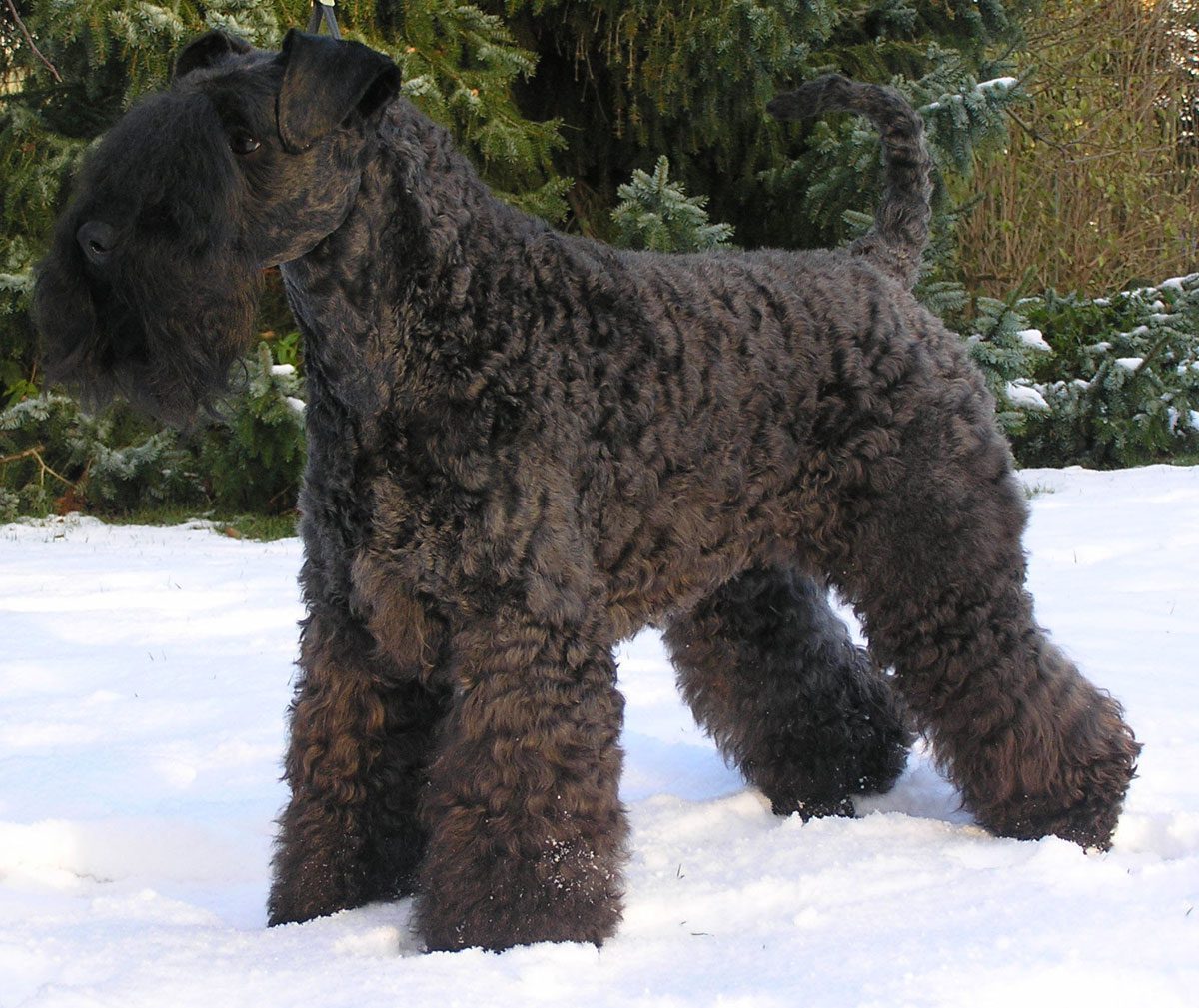
    Kerry Blue Terrier
    Irlanda FCI 3 . Large and medium sized Terriers
    Kerry Blue Terrier

    The Kerry Blue Terrier he is a thoroughbred terrier, brave, alert and with a penetrating expression.

    Content

    History

    The Kerry Blue Terrier it is one of the irish national dogs. Its existence is documented since the 18th century, but it is suspected that he was home in County Kerry long before that. Regarding the origin of the breed, Legend has it that this intelligent dog got its blue-black coloring by crossing bloodhounds with lines of Irish Terrier.

    In feudal times, Irish herdsmen and farmers were not allowed to hunt with wolfhounds. They solved the problem by crossbreeding which gave their terriers the characteristics of a Wolfdog..

    The Kerry Blue Terrier He was raised as a Pied Piper, guard dog and herding dog. An Irish proverb says that a Kerry Blue Terrier replaces four shepherds. The agile dog was also particularly useful for hunting otters and badgers..

    The appearance of the breed has undergone several changes over the centuries. Meanwhile in 1847 a Kerry Blue Terrier dark blue in color was still considered exemplary in 1847, Monochrome fur with dark markings was established in the 20th century. The FCI standard valid today dates from the year 2005.

    Physical characteristics

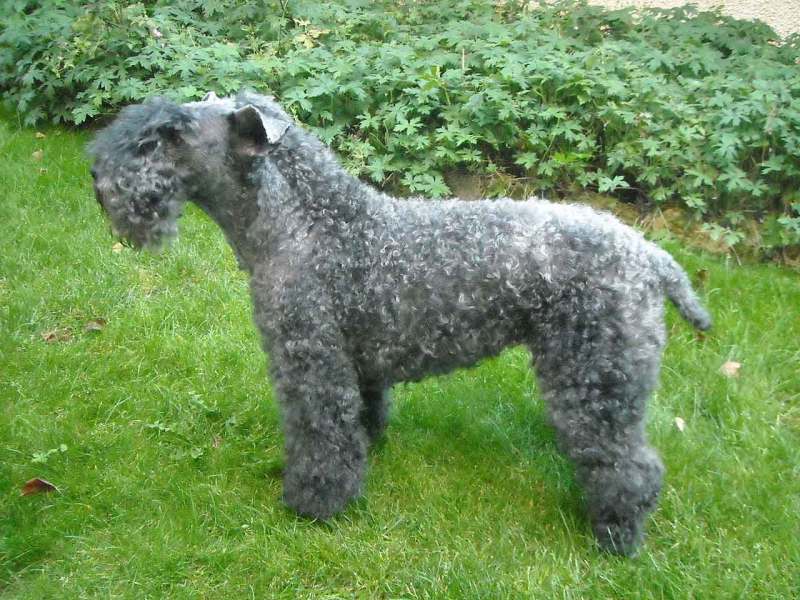
    The Kerry Blue Terrier has a majestic body, muscular and slightly elongated, that impresses with its balanced appearance. His back is even and fairly long, moderately broad and deep chest. With its soft, lush and curly fur, the Kerry Blue Terrier It is considered one of the most attractive terrier breeds.

    typical of the breed Kerry Blue Terrier it's his flat nose and long hair on his forehead and muzzle.

    Puppies are born with a black-brown or dark black coat. Only at the age of about three the Kerry Blue Terrier It has its typical coloration.. The coat has no undercoat. A blue coat color is allowed in any shade, black marks are allowed. Tan or pure black markings are only allowed until the age of 18 months.

    Other appearance features in the overview:

    • Head: Strong skull, rich fur, medium length front, black nose.
    • Ears: pointing forward or falling, underlining the typical terrier expression
    • Eyes: medium-sized, dark to brown with a piercing expression
    • neck: moderately long
    • lower limbs: straight with well-muscled thighs and strong hock
    • legs: compact with round pads and black claws

    Size and weight:

    Height to the cross:

    For males between 45,5 to 49,5 cm. (18 to 19,5 inches).
    For the females between 44,5 to 48 cm. (17,5 to 19 inches).

    Weight:

    For the males of 15 to 18 kg (33 to 40 English pounds).
    For females proportionally less.

    Character and skills

    The Kerry Blue Terrier he is a thoroughbred terrier, brave, alert and with a penetrating expression. The elegant looking animal does not tend to bark and is not brusque. The Kerry Blue Terrier They are happy, loyal, family and children.

    They are exceptionally open to strangers and need lots of petting at home. To the Kerry Blue Terrier loves to work. But, no need to keep the four-legged friend constantly busy at home.

    Animals are very intelligent and eager to learn, briosos, but in no way nervous or aggressive. Strong self-confidence and strong willpower are typical traits that characterize all terrier breeds and require constant firmness from the owner..

    Accommodation of the ยซKerry Blue Terrierยป

    Since the Kerry Blue Terrier builds a close relationship with the owner and his family, a kennel position is inappropriate. He likes to participate in domestic life and is a faithful family dog, watchful and child friendly.

    The four-legged friend is very active and needs two or three hours of exercise a day. Dog sports do justice to the momentum of the Kerry Blue Terrier to move and reinforce the bond with the owner.

    Obedience is also a great activity for this smart and particularly attentive breed of dog.. Obedience is the school of subordination, which is especially valuable in a terrier. In this dog sport it depends on the correct and fast execution of an exercise sequence. Perfect teamwork between dog and owner is required.

    The Kerry Blue Terrier they are wonderfully suited for difficult hunting tasks such as badger hunting or otter spearfishing. When objects are recovered from the water, most Kerry Blue Terriers they prove to be good swimmers and are in no way inferior to a Retriever.

    The four-legged friends of this breed reject the other dogs a bit and therefore should be better kept individually.. If you like peace and tranquility at home, you shouldn't have Kerry Blue Terrier along with a cat.

    Feeding the ยซKerry Blue Terrierยป

    Like any other breed of dog, the Kerry Blue Terrier you need a balanced diet appropriate for your species. Must consist of animal protein, remarkable muscle meat and vitamin-rich casings, carbohydrates, vitamins and minerals. Feeding fish occasionally provides the dog with essential omega fatty acids 3 and ensures that the coat stays shiny and smooth.

    The size of the daily ration depends on the age, condition and level of exercise of your four-legged friend and the quality of the food. It should be divided into two meals so as not to overload your stomach. It is better not to feed your dog before walks or canine sports. Then the food tastes much better.

    The choice of dry or wet food is at the discretion of the owner, but a mixture of both is highly recommended. Here's a decision aid.

    When high-quality dry food is given, the recommended daily amount for a Kerry Blue Terrier adult is on average 1,5 cups. It is important that the dog always has enough fresh water available. Once again, a small lazy dog รขโ‚ฌโ€นรขโ‚ฌโ€นneeds less food than an active animal.

    An especially appropriate form of feeding for the species, although somewhat more expensive, it's fresh food, in which the dog feeds on meat, raw fruit and vegetables. You can prepare food for your Kerry Blue Terrier yourself or you can use frozen prepared meals.

    Of course, Your quadruped doesn't just need chew products like bones made from cowhide, no wood root chips, for example of the coffee tree, horse tendons or cow ears for dental care. The popular pig ears are high in fat and therefore, they should only rarely come to the dog's table.

    Education and care of the ยซKerry Blue Terrierยป

    If you decide to buy one Kerry Blue Terrier, you must plan early enough to attend a dog school.

    After all, your new housemate is a true terrier with a very stubborn personality. But, is certified to be easier to handle and more compliant than representatives of other terrier breeds.

    Especially promising are training methods that don't punish, but they reward desirable behavior accordingly. A procedure that at the same time promotes the close relationship of your four-legged friend with you.

    One of these methods is the proven Clicker Training, which is described here in more detail.

    The training of a Kerry Blue Terrier includes intensive recovery training. After all, the four-legged friend has a clear hunting instinct and without consistent training will hunt down anything that comes his way.

    His stubborn willpower can only be achieved with uncompromising subordination.

    The very good intelligence of Kerry Blue Terrier requires variety in training. The constant repetitions quickly bore him and make the self-confident four-legged friend look for a more interesting occupation..

    Characteristics "Kerry Blue Terrier"

    Coexistence is important that you have with your new friend. Before considering the acquisition of a dog of the breed "Kerry Blue Terrier" you know certain factors. Not all breeds of dogs are apt to live in an apartment, you must take into account his character, their need for exercise, their interaction with other pets, their care and if you have small children, their level of tolerance towards them.

    Adaptation โ“˜

    5,0 of 5 stars (based on 1 review)

    friendly dog โ€‹โ€‹โ“˜

    2,0 of 5 stars (based on 1 review)

    hair loss โ“˜

    2,0 of 5 stars (based on 1 review)

    Affection level โ“˜

    4,0 of 5 stars (based on 1 review)

    Need for exercise โ“˜

    4,0 of 5 stars (based on 1 review)

    Social need โ“˜

    4,0 of 5 stars (based on 1 review)

    Home โ“˜

    5,0 of 5 stars (based on 1 review)

    Toilet โ“˜

    4,0 of 5 stars (based on 1 review)

    Friendly with strangers โ“˜

    3,0 of 5 stars (based on 1 review)

    barking โ“˜

    3,0 of 5 stars (based on 1 review)

    Health โ“˜

    3,0 of 5 stars (based on 1 review)

    Territorial โ“˜

    5,0 of 5 stars (based on 1 review)

    Cat friendly โ“˜

    2,0 of 5 stars (based on 1 review)

    Intelligence โ“˜

    4,0 of 5 stars (based on 1 review)

    Versatility โ“˜

    4,0 of 5 stars (based on 1 review)

    Child friendly โ“˜

    4,0 of 5 stars (based on 1 review)

    Surveillance โ“˜

    4,0 of 5 stars (based on 1 review)

    joy โ“˜

    5,0 of 5 stars (based on 1 review)

    Images "Kerry Blue Terrier"

    Photos:

    1 – Kerry Blue Terrier by https://commons.wikimedia.org/wiki/User:Alofok
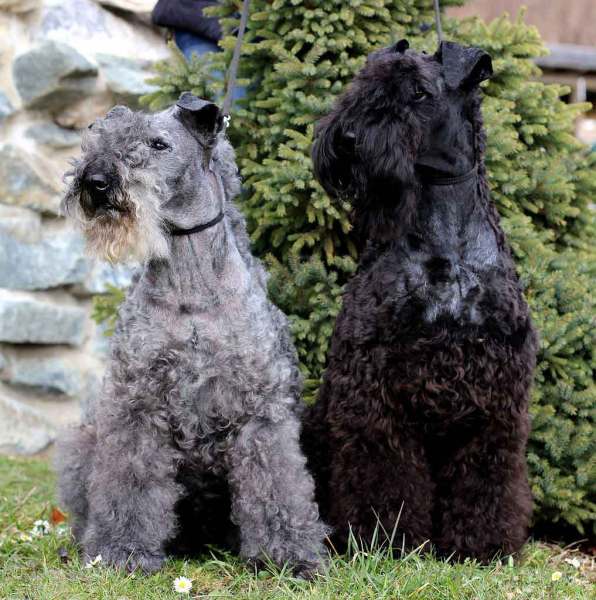
    2 – Two Kerry Blue Terrier, the left one, named Ceallach Blue Ivanhoe is on this photo about 14 years old and light grey. She have made the full color change. On the right is a about one year old Kerry Blue Terrier, called Edbrios Highlander. In this age the breed is just starting with changing the color of the coat. by ยฉ Hilarmont (Kempten) / CC BY-SA 3.0 OF
    3 – Kerry Blue Terrier dog by Eponym / CC BY-SA
    4 – Kerry Blue Terrier by Svenska Mรคssan from Sweden / CC BY
    5 – Kerry Blue Terrier during dogs show in Katowice, Poland by Pleple2000 / CC BY-SA
    6 – Kerry Blue Terrier, exhibition in Spodek, Katowice by Pleple2000 / CC BY-SA

    Videos "Kerry Blue Terrier"

    Type and recognitions:

    • FCI CLASSIFICATION:
    • Group :
    • Section : . .

    Federations:

    • – FCI – Terriers 1 Large and medium-sized terriers. โ“˜
    • – AKC – Terriers โ“˜
    • – ANKC – Terriers โ“˜
    • – CKC – Terriers โ“˜
    • – โ€‹KC – Terriers โ“˜
    • – NZKC – Terriers โ“˜
    • – UKC – Terriers โ“˜

    FCI breed standard "Kerry Blue Terrier"

    Origin:
    Ireland

    Date of publication of the valid original standard:
    19.04.2005.

    Use:

    It is used in the hard work of hunting otters in deep water, in fighting badgers underground and hunting vermin. Good guard dog and loyal companion.


    General appearance:

    The typical Kerry Blue Terrier should be an upright dog, compact and well proportioned, featuring a well-developed muscular body, with a well defined terrier style.


    Behavior / temperament:

    Terrier character in all its meaning. The most important factor, The expression, must be insightful and alert.

    Head:

    With a lot hair. Males should have a stronger head and be more muscular than females..

    Cranial region:
    • Skull: Strong and well proportioned.
    • Depression links (Stop): Light.

    facial region:

    • Truffle: black, the large and wide nostrils. Snout: Must be of medium length.
    • Jaws: Strong and muscular jaws (scary calls). Teeth: Large white teeth; scissor bite (accepting bite on clamp).
    • Mouth: Dark gums and palate.
    • Eyes: Dark or dark hazelnut, medium in size and well placed, with expression of liveliness.
    • Ears: Thin and not big, carried forward or along the sides of the head towards the front, again to show the vivacious and sharp expression of the terrier.

    Neck:

    Well proportioned, good insertion on the shoulders and moderately long.

    Body:

    • top line: Of average length, straight. Pork loin: Moderate long.
    • Breast : Deep and moderate width. Well arched ribs.

    Tail:

    Thin, good insertion, carried erectly and cheerfully.

    Tips

    PREVIOUS MEMBERS:

    • Blades: Lightweight, leaning back and well glued.
    • forearms: Seen from the front, straight and with good bones.

    LATER MEMBERS: They must be well placed under the dog.

    • Thighs: Muscular, well developed.
    • Hocks: Strong.
    • Pies: compacts, strong round pads, black nails.

    Movement:

    With good coordination, parallel members. Forelimbs with good reach and hindlimbs with good thrust. When the dog is moving the line must be kept at level and head and tail bring them up.

    Mantle

    • Fur: Soft, abundant and wavy.
    • Color: Any shade of blue with or without black spots. Allow the color black, as well as a reddish hue, only until the age of 18 months.


    Size and weight:

    Height to the cross:

    • For males between 45,5 to 49,5 cm. (18 to 19,5 inches).
    • For the females between 44,5 to 48 cm. (17,5 to 19 inches).

    Weight:

    • For the males of 15 to 18 kg (33 to 40 English pounds).
    • For females proportionally less.


    Fouls:

    Any deviation from the above mentioned criteria is considered to lack, and the gravity of this refers to the degree of deviation to the standard and its impact on the health and well-being of the dog.

    • Flesh-colored gums.
    • Yellow eyes, the clear.
    • Convex or concave back.
    • Narrow sill.
    • Elbows sticking out.
    • Upper or lower prognathism.
    • White or ivory nails.
    • Spurs on the hind limbs or signs that they have been removed.
    • Closed or affected hind limb movement, with hocks together (cow).
    • Dogs whose head or tail are held by exhibitors or presenters should be penalized
    • Wire-haired, wire or piggy.
    • Any color other than blue, except the exceptions indicated above.

    FALTAS DESCALIFICANTES:

    • Aggressiveness or extreme shyness.
    • Any dog โ€‹โ€‹showing clear signs of physical or behavioral abnormalities must be disqualified..


    N.B.:
    • Males should have two normal-appearing testicles fully descended into the scrotum..
    • Only functionally and clinically healthy dogs, with the typical conformation of the breed, should be used for parenting.

    The latest changes are in bold.

    TRADUCCION: Lic. O. Valverde, reviewed by Dr. F. del Valle and updated by J. Nallem, Uruguayan Kennel Club.

    Source: F.C.I - International Cynological Federation

    Alternative names:

    1. Irish Blue Terrier, Kerry (English).
    2. Terrier Kerry Blue (French).
    3. Kerry (German).
    4. Irish Blue terrier (Portuguese).
    5. Kerry (espaรฑol).

    โ–ท The world of Pets: Dogs, cats, birds, reptiles, amphibians

    Irish Terrier
    Irlanda FCI 139 . Large and medium sized Terriers

    Terrier Irlandรฉs

    The Irish Terrier it is a dog of pleasant appearance and endowed with an exceptional character.

    Content

    History

    Where did the "Irish Terrier" originally come from??

    The "Irish Terrier", he is a high-ranking terrier. It is often called the "Red Irishman" for its distinctive reddish coat.. Its roots are, as in all terriers, a little on the ground. The name Terrier is derived from the Latin ยซTerraยป for the earth. So they were dogs for movement on land and underground.

    High-ranking terriers were supposed to run with the pack on fox hunts. When a fox took refuge in its burrow, the terriers had to chase him underground and get him out of the burrow, as it is called in the language of the hunters. One can imagine that the fox, after all a well fortified predator, does not voluntarily abandon its burrow. so a Irish Terrier I had to be very brave, fearless and defensive. Even today the "Red Irish" are hunting dogs in their hearts. They are not afraid and with every fiber they strive to do their job as well as possible. We can still experience all these qualities in the Irish Terrier as a companion dog.

    They have a special charm but also the challenge of their ancestors.. But red Irish was also used in many different ways at home and on the farm.. He had to keep the yard free of mice and rats., protect chickens, pigeons and rabbits for the night of the martens and foxes. Finally, had to watch the farm and its inhabitants and, if necessary, protect them.

    Ludwig Beckmann reported in 1895, in his two-volume work on the "Breeds of the Dog", that already in 1847 in Ireland they had begun to breed an independent terrier, the ancestor of the current Irish Terrier. At least that's what the Irish claimed, while the English for a long time dismissed this dog as a variety.

    Until 1880 the color of the Irish Terrier was, in fact, still quite uneven. Only little by little did Irish breeders mark their dog with the red coat color as something special. But then it became very popular, even in England and especially in the US, where many Irish had emigrated. The first special breed club for Irish Terriers was founded very soon, the 31 in March of 1879 in Dublin. It was then the first race of Irish Terrier in being officially recognized by the British Kennel Club with Ireland as country of origin.

    Physical characteristics

    What is an "Irish Terrier" like??

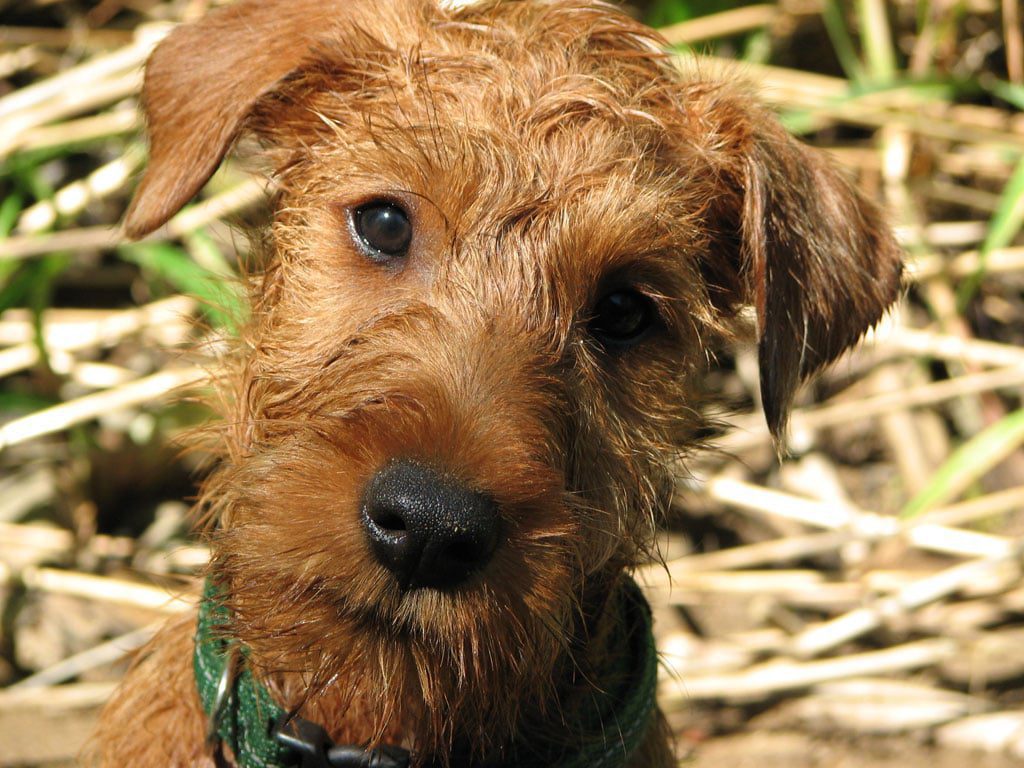
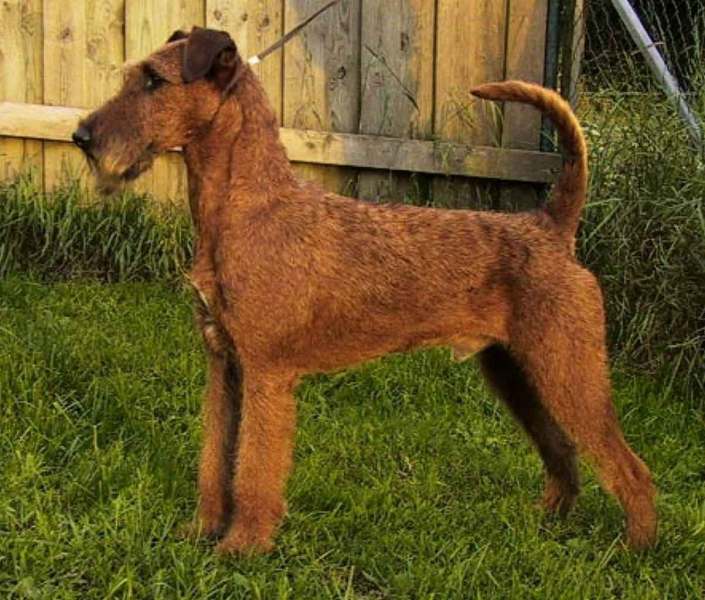
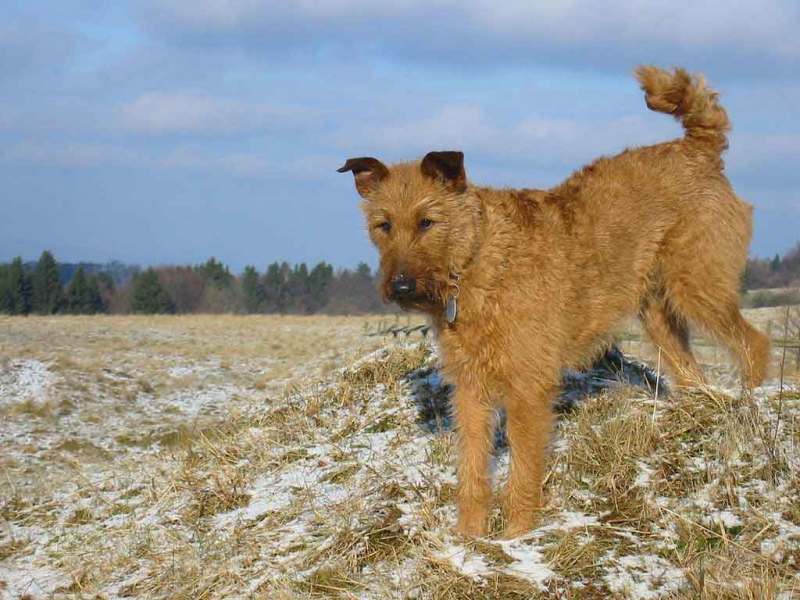
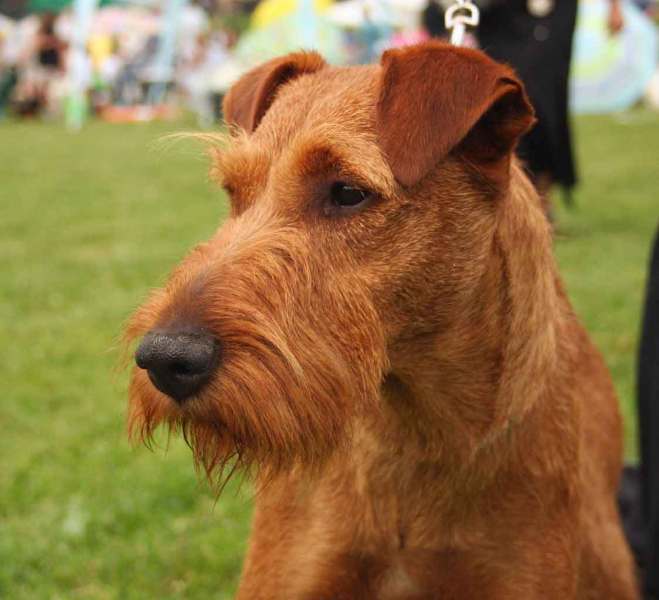
    The Irish Terrier it's a medium sized terrier, high-ranking and distinctive in appearance. This starts with their reddish fur. It is built almost square. The legs lower vertically, the long tail stands tall, the neck stretches up. The head, eyes and ears underline their alert appearance. You can feel that every fiber of his muscular body is under tension. The standard tells us…

    …seem active, lively, agile and energetic and have a lot of substance without showing any clumsiness, because speed and endurance as well as strength are essential to the race. The Irish Terrier should not appear clumsy or amorphous; the contour of his body and figure must demonstrate speed, grace and fleetingness.

    Their coat should be thick and lean in texture. Must be, according to technical jargon, broken or broken, that is to say, it should look tough and tough and, However, be extended. The head is also hairy, giving the impression of a beard. The "red Irish" must be uniformly red, wheat-red or yellow-red. Apart from color, the Irish Terrier reminds a bit of a small and elegant Airedale Terrier, which is also quite similar to him in character.

    How tall is an "Irish Terrier"?

    One Irish Terrier It has a height at the withers of about 45 centimeters with a weight of about 12 kg. Males are slightly larger and heavier than females.

    How long does an "Irish Terrier" have??

    as a rule, the Irish Terriers they enjoy a long canine life of more than 12 years in top physical condition.

    Character and skills

    The Irish Terrier it's a power pack. It is lively, alert, concise. Always attentive, vigilant, non-aggressive, but without fear and in an emergency you are also ready to fight. It is said that the Irish Terrier he is very hard on himself and would face dangers and even his own injuries with extreme contempt. It is still used as a working dog in its country of origin.. There he does a good job as a yard dog, guard and hunting. In today's hunting it is mainly used for post-shot work.. The official standard describes its character very accurately:

    The Irish Terrier, although determined and able to face other dogs, is remarkably loyal, kind and affectionate with people; However, when he is attacked, show the courage of a lion and fight to the bitter end. It is wrongly said that the Irish Terrier he gets into fights with other dogs easily, sometimes even in the exhibition ring. Although it does not avoid any dispute when circumstances require it, the Irish Terrier it is easy to train and it is a sociable domestic dog; still embodies the qualities that, according to previous descriptions, They had made him the "guardian of the poor", "Friend of farmers and beloved of distinguished gentlemen.".

    The Irish Terrier he is essentially a reckless and not a lapdog. But, nowadays it is doing very well as a companion and family dog. He is a faithful companion, vigilant, warm and loving for young and old, as long as one allows oneself and him the movement. It has a big character, self-confident and never submissive, that one should respect and appreciate. In his book about the Irishman "Jerry the Islander", the great writer Jack London expresses his respect for this great character in the following words: ยซJerry, you are gold, pure gold, inside and outside, and no dog in the whole world can compete with you. You have a heart of gold, golden dog; be good to me and love me, and I will be good to you and I will love you now and always.".

    Care and health ยซIrish Terrierยป

    The Irish Terriers they are very easy to care for. But, your coat should be professionally trimmed and should never be sheared. During clipping, three to four times a year, dead hair is professionally plucked.

    Most Irish Terriers are in robust health. Here and there skin diseases occur (hiperqueratosis) or metabolic diseases (cistinuria). Sometimes inbreeding is a problem.

    What food is best for an "Irish Terrier"?

    The Irish Terrier has no special dietary needs. High quality food is of course good for your health. like most dogs, sometimes he likes a meaty beef bone.

    Where can you buy an "Irish terrier"?

    The best way to buy your puppy Irish Terrier is to buy it locally from a breeder registered with the FCI. You must have tested your dogs for the special risks of inherited diseases. There should also be no inbreeding, that can be estimated from the pedigree, if no name appears there twice. The breeder must have his litter well documented by photo. You should be able to see the litter along with the mother bitch, after the fix, in the place. Please, don't buy one Irish Terrier by Internet, because there is a high risk that the puppy will come from a dog vendor or breeder, normally well camouflaged.

    Education and maintenance ยซIrish Terrierยป

    Keep a Irish Terrier It is not a problem. It has no demands regarding the size of the apartment. The biggest challenge is his temperament. The Irish Terriers they need challenges of a physical and mental nature.

    As a companion dog they are suitable for a wide range of tasks.. They are very suitable for various dog sports. The Irish Terriers are well positioned as joggers or in moderation, companions of a cyclist. Their aptitude and willingness to work means both a challenge and an obligation to their masters and mistresses., and that in any weather.

    They must be used to other pets from birth, otherwise they will be seen as prey. The Irish Terriers they are very suitable as playmates for children, since they are prepared for any adventure and are robust enough to play with children. But, the house rules must be correct and the terrier must know his role in the family. On the street he tends to fight with other dogs. Due to its moderate size, his low weight and his good obedience – properly trained – is a companion without problems in all life situations.

    Can be carried very well in the transport box, if you've gotten used to it from a young age. The typical Irish Terrier can be trained and educated very well. The clear announcement and the consequence are the magic words here based on a respectful and loving relationship with the master or mistress. Its undoubted leadership role must always be present, otherwise the irishman thinks he has to handle things himself.

    Characteristics "Irish Terrier"

    Coexistence is important that you have with your new friend. Before considering the acquisition of a dog of the breed "Irish Terrier" you know certain factors. Not all breeds of dogs are apt to live in an apartment, you must take into account his character, their need for exercise, their interaction with other pets, their care and if you have small children, their level of tolerance towards them.

    Adaptation โ“˜

    5,0 of 5 stars (based on 1 review)

    friendly dog โ€‹โ€‹โ“˜

    2,0 of 5 stars (based on 1 review)

    hair loss โ“˜

    2,0 of 5 stars (based on 1 review)

    Affection level โ“˜

    5,0 of 5 stars (based on 1 review)

    Need for exercise โ“˜

    4,0 of 5 stars (based on 1 review)

    Social need โ“˜

    4,0 of 5 stars (based on 1 review)

    Home โ“˜

    3,0 of 5 stars (based on 1 review)

    Toilet โ“˜

    3,0 of 5 stars (based on 1 review)

    Friendly with strangers โ“˜

    2,0 of 5 stars (based on 1 review)

    barking โ“˜

    4,0 of 5 stars (based on 1 review)

    Health โ“˜

    4,0 of 5 stars (based on 1 review)

    Territorial โ“˜

    5,0 of 5 stars (based on 1 review)

    Cat friendly โ“˜

    2,0 of 5 stars (based on 1 review)

    Intelligence โ“˜

    4,0 of 5 stars (based on 1 review)

    Versatility โ“˜

    2,0 of 5 stars (based on 1 review)

    Child friendly โ“˜

    4,0 of 5 stars (based on 1 review)

    Surveillance โ“˜

    4,0 of 5 stars (based on 1 review)

    joy โ“˜

    5,0 of 5 stars (based on 1 review)

    Images "Irish Terrier"

    Photos:

    1 – Irish Red Terrier during dogโ€™s show in Racibรณrz, Poland by https://commons.wikimedia.org/wiki/User:Pleple2000
    2 – Irish Terrier by Batman1000 / CC BY-SA
    3 – Irish Terrier by Anne Sollerud / CC BY
    4 – Irish Terrier puppy by https://www.flickr.com/people/24649496@N00
    5 – Irish Red Terrier during dogโ€™s show in Racibรณrz, Poland by https://commons.wikimedia.org/wiki/User:Pleple2000
    6 – Irish Red Terrier during dogโ€™s show in Racibรณrz, Poland by Pleple2000 / CC BY-SA

    Videos "Irish Terrier"

    Type and recognitions:

    • FCI CLASSIFICATION:
    • Group :
    • Section : . .

    Federations:

    • – FCI – Terriers 1 Large and medium-sized terriers. โ“˜
    • – AKC – Terrier โ“˜
    • – ANKC – Terrier โ“˜
    • – CKC – Terrier โ“˜
    • – โ€‹KC – Terrier โ“˜
    • – NZKC – Terrier โ“˜
    • – UKC – Terrier โ“˜

    FCI breed standard "Irish Terrier"

    Origin:
    Ireland

    Date of publication of the valid original standard:
    13.03.2001

    Use:

    It's a farm dog, family pet, guard dog very susceptible to danger or injury, hunter and dog for work after shooting.


    General appearance:

    The dog must have an active appearance, lively, agile and wiry, a lot of substance, and at the same time free from clumsiness, since speed and endurance as well as strength are very essential. It should not be thick or robust, but to be well built within lines that denote speed and present an elegant racer appearance.


    Behavior / temperament:

    The Irish Terrier, although it is a hunting dog and capable of facing other dogs, is extremely loyal, of good temperament and loving with the man, but when attacked he has the courage of a lion and will fight to the end. His reputation for fooling around with other dogs, sometimes even on the show floor, does not deserve it. While it's true that you can be fierce when circumstances warrant, the Irish Terrier can be easily trained and is a delicate pet, staying true to his old description of being "the sentinel of the needy man", the farmer's friend and the gentleman's favorite ยป.

    Head:

    Long, wrinkle free.

    Cranial region:
    • Craging: Flattened and fairly narrow between the ears; narrows slightly towards the eyes.
    • Dnaso-frontal depression (Stop): Hardly visible except in profile.

    facial region:

    • Trufa: It must be black.
    • Labios: They must be very adherent, and on the outside they should be almost black.
    • Jaws: They must be strong, muscular, of good length and fearsome.
    • Dinentities: They must be strong, leveled, no cavities, the upper incisors slightly overlapping the lower incisors.
    • Cheeks: Not very prominent. They should have a slight decline under the eye, such that they do not present a Greyhound appearance.
    • Ojors: They must be dark in color, small, not prominent and full of life, fire and intelligence. Light or yellow colored eyes are very objectionable.
    • Obars: Small and V-shaped, of moderate thickness, well implanted in the skull and fall forward next to the cheeks. The upper line of the ear fold should be well above the level of the skull. Ears hanging to the side of the skull, like those of a hound, They are not a characteristic of the terrier, while semi-erect ears are even more undesirable. Ear hair should be shorter and darker in color than body hair.

    Neck:

    Of moderate length and gradually widens towards the scapulae, with good bearing and without dewlap. Generally has a small swirl of hair, visible on each side of the neck, which goes almost to the angle of the ear.

    Body:

    It must be symmetrical, neither too long nor too short.

    • Espalda: It must be strong and straight, without any appearance of slack behind the shoulders.
    • Itmor: Muscular and slightly arched; the back of the females may be slightly longer than that of the males.
    • Pecho: Deep and muscular, without being prominent or wide. Ribs should be quite arched, deep and carried well back.

    Tail:

    Very high insertion, happily held, but not on the back or curled; good firmness and substance and good length. By custom a third of its original length is amputated; must be well covered with coarse hair, hard, and must not be fringed or feather-shaped. Natural glue (without amputation) It is only allowed in countries where amputations are prohibited by law.

    Tips

    PREVIOUS MEMBERS:

    • Hormbros: They must be clear, long and well sloped back.
    • Elbows: They must move freely without any obstacles to the sides.
    • Antarms: Moderately long, perfectly straight with good bone and muscle.
    • Metacarpus: Short and straight, barely noticeable.

    LATER MEMBERS: They must be strong and muscular.

    • Thighs: Powerful.
    • Rodinllas: Moderately angled.
    • Corvejones: Well descended.
    • PinIt: Feet should be strong, moderately round and moderately small; the arched toes, without turning in or out; black nails are very desirable. Healthy pads without corneal cracks or excressions.

    Movement:

    The fore and hind limbs should be brought straight forward and parallel; the elbows move parallel to the axis of the body, without any obstacles on the sides; the femoro-tibio-patellar joints (knees) they should not be turned in or out.

    Mantle

    • Plink: Hair must be dense and wire-like in texture, and present a brittle appearance, tough but still flat. The hair grows so close and dense that when you separate it with your fingers you can't see the skin; should not be smooth or silky, not so long that it hides the figure of the body, particularly in the hind limbs, and should not have loops or curls. The hair on the face should have the same texture as that on the body, but it must be short (0,75 cms long), almost smooth and squashed; a sparse beard is the only long hair (and it is only long compared to the rest of the hair), which is a characteristic. A "goat" beard suggests the existence of bad, silky hair in general throughout the coat..
    • Members: They must not have fringes and must be covered, just like the head, hair with a hard texture like the one that covers the body, but not so long.
    • Colorr: Must be of a uniform color, bright red is more preferred, leonado rojizo, or reddish yellow. The white color sometimes appears on the chest, a small amount of white is frequently seen in those single-color breeds.


    Size and weight:

    Alturto the cross: About 45,5 cm. (18 inches).

    Pthat: Males 12,25 kg (27 English pounds, The females. 11,4 kg (25 English pounds).


    Fouls:

    Any deviation from the above mentioned criteria is considered to lack, and the gravity of this refers to the degree of deviation to the standard and its impact on the health and well-being of the dog.

    FALTAS DISQUALIFYING:

    • Aggressiveness or extreme shyness.
    • Any dog โ€‹โ€‹showing clear signs of physical or behavioral abnormalities must be disqualified..
    • Trufa: Any color other than black.
    • Jaw: Obvious overshot or overshot.
    • Colorr: Any color other than red, reddish yellow or reddish fawn. A small white spot on the chest is allowed, as in other breeds of uniform color.
    • PinIt: Corneal growths or cracks in the pads.


    N.B.:
    • Males should have two normal-appearing testicles fully descended into the scrotum..
    • Only functionally and clinically healthy dogs, with the typical conformation of the breed, should be used for parenting.

    TRANSLATION: Lic. Oscar Valverde (Costa Rica). Updated by J. Nallem (Uruguayan Kennel Club).

    Source: F.C.I - International Cynological Federation

    Alternative names:

    1. Irish Red Terrier (English).
    2. Irish Terrier (French).
    3. Irischer Terrier (German).
    4. Brocaire rua, rish red terrier, Irish terrier (Portuguese).
    5. Irish Red Terrier, Irish terrier (espaรฑol).

    โ–ท The world of Pets: Dogs, cats, birds, reptiles, amphibians

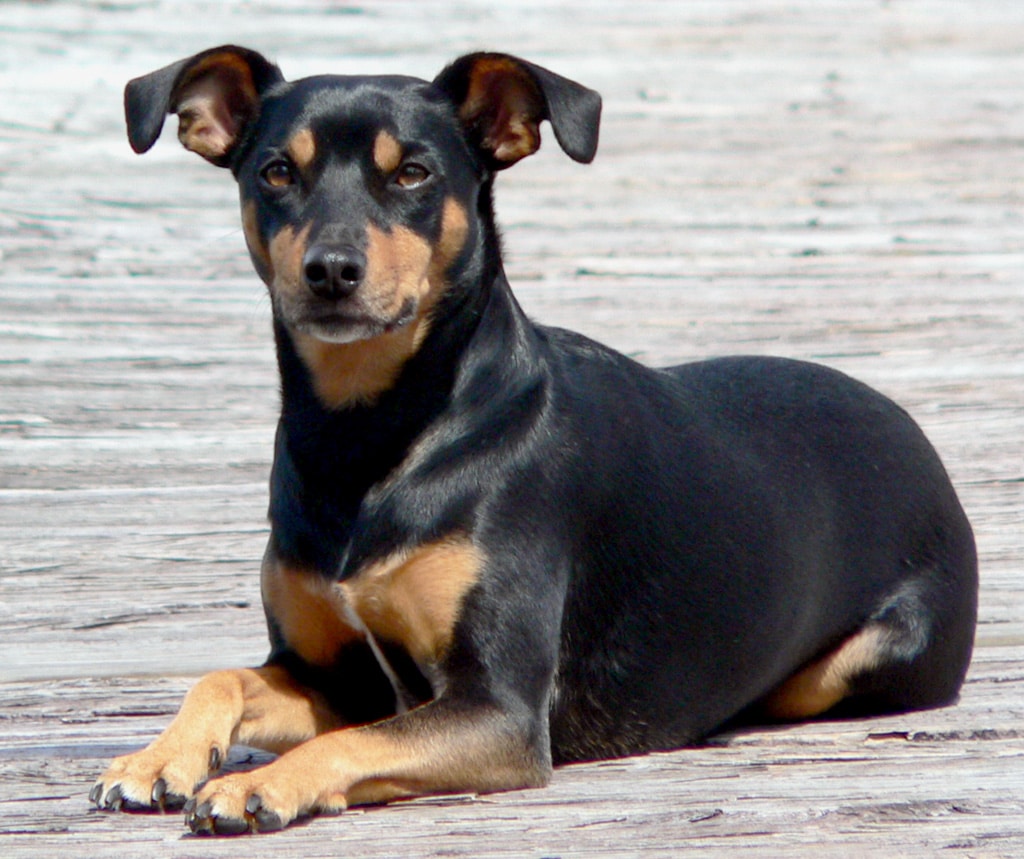
    Manchester Terrier
    Inglaterra FCI 71 . Large and medium sized Terriers
    Manchester Terrier

    The Manchester Terrier is a slender dog, light, athletic and with very refined lines.

    Content

    History

    The Manchester Terrier it is a dog of Scottish origin, seems a reduced form of the German Pinscher although I have no blood ties with this race.

    The Manchester Terrier could be defined as the modern version of a mouse-hunting dog called ‘Old Black and Tan Terrierโ€˜, It was very popular during the 19th century in the cities of the North-West of England, where - apparently- lived for several centuries.

    Other flows say it also has blood of the Whippet which gives it its aerodynamic appearance with clean lines and a lot of agility.

    In the beginning, the Manchester Terrier was a dog specializing in hunt for rats and rabbits in urban contests, but with the prohibition of these competitions, the Manchester Terrier went on to become a useful vermin controller for those who lived in the country and, later, in company pet.

    But Manchester Terrier since its inception has been townsman, not descended รขโ‚ฌโ€œ like other Terrier- field dogs, but that comes from urban dogs whose function was to put an end to the own city vermin: the rat.

    While his presence in the world of canine competitions is not the same as old, Now you can enjoy these dogs in certain competitions.

    Videos ยซManchester Terrierยป
    Manchester Terrier - Bling
    3 vs 1(Min Pin, Manchester, Rat Terrier)

    The Manchester Terrier began to be called as such in the year 1897 (20 years after its creation).

    It was created at the height of the contests that consisted of killing the largest number of rats, and the race became known as a champion in this discipline. With the prohibition of this practice, the Manchester Terrier suffers a first blow that lowers the number of copies and the popularity of the breed.

    Later he suffered another bump with the prohibition of amputate the ears of dogs (1898). A Manchester Terrier with its ears unclipped looked like, According to its owners, it was not consistent with its behavior and physical power.. This Manchester Terrier began to be increasingly less popularity.

    The third coup led in the World War II, during the race nearly extinct, leaving only 11 copies across England.

    The race begins to recover when a group of enthusiasts decided to form a club to promote the popularity of the Manchester Terrier, although it was only used in exhibitions or as a pet.

    Physical characteristics

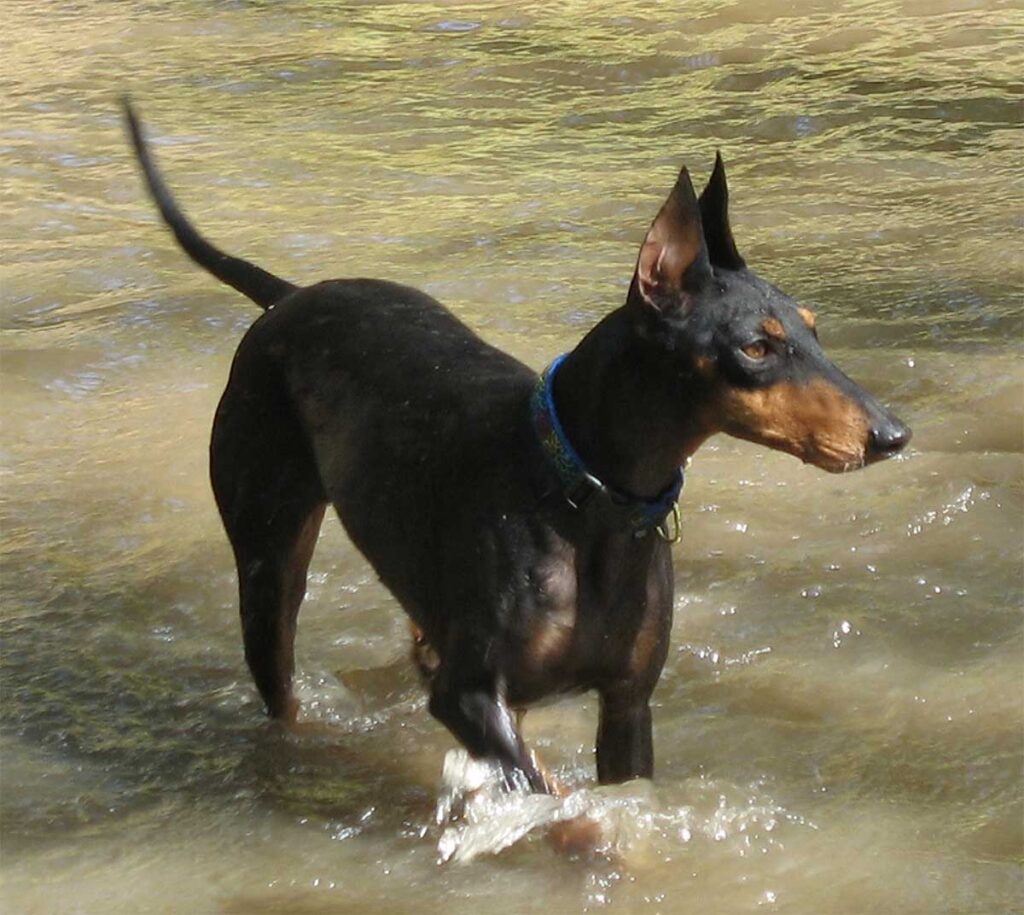
    The Manchester Terrier it is a compact looking dog, elegant, solid and well structured.

    The height in the males is of approximately, 41 cm. and in the females of 38 cm.. The weight is proportional to the height.
    Its skull is long, flat and narrow, with a conical shape.

    It has oval-shaped eyes are very bright, small and dark. It has ears of high insertion, small and in the shape of a 'V' that has the tips raised and folded over the forehead.

    It has a short trunk and a compact back, rounded. The limbs are straight and proportionate to the size of the body.

    The tail is not very long, It is thick in the inclusion and is tuned toward the tip, must never exceed the dorsal line.

    It has a layer of shiny hair, glossy, well bushy, smooth, short and very soft to the touch. The color is solid black with bronze spots (Dark mahogany).

    Observations

    In the United States are maiming ears. This practice was common in England before the Decree of the Prince of Wales that, in the year 1898 banned all amputations.

    Due to the entry into force of this Decree, the race Manchester Terrier lost so much popularity that was on the verge of extinction.

    Unfortunately, despite all efforts of loving breeders of this breed, from then on, the recovery of the breed… was only partial.

    Character and skills

    By having an urban origin, the Manchester Terrier It is an ideal dog for life in a small flat in city. It is a very nice dog that adapts effortlessly to the home life, over all if leave you a hole in the bed or the couch.

    It will be fully happy, If in addition to the overstuffed couch take it to give rides to open field, because he will unleash his hunting instinct and go crazy with joy chasing mice, crickets, lizards…, and all small shabby crossing on their way.

    The Terrier, It is the most suitable to live in an apartment, does not lose hair practically, and by instinct is a clean dog. Learn fast, and in addition fond of children.

    ยซManchester Terrierยป Education

    Create one Manchester Terrier is not easy. His multifaceted nature requires a lot of dog mind and empathy. He is also very sensitive and does not easily forgive injustice and disproportionate punishment.. So, not easy to recommend as a beginner dog. But, if you manage to feel and think your way to your Manchester and thus build a close relationship of trust, a hidden treasure is at your disposal. Especially for its multifaceted nature combined with its intelligence and docility, you can easily master any challenge with it, what could be desired in a full cooperation between dog and man. You need a clear announcement and consequences based on a respectful and loving relationship with your master and lady. Yet Manchester Terrier likes to be raised and seeks cooperation with humans. So, especially with him, much more than with other dogs in general, command and drill are completely out of place and counterproductive.

    Manchester Terrier Health

    The Manchester Terriers They have some health conditions that may be of concern. They include an inherited bleeding disorder called von Willebrand disease, Hypothyroidism, patellar dislocation, Legg-Calve-Perthes disease (Toy Manchesters), and eye problems like glaucoma and cataracts.

    Do not buy a puppy from a breeder who cannot provide you with written documentation showing that the parents were exempted from health problems affecting the breed. Having dogs undergo a "vet check" is not a substitute for genetic health testing.

    Remember that after bringing a new puppy home, has the power to protect you from one of the most common health problems: the obesity. Keep a Manchester with a proper weight is one of the easiest ways to prolong your life. Make the most of your preventive skills to help ensure a healthier dog for life.

    ยซManchester Terrierยป Care

    When it comes to grooming, the Manchester Terrier he's an easy keeper. Although the breed is naturally clean with little dog smell, a bath every three months (or when it gets dirty) in a mild shampoo is a good idea. Brush your elegant coat with a natural bristle brush or glove. Use hair conditioner / polisher to brighten hair.

    The rest is basic care. Trim nails as needed, normally once every few weeks. Brush your teeth frequently with a veterinarian-approved pet toothpaste for overall good health and fresh breath. Check ears weekly for debris, redness or odor that may indicate an infection. If the ears look dirty, clean them with a cotton swab moistened with a gentle, pH-balanced ear cleaner recommended by your veterinarian. Enter the Manchester Terrier in the toilet when he is very young so that he learns to accept it, especially the nail cut, with patience.

    The life expectancy of ยซManchester Terriersยป

    as a rule, the Manchester Terriers they enjoy a long life as dogs, often more than 12, sometimes more than 15 years. But, a prerequisite is that they come from a healthy upbringing.

    Comprar ยซManchester Terrierยป

    You should take a closer look at the breed and visit a breeder well before you buy.. The best way to buy your Manchester Terrier puppy is to buy it from a breeder who is a member of an FCI terrier club or can look around shelters. Sometimes there are dogs that come near the Manchester Terrier in type and character. The costs are about 1.200 EUR.

    Characteristics "Manchester Terrier"

    Coexistence is important that you have with your new friend. Before considering the acquisition of a dog of the breed "Manchester Terrier" you know certain factors. Not all breeds of dogs are apt to live in an apartment, you must take into account his character, their need for exercise, their interaction with other pets, their care and if you have small children, their level of tolerance towards them.

    Adaptation โ“˜

    5,0 of 5 stars (based on 1 review)

    friendly dog โ€‹โ€‹โ“˜

    3,0 of 5 stars (based on 1 review)

    hair loss โ“˜

    3,0 of 5 stars (based on 1 review)

    Affection level โ“˜

    4,0 of 5 stars (based on 1 review)

    Need for exercise โ“˜

    4,0 of 5 stars (based on 1 review)

    Social need โ“˜

    5,0 of 5 stars (based on 1 review)

    Home โ“˜

    5,0 of 5 stars (based on 1 review)

    Toilet โ“˜

    1,0 of 5 stars (based on 1 review)

    Friendly with strangers โ“˜

    3,0 of 5 stars (based on 1 review)

    barking โ“˜

    4,0 of 5 stars (based on 1 review)

    Health โ“˜

    2,0 of 5 stars (based on 1 review)

    Territorial โ“˜

    5,0 of 5 stars (based on 1 review)

    Cat friendly โ“˜

    3,0 of 5 stars (based on 1 review)

    Intelligence โ“˜

    4,0 of 5 stars (based on 1 review)

    Versatility โ“˜

    3,0 of 5 stars (based on 1 review)

    Child friendly โ“˜

    3,0 of 5 stars (based on 1 review)

    Surveillance โ“˜

    4,0 of 5 stars (based on 1 review)

    joy โ“˜

    5,0 of 5 stars (based on 1 review)

    ยซManchester Terrierยป images

    Videos ยซManchester Terrierยป

    Type and recognitions:

    • FCI CLASSIFICATION:
    • Group :
    • Section : . .

    Federations:

    • – FCI – Terriers 1 Large and medium-sized terriers. โ“˜
    • – AKC – Terriers โ“˜
    • – ANKC – Terriers โ“˜
    • – CKC – Terriers โ“˜
    • – NZKC – Terriers โ“˜
    • – UKC – Terriers โ“˜

    FCI breed standard "Manchester Terrier"

    Origin:
    United Kingdom

    Date of publication of the valid original standard:
    13.10.2010

    Use:

    Terrier


    General appearance:

    It is a compact dog, elegant, robust and of good substance.


    Behavior / temperament:

    Lively, alert, happy and sporty. Insightful and faithful.

    Head:

    ---

    Cranial region:

    Craging: Long, flat and narrow, level and wedge-shaped, without the cheek muscles showing.

    facial region:

    • Trufa: Glossy black.
    • Horcico: Well filled under the eyes, tapers towards the tip.
    • Bite / Teeth: Symmetrical jaws, with perfect and complete bite, scissor, that is to say, that the inner face of the upper incisors is in close contact with the outer face of the lower incisors. Teeth should be implanted at right angles in the jaws.
    • Labios: Glued.


    • Ojors: relativelysmall, dark and shiny. Almond shaped and should not be prominent.
    • Obars: The ears are small and โ€œVโ€ shaped., implantation well above the skull and falling close to the head over the eyes.

    Neck:

    Fairly long and slim from shoulder base to head; slightly arched topline, without jowl.

    Body:

    Short.

    • Itmor: Slightly arched.
    • Breast : Well arched ribs.
    • Lรญnlower ea and belly: Pick up behind the ribs.

    Tail:

    Cut and inserted where the arch of the back ends; thick at the base and tapers to the tip. It should not be carried higher than the line of the back..

    Tips

    PREVIOUS MEMBERS:

    • Hormbros: Clean and well sloped.
    • Antarm: Well upright forelimbs, and well placed below the body. Of length proportional to the body.
    • Pinis previous: Small, hare's half-form, strong and with well arched fingers.

    LATER MEMBERS: Strong and muscular. Hindquarters must not have cow hocks or feet turned inward.

    • Rodinllto: Well angled.
    • Pinis later: Small, hare's half-form, strong and with well arched fingers.

    Movement:

    Straight, free and balanced. The forelimbs are carried forward freely and the hindquarters give it a great push.

    Mantle

    Plink: Tight, smooth, short and bright, hard textured.

    Colorr: Glossy black and lit mahogany fire stains distributed like this: on the head and from the snout to the nose they have fiery hues, the nose and the back of the muzzle are shiny black. A small fire stain on each cheek and above each eye, in the lower jaw and in the throat forming a well-defined โ€œVโ€. In the Member, the fire color from the knee down, except the fingers which have black striations and a distinctive black spot (like thumbprint) on the foot. On the hind limbs the fire marks on the inside, with a black split at the knees. A fire spot under the tail and around the anus very narrow, so that it covers it. A very faint fire stain on each side of the chest. External fire spots on the hind limbs, commonly called โ€œpantsโ€, they are undesirable. In all cases, black color should not mix with fire and vice versa, but there must be a well-defined division between colors.


    Size and weight:

    Ideal height at the withers:

    • Males: 41 cm..
    • females: 38 cm..


    Fouls:

    Any deviation from the aforementioned criteria is considered as a fault and the severity of this is considered to the degree of the deviation to the standard and its consequences on the health and well-being of the dog..

    FALTAS DISQUALIFYING:

    • Aggressiveness or extreme shyness.
    • Any dog โ€‹โ€‹showing clear signs of physical or behavioral abnormalities must be disqualified..


    N.B.:
    • Males should have two normal-appearing testicles fully descended into the scrotum..
    • Only functionally and clinically healthy dogs, with the typical conformation of the breed, should be used for parenting.

    Itlatest changes are in bold.

    TRANSLATION: Brรญgida Nestler / Original version: (IN)

    Technical supervision: Miguel Angel Martinez

    Source: F.C.I - International Cynological Federation

    Alternative names:

    1. Manchester Terrier (English).
    2. Manchester Terrier (French).
    3. Manchester Terrier (German).
    4. Manchester Terrier (Portuguese).
    5. Manchester Terrier (espaรฑol).

    โ–ท The world of Pets: Dogs, cats, birds, reptiles, amphibians

    Bedlington Terrier
    Gran Bretaรฑa FCI 9 - Large and medium sized Terriers.

    The Bedlington Terrier, catalogued as a dog with the look of lamb and lion heart.

    Bedlington Terrier

    Content

    Characteristics "Bedlington Terrier"

    Coexistence is important that you have with your new friend. Before considering the acquisition of a dog of the breed "Bedlington Terrier" you know certain factors. Not all breeds of dogs are apt to live in an apartment, you must take into account his character, their need for exercise, their interaction with other pets, their care and if you have small children, their level of tolerance towards them.

    Adaptation โ“˜

    4,0 of 5 stars (based on 1 review)

    friendly dog โ€‹โ€‹โ“˜

    4,0 of 5 stars (based on 1 review)

    hair loss โ“˜

    1,0 of 5 stars (based on 1 review)

    Affection level โ“˜

    5,0 of 5 stars (based on 1 review)

    Need for exercise โ“˜

    3,0 of 5 stars (based on 1 review)

    Social need โ“˜

    4,0 of 5 stars (based on 1 review)

    Home โ“˜

    4,0 of 5 stars (based on 1 review)

    Toilet โ“˜

    4,0 of 5 stars (based on 1 review)

    Friendly with strangers โ“˜

    4,0 of 5 stars (based on 1 review)

    barking โ“˜

    3,0 of 5 stars (based on 1 review)

    Health โ“˜

    2,0 of 5 stars (based on 1 review)

    Territorial โ“˜

    5,0 of 5 stars (based on 1 review)

    Cat friendly โ“˜

    3,0 of 5 stars (based on 1 review)

    Intelligence โ“˜

    3,0 of 5 stars (based on 1 review)

    Versatility โ“˜

    4,0 of 5 stars (based on 1 review)

    Child friendly โ“˜

    4,0 of 5 stars (based on 1 review)

    Surveillance โ“˜

    3,0 of 5 stars (based on 1 review)

    joy โ“˜

    5,0 of 5 stars (based on 1 review)

    History

    The Bedlington Terrier It is a breed of dog that was raised in the 19th century in Northumberland, England, and named after the place of birth, Bedlingtonshire.

    On 1825, the race renamed the Bedlington Terrier Bedlington. The race was highly valued for the fox hunting, hares and Badgers. He was also used as a vermin Hunter by miners from Bedlington. Miners exploited his bravery to use it as a dog fight with the dogs of hunters that used perdigueros dogs.

    As he Otterhound and the Dandie Dinmont Terrier they are potential contributors to the race. Some breeders, especially those of England cross the Bedlingtons with Whippets and Greyhounds to produce what they call Lurchers.

    Physical characteristics

    It was created as a breed of fighting and hunting, later became a popular pet. Gentle in appearance, has an arched back, a crest and thick curly coat that can be of various colours, grey, reddish / brown clear or color sand. The breed is approximately 38โ€“40 cm tall and weighs between 10 and 11 kg.

    The Bedlington Terrier, It has been described as a dog with โ€œlamb look and lion heartโ€, to some extent because of their physical appearance (looks like a lamb), but also by its nature.

    This breed has a head shaped wedge with penetrating almond-shaped eyes. His physiognomy is different from most of the Terrier, It resembles more a hound. His physical characteristics allow him to run at high speed.

    The average lifespan of the "Bedlington Terrier" is around 13,5 years.

    Observations

    Their fur tends to be misleading, They seem to be a lamb, but in reality, each hair grows from a hair follicle, It has a cycle of growth, and when it dies it is replaced by another follicle, but the dead hair is still thereโ€ฆ bulging.

    For which reason, daily brushing is very important if you don't want to have, the whole house full of hairโ€ฆ Also, since it is very thin, adheres to any part, and it can even be inhaled, causing problems for allergic persons. Workspace very well to family life and are good with children.

    Character and skills

    Calmer and less noisy than other Terrier. Usually one moderate behaviour and good character, they are very good companions for families.
    If left alone for many hours, they can become very destructive, since they get bored easily and everything they catch..., in danger of being destroyed. For which reason, It advisable to give long walks, where you can run around and release energy.

    Images "Bedlington Terrier"

    Photos:

  • 1 – A Bedlington Terrier during an FCI dog show in Switzerland by Corinne Benavides
  • Bedlington terrier
  • David Oat [CC BY-SA]
  • David Oat [CC BY-SA]
  • Videos "Bedlington Terrier"


    Type and recognitions:

    • FCI CLASSIFICATION:
    • Group :
    • Section : . .

    Federations:

    FCI โ“˜, AKC โ“˜, ANKC โ“˜, CKC โ“˜, โ€‹KC โ“˜, NZKC โ“˜, UKC โ“˜

    FCI breed standard Bedlington Terrier

    FCIFCI - Bedlington Terrier
    Bedlington

    Alternative names:

    1. Rothbury Terrier, Rodbery Terrier, Rothbury’s Lamb (English).
    2. Bedlington terrier, Terrier Bedlington (French).
    3. Bedlington Terrier, Rothbury Terrier (German).
    4. Bedlington terrier (Portuguese).
    5. Bedlington terrier (espaรฑol).

    โ–ท The world of Pets: Dogs, cats, birds, reptiles, amphibians

    Parson Russell Terrier
    Inglaterra Estados Unidos FCI 339 . Large and medium sized Terriers

    Parson Russell Terrier

    The Parson Russell Terrier is a fearless dog, very happy, energetic and friendly.

    Content

    History

    The Parson Russell Terrier it is a small to medium sized terrier. It's a hunting dog.

    Although this breed of dog is very young in modern dog breeding, the Parson Russell Terrier is very close to the old and classic type of a terrier in character and appearance. Terriers form a large group within dogs. Its name is derived from the Latin ยซTerraยป for the earth. So they were dogs for work on the land. The first evidence is given by the ancient Romans. Already in the Middle Ages terriers are described in detail. His homeland is in the British Isles. Terriers existed throughout the country. In the stables they kept small vermin at bay. Even the big rats were not a problem for them. The hens, pigeons and rabbits protected them from martens and foxes. To keep chasing foxes, the terriers were sent to the trench.

    The Parson Russell Terrier of today are made exactly for this purpose. They should and could get the fox out of the hole. At the same time, they had to run with the fox hunts in the pack, that is to say, they had to be able to follow the gallop of the hunt. All of these tasks require enthusiastic commitment, special courage, independent thinking and the so-called sharpness of predators.

    The Parson Russell Terrier turned into a versatile hunting dog, it's not only suitable for underground work. In the 19th century the English shepherd Jack Russell he was a successful hunter, rider and above all breeder of Fox Terriers. In his long life as a breeder he greatly increased the performance of the Fox Terrier. They were now fit for all individual hunting tasks, they could work in the pack and in the den at the same time.

    In Australia, only with the help of their dogs could a plague of foxes be contained. To thank this, these dogs were finally named after their breeder, the Parson ยซJack Russellยป Terrier. They were and are physically and mentally raised for work, no show dogs. So breeders and lovers of this terrier for a long time refused to join the system of modern pedigree dog breeding., because they did not want to see dogs evaluated primarily on their appearance and feared the negative consequences of the show business on the fitness and health of dogs. This has done this breed of dog very well..

    Seriously raised, these are dogs that were largely spared from hereditary diseases and extremes in breeding. He "Jack Russell Terrierยป had a wide range of sizes from the beginning, rather short-legged and rather tall. Since performance was decisive, such refinements had no role. Now two breeds of dog have been made from the ยซJack Russell Terrierยป and the two lines have separated in breeding. The little one is still called Jack Russell Terrier, It has a height at the withers of up to 30 cm and is provided a little longer. The Parson it is a little taller and with more legs and in its rather square shape. Parish is another word for "pastor" in English.. So two breeds of dog are named after one person, el pastor Jack Russell. Both dogs are a credit to the Shepherd. In 2001 the new race Parson Russell Terrier was officially recognized.

    Physical characteristics

    The Parson Russell Terrier It is suitable for the working dog, Active, agile, built for speed and endurance. It gives the impression of balance and flexibility as a whole.

    You can have hair smooth or hard if it is thick and dense to protect it from the inclement weather, like cold and damp. Its color It can be entirely white or predominantly white with brown spots, lemon or black or any combination of these colors, preferably stains should be limited to the head or the birth of the tail.

    It measures to the cross between 33 and 36 cm., their weight approximate is of 8 to 10 kilos to be slightly larger in proportions that the version of the Jack Russell Terrier, although it should be noted that taller specimens exist as "Jack Russell" in some work clubs in the United Kingdom and the United States., due to what these clubs do not form part of the FCI and therefore, handle different to the recognized standard registers and accepted worldwide by the 84 member countries.

    Character and skills

    Parson Russell a fearless and friendly Terrier.

    This breed was bred to hunt, Chase and corner foxes in its burrow, therefore, they carry in their genes, and if this activity does not form part of the life of your puppy, We recommend that, they should be exercised daily intensely since they are dogs with a huge dose of contained energy.

    Perhaps its character lively and friendly has caused it to be one of the dog breeds preferred by many people as a pet.

    But in reality it is a true working dog and we should not forget that if a specimen of... becomes part of our family..

    Leave running, ride a bike, launch frisbee or ball - and teach him to bring them back-, It will help to strengthen the bond between the Parson and his owner while it educates, enjoys and is exercised.

    Images ยซParson Russell Terrierยป

    Videos ยซParson Russell Terrierยป

    Type and recognitions:

    • FCI CLASSIFICATION:
    • Group :
    • Section : . .

    Federations:

    • – FCI – Terriers 1 Large and medium-sized terriers. โ“˜
    • – AKC – Terriers โ“˜
    • – ANKC – Terriers (utility dogs) โ“˜
    • – CKC – Terriers โ“˜
    • – โ€‹KC – Terriers โ“˜
    • – NZKC – Terriers โ“˜
    • – UKC – Terriers โ“˜

    FCI breed standard "Parson Russell Terrier"

    Origin:
    United States, United Kingdom

    Date of publication of the valid original standard:
    22.08.2017.

    Use:

    Working terrier with the ability to work underground.


    General appearance:

    Efficient, active and agile, without exaggerations. Built for strength and power with an overall appearance of balance and flexibility. Honorable scars are allowed.

    IMPORTANT PROPORTIONS: Well balanced. The total length from the tip of the shoulders to the tip of the ischium slightly greater than the height at the withers to the floor. The length from the nose to the stop is somewhat shorter than from the stop to the occipital protuberance.


    Behavior / temperament:

    Originally a terrier bred to work with the fox. A confident dog, energetic and cheerful who has the ability and conformation to work on the ground. Bold and friendly.

    Head:

    Wedge shaped.

    Cranial region:
    • Skull: Plano, moderately wide gradually tapering to the eyes.
    • Depression links (Stop): Bit strong.

    facial region:

    • Truffle: black.
    • Jaws / Teeth: Powerful and well muscled jaws. Good sized teeth with a perfect, regular and complete scissor bite. I.e., The upper incisors cover the lower incisors in close contact and are set squarely in relation to the jaws..
    • Cheeks: Not prominent.

    Eyes: dark, almond shape, never prominent. Lively and intelligent expression.

    Ears: Size in proportion to the head. In the shape of a โ€œVโ€ falling forward. The tips of the ears should reach the level of the outer corner of the eyes. The fold should not be above the level of the skull. Canopy of moderate thickness.

    Neck:

    Cleansed, muscle, good length, gradually widening and well placed on the shoulders.

    Body:

    • Back: Strong, straight and flexible.
    • Pork loin: Strong and slightly arched.
    • Breast : Moderately lowered, without extending beyond the elbows. Behind the shoulders should encompass the palm of an average hand. Ribs worn well back, not too arched or too flat.

    Tail:

    Previously the custom was to amputate the tail.
    • amputee: Long complementing the body but maintaining a good grip. Strong, straight, moderately high insertion, very tall in movement.
    • Without amputating: Moderately long and as straight as possible, giving a good balance to the dog, thick at the base tapering towards the tip. Moderately high insertion, very tall in movement.


    Tips

    PREVIOUS MEMBERS:

    • ApGeneral arience: Moderate width between forelimbs, well placed under the body.
    • Hormbros: Wide and sloping, well defined on the cross.
    • Brazo: As long as the shoulders and with such angulation that the extremities are placed well under the body, below the tip of the cross.
    • Antarm: Strong and straight without leaning in or out. Arm length should be slightly greater than body depth.
    • Elbows: Glued to the body working freely on the sides.
    • Metacarpus: Strong and flexible.
    • Pinis previous: Compact with firm pads, moderately arched fingers, never flat open, without leaning in or out.

    LATER MEMBERS:

    • ApGeneral arience: Strong, muscle with good angulations.
    • Knee: Good angulation without exaggeration.
    • PinScheme: Well developed.
    • Ahock joint: Low placement.
    • Metatarsals: Parallels, giving a lot of propulsion.
    • Hind feet: Like the previous ones.

    Movement:

    Libre, movement covering the surface, without exaggeration. The steps must be of good length, never forced or high steps. Posterior provides a strong push. Well coordinated, right movement back and forth.

    Mantle

    SKIN: It should be thick and loose.

    MANTLE

    • Fur: Rough, broken the naturally rough smooth, straight, smooth, tight and bushy with good undercoat. Weather resistant. Abdomen and lower line covered with hair. The prepared cloak (Trimming) it must seem natural, never cut.
    • Color: White or predominantly white with fire markings, lemon or black or any combination of these colors. The color is preferably limited to the head and / or base of the tail but slight marks are accepted on the body.


    Size and weight:

    Height to the cross:

    • Ideal in males: 36 cm.
    • Ideal in females: 33 cm.

    It is more important to maintain correctness and balance taking into account that this terrier, bred to work with the fox, behind the shoulders should encompass the palm of an average hand.


    Fouls:

    Any deviation from the aforementioned criteria is considered a fault and its severity is considered to the degree of deviation from the standard and its consequences on the health and well-being of the dog and the dog's ability to perform its traditional task..

    FALTAS DESCALIFICANTES:

    • Aggressiveness or extreme shyness.
    • Any dog โ€‹โ€‹showing clear signs of physical or behavioral abnormalities must be disqualified..


    N.B.:
    • Males should have two normal-appearing testicles fully descended into the scrotum..
    • Only functionally and clinically healthy dogs, with the typical conformation of the breed, should be used for parenting.

    TRANSLATION: Brรญgida Nestler / Original version: IN.

    Technical supervision: Miguel Angel Martinez.

    Source: F.C.I - International Cynological Federation

    Alternative names:

    1. Parson, Parson Jack Russell Terrier (English).
    2. Parson Russell terrier (French).
    3. Parson (German).
    4. Parson (Portuguese).
    5. Parson, Parson Jack Russell (espaรฑol).