 FCI 42 - Nordic Hunting Dogs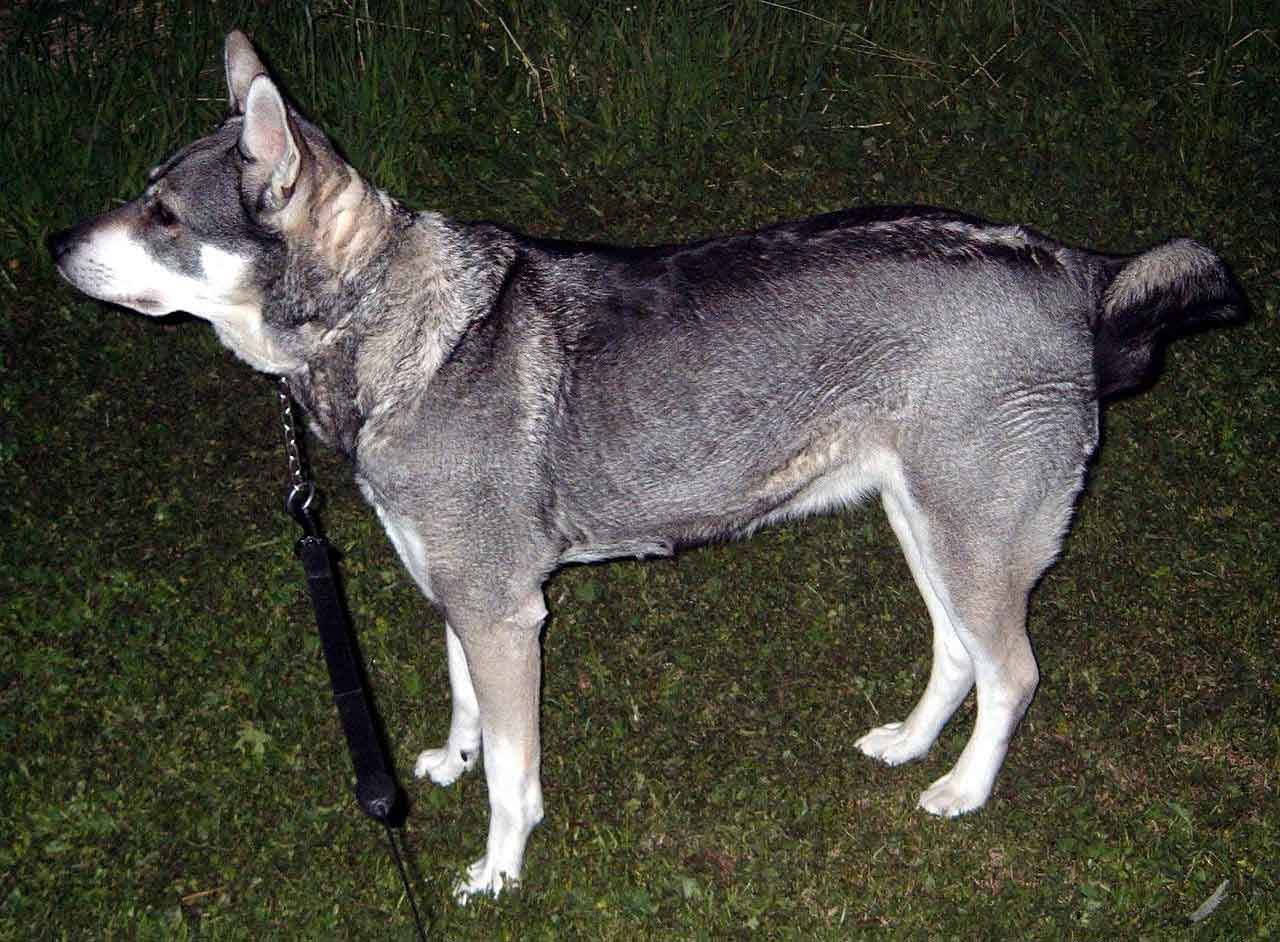
Content |
|---|
History
Only in 1946 the Jämthund (Jämthund) was recognized as a breed. But, the Jämthund it is a very old breed of dog, which is already known since the north of Sweden is populated.
The reason for this belated recognition is that the small Gray Norwegian Elkhound and the jämthund they were judged by the same race. At the end, this trial turned out to be untenable. The Jämthund mainly used to hunt moose, but it has also been used to hunt bears and lynxes, especially in the past.
Today the FCI recognizes three different moose dogs:
- Gray Norwegian Elkhound: FCI Standard No. 242
- Black Norwegian Elkhound: FCI Standard No. 268
- Jämthund (Jämthund): FCI Standard No. 42
All three are assigned to buffers and dogs of the original type (group 5) and in them they are assigned to the section 2 «Nordic Hunting Dogs».
Physical characteristics
The Jämthund He is respected for his wolf-like appearance and his great and powerful stature. With a height at the cross of 57 to 65 centimeters and a weight of about 30 kg, It is the largest and heaviest of the three moose dogs recognized and at the same time the largest Nordic hunting dog. Throughout its long history, the Jämthund not only faced wolves, lynx and elk, but also adult bears, whom he faced fearlessly when hunting.
Character and skills
Blind obedience is a long way off for this self-assured and independent pedigree dog from the far north. After all, the Jämthund in Sweden has been hunting moose, lynxes and even bears bravely and on their own for thousands of years. Although he always keeps in touch with his hunter, this smart and independent breed doesn't need your orders.
Strong dog personality with many talents
Dog lovers who are interested in this breed should know that the practice of certain commands sometimes requires some effort. With stupid repetitions or even with force and violence you will not achieve anything with the Jämthund.
But, if you accept his character and thoughtful nature and have the skills to deal with such a strong personality, you can certainly train him to be a versatile companion and working dog. With inventiveness, patience, consistency and sensitivity, the persistent and powerful Jämthund can be trained not only to be a versatile hunting dog, but also an excellent herding dog, guardia, sled and rescue.
Very experienced hunting dog
Despite relatively late recognition as a separate breed, the origin of Jämthund goes back a long time. In the province of Jamtland, in central Sweden, which is decisive for his name, the type of dog has been known for thousands of years.
Even the first settlers in northern and central Sweden had dogs to hunt bears., Moose, lynxes and wolves. Hunters appreciated above all their enormous stamina and physical strength., with which the dog, independently and bravely, went out looking for game.
Today it is regarded in hunting circles as a fearless and energetic search dog., which is not only suitable for hunting loose hounds, it can also be used for hunting guide dogs. Search and pursue game in the dense forests of Scandinavia and remain silent until you have placed the animal. Only then does he give the hunter a signal through his barking that he can hit the target.. This type of hunting is called «standing still«.
The Jämthund as a family dog
Also as a family dog ​​the Jämthund it is very suitable, as long as enough space is given to the independent nature and great desire for freedom of this original hunting dog. So he's considered friendly, balanced, calm and fond of children. After an appropriate period of acclimatization, also accepts conspecifics, cats and other pets without any problem.
He meets strangers with a certain distrust according to his natural instinct for vigilance and protection.. Does not act nervous or aggressive. There is also no denying a certain joy of barking to this Nordic hunting dog.
Breeding and buying a Jämthund
In Sweden the Jämthund has long been known beyond hunting circles and is popular as a versatile utility and companion dog. In other countries of the world, However, the swedish pedigree dog is very rare. Although you can find breeders in Germany, Great Britain, the Netherlands and North America, searching and waiting for a purebred puppy can sometimes take years. So, it is advisable to contact a registered association for Nordic dogs, that can help you find breeders in Scandinavia.
What do I have to consider when buying a Jämthund?
Although the distance to the breeder is long, those interested should take the time to get to know the kennel, the animals and the breeder in detail before buying. Don't take home the first best puppy, Before making several visits, convince yourself that it is a serious parenting, that dogs are raised with a lot of experience and love.
In addition to health tests, vaccinations and the presence of all important papers and a pedigree, animals must grow up in a close relationship with their breeder from birth. The socialization of a Jämthund already begins in the first weeks of life. Living with his mother and brothers, but also with the breeder's family, puppies learn the most important rules of the nest.
What demands does the Jämthund to the owner?
One Jämthund need plenty of exercise. You must also be sufficiently disabled both physically and mentally. A life in gated communities, in the city and without a garden, it certainly doesn't do this kind of dog justice.
The Jämthund feels more comfortable in rural areas. There you can move freely and spend a lot of time in nature. If not used for hunting purposes, you should definitely offer alternative activities. Possible are examinations for companion dogs, dog tournaments or rescue dog training. Also bike rides, long walks or sledding shots in winter are suitable to satisfy the great momentum of movement of the Jämthund.
Is a suit for me Jämthund?
Before you start looking for a suitable breeder, you should ask yourself the following question: Is this nordic pedigree dog suitable for me and my life?
This becomes especially important if you don't want to keep Jämthund like a hunting dog, but exclusively as a family dog. In this case you must make sure that you have enough experience, time and space to satisfy this demanding and energetic four-legged friend.
When asking if this dog is a good match for me, of course you should also keep an eye on the costs. After all, owning a dog costs not only time but also money. In addition to the purchase price, dog tax and insurance, there are also equipment expenses, watch out, food and visits to the vet.
You may be interested in our article on this topic: Getting the puppies used to the new home: Basic equipment and tips.
What food does the Jämthund need?
More important than the price of the food should be the price of the ingredients. This does not mean that the most expensive food is always the best.. Much more important is that the composition is adjusted to the needs of your dog and these depend on quite individual criteria such as weight, age, activity level and health status.
Basically, the food of Jämthund, like all the other dogs, should consist mainly of meat. It is the most important energy supplier for the descendant of the wolf and must constitute at least the 80 percent of the diet. The meat is complemented with vegetables, important fruits and fats, that provide an optimal supply of nutrients.
The cereals, the sugar, artificial flavor enhancers and chemical preservatives, on the other hand, have no place in dog food, either dry food, wet food, even cooked or raw food (BARF).
«Swedish Elk Hunting Dog» Care
The waterproof coat of the Jämthund repels dirt and moisture well, but still needs to be brushed regularly. It is best to comb your hair daily, especially during the layer change phase. This way you can remove dead hair in time and at the same time ensure that the amount of hair in your house stays within limits.. But, you should not expect meticulous cleaning in your home as the owner of this dog.
In addition to the toilet, claws should be trimmed regularly to avoid injury. Your roommate's ears and teeth should also be cleaned and checked at regular intervals., about two or three times a week.
Health «Swedish elk hunting dog»
The Jämthunde they are very robust
Careful grooming is not just for cleanliness and hygiene, but above all for the health of your dog. Brush your dog regularly and check his ears, claws, eyes and teeth. This way you can quickly detect any changes and make an appointment with the vet on time.
Being overweight is a problem for all dog breeds and quickly causes more complaints. So, it is advisable to check your pet's weight regularly. Hand palpation is also a good way to determine if your dog is of normal weight.. You shouldn't be able to see your dog's ribs from a distance., but i should be able to feel them.
Otherwise, the health of Jämthund is very robust, and there is no need to fear the hereditary diseases typical of the breed. If you have time, experience, money and the desire to fully adapt to this breed, you will surely have many years of pleasure with him Jämthund.
Characteristics "Jämthund"
Coexistence is important that you have with your new friend. Before considering the acquisition of a dog of the breed "Jämthund" you know certain factors. Not all breeds of dogs are apt to live in an apartment, you must take into account his character, their need for exercise, their interaction with other pets, their care and if you have small children, their level of tolerance towards them.
Adaptation ⓘ3,0 of 5 stars (based on 1 review)
|
friendly dog ⓘ3,0 of 5 stars (based on 1 review)
|
hair loss ⓘ4,0 of 5 stars (based on 1 review)
|
|---|---|---|
Affection level ⓘ3,0 of 5 stars (based on 1 review)
|
Need for exercise ⓘ5,0 of 5 stars (based on 1 review)
|
Social need ⓘ3,0 of 5 stars (based on 1 review)
|
Home ⓘ4,0 of 5 stars (based on 1 review)
|
Toilet ⓘ3,0 of 5 stars (based on 1 review)
|
Friendly with strangers ⓘ3,0 of 5 stars (based on 1 review)
|
barking ⓘ5,0 of 5 stars (based on 1 review)
|
Health ⓘ2,0 of 5 stars (based on 1 review)
|
Territorial ⓘ4,0 of 5 stars (based on 1 review)
|
Cat friendly ⓘ3,0 of 5 stars (based on 1 review)
|
Intelligence ⓘ3,0 of 5 stars (based on 1 review)
|
Versatility ⓘ3,0 of 5 stars (based on 1 review)
|
Child friendly ⓘ4,0 of 5 stars (based on 1 review)
|
Surveillance ⓘ4,0 of 5 stars (based on 1 review)
|
joy ⓘ4,0 of 5 stars (based on 1 review)
|
Images "Jämthund"
 Jämthund 7
 Jämthund 6
 Jämthund 5
 Jämthund 4
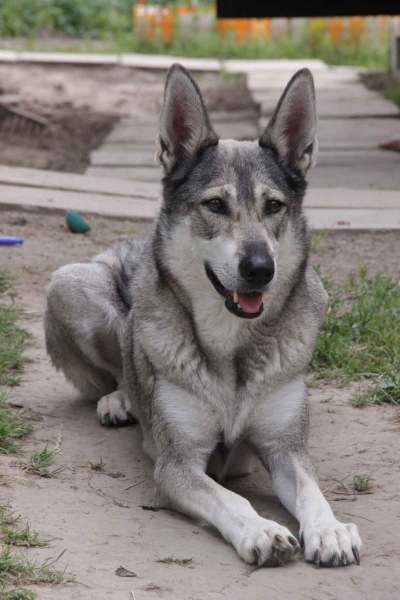 Jämthund 3
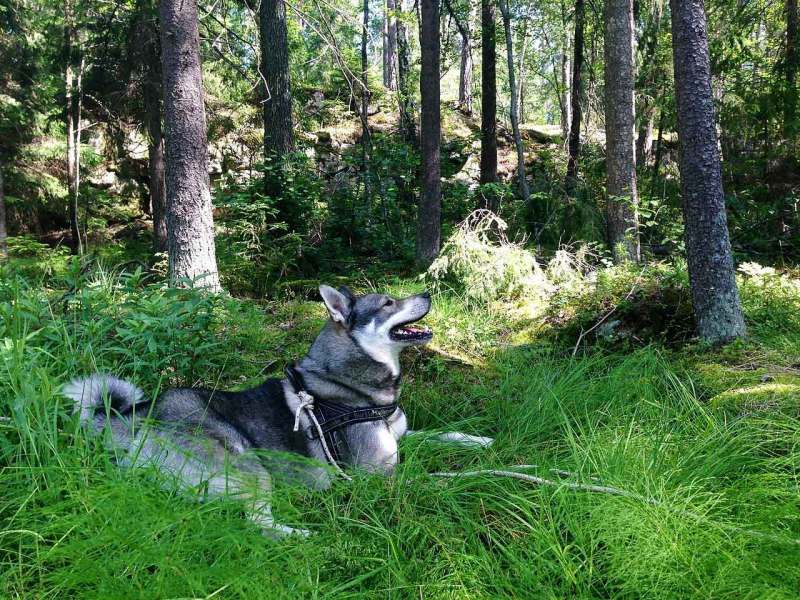 Jämthund 2
Photos:
1 – Jämthund by Jorgen Blom / CC BY-SA
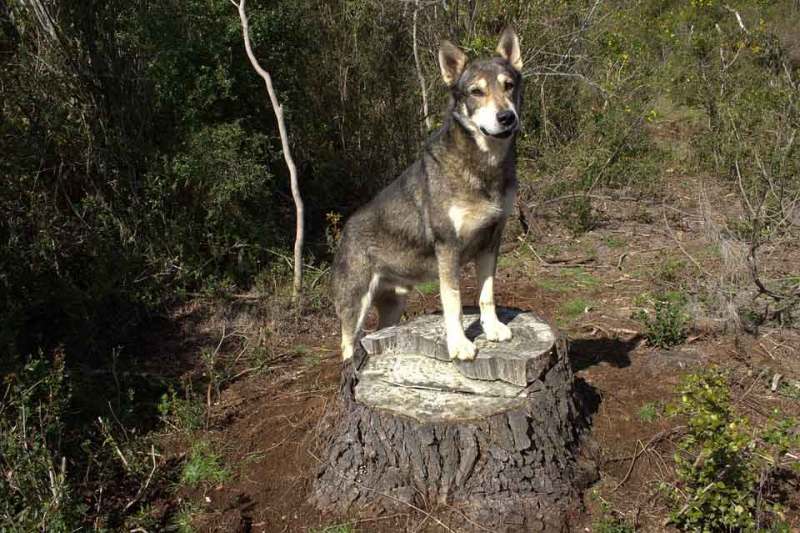
2 – Jämthund (Swedish Elkhound) in the woods. 2 years old male. by User:Arto Pääkkönen / CC BY-SA
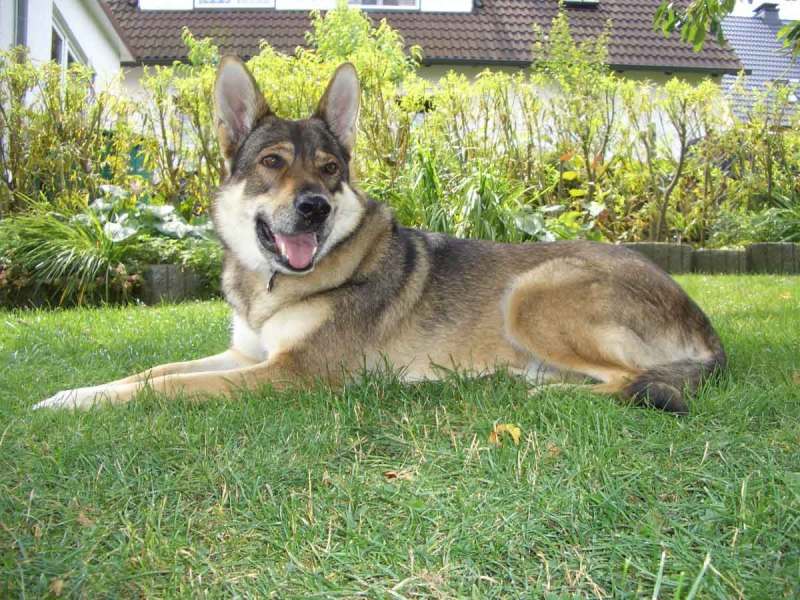
3 – Jämthund by https://pxhere.com/es/photo/644232
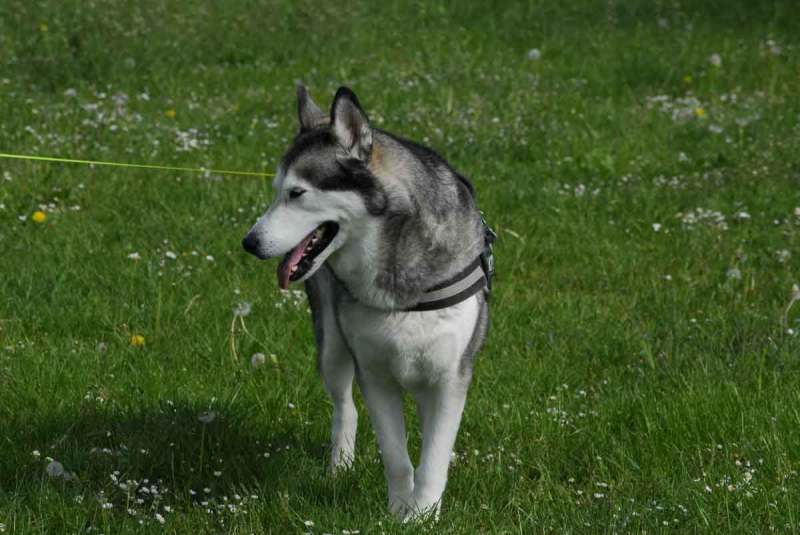
4 – Jämthund by https://pxhere.com/es/photo/619009
5 – Jämthund by https://pxhere.com/es/photo/1289323
6 – Jämthund by https://pixabay.com/es/photos/perro-tronco-mascota-animales-2064314/
7 – Jämthund by HTTPS://pxhere.com/es/photo/753453
Videos "Jämthund"
 JAMTHUND
 Swedish Elkhound – Jämhtund – Dog Breed Profile
 4 Jämhtund- a nordic hunter
 Jämthund ð¶ð¾ Everything Dog Breeds ð¾ð
_in_the_woods-_2_years_old_male-_2013-07-06_13-55.jpg)
Type and recognitions:
- FCI CLASSIFICATION: 42
- Group 5: Spitz and primitive types
- Section 2: Nordic Hunting Dogs. Proof of work for Nordic countries only (Sweden, Norway, Finland)..
Federations:
- – FCI – Group 5 – Section 2 Nordic Hunting Dogs. ⓘ
- – UKC – Nordic Hunting Dogs. ⓘ
FCI breed standard "Jämthund"
Use:
hunting dog.
General appearance:
Grand, spitz rectangular, defined cut, strong, with good substance but agile with good structure. He is strong and of solid constitution, but also agile and imposing looking. The body does not must give the impression of being very long, or too much heavy.
He is brave and energetic, but also stoically calm.
Head:
It is clearly defined and elongated, proportionally wide between the ears.facial region:
Neck:
Long, clearly defined, powerful and good scope.Body:
Tail:
High implementation. Medium length and regular thickness. It is carried curled, but not firmaments bent over or near the back. Hair is abundant, although it does not form a fringe.Tips
- Shoulder: The shoulder blades are long and well sloped back.
- Elbows: Well attached to the rib cage.
- forearms: Straight, well outlined and strong bone.
- Front feet: Strong, slightly oval. They point straight ahead; fingers are good together.
- Knee: Well angled.
- Hock: Well angled.
- Rear feet: With the same characteristics of the front feet.
Movement:
Must be powerful, free and wide-ranging. On the trot, the feet converge towards a midline (single tracking).Mantle
Size and weight:
- Males : 57 – 61 cm.. Ideal 61 cm..
- females : 52 – 60 cm.. Ideal 56 cm..
Fouls:
- Yellow eyes.
- Twisted tail.
- Cream marks covered in black.
- Cloak too short.
- Thin bone.
- Short tail.
- Straight tail.
- Domed skull front and raised cheeks.
- Pointed snout.
- Dental missing apart from P1.
- Square body shape.
- Slim build.
- Heavy, lymphatic construction.
- flattened feet.
- Entire white stripe from the throat to the tip of the sternum called "tie".
- Insufficient posterior angulation.
- Fine tail, whip type.
- Aggressive or too shy.
- Height at the withers different from those specified in the standard.
- Enognatismo o prognatismo.
- hanging ears.
- Lack of characteristic cream-colored markings.
Males should have two normal-appearing testicles fully descended into the scrotum..
The latest changes are in bold.
Alternative names:
1. Swedish Elkhound (English).
2. Jämthund (French).
3. Jämthund (German).
4. Jämthund, Elkhound sueco (Portuguese).
5. Elkhound sueco, Jämthund (español).