▷ The world of Pets: Dogs, cats, birds, reptiles, amphibians

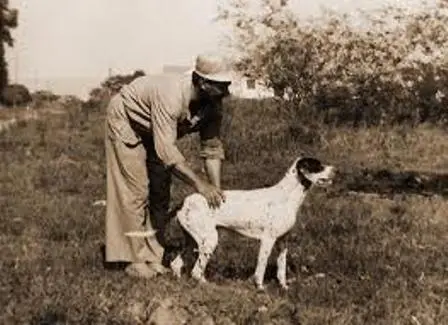
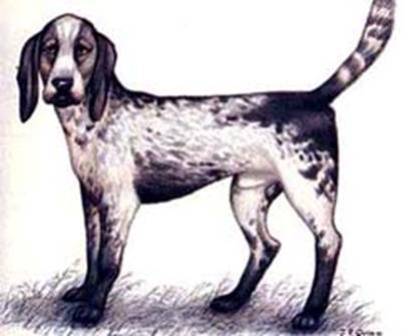
Otterhound
Inglaterra FCI 294 . Large-sized Hounds

Perro de Nutria

The Otterhound is the most endangered dog breed in the UK.

Content

History

The Otterhound It is a very old breed of dog from United Kingdom, has, among many other mixtures- within their ancestors to the race Airedale Terrier.

The name of this precious woolly, It just comes to the task for which it was created: the House of otters. This dog has a smell nearly as well developed as the Bloodhound. This breed was developed in England.

But like all dog breeds, changes and social advances always bring consequences in the case of Otterhound, It happened that the Otter hunting was banned in England, and if so few copies of this breed, with this ban the race saw very committed his existence.

Though, To avoid its extinction some race fans what they did was focus the hunting instinct of the Otterhoundtowards other types of prey.

The Otterhound It is a dog specializing in otters, extremely difficult and dangerous job.

Some experts suggest that the danger of the Otterhound is similar to the extinction of the Panda Bear.

It is a very small breed, It is estimated that they there are around 1.000 Otterhound in the world, of which from 350 and 400 they are in the U.S.. Even at the beginning of the 20th century, When was Otter hunting a popular sport, the Otterhound they were never numerous.

Today, this breed is considered as the most threatened by endangered United Kingdom, There are only 51 specimens born in 2006. Are on the list of most vulnerable native breeds of the UK Kennel Club and programmes are being carried out to save the race.

Physical characteristics

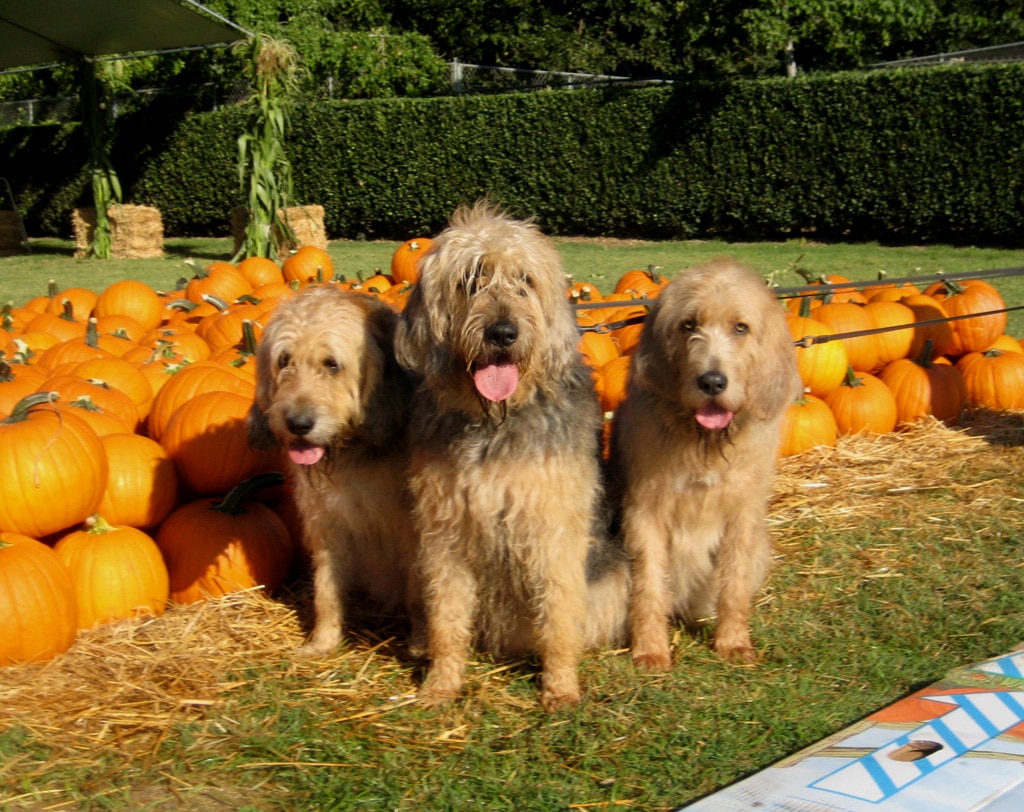
The Otterhound, is a dog large and strong, sometimes we could say, incombustible. It is capable of spending all day hunting in the water or running around the field, without showing even the slightest index of exhaustion.

It has a head big and strong with well marked bone.

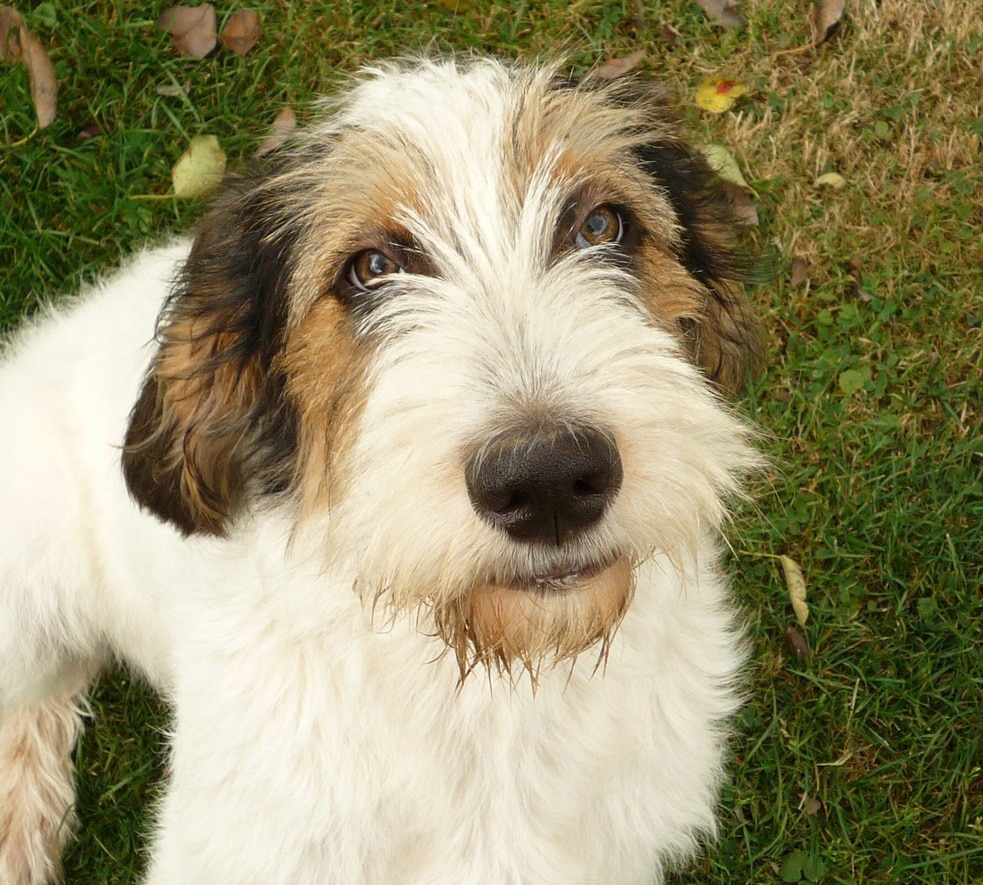
Their eyes, intelligent and lively expression, vary in color depending on the coat. The ears, they are long, them it is hanging at the height of the eyes. They are set high and have a characteristic fold of the breed..

The tail, high insertion it takes her upright always to pay attention a State of alert, but when it is resting her leads hanging.

The hair of the Otterhound is long, has a length of 4 to 8 cm approximately. The mantle is double layer, the outdoor hair is dense, hard and waterproof and should be rough to the touch. The internal layer It is notorious and touch gives a feeling oilseed.

While, measures with respect to the height and weight, vary according to the club as a consensus we could say that the height the cross in the males is of approximately 69 cm and the females of 61 cm..

The average life expectancy the race is a little more than 10 years. A quarter tends to live in 12 to 15 years. Y, the case of a copy which he lived has been known to the 16 years of age.

Character and skills

The Otterhound, is a Hound very versatile, is generally used for the House of large dams, both individually and in a pack.

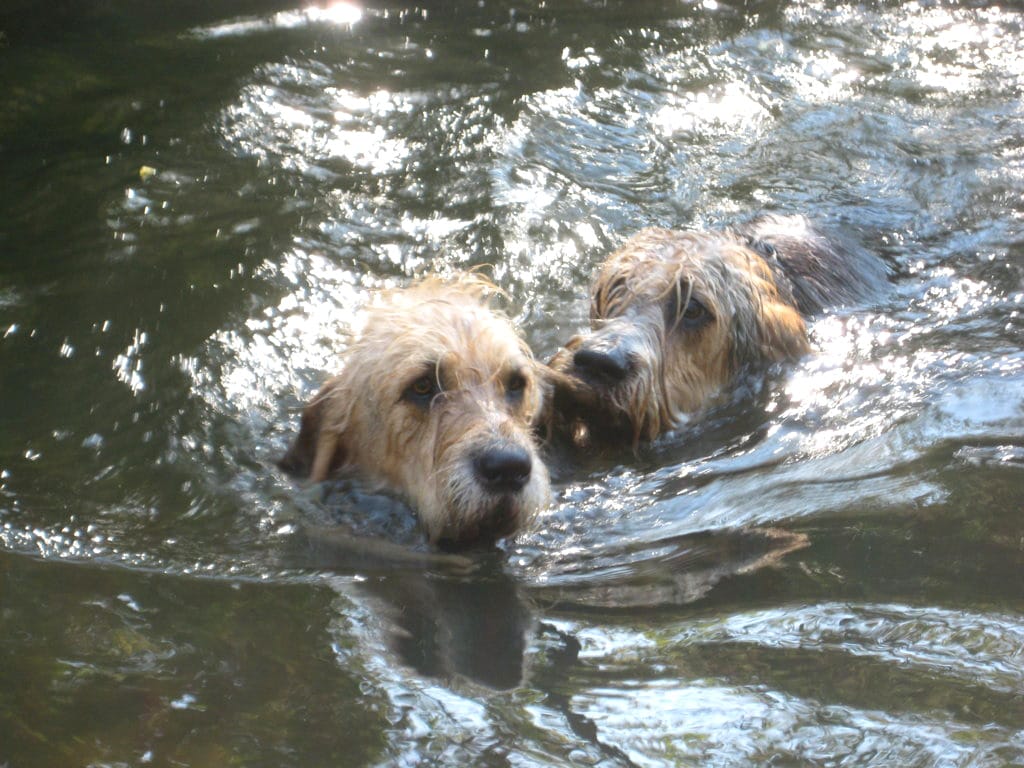
Its temperament It friendly and balanced, as long as you have enough physical exercise especially everything related to water, enjoy a lot swimming.

The Otterhound enjoy exercise, the routine. They are very good companion dogs for the family, but they must be kept in a secure property, that can jump fences of up 5 metres in height. They are not at all appropriate for life in apartment.

It is a excellent swimmer, he chased the otters swimming, using only the trail of bubbles that were leaving them diving as track.

This dog is a highly specialized breed who instinctively knows what has to do. Perhaps that is why they are a little stubborn and not always obedient.

They need plenty of exercise, preferably swimming. It is a working dog and needs to maintain a series of obligations or activities, a well-marked routine to avoid boredom and the emergence of destructive behaviors.

A good training is key to keep happy the dog and the family.

Observations

Despite having fame of stubborn, with a proper training is usually used also in civil defence tasks.

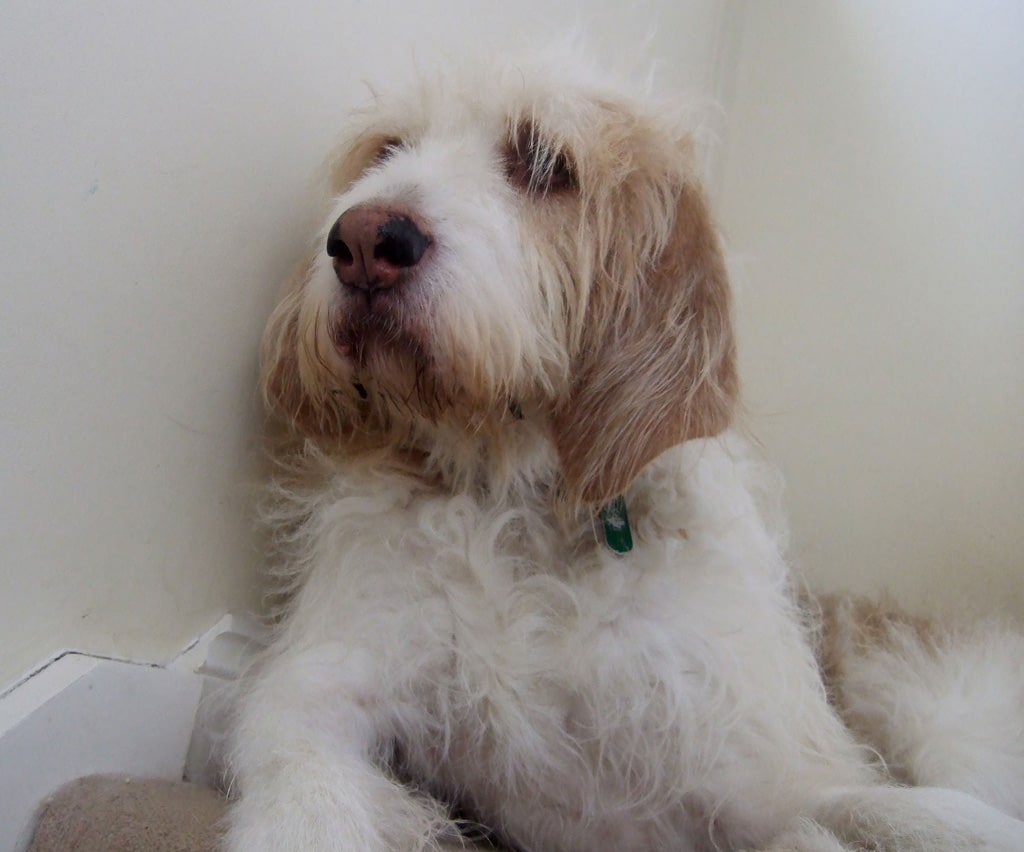
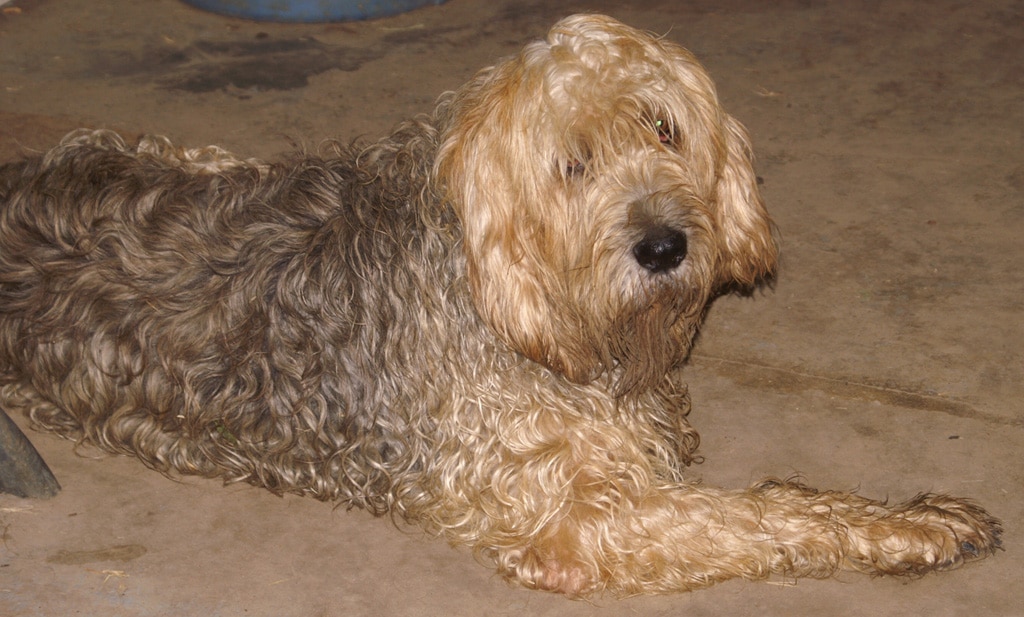
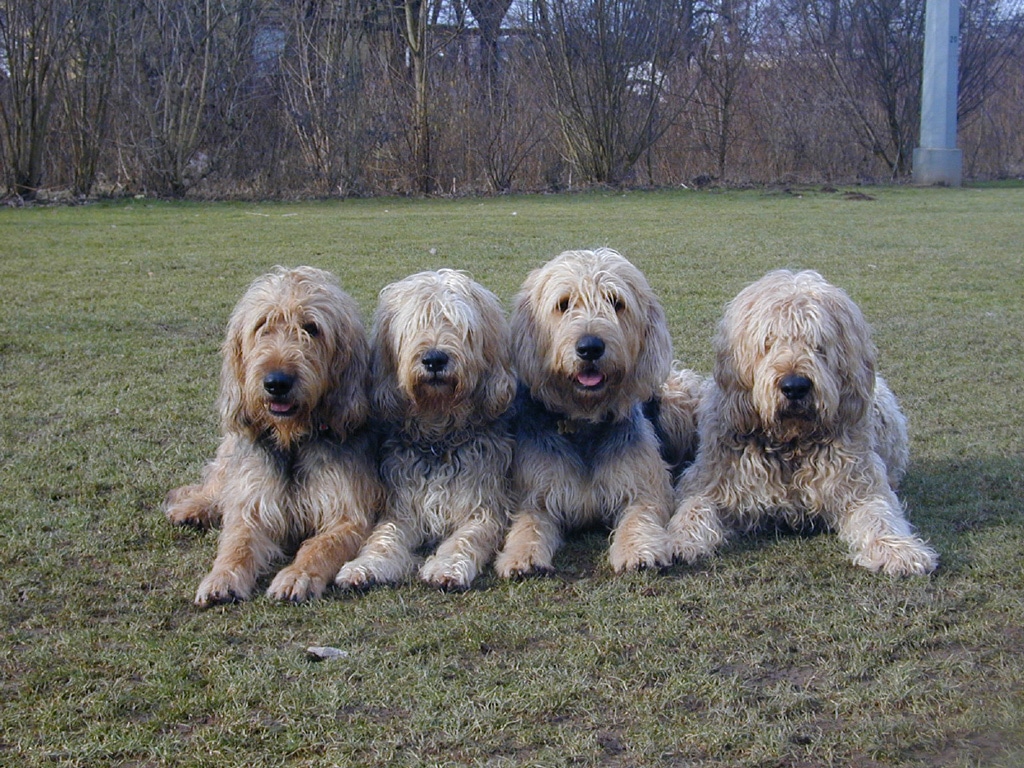
Otterhound Images

Otterhound Videos

Type and recognitions:

  • FCI CLASSIFICATION:
  • Group :
  • Section : . .

Federations:

  • – FCI – Group 6: Scent hounds, and related breeds. – Section 1.1: Large-sized Hounds. ⓘ
  • – AKC – Hound ⓘ
  • – ANKC – Group 4 (Hounds) ⓘ
  • – CKC – Group 2 – Hounds ⓘ
  • – ​KC – Hound ⓘ
  • – NZKC – Hound ⓘ
  • – UKC – Scenthounds ⓘ

FCI breed standard "Otterhound"

Origin:
England, United Kingdom

Date of publication of the valid original standard:
13.10.2010

Use:

Big hound, strong, Built primarily for a long day of work on the water, but able to gallop on land.


General appearance:

It is great, straight-limbed and robust, its coat is rough, has a majestic head and a strong body. It moves with loamy and loose strides. Rough double coat and big feet are essential. Easy movement.

IMPORTANT PROPORTIONS: The distance from the tip of the truffle to the naso-frontal depression is somewhat shorter than the distance from the depression to the occiput.


Behavior / temperament:

Friendly and balanced.Signs of aggression and nervousness should be severely penalized.

Head:

Clearly outlined, imposing, higher than wide. The forehead does not have a bump or a scowl ; the expression is open and friendly. Except the truffle, the whole head is well covered with coarse hair that forms light mustaches and beard.

Cranial region:
  • Skull: Delicately pumped, neither thick nor exaggerated; rises from the naso-frontal depression to the slightly marked occipital protuberance.
  • Depression links (Stop): Something marked, but without exaggeration.

facial region:

  • Truffle: Long, windows wide open. Snout: Strong and deep.
  • Lips: Belfos profusos, although not in excess.
  • Jaws / Teeth: The jaws are strong, wide. Teeth are well aligned, and the joint is scissor-shaped, that is to say, that the upper incisors closely overlap the lower ones and are vertically implanted in the maxillae.
  • Cheeks: Defined cheek bones.

EYES: They are of intelligent expression and moderately sunken. The conjunctiva is somewhat apparent. Eye color and eyelid edge pigment vary according to coat color (a blue and tan hound may have hazel eyes). Yellow eyes are not desirable.

EARS: They present unique characteristics of the breed. They are long, pendant and implanted at the level of the angle of the eye. They can reach the truffle when pulled forward, forming a characteristic fold. The tip bends or curls inwards giving a curious folded look. This is an essential point that should not go unnoticed. The ears are well covered with hair that forms bangs.

Neck:

It's long and powerful. It is delicately inserted in the well oblique and cleanly outlined shoulders . A slight double chin is acceptable.

Body:

Very strong.

  • top line : Level.
  • Back : wide.
  • Pork loin : Short and strong.
  • Breast : Deep ; rib cage is snug, quite deep and oval in shape ; not very wide, not too narrow. The ribs extend well back, which allows enough room for the heart and lungs.

Tail:

High implementation ; dog picks up when alert or on the move. Never curls over the back, but it can hang up when the dog is resting. It is thick at the base and tapers to the tip ; the caudal bones extend to the hock ; carries it straight, or in a slight curve. The hair on the lower part of the tail is longer and more abundant than that on the upper part.

Tips

PREVIOUS MEMBERS:

  • Shoulder: Definedand well oblique.
  • forearms: Strong bones, straight from elbow to ground. 
  • Metacarpus: Strong and well oblique.
  • Previous feet: Large, rounded, with well arched toes and thick pads; they do not deviate either outwards or inwards. The interdigital skin must be visible.

LATER MEMBERS:

  • General appearance: They are very strong and muscular; views from any angle, the position should not be too wide, not too narrow. Posterior angulation is moderate. When the dog maintains a natural position, the hind limbs, from hock to ground, they are perpendicular.
  • Thighs: They are very muscular.
  • Metatarsus: Hocksin very low position, and they do not deviate even inwards, nor out.
  • Hind feet: Only slightly smaller than the previous ones. Large, rounded, with well arched toes and thick pads; they do not deviate either outwards or inwards. The interdigital skin must be visible.

Movement:

To step, the movement is very loose with the feet close to the ground; immediately go into an active trot, agile, regular, of very long strides. The gallop is uniform and strides of exceptional length.

Mantle

Fur: It is long of 4 to 8 cm., dense, rough, hard, but not wire hair. It is waterproof, hair texture is between straight and rough. Smoother textured hair on the head and lower part of the limbs is natural. The undercoat of hairs is apparent, a slightly greasy texture may appear, both in the outer layer and in the inner layer of hairs. Hair must not be trimmed and trimmed for display; presentation must be natural.

Color: All recognized hound colors accepted: solid color, grey, sandy, red, wheat, blue. They may have slight white marks on the head, the chest, the feet and the tip of the tail.

White hounds may have slight lemon markings, blue or badger. black and tan, Blue and fire, black and cream, sometimes liver, fawn and liver, fawn and white. The following colors are not allowed: liver (brown) and white, a white hound with black patches and clearly separated tan markings. The pigment must harmonize, although not necessarily combined with the color of the coat; for example, a tawny hound may have brown eyes and noses. The slightly depigmented nose is allowed.


Size and weight:

Height to the cross :

  • In males approximately 69 cm. (27 inches),
  • In females approximately 61 cm. (24 inches).


Fouls:

Any deviation from the aforementioned criteria is considered as a fault and the severity of this is considered to the degree of the deviation to the standard and its consequences on the health and well-being of the dog..

FALTAS DESCALIFICANTES:

  • Aggressiveness or extreme shyness.

  • Any dog ​​showing clear signs of physical or behavioral abnormalities.


N.B.:
  • Males should have two normal-appearing testicles fully descended into the scrotum..
  • Only functionally and clinically healthy dogs, with the typical conformation of the breed, should be used for parenting.

The latest changes are in bold.

Source: F.C.I - International Cynological Federation

Alternative names:

1. Otterhound (English).
2. Otterhound (French).
3. Otterhound (German).
4. Otterhound (Portuguese).
5. Otterhound (español).

▷ The world of Pets: Dogs, cats, birds, reptiles, amphibians

Vizsla
Hungría FCI 57 . Braque Type

Vizsla

The Vizsla or Hungarian Braco It is a breed of dog originating in Hungary.. It is one of the best sporting and companion dogs, but little known outside his native Hungary.

The Vizsla was already known from the beginning of Hungarian history. The ancestors of today's Vizsla were the trusted hunting dogs and favorites of the Magyar tribes who lived in the Carpathian Basin in the 10th century.. There are primitive prints in stone - thousand years- It shows a Magyar Hunter with his Falcon and his Vizsla. The first written reference to the Vizsla breed was recorded in a chronic illustrated of the year 1357.

They were the companion dogs of royalty and barons early in the war, for which reason, the blood of the Vizsla has preserved its purity for centuries. The landed aristocracy jealously guarded them and encouraged the development of their hunting ability.Yellow pointer”. Records of letters and writings from the time show the high esteem in which Vizsla dogs were held..

The Vizsla, in spite of hard historical times which became, he survived the Turkish occupation (1526-1696), to the Hungarian Revolution (1848-49), the first and second world war, and the Russian occupation. But, was several times on the verge of extinction... In the year 1800 in Hungary the population of specimens of English Pointer and German Shorthaired Pointer, because they were more accessible to the entire population, This action, took them for the first time, on the verge of extinction, and then, the other nearest point was after World War II, when they thought they really..., they had disappeared.

Then, in Hungary a national survey of sports hunters was carried out, and the results revealed that only a dozen purebred Vizsla dogs had survived the debacle and were living in the country. From these copies, the race came to fame once more, After carrying out a thorough programme of recovery of the race. Outside of Hungary, Vizsla are commonly bred in Romania, Austria, Slovakia and Serbia.

The Vizsla at reached United States at the end of World War II and as the interest and devotion to the race was on the rise, the owners formed the Vizsla Club of America in order to obtain official recognition of the breed by the AKC to, took place the 25 in November of 1960.

The Vizsla was used in the development of other races, as of the Weimaraner, of the Vizsla hair hard and Braco German for short hair. There is considerable controversy regarding the races that, along with other Pointer breeds, were used to reestablish the Vizsla breed at the end of the 19th century. In any case, the similarity between the three races is undeniable…

The Vizsla is a medium-size of short hair dog, and elegant porte, light structure, with well defined muscles, that share physical characteristics with the Weimaraner or Weimaraner. Frequently confused them with dogs of other breeds such as, Redbone Coonhound, Braco of Weimar and the Rhodesian Ridgeback. Although with the races that closest thing it has is with Redbone Coonhound, the Weimaraner, the Vizsla is, As we said, the muscles are more defined and it is thinner than the aforementioned breeds.. The males measure of 56 to 63 cm. of height to the cross and weigh in 20 to 30 kg; the females measure of 53 to 61 cm. of height to the cross and weigh 18 to 25 kg. The Weimar Braco and Rhodesian Ridgeback are larger.

The nose of the Vizsla always has a reddish color that is mixed with the standard colour of the fur, It consists of different shades of the color solid oro-óxido (copper, brown, Golden reddish and Golden dark sand). The color of the eyes and nails should also mingle with the color of the fur (if the latter is not fulfilled, then we would talk about another race).

Some variations in the Vizsla's coat color may show markings along its back.Saddle’, is typical of the breed and for that reason, It is often confused with Rhodesian Ridgeback.

According to him American Kennel Club (AKC) and their standard of the breed, the Vizsla must have short hair, smooth, dense and glued to the body, without woolly subpelo. The Vizsla is not an animal prepared to live outdoors due to the absence of double layer, which leads them to be more susceptible to cold and intense heat. They are very clean dogs, they do not need to be bathed often, do not usually give off the characteristic “odor to dog” detectable by humans. After their forays into lakes and rivers they will develop a scent that is a very faint version of the "wet dog" scent.. A quick bath and the odor will vanish.

The Vizsla is a natural Hunter endowed with an extraordinary sense of smell, comparable to the Pointer and an above-average learning ability. Although they are encouraged, kind, emotional and sensitive, they are equally intrepid and have a well-developed protective instinct. Its hunting style is near, laceando without moving away from the Hunter hunting for the hand. They hunt in terrain, they are very versatile, and they can hunt all kinds of parts, either hair or feather. They are very athletic and resistant. Its recovery capacity is high, charge very well and can train you very easily.

Not only are large crawlers, but also, excellent collectors. Both on Earth and since water that, they are very good swimmers. Like all dogs hunting, the Vizsla require a good deal of exercise to stay healthy and happy. He is very intelligent and likes to feel challenged and stimulated, both mentally and physically. That is why they need training according to their characteristics, sweet, consistent and dedicated.

The Vizsla is a very energetic dog, soft and delicate manners, fair, loving and very warm. They often form close bonds with their owners, including children, that is why sometimes, they are nicknamed "velcro dog” due to his loyalty and affection, far from being lap it is always close to his master. They are quiet dogs, They ladrarán only if necessary. Many sleep in bed with their owners and, If they are allowed, They shall always endeavour to make a huequito under the sheets.

Dogs breeds: Vizsla


▷ The world of Pets: Dogs, cats, birds, reptiles, amphibians

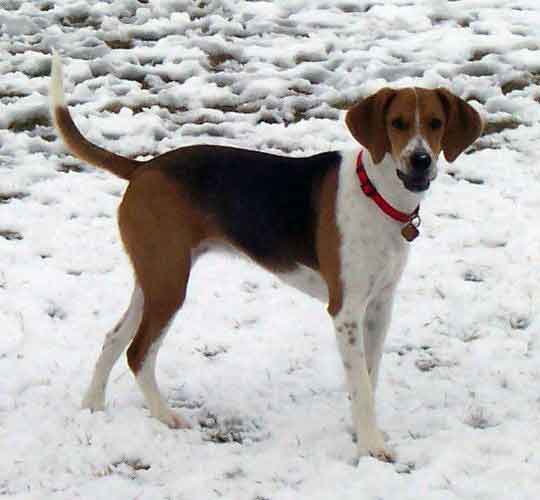
Beagle-Harrier
Francia FCI 290 . Medium-sized Hounds

Beagle Harrier

The Beagle-Harrier is vigorous, brave, energetic and intelligent.

Content

History

The Beagle-Harrier It is a relatively new breed that comes from the crossing (towards the end of the 19th century) two English dogs, the Beagle and the Harrier (dog). Despite its British origins, the Federation Cynologique Internationale considered it a French animal since the race grew up and was set at France. The Beagle-Harrier it is nowadays a breed difficult to find in France and much more in other countries.

The Beagle-Harrierr was created especially for hunting hare, they were looking for a dog faster than him Beagle without it being as heavy as the Harrier (dog). The first crossings of these dogs did not give the expected results but finally, the french baron Gerard Grandin de l'Eprevier He managed to fix the characteristics that he had sought so much, create a dog a little bigger than the Beagle but lighter.

Like this, a new breed of French dog developed from two English dogs, which spread rapidly among French hunters and is still used as a hunting dog today.

“Beagle Harrier” physical characteristics

The Beagle-Harrier is a dog harmonious, balanced and with personality.

The Beagle-Harrier it is a small to medium sized hunting dog with a very strong and muscular trunk. The height at the withers is between 45 and 50 cm for both males and females. The weight of the breed's dogs is usually 20 to 25 kg.

More stylized and light that the Beagle, Despite its larger size. Too small to be a Harrier (dog) and too big to be a Beagle.

It has a broad head with a straight snout. The eyes are dark, clean look, Intelligent. The ears are moderately long and straight. The extroverted tail, almost always on alert. The hair is semi short and close to the body. All colours are admitted, Although it dominates the tricolor.

The life expectancy of the dogs of the breed Beagle-Harrierr is up 12 years.

Character and skills «Beagle Harrier»

The Beagle-Harrier has a distinctive hunting instinct and is therefore highly valued as a passionate hunter. Its strengths in hunting are above all its resistance, speed and strength. He is also known for his exceptional good sense of smell and independent character..

In general, has a very active and lively nature, that must be taken into account when maintaining it. So, a small apartment in the city is not very suitable for him. Rather, dogs want to be in a house with a rural environment where they have plenty of room to move.

In the family, dogs are sociable and behave quite calmly. They get along well with children and do not show nervousness or aggressiveness, which makes them a nice family dog, besides being used as a hunting dog.

The care and conservation of the "Beagle Harrier"

It is enough to brush this dog regularly, especially when returning from walks or hunting trips.
Hair loss is moderate.

The nutrition of the «Beagle Harrier»

Your diet should be appropriate for your age and the amount of daily exercise you do. This is especially true during hunting season..

Especially when you are used to working, it is better to give him his food at night so that he does not run on a full stomach. In this way you can reduce the risk of stomach torsion.

High-quality dry food is perfectly sufficient for him.

«Beagle Harrier» Diseases

  • Hip Dysplasia
  • Malocclusion
  • Good to Know.
    If this dog is used for hunting, it is advisable to let him hunt in a pack.

    «Beagle Harrier» images

    Videos «Beagle Harrier»

    Type and recognitions:

    • FCI CLASSIFICATION:
    • Group :
    • Section : . .

    Federations:

    • – FCI – Group 6: Scent hounds, and related breeds. – Section 1.2: Medium-sized Hounds. ⓘ
    • – Central Canine Society ⓘ

    FCI breed standard "Beagle-Harrier"

    Origin:
    France

    Date of publication of the valid original standard:
    18.05.1988

    Use:

    ---


    General appearance:

    Medium proportion dog, harmonious, balanced, distinguished, agile and vigorous.


    Behavior / temperament:

    ---

    Head:

    Moderately large.

    Cranial region:
    • Skull: Quite wide and bulky. The occipital protuberance is barely marked. The muzzle is rather straight, never arched.
    • Depression links (Stop): It is not marked.

    facial region:

    • Truffle: Developed; black.
    • Snout: Its length is remarkably equal to that of the skull. It's never square, but, seen from the side it becomes thin, although without being pointed.
    • Belfos: They cover the lower jaw.

    Eyes: Are dark. They are wide open and their expression is frank, vivacious and intelligent.

    Ears: They are rather short and semi-wide. Its insertion is located above the eye line. Towards the middle of the ear, they are slightly rounded. They fall flat along the skull and their lower part bends slightly into a faint oval.

    Neck:

    Loose, although it's fine next to the shoulders. In profile, it is slightly rounded at the top.

    Body:

    • Back: Short, well accented and muscular.
    • Pork loin: Strong and muscular; may be slightly arched.
    • Belly: He never shows up very up, rather full.
    • Breast : It's very deep, although never very flat, which would reduce the rib cage too much. The sternum extends very well back. The false ribs, without being cylindrical, they must however be long and tight enough to form an adequate rib cage.

    Tail:

    ---

    Tips

    PREVIOUS MEMBERS:

    • They are strong and perfectly poised.
      Shoulder: They're long, oblique and muscular.

    LATER MEMBERS:

    • Hips: They are well separated, oblique and strong.
    • Thighs: Well descended, rounded and muscular.
    • Hocks: Located close to the field, well directed.

    FEET: Neither very long nor elongated, but they are good together; the pads are very thick and hard.

    Movement:

    Loose, agile and free.

    Mantle

    Fur: Fairly dense and flattened; it's not very short.

    Color: Tricolor (leonado with black mantle, and white) with fire stains more or less raised, pale or carbonated. The cloak is not important. Since there are gray Harriers, gray and gray and white tricolor cannot be disqualified, nor penalized for having this color.


    Size and weight:

    Height to the cross: 45 cm to 50 cm..


    Fouls:

    Any deviation from the aforementioned criteria is considered as a fault and the severity of this is considered to the degree of the deviation to the standard and its consequences on the health and well-being of the dog..

    • Head too thick.
    • Naso-frontal depression (stop) too marked.
    • Partial depigmentation of the nose.
    • Muzzle too short and square, or too sharp.
    • Arched nasal cavity.
    • Upper or lower prognathism.
    • Crooked ears. (Cross with French blood)
    • Flat or squashed feet.
    • Depigmentation of the scrotum.
    • Fearful appearance, lacking in vigor or intelligence.

    disqualifying fouls

    • Aggressiveness or extreme shyness.
    • Any dog ​​showing clear signs of physical or behavioral abnormalities should be disqualified..


    N.B.:

    • Males must have two normal-appearing testicles fully descended into the scrotum..
    • Only functionally and clinically healthy dogs, with the typical conformation of the breed, should be used for parenting.

    Source: F.C.I - International Cynological Federation

    Alternative names:

    1. French Beagle-Harrier (English).
    2. French Beagle-Harrier (French).
    3. Beagle Harrier/span> (alemán).
    4. Beagle-Harrier (portugués).
    5. Beagle Enano (español).

    ▷ The world of Pets: Dogs, cats, birds, reptiles, amphibians

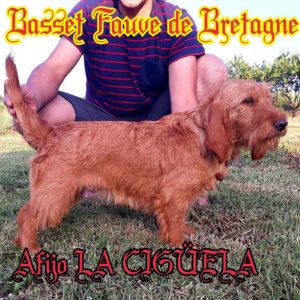
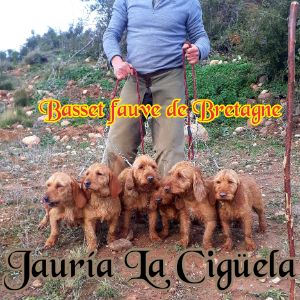
    Basset Fauve de Bretagne
    Francia FCI 36 . Small-sized Hounds

    Basset Fauve de Bretagne

    The Basset Fauve de Bretagne has a loose and lively temperament

    Content

    History

    The Basset Fauve de Bretagne descends in a direct line from the "Grand Fauve de Bretagne", ancient trail breed, today almost completely disappeared that was used for fox and wild boar hunting, in the most dense forest. His parent has retained the qualities of exceptional Hunter and his fogosidad to, often, It is braking with crosses with the Petit Basset Griffon Vendéen.

    In the 16th century there were four varieties of large dogs in France, the difference between them was more than remarkable in relation to the color of the coat and texture. The four varieties were white (du role), Fawn of the (Bretagne), grey (St Louis du) and the black. All of today's varieties of French hunting dogs seem to have their origin in repeated crossbreeding and mutations of these four types..

    Estos “Grand Fauve de Bretagne”, they were very big dogs, between 70 and 74 cm to the cross. They were known for their effectiveness in the early stages of a hunt.. his bravery, his thin nose, its resistance to cold and humidity and its impetus to hunt its prey, wild boar usually, made them ideal dogs for the thorny thickets of Northwest France. This large variety of Basset Fauve de Bretagne seems to have died out in France. The only representative of the Great "Grand Fauve de Bretagne", is the Fawn Brittany Griffon (48 – 56 cm.), very popular in France.

    There is considerable doubt about how the reduction of the overall size of the race was reduced to half. One theory suggests that it was initiated by selection of smaller litter size specimens., another for the breeding of the smallest specimens for countless generations. In the 19th century there were numerous litters made up entirely of Basset Fauve de Bretagne.

    In the Decade of 1970, as the Basset Fauve de Bretagne It became popular, French hunters decided to introduce new lines. It is generally believed that the Petit Basset Griffon Vendéen was used to improve their ability to, possibly, hunting and the Sausage dog to preserve the color of your hair.

    The Basset Fauve de Bretagne was first registered with the Kennel Club in September of 1991.

    Photo: bassetfauvedebretagneclub

    Physical characteristics

    Endowed with a truly incredible resistance, the Basset Fauve de Bretagne is able to hunt for days on end without showing any signs of exhaustion or tiredness.

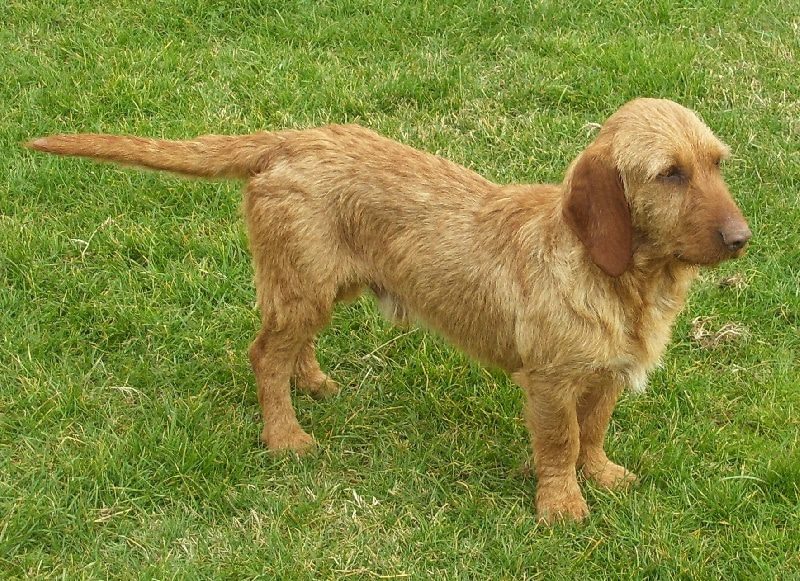
    Like all Basset French breeds that come from larger size, also it maintains the characteristics of hair, the most voluminous dog head and color which comes. Its trunk while long, is very strong and compact and, Despite the relatively short limbs, moving with enough speed and ease. In any case, It should never have a too short head or seem excessively high on the extremities, as well as the hair should not appear soft or soft to the touch.

    "Basset Fauve de Bretagne"

    Ears fall almost at the level of the eyes, not very long, barely reaching the end of the snout, and they end up in tip, they are covered with hair thinner than the rest of body, but never silky. His neck is quite short and muscular. The forelimbs are strong, straight or slightly twisted. Broad and relatively droopy chest. Slightly curved ribs. Long back but a little less than in the other Basset.

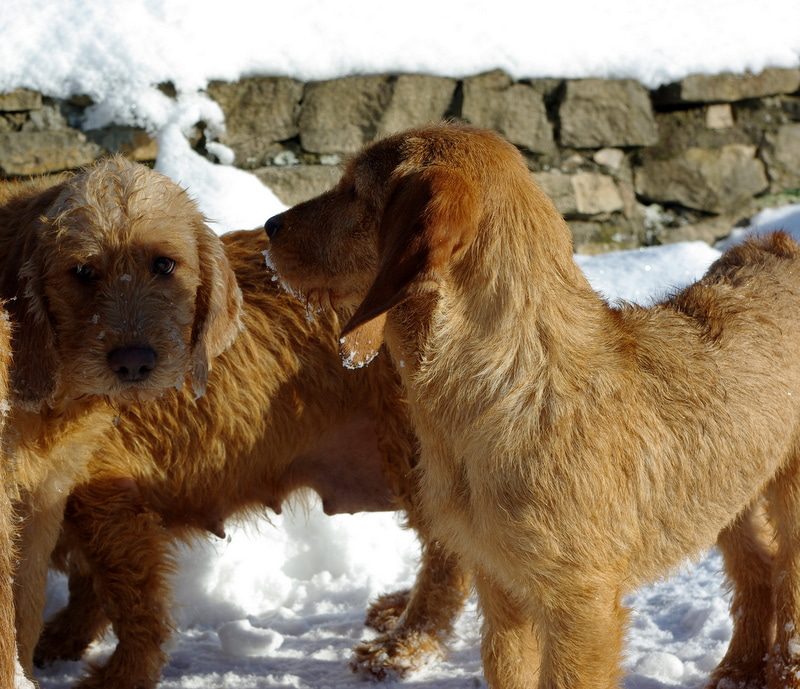
    The tail is thick at the base, not too long, and it takes something like a sickle-shaped, is gradually tuned towards the tip. The color is more or less intense Golden or Griffon wheat, sometimes with a white patch on the chest.

    Character and skills

    The Basset Fauve de Bretagne is still required today for rabbit hunting, especially in low forests, where shrubs and las matas prevent passing other hounds.

    It is still quite common in Brittany today, prized for their natural qualities and its perfect adaptation to the landscape, tough and rugged in that area. It's very hard to find, being virtually unknown outside of France.

    It has a loose and lively temperament, so it needs to live always in the open air, that poorly fits the House. However, with a small space on the outside, or with usual and regular walks, the Basset Fauve de Bretagne could be an ideal pet.

    Breeders list "Basset Fauve de Bretagne"

    REGISTER KENNEL

    Breeders of Basset Fauve de Bretagne

    Offer your puppies for free. Sign up here.

    • This field is a validation field and should be left unchanged.
    • Enter an image of your kennel.


    Images «Fawn of Brittany Basset»

    «Basset Fawn of Brittany» videos

    Alternative names:

    Basset leonado de Bretaña / Faw brittany basset

    Type and recognitions:

    • FCI CLASSIFICATION:
    • Group :
    • Section : . .

    Federations:

    KCⓘ

    FCI breed standard "Basset Fauve de Bretagne"

    Origin:
    France

    Date of publication of the valid original standard:
    25.03.2003

    Use:

    Bloodhound dog used for rabbit hunting, the hare, the fox, the roe deer and the wild boar.


    General appearance:

    The Basset Fawn of Brittany is a small dog with a collected body, impetuous, fast for its size. He is endowed with remarkable energy, along with excellent rusticity.


    Behavior / temperament:

    These are passionate hunting dogs, but they are also excellent companions for man. Its sociable, affectionate and balanced. They adapt easily to all terrains, even the most difficult, and to all kinds of hunting. When they are hunting they are brave, slums, tenacious, which makes them very effective.

    Head:

    ---

    Cranial region:
    • Skull: It is rather elongated; and the occipital protuberance is marked. Seen from the front, the skull has the appearance of a lowered curvature, decreasing in amplitude to the level of the superciliary arches that are not very pronounced.
    • Depression links (Stop): Slightly steeper than the Tawny Griffon of Brittany.

    facial region:

    • Truffle: It is black or dark brown in color. The nostrils are wide open.
    • Snout: It's sharper than square.
    • Belfos: They cover the lower jaw well, although not in excess. The whiskers are very abundant.
    • Jaws/Teeth: Jaws and teeth are strong; the joint is perfect and uniform scissor shape. Upper incisors cover lower incisors with tight contact. The incisors are set at right angles to the jaws. The absence of PM1 is not penalized.

    EYES: They are not prominent, not too sunk in the orbits. Its color is dark brown. The conjunctiva is not apparent. The look is impetuous.

    EARS: Delicately implanted at the level of the eye line, just reaching the tip of the truffle. They end in a point and are bent inwards and covered with a hair that is flatter and finer than that of the rest of the body..

    Neck:

    Quite short and muscular.

    Body:

    • Back: It is wide, and cut for a basset. Never sunk.Pork loin: Broad and well muscled.
    • Breast : Tall and wide.
    • Ribs: Pretty rounded.
    • Belly: The lower margin is slightly raised towards the back.

    Tail:

    It is slightly sickle-shaped. Is medium length; thick at the base, often spike-shaped and tapers at the tip. When is the dog in action, the tail is laid over the margin of the back and performs regular lateral movements.

    Tips

    PREVIOUS MEMBERS:

    • General appearance: Show good bone structure. Shoulder: Oblique, well attached to the thorax.
    • Elbows: They occur in the axis of the body.
    • forearms: Vertical or slightly deflected inward (this particularity is not sought).
    • Metacarpus: Seen in profile, they are slightly oblique. Seen from
    • forecrown, occur on the axis of the body or slightly deviated outward (this particularity is not sought).
    • Previous feet: compacts. The fingers are together and are arched;
    • nails are solid. Bearings are hard.

    LATER MEMBERS:

    • General appearance: They are well muscled. Legs are uniform. Seen from the back, they are parallel, or together, nor separated.
    • Thighs: Long and well muscled.
    • Babillas: Inclined and moderately bent. Metatarsals: Vertical.
    • Hind feet: compacts. The fingers are together and are arched;
    • nails are solid. Bearings are hard.

    Movement:

    Energetic.

    Mantle

    SKIN: Quite thick and flexible. No presence of double chin.

    Fur: Good hard, rough, pretty short; never woolly, nor curly. The face must not be tangled.

    Color: Fawn ranging from golden wheat to brick red. Some scattered black hairs are tolerated, on the back and on the ears. Sometimes the presence of a white star is observed on the sill (this particularity is not sought).


    Size and weight:

    Height to the cross: 0,32 to 0,38 m. for males and females, with 2 cm excess tolerance for exceptional specimens.


    Fouls:

    Any deviation from the aforementioned criteria is considered as a fault and the severity of this is considered to the degree of the deviation to the standard and its consequences on the health and well-being of the dog..

    SERIOUS FAULTS:

    Behavior: Fearful dog.

    Head

    • Wide and flat skull.
    • Superciliary arches too pronounced.
    • Pointed or short snout. Hanging and thick belfuses.
    • light eyes.
    • Flat and wide ears.

    Body

    • Weak appearance.
    • Top margin that is not tight enough.
    • Flattened belly.

    Tail: Deviation.

    Members

    • Poor bone structure.
    • crushed feet.

    Fur

    Scarce, short, fine, soft.

    FALTAS DESCALIFICANTES:

    • Aggressiveness or extreme shyness.
    • Any dog ​​showing clear signs of physical or behavioral abnormalities.
    • Absence of typical features (any specimen whose characteristics differentiate it from its congeners).
    • Upper or lower prognathism.
    • Very light eyes.
    • Partial or total depigmentation on the nose or on the edge of the eyelids and lips.
    • Knotted tail.
    • Crooked forelimbs.
    • Presence of dewclaws on the hind limbs (dewclaws never appear in this breed).
    • Long shaggy hair.
    • Any other fur other than that imposed by the standard.
    • Any other size than the one imposed by the standard.
    • Noticeable disability; anatomical malformation.


    N.B.:
    • Males should have two normal-appearing testicles fully descended into the scrotum..
    • Only functionally and clinically healthy dogs, with the typical conformation of the breed, should be used for parenting.

    Source: F.C.I - International Cynological Federation

    ▷ The world of Pets: Dogs, cats, birds, reptiles, amphibians

    Basset Hound
    Reino Unido FCI 163 . Small-sized Hounds

    The Basset Hound is a very happy dog, good and very sociable

    Basset Hound

    Content

    Characteristics "Basset Hound"

    Coexistence is important that you have with your new friend. Before considering the acquisition of a dog of the breed "Basset Hound" you know certain factors. Not all breeds of dogs are apt to live in an apartment, you must take into account his character, their need for exercise, their interaction with other pets, their care and if you have small children, their level of tolerance towards them.

    Adaptation ⓘ

    5,0 of 5 stars (based on 1 review)

    friendly dog ​​ⓘ

    5,0 of 5 stars (based on 1 review)

    hair loss ⓘ

    3,0 of 5 stars (based on 1 review)

    Affection level ⓘ

    5,0 of 5 stars (based on 1 review)

    Need for exercise ⓘ

    5,0 of 5 stars (based on 1 review)

    Social need ⓘ

    3,0 of 5 stars (based on 1 review)

    Home ⓘ

    1,0 of 5 stars (based on 1 review)

    Toilet ⓘ

    2,0 of 5 stars (based on 1 review)

    Friendly with strangers ⓘ

    5,0 of 5 stars (based on 1 review)

    barking ⓘ

    5,0 of 5 stars (based on 1 review)

    Health ⓘ

    3,0 of 5 stars (based on 1 review)

    Territorial ⓘ

    1,0 of 5 stars (based on 1 review)

    Cat friendly ⓘ

    5,0 of 5 stars (based on 1 review)

    Intelligence ⓘ

    3,0 of 5 stars (based on 1 review)

    Versatility ⓘ

    3,0 of 5 stars (based on 1 review)

    Child friendly ⓘ

    5,0 of 5 stars (based on 1 review)

    Surveillance ⓘ

    3,0 of 5 stars (based on 1 review)

    joy ⓘ

    1,0 of 5 stars (based on 1 review)

    History

    The origin of the Basset Hound It, without a doubt, French and one of its closest ancestors is the Artois Hound, that was brought to England in 1.874 along with the Norman artesian Basset, crossing in England into a single breed which in turn was crossed with the St. Hubert Hound (using in 1.892 techniques of artificial insemination), favouring, during the selection, copies of most short legs, in order to obtain a dog capable of getting even between the most thick vegetation.

    In 1880 It is considered the first class of Basset Hound in England and it is also being prepared at this time that the first standard and it appears that the dichotomy between Work and Beauty. At the end of the 19th century, the breeding of this breed grows rapidly and the quality of their dogs, as well, and they are divided into two lineages, the work and the exhibition. Y, was in 1935 the name "Basset Hound" was born, registered first, documented. In 1962, Figure the first litter is registered in France.

    The United States adopted the breed and created a companion-only dog.

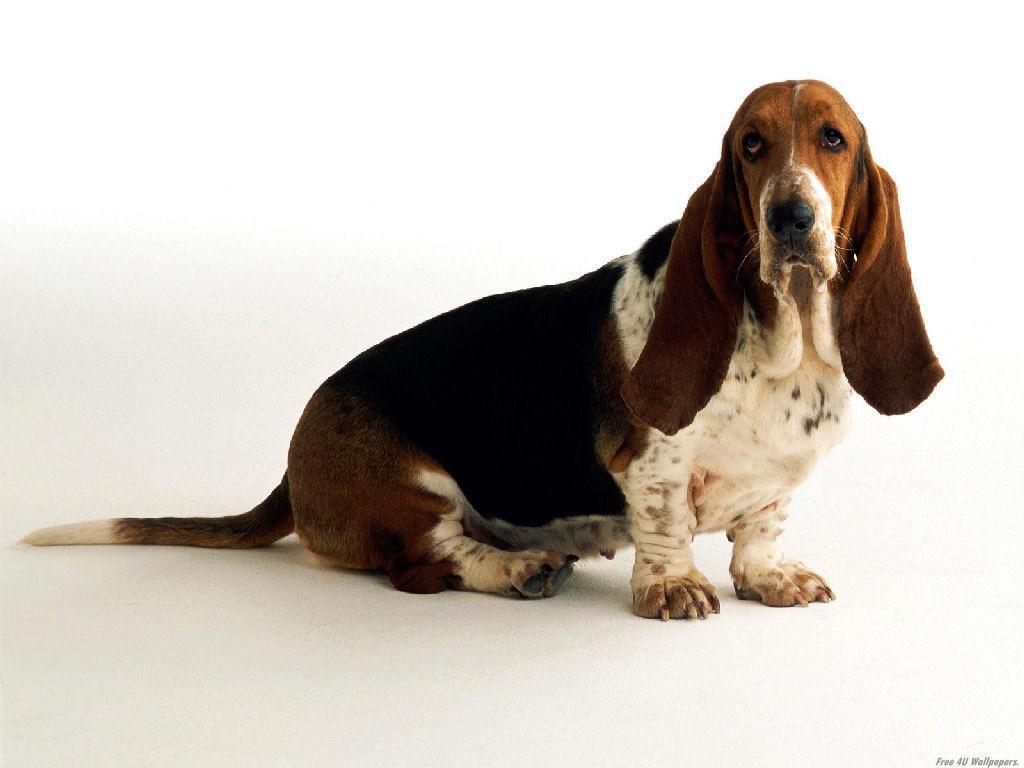
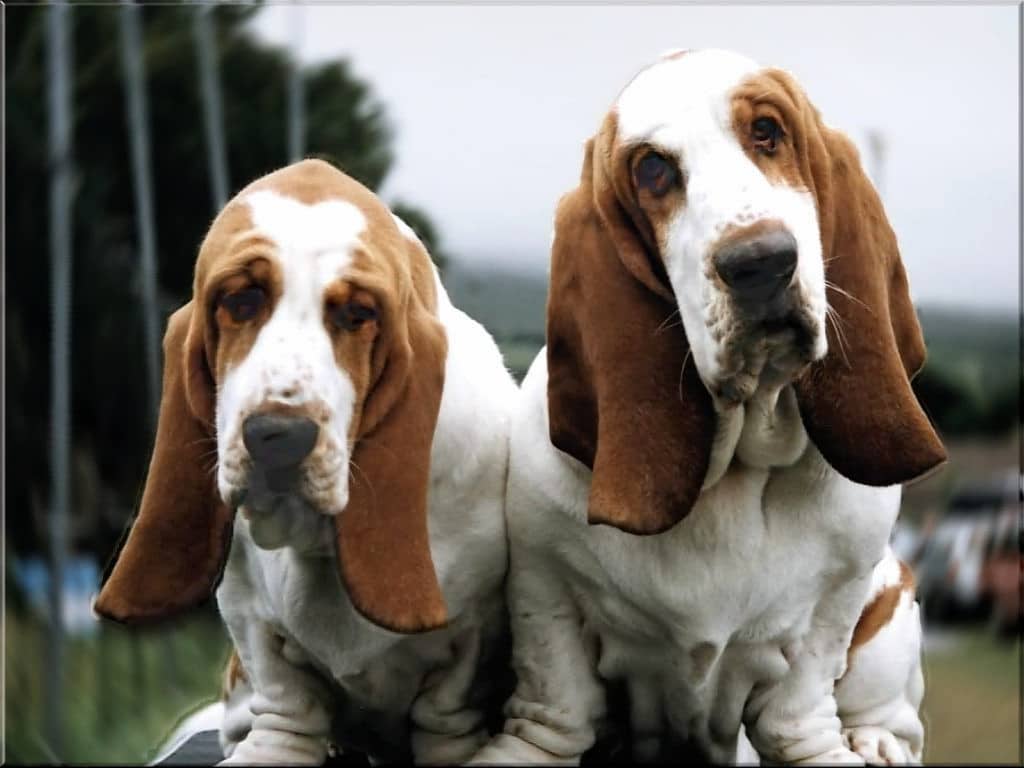
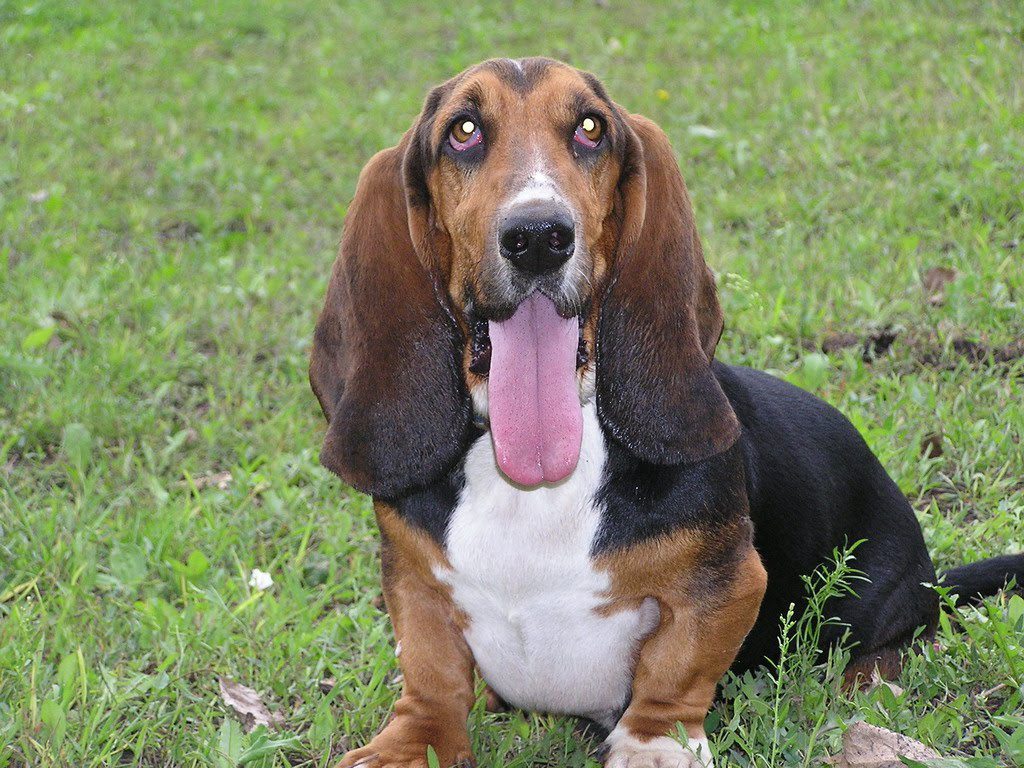
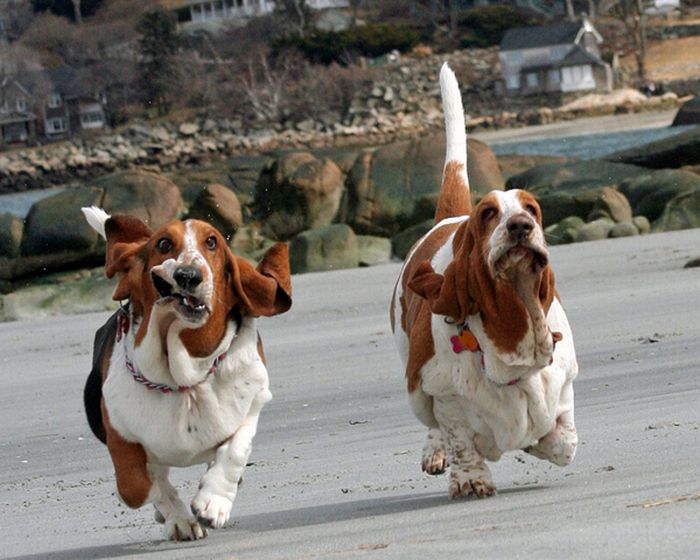
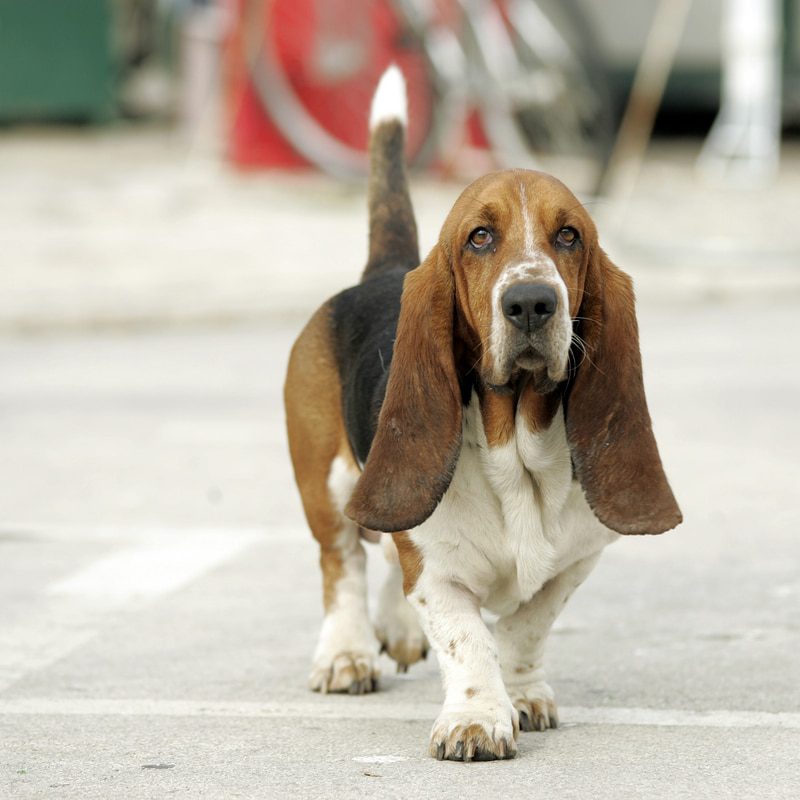
    These dogs are around 33 to 38 cm. (on the cross), they have short hair and are generally tricolor (black, honey and white). They also tend to be white with red spots or Red-footed. Some, Although few, they can be gray. They may occasionally leave copies with long hair, although it is not a desirable characteristic according to the breed standard.

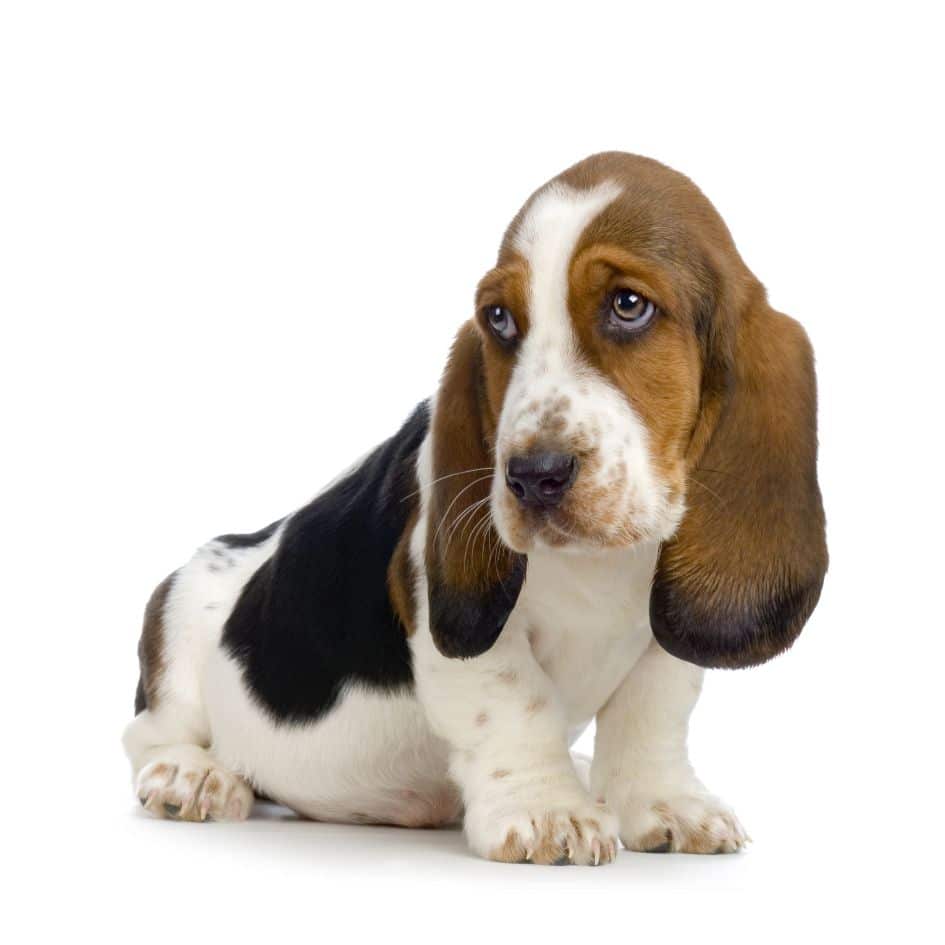
    They have very long ears (up to the chest), also long neck with much loose skin and wrinkles around your head, This causes that you have a permanently sad. Its tail is long, erect and a curve.

    Physical characteristics

    "Basset Hound"

    His short stature is misleading because they are very long and they can reach things that dogs of similar heights could not.
    It has marked degree, features that equip it admirably for tracking through rough terrain. Dog short members, heavier bones, considering its size, than any other breed of dog; and although slow movements, they are in no sense clumsy.

    The word Basset It comes from the French "bas" which means low and that is the main characteristic of this breed. The Basset Hound It is a breed of small stature due, fundamentally, their short legs and elongated body. The head is prominent and it highlights a few wrinkled brows (due to the large amount of skin), long floppy ears, a few deep eyes that convey sadness and hanging lips. The skin is flaccid and causes many wrinkles around the body and is covered by a short hair, rough can be of different colors of the Bassets (white, black & Fawn) in any combination.

    Character and skills

    Low and somewhat plump appearance might suggest it is a lazy dog and something sleazy but this is only an impression, is a loving dog of the year. You need to do plenty of exercise to prevent overweight and arthritis at advanced ages.

    A specific care of this breed is the possibility of the development of conjunctivitis due to the loose skin around the eyes. (that leads to contain moisture), should be monitored continuously.

    His facial expression promises sadness, fatigue, but a dog very joyful, good and very sociable, She loves children and adapts perfectly to the family environment. As well, despite his physical appearance, is a dog She loves the exercise, Sport and trips. It can be very stubborn, as well, about all dogs...

    Nice temperament, never aggressive or shy (only in some cases). It has great strength in the field. extremely faithful.

    Basset Hound Education

    The stubborn side of Basset Hound requires authoritative parenting. You don't have to wait for him to "pass his youth", since it only matures around 3 years. A constant education, firm and consistent from an early age will make a good companion dog.

    In fact, no matter how smart I am, you will know how to make the most of every hesitation. Hence the importance of being consistent and clear in the rules and the rewards that will be given. It shouldn't surprise you that he can turn a deaf ear when you annoy him..

    Salud «Basset Hound»

    It is known that the Basset Hound Have overweight, so the risk of canine obesity must be taken into account, that can damage your spine.

    Being the back a sensitive point of the Basset Hound, it is recommended to avoid obstacles and stairs in your daily life.

    It also, the Basset Hound have a predisposition to certain skin conditions:

    – atopia;
    – dermatitis with malassezia;
    – primary seborrhea;
    – intertrigo (in the folds of the skin).

    Their long ears can also be a complicating factor. In fact, are prone to infections such as scabies in the ear, due to Otodectes cynotis, a microscopic mite that causes itching and pain. This infection is diagnosed by direct examination of the parasite in the ear and then treated by local application of an acaricidal treatment..

    Last, the eyes of the Basset Hound, since it is known that the breed has a genetic predisposition that favors the development of primary glaucoma, an eye disease in dogs that impairs the function of the optic nerve. This disease is diagnosed by an ophthalmological exam that measures intraocular pressure, what should a vet do. It is recommended that this examination be performed as soon as possible in the Basset, since the adverse effects of this disease can be reduced if detected early.

    Aseo «Basset Hound»

    The Basset Hound does not need much coat maintenance. But, the Basset Hound loses hair all the time, so it should be brushed regularly to avoid the accumulation of hair in the house.

    It also, their ears often need to be cleaned, as their length makes it particularly easy for dirt to enter them.

    Basset Hound pictures

    Basset Hound Videos

    Type and recognitions:

    • FCI CLASSIFICATION:
    • Group :
    • Section : . .

    Federations:

    FCI ⓘ, AKC ⓘ, ANKC ⓘ, CKC ⓘ, ​KC ⓘ, NZKC ⓘ, UKC ⓘ

    FCI breed standard "Basset Hound"

    Origin:
    France

    Date of publication of the valid original standard:
    13.10.2010

    Use:

    Hunting dog.


    General appearance:

    It is a short-limbed hound, of considerable substance, well balanced and with countless qualities. It is important to keep in mind that it is a working hound and must be suitable for those purposes., therefore it must be strong, active and have great resistance in the field of work. TEMPERAMENT / BEHAVIOR: It is a tenacious hound of ancient lineage, that hunts by venting its prey and has the instinct of the pack. His voice is deep and melodious. He is gentle and affectionate, never aggressive or shy.


    Behavior / temperament:

    It is a tenacious hound of ancient lineage, that hunts by venting its prey and has the instinct of the pack. His voice is deep and melodious. He is gentle and affectionate, never aggressive or shy.

    Head:

    The forehead may have a small amount of wrinkles, as well as the part next to the eyes. In any case, the skin on the head is elastic enough to wrinkle slightly when facing forward or when the dog lowers its head.

    Cranial region:

    The top of the snout is almost parallel to the top line of the skull and is not much longer than the head., measured from the naso-frontal depression to the occiput.

    • Skull: It is domed in shape and the occipital protuberance is prominent; its width is medium in the region of the eyebrows and decreases slightly to the muzzle.
    • Depression links (Stop): Something marked.

    facial region:

    • Truffle: Completely black, except for light colored hounds, where it appears brown or liver. Windows are wide and wide open; the truffle sticks out a little beyond the lips.
    • Snout: The appearance of the muzzle is thin, but it is not pointed.
    • Lips: The flews of the upper lip considerably cover the lower lips.
    • Jaws / Teeth: The jaws are strong, with a perfect bite, regular and full scissor, That is, the upper incisors cover the lower incisors in close contact and are implanted at right angles in the jaws..

    Eyes: Rhomboid-shaped, they are neither prominent, or sunk. They are dark, but they can be medium brown in light colored hounds. His expression is calm and serious. Light or yellow eyes are very undesirable.

    Ears: Low insertion, just below the eye line. They are long, although not in excess, and extend only slightly beyond the tip of a snout of correct length. They are narrow throughout their length and tightly curled inwards. They are very flexible, fine and smooth texture.

    Neck:

    He's muscular, well arched, quite long and with a pronounced dewlap, although not in excess.

    Body:

    Long and deep throughout its length; the withers and the loin are approximately the same height.

    • Back: Rather wide and horizontal. From the withers to the hips the back is not excessively long.
    • Pork loin: May be somewhat arched. Breast : Viewed from the front, the sill adapts perfectly to the curvature of the forearms. The sternum is prominent, but the chest is neither narrow nor too deep. The ribs are well rounded and tight; extend well back, no protruding edges.
    • bottom line, belly: There must be adequate clearance between the lower part of the chest and the floor that allows the dog to move freely over all types of terrain..

    Tail:

    It is well established and is rather long. It is strong at its root and gradually diminishes. Under the tail rough hairs are observed in moderate quantity. When is the dog moving, tail stands up well and forms a smooth saber-shaped curve, but never kinked or carried too high.

    Tips

    PREVIOUS MEMBERS:

    • General appearance: Upper forearm slopes inward slightly, but not so much as to impede free movement, nor that the forelimbs touch each other when the dog is standing or in action. Some skin folds may appear on the leg but this should not be excessive in any way.
    • Shoulder: They are not heavy; shoulder blades are well tilted back.
    • Elbows: They are not directed inward or outward; are well attached to the sides of the chest.
    • Forearm: Short limbs, strong with good bones.
    • Carpo: It is highly undesirable for it to be deviated forward.
    • Previous feet: Large, with strong joints and pads. The front feet can be pointed straight forward or slightly brought out, but in any case the dog must stand correctly. Weight falls equally on all fingers and pads, so that the feet leave the imprint of a large hound and the pads touch and completely cover the ground.

    LATER MEMBERS:

    • General appearance: They are very well muscular and prominent, imparting an almost spherical appearance, seen from the back. There may be a few folds between the hock, the foot and on the back of the hock joint may appear a slight bag of skin but by no means this should be excessive.
    • Knee: Well angled.
    • Metatarsus: Hocks set low, slightly carried under the body, but they are not oriented neither in nor out when the dog is standing naturally.
    • Hind feet: Large, with strong joints and pads. Weight falls equally on all fingers and pads, so that the feet leave the imprint of a large hound and the pads touch and completely cover the ground.

    Movement:

    It is important to ensure that the dog can do its job. Movement is smooth and fluid powerful and effortless with front limbs extending well forward and rear limbs, that provide a strong impulse. Movement is free both at the front and at the back. The movement of the hock and knee should not be rigid; fingers should not drag on the ground.

    Mantle

    SKIN: Soft and stretchy without any exaggeration.

    Fur: Smooth, short, and tight, although not too fine. All the outline is clean, no fringes. Long soft hair, fringed, it is highly undesirable.

    Color: It is usually white, black and tan (tricolor) or lemon and white (bicolor), but any of the recognized colors on hounds is acceptable.


    Size and weight:

    Height to the cross: Of 33-38 cm..


    Fouls:

    Any deviation from the aforementioned criteria is considered a fault and its severity is considered to the degree of deviation from the standard and its consequences on the health and well-being of the dog and the dog's ability to perform its traditional task..

    FALTAS DESCALIFICANTES:

    • Aggressiveness or extreme shyness.
    • Any dog ​​showing clear signs of physical or behavioral abnormalities must be disqualified..


    N.B.:
    • Males should have two normal-appearing testicles fully descended into the scrotum..
    • Only functionally and clinically healthy dogs, with the typical conformation of the breed, should be used for parenting.

    Source: F.C.I - International Cynological Federation

    ▷ The world of Pets: Dogs, cats, birds, reptiles, amphibians

    Harrier (dog)
    Inglaterra FCI 295 . Medium-sized Hounds

    Harrier

    The Harrier (dog) it is an excellent dog for hunting, specialized in foxes and hares.

    Content

    History

    The Harrier (dog) comes from Great Britain and was first mentioned in writing in the year 1260. French hounds are supposed to, are the ancestors of this breed. Y, as well, there is considerable consensus that the Harrier (dog) Today is the product of the cross between the Beagle and the English Foxhound, born in the south of England.

    The demonstrable origin of dogs, who have been hunting hares for several centuries, can probably be traced back to the 13th century in western England: The first written record of a herd of Harrier (dog) of a certain Sir Elias of Midhope in England was in 1260. Other herds of Harrier (dog) well known to history were the Holcombe herd in the 17th century and the Cambridgeshire herd in the mid-18th century.

    In 1889 the first exhibition of Harrier (dog). Later, two associations were founded that have since dedicated themselves to the pure breeding of this breed..

    It is not clear where the name of the Harrier (dog). Like the dog Harrier (dog) is a very ancient race, it is not easy to clarify this origin beyond all doubt.

    The Harrier (dog) He was originally bred to go hunting for hares. So, Some people think that its name is derived from the English word «Hare«. «Hare» is the word for "hare" in French and English. Harrier (dog) It, therefore, a kind of abbreviation of the English term «Hare-Hound» and indicates that this breed was originally bred for hare hunting.

    Others believe that this breed of dog got its name from the Norman-Saxon language.

    Here "Harrier" simply means "dog.".

    Physical characteristics «Harrier»

    The Harrier (dog) it is a strong and light dog, less powerful and is used for hunting hares. It has a long and slightly arched neck on top. The eyes, medium sized and oval, they tend to be dark. The short ears, almost flat and V-shaped, they are inserted high but they are pendulous carried.

    The coat of the Harrier (dog) it's shiny, hard, dense and short, well glued to the body. The hair on the ears is finer in texture than the rest of the body. Are white, black and bark, lemon and white, Red and white, black, White and bark. Tricolor with a black coat on the upper back is also allowed. This last variant is bred mainly by the French.

    With a height at the cross of 48 to 55 cm and a weight of 22 to 27 kg, this dog belongs to the medium-sized dogs.

    Character and skills «Harrier»

    Harrier (dog)
    A tricolour Harrier by Smcmilla, Public domain, via Wikimedia Commons

    The Harrier (dog) they are gentle, peaceful, quiet, balanced and above all intelligent and eager to learn. Its great resistance, his great joy of movement and his good assertiveness are other typical characteristics. An excellent sense of smell distinguishes this basically easy-care and undemanding dog..
    Like a dog from the original pack, is naturally very sociable and very compatible with other dogs. Since the Harrier (dog) is from reason rather stubborn and independent, needs a consistent yet loving and gentle upbringing. If it is kept in the pack and acts as a hunting dog, builds little relationship with humans, but as a family dog ​​he proves to be a faithful dog, loving and undemanding. He is quite alert but completely free of aggression.

    Can be kept well with various dogs in the family. The Harrier (dog) can, according to its origin, be trained well like dogs that run and sweat, although his preferred terrain is flat, at most a little bumpy. It is equally suitable for hunting on horseback, which is particularly popular in England. This breed is also suitable for dog sports. As a family dog, he needs long walks, as well as occupation and contacts.

    The Harrier (dog) has a very fine sense of smell, is very resistant, persistent…, It seems that never were fatigue and can reach a good speed and keep it, While still at its prey, reason why it has been used since its origins for hunting in packs.

    He is very obedient and intelligent, which is why, education and training firm, consistent and loving, gives very good results. Their life expectancy is around the 12 years.

    Care and maintenance «Harrier»

    The Harrier (dog) they need a lot of exercise and have a very strong hunting instinct, so it is absolutely necessary that you challenge them enough and offer them longer rides each day.

    It is important to ensure that he is kept on a leash where the game is present, otherwise he would follow his hunting instinct. The Harrier (dog) he is not a city dog, but loves to romp in a garden with plenty of exercise. When it comes to caring for your coat, not very demanding: he likes to brush once in a while. If the dog goes hunting with you, should be examined for parasites and lesions.

    Characteristics "Harrier (dog)"

    Coexistence is important that you have with your new friend. Before considering the acquisition of a dog of the breed "Harrier (dog)" you know certain factors. Not all breeds of dogs are apt to live in an apartment, you must take into account his character, their need for exercise, their interaction with other pets, their care and if you have small children, their level of tolerance towards them.

    Adaptation ⓘ

    3,0 of 5 stars (based on 1 review)

    friendly dog ​​ⓘ

    3,0 of 5 stars (based on 1 review)

    hair loss ⓘ

    3,0 of 5 stars (based on 1 review)

    Affection level ⓘ

    3,0 of 5 stars (based on 1 review)

    Need for exercise ⓘ

    5,0 of 5 stars (based on 1 review)

    Social need ⓘ

    2,0 of 5 stars (based on 1 review)

    Home ⓘ

    4,0 of 5 stars (based on 1 review)

    Toilet ⓘ

    2,0 of 5 stars (based on 1 review)

    Friendly with strangers ⓘ

    3,0 of 5 stars (based on 1 review)

    barking ⓘ

    4,0 of 5 stars (based on 1 review)

    Health ⓘ

    1,0 of 5 stars (based on 1 review)

    Territorial ⓘ

    1,0 of 5 stars (based on 1 review)

    Cat friendly ⓘ

    4,0 of 5 stars (based on 1 review)

    Intelligence ⓘ

    3,0 of 5 stars (based on 1 review)

    Versatility ⓘ

    3,0 of 5 stars (based on 1 review)

    Child friendly ⓘ

    4,0 of 5 stars (based on 1 review)

    Surveillance ⓘ

    3,0 of 5 stars (based on 1 review)

    joy ⓘ

    2,0 of 5 stars (based on 1 review)

    Videos "Harrier (dog)"

    HTTPS://youtube.com/watch?v=LV_Yw96BGVo
    Harrier Dog – Top 10 Facts
    HTTPS://youtube.com/watch?v=unvBDZ3ga7k
    Harrier – AKC Dog Breed Series

    Type and recognitions:

    • FCI CLASSIFICATION:
    • Group :
    • Section : . .

    Federations:

    • – FCI – Group 6: Scent hounds, and related breeds. – Section 1.1: Large-sized Hounds. ⓘ
    • – ​KC – Hound ⓘ

    FCI breed standard "Harrier (dog)"

    Origin:
    United Kingdom

    Date of publication of the valid original standard:
    27.11.1974

    Use:

    Hound


    General appearance:

    Strong and light dog, less powerful and more distinguished than the Foxhound.


    Behavior / temperament:

    ---

    Head:

    Expressive, moderately wide.

    Cranial region:
    • Skull : Plano, slightly outlined occipital protuberance.

    facial region:

    • Truffle : black, quite developed.
    • Snout : Fairly long and rather pointed.
    • Lips : They cover the lower jaw.

    Eyes : Always dark, never saltones, medium large, not too round.

    Ears : "V" shaped, almost flattened, slightly twisted, quite short, rather high implantation.

    Neck:

    Long and free, but with good insertion in the shoulders ; slightly arched at the top.

    Body:

    • Back : Straight and muscular.
    • Pork loin : Strong, with a slight bow.
    • Breast : Deeper than wide.
    • Ribs : Rather flat than arched.
    • Flank : Neither too round nor too retracted.

    Tail:

    Medium long, slightly split (up to the tip around the tail long thick hairs slightly separated in a spike) ; with good bearing.

    Tips

    PREVIOUS MEMBERS : Straight and plumb.

    • Shoulder : Oblique and very muscular.

    LATER MEMBERS :

    • Hip : Strong and well outgoing.
    • Thigh : Long and well descended.
    • Warm-foot joint : Not too straight and not too angled.

    FEET : Not too close and not too round.

    Movement:

    Agile and firm ride.

    Mantle

    SKIN : White with black spots.

    HAIR : Smooth in the English way, ie flat and not too short.

    COLOR : Usually white background with all shades in black to orange. In France often tricolor with a black cloak covering the upper back.


    Size and weight:

    Height to the cross : Since 48 to 55 cm maximum, but preferably from 48 to 50 cm..


    Fouls:

    Any deviation from the above mentioned criteria is considered an absence and severity of this refers to the degree of deviation to the standard and its impact on the health and welfare of the dog.

    MISS PLAYOFFS

    • Aggressive or fearful dog.
    • Depigmented truffle.
    • Prognathism.
    • Long and loose loin.
    • Weak thighs.
    • Discolored scrotum.

    Any dog ​​showing clear signs of physical or behavioral abnormalities should be disqualified..


    N.B.:

    Males should have two normal-appearing testicles fully descended into the scrotum..

    Source: F.C.I - International Cynological Federation

    Alternative names:

    1. Harrier (English).
    2. Harrier (French).
    3. Harrier (German).
    4. Lebreiro, Cão de caça a lebre (Portuguese).
    5. Harrier (español).

    ▷ The world of Pets: Dogs, cats, birds, reptiles, amphibians

    Alpine Dachsbracke
    Austria FCI 254 - Leash (scent) Hounds
    Perro tejonero alpino

    The Alpine Dachsbracke has a courageous personality, friendly and intelligent

    Content

    History

    The appearance of this short-legged dog suggests a very ancient breed. The Alpine Dachsbracke it is one of the oldest breeds of hunting dogs in Central Europe. It was already mentioned in the seventeenth century and represented in paintings.

    In the last quarter of the nineteenth century, Crown Prince Rudolf von Habsburg had this type of hunting dog run by his professional hunters.. The dog's appearance was unbalanced for a long time. Each canton raised its Alpine Dachsbracke differently.

    But it is not a cross between a Sausage dog and Bracco, as the German name suggests «Alpenländische Dachsbracke«, but an independent race. Visually, the Alpine Dachsbracke gets closer to the Dachshund, but it's much bigger and stronger.

    In the 19th century, there were numerous subspecies of Alpine Dachsbracke in the swiss alps, Bavarians and Austrians, that still differed greatly in appearance.

    At the end of the 19th century, many breeders of this breed of dog were in the Erzgebirge, so the race kept calling Alpenländische Erzgebirgler Dachsbracke until 1975. Another name is the Dachsbracke Austrian.

    This is because the current Club Dachsbracken is located in Austria. The goal of breeding, both then and now, is to maintain the health and performance of this ancient breed of dog.

    In order to establish a constant shape, a uniform appearance and appropriate breed characteristics, the first International Club of Dachsbracken was founded in Munich in 1896.

    In 1908 the club disbanded again. In 1910 the Austrian Dachsbracke Club was founded, which is still engaged in the breeding of the Alpine Dachsbracke.

    In 1932, the Alpine Dachsbracke was officially recognized by the Austrian Kennel Club (with him "Bavarian Mountain Hound" and the "Hanoverian Scenthound«) like the third breed of hound.

    In 1975 the Alpine Dachsbracke received recognition from the FCI, which finally classified the breed among the hounds in 1991.

    A race is quite unknown outside Austria.

    Physical characteristics

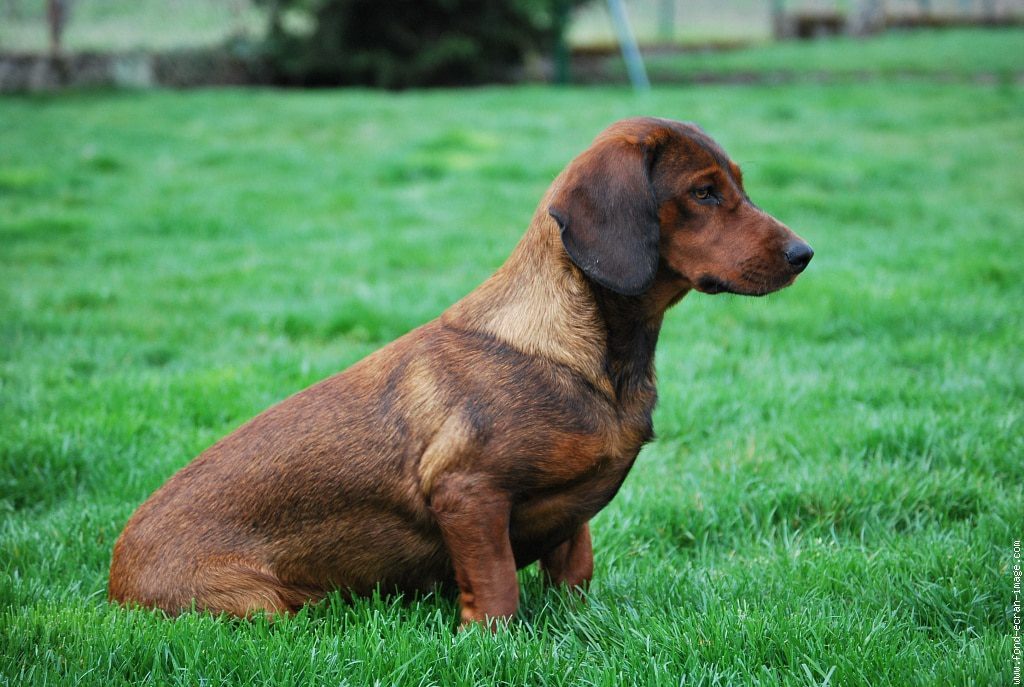
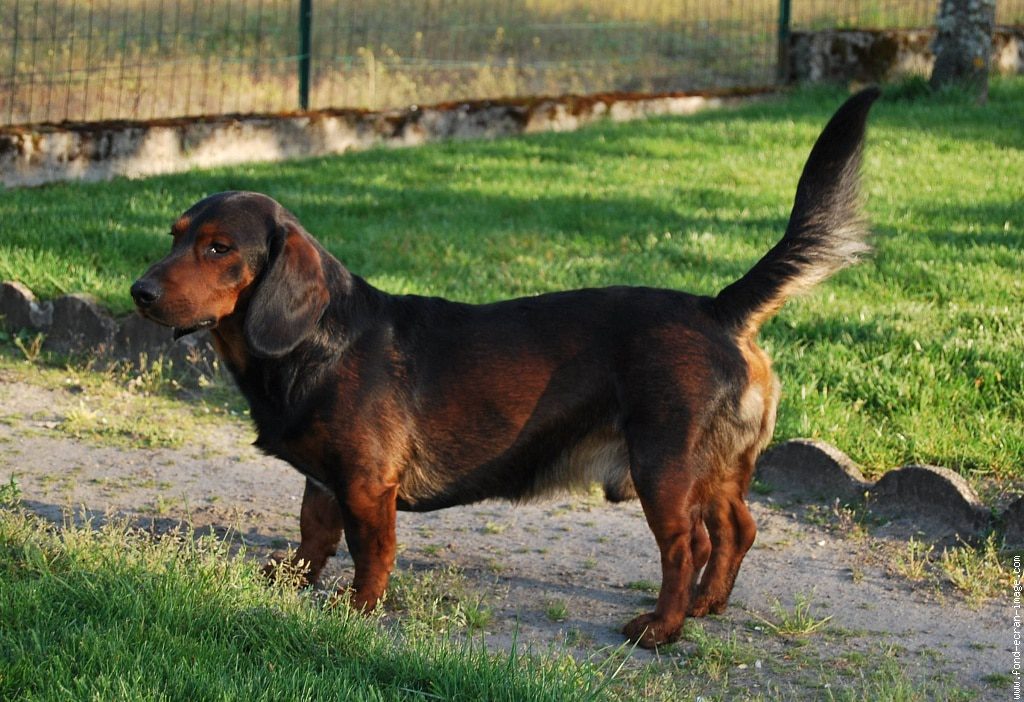
    The Alpine Dachsbracke is a dog's size medium. Has relatively short legs, a strong constitution, firm muscles and strong bones.

    The height to the cross is of 34 to 42 centimeters. Height at withers is measured from the ground to the shoulder in a loose dog. For males, the ideal size is between 37 and 38 centimeters of shoulder height; for females, are considered ideal 36 to 37 centimeters.

    Great importance is attached to an optimal ratio of proportions. The relationship between the height of the shoulders and the torso is 2 : 3, the relationship between the face and the skull is 9 : 10.

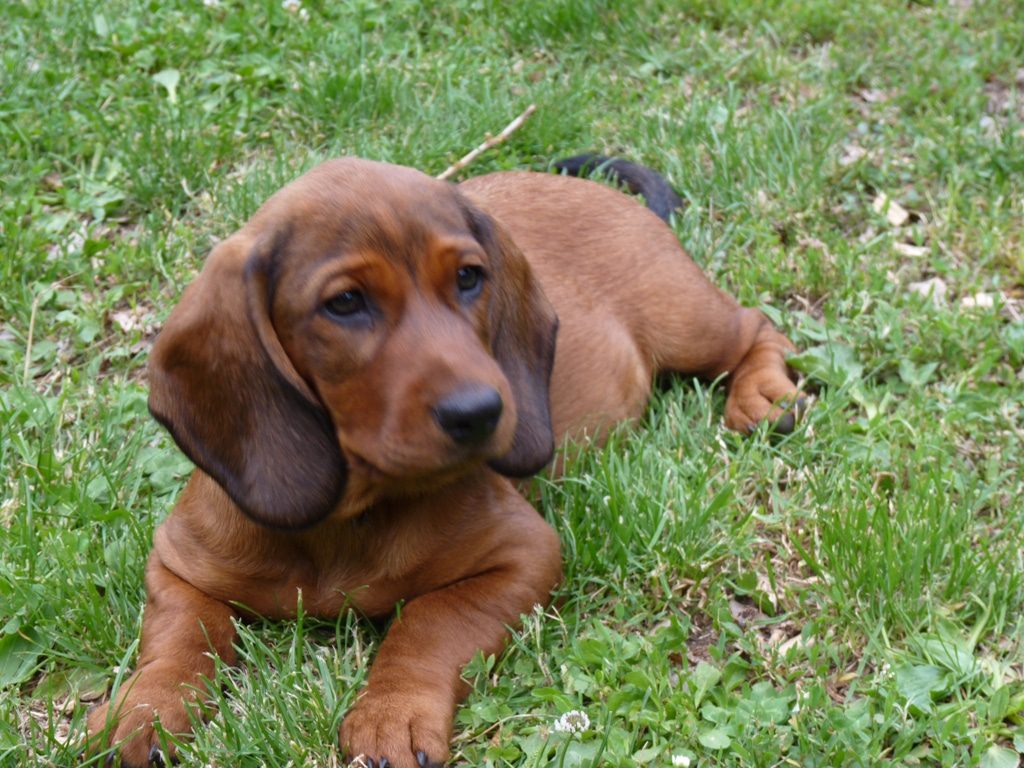
    The head is held proudly erect with a slight forward tilt. High-set dangling ears are straight-haired and fall loosely to the sides. They are wide, no wrinkles and medium length (approximately reaching the canines) and rounded at the bottom.

    The nose, the eyelids and lips are black. The eyes are deep brown and slightly almond shaped. The Alpine Dachshund has the typical "dachshund look". The tail is placed high at the root, but it is slightly lowered.

    In proportion to the strong body, legs are relatively short. The body is well muscled and with strong bones, with a pronounced rib cage but with a small waist.

    The coat of the Alpine Dachsbracke it's dense and short, only the lower part of the tail is slightly longer. The slightly dull coat consists of a firm stick coat with a dense undercoat.

    Allows good water repellency and a perfect air balance in summer and a high heat effect in winter. A dark deer red, often with a slight tinge, is the most common coat color.

    There is also a black coloration with a tan tan outlined on the head). Small white marks are allowed on the chest. On the paws, ears and tail coat coloration may be darker.

    Character and skills

    The Alpine Dachsbracke he's a proven working dog, small to medium size, which serves hunters especially well. Hound dogs like Alpine Dachsbracke are used for post-shot search jobs.

    The strong-minded dog is not distracted and confidently tracks injured game animals. At first sight, the Alpine Dachsbracke looks like a mongrel dog, but this robust breed is a highly specialized working and hunting dog.

    The fine sense of smell, safe tracking with unconditional tracking will and high hunting acuity make this breed an ideal hunting companion, animal husbandry and forestry work in the forest and mountains. The Alpine Dachsbracke feels more comfortable outdoors.

    Like city dog, the Alpine Dachsbracke it's completely inappropriate.

    After the hunt is before the hunt. The dog would like to go out and look for hunting every day. Family contact is desirable, because then the friendly companion shows his almost touching love and attachment to "his" people. He gets along very well with children.

    But, the Alpine Dachsbracke not suitable as a pure family dog. Also in the city this breed feels extremely uncomfortable. The Alpine Dachsbracke it is a forest and prairie dog, for whose fine smell the gases from car exhausts and in general, the smells of the city, they are a punishment.

    If this breed stays in the big city, without the possibility of a daily run of several hours in the woods and meadows, owners can be called cruel to animals without euphemisms. This is certainly the reason why this breed of dog is never seen in the urban area.

    For the Alpine Dachsbracke a task is vital. Although this dog needs a lot of exercise, not suitable for long runs or jumping due to short legs. It is a search dog, a typical tracking dog.

    Outside the hunting season, this dog with strong nerves is excellent as a guard and yard dog. But, this shouldn't be your only task. The temporary maintenance of the kennel is not a problem for him, as long as he has regular contact with the family and is allowed into the house from time to time.

    Within the four human walls the dog behaves in a balanced and calm way. But, if you are not used to much, tends to show behavior problems, complains a lot or seeks an alternative occupation.

    Small animals, cats, rabbits, ornamental birds are seen as prey and bark at them extensively. The Alpine Dachsbracke he is friendly with other dogs.

    Training and use «Alpine Dachshund»

    Hunting training is a basic requirement for living with a Alpine Dachsbracke, which is why this breed is only really found among active hunters.

    This small hunting dog excels in hare and fox hunts, as well as in the tracking of deer and roe deer. With his very fine nose, the Alpine Dachsbracke shows an unconditional willingness to crawl, movement safety and quality control.
    This agile hunting dog's drive to move requires a daily walk on the hunting ground. Attitude is possible so much in a spacious kennel, like in the house. The house itself should have a garden.

    Staying in a small apartment in the city would be torture for the dog, even climbing stairs is not an option for him. Also with the yard or kennel attitude a close family connection comes in handy for this friendly dog..

    The Alpine Dachsbracke watches the house and property carefully and makes reliable noises, so it does not tend to bite. The Alpine Dachsbracke it is considered very robust and insensitive to weather conditions. The robust dog shines with good attitude for life in good health.

    This hound likes to work very much, hunting training is a basic requirement for living with a Alpine Dachsbracke, which is why this breed is only really found among active hunters.

    This small hunting dog excels in hare and fox hunts, as well as in the tracking of deer and roe deer. With his very fine nose, the Alpine Dachsbracke shows an unconditional willingness to crawl, search security as well as very good visual acuity.

    Education and care

    Despite his innate sympathy, this breed of dog still requires consistent leadership from the puppy stage. Education takes a long time, so owners of dogs of this breed like to organize to exchange experiences.

    Due to its typical breed nature, the Alpine Dachsbracke tends to be very stubborn. In the countryside, eventually you will have to make your own decisions without your master or mistress being able to intervene.

    Empathy and consistency promise the best results in puppy rearing. What you have learned once, never forget it again.

    Unfortunately, this also applies to mistreatment. An undesirable rarity is very difficult to unlearn.

    Alpine Dachshund Grooming

    Like every dog, this little hunting dog needs some grooming. The coat should be brushed from time to time to loosen the dense undercoat and remove loose hair.

    No need to cut or trim. The dog doesn't like to bathe either, dirt usually falls off the coat on its own. After each walk through the territory, the coat of the small ruminant should be checked for branches, thorns and parasites.

    Unfortunately, ticks also like the skin of Alpine Dachsbracke. Ears should be checked regularly for mite infestations. Too long claws indicate too little exercise. Normally, claws are sharp when walking and do not need to be cut.

    Health «Alpine Dachshund»

    The Alpine Dachsbracke it is considered very resistant and has a stable skin. The robust dog shines in excellent health throughout his life if he is well maintained. But, annual vaccinations should never be lacking.

    Typical diseases can be, as in any short-legged dog, back problems. A well-muscular body without excess weight will counteract the risk of back diseases.

    When fed wet food, teeth unfortunately tend to form tartar. In this case, Regular brushing of the teeth is necessary to prevent gum and tooth diseases.

    Chewy sticks and bones are gladly accepted, but they do not serve as a substitute activity. The ears should be checked and cleaned regularly.

    How long does an "Alpine Dachshund" usually live??

    Their life expectancy reaches an age of up to 15 years with good species-appropriate nutrition and typical breeding.

    Occasionally, small dogs exceed this age and in rare cases even reach an age of more than 20 years. Underutilized animals can suffer from psychological problems that make them prone to disease and moody.

    As a responsible dog owner, now you know what the Alpine Dachsbracke need to live a long life, healthy and happy.

    Don't need a guardian, but a companion at eye level, who can take care of the needs of this working dog extensively.

    Buy an “Alpine Dachshund”

    This dog is not a stuffed dog, despite its fairly manageable size. The breeders of this breed are mainly found in Germany and Austria. Usually the active breeders are the hunters or rangers themselves.

    From the breeding associations the puppies of the Alpine Dachsbracke they occur mainly to active hunters. You can only buy that breed from a breeder.

    If he Alpine Dachsbracke not used for hunting, it is essential to be a member of a sports club for dogs. Here the focus is on tracking.

    As a children's playmate he is extremely patient, but he's not happy.

    Walks with search and crawl games will also not meet the needs of this working dog, this is just not enough. For seniors who are not physically fit, as well as for singles working full-time, the Alpine Dachsbracke is absolutely unsuitable as a companion.

    If you want to buy a Alpine Dachsbracke, you have to be a member of a local club. Outsiders hardly have a chance.

    «Alpine dachshund» images

    “Alpine Dachshund” videos

    Characteristics "Alpine Dachsbracke"

    Coexistence is important that you have with your new friend. Before considering the acquisition of a dog of the breed "Alpine Dachsbracke" you know certain factors. Not all breeds of dogs are apt to live in an apartment, you must take into account his character, their need for exercise, their interaction with other pets, their care and if you have small children, their level of tolerance towards them.

    Adaptation ⓘ

    3,0 of 5 stars (based on 1 review)

    friendly dog ​​ⓘ

    4,0 of 5 stars (based on 1 review)

    hair loss ⓘ

    1,0 of 5 stars (based on 1 review)

    Affection level ⓘ

    2,0 of 5 stars (based on 1 review)

    Need for exercise ⓘ

    4,0 of 5 stars (based on 1 review)

    Social need ⓘ

    3,0 of 5 stars (based on 1 review)

    Home ⓘ

    2,0 of 5 stars (based on 1 review)

    Toilet ⓘ

    2,0 of 5 stars (based on 1 review)

    Friendly with strangers ⓘ

    2,0 of 5 stars (based on 1 review)

    barking ⓘ

    3,0 of 5 stars (based on 1 review)

    Health ⓘ

    4,0 of 5 stars (based on 1 review)

    Territorial ⓘ

    4,0 of 5 stars (based on 1 review)

    Cat friendly ⓘ

    2,0 of 5 stars (based on 1 review)

    Intelligence ⓘ

    3,0 of 5 stars (based on 1 review)

    Versatility ⓘ

    3,0 of 5 stars (based on 1 review)

    Child friendly ⓘ

    4,0 of 5 stars (based on 1 review)

    Surveillance ⓘ

    4,0 of 5 stars (based on 1 review)

    joy ⓘ

    4,0 of 5 stars (based on 1 review)

    Type and recognitions:

    • FCI CLASSIFICATION:
    • Group :
    • Section : . .

    Federations:

    • – FCI – Group 6: Scent hounds, and related breeds. – Section 2: Leash (scent) Hounds. ⓘ
    • – UKC – Scenthound Group ⓘ

    FCI breed standard "Alpine Dachsbracke"

    Origin:
    Austria

    Date of publication of the valid original standard:
    10.10.1995

    Use:

    The Alpine Dachsbracke is a robust and weather resistant dog, useful for the mountain hunter ; It is used as a tracker to search for wounded roe deer and as a hound when barking at hares and foxes..


    General appearance:

    Small hunting dog, strong, with robust body structure and heavy bones; dense fur, firm muscles.

    IMPORTANT PROPORTIONS

    • The proportion between the height of the withers and the length of the trunk is 2 : 3.
    • The proportion between the facial region and the cranial region is 9 : 10.


    Behavior / temperament:

    Smart and friendly expression. Intrepid character.

    Head:

    ---

    Cranial region:
    • Skull : Slightly convex. Marked frontal groove, shallow occipital protrusion.
    • Depression links (Stop) : Marked.

    facial region:

    • Truffle : Black.
    • Snout : Strong.
    • Lips : Well adherent with black pigmentation, moderately rounded lip arch.
    • Jaws / Teeth : Strong full scissor or pincer bite. You want a complete denture with 42 Dental parts ; the lack of total two PM1 or PM2 (premolars 1 or 2) is tolerated ; the M3 (molars 3) they are not taken into account.

    Eyes : Dark brown iris; eyelids adherent to the eyeball and black pigmented.

    Ears : High insertion, that fall wide and flat without forming folds; medium length (must reach to the fang) and well rounded at its lower edge.

    Neck:

    Not too long, muscular.

    Body:

    Broad trunk, strong and well muscled.

    • Cross : Moderately marked.
    • Back : Straight.
    • Pork loin : Short and broad.
    • Rump : Slightly inclined.
    • Breast : Deep and wide with a well-marked sill; the depth of the thorax should correspond to approximately half the height of the withers.
    • Belly : Moderately withdrawn.

    Tail:

    High insertion, thick at its root. On its underside it has a longer coat (brush glue) ; the tail is so long that it reaches almost to the ground ; takes it slightly inclined.

    Tips

    PREVIOUS MEMBERS : They are straight and strong. The limbs appear short in proportion to the rest of the body.

    • Shoulder : Adjacent, long, obliquely placed, with good musculature.

    LATER MEMBERS : Muscular, strong and have good angulations ; seen from the back, the axis of the limbs is straight.

    FEET : Front and rear feet are strong and round ; the fingers are very close together ; the pads are hard and the nails are black.

    Movement:

    During the movement covers the terrain, without kicking. His favorite step is the trot.

    Mantle

    SKIN : The skin is elastic and hard and does not form folds.

    HAIR : double hair (Stockhaar), very dense, with thick undercoat ; covers the entire body and is well attached to the skin.

    COLOR : The ideal color is dark fawn red, slightly speckled or not black, as well as the black color with fire spots, reddish-brown color) well defined in the head (four eyes), on the chest, limb, feet and on the underside of the tail; a white star is allowed on the sill.


    Size and weight:

    Height to the cross : 34 – 42 cm.. Ideal measure : Males : 37 – 38 cm.,females : 36 – 37 cm..


    Fouls:

    Any deviation from the aforementioned criteria is considered as a fault and the severity of this is considered to the degree of the deviation to the standard and its consequences on the health and well-being of the dog..

    FAULTS

    • Weak bones.
    • Little muscle.
    • Too pointed snout, short or long.
    • Eye color too light, eyelids not glued.
    • Short or pointed ears.
    • Loose shoulders.
    • Poor position of the forelimbs or hindlimbs.
    • Very short or sparse coat.
    • Minimal variations in color.

    MISS PLAYOFFS

    • Aggressive or fearful dog.
    • All variations that are considered essentially detrimental to their usefulness in hunting.
    • Absence of more than two premolars 1 or 2 (without taking into account the M3).
    • Height at withers less than 34 cm or greater than 42 cm..
    • Weak character.

    Any dog ​​showing clear signs of physical or behavioral abnormalities must be disqualified..


    N.B.:

    Males should have two normal-appearing testicles fully descended into the scrotum..

    Source: F.C.I - International Cynological Federation

    Alternative names:

    1. (ger. Alpenländische Dachsbracke) (English).
    2. (alpenländische dachsbracke) (French).
    3. Alpenländische-Erzgebirgler Dachsbracke, Österreichische Dachsbracke (German).
    4. Dachbraco alpino (Portuguese).
    5. Tejonero de los Alpes, Basset de los Alpes, Dachsbracke de los Alpes (español).

    ▷ The world of Pets: Dogs, cats, birds, reptiles, amphibians

    Brazilian Tracker
    Brasil FCI 275 . Large-sized Hounds

    Rastreador Brasileño

    The Brazilian Tracker was a quiet and balanced dog, attached to his master.

    Content

    History

    The Brazilian Tracker It was a breed of dog originating in Brazil, that was recognized by the FCI the 1 in September of 1967 in the Group 6 / Section 1.1 – Large size hounds with number 275. In fact, It was the first Brazilian to be recognized by the FCI breed of dog.

    The Brazilian Tracker it's a Scent hound. The breed is also known under the names Urrador (his voice) or Urrador American.

    It was developed in the Decade of 1950 by Oswaldo Aranha Filho (In janeiro river), to hunt peccaries (they are pigs of medium-sized and wild that found in all Central and South America), Jaguars, and other types of dams typical of the country.

    Aranha Filho combined a number of breeds of hunting from America and Europe along with some native dogs of Brazil to create your dog. The Brazilian Tracker became Brazil's first race and it was what earned it the recognition of international dog associations.

    The glory of being a breed officially recognized at the international level lasted barely six years, time in which by neglect and a series of relief, the race was decimated.

    At that time there was only one breeder of Brazilian Tracker, Mr Oswaldo Aranha Filho, the creator of the race... And, their copies suffered because of two events, first of all an outbreak of babesiosis.

    Babesiosis (or babesiosis) It is a parasitic disease similar to malaria caused by protozoa of the genus Babesia and usually affect pets, especially to dogs. Its name was established in honor of the Romanian biologist Victor Babeş, He was the first to isolate the pathogen. It is the typical disease that is transmitted through a vector organism, usually the tick (Ixodes dammini); in fact, This mite is the same that transmit Lyme disease and, often, both are associated with.

    Y, in the second place, many of the dogs suffered poisoning from excess pesticide used by an employee of the farm.

    It was exactly in the year 1973, when the Fédération Cynologique Internationale declared the dog breed Brazilian Tracker, officially extinct. Which led to him losing his classification number since, prompted the cancellation of the registration.

    Since the FCI and the Brazilian Confederation of Cynophilia They declared this extinct breed, have carried out various efforts and programs of to retrieve it.

    Physical characteristics

    The standard of the breed of 1970 declaring a size between 62 and 67 cm and very similar in appearance to the Black and tan coonhound.

    There have been attempts underway to recreate the race from a mixture of American Foxhound, Black and tan coonhound, and the Small Blue Gascony, English Foxhound, and Bluetick Coonhound.

    The Rescue Support Group Brazilian Tracker of Brazil, a club dedicated to the restoration of the breed, Brazil, He devoted himself to organize - aim- a list of forty breeding animals of the correct type as, puediesen be certified as members of the race, in order to restore the race and return to be recognised by the Kennel Club of Brazil.

    The re-establishment of the breed, It has not been an easy task, due to the existence of very few pure specimens, and above all by the lack of social interest, There are very few people interested in the recovery of the true Brazilian cultural heritage and the genetics of the breed.

    Character and skills

    At the moment, the character is not easy to illustrate or define. Efforts to restore the breed continue today., and are being used in breeding programs, breeds used in his development with the descendants of mixed races found in all Brazil.

    But, the race again in the various canine clubs list (small) and dog organizations in North America, for the promotion of a rare species for those seeking an unusual pet.

    As it's a race in the process of being rebuilt, no data on specific diseases or extraordinary health demands.

    The Brazilian Tracker is a hunting dog, not a type of dog that has traditionally been used as a pet.

    The copies that exist today, fruit of the reconstruction, they tend to be very independent animals and, sometimes, somewhat stubborn, with a strong instinct of prey that, leads him to chase the small animals that live in the house... But with proper socialization, any dog is a good dog.

    Type and recognitions:

    • FCI CLASSIFICATION:
    • Group :
    • Section : . .

    Federations:

  • FCI ⓘ

  • FCI breed standard "Brazilian Tracker"

    Origin:
    Brazil

    Date of publication of the valid original standard:
    04.09.2019

    Use:

    Hunting dog used for picking up and rounding up prey animals.


    General appearance:

    Strong and rustic. Cheerful and never aggressive. It has an excellent sense of smell and the capacity for hunting above the average of hunting dogs. It is very resistant and persistent, and you can hunt in hostile terrain and high temperatures. Docile and loyal.

    IMPORTANT PROPORTIONS: The body has a length of 10:9 in relation to your height. The skull relationship - snout is from 1:1.


    Behavior / temperament:

    Calm and balanced, companion glued to his owner, self-confident, without fear, docile, without being shy or aggressive. Due to his work he must have a calm demeanor as he hunts as a couple, trios or pack, or even sometimes just as a trail dog.

    Head:

    Mesocephalus, triangular and a bit long.

    Cranial region:
    • Head: Triangular shape, skull and muzzle of similar length.
    • Depression links (Stop): moderate.

    facial region:

    • Truffle: Slightly directed downward, completely black in color.
    • Snout: Straight and long.
    • Lips: Fine, dry and sticky, well pigmented black. Jaws / Teeth: Strong jaws, scissor bite with
      complete denture (42 teeth).
    • Cheeks: Droughts.

    EYES: Almond biscuits, dark, with lively expression, well-pigmented black eyelids. Large eyes set wide apart, with typical bloodhound expression. Soft look, gentle and nice.

    EARS: long, low-set, flexible and round tips. The long, when you stretch without force, reaches the tip of the muzzle without exceeding it. Low erectile capacity, hang close to the head.

    Neck:

    Strong. Rises freely and lightly over the shoulders, strong in substance, but not heavy, medium long, clean throat, allowing a slight wrinkle under the angle of the jaw (with little double chin).

    Body:

    • top line: Well defined, going down with a gentle curve down the neck passing through the cross, strong and tall, continuing in the direction of the rump, which is slightly oblique and slightly lower than the height of the withers.
    • Cross: Strong, taller than the rump.
    • Back: Strong, firm, slightly long, muscular and straight. Pork loin: Wide and strong.
    • Rump: Slightly oblique, inclined 30° with respect to the horizontal. Breast : Good size and depth, reaching to the elbows, with a broad and well-developed thorax.
    • Bottom line and belly: Slightly retracted.

    Tail:

    Saber-shaped, without lateral deviation, inserted in the continuity of the croup, carried low at rest and above the top line when alert or moving. Long arriving or passing the garrón. The hair on the tail has the same texture as that on the body, stuck and short.

    Tips

    PREVIOUS MEMBERS:

    • General appearance: Shoulders with strong parallel bones, muscular, with wide limbs.
    • Shoulder (Scapula): Robust, with a good inclination of about 45° with respect to the horizontal line and the scapulo-humeral joint with an angle of about 105°).
    • Arms (Humeri): Strong and muscular, the same length as the scapulae.
    • Elbows: Close to the body and firm. forearms: Strong bone structure.
    • Carpi (dolls): Straight, parallel and strong. Metacarpus: Straight, parallel and strong.
    • Previous feet: Wide and powerful, with very resistant and elastic pads; dark pads and nails.

    LATER MEMBERS:

    • General appearance: Muscular and well angled, with firm hocks, with symmetrical and moderate angulations, wide feet.
    • Thighs (Femur): Strong and muscular.
    • Knees: Strong and moderate curvature.
    • Legs (Tibia): Moderate angulation with the femur. Hocks: Strong, short and firm, with moderate angulation.
    • Tarsos: Firms.
    • Metatarsals: Straight, parallel to each other.
    • Hind feet: Wide and powerful, with very resistant and elastic pads; dark pads and nails.

    Movement:

    It must be fluent, agile and firm, with good ground cover, with wide and balanced steps. At a trot, the tail can be above the top line. Very important for the dog's work is that the top line is kept level and firm..

    Mantle

    SKIN: Dark and tight to the body.

    Fur: Short, smooth, well glued to the body, dense and a little hard to the touch.

    Color: Completely speckled with black and white, imparting a slate blue reflection, with or without fawn and / or black spots on any part of the body; bicolor (white with leonate or black spots; or black and tawny, completely black with leonado color marks); tricolor (black and white with tawny spots); all colors with or without tawny spots on the head, on the chest, belly, in the fore and hind limbs and tail.


    Size and weight:

    Height to the cross:

    • Male: 60 to 65 cm.;
    • Female: 56 to 63 cm..

    Tolerance: approx.. 1 cm.

    Weight:

    • Males: 26 to 33 kg.
    • females: 21 to 30 kg.

    The size and weight must be in harmony with the structure of the specimen.


    Fouls:

    Any deviation from the aforementioned criteria is considered as a fault and the severity of this is considered to the degree of the deviation to the standard and its consequences on the health and well-being of the dog..

    • Ears in pink.
    • Flat ribs.

    SERIOUS FAULTS:

    • Deviation from the characteristics of the breed described above that hinder its ability to work.
    • Weak appearance.
    • Very clear tawny marking in black and tawny dogs.
    • Any deviation from the scissor bite and correct tooth formation, insofar as they are not disqualifying fouls.

    FALTAS DESCALIFICANTES:

    • Aggressiveness or extreme shyness.
    • Any dog ​​showing clear signs of physical or behavioral abnormalities.
    • Short or Butterfly shaped ears.
    • Threaded queue.
    • Very lightweight bones.
    • Depression links (stop) marked.
    • Upper or lower prognathism.


    N.B.:
    • Males should have two normal-appearing testicles fully descended into the scrotum..
    • Only functionally and clinically healthy dogs, with the typical conformation of the breed, should be used for parenting.

    Source: F.C.I - International Cynological Federation

    Alternative names:

    1. Rastreador Brasileiro (English).
    2. Rastreador Brasileiro (French).
    3. Brasilianischer Spürhund, Amerikanischer Heuler (German).
    4. Urrador, Onceiro, Pantaneiro, Rastejador-brasileiro (Portuguese).
    5. Urrador, Urrador Americano (español).