▷ The world of Pets: Dogs, cats, birds, reptiles, amphibians

Rafeiro of Alentejo
Portugal FCI 96 - Molossoid . Mountain

Rafeiro of Alentejo

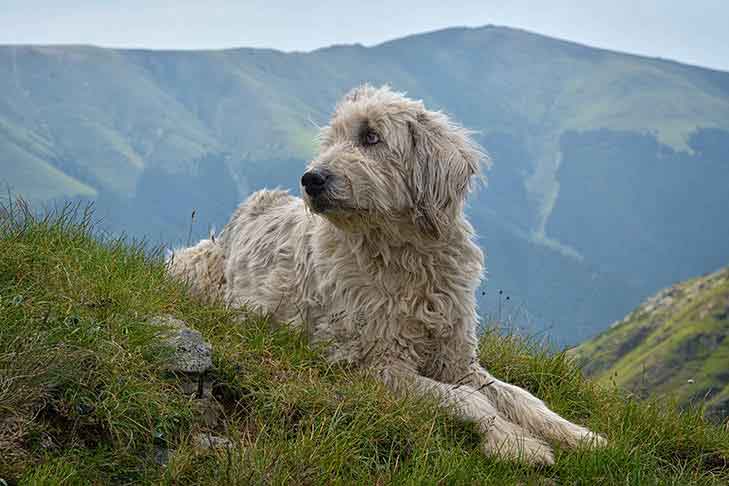
The Rafeiro of Alentejo It is an excellent watchdog in the haciendas and houses of the Alentejo.

Content

History

The Rafeiro of Alentejo (Alentejo Mastiff), as the name reflects, comes from the Portuguese region of Alentejo, extending south of the Tagus River to the Algarve. The pedigree dog, that within the FCI belongs to the Group 2 (Molossoid), Mountain Dogs subsection, has a long history as a herding dog. Although little is known about the exact origin of this rare breed, their parents are supposed to be found in the molossian dogs of the Middle East. The Estrela Mountain Dog (Star Mountain Dog), also from portugal, was probably also involved in its origin.

In the Alentejo lowlands, shepherds used the Rafeiro of Alentejo to herd and drive cattle. It also, the intrepid four-legged friend protected the flock entrusted to him by reliably avoiding attacks by wild animals or rustlers. Especially at night the Rafeiro of Alentejo defended his flock to the blood. The wealthy large landowners appreciated the imposing dog not only as a vigilant protector, but also as a status symbol of strength and power.

As industrialization advanced and the large latifundia decreased, the rafeiro it got weirder. In the early 20th century, dogs of this type were almost extinct. But, a small circle of enthusiasts ensured that the breed was preserved. In 1940 a first breed standard was established. 14 years later, the Fédération Cynologique Internationale (FCI) finally recognized the breed.

Physical characteristics

When the Rafeiro of Alentejo, cattle thieves and wild animals quickly flee: Who would want to mess with such a big and powerful dog?

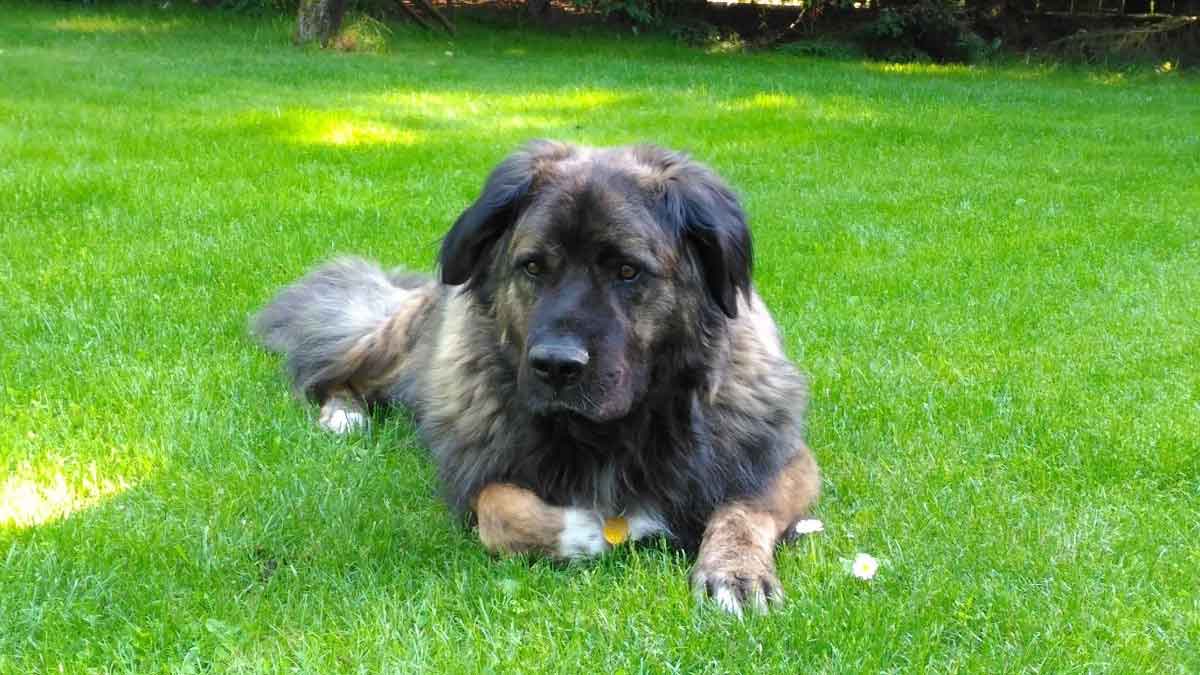
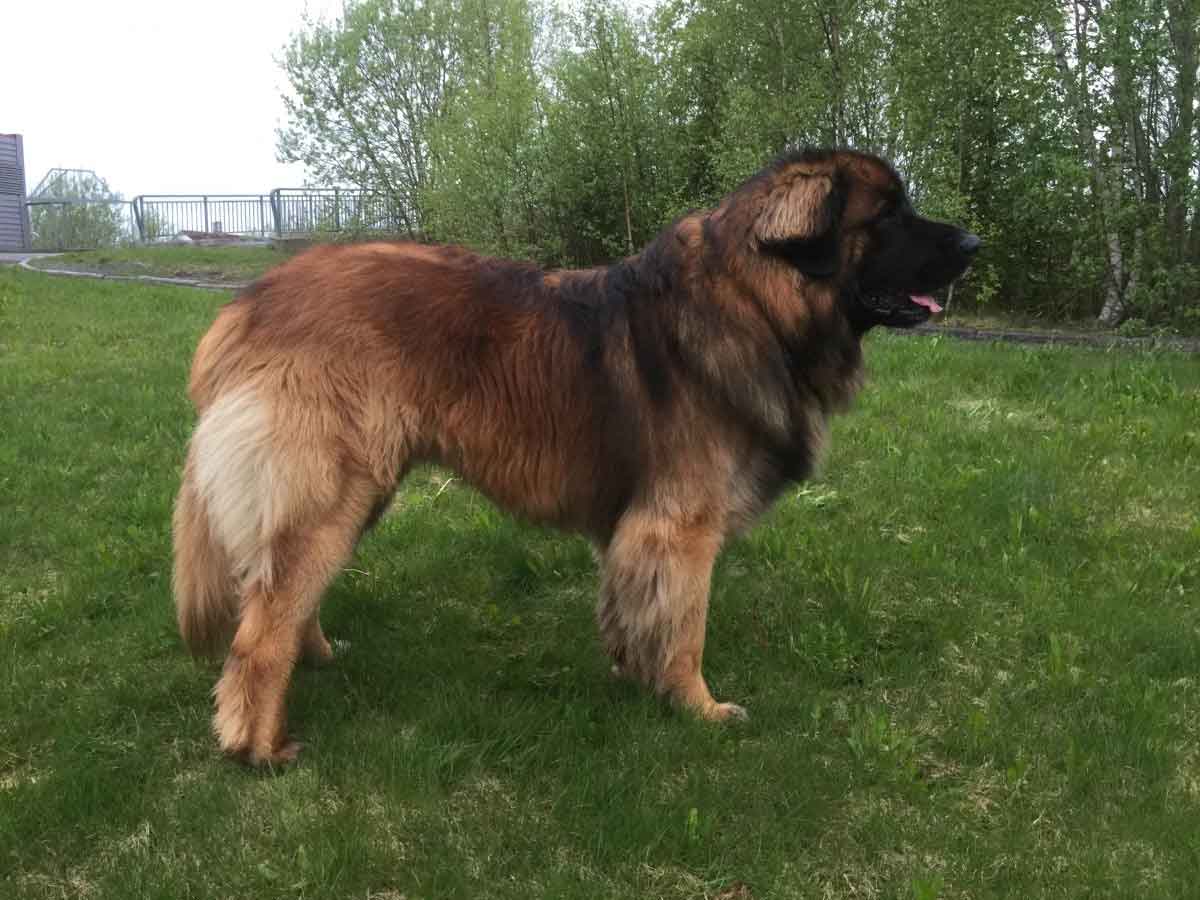
With a height at the withers of up to 76 cm and a weight of approximately 50 kg, the Portuguese breed dog has a very striking appearance. His massive head and strong, muscular body give a defensive impression.. Look calmly at your opponent with small brown eyes, between which there is a slight groove, but nothing escapes your watchful eye.

Despite its bulky shape and somewhat heavy and slow gait, the body of the Rafeiro of Alentejo seems to be rather long than wide. The neck offers a good transition to the shoulder, the back is straight. The tail is well furnished and thickened at the base, rather low and forms a slight upward curve when excited. In rest position it reaches to the hock. Ears of the Rafeiro they are medium in size and fall to one side when folded.

The dense and smooth coat of the Portuguese Sheepdog is short to medium length and has abundant undercoat, giving you reliable protection in all weather conditions. The Rafeiro of Alentejo it is available in black, gray wolf, leonado or yellow with or without white spots. A white base color with yellow spots is also allowed., as well as brindle specimens according to the breed standard.

Character and skills

At night, the Rafeiro of Alentejo he is in his best moment: nothing escapes your watchful eye, his good sense of smell and his excellent ears. Anyone who dares to enter their territory is captured without notice and, if required, wholesale. Pastors who have a Rafeiro they no longer have to fear rustlers or poachers.

Like a purebred dog, whose sole task is to accompany and protect his family, the Portuguese breed dog is completely unsuitable. Although he is faithful and loyal to his family, his innate sharpness is difficult to control even with consistent upbringing. After all, the intelligent and self-confident Rafeiro of Alentejo has always been used to working and acting independently. But, the will to subordinate and obedience are not among its strong points.

Who wants to keep a Rafeiro of Alentejo You must be able to offer him a large territory in which his watchful and protective instinct can live according to his mood. This does not mean, of course, that one should just let this dog go. A responsible owner socializes and educates his dog from the beginning. Shows you clearly who holds the reins in your hand and where your limits are. At the same time, he also accepts that his four-legged friend needs his freedom. The Rafeiro will never become a "good lapdog".

Buy a “Rafeiro del Alentejo”

Those interested in a Rafeiro of Alentejo Purebreds sometimes have to go a long way to find a suitable breeder. But, people who want to buy this dog on a whim, should refrain from buying it. The Rafeiro it is and continues to be an excellent herd dog and should be kept in that context. Who wants to make it a suitable companion dog for the family, You are not doing yourself or the dog any favors..

Health and life expectancy of the “Rafeiro del Alentejo”

The typical diseases of the breed are hardly known due to the low propagation of the breed. The Rafeiro it is a very robust dog whose life expectancy is comparatively high, of 12 to 14 years. But, like all dogs of their size and format, You may also have joint problems such as hip joint dysplasia or elbow dysplasia.

The “Rafeiro del Alentejo” diet

In principle, this breed has no specific dietary needs. But, a balanced and healthy diet is, of course, also important for this dog – also or especially regarding possible joint problems. So, following the high energy puppy diet, a fairly low protein food should be given first to prevent the young dog from growing too quickly. In the adult dog, the energy value of the food can increase again. Now, fresh meat, through which the necessary amount of animal protein is absorbed, should mainly fill the feeding bowl. Fresh vegetables and rice are suitable as a healthy garnish. Fish can be given as an alternative to meat.

Characteristics "Rafeiro of Alentejo"

Coexistence is important that you have with your new friend. Before considering the acquisition of a dog of the breed "Rafeiro of Alentejo" you know certain factors. Not all breeds of dogs are apt to live in an apartment, you must take into account his character, their need for exercise, their interaction with other pets, their care and if you have small children, their level of tolerance towards them.

Adaptation ⓘ

3,0 of 5 stars (based on 1 review)

friendly dog ​​ⓘ

2,0 of 5 stars (based on 1 review)

hair loss ⓘ

3,0 of 5 stars (based on 1 review)

Affection level ⓘ

4,0 of 5 stars (based on 1 review)

Need for exercise ⓘ

3,0 of 5 stars (based on 1 review)

Social need ⓘ

1,0 of 5 stars (based on 1 review)

Home ⓘ

3,0 of 5 stars (based on 1 review)

Toilet ⓘ

2,0 of 5 stars (based on 1 review)

Friendly with strangers ⓘ

2,0 of 5 stars (based on 1 review)

barking ⓘ

4,0 of 5 stars (based on 1 review)

Health ⓘ

3,0 of 5 stars (based on 1 review)

Territorial ⓘ

5,0 of 5 stars (based on 1 review)

Cat friendly ⓘ

2,0 of 5 stars (based on 1 review)

Intelligence ⓘ

4,0 of 5 stars (based on 1 review)

Versatility ⓘ

1,0 of 5 stars (based on 1 review)

Child friendly ⓘ

3,0 of 5 stars (based on 1 review)

Surveillance ⓘ

5,0 of 5 stars (based on 1 review)

joy ⓘ

1,0 of 5 stars (based on 1 review)

Type and recognitions:

  • FCI CLASSIFICATION:
  • Group :
  • Section : . .

Federations:

  • – FCI – Pinscher and Schnauzer-Molossoid type dogs – Swiss Mountain Dogs and Cattledogs. Section 2.2 Molossoid, mountain type. ⓘ
  • – AKC – FSS ⓘ
  • – UKC – Watchdog ⓘ

FCI breed standard "Rafeiro of Alentejo"

Origin:
Portugal

Date of publication of the valid original standard:
04.11.2008

Use:

It is an excellent watchdog on Alentejo farms, and is also a highly esteemed herding dog. It's me


General appearance:

It is a dog of large size, strong, rustic, sober. With a slightly convexilinear profile. It is sublongilinear (a little longer than wide).

  • IMPORTANT PROPORTIONS: Rectangular (Sub- longilinear) with a height at the withers somewhat less than the length of his body.
  • Width of the skull with respect to the length of the head must have a ratio of 1/ 2
  • Muzzle length and skull must have a ratio of 2 / 3
  • Chest depth should be slightly less than half the height at the withers.


Behavior / temperament:

An excellent farm dog and property watchdog. It is also very useful as a livestock protector., more vigilant during the night, being very serious when entrusted with any territory or property.

Her expression is calm and confident, never aggressive or shy.

Head:

Voluminous tending to be massive in proportion to the size of the dog, wide at the back of the skull, narrow and less convex in the antecara. The upper facial skull axis is moderately divergent.

Cranial region:
  • Skull: Width; bulging on both axes. Superciliary arches are not prominent. The front groove is not very pronounced between and above the eyes. The occipital protuberance is hardly apparent. The interatrial space is of a regular and slight curvature.
  • Depression links (Stop): It is little pronounced

facial region:

  • Truffle: Oval and black in color. Its limb is slightly truncated from top to bottom and front to back.. Well open nasal Windows.
  • Snout: Bulging cross section. The profile of the nose is straight. The length of the muzzle is less than that of the skull. It is of medium amplitude.
  • Lips: Slightly stooped from the front, overlapping and well broken. They are thin, firm, with a slightly curved bottom profile.
  • Jaws / Teeth: Strong, well developed and well opposed. Scissor bite, accepted in clamp.
  • Cheeks: Slightly evident with the prominent masonic zone. Eyes: Small, almost shallow ellipticals. They are brown (preferably dark), horizontal, and little. The eyelids have a firm and adherent dark pigmentation to the eyes. With a calm expression.

Ears: Medium insertion. They are bent, hang over the sides and have little movement. When the animal is active, his ears are kept bent, upright at the base and more vertically flexed. They are triangular, small and narrow at the base; its width at the base is equal to the length of the pavilion's middle axis.

NECK: Well placed on the shoulders, straight, short, strong with a simple and uniform longitudinal jowl, proportioned to size.

Neck:

Well placed on the shoulders, straight, short, strong with a simple and uniform longitudinal jowl, proportioned to size.

Body:

It is strong, good muscular, somewhat longer than its height at the withers, bulky.

  • top line: Right, almost level, slight tilt from the rear is tolerated.
  • Cross: Not prominent, well connected to the neck. Back: Slightly inclined, tending to horizontal.
  • Pork loin: Straight and medium length. It is broad, well muscled and slightly bulky.
  • Rump: Slightly inclined, long Middle, broad and muscular, in relation to the substance.
  • Sill: Not very apparent, broad.
  • Breast : Large, either lowered or slightly above elbow level.
  • Ribs: Well arched, slightly leaning towards the rear.
  • Belly and haunches: Almost horizontal sternum. It is not thin and extends the line of the sternum.

Tail:

It is long and thick, medium insertion following the line of the rump. It has a curve in its limb, but it's not bent. When the dog is at rest it falls under the hock; when it is active, it can become twisted.

Tips

PREVIOUS MEMBERS: They're strong, separated; viewed from the front and side, they are well poised.

  • Shoulder: Strong, long Middle, well-developed and muscular. Scapula – humerus angle approximately 105º.
  • Arm: Strong, long Middle, leaning and muscular.
  • Elbows: Stuck to the chest, without leaning in or out. Radius – humerus angle between 130º and 135º.
  • Forearm: Is vertical, long, thick and well muscled.
  • Carpo: Thick. With good articulation.
  • Metacarpus: It is thick, medium length and slightly sloping. Previous feet: They are not crushed. Fingers are thick and long, they are well closed and not very hunched. The nails are strong and their color varies according to the hair.. The pads are thick and tough.

LATER MEMBERS: Strong, separated, and seen from behind and from the side they are well poised.

  • Thigh: Long, width, inconspicuous muscles. Hip – femur angle approximately 105º.
  • Knee joint: Strong articulation, in line with the body without leaning or outwards, Femur – tibia angle between 125º and 130º. Leg: Slightly sloping and of medium length. It is muscular. Hock: Medium tall. He is thin. Tibia – tarsus angle approximately 140º.
  • Metatarsus: Thick, medium length, slightly tilted. Can have single or double dewclaws.
  • Hind feet: They are not crushed. Fingers are thick and long, they are well closed, and they are not very hunched. The nails are strong and their color varies according to the hair.. The pads are strong and durable.

Movement:

Heavy, slow and undulating without exaggeration.

Mantle

SKIN: The skin is thick and slightly loose. The mucosa is partially or totally pigmented in black.

  • Fur: Should be short or preferably semi-long. It is thick, smooth and dense. It is distributed regularly on the body and extends to the interdigital spaces.
  • Color: Black, wolf, leonado or yellow. White with these colors or these colors with white, spotted, striped or tabby.


Size and weight:

Height to the cross:

  • Males: 66 to 74 cm..
  • females: 64 to 70 cm..

Weight:

  • Males: 45 to 60 kg.
  • females: 35 to 50 kg.


Fouls:

Any deviation from the aforementioned criteria is considered as a fault and the severity of this is considered to the degree of the deviation to the standard and its consequences on the health and well-being of the dog..

  • Behavior: Shyness.
  • Apgeneral arience: General poor appearance, thinness, Obesity.
  • Caña nasal: Long, close, somewhat curved in profile with a vertically truncated truffle.
  • Línand Superior: barbed back the ensillado.
  • Glikeness: Too much fall, long, close.
  • Colto: With very high insertion, or very low.
  • Formertremedies: Cow hock, very wide in the front, wrong angulations, lack of correct poise.
  • PinIt: Disproportionate to body size, open foot or hare foot,
  • Plink: Bad look of the coat Long hair, wavy the fence.

SERIOUS FAULTS:

  • ApGeneral arience: Light or lymphatic structure.
  • Cthey are not coming: Disproportionate to the size of the dog, lack of volume, stop pronounced, flat or narrow skull, parallel upper longitudinal facial skull axes
  • Ojors: Light color, non-elliptical, inclined, poorly adherent eyelids to the eyeball.
  • Obars: Large, rounded, not folded, not hanging, partially amputated
  • CUit: Absence of double chin, too many folds or double chins.
  • Pecho: Strait, flat ribs
  • Colto: Curved when at rest, a hook on the tip, Amputee cuts.
  • Mucous membranes: Absence of partial external pigmentation of the mouth, eyelids, lips and nose.
  • Tby hand: Males: less than 66 cm.. or more than 75 cm.. females: less than 64 cm.. or more than 71 cm.

FALTAS DESCALIFICANTES:

  • Aggressiveness or extreme shyness.
  • Any dog ​​showing clear signs of physical or behavioral abnormalities must be disqualified..
  • Tinpincity: Atypical.
  • ApGeneral arience: Extremely light or lymphatic structure.
  • Cthey are not coming: Narrow and long.
  • Caña nasal: Excessively long, the arched profile.
  • Dinentities: Upper or lower prognathism.
  • Ojors: clear, different color or dimensions, partly covered by the third eyelid.
  • Obars: High or low implanted, rounded or large.
  • Colto: Absence (anuria).
  • Mucous: absence of black color in the truffle, the Windows, mouth and lips (albinism).
  • Plink: Satin.


N.B.:
  • Males should have two normal-appearing testicles fully descended into the scrotum..
  • Only functionally and clinically healthy dogs, with the typical conformation of the breed, should be used for parenting.

TRANSLATION: Rafael Santiago (Puerto Rico).

Technical review: Miguel Angel Martinez (Federation Cynologique Argentina).

Source: F.C.I - International Cynological Federation

Alternative names:

1. Rafeiro do Alentejo, Alentejo-Mastiff, alentejo mastiff (English).
2. mâtin de l’Alentejo, mastiff de l’Alentejo (French).
3. Rafeiro do Alentejo, Rafeiro, Alentejo-Mastiff (German).
4. Mastim Português, Mastim do Alentejo (Portuguese).
5. Mastín del Alentejo (español).

Photos:

1 – Rafeiro of Alentejo by https://brit-petfood.com/hr/node/8006

▷ The world of Pets: Dogs, cats, birds, reptiles, amphibians

Karst Shepherd
Eslovenia FCI 278 - Molossoid . Mountain

Karst Shepherd

The Karst Shepherd a typical guard dog. Acts largely independently, which is also essential for the protection of the herd.

Content

History

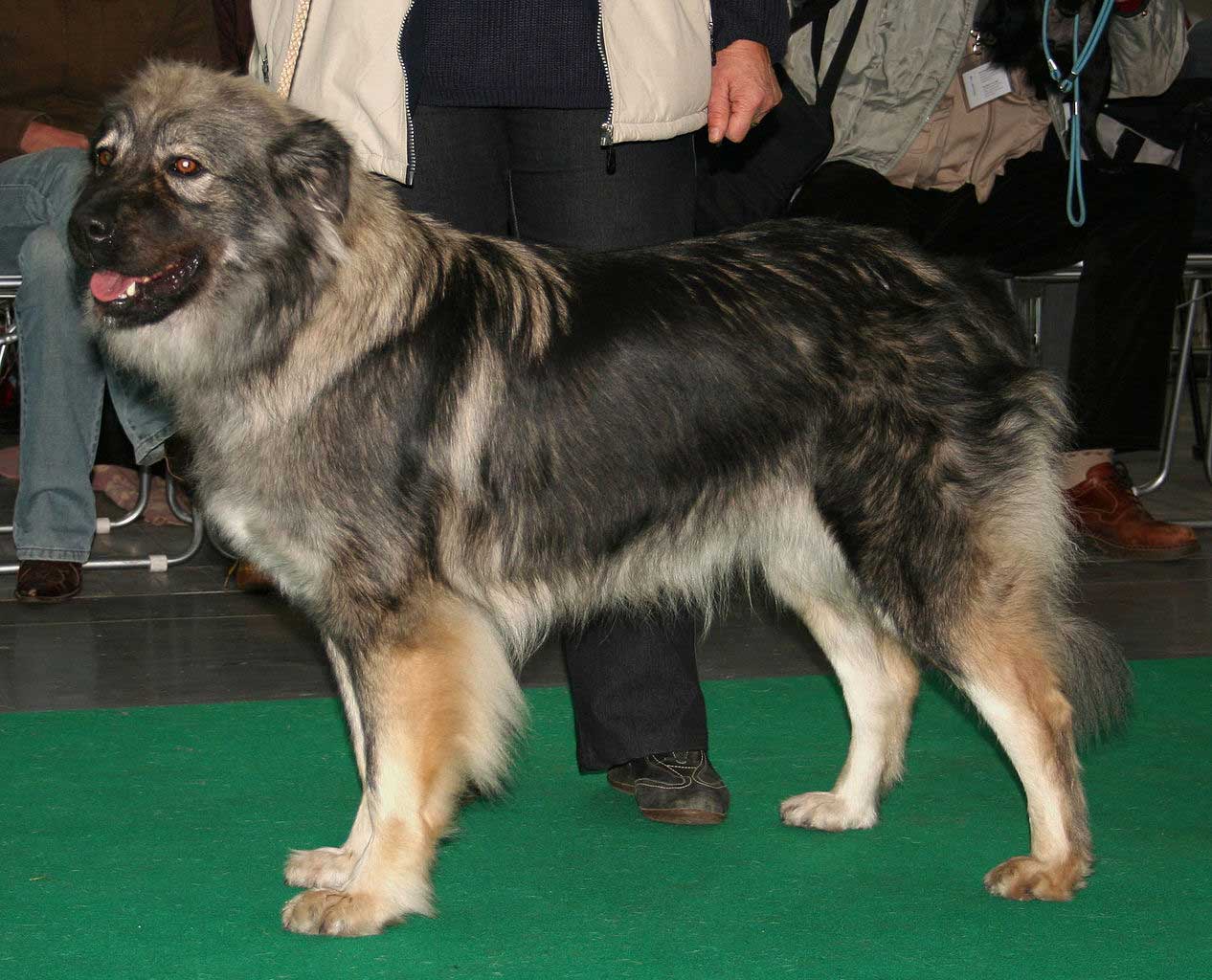
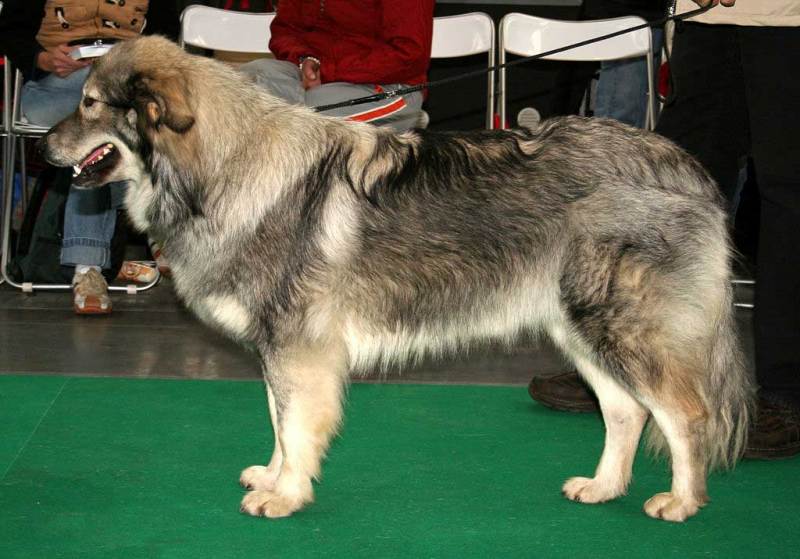
The Karst Shepherd It is a breed that has existed for several centuries and belongs to the group of molosoids. Probably, This dog followed the Illyrian tribe in their migration through Styria and the Dalmatian islands and settled in the Slovenian region of the Karst Massif.. The first time that race is referred to in writing is in 1689, in the book of Baron Janez Vajkart Valvasor entitled « The glory of the duchy of Carniole ». The breed and its standard were officially recognized on 2 in June of 1939 with the name of " Iliria Shepherd » during the general assembly of the F.C.I. in stockholm. During the F.C.I general assembly. in Bled-Slovenia in 1948, the standard was completed and the breed recognized again. But, to 16 in March of 1968, the Iliria Shepherd from the Karst massif, bore the same name as the Shepherd of the Sarplanina massif. In front of two shepherd dogs with the same name, the Yugoslav Central Society decided to name the one from the Karst region "Shepherd of the Karst Massif" and the other " Sarplaninac ». Since then, these two races are totally independent.

Physical characteristics

Externally, the Karst Shepherd they are hardly distinguishable from those of Yugoslavian Shepherd Dog Sharplanina. They are on average slightly smaller than their relatives who live further south, but the height at the withers accepted for breeding is the same for both breeds.

It is a dog's size medium, harmoniously built, robust, with well-developed muscles and a strong constitution.

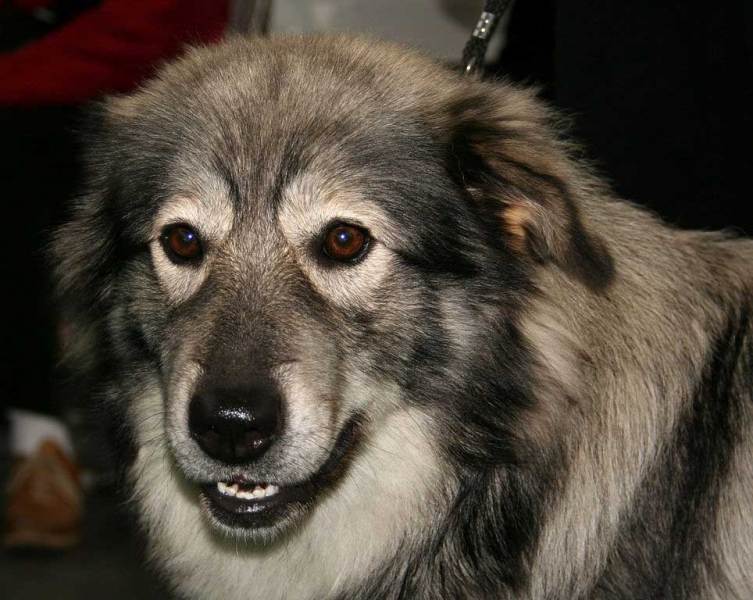
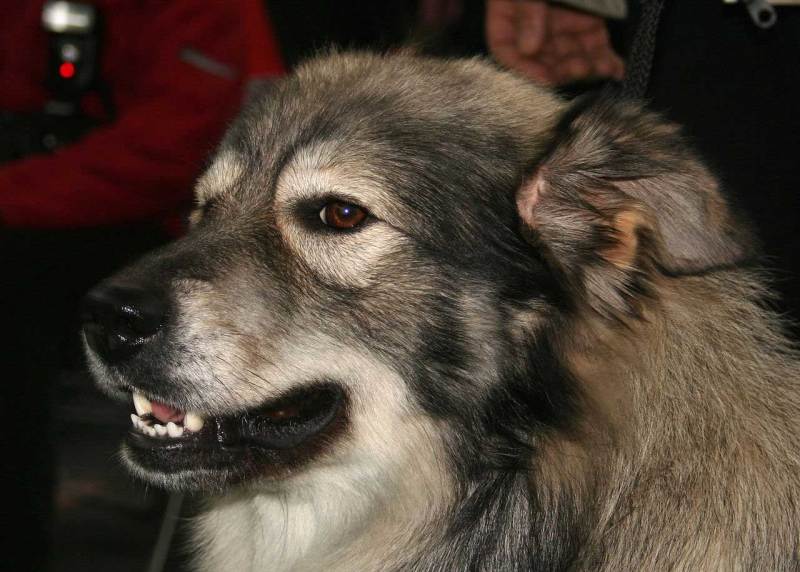
The head is big, with powerful teeth. The eyes are almendrados, brown or almost black. The ears are set moderately high and fall flat in a "V" shape.. The tail, wide at the base, takes the form of a saber, drawing a light hook with the tip should reach the hock.
Fur: quite long, reaches the 14 cm.; the undercoat is well developed.

  • Color: grey iron. A dark shade is preferable on the cross; towards the abdomen and feet the color changes without visible transition to light gray or even sand color, with a dark gray band across the lower extremities. The dark mask on the head surrounded by beige gray hair.
  • Size: males, of 57 to 63 cm. (ideal 60 cm.); females, of 54 to 60 cm. (ideal 57 cm.).

Character and skills

The Karst Shepherd he is a typical watchdog. Acts largely independently, which is also essential for the protection of the herd. It is very territorial, brave and vigilant, but without biting. He is distrustful and even hostile to strangers, but a loyal and devoted companion of his master and his family.

The born Guardian needs early and careful socialization and loving but consistent education. He only submits to clear leadership.
Like all guard dogs, the Karst Shepherd is late development, reaches mental maturity only at 3-4 years.

He loves country life and being outdoors. Its ideal habitat is a house with a large parcel of land that it can monitor. With a close family relationship and a task that fits your natural waking instinct. The Karst Shepherd he is a nice companion dog, kind and also obedient, but he will never completely detach himself from his strong independence.

Overall Karst Shepherd It:

  • Incorruptible guard in the house
  • Does not get along with other dogs.
  • Patient, but still affectionate
  • Forgiving with children

Karst Shepherd Education and Maintenance

Only conditionally suitable for the city.
Outside the mountainous regions of Slovenia, these dogs are very rarely found. This is because, on the one hand, to his great need to move and, on the other hand, to the high demands of their education. The Karst Shepherd are more individual than other sheepdog breeds, as they are often left to their own devices in their “natural habitat” and protect flocks independently. An experienced owner with a lot of patience and a sense of mind for your dog will have little trouble educating his Karst Shepherd towards an obedient and calm companion.

Karst Shepherd Health

The Karst Shepherd it's quite healthy for a sheepdog, but suffers from some typical problems of the breed. On average, they reach an age of 10 to 12 years and therefore become significantly older than most German shepherds. The Karst Shepherd, living in a family environment, they are less susceptible to disease than animals that have to sleep in kennels and are permanently exposed to the weather. Boredom is also a stressor and affects the mind and health of dogs..

Its claws must be shortened regularly.
They have sensitive ears that swell quickly.
Very long-growing dogs suffer more often from so-called dachshund paralysis (intervertebral disc disorders).
Dysplasia of the elbow and hip joints are also more common in these dogs..

Buy a Karst Shepherd

Several breeders of the Karst Shepherd they are members of the Dog Club of Southern and Eastern Europe.
Some Slovenian breeders offer their dogs for export.
Pay attention to good breeding conditions!!
Like the Karst Shepherd they are very rare outside of Slovenia, you will hardly be able to visit the breeder before buying. If you have the possibility, Combine buying a puppy with a multi-week vacation in Slovenia. If your puppy already knows you, you will feel much less stress during the transfer and during the first adaptation phase. You can also check the conservation conditions during a visit to the breeder.

Characteristics "Karst Shepherd"

Coexistence is important that you have with your new friend. Before considering the acquisition of a dog of the breed "Karst Shepherd" you know certain factors. Not all breeds of dogs are apt to live in an apartment, you must take into account his character, their need for exercise, their interaction with other pets, their care and if you have small children, their level of tolerance towards them.

Adaptation ⓘ

3,0 of 5 stars (based on 1 review)

friendly dog ​​ⓘ

3,0 of 5 stars (based on 1 review)

hair loss ⓘ

3,0 of 5 stars (based on 1 review)

Affection level ⓘ

4,0 of 5 stars (based on 1 review)

Need for exercise ⓘ

4,0 of 5 stars (based on 1 review)

Social need ⓘ

2,0 of 5 stars (based on 1 review)

Home ⓘ

3,0 of 5 stars (based on 1 review)

Toilet ⓘ

2,0 of 5 stars (based on 1 review)

Friendly with strangers ⓘ

3,0 of 5 stars (based on 1 review)

barking ⓘ

2,0 of 5 stars (based on 1 review)

Health ⓘ

4,0 of 5 stars (based on 1 review)

Territorial ⓘ

5,0 of 5 stars (based on 1 review)

Cat friendly ⓘ

3,0 of 5 stars (based on 1 review)

Intelligence ⓘ

4,0 of 5 stars (based on 1 review)

Versatility ⓘ

3,0 of 5 stars (based on 1 review)

Child friendly ⓘ

4,0 of 5 stars (based on 1 review)

Surveillance ⓘ

5,0 of 5 stars (based on 1 review)

joy ⓘ

4,0 of 5 stars (based on 1 review)

Images "Karst Shepherd"

Photos:

1 – Owczarek_kraski en el World Dog Show en Poznan by Wikipedia
2 – Owczarek_kraski en el World Dog Show en Poznan by Pleple2000 / CC BY-SA
3 – Owczarek_kraski en el World Dog Show en Poznan by Pleple2000 / CC BY-SA
4 – Owczarek_kraski en el World Dog Show en Poznan by Wikipedia
5 – Owczarek_kraski en el World Dog Show en Poznan by Pleple2000 / CC BY-SA

Videos "Karst Shepherd"

Type and recognitions:

  • FCI CLASSIFICATION:
  • Group :
  • Section : . .

Federations:

  • – FCI – Pinscher and Schnauzer-Molossoid type dogs – Swiss Mountain Dogs and Cattledogs. Section 2.2 Molossoid, mountain type. ⓘ
  • – UKC – Watchdog ⓘ

FCI breed standard "Karst Shepherd"

Origin:
Slovenia

Date of publication of the valid original standard:
26.06.2000

Use:

The Shepherd of the Karst massif is a shepherd dog par excellence and a good guardian. In the news, increasingly used as a guard and defense dog. Although it is true that in recent times it is mainly a family dog, It does not stop being, in essence, a perfect shepherd dog.


General appearance:

This is a medium-sized dog, harmonious, robust, endowed with well-developed muscles and a strong constitution. The tail and ears are droopy. The hair, steel gray, it is long and abundant.

IMPORTANT PROPORTIONS:

  • Trunk length: height at the withers = 9 : 8 at least. A little longer in females.
  • Skull a little longer (13 to 14 cm.) that the muzzle (11 to 12 cm.).
  • Skull width (13 to 14 cm.) equal to its length.


Behavior / temperament:

Of good character, is brave and courageous without being too aggressive. It is dedicated to its master and moderately energetic temperament. Good incorruptible guardian, be wary of strangers. He is a pleasant and obedient companion dog., although it always retains a strong individuality.

Head:

Nice looking, although proportionally large relative to the body; it should not be fine, in tosca. The upper profiles of the skull and nasal canal are slightly convergent.. View from the top, it is wide in the region of the ears and decreases towards the region of the nose. Profile view, it is tall and rounded. Head length, from the occipital protuberance to the tip of the nose, is of 24 to 26 cm.. The skull is slightly longer than the muzzle.

Cranial region:
  • Skull: Pretty developed, muscular, delgado. Since its profile is slightly convex, seen from all sides it is rounded. The amplitude of the skull in the region of the ears is equal to its length. Zygomatic arcades are not accented, the front groove is moderate, the median ridge is slightly convex, without accentuating the occiput.
  • Depression links (Stop): It is a little marked, no sharp transition.

facial region:

  • Truffle: Black. Wide, well developed, slightly exceeds the front line.
  • Snout: Medium length. Width and height at its base, progressively decreases towards the nose area. The nasal helm is straight and wide.
  • Lips: They are thick, stretched, tight, without forming bags. They are black.
  • Jaws / Teeth: Teething is complete. Teeth are strong, especially the incisors. The bite is scissor-shaped.
  • Cheeks: laterally, they are somewhat bulky; they are plump, but not too developed, molding a fairly flat face.
  • Eyes: They are presented a little apart, no bumps, nor sunk in the orbits. Almond shaped. Its color ranges from light brown to dark brown. They are frank in expression, calm and firm, almost melancholic, because of the black color of the eyelids.
  • Ears: Moderately high implantation, its length is medium and its extremity extends to the outer corner of the eye. They fall along the cheeks in a "V" shape and the front edges are folded outwards..

Neck:

Width, thick, good muscular, oval cross section. The upper profile is rectilinear or slightly arched; the lower profile is rectilinear. Medium length (a few 25 cm.), it is deeply embedded between the shoulders and attached to the head by strong musculature. The skin is thick, well attached to the body, no dewlap. The coat is abundant with long hairs that form a very thick collar and mane, which makes the neck look beefier and shorter than it actually is. The bearing is haughty and slightly raised.

Body:

  • General appearance: It is well developed, medium length. The thoracic cavity is long.
  • top line: It is straight, horizontal or slightly oblique.
  • Cross: Long, not very high, of adequate width and well applied to the body.
  • Back: Straight, muscular and broad. Medium length.
  • Pork loin: The lumbar region is a little short, very muscular and broad. Rump: Medium length, broad and well muscled. The tail is slightly inclined at the birth.
  • Breast : It is well developed, bulky in length and breadth; the ribs are wide, flat and moderately arched. The front of the chest is well developed and the tip of the sternum is quite rounded. With a length of 25 to 28 cm., its circumference is 70 to 78 cm..
  • Bottom line and belly: The belly is slightly raised and tucked up, hard. The flanks are short, moderately shortened.

Tail:

It is solidly attached to the body; it is wide at its base. In its normal position, it is shaped like a saber and the extremity often traces a light hook. Medium length, must reach at least to the hock. It has abundant fur, with long hairs, but without forming a plume. When the dog is alert or on the move, the tail rises to or slightly above the back region. When the dog is at rest, the tail comes down.

Tips

PREVIOUS MEMBERS:

  • General appearance: They are straight when viewed from the front or in profile. In all its parts they unite very harmoniously with each other.
  • Shoulder: The shoulder blade is of medium length, width, oblique, well muscled and firmly attached to the body. The scapular angle- humeral is close to the right angle.
  • Arms: Relatively long, more oblique than the shoulder blade, endowed with strong musculature. They are well applied to the body.
  • Elbows: The humeral-radial angle is not very open. Well applied to the body, the elbows must be at least at the level of the sternum.
  • forearms: Of adequate length, straight. Bones and muscles are strong.
  • Carpi: Strong, well applied to the forearm as well as the metacarpus. Metacarpus: Widths, medium length, slightly oblique.
  • Previous feet: Of well proportioned dimensions to the trunk, its shape goes from oval to round. Fingers are well together and arched, nails are darkly pigmented. Central bearing and digital tubers are strong, black or darkly pigmented.

LATER MEMBERS:

  • General appearance: From behind, they are well proportioned and harmonize with the other parts of the body. Profile views, the angulations are closed enough.
  • Thighs: In the coxofemoral angle it is closed; thighs are long, widths, well muscled and solid.
  • Knee: Femoro-tibial angle slightly open, shapely knees. The kneecap is solid.
  • Legs: They are moderately long, inclined, robust. Hocks: Solid and moderately open.
  • Metatarsals: Massifs, short and straight. In the event that spurs appear, these must be removed.
  • Hind feet: With the same characteristics as the front feet.

Movement:

Harmonious, elastic, well coordinated steps. The favorite and most elegant movement is the trot. Galloping with long strides is less elegant

Mantle

SKIN: It's thick, compact, elastic, adheres well to the body and has no wrinkles; dark pigmentation; black pigmented lip and eyelid edge.

  • Fur: Well bushy, long, smooth; the inner layer of hairs is abundant. The head, the front edge of the ears and the front of the limbs are covered by short hair. The back edge of the ears features longer, softer hair. The upper part of the neck is covered by long hair, stretched and abundant that forms a mane. On the bottom, the hair is longer and softer, forming a collar that widens in the ligament of the neck. The trunk and belly have longer hair that becomes less hard on the belly. The tail, is usually bushy, but it doesn't form a plume. On the posterior aspect of the forelimbs, long soft hair forms bangs. On the posterior aspect of the posterior extremities, The hair is still long and thick and forms pants.. The length of the outer layer of hairs is about 10 cm..
  • Color: Steel gray. Especially on the cross, a dark shade is preferred. Towards the belly and feet region, color changes without visible transition to light gray or sand color, with dark gray specks on the front of the limbs. The dark mask of the head is surrounded by light brown-gray hair.


Size and weight:

Height to the cross:

  • In males, is of 57 to 63 (ideal size, 60 cm.),
  • In females, is of 54 to 60 cm. (ideal size, 57 cm.).
  • A tolerance of 2 cm others, but this will have a negative effect on the overall appreciation of the dog.

Weight: In the males of 30 to 42 kg, In the females of 25 to 37 kg.


Fouls:

Any deviation from the aforementioned criteria is considered as a fault and the severity of this is considered to the degree of the deviation to the standard and its consequences on the health and well-being of the dog..

MINOR FAULTS

  • Small flaws in the general constitution.
  • Somewhat small head, close, long or not high enough.
  • Indefinite naso-frontal depression.
  • Pronounced zygomatic arches.
  • Too plump or too plump cheeks.
  • Underdeveloped jaws.
  • Loose lips.
  • Very high or very low implantation ears; not close enough to the cheeks.
  • Eyes too wide, too clear, little apart.
  • Chin presence.
  • Slightly sunken back, slightly protruding or drooping rump.
  • Narrow chest, low tilt or barrel-shaped.
  • Narrow chest.
  • Tail too short.
  • Slightly defective limbs, fingers apart, hare foot.
  • Wrinkled or lightly pigmented skin. Absence of wrinkles on the forehead.
  • Insufficient pigmentation of the lip edge, of the eyelids and nose.
  • Hair that is not long enough.
  • Small white mark on the front of the chest, absence of mask.

SERIOUS FAULTS:

  • Serious offenses in the general constitution.
  • Square body silhouette.
  • Narrow head, too light or too coarse.
  • Very marked nasal-frontal depression.
  • Snout very pointed or very long.
  • Teeth: pincer bite, irregular alignment of incisors, lower canines that appear in front of the upper canines.
  • Clear eye.
  • erect ears.
  • Sunken back, rump visibly very raised.
  • Corkscrew or twisted tail.
  • The hind limbs are visibly separated when the dog walks.
  • Clumsy movement, especially in the hind limbs.
  • Soft and wavy hair.
  • Clear pigmentation of the mucosa, of the nose, and of the eyelids. White spot on the front of the greater chest of 2 cm wide and 10 cm length.

FALTAS DESCALIFICANTES:

  • Aggressiveness or extreme shyness.
  • Any dog ​​showing clear signs of physical or behavioral abnormalities must be disqualified..
  • Exaggerated disproportion between different parts of the body.
  • Size below the minimum authorized by the standard.
  • Head too large in relation to the body.
  • Incomplete teeth. Prognathism or enognatismo.
  • Visibly narrow or wide standing position (barrel-shaped).
  • Tail very short or stump.
  • Depigmentation of the mucosa, of the nose or eyelids.
  • Any color other than gray, which must be at least clear. Two-color or multi-colored copies.
  • Well marked boundary between shades of gray. White markings on the chest or on the neck greater than 2 cm wide or 10 cm long.


N.B.:

Males should have two normal-appearing testicles fully descended into the scrotum..

Only functionally and clinically healthy dogs, with the typical conformation of the breed, should be used for parenting.

TRANSLATION: IRIS Carrillo (Federation Canófila de Puerto).

Source: F.C.I - International Cynological Federation

Alternative names:

1. KARST SHEPHERD DOG, kraški ovčar, kraševec (English).
2. Kraski Ovcar (French).
3. Illyrischer Schäferhund (German).
4. Pastor da Ístria (Portuguese).
5. kraški ovčar (español).

▷ The world of Pets: Dogs, cats, birds, reptiles, amphibians

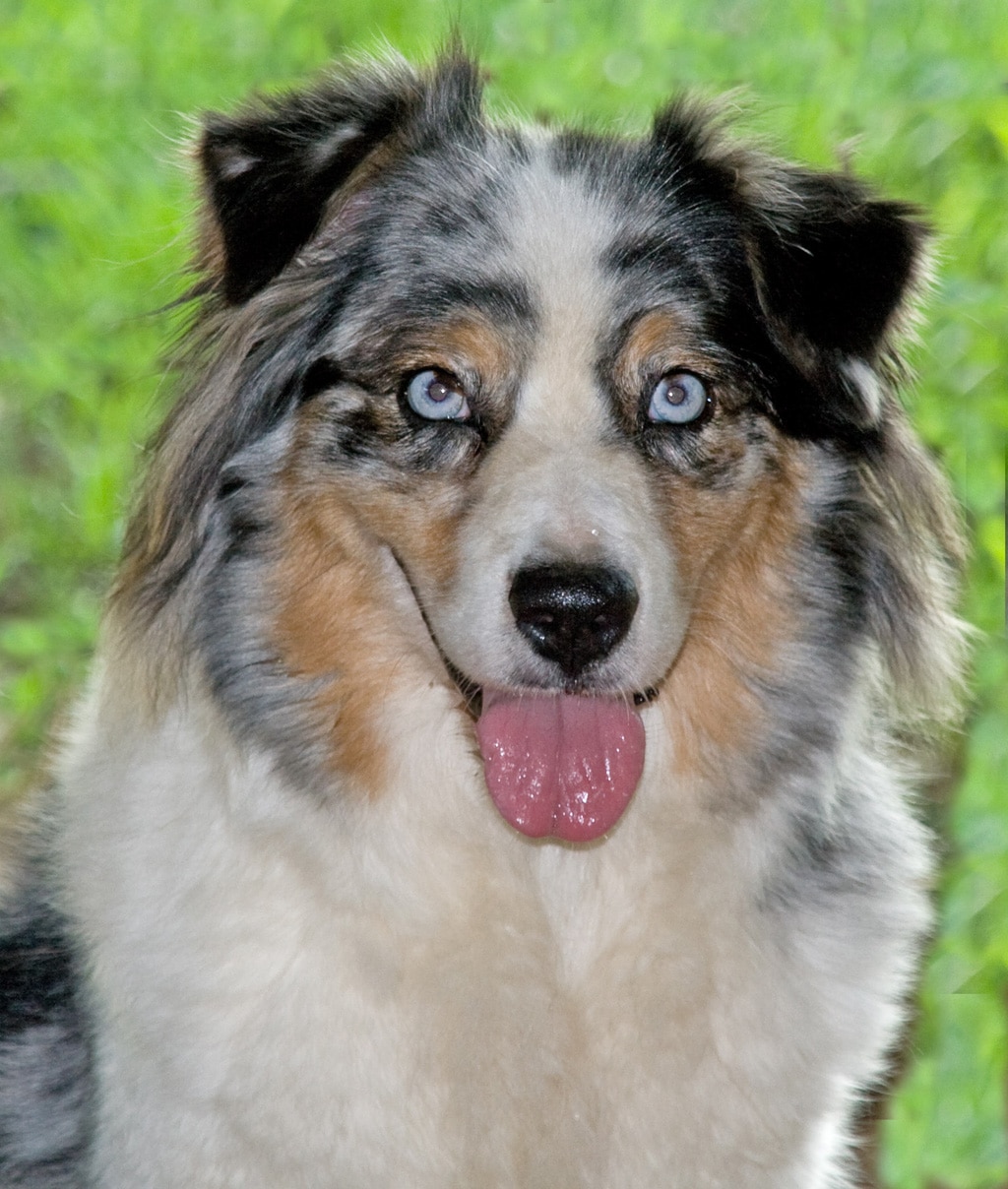
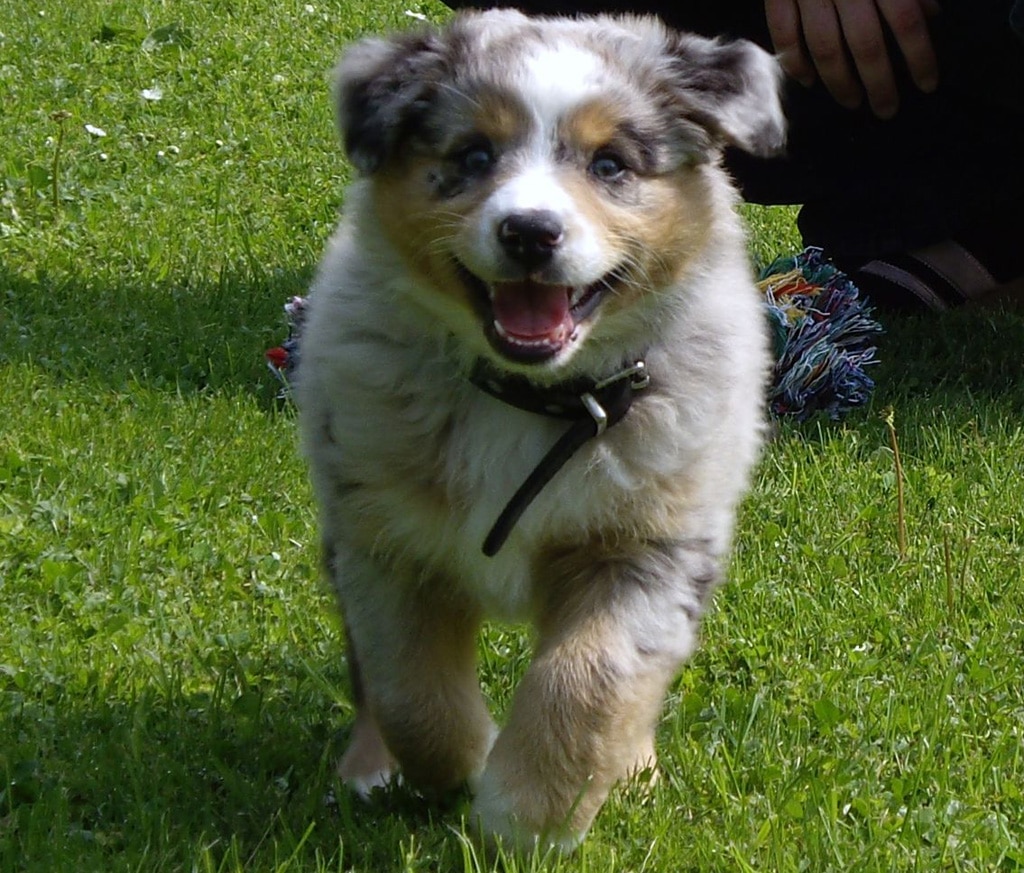
Australian Shepherd
Estados Unidos FCI 342 - Sheepdogs

Pastor australiano

The Australian Shepherd It has a stable temperament and is good in nature.

Content

History

The Australian Shepherd It is a breed of dog of grazing which has developed on ranches in the West of United States. despite its name, the race, did not originate in Australia. It acquired its name because some of the dogs, Australian Shepherds arrived in United States with shipments of Australian sheep.

Race gradually rose in popularity with the rise of the riding following the first world war western. For many years, the Australian Shepherd, has been dog valued by farmers for its versatility and capacity of training inherent. The race has gained recognition, with its training capacity and the desire to please, and are highly respected for his skills in obedience. They became known to the general public through roundups, horse shows, and through Disney made-for-TV movies.

Physical characteristics

The Australian Shepherd is a dog from medium-sized and solid construction, known for its natural 'bob' or amputated tail. He is an active breed of grazing, generally very good with pets and other well-known people, but they can be reserved with strangers. They are not a fair race, tender, who prefer the company of their owners.

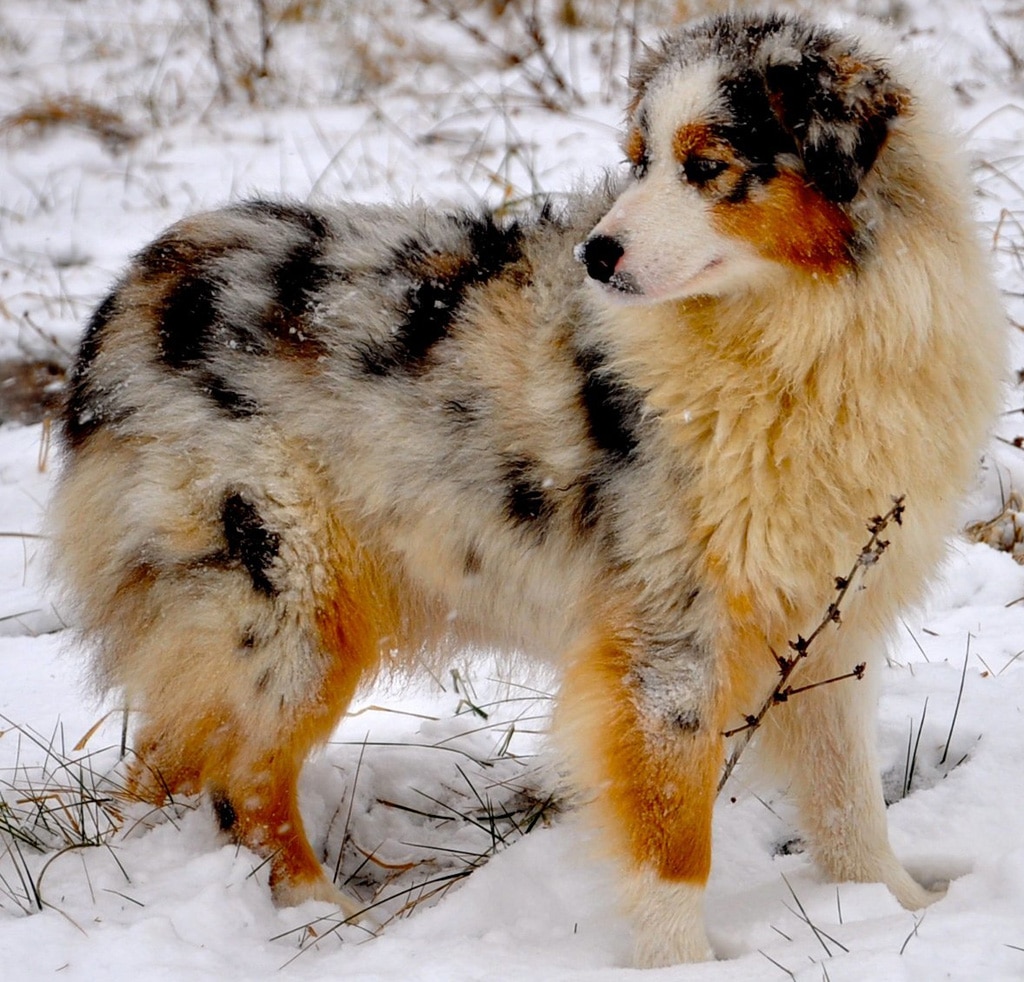
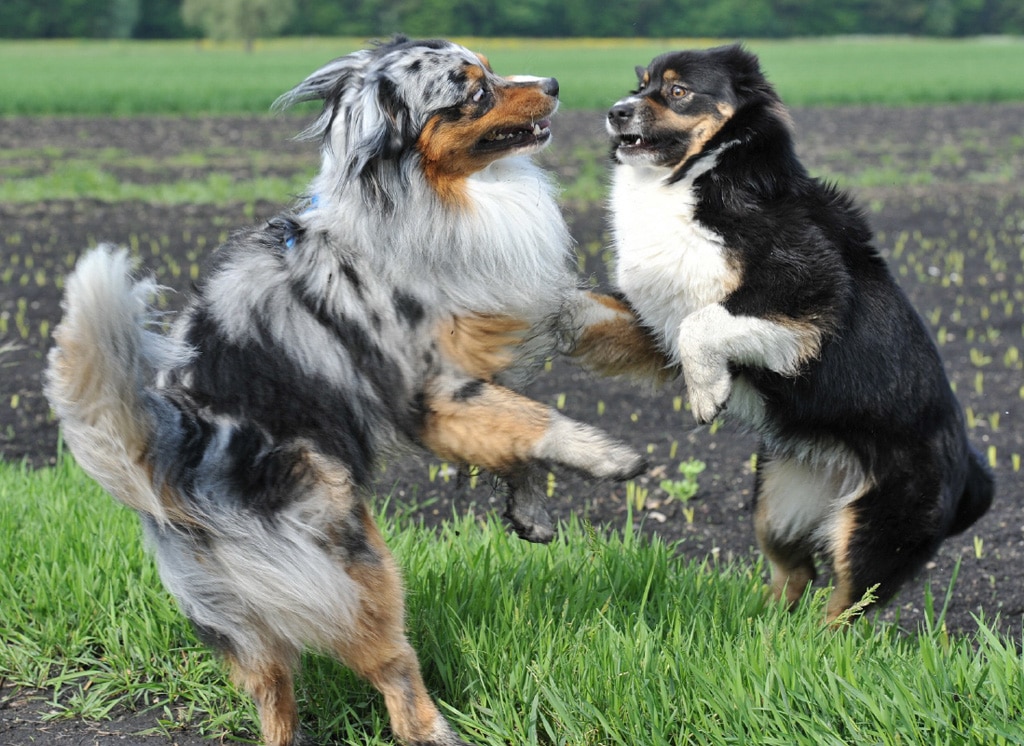
Its mantle is double layer, and the colors are black, red (sometimes called the liver), tricolor (black marble, White and grey), and the Red merle (red marble, White and beige), each of these colors may also have copper and / or white spots in various combinations in the face, the chest and legs.

The wide variety of color combinations comes from the interaction between the color of one allele, that is recessive, dominant or red black color, and the dominant allele marble. Together, They provide the color of the fur, and they can appear in any combination:

Negro, with spot color fire and / or white markings on the face, neck, legs, chest, belly. Copies of a black are equally valid as the Tan and / or white.

Red (liver), with or without points bronze and / or white markings on the face, neck, legs, chest, belly. White or Brown points are required.

Blue Merle (a mottled patchwork of black and grey) with or without stain color fire and / or white markings on the face, neck, legs, chest, belly.

Red Merle (a variegated mosaic of cream and liver red) with or without stain color fire and / or white markings on the face, neck, legs, chest, belly.

There is also great variety in the color of the eyes australian shepherd, they can be of any color or shade of brown or blue, You can have two different colored eyes, or even have "split" or bicolor eyes (for example, Brown half, Blue half).

Character and skills

The race is usually is highly energetic, they require a large amount of exercise, education and care. The Australian Shepherd is playful, that is why it is good that training included days of games.

Like all races work, the Australian Shepherd you have considerable energy that you need to expend, therefore, need a job to do. Often stands in canine sports, such as agility, the flyball and the Frisbee . As well, are good as rescue dogs, disaster dogs, detection dogs, guide, service and therapy dogs.

They are very loyal to their owners, and they are grateful when they receive a good deal, and love. Because the breed was developed to serve at the ranch, a work that includes being protective of its property, usually always alert and slope of the movements of the environment.

The Australian Shepherd, is a dog Intelligent, learn quickly and loves to play. It is important that whoever assumes the responsibility of having such a dog, values that detail, because if you do not receive the necessary daily exercise, When they get bored they can become very destructive.

They require a minimum of 2 or 3 game hours per day, exercise and attention. They need space to run and play, If living in an urban environment.

It is a hardy breed that, It can live in a wide variety of terrain. For this reason they are a very popular choice for Trail dogs and working dogs.

Australian Shepherd Dog Health

All dogs have the potential to develop genetic health problems, just as all people have the potential to inherit a particular disease. Run, do not walk, from any breeder that does not offer a health guarantee on puppies, to tell you that the breed is 100 percent healthy and has no known problems, or tell you that your puppies are isolated from the main part of the home for health reasons. A reputable breeder will be honest and open about the breed's health problems and the incidence with which they occur in their lines..

The australian shepherds they are generally healthy dogs, but they can develop certain health problems, including hip dysplasia, various eye diseases, sensitivity to certain drugs and epilepsy. Here is a brief summary of what you should know.

The hip dysplasia is a genetic malformation of the hip socket. Dogs with hip dysplasia may appear perfectly normal, but because the head of the thigh bone does not fit properly in the hip socket, over time the cartilage on the surface of the bone begins to wear down. Constant inflammation leads to arthritis.

The Australians can be affected by a number of genetic eye problems. These include colobomas, in which part of the structure of the eye is missing. They can also suffer from different types of cataracts, progressive retinal atrophy (PRA) and retinal detachment. Another eye problem is persistent pupillary membrane, tiny threads of fetal tissue crossing over the iris. Australians are also among the races that can be affected by the Anomaly of the Collie Eye, a group of eye disorders ranging from mild to severe.

But, eye disease screening doesn't end with parents. All puppies should be examined by an ophthalmologist after six weeks of age and before you bring them home.. You should continue to have a veterinary ophthalmologist examine your eyes annually..

The Australians are also one of the breeds that can be affected by Multiple Drug Sensitivity (MDS). Dogs with MDS can have fatal reactions to a number of common veterinary medications., including preventive ivermectin against heartworm. Detection of these diseases not only in the parents of the puppy, but also in the dog, it's a life-saving need. The test is very simple and only requires a cheek smear.; information on how to test your dog is available here.

The epilepsy also occurs in the breed, but there is currently no screening test for seizure disorders in Australian Shepherds. A good breeder will be able to discuss the prevalence of all health problems, those who have and those without genetic testing, in the lines of their dogs, and help puppy buyers make an informed decision about your dog's health risks.

Not all of these conditions are detectable on a growing puppy, and it is impossible to predict whether an animal will be free from these evils, so you need to find a reputable breeder who is committed to raising the healthiest animals possible. Must be able to produce independent certification that the dog's parents (and grandparents, etc.) have been examined for common defects and considered healthy for breeding. That's where health records come in..

Careful breeders screen their breeding dogs for genetic diseases and breed only the healthiest, best-looking specimens., but sometimes mother nature has other ideas and a puppy develops one of these diseases despite good husbandry practices. Advances in veterinary medicine mean that in most cases dogs can still live a good life. If you are going to have a puppy, ask the breeder about the ages of the dogs in their lines and what they died of.

Remember that after you have welcomed a new puppy into your home, has the power to protect you from one of the most common health problems: the obesity. Keep a Australian Shepherd with a proper weight is one of the easiest ways to prolong your life. Make the most of your preventive skills to help ensure a healthier dog for life.

Grooming of the "Australian Shepherd"

The Australian Shepherd he has a lot of hair and his grooming needs may seem daunting, but taking care of it is not as much work as you might think. Brush your coat regularly to remove dead hair that would otherwise fall on your clothing and furniture.

Frequent brushing, hot baths and thorough drying during molting time, Spring and autumn, will help keep handfuls of hair under control. Outside the molting season, bathe the Australian only when it gets dirty.

The rest is basic care. Active Australian Shepherds often wear down their nails naturally, but it's a good idea to check them weekly to see if they need a cut. Otherwise, just keep your ears clean and brush your teeth frequently for general good health and fresh breath.

Characteristics "Australian Shepherd"

Coexistence is important that you have with your new friend. Before considering the acquisition of a dog of the breed "Australian Shepherd" you know certain factors. Not all breeds of dogs are apt to live in an apartment, you must take into account his character, their need for exercise, their interaction with other pets, their care and if you have small children, their level of tolerance towards them.

Adaptation ⓘ

5,0 of 5 stars (based on 1 review)

friendly dog ​​ⓘ

3,0 of 5 stars (based on 1 review)

hair loss ⓘ

3,0 of 5 stars (based on 1 review)

Affection level ⓘ

4,0 of 5 stars (based on 1 review)

Need for exercise ⓘ

5,0 of 5 stars (based on 1 review)

Social need ⓘ

4,0 of 5 stars (based on 1 review)

Home ⓘ

3,0 of 5 stars (based on 1 review)

Toilet ⓘ

3,0 of 5 stars (based on 1 review)

Friendly with strangers ⓘ

2,0 of 5 stars (based on 1 review)

barking ⓘ

5,0 of 5 stars (based on 1 review)

Health ⓘ

3,0 of 5 stars (based on 1 review)

Territorial ⓘ

5,0 of 5 stars (based on 1 review)

Cat friendly ⓘ

3,0 of 5 stars (based on 1 review)

Intelligence ⓘ

5,0 of 5 stars (based on 1 review)

Versatility ⓘ

5,0 of 5 stars (based on 1 review)

Child friendly ⓘ

5,0 of 5 stars (based on 1 review)

Surveillance ⓘ

5,0 of 5 stars (based on 1 review)

joy ⓘ

5,0 of 5 stars (based on 1 review)

Images of the «Australian Shepherd»

«Australian Shepherd» Videos

Type and recognitions:

  • FCI CLASSIFICATION:Group –> Pastor and Boyeros dogs (except Swiss Cattle Dogs)
    / Section –> Pastor dogs. Without working trial.
  • FCI 342

Federations:

  • – FCI – Group 1 Herding dogs, Section 1 Sheepdogs ⓘ
  • – AKC – PASTORAGE ⓘ
  • – ANKC – Group 5 (working dogs) ⓘ
  • – CKC – Group 7 – Herding dogs ⓘ
  • – ​KC – Pastoral ⓘ
  • – NZKC – Working dog ⓘ
  • – UKC – Herding dogs ⓘ

FCI breed standard Australian Shepherd

FCIFCI - Australian Shepherd
Pastor

Alternative names:

1. Aussie (English).
2. Australian Shepherd (French).
3. Australian Shepherd (German).
4. Aussie (Portuguese).
5. Pastor ovejero australiano, Perro de pastor australiano (español).

▷ The world of Pets: Dogs, cats, birds, reptiles, amphibians

Rough Collie
Gran Bretañaa FCI 156 . Sheepdogs

The Rough Collie he is a very sweet and affectionate dog, maybe a little shy.

Content

History

The Rough Collie is one of the Collie breeds medium-sized and long-haired who was born in Scotland in the early 1800.

As he Rough Collie as the Smooth Collie , they are descended from a variety of grazing dogs from Scotland and Wales.

  • The variety of Scotland, It is characterized for being a strong dog, large, aggressive, raised to care for flocks of sheep in the Highlands, an all terrain…
  • The variety of Wales, However, was a small dog, agile, home and cuddlier, and also pastor of goats.

From the crossing of these two varieties of shepherd dogs are born the precious Collie who we call today Rough Collie and Smooth Collie.

After the industrial revolution, owning a dog became fashionable, people began to acquire copies and began to expand and cross with other breeds. Y, there is a theory that says that those first Collie, were crossed with a Borzoi (Russian Hunting Sighthound) in order to obtain a more “noble” head (finest), what is today one of the true characteristics of the Rough Collie. But in reality, is not known conclusively if it crosses with the Borzoi It took place on the main stream of the race.

But fashions change as the wind blows... Like for example, When the Queen Victoria acquired a Border Collie, After seeing one in the Balmoral Castle, the Collie they became something like a fashion item.

The issue is that, the Collie they were distributed around the map and continuous reproduction in order to improve the breed for exhibitions, He carried that drastically changed the appearance of the dogs, in the decade of 1960, the Collie was much higher than today.

At the first dawn of the breed the dogs were more robust and resistant, they could travel great distances throughout the day and conserve energy…

Although many theories try to explain them, Unfortunately, the exact origins of the Collie are veiled in darkness. The race has been the subject of much research and speculation. The origin of the word "Collie" is as uncertain as information about the origin of the breed. In the century 18, the natural home of Rough Collie I was in the Highlands of Scotland lands, where it had been used for centuries as a herding dog. Dogs were bred with great care in order to assist their masters in grazing and the monitoring of their flocks.

In the UK the Rough Collie no longer used for cattle grazing, After having been replaced by the Border Collie. Although in the United States and several European countries, there has been a revival in the use of Collie like a working and performance dog, already not are seen as old.

The Club Collie of America was founded the 26 in August of 1886, What makes it one of the oldest clubs in the race. The original club's goal was "the furtherance and improvement of the breed of Border Collie.". From there the first official standard of the breed was drawn up Collie. The celebration of the centenary of the club took place in 1986. Y, Although a lot of time has passed and many things have changed... the objective of the Club remains the same. The Collie Club in England dates of 1881 (Although officially, The American club is oldest...).

The Rough Collie was exhibited for the first time in 1860 in the Birmingham, England, at the dog show «Scotch Shee-pdog«. In 1879 the first Rough Collie it was imported to England. And from there are the pillars of the race.

With the turn of the century, this breed was already in a state of continuous development. This dog continued to flourish in England. As a result of imports, the race progressed rapidly between the years 1900 to 1920. These dogs built the foundation on which the Rough Collie of today and paved the way for the rise of the great and famous American dog kennels in the years 1920 and 1930.

One of them and perhaps the one that catapulted the Rough Collie, He was the author Albert Payson Terhune devoted almost all his life to these dogs. Albert Payson Terhune (21 december 1872 until 18 february 1942) was an American author, Collie dog breeder, and journalist. The public knows him so much for his novels related to the adventures of his beloved Collie, as for its famous hatcheries "Sunnybank”, from which the bloodlines of specimens of Rough Collie who live among us today.

Physical characteristics

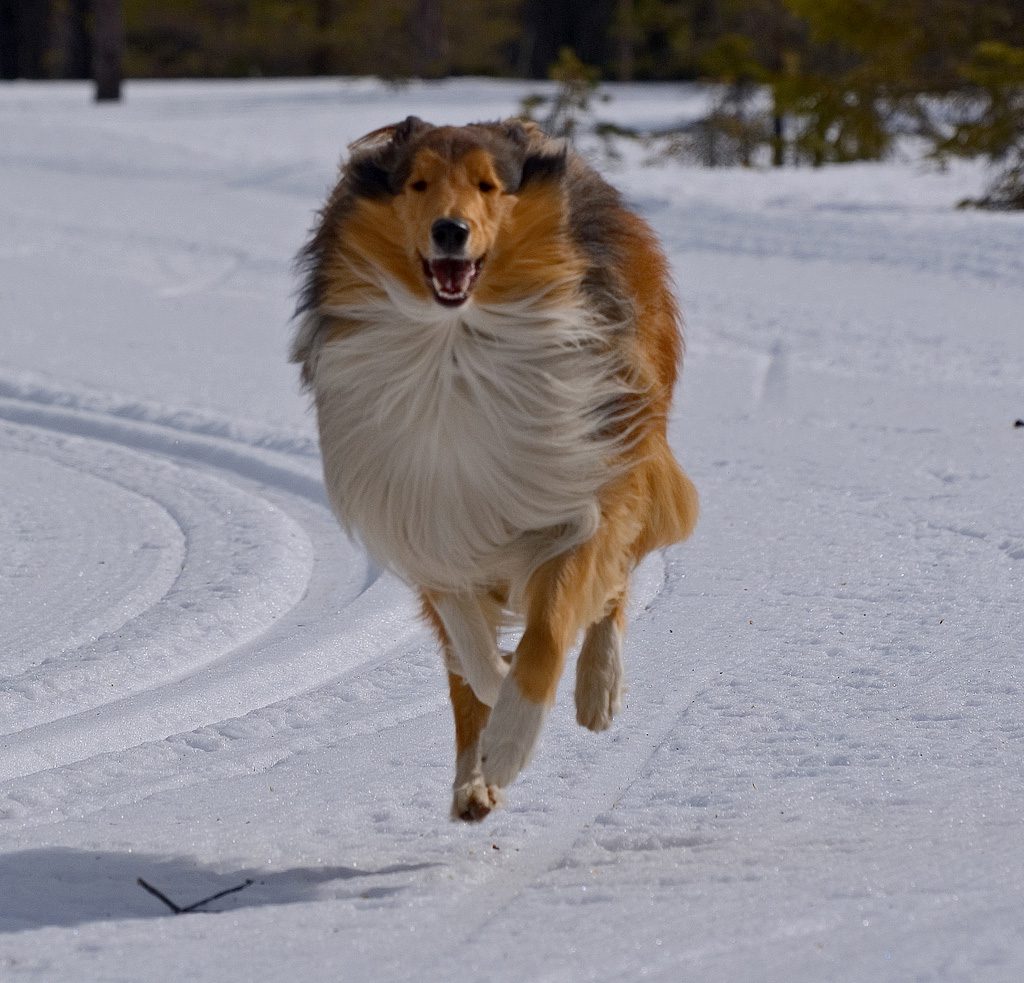
One of the characteristic features of the Long-Haired Collie is its delicately pointed head and snout.. It resembles a wedge decline gently from the ears until the black nose. The snout is rounded and never square. The eyes are of medium size and Pacific way. The ears are supposed to be semi erect, folded in the upper third. In appearance they are very similar to the dog Shetland Sheepdog, but larger.

Regarding the coat of hair of the Rough Collie, the admitted colors are:

  • Sable color: Where sable or grey goes from Pale to mahogany.
  • Blackbird: the blue Merle, It is a mottled grey.
  • Tricolor: It is mainly Tan.

All have white areas, in the neck, the back of the legs, and usually the tip of the tail. Some may have white fringes on the face. The American Kennel Club supports white, where is the dog predominantly white with spots of the sable color, Tricolor and blue Merle, in the head and patches in the body as a.

It has dual layer, the woolly, dense subpelo, It is covered by a layer of hair is long and rough exterior with a remarkable necklace around the neck, feathers on the legs, a skirt in the abdomen, and a steering wheel in the rear quarters.

The outer layer needs brushing frequent, careful to keep it free from spikes and thorns, he has long hair and it looks like Velcro… Shearing it is very damaging to the skin and some do not grow back a significant amount of hair after being shaved.

The desired size and weight vary between the breed standards of the different kennel clubs., but trying to balance the measures... a Rough Collie male measures 55,8 to 66 cm in height to the cross, females tend to be a 5 shorter centimeters. Males weigh in 20 to 34 Kg and females are generally lighter (of 2 to 5 fewer kilos).

Character and skills

The Rough Collie it is a dog that never shows nervousness or aggression, and they are generally good with children and other animals. But, They must be well socialized to prevent shyness. Although they are medium-sized to large dogs, It adapts very well to life in small apartments, because of his quiet nature.

Like many dogs grazing, the Rough Collie can be very vocal (robber…), and in some cases it is difficult to correct them. They are very loyal and excellent with children, provided have been well socialized and trained. They are always eager to learn and respond better to a gentle hand. They enjoy human company and the warmth of home.

To remember… The character of “Lassie” created by the British author Eric Knight was a Rough Collie, It is probably the most famous dog in the world, fictional character who participated in various films, TV series and books for years.

That character inspired screenwriter Hugo Butler in the movie “Lassie Come Home”, under the direction of Fred M. Wilcox, in the year 1943. Film that definitively launched the beautiful Rough Collie.

Health «Long-Haired Collie»

All dogs have the potential to develop genetic health problems, just as all people have the potential to inherit a particular disease. Run, do not walk, from any breeder that does not offer a health guarantee on puppies, to tell you that the breed is 100 percent healthy and has no known problems, or tell you that your puppies are isolated from the main part of the home for health reasons. A reputable breeder will be honest and open about the breed's health problems and the incidence with which they occur in their lines.. The Collie you are prone to a host of health problems. Here is a brief summary of what you should know.

Collies can be affected by a number of genetic health problems, including multiple drug sensitivities due to a mutation in the multidrug resistance gene (MDR1). Dogs with this mutation can have serious or fatal reactions to a number of common drugs., such as preventive ivermectin against heartworm and loperamide, a human antidiarrheal agent that is sometimes used in dogs. Detecting these diseases not only in the parents of your puppy, but also in your dog, it's a life-saving need. The test is simple and only requires a cheek smear.; information on how to test your dog can be found here.

Eye problems are also a serious concern in the breed. One of the most intractable is progressive retinal atrophy (ARP), but luckily the gene for detection was recently identified and a genetic screening test will be available as soon as this year, after which all breeders should have ARP clearances on all their breeding dogs.

The eye abnormality Collie is a group of mild to severe eye disorders. They are present at birth, and can be detected in puppies between five and eight weeks of age. Your puppy's breeder should examine the eyes of all dogs in the litter before selling them.. Have a Certified Veterinary Ophthalmologist regularly examine your Collie's eyes. Reputable Collie breeders don't just check their breeders' eyes, but also those of all puppies offered for sale. Do not buy a Collie from a breeder who has not examined puppies' eyes or does not offer a certificate of their eye status.

Unfortunately, the Rough Collie they can also be affected by a number of health conditions for which there are no screening tests. These include epilepsy, as well as a condition called bloating, in which the stomach expands with air. This can become the most serious condition, gastric torsion, if the stomach twists on itself, cutting off blood flow. Gastric torsion suddenly hits, and a dog that was fine a minute can die a few hours later. Watch for symptoms such as restlessness and gait, babeo, pale gums and lip licking, try to vomit but without bringing out anything, and signs of pain. Gastric torsion requires immediate veterinary surgery, and most dogs that have bloated once will bloat again. That means it's wise to opt for the procedure known as "gastric torsion.", which will prevent the stomach from twisting in the future.

Not all of these conditions are detectable on a growing puppy, and it is impossible to predict if an animal will be free of these diseases, so you need to find a reputable breeder who commit to raise healthier animals possible. Must be able to produce independent certification that the dog's parents (and grandparents, etc.) have been examined for common defects and considered healthy for breeding. That's where health records come in..

Careful breeders screen their breeding dogs for genetic diseases and breed only the healthiest and best looking dogs, but sometimes mother nature has other ideas and a puppy develops one of these diseases despite good husbandry practices. Advances in veterinary medicine mean that in most cases dogs can still live a good life. If you are going to have a puppy, ask the breeder about the ages of the dogs in their lines and what they died of.

Remember that after you have welcomed a new puppy into your home, has the power to protect you from one of the most common health problems: the obesity. Keeping a Collie at the right weight is one of the easiest ways to extend its life.. Make the most of your preventive skills to help ensure a healthier dog for life.

Grooming «Long-Haired Collie»

Both varieties of Collie have double layer, which means they have a thicker, softer inner layer and a thinner, flatter outer layer. The Rough Collie has a beautiful, voluminous coat that seems to need a lot of grooming, but it's not like that. Thorough brushing every one to two weeks will keep the coat healthy and tangle free. The coat of the Smooth Collie it's a piece of cake. Brush it weekly with a rubber brush or soft brush to remove dead hair. Your Collie should not need a bath more than once a month..

The Rough Collie they go through a heavy shedding twice a year, floating dumb call. During this time, brush daily to keep all hair down under control. The Smooth Collie doesn`t blow his coat, but throughout the year he loses more hair than he Rough Collie.

The rest is basic care. Trim nails as needed, usually every few weeks. It shouldn't take so long that you can hear the click on the floor.. Brush your teeth daily to improve general health and breath.

Characteristics "Rough Collie"

Coexistence is important that you have with your new friend. Before considering the acquisition of a dog of the breed "Rough Collie" you know certain factors. Not all breeds of dogs are apt to live in an apartment, you must take into account his character, their need for exercise, their interaction with other pets, their care and if you have small children, their level of tolerance towards them.

Adaptation ⓘ

4,0 of 5 stars (based on 1 review)

friendly dog ​​ⓘ

5,0 of 5 stars (based on 1 review)

hair loss ⓘ

5,0 of 5 stars (based on 1 review)

Affection level ⓘ

4,0 of 5 stars (based on 1 review)

Need for exercise ⓘ

5,0 of 5 stars (based on 1 review)

Social need ⓘ

5,0 of 5 stars (based on 1 review)

Home ⓘ

1,0 of 5 stars (based on 1 review)

Toilet ⓘ

3,0 of 5 stars (based on 1 review)

Friendly with strangers ⓘ

3,0 of 5 stars (based on 1 review)

barking ⓘ

5,0 of 5 stars (based on 1 review)

Health ⓘ

4,0 of 5 stars (based on 1 review)

Territorial ⓘ

5,0 of 5 stars (based on 1 review)

Cat friendly ⓘ

5,0 of 5 stars (based on 1 review)

Intelligence ⓘ

4,0 of 5 stars (based on 1 review)

Versatility ⓘ

5,0 of 5 stars (based on 1 review)

Child friendly ⓘ

5,0 of 5 stars (based on 1 review)

Surveillance ⓘ

3,0 of 5 stars (based on 1 review)

joy ⓘ

5,0 of 5 stars (based on 1 review)

Type and recognitions:

  • FCI CLASSIFICATION:
  • Group :
  • Section : . .

Federations:

  • FCI ⓘ, AKC ⓘ, ANKC ⓘ, CKC ⓘ, ​KC ⓘ, NZKC ⓘ, UKC ⓘ

  • FCI breed standard "Rough Collie"

    Origin:
    Scotland, United Kingdom

    Date of publication of the valid original standard:
    08.10.2012

    Use:

    Shepherd dog.


    General appearance:

    Appears as a dog of great beauty, standing with impassive dignity with no part out of the proportions of the whole. The physical structure with lines of strength and activity, without being rough or with coarse features.

    Your expression is the most important. This is obtained by a perfect balance and combination of the skull and the muzzle., size, shape color and placement of the eyes, correct position and bearing of the ears.


    Behavior / temperament:

    Friendly disposition without traces of nervousness or aggressiveness. A great companion dog, friendly, happy and active. Good with children and other dogs.

    Head:

    The properties of the head are of great importance and must be considered in proportion to the size of the dog. Seen from the front or in profile the head resembles a well-chiseled blunt wedge with smooth exterior lines.. The sides taper gradually and smoothly from the ears to the end of the black nose.. Profile view, The top of the skull and the top of the snout form two right parallel lines of equal length divided by the stop. A midpoint between the inner corner of the eyes (which is the center of a correctly placed stop) is the center of balance in the length of the head. The depth of the skull from the eyebrow to the bottom of the jaw should never be excessive. (Total depth).

    Cranial region:
    • Skull: Plano.
    • Depression links (Stop): Slight but noticeable.

    facial region:

    • Truffle: always black
    • Snout: Smooth termination, blunt snout well rounded, never square. Not pointed.
    • Jaws/Teeth: Strong jaws, well-defined lower jaw. Good size teeth. A perfect, full and regular scissor bite, that is to say, incisors
      The upper ones cover the lower ones in close contact and are set squarely in relation to the jaws..
    • Cheeks: Cheek bones not prominent.
    • Eyes: Very important feature giving a smooth expression. Medium-sized (never too small), placed somewhat obliquely, almond-shaped and dark brown in color, except in the cases of the blue blackbird where the eyes frequently (one or both or part of one or both) are blue or stained blue.
      Smart expression with a quick and alert gaze when attentive.
    • Ears: Small, not too close together at the top of the skull, not too far apart. At rest the bearing is backwards but when alert it carries them forward with a semi-erect bearing, This is, about two-thirds of the ear erect and the upper third forward naturally, below horizontal.

    Neck:

    Muscular, strong, long Middle, well arched.

    Body:

    • Back: companies.
    • Pork loin: Slight elevation.
    • Breast : Deep, somewhat wide behind the shoulders, well arched ribs

    Tail:

    Long reaching at least to the hock joint. Low carriage when at rest but with a slight upward curve at the end. Can be worn happily when excited but never on the back.

    Tips

    PREVIOUS MEMBERS:

    • Shoulder: Leaning and well angulated.
    • Elbows: Never turned in or out.
    • Forearm: Straight and muscular forelimbs with moderate round bone structure.
    • Previous feet: Oval, well padded ear cushions. Toes arched and close together.

    LATER MEMBERS:

    • Thigh: Muscular.
    • Knee: Well angled.
    • Leg: Clear and sinewy.
    • The Hock joint: Very low and strong.
    • Hind feet: Oval, well padded ear cushions. Toes arched and close together. Somewhat less arched than the previous ones.

    Movement:

    Distinctive feature of the breed. A correct dog never turns his elbows out, moves with the feet previous comparatively closer together. Braid, crossing or rolling is highly undesirable. Hindquarters from the hock joint to the floor, seen from behind they should be parallel and not too tight, Seen on side, the movement is smooth. Powerful hind limbs with full thrust. You want a reasonable stride and should be light and appear effortless. Absolute correctness is essential.

    Mantle

    Fur: Mark the outer line of the body, very profuse. The outer hair is straight and hard to the touch, soft inner hair, plush and very tight usually covering the skin. Very abundant mane and necklace, mask and smooth face, ears smooth to the tip but with a little more hair towards the base. Forelimbs well covered with long hair, hindlimbs on hocks profusely covered with hair but smooth below hock joint. Very abundant hair on the tail.

    • Color: Cebellina, sable and white, tricolor and blue blackbird.
    • Cebellina: and shaded from light gold to dark mahogany or nuanced sable. Highly undesirable is a light straw or cream color.
    • Tricolor: Predominantly black with deep tan markings on limbs and head. An oxide dye on the outer hair is highly undesirable.
    • blackbird blue: Predominantly clear, silver blue, splashed or marbled with black. Intense fire marks are preferred but their absence should not be penalized. Big black markings, Slate color or rust tones on both the exterior and interior hair are highly unwanted.

    All should have the typical white Collie markings to a greater or lesser degree..

    The following brands are preferable: White collar, in whole or in part, white bib, limbs and feet, white tail tip. A white list on the muzzle or skull or both.

    Tpredominant white or white ear is highly undesirable.


    Size and weight:

    Height to the cross:

    • Males: 56 - 61 cm..
    • females: 51 - 56 cm..


    Fouls:

    Any deviation from the aforementioned criteria should be considered as a fault and the severity of this is considered to the degree of the deviation to the standard and its consequences on the health and well-being of the dog and the ability of the dog to perform its traditional task.

      FALTAS DESCALIFICANTES:

      • Aggressiveness or extreme shyness.
      • Any dog ​​showing clear signs of physical or behavioral abnormalities.


    N.B.:

    • Males must have two normal-appearing testicles fully descended into the scrotum..
    • Only functionally and clinically healthy dogs, with the typical conformation of the breed, should be used for parenting.

    The latest changes are in bold.

    Source: F.C.I - International Cynological Federation

    Alternative names:

    1. Collie, Scottish Collie, Long-Haired Collie, English Collie, «Lassie» dog (English).
    2. Colley à poil long, berger écossais (French).
    3. Rough Collie, LANGHAARIGER SCHOTTISCHER SCHAFERHUND (German).
    4. Rough collie (Portuguese).
    5. Pastor escocés de pelo largo (español).

    creators of Rough Collie in Spain


    See list of creators 🔎

    Breeders of the breed "Rough Collie"

    Criadores de Collie de Pelo Largo o Rough Collie en España

    Where can we find out...

    Collie Club of Spain

    Email: infocollieclub@gmail.com

    Collie breeders list of hair long or Rough Collie recommended and recognized by the Collie Club of Spain:

    Other breeders…

    • Rough Collie Canary (Tenerife). Tel: 697799449.

    Photo: ourworldofdogs.com

    ▷ The world of Pets: Dogs, cats, birds, reptiles, amphibians

    Romanian Bucovina Shepherd
    Rumanía FCI 357 - Sheepdogs

    The Romanian Bucovina Shepherd is a quiet dog, balanced, devoted and who loves children, what can make it an ideal dog for a family.

    Romanian Bucovina Shepherd

    The Romanian Bucovina Shepherd is a quiet dog, balanced, devoted and who loves children

    Content

    Characteristics "Romanian Bucovina Shepherd"

    Coexistence is important that you have with your new friend. Before considering the acquisition of a dog of the breed "Romanian Bucovina Shepherd" you know certain factors.

    Not all breeds of dogs are apt to live in an apartment, you must take into account his character, their need for exercise, their interaction with other pets, their care and if you have small children, their level of tolerance towards them.

    Adaptation ⓘ

    3,0 of 5 stars (based on 1 review)

    friendly dog ​​ⓘ

    3,0 of 5 stars (based on 1 review)

    hair loss ⓘ

    5,0 of 5 stars (based on 1 review)

    Affection level ⓘ

    5,0 of 5 stars (based on 1 review)

    Need for exercise ⓘ

    4,0 of 5 stars (based on 1 review)

    Social need ⓘ

    2,0 of 5 stars (based on 1 review)

    Home ⓘ

    2,0 of 5 stars (based on 1 review)

    Toilet ⓘ

    2,0 of 5 stars (based on 1 review)

    Friendly with strangers ⓘ

    2,0 of 5 stars (based on 1 review)

    barking ⓘ

    5,0 of 5 stars (based on 1 review)

    Health ⓘ

    3,0 of 5 stars (based on 1 review)

    Territorial ⓘ

    5,0 of 5 stars (based on 1 review)

    Cat friendly ⓘ

    3,0 of 5 stars (based on 1 review)

    Intelligence ⓘ

    5,0 of 5 stars (based on 1 review)

    Versatility ⓘ

    3,0 of 5 stars (based on 1 review)

    Child friendly ⓘ

    5,0 of 5 stars (based on 1 review)

    Surveillance ⓘ

    4,0 of 5 stars (based on 1 review)

    joy ⓘ

    3,0 of 5 stars (based on 1 review)

    History

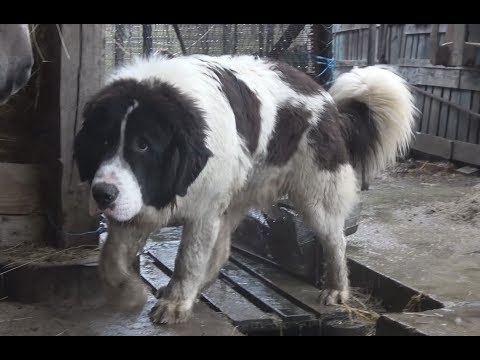
    Natural breed known for centuries in the Bucovina region, in northeastern Romania, the Romanian Bucovina Shepherd was brought to light for the first time in 1934 by G. Radulescu Calafat, publisher of the first Carpathian Sheepdog standard, who mentioned in an article published in the journal Vet Sciences another shepherd dog of molosoid type called «Dulau» or «Capau».. Until then, the Romanian Bucovina Shepherd had been compared to Romanian Carpathian Shepherd Dog, smaller.

    While the Romanian Bucovina Shepherd has long been used as a guard dog for flocks of sheep against large predators in the Carpathians, like bears, wolves and lynx, it has also been used for many years by Romanian farmers as a guard dog.

    In 1982 the Romanian Cynological Association, the canine organization of reference in the country, developed a first standard that described the Romanian Bucovina Shepherd. It was updated in 2001 and 2002 in accordance with the FCI requests (International Cynological Federation) with a view to their recognition of the breed, what actually happened provisionally in 2009.

    In 2019, the Romanian Bucovina Shepherd obtained the definitive recognition of the FCI. On the other hand, not yet recognized by the British reference organization, The Kennel Club, nor by the American Kennel Club (AKC) and the United Kennel Club (UKC).

    In fact, still very rare outside its country of origin and some neighboring countries, like Ukraine or Serbia. In Romania there have been 6.000 specimens in the Romanian Stud Book, but only the breeding of 300 females and 200 males, as Romanian law imposes many restrictions on the breeding of dogs.

    Photo: Ciobanesc de Bucovina – Romania 2018 by 1jagdterrier – YouTube

    Physical characteristics

    "Romanian Bucovina Shepherd"

    Pastor rumano de Bucovina

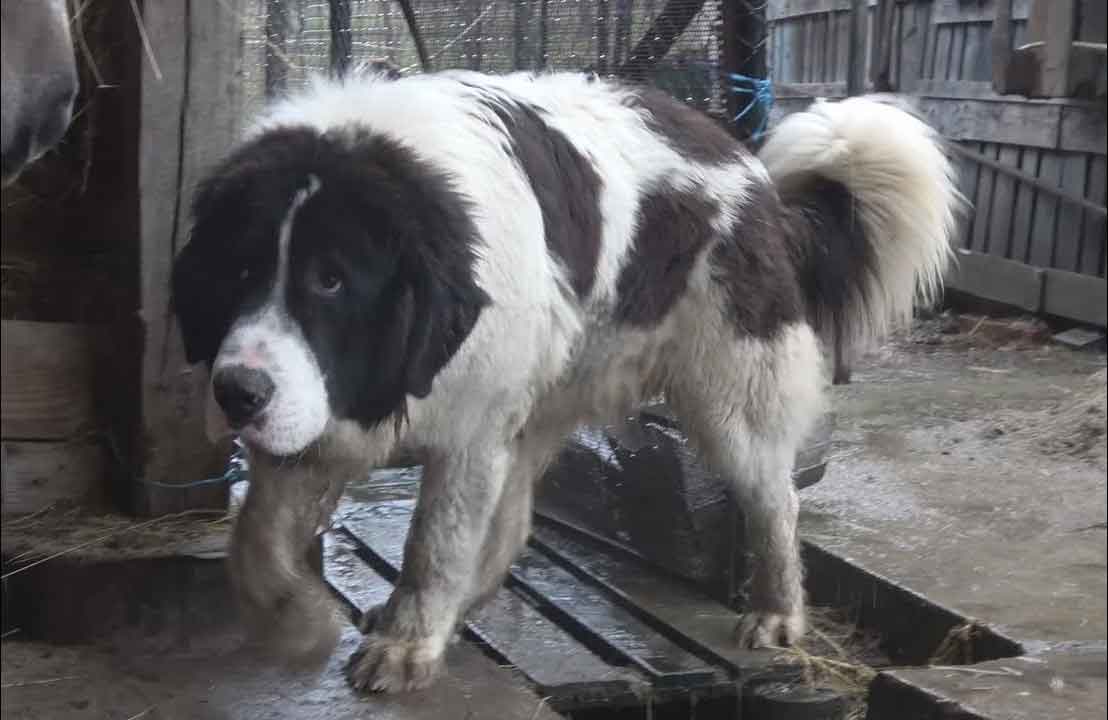
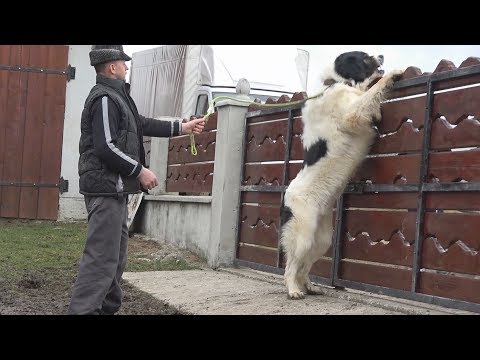
    The Romanian Bucovina Shepherd they are huge dogs with a body slightly longer than the tall, powerful lower limbs and a horizontal, muscular back. Placed high on the body, its long tail is carried hanging at rest and rises in the back in a slightly upward curve when in the gazebo.

    The head, which is wide and carried slightly higher than the body, blends in with the voluminous and moderately long neck, which forms an angle of 100 to 110 degrees with the rest of the body.

    The muzzle is black, the eyes are relatively small in relation to the head, the powerful jaw is chisel-shaped and the V-shaped ears with rounded tips fall along the cheeks.

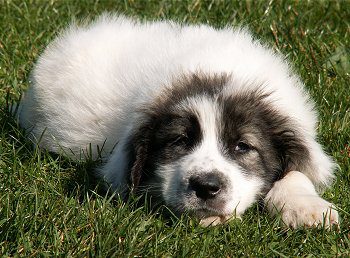
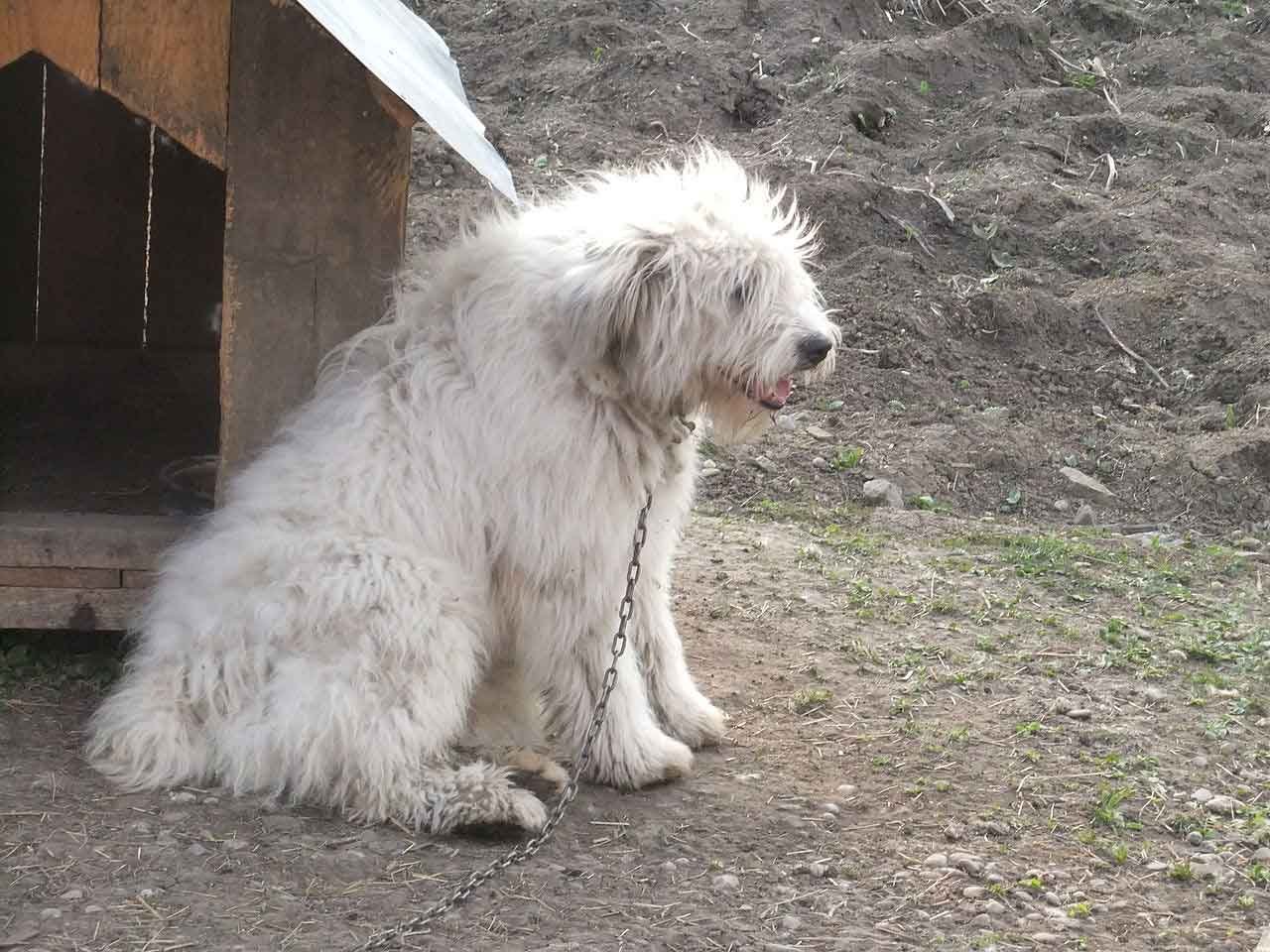
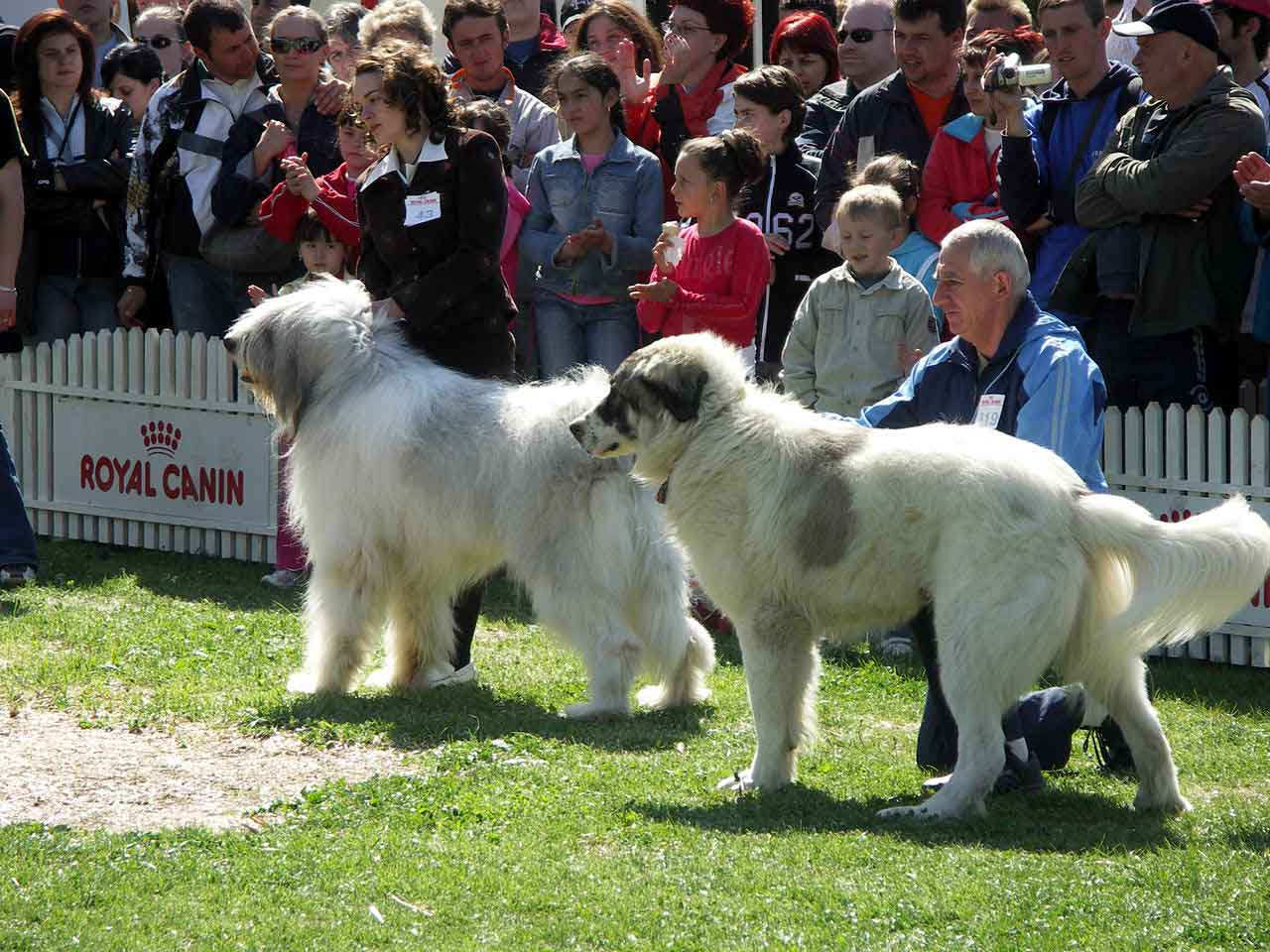
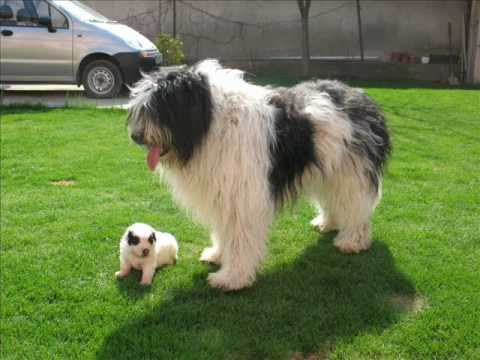
    While the head and the front of the legs are covered with short hair, the rest of the body is covered with dense hair, long (6 to 10 cm.) and quite stiff. The coat is predominantly white, marked with black spots, gray or leonadas well defined. But, the standard of Romanian Bucovina Shepherd it also recognizes unbleached, uncoloured specimens that are completely white, white as snow, gray like ash or black.

    Sexual dimorphism is well marked in the Romanian Bucovina Shepherd, being the male larger than the female.

    Character and skills

    The Romanian Bucovina Shepherd is a quiet dog, balanced, devoted and who loves children, what can make it an ideal dog for a family. On the other hand, especially wary of strangers, so it is important to socialize him from an early age with the people with whom he can come into contact: friends, neighbors, postmen…

    Accustomed to guarding herds in the company of other dogs, coexists perfectly with its congeners and other pets that share its territory.

    It is not aggressive at all, the Romanian Bucovina Shepherd they are not prone to attack without reason. On the other hand, their very protective character makes them react in a very intimidating way if they perceive an intrusion into their territory. However, Their growls and especially their serious and powerful barks are just a way to scare off "invaders" and are rarely a precursor to offensive action.. But, If you feel that your "family" (which is simply the herd that is in charge, if he has always lived like a sheepdog) is threatened, this extremely brave and protective dog risks going on the attack, without even backing down in front of a bear or a pack of wolves.

    Independent and used to wandering alone in the wild mountains of Romania, the Romanian Bucovina Shepherd tolerates loneliness quite well and can be left alone for a few days without too much trouble, although he obviously prefers the company of his family. But, your ability to keep busy depends on having enough space to walk freely.

    Due to its size, his resonant voice and his need for great spaces, the Romanian Bucovina Shepherd They are not dogs that can live comfortably in apartments and are not recommended for urban areas. They greatly prefer sparsely populated areas, where they can patrol their territory in peace and quiet without risk of unwanted encounters.

    A very active and resistant dog, he needs daily physical activity and is happy to accompany his master on his long walks in the countryside.

    Education «Romanian Bucovina Shepherd»

    "Romanian Bucovina Shepherd"

    Pastor rumano de Bucovina
    Dog of the months

    The puppy's socialization phase is of primary importance for the puppy. Romanian Bucovina Shepherd, and it is very important that you meet your family very soon, to possible other household pets, as well as the other people and animals that you will meet regularly during your life. In effect, once adult, you find it difficult to accept a new person in your environment (including for example a prospective dog handler or dog behaviorist), although this is not impossible.

    As an intelligent and obedient dog, can be easily trained and trained for his future role as a sheepdog or watchdog from his first birthday. Despite its independent nature, responds very well to positive reinforcement methods, but the teacher must ensure that he always maintains a strong and authoritative demeanor.

    It also, instead of a long daily training session, it is advisable to opt for several short sessions spread throughout the day.

    Health «Romanian Bucovina Shepherd»

    The Romanian Bucovina Shepherd it is a particularly healthy and resistant breed.

    But, like most large breeds of dogs, are prone to hip dysplasia and elbow dysplasia. To reduce risks, you have to make sure that he does not undergo too much physical activity during his growth period.

    Gastric dilation of the dog is another problem that can affect this breed. Due to ingestion of food too fast, especially if they are dry, can be life-threatening and requires urgent intervention by a veterinarian. To minimize this risk, it is recommended to leave large amounts of water available when the dog eats, divide his daily ration into at least two meals and let him rest after these meals.

    Grooming «Romanian Bucovina Shepherd»

    The Romanian Bucovina Shepherd they are long-haired dogs that need to be brushed once a week, and even more often during the moulting period. Losing her hair galore, not recommended for people who do not like to find dog hair all over the house and always have a perfectly clean interior.

    It also, at the end of winter, it is advisable to cut the hair between its pads to protect your dog from heat.

    It is not necessary to bathe your dog unless, of course, is particularly dirty. In any case, no more than 2 or 3 times a year, as this can damage the natural protective layer of the skin.

    On the other hand, it is necessary to regularly check the inside of the ears, since it is common for external parasites to hide there, and clean them well to avoid any risk of infection.

    The dog's claws should be checked monthly and trimmed if natural wear and tear is not enough.

    Feeding «Romanian Bucovina Shepherd»

    If he Romanian Bucovina Shepherd he has always been fed what his shepherd used to prepare for him, good quality commercial croquettes are today an ideal solution, If and when, of course, the manufacturer's recommendations are followed.

    Bones are important in this dog's diet, so it can be useful to give him a bone to gnaw on from time to time. But, chicken bones and other poultry should be banned as they can cause serious damage to the digestive system.

    It also, as with any dog ​​at high risk of bloating-twisting stomach, the daily ration should be divided into 2 or 3 meals and ensuring that the dog remains calm during and after these meals. This means, for example, make sure he sees his food coming instead of discovering it in front of him when he wakes up, avoid having another animal around you when you eat, and do not stimulate him during his meal or in the following hour.

    It also, is essential for Romanian Bucovina Shepherd have large amounts of fresh water available at all times.

    Price «Romanian Bucovina Shepherd»

    a puppy of Romanian Bucovina Shepherd usually sold between 500 and 1000 EUR, but prices have tended to rise as the breed has been the subject of some interest after its recognition by the FCI. Males tend to be more expensive than females, and the price is higher when the animal has a smooth coat.

    It is necessary to be well informed about the origin of the puppy and check the documents with the Romanian Canine Association. Since 2015, the breeding of dogs without a pedigree or not registered in the Romanian Stud Book is prohibited in Romania, and the marketing of these puppies is illegal.

    Videos "Romanian Bucovina Shepherd"

    Shepherd of Bucovina - Romania 2018
    Ciobanesc de Bucovina – Romania 2018 by 1jagdterrier
    Shepherd of Bucovina - Ilie Forest 2018
    Shepherd of Bucovina – Ilie Forest 2018

    Type and recognitions:

    • FCI CLASSIFICATION:
    • Group :
    • Section : . .

    Federations:

    • – FCI – Group 1 Herding dogs, Section 1 Sheepdogs ⓘ

    FCI breed standard "Romanian Bucovina Shepherd"

    Origin:
    Romania

    Date of publication of the valid original standard:
    14.05.2018

    Use:

    Guardian of the flocks and excellent guard dog.


    General appearance:

    The Romanian Bucovina Shepherd is a large size dog, imposing, haughty and proud. The breed has obvious sexual dimorphism.

    IMPORTANT PROPORTIONS:
    The length of the body is slightly greater than the height at the withers. The length of the skull is
    equal to the length of the snout.


    Behavior / temperament:

    Balanced, calm and loyal, likes children. He is a very good guardian of the flocks, brave and a true fighter against possible prey animals (bear, wolf and lynx). Has a loud bark. When strangers or animals approach, his bark is very loud, with a low tone. During the night he patrols around the house or the herd/flock.

    Head:

    Solid but not heavy, carried a little higher than the top line.

    Cranial region:
    • Skull: Moderately wide, slightly domed. The upper profile of the skull and snout are slightly divergent.
    • Seen from the front the skull is slightly domed, seen from the side it is almost flat. Skull width: males: of 16 to 18 cms, females: of 15 to 17 cms, the zygomatic arches are moderately developed.
    • The occipital protuberance is inconspicuous.
    • Depression links (stop): Slightly pronounced.

    facial region:

    • Truffle: Large and well developed, black.
    • Snout: Abrupt cut, the same length as the skull; well developed, progressively narrowing towards the nose but never pointed; strong jaw.
    • Lips: Thick and firm, heavily pigmented.
    • Jaws / Teeth: Strong jaws, full dentition, strong teeth, healthy and white, well placed, scissor bite. Pincer bite is tolerated.
    • Cheeks: Not prominent.

    Neck:

    Of average length, It's big and strong, without jowl.

    Body:

    Good resistance.

    • top line: Horizontal.
    • Cross: It is slightly evident.
    • Back: Strong and muscular.
    • Pork loin: Muscular and strong.
    • Rump: Muscular and moderately inclined towards the base of the tail.
    • Breast : Wide and deep, descending to the elbows, well arched ribs.
    • bottom line: slightly upward.

    Tail:

    High insertion, at rest pending; reaching or below the hocks; When the dog is alert or in action the tail is raised to the level of the back or slightly above, with a slight upward curve, never curled up on the back. Its cutting is prohibited.


    Tips

    PREVIOUS MEMBERS:

    • General appearance: Straight seen from the front or side. Blades: long, oblique, well muscled and well connected to the body. The scapulohumeral angulation is approximately between 100 and 110 degrees.
    • Arm: Moderately long, muscular.
    • Elbows: Glued to the body, with free movement.
    • Forearm: Strong, not too long.
    • Carpo (wrist): Strong.
    • Metacarpus: Short, slightly inclined.
    • Previous feet: Oval, compact and massive, fingers together and arched, black or ash-colored nails.

    LATER MEMBERS:

    • General appearance: Muscular and strong. Normal posture.
    • Thighs: Medium long, widths, very muscular.
    • Knees: Femoro-tibial angle of 110 degrees approximately.
    • Legs: Moderate long, muscular.
    • Hocks: Widths, seen from the side at moderate angle. Seen from behind parallel to the median plane of the body.
    • Metatarsus: Strong and upright. The presence of dewclaws should not be penalized.
    • Hind feet: Oval, compact and strong. With black or ash-colored nails.

    Movement:

    Harmonious, elastic, well coordinated, giving the impression of effortless power. The preferred step is trotting. Exceeding will be penalized.

    Mantle

    PIEL: Thick, body-hugging with dark ash pigmentation.

    • Fur: The head and the front of the limbs are covered with short hair. The hair on the body is abundant, long (6-9 cm.), effortless power impression. The preferred step is trotting. Exceeding will be penalized. plane, straight and rough. The undercoat is shorter, very dense and soft and lighter in color. In the neck region the hair is much longer, forming a mane.; on the back of the front limbs the hair forms fringes, on the back of the hind limbs the hair is longer and forms breeches. The tail is thick hair.

    COLOR

    • Cclassic smell: The main color of the coat is a light white or yellowish white with distinctive gray spots, black or black with red highlights. Small black or gray spots may appear on the legs. Tabby appearance on patches should be rejected.
    • Csolid odors: Solid Colored Individuals (no patches) are accepted but should not be encouraged: white, yellowish white, ashy gray or black.


    Size and weight:

    Altura to the cross:

    • Males: 68 to 78 cm., ideal 71-75 cm..
    • females: 64 to 72 cm., ideal 66-68 cm..

    Tolerance: -4 cm. Weight: In proportion to height.


    Fouls:

    Any deviation from the aforementioned criteria is considered as a fault and the severity of this is considered to the degree of the deviation to the standard and its consequences on the health and well-being of the dog..

      • Lack of substance or too heavy.
      • Insufficient sexual character.
    • Absence of a non-PI tooth.
    • Short ears.
    • Short tail.
    • Subject too heavy or weak.
    • Because I cut it differently (less than 6 cm.)
    • Too long hair (more than 9 cm.)
    • Absence of mane or fringes on the limbs.
    • Tail curled or carried in the shape of a ring.
    • Flabby fingers facing in or out.
    • Elbows turned outward.
    • Heavy movement.

    FALTAS GRAVES:

    • atypical expression.
    • Wiggly eyes, round.
    • Erect ears.
    • Loose or saddled top line.
    • Too short hair.
    • Curly or poorly textured hair.
    • yellow eyes
    • Eyes of different color one than the other (heterochromatic).
    • cow hooves.

    FALTAS DISQUALIFYERS:

    • Aggressiveness or extreme shyness.
    • Any dog ​​showing clear signs of abnormalities
    • physical or behavioral.
    • Lack of typicity.
    • Prognathism or enognatismo.
    • Absence of incisors or canines
    • albinism.
    • Natural absence of tail or tail with atrophy.
    • height below 64 cm or about 82 cm for males.
    • height below 60 cm or about 78 cm for female


    N.B.:
    • Males should have two normal-appearing testicles fully descended into the scrotum.
    • Only functionally and clinically healthy dogs, with the typical conformation of the breed, should be used for parenting.

    Lthe latest changes are in bold.Standard-FCI No. 349 / 09.01.2006 / IS

    Source: F.C.I - International Cynological Federation

    Alternative names:

    1. Bucovina Sheepdog, Bucovina Shepherd, Southeastern European Shepherd (English).
    2. Berger roumain de Bucovine, Berger de l’Europe du Sud-Est (French).
    3. Ciobănesc Românesc de Bucovina (German).
    4. (em romeno: Ciobanesc Romanesc de Bucovina) (Portuguese).
    5. (en rumano: Ciobănesc de Bucovina) (español).

    ▷ The world of Pets: Dogs, cats, birds, reptiles, amphibians

    Romanian Mioritic Shepherd Dog
    Rumanía FCI 349 - Sheepdogs

    Romanian Mioritic Shepherd Dog

    The Romanian Mioritic Shepherd Dog he is a calm and balanced dog that has an extraordinarily strong bond with his handler.

    Content

    History

    The «Romanian Shepherd of Mioritza», or Ciobanesc Romanesc Mioritic in romanian, it is a natural breed that has been present for centuries in the Carpathians, especially in southern Transylvania, in the mountainous regions near Sibiu and Brasov. Its exact origins are unknown., but it seems that their ancestors came to Romania around the 13th century with the Tatars who came to settle in the Danube Delta region and along the Black Sea coast.

    In the middle ages, some local rulers used these powerful dogs to accompany their armies. This fueled the legend that the dogs often seen in ancient engravings depicting the battles between the Roman Empire and the Dacians, a native people of the Carpathians, they are the shepherds of Mioritza. But, since these battles took place over 1000 years before the arrival of the dog's ancestors to the region, it is in fact unlikely that he can claim to have any connection to these feats of arms.

    In fact, the Mioritza Shepherd Dog he was above all the faithful companion of the illiterate peasants and shepherds isolated in the mountains. Stunning, mighty and brave, protected, and still protects today, herds against the many predators that live in the Carpathians: Lynx, Wolf, bear…

    His name is also a reference to his qualities as a pastor, since the word «mioara» means "sheep" in Romanian, precisely the animal that it has been protecting for several centuries.

    Even today, many shepherds claim that only one of these dogs can scare away a bear, and popular belief says that it is the only breed in the world capable of facing a bear and coming out alive.

    The first written references to Mioritic go back to 1930, when Professor Gheorghe Moldoveanu, studying the Romanian Carpathian Shepherd Dog, made a first distinction between the different romanian sheepdogs. In 1934, the National Zootechnical Institute published a description of the dog Romanian Mioritic Shepherd Dog, but it wasn't until 1981 that a first breed standard was defined, prepared by the Romanian Cynological Association (ACR).

    This standard was revised in 2002 to meet the requirements of the Fédération Cynologique Internationale (FCI), who accepted the dog Romanian Mioritic Shepherd Dog provisionally in 2005, before finally recognizing it in 2015. In the meantime, had taken off across the Atlantic, as recognized by the American United Kennel Club (UKC) in 2006. The other reference body in the country, the American Kennel Club (AKC), did the same in 2018. But, neither the British nor the Canadian Kennel Club have followed suit.

    It is estimated that the population of Romanian Mioritic Shepherd Dog is of 10.000 individuals in Romania, but the vast majority are dogs with pedigree and unregistered. In fact, although the breeding of dogs without pedigrees has been prohibited in the country since 2015, ancient habits are slowly changing. So that, There is often a "country" dog left, of which a puppy is given to the villager when a litter is born., instead of a pedigree dog that is purchased from a professional breeder.

    On the other hand, although they are still relatively popular in the Romanian mountains, the Romanian Mioritic Shepherd Dog remain largely unknown outside of their home country, despite the efforts of Barbara Fallent, an Austrian-based breeder dedicated to popularizing them in Europe.

    Photo: Ciobanesc Mioritic by DorinRodina, CC BY-SA 3.0, via Wikimedia Commons

    Physical characteristics

    Sometimes nicknamed "wool bear", the Romanian Mioritic Shepherd Dog is tall, powerful and furry. It is often confused with the Old English Sheepdog (or Bobtail), with whom he has many physical similarities.

    They are big and massive, but harmonious and very agile for a dog of this size, while its legs are muscular and erect. Tail stands tall and is carried drooping when at rest, but it rises horizontally when in the gazebo.

    The neck is of medium length but broad and powerful, and bears a massive head of large size in relation to the rest of the body. The skull is slightly domed and ends in a rather short muzzle, tapering towards the nose. The latter should be black and well developed. The powerful jaws are scissor bite. Triangular ears with rounded tips fall along the cheeks and "disappear" into the fur.

    The eyes are medium in size, often hazel or dark brown in color, but they can also be lighter in color, except yellow, which is not accepted by the standard of Romanian Mioritic Shepherd Dog. They express calm and intelligence.

    The coat of the mioritic it is very long, measure at least 10 cm.. Covers the whole body, from head to tip of tail, going through the legs, where however it is a little shorter. The top coat is rough, while the lower layer is more flexible and dense, which makes the coat perfectly adapted to harsh weather conditions.

    The coat can be uniform, white or gray, but most often it is variegated, with distinctive black or gray spots protruding from the white fur.

    Sexual dimorphism is moderately marked, the female being only slightly smaller than the male.

    Character and skills

    The Romanian Mioritic Shepherd Dog he is a calm and balanced dog that has an extraordinarily strong bond with his master and his family, bond that forms naturally during the growth period. It is known that it is "a master's dog" – the person who adopted and raised him – which makes it very difficult to adopt an adult dog from Mioritic Shepherd Dog.

    He is incredibly devoted and loyal to his family, at least the family he grew up with. Adults, children, pets or farm animals…: everyone he lives with is part of his family, and once he is an adult he will stop at nothing to protect them. Quiet and affectionate, gets along very well with children, without being an ideal playmate, especially for the little ones and / or restless, since he prefers quieter activities. It also, given its size, could unintentionally push a small one.

    A typical sheepdog, who mistrusts strangers. Although tolerate close friends who come often, barks vigorously when a stranger approaches, and only allows him to enter his territory with the agreement of his master. So, a lot of work on socialization and obedience is necessary from an early age to prevent this dog's power from, able to scare away wolves and bears, be misdirected, with dramatic consequences.

    The Romanian Mioritic Shepherd Dog need space, and it is not at all a breed of dog adapted to apartment living. Its territorial and protective character makes it not an ideal option for people who live in a residential area., even with a large garden. Rather, they adapt better to the field or the mountains, where they have space and where they encounter fewer potential “threats”, especially since they can easily spend their days and nights outdoors.

    Having said that, if you need space, the mioritic neither is it a dog that needs a lot of exercise, at least not as an adult. It is true that the puppies of this breed are hyperactive and need to exercise daily, either in the form of games or walks. But the adult is much calmer, as are most sheepdogs, who prefer to stay close to their herd and not stray too far from it: patrolling in the garden and taking an occasional walk with his master is more than enough for him.

    But, It is important to know that the "territory" that the Romanian Mioritic Shepherd Dog not limited to your garden: protect the place where your family is, establishing a kind of security perimeter around it in all circumstances. Like this, if your flock grazes in the mountains, don't let anyone get close, and if your family walks in a park, does the same.

    But, the Mioritic Shepherd Dog not spontaneously aggressive, and never attacks for no reason. Barks to warn the intruder that they are not welcome, and leave the one who understands the message alone. On the other hand, anyone who risks ignoring the warning without his master's consent risks finding out why this dog has been the best friend of Romanian shepherds and protector of their flocks for centuries.

    Finally, used to accompany them alone, have learned to make decisions on their own. Although loyal and obedient, his independent character and power make him a dog that is not suitable as a first dog.

    Education «Romanian Shepherd of Mioritza»

    If socializing the puppy from an early age is necessary for all breeds, is even more essential in the case of Romanian Mioritic Shepherd Dog. You must meet the people you may meet as an adult as soon as possible and get used to the situations that will be part of your life: walks in a crowded place, visits to the vet, hairdressing sessions… The latter should also allow him to get used to being handled without hesitation., which is absolutely essential to avoid any problems once adult, given its size and power.

    In the same way, learning obedience should begin as soon as the dog is adopted. Smart and devoted, the Romanian Mioritic Shepherd Dog it is relatively easy to train if your master has the necessary experience and knows how to remind your dog who the master is if necessary. On the other hand, Inconsistent or hesitant orders can lead you to take matters into your own hands and choose the attitude that seems most appropriate. Unfortunately, in such cases, unlikely to make the desired decision.

    In any case, although professional help can be useful to support, education must be provided by the teacher himself. You are the only person whose authority you recognize and trust.

    It also, traditional training methods should be banned, as they risk damaging the strong bond between student and teacher. Positive reinforcement-based dog training is a much better option.

    Regarding your role as guardian, does not require any special training. In fact, their instinct for protection is innate, so it does not need any specific training to become an excellent guard dog. In the same way, learn to become a good herding watchdog by observing adults, and just reproduce this behavior when it grows. Once again, no specific training required.

    Health «Romanian Shepherd of Mioritza»

    The Romanian Mioritic Shepherd Dog he is a very healthy dog: is not subject to hereditary diseases, it is only slightly sensitive to common diseases and is resistant to harsh weather conditions. In fact, many individuals reach the age of 14 years or more, which is unusual for a dog of this size.

    But, like all large dog breeds, may suffer from ..:

    ▷ Hip Dysplasia;
    ▷ elbow dysplasia;
    ▷ gastric dilation-torsion.

    It also, its long and dense coat can become a refuge for many parasites, especially if you spend most of your time outdoors. So, it is essential to regularly ensure that all your deworming treatments are up to date.

    Grooming «Romanian Shepherd of Mioritza»

    The Romanian Mioritic Shepherd Dog It is an easy-care breed of dog: a weekly brushing of his coat is enough to get rid of his dead hairs and ensure that he has no injuries that can be hidden by his long hair.

    But, during the move, the dog should be brushed more frequently to avoid accumulation of dead hair, that could create knots and become true "parasite nests".

    Bathing the dog is unnecessary, since the Romanian Mioritic Shepherd Dog has a self-cleaning coat. Even if he rolled in the mud before he came home, leaving it outside in a dry place should be enough to get rid of any dirt. "And Mioritic dry is a Mioritic clean", as the shepherds say.

    On the other hand, it is essential to check every 2 or 3 days that your eyes and ears are not dirty and do not show any signs of infection. Their teeth and claws may be checked less regularly, but special attention should be paid to the dog's paw pads to make sure there is no accumulated dirt.

    It is a good idea to get used to Romanian Mioritic Shepherd Dog to these grooming sessions from an early age, to avoid any problems later, given its size and power. If the teacher knows how to do it, they can become beautiful moments of complicity between him and his partner.

    On the other hand, if it has to be prepared by a professional, the presence of your caregiver is necessary to calm you down and ensure that you do not have any aggressive reaction towards the stranger who is manipulating you.

    Price «Romanian Mioritza Shepherd»

    a puppy of Romanian Mioritic Shepherd Dog costs between 1000 and 1200 EUR. A male is more expensive than a female, because males are more sought after by shepherds.

    In any case, It is necessary to be well informed about the origin of the puppy and to check its documents with the Romanian Canine Association (ACR). In fact, from 2015, the breeding of dogs without a pedigree or not registered in the Romanian Stud Book is prohibited in Romania, and the marketing of these puppies is illegal.

    Characteristics "Romanian Mioritic Shepherd Dog"

    Coexistence is important that you have with your new friend. Before considering the acquisition of a dog of the breed "Romanian Mioritic Shepherd Dog" you know certain factors. Not all breeds of dogs are apt to live in an apartment, you must take into account his character, their need for exercise, their interaction with other pets, their care and if you have small children, their level of tolerance towards them.

    Adaptation ⓘ

    2,0 of 5 stars (based on 1 review)

    friendly dog ​​ⓘ

    3,0 of 5 stars (based on 1 review)

    hair loss ⓘ

    4,0 of 5 stars (based on 1 review)

    Affection level ⓘ

    4,0 of 5 stars (based on 1 review)

    Need for exercise ⓘ

    3,0 of 5 stars (based on 1 review)

    Social need ⓘ

    1,0 of 5 stars (based on 1 review)

    Home ⓘ

    2,0 of 5 stars (based on 1 review)

    Toilet ⓘ

    2,0 of 5 stars (based on 1 review)

    Friendly with strangers ⓘ

    2,0 of 5 stars (based on 1 review)

    barking ⓘ

    3,0 of 5 stars (based on 1 review)

    Health ⓘ

    4,0 of 5 stars (based on 1 review)

    Territorial ⓘ

    5,0 of 5 stars (based on 1 review)

    Cat friendly ⓘ

    4,0 of 5 stars (based on 1 review)

    Intelligence ⓘ

    3,0 of 5 stars (based on 1 review)

    Versatility ⓘ

    3,0 of 5 stars (based on 1 review)

    Child friendly ⓘ

    4,0 of 5 stars (based on 1 review)

    Surveillance ⓘ

    4,0 of 5 stars (based on 1 review)

    joy ⓘ

    3,0 of 5 stars (based on 1 review)

    Images "Romanian Mioritic Shepherd Dog"

    Romanian Mioritic Shepherd Dog
    Beautiful Romanian Shepherd Dogs, the one on the left is the “Romanian Shepherd of Mioritza” and the one on the right is the “Romanian Shepherd of Bucovina” by Remus Pereni, CC BY 2.0, via Wikimedia Commons
    Romanian Mioritic Shepherd Dog
    «Romanian Shepherd of Mioritza» by akc

    Videos "Romanian Mioritic Shepherd Dog"

    Romanian Mioritic Shepherd - Facts and Information
    Romanian Mioritic Shepherd – Facts and Information
    The Miracle of Life - Romanian Mioritic shepherd dog babies
    The Miracle of Life – Romanian Mioritic shepherd dog babies

    Type and recognitions:

    • FCI CLASSIFICATION:
    • Group :
    • Section : . .

    Federations:

    • – FCI – Group 1 Herding dogs, Section 1 Sheepdogs ⓘ
    • – AKC – Foundation Stock Service ⓘ
    • – UKC – Herding dogs ⓘ

    FCI breed standard "Romanian Mioritic Shepherd Dog"

    Origin:
    Romania

    Date of publication of the valid original standard:
    09.06.2015

    Use:

    Excellent herd dog, incorruptible guardian and extraordinary companion.


    General appearance:

    Large, but never heavy. It is vigorous and spectacular. The hair is long and thick on the head., entire body and extremities. Males are taller and larger than females.

    IMPORTANT PROPORTIONS:

    • Body length/height at withers, 11 : 10.
    • The chest height must correspond to a 50% the height at the withers.
    • The snout is slightly shorter than the skull.


    Behavior / temperament:

    This is a balanced and calm dog. He is a very good herd dog, very brave and effective combatant against possible predators (bears, Wolves, Lynx). Be wary of strangers. He loves children very much.

    Head:

    Powerful, solid. Grand, in relation to the body.

    Cranial region:
    • Skull: Amplitude medium, slightly bulky. The upper profiles of the skull and snout are more or less parallel. Seen from the front, the upper profile is slightly bulging. The zygomatic arches are not very marked. The occipital protuberance is well marked.
    • Depression links: It is not very marked.

    facial region:

    • Truffle:Wide, well developed, black.
    • Snout:Slightly shorter than skull; well developed, progressively decreases towards the truffle, never pointed; the jaw is strong.
    • Lips:Thick, fine pendants, well pigmented.
    • Jaws / Teeth:Powerful jaws; complete denture, strong, very much, with white teeth, well implanted. The joint is in the form of scissors.
    • Cheeks:They are not protruding.
    • Eyes:Medium-sized, oblique. Its color is hazelnut, dark brown or slightly lighter, never yellow. Eyelids are well pigmented. The expression is calm and intelligent.
    • Ears:They appear relatively high, "V" shaped, with slightly rounded end. Its length is 10-15 cm., They are hanging and are well attached to the cheeks. Amputation is prohibited.

    Neck:

    Medium length, wide and powerful. There is no presence of dewlap.

    Body:

    Well developed.

    • Top margin: Straight, well pronounced.
    • Height to the cross: Moderately marked.
    • Back: Horizontal, strong and muscular.
    • Pork loin: Moderately long, wide and well muscled.
    • Rump: Muscular and moderately inclined towards the base of the tail.
    • Breast : It's not too long. It is wide and its height corresponds approximately to half the height at the withers.. The ribs are well curved.
    • Lower margin: slightly upward, without being overwhelmed.

    Tail:

    Is presented high. During rest, presented pendant, reaching the hock or slightly exceeding it. When the dog is attentive or in action, appears up, somewhat bent, being able to exceed the level of the back, but never coiled on it. Caudectomy is prohibited.

    Tips

    PREVIOUS MEMBERS:

    • In general: Front or profile views, they are plumb.
    • Shoulder: Medium length, oblique, very muscular and close to the body. Scapulo-humeral angulation of 100-105 degrees approximately.
    • Arm: Medium length, well muscled.
    • Elbows: Well attached to the body, they do not deviate even inwards, nor out.
    • Forearm: long enough, powerful and muscular.
    • Carpo: companies.
    • Metacarpus: Slightly inclined, in profile.
    • Previous foot:Oval, compact and solid. The fingers are together and arched, nails are ash gray.

    LATER MEMBERS:

    • In general: Well muscled and powerful. Views from behind, they are straight and parallel. Little open angles.
    • Thigh: Long, broad and well muscled.
    • Babilla: In femoro-tibial angle it is 100-105 degrees approximately.
    • Legs: long enough, muscular, good bone structure.
    • Hock: Medium altitude; strong, well angled, does not deviate even inwards, nor out.
    • Metatarsus: It's not too long. In profile, It is robust and almost vertical. The presence of dewclaws should not be penalized.
    • Rear foot: A little longer than the previous one.

    Movement:

    Harmonious, loose, well coordinated, powerful and easy. Preferred movement is the trot. The gallop is uniform and balanced.

    Mantle

    • SKIN: Thick, well stretched, well Pigmented.
    • Fur: The hair is abundant on the head and body, its texture is rough. It is stretched and its length is 10 cm., As minimum. The inner layer is denser and softer, color clear. In the extremities, the hair is shorter. The tail is very thick.
    • Color:Coats with patches of different colors: The background should be white with well-defined black or gray spots.. Uniform colours: Dogs of uniform white or gray color.


    Size and weight:

    Height to the cross:

    • Males: minimal 70 cm., ideal 75 cm..
    • females: minimal 65 cm., ideal 70 cm..

    Weight: In proportion to the size.


    Fouls:

    Any deviation from the aforementioned criteria is considered as a fault and its seriousness is considered to the degree of the deviation to the standard and its consequences on the health and well-being of the dog.

    • Obese or weak dog.
    • Bent or ring-shaped tail.
    • Lack of teeth other than PM1.
    • Heavy movement.

    SERIOUS FAULTS:

    • Insufficiently marked sexual characteristics.
    • atypical expression.
    • Round and bulging eyes.
    • ocular heterochromia (different colored eyes).
    • straight ears.
    • Too short hair (less than 8 cm.).
    • Curly hair or hair of another texture than that indicated in the standard.
    • Sunken top margin, convex or deep.
    • Open feet, that deviate inward or outward (partizambo).
    • Very open angulations in the hind limbs.
    • cow hock.
    • Presence of mottled spots.

    FALTAS DESCALIFICANTES:

    • Aggressiveness or extreme shyness.
    • Any dog ​​showing clear signs of physical or behavioral abnormalities must be disqualified..
    • atypical dog.
    • Lack of incisors or canines.
    • Upper or lower prognathism.
    • albinism.
    • Absence of tail or very short tail.
    • amputated tail.
    • Height at withers of less than 68 cm in males.
    • Height at withers of less than 63 cm in females.


    N.B.:
    • Males should have two normal-appearing testicles fully descended into the scrotum..
    • Only functionally and clinically healthy dogs, with the typical conformation of the breed, should be used for parenting.

    Source: F.C.I - International Cynological Federation

    Alternative names:

    1. Romanian Mioritic, Mioritic Shepherd Dog, Ciobănesc Românesc Mioritic (English).
    2. Mioritic (French).
    3. Mioritic, Mocano, Barac (German).
    4. (em romeno: Ciobănesc românesc mioritic) ciobanesc romanesc mioritic (Portuguese).
    5. Mioritic (español).

    ▷ The world of Pets: Dogs, cats, birds, reptiles, amphibians

    Romanian Carpathian Shepherd Dog
    Rumanía FCI 350 - Sheepdogs

    Romanian Carpathian Shepherd Dog

    The Romanian Carpathian Shepherd Dog is slightly more sensitive and less independent than other guard dog breeds

    Content

    History

    The “Romanian Carpathian Shepherd Dog”, also known as Carpatin (of his original name Ciobanesc Romanesc Carpatin), He is native to Romania, more precisely from the Danube Delta.

    It is said to be descended from the Lupo races – molosoides, comparable in size to ancient mastiffs, but with a morphology closer to that of the wolf, and that has been used to protect herds for more than 9.000 years, that is to say, since the beginning of the domestication of cattle in this region.

    Legend has it that their ancestors, to whom he is physically very close, they interbred naturally with wolves, resulting in a powerful and fearsome race. Although there is no irrefutable evidence, such hybridizations between dog and wolf are known to have in fact occurred in various regions of the world, what makes this theory plausible.

    Often hunting in packs, nothing stops this dog with his courage and unerring protective instinct. There have even been cases where a herd of Carpathian shepherds has been seen repelled by an adult bear. The Romanian Carpathian Shepherd Dog has been selected over the centuries with the main criterion of utility, which explains why it has kept its herding dog qualities intact to this day, especially since Romania still has many predators on its territory, including wolves and bears. Over the years, they have also become increasingly integrated into the family as guard dogs; very protective of their master, it's a role they play wonderfully.

    The first breed standard was developed in Romania in 1934. After the fall of communism in 1989, a few passionate breeders of the Romanian Carpathian Shepherd Dog developed the breed so that its standard could meet the criteria of the Fédération Cynologique Internationale. Their efforts paid off, since the latter finally recognized it provisionally in 2005, and then definitely ten years later, in 2015. Among the other large canine organisms, the Société Centrale Canine and the United Kennel Club also recognize the Romanian Carpathian Shepherd Dog, what is not the case with the American Kennel Club, the Canadian Kennel Club or the Kennel Club, the leading organization in Great Britain.

    Although they are increasingly known and appreciated in the rest of the world, the Romanian Carpathian Shepherd Dog still quite rare outside of its home country. On the other hand, still very popular in Romania, where it is used as a herding dog and as a guard and companion dog.

    Photo: Possibly Carpathian sheepdog or Bucovina sheepdog by Alex Zelenko, CC BY-SA 4.0, via Wikimedia Commons

    Physical characteristics

    The Romanian Carpathian Shepherd Dog he is a large dog with an impressive physique.

    The body is rectangular, vigorous and well developed, without heaviness. Its length is greater than the height at the withers, and the lumbar region may be slightly longer in females than in males.

    The tail is held high, reaching or slightly exceeding the point of the hock. With abundant hair, hangs at rest but is carried high and slightly curved in action. It is neither flat nor rolled in the back.

    The head is strong but not heavy, of type lupoid, with a stop moderately marked. The nose is always black, big and wide. The scissor bite is powerful. The eyes are medium in size, almendrada form, dark brown. The ears, located slightly above the eye line, they are triangular in shape, a little rounded at the tip, and fall close to the cheeks.

    The inner layer is dense and flexible, color clear, but the hair is rough, smooth and dense. It is shorter and flatter on the head and front of the legs, longer in the neck, the back of the legs and tail. It is abundant and of medium length in the rest of the body. The fur is sable (Wolf) with white markings, and the skin is ash colored.

    Character and skills

    The Romanian Carpathian Shepherd Dog is balanced, calm and brave. They are innate herding dogs with a very strong protective instinct, with an unconditional attachment to his flock and a closeness to his master and family that is far greater than that of most other watchdog breeds.

    This protective instinct makes them mistrust strangers. In the presence of a stranger, will come between him and his family and bark as a warning, until his master makes him understand that there is no danger.

    But, due to its friendlier temperament than the average of other guard dog breeds, It is also an excellent companion dog.. As a breed of dog adapted to children, he is very gentle with them and is a great playmate for them. Regarding the cohabitation of the dog with the cat, generally goes well. Last, the fact that they have long gotten used to defending themselves and working in packs also explains why they generally manage to get along with their peers, although they can be dominant with them.

    Although it suits all families quite well, this large, energetic dog needs plenty of exercise and play to maintain his mental balance and physical health. So, better suited to a family that likes to move, and thus you can enjoy hiking with your dog (dogs-rando), from running with your dog (canicross) or cycling with your dog (cani-mountain biking). To feel completely fine, need at least an hour of daily exercise.

    So, not at all suitable for use in an apartment: too small a space and insufficient physical exercise could cause behavioral disorders in the dog, including uncontrolled aggression (even towards their owners) and / or destructive behavior on the part of the dog. This is all the more true since the Romanian Carpathian Shepherd Dog is slightly more sensitive and less independent than other guard dog breeds; therefore shows more anxiety in case of prolonged loneliness, especially if you are indoors with nothing to do to keep busy. So, the ideal home for him is one with a large enclosed garden where he can run, and a master who is available to play with his dog and walk him for long hours.

    Education «Romanian Carpathian Shepherd Dog»

    Although the Romanian Carpathian Shepherd Dog it is a calm and balanced dog that is easier to train than other guard dog breeds, needs a strong education to start at an early age, since it has a strong character. It is imperative that the owner immediately show his dog who the master is and impose his authority, at the risk of seeing his partner with his impressive physique take control.

    Of course, firm does not mean brutal. Positive dog training, with incentives and rewards, is always the best way to earn respect and obedience. Purely authoritarian training would only lead to confrontation with this willfully dominant dog..

    Health «Romanian Carpathian Shepherd Dog»

    Although there have been cases of hip dysplasia or eye problems in some individuals, the Romanian Carpathian Shepherd Dog it is a robust breed of dog, able to stay outdoors in inclement weather without being unduly hindered and, In addition, does not have a congenital predisposition to certain pathologies.

    So, daily exercise and a balanced diet are enough to keep the dog healthy, vigorous and toned.

    But, care must be taken not to give too large a portion of food before physical exertion: like all big breeds, is particularly exposed to the risk of stomach dilation-torsion.

    Grooming «Romanian Carpathian Shepherd Dog»

    Although the Romanian Carpathian Shepherd Dog has a long fur, rarely needs professional grooming. But, it is recommended to brush the dog's hair daily with a wire brush or detangler, especially during the molting period.

    If you spend most of your time outdoors, it is recommended to wash your dog once a month. But, if you stay inside, a dog bath every three to four months is sufficient.

    On the other hand, it is important to regularly examine and clean the dog's ears, as for all dogs with floppy ears. A buildup of earwax or bacteria could lead to infections, like ear infections.

    It also, as in all races, brushing your dog's teeth at regular intervals is essential to avoid tartar problems. Ideally, you should be able to do this two to three times a week..

    Finally, how often a dog's claws are trimmed depends on its level of activity. It is best to inspect them from time to time and trim them if necessary.

    Characteristics "Romanian Carpathian Shepherd Dog"

    Coexistence is important that you have with your new friend. Before considering the acquisition of a dog of the breed "Romanian Carpathian Shepherd Dog" you know certain factors. Not all breeds of dogs are apt to live in an apartment, you must take into account his character, their need for exercise, their interaction with other pets, their care and if you have small children, their level of tolerance towards them.

    Adaptation ⓘ

    3,0 of 5 stars (based on 1 review)

    friendly dog ​​ⓘ

    3,0 of 5 stars (based on 1 review)

    hair loss ⓘ

    4,0 of 5 stars (based on 1 review)

    Affection level ⓘ

    5,0 of 5 stars (based on 1 review)

    Need for exercise ⓘ

    4,0 of 5 stars (based on 1 review)

    Social need ⓘ

    4,0 of 5 stars (based on 1 review)

    Home ⓘ

    2,0 of 5 stars (based on 1 review)

    Toilet ⓘ

    2,0 of 5 stars (based on 1 review)

    Friendly with strangers ⓘ

    2,0 of 5 stars (based on 1 review)

    barking ⓘ

    3,0 of 5 stars (based on 1 review)

    Health ⓘ

    3,0 of 5 stars (based on 1 review)

    Territorial ⓘ

    4,0 of 5 stars (based on 1 review)

    Cat friendly ⓘ

    4,0 of 5 stars (based on 1 review)

    Intelligence ⓘ

    4,0 of 5 stars (based on 1 review)

    Versatility ⓘ

    4,0 of 5 stars (based on 1 review)

    Child friendly ⓘ

    5,0 of 5 stars (based on 1 review)

    Surveillance ⓘ

    4,0 of 5 stars (based on 1 review)

    joy ⓘ

    4,0 of 5 stars (based on 1 review)

    Images "Romanian Carpathian Shepherd Dog"

    Carpathian Shepherd

    Carpathian Shepherd

    Photos:

    1 – «Romanian Carpathian Shepherd Dog» by https://pxhere.com/es/photo/1434185
    2 – «Romanian Carpathian Shepherd Dog» by https://pxhere.com/es/photo/1625909

    Videos "Romanian Carpathian Shepherd Dog"

    Jeff the Carpathian Shepherd - 4 Weeks Residential Dog Training
    Jeff the Carpathian Shepherd – 4 Weeks Residential Dog Training
    Sanziana, a Carpathian Shepherd Dog baby girl
    Sanziana, a Carpathian Shepherd Dog baby girl

    Type and recognitions:

    • FCI CLASSIFICATION:
    • Group :
    • Section : . .

    Federations:

    • – FCI – Group 1 Herding dogs, Section 1 Sheepdogs ⓘ
    • – UKC – Herding dogs ⓘ

    FCI breed standard "Romanian Carpathian Shepherd Dog"

    Origin:
    Romania

    Date of publication of the valid original standard:
    09.06.2015

    Use:

    Shepherd dog used by Romanian shepherds of the Carpathians for centuries to defend flocks and at the same time as an excellent guard dog


    General appearance:

    This is a pretty big dog, agile,never weighed, Its general appearance is that of a vigorous dog. His body is rectangular, the rump is wide, slightly tilted, the rib cage is wide and high, long, slightly sloping shoulders. Sexual dimorphism is well marked, males should be taller and larger than females.


    IMPORTANT PROPORTIONS:

    • The length of the skull is slightly greater than or equal to half the total length of the head.
    • The length of the body is always greater than the height at the withers. The lumbar region of females may be slightly longer.
    • The height of the chest corresponds to approximately half the height at the withers.


    Behavior / temperament:

    Innate and brave guardian, He stands out for his instinctive and unconditional affection towards the flocks and towards his master.. It is a dog with dignified behavior, quiet and balanced.

    Head:

    lupoid type.

    Cranial region:
    • Cranial region: The Carpathian Shepherd is a mesocephalic dog, with a strong head, but not heavy. The forehead is wide and slightly bulging. The skull is wider between the ears and progressively decreases towards the naso-frontal depression.. The frontal furrow is quite long and sufficiently well marked.
    • Depression links: Moderate, never too marked, ni huidiza.

    facial region:

    • Truffle:Grand, wide, always black.
    • Snout:Powerful, with an approximately oval profile, slightly truncated. The length of the snout is a little less than that of the skull or the maximum, equal.
    • Lips:Thick, well pigmented, well stretched, with a tightly closed commissure.
    • Jaws / Teeth:Strong jaws, solid and straight. The teeth are powerful; scissor joint, the incisor arches are slightly rounded.
    • Cheeks:Thin. Powerful maseteros, never outstanding. The skin is well stretched.
    • Eyes:Almond biscuits, slightly oblique, They are not too large in relation to the dimensions of the skull, its color is very dark. They are not even jumpy, nor are they sunk in the orbits. The eyelids are black and fit well into the shape of the eyeball..
    • Ears:Triangular, not too big, They appear a little higher than the eye line. They are stuck to the cheeks. The limb is slightly rounded.

    Neck:

    Muscular, very powerful, medium length. Its angle is about 50° in relation to the horizontal..

    Body:

    Vigorous, well developed, slightly rectangular.

    • Top margin: Straight and firm.
    • Height to the cross: Bit strong.
    • Back: Medium length, straight, and solid and muscular.
    • Pork loin: Powerful, muscular, but not too wide. Of moderate length, not too long (the top margin is not firm), not too short.
    • Rump: Muscular and wide, medium length. Slightly inclined, never runs away.
    • Breast : Very wide, well developed and well inclined to the level of the elbows. solid ribs, well shaped, never barrel shaped.
    • Lower margin: Moderately ascending, raised abdomen, nor sunk, nor fallen.

    Tail:

    It appears quite high, bushy, provided with abundant hair. During rest, appears low, straight or slightly saber-shaped, reaching the tip of the hock. When the dog is attentive or in action, It appears raised and can exceed the level of the back; It's not even stretched, nor twisted about it.

    Tips

    PREVIOUS MEMBERS: Strong bones.

    • In general: Front or profile views, the forelimbs are plumb and perpendicular to the ground.
    • Shoulder: Solid, moderately inclined.
    • Elbows: Well attached to the body, they do not deviate even outwards, nor inward.
    • Forearm:Straight, very vigorous, with oval profile.
    • Metacarpus: Short, slightly inclined.
    • Previous foot: Oval, solid, compact.

    LATER MEMBERS: Muscular, with solid bones and good angulations.

    • In general: They are leaden.
    • Thigh:Width, well muscled.
    • Legs: Powerful, muscular, medium length.
    • Hock: Solid, firm, not too high (determining an accentuation of the angulation of the stifle) not too inclined.
    • Metatarsus: Solid, vertical.
    • Rear foot: Oval, well developed and compact, slightly smaller than the previous one. Fingers arched and together. Any spurs must be removed, except in countries where this practice is prohibited by law. The plantar pads are elastic and resistant.

    Movement:

    Loose, with a good range. The trot is vigorous and sustained. The limbs move in parallel planes.

    Mantle

    • Pigmented ash color. The truffle, the edge, of the eyelids and lips must be black. Ash or black nails are preferred.


    • Fur: Rough, dense and stretched. The undercoat is dense and soft. With the exception of the head and the inner surfaces of the extremities, where the hair is short and straight, the hair is abundant over the entire body, medium length. about the neck, the back of the limbs and on the tail, the hair is longer, its abundance being typical in these areas.
    • Color: carbon sand (dark bay) with different nuances, often lighter on the lateral parts and darker on the upper part of the trunk. carbon sand (dark bay) with white markings, preferably not very widespread.


    Size and weight:

    • Height to the cross: Ideal: 65 – 73 cm in males. 59 – 67 cm in females. But, the general appearance is always the most important.
    • Weight: In proportion to the size, giving the impression of a powerful dog, but not heavy.


    Fouls:

    Any deviation from the aforementioned criteria is considered as a fault and its seriousness is considered to the degree of the deviation to the standard and its consequences on the health and well-being of the dog.

    SERIOUS FAULTS:

    • Any deviation from the above that impairs the use.
    • Fragile or too heavy constitution.
    • Eyes that are too light in color.
    • Lower eyelids that are too hanging, exposing the eyeball.
    • Very full lips and hanging corners.
    • Significant pigmentation defects.
    • Excessive body length (more than 10%) and square body.

    FALTAS DESCALIFICANTES:

    • Aggressiveness or extreme shyness.
    • Any dog ​​showing clear signs of physical or behavioral abnormalities must be disqualified..
    • apathetic dog.
    • Clearly atypical dog, similar in appearance to the molossoid.
    • Lack of a P3 and another tooth. Lack of a canine, of a P4, of a molar, or three or more teeth (except PM1y M3).
    • Upper or lower prognathism, pincer joint.
    • Very fine bones.
    • Rib cage that is not sufficiently developed.
    • Lack of an inner layer of hair, hair that is not short on the head and the front surfaces of the limbs.
    • Curly hair the griffon type, wire hair, Longhair, soft, silky, forming a clear separation on the midline of the body.
    • Considerable depigmentation of the eyelids, of the truffle, of the skin or lips. ocular heterochromia (different color eye).
    • Color: brown, mottled, yellow or with spots of these colors.
    • Adult dogs smaller than 62 cm in males and 58 cm in females.


    N.B.:
    • Males should have two normal-appearing testicles fully descended into the scrotum..
    • Only functionally and clinically healthy dogs, with the typical conformation of the breed, should be used for parenting.

    The latest changes are in bold.

    Source: F.C.I - International Cynological Federation

    Alternative names:

    1. Romanian Shepherd, Romanian Carpathian Shepherd, Carpathian Sheepdog (English).
    2. Chien de berger des Carpathes (French).
    3. Carpatin, Zavod (German).
    4. (em romeno: Ciobănesc românesc carpatin) (Portuguese).
    5. Carpatin, Pastor de los Cárpatos, Perro pastor de los Cárpatos (español).

    ▷ The world of Pets: Dogs, cats, birds, reptiles, amphibians

    Shetland Sheepdog
    Escocia FCI 88 . Sheepdogs.

    Shetland Sheepdog

    The Shetland Sheepdog it's really friendly, lovely with children, intelligent and loyal.

    Content

    History

    In the 19th century, in the North Shetland Islands of Scotland, the ancestors of Shetland Sheepdog, often called Sheltie, they helped the flocks of sheep and sounded the alarm when strangers approached their farm.

    But, the exact origins of this dog are as obscure as the mist that covers its homeland. Its resemblance to him Rough Collie supports the theory that it descends from these dogs, believed to have been imported from Scotland. But, Colleys breeders and various specialists refute this claim.

    For them, the Sheltie would have developed in isolation on these islands, and would be the result of different crosses. The races most frequently cited as contributors to its creation are the Icelandic Sheepdog, the Yakki de Groenlandia (an extinct race), the Cavalier King Charles spaniel, the Pomeranian and the Border Collie.

    In any case, at the beginning of the 20th century it was often crossed Rough Collie, which reinforced the resemblance between the two races.

    What is certain is that its small size was the result of the most rational selection work. Like the "Shetland pony", known for its miniature size, locals gave preference to animals that needed little food, a rare commodity in this difficult region.

    Although the Shetland Sheepdog it was especially appreciated in its native islands for its qualities of a sheepdog and alert, it was mainly her appearance that got her out of there. Visitors to England in the late 19th century were delighted with the small size and texture of the dog's coat. Shetland Sheepdog, and soon they wanted to take something home, which they did. Soon, some locals decided to start breeding for export, selecting breeders for height and coat. More and more individuals set out to conquer Britain and then the rest of the world. But, there were neither breed standards nor consultations between the different breeders, so the race developed in directions sometimes very distant from each other.

    Things changed after the official recognition in 1909 by the Kennel Club, the leading organization in Great Britain. The name chosen was simply the name by which the dog had been known until then., the Shetland Sheepdog. This recognition helped to stabilize the breed by establishing a well-defined framework in which the different breeders had to work..

    But, the chosen name was not to the liking of the colleys breeders, who pressured them and won their case in 1914: then it was officially renamed as Shetland Sheepdog.

    In the meantime, the first specimens had reached the United States and, already in 1911, the American Kennel Club (AKC) also accepted it. Was not up 1948 that the United Kennel Club (UKC), the other reference organization in the United States, he did the same. It was followed by the Fédération Cynologique Internationale (FCI) in 1954, as well as by all other important institutions, including the Canadian Kennel Club (CCC).

    Although the Shetland Sheepdog is now common worldwide, paradoxically it has become rare on its home island, where it has been replaced by the Border Collie for grazing.

    This decline can also be seen in the rest of Britain. These may include, Annual Kennel Club enrollments have dropped from more than 1300 less than 800 in less than a decade.

    The phenomenon is also occurring in the United States, where he now occupies the position 25 (of a little less than 200) on the AKC popularity rankings, based on the annual number of people registered in the organization. In other words, has lost a lot of ground compared to the decades of 1980 and 1990, in which he was almost constantly among the 10 first, reaching a maximum of 40.000 records in 1993. The fall is slow but steady, since at the beginning of 2010, was still in the 20 first positions.

    The "father" race Shetland Sheepdog o “Sheltie” as they are often nicknamed, they are the Border Collie.

    Physical characteristics

    The Sheltie they have a double mantle, What makes this breed peleche much more than other dogs. Long hair covering the thick and soft layer base, is repellent to water, while the base layer provides relief from hot and cold.

    There are three main colors: Sable, It ranges from the Golden to mahogany; Tri-color, formed by the black, White and Tan, and blue mirlo, composite grayscale, white, black and Tan.

    black and white: it is less common but still acceptable.

    Sand: the best-known color, dominates over other colors. The shadow Sabre, or mahogany can sometimes be confused with the Sheltie tricolor because of the large amount of dark shading in their coats. Another name for him Sheltie "shading", is trifactorado sable and white. This name comes from the mixture of a tricolor and a sable and white. Another acceptable but less common color is the Sable Blackbird., that it can sometimes be difficult to distinguish between the regular sable after puppyhood. The Sable merle has patches of dark brown on a light brown background compared to the black and grey blue Merle.

    There are other two colors that are a bit rare, which are unacceptable in the ring. The White Color-headed (majority of white with the head "normally" marked), It is the product of two dogs crossed white facotrados. Double Merle, the product of the crossing of two Sheltie blue merle, they can be crossed but have a high incidence of deafness or blindness than other colors.

    The ideal height at the cross, in males 37,5 cm.. The females. 35,5 cm.. One greater diversion of 2,5 cm above or below these measures is regarded as highly undesirable.

    Character and skills

    It is an excellent companion dog, highly loyal. It is joyful, intelligent and always ready to obey. The Sheltie is love, loyal and affectionate with the family and of course, on the sidelines, with strangers; for this reason the Sheltie must be socialized. Some may be very reserved. This breed gets along very well with children if they are raised with them from a young age.; However, its small size makes it easy for a child to accidentally harm them, This monitoring is necessary. Well consider bringing an adult Sheltie for a House with young children, they may not be compatible.

    Some Sheltie tend to show a similar to a Terrier personality that tends to be hyperactive, and always ready, However this temperament is not sanctioned in the breed standard. Some may be shy, but this temperament is specifically discouraged by the standard. The trend towards shyness, It can be reduced with proper socialization. The average Sheltie is an excellent watch dog, giving alarm barks when a person is at the door or pass a car on the street.

    The herding instinct is strong in many Sheltie. Love to chase and pasture including, squirrels, ducks, pigeons and children. The Sheltie love run in large open areas.

    They normally love to play. They are better with a sensitive owner, but firm. The Sheltie is, first and foremost, a smart pastor and love to keep them busy, Although his level of activity, usually, It coincides with the level of its owner. As they are very intelligent, they are highly trainable. Lack of exercise and intellectual stimulation, It can lead to undesirable behaviors, including excessive barking, phobias and nervousness. Fortunately the annoying behaviors may decrease largely by an hour of exercise to make the dog with its owner.

    in your category, the breed dominates Dog Agility competition. They also look at obedience competition, Flyball, Grazing, Tracking and proof of talent.

    It is a very intelligent dog, according to Dr.. Stanley city, expert on animal intelligence. The Sheltie is one of the brightest dogs occupying the position number 6 in the Ranking of 132 evaluated races. His research determined that an average Sheltie could understand a new command in less than 5 repetitions and would obey the command the first time the 95% of the times or more.

    Health

    Similar to the Rough Collie, There is a tendency to inherit malformations and diseases in the eye. Each puppy should have his eyes examined by a qualified eye veterinarian. Some lines may be susceptible to hypothyroidism, epilepsy, Hip Dysplasia, or skin allergies. The life expectancy of the Sheltie is between 10 and 15 years, Although some in some it may be more, and in others may be less.

    Von Willebrand disease is an inherited bleeding disorder. The Sheltie breed, affected dogs, as a general rule, they do not live long. The Sheltie carry type III Von Willebrand, which, It is the most severe of the three levels. There are DNA tests that were developed to find the disease in dogs Sheltie. It can be done at any age and will showcase one of the following results: affected, carrier or affected not. The Sheltie may also suffer from hypothyroidism, It is the low functioning of the thyroid gland. Clinical symptoms include, loss of hair, on low weight and faintness.

    Although small breed dogs are unlikely to be affected by hip dysplasia, It has been identified in some specimens of Sheltie. Occurs when the head of the femur and the acetabulum do not fit correctly, This causes pain and/or lameness. Hip Dysplasia is thought to be genetic; Many breeders sent to test their dogs to certify that they are free from this.

    Characteristics "Shetland Sheepdog"

    Coexistence is important that you have with your new friend. Before considering the acquisition of a dog of the breed "Shetland Sheepdog" you know certain factors. Not all breeds of dogs are apt to live in an apartment, you must take into account his character, their need for exercise, their interaction with other pets, their care and if you have small children, their level of tolerance towards them.

    Adaptation ⓘ

    4,0 of 5 stars (based on 1 review)

    friendly dog ​​ⓘ

    3,0 of 5 stars (based on 1 review)

    hair loss ⓘ

    4,0 of 5 stars (based on 1 review)

    Affection level ⓘ

    4,0 of 5 stars (based on 1 review)

    Need for exercise ⓘ

    4,0 of 5 stars (based on 1 review)

    Social need ⓘ

    4,0 of 5 stars (based on 1 review)

    Home ⓘ

    3,0 of 5 stars (based on 1 review)

    Toilet ⓘ

    3,0 of 5 stars (based on 1 review)

    Friendly with strangers ⓘ

    3,0 of 5 stars (based on 1 review)

    barking ⓘ

    5,0 of 5 stars (based on 1 review)

    Health ⓘ

    5,0 of 5 stars (based on 1 review)

    Territorial ⓘ

    3,0 of 5 stars (based on 1 review)

    Cat friendly ⓘ

    3,0 of 5 stars (based on 1 review)

    Intelligence ⓘ

    5,0 of 5 stars (based on 1 review)

    Versatility ⓘ

    4,0 of 5 stars (based on 1 review)

    Child friendly ⓘ

    5,0 of 5 stars (based on 1 review)

    Surveillance ⓘ

    2,0 of 5 stars (based on 1 review)

    joy ⓘ

    4,0 of 5 stars (based on 1 review)

    Type and recognitions:

    • FCI CLASSIFICATION:
    • Group :
    • Section : . .

    Federations:

    • – FCI – Group 1 Herding dogs, Section 1 Sheepdogs ⓘ
    • – AKC – PASTORAGE ⓘ
    • – ANKC – Group 5 (Working dogs) ⓘ
    • – CKC – Group 5 (Pastoral) ⓘ
    • – ​KC – Pastoral ⓘ
    • – NZKC – Work ⓘ
    • – UKC – Scenthounds ⓘ

    FCI breed standard "Shetland Sheepdog"

    Origin:
    Scotland, United Kingdom

    Date of publication of the valid original standard:
    19.08.2013

    Use:

    Shepherd dog


    General appearance:

    The Shetland Sheepdog is a small-sized, long-haired working dog, Of great beauty, no signs of heaviness or coarseness, free and graceful action. Its structure must be symmetrical so that no part of its body appears disproportionate.
    The fur, very abundant mane and bib, the beauty of the head and the sweetness of the expression combine to present the ideal specimen.

    IMPORTANT PROPORTIONS;
    The skull and muzzle must be the same length, the balance point being the internal angle of the eye.
    Slightly longer from point of shoulder to point of croup than height at withers.


    Behavior / temperament:

    It is an alert dog, delicate, Intelligent, strong and active. Affectionate and loyal to his master, reserved with strangers, but never nervous.

    Head:

    The head should be refined and elegant without exaggeration; viewed from above or from the side should be in the shape of a long truncated wedge, that is refined from the ears to the truffle. Width and depth of the skull must be proportionate to its length and the length of the muzzle. It should be considered in conjunction with the size of the dog.

    Cranial region:
    • Skull : Flattened, moderately wide between the ears, without showing any occipital protuberance. The upper line of the skull is parallel to - the upper line of the snout.
    • Depression links ( Stop) : Light, but defined.

    facial region:

    The characteristic expression is obtained from the perfect harmony and combination of the skull and snout, of the form, the color and placement of your eyes and the correct position and bearing of your ears.

    • Truffle : black.
    • Snout : Well rounded.
    • Lips : Blacks, firm.
    • Jaws / teeth : Jaws of equal length, net and strong, well developed lower jaw. Healthy teeth with perfect scissor bite, regular and complete, that is to say that the internal face of the maxillary incisors is in close contact with the outer side of the lower incisors and placed at right angles to the jaws. It is highly desirable that the denture contains 42 properly placed teeth.
    • Cheeks : Flat, bind gently with the muzzle.
    • Eyes : Are medium-sized, almond shaped and placed in an oblique position. Color should be dark brown, except in the case of merle specimens, in which one or both eyes may be blue or streaked blue. The rims of the eyes should be black.
    • Ears : Small, moderately wide at the base, placed fairly close to each other at the top of the skull. When the dog is at rest, they are thrown back; When it is attentive it brings them forward and carries them semi -erect with the fallen tips forward.

    Neck:

    Muscular and well arched, long enough to wear your head proudly.

    Body:

    • Back : Straight, with a delicate curvature.
    • Rump : Gradually descends towards the hind limbs.
    • Breast : Deep, descends to the elbows. The ribs are well sprung, but taper in the lower half to allow free movement of the forelimbs and shoulders.

    Tail:

    Has a low implantation, vertebrae gradually decrease in size towards the tip, which reaches at least the hocks. It is provided with abundant hair and has a slight upward curvature. When the dog is moving it can be carried slightly raised, but never on the back and curled.

    Tips

    FORELIMBS

    Forelimbs appear straight when viewed from the front; they are muscular and well proportioned with strong but not heavy bone.

    • Shoulder : The shoulder blades should be tilted, separated in the cross region only by the vertebrae, and should slope outward to allow for the desired bowing of the ribs. The shoulder joint must be well angulated.
    • Arm : Arm and scapula should be approximately the same length.
    • Elbows : The humerus-radio-cubital joint (elbow) is equidistant from the ground to the region of the cross.
    • Metacarpus : Strong and flexible.

    HINDQUARTERS

    • Thigh : Wide and muscular; the femur should join the pelvis at a right angle.
    • Knee : The femoro-tibio-patellar joint must have a marked angulation.
    • Hock : crisp, angled, well descended. With strong bones. Viewed from behind they should be straight.
    • Pies : Oval, with strong pads. Fingers arched and together.

    Movement:

    Of agile movement, reunited and funny; with a driving due to the posterior members that cover the maximum extension with the minimum effort. Ambling movement is highly undesirable, march across the limbs, swinging the body, as well as the rigid and important vertical displacement.

    Mantle

    HAIR:

    • The coat is double: the outer coat is long hair, rough and smooth. The undercoat is short haired, smooth and dense. The mane and chest have abundant hair. The forelimbs have abundant fringes. Hind limbs, on the hocks, they are covered with very abundant hair, while below them, the hair is shorter. The coat should accommodate the body and not dominate or change the shape of the dog. The hair on the face is short. Short-haired specimens are highly undesirable.

    COLOR:

    • Cebellina : Light or dark. All shades are admitted, from pale gold to dark mahogany; but those tones must be of an intense tone. Wolf and gray colors are undesirable.
    • Tricolor : Intense black color on the body, and in them bright fire colored spots are preferred.
    • Blue Merle : Light silver blue, splashed or mottled with black. Deep tan stains are preferred, although its absence should not be penalized. Large black markings and slate or rust-colored markings on the outer or inner coat of hair are highly undesirable. The overall appearance should be blue.
    • Black and white and black and tan : They are also recognized colors.
      White spots may exist (except in the black and tan specimens) on the forehead, the collar and the sill, the chest, the limbs and the tip of the tail. All or some white spots are preferable (except in the black and tan specimens), but its absence should not be penalized. White spots on the body are highly undesirable.


    Size and weight:

    Ideal height at the withers :

    • Males : 37 cm.
    • females : 35,5 cm.

      One greater diversion of 2,5 cm above or below these measurements is considered highly undesirable.


    Fouls:

    Any deviation from the aforementioned criteria is considered a fault, and the severity of this is considered in proportion to the degree of the deviation to the standard and its consequences on the health and well-being of the dog.


    FALTAS DESCALIFICANTES

    • Aggressive or fearful dog.

    Any dog ​​showing clear signs of physical or behavioral abnormalities must be disqualified..


    N.B.:

    Males should have two normal-appearing testicles fully descended into the scrotum..
    Only functionally and clinically healthy dogs, with the typical conformation of the breed, They should be used for parenting.

    DATE OF PUBLICATION OF THE ORIGINAL VALID STANDARD: 19.08.2013.
    TRANSLATION: Lic. Valverde Calvo (Costa Rica) and Jorge Nallem (Uruguay).
    Information obtained fromhttps://www.fci.be/es/nomenclature/PERRO-PASTOR-DE-SHETLAND-88.html

    Source: F.C.I - International Cynological Federation

    Alternative names:

    1. Shetland Collie, Dwarf Scotch Shepherd, Sheltie (English).
    2. Shetland, Sheltie (French).
    3. Sheltie (German).
    4. Sheltie (Portuguese).
    5. Miniature Collie, Sheltie (español).