▷ The world of Pets: Dogs, cats, birds, reptiles, amphibians

Philippine cockatoo
Cacatua haematuropygia

Cacatúa Filipina


Content

Description

It measures 31 cm. and weighs around 300 g..
To the Philippine cockatoo (Cacatua haematuropygia) It is called locally Katala.
Its plumage is of a beautiful white color except for the feathers of the crest they are yellow or pink on its base and the bottom of the tail and wings they are yellow and Red.
The bill is a grayish-white color, and males has irises dark brown, While the of the female are brown-red color.

Habitat:

Is restricted to lowland not more than 50 meters above the sea level, in or adjacent to rivers, and in coastal mangrove areas.

outside the breeding season (March to June, and, times, from February to August), frequents corn and rice crops. This depends on the station where foods are grown and have the available resources, being partially nomadic.

These birds can fly from their island to the adjacent if they are not more than a few 8 km. distance.

Reproduction:

breeding season between February and June. Of one to three eggs they are placed on a nest on a tree branch. The eggs are hatch for a few 28 days, and the chicks remain in the nest for nine to ten weeks after the hatching.

Food:

They feed on seeds, vegetables, fruits and berries.
They are known to attack corn crops in agricultural areas.

Distribution:

Size of the area of distribution (reproduction / resident): 22.700 km2

This cockatoo is endemic in Philippines, and the only representative of the cockatoos that we will find there; This has become a treasure of these islands.

Conservation:

State of conservation ⓘ


critical hazard critically endangered ⓘ (UICN)ⓘ

• Current IUCN Red List category: Critical Hazard.

• Population trend: Decreasing.

• Population size: 370-770 mature individuals.

In Palawan the capture of the cockatoos for the international illegal trade is particularly serious, something which is reflected in the high price of these birds ($ 160 Americans in Manila in 1997); to have been looted all the visible nests each time the price is higher because it costs more to catch them.

The deforestation and the destruction of mangroves have been extensive in their range of occupancy and have contributed significantly to their decline.

It is also hunted and hunted for consumption as food.
The release of captive birds can introduce diseases into wild populations.

Conservation Actions Proposed:

    • Conduct surveys on all range islands to assess species population size and distribution.
    • Monitor population trends.
    • Monitor rates of habitat loss and degradation.
    • Quantify catch levels, persecution and trade.
    • Designate more protected areas (for example Tawi-Tawi and towns in or near Palawan).
    • Support the proposal to expand the Puerto Princesa Subterranean River National Park.
    • Prevent destruction of mangroves.
    • Promote economically viable alternatives to avoid the capture of this cockatoo.
    • Continue with education programs and captive breeding programs.
    • Establish staff at airports and ferry terminals to control the departure of specimens.
    • Translocate animals to suitable areas such as lowland forests or mangroves..

Loro Parque Foundation It has warned of the risk of extinction that runs the Philippine cockatoo by the construction of a power plant in Palawan, an island province of Philippines in the region of Western Visayas.

This Spanish NGO has invested 1,3 millions of dollars and more than 14 years of work in the recovery project of this cockatoo, and fears that with the construction of this station, the less than 1.000 remaining specimens in the world could be electrocuted by high-voltage lines, In addition to being blocked their migration in search of food.

See more in: (20minutes)

"Philippine cockatoo" in captivity:

Very rare in captivity, fortunately.

Alternative names:

– Philippine Cockatoo, Philippine Islands Cockatoo, Red-vented cackatoo, Red-vented Cockatoo (ingles).
– Cacatoès des Philippines (French).
– Rotsteißkakadu (German).
– Catatua-filipina (Portuguese).
– Cacatúa Filipina, Cacatúa Malaya (español).

scientific classification:

– Order: Psittaciformes
– Family: Cacatuidae
– Genus: Cockatoo
– Scientific name: Cacatua haematuropygia
– Citation: (Statius Müller, 1776)
– Protonimo: Psittacus haematuropygius

Philippine Cockatoo Images:


Species of the genus Cacatua

Sources:

– Avibase, BirdLife.org

– Photos: Kim Arveen homeland, © Benedict of Laender, Wikimedia.

– Sounds: Frank Lambert (Xeno-canto)
▷ The world of Pets: Dogs, cats, birds, reptiles, amphibians

Cockatiel
Nymphicus hollandicus


Cacatúa Ninfa

Content

Description

25-33 cm.. length and a weight between 80 and 100 grams approximately.
This small cockatoo is no doubt an of the bird's cage more common in the world.
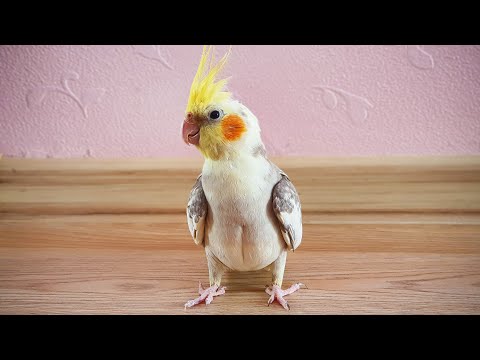
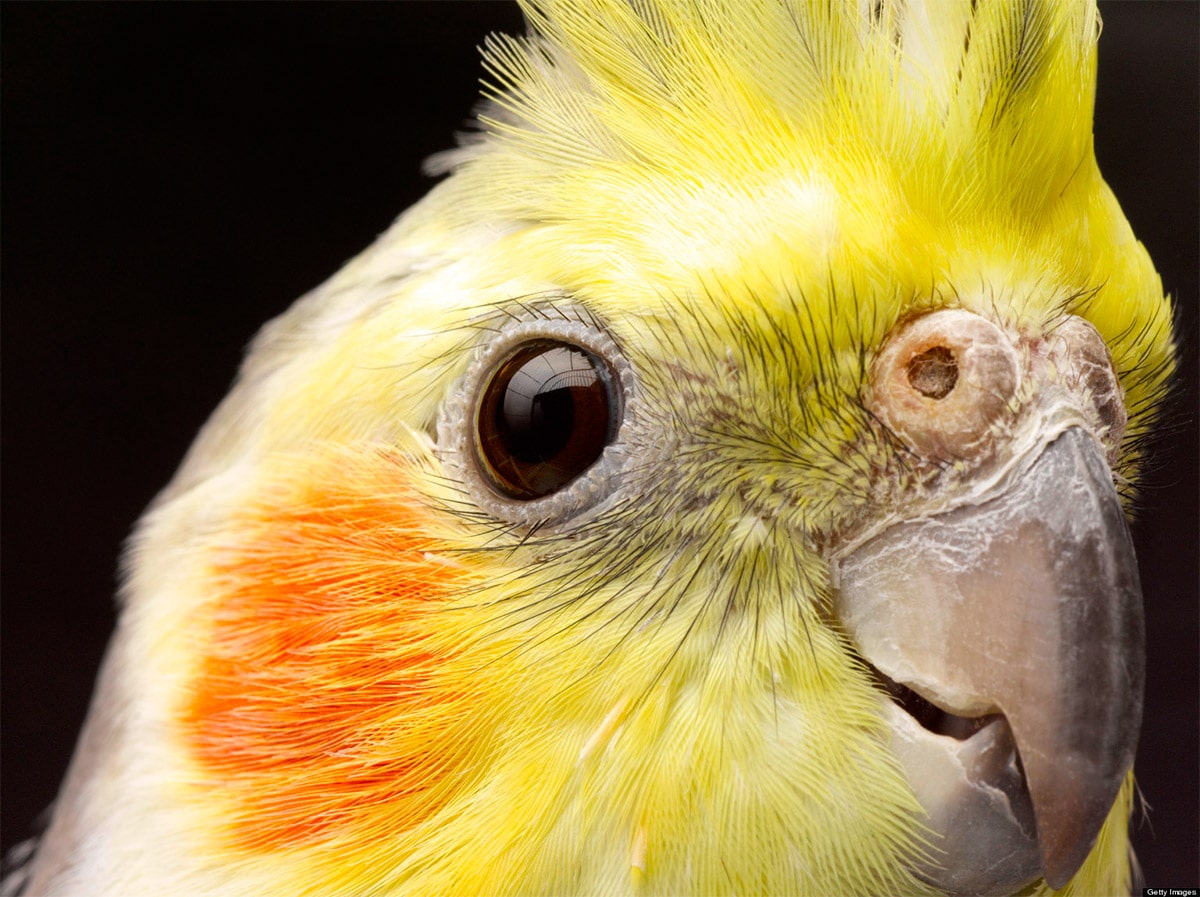
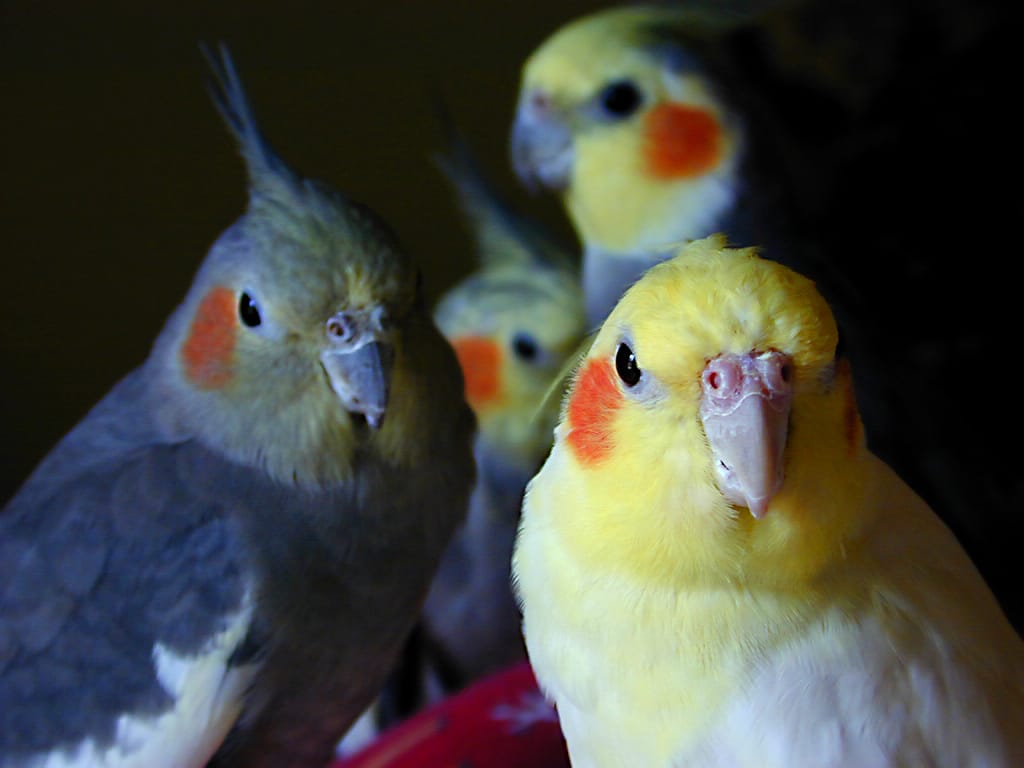
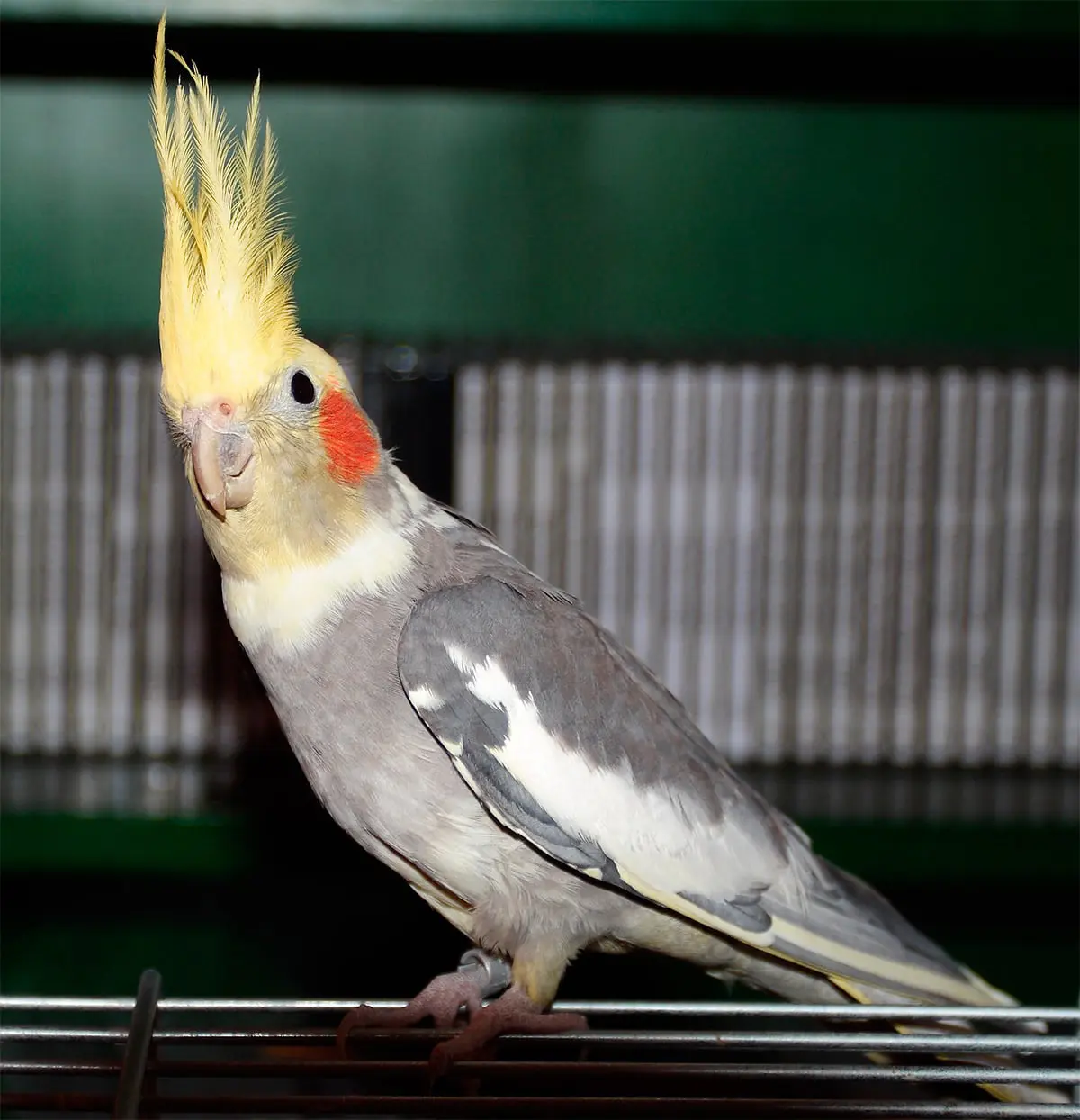
The Cockatiel (Nymphicus hollandicus) adult has the head and the basis of the crest yellow.
Stain handset is orange, paler on the back.
The neck and the long crest feathers are grey.
The upperparts are of color grey Pearl dark.
The wings are grey, but exhibit a white color in the covered and sides.
The underparts are a grey clear.
The tail varies from medium gray to dark gray, the base of the tail is paler.
The bill is grey, the irises dark brown.
The legs are grey-brown.

The female presents the stain handset duller, the tuft is less developed, In addition instead of the yellow, the head presents a yellowish grey with yellow dirty envelope the forecrown and a vaguely colorless gray general staining and staining is generally less intense.
The immature are much similar to the females, but have the tail shorter.

We find Pearl specimens in captivity, White, Gray and lutinos.

Habitat:

Video – "Cockatiel" (Nymphicus hollandicus)

Funny Parrot (Nymphicus Hollandicus)

The cockatoo Nymph they live in a wide variety of habitats, including open forests, small acacia forests that line the rivers and even stretches of Spinifex (Triodia) they are perennial and grow in semi-arid regions.

Also found in farmland, in the stubble and the orchards, as well as on the plains and along the roads.

In dry areas are observed in pairs or in groups of up to 100 individuals.

When feed, the groups contain an average of 27 Member. But, We have already seen demonstrations of almost 1.000 birds near landfills containing vegetable remainders of the rice milling.

Near the points of water, the cockatoo Nymph are often associated with the Budgerigar (Melopsittacus undulatus).

Estas Cockatoos eat twice a day: In the morning, shortly after the Sun, consuming around 2,72 grams of plant material. At night, about an hour and a half before the night, eating around a mass of 4,25 g., It is almost 7 grams for the whole day.

Son great travellers.
Outside of the nesting season, they form large gatherings around the planting of cereals.
As they feed on seeds, these birds need water and in times of drought, sometimes bands come to the coast.

All these movements are quite unpredictable, since they are related to the weather conditions and the State of the food resources. But, in the South of the continent, migrations are more regular: the birds come to nest during the austral spring and usually go away early in the new year.

Son gregarious and very social, so they need a wide repertoire of calls to communicate or express their feelings. They have a great power to imitate other birds.

Reproduction:

In the North, the reproduction is carried out between April and July, While in the South occurs in general from August to December.
The nest is located in a tree hollow whose bottom is padded with sawdust shavings. Most of the time, the nesting site is placed near a source of water in which poultry cooled daily.

The spawning has between 3 and 7 eggs they are incubated alternately by both parents for a few 20 days. 4 eggs are a normal litter. There will be several broods during the season. At birth, the chicks have a thick down comforter yellow. They receive their food mainly in the morning and in the evening.

Chicks they leave the nest after 3 to 4 weeks, but they remain within the family group, Depending on their parents for 1 month. After this time, they join large flocks that roam in search of food.

Food:

Consume a wide variety of small seeds He collected soil, including the cultivated fields of sorghum and sunflower. When they are abundant, local seed varieties are generally preferred to the seeds that come from crops.

Distribution:

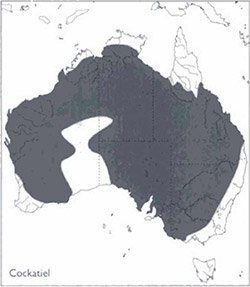
Distribucion Nymphicus hollandicus
Endemic to Australia. Its range covers a vast majority of the continent, except wet coastal areas. Also absent from the Cape York Peninsula, districts located more to the South in winter and areas located more to the North in the summer.

After heavy rainfall, large meetings can be set up in the center of the country where they are, usually, absent.

Conservation:

State of conservation ⓘ


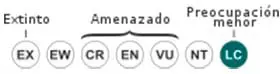
minor concern Minor Concern ⓘ (UICN)ⓘ

– Current IUCN Red List category: Least concern.

– The population trend: Stable

This bird is very common and extended throughout the area. Probably its population grows, It has benefited from the facilities and artificial reservoirs for the development of agriculture.

Its population It is estimated in around a million of birds. The birds that sought to be introduced in the United States they have failed in their attempts to establish themselves in the wild.

In Australia, these small cockatoos are often persecuted for considering them pests for agriculture.

"Cockatiel" in captivity:

The Nymphs or Carolinas they are highly prized birds as pets by its docile nature and for being less demanding than the larger parrots. The nymphs they are perfectly suited to life in the home, they are easy to care for and if you homeschool them from small become companions adorable and very affectionate.

They generally live in pairs or in colonies, that is why it is very common to mate them, to be able to enjoy the birth of the offspring and their development.

They usually enjoy sharing their time with people and rather stick to their owners, Each bird has its personality, so you don't like all that take them into your hands. Males can sing and learn to mimic a few words, but they are much better to imitating sounds, as melodies, sirens or other birds singing. Females vocalize much less but tend to also be more caring.

The nymphs are birds Smart, of friendly character and practically does not present problems of behaviour. They are easily adapted to family life and learn to interact and communicate with people who love. If you've decided to adopt one of these cute birds, make sure you dedicate time to your training to get to have a great pet. This will help you create a strong emotional bond between you and you will also keep it entertaining, mentally active, healthy and happy.

Alternative names:

– Cockatiel, Cockatoo Parrot, Crested Parrot, Quarrion, Weero (ingles).
– Calopsitte élégante, Perruche calopsitte (French).
– Nymphensittich (German).
– Cocatiel (Portuguese).
– Cacatúa Ninfa, Carolina, Ninfa (español).

scientific classification:

– Order: Psittaciformes
– Family: Cacatuidae
– Scientific name: Nymphicus hollandicus
– Genus: Nymphicus
– Citation: (Kerr, 1792)
– Protonimo: Psittacus hollandicus

Images Cockatoo Nymph:


Sources:
– Avibase, elblogdemaskota
– Photos: commons.wikimedia.org, huffingtonpost.com, optusnet.com.au, cockateil.NET, galleryhip.com
– Sounds: Marc Anderson (Xeno-canto)

▷ The world of Pets: Dogs, cats, birds, reptiles, amphibians

Crimson-bellied Parakeet
Pyrrhura perlata

Crimson-bellied Parakeet

Content

Description:

Crimson-bellied Parakeet

24-25 cm. of length and weight 85-94 g

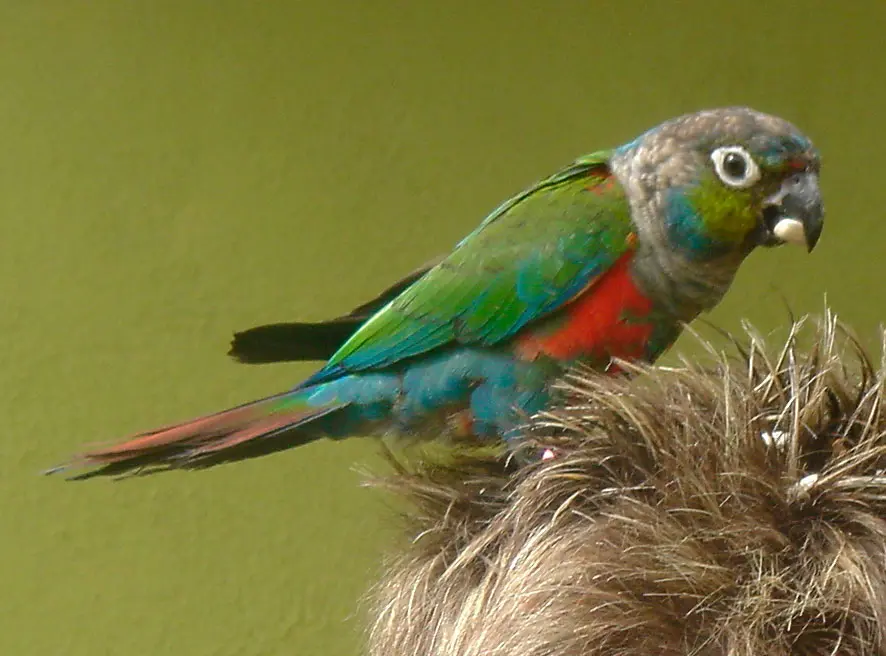
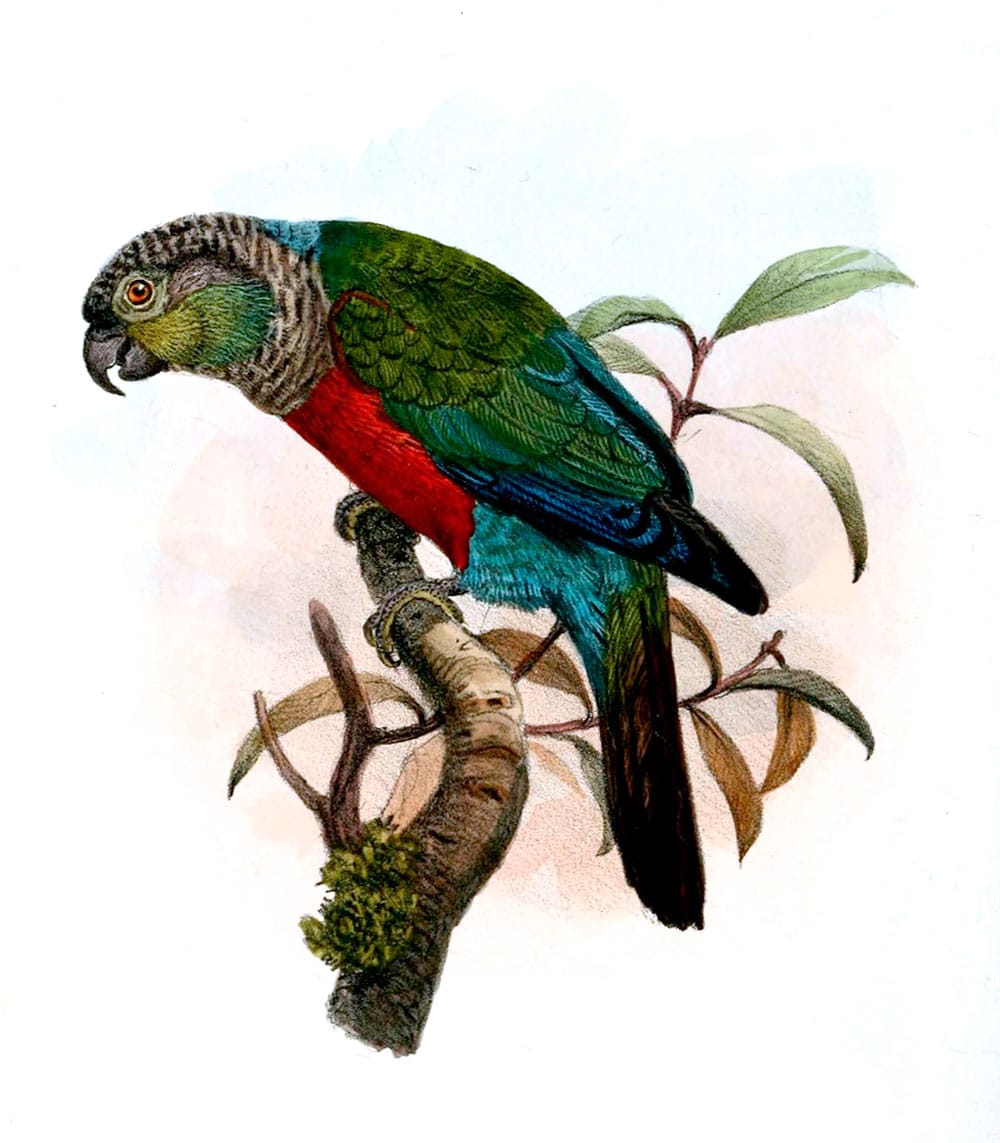
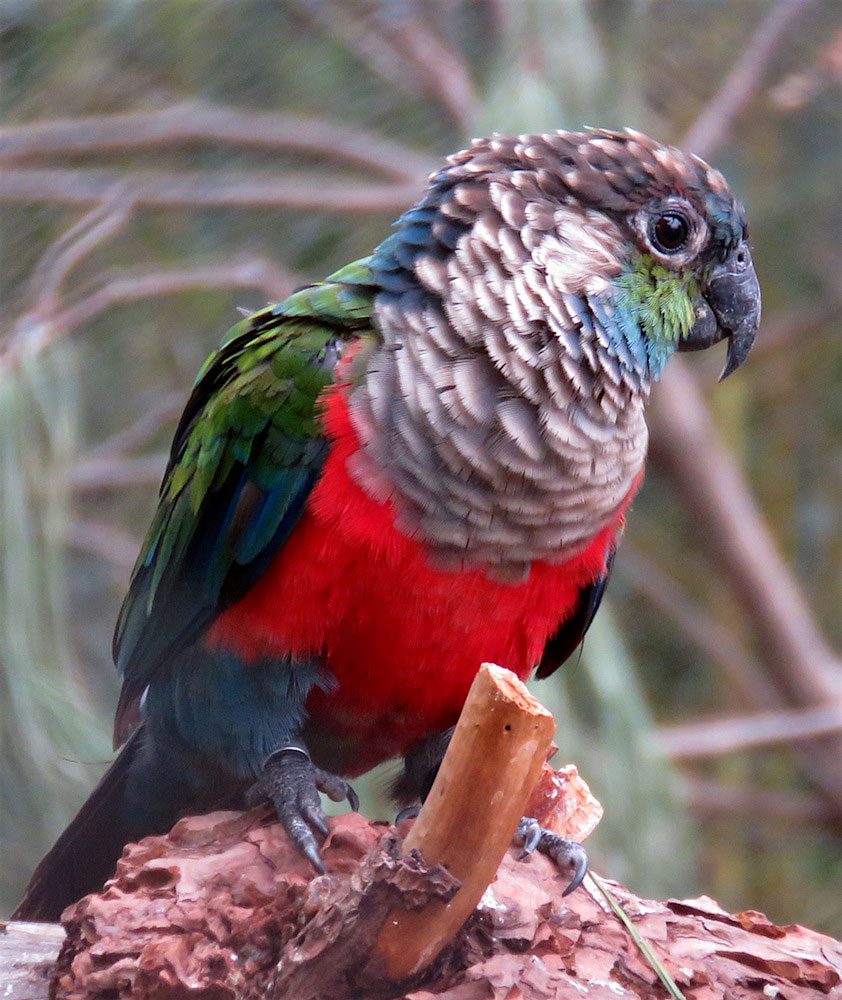
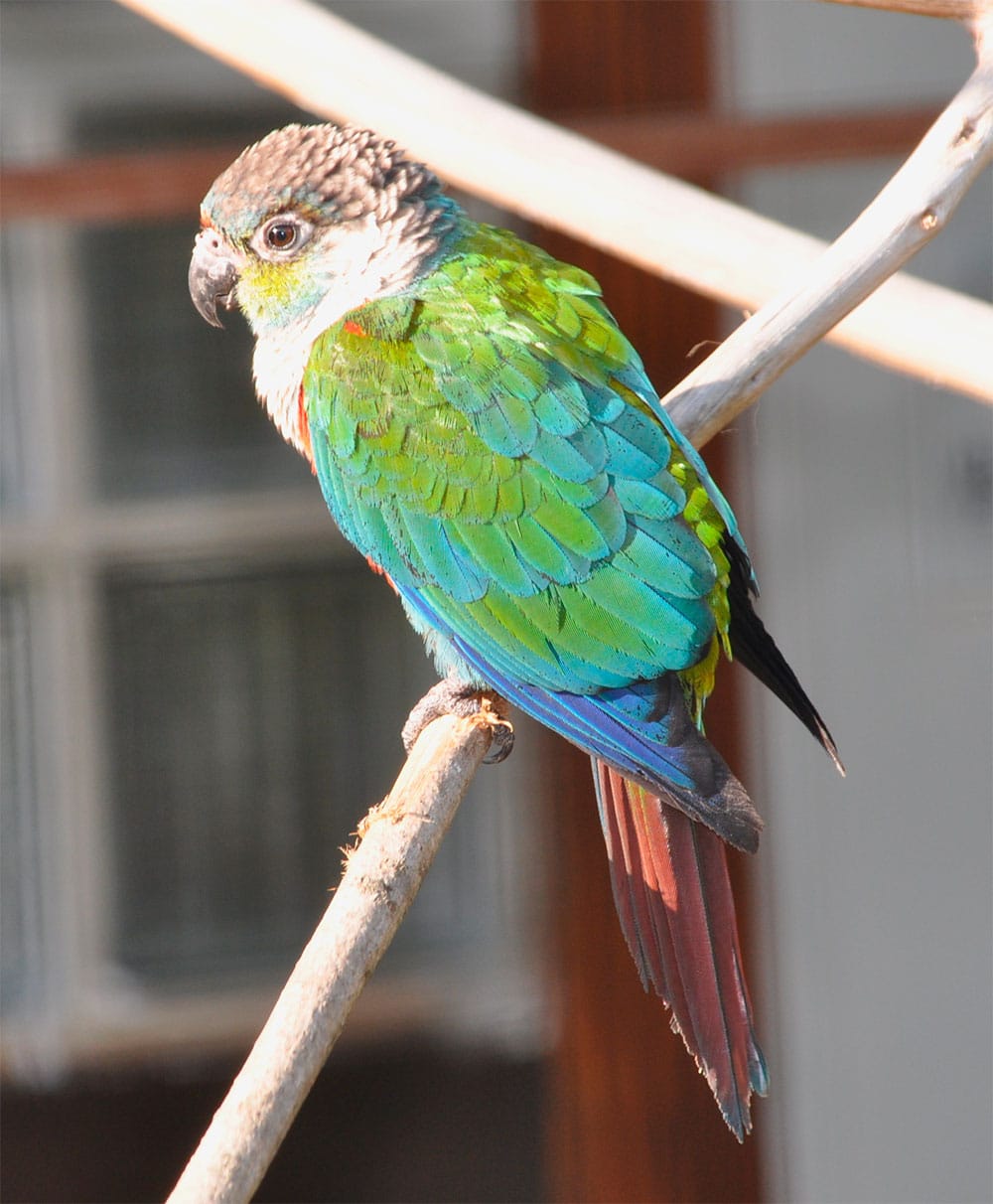
The Crimson-bellied Parakeet (Pyrrhura perlata) has the lores and cheeks of color yellowish-olive with dye Brown; The forecrown, the crown and back neck Dark Slate with velvety probes, giving a mottled appearance, especially in parts where increases the blue at the bases of the feathers.

The upper mantle is blue; robe bottom up to the uppertail-coverts green. Scapulars green at the base, blue down; the lesser wing coverts, olive green; the medium-sized and large coverts, with a predominance of the color blue. The flight feather, blue top, secondaries with green in the outerweb; slate grey dark below.

Underwing-coverts bright red. Sides of the neck, the throat and the top of the chest, with a predominance of brown color, with some brands blue and tips velvety, giving a scaly appearance; The under chest and most of the belly bright crimson; Flanks, the thighs and undertail-coverts, Blue with greenish tint. Upper, the tail, with predominance of color Brown, shades of green and some blue feathers; below, the tail, dark gray.

The bill brown-black color; eye ring whitish grey; Iris dark brown; legs black slate.

Both sexes similar.

Immature they lack the bright crimson color on the underparts; Sometimes with dark margins in the scapulars.

The Pyrrhura perlata was formerly known as Pyrrhura rhodogaster.

Habitat:

They generally inhabit humid forests on dry land., clear forest, secondary and probably drier formations in the North of Mato Grosso and have been registered also dominated by fig trees in eastern forests of Bolivia.

Usually views in small flocks and, sometimes in mixed groups with the Golden-winged Parakeet and Painted Parakeet. Larger family groups have been reported previously. They have often been seen descending into rivers and streams to bathe and drink..

Reproduction:

With reproduce between August and November, probably in April and June, They nest in tree cavities. Incubation period: 24-25 days.

The put in captivity is of 3-9 eggs, being 5 the average.

Food:

Reported foods include catkins Cecropia, small fruits of Trema micrantha, fruits of the ficus, Eugenia and Zanthoxylum, and flowers of Bertholletia excelsa and Dioclea glabra.

Distribution:

They can be found in Brazil, in the area of the great South-Central amazon basin, in West For and in the western area of amazon, in the river basins Madeira and South of the Tapajós, to the extreme north of Mato Grosso, Rivers Roosevelt and Aripuanã.

Observed in adjacent parts of Bolivia and probably widely distributed east of Rio Mamoré in hand me and Santa Cruz.

In general common, but perhaps decreasing due to the loss of forests in some parts of its area of distribution (for example, along the river JI-Paraná in Rondà´nia, Brazil).

Conservation:

State of conservation ⓘ


Vulnerable Vulnerable ⓘ (UICN)ⓘ

• Current category of the Red List of the UICN: Vulnerable

• Population trend: Stable

Justification of the population:

The size of the world's population has not been quantified, but this species is described as "quite common» (Stotz et to the., 1996).

Justification of trend:

It is suspected that this species has lost 23-30.3% of habitat within its distribution area for three generations (18 years), based on a model of Amazon deforestation (Soares-Filho et to the., 2006, Bird et to the., 2011). Given the susceptibility of species the hunting and capture, they suspected that the population of Crimson-bellied Parakeet will decrease by ≥ 30% during three generations.

"Crimson-bellied Parakeet" in captivity:

Not very common in captivity. Its diet ideal would be based on fruits such as: apples, Pears, oranges, bananas, grenades, cactus fruits , which form the 30 percent of their food, vegetables, such as: carrots, celery, green beans, pea in the pod, fresh corn, green leaves, such as: chard, lettuce, dandelion, chickweed, healer, millet; a mixture of seeds as such: Canary Islands, small amounts of wheat and millet, oats, safflower and hemp, Sunflower, cooked beans and legumes and cooked corn.

Es una ave muy playful a la que le encanta bañarse, so toys and a shallow bowl of water should be provided.
Moderate voice, but when are they excited can be somewhat noisy. It is not aggressive with other species.
Price per couple: 500-600 EUR

Alternative names:

– Crimson-bellied Parakeet, Crimson bellied Parakeet, Crimson-bellied Conure, Pearly Conure, Pearly Parakeet, Rose-bellied Conure, Rose-breasted Conure, Rose-breasted Parakeet (English).
– Conure à ventre rouge, Conure perlée, Perriche à ventre rouge, Perruche à poitrine cramoise, Perruche à ventre rouge (French).
– Rotbauchsittich, Blausteißsittich, Blausteiss-Sittich, Rotbauch-Sittich (German).
– Tiriba-de-barriga-vermelha (Portuguese).
– Catita cola granate, Cotorra Ventirroja, Cotorra Ventrirroja, Perico de Pecho Rojo, Perico Perla (español).
– Catita cola granate (Paraguay).


scientific classification:

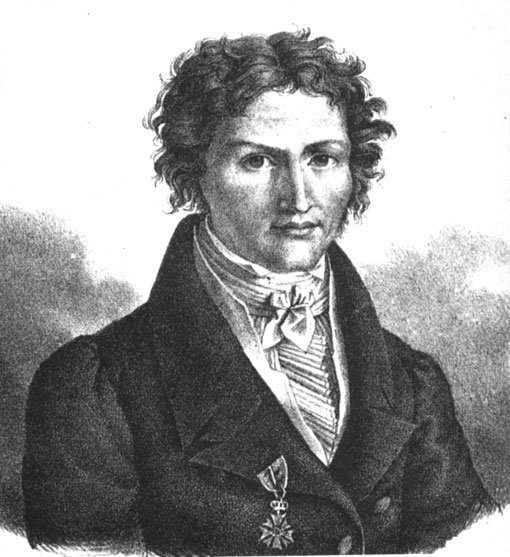
Johann Baptist von Spix

– Order: Psittaciformes
– Family: Psittacidae
– Genus: Pyrrhura
– Scientific name: Pyrrhura perlata
– Citation: (von Spix, 1824)
– Protonimo: Aratinga reported


Crimson-bellied Parakeet images:

Videos of the "Crimson-bellied Parakeet"


Especies del género Pyrrhura

Crimson-bellied Parakeet (Pyrrhura perlata)


Sources:

– Avibase
– Parrots of the World – Forshaw Joseph M
– Parrots A Guide to the Parrots of the World – Tony Juniper & Mike Parr
– Birdlife

– Photos:

(1) – Crimson-bellied Parakeet (Pyrrhura perlata) also called the Crimson-Bellied Conure By derivative work: Snowmanradio (talk)Juan_Caparrós_cabeza. JPG: Juan Caparrós [CC BY-SA 3.0 or GFDL], via Wikimedia Commons
(2) – A Crimson-bellied Parakeet (also known as the Crimson-bellied Conure) captive by Pyrrhura_perlata_-captive-8a.jpg: Nori Almeidaderivative work: Snowmanradio [CC BY 2.0], via Wikimedia Commons
(3) – Crimson-bellied Conure in the Walsrode Bird Park, Germany By Quartl (Own work) [CC BY-SA 3.0], via Wikimedia Commons
(4) – Parrot by pixabay Crimson
(5) – Pyrrhura perlata by Florin Feneru – Flickr
(6) – Conurus rhodogaster=Pyrrhura perlata by Joseph Wolf [Public domain], via Wikimedia Commons

– Sounds: Xeno-canto

▷ The world of Pets: Dogs, cats, birds, reptiles, amphibians

Deville's Parakeet
Pyrrhura lucianii


Deville's Parakeet

Content

Description:

21-23 cm.. height.

the showy plumage of the Deville's Parakeet (Pyrrhura lucianii) is generally Green, darker in the lower parts, the crown is dark brown, the forecrown and face is brownish red in colour; cheeks brick red, faded of blue, ear-coverts brownish yellow, neck and chest with the typical scales very visible due to the black and yellow contrast of the feathers. The ventral coat of arms, reddish, is well defined; in flight the dark red spot is notorious for the abdomen. Well defined are the reddish marks on the rump and in his long tail; the flight feather they are blue.

It has periocular ring Of course, irises brown, bill blackish and legs grey pink.

Note:

Until recently this species was included along with the Pyrrhura subandina, Pyrrhura caeruliceps, Pyrrhura pantchenkoi within the species Pyrrhura picta.

Habitat:

Found in altitudes of 800 m, in forests Terra firm and várzea, including forest margins and near clearings with tall trees. In forests low semi humid, up close 100 m.

Seen in pairs, groups of three or flocks of up to 20 individuals.

Reproduction:

Little is known about the reproductive cycle of this species, probably nesting in large trees, in cavities or in nest of woodpeckers abandoned, with one laying estimated in 5-7 eggs.

Food:

With feeds a wide variety of fruits, flowers, seeds and algae, possibly.

Distribution:

Size of the distribution (breeding/resident): 47,200 km2

Restricted to the State of amazon in the Northwest Amazon of Brazil.

This species is supposed fairly common within its range, However, This can not be confirmed since this time rare remote region is visited by researchers.

Conservation:

• Red List Category: Least concern

• Population trend: Decrease

State of conservation ⓘ


minor concern Minor Concern ⓘ (UICN)ⓘ

The status of their populations is unknown, but for the good condition of the habitat, it can be assumed that they are in good state of conservation.

While the trend of the population seems to be decreasing, do not believe that the decline is fast enough for approaching the threshold of vulnerable under the criterion of population trend

"Deville's Parakeet" in captivity:

Although he is a parrot rare in captivity, its potential as a domestic fowl is excellent, provided there are hand raised and socialized from an early age. The newly imported birds are usually shy and nervous and often they remain reserved.

It is usually inquisitive and active, enjoy flying and requires plenty of exercise and a spacious cage. Usually, It is not too noisy unless it is excited (as it is usually the case of all species Pyrrhura).

Once acclimatized, These parrots are quite robust. Enjoy with the bath by what are them must provide a dish of water little deep to daily. Also the love chew branches fresh.

Alternative names:

– Deville’s Parakeet, Bonaparte’s Parakeet (English).
– Conure de Bonaparte, Conure de Luciani (French).
– Bonapartesittich, Prinz Luzians Rotschwanzsittich (German).
– Tiriba-de-deville (Portuguese).
– Cotorra de Bonaparte, Ñángaro de Deville, Perico de Deville, Cotorrita barriguiroja (español).
– Perico de Bonaparte (Peru).

scientific classification:

– Order: Psittaciformes
– Family: Psittacidae
– Genus: Pyrrhura
– Scientific name: Pyrrhura lucianii
– Citation: (Deville, 1851)
– Protonimo: Conurus Lucianii

Images Deville's Parakeet:


Especies del género Pyrrhura

Deville's Parakeet (Pyrrhura lucianii)


Sources:

– Avibase
– Parrots of the World – Forshaw Joseph M
– Parrots A Guide to the Parrots of the World – Tony Juniper & Mike Parr
– Birdlife

– Photos:

(1) – Maracana luciani Dev. & Cast. Pyrrhura lucianii = (Deville, 1851) by Francis de Laporte de Castelnau [Public domain], via Wikimedia Commons

– Sounds: Daniel Lane (Xeno-canto)
▷ The world of Pets: Dogs, cats, birds, reptiles, amphibians

El Oro Parakeet
Pyrrhura orcesi


Cotorra de El Oro

Content

Description:

22 cm. of long and 73 g. of weight.

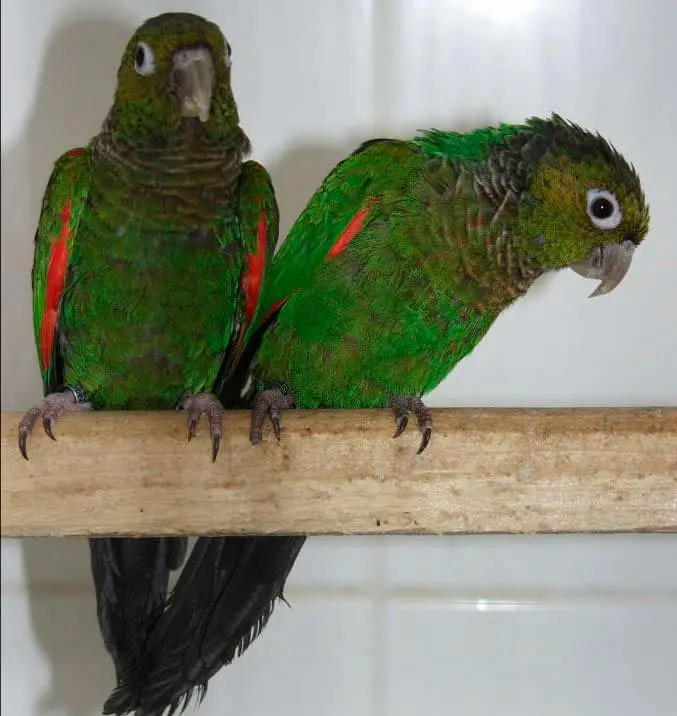
The El Oro Parakeet (Pyrrhura orcesi) is a bird relatively striking, with mostly green plumage. Has the forecrown red; feathers on the sides of the neck with the white base; Red patch from the shoulder up to the half of the wing , end of the wing blue (more visible in flight), tail above with a reddish tint and below completely red except the base.

Beak and legs blackish.

The females It is thought that less red have around the face.

the youth they are generally paler and lack much of the red marks that are seen in adults.

Habitat:

It inhabits in the very humid tropical forest between 800-1.200 m (occasionally at altitudes as low as 300 m). It has been reported that he tolerates some habitat fragmentation (Schaefer and Schmidt 2003). Performs seasonal movements. Are usually distributed in groups of 4-15, Although it has been observed in flocks of up to 60 birds. They may be closely related with the Maroon-tailed Parakeet (Pacific) (Pyrrhura melanura pacifica) and the Maroon-tailed Parakeet (Pyrrhura melanura)

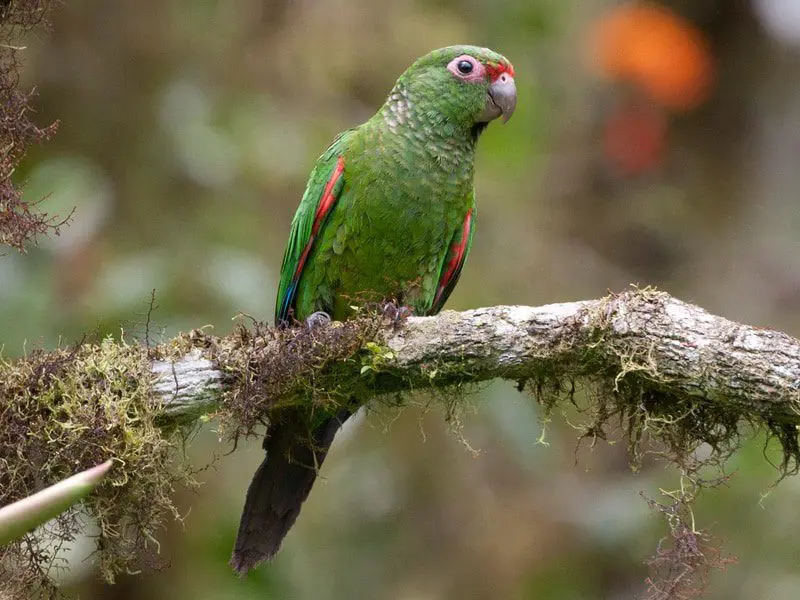
The rest sites They seem to change frequently and are generally located between 2 and 24 meters above the ground, in natural cavities in trees or open branches.

It is extremely noisy and conspicuous when flying.

Reproduction:

As is a species discovered recently, very little is known about its ecology.

Seems to prefer the Dacryodes peruviana family Burseraceae for nest (Garzon 2007), and communal, sharing the tasks of incubation between several birds, Although a couple exhibited a behavior of pre-anidamiento in the cavity of a small tree Meliaceae in 1997 (Snyder et to the. 2000), and reported nests in natural cavities of 1,8-24 m above the ground in a variety of tree species (Schaefer and Schmidt 2003).

The time of incubation is of approximately 31 days.

The main breeding station seems to be between November and March (Garzon 2007), although it is difficult to specify because with the effects of 'El Niño' they mate between December and January.

Movements seasonal altitudinal down to forests have been reported in the Buenaventura reserve (T. Schaefer in litt., 2007).

Food:

Discreetly feeding in the canopy, composing your diet of various fruits (including fig Ficus spp.), Fruits and flowers Cecropia (Snyder et to the., 2000).

Distribution:

Size distribution (reproduction / resident) 750 km2

The El Oro Parakeet is an endemic bird. They inhabit in the western slope of the Andes, in the southwest of Ecuador (in Cañar, Azuay, Gold and Loja), where was discovered in 1980.

Apparently, its population is limited to an area of only 100 km from North to South, and a maximum of 5-10 km wide (Juniper and Parr 1998), with its highly fragmented Habitat and with a population estimated in less than 1.000 individuals (Garzon 2007).

Its population in the town of Buenaventura has remained stable since 2002-2007 (Juniper and Parr 1998), estimated in 171 birds in period 2005-2006 (2007 Garzon, HM Schaefer in litt. 2012).

Conservation:

State of conservation ⓘ


critical hazard critically endangered ⓘ (UICN)ⓘ

• Current category of the Red List of the UICN: In danger of extinction

• Population trend: In decline.

The El Oro Parakeet is in danger of extinction due to deforestation and extreme forest fragmentation for cattle ranching, What causes the habitat degradation. This degradation destroy sites of nesting and feeding that these birds need to survive and reproduce at a healthy pace.

Population estimated in less than 1.000 individuals.

The habitat limited only to the Andes, to the West of Ecuador and because of this, sensitivity to the destruction of the Habitat is very heavy. Protection for some of the habitat of this species has been established in the Book ecological Buenaventura. In reserves, bird houses have been built in trees to help promote reproduction and has had some success. Other projects have been proposed to evaluate the size of the population.

BUENAVENTURA RESERVE REPORT

"El Oro Parakeet" in captivity:

Don't usually see in the poultry farming.

Alternative names:

– El Oro Parakeet, El Oro Conure (English).
– Conure d’Orcés, Conure d’Orcès, Perruche d’El Oro (French).
– Orcessittich, Orces Sittich, Orces-Sittich (German).
– Tiriba-do-el-oro (Portuguese).
– Cotorra de El Oro, Perico de orcés (español).

scientific classification:

– Order: Psittaciformes
– Family: Psittacidae
– Genus: Pyrrhura
– Scientific name: Pyrrhura orcesi
– Citation: Ridgely & Robbins, 1988
– Protonimo: Pyrrhura orcesi

Images "El Oro Parakeet"

Videos "El Oro Parakeet"


Especies del género Pyrrhura

El Oro Parakeet (Pyrrhura orcesi)


Sources:

  • Avibase
  • Parrots of the World – Forshaw Joseph M
  • Parrots A Guide to the Parrots of the World – Tony Juniper & Mike Parr
  • Birdlife

Photos:

(1) – fjocotoco.org

▷ The world of Pets: Dogs, cats, birds, reptiles, amphibians

Indigo-winged Parrot
Hapalopsittaca fuertesi


Indigo-winged Parrot

Content

Description:

23-24 cm.. height.

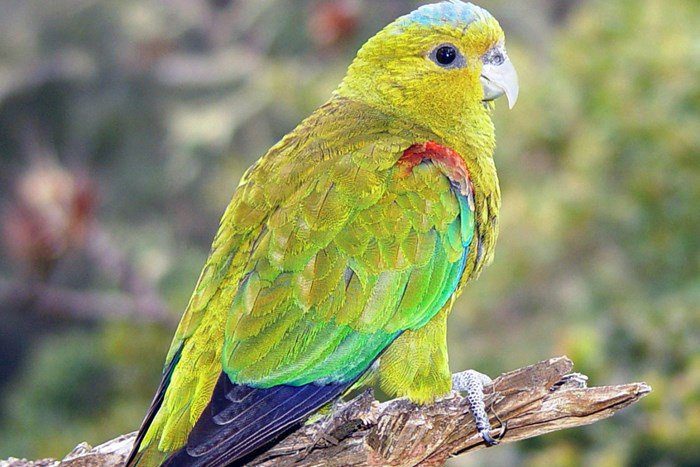
In 2002 It was the rediscovery of the the Indigo-winged Parrot (Hapalopsittaca fuertesi), an enigmatic parrot that had been lost to the world for more than 90 years and continues being one of the birds more rare of the Earth. It has a plumage mainly yellowish-green and is highlighted by the blue of the crown and olive yellow tone of the forecrown (except a strip), cheeks and sides of the eyes, narrow strip in the forecrown, under abdomen and shoulders red. End of the wing blue violet dark, tail Blue with red base.

The bill Horn colored with blue color, Grey at the base of the upper jaw. Iris Green-yellow.

The immature It has less yellow streaks and more off face.

Habitat:

Is a kind of range restricted, very rare and difficult to observe. It inhabits high Andean forests and frequent cloud subparamos, between 2600 and 3800 m on the level of the sea, being the majority of the records between 2.900 and 3.150 m. With guavas, encenillo and laurels where he eats fruits of thematapalo”, and with Oak (Quercus humboldtii).

Observed in fairly open forests, and possibly disturbed, with small Palm trees and tree ferns.

Fly in flocks of 6 to 25 individuals.

Reproduction:

It believes that the nests they make them in cavities of tall, mature trees.

The nesting period takes place from January to may. The average size clutch is three eggs. The incubation is performed only by the female, Although the attention back to the hatching is biparental (Díaz 2006).

Food:

The ecology of breeding and feeding of the Indigo-winged Parrot is practically unknown, but it has been observed the birds feeding of berries, and is likely to show a preference for the berries of mistletoe.

Distribution:

Size distribution (reproduction / resident): 100 km2

Restricted to a small strip on the western slope of the Andes Central of Colombia, near the border of the Quindio, Risaralda and Tolima.

Conservation:


critical hazard


• Current category of the Red List of the UICN: critically endangered.

• Population trend: Decreasing.

According to the categories of UICN is considered in Critical Hazard (CR), due to the accelerated process of deforestation in the Andean forests.

Since ago 90 years it was thought that the bird was extinct until it was rediscovered in 2002, When a few biologists of the ProAves Foundation in the montane forest of the municipality of Genoa, department of Quindío, where the group more large observed consisted of 25 birds and the total population was of approximately 60 individuals.

Currently there are some 300 mature free individuals.
Thanks to the efforts made by different project is have retrieved data of them fluctuations in the abundances of them individuals during the year associated to its reproduction. Is very likely that the offer of the artificial nests This already having a positive impact that the length of the project It has observed an increase in the size population.

"Indigo-winged Parrot" in captivity:

They do not exist in captivity.

Alternative names:

– Indigo-winged Parrot, Fuerte’s Parrot, Fuertes’s Parrot, Indigo winged Parrot (English).
– Caïque de Fuertes, Caïque de Colombie (French).
– Fuertespapagei, Chapmans Zwergamazone, Zwergamazone (German).
– Indigo-winged Parrot (Portuguese).
– Cotorra Aliazul, Lorito de Fuertes (español).
– Cotorra Aliazul, Loro coroniazul (Colombia).


scientific classification:

Frank Chapman
Frank Chapman

– Order: Psittaciformes
– Family: Psittacidae
– Genus: Hapalopsittaca
– Scientific name: Hapalopsittaca fuertesi
– Citation: (Chapman, 1912)
– Protonimo: Pionopsitta fuertesi


Images "Indigo-winged Parrot"

Video of the "Indigo-winged Parrot"

————————————————————————————————

«Lorito de Fuertes» (Hapalopsittaca fuertesi)


Sources:

– Avibase
– Parrots of the World – Forshaw Joseph M
– Parrots A Guide to the Parrots of the World – Tony Juniper & Mike Parr
– Birdlife
– proaves.org
– Parrot Book, Parrots and macaws Neotropical

– Photos:

(1) – Conservationbirding.org

– Sounds: controles-canto.org

▷ The world of Pets: Dogs, cats, birds, reptiles, amphibians

Green-cheeked Parakeet
Pyrrhura molinae


Green-cheeked Parakeet

Content

Description:

cotorra-de-molina-6

25 cm.. in length and 62–81 grams in weight.

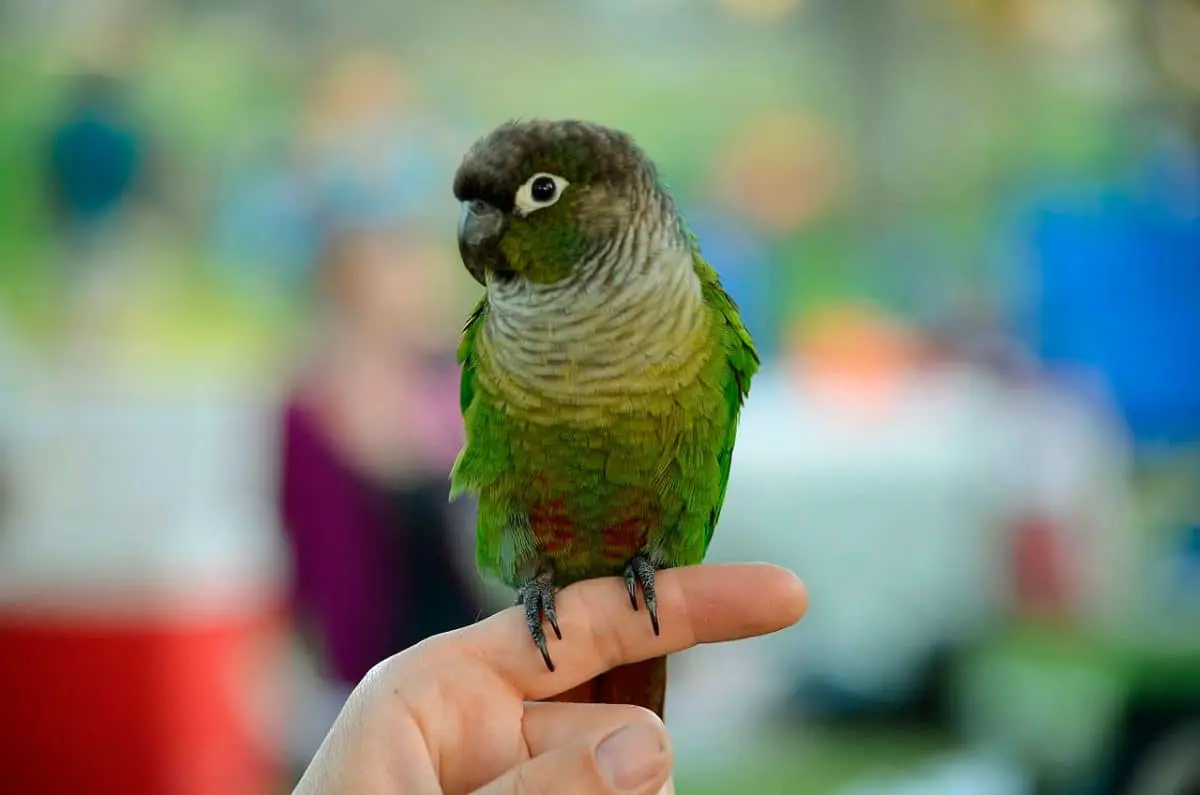
The Green-cheeked Parakeet (Pyrrhura molinae) has a close frontal band and lores, you are reddish brown to blackish; crown, of color brown or brown grayish marked laterally in shades blue and green; rear area of the crown and nape with blue tips; cheeks and sometimes the supercilii area (area of the front), of color green with dye olive; ear-coverts of color grey clear to pale.

Upperparts green. The primary coverts are bluish green and the remaining are mainly green, except for some feathers scattered of color blue, yellow or orange in the leading edge of wing. Primaries blue, secondaries Green with blue near the axis; both grey below. Underwing-coverts green. feathers in the chest, the throat and the sides of the neck, brownish at base with pale purple, light grey, or yellowish opaque in the tips, giving effect squamous; central belly with brown patches of varying size (only scattered feathers some birds); sides of the belly, the thighs and bottom of the chest, green; undertail-coverts bluish green.

Upper, the tail brown, with green at the base of the center of the tail feathers (hidden under the coverts); below, the tail brown.

The bill, grey; the cere white; bare periophthalmic whitish; irises brown; legs grey.

Both sexes are similar.

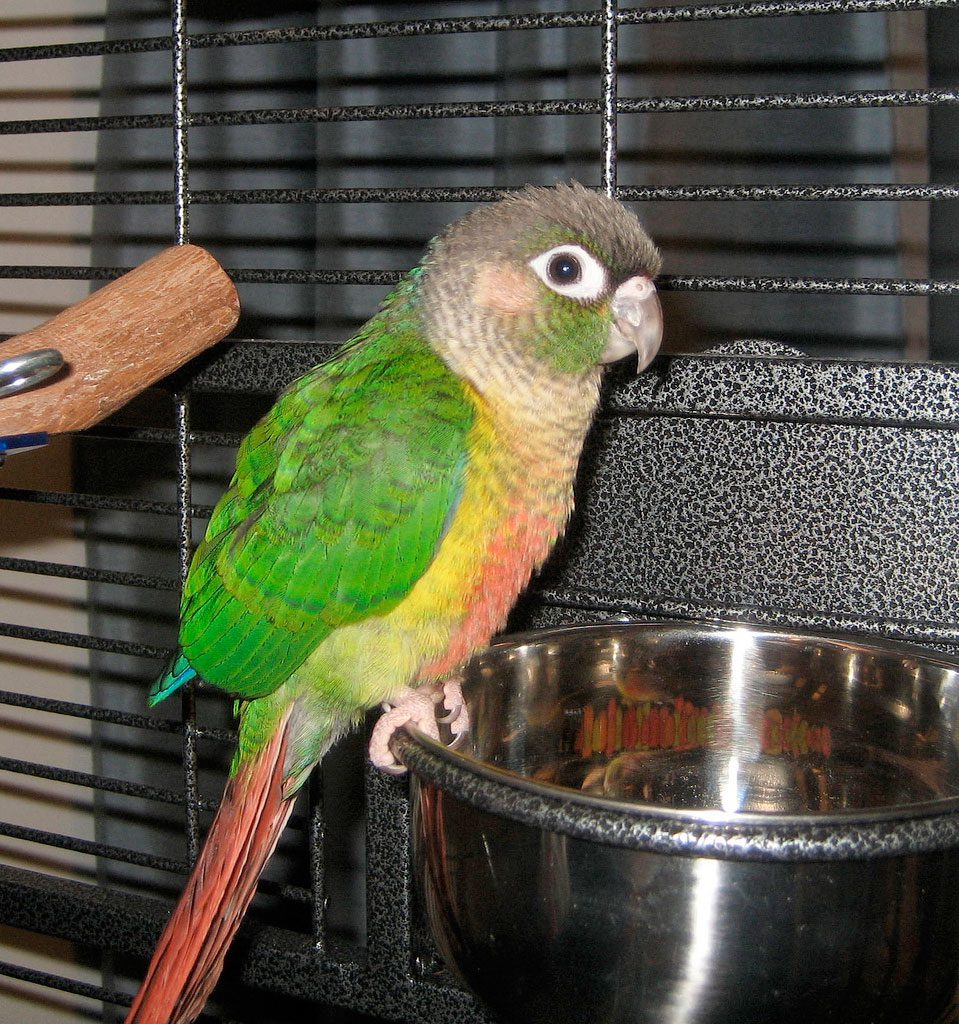
Immature paler. with the irises darker and less a defendant patch brown of the belly.

Subspecies description
  • Pyrrhura molinae australis

    (Todd, 1915) – Slightly smaller the species nominal, pale margin to the throat and to the close down of the chest; Brown-colored area in the chest more extensive; less blue in the undertail-coverts.


  • Pyrrhura molinae flavoptera

    (Maijer, Herzog, Kessler, Friggens & Fjeldsa, 1998) – Similar to the nominal species, but with the bend of wing and the carpal edge, orange-red; Alula with feather blue and yellow / white mixed.


  • Pyrrhura molinae hypoxantha

    (Salvadori & Festa, 1899) – Previously listed as Pyrrhura molinae sordida. The cheeks more pale that the of the nominal species; the color red in the belly less prominent and the skirting of feathers in the throat and the chest less distinctive.


  • Pyrrhura molinae molinae

    (Massena & Souancé, 1854) – The nominal.


  • Pyrrhura molinae phoenicura

    (Schlegel, 1864) – It differs from the species nominal and of the subspecies Pyrrhura molinae australis, by having the basal half of feathers of the Centre of the tail, green. Some birds are yellow in the leading edge of wing.


  • Pyrrhura molinae restricta

    (Todd, 1947) – More blue that other subspecies, with stain blue in them lower cheeks and strong blue subfusion in the undertail-coverts. The blue tips on the feathers of the nape and zone back in the neck they form a most distinctive collar which in the nominal species.

Habitat:

The species Green-cheeked Parakeet inhabits dense forests, often low and forests with clear primary and secondary , including stripes of chaco, Savannah, deciduous forest and pantanal gallery, as well as rainforests MOSS-covered in the Eastern Andes where is reported to 2.900 meters above sea level.

In Brazil the subspecies Pyrrhura molinae hypoxantha are located mainly in deciduous forest above the 500 m.

Gregaria (at least outside the breeding season), usually in flocks of 10-20, sometimes many more.

Very often seen in rapid flight, under, fairly erratic and slightly wavy. Difficult to detect while feeding calmly in the treetops.

Reproduction:

It nests in hollow natural of trees. The laying is of 4 to 6 eggs during the month of February in the northeast of Argentina. Period of incubation: 20-24 days.

Food:

There is no information about the diet of the Green-cheeked Parakeet, but probably similar to nearby conspecifics; Forages in the treetops.

Distribution:

Size of the area of distribution (reproduction / resident): 675.000 km2

Its distribution runs from the southwest of Brazil and Northwest of Argentina to the East of Bolivia and probably South of Peru.

To this species is it can be observed in Mato Grosso and Mato Grosso from the South, in the southwest of Brazil, and in Beni, Peace, Cochabamba, Chuquisaca, Tarija and Santa Cruz, to the East of Bolivia, to the fringes of the chaco. They can be distributed through the North of Bolivia up to the end South of Peru, where a hybrid individual was captured with the Black-capped Parakeet (Pyrrhura rupicola).

Apparently absent from the land low of the pantanal and restricted in the basin of the Paraguay River isolated plots of forests of chaco in highlands on the right bank of the river.

In the Northwest of Argentina is distributed in Salta, Jujuy and with less frequency in Tucumán (a record in Catamarca is probably wrong).

They can live on the fringes of the Northwest of Paraguay but not is tested. Some local seasonal movements they can occur, birds in the higher elevations down to altitudes lower in winter (Mar-Aug).

Usually common (very common in Salta and Jujuy); Highest densities in deciduous forest; It is the most common parrot in the wooded valleys of Bolivia eastern but probably declining there due to rapid habitat clearance.

Is sold during those years eighty and was extended in captive outside of its area of distribution.

Subspecies distribution

Conservation:

State of conservation ⓘ


minor concern Minor Concern ⓘ (UICN)ⓘ

• Current category of the Red List of the UICN: Least concern.

• Population trend: Stable.

Justification of the population

The size of the world population It has not been quantified, but this species is described as «common» (Stotz et to the., 1996).

Justification of trend

Suspected that the population is stable in absence of evidence of any decline or threatens substantial.

"Green-cheeked Parakeet" in captivity:

Unknown in those birds up to the Decade of 1970, nowadays it is quite common. They have become one of the favorite birds in the pet trade, due to his sweet personality and at your disposal for fun. Son playful, loving and Smart.

They are not considered the best talkers. But, some Green-cheeked Parakeet, especially smart, they learned to speak very well, according to their owners. Even so, most say only a couple of things, And there's no guarantee that they'll ever learn to speak. They also have low and serious voice, so even if managed to talk, it would not be easy for them to say something understandable.

Price per couple (ancestral): 120-200 EUR. Hypoxantha: 150-300 EUR.

Alternative names:

– Green-cheeked Parakeet, Green cheeked Parakeet, Green-cheeked Conure, Yellow-sided Conure (English).
– Conure de Molina, Perriche de Molina, Perruche de Molina (French).
– Molinasittich, Molina Sittich, Molina-Sittich (German).
– cara-suja, tiriba-de-cara-suja (Portuguese).
– Chiripepé cabeza parda, Chiripepé de cabeza gris, Cotorra de Molina, Perico Amarillo, Perico Verde, Cotorra de mejillas verdes (español).
– Chiripepé cabeza parda (Argentina).
– Chiripepé cabeza parda (Paraguay).
– Chiripepe cabeza parda (Bolivia).
– Kirki (Aymara).
– Sira (Guarani).

scientific classification:

– Order: Psittaciformes
– Family: Psittacidae
– Genus: Pyrrhura
– Scientific name: Pyrrhura molinae
– Citation: (Massena & Souancé, 1854)
– Protonimo: Conurus molinae

Images Green-cheeked Parakeet:

Videos "Green-cheeked Parakeet"


Especies del género Pyrrhura

Green-cheeked Parakeet (Pyrrhura molinae)


Sources:

– Avibase
– Parrots of the World – Forshaw Joseph M
– Parrots A Guide to the Parrots of the World – Tony Juniper & Mike Parr
– Birdlife
– Book Parrots, Parrots and macaws
– avianweb

– Photos:

(1) – A Green-cheeked Parakeet perching on the index finger of a left hand By Eric Sonstroem from California, USA (Green-Cheeked ConureUploaded by snowmanradio) [CC BY 2.0], via Wikimedia Commons
(2) – Green-cheeked Conure perching in an aviary at Kuala Lumpur Bird Park, Malaysia By Brandon Lim (Rainbow LorakeetUploaded by Snowmanradio) [CC BY 2.0], via Wikimedia Commons
(3) – Green-cheeked Conure perching in an aviary By Brandon Lim (Rainbow LorakeetUploaded by Snowmanradio) [CC BY 2.0], via Wikimedia Commons
(4) – A juvenile pet Yellow-sided Green-cheeked Conure (also Sordid Conure and the Yellow-sided Conure). It is a naturally occurring subspecies of the Green-cheeked Conure. The photograph shows a wing-clipped pet parrot in a bird cage. By therouxdown (Reese closeupUploaded by Snowmanradio) [CC BY-SA 2.0], via Wikimedia Commons
(5) – A juvenile pet Yellow-sided Green-cheeked Conure (also Sordid Conure and the Yellow-sided Conure). It is a naturally occurring subspecies of the Green-cheeked Conure. The photograph shows a wing-clipped pet parrot perching on a food bowel By therouxdown (originally posted to Flickr as Reese profile) [CC BY-SA 2.0], via Wikimedia Commons
(6) – Molina’s Parrot from Philip Lutley Sclater and W. H. Hudson, Argentine Ornithology: A Descriptive Catalogue of the Birds of the Argentine Republic (1888-89) in Wikimedia

– Sounds: (Xeno-canto)
▷ The world of Pets: Dogs, cats, birds, reptiles, amphibians

Maroon-tailed Parakeet
Pyrrhura melanura


Maroon-tailed Parakeet

Content


Anatomy-parrots

Description:

26-28 cm.. height.

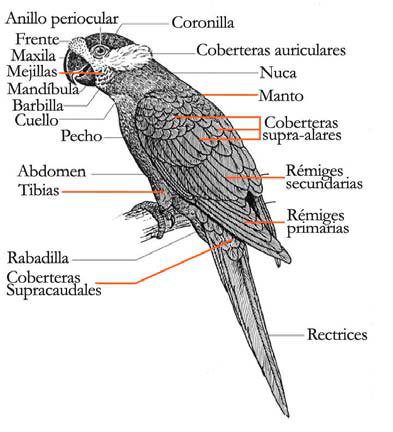
The Maroon-tailed Parakeet (Pyrrhura melanura) is distinguishable mainly by the tail and wings blackish (visible in flight); has the lores, the forecrown, the crown and the rear area of the neck, brownish, with paler reddish brown tips on the crown, forming altogether a speckled pattern; cheeks, ear-coverts and area behind the eyes, green; Brown in the shadows at the back of the crown Green in the nape.

Upperparts Green with tinge of olive in some feathers. Primary coverts Red with yellow tips; Front edge of the wing , red; upperwing-coverts of color green with dye olive. Primaries Dark greenish blue with dark tips. Underwing-coverts green; underside of flight feather blackish. Throat and feathers of the upper part of the chest, Green or greyish green with pale margins, giving a scaly striking effect; pale edges that become less clear on the sides of the neck; the belly and undertail-coverts Green with dye olive dark. Upper, the tail dark brown with green outer feathers; undertail, the tail shiny black.

Bill pale grey; bare periophthalmic naked, whitish: irises dark brown; legs grey.

Both sexes similar. The immature has less red (greener) in the primary coverts.

Subspecies description

Subspecies description
  • Pyrrhura melanura berlepschi

    (Salvadori, 1891) – Similar to the Pyrrhura melanura souancei, but with even broader and paler margins on the breast feathers (Some birds of Ecuador with almost entirely white breasts), less red on the front edge of the wing and more pronounced brown patch in the belly. Cheeks dyed with color olive, Red uniform at the edge of the carpus; abdomen more uniform brown/red color.

  • Pyrrhura melanura chapmani

    (Bond & Meyer de Schauensee, 1940) – With suspiciously in the chest more width, No yellow in the wing ; yellowish in the area of the ear and the green of the tail darker.

  • Pyrrhura melanura melanura

    (Spix, 1824) – Nominal.

  • Pyrrhura melanura pacifica

    (Chapman, 1915) – More dark, No yellow in the wing , grey around the eye, tail more short and reddish.

  • Pyrrhura melanura souancei

    (Verreaux,J, 1858) – With the edge top of the wing Red and not yellow; Green in the base of the tail more extensive and chest with scaled a little more width.

Habitat:

Maroon-tailed Parakeet

The Maroon-tailed Parakeet It occupies the temperate tropical formations, including forests of várzea, forests of land low and pre-montanos rainforests and forests cloud, often in areas partially cleared and edges of secondary forests; 150 - 300m in Venezuela (nominal), to 3,200 m in the slopes Andean Eastern (souancei), 1.600-2.800m on the slope of the Andes central (chapmani), at 1,700 m in Nariño (Pacifica), at 1500m (berlepschi). Usually in flocks of 6-12 individuals, staying in them cups of them trees to rest but moving is toward the branches more low for forage.

Reproduction:

Little information about breeding, observed during the months of April-June, headers of the Napo River, Ecuador. Copulation observed in January (Colombia). Clutch four eggs in captivity.

Food:

Few details about the diet, with foods known, including fruits of Miconia tkeaezans (Top of the Magdalena valley). Fagara tachuelo and tree bark (Amazonia).

Distribution:

Size of the area of distribution (reproduction / resident): 1.510.000 km2

The distribution of the Maroon-tailed Parakeet is discontinuous. Northwest of South America in the Western Amazon basin, southern portion of the the Orinoco basin and slope of the peaceful of the Andes, in the southwest of Colombia and West Ecuador.

In Venezuela the species is found in the Centre of the South of Bolívar along the upper Western Amazon basin of Brazil between the rivers Negro and Solimões. They are also distributed in Andes Central of Colombia, at the top of the Magdalena valley, from the South of Tolima until Huila and separated to the East from the Andes (in lowlands and up to 500 m in foothills) Since the Macarena mountains, southward through eastern lowlands Ecuador and Northeast and East of Peru.

A separate population is distributed to the West of the Andes, in the Northwest of the South of Ecuador, to the North of The rivers, with a single log in nose, to the southwest of Colombia.

Mainly resident Although the apparent absence during some seasons in some parts of Colombia suggests regular movements.

Unevenly distributed, in some areas very common, being the Parrot more numerous in some parts of the range such as high Magdalena valley and perhaps parts of Esmeraldas in the Northwest of Ecuador.

Alleged decrease in some areas (for example, Pacific slope of Ecuador) due to loss of habitat. Little known in the East of Peru. Not a locally popular cage bird if it has been traded internationally in significant numbers in late 1980 and fairly well known in captivity outside of its area of distribution.

Subspecies distribution

Subspecies distribution
  • Pyrrhura melanura berlepschi

    (Salvadori, 1891) – Valley of Huallaga, is of Peru and Southeast of Ecuador on Cutucú mountain range. A specimen with characteristics of this species was observed at the head of the Magdalena valley suggesting their distribution in Colombia.

  • Pyrrhura melanura chapmani

    (Bond & Meyer de Schauensee, 1940) – Hillside East of the top of the Magdalena valley in the center of the Andes from the South of Tolima until Huila at altitudes of 1600-2, 800 m

  • Pyrrhura melanura melanura

    (Spix, 1824) – Nominal.

  • Pyrrhura melanura pacifica

    (Chapman, 1915) – Northwest of Ecuador and southwest of Colombia.

  • Pyrrhura melanura souancei

    (Verreaux,J, 1858) – It is from Colombia since the Sierra de la Macarena Southwest, until Putumayo through the East of Ecuador, possibly up to the north end of Peru. Probably bordered on the eastern slopes of the Andes and mostly replaced by the nominal species in lowlands.

Conservation:


minor concern


• Current category of the Red List of the UICN: Least concern.

• Population trend: Decreasing.

Justification of the population

The population size world has not been quantified, but this species is described as «quite common» (Stotz et to the., 1996).

Justification of trend

This species is suspected that he has been able to lose 6,95 to 7,1% of a habitat within its distribution over three generations (18 years) based on a deforestation model of the Amazon (Soares-Filho et to the., 2006, Bird et to the. 2011). Given the susceptibility of the species to the cazay and/or the capture, It is suspected that will decrease in <25% durante tres generaciones.

"Maroon-tailed Parakeet" in captivity:

Ave shy and quiet, get used to people over time. Colonies in large birdcages are possible.

Alternative names:

– Maroon-tailed Parakeet, Magdalena Parakeet, Maroon tailed Parakeet, Maroon-tailed Conure, Black-tailed Conure (English).
– Conure de Souancé, Perriche de Souancé, Perruche de Souancé (French).
– Braunschwanzsittich, Braunschwanz-Sittich (German).
– tiriba-fura-mata (Portuguese).
– Cotorra Colinegra, Perico de Cola Negra, Periquito Colirrojo (español).
– Periquito Colirrojo (Colombia).
– Periquito Colirrojo (Peru).
– Perico Cola Negra (Venezuela).


scientific classification:


Johann Baptist von Spix

– Order: Psittaciformes
– Family: Psittacidae
– Genus: Pyrrhura
– Scientific name: Pyrrhura melanura
– Citation: (von Spix, 1824)
– Protonimo: Aratinga melanurus

Images "Maroon-tailed Parakeet"

Videos "Maroon-tailed Parakeet"

————————————————————————————————

"Black tail parakeet" (Pyrrhura melanura)


Sources:

– Avibase
– Parrots of the World – Forshaw Joseph M
– Parrots A Guide to the Parrots of the World – Tony Juniper & Mike Parr
– Birdlife

– Photos:

(1) – pyrrhura.cz.
(2) – Maroon-tailed parakeet pyrrhura berlepschi = berlepschi, Maroon-tailed Parakeet ssp. by John Gerrard Keulemans [Public domain], via Wikimedia Commons

– Sounds: (Xeno-canto)