โ–ท The world of Pets: Dogs, cats, birds, reptiles, amphibians

Dobermann
Germany FCI 143 . Pinscher and schnauzer type

Doberman

Although the Dobermann has a reputation for being a sharp and even sinister dog, his devoted fans consider him to be the most loving and loyal of his companions.

Content

History

The race Dobermann it is the only one in Germany to bear the name of its first known breeder: Friederich Louis Dobermann (2 of January 1834 – 9 of June 1894). according to history, he was a tax collector, trail manager, and also "dog dog", with the legal right to catch all free-roaming dogs. To create the smart and trustworthy watchdog he had in mind, crossed short haired sheepdogs with Rottweilers, black and tan terrier, and German Pinschers. Elegant dogs such as greyhounds and Weimaraners may also have been part of their "recipe". "Butcher dogs" played the most important role in the formation of the breed Dobermann, that in those times they were already seen as a race in itself. These dogs were of the type of the predecessors of the current Rottweiler, mixed with a type of Sheepdog black in color with rust-red markings that was common in the Thuringian region. With these mixtures, Dobermann started his hatchery in the years 70 of the century 19. In this way, he obtained "his breed" of utility dogs, home and ranches, they weren't just vigilantes, but also very attached to man.

It was used a lot as a protection dog and for the police. Its wide usefulness in the Police Service gave it the name "gendarme dog" at that time.. In hunting it was used mainly for the extermination of vermin. For all the above conditions, it was obvious that the FCI-St. Nยฐ 143 / 30.09.2016 3 Dobermann was officially recognized as a police dog at the beginning of the century 20. The upbringing of Dobermann resulted in a medium dog, strong and muscular, that despite all its substance allows to recognize elegance and nobility. It is ideal as a companion dog, protection and utility.

The race Dobermann it is the only one in Germany to bear the name of its first known breeder: Friederich Louis Dobermann (2 of January 1834 – 9 of June 1894). according to history, he was a tax collector, trail manager, and also "dog dog", with the legal right to catch all free-roaming dogs. For parenting, he mated especially biting dogs from the dog shelter. "Butcher dogs" played the most important role in the formation of the breed Dobermann, that in those times they were already seen as a race in itself. These dogs were of the type of the predecessors of the current Rottweiler, mixed with a type of Sheepdog black in color with rust-red markings that was common in the Thuringian region.

With these mixtures, Dobermann started his hatchery in the years 70 of the century 19. In this way, he obtained "his breed" of utility dogs, home and ranches, they weren't just vigilantes, but also very attached to man. It was used a lot as a protection dog and for the police. Its wide usefulness in the Police Service gave it the name "gendarme dog" at that time.. In hunting it was used mainly for the extermination of vermin. For all the above conditions, it was obvious that the FCI-St. Nยฐ 143 / 30.09.2016 3 Dobermann was officially recognized as a police dog at the beginning of the century 20. The upbringing of Dobermann resulted in a medium dog, strong and muscular, that despite all its substance allows to recognize elegance and nobility. It is ideal as a companion dog, protection and utility.

Physical characteristics

It is a medium-sized dog, robust and muscular, elegant lines and noble and haughty demeanor. The head is elongated cone shaped and bouquet. Craniofacial lines are parallel, the stop is light and the nose, deep. The eyes are medium and oval. The ears have a high insertion and the animal has them upright. If they are whole, fall to the sides of the head, with the edges well glued to the cheeks. The back is short and solid. The limbs are straight and plump. The tail is amputated leaving two vertebrae.

  • Fur: short, very sticky and smooth.
  • Color: black or brown with fire. Blue is no longer bred because it transmits serious genetic defects.
  • Size: in males, of 68 to 72 cm., for a weight of 40 to 45 kg. In females, of 63 to 68 cm., for a weight of 32 to 35 kg. The intermediate sizes are the most wanted.

Character and skills

It is one of the sweetest and most sensitive dogs in the world. He goes out of his way, with whom you should live in close contact. Leaving him alone in the garden would mean ruining his character. About him Dobermann a lot of gossip circulates, as for example that this dog "goes crazy" around the age of seven due to the lack of cranial capacity (one of the biggest absurdities, from the scientific point of view, never heard in cinofilia, and it is not that few are heard). Today, fortunately, there are rare cases in which there is talk of "mad" dogs or "irrepressible ferocity".

Very loving with family members and safe with children (provided they leave him alone), with strangers maintains the typical reserve of defense dogs. A balanced specimen, like all those from good hatcheries, will never behave aggressively for no reason, and it will show itself as a splendid companion dog delivered to its owner.

Start training your puppy the day you bring him home. Even at eight weeks old, He is able to absorb everything you can teach him. Don't wait until you have 6 months to start train or have to deal with more stubborn dog. If possible, Take it to a trainer when you have between 10 and 12 weeks, and socializes, socialice, socialice. But, Note that many kinds of training puppies require certain vaccinations (such as kennel cough) stay up to date, and many veterinarians recommend limited exposure to other dogs and public places until puppy vaccinations (including rabies, distemper and parvovirus) They are completed. Instead of formal training, You can start training your puppy to socialize at home and among family and friends until immunizations are completed in the puppy.

Talk to the breeder, Describe exactly what you want in a dog and ask for help choosing a puppy. Breeders see puppies daily and can make incredibly accurate recommendations once they know something about their lifestyle and personality. Regardless of what you want from a Dobermann, look for one whose parents have nice personalities and who has been well socialized since the puppy's first stage.

Observations and tips

Unselected dogs and the result of casual couplings are the only ones that can be nervous and in some cases bite. It is essential to buy the puppy in a good kennel that selects beauty and character.

Doberman health

All dogs have the potential to develop genetic health problems, just as all people have the potential to inherit a particular disease. Run, do not walk, from any breeder that does not offer a health guarantee on puppies, to tell you that the breed is 100 percent healthy and has no known problems, or tell you that your puppies are isolated from the main part of the home for health reasons. A reputable breeder will be honest and open about the breed's health problems and the incidence with which they occur in their lines..

One of the most serious breed-related health problems in the Doberman is cardiomyopathy., which causes an increase in the size of the heart. An annual heart exam is critical to detect this condition early., and no dog with cardiomyopathy should be bred. Neither should any Dobermann without a complete cardiac exam by a veterinary cardiologist in the past year. The sad reality, However, is that a dog that gets a good exam one day can develop heart disease the next, and the puppy of two parents without heart disease can still develop it.

Another race-related condition that affects the Dobermann is cervical vertebral instability (CVI), commonly called Wobbler syndrome. It is caused by a malformation of the vertebrae in the neck that causes pressure on the spinal cord and leads to weakness and lack of coordination in the hindquarters and sometimes to complete paralysis.. Symptoms can be managed to some extent in dogs that are not severely affected, and some dogs experience some relief with surgery, but the result is not certain. Although IVC is believed to be genetic, there is no disease screening test.

The Dobermans they are also prone to the bleeding disorder known as von Willebrand disease, as well as hypoadrenocorticism or Addison's disease.

Not all of these diseases are detectable in a growing puppy, and it is impossible to predict if an animal will be free of these diseases, so you need to find a reputable breeder who commit to raise healthier animals possible. Must be able to produce independent certification that the dog's parents (and grandparents, etc.) have been examined for common defects and considered healthy for breeding. That's where health records come in..

Breeders must accept that all test results, positive or negative, are published in the CHIC database. It is not necessary for a dog to perform well or even pass evaluations to obtain a CHIC number., so the CHIC record alone is not proof of robustness or absence of disease, but all test results are published on the CHIC website and can be accessed by anyone who wants to check the health of a puppy's parents. If the breeder tells you that you don't need to do those tests because they have never had problems with their lines and their dogs have been "vet checked", so you need to find a breeder who is more rigorous with genetic testing.

Careful breeders screen their breeding dogs for genetic diseases and breed only the healthiest, best-looking specimens., but sometimes mother nature has other ideas and a puppy develops one of these diseases despite good husbandry practices. Advances in veterinary medicine mean that in most cases dogs can still live a good life. If you are going to have a puppy, ask the breeder about the ages of the dogs in their lines and what they died of.

Not all visits by Dobermann to the vet they are due to a genetic problem. The Dobermans are one of the breeds with a deep chest and a tendency to swell, a condition in which the stomach expands with air. This can become the most serious condition, gastric torsion, if the stomach twists on itself, cutting off blood flow. gastric torsion, or gastric dilatation volvulus, suddenly attacks, and a dog that was fine a minute can die a few hours later. Watch for symptoms such as restlessness and gait, babeo, pale gums and lip licking, try to vomit but without bringing out anything, and signs of pain. Gastric torsion requires immediate veterinary surgery, and most dogs that have bloated once will bloat again. That means it's wise to opt for the procedure known as "gastric torsion.", which will prevent the stomach from twisting in the future. This procedure can also be done as a preventive measure..

Remember that after bringing a new puppy home, has the power to protect you from one of the most common health problems: the obesity. Keep a Dobermann with a proper weight is one of the easiest ways to prolong your life. Make the most of your preventive skills to help ensure a healthier dog for life.

Dobermann Grooming

The toilet is a piece of cake. Cepilla al Dobermann with a brush or hunting glove every week, or even run a wet towel over it. The days you need a bath, use a dog shampoo, not a human product. Rinse it well and let it stir to dry or towel dry.

The Dobermann comes off hair moderately. Regular brushing will help keep him and your house clean.. As with any dog, brushing before bathing helps remove more dead hair, leaving less hair to shed. Your vacuum cleaner will run longer if you brush your Dobermann regularly.

The rest is basic care. Trim nails as needed, usually every few weeks. Brush their teeth for general good health and fresh breath.

Characteristics "Dobermann"

Coexistence is important that you have with your new friend. Before considering the acquisition of a dog of the breed "Dobermann" you know certain factors. Not all breeds of dogs are apt to live in an apartment, you must take into account his character, their need for exercise, their interaction with other pets, their care and if you have small children, their level of tolerance towards them.

Adaptation โ“˜

5,0 of 5 stars (based on 1 review)

friendly dog โ€‹โ€‹โ“˜

2,0 of 5 stars (based on 1 review)

hair loss โ“˜

3,0 of 5 stars (based on 1 review)

Affection level โ“˜

5,0 of 5 stars (based on 1 review)

Need for exercise โ“˜

3,0 of 5 stars (based on 1 review)

Social need โ“˜

3,0 of 5 stars (based on 1 review)

Home โ“˜

5,0 of 5 stars (based on 1 review)

Toilet โ“˜

1,0 of 5 stars (based on 1 review)

Friendly with strangers โ“˜

1,0 of 5 stars (based on 1 review)

barking โ“˜

2,0 of 5 stars (based on 1 review)

Health โ“˜

4,0 of 5 stars (based on 1 review)

Territorial โ“˜

5,0 of 5 stars (based on 1 review)

Cat friendly โ“˜

3,0 of 5 stars (based on 1 review)

Intelligence โ“˜

5,0 of 5 stars (based on 1 review)

Versatility โ“˜

5,0 of 5 stars (based on 1 review)

Child friendly โ“˜

4,0 of 5 stars (based on 1 review)

Surveillance โ“˜

3,0 of 5 stars (based on 1 review)

joy โ“˜

5,0 of 5 stars (based on 1 review)

Images "Dobermann"

Videos "Dobermann"

Type and recognitions:

  • FCI CLASSIFICATION:
  • Group :
  • Section : . .

Federations:

  • FCI – Pinscher and Schanuezer dogs. Molossian type Dogs and Swiss Mountain and Cattle Dogs. , Section 1: Pinscher and Schnauzer. โ“˜
  • AKC – Dogs working โ“˜
  • ANKC – Group 6 (utility dogs) โ“˜
  • CKC – Group 3 – Working dogs โ“˜
  • โ€‹KC – Working dogs โ“˜
  • NZKC – Utility dog โ“˜
  • UKC – Watchdog โ“˜

FCI breed standard Dobermann

FCIFCI - Dobermann
Dobermann

Alternative names:

1. Doberman Pinscher, Dobie, Doberman (English).
2. Dobermann Pinscher (French).
3. Dobermann Pinscher (German).
4. Dobermann pinscher (Portuguese).
5. Dobermann, Dobermann pinscher (espaรฑol).

Photos:

1 – Doberman by https://www.pxfuel.com/es/free-photo-xqbqf
2 – Doberman by https://www.pexels.com/es-es/foto/36376/
3 – Jean Dark Snรถ of Sweden, dobermann by Felill / CC BY-SA
4 – Doberman by https://www.publicdomainpictures.net/es/view-image.php?image=232839&picture=doberman-dog-portrait
5 – Tallinn, Estonia, CACIB duo 2013 by Thomas / CC BY-SA
6 – Doberman by https://www.publicdomainpictures.net/es/view-image.php?image=158143&picture=doberman-pinscher-guard

โ–ท The world of Pets: Dogs, cats, birds, reptiles, amphibians

Dogo Argentino
Argentina FCI 292 - Molossoid - Dogo

He is a fierce guardian and defender. It is not convenient to stimulate their aggressiveness.

Dogo Argentino

Content

Characteristics "Dogo Argentino"

Coexistence is important that you have with your new friend. Before considering the acquisition of a dog of the breed "Dogo Argentino" you know certain factors. Not all breeds of dogs are apt to live in an apartment, you must take into account his character, their need for exercise, their interaction with other pets, their care and if you have small children, their level of tolerance towards them.

Adaptation โ“˜

3,0 of 5 stars (based on 1 review)

friendly dog โ€‹โ€‹โ“˜

1,0 of 5 stars (based on 1 review)

hair loss โ“˜

3,0 of 5 stars (based on 1 review)

Affection level โ“˜

3,0 of 5 stars (based on 1 review)

Need for exercise โ“˜

4,0 of 5 stars (based on 1 review)

Social need โ“˜

3,0 of 5 stars (based on 1 review)

Home โ“˜

1,0 of 5 stars (based on 1 review)

Toilet โ“˜

1,0 of 5 stars (based on 1 review)

Friendly with strangers โ“˜

1,0 of 5 stars (based on 1 review)

barking โ“˜

2,0 of 5 stars (based on 1 review)

Health โ“˜

3,0 of 5 stars (based on 1 review)

Territorial โ“˜

5,0 of 5 stars (based on 1 review)

Cat friendly โ“˜

1,0 of 5 stars (based on 1 review)

Intelligence โ“˜

3,0 of 5 stars (based on 1 review)

Versatility โ“˜

2,0 of 5 stars (based on 1 review)

Child friendly โ“˜

3,0 of 5 stars (based on 1 review)

Surveillance โ“˜

3,0 of 5 stars (based on 1 review)

joy โ“˜

5,0 of 5 stars (based on 1 review)

History

The Dogo Argentino (Argentine Mastiff) is a breed of dog, created by the Argentine doctor Antonio Nores Martรญnez, looking for an animal suitable for the hunting of common species in Argentina, such as wild boars, peccaries and red foxes. Courage, courage and nobility are qualities that are maximized in this breed.

The Dogo Argentino It is the only living Argentine dog breed (see footnote two extinct races), defined by its creator, The doctor. Antonio Nores Martinez, as "the best dog among all prey dogs and the most prey dog โ€‹โ€‹among all the dogs in the world".

In the Decade of 1920, Antonio Nores Martinez (helped by his brother Agustรญn, his father Antonio and uncles) decided to create a breed of prey that would bring together the best qualities of the ยซCordoba Fighting Dogยซ, but with superior dimensions and physical strength. It also, he set out to achieve a dog that had aptitudes for hunting in packs, especially of wild boars, but that he was able to beat or stop the prey in combat alone until the arrival of his master or the rest of the pack.

Antonio used as a base the ยซCordoba Fighting Dogยซ, a mixture of races introduced in the Argentina by English residents, Bull Terrier and Bulldog, with breeds that the Spanish had brought, Spanish Alano and Spanish Mastiff. At these crossing, He was unbeaten in the fights of dogs, Antonio added bloodlines Bull Terrier and Pyrenean Mastiff. Like this, in the thirteenth generation, Antonio realized that he had created a perfect "war machine.", an invincible battle dog. Antonio's white dogs became famous because no other dog could beat them in the ring..

This is how the Araucana family is created. Then Antonio set out to legalize the dog he had created, because the fighting, Despite being his passion, they were prohibited throughout the world. On the other hand, He was fascinated by the idea of directly killing a dog to lift, continue and captured the dam. The Araucana family was not good for hunting because they were very aggressive towards each other., very heavy in relation to their height and lacked smell. Then Antonio introduced blood Pointer, creating the Guaranรญ family. These Dogos maintained the fighting spirit of the Araucana family, but they were more resistant to pursue prey, they had a better sense of smell and it was possible to make them not fight.

They spent several years crossing, selections and adequate functional gymnastics until towards the end of the Decade of 1940, Antonio managed to consolidate the current Argentine dogo, recognized as the most excellent hunting dog.

In 1946 a public fight for the presentation of the breed was organized between Aรฑรก, an extraordinary specimen of Dogo Argentino and a breeding boar 5 years. It was a tough race for Aรฑa, the fight came out victorious, then surrendered it in forty minutes, finishing the fight in perfect physical condition. The battle was filmed and woke up in the cinรณfilos a great admiration for the Doge ("He Dogo Argentinoยซ, by Paolo Vianini, Vecchi publishing, 2006.).

In 1947 Agustรญn organized a match at the Club de los Espaรฑoles in Morรณn between Chino, a Dogo Argentino and a Creole Black Bull, great fighter. After a while of combat, that it caused him to Chinese femur fracture, He managed to turn the nose of the bull, which, in a few minutes, He could not resist more pain and knelt. Chinese not dropped. The end was really a party for the Spanish public. Francisco, another brother of Antonio, He entered the arena and spoke to Chinese who burst into their prey and continued limping ("He Dogo Argentinoยซ, by Paolo Vianini, Vecchi publishing, 2006.).

Agustรญn was a great diffuser of the race, finally achieving its recognition as such (see letter from Dr. Agustรญn Nores Martรญnez to the FCA). The standard was published in the magazine ยซDianaยป in 1947. The official recognition in Argentina took place in 1964, and the international in 1973. You can read the letter sent by Dr. Agustรญn Nores Martinez1 to the Argentine Cynological Federation requesting the opening of genealogical records of the breed, where he makes a detailed account of the virtues and potential of Dogo Argentino.

In the last decades the Dogo Argentino It has been introduced with great success in the United States and several European countries.. Today you can find very good breeders in different countries of the world and of course in Argentina, cradle of the Doge, that there are breeders of excellence. He is currently one of the regulatory dogs for the police in Lebanon.

Physical characteristics

It is a very strong and sturdy dog, structure solid and muscular in all parts of the body, insensitive to pain, capable of combat with animals larger than himself and kill them. With the completely white layer, to distinguish it easily in the Mt., the Dogo Argentino it differs from other dogs also by its behavior: ladra rarely, almost for not wanting to note their presence, but when attacked, is devastating.

The head is large with a massive skull. The truffle is black. Slightly concave snout, with thin lips to the bite and catch prey allows, continue breathing. brown eyes, well separated between them. Ears upright or semierguidas, triangular and cut. The neck is powerful, thick and arched.

The chest is wide and deep. The very high back line at the shoulders that then slopes towards the hips. The limbs are straight, with muscular thighs, short hocks, United and short fingers. The tail is long and thick. The male must measure between 60 and 66 cm., and the female between 60 and 62 cm.; weight the male should be between the 48 to 54 kg, the female 45 kg. Always white mantle, and without spots, the pigmentation is not desired. The Dogo Argentino is an athlete, for which it should be kept light and light and not with a tendency to obesity as if it were a Mastiff.

By your skin should not remain long time exposed to the Sun. For a perfect maintenance of your fur brushing with a glove of crin or rubber that drag the loose hair is necessary. Skin problems are fairly common, particularly a disease called demodexia, It tends to occur mainly in the exemplary young immunosuppressed.

Character and skills

It is the most quintessential hunting dog. Bulldogs work in a pack, usually four members. When a bulldog winds the boar, aims it to achieve this and it turned on in the snout, ears, neck or legs, without releasing it despite the punishment that would receive the beast. The Dogo Argentino is a very powerful bite, a great resistance and much courage, qualities that allow him to fight with the animal until the end or until the other dogs of the pack arrive or the hunter who will finish off the boar with a knife.

In some cases, crosses of bulldogs with greyhounds are incorporated into the pack, called "noose", to have dogs for both faster and lighter but they do not replace pure Doges, many more powerful and resistant.
In recent years the Dogo Argentino I gain greater fame in hunting, given that can match in strength to the puma and another partner kill him. These copies are very strong and you don't feel the pain.

Like all working dog, is very faithful to his master. In house usually behave well and almost never ladra. It is quiet and balanced. He is very loyal and affectionate with people. It tends to be aggressive toward their peers if it is not educated properly from an early age.

You need to exercise, and be well comfortable space. It is not uncommon to find specimens with deafness. Their eyes should be cared, cleansing should be daily to avoid any type of inflammation.

As any large breed, needs a strong and constant education but without violence. It is important to teach him not to attack other dogs and other domestic animals with whom he must be able to live in harmony. The hombre-perro relationship is a relationship of submission, Thus the hierarchical order must establish clear, who is charge.

Once achieved this, the Dogo Argentino will be an exceptional companion, faithful to his master that will give his life if necessary. It is a dog that his role is very awake instinct, in fact, in the small farms, they wake up the instinct, Therefore, it is a dog that as a pet should always be on a leash when walking it..

Dogo Argentino Health

All dogs have the potential to develop genetic health problems, just as all people have the potential to inherit diseases. Steer clear of any breeder who does not offer a health guarantee on puppies, to tell you that race has no known problems, or keep the cubs isolated from the main part of the home for health reasons. A reputable breeder will be honest and open about the health problems of race and incidence occurring with.

Conditions that have been seen in the breed include hypothyroidism and deafness. Bulldogs can also be prone to glaucoma and laryngeal paralysis. Y, like many big and giant races, the Dogo Argentino can develop hip dysplasia.

Hip dysplasia is an inherited defect of the hip socket. It may be mild, causing little or no pain, or it can lead to severe lameness. Bulldogs with hip dysplasia can move slowly or avoid jumping. Depending on the severity of the condition, weight loss, medication or surgery may help relieve pain. Bulldogs that will be bred must have a hip x-ray and triage by a veterinary orthopedic specialist at two years of age..

Do not buy a puppy from a breeder who cannot provide you with written documentation showing that the parents were exempt from health problems affecting the breed.. Having dogs โ€œvet examinedโ€ is not a substitute for genetic health testing. Find your puppy elsewhere.

Careful breeders test their breeding dogs for genetic diseases and only breed the healthiest and best looking dogs., but sometimes mother nature has other ideas. A puppy can develop one of these diseases despite good husbandry practices. Advances in veterinary medicine mean that in most cases dogs can still live a good life. If you are going to have a puppy, ask the breeder about the ages of the dogs in their lines and what are the most common causes of death.

Remember that after you have welcomed a new puppy into your home, has the power to protect you from one of the most common health problems: the obesity. Keeping a Dogo Argentino at the right weight is one of the easiest ways to extend its life.. Make the most of your preventive skills to help ensure a healthier dog for life.

Care of the Dogo Argentino

Grooming the Dogo Argentino is easy due to its short coat, although its large size means it's a great job. One bath every three months (or when it's dirty) using a mild dog shampoo is a good idea. Brush your stylish coat with a natural bristle brush or glove once a week. Use hair conditioner / polisher to shine.

The rest is basic care. You have to check their ears every week and clean them if necessary and cut their toenails once a month. Regular brushing with a soft toothbrush and vet-approved dog toothpaste keeps teeth and gums healthy. It is essential to introduce the grooming to the Dogo Argentino when it is very young so that it learns to accept the handling and to make the fuss with tranquility.

Images "Dogo Argentino"

Videos "Dogo Argentino"

Type and recognitions:

  • FCI CLASSIFICATION:
  • Group :
  • Section : . .

Federations:

  • FCI – Pinscher and Schanuezer dogs. Molossian type Dogs and Swiss Mountain and Cattle Dogs. , Section 2.1: Molossoid, mastiff type. โ“˜
  • AKC – Working dogs โ“˜
  • UKC – Watchdog โ“˜

FCI breed standard "Dogo Argentino"

Origin:
Argentina

Date of publication of the valid original standard:
10.11.2011

Use:

Big game hunting dog


General appearance:

It is an athletic dog, meso morpho, standard type, harmonic proportions. Of powerful musculature, is agile, its external appearance gives the feeling of power, energy and strength, contrasting with his expression of friendship and meekness. All white, may have a single dark spot on the skull.


IMPORTANT PROPORTIONS:

  • Mesocephalus, the muzzle must be the same length as the skull.
  • The height at the withers should be slightly higher than the height of the rumpChest height should represent fifty percent, at least the height at the withers.
  • The length of the body must exceed up to ten percent (no more) the height at the withers.


Behavior / temperament:

It must be silent, never bark on the trail, good smell, venteador, agile, strong, rustic and above all things brave.

You should never be aggressive towards human beings, characteristic that will be strictly observed. It must be delivered to its master without conditions or reservations.

Head:

Strong and powerful looking meso cephalic type. Its facial skull axes are convergent.

Cranial region:
  • Craging: Massif, convex in the anteroposterior and transverse direction due to the reliefs of the chewing muscles and the neck.
  • Occipucio: Its relief is not observed, because the powerful muscles in the back of the neck completely erase it.
  • Ston: Defined, must not be deep or at right angles.

facial region:

As long as the cranial region, That is, the line that joins the two orbital processes of the frontal is at an equal distance from the occiput and the alveolar edge of the upper jaw..

  • Trufa: Heavily pigmented black, wide nostrils.
  • Horcico: The same length as the skull, with its concave top line.
  • Labios: Suspenders, free edges, black pigmented, never pendulums.
  • Jaws / Teeth: They are composed of well-developed and strong correctly placed jaws, without prognathism or enognatismo, with healthy teeth, large and normally implanted. A full denture is recommended. The bite is in scissors accepting in pincer.Cheeks: Spacious, marked, covered by strong skin, without folds. Well-developed potters.
  • Ojors: Medium-sized, almendrada form, dark or hazelnut, with preferably black pigmented eyelids. Its position is sub-frontal, well separated, alive and intelligent look but with marked hardness at the same time.
  • Obars: Lateral and high insertion, with good separation between the two, given by the width of the skull. Functionally, must be cut and erect, triangular in shape and not exceeding 50% from the anterior border of the natural pinna.

Without amputating, they are of medium length, wide, thick flat and rounded at their apex. Smooth coat, somewhat shorter than the rest of the body and where small non-penalized spots may appear. Naturally worn hanging, covering the posterior region of the cheeks. On alert it has semi-erection capacity.

Neck:

Thick, arched, very thick throat skin, forming wrinkles, with soft folds, without forming double chin. The elasticity of the neck skin is due to the fact that the cellular tissue is very loose.

Body:

Rectangular. The length of the body (measured from the tip of the shoulder to the tip of the ischium) can only exceed up to ten percent of its height at the withers, no more.

  • Lรญnand Superior: Higher at the withers and inclined towards the rump on a gentle slope. Adult specimens have a medium channel along the spine, given by the relief of the spinal muscles. Seen from the side, it should not be given.
  • Cruz: Strong, well marked and high.
  • Espalda: Very strong and with great muscular reliefs.
  • Itmor: Short, width, of great musculature.
  • Glikeness: Wide and strong. Of average inclination.
  • Pecho: Broad and deep. Seen from the front and profile, the sternum should extend below the line of the elbows, thereby giving maximum respiratory capacity. Long thorax with moderately arched ribs.
  • Lรญnlower ea and belly: Something gathered above the lower line of the chest, never agalgado, strong and with good muscle tension.

Tail:

Long, without exceeding the hocks, thick middle insert. At rest a fall is naturally observed; in attention or in motion, arched, wide curved up.

Tips

PREVIOUS MEMBERS:

  • ApGeneral arience: Straight, well Plumb, with short, well-knit fingers.
  • Hormbros: Oblique scapulas, with large muscular reliefs, without exaggerations.
  • BRAwithors: Humero of equal length to the scapula, with good inclination.
  • Elbows: Robust, covered in somewhat thicker and more elastic skin, no creases or wrinkles. Naturally located against the costal wall.
  • Antebra: As long as the arms and perpendicular to the ground, of robust bone and straight with good muscular development.
  • Carpal Joints: Long and in the same line with the forearms, free of bone reliefs and roughness
  • Metacarpus: Somewhat flat, good bone, seen from the profile, with a slight inclination, never expired.
  • Pinis previous: With short, tight fingers. With strong foot pads, thick and rustic; preferably black pigmented.

LATER MEMBERS:

  • ApGeneral arience: Muscular, with short hock and tightly closed fingers without spurs. Medium angulation.
  • Thighs: Provided to the set. Strong, with significant muscular development in sight.
  • Rodinllto: With good inclination.
  • PinScheme: Slightly shorter than the thighs, strong and muscular.
  • Corvejรณn: The tarsal metatarsal joint is short, strong and firm, ensuring the propulsion force of the hind limb. Robust tarsus, with the point of the hock evident. Robust metatarsals, almost cylindrical and plumb, No Spurs.
  • Pinis later: Similar to the previous ones but slightly smaller and slightly longer, maintain the same characteristics.

Movement:

Agile and firm, with noticeable changes in showing interest in something, moment when he becomes erect and fast with reflexes, typical of the breed. Slow step. Wide jog, good front suspension and powerful rear propulsion. In the gallop he shows all his energy and develops all the power he has.. Its displacement is agile, insurance, in the step, trot the canter. Must be harmonious and balanced, showing solid body construction. Ambulance not accepted (pasuqueo), what is considered a serious defect.

Mantle

  • Skin: Homogeneous, thick, but elastic. Attached to the body by semi-loose subcutaneous tissue, elastic, without forming wrinkles; except in the throat, where the subcutaneous cell tissue is more lax.

Copies with black pigmented lips and eyelids are preferred. Black pigmented skin is not penalized.

  • Plink: Uniform, short, smooth, with an approximate length of 1,5 to 2 cm.. Its density and thickness varies depending on the climate.
  • Colorr: All white. Only a black or dark spot is allowed on the skull.

It can also be located in one of your ears, or around one of his eyes. The size of the stain must keep an adequate proportion not exceeding ten percent of the size of the head. Between two copies of the same conditions, you should choose the whitest.


Size and weight:

Alturto the cross:

  • Males: 60 to 68 cm..
  • females: 60 to 65 cm..

Alturto ideal:

  • Males: 64 to 65 cm..
  • females: 62 to 64 cm..

Pthat: Approximate:

  • Males: 40 to 45 kg.
  • females: 40 to 43 kg.


Fouls:

Any deviation from the aforementioned criteria is considered as a fault and its severity is considered to the degree of deviation from the standard and its consequences on the health and well-being of the dog and the dog's ability to perform its traditional task..


FALTAS GRAVES:

  • Lack of muscle bone development (weakness).
  • Partially pigmented truffle in adult specimens
  • Small teeth, weak or sick
  • Presence of ectropion or entropion on your eyelids
  • Round looking eyes by the shape of your eyelids, bulging eyes, clear or yellow.
  • Barrel Chest.
  • Quill chest Very flat ribs.
  • Lack of chest depth, that does not reach the line of the elbows
  • Lack of angulation of any of your locomotive trains
  • Rump higher than the cross.
  • Amble movement.
  • Males and females whose weight does not conform to what is established herein and is not related to their tall

FALTAS DISQUALIFYING:

  • Aggressiveness or extreme shyness.
  • Any dog โ€‹โ€‹showing clear signs of physical or behavioral abnormalities must be disqualified..
  • Prognathism higher than the bottom
  • deaf
  • Lack of typicity.
  • Long hair.
  • Total lack of pigmentation in the nose in specimens older than two years
  • Brown truffle.
  • Pendulum lip.
  • Hair spots on the body.
  • More than one stain on the head
  • Size smaller or greater than the established
  • Eyes of different color or zarco
  • Lack of sexual dimorphism.


N.B.:
  • Males should have two normal-appearing testicles fully descended into the scrotum..
  • Only functionally and clinically healthy dogs, with the typical conformation of the breed, should be used for parenting.

TRANSLATION: Jorge Nallem

Source: F.C.I - International Cynological Federation

Alternative names:

1. Argentine Dogo, Dogo (English).
2. Dogo argentino (French).
3. Dogo Argentino (German).
4. Dogue argentino, Mastim argentino (Portuguese).
5. Argentine Mastiff, Mastรญn Argentino (espaรฑol).

1 – Argentine Dogo dog by joseltr / CC0
2 – Dogo argentino by https://pxhere.com/es/photo/66875
3 – Argentine mastiff – Name: Ridge Owner: – Fred, of Domaine Salvator by Wikipedia
4 – Dogo Argentino during dogs show in Katowice, Poland by Lilly M / CC BY-SA
5 – Dogo Argentino by Paul Hermans / CC BY-SA
6 – Eggon taking his daily walk by Blabriel / CC BY-SA

โ–ท The world of Pets: Dogs, cats, birds, reptiles, amphibians

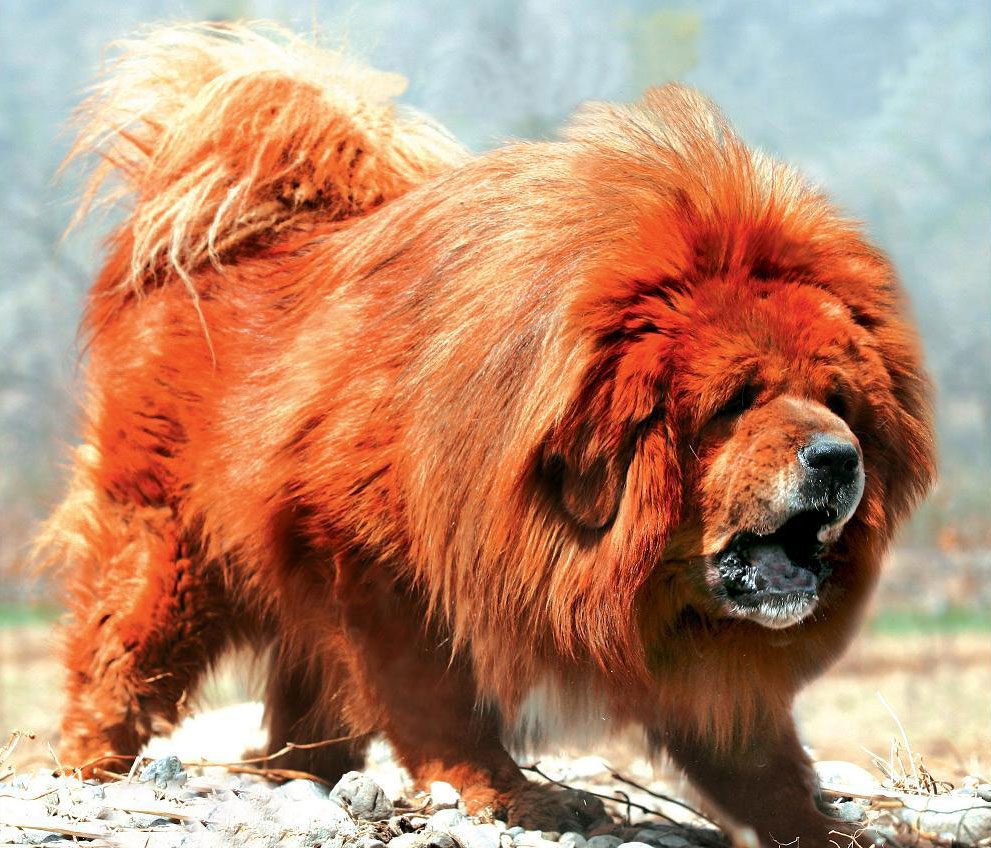
Do khyi
Tรญbet FCI 230 - Molossoid . Mountain

The Do khyi It is not a dog to live with children.

Dogo del Tรญbet

It is a breed native to Tibet, It appeared to the year 8000 to. C. Ancient working breed of nomadic herders of the Himalaya and a traditional guardian of the Tibetan monasteries. It has been surrounded by great mysticism since it was discovered in ancient times..

It is a companion dog, Guard and protection; slow to mature, females only reach their apogee between 2 and 3 years and males at least the 4 years.

Otros nombres: Dogo del Tรญbet / Do-Khy / Dogue du Tibet / Tibet-Dogge / Tibetan Mastiff

Crupo 2 / Section 2 – molosoides

Dogs breeds: Do khyi

โ–ท The world of Pets: Dogs, cats, birds, reptiles, amphibians

Guatemalan Dogo
Guatemala Not recognized by the FCI

The Guatemalan Dogo It is a variant of the Doge race, a native of Guatemala. It's a watchdog.

Dogo Guatemalteco

Content

History

From the age 1990, the Guatemalan Canophila Association began the study of this breed so that the Federation Cynologique Internationale (FCI) grant worldwide recognition for the breeding of pedigree dogs, the only one in this region. In charge of studying the race to set their standard, approval and international recognition through the FCI is the veterinarian and zootechnician Arturo Chavez.

The Guatemalan Dogo is the product of random crosses between races Bull Terrier English, Dalmatian and Boxer. Records of its existence date from 1890, Well there are images of a Guatemalan Dogo in a collection of 12 photos of the day, property of Arturo Gallusser. It is also known that the family Gerardi, in 1910, I had some copies of these dogs, but it is unknown the offspring of the same.

Physical characteristics

"Guatemalan Dogo"

Dogo Guatemalteco
Dogo/Bull Terrier Guatemalteco: Owner Owner Oscar E. Lorenzana Gallusser – Oscar E. Lorenzana Gallusser, Public domain, via Wikimedia Commons

It is a dog that stands out for being a good watchdog, It is medium sized and somewhat longer than high, so it does not have a completely square appearance. His head is quite square and his lips are slightly; His jaw is quite strong and he has a scissor bite..

The weight males will of 40 to 45 kg and females in 35 to 40 kg. The height in the males is of 54 to 60 cm and the females of 52 to 58 cm..

The life expectancy of the Guatemalan Dogo, is of, approximately, 11 to 12 years.

Its color predominant is very bright white with some black or brown spots. The fur is short, rough, thick and quite attached to the body.

Character and skills

It is good guardian it ladra to strangers, but believes it only when necessary. You can get along with others but it creates a bond with his master, thus making it an excellent companion dog.

A bath is recommended only when necessary or it can be cleaned with a damp tissue to remove hair that has fallen or when it has become dirty. Socialization at an early age will be required with the people. Will also be made if you have other pets to be in the future not to fight with them, and that's not a totally aggressive dog.

Daily activities such as walks next to its owner is needed to not bored, since it is an energetic dog and can become destructive and stressed by not using the energy it possesses.

โ–ท The world of Pets: Dogs, cats, birds, reptiles, amphibians

Dogo cubano
Cuba Extinct

The Dogo cubano It was very notable and renowned for their ferocity. Extinct race.

Mastรญn Cubano

Content

History

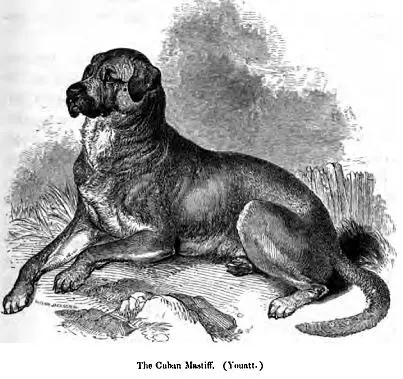
The Dogo cubano or Cuban dogge, It is a breed of dog of Cuba that has been terminated. It was very similar to the Bullmastiff. This breed of dog was used for dog fighting.

This breed of dog was introduced in Cuba to capture fugitive slaves (Maroons). After the abolition of slavery it became too expensive an animal to feed and it was so that, the race ceased to exist with the time.

Physical characteristics

They were among a Bulldog and Mastiff as far as size is concerned. Snout is short, bandwidth and abruptly truncated.

The head was broad and flat, and lips, pendants. The ears of medium-sized, and hanging also. Rather short tail, cylindrical, round upwards tipped forward.

They were described as a "rusty-colored wolf" with the face, the lips and black legs. The Cuban Mastiff is the largest breed of mastiff with an average weight of 136.5 Kg.

The Cuban Mastiff was very notable and recognized for his ferocity in the fight and for the skill in the persecution of slaves..

โ–ท The world of Pets: Dogs, cats, birds, reptiles, amphibians

Spanish dogo
Espaรฑa Molosoide

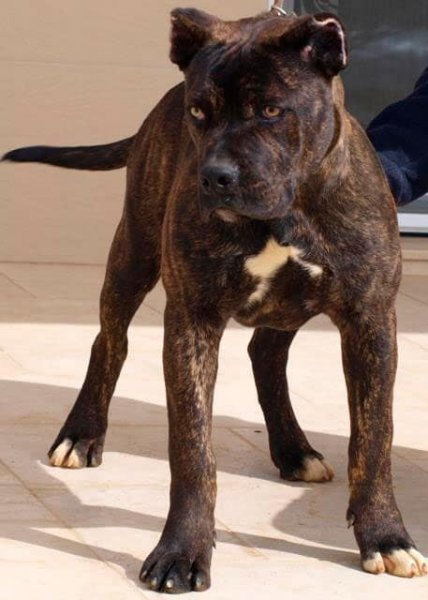
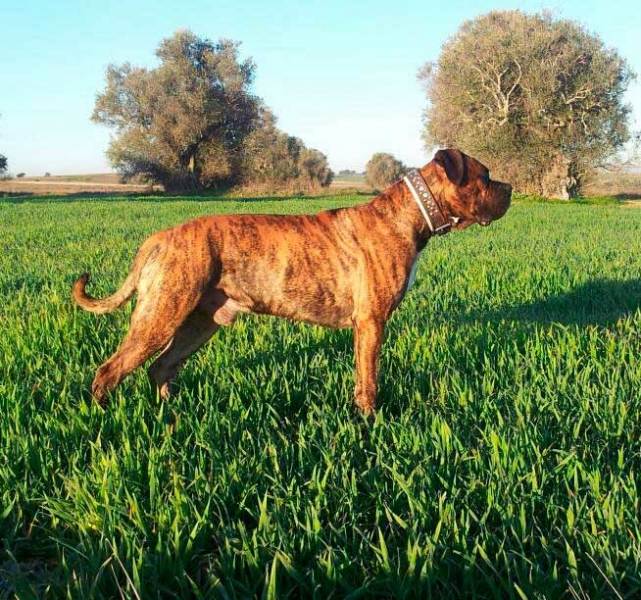
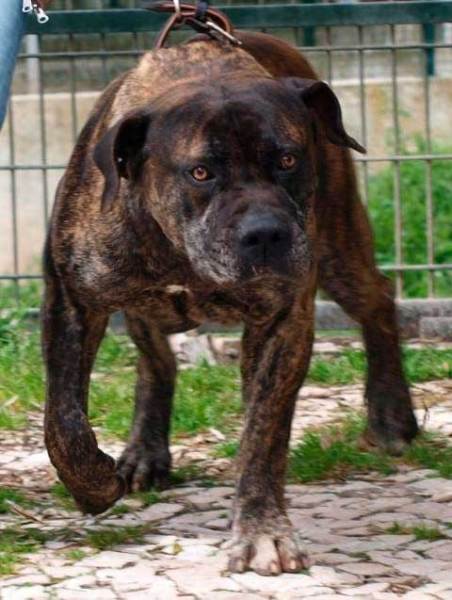
Dogo Espaรฑol

The Spanish dogo He has the instinct of guard and defense still preserving the hunting instinct and dam;

Content

History ยซSpanish Dogeยป

Presa dogs entered the Iberian Peninsula accompanying barbarian tribes back in the 4th century; Swabians, Vandals and Alans they were guarding their livestock and transhumant with this type of dog camps.

Throughout history these animals have been used in different functions with a common denominator; his instinct for hunting and dam as a tool at the service of hunting; management of livestock; guardianship and custody of properties; dog of war; etc.

Kings, feudal lords, mercenaries, butchers, livestock, and even bullfighting, make these lineages a very important reference in the history of our country, reaching its peak during the period called "Spanish romanticism". The historical references are so numerous as diverse. Depending on their morphological characteristics, they would be used for some purposes or others.; the lightest and most runner type dogs were used for hunting big game, and the most corpulent and big-headed were used in tasks that required more power or stopping force than resistance. Where, how and when it begins to be systematically selected towards one or another trend and under one or another name is something difficult to decipher. Then there was talk of "types" -the concept of race is much more modern in canine matters-; and under that concept of "type" different morphologies coexisted with certain common features. The most generic denominations of this "type" have been "Alanos"; "dams";โ€œdogosโ€; โ€œbull dogsโ€; โ€œalan butchersโ€; โ€œboringโ€; etc.

Sometimes referring to specific differential features called them in one way or another, and other times of generically under the same concept to different varieties. A current "taxonomic" classification of these dogs according to historical references, it would be an anachronism of difficult zootechnical solution.
We find centuries-old descriptions โ€“such as the one in the โ€œLibro de la Monterรญaโ€- that under the same concept of "Alano" puts the light type for hunting, mentioning another heavier variety for grabbing cattle.

Videos "Spanish dogo"

But we also find arguments and references that support morphological and functional differences between these "dams"; see the description of "Dogo" by the Royal Academy of the language Edition of the 20th century; The distinction by the Royal Canine society of Spain in 1911 between โ€œpresa espaรฑolโ€ in its facet of guard and utility and the โ€œAlanoโ€ in the group of trail and monterรญa; the medal with the inscription โ€œDogo de Burgosโ€ of the year 1625 ; documented deliveries of indigenous British Bulldogs and Italians, etc.

So, far from scrutinizing on etymological or linguistic issues that are not exempt from ambiguities on occasions, We focus on the constructive process, that is none other that history with all its variability of types reconciled, with the present reality of the concept โ€œraceโ€, which requires adjustment to more defined patterns.

Under this purpose is born the project for the recovery of the Spanish dogo; which would encompass the heaviest and most corpulent type of Alano or prey on our peninsula.

Why unify under the name of "Dogoโ€? It was to use a name that meet a series of requirements:

    1. Having historic endorsement in number and significance of reference
    2. Generic name and identifiable with these morphologies
    3. Avoid controversial connotations related to endangerment
    4. Avoid localisms or allusion to obsolete or too restrictive functions

The result of all this is the denomination of โ€œDogoโ€ is the one that best encompasses the concept of โ€œmolosser Iberianโ€.

We have the definition ofDogoโ€ by the Royal Academy of the language; our Dogos influenced directly or indirectly the rest of related breeds; There are manifests from the Crown of Aragon for sending Spanish Dogos to Naples; The Governor of Cuba refers to the delivery of "Spanish prisoners" to the British Army for the control of maroons; they exported extensively to England; in Germany they recreated the extinct "bullesbeizer" through the Boxer by crossing a bulldog with a female prey named "Flora" of clear Hispanic descent; It is enough to look at the first Boxers from the end of the 19th century to see the resemblance between the German breed of that period and our native rustic flatbacks..
The number of references is countless.

  • 2. Origins of the recovery process of the Spanish dogo

In the Decade of the 80, With the beginning of the recovery of the Alano, the existence of different typologies and trends is already contemplated.. Then the terms "type" were used, livestock line or trendโ€ Vs โ€œhunter typeโ€ as a differential label.

The merger of "Alans or dams" with dogs "villainsโ€ of the land, -light herding dogs and lupoid cut โ€“ gave a versatile hybrid that retained the atavism of the gripping dogs, but with the spark and resistance of the shepherds. Hence the "Villain of the Encartacionesโ€, a derivative of the Alano in its lightest version.

The Spanish Alano standardizes by orienting its selection towards an intermediate type. The process concludes with the official recognition of the breed in the year 2003 on the part of the Royal Canine Society of Spain.

In short the basic trends on a bipolar scale we find the following picture:

    1ยบ/ On the one hand light morphology of more running and unloaded structures;

    2ยบ/ At the opposite pole, the most corpulent and brachycephalic types;

    3ยบ/ And between both extremes, a majority and consolidated intermediate type.

The types "corridorโ€ e โ€œintermediateโ€ would be represented by โ€œVillainsโ€ y โ€œAlansโ€ respectively; leaving uncovered the most molosser niche of the scale.

It was fair to detach for the first time since the beginning of the last century our "most corpulent prey" from their alan matrix, and do it not under the constraint that prints a "trend", But reconciling the idiosyncrasies of this type with the concept of current race. Any trend that takes body and prominence is likely to empower low-status of race; It is just a matter that under the right circumstances: having genetic material; references historical; and above all with a coordinated group willing to redirect selection facilitate this work.

With the recovery of the Alano the tribute that the extreme types would pay was foreseeable; marginalized to a purely testimonial presence in directly proportional relationship to the fixing of the intermediate alano. Under this panorama our last redoubts of โ€œDogosโ€ would be doomed to extinction as a potential breed or in the best of cases relegated to trend within the moderation imposed by the Alano standard.

Fortunately, individuals of this type continued to be born in the litters of Alans. We have continued to use some breeders as players occasionally, and if only it were looking for complementarity, those genes are still there. Other breeders โ€“special mention to Francisco Rincon– they have had the courage not only to continue using Alans in this trend, but do so looking for fix this type rather than complement it. Thanks to this, the recovery project of the โ€œSpanish dogoโ€ based on the genetic base of the โ€œAlano" is a reality.

Physical characteristics

One of the most controversial issues in mapping out the path and targets in selection, It is to be clear where it started and where we are going; define that niche is covered with this project, and do it with its own identity, trying to converge as little as possible with the rest of related breeds. Our Dogo would fall between the molossians of arenas and the molosoides group.

More related with our races Spanish dogo indigenous, both by type and by junction, they would be the Dogo Canario; the Alan Spanish; the Majorca Mastiff; the Dogue de Bordeaux; the Cane Corso; and the Bullmasfiff.

Based on a thorough differential analysis of our standard project, We have our niche secured connection all them. Of echo, There is greater overlap between many terriers; bracoides; shepherds and Nordics โ€“ to name a few families- to enter our Spanish dogo and the rest of related.

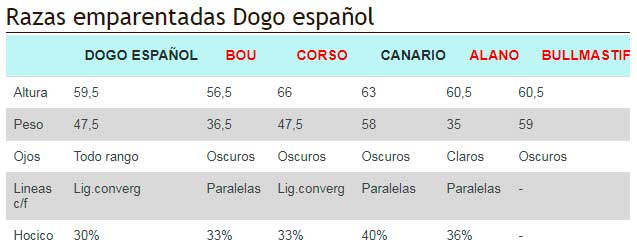
To see clearly where lie these differences, -others such as expression and typicity are more difficult to quantify- We took the average values of each racial pattern and vein results with our Spanish dogo. We will look at an example, that where could have some overlap in weight, There will be no size, or where any size won't be it in proportions; not to mention in expression and typicity although not easily described values.

To this end we present the attached table offering average in those easier to obtain parameters values: adding maximum and minimum thresholds and dividing by two we get average weights and sizes of each standard. We do so only in males by simplifying data and observe such differences at a glance quickly.

Related breeds Spanish Mastiff

Delving into these differences, other variables โ€“such as craniofacial lines; body perimeters such as head and chest; proportion of muzzle to skull; eye color; etc.,- They come to make our niche even clearer and they do so without entering into a conflict of competence with respect to the rest of the related breeds..

Breed standard
SPANISH DOGO RACIAL PATTERN

Racial pattern

HISTORICAL REVIEWS:

During the period between the end of the s. IV and the 5th century, the alano village will occupy large areas of southern Europe, among others the Iberian Peninsula. This town is made accompanied by their dogs of prey, which are mixed with the powerful dogs brought to the peninsula by Phoenicians and Romans, mainly.

Crossbreeding that gives rise to what would later be called Dogo, Dam or flat Spanish among other synonyms. His name is mainly due to their excellent qualities in the management and control of the cattle of bravo and semi-bravo type, native of the Iberian Peninsula.
Later, the emergence of bullfighting, would make these play a prominent role in the same, in the so-called luck of dogs, until the beginning of the 20th century.

As well, for its excellent qualities for the defence and guard, would be used as a war dog, being very appreciated by soldiers of other Nations, especially for the control of rebels in the Americas.

GENERAL APPEARANCE:

Molosser type, moderately brevilineo, very strong, rustic and endowed with tremendous power.
Back straight and compact. It presents a notable sexual dimorphism, males showing a cranial region more developed and a stronger type. Medium to large-sized, brachycephalic, It has a robust structure as a whole, Compact and powerful.

TEMPERAMENT:

Sweet and affable character with the family. Tireless worker and multifaceted.
Very attentive and especially gifted for the guardian, Defense, management and control of cattle. Easy management and education. He seems very sure of himself.

HEAD:

Brachycephalic, head strong and powerful.

REGION CRANEAL:

Slightly convex skull, square, wide and very strong. of medium width, always in harmony with the rest of the body. Slightly converging skull-facial lines. Well pointed front Groove. highly developed temporal muscles. The zygomatic arches, superciliary, as well as the temporal bones, They show a high development. The skin is smooth, without wrinkles. Very marked stop.

FACIAL REGION (FACE):

    – Truffle: Pigmented black and complete. Large and wide holes.
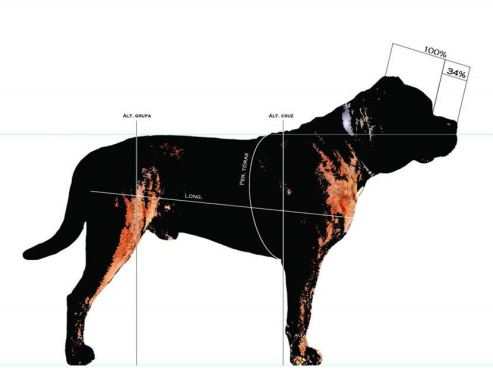
    Snout: It is a square, strong, occupying the 34% the total length of the skull, admitting a deviation of the 2%. Light folds are supported.
    – Lips: thick and well Pigmented; desirable that they do not hang up too.
    – jaws and teeth: they must be very powerful. The wide enough to permit a correct insertion of dental. Preferably complete (42 parts). The teeth are not visible with the mouth closed. Canine blunt, short, wide and well separated. Is supported as the Scissor bite, Clip, reverse scissor, as well as a slight prognathism that does not exceed 0.5cm. Well developed JAWS.
    – Eyes: medium-sized, almond and separate. From dark Hazel to amber and yellow. Adhered, well pigmented eyelid. Frank gaze and front. With no apparent conjunctiva and little white.
    – Ears: medium-high insertion. Preferably folded over the face and slightly rounded at the bottom. Medium to small size.

NECK:

Well muscled, slightly arched and of medium length. Allowed light folds in the jowl area. Crushing it slightly from the shoulders to the head.

BODY:

    – Cross: well marked, average implementation and descended toward the back.
    – Back: medium, flat and well developed.
    – Pork loin: short, broad, strong and convex.
    – Rump: slightly downed. It is short, wide and well developed.
    – Breast : width, deep, very strong and developed. Slightly cylindrical ribs. Profile down to the elbow. chest circumference, at its widest part must exceed at least one 25% the height at the withers.
    – Abdomen: moderately withdrawn.
    – Tail: average insertion. Great thick at its base is tuned toward aims it, not to exceed the Hock. It is not wound on the tip.

FORELIMBS:

    – Shoulder: strong, with prominent muscles. Slightly oblique.
    – Arms: good muscular, Plumb and separate.
    – Elbows: neither returned to the outside or very attached to the chest.
    – forearms: good muscular, straight and with good bone.
    – Previous feet: rounded, made of strong fingers that reinforce the appearance of big cats.

HINDQUARTERS:

Strong and properly angled.

    – Thighs: apparent and very developed.
    – Hocks: short, vigorous and moderate-angle. RAM does not present.
    – Hind feet: rounded, slightly longer than the previous ones and fat fingers.

MOVEMENT:

The typical gait of the breed is the trot.. This is shown effortlessly, fluid and agile.
The back is at the same level, parallel to the direction of motion. The head tends to be low. Explosive Gallop.

SKIN:

Thick and attached except in the neck, It is somewhat more lax.

COAT:

    – Fur: moderately short (never satin), dense, acrid, There may be a light Undercoat. The hair should reinforce the rustic appearance of the individual.
    – Color: Griffon and barcinos or Brindle in all its varieties; alobados; carbonates or Chair; black and Brindle; black and fawn and peeps. With or without mask.

SIZE AND WEIGHT:

    – Height at the withers: males from 61cm to 66cm, females of 58cm to 63 cm.. Supported a tolerance of 2cm at the top.
    – Weight: males between 45 and 53 kgr, females between 40 and 47 kgr. Supported a tolerance of 3 kgr.
    – Weight and height must go in harmony:
    – IPT (average weight height index) in males = 49 kgs / 63,5 cms = 0โ€™77
    – Females average IPT = 43,5 kgs / 60,5 cms = 0โ€™72
    – racial mean IPT = 0.745
    – ILA (height/length ratio) mean in males = height/length = 0.92 (a 8% longer than high).

FAULTS:

Any deviation from the above criteria should be considered absence and severity of this is considered to the degree of deviation to the standard.

SERIOUS FAULTS:

    – Shyness.
    – Unjustified aggression.
    – Muzzle too short or too long.
    – Overload.
    – descending dorsal line.
    – Lack of two premolars.

MISS PLAYOFFS:

    – Deafness.
    – albinism, lack of pigmentation.
    – Cryptorchidism or monorquidismo.
    – Lack of four premolars.
    – Mandibular torque.
    – Long hair.
    – amputated tail.

Character and abilities of the ยซSpanish Dogoยป

The historical evidence make it clear that we have a purely functional breed. We have already referred to some of the work that played these dogs; in bullfighting for the luck of โ€œdogs the bullโ€; for management of livestock and hunting; as dog's force to the dam or grip of cattle; also as a dog guard or defense accompanied the armies. They had great prominence in America during the colonial period for the control of Maroons and the birth of much of the functional races of that continent: Cimarrรณn Uruguayo; Fila Brasileiro; cordovan fighting dog and rear dogo argentine; antique American Bulldogss; dams of the Caribbean; etc.

While it is true that society evolves and the times are changing, It is not less true that the potential of this group can bring much as working dog. We want that the Spanish dogo still a dog's working to the extent of their possibilities; obviously not to compete with pastors in agility or mondioring not with villains in a half marathon; the limitations will be marked by their own morphological characteristics. But some minimal tests aimed at evaluating parameters related to power can be outlined.; arrojo and safety; meet minimum requirements in terms of physical potential; everything is a matter of to agree according to the reality of the project.

Obviously if demand parameters that agility and resistance prevail, we would fall into the error of converging towards lighter typologies, hence how complicated it is sometimes to draw guidelines in this regard. It is not comparing ourselves to other breeds, fate of squeezing the maximum potential of our. If we have something clear who decided to give shape to this project, is that we do not want that our Spanish dogodo not become a mere pretty โ€œshowcaseโ€ just to recreate the reminiscences of the old bulldogs. These dogs must continue to be able to meet certain requirements and do so with the solvency appropriate to their morphology..

I have always defended the individual initiative of each owner, each breeder; the selection and therefore evolution or a breed standardization, It does not necessarily imply a collective effort of all and each of the owners and breeders; It is enough to encourage those who wish to engage one degree more do so and facilitate the improvement of the rest. It is not so much a question of obligation and requirement, but to motivate those who want to use their energies in the improvement of the breed through its functional aspect.

With a small group of fans "motivated" in this sense and working good dogs for the benefit of the community, there must be tangible results in the medium-long term that allow us to differentiate ourselves from other groups of a similar nature, but which have become mere exaggerated showcases of what they were. To minimize the danger of this "deterioration" -understood as such the reduction of its ancestral benefits in favor of spectacularity without more-, the breed Club can play an important role in this regard.

It is possible to negotiate at the club level with veterinary clinics that allow significant discounts to members in the management of health control parameters (plates of hips and elbows dysplasia; hemivertebrae; heart tests; etc.); even subsidize club as part of these costs; establish ranking of specimens recommended by the club for breeding; designing tests of work; etc. It's all about go mapping objectives and study feasibility of each.

ยซSpanish Dogeยป images

โ€œSpanish Bulldogโ€ videos

Alternative names of the ยซSpanish Dogoยป:

  • span class =ยปno_translatelateยป>PRESA, BORING, BULLS DOG, ALANO LIVESTOCK
  • Among the Group of the molossians arenas and molosoides.

Sources:

  • Dogo-espanol national Club
  • www.lostarantos.net
  • www.lostercios.org
  • dogoespanol.blogspot.com.es/

Images:

  • (1),(2),(3),(4),(5),(7),(8),(9),(10) – Spanish Doge ยซLos Terciosยป (Photos)
  • (6) – ROMERO DE LOS TARANTOS – Los Tarantos
  • (11),(12),(13) – Spanish Mastiff national Club (Photos)

โ–ท The world of Pets: Dogs, cats, birds, reptiles, amphibians

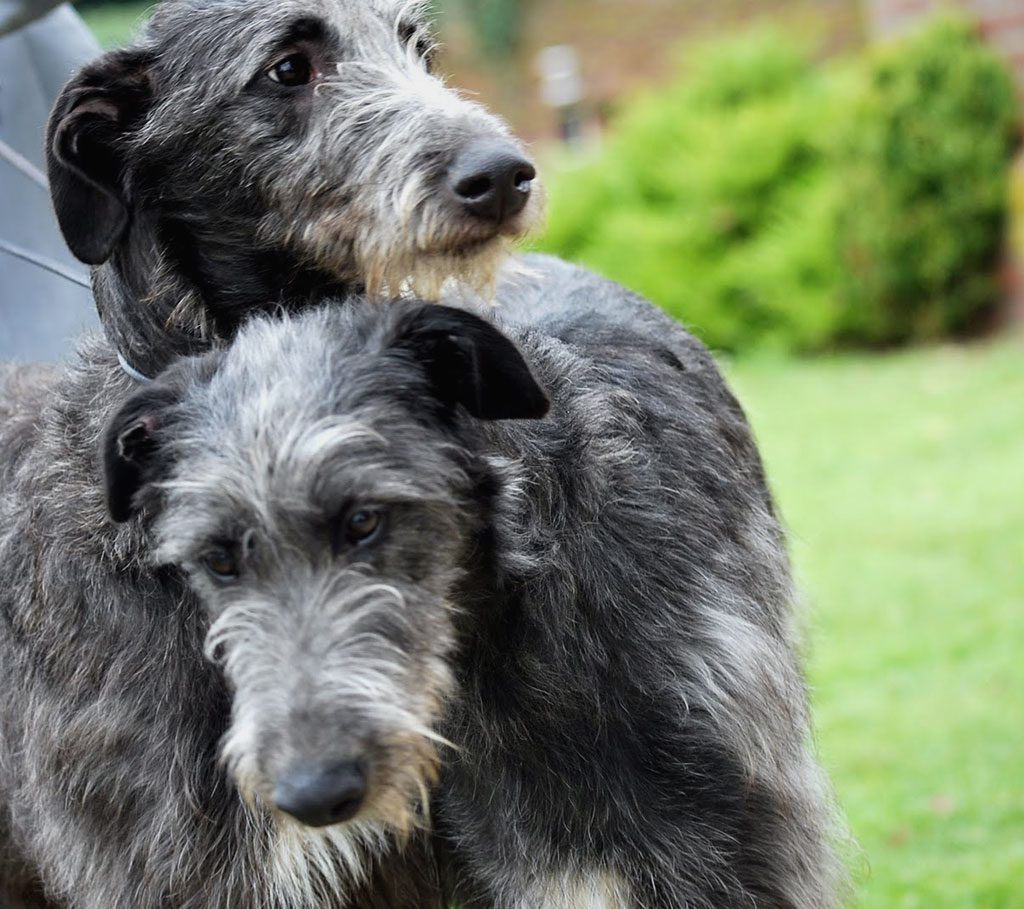
Scottish Deerhound
Escocia FCI 164 . Rough-haired Sighthounds

Deerhound

The Scottish Deerhound or Deerhound, It is a traditional dog belonging to the Scottish Highlands, It also appears in the old portraits, sleeping at the foot of great lords. When became fashionable with shotgun deer hunting, This race was on the verge of extinction, but the enthusiasm of its breeders has ensured that this canine aristocrat survives to this day.

Read full information on the race, by clicking on: Deerhound.

Scottish Deerhound