โ–ท The world of Pets: Dogs, cats, birds, reptiles, amphibians

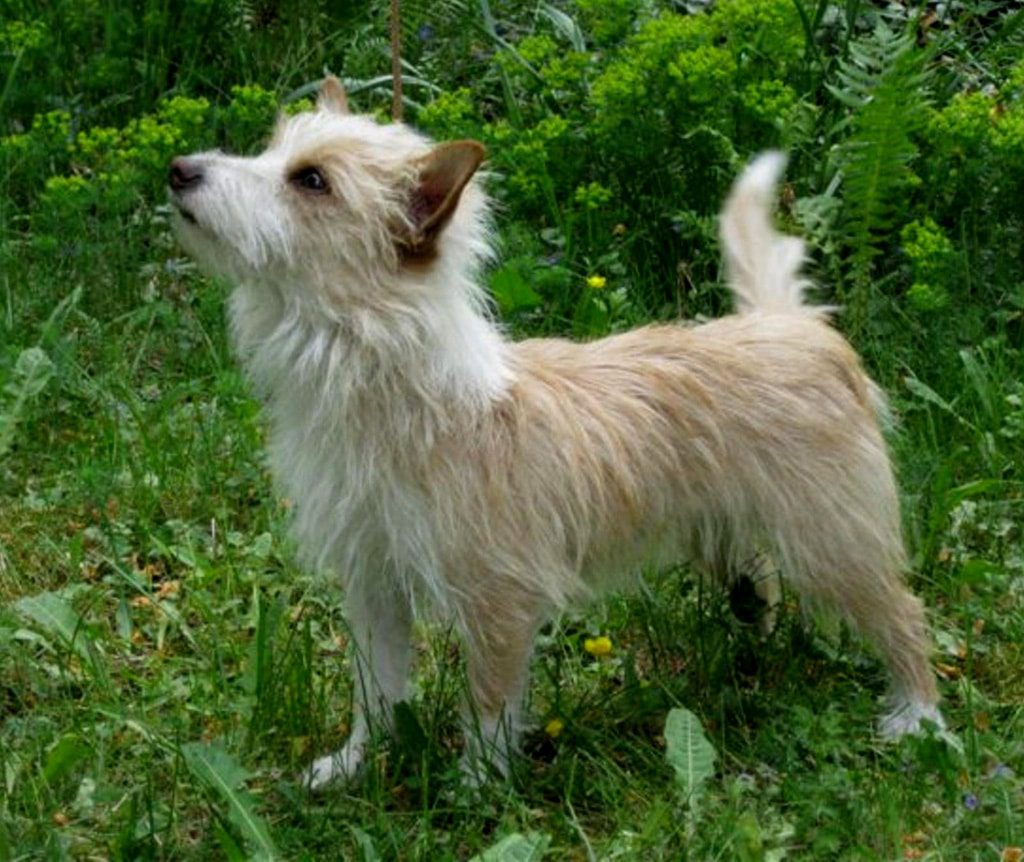
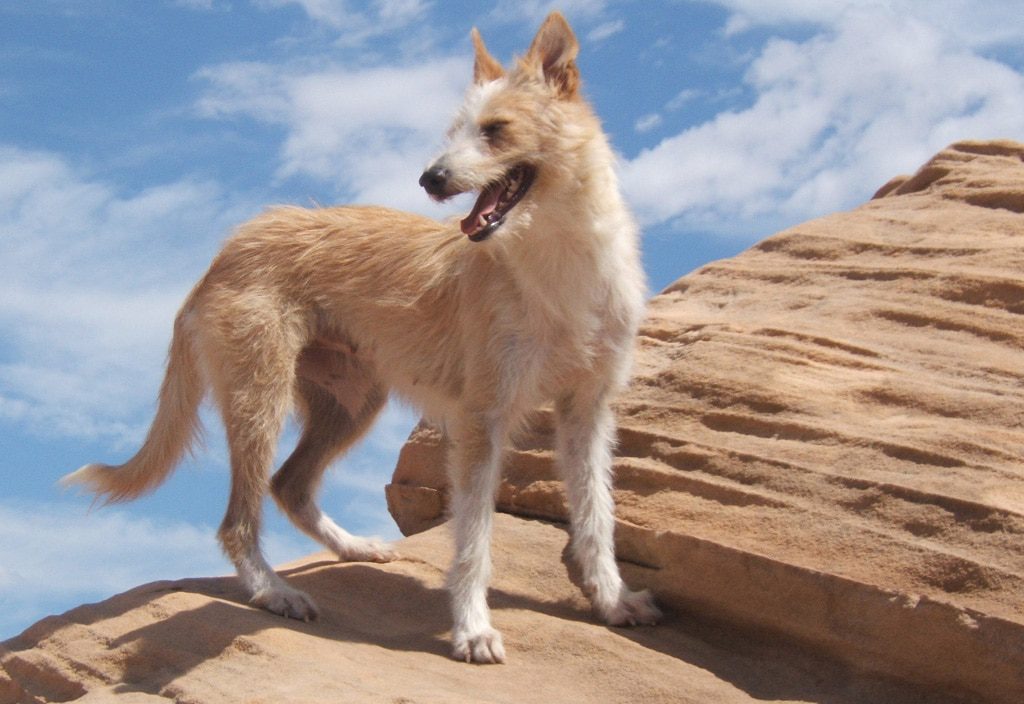
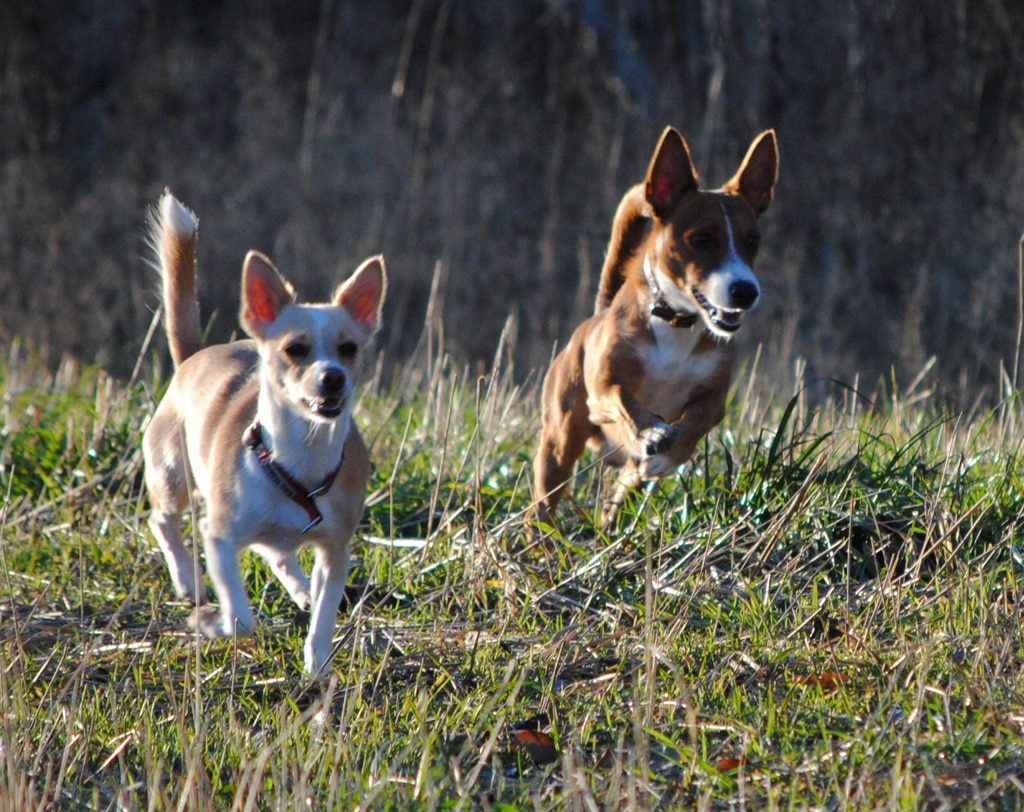
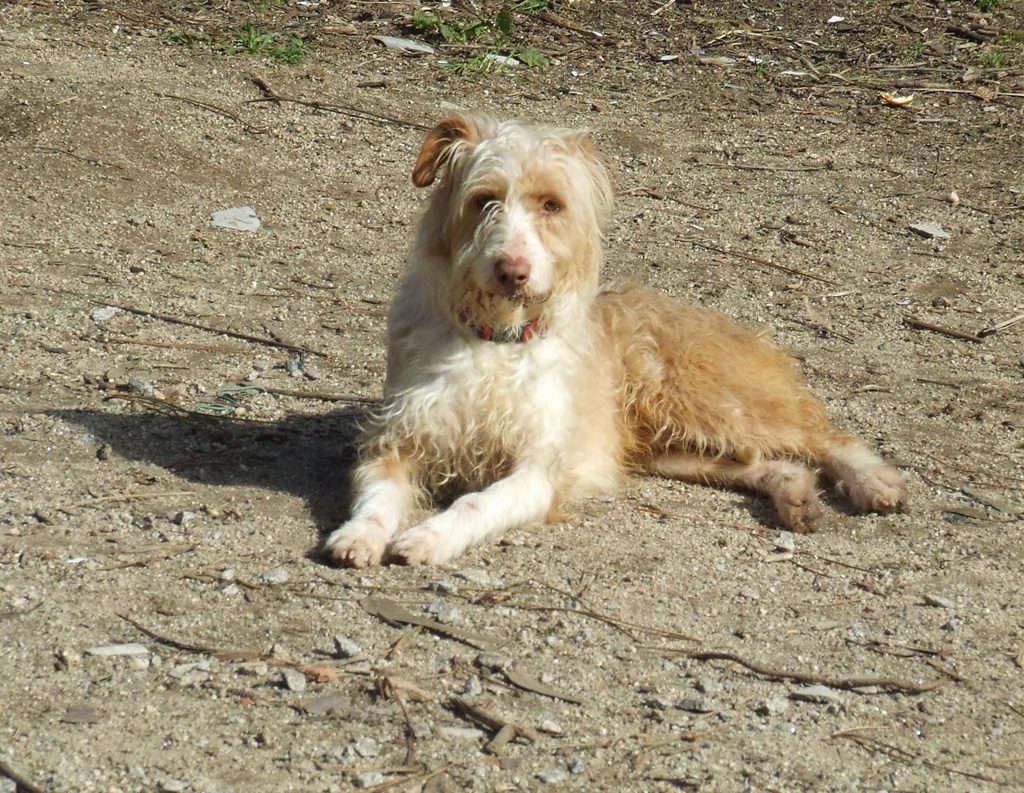
Portuguese Podengo
Portugal FCI 94 . Primitive type - Hunting Dogs
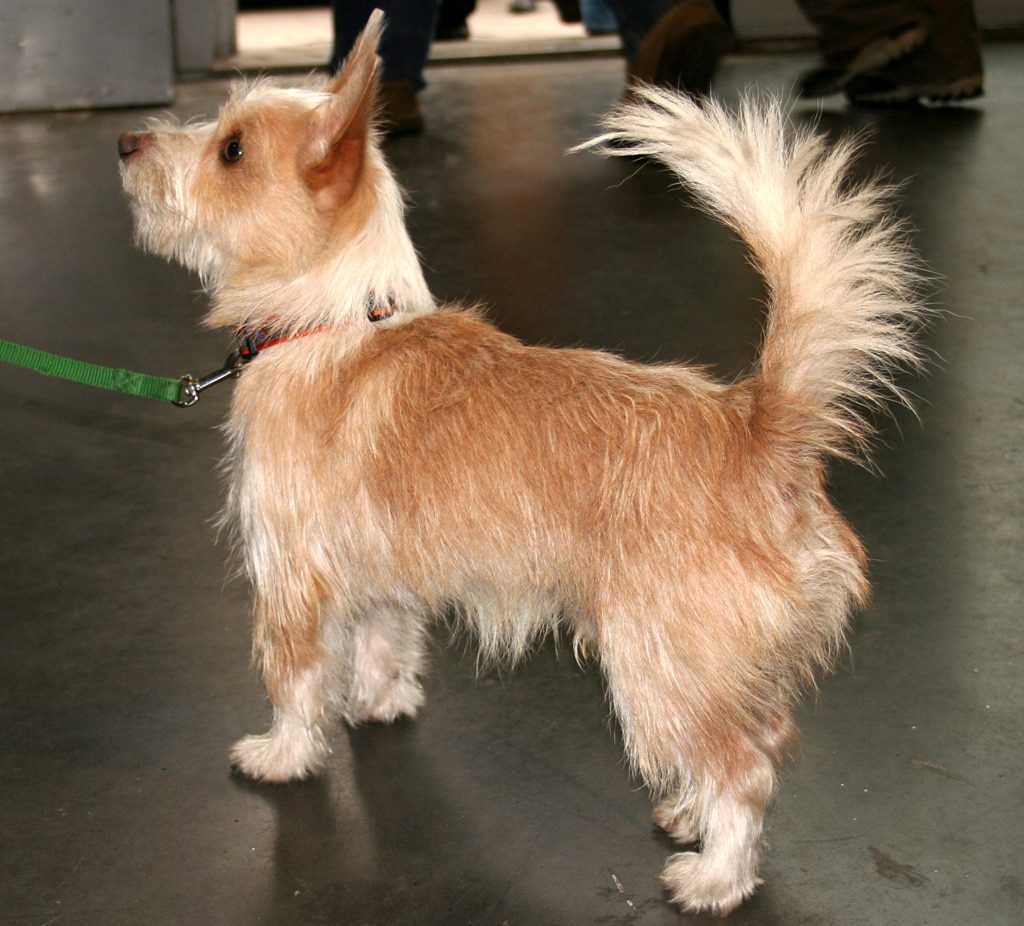
Podenco Portuguรฉs

The Portuguese Podengo is a breed of dog that is in danger of extinction.

Content

History

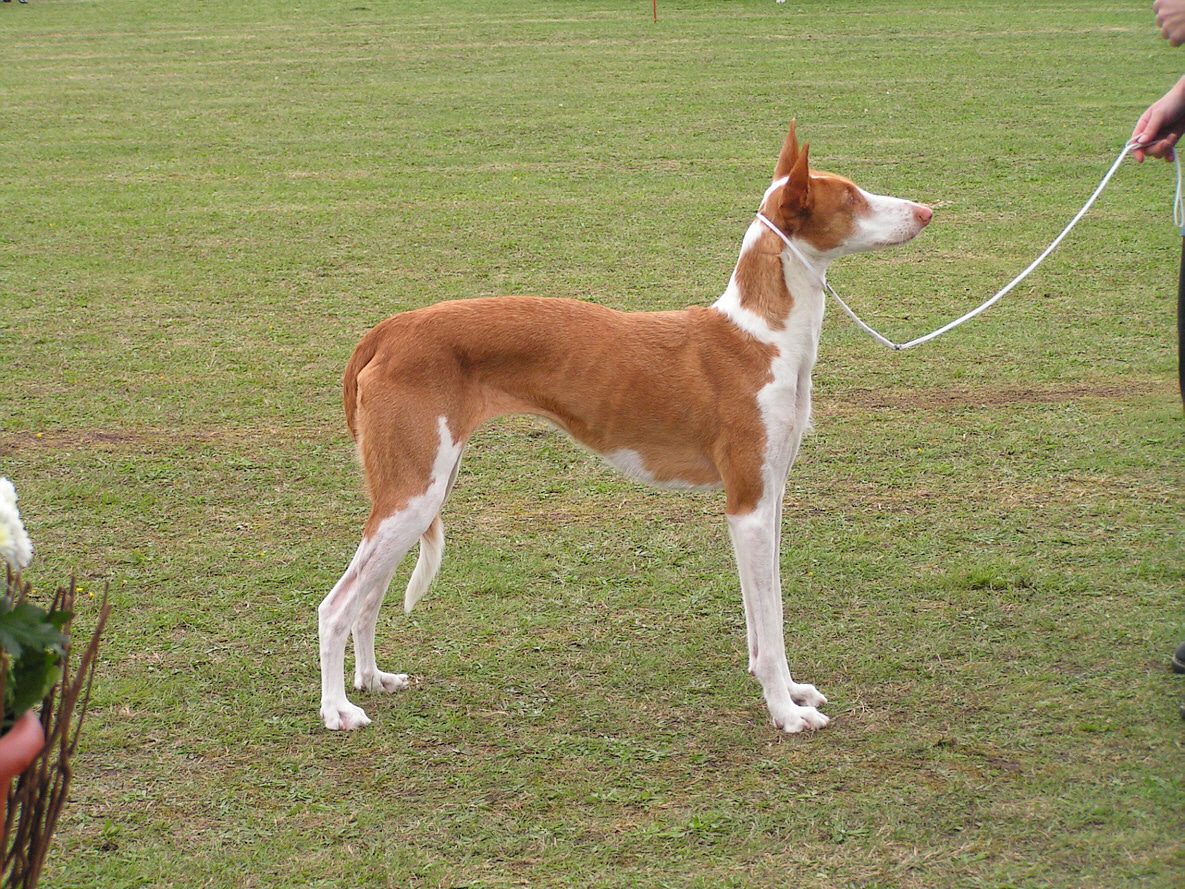
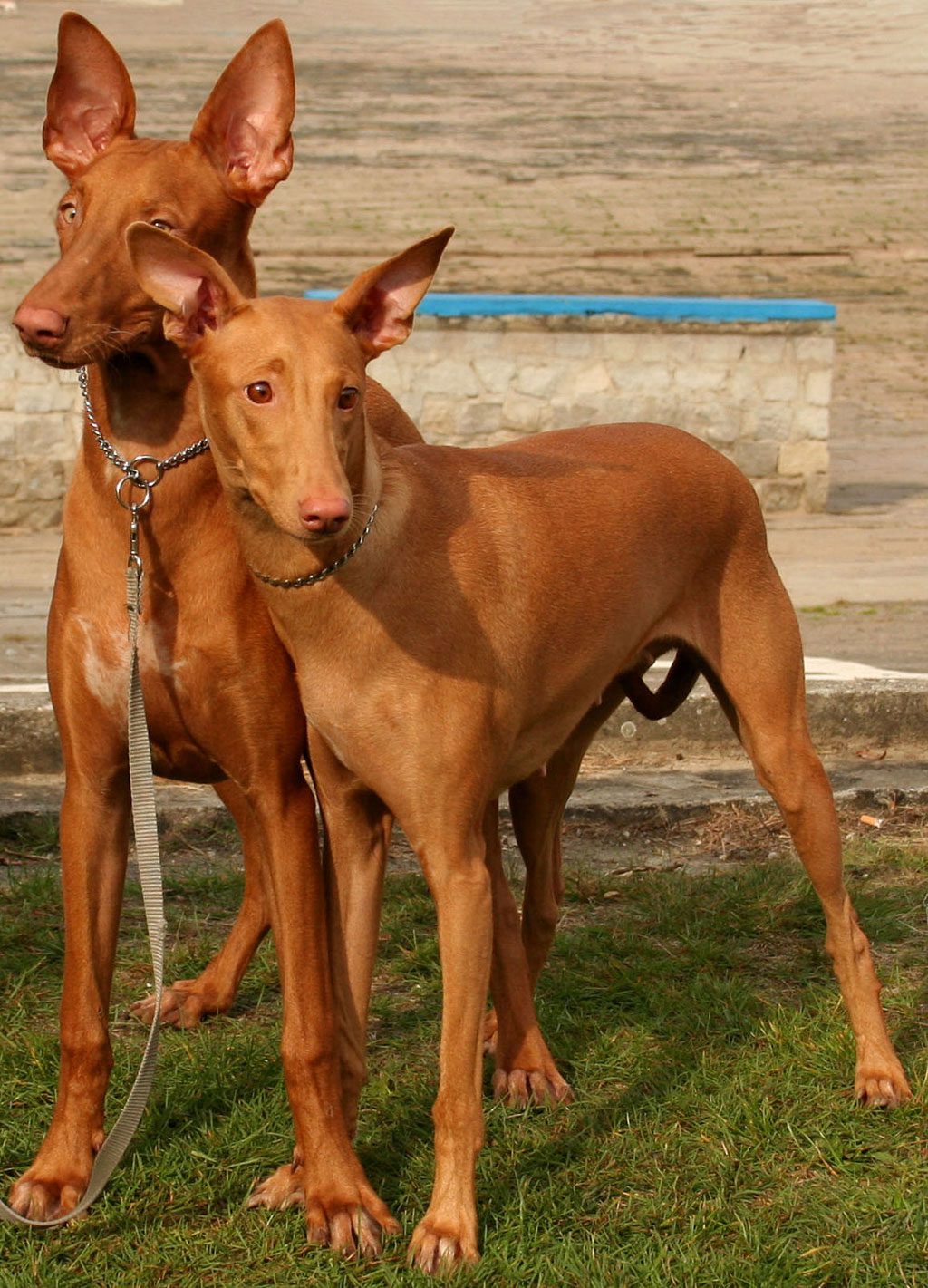
The Portuguese Podengo It is considered one of the oldest dogs breeds, that has its origins in the Phoenicians, cultural matrix of which descend the Portuguese. It is a native breed of Portugal, with great skills for hunting, but also surveillance, It is commonly used on farms to alert of the presence of intruders.

The great family of the hound race, specialists in the topic raised it was in Portugal where most subjected to crossing and as a result, branched lineage. Within their ancestors argue that perhaps the closest the Ibizan Hound, and various types of dogs of traces of lived (They inhabit) throughout the Mediterranean area. Like all hound dogs, History shows that they are represented in Egyptian paintings of thousands of years ago.

according to size, There are three varieties of Portuguese Hound, Grand, Small and medium, being each variety, products of the different crossing, over time.

It is believed that the great variety has emerged the variety of Portuguese Podengo small and medium, the ancestor of the Grande variety is the Pharaoh Hound spread from North Africa to the Iberian Peninsula. Although other authors raise that it is possible that the hound descends from the small Iberian wolves. There is still controversy...

Although one of the theories suggests that the Medium Portuguese Podenco arises, of different Podenco dogs from North Africa, The most accepted theory is that this variety, directly descended from the Portuguese Podengo Grande.

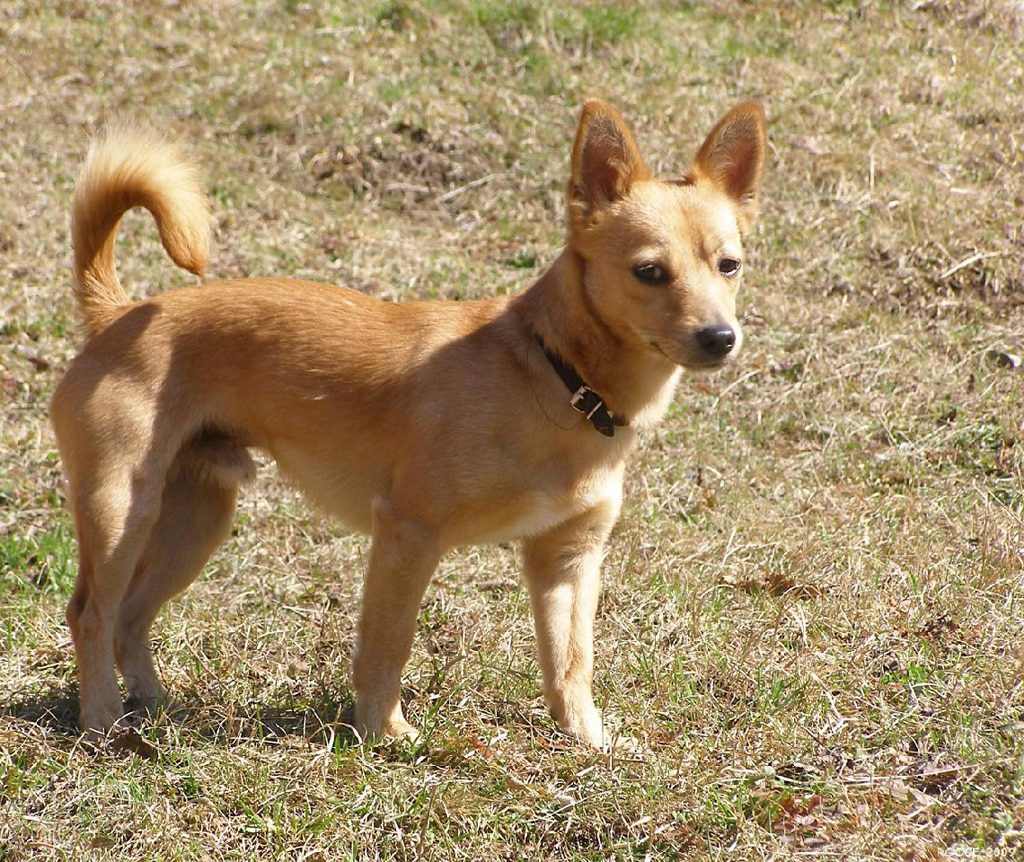
The small Portuguese Hound, sometimes described as a Chihuahua heavier (There is no kinship between these two races), often collaborate in the tasks of hunting with their larger peers, what this dog does is get into the rabbit hole and scare them so that they come out and are hunted by their pack mates.

In the North of Portugal today it is still used for hunting rabbits and small vermin. Hunting in a pack or alone. Although this dog can be seen in the rest of the country, its popularity lies in the North of the same.

Physical characteristics

As specified above, according to size, There are three varieties of Portuguese Hound, Grand, Medium- and Petit:

  • Portuguese Podengo Grande: It is a very rare variety and is in danger of extinction, especially the smooth variety. They are usually used in packs to hunt large prey such as deer or wild boar.. It is the only Portuguese breed used for wild boar hunting. His cloak can be short and smooth (less common and on the verge of extinction) or rough and long.
  • Portuguese Podengo Medio: It is the fastest of the three varieties, excellent Hunter of rabbits and hares. You can hunt in a pack or alone. Like the great Portuguese Hound, their coats can be smooth or rough and short and long. Of the three varieties this is the most common, and the greatest concentration of these dogs is located in the North of Portugal.
  • Portuguese Podengo Pequeno: Like his brother medium is an excellent Hunter of rabbits and hares. Responsible for getting into the Burrows (Thanks to its size and agility) to drive away prey and be hunted down by his pack mates. The small Portuguese Podengo coat is short and smooth, only.

The varieties in the fur are related to the inclement weather and adaptation to the same, the smooth-haired variety is more common in northern Portugal, characterized by being a humid area, This soft and smooth coat is necessary because it is dried more easily after wet.

The variety of hair bristles found in drier areas, where the coat of hair has the function of protecting the dog from the sun's rays and cold weather in winter. Nature is wiseโ€ฆ

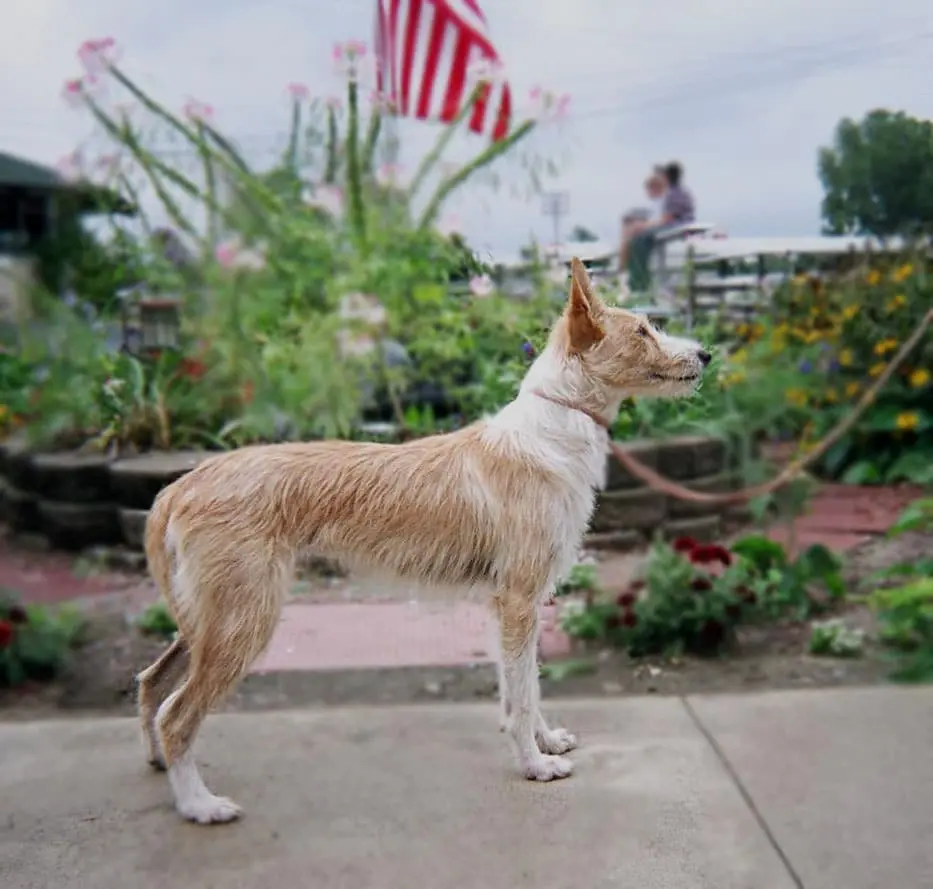
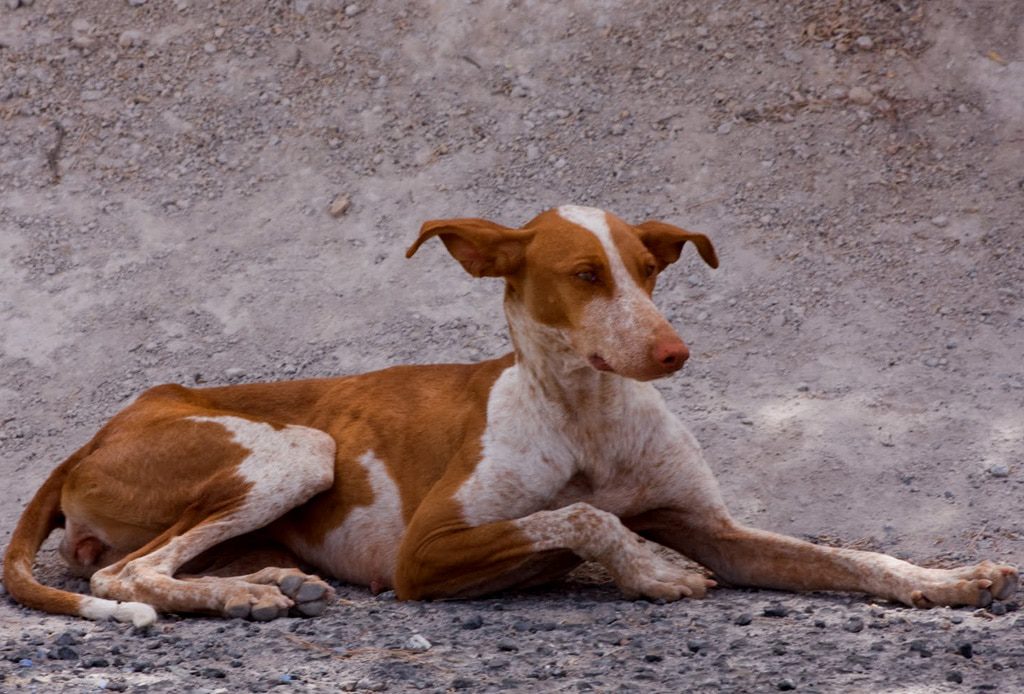
The hair short or long, thick medium and bright. In dogs with long hair and rough, the hairs of the snout are long (Beard). The predominant colors are yellow and the fawn (with its varieties of color clear, to very dark), and diluted or matte black; unicolores with or without white spots or white spotting.

Their life expectancy is around the 12 or 14 years, and it is a race that is rarely seen outside Portugal.

In general, is a medium-sized dog, well proportioned, muscular with good bone structure. It has long, narrow head, with moderately wide skull and the pointed snout.

The ears, large and triangular, they are carried erect. It has eyes expressive and little bulging in orbits, color honey or brown, according to coat color.

The pigmentation of eyelids is darker that the of the fur. The body is quite long, with ribs moderately arched.

The tail, is strong and pointed, long and medium length, It is held horizontal or slightly arched in activity.

Character and skills

The Portuguese Podengo, It is their three varieties has a cheerful character, intelligent and very sociable with other dogs. They are extremely affectionate with their owners, especially with the children.

They are very shy with strangers, always alert and constant surveillance of their territory, that makes them good guard dogs, although, It lacks the aggressiveness which may show a watchdog or defence.

Observations

Unfortunately, the Portuguese Podengo It is one of the canine breeds that today are found in danger of extinction, even in Portugal. It is not easy to see them out of Portugal.

Images of the ยซPortuguese Podencoยป

Videos of the ยซPortuguese Podencoยป

Type and recognitions:

  • FCI CLASSIFICATION:
  • Group :
  • Section : . .

Federations:

  • FCI – Group 5: Spitz-type dogs and primitive type – Section 7: Primitive type - Hunting Dogs. โ“˜

FCI breed standard "Portuguese Podengo"

Origin:
Portugal

Date of publication of the valid original standard:
04.11.2008

Use:

hunting dog, guard and companion dog


General appearance:

Quadrangular pyramidal head, erect ears, sickle-shaped tail, well proportioned with a solid build and well muscled. Very loving and intelligent, sober and rustic. It comes in three sizes with two varieties of hair: smooth and wired.

IMPORTANT PROPORTIONS:

Podenco Grande y Medio: Almost square (midline sub) with large to medium substance respectively.
Length of the body in relation to the height at the withers: 11 / 10 and depth of chest with respect to the height at the withers 1 / 2.

Little Podenco: Body somewhat longer than tall (long sub), small in stature. The length of the body is somewhat greater than its height at the withers in a proportion โ€“ length of the body / height to the cross: 6 / 5.
chest depth / height to the cross: 1 / 2.

In all varieties the length of the snout is less than the length of the skull.


Behavior / temperament:

Podenco Grande: Used for hunting big game.

Podenco Medio: Also known as Warren Hound, his natural aptitude as a rabbit hunter is well known. Hunt alone or in a pack.

Little Podenco: Used to search for rabbits in burrows and rocks.

All varieties are used as guard and companion dogs..

Head:

Thin, in the form of a quadrangular pyramid trunk. Its base is wide and its quite pointed end. The upper longitudinal axes skull facial differ.

Cranial region:
  • Skull: Annoying. The profile is almost straight. The eyebrows are prominent. The frontal furrow is little pronounced. The handset inter space is horizontal and the back of the head is prominent.
  • Depression front naso (Stop): Little pronounced.

facial region:

  • Nose: Thin. Se adelgaza y es truncada en forma oblicua; is prominent in its end. Its color is darker than the coat.
  • Nose cane: Rounded cross section; straight profile. It is shorter than the length of the skull and wider at the base than at its tip.
  • Lips: Are well applied to each other. They are fine, strong and well straight.
  • Jaws/teeth: Normal, scissor bite, with solid and white teeth. The two jaws have a regular opposition. Complete dentition in the large variety.
  • Cheeks: Thin or placed oblique views of front.
  • Eyes: They are expressive and little bulging in orbits. Its colour goes from the honey to Brown, according to coat color. They are small and oblique. The pigmentation of eyelids is darker than the coat.
  • Ears: Insertion oblique and medium. Straight and high mobility are. They are vertical to the front when the dog is alert. They are sharp, and wide at the base. Triangular shape, thin; a height larger than the base and considerable.

Neck:

Harmoniously joined with the head and trunk. It is straight, long, provided, strong and well muscled. It presents no Chin.

Body:

  • top line: It is straight, level.
  • Cross: Only slightly visible in relation to the neck and back.
  • Back: Straight. It is long.
  • Pork loin: Straight. It is wide and muscled.
  • Rump: Medium length. It is wide and muscled; straight, or little fall.
  • Breast : Breastwork muscular and low protrusion. It is not very broad. deep chest, medium-amplitude up to the level of the elbows. It is long, with the sternum inclined backwards and upwards. Ribs well arched and bent.
  • Belly and flanks: Thin; slightly agalgados.
  • bottom line: It is slightly high.

Tail:

Natural. Set rather high. It is strong, thick and pointy; medium length. During rest it falls between the buttocks, to the hock and is slightly curved. When the dog is moving rises horizontally, slightly arched, or folded vertically in the form of Scythe, Although never screwed.

Tips

PREVIOUS MEMBERS: Seen from the front and profile are appropriate limbs. They are muscular and thin.

  • Shoulder: Long, inclined, strong and muscular well, scapula โ€“ humerus angle of approximately 100ยบ.
  • Elbows: Parallel to the main line of the body.
  • Forearm: Vertical; long and muscled.
  • Carpo: Delgado, is not prominent.
  • Metacarpus: Strong; short, little oblique.
  • Front feet: Rounded. Long toes, strong, together, and well arched. Fingernails are short and strong, preferably dark. The pads are durable and hard.

LATER MEMBERS: Seen from the back and side are well Plumb. They are muscular and thin.

  • Thigh: Long; medium-amplitude and well muscled.
  • Knee joint: femur โ€“ tibia angle approximately 135ยบ.
  • Leg: It is oblique, long, thin, strong and muscled.
  • Hock: Medium tall. It is thin and strong. The hock angle is open approximately 135ยบ.
  • Metatarsus: It is strong, short, Spurs and oblique.
  • Rear feet: They are rounded, with long toes, strong, together, and well arched. Fingernails are short and strong, preferably dark. The pads are durable and hard.

Movement:

Fast and agile. Lightweight trot.

Mantle

SKIN: The mucous membranes are preferably black, or always darker than the coat. The skin is thin and stretched.

HAIR: Two varieties. The hair is short or long, medium-thick. The hair is smooth when it is short, or rough when long. Short hair is more abundant than the long hair.
In dogs with long hair and rough, the hairs of the snout are long (Beard). There is no presence of an internal layer of hairs.

COLOR: The predominant colors are yellow and the fawn (with its varieties of color clear, to very dark), and diluted or matte black); unicolores with or without white spots or white spotting.
In the small hound the following colors are accepted but are not preferred: black, Brown with or without white markings, or white with spots of these colors.


Size and weight:

Height to the cross:

  • Petit: 20 โ€“ 30 cm..
  • Medium: 40 โ€“ 54 cm..
  • Grand: 55 โ€“ 70 cm..

Weight:

  • Petit: 4 โ€“ 6 Kg.
  • Medium: 16 โ€“ 20 Kg.
  • Grand: 20 โ€“ 30 Kg.


Fouls:

Any deviation from the above criteria should be considered as missing and the severity of this is considered in proportion to the degree of deviation from the standard and its effect on the health and welfare of the dog.

  • Behavior: Signs of shyness.
  • Snout / Skull: Skull upper longitudinal axes parallel facial.
  • Jaws: Incorrect occlusion or improperly implanted teeth, bite clamp, incomplete dentition in the large variety.
  • Truffle: Partial absence of pigmentation.
  • Neck: Arcuate.
  • Body: Arched top line.
  • Rump: Too steep.
  • Spurs: Its existence is not appreciated.
  • Fur: Silky and / or Undercoat.

SEVERE FAULTS:

  • Snout / Skull: Upper longitudinal axes convergent facial skull.
  • Truffle: Total absence of pigmentation.
  • Ears: Rounded.
  • Belly: Very agalgado.
  • Tail: Threaded queue.

MISS PLAYOFFS:

  • Behavior: Aggressiveness or excessive shyness.
  • General aspect: Signs of crossing with a Greyhound (Spanish Hound) or a Perdiguero (Portuguese Braco).
  • Jaws: Improper opposition of the jaws.
  • Eyes: Eyes of different colour (heterochromia).
  • Ears: Bent or folded.
  • Color: Striped, black and tan, Tri-color or totally white.
  • Any dog โ€‹โ€‹showing clear signs of physical or behavioral abnormalities should be disqualified..


N.B.:

Males should have two normal-appearing testicles fully descended into the scrotum..

TRANSLATION: Rafael Santiago (Puerto Rico).
Technical review: Miguel Angel Martinez (Federation Cynologique Argentina).

Source: F.C.I - International Cynological Federation

Alternative names:

1. Portuguese Warren Hound (English).
2. Podengo portugais, Lรฉvrier portugais (French).
3. Podengo Portuguรชs (German).
4. Cรฃo-coelheiro (Portuguese).
5. Podengo portuguรชs (espaรฑol).

โ–ท The world of Pets: Dogs, cats, birds, reptiles, amphibians

Canarian Warren Hound
Espaรฑa FCI 329 . Primitive type - Hunting Dogs

Podenco Canario

The Canarian Warren Hound is brave, decided to, generous and extremely loyal to his master.

Content

History

The Canarian Warren Hound It is a breed canine Spanish Canary.

The Canarian Warren Hound, It is one of the oldest breeds known today., According to scholars of the breed, it dates from approximately 7000 years. This realize the numerous found vestiges of its representation in engravings, statues and bas-reliefs.

A native of Egypt, probably, He was taken by the Phoenicians, greeks, the same Egyptians to the Canary Islands and Carthaginian, where it is currently easy to see in the larger islands (Gran Canaria and Tenerife).

Since its inception, the Canarian Warren Hound has been placed in the wild and in the possession of the peasant who needed to hunt to survive. Given the perfect hunting qualities of this dog: his sense of smell, his hearing and his clear vision, as his great speed in the race after the dam, the peasant has had, always, a wonderful ally, It has been able to take advantage of.

The Canarian Warren Hound, as its name suggests it is found in the Canary Islands, and a dog is little known and disseminated outside their place of origin, It is not easy to find puppies.

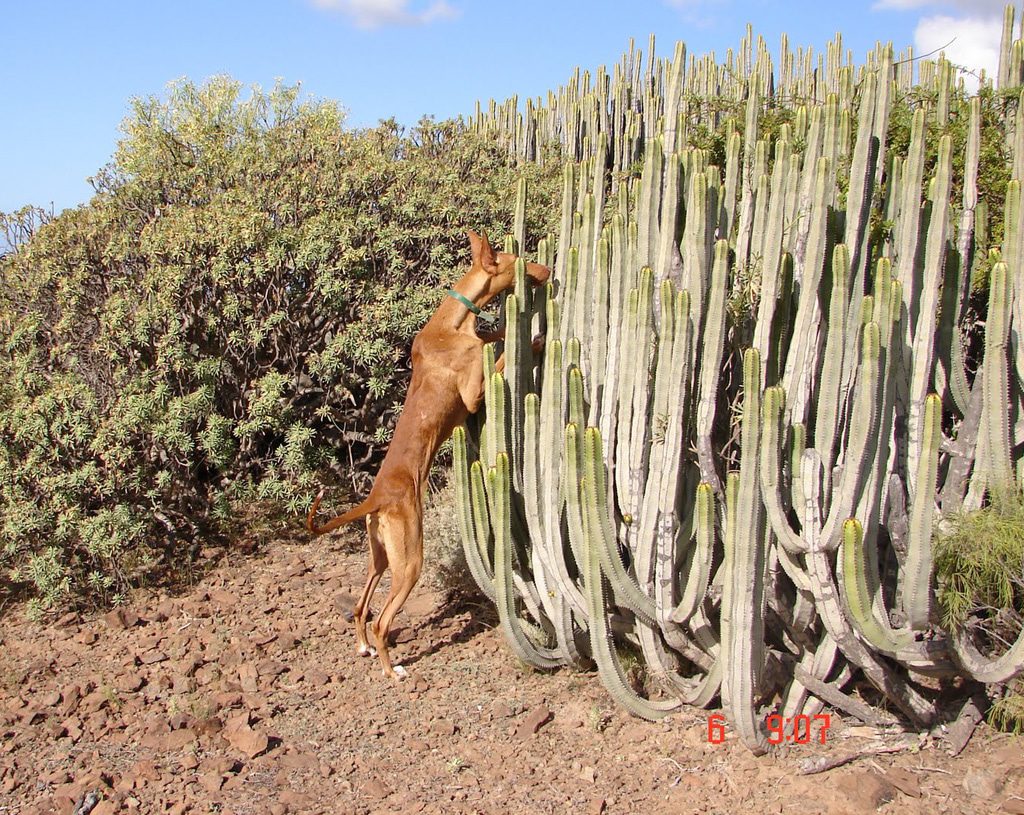
Today, is perfectly adapted, both the flat lands as stony and mountainous, sandy, or soft like the prairies or very hard; You can both enter caves that penetrates in Lava Tubes or galleries, in thickets or forests, in the end, does not shy away from any obstacle.

Outside the hunting season, the living conditions of animals are very different: Well-kept dogs can be found and fed on clean kennels, as well as miserably neglected and malnourished chained dogs. Animals that are not or are no longer fit for hunting often suffer a cruel fate.
For this reason, dogs are increasingly placed abroad by animal protection organizations and individuals – an understandable and well-meaning activity, What, However, brings with it some problems: Dogs, who are usually already grown up, sometimes they are taken out of their simple rural living environment and taken to big cities. Noise and haste can be very harsh for them, his frequent lack of trust in humans further complicates it. His pronounced passion for hunting makes the free will, which would be absolutely necessary for the maintenance of the animals and to reduce stress, is often difficult or impossible. It also, in many cases are infected with so-called travel or Mediterranean diseases, that often require long and costly treatment.

Physical characteristics

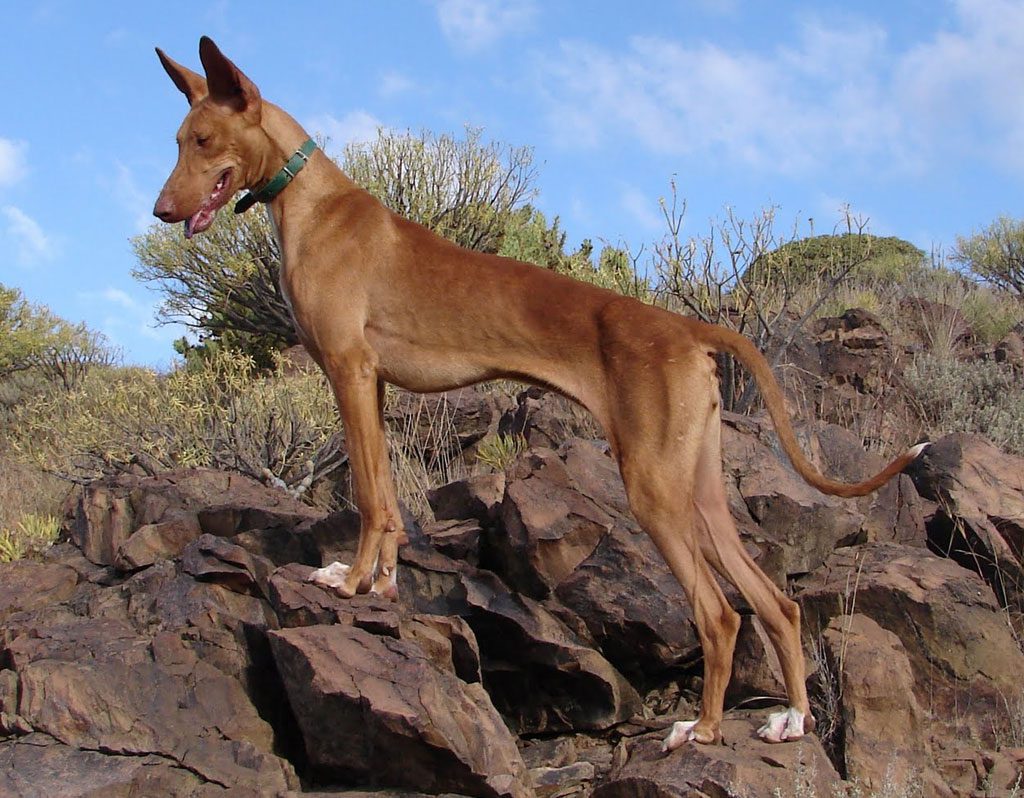
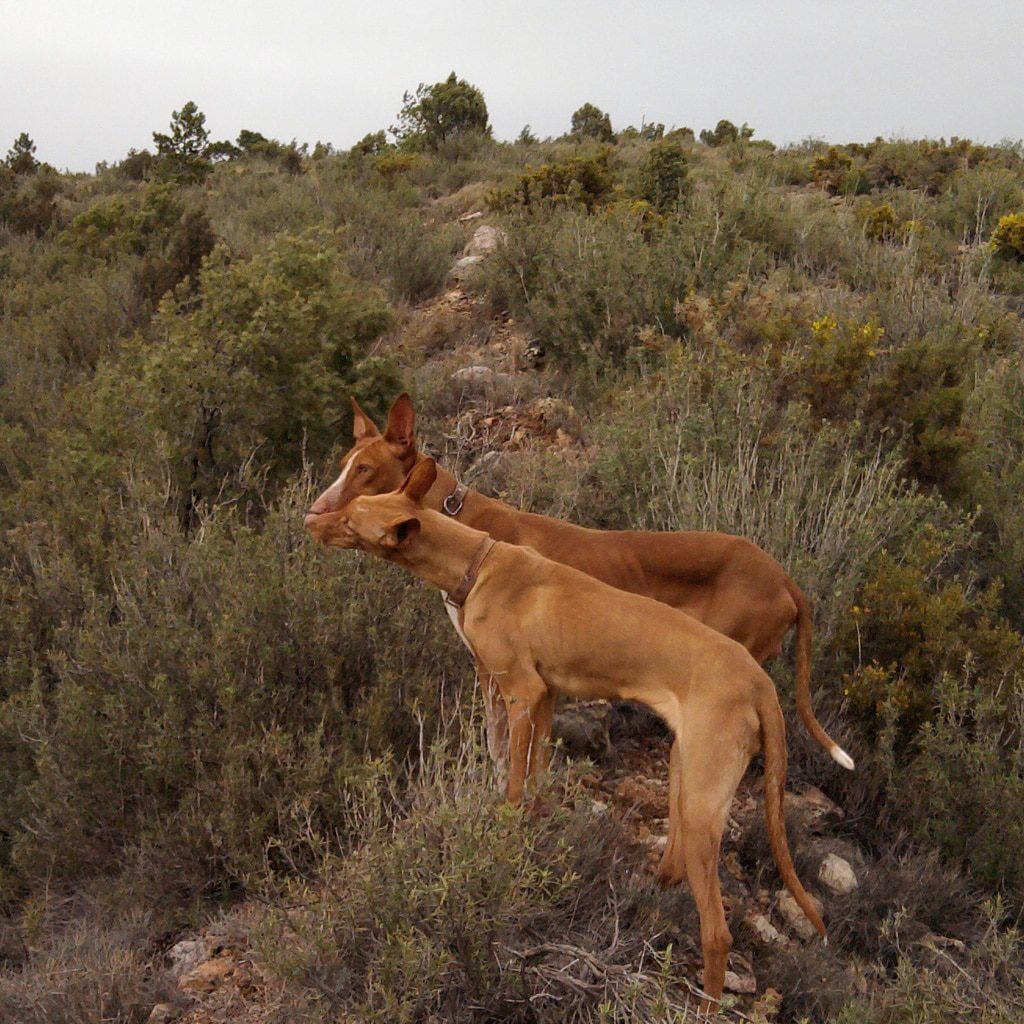
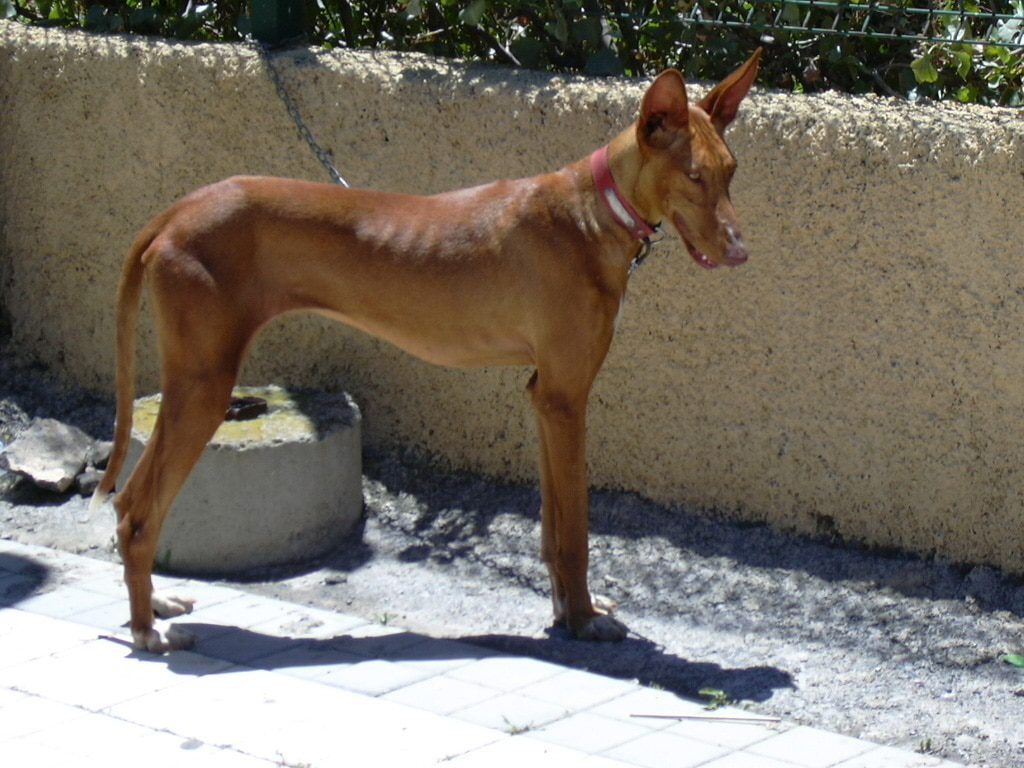
The Canarian Warren Hound, is a dog from size medium, very light but tough.

The height to the cross males will of 55 to 64 cm and the females of 53 to 60 cm.. These measures have 2 cm tolerance up or down.

Has the muscles hyper developed and as it does not present adipose panniculus it is very easy to appreciate the rib cage, the spine and hip bone.

Has the head elongated with little pronounced stop, the eyes are small, almond-shaped and oblique.

Their ears they are rather large, When the Earth State of arousal keeps them in erect and fall backwards when it is at rest, they are wide at the base and end up in tip.

The limb perfectly Plumb, they are straight, has fine but strong bones. The tail is low, You can take the low or sickle-shaped, but does not exceed Hock.

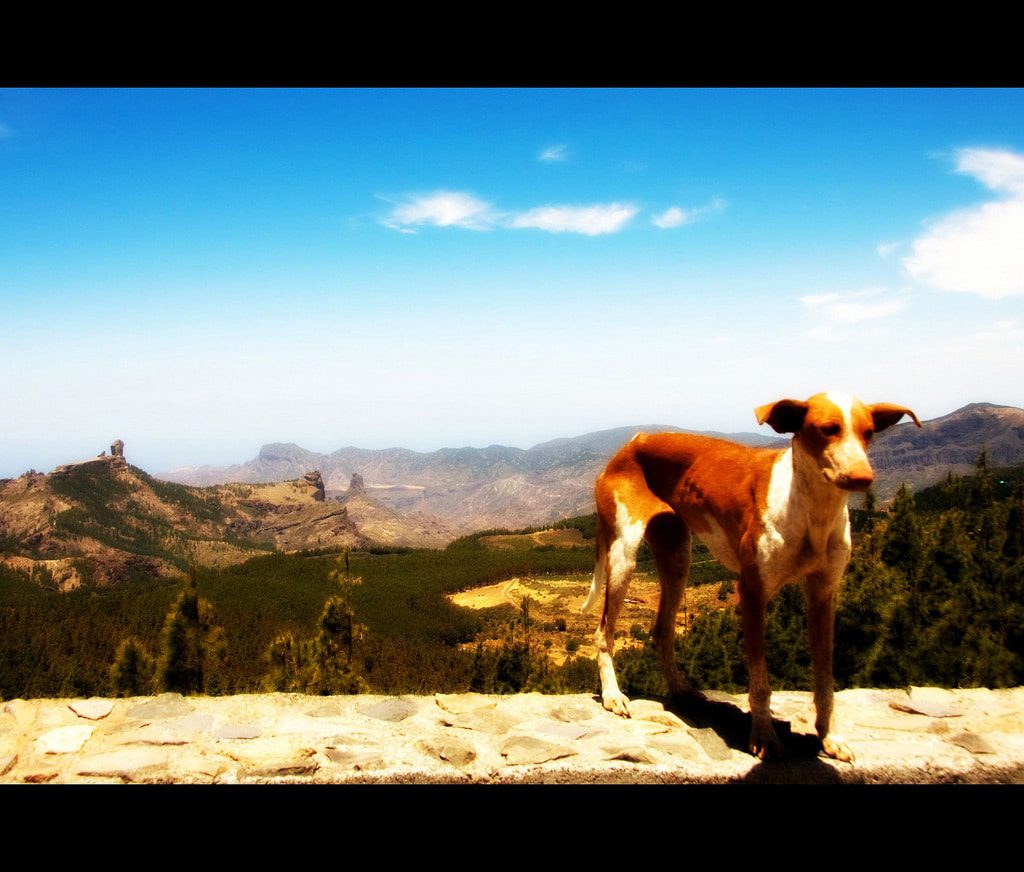
The hair the Podenco Canario is smooth, tight and short. In the layer color combinations within the following are supported colors: Red and white, with more or less intense red, and finally, Orange to mahogany.

Observations

:

These dogs start to hunt from an early age, giving cases of animals less than three months that show strong hunting instinct.

When they discover and/or they chase prey, emit a characteristic short, repetitive bark, known to local hunters as "singing a rabbit".

Character and skills

The Canarian Warren Hound is an animal that shows no aggression normally, extremely loyal and noble to teammate, restless, independent, stubborn, worker and intelligent.

Itร‚ยดs brave and decided to, the race is fast and very agile, generous and extremely fell to its owner.

There are no guard and defense attitudes, at home it is "friend of all strangers", what makes it ideal as a pet.

If raised inside a Home, Once overcome the first six months of hyperactive life, shown as a quiet animal and customize, attitude changes drastically once comes to the field of hunting.

In its role of Hunter It has always been dedicated to the rabbit house and its most important feature is its ability to adapt to any type of terrain. It is capable of detecting the presence of the press inside cracks thorny bushes or stone walls, the Podenco Canario only to follow the trail of the prey with the sense of smell but without catching it.

Observations:

In the Canary Islands is used in conjunction with the huron, since the latter catches the rabbit by the throat.

Caring for Canarian Warren Hound

As already mentioned, the dog should be given a housing environment that corresponds to its predisposition. Rural areas with low traffic and a manageable hunting density are appropriate.
Proper exercise in any weather with as much free running as possible is a must for this active dog.

The short coat is very easy to care for; just brush from time to time.

Canarian Warren Hound Health

The breed is basically a robust dog with low susceptibility to disease; therefore, breed-specific diseases are largely unknown.

But, the Canarian Warren Hound can suffer from the typical travel or Mediterranean diseases of dogs (among others, leishmaniosis, dirofilariasis, babesiosis, ehrlichiosis) like all the other dogs.
Many animals are chronically infected without showing symptoms of disease. But, these dogs are unhealthy and can infect other animals through vectors (ticks and blood-sucking insects).
So, imported dogs should always be thoroughly examined for the diseases mentioned (the so-called "travel profile").

The average life expectancy is about 12 years.

Images Canarian Warren Hound

Canarian Warren Hound videos

Type and recognitions:

  • FCI CLASSIFICATION:
  • Group :
  • Section : . .

Federations:

  • FCI – Group 5: Spitz-type dogs and primitive type – Section 7: Primitive type โ€“ Hunting dogs.. โ“˜

FCI breed standard "Canarian Warren Hound"

Origin:
Spain

Date of publication of the valid original standard:
24.06.1987

Use:

It is used for rabbit hunting and adapts perfectly to the multiple variations of the terrain for this purpose., using their prodigious sense of smell as well as sight and hearing. Withstands high temperatures and hunts tirelessly from dawn to dusk. You can detect the presence of rabbits inside cracks with your sense of smell or hearing., stone walls, majano, volcanic tubes and thorny scrub. Its extraordinary preservation is undoubtedly due to its gifts, which have made it necessary throughout the centuries.. It is primarily a trail dog and should not bark or flap the part during tracking.. It is also used with the help of a ferret, modality allowed on the islands. It also usually catches rabbits by tooth.


General appearance:

It is a medium-sized dog, slightly elongated, leptosomatico, light, very resistant. The skeleton is well developed. The absence of adipose panniculus allows us to appreciate the relief of the rib cage, spine and hip bones. The muscles are highly developed, spandrel, transluciendo contractions through the skin.

IMPORTANT PROPORTIONS: Slightly longer than high. Well developed chest, without reaching the elbow. Muzzle slightly longer than the skull.


Behavior / temperament:

Brave, nervous, restless and radiating a dynamism. Noble, never aggressive. Selflessly addicted to its owner. Stoically supports more rigorous sessions without the less fatigue.

Head:

Elongated. Truncated cone shaped, very provided with the body, measuring length 21 to 22 cm.. Parallel craniofacial lines.

Cranial region:
  • Skull: Longer than width, plane, with prominent occipital bone.
  • Depression links (Stop): Not very marked.

facial region:

  • Truffle: Wide, sand color, harmonized with the coat color, slightly open nostrils.
  • Snout: Prominent and wide, dull finish, flesh-colored with more or less intensity in harmony with the color of the coat.
  • Lips: Fine and collected, harmonized with the color of the nose.
  • Teeth: Bite in scissors, in perfect opposition and well-developed.
  • Eyes: Oblique, almond-shaped and small. More or less dark amber depending on the intensity of the color of the layer. His gaze is smart and noble.
  • Ears: Rather large. Carried erect in attention, slightly divergent. Take them back to sleep. Wide at its base and pointy at the end.

Neck:

Muscular, straight, with smooth skin, without jowl, rounded and flexible.

Body:

  • Back: Strong, muscular, suitable for the race and exercise of hunting.
  • Pork loin: Somewhat elongated.
  • Rump: Something solid bones of the rump, more visible in the exemplary weak or in full hunting season.
  • Breast : Chest with no outgoing sternum, well developed, But however it does not reach the elbow. Oval ribs.
  • Chest perimeter more in 5 to 8 cm as height on the cross.
  • Belly: picked up, without being the Greyhound. Well marked flanks.

Tail:

Lowest insertion, as a continuation of the rump. Rounded, It descends somewhat lower than the Hock. Fallen or carried in the shape of a sickle. Something sharp at the tip which is usually white in color. Never screwed. Desirable not to raise in excess to the March.

Tips

PREVIOUS MEMBERS: Perfectly Plumb, straight, vertical and parallel, fine but solid bone. Cat feet, generally something diverted outwards. Strong and somewhat oval pads.

Angles:

  • Angles scapulo-humeral: close to 110ยฐ.
  • Humeral-radial angles: close to 140ยฐ.

LATER MEMBERS: Plumb, straight, strong, muscular, rather high Hock (some 18 cm from the ground). Straight feet, of cat, with strong and slightly oval pads. Without the presence of spurs.

Angles:

  • Lame-femoral angle: about 110ยฐ.
  • Femoral-tibial angle: about 120ยฐ.
  • Hock angle: about 130ยฐ.

Movement:

You must have a fast trot, long and very light.

Mantle

SKIN: Consistent, attached to the body and without wrinkles.

HAIR: Smooth, short and tight.

COLOR: Preferably red and white, the Red can be more or less intense coming from Orange to dark red (Mahogany). All combinations of these colors.


Size and weight:

Height to the cross:

  • For males: of 55 to 64 cm..
  • for females: of 53 to 60 cm..

These measures may vary due to the different land where living and hunting, therefore to accept differences in 2 cm above or below the maximum or minimum size, as long as the specimens are typical and with the prototype of the breed.


Fouls:

Any deviation from the aforementioned criteria is considered as a fault and the severity of this is considered to the degree of the deviation to the standard and its consequences on the health and well-being of the dog..

SERIOUS FAULTS

  • Excessively wide head.
  • Too marked stop.
  • Hanging lips.
  • Lack of premolars.
  • Prognathism.
  • Ears very divergent.
  • Flat chest.
  • Outgoing sternum.
  • Threaded queue.
  • Low or cow hocks.
  • Crossing of front feet and hocks in gear.
  • Aggressive temperament.
  • Any dog โ€‹โ€‹showing clear signs of physical or behavioral abnormalities must be disqualified..

FALTAS DESCALIFICANTES:

โ€ข Aggressiveness or extreme shyness.
โ€ข Any dog โ€‹โ€‹showing clear signs of physical or behavioral abnormalities.


N.B.:

โ€ข Males must have two normal-appearing testicles fully descended into the scrotum..
โ€ข Only functionally and clinically healthy dogs, with the typical conformation of the breed, should be used for parenting.

Source: F.C.I - International Cynological Federation

Alternative names:

1. Canary Island Podenco, Canary Island Hound, Podenco Canario (English).
2. Podenco canario (French).
3. Podenco Canario (German).
4. Podenco Canario (Portuguese).
5. Podenco Canario (espaรฑol).

โ–ท The world of Pets: Dogs, cats, birds, reptiles, amphibians

Pharaoh Hound
Malta FCI 248 . Primitive type

Pharaoh Hound

The Pharaoh Hound in family is smart, friendly, affectionate and playful.

Content

History

The Pharaoh Hound it is a hunting dog like those of hunting dog breeds, formerly at home in many areas of the Mediterranean. It is also called Kelb-tal-Fenek. ยซKelb-tal-Fenekยป is Maltese and means ยซRabbit dogยป.

Like all Warren hound, is the specialist in rabbit hunting. But, does not go to the burrow like the Dachshund or the terriers. Because the Pharaoh Hound and Warren hound they hunt on land when they see them. They are agile like a hunting dog and can launch attacks fast as lightning. As a group, surround their prey. In this way, knock down dozens, even hundreds of rabbits in a short time. The Pharaoh Hound they often work completely independently without guidance from the hunter. In Malta they also help with herding the goats and are useful as all-rounders for all tasks around the home and on the farm..

The Pharaoh Hound was created in Great Britain in the decade of 1960 as an independent breed of dog. It is an offshoot of the population of these dogs, that have existed for thousands of years in the northern and eastern Mediterranean. Besides of Pharaoh Hound, the Warren hound are other descendants of these dogs, each of which is now an independent race. Its roots go deep into the past.. But, its exact origin is not clear. Its resemblance to the ancient Egyptian hunting dog Tesem, one of the oldest documented dog breeds, it's amazing. But, It is neither proven nor probable that they are "pure" descendants of Tesem. This type of dog probably existed everywhere, since it already served the people of the ancient world in its current role.

With the time, regional strains were developed that, However, repeatedly mated with each other. The World Canine Federation, Fรฉdรฉration Cynologique Internationale, took this into account when establishing a collection standard for Mediterranean breeds up to 1977. Great Britain then created the breed of dogs Pharaoh Hound and later handed over the patronage to Malta. There it was even declared a national dog in 1974. In 1991 was officially recognized by the Fรฉdรฉration Cynologique Internationale as an independent race.

(See study on canine genome).

Physical characteristics

Haughty and delgado, the Pharaoh Hound is a dog from size medium with very defined lines, elegant and noble porte.

The height in the males is of 55 to 63 cm., and weigh in 10 to 12 kg; the females measure of 52 to 61 cm to the cross, and weigh in 8 to 10 kg. If born with a tail does not lack that ampute you.

The belly is fine and the back straight and strong. The body is made up of long muscles, of dry lines.

Has the head triangular, almost without stop, the eyes Amber blend with the mantle, they are oval and slightly sunken. The ears they are inserted to half-height, Reprint alert to carry them, they are wide at its base and thin and long.

The tail is curved and carries low, but when he is happy he has been in high.

Its fur is fine, short and glossy. In some cases it may be a little rough to the touch. The color fur is reddish brown clear to reddish brown dark with white markings. According to the standard, the white tail is highly desirable.

As well, is supported in the standard to submit a white mark on the chest and white fingertips, including a white stripe down the center line of the face.

Character and skills

The Pharaoh Hound he is a hunting dog and a hound at the same time. They are sometimes used in their homeland as watchdogs or herding dogs for goats.. Before genetic separation from the total population, many dogs had to struggle for scraps of human food and often suffered from hunger. These original living conditions still determine its nature today.. They are very agile and alert. Almost nothing escapes your keen senses. Especially like young dogs who crave exercise and experiences, ideally hunting and first of all the option of free running. As they tend to have a strong hunting instinct, this deep-rooted need of dogs in our latitudes can only be satisfied on rare occasions.

It is an experience to see him Pharaoh Hound running freely. Because they can sprint fast and especially capture prey in extremely courteous races. the Pharaoh Hound hunt with all three senses: Odor, view, ear. The standard describes its nature in this way:

Vigilant and passionate hunter who uses both sight and smell. When working short distance, he also uses his ears in a remarkable way.

The Pharaoh Hound they are very intelligent and docile. They quickly learn what is allowed and what is taboo. They are friendly and open-minded with people. Towards humans there is no aggression; towards other dogs, However, this may be different, particularly with males. The Pharaoh Hound they have a kind and playful nature. They seek intimate connection with their masters and are loyal to them.. Even in spite of its thinness, they are very hard and resistant.

Observations

The Pharaoh Hound is very similar to the Cirneco dell'Etna Italian.

Fitness

Basically the Pharaoh Hound it's good to keep it. It is very suitable as a family dog รขโ‚ฌโ€นรขโ‚ฌโ€นand friend of children and wants to be seen as a member of their family. But, generally not suitable for a flat in the big city. You need long daily walks in nature, better several times a day. Here your senses are at their highest level. He is a dedicated and alert hunting dog. You need at least here and there the possibility of being able to exhaust yourself while running free.

One Pharaoh Hound maintained in a species appropriate manner is calm and gentle in the home. Then you can rest relaxed in your basket or on the sofa. It also, is very playful. Some specimens are extremely alert and like to bark.. Also in another way barking is used very happily for communication and to express their feelings. It should also be noted that the Pharaoh Hound It does not have an undercoat and by nature it has little insulating fat and is therefore sensitive to cold..

Education

One Pharaoh Hound well socialized can be trained very well. Your senses alert, his intelligence and friendly affection make it easy for him to understand humans. He also wants to please us and live in harmony. Of course it always requires a just consequence. He realizes his master's lack of care immediately and uses him mercilessly. So he'll use every inattention to steal an unprotected gift.. For proper occupation and physical workload for dogs, the greyhound association offers the possibility of participating with Pharaoh Hound in Greyhound racing or hunting dogs. Other dog sports such as agility are also suitable. Due to his strong hunting motivation, training requires patience and empathy.

Care and health

The Pharaoh Hound he is very frugal. Brushing the coat from time to time is enough.

Typical diseases

There are no exact data on the typical diseases of this rare breed of dogs.. One problem could be inbreeding.

Nutrition

The Pharaoh Hound he is usually very gluttonous. you have to be careful here. Otherwise, They are very austere breeds in terms of the type of food..

The life expectancy of โ€œPharaohโ€™s Dogโ€

There are no figures on the life expectancy of Pharaoh Hound. But, should be around 12 years.

Buy a "Pharaoh's Dog"

If you want to spend your life with a Pharaoh Hound, you should first check if you can guarantee all the conditions for it, especially if you have the possibility to let it run regularly. Otherwise, you should look for very similar dogs in animal shelters, in serious animal protection organizations.

Characteristics "Pharaoh Hound"

Coexistence is important that you have with your new friend. Before considering the acquisition of a dog of the breed "Pharaoh Hound" you know certain factors. Not all breeds of dogs are apt to live in an apartment, you must take into account his character, their need for exercise, their interaction with other pets, their care and if you have small children, their level of tolerance towards them.

Training ?

2,0 of 5 stars (based on 1 review)

Suitability of the apartment ?

2,0 of 5 stars (based on 1 review)

Can be alone all day ?

2,0 of 5 stars (based on 1 review)

Suitable as a first dog ?

1,0 of 5 stars (based on 1 review)

Weight gain ?

4,0 of 5 stars (based on 1 review)

Health ?

4,0 of 5 stars (based on 1 review)

Intelligence ?

4,0 of 5 stars (based on 1 review)

Kindness with child ?

3,0 of 5 stars (based on 1 review)

Tendency to bite ?

2,0 of 5 stars (based on 1 review)

Tendency to bark ?

4,0 of 5 stars (based on 1 review)

Tendency to flee ?

5,0 of 5 stars (based on 1 review)

hair loss strength ?

3,0 of 5 stars (based on 1 review)

Suitable as a guard dog ?

4,0 of 5 stars (based on 1 review)

Joy ?

4,0 of 5 stars (based on 1 review)

Cat friendliness ?

1,0 of 5 stars (based on 1 review)

Power level ?

5,0 of 5 stars (based on 1 review)

Images ยซPharaoh's Dogยป

ยซPharaoh's Dogยป Videos

Type and recognitions:

  • FCI CLASSIFICATION:
  • Group :
  • Section : . .

Federations:

  • FCI – Group 5: Spitz-type dogs and primitive type – Section 6: Primitive type. โ“˜

FCI breed standard "Pharaoh Hound"

Origin:
Malta

Date of publication of the valid original standard:
09.08.1999

Use:

He is an alert and enthusiastic hunter, that hunts for smell and sight, using your hearing to a significant degree when working near prey.


General appearance:

Medium-sized, noble bearing and well-defined lines. Funny, although also powerful. Very fast with free and easy movements. Alert expression.


Behavior / temperament:

Is alert, Intelligent, friendly, affectionate and playful.

Head:

The muzzle is slightly longer than the skull. The top line of the skull is parallel to the facial region; the entire head represents a blunt wedge when viewed in profile and from above.

Cranial region:
  • Skull : Long, close-knit and well chiseled.
  • Stop : Light.

facial region:

  • Truffle : Only flesh colored, similar to coat color.
  • Jaws / Teeth : Powerful jaws with strong teeth. Scissor bite, that is to say, that the upper incisors closely overlap the lower incisors and are implanted vertically in the jaws.

Eyes : amber in color, harmoniously similar to coat color; oval, set moderately deep, with an intelligent and applied expression.

Ears : Medium high set, carried upright when the dog is alert, but very mobile; they are wide at their base, thin and long.

Neck:

Long, delgado, muscular and slightly arched. Throat line is well joined.

Body:

The length of the body from the point of the shoulder to the point of the buttock is slightly greater than the height at the withers. Flexible, with an almost straight top line.

  • Rump : Slightly inclined tail root.
  • Breast : Deep extending down to the tip of the elbow. Well arched ribs.
  • Abdomen : Moderately withdrawn.

Tail:

Middle insert, quite thick at the base and tapering towards the tip (similar to a whip); at rest it reaches just below the hock. When the dog is active, takes it high and curved. The tail must not be carried between the hind limbs. Corkscrew tail is undesirable.

Tips

PREVIOUS MEMBERS : Straight and parallel.

  • Shoulder : Strong, long and well directed back.
  • Elbow : Well tucked.
  • Metacarpus : Strong.

LATER MEMBERS : Seen from the back, rear limbs are parallel; strong and muscular.

  • Knee : Moderate angulation.
  • Leg : Well developed.

FEET : Strong, well arched and firm, without drifting out or in. Hard pads. Spurs can be removed.

Movement:

Free and fluid; the head is carried high enough and the wide movement of the dog should cover the ground well without apparent effort. The limbs and feet should move in line with the body; any tendency to turn the feet to the side or action in high steps (๏‚ฒhackney action ๏‚ฒ) it's very undesirable.

Mantle

HAIR : Short and shiny, varies from being fine and close to a little rough; no feathers.

COLOR : Reddish brown to dark reddish brown with white markings allowed in the following regions : the white tail is highly desirable. White on the chest (called ๏‚ฒstar๏‚ฒ). White on fingers. A narrow white spot is allowed (list) on the center line of the face. Mottled or white color in regions other than those mentioned are undesirable.


Size and weight:

  • Height in males : ideal 56 cm. (from 56 until 63,5 cm = 22 โ€“ 25 inches).
  • Height in females : ideal 53 cm. (from 53 until 61 cm =21 โ€“ 24 inches).


Fouls:

Any deviation from the above criteria is considered missing and the seriousness is considered to the extent of the deviation to the standard, and its consequences on the health and well-being of the dog.

FALTAS DESCALIFICANTES:

โ€ข Aggressiveness or extreme shyness.
โ€ข Any dog โ€‹โ€‹showing clear signs of physical or behavioral abnormalities.


N.B.:

โ€ข Males must have two normal-appearing testicles fully descended into the scrotum..
โ€ข Only functionally and clinically healthy dogs, with the typical conformation of the breed, should be used for parenting.

Source: F.C.I - International Cynological Federation

Alternative names:

1. Kelb tal-Fenek (English).
2. Lรฉvrier du pharaon (French).
3. Pharaoh Hound, Kelb tal-Fenek (German).
4. Cรฃo de coelho, Kelb-tal fenek (Portuguese).
5. Podenco faraรณnico, Pharaoh hound (espaรฑol).

โ–ท The world of Pets: Dogs, cats, birds, reptiles, amphibians

Lapponian Herder
Finlandia FCI 284 - Nordic Watchdogs and Herders.
Lapponian Herder

It barks a lot, especially when he is working.

Content

History

The similarities of Lapponian Herder with the Finnish Lapphund they are big: The ancestors of both races served the Sami, which were also called "lamps" in honor of their hometown in past times, like hunters and watchdogs.

As reindeer herding was particularly important to many Sami, this breed next to this town and with the increasing domestication of reindeer, developed more and more in herding dogs. The agile and intelligent ancestors of the Lapponian Herder they mastered this task brilliantly. In the not yet coordinated brood, it wasn't so much appearance that mattered, but rather the character and herding abilities of the dogs. As a result, there was no uniform appearance for a long time. In the middle of the 20th century the first standards were developed. But at that moment, the Lapponian Herder and the Finnish Lapphund they were still considered as one race.

Only in december 1966 the Lapponian Herder was recognized as an independent breed. But, its importance as a reindeer herding dog diminished more and more with time and with the advent of snowmobiles. Today the breed is largely unknown outside of Scandinavia.. In his homeland., However, there are some friends of these dogs, who appreciate this breed as a member of the family. These dogs are mostly kept as companion dogs., but some of them still perform faithful shepherding services.

Physical characteristics

ยซAs a mixture of Border collie and German Shepherdยป – this is the appearance of a Lapponian Herder. But, the trained eye recognizes above all the similarity with other Nordic races such as the Alaskan Malamute.

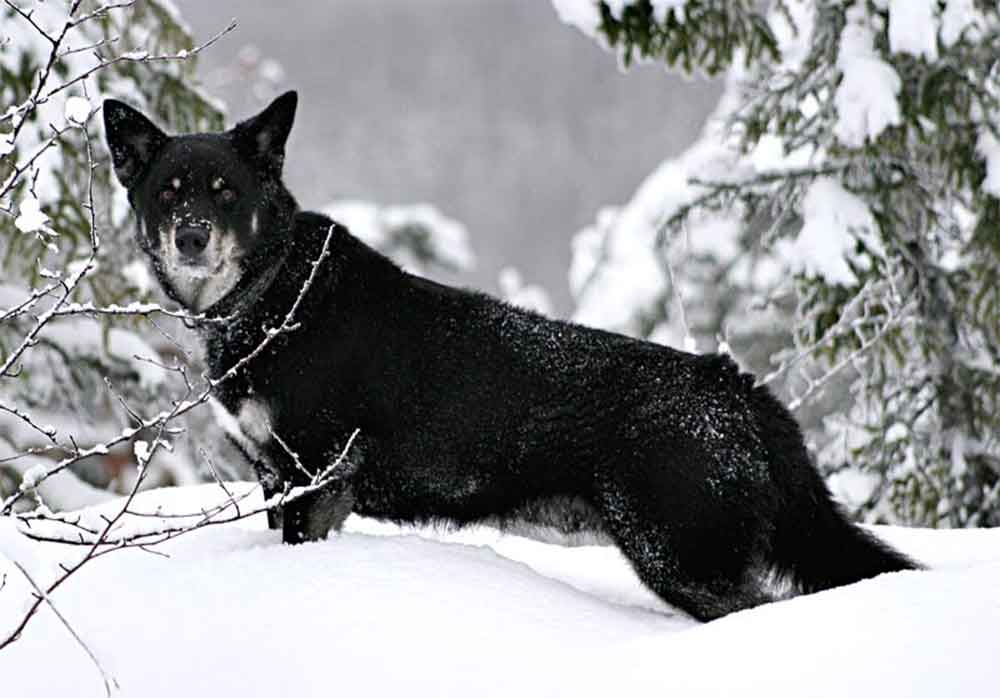
The Lapponian Herder is a slim and athletic dog of the type Spitz with a height of about 51 cm at the withers in males and about 46 cm in females. It weighs some 25 kg, the weight is not fixed in the standard. This breed is rather long than tall, which means that the length of the body exceeds the height at the withers by one 10 per cent. The Finnish Shepherd of Lapland wears his ears pricked, the long hairy tail hanging at rest, slightly curved when moving. Coat color varies from black to various shades of gray and brown. White markings on the neck are allowed, chest and legs. The breed's coat consists of two layers: a dense, fine undercoat and a stiffer, longer outer coat.

Character and skills

The Lapponian Herder they are great for heavy work like herding dogs. They unerringly track lost cattle and have repeatedly proven themselves to be perfect assistants to herders and cattle breeders.. Animals are considered to be very eager to learn, they are smart and they bark. Due to their pronounced attention they are also excellent watchdogs.. In addition to the courage attributed to him, these dogs are also agile and strong. They are considered good dressage dogs and can also be kept in families. It should be noted, However, that the Lapponian Herder requires a high degree of exercise and effort.

Health of the Lapponian Herder

This parent breed is considered robust and hardy and almost never causes inherited diseases.. If you are looking for such a dog, You should definitely support the efforts of serious breeders and only buy a puppy from one of them.. Because responsible breeders place importance on caring for the health of parents, as well as the type and character. Because the coat is adapted to the Nordic climate, the dog should never be asked to perform at its best in temperatures above 15 degrees. Basically, in summer it is advisable to change the longest exercise units to the morning and afternoon hours. Representatives of this breed reach an age of twelve to fourteen years.

Nutrition of the Lapponian Herder

The Lapponian Herder it is a muscular animal that likes to move. So adjust the amount of food to your constitution and your actual load. The information on the packaging can only be a guide.. Keep an eye on the slim waist so that you can take measurements in time if you Finnish shepherd start eating bacon. Give the pup up to four servings per day. One Lapponian Herder adult can get by on two meals.

Important:

Give your dog a break after his ration, so always feed him after exercising. It's not just the amount that counts: Be sure to use a high-quality dog โ€‹โ€‹food where meat is the main ingredient.. You can recognize this by the fact that meat is at the top of your diet and cheap fillers like grain have been avoided.. This applies to both dry and wet foods..

To meet your dog's chewing needs, can offer you regular dry dog รขโ‚ฌโ€นรขโ‚ฌโ€นchews, like cow's ears. Like candy or other snacks, remember to include them in your dog's daily ration to avoid overweight. When it comes to snacks, opt for sugar-free treats like jerky servings or rewards with added benefits like dental care snacks. Your pet should always have access to cool drinks.

Lapponian Herder care

The Lapponian Herder has many thick hairs, that it shares relatively generously with its surroundings, that is to say: misses. But, the more often you use a brush, less hair will end up on your four walls. During the change of coat twice a year she loses a lot of hair, But brushing shortens the "furry period". Better to comb dirt from the coat when it is dry. You should only bathe your reindeer dog when absolutely necessary. So use a mild dog shampoo.. Regularly check the length of eye hairs, the ears and the length of the claws and, if required, use eye and ear cleaners or dog claw scissors. Especially dogs that walk a lot on soft ground can tend to have long claws, which can cause them to get painfully stuck.

Activities with the Lapponian Herder

Of course: all dogs love being in nature. The Lapponian Herder it's a true all-rounder in this sense. When you have grown up and have had proper training, makes a wonderful jogging companion, cycling or horse riding – and of course on long and extensive walks. Dog sports in a club can also be a lot of fun with the Lapponian Herder: agility, obedience, olfactory work or use as a rescue dog often suits him well. Try what you and your Lapponian Herder enjoy more. Of course, the breed is also predestined for the tasks of herding dogs. It is important to accustom your four-legged friend to regular rest periods., despite proper use of the species, so you don't try too hard and stay balanced.

Where can I buy my Finnish Lapland Shepherd?

Are you decided that one will move with you? Lapponian Herder and you can offer him everything he needs for a happy and complete dog life? Cheers! But, you may still have a hurdle to overcome, because: The Lapponian Herder are very rare outside of Finland and Scandinavia. Find out more about potential breeders of a Nordic dog club to make your first contacts. If only overseas breeders are considered, first read the basics of adopting a puppy from abroad and the entry conditions. Although it may be a long way, you should definitely choose a dog from a reputable breeder to support healthy and responsible breeding of the breed. If the search for a puppy of this breed seems too complicated for you, you should also look for other breeds or dogs in animal shelters. Similar to the Lapponian Herder It, of course, the Finnish Lapphund, which is also not common outside Scandinavia, but at least not as rare as its close relative.

Characteristics "Lapponian Herder"

Coexistence is important that you have with your new friend. Before considering the acquisition of a dog of the breed "Lapponian Herder" you know certain factors. Not all breeds of dogs are apt to live in an apartment, you must take into account his character, their need for exercise, their interaction with other pets, their care and if you have small children, their level of tolerance towards them.

Training ?

4,0 of 5 stars (based on 1 review)

Suitability of the apartment ?

2,0 of 5 stars (based on 1 review)

Can be alone all day ?

1,0 of 5 stars (based on 1 review)

Suitable as a first dog ?

3,0 of 5 stars (based on 1 review)

Weight gain ?

3,0 of 5 stars (based on 1 review)

Health ?

5,0 of 5 stars (based on 1 review)

Intelligence ?

4,0 of 5 stars (based on 1 review)

Kindness with child ?

5,0 of 5 stars (based on 1 review)

Tendency to bite ?

1,0 of 5 stars (based on 1 review)

Tendency to bark ?

4,0 of 5 stars (based on 1 review)

Tendency to flee ?

2,0 of 5 stars (based on 1 review)

hair loss strength ?

4,0 of 5 stars (based on 1 review)

Suitable as a guard dog ?

4,0 of 5 stars (based on 1 review)

Joy ?

3,0 of 5 stars (based on 1 review)

Cat friendliness ?

4,0 of 5 stars (based on 1 review)

Power level ?

4,0 of 5 stars (based on 1 review)

Type and recognitions:

  • FCI CLASSIFICATION:
  • Group :
  • Section : . .

Federations:

  • FCI – Group 5 – Section 3 Nordic Watchdogs and Herders.. โ“˜

FCI breed standard "Lapponian Herder"

Origin:
Finland

Date of publication of the valid original standard:
12.03.1999

Use:

Reindeer herder.


General appearance:

A herding Spitz, medium-sized, clearly longer than the height at the withers. Osamanta and muscles are strong. The dog is muscular, but it should not give the impression of being heavy. Sex must be clearly defined. The coat must be well adapted to arctic climates.

IMPORTANT PROPORTIONS : Body length is approximately 10% longer than the height at the withers. The depth of the body measures about half the height at the withers.


Behavior / temperament:

Docile, calm, friendly, energetic and eager to serve. He barks with pleasure when he is working.

Head:

Elongada; the muzzle is slightly shorter than the skull.

Cranial region:
  • Skull : Only slightly convex. The frontal sulcus is marked and the superciliary arches are clearly defined.
  • Depression links (Stop) : In the form of a gentle slope.

facial region:

  • Truffle : Preferably black, but harmonizing with the color of the coat.
  • Snout : The nasal helm is straight. Viewed from above and in profile the muzzle tapers evenly towards the nose.
  • Belfos : Tight.
  • Jaws / Teeth : Jaws and teeth are strong. Scissor bite. Normal teeth.
  • Cheeks : The zygomatic arches are clearly marked.

Eyes : Preferably dark in color, but harmonizing with the color of the coat. Alive and rather of separate implantation. Oval in shape. Intelligent expression, in females it is also devoted.

Ears : erected, average length, preferably separate implantation, rather wide at insertion. The inside of the ears is covered with abundant hair, particularly at the base.

Neck:

Strong and medium length; smooth implantation on the shoulders. No double chin.

Body:

  • Cross : Marked.
  • Back : Strong and muscular.
  • Pork loin : Short and muscular.
  • Rump : Rather long and slightly oblique.
  • Breast : Deep, long and spacious, not very wide. The ribs are clearly arched.
  • bottom line : Slightly collected.

Tail:

Medium in length, set low and covered with abundant hair. At rest the tail hangs; in motion is carried in the form of a loose curve, but it should not be raised on the back. The tail movement can also be circular.

Tips

PREVIOUS MEMBERS :

  • As a whole : Powerful, United to the body with strong muscles, but free in their movements. Muscular and well angled. Viewed from the front they are straight and parallel.
  • Shoulder : Oblique and muscular.
  • Elbows : Turned neither in nor out, close to the body. Pointing back.
  • Forearm : Vertical.
  • Carpi : Flexible and tendinous.
  • Metacarpus : Seen in profile they are slightly oblique, thus allowing a flexible movement.
  • Previous feet : Rather oval on all sides, even below; covered with abundant hair. The fingers are well arched, the pads are elastic and thick.

LATER MEMBERS :

  • As a whole : Well angled. Viewed from behind they are straight and parallel.
  • Thigh : Rather long and wide with well developed muscles.
  • Knee : Pointing to the front, angulation is clearly marked.
  • Hock : Rather low, angulation is clearly marked.
  • Metatarsus : Rather short, vertical and parallel.
  • Hind feet : Same as previous. Preferably without dewclaws.

Movement:

PREVIOUS MEMBERS :
  • As a whole : Powerful, United to the body with strong muscles, but free in their movements. Muscular and well angled. Viewed from the front they are straight and parallel.
  • Shoulder : Oblique and muscular.
  • Elbows : Turned neither in nor out, close to the body. Pointing back.
  • Forearm : Vertical.
  • Carpi : Flexible and tendinous.
  • Metacarpus : Seen in profile they are slightly oblique, thus allowing a flexible movement.
  • Previous feet : Rather oval on all sides, even below; covered with abundant hair. The fingers are well arched, the pads are elastic and thick.
LATER MEMBERS :
  • As a whole : Well angled. Viewed from behind they are straight and parallel.
  • Thigh : Rather long and wide with well developed muscles.
  • Knee : Pointing to the front, angulation is clearly marked.
  • Hock : Rather low, angulation is clearly marked.
  • Metatarsus : Rather short, vertical and parallel.
  • Hind feet : Same as previous. Preferably without dewclaws.


Mantle

SKIN : Tight over the entire body and without wrinkles.

HAIR : The outer coat is long or medium long, straight, rather separate and rough. The undercoat of hair is fine and dense. Hair is generally thicker and longer on the neck, chest and back of thighs.

COLOR : Black in different shades, even greyish or dark brown with a lighter hue than the basic color; grayish or brownish markings usually on the head, the lower parts of the body and limbs. White markings on the neck, chest and limbs are allowed. The undercoat of hairs must be black, grayish or brownish.


Size and weight:

Height to the cross :

Ideal size :

  • Males : 51 cm.
  • females : 46 cm..

With a tolerance of +/- 3 cm..


Fouls:

Any deviation from the aforementioned criteria is considered as a fault and the severity of this is considered to the degree of the deviation to the standard and its consequences on the health and well-being of the dog..

โ€ข Non -masculine males, female females.
โ€ข Very clear eyes in black dogs.
โ€ข Ears with fallen tips (semi-erected).
โ€ข curved or curved tail on the back.
โ€ข Soft fur, wavy or smooth.
โ€ข Lack of internal hair cover.

MISS PLAYOFFS

โ€ข Aggressive or fearful dog.
โ€ข Superior or inferior progantism.
โ€ข Fallen ears.

Any dog โ€‹โ€‹showing clear signs of physical or behavioral abnormalities must be disqualified..


N.B.:

Males should have two normal-appearing testicles fully descended into the scrotum..

Source: F.C.I - International Cynological Federation

Alternative names:

1. Lapland Reindeer-Dog, Reindeer Herder, lapinporokoira (Finnish), lapsk vallhund (Swedish) (English).
2. Lapinporokoira (French).
3. Finnischer Lapplandhirtenhund, Lapinporokoira (German).
4. Lapinporokoรฏra, Pastor de renas da Lapรดnia (Portuguese).
5. Lapland, Perro pastor finlandรฉs, Pastor lapรณn (espaรฑol).

โ–ท The world of Pets: Dogs, cats, birds, reptiles, amphibians

Pomeranian
Alemania FCI 97 . European Spitz

Pomeranian

The Pomeranian very active, independent, Intelligent, brave and loyal.

Content

History

The Pomeranian (Deutscher Spitz;, Pomeranian Lulu or Deutscher Zwergspitz) It is a dog of the Spitz family, named for the region of Pomerania Central, Eastern Germany, and is classified as a dog ยซToyยป due to its small size.

The ancestors of the Pomerania were Iceland and Lapland sled dogs, He came to Europe because of Pomerania.

The region of Pomerania, bathed in the north by the Baltic Sea and bounded in the west by the island of Rรผgen and in the east by the Vistula River, It was occupied by many peoples, celts, Slavs, Poles, Swedes, Danish and Prussian. Its name comes from Pomore or Pommern, which means "by the sea", and it was given in times of Charlemagne. Is in Pomerania where the Spitz won fame as a pet and dog work.

Read more

โ–ท The world of Pets: Dogs, cats, birds, reptiles, amphibians

Parson Russell Terrier
Inglaterra Estados Unidos FCI 339 . Large and medium sized Terriers
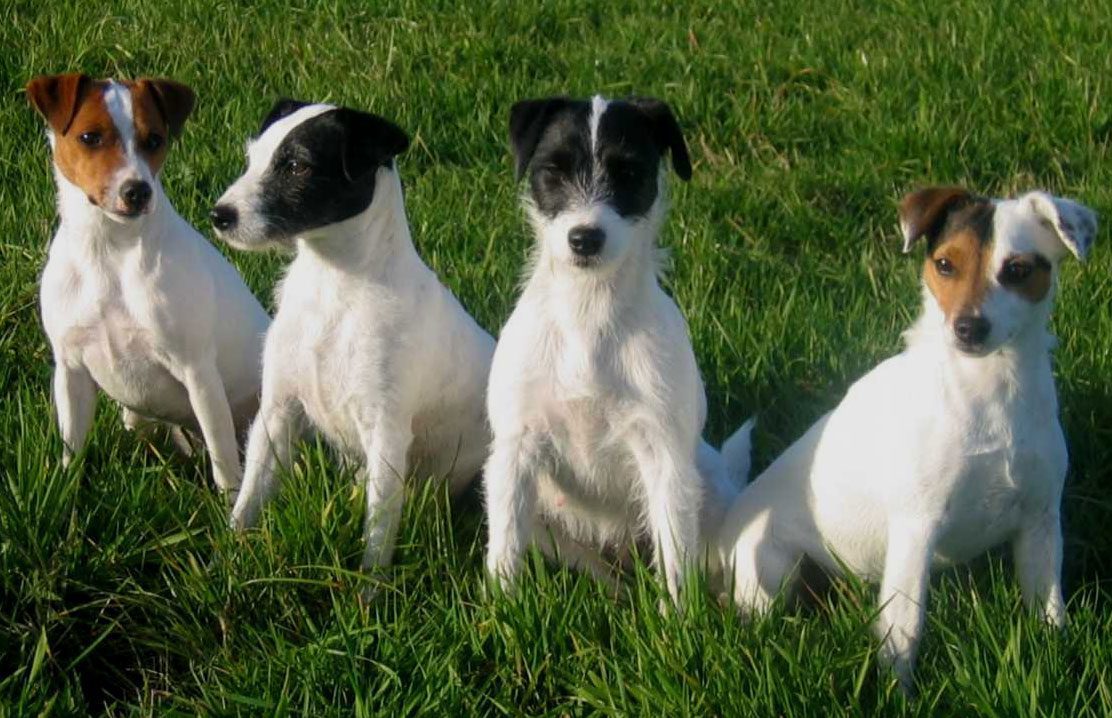
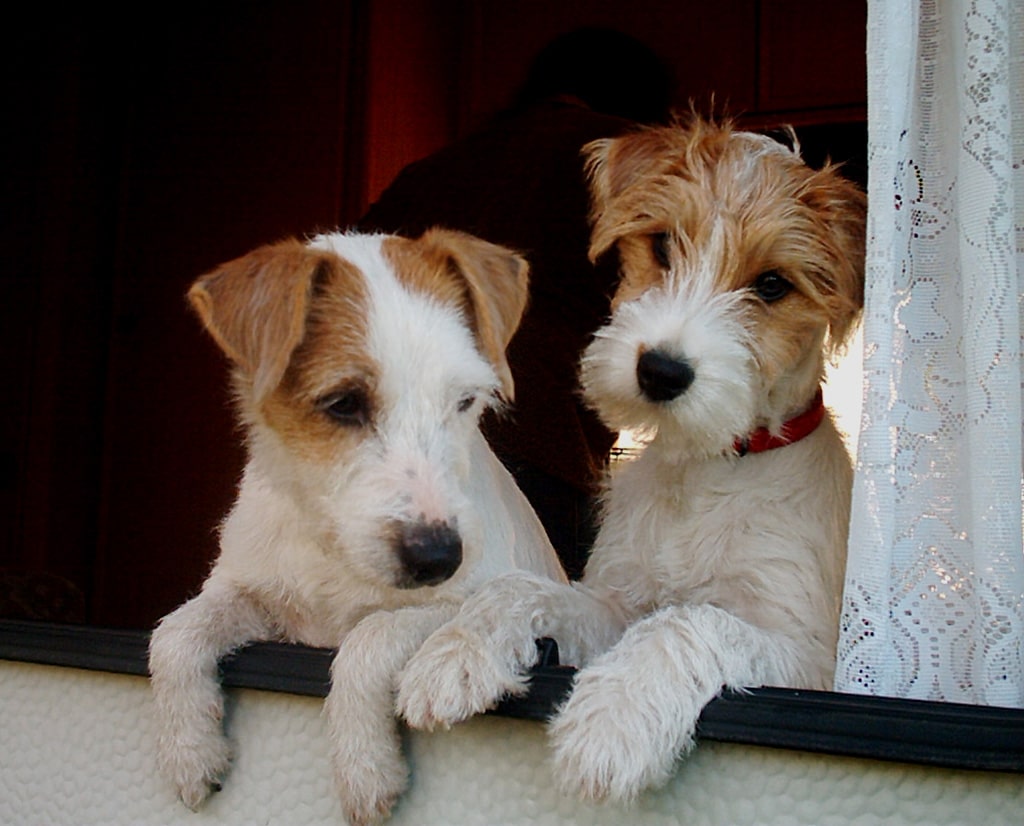
Parson Russell Terrier

The Parson Russell Terrier is a fearless dog, very happy, energetic and friendly.

Content

History

The Parson Russell Terrier it is a small to medium sized terrier. It's a hunting dog.

Although this breed of dog is very young in modern dog breeding, the Parson Russell Terrier is very close to the old and classic type of a terrier in character and appearance. Terriers form a large group within dogs. Its name is derived from the Latin ยซTerraยป for the earth. So they were dogs for work on the land. The first evidence is given by the ancient Romans. Already in the Middle Ages terriers are described in detail. His homeland is in the British Isles. Terriers existed throughout the country. In the stables they kept small vermin at bay. Even the big rats were not a problem for them. The hens, pigeons and rabbits protected them from martens and foxes. To keep chasing foxes, the terriers were sent to the trench.

The Parson Russell Terrier of today are made exactly for this purpose. They should and could get the fox out of the hole. At the same time, they had to run with the fox hunts in the pack, that is to say, they had to be able to follow the gallop of the hunt. All of these tasks require enthusiastic commitment, special courage, independent thinking and the so-called sharpness of predators.

The Parson Russell Terrier turned into a versatile hunting dog, it's not only suitable for underground work. In the 19th century the English shepherd Jack Russell he was a successful hunter, rider and above all breeder of Fox Terriers. In his long life as a breeder he greatly increased the performance of the Fox Terrier. They were now fit for all individual hunting tasks, they could work in the pack and in the den at the same time.

In Australia, only with the help of their dogs could a plague of foxes be contained. To thank this, these dogs were finally named after their breeder, the Parson ยซJack Russellยป Terrier. They were and are physically and mentally raised for work, no show dogs. So breeders and lovers of this terrier for a long time refused to join the system of modern pedigree dog breeding., because they did not want to see dogs evaluated primarily on their appearance and feared the negative consequences of the show business on the fitness and health of dogs. This has done this breed of dog very well..

Seriously raised, these are dogs that were largely spared from hereditary diseases and extremes in breeding. He "Jack Russell Terrierยป had a wide range of sizes from the beginning, rather short-legged and rather tall. Since performance was decisive, such refinements had no role. Now two breeds of dog have been made from the ยซJack Russell Terrierยป and the two lines have separated in breeding. The little one is still called Jack Russell Terrier, It has a height at the withers of up to 30 cm and is provided a little longer. The Parson it is a little taller and with more legs and in its rather square shape. Parish is another word for "pastor" in English.. So two breeds of dog are named after one person, el pastor Jack Russell. Both dogs are a credit to the Shepherd. In 2001 the new race Parson Russell Terrier was officially recognized.

Physical characteristics

The Parson Russell Terrier It is suitable for the working dog, Active, agile, built for speed and endurance. It gives the impression of balance and flexibility as a whole.

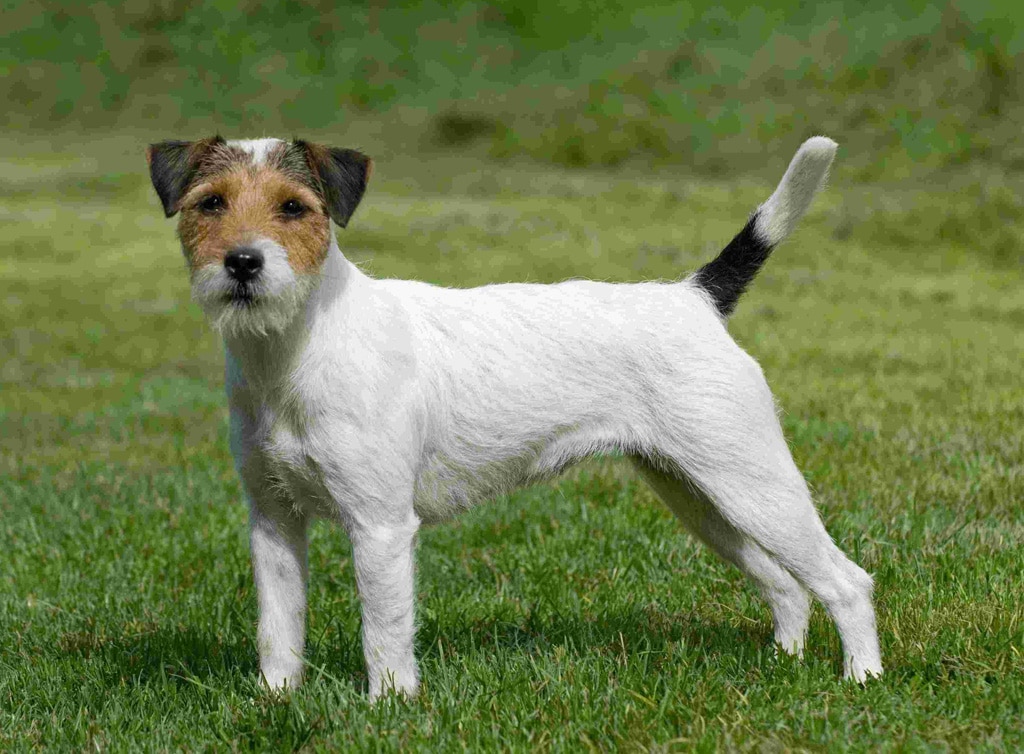
You can have hair smooth or hard if it is thick and dense to protect it from the inclement weather, like cold and damp. Its color It can be entirely white or predominantly white with brown spots, lemon or black or any combination of these colors, preferably stains should be limited to the head or the birth of the tail.

It measures to the cross between 33 and 36 cm., their weight approximate is of 8 to 10 kilos to be slightly larger in proportions that the version of the Jack Russell Terrier, although it should be noted that taller specimens exist as "Jack Russell" in some work clubs in the United Kingdom and the United States., due to what these clubs do not form part of the FCI and therefore, handle different to the recognized standard registers and accepted worldwide by the 84 member countries.

Character and skills

Parson Russell a fearless and friendly Terrier.

This breed was bred to hunt, Chase and corner foxes in its burrow, therefore, they carry in their genes, and if this activity does not form part of the life of your puppy, We recommend that, they should be exercised daily intensely since they are dogs with a huge dose of contained energy.

Perhaps its character lively and friendly has caused it to be one of the dog breeds preferred by many people as a pet.

But in reality it is a true working dog and we should not forget that if a specimen of... becomes part of our family..

Leave running, ride a bike, launch frisbee or ball - and teach him to bring them back-, It will help to strengthen the bond between the Parson and his owner while it educates, enjoys and is exercised.

Images ยซParson Russell Terrierยป

Videos ยซParson Russell Terrierยป

Type and recognitions:

  • FCI CLASSIFICATION:
  • Group :
  • Section : . .

Federations:

  • FCI – Terriers 1 Large and medium-sized terriers. โ“˜
  • AKC – Terriers โ“˜
  • ANKC – Terriers (utility dogs) โ“˜
  • CKC – Terriers โ“˜
  • โ€‹KC – Terriers โ“˜
  • NZKC – Terriers โ“˜
  • UKC – Terriers โ“˜

FCI breed standard "Parson Russell Terrier"

Origin:
United States, United Kingdom

Date of publication of the valid original standard:
22.08.2017.

Use:

Working terrier with the ability to work underground.


General appearance:

Efficient, active and agile, without exaggerations. Built for strength and power with an overall appearance of balance and flexibility. Honorable scars are allowed.

IMPORTANT PROPORTIONS: Well balanced. The total length from the tip of the shoulders to the tip of the ischium slightly greater than the height at the withers to the floor. The length from the nose to the stop is somewhat shorter than from the stop to the occipital protuberance.


Behavior / temperament:

Originally a terrier bred to work with the fox. A confident dog, energetic and cheerful who has the ability and conformation to work on the ground. Bold and friendly.

Head:

Wedge shaped.

Cranial region:
  • Skull: Plano, moderately wide gradually tapering to the eyes.
  • Depression links (Stop): Bit strong.

facial region:

  • Truffle: black.
  • Jaws / Teeth: Powerful and well muscled jaws. Good sized teeth with a perfect, regular and complete scissor bite. I.e., The upper incisors cover the lower incisors in close contact and are set squarely in relation to the jaws..
  • Cheeks: Not prominent.

Eyes: dark, almond shape, never prominent. Lively and intelligent expression.

Ears: Size in proportion to the head. In the shape of a โ€œVโ€ falling forward. The tips of the ears should reach the level of the outer corner of the eyes. The fold should not be above the level of the skull. Canopy of moderate thickness.

Neck:

Cleansed, muscle, good length, gradually widening and well placed on the shoulders.

Body:

  • Back: Strong, straight and flexible.
  • Pork loin: Strong and slightly arched.
  • Breast : Moderately lowered, without extending beyond the elbows. Behind the shoulders should encompass the palm of an average hand. Ribs worn well back, not too arched or too flat.

Tail:

Previously the custom was to amputate the tail.
  • amputee: Long complementing the body but maintaining a good grip. Strong, straight, moderately high insertion, very tall in movement.
  • Without amputating: Moderately long and as straight as possible, giving a good balance to the dog, thick at the base tapering towards the tip. Moderately high insertion, very tall in movement.


Tips

PREVIOUS MEMBERS:

  • ApGeneral arience: Moderate width between forelimbs, well placed under the body.
  • Hormbros: Wide and sloping, well defined on the cross.
  • Brazo: As long as the shoulders and with such angulation that the extremities are placed well under the body, below the tip of the cross.
  • Antarm: Strong and straight without leaning in or out. Arm length should be slightly greater than body depth.
  • Elbows: Glued to the body working freely on the sides.
  • Metacarpus: Strong and flexible.
  • Pinis previous: Compact with firm pads, moderately arched fingers, never flat open, without leaning in or out.

LATER MEMBERS:

  • ApGeneral arience: Strong, muscle with good angulations.
  • Knee: Good angulation without exaggeration.
  • PinScheme: Well developed.
  • Ahock joint: Low placement.
  • Metatarsals: Parallels, giving a lot of propulsion.
  • Hind feet: Like the previous ones.

Movement:

Libre, movement covering the surface, without exaggeration. The steps must be of good length, never forced or high steps. Posterior provides a strong push. Well coordinated, right movement back and forth.

Mantle

SKIN: It should be thick and loose.

MANTLE

  • Fur: Rough, broken the naturally rough smooth, straight, smooth, tight and bushy with good undercoat. Weather resistant. Abdomen and lower line covered with hair. The prepared cloak (Trimming) it must seem natural, never cut.
  • Color: White or predominantly white with fire markings, lemon or black or any combination of these colors. The color is preferably limited to the head and / or base of the tail but slight marks are accepted on the body.


Size and weight:

Height to the cross:

  • Ideal in males: 36 cm.
  • Ideal in females: 33 cm.

It is more important to maintain correctness and balance taking into account that this terrier, bred to work with the fox, behind the shoulders should encompass the palm of an average hand.


Fouls:

Any deviation from the aforementioned criteria is considered a fault and its severity is considered to the degree of deviation from the standard and its consequences on the health and well-being of the dog and the dog's ability to perform its traditional task..

FALTAS DESCALIFICANTES:

  • Aggressiveness or extreme shyness.
  • Any dog โ€‹โ€‹showing clear signs of physical or behavioral abnormalities must be disqualified..


N.B.:
  • Males should have two normal-appearing testicles fully descended into the scrotum..
  • Only functionally and clinically healthy dogs, with the typical conformation of the breed, should be used for parenting.

TRANSLATION: Brรญgida Nestler / Original version: IN.

Technical supervision: Miguel Angel Martinez.

Source: F.C.I - International Cynological Federation

Alternative names:

1. Parson, Parson Jack Russell Terrier (English).
2. Parson Russell terrier (French).
3. Parson (German).
4. Parson (Portuguese).
5. Parson, Parson Jack Russell (espaรฑol).

โ–ท The world of Pets: Dogs, cats, birds, reptiles, amphibians

Austrian Pinscher
Austria FCI 64 . Pinscher and schnauzer type

Austrian Pinscher 1

Self-confidence, lively, attentive, playful, especially attached

Content

History

The Austrian Pinscher descends from old Austrian Landpinscher, which was still widespread in the second half of the 19th century as a frugal and versatile farm dog. In 1921 a pure breeding plan was started. Against him german pinscher, seems wider, more robust and more primitive. Emil Hauck became familiar with this type of dog during his travels at the beginning of the 20th century and worked for the recognition of the breed by the ร–KV and the FCI.. The 16 in October of 1928, this breed was recognized as Austrian Shorthaired Pinscher por la ร–KV. In the year 2000 the breed name was changed to Austrian Pinscher.

But, according to the breeders association, the number of dogs decreased in the decade of 1970 so much so that only one stud dog remained, Diocles of Angers. Starting from this, the breed was preserved using โ€œLandpinschersโ€. The โ€œLandpinschersโ€ are still used in breeding. The โ€œLandpinschersโ€ are dogs that correspond to the Austrian Pinscher in terms of phenotype and are relatively stable in terms of breeding, without being specifically bred as pedigree dogs in the sense of modern dog breeding.

Physical characteristics

It is a medium to small size dog. The eyes are large, with the dark iris. The ears are usually "V" shaped., but there are also buttons, semi-straight or straight. Breeders try to set as far as possible a ยซVยป shaped ear that, otherwise, is already the most common. The tail is implanted high, the dog the coiled cam, frequently on the back, and it's short and thick. Can also be shortened.

  • Fur: short, straight and with undercoat. Remember the smooth-haired fox terrier.
  • Color: the most frequent are wheat yellow, brown yellow, leonado, fawn red and black with fiery spots. Almost always with large white spots on the chest, snout, throat, neck, nape, extremities and tip of tail. The specimens with the mottled coat, completely black or white and fire are not desirable.
  • Size: 35 to 50 cm., more frequently in tone to the 40 cm..

Character and skills

It is a vigorous little dog, bold, temperamental and very resistant. It is a great surveillance dog; on the other hand, it is not spread as a companion dog, among other things because it is very barking. But, medium-small dogs do not meet the demands of someone who wants a dog for the apartment (always as small as possible), nor those who want a watchdog (preferably medium-large size), and for this reason the spread of the breed is very limited.

Observations

He has good hunting attitudes.

Characteristics "Austrian Pinscher"

Coexistence is important that you have with your new friend. Before considering the acquisition of a dog of the breed "Austrian Pinscher" you know certain factors. Not all breeds of dogs are apt to live in an apartment, you must take into account his character, their need for exercise, their interaction with other pets, their care and if you have small children, their level of tolerance towards them.

Adaptation โ“˜

3,0 of 5 stars (based on 1 review)

friendly dog โ€‹โ€‹โ“˜

2,0 of 5 stars (based on 1 review)

hair loss โ“˜

5,0 of 5 stars (based on 1 review)

Affection level โ“˜

4,0 of 5 stars (based on 1 review)

Need for exercise โ“˜

4,0 of 5 stars (based on 1 review)

Social need โ“˜

2,0 of 5 stars (based on 1 review)

Home โ“˜

3,0 of 5 stars (based on 1 review)

Toilet โ“˜

2,0 of 5 stars (based on 1 review)

Friendly with strangers โ“˜

2,0 of 5 stars (based on 1 review)

barking โ“˜

2,0 of 5 stars (based on 1 review)

Health โ“˜

3,0 of 5 stars (based on 1 review)

Territorial โ“˜

5,0 of 5 stars (based on 1 review)

Cat friendly โ“˜

2,0 of 5 stars (based on 1 review)

Intelligence โ“˜

4,0 of 5 stars (based on 1 review)

Versatility โ“˜

4,0 of 5 stars (based on 1 review)

Child friendly โ“˜

4,0 of 5 stars (based on 1 review)

Surveillance โ“˜

4,0 of 5 stars (based on 1 review)

joy โ“˜

4,0 of 5 stars (based on 1 review)

Images "Austrian Pinscher"

Type and recognitions:

  • FCI CLASSIFICATION:
  • Group :
  • Section : . .

Federations:

  • FCI – Pinscher and Schanuezer dogs. Molossian type Dogs and Swiss Mountain and Cattle Dogs. . Section 1.1 Pinscher type. โ“˜
  • UKC – Terriers โ“˜

FCI breed standard Austrian Pinscher

FCIFCI - Austrian Pinscher
Pinscher

Alternative names:

1. Austrian Shorthaired Pinscher (English).
2. Oesterreichisher Kurzhaariger Pinscher (French).
3. ร–sterreichischer Pinscher (German).
4. ร–sterreichischer Pinscher (Portuguese).
5. Pinscher austriaco de pelo corto (espaรฑol).

Photos:

1 – Pinczer_Austrian at the World Dog Show in Poznaล„ by chained / CC BY-SA
2 – Austrian Pinscher at the World Dog Show in Poznaล„ by chained / CC BY-SA
3 – Pinscher austriaco by https://pxhere.com/es/photo/1603530
4 – Pinscher austriaco by https://pxhere.com/es/photo/1593828
5 – Austrian Pinscher at the World Dog Show in Poznaล„ by chained / CC BY-SA

โ–ท The world of Pets: Dogs, cats, birds, reptiles, amphibians

Yugoslavian Shepherd Dog Sharplanina
Yugoslavia FCI 41 - Molossoid . Mountain

Yugoslavian Shepherd Dog Sharplanina

The Yugoslavian Shepherd Dog Sharplanina is a brave dog, quiet, safe and reserved with strangers.

Content

History

As it is the case with many breeds, the true origins of this big guy are unknown, although there are theories that try to approach them. Some authors raised that their ancestors were the ancient molossians, especially dogs from Greece and livestock guarding dogs from Turkey.

Other authors believe that the Yugoslavian Shepherd Dog Sharplanina, drift of Asian dogs that arrived in Europe accompanied by migration of peoples who were engaged in raising them. This theory is the most widely accepted today..

The race was initially recognized by the Federation Cynologique Internationale (FCI) in 1939 under the name Illyrian Shepherd Dog, demonstrating the ancient name of the native region of these dogs.

In 1957, at the request of the Yugoslav Canine Federation (JKS), the FCI changed the name to Yugoslav Shepherd DogYugoslavian Shepherd Dog Sharplanina, because it is in the ล ar Mountains (ล ar Planina in South Slavic languages, is a mountain range located on the southern border of Serbia in the province of Kosovo and in the northwestern part of the Republic of Macedonia), where is concentrated the largest number of specimens of the breed.

If there is something indisputable it is that the Yugoslavian Shepherd Dog Sharplanina, lives since ancient times in the mountainous regions of the former Yugoslavia, from where it has spread throughout the Balkan Peninsula and recently, beyond these borders.

Escudo de DragasThe image of the Yugoslavian Shepherd Dog Sharplanina appears on the obverse of the coin 1 Denar, issued in the Republic of Macedonia in the year 1993, and is also the emblematic protagonist of the Dragaลก shield, a city in the South of Kosovo, which is located in the region of the ล ar Mountains.

The Yugoslavian Shepherd Dog Sharplanina has reached the ranches of North America as an esteemed sheepdog and cattle guardian. Predator problems have been greatly diminished once a Yugoslavian Shepherd Dog Sharplanina , takes the responsibility of a herd. You are one of the few dogs that can chase away a wolf or bear.

Physical characteristics

The Yugoslavian Shepherd Dog Sharplanina, is a large size dog, It is quite above average when it comes to large breeds. It is also robust and equipped with a strong Constitution.

The height males average is of 56 to 62 cm and females is of 54 to 58 cm.. The length of the body is slightly greater than the height at the withers.

Although some authors speak of the existence of individuals whose actions were between 75 and 85 cm. of height and a weight of 65 to 100 kg.

– The huge head is proportional to the body, It has the skull slightly convex and slightly longer than the muzzle.
– The eyes of the Yugoslavian Shepherd Dog Sharplanina they are almond-shaped and chestnut-colored (light or dark), transmit an expression of serenity but the look is penetrating.
– The ears they are medium-sized, flat and hang on the cheeks.
– The tail It is long and Sabre-shaped, if it is in a state of alert, it carries it high, barely exceeding the line of the back.
– The fur It is long in some parts of the body and short in others. In the head, the ears and the anterior part of the extremities, is short. The length of the neck, the body and the back of the limbs and tail, is long.
– Regard to the the fur color, all uniform colors are supported but it is preferable to be gray iron and gray very dark. As well, at the top of the head, the neck and the trunk have darker hair.

Character and skills

The Yugoslavian Shepherd Dog Sharplanina it is silent, active and very protective, extremely bright, but very independent. It is an extremely good watchdog, and very reserved with strangers. The Yugoslavian Shepherd Dog Sharplanina they are calm sheepdogs, very smart, which is why, wisely, they choose their friends, trust no one too fast. They are naturally fearless defenders of the pack, as well as his master and his property, so everything he considers his property is jealously and unconditionally guarded. This is a dog with character and very dominant that requires work.. If we just want this dog to be a companion, constant professional education from an early age is essential.

The animals that live with him on the farm will be under his protection and there is no need to fear for them.. But, does not tolerate strange and unknown animals, often aggressive, and the same problems can happen with smaller pets, that can be seen as prey.

She will get along well with the children she will be together with from an early age, will be devoted and protective of them, and you may consider children you don't know as uninvited guests, so we must be very careful. You must be especially careful with younger children, since he will watch over them all the time due to the shepherd's instinct, but if the children want to get away, will drag them back, so you can injure them without realizing it.

Observations

Similar to the Caucasian Shepherd Dogthat is very much– has a temperament more characteristic of a guard dog than a herd dog.

Let us not forget that this agility, He was selected to defend the herds of the attack of wolves that were previously very numerous in their homeland.
It is necessary that the owner of this dog is a person responsible and very conscious of the copy that is in charge of, the Yugoslavian Shepherd Dog Sharplanina, It has a specially developed and powerful teeth, It can be a real danger if the dog is not given a correct and healthy education.

Education "Chaplanina pastor dog"

This is not a suitable dog for beginners. He is very suspicious and incorruptible. Usually, is completely loyal to a single owner. Education must be clear, consistent and should be carried out from the first meeting with the puppy. Early socialization is mandatory. With an inadequate education, this dog can become uncontrollable, very aggressive, dangerous even to the owner.

Required activity

These dogs really need a lot of exercise. If the dog goes to work on a farm, will meet your daily career needs while working, otherwise, need a longer walk or daily run.

Suitable environment

This is a dog suitable exclusively for outdoor life. You will feel better on a farm or in a larger rural fenced yard because you will be able to run freely and perform your primary role as a sheepdog..

Care "Chaplanina Pastor Dog"

Your care is not too demanding. Thick hair just needs brushing once in a while, once a week will be enough, except when you change your coat that more frequent brushing is recommended. As with other dogs, this breed also needs to clean their ears, eyes and shorten their claws.

Health "Chaplanina pastor dog"

No known genetic health problems, it is considered a relatively healthy breed. As with other large breeds, hip dysplasia can occur in this breed.

Images "Chaplanina Pastor Dog"

Videos "Chaplanina pastor dog"

Type and recognitions:

  • FCI CLASSIFICATION:
  • Group :
  • Section : . .

Federations:

  • FCI – Pinscher and Schnauzer-Molossoid type dogs – Swiss Mountain Dogs and Cattledogs. Section 2.2 Molossoid, mountain type. โ“˜
  • CKC – Miscellaneous list โ“˜
  • UKC – Watchdog โ“˜

FCI breed standard "Yugoslavian Shepherd Dog Sharplanina"

Origin:
Macedonia, Serbia, Montenegro

Date of publication of the valid original standard:
24/11/1970

Use:

---


General appearance:

to) It is robust, of strong Constitution, well proportioned.
Its size is above normal. Is covered in long hair, dense and quite thick, giving your body a more collected look. companies, possesses a calm temperament and good character: knows how to be a good defender without attacking. He is faithful to his master and incorruptible.

b) Height to the cross: In the male, the average is 62 cm., and in the female it is 58 cm.. Large dogs are preferred.
The dogs below 56 cm and bitches below 54 cm are excluded from reproduction. In working dogs the weight is 35 to 45 kg in males and 30 to 40 kg in females.

c) body length: It is slightly greater than the height at the withers: of 8 to 10% from height to withers in dogs, and 10 to 12% in
the bitches.


Behavior / temperament:

---

Head:

Is provided to the body and measures about 25 cm., or a 40% the height at the withers. The skull is slightly longer than the muzzle, 58 and 42% respectively of the total length of the head. The female has a little longer snout (57 and 43%). The top of the skull is slightly convex and the profile of the nasal helm is straight. The lines of both profiles are convergent.

Cranial region:
  • Skull: The cranial region is wide, with a medium marked Groove. Seen from side and from above is slightly convex and little bulky.
  • Depression links (stop) : It is little pronounced.

facial region:

  • Snout: It is shorter than the skull. Wide and deep at the base, light and gradually are reduced. The nasal helm is straight and wide. The profile of the lower jaw begins with an arch and is confirmed by a straight line that diverges from the profile of the nasal bridge..
  • Truffle: Is wide and black.
  • Lips: They are moderately thick and stretched. The upper lip slightly exceeds the lower. The corners are well connected, and they are not never reversed.
  • Teeth: They are comprehensive and applied in scissor bite.
  • Eyes: Almond biscuits; or large, or sunk. Are dark or light brown, and calm expression, but penetrating and never afraid. Both the eyelids and visible mucous membranes are black.
  • Ears: Located at the level of the prolongation of an imaginary line that starts from the tip of the nose and passes through the inner corner of the corresponding eye, or below. They are hanging and fall glued along the cheeks. They are V-shaped and medium in length.; When stretched them slightly arriving to the inner corner of the eye. They are covered with short dense pile.

Neck:

The upper profile is slightly convex or straight at the top of the neck. The lower profile is straight. The neck is of medium length, but due to the long and bushy hair seems shorter. It is wide, deep and muscular, well attached to the head and body, no sharp demarcation. It is slightly elevated in relation to the dorsal line. Your skin is stretched and does not double chin. The hair is dense, long and rough, and arriving at the head it forms a sort of well marked necklace, which apparently increases the breadth and depth of this part of the head.

Body:

As a whole, the top line is horizontal, or slightly inclined starting from the cross to the rump. In dogs bred in the mountain, be tolerated that the height of the rump is just greater than the height at the withers, Although this is not desirable. The body is slightly longer than the height at the withers.

  • Cross: Slightly marked and wide. It is strongly attached to the neck and the demarcation is inconspicuous.
  • Back: Straight and wide; is not too long.
  • Pork loin: The lumbar region is shorter than, wide and well muscled.
  • Rump: Is medium length, oblique, wide and well muscled.
  • Breast : The chest is deep and medium length; along with the bottom edge reaches the elbow. The ribs are slightly arched. The chest is wide and muscled. Chest girth should be at least 20% greater than the height at the withers.
  • Belly: Built and muscular. Lower profile line rises slightly from front to back. The legs are fairly short. The depression of the rump is marked.
  • Tail: It is long and at least reaches the tip of the Hock. The top margin of the rump, that it does not have a sharp demarcation, extends to the margin of the tail. This is large at the base and gradually reduces towards its end. The hair of the tail is dense and its bottom edge is longer, forming bangs. The oxtail Sabre-shaped and when the dog is moving is raised. When the dog is in motion, the tail may be above the line of the back..

Tail:

It is long and reaches at least to the point of the hock. The top line of the croup, that it does not have a sharp demarcation, extends to the margin of the tail. This is large at the base and gradually reduces towards its extremity.. The hair on the tail is bushy and longer on its lower edge., forming bangs. The tail is shaped like a saber and when the dog is in motion it appears raised. When is the dog moving, tail can be found above backline.

Tips

Seen as a whole are well shaved and commensurate with the body. The height of the tip of the elbow is a 55% the height at the withers. The different parts of the limbs are in proportion to each other and to the rest of the body..

  • Shoulder: It is sufficiently long and wide and is well attached to the body. It is slightly oblique and forms an angle of 65ยฐ with the horizontal line..
  • Arm: It is more oblique than shoulder, forming an angle of 55ยฐ with the horizontal line. The angle of the elbow (humeral-radial angle), is 145ยฐ. The elbow is wide, It is well located and very little separated ribs.
  • Forearm: Is vertical, of bones, and well-developed musculature. It is long, and his back is covered with long hairs that are fringe.
  • Carpo: Width, thickness and presents a slight demarcation.
  • Metacarpus: It is wide, strong and slightly oblique.
  • Pies: Strong, oval-shaped, with fingers arched and well together. The nails are black and solid. Digital pads and Plantar are firm, though flexible. Are black or a dark pigmentation.

HINDQUARTERS: Seen from the back, the position of the hind legs is uniform and slightly larger than the forelimbs. In profile, is also uniform, with the angles of the joints sufficiently closed.

  • Thigh: Muscled, strong and rounded. It is oblique, forming with the horizontal line an angle similar to that of the shoulder. The angle of the knee (stifle-tibial angle) It is a little more open than the scapular-humeral angle (around 125ยฐ). The knee is solid and wide.
  • Leg: It is oblique, strong, with a long enough musculature and well-marked bangs.
  • Hock: Wide and fairly open (an angle of about 130ยฐ).
  • Metatarsus: It is a bit less oblique to the Metacarpus. Rarely presents Spurs, But if this is low, they should be disposed.

Movement:

The step is long and agile. Preferred movement is the trot, high strides and medium length. During the Gallop motion is somewhat heavy, but long jumps well covering the field.

Mantle

SKIN: Is of medium thickness; elastic and well stretched on different parts of the body. There is no presence of dewlap. All visible mucous membranes are black, or a dark pigmentation.

Fur: The head, the ears and the outer parts of the limbs are covered with short hairs. The neck, the body, later parts of the limbs and tail are covered with long hairs almost stretched and slightly thick. The inner layer of hair presents a short hair, finest, very thick and abundant. Dl hair is in the cross the length of 10 to 12 cm.; cannot be shorter than for 7 cm..

Color: This is a dog of a single color. All the shades of colors are supported, from white, until dark brown, almost black. The most valued colors are greenish gray (grey iron), the dark grey. Piebald fur or white spots are not allowed. Pigmented dogs allow small white markings on the chest region and fingers, Although this is not desirable. The background color is more pronounced on the upper parts of the head in all pigmented dogs, the neck and trunk.

On the lower parts of the body, There is a degradation of color, and the color is lighter in the lower parts of the extremities, arriving at the gray beige or dirty. In no case should these degradations appear well delimited, imparting a light marking or piebald appearance.


Size and weight:

---


Fouls:

Any deviation from the above mentioned criteria is considered an absence and severity of this refers to the degree of deviation to the standard and its impact on the health and welfare of the dog.

MINOR FAULTS

  • Insufficient breadth of the cranial region, and the slightly longer snout.
  • well developed jaws.
  • Length and depth of chest insufficient.
  • Too flat ribs, or too arched.
  • Pronounced aplomb defects.
  • A bit shorter hair, as long as the fringes are clearly visible.
  • White markings on the chest region and feet.
  • A slight reduction of the tail.
  • The foot of Hare, as well as other minor physical offenses.

SERIOUS FAULTS

  • Too long snout, or too sharp.
  • High set ears, or they deviate from the head (they are not enough stuck to the cheeks).
  • Bite in the form of iron.
  • Sunken back.
  • Tail that falls to the side.
  • Lymphatic Constitution, as well as other serious physical offenses.

MISS PLAYOFFS

  • Aggressive or fearful dog.
  • Absence of premolars.
  • A difference marked between body length and the height at the withers.
  • Insufficient Withers height.
  • The lower hair length to 7 cm..
  • Large white markings (piebald fur), stripes (atigrados), depigmentation of the visible mucous membranes and eyes.
  • Signs of degeneration (braquignatismo or prognathism, short birth tail, or lack thereof, too depressed back, and other signs of degeneration.
  • Any dog โ€‹โ€‹showing clear signs of physical or behavioral abnormalities must be disqualified..


N.B.:

โ€ข Males must have two normal-appearing testicles fully descended into the scrotum..
โ€ข Only functionally and clinically healthy dogs, with the typical conformation of the breed, should be used for parenting.

Source: F.C.I - International Cynological Federation

Alternative names:

1. Illyrian Shepherd Dog, ล arplaninac (English).
2. berger yougoslave, charplanina, charplaninatz berger albanais, sarplaninac (French).
3. ล arplaninac, Jugoslovenski Ovฤarski Pas โ€“ ล arplaninac, Jugoslawischer Hirtenhund โ€“ ล arplaninac, Illyrischer Schรคferhund (German).
4. ล arplaninac, Charplaninatz, Sarplaninac (Portuguese).
5. Charplaninatz, Perro ovejero ilirio, Perro pastor ilirio, Perro montaรฑรฉs de Serbia, Perro pastor de Serbia, Perro montaรฑรฉs macedonio, Perro pastor macedonio, ล ar Planinac (o ล ar Planinec), Perro pastor yugoslavo, Perro montaรฑรฉs yugoslavo (espaรฑol).