โ–ท The world of Pets: Dogs, cats, birds, reptiles, amphibians

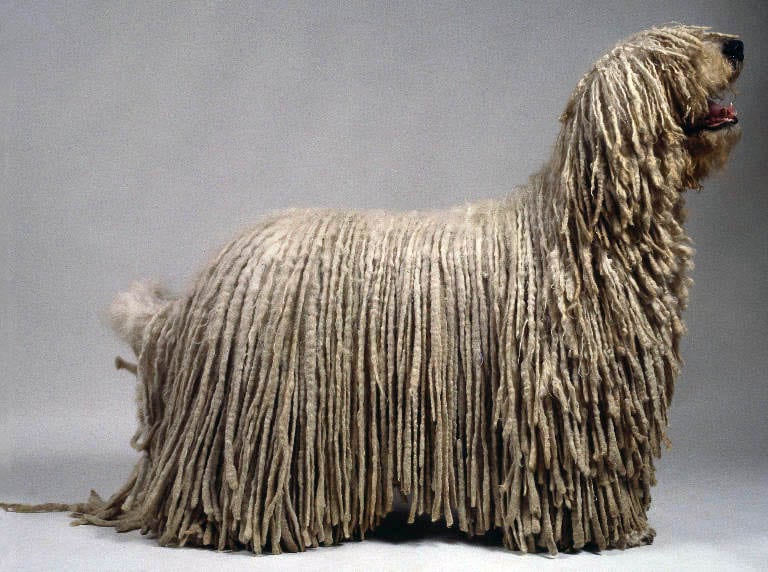
Karst Shepherd
Eslovenia FCI 278 - Molossoid . Mountain

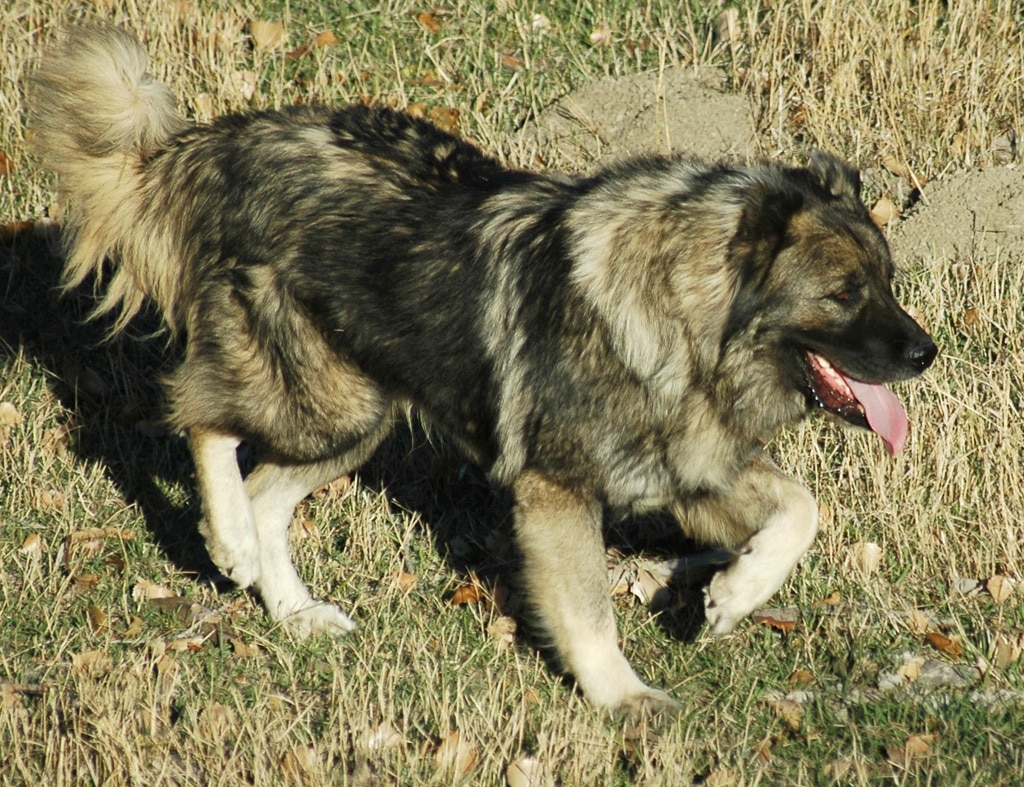
Karst Shepherd

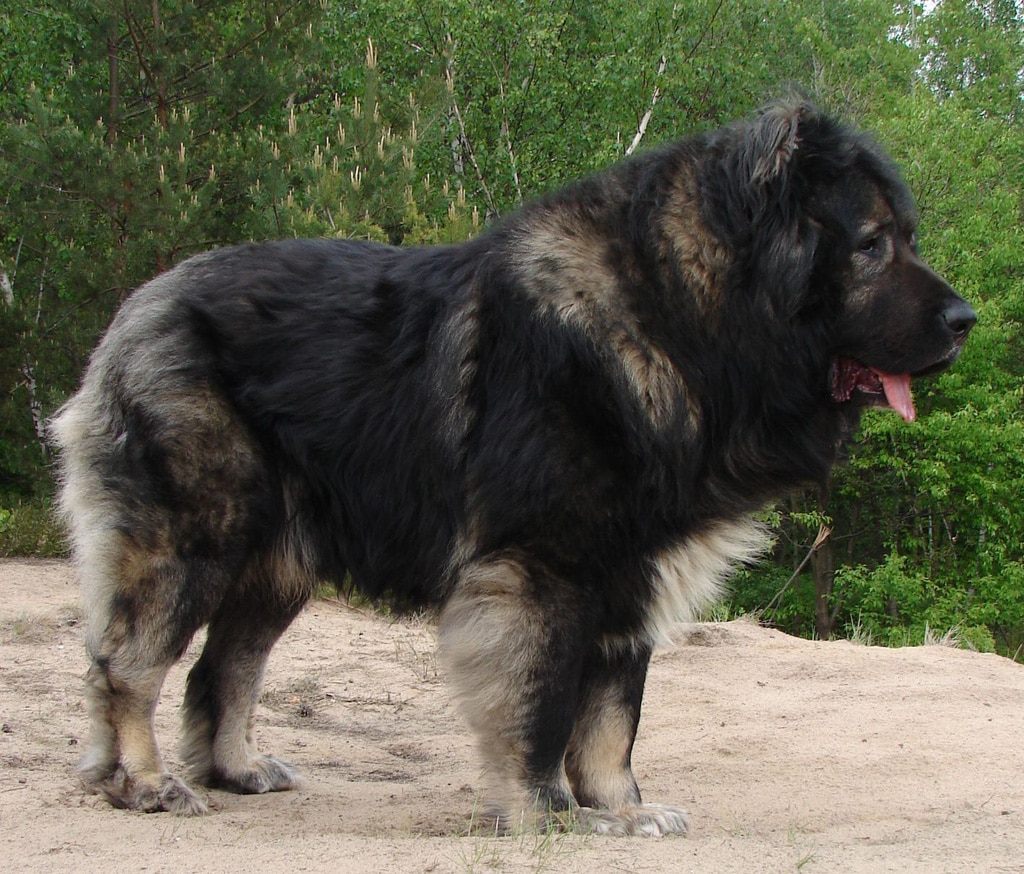
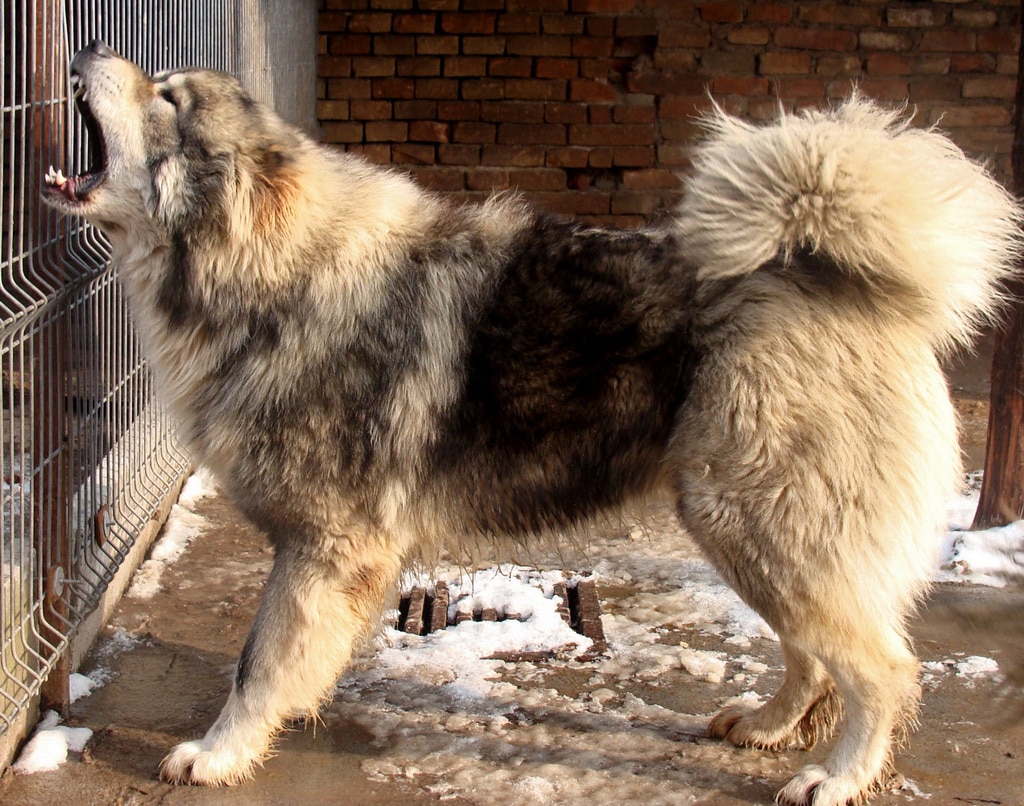
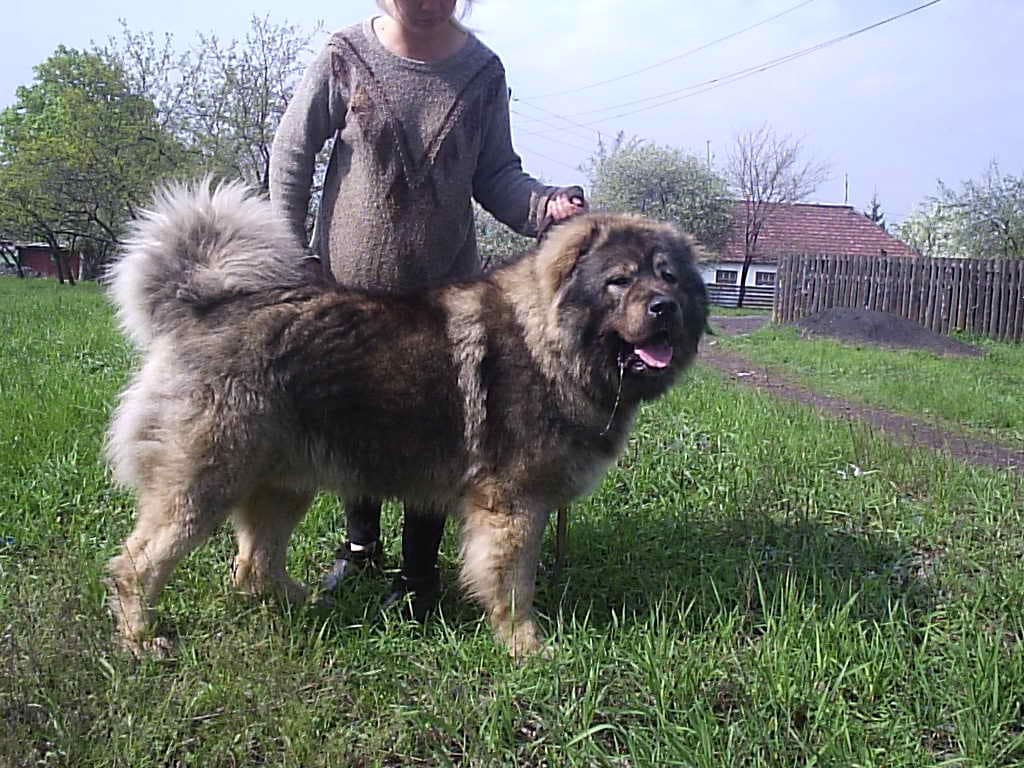
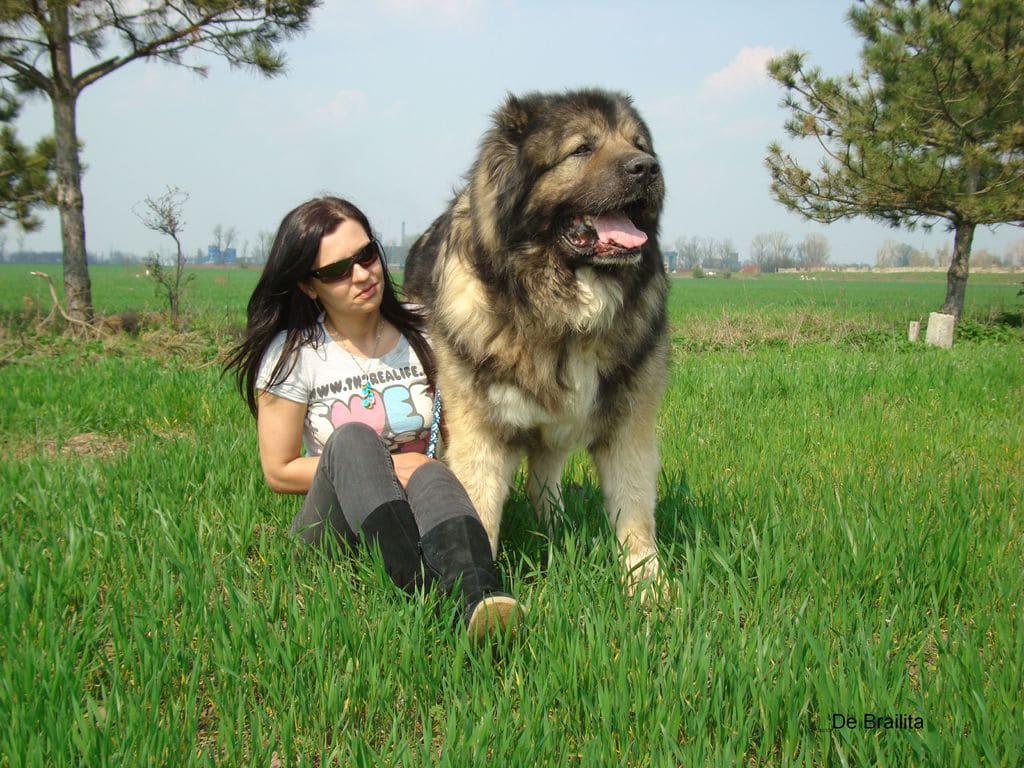
The Karst Shepherd a typical guard dog. Acts largely independently, which is also essential for the protection of the herd.

Content

History

The Karst Shepherd It is a breed that has existed for several centuries and belongs to the group of molosoids. Probably, This dog followed the Illyrian tribe in their migration through Styria and the Dalmatian islands and settled in the Slovenian region of the Karst Massif.. The first time that race is referred to in writing is in 1689, in the book of Baron Janez Vajkart Valvasor entitled ยซ The glory of the duchy of Carniole ยป. The breed and its standard were officially recognized on 2 in June of 1939 with the name of " Iliria Shepherd ยป during the general assembly of the F.C.I. in stockholm. During the F.C.I general assembly. in Bled-Slovenia in 1948, the standard was completed and the breed recognized again. But, to 16 in March of 1968, the Iliria Shepherd from the Karst massif, bore the same name as the Shepherd of the Sarplanina massif. In front of two shepherd dogs with the same name, the Yugoslav Central Society decided to name the one from the Karst region "Shepherd of the Karst Massif" and the other " Sarplaninac ยป. Since then, these two races are totally independent.

Physical characteristics

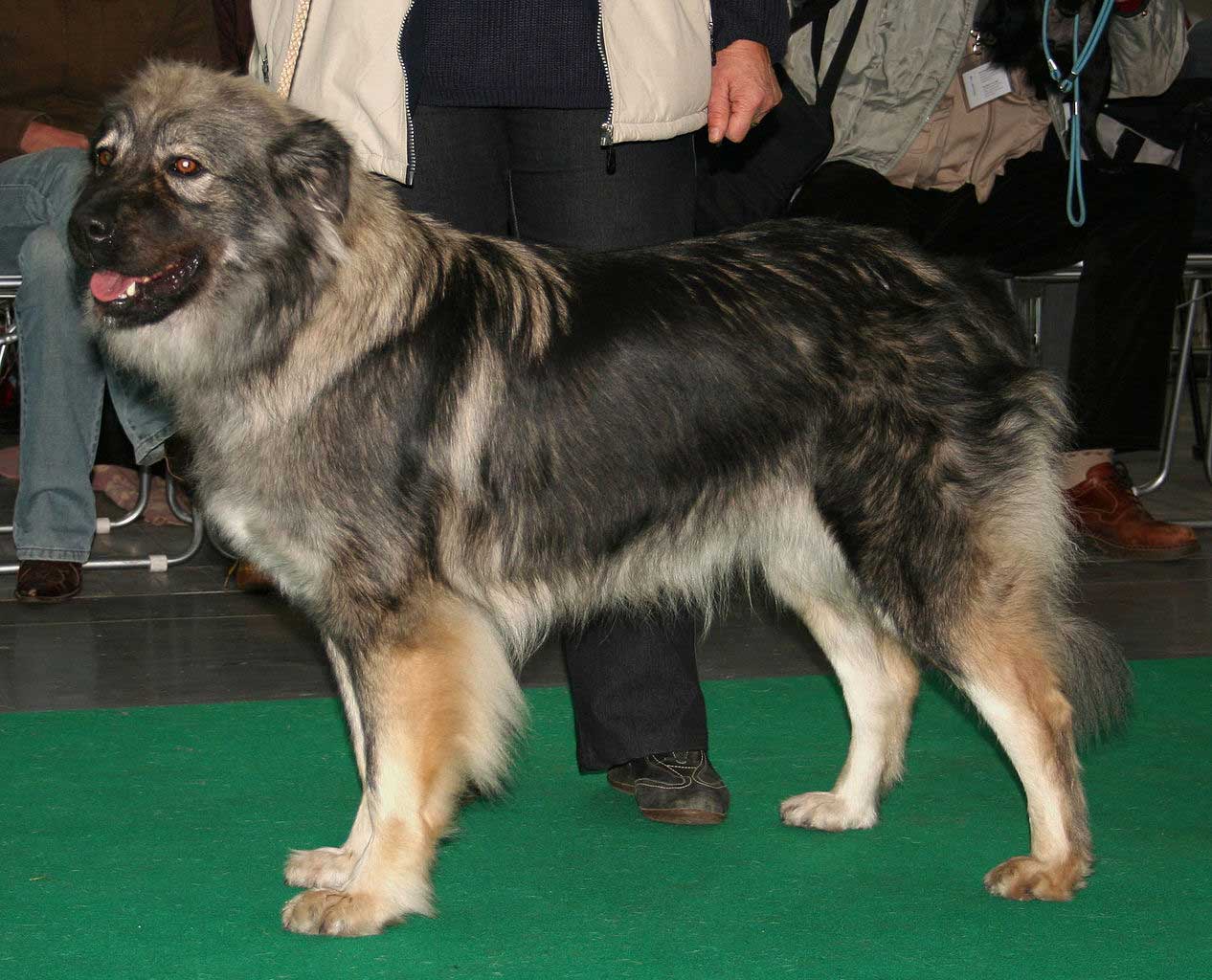
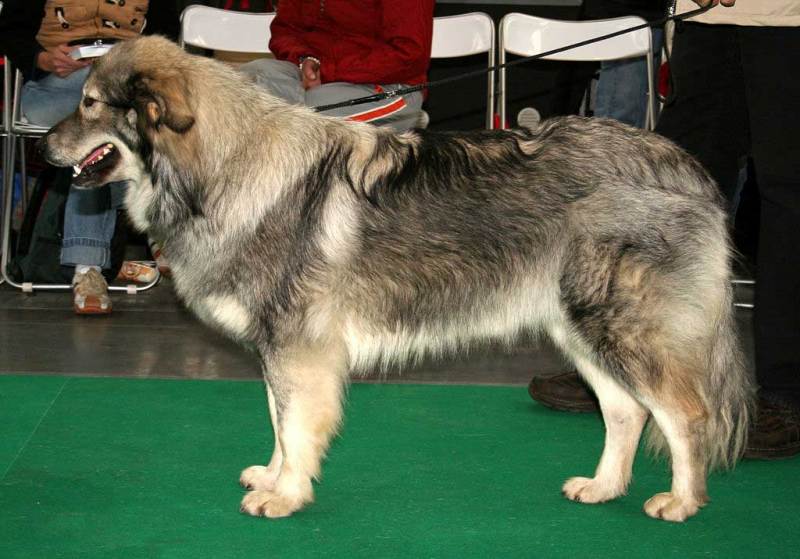
Externally, the Karst Shepherd they are hardly distinguishable from those of Yugoslavian Shepherd Dog Sharplanina. They are on average slightly smaller than their relatives who live further south, but the height at the withers accepted for breeding is the same for both breeds.

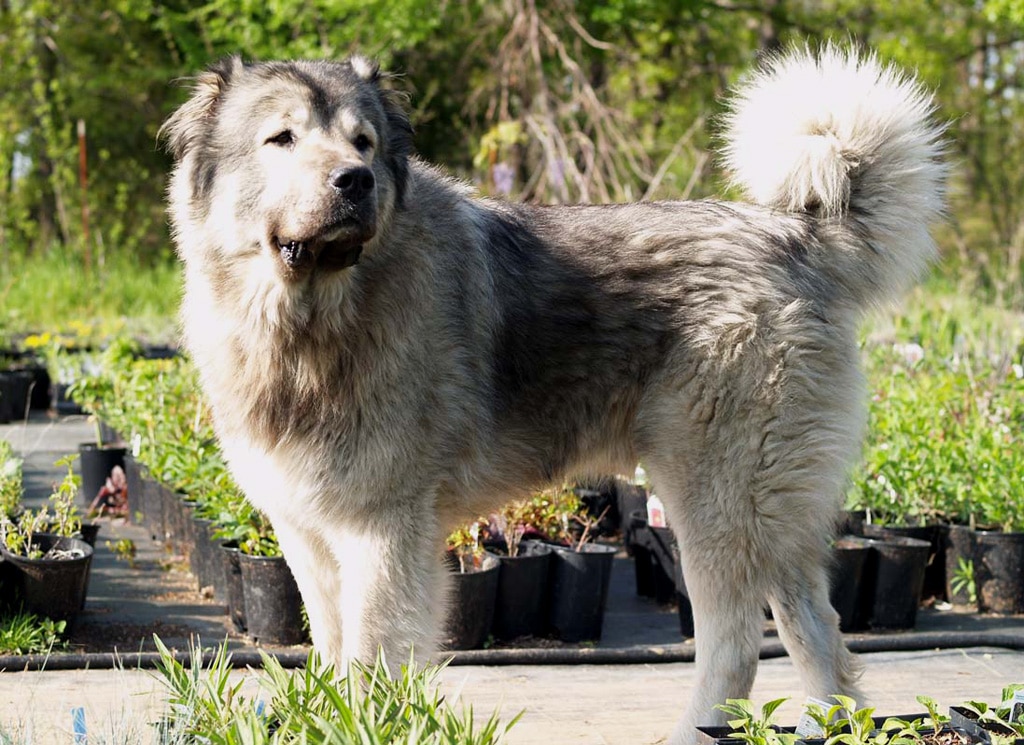
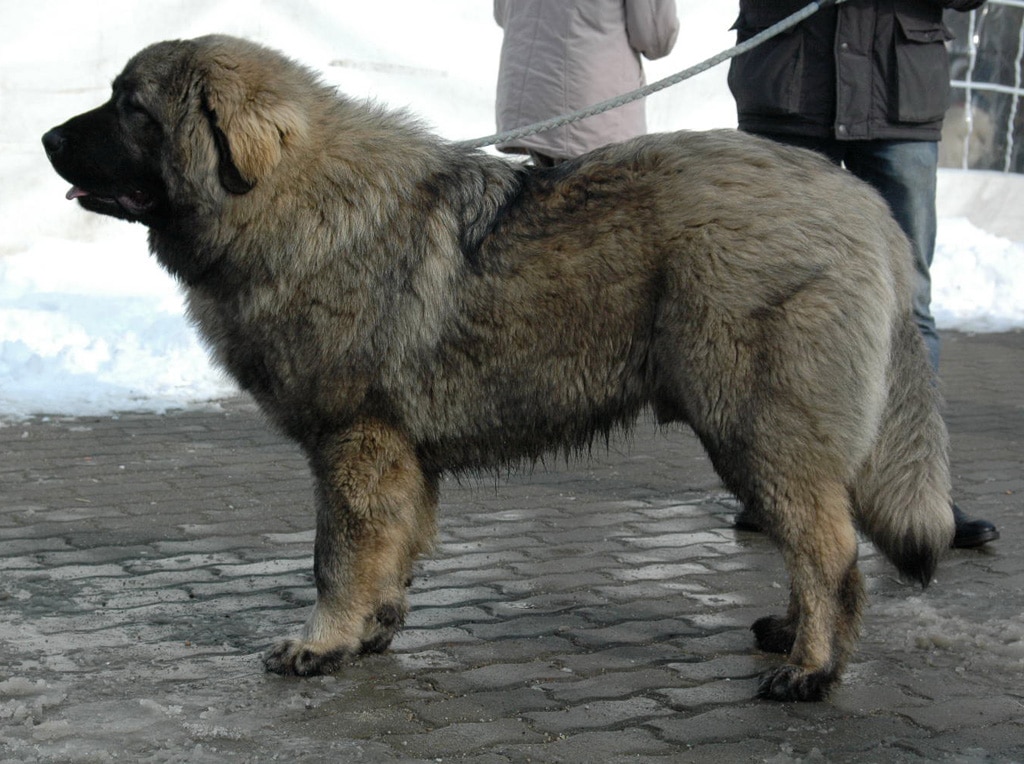
It is a dog's size medium, harmoniously built, robust, with well-developed muscles and a strong constitution.

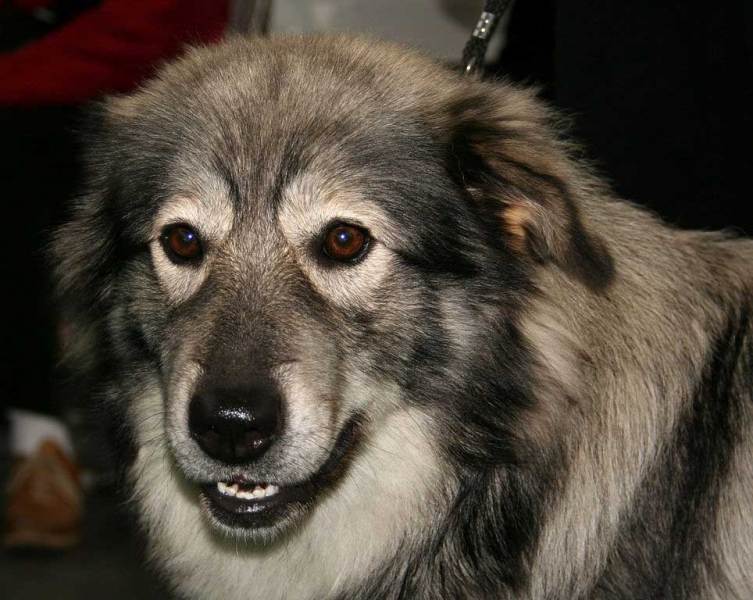
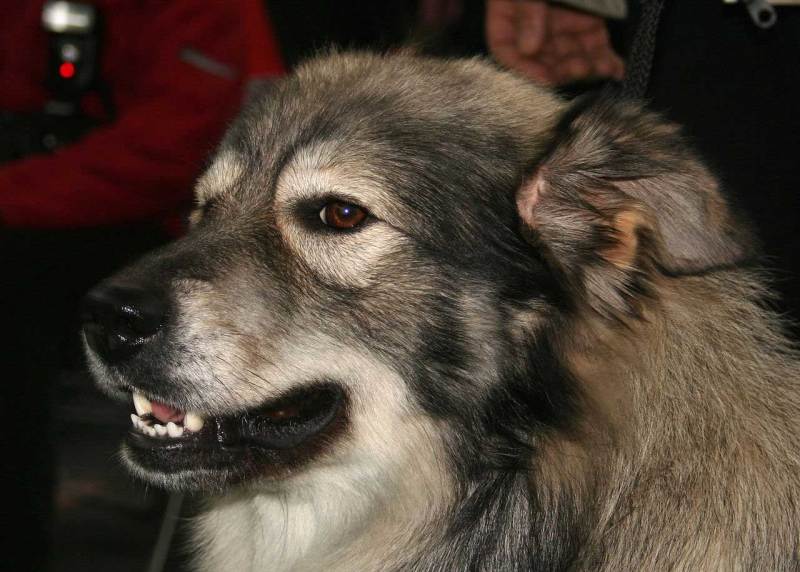
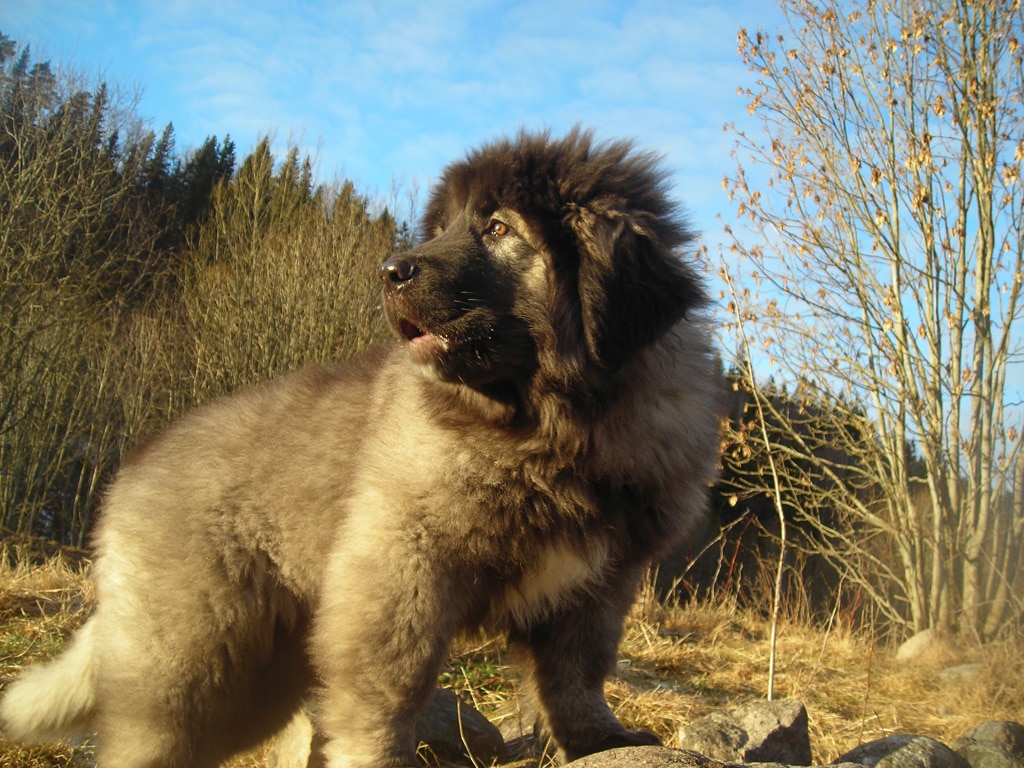
The head is big, with powerful teeth. The eyes are almendrados, brown or almost black. The ears are set moderately high and fall flat in a "V" shape.. The tail, wide at the base, takes the form of a saber, drawing a light hook with the tip should reach the hock.
Fur: quite long, reaches the 14 cm.; the undercoat is well developed.

  • Color: grey iron. A dark shade is preferable on the cross; towards the abdomen and feet the color changes without visible transition to light gray or even sand color, with a dark gray band across the lower extremities. The dark mask on the head surrounded by beige gray hair.
  • Size: males, of 57 to 63 cm. (ideal 60 cm.); females, of 54 to 60 cm. (ideal 57 cm.).

Character and skills

The Karst Shepherd he is a typical watchdog. Acts largely independently, which is also essential for the protection of the herd. It is very territorial, brave and vigilant, but without biting. He is distrustful and even hostile to strangers, but a loyal and devoted companion of his master and his family.

The born Guardian needs early and careful socialization and loving but consistent education. He only submits to clear leadership.
Like all guard dogs, the Karst Shepherd is late development, reaches mental maturity only at 3-4 years.

He loves country life and being outdoors. Its ideal habitat is a house with a large parcel of land that it can monitor. With a close family relationship and a task that fits your natural waking instinct. The Karst Shepherd he is a nice companion dog, kind and also obedient, but he will never completely detach himself from his strong independence.

Overall Karst Shepherd It:

  • Incorruptible guard in the house
  • Does not get along with other dogs.
  • Patient, but still affectionate
  • Forgiving with children

Karst Shepherd Education and Maintenance

Only conditionally suitable for the city.
Outside the mountainous regions of Slovenia, these dogs are very rarely found. This is because, on the one hand, to his great need to move and, on the other hand, to the high demands of their education. The Karst Shepherd are more individual than other sheepdog breeds, as they are often left to their own devices in their โ€œnatural habitatโ€ and protect flocks independently. An experienced owner with a lot of patience and a sense of mind for your dog will have little trouble educating his Karst Shepherd towards an obedient and calm companion.

Karst Shepherd Health

The Karst Shepherd it's quite healthy for a sheepdog, but suffers from some typical problems of the breed. On average, they reach an age of 10 to 12 years and therefore become significantly older than most German shepherds. The Karst Shepherd, living in a family environment, they are less susceptible to disease than animals that have to sleep in kennels and are permanently exposed to the weather. Boredom is also a stressor and affects the mind and health of dogs..

Its claws must be shortened regularly.
They have sensitive ears that swell quickly.
Very long-growing dogs suffer more often from so-called dachshund paralysis (intervertebral disc disorders).
Dysplasia of the elbow and hip joints are also more common in these dogs..

Buy a Karst Shepherd

Several breeders of the Karst Shepherd they are members of the Dog Club of Southern and Eastern Europe.
Some Slovenian breeders offer their dogs for export.
Pay attention to good breeding conditions!!
Like the Karst Shepherd they are very rare outside of Slovenia, you will hardly be able to visit the breeder before buying. If you have the possibility, Combine buying a puppy with a multi-week vacation in Slovenia. If your puppy already knows you, you will feel much less stress during the transfer and during the first adaptation phase. You can also check the conservation conditions during a visit to the breeder.

Characteristics "Karst Shepherd"

Coexistence is important that you have with your new friend. Before considering the acquisition of a dog of the breed "Karst Shepherd" you know certain factors. Not all breeds of dogs are apt to live in an apartment, you must take into account his character, their need for exercise, their interaction with other pets, their care and if you have small children, their level of tolerance towards them.

Adaptation โ“˜

3,0 of 5 stars (based on 1 review)

friendly dog โ€‹โ€‹โ“˜

3,0 of 5 stars (based on 1 review)

hair loss โ“˜

3,0 of 5 stars (based on 1 review)

Affection level โ“˜

4,0 of 5 stars (based on 1 review)

Need for exercise โ“˜

4,0 of 5 stars (based on 1 review)

Social need โ“˜

2,0 of 5 stars (based on 1 review)

Home โ“˜

3,0 of 5 stars (based on 1 review)

Toilet โ“˜

2,0 of 5 stars (based on 1 review)

Friendly with strangers โ“˜

3,0 of 5 stars (based on 1 review)

barking โ“˜

2,0 of 5 stars (based on 1 review)

Health โ“˜

4,0 of 5 stars (based on 1 review)

Territorial โ“˜

5,0 of 5 stars (based on 1 review)

Cat friendly โ“˜

3,0 of 5 stars (based on 1 review)

Intelligence โ“˜

4,0 of 5 stars (based on 1 review)

Versatility โ“˜

3,0 of 5 stars (based on 1 review)

Child friendly โ“˜

4,0 of 5 stars (based on 1 review)

Surveillance โ“˜

5,0 of 5 stars (based on 1 review)

joy โ“˜

4,0 of 5 stars (based on 1 review)

Images "Karst Shepherd"

Photos:

1 – Owczarek_kraski en el World Dog Show en Poznan by Wikipedia
2 – Owczarek_kraski en el World Dog Show en Poznan by Pleple2000 / CC BY-SA
3 – Owczarek_kraski en el World Dog Show en Poznan by Pleple2000 / CC BY-SA
4 – Owczarek_kraski en el World Dog Show en Poznan by Wikipedia
5 – Owczarek_kraski en el World Dog Show en Poznan by Pleple2000 / CC BY-SA

Videos "Karst Shepherd"
Type and recognitions:

  • FCI CLASSIFICATION:
  • Group :
  • Section : . .

Federations:

  • FCI – Pinscher and Schnauzer-Molossoid type dogs – Swiss Mountain Dogs and Cattledogs. Section 2.2 Molossoid, mountain type. โ“˜
  • UKC – Watchdog โ“˜

FCI breed standard "Karst Shepherd"

Origin:
Slovenia

Date of publication of the valid original standard:
26.06.2000

Use:

The Shepherd of the Karst massif is a shepherd dog par excellence and a good guardian. In the news, increasingly used as a guard and defense dog. Although it is true that in recent times it is mainly a family dog, It does not stop being, in essence, a perfect shepherd dog.


General appearance:

This is a medium-sized dog, harmonious, robust, endowed with well-developed muscles and a strong constitution. The tail and ears are droopy. The hair, steel gray, it is long and abundant.

IMPORTANT PROPORTIONS:

  • Trunk length: height at the withers = 9 : 8 at least. A little longer in females.
  • Skull a little longer (13 to 14 cm.) that the muzzle (11 to 12 cm.).
  • Skull width (13 to 14 cm.) equal to its length.


Behavior / temperament:

Of good character, is brave and courageous without being too aggressive. It is dedicated to its master and moderately energetic temperament. Good incorruptible guardian, be wary of strangers. He is a pleasant and obedient companion dog., although it always retains a strong individuality.

Head:

Nice looking, although proportionally large relative to the body; it should not be fine, in tosca. The upper profiles of the skull and nasal canal are slightly convergent.. View from the top, it is wide in the region of the ears and decreases towards the region of the nose. Profile view, it is tall and rounded. Head length, from the occipital protuberance to the tip of the nose, is of 24 to 26 cm.. The skull is slightly longer than the muzzle.

Cranial region:
  • Skull: Pretty developed, muscular, delgado. Since its profile is slightly convex, seen from all sides it is rounded. The amplitude of the skull in the region of the ears is equal to its length. Zygomatic arcades are not accented, the front groove is moderate, the median ridge is slightly convex, without accentuating the occiput.
  • Depression links (Stop): It is a little marked, no sharp transition.

facial region:

  • Truffle: Black. Wide, well developed, slightly exceeds the front line.
  • Snout: Medium length. Width and height at its base, progressively decreases towards the nose area. The nasal helm is straight and wide.
  • Lips: They are thick, stretched, tight, without forming bags. They are black.
  • Jaws / Teeth: Teething is complete. Teeth are strong, especially the incisors. The bite is scissor-shaped.
  • Cheeks: laterally, they are somewhat bulky; they are plump, but not too developed, molding a fairly flat face.
  • Eyes: They are presented a little apart, no bumps, nor sunk in the orbits. Almond shaped. Its color ranges from light brown to dark brown. They are frank in expression, calm and firm, almost melancholic, because of the black color of the eyelids.
  • Ears: Moderately high implantation, its length is medium and its extremity extends to the outer corner of the eye. They fall along the cheeks in a "V" shape and the front edges are folded outwards..

Neck:

Width, thick, good muscular, oval cross section. The upper profile is rectilinear or slightly arched; the lower profile is rectilinear. Medium length (a few 25 cm.), it is deeply embedded between the shoulders and attached to the head by strong musculature. The skin is thick, well attached to the body, no dewlap. The coat is abundant with long hairs that form a very thick collar and mane, which makes the neck look beefier and shorter than it actually is. The bearing is haughty and slightly raised.

Body:

  • General appearance: It is well developed, medium length. The thoracic cavity is long.
  • top line: It is straight, horizontal or slightly oblique.
  • Cross: Long, not very high, of adequate width and well applied to the body.
  • Back: Straight, muscular and broad. Medium length.
  • Pork loin: The lumbar region is a little short, very muscular and broad. Rump: Medium length, broad and well muscled. The tail is slightly inclined at the birth.
  • Breast : It is well developed, bulky in length and breadth; the ribs are wide, flat and moderately arched. The front of the chest is well developed and the tip of the sternum is quite rounded. With a length of 25 to 28 cm., its circumference is 70 to 78 cm..
  • Bottom line and belly: The belly is slightly raised and tucked up, hard. The flanks are short, moderately shortened.

Tail:

It is solidly attached to the body; it is wide at its base. In its normal position, it is shaped like a saber and the extremity often traces a light hook. Medium length, must reach at least to the hock. It has abundant fur, with long hairs, but without forming a plume. When the dog is alert or on the move, the tail rises to or slightly above the back region. When the dog is at rest, the tail comes down.

Tips

PREVIOUS MEMBERS:

  • General appearance: They are straight when viewed from the front or in profile. In all its parts they unite very harmoniously with each other.
  • Shoulder: The shoulder blade is of medium length, width, oblique, well muscled and firmly attached to the body. The scapular angle- humeral is close to the right angle.
  • Arms: Relatively long, more oblique than the shoulder blade, endowed with strong musculature. They are well applied to the body.
  • Elbows: The humeral-radial angle is not very open. Well applied to the body, the elbows must be at least at the level of the sternum.
  • forearms: Of adequate length, straight. Bones and muscles are strong.
  • Carpi: Strong, well applied to the forearm as well as the metacarpus. Metacarpus: Widths, medium length, slightly oblique.
  • Previous feet: Of well proportioned dimensions to the trunk, its shape goes from oval to round. Fingers are well together and arched, nails are darkly pigmented. Central bearing and digital tubers are strong, black or darkly pigmented.

LATER MEMBERS:

  • General appearance: From behind, they are well proportioned and harmonize with the other parts of the body. Profile views, the angulations are closed enough.
  • Thighs: In the coxofemoral angle it is closed; thighs are long, widths, well muscled and solid.
  • Knee: Femoro-tibial angle slightly open, shapely knees. The kneecap is solid.
  • Legs: They are moderately long, inclined, robust. Hocks: Solid and moderately open.
  • Metatarsals: Massifs, short and straight. In the event that spurs appear, these must be removed.
  • Hind feet: With the same characteristics as the front feet.

Movement:

Harmonious, elastic, well coordinated steps. The favorite and most elegant movement is the trot. Galloping with long strides is less elegant

Mantle

SKIN: It's thick, compact, elastic, adheres well to the body and has no wrinkles; dark pigmentation; black pigmented lip and eyelid edge.

  • Fur: Well bushy, long, smooth; the inner layer of hairs is abundant. The head, the front edge of the ears and the front of the limbs are covered by short hair. The back edge of the ears features longer, softer hair. The upper part of the neck is covered by long hair, stretched and abundant that forms a mane. On the bottom, the hair is longer and softer, forming a collar that widens in the ligament of the neck. The trunk and belly have longer hair that becomes less hard on the belly. The tail, is usually bushy, but it doesn't form a plume. On the posterior aspect of the forelimbs, long soft hair forms bangs. On the posterior aspect of the posterior extremities, The hair is still long and thick and forms pants.. The length of the outer layer of hairs is about 10 cm..
  • Color: Steel gray. Especially on the cross, a dark shade is preferred. Towards the belly and feet region, color changes without visible transition to light gray or sand color, with dark gray specks on the front of the limbs. The dark mask of the head is surrounded by light brown-gray hair.


Size and weight:

Height to the cross:

  • In males, is of 57 to 63 (ideal size, 60 cm.),
  • In females, is of 54 to 60 cm. (ideal size, 57 cm.).
  • A tolerance of 2 cm others, but this will have a negative effect on the overall appreciation of the dog.

Weight: In the males of 30 to 42 kg, In the females of 25 to 37 kg.


Fouls:

Any deviation from the aforementioned criteria is considered as a fault and the severity of this is considered to the degree of the deviation to the standard and its consequences on the health and well-being of the dog..

MINOR FAULTS

  • Small flaws in the general constitution.
  • Somewhat small head, close, long or not high enough.
  • Indefinite naso-frontal depression.
  • Pronounced zygomatic arches.
  • Too plump or too plump cheeks.
  • Underdeveloped jaws.
  • Loose lips.
  • Very high or very low implantation ears; not close enough to the cheeks.
  • Eyes too wide, too clear, little apart.
  • Chin presence.
  • Slightly sunken back, slightly protruding or drooping rump.
  • Narrow chest, low tilt or barrel-shaped.
  • Narrow chest.
  • Tail too short.
  • Slightly defective limbs, fingers apart, hare foot.
  • Wrinkled or lightly pigmented skin. Absence of wrinkles on the forehead.
  • Insufficient pigmentation of the lip edge, of the eyelids and nose.
  • Hair that is not long enough.
  • Small white mark on the front of the chest, absence of mask.

SERIOUS FAULTS:

  • Serious offenses in the general constitution.
  • Square body silhouette.
  • Narrow head, too light or too coarse.
  • Very marked nasal-frontal depression.
  • Snout very pointed or very long.
  • Teeth: pincer bite, irregular alignment of incisors, lower canines that appear in front of the upper canines.
  • Clear eye.
  • erect ears.
  • Sunken back, rump visibly very raised.
  • Corkscrew or twisted tail.
  • The hind limbs are visibly separated when the dog walks.
  • Clumsy movement, especially in the hind limbs.
  • Soft and wavy hair.
  • Clear pigmentation of the mucosa, of the nose, and of the eyelids. White spot on the front of the greater chest of 2 cm wide and 10 cm length.

FALTAS DESCALIFICANTES:

  • Aggressiveness or extreme shyness.
  • Any dog โ€‹โ€‹showing clear signs of physical or behavioral abnormalities must be disqualified..
  • Exaggerated disproportion between different parts of the body.
  • Size below the minimum authorized by the standard.
  • Head too large in relation to the body.
  • Incomplete teeth. Prognathism or enognatismo.
  • Visibly narrow or wide standing position (barrel-shaped).
  • Tail very short or stump.
  • Depigmentation of the mucosa, of the nose or eyelids.
  • Any color other than gray, which must be at least clear. Two-color or multi-colored copies.
  • Well marked boundary between shades of gray. White markings on the chest or on the neck greater than 2 cm wide or 10 cm long.


N.B.:

Males should have two normal-appearing testicles fully descended into the scrotum..

Only functionally and clinically healthy dogs, with the typical conformation of the breed, should be used for parenting.

TRANSLATION: IRIS Carrillo (Federation Canรณfila de Puerto).

Source: F.C.I - International Cynological Federation

Alternative names:

1. KARST SHEPHERD DOG, kraลกki ovฤar, kraลกevec (English).
2. Kraski Ovcar (French).
3. Illyrischer Schรคferhund (German).
4. Pastor da รstria (Portuguese).
5. kraลกki ovฤar (espaรฑol).

โ–ท The world of Pets: Dogs, cats, birds, reptiles, amphibians

Central Asian Shepherd Dog
Rusia FCI 335 - Molossoid . Mountain
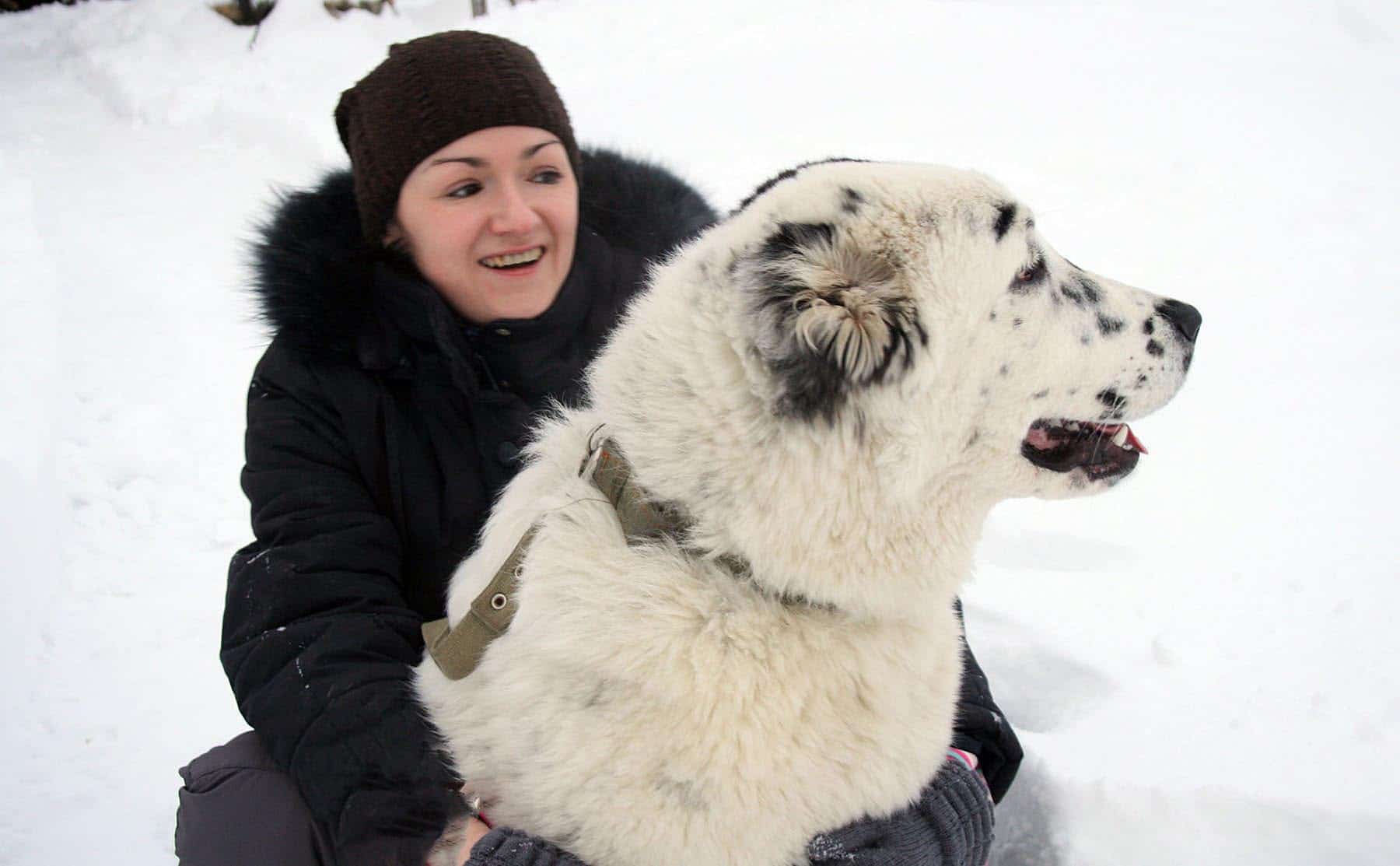
Pastor de Asia Central

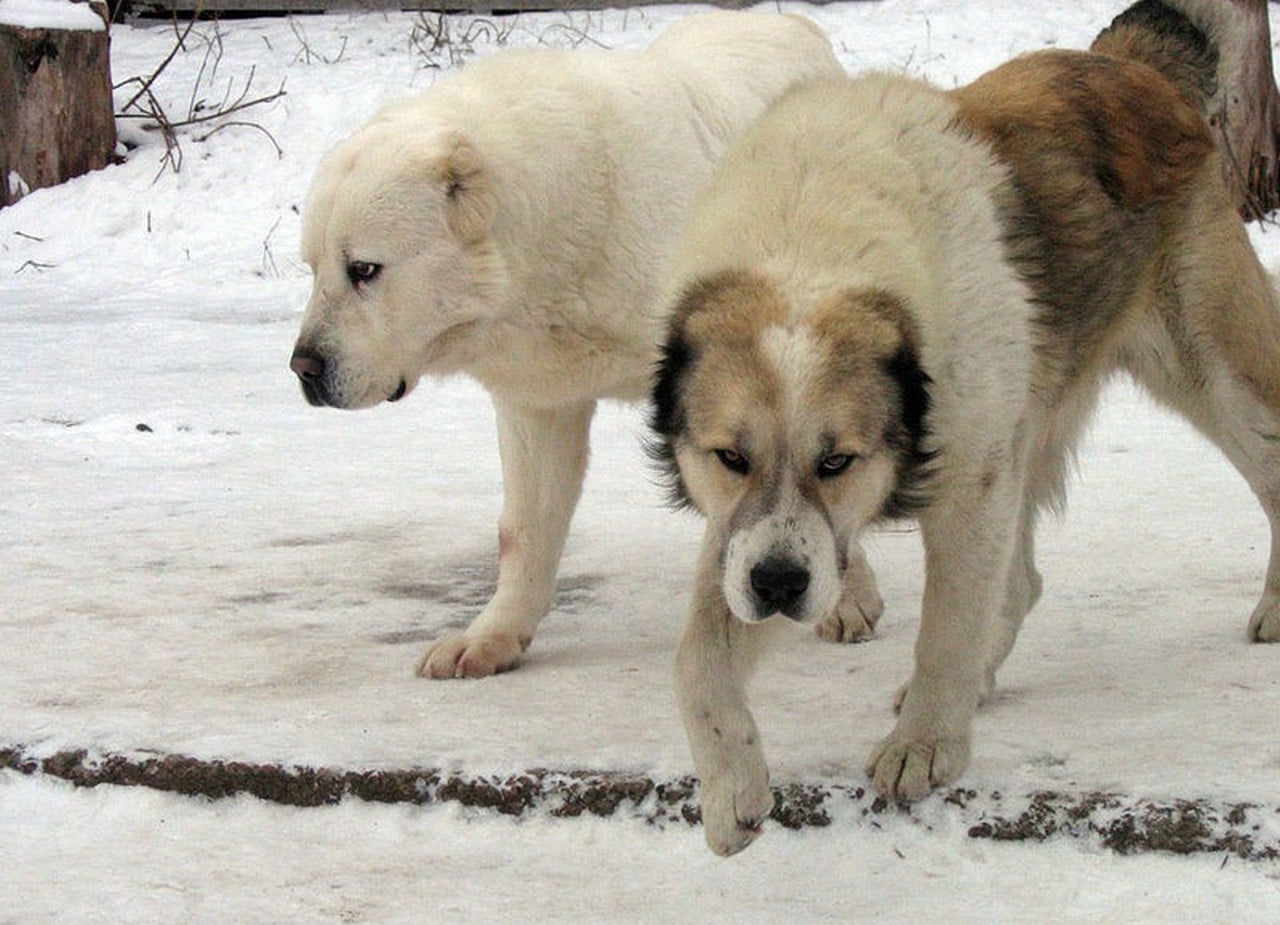
The Central Asian Shepherd Dog It is a cat with dog skin, sensitive and partner.

Content

History

The dog Central Asian Shepherd Dog (ัั€ะตะดะฝะตะฐะทะธะฐั‚ัะบะฐั ะพะฒั‡ะฐั€ะบะฐ or Sredneaziatskaya Ovtcharka, also known as, Volkodav or The Crusher Wolf) is recognized by the FCI, as a breed of molosser dog Russia, where most of the copies.

Russian cynological clubs agree that this is one of the most popular breeds in the country, on many occasions, considering it the number 1 in the ranking of Russian dog breeds.

The Central Asian Shepherd Dog It probably originated in a geographical area between the Urals, the Caspian Sea, Asia minor, and the Northwest of the border of China. The Central Asian Shepherd Dog, as well as mixtures with other breeds, yet, can be found in their countries of origin, as Kyrgyzstan, Tajikistan, Turkmenistan, Kazakhstan, Afghanistan, Uzbekistan and neighboring countries.

Some serve as guardians of livestock, some protect their owners, and some are used for dog fighting, which is a national tradition in many countries of the region. Russian scientists and biologists have studied the local dog population since the 18th century., so far.

After the Communist revolution, the Soviet Government focused on the working dog breeds for the Red Army, and imported the best representatives of the race to Russia accordance with the requirements of the army and guard dogs. For decades, This practice has harmed the local population. In addition to a large number of casualties, the introduction of new breeds to the region led to crossbreeding. With the time, purebred dogs were only left with some pastors and race enthusiasts, but in other places there was an excess of crosses.

But, and despite all, today the population of purebred dogs Central Asian Shepherd Dog remains stable, in general, and the reproduction of some true quality dogs that do honor to his capacity for work has been, regardless of country of origin.

In Europe, the Central Asian Shepherd Dog is relatively unknown, but in the countries of Central Asia it is still used as a working dog and accompanies shepherds on their walks through the steppes.

Physical characteristics

This breed has many varieties that differ in the size, the color, head types, and the types of fur. For these reasons it is very difficult to establish an official standard of the breed.

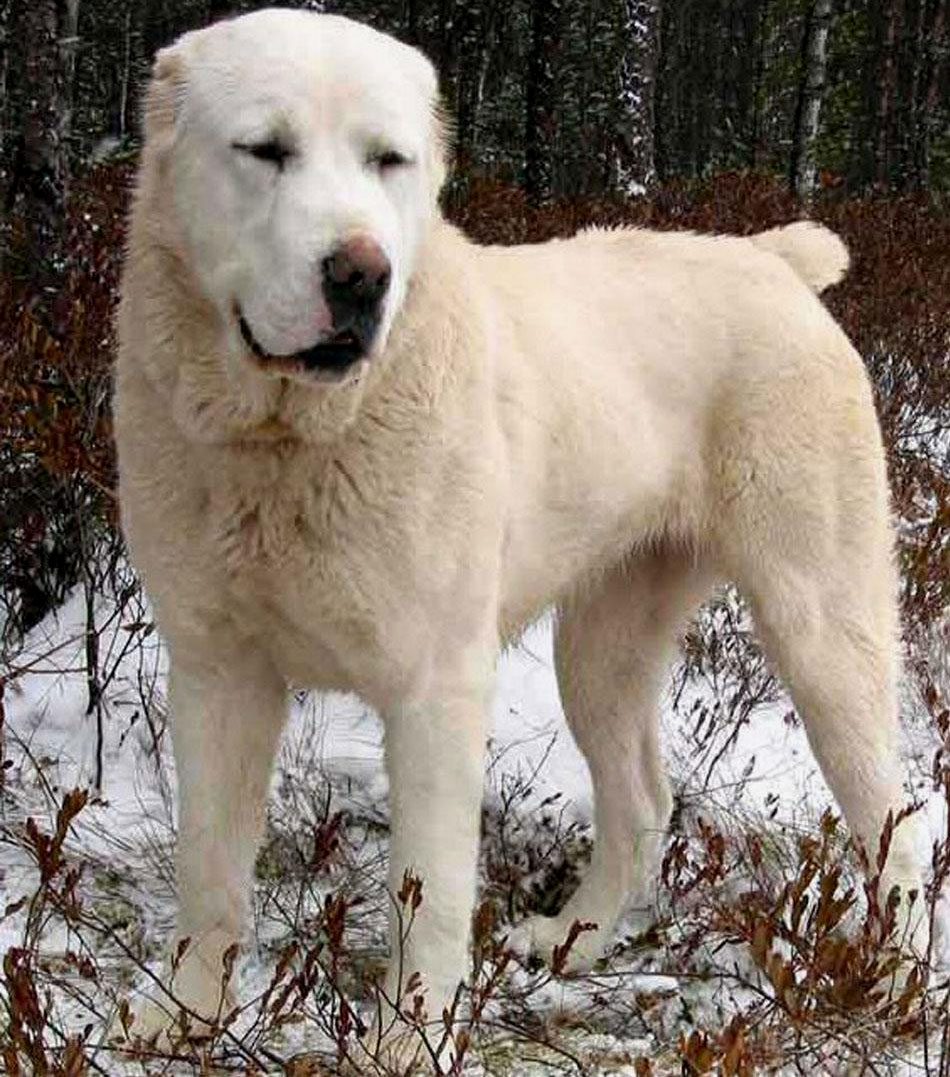
The Central Asian Shepherd Dog it is a dog of large or medium size, of rough constitution and strong musculature. Its coat is composed of the hard and smooth top layer and the abundant and dense inner layer. The top layer can be short (3 – 5 cm.) or slightly longer (7 – 10 cm.). With a longer top layer forms a distinctive mane around the neck. Due to a well developed undercoat and different lengths of the top coat, dogs adapt well to different weather conditions.

The coat color of the Central Asian Shepherd Dog it's very diverse: it comes in the colors white, black, grey, red fox, Brown grey, straw yellow, mackerel, spotted and mottled.

The ears are triangular, low-set and pendulous. The tail is thick at the base and set quite high. The natural tail is long and is carried like a sickle tail. Tail and ear docking is still practiced in the countries of origin.

Although there are unique characteristics of the purebred breed of dog Central Asian Shepherd Dog, such as being extremely flexible, This is very notable in their joints, have false ribs, the very strong neck and a large Chin.

Some have a black mask. The head is very solid, the neck is of low insertion, short, with double chin. The body is quite broad and proportionate with very flat muscles.. The ribcage appears very long, because they have their famous false ribs. The legs are straight, typical movement is a gallop.

He has expressive eyes, almost human, revealing his inimitable intelligence.

According to the qualities of work required by the owners, the modern Pastor of Central Asia has been raised in different directions, trying to highlight specific skills. Within the traditional area of origin of these canes, the dog fights were always, but they were never so cruel and destructive as the fights of type Pit Bull Terrier.

Every year the shepherds of the area would gather to organize dog fights Central Asian Shepherd, but unlike the bloody and ruthless fights of which we are used to hearing news, in this case they were fighting for the guardianship of a herd, and the winner was the dog that eventually, it was done with the control of it. It was about 'domination' instead of destroying each other's own kind.

Dogs rarely hurt each other, minor scratches were caused in most cases. only true leaders, In fact, you measured through a real fight, but that was not the most common. The primary task of these dogs has always been the defence of the flock to the attacks of various predators and venomous snakes.

The Pastor of Central Asia, It is one of the most powerful group of livestock guardian dogs dogs, after the Caucasian Shepherd Dog, the Kangal, Akbash, for example.

The height at the cross 60 to 65 cm.. And weigh in 37 to 50 kg.

Character and skills

In the news, rural people continue to demand and use the Central Asian Shepherd Dog like cattle watchdog, Although not as well as old.

These dogs, to varying degrees, are protectors against human intruders, they are very territorial, excellent with children, shall ensure them as if were his flock were. Love and respect for older people are some of its characteristics, to protect all small animals from predators, they are very kind and attached with the members of the family.

They do not need any complicated training to learn the basic rules of the house but they are quite stubborn and very independent dogs., the Central Asian Shepherd Dog It must be able to work as a team to protect sheep against predators, therefore, If the animal has an overly aggressive character, both other dogs as with people outside the family, they cannot be members of a Pack, and it would not pass the simple test for the fulfillment of the object origin of the race.

The Central Asian Shepherd Dog can come from build lines which print a very different character: of work, combat, and livestock guardian, and act accordingly, regardless of the country of origin.

According to the different kennel clubs, the classification within the groups varies, The Russian Kennel Club classifies the Central Asian Shepherd Dog like a working dog, that is reflected in the exceptional results in obedience, protection and training relating to the army.

Modern reproduction of the main Canine Clubs of Russia requirements, require to register copies of Central Asian Shepherd Dog a mandatory temperament test and an accredited training certificate, Besides show rating. In these tests the ability of the dog stands for fit and adapt to dog guardians shepherds of other flocks, not be cause for conflict between dogs. The FCI classifies Central Asian Shepherd Dog in the group of dogs Molossoid.

While it is a good dog to live, We must not forget that the Pastor of Central Asia is a livestock protection dog, people and possessions, He was raised to solve single problems, is independent-minded, strong, brave and responsible.

It is a large but agile dog, sometimes described as a cat with dog skin, for that reason, and taking into account his strong instinct for protection and territoriality, It may not be a recommended breed for a novice owner.

Sensitive and Intelligent, the Central Asian Shepherd Dog You will respond better to someone who can inspire loyalty in you as well as strong leadership..

Heavy-handed training will be counterproductive with this breed, but respectful training, reflexive will result in a dedicated and inseparable companion.

The Central Asian Shepherd Dog he spent a considerable amount of time moving around in his homeland, and this kind of slow but steady exercise is what he likes more.

With a work to be done and a piece of property to protect, is the highest point of happiness and will always keep an eye on everything that happens.

Central Asian Shepherd Dog Health

the breed is still considered very healthy and extremely robust. Owners should not fear the typical diseases of the breed. But, from time to time, like in all big dogs, joint problems occur, especially on the knees.

Central Asian Shepherd Nutrition

Although many joint diseases are inherited, symptoms can often be prevented or at least relieved with the help of proper diet and posture. Particularly in the growth phase of dogs, care must be taken that animals do not shoot too fast. Too rapid growth due to excessive protein intake in the growing months is considered one of the most common causes of later joint diseases. In addition to a fairly low protein food, given in small amounts about three or four times a day, young dogs should also be physically preserved during this phase. Stairs or long walks should be avoided..

Meat as the main component of food

When the Central Asian Shepherd Dog is fully developed, the protein content of the feed can be increased again. The main component of dog food should be – like in all dogs – high quality meat. It can be cooked or raw or, if industrially produced food mixtures are used, can be dry or wet. Regardless of the feeding method preferred by the respective owner, it is important that the content and composition of the food is adapted to the needs of the dog. According to age, sex, size, activity level and living environment, the composition of the necessary nutrients can vary considerably. There is no correct food for Central Asian Shepherd Dog.

How much food does he need? Central Asian Shepherd Dog?

Nor can the question of the amount of food for all dogs of this breed be answered in general. If the composition of the food is correct, the Central Asian Shepherd Dog can cope with surprisingly small portions. So, two meals a day are usually enough for an adult dog, which should be given at fixed times if possible. Portions too large, too many "snacks" between meals and not resting after feeding can increase the risk of stomach torsion.

Central Asian Shepherd Dog care

Like nomadic dog, the Central Asian Shepherd Dog it's quite undemanding, this applies not only to the size of your food portions, but also in your care. Short to medium length coat proves to be very resistant and requires little grooming. But, should be brushed regularly to remove dirt and maintain healthy hair structure. The claws should also be trimmed to avoid injury and teeth, ears and eyes should be checked and cleaned regularly.

Central Asian Shepherd Dog Education

The purchase of a Central Asian Shepherd Dog must be well considered – although this applies to all breeds of dogs, it is especially true for this breed from Central Asia. It is not a family dog รขโ‚ฌโ€นรขโ‚ฌโ€นin the classical sense nor is it suitable for a city life. This freedom-loving and independent dog finds it difficult to cope with living conditions in European industrial nations.

Who is this breed suitable for?

In the hands of livestock keepers and keepers who live in remote and isolated places, this protective dog of the pack is still in the best hands. Also people who live far from the city, own a large lot and wish to have a capable watchdog, can be considered as owners of this Central Asian Shepherd Dog. But, experience and some knowledge in dog training should be prerequisites to keep this breed. It also, an owner needs above all time and patience, because the socialization and education of this self-confident four-legged friend, who doesn't think much about blind obedience, It is hard work. How Central Asian dogs tend to dominate, they need a trainer who constantly sets limits for them and who shows them with the necessary empathy (not to be confused with willingness to compromise) that it is worth trusting and following your human.

Can a harmonious coexistence succeed?

The Central Asian Shepherd Dog certainly not a family dog รขโ‚ฌโ€นรขโ‚ฌโ€นin the classical sense, so its maintenance as a pure house and companion dog is absolutely inadvisable. This does not mean that a Owtscharka can't live together with humans. In a family that appreciates its natural instinct for vigilance and protection and gives it its original task of guarding the house, the yard and the cattle, the Central Asian Shepherd Dog is quite adaptable and human-oriented. A basic socialization, that is to say, early contact with other people and animals, is as important to harmonious coexistence as sufficient opportunities for running and consistent parenting.

Central Asian Shepherd Dog Pictures

Central Asian Shepherd Dog Videos

Type and recognitions:

  • FCI CLASSIFICATION:
  • Group :
  • Section : . .

Federations:

  • FCI – Pinscher and Schnauzer-Molossoid type dogs – Swiss Mountain Dogs and Cattledogs. Section 2.2 Molossoid, mountain type. โ“˜
  • AKC – FSS โ“˜
  • ANKC – Group 6 (utility dogs) โ“˜
  • NZKC – Utility dog โ“˜
  • UKC – Watchdog โ“˜

FCI breed standard "Central Asian Shepherd Dog"

Origin:
Russia

Date of publication of the valid original standard:
13.10.2010

Use:

Guard and surveillance dog.


General appearance:

The Central Asian Shepherd Dog is of a harmonious build and great stature, moderately long (never with a long or short body). Robust and muscular body, bulky but not with visible muscles.

Clearly defined sexual dimorphism. Males are thicker and more courageous than females with a more pronounced cross and a larger head.. Full maturity is reached at the age of three.

IMPORTANT PROPORTIONS: The length of the body only slightly exceeds its height at the withers. Increased height is desired but proportional structure must remain. Length of forelimbs to elbows is 50 โ€“ 52% the height at the withers.

The length of the snout is less than ยฝ the length of the head but more than 1/3.


Behavior / temperament:

Self-confidence, silent, balanced, proud and independent. Dogs have great courage and high capacity for work, resistance and a natural instinct for territoriality. Courage in the face of large predators is one of its characteristics

Head:

Solid and well balanced with the overall appearance. The shape of the head is rectangular, top and side view.

Cranial region:
  • Skull: deep. The antecara is flat and the skull area is flat and long. Occiput well defined but hardly visible due to well-developed musculature. Supraorbital arch moderately defined.
  • Depression links (Stop): Moderately defined.

facial region:

  • Truffle: Grand, well developed but not exceeding the general outline of the muzzle. The color is black but in white and beige dogs the truffle may be somewhat lighter.
  • Snout: The muzzle is blunt and of moderate length., it is rectangular seen from above and the sides tapering slightly towards the nose. The muzzle is bulky, deep and well filled under the eyes. Wide nasal bridge, straight and sometimes slightly sunken. Well developed chin.
  • Lips: Thick. Upper lip tight, covering the bottom when the mouth is closed. Full black pigmentation preferred.
  • Jaws / Teeth: The jaws are strong and wide. Teeth are big, white and next to each other, 42 in total. Incisors positioned aligned. Scissor bite accepted, reverse clip and scissors. Canines positioned well apart. An injury to a tooth that does not affect the use of the bite is of no consequence.
  • Cheeks: Cheek bones are long and well developed, without interfering with the straight rectangular shape of the head.
  • Eyes: Medium size, oval-shaped, placed well apart, looking well ahead. Moderately sunken placement. Eye color from dark brown to hazel. Darker color is preferred. The eyelids are thick and preferably with the lower eyelid not too loose. The third eyelid should not be visible. The edge of the eyelids is preferred fully pigmented. Whatever the hair color, the eyelids must be black. His expression is confident and dignified.
  • Ears: Medium size, Triangular shape, thick, low insert and pendants. Your lower level or slightly below your eyes. Traditionally amputated ears as illustrated on the first page, which is practiced in the country of origin and in countries where it is not prohibited by law.

Neck:

Neck is medium length, very strong, oval transversely, well muscled and low set. The dewlap is a characteristic of the breed.

Body:

  • top line: Well proportioned and well sustained. In the posture you must maintain the typical upper line.
  • Cross: Well defined, especially in males, muscle, long and tall with a well defined transition to the back.
  • Back: Straight, width, good muscular; the length is ยฝ of the length of the withers to the insertion of the tail.
  • Pork loin: Short, width, muscle, slightly arched.
  • Rump: Moderately long, wide, well muscled, slightly inclined towards the tail insert. Height at withers exceeds height above hip in 1 โ€“ 2 cm..
  • Breast : Deep, long, width, well developed, rib cage widening to the posterior. False long rib. Lower chest at elbow level or slightly below. The forechest extends slightly in front of the humerus/scapula joint.
  • Bottom line and belly: Moderately retracted abdomen.

Tail:

Thick at the base and somewhat high insertion. The natural tail is carried curved in the shape of a sickle or curved in a loose ring that begins in its last third.. When alert, the tail rises to the level of the back or slightly higher. Traditionally the tail is docked in the illustrated manner which is practiced in the country of origin or in countries where it is not prohibited by law.. Natural glue is valued the same as amputated.

Tips

PREVIOUS MEMBERS:

  • General appearance: Right members of strong bones, viewed from the front parallel and not very close to each other. Seen on side, the forearm is straight.
  • Shoulder: Long scapula, well inclined, forming an angle with the forearm of approximately 100ยฐ. Well muscled.
  • Forearm: Oblique, long and strong.
  • Elbows: Tight fitting without turning in or out. Arm: Straight, very strong bone, long, oval transversely.
  • Metacarpus: Moderately long, width, strong, rights.
  • Previous feet: Large, rounded, arched toes, bulky and thick pads; nails can be any color.

LATER MEMBERS:

  • General appearance: Viewed from behind straight and parallel, placed somewhat more apart than the previous ones.
  • Thigh: Width, moderately long and with strong musculature.
  • Knee: Without turning neither inwards nor outwards. Its angulation is moderate.
  • Leg: Always the same length as the thigh.
  • The Hock joint: Moderately angled.
  • Metatarsals: Very strong and of moderate length, perpendicular. Without spurs.
  • Hind feet: Large, round, arched toes, bulky and thick pads; nails can be any color.

Movement:

Well balanced and elastic. Jog with free reach of the forelimbs and strong push from the rear. Top line remains firm during movement. All joints tilt effortlessly. The angulations of the posterior are more defined during the movement than during the stop..

Mantle

SKIN: Thick, loose enough to prevent injury during combat against predators.

  • Fur: Abundant, smooth, thick with well-developed inner hair. The hair on the head and on the front of the limbs is short and thick.. The hair on the cross is sometimes longer. Outer hair may be short or slightly longer. Depending on the length of the outer hair there may be shorter hair (3 โ€“ 5 cm.), covering the entire body or longer hair (7-10 cm.) forming a mane on the neck, feathers behind the ears and on the back of the limbs and on the tail.
  • Color: All except genetic blue or genetic brown in any combination and black cloak on fire.


Size and weight:

Height to the cross:

  • Males: Minimum 70 cm..
  • females: Minimum 65 cm..

The largest size is desired but the proportional structure remains.

Weight:

  • Males: Minimum 50 Kg.
  • females: Minimum 40 Kg


Fouls:

Any deviation from the aforementioned criteria is considered as a fault and the severity of this is considered to the degree of the deviation to the standard and its consequences on the health and well-being of the dog..

  • Slight deviation from the typicality of the breed.
  • Females with male type tendencies.
  • Rounded skull, narrow snout, narrow lower jaw, small nose.
  • Oblique eye placement or eyes close together, loose eyelids.
  • High insertion of the ears.
  • Thin or hanging lips.
  • Height above rump. Slightly short rump.
  • Narrow forehead.
  • Exaggerated angulations of the posterior.
  • Open foot and long toes.
  • Hackney movement, slightly unbalanced movement.
  • Too short hair.

SERIOUS FAULTS:

  • Too nervous.
  • Significant deviations from the type and structure required.
  • Long-limbed appearance, Lightweight bones, soft muscles.
  • Very light eyes or protruding eyes.
  • Top line descended.
  • Croup much higher than the cross.
  • Narrow rump, short and steep.
  • Naturally short tail, broken tail.
  • Very high metacarpus, low.
  • Hindquarters placed too far apart under the body.
  • Height to the cross 2 cm less than the minimum required in the standard.

FALTAS DESCALIFICANTES:

  • Aggressiveness or extreme shyness.
  • Any dog โ€‹โ€‹showing clear signs of physical or behavioral abnormalities must be disqualified..
  • Shy or overexcited.
  • Male female type.
  • Prognathic or clearly enognathic bite.
  • Different colored eyes, blue or green eyes, bizco.
  • Loose joints.
  • Hair of any combination of genetic brown or genetic blue.
  • Fire color with a black cloak.
  • Cloak the soft or smooth.
  • Unbalanced movement.


N.B.:

Males should have two normal-appearing testicles fully descended into the scrotum..

Only functionally and clinically healthy dogs, with the typical conformation of the breed, should be used for parenting.

Source: F.C.I - International Cynological Federation

Alternative names:

1. Alabai, Central Asian Ovtcharka, CAO Aziat (English).
2. Chien de berger d’Asie centrale (French).
3. Zentralasiatischer Owtscharka (German).
4. Tรผrkmen Alabaรฝ, mastim-da-รกsia-central (Portuguese).
5. Perro Pastor de Asia Central (espaรฑol).

โ–ท The world of Pets: Dogs, cats, birds, reptiles, amphibians

German Pinscher
Alemania FCI 184 . Pinscher and Schnauzer type

Pinscher Alemรกn

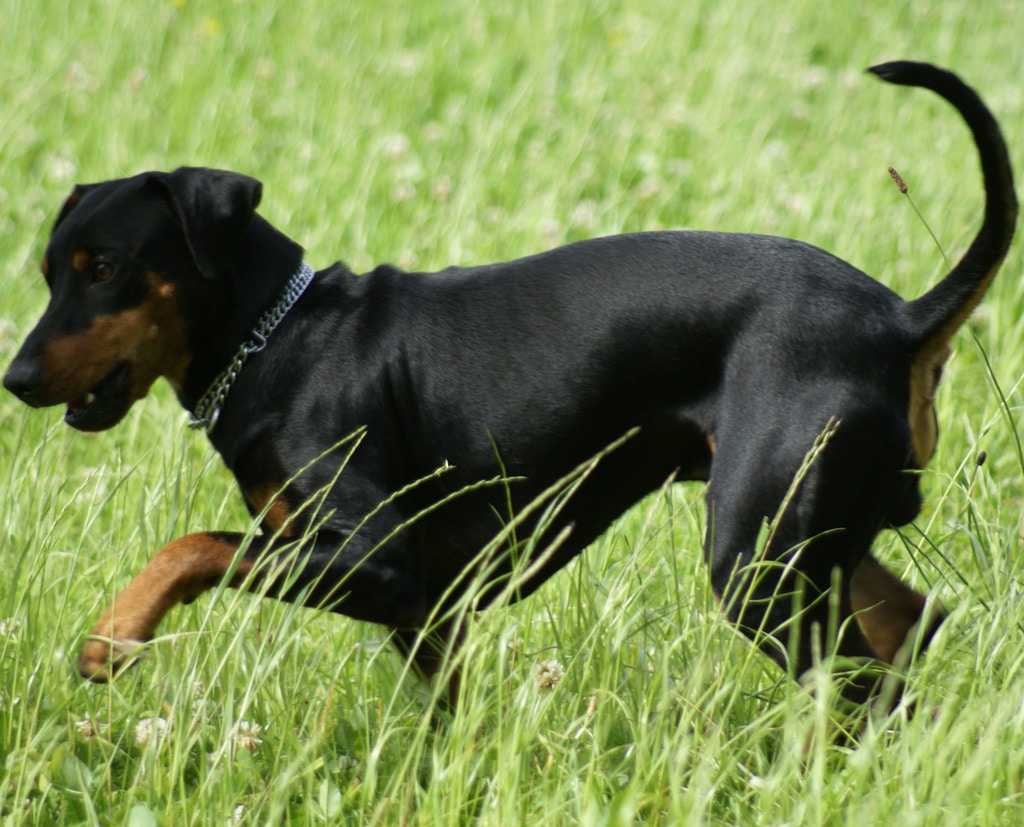
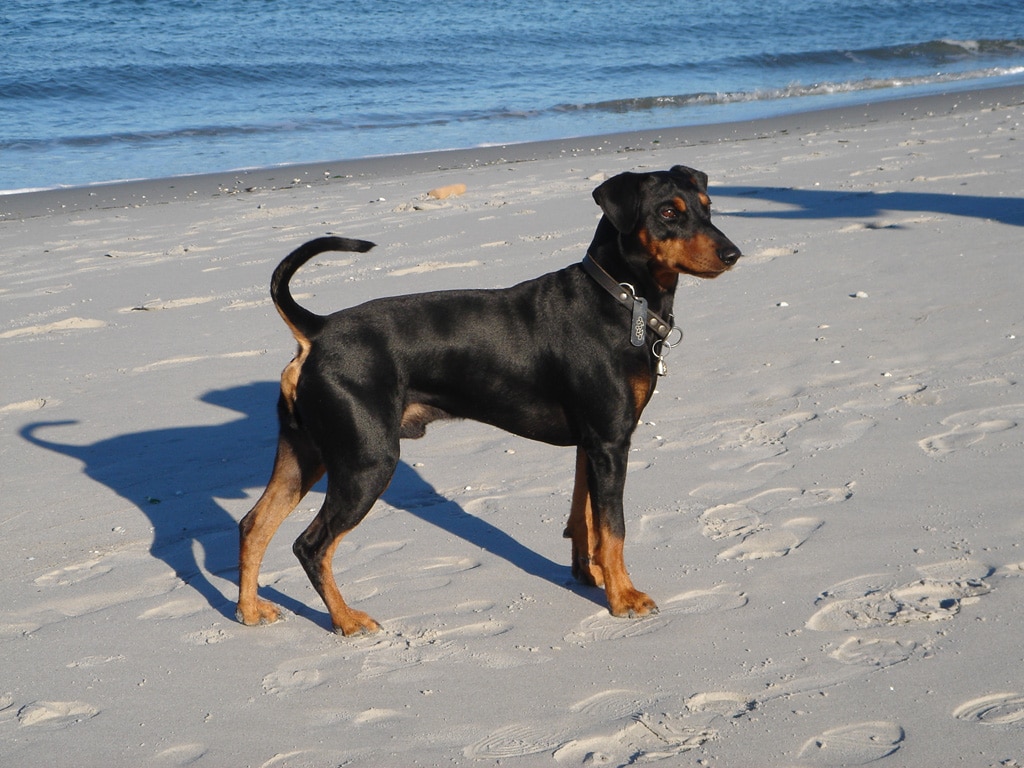
The German Pinscher is a dog, extremely, active and lively, alert and vigilant.

Content

History

The German Pinscher (from the German pinscher "biter") It is a breed of dog that belongs to the family of Pinscher.

This race, whose origins date back to the 15th century and which is also related to the Schnauzer, It was originally a dog used by the farmers of Germany to control rodent pests. It is believed that he is descended from crosses between old German dogs and some black Terrier used to hunt rodents.

It is also the breed that arose the Dobermann and the so-called Miniature Pinscher. In Germany, due to the fame that were acquiring the dog shows in the rest of Europe and America, a standard of the breed was established in the year 1879, year in which it was also recognized as a race.

Currently, the Pinscher It is considered more of a companion and guard dog than a hunting dog or vermin controller. As a companion dog it is ideal, its size enables live perfectly in a flat in city, although, like any other dog, you need to do exercise.

In its role as a guard dog, of course, is not as imposing as his descendant the Dobermann, but their functions.

The use of Pinscher as a watchdog it is very satisfying, It is a dog that defends well property without falling (insofar as it is well educated) in the territoriality to his master, staying true to this at all times.

Although it has always been considered that the Pinscher it is a very attractive breed of dog, It has never exceeded the popularity of his descendants: the Pinscher the Dobermann and miniature. In fact, according to a study conducted by the Kennel Club, the Pinscher miniature is almost 8 some times larger than the Pinscher and the Doberman 138 times more popular than this.

Physical characteristics

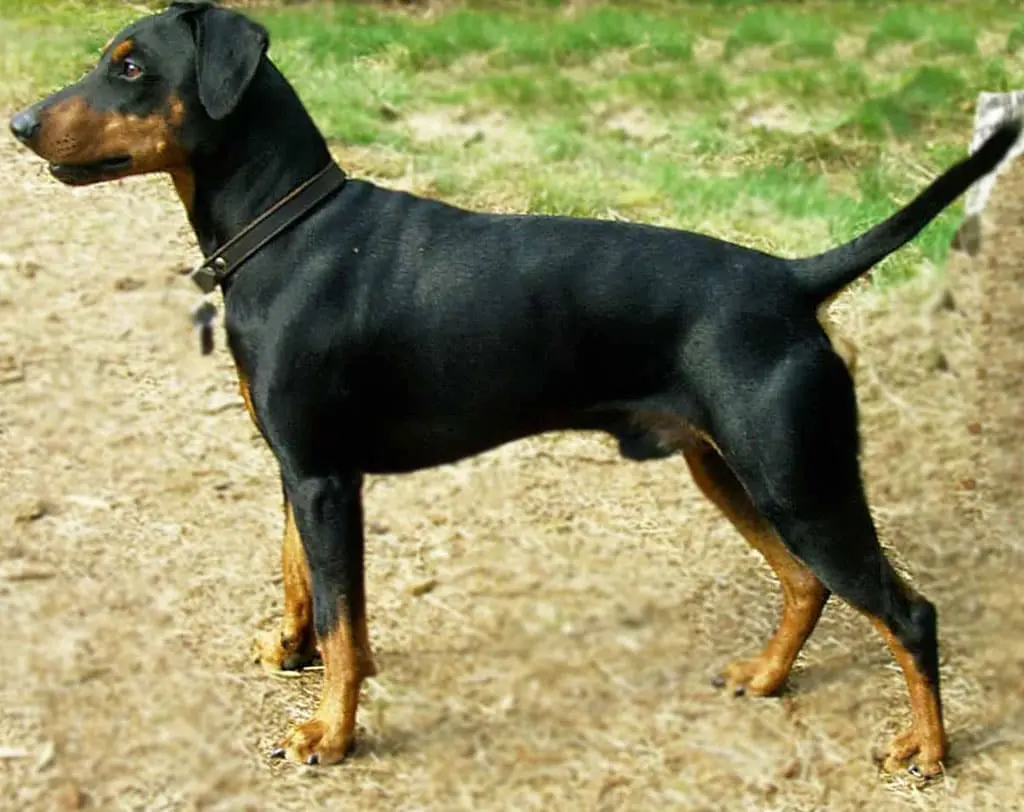
The Pinscher is a dog of size medium, between 45 and 50 cm., proud bearing and strong muscles, with a weight around the 18 kg (14 to 20 kg).

It has a head thin and snout elongated, ears median, slightly bent at birth, they hang from the head of the dog and they are generally cut.

Neck of average length, wide and strong, trunk slim and elegant lines. Regard to the tail, like the ears, also tends to be amputated.

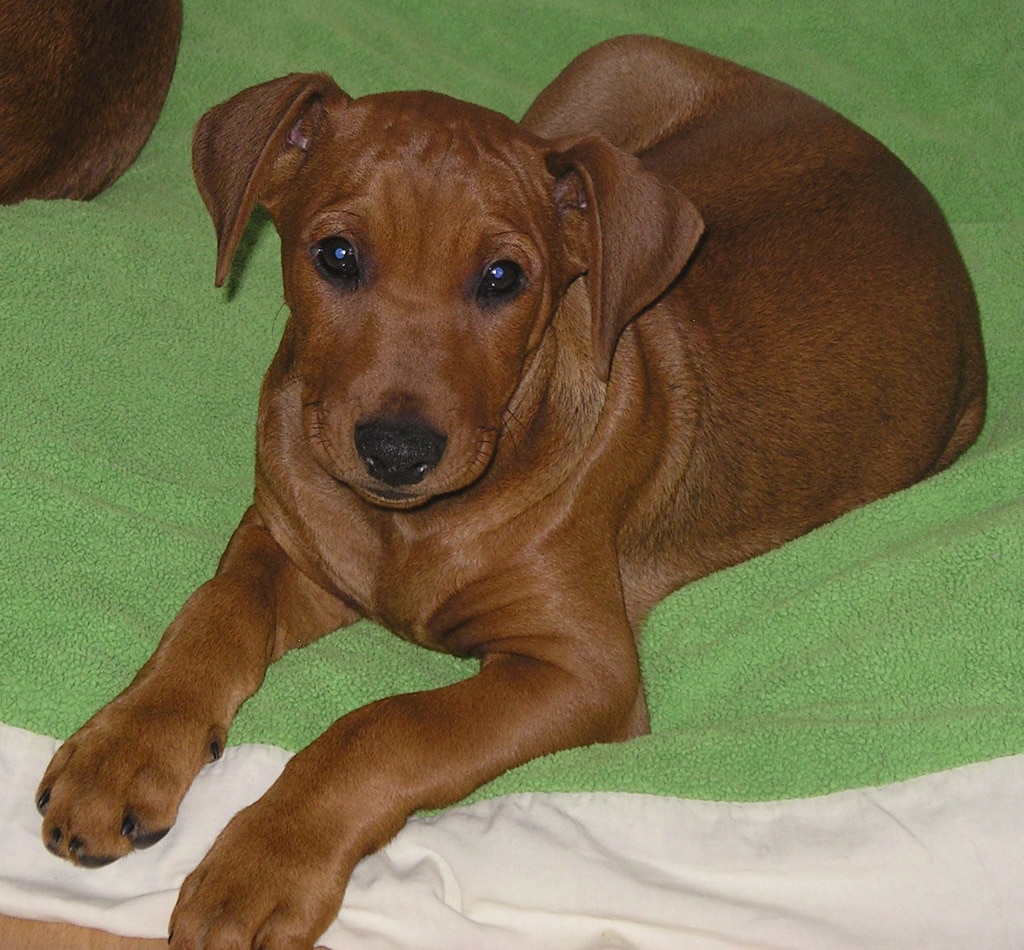
The fur, It is short and rough, it comes in shades of red, brown or black, and fire in the belly and chest.

Their fur is short and smooth, does not require much care, just brushing regularly to remove dead hair.

Character and skills

Because of its vitality require quite some exercise outdoors, You can fix left him free in an open field so that it can run and romp.

As well, related to the latter, It is a suitable dog to accompany people who practice physical exercise, such as running or cycling.

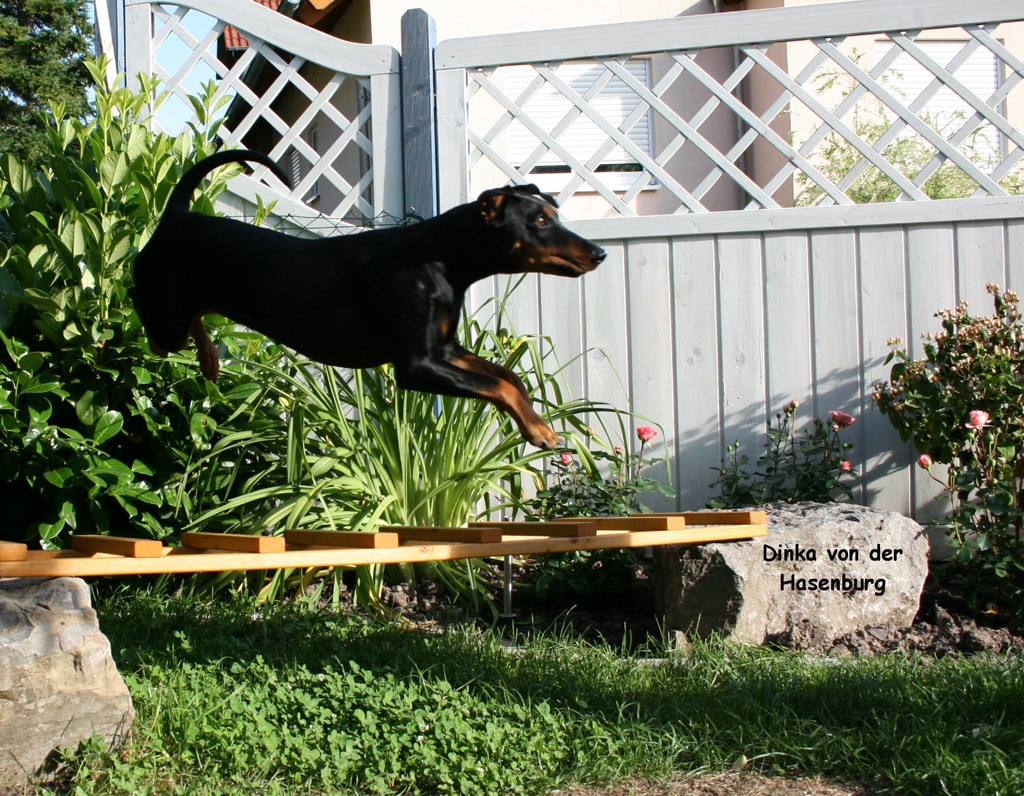
It is a dog, extremely, active and lively, alert and vigilant. It is often wary of strangers.

It would also be necessary, given his character slightly dominant, teach him to respect rules and who is charge at home.

We need to socialize from very small, because the dominant character leads him to not tolerate the presence of other dogs too. Then, If he is raised with another dog from a young age, they will have a duo of inseparable barkers at home.

German Pinscher Health

All purebred dogs have the potential to develop genetic health problems, just as all people have the potential to inherit a particular disease. Run, do not walk, from any breeder that does not offer a health guarantee on puppies, to tell you that the breed is 100 percent healthy and has no known problems, or tell you that your puppies are isolated from the main part of the home for health reasons. A reputable breeder will be honest and open about the breed's health problems and the incidence with which they occur in their lines..

Having said that, the German pinschers they are quite healthy, and breeders want to keep them that way.

Do not buy a puppy from a breeder who cannot provide you with written documentation that the parents have been cleared of health issues affecting the breed. Getting dogs "vet checked" is not a substitute for genetic health testing.

Remember that after bringing a new puppy home, has the power to protect you from one of the most common health problems: the obesity. Keep a german pinscher with a proper weight is one of the easiest ways to prolong your life. Make the most of your preventive skills to help ensure a healthier dog for life.

German Pinscher Grooming

The short and smooth coat of the German Pinscher makes it easy to style. One bath every three months (or when it gets dirty) with a mild shampoo is all you need, in addition to brushing once a week with a natural bristle brush or glove. Use hair conditioner / polisher to brighten hair.

The rest is basic care. Trim nails as needed, usually once a month. Brush your teeth frequently for general good health and fresh breath. Check ears weekly for dirt, redness or odor that may indicate an infection. If the ears look dirty, clean them with a cotton ball moistened with a mild, pH-balanced ear cleaner. Enter the toilet of the German Pinscher when I'm too young to learn to accept it, especially the nail cut, with patience.

Characteristics "German Pinscher"

Coexistence is important that you have with your new friend. Before considering the acquisition of a dog of the breed "German Pinscher" you know certain factors. Not all breeds of dogs are apt to live in an apartment, you must take into account his character, their need for exercise, their interaction with other pets, their care and if you have small children, their level of tolerance towards them.

Adaptation โ“˜

3,0 of 5 stars (based on 1 review)

friendly dog โ€‹โ€‹โ“˜

3,0 of 5 stars (based on 1 review)

hair loss โ“˜

3,0 of 5 stars (based on 1 review)

Affection level โ“˜

4,0 of 5 stars (based on 1 review)

Need for exercise โ“˜

4,0 of 5 stars (based on 1 review)

Social need โ“˜

3,0 of 5 stars (based on 1 review)

Home โ“˜

3,0 of 5 stars (based on 1 review)

Toilet โ“˜

2,0 of 5 stars (based on 1 review)

Friendly with strangers โ“˜

3,0 of 5 stars (based on 1 review)

barking โ“˜

3,0 of 5 stars (based on 1 review)

Health โ“˜

4,0 of 5 stars (based on 1 review)

Territorial โ“˜

5,0 of 5 stars (based on 1 review)

Cat friendly โ“˜

3,0 of 5 stars (based on 1 review)

Intelligence โ“˜

4,0 of 5 stars (based on 1 review)

Versatility โ“˜

4,0 of 5 stars (based on 1 review)

Child friendly โ“˜

3,0 of 5 stars (based on 1 review)

Surveillance โ“˜

4,0 of 5 stars (based on 1 review)

joy โ“˜

5,0 of 5 stars (based on 1 review)

German Pinscher Images

German Pinscher videos

Type and recognitions:

  • FCI CLASSIFICATION:
  • Group :
  • Section : . .

Federations:

  • FCI – Pinscher and Schanuezer dogs. Molossian type Dogs and Swiss Mountain and Cattle Dogs. , Section 1: Pinscher and Schnauzer. โ“˜
  • AKC – Dogs working โ“˜
  • ANKC – Group 6 (utility dogs) โ“˜
  • CKC – Group 6 – Non-Sporting โ“˜
  • โ€‹KC – Working dogs โ“˜
  • NZKC – Utility dog โ“˜
  • UKC – Terrier โ“˜

FCI breed standard "German Pinscher"

Origin:
Germany

Date of publication of the valid original standard:
06.03.2007

Use:

Guard and company.


General appearance:

The German Pinscher is short-haired and straight, medium-sized, of proud presence, contour of flowing lines, elegant and square construction. He is strong like the Schnauzer and his well developed musculature is clearly evident during the movement given his short and smooth coat.


IMPORTANT PROPORTIONS:

  • The construction should as much as possible appear square in relation to body length and the height to the cross.
  • The total length of the head (from the tip of the truffle to the occipital protuberance) you must keep a relationship of 1:2 with body length (from the cross to the tail insert).


Behavior / temperament:

With a lot of temperament, liveliness, self-assurance, mental balance and intelligent prudence coupled with perseverance make him an excellent family dog, guard and company.

Head:

---

Cranial region:
  • Skull: Strong and elongated, with the back of the little marked head. The occiput should not be too marked; the forehead is flat and parallel with the nasal cannula.
  • Depression links (stop): Soft, although clearly marked.

facial region:

  • Truffle: Well developed and always black.
  • Snout: It ends in a truncated crib. The nasal cannula is straight.Belfos: Blacks, rest firm and plans on the jaws; the corner of the lips is closed.
  • Jaws / Teeth: Powerful upper jaw and lower. The bite is scissors, strong and full (42 clean teeth and white according to the dental formula of dogs). They should close well. The chewing musculature is strongly developed without forming bothering cheeks.


  • EYES: dark, oval and with adherent and pigmented black eyelids.
  • EARS: Bent and falls, high insertion, โ€œVโ€ shaped; the inside edges of the ears rest on cheeks. The ears are directed forward in the direction of the temple. The parallel fold should not exceed the top line of the skull.

Neck:

Of aristocratic porte, not too short; without interruption, must flow harmoniously towards the cross; dry, without dewlap and loose in the throat skin. The skin of the throat is firm, without wrinkles.

Body:

  • top line: Descending slightly from the withers backwards.Cross: It is the highest point of the top line.
  • Back: Strong, short, firm.
  • Pork loin: Short, strong, deep. The distance from the last rib to the hip is short so that the dog appears compact.Rump: Slightly rounded, imperceptibly towards the tail insert.
  • Breast : Moderately wide, oval cut, deep up to elbows. The parapet is especially marked by the tip of the breastbone.
  • bottom line: Flanks not excessively gathered so as to provide a nice wavy line along the lower part of the thorax..

Tail:

Natural, the goal being to make it Sabre or sickle-shaped.

Tips

PREVIOUS MEMBERS: The forelimbs are, seen from the front, vigorous, straight and placed not too close together. Seen side forearms are straight.

  • Shoulder: The scapula is firmly resting on the chest. Well muscled on both sides of the spine of the bone, stands out for above the vertebrae of the spine in its thoracic section. As much as possible and lean back, forms an angle of 50ยบ with the horizontal.
  • Arm: Well on the body, strong and muscular; forms an angle of approximately 95ยบ to 105ยบ with the scapula.
  • Elbows: Tight, not rotated or outward or inwardForearm: Straight seen from front and profile; strongly developed and well muscled.Carpo: Strong and stable.
  • Metacarpus: Strong and slightly elastic, seen from the front straight, of slightly oblique profile in relation to the ground.
  • Previous feet: Short and round, fingers pinched each others and arched (cat feet), strong pads, short nails, black and strong.

LATER MEMBERS: Views of oblique profile, from the back, they are parallel and not too close together.

  • Thigh: Moderately long, width, and strongly muscled.Knee: Must not be turned neither inward nor outward.
  • Leg: Long and strong, sinewy, continuing in a powerful Tarsus.
  • Hock: Well angled, strong, firm, not turned neither inward nor outward.
  • Metatarsus: Perpendicular in relation to the ground.
  • Hind feet: A little longer than the previous ones. Fingers tightened one another well arched; nails short, black.

Movement:

The German Pinscher is a jogger. During the movement the back remains firm and relatively quiet. The beginning of the movement is harmonious, insurance, full of strength, free and good range. It is typical for trotters to have great ground coverage with clean, fluid movement., with a powerful drive and a wide front extension.

Mantle

  • SKIN: Firm throughout the body.

MANTLE

  • Fur: Short and bushy, shiny and tight to the body, without bald regions.

Color:

  • Unicolor: Red Deer, red-brown to dark red-brown.black and tan: black hair lacquer with fiery red to brown markings. It is desirable that the trade marks are possible dark, saturated and well-defined. Fire marks are located: on the eyes, on the underside of the neck, in the Metacarpus, in feet, on the inner faces of the hind and the perineum. In the sill, two triangles of equal size clearly separated one from the other.


Size and weight:

Height to the cross: Males and females: 45 until 50 cm.. Weight: Males and females: 14 until 20 kg.


Fouls:

Any deviation from the aforementioned criteria is considered as a fault and the severity of this is considered to the degree of the deviation to the standard and its consequences on the health and well-being of the dog..


In particular:

  • Heavy or light appearance, petizo or patilargo.
  • Heavy or round skull.
  • Wrinkles on the forehead.
  • Short snout, pointed or narrow.
  • Bite in clamp.
  • light eyes, too small or too big.
  • Inclusion of low or very long ears, ears carried different from each other.
  • Strongly prominent cheek bones.
  • The throat loose skin.
  • Too long back, collected or soft.
  • Encarpado back.
  • fallen group.
  • Long feet.
  • Amble step.
  • High way.
  • Fine animal hair.
  • eel line, Dark saddle, mantle clear.
  • 1 cm.. above the upper limit of height or 1 cm.. below the lower height limit.

SERIOUS FAULTS:

  • Lack of type in the expression of sex (for example, male female).
  • Lightweight aspect.
  • Lack of parallelism skull/snout.
  • Amanzanado skull.
  • Elbows rotated out.
  • After not quite angled or barrel.
  • Hocks rotated inwards.
  • Deviation between 1 and 3 cm above the upper limit or lower limit of height.

FALTAS DESCALIFICANTES:

  • Aggressiveness or extreme shyness.
  • Any dog โ€‹โ€‹showing clear signs of physical or behavioral abnormalities.
  • Evil, exaggerated suspicion, nervous behavior.
  • Any deformity.
  • Markedly inverted sexual characteristics.
  • Lacking bite, upper or lower prognathism, incisor arcade deviated.
  • Miss runner in each region as construction defects, hair and color.
  • Diversion of more than 3 cm.. of the upper and lower height limits.


N.B.:
  • Males should have two normal-appearing testicles fully descended into the scrotum..
  • Only functionally and clinically healthy dogs, with the typical conformation of the breed, should be used for parenting.

The latest changes are in bold.

Source: F.C.I - International Cynological Federation

Alternative names:

1. Deutscher Pinscher (English).
2. Deutscher Pinscher (French).
3. Deutscher Pinscher (German).
4. (em alemรฃo: Deutscher Pinscher) (Portuguese).
5. Pinscher Mediano, Pinscher Estรกndar, Pinscher de pelo รกspero, Mordedor alemรกn (espaรฑol).

โ–ท The world of Pets: Dogs, cats, birds, reptiles, amphibians

Miniature Pinscher
Alemania FCI 185 . Pinscher and Schnauzer type
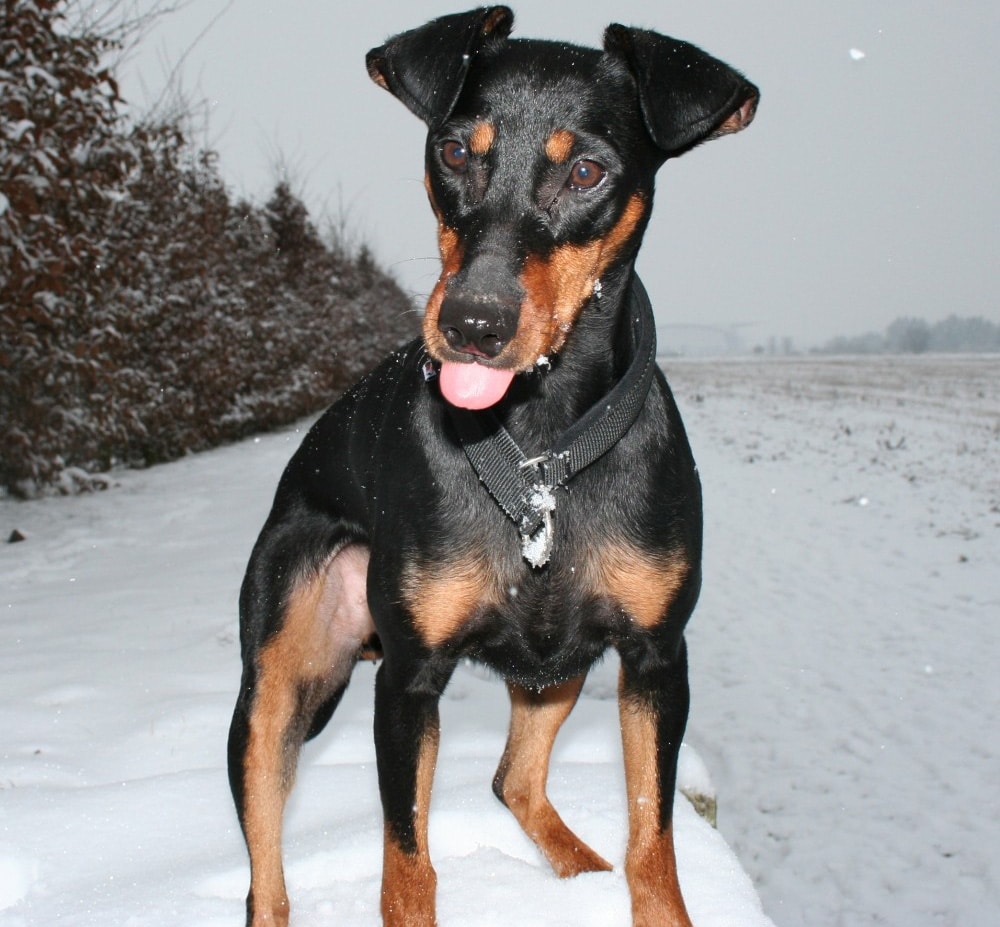
Pinscher Miniatura

The Miniature Pinscher has much temperament, vitality and is an excellent companion dog.

Content

History

It is often thought that the Pinscher miniatura is a German Pinscher small, but it predates that race at least in 200 years. Originally paid for his maintenance as a buzzard in the German pens. It is believed to have been created by the crossing of races as diverse as the Sausage dog, the old german pinscher, the Manchester Terrier and the Italian Greyhound. The result was a spirited and fearless puppy.

It was very popular in Germany and Scandinavian countries., but it is not surprising that its international star began to grow. The Pinscher miniatura was first registered with the American Kennel Club in 1925 like Terrier for his mouse experience. The Miniature Pinscher Club of America was formed in 1929, and the dogs were reclassified as a toy breed in 1930. In America they were called Pinscher (Toy) until 1972, when they were renamed Miniature Pinscher.

Today, the Miniature Pinscher ranks 40th among AKC registered breeds, below 17th in 2000. As with many breeds, has changed position at the whim of the public, possibly because he's not the cute little lapdog some thought he would be, or simply because other breeds have captured the attention of the public.

Physical characteristics

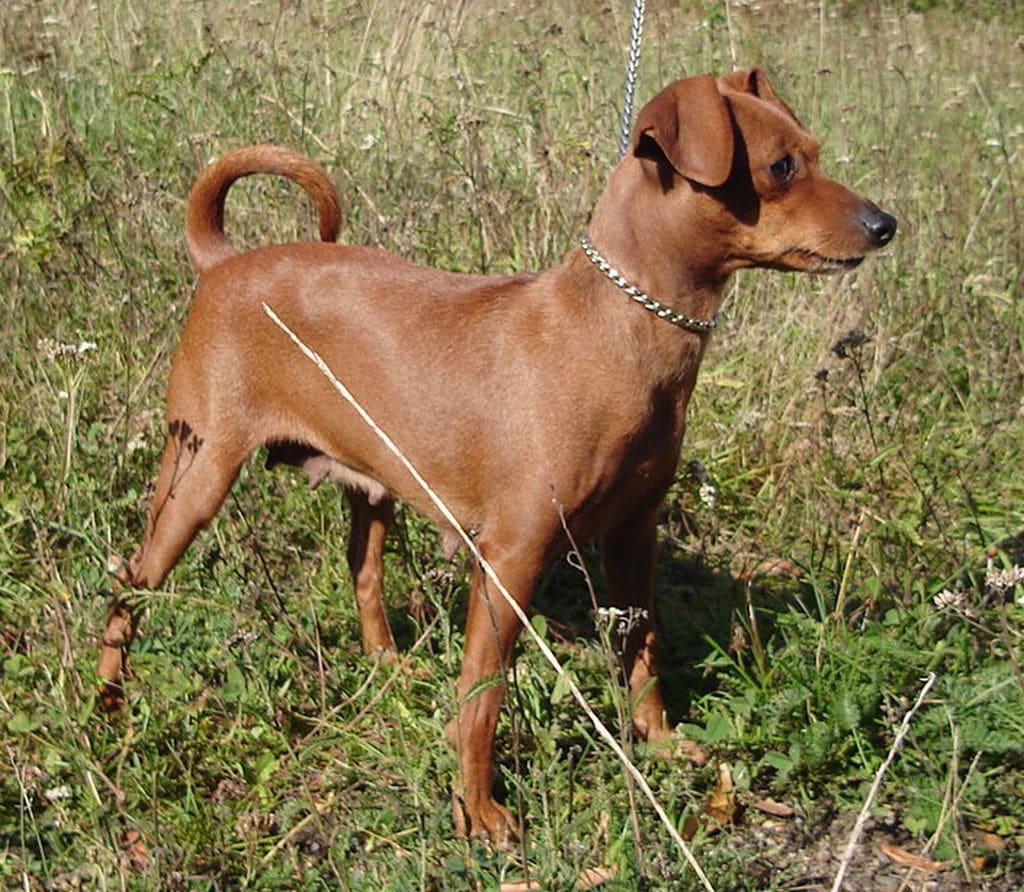
The Pinscher miniature is the achicada image of the German Pinscher, flawless dwarfism. Its elegant square construction is clearly visible through her short hair, smooth and tight.

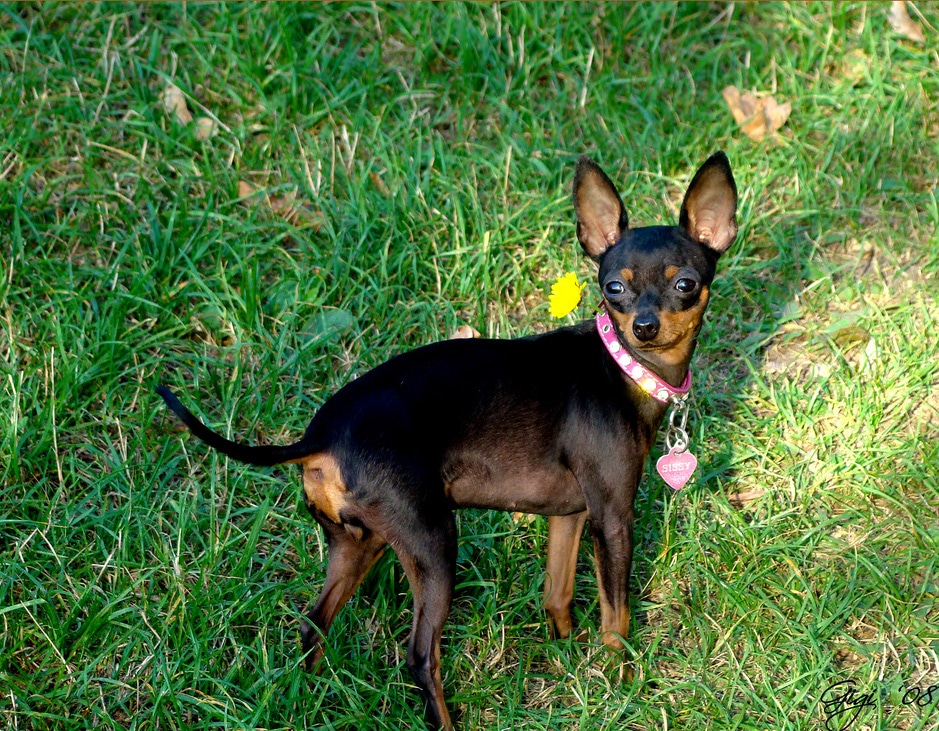
Its proportions are square because it has the same length as the cross height, between the 25 and 30 cm..

Its weight varies between the 4 and 6 kg maximum, at risk of suffering from the heart.

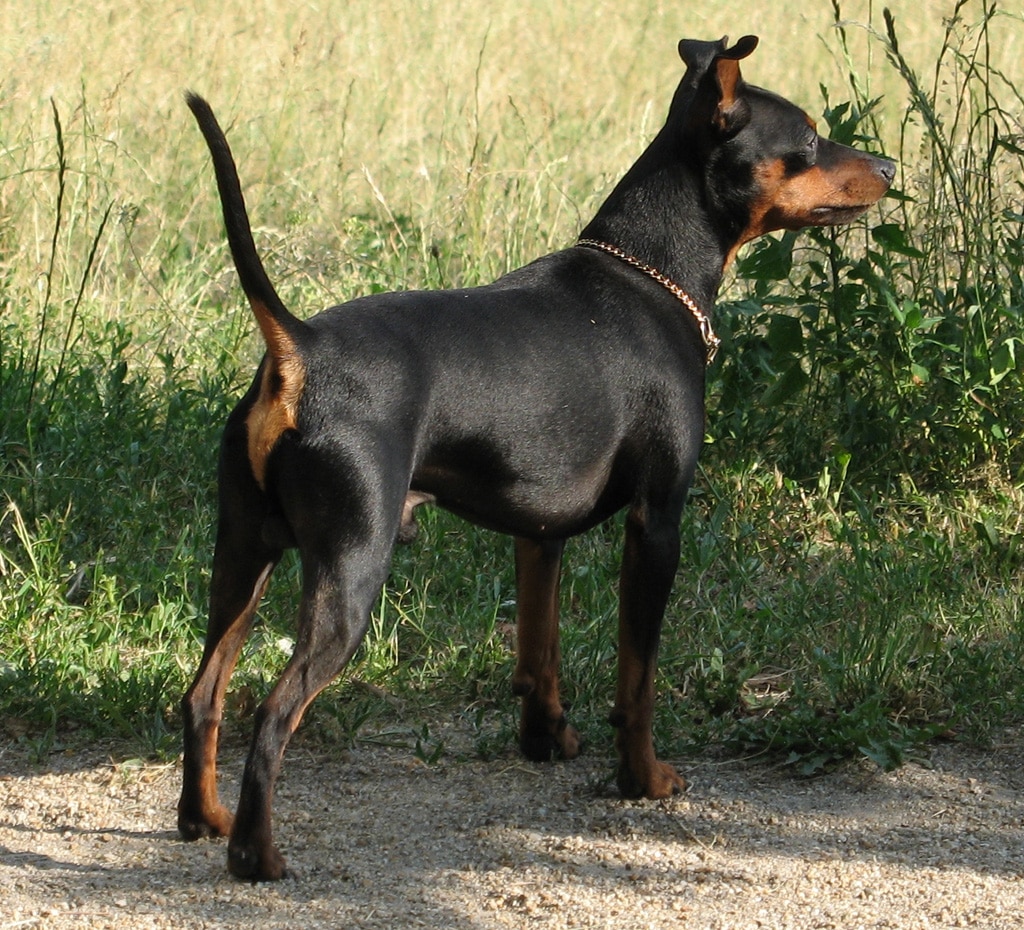
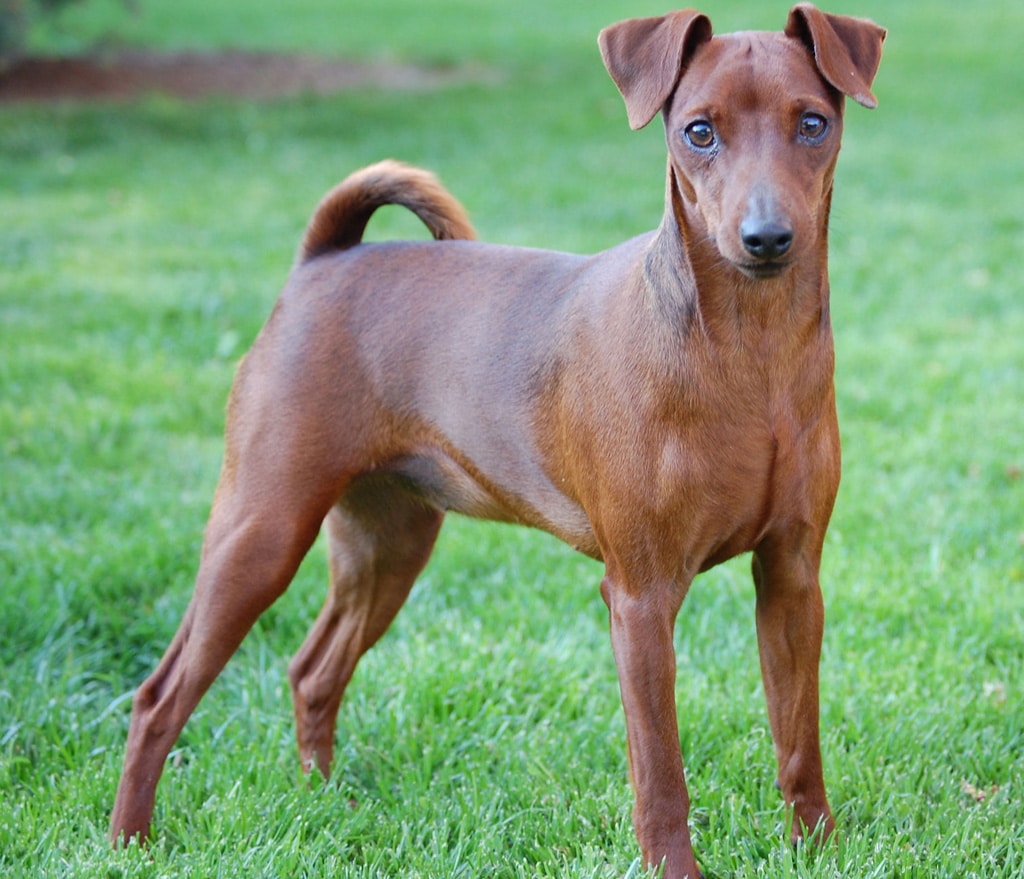
The hair is short and smooth, admitting only copies monocolores Red in their different shades and copies bicoloured Black with fire marks.

Traditionally, the Miniature Pinscher was the tail and ears cut, but now this practice is prohibited throughout the European Union.

Character and skills

A small dog with a great attitude and a bigger mouth, the Miniature Pinscher he has no idea he's not as big as a Doberman. Will face any threat, including a dog many times bigger than him. Will try to protect his family, will chase cats out of the yard and sound the alarm whenever he deems necessary, which is constant. And although it will fit in your puppy bag, you won't like to be there. This is a dog with a mind and a will of its own, not an accessory.

Don't let its designation as a toy dog รขโ‚ฌโ€นรขโ‚ฌโ€นfool you. Like his older Terrier cousins, the Pinscher miniatura dig, will bark and chase anything that moves, including squirrels, cats and quite possibly other dogs. Unless well-bred and well-socialized – and sometimes even despite such advantages – is prone to being an annoying barker, suspicious of strangers and not very good with children.

The Pinscher miniatura It can be wonderful with older kids as long as the kids don't mistreat them. Their activity and energy level is suitable for children, and loves to be a family dog. Monitor interactions with young children so they don't hurt the dog, or viceversa.

Due to his tendency to be protective and territorial, the assertive, proud and stubborn Pinscher miniatura needs a firm and consistent training from the puppy stage to control his bites, as well as any tendency to bark inappropriately. Don't let him get away with bad behavior or he'll quickly become an almost impossible habit to break. It also, like many small dogs, Miniature Pinschers are difficult to house train; firmness and consistency are the keys to success.

The Miniature Pinscher is innately curious and likes toys that move or make noises. But, it is likely that at some point he will try to eat the toys… will gut a squeaky toy in no time. Flimsy rubber or plastic aren't the best bets for him.

Start training your puppy Pinscher miniatura the day i bring it home. Even at 8 or 10 weeks of age, He is able to absorb everything you can teach you. If possible, Take it to a trainer when you have between 10 and 12 weeks, and socializes, socialice, socialice. But, Note that many kinds of training puppies require certain vaccinations (such as kennel cough) stay up to date, and many vets recommend limited exposure to other dogs and public places until puppy vaccinations have been completed (including that of rage, distemper and parvovirus). Instead of formal training, You can start training your puppy to socialize at home and among family and friends until immunizations are completed in the puppy.

Talk to the breeder, Describe exactly what you want in a dog and ask for help choosing a puppy. Breeders see their puppies daily and can make incredibly accurate recommendations once they know something about their lifestyle and personality.. If you are looking for a Pinscher miniatura, look for one whose parents have nice personalities and who has been well socialized since the puppy's first stage.

Miniature Pinscher Health

All dogs have the potential to develop genetic health problems, just as all people have the potential to inherit a particular disease. Run, do not walk, from any breeder that does not offer a health guarantee on puppies, to tell you that the breed is 100 percent healthy and has no known problems, or tell you that your puppies are isolated from the main part of the home for health reasons. A reputable breeder will be honest and open about the breed's health problems and the incidence with which they occur in their lines..

The Miniature Pinscher is prone to some health problems. Here's a brief rundown of some of the conditions you should be aware of.

Like most small dogs, Miniature Pinscher's knees can be unstable and can come out of position easily, the common condition known as luxating patellas. This is one of the reasons why it is essential to keep your Miniature Pinscher at a proper weight..

Hip disease known as Legg-Calve-Perthes disease occurs in Min Pins. Causes a reduction in the blood supply to the head of the hind leg bone, which then begins to degrade. The first sign of Legg-Calve-Perthes, the limp, usually appears when the puppy has 4 to 6 months of age. In many cases, treatment requires surgery to remove the head of the leg bone.

Mucopolysaccharidosis VI, the MPSVI, it is a genetic defect in the way the body processes certain molecules. An accumulation of dermatan sulfate (a complex molecule) can occur in specific areas of the body. Stunted growth, joint damage, cloudiness of the eyes (which may look like waterfalls) and damage to the heart valves are some of the consequences of MPSVI. DNA test can identify affected dogs, carriers and normals. Breeding two carriers can produce affected puppies.

Other conditions that affect race include diabetes, dislocation of the elbow, congenital deafness and eye problems such as progressive retinal atrophy, glaucoma and hypoplasia of the optic nerve.

Not all of these conditions are detectable on a growing puppy, and it can be difficult to predict whether an animal will be free of these diseases, so you should find a trusted breeder who is committed to raising the healthiest animals possible. Must be able to produce independent certification that the dog's parents (and grandparents, etc.) have been tested for genetic defects and considered healthy for breeding. As minimum, breeder must have hip and knee evaluations of both breeding dogs.

If the breeder tells you that you do not need to do these tests because you have never had problems in your lines, your dogs have been vet checked, or any of the other excuses bad breeders have to skimp on their dogs' genetic testing, vaiyase.

Careful breeders screen their breeding dogs for genetic diseases and breed only the healthiest, best-looking specimens., but sometimes Mother Nature has other ideas and a puppy develops one of these diseases despite good husbandry practices. Advances in veterinary medicine mean that in most cases dogs can still live a good life. If you are going to have a puppy, ask the breeder about the ages of the dogs in their lines and what they died of.

Not all visits from Pinscher miniatura to the vet they are due to a genetic problem. Due to its size and athletics, broken legs are not uncommon.

Remember that after bringing a new puppy home, has the power to protect you from one of the most common health problems: the obesity. Keep a Pinscher miniatura with a proper weight is one of the easiest ways to prolong your life. Make the most of diet and exercise to help ensure a healthier dog for life.

Caring for the Miniature Pinscher

Miniature Pinschers are very easy to groom due to their short, soft fur. Just use a bristle brush once or twice a week. They lose an average amount, but its small size means less hair is lost than in a larger dog with the same type of short hair.

Bathe the Miniature Pinscher as desired or only when it gets dirty. With the gentle dog shampoos available now, You can bathe a Miniature Pinscher weekly if you want without damaging its coat.

As with all Toy breeds, dental problems are common. Brush your Miniature Pinscher's teeth daily with a vet-approved pet toothpaste and have them checked regularly by your vet. Nails should be cut every two weeks; should not hear the clicking of the toenails when the dog walks.

Characteristics "Miniature Pinscher"

Coexistence is important that you have with your new friend. Before considering the acquisition of a dog of the breed "Miniature Pinscher" you know certain factors. Not all breeds of dogs are apt to live in an apartment, you must take into account his character, their need for exercise, their interaction with other pets, their care and if you have small children, their level of tolerance towards them.

Adaptation โ“˜

5,0 of 5 stars (based on 1 review)

friendly dog โ€‹โ€‹โ“˜

2,0 of 5 stars (based on 1 review)

hair loss โ“˜

2,0 of 5 stars (based on 1 review)

Affection level โ“˜

5,0 of 5 stars (based on 1 review)

Need for exercise โ“˜

2,0 of 5 stars (based on 1 review)

Social need โ“˜

4,0 of 5 stars (based on 1 review)

Home โ“˜

4,0 of 5 stars (based on 1 review)

Toilet โ“˜

1,0 of 5 stars (based on 1 review)

Friendly with strangers โ“˜

3,0 of 5 stars (based on 1 review)

barking โ“˜

5,0 of 5 stars (based on 1 review)

Health โ“˜

2,0 of 5 stars (based on 1 review)

Territorial โ“˜

4,0 of 5 stars (based on 1 review)

Cat friendly โ“˜

3,0 of 5 stars (based on 1 review)

Intelligence โ“˜

5,0 of 5 stars (based on 1 review)

Versatility โ“˜

4,0 of 5 stars (based on 1 review)

Child friendly โ“˜

3,0 of 5 stars (based on 1 review)

Surveillance โ“˜

5,0 of 5 stars (based on 1 review)

joy โ“˜

4,0 of 5 stars (based on 1 review)

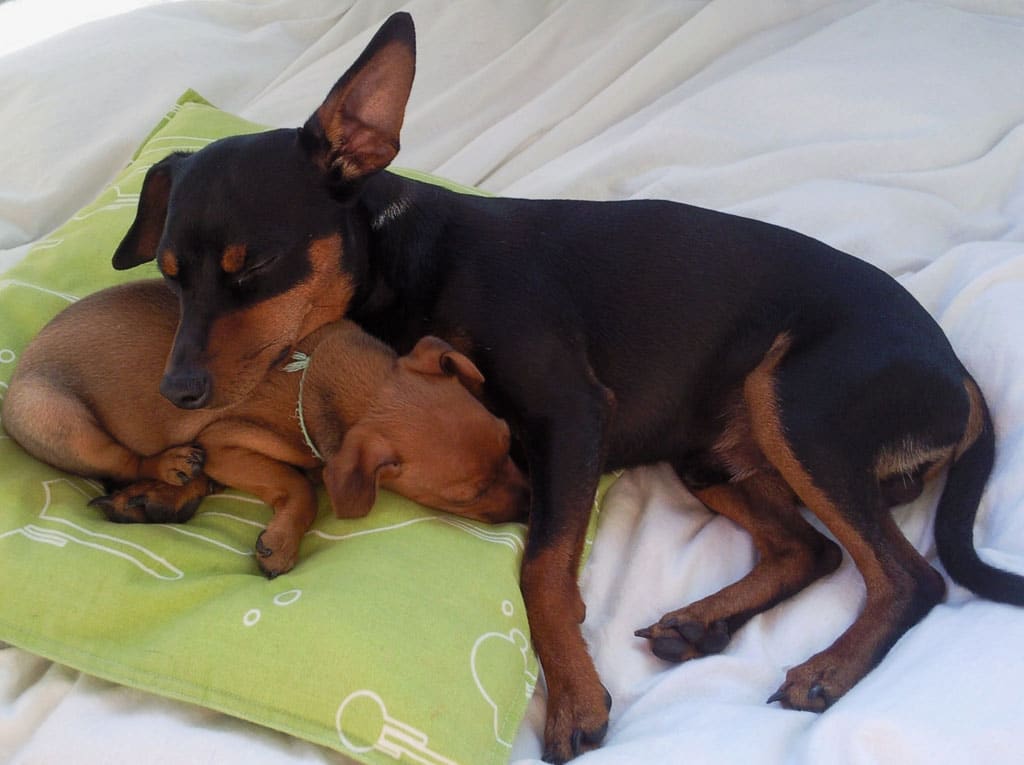
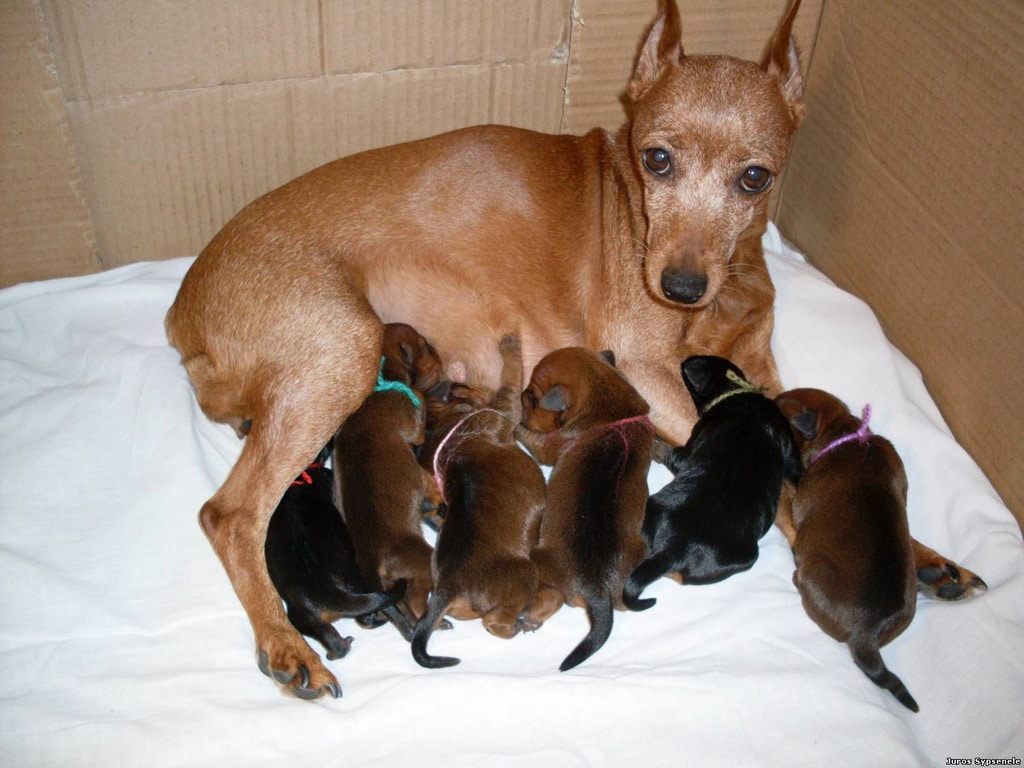
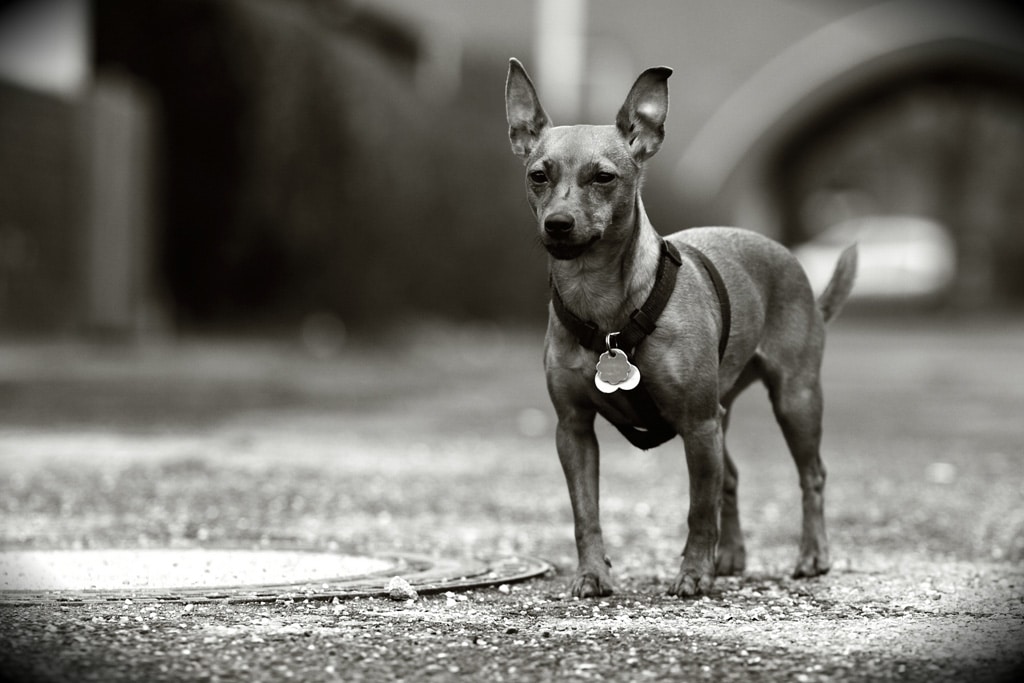
The Miniature Pinscher pictures

Videos del Pinscher Miniatura

Type and recognitions:

  • FCI CLASSIFICATION:
  • Group :
  • Section : . .

Federations:

  • FCI – Pinscher and Schanuezer dogs. Molossian type Dogs and Swiss Mountain and Cattle Dogs. , Section 1: Pinscher and Schnauzer. โ“˜
  • AKC – Toys โ“˜
  • ANKC – Group 1 (Toys) โ“˜
  • CKC – Group 5 – (Toys) โ“˜
  • โ€‹KC – Toys โ“˜
  • NZKC – Toys โ“˜
  • UKC – Companion Breeds โ“˜

FCI breed standard "Miniature Pinscher"

Origin:
Germany

Date of publication of the valid original standard:
06.03.2007

Use:

Pet and home dog


General appearance:

The Pinscher miniature is the achicada image of the German Pinscher, flawless dwarfism. Its elegant square construction is clearly visible through her short hair, smooth and tight.


IMPORTANT PROPORTIONS:

  • The construction should as much as possible appear square in relation to body length and the height to the cross.
  • The total length of the head (from the tip of the truffle to the occipital protuberance) you must keep a relationship of 1:2 with body length (from the cross to the tail insert).


Behavior / temperament:

With a lot of temperament, full of life, self-confident, balanced. All this makes it an excellent family dog โ€‹โ€‹and for company..

Head:


Cranial region:
  • Skull: Strong and elongated, with the back of the little marked head. The forehead is flat and parallel with the nasal helm.
  • Depression links (stop): Soft, Although clearly defined.

facial region:

  • Truffle: Well developed and black.
  • Snout:It ends in a truncated crib. The nasal helm is straight.
  • Belfos: Blacks, rest firm and plans on the jaws; the corner of the mouth is closed.
  • Jaws/Teeth: Powerful upper jaw and lower. The bite is scissors, strong and full (42 clean and white teeth according to tooth formula of the dog). You must close properly. Muscles of chewing this strongly developed without forming cheeks that disturb.
  • Eyes: dark, oval, the edges of the acceding and pigmented black eyelids.
  • Ears: erect; bent, high insertion, โ€œVโ€ shaped; the inside edges of the ears rest on cheeks. The ears are directed forward in the direction of the temple. The parallel fold should not exceed the top line of the skull.

Neck:

Of aristocratic porte, not too short; without interruption, It should flow harmoniously on the cross; dry, without dewlap and loose in the throat skin. The skin of the throat is firm, without wrinkles.

Body:

  • Top line: Slightly descending from the cross back.
  • Cross: It is the highest point of the top line.
  • Back: Strong, short, firm.
  • Pork loin: Strong. The distance from the last rib to the hip is short so that the dog appears compact.
  • Rump: Slightly rounded and imperceptibly through the inclusion of the queue.
  • Breast : Moderately wide, oval cut, deep up to elbows. The apron is especially marked by the tip of the sternum.
  • bottom line: Flanks not excessively gathered so as to provide a nice wavy line along the lower part of the thorax..

Tail:

Natural, the goal being to make it Sabre or sickle-shaped.

Tips

PREVIOUS MEMBERS: The forelimbs are, seen from the front, vigorous, straight and placed not too close together. Profile viewed forearms are straight.

  • Shoulder: The scapula is firmly resting on the chest. Well muscled on both sides of the spine of the bone, It overhangs the vertebrae of the column in the thoracic segment. As much as possible well cast and tilted backward, forms an angle of 50ยบ with the horizontal.
  • Arm: Well on the body, strong and muscular; forms an angle of approximately 95ยบ to 105ยบ with the scapula.
  • Elbows: Tight, not rotated or outward or inward.
  • Forearm: Straight seen from front and profile; strongly developed and muscular.
  • Carpo: Strong and stable.
  • Metacarpus: Strong and elastic, seen from the front straight, profile I slightly oblique in relation to the ground.
  • Front feet: Short and round ; fingers pinched each others and arched (cat feet) ; strong pads ; short nails, black and strong.

LATER MEMBERS: Views of oblique profile, from the back, are parallel and not too together.

  • Thighs: Moderately long, widths, and heavily muscular
  • Knee: Must not be turned neither inward nor outward
  • Leg: Long and strong, sinewy, continuing in a powerful Tarsus
  • Hock: Well angled, strong, firm, not turned neither inward nor outward
  • Metatarsus: Perpendicular in relation to the ground
  • Rear feet: A little longer than the front. Fingers tightened one another well arched ; nails short, black.

Movement:

The Pinscher miniature is a m. During the movement the back remains firm and relatively quiet. The beginning of the movement is harmonious, insurance, full of strength, free and good range. It is typical for trotters to have great ground coverage with clean, fluid movement., with a powerful drive and a wide front extension.

Mantle

SKIN: Firm throughout the body

COAT: Short and thick hair, shiny and tight to the body, without bald regions.

COLOR

  • Unicolor: Red Deer, Jatoba to red oscuro-marron.
  • black and tan: Black hair lacquer with red fire marks to Brown. It is desirable that the trade marks are possible dark, saturated and well-defined. Fire marks are located : on the eyes, on the underside of the neck, in the Metacarpus, in feet, on the inner faces of the hind and the perineum. In the sill, two triangles of equal size clearly separated one from the other.


Size and weight:

  • HEIGHT AT THE WITHERS (Males and females): 25 until 30 cm..
  • WEIGHT (Males and females): 4 until 6 kg.


Fouls:

Any deviation from the aforementioned criteria is considered a fault and the severity of this is considered to the degree of the deviation from the standard and its consequences on the health and well-being of the dog.


In particular:

  • Look heavy or light, petizo or patilargo.
  • Heavy or round skull.
  • Wrinkles on the forehead.
  • Short snout, pointed or narrow.
  • Bite in clamp.
  • light eyes, too big or too small.
  • Inclusion of low or very long ears, ears carried different from each other.
  • The throat loose skin.
  • Too long back, collected or soft.
  • Encarpado back.
  • fallen group.
  • Long feet.
  • Amble step.
  • High way.
  • Fine animal hair.
  • eel line, Dark saddle, mantle clear, spotted fur.
  • 1 cm.. above the upper limit of height or 1 cm.. below the lower height limit.

SERIOUS FAULTS:

  • Lack of type in the expression of sex (for example female male).
  • Lightweight aspect.
  • Lack of parallelism skull/snout.
  • Amanzanado skull.
  • Elbows rotated out.
  • Hocks rotated inwards.
  • After not quite angled or barrel.
  • Deviations of more of 1 cm.. and less than 2 cm.. at the maximum and minimum heights respectively.

MISS PLAYOFFS:

  • Shyness, aggressiveness, evil, exaggerated suspicion, nervous behavior.
  • Any deformity.
  • Lack of type.
  • Lacking bite, upper or lower prognathism, Arcade of the offset incisors.
  • Miss runner in each region as construction defects, hair and color.
  • Deviations of more of 2 cm.. of the upper and lower height limits.

Any dog โ€‹โ€‹showing clear signs of physical or behavioral abnormalities must be disqualified..


N.B.:

Males should have two normal-appearing testicles fully descended into the scrotum..

TRANSLATION: Lucas Rodriguez Bazzurro.

Source: F.C.I - International Cynological Federation

Alternative names:

1. Min Pin, King of the Toys (English).
2. Pinscher Nain (French).
3. Rehpinscher, Miniature Pinscher, Minpin, Minidoberman; in ร–sterreich auch unter Rehrattler bekannt (German).
4. Pinscher miniatura (Portuguese).
5. Pinscher enano (espaรฑol).

โ–ท The world of Pets: Dogs, cats, birds, reptiles, amphibians

Caucasian Shepherd Dog
Rusia FCI 328 Molossoid . Mountain

The Caucasian Shepherd Dog It is a healthy animal and stable temperament.

Pastor del Cรกucaso

Content

Characteristics "Caucasian Shepherd Dog"

Coexistence is important that you have with your new friend. Before considering the acquisition of a dog of the breed "Caucasian Shepherd Dog" you know certain factors. Not all breeds of dogs are apt to live in an apartment, you must take into account his character, their need for exercise, their interaction with other pets, their care and if you have small children, their level of tolerance towards them.

Adaptation โ“˜

4,0 of 5 stars (based on 1 review)

friendly dog โ€‹โ€‹โ“˜

2,0 of 5 stars (based on 1 review)

hair loss โ“˜

3,0 of 5 stars (based on 1 review)

Affection level โ“˜

4,0 of 5 stars (based on 1 review)

Need for exercise โ“˜

2,0 of 5 stars (based on 1 review)

Social need โ“˜

2,0 of 5 stars (based on 1 review)

Home โ“˜

2,0 of 5 stars (based on 1 review)

Toilet โ“˜

2,0 of 5 stars (based on 1 review)

Friendly with strangers โ“˜

2,0 of 5 stars (based on 1 review)

barking โ“˜

3,0 of 5 stars (based on 1 review)

Health โ“˜

2,0 of 5 stars (based on 1 review)

Territorial โ“˜

5,0 of 5 stars (based on 1 review)

Cat friendly โ“˜

3,0 of 5 stars (based on 1 review)

Intelligence โ“˜

3,0 of 5 stars (based on 1 review)

Versatility โ“˜

2,0 of 5 stars (based on 1 review)

Child friendly โ“˜

3,0 of 5 stars (based on 1 review)

Surveillance โ“˜

3,0 of 5 stars (based on 1 review)

joy โ“˜

5,0 of 5 stars (based on 1 review)

History ยซShepherd of the Caucasusยป

One Caucasian Shepherd Dog it is a large and very strong sheepdog that is very widespread in Russia. In the official standard it is called Kavkazskaya ovฤarka. The Caucasian Shepherd Dog they spread over a huge area, which includes the territory of Russia as well as the former Soviet Union. Only in the polar areas you can hardly see. In his homeland., theCaucasian Shepherd Dog are, therefore, quite different in detail and different types have been developed. In the steppe areas this breed is lighter and taller, in mountainous regions heavier and more compact. But in type and character it is the same everywhere. This is the result of your work task, which was and is the only criterion for breeding there for many centuries. At the end, the same requirements resulted in the same dogs. Their tasks are to herd and protect the herds, monitor and protect property and its people. They are archaic dogs, they probably came into existence in this form with the introduction of animal husbandry in the first place, and that was a few 10.000 years.

You can't fool a Caucasian Shepherd Dog. Has a clear understanding of their role. Typically, lies down in a high place next to his flock, to be able to observe everything around him. Her flock, their shepherds, his family and his properties are sacred to him. He is faithful and lovingly devoted to them. He is suspicious of everything else and does not hesitate to attack any sign that he interprets as hostile. It is extremely defensive and fearlessly opposes even wolves and bears. In this way it has protected the herds of cattle and the lonely properties of the shepherds, farmers, hostels, artisans and merchants from time immemorial. This extremely useful feature, even necessary for the functioning of such a society in the vast and lonely country, does not fit into today's tight and hectic society. There is hardly a piece of land large enough to provide the dog with Caucasian Shepherd Dog a workspace. He is used to other scales of the vastness of Russia.

It also, the zeitgeist in today's world demonizes all forms of aggression emanating from a dog. While it only takes one or two generations, larger property owners were proud that their dog was reliable and, in case of emergency, acute, I would fearlessly chase away a thief, such a feature is potentially life-threatening for today's dog. It runs the risk of being classified as a "dangerous dog" and in extreme cases, euthanasia. This is not an environment for a Caucasian Shepherd Dog. And so you can find it almost everywhere on the lists of supposedly dangerous dogs. It is an archetype of dog to which man owes a lot in his development. As a dog breed it has been described for a long time and in the oldest specialized books on dogs. But, in modern pedigree dog breeding, it was only officially recognized by the FCI in August 1984.

Physical characteristics ยซCaucasian Shepherdยป

The Caucasian Shepherd Dog is a dog of harmonious structure, big and strong with plenty of bone and a powerful muscular system and a somewhat rectangular format. Well pronounced sexual dimorphism.
Males are masculine with a well-developed cross and a larger head compared to that of females. This is why they are more massive, bigger and sometimes their body is shorter than that of the females.
In dogs with a longer coat variety, the male has a distinguished mane.

Size and weight:

Height to the cross:

  • Males: Desired height 72 โ€“ 75 cm.. Minimum 68 cm..
  • females: Desired height 67 โ€“ 70 cm.. Minimum 64 cm..

Higher heights are accepted as long as the conformation is harmonic.

Weight:

  • Males: Minimum 50 Kg
  • females: Minimum 45 Kg.

Character and skills ยซCaucasian Shepherdยป

The Caucasian Shepherd Dog is a guardian and protector. The official standard classifies your character qualities unequivocally: "It must be strong, balanced and calm with a well-developed defensive reaction, which is actively expressed. Sharpness and distrust of strangers are typical.". And Caucasian Shepherd Dog is generally incompatible with other dogs! These traits, especially with a big and very strong dog that claims a large territory, are hardly compatible with the social conditions of today's world. It is a great experience to be able to form a close bond with a dog like this.. This also allows you to experience a completely different side of the dog than Caucasian Shepherd Dog, that of an extremely loving friend, loyal and affectionate. But, if one does not have the space and financial means to offer them in our latitudes an environment appropriate to their nature, this will hardly be possible.

Fitness

The Caucasian Shepherd Dog he is extremely undemanding in his attitude, if the general conditions already mentioned are ignored. One Caucasian Shepherd Dog does not need heating, toys or a harness on a leash. This breed is undemanding in its nutrition. That also applies to your accommodation.. You can spend the whole year outside without problems, if you want to spend the whole year abroad – as long as there is a suitable place to hide and "adequate" here definitely means neither a kennel nor even a chain.. Must be able to move in your territory. One Caucasian Shepherd Dog you accept, it even sensitively protects all the two- and four-legged friends it sees as belonging to its pack or family. But you need a clear boss. At first he is suspicious or even hostile towards everyone else.

Close relationship and competent guidance is required to walk on this dog's leash., which is definitely always stronger, and then be able to seamlessly move on to an aggressively barking terrier. it's possible, but it requires serious upbringing, a good socialization and an experienced teacher or lover, competent and very sensitive and at the same time thorough. The Caucasian Shepherd Dog is widely on the dangerous dog lists. It is forbidden to travel to the Netherlands or Denmark, since there is a risk that the dog will be confiscated on the streets and euthanized. One Caucasian Shepherd Dog not much of a beginner dog. That would even be irresponsible. Even from the hand of an experienced connoisseur, it requires in any case the basic external conditions for an attitude appropriate to its nature.

Education ยซCaucasian Shepherdยป

Raising a Caucasian Shepherd Dog in today's social conditions it is a very special challenge, only proven experts can master with the right framework conditions.

Care and health ยซCaucasian Shepherdยป

The Caucasian Shepherd Dog it has a double layer composed of a bottom layer and a top layer. The inner layer is soft and fine, while the outer coat hairs are long and thick. (The coat of a Caucasian Shepherd Dog It should never feel smooth or appear wavy.) Regarding the length, the coat can be long, medium or short. Dogs with long fur have a mane that surrounds their necks, as well as extensive plumage on the hind legs and tail, that looks thick and fluffy. Dogs with medium length fur do not have as much mane, and they have fewer feathers on the rest of the body. A short coat, the least common type, has no mane or fringe. Twice a year, when you change your coat, you have to brush it well.

Dogs of this breed enjoy very robust health.

Nutrition / Food

The Caucasian Shepherd Dog does not demand anything from your diet. Probably one of the dogs with less demands in this regard.

The life expectancy of the โ€œCaucasian Shepherdโ€

In relation to its size, a Caucasian Shepherd Dog has a very high life expectancy of 12 and sometimes more years.

Buy a โ€œCaucasian Shepherdโ€

The purchase of a Caucasian Shepherd Dog it should only be considered by experts who know exactly what they do, who have the appropriate experience and who have the appropriate rearing conditions. The puppies of this breed of dog cost around 1.000 EUR.

Images ยซCaucasian Shepherdยป

ยซCaucasian Shepherdยป Videos

Type and recognitions:

  • FCI CLASSIFICATION:
  • Group :
  • Section : . .

Federations:

  • FCI – Pinscher and Schnauzer-Molossoid type dogs – Swiss Mountain Dogs and Cattledogs. Section 2.2 Molossoid, mountain type. โ“˜
  • AKC – FSS (Foundation Stock Service) โ“˜
  • UKC – Watchdog โ“˜

FCI breed standard "Caucasian Shepherd Dog"

Origin:
Russia, Armenia, Georgia, Azerbaijan

Date of publication of the valid original standard:
13.10.2010

Use:

Guard and surveillance dog.


General appearance:

The โ€œCaucasian Shepherdโ€ Dog is a dog with a harmonious structure, big and strong with plenty of bone and a powerful muscular system and a somewhat rectangular format. Well pronounced sexual dimorphism. Males are masculine with a well-developed cross and a larger head compared to that of females. This is why they are more massive, bigger and sometimes their body is shorter than that of the females.

In dogs with a longer coat variety, the male has a distinguished mane.


Behavior / temperament:

The behavior is firm, Active, self-confident, courageously and independently. The โ€œCaucasian Shepherdโ€ Dog shows affection and devotion towards its master, he is an excellent guard dog.

PROPIMPORTANT ORTIONS:

  • Body length exceeds height at withers 3 โ€“ 8%.
  • The length of the forelimbs averages the 50 โ€“ 52% the height at the withers.
  • The length of the skull and the length of the muzzle is 3:2

Head:

---

Cranial region:

The head is big, solid and broad in the cheekbones. View from the top, the head is wedge-shaped with a wide base.

  • Craging: Solid and wide, rather flat antecara with a marked but not deep fold. Superciliary arches developed but not protruding. Barely visible occipital bone.
  • Dnaso-frontal depression (Stop): Noticeable but not clearly marked.

facial region:

  • Trufa: black, large with wide open nostrils without protruding from the outer lines of the snout. A black truffle in solid colors, spotted and peeping is desirable but not mandatory (but genetic blue or liver brown truffles are not allowed)
  • Horcico: Wide and deep tapering gradually towards the nose with strong jaws and chin. Great depth and well-filled under the eyes. The nasal bridge is wide. The upper line of the snout and skull run parallel.
  • Labios: Thick, tight and well pigmented.
  • Jaws / Teeth: Teeth must be healthy, white and strong; incisors together with each other in a line. Complete bite in scissors or forceps (42 teeth). Incisors or injured canines, broken or broken that do not affect the bite are not significant or the absence of PM1.
  • Cheeks: Well developed and highlighted by good chewing muscles.
  • Ojors: Moderate size, Oval shaped, not too deep, placed separate and oblique. Color is in different shades of brown, from dark to hazelnut. Black eyelids, dry, tight. Serious expression, attentive and inquisitive.
  • Obars: Moderate size, thick, Triangular shape, naturally hang, placed high and separate. Traditionally amputated in their country of origin. Natural ears are of equal value.

Neck:

Long Middle, strong, low insertion, transversely rounded. Crest pronounced especially in males.

Body:

Very well developed in all its dimensions, width, good musculature and well balanced.

  • Cruz: Well pronounced, moderately long. Height at withers slightly exceeds height at rump.
  • Dorrso: Straight, width, firm.
  • Itmor: Short, width, slightly arched.
  • Glikeness: Moderately long, wide, rounded, slightly inclined towards the base of the tail.
  • Pecho: Long, width, good ribs, in general deep as well as in its anterior part. Transversally has a broad oval shape. Well arched ribs, false long rib. Antepecho marked.
  • Lรญnlower ea and belly: Abdomen moderately retracted posteriorly.

Tail:

High insertion, curved sickle or curled. At rest it hangs up to the height of the hock; when the dog is alert the tail can be carried over the top line.

Tips

PREVIOUS MEMBERS:

  • ApGeneral arience: Good musculature. Seen from the front, straight and parallel members placed slightly apart.
  • Hormbros: Strong musculature. Moderately long, widths,
  • inclined to form an angle of approximately 100 degrees with the forearm. The scapula well next to the chest.
  • Antarm: Strong and muscular, well together.
  • Elbows: Set well back, parallel to the axis, without turning inward or outward.
  • Brazo: Straight, solid, moderately long, good musculature, transversely round.
  • Metacarpus: Short, solid, always straight viewed from the front and sides.
  • Pinis previous: Large, Round shape, well arched, well closed.

LATER MEMBERS:

  • ApGeneral arience: Seen from behind, rights, parallel and moderately spaced. Knees and hocks well enough angled when viewed from the side. The back should not be placed too far back.
  • Thigh: Width, good musculature, moderately long.
  • Rodinllto: Well angled enough.
  • PinScheme: Wide, good musculature, moderately long.
  • Hock joint: Ancha and inclined, well angled enough, firm, without leaning neither in nor out.
  • Metatarsus: Not too long, solid, always straight seen from the front or side.
  • Pinis later: Large, Round shape, well arched, well closed.

Movement:

Libre, elastic, without rushing with good thrust from the rear. Good stability in all joints and good coordination. Trotting tends to be the typical movement. The withers are at the same level as the rump and the dorsal line is relatively stable.

Mantle

PIEL: Thick, sufficiently elastic without creases or wrinkles.

  • Plink: straight, rough, separated with a well developed undercoat. The length of the outer coat as well as the undercoat should not be less than 5 cm.. The hair of the head and forelimbs is shorter and thicker. The tail is completely covered with bushy hair giving the appearance of thick and very hairy. The long outer hair forms โ€œbrushesโ€ over the ears, a โ€œmaneโ€ around the neck and โ€œpantsโ€ on the back of the thigh.
  • Colorr: Any solid color, piebald or spotted. Except for solid blacks; dilute black or black in any combination or genetic blue or liver brown.


Size and weight:

Alturto the cross:

  • Males: Desired height 72 โ€“ 75 cm.. Minimum 68 cm..
  • females: Desired height 67 โ€“ 70 cm.. Minimum 64 cm..

Higher heights are accepted as long as the conformation is harmonic.

Weight:

  • Males: Minimum 50 Kg
  • females: Minimum 45 Kg.


Fouls:

Any deviation from the aforementioned criteria is considered as a fault and the severity of this is considered to the degree of the deviation to the standard and its consequences on the health and well-being of the dog..

FALTAS GRAVES:

  • Structure too light or too rough.
  • Diffidence.
  • Deviations of sexual dimorphism.
  • Small head in proportion to the body, light, close, long, Tosca, brick or apple shaped head.
  • Abrupt stop.
  • Snout: sunken, concave or pointed.
  • Too small teeth, very separate, incisors not placed in a line, any deviation from the dental formula (except the absence of PM1)
  • Cheek bones not marked enough.
  • Big eyes, protruding, very clear, showing the third eyelid, drooping eyelids.
  • big ears, fine or very low insertion.
  • Steep or sunken top line, long, sunken or arched back, rump higher than the cross.
  • Square body, very rough, very long, narrow both front and back, extremities too long, very short chest, flat or sunken, short or steep rump.
  • Stump tail.
  • Bones, weak muscles and ligaments.
  • Absence of the correct angulations.
  • Forelimbs curved
  • Unbalanced movement.
  • Lack of thrust from the rear.
  • Too soft hair, curly, very short outer hair and no undercoat.

FALTAS DISQUALIFYING:

  • Aggressiveness or extreme shyness.
  • Any dog โ€‹โ€‹showing clear signs of physical or behavioral abnormalities must be disqualified..
  • Any deviation from the required bite.
  • Incomplete dental formula (absence of any teeth except third molars (M3) or first premolars
  • Entropion
  • Eyes gazeos, dark blue, green shading or different colored eyes.
  • amputated tail.
  • Constant hobbling or inability to achieve movement.
  • Black color in any variation, solid, diluted, cheep, spotted the like robe (except the mask).
  • Genetic blue in any variation or shade.
  • Truffle, bluish-gray pigmented lips and eyelids.
  • Genetic brown in all variations or shades.
  • Truffle, genetic brown lips and eyelids.
  • Fire colored markings on black dogs, blue or brown.
  • Height below minimum.
  • Severe deviations of sexual dimorphism in males.


N.B.:
  • Males should have two normal-appearing testicles fully descended into the scrotum..
  • Only functionally and clinically healthy dogs, with the typical conformation of the breed, should be used for parenting.

Itlatest changes are in bold.

TRANSLATION: Brรญgida Nestler / Original version: (IN)

Technical supervision: Miguel Angel Martinez.

Source: F.C.I - International Cynological Federation

Alternative names:

1. Nagazi, Caucasian Mountain Dog, Caucasian Ovcharka (English).
2. kavkazskaรฏa ovtcharka (French).
3. Kaukasischer Owtscharka, Kawkasskaja Owtscharka (German).
4. mastim-do-cรกucaso, Pastor-caucasiano, Ovcharka caucasiano, Mastim do cรกucaso, Cรฃo montanhรชs caucasiano, Cรฃo-urso-russo (Portuguese).
5. Pastor caucรกsico, Mastรญn del Cรกucaso, Perro de montaรฑa del Cรกucaso, Perro Pastor caucรกsico (espaรฑol).

โ–ท The world of Pets: Dogs, cats, birds, reptiles, amphibians

Bergamasco – Bergamasco Shepherd
Italia FCI 194 . Sheepdogs

The Shepherd Bergamasco It is never aggressive despite the fact that it is a good guardian of the House

Bergamasco

Content

History

The Bergamasco It is a breed of dog originating in the Italian Alps, used as a herding dog. Its appearance recalls to the of the Komondor (hungarian dog).

This breed comes from contact with dogs of nomadic shepherds and their flocks that came from East to West. The Pastor's Ancestors Bergamasco They are located in the area of โ€‹โ€‹the Alps, an ideal area to display their characteristics.

Since 1300 the use of these dogs is determined by herding herds of sheep typical of Bergamo. In the four centuries that followed, The Shepherd Bergamasco, has increased with the expansion of sheep farming. After 1700, However, After a gradual reduction of the pastoral activity, This race began to decrease its population, to almost extinction during the two world wars.

In 1890 The breed is still called "mountain dog" and, in 1949 the company of lovers of the Pastor is founded Bergamasco. A few years later, Finally formalized the name: Bergamasco.

Physical characteristics

The tail is thick and strong at the base, Tuning towards the tip. Is covered with hard hair slightly wavy. Allowed colors are all shades of black (not bright), even with grey spots. The color should be determined from the root of the hair, because the part of Tufts often form different tones.

The coat is very abundant, long, wavy, rough texture (goat) at the front of the trunk, of wool (sheep) the other half, less hard in the head.

The eyes are large, more or less dark, with eyelids slightly oval. The ears are upright, but they fall in the last two thirds. The length of the muzzle is equal to the skull. As a whole it is large and parallelepiped in shape.. The skull is wide and slightly convex between the ears. Feet are oval-shaped, with toes well arched and closed.

Did you know??

The mat coat of the Bergamasco it is to protect him from bad weather and from predators that he might have to drive away in defense of his flock.

Character and skills

He has a temper, obedient and responsive, is a very versatile dog, their ability to learn and to decide, along with the inborn patience, make it a dog suitable for various uses. The family is identified as his flock, and to be a sheep dog, likes to keep everyone together. It will always be aware of the Group.

It is a great companion, for adults and children, to those who consider their puppies (the weak family part), and you care them with much more attention. It is very Protector, but nothing possessive. It is never aggressive despite the fact that it is a good guardian of the House, effective to deter, but not to be dangerous.

Observations

As a recommendation, It is important to care for their fur because they are many knots, and so it is good to styling it with the hands to untangle. We recommend bathing but let it dry in the Sun. It has one of the robes that needs less maintenance, to weights of appearances.

ยซBergamascoยป images

โ€œBergamascoโ€ videos

Type and recognitions:

  • FCI CLASSIFICATION:
  • Group :
  • Section : . .

Federations:

  • FCI โ“˜
  • AKC โ“˜
  • ANKC โ“˜
  • CKC โ“˜
  • KC โ“˜
  • NZKC โ“˜
  • UKC โ“˜

FCI breed standard "Bergamasco – Bergamasco Shepherd"

Origin:
Italy

Date of publication of the valid original standard:
27.11.1989.

Use:

Shepherd dog.


General appearance:

Pastor "Bergamasco" is a medium-sized dog, rustic looking, with abundant fur over the entire body, strong, but well proportioned. Its general appearance is that of a dog of medium proportions whose body tends to be a square. It is harmonic, so much for the dimension (heterometry = normal relationships between size and different parts of the body), as per the profiles (Alloidism = concordance between head and body profiles).


Behavior / temperament:

The role of the Pastor "Bergamasco" it's about driving and tending the herd, work for which he shows an excellent disposition thanks to his vigilance, concentration and psychological balance. His faculty of learning and determination, combined with his restraint and patience make him an excellent watchdog and companion dog, suitable for the most diverse uses. Establishes, also a close relationship with man.

Head:

The length of the muzzle is equal to the length of the skull. In its parallelepipedic set the head appears large. The skin should not be thick, but well applied to the underlying tissues, and without forming wrinkles.

Cranial region:
  • Skull: The skull is wide and slightly convex between the ears, it is also broad and rounded in the region of the forehead. The superior longitudinal axes of the skull and muzzle are parallel. The length of the skull is equal to that of the muzzle. Its width should not exceed half the length of the head. The bumps on the forehead are developed, both longitudinally, how cross; the zygomatic arches are well marked. The middle suture?frontal (the methodical) is marked, occipital protuberance is observable and protruding.
  • Stop: The stop has a uniform but pronounced slope due to the marked bones of the nose and forehead, frontal bumps and brow ridges.
  • facial region:

    • Truffle: In line with the snout with the upper profile curved, wide open windows, wet, fresh and big. Profile view should not be protruding. The color of the truffle is black.
    • Snout : It progressively tapers to its extreme and the lateral faces converge slightly, so that it is not pointed, but truncated, with the inside face rather flat. Its length is equal to the length of the skull. Its width, measured at mid-length it reaches approximately the 50% its length.
      The height of the muzzle should not be less than half its length. The upper profile of the muzzle, traced by the profile of the nasal bridge, it is rectilinear.
      The lower profile of the muzzle is not determined by the lip, but for the jaw. Because of this conformation, the corner of the mouth does not fall.; the muzzle is well cleft, so that the corner of the mouth is at the level of an imaginary vertical drawn from the outer corner of the eye. The profile of the lower jaw is more or less rectilinear.
    • Lips : Fine and not very outstanding, They separate under the bridge of the nose, drawing a very open arc that forms a third of a circle.; in this way the teeth of the jaw are barely covered. The edges of the lips are well pigmented.
    • Jaws : The body and the lower and upper maxillary branches are well developed and broad..
      Teeth : Whites; the denture is complete and well developed, incisors are aligned regularly. The joint is in the form of scissors.
    • Cheeks : Little prominent.
    • Eyes : So big; neither bulging nor sunken, iris darker or lighter than brown, depending on the color of the coat. Placed forward; his expression is soft, serene and attentive. The shape of the eyelid is slightly oval and the angle of the eyelid to the horizontal is only slightly oblique. Eyelids fit tightly over the eye, edge of the eyelids pigmented black, the eyelashes are particularly long so that they can lift the hair that falls from the forehead over the eyes.
    • Ears : High insertion; they are semi-fallen, that is to say, that only the terminal thirds up to the rounded tip are falls. When the dog is attentive the ear stands slightly at the base. Its shape is triangular. The length of the ear is between 11 and 13 cm., its width is 6,5 to 8 cm.. Features a wide base, that in the back extends to the ligament that goes from the head to the neck, while the front reaches the middle of the skull. The limb is slightly rounded. On the ears the hair is somewhat wavy and soft, while at the tip it ends in bangs.

    Neck:

    The upper profile is slightly convex. The neck is slightly shorter than the head; in effect, in extension does not exceed 80% of head length. Neck perimeter, measured at half its length, must be at least twice its length. The skin should never be flaccid, therefore there should be no trace of a double chin. Hair must be thick.

    Body:

    • top line : The withers stand out quite a bit from the rectilinear dorsal profile. The lumbar region has some convexity and the rump is slightly oblique.
    • Cross : Tall and long. The neck harmoniously joins the trunk.
    • Back : Rectilinear, well muscled and wide, its length reaches around 30% the height at the withers. The lumbar region is well connected to the line of the back and the croup. The length of the lumbar region reaches around the 20% the height at the withers, in this way it is much shorter than the dorsal region. The breadth of the lumbar region is roughly equal to its length; the musculature of the entire region is well developed.
    • Rump : Wide, robust, well muscled and oblique, with a tilt of the 30% under the horizontal; its transverse width, between the two haunches, must reach 1/7 the height at the withers.
    • Breast : It must be wide, well arched, descending to the level of the elbows. Its perimeter (measured behind the elbows) surpasses the 25% the height at the withers. Its transverse diameter must reach 30% the height at the withers. The depth and height of the chest should reach the 50% the height at the withers.
    • bottom line : Starting from the sternum, the lower profile rises very slightly towards the belly, which is therefore low. The length of the flanks must correspond to that of the lumbar region, which is short. The depression of the flanks is minimal.

    Tail:

    Located in the lower third of the rump, thick and strong at the base and gradually tapering towards the tip. Covered with slightly wavy goat hair type hair. The length of the tail often reaches the hock when the dog is standing; preferably it should be shorter. At rest the tail is carried in the shape of a saber, that is, hanging in the first two thirds, with the final third slightly curved. In action the dog wags his flag tail, sideways.

    Tips

    Former members
  • Forearm : This one is vertical, its length is at least equal to that of the arm. Musculature and bones are well developed.
  • Carpi : Extends the vertical line of the forearm. Has great mobility, he is thin, with a clearly protruding fish bone.
  • Metacarpus : It must be slim and highly mobile. Seen from the front, must be located in the same vertical plane as the forearm. Seen in profile it is a bit oblique at the front.
  • Pie : Oval (hare foot) with well-knit and arched fingers. Strong nails, curvy and pigmented. The footpads are dark in color.

    Former members

    As a whole, these adapt well to the size of the dog. Legs are normal, both seen in profile, as from behind.

    • Thigh : It is long, width, good muscular, with a slightly convex trailing edge. Its length exceeds about 30% the height at the withers, and its width the 75% its length. The opening of the coxofemoral angle varies between 100 and 105 degrees.
    • Leg : Strong bones and fine muscles, leg groove is well marked. Leg length reaches around 1/3 the height at the withers. Its inclination above the horizontal is about 55 degrees.
    • Knee : It is well plumb in the line of the extremity and is not deviated either inwards or outwards.. The femoral angle?tibial is open and measures between 130 and 135 degrees.
    • Hock : The lateral faces of the hock should be very wide. The distance from the point of the hock to the ground should not be less than 25% the height at the withers. The aperture of the tibiotarsian joint angle varies between 140 and 145 degrees.
    • Metatarsus : Its length reaches a 15% the height at the withers, if measured separately; if on the contrary it is calculated from the tip of the calcaneus, its length is equal to that of the hock. Your direction must be vertical. Any dewclaws that eventually appear should be removed.
    • Pie : It must have the same characteristics as the front foot


    Movement:

    The step must be agile and long; the trot, quite elongated and resistant, is the preferred move. Thanks to its conformation, the dog can easily go at a running gallop, movement that is able to maintain for a long time.

    Mantle

    • Skin : It should be fine all over the body, but especially in the ears and in the forelimbs; must be well applied to the body. The neck should not have a double chin and the head should not have wrinkles. The color of the mucous membranes and the third eyelid must be black.
    • Fur : Very abundant, long and of different texture depending on the region. Its texture is rough (goat hair) particularly on the front of the trunk. From the middle of the chest towards the back, and on all limbs, the hair tends to form tufts or is already organized into tufts depending on the age of the dog; these strands must come out of the upper part of the dorsal region and fall on the lateral planes of the trunk. On the head the hair is less coarse and covers the eyes. The hair should be evenly distributed over the extremities, forming soft locks that reach to the ground, resembling a kind of pilaster on the front and tufts on the back, although without forming bangs. Underlying hair is so short that the skin is not easily visible. It should be soft to the touch.
    • Color : Uniform gray, with gray spots in all possible shades, ranging from delicate and moderate gray, to a lighter or darker shade, until reaching black. Isabela and light reddish shades are accepted. A solid black coat is acceptable if it is truly dull (it's gone). Solid white fur is not allowed. White spots are tolerated when their surface does not exceed one fifth of the total surface of the coat.


    Size and weight:

    Height to the cross : For males the ideal height at the withers is 60 cm., with a tolerance of 2 cm more or less. for females, is of 56 cm., with the same tolerance of 2 cm more or less.

    Weight :

    • Males : 32 to 38 kg.
    • females : 26 to 32 kg.


    Fouls:

    Any deviation from the above mentioned criteria is considered to lack, and the gravity of this refers to the degree of deviation to the standard and its impact on the health and well-being of the dog.

    These modalities apply equally to dogs with very small heads and those with permanent amble..

    ELIMINATING fAULTS :
    • Convergent or divergent craniofacial axes.
    • Accentuated mandibular prognathism which causes disfigurement. Bilateral strabismus.
    • Partial depigmentation of the nose.
    • Size that exceeds to a greater or lesser degree the margins indicated by the standard
    • Trumpet-shaped tail.


    Disqualifying fouls :
    • Aggressive or fearful dog.
    • Total depigmentation of the nose.
    • Clearly bulging or concave nasal bridge.
    • Total bilateral depigmentation of the eyelids.
    • Eyes of different colour (even if it's only one).
    • Jaws : prognatismo superior.
    • Tail absence, brachyurism, tail that curls over the back.
    • Coat color : the white surpasses 1/5 of the total area.
    • Skin : total depigmentation at the edge of the lips.

    Any dog โ€‹โ€‹showing clear signs of physical or behavioral abnormalities must be disqualified..


    N.B.:

    Males should have two normal-appearing testicles., fully descended into the scrotum.

    Source: F.C.I - International Cynological Federation

    Alternative names:

    1. Bergamasco Shepherd Dog, Bergamasco Sheepdog, Bergamasco (English).
    2. Cane da pastore bergamasco (French).
    3. Cane da pastore Bergamasco (German).
    4. (em italiano: Cane de pastore Bergamasco) (Portuguese).
    5. Pastor de Bergamasco (espaรฑol).

  • โ–ท The world of Pets: Dogs, cats, birds, reptiles, amphibians

    Dutch Shepherd
    Holanda FCI 223 - Sheepdogs.

    Dutch Shepherd

    The most widespread variety of Dutch Shepherd she is the one with long hair, but the breed is almost unknown outside the Dutch borders.

    Content

    History

    The Dutch shepherd descends directly from the belgian shepherds, who looks a lot like (including subdivision into three hair varieties).

    Originally the main function of the Dutch shepherd It was typical of a country shepherd dog. From the earliest times the Dutch had an agricultural culture, among others, made up of flocks of sheep. The dogs had to keep the flock away from the sowing, which they did patrolling the borders of the road and the fields. They also accompanied the transfer of the herd to the common meadows, markets and ports. In the farm, they kept the chickens out of the kitchen yard, cows were herded for milking and the milk cart was pulled. They also alerted farmers if anyone entered. About 1900, the herds had almost disappeared in the Netherlands. The Dutch Shepherd's versatility made him suitable for training, which at that time was beginning to become popular. Thus began a new career as a police dog., search and rescue and as a guide dog for the blind. In any case, he is still capable of herding herds.. The first breed standard dates from 12 in June of 1898.

    Physical characteristics

    It is a dog of medium size and weight, quite muscular, Powerfully built and well proportioned. His expression is intelligent and temperament, live. The eyes are dark in color, medium-sized, macaroons, somewhat oblique and never round. The ears, smaller than big, they are straight and facing the front, and inserted high. The tail, that at rest hangs straight or forms a slight curve, reaches the tip of the hock. When it is active, the dog is elegantly elevated, never coiled; never falls on the sides.

    • Fur: the short-haired variety has a well attached coat; the long-haired one has straight hair, and the variety of hard hair has it thick and hard; on the head it forms prominent eyebrows, mustaches and beard. Depending on the cloak, in the breed there are three varieties: shorthair, long and hard.
    • Color: striated but the least intensely, on brown background (golden fluted) or gray (fluted gray). The stripes are less evident in hard-haired specimens. Black mask is preferable.
    • Size: males, of 57 to 62 cm.; females, of 55 to 60 cm..

    Character and skills

    Affectionate, obedient, docile, vigilant, trustworthy, undemanding and very resistant. Always watch out, active and endowed with the true nature of a shepherd dog. It is a little less reactive and less nervous than Belgian Shepherd, the one who looks like, However, even in character.

    The Dutch Shepherd works willingly with his master and is able to cope with any task assigned to him.
    Herding larger herds must have the ability to work in conjunction with various other dogs..

    Characteristics "Dutch Shepherd"

    Coexistence is important that you have with your new friend. Before considering the acquisition of a dog of the breed "Dutch Shepherd" you know certain factors. Not all breeds of dogs are apt to live in an apartment, you must take into account his character, their need for exercise, their interaction with other pets, their care and if you have small children, their level of tolerance towards them.

    Adaptation โ“˜

    4,0 of 5 stars (based on 1 review)

    friendly dog โ€‹โ€‹โ“˜

    3,0 of 5 stars (based on 1 review)

    hair loss โ“˜

    3,0 of 5 stars (based on 1 review)

    Affection level โ“˜

    4,0 of 5 stars (based on 1 review)

    Need for exercise โ“˜

    5,0 of 5 stars (based on 1 review)

    Social need โ“˜

    3,0 of 5 stars (based on 1 review)

    Home โ“˜

    3,0 of 5 stars (based on 1 review)

    Toilet โ“˜

    3,0 of 5 stars (based on 1 review)

    Friendly with strangers โ“˜

    4,0 of 5 stars (based on 1 review)

    barking โ“˜

    2,0 of 5 stars (based on 1 review)

    Health โ“˜

    4,0 of 5 stars (based on 1 review)

    Territorial โ“˜

    5,0 of 5 stars (based on 1 review)

    Cat friendly โ“˜

    3,0 of 5 stars (based on 1 review)

    Intelligence โ“˜

    5,0 of 5 stars (based on 1 review)

    Versatility โ“˜

    4,0 of 5 stars (based on 1 review)

    Child friendly โ“˜

    4,0 of 5 stars (based on 1 review)

    Surveillance โ“˜

    4,0 of 5 stars (based on 1 review)

    joy โ“˜

    4,0 of 5 stars (based on 1 review)

    Images "Dutch Shepherd"

    Videos "Dutch Shepherd"

    Type and recognitions:

    • FCI CLASSIFICATION:
    • Group :
    • Section : . .

    Federations:

    • FCI – Group 1 Herding dogs, Section 1 Sheepdogs โ“˜
    • AKC – PASTORAGE โ“˜
    • ANKC – Group 5 (working dogs) โ“˜
    • โ€‹KC – Pastoral โ“˜
    • NZKC – Working dog โ“˜
    • UKC – Herding dogs โ“˜

    FCI breed standard Dutch Shepherd

    FCIFCI - Dutch Shepherd
    Pastor

    Alternative names:

    1. Dutch Herder, Hollandse Herder (English).
    2. Berger hollandais (French).
    3. Hollรคndischer Schรคferhund (German).
    4. Pastor holandรชs (Portuguese).
    5. Perro de pastor holandรฉs (espaรฑol).

    Photos:

    1 – Short-haired Dutch Shepherd stacked by CaroleField / CC BY-SA
    2 – Silverbrindle and goldbrindle are the approved colors of the breed by Lissunmusta / CC BY-SA
    3 – Short-haired brindle male Dutch Shepherd named Black, 2 years old, owned by Jason Paluck by Wikipedia
    4 – Adult brindle Dutch shepherd by https://www.pikrepo.com/fyvdb/adult-brindle-dutch-shepherd
    5 – dutch shepherd by https://www.peakpx.com/504961/dutch-shepherd
    6 – Dutch shepherd by https://pxhere.com/en/photo/1387398
    7 – Neros van Guard is a Dutch Shepherd imported from Canada to the USA by Ulyseemuff / CC BY-SA

    โ–ท The world of Pets: Dogs, cats, birds, reptiles, amphibians

    Majorca Shepherd Dog
    Espaรฑa FCI 321 . Sheepdogs

    Ca de Bestiar

    The Majorca Shepherd Dog or "Cattle", It is a breed of dog originating in Mallorca.

    Content

    History

    Also known as โ€œCa de Bestiarโ€, this breed is believed to have existed since ancient times. Through the years, this dog would have been bred with a variety of local Mallorcan dogs, as well as with other European Shepherd dogs, and it was not until 1970 which he puts any restrictions on their upbringing. In fact, its breed standard was written as recently as 1980. It was in 2006 the UKC โ“˜ recognized the breed within his Group of Sheepdogs.

    Appreciated through the centuries by the Spaniards for their ability to be a versatile farm dog, the Majorca Shepherd Dog It was used both to herd flocks and to monitor property and animals. It has also been reported that the Majorca Shepherd Dog was widely used in dogfighting, a practice that is now illegal. Although it is still used on farms today, and is also often kept as a companion animal, this rare breed once seen internationally and is considered a rare breed.

    Physical characteristics

    The Majorca Shepherd Dog is a large size dog, average weight, well proportioned, rustic, strong and large muscles, flexible and robust.

    There are two varieties: long hair and most widespread short-haired. The head is well modeled, large and provided with the body, but not so much as to look like a molosser. Craniofacial shafts are slightly convergent; the relationship between the skull and the muzzle is of 1:1.

    The color eyes goes from amber to dark brown, and his expression is intelligent and enigmatic.

    The ears, small in relation to the head, they are triangular, inserted at the top and are normally bent, with dropped tips.

    The tail Start horizontally, is horizontal section, It has thick base and it tapers towards the tip.

    Fur: the short hair variety has quite thin Undercoat. In the variety of long hair, hair coverage can reach a length of 7 cm and it is slightly wavy. In both varieties should be soft and fine.

    Color: the only one admitted is black, optionally with white spots on chest and feet.

    Size: males, of 66 to 73 cm.; females, of 62 to 68 cm.. The weight is usually of 40 kg approximately.

    Character and skills

    He is a shepherd dog with skills for the job of guard and defense. Itร‚ยดs Intelligent, docile and affectionate, although as a puppy he is usually shy and reserved. For this reason it is important to socialize it to the maximum to avoid that it closes in on itself.

    The adult is very suspicious of strangers and he is united by a very strong bond with his master. Her enigmatic gaze not glimpse of his thoughts. It has an extraordinary courage and willing to everything in order to defend their loved. It's a little known breed outside the Balearic Islands, so to acquire a good puppy should address to breeders of the Islands.

    Images ยซMajorcan shepherd dogยป

    โ€œMajorcan Shepherd Dogโ€ videos

    Type and recognitions:

    • FCI CLASSIFICATION:
    • Group :
    • Section : . .

    Federations:

    • – FCI โ“˜

    FCI breed standard "Majorca Shepherd Dog"

    Origin:
    Spain

    Date of publication of the valid original standard:
    26.05.1982

    Use:

    Herding dog, guardian and defense


    General appearance:

    Sub-convex profile dog, large without being exaggerated and medium-weight size. It is totally black or black with white spot on chest, well proportioned, rustic, strong, muscular, robust and agile. There are two varieties of hair:

    • Short hair, the most common variety.
    • Long hair.

    IMPORTANT PROPORTIONS:

    Dog subhipermetrico, midline and subconvex.

    • The female accepts a longitudinal diameter of up to a 3% greater than the height of the cross.
    • Length of the muzzle is equal to the length of the skull.
    • The length of the head must be equal to the length of the neck.
    • In adult males the thoracic perimeter, taken together the cross behind the elbows, It is about a cms rather than its height at the withers.


    Behavior / temperament:

    Dog of great nobility, only an owner that accepts loads of strangers with difficulty.
    Intelligent, docile, loving, shy on end and reserved in his youth ; his sentimentality comes to unsuspected. Faithful to his master until death. If we explore in his eyes it will give us the feeling thinks. It is courageous and quarrelsome.

    Head:

    Slightly triangular profile; view dorsally is wider at the top than at the bottom; solid, but not heavy; large enough to accommodate a good intelligence; well molded and proportionate to the body; It must be rather large, but never a trotting type. The supranasal line is parallel to the cranial line. Slightly divergent skull-facial axes.

    Cranial region:
    • Skull: Sub-convex profile. The width of the head, taken between the storms, It should be slightly higher ( approximately 1,2 %) to the length between the supraorbital line and the occipital crest. A slight groove can be seen in the first third of the frontal midline. Marked occipital Crest.
    • Depression links (Stop): Marked, but never sudden, in mild decline.

    facial region:

    • Truffle: Wet, fresh, black, large, with broad nostrils; No split. It despuntuarรก significantly if you have stains of barks or lighter.
    • Snout: Width, rather strong ; It should not be in tip, but its height and width should be accentuated as it approaches the orbits. In the variety ยซ Ca cabrer ยป (Longhair) more pointed. The dorsal profile of the nasal helm is sub-convex. The profile of the branches of the lower jaw is straight. Black color palate.
    • Lips: Black ; the high not seen to the bottom while your mouth closed ; the labial commissure is little noticeable and they go unnoticed because they are well proportioned to the head.
    • Jaws / Teeth: Very white teeth, well developed and well placed, closed scissors, making the incisors true upper ends prey with the lower canines. The molars developed.
    • Eyes: Rather small, slightly almond ; are not prominent nor sunken in orbits ; not far apart from each other, centered, slightly oblique, lively. Color between the Rosemary honey (something clear) and of the honey, carob (dark). Enigmatic expression, with look smart and sad at the same time, where denotes even distrust. The eyelids are thin, black and oblique, close to the eye.
    • Ears: Broken, small size in relation to the head, triangular, reaching the tear in the eye of its corresponding side tip, or is approximately equal to the length of your skull. Without amputating, slightly thick, high insertion, separating your tip slightly skull, with a longitudinal fold and another cross around the first third.
    • Position of the ears: usually bent and dropped, something separate from the muzzle. Played back in standby ; in State care by the transverse fold levantadolas, separating them from the snout than usual.

    Neck:

    Massif, muscular, strong and proportionate to the head and body. Thick, with very little double chin, cylindrical, its diameter accentuating more at the base. The skin is tough and elastic, or fine or thick, firmly attached to the neck at its top and sides, more detached on the bottom.

    Body:

    • As a whole: Robust, very well proportioned, giving the impression of strength and agility while.
    • Cross: Marked and at least at the same height as the top of the rump ; the large area between the scapulae and strong.
    • Dorso-lumbar line: Straight, horizontal, never built.
    • Pork loin: Wide and powerful.
    • Rump: Medium, slightly rounded, wide, powerful and muscular; never prominent or fallen. The top should be at the same height as the cross. Its interiliac width must be equal to the iliac-ischial length .
    • Breast : Wide and high, maximum reaching the elbow; a width approximately equal to the length of the neck; quite deep, not prominent, with slightly pronounced sternum. Arched ribs (non-flat or in barrel).
    • Belly and flanks: Fairly bulky flanks. Slightly gathered belly, never agalgado, nor descended to be confused with continued chest. Something stylish, You must give the impression of agility.

    Tail:

    Horizontal insertion and circular section, rather thick at its birth. Some 8 cm base flattens slightly at its lower profile, in a few 10 length cm, to continue then the tapered circular to its end. Without amputating. Of a length that must reach at least the hock, without touching the ground. No tuft or fringe, Although it is authorised, If this is light, copies of older. In the variety of long hair you must have abundant and long fringe. Size of the queue : at rest naturally drooping or slightly curved outward, slightly touching the hocks, default is considered serious if your tip should touch the ground. Undulating and raised more than the horizontal sickle-shaped, without screwing it, When in action.

    Tips

    PREVIOUS MEMBERS:

    • As a whole: Strong Member ; correct limbs ; seen from the front and in profile parallel to each other and perpendicular to the ground.
    • Shoulder: Oblique and strong.
    • Scapulo-humeral angle: 115ยฐ.
    • Arms: Of equal length to the scapula.
    • Elbows: Without deviations, glued to the chest. Radial-humerus angle : 130ยฐ.
    • Forearm: Strong, well angled, perpendicular. Vertical bones, strong, long and right.
    • Metacarpus: Short and slightly tilted.
    • Previous feet: Almost of Hare (something shorter and wider than they), finger semialtos, semiarqueados, together, and with the very hard and black pad. Without acute interdigital membrane.

    LATER MEMBERS:

    • As a whole: Muscular, strong ; correct limbs. Dimmed and hard muscle relief.
    • Coxo-femoral angle: 115ยฐ, peer-to-scapulo-humeral.
    • Thigh: Strong and muscular.
    • Stifle-tibial angle: 130ยฐ, same as the humerus-radial
    • Leg: Long and powerful.
    • Hock: Little pronounced, very open 135ยฐ angulation. The height of the Hock is about somewhat lower than the one-third of its height at the withers.
    • Metatarsus: Well marked.
    • Hind feet: Almost of Hare, crushed, with fingers together and semiarqueados. Pad hard and black. Arched nails, black and hard. Without acute interdigital membrane. May be born with or without Spurs, in the first case they must amputate.

    Movement:

    His way of walking must be firm and elegant. The trot on diagonal bipeds, Tip slightly posterior third, respect to the previous. The Gallop will be franco, fast rustic, the rear legs wide apart at its base with soil, placing them outside of the hands, as if it were jumping. The preferred step and the work is the Gallop.

    Mantle

    SKIN: Elastic, without folds, hard and light grey.

    • HAIR: Short and glued to the skin, its length ranging about 1,5 cm to 3 cm on the spine ; very fine Undercoat, low thickness and very attached to the skin. In the long-haired variety may be slightly wavy on the spine, approximate length of more of 7 cm according to the time of year, with the largest winter. Well distributed and thin Undercoat, grow hair in their normal length in the fringe of the queue, Tip of the ears and back of the limbs. In both varieties should be smooth, hard and quite thin.
    • COLOR: The only color supported is black, varieties of Jet, regular and peceno. The target is supported only in the chest, in the form of thin tie under neck and anterior and posterior foot, highlighting according to its easy visibility on nails and tips of the toes. The Jet Black landmark is the most appreciated, nature of the ordinary black and the peceno.


    Size and weight:

    • Height to the cross: Among 66 and 73 cm for males. Among 62 and 68 cm for females.
      Specimens with heights of one cm or so are allowed at the limits indicated ; in this case you must subtract score.
    • Weight: Environment to 40 kg.


    Fouls:

    Any deviation from the aforementioned criteria is considered as a fault and the severity of this is considered to the degree of the deviation to the standard and its consequences on the health and well-being of the dog..

    SERIOUS FAULTS

    •  Dogs that drool-worthy.
    •  Cut fangs.
    •  Very raised ears rest, very large very separated from the face or completely glued to it.
    •  Very collected belly (whippety).
    •  Threaded queue; white tail tip.
    •  White spot of chest of more of 1 dmยฒ.
    •  All fingers of a foot white.

    MISS PLAYOFFS

    •  Aggressive or fearful dog.
    •  Mastiff head, very wide and heavy or Hound, long and narrow with just pronounced stop.
    • Truffle pink or white.
    •  Upper or lower prognathism more of 3 mm.
    • โ€ข Eyes of different colors from each other ; eye that is not of the color that goes from the Rosemary honey (something clear) the carob-honey (dark) ; very clear eye.
    • Amputated ears, stiff in action or almost stiff at rest.
    •  Double chin neck, more thickly along the skull than at its base, longer that a 10% length ranging from truffles to the occipital Crest.
    •  Body too long or too short ; height of the top of the rump in a 3% greater than the height at the cross.
    •  Very thick tail, or of equal thickness at the base and tip ; excessively long to touch the ground ; amputated or missing you each 2 cm to reach the Hock ; with abundant fringe in the variety of short hair, with or without bangs in long hair variety.
    •  Other color than black, or, in dogs being black, an anterior or posterior foot white or another color ; members shod in white on any number of limbs ; not totally black body (with the exception of the chest, very few hairs on the belly, perpucio or tip of the tail), stains, without disqualify, they notably despuntuarรกn. They despuntuarรกn not consequential white hairs of bites, trauma or other similar injuries, or the white hairs from the face own age. White fingers not disqualify, unless the animal is more than six, despuntuando notably each ; a single finger white or another color in the previous feet disqualifies the dog.
    •  Height of the cross over of 74 cm in males and more of 70 cm in females. The cross of less height of 66 cm in males and less of 60 cm in females.
    •  Under weight of 30 kg and over 50 kg in males, under weight 25 kg and over 45 kg in females ; even being within the aforementioned limits, very skinny dogs, visibly obese or very saddled (having tolerance in pregnant females).

    SCALE OF POINTS

    • General appearance and temperament โ€“ 21 points
    • Presentation (cleaning and porte) โ€“ 4 points
    • Fur (length and hardness) โ€“ 4 points
    • Layer (color and brightness, 7+2) โ€“ 9 points
    • Temperament/Behavior โ€“ 4 points
    • Head โ€“ 21 points
    • Skull and stop โ€“ 4 points
    • Snout, nose and lips โ€“ 5 points
    • Teeth and palate (2+1) โ€“ 3 points
    • Eyes โ€“ 5 points
    • Color โ€“ 2 points
    • Form, size and separation โ€“ 2 points
    • Eyelids โ€“ 1 point
    • Ears (form, thickness, inclusion, size) โ€“ 4 points
    • Neck โ€“ 4 points
    • Trunk โ€“ 21 points
    • Cross โ€“ 1 point
    • Back and back โ€“ 5 points
    • Rump โ€“ 3 points
    • Belly โ€“ 2 points
    • Breast , chest, Ribeye, size โ€“ 10 points
    • Tail (form, length and fringes) โ€“ 2 points
    • Limbs โ€“ 19 points
    • Previous aplombs โ€“ 6 points
    • Later aplombs โ€“ 8 points
    • Feet ant. and post., fingers, nails hardness of the pads โ€“ 5 points
    • Movement โ€“ 12 points
    • Ear bearing โ€“ 3 points
    • Tail bearing โ€“ 3 points
    • Jogging โ€“ 2 points
    • Gallop โ€“ 4 points

    Total : 100 points


    Proportional measurements (ideal for the male)

    • Weight โ€“ 41 kg
    • Height at the withers โ€“ 71 cm.
    • Height to the rump โ€“ 71 cm.
    • Chest height โ€“ 39 cm.
    • Longitudinal diameter โ€“ 71 cm.

    Head

    • Muzzle length โ€“ 13 cm.
    • Skull length โ€“ 13 cm.
    • Total head length โ€“ 26 cm.
    • Neck length โ€“ 26 cm.
    • Ear Longiud โ€“ 13 cm.
    • Tail length โ€“ 52 cm.
    • Raised to hock โ€“ 23 cm.

    Length of the hair on the back

    • Short hair variety โ€“ 2 cm.
    • Long hair variety (between seasons) โ€“ 7 cm.
    • Head width โ€“ 15 cm.
    • Thoracic perimeter โ€“ 81/83 cm.
    • Chest width โ€“ 26 cm.
    • Neck circumference โ€“ 49 cm.

    Any dog โ€‹โ€‹showing clear signs of physical or behavioral abnormalities must be disqualified..


    N.B.:

    Males should have two normal-appearing testicles fully descended into the scrotum..

    Source: F.C.I - International Cynological Federation

    Alternative names:

    1. Majorca Shepherd Dog, Ca de bestia, Pastor mallorquรญn (English).
    2. Berger de Majorque (French).
    3. Ca de Bestiar (German).
    4. Ca de Bestiar (Portuguese).
    5. Pastor-maiorquino, Ca de Bestiar, Pastor mallorquรญn (espaรฑol).