The Toy Fox Terrier has inherited the character of Fox Terrier, but also of the races Toy that were used to create it.
Characteristics "Toy Fox Terrier"
Coexistence is important that you have with your new friend. Before considering the acquisition of a dog of the breed «« you know certain factors. Not all breeds of dogs are apt to live in an apartment, you must take into account his character, their need for exercise, their interaction with other pets, their care and if you have small children, their level of tolerance towards them.
Adaptation ⓘ
2,0 of 5 stars (based on 1 review)
|
friendly dog ⓘ
3,0 of 5 stars (based on 1 review)
|
hair loss ⓘ
3,0 of 5 stars (based on 1 review)
|
Affection level ⓘ
5,0 of 5 stars (based on 1 review)
|
Need for exercise ⓘ
4,0 of 5 stars (based on 1 review)
|
Social need ⓘ
3,0 of 5 stars (based on 1 review)
|
Home ⓘ
3,0 of 5 stars (based on 1 review)
|
Toilet ⓘ
1,0 of 5 stars (based on 1 review)
|
Friendly with strangers ⓘ
3,0 of 5 stars (based on 1 review)
|
barking ⓘ
4,0 of 5 stars (based on 1 review)
|
Health ⓘ
4,0 of 5 stars (based on 1 review)
|
Territorial ⓘ
2,0 of 5 stars (based on 1 review)
|
Cat friendly ⓘ
3,0 of 5 stars (based on 1 review)
|
Intelligence ⓘ
4,0 of 5 stars (based on 1 review)
|
Versatility ⓘ
3,0 of 5 stars (based on 1 review)
|
Child friendly ⓘ
5,0 of 5 stars (based on 1 review)
|
Surveillance ⓘ
3,0 of 5 stars (based on 1 review)
|
joy ⓘ
5,0 of 5 stars (based on 1 review)
|
The Toy Fox Terrier originated in the United States in the first half of the 20th century.
Your British ancestor, the Smooth Fox Terrier it was very popular in the 19th century in its country of origin for fox hunting. It was around this time, and more specifically during the second half of the century, when the first specimens crossed the Atlantic. They quickly won over the public and became popular with hunters and dog show fans alike..
Since the beginning of the 20th century, many American breeders tried to miniaturize the Smooth Fox Terrier. His goal was to preserve his abilities to exterminate pests (Rats, mice, etc.), especially appreciated on farms, and at the same time create an easier dog to keep, requiring less exercise and food, and that I could live in the city.
To achieve this goal, the smallest specimens were crossed with miniature dog breeds, thus guaranteeing the genetic diversity necessary to develop a globally healthy dog. The Chihuahua and the Italian Greyhound were used mainly as a complement to the Fox Terrier, but other races like him Miniature Pinscher and the Manchester Terrier miniature were also important.
In the Decade of 1930, the breed had stabilized and the resulting dogs already had their current appearance. The United Kennel Club (UKC) American began to register specimens as Toy Fox Terrier already in 1936.
This did not prevent many heated debates among breeders during the decade of 1940, since they did not agree on what to do next. Some advocated continuing to breed with miniature dogs, even if it meant moving away from his ancestor, el Smooth Fox Terrier, while others advocated crossing only with the latter, although this meant that the breed increased in size.
In 1949 a breed club was created, the National Toy Fox Terrier Association, that put an end to the discussions. In fact, drafted a rule and decreed that mixtures were no longer authorized. The American Toy Terrier they could no longer interbreed with smaller breeds, not even with the Smooth Fox Terrier, so its characteristics were kept as is.
Despite its success in the United States, was not up 2003 when the governing body of the country, the American Kennel Club (AKC), recognized race. The Canadian Kennel Club (CKC) did the same in 2006. But, not even Fédération Cynologique Internationale (FCI), which brings together the national associations of a hundred countries, nor the prestigious and influential British Kennel Club (KC) they have followed suit. In fact, at the global level, its recognition is still very partial.
It also, even in your country of origin, the Toy Fox Terrier still relatively discreet. These may include, the AKC places the Toy Fox Terrier around the post 110 (of about 200) in the popularity ranking of breeds according to the number of annual registrations in the organization. This figure is even slightly below the rank 90 that occupied in the middle of the decade of 2000, shortly after its recognition, and is even lower than in the early 1990s. 2010, when I was rather on the job 100.
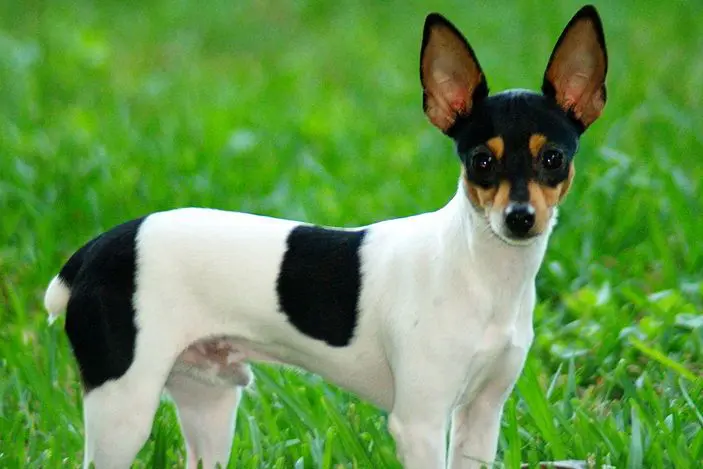
The Toy Fox Terrier it is a very small dog, who has retained the athletic build and general appearance of his ancestor, the Smooth Fox Terrier.
Its body it is square and well built, with a solid bone structure that is not excessive. It stands on well-muscled legs, perfectly parallel when viewed from the front, and ending in small oval legs. The tail is high and is carried up. When allowed, as for example in the USA., it is usual for the tail to be cut at the level of the third or fourth vertebra. But, this practice (tail cut) is prohibited in many jurisdictions, like france, Belgium, Switzerland and Quebec.
The head of the Toy Fox Terrier It is elegant, with balanced proportions. The ears they are a distinctive feature of the breed: they are pointed, V-shaped, located high on the skull and close together. It also, when the dog has at least 6 months of age, must be carried up, what is different from your ancestor, the Smooth Fox Terrier, where it bends forward. The specimens whose ears are not erect do not meet the standard and, therefore, cannot be registered as Toy Fox Terrier. The eyes they are well rounded, dark in color and very expressive. The snout is quite prominent and ends in a nose black, except in chocolate-colored individuals, in which it has the same color.
The fur of the Toy Fox Terrier consists of a sparse undercoat and a thin, shiny topcoat, soft to the touch. It is evenly distributed throughout the body, although it may be a bit longer at the shoulders.
The color white is always dominant, necessarily present in more than half of the coat. But, brands are always present: no smooth individuals. They are present even on the head and can be black in color, fire, black and tan or chocolate and tan.
Last, the sexual dimorphism is almost non-existent in this breed: males and females are about the same size.
Breed standard
The breed standards are documents produced by official bodies that list the conditions that a dog must meet. Toy Fox Terrier to be fully recognized as belonging to the race:
Varieties of "Toy Fox Terrier"
The Toy Fox Terrier is sometimes confused with him Miniature Fox Terrier (or Mini Foxie), a breed created in Australia.
The Mini Foxie has a breed club, the Mini Foxie Club of Australia, but it is not recognized by any official canine body, neither as a variety nor as a race, not even in your home country.
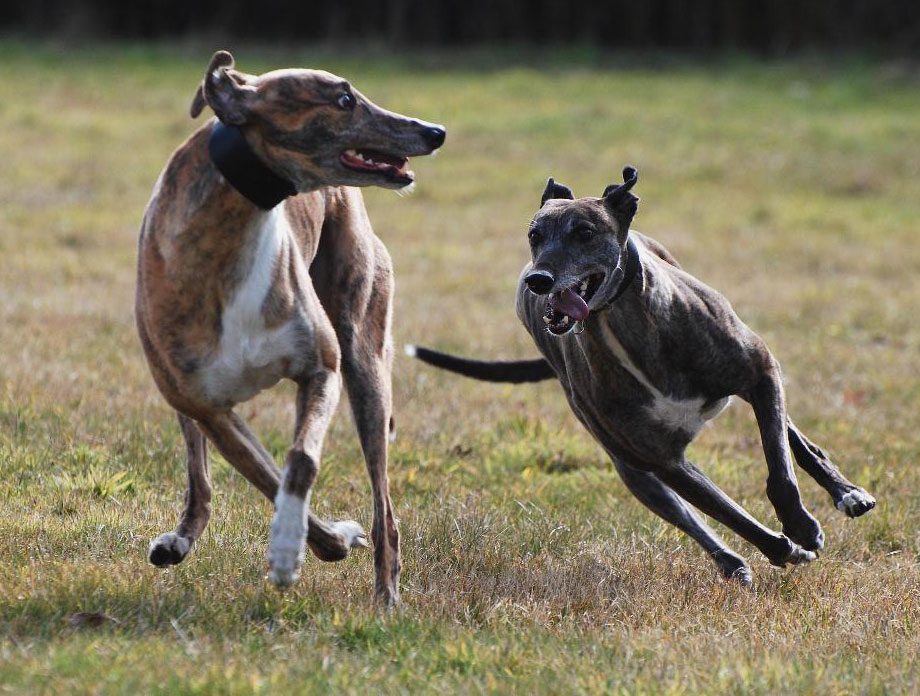
Although both the Toy Fox Terrier as the Miniature Fox Terrier originated from the miniaturization of the Fox Terrier, the breeds used in the process were not the same. While the Toy is primarily a cross between Smooth Fox Terriers, Chihuahua and Italian Greyhound, the Miniature was created primarily by crossing Smooth Fox Terriers with Toy Manchester Terriers and Whippet. So, these dogs have different origins, which explains that they do not have the same appearance. In fact, although they are almost the same size, the Miniature Fox Terrier it's slightly heavier, since it weighs between 1 and 2 kg more than Toy Fox Terrier.
The Miniature Fox Terrier is practically non-existent outside Australia and New Zealand.
The Toy Fox Terrier has inherited the character of Fox Terrier, but also from the toy breeds that were used to create it. In this way he manages to concentrate the qualities of the terriers and the temperament of small dogs, all in a skull barely bigger than an egg.
He is very attached to his family and is very happy with her. You need to spend a lot of time with them, and it is not suitable for people who are out most of the day. In fact, easily suffering from separation anxiety, can quickly become destructive if left alone too often or for too long. Its small size does not prevent it from getting dirty, either pulling a vase, urinating on the carpet or biting on the remote.
The fact that he is very dependent on his family does not mean that this dog is docile and attentive. On the other hand, is quite stubborn and authoritarian, and he likes more than anything that his people bow to his will. Despite its size, rushes to take control of the home if its owner allows it.
Attached to his family, the Toy Fox Terrier is quite suspicious of strangers and needs time to get used to their presence. But, once you have met him, things are going very well and he appreciates the presence of people he is used to. You can easily be left with people you know for a few days if your family is away and cannot take you.
On the other hand, not made for living with young children. Their games, sudden movements and screaming can excite or scare you, and an accident can happen quickly. It also, its size makes it very vulnerable: a fall or a blow delivered inadvertently or in a fit of anger can seriously injure you, with potentially life-long consequences. In any case, if you come into contact with young children, should never be without adult supervision.
The Toy Fox Terrier tends to get along very well with the house cat - even if it is bigger than him- and can befriend a rodent of his size, like a rabbit. Sharing your home with another animal can be a great way to help you better cope with your owners' absences., and things work better if you have grown up with it. On the other hand, it is better not to do it with a bird, a reptile or a small rodent: his hunting instinct would have every chance of waking up one day and bringing the experience to an abrupt end.
Relationships with other dogs are complicated and vary greatly from one individual to another, depending on your socialization. Some see other dogs as potential threats, while others see them as playmates. In any case, there is a feature that all Toy Fox Terrier have in common: are completely unaware of their size, and do not hesitate to interact with dogs of 20 times its weight. Whether to play games or to participate in a grunting and teasing contest, these situations are always risky, and their owners must be especially careful to protect them from their burning.
Having said that, the problem may not arise very often, since the Toy Fox Terrier you don't need to spend hours on the ride every day. In fact, although he has inherited his hyperactive side from Fox Terrier, has little need to go out, so a daily walk of 20 to 30 minutes is enough for you to stretch your legs and get enough exercise. In any case, it is best to take him for a walk on a leash, both to protect him from himself and to prevent him from suddenly disappearing chasing a small animal that passes by.
If you still feel like exercising when you return, you can always burn off your excess energy indoors, especially if he has the opportunity to play with his owner. Then, once you are tired, he likes to come to rest on his knees, or even better, in the cozy bed of a family member.
In fact, the American Toy Terrier it is a breed of indoor dog, and it is not only its closeness to the family that makes it occupy a place in the heart of the home and that it should never be left alone outside. In fact, its small size makes it a prime target not only for thieves, but also for many predators, from weasels to hawks, foxes and vultures. This is all the more true since their survival instinct is not highly developed., which may also explain that feel free to go tell the neighbor's Great Dane what you think, thus putting themselves in danger.
The risk is all the greater as for this dog, quite intelligent and very curious, likes to explore and discover new things, also without being really aware of its intrinsic fragility, that could play a trick on him. Thus, it is important that they always do it in the company of their owners, those who are delighted to accompany to new places, for example during a vacation. This intelligence and curiosity also makes him capable of learning many tricks and becoming a true specialist in dog sports such as agility or obedience..
Last, if you live in a poorly soundproofed apartment, neighbors are likely to attract enmity. In fact, it is difficult for you to integrate certain basic rules of community life, and in particular the fact of respecting the tranquility of the people around: he likes to make his voice heard, which is surprisingly powerful for its size. Above all, tends to bark when he hears something, either the elevator or the neighbor's door, but also simply to remind the world that it exists. This makes him a wonderful alert dog., but in a neighbor difficult to live with.
The socialization of the young Toy Fox Terrier is of utmost importance to your future well-being, especially since he tends to be quite suspicious of strangers. So, it is better that you have many opportunities from your first months to get acquainted with the people and animals that will be part of your life (friends, veterinary, neighbor's dog…). It also, must face all kinds of situations and stimuli in different environments, so that he is more serene in the face of novelty and does not behave in an undesirable way when he is an adult.
Like many breeds of this size, the risk of small dog syndrome is real with the Toy Fox Terrier. In effect, blinded by the tenderness he feels for this adorable ball of fur that seems so fragile and harmless, his master does not take long to forgive him all his misdeeds and faults, included, for example, aggressive behaviors, authoritarian or possessive. But this is not a gift for him or his partner, because a dog needs to be framed and faced with some authority to know its place and be balanced. Given his propensity to do what he pleases and to take his little world by the hand, It is important, Therefore, show your dog that he decides as soon as he gets home, when it is most receptive and malleable. This allows you to quickly identify and assimilate your position in the household hierarchy., thus reducing his desire to take control once he is an adult. As such, the rules must be clear, consistent in time and space, and all family members must ensure its implementation.
But, as long as you know how to make yourself respected, even a novice teacher can achieve great things with a Toy Fox Terrier. The dog's curiosity helps him learn new things quickly, and is usually happy to show his qualities. But, it is better that the workouts are short and frequent, instead of long boring sessions from time to time. It also, as it happens with many races, positive reinforcement methods are the most effective, since the stimuli, caresses and treats are an excellent source of motivation.
In any case, one point that needs to be addressed early on is your propensity to bark at all times. It is advisable to try to understand the situations in which you are expected to remain silent or, at least, teach you to stop on command.
Last, the American Fox Terrier often learn to clean quickly, but the males do not usually have a good aim, so it is advisable to reserve enough space for them.
The Toy Fox Terrier he is a quite robust dog, with one life expectancy of 12 to 15 years quite common for its size.
But, their thin skin and sparse fur do not protect them well from extreme weather conditions. They usually spend most of their time indoors, so they are not affected much by outside conditions, but their owners must be careful when walking them. In summer, it is better to avoid hot and sunny hours and go out in the morning or at night. In winter, or when it rains, a sweater or mackintosh for dogs can be very useful.
Among the diseases that can affect the American Fox Terrier, are mainly found:
- The patellar dislocation, which is usually related to a genetic predisposition, occurs when the kneecap slips out of place and locks the knee, causing a limp;
- The Legg-Calve-Perthes disease, a necrosis of the femur that can be inherited. Causes pain and loss of mobility in the hind leg, but it is operable;
- The von Willebrand disease, an inherited bleeding disorder that causes spontaneous and / or heavy bleeding;
- The Hypothyroidism, a hormonal imbalance that can cause all sorts of symptoms: apathy, weight gain, severe fatigue, damaged fur, etc. Various treatments that provide a synthetic hormonal supplement can prevent the appearance of these symptoms, although they can't really solve the root problem.
- The lens luxation, that causes it to move abnormally, causing pain and, above all, rapid loss of vision, unless it is operated on time. This condition can also be of hereditary origin;
skin allergies, that may be caused by the environment, food or parasites, and that cause redness and itching.
The best way to reduce the risk of adopting a puppy with a hereditary disease is to go to a breeder responsible for Toy Fox Terrier, that routinely tests all individuals you plan to use as breeders, as well as the puppies of each litter. In addition to ensuring that the puppies are well socialized from their first weeks, a serious breeder can present the results of the genetic tests carried out to his parents and even to himself. You must also present a certificate of good health issued by a veterinarian, as well as details of the vaccinations received by the puppy, registered in the health card of this (or vaccination book).
Once the puppy comes home, it's up to the family to stay healthy. Given its fragility, it is especially important not to overload your bones and joints, especially when playing. This is especially true during the growing season., when injuries could have irreversible consequences.
It also, even if I spend little time abroad, you are still exposed to the risk of parasites. Thus, it is important to ensure that deworming treatments are renewed throughout the year, so that the dog never ceases to be protected. This protection goes hand in hand with the protection provided by vaccines: some follow-up is also necessary at this level, so that booster shots are always given on time. The vet can be asked to take care of this at the same time as the dog's health check, which is necessary at least once a year to detect any problems as early as possible and, if required, to be able to treat it in the best conditions.
The Toy Fox Terrier it is one of the easiest dog breeds to care for.
This is especially true of its short coat., that only needs a quick weekly brushing. Even during the fall and spring molts, hair loss is limited, but it is still advisable to brush the dog every two or three days to remove excess dead hair.
It also, do not have a specific odor, they are usually clean and spend most of their time indoors, where there is little opportunity to get dirty or even wallow in a smelly substance. Thus, it is seldom necessary to bathe the Toy Fox Terrier. Once a year is more than enough, and a mild shampoo designed specifically for dogs should be used. This is because the pH of your skin is different from that of human skin..
every week, along with brushing, the dog's ears must be inspected and cleaned with a cloth. This prevents the accumulation of dust and dirt, which can cause infections.
The weekly grooming session should also be an opportunity to check and clean the dog's eyes., gently rubbing them with a damp cloth to remove the marks that usually appear at the corner of the eye, where tears drain.
Regular tooth brushing is also essential for maintaining good oral health and reducing the risk of bad breath and dental disease.. The ideal is a daily brushing, but once a week is enough. In any case, you should always use a toothpaste for dogs.
Last, given its low level of activity and the time spent indoors, in general you have to cut your nails once a month, since natural wear and tear is not enough to file them. If you hear a clicking noise when your dog walks on hard ground, you should cut his nails because they are too long and could break or even be injured.
Although caring for a Toy Fox Terrier it's not especially complicated, must be done correctly. This is necessary not only to be effective, but also to prevent the dog from getting hurt. So, it can be useful to learn them the first time from a professional, either a dog groomer or a vet. Better to start quickly, so that the animal integrates them from childhood as part of the routine and does not rebel.
There is no special difficulty in feeding a Toy Fox Terrier, since industrial dog food is doing very well. But, it is important to ensure that the food is of sufficient quality and provides all the nutrients it needs, depending on your age, your health and activity level.
Like all dogs, it is best to divide your daily ration into at least two meals, ideally one in the morning and one at night.
In any case, although it is similar in size to a domestic cat, it is not a question of giving cat food. This is because cat food is not suitable for dogs at all., since the needs of both species are completely different. Feeding your pet cat food can cause serious health problems.
On the other hand, although they are not especially active, the Toy Fox Terrier they are not very prone to obesity problems. But, no individual is saved, and this is even more true if he has been neutered. Too many treats, too large a serving or insufficient daily exercise will inevitably lead to weight gain. Thus, it is recommended to weigh your dog every month, to detect any variation as soon as possible.
These variations should not be underestimated. From a human perspective, a weight gain of 300 grams may seem insignificant. In the case of a small dog that only weighs 2 or 3 kg, is very different, and it is evident that one should be alarmed if it is confirmed -or even accentuated- next time. Then it is necessary to go to the vet, to benefit from the expertise of a professional. This is because being overweight may not be related to the animal's diet or activity level., rather it may be the result of a reaction to medication or a disease. Only the vet can safely determine the cause of the problem and indicate how to remedy it..
Whatever the cause of weight gain, it may be necessary to change the diet that is given. The same goes for food allergies, a problem this breed is prone to.
Last, like any dog, the Toy Fox Terrier you need to be able to drink whenever you want, so a bowl of fresh water should be available at all times.
For sale "Toy Fox Terrier"
In United States, the price of a puppy Toy Fox Terrier round the 1.000 dollars on average, but the price range is wide, of 500 to 2.000 $.
This is even more true in Europe, where the number of breeders is very small. It also, as the breed is not yet recognized by the various national canine organizations, none of them can provide a registration certificate attesting that the animal is purebred. The rare specimens found in Europe cannot be considered, for the moment, as true Toy Fox Terrier.
In any case, in case of adoption abroad, It is necessary to take into account that transport costs and administrative fees are added to the purchase price, and inform yourself in advance about the current legislation and the necessary documents to import a puppy into the country.
It also, as in the case of any race, the observed price differences can be attributed in particular to the reputation of the breeder, to the prestige of the line from which the puppy comes and its own characteristics. These may include, a puppy adopted from a champion breeder and descended from parents and grandparents who have won numerous titles commands a higher price. Even within the same litter, there may be significant differences depending on the proximity of each individual to the breed standard.
Photos:
1 – Toy Fox Terrier by Ltshears, CC BY 3.0, via Wikimedia Commons
2 – Toy Fox Terrier by Flickr
3 – Toy Fox Terrier by Flickr
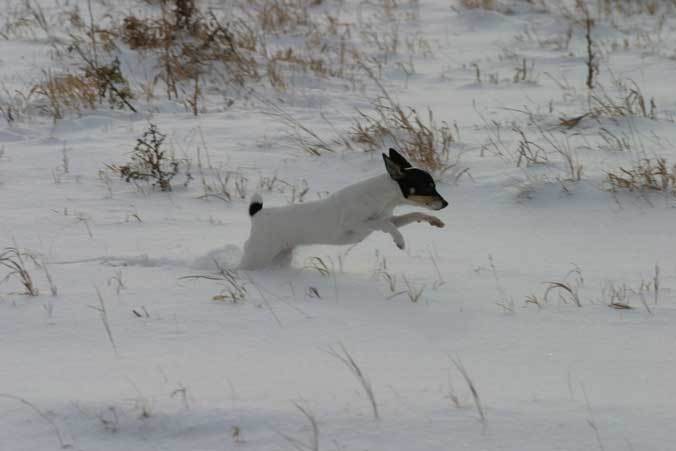
4 – Toy Fox Terriers are happy to go out on warm winter days by Haateigh, CC BY 3.0, via Wikimedia Commons
1. American toy terrier, Amertoy (English).
2. Fox Terrier Américain, American Toy Terrier (French).
3. Toy Fox Terrier (German).
4. American toy terrier, Amertoy (Portuguese).
5. Toy terrier americano, Amertoy (español).
 Not recognized by the FCI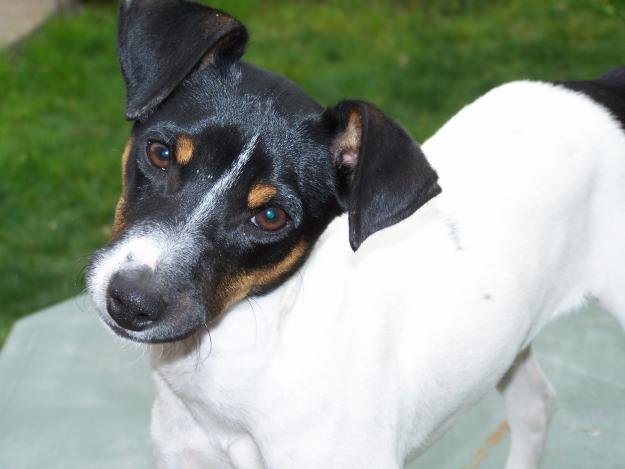
 FCI 160 . Rough-haired Sighthounds
 Not recognized by the FCI

 FCI 232 . Braque Type
 FCI 239 . Braque Type
 Not recognized by the FCI


 Toy Fox Terrier – A litter, 1mon, www.biciulis.ucoz.ru – (II)
 Toy fox terrier puppies, 1 month old
 Toy Fox Terrier Garmin
 Toy Fox Terriers | Breed Judging 2021
.png "Great Britain")
 - FCI 39 . Sheepdogs
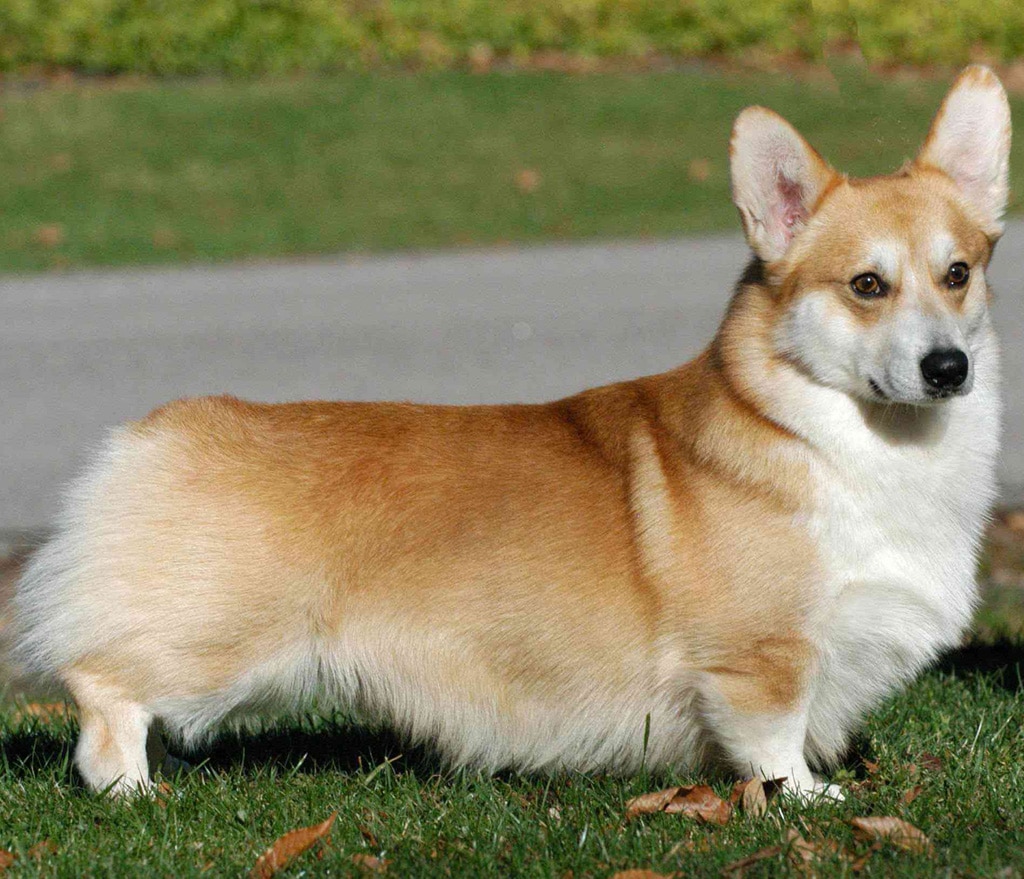

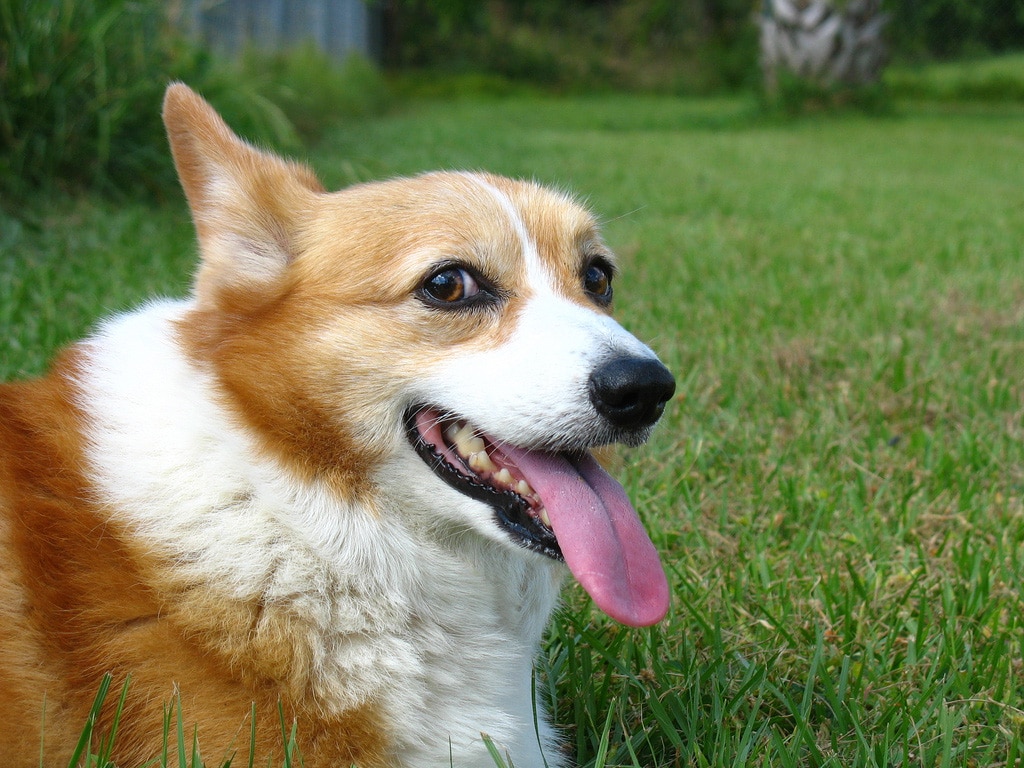


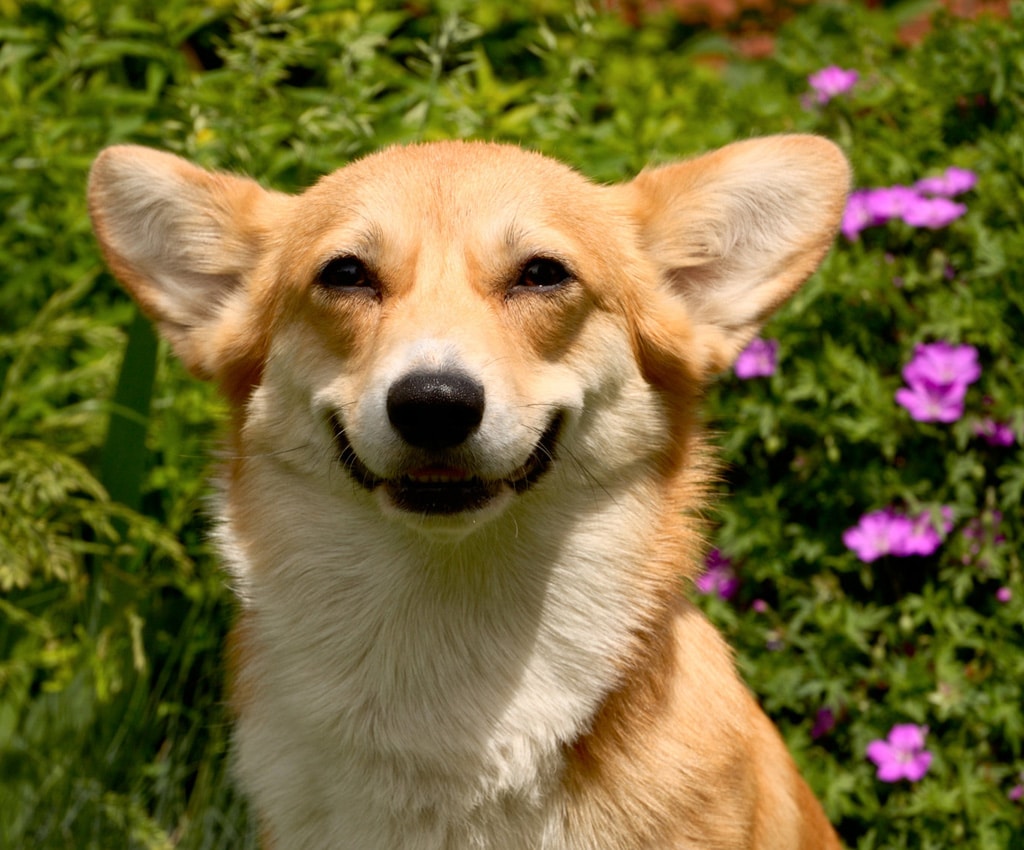
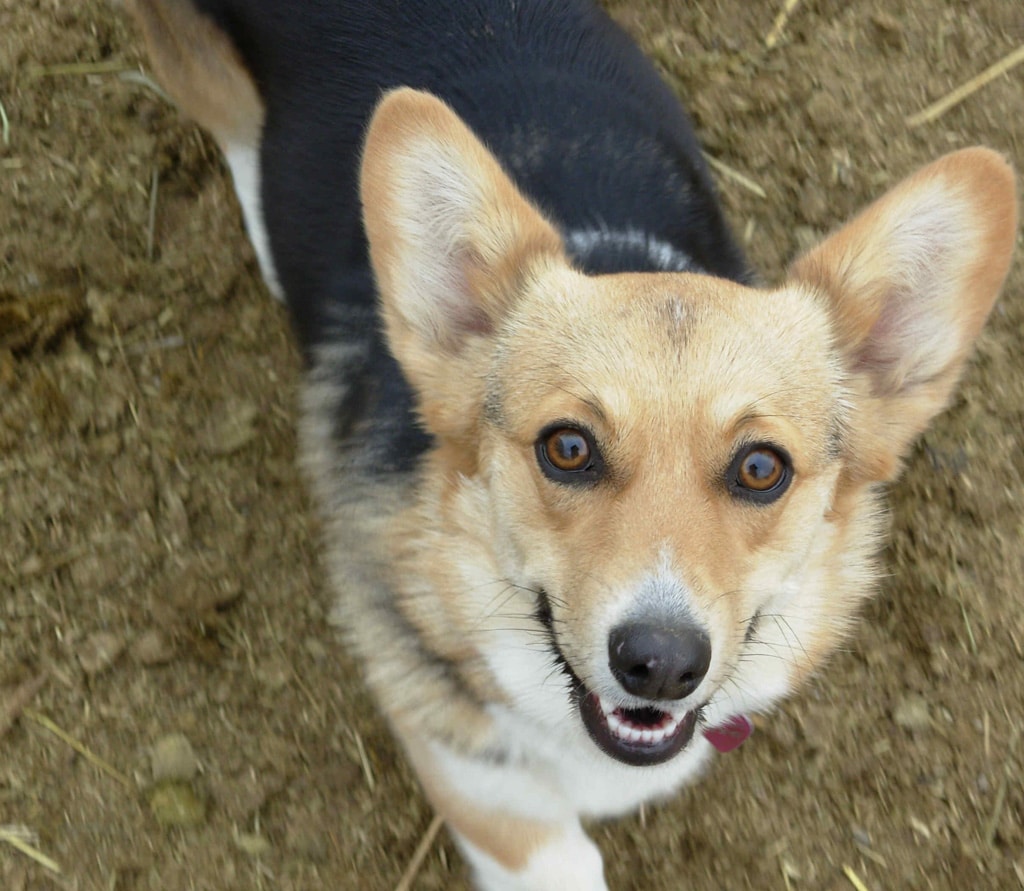


 Missy the Pembroke Welsh Corgi doing silly tricks
 Baby vs Corgi
 corgi snow tunnel
![dogs 101 01-03c pembroke welsh corgi [webrip lks].MKV](http://www.mascotarios.org/wp-content/uploads/2011/07/PembrokeWelshCorgi3.png) dogs 101 01-03c pembroke welsh corgi [webrip lks].MKV
dogs 101 01-03c pembroke welsh corgi [webrip lks].MKV

