โ–ท The world of Pets: Dogs, cats, birds, reptiles, amphibians

Norrbottenspets
Suecia FCI 276 - Nordic Hunting Dogs

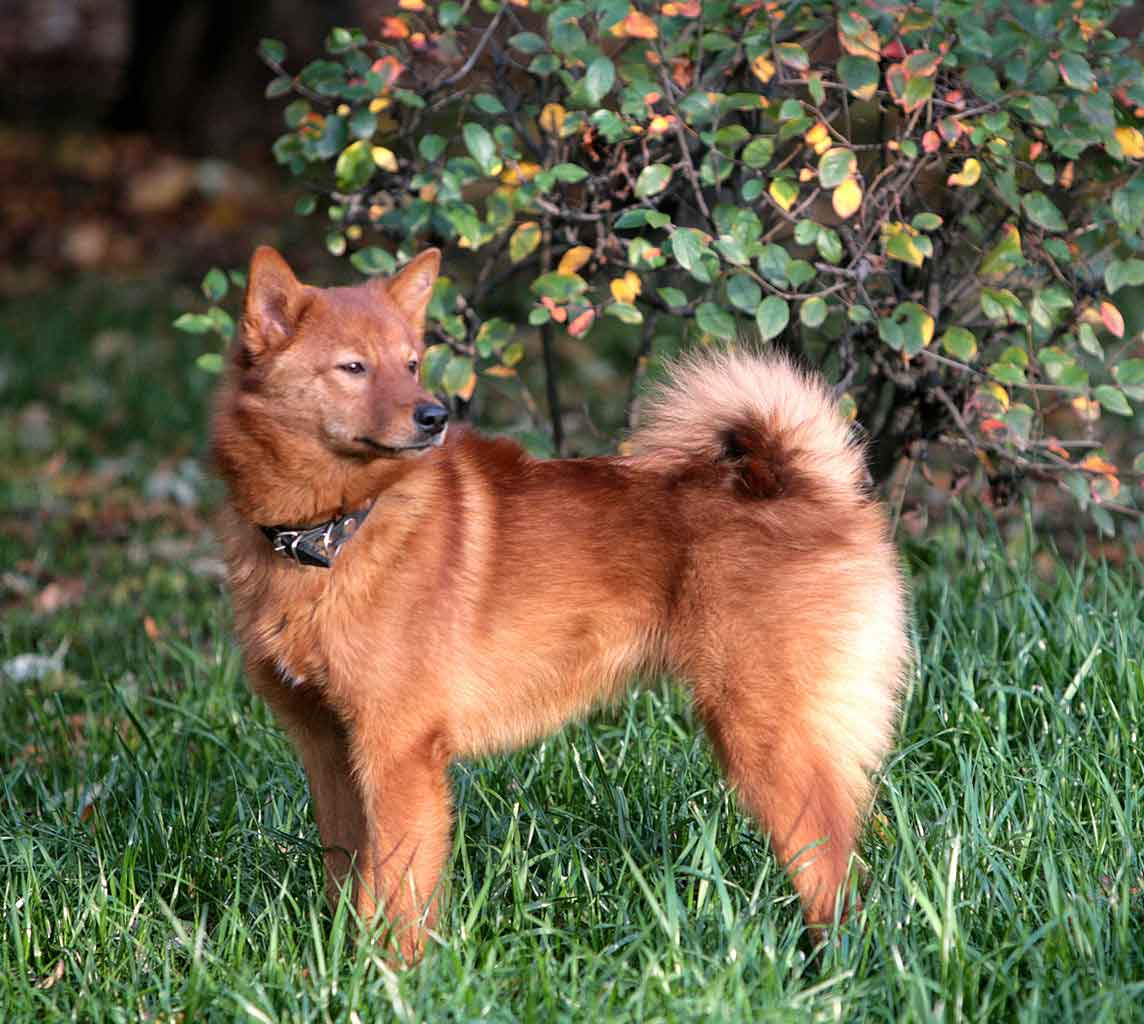
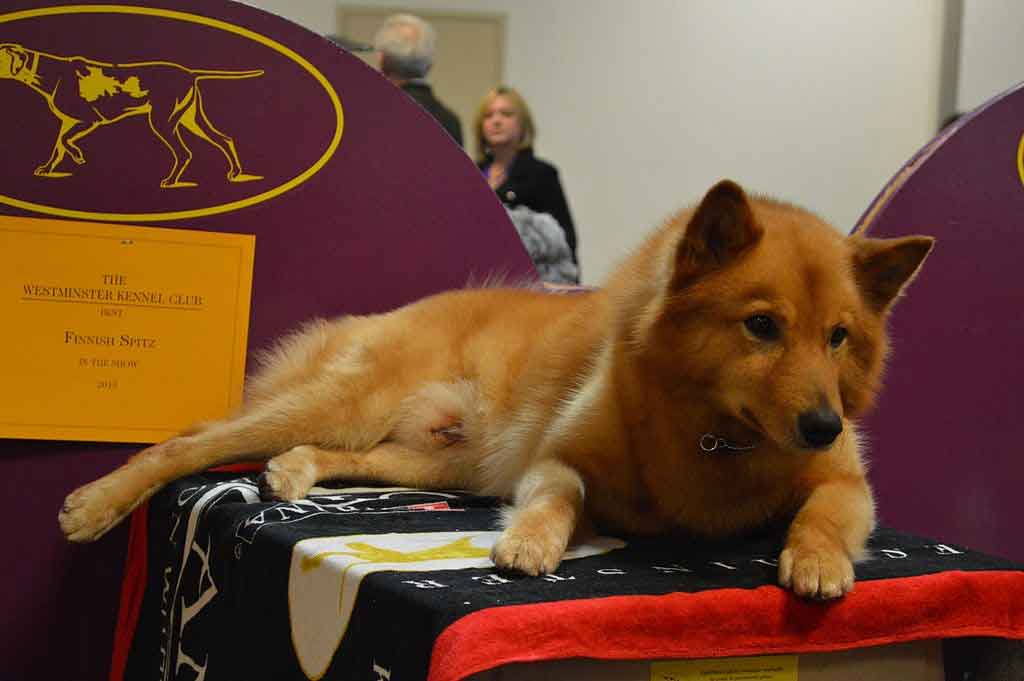
Norrbottenspets

The Norrbottenspets also used as a draft dog.

Content

History

The Norrbottenspets (North Bothnian Country Spitz) probably originates from the small spitz-type Laika that was known to live with hunters in the North Cape area, already in prehistoric times. Small hunting spitz have survived for thousands of years through natural selection โ€“ survival of the fittest. In the very harsh and difficult areas of the northern part of the Scandinavian Peninsula, hunting for food and skins was a necessity in order to survive. Precious skins like saber, sable fur and ermine were the only valid currency for centuries. When fur prices fell drastically after WWII, so did the interest in the Norrbottenspets.

The breed disappeared and there were no records for many years, hence the Kennel Club of Sweden (SKK) declared it extinct. But only a decade later news came that true-type specimens had been found living as pets and watchdogs in small homes inland in North Bothnia.. Due to the very dedicated work of a few men, this ancient hunting spitz was saved.
In 1967 the Norrbottenspets was introduced to the Registries and a new standard was drawn up.

Source: https://www.fci.be/en/nomenclature/NORRBOTTENSPITZ-276.html

Physical characteristics

It is a small spitz-type dog with a rather square appearance, compact and plump, with a lean and strong musculature. The bearing is handsome, with head and tail high. The breed has a strong sexual dimorphism, although the ideal specimen for both sexes is a well-characterized small spitz, attentive, good guardian, of harmonious construction and good character.

The skull is sharp, with the ears set high and relatively small, eyes are dark and bright, and express calmness and predisposition towards work.

Ears are slightly below average size with sparse hair and erect bearing. The tail is set relatively high, with fairly tall carriage in a semicircle, with the tip touching the sides of the thighs. When it stretches, must not exceed the tip of the hock.

Fur: hard, short, straight and quite bushy, with fine and dense undercoat. The length varies depending on the area of โ€‹โ€‹the body: longer around the neck and on the thighs and shorter on the skull and front of the extremities.

Color: all colors are allowed. The ideal is white with yellow or brownish red spots.

Size: males 45 cm.; females, 42 cm.

Character and skills

Norrbottenspets

The pretty white colored Spitz, of medium size and short hair is very rare in its native country and practically unknown outside of Sweden.

He is an excellent guard with a lot of drive, temperament and stubbornness. With the appropriate physical and mental tension, It is also a nice and friendly companion dog..

As a born hunter, the Norrbottenspets He is very Brave, fearless and alert. He is extremely lively and has a great temperament and self-confidence.. The Norrbottenspets it is very suitable as a guard dog, because it reports everything I miss immediately without being aggressive. In the family he is very sociable, friendly and gentle. But the intelligent and self-assured dog can also be headstrong and needs sensitive training and clear guidance..

The Norrbottenspets he is very docile, but it needs a lot of movement and a lot of demanding and varied activity. The ideal are, for example, tests with companion dogs, sports tournaments with dogs or rescue dog training. Only with the appropriate mental and physical activity the Norrbottenspets It is also a nice and friendly family companion dog.. As a pure house dog or for a life in the city it is not the right dog.

Characteristics "Norrbottenspets"

Coexistence is important that you have with your new friend. Before considering the acquisition of a dog of the breed "Norrbottenspets" you know certain factors. Not all breeds of dogs are apt to live in an apartment, you must take into account his character, their need for exercise, their interaction with other pets, their care and if you have small children, their level of tolerance towards them.

Adaptation โ“˜

2,0 of 5 stars (based on 1 review)

friendly dog โ€‹โ€‹โ“˜

2,0 of 5 stars (based on 1 review)

hair loss โ“˜

3,0 of 5 stars (based on 1 review)

Affection level โ“˜

3,0 of 5 stars (based on 1 review)

Need for exercise โ“˜

4,0 of 5 stars (based on 1 review)

Social need โ“˜

3,0 of 5 stars (based on 1 review)

Home โ“˜

2,0 of 5 stars (based on 1 review)

Toilet โ“˜

2,0 of 5 stars (based on 1 review)

Friendly with strangers โ“˜

2,0 of 5 stars (based on 1 review)

barking โ“˜

5,0 of 5 stars (based on 1 review)

Health โ“˜

4,0 of 5 stars (based on 1 review)

Territorial โ“˜

4,0 of 5 stars (based on 1 review)

Cat friendly โ“˜

2,0 of 5 stars (based on 1 review)

Intelligence โ“˜

4,0 of 5 stars (based on 1 review)

Versatility โ“˜

2,0 of 5 stars (based on 1 review)

Child friendly โ“˜

4,0 of 5 stars (based on 1 review)

Surveillance โ“˜

4,0 of 5 stars (based on 1 review)

joy โ“˜

2,0 of 5 stars (based on 1 review)

Type and recognitions:

  • FCI CLASSIFICATION:
  • Group :
  • Section : . .

Federations:

  • FCI – Group 5 – Section 2 Nordic Hunting Dogs. โ“˜

FCI breed standard "Norrbottenspets"

Origin:
Sweden

Date of publication of the valid original standard:
22.07.1982

Use:

hunting dog.


General appearance:

Small Spitz type dog, slightly rectangularwell balanced, With thin muscles andwell developed. Alert holding your head up, fearless and extremely agile attitude. Sexual dimorphism must be clearly visible.


Behavior / temperament:

In his capacity as a hunting dog he must be attentive and fearless. He is an enthusiastic dog, live, self-confident, with a friendly disposition. Although the breed is mainly used to hunt large partridges of the bush (Grouse etc.) It is also capable of hunting prey of hair and howler elk.

Head:

Strong ofclean cut, top or side view, gradually tapering towards the nose.


Cranial region:
  • Skull: Relatively widethe forehead is slightly arched, the upper part of the skull is rather flat.
  • Depression links (Stop): Evidentbut only slightly marked.

facial region:

  • Truffle: black.
  • Snout: Its length is half the length of the head or somewhat shorter. Clearly tapering towards the nose but never pointed
  • Lips: Thin, and tightly fitted.
  • Cheeks: Defined.
  • Jaws / Teeth: Well developed jaws and teeth. Scissor bite.

EYESMedium-sized, almond shaped and inserted obliquely.Bright with calm and energetic expression. dark brown color.

EARS: High insertion, upright, slightly larger than medium size, with hard skin, slightly rounded tips.

Neck:

Moderately longin proportion with the body, dry and muscular, slightly arched, with good scope.


Body:

Cross: Defined.

Back: Short, strong, muscular andelastic

Pork loin: Short and broad.

Rump: Moderately long and wide, slightly inclined and with well developed musclesand strong.

Breast : Moderately deep and long.The depth of the chest should be approximately half the height at the withers and with well developed back ribsSeen from the front, the thorax is oval in shape andwith a normal width. Well developed and well defined forechest.

Bottom line and belly: Seen on side, The lower part of the rib cage must be in line with the elbow or barely under it and emerge gently on the belly line. Bellyonly moderately retracted.

Tail:

Proportionally high insertion, carried in a fairly high curve, slightly curled so the tip of the tail touches one side of the thigh. The length of the tail must not reach below the hock. Tail docked is not allowed.

Tips

PREVIOUS MEMBERS :

  • Blades : Long and wide, With well developed spine and muscles. Glued to the chest and properly oblique.
  • Arm : It must be the same length as the scapula, strong, well attached to the chest but allowing freedom of movement and forming a marked angle with the spine of the scapula.
  • Elbows : Directed backwards Forearm : Straight, with strong bones, thin but flexible muscles.
  • Carpus and metacarpus : Strong, forming a straight line with the forearm, when seen from the front. Seen on side, The metacarpo is slightly oblique.
  • Previous feet : Small, strong, directed straight ahead, well arched and closed, with hard, well-developed pads.

LATER MEMBERS : Seen from behind, the hind limbs are parallel.

  • Thigh : Proportionally long, forming a right angle with the pelvis. Strong muscles.
  • Knee joint : Strong.
  • Leg : Form a sharp angle with your thigh.
  • Warm-foot joint : Side and front view, is strong.
  • Metatarsus : Delgado, elastic and rather long.
  • Hind feet : Similar to the previous. Headed straight forward.

Movement:

During the trot and canter, Norrbottenspets should show smooth and regular movements, with great momentum and covering the ground well. In action, The upper line must remain firm and the posterior parallel members.

Mantle

HAIR : The hair is hard, short, straight, and rather close to the body, with fine and dense undercoat. Must be short on the muzzle, skull, ears and front of limbs, longer at the nape, back of the thighs and under the tail.

COLOR : All colors are permitted. The ideal color is white with yellow or reddish-brown markings.


Size and weight:

Height to the cross :

Ideal height :

  • in males : 45 cm.
  • in females : 42 cm..


Fouls:

Any deviation from the aforementioned criteria is considered as a fault and the severity of this is considered to the degree of the deviation to the standard and its consequences on the health and well-being of the dog., and the dog's ability to perform its traditional task.

SERIOUS FAULTS:

  • Meat or liver color nose.
  • Dental missing except for P1.
  • Tan markings.
  • Roan or speckled.

FALTAS DESCALIFICANTES:

  • Aggressiveness or extreme shyness.
  • Any dog โ€‹โ€‹showing clear signs of physical or behavioral abnormalities.
  • Short tail.


N.B.:
  • Males should have two normal-appearing testicles fully descended into the scrotum..
  • Only functionally and clinically healthy dogs, with the typical conformation of the breed, should be used for parenting.

The latest changes are in bold.

Source: F.C.I - International Cynological Federation

Alternative names:

1. Nordic Spitz, Norrbottenspitz, Pohjanpystykorva (English).
2. Spitz nordique (French).
3. Norrbottenspets, Pohjanpystykorvat (German).
4. Spitz nรณrdico (Portuguese).
5. Spitz nรณrdico (espaรฑol).

โ–ท The world of Pets: Dogs, cats, birds, reptiles, amphibians

Irish Soft Coated Wheaten Terrier
Irlanda FCI 40 . Large and medium sized Terriers
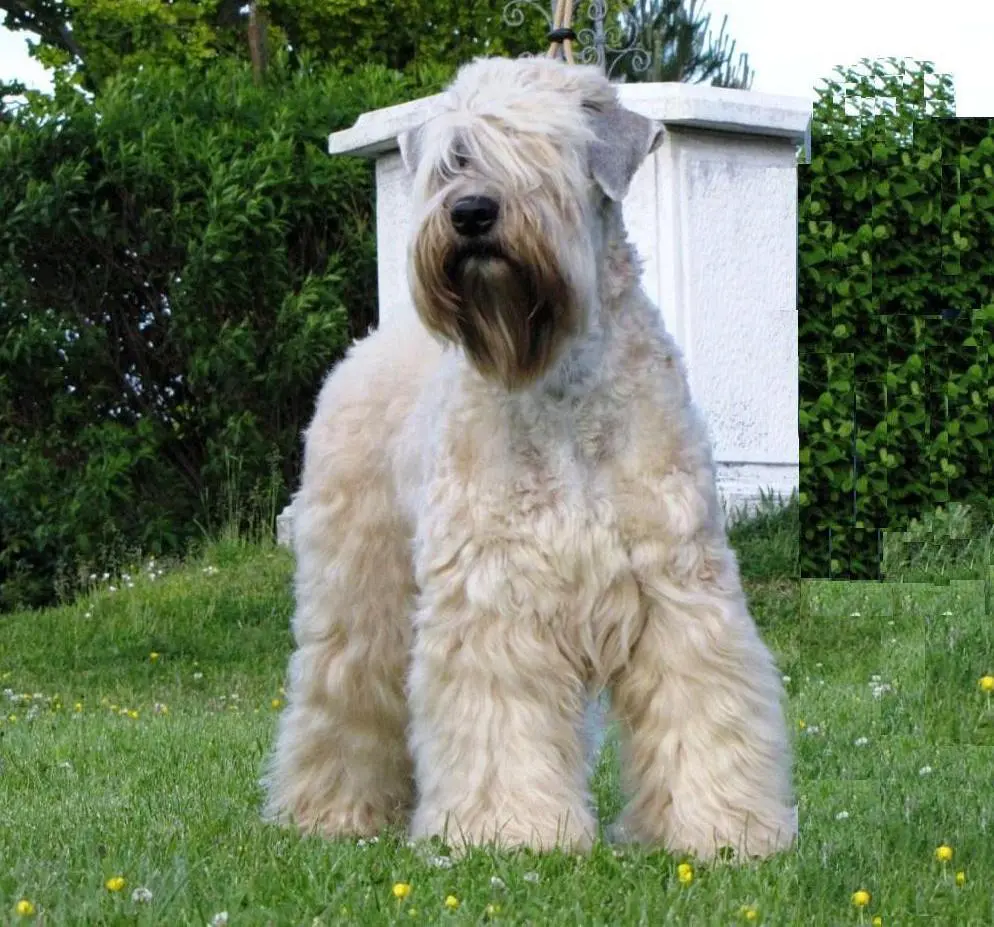
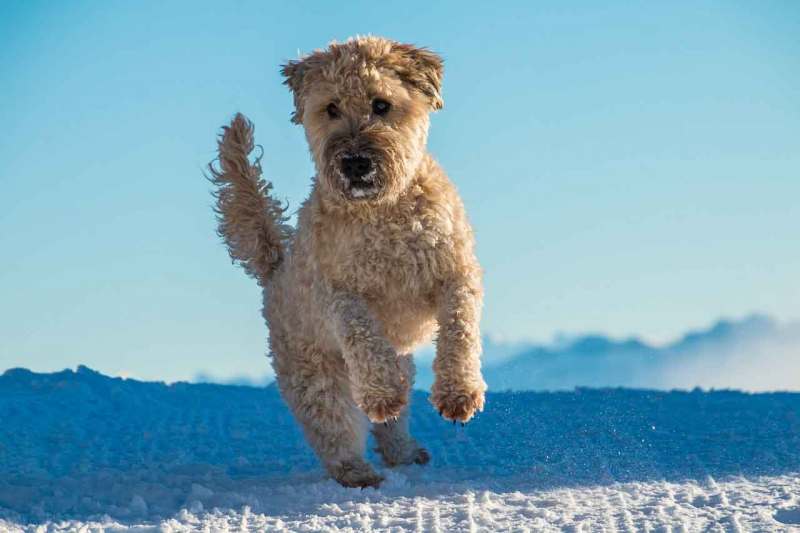
Irish Soft Coated Wheaten Terrier

Wheaten character is cheerful, open and balanced.

Content

History

The Irish Soft Coated Wheaten Terrier has been raised in Ireland for about 200 years in counties Kerry and Cork by the farmers who live there. How farm dogs fought rats and mice, as well as against predators such as foxes and martens, that threatened domestic animals. They also grazed sheep and were used for hunting.

The history of Irish Soft Coated Wheaten Terrier has been somewhat obscured due to its closeness to the other races of Irish terriers. The Wheaten probably the oldest of the four races. His existence, along the, at least 200 years, can be deduced from the textual references made to "soft-haired" dogs.. The relationship of Irish Terrier modern with the Wheaten, although less documented, appears to have been the result of deliberate crossing experiments. Consequently, the humble Wheaten probably has a fully mixed lineage. Despite the long history of Wheaten, it was not until 1937, which was officially recognized by the Irish Kennel Club. Since then this breed has grown steadily in popularity and is currently well known worldwide..

In 1943, the British Kennel Club He acknowledged the race in United Kingdom. The first Irish Soft Coated Wheaten Terrier were exported to the United States in the 1940, but the race gained greater interest ten years after his arrival. Last, in 1973, were recognized by the American Kennel Club.

The Irish Soft Coated Wheaten Terrier, unofficially, were crossed with the race Pudelhund standard, to create the mixed race, known as the Whoodle and with the race Beagle to create the race known as "Wheaglesโ€.

Today the Irish Soft Coated Wheaten Terrier It is a versatile companion dog that adapts well to its living conditions..

Physical characteristics

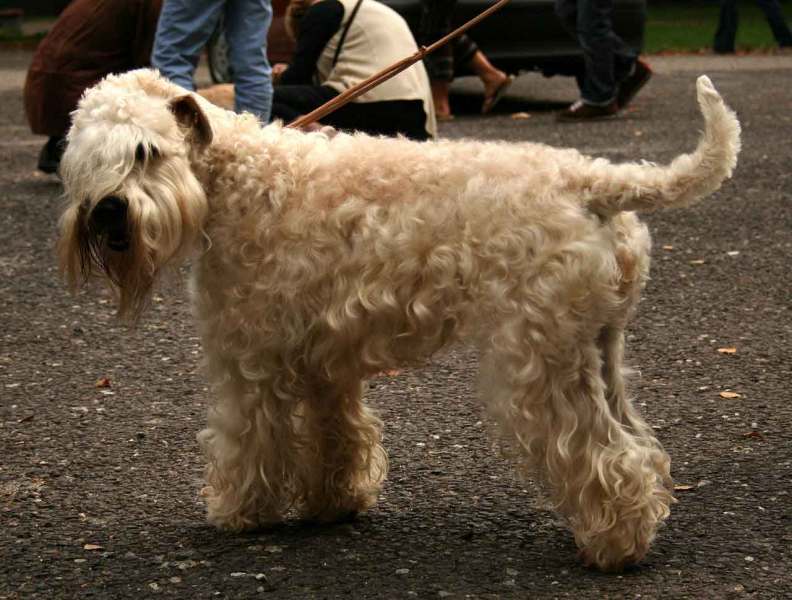
It is a strong dog, balanced, straight back and chest deep. It has a rectangular and well-proportioned head with a defined stop. Their eyes have a slightly almendrada way and the ears are small and bent slightly forward.

In countries where it is allowed, the Wheaten usually has a tail cut off. It has a smooth hair, silky and color wheat. These dogs have a unique coat of hair., so you can more easily tolerated by people who are allergic to other races, because they lost very little hair.

Puppies are reddish brown or gray. Many have a black mask. Only at the age of two and a half the coat has its final color, clear and its fine structure.

SIZE AND WEIGHT:

Height to the cross : Males 46-48 cm. (18 – 19 inches). females somewhat less.

Weight: Males between 18 – 20,5 kg (40 – 45 English pounds). The females somewhat less.

Character and skills

The character of the Wheaten is happy, open and balanced. As an SUV, these dogs are very docile. They enjoy participating in family life. Dog sports such as agility are a good substitute for the many different tasks these spirited terriers were originally bred for.. If they are left alone, without getting busy or moving enough, can become destructive and aggressive. Consistent breeding from the start makes them great family dogs that don't obey one person.. Due to the great care effort and the possible stubbornness of the terrier, only conditionally suitable for beginners.

Wheaten Terrier care

The coat of the Irish Soft Coated Wheaten Terrier requires a lot of cleaning and must be brushed daily to avoid entanglement. Hair must be cut regularly. Does not come off.

In regards to health, it is a very healthy breed, not showing any typical hereditary disease.

Wheaten Terrier Education

That dog learns fast. Unfortunately also things, that you have to avoid them later. So, and also because of the hunting instinct that the breed has, initially not recommended for beginners. It also, the breed tends to be stubborn under pressure, you also have to learn to deal with it. But, who masters the rules of dog training, you will be very pleased with this dog's willingness to learn and willingness to work.

Images "Irish Soft Coated Wheaten Terrier"

Photos:

1 – Soft Coated Wheaten Terrier by SusanSmithGSU / CC BY-SA
2 – Soft-coated_wheaten_terrier at the national show in Rybnik – Stone to Pleple2000 / CC BY-SA
3 – Soft-coated_wheaten_terrier at the national show in Rybnik – Stone to Pleple2000 / CC BY-SA
4 – Soft Coated Wheaten Terrier Irlandรฉs by RORLVR1 / CC BY-SA
5 – Soft Coated Wheaten Terrier Irlandรฉs by https://pxhere.com/en/photo/64565
6 – Soft Coated Wheaten Terrier Irlandรฉs by https://www.needpix.com/photo/834722/dog-jump-play-irish-soft-coated-wheaten-terrier-young-dog-jumps-happy-winter-snow

Videos "Irish Soft Coated Wheaten Terrier"

Type and recognitions:

  • FCI CLASSIFICATION:
  • Group :
  • Section : . .

Federations:

  • FCI – Terriers 1 Large and medium-sized terriers. โ“˜
  • AKC – Terriers โ“˜
  • ANKC – Terriers โ“˜
  • CKC – Terriers โ“˜
  • โ€‹KC – Terriers โ“˜
  • NZKC – Terriers โ“˜
  • UKC – Terriers โ“˜

FCI breed standard "Irish Soft Coated Wheaten Terrier"

Origin:
Ireland

Date of publication of the valid original standard:
27.01.2001.

Use:

Wheaten Terriers were always used by small farmers to kill vermin or help with farm work.. For a long time it was used in the difficult task of hunting badgers and otters..


General appearance:

It is a robust dog, active and compact, well built, giving the idea of รขโ‚ฌโ€นรขโ‚ฌโ€นstrength. Their limbs are not too long or too short.


Behavior / temperament:

Fiery and courageous. With good temperament. Very noble and loyal to his masters. Very intelligent. A faithful and trustworthy friend, defensive without being aggressive.

Head:

It must be strong as a whole, without being rough. Long, well proportioned to the body. Hair must be the same color as the body.

Cranial region:
  • Skull: Flat and crisp between the ears, not very wide.
  • Depression links (Stop): Defined.

facial region:

  • Trufa: Black and well developed.
  • Horcico: It should not be longer than the skull.Jaws: Strong, punishing jaws.
  • Dinentities: Big teeth, regular scissor or clamp bite, no upper or lower prognathism.
  • Cheeks: Non-prominent bones.
  • Ojors: dark, dark hazelnut, not very large or prominent, well placed.
  • Obars: Small to medium, taken to the front, level with the skull. Dark shading is allowed at the base of the ears, and it is common for it to have a light wheat reflection in the rest. This is the only area of โ€‹โ€‹the dog where undercoat is allowed.. โ€œPinkโ€ or โ€œflyingโ€ ears are objectionable.

Neck:

Moderately long and strong, but without presenting dewlap.

Body:

Not very long. The length from the withers to the base of the tail should be approximately the same as from the ground to the withers.

  • Dorrso: Strong and straight, with top line also at level.
  • Itmor: Short, strong.
  • Pecho: Deep, well arched ribs

Tail:

Well placed, not very thick. Carried cheerfully but never over the top line. amputee, remaining two thirds of its original length, assuming that this length is in proportion to the dog. Uncut glue is allowed.

Tips

PREVIOUS MEMBERS:

  • Hormbros: Thin Shoulders, well inclined. Muscled shoulders.
  • Antarms: Seen from any angle they must appear perfectly straight, good bone and muscular.

LATER MEMBERS: Well developed and with powerful musculature.

  • Thighs: Strong and muscular.
  • Rodinllas: Angled.
  • Corvejones: Well descended, without turning in or out. Dewclaws must be amputated.
  • PinIt: Small, not scattered. Nails should preferably be black, but several dark colors are allowed.

Movement:

In a straight line throughout its entire length, round trip. The elbows stuck. Side view: free movement, lightweight and coordinated.

Mantle

  • Plink: Single-haired mantle dog (no undercoat). The hair is soft and silky to the touch, does not last. Young dogs are excluded from the above. Hair preparation is allowed (Trimming).
  • Pmistakes with hair preparation: The hair should be short on the neck, chest and skull and should be left especially long over the eyes and under the jaw. It is advisable to leave the mustaches. With abundant fringes on the extremities. The body hair must be arranged in such a way that it follows the contour of the dog, without being sculpted. The tail hair should be cut short and gracefully tapering to the tip.
  • Pmistakes without preparation: Hair length at its longest point should not exceed five inches (12,7 cm.). Hair must be thick and soft, wavy or loose curls with the shine of silk. Under no circumstances should the coat be โ€œfluffyโ€ like that of the Poodle or the Old English Sheepdog.. Dogs exposed in this condition must be heavily penalized, since they give the wrong idea of รขโ‚ฌโ€นรขโ‚ฌโ€นtype and race. Special attention should be paid to the development of the coat of the puppies. Puppies are hardly born with the correct hair that they should have when adults., Care must be taken when evaluating this aspect. They undergo various color and texture changes before developing adult hair. This normally occurs between 18 months and 2 1/2 years.
  • Cachorros: Puppies are rarely born with the correct coat color and texture. Their fur may be reddish, grayish and sometimes light tawny. The masks are generally black. Sometimes there is a black streak in the center of the back or the tips of the body hair are black. These dark marks disappear during growth.
  • Colorr: A good and defined wheat color with variations ranging from light fawn to a reddish golden hue.


Size and weight:

Alturto the cross:

  • Males 46-48 cm. (18 โ€“ 19 inches).
  • females somewhat less.

Pthat:

  • Males between 18 โ€“ 20,5 kg (40 โ€“ 45 English pounds).
  • The females somewhat less.


Fouls:

Any deviation from the aforementioned criteria is considered as a fault and the severity of this is considered to the degree of the deviation to the standard and its consequences on the health and well-being of the dog..

  • Nervosity, aggressiveness.
  • Truffle in any color other than black.
  • Upper or lower prognathism.
  • Mature dog coat not clearly wheat colored.

FALTAS DISQUALIFYING:

  • Aggressiveness or extreme shyness.
  • Any dog โ€‹โ€‹showing clear signs of physical or behavioral abnormalities must be disqualified..
  • Yellow eyes.
  • Dull coat, thick, wool or cotton texture.
  • White fur. Brown fur.


N.B.:
  • Males should have two normal-appearing testicles fully descended into the scrotum..
  • Only functionally and clinically healthy dogs, with the typical conformation of the breed, should be used for parenting.

Itlatest changes are in bold.

TRANSLATION: Lic. O. Valverde, reviewed by Dr. F. del Valle and updated by J. Nallem, Uruguayan Kennel Club.

Source: F.C.I - International Cynological Federation

Alternative names:

1. Irish Soft-Coated Wheaten Terrier and variant spellings: ยซSoft Coatedยป and ยซSoftcoatedยป, Wheaten or Wheatie, Wheaten Terrier (English).
2. Irish Soft Coated Wheaten Terrier (French).
3. Wheaten Terrier (German).
4. Wheaten Terrier (Portuguese).
5. Wheaten Terrier (espaรฑol).

โ–ท The world of Pets: Dogs, cats, birds, reptiles, amphibians

Skye terrier
Escocia FCI 75 .Small sized Terriers.

Skye terrier

The Skye is a typical terrier: tenacious hard with a propensity to bark and dig.

Content

History

The Skye terrier it is one of the oldest Scottish breeds. The Skye was known as the Western Isles Terrier which comprised at Skye Terrier with a mixture of races like their ancestors, including prototypes of the Cairn Terrier.

References to a terrier Scottish island of Skye back to long ago. In his 16th century book "Of English Dogs", Johannes Caius wrote that the Skye Terrier was "taken from the barbarian frontiers of the farthest countries to the north… what, because of the length of hair, "It doesn't show either the face or the body.". That certainly sounds like a description of profuse coat Skye.

The dogs were bred to hunt and kill foxes, badgers and otters that threatened livestock farm or property damage caused. Their long coat and facial hair were meant to protect them from injury and the typical rainy weather of Scotland..

Three centuries later, the Queen Victoria, dogs lover, he became interested in the race during one of his visits to Scotland, and dogs became fashionable pets noblewomen. It was said that even a duchess would be ashamed to show her face in the park without the company of a Skye.. A portrait of Queen Victoria with one of his Skyes, Rona II, was painted by William Nicholson, and other Sykes appeared in paintings Sir Edwin Landseer.

Under threat of extinction

There are concerns that the breed could disappear entirely., since during 2012 only 44 puppies were born in the UK. The particularly lowest period for this breed was in 2005, when they registered only 30 Puppies. โ€‹Today this is the most endangered dog breed within the classification of Vulnerable Native Breeds3โ€‹of the UK Kennel Club, and it is estimated that if it continues like this within 40 years the breed could become extinct.

Did you know??

One of the best known and loved Skye Terrier It was Greyfriars Bobby, who faithfully he watched the grave of his owner, John Grey, during 14 years after the death of man. A statue honoring the loyalty of the dog is visited Edinburgh for dog lovers around the world.

Physical characteristics

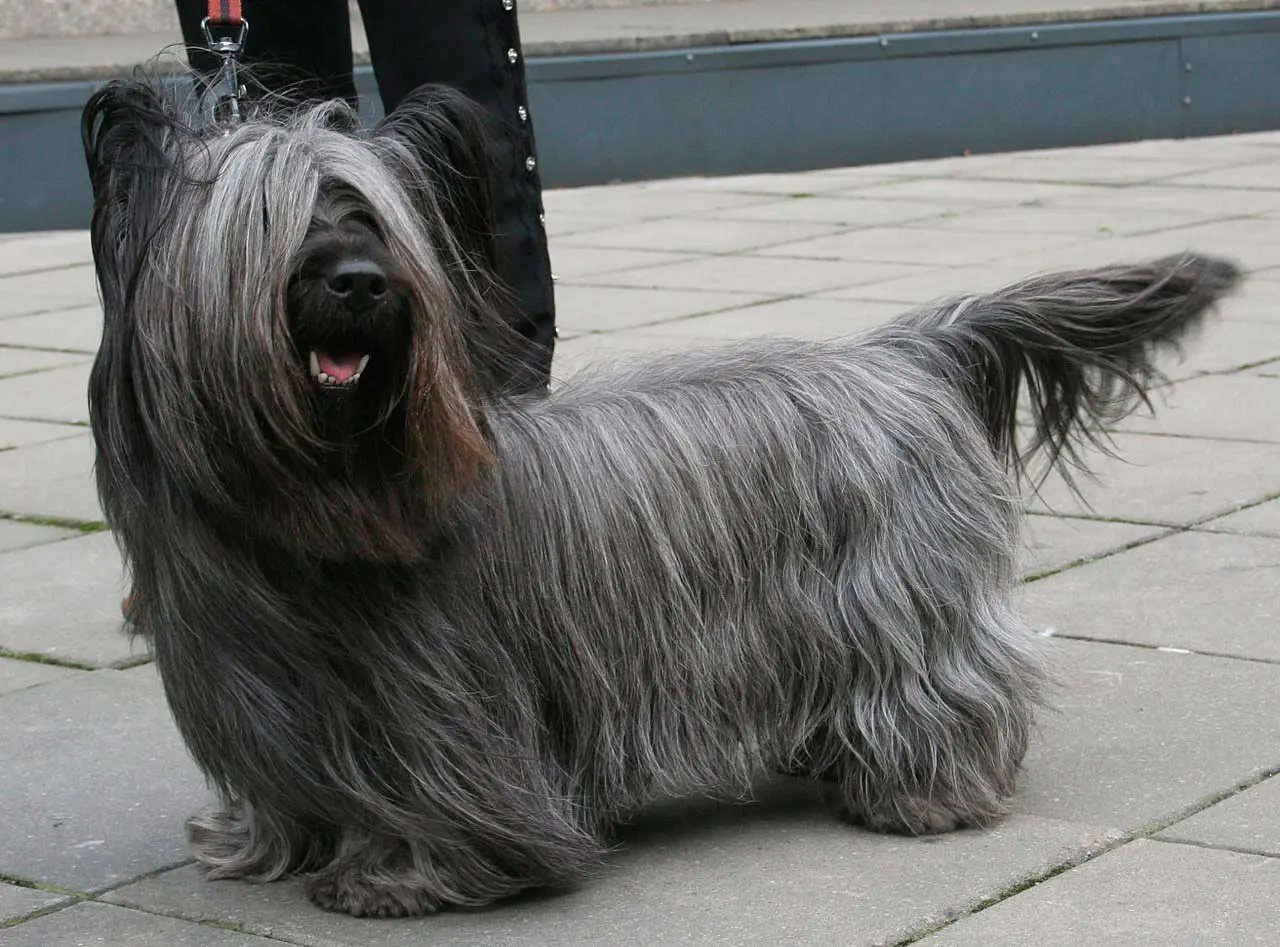
The Skye terrier it's a long-bodied dog. Its length is twice its size with good length hair. It moves seemingly effortlessly. its members, body and jaws are strong. His head is long and powerful. It has a long body and under. The flat edges occur because the coat that falls straight.

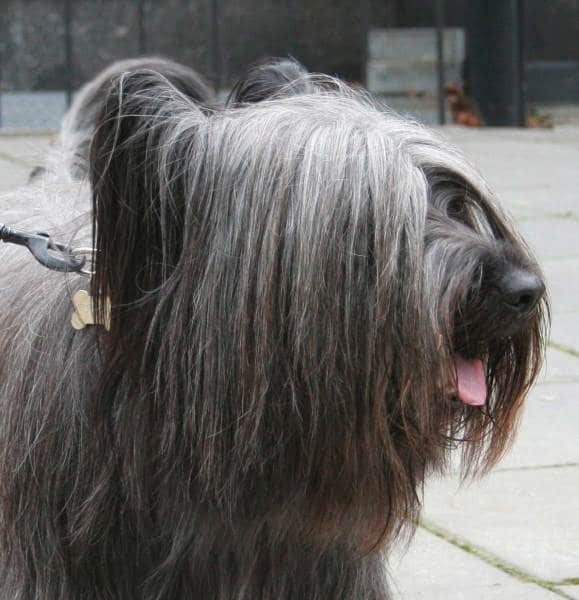
The mantle is double layer. The inner layer should consist of short hair, thick, soft and fleecy. The outer layer for reasonably long hair, hard, straight, flattened without curls that should never prevent movement. On the head the hair is shorter, softer and falls over his forehead eyes watching but not preventing vision. He meets the hair on the sides of the head, surrounding ears like a fringe allowing appreciate the way.

Its color can be black, dark or light gray, leonado, cream, all with black markings.
Its ideal height is 25 – 26 cm..
Length from tip of nose to tip of tail: 105 cm.. Females are slightly smaller in the same proportions.

Health

The Skye Terriers They may be affected by various medical conditions, including eye problems (as glaucoma and dislocation of the lens), hipotiriodismo, of von Willebrand disease (a disorder of blood clotting), allergies and ulcerative colitis.

"Skye's lameness" or "puppy lameness" sometimes occurs in puppies between 3 and 10 months of age. You can resolve without treatment, but some veterinarians suggest that activity is restricted. The Skye Terriers They can also undergo genetic forms of liver and kidney disease. The breeder of your puppy should be willing – in fact, anxious – review your dogs' health histories and discuss the prevalence of these and other health problems in your lines.

Character and skills

The Skye It is a classic Terrier: bold to, well, anything, friendly people who know, reserved and cautious with strangers. An old Scottish word, "cunning", It applies to him too. It is an intelligent dog and prudent people will consider carefully before deciding whether granted his affections. But, Once you are given, They are given lifetime.

It may not seem like a great athlete at first sight, but Skye has resistance, strength and agility galore. You'll find it by participating in agility, obedience and tracking, but it is also a partner willing sofa. Two or three rides 15 minutes or games a day will meet your exercise needs, but he's up for more if you are. If your temperament permits, Skye can also be a therapy dog รขโ‚ฌโ€นรขโ‚ฌโ€นcheerful, visiting people in facilities such as nursing homes and children's hospitals.

Like all terrier, the Skye has a mind of its own, but learns well. Train this sensitive dog with loving firmness and enjoy their trust and respect will win.

Characteristics "Skye terrier"

Coexistence is important that you have with your new friend. Before considering the acquisition of a dog of the breed "Skye terrier" you know certain factors. Not all breeds of dogs are apt to live in an apartment, you must take into account his character, their need for exercise, their interaction with other pets, their care and if you have small children, their level of tolerance towards them.

Adaptation โ“˜

5,0 of 5 stars (based on 1 review)

friendly dog โ€‹โ€‹โ“˜

2,0 of 5 stars (based on 1 review)

hair loss โ“˜

3,0 of 5 stars (based on 1 review)

Affection level โ“˜

4,0 of 5 stars (based on 1 review)

Need for exercise โ“˜

3,0 of 5 stars (based on 1 review)

Social need โ“˜

4,0 of 5 stars (based on 1 review)

Home โ“˜

5,0 of 5 stars (based on 1 review)

Toilet โ“˜

3,0 of 5 stars (based on 1 review)

Friendly with strangers โ“˜

2,0 of 5 stars (based on 1 review)

barking โ“˜

5,0 of 5 stars (based on 1 review)

Health โ“˜

4,0 of 5 stars (based on 1 review)

Territorial โ“˜

4,0 of 5 stars (based on 1 review)

Cat friendly โ“˜

2,0 of 5 stars (based on 1 review)

Intelligence โ“˜

3,0 of 5 stars (based on 1 review)

Versatility โ“˜

2,0 of 5 stars (based on 1 review)

Child friendly โ“˜

3,0 of 5 stars (based on 1 review)

Surveillance โ“˜

3,0 of 5 stars (based on 1 review)

joy โ“˜

5,0 of 5 stars (based on 1 review)

Images "Skye terrier"/h2>

Videos "Skye terrier"

Type and recognitions:

  • FCI CLASSIFICATION:
  • Group :
  • Section : . .

Federations:

FCI โ“˜, AKC โ“˜, ANKC โ“˜, CKC โ“˜, โ€‹KC โ“˜, NZKC โ“˜, UKC โ“˜

FCI breed standard Skye terrier

FCIFCI - Skye terrier
Skye

Alternative names:

1. Skye (English).
2. Skye (French).
3. Skye (German).
4. Skye (Portuguese).
5. Skye (espaรฑol).

Photos:

1 – Pleple2000 / CC BY-SA
2 – Pleple2000 / CC BY-SA
3 – A Skye terrier at the 2019 Kelso Dog Show ยฉ Copyright Walter Baxter and licensed for reuse under this Creative Commons Licence.
4 – Skye Terrier, Gold Country Kennel Club Dog Show, Grass Valley by Larry Miller – Flicker

โ–ท The world of Pets: Dogs, cats, birds, reptiles, amphibians

Sealyham terrier
Inglaterra FCI 74 . Small sized Terriers.

Sealyham Terrier

The white color of the Sealyham terrier was selected so that the Hounds would easily distinguish him from the prey.

Content

History

Its origins and history are better known than those of most other terrier breeds..
Captain Tucker-Edwards, who lived on his Sealy Ham estate in Pembrokeshire / Wales, He began in the mid-19th century to create a breed that fit his ideas of a dog suitable for hunting badgers., otters and martens. But, It has never been clear which races were actually involved in creating the Sealyham. The Dandie Dinmont Terrier, the Pembroke Welsh Corgi, the Bullterrier and the Fox Terrier were probably used to obtain the desired sharp hunting dog, bold, callous and brave.
After the Captain's death in 1891, her daughter and her friends continued the upbringing. In 1910 the breed was admitted to the championship exhibitions and was therefore recognized as a breed. Soon these vital and intrepid Welsh terriers made a great impression and demand increased..

Whatever the exact breed mix, the captain had admirable success, creating a fearless and hard-working hunter who was also a charming companion by the fire. The years between the world wars were the heyday of the breed in America. The Sealys they won the Westminster Best Dog Show award three times this time, among them was the most famous show dog of the Prohibition era, a Sealy called bootlegger. Its high profile was bolstered by A-list Hollywood owners like Humphrey Bogart, Gary Cooper y Cary Grant.

The popularity of Sealyham terrier among pet owners has declined since those heady days, considering the many qualities of the breed. "They could be one of dogs' best kept secrets", says a lover of Sealyham terrier. The breed today is slightly larger and more affable than the feisty terriers first bred by Captain Edwardes.. Their kindness is very useful as therapists in nursing homes and children's hospitals..

Physical characteristics

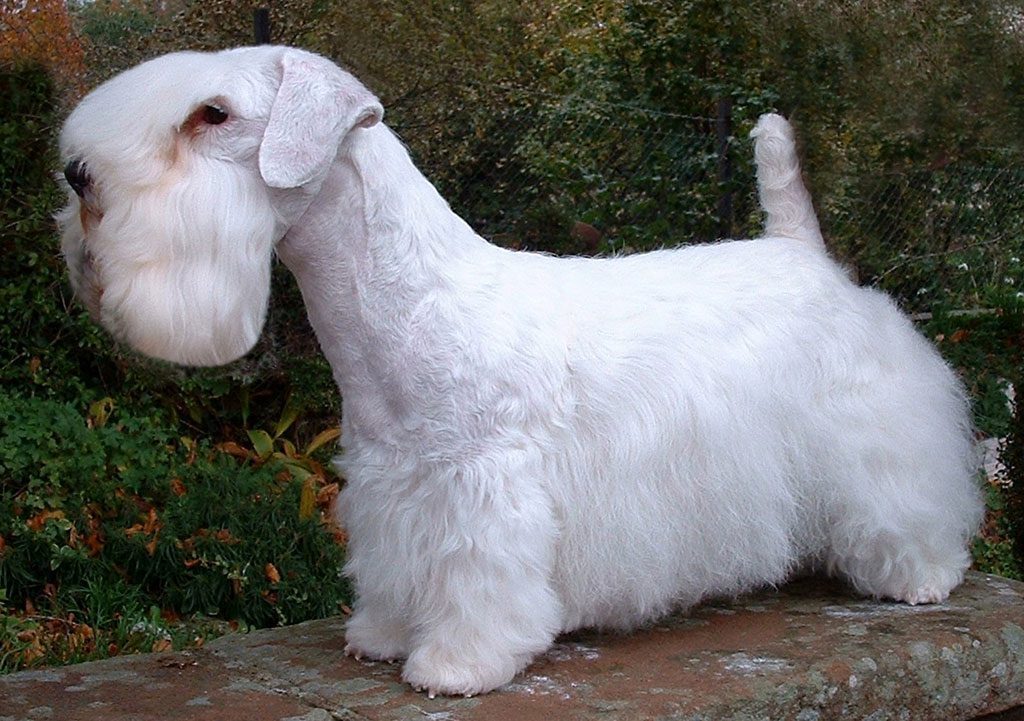
With less than 31 cm. (12 inches) on the shoulder and an approximate weight of 9 kg (24 pounds) , the Sealyham terrier they are not big enough to be considered medium sized dogs, but they are among the strongest and most substantial small dogs.

One Sealyham terrier typical is well muscled, shapely, with long and determined steps. Waterproof coat is predominantly white, and her long and wide head is provided with luxurious facial hair. Despite its reputation for being the grossest among short-legged terriers, these terriers are cute, funny, affectionate, outgoing and trainable, although a little stubborn. His attention and his big dog bark make the Sealys excellent guard dogs. Blessed with an adaptable nature, the Sealys are willing to live in the city or in the country.

Character and skills

The Sealies they are the typical terriers, since they are self-confident and curious. But, they are softer and less noisy than other terrier breeds, which makes it easier to live with them.

The Sealies they are outgoing and friendly, but alert. They tend to be reserved with strangers and are excellent guard dogs with an impressive bark. They respond well to positive training techniques and learn quickly, but their sense of humor often results in adding a smart twist to any command they are asked to perform., especially if they have an audience.

These are proud dogs who will consider themselves full and equal members of the family and expect to be treated that way..

Like every dog, the Sealies need early socialization – exposure to many people, views, different sounds and experiences – when they are young. Socializing helps ensure that your Sealyham Terrier puppy grows up to be a complete dog..

Health ยซSealyham Terrierยป

The Sealyham Terriers have no significant health problems. But, as with any dog, there are some conditions and diseases that Sealyhams could be prone, such as lens dislocation and retinal dysplasia.

Lens dislocation. The lens of the eye can move when the supporting ligament is damaged. Can sometimes be treated with medication or surgery, but in severe cases it may be necessary to remove the eye.
Retinal dysplasia. It is a malformation of the development of the retina with which the dog is born. Most cases are mild and there is no noticeable loss of vision. Veterinary ophthalmologists can do tests to determine if puppies are affected when they have 7 to 12 weeks of age. Retinal dysplasia should not affect a dog's ability to function as a companion, but the Sealyhams affected should not be bred.
Although these ailments are rarely reported in Sealyham Terriers, you should research breeders and find those who do the proper testing at your kennel to make sure you get the healthiest dog possible.

Sealyham Terrier Care

The small size and robust construction of the Sealyham terrier make it a good choice for city or country dwellers. It is relatively idle indoors and can adapt to life without a patio, as long as you have walked daily. If you have a patio, must be fenced to avoid chasing other animals or going hunting.

The Sealyhams they are quite discreet, They are not "busy" like most terriers. Due to its size, their loyalty to their families and their preference for cool temperatures, they perform better as domestic dogs.

Like most terriers, to the Sealies they like to dig and bark. This dog is an independent thinker and requires firm and consistent handling., but responds well to training with positive reinforcement techniques like food rewards, praise and play.

Sometimes the Sealies can be difficult to train at home, but patience and a regular schedule generally brings success.

Aseo ยซSealyham Terrierยป

The Terriers de Sealyham have medium length and weather resistant double coats. The undercoat is dense and soft, while the top layer is hard and lean. The hair around the face and muzzle is very long, compared to the rest of the coat. The Sealyham they are all white, although some have lemon marks, brown or badger on the head and ears.

To look good, the Sealyham Terriers they should be brushed three times a week to prevent tangles from forming on the long hair of the head, legs and chest. Brushing by hand – plucking off dead hair to stimulate new hair growth – maintains correct hard coat texture, but this can be a laborious process.

Many pet owners choose to cut their dog's hair. The downside is that the coat becomes much softer and can shed more than just bare fur, that comes off only slightly. You can learn how to trim your Sealy yourself or you can take it to a professional hairdresser.

Other grooming needs are dental hygiene and nail care.. Brush your teeth Sealyham at least two to three times a week to eliminate tartar buildup and accompanying bacteria. Daily is better.

Cut her nails once or twice a month, as necessary. If you can hear the click of nails on the ground, they are too long. Short nails keep your feet in good shape and won't scratch your legs when the Sealyham jump to greet you.

Start getting used to your Sealyham terrier to have it brushed and examined when it's a puppy. Handle your feet frequently – dogs are sensitive to their feet – and look inside your mouth and your ears.

Make grooming a positive experience full of praise and rewards, and will lay the groundwork to facilitate veterinary examinations and other manipulations as an adult.

Characteristics "Sealyham terrier"

Coexistence is important that you have with your new friend. Before considering the acquisition of a dog of the breed "Sealyham terrier" you know certain factors. Not all breeds of dogs are apt to live in an apartment, you must take into account his character, their need for exercise, their interaction with other pets, their care and if you have small children, their level of tolerance towards them.

Adaptation โ“˜

3,0 of 5 stars (based on 1 review)

friendly dog โ€‹โ€‹โ“˜

3,0 of 5 stars (based on 1 review)

hair loss โ“˜

4,0 of 5 stars (based on 1 review)

Affection level โ“˜

3,0 of 5 stars (based on 1 review)

Need for exercise โ“˜

2,0 of 5 stars (based on 1 review)

Social need โ“˜

3,0 of 5 stars (based on 1 review)

Home โ“˜

3,0 of 5 stars (based on 1 review)

Toilet โ“˜

3,0 of 5 stars (based on 1 review)

Friendly with strangers โ“˜

3,0 of 5 stars (based on 1 review)

barking โ“˜

4,0 of 5 stars (based on 1 review)

Health โ“˜

4,0 of 5 stars (based on 1 review)

Territorial โ“˜

2,0 of 5 stars (based on 1 review)

Cat friendly โ“˜

3,0 of 5 stars (based on 1 review)

Intelligence โ“˜

3,0 of 5 stars (based on 1 review)

Versatility โ“˜

3,0 of 5 stars (based on 1 review)

Child friendly โ“˜

4,0 of 5 stars (based on 1 review)

Surveillance โ“˜

3,0 of 5 stars (based on 1 review)

joy โ“˜

3,0 of 5 stars (based on 1 review)

Images "Sealyham terrier"

Photos:

1 – close up photograph of a Sealyham Terrier by Chuck in MA / CC BY-SA
2 – Sealyham Terrier bitch Alice von der Lรถwenburg by Dr. Sabine Schumann / Public domain
3 – Sealyham_terrier at the national show in Rybnik – Stone to Pleple2000 / CC BY-SA
4 – A Sealyham Terrier (Six-Pack Snuffy Smith) in forest by https://commons.wikimedia.org/wiki/User:Ionwind
5 – Sealyham terrier – Westminster Kennel Club Dog Show, New York City. by Pets Adviser from Brooklyn, USA /
6 – Sealyham terrier – Westminster Kennel Club Dog Show, New York City. by Pets Adviser from Brooklyn, USA /

Videos "Sealyham terrier"

Type and recognitions:

  • FCI CLASSIFICATION:
  • Group :
  • Section : . .

Federations:

  • FCI – Terriers 2 Small sized Terriers. โ“˜
  • AKC – Terriers โ“˜
  • ANKC – Terriers โ“˜
  • CKC – Terriers โ“˜
  • โ€‹KC – Terriers โ“˜
  • NZKC – Terriers โ“˜
  • UKC – Terriers โ“˜

FCI breed standard "Sealyham terrier"

Origin:
Wales, United Kingdom

Date of publication of the valid original standard:
26.03.2009.

Use:

Terrier


General appearance:

It is a dog of free movements, Active, balanced, of strong substance in a small body. Of oblong outline, not square.


Behavior / temperament:

It is a vigorous dog, active and fit for work. Alert and brave, but by nature friendly.

Head:

---

Cranial region:

Skull: Slightly curved and wide between the ears.

facial region:

  • Truffle: black.
  • Snout: Fearsome jaws, square and long.
  • Jaws/Teeth: Even and strong teeth, the canines fit well together and are long compared to the size of the dog. Strong jaws with regular scissor bite, that is to say, that the inner face of the upper incisors is in close contact with the outer face of the lower incisors; teeth should be implanted at right angles in the jaws.
  • Cheeks: The bones are not prominent.
  • Eyes: dark, well placed, round and medium-sized. Well pigmented dark eye edges preferred, but non-pigmented are tolerated.
  • Ears: Medium-sized, slightly rounded at the tip and carried to the sides of the cheeks.

Neck:

Rather long, thick, muscular and well placed on the oblique shoulders.

Body:

Medium long, flexible.

  • Back: Level.
  • Breast : Wide and deep thorax, well descended among the forelimbs.
  • Ribs: Well arched.

Tail:

Previouslycustomwasamputate the tail.

Tips

PREVIOUS MEMBERS: Short members, strong and as straight as possible, compatible with a well-lowered chest.

  • Shoulder: The point of the shoulders is in line with the point of the elbows.
  • Elbows: Well glued to the sides of the chest.

LATER MEMBERS: Especially powerful for dog size.

  • Thighs: Spacious and muscular.
  • Knee joint: Well angled.
  • Warm-foot joint (Hock): Strong, well angled, in parallel position to each other.
  • Pies: Round, similar to the cat, with thick foot pads. Feet turned fully forward.

Movement:

Fast and vigorous with a lot of momentum.

Mantle

Fur: Long outer layer, hard, wire-like texture. Weatherproof inner layer.

Color: Total white or white with lemon spots, brown color, blue or badger on the head and ears. Excessively mottled black spots are undesirable.


Size and weight:

The height at the withers must not exceed 31 cm. (12 inches).

Ideal weight:

  • Males approximately 9 kg (20 English pounds) .
  • Females approximately 8,2 kg (18 English pounds). The general conformation, the balance of forms, type and substance are essential criteria.


Fouls:

Any deviation from the aforementioned criteria is considered as a fault and the severity of this is considered to the degree of the deviation to the standard and its consequences on the health and well-being of the dog..

FALTAS DESCALIFICANTES:

  1. Aggressiveness or extreme shyness.
  2. Any dog โ€‹โ€‹showing clear signs of physical or behavioral abnormalities must be disqualified..


N.B.:
  1. Males should have two normal-appearing testicles fully descended into the scrotum..
  2. Only functionally and clinically healthy dogs, with the typical conformation of the breed, should be used for parenting.

The latest changes are in bold.

TRANSLATION: Lic. Oscar Valverde Calvo (Costa Rica) and Jorge Nallem (Uruguay).

Source: F.C.I - International Cynological Federation

Alternative names:

1. Welsh Border Terrier, Cowley Terrier (English).
2. Sealyham (French).
3. Sealyham (German).
4. Sealyham (Portuguese).
5. Sealyham (espaรฑol).

โ–ท The world of Pets: Dogs, cats, birds, reptiles, amphibians

Staffordshire bull terrier
Gran Bretaรฑa FCI 76 . Bull type Terriers

The Staffordshire bull terrier is the smallest of the Bull type Terriers and also the most popular in England.

Staffordshire bull terrier

Content

Characteristics "Staffordshire bull terrier"

Coexistence is important that you have with your new friend. Before considering the acquisition of a dog of the breed "Staffordshire bull terrier" you know certain factors. Not all breeds of dogs are apt to live in an apartment, you must take into account his character, their need for exercise, their interaction with other pets, their care and if you have small children, their level of tolerance towards them.

Adaptation โ“˜

3,0 of 5 stars (based on 1 review)

friendly dog โ€‹โ€‹โ“˜

1,0 of 5 stars (based on 1 review)

hair loss โ“˜

3,0 of 5 stars (based on 1 review)

Affection level โ“˜

5,0 of 5 stars (based on 1 review)

Need for exercise โ“˜

4,0 of 5 stars (based on 1 review)

Social need โ“˜

4,0 of 5 stars (based on 1 review)

Home โ“˜

3,0 of 5 stars (based on 1 review)

Toilet โ“˜

1,0 of 5 stars (based on 1 review)

Friendly with strangers โ“˜

5,0 of 5 stars (based on 1 review)

barking โ“˜

2,0 of 5 stars (based on 1 review)

Health โ“˜

3,0 of 5 stars (based on 1 review)

Territorial โ“˜

3,0 of 5 stars (based on 1 review)

Cat friendly โ“˜

2,0 of 5 stars (based on 1 review)

Intelligence โ“˜

4,0 of 5 stars (based on 1 review)

Versatility โ“˜

2,0 of 5 stars (based on 1 review)

Child friendly โ“˜

3,0 of 5 stars (based on 1 review)

Surveillance โ“˜

3,0 of 5 stars (based on 1 review)

joy โ“˜

3,0 of 5 stars (based on 1 review)

History

As its name implies, the Staffordshire bull terrier comes from the English city of Stafford and is a cross between different terriers.

In the 18th century the Staffordshire Bullterrier they were popular with the workers, in particular the Staffordshire coal miners (England), who enjoyed pitting them against each other. That association with fighting meant that the recognition of the breed did not come quickly., even though dog fighting had been banned in 1835. It was not until a century later that the Kennel Club of England recognized race. The American Kennel Club recognized the Staffordshire Bull Terrier in 1975.

Unlike other countries, where the breed is considered a fighting dog, in Great Britain it is a very popular family dog. there the Staffordshire It is also called "Nanny Dog" or "Nurse Dog" for its friendliness with children and is one of the five most common dog breeds..

Physical characteristics

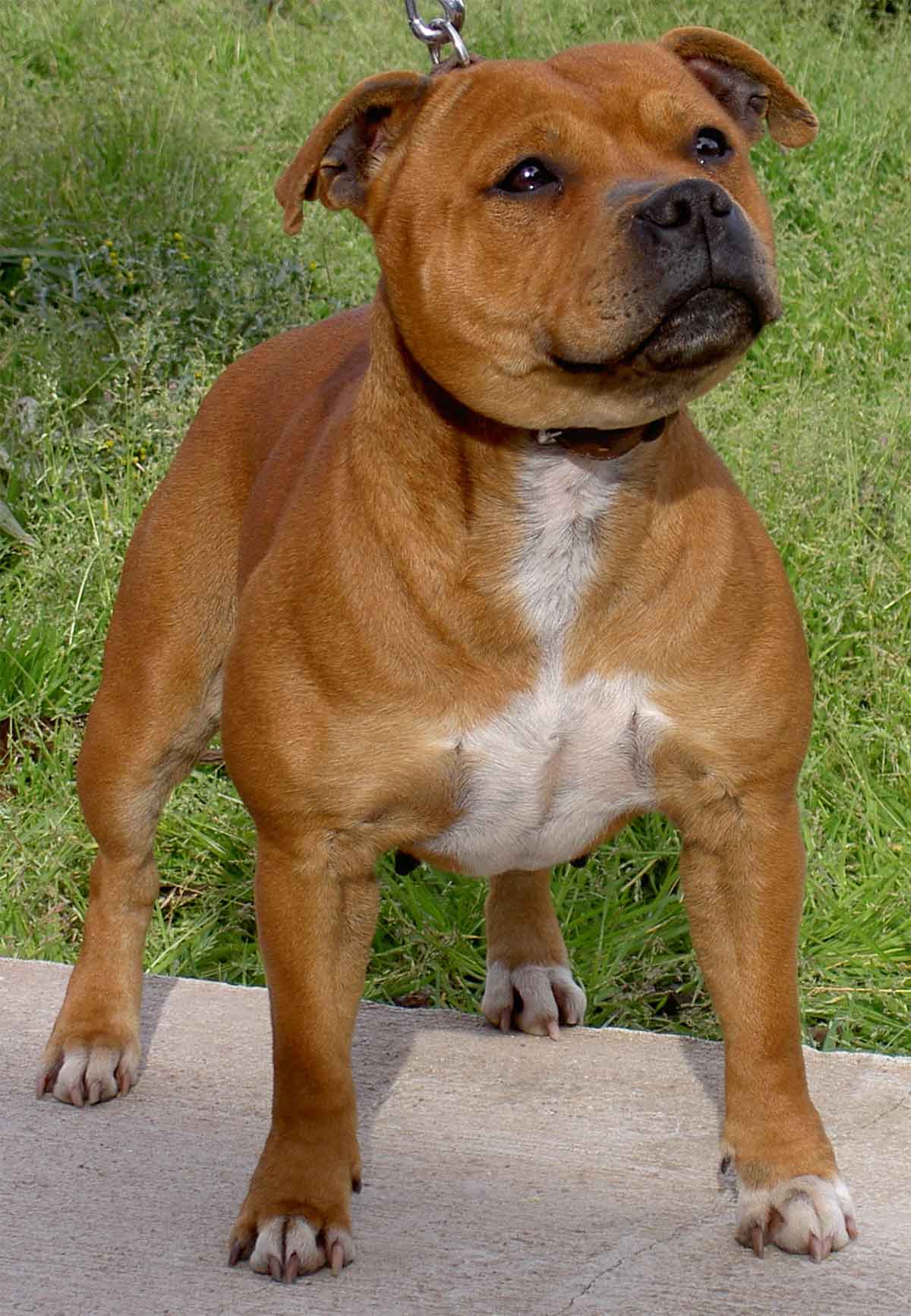
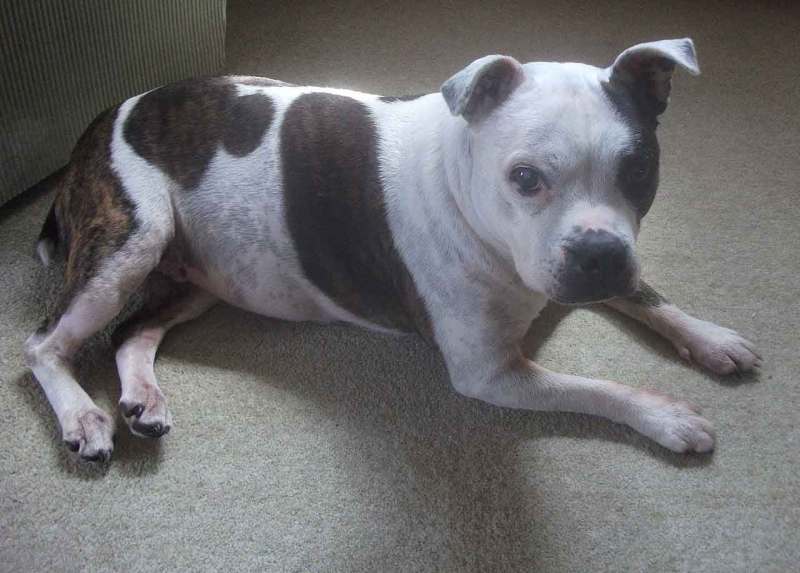
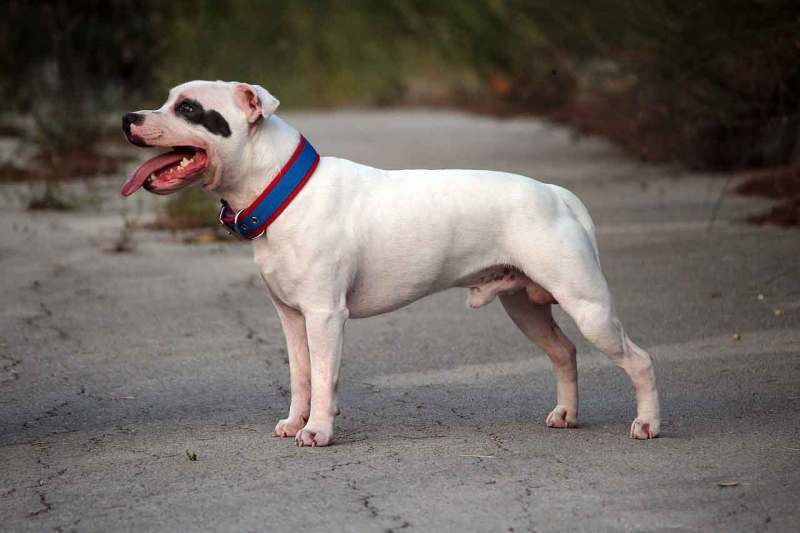
The Staffordshire Bullterrier he is medium in size and has a compact stature, muscular, almost bulky. The characteristic are his ears, that are up high and leaning slightly forward.

Height:

Height at the withers between 35,5 and 40,5 cm..

Weight:

Males should reach a weight of 12,7 – 17 kg, females weigh between 11 and 15,4 kg.

Coat colors and length

The coat of the Staffordshire bull terrier is short, smooth and simple. Can be the colors red, white, black, cervato, blue or tabby.

Character and skills

The character of Staffordshire Bull Terrier it depends a lot on your attitude. Has a fearless and courageous nature and is faithful and kind from the start. With a loving but strict attitude and a close family relationship, the Staffordshire can become a loving companion. It also, he is considered faithful, persistent and dominant. These characteristics are unfortunately exploited by many dog โ€‹โ€‹owners who rude the Staffordshire Bull Terrier and train it to be strong and aggressive..

Fitness with family connection

In many countries the Staffordshire Bullterrier is classified as a dangerous fighting dog. Its maintenance is strongly restricted and the importation of the breed to many countries is prohibited. Apart from that, the Staffordshire it is easy to maintain, because it is very adaptable. It can be kept in a house as well as in a city apartment.. Needs a family connection and proximity to his master. So, not suitable for a kennel. The Staffordshire has a great need to move and likes to play. Daily exercise in combination with extensive ball games is, therefore, a need.

Staffordshire Bullterrier Education

The Staffordshire Bullterrier it is by no means a beginner dog. In the education of this breed it is important to bring out the traits of good character with consistency and loving rigor. Traits such as tenacity, dominance and fearlessness must be kept in check. Harsh training should be avoided so that the dog does not become aggressive and stubborn. To get used to Staffordshire Bullterrier other dogs and socialize them very well, a visit to the dog school is advisable. Especially important in education is the hierarchy. Even as puppies, to the Staffordshire they like to test their limits and try to take command. But, as an owner you should never be intimidated by your dog and you should make it clear, but with love, that you are higher in the hierarchy.

Health and care of the Staffordshire Bullterrier

coat care

The coat of the Staffordshire Bull Terrier it is very easy to care for. An occasional brushing is enough to remove dirt and dust and stimulate blood circulation.

Typical diseases

Like typical diseases, the Staffordshire Bullterrier may suffer from poor hip development (Hip Dysplasia) and elbows (elbow dysplasia) and dislocation of the patella (dislocation of patella). Eye diseases such as cataracts are also typical of the breed. But, most diseases can be detected early and treated well with a regular visit to the vet.

Nutrition / Food

A healthy and balanced diet is the basis for a long life for dogs. feed the Staffordshire Bullterrier with high quality food and ingredients is, therefore, a need. The dog being fed dry food, wet or BARF is irrelevant. It is only important that the food is free of dyes, preservatives and sugar and has a high meat content.

The life expectancy of the Staffordshire Bullterrier

If he Staffordshire remains in good health and is well cared for, easily reaches an age between 12 and 14 years.

Buy a Staffordshire Bullterrier

The Staffordshire It is classified as an attack dog in many countries and its maintenance is subject to a series of conditions. Before buying, one must therefore inform oneself thoroughly about the breed and restrictions. If the purchase decision is made, one must first look at various breeders and animals. As a registered breeder's dog, a Staffordshire Terrier It costs around 1000 EUR. A shelter dog, or from an animal welfare organization is much cheaper. Especially older dogs should not be accepted by beginners, because they can be more difficult in their education than puppies.

Images "Staffordshire bull terrier"

photos:

1 – Staffordshire Bull Terrier by https://es.m.wikipedia.org/wiki/Archivo:Staffie.jpg
2 – Staffordshire Bull Terrier by https://www.pxfuel.com/es/free-photo-oegwc
3 – Staffordshire Bull Terrier by https://pxhere.com/es/photo/343556
4 – Profile shot of a white Staffordshire Bull Terrier by Public Domain – no attribution required / CC0
5 – Brindle & white Staffordshire Bull Terrier by Serial Number 54129 / CC BY-SA
6 – Staffordshire Bull Terrier, called ยซKingยป, in Melbourne, Victoria, Australia by Ashoornamrood / CC BY-SA
7 – Black Staffordshire Bull Terrier sitting on a green lawn by Public Domain – no attribution required / CC0

Videos "Staffordshire bull terrier"

Type and recognitions:

  • FCI CLASSIFICATION:
  • Group :
  • Section : . .

Federations:

  • FCI – Group 3 – Section 3 Bull type Terriers. โ“˜
  • AKC – Terriers โ“˜
  • ANKC – Terriers โ“˜
  • CKC – Terriers โ“˜
  • โ€‹KC – Terriers โ“˜
  • NZKC – Terriers โ“˜
  • UKC – Terriers โ“˜

FCI breed standard "Staffordshire bull terrier"

Origin:
United Kingdom

Date of publication of the valid original standard:
24.06.1987

Use:

Terrier


General appearance:

It is a smooth-haired dog, well balanced and strong for his size. Muscular, active and agile.


Behavior / temperament:

It is traditionally a dog of unsurpassed courage and tenacity. Very intelligent and loving, especially with the children. Brave, fearless and completely reliable.

Head:

Short

Cranial region:
  • Craging: deep and wide.
  • Dnaso-frontal depression (Stop): Marked.

facial region:

  • Trufa: Negra.
  • Snout: Short.
  • Jaws / Teeth: Powerful jaws, well developed teeth; regular and complete denture with scissor bite, that is to say, that the inner face of the upper incisors is in close contact with the outer face of the lower incisors, teeth being placed perpendicularly in the jaws.
  • Labios: Close and clear.
  • Cheeks: Very pronounced cheek muscles.
  • Ojors: Preferably dark in color although a color related to the color of the coat is allowed. Medium-sized, round and positioned so that they face straight ahead. The eye contour must be dark in color.
  • Obars: In the shape of a โ€œroseโ€ or semi-erect; they should not be large or heavy. Ears that are completely droopy or erect are very undesirable..

Neck:

Muscular, rather short, sharp in outline and gradually widening towards the shoulders.

Body:

Short lumbar region.

  • Lรญnand the top: Level.
  • Pecho: Front width; deep chest, muscular and well defined; well arched ribs.

Tail:

Medium length, low implantation, gradually tapers towards the tip and should be carried quite low. It should not be screwed in too much and should resemble the handle of an old water pump.

Tips

PREVIOUS MEMBERS: Straight forelimbs, for strong bones, placed quite far apart, without showing weakness in the metacarpals, from which the feet are turned slightly outward.

  • Hormbros: Well inclined backwards.
  • Elbows: No loosening.

LATER MEMBERS: Well muscled. Members viewed from behind must appear parallel.

  • Afemoro-tibio-patellar joints (knees): Well angulated.
  • PinItThey must have thick foot pads, be strong and of medium size. The nails must be black in those copies of a single color.

Movement:

Libre, vigorous and agile, Without much effort. Limbs move parallel whether viewed from the front or from behind. Its hind limbs provide a strong thrust.

Mantle

  • Plink: Smooth, short, and stuck.
  • Colorr: Red, leonado, white, black or blue, or any of these colors with white. Any shade of brindle or any shade of brindle with white. Black and tan and liver color are very undesirable.


Size and weight:

The desirable height (in the region of the cross) Must be from 14 to 16 inches (35,5 cm to 40,5 cm.), which is related to the weight of the specimens.

The weight of the males should be 28 to 38 English pounds (12,7 kg to 17 kg) and that of the females of 24 to 34 English pounds (11 to 15,4 kg).


Fouls:

Any deviation from the aforementioned criteria is considered as a fault and the severity of this is considered to the degree of the deviation to the standard and its consequences on the health and well-being of the dog..

FALTAS DISQUALIFYING:

  • Aggressiveness or extreme shyness.
  • Any dog โ€‹โ€‹showing clear signs of physical or behavioral abnormalities must be disqualified..


N.B.:
  • Males should have two normal-appearing testicles fully descended into the scrotum..
  • Only functionally and clinically healthy dogs, with the typical conformation of the breed, should be used for parenting.

TRANSLATION: Lic. Oscar Valverde Calvo (Costa Rica)

Itlatest changes are in bold.

Source: F.C.I - International Cynological Federation

Alternative names:

1. Stafford, Staffy, (English).
2. Stafford, SBT (French).
3. SBT, Stafford (German).
4. Staffbull, Staffie, SBT (Portuguese).
5. Staffy, Stafford Inglรฉs, Stafford (espaรฑol).

โ–ท The world of Pets: Dogs, cats, birds, reptiles, amphibians

Australian Silky Terrier
Australia FCI 236 . Toy Terriers

The Australian Silky Terrier not appropriate to live with other smaller pets.

Australian Silky Terrier

Content

History

The Australian Silky Terrier is a native of Australia dog, Although the types and ancestral breeds were of Great Britain. The ancestors of the Australian Silky Terrier include the Yorkshire Terrier (originating in England and Scotland before being considered) and the Aussie (descended from wire-haired Terriers brought from Britain to Australia in the 19th century 19), but the records do not indicate whether early dogs were simply Terrier Australian born with silky fur, or if there was an attempt to create a breed apart.

In accordance with the American Kennel Club, the race began at the end of the 19th century, being result of crosses between a Yorkshire Terrier and Aussie. At the beginning, the breed became known as โ€œthe sydney silkโ€, since it was located mainly in the city of Sydney, Australia. Although most Australian breeds are listed as working dogs, el Australian Silky Terrier, is considered to be, was raised โ€“mainly- to be an urban pet and companion of the family, but also It is a breed known for killing snakes in Australia.

Until 1929, the Terrier australiano, the Silky Terrier Australian and the Yorkshire Terrier they were not clearly defined, in the same litter, three dogs could be born of breeds that over time were considered, different. According to existing information, they were separated by the appearance in different types once they raised separately.

After 1932 in Australia, miscegenation was tweaking, and in 1955 the name of the race officially became Australian Silky Terrier. The breed was recognized by the national canine Council of Australia, in 1958 in the Toy group.

During and after World War II American soldiers who had been sent to Australia, return to United States, they brought with them several Australian Silky Terrier. Photographs in the newspapers of the time (1954), They show the soldiers, back to home wearing their pets Australian Silky Terrier, and this caused a rise in popularity to the race, and hundreds of Australian Silky Terrier were imported from Australia to the United States.

The American Kennel Club He acknowledged the race as the Silky Terrier in 1959, like the United Kennel Club ((UNITED STATES)UU.) in 1965, and the Canadian Kennel Club. The breed is recognized by all major canine clubs of the English speaking world, and internationally by the International Cynological Federation as breed number 236.

Physical characteristics

The Australian Silky Terrier is a Terrier, but is usually placed in the Group of dogs Toy type, instead of the Terrier group, due to its small size. The Federation Cynologique Internationale has a special section of the Terrier group that includes only the smaller dogs, While other canine clubs, place the breed in the Toy group, but universally everyone agrees that the breed type is Terrier.

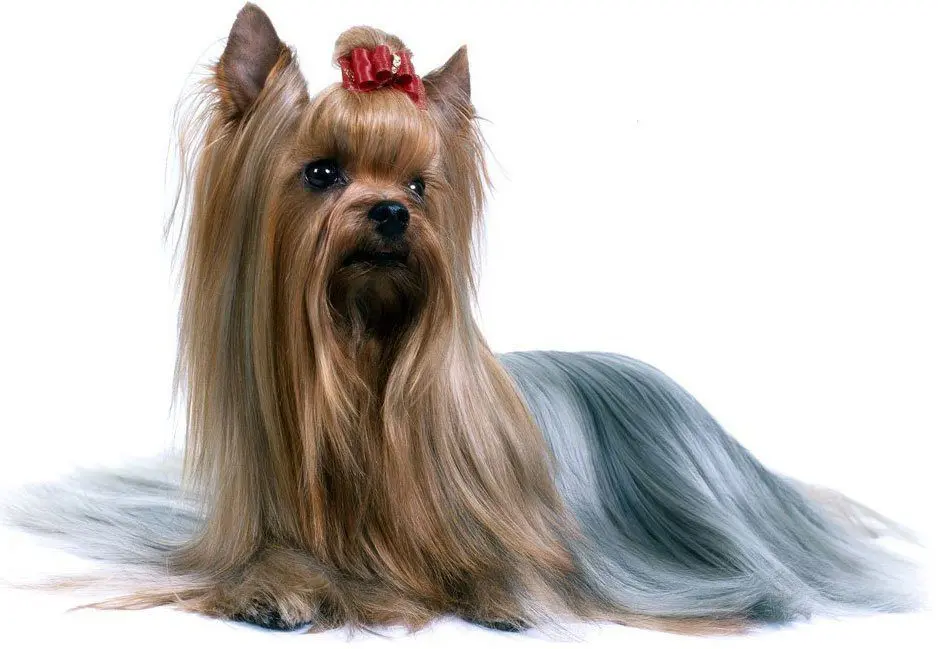
His mantle's hair is grey, Griffon's soft texture and bluish, smooth and long. It requires constant maintenance and brushing. An Australian Silky Terrier should be about 23 to 25 cm to cross and weighs between 3.6 and 8 kg, Although the steps may vary between the different federations. It should be a little bit longer than that width (about one-fifth longer than the height at the cross).

El Australian Silky Terrier, small, almond-shaped eyes. according to the rules, the eyes are considered to lack. The ears are small and erect. It has a tail of high adjustment and small feet, almost like a cat. The hair should be long. The hair on the face and ears is usually cut.

This breed must have with a Barber every three weeks and their teeth should be brushed. Terriers are notorious for having tooth and gum problems..

The layer of Silky Terrier is very susceptible to tangles and mats and requires daily brushing and the hairstyle. This breed requires a deep commitment to the owners. To keep the shiny fur, regular washing is necessary. Using an avocado and oatmeal shampoo will help relieve itchy skin., characteristic dryness of this breed.

Character and skills

The Silky Terrier has a very lively character and will bark at any stranger immediately. He is smart and also an excellent watchdog, announcing unwanted intruders with a squeaky bark.

Due to its small size, also suitable for an apartment in the city, but also appreciates extensive exercise in nature. He makes a very nice roommate and an excellent pet for everyone who likes a small dog with a big heart.

The Silky Terrier can bring much joy to the sick or the elderly, that can even be tied to the house, at least if the dog still gets proper exercise from relatives or good neighbors.

Like most other terriers, the Silkies they are very alert and anxious. Hunting instinct is generally well developed, so the dog should always have enough opportunity to move.

Because despite his pretty appearance he Silky Terrier it is not a lap dog, but a typical terrier that needs movement and family connection. It is a happy and uncomplicated companion dog, with a lot of temperament and joy of movement, but fortunately it is easy to train.

As the Silky Terrier also has a distinctive personality, a consistent and loving education is essential.

ยซAustralian Silky Terrierยป Education

Although the Silky Terrier australiano it's a miniature terrier, still has the typical terrier stubbornness. That's why you should show him a firm upbringing. If this is practiced, he "Silkyยป will become a simple and obedient companion, but – can't get out of your skin – can also kill a rat or mouse from time to time. His intelligence can be promoted by brain work and he can also be taught little tricks.

Care and diseases ยซAustralien Silky Terrierยป

Although her hair doesn't shed much, the mantle of your Silky Terrier australiano needs a lot of care. Needs to be brushed daily to keep its long coat silky. But the straight and split hair makes brushing relatively easy, if you don't let it get tangled.

Common diseases:

Seasonal dermatitis (inflammation of the skin caused mainly by malassezias), drug intolerance (glucocorticoids), cataract, urinary tract diseases (cystine stones).

Images ยซAustralian Silky Terrierยป

ยซAustralian Silky Terrierยป Videos

Australian silky terrier playing - playing

Type and recognitions:

  • FCI CLASSIFICATION:
  • Group :
  • Section : . .

Federations:

  • FCI – Group 3 – Section 4 Toy Terriers. โ“˜
  • AKC – Terriers โ“˜
  • ANKC – Terriers โ“˜
  • CKC – Terriers โ“˜
  • โ€‹KC – Terriers โ“˜
  • NZKC – Terriers โ“˜
  • UKC – Terriers โ“˜

FCI breed standard "Australian Silky Terrier"

Origin:
Australia

Date of publication of the valid original standard:
08.10.2012

Use:

Toy Terrier / Service dog


General appearance:

It's compact, moderately low, moderately long, with a refined structure but with enough substance to suggest the ability to hunt and kill domestic rodents. The silky coat, smooth and parted in half for a neat appearance.


Behavior / temperament:

Must exhibit Terrier characteristics, manifesting a sharp vivacity, activity and healthy condition.A majestic and courageous small Terrier who has no rival as a companion dog..

Head:

The head is of moderate length, slightly shorter from the tip of the nose to the region between the eyes, that from the same position to the occiput. The head must be strong, with Terrier characteristics, being moderately wide between the ears.

Cranial region:
  • Craging: Flattened and no roundness between the eyes, it is provided with a tuft of fine and silky hair that does not cover the eyes (a long fall of hair on the front face or cheeks is objectionable).
  • Storp (naso-frontal depression)Definite but moderate.

facial region:

  • Trufa: It must be black.
  • Lips: Adherent and thin.
  • Jaws / Teeth: Strong jaws, even and not clenched teeth; upper incisors closely overlap lower incisors (scissor bite).
  • Ojors: They are small, oval, never round or prominent; its color should be as dark as possible with an expression of sharp intelligence.
  • Obars: They must be small, โ€œVโ€ shaped; the pavilion is fine; set high in the skull; he wears them upright and they are totally devoid of long hair.

Neck:

Medium length, refined and slightly arched, gracefully inserted on the shoulders. Well covered with long silky hair.

Body:

It should be moderately long in proportion to the height of the dog.

  • Lรญnand the top: Level at all times (both standing and moving.
  • Itmor: It must be strong.
  • Pecho: Of moderate depth and width. Well arched ribs, extended back to a strong loin.

Tail:

Napamputated, it is set high and carried erect, but not too high. It should not be provided with feathers. Without amputation, the first three vertebrae must be erect or slightly curved, but never curved on the top line. Must not be screwed. Its long, giving an appearance of balance sheet. According to the description of the docked tail, the non-docked tail should also be free of feathers.

Tips

PREVIOUS MEMBERS:

  • ApGeneral arience: They have finely delineated and rounded bones; are straight and well positioned under the body without showing weakness in the metacarpals.
  • Hormbros (Blades): Fine and well placed back, well adapted with well angulated arms and very close to the ribs.
  • Elbows: They do not deviate outward or inward.
  • Pinis previous: Small, with good pads, fingers well together; nails must be black or very dark.

LATER MEMBERS:

  • Thigh (Femur): Well developed.
  • Knees: They must be well angled.
  • Corvejones: Well angled, Seen from behind they should be well placed below and parallel to each other.
  • Pinis later: Small, with good pads, fingers well together; nails must be black or very dark.

Movement:

Must be free, straight, showing no loosening in the shoulders or elbows, no outward or inward deviations of the feet and pasterns. The hind limbs should give a thrust with ample flexibility in the knees and hocks.. Seen from the back, the movement should not be too narrow or too wide.

Mantle

Fur: Smooth, fine and shiny, silky texture. The length of the coat must not be such as to impede the movement of the dog and must allow light to see under the dog. Front and back feet must be free of long hair.

Color: All shades of blue and tan are acceptable, the more intense the colors and the more clearly defined the better. Silver and white are not accepted. In the tail the color should be blue to very dark. It is desirable that the head lock is blue or fawn in color. The blue and tan color distribution should be as follows: fire around the base of the ears, muzzle and sides of cheeks; blue from base of skull to tip of tail, in the forelimbs up to near the carpal joint and in the hindlimbs near the hock joint; A tan line is shown below the knees and the carpal and tibiotarsal joints to the fingers and around the anus. The blue color of the body must be free of tan or tan color. Fire marks must be free of smudges.

Black color is allowed in puppies, but the blue color must have set at the 18 months of age.


Size and weight:

Alturto the cross:

  • Males: 23 โ€“ 26 cm.
  • females: may be slightly lower

Pthat: Weight in proportion to size.


Fouls:

Any deviation from the aforementioned criteria is considered as a fault and the severity of this is considered to the degree of the deviation to the standard and its consequences on the health and well-being of the dog..

FALTAS SEVERAS:

  • Lรญnand the superior conquered the convex.

FALTAS DISQUALIFYING:

  • Agextreme shyness.
  • Any dog โ€‹โ€‹showing clear signs of physical or behavioral abnormalities must be disqualified..


N.B.:
  • Males should have two normal-appearing testicles fully descended into the scrotum..
  • Only functionally and clinically healthy dogs, with the typical conformation of the breed, should be used for parenting.

Itlatest changes are in bold.

TRANSLATION: Mexican Canophilic Federation A.C., updated

by J. Nallem (Uruguayan Kennel Club), technical review: M.A. Martรญnez (FCA).

Source: F.C.I - International Cynological Federation

Alternative names:

1. Silky Terrier (English).
2. Silky Terrier australien (French).
3. Sydney Silky, Australian Silky (German).
4. Silky terrier, silky terrier australiano (Portuguese).
5. Silky, Aussie, Terrier Sedoso Australiano (espaรฑol).

โ–ท The world of Pets: Dogs, cats, birds, reptiles, amphibians

Shar Pei
China FCI 309 - Molossoid - Dogo

Shar Pei

The Shar Pei he is affectionate with his owner; he is quite reserved with strangers.

Content

History

Dogs like breed Shar Pei have existed in southern China for centuries, perhaps from the Han dynasty around 200 A.C. Archaeologists have found statues from that period showing a dog similar to the Shar-Pei.. Later evidence includes a 13th century document referring to a wrinkled dog.

The first Shar-Pei they were farm and working dogs. They watched over property and livestock, they hunted and herded flocks. The Shar-Pei was a guardian of the house otherwise, as well. His purple tongue, shared with another race, the Chow Chow, and their wrinkled skin was believed to ward off evil spirits. In addition to being working dogs, the Shar Pei fighting dogs were also popular. Their loose fur and rough fur made it difficult for the other dog to hold on to them..

Life has always been hard in China, but for the Shar Pei became very dangerous after the communist takeover in the early 20th century. In the People's Republic of China, Dogs were a symbol of a decadent past and were virtually eliminated in the 1990s. 1950. Only a few remained in rural areas, as well as in Hong Kong (still under British rule at the time) and in Taiwan, plus a few that had been exported to the United States in 1966.

In 1973, a Hong Kong breeder named Matgo Law appealed to Western dog aficionados to help save the breed, it was on the verge of extinction. The unusual wrinkled dogs sparked enthusiastic interest among Americans and quickly became "the" dog to have.. The Shar Pei were fully recognized by the American Kennel Club in 1992. After that first burst of popularity, have achieved a moderate level of interest, they are currently in the position 50, below the post 37 a decade.

Physical characteristics

It is a robust dog, solid, compact, shorthair. The head is large in proportion to the body. The skull is wide and flat, and the โ“˜stop, very little pronounced. The forehead and the orbital region are covered with abundant and fine wrinkles that extend downwards forming ; eyes are small, sunken, black or brown color in beige specimens. Ears are very small, equilateral triangle, and high insertion and facing forward, above the eyes. The skin forms folds throughout the body, which is a peculiarity of the breed. The tail is inserted high and its carriage in the shape of a trunk above the back is characteristic., without touching it.

  • Fur: thick, very short and straight, with a very visible hardness.
  • Color: black, brown, leonado, beige and cream.
  • Size: 40 – 51 cm..

The Chinese line presents fewer wrinkles than the American one. Females are smaller in size than males.

Character and skills

The Shar Pei he's a little snobby. He's naturally reserved with people he doesn't know and stays aloof once they're introduced. Extensive socialization at a young age is necessary to prevent it from becoming too territorial or aggressive. Only family members receive the overwhelming devotion of this independent dog., alert and intelligent that watches the world go by in a calm and dignified way.

One Shar Pei it's quiet in the house. It is a remarkable watchdog and rarely barks unless it is playing. If they hear it, you should go and see what has caught your attention. A short, quick walk meets your exercise needs.

It is a strong and confident dog that learns fast, so don't put off training. The Shar Pei is independent and strong-willed. Be firm but never harsh or physical with him.. Teach him from the beginning to accept grooming procedures like trimming nails, clean ears and brush teeth. You never want you Shar Pei learn that you can be physically intimidated into stopping these procedures.

like most dogs, to the Shar Pei He doesn't like to have his feet touched and he doesn't like to have his nails cut. That also applies to other procedures..

The Shar Pei is a watchdog that has hunted and fought with other dogs. to most of the Shar Pei They do not like the company of other dogs., and are easily excited by aggression. A securely fenced yard will prevent you from conflict with other dogs or trying to expand your territory to include the entire block..

Start training your puppy the day you bring him home. Even at eight weeks old, He is able to absorb everything you can teach him. Don't wait until you have 6 months to start train or have to deal with more stubborn dog. If possible, Take it to a trainer when you have between 10 and 12 weeks, and socializes, socialice, socialice. But, Note that many kinds of training puppies require certain vaccinations (such as kennel cough) stay up to date, and many veterinarians recommend limited exposure to other dogs and public places until puppy vaccinations (including rabies, distemper and parvovirus) They are completed. Instead of formal training, You can start training your puppy to socialize at home and among family and friends until immunizations are completed in the puppy.

Talk to the breeder, Describe exactly what you want in a dog and ask for help choosing a puppy. Breeders see puppies daily and can make incredibly accurate recommendations once they know something about their lifestyle and personality. Whatever you want from a Shar Pei, look for one whose parents have nice personalities and who has been well socialized since the puppy's young age.

Health of the ยซShar Peiยป

All dogs have the potential to develop genetic health problems, just as all people have the potential to inherit a particular disease. Run, do not walk, from any breeder that does not offer a health guarantee on puppies, to tell you that the breed is 100 percent healthy and has no known problems, or tell you that your puppies are isolated from the main part of the home for health reasons. A reputable breeder will be honest and open about the breed's health problems and the incidence with which they occur in their lines..

The Shar Pei have many health problems, and their owners can develop a close relationship with their vet. Concerns include hip and elbow dysplasia; patella dislocation; Hypothyroidism; eye problems such as entropy, retinal dysplasia and glaucoma, allergies and infections of the skin folds.

A unique problem is a disease called c fever, a condition in which the dog experiences periodic fevers and its hock joints swell. Accompanying signs may include lethargy, vomiting, diarrhea and shallow breathing.

Not all of these conditions are detectable on a growing puppy, and it is impossible to predict if an animal will be free of these diseases, so you must find a reputable breeder who is committed to raising the healthiest animals possible.. Must be able to produce independent certification that the dog's parents (and grandparents, etc.) have been examined for common defects and considered healthy for breeding. That's where health records come in..

Careful breeders screen their breeding dogs for genetic diseases and breed only the healthiest, best-looking specimens., but sometimes mother nature has other ideas and a puppy develops one of these diseases despite good husbandry practices. Advances in veterinary medicine mean that in most cases dogs can still live a good life. If you are going to have a puppy, ask the breeder about the ages of the dogs in their lines and what they died of.

Remember that after you have welcomed a new puppy into your home, has the power to protect you from one of the most common health problems: the obesity. Keep a Shar Pei with proper weight is one of the easiest ways to extend your life. Make the most of your preventive skills to help ensure a healthier dog for life.

Care of the ยซShar Peiยป

Grooming requirements depend on each Shar Pei. Weekly brushing can meet the needs of both the "short-haired" variety and the "brushed" type. (slightly longer), but some Shar Pei of either type can be prone to skin problems. Dogs with skin problems may need a weekly bath and daily brushing.

All the Shar Pei need regular wrinkle care. Wrinkles should be cleaned with a damp cloth and then dried completely to prevent infection.. Do not oil the skin.

The Shar Pei they have small ears, tight and triangular that predispose them to chronic ear problems because there is not enough air circulating in the narrow ear canal. Although it is not so easy to clean the ears of a Shar Pei as it is for most races, regular cleaning should be done to help prevent recurrent yeast or bacterial infections.

Bathe your dog as you like or only when it gets dirty. With the gentle dog shampoos available now, can bathe a Shar Peiweekly if you wish without damaging your coat.

The rest is basic care. Trim nails as needed, usually every few weeks. Brush your teeth for general good health and fresh breath.

Characteristics "Shar Pei"

Coexistence is important that you have with your new friend. Before considering the acquisition of a dog of the breed "Shar Pei" you know certain factors. Not all breeds of dogs are apt to live in an apartment, you must take into account his character, their need for exercise, their interaction with other pets, their care and if you have small children, their level of tolerance towards them.

Adaptation โ“˜

3,0 of 5 stars (based on 1 review)

friendly dog โ€‹โ€‹โ“˜

2,0 of 5 stars (based on 1 review)

hair loss โ“˜

2,0 of 5 stars (based on 1 review)

Affection level โ“˜

5,0 of 5 stars (based on 1 review)

Need for exercise โ“˜

2,0 of 5 stars (based on 1 review)

Social need โ“˜

3,0 of 5 stars (based on 1 review)

Home โ“˜

4,0 of 5 stars (based on 1 review)

Toilet โ“˜

3,0 of 5 stars (based on 1 review)

Friendly with strangers โ“˜

1,0 of 5 stars (based on 1 review)

barking โ“˜

1,0 of 5 stars (based on 1 review)

Health โ“˜

5,0 of 5 stars (based on 1 review)

Territorial โ“˜

3,0 of 5 stars (based on 1 review)

Cat friendly โ“˜

3,0 of 5 stars (based on 1 review)

Intelligence โ“˜

5,0 of 5 stars (based on 1 review)

Versatility โ“˜

3,0 of 5 stars (based on 1 review)

Child friendly โ“˜

1,0 of 5 stars (based on 1 review)

Surveillance โ“˜

3,0 of 5 stars (based on 1 review)

joy โ“˜

3,0 of 5 stars (based on 1 review)

Images "Shar Pei"

Photos:

1 – This is a typical photo of a bone mouth traditional Shar-Pei. CH Dali Pinky, Hong Kong Kennel Club Champion by No machine-readable author provided. Inuyasya1106 assumed (based on copyright claims). / Public domain
2 – Shar_Pei_female_of_7_months._Chinese_line by Mcarrillo / CC BY-SA
3 – Shar Pei by https://pxhere.com/es/photo/1267570
4 – Shar Pei by https://pxhere.com/es/photo/1169173

Videos "Shar Pei"

Type and recognitions:

  • FCI CLASSIFICATION:
  • Group :
  • Section : . .

Federations:

  • FCI – Pinscher and Schnauzer-Molossoid type dogs – Swiss Mountain Dogs and Cattledogs. Section 2.1 Molossoid, mastiff type. โ“˜
  • AKC – Non-Sporting โ“˜
  • ANKC – Group 7 (Non-Sporting) โ“˜
  • CKC – Group 6 – Non-Sporting โ“˜
  • โ€‹KC – Utility dog โ“˜
  • NZKC – Non-Sporting โ“˜
  • UKC – Northern Breed โ“˜

FCI breed standard "Shar Pei"

Origin:
China

Date of publication of the valid original standard:
14.04.1999

Use:

Hunting and guard dog.


General appearance:

This is a medium-sized dog, Active, compact, square, short loin. Wrinkles of the skull and cross, Its small ears and hippo-like snout give it a unique appearance.. Males are more robust than females.

IMPORTANT PROPORTIONS: HeightShar Pei, from the cross to the ground, is approximately equal to the length of the body, from the tip of the shoulder to the tip of the buttock, especially in males.

The length of the nose to the naso-frontal depression is approximately equal to that of the naso-frontal depression to the occiput.


Behavior / temperament:

This is a calm animal, independent, loyal and affectionate with his family.

Head:

It's rather big, in proportion with the body. Wrinkles that form on the forehead and cheeks extend downward to form the double chin.

Cranial region:
  • Skull: Flat and spacious.
  • Depression links (Stop): Moderate.

facial region:

  • Truffle: It is great, wide, preferably black, but any other color that harmonizes with the coat color is allowed. The nostrils are wide open.
  • Snout: It is characteristic of the breed. Width, from the root to the tip of the nose, no sign of decline. The lips and the upper part of the muzzle are very full. The presence of a bulge in the nose is allowed.
  • Mouth: Language, the palate, the gums and lips are preferably bluish black. Pink spotted tongue allowed. Solid pink tongue is considered highly inappropriate. In dogs with diluted colored fur, the tongue is solid lavender.
  • Jaws / Teeth: The jaws are strong, with a perfect scissor joint (The upper incisors overlap the lower incisors in close contact and are at right angles to the jaws.). The fleshiness of the lower lip should not be so excessive as to interfere with the function of the jaws..

EYES: Are dark, almond shaped and frowning look. Lighter color is allowed in dogs with diluted coat. Nor the skin around the eyes, nor the folds, nor the hair, must impede normal function of the eyeball or eyelid. Any indication of irritation of the eyeball, the conjunctiva or the eyelids is considered highly undesirable. There must be no presence of entropion.

EARS: Very small, rather thick, equilateral triangular shape. The tips are slightly rounded. High implementation, with the tips pointed towards the eyes. Present well forward over the eyes; they are well separated and well attached to the skull. Erect ears are highly undesirable.

Neck:

Medium length, strong, well implanted in the shoulders. Loose skin under the neck should not be excessive.

Body:

The presence of body skin folds in adult dogs is considered highly undesirable, except at the cross and at the tail, where the folds must be moderate.

  • top line: Descend slightly behind the cross, then he stands up a little on his back.
  • Back: Short and strong.
  • Pork loin: Short, width, slightly arched.
  • Rump: Rather flat.
  • Breast : Broad and deep; the sternum region reaches the elbow. bottom line: Rises slightly below the back.

Tail:

Thick and round at the base; gradually thin to a fine point. Well established, a distinctive feature of the breed. Can be tall and hunched, carried in a closed curl, hunched over or falling to one side or the other of the back. The absence of tail or the cut tail are highly undesirable.

Tips

PREVIOUS MEMBERS: Straight, of moderate length, for strong bones. There is no presence of wrinkles in the forelimbs.

  • Shoulder: Muscular, well established and inclined.
  • Metacarpus: Slightly sloping, strong, รโ€œรหœรโ€˜รลกรหœรโ€ข.
  • Previous feet: Moderate in size, compact; they are not crushed.
    Fingers have strong joints. There is no presence of spurs on the hind feet.

LATER MEMBERS: They are muscular, strong, moderately angulated. Seen from the back, They are perpendicular to the ground and parallel to each other.. The presence of wrinkles on the thighs, the legs, the metatarsals, as well as thick skin on the hocks are undesirable.

  • Hocks: Very low.
  • Hind feet: Moderate in size, compact; they are not crushed. Fingers have strong joints. There is no presence of spurs on the hind feet.

Movement:

Jogging is the favorite movement. It's free, agile, balanced, with good range in the forelimbs and strong momentum of the hindlimbs. When the dog increases speed, feet tend to converge on a center line. Walking on stilts is undesirable.

Mantle

  • Fur: It is a distinctive characteristic of the breed: shorthair, tough and piggy. On the trunk, the coat is straight and separated, but in the extremities it is more stuck. There is no presence of an internal layer of hairs. Hair length can vary between 1 to 2,5 cm.. It should never be trimmed.
  • Color: All solid colors, except for the White, are accepted. The tail and back of the thighs are often lighter in color. Darker shading is allowed along the back and on the ears.


Size and weight:

  • Height to the cross: 44 to 51 cm. (17,5 to 20 inches).


Fouls:

Any deviation from the aforementioned criteria is considered as a fault and the severity of this is considered to the degree of the deviation to the standard and its consequences on the health and well-being of the dog..

SERIOUS FAULTS:

  • Joint not presented in the form of scissors (as a transitional measure, very light upper prognathism is allowed).
  • Pointed snout.
  • Spots on the tongue (except pink spots).
  • big ears.
  • Low set tail.
  • Coat over 2,5 cm..

FALTAS DESCALIFICANTES:

  • Aggressiveness or extreme shyness.
  • Any dog โ€‹โ€‹showing clear signs of physical or behavioral abnormalities.
  • Flat head front, with pronounced higher prognathism; lower prognathism.
  • Solid pink tongue.
  • Inner bent lower lip, preventing the bite.
  • Round and bulging eyes; entropion or ectropion.
  • Skin, folds or hair that impede normal eye function.
  • erect ears.
  • Absence of tail or tail short of birth.
  • Presence of thick folds of skin on the trunk and extremities (except at the cross and the tail).
  • Non-solid color (albino, striped, with patches, with stains, black and fire color, chair-shaped coloring).

WARNING: Any artificial physical alteration made to theShar Pei (especially on the lips and eyelids) eliminate the dog from competition.


N.B.:
  • Males should have two normal-appearing testicles fully descended into the scrotum..
  • Only functionally and clinically healthy dogs, with the typical conformation of the breed, should be used for parenting.

    TRANSLATION: IRIS Carrillo (Federation of Puerto Rico). Official language: IN.
    Revision: SR. Jorge Nallem.

Source: F.C.I - International Cynological Federation

Alternative names:

1. Cantonese Shar-Pei (English).
2. Shar-peรฏ, sharpeรฏ (French).
3. Shar-Pei (German).
4. Shar-pei (Portuguese).
5. Sharpei (espaรฑol).

โ–ท The world of Pets: Dogs, cats, birds, reptiles, amphibians

St. Bernard
Suiza FCI 61 - Molossoid . Mountain

San Bernardo

The St. Bernard It is very affectionate and has an innate sense of relief especially in the snow.

Content

History

The St. Bernard It is a breed of dog whose name in other languages: St. Very, Bernhardiner, Chien du Saint-Bernard, Saint Bernard Dog.

According to breed historians, the St. Bernard, descended from the ancient molossians Asian, whose ancestral form was and is represented by the Tibetan Mastiff.

A team of researchers from the University of Manchester, directed by Chris Klingenberg of the Faculty of biological sciences, reviewed 47 skulls of St. Bernard donated by Swiss breeders to the Natural History Museum in Bern covering a period of 120 years, from modern copies until those old dogs of the time that was initially defined the standard of the breed. It was found that the traits stipulated in the breed standard of the St. Bernard have become more exaggerated over time, as breeders selected dogs that had the desired physical attributes.

Compared to their ancestors, the St. Bernard modern has the widest skull, the angle between the nose and the forehead more pronounced, and also a more significant bump over the eyes. These changes are described exactly as desired in the breed standards. Clearly, not due to other factors such as overall growth, since they do not provide the animal with any physical advantage, so we can be sure of have evolved only by selective breeders considerations.

This research shows how the selection, either natural or in this case artificially influenced by the man, It is the fundamental driving force behind the evolution of life on the planet.

In the year 923 born Bernard of Menthon in Menton, region of Savoy (France), which he became Archdeacon of Aosta, in the Italian Alps, dedicated to spreading the Christian faith among the inhabitants of the Alps. In one of these Alpine passes was founded in the year 1049 the Hospice of the Gran San Bernardo, to help, help and shelter to hikers who were the step. The Holy, Catholic scholar and theologian, He was part of the Cistercian order or better known as Trappist, as fellow (the Trappist monks) in Switzerland they had a dog of this breed as a companion around the 16th century.

In the great Mount St mountain pass. Bernhard, to 2.469 meters above the sea level, monks founded in the 11th century, a hospice for travellers and pilgrims. there they were raised, Since the mid-17TH century, big mountain dogs for guard and surveillance. The existence of those dogs is documented graphically from 1695 written in a chronicle of the Hospice from the year 1707.

These dogs were soon used as guard dogs and, especially, as rescue dogs for travellers lost in the fog and snow.

There are chronicles published in many languages โ€‹โ€‹about the numerous lives that were saved by these dogs from the "white death" and stories of soldiers who crossed the mountain pass with Napoleon Bonaparte towards 1800, in the 19th century, they spread the dog's fame for St. Bernard all over Europe.

Already called at that time ยซBarry Hundยซ, And the legendary ยซBarryยปIt became the symbol of the rescue dog. The direct ancestors of the dog of St. Bernard were the very widespread oversized dogs, peasants of the region. These large dogs became only a few generations, an ideal pattern, in the current race.

As a result of an international cynological congress held on 2 in June of 1887, the dog of St. Bernard was officially recognized as a Swiss breed and the breed standard became mandatory. Since then the San Bernardo dog became the "Swiss national dog".

Heinrich Schumacher Holligen, was the first, in 1867 creating genealogical documents for their dogs. In February of 1884 The ยซSchweizerische Hundestammbuchโ€ (Swiss races book, SHSB). The first entry was that of St. Bernard ยซLeรณnยป, followed by other 28 annotations also of dogs of St. Bernard. The 15 in March of 1884 The ยซSchweizerische St. Bernhardsclubยป (Swiss Dog Club St. Bernard) in Basel.

Physical characteristics

The Saint Bernard, is classified in the Group 2: Dog type Pinscher and Schnauzer, Molosoides and mountain dogs and Swiss Cattle Dogs, and other races; section 2; Molossoid, 2.2 Type mountain (without working trial). Of the FCI (Federation Cynologique Internationale).

There are two varieties of the dog St. Bernard:

  • The variety of short hair (double hair, Stockhaar).
  • The long-haired variety.

Two varieties are of great stature and of a noble general appearance; they have a vigorous body, robust, harmonic and muscular, as well as an imposing head with an expression of attention on the face.

The cross appeal is, minimum of 70 cm for males and 65 cm for females. The FCI standard sets a maximum of 90 cm for males and 80 cm for females (dogs exceeding the maximum height is not devaluarรกn if its general aspect is harmonic and its proper motion).

In general the size is defined as:

  • ยซVery largeยซ, to be optimal in San Bernardo, When exceeds the 86 cm in males and the 80 cm in females.
  • ยซGrandยปWhen it goes from 82 to 86 cm in males and 75 to 80 cm in females.
  • ยซMediaยปWhen it goes from 78 to 82 cm in males and 70 to 75 cm in females.
  • ยซSmallยปWhen it goes from 70 to 78 cm in males and 65 to 70 cm in females.

In it "golden period of St. Bernardโ€ (1920-1940) were very rarely seen in exposures lower males to 80 Switzerland cm, of Germany, in the Netherlands and the subjects were not so rare above the 90 cm..

Also currently a good San Bernardo to access the championship would never have to be -with some exceptions- below the 80-82 cm and abundantly exceed such limit to reach above if possible the maximum of the German Mastiff and of the Irish Wolfhound but with greater volume, greater length of the trunk and heavier, course.

Character and skills

The dog's St. Bernard radiates calm and tranquility. He is balanced and self-confident.. Despite its imposing size, it is sensitive and has a gentle nature. His "stubbornness" is typical of this race, not only in appearance. The St. Bernard is trustworthy and kind, even with strangers. There is hardly a dog that has such a tolerant and balanced nature. Quietly he lets himself be caressed and understood by children he does not know. There is hardly a dog as fond of children as the St. Bernard. Nothing seems to bother him.

But, has an alert protective instinct. Defends his family and territory inflexible and extremely effective. One St. Bernard healthy and well socialized never loses control. It is not a barking dog and will stop any intruder quietly and abruptly. How do you like to live outside, still suitable as a guard and protection dog – but it is not in any way a dog to be in a kennel. The basis of this is the close connection with your human family, who should be the center of attention. Because he is affectionate and needs a lot of contact with humans as well as with other dogs.. After all, the close connection with his master is the decisive basis of his education.

Due to its size and strength, a St. Bernard a dog is not for beginners. It also, its maintenance is – as with all big dogs – very complex. If you want to buy a dog from St. Bernard, You must first be clear about some basic things:

The extreme dimensions bring with them quite practical problems. This starts with the car. And what if the adult giant is sick or cannot walk for a while due to age?? The St. Bernard not a dog for an apartment. The floor of the house should not be slippery. The dog should not have to climb the stairs frequently. To the St. Bernard he likes to travel; not an athlete, and take it easy. In the interest of your fitness, one should ensure that he exercises outdoors every day. Ideally, a St. Bernard stay in the field.

St. Bernard Education

To have fun with your dog St. Bernard, consistent education from the puppy's age is a basic requirement. 60 and more kilos of stubbornness, reluctantly following instructions, it's not a fun thing. Also keep in mind that the St. Bernard It, in case of doubt, much stronger than any well-trained man.

A deep and intimate bond with your caregiver is the basis of education, never difficulties or coercion. As puppies it must be carried with a stoic consistency. In his youth, the St. Bernard they are usually very lively and challenge the leadership of their humans. But, the dog of St. Bernard can be well educated. His calm and kind nature even forgives this or that mistake. But a solid education foundation with clear rules for daily life is an absolute prerequisite for your future attitude..

St. Bernard health and care

Coat care is simple. Regular brushing is enough. During the change of coat, twice a year, everything is a little more complex.

The main health problem of St. Bernard is the extreme breeding, breeding for gigantism. Puppies and young dogs of such breeding already grow too fast. So, it's about body coordination problems. Epilepsy and other diseases accompany the giant that is becoming. Life expectancy decreases dramatically. The enormous growth and associated rapid weight gain is an extreme challenge for the entire body.. The dog's fingerprint is not designed for such giants. the heads, however "typical" they seem, they have also been raised to be unhealthy and powerful, which can cause problems at birth.

One should pay attention to the eyes: Droopy eye or droopy eyelid is a widespread problem, especially with particularly powerful heads, that requires lifelong care and can seriously damage the eyes. Professor Distl of the Hannover University of Veterinary Medicine considers the St. Bernard as one of the breeds in which epilepsy is more common. Various types of cancer such as osteosarcoma also appear to be common in St. Bernard. The breed is strongly affected by dysplasia of the hip joint, as well as other skeletal diseases.

Nutrition / Food

Puppies and young dogs, they grow very fast, require expert guidance for proper nutrition. At the same time, attention should be paid to controlled exercise, neither too much nor too little. In the adult Saint Bernard there is a risk of stomach torsion. Otherwise, as with any big dog, the same applies to food: good and hearty.

The life expectancy of a St. Bernard

The legendary Barry I had 14 years, 10 of which he spent them on active rescue service in the Gran San Bernardo. Today is different, made by the man. Today, the St. Bernard is one of the dogs with the lowest life expectancy. The colossi of today reach only 6 to 8 years. Only very rarely does he reach an age of 10 years or more. On the other hand, a St. Bernard raised healthy with a weight lower than 70 kg is a robust dog and, despite its size, very frugal, without problems can live 10 years.

Buy a St. Bernard dog

Before buying a St. Bernard, you should check very carefully if you really have all the requirements to be able to spend many wonderful years with this giant. Only when all this clears up, a breeder must be found and contacted long before purchase. Special importance must be given to the fact that the breeder avoids exaggeration. Dogs in your kennel should not be large or too heavy. Also the heads should not be too powerful. It also, make sure that no epilepsy occurred in the ancestors. In any case, it should be clear that a puppy is only bought directly from a serious breeder. Better pay a few hundred euros more for a puppy from a serious breeder. These euros have a good opportunity to become the best investment of your life. Coming from a serious upbringing, a puppy of St. Bernard costs between 1.500 and 2.000 EUR.

Characteristics "St. Bernard"

Coexistence is important that you have with your new friend. Before considering the acquisition of a dog of the breed "St. Bernard" you know certain factors. Not all breeds of dogs are apt to live in an apartment, you must take into account his character, their need for exercise, their interaction with other pets, their care and if you have small children, their level of tolerance towards them.

Adaptation โ“˜

4,0 of 5 stars (based on 1 review)

friendly dog โ€‹โ€‹โ“˜

5,0 of 5 stars (based on 1 review)

hair loss โ“˜

3,0 of 5 stars (based on 1 review)

Affection level โ“˜

5,0 of 5 stars (based on 1 review)

Need for exercise โ“˜

2,0 of 5 stars (based on 1 review)

Social need โ“˜

4,0 of 5 stars (based on 1 review)

Home โ“˜

3,0 of 5 stars (based on 1 review)

Toilet โ“˜

4,0 of 5 stars (based on 1 review)

Friendly with strangers โ“˜

3,0 of 5 stars (based on 1 review)

barking โ“˜

3,0 of 5 stars (based on 1 review)

Health โ“˜

5,0 of 5 stars (based on 1 review)

Territorial โ“˜

5,0 of 5 stars (based on 1 review)

Cat friendly โ“˜

5,0 of 5 stars (based on 1 review)

Intelligence โ“˜

3,0 of 5 stars (based on 1 review)

Versatility โ“˜

3,0 of 5 stars (based on 1 review)

Child friendly โ“˜

5,0 of 5 stars (based on 1 review)

Surveillance โ“˜

2,0 of 5 stars (based on 1 review)

joy โ“˜

5,0 of 5 stars (based on 1 review)

St. Bernard Images

St. Bernard Videos

Type and recognitions:

  • FCI CLASSIFICATION:
  • Group :
  • Section : . .

Federations:

  • FCI – Pinscher and Schnauzer-Molossoid type dogs – Swiss Mountain Dogs and Cattledogs. Section 2.2 Molossoid, mountain type. โ“˜
  • AKC – Workgroup โ“˜
  • ANKC – Group 6 (utility dogs) โ“˜
  • CKC – Workgroup โ“˜
  • โ€‹KC – Workgroup โ“˜
  • NZKC – Utility dog โ“˜
  • UKC – Watchdog โ“˜

FCI breed standard "St. Bernard"

Origin:
Switzerland

Date of publication of the valid original standard:
04.04.2016.

Use:

Company, Guard and Farm Dog.


General appearance:

There are two varieties of San Bernardo:

  • Variety of short hair (double mantle, "Stockhaar")
  • Long hair variety.

The two varieties are considerable size and an impressive general appearance. They have a balanced body, powerful, Strong and muscular with an impressive head and a facial expression alert.

IMPORTANT PROPORTIONS

  • The desired proportion between the height of the cross and the length of the body (measured from the tip of the shoulder to the tip of the buttock) is of 9 : 10.
  • The desired proportion between the height to the cross and the depth of the chest is reflected in the sketch of the beginning.
  • The total length of the head is slightly larger than a third of the height of the cross.
  • The proportion between the depth of the snout (measured at its root) And its length is approximately 2 : 1.
  • The length of the snout is slightly larger than the third part of the length of the head.


Behavior / temperament:

Friendly by nature. Quiet temperament to cheerful; vigilant.

Head:

Powerful, imposing and very expressive.

Cranial region:
  • Skull: Strong and wide. Seen from the front and profile the top part of the skull is slightly domed. When is the dog at attention, The insertion of the ears forms a straight line with the upper part of the skull which laterally has a soft curvature towards high and strongly developed cheeks. The inclination from forehead to well steep snout. The occipital Protuberance should shortly be accented. The orbitals above arches strongly developed. Clearly marked front Groove starts on the forehead and extends to the top of the head. Skin from the forehead over the eyes forms slight folds that converge toward the central sulcus. When is the dog at attention, they are usually almost imperceptible.
  • Depression links (Stop): Strongly pronounced.

facial region:

  • Truffle: Wide and square with well marked angles, well open nostrils. The truffles must be black.
  • Snout: Uniformly wide. Nasal helm straight with a slight furrow in the Center.
  • Belfos: Pigmented edges of black. The Belfos of the upper jaw must be highly developed, shoulder straps, but not too pendants; they form a wide arc towards the nose. The corners must be visible.
  • Jaws/Teeth: Upper and lower jaws strong, wide and the same length.
  • Bitescissors or well developed clamp, regular and complete. It allows light lower prognathism, provided that the incisors do not lose contact. The absence of the PM1 is tolerated (premolars 1) and the M3.
  • Eyes: Medium-sized, they can be dark brown to hazelnut; moderately sunken. friendly expression. The edges of the eyelids are completely Pigmented.
  • A full closure is desirable, natural. Is allowed a small fold on the bottom with little visible conjunctival eyelid and a small crease on the upper eyelid.
  • Ears: Medium-sized, high and wide insertion. Highly developed Pavilion. Lobes soft triangle with rounded tip. The back edge is slightly separated from the head, While the above should be set to the cheeks.

Neck:

Strong and good long. The double chin neck and throat, moderately developed.

Body:

  • As a whole: The general impression should be, harmonica, well muscled and imposing.
  • Cross: Well developed.
  • Back: Wide, powerful and strong. The upper line is straight and level to the lumbar region.
  • Rump: Long, slightly descending with a harmonious transition to the insertion of the tail.
  • Breast : Moderately deep chest with well sprung ribs, but not abarriladas. You must not get below the elbows.
  • Abdomen and lower line: Slight upward backward.

Tail:

Of wide and strong base, It should be long and heavy.
  • The last vertebra must reach at least the corvejรณn joint. At rest you must hang straight or slightly curved up in the last third. In State care may be higher.


Tips

Former members:

  • As a whole: Seen from the front, rather wide position. Members must be straight and parallel.
  • Shoulder: Inclined scapula, muscular and firmly attached to the body.
  • Arm: As long as the scapula. The angle between the scapula and the arm must not be too open.
  • Elbow: Attached to the body.
  • Forearm: Straight, strong bone and muscles dry.
  • Metacarpus: Seen from the front must be vertical in its extension to the forearm. Viewed laterally must be slightly oblique.
  • Front feet: Widths, with strong fingers, together robust and highly arched.

Later members:

  • As a whole: Moderately angled rear limbs and muscled. Seen from the rear must be parallel and not together.
  • Thigh: Robust, muscular and wide.
  • Knee: Well angled and not turn inward or outward.
  • Leg: Fairly long and oblique.
  • Hocks: Moderately angled and strong.
  • Metatarsals: Seen from the back as straight and parallel.
  • Hind feet: Widths, with strong fingers, together robust and highly arched. The Spurs are tolerated if not they interfere with normal movement.

Movement:

Harmonic, long steps. Good push from the hind limbs. The back remains firm and stable. The previous and subsequent members must advance in a straight line when walking.

Mantle

  • Short hair (double hair): Dense outer layer, smooth and stuck to the body. Internal NAP thick. Thighs with fringes of not very notable hairs. Tail with thick hair.
  • Long hair: Outer layer of hairs of medium length, smooth. Abundant internal NAP. On the hip and rump, the hair can be somewhat wavy. Thighs with fringes of abundant hair and forelimbs with flags. Face and ears with short hair. Tail with abundant bushy hair.

COLOR: The basic color is white with reddish brown spots smaller or larger (spotted dogs), to form a continuous blanket of uninterrupted reddish brown on the back and flanks (dogs with mantle). This mantle interrupted by white veins have the same value. The reddish brown tabby is allowed. The yellowish-brown is tolerated. The dark brown on the head is much appreciated. Will tolerate some light traces of black color on the body.

  • Major brands: Sill, feet, the tail, nose cane, headband and nape.
  • Desirable markings: White collar.
  • dark mask symmetrical.


Size and weight:

Minimum height:

  • Males: 70 cm..
  • females: 65 cm..

Maximum height:

  • Males: 90 cm..
  • females: 80 cm..
  • Dogs exceeding the maximum height is not devaluarรกn in its judging if their general appearance is harmonious and correct movement.


Fouls:

Any deviation from the above mentioned criteria is considered as missing and the gravity of this is considered in proportion to the degree of deviation to the standard and its consequences on the health and well-being of the dog.

  • Characteristics of sex not sufficiently developed.
  • Non-harmonic overall appearance.
  • Very short relative to the height of the cross member.
  • Excess of folds in head and neck.
  • Muzzle too long or too short.
  • Belfos of lower jaw hanging and turned out.
  • Lack of teeth (except the PM1 and the M3) ; small teeth (especially the incisors).
  • Slight lower prognathism.
  • light eyes.
  • Eyelids too loose.
  • Back saddle or in tent.
  • Rump too high or too falling.
  • Tail coiled on top of the back.
  • Absence of white markings deemed important.
  • Curved or very returned former members out.
  • Later in the form of Coop members, de โ€œXโ€, or too straight.
  • Faulty movement.
  • Curly hair.
  • Incomplete or lack of it in the truffle pigmentation, belfos, eyelids and around the nose.
  • Wrong basic color, small splashes or spots of wetwood color on white.

MISS PLAYOFFS

  • Fearful dogs, aggressiveness.
  • Upper prognathism, marked lower prognathism.
  • Blue eyes.
  • Entropion, ectropion.
  • Completely white or completely brown reddish coat (absence of the basic color).
  • Coat of a different color.
  • Dogs that do not reach the minimum height.
  • Any dog โ€‹โ€‹showing clear signs of physical or behavioral abnormalities must be disqualified..


N.B.:

Males should have two normal-appearing testicles., fully descended into the scrotum.

  • This revised standard shall be applicable from April 2004.

TRANSLATION: Brรญgida Nestler.

Source: F.C.I - International Cynological Federation

Alternative names:

1. St. Bernhardog, Bernhardinner, Alpine Mastiff (archaic), Saint, Saint Bernard (English).
2. Grand-Saint-Bernard (French).
3. St. Bernhardshund, Chien du Saint-Bernard, Saint Bernard Dog, Perro San Bernardo (German).
4. Cรฃo de Sรฃo Bernardo (Portuguese).
5. Gran San Bernardo (espaรฑol).