โ–ท The world of Pets: Dogs, cats, birds, reptiles, amphibians

Bernese Hound
Suiza FCI 59 . Medium-sized Hounds

Bernese Hound

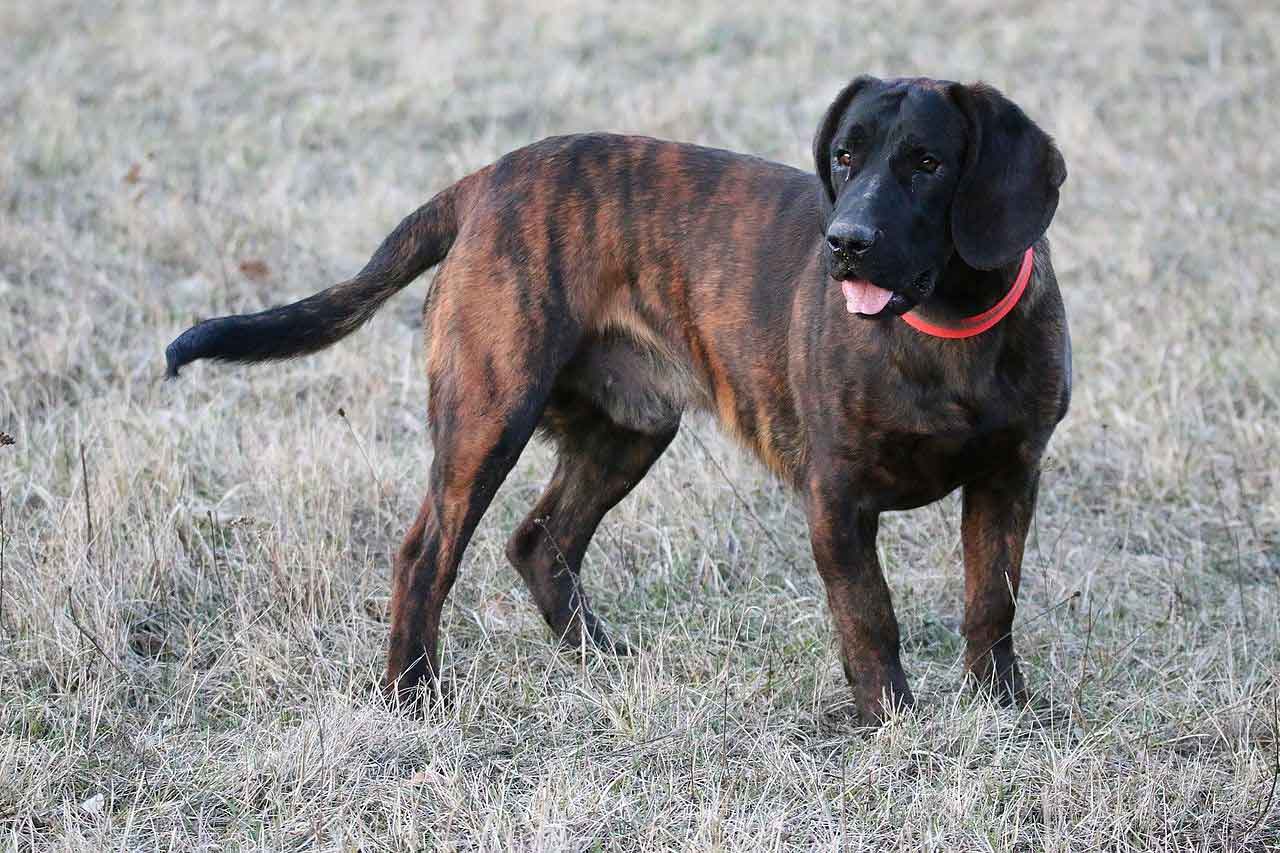
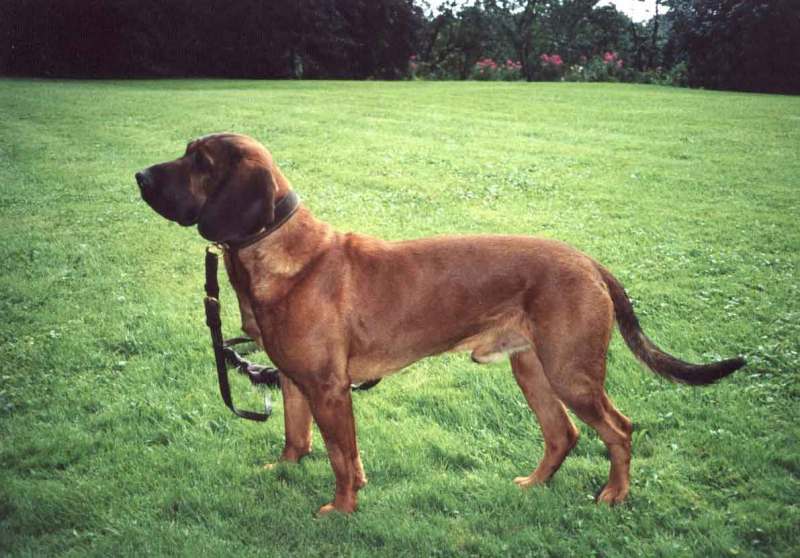
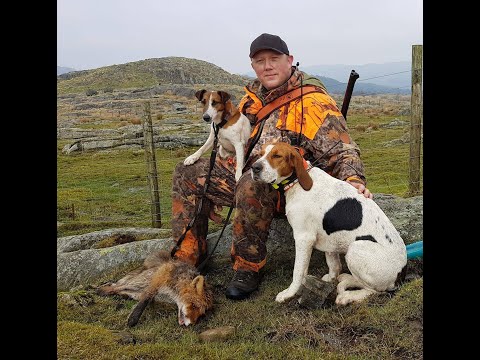
The Bernese Hound It is mainly used for hunting hare.

Content

History

The Swiss Hound has a very ancient origin. Its existence in Switzerland since the time of the Romans is verified thanks to a mosaic discovered in Avanches that represents hunting dogs whose characteristics coincide with the varieties of Swiss Hound. In the 15th century it was appreciated by Italian fans and in the 18th century by the French due to its extraordinary ability to hunt hare.. Its original local breeding was probably influenced by French small game dogs brought to Switzerland by mercenaries.. In the year 1882 a standard was established for each of the five existing varieties of Swiss Hound. In 1909 These standards were revised, confirming the total disappearance of the Thurgau Hound. The 22 in January of 1933 established a uniform standard for the 4 Swiss Hound varieties. The original variety of Jura Hound type St. Hubert has disappeared today.

There are four varieties of Swiss Hound:

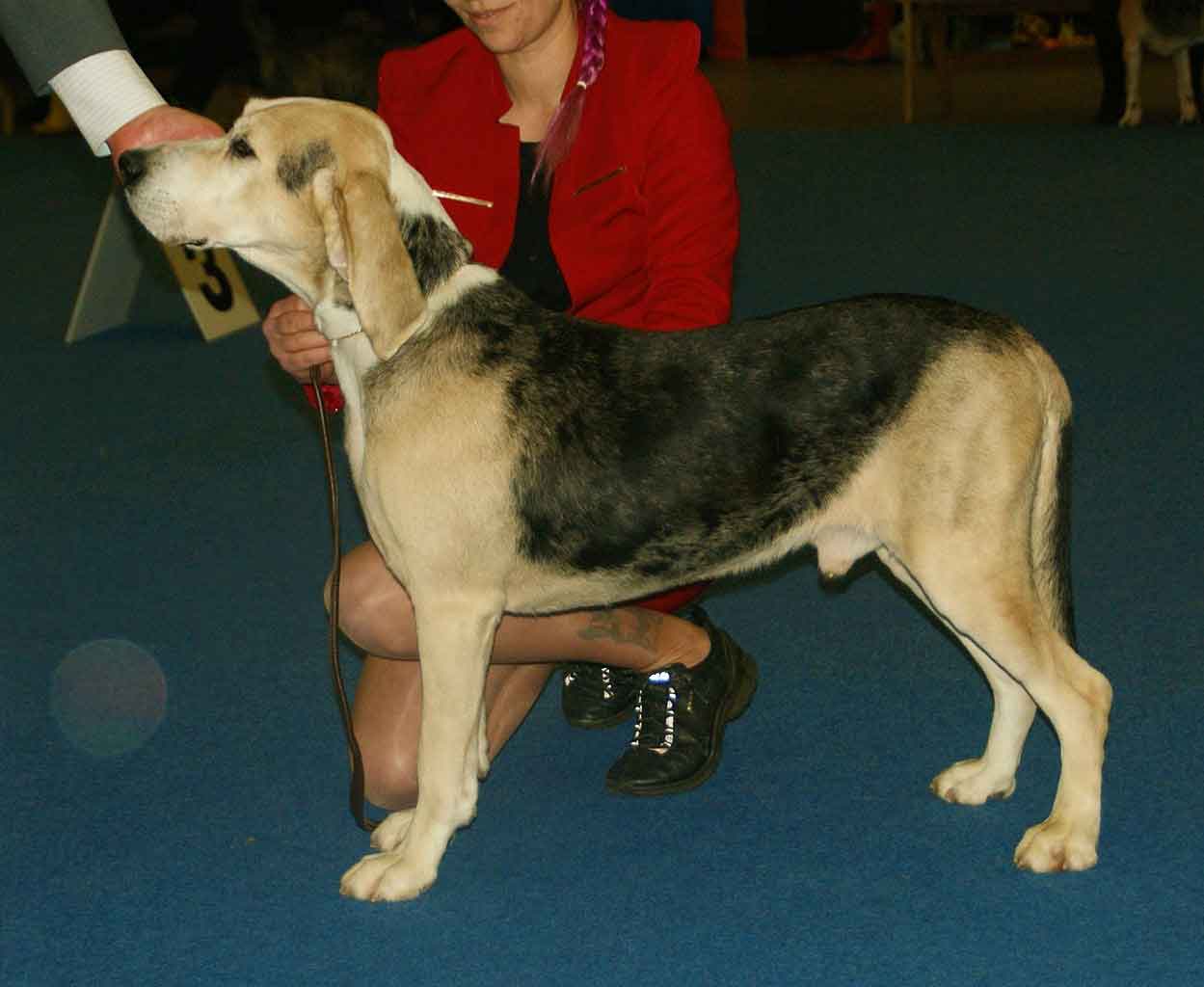
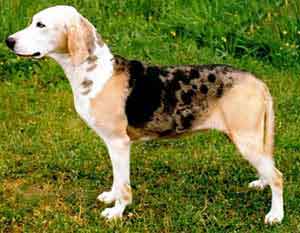
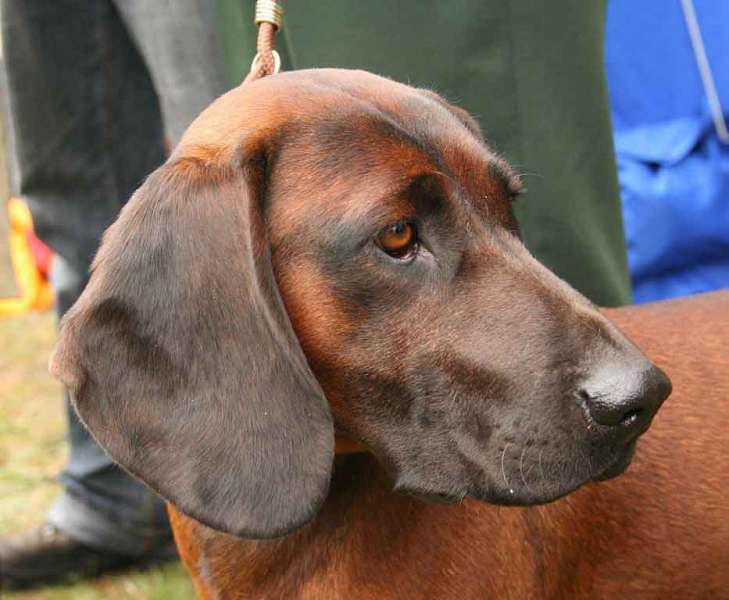
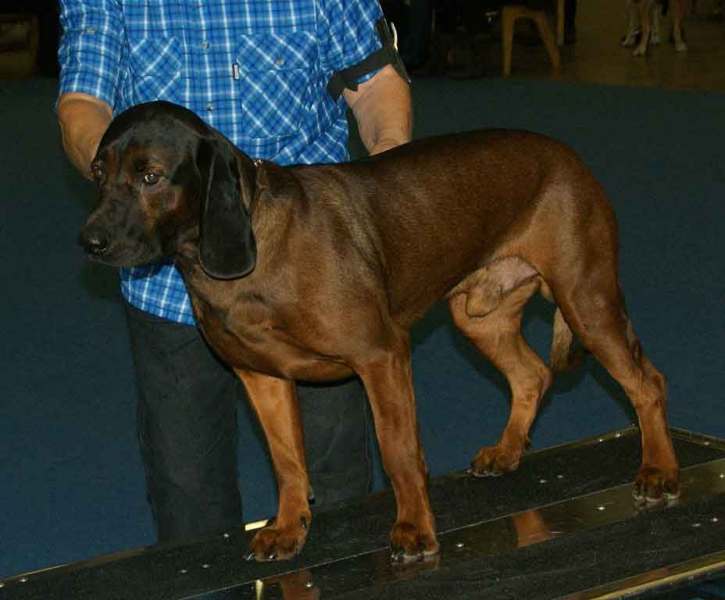
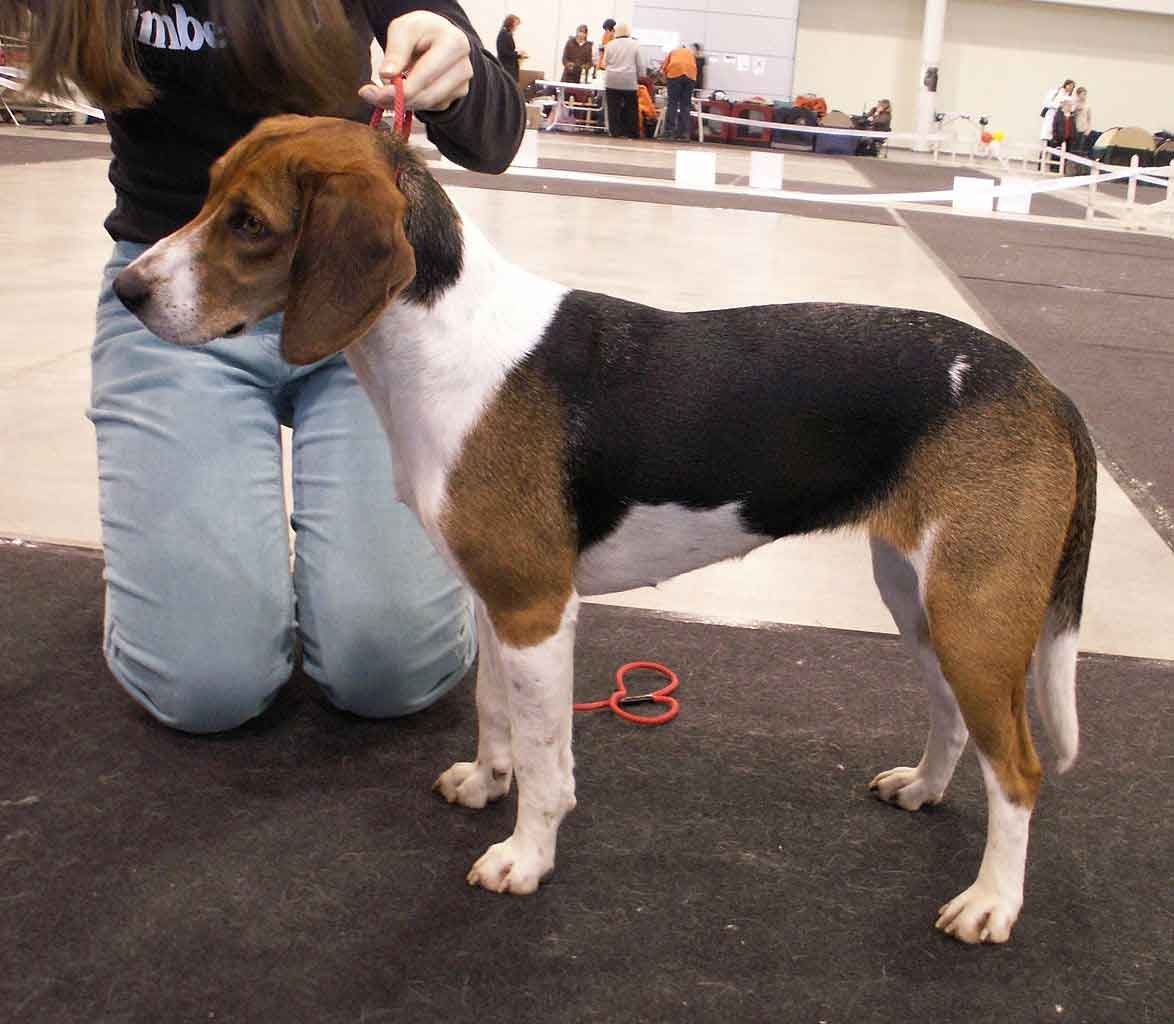
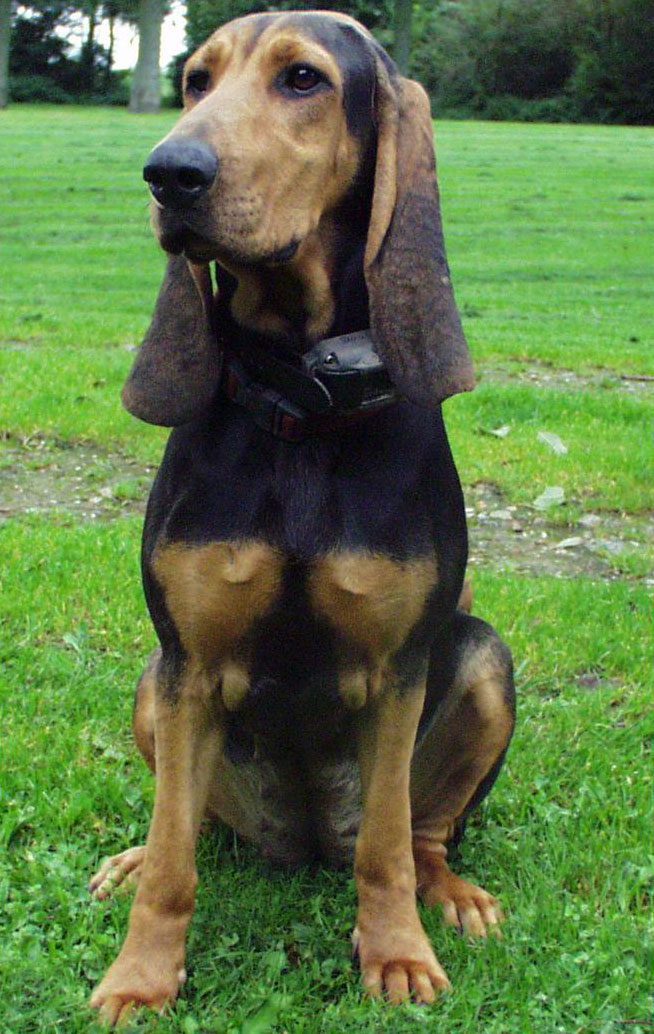
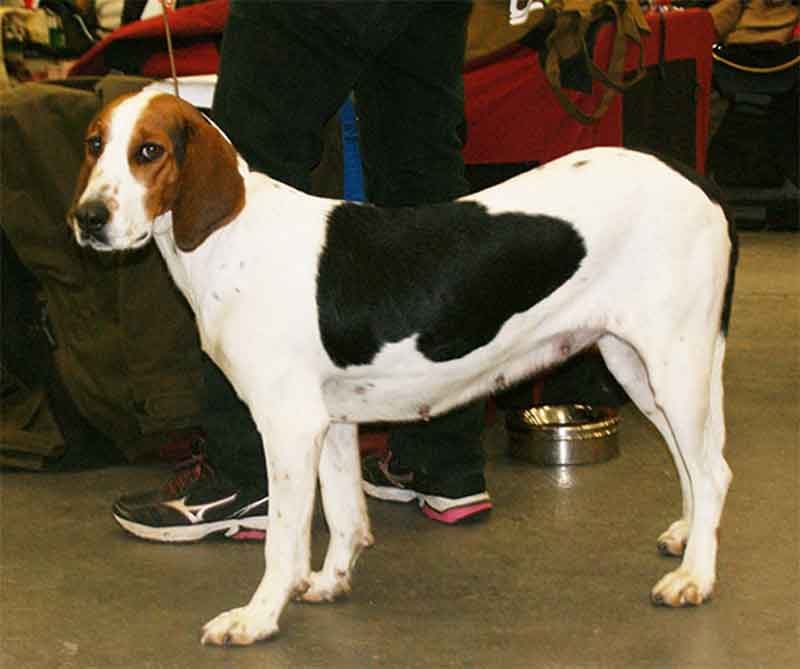
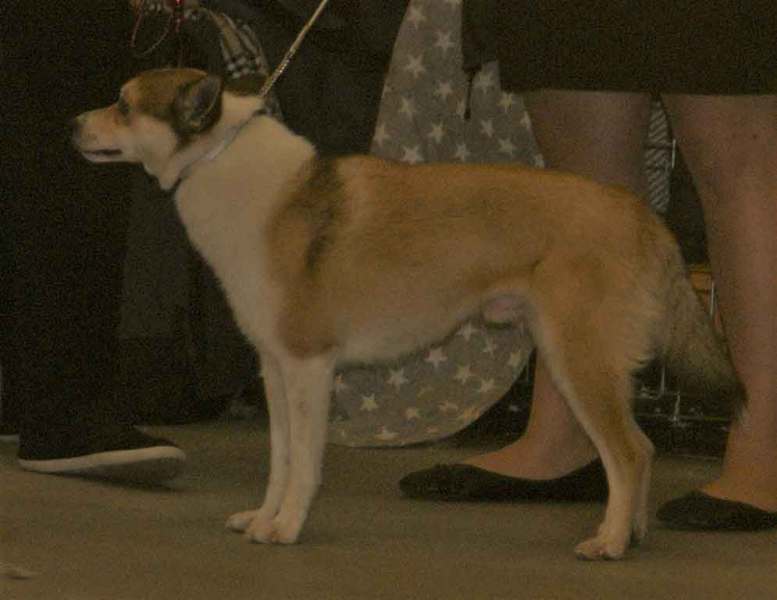
Photo: Bernese Hound during dogs show in Katowice, Poland by Lilly M, CC BY-SA 2.5, via Wikimedia Commons

Physical characteristics

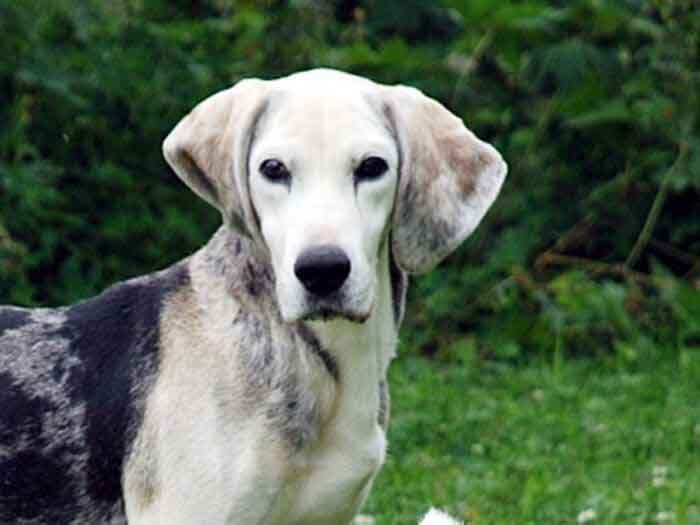
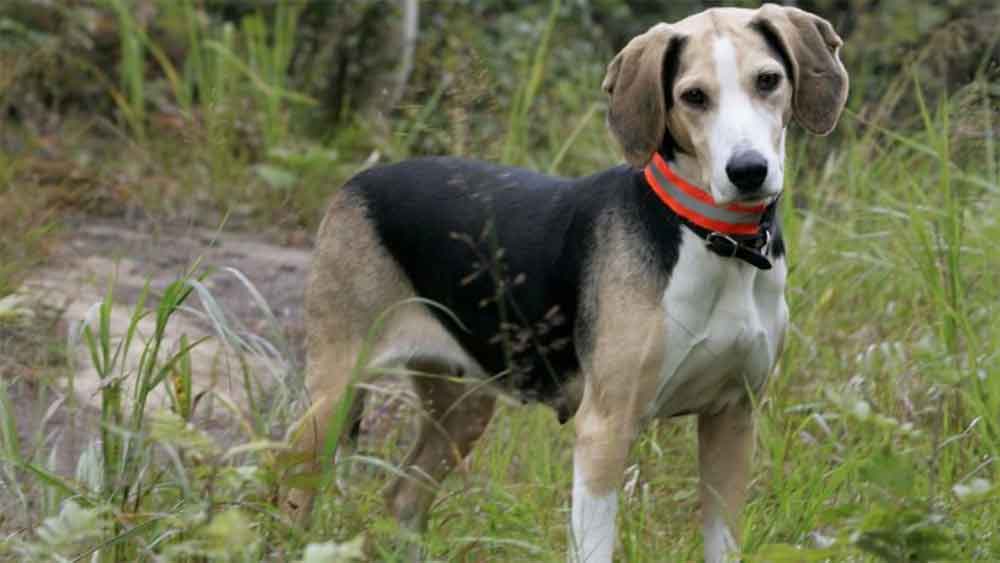
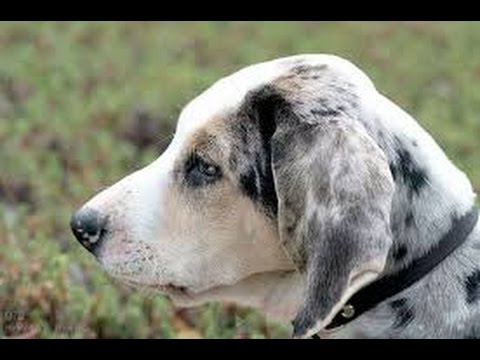
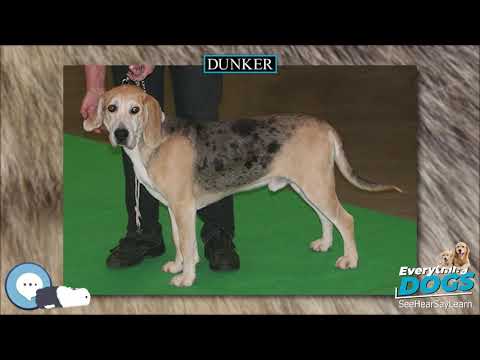
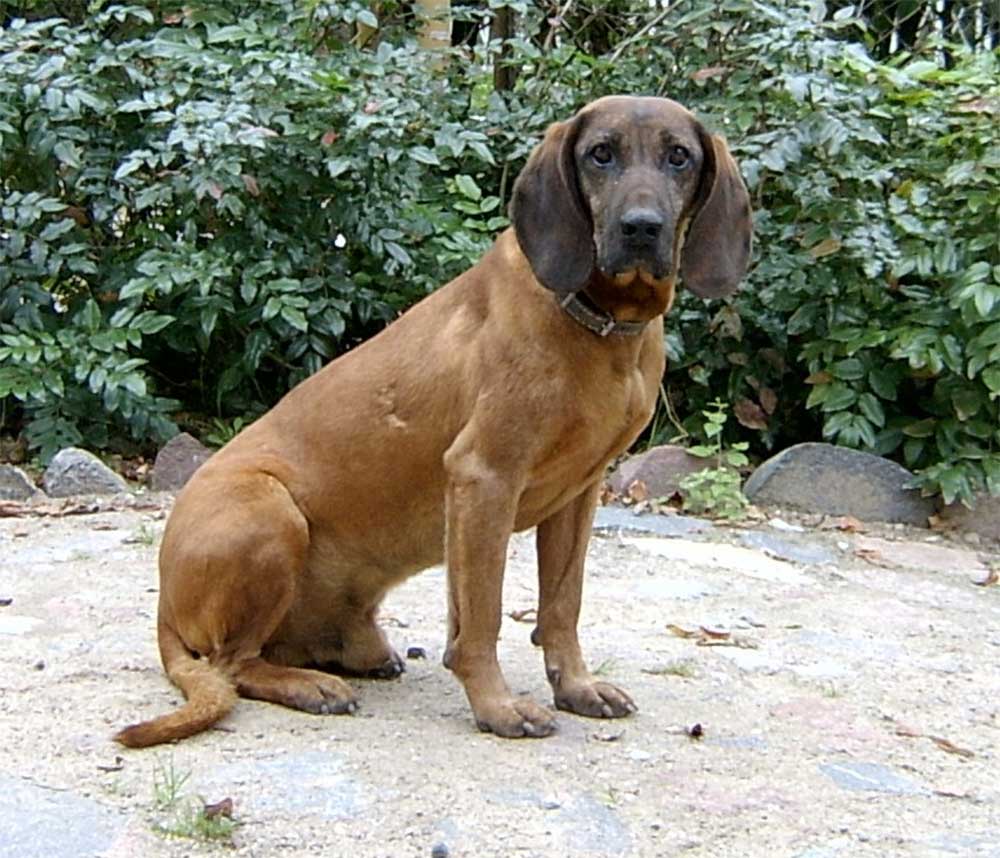
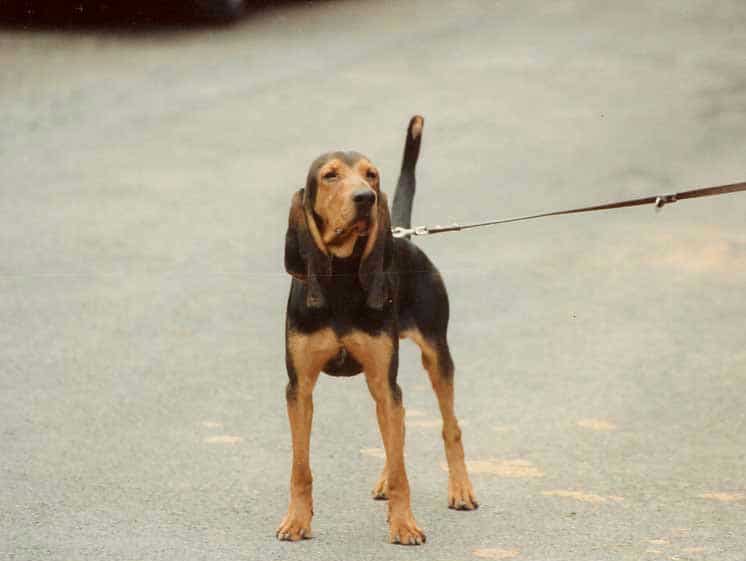
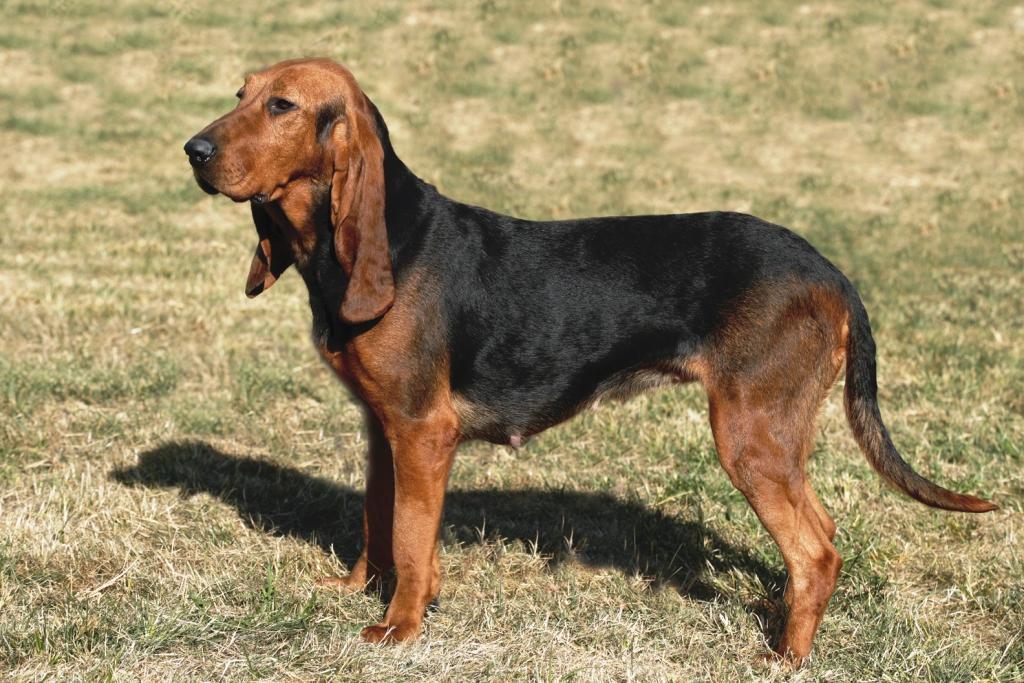
In the Bernese Hound the coat is white with black spots or saddle, sometimes slightly mottled. Light to dark beige marks the upper part of the eyes, cheeks, the inner side of the ears and around the anus.

▷ Male weight: 15 to 20 kg
▷ female weight: 15 to 20 kg
▷ The size of the male: 49 to 59 cm.
▷ female size: 49 to 59 cm.

Character and skills

The Bernese Hound he is alive and passionate. Its sensitivity is valued as positively as its ease of use and its attachment to the dog handler. When you follow a clue, expansive and fluid movements are noticeable, as well as the good thrust of the hindquarters. You can feel strength, stamina and temperament, so her fine nose is closely tied to the track.

Acute smell is atypical for Bernese Hound, whose passion for hunting is so tireless that the dog handler must prevent the dog from exaggerating beforehand. Otherwise, the dog chases the prey until he catches it himself. Diligent search is desirable, but the dog, except when used in the pack, must always remain in the hand of his guide.

While the Bernese Hound he was used in his homeland mainly as a lone deer hunter, foxes and hares; In western Switzerland, wild boar hunts are also carried out with hound dogs. In France and Italy they are more likely to continue to be used for herd hunting of hare, wild boar and deer.

In Switzerland, the Bernese Hound They are mainly used for patent and district hunting. In patent hunting, three to six hunters usually form a hunting party. They are distributed among the different posts and the dogs are tied simultaneously at a previously agreed time. This promotes the independent search of each dog and also the pursuit of hares or deer as a lone hunter.. For the hunt to be successful, the hunter must know which path the game will take to be able to shoot it with a shotgun at a maximum distance of 30 m.
During a hunt on hunting ground there are large groups of up to 30 hunters. The hunt leader distributes the hunters in different positions, while a hunter goes on the hunt with all the dogs, and finally hold all the dogs at once. Here the hunt leader must know how the game flees and, therefore, distribute hunters' positions. While hunting in the hunting ground, the hare, the deer and sometimes also the fox are shot from a maximum distance of 30 m.

Off the hunt, the Bernese Hound he is a nice and quiet family member. with whom you are closely linked.

Characteristics "Bernese Hound"

Coexistence is important that you have with your new friend. Before considering the acquisition of a dog of the breed "Bernese Hound" you know certain factors. Not all breeds of dogs are apt to live in an apartment, you must take into account his character, their need for exercise, their interaction with other pets, their care and if you have small children, their level of tolerance towards them.

Adaptation โ“˜

3,0 of 5 stars (based on 1 review)

friendly dog โ€‹โ€‹โ“˜

4,0 of 5 stars (based on 1 review)

hair loss โ“˜

3,0 of 5 stars (based on 1 review)

Affection level โ“˜

5,0 of 5 stars (based on 1 review)

Need for exercise โ“˜

5,0 of 5 stars (based on 1 review)

Social need โ“˜

4,0 of 5 stars (based on 1 review)

Home โ“˜

4,0 of 5 stars (based on 1 review)

Toilet โ“˜

2,0 of 5 stars (based on 1 review)

Friendly with strangers โ“˜

4,0 of 5 stars (based on 1 review)

barking โ“˜

4,0 of 5 stars (based on 1 review)

Health โ“˜

4,0 of 5 stars (based on 1 review)

Territorial โ“˜

4,0 of 5 stars (based on 1 review)

Cat friendly โ“˜

2,0 of 5 stars (based on 1 review)

Intelligence โ“˜

4,0 of 5 stars (based on 1 review)

Versatility โ“˜

3,0 of 5 stars (based on 1 review)

Child friendly โ“˜

4,0 of 5 stars (based on 1 review)

Surveillance โ“˜

4,0 of 5 stars (based on 1 review)

joy โ“˜

5,0 of 5 stars (based on 1 review)

Videos "Bernese Hound"

Bernese Hound (02 June 2012)
Berner Laufhund
Bernese Hound - Celer Cervarius and puppy ๐Ÿ™‚
Berner Laufhund

Type and recognitions:

  • FCI CLASSIFICATION:
  • Group :
  • Section : . .

Federations:

  • FCI – Group 6: Scent hounds, and related breeds. – Section 1.2: Medium-sized Hounds. โ“˜
  • UKCScenthounds โ“˜

FCI breed standard "Bernese Hound"

Origin:
Switzerland

Date of publication of the valid original standard:
28.11.2001

Use:

It is a small game hound that hunts hares, deer, foxes and sometimes wild boars. He is an independent hunter by hunting with a bark. Searches and corners its prey with great safety even in difficult terrain.


General appearance:

It is a dog with medium height at the withers. Your body structure indicates strength and tenacity. Its slim head with long snout and long ears give it an expression of nobility.

There are four varieties of Swiss Hound :

  • Bernese Hound
  • Jura Hound
  • Lucerne Hound
  • Schwyz Hound

IMPORTANT PROPORTIONS :

โ€ข Body length : Height at withers = approx. 1.15 : 1.
โ€ข Height of the withers : chest depth = approx. 2 : 1.
โ€ข Length of the nasal shank : skull length = approx. 1 : 1.


Behavior / temperament:

Lively and passionate about hunting. Sensitive, manageable and faithful.

Head:

---

Cranial region:
  • Skull : Long, narrow, delgado, noble. Bulging skull, visible occipital protrusion. The direction of the longitudinal axis of the skull and the muzzle shows a slight divergence. No frontal groove, no folds or wrinkles.
  • Depression links (Stop) : Not too developed.

facial region:

  • Truffle : Completely black, well developed; nostrils wide open.
  • Snout : Nobly developed, narrow ; it is not square or pointed ; the muzzle is straight or very slightly convex.
  • Lips : Moderately developed, the upper lips perfectly cover the lower jaw ; slightly open corner.
  • Jaws / Teeth : Powerful jaw. Powerful scissor bite, regular and complete, that is, the upper incisors overlap the lower ones without leaving space between them and the teeth are implanted vertically in the maxilla. Pincer bite allowed. The lack of one or two PM1 or PM2 is acceptable (premolars 1 or 2) . M3 are not taken into account (molars).
  • Cheeks : Loose, non-protruding supraciliary arches.

Eyes : They are more or less light or dark brown depending on the color of the coat ; they are medium in size and slightly oval. The edges of the eyelids are well pigmented. The eyelids are well adherent. The expression is sweet.

Ears : Placed below the eye line, in the posterior part of the cranial region and never implanted in its maximum width. Its length must reach at least the tip of the nose. The pinna is not prominent. The ears are thin. He wears them down, bent and twisted ; they are rounded at the bottom and have a fine, soft coat.

Neck:

Long, elegant, with good musculature ; throat skin is loose without forming a noticeable dewlap.

Body:

  • top line : The neck, the back, The rump and tail form a harmonious and noble line.
  • Cross : Bit strong, free and elegant neck insert.
  • Back : Firm and straight. : Muscular and slightly arched.
  • Rump : Elongated, extends the line of the back harmoniously and descends gently. It is not higher than the cross. The crest of the iliac bone is not too prominent.
  • Breast : Deeper than wide, well descended, reaches to the tips of the elbows. Elongated rib cage with slightly arched ribs.
  • Bottom line and belly : Belly slightly pulled back ; full flanks.

Tail:

Inserted in the extension of the croup. It is of medium length and tapers towards the tip ; at its end it has a slight incline up ; noble. In general, it remains hanging at rest and when walking calmly, without showing an important bend ; When he is attentive or in action he carries it along the line of his back , but never resting in it nor in a curled way. Is well covered with hair, but it doesn't have a spike shape.

Tips

PREVIOUS MEMBERS :

  • As a whole : They are well muscled, thin and not heavy in appearance. Seen from the front they are parallel and from the side they look vertical ; his bones are strong with his feet pointed forward.
  • Shoulder : Long oblique shoulder blades, closely linked to the rib cage. The ideal angulation of the scapulohumeral joint is approximately 100ยฐ.
  • Arm : A little longer than the shoulder blade, placed obliquely, closely attached to the chest. His musculature is fine.
  • Elbows : Naturally glued to the side.
  • Forearm : Straight, strong, delgado.
  • Carpo : Strong, wide metacarpus : Relatively short; Seen from the front it is located on the perpendicular line of the forearm; seen from the side it is slightly inclined.
  • Front feet : Rounded, with compact fingers ; hard and rough pads ; strong nails whose color depends on the color of the coat.

LATER MEMBERS :

  • As a whole : They have strong muscles and are in a balanced relationship with the forelimbs ; seen from behind the hind legs are vertical and parallel.
  • Thigh : Long and oblique, powerful although his muscles are thin. The angulation of the coxofemoral joint is approximately 100ยฐ.
  • Knee : No inward or outward deviations. Angulation of the femoral-tibian joint approximately 120ยฐ.
  • Leg : Relatively long, thin, visible muscles and tendons under the skin.
  • Hock : Tibiotarsal joint angulation approximately 130ยฐ.
  • Metatarsus : Pretty short, placed vertically and parallel. Without spurs, except in countries, in which amputation is not allowed by law.
  • Rear feet : Rounded, with compact fingers, hard and rough pads ; strong nails whose color depends on the color of the coat.

Movement:

It is unfolded, regular, harmonious and with good scope. Has good impulse from the hindlimbs. Drive the limbs parallel and straight. The cross moves smoothly and regularly up and down, the back remains straight and the head and neck wobble slightly from side to side.

Mantle

SKIN : Fina, flexible, well adherent, whose color varies in each of the four varieties.

โ€ข Bernese Hound : Skin is black under black hair and blackish-white marbling under white hair.
โ€ข Jura Hound : She is black under black hair and lighter under tan hair..
โ€ข Lucerne Hound : She is black under black hair and lighter under blue-flecked hair..
โ€ข Schwyz Hound : It is dark gray under the orange hair and blackish-white marbling under the white hair..

HAIR : Is short, smooth, thick, very fine on the head and ears.

COLOR :

โ€ข Bernese Hound : White with black spots or a black saddle-shaped spot. Tan color from pale to intense over the eyes, cheeks, on the inside of the ears and around the anus. Sometimes very lightly splattered (black splash).

โ€ข Jura Hound : Tan with black cape, sometimes nuanced black or black with tan over the eyes, cheeks, around the anus and on the extremities ; sometimes with a small white spot on the chest ; this stain may be splattered (black or gray splashes).

โ€ข Lucerne Hound : Called blue, with a mixture of black and white hairs, intensely splashed, with black spots or a saddle-shaped spot ; tan color from pale to intense over the eyes, cheeks, on the chest, around the anus and on the extremities ; a black cape is allowed.

โ€ข Schwyz Hound : White with orange or orange "saddle" spots, sometimes with orange splashes ; an orange coat is allowed.


Size and weight:

Height to the cross :

  • Males : 49-59 cm..
  • females : 47-57 cm No tolerance.


Fouls:

Any deviation from the aforementioned criteria is considered as a fault and the severity of this is considered to the degree of the deviation to the standard and its consequences on the health and well-being of the dog..

โ€ข Rough appearance, vulgar, weak body structure.
โ€ข Discordant proportions between body length, the height of the withers and the height of the chest.
โ€ข Skull too wide, too convex or too flat.
โ€ข Stop too marked.
โ€ข Very short or very long snout, too square or pointed.
โ€ข Concave nasal bridge.
โ€ข Lack of more than two premolars PM1 or PM2. Los M3 (molars 3) are not taken into account.
โ€ข Thick lips.
โ€ข Light eyes, acute expression, non-adherent eyelids.
โ€ข Ears that are too short or flattened, thick or set very high.
โ€ข Very short neck.
โ€ข Double chin too marked.
โ€ข Saddled or arched back (carp back).
โ€ข Croup too inclined or too short.
โ€ข Rib cage not deep enough, too flat or barrel-shaped.
โ€ข Retracted belly, fallen flanks.
โ€ข Tail with poor insertion, carried too high, very bent, stooped, very coarse or spike-shaped tail.
โ€ข Extremities with bones that are too thin or in a bad position.
โ€ข Very sloping shoulders, arm too short.
โ€ข Weak carpal joints.
โ€ข Insufficient angulations of the hind limbs ; cow or barrel shaped limbs.
โ€ข Dewclaws on the hind limbs, except in countries in which amputation is not permitted by law.
โ€ข Rough coat, not smooth.
โ€ข Flaws in color and markings.

  1. Bernese Hound : Too many black splashes on the white. Tan or white on the outside of the ears.
  2. Jura Hound : Uniform color. Noticeable white patch or heavily speckled patch on the chest.
  3. Lucerne Hound : Lack of ยซ blue ยป splash. Tan on the outside of the ears.
  4. Schwyz Hound : Too many orange splashes on the white. Uniform color. White on the outside of the ears.

โ€ข Slightly fearful or aggressive behavior.

MISS PLAYOFFS

โ€ข Excessively fearful or aggressive dog.
โ€ข Atypical general appearance of the breed.
โ€ข Completely depigmented nose.
โ€ข Upper or lower prognathism, incisor arcade deviated.
โ€ข Ectropion, entropion (even if it had been operated).
โ€ข Horn tail, threaded, knotty the hook.
โ€ข Size above or below tolerance.

Any dog โ€‹โ€‹showing clear signs of physical or behavioral abnormalities must be disqualified..


N.B.:

Males should have two normal-appearing testicles fully descended into the scrotum..

Source: F.C.I - International Cynological Federation

Varieties of ยซSwiss Houndsยป

The four varieties of Swiss Hounds have their own specific hunting characteristics.:

– The Bernese Hound, with her beautiful throat ("the howler of the Jura"), demanding, mainly used for hares;
– He "Jura Houndยซ, an excellent recuperator
– The Lucerne Hound, reminiscent of Small Blue Gascony, he is an active and passionate dog that hunts deer very well;
– The "Hound of Schwyz", less widespread outside of Switzerland, is reserved for rabbits and hares.

โ–ท The world of Pets: Dogs, cats, birds, reptiles, amphibians

Artois Hound
Francia FCI 28 . Medium-sized Hounds

Sabueso Artesiano

The Artois Hound it is a good companion dog but with an independent character.

Content

History

The Artois Hound It is a smaller version of the "Great Artesian Hound", which is now extinct and was used in France in the 17th century for wild boar hunting, deer and small game. As hare hunting grew in popularity, the need for smaller dog breeds increased. Known in his land as "Briquetโ€ (What does "little braco" mean?) and also how Picard.

It is true that it is a dog of ancient lineage like few others has enjoyed the admiration and the royalty protection (King Henry IV and Louis XIII), being considered a distinguished Hunter of Hare.

He played with devotion to his duties in the most varied scenarios (plain, forest or in the densest bushes) and used to be easily identified by his master due to his original bark.

Some authors have that in 1609 Prince Alexander Gray has sent some specimens of this breed to the King of England, which have subsequently been used for the creation of the Beagle.

The development of Artois Hound, However, It has not been stable or linear. According to a French hunting manual, dating of 1890, It is known that at the end of the 19th century it used to be difficult to find pure specimens of this lineage..

The apparent arbitrariness to the development of the race and their successive crosses with other species (mostly of English origin) they will disperse the original purity of this lineage.

In this stage a so-called breeder Ernest Levoir tries to restore this lineage to the region Picardie. There are other names that were associated with these recovery attempts during the 20th century, as Mallard (at the time of World War I), Audrรฉchy, among others.

With everything, Some authors consider that it has been Mme. Great Pyla who has won the most positive results, managing to re-establish the breeding of this strain.

Currently, This dog It remains a rare breed and there are quite a few clubs that protect their development.

Physical characteristics "Artesian hound"

Very agile, It adapts to various types of terrain and shown extremely persistent in the performance of their duties. It also, has an excellent sense of direction, a developed sense of smell and speed of movement.

This robust dog has a fur short, dense, soft and well attached to the body.

The color the coat is dark Fawn tri-color, It is a color similar to the Hare or the Badger. It has large spots. Y, the head tends to be carbonated, or charcoal grey and sometimes presents black reflections.

It has wide and rounded skull and pronounced chamfer. It has the square snout, the black truffle and its round eyes give it a gentle air.

The ears they are wide, long and inserted at eye level.

The neck and chest are vigorous and long. The rump and the spine are also robust and Member muscular. In the long run tail stays in the form of sickle.

Character and skills "artisian hound"

Currently, this dog is still used more as a hunting dog than as a companion dog. Like the large spaces, It does not conform to the sedentary life in the city.

You can live in a home but if given a daily dose of exercise physical and games.

The Artois Hound he is a brave and intelligent dog, very independent and quite energetic.

It is an animal very resistant, possessing a special bark that can be heard at a great distance. It is a dog that is used primarily for hunting.

Hunters usually go hunting with six or eight specimens of Artois Hound.

It is not usually seen much as a companion dog, but in this case it is a good companion, It is not a Mongrel dog thanks to its strong independence, but will be loving in their own way, without empalagar.

Care and maintenance of a "artisian hound"

The Artois Hound not suitable as a family dog. Needs a meaningful task that demands your doggy stamina and intelligence. His most popular task is still hunting. So, this dog should be left in the hands of an experienced hunter.

To the Artois Hound would not like the position in a city apartment, no matter how comfortable the apartment is. You need freedom of movement, What can you get in the country?. As the Artois Hound He is a pack dog and feels very happy among his peers., second position or multi-dog position is recommended. The care of this breed of dog is not intensive. Ear care can be a bit more complex, but the coat is very easy.

Where to buy a "artisian hound"

The Artois Hound It is a rare breed of dog that was on the verge of extinction after World War 2.. If you are interested in this dog, should have a lot of patience and time. Contact the breeders in advance and ask if they are expecting a litter and if there are any still available. Puppies are often reserved in advance. But it's better not to buy from breeders when you have a bad feeling!! If possible, you should take a look at the kennel. Don't be afraid to ask the breeder too many questions!! A good breeder, for whom the welfare of puppies is the first priority, will be happy to answer your questions and give you some valuable tips on maintenance, training and feeding the dogs.

Images of the "Artesian hound"

Videos of the "Artesian hound"

Type and recognitions:

  • FCI CLASSIFICATION:
  • Group :
  • Section : . .

Federations:

  • FCI – Group 6: Scent hounds, and related breeds. – Section 1.2: Medium-sized Hounds. โ“˜
  • Central Canine Society โ“˜

FCI breed standard "Artois Hound"

Origin:
France

Date of publication of the valid original standard:
24.07.1996

Use:

The artisian hound is used mainly today for hunting with shotguns. As a scout he works with application to resume the lost trail; Your speed is moderate, But sustained. Since it has an excellent smell, is capable of failing the hare tricks during hunting in the plain.

With its indisputable hunter qualities, He knows how to lead the roe, both in the forest, as in the Altos Montes, Easy to penetrate. For its intrepidity and courage, Makes the most recalcitrant boar out of the weed. It also, This is a rustic animal, endowed with a wonderful bark, animated, Sound and tall that is allowed to be heard in the distance. A uniform group of six to eight tricolor craftsmen constitutes a hunting team that would please the most demanding hunter.


General appearance:

This is a well constituted dog, muscular and not very long. Imparts an impression of strength and energy.

IMPORTANT PROPORTIONS:

โ€ข Cross height/body length between 10:10 and 10:11
โ€ข Chest height/height at approximately 1:2
โ€ข Heads/head length amplitude 5:9
โ€ข Nasal cane length/skull length 8:10


Behavior / temperament:

This is a vigorous and rustic dog. It has a very good smell and joins the Hae. Is balanced and affectionate.

Head:

-

Cranial region:
  • Skull: It is bulky, wide and very short. It is flat and rounded at the top, but the occipital Protuberance is not pronounced.
  • Depression links (Stop): It is accentuated.

facial region:

  • Truffle: Grand, black. The Windows are wide open.
  • Lips: The upper lip covers in large part to the bottom and must be sufficiently marked for that, in profile, the snout has a square shape.
  • Snout: Straight nose cane, in profile, the snout is moderately elongated.
  • Jaws/Teeth: The joint is in the form of scissors. The upper incisors cover the lower ones in narrow contact and are implanted at right angles in relation to the jaw.
  • Cheeks: They are thin.
  • Eyes: With regard to the width of the forehead, the eyes are not very together. They are round, melancholy eyes and sweet. Its color is dark brown. The mucous membranes of the lower eyelids may not be apparent.
  • Ears: They are placed at the height of the eye line. They are somewhat thick, wide and their limbs are rounded. They are almost flat and quite long; they arrive until the birth of the truffle.

Neck:

It is powerful and moderately long. It presents very little double chin.

Body:

  • Back: It is well marked and wide.
  • Pork loin: Slightly arched.
  • Rump: The legs providing a slight incline to the rump, It is well muscled.
  • Breast : It is wide, long and deep enough for the sternum line to reach the elbows level. Snugly ribs.
  • Belly: The flanks are round

Tail:

Thick, quite long and carried in a sickle-shaped. You must never fall forward. The hair is headed (taper, around the tail, long and thick hairs slightly separated in the form of stem).

Tips

PREVIOUS MEMBERS: Seen in conjunction, they are powerful and Plumb.

  • Shoulder: They are oblique and muscular.
  • Elbows: They are well located on the axis of the body.
  • Metacarpus: It is slightly oblique.

LATER MEMBERS: Seen as a whole and from the back, The tip of the buttock, the middle part of the leg, the Hock, The metatarsal and foot are on the same vertical line.

  • Thighs: They are descended and well muscled.
  • Hock: Thick, moderately bent.
  • Metatarsals: They are short and thick.

FEET: Slightly elongated. They are large, but compact. The pads are black, durable and compact.

Movement:

Agile and uniform.

Mantle

SKIN: Thick enough.

HAIR: Short, dense and fairly smooth.

COLOR: Tri-color dark Fawn, Hare or badger hair pulling, with blanket or large stains. Usually, the head is Fawn color, and sometimes carbonated.


Size and weight:

  • Height to the cross: Both males and females, is of 53 to 58 cm.. With a tolerance of 1 cm..
  • Weight: The average weight is of 28 to 30 kg.


Fouls:

Any deviation from the aforementioned criteria is considered as a fault and the severity of this is considered to the degree of the deviation to the standard and its consequences on the health and well-being of the dog..

Head:

  • Narrow skull, vaulted.
  • Too pointed snout.
  • Upper lip tight, not enough descended.
  • Eye slightly clear, apparent conjunctiva.
  • Ears placed below the eye line, short or not low enough.

Neck:

  • Long, Lightweight.

Body:

  • Very long dorsal region, loose top line, sunken.
  • Flat ribs.
  • Agalgados flanks.

Tail:

  • Too long or too skewed to one side.

Forelimbs:

  • Short shoulders.
  • Elbows that deviate out.
  • Straight metacarpals.
  • crushed feet.
  • Separate fingers, too long.

Hind limbs:

  • Flat thighs.
  • Straight hocks, closed or far apart.

Color:

  • Presence of mottled spots.

Behavior:

  • shy dog.

MISS PLAYOFFS

  • Fearful or aggressive dog.
  • Lack of type (animal, in general terms, does not present the same characteristics as its peers of the same race).
  • Anatomical anomaly.
  • Visible hereditary defect causing invalidity.
  • Upper or lower prognathism.
  • Eyes too light.
  • Weak limbs.
  • Any other color which is not established by the standard.
  • Speckled spots that extend throughout the body.
  • Withers height different from that laid down by the standard.
  • Any dog โ€‹โ€‹showing clear signs of physical or behavioral abnormalities must be disqualified..


N.B.:

Males should have two normal-appearing testicles fully descended into the scrotum..

TRANSLATION: IRIS Carrillo (Puerto Rico Kennel Federation).

Source: F.C.I - International Cynological Federation

Alternative names:

1. Chien dโ€™Artois, Picard, Briquet (English).
2. Grand chien d’Artois, Briquet, Picard (French).
3. Artois Hound (German).
4. (em francรชs: Chien d’Artois (Portuguese).
5. Chien dโ€™Artois, Picard, Briquet, Sabueso de Artois, Perro de Artois(espaรฑol).

โ–ท The world of Pets: Dogs, cats, birds, reptiles, amphibians

Lucerne Hound
Suiza FCI 59 . Medium-sized Hounds

Lucerne Hound

The Lucerne Hound is a lively dog, but gentle and docile. Very attached to his master.

Content

History

The breed was originally bred in the Lucerne area, Switzerland. Already in appearance it is closely related to the dog Bloodhound. It can be assumed that the Small Blue Gascony may also have played a role in the development of the breed: Striking colored coat with speckled pattern suggests this. It is one of the four Swiss Hounds, that have been combined by the FCI under a single breed standard, but they are judged separately in the exhibitions. The other varieties of the breed are:

Physical characteristics

Height at the withers up to 59 cm..
The ears are far back, very large, heavy, bent and turned.
Fur: Short, thick and thick, Fox fur
color: blue, of a combination of black and white hairs, very mottled, with black spots or a black chair.

Character and skills

The Lucerne Hound is a lively dog, but gentle and docile. Very attached to his master.

Like all dogs Swiss hounds, this breed is also relatively small. This is partly due to the fact that environmental conditions in the mountains, where were these dogs born, they are extremely hard, so animals with low energy requirements survived better than larger dogs. The Lucerne Hound used for a wide variety of hunting, from wild boars to deer and hares. Although the dense fur protects the dog from the cold and he likes to live outdoors, look for comfort; therefore he feels comfortable in the city, but needs a lot of activity and enough exercise. There is an almost identical breed with shorter legs – the Small Lucerne Hound, one of the varieties of Small swiss hound. It is suitable as a working dog, hunting and company.

Characteristics "Lucerne Hound"

Coexistence is important that you have with your new friend. Before considering the acquisition of a dog of the breed "Lucerne Hound" you know certain factors. Not all breeds of dogs are apt to live in an apartment, you must take into account his character, their need for exercise, their interaction with other pets, their care and if you have small children, their level of tolerance towards them.

Adaptation โ“˜

4,0 of 5 stars (based on 1 review)

friendly dog โ€‹โ€‹โ“˜

4,0 of 5 stars (based on 1 review)

hair loss โ“˜

3,0 of 5 stars (based on 1 review)

Affection level โ“˜

4,0 of 5 stars (based on 1 review)

Need for exercise โ“˜

5,0 of 5 stars (based on 1 review)

Social need โ“˜

4,0 of 5 stars (based on 1 review)

Home โ“˜

4,0 of 5 stars (based on 1 review)

Toilet โ“˜

2,0 of 5 stars (based on 1 review)

Friendly with strangers โ“˜

3,0 of 5 stars (based on 1 review)

barking โ“˜

4,0 of 5 stars (based on 1 review)

Health โ“˜

4,0 of 5 stars (based on 1 review)

Territorial โ“˜

4,0 of 5 stars (based on 1 review)

Cat friendly โ“˜

2,0 of 5 stars (based on 1 review)

Intelligence โ“˜

4,0 of 5 stars (based on 1 review)

Versatility โ“˜

4,0 of 5 stars (based on 1 review)

Child friendly โ“˜

4,0 of 5 stars (based on 1 review)

Surveillance โ“˜

4,0 of 5 stars (based on 1 review)

joy โ“˜

5,0 of 5 stars (based on 1 review)

Videos "Lucerne Hound"

chiens courant lucernois entrainement 2
chiens courant lucernois entrainement 1

Type and recognitions:

  • FCI CLASSIFICATION:
  • Group :
  • Section : . .

Federations:

  • FCI – Group 6: Scent hounds, and related breeds. – Section 1.2: Medium-sized Hounds. โ“˜
  • UKCScenthounds โ“˜

FCI breed standard "Lucerne Hound"

Origin:
Switzerland

Date of publication of the valid original standard:
28.11.2001

Use:

It is a small game hound that hunts hares, deer, foxes and sometimes wild boars. He is an independent hunter by hunting with a bark. Searches and corners its prey with great safety even in difficult terrain.


General appearance:

It is a dog with medium height at the withers. Your body structure indicates strength and tenacity. Its slim head with long snout and long ears give it an expression of nobility.

There are four varieties of Swiss Hound :

  • Bernese Hound
  • Jura Hound
  • Lucerne Hound
  • Schwyz Hound

IMPORTANT PROPORTIONS :

โ€ข Body length : Height at withers = approx. 1.15 : 1.
โ€ข Height of the withers : chest depth = approx. 2 : 1.
โ€ข Length of the nasal shank : skull length = approx. 1 : 1.


Behavior / temperament:

Lively and passionate about hunting. Sensitive, manageable and faithful.

Head:

---

Cranial region:
  • Skull : Long, narrow, delgado, noble. Bulging skull, visible occipital protrusion. The direction of the longitudinal axis of the skull and the muzzle shows a slight divergence. No frontal groove, no folds or wrinkles.
  • Depression links (Stop) : Not too developed.

facial region:

  • Truffle : Completely black, well developed; nostrils wide open.
  • Snout : Nobly developed, narrow ; it is not square or pointed ; the muzzle is straight or very slightly convex.
  • Lips : Moderately developed, the upper lips perfectly cover the lower jaw ; slightly open corner.
  • Jaws / Teeth : Powerful jaw. Powerful scissor bite, regular and complete, that is, the upper incisors overlap the lower ones without leaving space between them and the teeth are implanted vertically in the maxilla. Pincer bite allowed. The lack of one or two PM1 or PM2 is acceptable (premolars 1 or 2) . M3 are not taken into account (molars).
  • Cheeks : Loose, non-protruding supraciliary arches.

Eyes : They are more or less light or dark brown depending on the color of the coat ; they are medium in size and slightly oval. The edges of the eyelids are well pigmented. The eyelids are well adherent. The expression is sweet.

Ears : Placed below the eye line, in the posterior part of the cranial region and never implanted in its maximum width. Its length must reach at least the tip of the nose. The pinna is not prominent. The ears are thin. He wears them down, bent and twisted ; they are rounded at the bottom and have a fine, soft coat.

Neck:

Long, elegant, with good musculature ; throat skin is loose without forming a noticeable dewlap.

Body:

  • top line : The neck, the back, The rump and tail form a harmonious and noble line.
  • Cross : Bit strong, free and elegant neck insert.
  • Back : Firm and straight. : Muscular and slightly arched.
  • Rump : Elongated, extends the line of the back harmoniously and descends gently. It is not higher than the cross. The crest of the iliac bone is not too prominent.
  • Breast : Deeper than wide, well descended, reaches to the tips of the elbows. Elongated rib cage with slightly arched ribs.
  • Bottom line and belly : Belly slightly pulled back ; full flanks.

Tail:

Inserted in the extension of the croup. It is of medium length and tapers towards the tip ; at its end it has a slight incline up ; noble. In general, it remains hanging at rest and when walking calmly, without showing an important bend ; When he is attentive or in action he carries it along the line of his back , but never resting in it nor in a curled way. Is well covered with hair, but it doesn't have a spike shape.

Tips

PREVIOUS MEMBERS :

  • As a whole : They are well muscled, thin and not heavy in appearance. Seen from the front they are parallel and from the side they look vertical ; his bones are strong with his feet pointed forward.
  • Shoulder : Long oblique shoulder blades, closely linked to the rib cage. The ideal angulation of the scapulohumeral joint is approximately 100ยฐ.
  • Arm : A little longer than the shoulder blade, placed obliquely, closely attached to the chest. His musculature is fine.
  • Elbows : Naturally glued to the side.
  • Forearm : Straight, strong, delgado.
  • Carpo : Strong, wide metacarpus : Relatively short; Seen from the front it is located on the perpendicular line of the forearm; seen from the side it is slightly inclined.
  • Front feet : Rounded, with compact fingers ; hard and rough pads ; strong nails whose color depends on the color of the coat.

LATER MEMBERS :

  • As a whole : They have strong muscles and are in a balanced relationship with the forelimbs ; seen from behind the hind legs are vertical and parallel.
  • Thigh : Long and oblique, powerful although his muscles are thin. The angulation of the coxofemoral joint is approximately 100ยฐ.
  • Knee : No inward or outward deviations. Angulation of the femoral-tibian joint approximately 120ยฐ.
  • Leg : Relatively long, thin, visible muscles and tendons under the skin.
  • Hock : Tibiotarsal joint angulation approximately 130ยฐ.
  • Metatarsus : Pretty short, placed vertically and parallel. Without spurs, except in countries, in which amputation is not allowed by law.
  • Rear feet : Rounded, with compact fingers, hard and rough pads ; strong nails whose color depends on the color of the coat.

Movement:

It is unfolded, regular, harmonious and with good scope. Has good impulse from the hindlimbs. Drive the limbs parallel and straight. The cross moves smoothly and regularly up and down, the back remains straight and the head and neck wobble slightly from side to side.

Mantle

SKIN : Fina, flexible, well adherent, whose color varies in each of the four varieties.

โ€ข Bernese Hound : Skin is black under black hair and blackish-white marbling under white hair.
โ€ข Jura Hound : She is black under black hair and lighter under tan hair..
โ€ข Lucerne Hound : She is black under black hair and lighter under blue-flecked hair..
โ€ข Schwyz Hound : It is dark gray under the orange hair and blackish-white marbling under the white hair..

HAIR : Is short, smooth, thick, very fine on the head and ears.

COLOR :

โ€ข Bernese Hound : White with black spots or a black saddle-shaped spot. Tan color from pale to intense over the eyes, cheeks, on the inside of the ears and around the anus. Sometimes very lightly splattered (black splash).

โ€ข Jura Hound : Tan with black cape, sometimes nuanced black or black with tan over the eyes, cheeks, around the anus and on the extremities ; sometimes with a small white spot on the chest ; this stain may be splattered (black or gray splashes).

โ€ข Lucerne Hound : Called blue, with a mixture of black and white hairs, intensely splashed, with black spots or a saddle-shaped spot ; tan color from pale to intense over the eyes, cheeks, on the chest, around the anus and on the extremities ; a black cape is allowed.

โ€ข Schwyz Hound : White with orange or orange "saddle" spots, sometimes with orange splashes ; an orange coat is allowed.


Size and weight:

Height to the cross :

  • Males : 49-59 cm..
  • females : 47-57 cm No tolerance.


Fouls:

Any deviation from the aforementioned criteria is considered as a fault and the severity of this is considered to the degree of the deviation to the standard and its consequences on the health and well-being of the dog..

โ€ข Rough appearance, vulgar, weak body structure.
โ€ข Discordant proportions between body length, the height of the withers and the height of the chest.
โ€ข Skull too wide, too convex or too flat.
โ€ข Stop too marked.
โ€ข Very short or very long snout, too square or pointed.
โ€ข Concave nasal bridge.
โ€ข Lack of more than two premolars PM1 or PM2. Los M3 (molars 3) are not taken into account.
โ€ข Thick lips.
โ€ข Light eyes, acute expression, non-adherent eyelids.
โ€ข Ears that are too short or flattened, thick or set very high.
โ€ข Very short neck.
โ€ข Double chin too marked.
โ€ข Saddled or arched back (carp back).
โ€ข Croup too inclined or too short.
โ€ข Rib cage not deep enough, too flat or barrel-shaped.
โ€ข Retracted belly, fallen flanks.
โ€ข Tail with poor insertion, carried too high, very bent, stooped, very coarse or spike-shaped tail.
โ€ข Extremities with bones that are too thin or in a bad position.
โ€ข Very sloping shoulders, arm too short.
โ€ข Weak carpal joints.
โ€ข Insufficient angulations of the hind limbs ; cow or barrel shaped limbs.
โ€ข Dewclaws on the hind limbs, except in countries in which amputation is not permitted by law.
โ€ข Rough coat, not smooth.
โ€ข Flaws in color and markings.

  1. Bernese Hound : Too many black splashes on the white. Tan or white on the outside of the ears.
  2. Jura Hound : Uniform color. Noticeable white patch or heavily speckled patch on the chest.
  3. Lucerne Hound : Lack of ยซ blue ยป splash. Tan on the outside of the ears.
  4. Schwyz Hound : Too many orange splashes on the white. Uniform color. White on the outside of the ears.

โ€ข Slightly fearful or aggressive behavior.

MISS PLAYOFFS

โ€ข Excessively fearful or aggressive dog.
โ€ข Atypical general appearance of the breed.
โ€ข Completely depigmented nose.
โ€ข Upper or lower prognathism, incisor arcade deviated.
โ€ข Ectropion, entropion (even if it had been operated).
โ€ข Horn tail, threaded, knotty the hook.
โ€ข Size above or below tolerance.

Any dog โ€‹โ€‹showing clear signs of physical or behavioral abnormalities must be disqualified..


N.B.:

Males should have two normal-appearing testicles fully descended into the scrotum..

Source: F.C.I - International Cynological Federation

Alternative names:

1. Lucerne Hound (English).
2. Courant lucernois (French).
3. Blausprenkel (German).
4. Sabujo Lucerna (Portuguese).
5. Perro sabueso suizo de Lucerna (espaรฑol).

Varieties of ยซSwiss Houndsยป

The four varieties of Swiss Hounds have their own specific hunting characteristics.:

– The Bernese Hound, with her beautiful throat ("the howler of the Jura"), demanding, mainly used for hares;
– He "Jura Houndยซ, an excellent recuperator
– The "Hound of Lucerne", reminiscent of Small Blue Gascony, he is an active and passionate dog that hunts deer very well;
– The Schwyz Hound, less widespread outside of Switzerland, is reserved for rabbits and hares.

โ–ท The world of Pets: Dogs, cats, birds, reptiles, amphibians

Black and tan coonhound
Estados Unidos FCI 300 - Large-sized Hounds

Perro negro y fuego para la caza del mapache

The Black and tan coonhound they are very vocal and ladradores and, they tend to howl frequently.

Content

History

The black and tan dog for raccoon hunting is a breed of dog used especially to track raccoons. It is a cross between Bloodhound and the Black and Tan Virginia Foxhound (ยซBlack fox hunter and virginia fireยป).

The Black and tan coonhound It is one of the oldest breeds that exist in America. It is considered that its origin is in the old packs of Fox Hound Cross with Bloodhound they were imported from England in the 17TH century.

The Black and tan coonhound is a descendant of dog Talbot (extinct race), It was in medieval England from the 11th century. His ancestry is, years. At that time, drawn through the Bloodhound and the Black and Tan Virginia Foxhound.

The Black and tan coonhound it is the only one of the six races of the group โ€œCoonhoundโ€ (hunting dog breed belonging to hounds) officially recognized by the American Kennel Club.

In 1945 the Black and tan coonhound was recognized by the American Kennel Club.

The Redbone Coonhound and the Plott Hound since then they have been recognized in the miscellaneous class. The other three varieties of Coonhound are the Bluetick Coonhound, the American English Coonhound, and the Treeing Walker Coonhound.

Physical characteristics

The standard of the Black and tan coonhound mark that your weight is 29 to 59 Kg. Y, the height at the cross of 58 to 69 cm..
Its pelage is short, dense and glossy. Their brand of black colour and fire are similar to the Dobermann and the Rottweiler, but with key differences that, It doesn't help to distinguish it from other races. The most prominent are the ears and long tails, and his strong bark, like no other. The eyes are Hazel color, throwing more dark in some cases.

The legs are long in proportion to the length of the body, that is very muscular and thin, males tend to be more bony than females.

The size of the litter of a Black and Tan Coonhound dog round the 8 Puppies. Y, the life expectancy of this breed is of 10 to 12 years.

Generally healthy, but there is some risk of the Hip Dysplasia, ear cancer and other ear infections and eye problems.

Character and skills

The Black and tan coonhound achieves its objective by guiding itself only by smell, What makes it also efficient to find deer, bears, Pumas and other pieces of hunting, although in many countries this type of hunting with dogs is restricted.

The general impression is the of the power, agility and alertness, with the ability to quickly drop to the ground and move down with powerful rhythmic strides. It also, every dog has his own voice, recognisable for their owners from a great distance.

The Black and tan coonhound he is a gentle dog, adaptable and worthy to be loved. While adapt very well to different environments of life, This dog will be very happy when you can do the work for which has been raised.

Thanks to its amazing sense of smell, is a dog that easily distracted, he is obedient but if any trail crosses his path he will go after himโ€ฆ Reason why, they are dogs that require a constant and patient training.

Although most of the Black and tan coonhound they are dogs trust, balanced and sweet temperament, puppies need a fair amount of encouragement to build their confidence, especially, When living in the interior of a home as pets. You can have despanzurrado and happy on the sofa, If and when, It gives you a lot of exercise, years. At that time, they enjoy the company of their human family.

The Black and tan coonhound, It may seem cautious or nervous in the presence of strangers or unfamiliar dogs, but if they are well socialized from puppies there will be no problem, they are dogs bred for hunting and working group.

The Black and tan coonhound he is better known as "raccoon hunter", but she has also been used successfully for hunting other animals such as the bear, the deer, the Fox and the mountain lion – even on difficult terrain. Since, It is a dog that supports well the rigors of winter, as well as intense heat.

The Black and tan coonhound it is a breed that tends to drool a lot, This is a feature that can be problematic. This race is not very appropriate for someone who is looking for a quiet dog, like all Coonhound, they are very vocal and ladradores and, as well, they tend to howl frequently. They are effective in warning their owners when a stranger enters the courtyard, the appearance of the dog at that time may seem threatening, but it is not likely to bite or attack unless smell the real danger or feel threatened.

Despite being a dog that is not often seen in urban areas, they enjoyed much popularity in rural areas. It is said that a Coonhound they are found on the porch of most rural homes in the United States, more than any other race. While it is not a statistical fact, his place in the AKC registered breeds list that ranks as one of the most popular races.

It is the image that has inspired the character of Pluto, the companion of Mickey Mouse.

Characteristics "Black and tan coonhound"

Coexistence is important that you have with your new friend. Before considering the acquisition of a dog of the breed "Black and tan coonhound" you know certain factors. Not all breeds of dogs are apt to live in an apartment, you must take into account his character, their need for exercise, their interaction with other pets, their care and if you have small children, their level of tolerance towards them.

Adaptation โ“˜

5,0 of 5 stars (based on 1 review)

friendly dog โ€‹โ€‹โ“˜

5,0 of 5 stars (based on 1 review)

hair loss โ“˜

5,0 of 5 stars (based on 1 review)

Affection level โ“˜

5,0 of 5 stars (based on 1 review)

Need for exercise โ“˜

5,0 of 5 stars (based on 1 review)

Social need โ“˜

3,0 of 5 stars (based on 1 review)

Home โ“˜

1,0 of 5 stars (based on 1 review)

Toilet โ“˜

1,0 of 5 stars (based on 1 review)

Friendly with strangers โ“˜

3,0 of 5 stars (based on 1 review)

barking โ“˜

5,0 of 5 stars (based on 1 review)

Health โ“˜

3,0 of 5 stars (based on 1 review)

Territorial โ“˜

1,0 of 5 stars (based on 1 review)

Cat friendly โ“˜

5,0 of 5 stars (based on 1 review)

Intelligence โ“˜

3,0 of 5 stars (based on 1 review)

Versatility โ“˜

2,0 of 5 stars (based on 1 review)

Child friendly โ“˜

5,0 of 5 stars (based on 1 review)

Surveillance โ“˜

3,0 of 5 stars (based on 1 review)

joy โ“˜

1,0 of 5 stars (based on 1 review)

Images Black and tan coonhound

Videos of the black and tan dog for raccoon hunting

Type and recognitions:

  • FCI CLASSIFICATION:
  • Group :
  • Section : . .

Federations:

  • FCI โ“˜, AKC โ“˜, ANKC โ“˜, CKC โ“˜, UKC โ“˜

  • FCI breed standard Black and tan coonhound

    FCIFCI - Black and tan coonhound
    Dog

    Alternative names:

    1. American Black and Tan Coonhound (English).
    2. Chien noir et feu pour la chasse au raton laveur (French).
    3. Schwarz-lohfarbene Waschbรคrenhund (German).
    4. Coonhound preto e castanho (Portuguese).
    5. Black and tan coonhound, perro negro y fuego para la caza del mapache (espaรฑol).

    โ–ท The world of Pets: Dogs, cats, birds, reptiles, amphibians

    Istrian Shorthaired Hound
    Croacia FCI 151 . Medium-sized Hounds

    Istrian Shorthaired Hound

    There is also a "Wire-Coated Istrian Hound" of slightly larger size..

    Content

    History

    The Istrian Shorthaired Hound is an ancient breed of hound dog originating from Istria, whose origins are lost in dark prehistory. The frescoes (1474, Chapel of the Virgin Mary in Beram, near Pazin), the paintings (including Titian, first half of the 18th century), and the chronicles (1719, Bishop Bakic of Djakovo) bear witness to it.

    The Istrian Shorthaired Hound, highly appreciated for its excellent hunting qualities, was sold from Istria to neighboring countries. The first inscriptions in the herd book date from 1924, the breed was recognized by the FCI already in 1949, but the standard wasn't published until 1973.

    Today, the Istrian Shorthaired Hound it is quite common in and around Istria and is still very popular with hunters due to its excellent characteristics.

    Photos:

    1 – Istrian Shorthaired Hound at a dog show in Zadar, Croatia (CACIB 2006.) by Mirta12, CC0, via Wikimedia Commons

    Physical Characteristics Istrian Shorthaired Hound

    The Istrian Shorthaired Hound he is a medium sized running dog, who appears elegant and distinguished in his build and movements. The height at the withers in both males and females is between 44 and 56 cm., the weight of the dogs is 14 to 20 kg, the optimum is 18 kg.

    The coat of these dogs is thin, dense and, as the name reflects, short. This short-haired variant is somewhat smaller than the wire-haired version of the Istrian Hound.. The basic color of the coat is white with orange yellow tints. As a whole, the coat is shiny.

    The life expectancy of dogs is 12 – 14 years.

    Character and skills Istrian Shorthaired Hound

    The characteristic of Istrian Shorthaired Hound it's his distinctive hunting instinct. The dogs have always been used as hunting dogs and still show corresponding characteristics today.. This includes his liveliness and his passion for hunting itself.. Like most hunting dogs, these dogs have little instinct for protection and are therefore quite unsuitable for guarding and protection tasks.

    While the Istrian Shorthaired Hound be able to live your hunting instinct and feel fully occupied, has a gentle and friendly disposition. It is obedient and loyal to its owner. Your posture is nice.
    It also, these dogs are smart and insightful, so they must be challenged in this regard as well. If the dogs are not kept according to their nature, they often get stubborn and sometimes even start poaching.

    Keeping an Istrian Shorthaired Hound

    The Istrian Shorthaired Hound It, by its nature, first of all a tracking dog. It is particularly suitable for hunting foxes and hares and is used almost exclusively for this purpose in its native country.. It is important that the dogs of this breed are kept by a hunter and encourage them to go hunting and take the trail., so it should be considered as an example for animals. Despite your gentle nature, they are not suitable as pure family dogs, as their pronounced hunting instinct would be neglected too.

    Images "Istrian Shorthaired Hound"

    Photos:

    2 – Luri the Istrian Shorthaired Hound in a dog shelter in Zadar, Croatia by Mirta12, CC BY-SA 3.0, via Wikimedia Commons
    3 – Luri the Istrian Shorthaired Hound in a dog shelter in Zadar, Croatia. He was underweight when the photo was taken by Mirta12, CC BY-SA 3.0, via Wikimedia Commons
    4 – Luri the Istrian Shorthaired Hound in a dog shelter in Zadar, Croatia. He was underweight when the photo was taken by Mirta12, CC BY-SA 3.0, via Wikimedia Commons
    5 – Istrian Shorthaired Hound Luri in a dog shelter in Zadar. When the photo was taken, he was underweight by Mirta12, CC BY-SA 3.0, via Wikimedia Commons
    6 – Istrian Shorthaired Hound puppies at a dog show in Zadar, Croatia (CACIB 2006.) by Mirta12, CC BY-SA 3.0, via Wikimedia Commons

    Videos "Istrian Shorthaired Hound"

    Type and recognitions:

    • FCI CLASSIFICATION:
    • Group :
    • Section : . .

    Federations:

    • FCI – Group 6: Scent hounds, and related breeds. – Section 1.1: Large-sized Hounds. โ“˜
    • UKCScenthound Group โ“˜

    FCI breed standard "Istrian Shorthaired Hound"

    Origin:
    Croatia

    Date of publication of the valid original standard:
    3.11.2014

    Use:

    tireless hound, especially suitable for hare hunting, foxes and wild boars, although it can also be used as a tracking dog.


    General appearance:

    It is noble looking, with its snow white fur interspersed with yellow-orange spots. The hair is satin and fine. The head is long, narrow and thin. The body is agile. The tail is thin and slightly curled, Sabre-shaped.
    This hound barks persistently, usually in a high pitched tone.

    IMPORTANT PROPORTION : The length of the body must exceed the withers by a maximum of 10%.


    Behavior / temperament:

    Sweet character, docile, quiet, very attached to his master. Is energetic, and very passionate while hunting.

    Head:

    The length of the head fluctuates between 20 and 24 cm.. The forehead has no folds.

    Cranial region:
    • Skull : In profile, the occipital protrusion is pronounced. The forehead is slightly arched, presenting a smooth transition towards the nasal bridge, which is straight. View from the top, the forehead is long and rather narrow, with an apparent frontal groove.
    • Depression links (Stop) : Outfit, no sharp sinking.

    facial region:

    • Truffle : It is black, or at least brown. The nostrils are wide open.
    • Snout : It is long, width at the base, gradually tapering towards the limb. The nasal helm is straight.
    • Teeth : They're strong. The joint is in the form of scissors, uniform. Teeth are complete.
    • Eyes : They have an oval shape; they do not appear nor sunk, nor protruding. The iris should be as dark a color as possible. The eyelids are black or brown. The look is clear and expressive.
    • Ears : They are fine, with a broad ligament, implanted slightly above the horizontal line of the eyes; become narrower at the end. They are considered long, when carried forward along the bridge of the nose, they reach the canines; they are very long, when the canines exceed. They must be at least semi-long and reach the zygomatic arches.

    Neck:

    The upper profile is slightly arched in the nape region. The junction with the head is perceptible in the posterior part of the occipital protuberance. The neck is obliquely inserted into the trunk. Neck contour is compact. From the occipital protuberance to the withers, the neck measures of 15 to 20 cm.. The skin is stretched, no jowls or folds

    Body:

    The upper margin gently descends from the withers towards the rump.

    • Back : It is wide, straight and muscular.
    • Pork loin : Wide and short.
    • Rump : Long and wide; slightly inclined or horizontal. It is longer in females than in males. In the region of the rump the height is about one finger less than in the region of the withers. The haunches are barely noticeable.
    • Breast : Well inclined; reaches at least to the elbow. Normally, its circumference exceeds the height at the withers by some 12 cm.. The ribs are rounded. The front of the chest is well developed, but the tip of the sternum is barely visible.
    • Belly and flanks : The superior margin rises gently from the sternum to the inguinal region, therefore, the belly is slightly raised.

    Tail:

    Thick at its base, diminishing in its limb. The finer the tail, the greater the noble aspect of the dog. It is high implantation, of medium length and does not exceed the level of the hock. It comes slightly curled up.

    Tips

    PREVIOUS MEMBERS :

    • Shoulder pads : Long, oblique and well attached to the chest.
    • Elbows : Well applied to the body.
    • forearms : Perfectly vertical, well muscled.
    • Carpi : They are barely distinguishable from the forearm.
    • Metacarpus : They are straight and short. They can be slightly inclined, but the angle they form with the vertical never exceeds 10ยฐ.
    • Front feet : They look more like a cat's foot than a hare's. They are light, with fingers together. The pads are arched and firm; nails are solid.

    LATER MEMBERS : Seen from the back, thigh, Leg, the hock tendon and the metatarsal are on the same vertical.

    • Thigh : Is short, wide and muscular.
    • Knee : The kneecap is wide, set high.
    • Legs : long, oblique and well muscled.
    • Hock : It's compact.
    • Metatarsals : Short, vertical or very slightly inclined, forming an angle of 10ยฐ to 20ยฐ with the vertical.
    • Hind feet : Similar to the forwards. However, they are a little longer.

    Movement:

    It is agile, uniform, loose.

    Mantle

    SKIN : Is elastic, is well applied over the entire body. Does not form folds. It is a pinkish color.

    HAIR : It is flat, fine and shiny. Sometimes longer on the back of the thighs and on the inside of the tail, but this characteristic is not valued.

    COLOR : The background color is snow white. In principle, the ears are orange; color that extends beyond the base of the ears and covers both sides of the forehead to the eye region, which gives the face its characteristic mask appearance. We mean a star if, on the upper part of the forehead there is a more or less large spot of the same orange color. The ears may also be dotted with orange spots, which is highly appreciated and considered as a sign of purebred. Yellow-orange spots can be seen in the form of specks or strips spread over any part of the body, but more often in the region of the tail ligament. They should never be so numerous as to dominate the white background color. The tone of the spots should be accentuated, never pale, nor dark, not even brown, which would show signs of a mixture of races. The presence of a third color is not allowed, not even in some hairs. The coat may be uniform white, without any stain.


    Size and weight:

    Height to the cross : It is of 44 to 56 cm..

    Ideal size

    • for males : 50 cm.,
    • for females : 48 cm..

    Weight : In an adult male it is about 18 kg.


    Fouls:

    Any deviation from the aforementioned criteria is considered as a fault and the severity of this is considered to the degree of the deviation to the standard and its consequences on the health and well-being of the dog..

    MINOR FAULTS

    โ€ข Spots with partial depigmentation on the nose or on one eyelid. Nose with a very clear pigmentation.
    โ€ข Convex or slightly sunken back.
    โ€ข Croup too oblique.
    โ€ข Thin or too solid belly.

    MISS PLAYOFFS

    โ€ข Aggressive or fearful dog.
    โ€ข Lack of proportion between body length and height at the withers.
    โ€ข Head too short.
    โ€ข Spots with abundant depigmentation, or total depigmentation of the nose.
    โ€ข Muzzle too short, very pointed or obtuse.
    โ€ข Upper or lower prognathism.
    โ€ข Incorrect joint.
    โ€ข Different colored eyes.
    โ€ข Ligament of the ears set very high.
    โ€ข Curled tail, deviated to one side or corkscrew. Cropped tail.
    โ€ข Elbows too far apart.
    โ€ข Twisted forearms.
    โ€ข Pasterns too oblique.
    โ€ข Hair that is too long.
    โ€ข Any color other than yellow-orange.
    โ€ข Size above or below the norms established by the standard.

    Any dog โ€‹โ€‹showing clear signs of physical or behavioral abnormalities must be disqualified..


    N.B.:

    Males should have two normal-appearing testicles fully descended into the scrotum..

    Source: F.C.I - International Cynological Federation

    Alternative names:

    1. Original name – Istarski Kratkodlaki Goniฤ (English).
    2. Chien courant d’Istrie ร  poil ras (French).
    3. Istarski Kratkodlaki Goniฤ (German).
    4. Istarski kratkodlaki gonic (Nome original) (Portuguese).
    5. Nombre original – Istarski Kratkodlaki (espaรฑol).

    โ–ท The world of Pets: Dogs, cats, birds, reptiles, amphibians

    Schwyz Hound
    Suiza FCI 59 . Medium-sized Hounds

    Schwyz Hound

    The Schwyz Hound they are a very lively and energetic breed that requires a significant amount of daily exercise.

    Content

    History

    The Schwyz Hound has ancient origins, the details are a bit confusing though. Dogs of this type are represented in mosaics dating from the Roman Helvetian era and the first specimens of the breed were highly sought after in Italy during the 15th century and then by the French during the 18th century..

    It is believed that the Schwyz Hound It was influenced by the French Hounds brought to Switzerland by traveling mercenaries and eventually became one of the five varieties of "Swiss Hound.". More specifically, the Schwyz Hound it is one of the four breeds sometimes referred to – the other varieties are:

    The first breed standard for the Schwyz Hound was established in 1882 and reviewed in 1909. The breed was accepted by the FCI under the name of Schweizer Laufhund in 2001.

    Physical characteristics

    It is a dog with medium height at the withers. Your body structure indicates strength and tenacity. Its slim head with long snout and long ears give it an expression of nobility.

    Size: Males: 49-59 cm.. females: 47-57 cm..

    Color: White with orange or orange "saddle" spots, sometimes with orange splashes; an orange coat is allowed.

    Character and skills

    The Schwyz Hound it is a friendly breed that can do well in a family environment as long as its exercise requirements are consistent. These dogs get along well with other dogs and can also be gentle with children. Just be careful around cats and other household pets because these dogs have strong hunting instincts – raising pets together and working on early socialization will help. You should also make sure your dog gets plenty of mental and physical exercise to avoid the kind of boredom that can lead to destructive behavior..

    The Schwyz Hound they are a very lively and energetic breed that requires a significant amount of daily exercise. These dogs need at least an hour of moderate to vigorous exercise each day and will also appreciate having time to run around in a fenced yard.. This breed can also be a good candidate for dog sports, if you are looking for opportunities to get you some extra exercise.

    Training

    The Schwyz Hound has strong hunting instincts that can be developed and controlled through training. These dogs are trained to hunt in packs., so they are a bit independent by nature and can be stubborn at times. Keeping your training sessions short and offering plenty of food rewards will help ensure training success., in addition you must maintain a firm and consistent hand in leadership with this breed. Early socialization is also important for this breed.

    Characteristics "Schwyz Hound"

    Coexistence is important that you have with your new friend. Before considering the acquisition of a dog of the breed "Schwyz Hound" you know certain factors. Not all breeds of dogs are apt to live in an apartment, you must take into account his character, their need for exercise, their interaction with other pets, their care and if you have small children, their level of tolerance towards them.

    Adaptation โ“˜

    3,0 of 5 stars (based on 1 review)

    friendly dog โ€‹โ€‹โ“˜

    4,0 of 5 stars (based on 1 review)

    hair loss โ“˜

    3,0 of 5 stars (based on 1 review)

    Affection level โ“˜

    5,0 of 5 stars (based on 1 review)

    Need for exercise โ“˜

    5,0 of 5 stars (based on 1 review)

    Social need โ“˜

    4,0 of 5 stars (based on 1 review)

    Home โ“˜

    4,0 of 5 stars (based on 1 review)

    Toilet โ“˜

    2,0 of 5 stars (based on 1 review)

    Friendly with strangers โ“˜

    4,0 of 5 stars (based on 1 review)

    barking โ“˜

    4,0 of 5 stars (based on 1 review)

    Health โ“˜

    4,0 of 5 stars (based on 1 review)

    Territorial โ“˜

    4,0 of 5 stars (based on 1 review)

    Cat friendly โ“˜

    2,0 of 5 stars (based on 1 review)

    Intelligence โ“˜

    4,0 of 5 stars (based on 1 review)

    Versatility โ“˜

    3,0 of 5 stars (based on 1 review)

    Child friendly โ“˜

    4,0 of 5 stars (based on 1 review)

    Surveillance โ“˜

    4,0 of 5 stars (based on 1 review)

    joy โ“˜

    5,0 of 5 stars (based on 1 review)

    Videos "Schwyz Hound"

    Willie de Schwyzer Hound 2
    Willie de Schwyzer Laufhund 2
    Willie de Schwyzer Hound
    Willie de Schwyzer Laufhund

    Type and recognitions:

    • FCI CLASSIFICATION:
    • Group :
    • Section : . .

    Federations:

    • FCI – Group 6: Scent hounds, and related breeds. – Section 1.2: Medium-sized Hounds. โ“˜
    • UKCScenthounds โ“˜

    FCI breed standard "Schwyz Hound"

    Origin:
    Switzerland

    Date of publication of the valid original standard:
    28.11.2001

    Use:

    It is a small game hound that hunts hares, deer, foxes and sometimes wild boars. He is an independent hunter by hunting with a bark. Searches and corners its prey with great safety even in difficult terrain.


    General appearance:

    It is a dog with medium height at the withers. Your body structure indicates strength and tenacity. Its slim head with long snout and long ears give it an expression of nobility.

    There are four varieties of Swiss Hound :

    • Bernese Hound
    • Jura Hound
    • Lucerne Hound
    • Schwyz Hound

    IMPORTANT PROPORTIONS :

    โ€ข Body length : Height at withers = approx. 1.15 : 1.
    โ€ข Height of the withers : chest depth = approx. 2 : 1.
    โ€ข Length of the nasal shank : skull length = approx. 1 : 1.


    Behavior / temperament:

    Lively and passionate about hunting. Sensitive, manageable and faithful.

    Head:

    ---

    Cranial region:
    • Skull : Long, narrow, delgado, noble. Bulging skull, visible occipital protrusion. The direction of the longitudinal axis of the skull and the muzzle shows a slight divergence. No frontal groove, no folds or wrinkles.
    • Depression links (Stop) : Not too developed.

    facial region:

    • Truffle : Completely black, well developed; nostrils wide open.
    • Snout : Nobly developed, narrow ; it is not square or pointed ; the muzzle is straight or very slightly convex.
    • Lips : Moderately developed, the upper lips perfectly cover the lower jaw ; slightly open corner.
    • Jaws / Teeth : Powerful jaw. Powerful scissor bite, regular and complete, that is, the upper incisors overlap the lower ones without leaving space between them and the teeth are implanted vertically in the maxilla. Pincer bite allowed. The lack of one or two PM1 or PM2 is acceptable (premolars 1 or 2) . M3 are not taken into account (molars).
    • Cheeks : Loose, non-protruding supraciliary arches.

    Eyes : They are more or less light or dark brown depending on the color of the coat ; they are medium in size and slightly oval. The edges of the eyelids are well pigmented. The eyelids are well adherent. The expression is sweet.

    Ears : Placed below the eye line, in the posterior part of the cranial region and never implanted in its maximum width. Its length must reach at least the tip of the nose. The pinna is not prominent. The ears are thin. He wears them down, bent and twisted ; they are rounded at the bottom and have a fine, soft coat.

    Neck:

    Long, elegant, with good musculature ; throat skin is loose without forming a noticeable dewlap.

    Body:

    • top line : The neck, the back, The rump and tail form a harmonious and noble line.
    • Cross : Bit strong, free and elegant neck insert.
    • Back : Firm and straight. : Muscular and slightly arched.
    • Rump : Elongated, extends the line of the back harmoniously and descends gently. It is not higher than the cross. The crest of the iliac bone is not too prominent.
    • Breast : Deeper than wide, well descended, reaches to the tips of the elbows. Elongated rib cage with slightly arched ribs.
    • Bottom line and belly : Belly slightly pulled back ; full flanks.

    Tail:

    Inserted in the extension of the croup. It is of medium length and tapers towards the tip ; at its end it has a slight incline up ; noble. In general, it remains hanging at rest and when walking calmly, without showing an important bend ; When he is attentive or in action he carries it along the line of his back , but never resting in it nor in a curled way. Is well covered with hair, but it doesn't have a spike shape.

    Tips

    PREVIOUS MEMBERS :

    • As a whole : They are well muscled, thin and not heavy in appearance. Seen from the front they are parallel and from the side they look vertical ; his bones are strong with his feet pointed forward.
    • Shoulder : Long oblique shoulder blades, closely linked to the rib cage. The ideal angulation of the scapulohumeral joint is approximately 100ยฐ.
    • Arm : A little longer than the shoulder blade, placed obliquely, closely attached to the chest. His musculature is fine.
    • Elbows : Naturally glued to the side.
    • Forearm : Straight, strong, delgado.
    • Carpo : Strong, wide metacarpus : Relatively short; Seen from the front it is located on the perpendicular line of the forearm; seen from the side it is slightly inclined.
    • Front feet : Rounded, with compact fingers ; hard and rough pads ; strong nails whose color depends on the color of the coat.

    LATER MEMBERS :

    • As a whole : They have strong muscles and are in a balanced relationship with the forelimbs ; seen from behind the hind legs are vertical and parallel.
    • Thigh : Long and oblique, powerful although his muscles are thin. The angulation of the coxofemoral joint is approximately 100ยฐ.
    • Knee : No inward or outward deviations. Angulation of the femoral-tibian joint approximately 120ยฐ.
    • Leg : Relatively long, thin, visible muscles and tendons under the skin.
    • Hock : Tibiotarsal joint angulation approximately 130ยฐ.
    • Metatarsus : Pretty short, placed vertically and parallel. Without spurs, except in countries, in which amputation is not allowed by law.
    • Rear feet : Rounded, with compact fingers, hard and rough pads ; strong nails whose color depends on the color of the coat.

    Movement:

    It is unfolded, regular, harmonious and with good scope. Has good impulse from the hindlimbs. Drive the limbs parallel and straight. The cross moves smoothly and regularly up and down, the back remains straight and the head and neck wobble slightly from side to side.

    Mantle

    SKIN : Fina, flexible, well adherent, whose color varies in each of the four varieties.

    โ€ข Bernese Hound : Skin is black under black hair and blackish-white marbling under white hair.
    โ€ข Jura Hound : She is black under black hair and lighter under tan hair..
    โ€ข Lucerne Hound : She is black under black hair and lighter under blue-flecked hair..
    โ€ข Schwyz Hound : It is dark gray under the orange hair and blackish-white marbling under the white hair..

    HAIR : Is short, smooth, thick, very fine on the head and ears.

    COLOR :

    โ€ข Bernese Hound : White with black spots or a black saddle-shaped spot. Tan color from pale to intense over the eyes, cheeks, on the inside of the ears and around the anus. Sometimes very lightly splattered (black splash).

    โ€ข Jura Hound : Tan with black cape, sometimes nuanced black or black with tan over the eyes, cheeks, around the anus and on the extremities ; sometimes with a small white spot on the chest ; this stain may be splattered (black or gray splashes).

    โ€ข Lucerne Hound : Called blue, with a mixture of black and white hairs, intensely splashed, with black spots or a saddle-shaped spot ; tan color from pale to intense over the eyes, cheeks, on the chest, around the anus and on the extremities ; a black cape is allowed.

    โ€ข Schwyz Hound : White with orange or orange "saddle" spots, sometimes with orange splashes ; an orange coat is allowed.


    Size and weight:

    Height to the cross :

    • Males : 49-59 cm..
    • females : 47-57 cm No tolerance.


    Fouls:

    Any deviation from the aforementioned criteria is considered as a fault and the severity of this is considered to the degree of the deviation to the standard and its consequences on the health and well-being of the dog..

    โ€ข Rough appearance, vulgar, weak body structure.
    โ€ข Discordant proportions between body length, the height of the withers and the height of the chest.
    โ€ข Skull too wide, too convex or too flat.
    โ€ข Stop too marked.
    โ€ข Very short or very long snout, too square or pointed.
    โ€ข Concave nasal bridge.
    โ€ข Lack of more than two premolars PM1 or PM2. Los M3 (molars 3) are not taken into account.
    โ€ข Thick lips.
    โ€ข Light eyes, acute expression, non-adherent eyelids.
    โ€ข Ears that are too short or flattened, thick or set very high.
    โ€ข Very short neck.
    โ€ข Double chin too marked.
    โ€ข Saddled or arched back (carp back).
    โ€ข Croup too inclined or too short.
    โ€ข Rib cage not deep enough, too flat or barrel-shaped.
    โ€ข Retracted belly, fallen flanks.
    โ€ข Tail with poor insertion, carried too high, very bent, stooped, very coarse or spike-shaped tail.
    โ€ข Extremities with bones that are too thin or in a bad position.
    โ€ข Very sloping shoulders, arm too short.
    โ€ข Weak carpal joints.
    โ€ข Insufficient angulations of the hind limbs ; cow or barrel shaped limbs.
    โ€ข Dewclaws on the hind limbs, except in countries in which amputation is not permitted by law.
    โ€ข Rough coat, not smooth.
    โ€ข Flaws in color and markings.

    1. Bernese Hound : Too many black splashes on the white. Tan or white on the outside of the ears.
    2. Jura Hound : Uniform color. Noticeable white patch or heavily speckled patch on the chest.
    3. Lucerne Hound : Lack of ยซ blue ยป splash. Tan on the outside of the ears.
    4. Schwyz Hound : Too many orange splashes on the white. Uniform color. White on the outside of the ears.

    โ€ข Slightly fearful or aggressive behavior.

    MISS PLAYOFFS

    โ€ข Excessively fearful or aggressive dog.
    โ€ข Atypical general appearance of the breed.
    โ€ข Completely depigmented nose.
    โ€ข Upper or lower prognathism, incisor arcade deviated.
    โ€ข Ectropion, entropion (even if it had been operated).
    โ€ข Horn tail, threaded, knotty the hook.
    โ€ข Size above or below tolerance.

    Any dog โ€‹โ€‹showing clear signs of physical or behavioral abnormalities must be disqualified..


    N.B.:

    Males should have two normal-appearing testicles fully descended into the scrotum..

    Source: F.C.I - International Cynological Federation

    Varieties of ยซSwiss Houndsยป

    The four varieties of Swiss Hounds have their own specific hunting characteristics.:

    – The Bernese Hound, with her beautiful throat ("the howler of the Jura"), demanding, mainly used for hares;
    – He "Jura Houndยซ, an excellent recuperator
    – The Lucerne Hound, reminiscent of Small Blue Gascony, he is an active and passionate dog that hunts deer very well;
    – The "Hound of Schwyz", less widespread outside of Switzerland, is reserved for rabbits and hares.

    โ–ท The world of Pets: Dogs, cats, birds, reptiles, amphibians

    Pharaoh Hound
    Malta FCI 248 . Primitive type

    Pharaoh Hound

    The Pharaoh Hound in family is smart, friendly, affectionate and playful.

    Content

    History

    The Pharaoh Hound it is a hunting dog like those of hunting dog breeds, formerly at home in many areas of the Mediterranean. It is also called Kelb-tal-Fenek. ยซKelb-tal-Fenekยป is Maltese and means ยซRabbit dogยป.

    Like all Warren hound, is the specialist in rabbit hunting. But, does not go to the burrow like the Dachshund or the terriers. Because the Pharaoh Hound and Warren hound they hunt on land when they see them. They are agile like a hunting dog and can launch attacks fast as lightning. As a group, surround their prey. In this way, knock down dozens, even hundreds of rabbits in a short time. The Pharaoh Hound they often work completely independently without guidance from the hunter. In Malta they also help with herding the goats and are useful as all-rounders for all tasks around the home and on the farm..

    The Pharaoh Hound was created in Great Britain in the decade of 1960 as an independent breed of dog. It is an offshoot of the population of these dogs, that have existed for thousands of years in the northern and eastern Mediterranean. Besides of Pharaoh Hound, the Warren hound are other descendants of these dogs, each of which is now an independent race. Its roots go deep into the past.. But, its exact origin is not clear. Its resemblance to the ancient Egyptian hunting dog Tesem, one of the oldest documented dog breeds, it's amazing. But, It is neither proven nor probable that they are "pure" descendants of Tesem. This type of dog probably existed everywhere, since it already served the people of the ancient world in its current role.

    With the time, regional strains were developed that, However, repeatedly mated with each other. The World Canine Federation, Fรฉdรฉration Cynologique Internationale, took this into account when establishing a collection standard for Mediterranean breeds up to 1977. Great Britain then created the breed of dogs Pharaoh Hound and later handed over the patronage to Malta. There it was even declared a national dog in 1974. In 1991 was officially recognized by the Fรฉdรฉration Cynologique Internationale as an independent race.

    (See study on canine genome).

    Physical characteristics

    Haughty and delgado, the Pharaoh Hound is a dog from size medium with very defined lines, elegant and noble porte.

    The height in the males is of 55 to 63 cm., and weigh in 10 to 12 kg; the females measure of 52 to 61 cm to the cross, and weigh in 8 to 10 kg. If born with a tail does not lack that ampute you.

    The belly is fine and the back straight and strong. The body is made up of long muscles, of dry lines.

    Has the head triangular, almost without stop, the eyes Amber blend with the mantle, they are oval and slightly sunken. The ears they are inserted to half-height, Reprint alert to carry them, they are wide at its base and thin and long.

    The tail is curved and carries low, but when he is happy he has been in high.

    Its fur is fine, short and glossy. In some cases it may be a little rough to the touch. The color fur is reddish brown clear to reddish brown dark with white markings. According to the standard, the white tail is highly desirable.

    As well, is supported in the standard to submit a white mark on the chest and white fingertips, including a white stripe down the center line of the face.

    Character and skills

    The Pharaoh Hound he is a hunting dog and a hound at the same time. They are sometimes used in their homeland as watchdogs or herding dogs for goats.. Before genetic separation from the total population, many dogs had to struggle for scraps of human food and often suffered from hunger. These original living conditions still determine its nature today.. They are very agile and alert. Almost nothing escapes your keen senses. Especially like young dogs who crave exercise and experiences, ideally hunting and first of all the option of free running. As they tend to have a strong hunting instinct, this deep-rooted need of dogs in our latitudes can only be satisfied on rare occasions.

    It is an experience to see him Pharaoh Hound running freely. Because they can sprint fast and especially capture prey in extremely courteous races. the Pharaoh Hound hunt with all three senses: Odor, view, ear. The standard describes its nature in this way:

    Vigilant and passionate hunter who uses both sight and smell. When working short distance, he also uses his ears in a remarkable way.

    The Pharaoh Hound they are very intelligent and docile. They quickly learn what is allowed and what is taboo. They are friendly and open-minded with people. Towards humans there is no aggression; towards other dogs, However, this may be different, particularly with males. The Pharaoh Hound they have a kind and playful nature. They seek intimate connection with their masters and are loyal to them.. Even in spite of its thinness, they are very hard and resistant.

    Observations

    The Pharaoh Hound is very similar to the Cirneco dell'Etna Italian.

    Fitness

    Basically the Pharaoh Hound it's good to keep it. It is very suitable as a family dog รขโ‚ฌโ€นรขโ‚ฌโ€นand friend of children and wants to be seen as a member of their family. But, generally not suitable for a flat in the big city. You need long daily walks in nature, better several times a day. Here your senses are at their highest level. He is a dedicated and alert hunting dog. You need at least here and there the possibility of being able to exhaust yourself while running free.

    One Pharaoh Hound maintained in a species appropriate manner is calm and gentle in the home. Then you can rest relaxed in your basket or on the sofa. It also, is very playful. Some specimens are extremely alert and like to bark.. Also in another way barking is used very happily for communication and to express their feelings. It should also be noted that the Pharaoh Hound It does not have an undercoat and by nature it has little insulating fat and is therefore sensitive to cold..

    Education

    One Pharaoh Hound well socialized can be trained very well. Your senses alert, his intelligence and friendly affection make it easy for him to understand humans. He also wants to please us and live in harmony. Of course it always requires a just consequence. He realizes his master's lack of care immediately and uses him mercilessly. So he'll use every inattention to steal an unprotected gift.. For proper occupation and physical workload for dogs, the greyhound association offers the possibility of participating with Pharaoh Hound in Greyhound racing or hunting dogs. Other dog sports such as agility are also suitable. Due to his strong hunting motivation, training requires patience and empathy.

    Care and health

    The Pharaoh Hound he is very frugal. Brushing the coat from time to time is enough.

    Typical diseases

    There are no exact data on the typical diseases of this rare breed of dogs.. One problem could be inbreeding.

    Nutrition

    The Pharaoh Hound he is usually very gluttonous. you have to be careful here. Otherwise, They are very austere breeds in terms of the type of food..

    The life expectancy of โ€œPharaohโ€™s Dogโ€

    There are no figures on the life expectancy of Pharaoh Hound. But, should be around 12 years.

    Buy a "Pharaoh's Dog"

    If you want to spend your life with a Pharaoh Hound, you should first check if you can guarantee all the conditions for it, especially if you have the possibility to let it run regularly. Otherwise, you should look for very similar dogs in animal shelters, in serious animal protection organizations.

    Characteristics "Pharaoh Hound"

    Coexistence is important that you have with your new friend. Before considering the acquisition of a dog of the breed "Pharaoh Hound" you know certain factors. Not all breeds of dogs are apt to live in an apartment, you must take into account his character, their need for exercise, their interaction with other pets, their care and if you have small children, their level of tolerance towards them.

    Training ?

    2,0 of 5 stars (based on 1 review)

    Suitability of the apartment ?

    2,0 of 5 stars (based on 1 review)

    Can be alone all day ?

    2,0 of 5 stars (based on 1 review)

    Suitable as a first dog ?

    1,0 of 5 stars (based on 1 review)

    Weight gain ?

    4,0 of 5 stars (based on 1 review)

    Health ?

    4,0 of 5 stars (based on 1 review)

    Intelligence ?

    4,0 of 5 stars (based on 1 review)

    Kindness with child ?

    3,0 of 5 stars (based on 1 review)

    Tendency to bite ?

    2,0 of 5 stars (based on 1 review)

    Tendency to bark ?

    4,0 of 5 stars (based on 1 review)

    Tendency to flee ?

    5,0 of 5 stars (based on 1 review)

    hair loss strength ?

    3,0 of 5 stars (based on 1 review)

    Suitable as a guard dog ?

    4,0 of 5 stars (based on 1 review)

    Joy ?

    4,0 of 5 stars (based on 1 review)

    Cat friendliness ?

    1,0 of 5 stars (based on 1 review)

    Power level ?

    5,0 of 5 stars (based on 1 review)

    Images ยซPharaoh's Dogยป

    ยซPharaoh's Dogยป Videos

    Type and recognitions:

    • FCI CLASSIFICATION:
    • Group :
    • Section : . .

    Federations:

    • FCI – Group 5: Spitz-type dogs and primitive type – Section 6: Primitive type. โ“˜

    FCI breed standard "Pharaoh Hound"

    Origin:
    Malta

    Date of publication of the valid original standard:
    09.08.1999

    Use:

    He is an alert and enthusiastic hunter, that hunts for smell and sight, using your hearing to a significant degree when working near prey.


    General appearance:

    Medium-sized, noble bearing and well-defined lines. Funny, although also powerful. Very fast with free and easy movements. Alert expression.


    Behavior / temperament:

    Is alert, Intelligent, friendly, affectionate and playful.

    Head:

    The muzzle is slightly longer than the skull. The top line of the skull is parallel to the facial region; the entire head represents a blunt wedge when viewed in profile and from above.

    Cranial region:
    • Skull : Long, close-knit and well chiseled.
    • Stop : Light.

    facial region:

    • Truffle : Only flesh colored, similar to coat color.
    • Jaws / Teeth : Powerful jaws with strong teeth. Scissor bite, that is to say, that the upper incisors closely overlap the lower incisors and are implanted vertically in the jaws.

    Eyes : amber in color, harmoniously similar to coat color; oval, set moderately deep, with an intelligent and applied expression.

    Ears : Medium high set, carried upright when the dog is alert, but very mobile; they are wide at their base, thin and long.

    Neck:

    Long, delgado, muscular and slightly arched. Throat line is well joined.

    Body:

    The length of the body from the point of the shoulder to the point of the buttock is slightly greater than the height at the withers. Flexible, with an almost straight top line.

    • Rump : Slightly inclined tail root.
    • Breast : Deep extending down to the tip of the elbow. Well arched ribs.
    • Abdomen : Moderately withdrawn.

    Tail:

    Middle insert, quite thick at the base and tapering towards the tip (similar to a whip); at rest it reaches just below the hock. When the dog is active, takes it high and curved. The tail must not be carried between the hind limbs. Corkscrew tail is undesirable.

    Tips

    PREVIOUS MEMBERS : Straight and parallel.

    • Shoulder : Strong, long and well directed back.
    • Elbow : Well tucked.
    • Metacarpus : Strong.

    LATER MEMBERS : Seen from the back, rear limbs are parallel; strong and muscular.

    • Knee : Moderate angulation.
    • Leg : Well developed.

    FEET : Strong, well arched and firm, without drifting out or in. Hard pads. Spurs can be removed.

    Movement:

    Free and fluid; the head is carried high enough and the wide movement of the dog should cover the ground well without apparent effort. The limbs and feet should move in line with the body; any tendency to turn the feet to the side or action in high steps (๏‚ฒhackney action ๏‚ฒ) it's very undesirable.

    Mantle

    HAIR : Short and shiny, varies from being fine and close to a little rough; no feathers.

    COLOR : Reddish brown to dark reddish brown with white markings allowed in the following regions : the white tail is highly desirable. White on the chest (called ๏‚ฒstar๏‚ฒ). White on fingers. A narrow white spot is allowed (list) on the center line of the face. Mottled or white color in regions other than those mentioned are undesirable.


    Size and weight:

    • Height in males : ideal 56 cm. (from 56 until 63,5 cm = 22 โ€“ 25 inches).
    • Height in females : ideal 53 cm. (from 53 until 61 cm =21 โ€“ 24 inches).


    Fouls:

    Any deviation from the above criteria is considered missing and the seriousness is considered to the extent of the deviation to the standard, and its consequences on the health and well-being of the dog.

    FALTAS DESCALIFICANTES:

    โ€ข Aggressiveness or extreme shyness.
    โ€ข Any dog โ€‹โ€‹showing clear signs of physical or behavioral abnormalities.


    N.B.:

    โ€ข Males must have two normal-appearing testicles fully descended into the scrotum..
    โ€ข Only functionally and clinically healthy dogs, with the typical conformation of the breed, should be used for parenting.

    Source: F.C.I - International Cynological Federation

    Alternative names:

    1. Kelb tal-Fenek (English).
    2. Lรฉvrier du pharaon (French).
    3. Pharaoh Hound, Kelb tal-Fenek (German).
    4. Cรฃo de coelho, Kelb-tal fenek (Portuguese).
    5. Podenco faraรณnico, Pharaoh hound (espaรฑol).

    โ–ท The world of Pets: Dogs, cats, birds, reptiles, amphibians

    Chow Chow
    FCI 205 - Asian Spitz and related breeds

    Chow Chow

    The Chow Chow are distinguished by their unusual blue-black tongue

    Content

    History

    The Chow Chow has been known for more than 2500 years in China, where it is represented in bas-reliefs of the time. Dog of mysterious origin, belongs to the Spitz family. Some believe it is a cross between a Tibetan Mastiff and a Samoyed., while others think it is more of an original dog, that is to say, that comes from the Nordic dogs (internal temperature above average, particular shape of the bony structure of your skull…). In any case, stories about the origins of Chow Chow they are usually just hypotheses.

    In Manchuria and Mongolia it was used as a war dog, to watch over herds or rushes and as a draft animal. The Chow Chow they were also found in Tibetan monasteries: his function was to defend the monks. Occasionally it was a hunting dog, it was eaten in some parts of china, and his skin was also traded.

    It was introduced in Europe in 1865, when Queen Victoria of England received one as a gift and started raising it. It was officially recognized by the Kennel Club English little less than 30 years later, in 1894. Today, only used as a pet.

    The term ยซChow Chowยซ has appeared recently. In fact, during the interwar period, the Chow-Chow It was known in the West as the "Hong Kong dog".

    Despite some other blood additions over the years 50, the Chow Chow is a breed that has remained pure.

    Physical characteristics

    The Chow Chow It is a dog with a robust body that goes hand in hand with its wide skull and its small triangular ears slightly rounded at the tip and it carries them apart with the tip slightly inclined forward which are always erect. His eyes are dark, from Brown to black always small, almendrada form. The nose is completely black and wide except in color Chow cream and white, which supports the color pink. The mouth is wide and strong. They have a characteristic "stilt" movement, due to the peculiar conformation of their hind legs, which lack angle, and it makes it look like walking on stilts.

    It is a dog of agile and balanced movement. By joining the legs in parallel to two in the movement. This breed has a very dense fur that can be rough or soft, which it accumulates more around his neck, giving it its distinctive frill or horsehair. Its fur can be red, black, Blue and cream. Those who have spotted or multi-coloured fur are considered outside the standards of the breed.

    The Chow Chow They are distinguished by their unusual bluish-black or purple tongue and strong legs.. The gene for the bluish-black or purple tongue is usually dominant in this breed, and so it also tends to be in from mixed races of a Chow Chow.

    A legend that says, When the gods placed the stars in the firmament, pieces of the sky fell that the Chow Chow licked and since that day he has had a blue tongue..

    Character and skills

    Today, the Chow Chow is commonly a companion dog. His strong sense of ownership of their homes with their - sometimes- intriguing approach to strangers may be misinterpreted by those who do not belong to his family. But, signs of shyness and aggression are not characteristic of this breed. Copies of the sex opposite usually coexist with less tension than with those of the same sex, but it is not uncommon to see Chow Chow of different sexes living together peacefully.

    They are extremely loyal to their family and it costs change masters. Affection usually shown only to people you know, so visitors should not push them physically as they will not immediately accept strangers as quickly as they do with their family members.

    They are not a very active breed. Life in an apartment suits them, if they are given the opportunity to get enough physical activity daily. The owners must take daily walks with their Chow Chow, so be it in a small place, to maintain their physical and mental abilities in a healthy way.

    Although this breed shows low energy most of the time, needs a routine to be able to explore their environment and thus maintain a loving nature. Its typical behavior resembles that of a domestic cat more than that of a dog., for cleaning and its enigmatic nature.

    Grooming

    Grooming requirements depend on the type of fur. A Chow straight hair needs to be brushed weekly only. One with a rough coat should be brushed every other day. Both varieties molt twice a year, during which the coat will abundantly. Rarely need a bath, although a hot bath followed by a thorough drying can help remove the coat you're missing.

    The rest is basic care. Trim nails as needed, usually once a month. Brush your teeth frequently for general good health and fresh breath. Check ears weekly for dirt, redness or odor that may indicate an infection. If the ears look dirty, clean them with a damp cotton ball and a mild ear cleaner recommended by your vet.

    Health

    The Chow Chow is the breed of dog most affected by Dysplasia elbow. It is also vulnerable to hip dysplasia, dislocation of patella, thyroid disease, Pemphigus Foliaceus and ocular disorders such as entropion and ectropion. The risk of these disorders increases exponentially when they are purchased at pet stores unscrupulous caregivers who do not test their dogs to see if there is existence of genetic disorders. Like this, a potential buyer of this breed should ask about the health status of the pet to buy. Animal caretakers must provide the client with a guarantee of the dog's health. But despite his delicate health, It is an excellent companion dog for humans..

    Characteristics "Chow Chow"

    Coexistence is important that you have with your new friend. Before considering the acquisition of a dog of the breed "Chow Chow" you know certain factors. Not all breeds of dogs are apt to live in an apartment, you must take into account his character, their need for exercise, their interaction with other pets, their care and if you have small children, their level of tolerance towards them.

    Adaptation โ“˜

    2,0 of 5 stars (based on 1 review)

    friendly dog โ€‹โ€‹โ“˜

    1,0 of 5 stars (based on 1 review)

    hair loss โ“˜

    5,0 of 5 stars (based on 1 review)

    Affection level โ“˜

    2,0 of 5 stars (based on 1 review)

    Need for exercise โ“˜

    2,0 of 5 stars (based on 1 review)

    Social need โ“˜

    2,0 of 5 stars (based on 1 review)

    Home โ“˜

    3,0 of 5 stars (based on 1 review)

    Toilet โ“˜

    5,0 of 5 stars (based on 1 review)

    Friendly with strangers โ“˜

    1,0 of 5 stars (based on 1 review)

    barking โ“˜

    5,0 of 5 stars (based on 1 review)

    Health โ“˜

    4,0 of 5 stars (based on 1 review)

    Territorial โ“˜

    3,0 of 5 stars (based on 1 review)

    Cat friendly โ“˜

    2,0 of 5 stars (based on 1 review)

    Intelligence โ“˜

    2,0 of 5 stars (based on 1 review)

    Versatility โ“˜

    2,0 of 5 stars (based on 1 review)

    Child friendly โ“˜

    2,0 of 5 stars (based on 1 review)

    Surveillance โ“˜

    2,0 of 5 stars (based on 1 review)

    joy โ“˜

    3,0 of 5 stars (based on 1 review)

    Images "Chow Chow"

    credits:

    1 – Flickr: Chowdren
    2 – International Dog Show, Szczecin 2007 by Remigiusz Jรณzefowicz
    3 – Pets Adviser from Brooklyn, USA / CC BYwww.petsadviser.com
    4 – by https://pxhere.com/es/photo/234926
    5 – Flickr: Bokeh the Chow by Luigi Borromeo
    6 – Flickr: Chowdren (chow chow) by Seongbin Im
    7 – by https://www.needpix.com/photo/371158/chow-chow-dog-snow-canine-domestic-pet-portrait-looking-attentive
    8 – Russian: photo from the exhibition by Vladimir gubanov

    Videos "Chow Chow"

    Type and recognitions:

    • FCI CLASSIFICATION:
    • Group :
    • Section : . .

    Federations:

  • Federations: FCI โ“˜, AKC โ“˜, ANKC โ“˜, CKC โ“˜, โ€‹KC โ“˜, NZKC โ“˜, UKC โ“˜

  • FCI breed standard Chow Chow

    FCIFCI - Chow Chow
    CHOW

    Alternative names:

    1. Chow (English).
    2. Chow (French).
    3. Chow (German).
    4. Chow (Portuguese).
    5. Chow (espaรฑol).