โ–ท The world of Pets: Dogs, cats, birds, reptiles, amphibians

Shih Tzu
Tรญbet FCI 208 . Tibetan breeds.

Shih Tzu

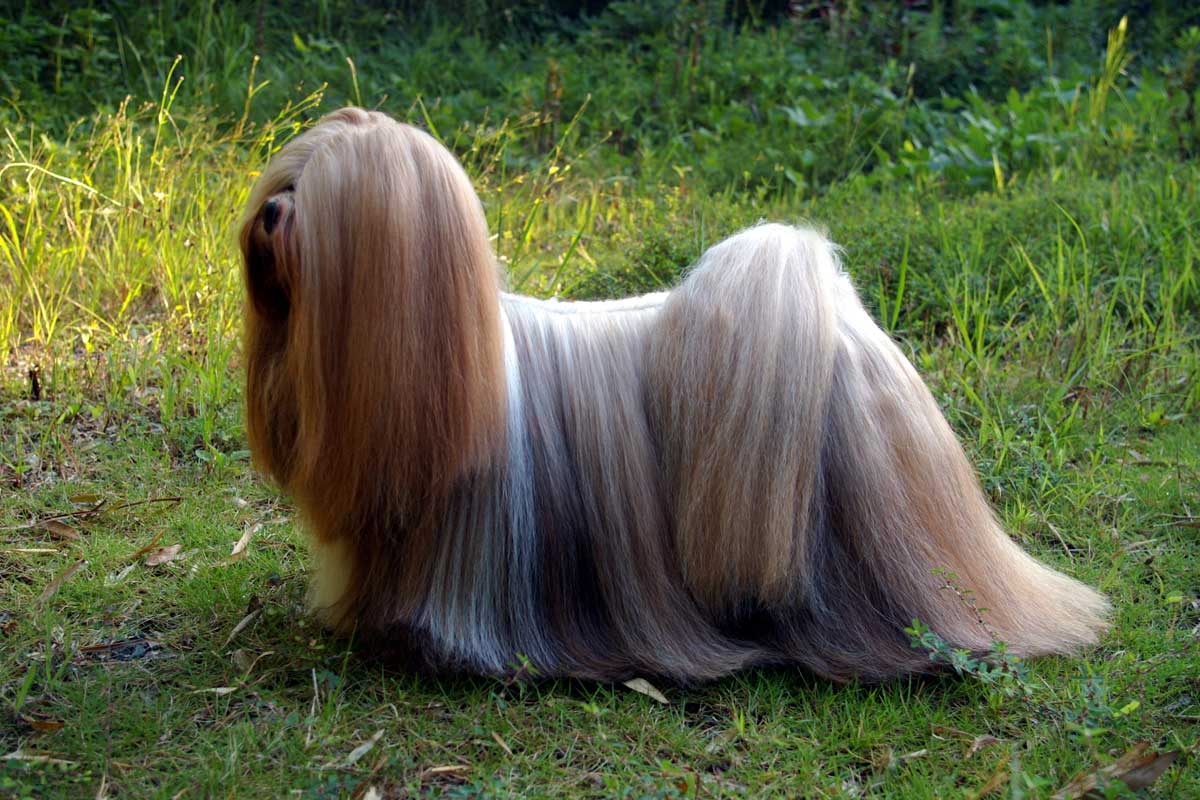
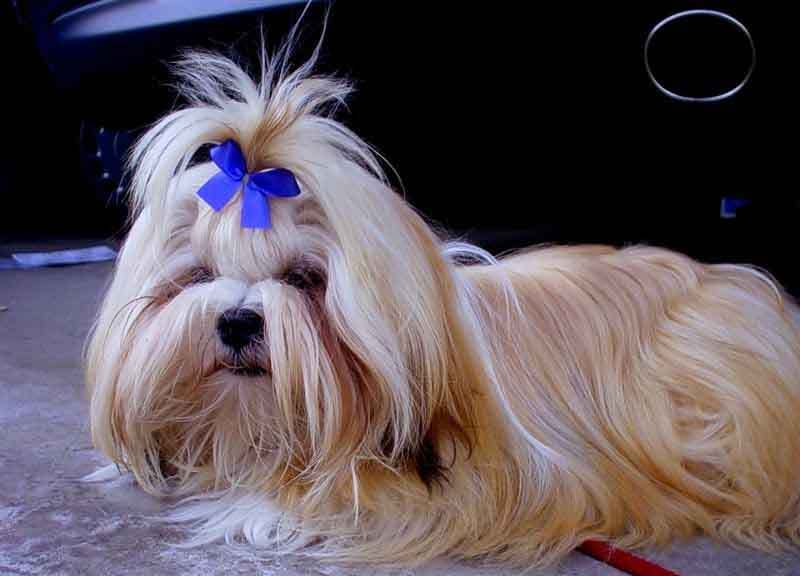
The hair Shih Tzu needs a lot of care, especially with the exhibition specimens

Content

History

The Shih Tzu It is a very ancient breed of dog (the first data found on them date from the 10th century to. C.) originating in China. There is an opinion widely about his origin, but often give acceptable they are descended from similar Tibetan dogs Lhasa Apso.

Like the Lhasa Apso, the Shih Tzu They are a race linked in some way with the Buddhist religion. The Chinese bred them and primped so they seem somewhat Lions. Even the name of the race, "Shi Tzu", means "lion dog", which is usually blamed on the strong and deep bark of these animals.

They were highly prized in China as guard dogs.

In the seventeenth century the history of the Shih Tzu. The Dalai Lama, wanting to fill of gifts to the Chinese emperor, He gave some examples of this breed. Ending the 19th century, Tsโ€™eu-hi, empress who was the grandmother of the last emperor, I was a big fan of the Shih Tzu and for this reason it had more than a hundred and specialized caregivers. When in 1908 the Empress died, the Shih Tzu suffered a severe blow.

At the beginning of the 1930s, He began to creep into houses of Chinese elders, leaving the ivory tower. And in that time he received some names: Lhasa Lion Dog, Tibetan Poodle, etc. And in 1934 was founded the Peking Kennel Club.

In 1937, the invasion of China by the Japanese was the reason for the disappearance of the Shih Tzu in China, your country of origin. But, Luckily, Europeans had already become fond of this breed, that in 1955 began to be extended by United States.

After her appearance, the Shih Tzu they replaced the Lhasa Apso as the favourite dogs of nobles and emperors. Travelers who visited the eastern country during that time brought the fashion for these small, hairy dogs to Europe and, later, to America, where made a strong impression. In the modern era, the fashion of the Shih Tzu gradually disappeared, and after the Communist revolution the dog breed was considered extinct in China, although it had already penetrated deeply in the West.

All the genetic inheritance of Shih Tzu comes from seven pairs of dogs, including a Pekingese, that through the efforts of several historians have been able to be identified.

Physical characteristics

The head of these dogs is small in proportion to the rest of your body, and eyes, black (and rarely even blue or brown) they are always huge, so there they deserve special care if you want to avoid health problems.

Her hair is long and very dense, but never curly (are allowed a bit of undulation), and it can be of all colors, Although it is more normal to the front and the end of the tail are white. The ears are large and pendants, and they have so much hair that seem to form a whole with the hair in the neck.

The snout is short and flat, sometimes causing them breathing problems; for example, is quite common that they ronquen soundly. The average length of life of this dog is fourteen years, However, a Shih Tzu that has been well cared for and has not had major health problems can live up to twenty-three years, in the case of one of the longest known dog breeds. Their colours can be white, dorado, black, liver, Silver, Red or brindel. The Shih Tzu They are animals that, due to their type of hair, do not give allergies to allergic people.

Physically they are not very tall (they measured a maximum 26,7 cm and weigh in 4,5 to 8,1 kg).

Character and skills

Dog breeds are often created for a specific purpose.. In this case, the purpose of Shih Tzu is to be a partner. Has no hunting instinct, nor on guard, and is never aggressive. He was selected just to be a faithful and loving friend.

Dog shih tzu vs Cat Funny Fight

The Shih Tzu It, Therefore, a dog that gets along with everyone, both with children and adults. Also appreciates other animals, especially felines. Sometimes it is said to be a "dog-cat", since its behavior is very similar to that of a feline. In fact, he decides when he wants to be caressed, and once he is an adult, he really appreciates just sitting still on his cushion. It also, tends to be independent and to obey only if you want. It also, like many small breeds of dogs, can be somewhat difficult.

But, the Shih Tzu he is a tender and calm companion, but also full of joy. He loves to play and to be taken care of: his master is everything to him. In fact, can't stand loneliness; if your family is usually far away, the company of another animal is welcome.

The Shih Tzu live as well in apartment as at home. Perfectly adapted to city life, he barks little and his calm character allows him to be carried everywhere: he will remain calmly at the feet of his master. Having said that, not a dog that needs a lot of exercise; a daily walk and games are enough for him. All this makes it an ideal dog for an older person., if it is willing to take on the daily maintenance it requires.

Education

Intelligent and endowed with a good learning ability, the Shih Tzu is nevertheless a stubborn dog. He does not like to obey blindly, and even less that they force him. Your master will have to be persistent and cunning. It is advisable to go through the game and fun rather to make him learn the orders.

Health

The Shih Tzu is generally in good health.

But, you are at risk of developing brachycephalic syndrome, because of his crushed face.

It also, is a dog that can be prone to ear infections, because of his drooping ears, or cataracts for his bulging eyes. You can also get contact conjunctivitis, in case your hair falls into your eyes. That is why it is advisable to lift the hair by putting a toupee on it.. In general, your eyes and ears should be checked regularly.

It also, being longer than tall, the Shih Tzu may have back problems, especially at the level of the intervertebral disc. It is advised to avoid going up and down the stairs too often. So, in the absence of elevator, it is better to take it.

It also, also has a predisposition to atopia, risk that increases if your hair is poorly cared for.

He is a greedy dog, who is prone to obesity. So, it is necessary to take care of the amount of food eaten. A maximum of 100 grams of kibble per day.

Last, if the cold doesn't bother you, the Shih Tzu it is instead sensitive to heat: in summer, it is necessary to shorten the walks, or perform them away from temperature peaks.

Grooming

To the Shih Tzu you have to take care of them with time and a lot of patience.

The maintenance of Shih Tzu requires careful attention.

In addition to the daily hairstyle, it is recommended to groom your Shih Tzu each 3 or 4 weeks. If cleaning is done at home, using a highly nourishing dog shampoo and conditioner will make the job easier. You have to dry the dog with a hair dryer, so that it does not catch cold.

On the other hand, it should be noted that the Shih Tzu only changes, making it one of the most hypoallergenic dog breeds.

On the other hand, his eyes and teeth must be cleaned daily, and the ears once a week.

Food

You must be careful, as well, with food: they are delicate stomach dogs, normally they do not accept well anything else other than dry food. Veterinarians recommend give milk without lactose because many of them cannot tolerate.

Characteristics "Shih Tzu"

Coexistence is important that you have with your new friend. Before considering the acquisition of a dog of the breed "Shih Tzu" you know certain factors. Not all breeds of dogs are apt to live in an apartment, you must take into account his character, their need for exercise, their interaction with other pets, their care and if you have small children, their level of tolerance towards them.

Adaptation โ“˜

2,0 of 5 stars (based on 1 review)

friendly dog โ€‹โ€‹โ“˜

4,0 of 5 stars (based on 1 review)

hair loss โ“˜

1,0 of 5 stars (based on 1 review)

Affection level โ“˜

4,0 of 5 stars (based on 1 review)

Need for exercise โ“˜

2,0 of 5 stars (based on 1 review)

Social need โ“˜

4,0 of 5 stars (based on 1 review)

Home โ“˜

3,0 of 5 stars (based on 1 review)

Toilet โ“˜

4,0 of 5 stars (based on 1 review)

Friendly with strangers โ“˜

3,0 of 5 stars (based on 1 review)

barking โ“˜

2,0 of 5 stars (based on 1 review)

Health โ“˜

3,0 of 5 stars (based on 1 review)

Territorial โ“˜

2,0 of 5 stars (based on 1 review)

Cat friendly โ“˜

4,0 of 5 stars (based on 1 review)

Intelligence โ“˜

4,0 of 5 stars (based on 1 review)

Versatility โ“˜

3,0 of 5 stars (based on 1 review)

Child friendly โ“˜

4,0 of 5 stars (based on 1 review)

Surveillance โ“˜

1,0 of 5 stars (based on 1 review)

joy โ“˜

4,0 of 5 stars (based on 1 review)

Images "Shih Tzu"

Photos:

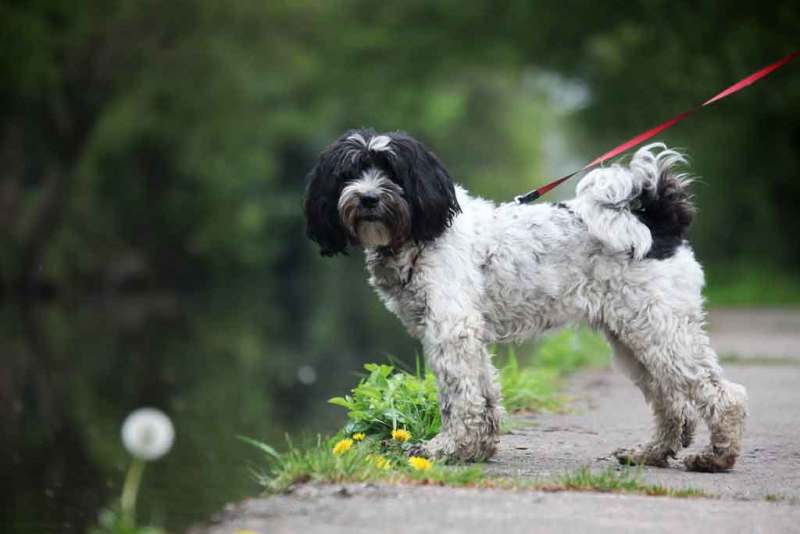
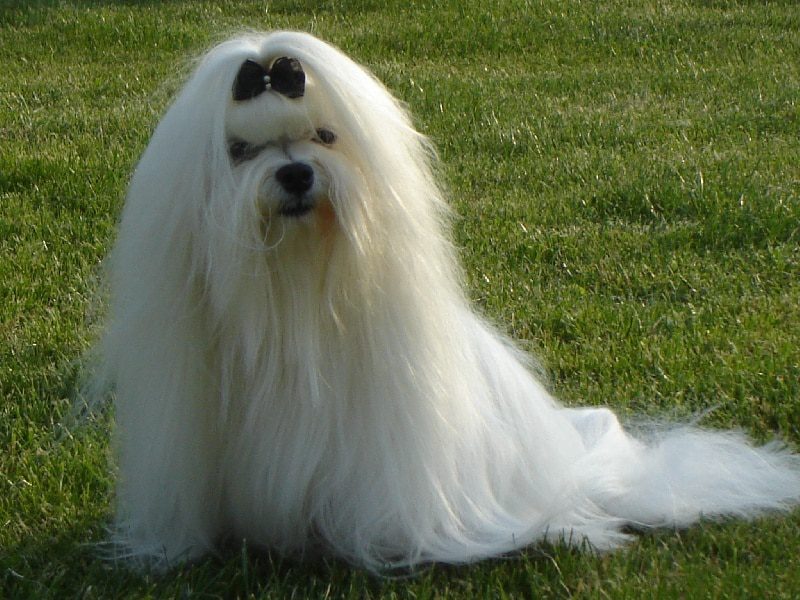
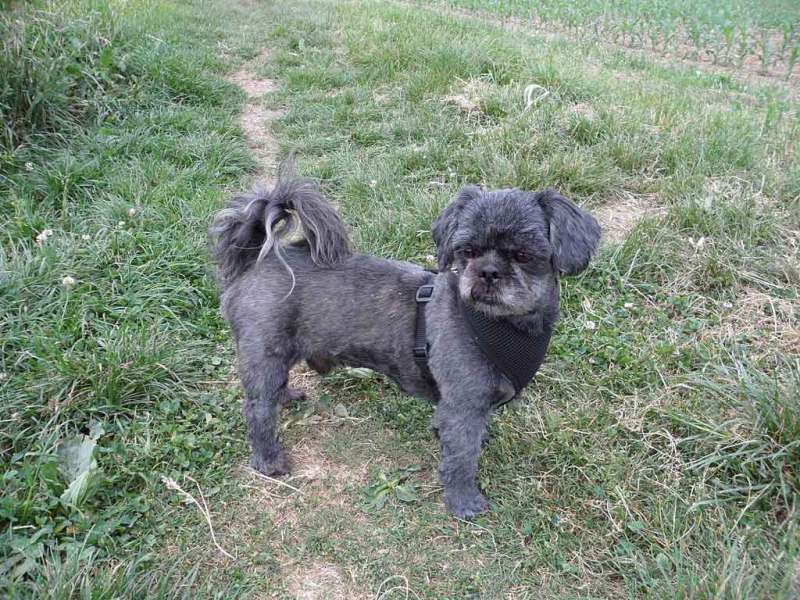
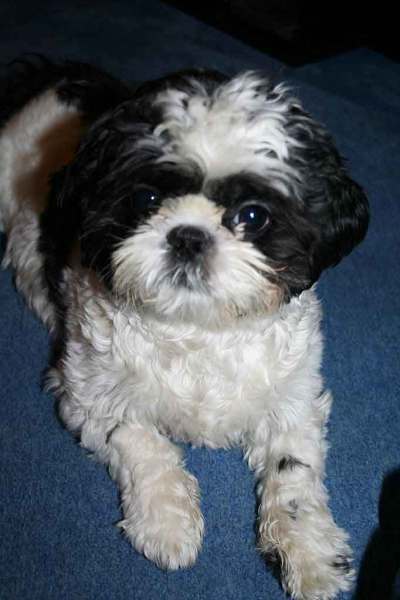
1 – "Shih Tzu" Name: fibi (female), 1,5 years in the photo by Wawri (Tomasz Wawak), CC BY-SA 2.5, via Wikimedia Commons
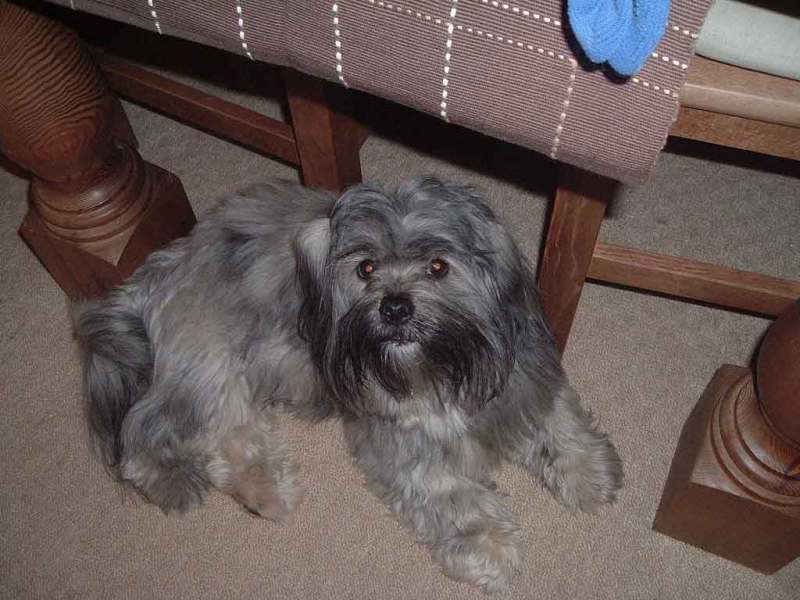
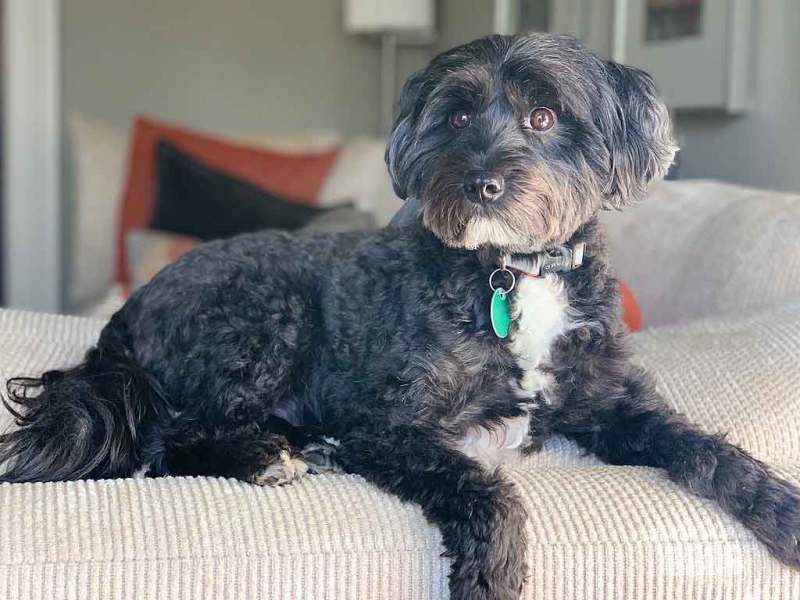
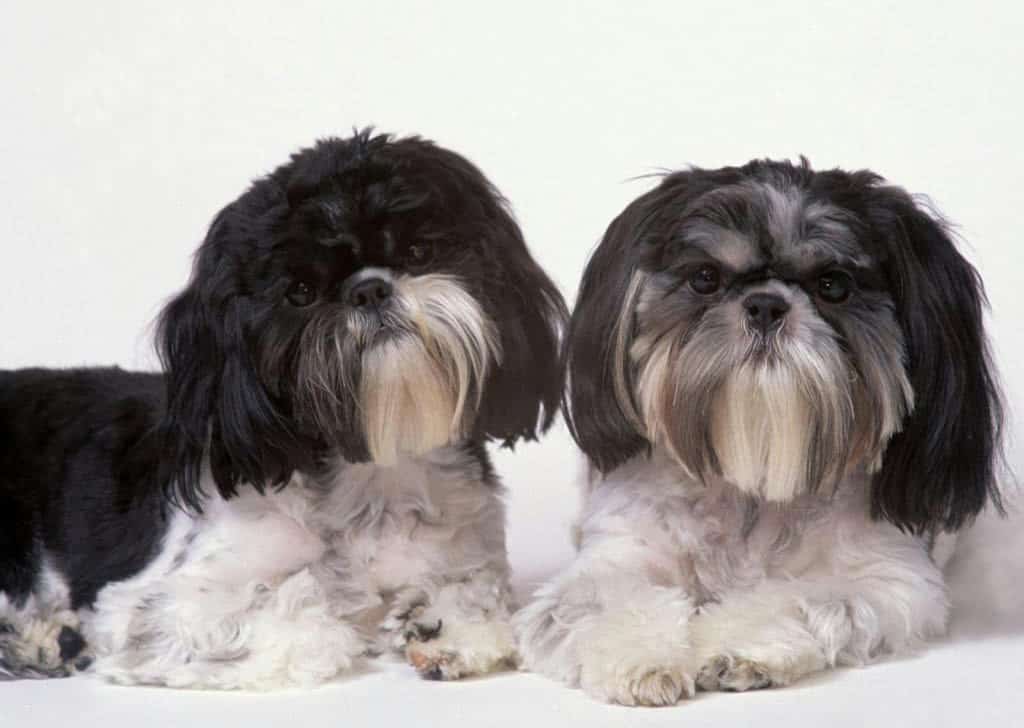
2 – "Shih Tzu" Tommy by IrinaOnt, CC BY-SA 4.0, via Wikimedia Commons
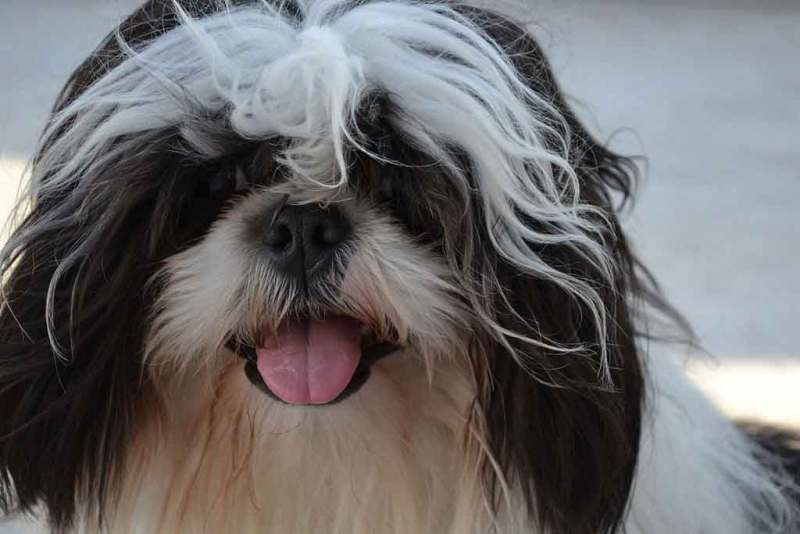
3 – "Shih Tzu" in Tallinn duo CACIB, 17-18 in August of 2013, concurso Best in Puppies by Thomas, CC BY-SA 3.0, via Wikimedia Commons
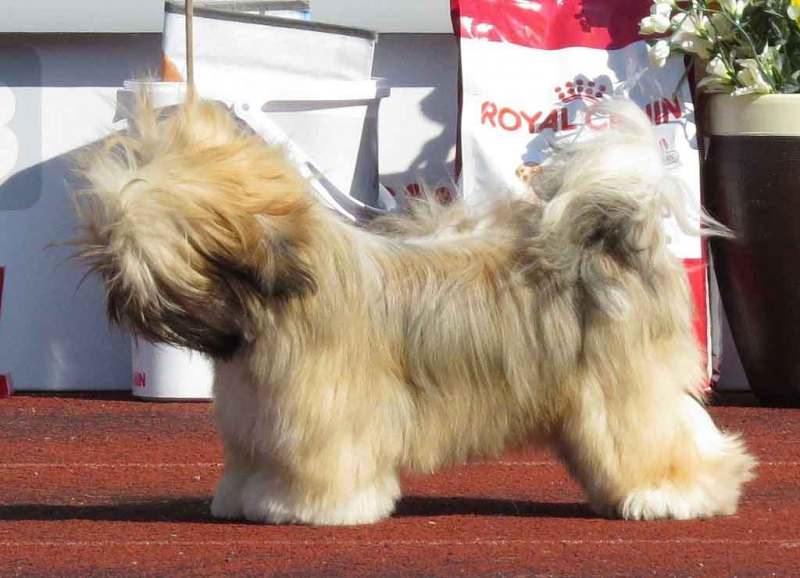
4 – I am a "Shih Tzu" I was born on 2 in February of 2012 by User:Andy the shihtzu, CC BY-SA 3.0, via Wikimedia Commons
5 – "Shih Tzu" pure blood, squirrel by Gabsy, CC BY 3.0, via Wikimedia Commons
6 – "Shih Tzu" freshly shorn by Yvonne Hering, CC BY-SA 3.0, via Wikimedia Commons

Videos "Shih Tzu"

Type and recognitions:

  • FCI CLASSIFICATION:
  • Group :
  • Section : . .

Federations:

  • FCI – Group 9: Section 5: Tibetan breeds โ“˜
  • AKCToy โ“˜
  • ANKC – (Toy) โ“˜
  • CKC – Group 5 โ€“ (Toy) โ“˜
  • โ€‹KC – Toy โ“˜
  • NZKCToy โ“˜
  • UKC – Group 8 – Companion dog โ“˜

FCI breed standard "Shih Tzu"

Origin:
Tibet, China

Date of publication of the valid original standard:
18.03.2015

Use:

Companion dog.


General appearance:

It is a vigorous dog, copiously covered with hair, of haughty bearing and a face in the shape of a chrysanthemum.


Behavior / temperament:

Intelligent, active and alert. Friendly and independent.

Head:

Wide, round, with width between the eyes. The hair on the head should be shaggy and fall well over the eyes.. Must have a full beard and mustache. The nose hair should grow upwards, giving it a characteristic chrysanthemum-shaped effect..

Cranial region:
  • Depression links (Stop): Well defined.

facial region:

  • Truffle: It is black, although it can be dark liver in those dogs with liver color or spots of that color.. The top of the nose should be in line with or slightly below the edge of the eye. The nostrils are wide and open. A downward sloping nose is highly undesirable., just like the nostrils tight.
  • Snout: Large, square, short, plane, hairy and wrinkle-free. The distance from the tip to the frontonasal depression (stop) must be almost 2,54 cm.. Muzzle level or slightly tilted upwards at the tip. The pigmentation of the muzzle should be as uniform as possible.
  • Lips: Well contiguous.
  • Jaws/Teeth: Wide mouth. Pincer bite or with a slight lower prognathism.
  • Eyes: Large, round, dark colored, placed well apart from each other, although they are not jumpy. They have an affectionate expression. In liver-colored specimens or with spots of that color, lighter colored eyes are allowed. The white part of the eyeball should not be visible.
  • Ears: Large, pendants; long pavilion. Its implantation is slightly below the crown of the skull, and they are covered with hair so dense that it seems to merge with the hair on the neck..

Neck:

Well proportioned, delicately arched, with sufficient length to carry the head proudly.

Body:

Its length from the region of the withers to the base of the tail is greater than the height at the withers..

  • Back: Straight.
  • Pork loin: Well coupled and robust.
  • Breast : Broad and deep.

Tail:

Covered with abundant feather-shaped hair and carried happily on the back. High insertion. The height of the tail should be approximately the same as the skull, so that the dog has a balanced profile.

Tips

Former members

They are short, muscular and strong boned, as straight as possible, compatible with a wide and deep chest.

  • Shoulder: Firms, well leaning back.


Later members

Short, muscular and broad boned. Seen from behind they should look straight. They should look voluminous due to the abundance of hair.

  • Thighs: Well rounded and muscular.

Pies

Round, firm and with thick foot pads; They appear large due to the abundance of hair that covers them.

Movement:

Of proud bearing, harmonious and easy movement; the forelimbs are directed well forward, with a strong push of the hind limbs; these show the footpads completely.

Mantle

Fur

Long, thick, not curly, with a good undercoat. A slight undulation is allowed. It is highly recommended to tie the hair on top of the head..

Color

All colors are allowed. In specimens of various colors it is highly desirable that they have a white tuft on the forehead and at the tip of the tail..


Size and weight:

Height to the cross

It should not exceed 26,7 cm.. The conformation and characteristics of the breed will always be of primary importance., and in no way should only the size be taken into account.

Weight

Of 4,5 to 8,1 kg. The ideal weight is between 4,5 and 7,3 kg.


Fouls:

Any deviation from the aforementioned criteria must be considered a fault and the seriousness of the fault is considered to the degree of the deviation from the standard and its consequences on the health and well-being of the dog..

Any dog โ€‹โ€‹showing clear signs of physical or behavioral abnormalities should be disqualified..

disqualifying fouls:

  • Aggressiveness or extreme shyness.
  • Any dog โ€‹โ€‹showing clear signs of physical or behavioral abnormalities.


N.B.:
  • Males should have two normal-appearing testicles fully descended into the scrotum..
  • Only functionally and clinically healthy dogs, with the typical conformation of the breed, should be used for parenting.

Source: F.C.I - International Cynological Federation

Alternative names:

1. Chrysanthemum Dog (English).
2. Chien lion (French).
3. Lรถwenhund, shih-tzu-kou (German).
4. Chinese Lion (Portuguese).
5. Perro leรณn chino (espaรฑol).

โ–ท The world of Pets: Dogs, cats, birds, reptiles, amphibians

Havanese
Cuba FCI 250 . Bichons

Thanks to its nature, the Havanese is used in therapy with animals

Bichรณn Habanero

Content

Characteristics "Havanese"

Coexistence is important that you have with your new friend. Before considering the acquisition of a dog of the breed "Havanese" you know certain factors. Not all breeds of dogs are apt to live in an apartment, you must take into account his character, their need for exercise, their interaction with other pets, their care and if you have small children, their level of tolerance towards them.

Adaptation โ“˜

5,0 of 5 stars (based on 1 review)

friendly dog โ€‹โ€‹โ“˜

5,0 of 5 stars (based on 1 review)

hair loss โ“˜

1,0 of 5 stars (based on 1 review)

Affection level โ“˜

5,0 of 5 stars (based on 1 review)

Need for exercise โ“˜

1,0 of 5 stars (based on 1 review)

Social need โ“˜

5,0 of 5 stars (based on 1 review)

Home โ“˜

5,0 of 5 stars (based on 1 review)

Toilet โ“˜

3,0 of 5 stars (based on 1 review)

Friendly with strangers โ“˜

4,0 of 5 stars (based on 1 review)

barking โ“˜

3,0 of 5 stars (based on 1 review)

Health โ“˜

3,0 of 5 stars (based on 1 review)

Territorial โ“˜

4,0 of 5 stars (based on 1 review)

Cat friendly โ“˜

5,0 of 5 stars (based on 1 review)

Intelligence โ“˜

5,0 of 5 stars (based on 1 review)

Versatility โ“˜

5,0 of 5 stars (based on 1 review)

Child friendly โ“˜

5,0 of 5 stars (based on 1 review)

Surveillance โ“˜

4,0 of 5 stars (based on 1 review)

joy โ“˜

4,0 of 5 stars (based on 1 review)

History

Like all kind dogs Bichon, as the Coton de Tulear, the Bolognese or the Maltese, the Havanese has its origins in the western Mediterranean, on the Spanish and Italian coasts.

There are several theories about its appearance.. According to some historians, descends from Bichรณn de Tenerife, that was brought to Cuba in the 18th century, when several settlers began to settle on the island. Others believe that it is descended from Barbet and the Poodle French bred in France before being brought to Cuba by Spanish settlers, also during the 18th century. But, this hypothesis is much less plausible than the first.

In any case, as soon as you get to the island, their ancestors evolved to adapt to the climate, developing a lightweight, insulating coat to better tolerate heat. They also crossed paths with Blanquitos de la Habana, another Bichon-type dog that was already established on the island, but that has disappeared. Other crosses were probably made with Maltese, also imported by the settlers. The result was a more massive dog, rustic and robust.

It also, Cuba was subject to trade restrictions imposed by Spain at that time, and remained isolated for some time: this facilitated the development of a specifically local breed. During the 18th century, the breed was called Habanera, in reference to the city of Havana, capital of Cuba. They differed from other Bichon-type dogs by their fur, softer and that it could be of other colors besides white, and by its morphology. In fact, I was both smaller and bigger than them.

At the beginning of the 19th century, the Havanese had become a very popular pet among Cuban aristocratic families. European travelers also fell under its spell, and some took them to england, Spain and France, which is why they also became fashionable in Europe in the middle of the century. Writer Charles Dickens (1812 – 1870) and queen victoria (1819 – 1901) were some of the celebrities who owned them and who had a special predilection for this breed.

After the Cuban revolution of 1959, the race had a bad time. In fact, their number greatly decreased, to the point of being on the verge of extinction. But, some subjects accompanied people fleeing the chaos and went into exile abroad, especially in the state of Florida, in United States. Diplomatic tensions, sometimes very strong, they did not prevent Havanans from beginning to be known in the country. In fact, the breed probably owes its salvation to the individuals brought to the United States, as disturbances in their native territory caused a drastic drop in their numbers. In fact, although the breed continued to be present in Cuba during this period, it was primarily American enthusiasts who took up the breeding torch at this time in history.

Specialists emphasize in particular the importance of 11 specimens born on the island and who accompanied their masters to the United States: served as the basis for the selection made to constitute new lines. In fact, These 11 dogs were commissioned over the years 70 by the Goodales, a couple of American breeders. Enchanted by the intelligence of the race, its affectionate character and its great resistance to the hot and humid climate of Florida, they gave birth to puppies from the ten copies they possessed and developed a breeding program that was decisive. In fact, It is thanks to his work that the habanero had a new life in the United States and that new lines were born there, based on dogs born in Cuba. The first births took place in 1974, and in 1979 a breed club was created, the Havanese Club of America (HCA). Quickly, went from 9 to more than 400 Member, which shows how quickly this dog found an audience.

The recognition of Havanese

Although this country played a decisive role in the survival of the race, the official recognition of Havanans in the United States came late. In effect, we had to wait until 1991 for the United Kennel Club (UKC) take the step. The other local reference organization, the American Kennel Club (AKC), he did the same 5 years later, in 1996.

El Canadian Kennel Club (CKC) followed him in 1999.

On the other hand, the Fรฉdรฉration Cynologique Internationale (FCI) distinguished himself by recognizing the Havanese in 1963. This contributed to its spread in Europe., where the breed did not really enjoy the same popularity as in the second half of the 19th century.

In the United Kingdom, was recognized by the prestigious and influential Kennel Club in 1993.

More broadly, the Havanese is now recognized by all major international and national institutions in the world.

The situation of Havanese in Cuba

In Cuba, the flight of a large number of aristocrats (the same ones that constituted the main population of owners of this dog) to the United States and elsewhere could have raised fears of a disappearance of the race in the country.

But, this was avoided, since not all the owners of habaneros left, and some offspring continued to exist. Even in 1991 the Cuban Club of the Havanese (CCBH) with the aim of promoting the breed, protect it and promote its development. It also, of course, is recognized by the national canine organization, the Cynological Federation of Cuba (FCC).

Today, the Havanese It is considered the national breed of Cuba – She is the only one from this country.). Obviously, is recognized by the national canine organization, the Cynological Federation of Cuba (FCC). Enthusiasts now hope that the resumption of relations between the United States and the island will allow the exchange of dogs to expand the gene pool of Cuban and American bloodlines..

Did you know??

The Habanero It is the national dog of Cuba. Descend from the already gone Blanquito de la Habana; the Blanquito descends from Bichรณn Tenerife, too late.

Popularity

In the news, the Havanese is known and distributed all over the world, and is increasingly successful in many countries.

This is the case, in particular, from France, where each year some 800 dogs in the French Stud Book (LOF). The breed experienced an especially pronounced boom among 2009 and 2014, going from about 250 births per year to more than 700. Prior to that, the number had already doubled in the first decade of the 21st century, starting from a hundred, stable or even slightly inferior to the years 90.

In Switzerland, statistics from the Amicus Database show it to be the 20th most common breed in the country, With almost 5.000 registered copies.

The success of Havanese it is even more pronounced in Canada, where it is solidly anchored at the Top 10 of the most popular breeds in the country in view of the number of registrations in the CKC, standing between the 5th and 7th position depending on the year. The breed is also on the rise, since at the end of the decade of 2000 ranked 15th.

Its popularity is not denied in the United States either., where the stall is around 25 (of about 200) in the breed ranking established by the AKC based on the number of births registered each year in the organization. In the middle of the Decade of 2000, rather occupied the position 40, and around the 30 early in the decade 2010.

The Havanese is also increasingly popular in the UK, for example. In fact, at around 500 specimens registered annually with the KC at the end of 2010, more than double the score at the beginning of the decade, when some 200 births per year.

Physical characteristics

The Havanese is a small vigorous dog low on short legs, longhair, abundant, soft, preferably wavy. Their movements are alive and elastic.

Its height to the cross is of 21 to 29 cm., with the ideal of breed between 22,9 and 26,7 cm.. Its height is slightly smaller than the length from the shoulder to the hind legs, which should give the appearance of being slightly longer than it is tall. A unique aspect is the line of its back, straight but not horizontal. Their weight is between the 3,6 and 6,8 kg.

The truffle is black, the eyes are very large, in the form of almond, never round, Brown most obscure. It has a friendly expression. The contour of the eye should be dark brown to black. The ears are medium in length, implemented relatively high, falling along the cheeks forming a fold that elevates them slightly. Its tip is a bit strong tip. They are covered with hair in long fringes. Nor distant as windmill blades, or glued to the cheeks. It takes the high tail, in the form of pastoral staff (with the curved upper limb, in the form of scrolls) or, preferably, wound on the back; It is equipped with a fringe of long silky hairs.

With regard to their coat, the inner layer lanosa, is poorly developed; is often absent altogether. The layer of coverage is very long (12-18 cm in an adult dog), soft, flat or wavy, and it can be curly, wicks.

There are two varieties of color:

  • Pure completely white, Fawn in different shades of the Griffon clear del habano (wetwood tobacco colour); spots of the mantle in these colors, sometimes slightly carborane.
  • White coat colors, light tawny to Brown, with black spots, black cloak. With the black nose and dark pigment around eyes, except for the chocolate-colored dogs, It can have dark brown pigment around the nose.

Mantle's hair should be long, soft, fluffy, silky and should be brushed frequently so that you do not enrede and form knots.
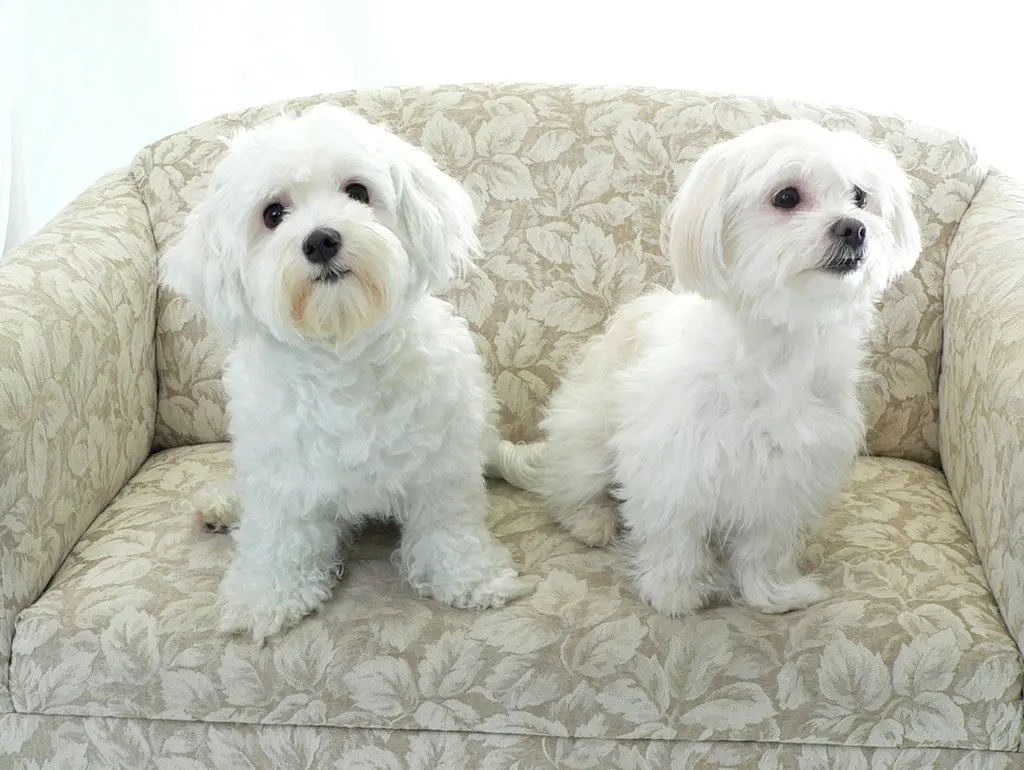
Many people consider Havanese Bichon a hypoallergenic dog.

โ€œHavanese Bichonโ€ Grooming

Provided that carried his dog an aesthetic Center, remind the professional stylist to revise the ears of your dog so that clean excess match, dust and dirt that might be present; as well as remove excess hair that grows in the ear hole. Deeper ear cleanings can only be done by the veterinarian.

It is important that you as the owner check your dog's ears and ears at least once a week to avoid more serious problems.. See where this is necessary for inspection and care to the veterinary doctor. Professional groomers should inform the owners of the pets they serve about possible ear problems so that they can be taken care of properly.

The nails should be cut each 3 to 4 weeks on average, their nails should measure approximately 1 cm., counting the root (which should measure up to half a centimeter). It is recommended that the cutting of nails do the veterinary doctor or the professional stylist. Owners if they do not have adequate experience should ask for advice to learn how to cut them; always using the tools in good condition and appropriate. Never cut the nails of your dog if you don't have special healing powder to control accidental bleeding that might be present. It is important that the dog is confident, post which tends to be aggressive in defending their legs.

The hair is very thin and fine. It is recommended to consistently styling each 2 or 3 days to prevent knots or lint from forming. It also, the hair helps to get rid of the unhealthy hairs. The breed standard provides for a cut of hair around their feet to avoid that look like a round pie and a small cut around the eyes for hygienic reasons, but no more cutting to participate in dog shows.

The hair of the Cubs is different from adult dogs, for this reason the agreement differently may be necessary. Check with your professional stylist. Remember your stylist to clean the anal glands of your dog as part of the routine of aesthetics; a veterinarian can also and recommend him to you each time this procedure must be your dog. The problems of anal glands are risky and uncomfortable.

Character and skills

They are very playful and good dogs with older people, rather than with the children. They love to climb on furniture and are one of the smallest companion breeds around..

The Havanese is exceptionally awake, It's easy to educate as alarm dog. Affectionate, cheerful nature, is nice, warm, funny, playful and even a little jester. He wants his entire family, including parents and children, and play endlessly with them. Rarely behaves aggressively, is friendly and is rarely shy or nervous around people, but still suspicious of strangers.

Ready and active, the Havanese has a light and elastic walk (physically given by his body), enough showy and agile as to emphasize their nature happy, also tends to be proud and conceited. It has free movements of the front limbs which move straight forward and the rear ones giving the push in a straight line.. It would always seek care through tricks as running from one room to another as fast as possible. You don't need too much exercise. This is a very people-oriented variety; They also have the habit of persecuting people without being possessive and play without attack.

The key word of this race is natural. The standard of the American Kennel Club speaks of one playful character rather than decorative and should reflect a Toy by its size and by playing with children and do tricks, not to be lying on a Silk Pillow.

Thanks to its nature, These dogs are used in therapy with animals, as for the deaf and in detection of termite among other assistance dog.

Price

The price of a puppy Havanese round the 1200 euros on average. But, this amount hides great disparities, since the price range goes from 700 to 2500 EUR.

whatever the country, the amount required depends on several criteria, as the quality of the lineage from which the animal comes, the prestige of the kennel, as well as, and above all, the intrinsic characteristics of the puppy, especially on the physical plane, that is to say, its greater or lesser approximation to the breed standard.

Images ยซHavaneseยป

ยซHavaneseยป Videos

Type and recognitions:

  • FCI CLASSIFICATION:
  • Group :
  • Section : . .

Federations:

  • FCI – Group 9 Section 1 โ“˜
  • AKC – Toy Group โ“˜, ANKC โ“˜
  • ANKC Group 1 (Toys) โ“˜
  • CKC – Group 5 – Toys โ“˜
  • โ€‹KC – Toy โ“˜
  • NZKC – Toy โ“˜
  • UKC – Company โ“˜

FCI breed standard "Havanese"

Origin:
Cuba

Date of publication of the valid original standard:
31.10.2016

Use:

Companion dog.


General appearance:

The Havanese is a vigorous little dog, low on legs, longhair, abundant, soft and preferably wavy. Their movements are alive and elastic.

important proportions: The length of the muzzle is equal to the distance between the frontal-nasal depression and the occipital protuberance.

The relationship between the length of the body (measured from the tip of the shoulder to the tip of the buttock) and the height at the withers is 4/3.


Behavior / temperament:

Exceptionally awake, It's easy to educate as alarm dog. Affectionate, cheerful nature, is nice, warm, funny, playful and even a little jester. He loves the boys and plays endlessly with them.

Head:

Long Middle, the relationship between the length of the head and the length of the trunk (measured from the withers to the birth of the tail) is of 3/7.

Cranial region:
  • Craging: Flat to slightly convex, broad; slightly elevated forehead; seen from above,  it is round at the back and almost straight and square on the other three sides.
  • Dfronto-nasal depression (Stop): Moderately marked.

facial region:

  • Trufa: black or brown.
  • Hocico: It becomes progressively thinner and slightly towards the truffle; neither pointed nor truncated.
  • Labios: Fine, net, tight.
  • Jaw/Teeth:  Scissor-shaped bite. A complete denture is sought. Absence of premolars is tolerated 1 (PM1) and molar 3 (M3).
  • Cheeks: Very flat, not prominent.
  • Eyes: So big, in the form of almond, Brown most obscure. friendly expression. The contour of the eye should be dark brown to black.
  • Ears: Relatively high deployed, fall along the cheeks in an inconspicuous crease that raises them slightly. Its tip is a bit strong tip. They are covered with hair in long fringes. Nor distant as windmill blades, or glued to the cheeks.

Neck:

Long Middle.

Body:

The length of the body slightly exceeds the height at the withers. top line: Straight, slightly arched at the loin. Rump: Well inclined.

  • Costillas: Well arched.
  • Belly: Well collected.

Tail:

carried high, in the form of pastoral staff (with the curved upper limb, in the form of scrolls) or, preferably, wound on the back; It is equipped with a fringe of long silky hairs.

Tips

Former members:
  • Ageneral appearance: Straight and parallel, dry; good bones. The distance between the floor and the elbow should not be greater than the distance between the elbow and the withers.
  • Pinis previous: A bit elongated, small, compact.
Later members:
  • Ageneral appearance: Good bones; moderate angulations.  
  • Hind feet: A bit elongated, small, compact.

Movement:

The Havanese has a light and elastic walk, colorful and agile enough to underline its cheerful character. Well free movement of the forelimbs, which move straight ahead, the posterior ones giving the push in a straight line.

Mantle

Plink: The inner layer, woolly, is poorly developed; is often absent altogether. The layer of coverage is very long (12-18 cm in an adult dog), soft, flat or wavy, and it can be curly, wicks.

Any arrangement is prohibited, all hair length matching with scissors and all waxing.

Exception: a cleaning of the hairs of the feet is authorized, the hairs on the forehead can be slightly trimmed so that they do not cover the eyes, and the hairs on the muzzle may be slightly trimmed, but it is preferable to leave them natural.

Codor: Rarely completely pure white, leonado in its different shades (it is admitted with light carbonation), black, tan brown, tobacco color, reddish brown. Stains are allowed in the listed colors. Tan markings are allowed in all shades.


Size and weight:

Height to the cross: of 23 to 27 cm.

Tolerance: of 21 to 29 cm.


Fouls:

Any deviation from the aforementioned criteria is considered as a fault and the severity of this is considered to the degree of the deviation to the standard and its consequences on the health and well-being of the dog..

Serious misconduct:
  • General appearance without tip
  • Truncated or pointed snout, whose length is not identical to that of the skull.
  • bird of prey eyes; eyes that are too sunken or prominent; depigmented spots on the eyelids
  • Too long or too short body.
  • Straight tail, not carried elevate
  • Former members "in lira" (nearby carpus, feet turned outward).
  • Deformed pies.
  • Wire-haired,  sparse hair;  short hair except in puppies; groomed hair.
disqualifying fouls:
  • Aggressiveness or extreme shyness.
  • Any dog โ€‹โ€‹showing clear signs of physical or behavioral abnormalities.
  • Aggressive or fearful dog.
  • Depigmented truffle.
  • Upper or lower prognathism.
  • Ectropion and entropion; eyelid edges completely depigmented.
  • Size that exceeds or does not reach the norms indicated by the standard.


N.B.:
  • Males should have two normal-appearing testicles fully descended into the scrotum..
  • Only functionally and clinically healthy dogs, with the typical conformation of the breed, should be used for breeding

Lthe latest changes are in bold.

Source: F.C.I - International Cynological Federation

Alternative names:

1. Havanese dog, Havanese Cuban Bichon (English).
2. Bichon havanais (French).
3. Havaneser (German).
4. Bichon havanรชs, Havanese (Portuguese).
5. Bichรณn Habanero, Habanรฉs (espaรฑol).

โ–ท The world of Pets: Dogs, cats, birds, reptiles, amphibians

King Charles Spaniel
England FCI 128 . English Toy Spaniels

English Toy Spaniel

The King Charles Spaniel it is a gentle and calm dog in any circumstance.

Content

History

Already in the sixteenth century there was talk of King Charles Spaniel. Much appreciated by all the kings who succeeded the crown of England, it is above all with Carlos II that they will have a privileged relationship. It is in homage to him that he was given the name of King Charles to the race. In fact, Carlos II dedicated a great passion to them. He had many, who came and went as they pleased through the corridors of the Royal Palace. They even had a privileged status!!

Knights took him hunting while ladies hugged him by the fire. He had managed to make himself indispensable to the Court..

But, at that time, the muzzle was pointed. It was after the crossing with the Japanese Chin that the flat nose standard emerged. The Cavalier King Charles spaniel, another closely related race, is slightly larger, with a less flat nose.

Accepted by the FCI at 1965, the King Charles Spaniel is based on standards that were last revised in 2010.

Physical characteristics

Selected to be small in size, the silhouette of the King Charles Spaniel fits in a square. They are elegant dogs with low, elongated ears and wavy fringes that hang flirtatiously down the cheeks.. His dark eyes are very big, a bit protruding and far apart. The skull is voluminous with a well marked stop and a very short muzzle.. The jaw is slightly lower, but the tongue does not stick out. The body is compact, with straight legs, wide chest and fringed tail carried along the hocks. Some choose to cut it.

▷ Size of King Charles Spaniel: Among 25 cm and 35 cm.
▷ Weight of King Charles Spaniel: Among 3,5 kg and 6 kg
▷ Hair of the King Charles Spaniel: Long and fringed on the legs, ears and tail. The coat is silky and shiny, smooth with a slight wave.

Character and skills

It is difficult to find a dog that is easier to live with. The King Charles Spaniel is not a guard dog, since he doesn't bark much. Very attached to his master and the whole family, knows how to "disappear" from the landscape when his master does not have time to dedicate to him. So, No need to wait for it to come to you and anticipate its needs!!

He is very comfortable with young children, the elderly and the disabled, is nice, cheerful and patient with everyone. Said to have calming properties to combat anxiety since the 17th century. In England, It is said to be "comforting".

It's not especially sporty, he likes comfort, the nap and the pillow. Do not forget that you must do enough sports to maintain good health..

More reserved than his cousin the Cavalier King Charles spaniel, remains gentle and calm in all circumstances.

Its reserve does not make it an aggressive animal with strangers. Intelligent and playful, the king charles spaniel enjoys the company of children. Appreciates pampering and displays of affection in general. It is no coincidence that he is often compared to a cat.

In an apartment or a house, the King Charles Spaniel is equally happy. As long as she can snuggle with her master and show her joy whenever she feels like it., will be happy. Older people like it a lot.

Education

Your sense of smell, his hearing and his intelligence make him not only a pleasant dog to live with, but also relatively easy to train. It is enough to indicate the limits that it should not cross and offer it good socialization so that it is an excellent life partner.. To the King Charles Spaniel loves to play: take advantage of this trait to hone their education and strengthen your bonds.

Health

With regard to health, the King Charles Spaniel needs to be watched regarding your eyes, ears, respiratory system and heart. Similar to the Cavalier King Charles spaniel, you are likely to have microphthalmia, which may be associated with cataracts. You may also have problems with ear irritation and breathing and/or heart difficulties.. Last, you should know that childbirth can be complicated in females.

Grooming

The King Charles Spaniel molts twice a year, one in autumn and one in spring. Its abundant fur, his fringed ears and eyes should be maintained regularly to keep him clean and healthy.

For its hygiene it is recommended to brush the dog once a week, using an iron brush without bristles or a soft brush, and then with a fine comb. You have to take care that your hair does not form knots. The dog must be bathed every two months, making sure to use a special dog shampoo and previously remove the knots.

Characteristics "King Charles Spaniel"

Coexistence is important that you have with your new friend. Before considering the acquisition of a dog of the breed "King Charles Spaniel" you know certain factors. Not all breeds of dogs are apt to live in an apartment, you must take into account his character, their need for exercise, their interaction with other pets, their care and if you have small children, their level of tolerance towards them.

Adaptation โ“˜

2,0 of 5 stars (based on 1 review)

friendly dog โ€‹โ€‹โ“˜

5,0 of 5 stars (based on 1 review)

hair loss โ“˜

3,0 of 5 stars (based on 1 review)

Affection level โ“˜

5,0 of 5 stars (based on 1 review)

Need for exercise โ“˜

1,0 of 5 stars (based on 1 review)

Social need โ“˜

3,0 of 5 stars (based on 1 review)

Home โ“˜

5,0 of 5 stars (based on 1 review)

Toilet โ“˜

3,0 of 5 stars (based on 1 review)

Friendly with strangers โ“˜

3,0 of 5 stars (based on 1 review)

barking โ“˜

3,0 of 5 stars (based on 1 review)

Health โ“˜

3,0 of 5 stars (based on 1 review)

Territorial โ“˜

1,0 of 5 stars (based on 1 review)

Cat friendly โ“˜

3,0 of 5 stars (based on 1 review)

Intelligence โ“˜

4,0 of 5 stars (based on 1 review)

Versatility โ“˜

2,0 of 5 stars (based on 1 review)

Child friendly โ“˜

3,0 of 5 stars (based on 1 review)

Surveillance โ“˜

2,0 of 5 stars (based on 1 review)

joy โ“˜

3,0 of 5 stars (based on 1 review)

Images "King Charles Spaniel"

Photos:

1 – King Charles Spaniel by https://www.publicdomainpictures.net/es/view-image.php?image=281614&picture=perfil-de-king-charles-spaniel
2 – King Charles Spaniel by https://www.publicdomainpictures.net/es/view-image.php?image=281614&picture=perfil-de-king-charles-spaniel
3 – King Charles Spaniel by https://www.publicdomainpictures.net/en/view-image.php?image=281620&picture=king-charles-spaniel
4 – King Charles Spaniel sitting while looking up, during the dog show in Katowice – Saucer, Poland. by Pleple2000 10:18, 5 April 2006 (UTC), CC BY-SA 3.0, via Wikimedia Commons
5 – King Charles Spaniel by Universe876 at Italian Wikipedia, CC BY 3.0, via Wikimedia Commons
6 – King Charles Spaniel named blenheim by Canarian, CC BY-SA 4.0, via Wikimedia Commons

Videos "King Charles Spaniel"

Type and recognitions:

  • FCI CLASSIFICATION:
  • Group :
  • Section : . .

Federations:

  • FCI – Group 9: Section 7: English Toy Spaniels โ“˜
  • AKCToy โ“˜
  • ANKC – Group 1 (Toy) โ“˜
  • CKC – Group 5 โ€“ (Toy) โ“˜
  • โ€‹KC – Toy โ“˜
  • NZKCToy โ“˜
  • UKC – Group 8 – Companion dog โ“˜

FCI breed standard "King Charles Spaniel"

Origin:
United Kingdom

Date of publication of the valid original standard:
13.10.2010

Use:

Companion dog.


General appearance:

It is a refined dog, compact and robust.


Behavior / temperament:

He is a happy and intelligent toy spaniel dog, with a distinctive dome-shaped head. Reserved, docile and affectionate.

Head:


Cranial region:
  • Skull : Moderately large compared to size, It is dome-shaped and is full over the eyes.
  • Fronto depression?nasal (Stop) : Well defined.

facial region:

  • Truffle : Black, with large, wide open nostrils, short and bulky up.
  • Snout : Square, wide and deep, well bulging up.
  • Lips : They must match exactly, giving it the nice finish.
  • >Jaws/Teeth : The lower jaw is wide. The bite should be slightly prognathic. The protruding tongue is a serious fault.
  • Cheeks : They should not fall under the eyes, but they must be well filled.
  • Eyes : relatively large and dark and placed well apart from each other. The eyelids form a right angle with the facial axis. The eyes should have a pleasant expression..
  • Ears : Low-set, they are hanging completely flattened next to the cheeks; they are very long and well provided with fringes.

Neck:

It is of medium length and arched, what makes me wear my head proudly.

Body:

  • Back : Short and level.
  • Breast  :  Broad and deep.

Tail:

Previously optional amputation.
  • amputee : With good fringe, not carried above the level of the back.
  • Without amputating : With good fringe, not carried above the level of the back. On balance sheet with the rest of the dog.


Tips

Former members

  • Shoulder : well laid.
  • Elbows : Well together to the ribs, without turning in or out.
  • Forearm: shortand straight.
  • Metacarpus : Strong.
  • Previous feet: compacts, well stuffed and provided with fringed hair; fingers with good joints. They should have the round shape of a cat's feet, with good pads.

Later members

  • General appearance: They must have enough muscle to provide a strong push.
  • Knees : Well angulated.
  • Metatarsus: Hockswell descended and outlined. Viewed from behind they should appear straight, without turning in or out.
  • Hind feet: compacts, well stuffed and provided with fringed hair; fingers with good joints. They should have the round shape of a cat's feet, with good pads.

Movement:

His movement is unwrapped, active and elegant, with impulse coming from his hind limbs. A premium movement is highly desirable.

Mantle

Fur

  • Fur : Long, silky and straight, slight waviness is allowed. Hair should never be curly. The extremities, the ears and tail must be well provided with long fringed hair.

Color

  • Black and Tan : Glossy deep black, with fire spots. Glossy mahogany on the muzzle, the extremities, the chest, inside the ears and on the underside of the tail. Little fire marks over the eyes. The white spot on the chest is not admitted.
  • Tricolor : Pearl white background, with well distributed black spots and bright tan spots on the cheeks, inside the ears and on the underside of the tail; small fire marks over the eyes. A broad patch of white (lucero) between the eyes and up on the forehead.
  • Blenheim : Reddish brown spots well distributed on a pearly white background. A wide star, clear with him "spot" (lunar) in the center of the skull, which should be a light reddish brown spot the size of a "penny".
  • ruby : A uniform deep reddish brown color. The white spot on the chest is a serious fault.


Size and weight:

Of 3,6 to 6,3 kg.


Fouls:

Any deviation from the aforementioned criteria should be considered as a fault, and the severity of this is considered to the degree of the deviation to the standard and its consequences on the health and well-being of the dog.

disqualifying fouls:

  • Aggressiveness or extreme shyness.
  • Any dog โ€‹โ€‹showing clear signs of physical or behavioral abnormalities.


N.B.:
Males should have two normal-appearing testicles., fully descended into the scrotum.
The latest changes are in bold.

Source: F.C.I - International Cynological Federation

Alternative names:

1. English Toy Spaniel, Toy Spaniel Charlies, Prince Charles Spaniel, Ruby Spaniel, Blenheim Spaniel (English).
2. King Charles Spaniel (French).
3. English Toy Spaniel (German).
4. King charles spaniel (Portuguese).
5. Toy spaniel inglรฉs, English Toy Spaniel, Spaniel del Rey Carlos (espaรฑol).

โ–ท The world of Pets: Dogs, cats, birds, reptiles, amphibians

Bichon Frise (Bichon ร ย  poil frisรฉ)
Francia Belgica Spain FCI 215 . Bichons

The owner of a Bichon Frise (Bichon ร ย  poil frisรฉ) You should avoid leaving it alone, suffers from anxiety when you're alone.

Content

Characteristics "Bichon Frise (Bichon ร ย  poil frisรฉ)"

Coexistence is important that you have with your new friend. Before considering the acquisition of a dog of the breed "Bichon Frise (Bichon ร ย  poil frisรฉ)" you know certain factors. Not all breeds of dogs are apt to live in an apartment, you must take into account his character, their need for exercise, their interaction with other pets, their care and if you have small children, their level of tolerance towards them.

Adaptation โ“˜

5,0 of 5 stars (based on 1 review)

friendly dog โ€‹โ€‹โ“˜

5,0 of 5 stars (based on 1 review)

hair loss โ“˜

1,0 of 5 stars (based on 1 review)

Affection level โ“˜

5,0 of 5 stars (based on 1 review)

Need for exercise โ“˜

2,0 of 5 stars (based on 1 review)

Social need โ“˜

5,0 of 5 stars (based on 1 review)

Home โ“˜

5,0 of 5 stars (based on 1 review)

Toilet โ“˜

5,0 of 5 stars (based on 1 review)

Friendly with strangers โ“˜

5,0 of 5 stars (based on 1 review)

barking โ“˜

3,0 of 5 stars (based on 1 review)

Health โ“˜

3,0 of 5 stars (based on 1 review)

Territorial โ“˜

3,0 of 5 stars (based on 1 review)

Cat friendly โ“˜

5,0 of 5 stars (based on 1 review)

Intelligence โ“˜

3,0 of 5 stars (based on 1 review)

Versatility โ“˜

3,0 of 5 stars (based on 1 review)

Child friendly โ“˜

3,0 of 5 stars (based on 1 review)

Surveillance โ“˜

3,0 of 5 stars (based on 1 review)

joy โ“˜

3,0 of 5 stars (based on 1 review)

History

It is said that the Bichon Frise, also known as Bichon ร ย  poil frisรฉ, is the product of a cross between the Maltese and other small dogs, including Barbet (French Water Dog), ancestor of Poodle.

Very present on the shore of the Mediterranean during the 14th century, would have been introduced to the Canary Islands by merchants and sailors who traveled the seas. At that time, the curly-haired Bichon was called Tenerife, by the name of one of the Canary Islands.

It was at the beginning of the 16th century when the Bichon Frise made its appearance in France, more specifically under the reign of Francisco I (1494-1547), that made him her favorite companion. Later, King Henry IV (1553-1610), that he was a great admirer of the breed, made it a very popular companion dog and requested by the ladies and gentlemen of the Court.

The heyday of Bichon Frise lasted until the 18th century, two centuries marked by the interest of the great painters of the time for this little dog. We find it for example in 1770 in the work of the painter Jean-Honorรฉ Fragonard, The sweet ticket, depicting a woman with a magnificent bichon frize. In 1795, Francisco Goya painted The Duchess of Alba, with a Bichon Frise lying at his feet. Madame de Pompadour (1721-1764), Louis XV's favorite (1710-1774), would have had several Bichon Frise.

During the Second Empire (1852-1870), the Bichon Frise, always in fashion, progressively left the halls of the aristocracy and became very popular with the general population. Appreciated for his intelligence and agility, accompany the entertainers in the streets, to jugglers and other organ players.

Unfortunately, as with many breeds of dogs, World War I was a severe blow to the Bichon ร ย  poil frisรฉ, and during the interwar period, the breeders of Bichon Frise almost entirely disappeared.

Fortunately, a passionate Belgian breeder and lover of the breed allowed it to survive by organizing several reproductions in the decade of 1920. France officially recognized the breed in 1933.

World War II and its terrible consequences, in both human and animal terms, were a second blow to the race, you had to wait three decades before seeing a new boom.

In 1960, the Fรฉdรฉration Cynologique Internationale (FCI) officially recognized the Bichon ร  poil frisรฉ, giving him Belgian and French origins, but it wasn't until the decade of 1970 when his popularity really started to grow.

In United States, the Bichon Frize Club of America was created in 1964, and the breed was recognized by the American Kennel Club (AKC) in 1973.

In France, el Club of Bichons and Small Dogs Lions trabaja desde 1947 to defend and improve the Bichon Frise, but also the Bichon Maltese, the habanero, the Bichon Bolonais and the Little Lion Dog.

  • Japanese canine Club: Recognized the dogs miniature group in 1972.
  • Organization International Dogshow: Recognized in the Group of Companion Dogs in 1972.
  • American Kennel Club: AKC (United States). Entered into regular classes in 1973.
  • Canadian Kennel Club: CKC (Canada). Classified in the Group of dogs not hunters in 1975.
  • United Kennel Club: UKC (United States). Recognized in 1981.
  • The Kennel Club: KC (Great Britain).

These associations allow having useful references to estimate the popularity of the breed, Learn about the effort to keep defined, get advice for purchasing a purebred puppy and see this race to compete.

Physical characteristics

The Bichon Frise it's a small dog, light and very elegant. His skull is flat, his stop is not very marked and his nose is quite black. His round eyes are dark (between dark brown and black) and his ears are thin, falls and with a lot of hair. The tail is carried erect and gracefully curved, but not curled.

Their coat is fine, soft, silky, slightly curly. Relatively long, of 7 to 10 cm.. It has an inner mantle of wool.

Hair color can be white or brown very clearly. The height at the cross in the males is of 24 to 26.5 cm and the females of 23 to 30 cm.. The standard weight of the Bichon Frise lies between 3 and 6 Kg.

Life expectancy

They tend to live in 12 to 15 years.

Character and skills

Happy, lively and fearless, the Bichon Frise He is a small dog who easily expresses and communicates his joie de vivre. Very cuddly, loving and playful, he likes to be taken care of, and his mischief makes his charm. Very attached to his master, he is a dog that loves family life.

So that, the Bichon Frise It is an ideal companion dog for all age groups., as playful with children as kind to the elderly. He also likes to be around active people, with which you can share some canine sports activity, like caniVTT or agility.

Living in an apartment suits you just as well as living in a house with a garden, as long as your need for exercise is met with at least one walk a day.

Well mannered, tolerate loneliness wisely and without barking for hours, although he undeniably seeks the company.

Very sociable, gets along as well with humans as with other animals, including cats. Like this, the Bichon Frise he's a bad watchdog, although it can alert to the presence of a stranger through some barking.

Education

The Bichon Frise (Bichon ร ย  poil frisรฉ) easy to educate as long as clear and precise hierarchical references are given from a young age. His master must be firm, but without excesses or brutality, patient and consistent.

Sometimes it can be a cheater, but he knows how to do it to get what he wants. Like this, its owner should not be overwhelmed, because a badly mannered dog that only does what it wants is a dog that is not comfortable with itself, In addition to being difficult for its owner to live with.

Naturally docile, vivacious and intelligent, the Bichon Frise is the ideal candidate for learning tricks or for obedience, because he quickly assimilates what is expected of him.

Health

The Bichon Frise he is a robust dog, cold and heat resistant. It is even one of the longest-lived dogs, with a life expectancy of up to 16 years.

But, this does not prevent you from being predisposed to certain diseases such as cutaneous lymphoma, mycosis fungoides, joint disorders (dislocation of patella, Legg-Perthes-Calvรฉ disease, etc.) or eye disorders (cataract, stromal corneal dystrophy, etc.).

Grooming

The Bichon Frise, whose molt is almost non-existent, it is one of the most hypoallergenic dog breeds.

But, their coat requires a lot of maintenance. In effect, you have to brush it every day, at the risk of having so many knots that it is necessary to take it to a hairdresser to be sheared.

It is also a good idea to bathe your dog once a month with a nourishing dog shampoo., followed by an equally nourishing conditioner, to facilitate daily detangling and keep her beautiful white coat looking perfect.

To avoid the stripes that brown the pure white fur of the Bichon Frise, it is also necessary to clean the eyes every day.

It also, croquettes are preferable to other types of food, as they prevent whiskers from turning brown.

You should also take special care with your dog's ears and, in particular, prevent hair from growing on them, as it could allow moisture to settle in them and cause ear infections. Hair in the ear canal can be easily removed with tweezers.

Last, it is advisable to take the Bichon ร ย  poil frisรฉ to the groomer three or four times a year to get her long curly locks shortened.

ยซBichon Frizeยป images

ยซBichon Frizeยป Videos

Type and recognitions:

  • FCI CLASSIFICATION:
  • Group :
  • Section : . .

Federations:

  • FCI โ“˜
  • AKC โ“˜
  • ANKC โ“˜
  • CKC โ“˜
  • โ€‹KC โ“˜
  • NZKC โ“˜
  • UKC โ“˜

FCI breed standard "Bichon Frise (Bichon ร ย  poil frisรฉ)"

Origin:
Spain, Belgium, France

Date of publication of the valid original standard:
10.01.1972

Use:

Companion dog


General appearance:

A cheerful little dog, with a lively and very loose movement and curly white hair like a corkscrew. Wear your head with pride; the eyes are dark, cheerful and expressive. The tail is carried gracefully curved over the back.

important proportions:

The Bichon Frize is longer than it is tall, body length (from the tip of the shoulder to the tip of the ischium) is greater than the height at the withers. The body is rectangular. The ratio of the length of the skull to the length of the muzzle is 3-2. The depth of the chest is equal to the height measured from the ground to the elbows.


Behavior / temperament:

It is a true companion dog that can be taken anywhere without problems.. He is not nervous or barks often, is very sociable towards people and dogs, even if you don't know them. He has a great capacity for adaptation and is very attached to his masters.

Head:

Maintain harmony with the body.

Cranial region:
  • Skull : On palpation, the skull is rather flat, even though the hair adornment makes it look round. The skull is longer than the muzzle.
  • Depression links (Stop) : Little pointed.

facial region:

  • Nose: rounded, black, lustrous and granular in structure.
  • Snout: Very wide at the base, without tapering too much towards the nose, forming 2/5 of head length. Straight nasal bridge, neither pointing down nor tilted up.
  • Lips: Fine, rather skinny, falling just enough to cover the lower lip, but never heavy or pendulous; usually pigmented black down to the corner. The lower lip should not be heavy, visible or loose. The corner of the lips is tight and does not allow the inside of the lips to be visible.
  • Jaws / Teeth: Upper and lower jaw wide, each with six evenly set incisors. Scissor bite preferred; pincer bite is tolerated. Full dentition preferred.
  • Cheeks: Flat.
  • Eyes: Very dark, medium-sized, rather round in shape, never almond shaped or protruding. They must not be positioned obliquely. The pigmentation of the eyelids must be completely black. When the dog looks ahead, the whites of the eyes should not be visible.
  • Ears: The ears are droopy and well covered with abundant hair.. Inserted above the eye line, forming an equilateral triangle and hanging vertically along the cheeks. When they stretch forward, the leather must reach at least the corner of the lips, and in most it reaches the middle of the snout. The ears are mobile, especially when something catches the dog's attention.

Neck:

Rather long, carried high and proud. It is round and thin close to the skull, gradually widening to gently insert into the shoulders. Its length is about a third of the body length. No double chin.

Body:

  • top line: Straight, approximately horizontal to base of tail.
  • Cross: It is quite marked.
  • Back: Horizontal, good musculature. Pork loin: Broad and muscular, slightly arched.
  • Rump: wide, slightly rounded, very slightly inclined.
  • Breast : Well developed, well lowered to the elbows, deep chest, floating ribs are well sprung and do not end abruptly, the chest is rather long.
  • Bottom line and belly: The lower part of the chest rises slightly towards the belly line with a moderate rise. The flanks are well set back; the skin is thin and not loose.

Tail:

Set moderately high, slightly below the line of the back, It is carried elevated and gracefully curved in line with the spine, without being coiled or amputated. The tip of the tail, regardless of hair, does not touch the back of the dog. Hair ornament may fall on the back. The tail should not hang down when the dog is in motion.

Tips

Former members:
  • General appearance: Seen from the front, the forelimbs are straight. Moderate bone.
  • Shoulder: well laid.
  • Arm: Forming a good angle with the shoulders.
  • Elbows: Well attached to the body.
  • Forearm: straight and perpendicular seen from all sides.
  • Metacarpus: Short and straight seen from the front, very slightly sloping seen from the side.
  • Previous feet: tight, round and knuckles well up, neither in nor out, pads should be black and nails should preferably be black.
Later members:
  • General appearance: The pelvis is wide. The hind limbs are well muscled and seen from behind, They are parallel to each other. They are vertical.
  • Thigh: wide and muscular. Knee: Well angled, neither turned in nor out.
  • Leg: About the same length as the thigh.
  • Hock: Low placement and well marked.
  • Metatarsus: Slim without spurs.
  • Hind feet: Tight, round and knuckles well up, neither in nor out, pads should be black and nails should preferably be black.

Movement:

Fast moving, free, covering a lot of ground. During the jog, the head is carried high, the tail well curved on the back. Hind limbs with good thrust. Parallels.

Mantle

Skin: Stretched all over the body; dark pigmentation preferred; However, does not influence hair color. The scrotum should preferably be black.

Fur: Profuse hair. Outer layer hair forms loose spiral-like curls (This is the structure of the curly). A soft and dense undercoat must be present. Hair is neither straight nor corded, ni lanudo, ni en maraรฑado.

Color: Pure white. But, prior to the 12 months of age, hair may tend to be slightly beige (champagne), but this should not cover more than 10% dog.


Size and weight:

Height to the cross: 25 to 29 cm.. A tolerance of 1 cm in plus is accepted for males; A tolerance of 2 cm in less is accepted for females, as long as the proportions are balanced and the sexual dimorphism is well marked.

Weight: About 5 kg, in proportion to size.


Fouls:

Any deviation from the aforementioned criteria is considered as a fault and the severity of this is considered to the degree of the deviation to the standard and its consequences on the health and well-being of the dog..

Serious misconduct:

โ€ข Temperament: A dog that lacks self-confidence.

โ€ข Head: pointed snout.

โ€ข Nose: Loss of pigmentation.

โ€ข Lips: Pink or partially pigmented, hanging corners of the lips.

โ€ข Eyes: color clear, incomplete pigmentation of the edge of the eyelids, visible white. The hair under the eyes should not have traces of tear secretions.

โ€ข Chest: underdeveloped.

โ€ข Cola: threaded, forming a ring, lifted perpendicularly or dropped during movement.

โ€ข Extremities: insufficient angulations. โ€ข For the: not profuse enough and / or wrong curling causing hair to split open or be straight.

โ€ข Color: Hair coloring (except for dogs under 12 months).

disqualifying fouls:

โ€ข Aggressiveness or extreme shyness. Any dog โ€‹โ€‹showing clear signs of physical or behavioral abnormalities.

โ€ข Prognathism (upper or lower prognathism).

โ€ข Total depigmentation of the nose, the edges of the lips and eyelids.

โ€ข Eyes: Small, almond shape, protruding, too light or sharp eyes.

โ€ข For the: Total absence of a curly texture.

โ€ข Color: Any hair color other than white in specimens over 12 months.

โ€ข Size: Out of tolerance.

โ€ข General aspect: Any evidence of dwarfism.

โ€ข General appearance: Any dog รขโ‚ฌโ€นรขโ‚ฌโ€นwhose general structure is inscribed in a square.


N.B.:
  • Males should have two normal-appearing testicles fully descended into the scrotum..
  • Only functionally and clinically healthy dogs, with the typical conformation of the breed, should be used for parenting
  • Complement to the Standard

    Cuts accepted.

    • Head: The ears, beard and mustache are shortened and shaped to give the head either a round or bell shape.
    • Body: In order to give the impression of elegance and slenderness, hair is shortened (but not less than 3 cm.) on the back and flanks. The lower part of the belly is covered with hair.
    • Limbs and feet: cylindrical appearance.
    • Tail: It should not be cropped.

    Source: F.C.I - International Cynological Federation

    Alternative names:

    1. Bichon Frise (English).
    2. Bichon ร  poil frisรฉ (French).
    3. Bichon Frisรฉ, hannover’scher schweisshund (German).
    4. Bichon frisรฉ (Portuguese).
    5. Bichon de pelo rizado, Bichรณn Tenerife (espaรฑol).

    โ–ท The world of Pets: Dogs, cats, birds, reptiles, amphibians

    Chihuahua
    Mรฉxico FCI 263 . Chihuahueno

    Chihuahua

    This little dog has a personality sassy large.

    Content

    History

    The Chihuahua It is considered the smallest breed in the world; receives the name of the largest state of the Mexican Republic (Chihuahua), where it is assumed that he lived in the wild and was captured and domesticated by the indigenous people during the time of the "Toltec" civilization.; figures of a pygmy dog โ€‹โ€‹called "Techichi", who lived in Tula, They were included in the decoration of its architecture which were very similar to the current Chihuahua.

    There is a belief in some countries that the dog gave the name to the state of Chihuahua since the word โ€œChihuahuaโ€ means โ€œarid and sandy placeโ€ in Rarรกmuri, language of the Tarahumara people. Although it is known as Chihuahua, the official name of the race is Chihuahueรฑo, Chihuahua is the name adopted in United States for the race.

    Some experts say dogs were among the first native dogs of the Americas, others that were brought to the New World after the Spanish conquest of Mexico. Others believe that small dogs may have originated as miniaturized versions of pariah dogs, the vague brown dogs with pointed ears that result when dogs are left to breed on their own without color selection or other specific characteristics. In any case, race takes its name from the state of Chihuahua, where American tourists at the end of the nineteenth century first found tiny canines.

    Chihuahuas were brought to United States by American visitors who visited the North of Mexico and, later, presented at trade fairs Canรณfilas where they became known to worldwide.

    The Chihuahua we know today was developed by American breeders. The first Chihuahua recorded by the American Kennel Club, in 1904, It was called Midget. Chihuahua Club of America was formed in 1923. Today, The Chihuahua ranks 13th among the breeds registered by the AKC.

    Physical characteristics

    The AKC (American Kennel Club) It recognizes two varieties of Chihuahua: long hair and short hair. Many short-haired Chihuahua have very fine hair, but others have a very dense and thick hair. Standards of breeding this dog not generally specify a height, only a weight and a description of its overall proportions. As a result, height varies more than within any other race.

    Usually, the height range is between 15 and 25 cm to the cross. However, some dogs grow up the 30 to 38 cm.. AKC show dogs should weigh no more than 2,7 kg; the FCI standards mark dogs must weigh between 1,5 and 3 kg, Although most small dogs are acceptable in the show.

    But, the quality pet Chihuahua (that is, those bred or purchased as companions rather than show dogs) can, and they achieve greater weight, until 4,5 kg or more if they have a skeletal structure that allows them to being overweight. This does not mean they are not purebred Chihuahuas, It only means that the requirements do not have to enter a display. Larger sized chihuahuas are seen equally in the best and worst bloodlines..

    Usually their teeth are double, This demonstrates the purity of the breed.

    Chihuahuas can have many colors, from solid black to white solid, spotted, or in a range of colors including Fawn (coffee), chocolate, blue (grey), Silver, tricolor (chocolate, blue, black or white with Brown and white markings), with lines, and speckled. Each of these colors varies in shades and intensities, coffee may be a term to describe a dog from a cream very pale to dark brown (almost Red), or any key within this range of colours.

    Character and skills

    The Chihuahua They are prized for their devotion and personality. Its state of alert, intelligence and size make them adaptable to a variety of environments, including the city and small departments, and usually live fifteen years or more. While often it considered the chihuahua as weak and fragile, correct training and socialization can result in an excellent companion animal.

    The Chihuahua also have a reputation for being spoiled and impregnable, but that is often because people no effort to train. Chihuahuas are like any other dog I: They need consistent rules and structure if they will learn effectively.

    Many chihuahua focus their devotion on one person, putting too jealous of human relationships of this person, This can be mitigated through proper socialization. The Chihuahua tend to have a nature of clans, preferring the company of other Chihuahuas over other dogs.

    As well, important to take into account, These toddlers, They seem to have no concept of its size, and they may face other larger animals, which can cause damage and injury to our pet...

    Health

    Many Chihuahuas are sensitive to cold due to their small body size.. Chihuahua owners often dress their dogs in coats in cold weather, but for this, There is to get them, because if you do not, do not leave place fabrics above.

    This breed requires a veterinary expert in areas such as development and care dental care. Chihuahuas tend to have genetic abnormalities, usually neurological, as epilepsy, strokes. Like other Toy breeds, They also tend to have dislocation of knee.

    Another genetic abnormality in Chihuahuas and other Toy breeds is hydrocephalus, or water on the brain. This condition appears in young puppies and usually results in the death of the puppy, as much, six months of age. It is thought that this disease is diagnosed because the puppy has an abnormally large head during the first months of life, but other symptoms are more noticeable (because "a big head" is a very vague description). Chihuahua puppies showing hydrocephalus They have patched skulls plates rather than solid bone, and are typically lethargic and do not grow at the same rate as their siblings. A true case of Hydrocephalus can be diagnosed by a veterinarian, Although the prognosis is grim.

    However some chihuahua may have what is called 'molera or fontanelle', and it is completely natural and accepted for race, which is a small hole in the head where they do not have bone, only skin and hair. The Chihuahua is the only breed of dog that is born with an incomplete skull.. The fontanelle It closes with age, but it requires great care during the first six months until the skull is fully formed.

    Chihuahua tend to ocular infections, due to its large, round, protruding eyes and their relative proximity to the ground.

    Chihuahuas can also be born with a liver defect known as portosystemic shunt, in which blood is diverted from the liver. This can cause a buildup of toxins in the body of the dog, stunted growth and can be fatal if not corrected with surgery.

    The speckled chihuahua coloring, or parents with such coloration descendants tend to a number of additional complications of health. The mottled coloration is a carrier of other possible and severe ocular conditions and blindness, deafness, Hemophilia, sterility, and other medical conditions. Buyers who own or want to buy a speckled chihuahua should do some research on possible health conditions of this coloration.

    The pregnancy of a Chihuahua, hard 2 months and the offspring measure between 3 cm to 5 cm..

    Chihuahuas are omnivores, and you must be careful in providing an adequate and balanced nutrition. At the same time, be careful in not supercharge this small breed. Chihuahua overweight tend to have problems with ligaments, tracheal collapse, chronic bronchitis, and shortening of life expectancy.

    Some potential buyers looking for extremely small animals; very small dogs, in any way, are false. You can be sick, or malnourished, or, If you are healthy, may suffer from short lifespans and health problems due to extreme dwarfism. They are not normally used for breeding, and may require special care. Some breeders chihuahua, they try to intentionally raise very small animals, and they increase the prices of smaller dogs, or specifically advertise very small animals. Most reputable breeders disapprove such practices, noting that it is difficult to predict the adult size of a puppy, and citing other problems discussed earlier.

    In practice there has been an increase in people wanting to have a Chihuahua Pocket rejecting common size, This has changed the traditional pattern of raising this breed start doing that through the selection of specimens to breed chihuahua focusing on the size and eliminate the problems of a puppy that was born visibly smaller than others, many breeders reject this practice but it is a fact that the popularity of the โ€œPocket Chihuahuaโ€ has come to stay...

    The tiny mouths often mean that there is no room for proper development of teeth. It is essential that a veterinary chihuahua receive regular dental care, and you may need to draw him some teeth to make room for proper development of the rest of the teeth in the mouth.

    The Chihuahua โ€œdeer headโ€ is the original Mexican Chihuahua, He was abroad where changed his appearance through crossing with other breeds, That is when its general appearance begins to change, now with a more prominent head and a more robust body, and it is precisely abroad where, when establishing the racial norm of the breed, this type of modified Chihuahua is established as the "standard" when the original It is the "deer" type and the damage to the original breed went even further by disqualifying the "deer" type and describing it as an "abnormality.".

    This "abnormality" is more popular than any Canophile Federation would like to accept..

    "Deer" or "deer head" These are terms that are sometimes used to describe Chihuahuas that do not have the standard "apple head" appearance of the breed.. These terms are not official.

    The Deer heads They are not admitted for competition, they are disqualified, they are not for sale.

    The ยซNano Chihuahuaยป term used in the United States are chihuahua that are described with head up, and a very long nose, is not something natural, they are like this because they suffered a deformation in the bones due to malnutrition, These terms are not official, and the sale of the โ€œNano Chihuahuaโ€ is prohibited. Those that are accepted are โ€œApple Headโ€ Chihuahua

    The life of the chihuahua usually up to 15 years of age. The more small are dogs more life they have. Their life expectancy depends first of all of their food (It is necessary, good quality and which have no obesity). Example: Not offer cookies, fat, chocolates, sweet, bread, pork and, much less, chicken bones to chew it becomes small needles, and they stuck in its body until his death. Not to give anything of great food, simply their respective croquettes or latitas for small breeds.

    Reproduction

    The sexual cycle of the dog is, in comparison with the rest of the domestic animals, is unique in many ways, now that the time lag between periods of estrus (5-7 months) It is very long in proportion to the time of gestation (62 days), and ovulation occurs only once (but in several days) by zeal.

    The sexual cycle is divided in 4 stages:

    PROESTRO: have an average duration of 3-15 days. External manifestations are increasing the volume of the vulva, Vulvar blood loss and male attraction. At this stage the dog does not support mounting of the male.

    ESTRO: popularly known as period of ZEAL. It has a duration of 3 to 10 days. The vulva is enlarged, There is a reduction of losses vulvar and attraction of male: It is at this time when ovulation occurs, mounting of the male and gestation.

    DIESTRO: (of 110 to 140 days): This period includes the gestation, childbirth and lactation if occurred fertilization and the regression to normal tissues if not occurred.

    ANESTRO (of 150 to 250 days): now there are no external signs and is the ideal for all kinds of interventions (ovary hysterectomy).

    So that, ovulation takes place during the mating season and it's a spontaneous ovulation. Most often it is between the day 10 and 14 the beginning of zeal, Although in less of 1 minute can be confirmed with a vaginal smear performed by a veterinarian.

    Pregnancy in the bitch has a duration of 58 to 63 days. The normal delivery period ranges from 5 and 24 hours, and alghourscasos, mainly if they are first-time, the time may be extended until 36 hours.

    The delivery mechanism is divided into three phases:

    • The first phase corresponds to the opening and relaxation of the cervix for the exit of the puppies.. The female trembles, Pant and may vomit. The vulvar lips thicken and a yellowish-white viscous liquid escapes from the lower corner.. You can see uterine contractions, but always of weak intensity. go in circles, recuesta in soil, and does not want to eat or drink (Although some females show a voracious appetite).
    • The dog chooses a quiet, dark place, and he prepares his paridera breaking rags and materials; It is desirable to provide elements so that you can make this work, more usual is the role of journal. Nothing should bother to her around.

    • The second phase is the expulsion of the puppies. The female is lying in position on one side, with the face directed towards your abdomen and contractions begin each 2 or 3 minutes, with great effort.

    Grooming

    Chihuahuas have two types of hair:

    • smooth and long. The Chihuahuas smooth They carry a velvety coat, bright and tight and have a collar – an area hair thicker and longer – around the neck. Coverage have little hair on the head and ears. The tail should be hairy, not naked. Brush them weekly with a rubber glove or soft bristle brush to remove dead hair and keep their skin and coat healthy.
    • The Long haired chihuahua It is the product of a recessive gene, which means that a puppy must have the gene from both parents to express long hair, so it is not seen in litters as often as smooth. The long, soft fur is flat or slightly curly, and the dog has a collar around the neck, fringed ears, feathers on the legs and a tail plumed. Hair from the rest of the body is almost as soft as soft straight hair Chihuahua. The long-haired Chihuahua are beautiful, and they are easy to comb, but the hair falls are seasonal.

    Long robe brushing with soft bristle brush once or twice a week. Use a stainless steel comb to remove tangles of hair ears, legs and tail.

    If brush to the faithful chihuahua, should not need frequent baths. But, If you spend much time on your couch or in bed, there is nothing wrong with bathing as often as twice a week. Use a mild shampoo made for dogs and dry it well so it doesn't get cold. Never let it sit and dry to the outdoors.

    Keep clean your big ears chihuahua with a solution recommended by your veterinarian. Do not use cotton swabs within the ear; They can push dirt deeper. Laa orejaa clean with a cotton ball, I never deeper than the first knuckle of your finger.

    Cut off nails regularly, usually every two weeks. They should never be so long that hear smacking on the floor.

    Characteristics "Chihuahua"

    Coexistence is important that you have with your new friend. Before considering the acquisition of a dog of the breed "Chihuahua" you know certain factors. Not all breeds of dogs are apt to live in an apartment, you must take into account his character, their need for exercise, their interaction with other pets, their care and if you have small children, their level of tolerance towards them.

    Adaptation โ“˜

    5,0 of 5 stars (based on 1 review)

    friendly dog โ€‹โ€‹โ“˜

    3,0 of 5 stars (based on 1 review)

    hair loss โ“˜

    1,0 of 5 stars (based on 1 review)

    Affection level โ“˜

    5,0 of 5 stars (based on 1 review)

    Need for exercise โ“˜

    1,0 of 5 stars (based on 1 review)

    Social need โ“˜

    5,0 of 5 stars (based on 1 review)

    Home โ“˜

    5,0 of 5 stars (based on 1 review)

    Toilet โ“˜

    1,0 of 5 stars (based on 1 review)

    Friendly with strangers โ“˜

    3,0 of 5 stars (based on 1 review)

    barking โ“˜

    5,0 of 5 stars (based on 1 review)

    Health โ“˜

    4,0 of 5 stars (based on 1 review)

    Territorial โ“˜

    4,0 of 5 stars (based on 1 review)

    Cat friendly โ“˜

    5,0 of 5 stars (based on 1 review)

    Intelligence โ“˜

    5,0 of 5 stars (based on 1 review)

    Versatility โ“˜

    3,0 of 5 stars (based on 1 review)

    Child friendly โ“˜

    1,0 of 5 stars (based on 1 review)

    Surveillance โ“˜

    3,0 of 5 stars (based on 1 review)

    joy โ“˜

    4,0 of 5 stars (based on 1 review)

    ยซChihuahuaยป images

    credits:

    1. triplet chihuahua by Caterinarufo / Public domain
    2. Chihuahua by https://www.pexels.com/es-es/foto/animal-chihuahua-mascota-ojos-50718/
    3. Chihuahua by https://pxhere.com/es/photo/60641
    4. Blue merle chihuahua by Nuclearblitz12 / CC BY-SA
    5. Chihuahua by https://www.pexels.com/photo/photo-of-tan-chihuahua-1048236/
    6. A Chihuahua protecting its bone by David Shankbone / CC BY
    7. standard chihuahua by Caterinarufo / Public domain
    8. Buddy the Chihuahua by Jean G – HTTPS://www.flickr.com/photos/whatjeanlikes/
    9. Chihuahua by https://www.pxfuel.com/es/free-photo-xzmeb

    ยซChihuahuaยป Videos

    Type and recognitions:

    • FCI CLASSIFICATION:
    • Group :
    • Section : . .

    Federations:

    • FCI – Group 9: Section 6: Chihuahueno โ“˜
    • AKCToy โ“˜
    • ANKC – Group 1 (Toy) โ“˜
    • CKC – Group 5 โ€“ (Toy) โ“˜
    • โ€‹KC – Toy โ“˜
    • NZKCToy โ“˜
    • UKC – Group 8 – Companion dog โ“˜

    FCI breed standard "Chihuahua"

    Origin:
    Mexico

    Date of publication of the valid original standard:
    04.09.2019

    Use:

    Companion dog.


    General appearance:

    It is a dog with a compact body, It is of primary importance to note that its head is apple-shaped and its tail is moderately long, carried high, arched or semicircle., with the point directed towards the spine.

    important proportions: The length is slightly greater than the height at the withers, wishing for an almost square body, especially in males and allowing a little longer in females for reproductive function.


    Behavior / temperament:

    Lively, alert, restless and very brave.

    Head:


    Cranial region:
    • Skull: Well rounded, tamed (special feature of this breed).    
    • Depression nasal fronto (Stop): Well marked, sunken and wide, as a result of the bulging forehead on the insertion of the muzzle.

    facial region:

    • Truffle: Moderately short and slightly upturned; any color is allowed.
    • Snout: Short; seen in profile maintains a straight line, being wider at its base and tapering towards the tip.
    • Lips: Clean and tight.
    • Cheeks: Little developed and very clean.
    • Jaws / Teeth: With scissor or level bite (clip-shaped); higher or lower prognathism are seriously penalized, as well as any maxillary or mandibular deformation.
    • Eyes: They are big and round, very expressive, never protruding, perfectly dark. Light eyes are allowed but not desired.
    • Ears: Large, erect and unfolded and widely open; wide at its base, taper gradually until slightly rounded at the tip. When at rest they form an angle of 45ยฐ to the sides.

    Neck:

    • Top profile: Slightly arched.
    • Length: Medium.
    • Form: Thicker in males than females.
    • Skin: No double chin; the long-haired variety features a highly desirable longer-haired mane.


    Body:

    Compact and well structured.

    • top line : Straight.
    • Cross: Bit strong.
    • Back: Short and firm.
    • Pork loin: Strongly muscular.
    • Rump: Wide and strong, almost flat or slightly sloping.
    • Breast : With wide and deep thorax and well arched ribs; seen from the front it will have good amplitude, without excess; seen in profile descends to the elbow; never barred.
    • Lower profile: Determined by a ventral retraction, which should be well delineated. Loose belly is allowed, but not wanted.

    Tail:

    Moderately long, set high, wide at the base gradually tapering towards the tip, it is flat in appearance. The bearing is an outstanding trait of the breed, in motion is elevated, arched or semicircular with the tip directed towards the spine, giving balance to the body, it never appears tucked between the limbs or curled below the upper line of the back. Hair cover in harmony with the rest of the body depending on the variety. In the long-haired variety it is covered with feather-shaped hair; at rest it is hanging with a light hook.

    Tips

    Former members

    • General appearance:  Seen from the front they appear in a straight line with the elbows; seen in profile they are well poised.
    • Shoulder: Cleansed, moderately muscular.
    • Arms (Humerus) : With good angulation in the scapular joint?humeral.
    • Elbow: Firm and close to the body, allowing freedom of movement.
    • forearms :  Strong with good length.
    • Metacarpus: Slightly inclined, strong and flexible.
    • Front feet : The feet are very small and oval, with fingers spread,  but not extended(they are neither hare nor cat); nails are particularly curved and moderately long, with well developed and highly elastic ear pads.  Dewclaws are undesirable.

    Later members

    • General appearance :  Well muscled, long-boned, well plumb and parallel to each other with good angulation in the coxofemoral joints, femoro-tibial-patellar and tibio-tarsal according to the forelimbs.
    • Metatarsals:  Short hocks, with well developed tendons; seen from behind they are separated, straight and vertical.
    • Rear feet : The feet are very small and oval, with fingers spread,  but not extended(they are neither hare nor cat); nails are particularly curved and moderately long, with well developed and highly elastic ear pads.  Dewclaws are undesirable.

    Movement:

    Features a long and flexible stride, firm and active, with good anterior reach and a lot of posterior thrust. Seen from behind, the posterior ones should remain almost parallel to each other, placing the feet of the hind limbs in the footprints of the forelimbs. The members tend to converge in the direction of a central line of gravity, as speed increases. They show great elasticity and freedom, without any effort, with your head always high and your back steady.

    Mantle

    Skin: Smooth and elastic over the entire body surface.


    Fur

    There are two varieties in this breed.

    • Short Hair Variety: It is short and stuck all over the body,  slightly longer when undercoat (entrepelo); tight throat and abdomen allowed. It is slightly longer on the neck and tail, short on face and ears; it is shiny and its texture smooth. Hairless specimens are not accepted.
    • Long Hair Variety: Hair must be fine and silky, straight or slightly wavy; inner layer is desired (entrepelo) not very dense. It has very long hair in the shape of a feather in the ears, neck, posterior aspect of the forelimbs and hindquarters, foot and tail. Dogs with long and fluffy hair are not accepted.

    Color

    All colors are accepted in all their shades and combinations, except the blackbird.


    Size and weight:

    The size should not be taken into account in this breed, just the weight.

    • Weight : Ideal weight between 1,5 kg and 3 kg.  Dogs are tolerated between 500 gr y 1,5 kg.

    The horses with less than 500 gr and with more than 3 kg.


    Fouls:

    Any deviation from the aforementioned criteria must be considered a fault and its seriousness is considered to the degree of the deviation to the standard and its consequences on the health and well-being of the dog.

    • Missing teeth
    • Double denture (retention of temporary teeth)
    • Pointy ears
    • Short neck
    • Long body
    • Bowed or bowed back (lordosis o xifosis)
    • fallen group
    • Narrow chest; flat rack
    • Badly implanted tail, twist it cuts it
    • Short members
    • Elbows detached
    • Joined hindquarters.

    Serious misconduct:

    • Narrow skull
    • Small eyes, sunken or protruding
    • Long snout
    • Upper or lower prognathism
    • Unstable knee.

    disqualifying fouls:

    • Aggressive or fearful dog
    • Any dog โ€‹โ€‹showing clear signs of physical or behavioral abnormalities must be disqualified.
    • Deer type dogs (dogs with an atypical or highly stylized structure : refined head, long neck, slender body, long limbs)
    • Specimens with open head
    • Droopy or short ears
    • Deformed bite
    • Extremely long-bodied dogs
    • Absence of tail
    • Dogs with very long hair, fine and fluffy in the long-haired variety
    • No hair (alopecia) in the short-haired variety
    • Blackbird colored specimens
    • Weight less than 500 gr or greater than 3 kg


    N.B.:

    Males should have two normal-appearing testicles fully descended into the scrotum..

    Source: F.C.I - International Cynological Federation

    Alternative names:

    1. Chi, Chi-chi, Hua-Hua, Chihuahueรฑo (English).
    2. Chihuahueรฑo, aussi chihuahua (French).
    3. Chihuahua (German).
    4. Chihuahueรฑo (Portuguese).
    5. Chihuahua, chihuahua mejicano (espaรฑol).

    โ–ท The world of Pets: Dogs, cats, birds, reptiles, amphibians

    Bolognese
    Italia FCI 196 . Bichons

    Hair texture Bolognese It is the wool one and should never be cut or trimmed

    Bichรณn Boloรฑรฉs

    Content

    Characteristics "Bolognese"

    Coexistence is important that you have with your new friend. Before considering the acquisition of a dog of the breed "Bolognese" you know certain factors. Not all breeds of dogs are apt to live in an apartment, you must take into account his character, their need for exercise, their interaction with other pets, their care and if you have small children, their level of tolerance towards them.

    Adaptation โ“˜

    5,0 of 5 stars (based on 1 review)

    friendly dog โ€‹โ€‹โ“˜

    5,0 of 5 stars (based on 1 review)

    hair loss โ“˜

    1,0 of 5 stars (based on 1 review)

    Affection level โ“˜

    5,0 of 5 stars (based on 1 review)

    Need for exercise โ“˜

    2,0 of 5 stars (based on 1 review)

    Social need โ“˜

    5,0 of 5 stars (based on 1 review)

    Home โ“˜

    5,0 of 5 stars (based on 1 review)

    Toilet โ“˜

    5,0 of 5 stars (based on 1 review)

    Friendly with strangers โ“˜

    5,0 of 5 stars (based on 1 review)

    barking โ“˜

    3,0 of 5 stars (based on 1 review)

    Health โ“˜

    3,0 of 5 stars (based on 1 review)

    Territorial โ“˜

    4,0 of 5 stars (based on 1 review)

    Cat friendly โ“˜

    5,0 of 5 stars (based on 1 review)

    Intelligence โ“˜

    3,0 of 5 stars (based on 1 review)

    Versatility โ“˜

    3,0 of 5 stars (based on 1 review)

    Child friendly โ“˜

    3,0 of 5 stars (based on 1 review)

    Surveillance โ“˜

    3,0 of 5 stars (based on 1 review)

    joy โ“˜

    4,0 of 5 stars (based on 1 review)

    History ยซBichon Bologneseยป

    Small dog breed, original of Italy. Its name refers to his hometown, Bologna, located north of Italy.

    According to dog literature, It is believed that the Bolognese descends from different types of dogs bichon South Italy, and its existence dates back to the 11th or 12th century. Similar to the Bichon Frise, became popular as a companion dog among the royal courts and the nobility of Spain, as well as in other parts of Europe since the 19th century 16 until the early nineteenth century.

    The Francia appear among the most appreciated gifts that were made for a time by the powerful of this world. Cosimo (1389 – 1464) It took no less than eight to Brussels as gifts to different Belgian nobles. Philip II, King Spain from 1556 to 1598, After receiving two, as a gift Duke of This, thanked him in writing, saying "that these two little dogs are the most royal gifts that can be given to an emperor". Bolognese breed is represented in paintings Titian, of Pierre Breughel and Goya.

    The Bolognese It was recognized in 1989 by the Federation Cynologique Internationale as race number 196 in the Group 9: Companion and Toy Dogs, Section 1.1 Bichons.

    Physical Characteristics Bichon Bolognese

    White small dog, compact, classified as a companion dog and with a unique distinctive in the Bichons: their coat entirely white and without layers. The eyes are large and dark, as the nose. Height Bolognese varies between 25 and 30 cm.. The weight can vary between 4 and 5 kg.

    Did you know??

    You may have heard that dogs' non-shedding coats make them a "non-allergenic" breed., but this is not true. It is the dog dander – skin flakes – what triggers allergic reactions, no fur. The coat that is not descaled means less dander in the environment and sometimes less allergic reactions. But they still produce dandruff, and can cause an allergic reaction.

    The unique distinctive coat (that is to say, without layer) It falls in loose and open throughout the body curls, with shorter hair on the face. The texture of the hair is of wool and should never be cut off or cut. The Bolognese sheds very little hair, but requires regular hairdo.

    Each hair grows from a hair follicle, It has a cycle of growth, and then die and are replaced by another follicle. When the follicle dies, the hair falls out. The length of time of the culture cycle and shedding varies with age and other factors.. Frequent brushing and bathing, to keep the Bolognese at its best, is essential.

    Character and skills Bolognese

    These dogs are very smart and love the company of people, but they are often very reserved with strangers. Although it may not seem like it, they have a very sharp ear., in general, they only bark when they hear strange noises. Usually, they are less active than the Bichรณn Frise, However, is a cheerful and friendly breed.

    Develops a close bond with its owner.

    To be intelligent, it is easy to train, and eager to please, making it an ideal companion dog for the family, Although initially it may be something reserved with strangers. They are good with children. Their life expectancy is 12 to 14 years.

    Education

    The education of Bolognese not particularly difficult, because he is a calm dog, obedient and intelligent by nature. But, do not let yourself be softened by his cuddly side and by his ability to enchant with his tender and amazed gaze, because he would quickly put his little world in his pocket and turn situations in his favor.

    Like this, a firm but gentle education, as well as a well-cared socialization, contribute significantly to the flourishing of the Bolognese.

    Health

    The Bolognese he is a robust dog, with a good life expectancy, since it is situated in an average between 12 and 14 years. But, may suffer from certain disorders of the musculoskeletal system, such as patella luxation, or inherited eye disorders, like distichiasis.

    Grooming

    Despite what its abundant fur might suggest, the Bolognese little mute. It also, their annual molts, in spring and autumn, they are weak. On the other hand, to keep the pure white of their fur, requires regular and careful maintenance.

    The coat of the Bolognese should never be cut, but to brush impeccably two or three times a week. Your hair should be detangled with a comb or a stiff brush, insisting above all behind the ears and legs, as well as in the womb, to counteract the formation of knots, especially in the molting period.

    It also, to avoid brown spots in the hair around the eyes of the Bolognese, it is advisable to clean them regularly with a saline solution.

    It also, to prevent ear infections, it is important to remove the hair from the inside of the ears with tweezers.

    Last, it is recommended to bathe the dog every two or three months with a special shampoo for white dogs.

    Images ยซBichon Bologneseยป

    โ€œBolognese Bichonโ€ Videos

    Type and recognitions:

    • FCI CLASSIFICATION:
    • Group :
    • Section : . .

    Federations:

    • FCI – Group 9 Section 1 โ“˜
    • AKC – Toy Group โ“˜, ANKC โ“˜
    • โ€‹KC – Toy โ“˜

    FCI breed standard "Bolognese"

    Origin:
    Italy

    Date of publication of the valid original standard:
    13.11.2015

    Use:

    Companion dog


    General appearance:

    Small size, with the trunk collected and compact, covered in pure white hair, long and steamy.

    important proportions

    His body tends to be a square, in such a way that the length of the trunk is equal to the size (height to the cross).


    Behavior / temperament:

    It is very serious and, in general, quiet. Is brave, docile, very attached to his master and his environment.

    Head:

    Medium length, reaches 1/3 the height at the withers. Its breadth, measured at the level of the zygomatic arches, equals its length.

    Cranial region:
    • Skull: It is slightly ovoid in shape following the sagittal plane, and it's rather flat at the top; surfaces are somewhat convex; the bumps on the frontal bones are well developed. The longitudinal axes of the skull and muzzle are parallel; the frontal sulcus is little accentuated and the occipital protuberance little marked. The length of the skull is slightly greater than that of the muzzle.
    • Depression front naso (Stop): Quite steep.

    facial region:

    • Truffle: On the same line as the snout and, profile view, its front face is on the vertical. It is bulky and must be black..
    • Snout: Its length is equal to 2/5 of head length; the snout is rectilinear and the lateral faces of the snout are parallel to each other; thus the front face of the snout is almost square. The suborbital region is well delineated.
    • Lips: Since the upper lip is slightly raised, this one does not cover the lower lip, and the lower profile of the snout is determined by the jaw.
    • Jaws/Teeth: Normally developing jaws, with perfectly fitting maxillary and mandibular arches. White teeth, lined up in a regular way. The teeth are strong and complete. The incisors are articulated in the shape of a scissor, although pincer joint is accepted.
    • Eyes: Located in an almost frontal plane, wide open, larger than usual. The lid opening is rounded, the eyeball should not be prominent, sclera is not visible. The edge of the eyelids is necessarily black and the iris is dark ocher..
    • Ears: High insertion, they are long, pendants, but rather rigid at the base, so that the upper part of the pinna is separated from the skull, thus giving the impression that the head is broader than it really is.

    Neck:

    No double chin; its length is equal to the length of the head.

    Body:

    Since the body tends to be square, the length of the trunk, measured from the tip of the back to the tip of the buttock, is equal to the height at the withers.

    • Cross: Little protrudes from the line of the back.
    • top line: The rectilinear profile of the back and loin, which is slightly convex, they blend harmoniously into the line of the rump.
    • Rump: It is slightly oblique and very wide.
    • Sill: The manubrium of the sternum is not very prominent.
    • Breast : Large, descends to the level of the elbows; the ribs are well arched. The height of the thorax reaches almost half the height at the withers.
    • bottom line: Behind the sternum profile, rises slightly towards the belly.

    Tail:

    It is located in the line of the rump and arches over the back.

    Tips

    Former members

    Taken together, They have perfect aplomb and are parallel to each other in relation to the median plane of the trunk..

    • Shoulder: Its length is equal to 1/4 the height at the withers; in relation to the horizontal they are oblique and approach the vertical in relation to the median plane of the trunk. His movements are free.
    • Arm: It is well applied to the trunk, is almost equal in length to the shoulder, but it is less oblique than this.
    • Elbows: They lie in a plane parallel to the median plane of the trunk.
    • Forearm: Its length is equal to that of the arm, follows a perfectly vertical direction.
    • Carpus and metacarpus: Seen from the front they extend the vertical line of the forearm. Seen in profile, metacarpus is slightly oblique.
    • Front feet: They are oval in shape, with dark elastic pads and very hard black nails.
    Later members

    Considered as a whole and seen from behind, they should follow a perfectly vertical line that goes from the tip of the buttock to the floor.. They are parallel to each other.

    • Thighs: Its length is equal to 1/3 the height at the withers. They are oblique from top to bottom and from back to front; are perfectly parallel to the median plane of the trunk.
    • Leg: It is longer than the thigh.
    • Hock: The tibiotarsian angle is not very closed.
    • Metatarsus: The distance from the point of the hock to the tips of the toes is slightly less than a third of the height at the withers..
    • Rear feet: With the same characteristics as the front ones, although less oval.

    Movement:

    Development, energetic; the bearing of the head is noble and distinguished.

    Mantle

    Skin:
    • Well stretched and adhered to the whole body, with visible mucous membranes and rigorously pigmented black third eyelid.
    Fur:
    • Long over the whole body, from head to tail and from dorsal region to feet. It is shorter on the muzzle. It is rather vaporous, therefore it is not stretched, but in strands; never forms bangs.
    Color:
    • Pure white, without stains, nor shades of white.


    Size and weight:

    Height to the cross:

    • Males: 27 - 30 cm..
    • females: 25 - 28 cm..

    Weight: 2.5 โ€“ 4 kg.


    Fouls:

    Any deviation from the above criteria is considered missing and the seriousness is considered to the extent of the deviation to the standard.
    Squint.

    Serious misconduct
    • Accentuated convergence or divergence of the craniofacial axes.
    • Bulging snout.
    • Prognathism if it alters the external appearance of the muzzle.
    • Size less than 25 cm and above 33 cm in males, and less than 22 cm and above 32 cm in females.
    ELIMINATING fAULTS
    • Aggressive or fearful dog.
    • Depigmentation of the nose.
    • Nose in a color other than black.
    • Upper prognathism.
    • Bilateral depigmentation of the eyelids.
    • Eyes gazeos.
    • Anurismo.
    • Braqui Tourism, both natural and artificial.
    • Any coat color other than white.
    • Stains and specks.

    Any dog โ€‹โ€‹showing clear signs of physical or behavioral abnormalities must be disqualified..


    N.B.:

    Males should have two normal-appearing testicles., fully descended into the scrotum.

    Source: F.C.I - International Cynological Federation

    Alternative names:

    1. Bichon Bolognese, Bolognese Toy Dog, Bologneser, Bolo, Botoli, Bottolo (English).
    2. Bichon bolonais, Bolognese (French).
    3. Bologneser, Bichon Bolognese (German).
    4. Bichon bolonhรชs, Bolognese (Portuguese).
    5. Bichรณn boloรฑรฉs, Boloรฑes (espaรฑol).

    โ–ท The world of Pets: Dogs, cats, birds, reptiles, amphibians

    Japanese Chin
    FCI 206 . Japan Chin and Pekingese

    It's a very special race, they have very feline attitudes, is more, It is said to have the character of a cat, and you will see why...

    Content

    Characteristics "Japanese Chin"

    Coexistence is important that you have with your new friend. Before considering the acquisition of a dog of the breed "Japanese Chin" you know certain factors. Not all breeds of dogs are apt to live in an apartment, you must take into account his character, their need for exercise, their interaction with other pets, their care and if you have small children, their level of tolerance towards them.

    Adaptation โ“˜

    5,0 of 5 stars (based on 1 review)

    friendly dog โ€‹โ€‹โ“˜

    3,0 of 5 stars (based on 1 review)

    hair loss โ“˜

    3,0 of 5 stars (based on 1 review)

    Affection level โ“˜

    5,0 of 5 stars (based on 1 review)

    Need for exercise โ“˜

    1,0 of 5 stars (based on 1 review)

    Social need โ“˜

    5,0 of 5 stars (based on 1 review)

    Home โ“˜

    5,0 of 5 stars (based on 1 review)

    Toilet โ“˜

    2,0 of 5 stars (based on 1 review)

    Friendly with strangers โ“˜

    5,0 of 5 stars (based on 1 review)

    barking โ“˜

    2,0 of 5 stars (based on 1 review)

    Health โ“˜

    3,0 of 5 stars (based on 1 review)

    Territorial โ“˜

    4,0 of 5 stars (based on 1 review)

    Cat friendly โ“˜

    5,0 of 5 stars (based on 1 review)

    Intelligence โ“˜

    3,0 of 5 stars (based on 1 review)

    Versatility โ“˜

    3,0 of 5 stars (based on 1 review)

    Child friendly โ“˜

    2,0 of 5 stars (based on 1 review)

    Surveillance โ“˜

    3,0 of 5 stars (based on 1 review)

    joy โ“˜

    4,0 of 5 stars (based on 1 review)

    History

    The true origin of the Japanese Chin It is still controversial, Although a general consensus, concludes that originated in Spaniela.

    These dogs were brought to Japan around year 732. Some maintain the ancestors of these dogs first arrived to Japan around the year 732, as a gift from royalty Korea, while others argue that Japanese Chin copies were offered as a gift to the Empress of Japan in the middle of the sixth century, other theories assure that they arrived in Japan in the year 1000.

    But beyond all the controversy regarding the origin, all agree on one thing, the Japanese Chin, He is a real "Japanese", because it reflects the Japanese sensitivity to detail.

    The Japanese established various breeds of dogs, with a defined purpose that was work, that Japan considered something different, different from a ยซdogยซ, He was considered a work on farm animal, for hunting, to care for cattle, etc., but the Japanese Spaniel, it was something very special because it was strictly considered a companion dog.

    His appearance and distinctive personality was quickly captured the hearts of the Japanese and that led to ownership of these dogs to be limited to persons of Royal and noble blood.

    Due, every noble House was raising its own standard, why there are many variations of the Japanese Spaniel, in terms of size, the density of the layer, the eyes, the personalityโ€ฆ

    Once the race was introduced in the West, a strong desire of the people by the smaller copies (those who weighed a maximum 4,5 Kg.), He carried that size was the most popular and became the official standard of various canine clubs around the world.

    Professor Von Ludvic Schulmuth studied canine origins from a discovery of skeletal remains of dogs found in human settlements dating back to the eighth millennium BC., in the Gobi desert. On the basis of the information collected, he created a genealogical tree of Tibetan dogs which gathered very interesting information concerning the origin of certain breeds that are today very popular.

    The Gobi Desert is a large desert region between Spaniela northern and southern Mongolia. Can be one of the deserts, or desert areas largest and most important worldwide. Around it the Altai Mountains and the steppes of Mongolia in the North, the Tibetan plateau and the northern Spaniela plain to the southwest. The word gobi means "desert".’ in Mongolian. The Gobi is composed of different geographic and ecological regions, based on its variations of climate and topography.

    Historically, the Gobi desert He is noted for being part of the Mongol Empire and the location of several important cities along the Silk Road.

    Occupying the 30% of the national territory, great Gobi Mongolia covers capricious montes, sandy dunes, vast plateaus, steppes with its aromatic herbs and, Since then, a varied animal world, within the canine ancestors found Professor Ludvic Von Schulmuth.

    Ludvic von Schulmuth defined as origin of certain dog breeds a former denizen dog of the Gobi desert, whose remains were found in places where stored manure or litter, and called them "Gobi Desert Kitchen Midden Dog", Several lines arose from this animal that gave rise to various breeds.. These may include, a small dog with soft hair and floppy ears that was the ancestor of Tibetan Spaniel, the Japanese Chin and Pekingese. Another branch that descends from the "Gobi Desert Kitchen Midden Dog" gave rise to the Continental Toy Spaniel and to the Chihuahua longhair. Y, another branch of the same dog of the Gobi desert, gave rise to the emergence of the Pug and Shih Tzu.

    There is also some documentation that indicates Portuguese sailors introduced the breed to Europe in the century 17 through the gift of some to Catherine of Braganza, Queen Consort of King Charles II of England, but there is more evidence that the first Japanese Spaniel which opened steps behind borders, It was a gift of the Emperor of Japan offered a U.S. Navy officer, Matthew C. Perry, When he visited East in 1853 to open bilateral trade. The naval officer, a litter seven Japanese took Spaniel, and to reach their land only survived two, and to whom he gave them is something that is still not known for sure.

    What we do have full certainty of is that the Japanese Spaniel, also known as the Spaniel Japanese has been the dog of Japanese royalty.

    Physical characteristics

    This small dog of friendly aspect, It has a very similar appearance to that of the Pekingese, But unlike, its legs are longer, and the color of the fur is different; It may be black and white or red and white. The fur is soft and long; the large, dark eyes, well separated from each other; the tail, well endowed with hair, relies on the back; the ears are triangular in shape and small size; the snout is short and flattened, and large heads relative to their body.

    Character and skills

    According to the classification made by Stanley Coren after analyzing the responses of more than 200 the AKC judges ("The Intelligence of Dogs", Stanley city, Ediciones B, 1995), the Japanese Spaniel is No. 62 from the list.

    The Japanese Spaniel barks only when necessary in order to alert the family of the arrival of a visitor or something out of the ordinary, then is a quiet breed.

    It's a very special race, they have very feline attitudes, is more, is said to have the character of a cat, and you will see why...

    The Japanese Chin is always alert, He is intelligent and independent, and it uses its feet to wash and dry your face. Other feline features are your preferences for the rest in elevated surfaces, as the backups of the sofa and chairs. He has a spectacular ability to walk across a tea table without knocking over any objects., If that doesn't make it a cat total!!!

    These dogs were bred and trained for the purpose of loving his people. Although it is usually a quiet dog, He also known for the amount of mischief that make, Welcome to all, like the so-called "Spin Chin", they go around quickly in a circle as if they were dancing but resting only on their hind legs, While with their Forelegs dejan them interwoven and shaking them up top down at full speed, they are very funny.

    The Japanese Spaniel is an excellent companion dog., It is affectionate and loyal to his owner and, normally, happy to see other people, though some mistrust strangers. It is a dog who prefers the family environment, but they adapt very well in new situations and are often used as therapy dogs due to this trait and their love of people.. Socialization at an early age contributes to his temperament of develop optimally, is an emotionally balanced dog, by nature, but it is important to contribute.

    Some usually "sing", They produce a noise that can range from a minimal trill to a high pitch and quite low-pitched for their size., almost operatic quality that sounds like โ€œboooooooโ€. On race Basenji in the right column you can see a video of the dog singing, it is very similar to what the Japanese Chin.

    Health

    The orbits of the eyes of large contribute to moisture in the face and the folds of skin around the crushed nose and facial area, You can trap moisture and cause fungus problems. The face should be cleaned from time to time with a damp cloth and the folds, with a cotton swab.

    Diet is an important factor in the health and condition of the Japanese Chin, many specimens may be allergic to corn, for example.

    Due to their small size they don't need too much exercise, although yes, requires frequent walks, because they are active and love to be outdoors. They adapt well to life in an apartment or small homes. On the other hand, their fur should brush your daily, as it is often about getting caught.

    Japanese Chin has a long life, to round the 15 years, but in many cases can be extended to more or less the 18 years of age.

    They weigh between 1,8 and 3,3 kand and measured at the cross, of 21 to 25 cm.. The litter is usually fairly small, of between 3 and 4 Puppies.

    Images "Japanese Chin"

    credits:

    1. Japanese Chin, young male by Pointer8 / CC BY-SA
    2. A Japanese Chin by LostinTexas (Alex Archambault) – Flickr
    3. A red Japanese Chin by LostinTexas (Alex Archambault) – Flickr
    4. Japanese Chin with tongue hanging out over crooked teeth by OliviaCC / Public domain
    5. A Japanese Chin puppy. By Rachel Harris (RLH) from Scottsdale, THE, U.S.A. / CC BY
    6. One of our neighbours has this small Japanese Chin. By Mark Hillary
    7. Japanese Chin by https://www.needpix.com/photo/download/1697007/dog-japanese-chin-animal-pet-sweet-white-black-nature-sunset
    8. Japanese Chin by Tingflorance / CC BY-SA
    9. Japanese Chin by Arnaud 25 / Public domain

    Videos "Japanese Chin"

    Type and recognitions:

    • FCI CLASSIFICATION:
    • Group :
    • Section : . .

    Federations:

    FCI โ“˜, AKC โ“˜, ANKC โ“˜, CKC โ“˜, โ€‹KC โ“˜, NZKC โ“˜, UKC โ“˜

    FCI breed standard Japanese Chin

    FCIFCI - Japanese Chin
    Spaniel

    Alternative names:

    1. Japanese Spaniel, Chin (English).
    2. ร‰pagneul japonais ou chin (French).
    3. Chin (German).
    4. Chin (Portuguese).
    5. Chin Japonรฉs, Chin (espaรฑol).

    โ–ท The world of Pets: Dogs, cats, birds, reptiles, amphibians

    Coton de Tulear
    Madagascar FCI 283 . Coton de Tulรฉar

    The Coton de Tulear is very playful, to the point that the standard describes him as "sometimes he's a bit of a clown".

    Content

    History

    The Coton de Tulear He is originally from the port city of Tulear, in southern Madagascar (currently Toliara).

    Its exact origins are unknown., but it probably descends in part from the Bichon. The latter was fashionable in the sixteenth century, and many people kept dogs of this breed as pets or to hunt rats.

    The ancestors of Coton de Tulear they could be, Therefore, Bichons owned by French settlers in Madagascar or by sailors, merchants or pirates, who used them to hunt rats on board. A popular half legend of the island speaks of the Bichons accompanied the ladies on a boat and survived the shipwreck.

    In any case, These Bichons would have interbred naturally with the Terriers local, giving rise to a new breed of dog described at the time as almost wild and living by hunting.

    Later, natural selection worked its way into a living dog, very adaptable and resistant.

    From the seventeenth century, These dogs were domesticated and adopted by the "Merinas", one of the island's ethnic groups, and more specifically for its nobility.

    at the end of the century, the French nobility settled in the colony of Fort-Dauphin (created in 1643) took hold of this new breed, then baptized as "Royal Dog of Madagascar", coming to enact laws that prohibited commoners from owning them and jealously guarding them on the island.

    Like this, the Cotรณn remained isolated and unknown to the rest of the world for several centuries, time during which it developed remarkable specificities, starting with the fur that gave it its current name. Dense and cottony, protects you from both the cold nights and the heat of the Malagasy days.

    Thus appeared the Coton de Tulear what we know today, obviously related to the different Bichons (Havanese, Maltese, Bolognese and above all Bichon Frise, the closest to him).

    Madagascar gained its independence in 1960. Tourists, more and more numerous and mostly French, they began to discover the paradisiacal landscapes of the island and their funny puppy so affectionate. A handful adopted them and brought them to France, where they were immediately successful. But, it was not until the following decade when it was possible to speak of export on a larger scale.

    During the Decade of 1960, Madagascar had to face multiple economic and political problems, as well as natural disasters. Concerned about these events, Malagasy paid less attention to their national dog, and the breeders of Coton de Tulear gradually moved away from the breed standard. That's how it was until the years 70, when it began to be known also outside of France. But this knowledge - and recognition- followed two different paths: the european and american way.

    The spread of Coton de Tulear in Europe

    In 1970, Louis Petit, then president of the Sociรฉtรฉ Canine de Madagascar, requested the FCI (International Cynological Federation) the recognition of Coton de Tulear. So a new standard was set and presented to the institution, and the process was successful: the FCI recognized the breed that year. Later, the FCI standard was revised in 1987, 1995 and 1999.

    The FCI designated France as the depository of the breed standard, in view of the problematic situation in Madagascar and the difficulty of creating hatcheries on the island. Automatically recognized by the SCC (Central Canine Society), the Coton de Tulear was assigned to 1977 to the Club Franรงais du Chihuahua et des Chiens Exotiques.

    France then definitely launched into breeding, breed selection and promotion, under the direction of the FCI. The Cotรณn began to be exported from France to the rest of Europe and beyond, and France soon had the best specimens, something that continues to happen to a large extent today.

    The first Coton de Tulear exported to Europe bore the letters TI (Initial Holder) in their name to indicate that they were original Cotons, that is to say, that his parents were born on the island.

    Wherever i went, this happy and carefree puppy won hearts. This was especially true in the UK, where the prestigious British Kennel Club recognized the breed in 1990. Although not one of the most popular breeds there, it is becoming more popular, at around 400 births registered with the organization every year: This figure was three times lower in the early 1990s. 2010.

    In France, the number of entries in the Livre des Origines Franรงais (LOF) increased dramatically over the years 80, going from a few dozen a year at the beginning of the decade to more than 1.000 at the end. The trend continued after, with, for example, the crossing of the 1.500 annual births in 1995 and that of the 2.000 ten years later. Since the second half of the second decade of the 21st century, a small drop has been observed., with an annual figure closer to 1.700.

    The spread of Coton de Tulear in United States

    The French were not the only ones interested in the Coton de Tulear. At the same time it spread through Europe through France, an American biologist who studied lemurs in Madagascar, The doctor. Robert Jay Russell, met him in 1973 and imported the first copies to the United States. The following year, in turn established a breed standard based on the direct descendants of imported individuals, and different from the FCI. In 1976, founded the Coton de Tulear Club of America (CTCA).

    Although appreciated, the breed remained - and remains today- much more confidential in North America than in Europe. National canine authorities took longer to recognize the breed: was not up 1996 for the United Kennel Club (UKC) and up 2014 for the American Kennel Club (AKC).

    But, several breed fan clubs were formed, some of which developed their own standards. The result is that there are now no fewer than four different standards for the Coton de Tulear in United States:

    • UKC standard, followed by NACA (North America Coton Association) ;
    • The FCI standard (the โ€œEuropeanโ€ standard), developed in France and recognized by the ACC (American Cotton Club);
    • The standard USACTC (The United States of America Coton de Tulear Club), which became the AKC standard;
    • The standard mCTCA (Madagascar Coton de Tulear Club of America, which replaced the one created by Robert Jay Russell in 1974), and followed by the MCPC (Malagasy Coton Preservation Club).

    The differences between these standards are mainly based on two characteristics: color and size. These may include, the MCPC allows a larger size and multiple colors, whereas the FCI standard only allows dogs totally - or almost totally- white and smaller.

    But, the breed remains relatively small in the country, occupying the position 80 (of something less than 200) in the ranking of the most popular breeds according to the number of annual registrations in the AKC.

    The situation of Coton de Tulear in Madagascar

    Although he was named the island's official dog, of which it is the only endemic dog breed, not many left Coton de Tulear in Madagascar. In fact, was a victim of its success in the years 80: a puppy bought from 500 francs in Madagascar were sold ten times more expensive in France. Like this, most newborns were exported.

    The situation of the breed in its country of origin today seems like a field of ruins. The number of hatcheries Coton de Tulear in Madagascar it is very low and the quality is not usually the same. In the best case, their dogs show little homogeneity and are quite far from the standard; in the worst case, have major defects and major health problems, because some breeders work exclusively on inbreeding. The Coton de Tulear they are also found in families as pets or on the streets, but most are not purebred.

    Although it is highly appreciated as a companion dog and quite popular in some countries. (the Netherlands and Thailand, for example, have become large importers of Cottons French), the Coton de Tulear still a relatively rare breed around the world.

    Physical characteristics

    The Coton de Tulear it's a small dog, longer than tall and muscular. His stride is regular, no jumps or jerks, but it covers little ground.

    The neck is well muscled and the skin is fine and taut, as in the whole body. The back is firm and muscular, like the rump, which is oblique and short. The chest is long and well developed, the ribs are rounded. The belly is tucked up but not elevated.

    The tail is low, in line with the spine. At rest, descends below the hock and the tip rises. In action, curves on the back.

    The head of the Coton de Tulear it is short and triangular. The skull is quite wide and slightly domed, with the presence of a slight frontal groove. The stop is not very marked.

    The eyes are round and wide apart, dark colored, and the look is alive and intelligent. The ears are triangular and droopy, high insertion. Located close to the cheeks, reach up to the corner of the lips.

    The muzzle is straight, the nose is black (although brown color is tolerated), with wide open nostrils. The lips are thin and the same color as the nose.

    Teeth are well aligned, articulated in scissors (the upper jaw covers the lower), in clamp (the two jaws are edge to edge) or articulated reverse without loss of contact (the jaws are not the same shape and shift to fit).

    The coat is one of the most notable characteristics of the breed: it's cottony, very soft and flexible (never hard or rough), dense and abundant. It can also be slightly wavy.

    The coat is generally white, but some auberization stains are allowed (white and tawny hairs) or gray (black and white hairs), especially on the ears.

    These stains are also tolerated - but not sought- in other parts of the body, provided they do not alter the general white appearance of the coat.

    Size and weight

    ▷ Male size: 26 – 28 cm.
    ▷ female size: 23 – 25 cm.
    ▷ Male weight: 4 – 6 Kg
    ▷ female weight: 3 – 5 kg

    Varieties

    There are a variety of Coton de Tulear which is completely black at birth. The legs, tail and head turn white after a few weeks, while the rest of the body takes on a silvery-gray hue in two to three years.

    Call Panda, this variety is highly sought after in the United States and Canada.

    Character and skills

    The Coton de Tulear he is a very nice companion, with a cheerful and stable character: It's full of energy, spontaneous, loving and faithful. He loves to attract attention and does not hesitate to play a clown.

    He is also a seducer capable of looking at his master with large innocent eyes or of clowning around in hopes of escaping punishment.. Observant and sensitive, knows how to recognize the right moments to achieve their goals, for example when his master is available to him, but he also knows how to find faults and take advantage of them.

    So, not necessarily an ideal dog for a novice owner: if you love to please your master and, in fact, is generally considered quite compliant, can also be stubborn, like many small dogs. It should be noted that the females of this breed are usually more independent and dominant than the males..

    Very sociable, the Coton de Tulear gets along with humans he meets, but instead is suspicious and / or fearful of strangers. It can be considered as an alarm dog, although their propensity to fulfill this role varies significantly across individuals, some being more territorial than others.

    On the other hand, they tend to get along well with other dogs and animals, including cats, whether or not they belong to the house.

    Vivaces and smart, they love to play and they especially like children, regardless of your age. In fact, It is a breed of dog recommended for children, for which it is an excellent playmate.

    Both children and adults, These naughty and alert little dogs quickly become attached to their family and are very sensitive to the moods and emotions of their companions. This makes it an exceptional companion., endowed with empathy and considered a real stress reliever. They are very cuddly and like to snuggle with their owners and "talk" to them with a lot of vocalization and growling., and they are delighted to hear back.

    Despite her delicate appearance, these resilient dogs are physically and mentally strong and easily adapt to change. Not afraid to travel or commute, the most important thing for him is to be with his family and share his activities. Otherwise, it is an ideal option for an owner who wants to take their dog on vacation, especially since its size also makes things easier.

    On the other hand, cannot be left alone for long. If his owners work during the day and have no choice but to leave him home alone, the presence of another animal is an interesting option to avoid problems, such as destructive behavior or untimely barking, that can be important and wear down the nerves of the neighborhood. The Coton de Tulear It is also, usually, a pretty noisy dog, who likes to give the voice.

    For this reason, for his good character and for his need in rather moderate exercise (30 minutes a day are enough for him), the Coton de Tulear It is a breed of dog adapted for elderly and / or not very active people. Easily adapts to a calm and sedentary lifestyle: a daily walk and play sessions are enough for your happiness. This low need for activity and its small size make it an ideal dog for apartments, although of course he is also happy in a house with a garden in the country. As long as you can exercise and are well trained, it is very quiet at home. Otherwise, they can be very energetic, to the point of being exhausting.

    If you have free access to a garden, it is better that the latter is closed. The Coton de Tulear he's too attached to his family to really run away, and does not have a very marked hunting instinct, but your curiosity may push you to follow a clue and not find your way back. At the same time, early training to remember can greatly reduce the risk of problems, especially if allowed to walk without a leash.

    In any case, having a garden, even if it is big, does not dispense with the need to walk it daily. In effect, walks are not only interested in allowing the dog to stretch its legs: allow you to possibly meet colleagues, which is always enriching, but also stimulate your senses (and especially his sense of smell), what is necessary for your psychic balance.

    The Coton de Tulear also suitable for active owners: he likes nothing more than sharing family activities and appreciates dog sports such as obedience, el agility, the canine dance or the cavage. But, your endurance has its limits: not able to run long distances. So, not a companion to take for jogging or cycling.

    Education

    The Coton de Tulear is an intelligent dog that understands very quickly what is expected of him. He is constantly listening to his master, which makes it quite easy to educate, as long as certain conditions are respected, because he is also stubborn and very observant: easily detects faults and does not hesitate to take advantage of them to do just what you want. So, his master must show sweetness, but also firmness and great coherence, so as not to be taken at fault.

    Must be educated from an early age and responds very well to dog training method positively, appreciating the rewards in the form of play, treats or caresses. But, since he is prone to getting bored quite quickly, puppy training sessions should not exceed ten minutes. It also, how he is a playful dog and that he can be very energetic, you have to show him very quickly the return to the basket (and therefore to calm down), as well as the recall.

    Like all dogs, the Coton de Tulear also needs to be socialized very soon, to prevent him from becoming fearful or aggressive. It is also essential to get him used to being handled from a young age, since its coat requires important maintenance throughout its life.

    Health

    The Coton de Tulear It is a small and resistant dog that, usually, has a robust constitution and good health. It also, thanks to its particular fur, fears neither cold nor heat.

    But, there are a number of more or less recurrent diseases to which they are prone:

    • One of the most frequent is progressive retinal atrophy. Genetic in origin, can reach various degrees of gravity, reaching the total blindness of the dog;
    • The Hip Dysplasia it's not weird either, y corresponds to a situation where the head of the femur does not fit into the corresponding socket of the hip. This causes pain, lameness and a prosthesis may be required;
    • Rarer are the patella dislocation and degenerative myelopathy, which generally appears around the 9 years and is characterized by a gradual loss of coordination. These conditions are not painful for the animal, but there is no treatment for them.

    There is also no treatment for ataxia neonatal, which fortunately is not very widespread. This sickness, caused by a genetic mutation, affects the part of the brain that controls movement and coordination, so the puppies that suffer from it are unable to walk. They are usually euthanized before their first birthday.

    In addition to these diseases with often serious consequences, the Coton de Tulear are prone to certain less serious problems, but they require a certain vigilance.

    This is the case in particular of skin allergies. They cause itching that prompts the dog to scratch, with the key to a risk of infection.

    You should also keep a close eye on your dog's eyes, since they usually run a lot: Cleaning daily or every other day is usually necessary to avoid eye inflammation or skin infection due to constant humidity.

    Last, a dog with hanging ears is at increased risk of otitis, and the Coton de Tulear does not escape the rule. So, great vigilance is also to be established at this level.

    Life expectancy

    14 years

    Grooming

    The hair Coton de Tulear is abundant and requires daily brushing, knots can easily form at the base. If there are many, the only solution is even shaving.

    So, it is necessary to get used to these daily sessions very soon, and it is necessary to take your dog to the groomer at least twice a year, to prevent hair from becoming too long.

    This is all the more true since the Coton de Tulear It is a breed of dog that does not change. Loses very little hair, which makes it a hypoallergenic dog.

    We can bathe him once a month, but always using a shampoo adapted for dogs that does not dry out the hair and skin (are prone to skin allergies), and drying it carefully after.

    You also need to take care of your teeth by brushing them two to three times a week.. The ideal is, of course, a daily frequency, which is not a problem if you are used to it since childhood.

    At the same time, regular inspection and cleaning of the eyes (all days, as it has a strong tendency to have watery eyes) and from the ears (at least once a week) will help avoid many problems like conjunctivitis, ear infections, ear scabies, etc.

    Last, as with all dogs, nails may need to be trimmed from time to time. How often depends on your lifestyle, because a very active individual wears them out naturally. If you hear them snap on the ground when you walk, it's time to cut them out.

    Food

    The Coton de Tulear not a difficult dog to feed, and does not have a particular propensity to be overweight. Good quality small croquettes are perfect, and can be given in one or two meals. On this last case, it is advisable to opt for a lighter portion in the morning and a larger one in the evening.

    In any case, your diet should be adapted to your age, health and activity level.

    You should also make sure that your dog has a bowl of fresh, clean water at all times..

    Utility

    The Coton de Tulear he is essentially a companion dog with many qualities and rarely disappoints in this role.

    For his sensitivity and playful nature, can also be used as a therapy dog, especially with depressed people.

    Last, his vivacity and his permanent attention to his master make him stand out in certain canine sports such as agility or obedience.

    Price

    The price of a puppy Coton de Tulear registered in the LOF ranges from 1.000 and 1.500 EUR, but it can reach the 2.000 euros for the specimens of the most beautiful lines.


    Breeders of the breed "Coton de Tulear"

    • Muguiris – We work with the ROYAL CANINE SOCIETY OF SPAIN ( RSCE ) ( NORTH-WEST – PEDIGREE ). We do not work with unofficial parallel canine societies. AFFIX MUGUIRIS, RSCE Nยบ 011939 * FCI Nยบ 0228/04 – La Rioja – Spain

    • Saianel kennel – Recognized by the International Cynological Federation. WOMEN 0803/06. Partner No. 792 of the Sociedad Canina Castellana SCC. – Zoo core number ES349020000019 – AFFIA: SAIANEL Nยบ 013861 – Palencia (Palencia)

    • Coton de Tulear DยดEramprunyร  โ€“ No. of the Zoological Center: T- 2500160. – Afijo D'Eramprunyร : 7791 – Road from Reus to Mont-roig del Camp – T-310 Km 10 of Montbriรณ del Camp (Tarragona)

    Characteristics "Coton de Tulear"

    Coexistence is important that you have with your new friend. Before considering the acquisition of a dog of the breed "Coton de Tulear" you know certain factors. Not all breeds of dogs are apt to live in an apartment, you must take into account his character, their need for exercise, their interaction with other pets, their care and if you have small children, their level of tolerance towards them.

    Adaptation โ“˜

    2,0 of 5 stars (based on 1 review)

    friendly dog โ€‹โ€‹โ“˜

    4,0 of 5 stars (based on 1 review)

    hair loss โ“˜

    1,0 of 5 stars (based on 1 review)

    Affection level โ“˜

    4,0 of 5 stars (based on 1 review)

    Need for exercise โ“˜

    2,0 of 5 stars (based on 1 review)

    Social need โ“˜

    5,0 of 5 stars (based on 1 review)

    Home โ“˜

    4,0 of 5 stars (based on 1 review)

    Toilet โ“˜

    2,0 of 5 stars (based on 1 review)

    Friendly with strangers โ“˜

    2,0 of 5 stars (based on 1 review)

    barking โ“˜

    3,0 of 5 stars (based on 1 review)

    Health โ“˜

    4,0 of 5 stars (based on 1 review)

    Territorial โ“˜

    4,0 of 5 stars (based on 1 review)

    Cat friendly โ“˜

    3,0 of 5 stars (based on 1 review)

    Intelligence โ“˜

    4,0 of 5 stars (based on 1 review)

    Versatility โ“˜

    3,0 of 5 stars (based on 1 review)

    Child friendly โ“˜

    5,0 of 5 stars (based on 1 review)

    Surveillance โ“˜

    3,0 of 5 stars (based on 1 review)

    joy โ“˜

    5,0 of 5 stars (based on 1 review)

    Images "Coton de Tulear"

    Photos:

    1 – Tulรฉar cotton by https://pixabay.com/es/photos/coton-de-tulear-perro-mascota-5799865/
    2 – Tulรฉar cotton by https://pixabay.com/es/photos/el-coton-de-tulear-perro-2417968/
    3 – Tulรฉar cotton by https://www.hippopx.com/es/puppies-coton-tulear-dog-animal-cotton-tulear-white-petit-domestic-animal-6371
    4 – Coton de Tulear Puppy by EthanMallang365, CC BY-SA 4.0, via Wikimedia Commons
    5 – Tulรฉar cotton by https://pixabay.com/es/photos/coton-de-tulear-perro-mascota-5799868/
    6 – Conton de Tulear, Granadina de Domaine de la Louviรจre by CamilleVila, CC BY-SA 3.0, via Wikimedia Commons

    Videos "Coton de Tulear"

    Type and recognitions:

    • FCI CLASSIFICATION:
    • Group :
    • Section : . .

    Federations:

    • FCI – Group 9 Section 1.2 "Cotton Tulear" โ“˜
    • AKC – Toy Group โ“˜, ANKC โ“˜
    • CKC – Group 5 – Toys โ“˜
    • UKC – Company โ“˜

    FCI breed standard "Coton de Tulear"

    Origin:
    Madagascar

    Date of publication of the valid original standard:
    25.11.1999

    Use:

    Companion dog


    General appearance:

    This is a small companion dog, longhair, white, cottony texture. His eyes are round, dark and lively and intelligent expression.


    important proportions:

    • Relationship between height at withers and length of body is 2:
    • Ratio of head length to body length is 2:5.
    • Relationship between the length of the skull and the length of the muzzle is 9:


    Behavior / temperament:

    Happy and balanced character. He is very sociable with humans and with his fellow human beings. It adapts perfectly to any lifestyle. The character of the Coton de Tulรฉar is one of the main characteristics of the breed.

    Head:

    Overall view, it's short; view from above, is triangular.

    Cranial region:
    • Craging:  Seen from the front,  it is slightly domed;  it is quite wide in relation to its length. Superciliary arches are poorly developed. The front groove, as well as the protuberance and the occipital crest are not very marked. The zygomatic arches are developed.
    • Dnaso-frontal depression (Stop): It is little accentuated.

    facial region:

    • Trufa: It occurs in the prolongation of the nasal bridge. Black, although chestnut is accepted. The nostrils are wide open.
    • Hocico: It is straight.
    • Labios: Fine, stretched, the same color as the truffle.
    • Jaws/Teeth:    The teeth are well aligned. The joint is scissor-shaped, forceps or inverted scissors, without losing contact. The absence of the PM1 will not be penalized. M3s are not taken into consideration.
    • Cheeks: Thin.
    • Eyes: They are rather round. dark, alert gaze, well separated. The edge of the eyelids is pigmented black or brown, depending on the color of the truffle.
    • Ears: Pendants, triangular, stand high on the skull. His limb is thin. They are attached to the cheeks and extend to the corner of the lips. They are covered with white hairs or with light gray traces (mix of white hairs and black hairs that give a light gray appearance) or roan red (mix of white hairs and tawny hairs giving a roan red appearance).

    Neck:

    He is well muscular and slightly arched. It is well attached to the body. The ratio of neck length to body length is 1/5. The skin is well stretched and there is no double chin.

    Body:

    Seen as a whole, the top line is very slightly convex. The dog is longer than tall.

    • Cruz: It is little accentuated.
    • Espalda and tenderloin: The back is firm; the top line is slightly convex. The loin is well muscled.
    • Glikeness: It is oblique, short and muscular.
    • Pecho:  Well developed,  long;  descends to the level of the elbows. The ribs are well sprung.
    • Vinbetween: picked up, but not aggrieved.

    Tail:

    Low, in the axis of the spine.
    • During rest it descends below the hock and the limb is raised
    • During movement she is hunched over her back, with the tip towards the nape, the cross, the back or the loin In dogs with thick fur, the limb may lie on the dorsal-lumbar region.


    Tips

    Former members:

    • Ageneral appearance: Seen in conjunction, they are leaden.
    • Hshoulders and arms:  The shoulders are oblique and muscular. The length of the humerus visibly corresponds to that of the scapula.
    • Forearm:  The forearms are vertical and parallel.  They are well muscled and strong boned.  The length of the forearms clearly corresponds to that of the arm.
    • CArpos:  They are located in the extension of the line of the forearm.
    • Metacarpus: Solid. Seen in profile, are slightly oblique.
    • Previous feet: Small and round. Fingers are well together and arched. The pads are pigmented.

    Later members:

    • Ageneral appearance: Seen in conjunction, they are leaden. Although it is not valued, the presence of dewclaws is not penalized.
    • Thighs: They are well muscled. The coxofemoral angle is about 80ยฐ.
    • PinErna: Oblique, they form an angle of about 120ยฐ with the femur. Hock: Delgado, well defined. Its angle is approximately 160ยฐ.
    • Metatarsals: They are vertical.
    • Pinis later: Small, round. Fingers are well together and arched. The pads are pigmented.

    Movement:

    Light and loose, but it doesn't cover much ground. During the movement the top line remains firm and the dog does not waver. Piel: It is thin and adheres well to the body in each of its parts. It is pink, although it may be pigmented.

    Mantle

    Plink: It is one of the characteristics of this breed, since that's where its name is derived. It's soft, loose, cottony, never hard or rough. Hair is dense, abundant and can be very slightly wavy.

    Codor: Background color: white.

    On the ears some light gray traces are accepted (mixture of white hairs and black hairs)  or roan red (mixture of white hairs and tawny hairs. In all other parts of the body such traces are tolerated as long as they do not modify the general white appearance of the coat.; but they are not wanted.


    Size and weight:

    Tby hand:

    • Ideal size: for the males: 26 - 28 cm.,
    • For the females: 23 - 25 cm..

    With a tolerance of 2 cm for the top size and 1 cm for bottom size.

    Pthat   

    • Males:  4 kg, up to a maximum of 6 kg.
    • Hblaze: 3,5 kg up to a maximum of 5 kg.


    Fouls:

    Any deviation from the aforementioned criteria is considered as a fault and the severity of this is considered to the degree of the deviation to the standard and its consequences on the health and well-being of the dog..

    Serious misconduct:

    • Flat or overly domed skull; narrow skull.
    • Snout: disproportion between skull / muzzle correlation.
    • light eyes, too almond or salty Ectropion, entropion.
    • Too short, presented backwards (ears in pink). Very short ear hairs.
    • Neck too short or thin; sunk in the shoulders.
    • Top line too convex or sunken.
    • Horizontal or narrow croup.
    • Straight shoulders.
    • Limbs that deviate inward or outward, elbows off, hocks wide open or closed, straight angulations
    • Too short hair, too wavy or curly.
    • Partial or very light pigmentation of the eyelids or lips. Discolored nose or traces of discolored spots.

    disqualifying fouls:

    • Aggressiveness or extreme shyness.
    • Any dog โ€‹โ€‹showing clear signs of physical or behavioral abnormalities.

    Cgeneral type characteristics

    • Lack of ethnic characteristics that make overall, the animal is not sufficiently similar to its peers of the same breed.
    • Size and weight that deviate from the limits and tolerances of the standard.

    Cparticular characteristics of type

    • Bowed nasal bridge
    • Prominent eyes, with features of dwarfism; eyes too light; gaze eyes.
    • Raised or semi-raised churches.
    • Tail that does not reach the hock; set high.

    Fully screwed(forming a closed curl); attached to the back or thigh;  vertical position.

    Absence of tail.

    • atypical hair, ensortijado; woolly or silky.
    • Coat with abundant spots;  any pure black stain.
    • Total absence of pigmentation in one eyelid, nose or lips.

    Anormalities

    • Upper or lower prognathism with loss of contact, vertically separated and open incisors.
    • Absence of teeth (except the PM1 and M3).


    N.B.:
    • Males should have two normal-appearing testicles fully descended into the scrotum..
    • Only functionally and clinically healthy dogs, with the typical conformation of the breed, should be used for parenting.

    TRADUCCION: Mrs. IRIS Carrillo. Official language: FR.

    Source: F.C.I - International Cynological Federation

    Alternative names:

    1. Toliara, Coton, Cotie (English).
    2. Coton (French).
    3. Coton, Baumwollhund (German).
    4. Coton, Nenhum (Portuguese).
    5. Coton, Cotie (espaรฑol).