โ–ท The world of Pets: Dogs, cats, birds, reptiles, amphibians

Bavarian Mountain Hound
Germany FCI 217 . Leash (scent) Hounds

Bavarian Mountain Hound

The Bavarian Mountain Hound is very suspicious of strangers, I am calm and balanced with its owner.

Content

History

The Bavarian Mountain Hound it is a medium sized hunting dog. He is a highly developed specialist, but at the same time versatile in hunting. Tracking work is his specialty. Master the search and hunt and especially the tracking. On the trail, keep track of an injured animal. Fast and infallible dog work is crucial to reduce the suffering of the prey.

The Bavarian Mountain Hound dates back to ancient dog breeds. These hounds are also called ยซBrackenยป. For hunting, which was an important way of life for our ancestors for thousands of years, dogs with a particularly good sense of smell and an intelligent sense of detection were of great importance. Trace Dogs were also needed to hunt criminals.

For the Teutons a good Scent hound worth more than a horse. This is attested by a legal text of more than 1000 years of antiguaty, el Lex Baiuwariorum. A document of the year 1459 later attests to Bracken's donation to the Tegrinsee monastery (today Tegernsee) by a Count Kaspar Tรถrring. Already at that time the count systematically raised the Bracken according to a breeding book. The actual Bavarian Mountain Hound also descends from these Bracken.

In 1870 he also grew up Hanoverian Scenthound. This resulted in a modern and versatile helper for the ranger and hunter.. The dogs had to be distinguished by their high performance in hunting. At the same time, they had to cope with the harsh conditions of the mountains. So, sharp stones were not allowed to bother them as much as storms, snow or high demands on your ability to climb. In 1883 took place the first official exhibition of the Bavarian Mountain Hound. In 1912 was founded the Klub fรผr Bayerische GebirgsschweiรŸhunde, who has since been very successful in caring for these dogs.

After World War II, the genetic bottleneck was worked on by crossing into the Tyrolean hound. Although the breed is very rare, is spread throughout Germany. His breeding is organized in a very responsible way. To avoid โ€œelite or champion breedingโ€ the number of offspring of a breeding animal is limited to 18 to 20. On the other hand, at least one animal from each litter raised must be reintroduced into the breed if there are no signs of inherited diseases. It also, breeding is only allowed with dogs that have passed performance tests anyway. The breeding of Bavarian Mountain Hound is a model, a project, how to breed healthy and strong pedigree dogs, even with a numerically very small population. They are raised between 10 and 12 litters with 60 to 80 puppies per year. These go almost only to the professional hands of professional rangers and hunters.

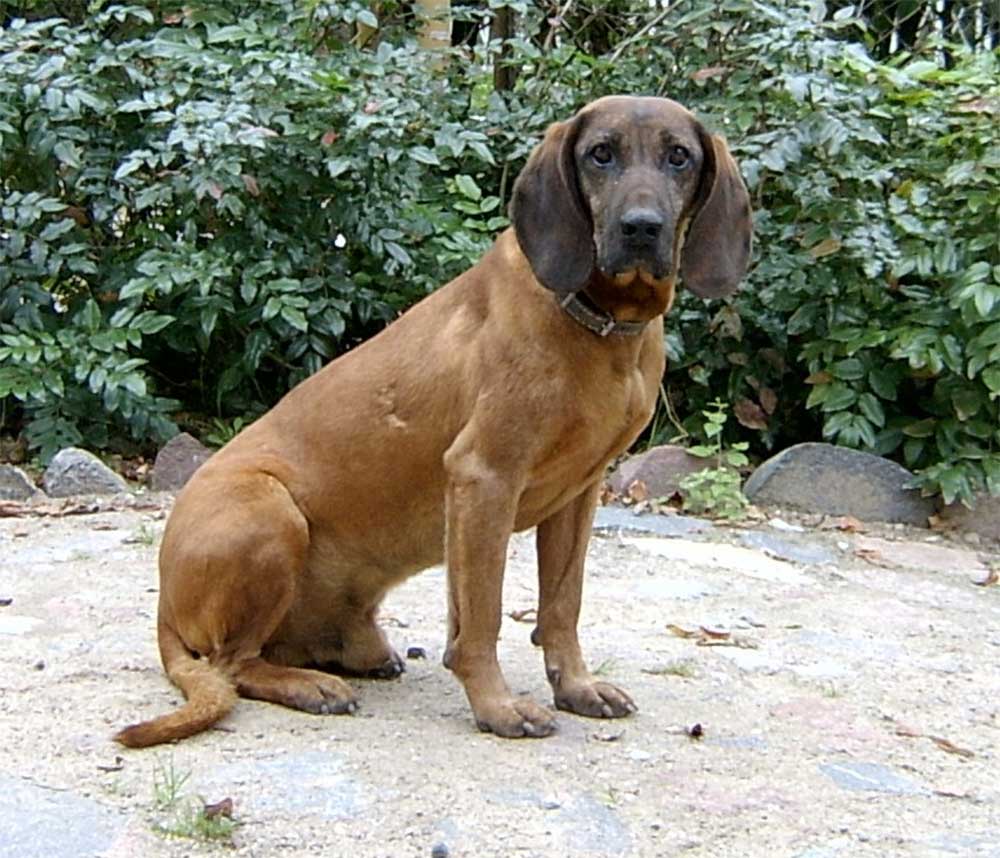
Photo: Bavarian Mountain Hound (name: Zoran Spod Ruskiej Granicy) by Ralf Lotys (Surely), CC BY 2.5, via Wikimedia Commons

Physical characteristics

The Bavarian Mountain Hound It is a strong dog, medium-sized, with a height at the withers of about 44 to 52 cm and a weight of 17 to 30 kg. Males, However, they are larger and heavier than females. For your size, has rather short legs. The standard describes its appearance in this way:

A medium sized dog, harmonious, light, very agile and muscular. The body is slightly longer than tall, slightly raised from behind; leans on legs not too high. The head is carried horizontally or somewhat erect, tail horizontal or slanted down.

The coat must be dense, smooth, moderately rough, low gloss. The standard requires the following colors:

Dark red, deer red, Red brown, yellowish red, also pale yellow (even sand color); reddish gray like the winter hair of the red deer, also brindle or dark flecked.
In the back, the basic color is generally more intense. Muzzle and ears dark.
The tail is almost always dotted dark. A small, clear spot is allowed on the chest (hound star).

The meaning is: The colors must camouflage the dog in its hunting work and not give it away, for example with large white marks.

Character and skills

The Bavarian Mountain Hound is a thoroughbred hunting dog with wide awake senses, but without nervousness. As long as you don't have a smell in your nose, impresses with a thoughtful nature, quiet and extremely gentle, that radiates pure slowdown for us humans. The official standard describes its nature as follows: ยซCalm and balanced; affectionate with his owner, reserved with strangers. What is required is a stable dog, self-confident, fearless and easy to handle, neither shy nor aggressive".

The Bavarian Mountain Hound it is a very capable working dog that performs its tasks conscientiously and with the utmost dedication. He has a strong homing instinct and is a master of tracking.. Exploring nature with him is, therefore, a very special experience and happiness. The Bavarian Mountain Hound, professionally managed, it is also a very good family dog รขโ‚ฌโ€นรขโ‚ฌโ€นwith a gentle nature.

Fitness

One Bavarian Mountain Hound It is not a companion dog for the city or for walks in nature, even if they are daily. Not a dog for the home, but a professional hunting dog who wants and needs the job. Otherwise, his attitude is completely undemanding. So, Ideally, you should live in a house on the edge of the woods or in the country with a garden..

The Bavarian Mountain Hound wants and can go out in all climates. The standard provides information on the conditions of its maintenance:

ยซIn accordance with its hunting purpose as a specialist in monitoring cloven-hoofed hunting, the Bavarian Mountain Hound must possess all the qualities required of him to be useful in a difficult pursuit. The usefulness must be proven by appropriate performance tests.".

Education ยซBavarian mountain trackerยป

The Bavarian Mountain Hound is a very friendly and eager to learn four legged friend, that makes it easier for its owner to train and work with him. Why you want and need this guide. But it is not a dog that awaits orders from its owner. Since dogs have been admitted to breeding for many generations only if they have mastered many demanding performance tests, your level of training is extremely high. This is at the same time an obligation for the leadership of this dog. Because you need the hunting job, where it feels good. His element is search work. Here he has brought it to a stranglehold, you also need to live. But, you should take this into account if you are playing with the idea of รขโ‚ฌโ€นรขโ‚ฌโ€นsharing your life with a Bavarian Mountain Hound as not a hunter.

Care and health

The breed is very easy to care for. Brushing once in a while is enough.

Typical diseases of the breed:

Hereditary diseases are not known.

Nutrition / Food

The Bavarian Mountain Hound is undemanding in his diet.

Life expectancy

The Bavarian Mountain Hound has a life expectancy of about 12 years.

Buy a โ€œBavarian Mountain Trackerโ€

If you are looking for a dog of this breed, you should contact a breeder affiliated with the Club Bรกvaro del Bavarian Mountain Hound well in advance of your planned purchase. As a rule, dogs are only handled by rangers or hunters. From time to time, However, it may happen that a dog is looking for another place. But then you should be able and willing to give it living conditions that can be a substitute for its species-appropriate way of life.. A puppy of this breed costs about 1500 EUR.

Characteristics "Bavarian Mountain Hound"

Coexistence is important that you have with your new friend. Before considering the acquisition of a dog of the breed "Bavarian Mountain Hound" you know certain factors. Not all breeds of dogs are apt to live in an apartment, you must take into account his character, their need for exercise, their interaction with other pets, their care and if you have small children, their level of tolerance towards them.

Adaptation โ“˜

3,0 of 5 stars (based on 1 review)

friendly dog โ€‹โ€‹โ“˜

4,0 of 5 stars (based on 1 review)

hair loss โ“˜

3,0 of 5 stars (based on 1 review)

Affection level โ“˜

4,0 of 5 stars (based on 1 review)

Need for exercise โ“˜

4,0 of 5 stars (based on 1 review)

Social need โ“˜

3,0 of 5 stars (based on 1 review)

Home โ“˜

2,0 of 5 stars (based on 1 review)

Toilet โ“˜

2,0 of 5 stars (based on 1 review)

Friendly with strangers โ“˜

2,0 of 5 stars (based on 1 review)

barking โ“˜

4,0 of 5 stars (based on 1 review)

Health โ“˜

3,0 of 5 stars (based on 1 review)

Territorial โ“˜

4,0 of 5 stars (based on 1 review)

Cat friendly โ“˜

2,0 of 5 stars (based on 1 review)

Intelligence โ“˜

4,0 of 5 stars (based on 1 review)

Versatility โ“˜

4,0 of 5 stars (based on 1 review)

Child friendly โ“˜

4,0 of 5 stars (based on 1 review)

Surveillance โ“˜

4,0 of 5 stars (based on 1 review)

joy โ“˜

4,0 of 5 stars (based on 1 review)

Images "Bavarian Mountain Hound"

Photos:

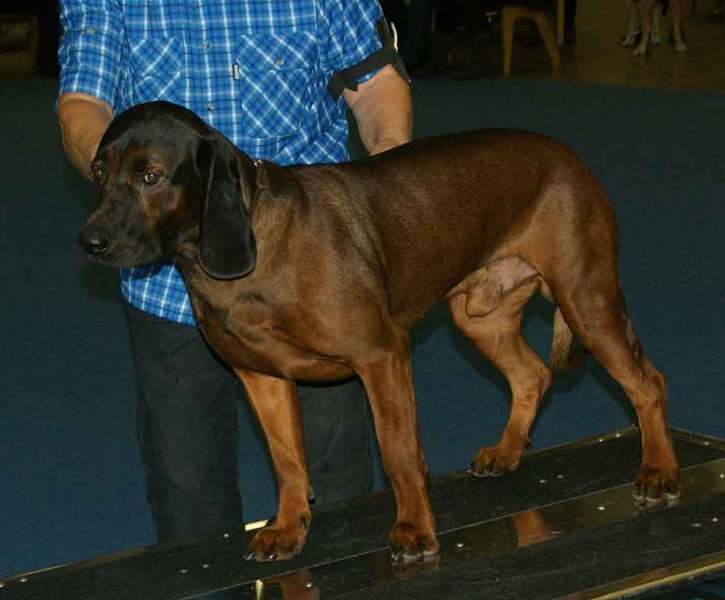
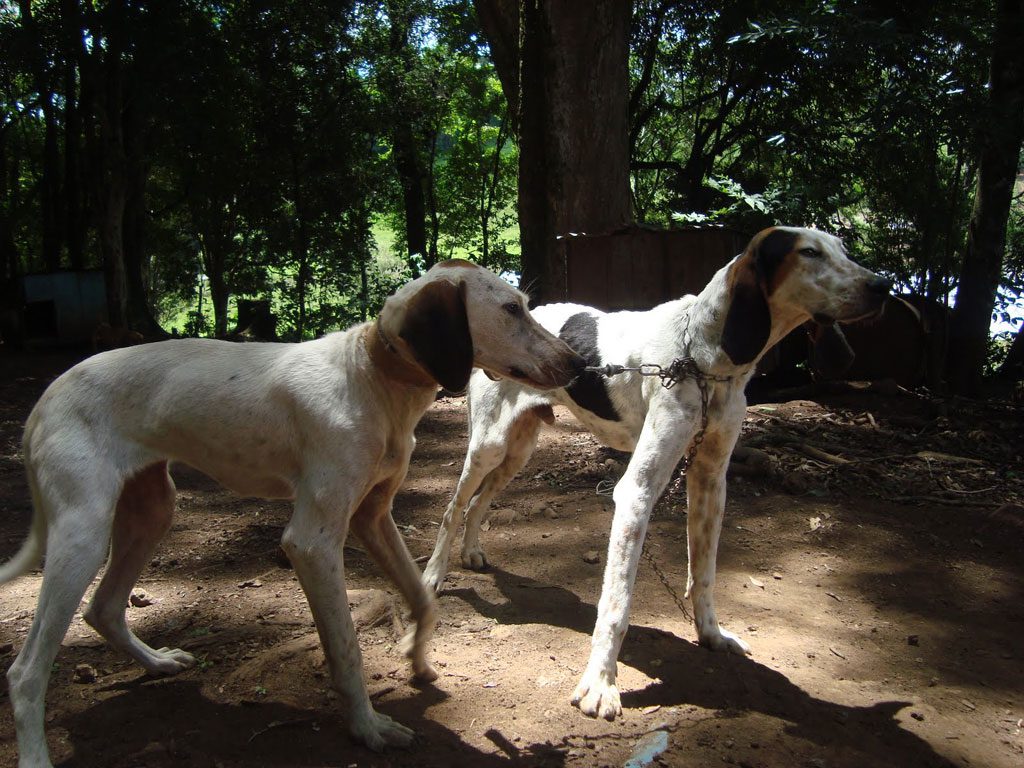
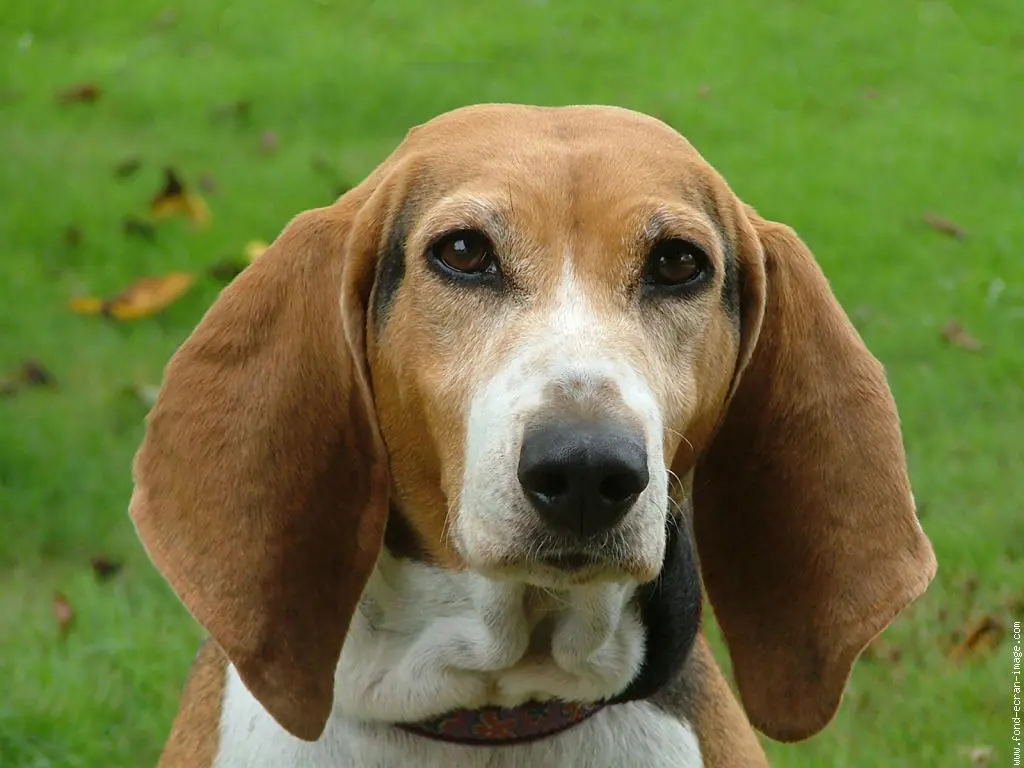
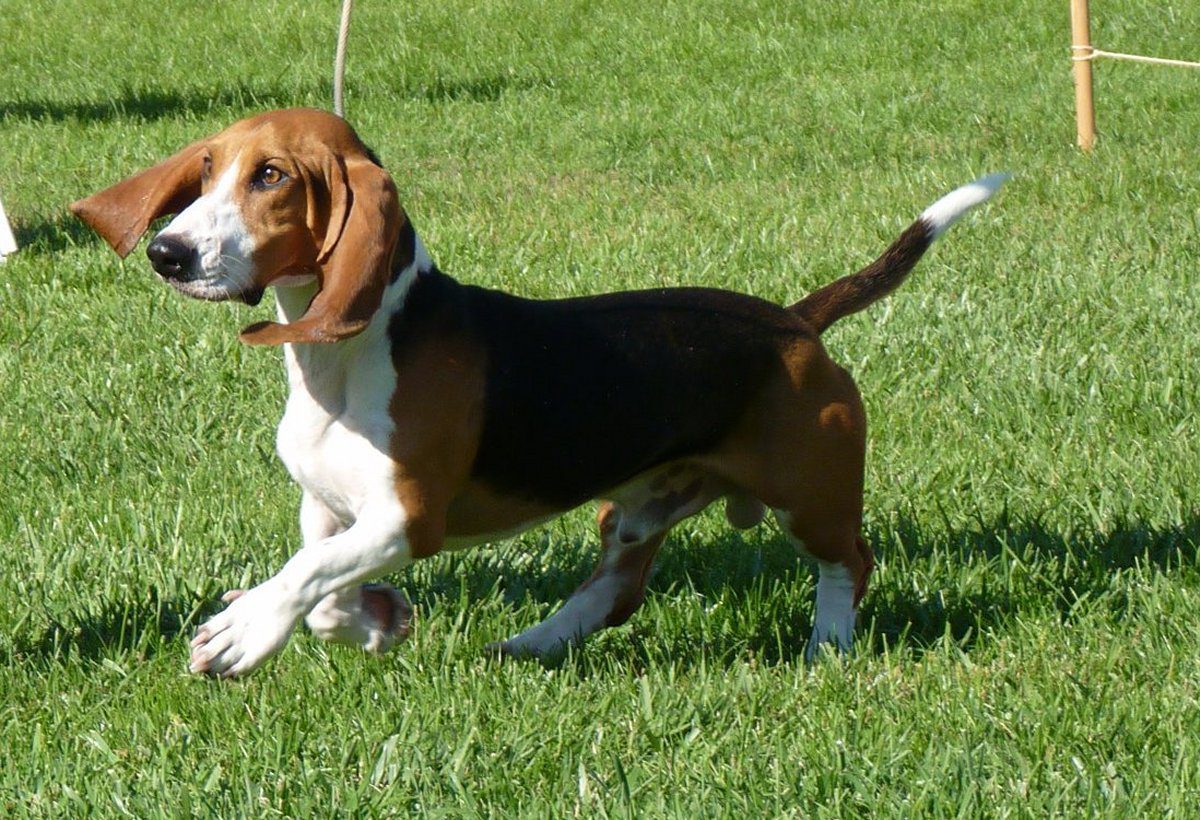
1 – Bavarian Mountain Hound, female and male by Canarian, CC BY-SA 3.0, via Wikimedia Commons
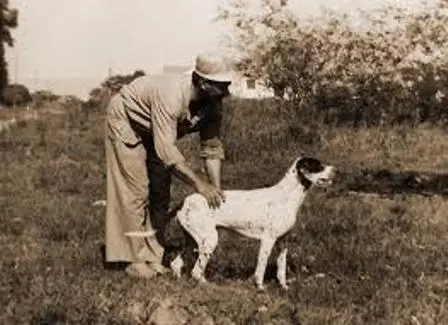
2 – ยซBavarian mountain trackerยป by Wikimedia
3 – A Bavarian Mountain Scenthound by Canarian, CC BY-SA 4.0, via Wikimedia Commons
4 – Bavarian Mountain Hound during show of dogs in Rybnik – Kamieล„, Poland by Pleple2000, CC BY-SA 4.0, via Wikimedia Commons
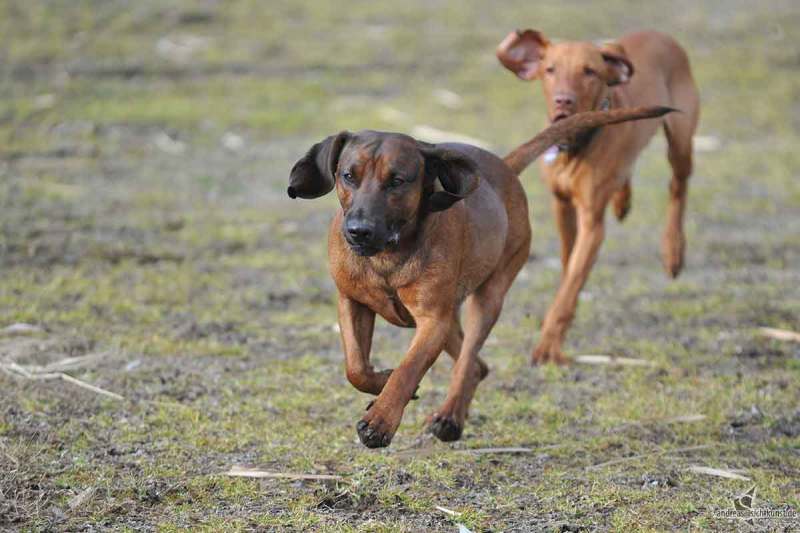
5 – Kafka und Frodo beim ersten Outdoor Treffen und Grillen bei Audigast. Februar 2014. Kafka ist ein Magyar Vizsla und Frodo ein Bayerischer GebirgsschweiรŸhund by Andreas Krรผger
6 – Bavarian Mountain Hound by Pleple2000, CC BY-SA 3.0, via Wikimedia Commons

Videos "Bavarian Mountain Hound"
Type and recognitions:

  • FCI CLASSIFICATION:
  • Group :
  • Section : . .

Federations:

  • FCI – Group 6: Scent hounds, and related breeds. – Section 2: Leash (scent) Hounds. โ“˜
  • AKCGrupo FSS โ“˜
  • โ€‹KCCazadores โ“˜
  • UKCScenthounds โ“˜

FCI breed standard "Bavarian Mountain Hound"

Origin:
Germany

Date of publication of the valid original standard:
01.04.1996

Use:

Trail dog.


General appearance:

It is a generally harmonious dog, lighter, very active and muscular, medium-sized. The body is a bit elongated and raised in its posterior region ; stands on very long limbs. The head is horizontal or slightly erect ; has the tail carried horizontally or slightly tilted downwards.


Behavior / temperament:

It is quiet and balanced ; attached to its owner and distrustful of strangers. The dog is required to be firm, self-confident, fearless and docile, without being shy or aggressive.

Head:

---

Cranial region:

Relatively wide, little rounded, with a well marked forehead, well-developed superciliary arches and shallow occipital protuberance.

  • Depression links (Stop) : Marked.

facial region:

  • Truffle : Good size, not too wide, well open nostrils, black or deep red.
  • Snout : A little parted in front of the eyes, slightly shorter than the skull, wide enough, it is not pointed. The bridge of the nose is slightly arched or straight.
  • Lips : Upper lip falling well over the lower one, moderately thick. The corners of the lips are well visible.
  • Jaws / Teeth : Powerful jaws with a perfect scissor bite, regular and complete, in which the upper incisors overlap the lower incisors without leaving space ; teeth are implanted vertically in the maxilla. Should have 42 healthy teeth according to the dental formula. Pincer bite allowed.
  • Cheeks : Stand out moderately.

Eyes : Clean, with an attentive expression. Not too big or round. Dark brown or lighter. Well attached and pigmented eyelids.

Ears : Something more than moderately long, must reach a maximum up to the truffle ; heavy, high and wide insertion, rounded in its bottom edge, hang down close to the cheeks but not bent.

Neck:

Moderately strong. Throat skin is a little loose.

Body:

  • top line : Rise a little from the withers to the rump.
  • Cross : Bit strong. Smooth transition from neck to back.
  • Back : Strong and elastic.
  • Pork loin : Proportionally short, broad, with good musculature.
  • Rump : Long and fairly flat.
  • Breast : Moderately wide, with well developed parapet; oval rib cage, deep and long, with ribs carried well back.
  • Bottom line and belly : Gradually ascends toward the back of the body; slightly retracted belly.

Tail:

Of medium length that reaches a maximum to the tibio-tarsal joint ; high insertion, carries it horizontally or slightly inclined downwards.

Tips

PREVIOUS MEMBERS

  • As a whole : Viewed from the front they are straight and parallel, and seen from the side they are well poised under the body. They have good angulations.
  • Shoulder : Strongly muscular. Scapulae oblique and directed backwards.
  • Arm : Long, with strong and thin muscles.
  • Elbows : Glued to the body, no outward or inward deflection.
  • Forearm : Vertical and slim. With strong bones and very good musculature.
  • Articulation of the carpus : Strong.
  • Metacarpus : A little forward directed.

LATER MEMBERS :

  • As a whole : Strong bones. Viewed from behind they are straight and parallel. Good angulations.
  • Thigh : Wide and very muscular.
  • Knee : Strong leg : Relatively long, muscular and tendon.
  • Warm-foot joint : Strong.
  • Metatarsus : Short, vertical position.

FEET : Spoon-shaped, with fingers well arched and joined together, as well as sufficiently cushioned pads, hard, strong and well pigmented. They are placed on the floor in parallel when standing or during movement, no deviations outwards or inwards. Black or horn-colored nails.

Movement:

Covers terrain with good range and excellent momentum, forelimbs and hindquarters straight and parallel ; slightly elastic movement.

Mantle

SKIN : Thick, firmly attached.

HAIR : It's dense, glued, smooth, moderately rough, with little brilliance ; it is finer on the head and ears, rougher and longer on the belly , limbs and tail.

COLOR : Dark red, deer red, Red brown, yellowish red, also pale yellow (even sand color); reddish gray like the winter hair of the red deer, also brindle or dark flecked. In the back, the basic color is generally more intense. Muzzle and ears dark. The tail is almost always dotted dark. A small, clear spot is allowed on the chest (hound star).


Size and weight:

Height to the cross :

  • Male : 47 โ€“ 52 cm..
  • Female : 44 โ€“ 48 cm..

In both male and female tolerance is never allowed in the larger or smaller size.


Fouls:

Any deviation from the aforementioned criteria is considered as a fault and the severity of this is considered to the degree of the deviation to the standard and its consequences on the health and well-being of the dog..

SERIOUS FAULTS

โ€ข Flesh-colored truffle.
โ€ข Mild upper or lower prognathism. Partial clamp.
โ€ข Very loose eyelids.
โ€ข Very bowed or arched back.
โ€ข Very flattened or barrel-shaped rib cage.
โ€ข Elbows turned very outward or inward.
โ€ข Hindquarters too high.
โ€ข Very narrow position of the hind limbs, or cow-shaped or O-shaped, both when standing and during movement.
โ€ข Coat that is too fine or too thin.
โ€ข Intense deviations in color; black with red markings.
โ€ข Different size.

MISS PLAYOFFS

โ€ข Aggressive or fearful dog.
โ€ข Marked upper or lower prognathism. Deviated arch of incisors.
โ€ข Missing teeth (except P1).
โ€ข Ectropion, entropion.
โ€ข Congenital broken tail.
โ€ข Weakness in character.

Any dog โ€‹โ€‹showing clear signs of physical or behavioral abnormalities must be disqualified..


N.B.:

Males should have two normal-appearing testicles fully descended into the scrotum..

Source: F.C.I - International Cynological Federation

Alternative names:

1. Bavarian Mountain Scenthound (English).
2. Chien de recherche au sang de la montagne bavaroise (French).
3. Bayerischer Gebirgsschweisshund (German).
4. (em alemรฃo: Bayrischer gebirgsschweisshund) (Portuguese).
5. Sabueso bรกvaro de montaรฑa, Rastreador de Baviera (espaรฑol).

โ–ท The world of Pets: Dogs, cats, birds, reptiles, amphibians

Brazilian Tracker
Brasil FCI 275 . Large-sized Hounds

Rastreador Brasileรฑo

The Brazilian Tracker was a quiet and balanced dog, attached to his master.

Content

History

The Brazilian Tracker It was a breed of dog originating in Brazil, that was recognized by the FCI the 1 in September of 1967 in the Group 6 / Section 1.1 – Large size hounds with number 275. In fact, It was the first Brazilian to be recognized by the FCI breed of dog.

The Brazilian Tracker it's a Scent hound. The breed is also known under the names Urrador (his voice) or Urrador American.

It was developed in the Decade of 1950 by Oswaldo Aranha Filho (In janeiro river), to hunt peccaries (they are pigs of medium-sized and wild that found in all Central and South America), Jaguars, and other types of dams typical of the country.

Aranha Filho combined a number of breeds of hunting from America and Europe along with some native dogs of Brazil to create your dog. The Brazilian Tracker became Brazil's first race and it was what earned it the recognition of international dog associations.

The glory of being a breed officially recognized at the international level lasted barely six years, time in which by neglect and a series of relief, the race was decimated.

At that time there was only one breeder of Brazilian Tracker, Mr Oswaldo Aranha Filho, the creator of the race... And, their copies suffered because of two events, first of all an outbreak of babesiosis.

Babesiosis (or babesiosis) It is a parasitic disease similar to malaria caused by protozoa of the genus Babesia and usually affect pets, especially to dogs. Its name was established in honor of the Romanian biologist Victor BabeลŸ, He was the first to isolate the pathogen. It is the typical disease that is transmitted through a vector organism, usually the tick (Ixodes dammini); in fact, This mite is the same that transmit Lyme disease and, often, both are associated with.

Y, in the second place, many of the dogs suffered poisoning from excess pesticide used by an employee of the farm.

It was exactly in the year 1973, when the Fรฉdรฉration Cynologique Internationale declared the dog breed Brazilian Tracker, officially extinct. Which led to him losing his classification number since, prompted the cancellation of the registration.

Since the FCI and the Brazilian Confederation of Cynophilia They declared this extinct breed, have carried out various efforts and programs of to retrieve it.

Physical characteristics

The standard of the breed of 1970 declaring a size between 62 and 67 cm and very similar in appearance to the Black and tan coonhound.

There have been attempts underway to recreate the race from a mixture of American Foxhound, Black and tan coonhound, and the Small Blue Gascony, English Foxhound, and Bluetick Coonhound.

The Rescue Support Group Brazilian Tracker of Brazil, a club dedicated to the restoration of the breed, Brazil, He devoted himself to organize - aim- a list of forty breeding animals of the correct type as, puediesen be certified as members of the race, in order to restore the race and return to be recognised by the Kennel Club of Brazil.

The re-establishment of the breed, It has not been an easy task, due to the existence of very few pure specimens, and above all by the lack of social interest, There are very few people interested in the recovery of the true Brazilian cultural heritage and the genetics of the breed.

Character and skills

At the moment, the character is not easy to illustrate or define. Efforts to restore the breed continue today., and are being used in breeding programs, breeds used in his development with the descendants of mixed races found in all Brazil.

But, the race again in the various canine clubs list (small) and dog organizations in North America, for the promotion of a rare species for those seeking an unusual pet.

As it's a race in the process of being rebuilt, no data on specific diseases or extraordinary health demands.

The Brazilian Tracker is a hunting dog, not a type of dog that has traditionally been used as a pet.

The copies that exist today, fruit of the reconstruction, they tend to be very independent animals and, sometimes, somewhat stubborn, with a strong instinct of prey that, leads him to chase the small animals that live in the house... But with proper socialization, any dog is a good dog.

Type and recognitions:

  • FCI CLASSIFICATION:
  • Group :
  • Section : . .

Federations:

  • FCI โ“˜

  • FCI breed standard "Brazilian Tracker"

    Origin:
    Brazil

    Date of publication of the valid original standard:
    04.09.2019

    Use:

    Hunting dog used for picking up and rounding up prey animals.


    General appearance:

    Strong and rustic. Cheerful and never aggressive. It has an excellent sense of smell and the capacity for hunting above the average of hunting dogs. It is very resistant and persistent, and you can hunt in hostile terrain and high temperatures. Docile and loyal.

    IMPORTANT PROPORTIONS: The body has a length of 10:9 in relation to your height. The skull relationship - snout is from 1:1.


    Behavior / temperament:

    Calm and balanced, companion glued to his owner, self-confident, without fear, docile, without being shy or aggressive. Due to his work he must have a calm demeanor as he hunts as a couple, trios or pack, or even sometimes just as a trail dog.

    Head:

    Mesocephalus, triangular and a bit long.

    Cranial region:
    • Head: Triangular shape, skull and muzzle of similar length.
    • Depression links (Stop): moderate.

    facial region:

    • Truffle: Slightly directed downward, completely black in color.
    • Snout: Straight and long.
    • Lips: Fine, dry and sticky, well pigmented black. Jaws / Teeth: Strong jaws, scissor bite with
      complete denture (42 teeth).
    • Cheeks: Droughts.

    EYES: Almond biscuits, dark, with lively expression, well-pigmented black eyelids. Large eyes set wide apart, with typical bloodhound expression. Soft look, gentle and nice.

    EARS: long, low-set, flexible and round tips. The long, when you stretch without force, reaches the tip of the muzzle without exceeding it. Low erectile capacity, hang close to the head.

    Neck:

    Strong. Rises freely and lightly over the shoulders, strong in substance, but not heavy, medium long, clean throat, allowing a slight wrinkle under the angle of the jaw (with little double chin).

    Body:

    • top line: Well defined, going down with a gentle curve down the neck passing through the cross, strong and tall, continuing in the direction of the rump, which is slightly oblique and slightly lower than the height of the withers.
    • Cross: Strong, taller than the rump.
    • Back: Strong, firm, slightly long, muscular and straight. Pork loin: Wide and strong.
    • Rump: Slightly oblique, inclined 30ยฐ with respect to the horizontal. Breast : Good size and depth, reaching to the elbows, with a broad and well-developed thorax.
    • Bottom line and belly: Slightly retracted.

    Tail:

    Saber-shaped, without lateral deviation, inserted in the continuity of the croup, carried low at rest and above the top line when alert or moving. Long arriving or passing the garrรณn. The hair on the tail has the same texture as that on the body, stuck and short.

    Tips

    PREVIOUS MEMBERS:

    • General appearance: Shoulders with strong parallel bones, muscular, with wide limbs.
    • Shoulder (Scapula): Robust, with a good inclination of about 45ยฐ with respect to the horizontal line and the scapulo-humeral joint with an angle of about 105ยฐ).
    • Arms (Humeri): Strong and muscular, the same length as the scapulae.
    • Elbows: Close to the body and firm. forearms: Strong bone structure.
    • Carpi (dolls): Straight, parallel and strong. Metacarpus: Straight, parallel and strong.
    • Previous feet: Wide and powerful, with very resistant and elastic pads; dark pads and nails.

    LATER MEMBERS:

    • General appearance: Muscular and well angled, with firm hocks, with symmetrical and moderate angulations, wide feet.
    • Thighs (Femur): Strong and muscular.
    • Knees: Strong and moderate curvature.
    • Legs (Tibia): Moderate angulation with the femur. Hocks: Strong, short and firm, with moderate angulation.
    • Tarsos: Firms.
    • Metatarsals: Straight, parallel to each other.
    • Hind feet: Wide and powerful, with very resistant and elastic pads; dark pads and nails.

    Movement:

    It must be fluent, agile and firm, with good ground cover, with wide and balanced steps. At a trot, the tail can be above the top line. Very important for the dog's work is that the top line is kept level and firm..

    Mantle

    SKIN: Dark and tight to the body.

    Fur: Short, smooth, well glued to the body, dense and a little hard to the touch.

    Color: Completely speckled with black and white, imparting a slate blue reflection, with or without fawn and / or black spots on any part of the body; bicolor (white with leonate or black spots; or black and tawny, completely black with leonado color marks); tricolor (black and white with tawny spots); all colors with or without tawny spots on the head, on the chest, belly, in the fore and hind limbs and tail.


    Size and weight:

    Height to the cross:

    • Male: 60 to 65 cm.;
    • Female: 56 to 63 cm..

    Tolerance: approx.. 1 cm.

    Weight:

    • Males: 26 to 33 kg.
    • females: 21 to 30 kg.

    The size and weight must be in harmony with the structure of the specimen.


    Fouls:

    Any deviation from the aforementioned criteria is considered as a fault and the severity of this is considered to the degree of the deviation to the standard and its consequences on the health and well-being of the dog..

    • Ears in pink.
    • Flat ribs.

    SERIOUS FAULTS:

    • Deviation from the characteristics of the breed described above that hinder its ability to work.
    • Weak appearance.
    • Very clear tawny marking in black and tawny dogs.
    • Any deviation from the scissor bite and correct tooth formation, insofar as they are not disqualifying fouls.

    FALTAS DESCALIFICANTES:

    • Aggressiveness or extreme shyness.
    • Any dog โ€‹โ€‹showing clear signs of physical or behavioral abnormalities.
    • Short or Butterfly shaped ears.
    • Threaded queue.
    • Very lightweight bones.
    • Depression links (stop) marked.
    • Upper or lower prognathism.


    N.B.:
    • Males should have two normal-appearing testicles fully descended into the scrotum..
    • Only functionally and clinically healthy dogs, with the typical conformation of the breed, should be used for parenting.

    Source: F.C.I - International Cynological Federation

    Alternative names:

    1. Rastreador Brasileiro (English).
    2. Rastreador Brasileiro (French).
    3. Brasilianischer Spรผrhund, Amerikanischer Heuler (German).
    4. Urrador, Onceiro, Pantaneiro, Rastejador-brasileiro (Portuguese).
    5. Urrador, Urrador Americano (espaรฑol).

    โ–ท The world of Pets: Dogs, cats, birds, reptiles, amphibians

    Blue Gascony Basset
    Francia FCI 35 . Small-sized Hounds

    The Blue Gascony Basset It is a dog with an excellent sense of smell, Active, Agile and good port

    Basset Azul de Gascuรฑa

    Content

    Characteristics "Blue Gascony Basset"

    Coexistence is important that you have with your new friend. Before considering the acquisition of a dog of the breed "Blue Gascony Basset" you know certain factors. Not all breeds of dogs are apt to live in an apartment, you must take into account his character, their need for exercise, their interaction with other pets, their care and if you have small children, their level of tolerance towards them.

    Adaptation โ“˜

    3,0 of 5 stars (based on 1 review)

    friendly dog โ€‹โ€‹โ“˜

    5,0 of 5 stars (based on 1 review)

    hair loss โ“˜

    3,0 of 5 stars (based on 1 review)

    Affection level โ“˜

    4,0 of 5 stars (based on 1 review)

    Need for exercise โ“˜

    3,0 of 5 stars (based on 1 review)

    Social need โ“˜

    4,0 of 5 stars (based on 1 review)

    Home โ“˜

    1,0 of 5 stars (based on 1 review)

    Toilet โ“˜

    1,0 of 5 stars (based on 1 review)

    Friendly with strangers โ“˜

    3,0 of 5 stars (based on 1 review)

    barking โ“˜

    4,0 of 5 stars (based on 1 review)

    Health โ“˜

    1,0 of 5 stars (based on 1 review)

    Territorial โ“˜

    2,0 of 5 stars (based on 1 review)

    Cat friendly โ“˜

    2,0 of 5 stars (based on 1 review)

    Intelligence โ“˜

    3,0 of 5 stars (based on 1 review)

    Versatility โ“˜

    2,0 of 5 stars (based on 1 review)

    Child friendly โ“˜

    4,0 of 5 stars (based on 1 review)

    Surveillance โ“˜

    4,0 of 5 stars (based on 1 review)

    joy โ“˜

    2,0 of 5 stars (based on 1 review)

    History

    The Blue Gascony Basset is a basset hound native to southwestern France, whose roots are uncertain. According to hunting historians, He is a contemporary of Mr. Gastรณn Fรฉbus from the 14th century, like the great blue hounds. Some claim that it comes from a cross between the Gascon Saintongeois and the Small Blue Gascony, others that it is the result of a mutation of the Great Gascony Blue after the French Revolution, when commoners, who were now allowed to hunt, they needed a slower dog that they could keep on foot.

    Endangered in the 19th century, the breed was reborn in the early 20th century at the initiative of a few western breeders. Its first standard was published in 1919.

    Recognized in 1963 by the Fรฉdรฉration Cynologique Internationale (FCI), the Blue Gascony Basset still rare outside of France. In North America, the breed obtained official recognition from the United Kennel Club (UKC) in 1991, as well as the American Association of Rare Breeds, but it is ignored by the American Kennel Club (AKC) and the Canadian Kennel Club (CKC).

    Even within the French borders, its extension was minimal until 1980. Since then, the Blue Gascony Basset, although it has become more known, has maintained its status as a little-known dog, especially in the southern region. They are often called "chien du Midi" because of their origin in the regions of Bรฉarn and Gascogne. Even today, most breeders of Blue Gascony Basset are found in the west and south of the country.

    This breed represents a little more than 150 records in TFO – Central Canine Society.

    There are four breeds recognized as โ€œGascony Blueโ€ by the FCI:

    The Great Gascony Blue and the Small Blue Gascony they are the best-known varieties.

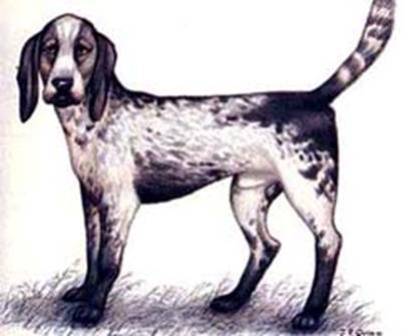
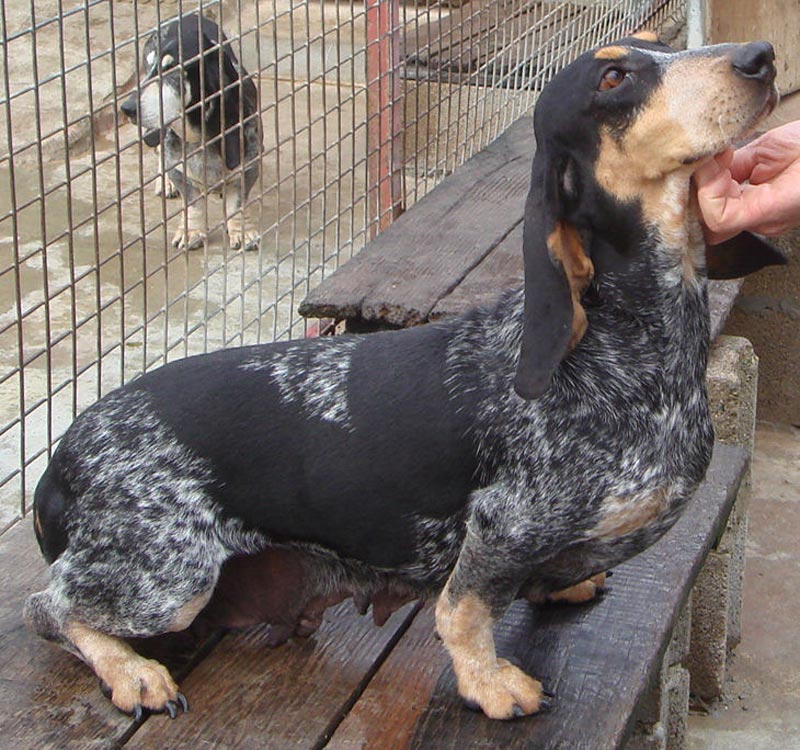
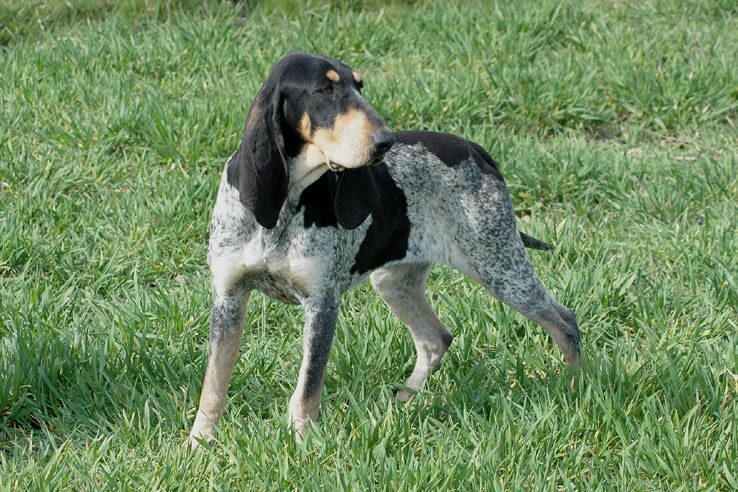
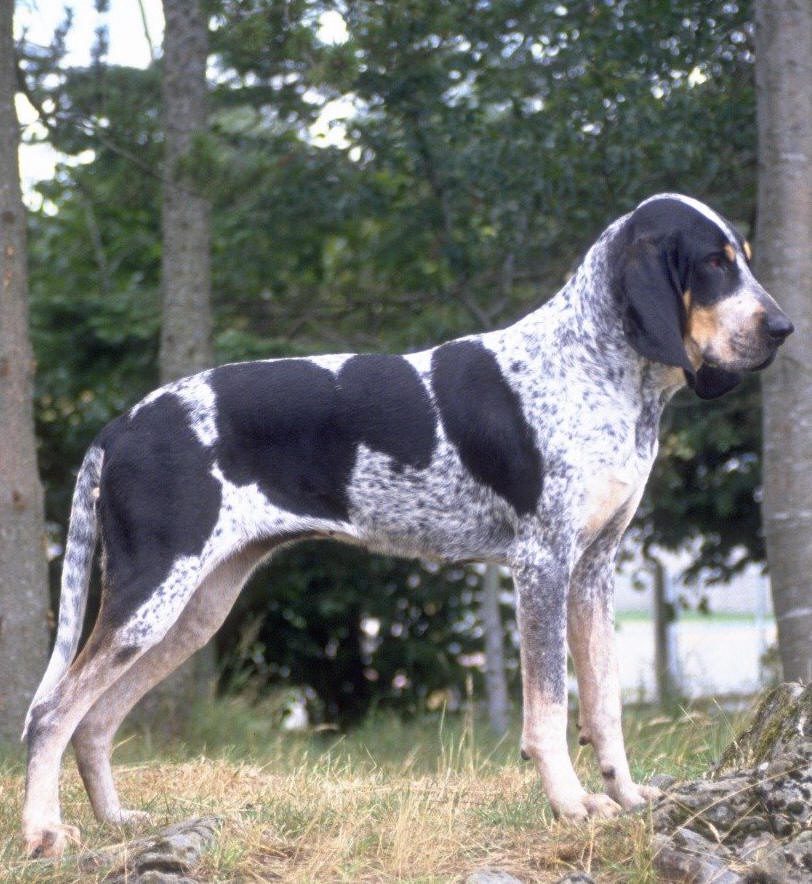
    Small blue By hounddogsdrule.com
    Great blue by hondenrassenmetfoto.nl
    Blue Basset by bassetbleudegascogne
    Griffon blue by jjze.unblog.fr


    Physical characteristics ยซBlue Basset of Gascogneยป

    The race Blue Gascony Basset carries much inheritance from the great race from which it comes: The Basset. It is a very big dog, Although not too heavy (16 kg approximately). It has a not very broad and slightly domed head. His neck is quite long, slightly arched. His height is around the 34-38 centimeters.

    It has black and wide nose, with the wide open nostrils. Its snout is, practically, the same length as the skull. Their eyes are oval shaped, What gives them the feeling of being sunk, What makes them a very sweet expression, and a little sadder…

    The ears of this breed are fine, a little curly, very long and finished at tip. The ear is narrow at its source, which is located below the eye line.

    When is the dog standing, its tail almost touches the ground. Its fur is white mottled black spots, It must never be totally white. The hair is short and smooth. Such as dense speckled is what gives him the blue tone.

    Character and aptitudes ยซBlue Basset of Gascogneยป

    The Blue Gascony Basset It is a dog with an excellent sense of smell, Active, Agile and good port. It is a great Hunter. Usually howl. It is a dog that is easily vistas, It Intelligent, clever and funny, is also very loving and joyful. It is an excellent partner you need to play regularly (plenty of exercise).

    It is quite stubborn, his instinct for Hunter is very developed. It can be an excellent guard dog.

    Education ยซBlue Basset of Gascogneยป

    Due to his intelligence and loyalty to his master, the Blue Gascony Basset it is quite easy to train. But, how sometimes he gets distracted or stubborn, may have difficulty keeping order. Food is a good motivator, since they are greedy dogs.

    In short, the Blue Gascony Basset needs rigorous but gentle training from a young age.

    Health ยซBlue Gascogne Bassetยป

    This dog is in pretty good health, although it develops problems in the hindquarters with age. The breeders of the Blue Gascony Basset observe recurring problems, such as hip dysplasia or elbow dysplasia, dislocated kneecaps and herniated discs (that can cause dog paralysis). It is also prone to allergies and ear infections., because of his floppy ears.

    Last, how prone to stomach twisting, your servings should be divided and you should wait two hours after each meal before exercising.

    Images ยซBlue Gascogne Bassetยป

    Videos ยซBasset Azul de Gascuรฑaยป

    Butch Basset bleu gascogne

    Type and recognitions:

    • FCI CLASSIFICATION:
    • Group :
    • Section : . .

    Federations:

    • FCI – Group 6: Scent hounds, and related breeds. – Section 1.3: Small-sized Hounds. โ“˜
    • AKCHound โ“˜
    • โ€‹- UKCScenthounds โ“˜

    FCI breed standard "Blue Gascony Basset"

    Origin:
    France

    Date of publication of the valid original standard:
    24.01.1996

    Use:

    It is used for hunting with a shotgun and sometimes to chase game as a hound. Can hunt alone or in a pack. His favorite game is the rabbit and the hare.


    General appearance:

    It is a very typical Basset that denotes the great breed from which it descends.. He is quite burly, Although not too heavy.

    IMPORTANT PROPORTIONS :

    โ€ข Size / body length, about 5/8.
    โ€ข Chest height / Size, about 2/3.


    Behavior / temperament:

    Has a very good sense of smell. It is active, agile and persistent. It is applied in hunting and its howl is beautiful and sonorous. Easily joins the pack. He is affectionate and cheerful, and he likes to romp.

    Head:

    ---

    Cranial region:
    • Skull : I visit from the front, it is slightly domed and not too wide. The occipital protuberance is marked. Seen from above, the back is ogival shaped. Forehead is bulging.
    • Nasal-frontal depression (Stop) : It is little accentuated.

    facial region:

    • Truffle : Black and wide. The Windows are wide open.
    • Snout : It is the same length as the skull. It is thick. The muzzle is the same length as the skull, slightly arched.
    • Lips : Pretty hanging, covering the lower jaw well and giving the end of the snout a square profile. The commissure is well marked, although it is not lazy.
    • Nose cane : It is the same length as the skull. It is thick and slightly arched.
    • Jaws/Teeth : The joint is in the form of scissors. The incisors are set at right angles to the jaws..
    • Cheeks : They are thin, being able to present one or two folds of the skin.

    Eyes : They are oval in shape and appear sunken. They are brown. His expression is sweet and a little sad.

    Ears : They are characteristics of this blue breed, they are fine, twisted, they end in a point and must go beyond the tip of the nose. They are narrow at their insertion, which is located well below the eye line..

    Neck:

    It is quite long and a little arched. The double chin is not exaggerated.

    Body:

    • Back : Long and firm.
    • Pork loin : Short, well attached to the body, sometimes arched.
    • Rump : Slightly oblique.
    • Breast : Large, well developed in its length. Descends to below the elbow. The front of the sternum is quite protruding, and the back is long. Quite rounded ribs.
    • Flanks : Pretty stretched.

    Tail:

    The root is thick. Carried in the shape of a saber, sometimes it is somewhat spiky (towards the tip around the tail a few longer and thicker hairs slightly separated in a spike shape). During rest your limb should just touch the ground.

    Tips

    PREVIOUS MEMBERS :

    • As a whole : They're strong. A slight twist or semi-twist is acceptable.
    • Shoulder : Muscular, no appearance of heaviness ; oblique.
    • Elbows : Well attached to the body.

    LATER MEMBERS :

    • As a whole : Seen from the back, a vertical line descending from the tip of the gluteus passes through the center of the leg, hock, metatarsal and foot.
    • Thighs : Long and muscular.
    • Hock : Width, slightly angled and fairly close to the ground.
    • Metatarsus : Short, strong.

    FEET : They have an oval shape, little elongated. Fingers are thin and tight together. The pads and nails are black.

    Movement:

    Regular and fairly fluent.

    Mantle

    SKIN : It is flexible and not too thin. Black, or strongly streaked with black spots. It's never completely white. The mucous membranes are black.

    HAIR : Short, semi-thick and well dense.

    COLOR : Completely speckled with black and white, imparting a slate blue reflection. It may or may not be marked with more or less extended black spots. Usually, there are two black spots on each side of the head, that cover the ears, circle the eyes and stop at the cheeks. These do not join over the top of the head, but they leave a white space in the center of which there is often a small oval black spot typical of the breed..
    Above the eyes are two more or less raised tan markings located on the zygomatic arches simulating four eyes. Traces of tan can also be found on the cheeks, the lips, the inside of the ears, the limbs and under the tail.


    Size and weight:

    Height to the cross : For males and females : 34 to 38 cm..


    Fouls:

    Any deviation from the aforementioned criteria must be considered as a fault and the seriousness of this is considered to the degree of the deviation to the standard and its consequences on the health and well-being of the dog.

    Head :
    โ€ข Skull too wide and flat.
    โ€ข Round and globular eyes.
    โ€ข High set ears, wide, thick and rounded.

    Neck :
    โ€ข Short.

    Body :
    โ€ข Long body, loose top line, lack of corpulence.
    โ€ข Sunken xiphoid appendix.
    โ€ข Flat ribs.

    Tail :
    โ€ข Diverted tail.

    Forelimbs :
    โ€ข Straight shoulders.
    โ€ข Elbows forward.
    โ€ข Pasterns twisted outwards, carpi deviated forward.
    โ€ข Crushed feet.

    Hind limbs :
    โ€ข Closed or widely spaced hocks seen from behind.

    Fur :
    โ€ข Satin and fine.

    Color :
    โ€ข Tan marks too pale.

    Behavior :
    โ€ข Shy dog.

    MISS PLAYOFFS :

    โ€ข Fearful or aggressive dog.
    โ€ข Serious anatomical deformation.
    โ€ข Notable lack that causes any impediment.
    โ€ข Characteristics that do not correspond to the type.
    โ€ข Upper or lower prognathism.
    โ€ข Light eyes.
    โ€ข Body too long.
    โ€ข Rib deformation, absence of xiphoid appendix.
    โ€ข Twisted anterior extremities.
    โ€ข Any other coat that is not established by the standard.

    Any dog โ€‹โ€‹showing clear signs of physical or behavioral abnormalities must be disqualified..


    N.B.:

    Males should have two normal-sized testicles completely descended into the scrotum..

    Source: F.C.I - International Cynological Federation

    Alternative names:

    1. Basset Bleu de Gascogne, Bleus de Gascogne (English).
    2. Basset bleu de Gascogne (French).
    3. Basset bleu de Gascogne (German).
    4. Basset bleu de Gascogne (Portuguese).
    5. Basset azul de Gascuรฑa (espaรฑol).

    โ–ท The world of Pets: Dogs, cats, birds, reptiles, amphibians

    Norman Artesian Basset
    Francia FCI 34 . Small-sized Hounds

    The Norman Artesian Basset is a minor hunting dog

    Basset Artesiano de Normandรญa

    Content

    Characteristics "Norman Artesian Basset"

    Coexistence is important that you have with your new friend. Before considering the acquisition of a dog of the breed "Norman Artesian Basset" you know certain factors. Not all breeds of dogs are apt to live in an apartment, you must take into account his character, their need for exercise, their interaction with other pets, their care and if you have small children, their level of tolerance towards them.

    Adaptation โ“˜

    2,0 of 5 stars (based on 1 review)

    friendly dog โ€‹โ€‹โ“˜

    3,0 of 5 stars (based on 1 review)

    hair loss โ“˜

    3,0 of 5 stars (based on 1 review)

    Affection level โ“˜

    4,0 of 5 stars (based on 1 review)

    Need for exercise โ“˜

    3,0 of 5 stars (based on 1 review)

    Social need โ“˜

    3,0 of 5 stars (based on 1 review)

    Home โ“˜

    4,0 of 5 stars (based on 1 review)

    Toilet โ“˜

    2,0 of 5 stars (based on 1 review)

    Friendly with strangers โ“˜

    3,0 of 5 stars (based on 1 review)

    barking โ“˜

    2,0 of 5 stars (based on 1 review)

    Health โ“˜

    4,0 of 5 stars (based on 1 review)

    Territorial โ“˜

    2,0 of 5 stars (based on 1 review)

    Cat friendly โ“˜

    2,0 of 5 stars (based on 1 review)

    Intelligence โ“˜

    3,0 of 5 stars (based on 1 review)

    Versatility โ“˜

    3,0 of 5 stars (based on 1 review)

    Child friendly โ“˜

    4,0 of 5 stars (based on 1 review)

    Surveillance โ“˜

    2,0 of 5 stars (based on 1 review)

    joy โ“˜

    4,0 of 5 stars (based on 1 review)

    History

    The first written mentions of a basset hound date back to the 16th century. In his book La venerie (1561), Jacques du Fouilloux describes an Artois dog (a former French province that straddles the border between Picardy in France and Flanders in Belgium), that runs on legs and is particularly formidable at hunting pests, like badgers.

    Much later, in the second half of the 19th century, when work began on cataloging, categorization and establishment of the characteristics of the various dogs of the world, the Norman Artesian Basset was one of the first breeds to be listed.

    In the decade of 1870, two types of Artois Hounds: the servants by him Conde Le Couteulx by Canteleu, based near Etrepagny, in the Eure, and those of the kennel of Louis Lane, who lived near Rouen. The two men had different views on what the Artois Hound.

    The Couteulx, as a skilled hunter, favored the utilitarian aspect of the dog and its physical efficiency. Selected dogs with almost straight front legs, a slightly compact body, a fairly common head, but above all a spirit of initiative and enthusiasm for hunting similar to the characteristics of the great and old Artois Dachsbracke.

    Louis Lane, on the other hand, gave more importance to the beauty of his dogs. They had magnificent heads with long, well-wound ears and twisted front legs that echoed the nobility of the ancient Norman race.. The dogs of Louis Lane they were less wanted for hunting, especially since their exaggeratedly crooked front legs left them almost crippled, but his temperament was more thoughtful and less stalking oriented.

    These two types of artisan hounds coexisted during 20 years. Thereafter, most breeders of Basset dโ€™Artois preferred to cross the two models to get a dog that combined the best qualities of both bloodlines. Like this, when the first breed standard was written in 1898, most dogs had a mix of artisan traits (model Le Coulteulx) and normans (model Lane).

    It was at that time that Lรฉon Verrier, the "father" of modern Norman Artesian Basset, raised the best representatives of the breed, dominating dog shows for about fifteen years from 1896. Unfortunately, their calf was decimated by the disease during World War I.

    This did not prevent the French Basset Club from deciding on 1922 promote only the Verrier model for breeding the breed. In 1927, in recognition of their mixed origins, the Basset Artesian changed his name to Norman Artesian Basset. Having said that, an observation that appeared in 1930 in the standard suggests that the Norman Artesian Basset it was only considered as a transition in the creation of a new race, since it establishes that "the committee of the Sociรฉtรฉ de Vรฉnerie decides and observes that the Norman Artesian Basset it should only be a transitional stage towards a Norman type, without any trace of Artois. ยป

    But, this hypothesis was never fulfilled, as evidenced by the rejection of a name change of the breed to Basset of Normandy in 1932, but also and above all the recognition of the breed by the Fรฉdรฉration Cynologique Internationale (FCI) the 29 in October of 1963. The American United Kennel Club will recognize the breed much later, in 1995. On the other hand, is still ignored by the American Kennel Club, the other great american canine organization.

    Today, the Norman Artesian Basset is still very little present outside france and the United States. It is often confused with the Beagle and the Basset Hound, at the moment it is mainly known to hunters.

    Physical characteristics

    The family of the Basset hound. Slim body and short limbs. The head has a scrawny appearance because its cheeks are made up solely of skin. The eyes are large (I) dark. The ears are so long as the snout, ending at tip. The neck has a slight double chin. The tail is long and wide at its base.

    Their short legs allow you to delve into the denser undergrowth to leave his hideout dam, which can do a larger dog. Preferably hunting rabbits, but you can also catch both hares, as a deer. While, has no speed, it does have a lot of precision in its movements. Their weight is between the 15 and 20 kg., and its appeal among 30 and 36 centimeters.

    It is very dog very appreciated by hunters.

    Character and skills

    Fairly calm and very obedient at first glance, the Norman Artesian Basset proves to be a real clown and a ball of affection within his family. Mainly a pack dog, finds it difficult to tolerate loneliness and seeks companionship at all costs, either from his classmates, of other animals in the house (even from cats, if they have already been presented to you before) or the humans around him. Very affectionate, needs a lot of attention to really bloom. So, not recommended for a teacher who is not very available. On the other hand, resourceful and kind by nature, it is a very suitable dog for children, for those who will be an inexhaustible and very patient playmate.

    Attention, otherwise, for homeowners in urban or residential areas: though less vocal than his hunting companions, the Norman Artesian Basset remains, However, an expressive and not very discreet dog, especially when playing. Bark to greet a newcomer, expressing your satisfaction or pointing out that you have found something interesting is second nature, and it is very difficult to prevent it from doing so. So, It is not a breed of dog that is recommended for use in apartments.

    This is all the more true since, despite her wobbly appearance, the Norman Artesian Basset he's a consummate sporting dog, who needs to exercise to maintain their physical and psychological balance. Your relaxation, surprising for such a small size, allows it to jump over small walls and stand on its hind legs. It is a very resistant dog, can cover long distances without recoil: a breed of dog suitable for a sports teacher looking for a jogging partner, for example, as long as the terrain is not too steep.

    The qualities mentioned, combined with keen intelligence and excellent memory, make this dog very suitable for hunting, but also to learn tricks, practice dog sports, or even… take advantage of the lack of attention of his master to get away from it all. In fact, his hunting instincts and his developed sense of smell often lead him to follow the clues he finds interesting and to turn a deaf ear to any return order.. So, should not hesitate, for example, in equipping it with a GPS dog collar to limit the risks in case the dog escapes.

    Finally, in a rather paradoxical way, the Norman Artesian Basset they are also very homey, and like the routine. Once they get used to the arrangement of things in the house, the location of your basket and your pace of life, they hate change. So, the news, for example the arrival of a baby at home, adopting a pet or even moving a dog, should be introduced gradually as far as possible.

    Education

    Depending on the use that is given to the Norman Artesian Basset, his education is not the same.

    If it is intended to accompany its master in everyday life as a companion dog, the puppy should be socialized from an early age and should be taught good manners in the company of humans; for example, curb your hunting instincts and don't bark at all costs.

    If, on the other hand, it is intended to be used as a hunting dog, the education of the dog should be directed to the exploitation of these hunting instincts, through socialization with other dogs, hunting search training and teamwork.

    In any case, the dog's life rules must be clearly defined from the start and applied consistently throughout its life. In fact, although affectionate and obedient, this highly intelligent dog can be a real mule head when faced with conflicting commands. So, it is important to think about the role that the dog will play before the puppy comes home, and be firm – but respectful – throughout the training process.

    Health

    The Norman Artesian Basset enjoys fairly robust health compared to other bassets. But, does not escape the health problems inherent in its morphology (long body and short legs). So, you are particularly prone to back problems, and can easily crack or break vertebrae.

    In the case of an obese or overweight dog, being overweight can aggravate back pain that you naturally experience with age, hence the need for owners to closely monitor the dog's diet and provide sufficient and regular physical activity.. Regular exercise is essential to strengthen your back structure and maintain your joints..

    It is also important that your dog is screened for hip dysplasia, especially if there is a history of hip dysplasia in your lineage.

    Last, the Norman Artesian Basset are sensitive to ear infections, and they also have a predisposition to hypothyroidism. This disease can be in some cases hereditary, Therefore, it is recommended not to reproduce the individuals that suffer from it.

    Grooming

    The Norman Artesian Basset it is quite easy to maintain. Her short hair only requires an occasional brush stroke., essentially to get rid of the dried grass and mud that accumulates during your walks in the woods.

    But, like many hounds, tends to have a slightly stronger scent than other breeds, what no dog shampoo will be able to remedy.

    Apart from these considerations, it is important to examine and maintain your dog's ears about once a week, especially to clean any residue that may lodge in them, in order to avoid ear infections and other painful infections.

    โ€œNormandy Artesian Bassetโ€ Price

    The price of a puppy Norman Artesian Basset is between 400 and 900 EUR.

    Photos ยซBasset Artesiano de Normandรญaยป

    Videos ยซBasset Artesiano de Normandรญaยป

    Type and recognitions:

    • FCI CLASSIFICATION:
    • Group :
    • Section : . .

    Federations:

    • FCI – Group 6: Scent hounds, and related breeds. – Section 1.3: Small-sized Hounds. โ“˜
    • UKCScenthounds โ“˜

    FCI breed standard "Norman Artesian Basset"

    Origin:
    France

    Date of publication of the valid original standard:
    12.12.1991

    Use:

    It is a minor hunting dog, used to hunt with shotgun. Hunt the same alone as in a group, giving the signal to barking. Its short legs allow it to penetrate even the densest undergrowth to expel the prey that hides in it, which can do a larger dog. Preferably hunting rabbits, but the hare can also hunt both, like deer. Vent the dam and recover it with great safety, his movement is not fast, but yes noisy and orderly.


    General appearance:

    It's a long dog, in relation to his height at the withers, vigorous, compact ; Its head evokes the nobility of the great Normandy dog.

    IMPORTANT PROPORTIONS :

    Height to the cross / body length : approx.. 5 : 8Chest height / height to the cross : approx.. 2 : 3Skull width / head length : approx.. 1 : 2Length of the snout / skull length : approx.. 10 : 10


    Behavior / temperament:

    Very good nose and tenacious when following the trail; barking on the trail, allows the master to take advantage of his movement without having to advance too quickly. Happy temperament and affectionate nature.

    Head:

    ---

    Cranial region:
    • Skull : Vaulted in shape and medium width; occipital protrusion is clearly observable. As a whole, the head should have a slightly fleshy appearance.
    • Depression links (Stop) : The sinking of the forehead is accentuated, but without exaggeration.

    facial region:

    • Truffle : Black and wide, approaching a little to the lower lip, nostrils wide open.
    • Snout : About the same length as the skull and slightly bulging.
    • Lips : The upper lip broadly covers the lower lip, they are however not too hanging, nor does it extend too far back.
    • Jaws / Teeth : Scissor-shaped denture, That is, the upper incisors cover the lower incisors with firm contact and are implanted at right angles to the jaws.

    Eyes : Oval, large, dark (in harmony with the coat); the calm and serious look; the conjunctiva of the lower eyelid can sometimes be seen, but without exaggeration. The cheeks have one or two folds.

    Ears : Located as far as possible towards the bottom of the head and never above the eye line, they are narrow at the base and have a well marked corkscrew shape, they are flexible, fine, very long, reaching at least the length of the muzzle and preferably ending in a point.

    Neck:

    Rather long, with a little double chin, but without exaggeration.

    Body:

    • Back : Wide and firm.
    • Pork loin : Slightly arched.
    • Rump : The haunches are a bit oblique, imparting a slight incline to the rump.
    • Breast : Oval in appearance, long, the sternum is well extended at the back and protruding at the front ; the apron is well developed. The flanks are solid. The line of the sternum is clearly seen above the elbows. Long ribs, extending all the way back.

    Tail:

    Rather long, thick, at the base and becoming progressively thinner. During rest the tip of the tail should just touch the ground. It must be in the shape of a saber, but without ever falling on the animal and the end should not be in the shape of a feather. Regarding this point, It is absolutely forbidden to modify the appearance of the tail of the dogs participating in the exhibition.

    Tips

    PREVIOUS MEMBERS : As a whole : Front limbs are short and thick. They should be semi-twisted or slightly less than semi-twisted, as long as the kink is conspicuous enough. A few folds in the skin of the wrists, if they are not excessive, should be considered as a quality.

    Correct semi-twist forelimbs

    • Shoulder : Muscular and oblique.
    • Elbows : Well glued the body.

    LATER MEMBERS :

    • As a whole : Seen from behind, you can see a vertical line that starts from the tip of the buttock and crosses the center of the leg., hock, metatarsal and foot.
    • Thighs : Well rounded and muscular.
    • Correct hind limbs Well rounded thighs
    • Hocks : Strong, they descend a lot, they are relatively layered, causing the hind foot to be slightly under the dog when at rest. Small nail bag located at the tip of the calcaneus, formed by excess skin, does not constitute a fault.
    • Metatarsals : Short and strong.

    FEET : Oval, a little elongated, the fingers are fairly close and have a correct poise, in such a way that they rest firmly on the ground.

    Movement:

    Regular step, executed with enough ease. Calm movement.

    Mantle

    SKIN : Elastic and fine.

    HAIR : Satin, short and tight though not too fine.

    COLOR : Tawny, with black and white cloak (โ€œtricolorโ€) or fawn and white (โ€œbicolorโ€). In the first case, head should be extensively covered with intense reddish fawn and retain a small patch of darker hairs on each side of head. The mantle ( or the spots that remain in case the patches of different color spread), will be made up of black or striped hairs (thus complying with the old qualifiers of โ€œhare hairโ€ or โ€œbadger hairโ€).


    Size and weight:

    Height to the cross : Males and females : 30 โ€“ 36 cm..

    Tolerance of more or less 1 cm for exceptional subjects.

    Weight : 15 โ€“ 20 kg.


    Fouls:

    Any deviation from the aforementioned criteria is considered as a fault and the severity of this is considered to the degree of the deviation to the standard and its consequences on the health and well-being of the dog..

    Head

    โ€ข Flat skull.
    โ€ข Wide forehead.
    โ€ข Too marked median groove.
    โ€ข Light eyes, round and bulging, leaving the conjunctiva too visible.
    โ€ข Flat ears, too round, thick or set very high and wide.
    โ€ข Short.Body
    โ€ข Flabby or sunken back.
    โ€ข Absence of xiphoid appendix or its collapse.
    โ€ข Flat or deformed ribs. Tail
    โ€ข Too long, deviated or coarsePrevious limbs
    โ€ข Straight shoulder, short and muscled.
    โ€ข Elbows out.
    โ€ข Carpals that approach or deviate forward.
    โ€ข Pasterns deviated outwards or exaggeratedly twisted.
    โ€ข Crushed feet. Hind limbs
    โ€ข Flat thighs.
    โ€ข Hocks closed or too open. Coat
    โ€ข Soft hair, clearly long or fringed.
    โ€ข Carbonate head.

    Temperament/behavior

    โ€ข Shy dog.

    MISS PLAYOFFS

    โ€ข Fearful or aggressive dog.
    โ€ข Strong anatomical anomaly.
    โ€ข Disabling and recognizable hereditary defect.
    โ€ข Lack of type
    โ€ข Upper or lower prognathism.
    โ€ข Eyes too light.
    โ€ข Sternum too short at the back, with absence of xiphoid appendix.
    โ€ข Very deformed ribs.
    โ€ข Forelegs completely straight.
    โ€ข Limbs too weak.
    โ€ข Very carbonated head.
    โ€ข Very abundant black spots, giving the white color of the coat a bluish tone.
    โ€ข Height at the withers different from the standard.

    Any dog โ€‹โ€‹showing clear signs of physical or behavioral abnormalities must be disqualified..


    N.B.:

    Males should have two normal-appearing testicles fully descended into the scrotum..

    Source: F.C.I - International Cynological Federation

    Alternative names:

    1. Basset Artรฉsien Normand, BAN (English).
    2. BAN (French).
    3. BAN (German).
    4. (em francรชs: Basset artรฉsien normand) (Portuguese).
    5. BAN (espaรฑol).

    โ–ท The world of Pets: Dogs, cats, birds, reptiles, amphibians

    Basset Hound
    Reino Unido FCI 163 . Small-sized Hounds

    The Basset Hound is a very happy dog, good and very sociable

    Basset Hound

    Content

    Characteristics "Basset Hound"

    Coexistence is important that you have with your new friend. Before considering the acquisition of a dog of the breed "Basset Hound" you know certain factors. Not all breeds of dogs are apt to live in an apartment, you must take into account his character, their need for exercise, their interaction with other pets, their care and if you have small children, their level of tolerance towards them.

    Adaptation โ“˜

    5,0 of 5 stars (based on 1 review)

    friendly dog โ€‹โ€‹โ“˜

    5,0 of 5 stars (based on 1 review)

    hair loss โ“˜

    3,0 of 5 stars (based on 1 review)

    Affection level โ“˜

    5,0 of 5 stars (based on 1 review)

    Need for exercise โ“˜

    5,0 of 5 stars (based on 1 review)

    Social need โ“˜

    3,0 of 5 stars (based on 1 review)

    Home โ“˜

    1,0 of 5 stars (based on 1 review)

    Toilet โ“˜

    2,0 of 5 stars (based on 1 review)

    Friendly with strangers โ“˜

    5,0 of 5 stars (based on 1 review)

    barking โ“˜

    5,0 of 5 stars (based on 1 review)

    Health โ“˜

    3,0 of 5 stars (based on 1 review)

    Territorial โ“˜

    1,0 of 5 stars (based on 1 review)

    Cat friendly โ“˜

    5,0 of 5 stars (based on 1 review)

    Intelligence โ“˜

    3,0 of 5 stars (based on 1 review)

    Versatility โ“˜

    3,0 of 5 stars (based on 1 review)

    Child friendly โ“˜

    5,0 of 5 stars (based on 1 review)

    Surveillance โ“˜

    3,0 of 5 stars (based on 1 review)

    joy โ“˜

    1,0 of 5 stars (based on 1 review)

    History

    The origin of the Basset Hound It, without a doubt, French and one of its closest ancestors is the Artois Hound, that was brought to England in 1.874 along with the Norman artesian Basset, crossing in England into a single breed which in turn was crossed with the St. Hubert Hound (using in 1.892 techniques of artificial insemination), favouring, during the selection, copies of most short legs, in order to obtain a dog capable of getting even between the most thick vegetation.

    In 1880 It is considered the first class of Basset Hound in England and it is also being prepared at this time that the first standard and it appears that the dichotomy between Work and Beauty. At the end of the 19th century, the breeding of this breed grows rapidly and the quality of their dogs, as well, and they are divided into two lineages, the work and the exhibition. Y, was in 1935 the name "Basset Hound" was born, registered first, documented. In 1962, Figure the first litter is registered in France.

    The United States adopted the breed and created a companion-only dog.

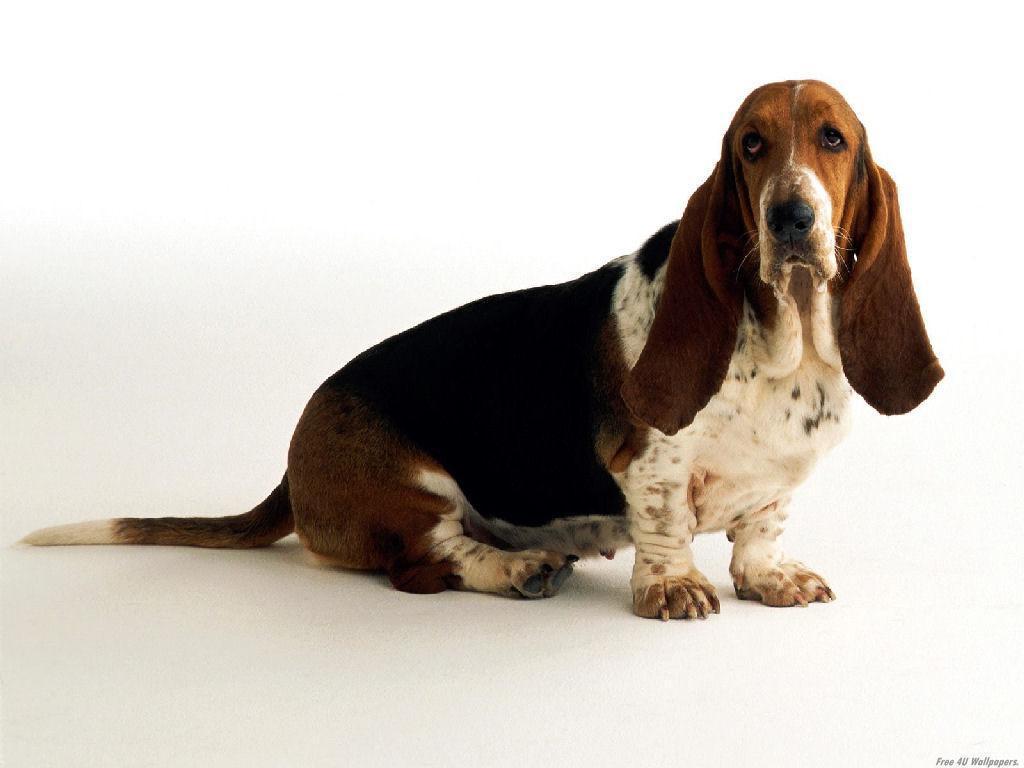
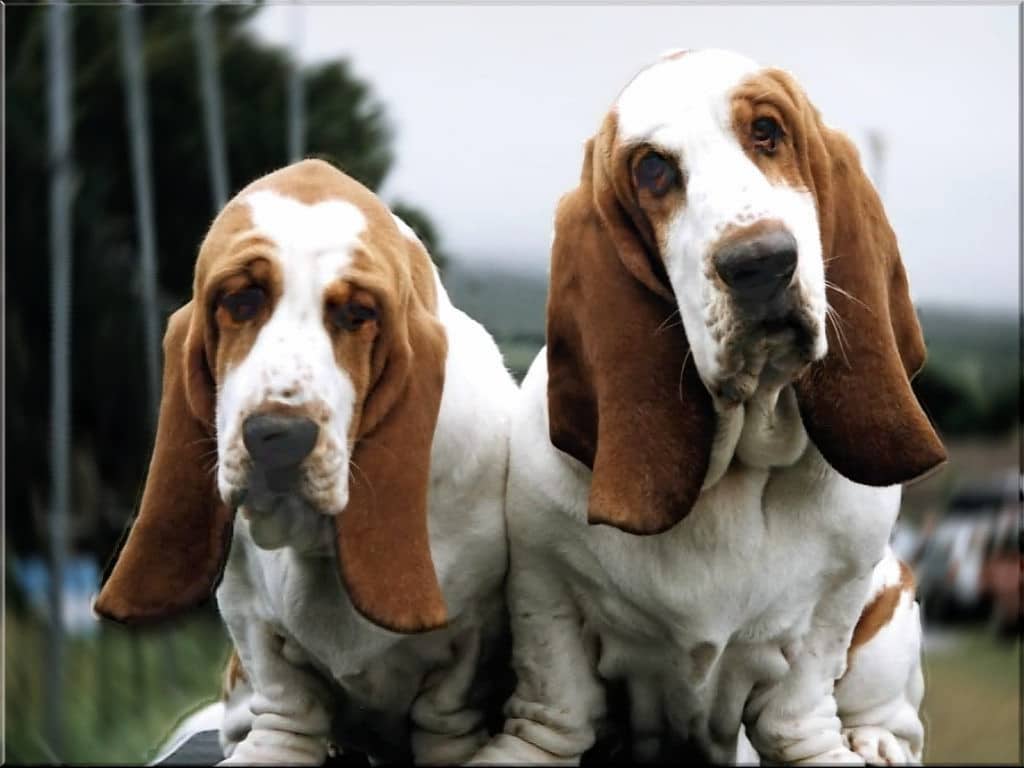
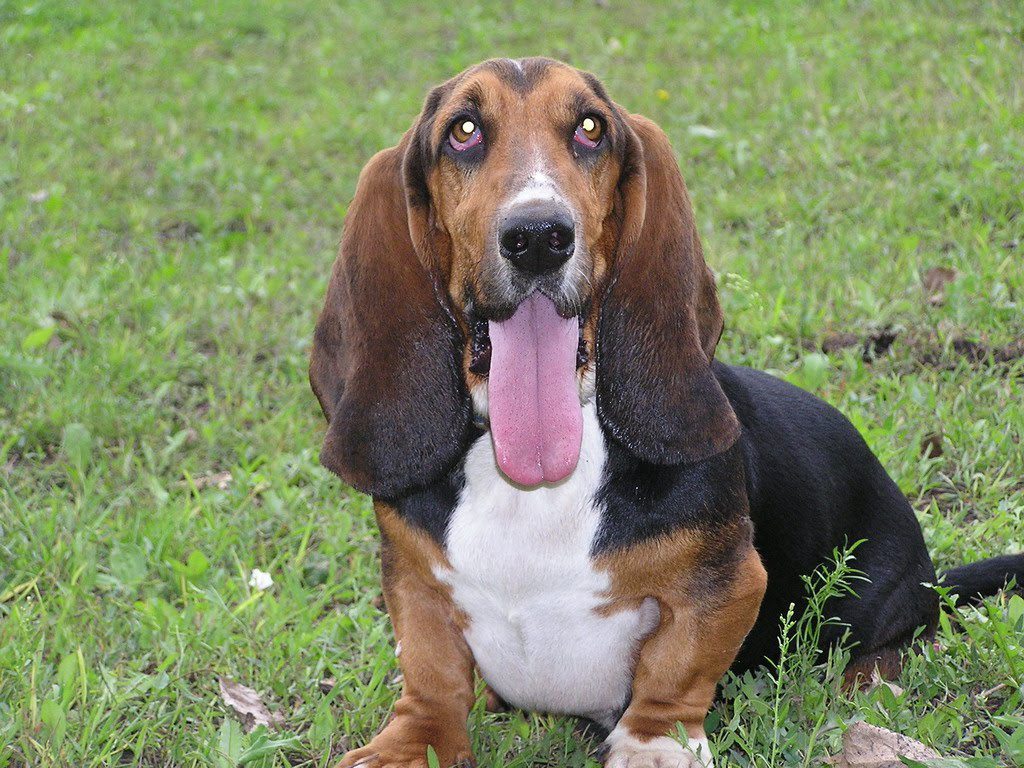
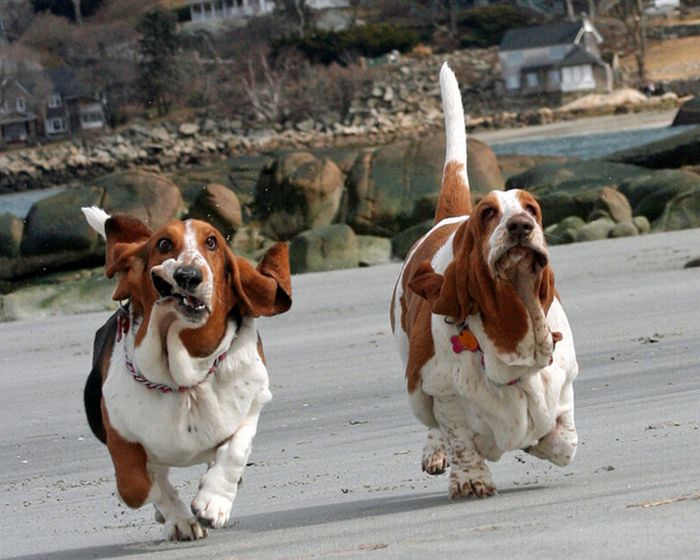
    These dogs are around 33 to 38 cm. (on the cross), they have short hair and are generally tricolor (black, honey and white). They also tend to be white with red spots or Red-footed. Some, Although few, they can be gray. They may occasionally leave copies with long hair, although it is not a desirable characteristic according to the breed standard.

    They have very long ears (up to the chest), also long neck with much loose skin and wrinkles around your head, This causes that you have a permanently sad. Its tail is long, erect and a curve.

    Physical characteristics

    "Basset Hound"

    His short stature is misleading because they are very long and they can reach things that dogs of similar heights could not.
    It has marked degree, features that equip it admirably for tracking through rough terrain. Dog short members, heavier bones, considering its size, than any other breed of dog; and although slow movements, they are in no sense clumsy.

    The word Basset It comes from the French "bas" which means low and that is the main characteristic of this breed. The Basset Hound It is a breed of small stature due, fundamentally, their short legs and elongated body. The head is prominent and it highlights a few wrinkled brows (due to the large amount of skin), long floppy ears, a few deep eyes that convey sadness and hanging lips. The skin is flaccid and causes many wrinkles around the body and is covered by a short hair, rough can be of different colors of the Bassets (white, black & Fawn) in any combination.

    Character and skills

    Low and somewhat plump appearance might suggest it is a lazy dog and something sleazy but this is only an impression, is a loving dog of the year. You need to do plenty of exercise to prevent overweight and arthritis at advanced ages.

    A specific care of this breed is the possibility of the development of conjunctivitis due to the loose skin around the eyes. (that leads to contain moisture), should be monitored continuously.

    His facial expression promises sadness, fatigue, but a dog very joyful, good and very sociable, She loves children and adapts perfectly to the family environment. As well, despite his physical appearance, is a dog She loves the exercise, Sport and trips. It can be very stubborn, as well, about all dogs...

    Nice temperament, never aggressive or shy (only in some cases). It has great strength in the field. extremely faithful.

    Basset Hound Education

    The stubborn side of Basset Hound requires authoritative parenting. You don't have to wait for him to "pass his youth", since it only matures around 3 years. A constant education, firm and consistent from an early age will make a good companion dog.

    In fact, no matter how smart I am, you will know how to make the most of every hesitation. Hence the importance of being consistent and clear in the rules and the rewards that will be given. It shouldn't surprise you that he can turn a deaf ear when you annoy him..

    Salud ยซBasset Houndยป

    It is known that the Basset Hound Have overweight, so the risk of canine obesity must be taken into account, that can damage your spine.

    Being the back a sensitive point of the Basset Hound, it is recommended to avoid obstacles and stairs in your daily life.

    It also, the Basset Hound have a predisposition to certain skin conditions:

    – atopia;
    – dermatitis with malassezia;
    – primary seborrhea;
    – intertrigo (in the folds of the skin).

    Their long ears can also be a complicating factor. In fact, are prone to infections such as scabies in the ear, due to Otodectes cynotis, a microscopic mite that causes itching and pain. This infection is diagnosed by direct examination of the parasite in the ear and then treated by local application of an acaricidal treatment..

    Last, the eyes of the Basset Hound, since it is known that the breed has a genetic predisposition that favors the development of primary glaucoma, an eye disease in dogs that impairs the function of the optic nerve. This disease is diagnosed by an ophthalmological exam that measures intraocular pressure, what should a vet do. It is recommended that this examination be performed as soon as possible in the Basset, since the adverse effects of this disease can be reduced if detected early.

    Aseo ยซBasset Houndยป

    The Basset Hound does not need much coat maintenance. But, the Basset Hound loses hair all the time, so it should be brushed regularly to avoid the accumulation of hair in the house.

    It also, their ears often need to be cleaned, as their length makes it particularly easy for dirt to enter them.

    Basset Hound pictures

    Basset Hound Videos

    Type and recognitions:

    • FCI CLASSIFICATION:
    • Group :
    • Section : . .

    Federations:

    FCI โ“˜, AKC โ“˜, ANKC โ“˜, CKC โ“˜, โ€‹KC โ“˜, NZKC โ“˜, UKC โ“˜

    FCI breed standard "Basset Hound"

    Origin:
    France

    Date of publication of the valid original standard:
    13.10.2010

    Use:

    Hunting dog.


    General appearance:

    It is a short-limbed hound, of considerable substance, well balanced and with countless qualities. It is important to keep in mind that it is a working hound and must be suitable for those purposes., therefore it must be strong, active and have great resistance in the field of work. TEMPERAMENT / BEHAVIOR: It is a tenacious hound of ancient lineage, that hunts by venting its prey and has the instinct of the pack. His voice is deep and melodious. He is gentle and affectionate, never aggressive or shy.


    Behavior / temperament:

    It is a tenacious hound of ancient lineage, that hunts by venting its prey and has the instinct of the pack. His voice is deep and melodious. He is gentle and affectionate, never aggressive or shy.

    Head:

    The forehead may have a small amount of wrinkles, as well as the part next to the eyes. In any case, the skin on the head is elastic enough to wrinkle slightly when facing forward or when the dog lowers its head.

    Cranial region:

    The top of the snout is almost parallel to the top line of the skull and is not much longer than the head., measured from the naso-frontal depression to the occiput.

    • Skull: It is domed in shape and the occipital protuberance is prominent; its width is medium in the region of the eyebrows and decreases slightly to the muzzle.
    • Depression links (Stop): Something marked.

    facial region:

    • Truffle: Completely black, except for light colored hounds, where it appears brown or liver. Windows are wide and wide open; the truffle sticks out a little beyond the lips.
    • Snout: The appearance of the muzzle is thin, but it is not pointed.
    • Lips: The flews of the upper lip considerably cover the lower lips.
    • Jaws / Teeth: The jaws are strong, with a perfect bite, regular and full scissor, That is, the upper incisors cover the lower incisors in close contact and are implanted at right angles in the jaws..

    Eyes: Rhomboid-shaped, they are neither prominent, or sunk. They are dark, but they can be medium brown in light colored hounds. His expression is calm and serious. Light or yellow eyes are very undesirable.

    Ears: Low insertion, just below the eye line. They are long, although not in excess, and extend only slightly beyond the tip of a snout of correct length. They are narrow throughout their length and tightly curled inwards. They are very flexible, fine and smooth texture.

    Neck:

    He's muscular, well arched, quite long and with a pronounced dewlap, although not in excess.

    Body:

    Long and deep throughout its length; the withers and the loin are approximately the same height.

    • Back: Rather wide and horizontal. From the withers to the hips the back is not excessively long.
    • Pork loin: May be somewhat arched. Breast : Viewed from the front, the sill adapts perfectly to the curvature of the forearms. The sternum is prominent, but the chest is neither narrow nor too deep. The ribs are well rounded and tight; extend well back, no protruding edges.
    • bottom line, belly: There must be adequate clearance between the lower part of the chest and the floor that allows the dog to move freely over all types of terrain..

    Tail:

    It is well established and is rather long. It is strong at its root and gradually diminishes. Under the tail rough hairs are observed in moderate quantity. When is the dog moving, tail stands up well and forms a smooth saber-shaped curve, but never kinked or carried too high.

    Tips

    PREVIOUS MEMBERS:

    • General appearance: Upper forearm slopes inward slightly, but not so much as to impede free movement, nor that the forelimbs touch each other when the dog is standing or in action. Some skin folds may appear on the leg but this should not be excessive in any way.
    • Shoulder: They are not heavy; shoulder blades are well tilted back.
    • Elbows: They are not directed inward or outward; are well attached to the sides of the chest.
    • Forearm: Short limbs, strong with good bones.
    • Carpo: It is highly undesirable for it to be deviated forward.
    • Previous feet: Large, with strong joints and pads. The front feet can be pointed straight forward or slightly brought out, but in any case the dog must stand correctly. Weight falls equally on all fingers and pads, so that the feet leave the imprint of a large hound and the pads touch and completely cover the ground.

    LATER MEMBERS:

    • General appearance: They are very well muscular and prominent, imparting an almost spherical appearance, seen from the back. There may be a few folds between the hock, the foot and on the back of the hock joint may appear a slight bag of skin but by no means this should be excessive.
    • Knee: Well angled.
    • Metatarsus: Hocks set low, slightly carried under the body, but they are not oriented neither in nor out when the dog is standing naturally.
    • Hind feet: Large, with strong joints and pads. Weight falls equally on all fingers and pads, so that the feet leave the imprint of a large hound and the pads touch and completely cover the ground.

    Movement:

    It is important to ensure that the dog can do its job. Movement is smooth and fluid powerful and effortless with front limbs extending well forward and rear limbs, that provide a strong impulse. Movement is free both at the front and at the back. The movement of the hock and knee should not be rigid; fingers should not drag on the ground.

    Mantle

    SKIN: Soft and stretchy without any exaggeration.

    Fur: Smooth, short, and tight, although not too fine. All the outline is clean, no fringes. Long soft hair, fringed, it is highly undesirable.

    Color: It is usually white, black and tan (tricolor) or lemon and white (bicolor), but any of the recognized colors on hounds is acceptable.


    Size and weight:

    Height to the cross: Of 33-38 cm..


    Fouls:

    Any deviation from the aforementioned criteria is considered a fault and its severity is considered to the degree of deviation from the standard and its consequences on the health and well-being of the dog and the dog's ability to perform its traditional task..

    FALTAS DESCALIFICANTES:

    • Aggressiveness or extreme shyness.
    • Any dog โ€‹โ€‹showing clear signs of physical or behavioral abnormalities must be disqualified..


    N.B.:
    • Males should have two normal-appearing testicles fully descended into the scrotum..
    • Only functionally and clinically healthy dogs, with the typical conformation of the breed, should be used for parenting.

    Source: F.C.I - International Cynological Federation

    โ–ท The world of Pets: Dogs, cats, birds, reptiles, amphibians

    Billy
    Francia FCI 25 - Large-sized Hounds

    Billy

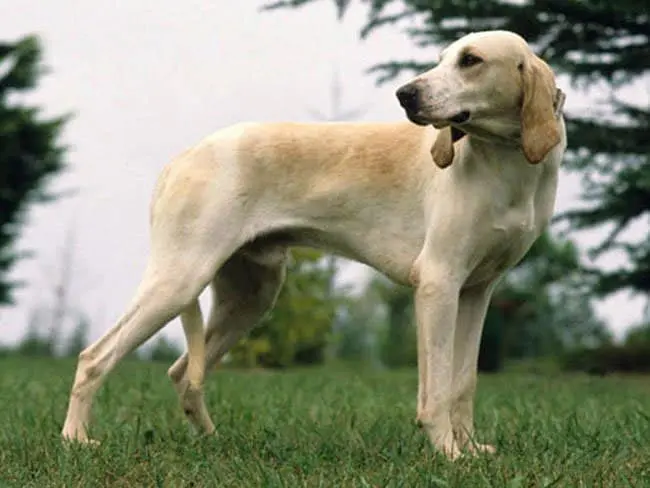
    The Billy is a used hunting dog live in the open air, in open spaces

    Content

    History

    The Billy, It is a dog from France created at the end of the 19th century from the junction of three races that are now extinct: the Larye, the Cรฉris and the Montembล“uf. In the cross, great care was taken to highlight characteristics such as: good smell, resistance and fast reflexes.

    Billy, Historically, was used for the hunting hares horse, wild boar and roe deer. In the news, There are few copies and is appreciated, it is not very common to see them.

    The Billy has the exact appearance of the famous white dogs that were part of the packs of the French aristocracy (16th centuries, 17TH and 17TH). History tells that King Charles IX of France (1550-1574) he had a white female he loved more than his own life. When the dog died, He forced the Court to go into mourning.

    Read more

    โ–ท The world of Pets: Dogs, cats, birds, reptiles, amphibians

    Bloodhound
    Bรฉlgica FCI 84 - Large-sized Hounds

    Bloodhound

    The Bloodhound It is the dog with thinner smell of the planet.

    Content

    History

    The Bloodhound (Bloodhound) It is a breed of dog originally from Belgium, more specifically in the region of the Ardennes. It is one of the different breeds of hound recognized by the FCI in Group 6.

    Has been traditionally considered to the monks of the monastery of St. Hubert as the creators of the race (for this reason also, are known as St. Hubert Hound), and they based their selection on the hunting dogs used by the monk Hubert, founder of the order and which later to be canonized became the patron saint of hunters. King William the Conqueror took copies of this breed to England when he ascended to the throne. The descendants of these specimens, They were known in the country as Bloodhound, referring to the purity of their blood.

    Did you know??

    The name "Bloodhound" does not come from this dog's ability to track game and people, but from a long history of carefully recorded bloodlines. In other words, He is a "blood" hound, a kind of dog of the aristocracy, if it can be said like that.

    This legend has it that a rich nobleman hunted in a good Friday accompanied by a group of noisy dogs, and in the distance he could see a deer and when he was about to shoot he saw the image of the cross of Jesus Christ drawn on its antlers and since then he retired from his dissipated life to dedicate his fortune to good works. Since then usually give the nobles, the best specimen of his beloved dogs. Today the tradition continues, but now is a religious service and gives blessing to copies, continuing with the exposure of the race in the community of St. Hubert at Belgium.

    After the race was introduced in the United States where one of his missions was the search and hunt down the fugitive slaves. For many years the recognition by a Bloodhound incriminating evidence was considered by American courts.

    Physical characteristics

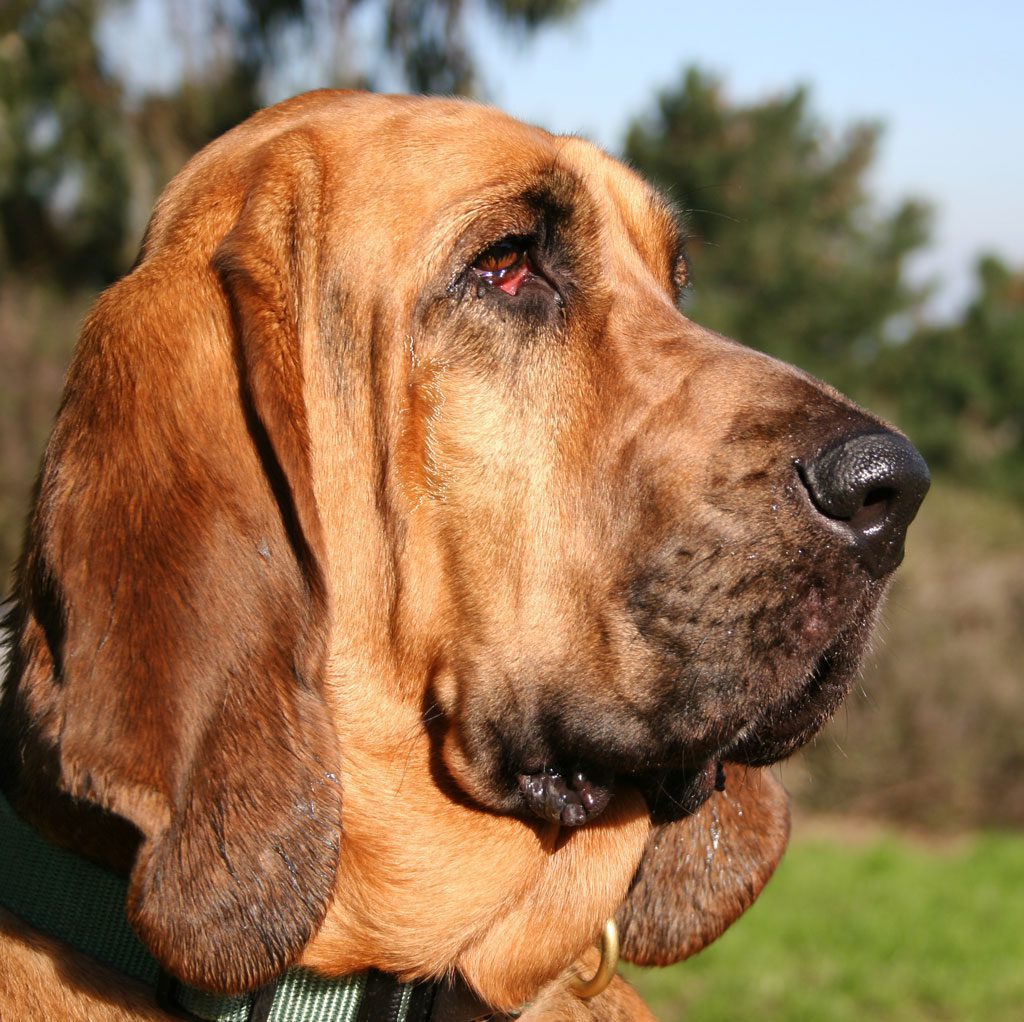
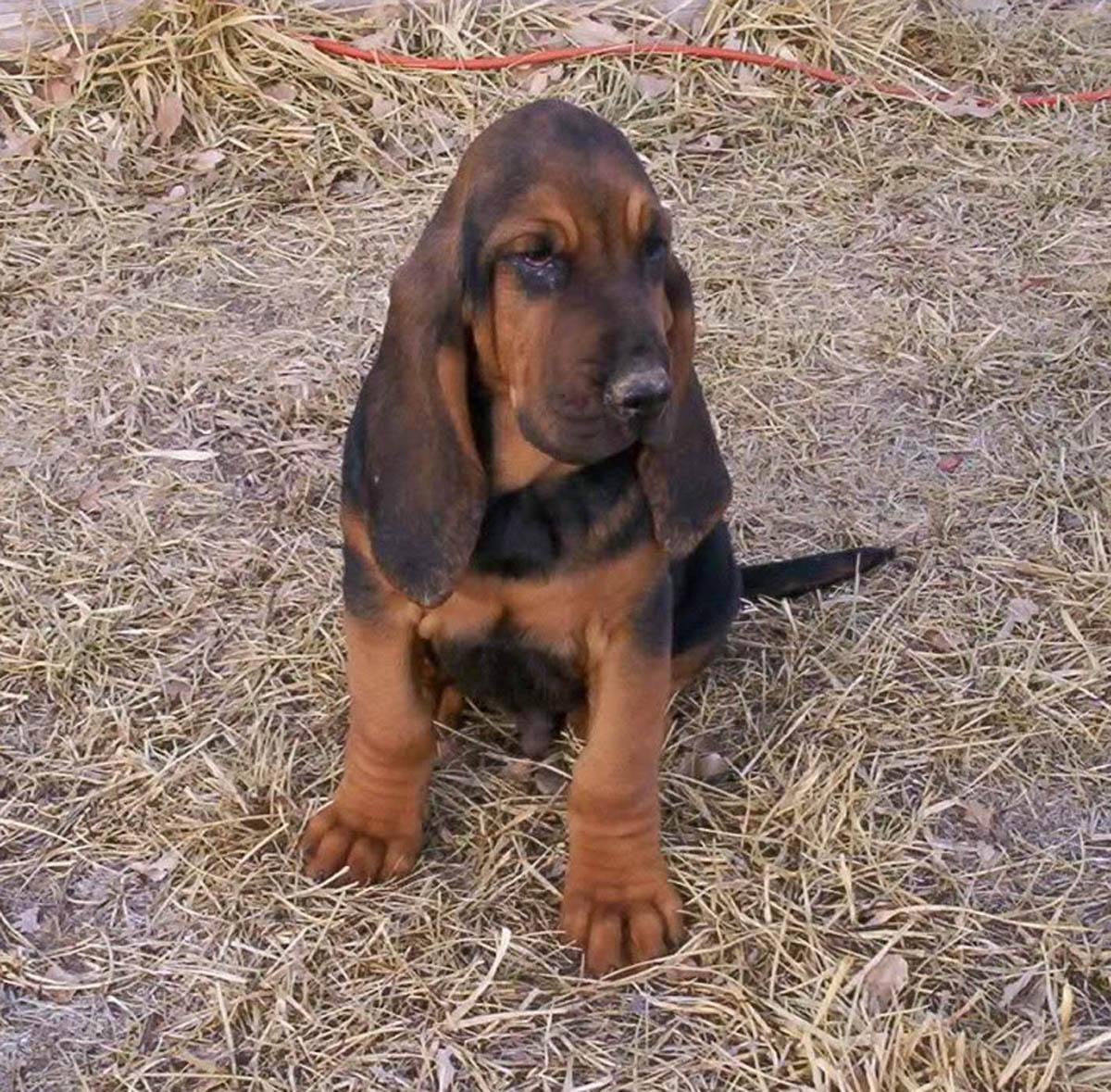
    The Bloodhound is a powerful hunting dog. The back is very strong compared to the size of the dog. The head is long and narrow. The muzzle is long with a nose of black. Deeply sunken eyes and drooping eyelids. The Chin is very pronounced.

    The Bloodhound is a dog with a nose finest of the planet.

    Despite its size, is an agile dog. His body is longer than high. Wrinkles on the head and jowls are perhaps one of the most characteristic features, along with the length of its hanging ears. The accepted colors are black and fire, Brown and red in its different shades and fire.

    The appeal is of 67 cm for males and 60 cm for females.

    It has been documented that they are capable of following a trail of up to fifteen days, because of the enormous sensitivity of their sense of smell, caused by the internal folds of their nostrils. For that reason it is used as a police dog in tracking tasks..

    These hounds cannot be kept in a yard without fences. There is a good chance that your tracker instinct carried them wander and get away until the end of their trail.

    It is a dog that needs to be exercised (like all dogs), and usually live more happily in large spaces, Although adapts very well to home life.

    The Blodhound (Bloodhound), Despite the allusion to the term blood contained in its name (blood), It is one of the animals most affable that exists. It is a dog of noble nature, can be shy around strangers. He is very patient and persevering when looking for a trailโ€ฆ

    It is excellent Playmate for children, defend them from any danger. They tend to be very well with other dogs and pets.

    Pictures Bloodhound

    Videos Dog of St. Hubert

    Characteristics "Bloodhound"

    Coexistence is important that you have with your new friend. Before considering the acquisition of a dog of the breed "Bloodhound" you know certain factors. Not all breeds of dogs are apt to live in an apartment, you must take into account his character, their need for exercise, their interaction with other pets, their care and if you have small children, their level of tolerance towards them.

    Adaptation โ“˜

    3,0 of 5 stars (based on 1 review)

    friendly dog โ€‹โ€‹โ“˜

    5,0 of 5 stars (based on 1 review)

    hair loss โ“˜

    5,0 of 5 stars (based on 1 review)

    Affection level โ“˜

    5,0 of 5 stars (based on 1 review)

    Need for exercise โ“˜

    5,0 of 5 stars (based on 1 review)

    Social need โ“˜

    5,0 of 5 stars (based on 1 review)

    Home โ“˜

    1,0 of 5 stars (based on 1 review)

    Toilet โ“˜

    5,0 of 5 stars (based on 1 review)

    Friendly with strangers โ“˜

    5,0 of 5 stars (based on 1 review)

    barking โ“˜

    5,0 of 5 stars (based on 1 review)

    Health โ“˜

    5,0 of 5 stars (based on 1 review)

    Territorial โ“˜

    1,0 of 5 stars (based on 1 review)

    Cat friendly โ“˜

    5,0 of 5 stars (based on 1 review)

    Intelligence โ“˜

    5,0 of 5 stars (based on 1 review)

    Versatility โ“˜

    3,0 of 5 stars (based on 1 review)

    Child friendly โ“˜

    5,0 of 5 stars (based on 1 review)

    Surveillance โ“˜

    5,0 of 5 stars (based on 1 review)

    joy โ“˜

    1,0 of 5 stars (based on 1 review)

    Type and recognitions:

    • FCI CLASSIFICATION:
    • Group :
    • Section : . .

    Federations:

  • FCI โ“˜,
  • AKC โ“˜,
  • ANKC โ“˜,
  • CKC โ“˜, โ€‹
  • KC โ“˜,
  • NZKC โ“˜, UKC โ“˜

  • FCI breed standard "Bloodhound"

    Origin:
    Belgium

    Date of publication of the valid original standard:
    13.03.2001

    Use:

    Big Game Hound, trail dog and family dog. It was and still is a hunting dog, that due to his remarkable sense of smell is above all a tracker, used both to find the trail of the injured small game, in search of the trail as well as to search for missing persons, in police operations. For its functional construction, the Chien de Saint-Hubert is endowed with great resistance as well as an exceptional smell, allowing you to easily follow a track over a long distance and over rough terrain.


    General appearance:

    Massive plus size hunting and tracker dog, the most powerful of hunting dogs. Its lines are harmonious and it is equipped with strong bones, well muscled and full of substance, although without giving the impression of heaviness. Its structure is elongated and the body is shaped like a rectangle. The set is imposing and full of nobility. His attitude is solemn. Head and neck draw attention to abundant skin, flexible and thin that hangs in deep folds. His movements are impressive, rather slow and with a certain sway, though flexible, elastic and loose. No characteristic can be exaggerated to the point of breaking the harmony of the whole., to give an impression of coarseness, far from harming the health or well-being of the dog. Possible exaggerations may be mentioned: very sunken or very small eyes; distended eyelids; excessively thick, loose skin, with too many folds and too deep; too much double chin; very small head. Large dogs are also undesirable, very heavy or very solid body, since this affects its use.

    IMPORTANT PROPORTIONS

    • body length / height to the cross: 10/9.
    • Chest height / height to the cross: 1/2.
    • Head length / body length: 3/7.
    • Length of the muzzle / head length: 1 /2.


    Behavior / temperament:

    Is meek, calm and gentle with people. Particularly attached to his master. Tolerant of his cage mates and other pets. Rather reserved and stubborn in temperament. He's so sensitive to praise, as to corrections. Is never aggressive. His voice is serious, but he is not barking.

    Head:

    It is the most characteristic aspect of the breed; imposing, majestic and full of nobility. Is high, but narrow in relation to its length, and long in relation to the length of the body. The bone structure is well visible. The lateral faces are flat and the profile is square. The nasal ridge is visibly parallel to the long upper line of the forehead.. The skin, fine and abundant, forms deep wrinkles and folds on the forehead and cheeks that fall when the head is down and extend into the folds of the double chin, which is highly developed. In females, the skin is less abundant.

    Cranial region:

    The skull is tall, long, rather narrow, and the side faces are flat. Superciliary arches are not very prominent, although they may seem so. The occipital protuberance is well developed and clearly protruding.

    Depression links (Stop): Bit strong.

    facial region:

    • Truffle: Black or brown in color; always black in black and tan dogs. It is wide, well developed and windows are wide open.
    • Snout: High; as long as the skull. It is wide near the nostrils and of uniform width throughout its length. The
      Nasal cane is either straight or slightly arched (slight ram's nose). Lips: They are very long and loose. The upper lip hangs over the
      bottom and forms a right angle to the front of the muzzle, which imparts a square profile to the muzzle. Behind the corners they turn into fleshy lips (less pronounced in females), that blend imperceptibly with the double chin, which is abundant. The edge of the upper lip descends a few 5 cm lower than the lower jaw. The edge of the lips is well pigmented black or brown, depending on the color of the truffle.
    • Jaws / Teeth: Complete denture, correct "scissor" joint; strong, white teeth set evenly in well-developed jaws. โ€œClamp-shapedโ€ dentures are accepted.
    • Cheeks: Sunken and thin, especially under the eyes.

    EYES: Dark brown or hazelnut color, of a lighter shade (amber) in dogs without a chair or black blanket. Medium-sized; oval, not tearful, nor outgoing, nor sunk in the orbits, thus leaving the iris completely visible. The eyelids, no irregularities in its contour, are normally adapted to the eyeball. Tolerated, However, lower eyelids somewhat distended, so that the conjunctiva is a little visible. The eyelashes cannot under any circumstances touch the eyes, nor hinder them. Your expression is sweet, gentle and dignified, the look a little melancholic.

    EARS: Thin, and flexible, covered with short hairs, fine and velvety to the touch. The pavilion is very long, exceeding at least the tip of the nose when placed on the top of the nasal bridge. Very low implantation, at eye level or below, on the sides of the head, falling in funny folds, castled in and back (corkscrew).

    Neck:

    It is long, so that the dog can keep track of it while keeping the truffle on the ground. Well muscled; throat skin is loose and extremely developed, presented a double chin, although this is less pronounced in females.

    Body:

    The top and bottom margin lines are almost parallel.

    • Cross: Slightly marked.
    • Back: Straight, wide, long and solid.
    • Pork loin: Width, solid, short, very slightly arched.
    • Rump: Well muscled, almost horizontal, never sunk. It is very wide and quite long.
    • Breast : It has an oval shape. It is broad, alto, clearly forming a keel between the forelimbs. The rib cage is long enough; the front of the thorax and the point of the shoulder are well protruding. The ribs are well sprung, ni planas, nor barrel-shaped.
    • Bottom line and belly: The bottom margin is almost horizontal; the lower part of the chest is well lowered. The flanks are very solid, wide and lowered. The belly is very little raised.

    Tail:

    It is long, strong, thick, set high; It is located in the extension of the dorsal line, and gradually becomes thinner towards the limb. It comes in the shape of a saber. When is the dog in action, forms a graceful curve above the dorsal line; never kinks, nor does it deviate laterally. His part covered with rougher hair, of about 5 cm., that gets progressively shorter towards the limb.

    Tips

    PREVIOUS MEMBERS:

    • General appearance: They are well muscled. The forelimbs are straight, powerful and perfectly parallel.
    • Shoulder: Long, well oblique and well muscled, although not heavy.
    • Arms: Oblique lengths, forming a good angle with the shoulders.
    • Elbows: They are well applied, or peeled, or together.
    • forearms: Straight, strong and round bones. Carpi: His firms.
    • Metacarpus: Robust; seen from the front, they are leaden. Seen in profile, they are slightly inclined towards the front.
    • Previous feet: They are compact and very solid; they do not deviate even inwards, nor out. The fingers are well arched, well articulated and together (Jack's foot). The pads are thick and solid, and short and strong nails.

    LATER MEMBERS:

    • General appearance: They are solid, powerfully muscular, in harmony with previous members. Seen from behind, are
      perfectly parallel, or together, nor separated.
    • Thighs: Of good length and well muscled.
    • Knees: Well angulated; they do not deviate even inwards, nor out.
    • Legs: Long enough and well muscled.
    • Hock: Solid, well angled; comes close to the ground. Metatarsals: Strong and short.
    • Hind feet: As the front.

    Movement:

    The judging of the marches, very typical of Chien de Saint-Hubert, it's extremely important. During the normal step, that is to say, the trot, the movement is uniform, steps provided; it is elastic and loose, covering more ground than any other hunting dog, and something that is very characteristic, with a balance, although not through. Hind limbs are directed well back, with good rear third drive. The amplitude of the movements of the forelimbs and hindlimbs is uniform and the upper line remains horizontal. The members move in parallel, but at a higher speed the feet get closer. The tail is high, Sabre-shaped, not too kinky though. The Chien de Saint-Hubert must be able to maintain a long trot without showing signs of fatigue.

    Mantle

    Flexible over the whole body, loose and elastic. Thin skin is very characteristic, very loose and abundant on the head. On the forehead and lateral faces of the muzzle, the skin forms hanging folds that are even more marked when the head is down. But, Very pronounced wrinkles and folds on the forehead and superciliary arches should never obstruct the eyes. Folds on the body caused by overly extended skin are undesirable.

    Fur: On the body the hair is straight, short, dense, quite hard and resistant to inclement weather. Over the ears and head, it is very short and soft to the touch. The lower part of the tail has slightly longer and rougher hairs.

    Color:

    We can distinguish three colors in the fur:

    • the bicolor black and tan (ยซblack and tanยป),
    • liver and fire (ยซliver and tanยป
    • solid red (ยซredยป).

    In black and tan dogs, the black varies, depending on whether it is a blanket or a chair. In a dog with a blanket, black predominates; the fire (leonado), occurs only on the muzzle, cheeks, on top of the eyes, on the front of the thorax, in the limbs and in the perianal region. A dog with a chair has a more widespread tan color, since the black is more or less limited to the dorsal part. The same arrangements of color zones are present in bicolor liver and tan dogs.. Colors are not always well defined, nor clearly delimited. In the darkest parts, longer or badger hairs may be scattered. This mix of different color hairs is accepted. In unicolor dogs, red can vary from light to dark. Faded tan is not desirable in bicolor dogs, nor the faded red in single-colored dogs. Tolerated, although it is not favored, a little white on the front of the chest, on the fingers and the tip of the tail.


    Size and weight:

    Height to the cross:

    The ideal height is:

    • 68 cm for males,
    • 62 cm for females.

    Tolerance: 4 cm more or less.

    Weight:

    • the males, a few 46 - 54 kg,
    • the females, approximately 40 - 48 kg.

    Size and weight must be in harmony.


    Fouls:

    • Any deviation from the aforementioned criteria is considered as a fault and the severity of this is considered to the degree of the deviation to the standard and its consequences on the health and well-being of the dog..
    • General aspect: appearance of heaviness; little substance; Lightweight bones; body raised or close to the ground; rather square than rectangular construction; absence of nobility.
    • Head: broad and bulky or excessively narrow skull; elusive forehead; forehead skin that deviates too much; shallow occipital protrusion; marked naso-frontal depression; concave muzzle; snout short or lacking in altitude; very little hanging upper lip.
    • Nose and lips: loss of pigmentation.
    • Teeth: absence of teeth.
    • Eyes: too small, deep in their orbits; too hanging lower eyelid, highly visible conjunctiva.
    • Ears: too short, very thick; occur above eye level; too close to the head or too flat.
    • Neck: short; delgado, with little double chin.
    • Body: short or too long; slightly lowered chest; anterior part of the thorax little protrusion seen in profile; flat or barrel ribs; loose or arched back, rump very raised or sunken; belly too raised.
    • Tail: appears low; squirrel tail, ring-shaped, threaded; tail knotted or folded; hooked or deviated.
    • Members: too little or too angled; short arms; incorrect poise, viewed profile (eg., Very oblique pasterns or weak carpals), front (for ex. feet that turn inward or outward, bowed forearms, elbows off), the one behind (eg., hind limbs together, separated or in barrel, hock closed or open); open feet, hare or flat.
    • Movement: closed or open; pass crossed; short steps or rigid movement; little drive, the back does not provide a good transmission.
    • Hair color: light or faded colors.
    • Character: insecurity or nervousness.

    FALTAS DESCALIFICANTES:

    • Aggressiveness or extreme shyness.
    • Any dog โ€‹โ€‹showing clear signs of physical or behavioral abnormalities must be disqualified..
    • General aspect: absence of racial type.
    • Teeth: undershot or overshot; Cross occlusion; crooked mouth.
    • Nose and lips: excessive depigmentation or pink color; colors other than black in โ€œblack and tanโ€ dogs; other colors than brown or black in dogs without a chair or black blanket
    • Eyes: light yellow (raptor eyes).
    • Hair color: all colors not corresponding to the descriptions: widespread white markings, such as white that reaches the wrists or hocks, or too widespread white color in the front part of the thorax: white patches somewhere other than the front of the chest, on the fingers and the tip of the tail, as for example, a white snout, a white stripe, etc.
    • Size: outside tolerance limits.
    • A dog that shows any signs of physical abnormality should be eliminated.


    N.B.:
    • Males should have two normal-appearing testicles fully descended into the scrotum..
    • Only functionally and clinically healthy dogs, with the typical conformation of the breed, should be used for parenting.

    Source: F.C.I - International Cynological Federation

    Alternative names:

    1. Sleuth hound, St. Hubert Hound (English).
    2. bloodhound (French).
    3. Bluthund, Bloodhound (German).
    4. Cรฃo-de-santo-humberto, Chien de St. Humbert, Bloodhound (Portuguese).
    5. Perro de San Huberto (espaรฑol).

    โ–ท The world of Pets: Dogs, cats, birds, reptiles, amphibians

    Basset Fauve de Bretagne
    Francia FCI 36 . Small-sized Hounds

    Basset Fauve de Bretagne

    The Basset Fauve de Bretagne has a loose and lively temperament

    Content

    History

    The Basset Fauve de Bretagne descends in a direct line from the "Grand Fauve de Bretagne", ancient trail breed, today almost completely disappeared that was used for fox and wild boar hunting, in the most dense forest. His parent has retained the qualities of exceptional Hunter and his fogosidad to, often, It is braking with crosses with the Petit Basset Griffon Vendรฉen.

    In the 16th century there were four varieties of large dogs in France, the difference between them was more than remarkable in relation to the color of the coat and texture. The four varieties were white (du role), Fawn of the (Bretagne), grey (St Louis du) and the black. All of today's varieties of French hunting dogs seem to have their origin in repeated crossbreeding and mutations of these four types..

    Estos โ€œGrand Fauve de Bretagneโ€, they were very big dogs, between 70 and 74 cm to the cross. They were known for their effectiveness in the early stages of a hunt.. his bravery, his thin nose, its resistance to cold and humidity and its impetus to hunt its prey, wild boar usually, made them ideal dogs for the thorny thickets of Northwest France. This large variety of Basset Fauve de Bretagne seems to have died out in France. The only representative of the Great "Grand Fauve de Bretagne", is the Fawn Brittany Griffon (48 – 56 cm.), very popular in France.

    There is considerable doubt about how the reduction of the overall size of the race was reduced to half. One theory suggests that it was initiated by selection of smaller litter size specimens., another for the breeding of the smallest specimens for countless generations. In the 19th century there were numerous litters made up entirely of Basset Fauve de Bretagne.

    In the Decade of 1970, as the Basset Fauve de Bretagne It became popular, French hunters decided to introduce new lines. It is generally believed that the Petit Basset Griffon Vendรฉen was used to improve their ability to, possibly, hunting and the Sausage dog to preserve the color of your hair.

    The Basset Fauve de Bretagne was first registered with the Kennel Club in September of 1991.

    Photo: bassetfauvedebretagneclub

    Physical characteristics

    Endowed with a truly incredible resistance, the Basset Fauve de Bretagne is able to hunt for days on end without showing any signs of exhaustion or tiredness.

    Like all Basset French breeds that come from larger size, also it maintains the characteristics of hair, the most voluminous dog head and color which comes. Its trunk while long, is very strong and compact and, Despite the relatively short limbs, moving with enough speed and ease. In any case, It should never have a too short head or seem excessively high on the extremities, as well as the hair should not appear soft or soft to the touch.

    "Basset Fauve de Bretagne"

    Ears fall almost at the level of the eyes, not very long, barely reaching the end of the snout, and they end up in tip, they are covered with hair thinner than the rest of body, but never silky. His neck is quite short and muscular. The forelimbs are strong, straight or slightly twisted. Broad and relatively droopy chest. Slightly curved ribs. Long back but a little less than in the other Basset.

    The tail is thick at the base, not too long, and it takes something like a sickle-shaped, is gradually tuned towards the tip. The color is more or less intense Golden or Griffon wheat, sometimes with a white patch on the chest.

    Character and skills

    The Basset Fauve de Bretagne is still required today for rabbit hunting, especially in low forests, where shrubs and las matas prevent passing other hounds.

    It is still quite common in Brittany today, prized for their natural qualities and its perfect adaptation to the landscape, tough and rugged in that area. It's very hard to find, being virtually unknown outside of France.

    It has a loose and lively temperament, so it needs to live always in the open air, that poorly fits the House. However, with a small space on the outside, or with usual and regular walks, the Basset Fauve de Bretagne could be an ideal pet.

    Breeders list "Basset Fauve de Bretagne"

    REGISTER KENNEL

    Breeders of Basset Fauve de Bretagne

    Offer your puppies for free. Sign up here.

    • This field is a validation field and should be left unchanged.
    • Enter an image of your kennel.


    Images ยซFawn of Brittany Bassetยป

    ยซBasset Fawn of Brittanyยป videos

    Alternative names:

    Basset leonado de Bretaรฑa / Faw brittany basset

    Type and recognitions:

    • FCI CLASSIFICATION:
    • Group :
    • Section : . .

    Federations:

    KCโ“˜

    FCI breed standard "Basset Fauve de Bretagne"

    Origin:
    France

    Date of publication of the valid original standard:
    25.03.2003

    Use:

    Bloodhound dog used for rabbit hunting, the hare, the fox, the roe deer and the wild boar.


    General appearance:

    The Basset Fawn of Brittany is a small dog with a collected body, impetuous, fast for its size. He is endowed with remarkable energy, along with excellent rusticity.


    Behavior / temperament:

    These are passionate hunting dogs, but they are also excellent companions for man. Its sociable, affectionate and balanced. They adapt easily to all terrains, even the most difficult, and to all kinds of hunting. When they are hunting they are brave, slums, tenacious, which makes them very effective.

    Head:

    ---

    Cranial region:
    • Skull: It is rather elongated; and the occipital protuberance is marked. Seen from the front, the skull has the appearance of a lowered curvature, decreasing in amplitude to the level of the superciliary arches that are not very pronounced.
    • Depression links (Stop): Slightly steeper than the Tawny Griffon of Brittany.

    facial region:

    • Truffle: It is black or dark brown in color. The nostrils are wide open.
    • Snout: It's sharper than square.
    • Belfos: They cover the lower jaw well, although not in excess. The whiskers are very abundant.
    • Jaws/Teeth: Jaws and teeth are strong; the joint is perfect and uniform scissor shape. Upper incisors cover lower incisors with tight contact. The incisors are set at right angles to the jaws. The absence of PM1 is not penalized.

    EYES: They are not prominent, not too sunk in the orbits. Its color is dark brown. The conjunctiva is not apparent. The look is impetuous.

    EARS: Delicately implanted at the level of the eye line, just reaching the tip of the truffle. They end in a point and are bent inwards and covered with a hair that is flatter and finer than that of the rest of the body..

    Neck:

    Quite short and muscular.

    Body:

    • Back: It is wide, and cut for a basset. Never sunk.Pork loin: Broad and well muscled.
    • Breast : Tall and wide.
    • Ribs: Pretty rounded.
    • Belly: The lower margin is slightly raised towards the back.

    Tail:

    It is slightly sickle-shaped. Is medium length; thick at the base, often spike-shaped and tapers at the tip. When is the dog in action, the tail is laid over the margin of the back and performs regular lateral movements.

    Tips

    PREVIOUS MEMBERS:

    • General appearance: Show good bone structure. Shoulder: Oblique, well attached to the thorax.
    • Elbows: They occur in the axis of the body.
    • forearms: Vertical or slightly deflected inward (this particularity is not sought).
    • Metacarpus: Seen in profile, they are slightly oblique. Seen from
    • forecrown, occur on the axis of the body or slightly deviated outward (this particularity is not sought).
    • Previous feet: compacts. The fingers are together and are arched;
    • nails are solid. Bearings are hard.

    LATER MEMBERS:

    • General appearance: They are well muscled. Legs are uniform. Seen from the back, they are parallel, or together, nor separated.
    • Thighs: Long and well muscled.
    • Babillas: Inclined and moderately bent. Metatarsals: Vertical.
    • Hind feet: compacts. The fingers are together and are arched;
    • nails are solid. Bearings are hard.

    Movement:

    Energetic.

    Mantle

    SKIN: Quite thick and flexible. No presence of double chin.

    Fur: Good hard, rough, pretty short; never woolly, nor curly. The face must not be tangled.

    Color: Fawn ranging from golden wheat to brick red. Some scattered black hairs are tolerated, on the back and on the ears. Sometimes the presence of a white star is observed on the sill (this particularity is not sought).


    Size and weight:

    Height to the cross: 0,32 to 0,38 m. for males and females, with 2 cm excess tolerance for exceptional specimens.


    Fouls:

    Any deviation from the aforementioned criteria is considered as a fault and the severity of this is considered to the degree of the deviation to the standard and its consequences on the health and well-being of the dog..

    SERIOUS FAULTS:

    Behavior: Fearful dog.

    Head

    • Wide and flat skull.
    • Superciliary arches too pronounced.
    • Pointed or short snout. Hanging and thick belfuses.
    • light eyes.
    • Flat and wide ears.

    Body

    • Weak appearance.
    • Top margin that is not tight enough.
    • Flattened belly.

    Tail: Deviation.

    Members

    • Poor bone structure.
    • crushed feet.

    Fur

    Scarce, short, fine, soft.

    FALTAS DESCALIFICANTES:

    • Aggressiveness or extreme shyness.
    • Any dog โ€‹โ€‹showing clear signs of physical or behavioral abnormalities.
    • Absence of typical features (any specimen whose characteristics differentiate it from its congeners).
    • Upper or lower prognathism.
    • Very light eyes.
    • Partial or total depigmentation on the nose or on the edge of the eyelids and lips.
    • Knotted tail.
    • Crooked forelimbs.
    • Presence of dewclaws on the hind limbs (dewclaws never appear in this breed).
    • Long shaggy hair.
    • Any other fur other than that imposed by the standard.
    • Any other size than the one imposed by the standard.
    • Noticeable disability; anatomical malformation.


    N.B.:
    • Males should have two normal-appearing testicles fully descended into the scrotum..
    • Only functionally and clinically healthy dogs, with the typical conformation of the breed, should be used for parenting.

    Source: F.C.I - International Cynological Federation