โ–ท The world of Pets: Dogs, cats, birds, reptiles, amphibians

Blue Gascony Griffon
Francia FCI 32 - Medium-sized Hounds

Blue Gascony Griffon

Originally bred for their tracking qualities, the Blue Gascony Griffon they are also affectionate companion dogs

Content

History

As its name implies, the roots of Blue Gascony Griffon are closely linked to the former French region of Gascony, which includes the lands between Bordeaux, Toulouse and Pyrenees. Some 14th-century writings recount the existence of a blue-haired hunting dog that was effective at tracking wild boar and deer., which is probably his ancestor.

Although we know with some accuracy where the race originated, it is more difficult to trace your family tree exactly before the decade of 1920.

But, it is believed to be a cross between the Great Gascony Blue, which in turn is the product of several crosses of old hounds (including the Bloodhound), and a french griffon: or the Griffon Nivernais or the Grand Griffon Vendรฉen. It is not possible to establish precisely which of the two is, because the available descriptions are too imprecise, but at least it is acquired that it is a French griffon.

In 1920, a special normalization commission of the club Great Gascony Blue, of the Small Blue Gascony and of the Blue Gascony Griffon first established a standard for the latter, what allowed the Livre des Origines Franรงais (LOF) officially differentiate him from his cousins. In fact, Until then it was considered a simple variety of the Great Gascony Blue. But, was not up 1963 which was officially recognized by the FCI (Fรฉdรฉration Cynologique Internationale).

This did not prevent the gradual decline of the breed, in particular due to its geographic isolation and confidentiality. In fact, was close to extinction, so that in 1977 only 10 individuals of 3 distinct lines were listed in the LOF. But, the situation improved considerably in the following years, since the number exceeded 100 in 1981.

At the beginning of the decade of 1990, the breed even saw a major revival in popularity with hunting enthusiasts, both in France and abroad (dog exports to Italy, Switzerland, Mauritius, Canada, Netherlands…), which led to an increase in the number of births. So that, the number of annual registrations LOF increased less than 80 prior to 1990 to more than 500 in 1994, and even more than 800 in 1996, before stabilizing between 700 and 800 in the following years.

This madness in France and abroad led to United Kennel Club, one of the leading organizations in the United States, to recognize the race in 1991. But, didn't actually make emulators: for example, neither him American Kennel Club (AKC), neither him Canadian Kennel Club (CKC), nor the prestigious British Kennel Club took the step.

Aware of the danger that this sudden interest could represent for the health of the few remaining specimens, with the risk, in particular, of health abuses caused by an intensive breeding program to meet a high demand, the Club of Small Blue Gascony, of the Gascon Saintongeois and Ariรฉgeois, in charge of the improvement of the race and affiliated with the Sociรฉtรฉ Centrale Canine (SCC), proposed to the Conservatory of Regional Biological Heritage the elaboration of a safeguarding and improvement plan. This approach (and the strict breeding practices that followed) contributed to the preservation of the good health of the breed, without hindering its development. So, in the first decade of the century, about 850 births were counted each year by the LOF. Since then, the figure has decreased slightly, but there is still an average of 600 to 700 by year.

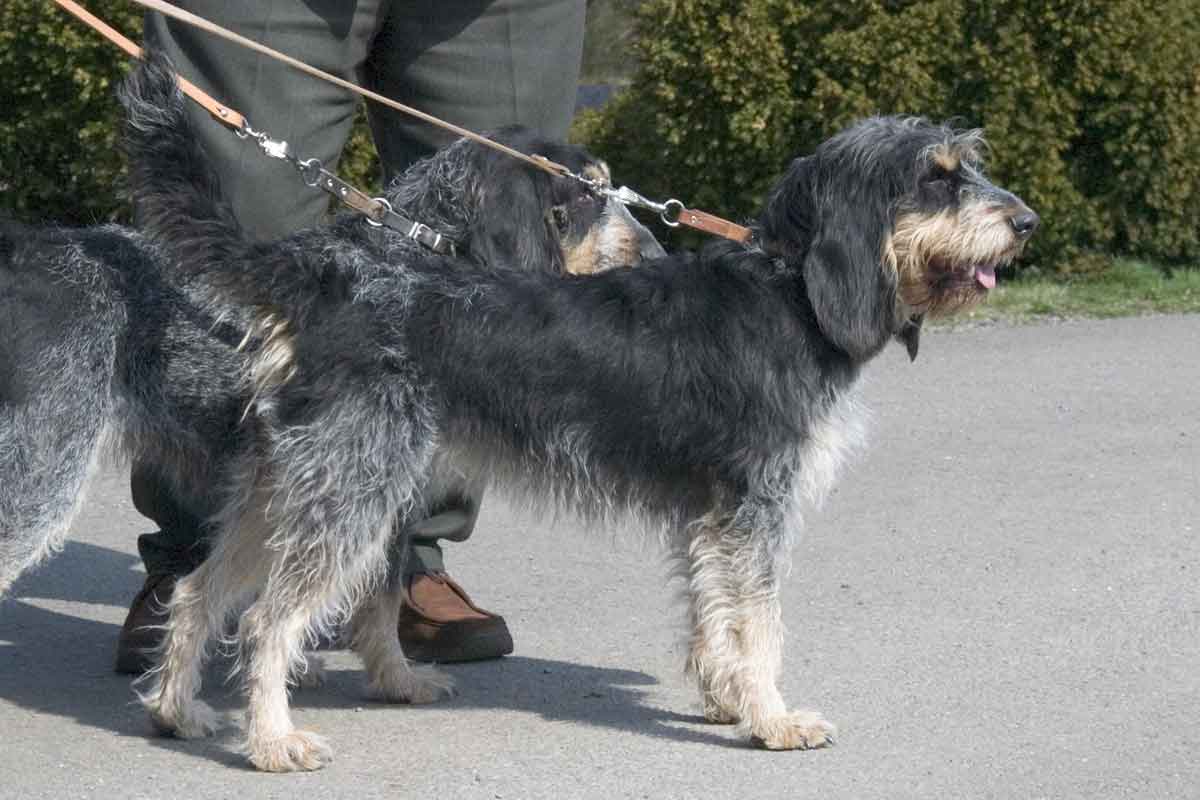
Photo: French Blue Gascony Griffon: Griffon Bleu de Gascogne by Alephalpha, CC BY-SA 3.0, via Wikimedia Commons

Physical characteristics ยซGrifรณn Blue Gascuรฑaยป

The Blue Gascony Griffon it is rustic and solidly built. Very athletic, has a well-developed chest and a short, straight back that extends into a rather shaggy tail carried like a saber blade.

The head is ogival shaped, slightly vaulted, with a full forehead and a snout with a slight stop, sometimes slightly arched. The nose is black and wide. The eyes are oval, and its color varies between dark brown and brown. It also, despite his wide eyebrows, his look is very expressive. Located just below the eye line, the ears are flexible, curly and not very pointed, and reach the tip of the nose.

The mark of this dog is its hard and rough coat, giving it a slightly shaggy look. The coat is completely black and white, giving it the slate blue glow that gave it its name. Your body may also have a few more or less extensive black spots. In the head, there are usually two black spots on each side of the skull, covering ears, wrapping the eyes and stopping at the cheeks. These spots are separated in the upper part of the skull by a white hole, in the middle of which there is usually a small oval black spot, typical of the breed. More or less bright brown marks also color the upper part of the eyebrow, cheeks, whisker pads, the inside of the ear, as well as the extremities and the lower part of the tail.

Last, sexual dimorphism is only slightly pronounced in this breed: the female is usually only a few centimeters smaller than the male.

Size:

  • Males of 50 to 57 cm.
  • females of 48 to 55 cm..
  • Weight: 18 to 20 kg

Character and skills "Gascuรฑa Azul Giffon"

Originally bred for their tracking qualities, the Blue Gascony Griffon They are also affectionate companion dogs that adapt well to family life., as long as the family is active. Loyal and very attached to their teachers, as shown through various displays of affection, accompany them in all their activities with great enthusiasm and energy, without the need for undue attention.

He is a dog that loves children, with whom he is very patient and gentle. Generally well returned, representing excellent playmates for him, also bursting with energy. It is much less suitable for the elderly, they will soon find it exhausting.

Used to living in a group, can be alone during the day, but it only prospers if it has company at all times. Adopting an extra dog can be a solution to help you cope with the absence of its owner.

People and animals who are strangers to the dog generally receive a reserved but not aggressive welcome. Take the time to observe them before deciding what attitude to adopt.

This relative distance does not make it a good guardian, especially because it is not very territorial. In fact, if he barks when he sees a newcomer, it is more to announce your presence than to prevent you from passing and dissuade you from moving on.

Coexistence with other dogs in the house is perfectly possible and usually does not pose any particular problem.. Even when you don't know them yet, the Blue Gascony Griffon he is very sociable with his companions, and is both curious and peaceful once introduced. They don't try to dominate other dogs, and they will only attack if they are repeatedly and aggressively confronted by them.

On the other hand, it is not a good idea to try to get him to live in a house that also has a cat or small pet (like a rodent or a bird). Being a hunter at heart, would tend to relentlessly chase him around the house, even if you receive a strict education on the subject.

True electric battery and always with the truffle glued to the ground, the Blue Gascony Griffon only really flourishes in large spaces and houses with gardens. Although he likes to gasp for hours at his family's feet, not a city dweller, and is very likely to attract the ire of the neighborhood with his inopportune howls. By the way, can live perfectly well in an outdoor dog house, as long as you have enough to stimulate your intelligence and abilities – especially through play sessions with his teacher.

He particularly likes to snoop, sniff out clues and follow them to their source without being distracted by anything. This trait is very popular with hunting dogs., but it is more problematic for companion dogs, as it can lead them to run away or stubbornly go in one direction while walking. A high fence should be provided at home, and a strong strap should be used to keep its paws – if you are not paying attention – To walk. A connected GPS collar can also be a good investment to make sure you know when he's out for a walk at all times.

In addition to hunting, this hardworking and hardy dog รขโ‚ฌโ€นรขโ‚ฌโ€นhas a taste for many other activities. Enjoy throwing games (to be played in moderation, as they reinforce their chasing instinct), object search games (that challenge your exceptional sense of smell), the long walks, the race, swimming or even canicross, in which it excels. Almost everything can be found thanks to your eyes, as long as it comes to exercising and / or pleasing your master.

In any case, if your significant need for exercise is not met, it is likely to attack objects and plants in the house to evacuate its excess energy, or even your stress.

Educaciรณn ยซGrifรณn Blue de Gascuรฑaยป

The kindness of the Blue Gascony Griffon and his loyalty make him an obedient and diligent student. But, do not forget that he is an intelligent dog, which means he learns the commands just as fast as the nonsense.

It also, it is important to socialize him from an early age to limit his shyness and natural distrust of people and dogs he does not know. This is especially true if you are intended for hunting, since then it is more likely that you will meet other dogs that you do not know.

Having said that, they are quite docile companions, easy to train and educate: an ideal breed of dog for a novice master. But, be aware that obedience is achieved more through cooperation than coercion. So, it is just as important to congratulate and/or reward him whenever a command has been well executed as it is to reprimand him in a firm voice when he does something stupid. By the way, being firm does not mean being aggressive: yelling or being aggressive will only make them run away, or it will even make them suspicious and stressed.

Hunting training can begin as soon as 6 months after learning the basic commands. Treasure hunting is recommended to help you develop your sense of smell and intelligence, while the presence of more experienced dogs can help you get used to the noise of guns and the company of strange dogs.

Health and care "Blue Gascuรฑa Giffon"

Sturdy and durable, the Blue Gascony Griffon it is made for outdoor living and can withstand both heat and cold.

The main health problems observed in this breed are related to outdoor life and, in particular, with hunting: fractures, wounds, bites, as well as diseases transmitted by parasites (piroplasmosis, leptospirosis, etc.).

You also have a predisposition to stomach inversion (stomach dilatation-torsion syndrome).

It also, the hanging shape of their ears carries an increased risk of ear infections.

Last, your voracity makes you prone to obesity, especially if your activity level is still limited. This can facilitate the appearance and aggravate the impact of various ailments and constitutes a true vicious circle., since an overweight dog tends to be less active and therefore… fatter.

Go through a serious breeder of Blue Gascony Griffon allows you to put all the possibilities on your part to adopt a puppy in good health (and that is still the case). The professional must be able to present a certificate issued by a veterinarian certifying that he is indeed healthy, as well as details of the vaccinations administered to the animal, recorded in your health book (or vaccination book).

It also, as with any dog, excessive activity should be avoided until you reach adulthood. In fact, the bones and joints of a growing puppy are particularly fragile, and problems at this level could have lifelong consequences (malformations, etc.).

Finally, but the Blue Gascony Griffon is generally in good health, this does not mean that you should not wear it regularly (At least once a year) to the vet for a complete health check, that allows you to detect any problems as soon as possible. It is also the occasion to carry out your vaccination reminders, that are especially important to a dog like him, who usually spends a lot of time outdoors. Your antiparasitic treatments are at least as important; your landlord should make sure to renew them whenever necessary.

The price of a "blue gas tap"

The price of a puppy Blue Gascony Griffon in France it is between 900 and 1400 EUR, depending on the prestige of the kennel, the lineage from which it comes and its intrinsic characteristics (more or less conformity to the breed standard, physical qualities, etc.).

Outside france, it is very difficult to find a breeder Blue Gascony Griffon. The most likely option is then to import one from its country of origin.. If required, transportation and administrative costs are added to the purchase price of the animal and, of course, it is advisable to know and respect the regulations regarding the importation of a dog from abroad.

Characteristics "Blue Gascony Griffon"

Coexistence is important that you have with your new friend. Before considering the acquisition of a dog of the breed "Blue Gascony Griffon" you know certain factors. Not all breeds of dogs are apt to live in an apartment, you must take into account his character, their need for exercise, their interaction with other pets, their care and if you have small children, their level of tolerance towards them.

Adaptation โ“˜

2,0 of 5 stars (based on 1 review)

friendly dog โ€‹โ€‹โ“˜

3,0 of 5 stars (based on 1 review)

hair loss โ“˜

3,0 of 5 stars (based on 1 review)

Affection level โ“˜

4,0 of 5 stars (based on 1 review)

Need for exercise โ“˜

5,0 of 5 stars (based on 1 review)

Social need โ“˜

3,0 of 5 stars (based on 1 review)

Home โ“˜

4,0 of 5 stars (based on 1 review)

Toilet โ“˜

3,0 of 5 stars (based on 1 review)

Friendly with strangers โ“˜

2,0 of 5 stars (based on 1 review)

barking โ“˜

4,0 of 5 stars (based on 1 review)

Health โ“˜

4,0 of 5 stars (based on 1 review)

Territorial โ“˜

4,0 of 5 stars (based on 1 review)

Cat friendly โ“˜

2,0 of 5 stars (based on 1 review)

Intelligence โ“˜

4,0 of 5 stars (based on 1 review)

Versatility โ“˜

3,0 of 5 stars (based on 1 review)

Child friendly โ“˜

3,0 of 5 stars (based on 1 review)

Surveillance โ“˜

4,0 of 5 stars (based on 1 review)

joy โ“˜

4,0 of 5 stars (based on 1 review)

Images "Blue Gascony Griffon"

Photos:

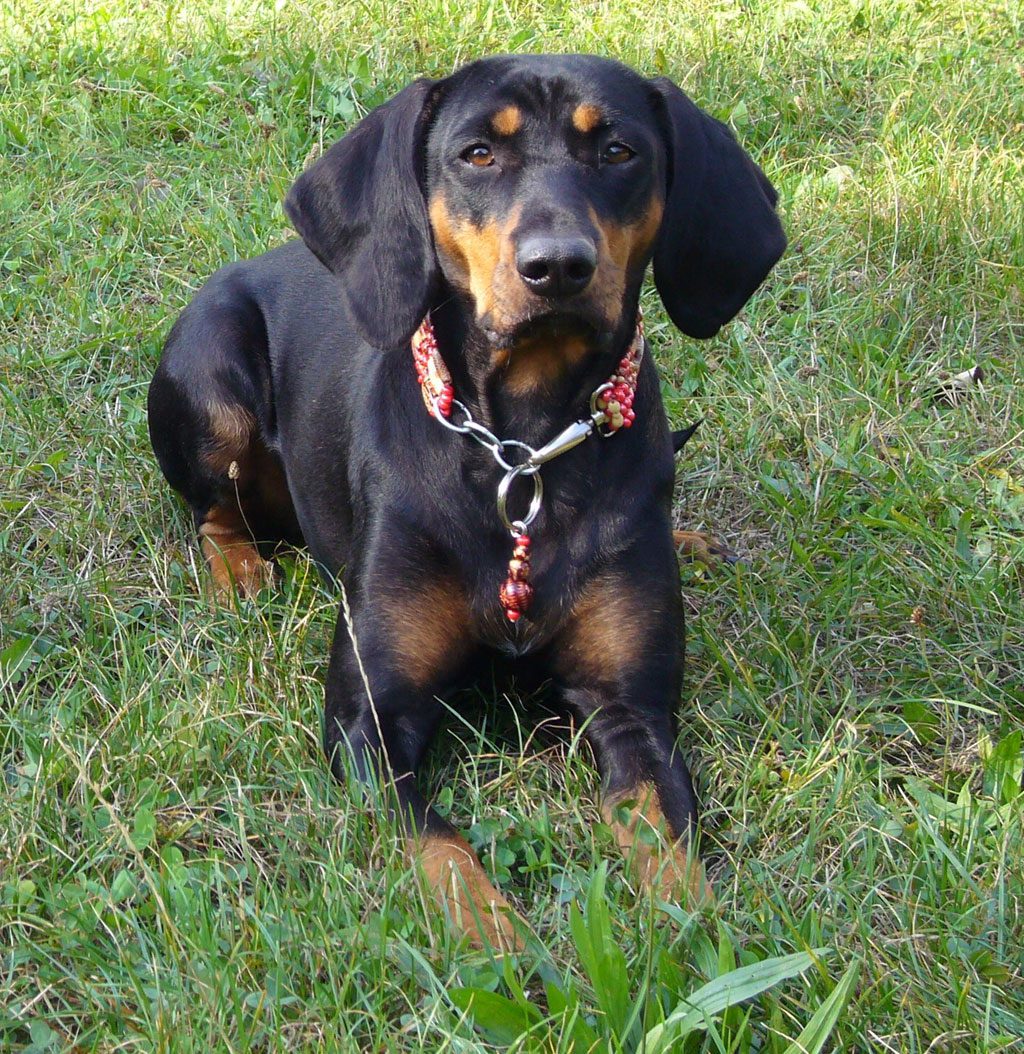
1 – A Blue Gascony Griffon female by Canarian, CC BY-SA 3.0, via Wikimedia Commons
2 – Blue griffin from Gascony by https://pxhere.com/es/photo/1331479
3 – Blue griffin from Gascony by https://pxhere.com/en/photo/1089317
4 – Blue griffin from Gascony by http://www.adopt-a-griffon.eu/en/breeds/griffon-bleu-de-gascogne/

Videos "Blue Gascony Griffon"

HTTPS://youtube.com/watch?v=AfvDdR1bX2s
Griffons bleus au Concours de meutes ร  Pranles
HTTPS://youtube.com/watch?v=YZWGz2C0DnY
Segugi Griffon Bleu de Gascogne – speciale cinofilia Game Fair 2015

Type and recognitions:

  • FCI CLASSIFICATION:
  • Group :
  • Section : . .

Federations:

  • FCI – Group 6: Scent hounds, and related breeds. – Section 1.2: Medium-sized Hounds. โ“˜
  • UKCScenthounds โ“˜
  • Central Canine Society โ“˜

FCI breed standard "Blue Gascony Griffon"

Origin:
France

Date of publication of the valid original standard:
24.01.1996

Use:

This is a multi-use dog. It is used for hunting with hare shotgun. His ardor and his good smell make him a very value assistant to follow the trail of the wild boar.


General appearance:

It is a rustic appearance tap, of solid constitution. Save the just medium between the two races from which it originates.


Behavior / temperament:

He has a good smell and his bark is sound. Is applied in hunting, that conducts con enthusiasm and initiative. It is unbelievable, But affectionate.

Head:

---

Cranial region:
  • Skull : Seen from the front, It is slightly bulging, but not too wide. The occipital protuberance is slightly marked.
    Seen from above, the back is ogival shaped. Forehead is bulging.
  • Depression links (Stop) : Little pointed.

facial region:

  • Truffle : It is black, wide. The Windows are wide open.
  • Lips : They are poorly developed, But they cover the lower jaw.
  • Snout : Straight nose cane, the lightly arched. Its length is almost equal to that of the skull.
  • Jaws / Teeth : The joint is in the form of scissors. The incisors are set at right angles to the jaws..
  • Cheeks : Thin.

Eyes : They have an oval shape. They are dark brown color; very expressive and living.

Ears : They are flexible, twisted, but not too much. They end on a slight tip and must reach the birth of the nose without exceeding their limb. Implanted just below the eye line.

Neck:

It is rather thin and presents some of the sock.

Body:

  • Back : Well pronounced, short.
  • Pork loin : Muscular and slightly arched.
  • Rump : Very slightly oblique.
  • Breast : Well developed. Rounded ribs, although not in excess.
  • Flanks : Bulky. The lower line is slightly raised backwards.

Tail:

It is quite hairy. It reaches precisely to the tip of the corvejรณn; The root is strong. It is brought happily in the form of saber.

Tips

PREVIOUS MEMBERS : Seen in conjunction, They are strong and well approved. They do not give an appearance of heaviness.

  • Shoulder : Quite oblique and muscular.
  • Elbows : Glued to the body.
  • forearms : Strong.

LATER MEMBERS : Seen in conjunction, the limbs are regular. The rear members are well developed.

  • Thighs : Well muscled.
  • Hock : Close to the ground.

FEET : They have oval shape and the fingers are thin and well together. The pads and nails are black.

Movement:

Is loose and alive.

Mantle

SKIN : It is quite thick and elastic. Black, or strongly streaked with black spots. It's never completely white. The mucous membranes are black.

HAIR : It's hard, harshly. It is a little shorter on the head, where the eyebrows, quite dense, They do not cover their eyes. It is much shorter and stuck on the ears.

COLOR : Completely speckled with black and white, imparting a slate blue reflection. It may or may not be marked with more or less extended black spots. Usually, there are two black spots on each side of the head, that cover the ears, circle the eyes and stop at the cheeks. These do not join over the top of the head, but they leave a white space in the center of which there is often a small oval black spot., typical of the breed. Above the eyes are two more or less uploaded fire marks located on the zygomatic arcades simulating four eyes. Traces of tan can also be found on the cheeks, the lips, the inside of the ears, the limbs and under the tail.


Size and weight:

Height to the cross :

  • In males it is 50 to 57 cm.,
  • in females it is 48 to 55 cm..


Fouls:

Any deviation from the above mentioned criteria is considered as missing and the gravity of this is considered in proportion to the degree of deviation to the standard and its consequences on the health and well-being of the dog.

Head :
โ€ข Head too short.
โ€ข Skull too wide.
โ€ข Pointed snout.
โ€ข Clear brown eyes.
โ€ข Apparent conjunctive.
โ€ข Too long ears, or very hairy.

Body :
โ€ข Largo; loose top line.
โ€ข Croup sagging.

Tail :
โ€ข Deviad or too short.

Tips :
โ€ข Hock closed, seen from behind.
โ€ข Crushed feet.

Behavior :
โ€ข Shy dog.

MISS PLAYOFFS

โ€ข Fearful or aggressive dog.
โ€ข Lack of characteristic type.
โ€ข It would be anatomic deformation.
โ€ข Notable lack that causes any impediment.
โ€ข Upper or lower prognathism.
โ€ข Light eyes.
โ€ข By the threaten the laugh.
โ€ข Any other color that is not established by the standard.

Any dog โ€‹โ€‹showing clear signs of physical or behavioral abnormalities should be disqualified..


N.B.:

Males should have two normal-appearing testicles fully descended into the scrotum..

Source: F.C.I - International Cynological Federation

Alternative names:

1. Griffon Bleu de Gascogne (English).
2. Griffon Bleu de Gascogne (French).
3. Griffon bleu de Gascogne (German).
4. Griffon bleu de Gascogne (Portuguese).
5. Griffon Bleu de Gascogne (espaรฑol).

โ–ท The world of Pets: Dogs, cats, birds, reptiles, amphibians

Briquet Griffon Vendรฉen
Francia FCI 19 - Medium-sized Hounds

Briquet Griffon Vendรฉen

Long lasting, fast and robust, the Briquet Griffon Vendรฉen he is a passionate hunter with extraordinary instincts.

Content

History

The selection of Briquet Griffon Vendรฉen dates back to before WWI, and was made by the Count of Elva.

It is a harmonious and enhanced reduction of Grand Griffon Vendรฉen. It is a distinguished dog and quite robust in its construction. Several times decimated during wars, the Briquet Griffon Vendรฉen reappears at Fontenay-le-Comte in 1946.

Today, there are many excellent quality individuals. In 1995, a group of Briquets they won the french roe deer cup, and numerous dogs work in the boar's footprint.

It is the only breed that retains the name of ยซBriquetยซ, which means "medium -sized dog".

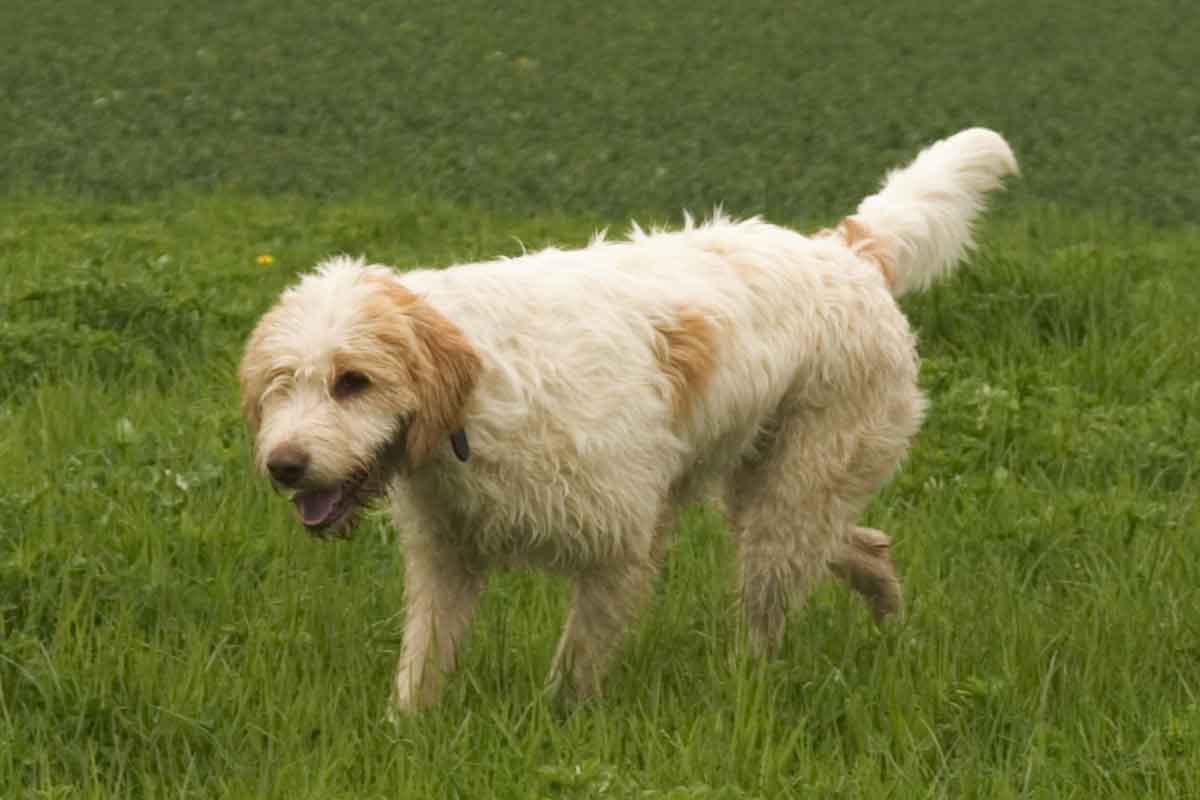
Photo: This is a Briquet Griffon Vendรฉen. His name is Unno du Sentier D'Aimeron by Alephalpha, CC BY-SA 3.0, via Wikimedia Commons

Physical characteristics ยซBriquet Grifรณn Vendeanoยป

The Briquet Griffon Vendรฉen It is a medium-sized common griffon.. The head and body are collected. The head, quite light, shows parallel lines of skull and muzzle. The cranium, pretty short, is slightly domed with a well-marked stop. Eyes are dark brown. The flexible ones, narrow and thin ears are medium long and turned inward. The short tail is thick at birth and gradually tapers towards the tip. Carries like a saber blade.

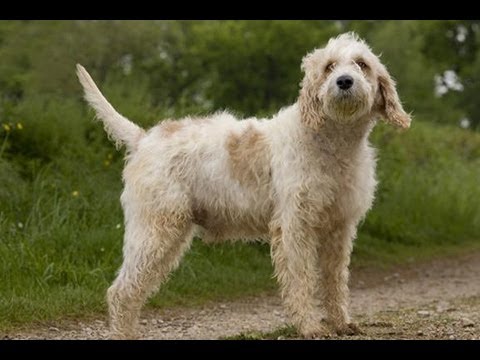
The coat is well proportioned, hard and rough without ever being woolly. The most common coat is white and orange. Other coats are black and white, black and Brown, black and sand, tricolor, charcoal sand color with or without white.

SIZE:
Height to the cross: In males: of 50 to 55 cm., in females: of 48 to 53 cm..

Character and skills "Briquet Griffon sale"

Long lasting, fast and robust, the Briquet Griffon Vendรฉen he is a passionate hunter with extraordinary instincts. They are stubborn, enterprising and capable of taking initiative. So, the teacher must be obeyed.

Entrepreneurs and determined, they are also resistant and robust. But, he is not very patient and can be bitten.

It's a hound, used for hunting big game, the hare and the fox. Adapts to city life and makes a proper watchdog.

Characteristics "Briquet Griffon Vendรฉen"

Coexistence is important that you have with your new friend. Before considering the acquisition of a dog of the breed "Briquet Griffon Vendรฉen" you know certain factors. Not all breeds of dogs are apt to live in an apartment, you must take into account his character, their need for exercise, their interaction with other pets, their care and if you have small children, their level of tolerance towards them.

Adaptation โ“˜

2,0 of 5 stars (based on 1 review)

friendly dog โ€‹โ€‹โ“˜

3,0 of 5 stars (based on 1 review)

hair loss โ“˜

3,0 of 5 stars (based on 1 review)

Affection level โ“˜

4,0 of 5 stars (based on 1 review)

Need for exercise โ“˜

5,0 of 5 stars (based on 1 review)

Social need โ“˜

4,0 of 5 stars (based on 1 review)

Home โ“˜

3,0 of 5 stars (based on 1 review)

Toilet โ“˜

2,0 of 5 stars (based on 1 review)

Friendly with strangers โ“˜

4,0 of 5 stars (based on 1 review)

barking โ“˜

3,0 of 5 stars (based on 1 review)

Health โ“˜

2,0 of 5 stars (based on 1 review)

Territorial โ“˜

3,0 of 5 stars (based on 1 review)

Cat friendly โ“˜

3,0 of 5 stars (based on 1 review)

Intelligence โ“˜

4,0 of 5 stars (based on 1 review)

Versatility โ“˜

4,0 of 5 stars (based on 1 review)

Child friendly โ“˜

4,0 of 5 stars (based on 1 review)

Surveillance โ“˜

4,0 of 5 stars (based on 1 review)

joy โ“˜

4,0 of 5 stars (based on 1 review)

Images "Briquet Griffon Vendรฉen"

Photos:

1 – A Medium Griffon Vendรฉen. Colour: white by Canarian, CC BY-SA 4.0, via Wikimedia Commons
2 – Medium Vendรฉen Griffon, Griffon Vendรฉen lighter by Canarian, CC BY-SA 3.0, via Wikimedia Commons
3 – Briquet Grifรณn Vendeano by https://pin.it/1GsizhZ
4 – Briquet Grifรณn Vendeano by http://www.adopt-a-griffon.eu/en/breeds/briquet-griffon-vendeen-2/

Videos "Briquet Griffon Vendรฉen"

Lighter Griffon Vendรฉen ๐Ÿถ๐Ÿพ Everything Dog Breeds ๐Ÿพ๐Ÿถ
Briquet Griffon Vendรฉen ?? Everything Dog Breeds ??
Griffon Vendeen lighter / Briquet Vendรฉe Griffon
Briquet Griffon Vendeen

Type and recognitions:

  • FCI CLASSIFICATION:
  • Group :
  • Section : . .

Federations:

Federations:

  • FCI – Group 6: Scent hounds, and related breeds. – Section 1.2: Medium-sized Hounds. โ“˜
  • UKCScenthounds โ“˜
  • Central Canine Society โ“˜

FCI breed standard "Briquet Griffon Vendรฉen"

Origin:
France

Date of publication of the valid original standard:
09.01.1999

Use:

Hound used for hunting with shotgun, both of the big hunt, as of the hare and the fox.


General appearance:

It is a medium -sized tap, receptive and very determined. Your body is well proportioned and rather collected.


Behavior / temperament:

Behavior : It has a good smell, It is fast and his barking is nice. You don't mind moving in weed. It is very skilled in the rugged land and hunting with the nose to the wind.

Character : It has great initiative, It is resistant and robust. It must be able to lift the hunt and drive it near the hunter. He is a passionate hunter; Your master must make it obey.

Head:

---

Cranial region:

It is quite light; The upper lines of the skull and nasal cane must be parallel. : Slightly bulky, pretty short, not very wide.

  • Depression links (Stop) : Marked.

facial region:

  • Truffle : Grand, black, except for dogs with white and orange fur, in which the brown color is accepted. The nostrils are wide open.
  • Snout : Straight, rather short. Its length is almost equal to that of the skull. It is not very wide in its limb.
  • Lips : Poorly developed, Although they cover the lower jaw well. They are covered by large mustaches.
  • Jaws/Teeth : The joint is in the form of scissors. The incisors are set at right angles to the jaws..
  • Eyes : Large, dark, and vivacious expression. The eyebrows are well pronounced, but they don't cover the eye. The conjunctiva should not be apparent.
  • Ears : flexible, narrow and thin. They are covered with long hairs and their limb is pointed. They become well in and do not reach the limb of the nasal cane. Low-set, below the eye line.

Neck:

Is long and elegant lines. There is no presence of dewlap.

Body:

  • Back : Solid, short. It is straight or very slightly raised.
  • Pork loin : Straight, muscular and well accentuated.
  • Breast : It is quite high, not very wide. Reaches the elbow.
  • Ribs : Moderately rounded.
  • Flanks : Full. The lower line rises very slightly backwards.

Tail:

It is thick at the base and gradually tapers. High implementation, is taken in the form of saber, ever. Is rather short.

Tips

PREVIOUS MEMBERS

  • As a whole : Quite robust, but without the appearance of heaviness. They are well poised.
  • Shoulder : Long, thin and oblique.
  • Elbow : Descended and well attached to the body.
  • Forearm : Straight, for strong bones.

LATER MEMBERS

  • As a whole : well developed; the limbs are regular.
  • Thigh : Long and muscular.
  • Hock : Width and well descended. Seen from the back, It is never closed, Nor open. In profile, Your angle is medium.

FEET : They are not very big. Pads are hard; fingers are well arched and close together. The nails are solid. The appropriate pigmentation of the pads and nails is sought.

Movement:

Active, elastic, Never irregular, not even in jumps.

Mantle

SKIN : Is rather a bit thick, Although elastic; often veined in tricolor fur dogs. There is no presence of dewlap.

HAIR : It is long, Although not too much. Sometimes tangled, rough to touch; the inner layer of hairs is abundant. The belly and inner thighs should not be hairless.. The eyebrows are well pronounced, but they don't cover the eye.

COLOR : Black with white patches (black and white). Black with reddish markings (black and tan). Black with sand-colored markings. Fawn with white patches (Orange and white). Fawn with black blanket and white patches (tricolor). carbon fawn. Carbon sand color with white patches. Color arena carbonado. Traditional denominations : hare hair, wolf fur, Building hair, Woven hair.


Size and weight:

Height to the cross :

  • In males : of 50 to 55 cm..
  • In females : of 48 to 53 cm..

With a tolerance of 1 cm more or less.


Fouls:

Any deviation from the aforementioned criteria is considered a fault and the severity of it is considered to the extent of the deviation from the standard and its consequences on the health and well-being of the dog..

Head :

โ€ข Too big, similar to that of the great sale.
โ€ข Depigmentation of the truffle, lips and eyelids.
โ€ข Spine too long.
โ€ข Pincer-shaped joint.
โ€ข Light eyes.
โ€ข Very long ears, boring, With satin hair, of high implantation. body :
โ€ข Cylindrical the assault.
โ€ข Loose back.
โ€ข Sunken croup.

Tail :

โ€ข Too much wide the diverted.

Tips :

โ€ข Weak bones.
โ€ข Angles that are too straight.
โ€ข Crushed carpos.
โ€ข Not quite together fingers.

Fur :

โ€ข Scarce, fine.

Behavior :

โ€ข Shy dog.

MISS PLAYOFFS

โ€ข Fearful or aggressive dog.
โ€ข Lack of type.
โ€ข Prognathism.
โ€ข Gaze eyes. heterochromia.
โ€ข Narrow sternum region. Narrow ribs at the bottom.
โ€ข Knotted tail.
โ€ข Woolly fur.
โ€ข Solid black or white coat.
โ€ข Important depigmentation.
โ€ข Different size as stipulated by the standard.
โ€ข Visible disability. anatomical deformation.

Any dog โ€‹โ€‹showing clear signs of physical or behavioral abnormalities should be disqualified..


N.B.:

Males must have two normal appearance testicles completed in the scrotum.

Source: F.C.I - International Cynological Federation

Alternative names:

1. Medium Vendรฉen Griffon (English).
2. Briquet griffon vendรฉen (French).
3. Briquet griffon vendรฉen (German).
4. Briquet griffon vendรฉen (Portuguese).
5. Briquet griffon vendรฉen (espaรฑol).

โ–ท The world of Pets: Dogs, cats, birds, reptiles, amphibians

Austrian Black and Tan Hound
Austria FCI 63 - Medium-sized Hounds.

Sabueso austriaco negro y fuego

The Austrian Black and Tan Hound is very emotional. Perceives the mood of its owner.

Content

History

The Austrian Black and Tan Hound It is a breed of dog originating in Austria. It is believed that he is the true descendant of the original Celtic Hound, Although there is no known history of the Austrian Black and Tan Hound until after mid-19th century. This historical bump is due to the fact that in the past the breeding was not regulated.

The Austrian Black and Tan Hound, from its origins, It was used for monitoring or tracking of injured animals, Commonly, in places of significant altitude.

Physical characteristics

The Austrian Black and Tan Hound is a dog medium-sized and well solid structure. His head shows a wide skull and little pronounced occipital region with well marked stop.

It has glossy dark brown eyes that convey a lively look and alert. The ears are of high insertion and medium-sized, rounded, not very broad and hang onto the cheek. The tail is long and will fine tuning towards the tip, it is dropped but slightly curved.

The coat of the Austrian Black and Tan Hound It is smooth, soft to the touch, dense, short (a few 2 cm length) and very bright.

The coloration of this breed It is very important since that is its touch of distinction, they should be black as a basis, with small and clearly defined, fire to light brands range from pale tawny to dark. Two tawny markings above the eyes must be present.

This breed has a hypersensitive smell.

The height at the withers of Austrian Black and Tan Hound will of 48 56 cm. And his weight is around between the 19 and 20 Kg.

Thanks to its excellent ability to work, both high mountains and Plains land, the Austrian Black and Tan Hound is highly prized as a bloodhound and blood trail dog. His fine sense of smell allows him to carry out searches with complete security (especially of hares).

Character and skills

Is alive, attentive, reserved with strangers but friendly and does not show any signs of shyness.

While it is used for hunting Hound (for tracking), It is an animal that adapts well to family life, but if we make the commitment to have a Austrian Black and Tan Hound, We must be able to give the animal enough to make you happy.

A few good country walks would keep him cheerful., In addition to (as with all dogs) a good daily walk.

It is a very emotional dog that perceived especially mood of its owner.

Photos ยซAustrian Black and Tan Houndยป

ยซAustrian Black and Tan Houndยป Videos

Type and recognitions:

  • FCI CLASSIFICATION:
  • Group :
  • Section : . .

Federations:

  • FCI – Group 6: Scent hounds, and related breeds. – Section 1.2: Medium-sized Hounds. โ“˜
  • UKCScenthounds โ“˜

FCI breed standard "Austrian Black and Tan Hound"

Origin:
Austria

Date of publication of the valid original standard:
10.10.1995

Use:

The Black and Tan Austrian Hound is a hunting dog generally highly regarded for its special aptitudes for heavy work as a tracker and as a hound., both on the mountainous terrain and on the plains.


General appearance:

Is medium sized. His body structure is strong, elongated and elastic.


Behavior / temperament:

It has a fine smell. He is a very good hound, especially when hunting with barking hares.. Crawls safely and willingly and is pleasant in character.

Head:

---

Cranial region:
  • Skull: Large, shallow occipital protrusion.

facial region:

Truffle: black.
Snout: Strong, straight muzzle.
Lips: well developed, adherents, fully pigmented.
Jaws / Teeth: Powerful scissor bite. You want a complete denture with 42 Dental parts; the total lack of two PM1 or PM2 (premolars 1 or 2 ) is tolerated; the M3 (molars 3) they are not taken into account.
Eyes: Clear, dark brown, showing no redness at the corner of the eyes.
Ears: Medium-sized, not too wide, high insertion, rounded in its bottom edge; hang flattened.

Neck:

Medium long, very strong; the presence of a double chin is not desirable.

Body:

  • Cross: Well marked.
  • Back: Long.
  • Pork loin: Slightly raised.
  • Rump: Slightly sloping down.
  • Breast : Broad and deep.

Tail:

Long, progressively tapering towards the tip, a little bent; during rest he carries it down; on its underside it has hard hair, but the brush is not too rough.

Tips

PREVIOUS MEMBERS: Strongly developed, straight.

  • Shoulder: Placed obliquely, endowed with strong muscles.

LATER MEMBERS: With good angle.

  • Thighs: Thin, moderately developed and long.

FEET: Strong, round and arched. Fingers close together; hard black nails; large, hard pads.

Movement:

Elegant, covers the ground.

Mantle

HAIR: Smooth, well adjusted, thick, dense, stretchy with a velvet sheen. Approximate length of 2 cm..

COLOR: Black with some well-defined tan spots from light to dark brown. Two fire marks must be present above the eyes (four eyes = Vierรคugl)


Size and weight:

Height to the cross: 48 โ€“ 56 cm.
  • Males : 50 โ€“ 56 cm.
  • females : 48 โ€“ 54 cm.


Fouls:

Any deviation from the above mentioned criteria is considered to lack, and the gravity of this refers to the degree of deviation to the standard and its impact on the health and well-being of the dog.
  • Skull too narrow.
  • Wide snout.
  • Wrinkled ears, too pointed, short and thin.
  • Tail too short, thin, or very bent up, no thick hair on her lower face.
  • Weak limbs.
  • Shy character.
MISS PLAYOFFS:
  • Aggressive or fearful dog.
  • Upper or lower prognathism. Lack of more than two premolars 1 or 2.
  • Any other color other than described.
  • Lack of noticeable fire spots over the eyes (four eyes).
Any dog โ€‹โ€‹showing clear signs of physical or behavioral abnormalities must be disqualified..


N.B.:

Males should have two normal-appearing testicles fully descended into the scrotum..

Source: F.C.I - International Cynological Federation

Alternative names:

1. Bracke, Vierรคugl (English).
2. Brachet autrichien noir et feu (French).
3. Kรคrntner Bracke, ร–sterreichische Glatthaarige Bracke (German).
4. (em alemรฃo: brandlbracke) (Portuguese).
5. Austriaco negro y fuego (espaรฑol).

โ–ท The world of Pets: Dogs, cats, birds, reptiles, amphibians

Basenji
Gongo FCI 43 . Primitive type

The Basenji is attentive, loving, energetic, curious and reserved with strangers

Basenji

Content

Characteristics "Basenji"

Coexistence is important that you have with your new friend. Before considering the acquisition of a dog of the breed "Basenji" you know certain factors. Not all breeds of dogs are apt to live in an apartment, you must take into account his character, their need for exercise, their interaction with other pets, their care and if you have small children, their level of tolerance towards them.

Adaptation โ“˜

3,0 of 5 stars (based on 1 review)

friendly dog โ€‹โ€‹โ“˜

2,0 of 5 stars (based on 1 review)

hair loss โ“˜

2,0 of 5 stars (based on 1 review)

Affection level โ“˜

2,0 of 5 stars (based on 1 review)

Need for exercise โ“˜

4,0 of 5 stars (based on 1 review)

Social need โ“˜

2,0 of 5 stars (based on 1 review)

Home โ“˜

2,0 of 5 stars (based on 1 review)

Toilet โ“˜

1,0 of 5 stars (based on 1 review)

Friendly with strangers โ“˜

2,0 of 5 stars (based on 1 review)

barking โ“˜

2,0 of 5 stars (based on 1 review)

Health โ“˜

3,0 of 5 stars (based on 1 review)

Territorial โ“˜

3,0 of 5 stars (based on 1 review)

Cat friendly โ“˜

2,0 of 5 stars (based on 1 review)

Intelligence โ“˜

5,0 of 5 stars (based on 1 review)

Versatility โ“˜

2,0 of 5 stars (based on 1 review)

Child friendly โ“˜

2,0 of 5 stars (based on 1 review)

Surveillance โ“˜

3,0 of 5 stars (based on 1 review)

joy โ“˜

5,0 of 5 stars (based on 1 review)

History

Video "Basenji"

Basenji dog sings 2

The Basenji It is a breed of dog originating from the Democratic Republic of the Congo.. It is a primitive breed used for hunting and tracking.

They have the unique characteristic of not barking, but they emit a curious sound in the style of >Tyrolean singing (Yodeling).

The stone Age images, as well as the tombs of ancient Egypt, already attest to the existence of this type of dog, who has survived the millennia: The Basenji is one of the oldest and most original breeds of dog. He's supposed to be a direct descendant of the Egyptian Testament – this is what dog experts call the dog form that has been handed down to us through Egyptian artwork from the fourth millennium B.C..

The Basenji comes from Central Africa, where he lived with village communities, but without having been specifically raised or having formed particularly close ties. Rather, they lived like ratcatchers. Often people also followed the hunting of the Basenjis to profit from the prey.. During famines the dogs were even slaughtered.

By the way, ยซBasenjiยป translated means ยซsmall wild bush animalยป. As early as the late 19th century some Basenjis arrived in Europe with African explorers. But, selective breeding did not begin until 1935 in Britain. Although the dog is native to Africa, Great Britain today has the patronage of the Basenji. From here the breed gradually spread to the rest of Europe.. In Germany, for example, enjoyed greater popularity from the years 70 of the 20th century.

Did you know??

The first Basenjis were red and white, tricolor (black and white fire) and black and white. Expeditions in Zaire 1987 and 1988 They introduced 14 dogs with new bloodlines, which brought a beautiful brindle look with tiger stripes.

There are some studies which point to the Basenji as progenitor of all Terrier.

Physical characteristics

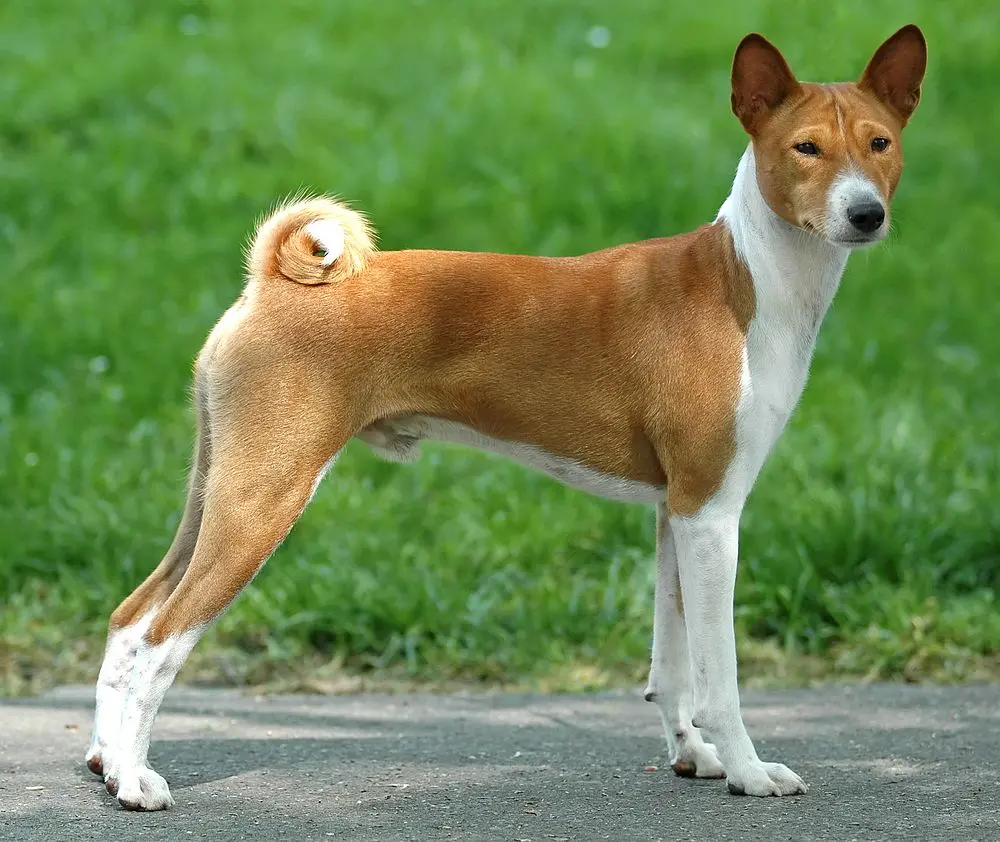
The Basenji they are a small breed, elegant appearance, they have short hair, shiny and silky. Their ears are upright, and the tail coiled lead to perfection. Some people, they believe that its appearance similar to a deer in miniature.

They usually weigh 11 kg and the port tends to be of 40,6 cm., athletic and deceptively powerful for its size. Have a walk safe and elegant like a horse to trot.

Character and skills

Recommended for homes with adults. Although all life keeps a restless and playful spirit, When it ends its phase of growth becomes an excellent pet.

The Basenji is alert, loving, energetic, curious and reserved with strangers. It is a little distant, but it can also form strong ties with the people and can be emotionally sticking to a particular Member of the family, creating a very strong bond.

Generally does not get along well with other pets other than dogs. likes humid weather, they tend to be very skilled soaring. It can be described as fast, playful, tireless in the game, and naughty.

One of the curiosities that presents the race, In addition to not bark, It is that sule lick is the hair to be kept clean.

education

Like all dogs, the Basenji needs to be socialized from a young age. Meet lots of people (friends, neighbors, family…) allows you to get used to seeing strangers and become a sociable adult. The same goes for other dogs.: if you meet them often from their first months, the risks of dog fights during walks are reduced once he is an adult.

In his book Intelligence of Dogs (1994), Stanley Coren classifies the Basenji in the post 78 of 79 dog breeds for their intelligence… But, this is potentially a misunderstanding: the Basenji he understands very well what his owner wants from him, but is not really willing to meet your demands. In fact, shows a complete lack of interest in anything related to their education.

Like this, this extremely independent dog feels no need to please his master. Surely you understand what the command "sit" means?, but I may not see the point and, therefore, decide not to listen. Positive reinforcement methods have had some success, and a treat can be enough motivation, but even the most experienced trainers have a hard time getting them to listen. A novice is likely to be frustrated at being totally ignored despite their best efforts and may regret their choice..

At the end, it is usually the owner who has to adapt to the dog. These may include, people who live with a Basenji

Health

Although it is relatively robust and enjoys a respectable life expectancy (of 12 to 14 years), the Basenji is susceptible to several diseases of varying severity:

  • The Fanconi syndrome, that is not exclusive to this breed, but most of the dogs that suffer from this disease are Basenjis. It is a kidney problem that prevents the reabsorption of nutrients and is usually fatal in the long term.. Fortunately, there is a genetic test to detect carriers and prevent them from reproducing;
  • Colitis enteritis, an overpopulation of a certain type of bacteria in the colon, responsible for violent diarrhea, sometimes with blood;
  • Immunoproliferative intestinal malabsorption, What, as the name reflects, prevents proper absorption of nutrients by the intestine. causes diarrhea, weight loss and can be fatal;
  • Hypothyroidism, a hormonal problem responsible for lethargy and weight gain;
  • Pyruvate kinase deficiency, an enzyme needed by red blood cells. The resulting anemia is often fatal.;
  • Hemophilia type B, a clotting problem that means that even a small accident can cause death;
  • Hernias, inguinal or umbilical, in which an internal organ passes through the abdominal wall, which can be very painful;
  • Eye problems, like the coloboma (a congenital malformation of the retina), progressive retinal atrophy (a degeneration of the eye tissues that leads to vision loss) or the persistence of the pupillary membrane (an abnormality of the eye that usually does not greatly affect vision);
  • Hip Dysplasia, a problem in the hip joint that can cause varying degrees of motor difficulties.

But, the main cause of death in this breed is age (30% of the cases), according to a survey by the British Kennel Club and the British Small Animal Veterinary Association.

It also, behavior problems, although they are not usually related to a disease, but they are simply the result of ignorance of the characteristics and needs of the breed by the owner, make many Basenjis be euthanized every year.

Last, it should be noted that, as it happens with other primitive dogs, the females of Basenjis they only go into heat once a year. Most litters are born between October and December.

Life expectancy

12 to 14 years

Grooming

Although it is very difficult to train, the Basenji it is an easy breed to care for.

A quick brushing of their short coat once a week is enough to remove dead hair.. But, they shed twice a year, and it may be helpful to switch to two or three times a week in the spring to deal with excess dead hair. This is much less necessary in the fall, when the moult is much less pronounced and may even go unnoticed.

It also, just like cats, this dog grooms itself. And since he doesn't like water, not one to come back dirty after jumping in puddles or rolling around in the mud. So, bathing your dog is rarely necessary.

But, as with any dog, the brushing session should be used to check and clean the eyes and ears to reduce the risk of infection.

It's also a good time to brush your dog's teeth, to avoid the accumulation of tartar and all the risks that this entails. Ideally, do it more often., even daily.

Last, wear and tear is usually enough to limit the claws of this especially active animal. But, if not and they start to get too long, it is necessary to do it manually with a dog nail clipper, to prevent breakage or injury.

Food

The Basenji not picky about food. But, since the shoes, smartphones and other magazines you can devour don't really meet your nutritional needs, it is necessary to provide daily industrial food for dogs. They must be of good quality to provide all the nutrients you need, but also adapted to their age, size and activity level.

Being a very active dog, the Basenjis are not prone to obesity problems. But, it is advisable to weigh your dog from time to time to ensure that he is not overweight. If you do, reducing his daily food intake and increasing the time he is allowed to go outside should solve the problem.

It also, like all dogs, must have fresh water available at all times.

For sale "Basenji"

The price of a puppy Basenji it's average 1000 euros for a male and 800 euros for a female.

whatever the place, the amount charged depends on the lineage from which it comes, of the prestige of the hatchery, but also of the degree of conformity of the individual with the standard of the breed.

ยซBasenjiยป images

Photos:

(1) – walking… basenji by fugzu [CC BY 2.0], via Wikimedia Commons
(2) – Basenji puppy, Bravo, 10 weeks old by fugzu [CC BY 2.0], via Wikimedia Commons
(3) – Basenji dogs by fugzu [CC BY 2.0], via Wikimedia Commons
(4) – Portrait Basenji – CC0 Creative Commons

Videos ยซBasenjiยป

Type and recognitions:

  • FCI CLASSIFICATION:
  • Group :
  • Section : . .

Federations:

  • FCI – Group 5: Section: 6 Primitive type โ“˜
  • AKCHound โ“˜
  • ANKC – Group 4 (Hounds) โ“˜
  • CKC – Group 2 – Hounds โ“˜
  • โ€‹KC – Hound โ“˜
  • NZKCHounds โ“˜
  • UKC – Group 3 – Sighthounds and Pariahs โ“˜

FCI breed standard Basenji

FCIFCI - Basenji
Basenji

Alternative names:

1. African Bush Dog, African Barkless Dog, Ango Angari, Avuvi, Cong Dog, Zande Dog, The Jumping Up And Down Dog, Voiceless Dog (English).
2. Terrier Nyam-Nyam, Terrier du Congo (French).
3. Kongo-Terrier (German).
4. Congo Terrier (Portuguese).
5. Perro Congo, Perro Zande, Terrier del Congo (espaรฑol).

โ–ท The world of Pets: Dogs, cats, birds, reptiles, amphibians

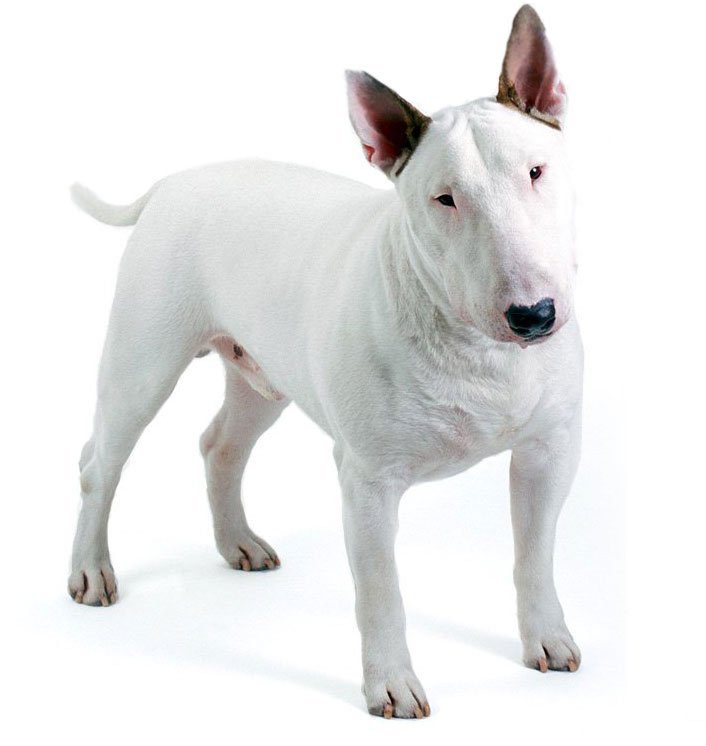
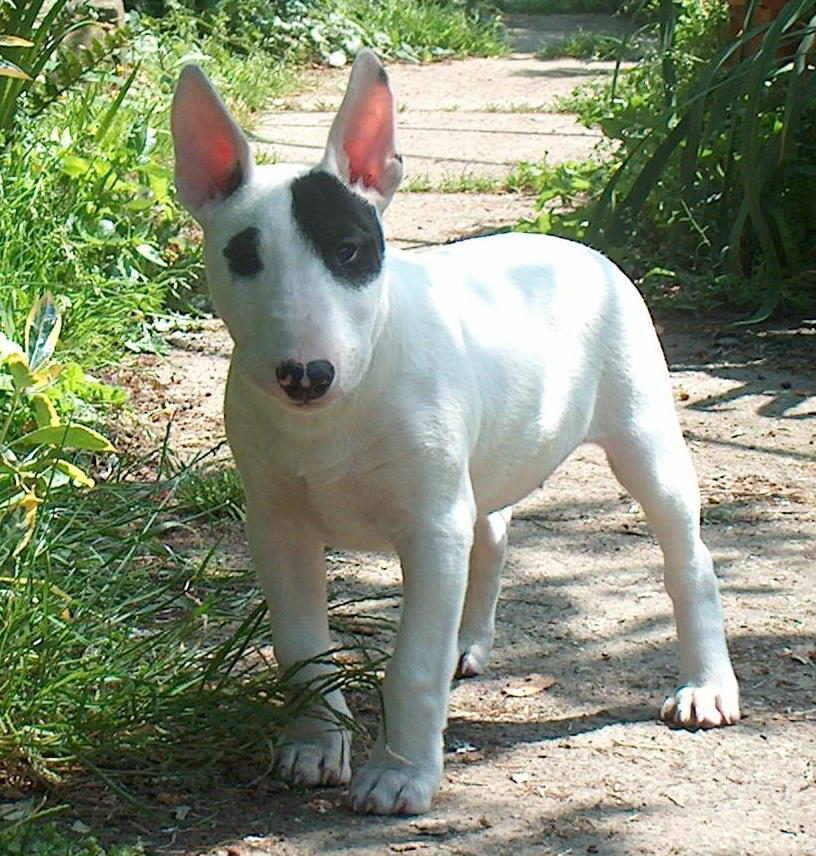
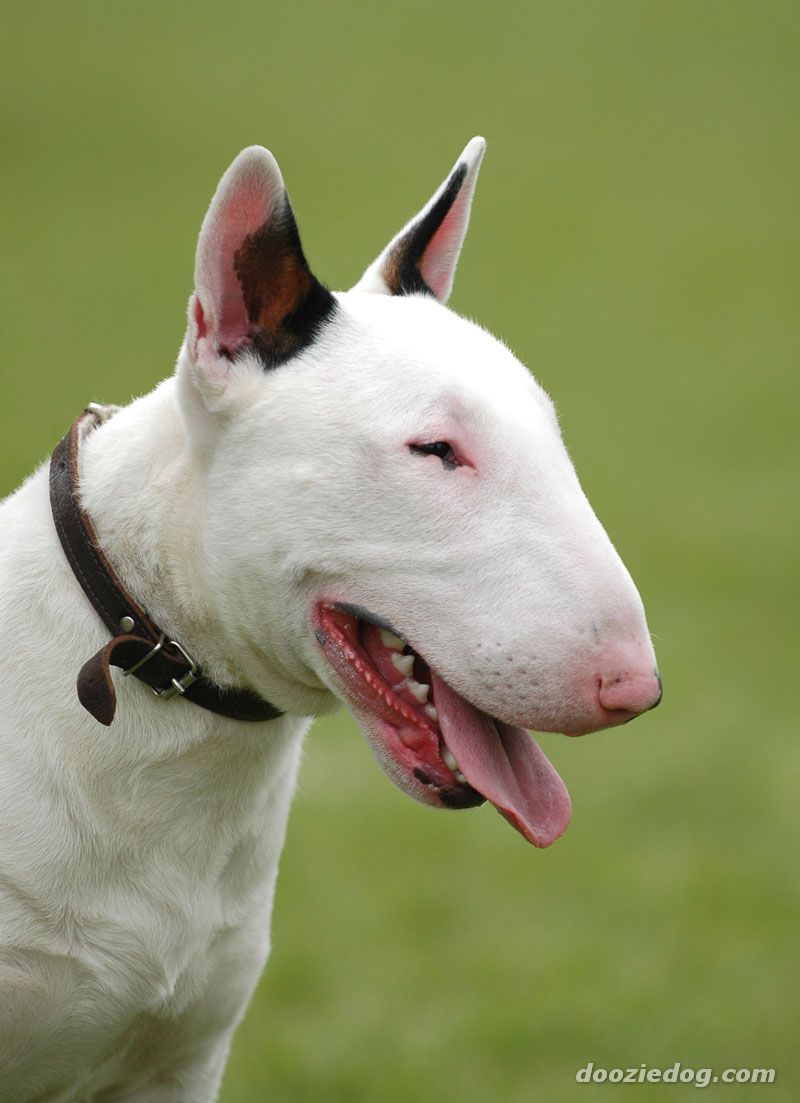
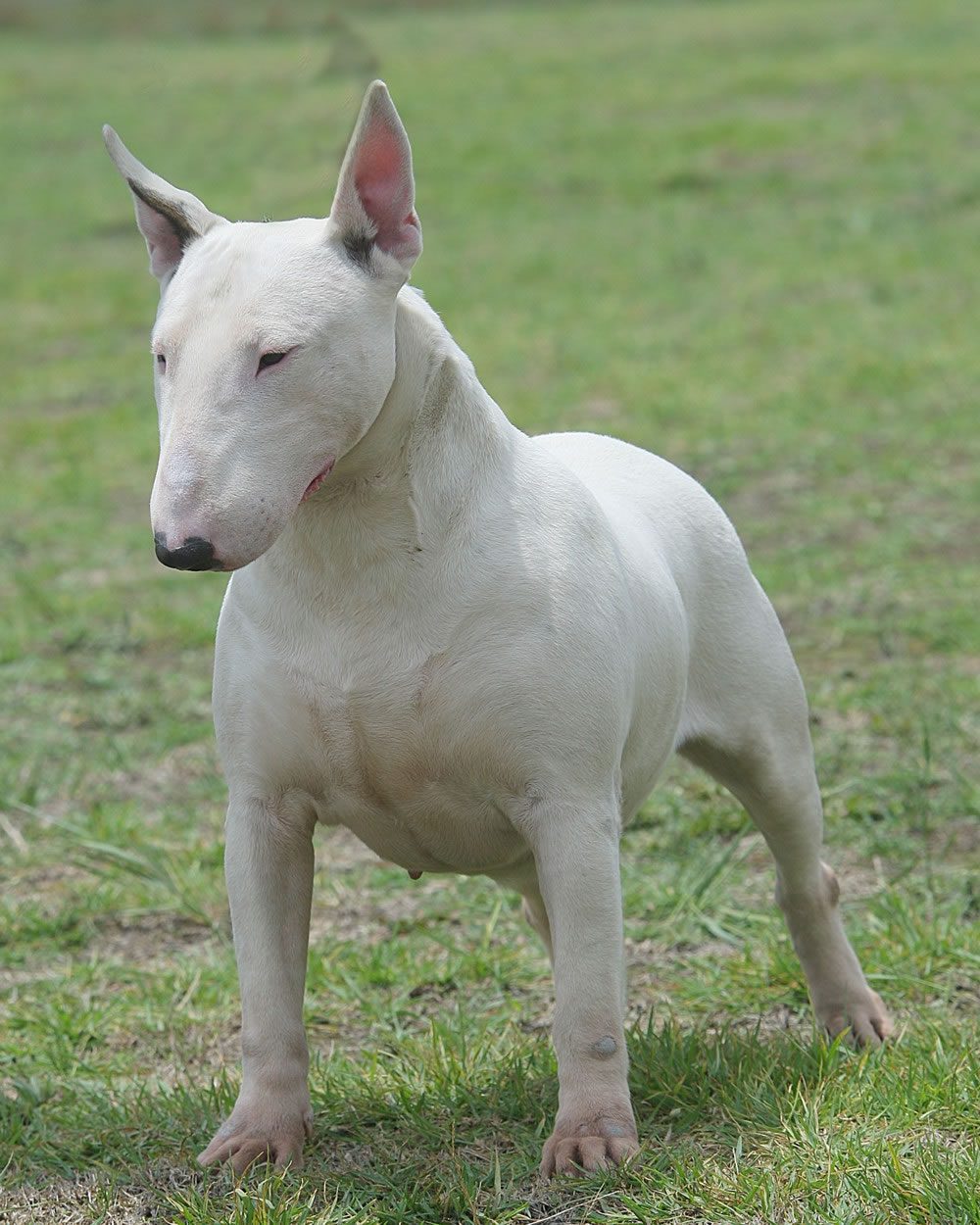
Bull Terrier
Gran Bretaรฑa FCI 11 . Bull type Terriers

Bull Terrier

The Bull Terrier they are generally friendly, rarely aggressive.

Content

History

The original ancestor of Bull Terrier was bred in the early 19th century from a cross between the English Bulldog and terriers. The dog served as a biter for bulls and badgers and was also used in dogfighting. Although its use as a fighting dog was already banned in 1835, the breed still struggles with its fighting dog image today. Completely contrary to the omnipresent opinion the Bull Terrier developed in the course of the 19th century as a popular family dog รขโ‚ฌโ€นรขโ‚ฌโ€นof the English middle class. The nervous and friendly Bull Terrier lived with families in large areas and served as a guard dog and to hunt vermin.

In 1850 the animal trader James Hinks ensured official recognition of the breed. At the end of the 19th century, the Bull Terrier white in color were for a time the status symbol of the English nobility. For a more elegant appearance and a less fizzy character, they crossed paths with Dalmatians and Pointer. Only after the end of World War 2 did the British return to breeding Bull Terrier of different colors. From the beginning the breed was bred in different sizes and today the Standard and the Bull Terrier Miniature are distinguished as independent breeds. Recognized by the Fรฉdรฉration Cynologique Internationale, the Bull Terrier Belongs to the group 3 FCI, of the Terrier. Here it is assigned to the section 3 as Bull type Terriers.

Physical characteristics

It is a dog strong, muscular and short hair. The accepted colors are white (spots on head only allowed, in other parts of the body they are penalized in exhibitions). The colors black, white, striped, red, Griffon and tricolor are accepted. Trademarks of pigmentation in the skin are not taken into account, When not involved hair. The colors, blue and liver are highly undesirable in competitions, according to breed standard.

The standard of the Bull Terrier Club in England, the ancient breed and originated from the same, It says that the striped is the desired color, given the importance of that color at the time these first specimens were included, that helped to correct problems of deafness and refresh the gene pool of the race, Therefore this recommendation maintains even included in the standard of the breed.

Typical features are the oval shape of its head, that profile will curve downwards from the top of the skull to the end of the snout. The forehead is flat from ear to ear, front head is shaped like an egg. These dogs lack the fronto-nasal depression. And the eyes are triangular in shape, in fact, it is the only recognized breed with triangular eyes. Y, Another curiosity of this small is that, It is one of the few breeds that likes to eat the nails when not cut them.

There are no weight or height limits, but the copy should give an impression of maximum solidity in relation to their distinctive traits and sex, but You can reach the 35 kg. There is one miniature variety where yes, criminalizes overcome some stature.

The hair is easy to maintain, which is why frequent brushing can have it in almost perfect conditions. It can also help add oil in your food.

Character and skills

The Bull Terrier are generally friendly, rarely aggressive. His physical strength is comparable to his intelligence, and both your body and your mind must remain active. They need time to run and exercise. They are not very suitable for beginners in dog breeding, that they require much time to be trained. Dogs are very affectionate and love company, so it is not a good idea to leave them alone for a long time, given that with their powerful jaws together with the stress they get to have in solitude they can lead them to cause a lot of damage to the house. It is an excellent companion and attack dog..

Did you know??

Because of its fun and mischievous personality, The Bull Terrier is sometimes called "the boy in the dog suit.".

Itร‚ยดs extremely strong by which should not be left unattended with one child of 8 years, post tend to skip, play and by their muscle mass can topple unintentionally to the child, for this reason it is advisable to make a gradual socialisation between the child and the dog, so in this way, the dog understands the limits and the child learns to interact with the dog, that is to say, striking a balance.

They need to do enough exercise at young age, but without excess, This can cause muscle problems. It also, the breed is known for being very gluttonous, so it should be dosed food and exercise. Son excellent guard dogs and they have very sharp ears. They may also experience obsessive-compulsive behaviors as chasing the tail hanging around, self-mutilation is, Skip, biting his thigh, eat their feces and licking the leg; these animals like to be in company, generally children.

Curiosities

The Bull Terrier, normally, they are free of genetic diseases. They tend to live in 10 to 12 years, Although they may live longer. The oldest known dog is an Australian named "Puppa Trout.", who lived up the 25 years. The Bull Terrier albinos may be deaf.

The Bull Terrier is one of the breeds used for the creation of the Dogo Argentino (Hunting dog).

Although the name might lead to confusion, the Bull Terrier are not directly related to American Pit Bull Terrier. But, both races have the same ancestry. There is a version in miniature of this race, officially called Bull Terrier miniature.

Education of a Bull Terrier

The Bull terrier needs a consistent upbringing from the start and is definitely not a suitable dog for beginners. If your owner indicates insecurity, he will take advantage of it and try to become a pack leader himself. So, a strong hand and a lot of assertiveness is required for the upbringing of this breed. Since it can react suspiciously and quickly to unfamiliar dogs, must be well socialized from an early age.

Bull Terrier health and care

The coat of the Bull Terrier does not need any special care. But, should be brushed regularly to remove dead hairs.

There are no breed-typical diseases in the Bull Terrier.. Occasionally, joint problems and especially in the knees and skin irritations can occur.

Nutrition / Food

The feeding of the Bull Terrier is not complicated, because he is quite undemanding when it comes to food. However, your food must be of high quality, low in fat and easily digestible.

The life expectancy of a Bull Terrier

It can reach an average age of 10-14 years.

Characteristics "Bull Terrier"

Coexistence is important that you have with your new friend. Before considering the acquisition of a dog of the breed "Bull Terrier" you know certain factors. Not all breeds of dogs are apt to live in an apartment, you must take into account his character, their need for exercise, their interaction with other pets, their care and if you have small children, their level of tolerance towards them.

Adaptation โ“˜

4,0 of 5 stars (based on 1 review)

friendly dog โ€‹โ€‹โ“˜

2,0 of 5 stars (based on 1 review)

hair loss โ“˜

3,0 of 5 stars (based on 1 review)

Affection level โ“˜

4,0 of 5 stars (based on 1 review)

Need for exercise โ“˜

4,0 of 5 stars (based on 1 review)

Social need โ“˜

5,0 of 5 stars (based on 1 review)

Home โ“˜

3,0 of 5 stars (based on 1 review)

Toilet โ“˜

1,0 of 5 stars (based on 1 review)

Friendly with strangers โ“˜

5,0 of 5 stars (based on 1 review)

barking โ“˜

4,0 of 5 stars (based on 1 review)

Health โ“˜

5,0 of 5 stars (based on 1 review)

Territorial โ“˜

5,0 of 5 stars (based on 1 review)

Cat friendly โ“˜

2,0 of 5 stars (based on 1 review)

Intelligence โ“˜

4,0 of 5 stars (based on 1 review)

Versatility โ“˜

2,0 of 5 stars (based on 1 review)

Child friendly โ“˜

3,0 of 5 stars (based on 1 review)

Surveillance โ“˜

5,0 of 5 stars (based on 1 review)

joy โ“˜

5,0 of 5 stars (based on 1 review)

Buying a Bull Terrier

What do I have to pay attention to when I buy?

Before taking a Bull Terrier at home, you should know that the conditions of conservation of this breed have been highly regulated throughout Europe since the years 90. Due to its bad reputation, it is on the list of dangerous dog breeds in some countries.. The Bull Terrier can provoke fearful reactions in peers and will not be greeted with joy by everyone. If you still want to have a Bull Terrier, you should try to improve the image of the breed through good education and proper maintenance. According to the studies, the breed is no more aggressive than other dog breeds and resolves conflict situations peacefully.

Bull Terrier pictures

Bull Terrier Videos

Type and recognitions:

  • FCI CLASSIFICATION:
  • Group :
  • Section : . .

Federations:

  • Federations: FCI โ“˜, AKC โ“˜, ANKC โ“˜, CKC โ“˜, โ€‹KC โ“˜, NZKC โ“˜, UKC โ“˜

  • FCI breed standard "Bull Terrier"

    Origin:
    England, United Kingdom

    Date of publication of the valid original standard:
    05.07.2011.

    Use:

    Terrier


    General appearance:

    It is a dog with a vigorous constitution, muscular, well proportioned and active and with a lively expression, decisive and intelligent. A unique characteristic is that its head lacks a fronto-nasal depression. (stop) and it is shaped like an egg.
    Regardless of size, males should look masculine and females should look feminine.


    Behavior / temperament:

    Brave, full of spirit with a loving and fun attitude. Balanced and obedient temperament. Although stubborn, is particularly friendly.

    Head:

    Long, strong and deep to the tip of the snout, but not tosca. Front view must be in the form of an egg and filled; its surface free of depressions or indentations. Profile view, is it bend gently down from the height of the skull to the tip of the nose.

    Cranial region:

    Skull : The top of the skull should be almost flat between the ears.

    facial region:

    • Truffle : It should be black and curved down at the tip. The Windows are well developed.
    • Lips : Well-defined and glued.
    • Bite / Teeth : Solid and vigorous lower jaw. Healthy teeth, strong, clean, good size, perfectly regular with a bite of perfectly regular complete scissor, That is, the inner face of the upper incisors is in close contact with the outer face of the lower incisors, the teeth being placed perpendicularly in the jaws..
    • Eyes : They should be narrow and triangular, placed obliquely, black or so Brown dark as possible, so that they appear almost black, and with a shiny look. The distance from the tip of the nose to the eyes must be greater than there is from the eyes to the back of the head. Blue or partially bluish color eyes are undesirable.
    • Ears : Small, thin and placed very close together. The dog must be able to keep them erect and tips directly upwards.

    Neck:

    Very muscular, long, arched, tapering from shoulders to head and free from loose skin.

    Body:

    Well rounded, with well arched ribs, and deep from the cross to the chest region, in such a way that the last one reaches closer to the ground than the abdomen.

    • Back : Short, strong; the dorsal line behind the withers is horizontal and arches slightly towards the back.
    • Pork loin : Broad and well muscled.
    • Breast : Seen from the front, the chest is wide.
    • Bottom line and belly : From the chest to the abdomen should form an elegant ascending curve.

    Tail:

    Short, low-set and carried horizontally. Thick at the base and slimming to a fine point.

    Tips

    PREVIOUS MEMBERS :

    • General appearance: The dog must be perfectly parallel and good limbs. In adults, the length of the fore limbs should be approximately equal to the depth of the chest.
    • Shoulder : Strong and muscular, but not heavy. Spacious scapulae, flat and very attached to the chest and oblique well maintained from the bottom to the top, at almost a right angle with the forearm.
    • Elbows : Straight and strong.
    • Arms : The forelimbs of round and strong bone.
    • Metacarpus : Perpendicular.
    • Previous feet : Round and compact with well arched toes.

    HINDQUARTERS :

    • General appearance: Seen from the rear hind limbs are parallel.
    • Thigh : Muscular.
    • Knee : With good angle.
    • Leg : Well developed.
    • The Hock joint: Well angled.
    • Metatarsus : Short and strong bones to feet.
    • Hind feet : Round and compact with well arched toes.

    Movement:

    With well coordinated movements, covering ground evenly with easy steps and with a typically jovial air. When jogging, the movement should be parallel to the front and back, only converges towards a central point at a faster speed. You forelegs out well and hindlegs moving smoothly at the hips, flexing them well in the knees and hocks with drive.

    Mantle

    Attached to the body.

    Fur : Short, tight, rough to the touch and with a fine Sheen. In winter you can grow you a layer of soft textured undercoat.

    COLOR : White copies : Pure white. The pigmentation of the skin and the spots on the head are not penalizables. Color copies: is the predominant colour; other equal, you prefer the Brindle. The colors black, striped, red, Fawn and tricolor are acceptable. Stains on white fur interspersed are undesirable. The colors blue and liver highly undesirable.


    Size and weight:

    There are no weight or height limits, but the copy should give the impression of maximum strength consistent with their distinctive traits and sex.


    Fouls:

    Any deviation from the aforementioned criteria is considered a fault and the severity of this is considered to the degree of the deviation from the standard and its consequences on the health and well-being of the dog..

    FALTAS DESCALIFICANTES :

    โ€ข Aggressive or fearful dog.
    โ€ข Any dog โ€‹โ€‹showing clear signs of physical or behavioral abnormalities should be disqualified..


    N.B.:

    Male specimens should have two normal-appearing testicles., fully descended into the scrotum.

    SPANISH TRANSLATION: Brรญgida Nestler / Original version : (IN)
    Technical supervision : Miguel Angel Martinez

    Source: F.C.I - International Cynological Federation

    Alternative names:

    1. English Bull Terrier, Bully, Wedge Head, Varkhond (English).
    2. Bull Terrier (French).
    3. Bull Terrier (German).
    4. Bull terrier inglรชs (Portuguese).
    5. Bull Terrier inglรฉs (espaรฑol).

    โ–ท The world of Pets: Dogs, cats, birds, reptiles, amphibians

    Brazilian terrier
    Brasil FCI 341 - Large and medium-sized Terrier.
    Brazilian Terrier

    Due to his easy training and his physical gifts, the Brazilian terrier in Brazil it is used as a circus dog.

    Content

    History

    Although the Brazilian terrier was originally from Brazil, his ancestors did not come from South America, but mainly from Europe. In the late nineteenth and early twentieth centuries, many Brazilian youths studied at European universities, especially in England and France. It was not uncommon for them to come home married, and their wives sometimes brought small terrier-type dogs with them.. These were mixed with the native males and females, so a breed of dog developed, whose members looked different and literally strange.

    But in a few generations the phenotype of the Brazilian terrier. It is believed to be the result of crossing Pinscher, Chihuahua and Jack Russel Terrier.

    By the way, the Brazilian terrier became familiar with the different living conditions in Brazil: At first, families with their dogs lived in the countryside before being attracted to large urban centers., that gradually developed. The Brazilian terrier used to serve primarily as a rat catcher. In the meantime, However, its field of application has been expanded: they are excellent guard and family dogs.

    Selective breeding of this breed of dog, highly appreciated in Brazil but almost unknown in Europe, started around 1970. The Brazilian terrier was provisionally recognized by the FCI (International Cynological Federation) in 1995 and from 2007 is completely included as a breed in the catalog of the largest cynological organization in the world. It takes the standard number 341 and is in the group 3 (terriers), section 1 (Large and medium-sized terriers).

    Physical characteristics

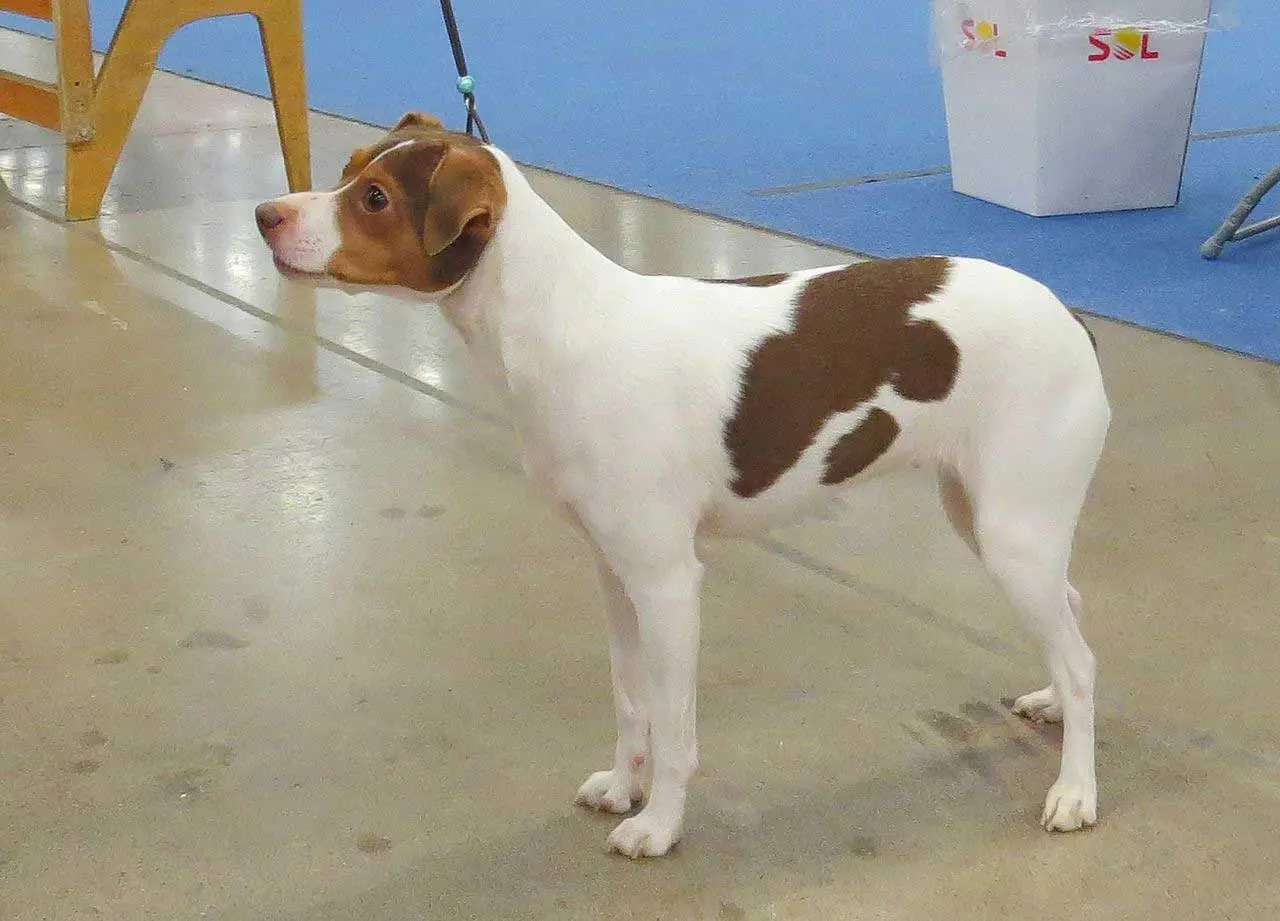
    The Brazilian terrier is a dog's size medium, slim and harmonious construction. Its square body with rounded outer lines is firm but not too heavy.. The weight of an adult animal is a maximum of eight to ten kilograms. This applies to both males and females, although the height at the withers is different in both: While reaching 35 to 40 centimeters in males, it's just 33 to 38 centimeters in females.

    Interesting and unusual is that Brazilian terrier have different tail lengths from birth: From a rudimentary stump on a medium long tail to a full tail, you can find the most varied expressions. This typical characteristic of the breed gives the Brazilian terrier an individual appearance and does not detract from its charm, on the contrary.

    The dog also owes its special charisma to the small folded ears, as well as the large round blue eyes, green, brown, Bluish gray or reddish brown with an open and lively look. The head seems very expressive. It has a triangular shape and is wide at the base. The face narrows noticeably from the widely spaced ears to the tip of the nose. Due to the relatively distinctive groove on the forehead, seems thoughtful.

    The short coat, smooth, fine and tight dog feels very nice, a bit like the hair of a rat. No underwear. Especially soft areas are found on the head, the ears, the bottom of the neck and the inside of the front legs. As a rule, a Brazilian terrier it's tricolor. The basic color is always white. It is flanked by black marks, blue and / or brown red, they provide a distinctive pattern. Over and over you hear and read that the Brazilian terrier has strong similarities to Fox Terrier. This is undeniable, but there are visible differences: the Brazilian's muzzle is much shorter and the body contours appear more rounded, while the body of the Fox Terrier is more angular.

    Character and skills

    The character of Brazilian terrier can be described, justly, as little complicated. Their social behavior is once again much better than that of other types of terrier. These may include, the stubbornness of Russel and I shake it off Fox Terrier are much less present in South America. He is very friendly with the people he meets and in relation to contact with their owners, one can use terms like "affectionate" and "tender". Also with other dogs the Brazilian terrier usually gets along smoothly.

    Like your relatives in the terrier family, the Brazilian terrier it is extremely spirited, and therefore active and lively. you could also say: a real brazilian. Therefore, need plenty of exercise. He loves to accompany runners and hikers and frolic with children., but is content with fun adventures in the park without complaining. But please, pay attention to the variety: The dog finds both pleasure in ball games and recovery. It moves freely and elegantly. Typical are short, quick steps.

    The Brazilian terrier is considered a smart dog – but of course this requires a certain amount of activity, not just outside, but also inside the house or the apartment. Its high level of attention and the fact that it is initially reserved towards strangers, his above average barking often qualifies him as a watchdog. It is also worth mentioning the dog's ability to empathize in almost any situation..

    In short, It is an excellent dog for home and family or social, who can be easily trained with a successful mix of gentle and patient guidance. Canine sports enthusiast (agility, fly-ball). It also, gets along very well with horses, making it an excellent companion for horse owners. Thanks to his pleasant character, the Brazilian terrier also suitable as a beginner dog for people who have had little or no experience of active dog ownership to date.

    Considering its origin, the Brazilian terrier is naturally used to tropical temperatures. For this reason it is recommended to give up the breed if you live in very cold and rainy climates..

    Care and health of the Brazilian Terrier

    The maintenance of Brazilian terrier it's comparatively easy. This is mainly due to the short, smooth coat without undercoat. The dog hardly loses hair, so it is also suitable for allergy sufferers who have to do without the four-legged friends of other races for health reasons.

    Talking about health:

    Another positive aspect is that the Brazilian terrier they are particularly resistant to diseases and have a high life expectancy. On average, they live on 12 to 15 years. Only with respect to the ears is caution necessary: Dogs have what are known as slanted ears, which means that the ear canal is angled. This makes ventilation of the inner ear somewhat more difficult., which encourages the settling of bacteria and fungus and significantly increases the likelihood of a dangerous ear infection. For this reason, the ears of the Brazilian terrier must be cleaned regularly and thoroughly. As such, earlobes and special ear cleaners are used. These agents help loosen dirt and wax from the ear and, therefore, keep the quadruped healthy. Important: Never use cotton swabs. would have a counterproductive effect.

    Images "Brazilian terrier"

    Photos:

    1 – Brazilian terrier – Dog 2013 Helsinki 13-15/12/2013 by Thomas / CC BY-SA
    2 – Juliana Lopes / CC BY by Brazilian Terrier, uploaded from Flickr
    3 – Matt Hidalgo / CC BY-SA by Filomena and one more of their faces =) (Brazilian Terrier)
    4 – Terrier brasileรฑo by Sini Merikallio / CC BY-SA
    5 – The 4 genetically possible colours of Terrier Brasileiro. From left to right: Tricolor black, tricolor brown, tricolor blue, tricolor isabela by TerrierBrasileiroDaPedraFilosofal / CC BY-SA
    6 – Terrier brasileรฑo by https://brit-petfood.com/en/breed-catalog/terriers/brazilian-terrier
    7 – Terrier brasileรฑo by https://pxhere.com/en/photo/1188027

    Videos "Brazilian terrier"

    Type and recognitions:

    • FCI CLASSIFICATION:
    • Group :
    • Section : . .

    Federations:

    • FCI – Terriers. Section 1 Large and medium-sized terriers. โ“˜
    • CBKC โ“˜

    FCI breed standard "Brazilian terrier"

    Origin:
    Brazil

    Date of publication of the valid original standard:
    15.06.2018

    Use:

    Used for small game hunting, as a guard and companion dog.


    General appearance:

    Is medium sized, slender, well balanced, of firm structure, but nottooheavy. The body is ofappearancesquare, with curved lines.

    IMPORTANT PROPORTIONS: Square shaped dog: the length of your body, from the shoulder to the tip of the iliac crest, it is approximately the same as its height at the withers.


    Behavior / temperament:

    This is a dog always on the move, alert, active and shrewd. He is friendly and gentle with acquaintances, butdistrustful with strangers.

    Head:

    View from the top, It is triangular in shape, wide at the base; ears are wide apart. The head decreases noticeably from the eyes to the tip of the nose. Profile view, the upper line rises slightly from the tip of the nose to the naso-frontal depression, mainly between the eyes, and continues towards the occipital bone with a slight convexity.

    Cranial region:

    Craging: It is rounded with a moderately flat forehead. Views from above, lateral lines converge towards the eyes. The distance from the outer angle of the eye to the insertion of the ears is equal to the distance between the two outer angles of the eyes. The front groovemediumis well developed.

    Dnaso-frontal depression (Stop): Pronounced.

    facial region:

    • Trufa: Moderately developed. It is dark in color, in accordance with the coat color, with nostrils wide open.
    • Horcico: Seen from above, is shaped as an isosceles triangle from both outer corners of the eye to the tip of the nose. It is strong and well molded under the eyes, with an inclined base that accentuates the naso-frontal depression.
    • Labios: Dry andfirm. The upper lip joins the lower lip exactly, covering the teeth and allowing the mouth to be closed completely.
    • Cheeks: Droughts, well developed.
    • Jaws / Teeth: 42 teeth, regularly deployed, well developed. The bite is scissor-shaped.

    EYES: Equidistantesfromthe occipital protuberanceuntilthe tip of the nose. They appear well separated. The distance between the outer corners of the eyes is equal to the distance from the outer corner of the eye to the tip of the nose. Looking straight ahead, are somewhat prominent, large andeyebrowsare slightly accented. They have shaperoundedand they are wide open. His expression is alert and shrewd. Color should be as dark as possibleand in accordance with the color of the coat.

    Blue variety has bluish gray eyes, the variety of brown colorhasBrown eyes, green or blueand the varietyinsabela, in addition to the colors of the brown variety, may also have amber eyes, both clear andorsCร โ€บr.

    EARS: Deployed laterally, in line with the eyes, well separated from each other. They are triangular in shape and the tip is pointed. They appear semi-upright with the tip bent down towards the outer corner of the eye.

    Neck:

    It is of moderate length, balanced in relationwiththe head. Harmoniously joins the head and trunk.Well defined, clean and dry. The top line is slightly arched.

    Body:

    Well balanced. It is not too heavy and has a square shape, withcurve linesNot baddefined.

    • Lรญnand the top: It is firm and straight, rising slightly from the cross to the rump.
    • Cruz: Well pronounced, harmoniously joins the forelimbs.
    • Espalda: Relatively short and well muscled.
    • Itmo: Short and firm. Armoniosamente a la grupa.
    • Glikeness: Slightly inclined, tail implantation is low. Well developed and muscular.
    • Pecho: Long, deep, reaches to elbow level. Ribs well arched. The sternum is moderately curved. The sill is not very pronounced and is moderately wide, allowing free movement of the front limbs.
    • Lรญnlower ea and belly: Slightly curved, that rises back but not extremely retracted.

    Tail:

    Nnaturally short or long; on this last case, cannot exceed the hock. Strong and low set, happily held, forming a smooth curve when it's long, not coiled on the back.

    Tips

    PREVIOUS MEMBERS:

    • Apgeneral arience: Seen from the front, they are straight, moderately separated, in the same line as the hind limbs, which are also straight, although more separated.
    • Hormbros (Blades): They're long.
    • Brazos (Humerus): They are approximately the same length as the shoulder blade, forming with it an angle of approximately 110 ยฐ.
    • Elbows: They are well attached to the body, at the same level as the lower chest line.
    • Antarms: Straight, skinny, dry.
    • MetacarpusVery moderate, straight and slim, almost perpendicular to the ground.
    • Pinis previous: compacts. They don't even deviate inwards, nor out. The two middle fingers are longer than the others.

    LATER MEMBERS:

    • Apgeneral arience: Noticeably muscular, well developed thighs, more separated than the previous members.
    • Thigh (Femur): Well developed and muscular.KneeModerately angled.
    • PinScheme (tibia): It is proportionate to the size of the thigh.
    • CorvejรณnRelatively short and perpendicular to the ground when the dog is standing.
    • Metatarsus: Straight.
    • Pinis later: compacts; with fingers longer thanon the front feet.

    Movement:

    Elegant, loose, short and quick steps.

    Mantle

    Well adjusted, no slack. Dry.

    Plink: Is short, smooth, fine, but not soft. It is glued to the skin; you can't see the skin through it. It is finer on the head, the ears, below the neck, in the interior and bottom part of the forelimbs and behind the thighs.

    Colorr: Predominant white background color with markingsblack, blue, brown or isabela. The following characteristic marks must always be present: fire color over the eyes, on both sides of the muzzle, as well as inside the ears and on the edge of these. These marks may exist on other parts of the body at the edge of the marks.

    The head must always have marksblack, blue, browns or isabelaon the forehead and ears.Cana star and white marks appear preferably in the front groove and in the parts ltoteralesof the muzzle, distributed as harmoniously as possible.


    Size and weight:

    Alturto the cross:

    • Males: between 35 and 40 cm.,
    • females: between 33 and 38 cm..

    Weight: 10 kg approximately.


    Fouls:

    Any deviation from the aforementioned criteria is considered as a fault and the severity of this is considered to the degree of the deviation to the standard and its consequences on the health and well-being of the dog..

    • Scarce cloak that reveals the skin, across the board the atypical.
    • Faults in characteristic marks
    • Shoulders too heavy or loose
    • Wellrear arched ta
    • Falharmony, atypical complexion.

    FALTAS GRAVES:

    • Lรญnupper e descending from the cross to the rump.

    FALTAS DISQUALIFYING:

    • Aggressive or extreme timid
    • Any dog โ€‹โ€‹showing clear signs of physical or behavioral abnormalities.
    • Group plan.
    • Prognathism higher than the bottom
    • Ear fully erect.


    N.B.:
    • Males should have two normal-appearing testicles fully descended into the scrotum..
    • Only functionally and clinically healthy dogs, with the typical conformation of the breed, should be used for parenting.

    Itlatest changes are in bold.

    TRANSLATION: IRIS Carrillo; Skrivanek Translation Services. Official language: IN.

    Revision: SR. Jorge Nallem.

    Source: F.C.I - International Cynological Federation

    Alternative names:

    1. Fox Paulistinha (English).
    2. terrier brasileiro (French).
    3. Terrier Brasileiro (German).
    4. Fox paulistinha, Foquinho (Portuguese).
    5. Fox Paulistinha, Terrier Brasileiro (espaรฑol).

    โ–ท The world of Pets: Dogs, cats, birds, reptiles, amphibians

    Border Terrier
    Gran Bretaรฑa FCI 10 -Large and medium-sized Terrier

    Border Terrier

    The Border Terrier they are intelligent, loving, quite independent and.

    Content

    History

    Border Terrier It is a breed of dog of the Terrier that group, It takes its name from its place of origin, the Scottish borders. Shares ancestors with the Dandie Dinmont Terrier and Bedlington Terrier.

    Originally bred as a Hunter of foxes and small varmints, they were used to hunt otters and Badgers, as well.
    Although the breed is very old, the Border Terrier was officially recognized by the Kennel Club of Great Britain in 1920, and by the American Kennel Club (AKC) in 1930.

    In 2006, the Border Terrier ranked 81, in number of AKC registrations and rank 10 th in the UK (in the 2088, ranked number 8).

    Read more

    โ–ท The world of Pets: Dogs, cats, birds, reptiles, amphibians

    Bedlington Terrier
    Gran Bretaรฑa FCI 9 - Large and medium sized Terriers.

    The Bedlington Terrier, catalogued as a dog with the look of lamb and lion heart.

    Bedlington Terrier

    Content

    Characteristics "Bedlington Terrier"

    Coexistence is important that you have with your new friend. Before considering the acquisition of a dog of the breed "Bedlington Terrier" you know certain factors. Not all breeds of dogs are apt to live in an apartment, you must take into account his character, their need for exercise, their interaction with other pets, their care and if you have small children, their level of tolerance towards them.

    Adaptation โ“˜

    4,0 of 5 stars (based on 1 review)

    friendly dog โ€‹โ€‹โ“˜

    4,0 of 5 stars (based on 1 review)

    hair loss โ“˜

    1,0 of 5 stars (based on 1 review)

    Affection level โ“˜

    5,0 of 5 stars (based on 1 review)

    Need for exercise โ“˜

    3,0 of 5 stars (based on 1 review)

    Social need โ“˜

    4,0 of 5 stars (based on 1 review)

    Home โ“˜

    4,0 of 5 stars (based on 1 review)

    Toilet โ“˜

    4,0 of 5 stars (based on 1 review)

    Friendly with strangers โ“˜

    4,0 of 5 stars (based on 1 review)

    barking โ“˜

    3,0 of 5 stars (based on 1 review)

    Health โ“˜

    2,0 of 5 stars (based on 1 review)

    Territorial โ“˜

    5,0 of 5 stars (based on 1 review)

    Cat friendly โ“˜

    3,0 of 5 stars (based on 1 review)

    Intelligence โ“˜

    3,0 of 5 stars (based on 1 review)

    Versatility โ“˜

    4,0 of 5 stars (based on 1 review)

    Child friendly โ“˜

    4,0 of 5 stars (based on 1 review)

    Surveillance โ“˜

    3,0 of 5 stars (based on 1 review)

    joy โ“˜

    5,0 of 5 stars (based on 1 review)

    History

    The Bedlington Terrier It is a breed of dog that was raised in the 19th century in Northumberland, England, and named after the place of birth, Bedlingtonshire.

    On 1825, the race renamed the Bedlington Terrier Bedlington. The race was highly valued for the fox hunting, hares and Badgers. He was also used as a vermin Hunter by miners from Bedlington. Miners exploited his bravery to use it as a dog fight with the dogs of hunters that used perdigueros dogs.

    As he Otterhound and the Dandie Dinmont Terrier they are potential contributors to the race. Some breeders, especially those of England cross the Bedlingtons with Whippets and Greyhounds to produce what they call Lurchers.

    Physical characteristics

    It was created as a breed of fighting and hunting, later became a popular pet. Gentle in appearance, has an arched back, a crest and thick curly coat that can be of various colours, grey, reddish / brown clear or color sand. The breed is approximately 38โ€“40 cm tall and weighs between 10 and 11 kg.

    The Bedlington Terrier, It has been described as a dog with โ€œlamb look and lion heartโ€, to some extent because of their physical appearance (looks like a lamb), but also by its nature.

    This breed has a head shaped wedge with penetrating almond-shaped eyes. His physiognomy is different from most of the Terrier, It resembles more a hound. His physical characteristics allow him to run at high speed.

    The average lifespan of the "Bedlington Terrier" is around 13,5 years.

    Observations

    Their fur tends to be misleading, They seem to be a lamb, but in reality, each hair grows from a hair follicle, It has a cycle of growth, and when it dies it is replaced by another follicle, but the dead hair is still thereโ€ฆ bulging.

    For which reason, daily brushing is very important if you don't want to have, the whole house full of hairโ€ฆ Also, since it is very thin, adheres to any part, and it can even be inhaled, causing problems for allergic persons. Workspace very well to family life and are good with children.

    Character and skills

    Calmer and less noisy than other Terrier. Usually one moderate behaviour and good character, they are very good companions for families.
    If left alone for many hours, they can become very destructive, since they get bored easily and everything they catch..., in danger of being destroyed. For which reason, It advisable to give long walks, where you can run around and release energy.

    Images "Bedlington Terrier"

    Photos:

  • 1 – A Bedlington Terrier during an FCI dog show in Switzerland by Corinne Benavides
  • Bedlington terrier
  • David Oat [CC BY-SA]
  • David Oat [CC BY-SA]
  • Videos "Bedlington Terrier"


    Type and recognitions:

    • FCI CLASSIFICATION:
    • Group :
    • Section : . .

    Federations:

    FCI โ“˜, AKC โ“˜, ANKC โ“˜, CKC โ“˜, โ€‹KC โ“˜, NZKC โ“˜, UKC โ“˜

    FCI breed standard Bedlington Terrier

    FCIFCI - Bedlington Terrier
    Bedlington

    Alternative names:

    1. Rothbury Terrier, Rodbery Terrier, Rothbury’s Lamb (English).
    2. Bedlington terrier, Terrier Bedlington (French).
    3. Bedlington Terrier, Rothbury Terrier (German).
    4. Bedlington terrier (Portuguese).
    5. Bedlington terrier (espaรฑol).