โ–ท The world of Pets: Dogs, cats, birds, reptiles, amphibians

Artois Hound
Francia FCI 28 . Medium-sized Hounds

Sabueso Artesiano

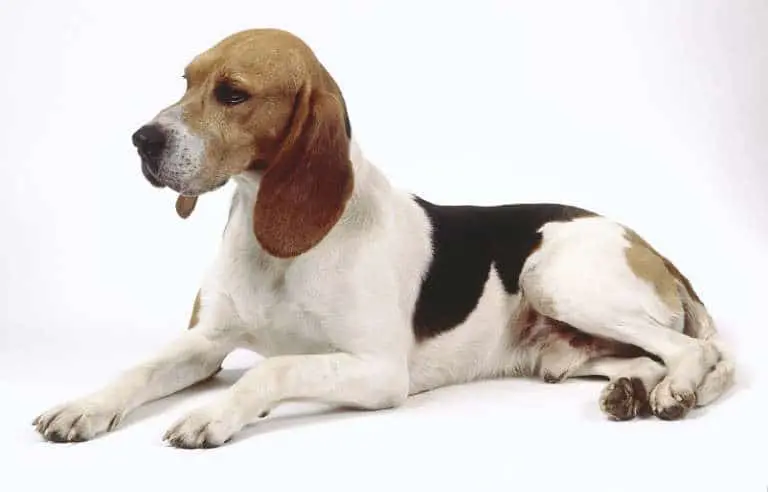
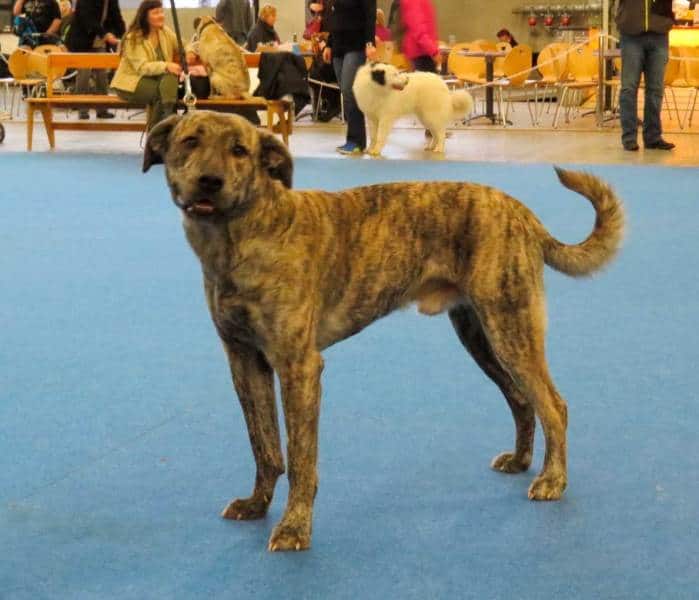
The Artois Hound it is a good companion dog but with an independent character.

Content

History

The Artois Hound It is a smaller version of the "Great Artesian Hound", which is now extinct and was used in France in the 17th century for wild boar hunting, deer and small game. As hare hunting grew in popularity, the need for smaller dog breeds increased. Known in his land as "Briquetโ€ (What does "little braco" mean?) and also how Picard.

It is true that it is a dog of ancient lineage like few others has enjoyed the admiration and the royalty protection (King Henry IV and Louis XIII), being considered a distinguished Hunter of Hare.

He played with devotion to his duties in the most varied scenarios (plain, forest or in the densest bushes) and used to be easily identified by his master due to his original bark.

Some authors have that in 1609 Prince Alexander Gray has sent some specimens of this breed to the King of England, which have subsequently been used for the creation of the Beagle.

The development of Artois Hound, However, It has not been stable or linear. According to a French hunting manual, dating of 1890, It is known that at the end of the 19th century it used to be difficult to find pure specimens of this lineage..

The apparent arbitrariness to the development of the race and their successive crosses with other species (mostly of English origin) they will disperse the original purity of this lineage.

In this stage a so-called breeder Ernest Levoir tries to restore this lineage to the region Picardie. There are other names that were associated with these recovery attempts during the 20th century, as Mallard (at the time of World War I), Audrรฉchy, among others.

With everything, Some authors consider that it has been Mme. Great Pyla who has won the most positive results, managing to re-establish the breeding of this strain.

Currently, This dog It remains a rare breed and there are quite a few clubs that protect their development.

Physical characteristics "Artesian hound"

Very agile, It adapts to various types of terrain and shown extremely persistent in the performance of their duties. It also, has an excellent sense of direction, a developed sense of smell and speed of movement.

This robust dog has a fur short, dense, soft and well attached to the body.

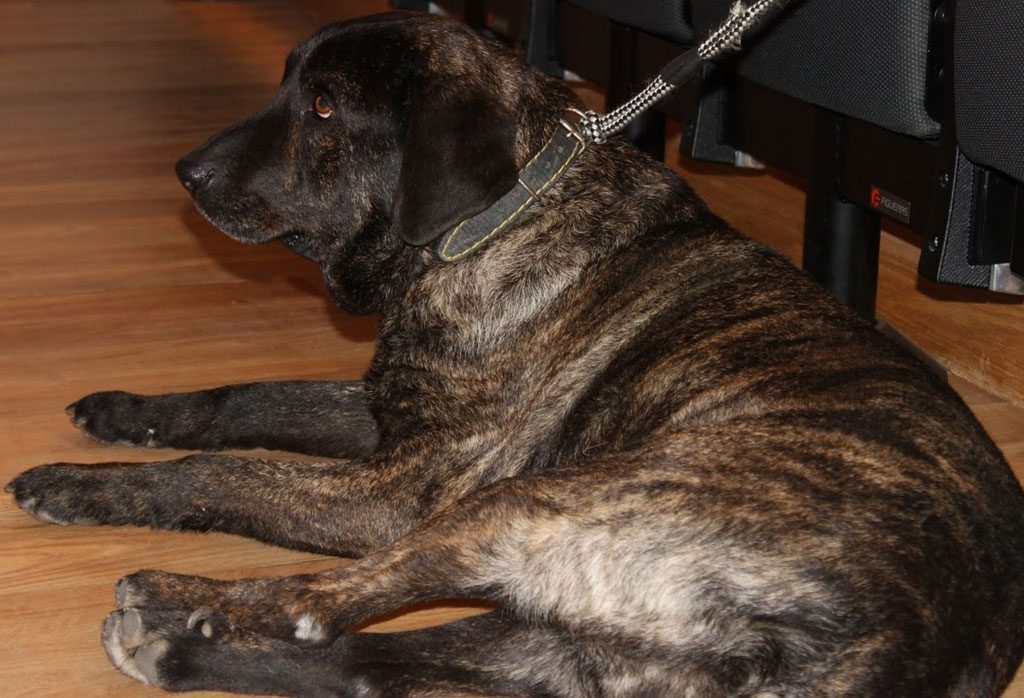
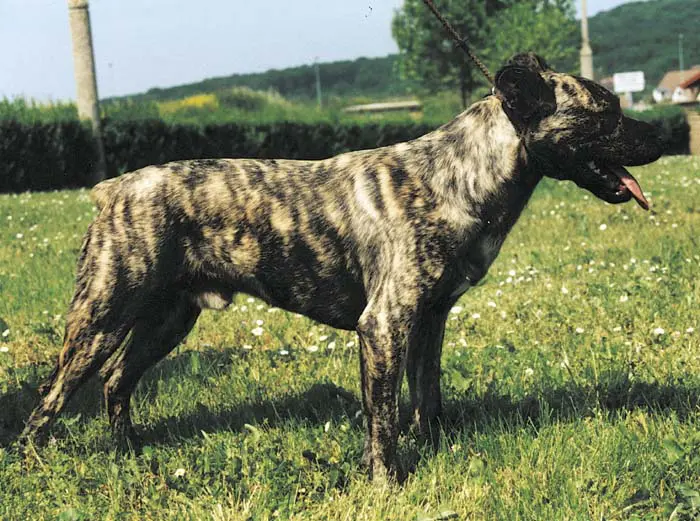
The color the coat is dark Fawn tri-color, It is a color similar to the Hare or the Badger. It has large spots. Y, the head tends to be carbonated, or charcoal grey and sometimes presents black reflections.

It has wide and rounded skull and pronounced chamfer. It has the square snout, the black truffle and its round eyes give it a gentle air.

The ears they are wide, long and inserted at eye level.

The neck and chest are vigorous and long. The rump and the spine are also robust and Member muscular. In the long run tail stays in the form of sickle.

Character and skills "artisian hound"

Currently, this dog is still used more as a hunting dog than as a companion dog. Like the large spaces, It does not conform to the sedentary life in the city.

You can live in a home but if given a daily dose of exercise physical and games.

The Artois Hound he is a brave and intelligent dog, very independent and quite energetic.

It is an animal very resistant, possessing a special bark that can be heard at a great distance. It is a dog that is used primarily for hunting.

Hunters usually go hunting with six or eight specimens of Artois Hound.

It is not usually seen much as a companion dog, but in this case it is a good companion, It is not a Mongrel dog thanks to its strong independence, but will be loving in their own way, without empalagar.

Care and maintenance of a "artisian hound"

The Artois Hound not suitable as a family dog. Needs a meaningful task that demands your doggy stamina and intelligence. His most popular task is still hunting. So, this dog should be left in the hands of an experienced hunter.

To the Artois Hound would not like the position in a city apartment, no matter how comfortable the apartment is. You need freedom of movement, What can you get in the country?. As the Artois Hound He is a pack dog and feels very happy among his peers., second position or multi-dog position is recommended. The care of this breed of dog is not intensive. Ear care can be a bit more complex, but the coat is very easy.

Where to buy a "artisian hound"

The Artois Hound It is a rare breed of dog that was on the verge of extinction after World War 2.. If you are interested in this dog, should have a lot of patience and time. Contact the breeders in advance and ask if they are expecting a litter and if there are any still available. Puppies are often reserved in advance. But it's better not to buy from breeders when you have a bad feeling!! If possible, you should take a look at the kennel. Don't be afraid to ask the breeder too many questions!! A good breeder, for whom the welfare of puppies is the first priority, will be happy to answer your questions and give you some valuable tips on maintenance, training and feeding the dogs.

Images of the "Artesian hound"

Videos of the "Artesian hound"

Type and recognitions:

  • FCI CLASSIFICATION:
  • Group :
  • Section : . .

Federations:

  • FCI – Group 6: Scent hounds, and related breeds. – Section 1.2: Medium-sized Hounds. โ“˜
  • Central Canine Society โ“˜

FCI breed standard "Artois Hound"

Origin:
France

Date of publication of the valid original standard:
24.07.1996

Use:

The artisian hound is used mainly today for hunting with shotguns. As a scout he works with application to resume the lost trail; Your speed is moderate, But sustained. Since it has an excellent smell, is capable of failing the hare tricks during hunting in the plain.

With its indisputable hunter qualities, He knows how to lead the roe, both in the forest, as in the Altos Montes, Easy to penetrate. For its intrepidity and courage, Makes the most recalcitrant boar out of the weed. It also, This is a rustic animal, endowed with a wonderful bark, animated, Sound and tall that is allowed to be heard in the distance. A uniform group of six to eight tricolor craftsmen constitutes a hunting team that would please the most demanding hunter.


General appearance:

This is a well constituted dog, muscular and not very long. Imparts an impression of strength and energy.

IMPORTANT PROPORTIONS:

โ€ข Cross height/body length between 10:10 and 10:11
โ€ข Chest height/height at approximately 1:2
โ€ข Heads/head length amplitude 5:9
โ€ข Nasal cane length/skull length 8:10


Behavior / temperament:

This is a vigorous and rustic dog. It has a very good smell and joins the Hae. Is balanced and affectionate.

Head:

-

Cranial region:
  • Skull: It is bulky, wide and very short. It is flat and rounded at the top, but the occipital Protuberance is not pronounced.
  • Depression links (Stop): It is accentuated.

facial region:

  • Truffle: Grand, black. The Windows are wide open.
  • Lips: The upper lip covers in large part to the bottom and must be sufficiently marked for that, in profile, the snout has a square shape.
  • Snout: Straight nose cane, in profile, the snout is moderately elongated.
  • Jaws/Teeth: The joint is in the form of scissors. The upper incisors cover the lower ones in narrow contact and are implanted at right angles in relation to the jaw.
  • Cheeks: They are thin.
  • Eyes: With regard to the width of the forehead, the eyes are not very together. They are round, melancholy eyes and sweet. Its color is dark brown. The mucous membranes of the lower eyelids may not be apparent.
  • Ears: They are placed at the height of the eye line. They are somewhat thick, wide and their limbs are rounded. They are almost flat and quite long; they arrive until the birth of the truffle.

Neck:

It is powerful and moderately long. It presents very little double chin.

Body:

  • Back: It is well marked and wide.
  • Pork loin: Slightly arched.
  • Rump: The legs providing a slight incline to the rump, It is well muscled.
  • Breast : It is wide, long and deep enough for the sternum line to reach the elbows level. Snugly ribs.
  • Belly: The flanks are round

Tail:

Thick, quite long and carried in a sickle-shaped. You must never fall forward. The hair is headed (taper, around the tail, long and thick hairs slightly separated in the form of stem).

Tips

PREVIOUS MEMBERS: Seen in conjunction, they are powerful and Plumb.

  • Shoulder: They are oblique and muscular.
  • Elbows: They are well located on the axis of the body.
  • Metacarpus: It is slightly oblique.

LATER MEMBERS: Seen as a whole and from the back, The tip of the buttock, the middle part of the leg, the Hock, The metatarsal and foot are on the same vertical line.

  • Thighs: They are descended and well muscled.
  • Hock: Thick, moderately bent.
  • Metatarsals: They are short and thick.

FEET: Slightly elongated. They are large, but compact. The pads are black, durable and compact.

Movement:

Agile and uniform.

Mantle

SKIN: Thick enough.

HAIR: Short, dense and fairly smooth.

COLOR: Tri-color dark Fawn, Hare or badger hair pulling, with blanket or large stains. Usually, the head is Fawn color, and sometimes carbonated.


Size and weight:

  • Height to the cross: Both males and females, is of 53 to 58 cm.. With a tolerance of 1 cm..
  • Weight: The average weight is of 28 to 30 kg.


Fouls:

Any deviation from the aforementioned criteria is considered as a fault and the severity of this is considered to the degree of the deviation to the standard and its consequences on the health and well-being of the dog..

Head:

  • Narrow skull, vaulted.
  • Too pointed snout.
  • Upper lip tight, not enough descended.
  • Eye slightly clear, apparent conjunctiva.
  • Ears placed below the eye line, short or not low enough.

Neck:

  • Long, Lightweight.

Body:

  • Very long dorsal region, loose top line, sunken.
  • Flat ribs.
  • Agalgados flanks.

Tail:

  • Too long or too skewed to one side.

Forelimbs:

  • Short shoulders.
  • Elbows that deviate out.
  • Straight metacarpals.
  • crushed feet.
  • Separate fingers, too long.

Hind limbs:

  • Flat thighs.
  • Straight hocks, closed or far apart.

Color:

  • Presence of mottled spots.

Behavior:

  • shy dog.

MISS PLAYOFFS

  • Fearful or aggressive dog.
  • Lack of type (animal, in general terms, does not present the same characteristics as its peers of the same race).
  • Anatomical anomaly.
  • Visible hereditary defect causing invalidity.
  • Upper or lower prognathism.
  • Eyes too light.
  • Weak limbs.
  • Any other color which is not established by the standard.
  • Speckled spots that extend throughout the body.
  • Withers height different from that laid down by the standard.
  • Any dog โ€‹โ€‹showing clear signs of physical or behavioral abnormalities must be disqualified..


N.B.:

Males should have two normal-appearing testicles fully descended into the scrotum..

TRANSLATION: IRIS Carrillo (Puerto Rico Kennel Federation).

Source: F.C.I - International Cynological Federation

Alternative names:

1. Chien dโ€™Artois, Picard, Briquet (English).
2. Grand chien d’Artois, Briquet, Picard (French).
3. Artois Hound (German).
4. (em francรชs: Chien d’Artois (Portuguese).
5. Chien dโ€™Artois, Picard, Briquet, Sabueso de Artois, Perro de Artois(espaรฑol).

โ–ท The world of Pets: Dogs, cats, birds, reptiles, amphibians

Chow Chow
FCI 205 - Asian Spitz and related breeds
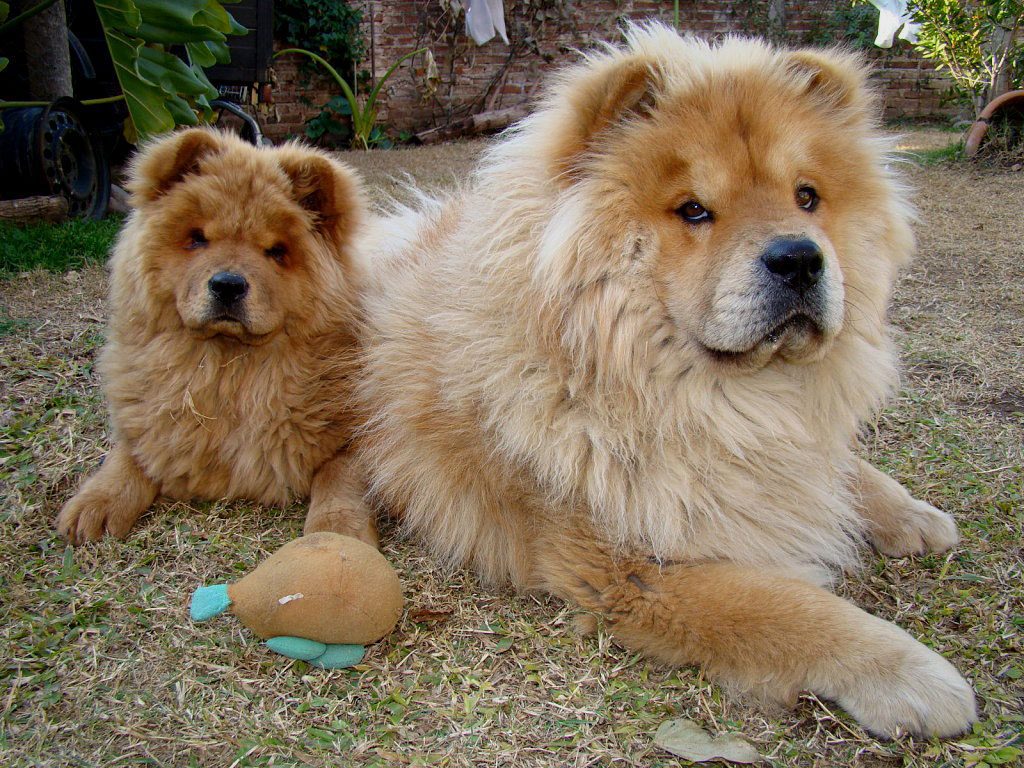
Chow Chow

The Chow Chow are distinguished by their unusual blue-black tongue

Content

History

The Chow Chow has been known for more than 2500 years in China, where it is represented in bas-reliefs of the time. Dog of mysterious origin, belongs to the Spitz family. Some believe it is a cross between a Tibetan Mastiff and a Samoyed., while others think it is more of an original dog, that is to say, that comes from the Nordic dogs (internal temperature above average, particular shape of the bony structure of your skull…). In any case, stories about the origins of Chow Chow they are usually just hypotheses.

In Manchuria and Mongolia it was used as a war dog, to watch over herds or rushes and as a draft animal. The Chow Chow they were also found in Tibetan monasteries: his function was to defend the monks. Occasionally it was a hunting dog, it was eaten in some parts of china, and his skin was also traded.

It was introduced in Europe in 1865, when Queen Victoria of England received one as a gift and started raising it. It was officially recognized by the Kennel Club English little less than 30 years later, in 1894. Today, only used as a pet.

The term ยซChow Chowยซ has appeared recently. In fact, during the interwar period, the Chow-Chow It was known in the West as the "Hong Kong dog".

Despite some other blood additions over the years 50, the Chow Chow is a breed that has remained pure.

Physical characteristics

The Chow Chow It is a dog with a robust body that goes hand in hand with its wide skull and its small triangular ears slightly rounded at the tip and it carries them apart with the tip slightly inclined forward which are always erect. His eyes are dark, from Brown to black always small, almendrada form. The nose is completely black and wide except in color Chow cream and white, which supports the color pink. The mouth is wide and strong. They have a characteristic "stilt" movement, due to the peculiar conformation of their hind legs, which lack angle, and it makes it look like walking on stilts.

It is a dog of agile and balanced movement. By joining the legs in parallel to two in the movement. This breed has a very dense fur that can be rough or soft, which it accumulates more around his neck, giving it its distinctive frill or horsehair. Its fur can be red, black, Blue and cream. Those who have spotted or multi-coloured fur are considered outside the standards of the breed.

The Chow Chow They are distinguished by their unusual bluish-black or purple tongue and strong legs.. The gene for the bluish-black or purple tongue is usually dominant in this breed, and so it also tends to be in from mixed races of a Chow Chow.

A legend that says, When the gods placed the stars in the firmament, pieces of the sky fell that the Chow Chow licked and since that day he has had a blue tongue..

Character and skills

Today, the Chow Chow is commonly a companion dog. His strong sense of ownership of their homes with their - sometimes- intriguing approach to strangers may be misinterpreted by those who do not belong to his family. But, signs of shyness and aggression are not characteristic of this breed. Copies of the sex opposite usually coexist with less tension than with those of the same sex, but it is not uncommon to see Chow Chow of different sexes living together peacefully.

They are extremely loyal to their family and it costs change masters. Affection usually shown only to people you know, so visitors should not push them physically as they will not immediately accept strangers as quickly as they do with their family members.

They are not a very active breed. Life in an apartment suits them, if they are given the opportunity to get enough physical activity daily. The owners must take daily walks with their Chow Chow, so be it in a small place, to maintain their physical and mental abilities in a healthy way.

Although this breed shows low energy most of the time, needs a routine to be able to explore their environment and thus maintain a loving nature. Its typical behavior resembles that of a domestic cat more than that of a dog., for cleaning and its enigmatic nature.

Grooming

Grooming requirements depend on the type of fur. A Chow straight hair needs to be brushed weekly only. One with a rough coat should be brushed every other day. Both varieties molt twice a year, during which the coat will abundantly. Rarely need a bath, although a hot bath followed by a thorough drying can help remove the coat you're missing.

The rest is basic care. Trim nails as needed, usually once a month. Brush your teeth frequently for general good health and fresh breath. Check ears weekly for dirt, redness or odor that may indicate an infection. If the ears look dirty, clean them with a damp cotton ball and a mild ear cleaner recommended by your vet.

Health

The Chow Chow is the breed of dog most affected by Dysplasia elbow. It is also vulnerable to hip dysplasia, dislocation of patella, thyroid disease, Pemphigus Foliaceus and ocular disorders such as entropion and ectropion. The risk of these disorders increases exponentially when they are purchased at pet stores unscrupulous caregivers who do not test their dogs to see if there is existence of genetic disorders. Like this, a potential buyer of this breed should ask about the health status of the pet to buy. Animal caretakers must provide the client with a guarantee of the dog's health. But despite his delicate health, It is an excellent companion dog for humans..

Characteristics "Chow Chow"

Coexistence is important that you have with your new friend. Before considering the acquisition of a dog of the breed "Chow Chow" you know certain factors. Not all breeds of dogs are apt to live in an apartment, you must take into account his character, their need for exercise, their interaction with other pets, their care and if you have small children, their level of tolerance towards them.

Adaptation โ“˜

2,0 of 5 stars (based on 1 review)

friendly dog โ€‹โ€‹โ“˜

1,0 of 5 stars (based on 1 review)

hair loss โ“˜

5,0 of 5 stars (based on 1 review)

Affection level โ“˜

2,0 of 5 stars (based on 1 review)

Need for exercise โ“˜

2,0 of 5 stars (based on 1 review)

Social need โ“˜

2,0 of 5 stars (based on 1 review)

Home โ“˜

3,0 of 5 stars (based on 1 review)

Toilet โ“˜

5,0 of 5 stars (based on 1 review)

Friendly with strangers โ“˜

1,0 of 5 stars (based on 1 review)

barking โ“˜

5,0 of 5 stars (based on 1 review)

Health โ“˜

4,0 of 5 stars (based on 1 review)

Territorial โ“˜

3,0 of 5 stars (based on 1 review)

Cat friendly โ“˜

2,0 of 5 stars (based on 1 review)

Intelligence โ“˜

2,0 of 5 stars (based on 1 review)

Versatility โ“˜

2,0 of 5 stars (based on 1 review)

Child friendly โ“˜

2,0 of 5 stars (based on 1 review)

Surveillance โ“˜

2,0 of 5 stars (based on 1 review)

joy โ“˜

3,0 of 5 stars (based on 1 review)

Images "Chow Chow"

credits:

1 – Flickr: Chowdren
2 – International Dog Show, Szczecin 2007 by Remigiusz Jรณzefowicz
3 – Pets Adviser from Brooklyn, USA / CC BYwww.petsadviser.com
4 – by https://pxhere.com/es/photo/234926
5 – Flickr: Bokeh the Chow by Luigi Borromeo
6 – Flickr: Chowdren (chow chow) by Seongbin Im
7 – by https://www.needpix.com/photo/371158/chow-chow-dog-snow-canine-domestic-pet-portrait-looking-attentive
8 – Russian: photo from the exhibition by Vladimir gubanov

Videos "Chow Chow"

Type and recognitions:

  • FCI CLASSIFICATION:
  • Group :
  • Section : . .

Federations:

  • Federations: FCI โ“˜, AKC โ“˜, ANKC โ“˜, CKC โ“˜, โ€‹KC โ“˜, NZKC โ“˜, UKC โ“˜

  • FCI breed standard Chow Chow

    FCIFCI - Chow Chow
    CHOW

    Alternative names:

    1. Chow (English).
    2. Chow (French).
    3. Chow (German).
    4. Chow (Portuguese).
    5. Chow (espaรฑol).

    โ–ท The world of Pets: Dogs, cats, birds, reptiles, amphibians

    Cirneco dell'Etna
    Italia FCI 199 . Primitive type - Hunting Dogs
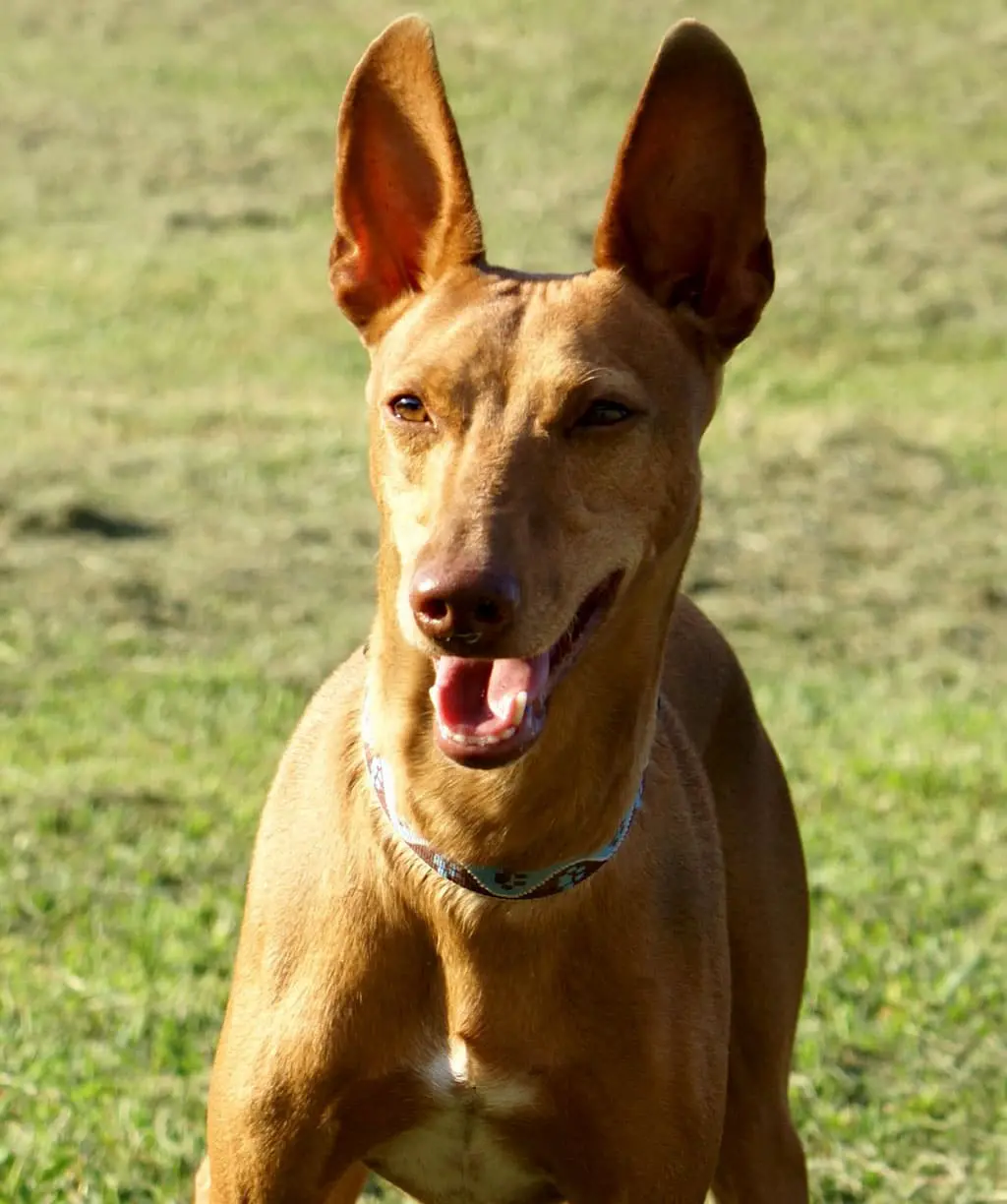
    Cirneco del Etna

    This lively and friendly Sicilian Greyhound makes an excellent companion and keeper requiring regular exercise – 20 to 30 minutes a day –

    Content

    History

    He "Cirneco dell'Etnaยซ, also it is known as the Sicilian Greyhound, it can resemble a small Pharaoh Hound, but it is a different breed of Italian origin, with its own color markings, shaped tail and ears in a triangle. Named after Mount Etna, on the Italian island of Sicily, where their ancestors hunted rabbits and hares. Lurks silently, So you can even sneak up on birds.

    A Mediterranean dog of ancient origin probably descended from hunting dogs that existed at the time of the pharaohs in ancient Egypt and were introduced to the Mediterranean basin by the Phoenicians, Sicily as the region chosen for adoption. Evidence of the presence of the Cirneco on the island is given by its representation in currencies, engravings and mosaics that date back many centuries BC and was always considered the oldest hunting dog, select and highly respected.

    Today, This rare breed is predominantly a family companion.

    Physical characteristics

    It is primitive and elegant shapes and graceful. Their size is medium and compact body, robust with a thin layer of hair and ears pricked, always alert. Its structure is sub longilinear.

    Thanks to his innate athletic ability, It has a natural agility and ability to run after a complaint. The Cirneco It has a reputation for being easier to train than others hounds, provided that the training sessions are short.

    SIZE AND WEIGHT:

    Height to the cross: Males: 46 โ€“ 50 cm.. females: 44 โ€“ 48 cm.. tolerance 2 cm below the minimum and above the maximum height. Weight: Males: 10 โ€“ 13 kg. females: 8 โ€“ 11 kg.

    Character and skills

    The breed standard requires that the Cirneco be alert and be gentle, with an independent temperament. In this curious and playful greyhound loves to be with people. It's also smart and trainable, especially if positive reinforcement techniques are used as praise, games and goodies. Although small, the Cirneco is a hunter by nature. Always keep a tight leash, If you see a hare, the chase. But, a stern tone of voice should be enough to bring him back.

    Start training your puppy the day you bring him home. Even at eight weeks old, He is able to absorb everything you can teach him. Don't wait until you have 6 months to start training him or you'll have to deal with a more stubborn dog. If possible, take it to school for puppies when you 10 or 12 weeks of age, y socialize, socialize, socialize. But, Note that many kinds of training puppies require certain vaccinations (such as kennel cough) stay up to date, and many veterinarians recommend limited exposure to other dogs and public places until puppy vaccinations (including rabies, distemper and parvovirus) They are completed. Instead of formal training, you can start training your puppy to socialize at home and among family and friends until immunizations are completed in the puppy.

    Health

    As there are so few of these dogs, Little is known about the health of Cirnechi. In general, They seem to be a tough race, but they can suffer muscle injuries and the toes to the running. A reputable breeder will show potential health problems, including any conditions you have noticed on your own lines.

    Careful breeders their dogs examined for genetic diseases, and they only breed the best looking specimens, but sometimes Mother Nature has other ideas and a puppy can develop a genetic condition. In most cases, can still live a good life, thanks to advances in veterinary medicine. And remember that you have the power to protect your Cirneco one of the most common health problems: the obesity. It keep a proper weight is a simple way to extend the life of its Cirneco.

    Grooming

    The Cirneco has a bright coat, brown to brown, it is easy to care: Brush it weekly using a dog mitt or rubber hair brush. If you constantly brush, shouldn't need a bath very often.

    The rest are taken care routine: Often brush their teeth with a toothpaste pet approved by the veterinarian for general good health and fresh breath, and cut nails every week or two.

    Characteristics "Cirneco dell'Etna"

    Coexistence is important that you have with your new friend. Before considering the acquisition of a dog of the breed "Cirneco dell'Etna" you know certain factors. Not all breeds of dogs are apt to live in an apartment, you must take into account his character, their need for exercise, their interaction with other pets, their care and if you have small children, their level of tolerance towards them.

    Adaptation โ“˜

    5,0 of 5 stars (based on 1 review)

    friendly dog โ€‹โ€‹โ“˜

    5,0 of 5 stars (based on 1 review)

    hair loss โ“˜

    3,0 of 5 stars (based on 1 review)

    Affection level โ“˜

    5,0 of 5 stars (based on 1 review)

    Need for exercise โ“˜

    4,0 of 5 stars (based on 1 review)

    Social need โ“˜

    3,0 of 5 stars (based on 1 review)

    Home โ“˜

    5,0 of 5 stars (based on 1 review)

    Toilet โ“˜

    2,0 of 5 stars (based on 1 review)

    Friendly with strangers โ“˜

    3,0 of 5 stars (based on 1 review)

    barking โ“˜

    3,0 of 5 stars (based on 1 review)

    Health โ“˜

    1,0 of 5 stars (based on 1 review)

    Territorial โ“˜

    2,0 of 5 stars (based on 1 review)

    Cat friendly โ“˜

    3,0 of 5 stars (based on 1 review)

    Intelligence โ“˜

    3,0 of 5 stars (based on 1 review)

    Versatility โ“˜

    3,0 of 5 stars (based on 1 review)

    Child friendly โ“˜

    3,0 of 5 stars (based on 1 review)

    Surveillance โ“˜

    3,0 of 5 stars (based on 1 review)

    joy โ“˜

    3,0 of 5 stars (based on 1 review)

    Images "Cirneco dell'Etna"

    1. Cirneco dellโ€™Etna during International show of dogs in Katowice – Saucer, Poland by Pleple2000 / CC BY-SA
    2. Cirneco Dell Etna by Jan Eduard
    3. Cirneco dellโ€™Etna during International show of dogs in Katowice – Saucer, Poland by Pleple2000 / CC BY-SA
    4. Cirneco dellโ€™Etna during dogs show in Katowice, Poland by Pleple2000 / CC BY-SA
    5. Cirneco dell'Etna by Night-thing (Flickr)
    6. Cirneco by Oknolaz / CC BY-SA

    Videos "Cirneco dell'Etna"

    Type and recognitions:

    • FCI CLASSIFICATION:
    • Group :
    • Section : . .

    Federations:

  • FCI โ“˜, AKC โ“˜, ANKC โ“˜, โ€‹KC โ“˜, UKC โ“˜

  • FCI breed standard Cirneco dell'Etna

    FCIFCI - Cirneco dell'Etna
    Cirneco

    Alternative names:

    1. Cirneco (English).
    2. Cirneco (French).
    3. Cirneco (German).
    4. Cirneco (Portuguese).
    5. Cirneco (espaรฑol).

    โ–ท The world of Pets: Dogs, cats, birds, reptiles, amphibians

    Cairn Terrier
    Gran Bretaรฑa FCI 4 . Small sized Terrier

    Cairn Terrier

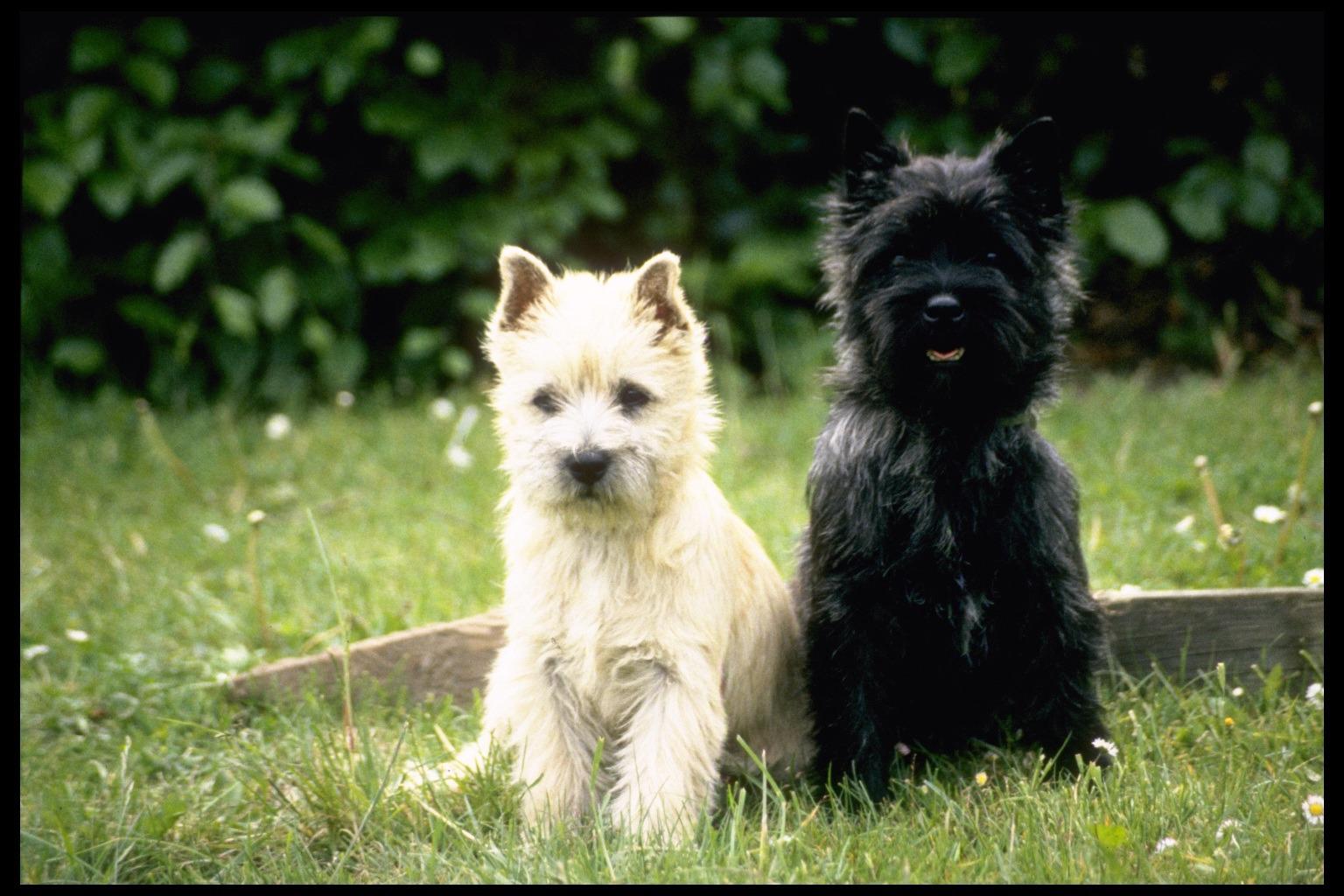
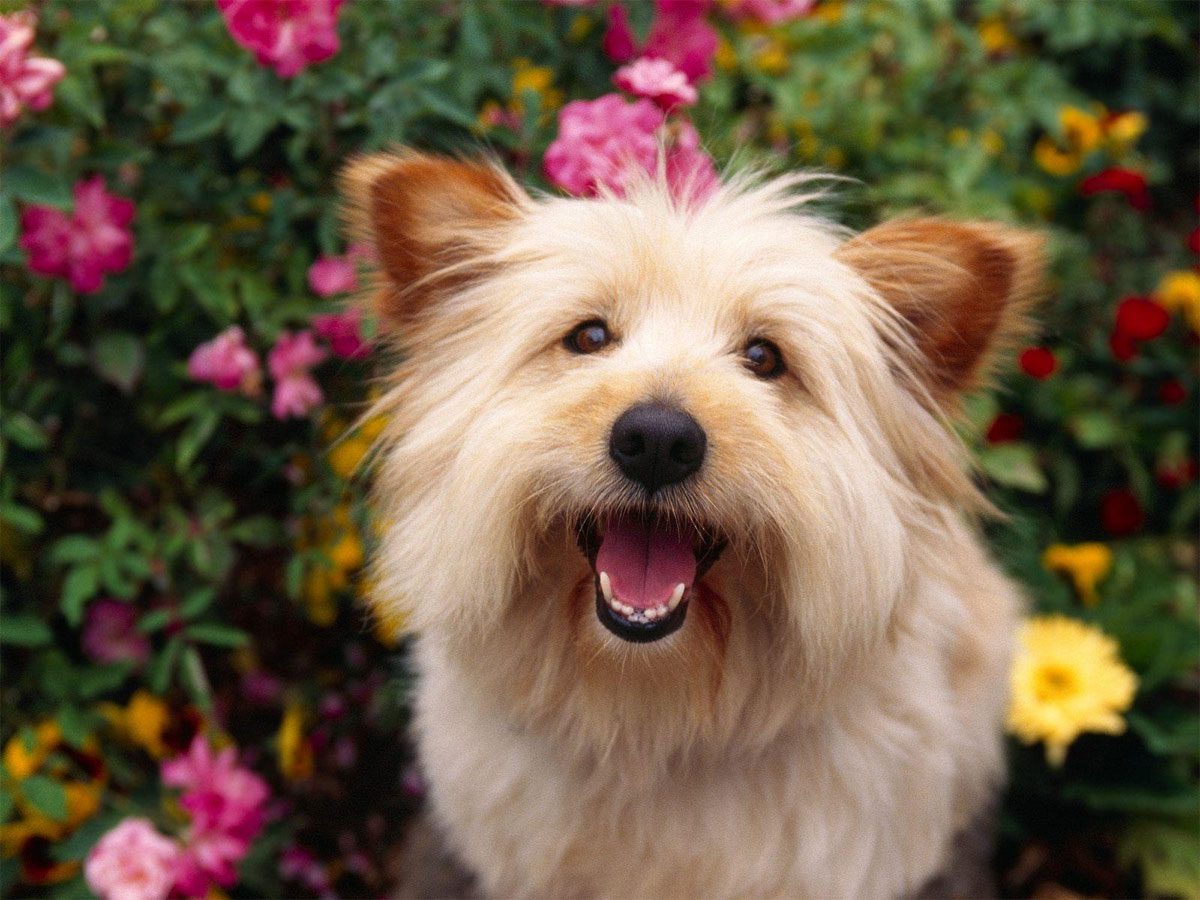
    The Cairn Terrier It was originally bred as a hunting dog, to kill rats, Badgers, foxes

    Content

    History

    The Cairn Terrier It is one of the oldest breeds of Terrier, originating in Scotland and recognized as one of the first Scottish working dogs. It was created for hunting and the prey's burrow. The Cairn Terrier are buzzards. In Scotland they hunted rats and other rodents.

    In our country house, will do the job of a cat, often hunting mice, rabbits and squirrels.

    Cairn Terrier belongs to the family of the Scottish Terrier. They are five:

    History

    The characteristics of the current breed are carefully modeled on their ancestor, the Terrier of the Isle of Skye 17th century. It is believed that this dog was the basis for developing races such as the lion and the Scottish.

    The history of the Cairn Terrier is reinforced by the fact that the modern Cairn is an attempt to preserve the typical form of the Terrier of the old days., a dog of work of the Isle of Skye. Known in his native Scotland for more than 500 years, It is believed that it is the oldest of the Terrier.
    Cairn Terrier was originally bred as a hunting dog, to kill rats, Badgers, foxes, weasels, and other small insects. He hails from the Isle of Skye, but to avoid confusion with the current Skye Terrier, He was appointed Cairn Terrier, in honor of the rock piles and where he used to look for his prey in his Scottish lands.

    Did you know??

    The most famous Cairn of all? That would be Toto in "The Wizard of Oz".

    Physical characteristics

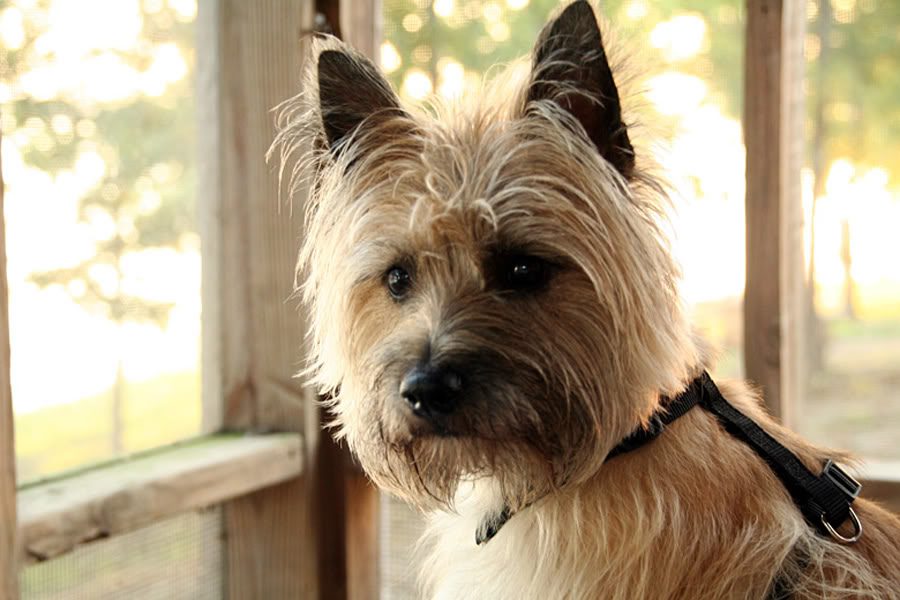
    These dogs of short legs have a countenance of stooped appearance. Its thick cloak of hair is usually greyish in colour, light brown or sand, Although they are allowed all colors other than white.

    A notable feature of the Cairns Terrier is the change in coat color throughout its life.. Is not uncommon to its striped pass to be increasingly more grey or silver, as you age. The fur has two layers, a soft, dense stuck to the skin, and other hard and rough, external. It is the smallest of the Terrier (the largest is the Scottish), its weight is of 6 to 7,5 kg. And its appeal is in 28 to 31 cm..

    Many times, The Cairn Terrier is defined as a ยซbig dog trapped in the body of a small dogโ€, is an ex-officio adventurer, Intelligent, strong, loyal and hard, It is not at all a delicate and lap dog.

    Character and skills

    They are usually active, resistant, they are always on alert and cheerful, they are appreciated as pets as they are relatively easy to train and adapt well to small homes or apartments as they require no more than one brisk walk per day.

    Like most Terriers, they love to dig looking for real or imagined prey. So, If you want to keep your lawn in conditions, It is not advisable to leave it many hours only.

    Usually, they mix well with other dogs, But if there is possibility of confrontation they will defend their territory, they can't go back and face whatever lack. With the family they are very protectors and they usually get along with children, although they can't stand any rough game, as pulling of ears, shareโ€ฆ

    Walking is an excellent exercise for Cairns and their owners. It is advisable to give long daily walks.

    The life expectancy of these dogs is of 12-14 years, they tend to have the fairly delicate skin (and as they grow older, even more).

    Characteristics "Cairn Terrier"

    Coexistence is important that you have with your new friend. Before considering the acquisition of a dog of the breed "Cairn Terrier" you know certain factors. Not all breeds of dogs are apt to live in an apartment, you must take into account his character, their need for exercise, their interaction with other pets, their care and if you have small children, their level of tolerance towards them.

    Adaptation โ“˜

    3,0 of 5 stars (based on 1 review)

    friendly dog โ€‹โ€‹โ“˜

    3,0 of 5 stars (based on 1 review)

    hair loss โ“˜

    3,0 of 5 stars (based on 1 review)

    Affection level โ“˜

    5,0 of 5 stars (based on 1 review)

    Need for exercise โ“˜

    4,0 of 5 stars (based on 1 review)

    Social need โ“˜

    5,0 of 5 stars (based on 1 review)

    Home โ“˜

    3,0 of 5 stars (based on 1 review)

    Toilet โ“˜

    2,0 of 5 stars (based on 1 review)

    Friendly with strangers โ“˜

    3,0 of 5 stars (based on 1 review)

    barking โ“˜

    5,0 of 5 stars (based on 1 review)

    Health โ“˜

    3,0 of 5 stars (based on 1 review)

    Territorial โ“˜

    3,0 of 5 stars (based on 1 review)

    Cat friendly โ“˜

    3,0 of 5 stars (based on 1 review)

    Intelligence โ“˜

    4,0 of 5 stars (based on 1 review)

    Versatility โ“˜

    3,0 of 5 stars (based on 1 review)

    Child friendly โ“˜

    4,0 of 5 stars (based on 1 review)

    Surveillance โ“˜

    4,0 of 5 stars (based on 1 review)

    joy โ“˜

    5,0 of 5 stars (based on 1 review)

    Cairn Terrier Images

    Cairn Terrier Videos

    Type and recognitions:

    • FCI CLASSIFICATION:
    • Group :
    • Section : . .

    Federations:

    FCI โ“˜, AKC โ“˜, ANKC โ“˜, CKC โ“˜, โ€‹KC โ“˜, NZKC โ“˜, UKC โ“˜

    FCI breed standard "Cairn Terrier"

    Origin:
    United Kingdom, Scotland

    Date of publication of the valid original standard:
    24.06.1987

    Use:

    Terriers


    General appearance:

    Agile, alert, enterprising natural looking. Strong limbs, with good poise in the forelimbs and free movements. deep chest. Weather resistant coat.


    Behavior / temperament:

    It impresses with its activity, firmness and boldness. With a brave and cheerful character; self-confident, but not aggressive.

    Head:

    Small but proportionate to the body. Well covered head hair.

    Cranial region:
    • Skull:  Width, with a well-marked indentation between the eyes.
    • Depression links (Stop):  Well defined.

    facial region:

    • Truffle: black.
    • Snout:  Powerful.
    • Jaws/Teeth: Big teeth. Strong JAWS, but never long or large, with regular scissor bite, perfect and complete, that is to say that the internal face of the maxillary incisors is in close contact with the outer side of the lower incisors and placed at right angles to the jaws.
    • Eyes: Placed well apart, medium-sized, dark brown, slightly sunken and abundant eyebrows.
    • Ears: Small and finished in tip, well erect, not very long hair covers or gaskets.

    Neck:

    With good implementation in the backs and not very short.

    Body:

    • Back: Straight and medium-long.
    • Pork loin: Strong and elastic.
    • Breast : Ribs well arched and deep.

    Tail:

    Short, provided, well covered with hair but not forming fringes. Its implementation should not be high or low, It must be carried happily but never stooped toward the back.

    Tips

    FORMER MEMBERS: Cutlery to wire-haired. Medium length and good bone but not very heavy.

    • Back: Face.
    • Elbows: Never returned outward or inward.

    HINDQUARTERS:

    • Thighs: Very strong and muscular.
    • Knees: Buena,  but not excessive angulation.
    • Hocks:  Well descended, seen from the rear never inclined outward or inward.

    FEET : The previous larger than the later ones, and may be slightly deviated outward. The pads should be thick and strong. Small feet, Straits, extended separate fingers with long nails is a defect.

    Movement:

    Walking should be easy and free movements. Front members should have a good breadth forward. Subsequent members must provide a strong driving power. Hocks should not be close together or far apart.

    Mantle

    HAIR: The texture of the hair is very important. You must withstand the weather and have a double layer: The outer layer is formed by hair, hard but not rough, the subhair should be short, smooth and dense. The hollow hair is a defect. Allowed a slight ripple.

    COLOR: Cream, yellow, red, gray or nearly black. Accepted the Brindle in all these colors, but not solid black, white or black and fire. Dark spots on the ears and muzzle are very typical..


    Size and weight:

    About 28 โ€“ 31 cm. (11-12 inches) at the height of the cross, but in proportion to the weight, being the ideal weight between 6 and 7,5 kg (14-16 English pounds).


    Fouls:

    Any deviation from the above criteria is considered missing and the seriousness is considered to the extent of the deviation to the standardand its consequences on the health and well-being of the dog.

    Any dog โ€‹โ€‹showing clear signs of physical or behavioral abnormalities should be disqualified..

    FALTAS DESCALIFICANTES:

    • Aggressiveness or extreme shyness.
    • Any dog โ€‹โ€‹showing clear signs of physical or behavioral abnormalities must be disqualified..


    N.B.:
    • Males should have two normal-appearing testicles fully descended into the scrotum..
    • Only functionally and clinically healthy dogs, with the typical conformation of the breed, should be used for parenting.

    The latest changes are in bold.

    TRANSLATION: SR. Lic. Oscar Valverde Calvo (Costa Rica) and Dr. Federico del Valle

    Source: F.C.I - International Cynological Federation

    Alternative names:

    1. Cairn Terrier (English).
    2. Cairn Terrier (French).
    3. Cairn Terrier (German).
    4. Cairn Terrier (Portuguese).
    5. Cairn (espaรฑol).

    โ–ท The world of Pets: Dogs, cats, birds, reptiles, amphibians

    Castro Laboreiro Dog
    Portugal FCI 170 - Molossoid . Mountain

    Perro de Castro Laboreiro

    The Castro Laboreiro Dog It is an excellent guard dog and companion

    Content

    History

    The Castro Laboreiro Dog (Cรฃo de Castro Laboreiro) It is a breed of Portuguese dog of large size. Originating in the parish of Castro Laboreiro, Melgaรงo, is a dog type Lupoid amastinado is lighter than other breeds of cattle dogs.

    The Castro Laboreiro Dog it has its origin in the region that gave it its name, the people of Castro Laboreiro, in the municipality of Melgaรงo. It is a rugged mountainous region that stretches from the Miรฑo river to the Peneda and Soajo mountains between the Trancoso rivers, Laboreiro and moro, until around 1400 m above sea level.

    Like the dog, Castro Laboreiro is one of the oldest regions of the land of Portugal. The prehistoric remains such as dolmens and rock paintings, They demonstrate the presence of man in the region for thousands of years. The strengths are evidence of the strong presence of Celtic culture in the region. Also the Celts and the Romans came here, the roman roads and the construction of bridges with their landmarks. The castrejas communities have always lived of hunting, fishing, grazing and agriculture.

    Read more

    โ–ท The world of Pets: Dogs, cats, birds, reptiles, amphibians

    Saint Miguel Cattle Dog
    Portugal FCI 340 - Molossoid - Dogo

    The dog's Saint Miguel Cattle Dog It is a breed of dog Portugal, specifically the Azores Islands.

    Fila de San Miguel

    Content

    History

    With the settlement of the Azores archipelago and the beginning of the exploration of the optimal conditions of the islands for raising cattle, the need for dogs on the islands to help drive and defend livestock soon became apparent, dating from the sixteenth century the first reference to its presence, in particular on the island of Sรฃo Miguel. These animals are recognized as the precursors of Saint Miguel Cattle Dog.

    Although the existence of Saint Miguel Cattle Dog, as an individual race, has been recorded since the early 19th century, only in 1982 began to be registered by Antรณnio Josรฉ Amaral with the collaboration of Maria de Fรกtima Machado Mendes Cabral, veterinarian, in order to create a census of your herds. The first officially registered dog of the breed was the ยซCoriscaยป, a perfect representative of your breed.

    It is also on the initiative of these same two people that, in 1984, two years after the beginning of the registration of persons the first official standard is published. In 1995 was proposed to the FCI (International Cynological Federation) and the breed was finally recognized in 2008.

    Origin:

    The breed known today as Saint Miguel Cattle Dog descended from mastiffs and alano initially brought to the islands of the Azores by the first settlers on the continent. Later, and through contact with other people who came and settled in the Azores, the genetic heritage of the breed was enriched by crosses made with English mastiffs, bulldogs and Dogue de Bordeaux, until the culmination of the appearance of the new race, with fully defined morphological and temperamental characteristics.

    In addition to those mentioned, other races may form part of the Fila de San Miguel ancestry, as the St. Humberto's Dog, also known as Bloodhound, and the Dogo Canario, a Spanish breed from the Canary Islands, but the real link – yes there is – between these races and the Sao Miguel queue not yet proven.

    Video "Saint Miguel Cattle Dog"

    Playing around 1

    Physical characteristics

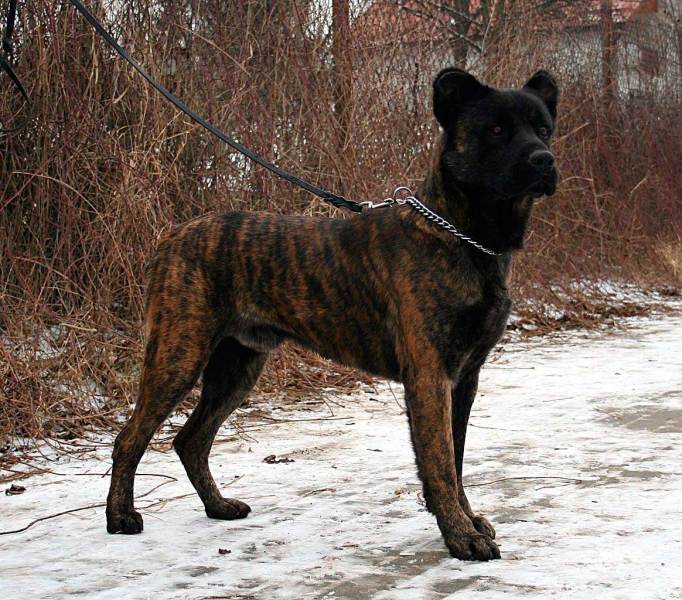
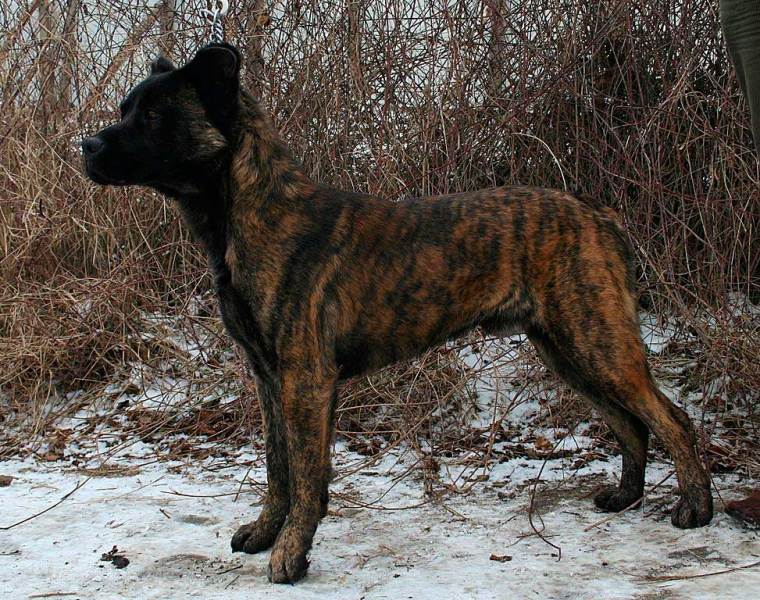
    The Saint Miguel Cattle Dog it is characterized by being an animal of size and rustic features and characteristically longer than tall. The breed is medium in size, muscular, but without the heavy appearance of others.

    The muzzle is well proportioned, apparently short, but it hides a wide mouth, with a full denture, capable of a powerful bite. The head has a solid appearance, wide and with the ears well placed on top, implanted in a strong neck that starts from a solid trunk, with a wide and deep chest. The legs are proportional to the body, being the front, as a rule, slightly separated.

    The coat is strong, smooth and dense, and always striped, and it can be tawny, gray or yellow, with white mesh on the chest. Legs can also be white. The tail is implanted high, it's thick, medium length and slightly curved. It is amputated at the height of the second or third vertebra, or is it naturally short.

    • Fur: short, smooth, dense, with hard textured hair.
    • Color: gray hair, carbonated sand (grey), yellow with all fades from light to fawn; always striated. May show white spot on forehead or from chin to chest, and white spots on the forefoot, in the later or in all four.
    • Size: males, of 50 to 60 cm.; females, of 48 to 58 cm..

    Character and skills

    Race of a lively and sharp intelligence, with great ease of learning, the strength of character of the Saint Miguel Cattle Dog, coupled with a distrust of the strange instincts of all guardians by vocation, can easily be mistaken for aggressiveness, but it hides a gentle nature towards those with whom it deals closely, while remaining a tenacious and courageous guardian of those who treat him. His loyalty to his human family is extreme.

    With even greater emphasis, given the dominant nature of the breed, the education and sociability of puppies must be done from birth, gradually exposing the animals to new situations and stimuli, in order to improve the development of balanced individuals capable of living with humans and other animals.

    Not a suitable breed for beginners, given its dominant nature, further enhanced by his physical strength and his strongly independent and autonomous character.

    Even as a pet, a Saint Miguel Cattle Dog must have the opportunity to have a task to perform. Thorough training is always a simple and effective means of strengthening the relationship between the human family and the animal, while providing the physical and mental exercise necessary for the training and development of a well-balanced animal.

    But, given the intrinsic characteristics of the breed, training a copy of the Saint Miguel Cattle Dog it is a task that can be quite difficult for someone who has little experience with dogs. Being a very intelligent and dominant breed, will not respond well to the use of force. Full socialization recommended.

    The sheepdog for tradition and excellence, their natural fitness for livestock can, with the right training, can be channeled into the care of horses and other small ruminants such as sheep and goats. When not channeled to grazing, the Saint Miguel Cattle Dog has already demonstrated its aptitude for big game hunting, like the boar and the deer.

    Its strong and protective temperament is also valued as a self-defense dog..

    Health ยซSt. Michael's Rowยป

    Being a rustic breed, is in robust health and there are no records to date to suggest that there is any pathology to which the breed is specifically prone to for genetic reasons. The average life expectancy of this breed is calculated in 12 years.

    St. Michael's Row Toilet

    The same hardiness that gives vigor to the breed also makes it a poorly maintained breed in a strict sense. Short, hard hair can be brushed occasionally and baths will be sporadic.. Adequate and balanced feeding will give developing puppies what they need to become healthy adults, and the same regimen will suffice to ensure adult health..

    Images "Saint Miguel Cattle Dog"

    Type and recognitions:

    • FCI CLASSIFICATION:
    • Group :
    • Section : . .

    Federations:

    • FCI – Group 2: Pinscher and Schnauzer - Molossoid and Swiss Mountain and Cattledogs. Section 2: Molossoid. 2.1 Dogue type. โ“˜

    FCI breed standard "Saint Miguel Cattle Dog"

    Origin:
    Portugal

    Date of publication of the valid original standard:
    21.05.2007

    Use:

    cattle dog


    General appearance:

    Robust and resistant.


    IMPORTANT PROPORTIONS:

    • Slightly longer than high.


    Behavior / temperament:

    Cattle dog par excellence, it is equally a good guard dog of property and people. He has a very determined character with strangers but docile with his owner.
    Very clever and very responsive. In the exercise of his duties, lead dairy herds, he bites low so as not to damage the udders of the cows.. But, when it comes to stray cattle it can bite higher

    Head:

    Strong, square-looking. Cranio-facial superior longitudinal parallel axes.

    Cranial region:
    • Skull: Large, slightly bulky, little apparent occipital protuberance.
    • Nasal bevel (Stop): Is pronounced.

    facial region:

    • Truffle: Wide and black.
    • Snout: Straight, slightly curved, slightly shorter than the length of the skull.
    • Lips: Well pigmented, overlapping, torn, firm, slightly curved on the lower profile.
    • Jaws: Very strong, well developed. With good opposition.
    • The teeth: Complete dentition with scissors or tweezers.
    • Eyes: Oval, expressive, slightly sunken, dark brown, horizontal, medium-sized.
    • Ears: Above average insertion. When not cut they are medium triangular and pendulous but slightly separated from the face. Normally cut in the round.

    Neck:

    With good connection, straight, strong and medium length. There is no double chin.

    Body:

    • Trunk: Strong, muscular, with a broad chest.
    • Breast : Wide and lowered.
    • Back: Straight.
    • Pork loin: Of average length, wide and well muscled.
    • Rump: Of medium length in relation to the body, slightly predominant in relation to the cross.
    • bottom line: Bottom-up profile, ventricles and flanks proportional to the body.

    Tail:

    High insertion, thick.

    Tips

    Former members: Strong.

    • Shoulder: Scapulo-umeral angle slightly open.
    • Arms: Strong of medium length, good muscular.
    • Forearm: Thick and well muscled.
    • Carpo: Thick.
    • Metacarpus (Pastern): Thick, average length.
    • Hands: Oval, with strong fingers and nails.

    Later members: Strong, moderately separated.

    • Thighs: Long, muscular, with an open lame / femoral angle.
    • Legs: Of average length, muscular.
    • Metatarsus: Of average length. May have presumptions.
    • Pies: Of average length: Oval, with strong fingers not very curled. Strong nails.

    Movement:

    Easy and loose. On the move, the back wobbles slightly.

    Mantle

    • Skin: Thick and pigmented.
    • Shelter: Short, smooth, dense, with a strong texture, slightly bordered on the tail, the anal and posterior region.
    • Colorations: Fawn, charred and gray sand, in light and dark tones and should always be tiger. The presence of a white male is allowed in the frontal region and the menthol chest, as well as the white coloring on the hands (white male), the feet (pedal) or on all legs simultaneously (white square).


    Size and weight:

    Males

    • Height to the cross: 50 to 60 cm.
    • Weight: 25 to 35 kg

    females

    • Height to the cross: 48 to 58 cm.
    • Weight: 20 to 30 kg


    Fouls:

    Any deviation from the above points must be considered a fault and the seriousness with which the fault should be considered must be in exact proportion to its degree and its effect on the health and well-being of the dog..


    SERIOUS FAULTS:

    • Head: converging axes of skull and muzzle.
    • Jaws: Mouth slightly above or below.

    MISS PLAYOFFS

    • Aggressive or too shy.
    • Any dog โ€‹โ€‹that clearly shows physical or behavioral abnormalities.
    • Divergent axes of skull and muzzle.
    • Severely over or under the mouth.


    N.B.:
    • Males should have two normal-appearing testicles fully descended into the scrotum..
    • Only functionally and clinically healthy dogs should be used for breeding., with the typical conformation of the breed.

    Source: F.C.I - International Cynological Federation

    Alternative names:

    1. Cรฃo de fila de Sรฃo Miguel, Sรฃo Miguel cattle dog, Sรฃo Miguel catch dog, Azores cattle dog, Azores cow dog (English).
    2. fila de Saint Miguel (French).
    3. Cรฃo Fila de Sรฃo Miguel (German).
    4. Fila de Sรฃo Miguel, Cรฃo das Vacas (Portuguese).
    5. (espaรฑol).

    Source:

    Wikipedia

    Photos:

    1 – Fila de Sรฃo Miguel during International dog show in Rzeszรณw, Poland by Pleple2000 / CC BY-SA
    2 – Fila de Sรฃo Miguel during International dog show in Rzeszรณw, Poland. by Pleple2000 / CC BY-SA
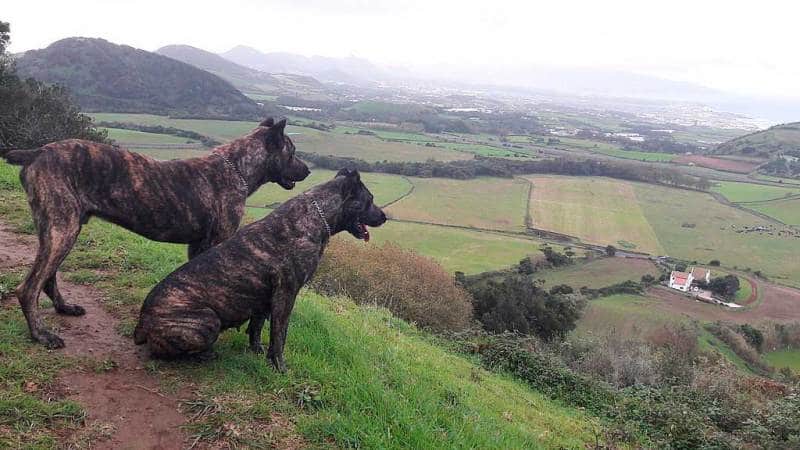
    3 – At the Burnt Peak of Ribeira Grande, Son and Mother by TheLife / CC BY-SA
    4 – Helsinki, el Finnish Winner Show 2015. by Thomas / CC BY-SA

    โ–ท The world of Pets: Dogs, cats, birds, reptiles, amphibians

    Romanian Carpathian Shepherd Dog
    Rumanรญa FCI 350 - Sheepdogs

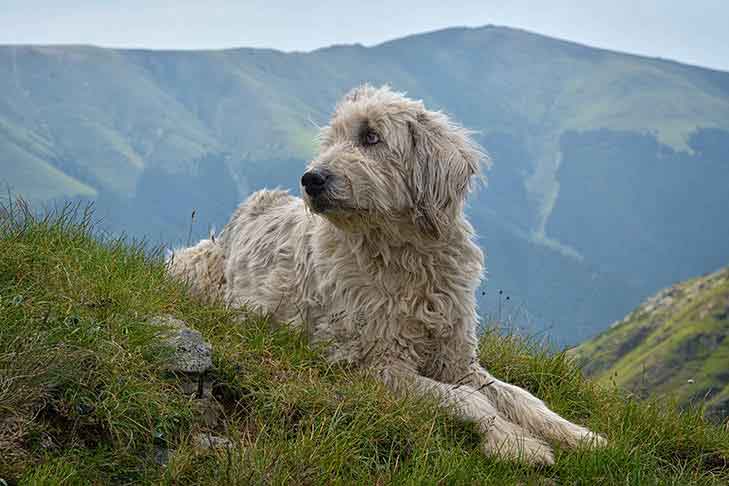
    Romanian Carpathian Shepherd Dog

    The Romanian Carpathian Shepherd Dog is slightly more sensitive and less independent than other guard dog breeds

    Content

    History

    The โ€œRomanian Carpathian Shepherd Dogโ€, also known as Carpatin (of his original name Ciobanesc Romanesc Carpatin), He is native to Romania, more precisely from the Danube Delta.

    It is said to be descended from the Lupo races – molosoides, comparable in size to ancient mastiffs, but with a morphology closer to that of the wolf, and that has been used to protect herds for more than 9.000 years, that is to say, since the beginning of the domestication of cattle in this region.

    Legend has it that their ancestors, to whom he is physically very close, they interbred naturally with wolves, resulting in a powerful and fearsome race. Although there is no irrefutable evidence, such hybridizations between dog and wolf are known to have in fact occurred in various regions of the world, what makes this theory plausible.

    Often hunting in packs, nothing stops this dog with his courage and unerring protective instinct. There have even been cases where a herd of Carpathian shepherds has been seen repelled by an adult bear. The Romanian Carpathian Shepherd Dog has been selected over the centuries with the main criterion of utility, which explains why it has kept its herding dog qualities intact to this day, especially since Romania still has many predators on its territory, including wolves and bears. Over the years, they have also become increasingly integrated into the family as guard dogs; very protective of their master, it's a role they play wonderfully.

    The first breed standard was developed in Romania in 1934. After the fall of communism in 1989, a few passionate breeders of the Romanian Carpathian Shepherd Dog developed the breed so that its standard could meet the criteria of the Fรฉdรฉration Cynologique Internationale. Their efforts paid off, since the latter finally recognized it provisionally in 2005, and then definitely ten years later, in 2015. Among the other large canine organisms, the Sociรฉtรฉ Centrale Canine and the United Kennel Club also recognize the Romanian Carpathian Shepherd Dog, what is not the case with the American Kennel Club, the Canadian Kennel Club or the Kennel Club, the leading organization in Great Britain.

    Although they are increasingly known and appreciated in the rest of the world, the Romanian Carpathian Shepherd Dog still quite rare outside of its home country. On the other hand, still very popular in Romania, where it is used as a herding dog and as a guard and companion dog.

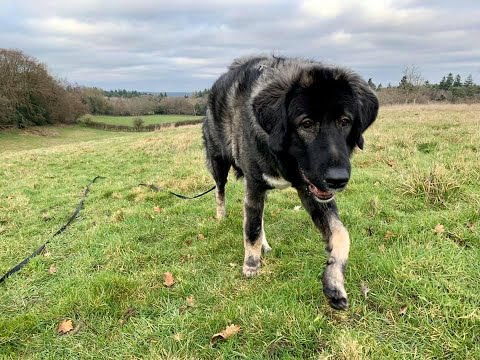
    Photo: Possibly Carpathian sheepdog or Bucovina sheepdog by Alex Zelenko, CC BY-SA 4.0, via Wikimedia Commons

    Physical characteristics

    The Romanian Carpathian Shepherd Dog he is a large dog with an impressive physique.

    The body is rectangular, vigorous and well developed, without heaviness. Its length is greater than the height at the withers, and the lumbar region may be slightly longer in females than in males.

    The tail is held high, reaching or slightly exceeding the point of the hock. With abundant hair, hangs at rest but is carried high and slightly curved in action. It is neither flat nor rolled in the back.

    The head is strong but not heavy, of type lupoid, with a stop moderately marked. The nose is always black, big and wide. The scissor bite is powerful. The eyes are medium in size, almendrada form, dark brown. The ears, located slightly above the eye line, they are triangular in shape, a little rounded at the tip, and fall close to the cheeks.

    The inner layer is dense and flexible, color clear, but the hair is rough, smooth and dense. It is shorter and flatter on the head and front of the legs, longer in the neck, the back of the legs and tail. It is abundant and of medium length in the rest of the body. The fur is sable (Wolf) with white markings, and the skin is ash colored.

    Character and skills

    The Romanian Carpathian Shepherd Dog is balanced, calm and brave. They are innate herding dogs with a very strong protective instinct, with an unconditional attachment to his flock and a closeness to his master and family that is far greater than that of most other watchdog breeds.

    This protective instinct makes them mistrust strangers. In the presence of a stranger, will come between him and his family and bark as a warning, until his master makes him understand that there is no danger.

    But, due to its friendlier temperament than the average of other guard dog breeds, It is also an excellent companion dog.. As a breed of dog adapted to children, he is very gentle with them and is a great playmate for them. Regarding the cohabitation of the dog with the cat, generally goes well. Last, the fact that they have long gotten used to defending themselves and working in packs also explains why they generally manage to get along with their peers, although they can be dominant with them.

    Although it suits all families quite well, this large, energetic dog needs plenty of exercise and play to maintain his mental balance and physical health. So, better suited to a family that likes to move, and thus you can enjoy hiking with your dog (dogs-rando), from running with your dog (canicross) or cycling with your dog (cani-mountain biking). To feel completely fine, need at least an hour of daily exercise.

    So, not at all suitable for use in an apartment: too small a space and insufficient physical exercise could cause behavioral disorders in the dog, including uncontrolled aggression (even towards their owners) and / or destructive behavior on the part of the dog. This is all the more true since the Romanian Carpathian Shepherd Dog is slightly more sensitive and less independent than other guard dog breeds; therefore shows more anxiety in case of prolonged loneliness, especially if you are indoors with nothing to do to keep busy. So, the ideal home for him is one with a large enclosed garden where he can run, and a master who is available to play with his dog and walk him for long hours.

    Education ยซRomanian Carpathian Shepherd Dogยป

    Although the Romanian Carpathian Shepherd Dog it is a calm and balanced dog that is easier to train than other guard dog breeds, needs a strong education to start at an early age, since it has a strong character. It is imperative that the owner immediately show his dog who the master is and impose his authority, at the risk of seeing his partner with his impressive physique take control.

    Of course, firm does not mean brutal. Positive dog training, with incentives and rewards, is always the best way to earn respect and obedience. Purely authoritarian training would only lead to confrontation with this willfully dominant dog..

    Health ยซRomanian Carpathian Shepherd Dogยป

    Although there have been cases of hip dysplasia or eye problems in some individuals, the Romanian Carpathian Shepherd Dog it is a robust breed of dog, able to stay outdoors in inclement weather without being unduly hindered and, In addition, does not have a congenital predisposition to certain pathologies.

    So, daily exercise and a balanced diet are enough to keep the dog healthy, vigorous and toned.

    But, care must be taken not to give too large a portion of food before physical exertion: like all big breeds, is particularly exposed to the risk of stomach dilation-torsion.

    Grooming ยซRomanian Carpathian Shepherd Dogยป

    Although the Romanian Carpathian Shepherd Dog has a long fur, rarely needs professional grooming. But, it is recommended to brush the dog's hair daily with a wire brush or detangler, especially during the molting period.

    If you spend most of your time outdoors, it is recommended to wash your dog once a month. But, if you stay inside, a dog bath every three to four months is sufficient.

    On the other hand, it is important to regularly examine and clean the dog's ears, as for all dogs with floppy ears. A buildup of earwax or bacteria could lead to infections, like ear infections.

    It also, as in all races, brushing your dog's teeth at regular intervals is essential to avoid tartar problems. Ideally, you should be able to do this two to three times a week..

    Finally, how often a dog's claws are trimmed depends on its level of activity. It is best to inspect them from time to time and trim them if necessary.

    Characteristics "Romanian Carpathian Shepherd Dog"

    Coexistence is important that you have with your new friend. Before considering the acquisition of a dog of the breed "Romanian Carpathian Shepherd Dog" you know certain factors. Not all breeds of dogs are apt to live in an apartment, you must take into account his character, their need for exercise, their interaction with other pets, their care and if you have small children, their level of tolerance towards them.

    Adaptation โ“˜

    3,0 of 5 stars (based on 1 review)

    friendly dog โ€‹โ€‹โ“˜

    3,0 of 5 stars (based on 1 review)

    hair loss โ“˜

    4,0 of 5 stars (based on 1 review)

    Affection level โ“˜

    5,0 of 5 stars (based on 1 review)

    Need for exercise โ“˜

    4,0 of 5 stars (based on 1 review)

    Social need โ“˜

    4,0 of 5 stars (based on 1 review)

    Home โ“˜

    2,0 of 5 stars (based on 1 review)

    Toilet โ“˜

    2,0 of 5 stars (based on 1 review)

    Friendly with strangers โ“˜

    2,0 of 5 stars (based on 1 review)

    barking โ“˜

    3,0 of 5 stars (based on 1 review)

    Health โ“˜

    3,0 of 5 stars (based on 1 review)

    Territorial โ“˜

    4,0 of 5 stars (based on 1 review)

    Cat friendly โ“˜

    4,0 of 5 stars (based on 1 review)

    Intelligence โ“˜

    4,0 of 5 stars (based on 1 review)

    Versatility โ“˜

    4,0 of 5 stars (based on 1 review)

    Child friendly โ“˜

    5,0 of 5 stars (based on 1 review)

    Surveillance โ“˜

    4,0 of 5 stars (based on 1 review)

    joy โ“˜

    4,0 of 5 stars (based on 1 review)

    Images "Romanian Carpathian Shepherd Dog"

    Carpathian Shepherd

    Carpathian Shepherd

    Photos:

    1 – ยซRomanian Carpathian Shepherd Dogยป by https://pxhere.com/es/photo/1434185
    2 – ยซRomanian Carpathian Shepherd Dogยป by https://pxhere.com/es/photo/1625909

    Videos "Romanian Carpathian Shepherd Dog"

    Jeff the Carpathian Shepherd - 4 Weeks Residential Dog Training
    Jeff the Carpathian Shepherd – 4 Weeks Residential Dog Training
    Sanziana, a Carpathian Shepherd Dog baby girl
    Sanziana, a Carpathian Shepherd Dog baby girl

    Type and recognitions:

    • FCI CLASSIFICATION:
    • Group :
    • Section : . .

    Federations:

    • FCI – Group 1 Herding dogs, Section 1 Sheepdogs โ“˜
    • UKC – Herding dogs โ“˜

    FCI breed standard "Romanian Carpathian Shepherd Dog"

    Origin:
    Romania

    Date of publication of the valid original standard:
    09.06.2015

    Use:

    Shepherd dog used by Romanian shepherds of the Carpathians for centuries to defend flocks and at the same time as an excellent guard dog


    General appearance:

    This is a pretty big dog, agile,never weighed, Its general appearance is that of a vigorous dog. His body is rectangular, the rump is wide, slightly tilted, the rib cage is wide and high, long, slightly sloping shoulders. Sexual dimorphism is well marked, males should be taller and larger than females.


    IMPORTANT PROPORTIONS:

    • The length of the skull is slightly greater than or equal to half the total length of the head.
    • The length of the body is always greater than the height at the withers. The lumbar region of females may be slightly longer.
    • The height of the chest corresponds to approximately half the height at the withers.


    Behavior / temperament:

    Innate and brave guardian, He stands out for his instinctive and unconditional affection towards the flocks and towards his master.. It is a dog with dignified behavior, quiet and balanced.

    Head:

    lupoid type.

    Cranial region:
    • Cranial region: The Carpathian Shepherd is a mesocephalic dog, with a strong head, but not heavy. The forehead is wide and slightly bulging. The skull is wider between the ears and progressively decreases towards the naso-frontal depression.. The frontal furrow is quite long and sufficiently well marked.
    • Depression links: Moderate, never too marked, ni huidiza.

    facial region:

    • Truffle:Grand, wide, always black.
    • Snout:Powerful, with an approximately oval profile, slightly truncated. The length of the snout is a little less than that of the skull or the maximum, equal.
    • Lips:Thick, well pigmented, well stretched, with a tightly closed commissure.
    • Jaws / Teeth:Strong jaws, solid and straight. The teeth are powerful; scissor joint, the incisor arches are slightly rounded.
    • Cheeks:Thin. Powerful maseteros, never outstanding. The skin is well stretched.
    • Eyes:Almond biscuits, slightly oblique, They are not too large in relation to the dimensions of the skull, its color is very dark. They are not even jumpy, nor are they sunk in the orbits. The eyelids are black and fit well into the shape of the eyeball..
    • Ears:Triangular, not too big, They appear a little higher than the eye line. They are stuck to the cheeks. The limb is slightly rounded.

    Neck:

    Muscular, very powerful, medium length. Its angle is about 50ยฐ in relation to the horizontal..

    Body:

    Vigorous, well developed, slightly rectangular.

    • Top margin: Straight and firm.
    • Height to the cross: Bit strong.
    • Back: Medium length, straight, and solid and muscular.
    • Pork loin: Powerful, muscular, but not too wide. Of moderate length, not too long (the top margin is not firm), not too short.
    • Rump: Muscular and wide, medium length. Slightly inclined, never runs away.
    • Breast : Very wide, well developed and well inclined to the level of the elbows. solid ribs, well shaped, never barrel shaped.
    • Lower margin: Moderately ascending, raised abdomen, nor sunk, nor fallen.

    Tail:

    It appears quite high, bushy, provided with abundant hair. During rest, appears low, straight or slightly saber-shaped, reaching the tip of the hock. When the dog is attentive or in action, It appears raised and can exceed the level of the back; It's not even stretched, nor twisted about it.

    Tips

    PREVIOUS MEMBERS: Strong bones.

    • In general: Front or profile views, the forelimbs are plumb and perpendicular to the ground.
    • Shoulder: Solid, moderately inclined.
    • Elbows: Well attached to the body, they do not deviate even outwards, nor inward.
    • Forearm:Straight, very vigorous, with oval profile.
    • Metacarpus: Short, slightly inclined.
    • Previous foot: Oval, solid, compact.

    LATER MEMBERS: Muscular, with solid bones and good angulations.

    • In general: They are leaden.
    • Thigh:Width, well muscled.
    • Legs: Powerful, muscular, medium length.
    • Hock: Solid, firm, not too high (determining an accentuation of the angulation of the stifle) not too inclined.
    • Metatarsus: Solid, vertical.
    • Rear foot: Oval, well developed and compact, slightly smaller than the previous one. Fingers arched and together. Any spurs must be removed, except in countries where this practice is prohibited by law. The plantar pads are elastic and resistant.

    Movement:

    Loose, with a good range. The trot is vigorous and sustained. The limbs move in parallel planes.

    Mantle

    • Pigmented ash color. The truffle, the edge, of the eyelids and lips must be black. Ash or black nails are preferred.


    • Fur: Rough, dense and stretched. The undercoat is dense and soft. With the exception of the head and the inner surfaces of the extremities, where the hair is short and straight, the hair is abundant over the entire body, medium length. about the neck, the back of the limbs and on the tail, the hair is longer, its abundance being typical in these areas.
    • Color: carbon sand (dark bay) with different nuances, often lighter on the lateral parts and darker on the upper part of the trunk. carbon sand (dark bay) with white markings, preferably not very widespread.


    Size and weight:

    • Height to the cross: Ideal: 65 โ€“ 73 cm in males. 59 โ€“ 67 cm in females. But, the general appearance is always the most important.
    • Weight: In proportion to the size, giving the impression of a powerful dog, but not heavy.


    Fouls:

    Any deviation from the aforementioned criteria is considered as a fault and its seriousness is considered to the degree of the deviation to the standard and its consequences on the health and well-being of the dog.

    SERIOUS FAULTS:

    • Any deviation from the above that impairs the use.
    • Fragile or too heavy constitution.
    • Eyes that are too light in color.
    • Lower eyelids that are too hanging, exposing the eyeball.
    • Very full lips and hanging corners.
    • Significant pigmentation defects.
    • Excessive body length (more than 10%) and square body.

    FALTAS DESCALIFICANTES:

    • Aggressiveness or extreme shyness.
    • Any dog โ€‹โ€‹showing clear signs of physical or behavioral abnormalities must be disqualified..
    • apathetic dog.
    • Clearly atypical dog, similar in appearance to the molossoid.
    • Lack of a P3 and another tooth. Lack of a canine, of a P4, of a molar, or three or more teeth (except PM1y M3).
    • Upper or lower prognathism, pincer joint.
    • Very fine bones.
    • Rib cage that is not sufficiently developed.
    • Lack of an inner layer of hair, hair that is not short on the head and the front surfaces of the limbs.
    • Curly hair the griffon type, wire hair, Longhair, soft, silky, forming a clear separation on the midline of the body.
    • Considerable depigmentation of the eyelids, of the truffle, of the skin or lips. ocular heterochromia (different color eye).
    • Color: brown, mottled, yellow or with spots of these colors.
    • Adult dogs smaller than 62 cm in males and 58 cm in females.


    N.B.:
    • Males should have two normal-appearing testicles fully descended into the scrotum..
    • Only functionally and clinically healthy dogs, with the typical conformation of the breed, should be used for parenting.

    The latest changes are in bold.

    Source: F.C.I - International Cynological Federation

    Alternative names:

    1. Romanian Shepherd, Romanian Carpathian Shepherd, Carpathian Sheepdog (English).
    2. Chien de berger des Carpathes (French).
    3. Carpatin, Zavod (German).
    4. (em romeno: Ciobฤƒnesc romรขnesc carpatin) (Portuguese).
    5. Carpatin, Pastor de los Cรกrpatos, Perro pastor de los Cรกrpatos (espaรฑol).

    โ–ท The world of Pets: Dogs, cats, birds, reptiles, amphibians

    Romanian Mioritic Shepherd Dog
    Rumanรญa FCI 349 - Sheepdogs

    Romanian Mioritic Shepherd Dog

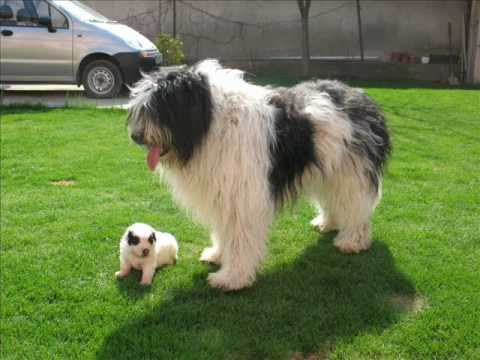
    The Romanian Mioritic Shepherd Dog he is a calm and balanced dog that has an extraordinarily strong bond with his handler.

    Content

    History

    The ยซRomanian Shepherd of Mioritzaยป, or Ciobanesc Romanesc Mioritic in romanian, it is a natural breed that has been present for centuries in the Carpathians, especially in southern Transylvania, in the mountainous regions near Sibiu and Brasov. Its exact origins are unknown., but it seems that their ancestors came to Romania around the 13th century with the Tatars who came to settle in the Danube Delta region and along the Black Sea coast.

    In the middle ages, some local rulers used these powerful dogs to accompany their armies. This fueled the legend that the dogs often seen in ancient engravings depicting the battles between the Roman Empire and the Dacians, a native people of the Carpathians, they are the shepherds of Mioritza. But, since these battles took place over 1000 years before the arrival of the dog's ancestors to the region, it is in fact unlikely that he can claim to have any connection to these feats of arms.

    In fact, the Mioritza Shepherd Dog he was above all the faithful companion of the illiterate peasants and shepherds isolated in the mountains. Stunning, mighty and brave, protected, and still protects today, herds against the many predators that live in the Carpathians: Lynx, Wolf, bear…

    His name is also a reference to his qualities as a pastor, since the word ยซmioaraยป means "sheep" in Romanian, precisely the animal that it has been protecting for several centuries.

    Even today, many shepherds claim that only one of these dogs can scare away a bear, and popular belief says that it is the only breed in the world capable of facing a bear and coming out alive.

    The first written references to Mioritic go back to 1930, when Professor Gheorghe Moldoveanu, studying the Romanian Carpathian Shepherd Dog, made a first distinction between the different romanian sheepdogs. In 1934, the National Zootechnical Institute published a description of the dog Romanian Mioritic Shepherd Dog, but it wasn't until 1981 that a first breed standard was defined, prepared by the Romanian Cynological Association (ACR).

    This standard was revised in 2002 to meet the requirements of the Fรฉdรฉration Cynologique Internationale (FCI), who accepted the dog Romanian Mioritic Shepherd Dog provisionally in 2005, before finally recognizing it in 2015. In the meantime, had taken off across the Atlantic, as recognized by the American United Kennel Club (UKC) in 2006. The other reference body in the country, the American Kennel Club (AKC), did the same in 2018. But, neither the British nor the Canadian Kennel Club have followed suit.

    It is estimated that the population of Romanian Mioritic Shepherd Dog is of 10.000 individuals in Romania, but the vast majority are dogs with pedigree and unregistered. In fact, although the breeding of dogs without pedigrees has been prohibited in the country since 2015, ancient habits are slowly changing. So that, There is often a "country" dog left, of which a puppy is given to the villager when a litter is born., instead of a pedigree dog that is purchased from a professional breeder.

    On the other hand, although they are still relatively popular in the Romanian mountains, the Romanian Mioritic Shepherd Dog remain largely unknown outside of their home country, despite the efforts of Barbara Fallent, an Austrian-based breeder dedicated to popularizing them in Europe.

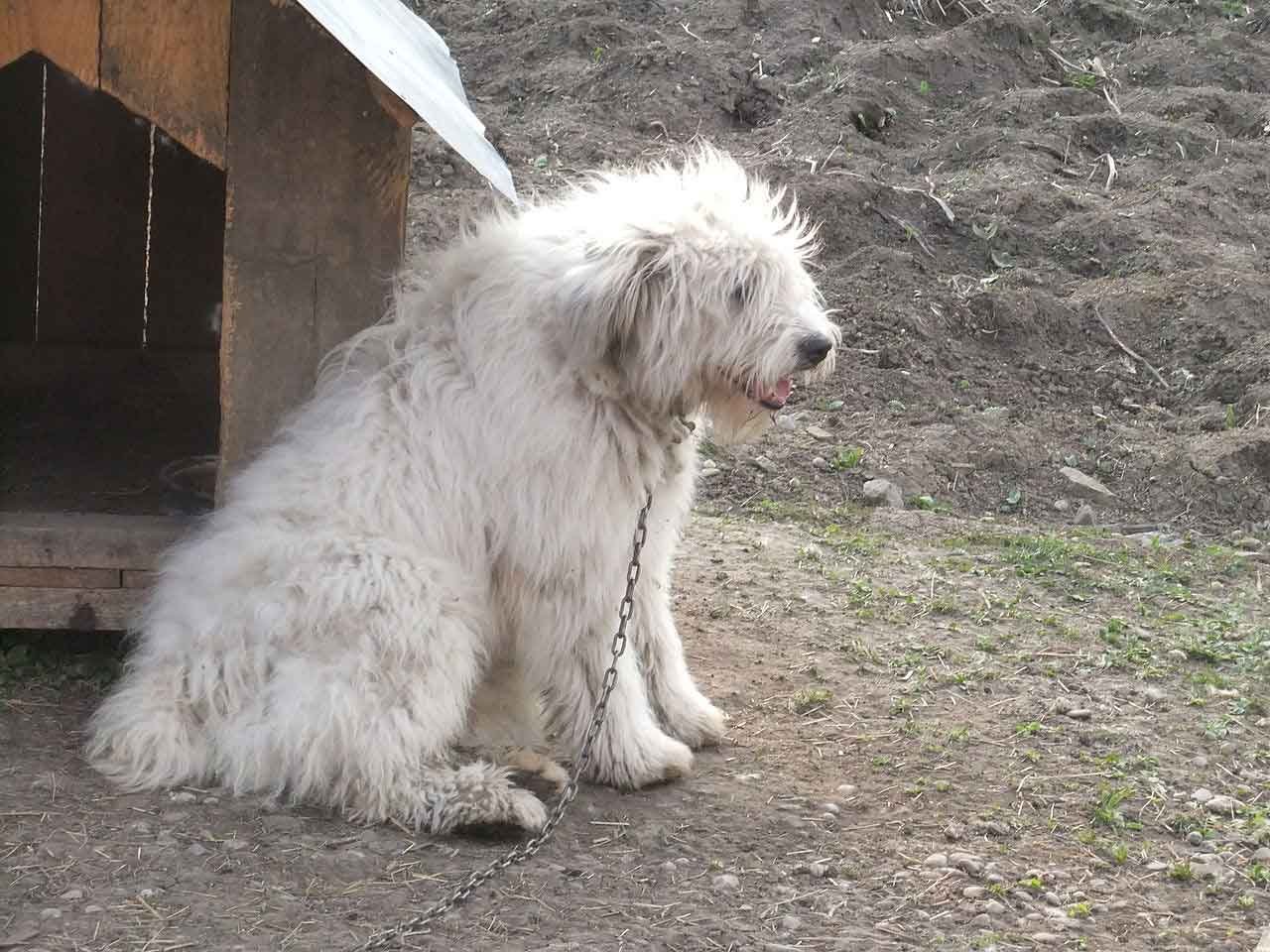
    Photo: Ciobanesc Mioritic by DorinRodina, CC BY-SA 3.0, via Wikimedia Commons

    Physical characteristics

    Sometimes nicknamed "wool bear", the Romanian Mioritic Shepherd Dog is tall, powerful and furry. It is often confused with the Old English Sheepdog (or Bobtail), with whom he has many physical similarities.

    They are big and massive, but harmonious and very agile for a dog of this size, while its legs are muscular and erect. Tail stands tall and is carried drooping when at rest, but it rises horizontally when in the gazebo.

    The neck is of medium length but broad and powerful, and bears a massive head of large size in relation to the rest of the body. The skull is slightly domed and ends in a rather short muzzle, tapering towards the nose. The latter should be black and well developed. The powerful jaws are scissor bite. Triangular ears with rounded tips fall along the cheeks and "disappear" into the fur.

    The eyes are medium in size, often hazel or dark brown in color, but they can also be lighter in color, except yellow, which is not accepted by the standard of Romanian Mioritic Shepherd Dog. They express calm and intelligence.

    The coat of the mioritic it is very long, measure at least 10 cm.. Covers the whole body, from head to tip of tail, going through the legs, where however it is a little shorter. The top coat is rough, while the lower layer is more flexible and dense, which makes the coat perfectly adapted to harsh weather conditions.

    The coat can be uniform, white or gray, but most often it is variegated, with distinctive black or gray spots protruding from the white fur.

    Sexual dimorphism is moderately marked, the female being only slightly smaller than the male.

    Character and skills

    The Romanian Mioritic Shepherd Dog he is a calm and balanced dog that has an extraordinarily strong bond with his master and his family, bond that forms naturally during the growth period. It is known that it is "a master's dog" – the person who adopted and raised him – which makes it very difficult to adopt an adult dog from Mioritic Shepherd Dog.

    He is incredibly devoted and loyal to his family, at least the family he grew up with. Adults, children, pets or farm animals…: everyone he lives with is part of his family, and once he is an adult he will stop at nothing to protect them. Quiet and affectionate, gets along very well with children, without being an ideal playmate, especially for the little ones and / or restless, since he prefers quieter activities. It also, given its size, could unintentionally push a small one.

    A typical sheepdog, who mistrusts strangers. Although tolerate close friends who come often, barks vigorously when a stranger approaches, and only allows him to enter his territory with the agreement of his master. So, a lot of work on socialization and obedience is necessary from an early age to prevent this dog's power from, able to scare away wolves and bears, be misdirected, with dramatic consequences.

    The Romanian Mioritic Shepherd Dog need space, and it is not at all a breed of dog adapted to apartment living. Its territorial and protective character makes it not an ideal option for people who live in a residential area., even with a large garden. Rather, they adapt better to the field or the mountains, where they have space and where they encounter fewer potential โ€œthreatsโ€, especially since they can easily spend their days and nights outdoors.

    Having said that, if you need space, the mioritic neither is it a dog that needs a lot of exercise, at least not as an adult. It is true that the puppies of this breed are hyperactive and need to exercise daily, either in the form of games or walks. But the adult is much calmer, as are most sheepdogs, who prefer to stay close to their herd and not stray too far from it: patrolling in the garden and taking an occasional walk with his master is more than enough for him.

    But, It is important to know that the "territory" that the Romanian Mioritic Shepherd Dog not limited to your garden: protect the place where your family is, establishing a kind of security perimeter around it in all circumstances. Like this, if your flock grazes in the mountains, don't let anyone get close, and if your family walks in a park, does the same.

    But, the Mioritic Shepherd Dog not spontaneously aggressive, and never attacks for no reason. Barks to warn the intruder that they are not welcome, and leave the one who understands the message alone. On the other hand, anyone who risks ignoring the warning without his master's consent risks finding out why this dog has been the best friend of Romanian shepherds and protector of their flocks for centuries.

    Finally, used to accompany them alone, have learned to make decisions on their own. Although loyal and obedient, his independent character and power make him a dog that is not suitable as a first dog.

    Education ยซRomanian Shepherd of Mioritzaยป

    If socializing the puppy from an early age is necessary for all breeds, is even more essential in the case of Romanian Mioritic Shepherd Dog. You must meet the people you may meet as an adult as soon as possible and get used to the situations that will be part of your life: walks in a crowded place, visits to the vet, hairdressing sessions… The latter should also allow him to get used to being handled without hesitation., which is absolutely essential to avoid any problems once adult, given its size and power.

    In the same way, learning obedience should begin as soon as the dog is adopted. Smart and devoted, the Romanian Mioritic Shepherd Dog it is relatively easy to train if your master has the necessary experience and knows how to remind your dog who the master is if necessary. On the other hand, Inconsistent or hesitant orders can lead you to take matters into your own hands and choose the attitude that seems most appropriate. Unfortunately, in such cases, unlikely to make the desired decision.

    In any case, although professional help can be useful to support, education must be provided by the teacher himself. You are the only person whose authority you recognize and trust.

    It also, traditional training methods should be banned, as they risk damaging the strong bond between student and teacher. Positive reinforcement-based dog training is a much better option.

    Regarding your role as guardian, does not require any special training. In fact, their instinct for protection is innate, so it does not need any specific training to become an excellent guard dog. In the same way, learn to become a good herding watchdog by observing adults, and just reproduce this behavior when it grows. Once again, no specific training required.

    Health ยซRomanian Shepherd of Mioritzaยป

    The Romanian Mioritic Shepherd Dog he is a very healthy dog: is not subject to hereditary diseases, it is only slightly sensitive to common diseases and is resistant to harsh weather conditions. In fact, many individuals reach the age of 14 years or more, which is unusual for a dog of this size.

    But, like all large dog breeds, may suffer from ..:

    ▷ Hip Dysplasia;
    ▷ elbow dysplasia;
    ▷ gastric dilation-torsion.

    It also, its long and dense coat can become a refuge for many parasites, especially if you spend most of your time outdoors. So, it is essential to regularly ensure that all your deworming treatments are up to date.

    Grooming ยซRomanian Shepherd of Mioritzaยป

    The Romanian Mioritic Shepherd Dog It is an easy-care breed of dog: a weekly brushing of his coat is enough to get rid of his dead hairs and ensure that he has no injuries that can be hidden by his long hair.

    But, during the move, the dog should be brushed more frequently to avoid accumulation of dead hair, that could create knots and become true "parasite nests".

    Bathing the dog is unnecessary, since the Romanian Mioritic Shepherd Dog has a self-cleaning coat. Even if he rolled in the mud before he came home, leaving it outside in a dry place should be enough to get rid of any dirt. "And Mioritic dry is a Mioritic clean", as the shepherds say.

    On the other hand, it is essential to check every 2 or 3 days that your eyes and ears are not dirty and do not show any signs of infection. Their teeth and claws may be checked less regularly, but special attention should be paid to the dog's paw pads to make sure there is no accumulated dirt.

    It is a good idea to get used to Romanian Mioritic Shepherd Dog to these grooming sessions from an early age, to avoid any problems later, given its size and power. If the teacher knows how to do it, they can become beautiful moments of complicity between him and his partner.

    On the other hand, if it has to be prepared by a professional, the presence of your caregiver is necessary to calm you down and ensure that you do not have any aggressive reaction towards the stranger who is manipulating you.

    Price ยซRomanian Mioritza Shepherdยป

    a puppy of Romanian Mioritic Shepherd Dog costs between 1000 and 1200 EUR. A male is more expensive than a female, because males are more sought after by shepherds.

    In any case, It is necessary to be well informed about the origin of the puppy and to check its documents with the Romanian Canine Association (ACR). In fact, from 2015, the breeding of dogs without a pedigree or not registered in the Romanian Stud Book is prohibited in Romania, and the marketing of these puppies is illegal.

    Characteristics "Romanian Mioritic Shepherd Dog"

    Coexistence is important that you have with your new friend. Before considering the acquisition of a dog of the breed "Romanian Mioritic Shepherd Dog" you know certain factors. Not all breeds of dogs are apt to live in an apartment, you must take into account his character, their need for exercise, their interaction with other pets, their care and if you have small children, their level of tolerance towards them.

    Adaptation โ“˜

    2,0 of 5 stars (based on 1 review)

    friendly dog โ€‹โ€‹โ“˜

    3,0 of 5 stars (based on 1 review)

    hair loss โ“˜

    4,0 of 5 stars (based on 1 review)

    Affection level โ“˜

    4,0 of 5 stars (based on 1 review)

    Need for exercise โ“˜

    3,0 of 5 stars (based on 1 review)

    Social need โ“˜

    1,0 of 5 stars (based on 1 review)

    Home โ“˜

    2,0 of 5 stars (based on 1 review)

    Toilet โ“˜

    2,0 of 5 stars (based on 1 review)

    Friendly with strangers โ“˜

    2,0 of 5 stars (based on 1 review)

    barking โ“˜

    3,0 of 5 stars (based on 1 review)

    Health โ“˜

    4,0 of 5 stars (based on 1 review)

    Territorial โ“˜

    5,0 of 5 stars (based on 1 review)

    Cat friendly โ“˜

    4,0 of 5 stars (based on 1 review)

    Intelligence โ“˜

    3,0 of 5 stars (based on 1 review)

    Versatility โ“˜

    3,0 of 5 stars (based on 1 review)

    Child friendly โ“˜

    4,0 of 5 stars (based on 1 review)

    Surveillance โ“˜

    4,0 of 5 stars (based on 1 review)

    joy โ“˜

    3,0 of 5 stars (based on 1 review)

    Images "Romanian Mioritic Shepherd Dog"

    Romanian Mioritic Shepherd Dog
    Beautiful Romanian Shepherd Dogs, the one on the left is the โ€œRomanian Shepherd of Mioritzaโ€ and the one on the right is the โ€œRomanian Shepherd of Bucovinaโ€ by Remus Pereni, CC BY 2.0, via Wikimedia Commons
    Romanian Mioritic Shepherd Dog
    ยซRomanian Shepherd of Mioritzaยป by akc

    Videos "Romanian Mioritic Shepherd Dog"

    Romanian Mioritic Shepherd - Facts and Information
    Romanian Mioritic Shepherd – Facts and Information
    The Miracle of Life - Romanian Mioritic shepherd dog babies
    The Miracle of Life – Romanian Mioritic shepherd dog babies

    Type and recognitions:

    • FCI CLASSIFICATION:
    • Group :
    • Section : . .

    Federations:

    • FCI – Group 1 Herding dogs, Section 1 Sheepdogs โ“˜
    • AKCFoundation Stock Service โ“˜
    • UKC – Herding dogs โ“˜

    FCI breed standard "Romanian Mioritic Shepherd Dog"

    Origin:
    Romania

    Date of publication of the valid original standard:
    09.06.2015

    Use:

    Excellent herd dog, incorruptible guardian and extraordinary companion.


    General appearance:

    Large, but never heavy. It is vigorous and spectacular. The hair is long and thick on the head., entire body and extremities. Males are taller and larger than females.

    IMPORTANT PROPORTIONS:

    • Body length/height at withers, 11 : 10.
    • The chest height must correspond to a 50% the height at the withers.
    • The snout is slightly shorter than the skull.


    Behavior / temperament:

    This is a balanced and calm dog. He is a very good herd dog, very brave and effective combatant against possible predators (bears, Wolves, Lynx). Be wary of strangers. He loves children very much.

    Head:

    Powerful, solid. Grand, in relation to the body.

    Cranial region:
    • Skull: Amplitude medium, slightly bulky. The upper profiles of the skull and snout are more or less parallel. Seen from the front, the upper profile is slightly bulging. The zygomatic arches are not very marked. The occipital protuberance is well marked.
    • Depression links: It is not very marked.

    facial region:

    • Truffle:Wide, well developed, black.
    • Snout:Slightly shorter than skull; well developed, progressively decreases towards the truffle, never pointed; the jaw is strong.
    • Lips:Thick, fine pendants, well pigmented.
    • Jaws / Teeth:Powerful jaws; complete denture, strong, very much, with white teeth, well implanted. The joint is in the form of scissors.
    • Cheeks:They are not protruding.
    • Eyes:Medium-sized, oblique. Its color is hazelnut, dark brown or slightly lighter, never yellow. Eyelids are well pigmented. The expression is calm and intelligent.
    • Ears:They appear relatively high, "V" shaped, with slightly rounded end. Its length is 10-15 cm., They are hanging and are well attached to the cheeks. Amputation is prohibited.

    Neck:

    Medium length, wide and powerful. There is no presence of dewlap.

    Body:

    Well developed.

    • Top margin: Straight, well pronounced.
    • Height to the cross: Moderately marked.
    • Back: Horizontal, strong and muscular.
    • Pork loin: Moderately long, wide and well muscled.
    • Rump: Muscular and moderately inclined towards the base of the tail.
    • Breast : It's not too long. It is wide and its height corresponds approximately to half the height at the withers.. The ribs are well curved.
    • Lower margin: slightly upward, without being overwhelmed.

    Tail:

    Is presented high. During rest, presented pendant, reaching the hock or slightly exceeding it. When the dog is attentive or in action, appears up, somewhat bent, being able to exceed the level of the back, but never coiled on it. Caudectomy is prohibited.

    Tips

    PREVIOUS MEMBERS:

    • In general: Front or profile views, they are plumb.
    • Shoulder: Medium length, oblique, very muscular and close to the body. Scapulo-humeral angulation of 100-105 degrees approximately.
    • Arm: Medium length, well muscled.
    • Elbows: Well attached to the body, they do not deviate even inwards, nor out.
    • Forearm: long enough, powerful and muscular.
    • Carpo: companies.
    • Metacarpus: Slightly inclined, in profile.
    • Previous foot:Oval, compact and solid. The fingers are together and arched, nails are ash gray.

    LATER MEMBERS:

    • In general: Well muscled and powerful. Views from behind, they are straight and parallel. Little open angles.
    • Thigh: Long, broad and well muscled.
    • Babilla: In femoro-tibial angle it is 100-105 degrees approximately.
    • Legs: long enough, muscular, good bone structure.
    • Hock: Medium altitude; strong, well angled, does not deviate even inwards, nor out.
    • Metatarsus: It's not too long. In profile, It is robust and almost vertical. The presence of dewclaws should not be penalized.
    • Rear foot: A little longer than the previous one.

    Movement:

    Harmonious, loose, well coordinated, powerful and easy. Preferred movement is the trot. The gallop is uniform and balanced.

    Mantle

    • SKIN: Thick, well stretched, well Pigmented.
    • Fur: The hair is abundant on the head and body, its texture is rough. It is stretched and its length is 10 cm., As minimum. The inner layer is denser and softer, color clear. In the extremities, the hair is shorter. The tail is very thick.
    • Color:Coats with patches of different colors: The background should be white with well-defined black or gray spots.. Uniform colours: Dogs of uniform white or gray color.


    Size and weight:

    Height to the cross:

    • Males: minimal 70 cm., ideal 75 cm..
    • females: minimal 65 cm., ideal 70 cm..

    Weight: In proportion to the size.


    Fouls:

    Any deviation from the aforementioned criteria is considered as a fault and its seriousness is considered to the degree of the deviation to the standard and its consequences on the health and well-being of the dog.

    • Obese or weak dog.
    • Bent or ring-shaped tail.
    • Lack of teeth other than PM1.
    • Heavy movement.

    SERIOUS FAULTS:

    • Insufficiently marked sexual characteristics.
    • atypical expression.
    • Round and bulging eyes.
    • ocular heterochromia (different colored eyes).
    • straight ears.
    • Too short hair (less than 8 cm.).
    • Curly hair or hair of another texture than that indicated in the standard.
    • Sunken top margin, convex or deep.
    • Open feet, that deviate inward or outward (partizambo).
    • Very open angulations in the hind limbs.
    • cow hock.
    • Presence of mottled spots.

    FALTAS DESCALIFICANTES:

    • Aggressiveness or extreme shyness.
    • Any dog โ€‹โ€‹showing clear signs of physical or behavioral abnormalities must be disqualified..
    • atypical dog.
    • Lack of incisors or canines.
    • Upper or lower prognathism.
    • albinism.
    • Absence of tail or very short tail.
    • amputated tail.
    • Height at withers of less than 68 cm in males.
    • Height at withers of less than 63 cm in females.


    N.B.:
    • Males should have two normal-appearing testicles fully descended into the scrotum..
    • Only functionally and clinically healthy dogs, with the typical conformation of the breed, should be used for parenting.

    Source: F.C.I - International Cynological Federation

    Alternative names:

    1. Romanian Mioritic, Mioritic Shepherd Dog, Ciobฤƒnesc Romรขnesc Mioritic (English).
    2. Mioritic (French).
    3. Mioritic, Mocano, Barac (German).
    4. (em romeno: Ciobฤƒnesc romรขnesc mioritic) ciobanesc romanesc mioritic (Portuguese).
    5. Mioritic (espaรฑol).