โ–ท The world of Pets: Dogs, cats, birds, reptiles, amphibians

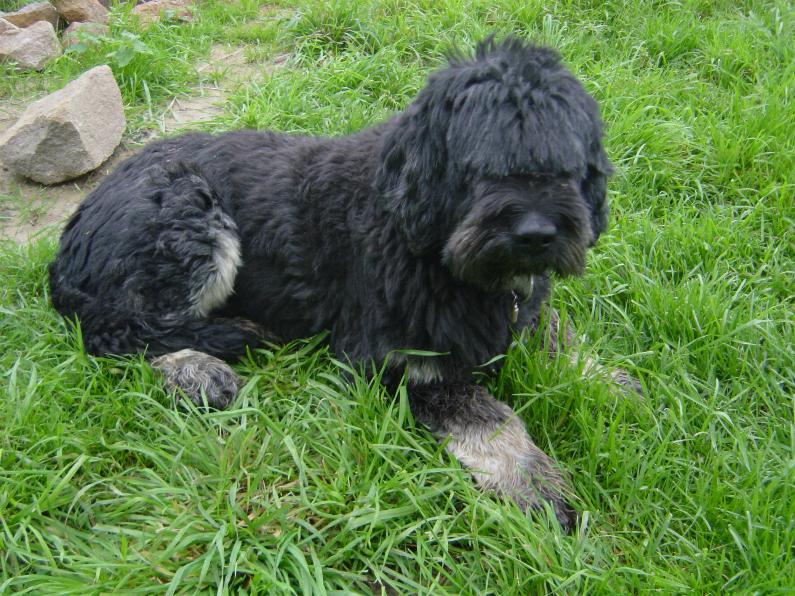
Majorca Shepherd Dog
Espaรฑa FCI 321 . Sheepdogs

Ca de Bestiar

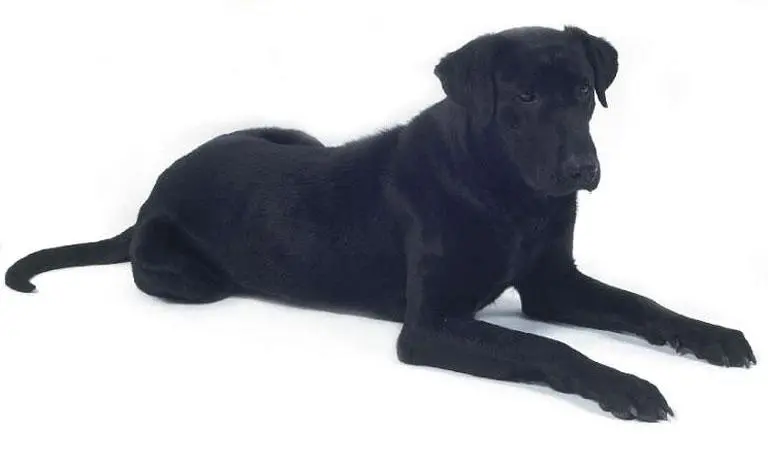
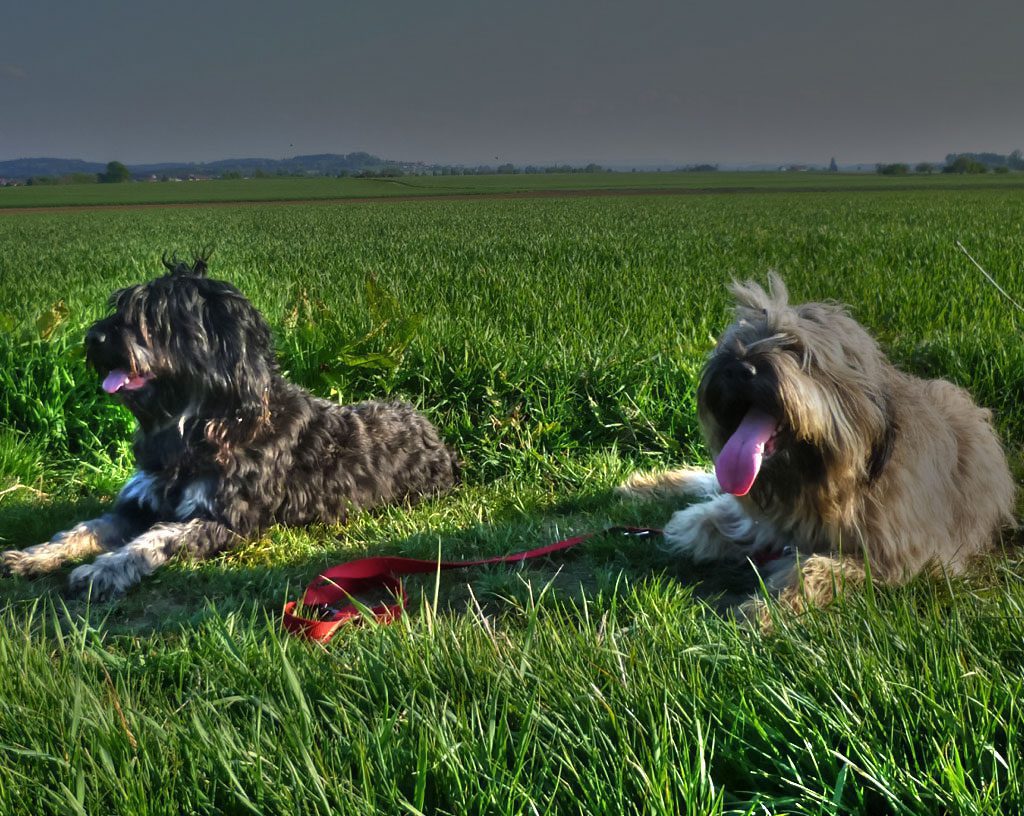
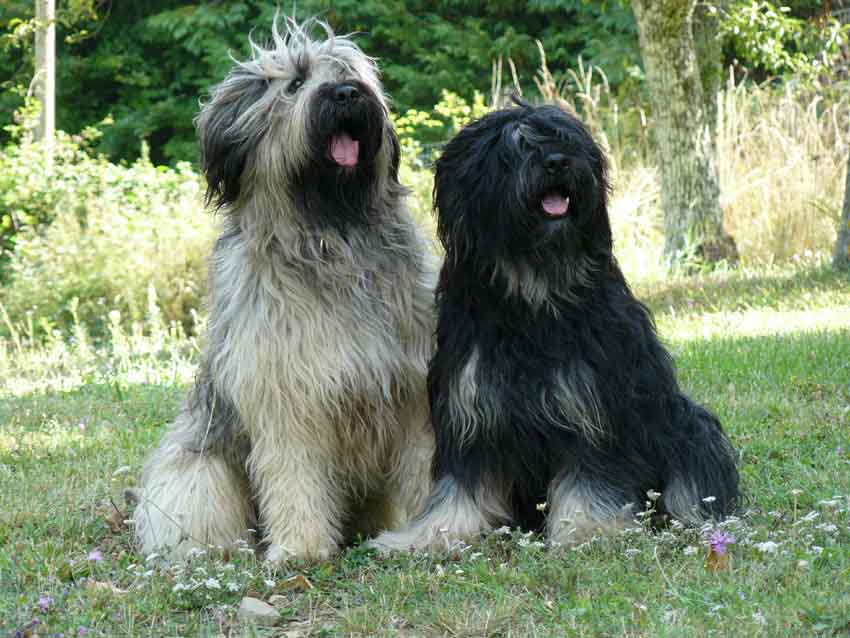
The Majorca Shepherd Dog or "Cattle", It is a breed of dog originating in Mallorca.

Content

History

Also known as โ€œCa de Bestiarโ€, this breed is believed to have existed since ancient times. Through the years, this dog would have been bred with a variety of local Mallorcan dogs, as well as with other European Shepherd dogs, and it was not until 1970 which he puts any restrictions on their upbringing. In fact, its breed standard was written as recently as 1980. It was in 2006 the UKC โ“˜ recognized the breed within his Group of Sheepdogs.

Appreciated through the centuries by the Spaniards for their ability to be a versatile farm dog, the Majorca Shepherd Dog It was used both to herd flocks and to monitor property and animals. It has also been reported that the Majorca Shepherd Dog was widely used in dogfighting, a practice that is now illegal. Although it is still used on farms today, and is also often kept as a companion animal, this rare breed once seen internationally and is considered a rare breed.

Physical characteristics

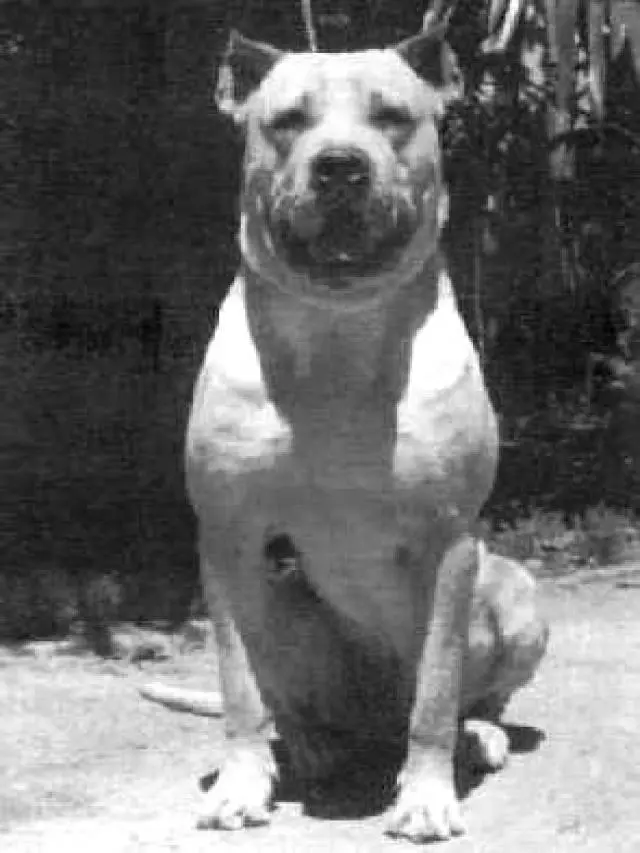
The Majorca Shepherd Dog is a large size dog, average weight, well proportioned, rustic, strong and large muscles, flexible and robust.

There are two varieties: long hair and most widespread short-haired. The head is well modeled, large and provided with the body, but not so much as to look like a molosser. Craniofacial shafts are slightly convergent; the relationship between the skull and the muzzle is of 1:1.

The color eyes goes from amber to dark brown, and his expression is intelligent and enigmatic.

The ears, small in relation to the head, they are triangular, inserted at the top and are normally bent, with dropped tips.

The tail Start horizontally, is horizontal section, It has thick base and it tapers towards the tip.

Fur: the short hair variety has quite thin Undercoat. In the variety of long hair, hair coverage can reach a length of 7 cm and it is slightly wavy. In both varieties should be soft and fine.

Color: the only one admitted is black, optionally with white spots on chest and feet.

Size: males, of 66 to 73 cm.; females, of 62 to 68 cm.. The weight is usually of 40 kg approximately.

Character and skills

He is a shepherd dog with skills for the job of guard and defense. Itร‚ยดs Intelligent, docile and affectionate, although as a puppy he is usually shy and reserved. For this reason it is important to socialize it to the maximum to avoid that it closes in on itself.

The adult is very suspicious of strangers and he is united by a very strong bond with his master. Her enigmatic gaze not glimpse of his thoughts. It has an extraordinary courage and willing to everything in order to defend their loved. It's a little known breed outside the Balearic Islands, so to acquire a good puppy should address to breeders of the Islands.

Images ยซMajorcan shepherd dogยป

โ€œMajorcan Shepherd Dogโ€ videos

Type and recognitions:

  • FCI CLASSIFICATION:
  • Group :
  • Section : . .

Federations:

  • – FCI โ“˜

FCI breed standard "Majorca Shepherd Dog"

Origin:
Spain

Date of publication of the valid original standard:
26.05.1982

Use:

Herding dog, guardian and defense


General appearance:

Sub-convex profile dog, large without being exaggerated and medium-weight size. It is totally black or black with white spot on chest, well proportioned, rustic, strong, muscular, robust and agile. There are two varieties of hair:

  • Short hair, the most common variety.
  • Long hair.

IMPORTANT PROPORTIONS:

Dog subhipermetrico, midline and subconvex.

  • The female accepts a longitudinal diameter of up to a 3% greater than the height of the cross.
  • Length of the muzzle is equal to the length of the skull.
  • The length of the head must be equal to the length of the neck.
  • In adult males the thoracic perimeter, taken together the cross behind the elbows, It is about a cms rather than its height at the withers.


Behavior / temperament:

Dog of great nobility, only an owner that accepts loads of strangers with difficulty.
Intelligent, docile, loving, shy on end and reserved in his youth ; his sentimentality comes to unsuspected. Faithful to his master until death. If we explore in his eyes it will give us the feeling thinks. It is courageous and quarrelsome.

Head:

Slightly triangular profile; view dorsally is wider at the top than at the bottom; solid, but not heavy; large enough to accommodate a good intelligence; well molded and proportionate to the body; It must be rather large, but never a trotting type. The supranasal line is parallel to the cranial line. Slightly divergent skull-facial axes.

Cranial region:
  • Skull: Sub-convex profile. The width of the head, taken between the storms, It should be slightly higher ( approximately 1,2 %) to the length between the supraorbital line and the occipital crest. A slight groove can be seen in the first third of the frontal midline. Marked occipital Crest.
  • Depression links (Stop): Marked, but never sudden, in mild decline.

facial region:

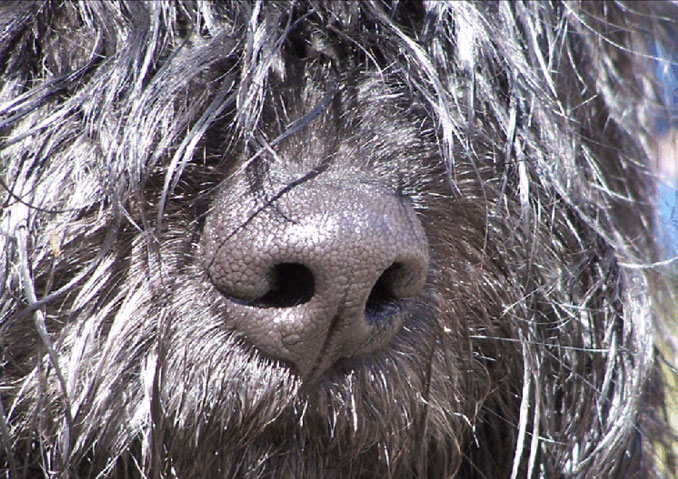
  • Truffle: Wet, fresh, black, large, with broad nostrils; No split. It despuntuarรก significantly if you have stains of barks or lighter.
  • Snout: Width, rather strong ; It should not be in tip, but its height and width should be accentuated as it approaches the orbits. In the variety ยซ Ca cabrer ยป (Longhair) more pointed. The dorsal profile of the nasal helm is sub-convex. The profile of the branches of the lower jaw is straight. Black color palate.
  • Lips: Black ; the high not seen to the bottom while your mouth closed ; the labial commissure is little noticeable and they go unnoticed because they are well proportioned to the head.
  • Jaws / Teeth: Very white teeth, well developed and well placed, closed scissors, making the incisors true upper ends prey with the lower canines. The molars developed.
  • Eyes: Rather small, slightly almond ; are not prominent nor sunken in orbits ; not far apart from each other, centered, slightly oblique, lively. Color between the Rosemary honey (something clear) and of the honey, carob (dark). Enigmatic expression, with look smart and sad at the same time, where denotes even distrust. The eyelids are thin, black and oblique, close to the eye.
  • Ears: Broken, small size in relation to the head, triangular, reaching the tear in the eye of its corresponding side tip, or is approximately equal to the length of your skull. Without amputating, slightly thick, high insertion, separating your tip slightly skull, with a longitudinal fold and another cross around the first third.
  • Position of the ears: usually bent and dropped, something separate from the muzzle. Played back in standby ; in State care by the transverse fold levantadolas, separating them from the snout than usual.

Neck:

Massif, muscular, strong and proportionate to the head and body. Thick, with very little double chin, cylindrical, its diameter accentuating more at the base. The skin is tough and elastic, or fine or thick, firmly attached to the neck at its top and sides, more detached on the bottom.

Body:

  • As a whole: Robust, very well proportioned, giving the impression of strength and agility while.
  • Cross: Marked and at least at the same height as the top of the rump ; the large area between the scapulae and strong.
  • Dorso-lumbar line: Straight, horizontal, never built.
  • Pork loin: Wide and powerful.
  • Rump: Medium, slightly rounded, wide, powerful and muscular; never prominent or fallen. The top should be at the same height as the cross. Its interiliac width must be equal to the iliac-ischial length .
  • Breast : Wide and high, maximum reaching the elbow; a width approximately equal to the length of the neck; quite deep, not prominent, with slightly pronounced sternum. Arched ribs (non-flat or in barrel).
  • Belly and flanks: Fairly bulky flanks. Slightly gathered belly, never agalgado, nor descended to be confused with continued chest. Something stylish, You must give the impression of agility.

Tail:

Horizontal insertion and circular section, rather thick at its birth. Some 8 cm base flattens slightly at its lower profile, in a few 10 length cm, to continue then the tapered circular to its end. Without amputating. Of a length that must reach at least the hock, without touching the ground. No tuft or fringe, Although it is authorised, If this is light, copies of older. In the variety of long hair you must have abundant and long fringe. Size of the queue : at rest naturally drooping or slightly curved outward, slightly touching the hocks, default is considered serious if your tip should touch the ground. Undulating and raised more than the horizontal sickle-shaped, without screwing it, When in action.

Tips

PREVIOUS MEMBERS:

  • As a whole: Strong Member ; correct limbs ; seen from the front and in profile parallel to each other and perpendicular to the ground.
  • Shoulder: Oblique and strong.
  • Scapulo-humeral angle: 115ยฐ.
  • Arms: Of equal length to the scapula.
  • Elbows: Without deviations, glued to the chest. Radial-humerus angle : 130ยฐ.
  • Forearm: Strong, well angled, perpendicular. Vertical bones, strong, long and right.
  • Metacarpus: Short and slightly tilted.
  • Previous feet: Almost of Hare (something shorter and wider than they), finger semialtos, semiarqueados, together, and with the very hard and black pad. Without acute interdigital membrane.

LATER MEMBERS:

  • As a whole: Muscular, strong ; correct limbs. Dimmed and hard muscle relief.
  • Coxo-femoral angle: 115ยฐ, peer-to-scapulo-humeral.
  • Thigh: Strong and muscular.
  • Stifle-tibial angle: 130ยฐ, same as the humerus-radial
  • Leg: Long and powerful.
  • Hock: Little pronounced, very open 135ยฐ angulation. The height of the Hock is about somewhat lower than the one-third of its height at the withers.
  • Metatarsus: Well marked.
  • Hind feet: Almost of Hare, crushed, with fingers together and semiarqueados. Pad hard and black. Arched nails, black and hard. Without acute interdigital membrane. May be born with or without Spurs, in the first case they must amputate.

Movement:

His way of walking must be firm and elegant. The trot on diagonal bipeds, Tip slightly posterior third, respect to the previous. The Gallop will be franco, fast rustic, the rear legs wide apart at its base with soil, placing them outside of the hands, as if it were jumping. The preferred step and the work is the Gallop.

Mantle

SKIN: Elastic, without folds, hard and light grey.

  • HAIR: Short and glued to the skin, its length ranging about 1,5 cm to 3 cm on the spine ; very fine Undercoat, low thickness and very attached to the skin. In the long-haired variety may be slightly wavy on the spine, approximate length of more of 7 cm according to the time of year, with the largest winter. Well distributed and thin Undercoat, grow hair in their normal length in the fringe of the queue, Tip of the ears and back of the limbs. In both varieties should be smooth, hard and quite thin.
  • COLOR: The only color supported is black, varieties of Jet, regular and peceno. The target is supported only in the chest, in the form of thin tie under neck and anterior and posterior foot, highlighting according to its easy visibility on nails and tips of the toes. The Jet Black landmark is the most appreciated, nature of the ordinary black and the peceno.


Size and weight:

  • Height to the cross: Among 66 and 73 cm for males. Among 62 and 68 cm for females.
    Specimens with heights of one cm or so are allowed at the limits indicated ; in this case you must subtract score.
  • Weight: Environment to 40 kg.


Fouls:

Any deviation from the aforementioned criteria is considered as a fault and the severity of this is considered to the degree of the deviation to the standard and its consequences on the health and well-being of the dog..

SERIOUS FAULTS

  •  Dogs that drool-worthy.
  •  Cut fangs.
  •  Very raised ears rest, very large very separated from the face or completely glued to it.
  •  Very collected belly (whippety).
  •  Threaded queue; white tail tip.
  •  White spot of chest of more of 1 dmยฒ.
  •  All fingers of a foot white.

MISS PLAYOFFS

  •  Aggressive or fearful dog.
  •  Mastiff head, very wide and heavy or Hound, long and narrow with just pronounced stop.
  • Truffle pink or white.
  •  Upper or lower prognathism more of 3 mm.
  • โ€ข Eyes of different colors from each other ; eye that is not of the color that goes from the Rosemary honey (something clear) the carob-honey (dark) ; very clear eye.
  • Amputated ears, stiff in action or almost stiff at rest.
  •  Double chin neck, more thickly along the skull than at its base, longer that a 10% length ranging from truffles to the occipital Crest.
  •  Body too long or too short ; height of the top of the rump in a 3% greater than the height at the cross.
  •  Very thick tail, or of equal thickness at the base and tip ; excessively long to touch the ground ; amputated or missing you each 2 cm to reach the Hock ; with abundant fringe in the variety of short hair, with or without bangs in long hair variety.
  •  Other color than black, or, in dogs being black, an anterior or posterior foot white or another color ; members shod in white on any number of limbs ; not totally black body (with the exception of the chest, very few hairs on the belly, perpucio or tip of the tail), stains, without disqualify, they notably despuntuarรกn. They despuntuarรกn not consequential white hairs of bites, trauma or other similar injuries, or the white hairs from the face own age. White fingers not disqualify, unless the animal is more than six, despuntuando notably each ; a single finger white or another color in the previous feet disqualifies the dog.
  •  Height of the cross over of 74 cm in males and more of 70 cm in females. The cross of less height of 66 cm in males and less of 60 cm in females.
  •  Under weight of 30 kg and over 50 kg in males, under weight 25 kg and over 45 kg in females ; even being within the aforementioned limits, very skinny dogs, visibly obese or very saddled (having tolerance in pregnant females).

SCALE OF POINTS

  • General appearance and temperament โ€“ 21 points
  • Presentation (cleaning and porte) โ€“ 4 points
  • Fur (length and hardness) โ€“ 4 points
  • Layer (color and brightness, 7+2) โ€“ 9 points
  • Temperament/Behavior โ€“ 4 points
  • Head โ€“ 21 points
  • Skull and stop โ€“ 4 points
  • Snout, nose and lips โ€“ 5 points
  • Teeth and palate (2+1) โ€“ 3 points
  • Eyes โ€“ 5 points
  • Color โ€“ 2 points
  • Form, size and separation โ€“ 2 points
  • Eyelids โ€“ 1 point
  • Ears (form, thickness, inclusion, size) โ€“ 4 points
  • Neck โ€“ 4 points
  • Trunk โ€“ 21 points
  • Cross โ€“ 1 point
  • Back and back โ€“ 5 points
  • Rump โ€“ 3 points
  • Belly โ€“ 2 points
  • Breast , chest, Ribeye, size โ€“ 10 points
  • Tail (form, length and fringes) โ€“ 2 points
  • Limbs โ€“ 19 points
  • Previous aplombs โ€“ 6 points
  • Later aplombs โ€“ 8 points
  • Feet ant. and post., fingers, nails hardness of the pads โ€“ 5 points
  • Movement โ€“ 12 points
  • Ear bearing โ€“ 3 points
  • Tail bearing โ€“ 3 points
  • Jogging โ€“ 2 points
  • Gallop โ€“ 4 points

Total : 100 points


Proportional measurements (ideal for the male)

  • Weight โ€“ 41 kg
  • Height at the withers โ€“ 71 cm.
  • Height to the rump โ€“ 71 cm.
  • Chest height โ€“ 39 cm.
  • Longitudinal diameter โ€“ 71 cm.

Head

  • Muzzle length โ€“ 13 cm.
  • Skull length โ€“ 13 cm.
  • Total head length โ€“ 26 cm.
  • Neck length โ€“ 26 cm.
  • Ear Longiud โ€“ 13 cm.
  • Tail length โ€“ 52 cm.
  • Raised to hock โ€“ 23 cm.

Length of the hair on the back

  • Short hair variety โ€“ 2 cm.
  • Long hair variety (between seasons) โ€“ 7 cm.
  • Head width โ€“ 15 cm.
  • Thoracic perimeter โ€“ 81/83 cm.
  • Chest width โ€“ 26 cm.
  • Neck circumference โ€“ 49 cm.

Any dog โ€‹โ€‹showing clear signs of physical or behavioral abnormalities must be disqualified..


N.B.:

Males should have two normal-appearing testicles fully descended into the scrotum..

Source: F.C.I - International Cynological Federation

Alternative names:

1. Majorca Shepherd Dog, Ca de bestia, Pastor mallorquรญn (English).
2. Berger de Majorque (French).
3. Ca de Bestiar (German).
4. Ca de Bestiar (Portuguese).
5. Pastor-maiorquino, Ca de Bestiar, Pastor mallorquรญn (espaรฑol).

โ–ท The world of Pets: Dogs, cats, birds, reptiles, amphibians

Portuguese Sheepdog (Cรฃo da Serra de Aires)
Portugal FCI 93 . Sheepdogs

Perro de pastor portuguรฉs

The Portuguese Sheepdog has an excellent herd instinct, always ready to take care of the goats

Content

History

The Portuguese Sheepdog has nearly 100 years.

This hairy, use livestock and guardian of the plains of the Portugal South may descend from the Berger de Brie, imported by the conde de Castro Guimarรฃes and which in turn bred with local mountain dogs.

Despite the similarities with the Berger de Brie and the Catalan Sheepdog, there is no reliable evidence to suggest a direct line of descent.

During the greater part of the last century, the Portuguese Sheepdog was the companion of the shepherds in southern Portugal, but in the Decade of 1970 was almost extinct.

Fortunately, the beauty of your fur and your docile predisposition came to knowledge of the breeders. Today, many owners in Portugal are owners of this breed and their future is assured..

Although he is practically unknown outside his native country, This dog of woolly appearance is a class dog, worthy of greater international recognition.
Owners say these โ€œcuteโ€ little dogs, nicknamed for their peculiar appearance and picturesque expression, have been part of farming and family life for a very long time. As with many working breeds, the ability to work was more important than the appearance, and the standard was not set up to 1930.

Recognition: CKC, FCI, NKC, APRI, ACR, DRA

Physical characteristics

The fur of the < is long and smooth, with a light ripple. Do not have a background layer.

The colors We accept yellow, the brown, the fawn to red and more or less stained gray with red fire. There may be greater or lesser amount of white hairs scattered around the mantle, but never forming stains, except in the chest.

The previous tips they are symmetrically covered with long hair.
It has a beard that gives a mature look. The eyes they are round and dark, with a friendly expression. The ears moderate size usually hang on the sides of the cheeks, Although sometimes clipped. Clipping is prohibited in some European countries. Their feet are particularly adaptable to difficult terrain. Their legs they are strong and their chest deep.

Males can measure of 45 to 55 cm., while females measure of 42 to 52 cm.. The weight must be between 12 and 18 kg.

The hair is longer on the head giving these dogs a curious and messy bangs.
It has a head wide and robust, with a prominent nose and strong jaw. The tail, very close from the base, the high boot, it reaches the Hock and tapered.

Their life expectancy is of 12-13 years.

Character and skills

The Portuguese Sheepdog It is one of the smartest Sheepdogs. This is a great dog, joyful, happy and always ready to work. Very loyal, and paired with their own town.

The Portuguese Sheepdog needs a well-balanced training. It has a above average intelligence and learns quickly and easily, but he can be stubborn and dominant if they feel that their owners do not have the same mentality. So, It has always been a challenge for pastors. Trained once, This is the dog more reliable an owner may have. It requires educators safe and strong. These dogs can live with other animals, Although some males may try to dominate other males. They can live happily with other pets, provided that they have been properly socialized.

The Portuguese Sheepdog is usually patient with children, but the males, in particular, they can be very possessive within its territory. This race is reserved with strangers and they do a good job as a watchdog.

It is very good Shepherd with cattle, that will tirelessly defend. These dogs are known for their fast attitude, intelligent and are particularly good to bringing back stray dogs. They love its owner above all on Earth. Not usually bite unless cause you.

Characteristics "Portuguese Sheepdog (Cรฃo da Serra de Aires)"

Coexistence is important that you have with your new friend. Before considering the acquisition of a dog of the breed "Portuguese Sheepdog (Cรฃo da Serra de Aires)" you know certain factors. Not all breeds of dogs are apt to live in an apartment, you must take into account his character, their need for exercise, their interaction with other pets, their care and if you have small children, their level of tolerance towards them.

Adaptation โ“˜

3,0 of 5 stars (based on 1 review)

friendly dog โ€‹โ€‹โ“˜

2,0 of 5 stars (based on 1 review)

hair loss โ“˜

2,0 of 5 stars (based on 1 review)

Affection level โ“˜

3,0 of 5 stars (based on 1 review)

Need for exercise โ“˜

5,0 of 5 stars (based on 1 review)

Social need โ“˜

3,0 of 5 stars (based on 1 review)

Home โ“˜

3,0 of 5 stars (based on 1 review)

Toilet โ“˜

4,0 of 5 stars (based on 1 review)

Friendly with strangers โ“˜

3,0 of 5 stars (based on 1 review)

barking โ“˜

2,0 of 5 stars (based on 1 review)

Health โ“˜

4,0 of 5 stars (based on 1 review)

Territorial โ“˜

5,0 of 5 stars (based on 1 review)

Cat friendly โ“˜

2,0 of 5 stars (based on 1 review)

Intelligence โ“˜

4,0 of 5 stars (based on 30 reviews)

Versatility โ“˜

3,0 of 5 stars (based on 1 review)

Child friendly โ“˜

3,0 of 5 stars (based on 1 review)

Surveillance โ“˜

4,0 of 5 stars (based on 1 review)

joy โ“˜

5,0 of 5 stars (based on 1 review)

Images ยซPortuguese Shepherd Dogยป

Videos ยซPortuguese Shepherd Dogยป

Type and recognitions:

  • FCI CLASSIFICATION:
  • Group :
  • Section : . .

Federations:

  • – FCI โ“˜,
  • – AKC โ“˜,
  • – ANKC โ“˜,
  • – UKC โ“˜

FCI breed standard "Portuguese Sheepdog (Cรฃo da Serra de Aires)"

Origin:
Portugal

Date of publication of the valid original standard:
04.11.2008

Use:

Guard and herding dog on ranches.


General appearance:

It is a medium-sized dog, sublongilinear. Appreciable rusticity and sobriety, extremely agile and fast with a wide and suspended movement. Long hair with goat-like texture without undercoat. It has the appearance and attitudes of an ape, which is why it is known in this region as the โ€œmonkey dog.โ€.


IMPORTANT PROPORTIONS: The length of the body is approximately 10% greater than his height at the withers. Chest depth is less than 50 % the height at the withers. The length of the muzzle is 2/3 the length of the skull, the width of the skull is slightly less than its length.


Behavior / temperament:

Exceptionally intelligent and very affectionate. He is very dedicated to the shepherd and the cattle he cares for; stay away from strangers and keep watch at night. Nowadays he is also an excellent companion dog., sport and guard. It is highly prized for its ability to keep herds on pasture and to search for escaped animals.. It is alert and vigilant in the presence of predators. The breed is very devoted to its shepherd and his cattle. His work is done with pleasure and pleasure.

Head:

Medium-sized (mesocefรกlica), strong, wide; is not long, or large.

Cranial region:
  • Skull: With a tendency to be square, slightly longer that wide, divergent longitudinal axes of the skull and the muzzle, convex on both axles but more laterally. Supercilii arc is not prominent. Front Groove pronounced stretching towards the middle of the antecara, the areas between the ears are flat with an apparent occipital Protuberance.
  • Depression links: Well defined.

facial region:

  • Truffle : Well defined, slightly elevated ; the Windows are wide. It is rounded, cylindrical and truncated almost vertically. Preferably black, It can be liver color in yellow or brown animals but it should always be a darker color than the coat..
  • Nose cane: It is short; measured around 2/3 the length of the skull. Almost cylindrical ; the width should be proportional to its length and form. Rectilinear profile, or slightly concave.
  • Lips: Together, non-overlapping. They are thin, firm, almost straight cut. The edges of the same color of the truffle. 
  • Jaws: They have a normal development. Both jaws are in perfect opposition. Complete dentition of 42 teeth white and solid. Scissor bite, accepted a bite in Clip.
  • Eyes: Medium-sized, rounded, preferably color dark but can be Hazel or brown amber color in yellow animals, level without being prominent placement. friendly expression, Intelligent but docile, horizontal, eyelids black or always darker than the hair color and according to the colour of the nose.
  • Ears: High implementation; they are falls, and not bent, When not have been cut off; they are straight when they have been cut off. They have a triangular shape. Thin and soft skin. Medium-sized from the same long than broad (About 10 cm.).

Neck:

It joins harmoniously the head and trunk. It is straight and slightly ascending ; supplied thickness. It is not a double chin.

Body:

  • The top line : Straight or slightly inclined.
  • Cross : Strong, harmoniously combined with the neck and back.
  • Back : Straight or slightly sloping and long. Well muscled, usually twice the length of the spine.
  • Pork loin : Short and arched seen profile; wide and curved, seen from the front, strong muscles and well attached to the back and rump.
  • Rump : Some prominent and slightly inclined, soft, long and half-width, strong muscles.
  • Breast : Up to the height of the elbows, bandwidth and average depth, ribs slightly arched with an oval to leaning back rib cage. The sill is prominent, wide well back and wide.
  • Belly and flanks : Uniformly and slightly ascending.

Tail:

High insertion, sharp, arriving at the height of the paw, tapering from the base. Long and covered with abundant hair. When the dog is in motion it is the extension of the top line or it may curve slightly on the top line but never curve on the back.

Tips

PREVIOUS MEMBERS: Strong, well aplomados seen from front and profile, and separate, the distance from the cross to the elbows is slightly smaller than the elbow to the ground.

  • Shoulder: Medium length with a 45ยบ inclination, good muscular, scapula and humerus placed at a 90ยบ angle.
  • Arm: Strong and medium length placed at a 45ยบ angle, good muscular.
  • Elbows: Parallels, close to the chest and with a humerus angle โ€“ radius of 135ยบ.
  • Forearm: Long, vertical and well muscled with bones of medium thickness.
  • Carpo: Delgado. It is not prominent.
  • Metacarpus: Normal size and medium length. From top to bottom, and back forward, is not very inclined.
  • Pies: Rounded, not crushed. The fingers are long and together, with a curve. The nails are long, black and strong, or darker than the coat. The pads are thick and tough.

LATER MEMBERS: Medium width, aplomados seen from front or back, strong giving a perfect impression of strength and agility.

  • Thighs: Medium length and amplitude; good muscular. Hip-femur angle of approximately 105ยบ.
  • Knee joint: Straight view back without leaning neither in nor out. Femur โ€“ tibia angle approximately 130ยบ.
  • Leg: Little inclined; long and well muscled. Strong bones.
  • Tarsus(Hock) : medium width, low placement, strong and slim. Tibia โ€“ tarsus angle approximately 120ยบ.
  • Metatarsus: Normal size, although strong; medium length. It is not very inclined top down, and from front to back. There may be single and double Spurs.
  • Pies: Identical to previous feet in all its aspects.

Movement:

Predominantly moves in a lightweight and suspended trot with powerful. The Gallop, When the work required, is energetic.

Mantle

  • SKIN: Thick, flexible, not too tightThe mucous internal and external are preferably Pigmented.
  • COAT : Smooth or slightly wavy, the goat hair forming a long beard longer with a somewhat rough texture preferably type, whiskers and eyebrows but not covering eyes, thick and evenly distributed on the body including the interdigital spaces. Thickness means without Undercoat or fluff hair. Very long hair on his head, body and members, including the interdigital spaces.
  • HAIR COLOR: The colors are yellow, brown, grey, reddish and Grey Wolf; with light and dark varieties, and more or less marked fire black, with or without white hairs mixed, but never show white spots, except for a small spot in the pectoral region.
  • Skin : The mucous internal and external are preferably Pigmented; the skin is not too stretched.


Size and weight:

  • In males : of 45 to 55 cm..
  • In females : of 42 to 52 cm..

WEIGHT :

  • Males and females: 17 to 27 kg.


Fouls:

Any deviation from the aforementioned criteria is considered a fault and the severity of this is considered to the degree of the deviation from the standard and its effect on the health and well-being of the dog..

SEVERE FAULTS

  • Behavior: Specimens showing nervousness or unbalanced temperament.
  • Jaws: Incorrect implantation of teeth, absence of two premolars (Except PM1)
  • Little marked links depression.
  • Nose is pointed.
  • Overlapping lips, or pendulums.
  • light eyes, small, or non-round, u oblique.
  • Bent or rose-shaped ears.
  • Too narrow banister.
  • Breast : shallow, flat rib cage.
  • Concave upper trunk line, or too steep.
  • Horizontal Croup, or too much fall.
  • Bottom line too thin.
  • Tips: anterior or posterior foot inclined, Garron of cow. Not too straight hind legs.
  • Very low insertion queue, short, or curled over the back when the dog is at rest.
  • White nails.
  • Little wire-haired, or not long enough.
  • Large white patch on the chest region. Fire-coloured stains not defined.
  • Movement: not wide enough, not suspended, elbows out, Paw too together.

MISS PLAYOFFS

  • Behavior: Aggressiveness or excessive shyness.
  • General appearance: Lymphatic, Lightweight bones. Severe deviations from the important proportions
  • Narrow and long head.
  • flat skull, round, Strait
  • Low-set ears, too separate, erect semi erect or.
  • Nasal helm that presents a convex profile.
  • Jaws: prognathism or inferior, absence of more than two premolars (except PM1).
  • Pigmentation: Total absence of pigmentation in truffle, eyelids, lips (albinism).
  • Amputated tail, or lack thereof of birth.
  • Short hair, curly or with presence of Undercoat.
  • Color: White at the ends of the members. Absence of stain color fire in Brown adult, grey or black.
  • Movement: Too rengueo or heavy, with severe deviations in previous members, weakness.
  • Size: Above or below established limits.

Any dog โ€‹โ€‹showing clear signs of physical or behavioral abnormalities should be disqualified..


N.B.:
  • Males should have two normal-appearing testicles fully descended into the scrotum..

TRANSLATION : IRIS Carrillo (Federation Canรณfila de Puerto). 

Technical review: Miguel Angel Martinez (Federation Cynologique Argentina).

Source: F.C.I - International Cynological Federation

Alternative names:

1. Monkey dog, Cรฃo da Serra de Aires (English).
2. Berger de la Serra de Aires, CHIEN DE BERGER DE LA SERRA DE AIRES (French).
3. PORTUGIESISCHER SCHร„FERHUND (German).
4. Serra-d’aires (Portuguese).
5. Perro de pastor portuguรฉs (espaรฑol).

โ–ท The world of Pets: Dogs, cats, birds, reptiles, amphibians

Can de Palleiro
Espaรฑa Not recognized by the FCI

The Can de Palleiro It is a breed of herding dog provenzal.

Cรฃo de Palleiro

Content

History

The ancestors of Can de Palleiro It is a breed of herding dog provenzal. are the dogs introduced in the Iberian Peninsula by the Central European and Nordic peoples in the successive invasions that formed the Suebic Kingdom from Galicia. Share a common origin with the Belgian shepherds, germans, Dutch, of Picardia or with the Castro Laboreiro Dog.

This farm dog has existed since then in all of Galicia, and while many references about him, both oral and literary, has remained virtually anonymous to this day.

It is named in allusion to the barn where the Shepherd and guardian usually sleep.

Physical characteristics

Their fur tends to be thick, without sagging, and the body connected to the front. The deck (color) is generally uniform, with a wide range of sand, cinnamon, brown, Vulture black and uniform. Hair is thick and dense, more in winter, being an animal that generally they live outdoors, always with the cattle or Haystack.

The males measure height to cross a few 59-65 cm and the females of 57 to 63 cm.. Males weigh in 30 to 38 kg and females in 25 to 33 kg.

Character and skills

Can de Palleiro
Haystack dog, celtic shepherd – giggling, CC BY 3.0, via Wikimedia Commons

It is a herding dog and faithful and multifunctional guard, It is with cow herding them and saving them as also cares home. Guardian of proverbial intelligence, It presents a strong and reserved nature with strangers, Besides being brave and bite, characteristics that make it a great collaborator in driving and guarding livestock. With a great loyalty to his master, with the people of the House becomes quiet and sweet.

It is necessary to highlight the psychic and balanced stability of this animal, own a shepherd dog, so this feature has to take care of in the extreme, promoting balanced and sufficiently socialized specimens selection.

Dog possessive and careful of himself and those who live with him, ladra strangers and defends its territory as a good watchdog, it is ideal to live with large families and with children since it will not allow them to run any risk, ideal for field and not for the cities, which as its name indicates (Palleiro = Pajar) It is used to sleeping in the field.

โ–ท The world of Pets: Dogs, cats, birds, reptiles, amphibians

Artois Hound
Francia FCI 28 . Medium-sized Hounds

Basset de Artois

The Artois Hound towards their masters is affectionate, mischievous and loyal.

Content

History

The history of the Basset we can locate in the 7th century in a monastery Ardennes (France) where, monks engaged in raising dogs St. Hubert, and as a result of crossing, the common Basset breed is born, today.

Artois Hound is a native of the region of artois (North France) It is characterized by its rugged terrain and dense vegetation. It is believed that it descends from the Great Artois Hound What, for its part, drops dog San Humberto. He has inherited these talents to pry traces of injured or dead prey and showed his specialty in the game (as the Hare, rabbitsโ€ฆ).

Unlike the Normandy Artesian Basset, The Artois Hound, has straight Forelegs. El Basset d'Artois, is one of the ancestors of Basset Hound (What is the most know).

The count Jean H. Emmanuel Comie Le Coulteux Canteleu (1827-1910) He was a writer and French dog breeder. Together with Louis Lane he created the hunting dog breed ยซBasset Artesiano de Normandyยป and the ยซBasset de Artoisยป. Is known for his book on the secret societies and his anti-Masonic opinions rather than, for his book on the breeds of hunting dogs and hunting in Monterรญa "Manuel de vรฉnerie franรงaise", He is regarded as a reference book.

Videos "Artois Hound"

Until year 1863, this breed of dog was only known by hunters, from that date it is made publicly known in Paris.
It was not until the end of the 16th century that, appeared the first descriptions of these dogs as, Basset of Artois and making of France, the cradle of the race Basset. These dogs are highly valued by their hunting skills.

The crosses with hounds dogs, gave rise to different varieties of Bassets, as Artois Bassets, Norman Artesian Basset, Fawn Brittany Basset, Griffon Vendรฉen, Blue Gascony, and perhaps, someone else that escapes us...

At the same time a pair of Comte Le Coulteux Basset, they were sent for gift to England. They called them "Bassetยป y ยซBellaยป who are probably the ancestors of our Basset Hounds (English breed of Basset).

Physical characteristics

The Artois Hound are medium-sized dogs, especially used in hunting, vigorous, robust and well balanced.

It has a strong head, wide, quite short, round, small flat top with a small occipital Protuberance. Moderately long neck with very little double chin. Round eyes, or sunk or prominent.
His body is broad and well sustained in the back, waist slightly arched, rump very muscular and broad chest. His hair is dense, short and attached to the body. Tricolor dark, leonado, like the hair of a Hare or Badger, with spots large, likens head, sometimes with black highlights. Ears inserted at the height of the eyes, quite long and wide with rounded ends. The tail is long and strong.

Height to the cross: Males and females: 53 to 58 cm with a tolerance of 1 cm.. Weight: On average 28 to 30 kg.

Character and skills

The Artois is friendly and social. The aggression is totally unusual for this race. You can warn of the presence of strangers, but that would be all, the dog can even move the queue to receive strangers. Even with other dogs or pets, an Artois is us friendly.
A male of Artois, However, It usually has an alpha type personality so it will try to dominate other dogs that live together in the home.

Extremely energetic and playful, You will need much activity for a full development.
It is an excellent jogging companion, cycling or hiking. The dog need vigorous exercise, because if the dog is passive becomes restless, destructive and difficult to handle.

The dog may be doing well in an apartment, but a House with a small patio will be most appropriate. Itร‚ยดs important to provide long walks daily. But, It must take into account that this is a sniffer and walk with the dog without the restriction of a strap can be dangerous not only for the dog, but also for other small pets. An Artois has found an interesting smell can get away from our sight, even to lose.

Observations ยซBasset de Artoisยป

The bassetismo, is an anomaly of nature that has probably always existed. The first traces of short-legged dogs dating from prehistoric times.

ยซBasset de Artoisยป images

Videos ยซBasset de Artoisยป

Alternative names:

Chien dโ€™Artois / Picard / Briquet / Artois Hound / Sabueso artesiano

Type and recognitions:

Group 6 / Section 1.2 – Medium-sized hounds
– Federations: FCI โ“˜

โ–ท The world of Pets: Dogs, cats, birds, reptiles, amphibians

Dutch bulldog
China Gran Bretaรฑa FCI 253 . Small Molossian type Dogs

The Dutch bulldog It is a friendly and affectionate dog with other dogs and with people.

Dutch bulldog

Content

Adaptation โ“˜

5,0 of 5 stars (based on 1 review)

friendly dog โ€‹โ€‹โ“˜

5,0 of 5 stars (based on 1 review)

hair loss โ“˜

4,0 of 5 stars (based on 1 review)

Affection level โ“˜

5,0 of 5 stars (based on 1 review)

Need for exercise โ“˜

1,0 of 5 stars (based on 1 review)

Social need โ“˜

5,0 of 5 stars (based on 1 review)

Home โ“˜

5,0 of 5 stars (based on 1 review)

Toilet โ“˜

1,0 of 5 stars (based on 1 review)

Friendly with strangers โ“˜

5,0 of 5 stars (based on 1 review)

barking โ“˜

3,0 of 5 stars (based on 1 review)

Health โ“˜

5,0 of 5 stars (based on 1 review)

Territorial โ“˜

4,0 of 5 stars (based on 1 review)

Cat friendly โ“˜

5,0 of 5 stars (based on 1 review)

Intelligence โ“˜

3,0 of 5 stars (based on 1 review)

Versatility โ“˜

3,0 of 5 stars (based on 1 review)

Child friendly โ“˜

4,0 of 5 stars (based on 1 review)

Surveillance โ“˜

3,0 of 5 stars (based on 1 review)

joy โ“˜

4,0 of 5 stars (based on 1 review)

History

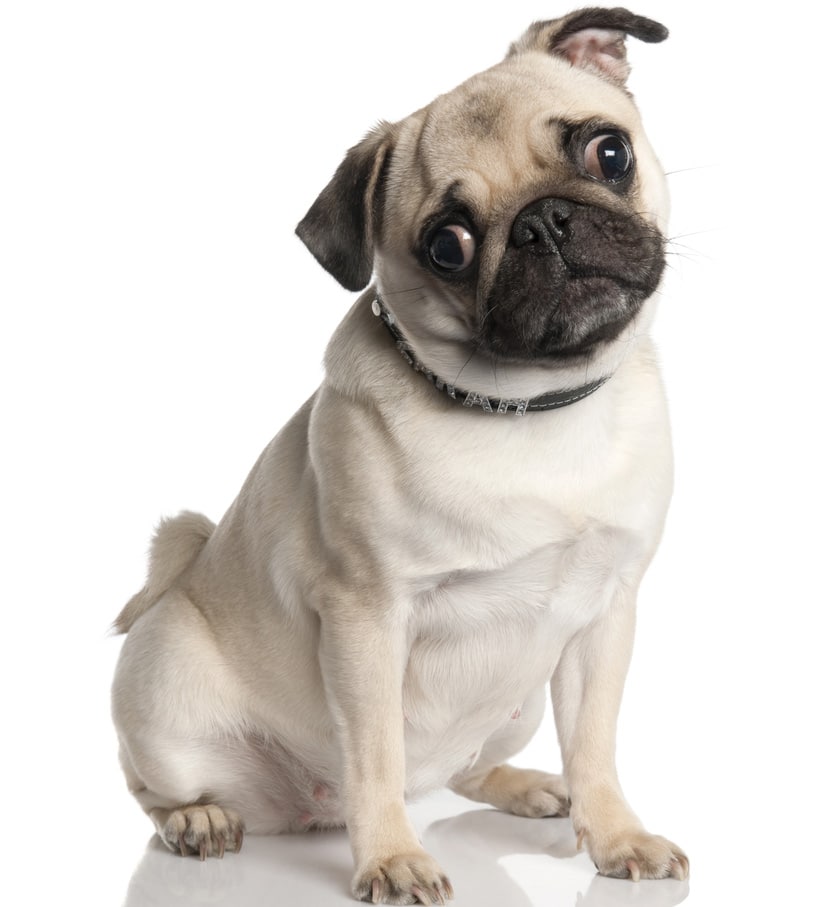
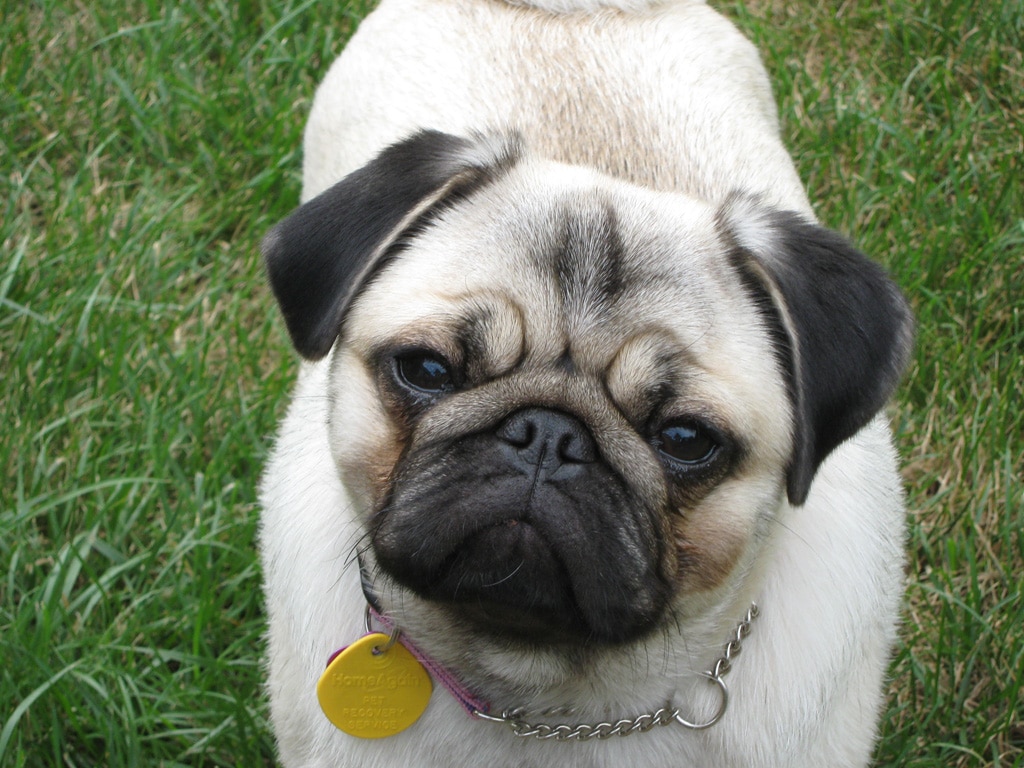
The Dutch bulldog (also known as Chinese Carlino, Mops, Carlinogu) is a breed of dog miniature with wrinkled face and a body of small to medium-sized, originating in China.

This breed is often summed up as โ€œmultum en parvoโ€ (much in little), describing the personality of the Dutch bulldog related to its small size.

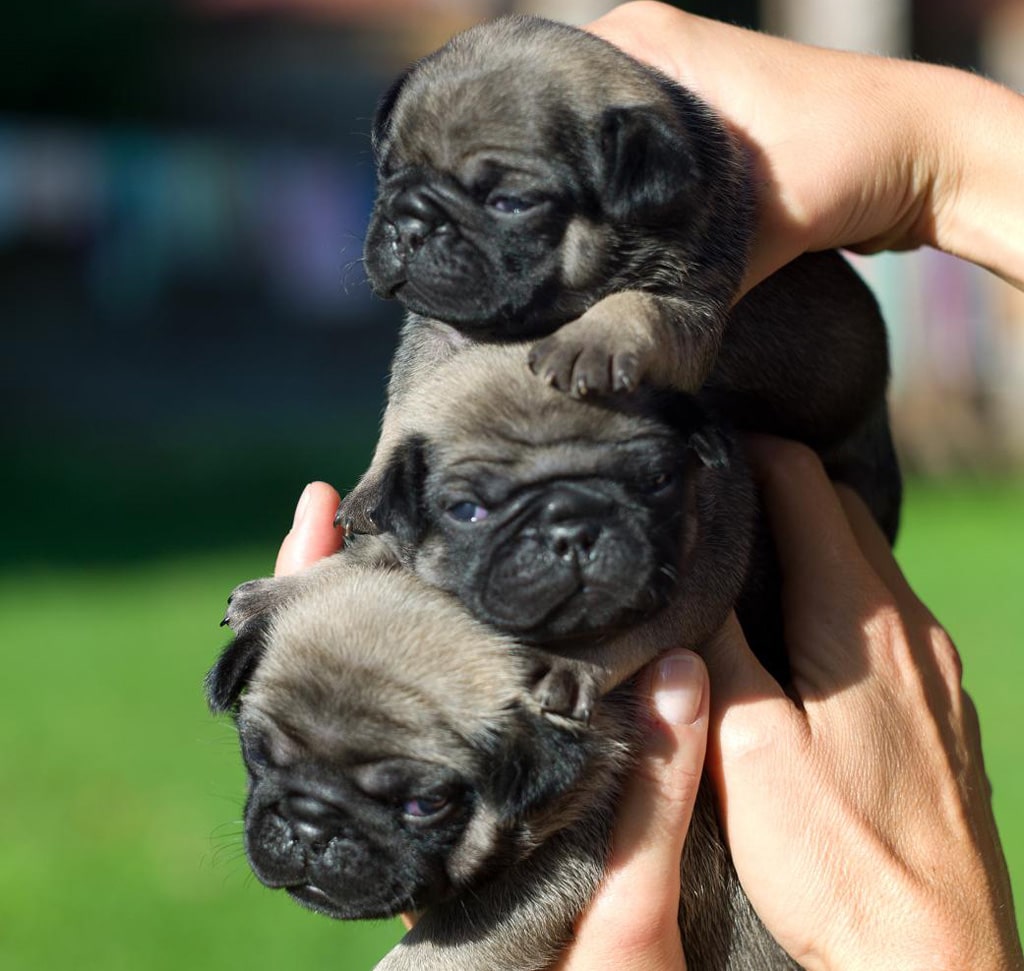
The word "Pug" may come from Old English Carlinog, it is an affectionate adjective it would be something like a little playful demon or monkey. Carlin puppies are called Carlinolets.

The breed of dog Dutch bulldog, has very ancient origins. It was raised and selected in China, country where he was the favorite dog of officials, It is also a very popular in Holland and England breed of dog.

In fact, England claimed the patronage of la raza, since they had carried out excellent selection work for years. Finally, part of the patronage of the race was awarded to Great Britain.

This wrinkled and funny puppy, He was a faithful companion of the ladies of the 19th century in Italy.

As almost all dog breeds, it knew how to have its difficult moments, especially when the world wars took place, but it has not been on the verge of extinction like others.

Today the breed Dutch bulldog it is highly appreciated in almost every corner of the world.

Did you know??

Among the rich and famous are admirers of the Dutch bulldog King Louis XIV, Josefina, Empress of Napoleon, Queen Victoria, the Duke and Duchess of Windsor and fashion designer Valentino.

Physical characteristics

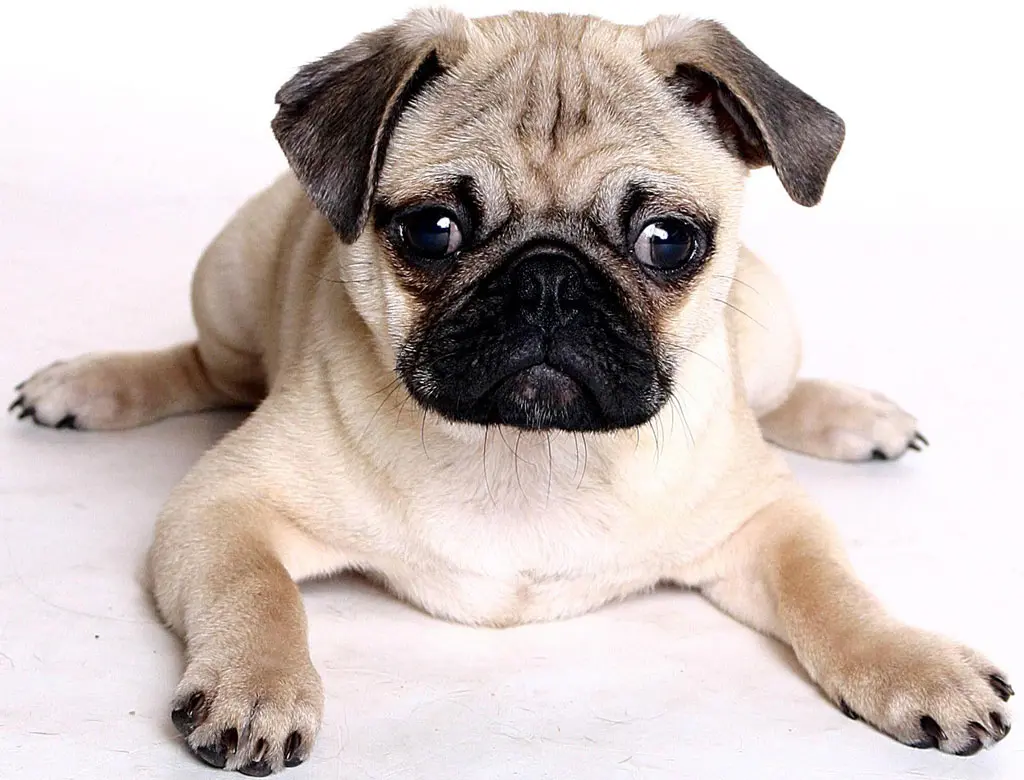
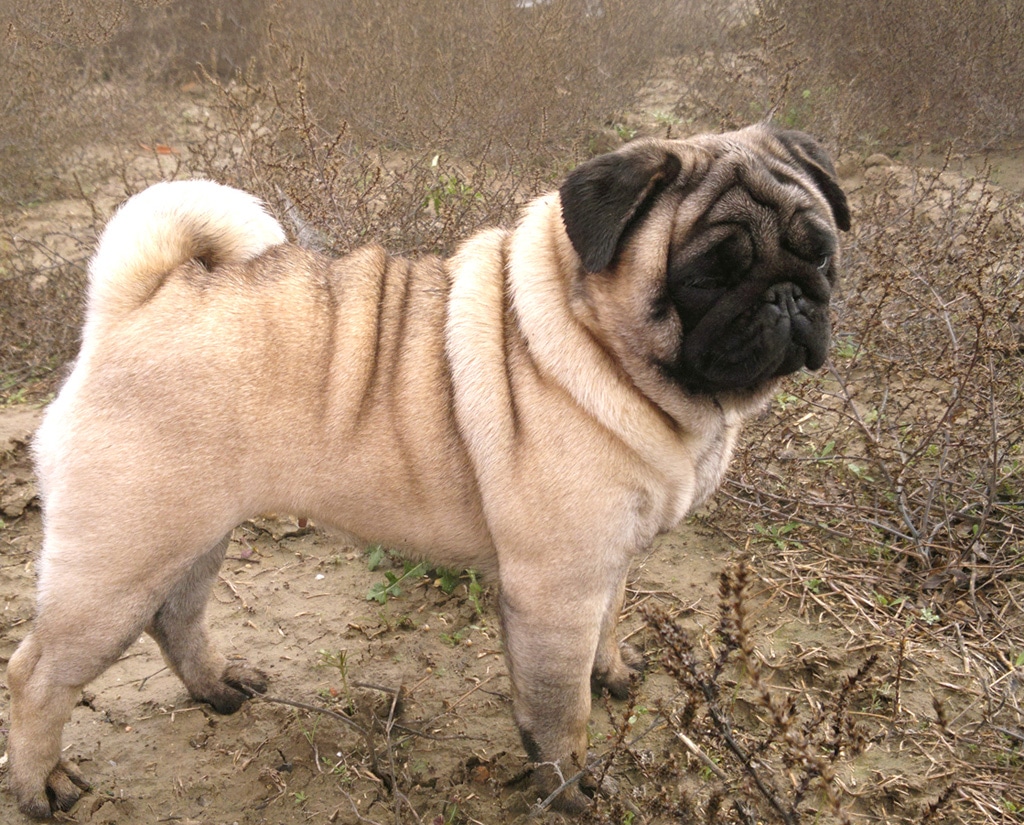
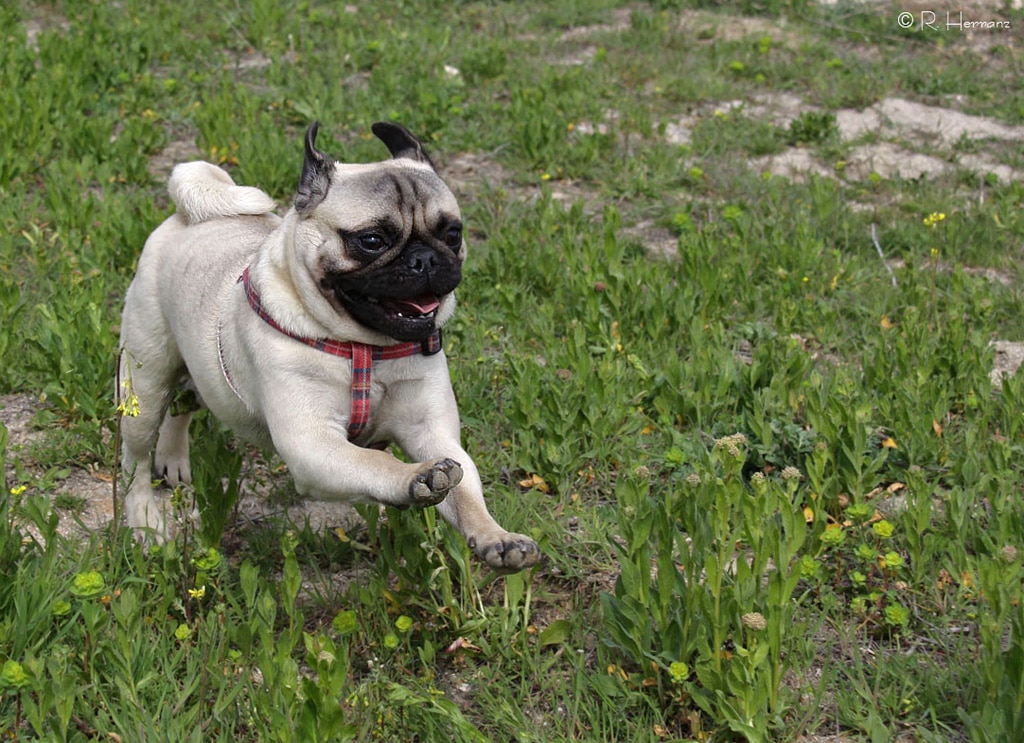
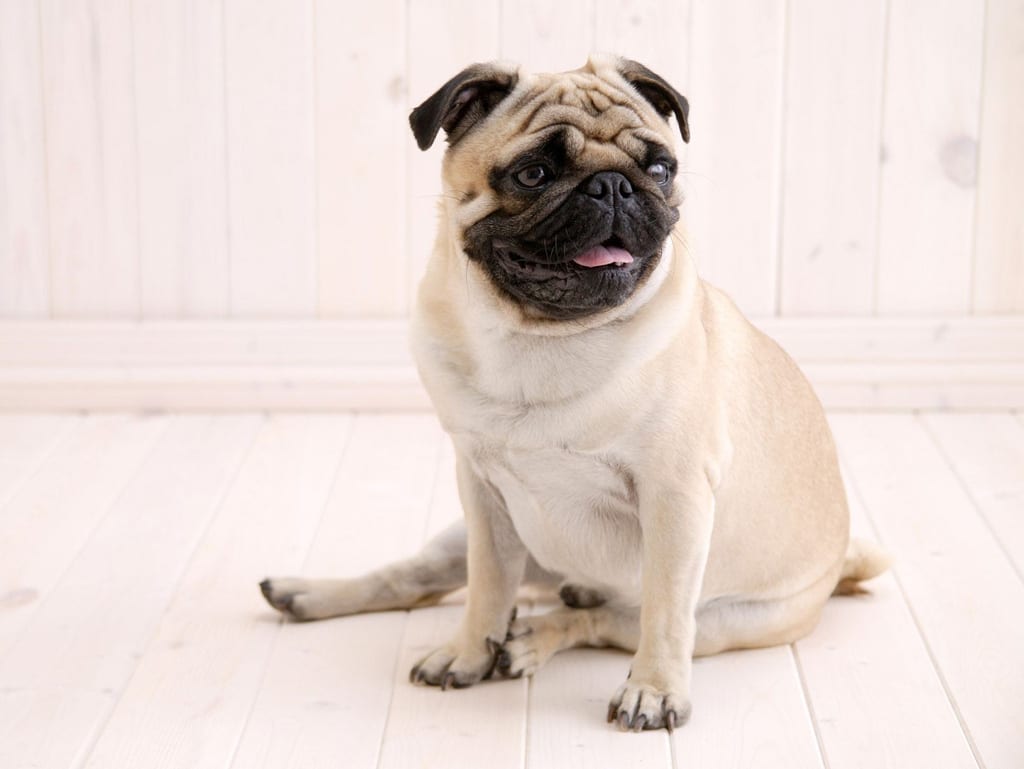
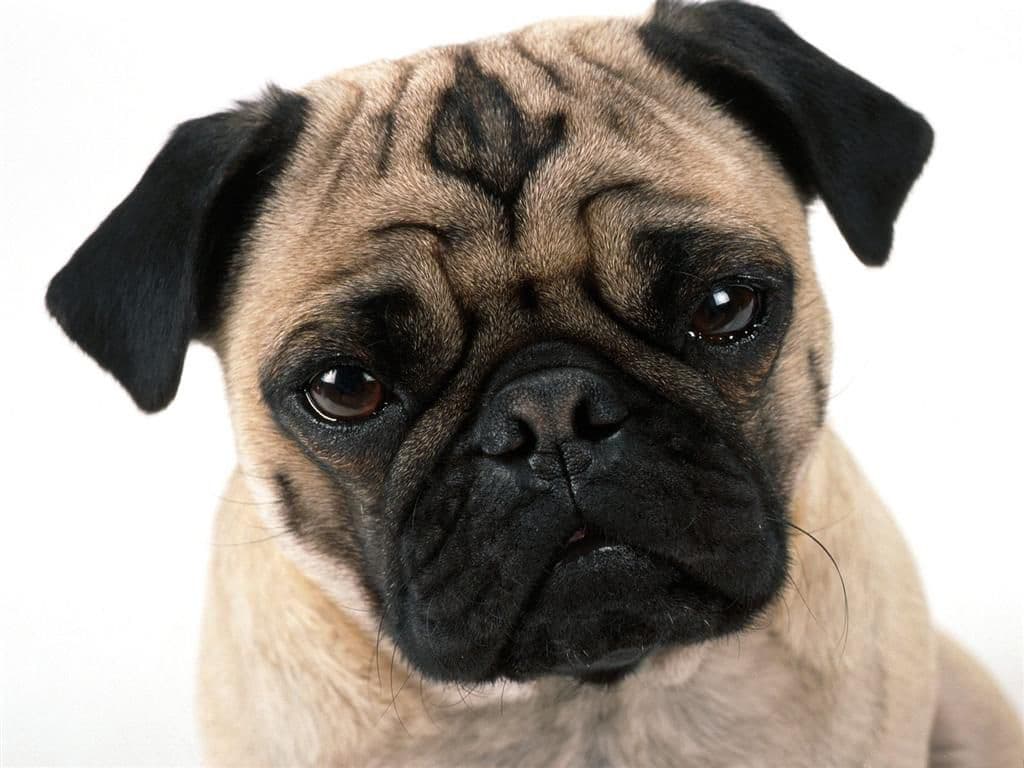
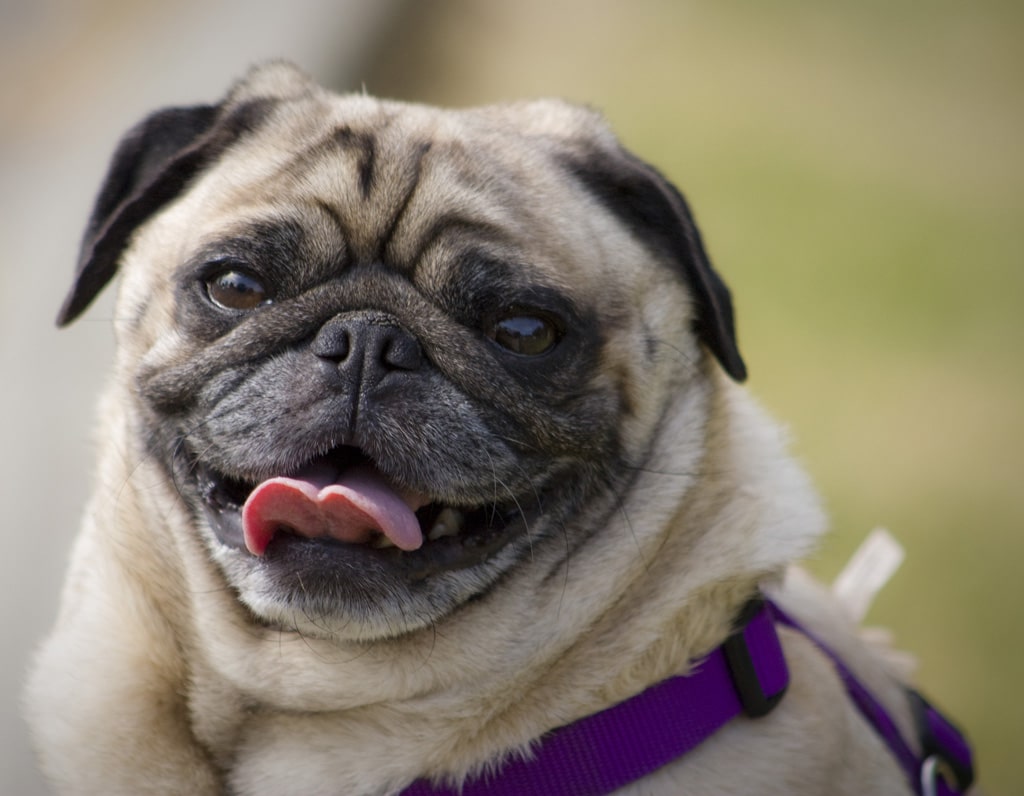
It is a dog under, solid square and compact appearance, well proportioned and muscular; the head, large, rounded and solid appearance, is covered with folds; the muzzle is square and flat; the eyes, large, bulging, they are dark; It has straight legs and looped collector queue. The hair is tight, smooth and shiny.

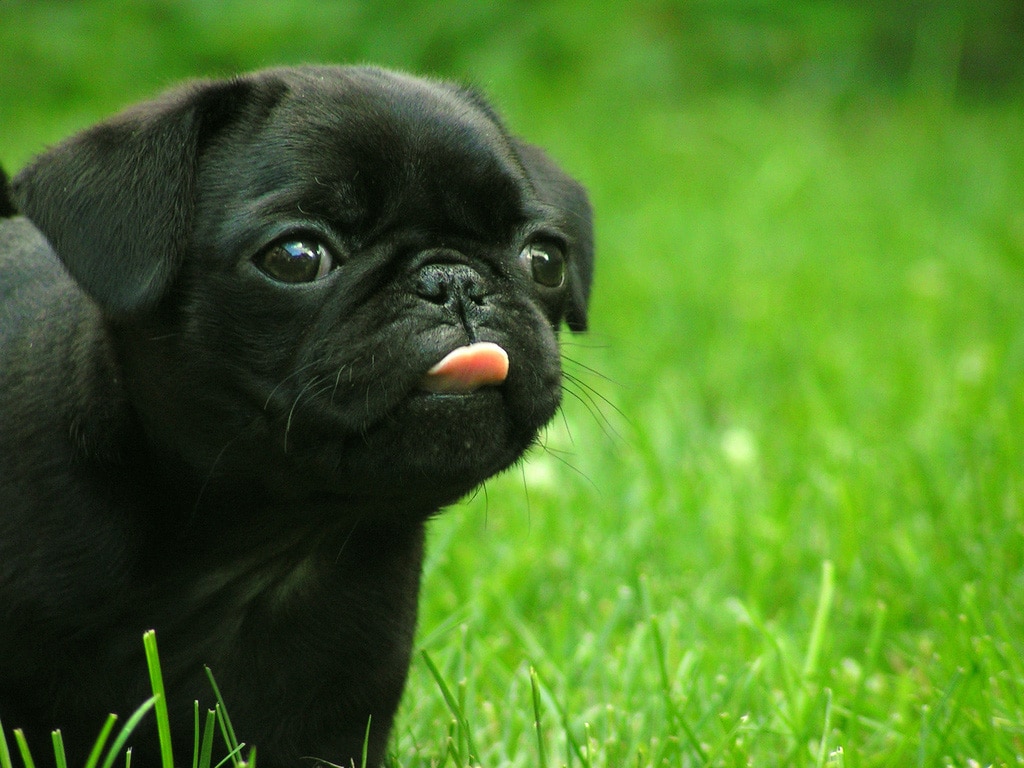
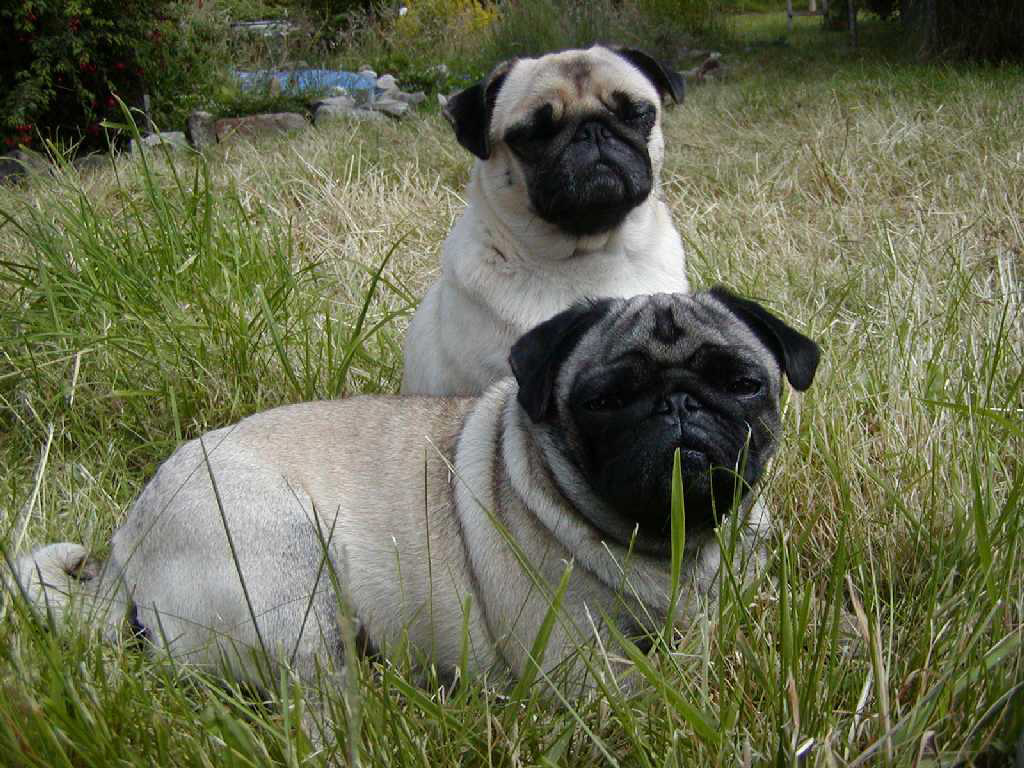
The Dutch bulldog can be silver or soft apricot with a black mask, in both cases it presents a black stripe that goes from head to tail; It can also be pure black or white which is the more scarce and expensive of all.

It measures each 30 cm to cross and weighs between 6 and 8 kg. His confident nature, docile and friendly makes the Pug an appreciated companion animal. The Pug is particularly a dog "with a sense of humor", exhibiting very human facial expressions given its bone structure. Due to its striking appearance, some people tend to think that the characteristics of the Dutch bulldog are the result of genetic manipulation or inbreeding. But, the characteristics of the Pug are similar in the last five hundred years, period in which Europeans began it importing from China.

The tail of the Dutch bulldog It has a characteristic spiral or letter "Q" shape. This variation in the way of the tail is due to the vertebrae in this portion of the column are actually hemivertebra. In some few puppies, This alteration of the shape can be extended to the rest of the column and the animal presents spina bifida.. The spine of the animal must feel before purchasing to avoid choosing a sick puppy. An animal that suffers from this malformation should not be reproduced in order to not pass this problem to their offspring.

Given the shape of the skull, the eyes of the Dutch bulldog have a bouncy and lively appearance. To find the eyes located above, they are more exposed to friction with plants and objects to the eyes of other animals, and it is advisable to take them to the vet as soon as possible if they have an injury. It is recommended that the owners of the Dutch bulldog clean the animal's eyes once a week with a clean cotton swab moistened with cold boiled water or cold tea, in order to remove secretions or dirt.
The characteristic wrinkles of the face can also accumulate secretions and dirt. It is recommended at least once a week clean gently between wrinkles using the same method. It is not necessary to apply SOAP, creams or other substances. Simple toilet is enough and to spare.

The Dutch bulldog although it is a short-haired dog, tends to constantly pelechar, so his tenure is not recommended for persons allergic or asthmatic. They have a characteristic pungent odor that may bother some people, but that decreases a bath every couple of weeks.

The biggest health problem presented by the Dutch bulldog is one that is completely preventable and treatable, and that depends entirely of the OWNER. This disease is the OBESITY. A Carlin receiving proper care can live more than fourteen years, Although on average they tend to live around ten.

One 1% of puppies can develop a degenerative neurological disease called Pug Encephalitis (or tap for its acronym in English). This disease is lethal and has no known cure. For this reason dogs must not be reproduced within the two years, in order to not transmit the gene to their offspring. Last year of life is very unlikely to reach Carlin present this disease.

Character and skills

The Dutch bulldog they are not aggressive animals. Like any dog, they can bite, but it is very rare that this happens without the animal mistreatment. The Dutch bulldog They live up to their motto "multum in parvoยป and are not intimidated by larger breed dogs, which you can get into trouble.

Before humans, the Dutch bulldog tend to be playful and seek interaction. However can be apprehensive to strangers, and with their barking to announce the presence of unknown people. Although its size are not guard dogs, If they are good "alert dogs".

The Dutch bulldog show a moderate level of intelligence, being able to use their short snouts and front paws to obtain objects out of reach. They sometimes tend to stubbornness, and do not necessarily come when you are called, but rather when crave it. Despite this, they do not go far from their owners and prefer their company to that of other dogs..

During the first years of life Dutch bulldog may occasionally be hyperactive (run, jumping and barking constantly) but this characteristic tends to disappear over the years. The Dutch bulldog 5 and older tend to be calmer and enjoy the chairs more than the street.

There is a tendency to believe that Dutch bulldog They are "sick" animals, which is very far from reality. A healthy Carlin will behave aggressively and playful, and even a bit hyperactive in its first years of life. Its solid structure makes they tolerate well the game with children and adults, and its particularly hard head can cause bumps and falls in young children and older adults.

The Dutch bulldog It's a small animal, and although strong, requires very little food. But, being a pet, owners tend to supercharge them and share their food with them. This must not be. The Carlin may well eat a cup of dry food in the morning and a cup at night, and you won't go hungry or require any extra supplements.

One Dutch bulldog obese is not a Dutch bulldog ยซbelloยป, on the contrary, It is an animal that sick because you can not breathe well, be it exhausted easily and will begin to suffer from problems in the spine and joints. A Carlin is fed healthily, on the other hand, a robust animal, with his sharp and clearly visible muscles under the skin. A healthy Carlin can run as fast as any other dog I, and you can skip two or three times its own height. Although the animal enjoys eating extra foods and receiving "treats" occasionally, is task of the owner to ensure that the quantity and quality of food that consumes is adequate.

Characteristics "Dutch bulldog"

Coexistence is important that you have with your new friend. Before considering the acquisition of a dog of the breed "Dutch bulldog" you know certain factors. Not all breeds of dogs are apt to live in an apartment, you must take into account his character, their need for exercise, their interaction with other pets, their care and if you have small children, their level of tolerance towards them.

Images of the ยซPugยป

ยซCarlinoยป Videos

Type and recognitions:

  • FCI CLASSIFICATION:
  • Group :
  • Section : . .

Federations:

FCI โ“˜, AKC โ“˜, ANKC โ“˜, CKC โ“˜, โ€‹KC โ“˜, NZKC โ“˜, UKC โ“˜

FCI breed standard "Dutch bulldog"

Origin:
China, United Kingdom

Date of publication of the valid original standard:
13.10.2010

Use:

Companion dog


General appearance:

It is undoubtedly a square and plump dog, "Multum in parvo" (a lot of substance in a small space) showing it in its compact structure, his well-built proportions and the hardness of his muscles, but it should never seem short-limbed, neither lean nor โ€œlargeโ€.

IMPORTANT PROPORTIONS:

Definitely square and compact.


Behavior / temperament:

Great charm, dignity and intelligence. Balanced, cheerful and lively.

Head:

Relatively large and provided with the body, round, You must not have Apple shape.

Cranial region:
  • Skull: Without Groove. Wrinkles on the antecara should be clearly defined without exaggeration.

facial region:

  • Truffle: Black with nostrils large and wide open. Narrow nostrils and heavy on the nose folds are unacceptable and must be severely penalized.
  • Snout: Relatively short, obtuse, square, not drooping upwards. Eyes and nose should never be adversely affected or be hidden by excessive folds on the nose.
  • Jaws / Teeth: With a slight lower prognathism. The lower jaw is wide with the incisors placed almost in a straight line. It is highly undesirable Wry mouth, teeth and tongue look and should be severely penalized.

Eyes: dark, relatively large, round, sweet and concerned expression, very bright, and when it is excited ardor full. Never protruding, exaggerated or showing white when they look forward. Free eye problems.

Ears: Thin, small and soft black velvet. There are two types: โ€œEar in pinkโ€, It is a small hanging ear that bends backwards to show the ear canal. โ€œButton earโ€, It is an ear that folds by bending forward, Tip adheres to the skull to cover the opening. The latter are preferred.

Neck:

Slightly arched it resembles a crest, strong, thick, with long enough to take the head proudly.

Body:

Short and compact.

  • top line: Level; It must be neither concave nor inclined.
  • Breast : Large. Ribs well arched back.

Tail:

High insertion, tightly coiled on the hip. The dual threading is highly desirable.

Tips

PREVIOUS MEMBERS:

  • Shoulder: Well inclined backwards.
  • forearms: Very strong limbs, straight, long moderate and positioned low in the body.
  • Previous feet: As long as the foot of the Hare nor so round as the foot of the cat; with separate fingers; the nails must be black.

LATER MEMBERS:

  • General appearance: Very strong limbs, of moderate length, well positioned under body, straight and parallel when you look at them from the back.
  • Knee: Good angulation of stifle warm joints rotulianas (knees).
  • Hind feet: As long as the foot of the Hare nor so round as the foot of the cat; with separate fingers; the nails must be black.

Movement:

Viewed from the front you must lift the forelimbs and drop well straight below shoulders, keeping the feet directly forward, unoffset in or out. From behind, the action must be equally correct. The forelimbs uses them with force bringing them well forward and the rear moving freely and bending your knees well. Light balancing the quarterfinals later characterized the journey. Capable of performing a resolved and safe movement.

Mantle

Fur: Texture fine, smooth, soft, short and bright. Neither rough nor woolly.

COLOR: Silver, apricot, Griffon clear or black. Each of these colors must be clearly defined, to emphasize the contrast between the color, the stretch mark (a black line extending from the occiput to the tail) and the mask. The marks must be well defined. The muzzle or mask, the ears, moles on the cheeks, the thumb mark or the forehead rhombus and the striation should be as black as possible.


Size and weight:

The ideal weight is between 6,3 and 8,1 kg. You must have strong muscles, but the substance should not be confused with an overweight.


Fouls:

Any deviation from the aforementioned criteria is considered a fault and the severity of this is considered to the degree of the deviation from the standard and its consequences on the health and well-being of the dog..

FALTAS DESCALIFICANTES

  • Aggressive or fearful dog.
  • Any dog โ€‹โ€‹showing clear signs of physical or behavioral abnormalities must be disqualified..


N.B.:

โ€ข Males must have two normal-appearing testicles fully descended into the scrotum..
โ€ข Only functionally and clinically healthy dogs, with the typical conformation of the breed, should be used for parenting.

TRANSLATION: Brรญgida Nestler / Original version: (IN).

Source: F.C.I - International Cynological Federation

Alternative names:

1. Chinese pug, Dutch mastiff (English).
2. Pug (French).
3. Pug (German).
4. Carlin, Mops (Portuguese).
5. Pug chino, Mops, Pug carlino, Doguillo (espaรฑol).

โ–ท The world of Pets: Dogs, cats, birds, reptiles, amphibians

Cordoba Fighting Dog
Argentina Extinct

The Cordoba Fighting Dog was combative, tremendous control value and resistance.

Perro de Pelea Cordobรฉs

Content

History

The Cordoba Fighting Dog (Cordobese Dog) is an extinct breed of dog, Argentine-born.

The Cordoba Fighting Dog it was a cross of Mastiff, Bull Terrier, Boxer, and the Old English Bulldog.

The old Cordoba Fighting Dog (PPC) originated in Cรณrdoba (Argentina) in the last century. It was a special animal for combat, tremendous control value and resistance; they died fighting, they never shied away from the encounter. But they lacked smell and speed, In addition, their ferocity towards their peers made them useless for hunting..

This, added to the number of specimens that died in dog fights, led to its extinction. The Cordoba Fighting Dog was able to hunt in small groups of males and females, otherwise they would turn against their hunting companions.

The race was so aggressive towards other dogs, that males and females would rather fight each other than mate.

But this primitive race had in itself two essential qualities. An excellent ancestral heritage and great functional gymnastics, Since the rough fighting to which they were subjected from generation to generation, they were increasing more and more their original bravery.

This dog, It was almost always white and some with spots barcinas, were given in various streams of blood, to avoid inbreeding, the contribution of the different races that would result in the Dogo Argentino.

Physical characteristics

The official canine club of Argentina describes the Cordoba Fighting Dog like a "very strong and muscular dog", with powerful jaws and large teethยป. It had short white fur., sometimes with markings around the eyes, and could reach 70 height cm.

  • Otros nombres: Cรณrdoba Fighting Dog / Cordobese Dog / PPC.

โ–ท The world of Pets: Dogs, cats, birds, reptiles, amphibians

Chilean Terrier
Brazil Not recognized by the FCI

Fox Terrier Chileno

Content

History

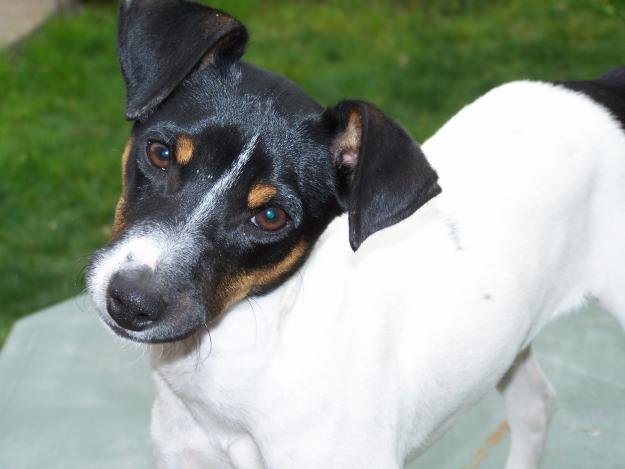
There is a history of its presence in Chile in the colonial era, when European immigrants settle in South America, bringing with him specimens of race Fox Terrier Smooth and the BRatonero Bodeguero Andaluz, those that crossed with local dogs without a defined breed gave life to the Chilean Terrier.

During the 18th and 19th centuries, the breed developed in the "fundos" of the center- on from Chile, easily acclimating to a rustic life, many times of "cavalerie".

Videos "Chilean Terrier"

Fox Terrier Chileno - Canito

Terrier Chileno buena mascota para grandes y chicos

At the end of the 19th century and with the arrival of the Industrial Revolution, many peasants emigrated to the cities, taking with them their families and their Chilean Terriers. This is how he adapted to โ€œurbanโ€ life, being used in new industries and new human settlements (cited) for the extermination of rats.

Much of his popularity in Chile was due to the character in the comic strip Condorito and its always faithful Chilean Terrier โ€œWashingtonโ€.

Since the year 2004 that a group of breeders and fans of the breed decided to work together to, first, organize a serious breeding plan that would perpetuate the characteristics that were maintained naturally for decades.

In 2007 the National Club of the Chilean Terrier, grouping that established the type to be standardized. It has the virtue of adapting to a great variety of climates and forms of life, still being used in rural areas to exterminate rodents and as a watchdog, due to his acute hearing, giving immediate warning in case of danger or threat. It adapts perfectly to city life as a cheerful and lively companion dog..

Since a few years ago that the Trade Union Association of breeders and exhibitors dogs Chile (ACEPE, A.G.) He has been developing the project which is intended to be the first Chile dog breed officially recognized, period in which specialized exhibitions have been organized, implemented a system of identification and has formed a team of enthusiastic and studious of these dogs work.

This has been the impact and the response of the lovers of dogs for this race in Chile, which for some time has been integrated into the Group 11 by the Kennel Club of Chile (KCC),with the permission of the Federation Cynologique Internationale (FCI).

The Chilean Terrier, is the first Chilean dog breed followed by perro Ovejero Magallรกnico

Physical characteristics

Its color main is white, which is accompanied by black and brown markings. It has a short-haired undercoat that sometimes hints at some dark spots visible through the white coat.. The ears They are set high with a tip sloping forward in the shape of a "V".

Has well-developed teeth and bite. Males have one height of between 32 and 38 cm to the cross, being the ideal height of 35 cm.. Females are between 28 and 35 cm in height to the cross, being the ideal height of 32 cm males weigh between 5 and 8 kg, being the ideal weight of 6,5 kg. females weigh between 4 and 7 kg, being the ideal weight of 5,5 kg.

Character and skills

according to many, These dogs, they are very obedient and easy to train, It is said that they have a great capacity for concentration. They are also very nervous, so most of the time, are shivering give an appearance of frailty or cold, but they are just nerves.

These dogs, they tend to be quite territorial and even aggressive with strangers and pedestrians, but at the same time they are shy and tremendously attached to their owners.

They have a feline appearance, that they bow his column as cats, and they tend to jump great heights without hurting you.
They are usually used for small game hunting and -mainly- as companion dogs.

Read more

โ–ท The world of Pets: Dogs, cats, birds, reptiles, amphibians

Chin
FCI 206 . Japan Chin and Pekingese

Chin Japonรฉs

The true origin of the Chin It is still controversial, Although a general consensus, concludes that you originated in China.

These dogs were brought to Japan around year 732. Some maintain the ancestors of these dogs first arrived to Japan around the year 732, as a gift from royalty Korea, while others argue that you copies of Japanese Chin were offered as gifts to the Empress of Japan in the mid-6th century, other theories assure that they arrived in Japan in the year 1000.

But beyond all the controversy regarding the origin, all agree on one thing, the Japanese Chin, He is a real "Japanese", because it reflects the Japanese sensitivity to detail.

The Japanese established various breeds of dogs, with a defined purpose that was work, that Japan considered something different, different from a ยซdogยซ, He was considered a work on farm animal, for hunting, to care for cattle, etc., but the Japanese Chin, it was something very special because it was strictly considered a companion dog.

His appearance and distinctive personality was quickly captured the hearts of the Japanese and that led to ownership of these dogs to be limited to persons of Royal and noble blood.

Due, every noble House was raising its own standard, reason why there are many variations of the Japanese Chin, in terms of size, the density of the layer, the eyes, the personalityโ€ฆ

Once the race was introduced in the West, a strong desire of the people by the smaller copies (those who weighed a maximum 4,5 Kg.), He carried that size was the most popular and became the official standard of various canine clubs around the world.

Professor Von Ludvic Schulmuth studied canine origins from a discovery of skeletal remains of dogs found in human settlements dating back to the eighth millennium BC., in the Gobi desert. On the basis of the information collected, he created a genealogical tree of Tibetan dogs which gathered very interesting information concerning the origin of certain breeds that are today very popular.

The Gobi desert is a large desert region located between northern China and the South of Mongolia. Can be one of the deserts, or desert areas largest and most important worldwide. Around it the Altai Mountains and the steppes of Mongolia in the North, The Tibet Plateau and the planning of northern China by the southwest. The word gobi means "desert".’ in Mongolian. The Gobi is composed of different geographic and ecological regions, based on its variations of climate and topography.

Historically, the Gobi desert He is noted for being part of the Mongol Empire and the location of several important cities along the Silk Road.

Occupying the 30% of the national territory, great Gobi Mongolia covers capricious montes, sandy dunes, vast plateaus, steppes with its aromatic herbs and, Since then, a varied animal world, within the canine ancestors found Professor Ludvic Von Schulmuth.

Ludvic von Schulmuth defined as origin of certain dog breeds a former denizen dog of the Gobi desert, whose remains were found in places where stored manure or litter, and called them "Gobi Desert Kitchen Midden Dog", Several lines arose from this animal that gave rise to various breeds.. These may include, a small dog with soft hair and floppy ears that was the ancestor of Tibetan Spaniel, the Japanese Chin, and the Pekinese. Another branch that descends from the "Gobi Desert Kitchen Midden Dog" gave rise to the Continental Toy Spaniel and to the Chihuahua longhair. Y, another branch of the same dog of the Gobi desert, gave rise to the emergence of the Pug and Shih Tzu.

There is also some documentation that indicates Portuguese sailors introduced the breed to Europe in the century 17 through the gift of some to Catherine of Braganza, Queen Consort of King Charles II of England, but there is more evidence that the first Japanese Chin opened steps after borders, It was a gift of the Emperor of Japan offered a U.S. Navy officer, Matthew C. Perry, When he visited East in 1853 to open bilateral trade. The naval officer, took a litter of seven Japanese Chin, and to reach their land only survived two, and to whom he gave them is something that is still not known for sure.

What we do have full certainty is that the Japanese chin, also known as the Spaniel Japanese has been the dog of Japanese royalty.

According to the classification made by Stanley Coren after analyzing the responses of more than 200 the AKC judges ("The Intelligence of Dogs", Stanley city, Ediciones B, 1995), Japanese chin is the nยบ 62 from the list.

The Japanese Chin ladra only when it is necessary for the purpose of alerting the family of the arrival of a visitor or something out of the ordinary, then is a quiet breed.

It's a very special race, they have very feline attitudes, is more, is said to have the character of a cat, and you will see why...

The Japanese Chin is warning, intelligent and independent, and it uses its feet to wash and dry your face. Other feline features are your preferences for the rest in elevated surfaces, as the backups of the sofa and chairs. He has a spectacular ability to walk across a tea table without knocking over any objects., If that doesn't make it a cat total!!!

These dogs were bred and trained for the purpose of loving his people. Although it is usually a quiet dog, He also known for the amount of mischief that make, Welcome to all, like the so-called "Spin Chin", they go around quickly in a circle as if they were dancing but resting only on their hind legs, While with their Forelegs dejan them interwoven and shaking them up top down at full speed, they are very funny.

Some usually "sing", They produce a noise that can range from a minimal trill to a high pitch and quite low-pitched for their size., almost operatic quality that sounds like โ€œboooooooโ€. On race Basenji in the right column you can see a video of the dog singing, It is very similar to what makes the Japanese Chin.

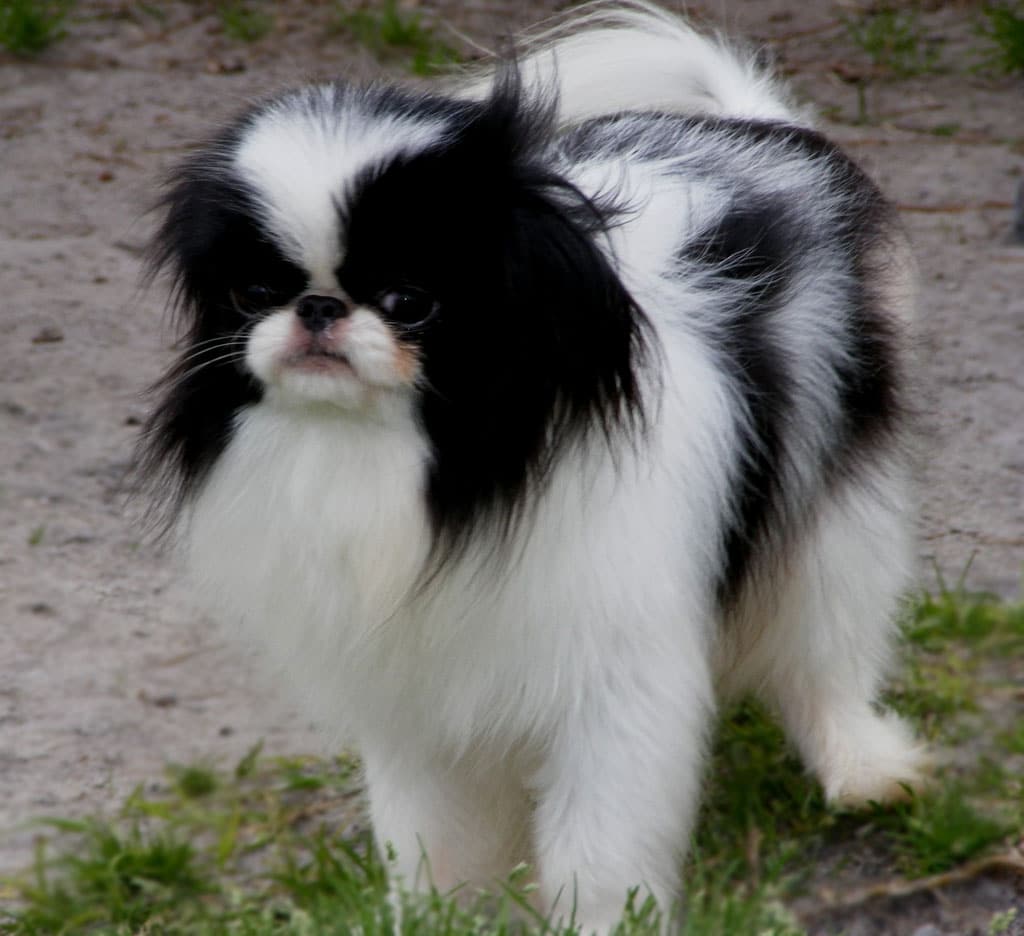
This small dog of friendly aspect, It has an appearance very similar to the Peking, But unlike, its legs are longer, and the color of the fur is different; It may be black and white or red and white. The fur is soft and long; the large, dark eyes, well separated from each other; the tail, well endowed with hair, relies on the back; the ears are triangular in shape and small size; the snout is short and flattened, and large heads relative to their body.

The orbits of the eyes of large contribute to moisture in the face and the folds of skin around the crushed nose and facial area, You can trap moisture and cause fungus problems. The face should be cleaned from time to time with a damp cloth and the folds, with a cotton swab.

The diet is an important factor in the health and status of the Japanese Chin, many specimens may be allergic to corn, for example.

Due to their small size they don't need too much exercise, although yes, requires frequent walks, because they are active and love to be outdoors. They adapt well to life in a Department or small homes. On the other hand, their fur should brush your daily, as it is often about getting caught.

The Japanese Chin is a long-lived, to round the 15 years, but in many cases can be extended to more or less the 18 years of age.

They weigh between 1,8 and 3,3 kand and measured at the cross, of 21 to 25 cm.. The litter is usually fairly small, of between 3 and 4 Puppies.

Japanese chin is an excellent company dog, It is affectionate and loyal to his owner and, normally, happy to see other people, though some mistrust strangers. It is a dog who prefers the family environment, but they adapt very well in new situations and are often used as therapy dogs due to this trait and their love of people.. Socialization at an early age contributes to his temperament of develop optimally, is an emotionally balanced dog, by nature, but it is important to contribute.

Chin