▷ The world of Pets: Dogs, cats, birds, reptiles, amphibians

Australian Terrier
Australia FCI 8 . Small sized Terrier

The Australian Terrier is a lively dog, attentive, with a facial expression that denotes intelligence.

Australian Terrier

Content

Characteristics "Australian Terrier"

Coexistence is important that you have with your new friend. Before considering the acquisition of a dog of the breed "Australian Terrier" you know certain factors. Not all breeds of dogs are apt to live in an apartment, you must take into account his character, their need for exercise, their interaction with other pets, their care and if you have small children, their level of tolerance towards them.

Adaptation ⓘ

5,0 of 5 stars (based on 1 review)

friendly dog ​​ⓘ

1,0 of 5 stars (based on 1 review)

hair loss ⓘ

1,0 of 5 stars (based on 1 review)

Affection level ⓘ

3,0 of 5 stars (based on 1 review)

Need for exercise ⓘ

4,0 of 5 stars (based on 1 review)

Social need ⓘ

4,0 of 5 stars (based on 1 review)

Home ⓘ

3,0 of 5 stars (based on 1 review)

Toilet ⓘ

1,0 of 5 stars (based on 1 review)

Friendly with strangers ⓘ

3,0 of 5 stars (based on 1 review)

barking ⓘ

5,0 of 5 stars (based on 1 review)

Health ⓘ

4,0 of 5 stars (based on 1 review)

Territorial ⓘ

5,0 of 5 stars (based on 1 review)

Cat friendly ⓘ

1,0 of 5 stars (based on 1 review)

Intelligence ⓘ

4,0 of 5 stars (based on 1 review)

Versatility ⓘ

4,0 of 5 stars (based on 1 review)

Child friendly ⓘ

4,0 of 5 stars (based on 1 review)

Surveillance ⓘ

4,0 of 5 stars (based on 1 review)

joy ⓘ

5,0 of 5 stars (based on 1 review)

History


The Australian Terrier It is a breed of dog in the Terrier family, classified in the section 2.

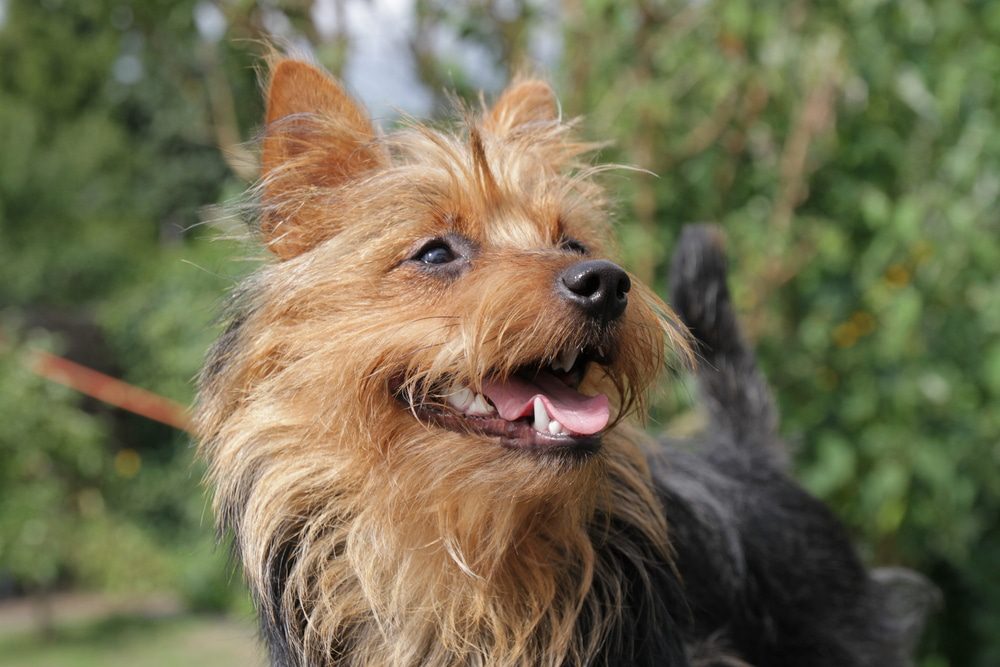
Due to his appearance, He is often confused with a Yorkshire Terrier large size. Is not surprising because, this breed comes from crossing a Yorkshire Terrier and different breeds of Terrier among the Skye Terrier, Cairn Terrier, the Norwich Terrier and other Irish Terrier.

Its origin goes back in the early 19th century, when accompanied by their Terrier British families travelled to Australia, and the vicissitudes of fate led those Terriers to interbreed with the natives..., and this is how many races in the world have been born.

In the early years of its existence, the Australian Terrier was known by the name Broken-coated-Terrier or Broken-hair-buel-and-tan”.

The wording of the first breed standard, took place in the year 1896, While the official recognition of the same, It is located a little later… in 1933. Y, The latest revision of the standard dates from 1962.

Otros nombres: Terrier Australien

Group 3 / Section 2 – Small sized Terrier.

Physical characteristics

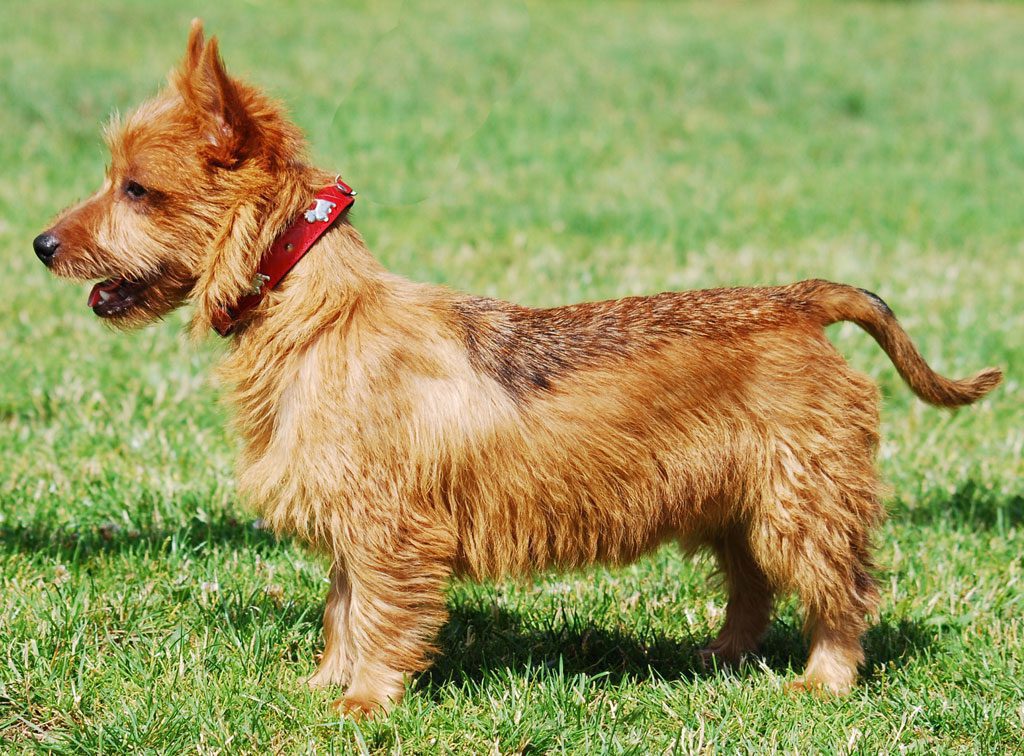
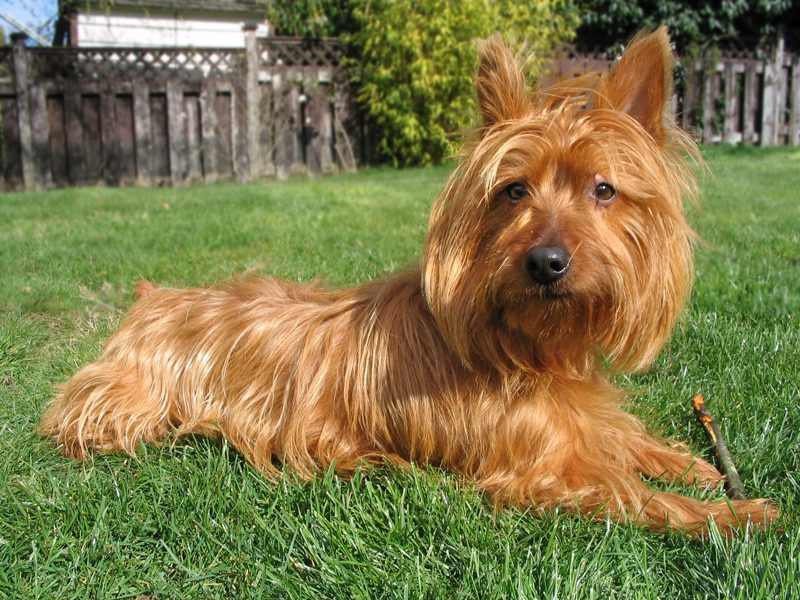
It is a long dog (in relation to your height), rustic looking, robust with short limbs and strong.

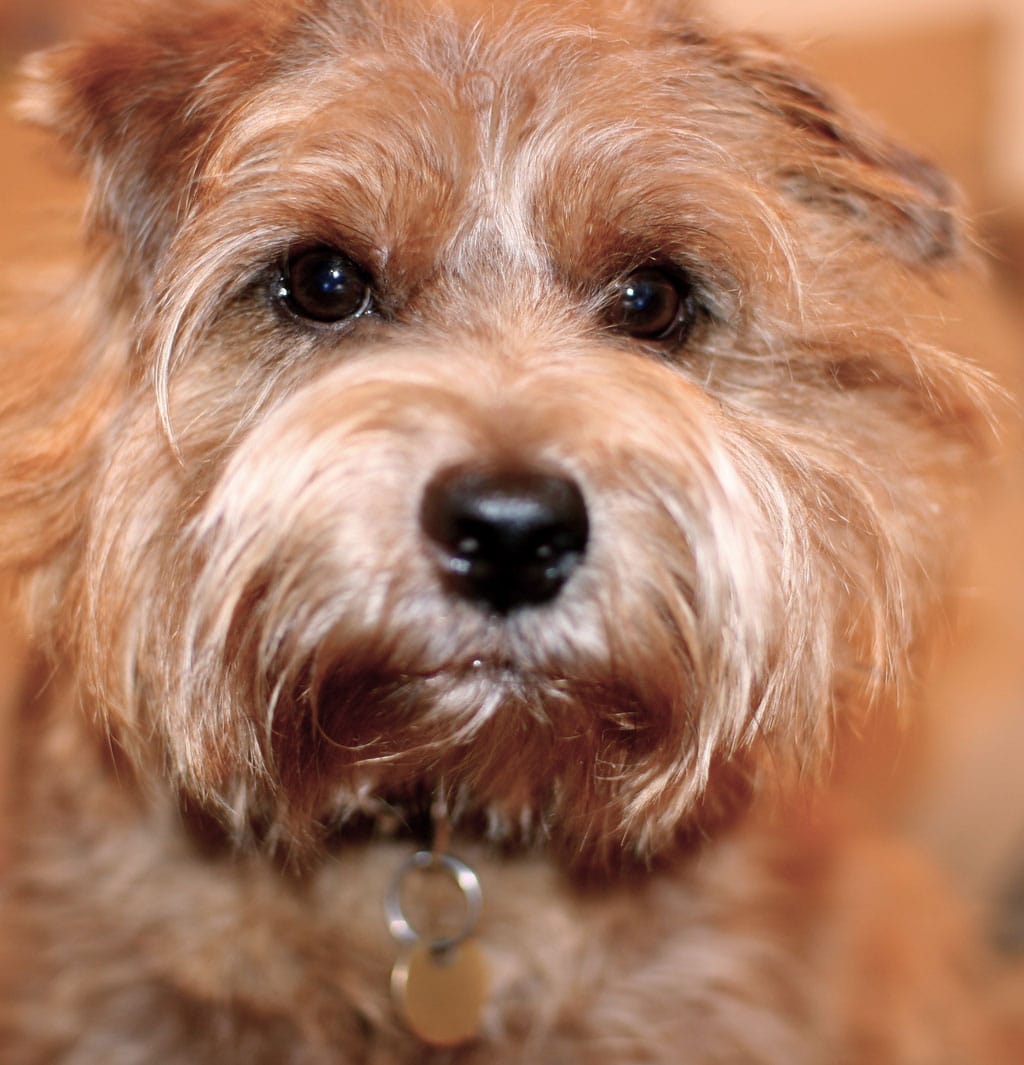
The head is elongated, It has the black truffle and scissor closing denture. It has pointed ears being erect and small and dark eyes. The tail is often be amputated.

The height of the Australian Terrier is maximum 25 cm. to the cross in males and 22,5 to 23 in females, the average weight is 4.5 to 5 Kg.

The hair is hard, straight and average length. that rustic look, precisely, Since hair is rough to the touch and out gives it.

The fur can be blue or silver, with stains of fire (or bronze) on the limbs and snout, or color sand clear or Griffon.

Puppies are born black solid color and change color in three months.

Observations

It is a very robust breed of dog, that often has a high percentage of Diabetes Mellitus.

What is Diabetes Mellitus?

Diabetes is defined as a disorder in the metabolism of the hydrates of carbon, fats and proteins caused by a deficiency of insulin, It can be absolute or relative.

Insulin is a hormone secreted in the beta cells of the pancreas, whose production allows to control blood sugar (blood glucose levels). Insulin deficiency causes a deterioration in the capacity of tissues to use nutrients, that translates into an increase of glucose in blood (Hyperglycemia).

Diabetes is classified according to the disease in humans, that is to say, as type I and type II.

The type I It is characterized by the destruction of beta cells, What determines the loss progressive and complete end of insulin secretion. Dogs suffering from Type I Diabetes Mellitus may have a sudden onset of symptoms due to the rapid loss of the ability to produce insulin.. These cases require insulinización from the time of diagnosis and are called diabetics 1,811 (DMID).

Other dogs may have a gradual loss of insulin secretion, that their beta cells will be destroyed with slow. These animals may have an initial period in which hyperglycemia is mild or easily controlled., in which case it's diabetic insulinoindependientes (DMIID), Although in the long term these dogs also need her.

Diabetes Mellitus type II is a little more difficult to understand and is characterized by what we call "insulin resistance" and by "dysfunctional" beta cells. The secretion of insulin by these cells will be high, low or normal, but not enough to overcome the resistance to it in the peripheral tissues.

It´s, to explain it in a graphic way, It is as if peripheral tissues do not obey the orders of the insulin or were not able to do what send it.

Regarding the metabolism or synthesis of glucose, These dogs may have DMID or DMIID, that is to say, whether or not to require insulin depending on the extent of insulin resistance and the functional status of the beta cells in terms of their ability to produce and secrete the hormone in low amounts, normal or high.

Dogs also recognizes a secondary diabetes, produced by a carbohydrate intolerance (glucose) due to the presence of a disease or a drug treatment that it antagonizes or counteracts the effects of insulin and can lead to the exhaustion of the beta cells of the pancreas with the appearance of diabetes insulinodependiente.

The owners of diabetic dogs should be aware that the routine in the treatment with insulin and food has to be respected. Two fixed doses of insulin per day associated with a palatable food that always provides the same source and the same amount of starch, always run at the same time it can reduce the risk of hypoglycemia in diabetic dogs.

In North America, area where the Australian Terrier is very popular, scientific research is being carried out on the incidence of this disease.

Character and skills

The breed standard describes the ideal Australian Terrier temperament as an alert spirit., «with the natural aggressiveness of a Buzzard and a Hunter of coverage«.

Taking into account the Classification of dogs according to their functional and obedience intelligence (Stanley Coren's "The Intelligence of Dogs") the Australian Terrier ranks number 34. Means that, is higher than the average, which indicates a good capacity for learning and training.

The Australian Terrier is a lively dog, attentive, with a facial expression that denotes intelligence, loyalty and faithfulness.

Sometimes it can become dominant, so a good training from an early age would be appropriate..

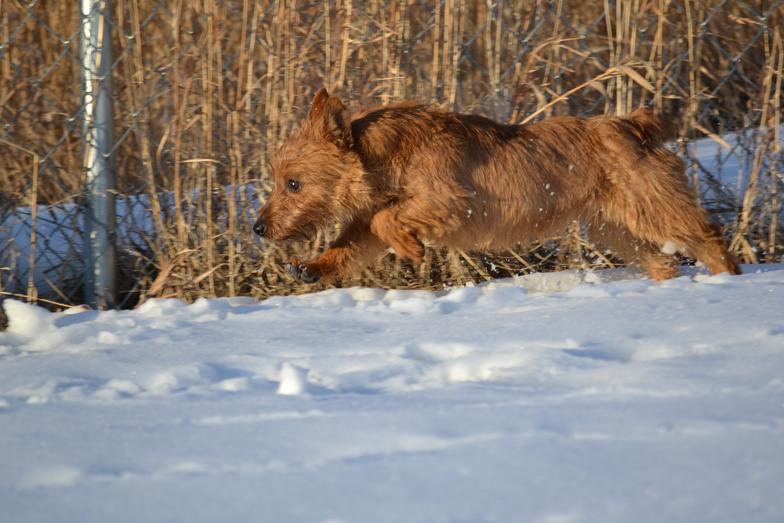
It is perfectly adapted to any type of housing, whether large or small (apartment, House, house with garden, etc.). It should be enough with daily brushing and a walk.

Images "Australian Terrier"
"Australian Terrier" videos

Australian Terrier (Terrier Australia)

Type and recognitions:

  • FCI CLASSIFICATION:
  • Group :
  • Section : . .

Federations:

  • FCI – Terriers 2 Small sized Terriers.
  • AKC – Terriers
  • ANKC – Terriers

FCI breed standard "Australian Terrier"

Origin:
Australia

Date of publication of the valid original standard:
08.10.2012

Use:

One of the smallest work terriers that was raised both as an assistant and company dog ​​in difficult times and land.


General appearance:

It is a robust dog, short limb, elongated in proportion to its height, With the strong typical character of the terriers, always alert, active and solid.
His coarse fur, without cutting, coupled with a well defined collar around the neck that extends to the sternum and its long and strong head help create the sturdy and robust appearance.


Behavior / temperament:

In its essence, he is a working terrier, But thanks to its loyalty and its balanced character it is also a company dog.

Head:

---

Cranial region:
  • Skull: Plano, moderate width, full between the eyes. Covered by a soft "bun".
  • Depression links (Stop): Light, but defined.

facial region:

  • Truffle: black, moderate in size, spreading to the nose.
  • Snout: Strong and powerful, is the same length as the skull. The nose should be strong and not fall below the eyes. Muzzle length and strength are essential to empower fearsome jaws.
  • Lips: Blacks, tight and clean.
  • Jaws / Teeth: Strong and fearsome jaw. Teeth are large and evenly placed; the upper incisors fall well near and in front of the lower ones (scissor bite).

Eyes: They must be small, oval, with a cunning expression, dark brown, well separated and not prominent.

Ears: They are small, upright, pointy, well carried, moderately broad-based, without having long hair, and very attentive (except for puppies younger than 6 months).

Neck:

Good length, slightly arched, strong and falling gently on the oblique shoulders.

Body:

Length in proportion to height, of strong construction. When valuing the body, Attention should be paid to the description of the first paragraph where it is “a robust dog, of short and elongated extremities in proportion to the height ».

  • Back: level top line. Pork loin: Strong.
  • Breast : Of moderate depth and width, with well-rounded ribs. The sill is well developed, the relatively deep sternal region.

Tail:

Traditionally amputated, Both amputated and natural, it is of high implantation, well carried, but not on the back.

Tips

PREVIOUS MEMBERS: Seen from the front straight and parallel, good bone structure. The forelimbs are slightly feathered down to the metacarpus.

  • Metacarpus: Strong, no inclination.
  • Previous feet: Small, round, compact, well cushioned, with fingers tight and closed, moderately arched. Feet must not be twisted outwards or inwards. The nails are strong, black or dark.

LATER MEMBERS: Of moderate length, widths. Seen from behind, hind limbs must be parallel from hock to foot, without being too far apart or too close to each other.

  • Thigh: Strong and well muscled.
  • Knees: They have good angulation.
  • Hocks: Well angled, placed well under.
  • Hind feet: Small, round, compact, well cushioned, with fingers tight and closed, moderately arched. Feet must not be twisted outwards or inwards. The nails are strong, black or dark.

Movement:

Action must be free, agile, elastic and energetic. Seeing it from the front, forelimbs must move appropriately without shoulder looseness, elbows, o carpos. The hindquarters should give momentum and power, with free movement of the knees and hocks. Back views, the extremities must be parallel to the hock to the ground, without being too close or too far apart from each other.

Mantle

Fur: It consists of a rough and straight outer layer of hair of approximately 6 cm length, with a soft textured short hair undercoat. The snout, lower limbs and feet should be free of long hair.

Color:

  1. Blue, blue Steel, or dark gray blue, with intense tan markings (not sandy) on the face, ears, lower body, lower extremities and around the anus (except puppies). The more intense and defined the color is, Better Any black staining is undesirable. The bow on the head should be blue, silver or a lighter shade than the rest of it.
  2.  Light sand or red is acceptable with a lighter toned bow. Any dark staining or shading is undesirable.
  3. In any color, white spots on the chest or feet are penalized.


Size and weight:

  • Height to the cross: The desirable is approximately 25 cm., the females being a little smaller.
  • Weight: The desirable is approximately 6,5 kg for males, females being a little lighter.


Fouls:

Any deviation from the aforementioned criteria should be considered as fault, and the seriousness of it is considered to the degree of deviation to the standard and its impact on health and welfare of the dog.

FALTAS DESCALIFICANTES:

  • Aggressiveness or excessive shyness.
  • Any dog ​​showing clear signs of physical or behavioral abnormalities must be disqualified..


N.B.:
  • Males should have two normal-appearing testicles fully descended into the scrotum..
  • Only functionally and clinically healthy dogs, with the typical conformation of the breed, should be used for parenting.

The latest amendments are in bold.

TRADUCCION: Mexican Canophilic Federation A.C.,review technique : M.A. Martínez (FCA)

Source: F.C.I - International Cynological Federation

Alternative names:

1. Aussie (English).
2. Terrier australien (French).
3. Aussie (German).
4. Terrier australiano (Portuguese).
5. Aussie, Terrier Australiano (español).

▷ The world of Pets: Dogs, cats, birds, reptiles, amphibians

Scottish Terrier
Gran Bretaña Escocia FCI 73 . Small sized Terriers.

The Scottish Terrier is independent, self-confident, joyful, intelligent and stubborn bastabte.

Content

History

The Scottish Terrier, also known as the Aberdeen Terrier, and popularly as "Scottie", It is one of the high Terrier breeds that were grouped under the name of Skye Terrier, It is one of the five breeds of Terrier that originated in Scotland, the other four are the modern Skye Terrier, Cairn Terrier, Dandie Dinmont Terrier, and West Highland White Terrier.

The real origin of a race as old as Scottish Terrier it's dark and undocumented. The first written records about a dog with a similar description to those of the Scottish Terrier was in 1436, When Don Leslie described them in his book the history of Scotland 1436-1561.

Two hundred years later, Sir Joshua Reynolds painted a portrait of a young woman stroking a dog similar in appearance to the Scottish Terrier of today. King James VI of Scotland was an important historical figure accompanying the history of the Scottish Terrier. In the century 17, When King James VI became James I of England, sent six Terrier – believes that the precursors of the Scottish Terrier- a French monarch as a gift. His love and adoration for the race, It is said that you increased its popularity around the world.

In the century 19, in the Highlands of Scotland, including the Isle of Skye, the Terrier were abundant, originally known by the generic term "short-haired" or " Skye Terrier«. Towards the end of the century 19, it was decided to separate these Scottish Terriers and develop pure blood lines and specific breeds.

Originally, the breeds were separated into two categories – Dandie Dinmont Terriers and Skye Terrier (Noel Skye Terrier that is known today, but a generic name for a large group of the Terrier with different all features, who came from the isle of skye).

The written history and initial development of the race began at the end of 1870 with the development of dog shows. The exhibition of dogs required compared to a standard of the race and therefore the appearance and temperament of the Scottie was written for the first time.

Finally, The Skye Terrier were divided into what is known today as the Scottish Terrier, Skye Terrier, West Highland White Terrier and the Cairn Terrier.

Captain Gordon Murray and Shirley were responsible for establishing the type in 1879. Shortly after, in 1879, the Scottie were first exposed at Alexander Palace in England, while the following year they began to be classified in much the same way as they are today. The first written breed standard was written by JB Morrison and DJ Thomson gray and appeared in Vero Shows illustrated book of The Dog, published in 1880. The standard describes the color of the breed as "gray, grayish Brindle «.

In 1881, he "Scottish Terrier England Club" was founded, being the first club dedicated to the race.

The Scottie It is the only breed of dog that has lived in the White House more than three times..

In May of 2007, Carnegie Mellon University, used the image of a Scottish Terrier as your official pet.

It is a small Terrier breed with a distinctive shape and it has had many roles in popular culture.

They have been owned by a variety of celebrities, including the president number 32 of the United States, Franklin Delano Roosevelt, whose Scottie “Fala” is included with Franklin Delano Roosevelt in a statue in Washington, DC, just like him 43 º President of the United States George W.. Bush . They are also well known for being a piece to play in the Board game Monopoly.

Described as a territorial dog, wrestler, they can be a good guard dog and tend to be very loyal to his family.
Scottish Terrier may be more prone to clotting disorders, joint disorders, autoimmune diseases, allergies and cancer than other breeds of dog and not a disease is the name of the race called Scotty cramp. Is also a most successful breeds of dogs at the Westminster Kennel Club show of dog with a better show in 2010.

Physical characteristics

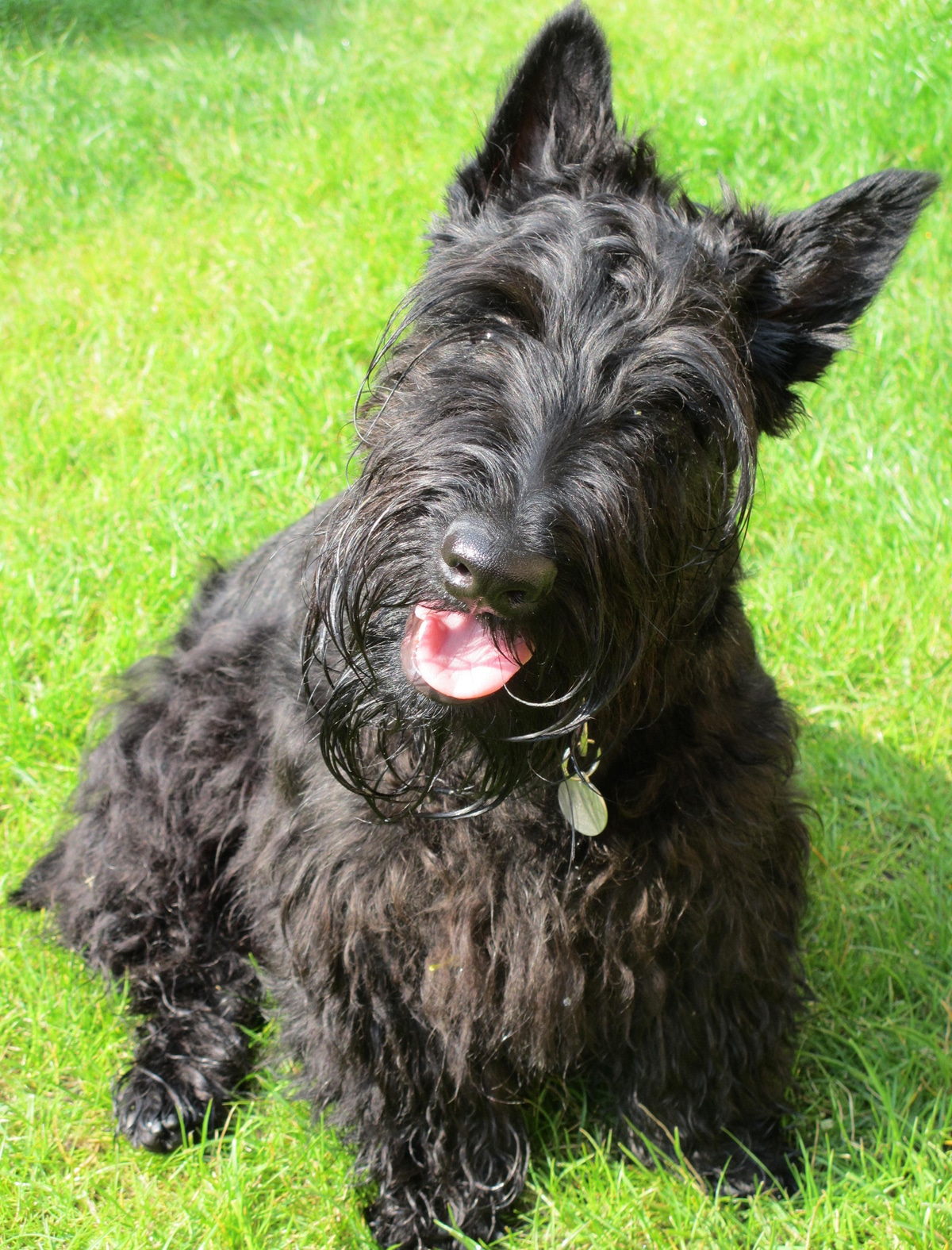
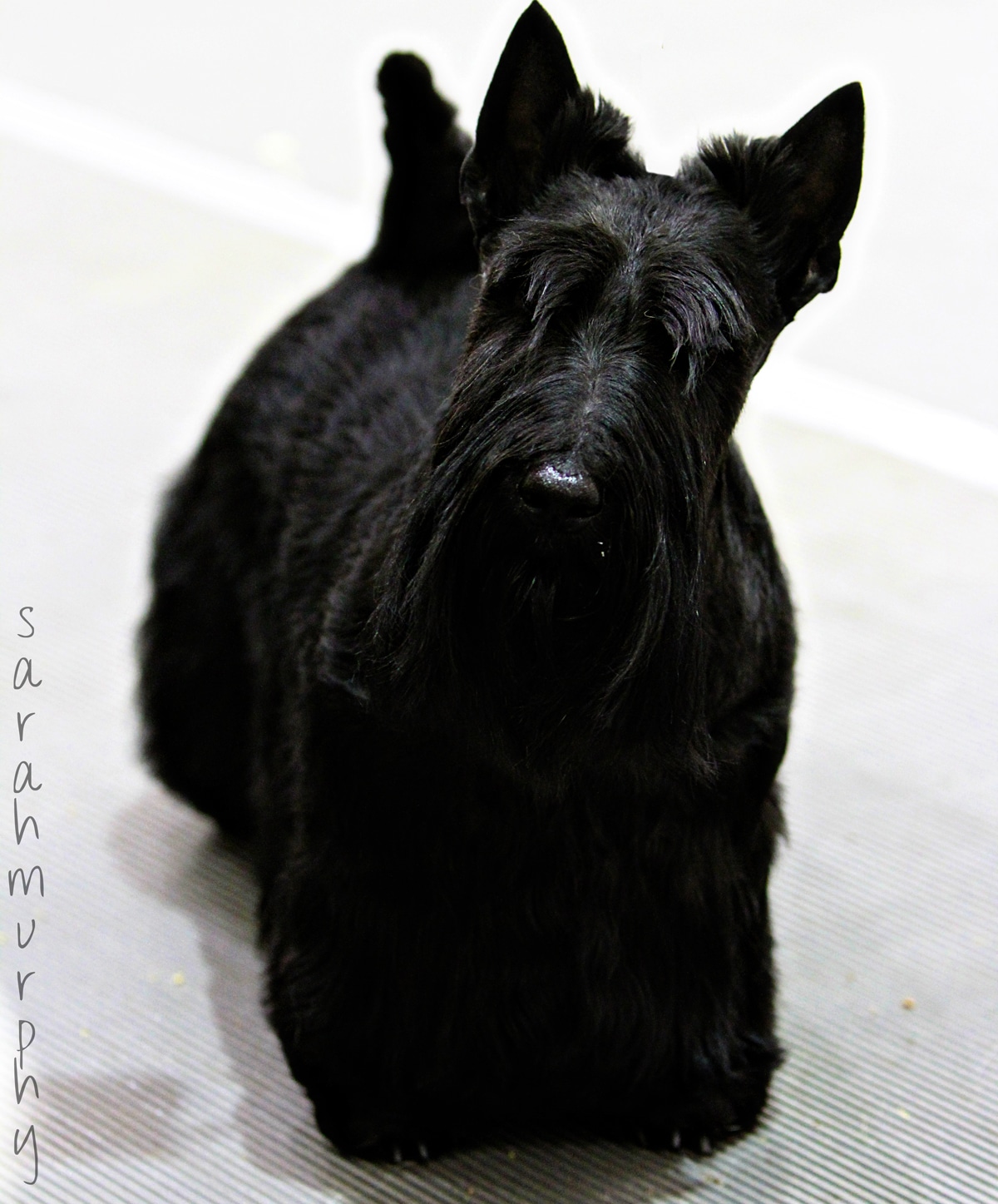
The Scottish Terrier It small but resistant, they have short legs, It Chunky and robust complexion, with one long head in proportion to its size. The Scottish Terrier must have large legs adapted for digging.

Their ears they are erect and the tail is one of the outstanding characteristics of the breed. Their eyes they are small, bright and dark brown or almost black and almond-shaped.

The height at the withers for both sexes should be approximately 25 cm., and the length of the back from the cross until the queue is of approximately 28 cm.. In general, is a well balanced dog, It must weigh 8.5 to 10 kg and a female 8 to 9,5 kg.

Scottish Terrier often has a hard mantle, rough, long, the inclement weather-resistant, an outer layer and a soft, dense layer attached to the skin. Combined, with a long beard in layer, the eyebrows, the legs and lower part of the body. The head, the ears, the tail and back are traditionally short, are the parts included in the haircut of the Scottish Terrier.

The the Layer palette It ranges from dark gray to Jet Black, o » Brindle «(a mixture of black and Brown).

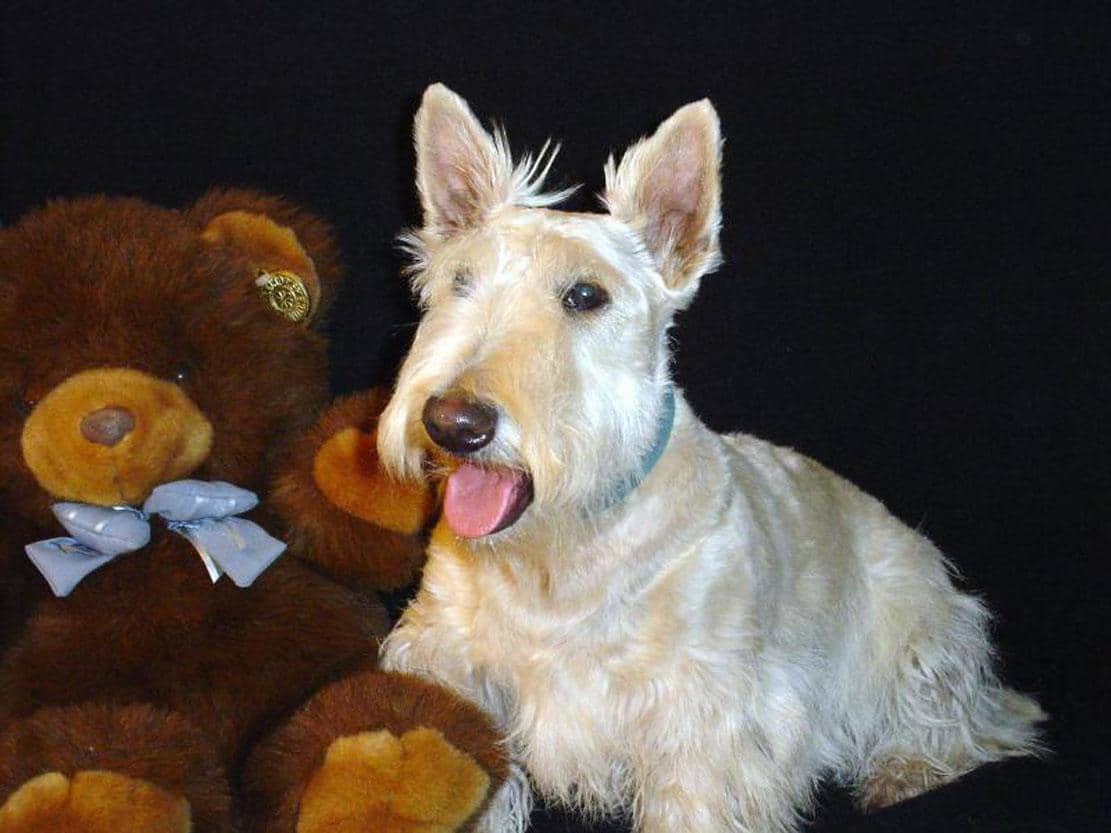
"Wheat" color may appear (straw to nearly white), but it should not be confused with the Cairn Terrier or West Highland White Terrier .

Character and skills

The breed is known for being independent and self-assured., joyful, intelligent and has been nicknamed the "Tough ass". They are described as very affectionate, they have also described as stubborn. It is sometimes described as a distant race, Although it has been observed that they tend to be very loyal and affectionate to its family.

The Fourth Earl of Dumbarton nicknamed the breed «the uncompromising«. The modern race said that it was able to trace their lineage to a single female, call splinter II.

It has been suggested that the Scottish Terrier can be a good watchdog, due to their tendency to bark only when necessary and that it tends to be reserved with strangers. The Scottish Terrier they were bred to hunt and fight badgers.

So, the Scottie is prone to digging, as well as chasing small vermin, as the squirrels, rats and mice.

The Scottie are territorial, they are always warning, they are fast and energetic in their movements, perhaps even more than other Terrier breeds.

With regard to health, the Scottish Terrier have a higher chance of developing some types of cancer, compared to other 'purebloods'.

Characteristics "Scottish Terrier"

Coexistence is important that you have with your new friend. Before considering the acquisition of a dog of the breed "Scottish Terrier" you know certain factors. Not all breeds of dogs are apt to live in an apartment, you must take into account his character, their need for exercise, their interaction with other pets, their care and if you have small children, their level of tolerance towards them.

Adaptation ⓘ

3,0 of 5 stars (based on 1 review)

friendly dog ​​ⓘ

2,0 of 5 stars (based on 1 review)

hair loss ⓘ

2,0 of 5 stars (based on 1 review)

Affection level ⓘ

4,0 of 5 stars (based on 1 review)

Need for exercise ⓘ

3,0 of 5 stars (based on 1 review)

Social need ⓘ

4,0 of 5 stars (based on 1 review)

Home ⓘ

5,0 of 5 stars (based on 1 review)

Toilet ⓘ

4,0 of 5 stars (based on 1 review)

Friendly with strangers ⓘ

3,0 of 5 stars (based on 1 review)

barking ⓘ

2,0 of 5 stars (based on 1 review)

Health ⓘ

4,0 of 5 stars (based on 1 review)

Territorial ⓘ

5,0 of 5 stars (based on 1 review)

Cat friendly ⓘ

3,0 of 5 stars (based on 1 review)

Intelligence ⓘ

5,0 of 5 stars (based on 1 review)

Versatility ⓘ

2,0 of 5 stars (based on 1 review)

Child friendly ⓘ

3,0 of 5 stars (based on 1 review)

Surveillance ⓘ

3,0 of 5 stars (based on 1 review)

joy ⓘ

5,0 of 5 stars (based on 1 review)

«Scottish Terrier» images

Videos «Scottish Terrier»

Type and recognitions:

  • FCI CLASSIFICATION:
  • Group :
  • Section : . .

Federations:

  • FCI – Terriers 2 Small sized Terriers.
  • AKC – Terriers
  • ANKC – Terriers
  • CKC – Terriers
  • ​KC – Terriers
  • NZKC – Terriers
  • UKC – Terriers

FCI breed standard "Scottish Terrier"

Origin:
United Kingdom

Date of publication of the valid original standard:
13.10.2010.

Use:

Terrier


General appearance:

It is a compact dog, Properly sized for underground huntingwho should exclude overweight dogs. Its members are short; alert, presents an image of great power and activity in a reduced volume. The head gives the impression of being long compared to the size of the dog. It is very agile and active despite its short limbs.

IMPORTANT PROPORTIONS: The skull and muzzle have the same length.


Behavior / temperament:

It is a faithful dog, fair, noble, independent and reserved, but brave and very smart. Bold, but never aggressive.

Head:

Long but proportional to the size of the dog.Carry on a muscular neck of moderate length, showing quality.

Cranial region:
  • Skull: The length of the skull should allow enough width, although maintaining the appearance of being narrow. The skull should be almost flat.
  • Fronto-nasal depression (Stop): Light, but visible, between skull and muzzle, right at eye level.

facial region:

  • Truffle: Negra.Long; in profile the line that runs from the nose to the chin appears to descend backwards.
  • Snout: It must be strong and deep to its full extent.
  • Jaws / Teeth: Big teeth, with perfect and complete scissor bite, That is, the inner face of the upper incisors is in close contact with the outer face of the lower incisors and the teeth must be implanted at right angles in the jaws..
  • Cheeks: They should not be prominent.
  • Eyes: Almond-shaped, dark brown, placed quite far apart from each other andNot badunder the eyebrows with a sharp and intelligent expression.
  • Ears: clean, texture fine, pointy, erect and implanted above the skull, but not too close together. Big, wide ears at the base are very undesirable.

Neck:

Muscular and of moderate lengthshowing quality.

Body:

The upper body line is straight and level. top line: Proportionally short and very muscular. Pork loin: Muscular and deep.

  • Chest: Somewhat wide suspended between forelimbs. Well rounded ribs placed well back flattening to give depth to the chest. The thorax vigorously attached to the hind limbs.

Tail:

It should be of moderate length, giving the dog general harmony.. Thick in its implantation and thinning towards the tip, carried vertically or with a slight curvature.

Tips

PREVIOUS MEMBERS:

  • General appearance: The thorax is well placed in front of the forelimbs
  • Shoulder: Wide and sloping.
  • Elbow: It should not be turned outwards or placed under the body.
  • Forearm: Right with good bones.
  • Metacarpus: Straight.
  • Previous feet: Good size, with good foot pads, fingers well arched and together. The front feet are slightly larger than the hind feet.

LATER MEMBERS:

  • General appearance: Remarkably powerful for dog size. Thick and wide buttocks.
  • Thigh: Deep.
  • Knee: Well angled.
  • Metatarsus: Hocksshort, strong, without turning inward or outward.

Hind feet: Good size, with good foot pads, fingers well arched and together. The hind feet areslightly smaller than the previous ones.

Movement:

Uniform and easy going, right both back and forth with a push from behind taking a regular stride.

Mantle

  • Fur: Attached to the body; double layer: short inner layer, dense and smooth; hard outer layer, dense and textured wire; the two layers protect it from the elements.
  • Color: Negro, wheat or any brindle color.


Size and weight:

  • Height to the cross: 25 – 28 cm.
  • Weight: 8,– 10,kg.


Fouls:

Any deviation from the aforementioned criteria is considered as a fault and the severity of this is considered to the degree of the deviation to the standard and its consequences on the health and well-being of the dog..

FALTAS DESCALIFICANTES:

  1. Aggressiveness or extreme shyness.
  2. Any dog ​​showing clear signs of physical or behavioral abnormalities must be disqualified..


N.B.:
  1. Males should have two normal-appearing testicles fully descended into the scrotum..
  2. Only functionally and clinically healthy dogs, with the typical conformation of the breed, should be used for parenting.

The latest changes are in bold

TRANSLATION: Brígida Nestler / Original version: (IN) Technical supervision: Miguel Angel Martinez

Source: F.C.I - International Cynological Federation

Alternative names:

1. Scottie, Aberdeenie (English).
2. Scottish terrier (French).
3. Scottish (German).
4. Scottish Terrier (Portuguese).
5. Scottie, Aberdeen terrier, Terrier escocés (español).

▷ The world of Pets: Dogs, cats, birds, reptiles, amphibians

Cesky Terrier
República Checa FCI 246 . Small sized Terriers

The lively «Cesky Terrier» He is small and like any terrier, loves to dig.

Terrier Checo

Content

Characteristics "Cesky Terrier"

Coexistence is important that you have with your new friend. Before considering the acquisition of a dog of the breed "Cesky Terrier" you know certain factors. Not all breeds of dogs are apt to live in an apartment, you must take into account his character, their need for exercise, their interaction with other pets, their care and if you have small children, their level of tolerance towards them.

Adaptation ⓘ

3,0 of 5 stars (based on 1 review)

friendly dog ​​ⓘ

1,0 of 5 stars (based on 1 review)

hair loss ⓘ

2,0 of 5 stars (based on 1 review)

Affection level ⓘ

4,0 of 5 stars (based on 1 review)

Need for exercise ⓘ

3,0 of 5 stars (based on 1 review)

Social need ⓘ

3,0 of 5 stars (based on 1 review)

Home ⓘ

3,0 of 5 stars (based on 1 review)

Toilet ⓘ

4,0 of 5 stars (based on 1 review)

Friendly with strangers ⓘ

2,0 of 5 stars (based on 1 review)

barking ⓘ

3,0 of 5 stars (based on 1 review)

Health ⓘ

2,0 of 5 stars (based on 1 review)

Territorial ⓘ

5,0 of 5 stars (based on 1 review)

Cat friendly ⓘ

3,0 of 5 stars (based on 1 review)

Intelligence ⓘ

4,0 of 5 stars (based on 1 review)

Versatility ⓘ

2,0 of 5 stars (based on 1 review)

Child friendly ⓘ

3,0 of 5 stars (based on 1 review)

Surveillance ⓘ

3,0 of 5 stars (based on 1 review)

joy ⓘ

5,0 of 5 stars (based on 1 review)

History

The Cesky Terrier is a small dog characterized by a long head, dull, wedge-shaped with a face bearded, floppy ears, a body and a long coat, silky gray.

In 1949, The breeder Scottish Terrier And avid fontisik hunter Horak of what is now the Czech Republic crossed its Scottish with the «Sealyham terrier»To create what would become the" Czech Terrier ", an elegant pack hunting terrier with a long coat, soft and silky.

Horak loved hunting skills of their Scottish Terriers and personality of the Sealyham Terrier, but not the white coat Sealyham. He believed that breeding the two would produce a dog that would get along while hunting in packs..

Horak dogs were crossed for the first time a Scottish terrier bitch named Donka Lovuzdar, which it was both a hunting dog as a dog conformation show, and Sealyham called Buganier Urquelle, who belonged to a Sealyhams hunting pack. In selecting the features he wanted (a dog that could go hunting on a Friday and that could be easily washed and brushed and he was ready to compete in exhibitions recognition on Saturday and Sunday), the Cruze was a dog with excellent olfactory abilities and a fur gray soft. He designed a haircut with scissors that showed the muscle and the soft fur of the "Czech Terrier" and gave it a thin appearance.

Horak's documentation of the dogs' pedigrees and the crosses he made make him one of the rare breeds that can be traced back to its founders..

Physical characteristics

The "Czech Terrier" is a very muscular hunter terrier, short-legged, well pigmented, rectangular format. It has floppy ears and sports long fur., thin but solid, slightly wavy, with a silky sheen, not too filling.

The coat comes in two color varieties: grey blue (to the puppies are born black) and light brown (to the puppies are born dark brown, chocolate). In both color varieties yellow markings allowed, gray or white.

The "Czech Terrier" is longer than high with a upper line that rises slightly backwards.

They are relatively similar to those of Sealyham terrier and the Scottish Terrier.

The height to the cross is of 25 to 32 cm. (ideal 29 cm for males, 27 cm for females).
The weight must be between 7 and 10 kg.

Character and skills

Like all races, The "Czech Terrier" is not suitable for everyone. It may be quieter than some breeds of Terrier, but still a Terrier. A "Czech Terrier" puppy is a very difficult dog to drive, with lots of energy. These small Terrie likes to hunt and dig them, and they need daily exercise in a safe playground. He will chase a ball and recover, and likes to go for a walk. They do not like to be left alone for long periods and can become annoying barkers if they do not have regular activity and company to channel their energy.. The "Czech Terrier" enjoys and stands out in agility and tracking.

Dog nature always on alert, their wariness of strangers and deep and loud barking it an excellent watchdog. He is loyal to his owner, but lack of socialization during puppyhood can do more reserved or even fearful of strangers. Your new puppy needs daily walks and trips to places suitable for dogs so you can meet people and see, smell and hear new things.

Like most terriers, The "Czech Terrier" can be stubborn. That does not mean it is intelligent, but will have to use patience and guile to train. Make training sessions are short and fun. Use lots of praise and rewards as games and goodies when you do something you like. Always I am firm and consistent in what you ask for that not to be confused with what you want or think you can get away with it. But, is sensible, so avoid harsh corrections. You must be able to convey his displeasure through the expression and tone of voice, never screaming or hitting.

Start training your puppy the day you bring him home. Even at eight weeks old, He is able to absorb everything you can teach. Don't wait until you have 6 months to start training him or you'll have to deal with a more stubborn dog. If possible, Take it to a trainer for puppies when you have between 10 and 12 weeks to socialize. But, Note that many kinds of training puppies require certain vaccinations (such as kennel cough) stay up to date, and many veterinarians recommend limited exposure to other dogs and public places until puppy vaccinations (including rabies, distemper and parvovirus) They are completed. Instead of formal training, You can start training your puppy to socialize at home and among family and friends until their complete vaccination.

Talk to the breeder, It describes exactly what you are looking for a dog and asks for help to select a puppy. Breeders see puppies daily and can make incredibly accurate recommendations once they know a little about your lifestyle and personality.. Regardless of what you want from a "Czech terrier", look for one whose parents have pleasant personalities and has been well socialized from the first stage of the puppy.

Did you know??

The "Czech Terrier" is one of those races developed to work a certain type of land: in your case, the forests of Bohemia. Prey ranging from duck and pheasant to the fox, the rabbit and the boar.

Health of the "Czech Terrier"

All dogs have the potential to develop genetic health problems, just as all people have the potential to inherit diseases. Avoid any breeder who does not offer a health guarantee on puppies., to tell you that race has no known problems, or whose puppies are isolated from the main part of the home for health reasons. A reputable breeder will be honest and open about breed health problems and how often they occur in their lines..

Having said that, The "Czech Terrier" is a healthy race. One of his races base, el Sealyham Terrier, it may have an eye condition called dislocation of the lens, so it is recommended that your eyes are examined annually Terrier.

Some "Czech Terrier" can develop a hereditary condition called Scottie Cramp, occasionally it affects the gait of the dog. Usually it is not serious.

Remember that after bringing a new puppy home, You have the power to protect one of the most common health problems: the obesity. Keeping a "Czech terrier" with adequate weight is one of the easiest ways to prolong their life. Take advantage of the full potential of prevention to help ensure a healthier dog for life.

"Czech Terrier" images

credits:

1. Cesky terrier Terrier checo by ceskyfreund36 / CC0
2. Cesky terrier by https://pxhere.com/es/photo/1039221
3. English-Terrier – bitche during the international dogs show in Katowice, Poland by Pleple2000 / CC BY-SA
4. Cesky terrier by https://pxhere.com/es/photo/1391429
5. Cesky terrier on a stone forest by trees ceskyfreund36 / CC0
6. Cesky Terrier during dogs show in Katowice, Poland by Lilly M / CC BY-SA
7. English-Terrier – bitche during the international dogs show in Katowice, Poland by Pleple2000 / CC BY-SA

"Czech Terrier" videos

Type and recognitions:

  • FCI CLASSIFICATION:
  • Group :
  • Section : . .

Federations:

FCI , AKC , ANKC , CKC , ​KC , NZKC , UKC

FCI breed standard Cesky Terrier

FCIFCI - Cesky Terrier
Terrier

Alternative names:

1. Bohemian Terrier, Český Teriér (English).
2. Cesky Terrier (French).
3. Böhmischer Terrier, Český Teriér(German).
4. Ceský Teriér (Portuguese).
5. Cesky Terrier (español).

▷ The world of Pets: Dogs, cats, birds, reptiles, amphibians

West Highland White Terrier
Inglaterra FCI 5 . Small sized Terriers.

West Highland White Terrier

The West Highland White Terrier he is a very lively dog, joyful, with great self-love, determined and independent.

Content

History

The West Highland White Terrier, better known as Westie, is a former Scottish hunting terrier. The little terriers from which the Westie they served humans for many years as watchdogs and hunters. It also, they made themselves useful in the house every day. Keeping houses free from rats and mice, driving away a marten or fox that wanted to feed on chickens or pigeons at night, they proved to be useful helpers at home and in court. The true strength of West Highland White Terrier was active fox hunting, the marten and the otter. The little terrier fearlessly and determinedly chased these thieves to the furthest corner of his den., where they were trying to get them out of the burrow, as the hunters counted. Like his three Scottish brothers, Skye and Cairn Terrier, the West Highland White Terrier he is one of the four descendants of these old men Scottish hunting terrier.

Like the others, comes from the great gene pool of all those Scottish terriers. Only through intentional breeding, that is to say, artificial separation, Scotland's four genetically separated lower terrier breeds were born. Its current form as "West Highland White Terrier» is the result of breeding directed as a companion dog and for displaying the latest 100 years. Until 1924 was raised and led along with the current Cairn-Terrier. The pure white color is the result of a selection of external traits from the time of the breeding of the sample.. It is an expression of efforts to make these four originally identical brothers more and more distinct from one another.. In 1907 the breed was recognized by the British Kennel Club. It was always a fairly rare breed in Europe. That suddenly changed around 1990.

The advertising industry recognized the attractive effect of this smart and happy little terrier. Dog food brands like «César» remain inseparably connected with Westie. The nice one Westie became widely known as a means of advertising dog food and later other items as well. Many people knew him as "the television dog.". He was temporarily better known than the Sausage dog or German shepherd. The serious breeding scene could not meet the demand for puppies from Westie. This could not be said twice by the multipliers from Germany and all over Europe. Dubious vendors massively selling puppies in the dog market. This was not good for the dog breed, your fitness and health. Still today many of these breeders, mostly well disguised as "breed lovers", frolicking on the Internet.

Physical characteristics

The West Highland White Terrier he is a small and manageable dog with an impressive appearance and self-confident. He's got a pretty thick overcoat with a hard top layer but doesn't lean. Your undercoat must be hair, short, smooth and dense. Your coat is weather resistant. With a height at the withers of about 28 centimeters, weighs between 6,5 and 8,5 kg. But, the ideal weight is not given by the standard. However, the Westies they are quite heavy relative to their physical size. Of course, the color of a coat Westie it should always be white and pure white, After all, it's already in your name.

After the experiences with the fashion hype, already in 1998 a special requirement for healthy breeding was set in the standard, so any deviation that could "harm the health and well-being of the dog" had to be rejected.. A striking feature is the tail of the West Highland White Terrier, that the standard defines as: "of 13 to 15 cm long; covered with coarse hair, without pen, as straight as possible, haughtily carried, but neither happy nor hunched over the back. A long tail is not desirable, but for no reason should it be amputated. The tail of the Westies it is a good reflection of its intelligent nature.

Character and skills

The West Highland White Terrier he's a lively guy, bright and confident. In it beats the heart of a true terrier. The official standard describes its character as follows: "Little, Active, bold, robust, endowed with considerable self-confidence and an air of predatory sharpness. Alert, joyful, brave, Confident but friendly". The old hunter has a tendency to independence and overconfidence. He likes to see himself as an emperor.

One should not only accept this trait with a smile and a broad inner smile., but rather appreciate it. Of course, such ambitions must have limits, but maybe you shouldn't always notice this boundary setting by us humans. The Westies they are very loyal and affectionate. They love their family and are extremely child friendly.. They are characterized by their friendly and kind character. But they are not lap dogs. Despite his agile temperament, the Westies are not restless or nervous. Are alert, reporting unusual circumstances with excited barking.

Westies Maintenance:

The attitude of the Westies has no problems. Only grooming is mandatory, especially regular trimming. It has no demands regarding the size of the floor. It can also be kept well on the floor of a big city. Only one should allow him his daily walks. It should be noted that Westies they were hunting dogs, whose heritage lives on even with today's companion. Small dogs are very persevering and can follow their owners without problems when walking. Must be used to other pets from litter box. If he West Highland White Terrier is consistently and lovingly educated as early as the puppy's age, then this sturdy four-legged friend is a valuable companion, that adapts easily and willingly to all the living conditions of its caregivers.

Westie's Education

The education of West Highland White Terrier is an often underrated chapter. Although the puppy looks so cute, especially in his first months of life, he is a true terrier very sure of himself. And such a terrier wants to be educated and guided. The Westie requires consequences in education from adulthood. Although small, dreams like most terriers in some corner of his brain of assuming leadership of the pack. You just have to take your education seriously. Otherwise, his education is not problematic. He wants and needs the guidance of his master or caretaker and is a docile companion., friendly and sociable.

Care of the West Highland White Terrier

The West Highland White Terrier are prone to rashes with dry skin, and frequent bathing can exacerbate these problems. The bathing them once a month – or a longer interval- does not usually cause problems. It is advisable to use neutral soaps or baby shampoo and avoid products with aggressive substances., except veterinary prescription.

After bathing they should pay particular attention in dry him very well the ears with a towel. If brushes you daily or regularly, his hair will remain healthy and bright.

It is also advisable to occasionally perform a brushing through the grubbing-up of dead hair (referred to as striping), It is a totally painless method which is performed by a professional expert in canine aesthetics. This type of arrangement will maintain the texture and characteristics of the white mantle of the Westie. As well, It should be cleaned them ears weekly with a piece of cotton dampened with water to remove wax buildup and avoid possible infections.

Special attention must be paid to cleaning the hair around the snout with a damp cloth after eating or digging a hole.. The same, the lagrimales should be cleaned to avoid the accumulation of lagañas, since being a white dog if it is not taken care of -diligently- maintain clean those parties they will wear an unsightly Brown and will make it look dirty or neglected. When they are pets they should be cleaned with baby wipes, especially the part of the belly already to be a dog with short legs, gets wet when they pee and ends up taking an ugly yellowish color.

West Highland White Terrier Health

Cubs West Highland White Terrier They may suffer from a disease called “craniomandibular osteopathy.”, known as "Westie or Scottie jaw" which consists of abnormal growth of the jaw bone. This genetic disease is autosomal recessive in nature, that means that what a puppy the present both parents should have the gene and transmit it to the puppy; Unfortunately, the only way to know if any breeding specimen contains this gene is until a puppy is born and presents this anomaly.. By the same, perhaps the breeder himself will not know that some specimen has this fault until the litter is born.

Is condition usually occurs when the puppy is between 3 and 6 months of age and disappears to the 12 months.

Diagnosis is usually made after x-rays are taken.. The treatment of the symptoms consists of providing medications that help the puppy to cope with this period., allowing him to eat and use its snout while it suffers from pain. Corticosteroids are therapeutic agents that are used most frequently. Disease disappears spontaneously when the period of growth ends. Only in very severe cases, It does not respond to treatment, is euthanasia.

Nutrition / Food

The nutrition of West Highland White Terrier not usually problematic, as long as it comes from a serious breeding. It is not uncommon for allergies and skin irritations to require a dietary diet.

Westie's Life Expectancy

The West Highland White Terrier of serious upbringing tend to have robust health and can reach 15 years in good physical condition.

Buy a West Highland White Terrier

There are many dubious providers of Westies on the Internet. In your own interest and especially for the welfare of dogs you should look very carefully. It is best to purchase your Westie puppy locally from an FCI member breeder. Here you should pay special attention that there is no inbreeding. Or you can go to the animal shelter and look for other types of terriers. Cubs West Highland White Terrier cost around 1.000 EUR.

Characteristics "West Highland White Terrier"

Coexistence is important that you have with your new friend. Before considering the acquisition of a dog of the breed "West Highland White Terrier" you know certain factors. Not all breeds of dogs are apt to live in an apartment, you must take into account his character, their need for exercise, their interaction with other pets, their care and if you have small children, their level of tolerance towards them.

Adaptation ⓘ

4,0 of 5 stars (based on 1 review)

friendly dog ​​ⓘ

4,0 of 5 stars (based on 1 review)

hair loss ⓘ

1,0 of 5 stars (based on 1 review)

Affection level ⓘ

4,0 of 5 stars (based on 1 review)

Need for exercise ⓘ

4,0 of 5 stars (based on 1 review)

Social need ⓘ

4,0 of 5 stars (based on 1 review)

Home ⓘ

3,0 of 5 stars (based on 1 review)

Toilet ⓘ

4,0 of 5 stars (based on 1 review)

Friendly with strangers ⓘ

4,0 of 5 stars (based on 1 review)

barking ⓘ

5,0 of 5 stars (based on 1 review)

Health ⓘ

5,0 of 5 stars (based on 1 review)

Territorial ⓘ

5,0 of 5 stars (based on 1 review)

Cat friendly ⓘ

3,0 of 5 stars (based on 1 review)

Intelligence ⓘ

4,0 of 5 stars (based on 1 review)

Versatility ⓘ

4,0 of 5 stars (based on 1 review)

Child friendly ⓘ

4,0 of 5 stars (based on 1 review)

Surveillance ⓘ

5,0 of 5 stars (based on 1 review)

joy ⓘ

5,0 of 5 stars (based on 1 review)

Images "West Highland White Terrier"

photos:

1 – Tara posing in Simancas (Valladolid) 27 one. 2007
2 – West Highland Terrier by Antonio Villascusa / CC BY
3 – A West Highland White Terrier in Capelle aan den IJssel, Netherlands. by Wouter Engler / CC BY-SA
4 – West Highland White by https://commons.wikimedia.org/w/index.php?title=User:Mateo_Squad&action=edit&redlink=1
5 – West Highland White Terrier from 1915 by not specified (except those with signature on image) / Public domain
6 – West Highland White Terrier by SheltieBoy / CC BY

Videos "West Highland White Terrier"

Type and recognitions:

  • FCI CLASSIFICATION:
  • Group :
  • Section : . .

Federations:

  • FCI – Terriers 2 Small sized Terriers.
  • AKC – Terriers
  • ANKC – Terriers
  • CKC – Terriers
  • ​KC – Terriers
  • NZKC – Terriers
  • UKC – Terriers

FCI breed standard "West Highland White Terrier"

Origin:
United Kingdom

Date of publication of the valid original standard:
13.10.2010

Use:

Terrier.


General appearance:

Strong structure; deep chest and well developed back ribs. Level back. Powerful hindlimbs, with good musculature, exhibiting to a high degree the combination of strength and activity.


Behavior / temperament:

Petit, Active, brave, without fear, possessing a lot of self-esteem, mischievous expression, alert, joyful, bold, confident and friendly

Head:

The distance from the occiput to the eyes is slightly greater than the length of the facial region. The head is covered with abundant fur, forming a right angle, the acute, relative to the neck axis. The head must not be worn in an extended position.

Cranial region:
  • Skull: Slightly bulky. Side view, the forehead has a smooth curvature. The skull decreases slightly from the level of the ear to the eyes.
  • Depression links (Stop): Very notorious, formed by a visible slightly protruding bone formation immediately above the eyes, and a slight hollow between them.

facial region:

  • Truffle: Black and somewhat elongated, forming a slight contour with the rest of the muzzle. The truffle does not project forward.
  • Snout: Gradually thins from eyes to nose. The muzzle should be well filled under the eyes., without being concave or falling sharply.
  • Jaws / Teeth: Strong and uniform jaws. As wide as possible between the tusks, keeping the mischievous expression. Teeth are large proportionally to the size of the dog, with a uniform scissor bite, that is to say, that the upper incisors fall exactly in front of the lower ones, teeth being placed perpendicularly in the jaws.
  • Eyes: Separate, medium-sized, neither rounded nor large, as dark as possibleand placed well under bushy eyebrows that give the dog a sharp and intelligent expression. The clear color eyes are very undesirable.
  • Ears: Small, erect and carried firmly, ending at tip, implanted neither too close nor too far apart. Her short soft hair (velvet) should not be cut. Feather-free at the tip. Rounded tip ears, wide, long, thick or with too much hair are undesirable.

Neck:

long enough, in a way that allows the required good head position; muscular neck, gradually thickening towards the base so that it can gently emerge from the sloping shoulders.

Body:

Compact.

  • Back: Level.
  • Pork loin: Wide and strong.
  • Breast : Deep; the ribs in the upper half are so arched that they give a flat appearance to the sides. The last ribs have considerable depth, the distance from the last rib to the hip being only long enough to allow free movement of the body.

Tail:

13 – 15 cm., covered with coarse hair, without pen, as straight as possible, haughtily carried, but neither happy nor hunched over the back. A long tail is not desirable, but for no reason should it be amputated.

Tips

PREVIOUS MEMBERS:

  • Shoulder: Leaning back with wide, well-attached shoulder bladesto the chest wall. The shoulder joint positioned forward.
  • Elbows: Well positioned so as to allow the limb free movement, parallel to the axis of the body.
  • Forearm: Short and muscular forelimbs, straight and thickly covered with short, hard hair.
  • Previous feet: The previous ones are longer than the later ones, round, provided in size, strong, with thick pads and covered with short hair, rough. The hind feet are smaller, with very thick pads. The bottom surface of the pads and all nails are preferred black.

LATER MEMBERS:

  • General appearance: Strong, muscular and broad at the top; short hind limbs, muscular and tendon.
  • Thighs : Very muscular and not too far apart.
  • Knees: Well inclined.
  • Hock joint: Well angled and positioned under the body so that they are considerably close together when walking or standing. Straight or weak hocks are undesirable.
  • Hind feetSmaller than the previous ones, round, provided in size, strong, with thick pads and covered with short hair, rough. The hind feet are smaller, with very thick pads. The bottom surface of the pads and all nails are preferred black.

Movement:

Libre, straight and easily in all types of walking. In the previous members, freely extends forward of the shoulders. Rear limb movement is free, strong and united. Knees and hocks must be well angled; hocks positioned under the body give a good push. Stiff or affected movement of the cow's hind limbs and hocks are highly undesirable.

Mantle

SKIN: Free from obvious skin diseases.

  • Fur: It has dual layer. The outer layer consists of rough hair, of approximately 5 cm long, no ripples. The inner layer, that looks like fur, is short, soft and dense. Untight coat not desirable.
  • Color: White.


Size and weight:

Height to the cross: About 28 cm..


Fouls:

Any deviation from the aforementioned criteria is considered as a fault and the severity of this is considered to the degree of the deviation to the standard and its consequences on the health and well-being of the dog..

FALTAS DESCALIFICANTES:

  • Aggressiveness or extreme shyness.
  • Any dog ​​showing clear signs of physical or behavioral abnormalities must be disqualified..


N.B.:
  • Males should have two normal-appearing testicles fully descended into the scrotum..
  • Only functionally and clinically healthy dogs, with the typical conformation of the breed, should be used for parenting.

The latest changes are in bold.

TRADUCCION: Brígida Nestler / Original version: (IN) Technical supervision: Miguel Angel Martinez

Source: F.C.I - International Cynological Federation

Alternative names:

1. Poltalloch Terrier, Roseneath Terrier, White Roseneath Terrier, Westie (or Westy) (English).
2. Westie (French).
3. Weißer Hochlandterrier, „Westie“, ursprünglich: Poltalloch Terrier, Roseneath Terrier (German).
4. Westie (Portuguese).
5. Westie, Westy (español).

▷ The world of Pets: Dogs, cats, birds, reptiles, amphibians

Skye terrier
Escocia FCI 75 .Small sized Terriers.

Skye terrier

The Skye is a typical terrier: tenacious hard with a propensity to bark and dig.

Content

History

The Skye terrier it is one of the oldest Scottish breeds. The Skye was known as the Western Isles Terrier which comprised at Skye Terrier with a mixture of races like their ancestors, including prototypes of the Cairn Terrier.

References to a terrier Scottish island of Skye back to long ago. In his 16th century book "Of English Dogs", Johannes Caius wrote that the Skye Terrier was "taken from the barbarian frontiers of the farthest countries to the north… what, because of the length of hair, "It doesn't show either the face or the body.". That certainly sounds like a description of profuse coat Skye.

The dogs were bred to hunt and kill foxes, badgers and otters that threatened livestock farm or property damage caused. Their long coat and facial hair were meant to protect them from injury and the typical rainy weather of Scotland..

Three centuries later, the Queen Victoria, dogs lover, he became interested in the race during one of his visits to Scotland, and dogs became fashionable pets noblewomen. It was said that even a duchess would be ashamed to show her face in the park without the company of a Skye.. A portrait of Queen Victoria with one of his Skyes, Rona II, was painted by William Nicholson, and other Sykes appeared in paintings Sir Edwin Landseer.

Under threat of extinction

There are concerns that the breed could disappear entirely., since during 2012 only 44 puppies were born in the UK. The particularly lowest period for this breed was in 2005, when they registered only 30 Puppies. ​Today this is the most endangered dog breed within the classification of Vulnerable Native Breeds3​of the UK Kennel Club, and it is estimated that if it continues like this within 40 years the breed could become extinct.

Did you know??

One of the best known and loved Skye Terrier It was Greyfriars Bobby, who faithfully he watched the grave of his owner, John Grey, during 14 years after the death of man. A statue honoring the loyalty of the dog is visited Edinburgh for dog lovers around the world.

Physical characteristics

The Skye terrier it's a long-bodied dog. Its length is twice its size with good length hair. It moves seemingly effortlessly. its members, body and jaws are strong. His head is long and powerful. It has a long body and under. The flat edges occur because the coat that falls straight.

The mantle is double layer. The inner layer should consist of short hair, thick, soft and fleecy. The outer layer for reasonably long hair, hard, straight, flattened without curls that should never prevent movement. On the head the hair is shorter, softer and falls over his forehead eyes watching but not preventing vision. He meets the hair on the sides of the head, surrounding ears like a fringe allowing appreciate the way.

Its color can be black, dark or light gray, leonado, cream, all with black markings.
Its ideal height is 25 – 26 cm..
Length from tip of nose to tip of tail: 105 cm.. Females are slightly smaller in the same proportions.

Health

The Skye Terriers They may be affected by various medical conditions, including eye problems (as glaucoma and dislocation of the lens), hipotiriodismo, of von Willebrand disease (a disorder of blood clotting), allergies and ulcerative colitis.

"Skye's lameness" or "puppy lameness" sometimes occurs in puppies between 3 and 10 months of age. You can resolve without treatment, but some veterinarians suggest that activity is restricted. The Skye Terriers They can also undergo genetic forms of liver and kidney disease. The breeder of your puppy should be willing – in fact, anxious – review your dogs' health histories and discuss the prevalence of these and other health problems in your lines.

Character and skills

The Skye It is a classic Terrier: bold to, well, anything, friendly people who know, reserved and cautious with strangers. An old Scottish word, "cunning", It applies to him too. It is an intelligent dog and prudent people will consider carefully before deciding whether granted his affections. But, Once you are given, They are given lifetime.

It may not seem like a great athlete at first sight, but Skye has resistance, strength and agility galore. You'll find it by participating in agility, obedience and tracking, but it is also a partner willing sofa. Two or three rides 15 minutes or games a day will meet your exercise needs, but he's up for more if you are. If your temperament permits, Skye can also be a therapy dog ​​cheerful, visiting people in facilities such as nursing homes and children's hospitals.

Like all terrier, the Skye has a mind of its own, but learns well. Train this sensitive dog with loving firmness and enjoy their trust and respect will win.

Characteristics "Skye terrier"

Coexistence is important that you have with your new friend. Before considering the acquisition of a dog of the breed "Skye terrier" you know certain factors. Not all breeds of dogs are apt to live in an apartment, you must take into account his character, their need for exercise, their interaction with other pets, their care and if you have small children, their level of tolerance towards them.

Adaptation ⓘ

5,0 of 5 stars (based on 1 review)

friendly dog ​​ⓘ

2,0 of 5 stars (based on 1 review)

hair loss ⓘ

3,0 of 5 stars (based on 1 review)

Affection level ⓘ

4,0 of 5 stars (based on 1 review)

Need for exercise ⓘ

3,0 of 5 stars (based on 1 review)

Social need ⓘ

4,0 of 5 stars (based on 1 review)

Home ⓘ

5,0 of 5 stars (based on 1 review)

Toilet ⓘ

3,0 of 5 stars (based on 1 review)

Friendly with strangers ⓘ

2,0 of 5 stars (based on 1 review)

barking ⓘ

5,0 of 5 stars (based on 1 review)

Health ⓘ

4,0 of 5 stars (based on 1 review)

Territorial ⓘ

4,0 of 5 stars (based on 1 review)

Cat friendly ⓘ

2,0 of 5 stars (based on 1 review)

Intelligence ⓘ

3,0 of 5 stars (based on 1 review)

Versatility ⓘ

2,0 of 5 stars (based on 1 review)

Child friendly ⓘ

3,0 of 5 stars (based on 1 review)

Surveillance ⓘ

3,0 of 5 stars (based on 1 review)

joy ⓘ

5,0 of 5 stars (based on 1 review)

Images "Skye terrier"/h2>

Videos "Skye terrier"

Type and recognitions:

  • FCI CLASSIFICATION:
  • Group :
  • Section : . .

Federations:

FCI , AKC , ANKC , CKC , ​KC , NZKC , UKC

FCI breed standard Skye terrier

FCIFCI - Skye terrier
Skye

Alternative names:

1. Skye (English).
2. Skye (French).
3. Skye (German).
4. Skye (Portuguese).
5. Skye (español).

Photos:

1 – Pleple2000 / CC BY-SA
2 – Pleple2000 / CC BY-SA
3 – A Skye terrier at the 2019 Kelso Dog Show © Copyright Walter Baxter and licensed for reuse under this Creative Commons Licence.
4 – Skye Terrier, Gold Country Kennel Club Dog Show, Grass Valley by Larry Miller – Flicker

▷ The world of Pets: Dogs, cats, birds, reptiles, amphibians

Japanese Terrier
Japón FCI 259 . Small sized Terriers.

Japanese Terrier

The Japanese Terrier it hardly enjoys diffusion and is practically to discover.

Content

History

In the middle of the Edo era, about 1700, a small dog appeared in Japan that looked very much like the type of terrier. It was the result of a cross between small Japanese dogs with English Fox Terrier Smooth, which was brought to the port of Nagasaki by Dutch sailors. At that time the port of Nagasaki was the only port open to Western countries., especially the dutch. After several generations, some descendants of these dogs were bred as a type of Italian Greyhound.

About 1900, al final de la era Meiji, Some of the best of the mentioned dogs were seen in the Kobe district and called "Kobe Terriers". His type was something between modern Fox Terrier Smooth and the modern Japanese Terrier. They were the first terriers to be bred in Japan. This "Kobe Terrier" and some of its ancestors were also called "Oyuki Terrier" and "Mikado Terrier" and are said to be carefully cared for by the premises and also by foreigners.

About 1916 an ancestor of the Japanese Terrier in the Nada district, near Kobe, A dog called "Kuro" (born in 1913 in Kobe), which means "black" in Japanese. This dog was a cross between a English toy terrier and Bull Terrier miniature, both imported from western countries. These pups were bred with bitches of the aforementioned Kobe Terrier. The result was a very short haired dog, thin and small of the Terrier type and was called Japanese Terrier (NIHON) since then. in those days, major breeders in Osaka county engaged in inbreeding and line breeding to cement appearance. Thanks to your efforts, the breed was firmly established in 1930.

In 1932 NIHON TERIA CLUB was founded under the presidency of Tamara KIKUJIRO. The Japanese Terrier it was ideal for city dog ​​breeders and became fashionable.

In 1940, where cities were built everywhere and with these cities grew the demand for a smaller and more active dog than the large guard dogs, the Japanese Terrier became very popular. But, in all its history, this breed was twice threatened with extinction. The first time, during WWII and again, about 1948, due to loss of popularity among the Japanese, since other western races were more fashionable.

Although the Japanese Terrier was recognized by the F.C.I. (Federation Cynologique Internationale) in 1964, this breed was practically unknown outside of Japan.

According to the documents, three basic lines of Japanese Terrier: «LANDMARK» (by Mr.. Nobuaki Shigematsu, Yamaguchi Prefecture), «TAIKO» (by Mr.. Sumiko Amano, Hamamatsu City) and "Tama Takahara" (by Mr.. Jun Takahara, Such).

About 1985, there was less than 50 bitches available for breeding throughout Japan. After the great efforts of some volunteers, who were aware of the need for immediate protection of the race, the number of dogs had reached about 400 breeding dogs after seven years.

So, special mention must be made of the efforts of Mr.. Jun TAKAHARA, whose commitment made the Japanese Terrier was known beyond the borders of Japan.

The breed was not seen in European countries until 1991, when a couple of Japanese Terriers arrived in France at the request of Mrs.. Luisa González de Castejón. Their dog names were "Kuroyuri Maru from Tama Takahara" (male) Y «Keshinome Brains De Tama Takahara» (female).

Another European breeder had also joined this adventure in the years 90: The Sr. Roberto Verde from Naples (Italy) he also owned three beautiful Japanese Terriers.

Time and time again there have been and still are some breeders who care for this breed, but unfortunately it was not possible to establish a stable population in Europe.

After 2 years of establishing contact with the Japanese breeder Mr.. Thoshihide OZAKI was able to import the FIRST Japanese Terrier the 4.11.2014 to AUSTRIA. «Yodogimi de Ozaki Farm JP» born 28.06.2014. This dog was registered with the Austrian Kennel Club (ÖHZB) con JAPT 1.

In order to create a breeding base, more dogs have been imported from Japan in recent years. In total 4 females were brought to Austria and two males (Ozaki Farm JP’s HIBIKI Swiss / 2017 & Ozaki Farm JP’s SHIN / 2018) were transferred to Switzerland. In 2017 the first Japanese Terrier.

Physical characteristics

It is a small dog, elegant in appearance, and a defined and compact configuration.

Shoulder height: 30 cm. – 33 cm.; Weight: a few 5 kg

Fur: Short (2mm) smooth, dense and glossy; the coat does not need any additional care;

Color: Head: Tricolor (fire and white); Body: Basic color white with small black or tan spots.

The breeders of the Japanese Terrier they are very demanding in terms of appearance and color markings, that are sometimes considered more important than your sports skills. The ideal colors and markings in a Japanese Terrier are the black, chocolate brown and beige: The head, ears and nose bone should be dark in color, black or chocolate brown. The muzzle to the nose and on each cheek and above each eye should be light brown. The lower jaw will be white. A clear "V" is visible in the neck. Occasionally there are also dark gray heads with light brown markings. But, this is considered to be the worst of the color variations. This is different with the deep black heads. This black color is allowed, because it reminds one of the old kobe dogs.

Character and skills

The Japanese Terrier not only is he a very intelligent puppy, but also mischievous and full of terrier temperament. Knowing him means loving him for his great sensitivity. He has a cheerful character and will participate in games with pleasure and joy.. It is a one-man dog whose devotion flatters its owner. As an attentive house dog will warn of the approach of a stranger but without being aggressive. It is very easy to train and can learn all kinds of tricks. His greatest effort is to please his owner. As a sports partner he has great skills and innate instincts. Has an excellent sense of smell and good eyesight, but still has no hunting ambitions. It's never quarrelsome, She gets along well with other dogs, especially with his own race.

It is an independent puppy, whose characteristics make it a pleasant "partner". It is suitable for young people, for both athletes and the young at heart. And one thing is especially important for the little terrier: snuggling with its owner.

Fitness: The Japanese Terrier it's a small dog, but still needs enough activity. It is the ideal companion for active people. Likes to learn and is therefore also suitable for mind games or dog sports that are suitable for small breeds.

It is a "skirt dog" in the positive sense. But that's only if you are tired of the many races!!

With the kids:

The Japanese Terrier is very attached to his owners and enjoys a good snuggle. But, he is not a babysitter dog. As in all small dog breeds, small body size has advantages when traveling, but it becomes a disadvantage with – and I say it with affection – the clumsy hands of children. This means that when they have children, make sure children handle the dog with care. Offer the dog an area where he can retreat if he becomes too heavy for him. If this is observed, nothing stands in the way of positive cooperation.

Correct nutrition Japanese Terrier

Proper nutrition is extremely important to avoid diet-related diseases. It is important to have a balanced diet that suits your beloved. Due to its active nature, the Japanese Terrier has its own nutritional requirements. It is very agile, so you should pay attention to a sufficient power supply.

High-quality whole foods are precisely tailored to your dog's nutritional needs. This ensures a supply of all the nutrients your dog needs.. High-quality prepared foods have the advantage that no feed additives are needed.

Terriers are often susceptible to allergies based on gluten-containing grains. In this case, you must ensure that the food contains other sources of carbohydrates. Rice or potatoes are a good alternative here. Food intolerance can lead to skin rashes, inflammation and digestive problems.

It is recommended to feed your terrier several times a day in small portions.. After each feeding, a pause in digestion must be ensured. You should refrain from eating before planned sports activities.

Care Japanese Terrier

The coat of his Japanese Terrier it is extremely easy to care, since it only measures about 2 cm long. Don't lose much, but you will enjoy removing loose hairs with a silicone glove. Even dandruff can be removed and the blood circulation of the skin is stimulated.

Your terrier's hair doesn't grow too thick. So, it is recommended to wear a coat during the cold months. If you stay outdoors for a longer period of time, protect your stomach and nose with sun milk.

When caring for your terrier's teeth, you should make sure that you do not feed him any food that contains sugar. These damage teeth, which in turn can lead to serious digestive problems.

The Japanese Terrier has a highly developed musculature, but its bone structure is quite fine. So, the use of a dog harness is recommended instead of a collar. If you stay home alone for a while, chewing bones of an appropriate size can be used as a toy.

Characteristics "Japanese Terrier"

Coexistence is important that you have with your new friend. Before considering the acquisition of a dog of the breed "Japanese Terrier" you know certain factors. Not all breeds of dogs are apt to live in an apartment, you must take into account his character, their need for exercise, their interaction with other pets, their care and if you have small children, their level of tolerance towards them.

Adaptation ⓘ

2,0 of 5 stars (based on 1 review)

friendly dog ​​ⓘ

3,0 of 5 stars (based on 1 review)

hair loss ⓘ

3,0 of 5 stars (based on 1 review)

Affection level ⓘ

5,0 of 5 stars (based on 1 review)

Need for exercise ⓘ

1,0 of 5 stars (based on 1 review)

Social need ⓘ

4,0 of 5 stars (based on 1 review)

Home ⓘ

3,0 of 5 stars (based on 1 review)

Toilet ⓘ

1,0 of 5 stars (based on 1 review)

Friendly with strangers ⓘ

3,0 of 5 stars (based on 1 review)

barking ⓘ

4,0 of 5 stars (based on 1 review)

Health ⓘ

4,0 of 5 stars (based on 1 review)

Territorial ⓘ

4,0 of 5 stars (based on 1 review)

Cat friendly ⓘ

3,0 of 5 stars (based on 1 review)

Intelligence ⓘ

4,0 of 5 stars (based on 1 review)

Versatility ⓘ

4,0 of 5 stars (based on 1 review)

Child friendly ⓘ

4,0 of 5 stars (based on 1 review)

Surveillance ⓘ

3,0 of 5 stars (based on 1 review)

joy ⓘ

5,0 of 5 stars (based on 1 review)

Images "Japanese Terrier"

Photos:

1 – At photo Amakakeru-Meiji White Oleander – Japanese Terrier on dogs show in Konopiska, Poland. The owner is Paweł Gąsiorski by https://commons.wikimedia.org/wiki/User:Pleple2000
2 – At photo Amakakeru-Meiji White Oleander – Japanese Terrier on dogs show in Konopiska, Poland. The owner is Paweł Gąsiorsk by Pleple2000 / CC BY-SA
3 – At photo Amakakeru-Meiji White Oleander – Japanese Terrier on dogs show in Konopiska, Poland. The owner is Paweł Gąsiorski by Pleple2000 / CC BY-SA
4 – At photo Amakakeru-Meiji White Oleander – Japanese Terrier on dogs show in Konopiska, Poland. The owner is Paweł Gąsiorski. by Pleple2000 / CC BY-SA
5 – A Japanese Terrier by Canarian / CC BY-SA
6 – Bernie Lindsey, my dog by Bernielindsey44 at en.wikipedia / Public domain
7 – At photo Amakakeru-Meiji White Oleander – Japanese Terrier. by Paweł Gąsiorski / CC BY-SA

Videos "Japanese Terrier"

Type and recognitions:

  • FCI CLASSIFICATION:
  • Group :
  • Section : . .

Federations:

  • FCI – Terriers 2 Small sized Terriers.
  • Japan Kennel Club – Terriers

  • FCI breed standard "Japanese Terrier"

    Origin:
    Japan

    Date of publication of the valid original standard:
    04.04.2016.

    Use:

    Companion dog


    General appearance:

    It is a small dog, elegant in appearance, and a defined and compact configuration. Hair measuring approximately 2 mm is very short.

    PROPIMPORTANT ORTIONS: The ratio of the height at the withers to the length of the body is 1: 1. The muzzle and the skull are the same length.


    Behavior / temperament:

    The Japanese Terrier is agile and with a lively temperament.

    Head:

    ---

    Cranial region:
    • Craging: Flat and moderately narrow.
    • Dnaso-frontal depression (stop): Not very defined.

    facial region:

    • Nariz: Black. The nasal helm is straight.
    • Labios: They are thin and tight.
    • JawsTeeth: Strong white teeth. The joint is in the form of scissors.
    • Cheeks: Thin, not bulky.
    • Ojors: Medium-sized, oval shape and dark in color.
    • Obars: High implementation. They are rather small, thin, V-shaped, and fall forward. But, bent and raised on both sides of the skull are allowed.

    Neck:

    It is of moderate length, strong, and gradually widens towards the dewlap-free shoulder region.

    Body:

    • Cruz: High.
    • Dorrso: Short and firm.
    • Itmor: Slightly arched.
    • Glikeness: Powerful.
    • Pecho: Deep, although the pectoral region is not too wide. The ribs are well sprung.
    • Línlower ea and bellyBellywell collected.

    Tail:

    Moderately thin; Traditionally, amputated in thecountry of origin. En the countries where the cut of tail is prohibited, the natural tail is slightly curved and tapers towards the tip. In motion it is moderately high.

    Tips

    PREVIOUS MEMBERS:

    • Hormbros: Slightly inclined.
    • Antarms: They are straight; the bones are not heavy.
    • Pinis previous: They are good together. The foot pads are elastic; nails are hard and preferably dark in color.

    LATER MEMBERS:

    • Thighs: Long.
    • Rodinllto: Moderately angled.
    • Ahock joint: Moderately angled.
    • Metatarsus: Vertical.
    • Pinis later: They are good together. The foot pads are elastic; nails are hard and preferably dark in color.

    Movement:

    It is light and agile.

    Mantle

    Plink: Short, smooth, dense and lustrous.

    Colorr: Tricolor, with a black head, fire and white. White with black spots, black marks or tan marks on the body.


    Size and weight:

    So much for males, as for females, height is about 30 to 33 cm..


    Fouls:

    Any deviation from the aforementioned criteria is considered as a fault and the severity of this is considered to the degree of the deviation to the standard and its consequences on the health and well-being of the dog..

    FALTAS DISQUALIFYING:

    • Aggressiveness or extreme shyness.
    • Any dog ​​showing clear signs of physical or behavioral abnormalities must be disqualified..
    • Long hair.
    • Pronounced upper or lower prognathism.


    N.B.:
    • Males should have two normal-appearing testicles fully descended into the scrotum..
    • Only functionally and clinically healthy dogs, with the typical conformation of the breed, should be used for breeding

    Itlatest changes are in bold.

    TRaduCCióNMrs. Brígida Nestler.

    ItsPETechnical review: SR. Miguel Angel Martinez.

    Source: F.C.I - International Cynological Federation

    Alternative names:

    1. Nippon Terrier, Nihon Teria, Nihon Terrier, Kobe Terrier, Mikado Terrier, Oyuki (snowy) Terrier (English).
    2. Nihon teria (French).
    3. Nippon-Terrier, Nishon-Terrier (German).
    4. nihon, nippon terrier (Portuguese).
    5. Nihon teria, Terrier Nipón, Terrier Japonés (español).

▷ The world of Pets: Dogs, cats, birds, reptiles, amphibians

Cairn Terrier
Gran Bretaña FCI 4 . Small sized Terrier
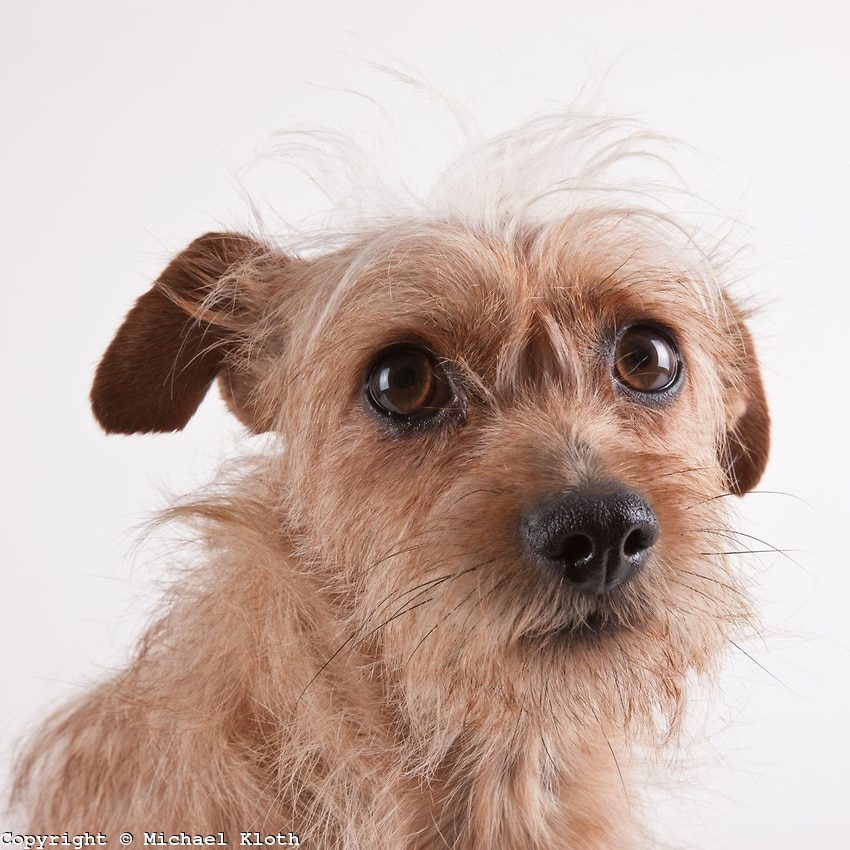
Cairn Terrier

The Cairn Terrier It was originally bred as a hunting dog, to kill rats, Badgers, foxes

Content

History

The Cairn Terrier It is one of the oldest breeds of Terrier, originating in Scotland and recognized as one of the first Scottish working dogs. It was created for hunting and the prey's burrow. The Cairn Terrier are buzzards. In Scotland they hunted rats and other rodents.

In our country house, will do the job of a cat, often hunting mice, rabbits and squirrels.

Cairn Terrier belongs to the family of the Scottish Terrier. They are five:

History

The characteristics of the current breed are carefully modeled on their ancestor, the Terrier of the Isle of Skye 17th century. It is believed that this dog was the basis for developing races such as the lion and the Scottish.

The history of the Cairn Terrier is reinforced by the fact that the modern Cairn is an attempt to preserve the typical form of the Terrier of the old days., a dog of work of the Isle of Skye. Known in his native Scotland for more than 500 years, It is believed that it is the oldest of the Terrier.
Cairn Terrier was originally bred as a hunting dog, to kill rats, Badgers, foxes, weasels, and other small insects. He hails from the Isle of Skye, but to avoid confusion with the current Skye Terrier, He was appointed Cairn Terrier, in honor of the rock piles and where he used to look for his prey in his Scottish lands.

Did you know??

The most famous Cairn of all? That would be Toto in "The Wizard of Oz".

Physical characteristics

These dogs of short legs have a countenance of stooped appearance. Its thick cloak of hair is usually greyish in colour, light brown or sand, Although they are allowed all colors other than white.

A notable feature of the Cairns Terrier is the change in coat color throughout its life.. Is not uncommon to its striped pass to be increasingly more grey or silver, as you age. The fur has two layers, a soft, dense stuck to the skin, and other hard and rough, external. It is the smallest of the Terrier (the largest is the Scottish), its weight is of 6 to 7,5 kg. And its appeal is in 28 to 31 cm..

Many times, The Cairn Terrier is defined as a «big dog trapped in the body of a small dog”, is an ex-officio adventurer, Intelligent, strong, loyal and hard, It is not at all a delicate and lap dog.

Character and skills

They are usually active, resistant, they are always on alert and cheerful, they are appreciated as pets as they are relatively easy to train and adapt well to small homes or apartments as they require no more than one brisk walk per day.

Like most Terriers, they love to dig looking for real or imagined prey. So, If you want to keep your lawn in conditions, It is not advisable to leave it many hours only.

Usually, they mix well with other dogs, But if there is possibility of confrontation they will defend their territory, they can't go back and face whatever lack. With the family they are very protectors and they usually get along with children, although they can't stand any rough game, as pulling of ears, share…

Walking is an excellent exercise for Cairns and their owners. It is advisable to give long daily walks.

The life expectancy of these dogs is of 12-14 years, they tend to have the fairly delicate skin (and as they grow older, even more).

Characteristics "Cairn Terrier"

Coexistence is important that you have with your new friend. Before considering the acquisition of a dog of the breed "Cairn Terrier" you know certain factors. Not all breeds of dogs are apt to live in an apartment, you must take into account his character, their need for exercise, their interaction with other pets, their care and if you have small children, their level of tolerance towards them.

Adaptation ⓘ

3,0 of 5 stars (based on 1 review)

friendly dog ​​ⓘ

3,0 of 5 stars (based on 1 review)

hair loss ⓘ

3,0 of 5 stars (based on 1 review)

Affection level ⓘ

5,0 of 5 stars (based on 1 review)

Need for exercise ⓘ

4,0 of 5 stars (based on 1 review)

Social need ⓘ

5,0 of 5 stars (based on 1 review)

Home ⓘ

3,0 of 5 stars (based on 1 review)

Toilet ⓘ

2,0 of 5 stars (based on 1 review)

Friendly with strangers ⓘ

3,0 of 5 stars (based on 1 review)

barking ⓘ

5,0 of 5 stars (based on 1 review)

Health ⓘ

3,0 of 5 stars (based on 1 review)

Territorial ⓘ

3,0 of 5 stars (based on 1 review)

Cat friendly ⓘ

3,0 of 5 stars (based on 1 review)

Intelligence ⓘ

4,0 of 5 stars (based on 1 review)

Versatility ⓘ

3,0 of 5 stars (based on 1 review)

Child friendly ⓘ

4,0 of 5 stars (based on 1 review)

Surveillance ⓘ

4,0 of 5 stars (based on 1 review)

joy ⓘ

5,0 of 5 stars (based on 1 review)

Cairn Terrier Images

Cairn Terrier Videos

Type and recognitions:

  • FCI CLASSIFICATION:
  • Group :
  • Section : . .

Federations:

FCI , AKC , ANKC , CKC , ​KC , NZKC , UKC

FCI breed standard "Cairn Terrier"

Origin:
United Kingdom, Scotland

Date of publication of the valid original standard:
24.06.1987

Use:

Terriers


General appearance:

Agile, alert, enterprising natural looking. Strong limbs, with good poise in the forelimbs and free movements. deep chest. Weather resistant coat.


Behavior / temperament:

It impresses with its activity, firmness and boldness. With a brave and cheerful character; self-confident, but not aggressive.

Head:

Small but proportionate to the body. Well covered head hair.

Cranial region:
  • Skull:  Width, with a well-marked indentation between the eyes.
  • Depression links (Stop):  Well defined.

facial region:

  • Truffle: black.
  • Snout:  Powerful.
  • Jaws/Teeth: Big teeth. Strong JAWS, but never long or large, with regular scissor bite, perfect and complete, that is to say that the internal face of the maxillary incisors is in close contact with the outer side of the lower incisors and placed at right angles to the jaws.
  • Eyes: Placed well apart, medium-sized, dark brown, slightly sunken and abundant eyebrows.
  • Ears: Small and finished in tip, well erect, not very long hair covers or gaskets.

Neck:

With good implementation in the backs and not very short.

Body:

  • Back: Straight and medium-long.
  • Pork loin: Strong and elastic.
  • Breast : Ribs well arched and deep.

Tail:

Short, provided, well covered with hair but not forming fringes. Its implementation should not be high or low, It must be carried happily but never stooped toward the back.

Tips

FORMER MEMBERS: Cutlery to wire-haired. Medium length and good bone but not very heavy.

  • Back: Face.
  • Elbows: Never returned outward or inward.

HINDQUARTERS:

  • Thighs: Very strong and muscular.
  • Knees: Buena,  but not excessive angulation.
  • Hocks:  Well descended, seen from the rear never inclined outward or inward.

FEET : The previous larger than the later ones, and may be slightly deviated outward. The pads should be thick and strong. Small feet, Straits, extended separate fingers with long nails is a defect.

Movement:

Walking should be easy and free movements. Front members should have a good breadth forward. Subsequent members must provide a strong driving power. Hocks should not be close together or far apart.

Mantle

HAIR: The texture of the hair is very important. You must withstand the weather and have a double layer: The outer layer is formed by hair, hard but not rough, the subhair should be short, smooth and dense. The hollow hair is a defect. Allowed a slight ripple.

COLOR: Cream, yellow, red, gray or nearly black. Accepted the Brindle in all these colors, but not solid black, white or black and fire. Dark spots on the ears and muzzle are very typical..


Size and weight:

About 28 – 31 cm. (11-12 inches) at the height of the cross, but in proportion to the weight, being the ideal weight between 6 and 7,5 kg (14-16 English pounds).


Fouls:

Any deviation from the above criteria is considered missing and the seriousness is considered to the extent of the deviation to the standardand its consequences on the health and well-being of the dog.

Any dog ​​showing clear signs of physical or behavioral abnormalities should be disqualified..

FALTAS DESCALIFICANTES:

  • Aggressiveness or extreme shyness.
  • Any dog ​​showing clear signs of physical or behavioral abnormalities must be disqualified..


N.B.:
  • Males should have two normal-appearing testicles fully descended into the scrotum..
  • Only functionally and clinically healthy dogs, with the typical conformation of the breed, should be used for parenting.

The latest changes are in bold.

TRANSLATION: SR. Lic. Oscar Valverde Calvo (Costa Rica) and Dr. Federico del Valle

Source: F.C.I - International Cynological Federation

Alternative names:

1. Cairn Terrier (English).
2. Cairn Terrier (French).
3. Cairn Terrier (German).
4. Cairn Terrier (Portuguese).
5. Cairn (español).

▷ The world of Pets: Dogs, cats, birds, reptiles, amphibians

Dandie Dinmont Terrier
Gran Bretañaa FCI 168 . Small sized Terriers.

Dandie Dinmont Terrier

The Dandie Dinmont Terrier is a dog whose standard requires what other terriers consider very serious defects.

Content

History

This terrier shot was specially developed around 1600 in the Cheviot Hills and near Coquetdale to support the hunting of otters and badgers. But also predators and hares made life very difficult for this accomplished hunter..

Most of the dogs of this breed were only kept by very few families in the area and were also very rarely given to strangers.. Well-known breeder Willi Allan, for example, maintained an exceptional herd, but he refused to sell even one of his dogs despite the high offers.

Her children and grandchildren continued this tradition after her death in 1704, but occasionally they gave a dog to good friends or as a favor. The aforementioned breeder John Davidson received a partner this way and began his breeding.

It was the favorite dog of the French King Luis Felipe, who owned a pair of dandies about 1840.

The painter Gainsborough immortalized the Dandie Dinmont Terrier in his portrait of the Duke of Buccleuch.

Like breed of Scottish hunting dog, the terrier was originally used to hunt otters and badgers; with its long and flexible body it had ideal conditions for hunting in the substructure. Today the Dandie Dinmont Terrier He is considered a faithful companion and a happy companion in many life situations..

It is considered the direct ancestor of the no less independent rough haired dachshund. With the foundation of the first Club Dandie Dinmont in 1875, the characteristics of the breed were unified.

In the countries of the European continent, the Dandie Dinmont Terrier lags far behind the enthusiasm of the people of the British Isles in terms of popularity.

In its native land it can still be experienced as a determined hunting and watchdog., but a life as a companion dog is more common. This little terrier is rarely observed compared to other breeds..

The usual height of the shoulders between 20 and 28 centimeters is no longer stipulated in the FCI standard. The nomenclature is limited to a weight of eight to eleven kilograms for this little terrier.

The Dandie Dinmont Terrier is a direct descendant of the Skye Terrier. Although the breed is relatively common in Britain, this humble dog is rarely seen outside of this country.

Physical characteristics

The Dandie Dinmont Terrier is a special representative of the terrier group. Fierce, brave and tough, is a reliable tracker and a good hunting helper.

In the hunt he faces polecats, badgers and otters. Many terrier breeds have the genes of the dandies.

Walter Scott names in his novel the famous six terriers Dandie Dinmont Terrier with extraordinary names

«Auld Pepper» (= old pepper)
«Young Pepper».
«Little Pepper».
"Ancient must".
"Young mustard".
y «Little Mustard», indicating the predominant hair colors in this breed.
About his character he wrote: "They fear nothing in this world that meets a furry fur".

According to the breed standard, the shoulder height of the Dandie Dinmont Terrier Must be from 24 to 28 cm., the ideal weight under working conditions should be between 8 and 11 kg.

Some of its physical characteristics, like short curved legs, the backs tucked, round head and big eyes, probably date back to the crossing of several breeds of sniffer dogs.

The coat consists of a curly mix of hard and soft hairs, which are also quite long, of about 5 cm.. Normally the coat of the Dandie Dinmont requires relatively little cleaning, it just needs to be combed regularly and trimmed several times a year.

Character and skills

The Dandie Dinmont Terrier shows its adaptability not only in hunting. When he lives with his humans, he is affectionate and affectionate without becoming friends.

Characterized by a high stimulus threshold, what benefits you as an apartment dog. Doesn't bark for no reason, although I hear it and see it all. However, the proportion of outdoor activities in the daily routine must be large enough. Their hunting genes continue to determine the drive to work in the wild.

Obedience is not an outstanding feature of the enchanter Dandie Dinmont.
Humans with a consistent stance convince this sensitive terrier. If you understand the meaning of your actions, wants to please and behaves as told. Basically, our reserved four-legged friend can be a nice family dog.

The Dandie Dinmont has the same intelligent, alert nature that makes most terriers good family dogs. Fortunately it doesn't tend to be stubborn.

If you want to keep your Dandie Dinmont healthy and alert, it is essential that you walk him every day and that you give him a relatively low-fat diet.

The Dandie Dinmont Terrier she is agile with her short legs. Your need for exercise is roughly equivalent to your size, but long walks through the woods and fields with its owner are very welcome. The magic word is action and activity.

If it comes to mind and a rodent awakens your hunting instinct, hunting is a hobby to your liking.

Within the limits of its territory, seems at the moment remarkably reserved in his dealings with other dogs. Opinions differ as to the extent to which children are accepted by the Dandie Dinmont Terrier. In general, the child is described as fond of children.

But, even here, there is no Rose without spines, and joy for unfamiliar children may individually be much less than. The owner is always obliged to watch over his pets.

Care of "Dandie Dinmont Terrier"

Has a fluffy undercoat that grows curly, the top layer being hard.

In addition to regular brushing, we should trim their fur almost three times a year. This removes dead hair without softening the main hair and without reducing the water resistance of the double coat.

Of course, dogs participating in shows should be groomed more carefully.

Especially dense hair requires special attention to emphasize the characteristic soft and silky form of the «topknots«. It is important that the dog never looks as if it has been groomed.

The predominant coat colors are, as already indicated in Scott's novel by the special names of dogs, Pepper, that is to say, shades between blue-black to light silver gray, as well as mustard, that is to say, colors from red-brown to beige.

The quality of the care of the coat is very visible in the striking head of the Dandie Dinmont Terrier. The silky mop of hair around the large eyes is the figure that characterizes the Dandie Dinmont Terrier.

The coat as a whole is pepper or mustard. The first variant ranges from blue-black to silver gray, mustard color palette shows different shades of brown.

Characteristics "Dandie Dinmont Terrier"

Coexistence is important that you have with your new friend. Before considering the acquisition of a dog of the breed "Dandie Dinmont Terrier" you know certain factors. Not all breeds of dogs are apt to live in an apartment, you must take into account his character, their need for exercise, their interaction with other pets, their care and if you have small children, their level of tolerance towards them.

Adaptation ⓘ

5,0 of 5 stars (based on 1 review)

friendly dog ​​ⓘ

4,0 of 5 stars (based on 1 review)

hair loss ⓘ

1,0 of 5 stars (based on 1 review)

Affection level ⓘ

3,0 of 5 stars (based on 1 review)

Need for exercise ⓘ

3,0 of 5 stars (based on 1 review)

Social need ⓘ

3,0 of 5 stars (based on 1 review)

Home ⓘ

5,0 of 5 stars (based on 1 review)

Toilet ⓘ

2,0 of 5 stars (based on 1 review)

Friendly with strangers ⓘ

3,0 of 5 stars (based on 1 review)

barking ⓘ

2,0 of 5 stars (based on 1 review)

Health ⓘ

2,0 of 5 stars (based on 1 review)

Territorial ⓘ

4,0 of 5 stars (based on 1 review)

Cat friendly ⓘ

3,0 of 5 stars (based on 1 review)

Intelligence ⓘ

3,0 of 5 stars (based on 1 review)

Versatility ⓘ

3,0 of 5 stars (based on 1 review)

Child friendly ⓘ

4,0 of 5 stars (based on 1 review)

Surveillance ⓘ

3,0 of 5 stars (based on 1 review)

joy ⓘ

5,0 of 5 stars (based on 1 review)

Images "Dandie Dinmont Terrier"

Photos:

1 – Dandie Dinmont Terrier and West Highland White Terrier during the international dogs show in Katowice, Poland. The dogs comes from the kennel «Canis Terra» by Pleple2000 / CC BY-SA
2 – Dandie Dinmont Terrier from 1915 by W. E. Mason – Dogs of all Nations
3 – The female – Dandie Dinmont Terrier during the international dogs show in Katowice, Poland. The bitch comes from the kennel «Canis Terra» by Pleple2000 / CC BY-SA
4 – Dandie Dinmont Terrier, 2014 Westminster Kennel Club Dog Show, New York City. by Pets Adviser from Brooklyn, USA / CC BY
5 – The head of female – Dandie Dinmont Terrier during the international dogs show in Katowice, Poland. The bitch comes from the kennel «Canis Terra» by Pleple2000 / CC BY-SA
6 – Dandie Dinmont Terrier by https://pxhere.com/es/photo/696735

Videos "Dandie Dinmont Terrier"

Type and recognitions:

  • FCI CLASSIFICATION:
  • Group :
  • Section : . .

Federations:

  • FCI – Terriers 2 Small sized Terriers.
  • AKC – Terrier
  • ANKC – Group 2 (Terrier)
  • CKC – Group 4 – Terriers
  • ​KC – Terriers
  • NZKC – Terriers
  • UKC – Terriers

FCI breed standard "Dandie Dinmont Terrier"

Origin:
United Kingdom

Date of publication of the valid original standard:
22.08.2017

Use:

Terrier


General appearance:

It is a dog that has a characteristic head covered with beautiful and silky hair, with big eyes, are keenly aware of from the Inteligentes, that counterbalance the body that is short and long like a weasel. Limbs are short and strong; with a coat that protects it from the elements.


Behavior / temperament:

He is a brave and enterprising Terrier. Independent, very intelligent, decided to, persistent, sensitive, loving and noble.

Head:

The head is of solid constitution, large but proportionate to the size of the dog; Muscles have extraordinary development, especially those of the jaws.

Cranial region:
  • Skull: Wide and narrow towards the eyes; the distance between the inner angle of the eye and the back of the skull is almost the same as that between ear to ear. The forehead is well domed; the head should be covered with very soft and silky hair not limited to just a lock.

facial region:

  • Truffle: It is black.
  • Snout: Must have a ratio of 3 to 5 regarding the skull. The back of the muzzle has a hairless triangle-shaped part that points back to the eyes from the nose and is about an inch wide. (2,5 cm.).
  • Cheeks: Gradually taper to a deep, strong muzzle.
  • Jaws/Teeth: Strong JAWS, with healthy teeth, complete and scissor bite, that is to say, that the internal face of the upper incisors is in contact with the external face of the lower incisors; the teeth should be set at right angles in the jaws. Any deviation is highly undesirable. Teeth are very strong, especially canines that are exceptionally large for a small dog. Canines must fit well with each other, in such a way that they confer strength for grip and punishment. The inside of the mouth must be pigmented in black or dark color.

Eyes: Deep dark hazelnut color; placed well separated from each other and down. They are great for a small dog, bright, full and round but not bulging.

Ears: Pendants, well behind, distant from each other and low insertion in the skull; hang close to the cheeks with a slight lift at the base; wide at the base at their junction with the head and end almost pointed. The anterior part of the ear should hang almost straight from its insertion with the head to the tip. The cartilage and the skin of the ear must be very thin. The length of the ear varies between three and four inches (7,5- 10cm.). The color of the ears must harmonize with that of the body. In the case of a pepper dog, they must be covered with soft hair, right and dark (in some cases almost black). In the case of a mustard colored dog, they must also be of that color, but in a darker shade than the body, although never black. In both cases, They should have a thin fringe of light hair that starts approximately two inches. (5 cm.) from the tip of the ear, and almost the same color and texture as the lock, giving the ears a characteristic appearance in tip. This feature may not appear until after the dog has reached the age of two years.

Neck:

Very muscular, well developed and robust, and show great vigor. With good insertion on the shoulders.

Body:

Long, strong and flexible.

  • Back: It should be quite low in the region of the withers, forming a slight curve and corresponding arc in the renal region in its gradual descent towards the base of the tail.. On the sides of the spine you must have good musculature.
  • Breast : Well developed and well lowered between the front shoulders.
  • Ribs: Well arched and rounded.

Tail:

It is quite short and its length varies between eight and ten inches (20 – 25 cm.), very thick at the base and thicken more in a stretch of 10 cm. (4 inches), and then tune up and end in a point. It should never twist or twist, but it must be curved like a scimitar. When the dog is excited, The tip of the tail forms a perpendicular line with the base of the same; its insertion is neither too high nor too low. When the dog is at rest, you should carry it happily and very little above the level of the body.

Tips

PREVIOUS MEMBERS: They are short, with very good muscle and bone development, placed well distant from each other and the chest must get well down in their midst of them. Arched limbs are very undesirable.

  • Shoulder: Well inclined backwards, but not very heavy.
  • forearms: They must follow the chest line.
  • Previous feet: Directed forward or slightly deviated outward when dog is stopped.

LATER MEMBERS: The posterior members are slightly longer than the previous and distant from each other, although not opened in a way that is not natural.

  • Thighs: They must be well developed.
  • Knees: Angled femoro-tibio-patellar joints.
  • Hocks: Well descended. The spurs, if they existed, they should as usual be slashed.
  • Hind feet: Round and with thick foot pads. The rear feet should be smaller than the previous ones. Well pigmented nails in dark color, although it can vary according to the color of the fur that covers the body. Flat feet or toes spread apart are highly undesirable.

Movement:

Powerful, With a straight line from the back, that allows you to develop an agile step, free and light, with good range at the front. A rigid movement, striding, jumping or crisscrossing is highly undesirable.

Mantle

Fur: In this race the fur is a very important feature. It has two layers of hair, a soft, lustrous inner and a tougher non-wire outer, but that gives the impression of being crisp to the touch. Hair should not be divided into a stripe along the back, it should be extended in the form of tassels produced by the harder hair that comes out through the inner layer of softer hair. The forelimbs are covered in long fringed hair of almost 5 cm. (2 inches) length. The top of the tail should be covered with rough hair; at the bottom the hair is not so coarse, and has sleek fringes for softer hair.

Color: Pepper or mustard.

  • Pepper: It varies from dark bluish black to a light silver gray; intermediate shades are preferred. Body color should extend well below the shoulders and hips, gradually intermingling with the color of the limbs and feet, which varies according to the color of the body from the intense fire to the lully light. Must have a thick silver-white hair bun.
  • Mustard: It varies from reddish brown to the lully clear. You should have a thick creamy white hair bun; the limbs and feet should be darker than the head.

In both colors, the hair of the fringes on the forelimbs is almost considerably lighter than the hair on the front of the limb. White hair is allowed in the chest, as well as white nails. White feet are undesirable. The hair at the bottom of the tail is lighter in color than the hair at the top, it should be a darker color than the body.


Size and weight:

Among 8 and 11 kg for males in good working condition. Lower weights are preferred.


Fouls:

Any deviation from the aforementioned criteria must be considered as a fault and the severity of it is considered in proportion to the degree of deviation from the standard and its consequences on the health and well-being of the dog..

FALTAS DESCALIFICANTES:

  • Aggressiveness or extreme shyness.
  • Any dog ​​showing clear signs of physical or behavioral abnormalities must be disqualified..


N.B.:
  • Males should have two normal-appearing testicles fully descended into the scrotum..
  • Only functionally and clinically healthy dogs, with the typical conformation of the breed, should be used for parenting.

The latest changes are in bold.

TRADUCCION: Lic. O. Valverde Calvo (Costa Rica). Original version: IN.

Source: F.C.I - International Cynological Federation

Alternative names:

1. Dandie, Hindlee Terrier (English).
2. Dandie (French).
3. Dandie (German).
4. Dandie (Portuguese).
5. Dandie (español).