โ–ท The world of Pets: Dogs, cats, birds, reptiles, amphibians

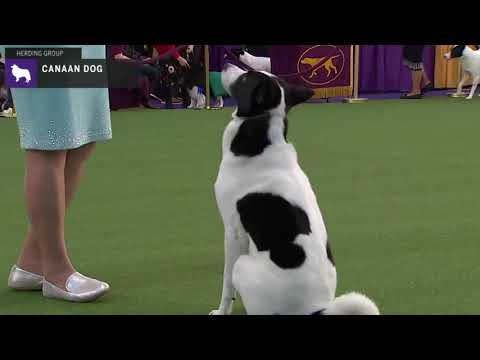
Canaan Dog
Israel FCI 273 - Primitive type

Canaan Dog

The Canaan Dog He is suspicious of strangers and very affectionate with his clan members

Content

History

The Canaan Dog They belong to the group of "pariah dogs", found throughout the Afro-Asian region. They live near human settlements, tolerated by humans, but they are not encouraged or fed. For primitive peoples they are useful as a destroyer of all organic residues.. Even today, the Canaan Dog they live in herds in the desert. If Bedouins need a guard dog for their camp or a herding dog for their sheep, they look for a wild female who raises her cubs in a cave, they throw a piece of bread at him every now and then until they have chosen the strongest male cub that will guard their camp in the future.

Cynologically, los ยซpariah dogยป belong to the Spitz family, the oldest family of dogs in the world. Cave paintings thousands of years old show these dogs as hunting helpers. With the time, the original type of Spitz adapted to the situation of its environment. The Canaan Dog is the most developed form of the type Spitz in israel today. The canaan dog still possess strong survival instincts, what makes them smart, independent and also very cautious dogs.

The Canaan breed has been domesticated by outcast wild dogs, namely, by Rudolphina Menzel, a canine behaviorist and cynologist who emigrated from Vienna to Palestine in the 1930. He took some of them home and was amazed at how easily they were tamed and trained. They were lively and loving. The teacher Menzel I call them canaan dogs in honor of the Biblical land of Canaan and campaigned for them to be recognized as a race.

Physical characteristics ยซCanaan Dogยป

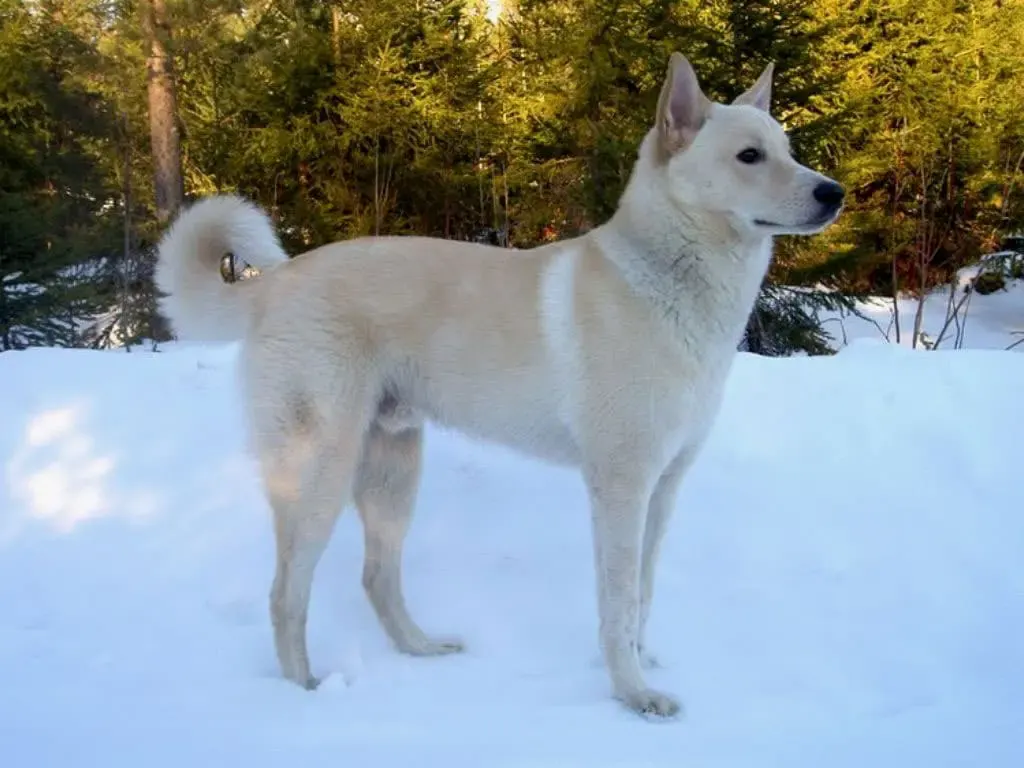
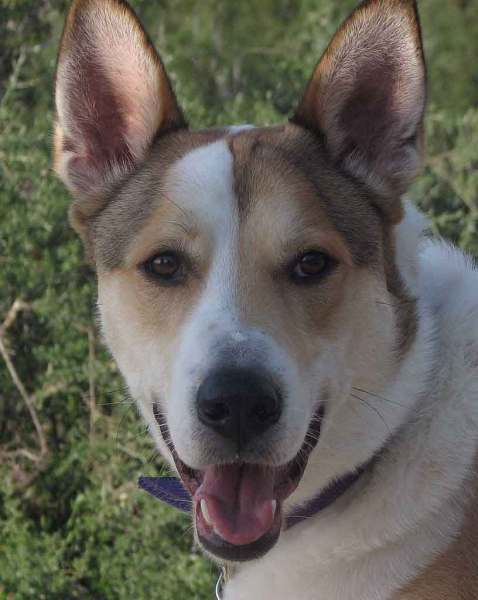
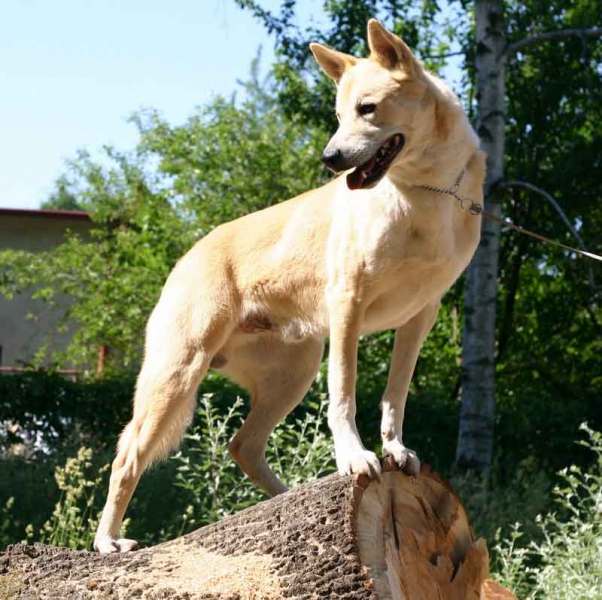
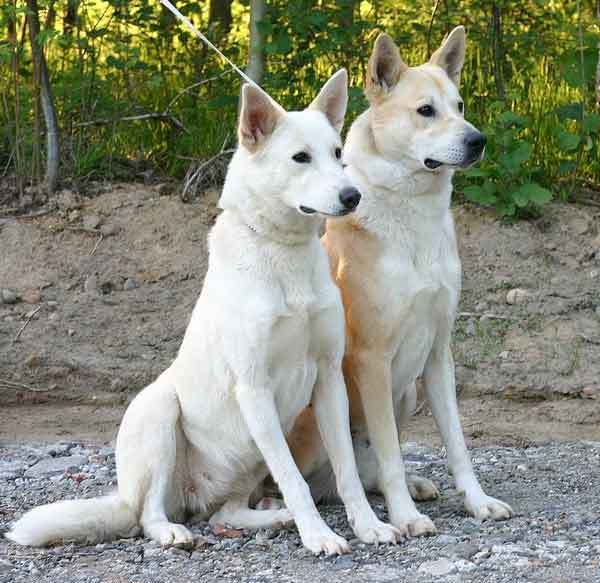
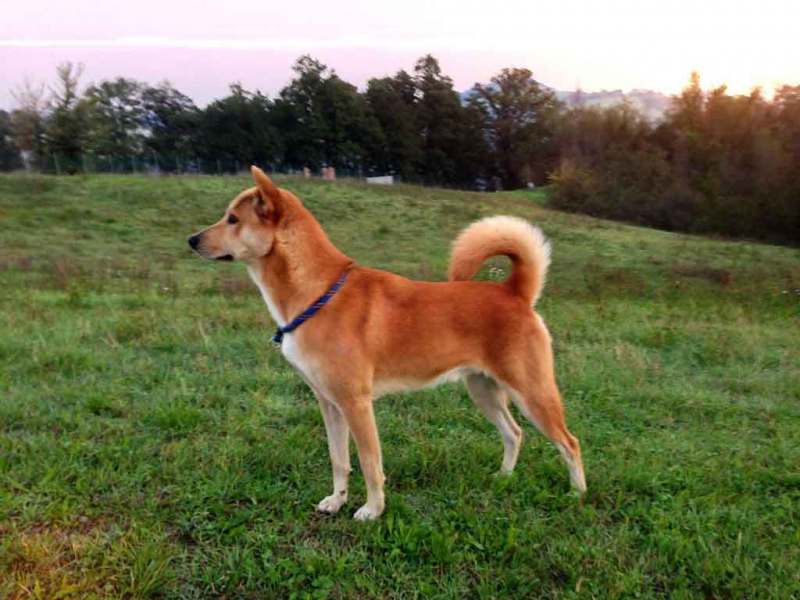
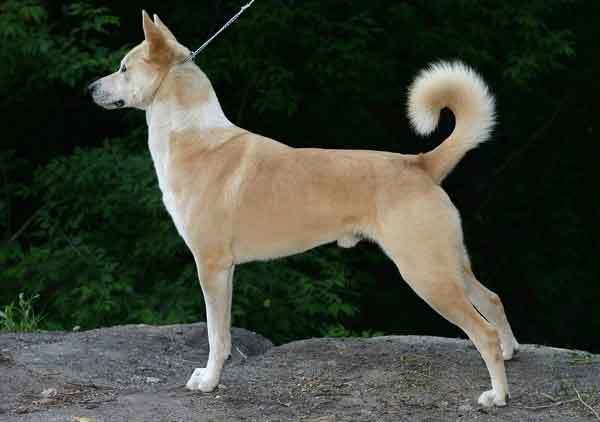
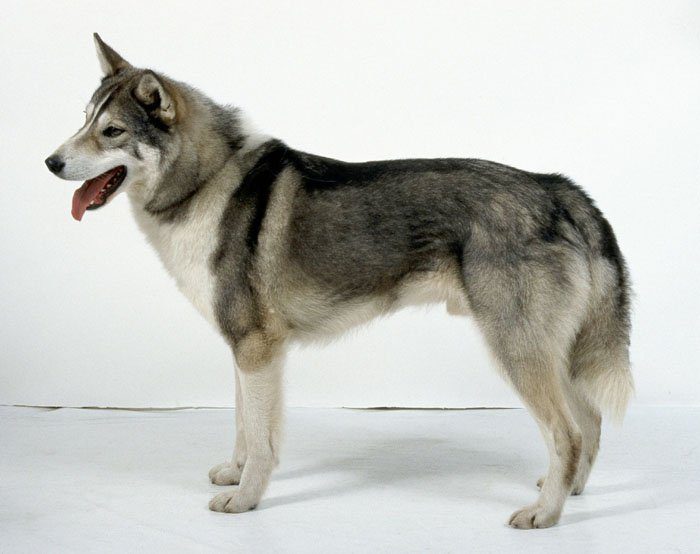
The height at the withers of these square animals, strong and medium in size is about 50 to 60 cm., while males are usually much larger than females. In general, the sex characteristics between female and male dogs are very pronounced. These may include, the rather broad skull of the Canaan Dog, that narrows at a point towards the front, is clearly visible, especially in males. The head is always well proportioned. Standing ears, slightly laterally arranged, triangular and wide, as well as his almond-shaped and dark eyes, give you a very alert and intelligent expression. In fact, nothing escapes the watchman Canaan Dog, even when asleep.

HAIR:
Thick layer, rough and straight, short to medium length. The inner layer is very close and abundant.

COLOR:
Sandy to reddish brown, white, black or mottled, with or without mask. If there is a mask, must be symmetrical. A black mask and white markings are allowed for all colors. A pattern such as the Boston Terrier. Gray colors are not allowed, striped, black and tan or tricolor. The characteristic colors of the desert – sandy, dorado, Red and cream – are particularly typical of the breed.

Character and aptitudes ยซCanaan Dogยป

The Canaan Dog is lively, sensitive, distrustful of strangers, defensive, but not aggressive by nature. Watcher not only of humans, but also other animals. He is faithful and devoted to his family. The relationship with its owner means for him a partnership, both sides taking and giving. The Canaan Dog you don't have to follow your owner everywhere and submissively read every wish in his eyes. There are times when he shows his love and wants to be caressed. But other times he minds his own business and only belongs to himself.. If one responds to his character, a deep understanding develops between man and animal, which is even more attractive, since one must acquire their trust and affection. This special bond makes it difficult to place the Canaan Dog adults in new settings.

Protects their owner's children and shows a lot of tolerance towards the little ones. But, parents should ensure the dog has a chance to withdraw.

The Canaan Dog they are good watchdogs, but they are not attackers by nature. Only when a Canaan Dog you have the impression that he or his family is seriously threatened, will attack. The Canaan Dog barks as a warning, gives a dangerous appearance, and that is usually enough.

The Canaan Dog can react aggressively to other dogs who dare to pass by his property. Aggression between dogs of the same sex is not uncommon among Canaanites. Each Canaan is different. You have to watch it closely to know what collisions – with other dogs on walks – it is better to avoid.

โ€œCanaan Dogโ€ Education

One Canaan Dog he would never do anything that could harm himself. Nor would it comply with its owner's commands without first questioning their meaning.. You can't demand obedience from this dog. But, once he has gained trust in his human and recognizes him as "leader of the pack", is very cooperative and obedient. Loyalty to his master and his quick understanding make him, despite its independence, an easy-to-handle dog, who can learn the necessary basic obedience without restrictions. But, during training its primitive nature must be taken into account, so it certainly takes some compromises and tricks to convince the Canaan Dog that obedience is worth it. For inexperienced beginners, this self-assured breed is not suitable.

Where can I get "Canaan Dog"?

Today, not only in his homeland Israel, but also in the US. and in several European countries, like germany, Finland, England, Italy or Switzerland, there are breeders who have dedicated themselves to this special and still very rare breed. The addresses of the breeders can be found in the national kennel clubs or, of course, on the Internet. If you are considering buying a Canaan, enough time should be taken to consider your purchase decision thoroughly. This is true of all dogs, but especially for him Canaan Dog, because this original and independent four-legged friend is no ordinary family dog.

โ€œCanaan Dogโ€ Care

The rough coat naturally repels dirt and only needs to be brushed once or twice a week. Only in the phase of the biannual coat change should it come into contact with a brush or comb daily to remove dead hairs from the dense undercoat and reduce the tuft of carpet hairs, the sofa or the blanket.

Nutrition of the โ€œCanaan Dogโ€

While the Canaan, as a "pariah dog" in freedom, forages for its own food and feeds on whatever organic waste humans leave behind, as a domestic dog it depends on the support of its owner. But what do you give such an original wild dog? In general: Dogs are carnivores by nature., regardless of whether they are shepherd dogs, Sausage dog or even Canaan. This means that the food must be largely meat. (around the 70 per cent). Meat is the most important source of protein for the dog. Its entire masticatory and digestive system is oriented to the processing of meat: the strong teeth, strong chewing muscles, the relatively short intestinal tract and digestive juices that are quite aggressive in contrast to humans.

Health ยซDog of Canaanยป

The race Canaan Dog It is very healthy, it does not have typical diseases and it is considered very clean..

Characteristics "Canaan Dog"

Coexistence is important that you have with your new friend. Before considering the acquisition of a dog of the breed "Canaan Dog" you know certain factors. Not all breeds of dogs are apt to live in an apartment, you must take into account his character, their need for exercise, their interaction with other pets, their care and if you have small children, their level of tolerance towards them.

Training ?

4,0 of 5 stars (based on 1 review)

Suitability of the apartment ?

4,0 of 5 stars (based on 1 review)

Can be alone all day ?

3,0 of 5 stars (based on 1 review)

Suitable as a first dog ?

2,0 of 5 stars (based on 1 review)

Weight gain ?

2,0 of 5 stars (based on 1 review)

Health ?

5,0 of 5 stars (based on 1 review)

Intelligence ?

5,0 of 5 stars (based on 1 review)

Kindness with child ?

3,0 of 5 stars (based on 1 review)

Tendency to bite ?

3,0 of 5 stars (based on 1 review)

Tendency to bark ?

4,0 of 5 stars (based on 1 review)

Tendency to flee ?

3,0 of 5 stars (based on 1 review)

hair loss strength ?

4,0 of 5 stars (based on 1 review)

Suitable as a guard dog ?

5,0 of 5 stars (based on 1 review)

Joy ?

3,0 of 5 stars (based on 1 review)

Cat friendliness ?

4,0 of 5 stars (based on 1 review)

Power level ?

4,0 of 5 stars (based on 1 review)

Images "Canaan Dog"

Photos:

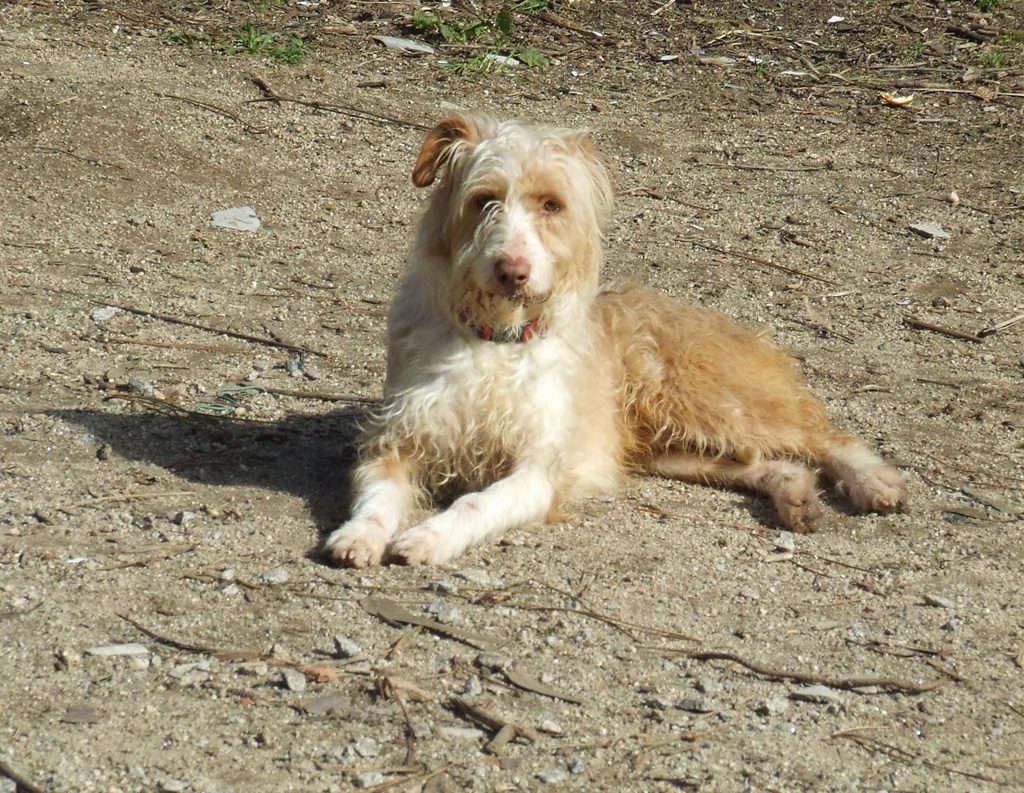
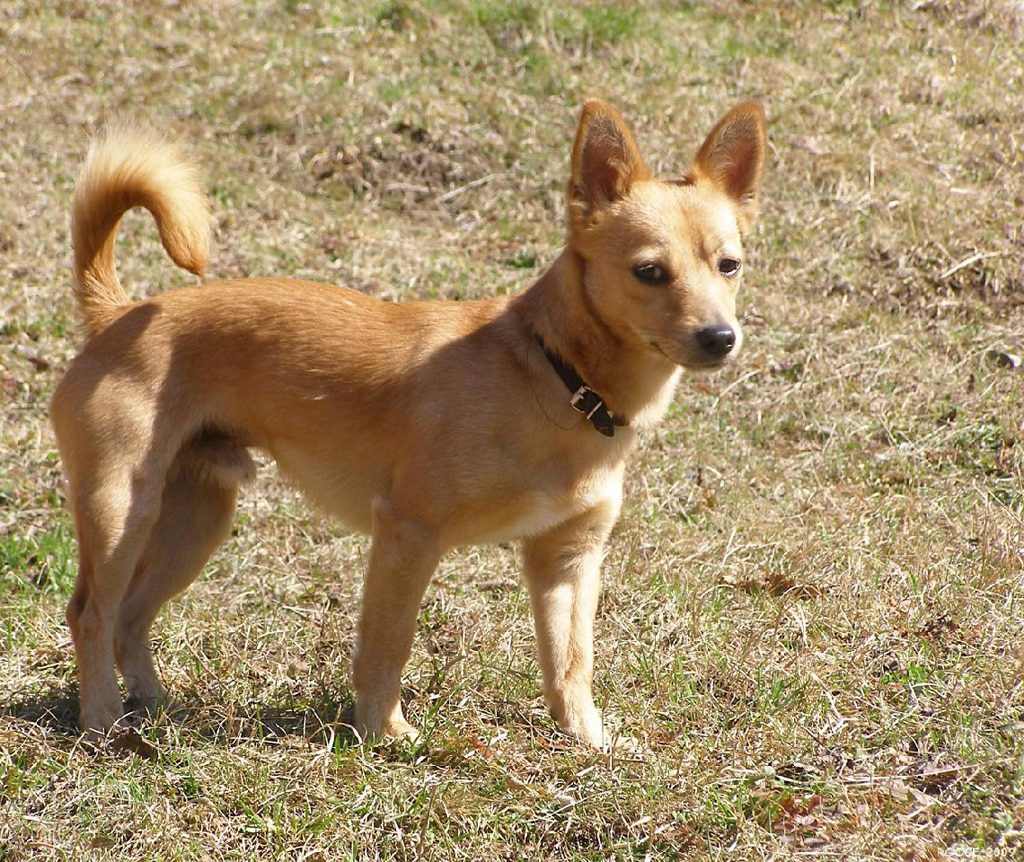
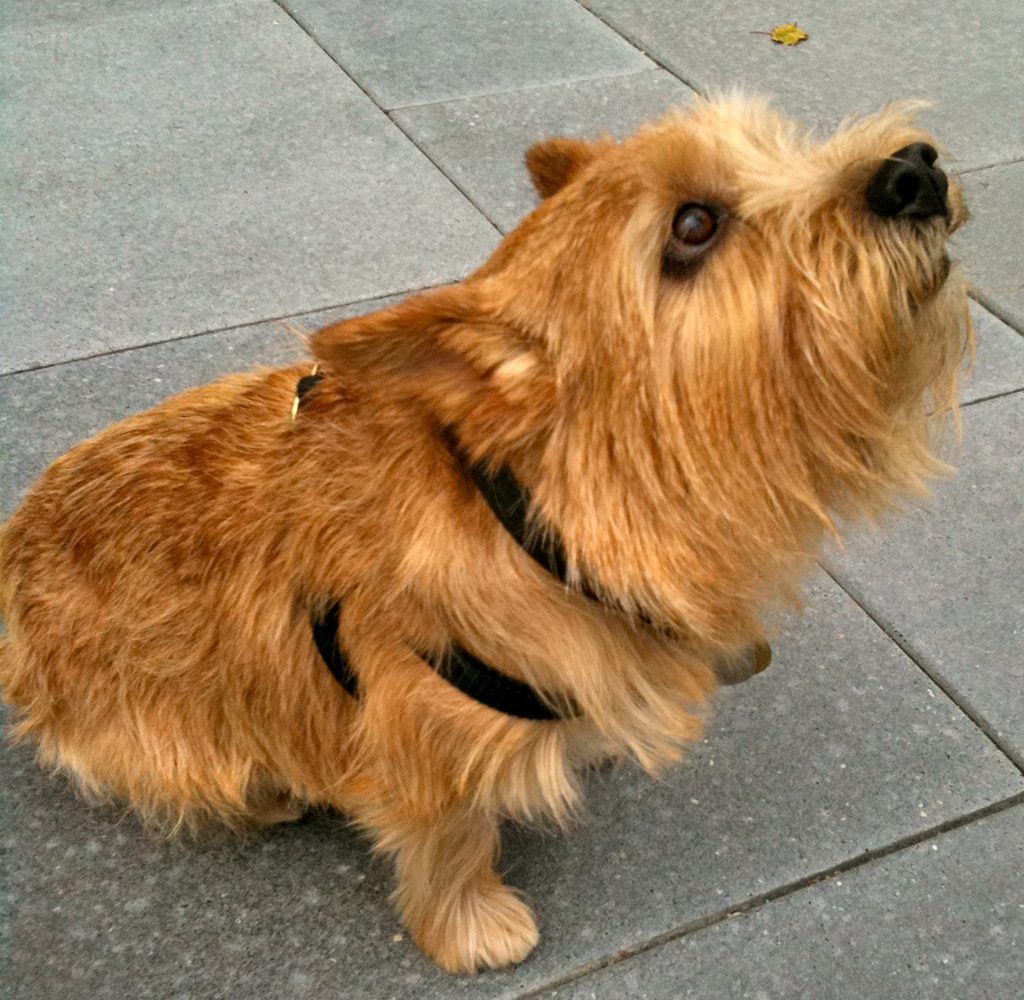
1 – Canaan dog by Giora Sluzky, CC BY-SA 3.0, via Wikimedia Commons
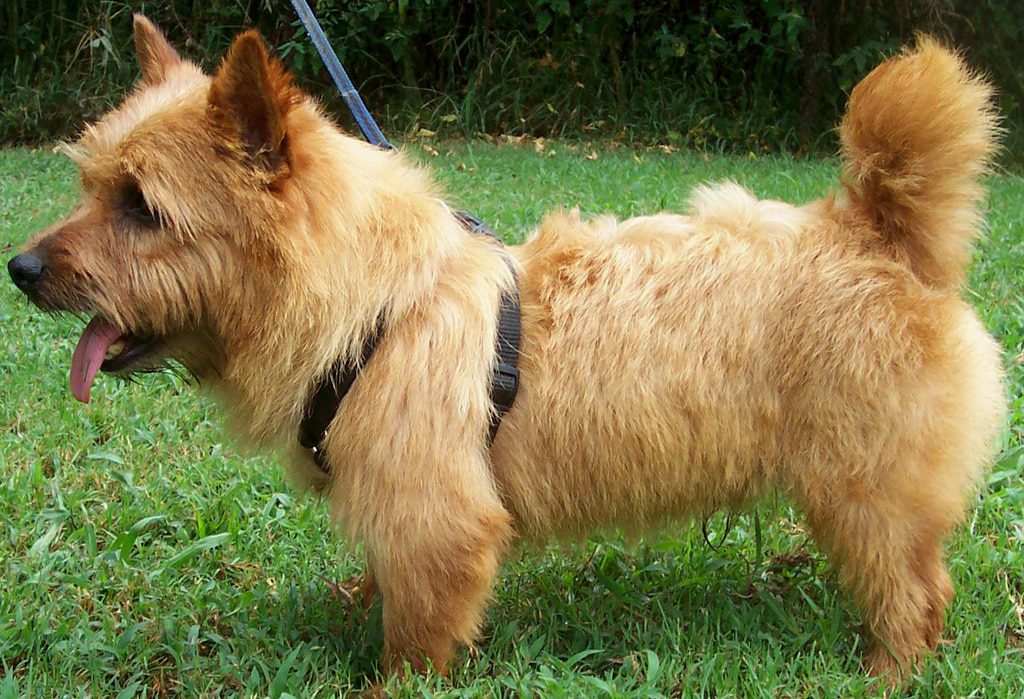
2 – Canaan dog by Canaan Dog, Kennel Samorodok Hanaanahttp://www.ruscanaan.ru, CC BY-SA 3.0, via Wikimedia Commons
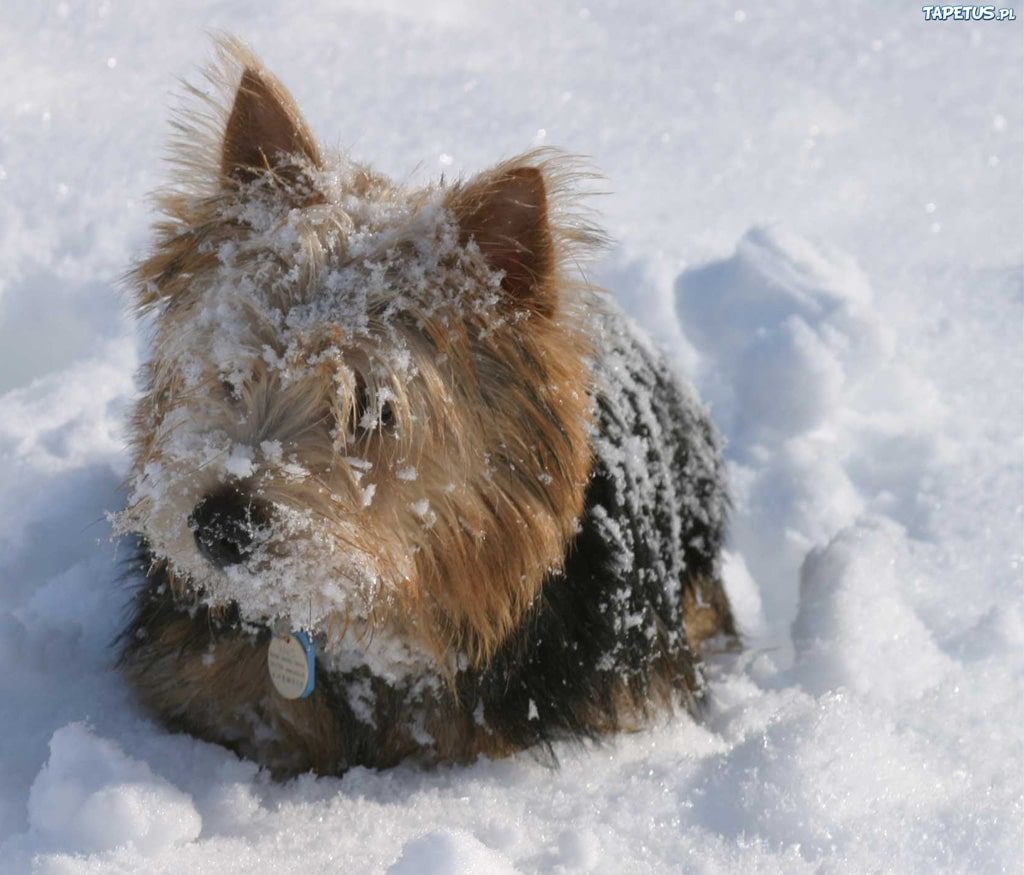
3 – Canaan dog by Giora Sluzky, CC BY-SA 3.0, via Wikimedia Commons
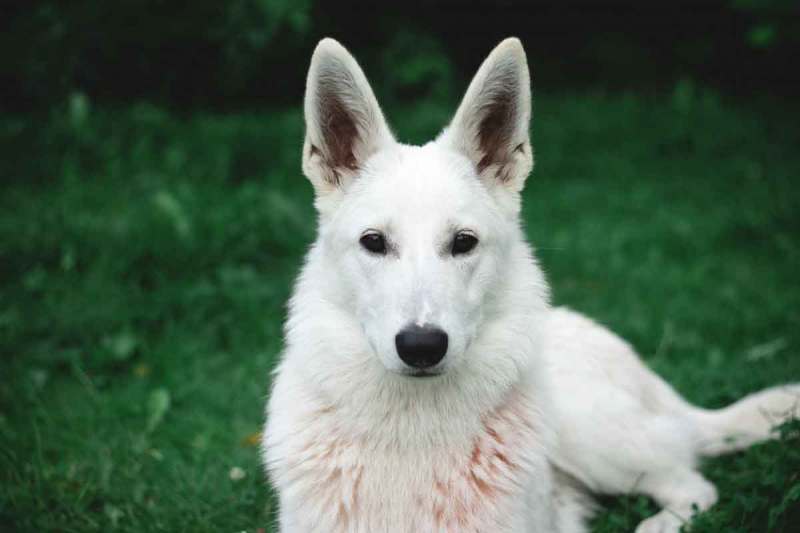
4 – Canaan dog by SamorodokhanaanaCanaan Dogs from "Samorodok" http://www.ruscanaan.ru, CC BY-SA 3.0, via Wikimedia Commons
5 – Canaan dog by https://pxhere.com/en/photo/1503483
6 – Canaan dog by Samorodokhanaanahttp://www.ruscanaan.ru, CC BY-SA 3.0, via Wikimedia Commons
7 – Canaan dog by Arikk, CC BY-SA 3.0, via Wikimedia Commons

Videos "Canaan Dog"

Canaan - Top 10 Facts
Canaan – Top 10 Facts
Canaan Dogs | Breed Judging 2020

Type and recognitions:

  • FCI CLASSIFICATION:
  • Group :
  • Section : . .

Federations:

  • FCI – Group 5: Spitz-type dogs and primitive type – Section 6: Primitive type. โ“˜
  • AKCHerding โ“˜
  • ANKC – Group 7 (Nonsporting) โ“˜
  • CKC – Group 7 (Nonsporting) โ“˜
  • โ€‹KCUtility โ“˜
  • NZKCNonsporting โ“˜
  • UKC – sighthounds and pariah โ“˜

FCI breed standard "Canaan Dog"

Origin:
Israel

Date of publication of the valid original standard:
26.03.1998

Use:

Guard and protection dog.


General appearance:

Medium-sized, square body, well balanced, strong, similar to the type of wild dog. There is a marked difference between both sexes.


Behavior / temperament:

You are always alert and react quickly. Distrustful of strangers, his character is strongly defensive, but not aggressive by nature. Is vigilant, not only with humans, but also with all the animals. It is very faithful and easy to train.

Head:

Is well proportioned, medium length, in the form of an obtuse wedge. It appears even wider because the ears are set low.

Cranial region:
  • Skull : Is something flat. Head may be wider in powerful males.
  • Depression links (Stop) : shallow, although well defined.

facial region:

  • Truffle : black.
  • Snout : Vigorous, of moderate length and width.
  • Lips : Tight.
  • Jaws / Teeth : Jaws must be strong. Teething is complete with a uniform scissor bite.

Eyes : Dark brown in color, slightly oblique and almond-shaped. Dark eye rim is essential.

Ears : erected, relatively short and wide. They are slightly rounded at the tip and are set low.

Neck:

Muscular and of medium length.

Body:

Square.

  • Cross : Well developed.
  • Back : Uniform.
  • Pork loin : Muscular.
  • Breast : Deep and moderately wide. Well arched ribs.
  • Belly : Well up.

Tail:

Set high it is worn curled over the back. The hair is abundant and dense.

Tips

PREVIOUS MEMBERS : Perfectly straight.

  • Shoulder : Oblique and muscular.
  • Elbows : Well attached to the body.

LATER MEMBERS : Powerful.

  • Buttocks : Strong and covered with a slight fringe of hair.
  • Knees : Well angulated.
  • Hocks : Well descended.

FEET : Jack's foot. They're strong, round and the pads are hard.

Movement:

The trot is fast, light and vigorous. The animal must show great agility and resistance. Correct movements are of essential importance.

Mantle

HAIR : The hairs on the outer coat are dense, hard, straight and short or of medium length. The hairs of the undercoat are abundant and well glued.

COLOR : Ranges from sand to reddish-brown, white, black or mottled, with or without mask. If there is a mask, this must be symmetrical. Black mascara and white markings are allowed in all colors. Brands like the Boston Terrier are common. Gray colors are not accepted, striped, Black with fire, nor tricolor. The most typical colors of the breed are the colors of the desert, sand, oro, Red and cream.


Size and weight:

Height to the cross : It is of 50 to 60 cm.. Males can be considerably larger than females.

Weight : It is of 18 to 25 kg.


Fouls:

Any deviation from the aforementioned criteria is considered as a fault and the severity of this is considered to the degree of the deviation to the standard and its consequences on the health and well-being of the dog..

Any dog โ€‹โ€‹showing clear signs of physical or behavioral abnormalities must be disqualified..


N.B.:

โ€ข Males must have two normal-appearing testicles fully descended into the scrotum..
โ€ข Only functionally and clinically healthy dogs, with the typical conformation of the breed, should be used for parenting.

Source: F.C.I - International Cynological Federation

Alternative names:

1. Bedouin Sheepdog, Palestinian Pariah Dog (English).
2. Canaan dog (French).
3. Canaan Dog, Israel-Spitz (German).
4. Cรฃo de canaรฃ (Portuguese).
5. Perro de Canaรกn, Kelev Kna’anรญ, kunean alkalb (espaรฑol).

โ–ท The world of Pets: Dogs, cats, birds, reptiles, amphibians

German Spitz
Alemania FCI 97 - European Spitz

German Spitz

The hair German Spitz requires certain care, especially for exhibitions.

Content

History

The Spitz it is one of the oldest German domestic dog breeds, although its origins are not entirely clear. There is evidence that dogs Spitz lived together with humans ago 4.000 years. Due to its wide diffusion as a watchdog on farms and in the homes of the petty bourgeoisie, it also found its way into literature and painting..

Especially in rural areas, a German Spitz was ubiquitous in the old days as a house and garden dog. Smaller Spitz were popular as lap dogs with ladies.

The popularity of the Spitz decreased so much in the recent past that it was declared an endangered breed of pet in 2003.

Physical characteristics

All the German Spitz, regardless of size or color, they form a family and should have similar features and a typical lace look.

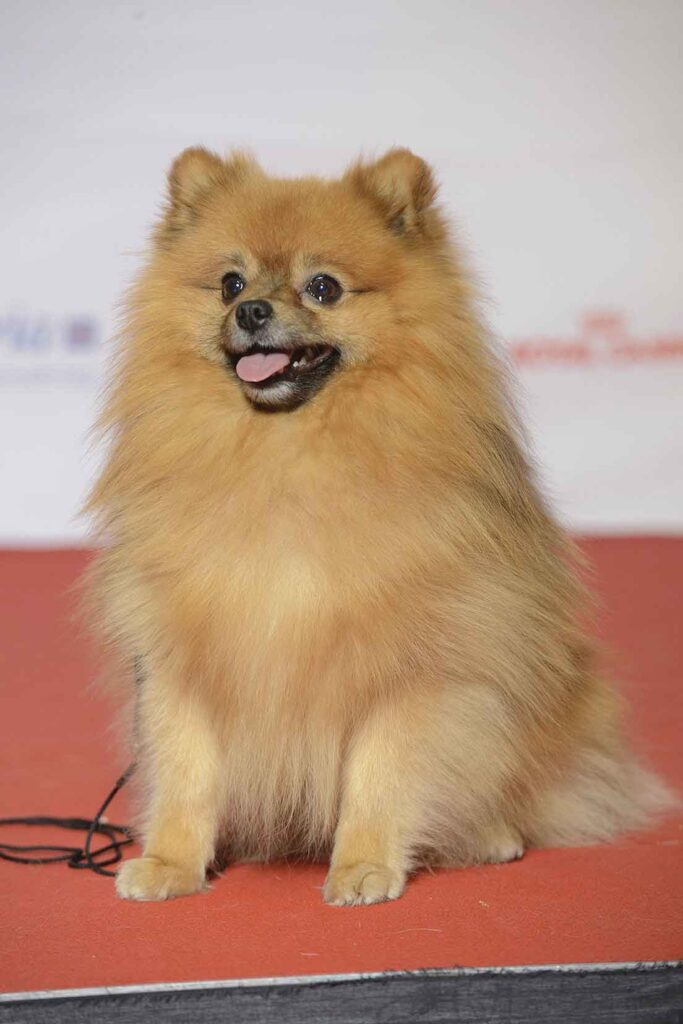
The Spitz impresses with his beautiful coat. The abundant undercoat and long top coat, straight and outstanding give them their unmistakable appearance. Particularly striking is the strongly mane-like collar around the neck and the bushy, furry tail., that is carried boldly on the back. The fox-like head with quick eyes and small, narrow, pointy ears give the Spitz its characteristic disturbing expression.. The body of the Spitz is square.

Measurements:

to) Wolfspitz / Keeshond : 49 cm ยฑ 6 cm..
b) Grossespitz (Giant or Large Spitz) : 46 cm ยฑ 4 cm..
c) Mittelspitz (Standard or Medium Spitz) : 34 cm ยฑ 4 cm..
d) Kleinspitz (Miniature or Small Spitz) : 26 cm ยฑ 3 cm..
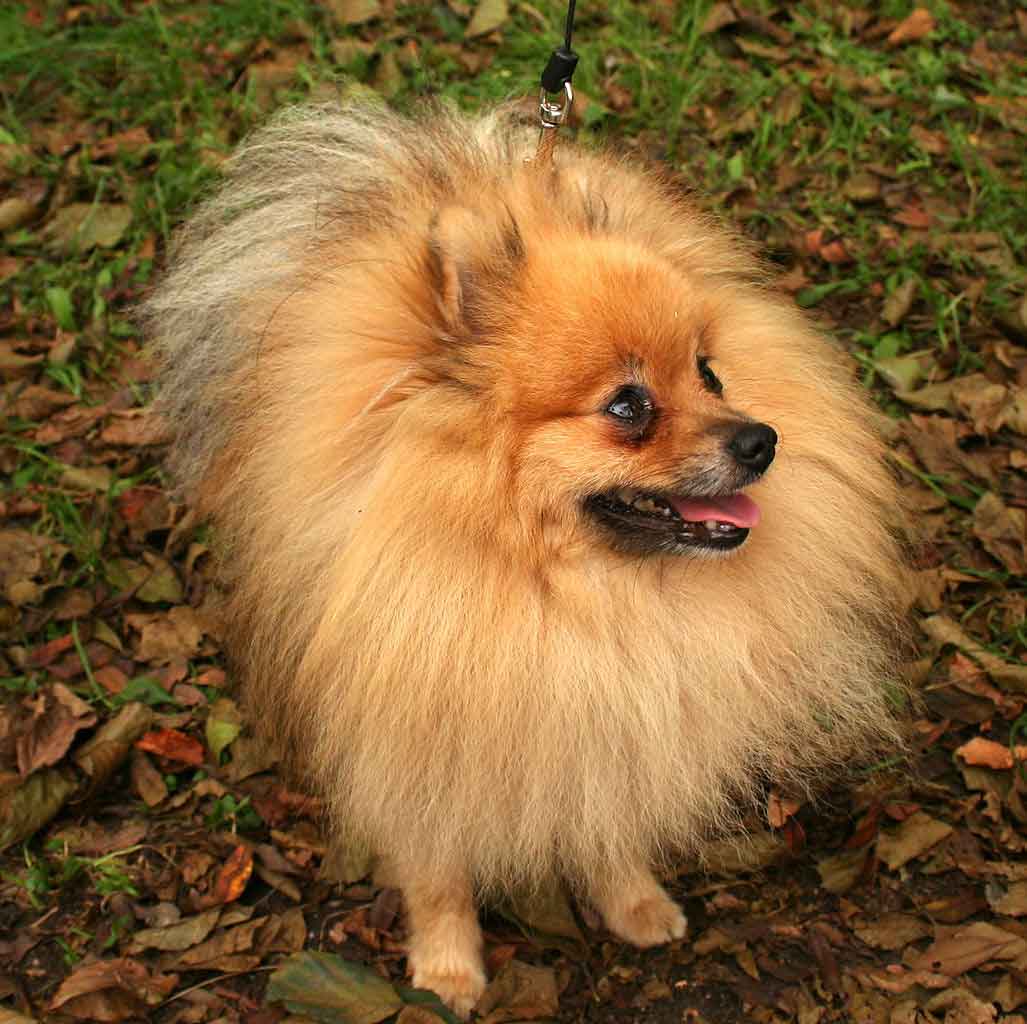
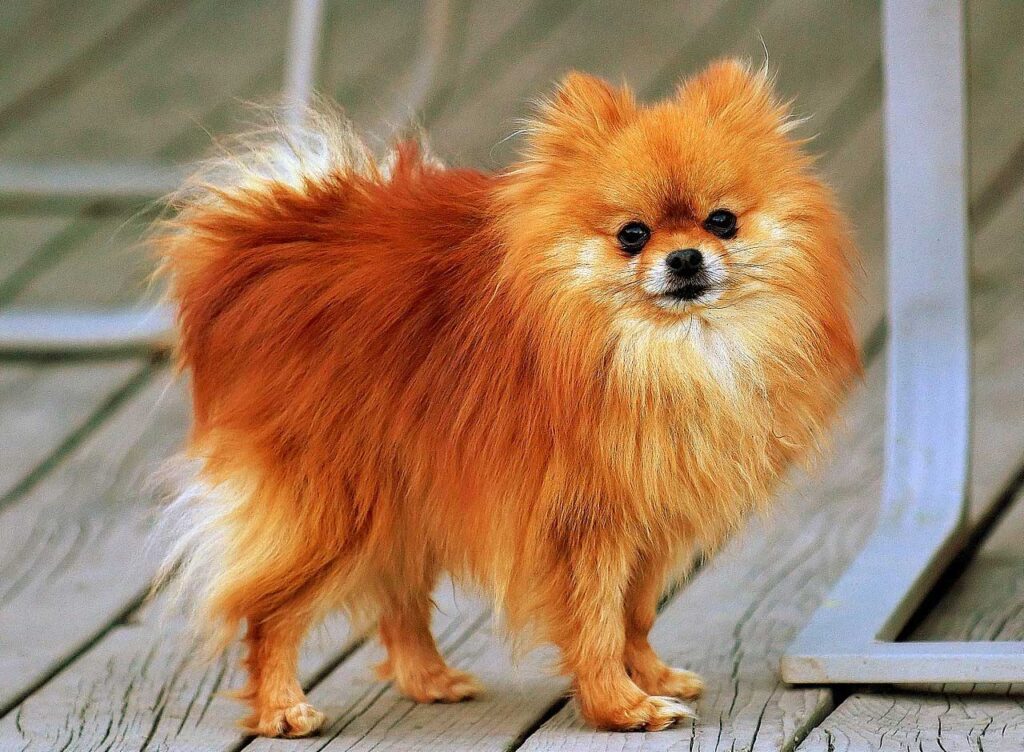
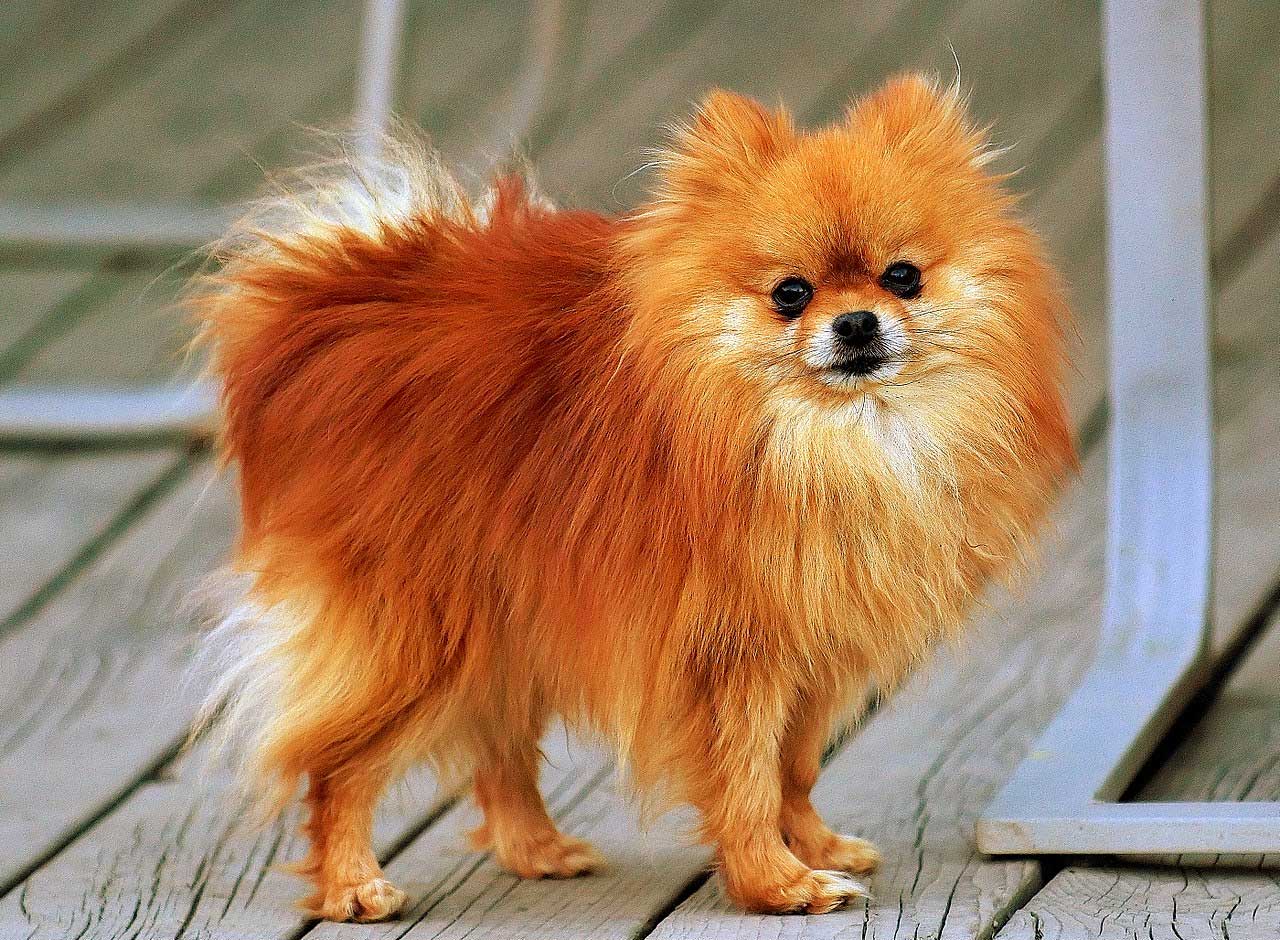
and) Zwergspitz (Toy or Dwarf Spitz) / Pomeranian : 20 cm ยฑ 2 cm..
(are undesirable specimens measuring less than 18 cm.).

Weight

Any variation in the size of the German Spitz should have a corresponding variation in weight.

Character and skills

One German Spitz has a reputation for being a chatterbox. In fact, the dogs bark a lot; for a guard dog, making a sound is a desirable characteristic, that today cannot be reconciled with all the neighbors.

A natural distrust, along with incorruptibility and loyalty, is inherent to German Spitz. This makes it predestined to be a watchdog that patrols its territory and reports suspicious incidents.. One German Spitz reliably defends the things entrusted to him. When not on guard, a is a very friendly and affectionate dog, sometimes a little possessive, who follows his humans closely and enjoys being petted. One German Spitz is generally regarded as a child.

The education and attitude of the German Spitz

With cheerful romp and docility, a German Spitzn is a dog that absolutely needs a task. Find your place as a working watchdog, but also as a companion and family dog. With lots of positive encouragement and loving consistency, breeding is not problematic and can also be managed if you have little experience with dogs.

for a German Spitz be respectful of animals, must be weather resistant: The Spitz it just feels really comfortable outdoors, either with sun, rain or snow. It is an ideal companion for runners, riders and cyclists. He is also an agility sports enthusiast. As the Spitz only has a weakly developed hunting instinct, does not tend to go its own way when outdoors and is easy to recover. It is less suitable for intensive accommodation, especially because he likes to bark a lot. Similar to the Poodle, the spitz is available in different sizes, from the Zwergspitz (Toy or Dwarf Spitz) / Pomeranian to Wolfspitz / Keeshond. The best known variant is the Mittelspitz (Standard or Medium Spitz) with a shoulder height of 34-38 cm and weighing up to 10 kg. Apart from its format, the types do not differ visually.

Caring for the German Spitz

Surprisingly, the fluffy coat of the Spitz does not require much grooming. The hair is dirt repellent, so an occasional brushing is enough. It also, a German Spitz it is very clean and cleans itself. Also in terms of health, the Spitz they are quite robust dogs.

Type and recognitions:

  • FCI CLASSIFICATION:
  • Group :
  • Section : . .

Federations:

  • FCI – Group 5 – Section 4 European Spitz. โ“˜

FCI breed standard "German Spitz"

Origin:
Germany

Date of publication of the valid original standard:
04.09.2019.

Use:

Guard and companion dog.


General appearance:

TheSpitzThey attract attention for their beautiful separated fur with the presence of a very dense undercoat.. The neck surrounded by an abundant mane and the tail covered with long hair is striking., turned up and spread boldly on the back. The head is similar to that of the fox with diligent eyes and small pointed ears. The ears, placed very close to each other, confer toSpitzhis characteristic relaxed appearance.

important proportions

Proportion of 1:1 between the height at the withers and the length of the dog.


Behavior / temperament:

TheGerman Spitz is constantly attentive, is active and exceptionally dependent on his master. Learn quickly and can be trained easily. His distrust of strangers and his lack of interest in hunting allow him to be considered the ideal watchman for the house and farm.. Its most notable characteristics are its resistance to weathering., its robustness and longevity.

Head:

---

Cranial region:
  • Skull: The skull ofSpitzis medium-sized; viewed from above seems to swell back becoming more narrow wedge shaped to the tip of the nose.
  • Depression links (Stop): Little steep until marked, but never abrupt.

facial region:

  • Truffle: Round, small, black; in all theSpitzbrown in color is dark brown in color.
  • Snout: Not very long, Neither coarse nor pointed; It presents a good proportion in relation to the skull (in the Spitz type Keeshond/Wolf, in the large Spitz and medium Spitz the ratio snout/skull is approximately 2/3, in the small Spitz and in theSpitz enano/Pomerania is approximately 2/4).
  • Lips: They are not hanging; they are well bonded and do not form folds in the corners. They are black in all colours, in theSpitzbrown in color are brown in color.
  • Jaws/Teeth: The jaws are normally developed and show a complete scissors bite with 42 teeth, That is, the upper incisors fall closely in front of the lower incisors., teeth being implanted perpendicular to the jaws. InSmall and dwarf spitz/Pomeranian the loss of a few promolars is tolerable. A pincer bite is allowed in all varieties ofSpitz.
  • Cheeks: The cheeks are slightly round and are not prominent.
  • Eyes: The eyes are medium-sized, elongated, a little oblique, dark colored. The eyelids have black pigmentation in all color varieties and are only dark brown in theSpitzof brown variety.
  • Ears: The pointed ears in the shape of a pointed triangle are small and rather closely placed together.. Its inclusion is high. They always remain erect with a rigid tip.

Neck:

The neck is moderately long and presents a broad inclusion with shoulders; the neck is slightly convex, without dewlap and covered with a mane shaped collar.

Body:

  • top line: The top line begins at the tip of the erect ears and passes in a gentle arc over the short, straight back.. The deployed and with abundant fur tail partially covers the back and rounded silhouette.
  • Cross/Back: The high cross falls imperceptibly on the short back, straight and strong.
  • Pork loin: Short, wide and strong.
  • Rump: The rump is short and wide, unexpired.
  • Breast : Deep chest, well arched; the apron is well developed.
  • Bottom line and belly: The chest is expanded as much as possible back; the abdomen is moderately retracted.

Tail:

The tail has a high insertion and a medium length; bends upward from the root and rolls over the back, spreading firmly. Well covered with thick hair. A double loop in the tip of the tail is acceptable.

Tips

Former members

  • As a whole: Straight, large on the front.
  • Shoulder: The scapula is long, placed backwards at an angle. The arm, showing almost the same length, with the scapula forms an angle of approximately 90 degrees. Shoulders with good musculature are closely linked with the chest.
  • Arm: Medium length, robust and fully straight on the trunk, covered with long hair in the form of pen in the posterior region.
  • Elbows: The elbow joint is strong, close to the chest without bending inward or outward.
  • Metacarpus: The Metacarpus strong and medium length, forms an angle of approximately 20ยฐ in relation to the perpendicular line.
  • Front feet: The front feet are as small as possible, round, compact, as cat with well arched toes feet. Pads and nails are black in all varieties of Spitz, and they are only dark brown on brown dogs.

Later members

  • As a whole: The hindquarters are very muscular, covered with very long hair up to the Hock joint. The hind limbs are straight and parallel to each other..
  • Thigh and leg: They have approximately the same length.
  • Knee: The knee joint is strong, slightly angled and, during the movement, It does not twist outward or inward.
  • Metatarsus: Medium length, very strong, maintains a position perpendicular to the ground.
  • Rear feet: The hind feet are as small as possible, round, with toes well arched and together, as cat feet. Pads are hard. The color of nails, pads is much darker.

Movement:

TheSpitzmoves with enough coordination, with a good push and almost floating in light trot.

Mantle

Skin

The skin should be well attached to the body, without kinking.

Fur

TheSpitzThey have a double coat covered with hair: the outer layer is long-haired, straight and separate and the inner layer is short-haired, dense and woolly. The head, ears, anterior surface of the forelimbs and hindlimbs and feet are covered by short, dense hair (velvety). The rest of the body is long and abundant hair. The hair should not be wavy, chino, or form hair, You must not present a stripe on the back. A thick mane covers the neck and shoulders. The rear face of the forelimbs has hair in the form of feathers. The hindquarters should be covered with long hair from the rump to the Hock joint. The queue must be covered with hair is long and abundant.

Color

  • Wolf Spitz/Keeshond: Grayish.
  • Grossespitz (Giant or Large Spitz) Negro, brown, white.
  • Mittelspitz (Standard or Medium Spitz): Negro, brown, white, orange, grey, other colors.
  • Kleinspitz (Miniature or Small Spitz): Negro, brown, White Orange, grey, other colors.
  • Spitz enano/Pomerania: Negro, brown, white, orange, grey, other colors.
  • Black Spitz: The fur of the black Spitz should be dark in the skin as well as internal NAP and the color of the outer layer should be jet black color without any white spot.
  • Brown Spitz: The Brown Spitz should have a uniform dark brown color.
  • White Spitz: The hair should be pure white, no yellowish tones that can often occur in the ears.
  • Spitz anaranjando: The Orange Spitz should have a single uniform colour in the average range of the RAL (Registration International of the color scale).
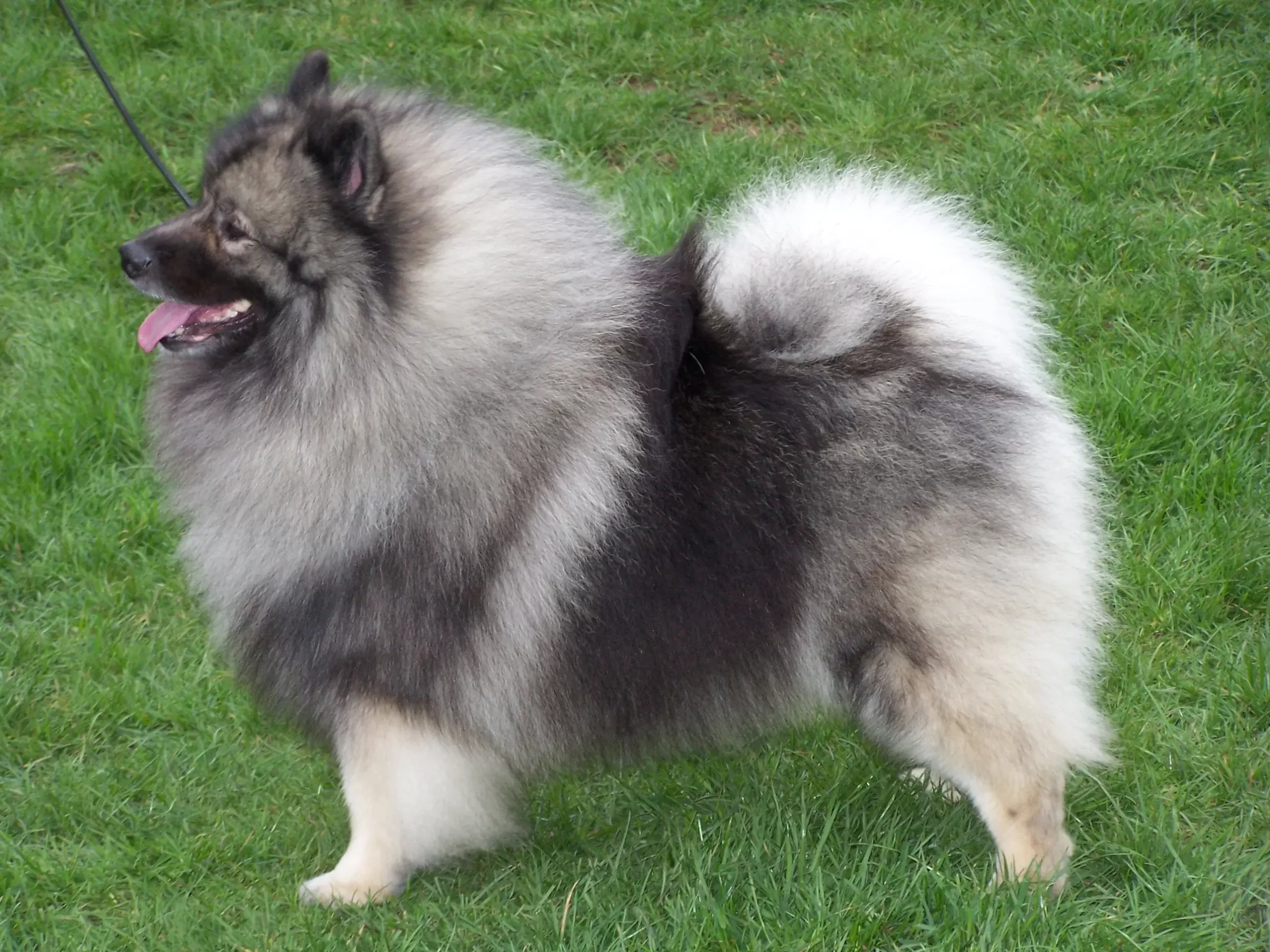
  • Greyish Spitz/Keeshond: Gray is understood as grey silver with black hair tips. Snout and ears are dark. Around the eyes there is a drawing in the shape of glasses consisting of a delicate black line. (It extends from the outer corner of the eye to the lower part of the inclusion of the ear) or in broken lines and shading that draw short eyebrows, but expressive. Mane and ring shoulders are a tone clear. The anterior and posterior members are grey silver unmarked black below the elbows and knees, except delicate stripes on your fingers (pencilling). The tip of the tail is black. The lower part of the tail and the buttocks are grey Silver clear.
  • Spitz other colours: Under this description all tones are included as: cream-coloured, cream-saber, anaranjado-Sable, black with tan and stained. The spotted must have a white background color. Black stains, brown, gray or orange should be distributed throughout the body.


Size and weight:

Height to the cross

  • Wolf Spitz/Keeshond: 49 cm ยฑ 6 cm..
  • Grossespitz (Giant or Large Spitz) : 46 cm ยฑ 4 cm..
  • Mittelspitz (Standard or Medium Spitz): 34 cm ยฑ 4 cm..
  • Kleinspitz (Miniature or Small Spitz): 26 cm ยฑ 3 cm..
  • Spitz enano/Pomerania: 20 cm ยฑ 2 cm. (are undesirable specimens measuring less than 18 cm.).

Weight

Any variation in the size of theGerman Spitz must have a corresponding variation in its weight.


Fouls:

Any deviation from the above criteria is considered missing and the seriousness is considered to the extent of the deviation to the standard.

Serious misconduct

  • Defects in the Constitution.
  • Head too flat or sharp Apple-shaped.
  • Truffle, eyelids and lips of flesh-colored.
  • Defects in the premolars in Wolf Spitz/Keeshond, Medium and large Spitz.
  • Eyes too big or clear or very outgoing.
  • Defects in the movement.
  • Absence of classic drawing of the face inSpitzgrey.

ELIMINATING fAULTS

  • Aggressive or fearful dog.
  • Open fontanel.
  • Upper or lower prognathism.
  • Entropion or ectropion.
  • Floppy ears.
  • White spots visible on allSpitznon white.

Any dog โ€‹โ€‹showing clear signs of physical or behavioral abnormalities should be disqualified..


N.B.:

Males should have two normal-appearing testicles fully descended into the scrotum..

Source: F.C.I - International Cynological Federation

Alternative names:

1. Deutscher Spitz (English).
2. Spitz allemand (French).
3. Deutsche Spitze (German).
4. Deutsche Spitze (Portuguese).
5. Spitz alemรกn (espaรฑol).

Photos

1- Szpic_miniatura at the national show in Rybnik – Stone to Pleple2000 / CC BY-SA

German Spitz varieties

to) Wolfspitz / Keeshond.
b) Grossespitz (Giant or Large Spitz) .
c) Mittelspitz (Standard or Medium Spitz).
d) Kleinspitz (Miniature or Small Spitz).
and) Zwergspitz (Toy or Dwarf Spitz) / Pomeranian.

European Spitz

1 Keeshond

Keeshond

Even today the Keeshond is a breed known for its faithfulness and loyalty.

Are ยซWolfsspitzยป and ยซKeeshondยป identical?

This question repeatedly leads to confusion among experts and laymen alike.. Although the

... Read more

2 Pomeranian

Pomeranian

The Pomeranian very active, independent, Intelligent, brave and loyal.

The Pomeranian (Deutscher Spitz;, Pomeranian Lulu or Deutscher Zwergspitz) It is a dog of the Spitz family, named for the ... Read more

3 Grossespitz (Giant or Large Spitz)

Grossespitz (Giant or Large Spitz)

Although I do not necessarily suspect it at first glance, the Grossespitz (Giant or Large Spitz) it is also extremely robust and weather resistant.

While the small and medium varieties of the German Spitz (Pomeranian,

... Read more

4 Mittelspitz (Standard or Medium Spitz)

Mittelspitz (Standard or Medium Spitz)

The Mittelspitz (Standard or Medium Spitz) is by nature a bit like the old guard dog.

The Spitz, officially called ยซGerman Spitzยซ, It is a classic breed of dog in Germany and Central Europe.

... Read more

5 Kleinspitz (Miniature or Small Spitz)

Kleinspitz (Miniature or Small Spitz)

The Kleinspitz (Miniature or Small Spitz) he is a loving and attentive dog, that is very people-oriented.

The little Spitz (Kleinspitz) is a variety of German Spitz, which today is

... Read more

โ–ท The world of Pets: Dogs, cats, birds, reptiles, amphibians

West Siberian Laika
Rusia FCI 306 - Nordic Hunting Dogs

Laika de Siberia Occidental

in your country of origin, Russia, the West Siberian Laika has been bred as a hunting dog for centuries.

Content

History

The "West Siberian Laika" (Zapadno-Sibirskaรฏa Laรฏka), is the product of crossbreeding between the closely related species of Laรฏka de Chanteisk and Mansijak with Russian hunting dogs from the north of the Urals and Western Siberia. Outside its area of origin in areas mainly populated by hunters, This race has widely spread to central areas of Russia; This type of dog that abounds on these sites, they are reared in large installations. In different hunting regions there are special kennels for raising the West Siberian Laika.

Recognition by the FCI

Since 1980 the Russo-European Laika just like him East Siberian Laika have been recognized as independent breeds by the FCI in addition to the West Siberian Laika. But, the Yakutian Laika, as well as other types of Laรฏka, as the Jezdoraja Laika, the Nenezker Weather or the Karelo-Finnish Laika, are not internationally recognized until now. Within the FCI the three breeds of Laรฏka are classified in the group 5, Together with the Gray Norwegian Elkhound and the Karelian Bear Dog, form the Section 2 "Nordic Hunting Dogs" within this group.

Physical characteristics

It is a hunting dog of variable utility, but also shooting or for sledge. Is medium-sized, Slim and strong Constitution. Her bone structure is well developed, is not mass or rough. Muscle is strong and well developed. It has a strongly coiled tail, He takes her on the back or the back.

Its fur is hard, short, with developed internal fluff. The outer layer is thick and straight. The internal fluff is abundant and dense hair's outer layer which gives a distant and leafy appearance. In the head, You ears and part of limb hair is short. On the cross, neck and back of legs the hair is longer than forming a collar in the region of the neck and a beard in the cheek area; the rear extremities presents some feathers.

Is white, salt and pepper, Red or gray in all colors. Allow the color black, also spotted or with the same color plates.

Strong similarity to the wolf

With the often hairier males, it even produces a kind of mane. This feature is reminiscent of a wolf, with which the Laรฏka not only share the pointed and high ears, narrow wedge-shaped head and small oblique eyes, but also strong teeth and coat color, often similar to wolf.

Assorted coat colors and a typical striped tail

But, the colors of him West Siberian laika they are very diverse according to the wide area of โ€‹โ€‹distribution of the breed and the large number of local traits, ranging from pure white to black, pepper and salt, the color of the wolf, reddish brown, grey, the pied or the spotted. characteristic of all races Russian Laika is the striking striped tail, worn both on the side and on the back.

Character and skills

Independent hunter and close ally.

Like most hunting dogs, the West Siberian Laika also has some independence. Not only in hunting, but also as a watchdog, companion dog or sled dog, sometimes acts independently and autonomously. But, this does not mean that it cannot adapt to its humans. On the contrary: the Laรฏka feels closely connected to her reference person and always seeks their proximity. Even when hunting, never strays too far from his guide and makes sure each 20 or 30 minutes of hunter following.

The intense relationship with humans allows him Laรฏka – despite its original roots – be used as a herding dog, protection, guard or shooting.

Life in the family

Once an owner has earned the trust of his Laรฏka, even the most demanding training goals can be achieved. It is important that the West Siberian Laika has a firm place in his "pack" from the beginning and is allowed to participate closely in the life of his people. In doing so, bonds closely with its "pack leader", but also shows himself as a patient and loving companion when dealing with other family members, especially with the children. If you socialize early and comprehensively, living with other dogs and pets usually works without problems.

Activities ยซLaika of Western Siberiaยป

Despite these characteristics, the West Siberian Laika is and remains primarily a working dog, for whom his โ€œjobโ€ is as important as his people. A life as a pure domestic and family dog รขโ‚ฌโ€นรขโ‚ฌโ€นcertainly does not do justice to its nature.. Only if you can sufficiently demonstrate your stamina, agility, speed and intelligence, will present himself at home as a calm and balanced companion.

The West Siberian Laika wants to be "needed" and, therefore, you should definitely be given a task that challenges you both physically and mentally. Owners who don't run their Laรฏka like the hunter he is, they must provide for sufficient substitute employment, for example, in sport form (Agility), training dog sport, runway and nose work or training as a rescue dog.

Health ยซWest Siberian Laikaยป

Unlike many other dog breeds, which often developed rather by coincidence, Russian dogs already had very early exact ideas about the useful characteristics of this breed. The baby of him West Siberian Laika was soon put under strict controls and took place in central state approved breeding stations. In order to preserve the excellent qualities of hunting, officially organized tests were introduced. Dogs that did not meet the high usage requirements were systematically excluded from breeding..

Healthy and robust working dogs

Strict breeding requirements and tough selection led to the good hunting dog qualities and excellent sensory perceptions of dogs being preserved to this day. At the same time, high concentration on utility ensured that outward appearances became less of an affair. A breeding of pure beauty, that as the examples of other dog breeds show, often led to health problems, was avoided in the West Siberian Laika. Hereditary diseases typical of the breed, with which fashionable dogs often fight, are not known in this original breed. Even generalized joint diseases, such as dysplasia of the hip joint (HD), rarely occur in this Laรฏka.

Nutrition ยซLaika de Siberia Occidentalยป

Dog owners shouldn't change their diet too often either.. Although the West Siberian Laika is not very picky about his diet, the constant changes in the food plate could overload even his robust stomach. As a descendant of the wolf, dogs don't need many different foods to stay healthy. Unlike us humans, that we should have a diet as varied as possible and whose menu includes meat, fish and vegetables, as well as potatoes, noodles and other cereal products, dogs need meat above all. Both their teeth and their digestion are oriented to the processing of foods based on meat. Different types of meat and changing tastes are, by the way, desirable with respect to this main ingredient.

Discover our selection of dog food.

Pay attention to your dog's nutritional needs. Whether you feed your dog moist meat, dry, raw (BARF) or cooked, it is important that the quantity and content of the food meets the specific nutritional needs of your dog. These requirements depend on very individual criteria such as race, size, age, activity level and health status and may vary accordingly. If the composition is correct, a Laรฏka adult can get by on one or two meals a day. after feeding, the feeding bowl should be cleaned and should only be available again the next day or for the next meal. It is better to avoid snacking between meals or the constant administration of treats. But, fresh drinking water should always be available for your dog.

Buying a West Siberian Laika

With his healthy nature, robust and original, the West Siberian Laika satisfies many dog โ€‹โ€‹lovers' desire for something "wild" in our modern, civilized everyday lives. And finally, but not less important, the wolf appearance of this breed fascinates people. This natural beauty, coupled with excellent hunting performance, made of him West Siberian laika one of the most popular dog breeds of the former Soviet Union already in 1960.

How much does a โ€œWest Siberian Laikaโ€ puppy cost??

In Europe, the Time to fall still rarely seen. So it is extremely difficult outside of Russia to get a purebred Laika from a proven breeding line.. Long, arduous roads and a comparatively high puppy price between 1.300 and 1.500 EUR are the rule. Even if you have found a suitable breeder after a long search, you may be advised not to buy a Laรฏka. Don't be surprised if during the first meeting you are asked very personal questions about your profession., their living conditions, your future plans and marital status. For committed and serious breeders, the welfare of dogs is, as a last resort, more important than financial benefit. After all, keeping such a demanding animal takes a long time, experience and space.

People who are mainly attracted by the appearance and originality of this Laรฏka they must therefore carefully consider whether their living conditions and character really fit this breed. If in the end you are still convinced that the West Siberian Laika is the correct breed, You must prepare well for the purchase of the new "family member". Not only are you doing yourself a favor, but above all the dog, because this Laรฏka He demands all the attention of his handler and does not tolerate a change of owner very well..

Care for the ยซWest Siberian Laikaยป

Although the West Siberian Laika he is a very robust dog, you need not only a healthy diet but also proper care to stay healthy and vital. Its hard and soft top layer repels dirt and water well, but you still need to brush regularly (about twice a week). During the change of coat, you Laรฏka should be brushed daily to remove dead hair and strands. In general, owners of this dog breed should not be bothered by dog โ€‹โ€‹hair in the house, because although the West Siberian Laika he is basically a very clean dog, lose a lot of hair, that spreads across the sofa, the carpet and the floor. In addition to the toilet, the claws should be regularly shortened and the ears, teeth and feet should be checked and cleaned.

Keeping

Regarding the attention, the time required can be manageable, but the use of a Laรฏka alone takes a lot of time (free). Who chooses a West Siberian Laika should therefore not have to work full time. This human-oriented working dog is not cut out for long periods of solitude. As an original hunting dog needs a lot of career, an appropriate task and lots of contact with your reference person. A hatchery in a small town flat is, therefore, as unsuitable as a kennel. The Siberian breed dog feels more comfortable in a house with a large fenced garden, where you can be close to your humans at all times.

No dog for beginners

Also for the education of this Laรฏka a close relationship between dog and human is a basic requirement. If your dog trusts you, can trust your competence and sovereignty as โ€œpack leaderโ€ and is assured of your closeness and love, will follow you willingly – despite its original roots as an independent hunting dog. But in order to reliably fulfill the role of a competent leader of the pack, technical knowledge is required, consistency and strength of character. The West Siberian Laika certainly not a beginner dog.

Characteristics "West Siberian Laika"

Coexistence is important that you have with your new friend. Before considering the acquisition of a dog of the breed "West Siberian Laika" you know certain factors. Not all breeds of dogs are apt to live in an apartment, you must take into account his character, their need for exercise, their interaction with other pets, their care and if you have small children, their level of tolerance towards them.

Adaptation โ“˜

2,0 of 5 stars (based on 1 review)

friendly dog โ€‹โ€‹โ“˜

3,0 of 5 stars (based on 1 review)

hair loss โ“˜

5,0 of 5 stars (based on 1 review)

Affection level โ“˜

4,0 of 5 stars (based on 1 review)

Need for exercise โ“˜

5,0 of 5 stars (based on 1 review)

Social need โ“˜

4,0 of 5 stars (based on 1 review)

Home โ“˜

5,0 of 5 stars (based on 1 review)

Toilet โ“˜

3,0 of 5 stars (based on 1 review)

Friendly with strangers โ“˜

3,0 of 5 stars (based on 1 review)

barking โ“˜

5,0 of 5 stars (based on 1 review)

Health โ“˜

2,0 of 5 stars (based on 1 review)

Territorial โ“˜

4,0 of 5 stars (based on 1 review)

Cat friendly โ“˜

3,0 of 5 stars (based on 1 review)

Intelligence โ“˜

3,0 of 5 stars (based on 1 review)

Versatility โ“˜

4,0 of 5 stars (based on 1 review)

Child friendly โ“˜

3,0 of 5 stars (based on 1 review)

Surveillance โ“˜

4,0 of 5 stars (based on 1 review)

joy โ“˜

4,0 of 5 stars (based on 1 review)

Images "West Siberian Laika"

Photos:

1 – ยซLaika de Siberia Occidentalยป by https://commons.wikimedia.org/wiki/File:West_Siberian_Laika.jpg
2 – ยซLaika de Siberia Occidentalยป by ecured
3 – Riga, Baltic Winner -2013, 9-10 Nov by Thomas / CC BY-SA
4 – Riga, Baltic Winner -2013, 9-10 Nov by Thomas / CC BY-SA
5 – First-generation (F1) wolf-dog hybrid from Wildlife Park Kadzidlowo, Poland (photos: A. Krzywinski) by Maris Hindrikson et al / CC BY
6 – This is a 4 month old West Siberian Laika female pup. It is at this stage when a WSL pups unique natural hunting instincts become evident by Meribelles at English Wikipedia / CC BY-SA

Videos "West Siberian Laika"

Type and recognitions:

  • FCI CLASSIFICATION:
  • Group :
  • Section : . .

Federations:

  • FCI – Group 5 – Section 2 Nordic Hunting Dogs. โ“˜

FCI breed standard "West Siberian Laika"

Origin:
Russia

Date of publication of the valid original standard:
13.10.2010.

Use:

Variable Utility Hunting Dog.


General appearance:

Medium to medium large dog, substantial with a strong and defined structure. The length of the body, measured from the sill to the buttock is slightly higher than the height measured from the withers to the floor. higher than the height measured from the withers to the floor.

Clearly pronounced sexual dimorphism. Males are larger than females and clearly male. Well-developed muscles and strong bones.

PROPIMPORTANT ORTIONS:

The length of the body exceeds its height at the withers by 100 to 103-107%, in males and in 100 to 104-108% in females.

Height at withers exceeds height at croup by 1-2 cm. (males) and is equal to or exceeds the height at the croup in 1 cm. (females). The length of the head considerably exceeds its width.

The length of the muzzle is equal to or slightly less than half the length of the head.

The length of the extremities from floor to elbow slightly exceeds half the height at the withers.


Behavior / temperament:

Lively, balanced temperament. A vigorous dog with a well-developed sense of smell to detect prey. A pronounced passion for hunting, alert, sensitive. He is just as enthusiastic about hunting birds as he is hunting wild animals. Confident and alert to strangers.

Head:

Thin, wedge shape, proportionate to the size of the dog. Its shape is similar to that of an equilateral triangle, view from above. The cranial region is moderately wide, lower in females than in males.

Cranial region:
  • Craging: Elongate, obviously longer than wide. Seen from the front flat or slightly rounded. The nasal bridge is parallel to the top line of the skull. Sagittal crest and occiput well pronounced. The occipital area of รขโ‚ฌโ€นรขโ‚ฌโ€นthe skull is rounded. Superciliary arches slightly developed.
  • Dnaso-frontal depression (Stop): Slightly pronounced.

facial region:

  • Trufa: Medium size, black. In white dogs a lighter color (Brown) of the truffle is tolerated.
  • Horcico: Moderately pointed widening in the mouth area. The length of the muzzle is half or slightly shorter than the
  • head length. Seen on side, muzzle is moderately wedge-shaped.
  • Labios: Tight.
  • Jaws / Teeth: Whites, large, strong, well developed, evenly placed without being overcrowded. Complete dentition according to dental formula (42 teeth), scissor bite.
  • Cheeks: Sharp cheek bones.
  • Ojors: Not big, Oval shaped, inclined, insert somewhat sunken (more than in the other Laika) with a determined and intelligent expression. The color of the eyes is dark brown or brown according to the color of the hair.
  • Obars: erect, high insertion, โ€œVโ€ shape with pointed edges, Mobile. Slightly developed pavilion.

Neck:

Muscular, dry and long. The length is equal to the length of the head. Oval. Neck insertion is approximately 45ยฐ โ€“ 55ยฐ from the horizontal line.

Body:

  • Lรญnand the top: Firm and solid, slight inclination from the withers to the insertion of the tail.
  • Cruz: Well pronounced, especially in males.Back: Strong, straight, well muscled, moderately wide.
  • Itmor: Short, moderately wide, well muscled with a slight arch.
  • Glikeness: Wide, moderately long, slight incline.
  • Pecho: Moderately deep, width (chest reaches elbow level), long, oval-shaped.
  • Lรญnand the bottom / belly: Withdrawn; the lower line rises slightly from the chest to the abdominal cavity.

Tail:

Tightly coiled; carried on the back or hip. If it is fully stretched, it reaches the hock joint or it may be 1 โ€“ 2 shorter cm.

Tips

PREVIOUS MEMBERS:

  • ApGeneral arience: Seen straight ahead, placement moderately apart and parallel. Its height from the elbow to the floor is slightly higher than the height at the withers.
  • Hormbros: Long and well sloped.
  • Antarm: Long, placed obliquely, muscle. Good angulation between the scapula and the forearm.
  • Elbows: Well on the body, well developed elbow tips set back, parallel to the body axis.
  • Brazo: Long, straight, not rough, muscle, oval.
  • Metacarpus: Not long, slightly sloping viewed from the side. Dewclaws are unwanted.
  • Pinis previous: Oval, arched, fingers well together. Somewhat longer middle fingers.

LATER MEMBERS: Muscular, strong with well defined angulations of all joints. Seen from behind the limbs are straight and parallel.

  • Thigh: Moderately long, oblique placement.
  • Knee: Well inclined.
  • PinScheme: Moderately long, oblique placement, no shorter than thigh.
  • Metatarsus: Vertical placement. Seen from the side a perpendicular line from the back of the thigh to the floor should fall just in front of the metatarsus. Dewclaws are unwanted.
  • Pinis later: Somewhat smaller than the previous ones. Oval, arched with fingers close together. Somewhat longer middle fingers.

Movement:

Libre, energetic. The typical movement is a short trot alternating with a gallop..

Mantle

PIEL: Thick and elastic with no folds or little subcutaneous tissue.

  • Plink: Bushy outer hair, hard and straight. Well developed undercoat, soft, thick and woolly. The hair on the head and ears is short and bushy.

The hair on the shoulders and neck is longer than on the body forming a necklace. On the cheekbones it forms lateral whiskers. In males the hair on the withers is longer.

Limbs covered with short hair, hard and bushy that is somewhat longer in the back of the forelimbs. The hair on the back of the hind legs forms pants without having feathers.

There is a protective brush-like hair growth between the fingers. The tail is profusely covered with straight, hard hair that is somewhat longer at the bottom without forming feathers..

  • Colorr: Gray with reddish brown, red with reddish brown, grey, red, fawn and reddish brown in all shades. Pure white or particolor, that is to say, white with patches of any of the aforementioned colors similar to the base color.


Size and weight:

Alturto the cross:

  • Males: 55 โ€“ 62 cm..
  • females: 51 โ€“ 58 cm..


Fouls:

Any deviation from the aforementioned criteria is considered a fault and its severity is considered to the degree of deviation from the standard and its consequences on the health and well-being of the dog and the dog's ability to perform its traditional task..

  • Deviations of sexual dimorphism.
  • Slightly nervous or lack of confidence towards strangers
  • Absence of pronounced sagittal crest or occiput, roman nose
  • Light colored eyes.
  • Pale pigmentation of the truffle, lips or eyelid
  • Absence of teeth: absence of no more than 4 premolares considering PM1 & PM 2.
  • Pincer bite after 6 years of age.
  • Low ear insert, soft with a weak bearing, still
  • Horizontal Croup, levemente wolves
  • Right shoulders, elbows turned in or out
  • Chest with flat ribs, slightly sunken chest.
  • Flatfoot, open foot.
  • Stained (roano) in the same shade as the base color on the head and limb
  • Absence of undercoat, absence of collar and side whiskers (except for a natural change)
  • Restricted movement.
  • Exceeding the maximum height in + 2 cm in females, 2 cm below the minimum in males

FALTAS GRAVES:

  • Obvious deviations of sexual dimorphism.
  • High excitability.
  • Males of female type, male type females.
  • Obesity or thinness.
  • Abrupt stop, snout with upturned nose, short snout, loose lips.
  • Lack of pigmentation in the nose, lips, eyelids.
  • Round eyes, horizontal placement, protruding, yellow eyes, loose eyelids
  • Absence of teeth, small, separate placement
  • Ears spread to the sides of the head, round tips, too big, overdeveloped pavilion.
  • Sunken back, back encarpado.
  • Long loin, Strait, sunken or arched, over built.
  • Sunken chest.
  • Tail that is too long or too short or does not touch the back or hips
  • Obvious feet this- West, pigeon foot or arched forehead. Low hocks
  • Posterior over angled or right, knees turned out, cow hock or narrow on the back.
  • Heavy movement, restricted, forced or prim.
  • Too long hair on the back of the forelegs, pronounced feather on thigh and tail.
  • Wavy, curly, soft or too long, hair parted on the back and on the cross.
  • Excessive staining (roano) in the same shade as the base color on the head and limbs.
  • Staining of a different color than the base color.
  • Black or black and white color.
  • Size deviation by more than +/- 2 cm.; height at withers less than height at croup.

FALTAS DISQUALIFYING:

  • Aggressiveness or extreme shyness.
  • Any dog โ€‹โ€‹showing clear signs of physical or behavioral abnormalities must be disqualified..
  • Wrong bite.
  • Twisted mouth.
  • Absence of 4 or more teeth, including PM 1 o M3. Incisor excess
  • Eyes gazeos, stained eyes.
  • Drooping or semi-dropping ears.
  • Feathered tail, otter tail, saber-shaped tail, muรฑรณn.
  • Hair too short or too long.
  • Brown genetic hair color, blue genetic, striped, albino.


N.B.:
  • Males should have two normal-appearing testicles fully descended into the scrotum..
  • Only functionally and clinically healthy dogs, with the typical conformation of the breed, should be used for parenting.

Source: F.C.I - International Cynological Federation

Alternative names:

1. WSL, Zapadno-Sibirskaรฏa Laรฏka (English).
2. Zapadno-Sibirskaรฏa Laรฏka (French).
3. Zapadno-Sibirskaรฏa Laรฏka (German).
4. Zapadno-Sibirskaรฏa Laรฏka (Portuguese).
5. Zapadno-Sibirskaรฏa Laรฏka (espaรฑol).

โ–ท The world of Pets: Dogs, cats, birds, reptiles, amphibians

Portuguese Podengo
Portugal FCI 94 . Primitive type - Hunting Dogs
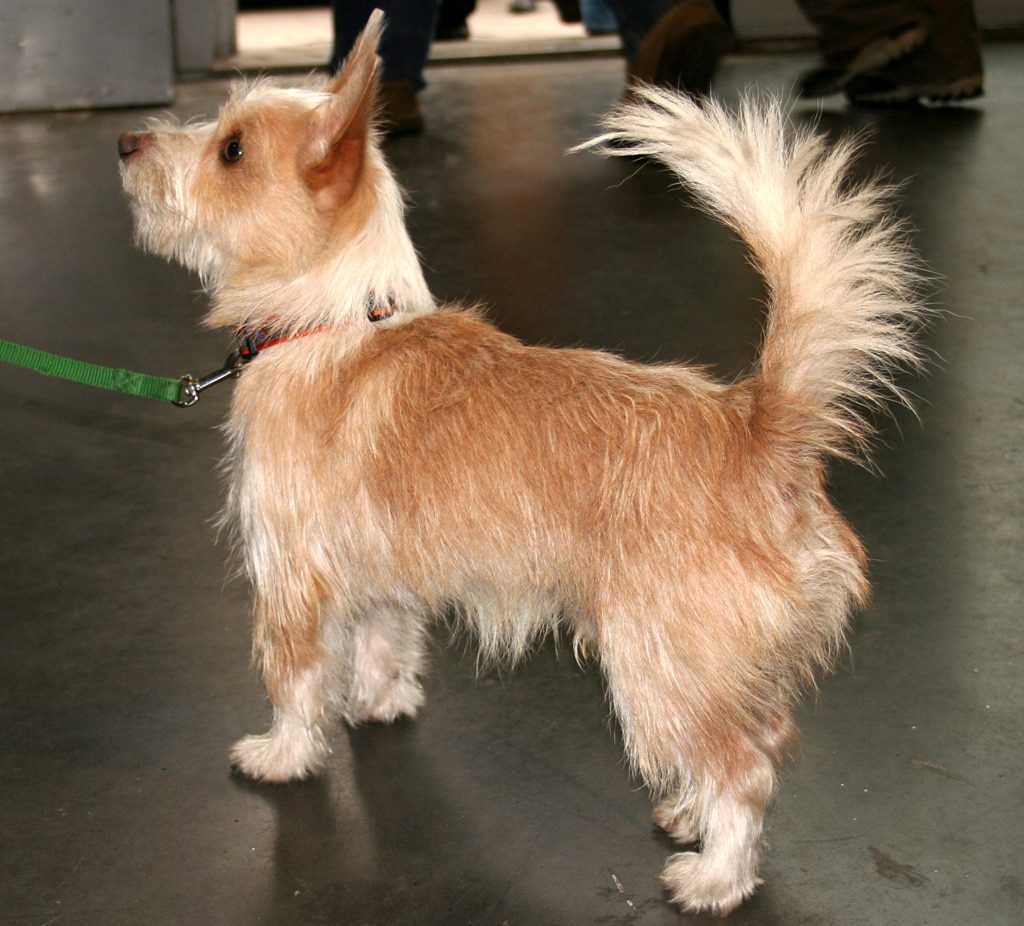
Podenco Portuguรฉs

The Portuguese Podengo is a breed of dog that is in danger of extinction.

Content

History

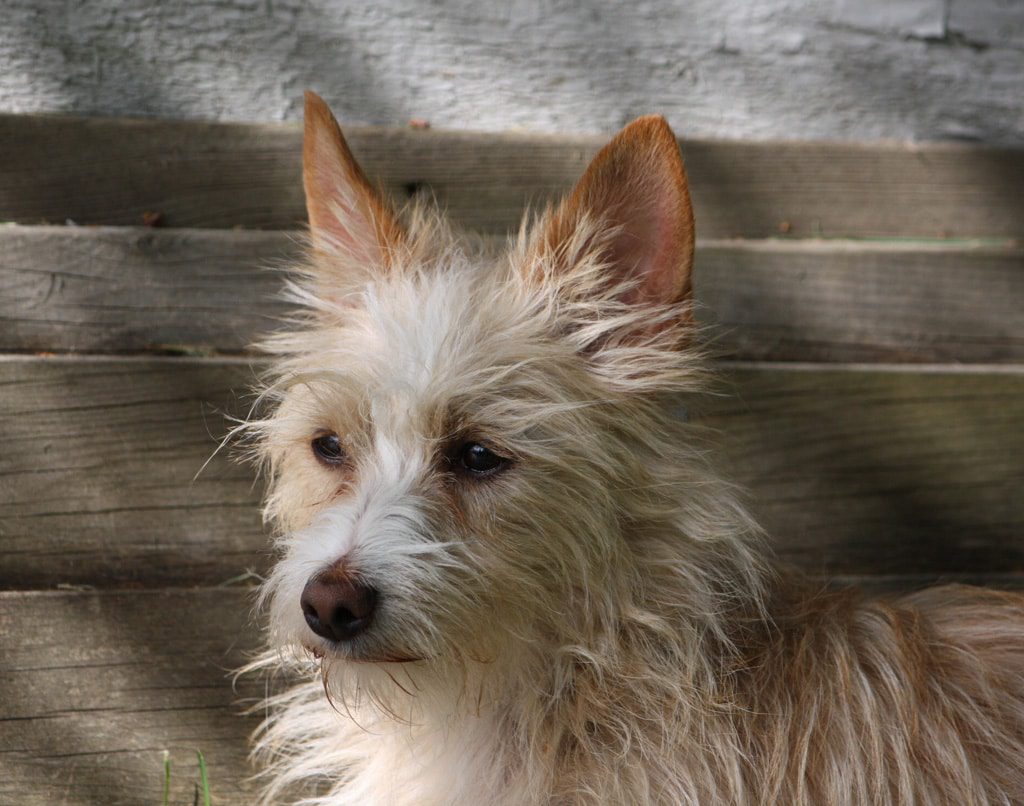
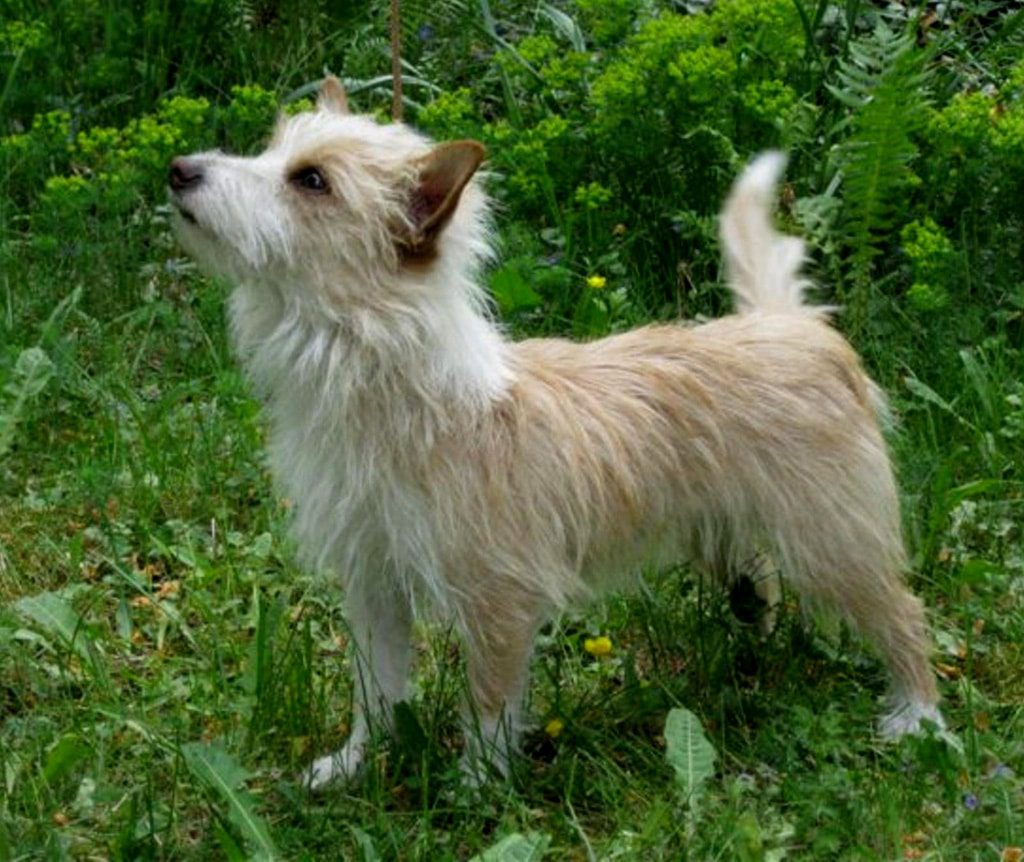
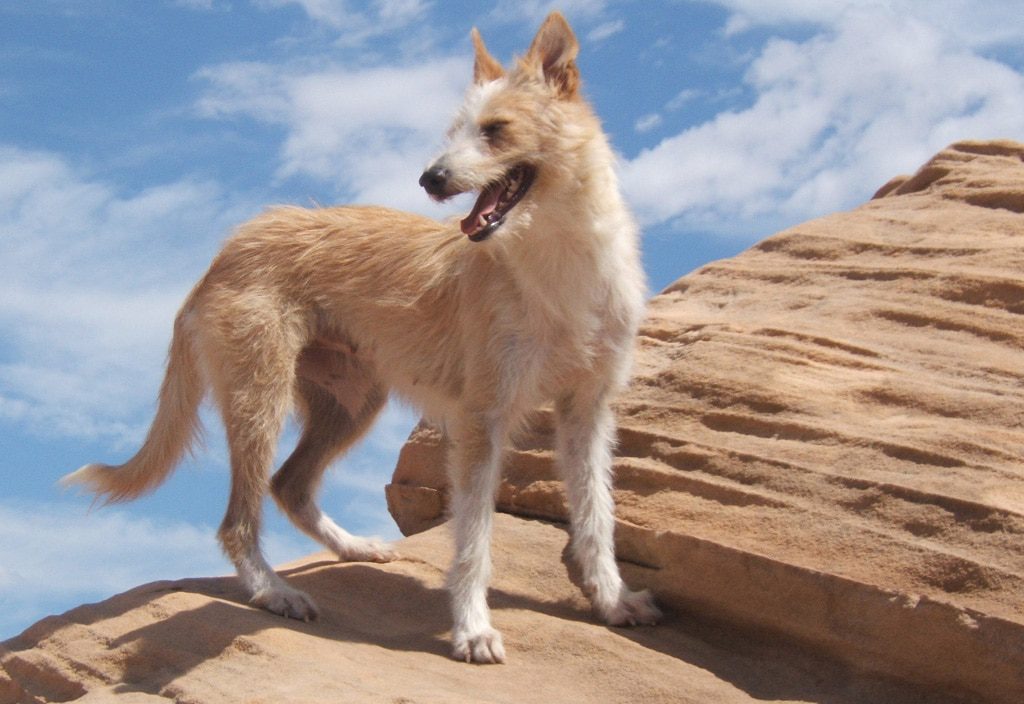
The Portuguese Podengo It is considered one of the oldest dogs breeds, that has its origins in the Phoenicians, cultural matrix of which descend the Portuguese. It is a native breed of Portugal, with great skills for hunting, but also surveillance, It is commonly used on farms to alert of the presence of intruders.

The great family of the hound race, specialists in the topic raised it was in Portugal where most subjected to crossing and as a result, branched lineage. Within their ancestors argue that perhaps the closest the Ibizan Hound, and various types of dogs of traces of lived (They inhabit) throughout the Mediterranean area. Like all hound dogs, History shows that they are represented in Egyptian paintings of thousands of years ago.

according to size, There are three varieties of Portuguese Hound, Grand, Small and medium, being each variety, products of the different crossing, over time.

It is believed that the great variety has emerged the variety of Portuguese Podengo small and medium, the ancestor of the Grande variety is the Pharaoh Hound spread from North Africa to the Iberian Peninsula. Although other authors raise that it is possible that the hound descends from the small Iberian wolves. There is still controversy...

Although one of the theories suggests that the Medium Portuguese Podenco arises, of different Podenco dogs from North Africa, The most accepted theory is that this variety, directly descended from the Portuguese Podengo Grande.

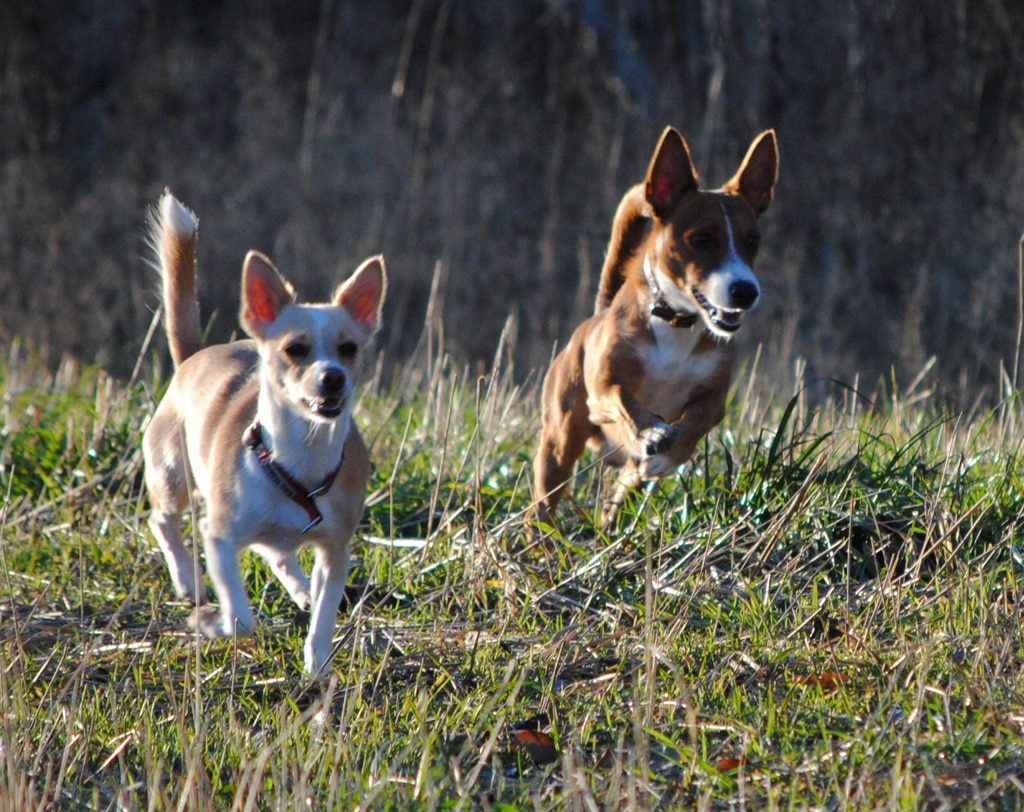
The small Portuguese Hound, sometimes described as a Chihuahua heavier (There is no kinship between these two races), often collaborate in the tasks of hunting with their larger peers, what this dog does is get into the rabbit hole and scare them so that they come out and are hunted by their pack mates.

In the North of Portugal today it is still used for hunting rabbits and small vermin. Hunting in a pack or alone. Although this dog can be seen in the rest of the country, its popularity lies in the North of the same.

Physical characteristics

As specified above, according to size, There are three varieties of Portuguese Hound, Grand, Medium- and Petit:

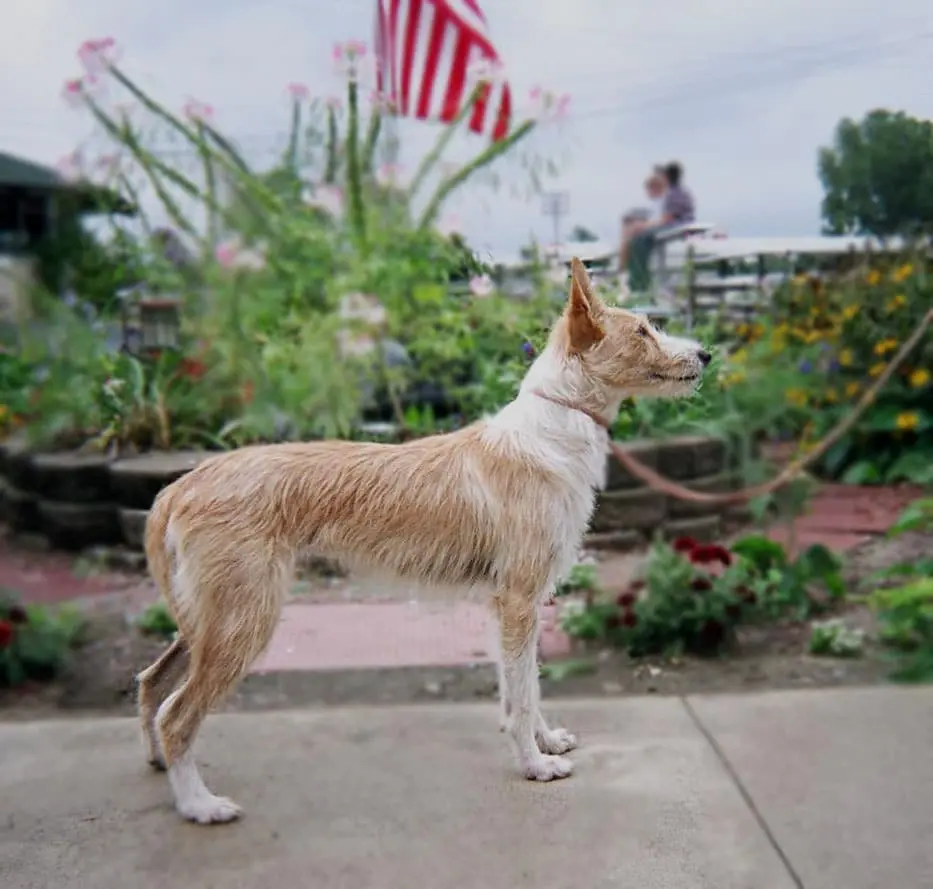
  • Portuguese Podengo Grande: It is a very rare variety and is in danger of extinction, especially the smooth variety. They are usually used in packs to hunt large prey such as deer or wild boar.. It is the only Portuguese breed used for wild boar hunting. His cloak can be short and smooth (less common and on the verge of extinction) or rough and long.
  • Portuguese Podengo Medio: It is the fastest of the three varieties, excellent Hunter of rabbits and hares. You can hunt in a pack or alone. Like the great Portuguese Hound, their coats can be smooth or rough and short and long. Of the three varieties this is the most common, and the greatest concentration of these dogs is located in the North of Portugal.
  • Portuguese Podengo Pequeno: Like his brother medium is an excellent Hunter of rabbits and hares. Responsible for getting into the Burrows (Thanks to its size and agility) to drive away prey and be hunted down by his pack mates. The small Portuguese Podengo coat is short and smooth, only.

The varieties in the fur are related to the inclement weather and adaptation to the same, the smooth-haired variety is more common in northern Portugal, characterized by being a humid area, This soft and smooth coat is necessary because it is dried more easily after wet.

The variety of hair bristles found in drier areas, where the coat of hair has the function of protecting the dog from the sun's rays and cold weather in winter. Nature is wiseโ€ฆ

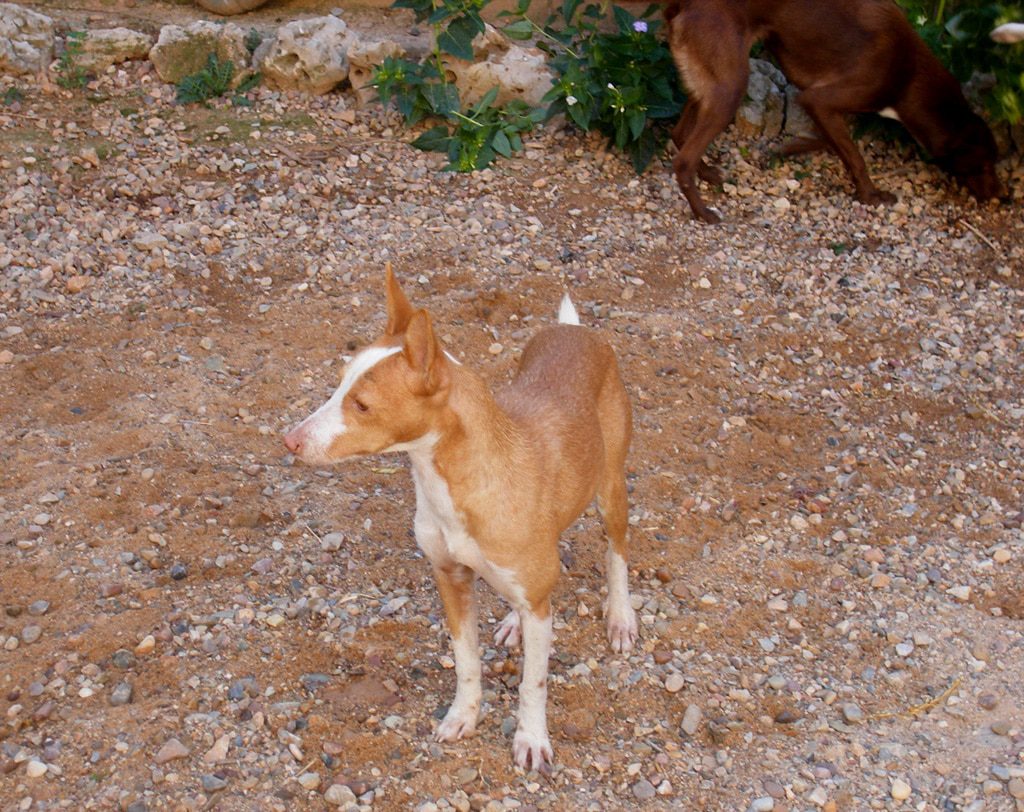
The hair short or long, thick medium and bright. In dogs with long hair and rough, the hairs of the snout are long (Beard). The predominant colors are yellow and the fawn (with its varieties of color clear, to very dark), and diluted or matte black; unicolores with or without white spots or white spotting.

Their life expectancy is around the 12 or 14 years, and it is a race that is rarely seen outside Portugal.

In general, is a medium-sized dog, well proportioned, muscular with good bone structure. It has long, narrow head, with moderately wide skull and the pointed snout.

The ears, large and triangular, they are carried erect. It has eyes expressive and little bulging in orbits, color honey or brown, according to coat color.

The pigmentation of eyelids is darker that the of the fur. The body is quite long, with ribs moderately arched.

The tail, is strong and pointed, long and medium length, It is held horizontal or slightly arched in activity.

Character and skills

The Portuguese Podengo, It is their three varieties has a cheerful character, intelligent and very sociable with other dogs. They are extremely affectionate with their owners, especially with the children.

They are very shy with strangers, always alert and constant surveillance of their territory, that makes them good guard dogs, although, It lacks the aggressiveness which may show a watchdog or defence.

Observations

Unfortunately, the Portuguese Podengo It is one of the canine breeds that today are found in danger of extinction, even in Portugal. It is not easy to see them out of Portugal.

Images of the ยซPortuguese Podencoยป

Videos of the ยซPortuguese Podencoยป

Type and recognitions:

  • FCI CLASSIFICATION:
  • Group :
  • Section : . .

Federations:

  • FCI – Group 5: Spitz-type dogs and primitive type – Section 7: Primitive type - Hunting Dogs. โ“˜

FCI breed standard "Portuguese Podengo"

Origin:
Portugal

Date of publication of the valid original standard:
04.11.2008

Use:

hunting dog, guard and companion dog


General appearance:

Quadrangular pyramidal head, erect ears, sickle-shaped tail, well proportioned with a solid build and well muscled. Very loving and intelligent, sober and rustic. It comes in three sizes with two varieties of hair: smooth and wired.

IMPORTANT PROPORTIONS:

Podenco Grande y Medio: Almost square (midline sub) with large to medium substance respectively.
Length of the body in relation to the height at the withers: 11 / 10 and depth of chest with respect to the height at the withers 1 / 2.

Little Podenco: Body somewhat longer than tall (long sub), small in stature. The length of the body is somewhat greater than its height at the withers in a proportion โ€“ length of the body / height to the cross: 6 / 5.
chest depth / height to the cross: 1 / 2.

In all varieties the length of the snout is less than the length of the skull.


Behavior / temperament:

Podenco Grande: Used for hunting big game.

Podenco Medio: Also known as Warren Hound, his natural aptitude as a rabbit hunter is well known. Hunt alone or in a pack.

Little Podenco: Used to search for rabbits in burrows and rocks.

All varieties are used as guard and companion dogs..

Head:

Thin, in the form of a quadrangular pyramid trunk. Its base is wide and its quite pointed end. The upper longitudinal axes skull facial differ.

Cranial region:
  • Skull: Annoying. The profile is almost straight. The eyebrows are prominent. The frontal furrow is little pronounced. The handset inter space is horizontal and the back of the head is prominent.
  • Depression front naso (Stop): Little pronounced.

facial region:

  • Nose: Thin. Se adelgaza y es truncada en forma oblicua; is prominent in its end. Its color is darker than the coat.
  • Nose cane: Rounded cross section; straight profile. It is shorter than the length of the skull and wider at the base than at its tip.
  • Lips: Are well applied to each other. They are fine, strong and well straight.
  • Jaws/teeth: Normal, scissor bite, with solid and white teeth. The two jaws have a regular opposition. Complete dentition in the large variety.
  • Cheeks: Thin or placed oblique views of front.
  • Eyes: They are expressive and little bulging in orbits. Its colour goes from the honey to Brown, according to coat color. They are small and oblique. The pigmentation of eyelids is darker than the coat.
  • Ears: Insertion oblique and medium. Straight and high mobility are. They are vertical to the front when the dog is alert. They are sharp, and wide at the base. Triangular shape, thin; a height larger than the base and considerable.

Neck:

Harmoniously joined with the head and trunk. It is straight, long, provided, strong and well muscled. It presents no Chin.

Body:

  • top line: It is straight, level.
  • Cross: Only slightly visible in relation to the neck and back.
  • Back: Straight. It is long.
  • Pork loin: Straight. It is wide and muscled.
  • Rump: Medium length. It is wide and muscled; straight, or little fall.
  • Breast : Breastwork muscular and low protrusion. It is not very broad. deep chest, medium-amplitude up to the level of the elbows. It is long, with the sternum inclined backwards and upwards. Ribs well arched and bent.
  • Belly and flanks: Thin; slightly agalgados.
  • bottom line: It is slightly high.

Tail:

Natural. Set rather high. It is strong, thick and pointy; medium length. During rest it falls between the buttocks, to the hock and is slightly curved. When the dog is moving rises horizontally, slightly arched, or folded vertically in the form of Scythe, Although never screwed.

Tips

PREVIOUS MEMBERS: Seen from the front and profile are appropriate limbs. They are muscular and thin.

  • Shoulder: Long, inclined, strong and muscular well, scapula โ€“ humerus angle of approximately 100ยบ.
  • Elbows: Parallel to the main line of the body.
  • Forearm: Vertical; long and muscled.
  • Carpo: Delgado, is not prominent.
  • Metacarpus: Strong; short, little oblique.
  • Front feet: Rounded. Long toes, strong, together, and well arched. Fingernails are short and strong, preferably dark. The pads are durable and hard.

LATER MEMBERS: Seen from the back and side are well Plumb. They are muscular and thin.

  • Thigh: Long; medium-amplitude and well muscled.
  • Knee joint: femur โ€“ tibia angle approximately 135ยบ.
  • Leg: It is oblique, long, thin, strong and muscled.
  • Hock: Medium tall. It is thin and strong. The hock angle is open approximately 135ยบ.
  • Metatarsus: It is strong, short, Spurs and oblique.
  • Rear feet: They are rounded, with long toes, strong, together, and well arched. Fingernails are short and strong, preferably dark. The pads are durable and hard.

Movement:

Fast and agile. Lightweight trot.

Mantle

SKIN: The mucous membranes are preferably black, or always darker than the coat. The skin is thin and stretched.

HAIR: Two varieties. The hair is short or long, medium-thick. The hair is smooth when it is short, or rough when long. Short hair is more abundant than the long hair.
In dogs with long hair and rough, the hairs of the snout are long (Beard). There is no presence of an internal layer of hairs.

COLOR: The predominant colors are yellow and the fawn (with its varieties of color clear, to very dark), and diluted or matte black); unicolores with or without white spots or white spotting.
In the small hound the following colors are accepted but are not preferred: black, Brown with or without white markings, or white with spots of these colors.


Size and weight:

Height to the cross:

  • Petit: 20 โ€“ 30 cm..
  • Medium: 40 โ€“ 54 cm..
  • Grand: 55 โ€“ 70 cm..

Weight:

  • Petit: 4 โ€“ 6 Kg.
  • Medium: 16 โ€“ 20 Kg.
  • Grand: 20 โ€“ 30 Kg.


Fouls:

Any deviation from the above criteria should be considered as missing and the severity of this is considered in proportion to the degree of deviation from the standard and its effect on the health and welfare of the dog.

  • Behavior: Signs of shyness.
  • Snout / Skull: Skull upper longitudinal axes parallel facial.
  • Jaws: Incorrect occlusion or improperly implanted teeth, bite clamp, incomplete dentition in the large variety.
  • Truffle: Partial absence of pigmentation.
  • Neck: Arcuate.
  • Body: Arched top line.
  • Rump: Too steep.
  • Spurs: Its existence is not appreciated.
  • Fur: Silky and / or Undercoat.

SEVERE FAULTS:

  • Snout / Skull: Upper longitudinal axes convergent facial skull.
  • Truffle: Total absence of pigmentation.
  • Ears: Rounded.
  • Belly: Very agalgado.
  • Tail: Threaded queue.

MISS PLAYOFFS:

  • Behavior: Aggressiveness or excessive shyness.
  • General aspect: Signs of crossing with a Greyhound (Spanish Hound) or a Perdiguero (Portuguese Braco).
  • Jaws: Improper opposition of the jaws.
  • Eyes: Eyes of different colour (heterochromia).
  • Ears: Bent or folded.
  • Color: Striped, black and tan, Tri-color or totally white.
  • Any dog โ€‹โ€‹showing clear signs of physical or behavioral abnormalities should be disqualified..


N.B.:

Males should have two normal-appearing testicles fully descended into the scrotum..

TRANSLATION: Rafael Santiago (Puerto Rico).
Technical review: Miguel Angel Martinez (Federation Cynologique Argentina).

Source: F.C.I - International Cynological Federation

Alternative names:

1. Portuguese Warren Hound (English).
2. Podengo portugais, Lรฉvrier portugais (French).
3. Podengo Portuguรชs (German).
4. Cรฃo-coelheiro (Portuguese).
5. Podengo portuguรชs (espaรฑol).

โ–ท The world of Pets: Dogs, cats, birds, reptiles, amphibians

Grossespitz (Giant or Large Spitz)
Alemania FCI 97 . European Spitz

Grossespitz (Giant or Large Spitz)

Although I do not necessarily suspect it at first glance, the Grossespitz (Giant or Large Spitz) it is also extremely robust and weather resistant.

Content

History

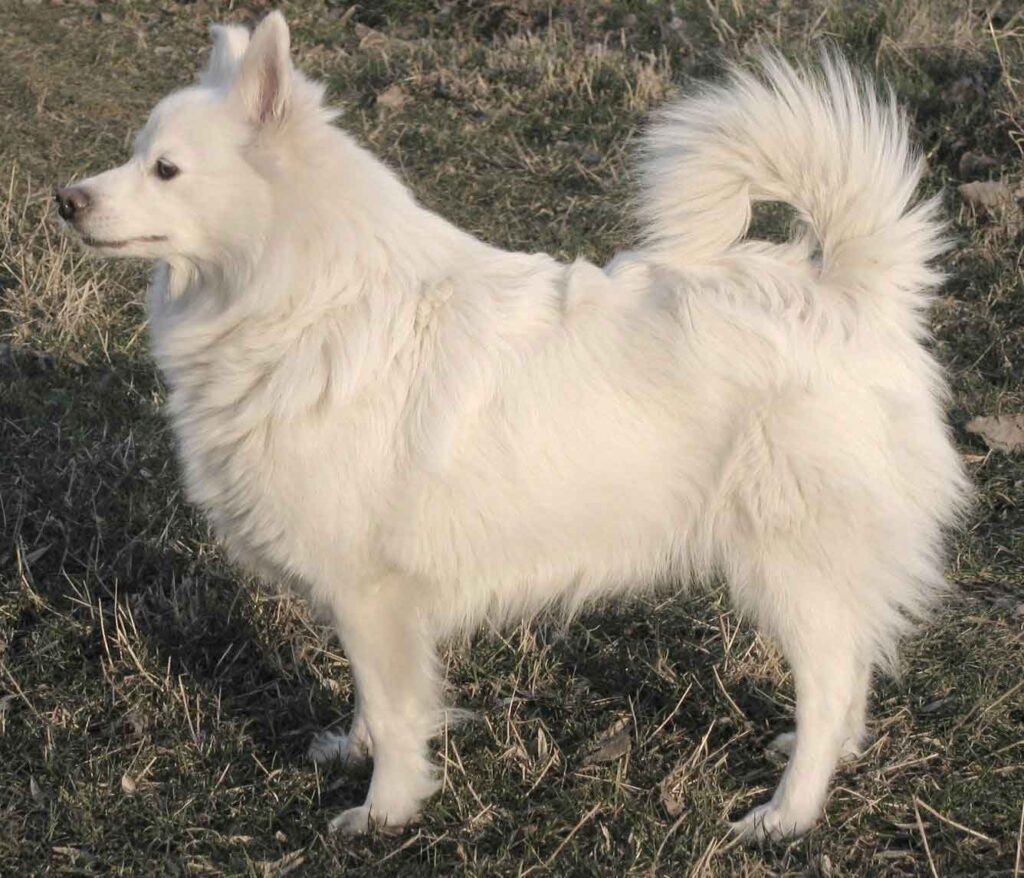
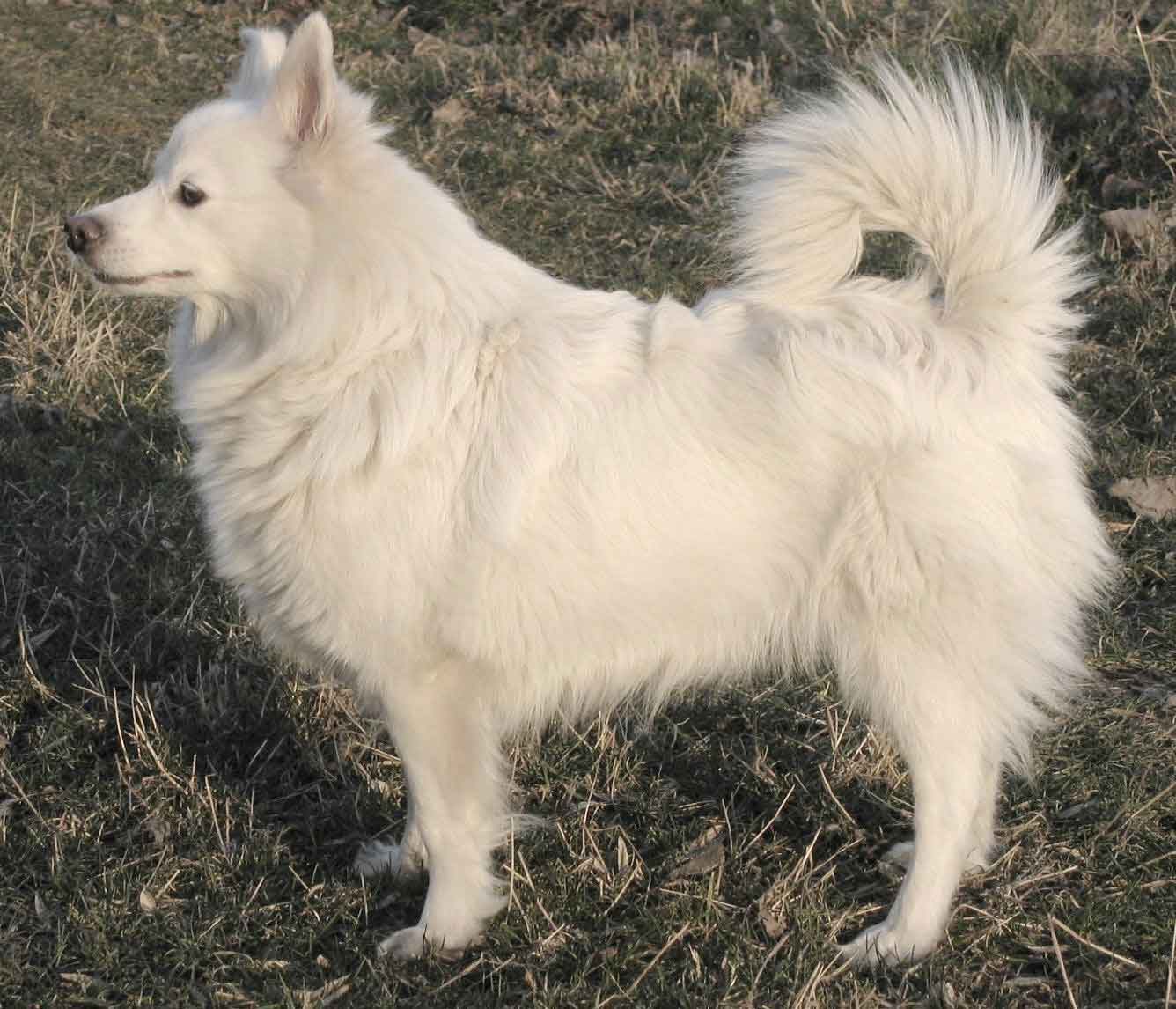
While the small and medium varieties of the German Spitz (Pomeranian, Kleinspitz (Miniature or Small Spitz) and Mittelspitz (Standard or Medium Spitz), Keeshond) were more common among common people in the Middle Ages, the Grossespitz (Giant or Large Spitz) , with its impressive and elegant shape, found its way into the homes of the noble and middle classes. The Grossespitz (Giant or Large Spitz) white enjoyed great popularity even among representatives of the English nobility. He "German Spitzยป was also able to make a name for itself in America and was supported primarily by German immigrants. In the course of the negative image of Germany after the 1st World War, the Grossespitz (Giant or Large Spitz) was renamed "American Eskimoยป

The Grossespitz (Giant or Large Spitz) black, on the other hand, used to be more common in the vineyards of Baden Wรผrttemberg. His excellent wakefulness instinct was a great help to the winegrowers in keeping off the grape thieves, both animals and humans, away from the valuable vines.

According to Gesellschaft zur Erhaltung alter und gefรคhrdeter Haustierrassen e. V. (Society for the Conservation of Ancient and Endangered Breeds of Domestic Animals), to the Grossespitz (Giant or Large Spitz) Today it is considered endangered. Over the years 2000 to 2002, for example, there was only 11 Grossespitz (Giant or Large Spitz) blacks in Germany and 38 white dogs. To preserve this breed of enterprising and cheerful dogs, there are initiatives to mate the Grossespitz (Giant or Large Spitz) whites and blacks among themselves and to cross them with the Mittelspitz (Standard or Medium Spitz) and the Keeshond.

Physical characteristics

The Grossespitz (Giant or Large Spitz) is characterized by its special double layer. The long straight top layer looks very bushy due to the thick, padded undercoat and stays away from the body. Particularly striking is the strong horsehair fur collar and the bushy tail that curls over the back. The fox head with the agile eyes and the pointed ears, small and narrow give this Spitz its characteristic appearance.

With a shoulder height of up to 50 cm and a weight of 15-20 kg, the Grossespitz (Giant or Large Spitz) is the second largest representative of the German Spitz after the Keeshond. It breeds in the colors black, White and Brown.

The males and females of the category ยซGrossespitz (Giant or Large Spitz) ยป They are very similar in weight and size. But, the male representatives of the breed mostly appear heavier and larger. This is due to the fact that their coat is slightly longer and therefore appears more voluminous than that of female dogs..

Character and skills

The Grossespitz (Giant or Large Spitz) needs a lot of movement and exercise. So, long walks and running games and slides should always be on the agenda. It also, dog sports such as agility, obedience or tracking can bring additional variety to the dog's life and make optimal use of the breed.

Breed-specific character traits

The Grossespitz (Giant or Large Spitz) He is very affectionate by nature and would like to accompany his family everywhere.. Staying home alone does not suit them at all and can make dogs experience their grief intensely. As a rule, the more attention and affection a Grossespitz (Giant or Large Spitz) , more comfortable feels. That's why they like to be with the family, since they also get along very well with children. But, of course, every four legged friend, no matter how sociable I am, he also needs his rest. It is important that all members of the family respect these phases, which are usually quite rare with the Grossespitz (Giant or Large Spitz) . Thanks to his kind and loving character, many representatives of this breed of dog are also suitable as therapy dogs.

Although I do not necessarily suspect it at first glance, the Grossespitz (Giant or Large Spitz) it is also extremely robust and weather resistant. Due to its distinctive protective instinct, they are also considered ideal guardians for the house and yard. But, without proper training, can become a very barking dog. Through an appropriate workload for each species, good socialization and a consistent but loving upbringing, desirable behavior can be encouraged, that is to say, "don't bark".

Grossespitz training

Get enough attention and feel well integrated into family life. As they have almost no hunting instinct, they are usually relatively easy to train and can be recommended for beginners. But, it is important to inform yourself widely about the breed and its requirements beforehand.

Like all the other spitz, to the Grossespitz (Giant or Large Spitz) likes to be in contact with children and loves to play with and protect them. So, fits well in a lively little family, in which there is always something to do and much to discover.

So that the Grossespitz (Giant or Large Spitz) can exercise your favorite activity as a watchdog, The ideal would be to keep it in a house with a patio and garden. If the four-legged friend moves regularly and has mental problems, you can also consider keeping it in a city apartment, as long as there are enough opportunities for exercise nearby.

Videos of the Greater Spitz

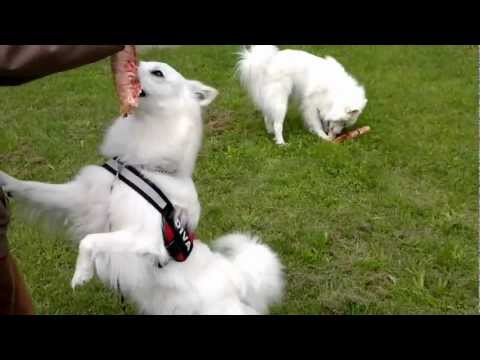
Great Spitz Bella+Bruno feeding predators.2012
GroรŸspitz Jacko + Schnappi

Type and recognitions:

  • FCI CLASSIFICATION:
  • Group :
  • Section : . .

FCI breed standard "Grossespitz (Giant or Large Spitz) "

Origin:
Germany

Date of publication of the valid original standard:
04.09.2019.

Use:

Guard and companion dog.


General appearance:

TheSpitzThey attract attention for their beautiful separated fur with the presence of a very dense undercoat.. The neck surrounded by an abundant mane and the tail covered with long hair is striking., turned up and spread boldly on the back. The head is similar to that of the fox with diligent eyes and small pointed ears. The ears, placed very close to each other, confer toSpitzhis characteristic relaxed appearance.

important proportions

Proportion of 1:1 between the height at the withers and the length of the dog.


Behavior / temperament:

TheGerman Spitz is constantly attentive, is active and exceptionally dependent on his master. Learn quickly and can be trained easily. His distrust of strangers and his lack of interest in hunting allow him to be considered the ideal watchman for the house and farm.. Its most notable characteristics are its resistance to weathering., its robustness and longevity.

Head:

----

Cranial region:
  • Skull: The skull ofSpitzis medium-sized; viewed from above seems to swell back becoming more narrow wedge shaped to the tip of the nose.
  • Depression links (Stop): Little steep until marked, but never abrupt.

facial region:

  • Truffle: Round, small, black; in all theSpitzbrown in color is dark brown in color.
  • Snout: Not very long, Neither coarse nor pointed; It presents a good proportion in relation to the skull (in the Spitz type Keeshond/Wolf, in the large Spitz and medium Spitz the ratio snout/skull is approximately 2/3, in the small Spitz and in theSpitz enano/Pomerania is approximately 2/4).
  • Lips: They are not hanging; they are well bonded and do not form folds in the corners. They are black in all colours, in theSpitzbrown in color are brown in color.
  • Jaws/Teeth: The jaws are normally developed and show a complete scissors bite with 42 teeth, That is, the upper incisors fall closely in front of the lower incisors., teeth being implanted perpendicular to the jaws. InSmall and dwarf spitz/Pomeranian the loss of a few promolars is tolerable. A pincer bite is allowed in all varieties ofSpitz.
  • Cheeks: The cheeks are slightly round and are not prominent.
  • Eyes: The eyes are medium-sized, elongated, a little oblique, dark colored. The eyelids have black pigmentation in all color varieties and are only dark brown in theSpitzof brown variety.
  • Ears: The pointed ears in the shape of a pointed triangle are small and rather closely placed together.. Its inclusion is high. They always remain erect with a rigid tip.

Neck:

The neck is moderately long and presents a broad inclusion with shoulders; the neck is slightly convex, without dewlap and covered with a mane shaped collar.

Body:

  • top line: The top line begins at the tip of the erect ears and passes in a gentle arc over the short, straight back.. The deployed and with abundant fur tail partially covers the back and rounded silhouette.
  • Cross/Back: The high cross falls imperceptibly on the short back, straight and strong.
  • Pork loin: Short, wide and strong.
  • Rump: The rump is short and wide, unexpired.
  • Breast : Deep chest, well arched; the apron is well developed.
  • Bottom line and belly: The chest is expanded as much as possible back; the abdomen is moderately retracted.

in the

Tail:

The tail has a high insertion and a medium length; bends upward from the root and rolls over the back, spreading firmly. Well covered with thick hair. A double loop in the tip of the tail is acceptable.

Tips

Former members

  • As a whole: Straight, large on the front.
  • Shoulder: The scapula is long, placed backwards at an angle. The arm, showing almost the same length, with the scapula forms an angle of approximately 90 degrees. Shoulders with good musculature are closely linked with the chest.
  • Arm: Medium length, robust and fully straight on the trunk, covered with long hair in the form of pen in the posterior region.
  • Elbows: The elbow joint is strong, close to the chest without bending inward or outward.
  • Metacarpus: The Metacarpus strong and medium length, forms an angle of approximately 20ยฐ in relation to the perpendicular line.
  • Front feet: The front feet are as small as possible, round, compact, as cat with well arched toes feet. Pads and nails are black in all varieties of Spitz, and they are only dark brown on brown dogs.

Later members

  • As a whole: The hindquarters are very muscular, covered with very long hair up to the Hock joint. The hind limbs are straight and parallel to each other..
  • Thigh and leg: They have approximately the same length.
  • Knee: The knee joint is strong, slightly angled and, during the movement, It does not twist outward or inward.
  • Metatarsus: Medium length, very strong, maintains a position perpendicular to the ground.
  • Rear feet: The hind feet are as small as possible, round, with toes well arched and together, as cat feet. Pads are hard. The color of nails, pads is much darker.

Movement:

TheSpitzmoves with enough coordination, with a good push and almost floating in light trot.

Mantle

Skin

The skin should be well attached to the body, without kinking.

Fur

TheSpitzThey have a double coat covered with hair: the outer layer is long-haired, straight and separate and the inner layer is short-haired, dense and woolly. The head, ears, anterior surface of the forelimbs and hindlimbs and feet are covered by short, dense hair (velvety). The rest of the body is long and abundant hair. The hair should not be wavy, chino, or form hair, You must not present a stripe on the back. A thick mane covers the neck and shoulders. The rear face of the forelimbs has hair in the form of feathers. The hindquarters should be covered with long hair from the rump to the Hock joint. The queue must be covered with hair is long and abundant.

Color

  • Wolf Spitz/Keeshond: Grayish.
  • Grossespitz (Giant or Large Spitz) Negro, brown, white.
  • Mittelspitz (Standard or Medium Spitz): Negro, brown, white, orange, grey, other colors.
  • Kleinspitz (Miniature or Small Spitz): Negro, brown, White Orange, grey, other colors.
  • Spitz enano/Pomerania: Negro, brown, white, orange, grey, other colors.
  • Black Spitz: The fur of the black Spitz should be dark in the skin as well as internal NAP and the color of the outer layer should be jet black color without any white spot.
  • Brown Spitz: The Brown Spitz should have a uniform dark brown color.
  • White Spitz: The hair should be pure white, no yellowish tones that can often occur in the ears.
  • Spitz anaranjando: The Orange Spitz should have a single uniform colour in the average range of the RAL (Registration International of the color scale).
  • Greyish Spitz/Keeshond: Gray is understood as grey silver with black hair tips. Snout and ears are dark. Around the eyes there is a drawing in the shape of glasses consisting of a delicate black line. (It extends from the outer corner of the eye to the lower part of the inclusion of the ear) or in broken lines and shading that draw short eyebrows, but expressive. Mane and ring shoulders are a tone clear. The anterior and posterior members are grey silver unmarked black below the elbows and knees, except delicate stripes on your fingers (pencilling). The tip of the tail is black. The lower part of the tail and the buttocks are grey Silver clear.
  • Spitz other colours: Under this description all tones are included as: cream-coloured, cream-saber, anaranjado-Sable, black with tan and stained. The spotted must have a white background color. Black stains, brown, gray or orange should be distributed throughout the body.


Size and weight:

Height to the cross

  • Wolf Spitz/Keeshond: 49 cm ยฑ 6 cm..
  • Grossespitz (Giant or Large Spitz) : 46 cm ยฑ 4 cm..
  • Mittelspitz (Standard or Medium Spitz): 34 cm ยฑ 4 cm..
  • Kleinspitz (Miniature or Small Spitz): 26 cm ยฑ 3 cm..
  • Spitz enano/Pomerania: 20 cm ยฑ 2 cm. (are undesirable specimens measuring less than 18 cm.).

Weight

Any variation in the size of theGerman Spitz must have a corresponding variation in its weight.


Fouls:

Any deviation from the above criteria is considered missing and the seriousness is considered to the extent of the deviation to the standard.

Serious misconduct

  • Defects in the Constitution.
  • Head too flat or sharp Apple-shaped.
  • Truffle, eyelids and lips of flesh-colored.
  • Defects in the premolars in Wolf Spitz/Keeshond, Medium and large Spitz.
  • Eyes too big or clear or very outgoing.
  • Defects in the movement.
  • Absence of classic drawing of the face inSpitzgrey.

ELIMINATING fAULTS

  • Aggressive or fearful dog.
  • Open fontanel.
  • Upper or lower prognathism.
  • Entropion or ectropion.
  • Floppy ears.
  • White spots visible on allSpitznon white.

Any dog โ€‹โ€‹showing clear signs of physical or behavioral abnormalities should be disqualified..


N.B.:

Males should have two normal-appearing testicles fully descended into the scrotum..

Source: F.C.I - International Cynological Federation

โ–ท The world of Pets: Dogs, cats, birds, reptiles, amphibians

Dachshund
Germany FCI 148 - Dachshund

Even if you have it as a companion dog, the Dachshund still a passionate hunting dog, persistent, fine and agile nose.

Teckel

Content

Characteristics "Dachshund"

Coexistence is important that you have with your new friend. Before considering the acquisition of a dog of the breed "Dachshund" you know certain factors. Not all breeds of dogs are apt to live in an apartment, you must take into account his character, their need for exercise, their interaction with other pets, their care and if you have small children, their level of tolerance towards them.

Adaptation โ“˜

5,0 of 5 stars (based on 1 review)

friendly dog โ€‹โ€‹โ“˜

2,0 of 5 stars (based on 1 review)

hair loss โ“˜

1,0 of 5 stars (based on 1 review)

Affection level โ“˜

5,0 of 5 stars (based on 1 review)

Need for exercise โ“˜

3,0 of 5 stars (based on 1 review)

Social need โ“˜

4,0 of 5 stars (based on 1 review)

Home โ“˜

4,0 of 5 stars (based on 1 review)

Toilet โ“˜

2,0 of 5 stars (based on 1 review)

Friendly with strangers โ“˜

2,0 of 5 stars (based on 1 review)

barking โ“˜

5,0 of 5 stars (based on 1 review)

Health โ“˜

3,0 of 5 stars (based on 1 review)

Territorial โ“˜

3,0 of 5 stars (based on 1 review)

Cat friendly โ“˜

3,0 of 5 stars (based on 1 review)

Intelligence โ“˜

4,0 of 5 stars (based on 1 review)

Versatility โ“˜

2,0 of 5 stars (based on 1 review)

Child friendly โ“˜

2,0 of 5 stars (based on 1 review)

Surveillance โ“˜

3,0 of 5 stars (based on 1 review)

joy โ“˜

5,0 of 5 stars (based on 1 review)

History

The Dachshund he is a very special dog, not only because of its unique appearance. Even today it is still a versatile hunting dog and of course a family dog.. It is probably the only small dog that is still regularly used for work.. In times past it was called "Dachshundยป and that remains their official breed name today. The specialty of Sausage dog, what hunters like to call it, is hunting.

The Dachshund He was sent to the caves to take a badger from its burrow. He was not to fear that great defensive marten that, After all, he could easily counter the brave with twice his weight. Dachshund in the battle. Even today the Dachshund are still used for hunting foxes and rabbits. It also, demonstrates himself in the search and in the work of sweat.

Today, the Dachshund is one of the most popular hunting dogs in Germany and many other countries. And it is also one of the most popular companion dogs. Since primitive times, the low-breasted sausage has been bred as a hunting dog. They are already shown in the photos of the ancient Egyptians. As early as the Middle Ages, dogs were described and painted that look almost exactly like our own. dachshunds from today. Also the purposes were the same.

The Dachshund It is one of the dog breeds that were and continue to be the most resistant and one of which for the longest time has been entrusted with a task at the service of man. With the emergence of modern dog breeding, the modern Dachshund was born in germany. Already in 1888 the German Club of Dachshund. It is the oldest sausage breeding club and the second oldest purebred dog club in Germany.

Dachshund normal
Dachshund standard variety

There are three varieties of Dachshunds according to the size which in turn are subdivided each into three subvarieties depending on the length of their fur:

1 – Standard

  • to – Longhair
  • b – shorthair
  • c – Wire-haired

Dachshund Miniature
Miniature dachshund

2 – Miniature

  • to – Longhair
  • b – shorthair
  • c – Wire-haired

3 – Rabbit Dachshund

  • to – Longhair
  • b – shorthair
  • c – Wire-haired
Rabbit Dachshund
Dachshund for rabbit hunting

It is said that the spaniels were bred in the past by the long-haired dachshund, while the hard-haired Teckel had a terrier between its ancestors.

What is your correct name: Teckel, Dachshund o Dackel?

All three names are correct. Name "Dahshuntยป (derived from badger), late middle ages, became "Dรคchselยป at the beginning of the 18th century, in the second half of that century in ยซTeckelยป in northern Germany and later, towards the end of the 19th century – as a short tiny shape – ยซDackelยซ.

Physical characteristics

The main external feature of the Dachshund it's his downfall, called chondrodystrophy. This chondrodystrophy is a mutation of the cartilage that, among other things, produces dwarfism in long bones. This has been established in ancient times and maybe even before that., since such dogs are very useful for humans. These may include, both hunting and working in tight spaces. The humble character of Dachshund is combined with an elongated and slim body.

The Dachshund is bred in two lines: as a hunting dog and as a companion dog. In the line of companion dogs also move lovers of dog shows, where it's over and over again at the expense of the well-being and health of dogs, for example if dogs are bred too long and too low.

The Standard dachshund has a chest circumference of more than 35 centimeters and weighs between four and nine kilograms. The Miniature dachshund have a circumference of 30 to 35 centimeters in the bust and a weight between three and four kilograms, the Rabbit Dachshund, about three kilograms in weight, but no less.

Character and skills

The Dachshund he is a hunting dog and has never been a lap dog. It is a small dog, very large. In the burrow, the Dachshund he is a persistent solitary hunter and must make decisions independently. A strong will, perseverance and great courage are other qualities that are required for hunting. These requirements have had a lasting effect on his character.. He is self-confident and sometimes stubborn, but contrary to popular opinion he is extremely well mannered and manageable. He is a true professional. His stubbornness makes up a good part of his special charm, that you not only have to accept but you like. He is friendly and not submissive, shows your opinion and is neither fearful nor aggressive. He also has a well-balanced temperament. Even if you have it as a companion dog, the Dachshund still a passionate hunting dog, persistent, fine and agile nose. Can be trained well – also for dog sports.

Dachshund care

The Dachshund has no special demands regarding its maintenance. He loves his humans, either in a small apartment or in the countryside with a large garden. But, you should never expect me to climb the stairs, at least not regularly. The Dachshund he is a hunter and a dog who enjoys nature. Regular excursions must be allowed, if possible daily, to the nature. Despite its short legs, the Dachshund has amazing resistance. It is always impressive to see with what zeal, speed and endurance this dog runs through nature. It is not unusual for him to accompany his master or carer when he runs, but this doesn't have to be the rule. Like a sturdy little dog, the Dachshund can be carried everywhere without problems. In a restaurant or hotel, he knows how to behave. The Dachshund it is an excellent family dog. Can be problematic with other pets due to their hunting instincts. This can be changed during the puppy stage if the dog gets used to it and is educated accordingly.

Coat and muzzle should be checked daily. The coat should be brushed regularly. The Dachshund wire-haired needs to be trimmed.

Dachshund education

Despite his passion for hunting, the Dachshund is a dog for everyone, whether hunter or non-hunter. Contrary to popular opinion, he is a well trained dog. You just have to earn it as a partner consistently and with conviction and patience. Then he gives her proverbial trusting nature the warm "look of Dachshundยซ. Is never submissive; has a strong self-confidence with a strong self-will. This must be respected, even appreciated. Each Dachshund has its own individual character. It should not be misinterpreted as a lapdog, must be challenged and above all his individual personality must be accepted. It can then be coached and managed consistently on the basis of the bonds of friendship.. With a little commitment, this is also possible for a less experienced beginner.

Typical diseases of Teckel

The Dachshund enjoy robust overall health. You just have to be careful that the dogs are not too small, too long, too light and not too short legs. Also show breeds, in which dogs are judged on their external appearance, should be considered with caution. The Dachshund occasionally suffers from paralysis of the Dachshund It is named. It is a special sliding disc, that has the same inherited causes as your lack of movement. It also, diseases of the heart valves, rheumatic diseases and idiopathic epilepsy are more common. La endogamia, mating with extreme characteristics such as dwarf - exaggerated ratio (short legs, long back)- represents a considerable risk to health and dramatically shortens life expectancy.

Nutrition / Food

The Dachshund has no special nutritional requirements. For your general physical condition, especially with regard to the risk of paralysis of the Dachshund, you must take care that it stays strong and slim.

The life expectancy of the Dachshund

The Dachshund belongs to the healthy breeds, vital and long-lived. This is because, among other things, for use as a professional hunting dog. He often reaches the age of 12 to 15 years without any problems, sometimes even more.

Buy a Dachshund

If you want to buy puppies, you should be the first to decide if you want to have a Dachshund as a hunting helper or as a family companion. You should only buy your Dachshund to a recognized local breeder. You can also look at the local animal shelter. Puppies usually cost between 1.000 and 1.500 EUR.

Images "Dachshund"

Photos:

1 – Dachshund standard straight hair by Katemil94 / CC BY-SA
2 – A long-haired Dachshund puppy by Tam Tam from Shizuoka, JAPAN / CC BY-SA
3 – A red and tan smooth haired Dachshund by Raven Underwood / CC BY
4 – Dachshund in Cannes by Tiia Monto / CC BY-SA
5 – A Wirehaired Dachshund Sleeping in the Sun by Jeuwre / CC BY-SA
6 – Dachshund running in a green field by Dan Bennett / CC BY

Videos "Dachshund"

Type and recognitions:

  • FCI CLASSIFICATION:
  • Group :
  • Section : . .

Federations:

  • FCI – Group 4 – Section 1 Sausage dog. โ“˜
  • AKC – Sausage dog โ“˜
  • ANKC – Sausage dog โ“˜
  • CKC – Sausage dog โ“˜
  • โ€‹KC – Sausage dog โ“˜
  • NZKC – Sausage dog โ“˜
  • UKC – Sausage dog โ“˜

FCI breed standard "Dachshund"

Origin:
Germany

Date of publication of the valid original standard:
04/09/2019

Use:

Hunting dog, above and below ground.


General appearance:

Low structure, with short limbs, elongated but compact body with strong muscles. The head is carried with ease and pride; the expression is cunning.

Despite having short limbs, in relation to the body, must not be clumsy or limited in their movements. The specific development of both sexes is typical.

IMPORTANT PROPORTIONS : With the distance from the chest above ground level approximately one third of the height at the withers,the length of the body must be in a harmonious relationship with the height at the withers, approximately 1 to 1.7 -1.8.


Behavior / temperament:

By nature friendly, neither fearful nor aggressive, with a balanced temperament. Passionate hunting dog, persistent, agile and with a fine nose.

Head:

Elongated, both seen from above and in profile, narrows proportionally to the truffle, but it should not be pointed. The superciliary arcs are clearly defined. The nasal cartilage and nasal shank are long and narrow.

Cranial region:

Skull: Rather flat,gradually joining with a slightly arched bridge of the nose.

Depression front naso (Stop): Little marked.

facial region:

  • Truffle: Well developed.
  • Snout: Long, wide and strong enough.It should be opened wide, divided up to eye level.
  • Jaws / Teeth: Strongly developed upper and lower jaw. Scissor bite,regular. Ideally, a complete denture with 42 teeth according to the dental formula,with strong and exactly meshed fangs.

JAW DEFECTS: (Prognathism)

  • Lips: Tight, covering the lower jaw well.
  • Eyes: Medium-sized, oval and well separated, with clear and energetic expression, but at the same time confident and not penetrating. Dark red-brown and glossy to black-brown in all dog coat colors. Gazy eyes in harlequin dogs are undesirable, but they must be tolerated.
  • Ears: High inserted, not too far ahead, quite but not too long, rounded, Mobile, the front edge is well attached to the cheeks.

Neck:

Long enough and muscular; tight skin without double chin, slightly arched at the nape, carried free and erect.

Body:

  • top line:Harmonious, extends from nape to rump slightly oblique.
  • Cross: Pronounced.
  • Back: After the high cross, along the thoracic vertebrae, level or slightly oblique back. Strong and well muscled.
  • Pork loin: Strong musculature, long enough.
  • Rump: Wide, long enough and slightly sloping.
  • Breast : Sternum strongly pronounced and so prominent that slight holes form on each side. The thorax, seen from the front, it is oval, viewed from above and from the side is wide to ensure excellent development of the heart and lungs. The ribs extend far back. If the length and angulation of the scapulae and arm are correct, front limbs, viewed profile, They should cover the lowest point of the chest line.
  • Bottom line and belly: Slightly gathered.

Tail:

Implanted not too high and carried in the extension of the line of the back. A slight curve in the last third of the tail is allowed.

Tips

PREVIOUS MEMBERS

  • As a whole: With strong muscles and well angulated; seen from the front dry limbs, straight with strong bones and feet directed straight forward.
  • Shoulder: Relief muscles. The long scapula is sloping and well attached to the thorax.
  • Arm: The same length as the scapula, should form approximately a right angle to it. Strong bones and good musculature, glued to the ribs, but free in its movements.
  • Elbows: They must not be inclined either inwards or outwards.
  • Forearm: Short, but long enough so that the distance from the chest to the ground is approximately one third of the height at the withers. As far as possible right.
  • Carpal articulation: The carpal joints are somewhat closer together than the shoulder joint.
  • Metacarpus: In profile, not steep or visibly inclined forward.
  • Previous feet:Fingers placed next to each other and well arched with strong pads, resistant and thick and short and strong nails. The fifth toe has no function but should not be amputated.

LATER MEMBERS

  • As a whole: Strong musculature, in correct proportion to the previous members. Well angled in the knee and tibial tarsal joints, limbs parallel and in position neither too close nor too far apart.
  • Thigh: It should be of good length and with strong muscles.
  • Knee: Wide and strong, with marked angulation.
  • Leg: short, approximately at right angles to the thigh, strong muscles.
  • Corveยญjรณn: Strong, tendinous and dry.
  • Metatarsus: Relatively long, mobile relative to the leg, slightly bent forward.
  • Rear foot: Four well-arched, close-together fingers rest fully on the sturdy pads.

Movement:

The movement must cover a lot of ground, should be fluid with a strong thrust with a long stride and not raised forward, strong push and causing a light and elastic transition on the top line. The carriage of the tail should be a harmonious continuation of the upper line and slightly drooping.. During the movement the front and rear limbs must move parallel forwards.

Mantle

Well stuck.

The Three Types Dachshund:

  • By Sizes: Standard, Miniatura y rabbits.
  • By Pelo: Lasted, Short and long.

SHORT HAIR

HAIR: Short, thick, bright, smooth, well glued to the body, strong and hard should not show hairless areas.

TAIL: With fine and thick hair, but it's not too hairy. Protective hair somewhat longer at the bottom should not be penalized.

COLOR

  1. to)Unicolores dogs: Red, Rojo-Amarillo, yellow, all colors without or with black speckling. Clean color is always preferred and red is more appreciated than red yellow or yellow. Also dogs heavily splashed with black are included in this category and not among dogs of other colors..

White is not desirable, but in the form of a few small spots is not qualifying. Black nose and nails; reddish-brown is also allowed,but it is not desirable.

  1. b)Bi-coloured dogs: Deep black or brown, all with rusty red or yellow fiery markings above the eyes, on the sides of the muzzle and lower lip, on the inside edge of the ears, in the backsplash, in the Interior and later parts of extremities, in feet, around the anus and from here to a third or half of the bottom of the tail. Black nose and nails in black dogs; in brown dogs the nose and nails are brown.

White is not desirable, but in the form of a few small spots is not qualifying. Excessive fire marks are not desirable.

  1. c)Spotted dog (Harlequins, atigrados): The basic color is always the dark color (black, Red or gray). Irregular gray but also beige spots are desirable (very large stains are not desired). Neither dark nor clear must prevail. Brindle Dachshund color has darker stripes on a red or yellow background. Nose and nails as in uni or bicolor dogs.

BY THE HARD

HAIR: With the exception of the snout, eyebrows and ears, has on the body, mixed with the inner layer of hair, a regularly glued outer layer, thick and barbed wire. A well marked beard forms on the muzzle. The eyebrows are bushy. In the ears, the hair is shorter than in the body, almost smooth. Tail with well developed hair, uniform and very stuck.

COLOR: Predominant light or dark pig color, as well as the color of the dry leaves. In the rest the descriptions of the colors are valid as in the Short Hair from the point to) patient c).

LONG HAIR

HAIR: The hair with an undercoat is smooth with shine and close to the body., It extends below the neck and the lower part of the body, it excels in the ears and presents a clearly more long feather-shaped hair on the back of the extremities. The longest hair is at the bottom of the tail where it forms a true flag.

COLOR: As in the description of the Short Hair in points a) patient c).


Size and weight:

  • Dachshund: Chest circumference greater than 35 cm.. Maximum weight approximately 9 Kg.
  • Miniature dachshund: Chest perimeter between 30 and 35 cm., at the minimum age of 15 months.
  • Rabbit Dachshund:Chest circumference less than 30 cm., at the minimum age of 15 months.


Fouls:

Any deviation from the aforementioned criteria is considered a fault and its severity is considered to the degree of the standard deviation.

Los M3 (molars 3) are not taken into consideration during the evaluation. The absence of two PM1 (Premolar 1) should not be considered as a fault. As a lack, the absence of a PM2 must be considered, when no other teeth are missing except M3, as well as any other deviation from a correct scissors bite, such as a pincer bite.

SERIOUS FAULTS:

  • Weak constitution, very long or short limbs that the dog appears to crawl on the ground.
  • Absence of other teeth to those described in fouls or elimination fouls.
  • Gazy eyes any color other than spotted dogs.
  • Pointed or heavily creased ears.
  • Body fallen between the shoulders.
  • Overdue or carp back.
  • Weak loin.
  • Dog with too strong a build. (The rump is higher than the withers).
  • Very weak rib cage.
  • Agalgados flanks.
  • Poorly angled forelimbs and hindlimbs.
  • Narrow hindlimbs, lack of muscles.
  • Beef or Barrel Hocks.
  • Feet turned inward or too far out.
  • Separate fingers.
  • Heavy movement, clumsy, clumsy.

COAT FAULTS

Short haired dachshund:

  • Very fine hair, very thin, bald spots on the ears (leather ears), other bald spots.
  • Too thick or too long hair.
  • Brush-shaped tail.
  • Partial or full length hairless tail.

Hard-haired Teckel:

  • Soft hair, either short or long.
  • Long hair parted from the body in all directions.
  • Wavy or curly hair.
  • Soft hair on head.
  • Tail forming a flag.
  • No beard.
  • Absence of undercoat of hairs.
  • Short hair.

Long haired dachshund:

  • Hair of the same length all over the body.
  • Hisurto wavy hair.
  • No flag in the queue.
  • No protruding hair on the ears.
  • Short hair.
  • Hair sharply parted on the back.
  • Hair too long between the fingers.

MISS PLAYOFFS

  • Very fearful or aggressive behavior.
  • Prognathism, enognatismo, crossbite.
  • Deviated arch of incisors.
  • Absence of one or more canines and one or more incisors.
  • Absence of other premolars or molars.

Exceptions:The two PM1 or one PM2 respectively without taking into account the M3.

  • Reduced chest.
  • Any defect in the queue.
  • Shoulders too loose.
  • Carpus deviated forward.
  • Black color without markings tan color, white with or without tan markings. Other colors than mentioned.


N.B.:
  • Any dog โ€‹โ€‹showing clear signs of physical or behavioral abnormalities must be disqualified..
  • Males should have two normal-appearing testicles fully descended into the scrotum..

Source: F.C.I - International Cynological Federation

Alternative names:

1. Doxie, Wiener dog/hotdog, Sausage dog, weenie dog (English).
2. chien-saucisse (French).
3. Dackel, Teckel (German).
4. Cachorro salsicha, Teckel (Portuguese).
5. Perro vienesa, Perro longaniza, Perro salchicha (espaรฑol).

โ–ท The world of Pets: Dogs, cats, birds, reptiles, amphibians

Norwich Terrier
Inglaterra FCI 72 . Small sized Terriers.

Norwich Terrier

The Norwich Terrier, has lively character, joyful, affectionate and is curious by nature.

Content

History

One of the reasons there are so many Terrier breeds is because many were created to measure for a given area or population.. The Norwich comes from the East Anglia of England, Cambridge University Headquarters. Like college students of any age, Cambridge students of the decade 1880 they thought it was a lot of fun betting on sporting events, including your dogs' mouseing skills. Los terrier, including those in yorkshire and ireland, they were bred to develop small red or black and tan dogs with a spirit of play. They were known as Terriers Trumpington.

A Trumpington named Rags, he was a stable dog near the city of Norwich, He had such a reputation as a buzzard that he had a profound influence on what would become known as Norwich Terrier. Rags and their descendants were crossed with other Terriers, including a small Staffordshire Terrier, and became known for a new skill: get foxes out of their burrows.

Since the 19th century there are documented sources that confirm the breeding of the Norwich Terrier. But, At that time there was also Norfolk Terrier, which is closely related to the Norwich Terrier. Back then it was considered the same race, nowadays they differ in insignificant points. Since the decade of 1960 the two races have been handled differently.

A particularly different trait is the ears, in the Norwich Terrier tend to be more upright, While in the Norfolk Terrier they are slightly bent. After many years of upbringing, you can see some character differences. The Norwich Terrier, for example, is considered more affectionate than the Norfolk Terrier. At that time animals were especially used as rat catchers and were often used on farms.

Physical characteristics

It is one the smaller Terrier its height is maximum 25 cm the cross and his weight is between 5 and 5.5 kg.

Recently on United States, There has been a great fraud with these dogs, they sold fake Norwich Terriers with pedigree, by Internet.

Son difficult to create because their births tend to be by caesarean section. His cloak is twofold and can be red, Red wheat, Black fire or salt and pepper (grey).

Norwich Terrier has a fur two layers, a foreign finish hard, rough and a warm and soft layer, attached to the skin.

Ideally, styling it once a week to remove the loose hairs killed.

As minimum, the hair should be stripped once in the fall and once in the spring.

Observations

The cut or Court it adversely affects the appearance of the natural colors of the layer and texture.

Character and skills

The Norwich Terrier, they have a character lively, joyful, loving and they are curious by nature.

One advantage is that they are not anti-social dogs or they tend to show aggressiveness.

They were originally bred to hunt burrowing animals but today they have become excellent companion animals..

These small but sturdy dog, brave, Smart and very loving. They were bred for chasing varmints and accompanied their owners farmers on horseback. A good daily walk is therefore, the minimum necessary to meet exercise requirements, and give a healthy lifestyle.

They are sensitive to the scolding, as the 100% Terrier. Much like family life, and very little loneliness. It is not meaningless ladrador, But if you notice something strange, It will be.

It is a dog that She loves children. They adapt perfectly to other pets.

The life expectancy the Norwich Terrier is 12 to 16 years.

Characteristics "Norwich Terrier"

Coexistence is important that you have with your new friend. Before considering the acquisition of a dog of the breed "Norwich Terrier" you know certain factors. Not all breeds of dogs are apt to live in an apartment, you must take into account his character, their need for exercise, their interaction with other pets, their care and if you have small children, their level of tolerance towards them.

Adaptation โ“˜

5,0 of 5 stars (based on 1 review)

friendly dog โ€‹โ€‹โ“˜

5,0 of 5 stars (based on 1 review)

hair loss โ“˜

2,0 of 5 stars (based on 1 review)

Affection level โ“˜

4,0 of 5 stars (based on 1 review)

Need for exercise โ“˜

4,0 of 5 stars (based on 1 review)

Social need โ“˜

3,0 of 5 stars (based on 1 review)

Home โ“˜

4,0 of 5 stars (based on 1 review)

Toilet โ“˜

3,0 of 5 stars (based on 1 review)

Friendly with strangers โ“˜

2,0 of 5 stars (based on 1 review)

barking โ“˜

4,0 of 5 stars (based on 1 review)

Health โ“˜

2,0 of 5 stars (based on 1 review)

Territorial โ“˜

3,0 of 5 stars (based on 1 review)

Cat friendly โ“˜

4,0 of 5 stars (based on 1 review)

Intelligence โ“˜

4,0 of 5 stars (based on 1 review)

Versatility โ“˜

2,0 of 5 stars (based on 1 review)

Child friendly โ“˜

4,0 of 5 stars (based on 1 review)

Surveillance โ“˜

4,0 of 5 stars (based on 1 review)

joy โ“˜

3,0 of 5 stars (based on 1 review)

Norwich Terrier Images

Norwich Terrier Videos

Type and recognitions:

  • FCI CLASSIFICATION:
  • Group :
  • Section : . .

Federations:

  • FCI – Terriers 2 Small sized Terriers. โ“˜
  • AKC – Terriers โ“˜
  • ANKC – Terriers โ“˜
  • CKC – Terriers โ“˜
  • โ€‹KC – Terriers โ“˜
  • NZKC – Terriers โ“˜
  • UKC – Terriers โ“˜

FCI breed standard "Norwich Terrier"

Origin:
United Kingdom

Date of publication of the valid original standard:
13.10.2010.

Use:

Terrier


General appearance:

One of the smallest terriers. It's a cunning dog, short limb, compact and strong, with good structure and skeleton. Honorable scars resulting from deterioration and natural tears should not be unfairly penalized.


Behavior / temperament:

One of the smallest ground dogs. Loving but not quarrelsome, tremendously active and robustly built. Cheerful and brave.

Head:

---

Cranial region:
  • Skull: Wide and slightly rounded, with good width between the ears.
  • Depression links (Stop): Well defined.

facial region:

  • Snout: Strong and wedge-shaped (its length is less than a third of the distance measured from the occipital to the base of the naso-frontal depression).
  • Lips: Glued.
  • Jaws / Teeth: Strong and sharp jaws. Pretty big teeth, strong, with healthy teeth, complete and scissor bite, that is to say, that the inner face of the upper incisors is in close contact with the outer face of the lower incisors; the teeth should be set at right angles in the jaws.
  • Eyes: relativelysmall, oval-shaped, dark, full of expression, bright and lively.
  • Ears: erect, placed well apart on the skull. Medium-sized and pointed. When the dog is excited he carries them perfectly erect and can throw them back when he is not attentive.

Neck:

Strong and of good length, in proportion to the overall balance of the dog, and it descends harmoniously towards the well inclined shoulders.

Body:

Compact

  • top line: Level.
  • Back: Short
  • Pork loin: Short.
  • Breast : Long, well-rounded chest. With good depth.

Tail:

Previously optional tail amputation.
  • Medium amputation: High implementation, completing a perfectly level dorsal line. Carried upright.
  • Without amputation: Tail of moderate length to give the dog a general balance, thick at the base and is tuned toward the tip, as straight as possible, live, but not too happy, completing a perfectly level dorsal line.


Tips

PREVIOUS MEMBERS:

  • Elbows: Glued to the body.
  • Forearm: Short limbs, powerful and straight.
  • Metacarpus: Firm and straight.
  • Previous feet: Round, with thick, cat-like foot pads. Headed straight forward when the dog moves or stands.

LATER MEMBERS:

  • General appearance: Widths, strong and muscular.
  • Knee : good angulation.
  • Metatarsus: Hockslowered with great pushing capacity.
  • Hind feet: Round, with thick, cat-like foot pads. Headed straight forward when the dog moves or stands.

Movement:

The forelimbs should move forward in a straight line when the dog is moving.; the hind limbs follow the tread of the forelimbs; hocks are parallel and flex to show pads.

Mantle

  • Fur: Lasted, rough texture, straight and close to the body, with a dense undercoat. Longer and rougher at the neck forming a collar that frames the face. The hair on the head and ears is short and straight, except for slight eyebrows and a mustache.
  • Color: All shades of red, wheat, black and Tan or grey. Stains or white markings are undesirable.


Size and weight:

The ideal height to cross is between 25 cm..


Fouls:

Any deviation from the aforementioned criteria is considered as a fault and the severity of this is considered to the degree of the deviation to the standard and its consequences on the health and well-being of the dog..

FALTAS DESCALIFICANTES:

  1. Aggressiveness or extreme shyness.
  2. Any dog โ€‹โ€‹showing clear signs of physical or behavioral abnormalities must be disqualified..


N.B.:
  1. Males should have two normal-appearing testicles fully descended into the scrotum..
  2. Only functionally and clinically healthy dogs, with the typical conformation of the breed, should be used for parenting.

The latest changes are in bold.

TRANSLATION: Brรญgida Nestler / Original version: (IN) Technical supervision: Miguel Angel Martinez

Source: F.C.I - International Cynological Federation

Alternative names:

1. Norwich (English).
2. Norwich (French).
3. Norwich (German).
4. Norwich (Portuguese).
5. Terrier de Norwich (espaรฑol).

โ–ท The world of Pets: Dogs, cats, birds, reptiles, amphibians

Irish Glenn of Imaal Terrier
Irlanda FCI 302 . Large and medium sized Terriers
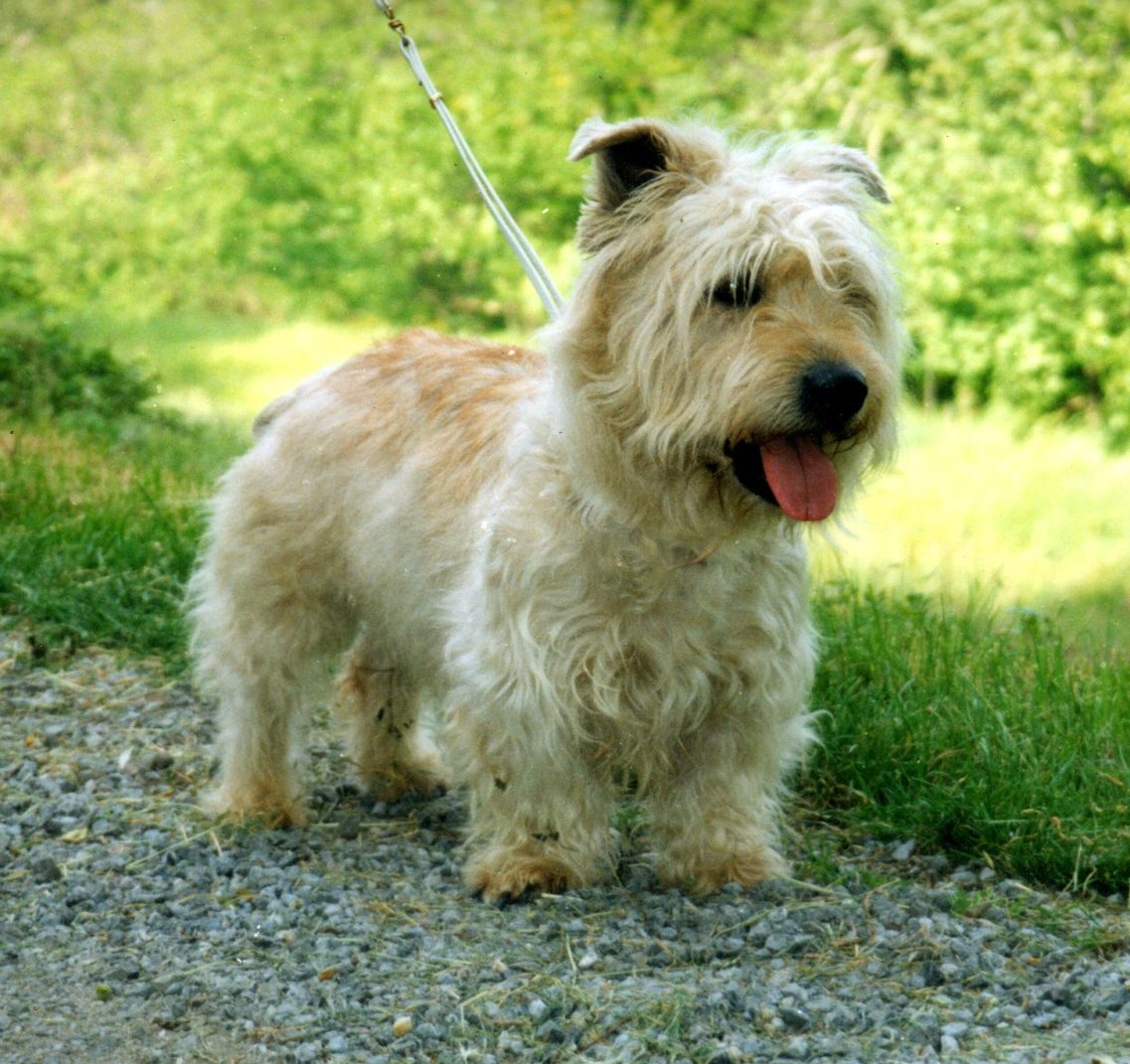
It is generally believed that Irish Glenn of Imaal Terrier is less excitable than other Terriers, although it takes action immediately when prompted.

Glen of Imaal Terrier

Content

History

The Irish Glenn of Imaal Terrier originates from the Irish east coast, in county wicklow, which is in the ravine (=Valle) the Imaal. From this rough and wild valley this very old breed got its name. It was first mentioned around 1575.

Like old farm dog, the Irish Glenn of Imaal Terrier he had a very busy life and worked hard for his master. His job was to catch rats and mice on farms and operate smaller work machines like churns and work grinders., where I had to run on leather straps. He also accompanied his master on the fox hunt, the Badger and Otter. He worked in silence and if necessary he fought to the death. Before it was banned in Ireland, the Irish Glenn of Imaal Terrier also used in questionable dogfights. Of course, he was also the most loyal friend and guarded the house and the yard, never shied away from facing a much bigger and stronger opponent.

For its owner, the Irish Glenn of Imaal Terrier it was as important as his daily bread, although undemanding, frugal and tough enough to share the barren life of farmers. This harsh life brought with it a ruthless selection. Only the toughest and most frugal Terriers survived, what characterizes the breed until today.

The pedigree of Irish Glenn of Imaal Terrier it's an irish secret to this day. In Ireland itself, this Terrier has never been numerous and did not leave his ancestral home until 1980, when the owners preserved him as a true child of nature, marked by great courage, skill and endurance. In 1933 the breed was officially recognized by the Irish Kennel Club ( I.K.C.). The international recognition of the F.C.I. continued on 1981.

Physical characteristics

The Irish Glenn of Imaal Terrier it is small but strong and robust and weighs up to 16 kilograms with a maximum height at the withers of 36 centimeters. Its relatively small forward leaning ears are notable.. Its coat is medium length and consists of a rough top layer and a smooth bottom layer. It can be wheat colored, tabby blue or in different shades of red and gold. In the case of a dark-colored coat, a black-blue mask is common., which can also show as stripes over the ears, along the back and tail, so these marks become clearly clearer with increasing age.

Character and skills

Today the Irish Glenn of Imaal Terrier it is a gentle and docile family dog. Its balanced and faithful nature, as well as his average temperament make life with him very pleasant. The Irish Glenn of Imaal Terrier is very affectionate, always cheerful and in a good mood and preferably "in the middle". Enjoy all the attention and care, but without demanding anything. Rather, follows her around with her alert gaze and once she has gained attention, shows his joy about it with strong tail swipes. If the joy is particularly great, his temperament can also run away with him.

Children are welcome as playmates, if they show him the respect that he shows. Pets are accepted by him without problems when they get used to each other. The Irish Glenn of Imaal Terrier she is always friendly with strangers, and with his contagious joy, His charm and his irresistible look quickly have all the sympathies on his side.. After all, it is a terrier that radiates a lot of personality. He is open-minded and not afraid to learn new things. He likes to be everywhere with his nose. In general, everything that is new – Weird people, new environments, an object that has not been there before – it is very interesting and has to be examined very carefully. The Irish Glen of Imaal Terrier is a particularly attentive observer. Along with her charming nature and her desire to do everything right, is very adaptable and develops a very close relationship with his family. He likes to accompany them whenever possible. Like a very people-oriented terrier, I would defend them in an emergency, even to death. Feel more comfortable in your proximity.

What characterizes him Irish Glenn of Imaal Terrier is his great courage, his self-confidence and intelligence above average. Sufficient workload and intellectual work are important to the intelligent four-legged friend. Enjoy almost all activities, be it sports with dogs, search games or learning tricks – is available for all kinds of fun.

Despite its short legs, it is very agile, due to his muscular physique, a small power. Its special characteristics are its slightly curved front legs with the legs turned outward., his big head and his pronounced chest. The Irish Glenn of Imaal Terrier it is a very balanced dog, that radiates great calm on the one hand, but on the other hand you are immediately ready for action and, if required, vigorously watches over and defends your home and family.

The Irish Glenn of Imaal Terrier – the little irish with a big heart

Like a silent working terrier it hardly barks. It is also less excitable than other terriers. Sometimes you can see the Irish stubbornness, but the Irish Glenn of Imaal Terrier not resentful. Due to its origin it does not tolerate heat very well, he likes harsh weather and when the wind blows around his nose. But if the chemistry ain't right, or if the other dog brazenly approaches him, you will receive the message – "Glen doesn't like your attitude.". So, it is important to socialize with other dogs from the beginning and to have contact with many dogs of different ages.

โ€œIrish Imaal Glen Terrierโ€ Care

Because the Irish Glenn of Imaal Terrier still very original and not over-bred, still a very healthy and robust breed. Its coat has a rough top coat with a smooth undercoat that needs to be trimmed. Otherwise, his self-cleaning coat is very easy to care for. Coat color is wheat or Brindle (Blue striped).

A consistent but loving upbringing makes the Irish Glenn of Imaal Terrier a faithful companion, nice and gentle, which is easy to handle.

Life expectancy ยซIrish Imaal Glen Terrierยป

The Irish Glenn of Imaal Terrier is considered an original dog breed, which is in good health and robustness due to the absence of hereditary diseases caused by breeding. If maintained in a species-appropriate manner, will live an average of twelve years.

Images "Irish Glenn of Imaal Terrier"

Photos:

1 – Irish Glen of Imaal Terrier during International show of dogs in Katowice – Saucer, Poland. Breeder – Piotr Kuznik, http://www.irishglen.pl/ by Pleple2000 / CC BY-SA
2 – Irish Glen of Imaal Terrier during International show of dogs in Katowice – Saucer, Poland. Breeder – Piotr Kuznik, http://www.irishglen.pl/ by Pleple2000 / CC BY-SA
3 – Adult w:Glen of Imaal Terrier by photo by Scoo / CC BY-SA
4 – Irish Glen of Imaal Terrier during International show of dogs in Katowice – Saucer, Poland. Breeder – Piotr Kuznik, http://www.irishglen.pl/ by Pleple2000 / CC BY-SA
5 – Irish Glen of Imaal Terrier during International show of dogs in Katowice – Saucer, Poland. Breeder – Piotr Kuznik, http://www.irishglen.pl/ by Pleple2000 / CC BY-SA
6 – Glen of Imaalinterrieri by Sami Kronqvist / CC BY-SA

Videos "Irish Glenn of Imaal Terrier"

Type and recognitions:

  • FCI CLASSIFICATION:
  • Group :
  • Section : . .

Federations:

  • FCI – Terriers 1 Large and medium-sized terriers. โ“˜
  • AKC – Terriers โ“˜
  • ANKC – Terriers โ“˜
  • CKC – Terriers โ“˜
  • โ€‹KC – Terriers โ“˜
  • NZKC – Terriers โ“˜
  • UKC – Terriers โ“˜

FCI breed standard "Irish Glenn of Imaal Terrier"

Origin:
Ireland

Date of publication of the valid original standard:
27.01.2001

Use:

Like all other terriers, this stubborn little breed had to hunt badgers and foxes, as well as keeping the rat population to a minimum. In the news, he is a family dog, docile and sweet.


General appearance:

It is a medium-sized dog, with a medium length coat, very strong and gives the impression of maximum substance for its size.

IMPORTANT PROPORTIONS:

The body is longer than it is tall, close to the ground.


Behavior / temperament:

It is an active dog, agile and quiet when working. Courageous and gifted with courage when you need it, otherwise it is kind and docile, from which personality flows, his loyal and affective nature, makes him a very acceptable dog for the home and company. Irish Glen de Imaal is said to be less easily excitable than other terriers, although he is always ready to react if asked.

Head:

---

Cranial region:
  • Skull: Good width and reasonable length.
  • Depression links (Stop): Pronounced.

facial region:

  • Truffle: black.
  • Snout: Giving the impression of strength; narrowing towards the truffle.
  • Jaws: Strong.
  • Teeth: Healthy teeth, regular, strong and good size. Scissor bite.

Eyes: Brown, medium-sized, round and placed well apart. Light colored eyes should be penalized.

Ears: Small, When the dog is alert, it should be pink or semi-upright; when at rest they are carried backwards. Completely drooping or erect ears are undesirable..

Neck:

Very muscular and of moderate length.

Body:

Deep and long, longer than high.

  • top line: To level.
  • Pork loin: Strong.
  • Breast : Wide and strong, well sprung ribs.

Tail:

Cut. Firm at the root, well established and carried happily. Puppies' tails should be cut in half. A natural glue (not cut) It is allowed for countries where cutting them is prohibited by law.

Tips

PREVIOUS MEMBERS: Short, curved and with good bones.

  • Blades: Spacious, muscular and well leaning.
  • Anterior legs: Short, arching and good bone.
  • Pies: Compact and strong, with round foot pads. The front feet are slightly rotated out from the metacarpus.

LATER MEMBERS: Strong and well muscled.

  • Thighs: Well muscled.
  • Knee: Well angled.
  • Hocks: Without turning in or out.
  • Pies: Compact and strong with round foot pads.

Movement:

Free and without lifting the forelimbs too much. Effortlessly cover ground with good boost from hindquarters.

Mantle

Fur: Hair is medium in length and coarse in texture, with a soft undercoat. Hair can be groomed to make your figure look neat.

Color:

  • Blue tabby without the hue turning to black.
  • Wheat, from light wheat to a golden reddish hue
  • Puppies can be born blue, Wheat or Reddish Lighter-colored puppies generally have a bluish-colored mask, may have a blue stripe along the back, in the tail and in the ears. Darker marks will lighten with age.


Size and weight:

Height to the cross:

  • Males: 35,5 cm. (14 inches) is the maximum.
  • females: proportionally less.

Weight:

  • Males : 16 kg (35 English pounds).
  • females : proportionally less.


Fouls:

Any deviation from the aforementioned criteria is considered as a fault and the severity of this is considered to the degree of the deviation to the standard and its consequences on the health and well-being of the dog..

  • Hound ears.
  • With inferior or superior prognathism.
  • Body too short.
  • Straight front.

FALTAS DESCALIFICANTES:

  • Aggressiveness or extreme shyness.
  • Any dog โ€‹โ€‹showing clear signs of physical or behavioral abnormalities must be disqualified..
  • Black and fire color.
  • Narrow snout.


N.B.:

Males should have two normal-appearing testicles completely descended into the scrotum. Only functionally and clinically healthy dogs, with the typical conformation of the breed, should be used for parenting.

TRANSLATION: Lic. O. Valverde, reviewed by Dr. F. del Valle and updated by J. Nallem, Uruguayan Kennel Club.

Source: F.C.I - International Cynological Federation

Alternative names:

1. Irish Glenn of Imaal Terrier, Wicklow Terrier, Glen, Glennie (English).
2. Irish Glen of Imaal Terrier (French).
3. Irish Glen of Imaal Terrier (German).
4. Glen of imaal terrier (Portuguese).
5. Glen, Wicklow Terrier, Glen of Imaal Terrier, Irish Glen of Imaal Terrier (espaรฑol).