โ–ท The world of Pets: Dogs, cats, birds, reptiles, amphibians

Fila Brasileiro
Brazil FCI 225 - Molossoid - Dogo
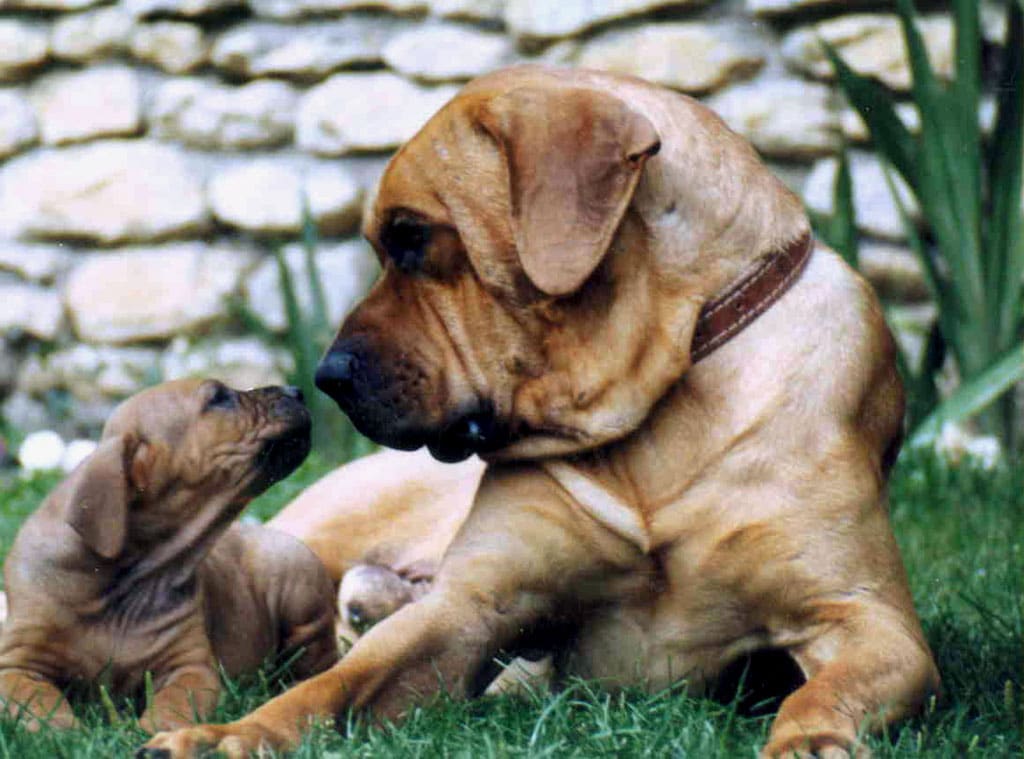
The Fila Brasileiro it is a rare dog in Europe, which implies that it is difficult to find a good puppy.

Fila Brasileiro

Content

Characteristics "Fila Brasileiro"

Coexistence is important that you have with your new friend. Before considering the acquisition of a dog of the breed "Fila Brasileiro" you know certain factors. Not all breeds of dogs are apt to live in an apartment, you must take into account his character, their need for exercise, their interaction with other pets, their care and if you have small children, their level of tolerance towards them.

Adaptation โ“˜

3,0 of 5 stars (based on 1 review)

friendly dog โ€‹โ€‹โ“˜

1,0 of 5 stars (based on 1 review)

hair loss โ“˜

3,0 of 5 stars (based on 1 review)

Affection level โ“˜

4,0 of 5 stars (based on 1 review)

Need for exercise โ“˜

4,0 of 5 stars (based on 1 review)

Social need โ“˜

3,0 of 5 stars (based on 1 review)

Home โ“˜

1,0 of 5 stars (based on 1 review)

Toilet โ“˜

1,0 of 5 stars (based on 1 review)

Friendly with strangers โ“˜

1,0 of 5 stars (based on 1 review)

barking โ“˜

2,0 of 5 stars (based on 1 review)

Health โ“˜

2,0 of 5 stars (based on 1 review)

Territorial โ“˜

5,0 of 5 stars (based on 1 review)

Cat friendly โ“˜

1,0 of 5 stars (based on 1 review)

Intelligence โ“˜

3,0 of 5 stars (based on 1 review)

Versatility โ“˜

2,0 of 5 stars (based on 1 review)

Child friendly โ“˜

2,0 of 5 stars (based on 1 review)

Surveillance โ“˜

3,0 of 5 stars (based on 1 review)

joy โ“˜

5,0 of 5 stars (based on 1 review)

History

The Fila Brasileiro its history is linked to both genetic mixing and Brazilian colonization. There is no consensus on its origin, but probably the Brazilian line is the result of a mixture of dogs whose specialty was hunting and herding animals in the field. The mastiff, the Bulldog, the Terceira line (a portuguese breed) and the Scent hound are just a few examples of possible breeds that have contributed to tracing the DNA of the Brazilian line. Some say that indigenous dogs (Aracambรฉ) and even the savages, like the guarbo wolf, they may also have participated in the miscegenation.

In some 19th century carvings, the breed was already known to assist in catching oxen, cows, sheep and even big cats, like jaguars, for example. This shows that the Brazilian line was not just a dog to keep at the door, taking a nap in the late afternoon: I was really going to fight! And maybe that's where his keen sense of protection comes from., always putting strangers in their place once they get home.

In 1946 the first effort was made to set the breed standard. In 1976, the second standard was recognized and approved during the 1st Symposium of the Brazilian Fila Race. In 1984 the third rule was defined, which is still valid today.

Physical characteristics

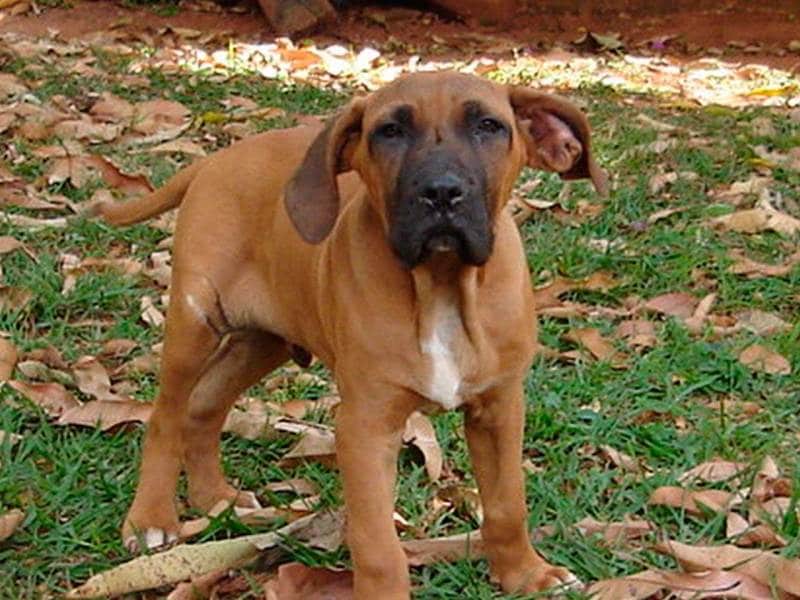
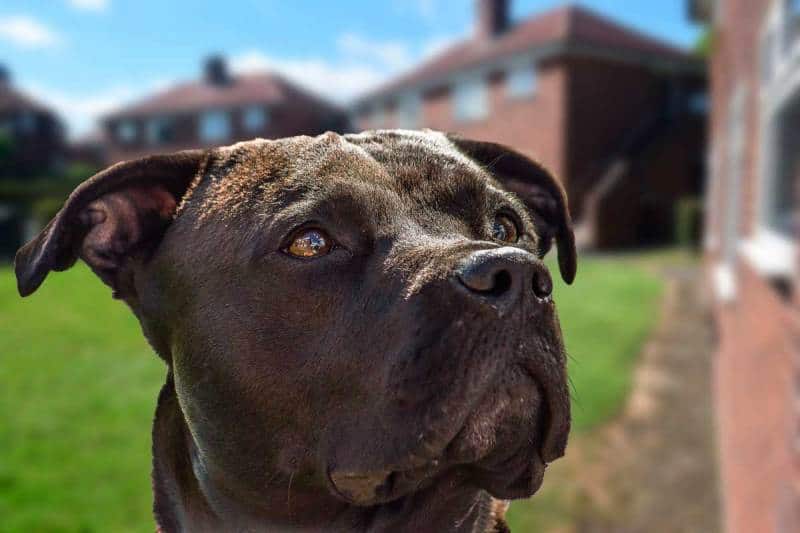
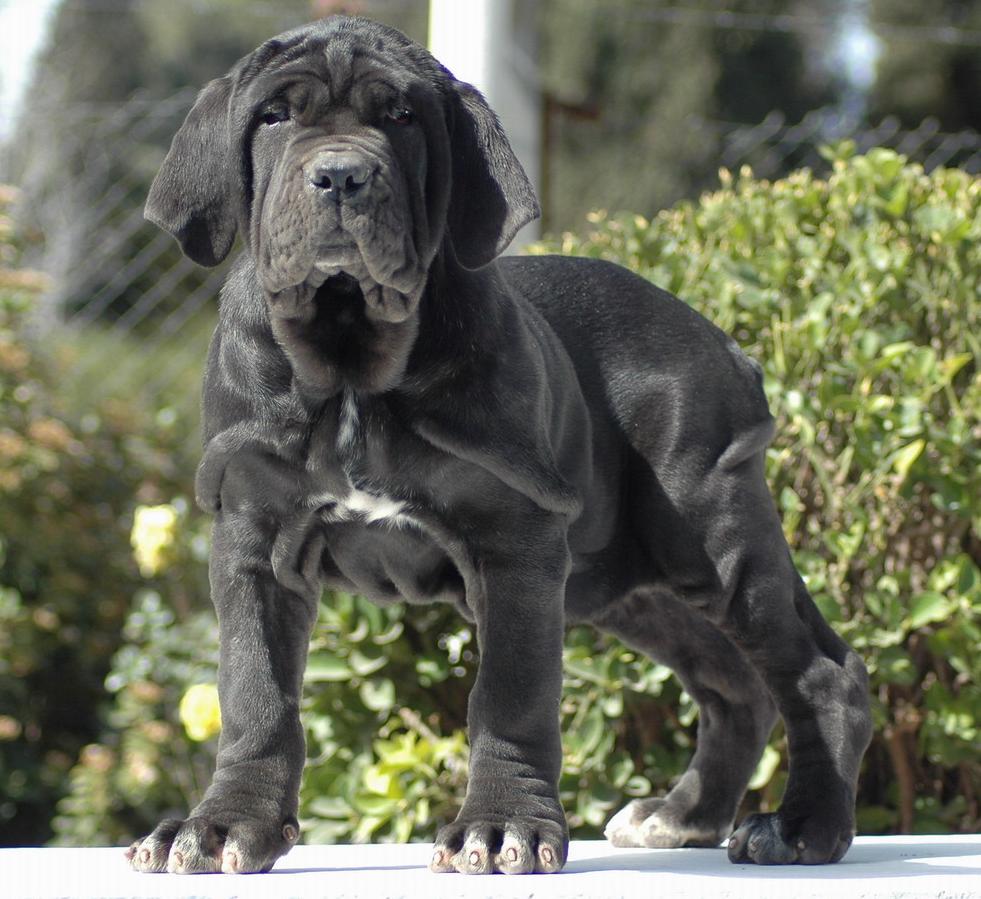
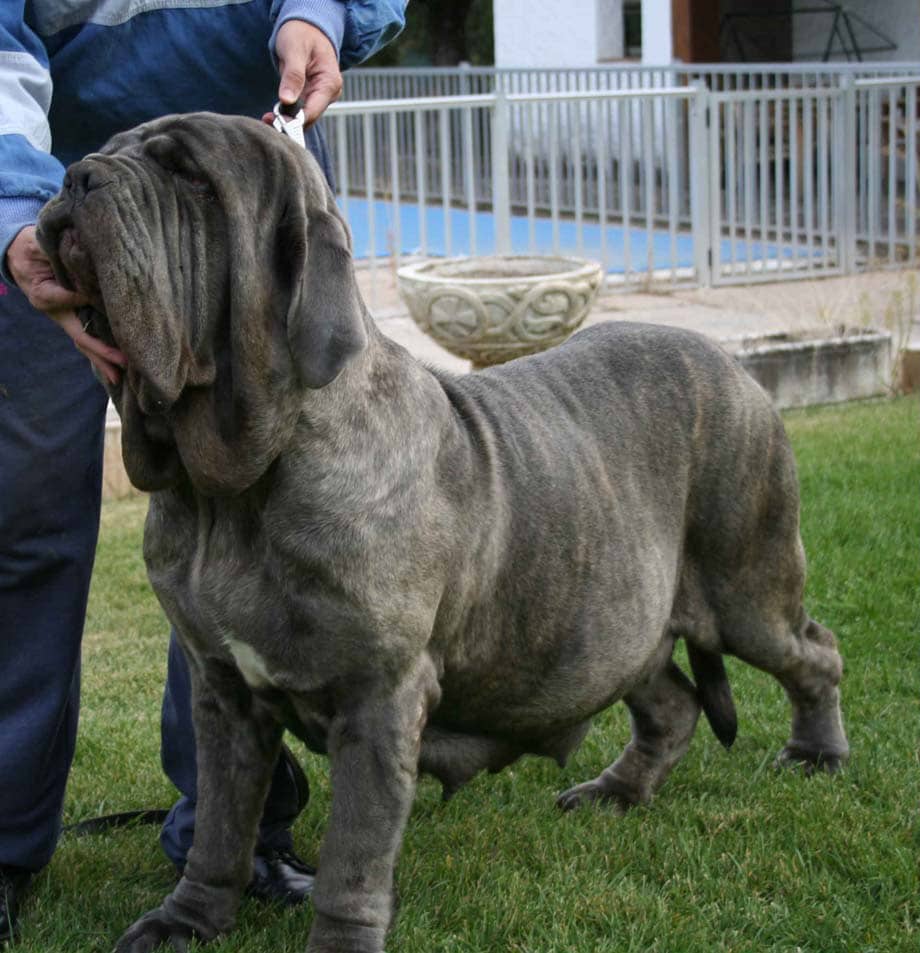
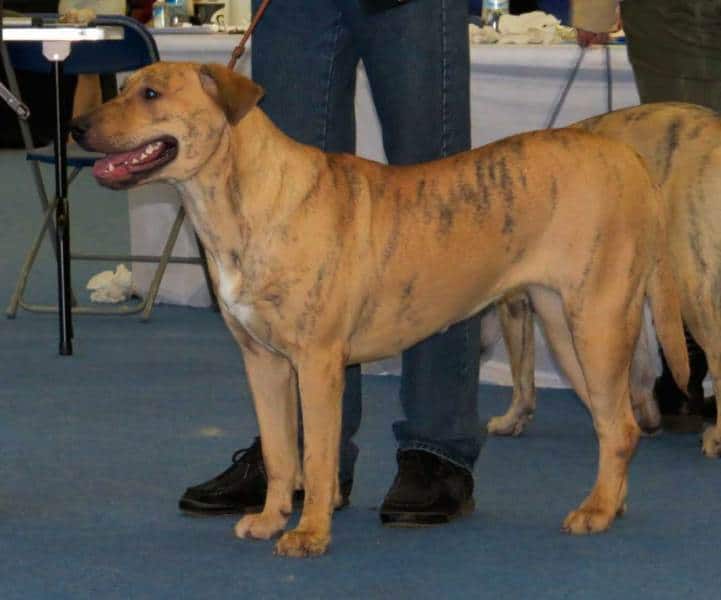
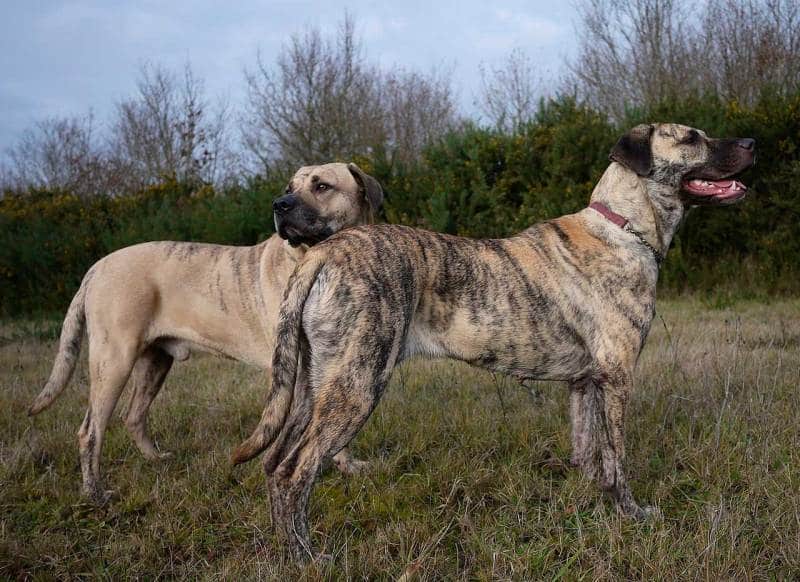
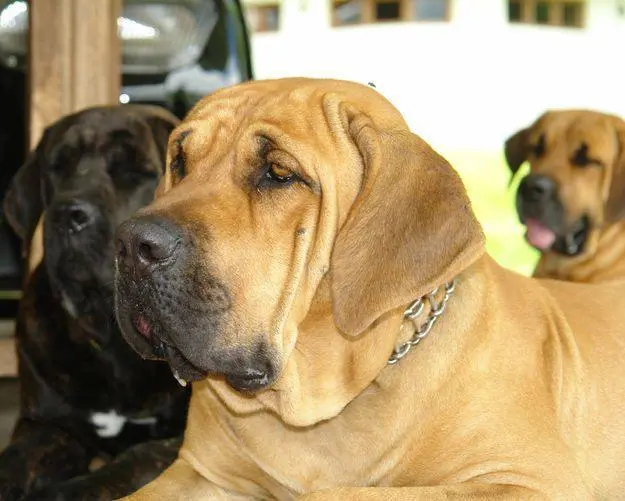
It is a trotting large but very agile. It has a powerful skeleton and a rectangular structure, compact and proportionate. The head is big, heavy and solid, although it is always proportionate to the body. The craniofacial relationship is almost 1:1, with the nose slightly shorter than the skull. The occipital ridge is very prominent, especially in the puppy. The stop is low and inclined, so it should not be seen when looking at the animal from the front. The eyes are medium or large, in the form of almond, quite sunken and colored according to the mantle (yellow to dark brown). Ears are wide and thick, dangling and "V" shaped. The limbs are parallel and straight, with strong bones. A characteristic of the breed is the way of moving in amble. The tail is very broad at the root and tapers rapidly when it reaches the hock..

  • Fur: short.
  • Color: all solid colors are supported, except white, the rat gray and the mottled or stained coat, liable to disqualification. Solid color layers may have stripes of less intense or very dark color. Black mask is optional.
  • Size: in males, of 63 to 75 cm., with a minimum weight of 50 kg; in females, of 60 to 70 cm., with a minimum weight of 40 kg.

Character and skills

The Brazilian Fila is very determined, brave and can be very fierce. They can be docile and very obedient to their owners and family and are very tolerant of children.. It is a dog that loves the company of its owner and always tries to be with him.. One of the most striking points of the Fila Brasileiro is the aversion to strangers. So they are excellent guard dogs..

The Fila Brasileiro are the protectors of the pack (that is to say, the family that raises him) and therefore they need to be educated from an early age. At the age of 7 months already begin to show surveillance potential. As they are very large and very strong dogs, it's important for owners to have a firm wrist and show leadership from an early age, so that the dog becomes obedient and respects the owners.

They are very smart and tend to easily learn the owners' teachings. Be careful not to be too rigid in your corrections when the Fila Brasileiro does something wrong, because they can be a bit stubborn and make training difficult.

This dog's aggressive instinct should not be stimulated (and less with bloody methods), because it could become a dangerous animal, given its great bulk. Without a doubt, this is a breed for experts.

Care of the ยซFila Brasileiroยป

Videos "Fila Brasileiro"

Brazilian Fila VideosFila brasileiro

Fila brasileiro puppies week 7

The maintenance of a โ€œFila Brasileiroโ€ is not laborious, not too different from other large, short-haired dogs. The frequency of the bath can vary according to the type and intensity of the activities carried out by each dog..

– Grooming: The "Fila Brasileiro" does not need more than weekly brushing, because its coat is short and the breed doesn't get too dirty. Ideally, you should bathe monthly in summer and, in winter, Every two months.

– Nails and ears: you always have to check them. The nail cannot grow too long and the ear cannot accumulate wax and dirt. Remember that the โ€œFila Brasileiroโ€ is prone to developing otitis and keeping it clean makes it easier to notice any problem..

– Eyes: if there is any spot near the eyes or accumulation of discharge, clean them with saline solution.

– Sol: sunbaths are welcome: stimulate the body to produce vitamin D, essential for strong teeth and bones. The ideal time for this is the same as for humans, avoid the hottest times of the day, between the 10 am and 4 pm.

Health of the ยซFila Brasileiroยป

The Fila Brasileiro it is a healthy breed of dog. Maintaining the basic care routine and controlling your physical condition, the chances of you having a happy life are great! See some problems that may affect you:

– Obesity: common cause of health problems that can affect not only the Fila Brasileiro, but to all overweight dogs. As the Fila Brasileiro have a tendency to gain weight, watch for changes in the general shape of the dog, avoid giving treats and respect the recommended amounts of food for the breed.

– Otitis is an infection that can affect the hearing of the Fila Brasileiro and it can be caused by age or even poor hygiene.

Dog's level of exercise

The Fila Brasileiro need plenty of exercise, what requires available space – even if you walk on walks. Must exercise for one hour daily. And how is a smart dog, seeks to diversify its activities. A simple change in the route of the walk offers new stimulation and keeps you happy.

Images "Fila Brasileiro"

Photos:

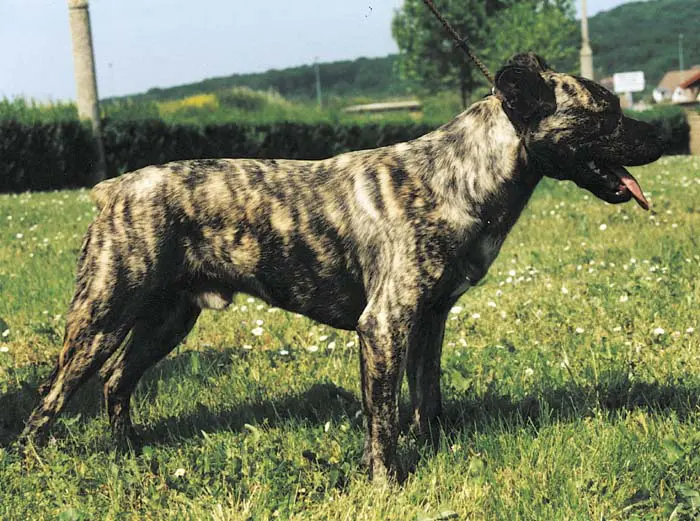
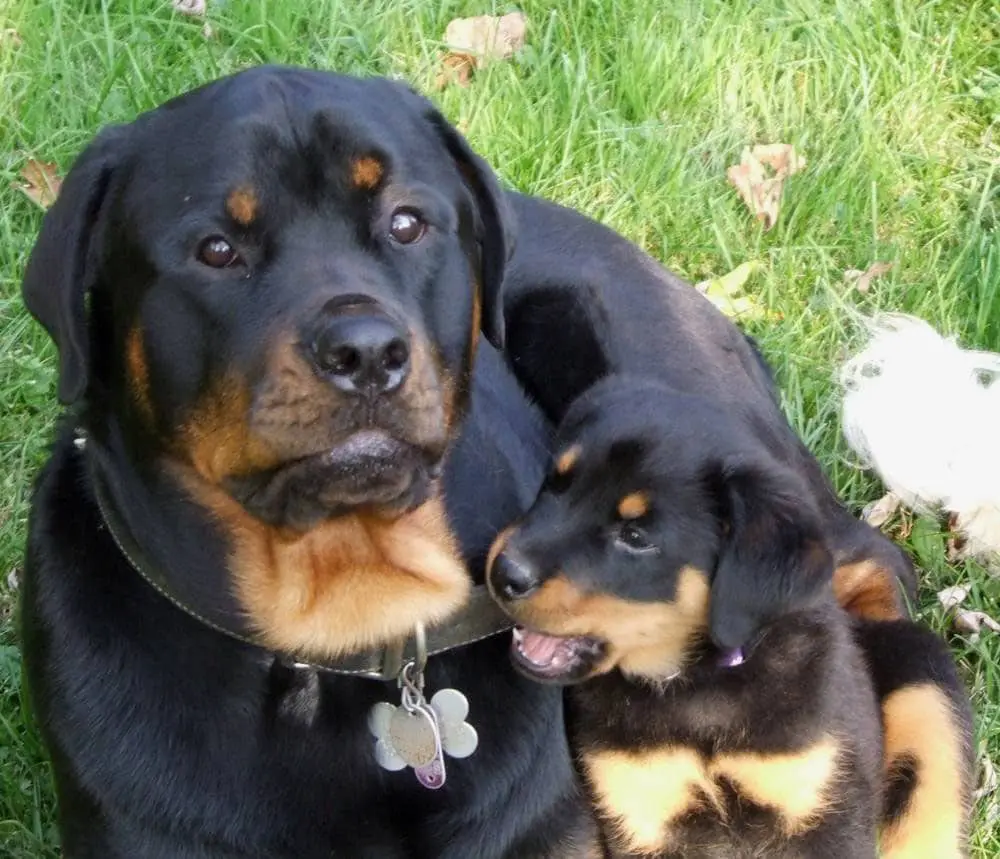
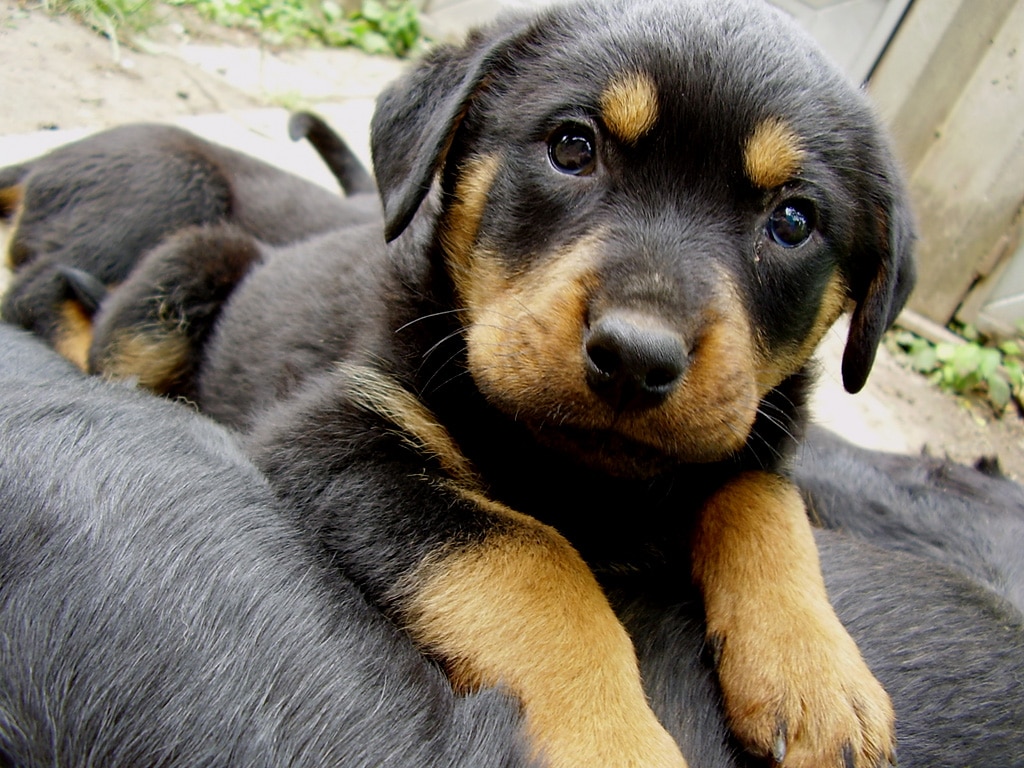
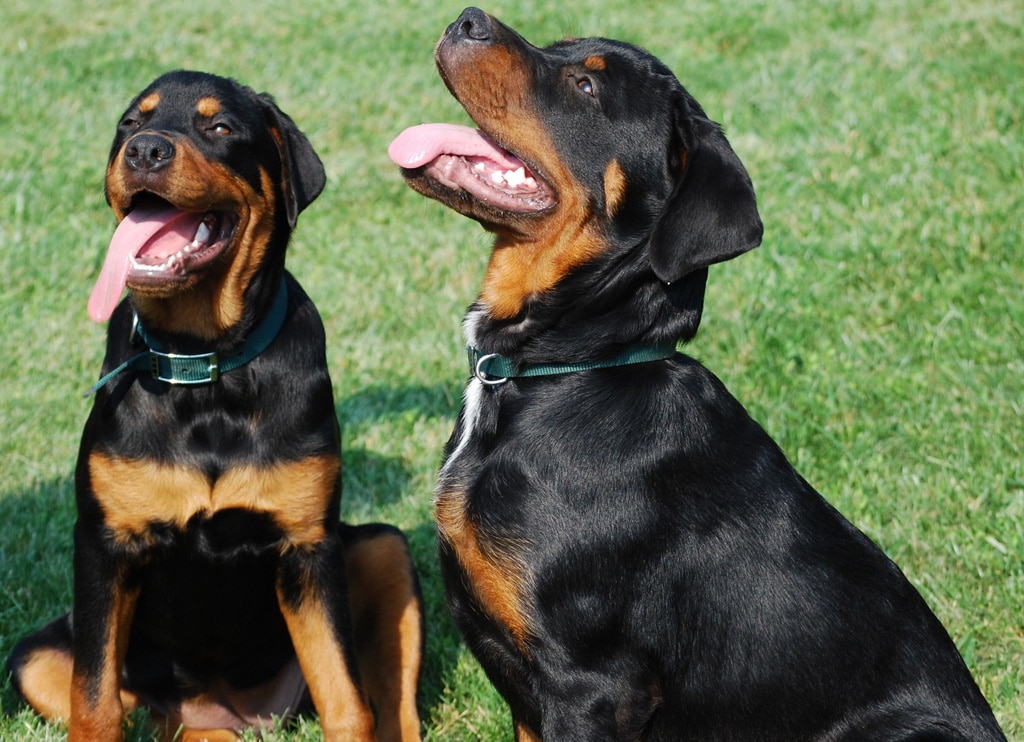
1 – PETRA VESELร has published this image ยซFila Brasileiroยป under public domain license.
2 – Original bitch Fila Brasileiro – branca to AJorgeSC / CC BY-SA
3 – Fila Brasileiro (ALMODOVAR Rio Grande – from RIO GRANDE kennel) by Pleple2000 / CC BY-SA
4 – Puppy OFB at 4 months old by AJorgeSC / CC BY-SA
5 – row brazilian-colombia hatchery – 223 | Julio Cesar Hoyos A | Flickr
6 – row brazilian-colombia hatchery – 086 – Flickr

Type and recognitions:

  • FCI CLASSIFICATION:
  • Group :
  • Section : . .

Federations:

  • – FCI – Pinscher and Schnauzer-Molossoid type dogs – Swiss Mountain Dogs and Cattledogs. Section 2.1 Molossoid, mastiff type. โ“˜
  • – CKC – Miscellaneous list โ“˜
  • – NZKC – Utility dog โ“˜
  • – UKC – Watchdog โ“˜

FCI breed standard "Fila Brasileiro"

Origin:
Brazil

Date of publication of the valid original standard:
29.09.2016

Use:

Watchdog


General appearance:

Race typically molosoid.

Powerful bone structure, rectangular and compact set, Although harmonious and well-proportioned. It presents, along with his body mass, highly concentrated and easily noticeable agility.Sexual dimorphism must be very well defined and obvious (female females, male males).

PROPIMPORTANT ORTIONS:

  • Muzzle slightly shorter than skull.
  • The length of the body, measured from the tip of the sternum to the tip of the buttock, exceeds height at withers by15%.


Behavior / temperament:

Has courage, remarkable determination and verve. With their masters and the family is docile, obedient and extremely tolerant towards children. Their loyalty is notorious, because he insistently seeks the company of his masters. One of his characteristics is to be distrustful of strangers..

Is quiet in nature, which reveals a security and self-confidence very typical of his character.. Adapt perfectly well to new environments and strange noises. It is a special guardian of properties, and it is, by instinct, a pasture for cattle dog, as well as a large game hunter.While one of its characteristics is a natural withdrawal towards strangers, especially in their own territory, must be susceptible to controlled manipulation, especially in the ring.

During rest, he is calm, noble and self-confident.

Never show a gaze lost or boredom. When is attentive, your expression must show determination, which results in a fixed and penetrating gaze.

Head:

Grand, heavy, solid, but always well proportioned to the body. View from the top, looks like a trapezoid into which the pear-shaped head has been inserted.

Cranial region:
  • Craging: Its profile presents a smooth curve, that extends from the naso-frontal depression to the occipital protuberance, which is marked and outgoing, especially in puppies. Head on, it's wide, with a curved top line. Its lateral lines descend in shallow curves, almost vertically, and decrease towards the snout in a continuous line.
  • Dnaso-frontal depression (Stop): Seen from the front, is practically non-existent. The middle groove gently rises almost to the middle of the skull. Profile view, it is little marked, inclined and almost formed thanks to the superciliary arches, which are well developed.

facial region:

  • Trufa: Nostrils, wide, well developed, although without occupying the entire width of the maxilla. Its color is black.
  • Horcico: Strong, width, celebrities, always in proportion to the skull. Of good prominence at the base, without being higher than long. Seen from above, it is well filled under the eyes and thinning very slightly to half, then widening slightly to the previous curve. In profile, the nasal passage has a straight or slightly arched upper line, but never ascending. The anterior line is almost perpendicular to the nasal passage., with a slight depression just below the nose.
  • Labios: The upper lip is thick and hanging and covers the bottom in a perfect curve: the lower line of the muzzle is thus almost parallel to the upper one. The lower lip is well applied to the region of the fangs; from there it's loose all the way back, with ยซtoothedยป edges, and ends with the always apparent corner. The edge of the lips forms a deep inverted U.
  • Jaws / Teeth: Teeth are characterized by being wider than they are long. They are strong and white. The upper incisors are wide at the roots and sharp at the edges.. The fangs are strong, are well positioned in the maxilla and are separated. The jointindit is scissor shaped.
  • Ojors: Medium to large, macaroons, well separated and placed medium to deep. Its color ranges from brown to yellow, always in harmony with the color of the coat.However a darker color is preferred.Because the skin is loose, many specimens have hanging eyelids, detail that should not be considered as a fault, since this accentuates the sad aspect of the look, typical of the breed.
  • Obars: Pendants, thick, large, V-shaped. Wide at the root, decrease in extremities, which are rounded. Inserted into the back of the skull, They occur at the level of the midline of the eyes, when the dog is at rest, and they rise above the primitive ligament when it is alert. The ears are tilted at the ligament, since the front edge is higher than the back. Hanging to one side or folded back, so that its interior is visible(Pink).

Neck:

Extraordinarily strong and muscular, seems short. The upper edge is slightly convex, well separated from the skull. Chin presence.

Body:

Strong trunk, wide and tall, covered by thick and loose skin. The thorax is longer than the abdomen.

  • Lรญnand the top: Height at withers is slightly lower than rump, downline; is wide, due to the separation of the shoulder blades. In the place where the cross ends, the top line changes direction, gently rising to the front of the rump, without any sign of a bulging or arched back (carpal back).
  • Itmo and flank: Less long and wide than the thorax. They are clearly separated. In the female, flank edge is more developed. Seen from above, the loin should be less broad and full than the thorax and rump, but without showing signs of tightness.
  • Glikeness: Wide, long, its obliqueness approaches the 30 degrees above the horizontal and ends in a smooth curve. It is a little higher than the cross. รยก back view, it should be wide, almost equal in width to the chest, and can be even wider in females.
  • Breast : Well arched ribs, although without affecting the position of the shoulders. The chest is broad and well sloped, reaches to the tip of the elbows; the pecs are very prominent.
  • Lรญnlower ea and belly: The chest is long and is parallel to the ground in all its extension. The belly rises gently and is never puffy.

Tail:

With wide roots and medium insertion. Quickly gets thinner to finish at hock level. When the dog is excited, the tail is raised, thus accentuating the curvature of the limb. The tail must not fall on the back, nor curl up.

Tips

PREVIOUS MEMBERS:

  • Apgeneral arience: Forelimb height, from elbow to floor, It must be equal to the height from the elbow to the withers.
  • Shoulder: The shoulder and arm must be made up of two bones of the same length, shoulder blade and humerus. The shoulder blade forms an angle of 45ยฐ with the horizontal, and the humerus approximately 90ยฐ with the shoulder blade. The scapulo-humeral joint forms the tip of the shoulder, which must be at the level of the tip of the sternum, a little behind this one. In the ideal case, the shoulder and arm must be located in the space that goes from the cross to the sternum, and the end of the shoulder should be in the middle of this path. An imaginary perpendicular descending from the withers should pass through the elbow and reach the foot.
  • Antarm: Members must be parallel. The bones are strong and straight.
  • CArpos: Strong and apparent.
  • Metacarpus: Short, slightly inclined.
  • Pinis previous: They are formed by strong and well arched fingers, although not too close. Support is carried out on thick fingers and wide bearings, long and thick. In the correct position, fingers should be facing forward. The nails are strong, dark, and they can be white when the corresponding finger is also white.

LATER MEMBERS:

  • Apgeneral arience: The bones are not as thick as those of the forelimbs, however as a whole, they should never look thin. The hind limbs are parallel.
  • Thighs: Widths, with arched edges, since they are formed by the muscles that descend from the ilium and ischium. These shape the curve of the gluteus, hence it is necessary to require a good sized ischium.
  • Ttorsos: they are strong.
  • Metatarsals: Slightly sloping, longer than metacarpus; angulation of the stifle and hock is moderate.
  • Pinis later: A little more oval than the previous ones and similar to these in everything else. There should be no dewclaws.

Movement:

Long and elastic step, like that of cats. Its main characteristic is the displacement of the two members on the same side, and then move to the two on the other side, ยซ camel step ยป. This produces a waddle, with lateral rocking of the thorax and haunches, accentuated by the tail when raised. When the dog walks, its head remains below the dorsal line.. Jogging is easy, harmonious, loose, with wide and powerful strides that cover the terrain well. The gallop is powerful and with it the dog reaches an unsuspected speed in such a large and heavy animal. Its movement is always influenced by the typical joints of the molossoid., they not only give the impression, but they actually allow sudden and rapid changes of direction.

Mantle

PIEL: One of the most important characteristics of the breed is that the skin must be thick and loose over the entire trunk., mainly on the neck, where it forms pronounced jowls, which in many cases, reach the chest and abdomen. Some dogs have a fold on the sides of the head and another that descends from the cross to the shoulder. During rest, the head should not show folds; when the dog is alert, contraction of the skull skin, which is formed when the dog lifts its ears, makes small longitudinal folds appear on the skull between these.

  • Plink: Short, dense, soft and well stretched over the body.
  • Colorr: Striped, black & Fawn. A black mask may or may not be present. In all allowed colors there may be white marks on the feet, the chest and the tip of the tail.White markings on other parts of the mantle are considered missing.


Size and weight:

Alturto the cross:

  • Males: 65 to 75 cm.
  • females: 60 to 70 cm.

Weight:

  • Minimum, 40 kg for females.
  • Minimum, 50 kg for males.


Fouls:

Any deviation from the aforementioned criteria is considered as a fault and the severity of this is considered to the degree of the deviation to the standard and its consequences on the health and well-being of the dog..

  • Bite level.
  • Short snout.
  • Small ears
  • Ears that come up high
  • Overly clear eyes
  • Presence of folds while the dog is at rest.
  • Lower prognathism
  • Double chin (fold in the skin in front of the double chin)
  • Backless
  • Very narrow croup
  • Tail that appears curled on the back
  • Slightly sloping chest.
  • Markedly deviated metatarsals and metacarpus.
  • Highly angled posteriors
  • Short steps

FALTAS GRAVES:

  • Apathy and shyness.
  • Square silhouette
  • Small head
  • Pronounced naso-frontal depression, front view
  • Short upper lip.
  • Round eyes round eyes. Poor pigmentation of the eyelids.
  • Absence of 2 teeth, except PM1 (premolars 1) or the first premolars
  • Absence of papad
  • Arched back Horizontal top line.
  • Excessively raised bottom line
  • Light bones Lack of substance.
  • V hocks
  • Absence of angulation in the hind limbs (ยซpig's footยป).
  • White marks covering more than a quarter of the body.
  • Size above the maximum required.

FALTAS DISQUALIFYING:

  • Aggressiveness or extreme shyness.

Any dog โ€‹โ€‹showing clear signs of physical or behavioral abnormalities must be disqualified..

  • Pink truffle.
  • Prognatismo superio
  • Inferior prognathism that leaves teeth visible even if the muzzle is closed.
  • Missing tusk or one of a molar except M3).
  • blue eyes (different colored eyes).
  • Ears or tail cut off
  • Croup lower than the cross.
  • Dog that doesn't show ambulation.
  • Absence of loose and elastic skin
  • All white dogs, mouse gray color, mottled, black and tan, and blue
  • Males less than 65 cm and females less than 60 cm in height at the shoulder.
  • Cryptorchidism or monorchidism, use of devices, albino specimens, absence of typical characteristics


N.B.:
  • Males should have two normal-appearing testicles fully descended into the scrotum..
  • Only functionally and clinically healthy dogs, with the typical conformation of the breed, should be used for parenting.

TRANSLATION: Federation Canรณfila Mexicana, A.C. (Original version: IN).
Revision: Mrs. Brรญgida Nestler.
Technical supervision: SR. Miguel Angel Martinez.

Source: F.C.I - International Cynological Federation

Alternative names:

1. Brazilian Mastiff, Onceiro (Jaguar Hound), Cabeรงudo (Big-headed), Black Mouth (English).
2. chien de Fila (French).
3. Brasilianischer Mastiff (German).
4. Brazilian mastiff, Mastiff brasileiro, Boca Negra, Onceiro, Cabeรงudo, Boiadeiro das Minas Gerais, Cรฃo de Fila brasileiro (Portuguese).
5. Cabeรงudo boiadeiro, Fila brasileรฑo (espaรฑol).

โ–ท The world of Pets: Dogs, cats, birds, reptiles, amphibians

Dogo Canario
Espaรฑa FCI 346 - Molossoid . Dogo

Dogo Canario

The aggressiveness of Dogo Canario should not be overly stimulated. It is an optimal guardian and defender without the need for training.

Content

History

The Dogo Canario It is a classic moloso. It is the offspring of an ancient and in this ancient form is only rarely found in Central Europe today.. It has many names: Presa Canario, Perro de Presa, Perro de Toro, Alano o Presa Canario. Dogs of the current type Dogo Canario they existed still ago 200 years everywhere. They were the old saupackers, bear teethers, guard dogs, butcher dogs, the ancestors of the current great danes, bulldogs, boxers and mastiffs. They are extremely strong and bulky dogs, that even today are summarized as molossers. They were already bred in ancient times and have always been highly appreciated. They were used on large farms, with livestock herds or for example on merchant ships such as guard and protection dogs, served as herding dogs and as hunting dogs for wild boar or bear. They served rulers like Hammurabi as war dogs, they had them carved in stone in full recognition does 3700 years.

Due to its strength, courage and determination, have been used as fighting dogs in the arenas of animal fighting since Roman times. Molossians have a commanding head with a rather short snout and long lips.. The ears are usually worn hanging. According to the traditions of antiquity in words and images, the main characteristics of the molossian have remained essentially the same for thousands of years, but in recent centuries and especially due to modern dog breeding, the classic type of molosser has been lost to some extent. In extreme cases strange shapes have been bred with many extremely short folds or snouts such as bulldogs or giants like him Great Dane or the Mastiff. The Dog is still raised in his homeland only for his performance at work.

So, chances are that the Dogo Canario still personify the type Molosoide as was common in the old days. It is clearly recognized as trotting, but does not suffer from cultivated exaggerations of any bodily characteristics or traits. Can only hope it stays that way. Unfortunately, breeders are very much at odds with Dogo Canario. They haven't even managed to agree on a name and a registry office. Since 1991 It has been officially considered as "The Canarian Presa Dog" among the natural symbols of the Canary Islands.. Meanwhile in 2001 the Spanish Ministry of Agriculture recognized these dogs as a national breed also under the name of Dogo Canario, the same dogs were then provisionally recognized as Dogo Canario by the world federation FCI in 2001 and finally in 2011. Other names are Perro de Presa y Alano. Alano It is an old word that means Great Dane.

Physical characteristics

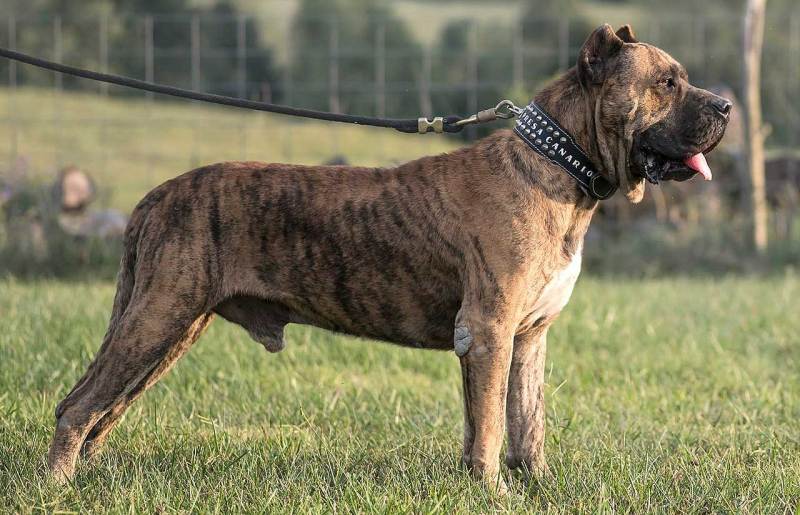
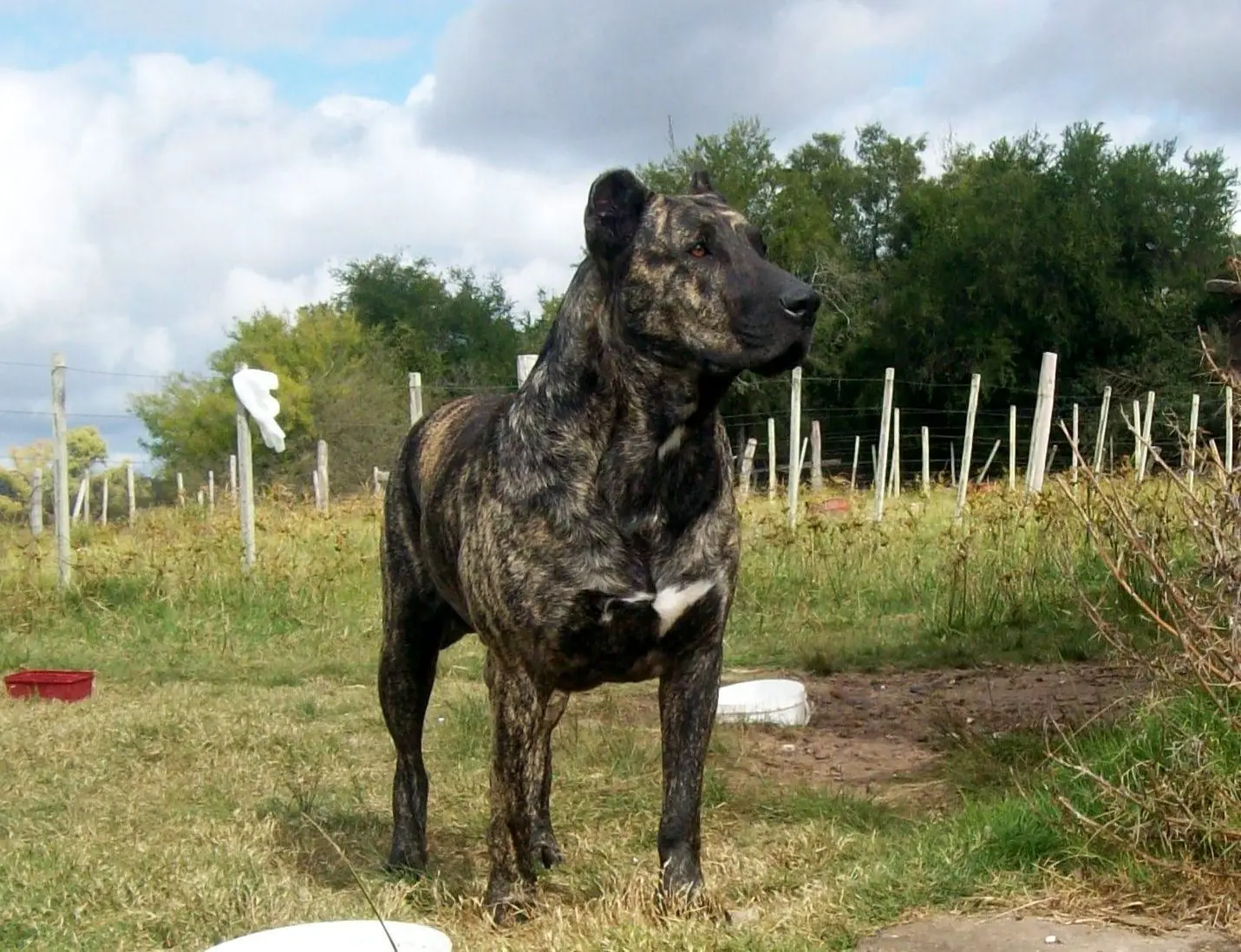
The Dogo Canario, Perro de Presa, Perro de Toro, Alano o Presa Canario – all designations for the same four-legged friend – he is an elegant dog that radiates athletic power. He is an athletic, muscular, elongated but nevertheless typical molosser.

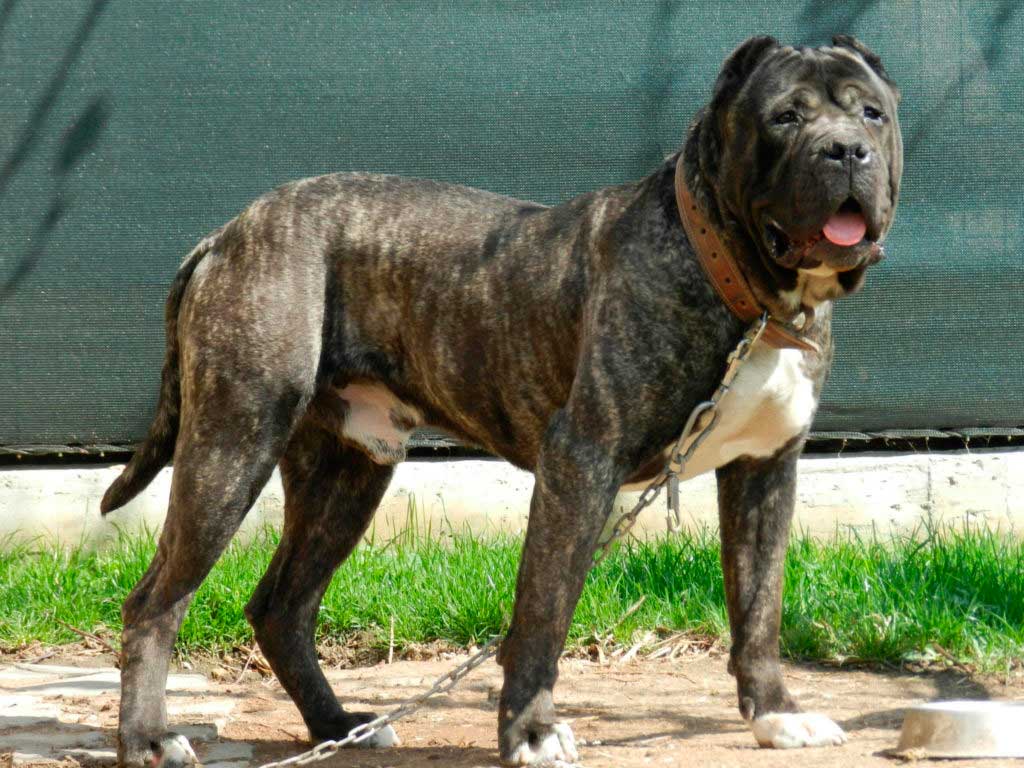
The skull-muzzle ratio is approximately 6:4. The upper lip rests a little flaccidly on the lower one. The eyes, medium-sized, they are oval and hazelnut, the ears, high, they are separated from each other and are shaped like a button; they are only amputated to remember their original function as a combat dog. The neck, long and muscular, shows a slight dewlap. The tail is implanted high: thick at the base, is tuned to the extreme. the belly is retracted, but the last ribs stand out only slightly, giving a harmonious harp shape. Limbs are sturdy, muscular and perfectly plumb; angulation of the hind limbs is not very marked.

The difference between male and female bulldogs desired by the FCI standard is therefore unnaturally large. In any case, desires of this standard for outward appearance should not be taken so seriously.

Because fortunately this originally preserved dog breed, robust and healthy has set its standard โ€œfor itselfโ€, more exactly for their performance at work, and has kept it in the practice of life until today. People, who now wants to put him in a standard of modern pedigreed dog breeding, don't even agree to the principle, as we can see in its history of the breed. Modern pedigreed dog breeding has done no breed of dog any good, both in terms of health and character. In old times, the Bulldog fitted with pleasure to the ears, so that they protruded upwards. This is now prohibited. Today they show large down-hanging ears..

  • Fur: short, without Undercoat, pretty hard.
  • Color: leonado or atigrado. The tabby specimens have a wide range of colors, from very dark to a light gray with a rather cold tone.
  • Size: males, of 61 to 66 cm.; females, of 57 to 62 cm..

Character

The Dogo Canario is a quiet dog, balanced and self-assured. He is a powerful and defensive athlete who can show his performance at any time. Like all molossi, he is extremely kind, has strong nerves and a high stimulus threshold. But, he is more eager to move and not as lethargic as most molossers today bred only as companions. One Dogo Canario well socialized is friendly to people who know and like children. It is very sociable. Towards strangers is at first a little distant without fear. He is an incorruptible guardian, fearless and protective of his family without being aggressive himself. The FCI standard describes the character desired by the breed:

Calm appearance; alert look. It is especially suitable as a watchdog… His temperament is even-tempered and he is very self-confident.. Deep barking. He is docile and kind to his family members and with strong ties to his master, but you may suspect strangers. Self-assured demeanor, elegant and somewhat distant. When you are alert, his attitude is confident and alert.

It must be added that the Dogo Canario rarely barks. But if it barks once, it's pretty awesome.

Fitness

The Dogo Canario is undemanding in terms of external conditions. Of course: a small apartment in the big city would not be optimal for your attitude. But other than that it's easy to maintain. It is also a working dog, a guard, a driver, a hunting dog for hunting wild boar. The Dogo Canario it is suitable as a family dog รขโ‚ฌโ€นรขโ‚ฌโ€นonly on the condition that it is well socialized, well educated and physically fit. You also have to take into account a fact: It is considered a "dangerous dog" in many countries.

Dogo Canario Education

The Dogo Canario can be trained well, but still not a beginner dog. It is intelligent, very sociable and eager to work. But at the same time he is very powerful and assertive. In case of doubt, always the strongest end of the strap. So, his master or caretaker should not leave doubts about his role as leader and this on the basis of natural authority. So this dog will gladly leave the leading role to his bipeds without reservation.. But it must be filled. The Dogo Canario it is even suitable for demanding tasks such as training as an assistance or protection dog. The basic requirement is that it comes from a serious breeder and that it has already been socialized there..

Dogo Canario health and care

The Dogo Canario has no special demands on your care.

Typical diseases

Breed-specific diseases are not known.. Due to his still short career as an official pedigree dog, it can be assumed that the population of the Dogo Canario, Presa Dog or Presa Canario – Whatever this ancient breed of dog is called – enjoys robust health.

Nutrition / Food

The Dogo Canario has no special demands on their diet.

Life expectancy Dogo Canario

There are no reliable figures on life expectancy. Seriously raised, the Dogo Canario should be able to live off 10 to 12 years.

Buy Dogo Canario

Before making a purchase, be aware that the restrictive attitude of the State can cause many problems in daily life and additional financial burdens. The Dogo Canario it is a large and powerful dog that belongs to the hands of an experienced teacher or lover. The cost of a Dogo Canario is of some 1200 EUR.

Characteristics "Dogo Canario"

Coexistence is important that you have with your new friend. Before considering the acquisition of a dog of the breed "Dogo Canario" you know certain factors. Not all breeds of dogs are apt to live in an apartment, you must take into account his character, their need for exercise, their interaction with other pets, their care and if you have small children, their level of tolerance towards them.

Adaptation โ“˜

4,0 of 5 stars (based on 1 review)

friendly dog โ€‹โ€‹โ“˜

1,0 of 5 stars (based on 1 review)

hair loss โ“˜

3,0 of 5 stars (based on 1 review)

Affection level โ“˜

4,0 of 5 stars (based on 1 review)

Need for exercise โ“˜

4,0 of 5 stars (based on 1 review)

Social need โ“˜

1,0 of 5 stars (based on 1 review)

Home โ“˜

3,0 of 5 stars (based on 1 review)

Toilet โ“˜

2,0 of 5 stars (based on 1 review)

Friendly with strangers โ“˜

2,0 of 5 stars (based on 1 review)

barking โ“˜

3,0 of 5 stars (based on 1 review)

Health โ“˜

4,0 of 5 stars (based on 1 review)

Territorial โ“˜

5,0 of 5 stars (based on 1 review)

Cat friendly โ“˜

2,0 of 5 stars (based on 1 review)

Intelligence โ“˜

4,0 of 5 stars (based on 1 review)

Versatility โ“˜

2,0 of 5 stars (based on 1 review)

Child friendly โ“˜

2,0 of 5 stars (based on 1 review)

Surveillance โ“˜

5,0 of 5 stars (based on 1 review)

joy โ“˜

3,0 of 5 stars (based on 1 review)

Images "Dogo Canario"

Photos:

1 – Canarian Presa Dog – Canary Dog by Kamen Rider Snipe / CC BY-SA
2 – Presa Canario dog – Dogo Canario by Basil Dragon / CC BY-SA
3 – Presa Canario by https://pxhere.com/es/photo/732874
4 – Canary bulldog, edited by Canecorsodog (en.Wikipedia) edited by Caronna 12:25, 6 February 2008 (UTC) / CC BY-SA
5 – Zai-Kan de Irema Curtรณ. Canary prey perro byManuel Curtรณ Jr. / CC BY-SA
6 – Presa Canario by Wikipedia
7 – Presa canario dog by https://pxhere.com/es/photo/75916

Videos "Dogo Canario"

Type and recognitions:

  • FCI CLASSIFICATION:
  • Group :
  • Section : . .

Federations:

  • – FCI – Pinscher and Schnauzer-Molossoid type dogs – Swiss Mountain Dogs and Cattledogs. Section 2.1 Molossoid, mastiff type. โ“˜
  • – AKC – FSS โ“˜
  • – UKC – Watchdog โ“˜

FCI breed standard "Dogo Canario"

Origin:
Spain

Date of publication of the valid original standard:
26.11.2018

Use:

Guard dog and caring for cattle.


General appearance:

Large Medium-sized Molossoid Dog, straight profile and black mask. Robust and well proportioned.

IMPORTANT PROPORTIONS: The body is longer than its height at the withers. This characteristic is more pronounced in females..

The ratio of the skull to the antecara is 60-40 %. The width of the skull is 3/5 the total length of the head. The distance from the elbow to the ground must be 50 % height at withers in males and somewhat less in females.


Behavior / temperament:

calm look, attentive expression. Especially suitable as a guard dog and traditionally used to care for livestock. Balanced temperament and very self-confident. Low and deep bark. Obedient and docile with family members, very devoted to his master but can be reserved with strangers. Confident fitness, noble and somewhat distant. When he is alert his posture is firm with an alert attitude.

Head:

Solid, brachycephalic and compact in appearance covered in thick skin. Its shape tends towards a slightly elongated cube. The skull lines- facials are parallel or slightly convergent.

Cranial region:
  • Skull: Somewhat convex in anteroposterior and transverse direction. The frontal bone tends to be flat. The width is almost identical to its length.
    Pronounced zygomatic arches with well-developed but not prominent cheek and jaw muscles, covered in loose fur. Occipital bump only slightly marked.
  • Stop: The stop is pronounced but not abrupt. The fold between the frontal lobes is well defined and approximately two thirds the size of the skull.

facial region:

  • Truffle: Wide, heavily pigmented black. In the same line of the muzzle. Large nostrils to facilitate breathing.
  • Snout: Shorter than the skull, usually about the 40 % of the total length of the head. Width is 2/3 the width of the skull. Its base is very wide, slightly tapering towards the nose. Flat, straight nose without grooves.
  • Lips: The upper lip is hanging but not excessively. Seen from the front, the upper and lower lip join forming an inverted V. The edges are slightly divergent. The inside of the lips is dark.
  • Jaws / Teeth: Scissor bite or slightly prognathic bite, max. 2 mm. Tweezer bite is accepted but not desired due to tooth wear. The canines have a wide transverse distance. Teeth are wide with strong implantation base. Large molars, small incisors and well-developed canines.

EYES: Slightly oval, medium to large. Placed well apart but never sagging or protruding. Tight black eyelids, never fallen. Color varies from dark to medium brown depending on coat color. They should never be clear.

EARS: Medium size, set well apart with short fine hair. Naturally fall on both sides of the head. If they are folded they are shaped like a rose. Its insertion is slightly above the level of the eyes. Ears with a very high insertion or close together are considered unusual. In countries where amputation is permitted, they must be erect..

Neck:

Shorter than the length of the head. Skin on the lower part loose forming a slight dewlap. Solid and straight, tends to be cylindrical and muscular.

Body:

Long, wide and deep.

  • top line: Straight, without deformations supported by well-developed but poorly visible muscles. Rising slightly from the cross to the rump. The height at the rump is 1 โ€“ 2 cm greater than the height at the withers.
  • Rump: Average length, wide and rounded. It should not be long because it would limit your movement.. Females are usually wider.
  • Breast : High capacity and well-defined pectoral muscles. Seen both from the front and in profile, it must be lowered, at least down to elbow level. Chest circumference is generally equal to the height at the withers plus 45 %. Well arched ribs.
  • Bottom line and belly: Slightly collected and never lowered. The flanks only slightly pronounced.

Tail:

Thick at the base tapering towards the tip, reaching no further than the height of the hock. Middle insertion. During movement it lifts it in the shape of a saber but without stooping or leaning on the back. At rest it hangs right with a slight curve towards the end.

Tips

PREVIOUS MEMBERS:

  • Shoulder: With good inclination.
  • Arms: Well angled, oblique.
  • Forearm: Well balanced, straight. Strong bones and good musculature.
  • Elbows: They must not be glued to the ribs or open outwards. Metacarpus: Very solid and slightly inclined.
  • Previous feet: Cat foot with rounded toes, not very close.
    The foot pads are highly developed and black. Nails are dark. White nails should be avoided although it can happen according to the coat color.

LATER MEMBERS:

  • General appearance: Seen from behind strong and parallel without deviations.
  • Thighs: Long and very muscular.
  • Knee: Angulation is not very pronounced but should not be insufficient.
  • Metatarsals: Always well descended.
  • Hind feet: Slightly longer than the front ones and with similar characteristics.

Movement:

During movement, the Presa Canario is agile and elastic, covering the terrain well. Long step. The tail is brought down and the head is only slightly raised above the level of the back. When you are alert, the tail and the head are carried high.

Mantle

SKIN: Thick and elastic. Looser over and around the neck. When alert, the skin over the head forms symmetrical folds that form from the fold between the frontal lobes..

  • Fur: Short, rough, smooth without undercoat (may appear on the neck and on the back of the thigh). Rather rough to the touch. Very short and thin on the ears, slightly longer on the withers and on the back of the thighs.
  • Color: All shades from fawn to sand, from dark brown to light gray or blonde. All shades from tabby to sand. White marks are accepted on the chest, at the base of the neck or throat, front feet and back toes but this should be minimal. The mask is always black and should not be spread above eye level.


Size and weight:

Height at the withers:

  • Males: 60 to 66 cm..
  • females: 56 to 62 cm..

In the case of very typical specimens, 2 cm tolerance above or below limits.

Minimum weight:

  • Males: 50 Kg.
  • females: 40 kg.

Maximum weight:

  • Males: 65 kg.
  • females: 55 kg.


Fouls:

Any deviation from the aforementioned criteria is considered as a fault and the severity of this is considered to the degree of the deviation to the standard and its consequences on the health and well-being of the dog..

Bite in clamp

SEVERE FAULTS:

Any fault is considered severe when it affects the expression and limits the type of dog..
Incorrect head proportions
Extremely convergent craniofacial lines (stop too steep)
Loin and cross at the same height
Incorrect limb position
Square profile.
Triangular head, close (not cube)
Fine tail, threaded. High insertion.
Sunken or soggy back.
light eyes (yellow), very close to each other or oblique, sunken or bulging
Excessively prognathic bite.
Insufficient mask.
Absence of teeth (Except P 1)

FALTAS DESCALIFICANTES:

Aggressiveness or extreme shyness.
Any dog โ€‹โ€‹showing clear signs of physical or behavioral abnormalities.
Totally nonpigmented nose.
White marks not accepted.
Bite: enognรกtica.
Croup lower than the cross. Sloped top line.
Blue eyes or with tonal difference.
amputated tail.


N.B.:
  • Males should have two normal-appearing testicles fully descended into the scrotum..
  • Only functionally and clinically healthy dogs, with the typical conformation of the breed, should be used for parenting.

    TRANSLATION: Brรญgida Nestler

Technical supervision: SR. Miguel Angel Martinez

Source: F.C.I - International Cynological Federation

Alternative names:

1. Canary Mastiff, Canary Catch Dog, Canarian Dogo, Presa Canario.Dogo Canario, Presa (English).
2. dogo Canario (French).
3. Presa Canario, Kanarische Dogge (German).
4. Perro de presa canรกrio, Dogo canรกrio (Portuguese).
5. Perro de presa canario (espaรฑol).

โ–ท The world of Pets: Dogs, cats, birds, reptiles, amphibians

Saint Miguel Cattle Dog
Portugal FCI 340 - Molossoid - Dogo

The dog's Saint Miguel Cattle Dog It is a breed of dog Portugal, specifically the Azores Islands.

Fila de San Miguel

Content

History

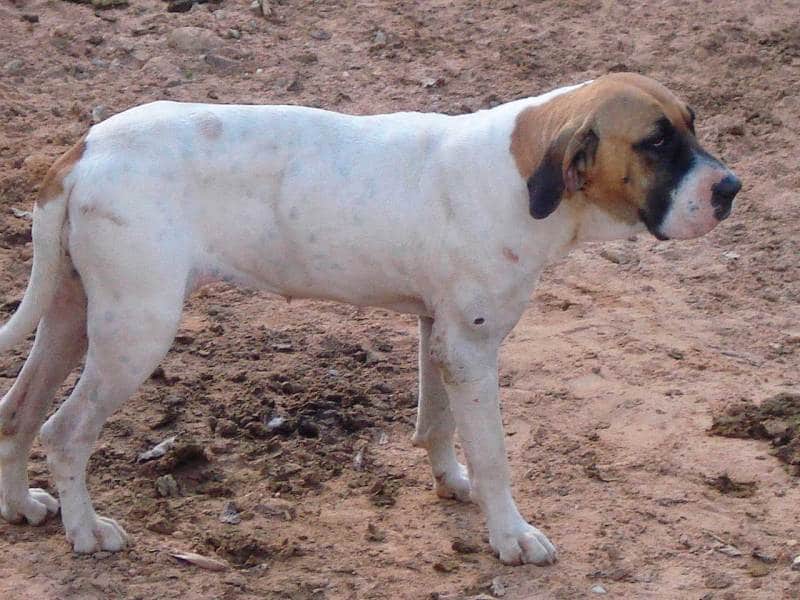
With the settlement of the Azores archipelago and the beginning of the exploration of the optimal conditions of the islands for raising cattle, the need for dogs on the islands to help drive and defend livestock soon became apparent, dating from the sixteenth century the first reference to its presence, in particular on the island of Sรฃo Miguel. These animals are recognized as the precursors of Saint Miguel Cattle Dog.

Although the existence of Saint Miguel Cattle Dog, as an individual race, has been recorded since the early 19th century, only in 1982 began to be registered by Antรณnio Josรฉ Amaral with the collaboration of Maria de Fรกtima Machado Mendes Cabral, veterinarian, in order to create a census of your herds. The first officially registered dog of the breed was the ยซCoriscaยป, a perfect representative of your breed.

It is also on the initiative of these same two people that, in 1984, two years after the beginning of the registration of persons the first official standard is published. In 1995 was proposed to the FCI (International Cynological Federation) and the breed was finally recognized in 2008.

Origin:

The breed known today as Saint Miguel Cattle Dog descended from mastiffs and alano initially brought to the islands of the Azores by the first settlers on the continent. Later, and through contact with other people who came and settled in the Azores, the genetic heritage of the breed was enriched by crosses made with English mastiffs, bulldogs and Dogue de Bordeaux, until the culmination of the appearance of the new race, with fully defined morphological and temperamental characteristics.

In addition to those mentioned, other races may form part of the Fila de San Miguel ancestry, as the St. Humberto's Dog, also known as Bloodhound, and the Dogo Canario, a Spanish breed from the Canary Islands, but the real link – yes there is – between these races and the Sao Miguel queue not yet proven.

Video "Saint Miguel Cattle Dog"

Playing around 1

Physical characteristics

The Saint Miguel Cattle Dog it is characterized by being an animal of size and rustic features and characteristically longer than tall. The breed is medium in size, muscular, but without the heavy appearance of others.

The muzzle is well proportioned, apparently short, but it hides a wide mouth, with a full denture, capable of a powerful bite. The head has a solid appearance, wide and with the ears well placed on top, implanted in a strong neck that starts from a solid trunk, with a wide and deep chest. The legs are proportional to the body, being the front, as a rule, slightly separated.

The coat is strong, smooth and dense, and always striped, and it can be tawny, gray or yellow, with white mesh on the chest. Legs can also be white. The tail is implanted high, it's thick, medium length and slightly curved. It is amputated at the height of the second or third vertebra, or is it naturally short.

  • Fur: short, smooth, dense, with hard textured hair.
  • Color: gray hair, carbonated sand (grey), yellow with all fades from light to fawn; always striated. May show white spot on forehead or from chin to chest, and white spots on the forefoot, in the later or in all four.
  • Size: males, of 50 to 60 cm.; females, of 48 to 58 cm..

Character and skills

Race of a lively and sharp intelligence, with great ease of learning, the strength of character of the Saint Miguel Cattle Dog, coupled with a distrust of the strange instincts of all guardians by vocation, can easily be mistaken for aggressiveness, but it hides a gentle nature towards those with whom it deals closely, while remaining a tenacious and courageous guardian of those who treat him. His loyalty to his human family is extreme.

With even greater emphasis, given the dominant nature of the breed, the education and sociability of puppies must be done from birth, gradually exposing the animals to new situations and stimuli, in order to improve the development of balanced individuals capable of living with humans and other animals.

Not a suitable breed for beginners, given its dominant nature, further enhanced by his physical strength and his strongly independent and autonomous character.

Even as a pet, a Saint Miguel Cattle Dog must have the opportunity to have a task to perform. Thorough training is always a simple and effective means of strengthening the relationship between the human family and the animal, while providing the physical and mental exercise necessary for the training and development of a well-balanced animal.

But, given the intrinsic characteristics of the breed, training a copy of the Saint Miguel Cattle Dog it is a task that can be quite difficult for someone who has little experience with dogs. Being a very intelligent and dominant breed, will not respond well to the use of force. Full socialization recommended.

The sheepdog for tradition and excellence, their natural fitness for livestock can, with the right training, can be channeled into the care of horses and other small ruminants such as sheep and goats. When not channeled to grazing, the Saint Miguel Cattle Dog has already demonstrated its aptitude for big game hunting, like the boar and the deer.

Its strong and protective temperament is also valued as a self-defense dog..

Health ยซSt. Michael's Rowยป

Being a rustic breed, is in robust health and there are no records to date to suggest that there is any pathology to which the breed is specifically prone to for genetic reasons. The average life expectancy of this breed is calculated in 12 years.

St. Michael's Row Toilet

The same hardiness that gives vigor to the breed also makes it a poorly maintained breed in a strict sense. Short, hard hair can be brushed occasionally and baths will be sporadic.. Adequate and balanced feeding will give developing puppies what they need to become healthy adults, and the same regimen will suffice to ensure adult health..

Images "Saint Miguel Cattle Dog"

Type and recognitions:

  • FCI CLASSIFICATION:
  • Group :
  • Section : . .

Federations:

  • – FCI – Group 2: Pinscher and Schnauzer - Molossoid and Swiss Mountain and Cattledogs. Section 2: Molossoid. 2.1 Dogue type. โ“˜

FCI breed standard "Saint Miguel Cattle Dog"

Origin:
Portugal

Date of publication of the valid original standard:
21.05.2007

Use:

cattle dog


General appearance:

Robust and resistant.


IMPORTANT PROPORTIONS:

  • Slightly longer than high.


Behavior / temperament:

Cattle dog par excellence, it is equally a good guard dog of property and people. He has a very determined character with strangers but docile with his owner.
Very clever and very responsive. In the exercise of his duties, lead dairy herds, he bites low so as not to damage the udders of the cows.. But, when it comes to stray cattle it can bite higher

Head:

Strong, square-looking. Cranio-facial superior longitudinal parallel axes.

Cranial region:
  • Skull: Large, slightly bulky, little apparent occipital protuberance.
  • Nasal bevel (Stop): Is pronounced.

facial region:

  • Truffle: Wide and black.
  • Snout: Straight, slightly curved, slightly shorter than the length of the skull.
  • Lips: Well pigmented, overlapping, torn, firm, slightly curved on the lower profile.
  • Jaws: Very strong, well developed. With good opposition.
  • The teeth: Complete dentition with scissors or tweezers.
  • Eyes: Oval, expressive, slightly sunken, dark brown, horizontal, medium-sized.
  • Ears: Above average insertion. When not cut they are medium triangular and pendulous but slightly separated from the face. Normally cut in the round.

Neck:

With good connection, straight, strong and medium length. There is no double chin.

Body:

  • Trunk: Strong, muscular, with a broad chest.
  • Breast : Wide and lowered.
  • Back: Straight.
  • Pork loin: Of average length, wide and well muscled.
  • Rump: Of medium length in relation to the body, slightly predominant in relation to the cross.
  • bottom line: Bottom-up profile, ventricles and flanks proportional to the body.

Tail:

High insertion, thick.

Tips

Former members: Strong.

  • Shoulder: Scapulo-umeral angle slightly open.
  • Arms: Strong of medium length, good muscular.
  • Forearm: Thick and well muscled.
  • Carpo: Thick.
  • Metacarpus (Pastern): Thick, average length.
  • Hands: Oval, with strong fingers and nails.

Later members: Strong, moderately separated.

  • Thighs: Long, muscular, with an open lame / femoral angle.
  • Legs: Of average length, muscular.
  • Metatarsus: Of average length. May have presumptions.
  • Pies: Of average length: Oval, with strong fingers not very curled. Strong nails.

Movement:

Easy and loose. On the move, the back wobbles slightly.

Mantle

  • Skin: Thick and pigmented.
  • Shelter: Short, smooth, dense, with a strong texture, slightly bordered on the tail, the anal and posterior region.
  • Colorations: Fawn, charred and gray sand, in light and dark tones and should always be tiger. The presence of a white male is allowed in the frontal region and the menthol chest, as well as the white coloring on the hands (white male), the feet (pedal) or on all legs simultaneously (white square).


Size and weight:

Males

  • Height to the cross: 50 to 60 cm.
  • Weight: 25 to 35 kg

females

  • Height to the cross: 48 to 58 cm.
  • Weight: 20 to 30 kg


Fouls:

Any deviation from the above points must be considered a fault and the seriousness with which the fault should be considered must be in exact proportion to its degree and its effect on the health and well-being of the dog..


SERIOUS FAULTS:

  • Head: converging axes of skull and muzzle.
  • Jaws: Mouth slightly above or below.

MISS PLAYOFFS

  • Aggressive or too shy.
  • Any dog โ€‹โ€‹that clearly shows physical or behavioral abnormalities.
  • Divergent axes of skull and muzzle.
  • Severely over or under the mouth.


N.B.:
  • Males should have two normal-appearing testicles fully descended into the scrotum..
  • Only functionally and clinically healthy dogs should be used for breeding., with the typical conformation of the breed.

Source: F.C.I - International Cynological Federation

Alternative names:

1. Cรฃo de fila de Sรฃo Miguel, Sรฃo Miguel cattle dog, Sรฃo Miguel catch dog, Azores cattle dog, Azores cow dog (English).
2. fila de Saint Miguel (French).
3. Cรฃo Fila de Sรฃo Miguel (German).
4. Fila de Sรฃo Miguel, Cรฃo das Vacas (Portuguese).
5. (espaรฑol).

Source:

Wikipedia

Photos:

1 – Fila de Sรฃo Miguel during International dog show in Rzeszรณw, Poland by Pleple2000 / CC BY-SA
2 – Fila de Sรฃo Miguel during International dog show in Rzeszรณw, Poland. by Pleple2000 / CC BY-SA
3 – At the Burnt Peak of Ribeira Grande, Son and Mother by TheLife / CC BY-SA
4 – Helsinki, el Finnish Winner Show 2015. by Thomas / CC BY-SA

โ–ท The world of Pets: Dogs, cats, birds, reptiles, amphibians

English mastiff
Inglaterra FCI 264 - Molosoids โ€“ Doge

Mastรญn Inglรฉs

The English mastiff He is extremely loyal and faithful to his family.

Content

History

The English mastiff It is a breed of dog of large size type trotting and English origin.

The history of this dog goes back to the year 55 to. c., time when the legions invaded Great Britain and to his surprise had to face an enemy that had two curious assistants, two dogs with striking characteristics.

One of them was strong and robust both body and members, with a large head and a short but powerful jaw.

That dog is possibly the ancestor of the Bulldog, and part of the current Bullmastiff.

The other dog had dimensions that were scary, looked more like a lion than a dog. This specimen was a direct descendant of the Mastiffs 'Asiriobabilonians' who had traveled to England by the Phoenicians five centuries before the Roman invasion.

Before this beanpole, the 'molossians of Epirus' which the Romans brought with them as their war dogs, they looked like Chihuahuas...

So once conquered 'Britain', the Romans, they expanded his army with several copies of those giant and fearful dogs who called "Pugnaces Britannici" and they used them, mainly in typical shows of the time...

They faced these dogs with huge wild beasts in the arenas of circuses, there they participated in bloody fights against bulls, bears and other dogs. As well, they were used as guardians of herds, bodyguard, protectors and companions.

The English Mastiff or Mastiff, is descended directly from those dogs.

A Mastiff arrived in America aboard the Mayflower, name of the ship that transported the so-called "Pilgrims" from England (United Kingdom), to the coast of what is today the United States of America, in the year 1620.

They were the first settlers, in settling on the coast of Massachusetts, forming the Plymouth Colony, and with them the English Mastiff.

There is documentary evidence that the English Mastiff first arrived in America on the Mayflower., but the standardization of the breed in United States did not occur until the end of the 19th century.

By the end of the second world war, the mastiffs were almost extinct in England. But, with the flow of imports of United States and Canada, the breed resurfaced and today its existence is not in any danger in England and has gained much popularity in North America..

Physical characteristics

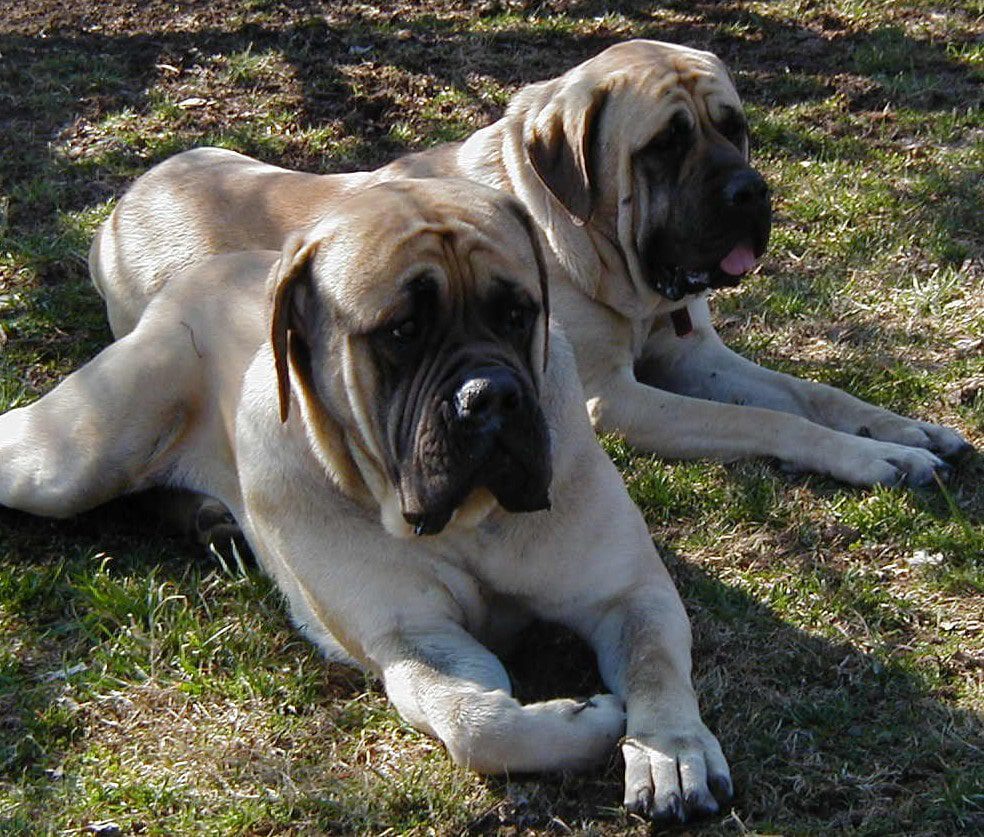
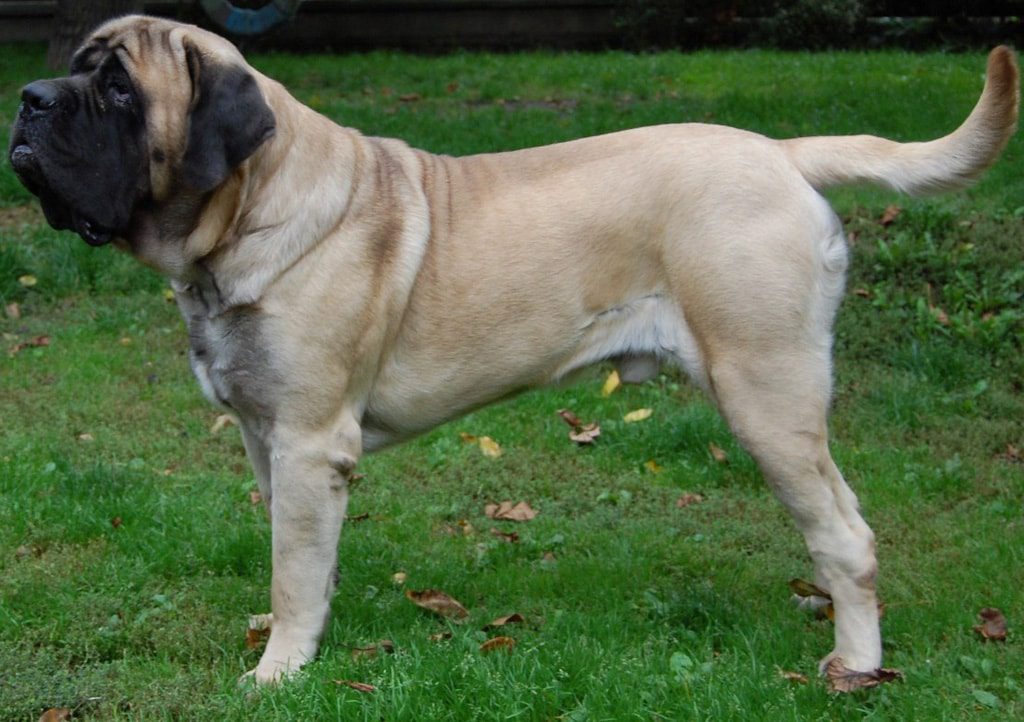
This is a race of powerful composition, burly, wide skull and the head usually has a square appearance.

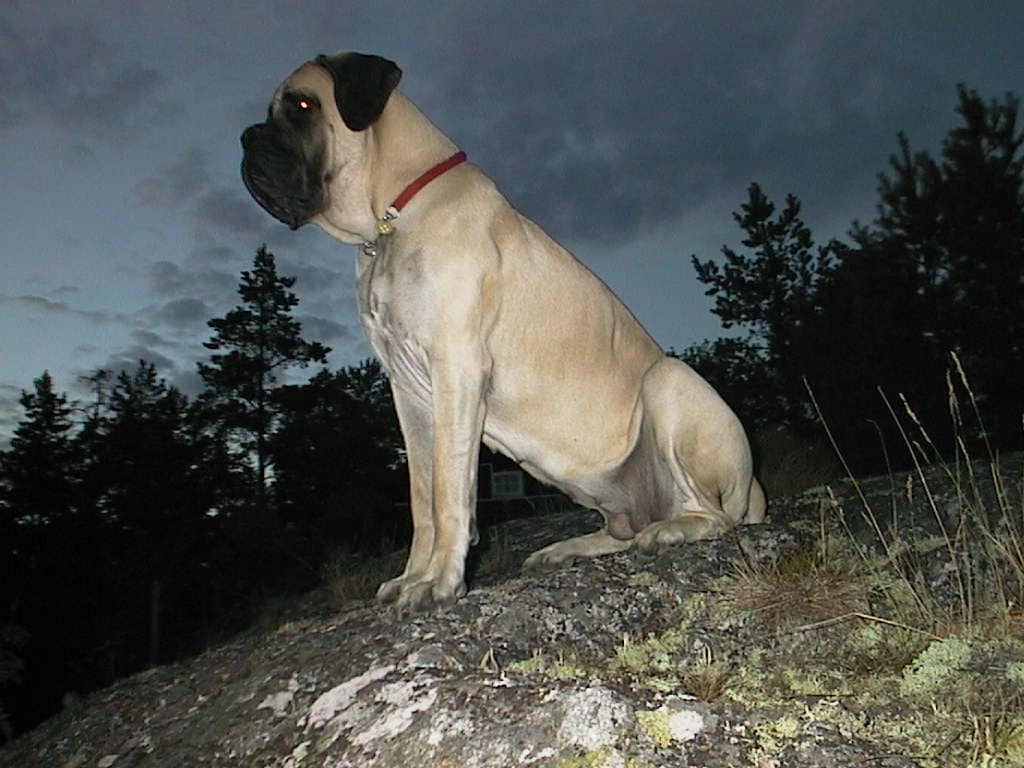
Of size It must be very large and give the impression of power and strength, viewed from any angle. The body must be massive with great width and depth, especially between the Forelegs, cause these are well separated. While no height or weight have been specified for this race, the approximate height of 70 to 80 cm and the weight of 80 kg to 90 kg.

His hair is short and glued to the body and color may vary, while its snout, ears and nose, around the eyes is always black.

This is a particularly large dog that requires a correct diet and exercise. Normally live in 10 to 12 years.

Different colors are possible, for example, sand color, striped, brown or gray. Unfortunately the human tends to extremes and the mastiff was not spared from this.. So it has been raised bigger and heavier in recent decades.. His head has become increasingly massive and many folds have also been made. Giants could no longer reproduce naturally, they could no longer walk properly, his life expectancy was dramatically reduced.

Character and skills

Videos of the English Mastiff
Handsome English Mastiff
English Mastiff Samson Snaps Tree Branch!Lightbox for Video by VideoLightBox.com v1.11

The Mastiff breed is a combination of greatness, dignity, and bravery; calm and affectionate towards his owner, but capable of protecting.

He is a well-mannered dog but you need enough field to stretch his long body. It is an extremely loyal breed and, Although it shows no excessively, It is true to his family and is very good with children.

But, It can be very jealous for the protection of owners and should be handled sensibly, as it is exceptionally powerful and can be difficult to control.

Seeks proximity to its humans. It is a reliable protector for them. In case of acute threat to your humans, will try to keep danger away from them by facing the attacker with his body, but it won't attack him anymore. His calm and serene temperament makes him a loyal and child-friendly companion, who forgives everything. It gets along very well with other pets.

English Mastiff Education

Keep in mind that in an adult mastiff the leash is only symbolically a control. The mastiff easily has the power to maneuver the other end of the line at will.. But you don't want to do it, at least if you have enjoyed the basics of a good education. The Mastiff is very easy to train. Only their stubbornness has to be broken here and here a consistent softness is needed.. He wants to follow his master and caretaker and he does it very reliably. It is an elementary duty of the owner of a Mastiff to pay attention to a consequent education already in the puppy. This alone and not the strap makes wonderful walks in nature possible, that together with this four-legged friend become a balm for the soul of agitated people.

Care and health English Mastiff

Caring for a healthy mastiff is not problematic. Brushing the coat once a week is enough.

Typical diseases

Gigantism with copies of more than 90 kg, sometimes up to 120 kg, unbalances the entire natural dog building plan. Serious gait damage is just one consequence, and life expectancy is also greatly reduced. Bad habit of strong folding of the head and body often leads to chronic inflammations. As in most large dogs, we see hip or elbow dysplasia. Eye and heart disease can occur more frequently with mastiffs – the rule is always: the more serious, the greater the risk.

Nutrition / Food

You need a lot of high quality food. Especially in the growth phase you need a professional nutrition plan. It is helpful to have a feeding bowl in a high position to counteract the risk of stomach twisting. You should always pay close attention to their weight.

Characteristics "English mastiff"

Coexistence is important that you have with your new friend. Before considering the acquisition of a dog of the breed "English mastiff" you know certain factors. Not all breeds of dogs are apt to live in an apartment, you must take into account his character, their need for exercise, their interaction with other pets, their care and if you have small children, their level of tolerance towards them.

The life expectancy of the English Mastiff

Breeding errors, especially the tendency to gigantism, they have cost this dog, once extremely robust, many years of his life expectancy. Before they were 12, Today are 7 – 9 years.

Buy an English Mastiff

Buying a mastiff should be long-term and well-considered. You should carefully check if you have all the requirements to be able to spend many wonderful years with this giant.. If you are looking for a puppy, you must pay special attention that the dogs are not too massive. One should wonder about ancestors, its appearance, their illnesses, your age. Also to get a Mastiff with a stable character, you should just look directly at a serious breeder. For animal welfare reasons one should refrain from buying puppies from parents of more than 90 kg. Very occasionally there is also a mastiff in the animal shelter. Puppies raised in serious conditions cost around 2000 EUR.

Characteristics "English mastiff"

Adaptation โ“˜

5,0 of 5 stars (based on 1 review)

friendly dog โ€‹โ€‹โ“˜

3,0 of 5 stars (based on 1 review)

hair loss โ“˜

3,0 of 5 stars (based on 1 review)

Affection level โ“˜

5,0 of 5 stars (based on 1 review)

Need for exercise โ“˜

2,0 of 5 stars (based on 1 review)

Social need โ“˜

3,0 of 5 stars (based on 1 review)

Home โ“˜

3,0 of 5 stars (based on 1 review)

Toilet โ“˜

2,0 of 5 stars (based on 1 review)

Friendly with strangers โ“˜

3,0 of 5 stars (based on 1 review)

barking โ“˜

1,0 of 5 stars (based on 1 review)

Health โ“˜

4,0 of 5 stars (based on 1 review)

Territorial โ“˜

5,0 of 5 stars (based on 1 review)

Cat friendly โ“˜

5,0 of 5 stars (based on 1 review)

Intelligence โ“˜

3,0 of 5 stars (based on 1 review)

Versatility โ“˜

3,0 of 5 stars (based on 1 review)

Child friendly โ“˜

5,0 of 5 stars (based on 1 review)

Surveillance โ“˜

2,0 of 5 stars (based on 1 review)

joy โ“˜

5,0 of 5 stars (based on 1 review)

Images ยซEnglish Mastiffยป

ยซEnglish Mastiffยป Videos

Type and recognitions:

  • FCI CLASSIFICATION:
  • Group :
  • Section : . .

Federations:

  • – FCI – Pinscher and Schnauzer-Molossoid type dogs – Swiss Mountain Dogs and Cattledogs. Section 2.1 Molossoid, mastiff type. โ“˜
  • – AKC – Dogs working โ“˜
  • – ANKC – Group 6 (utility dogs) โ“˜
  • – CKC – Group 3 – Working dogs โ“˜
  • – โ€‹KC – Working dogs โ“˜
  • – NZKC – Utility dog โ“˜
  • – UKC – Watchdog โ“˜

FCI breed standard "English mastiff"

Origin:
United Kingdom

Date of publication of the valid original standard:
13.10.2010

Use:

Defense and guard dog.


General appearance:

View from any angle, the head, in its outline it appears well square. Width is a sought after characteristic and the width of the skull is equal to two thirds of the total length of the head.

The body, width, alto, long and strong build. The limbs are well apart and in aplomb. The musculature is clearly drawn.

The size ishighly desired, but onlyif it is on par with the build qualityand the correction is not maintained at all. Height and substance are two important points if they are correctly combined. Grand, powerful, well built.

IMPORTANT PROPORTIONS: The length of the body from the tip of the shoulders to the tip of the ischium is greater than its height at the withers.


Behavior / temperament:

Combination of nobility and courage. Take it easy, affectionate with their owners, but good guardian.Usually indifferent to strangers, shyness is unacceptable.

Head:

---

Cranial region:
  • Skull: The skull is wide between the ears. The forehead is smooth but wrinkles when the dog is attentive.. Eyebrows (supra-orbital arches) are slightly raised. The temporalis and masseter muscles are well developed. The cross section of the skull describes an arch. From the middle area between the eyes, a depression can be traced through the center of the forehead and extends to the middle of the skull., following the sagittal axis.
  • Depression links (Stop): Stop between the eyes well marked but not abrupt.

facial region:

  • Truffle: black. The nose, seen from the front, it is wide offering wide open nostrils and a profile view, it's flat (It is neither pointed nor retracted.).
  • Snout: The snout is short, width between the eyes, remaining this wide to the end of the nose.

The muzzle is truncated, that is to say, cut into square, Its anterior surface forms a right angle with the upper line of the snout., having a great width from the upper anterior border to the lower jaw. The length of the muzzle is equal to one third of the total length of the head. Muzzle circumference, measured at the midpoint between the eyes and the nose, represents three fifths of the head, measured in front of the ears.When is at rest, any exaggeration of folds or excess skin is unacceptable in adult dogs.

  • Lips: The lips are divergent, forming an obtuse angle in relation to the nasal septum (Septum). They are slightly hanging to offer a square profile.
  • Jaws / Teeth: The lower jaw is wide to the end. Healthy canines, powerful and well separated.Level incisors (bite clamp, edge to edge) or lower projection in front of the upper ones (reverse scissor bite) but never so much that they are visible with the mouth closed.
  • Cheeks: Well-developed temporal masseter and cheek muscles.

Eyes: Moderate size, well separated. Hazel eyes, as dark as possible. The conjunctiva not visible.Highly undesirable are the loose eyelids. Free from obvious eye problems.

Ears: Small, fine to the touch, well separated from each other.

High on the sides of the skull, in the form of prolonging the transverse upper profile. At rest, are placed flat adjacent to the cheeks.

Neck:

Slightly arched profile, medium length, very muscular. Its circumference is less around2,5 to 5 cm.of the head, measure in front of the ears.

Body:

  • top line: Level.
  • Back: Wide and muscular.
  • Pork loin: Wide and muscular, flat and very wide in females, slightly arched in males.
  • Breast : Chest width, deep and well descended in the sternal region. Ribs well arched and well rounded. False ribs are long and well developed towards the back of the chest.
  • Bottom line and belly: Flanks heavily lowered.

Tail:

High implanted, descending to the hocks or a little lower. Wide at birth and tapering to the extreme. Hangs right at rest, but in action it forms a curve, the end straightens; but it is never carried on the back.

Tips

PREVIOUS MEMBERS:

  • General appearance: Balanced and in harmony with the hind limbs.
  • Shoulder: They are slightly oblique, powerful and very muscular.
  • Arm: Slightly inclined, heavy and muscular. Elbows: Elbows are on the axis of the body.
  • Forearm: Strong Member, rights placed well apart, big bones.
  • Metacarpus: They are poised.
  • Previous feet: Large, roundand tight. Well arched fingers. black nails.

LATER MEMBERS:

  • General appearance: Very wide and muscular.Strength in the hind limbs is of utmost importance, cow hock in adult dogs is unacceptable.
  • Legs: Well developed.
  • Metatarsals: Angled hocks, well separated and always in aplomb both in season and on the move.
  • Hind feet: Large, roundand tight. Well arched fingers. black nails.

Movement:

Powerful with easy limb extension. Push from the rear, fluid, Right, steps covering the surface. Top line stays level during movement. The tendency to pasuqueo is undesirable. Absolute correction is essential.

Mantle

Fur: Short and flat on the body.But rough on the neck and shoulders.

Color: Tawny, apricot, or striped. In all cases the muzzle, ears and nose should be blackand the eyes are surrounded by blackextending upward.Excessive white color on the body is unacceptable, chest or feet.


Size and weight:

----


Fouls:

Any deviation from the aforementioned criteria is considered as a fault and the severity of this is considered to the degree of the deviation to the standard and its consequences on the health and well-being of the dog..

FALTAS DESCALIFICANTES:

  • Aggressiveness or extreme shyness.
  • Any dog โ€‹โ€‹showing clear signs of physical or behavioral abnormalities must be disqualified..


N.B.:
  • Males should have two normal-appearing testicles fully descended into the scrotum..
  • Only functionally and clinically healthy dogs, with the typical conformation of the breed, should be used for parenting.

The latest changes are in bold.

TRANSLATION: Brรญgida Nestler / Original version: (IN).

Technical supervision: Miguel Angel Martinez

Source: F.C.I - International Cynological Federation

Alternative names:

1. Mastiff, Old English Mastiff (English).
2. Old English Mastiff (French).
3. Old English Mastiff (German).
4. Mastiff inglรชs, Mastim inglรชs, Canis molossus, ะก. mastivus gladiator, Mastife inglรชs (Portuguese).
5. Old English Mastiff (espaรฑol).

โ–ท The world of Pets: Dogs, cats, birds, reptiles, amphibians

Neapolitan mastiff
Italia FCI 197 - Molosoids โ€“ Doge

Mastรญn Napolitano

Despite his fierce appearance, the Neapolitan mastiff It is a balanced dog and friend of children.

Content

History ยซMastin Napolitanoยป

The Neapolitan mastiff, like all broadcast, most likely descends from the molossus Tibetan. According to historical data, Italy has been inhabited since very remote times, which could date back to the second millennium before Christ..

This shows that this architect of Campania (South Italy region, on the coast of the Tyrrhenian Sea, whose capital is Naples) brings lot of history under its belt.

All European mastiffs descend from the Tibetan Mastiff, the oldest representative of dog breeds.
Probably the first Asian mastiffs were carried in the India Greece by Alexander the great, around the year 300 a.C.

Some historians argue that it was the Greeks who were known to the Romans these dogs so spectacular, to see them is struck and (for a change) they used them in their famous circuses like fighting dogs. The Neapolitan mastiff fought with Lions, bears, Tigers, He was also a dog bred for war.

According to the English cinofilia, on the other hand, the mastiff was taken to Britannia (term designated to the island of Great Britain before that occurred the Germanic invasions) by the Phoenicians in the year 500 to. C. from that moment the spread throughout Europe would have begun.

Beyond disagreements as to the diffusion of the breed you can ensure, years. At that time, that the "Neapolitan Mastiff" has lived in Campania for at least two thousand years, Although its first official appearance in the cinophilia data of 1946 and its official standard was approved in the year 1949.

During the course of World War II, the race was on the verge of extinction but was recovered by a writer and called cinรณlogo Piero Scanziani that between 1941 and 1980 published a dozen volumes of fiction and nonfiction, including various Cynology treatises. He was responsible for the reconstruction of the Neapolitan mastiff during the postwar period, and he did so on the basis of the few copies remaining.

Physical characteristics

ยซNeapolitan Mastiffยป Videos

Neapolitan Mastin ALACRAN
Neapolitan Mastin bruce dello stradone (Leonardo lopez)Lightbox for Video by VideoLightBox.com v1.11

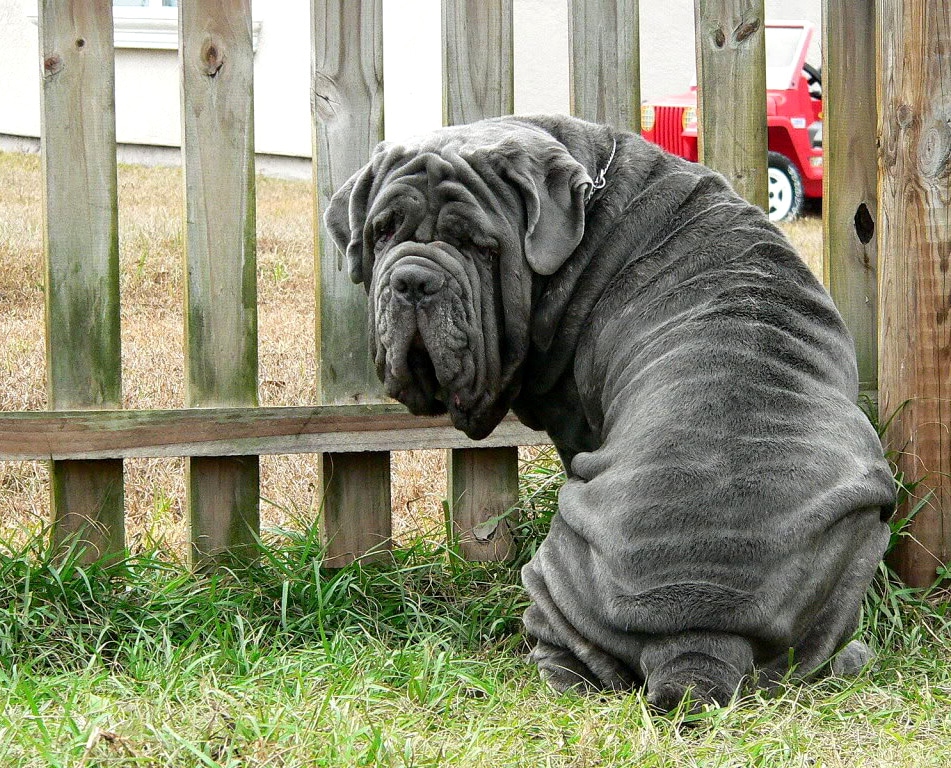
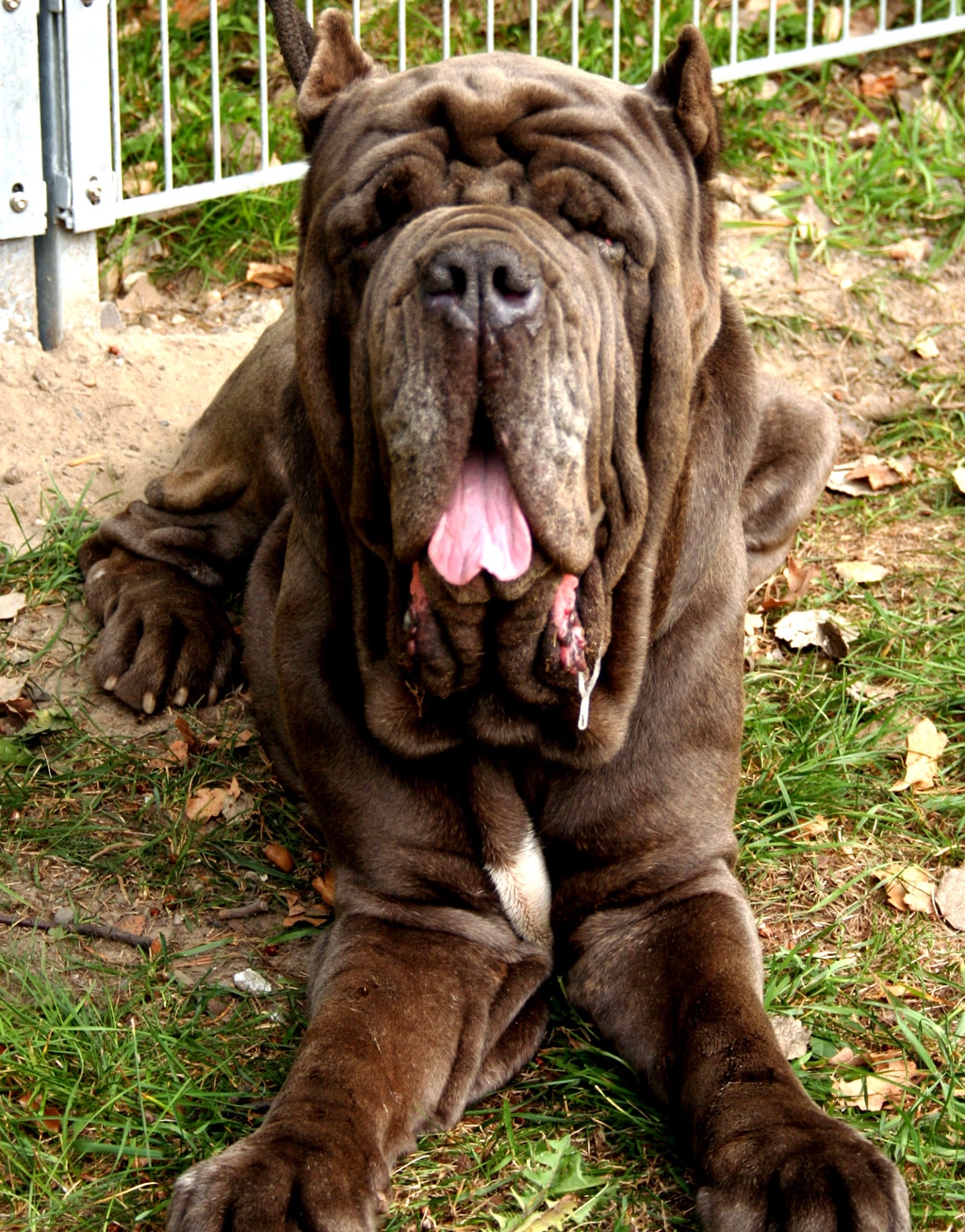
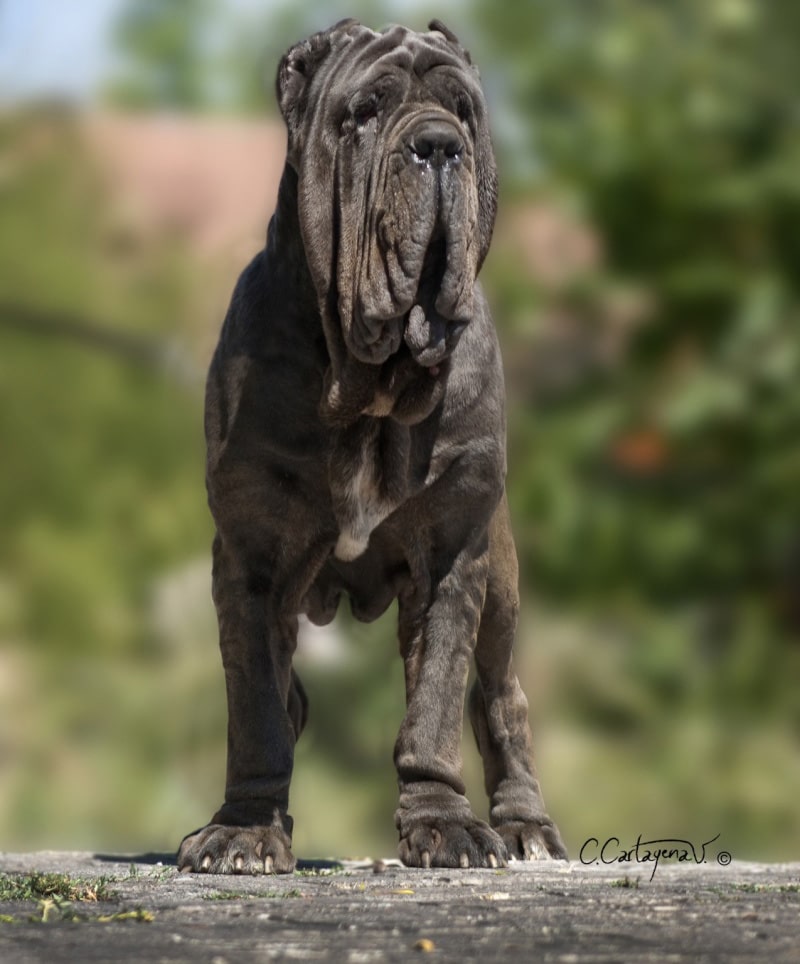
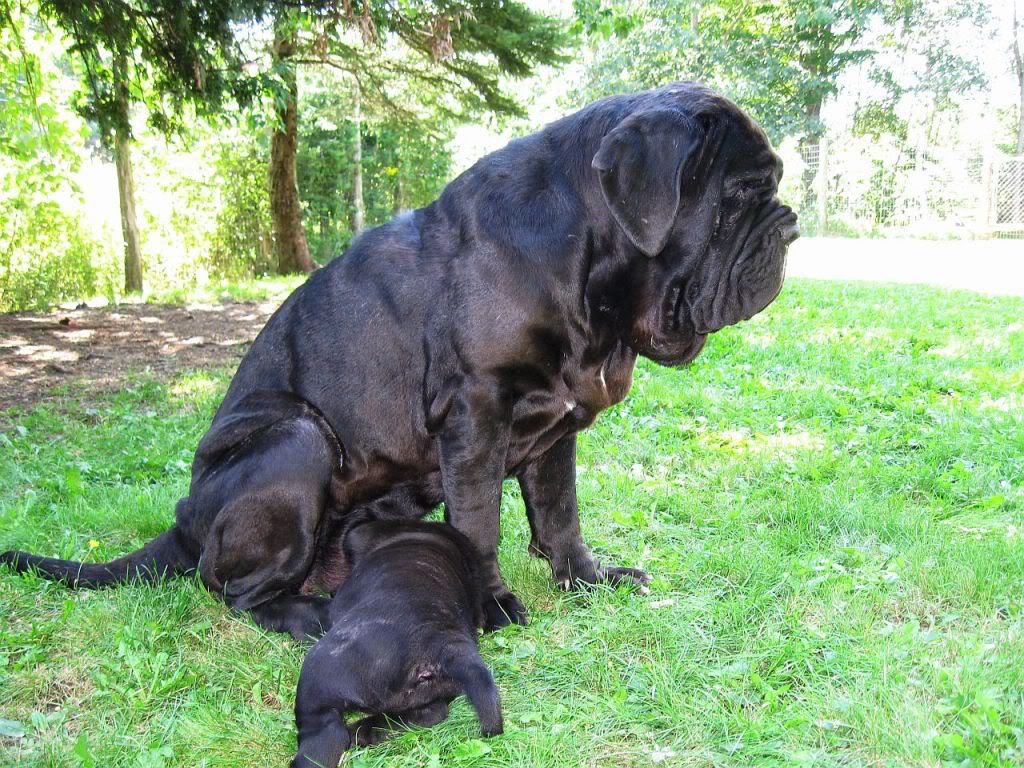
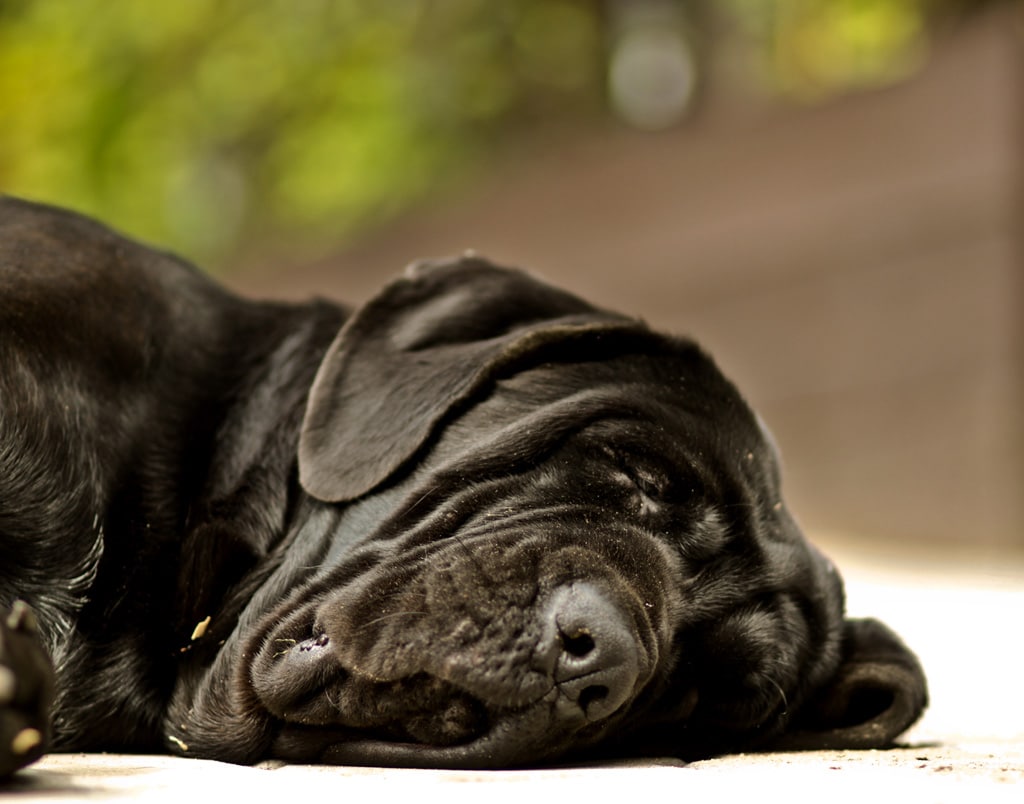
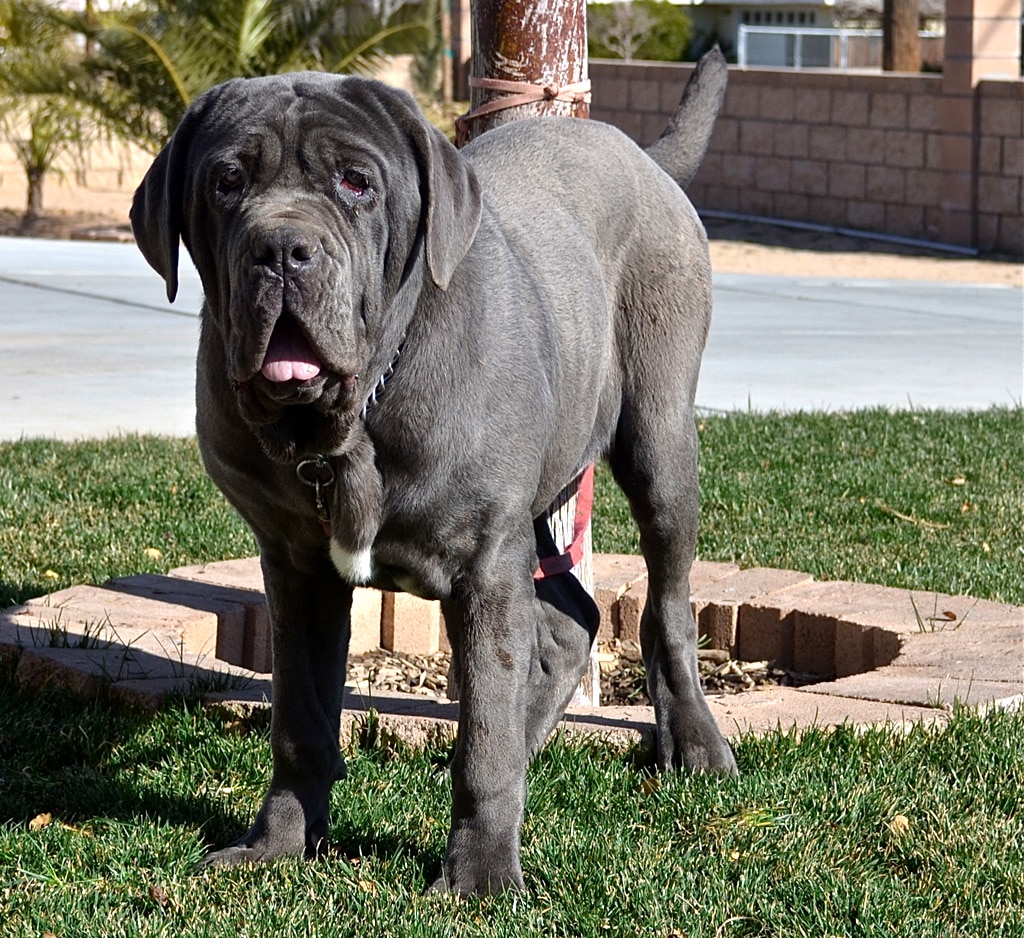
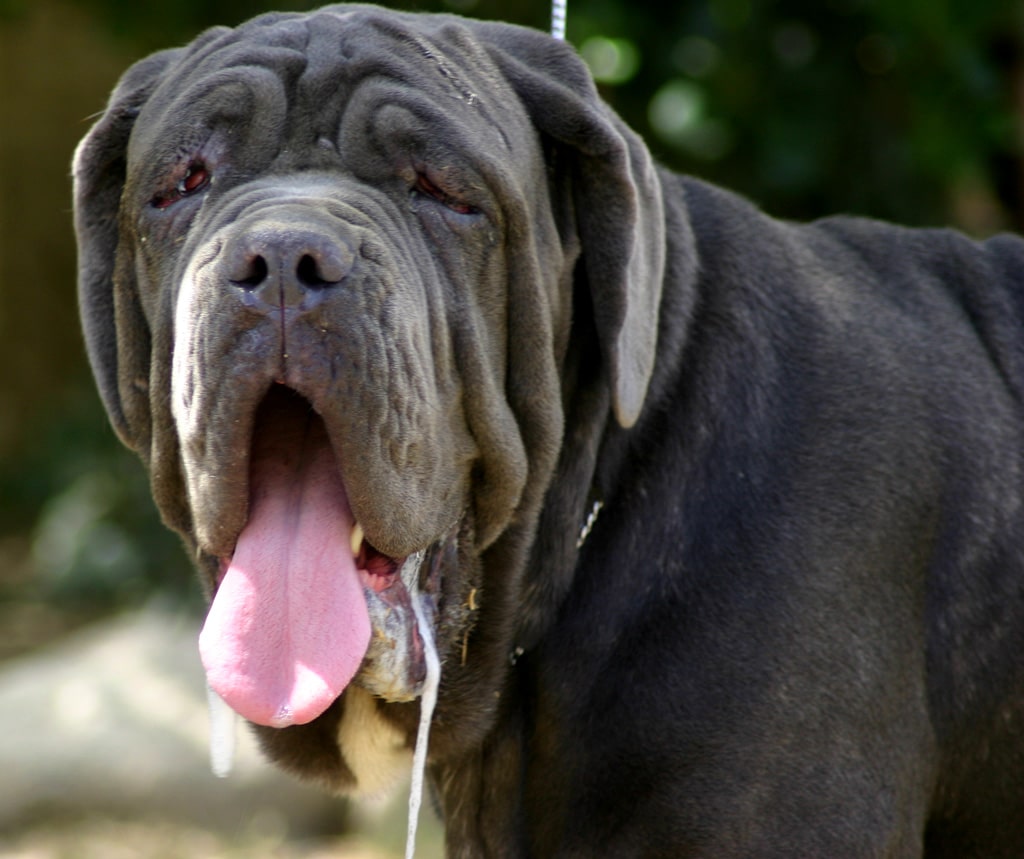
The Mastino Napoletano impresses even from a distance with its impressive physique. Especially the huge head stands out. It is a typical molossoid head, but he has particularly pronounced full lips. His facial expression is cool and relaxed, his overall impression is impressive. Its coat is short and smooth.

Modern breeding has given the Mastino Napoletano an excess of loose skin, that borders on the torture of the brood. For animal welfare reasons only, one must make sure that the skin is taut and there are not too many wrinkles and folds. Only slight wrinkles should be allowed in the neck area and on the dewlap.. Especially the head has grown an overabundance of skin and wrinkles in recent decades, partly so extreme that dogs can barely see due to all the wrinkles. It also, severe wrinkles are a treasure for infections and itchiness.

According to him standard official of the breed the males of Neapolitan mastiff They must be measured of 66 to 72 cm in the cross and his weight is of 70 kg, males can easily reach up 90 kg, females should be measured in 60 to 68 cm.. The weight of the males due of 60 to 70 Kg and females of 50 to 60 kg.

The head is huge and short, the rounded and flattened skull between the ears. It has the straight snout, a great truffle and fat lips it fall heavily.

It has the eyes well separated and the accumulation of skin seems they were oval shaped but in reality are round. The ears are triangular, medium and high insertion.

The body, in general, It is longer than high with the neck well massif and the Pope and grupa broad. The tail is amputated two-thirds of its length.

The favorite colors they are the lead, the grey and black (sometimes with small white markings on the chest and the tip of the fingers), the fawn, the mahogany, the Fawn and stag.

All cloaks can be atigrados, but the possibility that a Neapolitan mastiff come out color "tabby" is one in a million.

Observations

Despite its large size, no need for large spaces to be happy, because it moves shortly. although yes, It is important to establish a relaxed routine of daily walks that help keep your muscles toned.

Another issue to highlight is that they significantly drool-worthy.

Character and skills

Despite his surly and even fierce aspect, the Neapolitan mastiff he is a peaceful dog, balanced, sweet, fell, very affectionate with the master and friend of children.

Never behaves aggressively without a real reason, But if he were to have the answer, could be terrible.

Its temperament is peaceful, but it may become aggressive if its owner is not able to educate him with wisdom and responsibility.

Due to its structure it solid, its movement is heavy and clumsy, but appearance because it is aware of its size and enough to see him interact with children to confirm (disarms in delicacy).

Has been dog of war, combat in the circus, police assistant, dog sledge drag, companion and self-defense dog. Currently it is trained as a guardian of houses and farms and is increasingly appreciated as a companion dog..

In fact, it is more a guard dog than a companion or exhibition dog. Of the molossians foster, It is the quietest character.

One Neapolitan mastiff serious upbringing is, therefore, educated, an extremely simple dog. Here and there the fat man is a bit stubborn. Only if it is good to persuade and ask for help, then it will do everything for its owner or caretaker. As a family member, is extremely adorable. He seeks the proximity of his humans and is a reliable protector.

In case of acute threat to your humans, will try to keep danger away from them by facing the attacker with his body, but it won't attack him anymore. Does all of this quietly. Barks very rarely. His calm and serene temperament makes him a loyal and child-friendly companion, who forgives everything. Towards strangers, However, is initially waiting and watching. The Neapolitan mastiff he's a cool guy and a fascinating dog.

Not an easy dog รขโ‚ฌโ€นรขโ‚ฌโ€นto keep just because of his strength. By its nature it has very few demands. A daily walk, sometimes brushing the coat, that is all. Only the food is a certain challenge in terms of quantity and quality. You don't need a big garden, but a garden is already useful. A small apartment on the nth floor would not be suitable. The Neapolitan mastiff he's a great partner, but it is not a companion for runners, dog athletes or performance junkies.

Education

It must be remembered that in a Neapolitan mastiff adult, the line is just a symbolic control. Large dog easily has the power to maneuver the other end of the leash at will. But he doesn't want, at least if you have enjoyed the basics of a good education. The Neapolitan mastiff it is very easy to train. Only his stubbornness has to be broken here and there with consistent smoothness.. He wants to follow his master and mistress and he does it very reliably. It is an elementary duty of an owner of Neapolitan mastiff pay attention to a consistent education already in the puppy. Because only education and not the leash makes wonderful walks in nature possible, that together with this calm four-legged friend they become a balm for the soul of agitated people.

Care and health ยซNeapolitan Mastiffยป

Caring for a Neapolitan mastiff healthy breed is not problematic. Brushing the coat here and there is enough.

Bad habit of extremely strong folding of the head and body often leads to chronic inflammation. They are usually a source of constant itching for dogs.. Sometimes it even makes vision difficult. Such dogs need expensive time and care.

Nutrition ยซMastรญn Neapolitanยป

You need a lot of high quality food. It is helpful to have an elevated feeding bowl to counteract the risk of stomach churning. Weight must always be carefully considered.

Life expectancy ยซNeapolitan Mastiffยป

Breeding mistakes have cost this dog, formerly robust, many years of his life expectancy. Before they were 12, today they are more likely to be 6 to 9 years. But, exact data not available.

Buy a "Neapolitan Mastiff"

The purchase of a Neapolitan mastiff it must be long-term and well considered. You should check carefully if you have all the requirements in order to spend many wonderful years together with this strong friend.. Also financially the attitude is a challenge. If you are looking for a puppy, you must make sure that the dogs are not too massive and wrinkled. You must ask about the ancestors, its appearance, their illnesses, your age. To get a Neapolitan mastiff solid character, you should just look directly at a serious breeder. For animal welfare reasons you should refrain from buying puppies from parents with severe wrinkles. A puppy Neapolitan mastiff from a good breeder costs about 2.500 EUR.

Characteristics "Neapolitan mastiff"

Coexistence is important that you have with your new friend. Before considering the acquisition of a dog of the breed "Neapolitan mastiff" you know certain factors. Not all breeds of dogs are apt to live in an apartment, you must take into account his character, their need for exercise, their interaction with other pets, their care and if you have small children, their level of tolerance towards them.

Adaptation โ“˜

2,0 of 5 stars (based on 1 review)

friendly dog โ€‹โ€‹โ“˜

1,0 of 5 stars (based on 1 review)

hair loss โ“˜

3,0 of 5 stars (based on 1 review)

Affection level โ“˜

3,0 of 5 stars (based on 1 review)

Need for exercise โ“˜

2,0 of 5 stars (based on 1 review)

Social need โ“˜

3,0 of 5 stars (based on 1 review)

Home โ“˜

2,0 of 5 stars (based on 1 review)

Toilet โ“˜

3,0 of 5 stars (based on 1 review)

Friendly with strangers โ“˜

1,0 of 5 stars (based on 1 review)

barking โ“˜

2,0 of 5 stars (based on 1 review)

Health โ“˜

5,0 of 5 stars (based on 1 review)

Territorial โ“˜

5,0 of 5 stars (based on 1 review)

Cat friendly โ“˜

3,0 of 5 stars (based on 1 review)

Intelligence โ“˜

3,0 of 5 stars (based on 1 review)

Versatility โ“˜

3,0 of 5 stars (based on 1 review)

Child friendly โ“˜

3,0 of 5 stars (based on 1 review)

Surveillance โ“˜

2,0 of 5 stars (based on 1 review)

joy โ“˜

5,0 of 5 stars (based on 1 review)

Images ยซNeapolitan Mastiffยป

ยซNeapolitan Mastiffยป Videos

Type and recognitions:

  • FCI CLASSIFICATION:
  • Group :
  • Section : . .

Federations:

  • – FCI – Pinscher and Schnauzer-Molossoid type dogs – Swiss Mountain Dogs and Cattledogs. Section 2.1 Molossoid, mastiff type. โ“˜
  • – AKC – Dogs working โ“˜
  • – ANKC – Group 6 (utility dogs) โ“˜
  • – CKC – Working dogs โ“˜
  • – โ€‹KC – Working dogs โ“˜
  • – NZKC – Utility dog โ“˜
  • – UKC – Watchdog โ“˜

FCI breed standard "Neapolitan mastiff"

Origin:
Italy

Date of publication of the valid original standard:
13.11.2015

Use:

Protection and watchdog.


General appearance:

Big dog, heavy and solid with high volume appearance. The length of the trunk exceeds its height at the withers.

IMPORTANT PROPORTIONS: Body length is a 15% more than the height at the withers.

  • The skull-snout ratio is 2 to 1.
  • The length of the head is approximately 3,8 / 10 the height at the withers.
  • Neck is rather short.
  • Chest circumference is wide.


  • Behavior / temperament:

    Steady and loyal, is not aggressive. Guard dog of the property and its inhabitants, always vigilant, Intelligent, noble and majestic.

    Head:

    Short and massive, with the skull wide at the level of the zygomatic arches. The skin is abundant and has wrinkles and folds, of which the most accentuated and characteristic part of the external palpebral angle to descend to the labial angle. The superior longitudinal axes of the skull and muzzle are parallel.

    Cranial region:
    • Skull: The skull is wide and flat, particularly between the ears, seen from the front, it is slightly convex at the front. The zygomatic arches are very prominent, but with flat muscles. The protrusions of the frontal bones are well developed; the front groove is marked; occipital ridge is barely visible.
    • Stop: Well defined.

    facial region:

    • Truffle: Located in the prolongation of the nasal cavity, should not protrude from the anterior vertical line of the lips; it should be bulky and the large nostrils should be wide open. The color is according to the color of the fur: black for black specimens, dark gray in dogs of other colors, and the chestnut for brown dogs.
    • Snout: Very broad and deep; its width is approximately equal to the length. The length should be equal to one third of the length of the head. The sides are parallel so that, seen from the front, the shape of the muzzle is practically square. The depth of the muzzle is approximately twice its length.
    • Lips: fleshy, thick and full. The upper lip, seen from the front, forms an inverted "V" at its junction point. The lower lateral profile of the muzzle is determined by the upper lips, its lower part is the corner of the lips, with visible mucosa, located vertically from the outer corner of the eye.
    • Jaws / Teeth: Powerful with strong jaws and dental arches that fit together perfectly. The lower jaw should be well developed in width. Well developed white teeth, regularly aligned and complete in number. Scissor bite, that is, the upper incisors overlap the lower incisors in close contact, implanted in the vertical of the jaws; or pincer bite, that is, the upper incisors are joined edge to edge with the lower incisors. The outer edge of the upper incisors should be in close contact with the inner edge of the lower incisors.. An inverted scissor bite is tolerated.

    EYES: well separated on the same front level; rather round shape, but never protruding or too deep. Iris color is generally darker than coat color, except in shades of diluted shades where the color of the eyes is lighter. The skin never folds to interfere with the eyes.

    EARS: Small, in relation to the size of the dog, form triangular, located above the zygomatic arch, flat and glued to the cheeks. Ears are natural.

    Neck:

    The upper profile is slightly convex. Trunk rather short and conical, good muscular. The lower neck profile is well covered in loose fur that forms a well-separated double dewlap, but not exaggerated. Double chin begins at the level of the lower jaw and does not reach below the middle of the neck.

    Body:

    The length of the trunk exceeds by 15% the height at the withers.

    • top line: The upper line of the back is straight. Cross: It is wide, long and not very prominent.
    • Back: Width and length approximately 1/3 the height at the withers. The muscular and well developed lumbar region in its width should be harmoniously connected with the back.
    • Pork loin: Width, strong and muscular. The hip bones are prominent as they reach the upper lumbar line.. Breast : Large, with well-developed pectoral muscles. The rib cage is wide, with long, well-arched ribs. Chest circumference is wide. The tip of the sternum is at the level of the tip of the shoulder.

    Tail:

    It is wide and thick at the root; strong, slightly tapering towards the tip. Its length reaches the hock joint. At rest it carries it hanging and curved in the shape of a saber, in action raised horizontally or only slightly above the top line.

    Tips

    PREVIOUS MEMBERS:

    • General appearance: Previous members, from the floor to the tip of the elbow, seen in profile and from the front, they are vertical with a strong bone structure in proportion to the size of the dog.
    • Shoulder: Long and well sloped, muscles are well developed, long and well defined.
    • Arms: Well angled to the shoulder blade and with significant musculature.
    • Elbows: They must be parallel to the median plane of the body, that is to say, neither turn inward nor outward.
    • Forearm: Its length is almost equal to the length of the arm. Placed in a perfect upright position. Strong bone structure with lean, well-developed muscles.
    • Carpo: Width, slim and knotless, follows the vertical line of the forearm.
    • Metacarpus: Continue the vertical line of the forearm. Angulation and moderate length.
    • Previous feet: Round shape, large, fingers well arched and well joined. The pads are hard and well pigmented. The nails are strong, curved and dark colored.

    LATER MEMBERS:

    • General appearance: They must be powerful and robust, in proportion to the size of the dog and capable of giving the required propulsion during movement.
    • Thigh: Its length is 1/3 from the height to the cross and its obliqueness is about 60 ยฐ. Broad with thick muscles, prominent and clearly marked. Thigh bone and hip bone (femur and coxal) they form an angle of 90 ยฐ.
    • Knee: The femoro-tibial angle is about 110 ยฐ -115 ยฐ.
    • Leg: The length is slightly less than that of the thigh and of an obliqueness of 50 ยฐ -55 ยฐ, with a strong bone structure and well visible muscles.
    • Hock: The tibio-tarsal joint forms an angle of 140 ยฐ โ€“ 145 ยฐ.
    • Metatarsus: Strong and slim, almost cylindrical in shape, perfectly straight and parallel and quite low.
    • Hind feet: Smaller than the previous ones, round with well-joined fingers. Dry pads, hard and pigmented. The nails are strong, curved and dark colored.

    Movement:

    It is a typical characteristic of the breed. Movement is feline type, like the steps of a lion. It is slow and also resembles that of a bear. The jog is characterized by a strong push from the rear and a good extension of the front. The dog rarely gallops; the usual gait is walking and jogging. Ambition is tolerated.

    Mantle

    SKIN: Thick, abundant and loose throughout the body, especially on the head, where it forms numerous folds and wrinkles, and at the bottom of the neck where it forms a double dewlap. Never in abundance to interfere with the health and well-being of dogs.

    Fur: short, hard and bushy, the same length everywhere. Uniform length of 1,5 maximum cm. Must not show any trace of long hair.

    Color: Gray colors are preferred, leaden gray and black, although also brown, reddish and reddish rose, that sometimes have small white spots on the sill and on the fingertips. All colors can be brindle. Hazelnut tones accepted, soft gray and isabella.


    Size and weight:

    Height to the cross:

    • Males: 65-75 cm..
    • females: 60-68 cm..

    Weight:

    • Males: 60-70 kg.
    • females: 50-60 kg.


    Fouls:

    Any deviation from the aforementioned criteria is considered as a fault and the severity of this is considered to the degree of the deviation to the standard and its consequences on the health and well-being of the dog..

    SERIOUS FAULTS:

  • Pronounced undershot.
  • Tail size too high.
  • Size greater or less than the allowed limits.
  • FALTAS DESCALIFICANTES:

  • Aggressiveness or extreme shyness.
  • Any dog โ€‹โ€‹showing clear signs of physical or behavioral abnormalities.
  • Accentuated convergence or divergence of the cranial-facial axes.
  • Upper line of the snout concave or convex or very aquiline (roman nose).
  • Total depigmentation of the trua.
  • Upper prognathism.
  • Entropion / ectropion.
  • Eyes gazeos, total depigmentation of both edges of the eyelids; strabismus.
  • Absence of wrinkles, creases and double chin.
  • Absence of congenital or artificial glue.
  • Extensive white spots; white marks on the head.


  • N.B.:
  • Males should have two normal-appearing testicles fully descended into the scrotum..
  • Only functionally and clinically healthy dogs, with the typical conformation of the breed, should be used for breeding
  • TRANSLATION: Mrs. Brรญgida Nestler. Official language: IN.

    Technical direction: SR. Miguel Angel Martinez.

    Source: F.C.I - International Cynological Federation

    Alternative names:

    1. Mastino Napoletano Italian (English).
    2. Mรขtin de Naples, Napolitain (French).
    3. Neapolitanischer Mastiff (German).
    4. Mastino napoletano, Neapolitan mastiff (Portuguese).
    5. Mastรญn napolitano (espaรฑol).

    โ–ท The world of Pets: Dogs, cats, birds, reptiles, amphibians

    Cimarrรณn uruguayo
    Uruguay FCI 353 - Molossoid - Dogo

    Cimarrรณn

    The Cimarrรณn uruguayo also called Cimarrรณn dog or Creole cimarrรณn is the only breed developed entirely in Uruguayan territory.

    Content

    History

    The Cimarrรณn uruguayo Bulldog is a dog type molosoide, medium-sized, compact and strong, the fur can be striped or also bayo (cream-coloured) and snout black. His temperament is docile, cunning and guardian, ideal for guard, company or big game. It is recognized as a race in Uruguay from 1989 and internationally by the Federation Cynologique Internationale – FCI, from the 21 in February of 2006.

    Etymologically Cimarron is a term applied in America (originally on the island of Hispaniola) to everything that having been domestic or civilized returned to the wild or wild state, by referring in this case to their refuge in the heights (Indeed in the mountains and valleys hidden) Sierras, with which cimarrรณn would be "he who lives on the peaks or hides in them".

    The original specimens of the wild dog descended from the dogs introduced by the Spanish and Portuguese conquerors..
    The natural crosses that were taking place in the wild is that it evolved in the course of two centuries a native variety perfectly adapted to the environment of the Uruguayan Plains.

    ยซTell your master that when I lack men to fight his henchmen, I have to fight them with Maroon dogsยป: Josรฉ Gervasio Artigas to the Gral. Carlos Federico Lecor.

    The dog breed called Cimarrรณn dog or Criollo cimarrรณn is the only breed developed entirely in Uruguayan territory.

    Non-domestic dogs in the world, Whether original species or breeds produced by the feralization of domestic breeds that returned to the natural environment and managed to readapt to it, they show a physical development that is totally different from this one., so it is highly arguable that this breed produced in the Uruguay as a supposed model maroons dogs mentioned in ancient chronicles and documents reflect the natural demeanor of those. All wild dogs of the world, Because of what is known as "convergence" at an evolutionary level, they have long legs, erect ears, slender body, exceptions that occur in extreme climates (enormous ears of certain dogs of African deserts or small ears of Arctic foxes).

    There are detailed chronicles of attacks by packs of these dogs on caravans and people, that led to the authorities of the time (end of the 18th century) they already have and encourage major massacres, reaching count by tens of thousands dead dogs.

    Each dead animal was paid by the authorities of the time, requiring proof of death presented the jaw or the pair of ears of the animal. From this practice would derive the characteristic ear cut that is performed on many newborn pups., in the shape of a "cougar ear".

    Despite these massacres, ยซโ€ฆa good number of mothers with their offspring conquered the mountains of Olimar and especially in the Sierra de Otazo and in the Cerros Largosยป, in what is now known as departments of Cerro Largo and Treinta y Tres, where many ranchers and landowners in this place, they took advantage of the virtues of this breed for working with cattle and defense of his property, beginning to raise it, preserving the mixing.

    Modern traces of the breed begin to become more public in the early 1990s. 1980, When numerous breeders of Montevideo, attracted by the remarkable characteristics some specimens, they begin to develop their parenting and standardization.

    It is in 1989 When this work begins to pay its fruits, to being the Cimarrรณn Uruguayo officially recognized by the Association of the Rural Uruguay (A.R.U.) and the Kennel Club Uruguayo (K.C.U.), 20 years after the first exposure of a specimen of the breed in the K.C.U.
    Thus, the Association of Uruguayan Cimarrones Breeders was created and together with the K.C.U.. It prepares the official roll of the race, selecting the base dogs of the same and registering their pups, being tattooed for the first time with this registration number.

    Today the character attributes of this breed called Cimarrรณn They make it increasingly popular in Uruguay and region, being employed as a companion dog, Guard and hunting, especially the wild boar.

    Physical characteristics

    The Cimarrรณn Bulldog is a dog of medium size type, balanced, strong, compact, with good osatura, muscular, shrewd and great courage. The size and weight of the males is of 58 to 61 cm. of height and 38 to 45 weight kg. And of 55 to 58 cm. of height and 33 to 40 weight kg, in females.

    Character and skills

    It is excellent to work with cattle dog, hunting and guard. Predominant livestock activity of these lands and the consequent abundance of food without great competition with other natural predators, the bighorn reproduced in large numbers becoming – according to historical documents – in a true plague and scourge for the inhabitants of the countryside and the livestock.

    This race since its standardization has attracted a growing interest both within the Uruguay border, having copies of this dog in various countries of America, from United States to Argentina, counting this last country with several breeders of Cimarrรณn Uruguayo.
    Another of the steps achieved for the genetic improvement of the breed called Cimarrรณn Uruguayo is the signing of an agreement between the University of the Oriental Republic of Uruguay, through its Faculty of veterinary medicine with the Maroons breeders society for the study of the zootechnical status and consanguinity of the exemplary enrolled in their rolls.

    This long process of standardization was crowned the 21 in February of 2006 When the International Bureau of the Federation Cynologique Internationale (FCI) gives international recognition to the Uruguayan Cimarron.

    The breed standard states that the dog must have great courage. Like all large dogs, Cimarron Uruguayo should be well socialized when very young if you want to be kept as a companion. It is a very friendly dog รขโ‚ฌโ€นรขโ‚ฌโ€นwith children and other animals.

    Cimarron Uruguayo is sometimes used for surveillance, hunting and all dog sports in his native Uruguay. Being a very intelligent dog has been used for all kinds of jobs, as rescue or grazing.

    A dog is fairly quiet and stable, rarely bark unless the threat is real.

    The primitive Cimarrรณn dog, by its roots in the Uruguayan territory, It has been from the very beginning of the national identity of this town a symbol of the independence struggle, faithfully reflected in the letter sent by General Josรฉ Gervasio Artigas in response to General Carlos Federico Lecor, Count of la Laguna and Governor of the Provincia Cisplatina (current Uruguay) in which Artigas expressed that if it was left without soldiers to fight, I would do it with the Cimarron dog.

    It is because of this tradition that this breed is currently a symbol and mascot of the National Army of Uruguay., having a preferential place in the annual military parades of the 18 July. On this occasion, a soldier of the battalion of Blandengues (the company that Artigas himself knew how to lead at the time) He rides leading the parade carried a Moorish Steed without along rider which is a sheep dog by the flange.

    Images "Cimarrรณn uruguayo"

    credits:

    1. Cimarron Uruguayo – Kennel La Bonfire by Leonardo Botiรฃo Fonseca / CC BY-SA
    2. Cimarron Uruguayo by brindle / CC BY-SA
    3. The Finnish Winner Show, Helsinki, 2015. By Thomas / CC BY-SA
    4. Nbistolfi / CC BY-SA

    Videos "Cimarrรณn uruguayo"

    Type and recognitions:

    • FCI CLASSIFICATION:
    • Group :
    • Section : . .

    Federations:

    FCI โ“˜, UKC โ“˜

    FCI breed standard Cimarrรณn uruguayo

    FCIFCI - Cimarrรณn uruguayo
    Cimarrรณn

    Alternative names:

    1. Cimarron, Uruguayan Cimarron, Cimarron Creole, Maroon Dog, Cerro Largo Dog, Perro Cimarron, Cimarron Dog (English).
    2. Cimarrรณn uruguayo (French).
    3. Cimarrรณn Uruguayo (German).
    4. Cimarron uruguaio (Portuguese).
    5. Perro Gaucho, Perro criollo, Cimarrรณn (espaรฑol).

    โ–ท The world of Pets: Dogs, cats, birds, reptiles, amphibians

    Rottweiler
    Alemania FCI 147 - Molosoids โ€“ Doge

    Rottweiler

    The Rottweiler is a quiet dog, docile and faithful family.

    Content

    History

    The Rottweiler is one of the breeds of German origin that is recognized by the Federation Cynologique Internationale (FCI). The Rottweiler is a dog trotting type.

    The history of the Rottweiler dates back to the 19th century. The city of Rottweil in present-day Baden-Wรผrttemberg was known for its cattle trade.. To keep animals under control on their way to pasture, farmers and butchers had to use intelligent and persistent companion dogs. At the beginning, these dogs were therefore called butcher dogs, later they were finally given the name Rottweiler due to its proximity to the city of Rottweil. Other theories about the history of the Rottweiler breed say that the canine breed was already used for cattle breeding in Rome and therefore came with the Romans through the Alps to the city of Rottweil. In the early 20th century, when people were looking for a suitable police dog, it soon became clear that the Rottweiler, with his strong, muscular stature and intrepid temperament, was particularly suitable. In 1910 the Rottweiler was officially recognized as a police dog.

    those characteristics, they made it an indispensable both for farmers and butchers Assistant.

    Physical characteristics

    The Rottweiler is a medium to large dog, muscular, sturdy and strong with powerful teeth. Although its shape is quite robust, the Rottweiler has great resistance and is very agile. According to the breed standard, the height at the withers of a male dog is 68 cm., that of a female dog 63 cm.. The weight of a Rottweiler is between approx. 42 kg ( female) and approx. 50 kg (male). Rottweiler coat consists of a black top layer and bottom layer. The black top layer is described by the VDH (German Canine Federation) as "medium length", thick, dense and tight", while the bottom layer should not protrude from the top layer. The Rottweiler's coat is slightly longer on the hind legs. Characteristic for the Rottweiler is also the so-called blight, which means clearly defined brown-red markings on the lips, the snout, the eyebrows, under the root of the tail and on the chest.

    Within this breed we can find two breeding lines, the European, considered the original and the American. The American line is characterized by taller specimens and more stylized bodies., on the other hand, European line dogs have a more compact and robust body with a shorter height.

    Character and skills

    Although the Rottweiler is a race that has been used for defence work, his work and typicity requires that they are described as friendly, happy talk, quiet, faithful, obedient and willingness to work. In the latest studies of aggressiveness in breeds, this was not among the top ten.

    In addition the Rottweiler dog is located within the ten most intelligent dogs, they are dogs of great trust and kindness, You can be glad that it will meet the desired objective.

    An important attribute that has the Rottweiler is his adiestrabilidad. It is a very intelligent and obedient dog, able to learn many tasks.

    According to the classification made by Stanley Coren after analyzing the responses of more than 200 work of the AKC judges ("The Intelligence of Dogs", Stanley city, Ediciones B, 1995), the Rottweiler is the No. 9 from the list.

    Its history as a shepherd, as military dog and care as well as dog obedience and exhibition, speaks highly of his versatility.

    The Rottweilers are ideal as protectors of the family and property. You agree to all the members of the family and protect both the father and the son. The Rottweilers usually do not have Favorites, Although there are exceptions. They tend to be individualists, and this is due, Once again, are creatures with discernment and lists.

    Their intelligence "affects" their trainability. Just like, frequently, It is said of the cats, they are too ready to wait for repetition of an order. Once they have executed her once or twice as you like, Surely they tired of the game and seek a better output. Why do humans insist on doing these things so many times?? I already got the idea the first time and it wasn't that excitingโ€ the Rottweiler seems to think.

    In Spain the breed of dog Rottweiler It is classified as "Potentially Dangerous" by Royal Decree. This means that in the Spanish State, potentially dangerous breeds are regulated by the Law 50/1999, of the 23 from December and the Royal Decree 287/2002, of the 22 March.

    So, for its possession you must obtain the license for possession of potentially dangerous dogs and register in the corresponding Municipal registration of potentially dangerous animals. One of the things that are required for this license is insurance of civil liability to third parties.

    Some need more help than others, but patience is always required when you train a dog, regardless of what race.
    Please understand that nothing wrong with owning a Rottweiler there is. They are amazing dogs and wonderful companion animals.. This is not an issue of race, but rather individuals who are involved with the canine behavior modification.

    Rottweiler maintenance

    Since the Rottweiler was bred as a persistent working dog and therefore needs a lot of leash in order to function properly, keeping him in the kennel is out of the question. But, due to its robustness, can stay out if there is a good family connection and corresponding workload. It is important to socialize the Rottweiler from the beginning through specific training and attendance at a dog school and accustom it to different situations and people.. Due to its character, the Rottweiler can be used very well as a service dog, guard dog, rescue dog or guide dog for the blind. Although it is not the classic family dog, living with children is usually not a problem. Due to its size and strength, wild games with children should be avoided, and children should not walk alone with the Rottweiler due to its enormous traction. Proper maintenance a Rottweiler includes not only a demanding occupation but also a good education.

    The life expectancy of a Rottweiler

    The life expectancy of a Rottweiler is with 8-10 years somewhat below average value. Unlike small dog breeds, the musculoskeletal system of larger dog breeds is already under great stress during the growth phase, causing signs of wear earlier.

    Buy a Rottweiler

    Before deciding on a Rottweiler, one must closely examine their attitude and character and carefully consider whether this breed is really suitable. The following questions must be answered affirmatively: Can I offer the Rottweiler enough space and exercise?? Do I have time to take care of the animal enough? Do all family members agree with the dog? Do I trust the education of a Rottweiler? Can I take my dog โ€‹โ€‹on vacation or what alternatives are there? If you finally decide to get a Rottweiler, doesn't necessarily have to come from a breeder. Why don't you visit the animal shelter?- Maybe you'll find a Rottweiler there that you can give a good home to.. Here the purchase is also much cheaper than with a breeder.

    Rottweiler Education

    The correct education is very important for a Rottweiler to promote its generally human and balanced character.. Your position in the family hierarchy should be clear to the dog from the start., so that he learns to obey and respect his master. Consistency is extremely important in Rottweiler education, and should be dominant, but without harshness. As a responsible dog owner, you must act with sovereignty, calm and especially with consideration when training a Rottweiler. The Rottweiler recognizes these positive leadership qualities, which ultimately makes him a loyal companion. As in the case of any other dog, training should begin at the puppy's age, where positive behavior is rewarded with praise, for example in the form of sweets. Caution: With insufficiently dominant leadership or erroneous and inconsistent education, Rottweiler can develop dangerous behavior – this shows the great role that the correct education of the Rottweilers plays.

    Rottweiler Health and Care

    Since the Rottweiler's coat is rather short to medium long, the toilet is not very complex. But, due to its agile nature, impurities can quickly accumulate on the coat, so grooming should not be neglected entirely. Occasional brushing is completely sufficient. For Rottweiler coat length, special brushes for dogs, but also cotton gloves have proven to be very effective. In addition to the toilet, foot care, as well as eye care, ears and nails should be considered to the usual extent.

    Breed-specific diseases

    As with many other large dogs, certain diseases occur more frequently in Rottweiler dogs. These include hip dysplasia and elbow dysplasia, both are poor development of the respective joints. Because this is due to a genetic disposition, an X-ray examination must be presented in a breed aptitude test. To prevent disease, care must be taken that the animal is not overweight and gets enough exercise. Leukoencephalomyelopathy is also a hereditary disease. It leads to progressive paralysis in young animals and is not curable., although it occurs quite infrequently. On the other hand, in recent years, heart disease has been reported more frequently in this breed. Constriction of the nerves of the heart, for example, is inherited and affects the reflux of blood from the heart, which ultimately leads to limited performance of the Rottweiler.

    Rottweiler feed

    Like any other dog, the Rottweiler needs a species-appropriate diet. To prevent overweight and resulting breed diseases, such as hip and elbow dysplasia, dog food should not be too fatty and above all low in protein. It is also important that the Rottweiler feeds in moderation and has limited access to the feeding bowl. Instead of being able to use a large portion of food, Dog owners must distribute food appropriately for their โ€œRottiโ€. Whether dry or wet food is better for the Rottweiler, the dog owner must decide for himself.

    Rottweiler puppies prefer to eat what they are used to eating from their breeder. So, it makes sense to continue feeding this food for the time being and only change food when the dog is older and may have different needs than its food. It's best to just try what the Rottweiler likes best: in addition to dry and wet food, also a healthy alternative to barking at the dog.

    Characteristics "Rottweiler"

    Coexistence is important that you have with your new friend. Before considering the acquisition of a dog of the breed "Rottweiler" you know certain factors. Not all breeds of dogs are apt to live in an apartment, you must take into account his character, their need for exercise, their interaction with other pets, their care and if you have small children, their level of tolerance towards them.

    Adaptation โ“˜

    3,0 of 5 stars (based on 1 review)

    friendly dog โ€‹โ€‹โ“˜

    1,0 of 5 stars (based on 1 review)

    hair loss โ“˜

    3,0 of 5 stars (based on 1 review)

    Affection level โ“˜

    3,0 of 5 stars (based on 1 review)

    Need for exercise โ“˜

    3,0 of 5 stars (based on 1 review)

    Social need โ“˜

    5,0 of 5 stars (based on 1 review)

    Home โ“˜

    3,0 of 5 stars (based on 1 review)

    Toilet โ“˜

    1,0 of 5 stars (based on 1 review)

    Friendly with strangers โ“˜

    1,0 of 5 stars (based on 1 review)

    barking โ“˜

    2,0 of 5 stars (based on 1 review)

    Health โ“˜

    3,0 of 5 stars (based on 1 review)

    Territorial โ“˜

    5,0 of 5 stars (based on 1 review)

    Cat friendly โ“˜

    3,0 of 5 stars (based on 1 review)

    Intelligence โ“˜

    4,0 of 5 stars (based on 1 review)

    Versatility โ“˜

    3,0 of 5 stars (based on 1 review)

    Child friendly โ“˜

    2,0 of 5 stars (based on 1 review)

    Surveillance โ“˜

    3,0 of 5 stars (based on 1 review)

    joy โ“˜

    5,0 of 5 stars (based on 1 review)

    Rottweiler Images

    Rottweiler Videos

    Type and recognitions:

    • FCI CLASSIFICATION:
    • Group :
    • Section : . .

    Federations:

    • – FCI – Pinscher and Schnauzer-Molossoid type dogs – Swiss Mountain Dogs and Cattledogs. Section 2.1 Molossoid, mastiff type. โ“˜
    • – AKC – Working dogs โ“˜
    • – ANKC – Group 6 (utility dogs) โ“˜
    • – CKC – Group 3 (working dogs) โ“˜
    • – โ€‹KC – Working dogs โ“˜
    • – NZKC – Utility dog โ“˜
    • – UKC – Watchdog โ“˜

    FCI breed standard "Rottweiler"

    Origin:
    Germany

    Date of publication of the valid original standard:
    15.06.2018

    Use:

    Utility dog, service and company.


    General appearance:

    The Rottweiler is a medium to large sized dog, robust, neither heavy nor light, neither with limbs too high nor weak. Its correctly proportioned construction, Compact and powerful, Lets conclude that it is a very powerful dog, agile and resistant.

    IMPORTANT PROPORTIONS: The length of the body, measured from the tip of the sternum (chest bone) to the ischial tuberosity, must not exceed the height at the withers by more than one 15%.


    Behavior / temperament:

    The rottweiler hasaffable tendency, placid in basic arrangement, very devoted, obedient, docile and willing to work. Its appearance is natural and rustic, his behavior is self-confident, stable and fearless. Reacts to its surroundings with great attentionand at the same time in a temperate way.

    Head:

    ---

    Cranial region:
    • Skull: Medium length, relativelywidth between ears. Side view, the forehead is moderately arched; the occipital Protuberance is well developed, without being too noticeable.
    • Depression links (Stop): Relatively strong. The front grooves are not too deep.

    facial region:

    • Truffle: Well developed, rather wide than rounded, with relatively large nostrils, always black.
    • Snout: In relation to the area of รขโ‚ฌโ€นรขโ‚ฌโ€นthe skull, it should not give the impression of being shortened or elongated.The relationship between the length of the muzzle and the length of the skull is approximately 1 to 1.5. Straight nose bridge, wide at its insertion, moderately decreases in width from back to front.
    • Lips: Blacks, well pasted. The corner of the mouth is tightly closed; gums as dark as possible.
    • Jaws / Teeth: Both the upper and lower jaws are very strong and wide.. Healthy teeth, strong and full (42 parts). With scissor bite, upper incisors overhang lower incisors tightly.
    • Cheeks: Pronounced zygomatic arches.

    EYES: Medium-sized, almendrada form, dark brown; with well-adherent eyelids.
    EARS: Medium-sized, pendants, triangular, very separated and set high. With the ears well glued and placed forward, which makes the skull area of รขโ‚ฌโ€นรขโ‚ฌโ€นthe impression to be wider.

    Neck:

    Strong, long, good muscular, slightly arched, clean, double chin freeorskinloose.

    Body:

    • Back: Straight, strong and stiff.
    • Pork loin: The lumbar region is short, strong and deep.
    • Rump: Wide, medium length, slightly rounded, without being straight, not even with much fall.
    • Breast : Spacious, broad and deep (approx.. 50% the height of the cross), with a well-developed sill and bulky rib.
    • Abdomen: Not collected flanks.

    Tail:

    In natural condition, strong, at the level and in an extension of the upper line; in atention, when aroused or on the move can bring her up with a slight curve; in idle it can hang up.Bringing it down between the legs the tail reaches the hocks or is a little longer.

    Tips

    PREVIOUS MEMBERS:

    • As a whole: Seen from the front they are straight and not very together. The forearms, seen from side, they are straight. The inclination of the scapula in relation to the horizontal is 45ยฐ.
    • Shoulder: Well-placed.
    • Arms: Well glued to the trunk.
    • forearms: Strongly developed and muscular.
    • Metacarpus: Slightly elastic, strong, slightly oblique.
    • Front feet: Round; closed and swollen fingers. Hard pads; short nails, black and strong.

    LATER MEMBERS:

    • As a whole: Seen from behind are straight, parallel and not very together. In the natural position, obtuse angles are formed between the thigh and the iliac bone., between the thigh and the leg (knee), and between the leg and the metatarsus (Hock).
    • Thigh: Moderately long, width and heavily muscled.
    • Leg: Long, strong, with many muscles, sinewy.
    • Hock: Powerful; well angled, not steep.
    • Rear feet: A little longer than the front; also closed fingers, bulky and heavy.

    Movement:

    The Rottweiler is a m, remaining your back strong and with little movement. The development of the movement is harmonious, insurance, with force and free, with wide steps.

    Mantle

    SKIN: Skin tight head throughout the area; form small wrinkles on the forehead when the dog is at attention.

    HAIR: Composed of outer layer and internal NAP. The external layer hair is medium long, hard, thick and tight; internal NAP must not protrude beyond the external hair. In the hind, the hair is a little longer.

    COLOR: Negro, with well-defined fire marks of a bright pardo-rojizo color on the cheeks, snout, throat, chest and members, as well as above the eyes and under the tail.


    Size and weight:

    Males:

    • Height to the cross: 61-68 cm..
    • Of 61 to 62 cm.: small; of 63-64 cm.: medium-.
    • Of 65-66 cm.: large (correct size); of 67-68 cm.: very large.
    • Weight: Approximate: 50 kg.

    females:

    • Height to the cross: 56-63 cm..
    • Of 56 to 57 cm.: small; of 58 to 59 cm.: medium.
    • Of 60-61 cm.: large (correct size); of 62-63 cm.: very large.
    • Weight: Approximate: 42 kg.


    Fouls:

    Any deviation from the aforementioned criteria is considered as a fault and the severity of this is considered to the degree of the deviation to the standard and its consequences on the health and well-being of the dog..

    General appearance: Lightweight overall appearance, fragile; too high limb; weak bones and muscles.

    • Head: Head of hounds, narrow, light; too short or too long, Tosca; Flat front; absent or little noticeable stop.
    • Snout: Pointed or long; split nose; borrego type nose cane (convex), or depressed (concave); drooping nasal bridge (eagle); Truffle stained or color clear.
    • Lips: Not together, pink or stained; Open the lips angle.
    • Jaws: Narrow jaw.
    • Teeth: Bite of iron.
    • Cheeks: Very prominent.
    • Eyes: clear, deep, bulging or round. Loose eyelids.
    • Ears: Too low, heavy, long, drooping, bent backwards, as well as separate the size of the uniform.
    • Neck: Too long, delgado, weak muscles, with loose skin or dewlap.
    • Body: Too long, too short, Strait.
    • Back: Too long, weak, past due or outstanding (convex).
    • Rump: Drop, too short, long or straight.
    • Breast : Chest with a flat rib, barrel or Strait, backwards.
    • Tail: Too high or too low implementation.
    • Former members: Close together, not straight; steep shoulder; elbows not quite clinging to the body or separated; too long forearms, short or steep; weak or steep Metacarpus; crushed feet; very flat fingers, destitute or very bulky; Nail Color clear.
    • Later members: Flat thighs; closed or cow type tips; the very acute or obtuse angles of the joints; Spurs.
    • Skin: The wrinkled facial skin.
    • Fur: Soft; too short or too long, wavy; absence of internal NAP.
    • Color: Wrong color marks, too big, or not clearly defined.

    MISS PLAYOFFS

    • Behavior: Shy animals, shy, cowards, aggressive, overly suspicious, nervous and afraid of shots that show.
    • General appearance: Marked investment in the sexual nature (that the male presents female characteristics or vice versa).
    • Teeth: Upper or lower prognathism, incisor arcade deviated; absence of an incisor tooth, Tusk, a premolar or a molar.
    • Eyes: Entropion, ectropion, yellow eyes; anisochromia (eyes of different colour).
    • Tail: Quebrada, threaded, strongly diverted laterally.
    • Fur: Markedly long or wavy.
    • Color: Any discrepancy from the characteristic black color with reddish-brown spots; white spots.
    • Any dog โ€‹โ€‹showing clear signs of physical or behavioral abnormalities must be disqualified..


    N.B.:
    • Males should have two normal-appearing testicles fully descended into the scrotum..
    • Only functionally and clinically healthy dogs, with the typical conformation of the breed, should be used for parenting.

    TRANSLATION: Federation Canรณfila Mexicana a.c..

    The latest changes are in bold.

    Source: F.C.I - International Cynological Federation

    Alternative names:

    1. Rott, Rottie (English).
    2. Rottweiler (French).
    3. Rottweiler Metzgerhund (German).
    4. Rottweiler Metzgerhund (Portuguese).
    5. Rottie, Rott (espaรฑol).

    โ–ท The world of Pets: Dogs, cats, birds, reptiles, amphibians

    Tosa
    Japรณn FCI 260 - Molossoid - Dogo

    Tosa Inu

    The Tosa is quiet, serene, dignified and extraordinarily peaceful.

    Content

    History

    The Tosa It is a breed of dog originating in Japan. Molosser imposing aspect, It is one of the favorite breeds for the lovers of dogs large size around the world. The breed emerged in the mid-19th century, When crossing various European breeds of large size (Great Dane, Mastiff, St. Bernard, Bulldog, German Shorthaired) with the indigenous Shikoku.

    In Spain is regarded as a potentially dangerous breed of dogs by Royal Decree, by which to his possession must obtain the licence for possession of dangerous dogs and register it in the corresponding Municipal registry of potentially dangerous animals. One of the things that are required for this license is insurance of civil liability to third parties.

    The Tosa varies considerably in size. Japan-bred specimens tend to have half the size of the specimens bred in the rest of the world. Japanese copies are usually weigh between 35 and 55 kg, While exemplary foreigners have a weight which varies between the 60 and 100 kg. The mantle is characterized by short and smooth appearance and is often red, striped or brown clear. The maintenance of its fur is minimal.

    This breed originated in the second half of the 19th century. The race started from the natives – Shikoku, an indigenous dog. It weighs some 25 kg and stand about 55 inches tall, that it resembles the European Spitz. These dogs were crossed with dogs of European races, as the Old English Bulldog in 1872, Mastiff, in 1874, St. Bernard, German pointer in 1876, Great Dane, in 1924, and the Bull Terrier. The goal was to raise a bigger dog, more powerful.

    Read more