โ–ท The world of Pets: Dogs, cats, birds, reptiles, amphibians

Jura Hound (Bruno Jura Hound)
SuizaFCI 59 . Medium-sized Hounds

Sabueso del Jura

The Jura Hound It is very distant with strangers and needs firm handling if kept as pets.

Content

History

In the year of 1882 set a standard for each of the five existing varieties of the Swiss Hound. In 1909 reviewed these standards confirming the total disappearance of the Thurgau Hound.
The 22 in January of 1933 established a uniform standard for the 4 varieties of the Swiss Hound. The original range of the Jura hound type St. Hubert has now disappeared.

The Jura Hound It is a domestic dog developed in the middle ages for hunting in the Jura mountains, on the border between Switzerland and France.

Already in Roman times these hounds were known in Switzerland.

The Jura Hound He is known for his tracking abilities and like other hounds he has the ability to follow a perfume for miles through the rocky terrain of the border mountains between France and Switzerland.. It is mainly used for the hunting of the Hare.

There are four varieties of Swiss Hound:

Most kennel clubs and organizations treat these breeds as a single breed with multiple varieties..

Physical characteristics

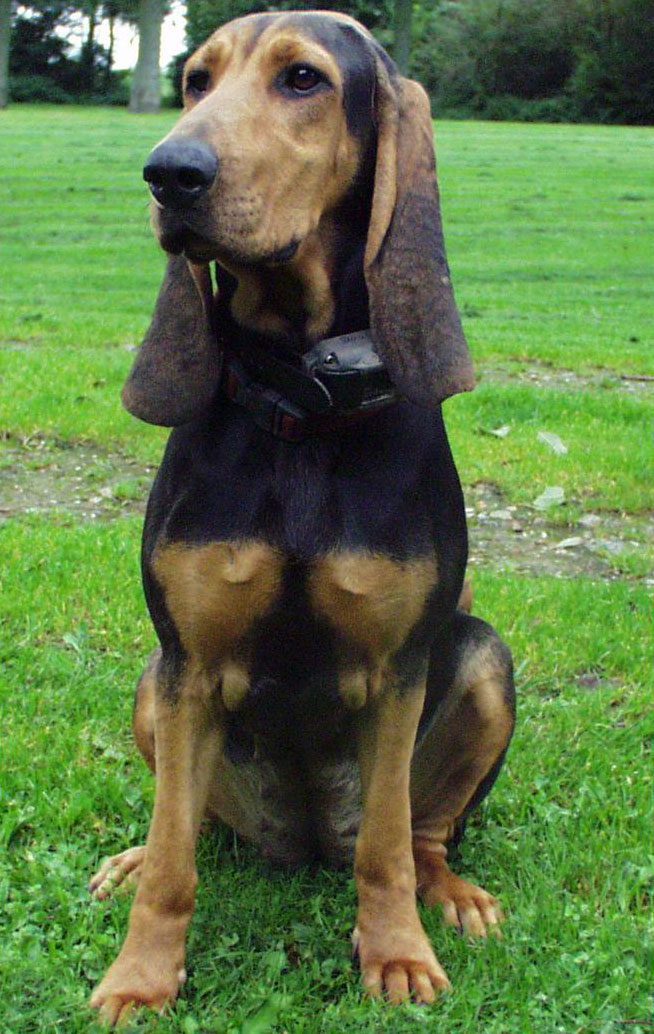
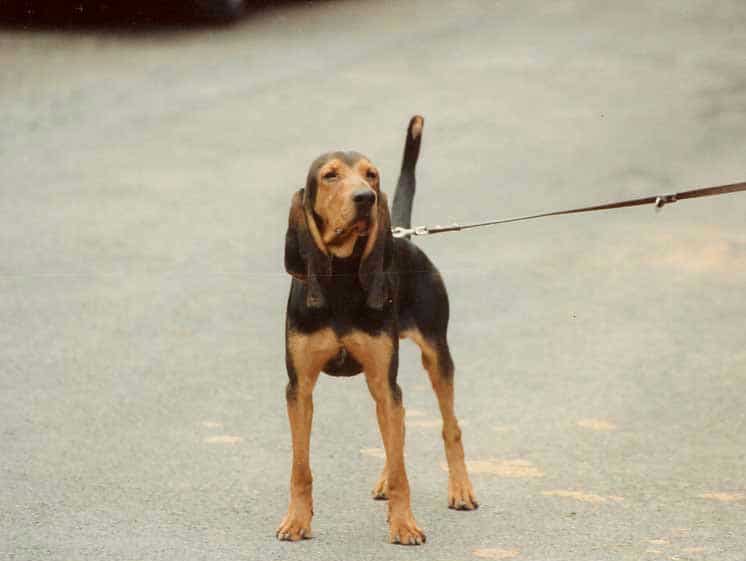
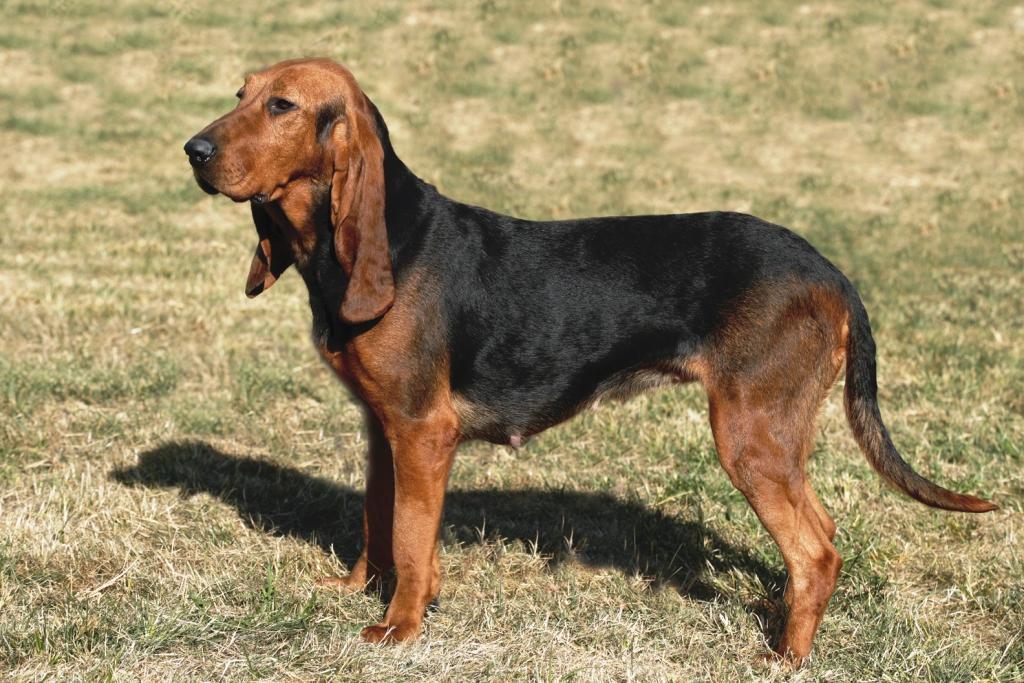
These dogs have a large skull, so their heads seem to be much larger than its small robust bodies. Their ears are flexible and hang down around their muzzle and eyes, giving it a warm and friendly appearance. Your body has some wrinkles around the chest and neck area. Their bodies are elongated and thin and long tail. They are usually a color dark bronze or a reddish Fawn.

Its size is similar to the Bernese Hound, but it differs in the width of your head, being associated with the St. Hubert Hound.

Their life expectancy is of 12 to 13 years, and can weigh between 15 and 20 kg, with a height of 43 to 58 cm. up the cross.

Character and skills

These dogs can be known as little adventurers. They like to explore new and interesting terrain in which have never been before. Son, final ideal for anyone that loves to go on walks and exercise, Since in that environment be shown fully happy. As good Hound, anything, even if it is in its territory.

It is used mainly for hunting hare and wild boar..

They are very protectors and they lash out against anyone trying to do harm to their owners. They are very distant with strangers and need firm handling if kept as pets.

Well trained is a loving, friendly dog with children.

ยซJura Houndยป images

ยซJura Houndยป Videos

Type and recognitions:

  • FCI CLASSIFICATION:
  • Group :
  • Section : . .

Federations:

  • FCI – Group 6: Scent hounds, and related breeds. – Section 1.2: Medium-sized Hounds. โ“˜
  • UKCScenthounds โ“˜

FCI breed standard "Jura Hound (Bruno Jura Hound)"

Origin:
Switzerland, France

Date of publication of the valid original standard:
28.11.2001

Use:

It is a small game hound that hunts hares, deer, foxes and sometimes wild boars. He is an independent hunter by hunting with a bark. Searches and corners its prey with great safety even in difficult terrain.


General appearance:

It is a dog with medium height at the withers. Your body structure indicates strength and tenacity. Its slim head with long snout and long ears give it an expression of nobility.

There are four varieties of Swiss Hound :

  • Bernese Hound
  • Jura Hound
  • Lucerne Hound
  • Schwyz Hound

IMPORTANT PROPORTIONS :

โ€ข Body length : Height at withers = approx. 1.15 : 1.
โ€ข Height of the withers : chest depth = approx. 2 : 1.
โ€ข Length of the nasal shank : skull length = approx. 1 : 1.


Behavior / temperament:

Lively and passionate about hunting. Sensitive, manageable and faithful.

Head:

---

Cranial region:
  • Skull : Long, narrow, delgado, noble. Bulging skull, visible occipital protrusion. The direction of the longitudinal axis of the skull and the muzzle shows a slight divergence. No frontal groove, no folds or wrinkles.
  • Depression links (Stop) : Not too developed.

facial region:

  • Truffle : Completely black, well developed; nostrils wide open.
  • Snout : Nobly developed, narrow ; it is not square or pointed ; the muzzle is straight or very slightly convex.
  • Lips : Moderately developed, the upper lips perfectly cover the lower jaw ; slightly open corner.
  • Jaws / Teeth : Powerful jaw. Powerful scissor bite, regular and complete, that is, the upper incisors overlap the lower ones without leaving space between them and the teeth are implanted vertically in the maxilla. Pincer bite allowed. The lack of one or two PM1 or PM2 is acceptable (premolars 1 or 2) . M3 are not taken into account (molars).
  • Cheeks : Loose, non-protruding supraciliary arches.

Eyes : They are more or less light or dark brown depending on the color of the coat ; they are medium in size and slightly oval. The edges of the eyelids are well pigmented. The eyelids are well adherent. The expression is sweet.

Ears : Placed below the eye line, in the posterior part of the cranial region and never implanted in its maximum width. Its length must reach at least the tip of the nose. The pinna is not prominent. The ears are thin. He wears them down, bent and twisted ; they are rounded at the bottom and have a fine, soft coat.

Neck:

Long, elegant, with good musculature ; throat skin is loose without forming a noticeable dewlap.

Body:

  • top line : The neck, the back, The rump and tail form a harmonious and noble line.
  • Cross : Bit strong, free and elegant neck insert.
  • Back : Firm and straight. : Muscular and slightly arched.
  • Rump : Elongated, extends the line of the back harmoniously and descends gently. It is not higher than the cross. The crest of the iliac bone is not too prominent.
  • Breast : Deeper than wide, well descended, reaches to the tips of the elbows. Elongated rib cage with slightly arched ribs.
  • Bottom line and belly : Belly slightly pulled back ; full flanks.

Tail:

Inserted in the extension of the croup. It is of medium length and tapers towards the tip ; at its end it has a slight incline up ; noble. In general, it remains hanging at rest and when walking calmly, without showing an important bend ; When he is attentive or in action he carries it along the line of his back , but never resting in it nor in a curled way. Is well covered with hair, but it doesn't have a spike shape.

Tips

PREVIOUS MEMBERS :

  • As a whole : They are well muscled, thin and not heavy in appearance. Seen from the front they are parallel and from the side they look vertical ; his bones are strong with his feet pointed forward.
  • Shoulder : Long oblique shoulder blades, closely linked to the rib cage. The ideal angulation of the scapulohumeral joint is approximately 100ยฐ.
  • Arm : A little longer than the shoulder blade, placed obliquely, closely attached to the chest. His musculature is fine.
  • Elbows : Naturally glued to the side.
  • Forearm : Straight, strong, delgado.
  • Carpo : Strong, wide metacarpus : Relatively short; Seen from the front it is located on the perpendicular line of the forearm; seen from the side it is slightly inclined.
  • Front feet : Rounded, with compact fingers ; hard and rough pads ; strong nails whose color depends on the color of the coat.

LATER MEMBERS :

  • As a whole : They have strong muscles and are in a balanced relationship with the forelimbs ; seen from behind the hind legs are vertical and parallel.
  • Thigh : Long and oblique, powerful although his muscles are thin. The angulation of the coxofemoral joint is approximately 100ยฐ.
  • Knee : No inward or outward deviations. Angulation of the femoral-tibian joint approximately 120ยฐ.
  • Leg : Relatively long, thin, visible muscles and tendons under the skin.
  • Hock : Tibiotarsal joint angulation approximately 130ยฐ.
  • Metatarsus : Pretty short, placed vertically and parallel. Without spurs, except in countries, in which amputation is not allowed by law.
  • Rear feet : Rounded, with compact fingers, hard and rough pads ; strong nails whose color depends on the color of the coat.

Movement:

It is unfolded, regular, harmonious and with good scope. Has good impulse from the hindlimbs. Drive the limbs parallel and straight. The cross moves smoothly and regularly up and down, the back remains straight and the head and neck wobble slightly from side to side.

Mantle

SKIN : Fina, flexible, well adherent, whose color varies in each of the four varieties.

โ€ข Bernese Hound : Skin is black under black hair and blackish-white marbling under white hair.
โ€ข Jura Hound : She is black under black hair and lighter under tan hair..
โ€ข Lucerne Hound : She is black under black hair and lighter under blue-flecked hair..
โ€ข Schwyz Hound : It is dark gray under the orange hair and blackish-white marbling under the white hair..

HAIR : Is short, smooth, thick, very fine on the head and ears.

COLOR :

โ€ข Bernese Hound : White with black spots or a black saddle-shaped spot. Tan color from pale to intense over the eyes, cheeks, on the inside of the ears and around the anus. Sometimes very lightly splattered (black splash).

โ€ข Jura Hound : Tan with black cape, sometimes nuanced black or black with tan over the eyes, cheeks, around the anus and on the extremities ; sometimes with a small white spot on the chest ; this stain may be splattered (black or gray splashes).

โ€ข Lucerne Hound : Called blue, with a mixture of black and white hairs, intensely splashed, with black spots or a saddle-shaped spot ; tan color from pale to intense over the eyes, cheeks, on the chest, around the anus and on the extremities ; a black cape is allowed.

โ€ข Schwyz Hound : White with orange or orange "saddle" spots, sometimes with orange splashes ; an orange coat is allowed.


Size and weight:

Height to the cross :

  • Males : 49-59 cm..
  • females : 47-57 cm No tolerance.


Fouls:

Any deviation from the aforementioned criteria is considered as a fault and the severity of this is considered to the degree of the deviation to the standard and its consequences on the health and well-being of the dog..

โ€ข Rough appearance, vulgar, weak body structure.
โ€ข Discordant proportions between body length, the height of the withers and the height of the chest.
โ€ข Skull too wide, too convex or too flat.
โ€ข Stop too marked.
โ€ข Very short or very long snout, too square or pointed.
โ€ข Concave nasal bridge.
โ€ข Lack of more than two premolars PM1 or PM2. Los M3 (molars 3) are not taken into account.
โ€ข Thick lips.
โ€ข Light eyes, acute expression, non-adherent eyelids.
โ€ข Ears that are too short or flattened, thick or set very high.
โ€ข Very short neck.
โ€ข Double chin too marked.
โ€ข Saddled or arched back (carp back).
โ€ข Croup too inclined or too short.
โ€ข Rib cage not deep enough, too flat or barrel-shaped.
โ€ข Retracted belly, fallen flanks.
โ€ข Tail with poor insertion, carried too high, very bent, stooped, very coarse or spike-shaped tail.
โ€ข Extremities with bones that are too thin or in a bad position.
โ€ข Very sloping shoulders, arm too short.
โ€ข Weak carpal joints.
โ€ข Insufficient angulations of the hind limbs ; cow or barrel shaped limbs.
โ€ข Dewclaws on the hind limbs, except in countries in which amputation is not permitted by law.
โ€ข Rough coat, not smooth.
โ€ข Flaws in color and markings.

  1. Bernese Hound : Too many black splashes on the white. Tan or white on the outside of the ears.
  2. Jura Hound : Uniform color. Noticeable white patch or heavily speckled patch on the chest.
  3. Lucerne Hound : Lack of ยซ blue ยป splash. Tan on the outside of the ears.
  4. Schwyz Hound : Too many orange splashes on the white. Uniform color. White on the outside of the ears.

โ€ข Slightly fearful or aggressive behavior.

MISS PLAYOFFS

โ€ข Excessively fearful or aggressive dog.
โ€ข Atypical general appearance of the breed.
โ€ข Completely depigmented nose.
โ€ข Upper or lower prognathism, incisor arcade deviated.
โ€ข Ectropion, entropion (even if it had been operated).
โ€ข Horn tail, threaded, knotty the hook.
โ€ข Size above or below tolerance.

Any dog โ€‹โ€‹showing clear signs of physical or behavioral abnormalities must be disqualified..


N.B.:

Males should have two normal-appearing testicles fully descended into the scrotum..

Source: F.C.I - International Cynological Federation

Varieties of ยซSwiss Houndsยป

The four varieties of Swiss hounds have their own specific hunting characteristics:

– The Bernese Hound, with her beautiful throat ("the howler of the Jura"), demanding, mainly used for hares;
– The Jura Hound, an excellent recuperator
– The Lucerne Hound, reminiscent of Small Blue Gascony, he is an active and passionate dog that hunts deer very well;
– The Schwyz Hound, less widespread outside of Switzerland, is reserved for rabbits and hares.

Alternative names:

1. Bruno Jura Hound (English).
2. Bruno du Jura (French).
3. (frz. Bruno du Jura) (German).
4. Sabujo Bruno de Jura (Portuguese).
5. Fernando del Jura, Bruno del Jura (espaรฑol).

โ–ท The world of Pets: Dogs, cats, birds, reptiles, amphibians

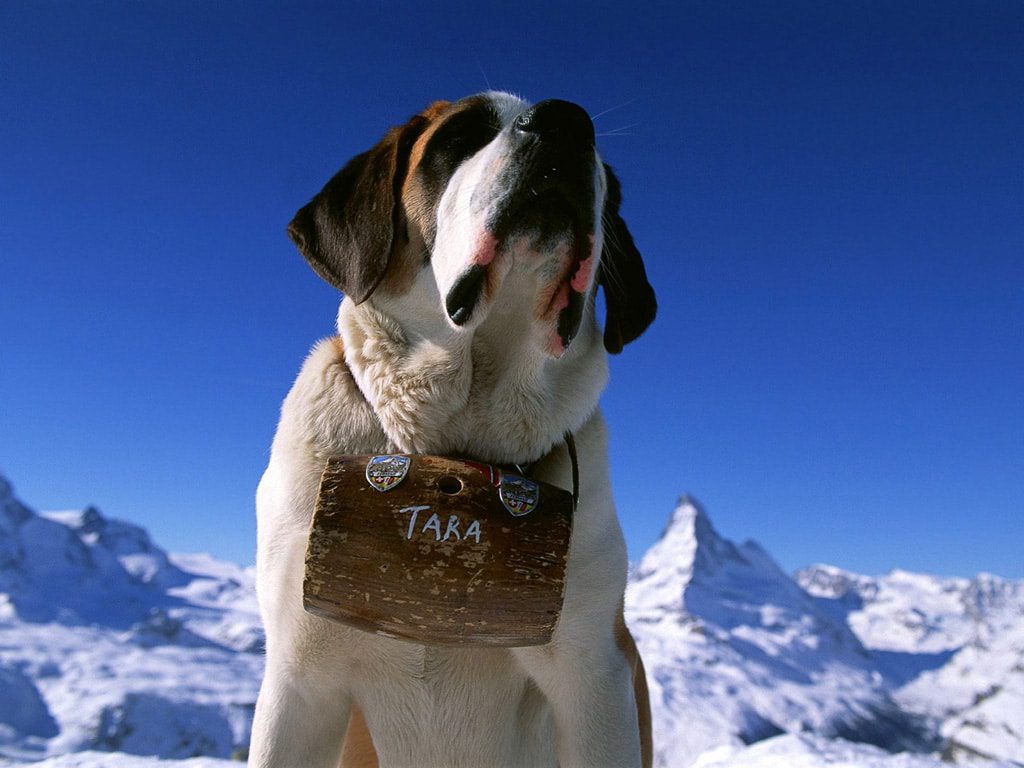
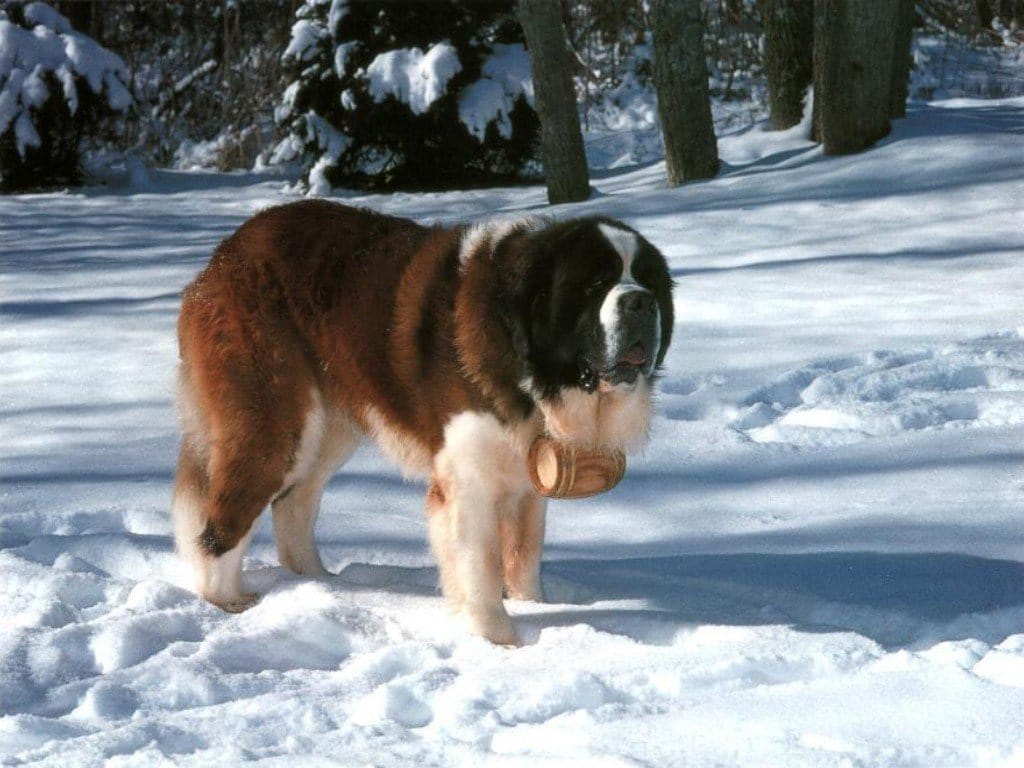
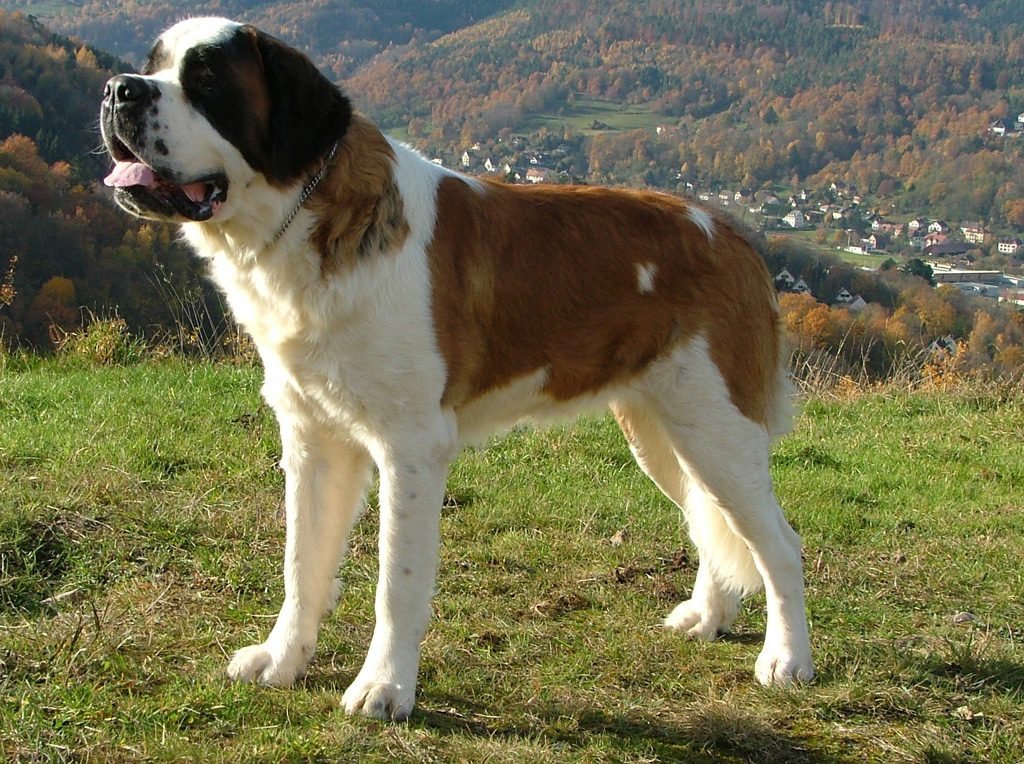
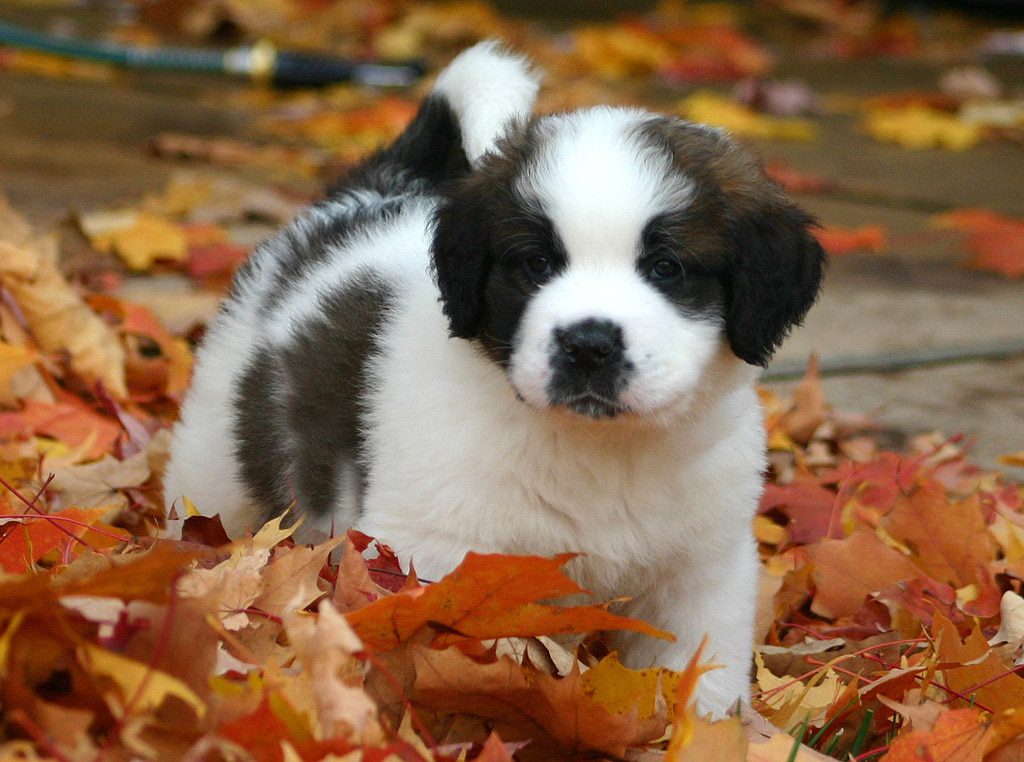
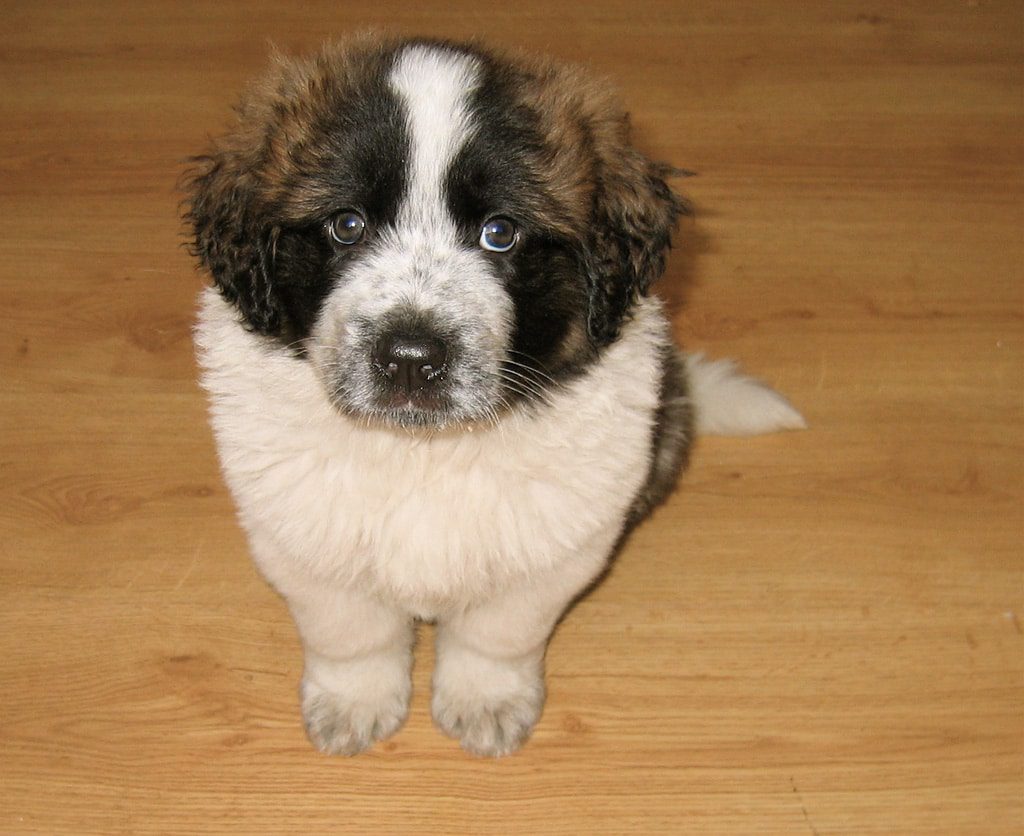
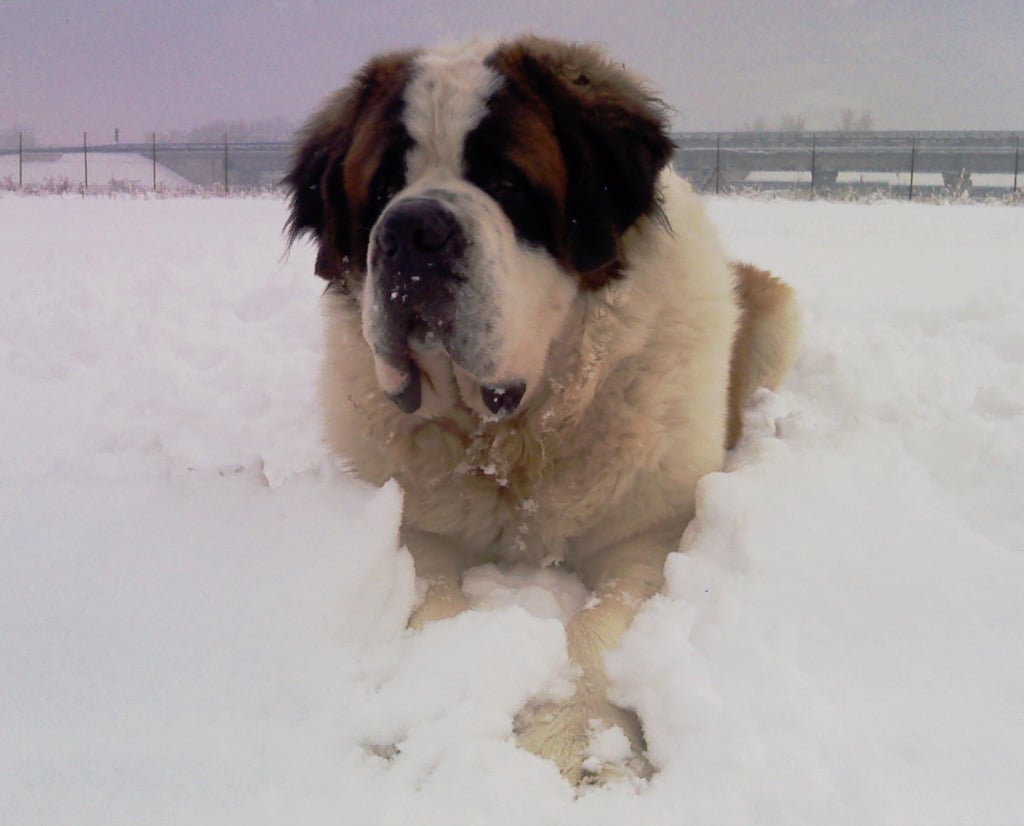
St. Bernard
Suiza FCI 61 - Molossoid . Mountain

San Bernardo

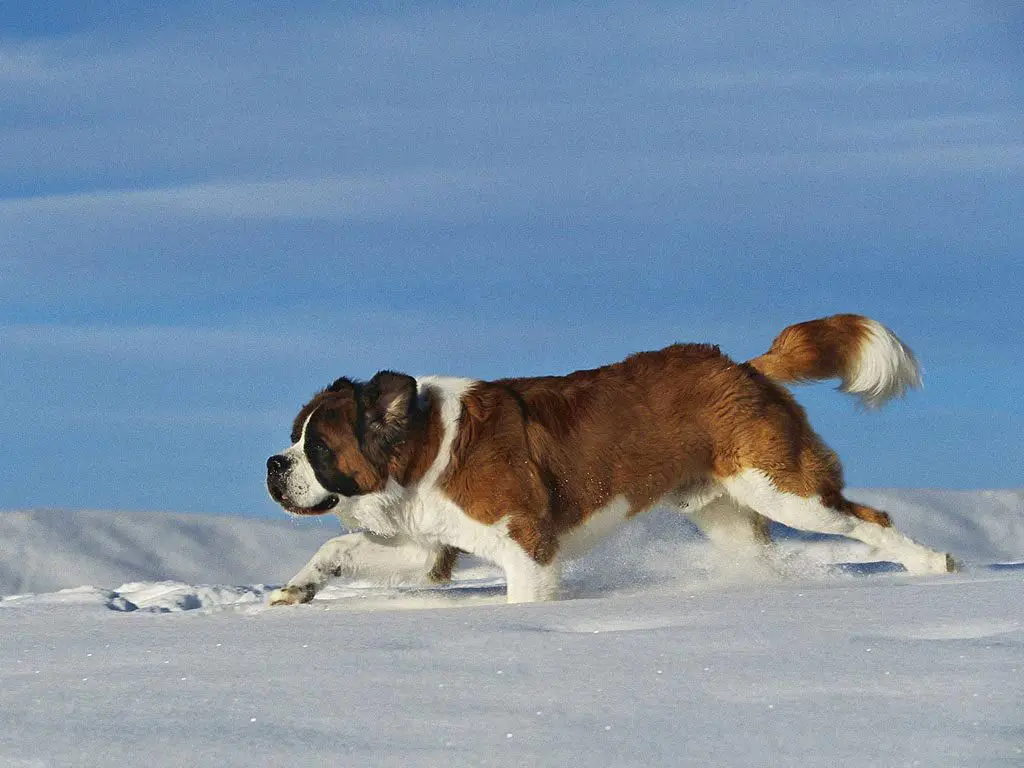
The St. Bernard It is very affectionate and has an innate sense of relief especially in the snow.

Content

History

The St. Bernard It is a breed of dog whose name in other languages: St. Very, Bernhardiner, Chien du Saint-Bernard, Saint Bernard Dog.

According to breed historians, the St. Bernard, descended from the ancient molossians Asian, whose ancestral form was and is represented by the Tibetan Mastiff.

A team of researchers from the University of Manchester, directed by Chris Klingenberg of the Faculty of biological sciences, reviewed 47 skulls of St. Bernard donated by Swiss breeders to the Natural History Museum in Bern covering a period of 120 years, from modern copies until those old dogs of the time that was initially defined the standard of the breed. It was found that the traits stipulated in the breed standard of the St. Bernard have become more exaggerated over time, as breeders selected dogs that had the desired physical attributes.

Compared to their ancestors, the St. Bernard modern has the widest skull, the angle between the nose and the forehead more pronounced, and also a more significant bump over the eyes. These changes are described exactly as desired in the breed standards. Clearly, not due to other factors such as overall growth, since they do not provide the animal with any physical advantage, so we can be sure of have evolved only by selective breeders considerations.

This research shows how the selection, either natural or in this case artificially influenced by the man, It is the fundamental driving force behind the evolution of life on the planet.

In the year 923 born Bernard of Menthon in Menton, region of Savoy (France), which he became Archdeacon of Aosta, in the Italian Alps, dedicated to spreading the Christian faith among the inhabitants of the Alps. In one of these Alpine passes was founded in the year 1049 the Hospice of the Gran San Bernardo, to help, help and shelter to hikers who were the step. The Holy, Catholic scholar and theologian, He was part of the Cistercian order or better known as Trappist, as fellow (the Trappist monks) in Switzerland they had a dog of this breed as a companion around the 16th century.

In the great Mount St mountain pass. Bernhard, to 2.469 meters above the sea level, monks founded in the 11th century, a hospice for travellers and pilgrims. there they were raised, Since the mid-17TH century, big mountain dogs for guard and surveillance. The existence of those dogs is documented graphically from 1695 written in a chronicle of the Hospice from the year 1707.

These dogs were soon used as guard dogs and, especially, as rescue dogs for travellers lost in the fog and snow.

There are chronicles published in many languages โ€‹โ€‹about the numerous lives that were saved by these dogs from the "white death" and stories of soldiers who crossed the mountain pass with Napoleon Bonaparte towards 1800, in the 19th century, they spread the dog's fame for St. Bernard all over Europe.

Already called at that time ยซBarry Hundยซ, And the legendary ยซBarryยปIt became the symbol of the rescue dog. The direct ancestors of the dog of St. Bernard were the very widespread oversized dogs, peasants of the region. These large dogs became only a few generations, an ideal pattern, in the current race.

As a result of an international cynological congress held on 2 in June of 1887, the dog of St. Bernard was officially recognized as a Swiss breed and the breed standard became mandatory. Since then the San Bernardo dog became the "Swiss national dog".

Heinrich Schumacher Holligen, was the first, in 1867 creating genealogical documents for their dogs. In February of 1884 The ยซSchweizerische Hundestammbuchโ€ (Swiss races book, SHSB). The first entry was that of St. Bernard ยซLeรณnยป, followed by other 28 annotations also of dogs of St. Bernard. The 15 in March of 1884 The ยซSchweizerische St. Bernhardsclubยป (Swiss Dog Club St. Bernard) in Basel.

Physical characteristics

The Saint Bernard, is classified in the Group 2: Dog type Pinscher and Schnauzer, Molosoides and mountain dogs and Swiss Cattle Dogs, and other races; section 2; Molossoid, 2.2 Type mountain (without working trial). Of the FCI (Federation Cynologique Internationale).

There are two varieties of the dog St. Bernard:

  • The variety of short hair (double hair, Stockhaar).
  • The long-haired variety.

Two varieties are of great stature and of a noble general appearance; they have a vigorous body, robust, harmonic and muscular, as well as an imposing head with an expression of attention on the face.

The cross appeal is, minimum of 70 cm for males and 65 cm for females. The FCI standard sets a maximum of 90 cm for males and 80 cm for females (dogs exceeding the maximum height is not devaluarรกn if its general aspect is harmonic and its proper motion).

In general the size is defined as:

  • ยซVery largeยซ, to be optimal in San Bernardo, When exceeds the 86 cm in males and the 80 cm in females.
  • ยซGrandยปWhen it goes from 82 to 86 cm in males and 75 to 80 cm in females.
  • ยซMediaยปWhen it goes from 78 to 82 cm in males and 70 to 75 cm in females.
  • ยซSmallยปWhen it goes from 70 to 78 cm in males and 65 to 70 cm in females.

In it "golden period of St. Bernardโ€ (1920-1940) were very rarely seen in exposures lower males to 80 Switzerland cm, of Germany, in the Netherlands and the subjects were not so rare above the 90 cm..

Also currently a good San Bernardo to access the championship would never have to be -with some exceptions- below the 80-82 cm and abundantly exceed such limit to reach above if possible the maximum of the German Mastiff and of the Irish Wolfhound but with greater volume, greater length of the trunk and heavier, course.

Character and skills

The dog's St. Bernard radiates calm and tranquility. He is balanced and self-confident.. Despite its imposing size, it is sensitive and has a gentle nature. His "stubbornness" is typical of this race, not only in appearance. The St. Bernard is trustworthy and kind, even with strangers. There is hardly a dog that has such a tolerant and balanced nature. Quietly he lets himself be caressed and understood by children he does not know. There is hardly a dog as fond of children as the St. Bernard. Nothing seems to bother him.

But, has an alert protective instinct. Defends his family and territory inflexible and extremely effective. One St. Bernard healthy and well socialized never loses control. It is not a barking dog and will stop any intruder quietly and abruptly. How do you like to live outside, still suitable as a guard and protection dog – but it is not in any way a dog to be in a kennel. The basis of this is the close connection with your human family, who should be the center of attention. Because he is affectionate and needs a lot of contact with humans as well as with other dogs.. After all, the close connection with his master is the decisive basis of his education.

Due to its size and strength, a St. Bernard a dog is not for beginners. It also, its maintenance is – as with all big dogs – very complex. If you want to buy a dog from St. Bernard, You must first be clear about some basic things:

The extreme dimensions bring with them quite practical problems. This starts with the car. And what if the adult giant is sick or cannot walk for a while due to age?? The St. Bernard not a dog for an apartment. The floor of the house should not be slippery. The dog should not have to climb the stairs frequently. To the St. Bernard he likes to travel; not an athlete, and take it easy. In the interest of your fitness, one should ensure that he exercises outdoors every day. Ideally, a St. Bernard stay in the field.

St. Bernard Education

To have fun with your dog St. Bernard, consistent education from the puppy's age is a basic requirement. 60 and more kilos of stubbornness, reluctantly following instructions, it's not a fun thing. Also keep in mind that the St. Bernard It, in case of doubt, much stronger than any well-trained man.

A deep and intimate bond with your caregiver is the basis of education, never difficulties or coercion. As puppies it must be carried with a stoic consistency. In his youth, the St. Bernard they are usually very lively and challenge the leadership of their humans. But, the dog of St. Bernard can be well educated. His calm and kind nature even forgives this or that mistake. But a solid education foundation with clear rules for daily life is an absolute prerequisite for your future attitude..

St. Bernard health and care

Coat care is simple. Regular brushing is enough. During the change of coat, twice a year, everything is a little more complex.

The main health problem of St. Bernard is the extreme breeding, breeding for gigantism. Puppies and young dogs of such breeding already grow too fast. So, it's about body coordination problems. Epilepsy and other diseases accompany the giant that is becoming. Life expectancy decreases dramatically. The enormous growth and associated rapid weight gain is an extreme challenge for the entire body.. The dog's fingerprint is not designed for such giants. the heads, however "typical" they seem, they have also been raised to be unhealthy and powerful, which can cause problems at birth.

One should pay attention to the eyes: Droopy eye or droopy eyelid is a widespread problem, especially with particularly powerful heads, that requires lifelong care and can seriously damage the eyes. Professor Distl of the Hannover University of Veterinary Medicine considers the St. Bernard as one of the breeds in which epilepsy is more common. Various types of cancer such as osteosarcoma also appear to be common in St. Bernard. The breed is strongly affected by dysplasia of the hip joint, as well as other skeletal diseases.

Nutrition / Food

Puppies and young dogs, they grow very fast, require expert guidance for proper nutrition. At the same time, attention should be paid to controlled exercise, neither too much nor too little. In the adult Saint Bernard there is a risk of stomach torsion. Otherwise, as with any big dog, the same applies to food: good and hearty.

The life expectancy of a St. Bernard

The legendary Barry I had 14 years, 10 of which he spent them on active rescue service in the Gran San Bernardo. Today is different, made by the man. Today, the St. Bernard is one of the dogs with the lowest life expectancy. The colossi of today reach only 6 to 8 years. Only very rarely does he reach an age of 10 years or more. On the other hand, a St. Bernard raised healthy with a weight lower than 70 kg is a robust dog and, despite its size, very frugal, without problems can live 10 years.

Buy a St. Bernard dog

Before buying a St. Bernard, you should check very carefully if you really have all the requirements to be able to spend many wonderful years with this giant. Only when all this clears up, a breeder must be found and contacted long before purchase. Special importance must be given to the fact that the breeder avoids exaggeration. Dogs in your kennel should not be large or too heavy. Also the heads should not be too powerful. It also, make sure that no epilepsy occurred in the ancestors. In any case, it should be clear that a puppy is only bought directly from a serious breeder. Better pay a few hundred euros more for a puppy from a serious breeder. These euros have a good opportunity to become the best investment of your life. Coming from a serious upbringing, a puppy of St. Bernard costs between 1.500 and 2.000 EUR.

Characteristics "St. Bernard"

Coexistence is important that you have with your new friend. Before considering the acquisition of a dog of the breed "St. Bernard" you know certain factors. Not all breeds of dogs are apt to live in an apartment, you must take into account his character, their need for exercise, their interaction with other pets, their care and if you have small children, their level of tolerance towards them.

Adaptation โ“˜

4,0 of 5 stars (based on 1 review)

friendly dog โ€‹โ€‹โ“˜

5,0 of 5 stars (based on 1 review)

hair loss โ“˜

3,0 of 5 stars (based on 1 review)

Affection level โ“˜

5,0 of 5 stars (based on 1 review)

Need for exercise โ“˜

2,0 of 5 stars (based on 1 review)

Social need โ“˜

4,0 of 5 stars (based on 1 review)

Home โ“˜

3,0 of 5 stars (based on 1 review)

Toilet โ“˜

4,0 of 5 stars (based on 1 review)

Friendly with strangers โ“˜

3,0 of 5 stars (based on 1 review)

barking โ“˜

3,0 of 5 stars (based on 1 review)

Health โ“˜

5,0 of 5 stars (based on 1 review)

Territorial โ“˜

5,0 of 5 stars (based on 1 review)

Cat friendly โ“˜

5,0 of 5 stars (based on 1 review)

Intelligence โ“˜

3,0 of 5 stars (based on 1 review)

Versatility โ“˜

3,0 of 5 stars (based on 1 review)

Child friendly โ“˜

5,0 of 5 stars (based on 1 review)

Surveillance โ“˜

2,0 of 5 stars (based on 1 review)

joy โ“˜

5,0 of 5 stars (based on 1 review)

St. Bernard Images

St. Bernard Videos

Type and recognitions:

  • FCI CLASSIFICATION:
  • Group :
  • Section : . .

Federations:

  • FCI – Pinscher and Schnauzer-Molossoid type dogs – Swiss Mountain Dogs and Cattledogs. Section 2.2 Molossoid, mountain type. โ“˜
  • AKC – Workgroup โ“˜
  • ANKC – Group 6 (utility dogs) โ“˜
  • CKC – Workgroup โ“˜
  • โ€‹KC – Workgroup โ“˜
  • NZKC – Utility dog โ“˜
  • UKC – Watchdog โ“˜

FCI breed standard "St. Bernard"

Origin:
Switzerland

Date of publication of the valid original standard:
04.04.2016.

Use:

Company, Guard and Farm Dog.


General appearance:

There are two varieties of San Bernardo:

  • Variety of short hair (double mantle, "Stockhaar")
  • Long hair variety.

The two varieties are considerable size and an impressive general appearance. They have a balanced body, powerful, Strong and muscular with an impressive head and a facial expression alert.

IMPORTANT PROPORTIONS

  • The desired proportion between the height of the cross and the length of the body (measured from the tip of the shoulder to the tip of the buttock) is of 9 : 10.
  • The desired proportion between the height to the cross and the depth of the chest is reflected in the sketch of the beginning.
  • The total length of the head is slightly larger than a third of the height of the cross.
  • The proportion between the depth of the snout (measured at its root) And its length is approximately 2 : 1.
  • The length of the snout is slightly larger than the third part of the length of the head.


Behavior / temperament:

Friendly by nature. Quiet temperament to cheerful; vigilant.

Head:

Powerful, imposing and very expressive.

Cranial region:
  • Skull: Strong and wide. Seen from the front and profile the top part of the skull is slightly domed. When is the dog at attention, The insertion of the ears forms a straight line with the upper part of the skull which laterally has a soft curvature towards high and strongly developed cheeks. The inclination from forehead to well steep snout. The occipital Protuberance should shortly be accented. The orbitals above arches strongly developed. Clearly marked front Groove starts on the forehead and extends to the top of the head. Skin from the forehead over the eyes forms slight folds that converge toward the central sulcus. When is the dog at attention, they are usually almost imperceptible.
  • Depression links (Stop): Strongly pronounced.

facial region:

  • Truffle: Wide and square with well marked angles, well open nostrils. The truffles must be black.
  • Snout: Uniformly wide. Nasal helm straight with a slight furrow in the Center.
  • Belfos: Pigmented edges of black. The Belfos of the upper jaw must be highly developed, shoulder straps, but not too pendants; they form a wide arc towards the nose. The corners must be visible.
  • Jaws/Teeth: Upper and lower jaws strong, wide and the same length.
  • Bitescissors or well developed clamp, regular and complete. It allows light lower prognathism, provided that the incisors do not lose contact. The absence of the PM1 is tolerated (premolars 1) and the M3.
  • Eyes: Medium-sized, they can be dark brown to hazelnut; moderately sunken. friendly expression. The edges of the eyelids are completely Pigmented.
  • A full closure is desirable, natural. Is allowed a small fold on the bottom with little visible conjunctival eyelid and a small crease on the upper eyelid.
  • Ears: Medium-sized, high and wide insertion. Highly developed Pavilion. Lobes soft triangle with rounded tip. The back edge is slightly separated from the head, While the above should be set to the cheeks.

Neck:

Strong and good long. The double chin neck and throat, moderately developed.

Body:

  • As a whole: The general impression should be, harmonica, well muscled and imposing.
  • Cross: Well developed.
  • Back: Wide, powerful and strong. The upper line is straight and level to the lumbar region.
  • Rump: Long, slightly descending with a harmonious transition to the insertion of the tail.
  • Breast : Moderately deep chest with well sprung ribs, but not abarriladas. You must not get below the elbows.
  • Abdomen and lower line: Slight upward backward.

Tail:

Of wide and strong base, It should be long and heavy.
  • The last vertebra must reach at least the corvejรณn joint. At rest you must hang straight or slightly curved up in the last third. In State care may be higher.


Tips

Former members:

  • As a whole: Seen from the front, rather wide position. Members must be straight and parallel.
  • Shoulder: Inclined scapula, muscular and firmly attached to the body.
  • Arm: As long as the scapula. The angle between the scapula and the arm must not be too open.
  • Elbow: Attached to the body.
  • Forearm: Straight, strong bone and muscles dry.
  • Metacarpus: Seen from the front must be vertical in its extension to the forearm. Viewed laterally must be slightly oblique.
  • Front feet: Widths, with strong fingers, together robust and highly arched.

Later members:

  • As a whole: Moderately angled rear limbs and muscled. Seen from the rear must be parallel and not together.
  • Thigh: Robust, muscular and wide.
  • Knee: Well angled and not turn inward or outward.
  • Leg: Fairly long and oblique.
  • Hocks: Moderately angled and strong.
  • Metatarsals: Seen from the back as straight and parallel.
  • Hind feet: Widths, with strong fingers, together robust and highly arched. The Spurs are tolerated if not they interfere with normal movement.

Movement:

Harmonic, long steps. Good push from the hind limbs. The back remains firm and stable. The previous and subsequent members must advance in a straight line when walking.

Mantle

  • Short hair (double hair): Dense outer layer, smooth and stuck to the body. Internal NAP thick. Thighs with fringes of not very notable hairs. Tail with thick hair.
  • Long hair: Outer layer of hairs of medium length, smooth. Abundant internal NAP. On the hip and rump, the hair can be somewhat wavy. Thighs with fringes of abundant hair and forelimbs with flags. Face and ears with short hair. Tail with abundant bushy hair.

COLOR: The basic color is white with reddish brown spots smaller or larger (spotted dogs), to form a continuous blanket of uninterrupted reddish brown on the back and flanks (dogs with mantle). This mantle interrupted by white veins have the same value. The reddish brown tabby is allowed. The yellowish-brown is tolerated. The dark brown on the head is much appreciated. Will tolerate some light traces of black color on the body.

  • Major brands: Sill, feet, the tail, nose cane, headband and nape.
  • Desirable markings: White collar.
  • dark mask symmetrical.


Size and weight:

Minimum height:

  • Males: 70 cm..
  • females: 65 cm..

Maximum height:

  • Males: 90 cm..
  • females: 80 cm..
  • Dogs exceeding the maximum height is not devaluarรกn in its judging if their general appearance is harmonious and correct movement.


Fouls:

Any deviation from the above mentioned criteria is considered as missing and the gravity of this is considered in proportion to the degree of deviation to the standard and its consequences on the health and well-being of the dog.

  • Characteristics of sex not sufficiently developed.
  • Non-harmonic overall appearance.
  • Very short relative to the height of the cross member.
  • Excess of folds in head and neck.
  • Muzzle too long or too short.
  • Belfos of lower jaw hanging and turned out.
  • Lack of teeth (except the PM1 and the M3) ; small teeth (especially the incisors).
  • Slight lower prognathism.
  • light eyes.
  • Eyelids too loose.
  • Back saddle or in tent.
  • Rump too high or too falling.
  • Tail coiled on top of the back.
  • Absence of white markings deemed important.
  • Curved or very returned former members out.
  • Later in the form of Coop members, de โ€œXโ€, or too straight.
  • Faulty movement.
  • Curly hair.
  • Incomplete or lack of it in the truffle pigmentation, belfos, eyelids and around the nose.
  • Wrong basic color, small splashes or spots of wetwood color on white.

MISS PLAYOFFS

  • Fearful dogs, aggressiveness.
  • Upper prognathism, marked lower prognathism.
  • Blue eyes.
  • Entropion, ectropion.
  • Completely white or completely brown reddish coat (absence of the basic color).
  • Coat of a different color.
  • Dogs that do not reach the minimum height.
  • Any dog โ€‹โ€‹showing clear signs of physical or behavioral abnormalities must be disqualified..


N.B.:

Males should have two normal-appearing testicles., fully descended into the scrotum.

  • This revised standard shall be applicable from April 2004.

TRANSLATION: Brรญgida Nestler.

Source: F.C.I - International Cynological Federation

Alternative names:

1. St. Bernhardog, Bernhardinner, Alpine Mastiff (archaic), Saint, Saint Bernard (English).
2. Grand-Saint-Bernard (French).
3. St. Bernhardshund, Chien du Saint-Bernard, Saint Bernard Dog, Perro San Bernardo (German).
4. Cรฃo de Sรฃo Bernardo (Portuguese).
5. Gran San Bernardo (espaรฑol).

โ–ท The world of Pets: Dogs, cats, birds, reptiles, amphibians

White Swiss Shepherd Dog
Suiza FCI 347 - Sheepdogs.

Pastor Blanco Suizo

The White Swiss Shepherd Dog is a dog of great temperament, attentive and guardian and never nervous.

Content

History

The White Swiss Shepherd Dog a breed of dog is pastor of Swiss origin. Share origins with the German Shepherd, but has been recognized provisionally as a breed apart by the FCI.

The 3 in April of 1899, the first dog German Shepherd, as we know it today, It was officially registered. This dog was a completely white male which was used by ranchers and sheepherders for grazing because it was very easy to distinguish it from the wolves.

The first news about a hatchery White Swiss Shepherd Dog are earlier than the year 1900 and its origin is found in Alsace-Lorraine, to be more exact in the Royal Court of the Habsburgs. In their enclosure they had a kennel of purebred white shepherds.

After the creation of the race German Shepherd, all colors were accepted. It was in the first decades of the 20th century, When were the white copies excluded, Therefore, persecuted and almost wiped out in Europe.

Back in the years 70, Switzerland had imported the first specimens of white shepherds, while in Germany - as we said above- as these dogs did not meet the standard of the German Shepherd as we know it today, White shepherds were almost wiped out.

The first Club of White Swiss Shepherd Dog was founded in the decade of 1970 in United States. For which reason, the race returned to appear in Europe. At first in Switzerland and Denmark, and later in Germany. Little by little, European Cynological societies began to open their stud books for the White Swiss Shepherd Dog.

A dog born in 1966, it was the first White Swiss Shepherd Dog which was registered in Europe, in Switzerland.

The breed was recognized in Switzerland of 1991, followed by the Netherlands in 1992. Czech Republic, Austria and Denmark, They also recognized the breed.

Switzerland, Despite the low popularity of this breed, He recovered the race and also assumed the same motherhood, so in the 26 in November of the year 2002 the Federation Cynologique Internationale acknowledged - on a provisional basis- to the White Swiss Shepherd Dog, as a separate breed.

Physical characteristics

The White Swiss Shepherd Dog, to the naked eye and as far as the physical, He is a German Shepherd in all rule, It is only slightly more elongated and less angular.

According to him standard, the White Swiss Shepherd Dog, is a dog from size medium, powerful, muscular and robust. According to the standard, males must have a tall cross ranging from 60 to 66 cm., females are slightly smaller their stature is about 55 to 61 cm..

It has the ears large, straight and triangular. The tail scimitar-shaped, is low and at rest reaches the Hock.

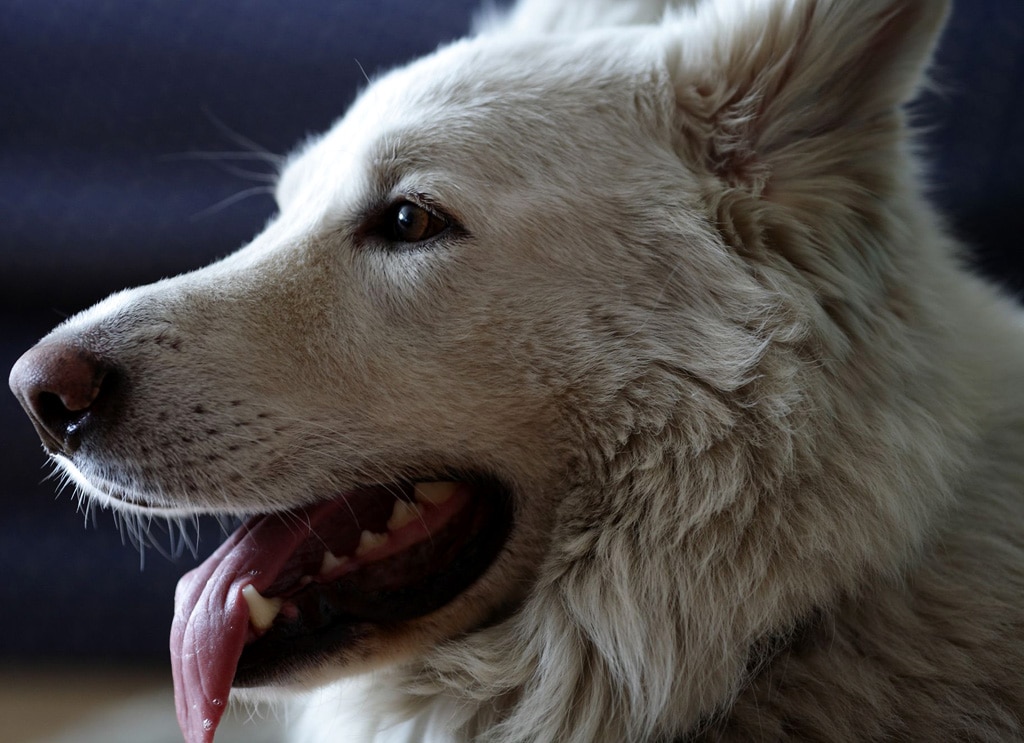
It is the eyes they are fed and slightly oblique tend to be of color dark brown or purplish-brown fire.

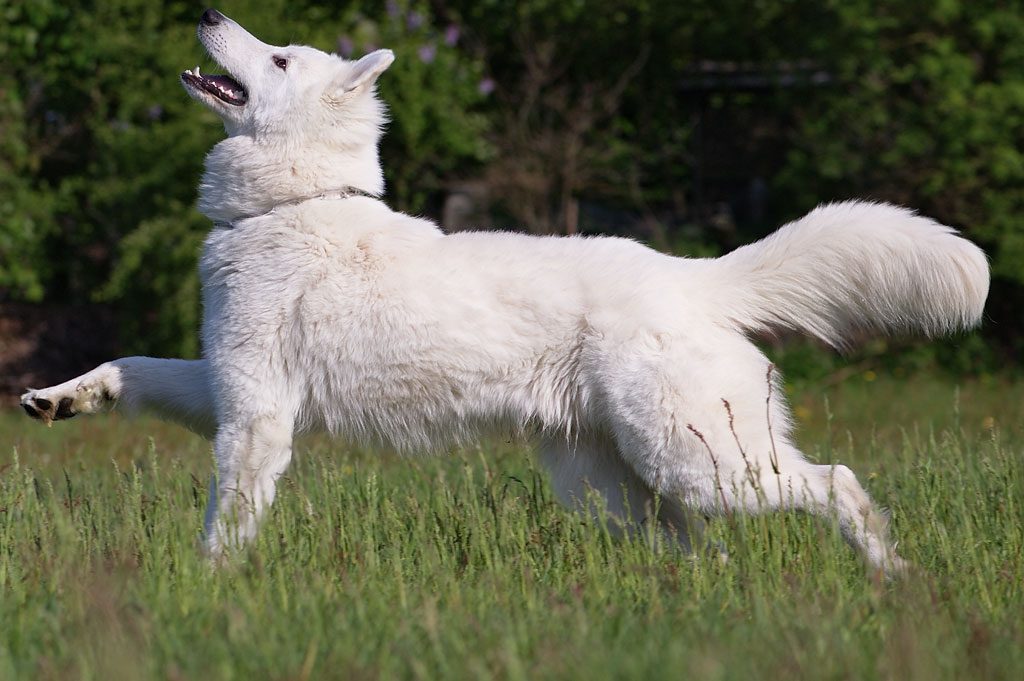
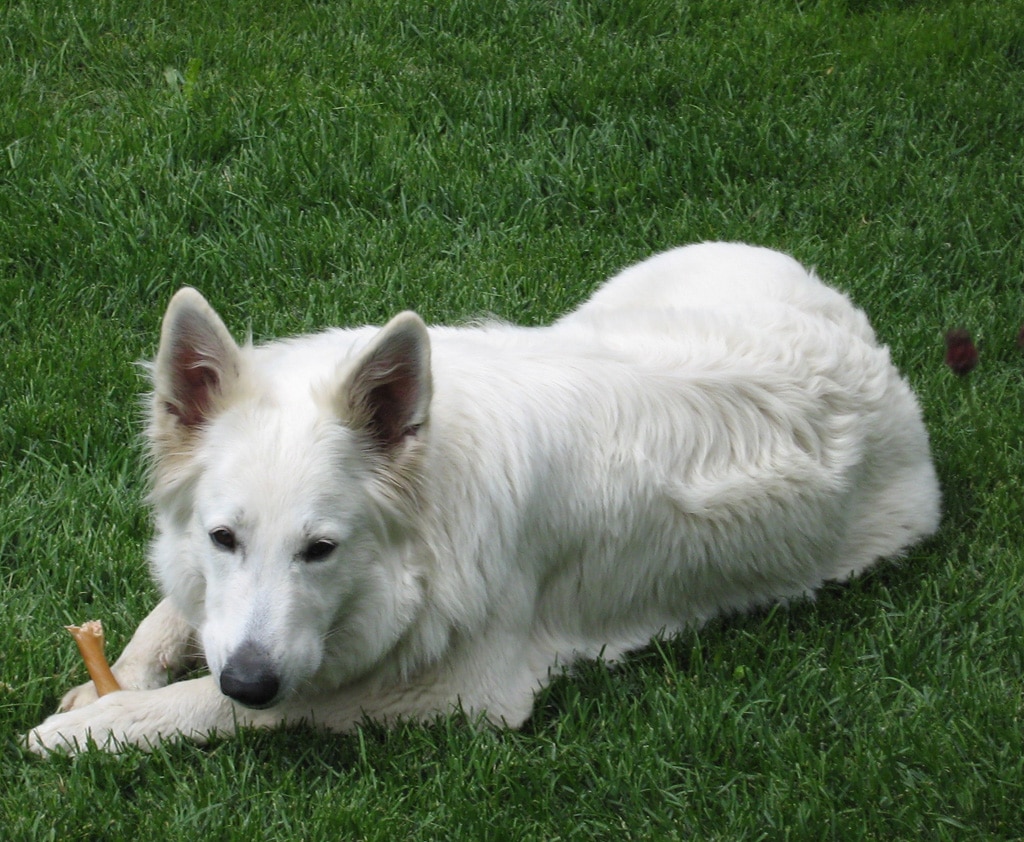
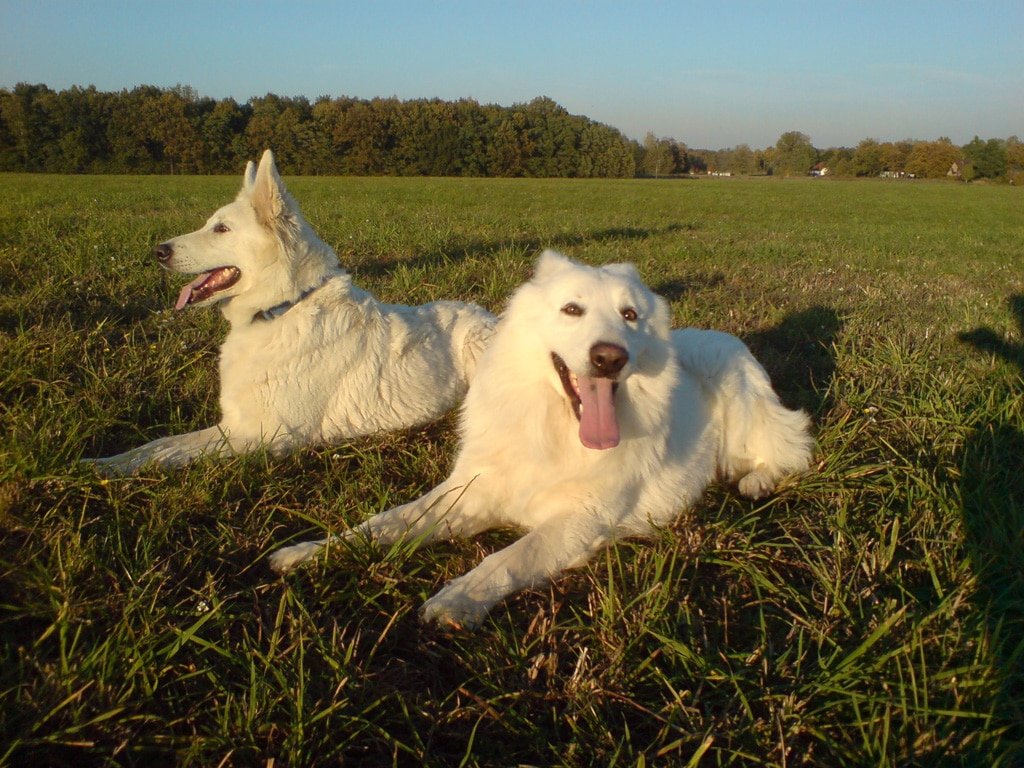
And perhaps, The most outstanding feature of this beautiful dog is its white mantle of double layer and medium long length. Dense and well separated hair.

The colour of the mantle is white. The nose, the lips and pads are absolutely black.

In the year 1933, the white color of the coat was pointed out as a defect that had to be eliminated by the German Shepherd Club of Germany, of America and Canada.

There are even theories, in the news, that continues to hold the white color is due to a physical defect, to a pathology but that type of theory lacks foundation and the first proof of it, It is a very healthy dog.

Its white color comes from a simple recessive gene that both parents must be carriers to continue the color, that is the reality.

Character and skills

The German Shepherd, not only the color of the mantle but also in its character differ.

While it is a dog of great temperament he displays never nervous, But if attentive and vigilant. It tends to be suspicious with strangers but never aggressive.

It is a dog friendly, very Intelligent and learn with ease.

Itร‚ยดs fair to his family and -as we said- he can be cautious with strangers, but should never show shy or fearful behavior and less aggressiveness. Some people think that the Arctic Wolf mixed with the breed, and that's where his caution comes from, but that only a legend.

It is a balanced dog, very good watchdog and has even been trained as a guide dog on occasion.

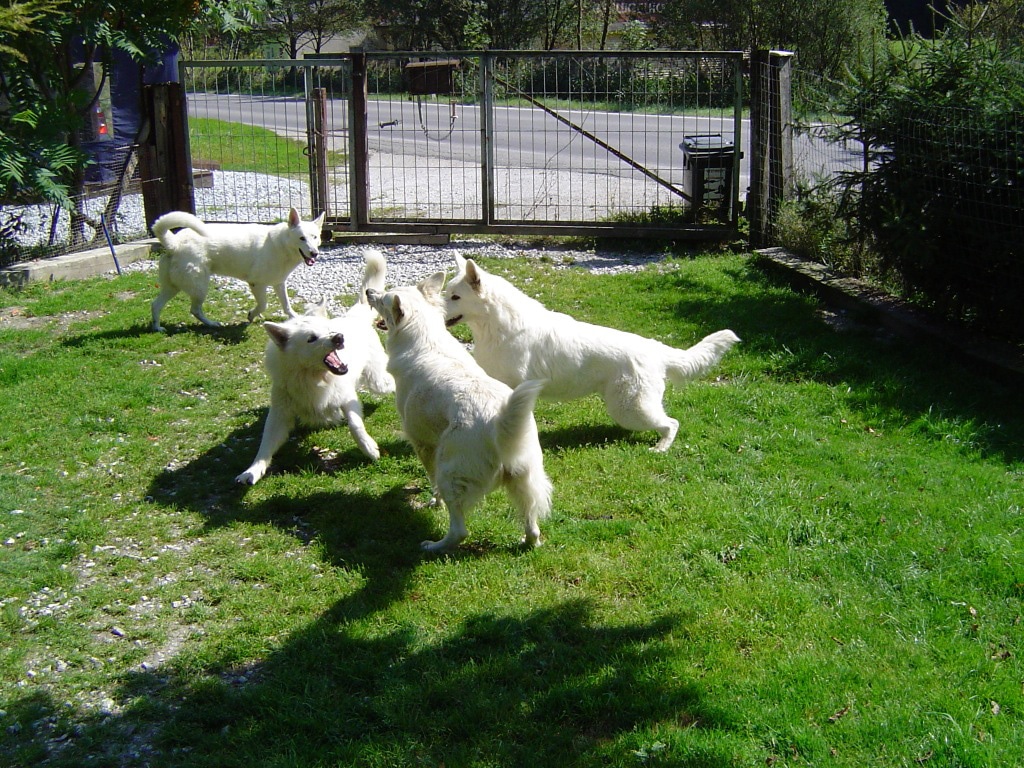
It is a great companion for everything physical exercise that is its scope, loves to play with sticks, balls, run…

While its origin speaks of a shepherd dog, today despite the fact that in some countries it is still used in such tasks, is widely accepted as a companion dog.

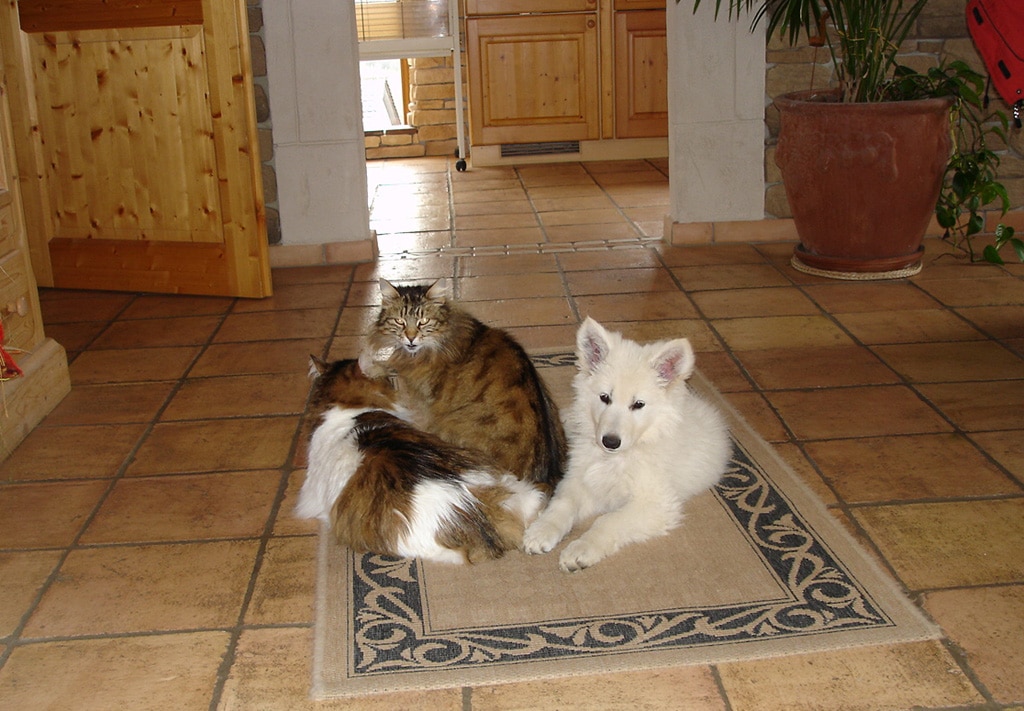
It adapts perfectly to the home, fond of children but remember that need exercise like all dogs, This always necessary if we want to keep happy balanced our puppies. Let's not forget that he is a working dog that needs physical and mental challenges.

The White Swiss Shepherd Dog gets along well with other dogs and, as well, It is usually good in agility competitions, search, rescue and obedience. They are also used as assistance dogs.

The character of White Swiss Shepherd Dog it is softer than the German Shepherd, But if you take genius to protect his family, will not hesitate it to.

White Swiss Shepherd Dog Images

White Swiss Shepherd Dog videos

Type and recognitions:

  • FCI CLASSIFICATION:
  • Group :
  • Section : . .

Federations:

  • FCI – Group 1 Herding dogs, Section 1 Sheepdogs โ“˜
  • ANKC – Group 5 (working dogs) โ“˜
  • โ€‹KC – Pastoral โ“˜
  • NZKC – Working dog โ“˜

FCI breed standard "White Swiss Shepherd Dog"

Origin:
Switzerland

Date of publication of the valid original standard:
04.07.2011

Use:

Family and companion dog.


General appearance:

It is a powerful White Shepherd dog, good muscular, medium-sized, with erect ears, double coat that can be medium or long; elongated; medium and elegant bone, harmonious silhouette.

IMPORTANT PROPORTIONS: Moderately long with a rectangular shape: body length (from the tip of the shoulder to the tip of the ischium) and height at the withers = 12 : 10.

The distance from the stop to the tip of the nose is slightly greater than from the stop to the occipital protuberance.


Behavior / temperament:

Lively and balanced temperament, enjoy the action, attentive with good ability to be trained. Friendly and discreet. With high social capacity and devoted to his master. Never skittish or aggressive without provocation. A cheerful and easily teachable working and sporting dog; with the ability to be educated in any discipline.
Its high social capacity allows it to be integrated into any kind of events and situations.

Head:

---

Cranial region:

Strong, clean cut and finely chiseled, in good proportion to the body. Wedge shaped, top or side view. The axes of the skull and muzzle are parallel.

  • Skull: Only somewhat rounded; the central groove is barely perceptible.
  • Depression links (Stop): Slightly marked, but clearly perceptible.

facial region:

Truffle: Medium-sized; black pigmentation is desirable; lighter pigmented and winter nose is accepted.

  • Snout: Powerful and moderately long in relation to the skull; straight nose bridge and lower muzzle line, converging slightly towards the nose.
  • Lips: Dried, closing fairly, as black as possible.
  • Jaws / Teeth: Strong and complete scissor bite. The teeth are set at right angles to the jaws.
  • EYES: Medium size, almendrada form, placed somewhat obliquely; brown to dark brown color, dark brown. Well attached eyelids, it is desirable that it has black edges.
  • EARS: erect, set high, parallel and directed forward; in the shape of an elongated triangle with a slightly rounded tip.

Neck:

Moderately long and well muscled, harmoniously inserting into the body, without jowl; the elegant upper neck line runs in a continuous line from the head, which is carried moderately high, to the cross.

Body:

  • top line: Strong, muscular of medium length.Cross: Pronounced.
  • Back: Level and firm.Pork loin: Well muscled.
  • Rump: Long and medium wide, leans gently towards the root of the tail.
  • Breast : Not too wide. Its depth (approx.. the 50% of the height to the cross); reaching elbow; torch oval box, spreading well back. Marked chest.
  • Bottom line and belly: Thin flanks, firm: moderately retracted lower line.

Tail:

Saber-shaped and thick, slimming to tip; rather low insertion; reaching at least the hock; at rest it hangs downwards straight or with a slight saber-like curve in its last third; in action it takes it higher but never higher than the top line.

Tips

PREVIOUS MEMBERS:

  • General appearance: Strong, vigorous, with medium bone. Straight, seen from the front; only moderately separated; viewed profile, they are well angulated.
  • Shoulder: The scapula is long and well sloped, well angled; the entire shoulder region well muscled.
  • Arms: Of adequate length and well muscled.Elbows: They are well attached to the body.forearms: Long, straight and vigorous.Metacarpus: Firm and only slightly oblique.
  • Previous feet: Oval; fingers are well arched and close together, footpads are firm, resistant and black. Are desired dark nails.

LATER MEMBERS:

  • General appearance: Strong, vigorous, with medium bone. Viewed from behind they are straight and parallel; while standing they are not too separated; viewed from the side with adequate angulation.
  • Thigh: Medium in length and well muscled.Knee: With adequate angulation.
  • Leg: Medium length, oblique, with solid bone and well muscular.
  • Hock: Strong, of good angulation.Metatarsus: Medium length, straight, robust.
  • Hind feet: Oval; hind feet are slightly longer than fore feet. Fingers are arched and well together, footpads are firm and black, dark nails are desired.

Movement:

Rhythmic sequence of steps with push and resistance; forelimbs reaching well forward, with strong push; the trot is free, with good ground cover.

Mantle

  • SKIN: No creases with dark pigmentation.

Fur:

  • Medium length mantle: Denso, glued with double hair; abundant undercoat covered with stiff hair, protection straight; the face, ears and forehead of limbs is covered by shorter hair; on the neck and on the back of the limbs the hair is slightly longer. Slightly wavy but hard hair is allowed.
  • Long hair: Denso, double glued mantle; with abundant undercoat covered with hard hair, protection straight. The face, ears and forehead of limbs are covered by shorter hair; on the neck the long hair forms a clear mane and on the back of the legs are short and the hair on the tail is dense. The length of the coat should never be exaggerated. Slightly wavy but hard hair is allowed.
  • Color: White.


Size and weight:

Height to the cross:

  • Males: 58 โ€“ 66 cm.. females: approximately 53 โ€“ 61 cm.Weight:
  • Males: 30 โ€“ 40 kg. females: approximately 25 โ€“ 35 kg.

Typical dogs slightly below or above the stipulated measurements should not be disqualified.


Fouls:

Any deviation from the aforementioned criteria is considered as a fault and the severity of this is considered to the degree of the deviation to the standard and its consequences on the health and well-being of the dog., and the dog's ability to perform its traditional task.

  • Slight bay color overlapping (light yellow or shades of bay) on the tips of the ears, at the back and top of the tail.
  • Partial loss of pigmentation giving a mottled appearance to the nose, lips and / or on the edge of the eyelids.
  • Spurs. Except in countries where its removal is prohibited by law.


    SERIOUS FAULTS:
  • Heavy appearance, too short under construction (square silhouette).
  • Absence of sexual dimorphism.
  • Missing more than two PM1; M3 are not taken into account.
  • Floppy ears (hanging), semi-erect ears, button ears.
  • Severely falling top line.
  • Ring on tail, curled tail, hooked tail, tail carried higher than top line.
  • Soft mantle, silky outer hair; woolly, curly, open hair; decidedly long hair without undercoat.
  • Decidedly bay color (clear yellowish or bay overlay) on the tips of the ears, back or top of the tail.

    FALTAS DESCALIFICANTES:

  • Aggressiveness or extreme shyness.
  • Any dog โ€‹โ€‹showing clear physical or behavioral abnormalities.
  • Anxiety, fear in high degree, aggressiveness due to anxiety, unnecessary aggression, lethargic behavior.
  • One or both blue eyes. Protruding eyes.
  • Entropion, ectropion.
  • Upper or lower prognathism, deviated jaw.
  • Total loss of pigmentation in the nose, lips and / or edge of the eyelids.
  • Total loss of pigmentation in the skin or footpads.
  • albinism.


N.B.:
  • Males should have two normal-appearing testicles fully descended into the scrotum..
  • Only functionally and clinically healthy dogs, with the typical conformation of the breed, should be used for parenting.

Source: F.C.I - International Cynological Federation

Alternative names:

1. Berger Blanc Suisse, White German Shepherd (English).
2. berger blanc (French).
3. Berger Blanc Suisse (German).
4. Pastor branco suรญรงo (Portuguese).
5. Perro de pastor suizo blanco (espaรฑol).

โ–ท The world of Pets: Dogs, cats, birds, reptiles, amphibians

Cattle dog
Cattle Dogs according to the FCI

Boyero

Content

Known by the name of Sennenhund dog a number of breeds of dog traditionally have been used for the management and conduct of cattle.

The FCI classifies the breeds of cattle dogs into two different groups based on their physiognomy.
In Group I, Section 2, He placed Sennenhund dogs Lupoid appearance (similar to a Wolf) and in Group II, Section 3, to the trotting of mountain.

Read more