โ–ท The world of Pets: Dogs, cats, birds, reptiles, amphibians

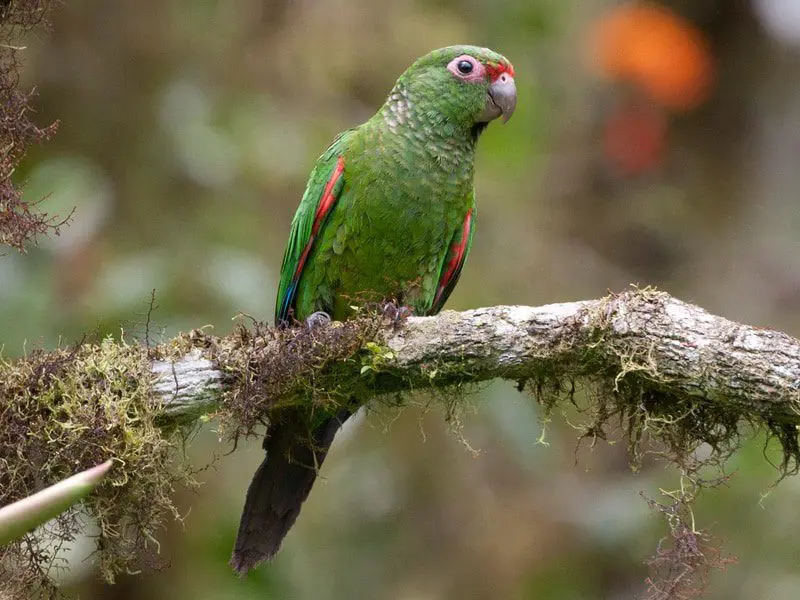
Todl`s Parakeet (sub)
Pyrrhura picta caeruleiceps

Cotorrita de Perijรก

Content

Perija Parakeet. Copyright ProAves Colombia.

Description:

21-23 cm.. height.

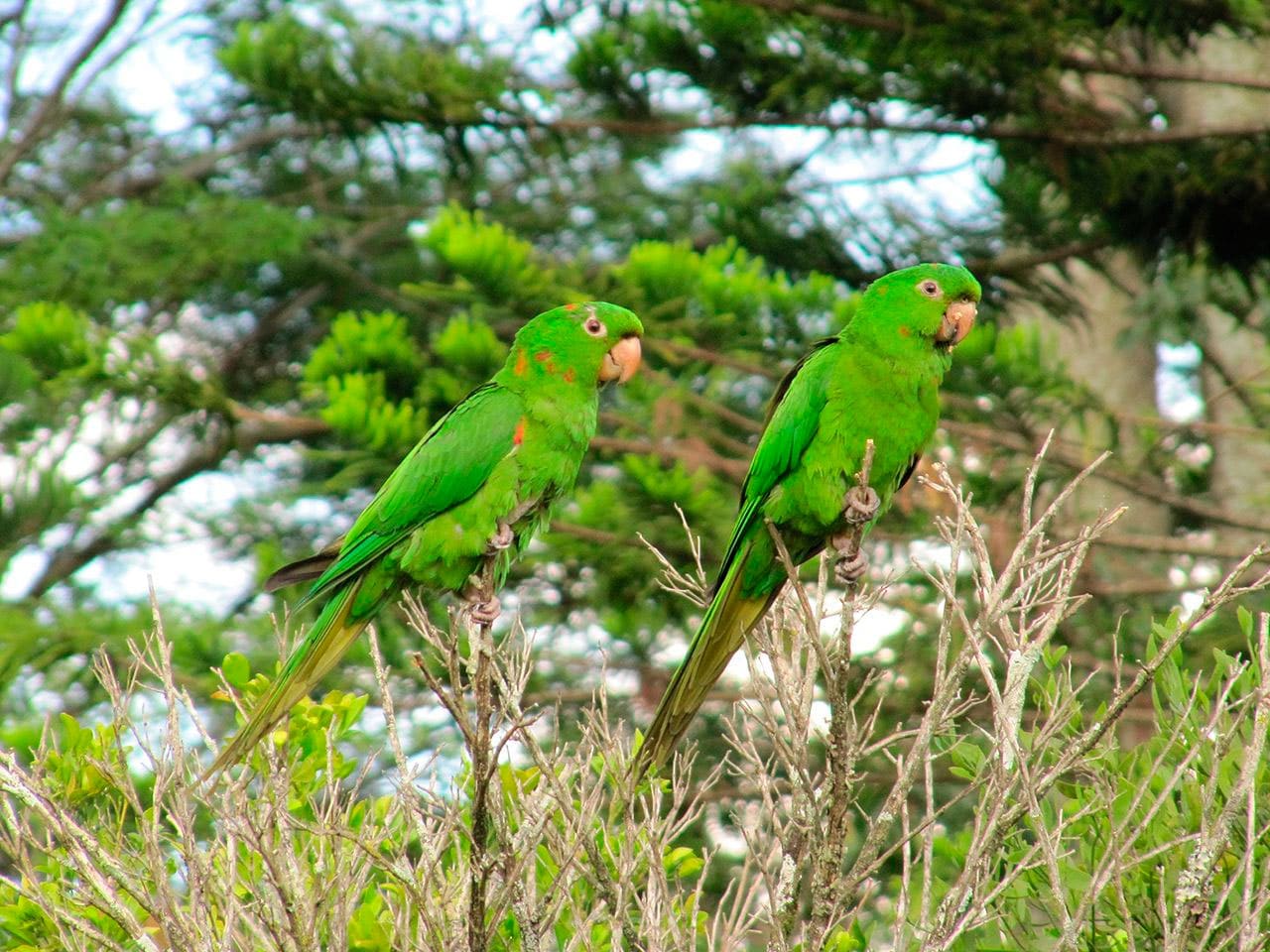
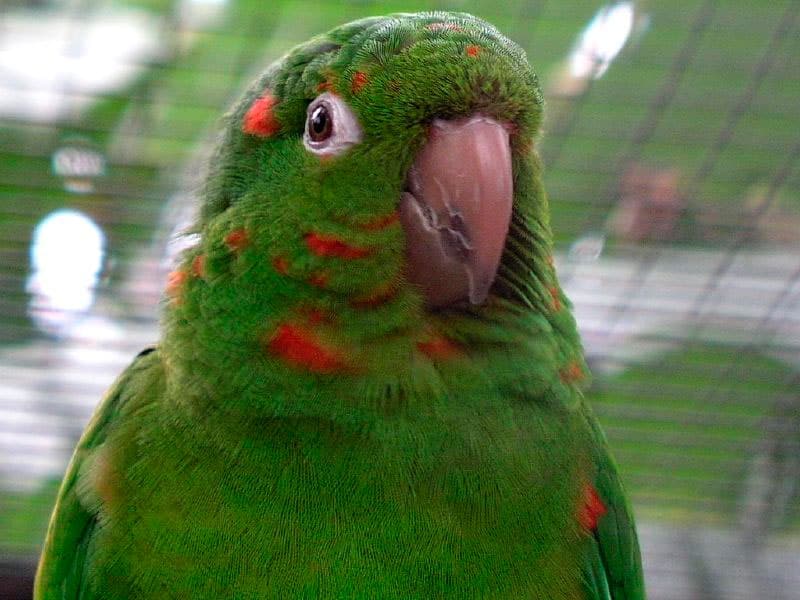
The Todl`s Parakeet (Pyrrhura picta caeruleiceps) It is generally green with the forehead and areas around the eyes, dark red.

In flight the dark red stain is very evident abdomen. Wings below greyish. The crown and nape they are blue; the front and sides of the strip head, red and scaly appearance of the chest with wider margins. This subspecies is included within the species Pyrrhura picta.

Cotorrita de Perijรก

Notes:

    Historically, classification of Pyrrhura picta caeruleiceps (Todd 1947) He has been subject to opinions found. While some authors recognize this taxon at the species level, others consider it a subspecies of Pyrrhura subandina (Todd 1947) or Pyrrhura picta (Meyer de Schauensee 1949), the latter being the most widely followed classification (Hilty & Brown 1986, pit et to the. 1997, Rodrรญguez & Hernandez-Camacho 2002). Based on analysis of morphological characters, Joseph (2000) and Joseph & Stockwell (2002) suggested that P. caeruleiceps should be considered as a distinct phylogenetic species and that the taxon Pyrrhura pantchenkoi (Phelps 1977), described from two specimens with worn plumage, is its synonym. Hilty (2003) He continued this treatment, but the classification committee Bird South America of the American Ornithologists’ Union recently it considered that existing information was insufficient to support this taxonomic change according to the biological species concept and kept provisionally caeruleiceps like a subspecies of painted parakeet (Remsen et al. 2010).
    Source: Rediscovery and notes on the ecology and vocalizations of Toddโ€™s Parakeet (Pyrrhura picta caeruleiceps) in northeastern Colombia

Ecology:

They inhabit in humid jungle, semi-humid and low cloud forests.
Nest sizable trees in abandoned nests of other species.

Distribution:

The enigmatic and little known Todl`s Parakeet (Pyrrhura picta caeruleiceps) It has a very restricted range in the rainforest, mainly between 500 and 900 Attitude meters along the border between Colombia and Venezuela, as well as patches of tropical forest in the foothills of the Serrania del Perija.

Its Freedom population It is believed to be about 30 to 50 individuals.

Conservation:

State of conservation โ“˜


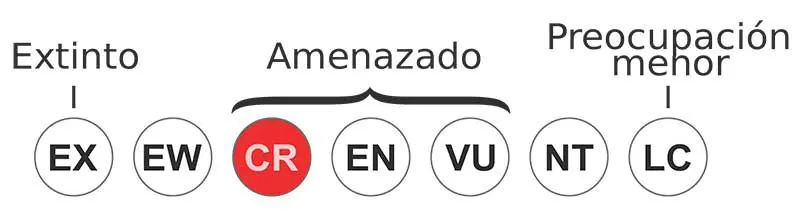
Endangered Endangered โ“˜ (UICN)โ“˜

The forest loss and fragmentation are the main threats facing this bird, but the species is also trapped and kept in cages as a pet. According to the categories of UICN It is considered In danger (IN), mainly due to the habitat destruction.

Images "Todl`s Parakeet (sub)"

Videos "Todl`s Parakeet (sub)"


Especies del gรฉnero Pyrrhura

Sources:


– Parrot Book, Parrots and macaws Neotropical
– Proaves

โ–ท The world of Pets: Dogs, cats, birds, reptiles, amphibians

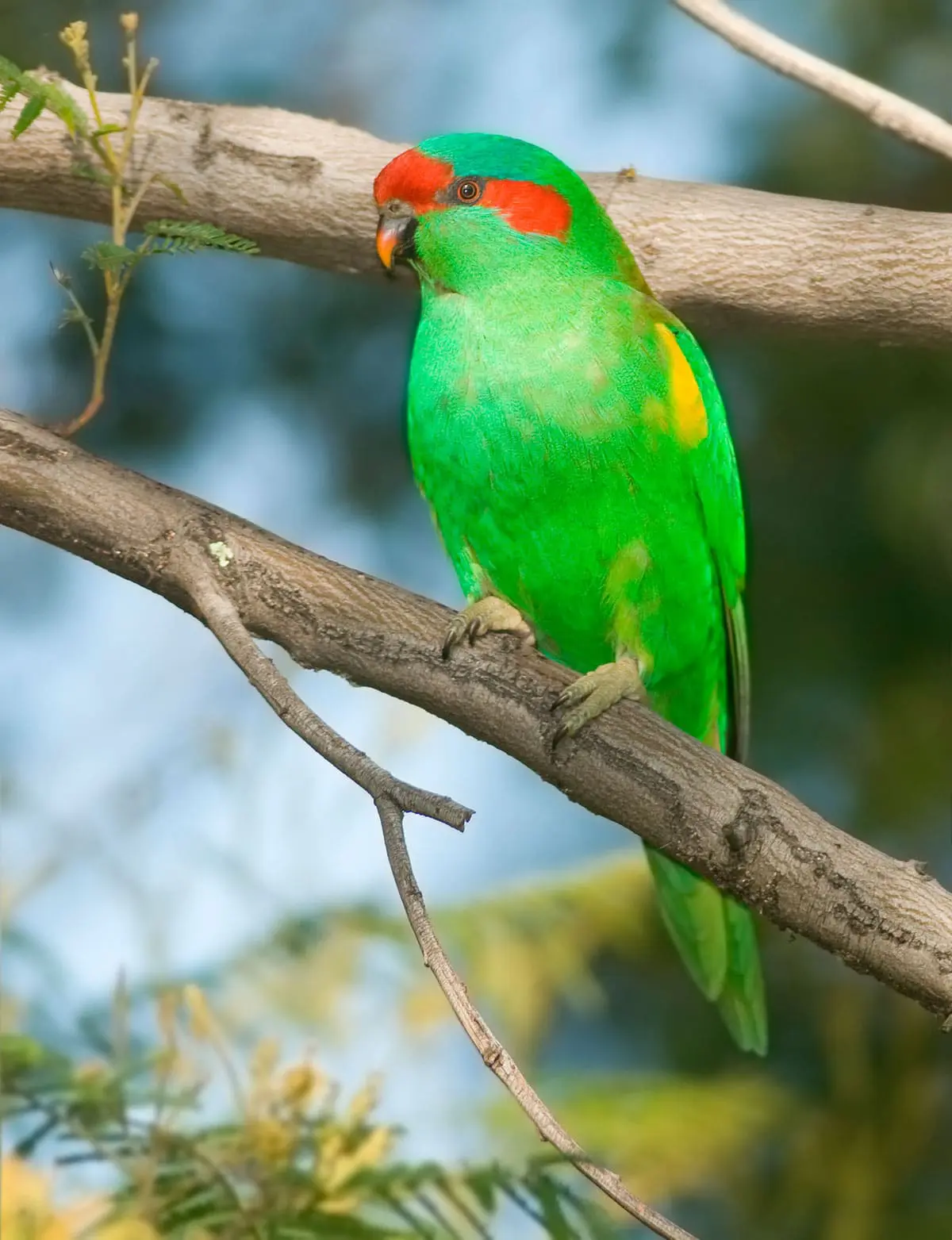
Meek's Pygmy-Parrot
Micropsitta meeki

Meek's Pygmy-Parrot

Content


Anatomy-parrots

Description

10 cm. length.

The Meek's Pygmy-Parrot (Micropsitta meeki) has the feathers of the head dark brown, strongly scalloped in color yellow on them ear-coverts and the sides of the throat, and usually with the eyebrows in a vague color yellow; feathers of the crown with fine greyish yellow tips.

Upperparts dark green, darker on the margins and the Center to the Middle coverts black. Feathers primary Black with green trim; secondaries mainly green. Wing feathers more dark with the tips of color yellow; underside of flight feather blackish. Top of the chest and centre of belly, opaque yellow, with brown spots at the tips of the feathers; flanks color green dark; under the tail, coverts yellow. Tail greenish blue in the Center, feathers laterales blackish with stains yellow on the tips or with pointed blue and yellow.

Bill yellow rose pale; irises yellowish brown; legs Pink.

Similar to males females.

Subspecies

  • Micropsitta meeki meeki

    (Rothschild and Hartert, 1914) – The nominal.


  • Micropsitta meeki proxima

    (Rothschild and Hartert, 1924) – The face is more pale and the grey more beige that the of the nominal species; light diffusion of greenish color instead of the yellow markings of the nominal, and a band front yellow with find in them eyebrows.

Habitat:

Microloro-of-Meek-(2)

Not well known. It occurs in forests, high secondary growth, and even in trees around inhabited areas. The birds are found in small groups. Habits are like those of the Buff-faced Pygmy-Parrot.

Reproduction:

The nest they usually build it on a tree termite mound, Sometimes it can be very close to the ground.

Food:

They feed on lichens and fungi collected from trunks of trees.
They nourish also of seeds, nuts, berries and fallen fruits that they can find, Although they prefer to eat fruits of plants. They also feed on insects and insect larvae.

Distribution:

Size of the area of distribution (reproduction / resident): 2,400 km2

Endemic to the forests of the lowlands, until 700 meters of altitude on the Islands in the Northwest Bismarck Archipelago including Manus, Lou and Rambutyo in the Group of Admiralty and Mussau and Emira in the Saint Matthias group.

Of the two subspecies:

Conservation:


minor concern


โ€ข Current IUCN Red List category: Least concern

โ€ข Population trend: Stable

The size of the world population It has not been quantified, It is thought that it may be above the 10,000 specimens. According to sources, the species is common both in Manus as Lou (pit et to the. 1997).

The population is suspected to be stable in the absence of evidence of any reduction or substantial threats.

"Meek's Pygmy-Parrot" in captivity:

Not found in captivity.

While attempts have been made to keep Pygmy parrots in captivity, These have not been successful. This may be due to the fact that birds suffer from stress or a lack of understanding of their dietary needs.

Alternative names:

Meek’s Pygmy-Parrot, Citrine Pygmy Parrot, Meek’s Pygmy Parrot, Yellow-breasted Pygmy Parrot, Yellow-breasted Pygmy-parrot (ingles).
Micropsitte de Meek (French).
Meekspechtpapagei, Meek-Papagei (German).
Micropsitta meeki (Portuguese).
Microloro de Meek (espaรฑol).

scientific classification:

Order: Psittaciformes
Family: Psittaculidae
Genus: Meeki
Scientific name: Micropsitta meeki
Citation: Rothschild & Hartert, 1914
Protonimo: Micropsitta meeki

Images "Meek's Pygmy-Parrot"

————————————————————————————————

ยซMicroloro de Meekยป (Micropsitta meeki)


Sources:

Avibase
– Parrots of the World โ€“ Forshaw Joseph M
– Parrots A Guide to the Parrots of the World – Tony Juniper & Mike Parr
– Birdlife

Photos:

(1) – Parrots of the World โ€“ Forshaw Joseph M
(2) – Meekโ€™s Pygmy-Parrot on Manus – BIRDING AROUND THE WORLD

Sounds: Frank Lambert (Xeno-canto)

โ–ท The world of Pets: Dogs, cats, birds, reptiles, amphibians

Fischer's Lovebird
Agapornis fischeri


Inseparable de Fischer

Content

Description Fischer's Lovebird:

Inseparable de Fischer

Of 12,7 to 15 cm in length and a weight between 42 and 58 g..

The Fischer's Lovebird (Agapornis fischeri) has a frontal band, the lores and cheeks bright red with an orange shaded in red chin and throat. Upper chest is orange-yellow; crown and nape They are brown. Width collar adjacent yellowish brown and yellowish orange band at the top of chest.

The the mantle, scapulars and front of the rump, are green; the back of the rump and uppertail-coverts dark blue. Upper, the wing-coverts green; primaries and secondaries blackish brown with green edges to the vane outer. Under, the wing-coverts green; underside of flight feather grey-black. The low area chest up to the undertail- coverts pale yellowish green.

Tail bluish green, tipped yellow and bordered by a black line.

The bill is red, whitish towards the base of the upper jaw; cere white; irises brown; periophthalmic ring white of a 2 mm; legs pale grey.

Both sexes similar, indeed there no sexual dimorphism Between both.
One method that is very effective in distinguishing the sex of our Fischer's Lovebird It is the bone of the pelvis, being more open in females than in males.

The immature They have reduced the blue in the uppertail-coverts and they are both duller than adults, particularly on neck, the head and the chest; black markings, sometimes at the base of the upper jaw.

Habitat Fischer's Lovebird:

The Fischer's Lovebird They inhabit wooded grasslands with acacias, Commiphora; especially in the west, also in more open grasslands with Adansonia and cultivated areas. More common in sheets with different types of acacias and trees of the genus Egyptian balanites; also in terrestrial flora zones including Penisetum, Digitaria, Themeda and pastures Eustachys.

In the south of its range They are present in the forest with palm trees Borassus aethiopum.

When the season is dry, They can also be seen in areas of riverine forests Ficus, Boolean, Tamarindus, Aphania, Garcinia and Eckberg.

Avoid wooded savannah type miombo.

usually in altitude between 1,100-2.000 m. Often near water, especially in hot weather.

Gregarious, at least outside the breeding season , and generally in small flocks. Sometimes more important meetings form, for example, where abundant food.

In Tanzania They meet roosting nests leveraging Rufous-tailed Weaver (Histurgops ruficauda).

The main known predators Fischer's Lovebird they are the Borni Falcon (Falco biarmicus).

Reproduction Fischer's Lovebird:

The Fischer's Lovebird They breed in colonies.

The breeding It takes place from January to April and in June and July, coinciding with the dry season; the exact timing depends on the locality.

Most of the nests They are located 2.15 meters above the ground, at the base of leaves overhead palm, in the holes and cracks of dead trees or dead branches and live trees, sometimes nest on cliffs.

The nest It comprises grass stalks and peel strips carried by the female in his beak.

The Clutch size in captivity is three to eight eggs, with a period of incubation of 23 days and period incipient of 38 days.

Food Fischer's Lovebird:

The diet of the Fischer's Lovebird is mainly granivorous. It feeds on seeds such as Pennisetum mezianum, also it feeds millet and corn, although the species does not come to be considered a serious pest for crops; Also they take seeds Acacia directly from trees, grass Achyranths asper, fallen berries and fruit Ficus, Rhus shaggy and Commiphora.

They need to drink daily.

Distribution:

The Fischer's Lovebird They are endemic to the north and northwest Tanzania from Kondoa in the South-East, Serengeti National Park, in the north and the Lago Manyara in the East; possibly closer to the border Kenya in some areas.

In Rwanda and Burundi the species is either a recent natural settler, or I asilvestrado from 1970, or an irruptive visitor in response to drought.

Observed on the islands Ukerewe and KNIT in southern Lago Victoria.

Wild populations established in the region Dar es Salaam and Thong in Tanzania, and around Mombasa, Nairobi, Naivasha and Isiolo, in Kenya.

Probably some Local movements in the dry season with irruptions in drought years. Within its tiny range, is a common bird, with large flocks in some areas, scarce and seemingly in decline, especially outside protected areas where low density is attributed to the capture for trade.

There is a self-sustaining wild population derived from escapes from captivity in Southeast France, where Yellow-collared Lovebird (Agapornis personatus) also they escaped, along with hybrids also observed.

A big number of Fischer's Lovebird in captivity.

Conservation:


Near-threatened

โ€ข Current Red List of UICN: Near threatened

โ€ข Population trend: Decreasing

The population of the Fischer's Lovebird release has been estimated to range between 290.205 and 1.002.210 birds.

There has been a significant population decline Since the Decade of 1970, mainly because of widespread trapping for the wild bird trade.

The Fischer's Lovebird wild bird was the most traded in the world 1987 and was the most popular wild parrot imported into the then European economic community, representing about 80% exports of parrots in Tanzania (RSPB 1991).

The legal collection for export has been stopped, but the population remains much lower than it was, and trade could start again (Moyer 1995).

The species hybridized with the Yellow-collared Lovebird (Agapornis personatus) in the nature, but not within the natural range of the species (there is a range of overlap but the Fischer's Lovebird It appears to be a non-breeding visitor habitat Yellow-collared Lovebird [N. Baker a slightly. 1999, Morton y Bhatia 1992]) so this is unlikely to pose a threat.

Conservation Actions Proposed

– Conduct surveys to obtain an estimate of the population-date.
– Monitor population trends through regular surveys.
– It prevent capture for export to start again. Investigate the extent of hybridization with the Yellow-collared Lovebird (Agapornis personatus).

The Fischer's Lovebird in captivity

The Fischer's Lovebird They have been kept as pets from, approximately, mid-sixteenth century. They became part of the trade in live birds 1926. The first successful captive breeding of Agapornis fischeri It was documented 11 in January of 1928. For the year 1931, the berlin zoo (Germany) they had raised 68 copies successfully in captivity. Today they are bred and sold as pets, mainly in the United States and Europe. In 1987 was the most traded bird species in the world.

The Fischer's Lovebird they are difficult birds to keep healthy in captivity. Son active birds they need a lot of space. When you are confined in a cage, health tends to deteriorate. Instead of being active and vocal, often they sit on the floor of the cage in a corner. physical problems such as negative young and the overweight also they shortened their longevity.

Being very active birds and require wide cage (a minimum of 50 x 50 x 75 cm. to a bird and 65 x 65 x 75 cm for a couple.). It is appropriate to give a little spot inside the cage to hide in when they feel insecure.

Surprisingly, they don't seem to have much trouble acclimatizing to cold weather even though their original habitat is tropical. If they kept away from drafts, they can withstand the long winters on other continents.

If allowed out of his cage must be very careful not to have utensils close that they can damage or may damage, they are avid chewers, they have strong beaks and can quickly cause damage.

They are very vocal birds and their shrill noise can be a nuisance.
.
Of all species of Lovebirds, the Fischer's Lovebird He is known to be the most acrobatic.

With regard to its longevity, a demographic study suggested that these birds are aging rapidly with maximum longevity 7,7 years. An exemplary, as indicated sources, lived 12.6 years in captivity. Maximum longevity could be underestimated; More studies are needed. It has also been informed by other sources that these animals can live up 32,2 years in captivity, but this has not been verified.

Alternative names:

Fischer’s Lovebird (English).
Insรฉparable de Fischer (French).
Pfirsichkรถpfchen (German).
Inseparรกvel-de-fisher (Portuguese).
Inseparable de Fischer, Agapornis Fischer (espaรฑol).


scientific classification:

Fischer's Lovebird - Anton Reichenow
Anton Reichenow

Order: Psittaciformes
Family: Psittaculidae
Genus: Lovebirds
Scientific name: Agapornis fischeri
Citation: Reichenow, 1887
Protonimo: Agapornis Fischeri


Images Fischer's Lovebird:

Videos "Fischer's Lovebird"


Species of the genus Agapornis


Fischer's Lovebird (Agapornis fischeri)


Sources:

Avibase
– Parrots of the World โ€“ Forshaw Joseph M
– Parrots A Guide to the Parrots of the World – Tony Juniper & Mike Parr
– Birdlife

Photos:

(1) – Fischerโ€™s Lovebird, (Agapornis fischeri); side view of a pet on a perch By Peter Bรฉkรฉsi (Flickr) [CC BY 2.0], via Wikimedia Commons
(2) – Two Fischerโ€™s Lovebirds, (Agapornis fischeri). Pets on a perch By Peter Bรฉkรฉsi from Budapest, Hungary (IMG_2303) [CC BY 2.0], via Wikimedia Commons
(3) – Three Fischerโ€™s Lovebirds at Ueno Zoo, Japan By Agapornis_fischeri_-Ueno_Zoo,_Japan_-three-8a.jpg: Takashi Hososhima from Tokyo, Japanderivative work: Snowmanradio [CC BY-SA 2.0], via Wikimedia Commons
(4) – Fischerโ€™s Lovebirds, Agapornis fischeri, social grooming By Peter Bรฉkรฉsi (originally posted to Flickr as IMG_0692) [CC BY-SA 2.0], via Wikimedia Commons
(5) – Fischerโ€™s Lovebird perching on a branch in captivity By Franรงoise Walthรฉry from Bruxelles, Belgium (8_Buiten_reeks_8) [CC BY-SA 2.0], via Wikimedia Commons
(6) – Fischerโ€™s Lovebirds at World of Birds Wildlife Sanctuary and Monkey Park in Cape Town, South Africa By Mara 1 (originally posted to Flickr as I Love You !) [CC BY 2.0], via Wikimedia Commons
(7) – Fischerโ€™s Lovebird (Agapornis fischeri). Two on a branch By Lucia Smit (originally posted to Flickr as Sonny & Cher) [CC BY 2.0], via Wikimedia Commons
(8) – Fischerโ€™s Lovebirds, Agapornis fischeri By Peter Bรฉkรฉsi (originally posted to Flickr as IMG_0736) [CC BY-SA 2.0], via Wikimedia Commons
(9) – A group of Fischerโ€™s Lovebirds feeding at Ueno Zoo, Japan By kanegen (originally posted to Flickr as Ueno Zoo) [CC BY 2.0], via Wikimedia Commons
(10) – Fischerโ€™s Lovebird, (Agapornis fischeri) perching on a box By Peter Bรฉkรฉsi (Flickr) [CC BY-SA 2.0], via Wikimedia Commons

Sounds: Rory Nefdt (Xeno-canto)

โ–ท The world of Pets: Dogs, cats, birds, reptiles, amphibians

Mindoro Racquet-tail
Prioniturus mindorensis

Mindoro Racquet-tail

Content

Mindoro Racquet-tail

Description:

27 cms length.

The Mindoro Racquet-tail (Prioniturus mindorensis) They are closely related to the Blue-crowned Racquet-tail but it is distinguished by the patch crown in the mindorensis it is blue with a slight violet tinge and stands out sharply against the forecrown green; the bill is larger and the rackets are never as long as in adult specimens of the discurus.

-similar female to female Blue-crowned Racquet-tail, but often with violet traces in the patch crown.

Formerly considered conspecific (belonging to the same species) with the Blue-crowned Racquet-tail (Prioniturus discurus).

Habitat:

They can be found in humid lowland forests, most recently being observed records, in groups of birds visiting the IBA Siburan.

Reproduction:

No information about their reproductive behavior.

Food:

Surely it feeds their congeners fruits, berries, nuts and seeds.

Distribution:

Extending its range (breeding/resident): 12.100 km2

endemic to the Mindoro Island in Philippines.

Conservation:


Vulnerable


Rationale for the Red List category: Vulnerable.

Population size: 2500-9999 specimens.

The population trend: In decline.

Rationale for the Red List category

This newly divided species is listed as Vulnerable it is believed to have a small town, which infers that is in decline due to the continuous pressure of capture and loss of habitat.

Justification of the population

The population size of this species has not been formally quantified, but it is estimated preliminarily that has less than 10.000 mature individuals. So, placed in the band 2.500-9.999 mature individuals, which it is supposed equivalent to a total population of 3.750-14.999 individuals, rounded here to 3.500-15.000 approximately. It is presumed that all mature individuals form a single subpopulation.

Justification trend

It is inferred that the population of the species is continuous decrease due to the constant pressure capture and habitat loss (Juniper and Parr 1998).

Threats

Little information is available about threats to this species, but it is believed that the continuous capture for pet trade and the continuous loss of habitat through agricultural expansion, timber harvesting and development are causing a negative population trend.

conservation actions

Conservation actions underway

No specific conservation actions are known for this species., although suitable habitat is officially protected.

Conservation Actions Proposed

Surveys to quantify the population.
Study the habitat needs of the species.
Assess the level of threat of capture pressure.
Using remote sensing techniques to track the change in land use in Mindoro.
Carry out awareness activities to reduce trapping activities.

"Mindoro Racquet-tail" in captivity:

Not found in captivity.

Alternative names:

Blue-crowned Racquet-tail (mindorensis), Mindoro Racket-tail, Mindoro Racquet-tail (English).
Palette ร  couronne bleue (mindorensis), Palette de Mindoro (French).
Mindoro-Spatelschwanzpapagei (German).
Prioniturus mindorensis (Portuguese).
Lorito momoto de Mindoro (espaรฑol).


scientific classification:

Joseph Beal Steere
Joseph Beal Steere

Order: Psittaciformes
Family: Psittaculidae
Genus: Prioniturus
Scientific name: Prioniturus mindorensis
Citation: Steere, 1890
Protonimo: Prioniturus mindorensis

Images "Mindoro Racquet-tail"

ยซLorito Momoto de Mindoroยป (Prioniturus mindorensis)

Sources:

Avibase
Parrots of the World โ€“ Forshaw Joseph M
Parrots A Guide to the Parrots of the World – Tony Juniper & Mike Parr
Birdlife

Photos:

(1) – Mindoro Racquet-tail Prioniturus mindorensis (Young bird with no racquets) in Mounts Iglit-Baco National Park, Mindoro, Philippines by Djop Tabaranza Accessible at hbw.com/ibc/1405853.
(2) – Mindoro Racquet-tail (Prioniturus mindorensis) – https://www.hbw.com/species/mindoro-racquet-tail-prioniturus-mindorensis

Sounds: Desmond Allen, XC79225. accessible www.xeno-canto.org/79225.

โ–ท The world of Pets: Dogs, cats, birds, reptiles, amphibians

Sapphire-rumped Parrotlet
Touit purpurata

Cotorrita Purpurada

Content

Description:

Sapphire-rumped Parrotlet

18 cm.. height

The Sapphire-rumped Parrotlet (Touit purpuratus) has the forecrown, crown, ear-coverts and sides neck, color marron-oliva; lores and cheeks green; rear area of the neck of color green pale with broadcasting brownish. Mantle and top of the back, green; scapulars and tertiary, dark brown; rump blue; uppertail-coverts green.

Feather blue in it bend of wing; primary coverts brown-black, rest of the coverts green. The flight feather Brown by up in innerwebs and tips, Yes no green; pale green blue for below. Underwing-coverts green. The underparts pale, of color green emerald slightly yellowish, with a layer of ochre in the sides of the belly. The tail Le da an appearance unmistakable, with black edge, green in the center and dark crimson on the sides, with black margins to outerwebs.

Bill off-white color pale Horn-tipped up to the upper jaw; irises black; legs grey.

The female has the tail (except central feathers) with the subterminal band green. Immature more yellowish below; the black color in the tail confined to the tips; Green olive from the forecrown up to the nape and ear-coverts lower.

Description 2 subspecies:

  • Touit purpuratus purpuratus

    (Gmelin, 1788) – Nominal.


  • Touit purpuratus viridiceps

    (Chapman, 1929) – As the nominal species but with the forecrown, crown and back neck, green; flanks with less yellowish green and feathery external of the tail showing a purple glow.

Habitat:

Species Rare and hard to see.
It inhabits, mainly, in the humid lowland canopy and forests and marshes, also observed in savanna in Suriname. In lower and more open to high altitude forests in Venezuela and in isolated areas cleared forests. Reports in altitudes of 400 metres in Colombia, and 1.200 metres in Mount Duida, Venezuela. gregarious, usually in groups of 12-40 birds.

Reproduction:

Observed the female digging a hole in a tree of forests and marshes in the month of November in Colombia; Birds in a nest in termitario tree in the month of April in Suriname, and males in breeding condition in the month of March in Venezuela. The laying tends to be of 3-5 eggs.

Food:

Observed eating fruit of Clusia grandiflora, Pouroma guianensis and Ficus figs and feeding on trees of Sapotaceae and Myrtaceae. Mainly forage in the canopy, Although also observed in low bushes and occasionally Earth.

Distribution:

Size of the area of distribution (reproduction / resident): 4.550.000 km2

It inhabits in the North of South America, mainly in the Basin Amazon, from the north end of Peru, east of Ecuador (Pastaza) and Colombia to the East of the Andes in West Caquetรก (for example, Three corners) and the southeastern tip of Guainia (along the Black river) to the South of the Brazilian Amazon until For and North of maranhรฃo, to the North of the Amazon and along the Vaupes River and the icana river through the basin of the Black river until Manaus; then through the South of Venezuela from amazon along the Orinoco to the South from the Ventauri River, in the Cerro Yapacana National Park and Mount Duida and from the South of Bolรญvar in the Tepuyes of the Gran Sabana and Caura River, in Guyana, Barima, rivers Mazaruni and Chamber and to the South up to Bartica.

Comes to be local in Suriname and French Guiana. Discrete, often difficult to observe and apparently sparsely populated in most parts of its range. Perhaps more numerous in those sections more low of it amazon basin.

Distribution 2 subspecies:

  • Touit purpuratus purpuratus

    (Gmelin, 1788) – Nominal. Southeast of amazon in Venezuela, up to the Guianas and this from the Basin of the Amazon in Brazil.


  • Touit purpuratus viridiceps

    (Chapman, 1929) – Black river, the Northwestern basin of Brazil, Venezuela West from Mount Duida until Colombia, Ecuador and Peru.

Conservation:

State of conservation โ“˜


minor concern Minor Concern โ“˜ (UICN)โ“˜

โ€ข Current category of the Red List of the UICN: Least concern.
โ€ข Population trend: Stable.

Justification of the population

The size of the world's population has not been quantified, but this species is described as ยซRareยป (Stotz et to the., 1996).

Justification of trend

It is suspected that this species has lost 12,8-15,2% of habitat within its distribution over three generations (15 years) starting from a model of deforestation Amazon (Soares-Filho et to the., 2006, Bird et to the., 2011). Given the susceptibility of the species to hunting and / or capture, It is suspected that it will fall in <25% during three generations.

In captivity:

Very rare in captivity.

Alternative names:

Sapphire-rumped Parrotlet, Purple Guiana Parrotlet, Sapphire rumped Parrotlet (English).
Toui ร  queue pourprรฉe (French).
Purpurschwanzpapagei, Purpurschwanz, Purpurschwanz-Papagei (German).
Apuim-de-costas-azuis, apuim-de-costa-azul, periquitinho (Portuguese).
Cotorrita Purpurada, Lorito de Lomo Purpรบreo, Periquito Zafiro (espaรฑol).
Periquito Zafiro (Colombia).
Periquito de Lomo Zafiro (Peru).
Periquito Rabadilla Pรบrpura (Venezuela).
Periquito lomizafiro (Ecuador)


scientific classification:

Gmelin Johann Friedrich

Order: Psittaciformes
Family: Psittacidae
Genus: Touit
Scientific name: Touit purpuratus
Citation: (Gmelin, JF, 1788)
Protonimo: Psittacus purpuratus


Images Sapphire-rumped Parrotlet:

Videos of the "Sapphire-rumped Parrotlet"

Sapphire-rumped Parrotlet (Touit purpuratus)


Species of the genus Touit


Sources:

  • Avibase
  • Parrots of the World โ€“ Forshaw Joseph M
  • Parrots A Guide to the Parrots of the World – Tony Juniper & Mike Parr
  • Birdlife

  • Photos:

(1) – wildlifepics.eu ยฉ 2008 Dennis Binda
(2) – Touit purpuratus By P. Bertrand [Public domain], via Wikimedia Commons
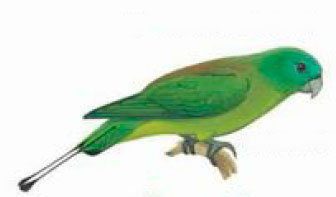
Of 18 cm.. tall Inconfundible by the ends of the tail, which are dorsally and ventrally purple-red with black border.
Overall green body with Brown Crown and nape, wing with both opaque Brown ends and violet blue rump.
Female with paler brown head and green-streaked tail.
The subspecies T. p. viridiceps has a totally green head.

Uncommon and difficult to observe species.
Lives in humid forests, semi-humid and swampy, until the 400 m. It forms small groups and they are silent when they feed. It nests in hollows of trees or arboreal termiteros at low altitude. The implementation is of 3-5 eggs and breeding season: from November to April

It is found in the wild in the Amazon, South-East of Colombia to the Guyanas, southern Venezuela to northeastern Peru and northern Brazil.
It feeds on fruits, and figs.

Video: Video 1

Deforestation and loss of Habitat is a threat for this species.

Alternative names: Sapphire-rumped Parrotlet (English), Periquito zafiro (Colombia), Periquito lomizafiro (Ecuador), Purpurschwanz, Purpurschwanzpapagei (Germany), Lorito de Lomo Purpรบreo (Spain), Periquito Rabadilla Pรบrpura (Venezuela), Toui ร  queue pourprรฉe (France), apuim-de-costa-azul (Brazil)

Source: Parrots, Parrots and macaws Neotropical
Photo: wildlifepics.eu ยฉ 2008 Dennis Binda

โ–ท The world of Pets: Dogs, cats, birds, reptiles, amphibians

Modest Tiger-Parrot
Psittacella modesta

Parrot-Tiger-modest

Content

Description

14 cm.. length between 42 and 43 g. of weight.

The Modest Tiger-Parrot (Psittacella modesta) has the head Brown olive, with indistinct centers yellow to the feathers of the crown and nape. Mantle dark green, with slightly darker edges to feathers; rump with indistinct greenish-yellow and black mix. Uppertail green, with fringe darker. Wings of color green dark marked in blue on the curve.

Yellow wing feathers. Of flight outer feathers blackish edged green in the bases and with fine yellow margins the vane internal and external. Top of the chest Gris-Oliva below the bend of wing, belly paler, opaque green; undertail-coverts red. Upper, the tail dark green; by down blackish.

The bill grey-blue, whitish tip; irises orange; legs bluish grey.

Female alternating the Brown dark and the pink in the chest, flanks alternating the Green and yellow-green.

Subspecies

  • Psittacella modesta modesta

    (Schlegel, 1871) – Nominal.


  • Psittacella modesta subcollaris

    (Rand, 1941) – Something more dark in General, the collar yellow on the back of the neck is more brilliant and variable, head brown / dark grey.
    The females with the head darker and some with a slight yellow colouring.


  • Psittacella modesta collaris

    (Ogilvie-Grant, 1914) – The neck yellow, irregularly present. Darker hue at the sides of the head.
    The females have mild brands yellow in the part back from the head.

Habitat:

It is found in the humid mountain forests, forest Moss, edges of secondary vegetation and forests, a altitude between 1.200 and 4.000 m (mostly between 1,700-2,800 Metro).

The Modest Tiger-Parrot is a bird quiet, discreet, quite docile and difficult to observe. It tends to prefer medium or lower forest and seeks its food crawling or jumping slowly at ground level. They only fly short distances when bother them.

Birds are found alone or in pairs, and they feed on seeds and small fruits.

The young birds as females.

Reproduction:

There is no information on the breeding ecology, but a male State of reproduction was observed during the month of June.

Food:

Observed feeding is of small fruits; seeds and pieces of berries DURAS were found in their stomachs.

Distribution:

Size of the area of distribution (reproduction / resident): 65.100 km2

New Guinea in Irian Jaya, Indonesian and Papua New Guinea. Scattered through the uplands, observed in the Vogelkop mountains (isolated population), and after all latitude 136ยบE, through the central mountain belt, in the central mountain ranges, including the Tari area, the range of Victor Emanuel and the District of Mount Hagen, reaching around of 145 ยฐE. The range overlaps with the species Madarasz's Tiger-Parrot at a length of 1,200 kilometers along the Cordillera central and where the two species overlap. The Modest Tiger-Parrot is usually found in slightly higher altitudes than the Madarasz's Tiger-Parrot. The world's population is thought to be greater of 50.000 specimens. The species is locally common.

Subspecies distribution:

  • Psittacella modesta modesta

    (Schlegel, 1871) – Nominal.


  • Psittacella modesta subcollaris

    (Rand, 1941) – extends from North of the Maoke mountains to the Montes Hindenburg;


  • Psittacella modesta collaris

    (Ogilvie-Grant, 1914) – is located to the South of the Maoke mountains.

Conservation:


minor concern


โ€ข Current category of the Red List of the UICN: Least concern

โ€ข Population trend: Stable

The size of the world population It has not been quantified, Although deemed superior to the 50.000 specimens. The species is reported as locally common (pit et to the. 1997).

The population is suspected to be stable in the absence of evidence of any reduction or substantial threats.


"Modest Tiger-Parrot" in captivity:

Not found in poultry.

Alternative names:

Modest Tiger-Parrot, Barred Little Parrot, Barred Little Tiger-Parrot, Modest Parrot, Modest Tiger Parrot (ingles).
Perruche modeste, Perruche olive (French).
Olivpapagei, Oliv-Papagei (German).
Psittacella modesta (Portuguese).
Lorito Modesto, Lorito tigre Modesto, Lorito-tigre Modesto (espaรฑol).

scientific classification:

Order: Psittaciformes
Family: Psittaculidae
Genus: Psittacella
Scientific name: Psittacella modesta
Citation: Schlegel, 1871
Protonimo: Psitacella [sic] modest

Images "Modest Tiger-Parrot"

Videos "Modest Tiger-Parrot"

————————————————————————————————

"Modest tiger parrot" (Psittacella modesta)

Sources:

Avibase
– Parrots of the World โ€“ Forshaw Joseph M
– Parrots A Guide to the Parrots of the World – Tony Juniper & Mike Parr
– Birdlife
Wikipedia
– Loromania

Photos:

(1) – By ยฉ Wong Tsu Shi – Sooty-headed bulbul

Sounds: Patrik ร…berg (Xeno-canto)

โ–ท The world of Pets: Dogs, cats, birds, reptiles, amphibians

Reunion Parakeet
Psittacula eques

Cotorra de Mauricio

Content

Description:

Cotorra de Mauricio

42 cm.. length and a weight between 167 and 193 g..

The Reunion Parakeet (Psittacula eques) has the Lords and cheeks grass-green, deepening the emerald green upper cheeks, the forecrown and crown; wide swaths shaped mustache on the bottom of the cheeks and chin, fading on the sides of neck; narrow black stripes on the neck lined up with bluish patches on ear-coverts and sides neck and below by pink lines extending to the back of the neck, without getting to form an collar full.

Upperparts, including upperwing-coverts, emerald green. Underparts paler and yellowish. Uppertail green; the undertail pale brown.

upper jaw red, lower negruzca; irises pale yellow to greenish yellow; legs blackish.

The female lacks black moustachial stripes, as well as black, pink and blue marks on the sides of neck; dark green tones cheeks with yellowish green at the collar of the back of the neck; dark (almost black) the upper jaw.

The immature they are like the females, but the fledging bill It is red in both sexes, turning darker in females later.

Description 2 subspecies:

  • knight knight knight โ€ 

    (Boddaert, 1783) – Nominal. Extinct.


  • Psittacula eques echo

    (Newton,A & Newton,E, 1876) – On the edge of the extinction.

Habitat:

The Reunion Parakeet It is closely linked to the native vegetation. A part of the population is in an area of รขโ‚ฌโ€นรขโ‚ฌโ€นupland forest containing some of the largest samples, for example, Canarium paniculatum, Syzygium contractum, Mimusops maxima and Labourdonnaisia left in the Mauritius. Scrub forests lower level are also important, especially for food.

They are generally solitary, but they can also be seen in pairs or small groups (especially after breeding), but the extreme shortage should limit the normal social behavior.

Reproduction:

The Reunion Parakeet nests in cavities of large native trees (often Mimusops but also Calophyllum or Canarium) generally between 6-10 meters above the ground. The inlet has a diameter between 10-15cm.

The peak in the egg laying It is late September to early October, although it may take place between August to November, is composed of 2 to 4 eggs. The female incubated eggs for three to four weeks, while teammate bring your food. Both parents then provide for the young until they leave the nest in about two months old.

Food:

The feeding of the Reunion Parakeet It is composed of a wide range of native plant parts, including outbreaks include, sprouts, leaves, flowers, fruits, seeds, remained, sap and bark. Introduced plants rarely eat. Plants which include feed Calophyllum, Canarium paniculatum, Tabernaemontana mauritiana, Diospyros, erythrospermum monticolum, Eugenia, Labourdonnaisia, Mimusops trials, M. petiolaris, Nuxia verticillata and Protium obtusifolium.

The main feeding areas vary with the season.

Distribution:

Size of the area of distribution (reproduction / resident): 60 km2

endemic to Mauritius, Indian Ocean, but also he lived before the Rรฉunion. The rest of the birds confined to the last fragments of native forest vegetation.

In a time, widely distributed, but now reduced to a small relict population in the plateau south-west, around the Black River Gorges National Park and the Monte Cocotte.

Mainly sedentary, but with some slight seasonal changes depending on availability of food.

The main cause, apparently, the decline in the population of the Reunion Parakeet long-term, It is the loss of habitat (natural vegetation used for agriculture and forestry), nest predation by introduced species such as Crab-eating Macaque (Macaca fascicularis) and black rat (Rattus rattus) , competition with Rose-ringed Parakeet (Psittacula krameri) (introduced on 1886) and the effects of disease and storms.

The total area of รขโ‚ฌโ€นรขโ‚ฌโ€นhabitat available It is 50km2. Population between 7-11 birds in 1984, aumentando a 30 birds in the wild and 8 in captivity 1995, with between 40-50 wild birds 1996. An intensive conservation program that includes captive breeding in Mauritius (first successful reproduction 1993-1994), predator control with veterinary assistance for wild birds, ecological research and habitat protection, It is getting a considerable increase in the population of the Reunion Parakeet.

The National Park currently protect the last natural forests, but continuous invasion of exotic flora, It remains a long-term threat.

Distribution 2 subspecies:

Conservation:

State of conservation โ“˜


Endangered Endangered โ“˜ (UICN)โ“˜

โ€ข Current Red List of UICN: Danger

โ€ข Population trend: Growing

At the end of the breeding season between 2011/2012, the population was estimated at approximately 580 birds (V. Tatayah in some. 2012).

The population of the Reunion Parakeet It is estimated that it has experienced a very rapid increase in recent 23 years (three generations).

The previous decline in the distribution of this species is for the serious destruction and its native habitat degradation (Jones 1987 Greenwood 1996).

The population decreased probable total of several thousand individuals, as a result of the forest destruction and the replacement of their feeding habitat, upland dwarf forests, plantations (Jones et al., 1998).

In 1996, only the 5% the island was covered with native vegetation (Jones et al. 1998).

The areas of native forests remaining in the highlands still being highly degraded by cyclones, the influences of forestry practices of the past, the spread of introduced plants like Peruvian guava (Invasive cattleianum), privet (Ligustrum robustum) and Pomeroy (Syzygium jambos), as well as the effect of wild mammals introduced as boars (Sus scrofa) and the Timor deer (Cervuss) (Greenwood 1996, Thorsen y Jones 1998).

The production of native fruit, from which the parrot feeds, and regeneration is possible trees nest, because, poor (Greenwood 1996).

Recent research suggests that the food shortage due to deterioration of native forest is the main cause of nest failure; although exotic species can provide an abundant source of food, They are not available throughout the year, not even throughout the breeding season (Thorsen y Jones 1998).

The crab-eating macaque (Macaca fascicularis) and black rats (Rattus rattus) are among a number of introduced tree species representing a threat for the Reunion Parakeet, raiding nests and competing for native fruits (Greenwood 1996).

The European bee (Apis melรญfera), yellowjackets (Polistes hebraeus), termites, the common loptail (Phaethon lepturus), the introduced common mine (Acridotheres tristis) and Rose-ringed Parakeet (Psittacula krameri), They are all competing for nesting sites and can move active breeding pairs (Thorsen y Jones 1998, C. Jones in little. 2000, V. Tatayah in some. 2012).

The decline in the number of old native trees, that perish damaged by storms and senescence, They have intensified competition for nesting cavities (Jones et al., 1998).

Infestations fly larvae in the nests can be severe in some years and, without intervention, would kill many young people (C. Jones in a bit., 2000).

Beak and Feather Disease (PBFD), It has been found in more than 20% of birds sampled, and at least 50% birds observed with PBFD It is believed to have died, However, a considerable number of specimens have been seen to recover from the disease (Richards 2010). Pesticides do not seem to have significantly affected the species (Greenwood 1996).

According to Mauritius Wildlife Foundation (MWF), trying to stop this worrying phenomenon, the origin of evil is attributed to the imported parrots, mostly the Grey Parrot (Psittacus erithacus) and Coconut Lorikeet (Trichoglossus haematodus).

The species has been the subject of a conservation program from 1973 (Jones et al. 1998). The spectacular increase in the population of the species in recent years is undoubtedly due to an intensive program to manage the wild population., combined with a program captive breeding great success since the season 1993/4 Playback (Jones et al., 1998).

"Reunion Parakeet" in captivity:

The Reunion Parakeet is the only survivor of the species Psittacula They are inhabiting the islands in the South Indian Ocean, about Madagascar. It is one of the parrots World's rarest existing.

Some specimens bred in captivity (Hand rearing) for reintroduction into the wild; else not bred in captivity.

In the news, the aviary captive population is 18 birds, with successful reproduction of a couple. The place of the old aviary, where the extraordinary work has been achieved in very primitive conditions, now it is being replaced with a new space, once completed this spring, It will house up 12 breeding pairs of the Reunion Parakeet, a large flight cage 60 meters for immature.

Alternative names:

Mauritius Parakeet, Echo Parakeet, Maruitius parakeet, Mascarene Parakeet, Mauritian Parakeet (English).
Perruche de Maurice, Perruche ร  longue queue (French).
Mauritiussittich (German).
Periquito-de-maurรญcio (Portuguese).
Cotorra de Mauricio (espaรฑol).

scientific classification:

Order: Psittaciformes
Family: Psittaculidae
Genus: Psittacula
Scientific name: Psittacula eques
Citation: (Newton, A & Newton, E, 1876)
Protonimo: Palaeornis echo

Reunion Parakeet Images:

Videos "Reunion Parakeet"


Especies del gรฉnero Psittacula

Reunion Parakeet (Psittacula eques)


Sources:

Avibase
– Parrots of the World โ€“ Forshaw Joseph M
– Parrots A Guide to the Parrots of the World – Tony Juniper & Mike Parr
– Birdlife

Photos:

(1) – Echo parakeet (Psittacula eques echo), the rarest Parrokeet in the world, saved from extinction by captive breeding programme at the Durrell trust Blackwater Gorge By colin houston [CC BY 2.0], via Wikimedia Commons
(2) – By Wildlife Preservation Canada – link
(3) – Echo Parakeet, Mauritius by Tara – Miles to the wild
(4) – Echo Parakeet, Mauritius by Tara – Miles to the wild
(5) – Female Echo Parakeet (Psittacula eques) by Johannes Fischer – Mauritius January – July 2013, Petrin, Camp Field Station and Brise Fer
(6) – Psittacula type illustration of a knight on horseback (Martinet in Buffon, 1779) By Franรงois-Nicolas Martinet [Public domain], via Wikimedia Commons

Sounds: George Sangster (Xeno-canto)

โ–ท The world of Pets: Dogs, cats, birds, reptiles, amphibians
Naretha Bluebonnet
Northiella narethae

Content


Anatomy-parrots
Description:

The Naretha Bluebonnet (Northiella narethae) It is smaller than Bluebonnet (Northiella haematogaster), of about 28 cm. long.

The legs and feet are dark gray, and the irises is dark brown.

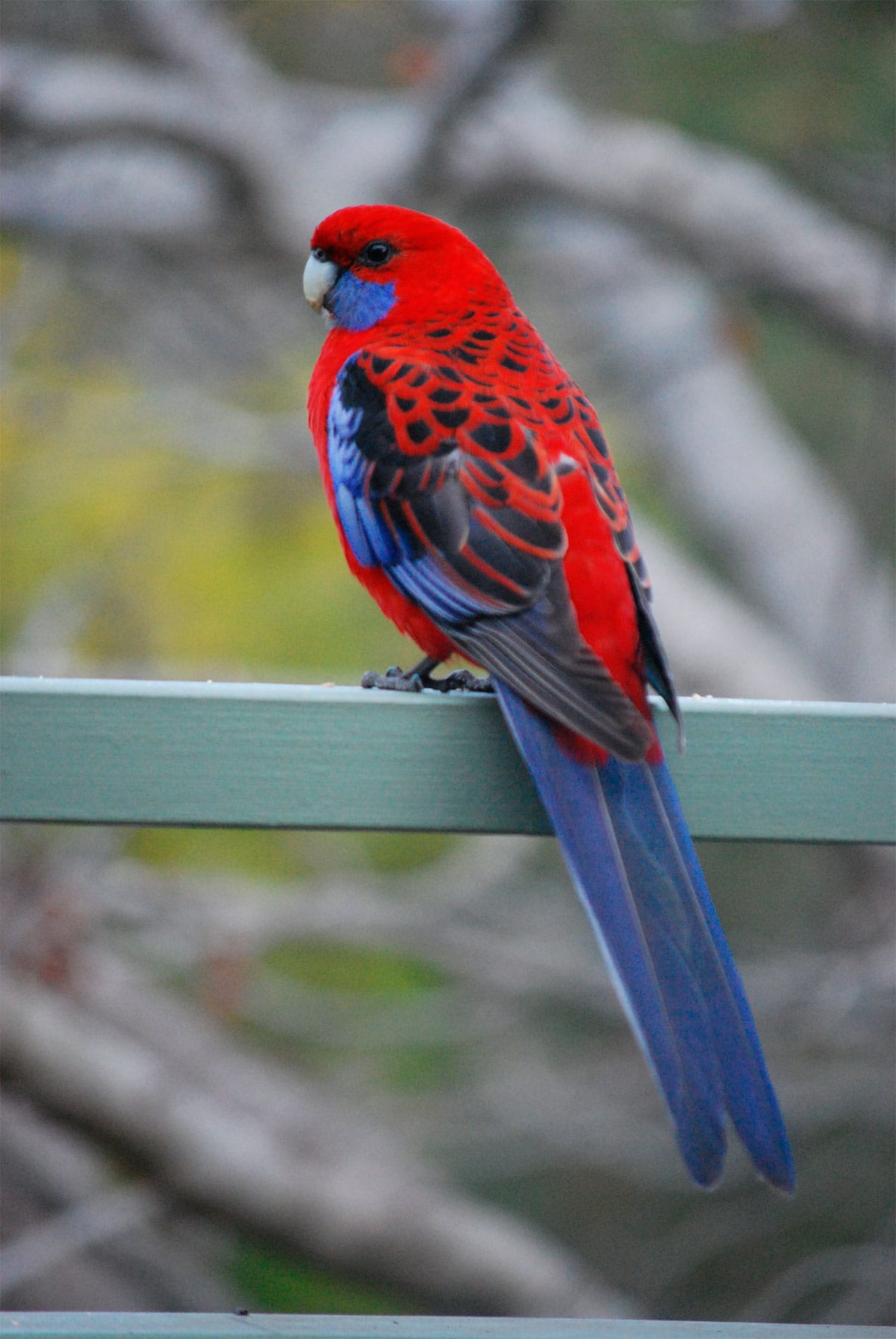
The adult male has a two tonal facial pattern forecrown lighter green-blue, the ears and the area above the eye in contrast to the rest of the face which is purple-blue. The head, the neck forward and breast are marked with pale steaks and diffuse spots.. The back It is olive gray. The belly, the area of the vent and the thighs are uniform yellow, while red is limited to the area of รขโ‚ฌโ€นรขโ‚ฌโ€นthe undertail-coverts. The lesser wing coverts are blue and outer median wing coverts red, while the inner median and greater wing coverts, and inner secondary a yellow-olive colour. The central feathers of the tail are tinged with pale blue..

The female adult has a duller blue color in forecrown, and a reduced color on wings and tail, and with no tint of orange on the belly. It is smaller overall, at around 26 cm length.

The chicks they have a bill yellow and gain their adult plumage in the first post moves to bloom (three to four months old).

taxonomy:

the species Northiella narethae It was formerly classified as a subspecies (Northiella haematogaster narethe) of the Northiella haematogaster. A molecular study published in 2015 by Gaynor Dolman and Leo Joseph He confirmed the genetic isolation Naretha Bluebonnet (Northiella narethae) and recommended that it was restored as a separate species.

Habitat:

Arid and semiarid scrub and farmland, thickets mulga, weeds and dry forests open.

Reproduction:

It is heavily influenced by rainfall and food availability, but usually peaks between August and January.

The usual site nesting It is a very small cavity tree, particularly attracted to she-oaks providing appropriate holes for nesting, often near the ground, coated shavings and wood dust rotten. The female incubates the eggs but is cared for by the male who also contributes to raising the young..

Four to seven white eggs round (23mm x 19mm). Time of incubation: 22 days. The young usually leave the nest around the 30 days.

Food:

Seeds of various grasses and herbaceous plants (autochthonous), also nectar, flowers and various fruits.

Distribution:

Reports indicate that Naretha Bluebonnet They have been common in the arid region Nullarbor, and they have become more rare in the twentieth century. It is believed that localized individuals range makes the species highly endemic in an area on the border between Western Australia and Southern Australia.

Conservation:

We know the conservation status of this species, although probably in risk status.

"Naretha Bluebonnet" in captivity:

No data.

Alternative names:

Bluebonnet (Naretha), Little Bluebonnet, Naretha Bluebonnet (English).
Perruche ร  bonnet bleu (narethae), Perruche de Nareth, Perruche petite (French).
(German).
(Portuguese).
Perico Cariazul Naretha (espaรฑol).

Images "Naretha Bluebonnet"

scientific classification:

Order: Psittaciformes
Family: Psittaculidae
Gender: Northiella
Scientific name: Northiella narethae
Subpoena: (White, HL, 1921
Protonimo: Psephotus narethae

Sources:

โ€ข Avibase
โ€ข Parrots of the World โ€“ Forshaw Joseph M
โ€ข Parrots A Guide to the Parrots of the World – Tony Juniper & Mike Parr
โ€ข Birdlife

Photos:

(1) – Penochka Birds: Parrots (Psittacidae) – Source