โ–ท The world of Pets: Dogs, cats, birds, reptiles, amphibians

Dusky-headed Parakeet
Aratinga weddellii

Aratinga Cabecifusca

Content


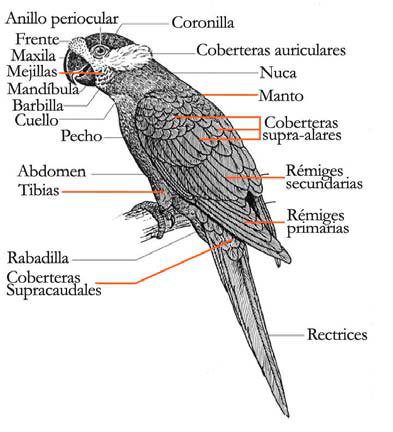
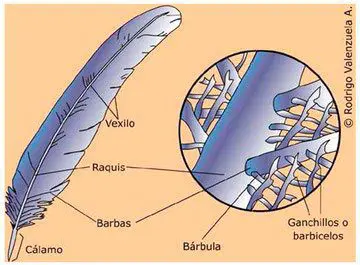
Anatomy-parrots

Description:

Of 25-30 cm.. length and a weight between 95-115 g.

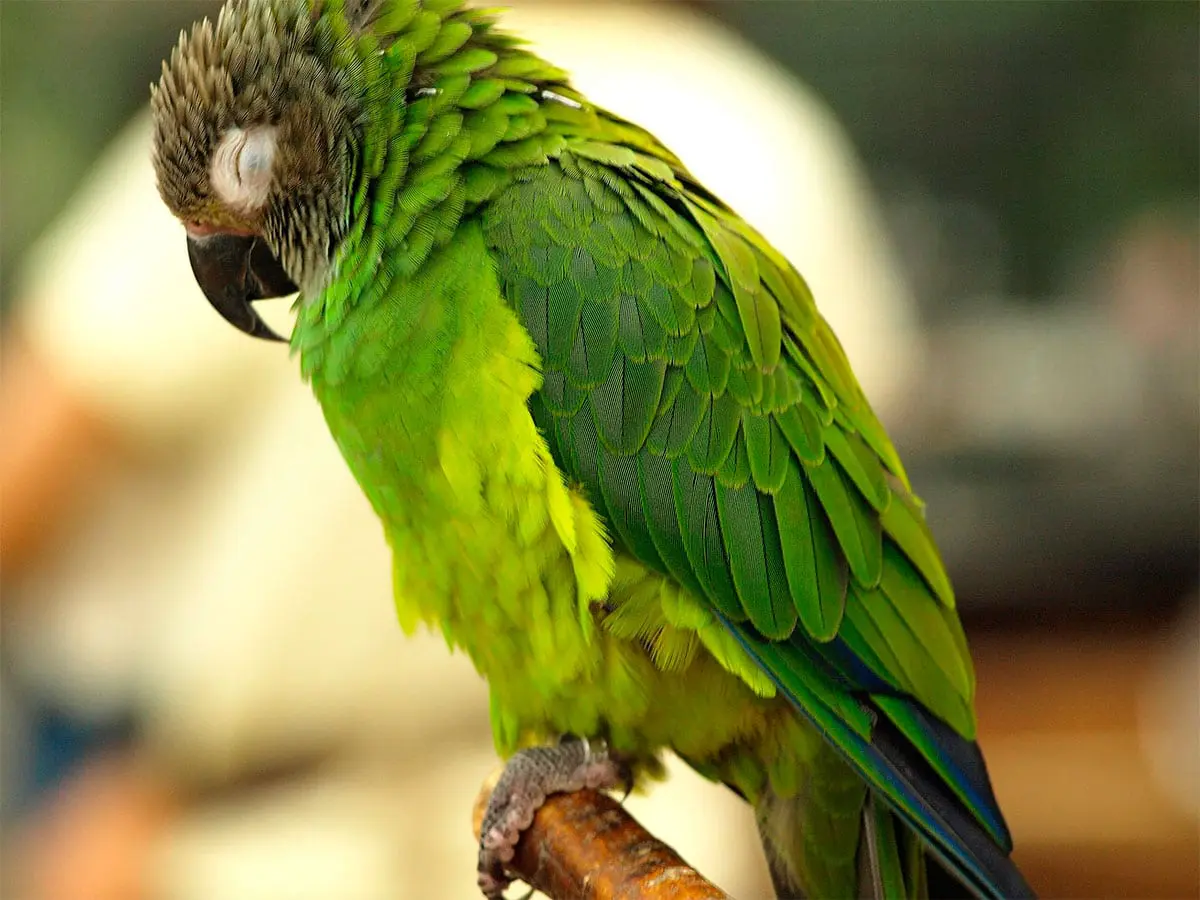
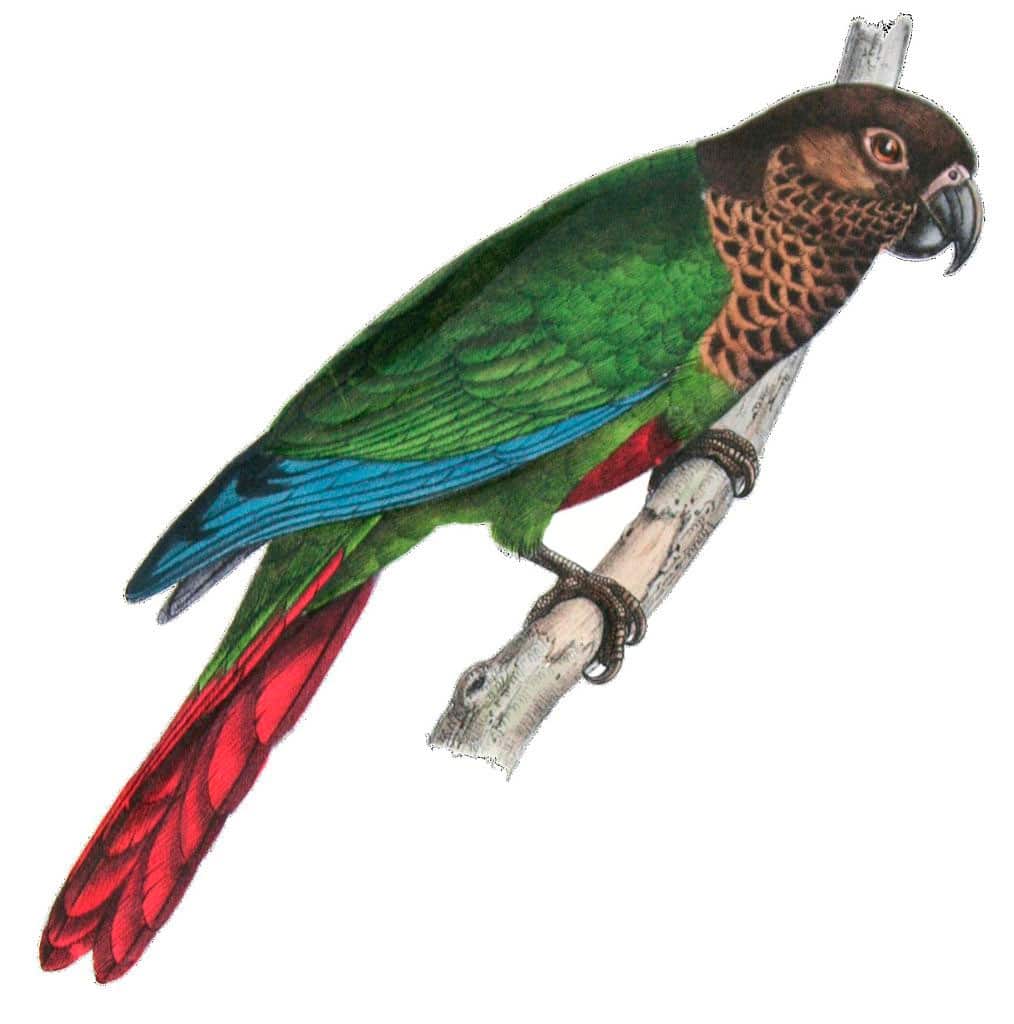
The head of the Dusky-headed Parakeet (Aratinga weddellii) is greyish Brown, with off blue stripes that give it a scaly appearance. The upperparts are green, the feathers of the nape they have yellowish margins (some banks in the mantle), the back and Hip with Brown centers, giving an appearance of Brown altogether. The scapulars with varying between Brown and green edges; the minor, large and medium-sized inner coverts green grass with paler green margins; the outer and the primary coverts are dark blue. Primary and secondary mostly blue with vane outer Green or green margins toward the vane external in the primaries; very dark (almost black) the Tips. Underwing-coverts green: underside of the flight feather opaque gray. Top of the chest pale green with turquoise suffusion; belly and undertail-coverts pale yellowish green, greener on the flanks. Upper, the tail green, Blue towards the tip: undertail, opaque gray.

Dusky-headed Parakeet

The bill shiny black; cere pinkish grey; wide area orbital off-white; irises yellowish white; legs dark gray.

Both sexes similar.

The immature are like adults but with the irises darker.

Habitat:

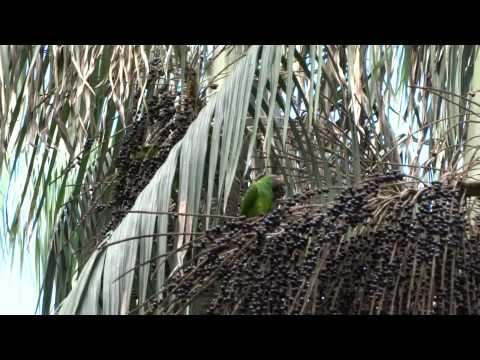
Video – "Dusky-headed Parakeet"

Dusky-headed Parakeet (Aratinga weddellii)

They inhabit in humid jungle, semi-wet, swamps, involved swamp forest and stubble, until 500 metres in Colombia and exceptionally 750 metres in Bolivia. Its preferred habitats are the forests and marshes and flooded forests in swampy areas. Also in the remnants of forest in humid savannah and cleared areas with patches of remnant forest. Also observed in coffee and sugarcane plantations; apparently rarely fly over the dense forest. Usually, in pairs or in small groups, but flocks of up to 75 reported individuals where food is plentiful.

Reproduction:

It nests in trees and palms of marshy or riparian areas, between June and August. They also used the cups of dead Palm trees and termite nests.
Four nests observed in Leticia, Colombia, between 4 and 15 metres in height. Birds incubating in the month of February in Colombia. Bird in reproductive condition in the month of August in Bolivia. Observed breeding from June to September in Loreto, eastern peru; from April to July in the Mato Grosso.
A normal start is of 3 to 5 eggs and both parents feed the chicks.

Food:

Its diet consists of seeds, fruit, flowers, berries, as well as insects and their larvae found in decaying trees and stumps.

Distribution:

Its distribution ranges from the southeast of Colombia, east of Ecuador and Peru to the East of Bolivia and West of Brazil.

Apparently Nomad in some parts of the distribution. In general common, even in partially deforested areas, and perhaps increase due to clearing and fragmentation of dense forest.

Conservation:

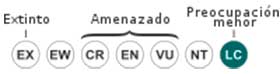
State of conservation โ“˜


minor concern Minor Concern โ“˜ (UICN)โ“˜

โ€ข Red List category of the UICN current: Least concern

โ€ข Population trend: Growing

The size of the world population Dusky-headed Parakeet It has not been quantified, but this species is described as common (Stotz et to the. (1996)).

This species is suspected that it has been lost between the 15 and the 17,7% of its suitable habitat within its range over three generations (21 years) based on a model of deforestation of the Amazon (Soares-Filho et to the., 2006, Bird et to the. 2011). Given the susceptibility of this species to the hunting or trapping, It is suspected that its population may decrease in around the 25% in three generations.

"Dusky-headed Parakeet" in captivity:

Not common in captivity, but in the past was part of the international trade. They are common in cultivation areas, for this reason they are common in homes of peasants.

The Dusky-headed Parakeet is not known for its ability to mimic the speak human, but they are nevertheless birds very fun, kind and loving – provided that they have been hand reared and socialized properly. They are not as active and noisy as other species of parrots, they only emit sounds, not too high, when excited.

wonderful pets. His charming personality makes them good pets for children. They are not demanding, they spend happy hours playing with their favorite toys but still enjoy human company very much.

They are relatively easy to raise. They may have several broods per year; But, good husbandry practice stipulates that they should not be allowed to have more than two or three clutches to allow for their rest. The size of Sunset is of 3 to 4 eggs, they are incubated for a few 23 days. Both parents take care of the young.. The chicks leave the nest after a few 50 days.

In the wild, according to sources, females have been estimated can live up to 25 years. Its longevity in captivity It has not been studied in detail. It has been observed a muscle aging in wild animals.

Alternative names:

Dusky-headed Parakeet, Dusky Conure, Dusky headed Parakeet, Dusky Parakeet, Dusky-headed Conure, Weddell’s Conure (English).
Conure de Weddell, Conure ร  tรชte sombre, Perriche de Weddell, Perruche de Weddell (French).
Weddellsittich, Weddell-Sittich (German).
Aratinga-de-cabeca-escura, aratinga-de-cabeรงa-suja, jandaia-de-cabeรงa-azulada, jandaia-de-cara-suja, periquito-de-cabeรงa-suja (Portuguese).
Aratinga Cabecifusca, Perico Canoso, Periquito de Cabeza Gris, Perico cabezagris(espaรฑol).
Loro canoso, Perico Canoso, Cotorra cabecigris, Cotorra cabeciparda (Colombia).
Cotorra de Cabeza Oscura, San Pedrito, Lorito cabeza gris (Peru).
Perico cabecioscuro (Ecuador).
Tarechi (Bolivia).
Ipiรญ (Chimane).
Bambaorito (I ingano).
Sacara (Cofรกn.).
Butuquiria (Macuna).

scientific classification:

Order: Psittaciformes
Family: Psittacidae
Genus: Aratinga
Scientific name: Aratinga weddellii
Citation: (Deville, 1851)
Protonimo: Conurus Weddellii

Dusky-headed Parakeet images:


Species of the genus Aratinga

Sources:

Avibase
– Parrots of the World โ€“ Forshaw Joseph M
– Parrots A Guide to the Parrots of the World – Tony Juniper & Mike Parr
– Birdlife

Photos:

(1) – Dusky-headed Conure or Weddellโ€™s Conure (Aratinga weddellii) in captivity. Kobe Kachoen By merec0 (originally posted to Flickr as Kobe Kachoen (32)) [CC BY 2.0], via Wikimedia Commons
(2) – A Dusky-headed Parakeet at Jurong Bird Park, Singapore By Sham Edmond [CC BY 2.0], via Wikimedia Commons
(3) – Dusky-headed Conure or Weddellโ€™s Conure (Aratinga weddellii) By Steve Beger [CC BY-SA 2.0], via Wikimedia Commons
(4) – Dusky-headed Conure or Weddellโ€™s Conure (Aratinga weddellii) By en:user:Jhwodchuck (http://en.wikipedia.org/wiki/Image:DuskyConure.jpg) [GFDL, GFDL or CC-BY-SA-3.0], via Wikimedia Commons
(5) – Aratinga weddellii – black-headed conure – Dusky-headed conure – dusky-headed conure Florin FeneruFlickr
(6) – Ilustraciรณn Dusky-headed parakeet by Biodiversity Heritage LibraryFlickr

Sounds: (Xeno-canto)

โ–ท The world of Pets: Dogs, cats, birds, reptiles, amphibians

Deville's Parakeet
Pyrrhura lucianii


Deville's Parakeet

Content

Description:

21-23 cm.. height.

the showy plumage of the Deville's Parakeet (Pyrrhura lucianii) is generally Green, darker in the lower parts, the crown is dark brown, the forecrown and face is brownish red in colour; cheeks brick red, faded of blue, ear-coverts brownish yellow, neck and chest with the typical scales very visible due to the black and yellow contrast of the feathers. The ventral coat of arms, reddish, is well defined; in flight the dark red spot is notorious for the abdomen. Well defined are the reddish marks on the rump and in his long tail; the flight feather they are blue.

It has periocular ring Of course, irises brown, bill blackish and legs grey pink.

Note:

Until recently this species was included along with the Pyrrhura subandina, Pyrrhura caeruliceps, Pyrrhura pantchenkoi within the species Pyrrhura picta.

Habitat:

Found in altitudes of 800 m, in forests Terra firm and vรกrzea, including forest margins and near clearings with tall trees. In forests low semi humid, up close 100 m.

Seen in pairs, groups of three or flocks of up to 20 individuals.

Reproduction:

Little is known about the reproductive cycle of this species, probably nesting in large trees, in cavities or in nest of woodpeckers abandoned, with one laying estimated in 5-7 eggs.

Food:

With feeds a wide variety of fruits, flowers, seeds and algae, possibly.

Distribution:

Size of the distribution (breeding/resident): 47,200 km2

Restricted to the State of amazon in the Northwest Amazon of Brazil.

This species is supposed fairly common within its range, However, This can not be confirmed since this time rare remote region is visited by researchers.

Conservation:

โ€ข Red List Category: Least concern

โ€ข Population trend: Decrease

State of conservation โ“˜


minor concern Minor Concern โ“˜ (UICN)โ“˜

The status of their populations is unknown, but for the good condition of the habitat, it can be assumed that they are in good state of conservation.

While the trend of the population seems to be decreasing, do not believe that the decline is fast enough for approaching the threshold of vulnerable under the criterion of population trend

"Deville's Parakeet" in captivity:

Although he is a parrot rare in captivity, its potential as a domestic fowl is excellent, provided there are hand raised and socialized from an early age. The newly imported birds are usually shy and nervous and often they remain reserved.

It is usually inquisitive and active, enjoy flying and requires plenty of exercise and a spacious cage. Usually, It is not too noisy unless it is excited (as it is usually the case of all species Pyrrhura).

Once acclimatized, These parrots are quite robust. Enjoy with the bath by what are them must provide a dish of water little deep to daily. Also the love chew branches fresh.

Alternative names:

Deville’s Parakeet, Bonaparte’s Parakeet (English).
Conure de Bonaparte, Conure de Luciani (French).
Bonapartesittich, Prinz Luzians Rotschwanzsittich (German).
Tiriba-de-deville (Portuguese).
Cotorra de Bonaparte, ร‘รกngaro de Deville, Perico de Deville, Cotorrita barriguiroja (espaรฑol).
Perico de Bonaparte (Peru).

scientific classification:

Order: Psittaciformes
Family: Psittacidae
Genus: Pyrrhura
Scientific name: Pyrrhura lucianii
Citation: (Deville, 1851)
Protonimo: Conurus Lucianii

Images Deville's Parakeet:


Especies del gรฉnero Pyrrhura

Deville's Parakeet (Pyrrhura lucianii)


Sources:

Avibase
– Parrots of the World โ€“ Forshaw Joseph M
– Parrots A Guide to the Parrots of the World – Tony Juniper & Mike Parr
Birdlife

Photos:

(1) – Maracana luciani Dev. & Cast. Pyrrhura lucianii = (Deville, 1851) by Francis de Laporte de Castelnau [Public domain], via Wikimedia Commons

Sounds: Daniel Lane (Xeno-canto)

โ–ท The world of Pets: Dogs, cats, birds, reptiles, amphibians

Diademed Parrot
Amazona Diadema

amazona autumnalis

Content

Description:

31โ€“35 cm. length and 450-550 g. of weight.

The Diademed Parrot (Amazona Diadema) It is generally green, with black edges to feathers crown, to the mantle and the chest; crown green to nape; the back of the green neck, mauve margin; feathers of the cere and forecrown, red; yellow-green, less yellow in upper cheeks, up to the ear-coverts; secondaries red on the bases, the green rest; tail green; eye ring pale yellow; eyes oranges; bill dark grey.


Note:

Previously treated as conspecific with the Red-lored Amazon (Amazona autumnalis), It is very similar to the subspecies Amazona autumnalis salvini

  • Sound of the Diademed Parrot.

Habitat:


Anatomy-parrots

It is likely to frequent a variety of habitats from lowland forest species, including edges evergreen forest, as well as modified areas containing scattered trees or plantations (Del Hoyo et al., 1997, pit et to the., 2016).

They are in loose flocks or pairs, are gregarious When feed.

Reproduction:

The laying is of 2-3 eggs. Breeding season, It is supposed to be in early: January-March.

Food:

It feeds mainly from fruits and seeds, even some cultivated species (Del Hoyo et al., 1997), although there are no published data (Del Hoyo et al., 2016).

Distribution:

Size of its range (breeding/resident): 71.800 km2

Endemic low Black river and the northern margin of Amazon River, in the states of amazon and Northwest of For, in Brazil.

Conservation Amazona diadema:

State of conservation โ“˜


Endangered Endangered โ“˜ (UICN)โ“˜

โ€ข Current category of the Red List of the UICN: In danger of extinction.

โ€ข Population trend: Decreasing.

Rationale for the Red List category

    Based on a model of future deforestation on amazon basin and susceptibility to this new species capture, it is suspected that its population will suffer a very fast along three generations descent from 2002, so it is in danger of extinction.

Justification of trend

    This species is expected to lose between 49 and 55% suitable habitat within its distribution throughout three generations (37 years) starting at 2002, based on a model of Amazon deforestation (Soares-Filho et to the). Given its susceptibility to capture, It is suspected that species decline by 50-79% during this time.
Threats

โ€ข The main threat to this species is the accelerating deforestation in the Amazon Basin as land is cleared for ranching and soy production, provided by the expansion of the road network, together with his susceptibility to capture (Soares-Filho et to the. 2011).

โ€ข The species is assumed to experience some pressure catch, probably mainly for internal trade, since this species is rare in aviculture (Del Hoyo et al ., 1997, pit et to the ., 2016).

โ€ข Proposed changes to the Brazilian Forest Code reduce the percentage of land to a private owner is legally obliged to keep as forest (including, critically, a reduction in the width of forest buffers with perennial vapors) and include an amnesty for owners who deforested before July 2008 (That they would later be absolved of the need to reforest illegally vacated land) (Bird et to the., 2011).

Conservation Actions Underway

โ€ข No specific conservation actions are known for this species, although part of their habitat is protected.

โ€ข It is distributed in the Jau National Park where it is rare or uncommon (Borges et al ., 2001, Borges & Almeida 2011).

Conservation Actions Proposed

โ€ข Carry out surveys to estimate the size of the population.

โ€ข Monitor deforestation rates in the range using remote sensing techniques.

โ€ข Study the level of Trapping threat.

โ€ข Increase the area of โ€‹โ€‹suitable habitat that receives protection effective.

โ€ข Boost changes in laws related to deforestation and forest protection.

The Diademed Parrot in captivity:

Rare in aviculture.

Each captive specimen of this species which is capable of reproducing, It is placed in a well managed captive breeding program and not be sold as a pet, in order to ensure its long-term survival.

Alternative names:

Diademed Amazon, Diademed Parrot, Red-lored Parrot (Diademed) (English).
Amazone ร  diadรจme, Amazone diadรจme, Amazone du Brรฉsil (French).
Diademamazone (German).
Papagaio-diadema (Portuguese).
Amazona diadema (espaรฑol).


Scientific classification Diademed amazon:

Johann Baptist von Spix

Order: Psittaciformes
Family: Psittacidae
Genus: Amazona
Scientific name: Diademed Parrot
Citation: (von Spix, 1824)
Protonimo: Psittams diadema


Diademed Parrot images.:


Species of the genus Amazona


Sources:

Photos:

(1) – diadem parrot. Red lored parrot. 11 November 2015, Tikal, Guatemala by ze_da_binha
(2) – Diademed Parrot – amazon with tiara – Diademed amazon – amazon tiara By Florin Feneru from Orpington, UK (Diademed Parrot) [CC BY 2.0], via Wikimedia Commons
(3) – A Red-lored Amazon at Loro Parque, Cross port, Tenerife, Spain. This subspecies is also called the Diademed Amazon By Carlos Urdiales [CC BY-SA 2.0], via Wikimedia Commons
(4) – A Red-lored Amazon at Xcaret Eco Park, Riviera Maya, Mexico. Photographed as it started to rain By Tomasz Wagner from Burnaby, BC, Canada (Parrot – Amazona autumnalis) [CC BY-SA 2.0], via Wikimedia Commons
(5) – Diademed amazon (Diademed Parrot) Loro Parque, Tenerife by Florin FeneruFlickr
(6) – PL. XXXI I Chrysolis diadema (รฎ^wl By Blanchard, Emile; Bonaparte, Charles Lucian; Bourjot Saint-Hilaire, Alexandre; Le Vaillant, Franรงois; Souancรฉ, Charles de. [CC BY 2.0 or Public domain], via Wikimedia Commons

Sounds: GABRIEL MILK, XC119110. accessible www.xeno-canto.org/119110

โ–ท The world of Pets: Dogs, cats, birds, reptiles, amphibians

Dusky-billed Parrotlet
Forpus modestus


Content

Description:

Dusky-billed Parrotlet

13 cm.. length and 28 g. of weight.

Chubby appearance, the Dusky-billed Parrotlet (Forpus modestus) has the forecrown, lores, cheeks and crown, emerald green, forming sometimes a visible mask; the sides and rear of the neck, the the mantle, the upper part of the back and scapulars, rather dark, of color green matte with light color of olive; lower back and rump of color blue cobalt dark: uppertail-coverts dark green. Primaries and larger covers, dark blue. Primaries with innerwebs green; Secondary of color blue dark with tips Green. Under the wings of color blue cobalt dark; flight feather grey-blue. Underparts opaque in color green dark with a light shade of olive. Upper, the tail dark green; undertail, paler.

upper jaw and cere dark gray, lower jaw clearer; Strait ring perioptalmico dark gray; Iris dark brown; legs grey.

Female all green except beige in it forecrown and front of the crown, contrasting with the Green more dark on the back of the crown.

Immature as their respective adult but paler.

Subspecies description:

  • Forpus modestus modestus

    (Cabanis, 1849) – The nominal.


  • Forpus modestus sclateri

    (Gray,GR, 1859) – Similar to the nominal species but from a color green more pale, more yellowish below, male with blue pale in rump and wings ; the face Green Emerald bright.

Habitat:

They inhabit in tropical forest lowlands in clear, margins, coastal growth, forests and marshes, secondary habitats and sheets, mainly in lowlands (150-250 metres in Venezuela, to 500 metres in Colombia), but spreading in sub-tropical forests to 1,500-1, 800 m in the Eastern Andes of Ecuador.

Gregarious; Outside the breeding season, sometimes in flocks of 100 or more individuals

Reproduction:

It nests in hollows and dead trees. breeding season of registered in the month of July in Peru.

Food:

The diet comprises seeds (for example, Cecropia miparia), berries, egg yolks, etc. It takes the banks along with other parrots mineral soil.

Distribution:

Size distribution (reproduction / resident): 2.840.000 km2

Discontinuous distribution. Since the Guianas to the North of Bolivia. Although according to reports in Guyana and French Guiana not there are records (at least not recently). Be distributed by the Basin Amazon East of Brazil in Amapรก, Maranhรฃo and For, and in the Basin Amazon West from the high of the Black river to the North of Mato Grosso; in Venezuela, to the South of the Orinoco, on bass Caura River and Cuyuni River (a record of Carabobo; in the North, is apparently wrong); In East Colombia to the South from the East end of the Guainia (about him Black river) until Caquetรก to the East of Ecuador and East of Peru to the South and to the North of Bolivia at least Beni.

Reasonably frequent in the West of its range (the Forpus most common in the range in Ecuador and Colombia) but scarcer eastward, with few records in Venezuela and Guyanas.

Evidence of decline in the Eastern Amazonia (about Bethlehem) and possible increase in Colombia, perhaps linked to reduction of dense forests.

Rare in captivity.

Subspecies distribution:

  • Forpus modestus modestus

    (Cabanis, 1849) – The nominal.


  • Forpus modestus sclateri

    (Gray,GR, 1859) – Southeast of Colombia to the North of Bolivia and Brazilian Amazon.

Conservation:

State of conservation โ“˜


minor concern Minor Concern โ“˜ (UICN)โ“˜

โ€ข Red List Category: Least concern
โ€ข Population trend: Stable

Justification of the population:

The size of the world population Dusky-billed Parrotlet It has not been quantified, but this species is described as ยซquite commonยป (Stotz et to the., 1996).

Justification of trend:

It is suspected that this species has lost 11,6-12,6% of habitat within its distribution in three generations (12 years) based on a model of Amazon deforestation (Soares-Filho et to the., 2006, Bird et to the., 2011).

Given the susceptibility of the species to hunt or capture, It is suspected that it will fall in <25% durante tres generaciones.

"Dusky-billed Parrotlet" in captivity:

In captive not all known, However, this species is probably similar to other parakeet species โ€“ quite quiet, best with a partner, although, they can be aggressive with other groups of parrots. It has a tendency to obesity.
You can learn to speak, usually up to around. 15 words. Males are generally more loquacious than females. They can also learn to whistle numerous tunes and perform some tricks..

This Parrot is very small, they do not occupy much space, It makes it an ideal pet for people living in apartments, residences, or anywhere else than in small size, do not require a large cage and its maintenance is simple.

Alternative names:

Dusky-billed Parrotlet, Dusky billed Parrotlet, Sclater’s Parrotlet (English).
Toui de Sclater (French).
Schwarzschnabel-Sperlingspapagei (German).
tuim-de-bico-escuro (Portuguese).
Catita Enana Oscura, Cotorrita de Sclater, Periquito Piquinegro (espaรฑol).
Periquito Piquinegro (Colombia).
Periquito de Pico Oscuro (Peru).
Periquito Pico Oscuro (Venezuela).


scientific classification:
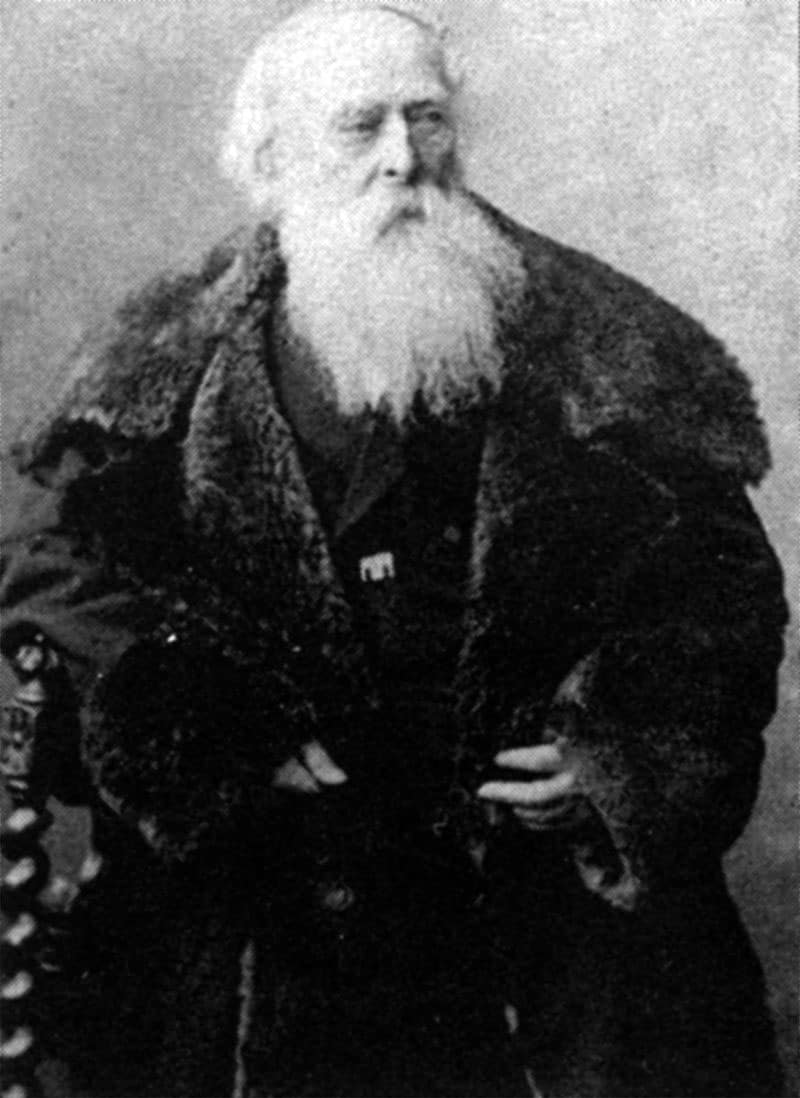
Jean Louis Cabanis
Jean Louis Cabanis

Order: Psittaciformes
Family: Psittacidae
Genus: Forpus
Scientific name: Forpus modestus
Citation: (Cabanis, 1849)
Protonimo: Psittacula Sclateri


Images Dusky-billed Parrotlet:

Videos of the "Dusky-billed Parrotlet"


Species of the genus Forpus

Dusky-billed Parrotlet (Forpus modestus)


Sources:

Avibase
– Parrots of the World โ€“ Forshaw Joseph M
– Parrots A Guide to the Parrots of the World – Tony Juniper & Mike Parr
– Birdlife

Photos:

(1) – Brazil – Crystal River (Amazonia)
(2) – Periquito de pico oscuro en Alta Floresta – MT – Brasil By Hector Bottai (Own work) [CC BY-SA 3.0], via Wikimedia Commons
(3) – Periquito de pico oscuro en Alta Floresta – MT – Brasil By Hector Bottai (Own work) [CC BY-SA 3.0], via Wikimedia Commons
(4) – Forpus modestus by Gunther EichhornFlickr
(5) – Dusky Billed Parrotlets at the end of the branch with Dusky Headed Parrots by Vince SmithFlickr
(6) – Psittacula sclateri = Forpus modestus, Dusky-billed Parrotlet by John Gerrard Keulemans [Public domain], via Wikimedia Commons

Sounds: (Xeno-canto)

โ–ท The world of Pets: Dogs, cats, birds, reptiles, amphibians

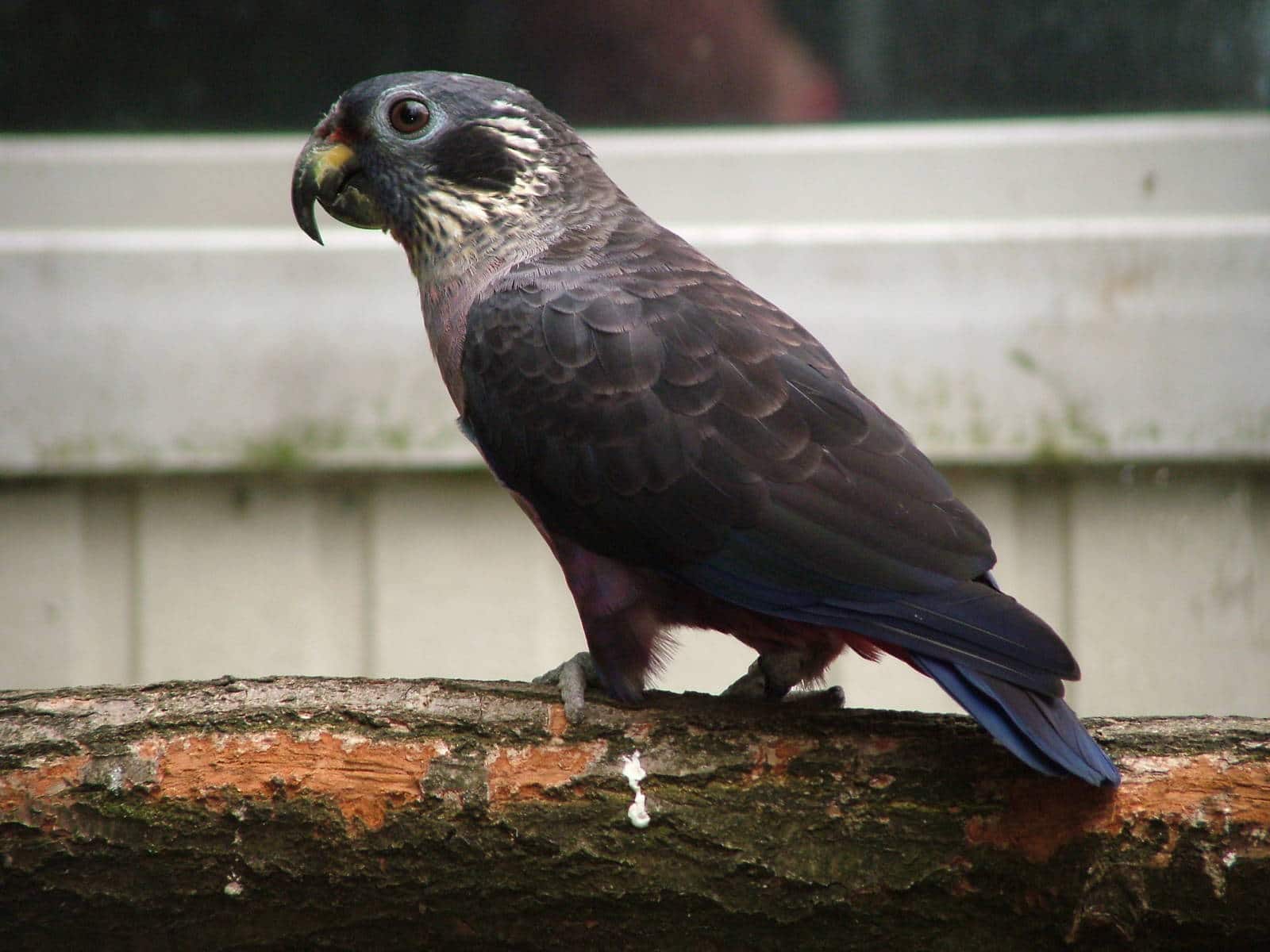
Dusky Parrot
Pionus fuscus

Dusky Parrot

Content


Anatomy-parrots

Description:

24 to 26 cm.. height and between 179 and 222g. weight.

The coloration general of the Dusky Parrot (Pionus fuscus) is blue violet dark. Small patch of feathers on the front of the lores; on the basis of the cere, Pink; for the rest, lores, cheeks, forecrown and crown, lavender blue pale with white feather bases in the crown, What gives a faint mottled appearance in some birds; ear-coverts more dark and more grey, forming a distinctive patch; feathers in the throat and the sides of the neck narrow Brown in the Center and tips of pale blue white stripe, forming the joint a collar incomplete.

feathers in the the mantle and back, of color Brown leaden with those margins pale, giving the scalloped effect; Scapulars, rump and uppertail-coverts, darker grey brown, with very weak pale margins (or absent).

Coverts smaller and medium-sized, of color Brown leaden with margins pale; coverts primary and higher, as well as the flight feather, cobalt blue; undertail, the wings deep blue. Feathers on the top of the chest, pale pinkish with pale Lavender color tips; area more low in the chest with less dye Lavender, becoming darker and more color came in the belly, reaching, Some birds, the center of the belly of a rich colour came; undertail-coverts crimson.

Tail of color blue with red at the base. upper jaw Blackish at the tip with patch of color Horn in the base, lower jaw Blackish with the base more clear and more pale visible in some birds; Iris dark brown; Legs grey.

Both sexes similar.

In the immature staining is equal to the adult, but with some roofs on the upper wings with green edge; secondary feathers dyed in green and the eye ring naked and white.

Habitat:

Dusky Parrot

They inhabit mainly in lowland rainforests and moist forests in the foothills, in where the birds spend the greater part of the time in the canopy; Mainly in the forest land, occasionally in forests and marshes and less frequently in igapรณ (permanently flooded forests), Although there have been reports of birds in Savannah (Suriname), coastal gallery forest (French Guiana) and cultivated areas (Although avoiding habitats more open and less seen in clearings or edges of forest to some close relatives, such as the Blue-headed Parrot (Pionus menstruus).

rare species, flying alone or in small groups on the forest canopy,

Are you can see in Venezuela from the level of the sea to close them 1.000 m, and in close 1.200-1.800 meters on the side Colombian of the Sierra de Perija.

gregarious, especially outside the breeding season.

Reproduction:

It nests in hollows of old trees, probably during the second quarter of the year, although a nest was observed in the month of November in For, Brazil. The laying is of 3-4 eggs.

Food:

It feeds mainly in the canopy but also on the branches of fruiting trees in light areas..

The diet includes seeds of the gender Eschweilera and Micropholis.

Distribution:

Size distribution (reproduction / resident): 1.870.000 km2

Its population is discontinuous. There is an isolated population in the Sierra de Perija (border between Colombia and Venezuela); regardless of population, The species is found in Venezuela, to the South of the Orinoco in Bolรญvar, from the Caura River, in the Northwest, up to the Nuria upland, the upper area of the cuyuni river and Sierra de Lema in the areas border with Guyana, in the East, extending through the forested parts of Guyana, Suriname and presumably it French Guiana (There are no known records) until Amapรก, the North-East of Brazil, and spreading more broadly to the East of the Brazilian Amazon, from Black river in the North and South, from the Madeira river to the East of For and Maranhรฃo.

Movements regular seasonal occur in Suriname, with the birds present in the coastal region in the months of July and August.

In general quite common, Although distributed locally; reports of a moderate and widespread presence in Guyana (although rare in Mountains Kanuku in the Southwest); Common in coastal forests, the savanna and forests inside of Suriname.

The deforestation severe and rapid in parts of its range (for example, For and Maranhรฃo, Brazil) is, presumably, causing a decline in the population of the Dusky Parrot.

Very tight in bondage.

Conservation:


minor concern


โ€ข Not considered low No category of threat.

โ€ข Not known as a cage bird, but the loss of habitat may be affecting their populations.

Justification of the population:

The size of the world population Dusky Parrot It has not been quantified, but this species is described as ยซRareยป (Stotz et to the., 1996).

Justification of trend:

It is suspected that this species has lost the 1,1% of habitat within its distribution over three generations (20 years) on the basis of a model of Amazon deforestation (Soares-Filho et to the., 2006, Bird et to the., 2011).

Given the susceptibility of the species to hunt or capture, It is suspected that it will fall in <25% durante tres generaciones.

"Dusky Parrot" in captivity:

Intelligent, curious, a bit noisy, playful when acclimatizes to the owner.
Rare in captivity until the Decade of 1970 When in small quantities were imported from Guyana.

Its longevity is of some 25 years.

Alternative names:

Dusky Parrot, Little Dusky Parrot, Violaceous Parrot, Violet Parrot (English).
Pione violette, Pionus violet (French).
Veilchenpapagei, Veilchen-Papagei (German).
maitaca-roxa, curica, papagainho-roxo, paranรก-i (Portuguese).
Cotorra de Perijรก, Loro Morado (espaรฑol).
Cotorra de Perijรก (Colombia).
Cotorra Morada (Venezuela).

scientific classification:

Order: Psittaciformes
Family: Psittacidae
Genus: Pionus
Scientific name: Pionus fuscus
Citation: (Statius Mรผller, 1776)
Protonimo: Psittacus fuscus

Images "Dusky Parrot"

Videos "Dusky Parrot"

———————————————————————————————–

ยซPurple Parrotยป (Pionus fuscus)


Sources:

Avibase
– Parrots of the World โ€“ Forshaw Joseph M
– Parrots A Guide to the Parrots of the World – Tony Juniper & Mike Parr
Birdlife

Photos:

(1) – Veldhoven
(2) – Dusky Parrot (Pionus fuscus) or Dusky Pionus by Jacques Barraband [Public domain], via Wikimedia Commons

โ–ท The world of Pets: Dogs, cats, birds, reptiles, amphibians

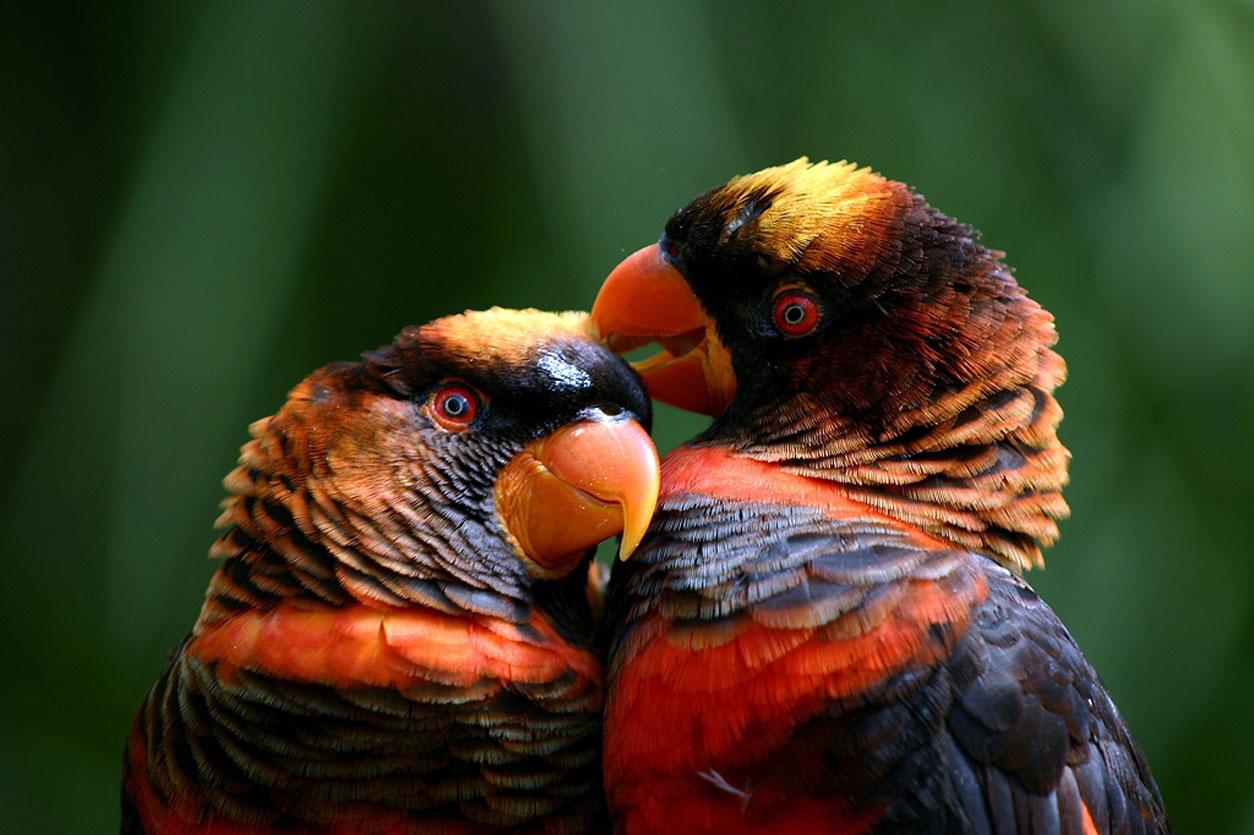
Dusky lory
Pseudeos fuscata

Lori Sombrรญo

Content

Description

23-28 cm.. height and a weight between 140 and 190 gr.

The plumage of the Dusky lory (Pseudeos fuscata) It is difficult to describe since there are many differences in tonality between one and the other specimens.. Some are of a very dark brown color, almost black and others have a much lighter shade. In addition the same happens with the two bands that cross you the chest Since the species goes through three phases: red, Orange and yellow, according to age, gender and the place of origin.

Characteristic of this species is the area of โ€‹โ€‹bare skin under the lower jaw until the birth of the throat. The lower wing coverts are orange and the lower flows dark blue. The obispillo is a silvery-white the bill is bright orange. The irises is orange and the legs dark.

There is no sexual dimorphism and the only way to differentiate male and female will be through DNA, Although some authors (Tomas Arndt) they are running that adult females lack the white feathers of the obispillo.

Habitat:

The Dusky lory they are quite widespread and locally common in primary forests , that is to say, those who have not undergone any transformation. But they are also found in wooded areas, up to an altitude of 2.400 m, During regeneration, especially those with large mature trees.

They are also distributed among residual tree beds during their flowering period., including those located in the parks and gardens in cities.

They are occasionally present in the lightly wooded Savannah or plantations of teak and coconut trees.

They normally reside in the landscape of hills or slopes steep slightly from low and middle mountain.

Itร‚ยดs gregarious and when flies or are fed in the cup of them trees full of flowers it makes in groups of 20 to 100 individuals or more.

Reproduction:

The nesting season It is very different depending on the region: It extends from November to April in the mountainous areas of East, While in Irian Jaya, the Indonesian part, they do in July.

The Dusky lory they prefer to nest in tall trees in the mountain area, the choice of a hole at high altitude on Earth probably do to protect itself against potential predators.

If the site is of your liking, reuse it for many years consecutively. Male and female participate in the work, the enlargement of the entrance or the cavity itself. Even if the nest has been used in the past, There are always minor changes to be carried out.

Although this species is quite common, We really know very little about its reproduction in the wild. In captivity, the female lays two eggs which are incubated for approximately 24 days. As in most New Guinea lories, the reproductive cycle is very long, about 70 days.

Food:

Consumes mainly nectar and perhaps the pollen it accumulates in plants of the genus schleffera or tree Rudraksha (Elaeocarpus sphaericus). Also consume flowers and fruits. It can be seen in large flocks in mango plantations and other cultivated trees. Feeds, occasionally, teak moth (Hyblaea puera).

Distribution:

The Dusky lory It has its area of distribution largely of New Guinea, except the mountains more high of the interior and the peaks more high of the mountains of Parotia.

They are present in Salawati on the Western Islands of papua and further to the East in the Yapen island on Cenderawasih Bay.

Conservation:


minor concern


– Current IUCN Red List category: Least concern

– The population trend: Stable

The species are not threatened. Common and very sociable, It often forms bedrooms that can reach thousand of birds.

A wild population estimated above 100.000 individuals.

In some parts of the southeast of New Guinea, its density may be superior to 30 birds per square kilometer.

"Dusky lory" in captivity:

Are birds enough prolific and sociable you adapt easily to captivity.

Contrary to other parrots that eat mainly seeds and nuts; The loris require a greater percentage of fruits, outbreaks, nectar and pollen in your diet. In fact, in the nature, they can feed a maximum of 640 flowers in a day. They also feed on seeds.

It is usually aggressive with other species of lory. Easy to startle with strangers.

Alternative names:

Dusky Lory, Dusk-orange Lory, Dusky-Orange Lory, White-rumped Lory (ingles).
Lori sombre, Lori ร  dos blanc (French).
WeiรŸbรผrzellori (German).
Lรณris-dusky (Portuguese).
Lori Sombrรญo, Lorito crepuscular (espaรฑol).

scientific classification:

Order: Psittaciformes
Family: Psittaculidae
Scientific name: Pseudeos fuscata
Genus: Dusky
Citation: (Blyth, 1858)
Protonimo: those darkened

Images "Lori Mson":


"Lori bleak" (Pseudeos fuscata)


Sources:

Avibase, mundoexotics, Oiseaux.NET

Photos: Wikimedia, birdsville.NET.au, Dick Daniels – Tampaโ€™s Lowry Park Zoo, Dusky Lory – Woburn Safari Park (Wikimedia),

Sounds: BAS van Balen (Xeno-canto)
โ–ท The world of Pets: Dogs, cats, birds, reptiles, amphibians

Duchess Lorikeet
Charmosyna margarethae


Duchess Lorikeet

Content

Duchess Lorikeet

Description

20 cm.. length and a weight between 40 60 g..

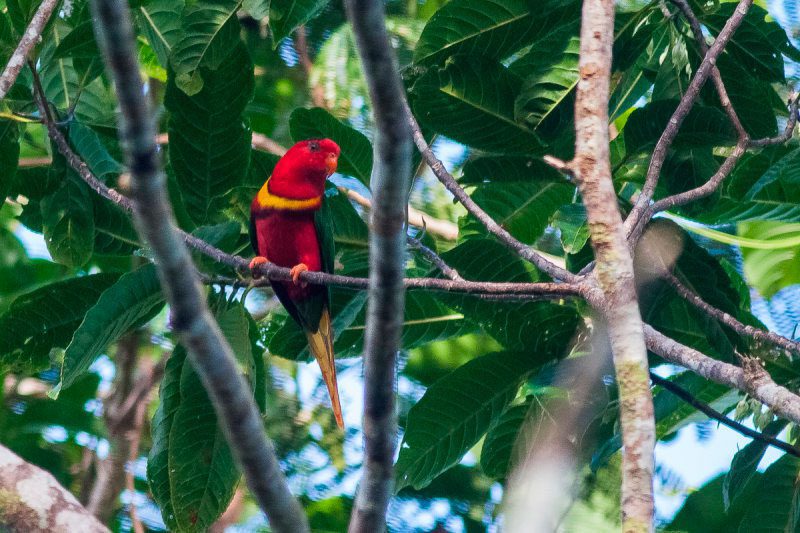
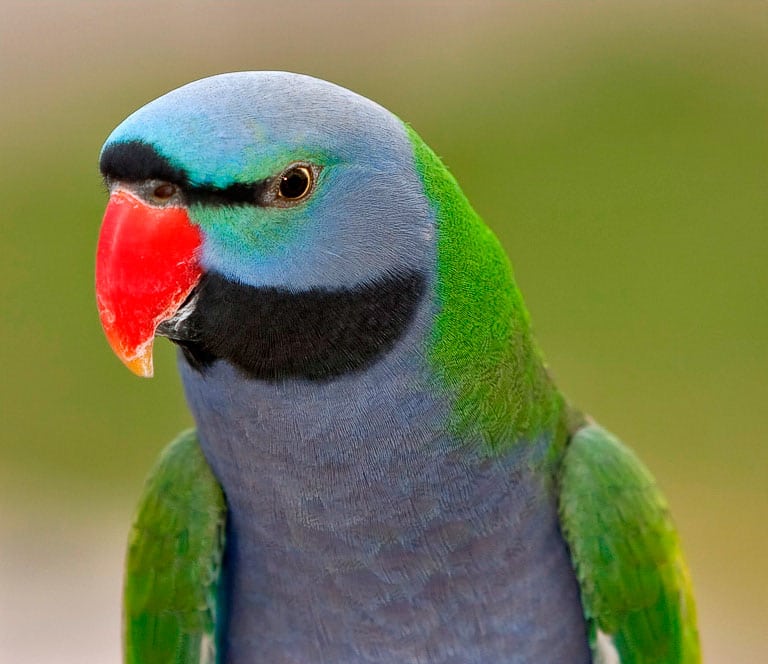
The head of the Duchess Lorikeet (Charmosyna margarethae), is red except for the back of the crown that is black and extends from the top of the eye up to the nape.

Large collar Red on the back of the neck, bordered below by a thin purplish-black line and a broader yellow-orange stripe: the mantle and scapulars green; rump Green with trademark red on the side; tail coverts, view from above, green. The wings green. Under the wing , coverts marginal green, the coats under the wing red, and the bottom of the flight feather Black with a panel of yellow color that goes from the center of the flight feather passing by the secondaries.

The underparts, basically, are red with a yellow stripe on the chest, narrow edged purple-black above, a thin red margin and a broader and more diffuse below purple edge; from below, the tail coats are green. From above, the tail It is red with black borders and the sharp tip of yellow; from below, the tail is yellowish-brown, Yellow-tipped.

The bill is orange; irises yellow to orange; legs oranges.

The male and the female are very similar.

Immature they lack the Black Hat and black and orange margin on the back of the neck. The chest belt is a yellow shutdown. The bill orange, the irises Yellow-grey and the legs gray.

Habitat:

It inhabits in the forests and wooded areas, at the edges of forests and tall secondary growth forests, mostly mountains and hills, Although you can also see in coconut plantations and coastal villages; above all between 100 and 1.350 meters above sea level.

Often feeds in noisy groups of 10 to 40 birds in the trees in flower and epiphytes with others Loris (including (Cardinal Lory). They feed acrobatically, mainly in the forest canopy.

Reproduction:

Nesting and breeding habits unknown, although a male was seen in a breeding attitude during the month of January.

Food:

Apart from pollen and nectar, observed feeding on fruits of Schefflera.

Distribution:

The Duchess Lorikeet is endemic of the Solomon Islands including Bougainville (Papua New Guinea), Gizo, Kolombangara, Guadalcanal, Malaita and San Gristobal. Brian Coates indicates that this species often seen in the city of Kieta, Bougainville.

Conservation:


Near-threatened

โ€ข Current IUCN Red List category: Near threatened.

โ€ข Population trend: Decreasing.

Much of the lowland forests, within the area of distribution of the Duchess Lorikeet, He has been or is scheduled to be connected, but this species is probably safe in the Highlands.

There is an export license fee for 60 birds, the funds will be used to finance conservation programs (JR van Oosten in litt. 1999); However, this species could be threatened by any large-scale trade (T. Leary in litt. 2000). In 2002, 200 birds were imported to Singapore with permissions CITES (UNEP-WCMC CITES Trade Database, January 2005).

The world population It is considered of less than 50.000 birds, but stable.

"Duchess Lorikeet" in captivity:

Very rare in captivity.

Alternative names:

Duchess Lorikeet, Dutchess Lorikeet (ingles).
Lori de Margaret (French).
Margarethenlori, Margaretenlori (German).
Lori de Margarita (espaรฑol).
Duchess Lorikeet (Portuguese).

scientific classification:

Order: Psittaciformes
Family: Psittaculidae
Scientific name: Charmosyna margarethae
Genus: Charmosyna
Citation: Tristram, 1879
Protonimo: Charmosyna margarethae

Images "Duchess Lorikeet"

Videos "Duchess Lorikeet"

————————————————————————————————

"Lori de Margarita" (Charmosyna margarethae)


Sources:

Avibase
– Parrots of the World โ€“ Forshaw Joseph M
– Parrots A Guide to the Parrots of the World – Tony Juniper & Mike Parr
– Birdlife

Photos:

1 – By ยฉ Markus Lagerqvist – PBase
2 – ยซCharmosynamargarethaesmitยป by John Gerrard KeulemansThe Ibis, ser. 4, too.. 3. Licensed under Public Domain via Wikimedia Commons.

Sounds: Niels Krabbe (Xeno-canto)

โ–ท The world of Pets: Dogs, cats, birds, reptiles, amphibians

Double-eyed Fig-Parrot
Cyclopsitta Diophthalma


Double-eyed Fig-Parrot

Content

Description

13 to 16 cm.. length and a weight between 25 and 56 g..

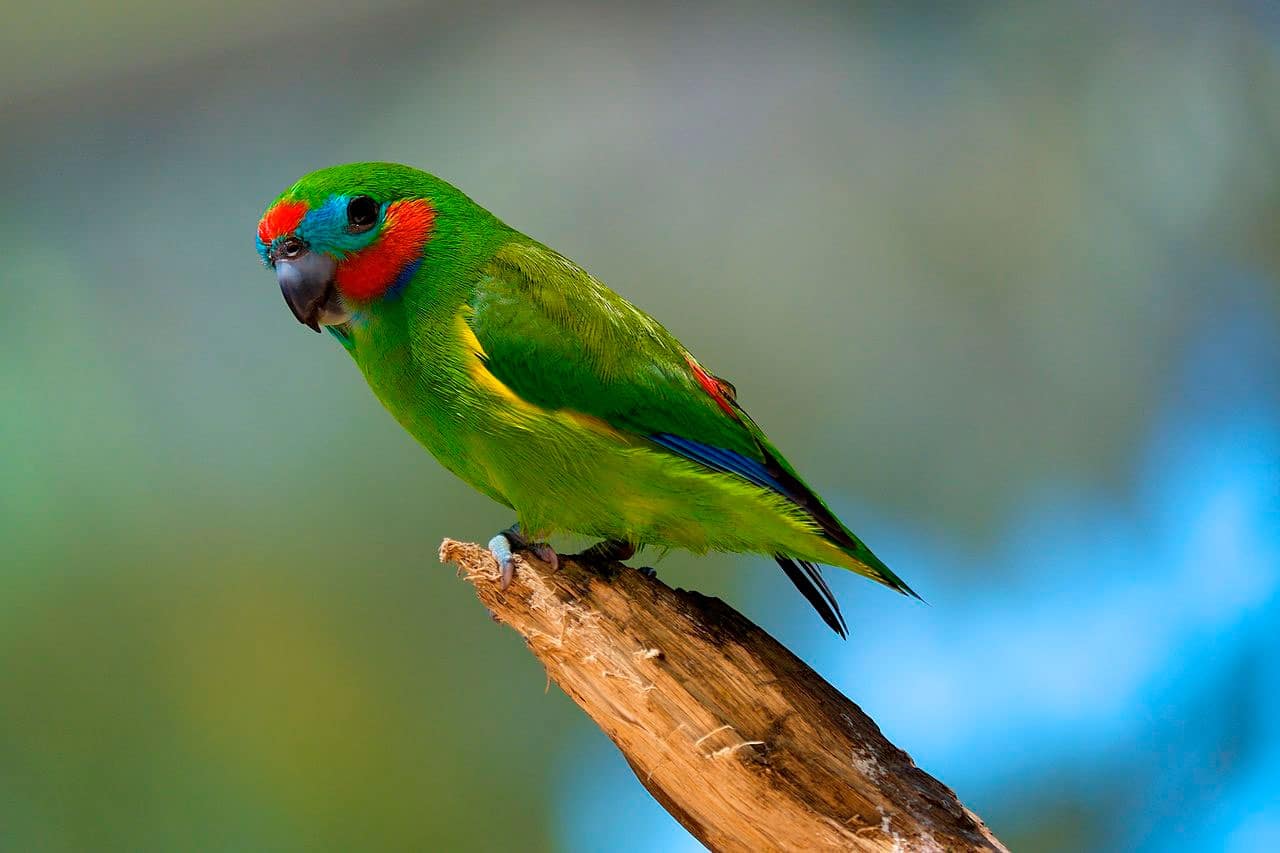
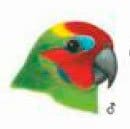
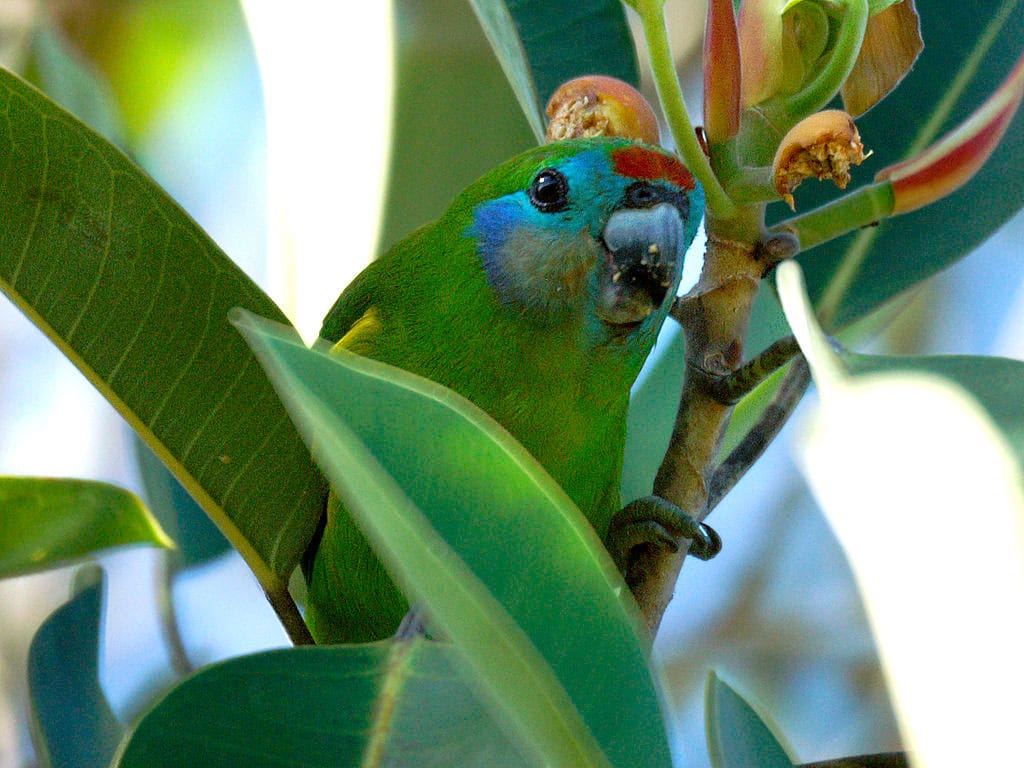
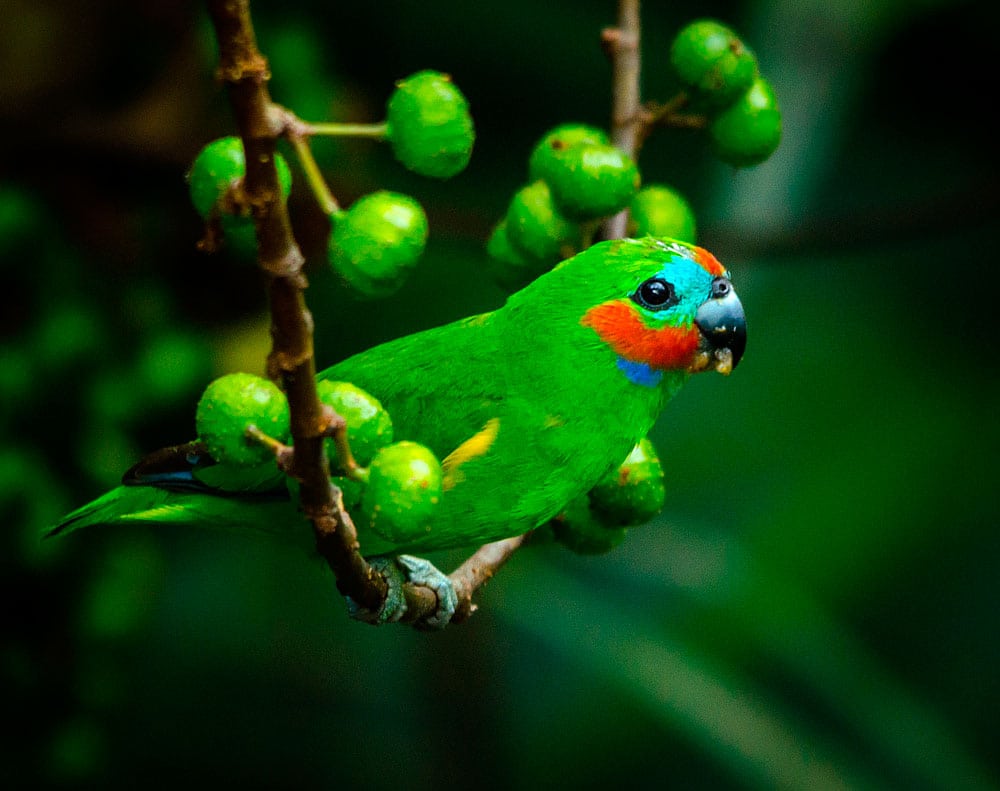
The Double-eyed Fig-Parrot (Cyclopsitta Diophthalma) half of the crown, lores, cheeks and headphones feathers bright Scarlet color with some slightly elongated feathers; bright turquoise brand above and in front of the eyes, that it extends slightly backwards above and below; green line above and behind the eyes; brand violet-blue light under the red on the back of the headphones feathers that extends to the throat; narrow yellowish Orange behind the red band of the crown, Fusion to the green in the part back from the crown.

Upperparts with indistinct diffusion of color bright green olive on the the mantle. Wing coverts, bright green; primary coverts blue; primaries with vane external of color blue turquoise pale and vane blackish internals; flight feather (except the primary outer) with band of yellowish white color visible from below; inner coverts marked in red, wing feathers bordered with yellow green.

The underparts paler; Green over yellow that the upperparts, with a strong Flash of yellow along the flank, about the bend of wing. Upper, the tail green; grey below.

Robust bill, notched grey lead and a blackish tip; cere dark grey; irises dark brown; legs Green grey.

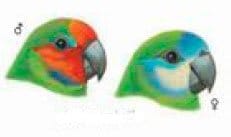
The female has the cheeks brown, not red.

Immature as the females. The young male acquire the plumage adult in 14 months.

Subspecies description

Subspecies description
  • Cyclopsitta diophthalma diophthalma

    : (Hombron and Jacquinot, 1841) – The nominal

  • Diophthalma diophthalma aruensis - male

  • Cyclopsitta diophthalma aruensis

    : (Schlegel, 1874) – Of 14 cm.. length. The plumage is greenish-yellow, the blue area on the eyes has greenish hue , Blue cheeks are lined with mauve colouration and extends to the bottom of the peak.

    Female similar to the male but all the red marks are replaced by a pale blue.

  • Diophthalma diophthalma coccineifrons

  • Cyclopsitta diophthalma coccineifrons

    : (Sharpe, 1882) – Of 14 cm.. length.

    It is usually something more dark. The Crown is red bordered with a broad yellow band.

    The female has less yellowish white.

  • Diophthalma diophthalma virago - male

  • Cyclopsitta diophthalma virago

    : (ECTION Hartert, 1895) – Of 14 cm.. length.

    Green is more pale, the red zones of the face are less extensive and more pale.
    Yellow edge of the very weak Crown.

    Juveniles as adult females

  • Diophthalma diophthalma inseparabilis

  • Cyclopsitta diophthalma inseparabilis

    : (ECTION Hartert, 1898) – Of 14 cm.. length.

    The Red coloration is reduced to a small spot on the forehead, the rest of the forehead is bluish.

    Similar to males females.

    Juveniles as adult females.

  • Diophthalma diophthalma macleayana

  • Cyclopsitta diophthalma macleayana

    : (EP Ramsay, 1874) – Of 14 cm.. length.

    The Red is reduced to a red spot in the front area and lower cheeks. The yellow border in the area of the Crown is absent, sides of the forehead and eyes blue with green. The azul-violaceos edges of the cheek extends to below the peak.

    Females more yellowish and the bottom of the cheeks is white Brown.

    Equal to the adult female juveniles.

  • Diophthalma diophthalma marshalli

  • Cyclopsitta diophthalma marshalli

    : (Iredale, 1946) – Of 14 cm.. length.

    Green is more beige and the azul-malva coloration extends to the area under the peak.

    Females have pale blue color where the male has red and blackish brown cheek bottom area.

    Juveniles as adult females.

  • Diophthalma diophthalma coxeni

  • Cyclopsitta diophthalma coxeni

    : (Gould, 1867) – It's a bit more large, of about 15 cm.. approximately, No red forehead and face with some reddish feathers, the cheeks and orange headphones feathers. Blue front clear and without yellow stripe. The area of the eyes is absent blue. Blue edges of the bottom of the cheeks is variable.

    The females are more yellowish with less or absent red in the face.

    Equal to the adult female juveniles.

Habitat:

The Double-eyed Fig-Parrot are sedentary, with some dispersion after the breeding season. It is in a range of habitats from low to medium altitude, including jungle, secondary vegetation, on the edge of the Woods, riparian forest and occasionally dry forests and open forests of eucalyptus.

In Australia There are also birds in parks, Gardens, scrub, cultivated areas and mangroves; the Diophthalma diophthalma coxeni, probably, concentrated in the alluvial forest, but it was also visible in the forests of dry lowlands and hills of rainforest.

The species is highly dependent of the Ficus figs in all habitats.

The birds are usually found in pairs or in small groups, calling the attention with their constant calls acute while flying above the canopy.

They feed in silence, moving quietly through the foliage, often giving away their presence only by falling debris, Since break the shell of the fruit to reach its seeds.
outside the breeding season, groups of up to 200 birds can be nested together, dissolving into smaller groups to feed themselves during the morning and afternoon.

When alarmed, they move their wings in an agitated manner.

during the rains, the bath is carried out with wet foliage, and mutual grooming is common.

Reproduction:

The breeding season of the Double-eyed Fig-Parrot, probably begins in New Guinea during the month of March, in Australia the main season runs from August to November.

When the birds are played are divided into pairs, territorial around their food trees. The nest It is a cavity that is expanded in a trunk at a height between 8 and 20 meters above the ground. Most of the nest preparation is carried out by the female., that takes refuge in the hole and spends a large part of the day there during its excavation. She can experiment with more than one nest.

Courtship feeding is common. The entrance hole is about 4 cm in diameter, and putting two white eggs are deposited, at intervals of 48 hours, in one camera, some 20 centimetres below the entry hole.

The incubation hard 18 days and the young will leave the nest in 7-8 weeks, After having been fed during the first 3 to 4 weeks, only for the female. They return to settle in the hollow for a short period of time after having left the nest.

Food:

The fig seeds they are their main food, birds often return to the same ripe fruits ending all their seeds. The diet also includes whole fruits small, nectar, insect larvae and fungi or lichens collected from the barks. Birds may feed in groups with others Fig parrots and, in Australia, with Rosella parakeets and other species of parrots.

Distribution:

The Double-eyed Fig-Parrot is distributed throughout much of New Guinea and parts of the northeast of Australia. At the West end is located in Waigeo, Salawati, Misool and Rafiau in the West Papua islands, Indonesian.

Is widespread but distributed unevenly through the continental part of New Guinea, absent only in the center of the Doberai Peninsula and the central belt of mountains above the 1.600 m, Although there have previously been to 1.800 meters at the local level.

You can see in the islas Aru and Fergusson, in the Islands Goodenough in the D'Entrecasteaux Group, and in Tagula in the Louisiade group.

In Australia, the most northerly of the three isolated populations, is the tip of the Cape York Peninsula, from Jardine River in the northwest of the country, to the South, around East of Lockhart River, sometimes in the South to the extreme north of the Princess Charlotte Bay; the population Centre occupies the coastal district of everything Cooktown in the North through Cairns and the District Atherton, about South of Townsville; the southern-most population, now very reduced, with less than 50 records in the last century, formerly extended from Gympie, Queensland, to the South, about Richmond River, New South Wales, arriving inland up to the Bunya mountains (in 1976 two birds were about the Koreelah National Park, in February and two close Lamington National Park in December).

The estimate of the world population is above the 100.000 individuals and stable, but the State two of its subspecies is less secure:

– Cyclopsitta Diophthalma macleayana: has a population of 5.000 individuals and may be in decline, Although multiply in parks and gardens around Cairns.
– Cyclopsitta Diophthalma coxeni: just left 200 birds, After having reduced its population as a result of the destruction of the forests of lowlands along its limited distribution area.
– The third Australian subspecies, Cyclopsitta Diophthalma marshalli it's still pretty common.

In New Guinea, the species dispersed, and is considered to be rare in the Doberai Peninsula and absent from many parts of the lowlands of the South, is mainly distributed in the Highlands of the South basin. The Orange-breasted Fig-Parrot It probably replaces this species in much of this area. It is likely that the species has not been recorded accurately due to its small size and discreet habits. Protected by law in Australia. The Diophthalma diophthalma coxeni appears in the Appendix I of the CITES

Subspecies distribution

Subspecies distribution

Conservation:


minor concern


โ€ข Current IUCN Red List category: Least concern

โ€ข Population trend: Stable

The size of the world population Double-eyed Fig-Parrot It has not been quantified, Although it is estimated at more than 100,000 specimens. But, the Diophthalma diophthalma coxeni is in critical hazard, with a population between 50 and 200 individuals; the Diophthalma diophthalma macleayana with a population of some 5.000 individuals and the Diophthalma diophthalma marshalli generally uncommon

The population, of the nominal species, is suspected to be stable in the absence of evidence of any reduction or substantial threats.

"Double-eyed Fig-Parrot" in captivity:

Rare in captivity.
Not social with people. Welcome in the distance.

Alternative names:

Double-eyed Fig-Parrot, Double eyed Fig Parrot, Double-eyed Fig Parrot, Two-eyed Fig Parrot (ingles).
Psittacule double-oeil (French).
Rotwangen-Zwergpapagei (German).
Papagaio-do-figo-de-cara-azul (Portuguese).
Lorito de Cuatro Ojos, Lorito Dobleojo, Lorito de la higuera de doble ojo (espaรฑol).

scientific classification:

Order: Psittaciformes
Family: Psittaculidae
Scientific name: Cyclopsitta Diophthalma
Genus: Cyclopsitta
Citation: (Hombron & Jacquinot, 1841)
Protonimo: Psittacula diophthalma

Images "Lorito double":

Videos "Double-eyed Fig-Parrot"

————————————————————————————————

ยซLorito Doublerojoยป (Cyclopsitta Diophthalma)


Sources:

– Avibase
– Parrots of the World โ€“ Forshaw Joseph M
– Parrots A Guide to the Parrots of the World – Tony Juniper & Mike Parr
– Loromania

Photos:

(1) – ยซCyclopsitta diophthalma-Birdworld Kuranda, Queensland, Australia-male-8aยป by ShotophotoDouble Eyed Fig ParrotUploaded by snowmanradio. Licensed under CC BY-SA 2.0 via Wikimedia Commons.
(2) – John Gerrard Keulemans [Public domain], via Wikimedia Commons
(3) – ยซCyclopsitta diophthalma-Mossman Gorge, Daintree National Park, Queensland, Australia-male-8ยป by James Island from Brisbane, Australia – Double-Eyed Fig-ParrotUploaded by snowmanradio. Licensed under CC BY 2.0 via Wikimedia Commons.
(4) – ยซCyclopsitta Diophthalma (female) -Cairns-8ยป by David Cook Wildlife Photography – originally posted to Flickr as Double-eyed Fig-Parrot (Cyclopsitta Diophthalma). Licensed under CC BY-SA 2.0 via Wikimedia Commons.
(5) – Birds-pet-wallpapers
(6) – By tamandua – PBase

Sounds: Andrew Spencer (Xeno-canto)