โ–ท The world of Pets: Dogs, cats, birds, reptiles, amphibians

Things to Consider When Taking Care of a Senior Dog

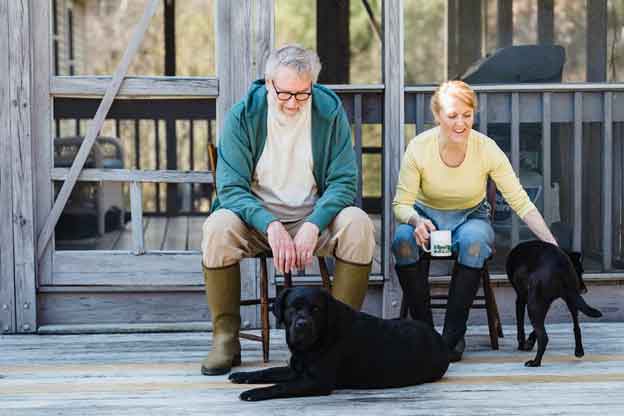
Senior dogs can be a handful for any dog owner. They require a lot of love and patience, owing to the massive body and mental changes. Because of their weakening body and immune system, you must adjust their diet and incorporate the best-canned food for senior dogs.

If you have or want to adopt a senior dog, know it requires a lot of time and money to take care of them. . Your dog's happy, healthy face will make the saddest person brighten up.

Are you looking for tips to best take care of your senior dog? Here are a few to direct you to the right path.

Content

Maintaining an Exercise Routine

Regular exercise will benefit your dog's general health while keeping them at their appropriate weight. Senior dogs not regularly exercised are most likely to suffer from severe arthritis, heart-related diseases, or diabetes. One can also tame frailty syndrome in your pet through exercise, as they maintain their muscle mass, which drives their metabolism.

Even though your dog is older, play, have fun, and take walks with it. But, require additional motivation to continue being active. Don't push them to overdo it, instead, take their lead regarding how long the activities should last.

Depending on your schedule, your dog's breed, dietary needs, health needs, and vet's advice, you can create a well-working exercise regime for your dog. You can also hire a professional pet nanny to care for your senior dog. Other people regularly make physical therapy appointments for their dogs to improve their muscle and joint strength.

Feed the Right Diet, Based on Individual Needs

Feeding your dog a balanced diet is paramount, especially during old age. While feeding your dog, please limit the fat and calorie intake to prevent the dog from developing unhealthy weight gain and inflammation.

It also requires senior dog owners to limit unhealthy dog treats that they give their dogs. Treats like peanut butter and cheese are dog favorites that should be avoided at all costs; Instead, look for soft food for old dogs. You must also feed your senior dog with antioxidants and anti-inflammatory foods.

Not sure if you are feeding your dog maximum nutrient value from their daily diet? You can supplement their food intake using supplementary tablets. But, consult a vet before buying the supplements, as they recommend the best brand for your pup.

It also, ensure your senior dog takes lots of fluids. Old dog owners should make it simpler for their aging puppies to locate a water bowl. If your pet has problems remembering where any particular water bowl could be, you might need to place more water bowls around the house. It also, associating a specific color with water bowls is an added way of helping your dog remember them.

Regularly check the old pup's fecal waste for any irregularities. You can check the color, thickness of the fecal matter, and how many times they defecate daily. If you notice something abnormal, If you do notice anything abnormal, seek a vet's help.

Maintaining Good Dental Hygiene

A dog's dental health must be taken seriously from a young age. Senior dogs can suffer from severe dental problems if they are not well cared for. Such issues can involve missing teeth, cracked teeth, and gum diseases. But, It is, however, not uncommon to detect a dog having missing teeth from a very young age.

To maintain your dog's oral hygiene, brush their teeth regularly using toothpaste and a thumb brush while making circular movements. You can also use dental chews to help with that, as the chews scrap the teeth, working as well as toothbrushes. It also, always take your dog to the vet to get their teeth checked and fixed.

Signs of Dental Problems in Your Dog

Here are the five most common signs

โ— They show less interest in food, dehydrated, hard foods
โ— They drool a lot, well, more than usual
โ— They chew food much slower than normal
โ— They hate it when touched around the mouth area
โ— Nasty breath, especially in the morning.

Make Grooming a Priority

Older dogs may have a more challenging time grooming themselves than other dogs, as they may strain too hard to reach some areas. It also, as they age, their skin and fur become dull. The skin becomes flaky, dry, lumpy and irritated. The shiny coat has also affected it, becoming brittle and dull.

To combat this, the pet parents should schedule regular bath times for their aged pets. A mild shampoo is advisable to use to nourish the skin and fur. This time is also excellent for bonding between you and your dog.

After a good bath, gently brush their fur to remove any tangles and give a good haircut around the eye, nose and ear areas. Do not trim the nail too short because doing so could cut sensitive nerve endings and blood vessels. It also, clip long ingrown claws, as they can get stuck to surfaces, hurting the dog.

Making Regular Checkup Visits to the Vet

Dogs, unlike humans, cannot talk. It becomes tough to define a dog's problem unless you are looking. So, paramount to take regular checkups as a preventative measure.

These checkups can be monthly, quarterly, semi-annually or annually. During these visits, blood work is done, as well as oral health checks. Blood work helps define the state of organ function of the kidneys and liver of your senior dog.

Checkups form an excellent medical history for your dog. One is also able to identify silent diseases from an early stage which allows, for better medical intervention. It also, gives a dog owner peace of mind, knowing their dog has a clean bill of health.

Standard diagnostic tests your senior dog is likely to undergo are;

โ— Fecal tests
โ— Urinalysis
โ— Thyroid function testing
โ— Blood testing of heartworms
โ— Complete blood count of both the red and white blood cells, as well as platelets
โ— CHEM screenings

Keep Up With Vaccination Schedules

Due to irregular grooming, old dogs are likely to suffer from lice, fleas and ticks. Thus, vaccinations are vital. Senior dog vaccinations may not be as standard as vaccination for other dogs, occurring at least once every three years. You should consult a vet on vaccination and make necessary changes to vaccination depending on individual needs.

Be Flexible With Your Dogs Changing Needs

Start with giving your elderly dog a lovely, cozy bed, ideally somewhere warm, peaceful, and accessible without mounting steps. Warmth is paramount, as older dogs struggle to control their body temperature compared to younger dogs.

They are more susceptible to overheating and humidity than younger dogs, so keep them out of those situations by using a warm bed.

Accessibility is also important, as the bathroom needs of your senior pet may change as they age and necessitate more frequent trips; they should have easy access to the garden.

Always keep your floors clean and uncluttered, as senior dogs suffering vision loss are likely to stumble on things on the floor area and hurt themselves.

For dogs suffering from arthritis, ensure that your house is fitted with ramps to suit their needs instead of making them walk over stairs.

You can also purchase elevated food bowls for your dog to prevent them from straining their necks while eating and drinking.

Play Games that Simulate Brain Function

Mental illness among senior dogs is also common. Dogs may suffer from mental diseases such as dementia, post-traumatic stress disorder, anxiety, and phobias. Parents of old dogs are advised to play some brain games to stimulate brain activity, thus preventing or slowing down the development of these ailments. Such games involve puzzle toys and scavenger hunt games.

Signs Your Dog is Suffering From Mental Health Issues?

โ— Aggressively barking at its owner
โ— Chasing its tail
โ— Loss of appetite
โ— Unhealthy changes in weight. It could be weight gain or weight loss.
โ— Excessive drooling
โ— Pacing and air snapping
โ— Isolating itself from other dogs.

Spend Time With Your Dog

Living in the moment and savoring every moment spent with your senior dog is an excellent decision that will allow you to give your dog love and assurance. It can be very upsetting to see your pet dog go through all these changes that come with old age and have no way of helping them.

But, you must understand that this is a stage all living creatures go through, including humans. So, take the best care of your pets, and offer them every ounce of love, and you will have no regrets when he is all gone.

Final Thoughts

A senior dog may experience loss of sight, hearing loss, arthritis, dementia and other complications. As scary as it sounds, aging is a normal and natural process, and if dog owners give their dogs the necessary care, their aging process will be graceful and enjoyable.

Above all needs that a senior dog is likely to have, the most important one is getting maximum love and attention from its owner.

Have you been an old dog parent before? How was your experience?
โ–ท The world of Pets: Dogs, cats, birds, reptiles, amphibians

Essential Tips For Picking Dog Food For Small Dogs.

Content

Every dog owner wants to see his beloved pup in the best of health. He would like his dog to be energetic and active all the time. It depends largely on the quality and quantity of food you give your dog.

Have you ever noticed that your dog may not like a certain foodstuff? Just like a human, dogs might be selective regarding food intake. So, you need to be vigilant about the choice of your dog. Dogs need food that contains all necessary nutrients in appropriate proportion.

At the same time, it should be acceptable to your dog. Appropriate food selection also depends on a dog's size, Appropriate food selection also depends on a dog's size, weight, and age. The nutrient requirement differs for a young puppy than a senior dog.

Similarly, big dogs need food with a certain mix of proteins, carbohydrates, and fats, whereas small dogs need other food with different ingredients..

Understanding The Dog Food

There are many types of dog foods available in the market. But before you choose the right food for your dog you must understand which one is the best for your dog.

Mainly the dog foods are of three types, Dry Food, Wet Food, and Raw Food.

  • Dry Food – Dry Food, as the name reflects, has a low moisture level. It may be in the form of flakes, pellets, and biscuits. But, the biscuits you give your dog as a treat are not included; they are packed separately. A certain amount of meat can also be added to dry foods. Depending on your choice, meat can be added in dried or raw form. Sometimes, you may also like to add water to this type of food.
  • Wet Food – Another type of food in the market is wet food. This food contains a reasonable amount of moisture in the form of gravy or jelly. It also contains meat. Wet food is cooked food that is packed in cans or foils. It also comes in pouches or trays. These are ready-to-serve foods and need no extra treatment. But, if it is chilled or frozen, you might need to manage its temperature before feeding your dog.
  • Raw food – It is food that is not in finished form. It contains raw meat, raw bones, fruits and nuts. It comes in two varieties: homemade and commercially packed raw food. All the ingredients are either in frozen form or in freeze-dried form.

Complete And Complimentary Dog Food

Dog food can also be categorized as Complete or Complimentary. A complete dog food comprises all the ingredients and nutrients in proportion. It will need no additions. Many brands of complete dog foods are available. You can choose the right one for your dog..

Contrary to complete dog foods, complimentary dog food doesn't contain all the required nutrients. You will need to mix additional items before feeding your dog.

Tips For Picking Dog Food For Small Dogs

Food requirements are different for dogs depending on their size. Food suitable for a big dog cannot be given to a small dog, as both have different needs.

Read more if you want to know the tips for picking a martingale collar for a greyhound.

Here are a few useful tips while choosing the right food for a small dog.

Food Items That Are Not Fit For Your Small Dog

Not all the food materials are suitable for a dog, especially a small dog. Some ingredients are harmful to your dog. Never buy dog food if it contains any of the following materials.

  • 1. Artificial additives such as BHT, Ethoxyquin, and BHA must not be included in dog food. Your dog doesn't need any such artificial food item.
  • 2. Corn Syrup is harmful to your dog. It may instigate appetite and your dog can be a victim of overeating.
  • 3. Artificial colors added to dog food are much harmful to your dog. Don't buy food that contains artificial dyes.
  • 4. In dog food, Propylene Glycol, MSG, Nitrates, and Melamine should never be included.
  • 5. Always ensure that the dog food does not have rendered fat in it. It is one of the most harmful ingredients for a dog.

Food Items That Must Be Included In Small Dog Food

Here's a list of must-have ingredients in small dog food.

  • Meat should be an essential part of the dog food. It is a rich source of natural protein, which is required for your small dog's growth.
  • Another essential ingredient for quality dog food is carbohydrates. Some types of Carbohydrates are not good for a dog, but it is essential for the dog's health and energy. So, So, look for some healthy sources of Carbohydrates such as rice, vegetables, and fruits.
  • Some types of fats may be harmful for the dogs, but high-quality fats, such as Omega 3, are quite essential for the dog's health. Fat sources such as fish and canola oil, chicken fat, and olive oil must be included in the small dog's food.
  • Vitamins are yet another essential part of dog food. THE SMALL DOG FOOD MUST INCLUDE vitamins A, B, D, E and K. These are vital for the health and growth of the dog.
  • Trace minerals such as iron, zinc, and manganese are required in small quantities. Choose a dog food that contains these essential minerals in small quantities.
  • Grains are also very important for the health of a dog. Grains are a good source of nutrients. But, some dogs may have allergies to grains. If so, you can opt for grain-free food.

More Tips On Small Dogs Food

Now that you know what to give and what not to give to your small dog, letโ€™s move on to some other useful tips on Small Dog Foods.

Increased Frequency Of Feeding For Small Dogs

Since the digestive capacity of a small dog is limited, it is necessary to divide the total food required for a day into four small doses. Feed your small dog four times a day instead of two, as may be the case with a big dog. But, you can increase the quantity gradually to meet your dog's dietary requirements.

Donโ€™t Change The Food Type

Once your dog has settled with a certain type of food, you must keep feeding him the same. Frequent changes in food type will hurt the stomach of your dog. Try to stick with one type of food for several days. This will also help adjust the quantity of nutrients the dog requires. Once the dog is comfortable with the type and quantity of the food intake, you can opt for changing them if you want to.

Opt For Hypoallergenic Foods

If your dog has a known food sensitivity, you need to consider the food that may be hypoallergenic. Normally, dogs are more sensitive to airborne allergies as compared to food. But, But you must remain alert of your dog's behavior against any possible food sensitivity. If you notice any, you must immediately switch to hypoallergenic dog foods.

Low-Fat Foods Are Good For Small Dogsโ€™ Treat

Fats are required by the dogs, but in low proportion. So, choose a food that is low in fats. These may include, Cucumber, Apple, Carrot, Watermelon, Sweet Potato, and Green Peas. This is specifically important in the case of treats. A high-fat food, if given as a treat to your dog, will increase your dog's weight, which otherwise will be much more harmful to the dogโ€™s health.

Things To Remember While Choosing The Dog Food

  • Try to buy food that is Wholesome and Natural to the maximum possible extent
  • Don't buy food that has preservatives in it.
  • Avoid buying food that contains added sugar.
  • Unnecessary fibers are not recommended for your dog. Avoid them.
  • Never give food to your dog that he doesn't like to eat.

Conclusion

A healthy, and energetic dog is what you expect from your beloved pet. An appropriate diet plays a key role in many other factors. Food for your small dog must have all the ingredients and nutrients in proportionate.

While selecting the food for your small dog, you must also consider that unnecessary ingredients and additives should not be there. Another key factor in dog foods is the quantity and frequency of feedings per day.

Small dogs might need less food but with increased frequency, as 3 or 4 times a day. So, you must give the right food in the appropriate quantity to your dog.

M Hassan Iqbal

โ–ท The world of Pets: Dogs, cats, birds, reptiles, amphibians

Spanish Alano
Espaรฑa Not recognized by the FCI . (Molossoid, Bloodhound)

Alano espaรฑol

The Spanish Alano it is a breed endorsed mainly for its enormous bravery

Content

History ยซSpanish Alanยป

Breed of gripping or prey dog โ€‹โ€‹of very ancient origins. Medium in size and considered to be breed of Spain. When mixed other races are created as the Bull Dog in Spain, the alano of vautre (grip) in France, the Old bulldog in England, the extinct Bullenbeisser in Germany, or own Dogo Argentino.

Molosser light dam and corridor. The traditional functionality It is the handling of cattle bravo and semibravo, Iberian trunk, in extensive regime. Big game hunting was also used., as tooth dog for holding deer and wild boar. Its modern implementation is care and defence, as well as for guarding livestock against any type of predator.

Some authors consider Spanish Alano desciendiente the old dog named Alaunt, Alans used by both war and for handling cattle.

The existence of Alans dogs Spain dates back several centuries ago, Although it is not very clear what its origin was. Some believe that this race was extended by moloso Europe by the alano in the fourth century and was taken to the Iberian Peninsula and to the north africa by the hooligans.

In 1350 publishes the rey Alfonso XI their ยซBook of Monterรญaยป. In the fifteenth century it is published ยซTreaty of Monterรญaยป, anonymous, which performs a deep somatic description of the dog.

When he is talking about perro Dane everyone knew that it was a running dam that to justify its name had to meet certain features:

With strong head, of longilinear proportions, high rump and good bones. Also your character It was clearly defined by its function gripping dog. "not taking for hunger or reward, but by right nature that God gave him." (we call it today prey).

Videos "Spanish Alano"

Of which there is no doubt is that these dogs were very extended, as evidenced by his appearance in paintings. There is a alano that plasma Velazquez in the hole hunt, which it is in the National Gallery de Londres, those of Goya in his Capturing a bull or those of an engraving of the French romantic Blanchard. They are also appointed by Cervantes and Lope de Vega Alans of Thirds.

It is believed, according to the most probable hypothesis, they reached the Iberian Peninsula, accompanying the Alano people, shortly after the fall of Roman empire, about him V century. The alano used primarily for war, hunting and ranching, They were robust and primitive specimens. Later, his unbeatable psychophysical qualities (robustness, bravery and loyalty) They make the Alano play a remarkable role as a member of the Spanish armies, especially during the conquest of the Americas.

The first written references to the Alano They appear in the Medievo, Hand Gonzalo de Berceo, in 1247.

More complete data can be found in 1347, in the book of the hunt, gift Alfonso XI "The Justice". Other mentions of importance on Alano, worthy of mention occurs in Utrera in 1603, by Fray Francisco de Tamayo.

In the conquest of New world dogs played a key role, animal unknown to the natives. These, coupled with the horses, armor and arquebuses contributed to the victory.
They were the terror of the natives, thus the stories of the time did not spare impressive descriptions such as the following:

The Friar Bernardino de Sahagun refers to testimonies of Indians attacked by "huge dogs, with ears cut, fierce yellow eyes Bloodshot, huge mouths, hanging languages and teeth in the form of knives, wild as the devil and spotted like jaguarsยจ. The description has an inevitable tone of admiration and fear; let us not forget that in pre-Columbian times (before the arrival of the conquistadors) the Indians had dogs of small size and small body. In this way, the indigenous called the dogs of the Spaniards "a diabolical invention.

Bartholomew Columbus and Fontanarossa, brother of the discoverer and Adelantado and governor of Hispaniola, they say the Chronicles employed 200 men, 20 horses and 20 Alans, It was the "debut" of the Alans in the Conquest of America.

The Spanish Alano It is supported primarily by its huge courage, with special mention when dealing with wild pig, disregarding even his own life. Its functions have changed little during these centuries. War Dog, livestock (especially for the beef and veal), big game hunting and nursery. It is in the eighteenth century when they appear the first written evidence of Spanish Alano, on their participation in the bravo bull party.

His qualities will cross the Spanish borders, becoming very significant exports, both American continent as to countries of Europe as France, England or Germany in order to improve their own races, especially the Bulldog and the Dogue de Bordeaux. even the international press echoes its characteristics, as happened in 1873, in the british press, where a Spanish prey specimen is described in detail (Alano), called Toro and says so: ยซ…fighting holds his opponent only by the head, is silent and immune to pain…ยป.

At the end of the 19th century or the beginning of the 20th, begins the decline of the alano, motivated by multiple factors:

Exclusion of hosts, Changes in the tradition of hunting and livestock activity, definitive exclusion from the Festival of the bull and custom. This resulted in the gradual replacement of alano other imported breeds, in most of the times, in an unjustified way. Years later, you get even speculate about the possible disappearance of alano, since his last public appearance took place in Madrid, in the year 1963 (exhibition at the Retiro Park).

But they weren't gone, some population gaps remained in certain marginal areas, difficult to access, as are certain mountains Cantabria, Basque Country, Burgos and Salamanca. These remnants of the population managed to survive thanks to its functional qualities, as for the farmers and hunters in the area, outside all fashion and with an enviable sense of practicality, there was simply no better animal for such tasks than the Spanish Alano.

Physical characteristics ยซSpanish Alanoยป

Today, and thanks to the excellent recovery work of some professionals and public bodies, the Spanish Alano practically, remains unchanged, It's a medium dog of prey, strong, agile and very serious. Specially equipped for the handling of cattle, for hunting and for custody.

Little barking by nature, very resistant to pain and disease, he is usually suspicious and distrustful of strangers and submissive and very affectionate with his owner and family.

AlanoBouCorsoDogo CanarioSpanish MastiffBullmastiff
Height60,5 cm.56,5 cm.66 cm.63 cm.59,5 cm.60,5 cm.
Weight35 kg36,5 kg47,5 kg58 kg47,5 kg59 kg
EyescleardarkdarkdarkEntire rangedark
Lines c/fParallelParallelLig.convergParallelLig.converg
Snout36%33% 33% 40% 30%

Character and aptitudes Alano

The Alano is an animal slow in their development, reaching maturity, physical and mental, about two years. From that moment you will find a powerful animal, determined and very noble. As it's a dog selected primarily by their willingness to work, there is a certain variety of โ€œtypesโ€, from the lighter Alans, gifted for hunting, even the heaviest, suitable for grazing and save (cattle lines or old bulldog).

Perhaps in recent times less attention is being paid to the latter, in favor of the most appropriate lines for hunting. Perhaps the lovers of this type of alano (Bull Dog), have to consider its viability as a separate race.

In 1880 the fate of โ€œdogs the bullโ€ and for this reason the bullrings stopped keeping dogs.

On the other hand, by ceasing to practice "round hunting", the monterรญa is organized in a different way so that it is no longer interesting that the cattle fall grabbed by the dogs, but that they arrive at the posts where the huntsman is stationed, who is who pays the entertainment. Due to these circumstances, the Rehalas got rid of the Alans who had.

In the old days a dog was useful if it carried out some task. The Spanish Alano โ€œstopped having a jobโ€ after the selection of more docile cattle breeds, thus this race regresses at breakneck speed until it reaches extinction.

ยซSpanish Alanยป images

โ€œSpanish Alanoโ€ videos

Spanish Alano of Darkness

Type and recognitions:

  • Molossoid, Bloodhound
  • Federations: Recognized in 2004 as a breed by the RSCEโ€‹ (Royal Canine Society of Spain)

Alternative names

1. Spanish Alaunt, Spanish Bulldog, Spanish Alano, Alano (English).
2. Alano espagnol (French).
3. Alano espaรฑol (German).
4. Alano espanhol, Buldogue espanhol, Alรฃo espanhol (Portuguese).
5. Alano espaรฑol, Bulldog Espaรฑol (espaรฑol).

โ–ท The world of Pets: Dogs, cats, birds, reptiles, amphibians

American Bully
Estados Unidos Not recognized by the FCI. Companion dog.

The American Bully ideal is very intelligent, endearing and versatile.

American Bully

Content

Characteristics "American Bully"

Coexistence is important that you have with your new friend. Before considering the acquisition of a dog of the breed ยซยซ you know certain factors. Not all breeds of dogs are apt to live in an apartment, you must take into account his character, their need for exercise, their interaction with other pets, their care and if you have small children, their level of tolerance towards them.

Adaptation โ“˜

2,0 of 5 stars (based on 1 review)

friendly dog โ€‹โ€‹โ“˜

2,0 of 5 stars (based on 1 review)

hair loss โ“˜

3,0 of 5 stars (based on 1 review)

Affection level โ“˜

5,0 of 5 stars (based on 1 review)

Need for exercise โ“˜

4,0 of 5 stars (based on 1 review)

Social need โ“˜

5,0 of 5 stars (based on 1 review)

Home โ“˜

3,0 of 5 stars (based on 1 review)

Toilet โ“˜

2,0 of 5 stars (based on 1 review)

Friendly with strangers โ“˜

3,0 of 5 stars (based on 1 review)

barking โ“˜

3,0 of 5 stars (based on 1 review)

Health โ“˜

4,0 of 5 stars (based on 1 review)

Territorial โ“˜

2,0 of 5 stars (based on 1 review)

Cat friendly โ“˜

2,0 of 5 stars (based on 1 review)

Intelligence โ“˜

3,0 of 5 stars (based on 1 review)

Versatility โ“˜

3,0 of 5 stars (based on 1 review)

Child friendly โ“˜

4,0 of 5 stars (based on 1 review)

Surveillance โ“˜

4,0 of 5 stars (based on 1 review)

joy โ“˜

4,0 of 5 stars (based on 1 review)

History

The American Bully was created in the years 80 and 90 in the United States based on American Staffordshire Terrier and the American Pitbull Terrier, and then it was completed with other races of type Bulldog, as the American bulldog, the English Bulldog and the French Bulldog.

The idea of รขโ‚ฌโ€นรขโ‚ฌโ€นcreating this breed of dog was Dave Wilson and Carlos Barksdale, founders of the world famous line Razor’s Edge Pit Bull. By owning some American Pit Bull Terriers, they invested in some very good lines and bought some of the best dogs of the time, mainly of the line Mayfield, but also some dogs Hemphil very good.

Later they contacted George Williams, a Washington breeder, D.C. They bought him the dog Diablo, and this purchase marked the beginning of the line Razor’s Edge. Diablo he was a fairly large and muscular dog, who had the size and build they were looking to add to their breeding program.

In fact, the intention of Dave Wilson was to create a breed of short, stocky dogs. His line was to have thicker legs and a bigger head than others Pit Bulls. I also wanted squarer and shorter muzzles. Like this, the line Razor’s Edge was similar to Pit Bull traditional, although he was less athletic and did not have the same drive.

When in 1997 the Pit Bull in your home county (Prince Georgeโ€™s, Maryland), Dave Wilson he was forced to leave the area and moved his breeding activity to Virginia. To perfect your line, spent a lot of time with other breeders to learn more about breeding and genetics. His vision of the dog he wanted was very clear: I had to have a different head.

In 2012, the kennel of Dave Wilson, Razor’s Edge Kennel, I had already created 7 generations of Pit Bulls pure breed. Unfortunately, although he did not want his dogs to be labeled as Pit Bull, could not get a pedigree for some of them and had to register them with the United Kennel Club (UKC) -the second largest dog club in the US, after the American Kennel Club (AKC)– as Pit Bull.

Dave began experimenting with many different lines of dogs, until he finally found the head he wanted. As the litters advanced, the line Razor’s Edge started to be really consistent. The heads of the dogs were quite large, but i also wanted the bones to be thicker.

Like this, mixing combinations of dogs and bloodlines, Dave finally got the style of Pitbull what did he want, called ยซBully Styleยซ. The dogs were small, with big heads, wide breasts, short snouts, big bones and short backs, but still within the standard of the United Kennel Club (UKC) and of the American Bully Kennel Club (ABKC).

Since the 15 in July of 2013, the race American Bully is officially recognized by the United Kennel Club.

Physical characteristics

It is a dog Compact and somewhat intimidating at first sight, but with a good character that makes this dog its best and most outstanding feature.

With regard to the Constitution, It is a breed with an athletic and very muscular physique, with a large head, short back. It has short, glossy fur.

Its appearance reflects a strong foundation of American Pitbull Terrier, mixed with patterns of other type dog breeds Bull.

The general balance and correct proportions of an athlete are essential, and absolute solidity and adequate muscle tone are essential.

Size and weight

  • Weight: Of 31 to 54 kg
  • Male size: 43 to 51 cm.
  • female size: Of 40 to 48 cm.

Breed standard

The breed standards are documents produced by official bodies that list the conditions that a dog must meet. American Bully to be fully recognized as belonging to the race:

Character and skills

The American Bully it developed, first of all, as service dog. Despite its powerful appearance, his demeanor is gentle and friendly.

Some cases of aggression between species of the same race have been observed (especially same sex). For this reason, it is recommended that early socialization and training of puppies take place as soon as possible.

Well-adapted dogs, trained and socialized are confident, tolerant and, in general, kind to strangers. They are also smart and very eager to please, which makes training for dog sports and events easy and enjoyable. Any aggressive or fearful behavior, unprovoked, towards people is wrong for this breed.

The education of American Bully must be firm, but not brutal, because despite its appearance it is a sensitive dog.

Health

The American Bully he is a robust dog, that does not make the fortune of veterinarians, but it does not tolerate extreme temperatures, even if it is very cold (especially when there is humidity) as if it is very hot.

Like all dogs, the American Bully you may have a torn cruciate ligament (or a severe sprain) in the knee. So, it is better to avoid excessive sports activity while the puppy is growing.

It is a young breed, that does not necessarily present symptoms of hereditary or congenital diseases. But, some individuals may be prone to eye disease, nictitating gland prolapse, a condition that causes a red, rounded mass to appear at the inner corner of the dog's eye. This condition is easily treated with surgery..

Some individuals may also suffer from dysplasia, so a hip revision is highly recommended when the dog turns one year old. Similarly, It is recommended that individuals with movement coordination disorders undergo testing. This is because they can suffer from hereditary cerebellar ataxia, also known as spinocerebellar ataxia, a degenerative disorder of the cerebellum that causes, among other things, difficulties in coordinating movements.

Life expectancy

12 to 14 years

Grooming

The American Bully does not require too much maintenance. Regular brushing during the shedding period and a bath with a neutral pH dog shampoo when heavily soiled will suffice..

Food

The diet of the American Bully should be rich in protein and fat, with a good supply of calcium. It is possible to supplement the ration of croquettes with fresh meat or feed it exclusively with the BARF diet.

Legislation

Similar to the American bulldog, the American Bully It is a breed recognized by the American Bully Kennel Club and the United Kennel Club, but not for the Fรฉdรฉration Cynologique Internationale nor for the Sociรฉtรฉ Centrale Canine.

Like this, and a American Bully sold without registration, will be considered as a American Staffordshire Terrier, but it will never be confirmable, due to their morphological differences. Similarly, and a American Bully sold without pedigree ABKC, the owner may have problems. In fact, to own a American Bully and prove their belonging to the race, a pedigree of American Bully issued by the American Bully Kennel Club.

Last, but the American Bully don't be a categorized dog, a category diagnosis is recommended when the dog reaches one to one and a half years of age. This exam, performed by a veterinarian, confirm or deny that the dog belongs to a categorized breed.

ยซAmerican Bullyยป images

American Bully Videos

AMERICAN BULLY VOL.2

โ–ท The world of Pets: Dogs, cats, birds, reptiles, amphibians

Airedale Terrier
Inglaterra FCI 7 - Large and medium-sized Terrier

Intelligent, fell, quiet and an unconditional companion. in Canada, the Airedale Terrier, used for hunting large bears and deer.

Airedale Terrier

Content

Characteristics "Airedale Terrier"

Coexistence is important that you have with your new friend. Before considering the acquisition of a dog of the breed "Airedale Terrier" you know certain factors. Not all breeds of dogs are apt to live in an apartment, you must take into account his character, their need for exercise, their interaction with other pets, their care and if you have small children, their level of tolerance towards them.

Adaptation โ“˜

5,0 of 5 stars (based on 1 review)

friendly dog โ€‹โ€‹โ“˜

1,0 of 5 stars (based on 1 review)

hair loss โ“˜

3,0 of 5 stars (based on 1 review)

Affection level โ“˜

4,0 of 5 stars (based on 1 review)

Need for exercise โ“˜

4,0 of 5 stars (based on 1 review)

Social need โ“˜

4,0 of 5 stars (based on 1 review)

Home โ“˜

3,0 of 5 stars (based on 1 review)

Toilet โ“˜

4,0 of 5 stars (based on 1 review)

Friendly with strangers โ“˜

2,0 of 5 stars (based on 1 review)

barking โ“˜

3,0 of 5 stars (based on 1 review)

Health โ“˜

2,0 of 5 stars (based on 1 review)

Territorial โ“˜

5,0 of 5 stars (based on 1 review)

Cat friendly โ“˜

1,0 of 5 stars (based on 1 review)

Intelligence โ“˜

5,0 of 5 stars (based on 1 review)

Versatility โ“˜

4,0 of 5 stars (based on 1 review)

Child friendly โ“˜

4,0 of 5 stars (based on 1 review)

Surveillance โ“˜

5,0 of 5 stars (based on 1 review)

joy โ“˜

5,0 of 5 stars (based on 1 review)

History of the Airedale Terrier

This King of the Terriers is a breed of large, strong dogs belonging to the group Terrier. It is of British origin, of the Yorkshire region. It is believed that he descended from a cross between the Otterhound, otter hunter optimal, Terrier and the Old Espaรฑol. The breeding of these animals began in the mid-nineteenth century.

In the countries where it is most widespread, it has never managed to be a "fashionable" dog., so it has some protection from trade and indiscriminate breeding, factors that destroy the zootechnical characteristics of the vast majority of dog breeds.

His personality is cheerful, sometimes relied, insurance. It is almost always on alert but not aggressive, if not annoying or it urges.

Did you know??

The Airedale is the largest of the terrier breeds and was one of the first races trained for police work in Germany and Britain. In World War, he worked as a guard dog and messenger.

Physical characteristics Airedale Terrier

His teeth presents a quadrature and much strength to the of a Rottweiler, Despite having a thinner jaw. His coat is black and tan, varying its intensity but not the distribution, black or gray color extends to the upper neck, back, back, rump, while the flanks, thighs and belly have a mixed shade of gray hairs and golden, the rest of the body, is tan or sand in different shades.

Is from the Terriers bigger, muscular and active. His character shines through the lively and alert expression of her eyes, the way that carries its tail erect and ears. He has a lump between 59 and 61 cm in males with an average weight of 25 kg. The females among 56 and 59 cm and weighing approximately 20 kg. The eyes should never be prominent but small, dark and at an angle, with a typical expression Terrier, alert and intelligent. The ears are V-shaped, sometimes lighter or darker than the skull. Like other Terrier, traditionally a third of the tail was amputated a few days after birth. But, this practice has recently been banned in some countries.

It has a long, flat skull. Is well proportioned to the body. The well modeled muzzle should not have a concave or stop shape that descends abruptly below the line of the eyes.. The skin should be smooth, firm and tight. The upper and lower jaws are large, powerful and strong, but should not excess development. Scissor bite, that is to say, the inside of the upper incisors in contact with the outside of the lower incisors preferably set square to the jaws; but if you accept the bite in pincer. The lips are firm and black muzzle.

Airedale Terrier character and skills

It is an intelligent dog, fell, quiet, a stalwart companion who enjoys going for walks and responds to basic training of simple commands with no problem.

In Canada They are used for hunting bear and deer.

They have problems with ears that require continuous observation and a lot of hygiene. They may also have skin problems, known as hot patch.

Breeders list "Airedale Terrier"

In Spain we have not been able to contact any ยซAiredale Terrierยป breeder.. There are very few international breeders who maintain this wonderful breed that was on the verge of extinction..

REGISTER KENNEL

Airedale Terrier breeders

Offer your puppies for free. Sign up here.

  • This field is a validation field and should be left unchanged.
  • Enter an image of your kennel.

Airedale Terrier images

Airedale Terrier Videos

Dogs 101 Airedale Terrier

Type and recognitions:

  • FCI CLASSIFICATION:
  • Group :
  • Section : . .

Federations:

  • FCI – Terriers 1 Large and medium-sized terriers. โ“˜
  • AKC – Dogs working โ“˜
  • ANKC – Group 6 (utility dogs) โ“˜
  • CKC – Miscellaneous list โ“˜
  • โ€‹KC – Working dogs โ“˜
  • NZKC – Utility dog โ“˜
  • UKC – Watchdog โ“˜

FCI breed standard "Airedale Terrier"

Origin:
United Kingdom

Date of publication of the valid original standard:
08.10.2012.

Use:

Terriers.


General appearance:

Airedale is the largest of the terriers; he is a muscular dog, Active, pretty compact; you must not have excessively long limbs or your body be disproportionate.


Behavior / temperament:

The dog must have a lively expression, agile movement and be aware of any movement. Its character is revealed by the expression of the eyes and by the size of the ears and its erect tail. Outgoing and confident, friendly, brave and intelligent. Always alert, not aggressive but courageous.

Head:

Without wrinkles. Well proportioned, without any apparent difference between the length of the skull and muzzle.

Cranial region:
  • Skull: Long, plane, not very wide between the ears and tapers slightly towards eye level.
  • Depression links (stop): Stop little marked.

facial region:

  • Truffle: black.
  • Snout: Well modeled in front of the eyes; should not have a concave shape or a sharp drop below the eye line; should be delicately modeled so that it does not have a sphenoid or flat appearance.
  • Lips: Firms.
  • Jaws / Teeth: Large upper and lower jaws, powerful, strong and muscular, since a strong muzzle is highly desirable. The jaws should not be overdeveloped to give the cheeks a round or protruding appearance, since protruding masseters are not desirable. Strong teeth. Scissor bite, that is, the internal face of the upper incisors is in close contact with the external face of the lower incisors and preferably placed at right angles to the maxillae.; However, clamp bite accepted. Upper or lower prognathism are not desirable.
  • Cheeks: Smooth and not prominent. The โ€œcheekedโ€ dog is unwanted.
  • Eyes: dark colored, small, never prominent, with typical terrier expression, alert and intelligent. Clear, expressionless eyes are highly undesirable.
  • Ears: V-shaped and carried to the sides, small but in proportion to the size of the dog. The upper line of the fold slightly above the height of the skull. Drop ears or set very high are undesirable.

Neck:

crisp, muscular, of moderate length and thickness. Gradually widens towards the back, and must not have a double chin.

Body:

  • Back: Short, strong, straight and level, that does not show looseness.
  • Pork loin: Muscular. In those dogs that have a short back as well as well-developed and well-placed ribs, there is little space between the lower ribs and the pelvis; when the back is long, there will be some slack in this area.
  • Breast : Deep (that is to say, almost at elbow level), but not wide. Well arched ribs.

Tail:

Previously the custom was to amputate the tail.
  • amputee: High insertion and erect bearing, not curved on the back. With good potency and substance. The tip at approximately the same height as the top of the skull.
  • Without amputating: High insertion and erect bearing. With good potency and substance.


Tips

PREVIOUS MEMBERS:

  • Hormbros: Long, well tilted back obliquely. Flat Shoulders.
  • Elbows: Located on the axis of the body; free movement.
  • Antarms: Perfectly straight and very bony.
  • Pinis previous: Small, round and compact, large and thick pads, and with moderately arched fingers, without turning in or out.

LATER MEMBERS:

  • Thigh: Long and strong.
  • Rodinllto: Well angled, neither turned in nor out.Leg: Muscled.
  • Metatarsus: Holes well lowered; seen from behind they must appear parallel.
  • Pinis later: Small, round and compact, large and thick pads, and with moderately arched fingers, without turning in or out.

Movement:

Previous members must take them forward, in free movement parallel to the sides. Moving closer, the front members must constitute a continuation of the straight line of the front, keeping the feet as far apart from each other as the elbows. Subsequent members must provide a strong driving power.

Mantle

Plink: Lasted, bushy and wire, not too long to give the appearance of tattered. Rigid and compact, covers the body and limbs. The outer layer is made up of hard and rigid hair.; the undercoat is made of shorter and softer hair.

Hard coat may be rough or slightly wavy; curly or soft hair is highly undesirable.

Colorr: With black or dark gray frame, like the top of the neck and the dorsal surface of the tail. All other fire colored parts. The ears are often darker in fire color, and there may be a shaded color around the neck and sides of the skull. A few white hairs are accepted on the sill.


Size and weight:

Alturto the cross: Approximate height:

  • Males between 58 and 61 cm..
  • Females between 56 and 59 cm..


Fouls:

Any deviation from the aforementioned criteria is considered as a fault and the severity of this is considered to the degree of the deviation to the standard and its consequences on the health and well-being of the dog..

FALTAS DISQUALIFYING:

  • Aggressiveness or extreme shyness.
  • Any dog โ€‹โ€‹showing clear signs of physical or behavioral abnormalities must be disqualified..


N.B.:
  • Males should have two normal-appearing testicles fully descended into the scrotum..
  • Only functionally and clinically healthy dogs, with the typical conformation of the breed, should be used for parenting.

TRADUCCION: Brigida Nestler/ Original version: (IN)

SupTechnical ervision: Miguel Angel Martinez

Source: F.C.I - International Cynological Federation

Alternative names:

1. Airedale Terrier, Waterside Terrier, Bingley Terrier, AIREDALE, King of Terriers (English).
2. Airedale Terrier, Waterside Terrier, Bingley Terrier, Working Terrier, Warfedale Terrier (French).
3. Waterside Terrier, Terrier, Bingley Terrier (German).
4. Airedale terrier, O rei dos terriers, Waterside Terrier (Portuguese).
5. Airedale terrier, Rey de los Terriers (espaรฑol).

โ–ท The world of Pets: Dogs, cats, birds, reptiles, amphibians

American Staffordshire Terrier
Estados Unidos FCI 286 - Bull type Terriers

The American Staffordshire Terrier they are brave, tenacious, friendly, extremely attentive

American Staffordshire Terrier

Content

Characteristics "American Staffordshire Terrier"

Coexistence is important that you have with your new friend. Before considering the acquisition of a dog of the breed "American Staffordshire Terrier" you know certain factors. Not all breeds of dogs are apt to live in an apartment, you must take into account his character, their need for exercise, their interaction with other pets, their care and if you have small children, their level of tolerance towards them.

Adaptation โ“˜

3,0 of 5 stars (based on 1 review)

friendly dog โ€‹โ€‹โ“˜

1,0 of 5 stars (based on 1 review)

hair loss โ“˜

2,0 of 5 stars (based on 1 review)

Affection level โ“˜

5,0 of 5 stars (based on 1 review)

Need for exercise โ“˜

3,0 of 5 stars (based on 1 review)

Social need โ“˜

4,0 of 5 stars (based on 1 review)

Home โ“˜

2,0 of 5 stars (based on 1 review)

Toilet โ“˜

1,0 of 5 stars (based on 1 review)

Friendly with strangers โ“˜

4,0 of 5 stars (based on 1 review)

barking โ“˜

3,0 of 5 stars (based on 1 review)

Health โ“˜

3,0 of 5 stars (based on 1 review)

Territorial โ“˜

3,0 of 5 stars (based on 1 review)

Cat friendly โ“˜

1,0 of 5 stars (based on 1 review)

Intelligence โ“˜

4,0 of 5 stars (based on 1 review)

Versatility โ“˜

4,0 of 5 stars (based on 1 review)

Child friendly โ“˜

4,0 of 5 stars (based on 1 review)

Surveillance โ“˜

4,0 of 5 stars (based on 1 review)

joy โ“˜

3,0 of 5 stars (based on 1 review)

History

The American Staffordshire Terrier or Amstaff (different to the American Pitbull Terrier), is a breed of dog type Terrier well known worldwide.

It is a young breed of dog from the USA.. Among his ancestors are, Besides of Terrier, the Old english bulldog.

In England and North America, dog fighting had a tradition dating back to ancient times.. The Old english bulldog was sent to fight bulls in the arenas of animal fighting. Although Old english bulldog are the forerunners of Bulldogs of today, his physique was much more similar to the current one American Staffordshire Terrier. After animal fighting was officially banned, continued illegally; In the USA. until today. Its origin in the 19th century was the black county of central England, called Staffordshire. Workers from the coal mines and clay pits crossed the Old english bulldog with the terriers. In the official scene of the fight against animals such crosses had been prohibited. It was feared that the fighting power and toughness of the Bulldog will combine with the predatory acuity of the terriers, which would lead to uncontrollable fighting machines. In the illegality of the backyards nobody cared. This is how he was born ยซBull and Terrierยป and very quickly came to the US. There they liked to call them ยซPit Bullsยป. Pit is the name given to the dogfighting ring.

In 1898 The United Kennel Club was founded (UKC), who wanted to take over the breeding of these dogs. But the UKC was nothing more than a professional dogfighting organizer. So the community was divided around these dogs. Lovers of Pit Bull they condemned dog fighting, they wanted a friendly family dog. In the meantime, the Pit Bulls they had earned a great reputation in US society. In World War, the courage of Pit Bulls became a stimulus for the combat power of American troops. Even celebrities like the President of the United States Theodore Roosevelt showed up with the Pit Bulls.

On cinemas, "The Little Rascals", a gang of kids with a dog, was very popular and was featured in 220 episodes between 1922 and 1944. The dog was the guardian and protector, children's playmate and dildo. This dog was a Pitbull. He later became the first dog registered with the American Kennel Club (AKC) for the new raceStaffordshire terrierยซ. To draw a clear line at the fighting dog scene, the AKC had insisted on a name change. The first standard was published in 1936. In 1972 there was the second name change to ยซAmerican Staffordshire Terrierยป to distinguish it from its British relative. The Amstaff, what's been called since then, Is higher, bigger and heavier. It is still cared for by the American Staffordshire Terrier Club of America., who from the beginning clearly condemned dog fighting and trusted his upbringing as a family dog.

In many countries, Its social discrimination as a fighting machine and the technically unjustifiable classification as a "dangerous dog breed" have hit it hard..

Popular American Staffordshire Terrier Mixes

Mixtures of American Staffordshire Terrier seriously bred with other dog breeds or hybrids are quite rare. But, there is an abundance of hybrids of all kinds, that remind the Amstaff and are marketed as such or Pitbull. Here I should make a clear distinction. The American Staffordshire Terriers Serious breeding have nothing to do with the general mixes under which troublesome dogs can frolic. Unfortunately, there is a financially strong scene using such dogs as a weapon or to intimidate.

Physical characteristics

How is an American Staffordshire Terrier?

The American Staffordshire Terrier is a dog's size medium, Awesome, very strong and at the same time elegant. has short hair, dense and shiny that sits gently on the body. Emphasizes your muscular and sporty complexion. The standard says: ยซIt must be robust and compact, not of legs or of light constructionยป. Any color, solid, multicolor or speckled is allowed. The standard of the American Staffordshire Terrier is pleasantly different from many other dog breeds, which go into great detail on where hair color or crease is allowed. It is one of the few standards that consistently focus on the healthy dog.. This is emphasized by the "1st American Staffordshire Terrier Club":

We give top priority to performance and health. Beauty is considered desirable but secondary. The correct interpretation of the rule, that is free from crippling regulations, It is our obligation. Muscular, dry dogs with long bones, persistent and fast, are our breeding goal. We categorically reject supercharged โ€œmonstrositiesโ€, low with extremely high weights. We consider mental performance to be even more important. Nerve strength and impeccable character are an absolute requirement.

How big is an American Staffordshire Terrier??

El American Staffordshire Terrier mide entre 43 and 48 cm tall and weighs between 20 and 30 kg.

How long can an American Staffordshire Terrier live??

Because the breeding of the American Staffordshire Terrier is not oriented so much to external appearances as to aptitude and character, The American Staffordshire Terrier enjoys a fit constitution into old age and a relatively long life expectancy of about 12 years.

Character and skills

The American Staffordshire Terrier he is a relaxed dog. He is very vigilant and intelligent. It is enormously strong, brave and has great fighting strength potential. At the same time it is extremely adorable, loyal and affectionate, even dedicated to his humans. Is neutral with strangers. Is of good character and has an extraordinarily high threshold for irritation. Can hardly be provoked. As with the English Bulldog and other breeds of dogs that were used in the past in the arenas of animal fighting, these dogs have been given a particularly high level of control and stimulus threshold. It also, these dogs have been used in serious breeding for many generations exclusively as family and companion dogs. Unfortunately this has not protected the dogs from criminals. Especially in the decade of 1990, dogs like Amstaff became aggressive by irresponsible breeders and owners, Savagely crossed and abused like living weapons. the same politicians, who tolerated these illegal practices for a long time, they were then the first to start the discrimination, pointing to American Staffordshire Terrier like a dangerous race, something technically unfounded. Breeding can cause even chihuahuas or caniches toy become aggressive in a few generations. The breed of dogs American Staffordshire Terrier is the victim, not the author. Seriously raised, they make excellent family dogs and careful companions to children.

Caution, health and diseases

How much care does an American Staffordshire Terrier need??

The American Staffordshire Terrier it is absolutely easy to care. Brushing here and there is enough.

Are there any breed-typical diseases in the American Staffordshire Terrier?

The American Staffordshire Terrier enjoy robust health. Sporadically hip or knee problems.

What food is best for an American Stafford Terrier?

The American Staffordshire Terrier has no special dietary requirements. Of course high quality food is good for your health and proof. Like most dogs, he likes a meat bone now and then..

Activities

One American Staffordshire Terrier it is suitable for almost all activities that can be done with a dog.

Considerations before purchase

Where can you buy an American Staffordshire Terrier?

If you want to buy a American Staffordshire Terrier, you should consider that it is a dog from the list. Your whole life has to be prepared for the restrictions of the state and society. You should look at a reputable breeder affiliated with a club that meets the FCI standards. Please, only there and do not buy a puppy from a dubious source. There are many American Staffordshire Terrier and hybrids in refuges. Get tips for choosing your dog here. But, only with a serious breeding dog can you be reasonably certain that your Amstaff has the character qualities described here.

Education and attitude of the American Staffordshire Terrier

ยฟMe conviene un American Staffordshire Terrier?

The American Staffordshire Terrier is undemanding in his attitude. It is not a dog that only needs to walk around the block for a walk.. Want to exercise mentally and physically. Even with a puppy it should be clear who is in charge of the house. There should be no doubt about it. The Amstaff is a bright and occasionally playful four-legged friend who likes to roam the countryside. It is suitable for dog sports of all kinds. Sometimes it is also used as a rescue dog. Is a good guardian.

The American Staffordshire Terrier is widely on the lists of supposedly dangerous dogs. Travel to the Netherlands or Denmark is prohibited, because there is a risk that dogs will be confiscated on the street and euthanized. On the street you should expect people to harass you because of the dog. That is, Unfortunately, the social reality in Central Europe today.

The American Staffordshire Terrier needs consistent upbringing from puppyhood. Consistency means, especially with this physically very strong dog but at the same time sensitive and intelligent, that the master or caregiver should work on the basis of a deep relationship of trust. The dog wants the guidance of its owner. Find the nearby connection. This should be given with a calm hand, respectful and strong. Coercive measures are counterproductive, certain consequences are intentional. The American Staffordshire Terrier must socialize with other dogs at an early stage. Due to its strength and joy of working, it is not a dog for beginners.. Even experienced dog owners should consciously work with it and preferably attend a suitable dog school. Well mannered, don't just listen to the word, rather, he reads the wishes of his master and caregiver through their eyes.

American Staffordshire Terrier pictures

Vรญdeos American Staffordshire Terrier

American Staffordshire Terrier (AmStaff) AKSA playing at the pond

Type and recognitions:

  • FCI CLASSIFICATION:
  • Group :
  • Section : . .

Federations:

  • FCI – Group 3 – Section 3 Bull type Terriers. โ“˜
  • AKC – Terriers โ“˜
  • ANKC – Terriers โ“˜
  • CKC – Terriers โ“˜
  • NZKC – Terriers โ“˜

FCI breed standard "American Staffordshire Terrier"

Origin:
United States

Date of publication of the valid original standard:
03.09.1996.

Use:

---


General appearance:

You must give the impression of great strength, in relation to its size. This is a good solid and muscular dog, Although agile and elegant. He is always aware of what surrounds. His body should be collected, Neither lifted nor agalgado. Its value is noticeable.


Behavior / temperament:

---

Head:

Medium length, large, view from all sides.

Cranial region:
  • Craging: Large.
  • Dnaso-frontal depression (stop): Marked.

facial region:

  • Nariz: It's clearly black.
  • Horcico: Medium length, rounded on top. It descends in a sharp slope below the eyes.
  • Labios: They are joined by the edges and are not loose.
  • Jaws / Teeth: They are well defined. The lower jaw must be powerful, so I can hold tight. The upper incisors are in close contact with the anterior aspect of the lower incisors.
  • Cheeks: The cheek muscles are very prominent.
  • Ojors: They are round, dark colored. They are well sunken and well separated. There should be no depigmentation on the eyelids.
  • Obars: High implanted, may or may not be cropped. Ears not cropped are preferable, they must be short, carried in the shape of a rose or semi-erect. Completely hanging ears will be penalized.

Neck:

Heavy, slightly arched. Gradually tapering from shoulders to insertion into head. Is medium length, without jowl.

Body:

  • Lรญnand the top: The back is quite short. There is a slight slope from the withers to the rump, which slopes slightly to the beginning of the tail.
  • Itmor: Slightly arched.
  • Pecho: Very deep and wide. The ribs are tight, together and well developed back.

Tail:

It is short, compared to the size of the dog. Low-set, gradually taper to a fine point. It is not presented or curled, nor carried over the back. Nor should it be amputated.

Tips

PREVIOUS MEMBERS: They must be straight and strong boned. With good separation to allow a good development of the thorax.

  • Hormbros: Strong and muscular. The shoulder blades are broad and oblique.
  • Metacarpus: Plumb.

LATER MEMBERS: They are well muscled.

  • Corvejones: In low position and should not drift or inward, nor out.
  • PinIt: Medium-sized, well arched and compact.

Movement:

It is elastic, without sway or amble.

Mantle

  • Plink: Is short, tight, hard to the touch and lustrous.
  • Colorr: All colors are allowed, but the fur with more than 80% white, the black and tan fur and the liver should not be valued.


Size and weight:

There must be a proportionate correlation between size and weight. Desirable height at withers should be: 46 to 48 cm. (18 to 19 inches) in males and 43 to 46 cm. (17 to 18 inches) in females.


Fouls:

Any deviation from the aforementioned criteria is considered as a fault and the severity of this is considered to the degree of the deviation to the standard and its consequences on the health and well-being of the dog..

  • Depigmentation of the truffle in the form of white spots.
  • Upper or lower prognathism.
  • light eyes.
  • Lack of pigmentation on eyelids.
  • Tail that is too long or is worn improperly.

FALTAS DISQUALIFYING:

  • Aggressiveness or extreme shyness.
  • Any dog โ€‹โ€‹showing clear signs of physical or behavioral abnormalities must be disqualified..


N.B.:
  • Males should have two normal-appearing testicles fully descended into the scrotum..
  • Only functionally and clinically healthy dogs, with the typical conformation of the breed, should be used for parenting.

TRANSLATION: IRIS Carrillo (Puerto Rico Kennel Federation).

Source: F.C.I - International Cynological Federation

Alternative names:

1. AmStaff, American Staffy (English).
2. American terrier, staff, amstaff (French).
3. Amstaff (German).
4. AST, Staffordshire terrier americano, Amstaff (Portuguese).
5. AmStaff, AST (espaรฑol).

โ–ท The world of Pets: Dogs, cats, birds, reptiles, amphibians

American Pitbull Terrier
Estados Unidos Not recognized by the FCI

American Pit Bull Terrier

The American Pit Bull Terrier suele ser de naturaleza amable, even with strangers.

Content

History


The American Pitbull Terrier is a pure breed of dog, originally from United States, It was forged from dogs imported from United Kingdom. Were used as fighting dogs until they were banned in 1976; they are now bred as pets and athletes in legal sports (Although it is still the favorite breed, dog fighting carried out clandestinely).

It should not be confused with other breeds mistakenly called "pit bulls.": Staffordshire Bull Terrier, American Staffordshire Terrier, Bull Terrier, American Bulldog and even more "distant" races, as the Dogo Argentino.

In Spain the American Pitbull Terrier He is considered a potentially dangerous breed of dogs by Royal Decree, by which to his possession must obtain the licence for possession of dangerous dogs and register it in the corresponding Municipal registry of potentially dangerous animals. One of the things that are required for this license is insurance of civil liability to third parties.

With the American Staffordshire Terrier, the confusion began when, at the beginning of the year 30, the American Kennel Club decided to give another name to the breed, American Staffordshire Terrier, with the end of that cease to be related to its past (The American Pit Bull Terrier was initially used as a dog fight). The American Pit Bull Terrier has not been recognized by the American Kennel Club, While the American Staffordshire Terrier, It is slightly larger, yes it has been recognized.

Otros nombres: APBT / Pit / Pitty

Physical characteristics

The APBT (American Pit Bull Terrier) is a dog's size medium, males usually weigh in 16 to 30 kg and females in 13 to 25 kg. They are known for their value, intelligence, dedication and loyalty. They are of athletic constitution and their breeding focuses mainly on the character and performance of the functional dog..

Are advised to socialize with other dogs from puppies to make to adult aggression towards these minor.

Currently the breed is going through a difficult time due to bastardization with other breeds for commercial reasons where massive dogs are sought, deformed, with exaggerated heads or true color, by having more acceptance and one greater than the APBT quote pure. There has also been crossbreeding by neophyte breeders who have crossed pitbulls cigars with dogs of similar breeds and even with dogs without breed. In this case these mixtures are no longer American Pit Bull and therefore their behavior will never be the same as that of a pure blood.

The American Pit Bull Terrier is recognized only by two records, ADBA and UKC, unlike the latter, the ADBA has the largest number of copies due to its defence and promotion of the breed.

According to the standard the characteristics of the breed are as follows:

Head: an exaggerated head, It will simply make you excessive weight that reduced you functionality when it comes to any type of work. An APBT, for all purposes provided in the head, It must appear two-thirds the width of the shoulders and a 25% more bandwidth on their cheeks to neck to the base of the skull. From the rear part of the skull to stop, It must be the same distance from the stop to the tip of the nose. The snout will be straight and square shape. The depth from the top of the head to the bottom of the jaw is important. The mandible is closed by the temporal fossa muscle., the pressure you need the animal on the coronoide process. The head will be a form of wedge view up from or side, and when viewed from front is round. We do not accept dogs with long lip.

Eyes: The eyes are round, separated from each other and located in a low position.

Teeth: Supported the closure in scissors (preferred), tongs and mild prognathism. The most important thing in the teeth of an APBT, that addition, the official judges of this breed of dog is that are based on a review of the standard, These are the tusks, that must slip through senior behind the lower.

Nose: The nose is dependent on the color of the dog, If it is white it should be red nose, If it is gray the must have grey until the bottom lip.

Neck: The neck should strongly be muscular to the base of the skull.

Rear train: This is the driving train of any four-legged animal. One 80% the work of an APBT develops in her hips and hind legs. A hip long and steep is extremely important, because it will give more support point to the femur, and it must be shorter than the tibia. The hips should be wide. To be this way it will take with them a wide back area, thus allowing a large surface for the insertion of the gluteus and biceps femoris muscles, they are the largest engines of the Powertrain.

Front of: The dog must have deep ribs. They are wide above, narrowing towards the bottom of. The ribs are home to the lungs, which are not deposits, but pumps. The ribs act like a bellows. Its effectiveness is linked on the difference between the volume of contraction and expansion. The depth of ribs gives more room for larger lungs. The shoulders should be slightly wider than the ribs at the height of the eighth rib. Too narrow shoulders not aguantarรกn an appropriate muscle structure, but also a too wide shoulders structure slows the animal and added too much unnecessary weight. The scapula must be to 45 degrees or less angle to the ground, and this will be wide and flat. The elbows should settle levels, with the humerus in a path almost parallel to the spine. The elbow must come under your ribs. The forearm, it should be only slightly longer than the humerus and the humerus should be thick and solid, nearly twice the thickness of the metatarsals at the height of the Hock. The front legs and shoulders must be able to withstand a lot of work and the thickness of the same here can become a virtue.. The feet should be small and inserted high in the ranillas or trabaderas.

Tail: The tail will be inserted under; It must be long until a little before reaching the hocks. This has a thick to decline until the end. You must have form of crank when the dog is relaxed.

Mantle: The mantle can be of any color or combination of them. It should be short and strong. The luster of the mantle usually reflects the health of the APBT, vital sign.

Skin: It should be thick and loose, but not with folds, with the exception of the neck and chest, that should be loose enough to show some vertical folds.

Height to the cross: The height at the cross of males may vary between the 38 cm and the 48 cm., and in females, from the 35 cm. up the 45 cm..

Weight: Despite what many people believe, the APBT they are a small canine breed, at most medium, finding the weight of the males may vary between the 16 kg and the 28 kg, and the females from the 13 kg to the 27 kg. One can have an exemplary pure APBT that although three or four kilograms above these weights, but of course he would have to be fat.

General aspect: The APBT should be square seen from side, the distance from the shoulder to the point of hip to be equal to the distance of the shoulder to the ground. The animal high step and will have a maximum point of their body weight support.

The American Pit Bull Terrier he is a complete athlete. Its morphology is designed for speed, power, agility and stamina.

Character and skills

The American Pit Bull Terrier suele ser de naturaleza amable, even with strangers. Many specimens have strong hunting instincts, so it will not be uncommon to see your Pit Bull run after cats or other small animals that are running away...

As with any breed of dog, proper training and socialization at an early age is a necessity. According to his temperament standard, "aggressive behavior towards human beings is not characteristic of the breed and is highly undesirable", because due to his powerful physique, the American Pit Bull Terrier needs an owner who is able to socialize it carefully and train it in obedience, in order to avoid any bad drink...

They are dogs with a lot of energy and need exercise and stimulation to channel their energy correctly and avoid becoming frustrated., boredom, or destructive behavior.

If we take care of responsibly and if it is properly socialized, our American Pit Bull Terrier, will be an excellent pet.

To remember:

This is what their standard dictates... "aggressive behavior towards human beings is not characteristic of the breed and is something very undesirable". Which confirms that, NO there are aggressive dogs, it is their masters who highlight these characteristics in the dog. Once again... the human hand that destroys everything...

ยซAmerican Pitbull Terrierยป images

ยซAmerican Pitbull Terrierยป Videos

The reality on the American Pit Bull Terrier.- I'm not what they say, I'm not what I appear!

โ–ท The world of Pets: Dogs, cats, birds, reptiles, amphibians

Affenpinscher
Germany FCI 186 - Pinscher and schnauzer type

Activos, adventurous, curious and stubborns, but also cheerful and playful.

Affenpinscher

Content

Characteristics "Affenpinscher"

Coexistence is important that you have with your new friend. Before considering the acquisition of a dog of the breed "Affenpinscher" you know certain factors. Not all breeds of dogs are apt to live in an apartment, you must take into account his character, their need for exercise, their interaction with other pets, their care and if you have small children, their level of tolerance towards them.

Adaptation โ“˜

5,0 of 5 stars (based on 1 review)

friendly dog โ€‹โ€‹โ“˜

3,0 of 5 stars (based on 1 review)

hair loss โ“˜

2,0 of 5 stars (based on 1 review)

Affection level โ“˜

5,0 of 5 stars (based on 1 review)

Need for exercise โ“˜

3,0 of 5 stars (based on 1 review)

Social need โ“˜

5,0 of 5 stars (based on 1 review)

Home โ“˜

5,0 of 5 stars (based on 1 review)

Toilet โ“˜

3,0 of 5 stars (based on 1 review)

Friendly with strangers โ“˜

3,0 of 5 stars (based on 1 review)

barking โ“˜

3,0 of 5 stars (based on 1 review)

Health โ“˜

3,0 of 5 stars (based on 1 review)

Territorial โ“˜

5,0 of 5 stars (based on 1 review)

Cat friendly โ“˜

3,0 of 5 stars (based on 1 review)

Intelligence โ“˜

4,0 of 5 stars (based on 1 review)

Versatility โ“˜

3,0 of 5 stars (based on 1 review)

Child friendly โ“˜

1,0 of 5 stars (based on 1 review)

Surveillance โ“˜

4,0 of 5 stars (based on 1 review)

joy โ“˜

5,0 of 5 stars (based on 1 review)

Affenpinscher History

Type dogs Affenpinscher They are known since about 1600, years. At that time, they were somewhat bigger. Images Affenpinscher set in sixteenth-century German paintings

It's name derives from the German Affe (monkey). The race is ancient and prior to the Griffon Bruxellois and Miniature Schnauzer.

The race was created to be a buzzard, working to eliminate rodents from kitchens, barns and stables.

The first draft of the standard is from 1908 and it is not until the year 1913 when the first official standard is recognized.

Did you know??

Sometime in the 18th or early 19th century, someone had the brilliant idea to raise the Affenpinscher in reduced size, allowing him to become a popular pet by becoming a companion to the ladies.

Physical Characteristics of the Affenpinscher

One Affenpinscher, generally, weights from 2,9 to 6,0 kg and measures of 23 to 30 centimeters tall. It has hard and rough hair, which make him look like a monkey (hence its name, because Affe means monkey in german). Its coat is coarse on the head and shoulders forming a mane, with a lower layer on the front and rear quarters.

The FCI and KC of breed standards, specifies that the layer of hair should be black, but the AKC also allows other colors like gray, Silver, black and tan, and beige (a mixture of Brown, black and white red hairs); other clubs have their own lists of acceptable colors, but black is preferential.

Character and skills

They have a character other than what we associate with Terrier. They differ from Terrier how they tend to get along with other dogs and pets. They are active, adventurous, curious and stubborns, but also cheerful and playful. Because they are affectionates with the family members, the protection is a must to whom they love. It is necessary that, they have a clear education, coherent, if not, you can be very difficult. The training must be varied because the dog can get bored easily.

The Affenpinschers they are somewhat territorial when it comes to their toys and food, That's the reason they are not recommended for younger children. This dog is very quiet, but it can become very aggressive if it feels attacked or threatened and does not show fear towards any aggressor.

Their life expectancy is around twelve years , is a typical life cycle of a purebred dog, but slightly shorter than most breeds its size.

Observations

During moulting it lost much hair, so it is advisable to a good brushed daily and a good diet. The better the quality of the best food will be the State of the fur of your dog. A diet low in fat, salts, iodine, Vitamin B, will result in dryness and hair loss.

The Affenpinscher it is a delicate dog that often suffers from intestinal problems.

Affenpinscher Health

All dogs have the potential to develop genetic health problems, just as all people have the potential to inherit a particular disease. Run, do not walk, from any breeder that does not offer a health guarantee on puppies, to tell you that the breed is 100 percent healthy and has no known problems, or tell you that your puppies are isolated from the main part of the home for health reasons. A reputable breeder will be honest and open about the breed's health problems and the incidence with which they occur in their lines..

The monkeys it is a fairly healthy small breed, but individual dogs can develop orthopedic problems like dislocated kneecaps, a common knee condition in small dogs. Affen are also prone to skin conditions that can lead to flank hair loss..

Not all of these conditions are detectable on a growing puppy, and it is impossible to predict if an animal will be free of these diseases, so you must find a trusted breeder who is committed to raising the healthiest animals possible. Must be able to produce independent certification that the dog's parents (and grandparents, etc.) have been examined for common defects and considered healthy for breeding. That's where health records come in..

Don't fall for the lies of a bad breeder. If the breeder tells you that you do not need to do these tests because you have never had problems in your lines, Your dogs have been "vet checked", or any of the other excuses bad breeders give for skimping on genetic testing of their dogs, leave immediately.

Careful breeders screen their breeding dogs for genetic diseases and breed only the healthiest, best-looking specimens., but sometimes Mother Nature has other ideas and a puppy develops one of these diseases despite good husbandry practices. Advances in veterinary medicine mean that in most cases dogs can still live a good life. If you are going to have a puppy, ask the breeder about the ages of the dogs in their lines and what they died of.

Remember that after you have welcomed a new puppy into your home, has the power to protect you from one of the most common health problems: the obesity. Keep a Affenpinscher with a proper weight is one of the easiest ways to prolong your life. Make the most of your preventive skills to help ensure a healthier dog for life.

Affenpinscher care

The Affenpinscher has a wiry coat that can be rough or smooth, But the words "smooth" and "rough" can be misleading. Rough-coated dogs have slightly softer textured hair and a heavier coat.. Some Affen they have fur that falls somewhere in between. Whatever type of coat you have, the typical monkeys looks clean but a little hairy. You can be sure it will have leaves and twigs in its fur after being outdoors., so you need regular grooming to maintain your appearance.

The tools you will need are a brush, a stainless steel comb, a cutter, blunt-ended scissors and scissors to reduce thickness. Remove dead hairs, called "peeling" the coat, is part of the package when you live with a monkeys.

The rest is basic care. Trim nails as needed, usually every few weeks. Small breeds are prone to periodontal disease, so brush your teeth often for general good health and fresh breath.

Questions about the โ€œAffenpinscherโ€ dog breed

  1. How long does an Affenpinscher live??

    Affenpinschers generally live off 12 to 14 years.

  2. How much does an Affenpinscher puppy cost??

    The price of a puppy Affenpinscher can vary according to the country, The breeder's reputation, The dog lineage and if it is intended for exhibitions or as a pet. Here you have an approximate range:

    Europe: Among 1.500 and 3.000 EUR.

    North America: Among 1.800 and 3.500 $.

    South America: Among 1.500 and 2.500 $ (Depending on the country).

    Asia: Among 2.000 and 4.000 $ (In countries like Japan or South Korea).

    Oceania: Among 2.500 and 4.500 Australian dollars.

  3. Are Affenpinschers good companion dogs??

    Yes, Affenpinschers make excellent companion dogs due to their loyalty, affection and lively personality.

  4. Are Affenpinschers easy to train?

    Although they are smart, Affenpinschers can be stubborn and difficult to train. Early socialization and consistent training are important.

  5. Do Affenpinschers need a lot of exercise??

    Although they are not as active as some larger breeds, Affenpinschers still need a moderate amount of daily exercise to stay healthy and happy.

  6. Are Affenpinschers hypoallergenic dogs??

    No, Affenpinschers are not considered hypoallergenic. They still produce dandruff and hair, which can trigger allergies in some people.

  7. Are Affenpinschers aggressive dogs??

    They are not naturally aggressive, but they can show territorial and defense behaviors. Proper socialization and training are important to prevent any aggression.

  8. Are Affenpinschers good with children??

    Yes, Affenpinschers can be good with children as long as they are properly socialized from an early age and taught to safely interact with children.

  9. Do Affenpinschers lose a lot of hair??

    No, Affenpinschers don't shed as much hair as some other breeds, but they still need regular coat care.

  10. Do Affenpinschers need to be shaved or clipped?

    It is not necessary to shave or cut the coat of an Affenpinscher, but they do need regular coat grooming to keep it clean and tangle free.

  11. Are Affenpinschers prone to health problems??

    like any breed of dog, Affenpinschers can be prone to certain health problems, such as eye and heart problems. It is important to buy a puppy from a responsible breeder who performs health tests on their dogs..

  12. Are Affenpinschers good apartment dogs??

    Yes, Affenpinschers can adapt well to apartment life as long as they get plenty of daily exercise and are properly socialized.

  13. Do Affenpinschers bark a lot??

    Yes, Affenpinschers can be vocal and bark quite a bit. Obedience training and early socialization are important to prevent excessively noisy behaviors.

  14. Do Affenpinschers need special coat care??

    Yes, Affenpinschers need regular coat grooming to keep it clean and tangle free. This includes brushing their rough, rough coat at least twice a week and trimming their fur around their eyes and mouth to prevent irritation..

  15. Do Affenpinschers get along with other dogs and pets??

    Affenpinschers can be territorial and wary of other dogs and pets., so early socialization and gradual introduction are important to establish positive relationships with other animals. But, with proper socialization, they can get along with other dogs and pets in the household.

  16. Are Affenpinschers a suitable breed for first time owners??

    Affenpinschers can be a good choice for first-time owners if they are willing to put the time and effort into their training and socialization.. But, due to his stubborn and energetic personality, may not be the best choice for all first-time owners. It is important to do your research on the breed and speak to a breeder or dog professional before making a decision..

Affenpinscher pictures

Affenpinscher Videos

Affenpinschers at the beach-Uruguay-2010
Affenpinscher
Affenpinschers at the beach-Uruguay-2010
Affenpinscher Raul
Dogs 101- Affenpinscher

Type and recognitions:

  • FCI CLASSIFICATION:
  • Group :
  • Section : . .

Federations:

  • FCI – Pinscher and Schanuezer dogs. Molossian type Dogs and Swiss Mountain and Cattle Dogs. , Section 1: Pinscher and Schnauzer. โ“˜
  • AKC – Toy โ“˜
  • ANKC – Group 1 (Toys) โ“˜
  • CKC – Group 5 – Toys โ“˜
  • โ€‹KC – Toy โ“˜
  • NZKC – Toy โ“˜
  • UKC – companion breed โ“˜

FCI breed standard "Affenpinscher"

Origin:
Germany

Date of publication of the valid original standard:
26.03.2009

Use:

Pet and home dog.


General appearance:

The Affenpinscher is small, Compact and rough hair, with appearance of monkey face.

IMPORTANT PROPORTIONS : The construction should as much as possible appear square in relation to body length and the height to the cross.


Behavior / temperament:

Intrepid, vigilant, stubborn, fell, sometimes with an effervescent character. It is quite a pleasant dog for the family.

Head:

---

Cranial region:
  • Skull: Rather spherical to elongated, altogether not too heavy, vaulted upward, with a forehead macada.
  • Depression links (stop) : Clearly marked.

facial region:

  • Truffle: Round, full and black. Well open nostrils.
  • Snout: Short, straight (not respingado up).  The nasal helm is straight.
  • Belfos: Firmly supported to the jaws, the lips are black.
  • Jaws/Teeth: Complete bite, (42 clean and white teeth), the maxillary lower ahead of the upper jaw and curves gently upwards. The incisors in a healthy bite are as regularly set as possible in the form of a slightly rounded line. Canines and incisors should not be seen with the mouth closed ; Even less should the Affenpinscher show its tongue with its muzzle closed. The lack of two PM1, PM2 or PM3 also combined lack of two dental pieces of these teeth, they must be tolerated.
  • Eyes: dark, rather round and full, black and sticky eyelids. They are surrounded by a Crown of coarsely hairy.
  • Ears: High implementation, carried symmetrically rotated forward, โ€œVโ€ shaped, the internal edges of the ears lie against the head. In the case of erect ears, they are small, equal-sized upright, and carried vertically as possible.

Neck:

The neck is straight, the neck is rather short, strongly implanted, powerful ; the skin of the throat is firmly tight and wrinkle-free.

Body:

  • top line:  From Withers towards rear in a soft downward inclination, approximately in the form of a straight line.
  • Cross: It is the highest point of the top line.
  • Back: Strong, short, firm
  • Pork loin: Short, strong. The distance from the last rib to the hip is short so that the dog is compact.
  • Rump: Short, slightly rounded, It happens imperceptibly by the insertion of the tail.
  • Breast : Just flattened on the sides, moderately wide, descends beyond elbows.
  • bottom line: The bottom and top lines run almost parallel. Moderately raised belly.

Tail:

Natural, the goal being to make it Sabre or sickle-shaped.

Tips

 PREVIOUS MEMBERS: Robust forelimbs, straight, parallel and not too together.

  • Shoulder: Well muscled. The scapula is long, inclined (approximately 45ยบ), flat and well glued.
  • Arm: Well on the body, strong and muscular.
  • Elbow: Well positioned, drawn out inwards or not.
  • Forearm: Strongly developed and straight from all sides which you look at it.
  • Carpo: Firm and strong.
  • Metacarpus: Seen from the front straight ; profile feels a slight tilt in relation to the floor ; strongly developed and muscular.
  • Front feet: Short and round, fingers together and arched (cat feet), strong pads, black short nails and strong.

LATER MEMBERS: Seen in profile with a slight slant, moderately angulated. Seen from behind are parallel.

  • Thigh: Strongly muscled, width
  • Knee: Must not be turned neither inward nor outward
  • Leg: Long and strong
  • Hock: Moderately angled
  • Metatarsus: Perpendicular to the ground
  • Rear feet: A little longer than the front ; the fingers are arched and together ; nails short, black.

Movement:

Loose and fluid, with short, quick steps, with moderate push back. Seen from front and back straight and parallel.

Mantle

  • SKIN : Firm throughout the body.

COAT

  • HAIR: The hair of the body should be hard and tight. The head has a typical decoration in the form of bushy eyebrows like rays that surround the eyes forming a crown., the imposing beard, The crest on the head and the hair on the cheeks. The hair of the head should be as far as possible hard, straight and perpendicular to the skin implementation, as Ray. These are the essential characteristics that give the Affenpinscher the monkey look.
  • COLOR: Pure black with NAP internal black.


Size and weight:

SIZE AND WEIGHT

  •  Height to the cross:  Males and females : of 25 until 30 cm..
  •  Weight: Males and females :  of 4 until 6 kg.


Fouls:

Any deviation from the above mentioned criteria is considered to lack, and the gravity of this refers to the degree of deviation to the standard and its impact on the health and well-being of the dog.

 In particular :

  • Heavy or light appearance, outdoor or patilargos.
  • light eyes.
  • Inclusion of low or very long ears, ears worn different from each other. Floating ears.
  • Too long back, collected or soft.
  • Encarpado back.
  • fallen group.
  • Inclusion of tail rotated toward the head.
  • Back excessively angled and rear of barrel.
  • Long feet.
  • Short hair, soft, wavy, in fringe, silky, white or stained.
  • 1 cm.. above the upper limit or 1 cm.. below the lower limit.

SERIOUS FAULTS

  • Lack of type in the expression of sex (for example male female).
  • Very lightweight bones.
  • Snout Griffon curved upward type, long snout.
  • Exaggerated lower prognathism, bite clamp.
  • Wiggly eyes.
  • Elbows rotated out.
  • Hocks rotated inwards.
  • deviation between 1 cm and 2 cm above the upper limit or below the lower height limit.

MISS PLAYOFFS

  • Aggressive or fearful dog.
  • Any deformity.
  • Lack of racial characteristics.
  • Miss runner in each region as construction defects, hair and color.
  • More than 2 cm above or below the upper and lower limit measurements.

Any dog โ€‹โ€‹showing clear signs of physical or behavioral abnormalities must be disqualified..


N.B.:

Males should have two normal-appearing testicles fully descended into the scrotum..

TRANSLATION : Lucas Rodriguez Bazzurro.

Source: F.C.I - International Cynological Federation

Alternative names:

1. Affen, Affie, Monkey Dog (English).
2. Affenpinscher (French).
3. Affenpinscher (German).
4. Affenpinscher (Portuguese).
5. Perro Mono, Affenpinscher (espaรฑol).