โ–ท The world of Pets: Dogs, cats, birds, reptiles, amphibians

Azawakh (Tuareg Sloughi)
Mali FCI 307 . Short-haired Sighthounds

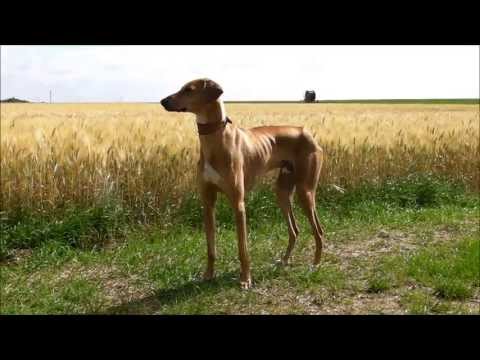
The Azawakh they are excellent companions for runners and are almost impervious to heat.

Azawakh

Content

Characteristics "Azawakh (Tuareg Sloughi)"

Coexistence is important that you have with your new friend. Before considering the acquisition of a dog of the breed "Azawakh (Tuareg Sloughi)" you know certain factors. Not all breeds of dogs are apt to live in an apartment, you must take into account his character, their need for exercise, their interaction with other pets, their care and if you have small children, their level of tolerance towards them.

Adaptation โ“˜

3,0 of 5 stars (based on 1 review)

friendly dog โ€‹โ€‹โ“˜

2,0 of 5 stars (based on 1 review)

hair loss โ“˜

2,0 of 5 stars (based on 1 review)

Affection level โ“˜

4,0 of 5 stars (based on 1 review)

Need for exercise โ“˜

4,0 of 5 stars (based on 1 review)

Social need โ“˜

2,0 of 5 stars (based on 1 review)

Home โ“˜

3,0 of 5 stars (based on 1 review)

Toilet โ“˜

1,0 of 5 stars (based on 1 review)

Friendly with strangers โ“˜

2,0 of 5 stars (based on 1 review)

barking โ“˜

2,0 of 5 stars (based on 1 review)

Health โ“˜

3,0 of 5 stars (based on 1 review)

Territorial โ“˜

4,0 of 5 stars (based on 1 review)

Cat friendly โ“˜

2,0 of 5 stars (based on 1 review)

Intelligence โ“˜

3,0 of 5 stars (based on 1 review)

Versatility โ“˜

3,0 of 5 stars (based on 1 review)

Child friendly โ“˜

2,0 of 5 stars (based on 1 review)

Surveillance โ“˜

3,0 of 5 stars (based on 1 review)

joy โ“˜

3,0 of 5 stars (based on 1 review)

History

The Azawakh (Tuareg Sloughi), It is a breed of dog of the type "Short-haired sighthounds", native to africa. It is also known by other names: Hanshee, Oska, Rawondu, Bareeru, Wulo, Tuareg Sloughi.

This breed could be defined as a Sighthound African Afroasiatic model which appeared in Europe in the year 1970, from the middle basin of the Niger (Mali) and in particular of the Valley of the Azawakh. For centuries it has been the inseparable companion of sub-Saharan nomads.

Something curious is that the Azawakh possesses a rare allele of glucose isomerase (GPIB) It is produced only in foxes, jackals, Italian wolves, dogs Sloughi and other rare breed dogs not related to him Azawakh, and they are, mainly, in Japan.

Recent scientific studies of a genetic protein and the blood of Azawakh, added to archaeological studies and direct observation of packs, have thrown some ideas about the origin of the breed Azawakh contemporary. One of them says that, come from the stray dog โ€‹โ€‹population of sub-Saharan Africa, and, also among her ancestors is the Basenji and the Sloughi from the Maghreb. Despite the morphological similarities, mitochondrial DNA tests show that only very distantly, is related to other dogs.

As a whole, this evidence suggests that the dog population Azawakh count with one unique gene pool What, It has been kept pure, perhaps by having been largely isolated from the populations of other dog breeds, for thousands of years.

Physical characteristics

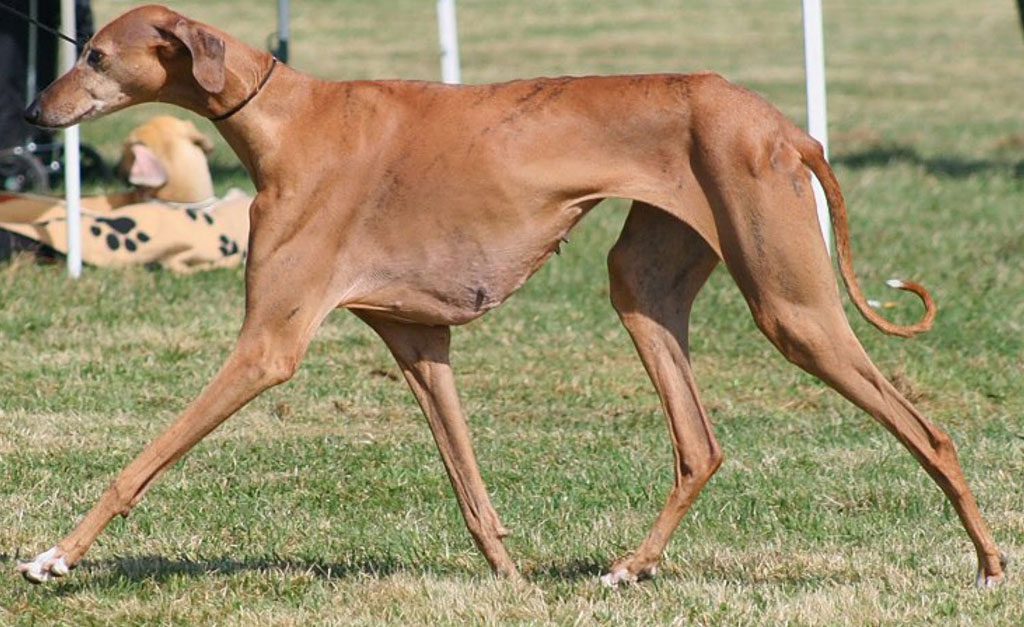
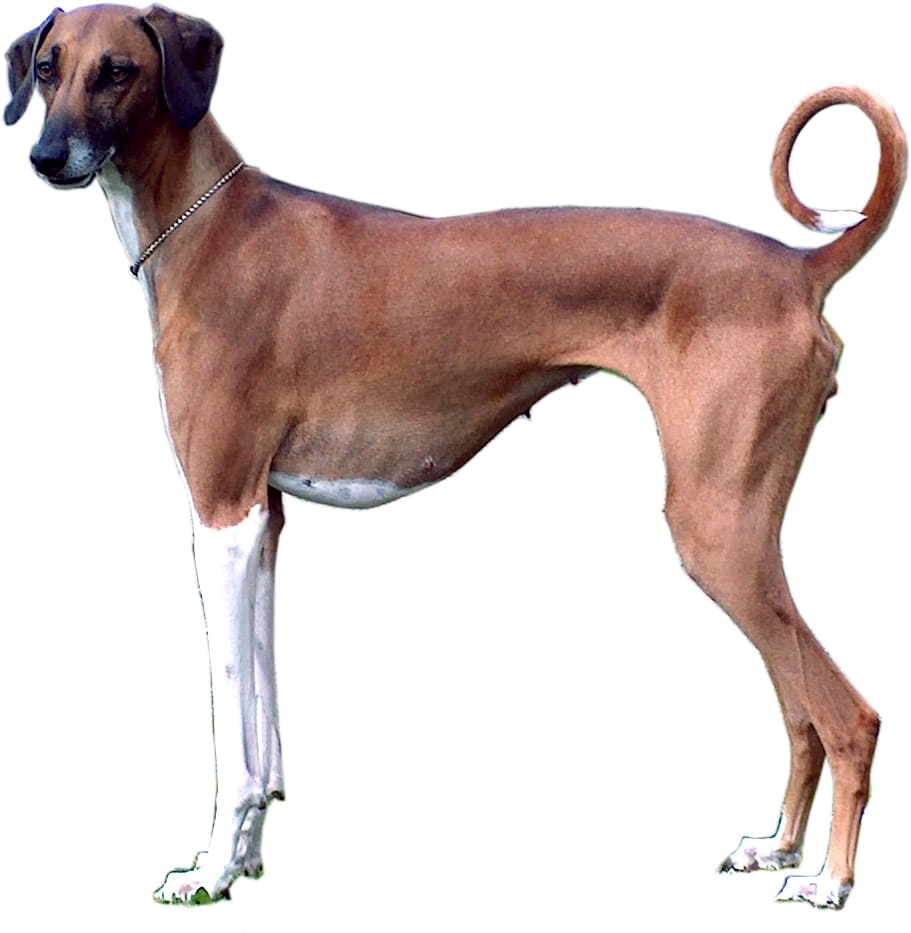
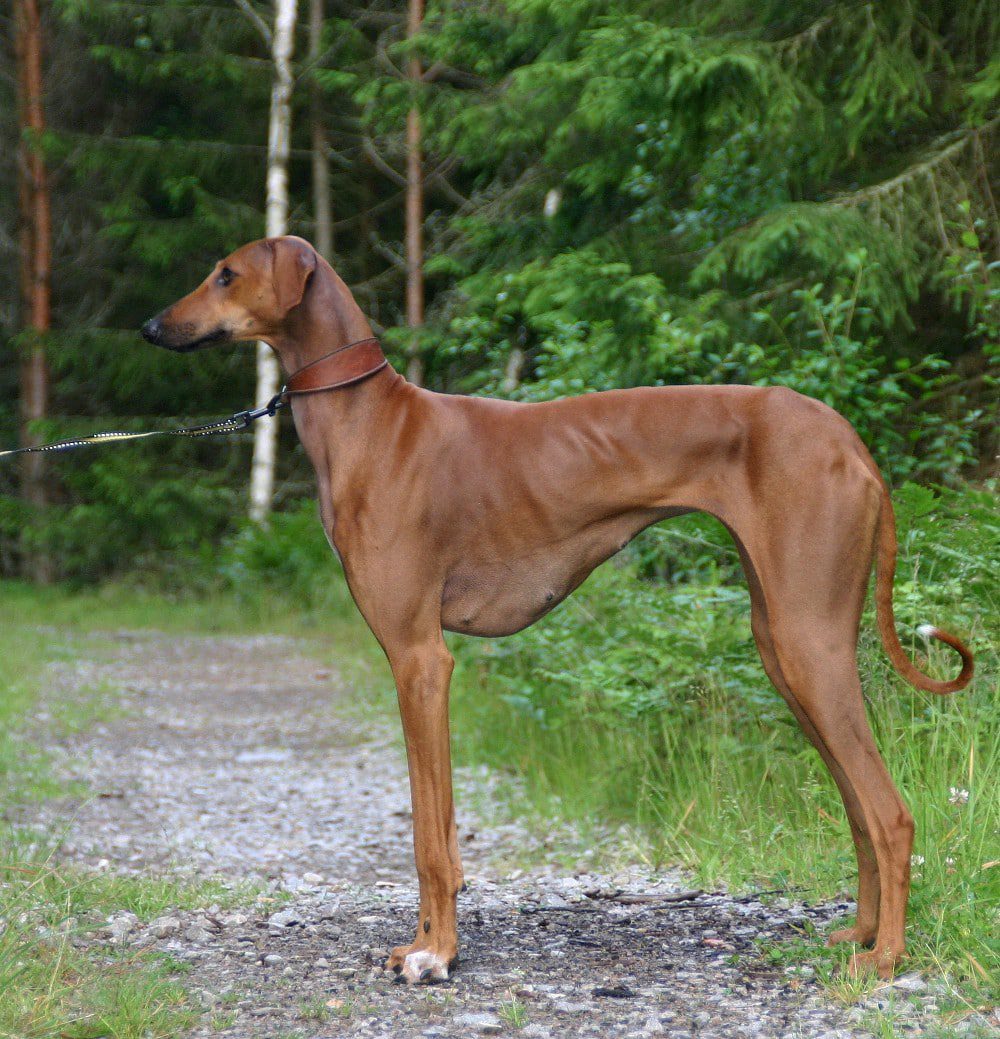
Its morphology is very similar to that of the Middle Eastern greyhound and some Indian hounds., Although there are several obvious differences. As for example, a very short and smooth mantle, nearly absent in the womb; and hind legs longer than the height with the front to the cross. Moves with a walk, clearly, feline and can be found in a wide variety of colors, in degraded, striped, Although the format is, basically, a solid color.

The Azawakh, is a slim dog, elegant and his eyes the color of almonds, give fair air of sweetness to your eyes.
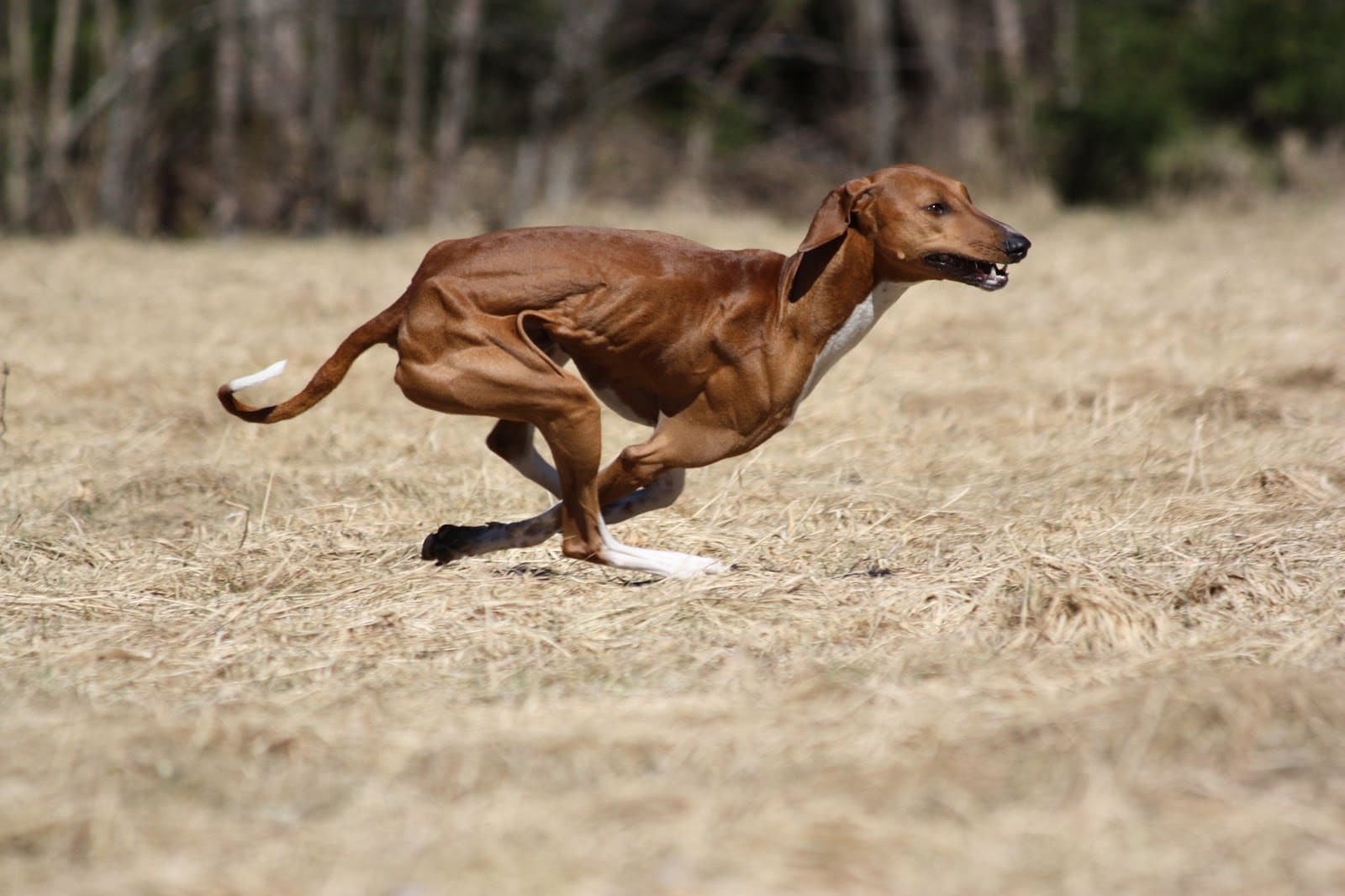
The standard rules, they require a dog from 15 to 25 kg, and with a height of 61 to 74 cm.. Her bone structure is, clearly, through the skin and like your muscles. His muscles are usually said, they are "dry", which means that they are very flat, Unlike in the Greyhound and the Whippet (they have showy, rounded muscle). In this sense (muscle), is more similar to the Saluki.

"Azawakh (Tuareg Sloughi)"

In Africa, a variety of colors are found in dogs Azawakh, How to be red, beige, blue, grey, and, black and blue rarely. As well, White machitas can be found in different colours (not many). Due to this color variation in the entire native population of Azawakh, the American standard used by the AKC and UKC allows for any combination of the colors found in Africa.

In United States, the standard of FCI It has been modified to have no restrictions on color. The colors allowed in the breed standard according to the FCI, These are sand or light to dark beige; brown, Red and striped (with or without, dark mask), with pechera whitetip, the tail and white on the legs (It can be on the tip of the toes or middle high). In the news, white stockings that go above the elbow joint is considered a disqualifying characteristic in France, as well as a white or half collar collar (the strong Irish).

The Azawakh It is a very good dog for hunting. They are very agile, and despite pretend fragility, they are very hardy dogs and are usually very fast curing injuries caused by their vigorous careers.

Similar to the Tibetan Mastiff (Do-Khy) and the Basenji, the dog Azawakh usually a zeal to the year. Y, so the puppies born healthy, the norm says that the animal should not be assisted in childbirth. The size of the litters tend to be of 4 to 6 Puppies, but it can have litters as small as a puppy and as large as eight.

Character and skills

The Azawakh, you need a fairly high level of exercise and be able to do regular runs in large indoor enclosures to expend energyโ€ฆ They often dig holes in the garden, if you feel bored or overflowing with energy.

They are excellent training companions for runners and they are nearly impervious to heat. They withstand very high temperatures (typical of desert areas), temperatures that would kill any other greyhound...

The Azawakh that live in packs live and orient themselves in social forms of complex hierarchies. They have tremendous memories and are able to recognize each other after long periods of separation.. They are often found sleeping snuggled up to each other for warmth and company..

the Azawakh is lively, attentive, reserved and little sociable with strangers, with whom you can be aggressive if it feels threatened its integrity or that of his master. He is very affectionate with those to what he considers his friends. They need a master which will give them a firm but fair leadership education.

Unlike other Sighthounds, the main function of the Azawakh in his homeland is that of Protector and guardian of cattle (and people). They tend to develop an intense bond with their owner., Although they are very independent dog, Although very attached to their masters for all corporate.

to most of the Azawakh, they don't like rain and cold at all.

With the known and accepted by the family, the Azawakh they are very kind and loving, show reserved with strangers, suspicious and prefer not to bring, not to be touched, but they are not aggressive, as we said, unless they see or feel threatened.

Observations

Initially, It was considered a variety of the Arabian Greyhound..

Education

The Azawakhs they are proud and independent. They respond well to positive reinforcement techniques, But heavy-handed methods or punishments will make them shut down, resist or even be aggressive. But, with the right teacher who gives them the right motivation, learn quickly and easily.

On the other hand, may show adaptation difficulties (for example, when changing ownership, move to another house, etc.). Thus, puppies need extensive socialization with people, new places and situations. This process must continue throughout your life, even after becoming adults.

Health

The Azawakh it is a resistant dog that does not have a special predisposition to certain diseases.

But, due to its short coat and extreme thinness, not the best choice for people who live in humid or cold climates. In general, covering him with a dog coat or fleece can help maintain his body temperature when he is out in winter. Inside, you need a padded pad to rest your bony body.

Life expectancy

12 years

Grooming

The short coat of the Azawakh requires little maintenance. A weekly brushing is enough.

It also, the Azawakh he is not known for losing a lot of hair.

It also, it is not necessary to bathe the dog: not only does it not develop a doggy odor, but even when it gets dirty in the mud, you just have to wait for it to dry and then remove the residue with a vigorous brushing.

Food

In Africa, the Azawakh share his masters' ration and get his share of the hunt after the hunt.

Historically, have been used to a low-protein, rice-based diet, millet and goat's milk. Thus, you are prone to digestive problems if you eat a large amount of protein-rich foods, as with many dog รขโ‚ฌโ€นรขโ‚ฌโ€นfoods.

The breeders of Azawakh recommend a diet with a 9% fat and a 22% protein. They also recommend 3-4 small meals a day, since the dog becomes gluttonous if he only eats once a day.

It also, this dog appreciates occasional servings of starchy food, like pasta and brown rice, as well as fruit and vegetables (bananas, carrots, etc.).

Last, critics who point to his thinness as a sign of malnutrition must understand that this dog is built for speed and cannot be fat. Standards call for thin skin stretched over a bony, muscular frame.

Use

The Azawakh has long been used by Sahelian tribes as a hare hunting dog, antelopes and wild boars.

It is also used as a watchdog and companion..

It also, in the western world, stand out in the canirun, a leisure run consisting of chasing a mechanically controlled artificial lure.

Last, these skinny dogs, muscular and resistant they are excellent companions for runners and globetrotters.

ยซAzawakhยป images

Azawakh Videos

L'Azawakh Fahim Kel Az'Amour, Azawak, They are, Greyhound

Type and recognitions:

  • FCI CLASSIFICATION:
  • Group :
  • Section : . .

Federations:

  • FCI – Group 10: Section 3: Short-haired Sighthounds โ“˜
  • El American Kennel Club (AKC) – Hounds โ“˜
  • Standard KC (The Kennel Club) – Hound โ“˜
  • Standard UKC (United Kennel Club) – Sighthound and Pariah โ“˜

FCI breed standard "Azawakh (Tuareg Sloughi)"

Origin:
Mali

Date of publication of the valid original standard:
04/09/2019

Use:

Greyhound hunting by sight (Gazelles, hares, ostrich) and for the fight against predators (jackal hyenas, Lions). Nomads consider him an important companion in their domestic life and in camp life.


General appearance:

Particularly slim and elegant, the Azawakh greyhound gives the overall impression of great finesse. Its bone conformation and musculature are perceived under its thin and dry skin. The body of this greyhound is inscribed within a rectangle whose long side is vertical..


IMPORTANT PROPORTIONS:

  • Height to the cross / scapulo-ischial length: 10-9 (this ratio may be slightly lower in females).
  • Height to the cross / chest depth: 10-4.
  • Head length / nose length: 10-5.
  • Head length / skull width: 10-4.


Behavior / temperament:

Quick, attentive, distant; can be reserved with strangers, but he knows how to be loving and affectionate in a family environment and with the people he is willing to accept.

Head:

Long, fine, dry and chiseled, Quite thin, without excess.

Cranial region:
  • Skull: Almost flat, rather elongated with a width clearly less than half the length of the head. The directions of the craniofacial axes (forehead and muzzle line) are sometimes somewhat divergent. The superciliary arches and the frontal sulcus are little marked. The external occipital protrusion is clearly marked.
  • Stop (naso-frontal depression) : Very slightly marked

facial region:

  • Truffle: Black or dark brown, nostrils wide open.
  • Snout: Long, rectilinear, tuned forward without excess.
  • Lips: Thin and tight, black or dark brown; lips are not hanging.
  • Jaws / teeth: Long and strong jaws. Scissor bite. Complete denture.
  • Cheeks: Flat.
  • Eyes: Almond biscuits, quite large, slightly oblique lid opening, dark in color or, times, amber, but never blue; the edge of the eyelids well pigmented black or dark brown.
  • Ears: Very high implanted. They are thin, always droopy and flat, broad at the base, glued to the cheeks, never "in the form of a rose". Its shape is that of a triangle with a slightly rounded tip. The base rises when the greyhound is attentive.

Neck:

Protruding clearly from the shoulders, long, thin and muscular, with slightly arched top profile. The skin is thin, not forming double chin.

Body:

  • top line: Straight, almost horizontal or rising slightly from the withers to the ends of the hips. Hips clearly protruding and at a height similar to or greater than that of the withers.
  • Cross: Clearly prominent.
  • Pork loin: Short and dry.
  • Rump: Oblique (ideal angle: 45ยฐ).
  • Breast : High, its length descends almost to the level of the elbows, with slightly narrowed sternum region. Quite narrow windowsill. Long ribs, slightly apparent, soft and
    regularly arched
  • Bottom line and belly: The sternal arch is accentuated. The lower line gently retracts towards the belly which is very high.

Tail:

Implemented low, long, thin, dry and sharp. Covered with the same hair as the body and, frequently, with a white spot (brush) on its limb. It falls with the tip slightly raised, but when the animal is in attention, can rise above the horizontal line.

Tips

PREVIOUS MEMBERS: Long, fine, vertical. Perfect legs.

  • Shoulder: Long scapula, with dry muscles; viewed in profile only slightly oblique.
  • Arm: The scapulo-humeral angle is very open (130ยฐ more or less).
  • Metacarpus: : Slightly oblique.
  • Previous feet: Rounded, with thin and compact fingers, well arched. The pads are pigmented.

LATER MEMBERS: Long and dry, viewed from behind perfectly parallel.

  • Thighs: : Long with a dry and marked musculature. The coxofemoral angle is very open (130ยฐ more or less).
  • Knee: The femoro-tibial angle is very open (145ยฐ more or less).
  • Metatarsus: Dry tarsus and metatarsal, No Spurs.
  • Hind feet: Rounded with well arched toes and pigmented pads.

Movement:

Always very flexible and particularly high when trotting and walking. The gallop is elastic. The Azawakh gives a sublime impression of lightness and elasticity. Their movement is an essential characteristic of the breed.

Mantle

  • SKIN: Thin and adherent to the body.
  • HAIR: Short, fine, reduced to absence under the belly.
  • COLOR: Tawny, with or without brindle markings, with white markings limited to the extremities. All nuances are admitted, from light sand to dark tawny (Mahogany). Brands
    brindles must be only black and any other shade is excluded. The muzzle may have a black mask.
  • White markings: The white mark on the face is very fickle. In the sill, the white color can appear in the form of more or less scattered white spots and limited to the base of the neck. In any case, a narrow white stripe is allowed on the front of the neck., on the chest and lower chest.
    This mottling of the pectoral area should not exceed the tips of the shoulders or rise on either side of the neck. A small white spot on the nape is tolerated.
    As a continuation of the white markings on the sill, white spots may appear under the chest., but never in the rib area.
    Each of its four limbs necessarily has a white spot, at least in the form of a white mark on the feet.
    In the case of a subject with excellent structure, a lack of white color in one of the limbs is usually tolerated. The white markings present on the forelimbs, which in most cases are irregular, In no case should they rise above the elbows or shoulders. On the other hand, the white markings present on the hindlimbs, which tend to be much more regular and less invasive, should not appear in the thigh area. But, if they appear on the inner thighs, should not be considered as a fault.


Size and weight:

HEIGHT AT THE WITHERS

  • Ideal height for males: 64 - 74 cm..
  • Ideal height for females: 60 - 70 cm..
  • tolerance +/- 2 cm..

WEIGHT:

  • Males: 20 - 25 kg
  • females: 15 โ€“ 20 kg


Fouls:

Any deviation from the aforementioned criteria is considered as a fault and the severity of this is considered to the degree of the deviation to the standard and its consequences on the health and well-being of the dog..


SERIOUS FAULTS:

  • Head heavy and lacking in elegance.
  • Thick, hairy tail, very curved.
  • Body too long.
  • Pincer bite.


  • FALTAS DESCALIFICANTES:

  • Aggressiveness or extreme shyness.
  • Any dog โ€‹โ€‹showing clear signs of physical or behavioral abnormalities.
  • Lack of type.
  • Reduced rib cage and, in general, extreme thinness.
  • Upper or lower prognathism.
  • Truffle, edge of the eyelids and edge of the lips that are not black or dark brown.
  • Light or blue eyes.
  • Rose shaped ears.
  • Level of the hips lower than that of the withers.
  • Strong non-accidental anatomical deformation (for example, asymmetric union of the ribs at the level of the sternum).
  • Dewclaws or dewclaw extraction marks on hindlimbs.
  • Hard or semi wide.
  • Coat colors not in accordance with standard colors (excess white color, white neck area and tabby markings other than black).
  • Special attention should be paid to diluted prohibited colors: blue, lilac.
  • Any dog รขโ‚ฌโ€นรขโ‚ฌโ€นthat presents scars after having undergone an intervention in order to correct an aesthetic or morphological imperfection will be excluded..
  • Size moving away more than 3 cm of standard norms.


  • N.B.:
  • Males should have two normal-appearing testicles fully descended into the scrotum..
  • Only functionally and clinically healthy dogs, with the typical conformation of the breed, should be used for parenting.
  • The latest changes are in bold.

    Source: F.C.I - International Cynological Federation

    Alternative names:

    1. Idi, Hanshee, Oska, Rawondu, Bareeru, Wulo,(formerly) Tuareg Sloughi (English).
    2. Sighthound, Oska (French).
    3. Idi, Osca, Tuareg-Windhund (German).
    4. Tuareg Sloughi (Portuguese).
    5. Tuareg Sloughi (espaรฑol).

    โ–ท The world of Pets: Dogs, cats, birds, reptiles, amphibians

    Australian Terrier
    Australia FCI 8 . Small sized Terrier

    The Australian Terrier is a lively dog, attentive, with a facial expression that denotes intelligence.

    Australian Terrier

    Content

    Characteristics "Australian Terrier"

    Coexistence is important that you have with your new friend. Before considering the acquisition of a dog of the breed "Australian Terrier" you know certain factors. Not all breeds of dogs are apt to live in an apartment, you must take into account his character, their need for exercise, their interaction with other pets, their care and if you have small children, their level of tolerance towards them.

    Adaptation โ“˜

    5,0 of 5 stars (based on 1 review)

    friendly dog โ€‹โ€‹โ“˜

    1,0 of 5 stars (based on 1 review)

    hair loss โ“˜

    1,0 of 5 stars (based on 1 review)

    Affection level โ“˜

    3,0 of 5 stars (based on 1 review)

    Need for exercise โ“˜

    4,0 of 5 stars (based on 1 review)

    Social need โ“˜

    4,0 of 5 stars (based on 1 review)

    Home โ“˜

    3,0 of 5 stars (based on 1 review)

    Toilet โ“˜

    1,0 of 5 stars (based on 1 review)

    Friendly with strangers โ“˜

    3,0 of 5 stars (based on 1 review)

    barking โ“˜

    5,0 of 5 stars (based on 1 review)

    Health โ“˜

    4,0 of 5 stars (based on 1 review)

    Territorial โ“˜

    5,0 of 5 stars (based on 1 review)

    Cat friendly โ“˜

    1,0 of 5 stars (based on 1 review)

    Intelligence โ“˜

    4,0 of 5 stars (based on 1 review)

    Versatility โ“˜

    4,0 of 5 stars (based on 1 review)

    Child friendly โ“˜

    4,0 of 5 stars (based on 1 review)

    Surveillance โ“˜

    4,0 of 5 stars (based on 1 review)

    joy โ“˜

    5,0 of 5 stars (based on 1 review)

    History


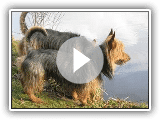
    The Australian Terrier It is a breed of dog in the Terrier family, classified in the section 2.

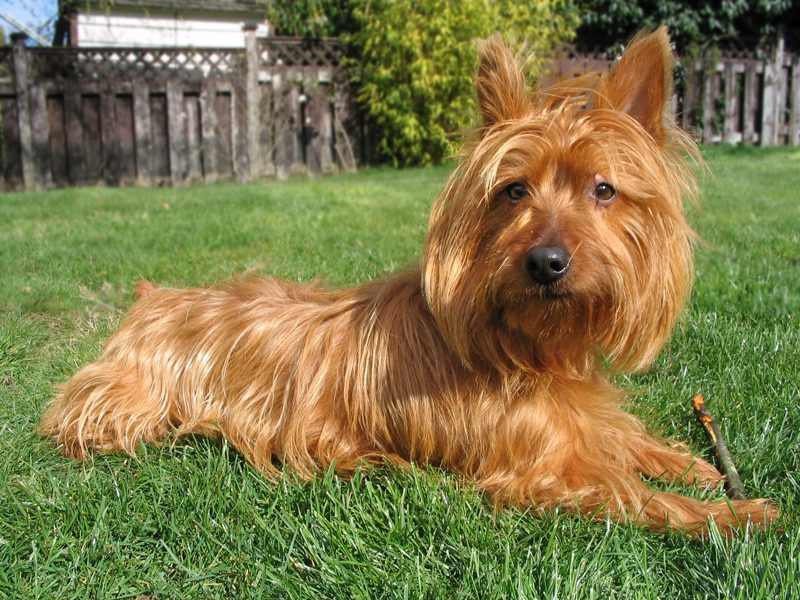
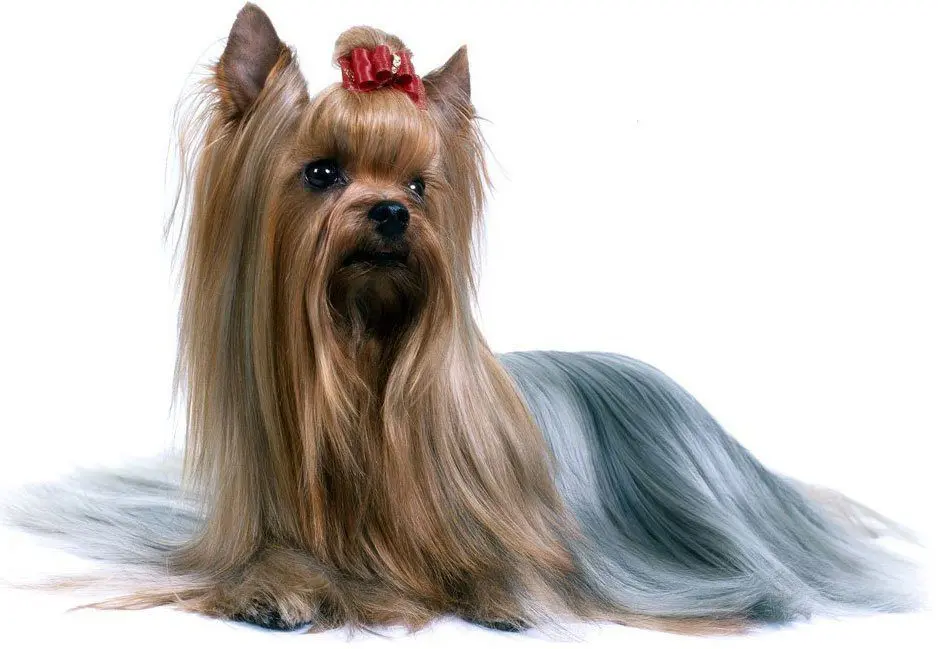
    Due to his appearance, He is often confused with a Yorkshire Terrier large size. Is not surprising because, this breed comes from crossing a Yorkshire Terrier and different breeds of Terrier among the Skye Terrier, Cairn Terrier, the Norwich Terrier and other Irish Terrier.

    Its origin goes back in the early 19th century, when accompanied by their Terrier British families travelled to Australia, and the vicissitudes of fate led those Terriers to interbreed with the natives..., and this is how many races in the world have been born.

    In the early years of its existence, the Australian Terrier was known by the name โ€œBroken-coated-Terrierโ€ or โ€œBroken-hair-buel-and-tanโ€.

    The wording of the first breed standard, took place in the year 1896, While the official recognition of the same, It is located a little laterโ€ฆ in 1933. Y, The latest revision of the standard dates from 1962.

    Otros nombres: Terrier Australien

    Group 3 / Section 2 – Small sized Terrier.

    Physical characteristics

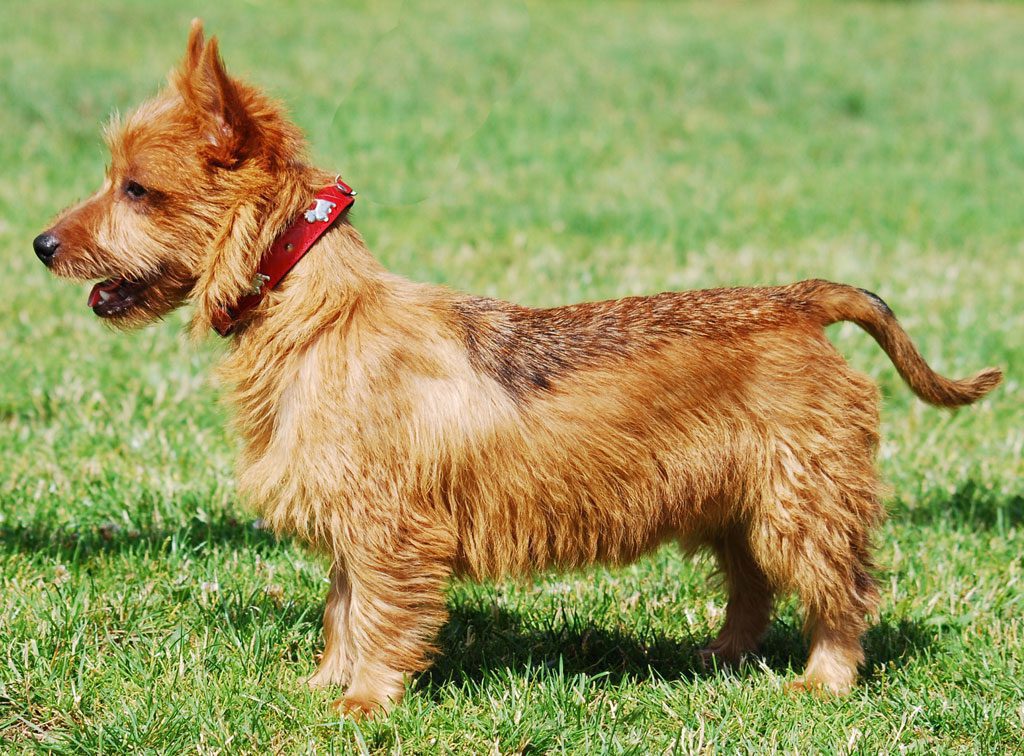
    It is a long dog (in relation to your height), rustic looking, robust with short limbs and strong.

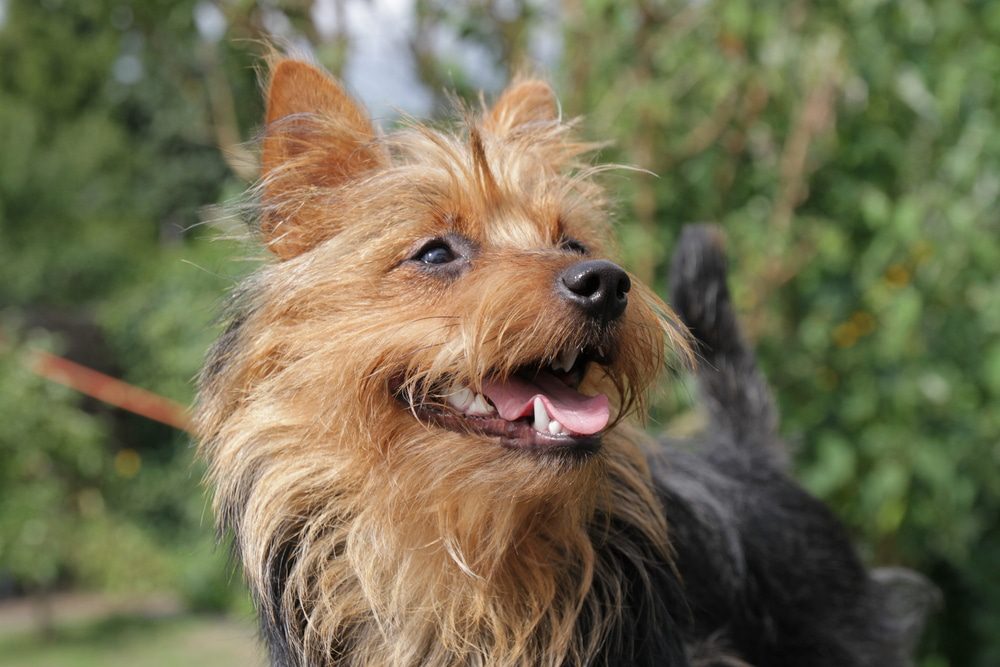
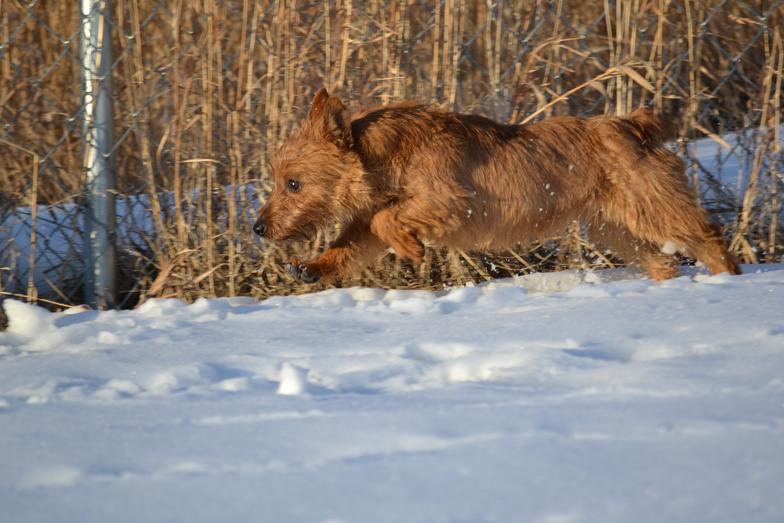
    The head is elongated, It has the black truffle and scissor closing denture. It has pointed ears being erect and small and dark eyes. The tail is often be amputated.

    The height of the Australian Terrier is maximum 25 cm. to the cross in males and 22,5 to 23 in females, the average weight is 4.5 to 5 Kg.

    The hair is hard, straight and average length. that rustic look, precisely, Since hair is rough to the touch and out gives it.

    The fur can be blue or silver, with stains of fire (or bronze) on the limbs and snout, or color sand clear or Griffon.

    Puppies are born black solid color and change color in three months.

    Observations

    It is a very robust breed of dog, that often has a high percentage of Diabetes Mellitus.

    What is Diabetes Mellitus?

    Diabetes is defined as a disorder in the metabolism of the hydrates of carbon, fats and proteins caused by a deficiency of insulin, It can be absolute or relative.

    Insulin is a hormone secreted in the beta cells of the pancreas, whose production allows to control blood sugar (blood glucose levels). Insulin deficiency causes a deterioration in the capacity of tissues to use nutrients, that translates into an increase of glucose in blood (Hyperglycemia).

    Diabetes is classified according to the disease in humans, that is to say, as type I and type II.

    The type I It is characterized by the destruction of beta cells, What determines the loss progressive and complete end of insulin secretion. Dogs suffering from Type I Diabetes Mellitus may have a sudden onset of symptoms due to the rapid loss of the ability to produce insulin.. These cases require insulinizaciรณn from the time of diagnosis and are called diabetics 1,811 (DMID).

    Other dogs may have a gradual loss of insulin secretion, that their beta cells will be destroyed with slow. These animals may have an initial period in which hyperglycemia is mild or easily controlled., in which case it's diabetic insulinoindependientes (DMIID), Although in the long term these dogs also need her.

    Diabetes Mellitus type II is a little more difficult to understand and is characterized by what we call "insulin resistance" and by "dysfunctional" beta cells. The secretion of insulin by these cells will be high, low or normal, but not enough to overcome the resistance to it in the peripheral tissues.

    Itร‚ยดs, to explain it in a graphic way, It is as if peripheral tissues do not obey the orders of the insulin or were not able to do what send it.

    Regarding the metabolism or synthesis of glucose, These dogs may have DMID or DMIID, that is to say, whether or not to require insulin depending on the extent of insulin resistance and the functional status of the beta cells in terms of their ability to produce and secrete the hormone in low amounts, normal or high.

    Dogs also recognizes a secondary diabetes, produced by a carbohydrate intolerance (glucose) due to the presence of a disease or a drug treatment that it antagonizes or counteracts the effects of insulin and can lead to the exhaustion of the beta cells of the pancreas with the appearance of diabetes insulinodependiente.

    The owners of diabetic dogs should be aware that the routine in the treatment with insulin and food has to be respected. Two fixed doses of insulin per day associated with a palatable food that always provides the same source and the same amount of starch, always run at the same time it can reduce the risk of hypoglycemia in diabetic dogs.

    In North America, area where the Australian Terrier is very popular, scientific research is being carried out on the incidence of this disease.

    Character and skills

    The breed standard describes the ideal Australian Terrier temperament as an alert spirit., ยซwith the natural aggressiveness of a Buzzard and a Hunter of coverageยซ.

    Taking into account the Classification of dogs according to their functional and obedience intelligence (Stanley Coren's "The Intelligence of Dogs") the Australian Terrier ranks number 34. Means that, is higher than the average, which indicates a good capacity for learning and training.

    The Australian Terrier is a lively dog, attentive, with a facial expression that denotes intelligence, loyalty and faithfulness.

    Sometimes it can become dominant, so a good training from an early age would be appropriate..

    It is perfectly adapted to any type of housing, whether large or small (apartment, House, house with garden, etc.). It should be enough with daily brushing and a walk.

    Images "Australian Terrier"

    "Australian Terrier" videos

    Australian Terrier (Terrier Australia)

    Type and recognitions:

    • FCI CLASSIFICATION:
    • Group :
    • Section : . .

    Federations:

    • FCI – Terriers 2 Small sized Terriers. โ“˜
    • AKC – Terriers โ“˜
    • ANKC – Terriers โ“˜

    FCI breed standard "Australian Terrier"

    Origin:
    Australia

    Date of publication of the valid original standard:
    08.10.2012

    Use:

    One of the smallest work terriers that was raised both as an assistant and company dog โ€‹โ€‹in difficult times and land.


    General appearance:

    It is a robust dog, short limb, elongated in proportion to its height, With the strong typical character of the terriers, always alert, active and solid.
    His coarse fur, without cutting, coupled with a well defined collar around the neck that extends to the sternum and its long and strong head help create the sturdy and robust appearance.


    Behavior / temperament:

    In its essence, he is a working terrier, But thanks to its loyalty and its balanced character it is also a company dog.

    Head:

    ---

    Cranial region:
    • Skull: Plano, moderate width, full between the eyes. Covered by a soft "bun".
    • Depression links (Stop): Light, but defined.

    facial region:

    • Truffle: black, moderate in size, spreading to the nose.
    • Snout: Strong and powerful, is the same length as the skull. The nose should be strong and not fall below the eyes. Muzzle length and strength are essential to empower fearsome jaws.
    • Lips: Blacks, tight and clean.
    • Jaws / Teeth: Strong and fearsome jaw. Teeth are large and evenly placed; the upper incisors fall well near and in front of the lower ones (scissor bite).

    Eyes: They must be small, oval, with a cunning expression, dark brown, well separated and not prominent.

    Ears: They are small, upright, pointy, well carried, moderately broad-based, without having long hair, and very attentive (except for puppies younger than 6 months).

    Neck:

    Good length, slightly arched, strong and falling gently on the oblique shoulders.

    Body:

    Length in proportion to height, of strong construction. When valuing the body, Attention should be paid to the description of the first paragraph where it is โ€œa robust dog, of short and elongated extremities in proportion to the height ยป.

    • Back: level top line. Pork loin: Strong.
    • Breast : Of moderate depth and width, with well-rounded ribs. The sill is well developed, the relatively deep sternal region.

    Tail:

    Traditionally amputated, Both amputated and natural, it is of high implantation, well carried, but not on the back.

    Tips

    PREVIOUS MEMBERS: Seen from the front straight and parallel, good bone structure. The forelimbs are slightly feathered down to the metacarpus.

    • Metacarpus: Strong, no inclination.
    • Previous feet: Small, round, compact, well cushioned, with fingers tight and closed, moderately arched. Feet must not be twisted outwards or inwards. The nails are strong, black or dark.

    LATER MEMBERS: Of moderate length, widths. Seen from behind, hind limbs must be parallel from hock to foot, without being too far apart or too close to each other.

    • Thigh: Strong and well muscled.
    • Knees: They have good angulation.
    • Hocks: Well angled, placed well under.
    • Hind feet: Small, round, compact, well cushioned, with fingers tight and closed, moderately arched. Feet must not be twisted outwards or inwards. The nails are strong, black or dark.

    Movement:

    Action must be free, agile, elastic and energetic. Seeing it from the front, forelimbs must move appropriately without shoulder looseness, elbows, o carpos. The hindquarters should give momentum and power, with free movement of the knees and hocks. Back views, the extremities must be parallel to the hock to the ground, without being too close or too far apart from each other.

    Mantle

    Fur: It consists of a rough and straight outer layer of hair of approximately 6 cm length, with a soft textured short hair undercoat. The snout, lower limbs and feet should be free of long hair.

    Color:

    1. Blue, blue Steel, or dark gray blue, with intense tan markings (not sandy) on the face, ears, lower body, lower extremities and around the anus (except puppies). The more intense and defined the color is, Better Any black staining is undesirable. The bow on the head should be blue, silver or a lighter shade than the rest of it.
    2.  Light sand or red is acceptable with a lighter toned bow. Any dark staining or shading is undesirable.
    3. In any color, white spots on the chest or feet are penalized.


    Size and weight:

    • Height to the cross: The desirable is approximately 25 cm., the females being a little smaller.
    • Weight: The desirable is approximately 6,5 kg for males, females being a little lighter.


    Fouls:

    Any deviation from the aforementioned criteria should be considered as fault, and the seriousness of it is considered to the degree of deviation to the standard and its impact on health and welfare of the dog.

    FALTAS DESCALIFICANTES:

    • Aggressiveness or excessive shyness.
    • Any dog โ€‹โ€‹showing clear signs of physical or behavioral abnormalities must be disqualified..


    N.B.:
    • Males should have two normal-appearing testicles fully descended into the scrotum..
    • Only functionally and clinically healthy dogs, with the typical conformation of the breed, should be used for parenting.

    The latest amendments are in bold.

    TRADUCCION: Mexican Canophilic Federation A.C.,review technique : M.A. Martรญnez (FCA)

    Source: F.C.I - International Cynological Federation

    Alternative names:

    1. Aussie (English).
    2. Terrier australien (French).
    3. Aussie (German).
    4. Terrier australiano (Portuguese).
    5. Aussie, Terrier Australiano (espaรฑol).

    โ–ท The world of Pets: Dogs, cats, birds, reptiles, amphibians

    Old English Bulldog
    Inglaterra Extinct

    Antiguo Bulldog Inglรฉs

    Several breeders are trying to recreate the extinct breed of Old English Bulldog

    Content

    History

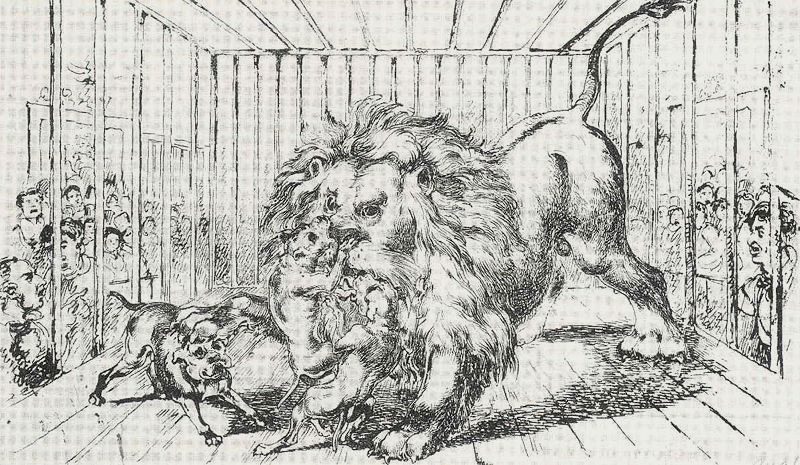
    The Old English Bulldog was a breed of dog, quite fierce comparing it with the tenderness of the current English Bulldog. Be used for shows as bloody as fights with bulls and Lions, his specialty was biting their nose until the animal couldn't take it anymore and was knocked down by the dog.

    Historians are fairly confident that the Old English Bulldog derived from an ancient breed of dog warriors, as the old mastiff or Alaunt. Others believe that the true origin of the breed is not at all clear. Representations in old engravings show that the variety was, without a doubt, a small mastiff, with a relatively long head. The word ‘Mastiff‘ We used, finally, to describe these smaller mastiffs, in the fight with bulls, it proved be lethal, Mastiff, It was used as part of the description, by the power of the dog that joined speed in action (something not very common in large Mastiffs), transformed into a beast.

    Read more

    โ–ท The world of Pets: Dogs, cats, birds, reptiles, amphibians

    American Mastiff Panja
    Estados Unidos Not recognized by the FCI

    The race American Mastiff Panja, was initially bred to protect homes and properties.

    American Mastiff Panja

    Content

    History

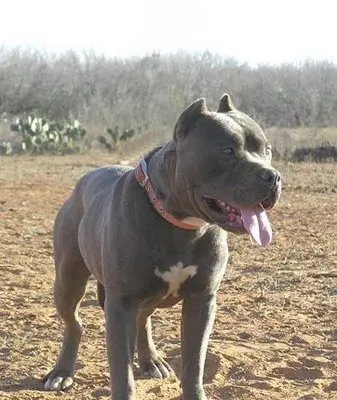
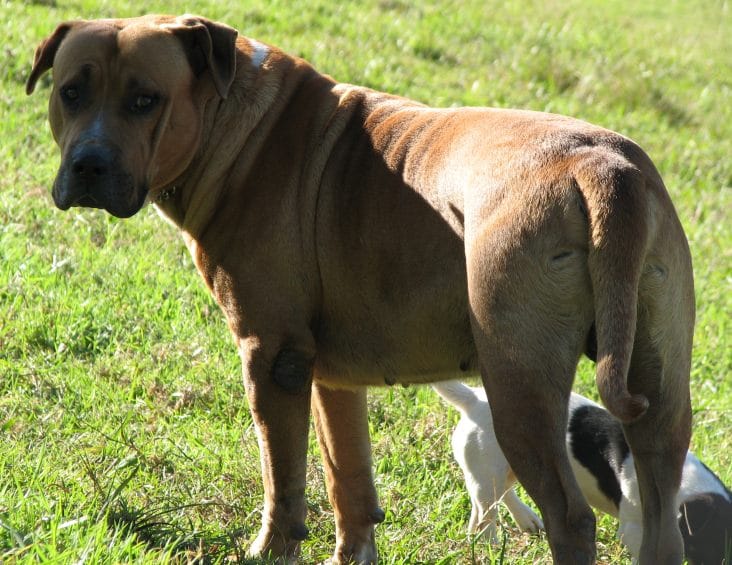
    The American Mastiff Panja It is a breed of dog developed in United States, raised initially to protect the homes and properties of the people.

    The term "panjaโ€, by which it is usually known this race, proceeds of Panja Kennels, a hatchery situated in the city of Flint (Florida) who was one of the first to initiate selective breeding with the aim of turning it into a defined breed.

    Unfortunately, many American Mastiff Panja They were used by drug traffickers and people linked to crime in order to serve as guard dogs of their properties and that environment and the training techniques used (very hard) they have led to this race to develop an instinct of guard very exacerbated.

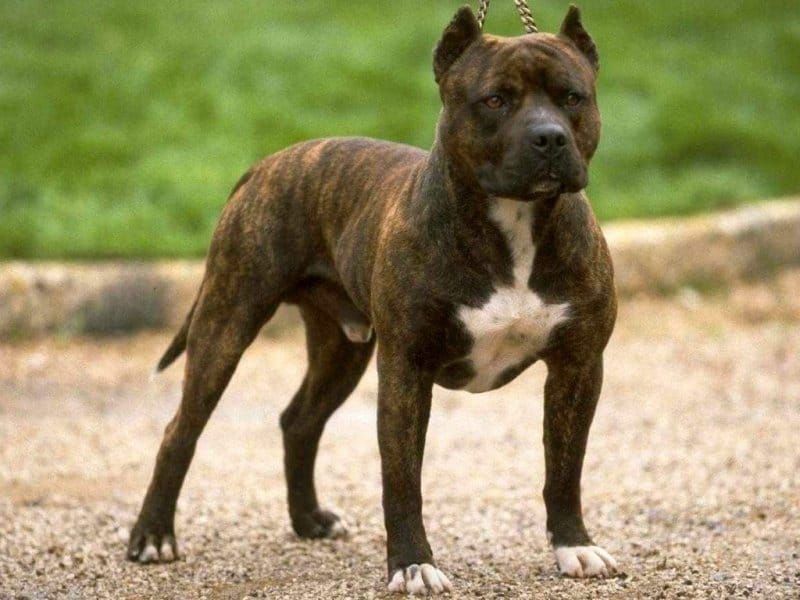
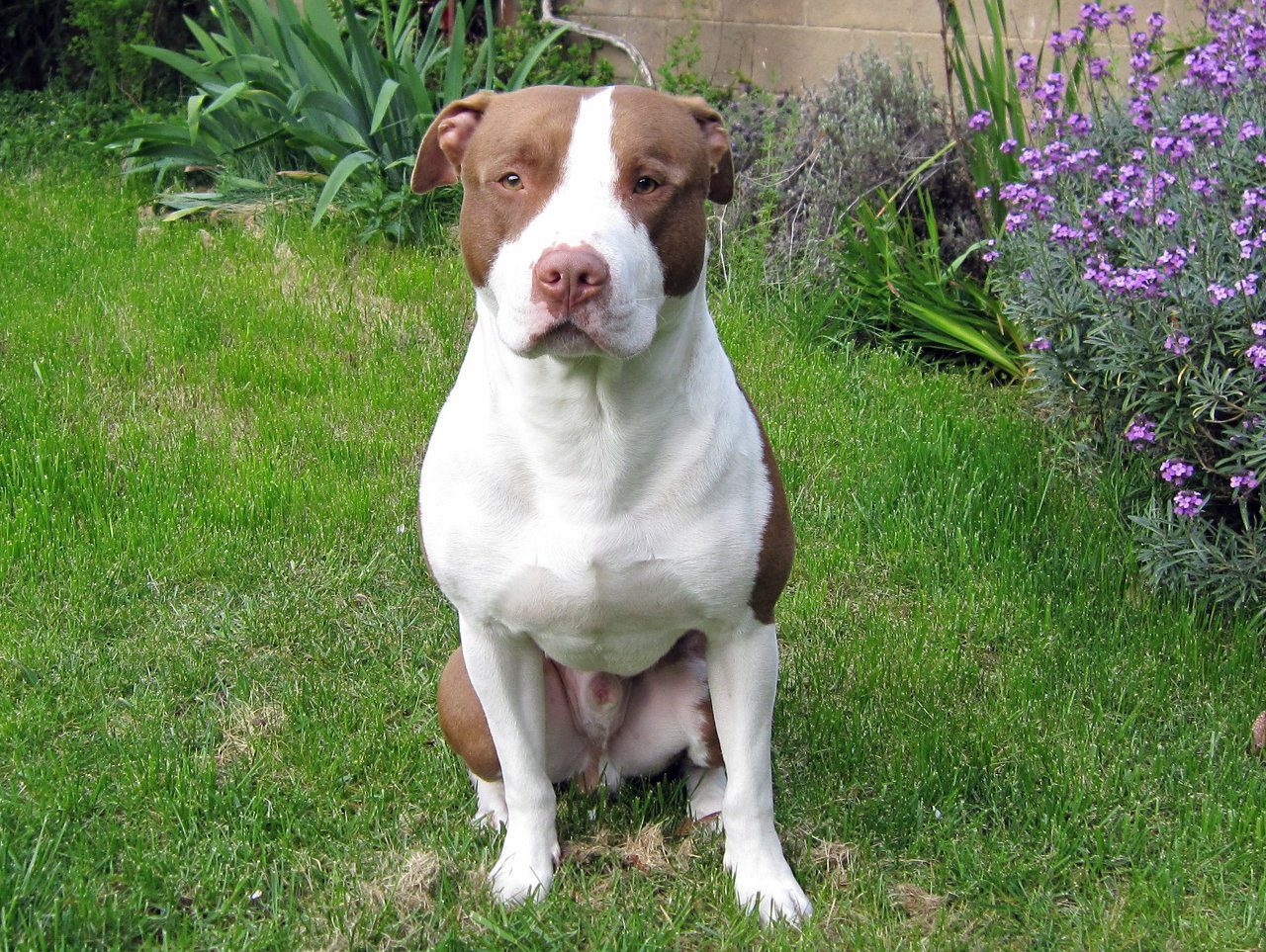
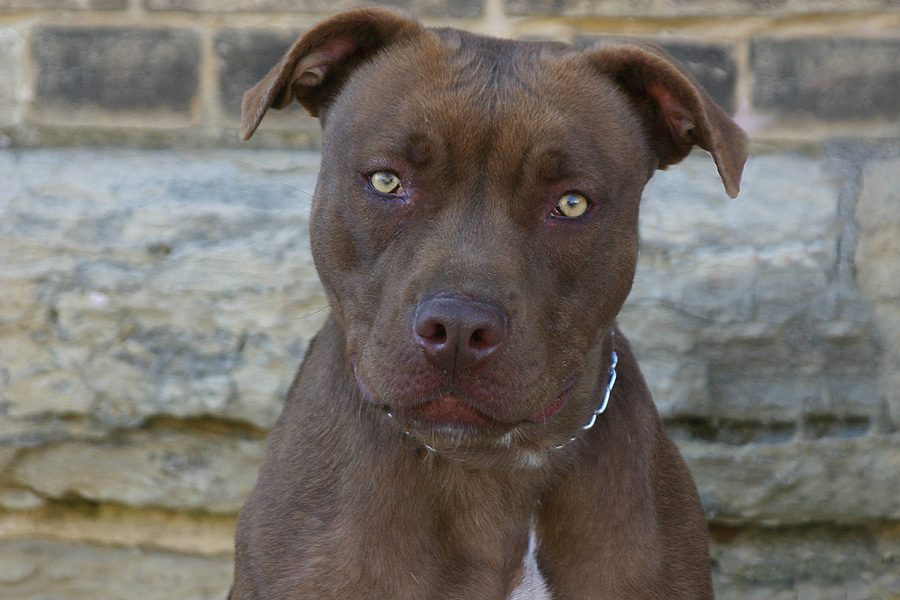
    Its origin is due to a cross between several races between them found dogs as the Pit Bull and Rottweiler.

    Since they have been recognized by the DRA (Dog Registry of America), people in general have started to look at these dogs with other eyes, and fortunately not already belong, exclusively, to the world of drug traffickingโ€ฆ they have been able to get away from their (forced) dark past. They are currently used as companion pets..

    Panja bandog, Rock bandog, drug dealer bandog, Detroit rock dog, American mastiff panja, Panja, rockweiler, pitweiler : all these names refer to the same type of bandog, product of miscegenation between American Pitbull Terrier and Rottweiler, that it arose in the city of Detroit ago 30 years.

    American Mastiff Panja

    Recognized by: BBC, DRA
    Group: Work

    Physical characteristics

    The American Mastiff Panja is a working dog with an athletic and muscular body. Broad chest and extremities well muscular, straight lines, for strong bones, with the slightly angled hocks. They have small eyes, almendrados expression alert and curious. They have a broad head and short ears.

    Like his compatriot the American Mastiff, the American Mastiff Panja differs from other Mastiff breed dogs in that its belfos not protrude, and they not drool-worthy.

    The layer of hair is short, flat and shiny, It can be of different colors. The tail is usually cut to 1/3 its natural length. The height to the cross goes of 55,88 cm to 66,04 cm.. Y, the weight of 36 kg to 45 kg. The life expectancy of these dogs is of 10 to 12 years.

    Character and skills

    The American Mastiff Panja It is a dog with a relaxed attitude and calm temperament. Son excellent pets and protectors of their family nucleus. In the United States most of the American Mastiff Panja they are great with young children. The natural instinct of the race is to protect, they believe that it is his duty to protect everything and everyone in your home.

    They are dogs intelligent and obedient, obedience training is recommended to prevent the onset of boredom and collation destructive behaviors, as chewing. It is a guard dog by nature, so it will always be ready to alert their owners of any suspicious activity. They are wayward, they have a dominant personality, but they are also very kind and loyal companions.

    The American Mastiff Panja is in general, a very healthy dog, he does not have any important health problems to highlight, but like other many breeds of dogs, It is possible that some copies are in one higher risk of developing Hip Dysplasia.

    The American Mastiff Panja you can live peacefully in a small house or apartment if you exercise it properly. They are calm and very homemade dogs with propensity to be lazy, so it is important that their owners motivate them and take them out for long walks. It adapts well to all climates and can tolerate varying weather conditions. It will be happier with a small courtyard where can lie in the Sun and do not forget that the daily walks are ideal for this athletic breed.

    Images ยซAmerican Mastiff Panjaยป

    ยซAmerican Mastiff Panjaยป Videos

    Alternative names:

    1. American Mastiff Panja (English).
    2. American Mastiff Panja (French).
    3. American Mastiff Panja (German).
    4. American Mastiff Panja (Portuguese).
    5. "Mastรญn Americano Panja" (espaรฑol).

    โ–ท The world of Pets: Dogs, cats, birds, reptiles, amphibians

    Silky Terrier
    Australia FCI 236 . Toy Terriers

    Australian Silky Terrier

    The Silky Terrier not appropriate to live with other smaller pets.

    Content

    History

    The Silky Terrier is a native of Australia dog, Although the types and ancestral breeds were of Great Britain. The ancestors of the Australian Silky Terrier include the Yorkshire Terrier (originating in England and Scotland before being considered) and the Aussie (descended from wire-haired Terriers brought from Britain to Australia in the 19th century 19), but the records do not indicate whether early dogs were simply Terrier Australian born with silky fur, or if there was an attempt to create a breed apart.

    In accordance with the American Kennel Club, the race began at the end of the 19th century, being result of crosses between a Yorkshire Terrier and Aussie. At the beginning, the breed became known as โ€œthe sydney silkโ€, since it was located mainly in the city of Sydney, Australia. Although most Australian breeds are listed as working dogs, el Australian Silky Terrier, is considered to be, was raised โ€“mainly- to be an urban pet and companion of the family, but also It is a breed known for killing snakes in Australia.

    Videos "Silky Terrier"

    Until 1929, the Terrier australiano, the Silky Terrier and the Yorkshire Terrier they were not clearly defined, in the same litter, three dogs could be born of breeds that over time were considered, different. According to existing information, they were separated by the appearance in different types once they raised separately.

    After 1932 in Australia, miscegenation was tweaking, and in 1955 the name of the race officially became Australian Silky Terrier. The breed was recognized by the national canine Council of Australia, in 1958 in the Toy group.

    During and after World War II American soldiers who had been sent to Australia, return to United States, they brought several Australian Silky Terrier. Photographs in the newspapers of the time (1954), They show the soldiers, back home wearing their pets Australian Silky Terrier, and this caused a rise in popularity to the race, and Australian Silky Terrier hundreds were imported from Australia to the United States.

    The American Kennel Club He acknowledged the race as the Silky Terrier in 1959, like the United Kennel Club ((UNITED STATES)UU.) in 1965, and the Canadian Kennel Club. The breed is recognized by all major canine clubs of the English speaking world, and internationally by the International Cynological Federation as breed number 236.

    Physical characteristics

    The Australian Silky Terrier is a Terrier, but is usually placed in the Group of dogs Toy type, instead of the Terrier group, due to its small size. The Federation Cynologique Internationale has a special section of the Terrier group that includes only the smaller dogs, While other canine clubs, place the breed in the Toy group, but universally everyone agrees that the breed type is Terrier.

    His mantle's hair is grey, Griffon's soft texture and bluish, smooth and long. It requires constant maintenance and brushing. An Australian Silky Terrier should be about 23 to 25 cm to cross and weighs between 3.6 and 8 kg, Although the steps may vary between the different federations. It should be a little bit longer than that width (about one-fifth longer than the height at the cross).

    El Silky terrier australiano, small, almond-shaped eyes. according to the rules, the eyes are considered to lack. The ears are small and erect. It has a tail of high adjustment and small feet, almost like a cat. The hair should be long. The hair on the face and ears is usually cut.

    This breed must have with a Barber every three weeks and their teeth should be brushed. Terriers are notorious for having tooth and gum problems..

    The layer of Silky Terrier is very susceptible to tangles and mats and requires daily brushing and the hairstyle. This breed requires a deep commitment to the owners. To keep the shiny fur, regular washing is necessary. Using an avocado and oatmeal shampoo will help relieve itchy skin., characteristic dryness of this breed.

    Character and skills

    The breed standard describes the ideal temperament of the Australian Silky Terrier as a sharp warning and active. They love to have opportunities to run and play, but you must have a well-fenced garden. They also enjoy vigorous walks and play ball. What can be done to combat the boredom will be well received by these small.

    Though in the past it was used as mouse-eared dog although currently its main function is to be a pet since it adapts without any problem to life in houses or apartments. Gets along very well with people who respect him and cared for. It can cause problems with other dogs because despite their tiny size they tend to be slightly angry. It is not appropriate to live with other small pets. Thanks that you be walking. Live an average of 15 years.

    Australian Silky Terrier pictures

    Videos Australian Silky Terrier

    Group 3 / Section 4 – Pet Terrier

    โ–ท The world of Pets: Dogs, cats, birds, reptiles, amphibians

    Aidi – Atlas Mountain Dog
    Marruecos FCI 247 - Molossoid . Mountain

    aidi

    The Aidi is highly energetic, protective and extremely vigilant. Despite its resemblance to Sheepdogs, The Aidi is not one of them because there are no sheepdogs from the Atlas.

    Read more

    โ–ท The world of Pets: Dogs, cats, birds, reptiles, amphibians

    Medium-Sized Anglo-French Hound
    Francia FCI 325 - Medium-sized Hounds

    Medium-Sized Anglo-French Hound

    The Medium-Sized Anglo-French Hound It is not a dog that adapts to life in an apartment if there is no way for it to release its great energy..

    Content

    History

    The breed had been around for a long time and various dog lovers like Mr M. Lรฉgeron, A. Rivot porthole, Willekens, Gairal, Daubignรฉ had tried in vain to have it officially recognized.

    Hare hunters had created this small order dog from medium-sized French breeds: Porcelaine, Gascon Saintongeois, Poitevin hound in crossbreeding with English dogs like him Beagle, several varieties of Harriers, even the little one English Foxhound. The objective of these crosses was to improve the construction of their dogs and thus increase the speed and attitude to take.

    In any case it is a typical French hunting dog, in which English blood also flows. In 1957 the first official recognition of the breed took place in France, followed by the FCI in 1978.

    Photo: Anglo-franรงais de petite vรฉnerie by Jwh at Wikipedia Luxembourg, CC BY-SA 3.0 LU, via Wikimedia Commons

    Physical characteristics ยซMedium Anglo-French Houndยป

    The Medium-Sized Anglo-French Hound – or also called Anglo-Franรงais de Petite Vรฉnerie – He is of medium size and a dog with a powerful constitution, but it never seems heavy. In its appearance it reminds of the dogs of the French pack. According to the breed standard, the head should be long and not too wide. The hair is short, thick and smooth and can be two or three colors (white and orange or black, white with brown).

    The eyes are large and soft but lively in expression.. The ears located under the line of the eyes are soft, slightly turned inwards and medium in size. The tail is of medium length and quite thin. The limbs are strong, with straight and broad forequarters in profile and muscular hindquarters with low set hocks.

    Character and skills ยซMedium Anglo-French Houndยป

    The Medium-Sized Anglo-French Hound is described as balanced and bold, independent, smart and leader, proud and trustworthy. He is affectionate and loyal to his owners. But, adult dogs are suspicious of strangers.

    These dogs today make up the vast majority of hare and fox hunting packs.. But shooters increasingly appreciate its fine-nosed qualities., resistance, good throat, easy to put on, wise in the hunt and in the kennel.

    In the last twenty years, The number of Medium-Sized Anglo-French Hounds medium has improved both in quality and quantity. But, the breeders, and buyers in particular, they must register their dogs with the LOF (Central Canine Society) to better control the selection.

    Activities and exercise with the โ€œMedium Anglo-French Houndโ€

    This dog loves to move, needs a lot of exercise and wants to work. You have to spend about four hours a day intensely with him. The breed is suitable for training as a hunting dog, but also for various dog sports. Keeping the dog in the house is strongly discouraged: The Medium-Sized Anglo-French Hound needs and wants a lot of space and would like to have free access to the garden also outside of "walking hours".

    Education of the โ€œMedium Anglo-French Houndโ€

    To the Medium-Sized Anglo-French Hound he likes to learn, he is submissive and also has an intelligent mind. But, has a strong hunting instinct, so your education should start soon and therefore, Any โ€œodditiesโ€ this dog acquires in his youth must be addressed as they are difficult to correct later..

    Care and health of the "Medium Anglo-French Hound"

    The short and dense coat of this dog does not require any special care, cleans itself almost by itself. Its legs, However, should be checked regularly. Especially when used as a hunting dog, injuries and problems are more likely to occur.

    In rare cases there is a tendency to osteoarthritis and bone tumors.

    Images "Medium-Sized Anglo-French Hound"

    Photos:

    1 – Anglo-franรงais de petite vรฉnerie, op der Haard, Diddeleng by Jwh at Wikipedia Luxembourg, CC BY-SA 3.0 LU, via Wikimedia Commons
    2 – Anglo-franรงais de petite vรฉnerie, Kackeschbรซsch, ร‰iter by Jwh at Wikipedia Luxembourg, CC BY-SA 3.0 LU, via Wikimedia Commons
    3 – Anglo-franรงais de petite vรฉnerie by Jwh at Wikipedia Luxembourg, CC BY-SA 3.0 LU, via Wikimedia Commons
    4 – Anglo-franรงais de petite vรฉnerie, 7 months, Wesley by Jwh at Wikipedia Luxembourg, CC BY-SA 3.0 LU, via Wikimedia Commons
    5 – Anglo-franรงais de petite vรฉnerie (white and black with pale tan markings) three and four months old puppies. by Jwh at Wikipedia Luxembourg, CC BY-SA 3.0 LU, via Wikimedia Commons
    6 – Anglo-franรงais de petite vรฉnerie by Jwh at Wikipedia Luxembourg, CC BY-SA 3.0 LU, via Wikimedia Commons

    Videos "Medium-Sized Anglo-French Hound"

    Anglo Franรงais de petite vรฉnerie
    le repas

    Type and recognitions:

    • FCI CLASSIFICATION:
    • Group :
    • Section : . .

    Federations:

    • FCI – Group 6: Scent hounds, and related breeds. – Section 1.2: Medium-sized Hounds. โ“˜
    • Central Canine Society โ“˜

    FCI breed standard "Medium-Sized Anglo-French Hound"

    Origin:
    France

    Date of publication of the valid original standard:
    26.01.1983

    Use:

    Hound for hunting small game.


    General appearance:

    This is a dog of solid and balanced configuration, no appearance of heaviness. In profile, Your silhouette should be that of a well-structured French dog..


    Behavior / temperament:

    ---

    Head:

    It is long and not very wide. The occipital protrusion is little accentuated.

    Cranial region:
    • Skull : Slightly convex, without being bulged.
    • Depression links (Stop) : Bit strong.

    facial region:

    • Truffle : Well pigmented ; the Windows are wide open.
    • Snout : Medium elongated and somewhat pointed in appearance; the nasal cannula is straight or slightly arched.
    • Belfos : The upper lip covers the lower lip.
    • Eyes : Large, browns. Your expression is sweet, but lively.
    • Ears : They are inserted delicately below the eye line. They are flexible, slightly twisted, of medium width and reach at least two fingers from the beginning of the nose.

    Neck:

    Loose, without jowl.

    Body:

    • Back : Strong and straight.
    • Pork loin : Quite short and muscular.
    • Rump : Slightly inclined and quite long.
    • Breast : It is well developed. It is well descended and reaches at least to the tip of the elbow. Ribs are long and moderately rounded.
    • Flanks : They are quite solid and somewhat raised, but without a thin appearance.

    Tail:

    Of medium length and quite thin. It is well inserted in the extension of the line of the spine. It is covered by abundant hair, without being spiked (towards the tip and around the tail, a few longer and thicker hairs slightly distant in the shape of a spike.)

    Tips

    PREVIOUS MEMBERS : Seen in profile, they are strong, wide and straight.

    • Shoulder : The shoulder blades are long, flat and oblique. They are well applied to the chest.

    LATER MEMBERS :

    • Thigh : He is muscular and well leaned.
    • Hock : Slightly angled and lies close to the ground.

    FEET : They are thin and compact.

    Movement:

    ---

    Mantle

    SKIN : It's fine, without folds; the tissues are dense.

    HAIR : Is short, tight and smooth.

    COLOR :

    โ€ข Tricolor : Black and white with raised fire color (the truffle is black).
    โ€ข Black and white with pale tan color (the truffle is black).
    โ€ข Bicolor : White and orange (the truffle is tobacco colored).


    Size and weight:

    Height to the cross : Of 48 to 56 cm.. With a minimum and maximum tolerance of 2 cm in exceptional specimens.


    Fouls:

    Any deviation from the aforementioned criteria is considered as a fault and the severity of this is considered to the degree of the deviation to the standard and its consequences on the health and well-being of the dog..

    โ€ข In general, all common defects in bloodhounds.
    โ€ข Very short or very wide head.
    โ€ข Round skull.
    โ€ข Depigmented nose in the form of spots.
    โ€ข Square snout.
    โ€ข Upper or lower prognathism.
    โ€ข Too accentuated lips.
    โ€ข Prominent eyes, light eyes.
    โ€ข Very high set ears, wide, short or very flat.
    โ€ข Neck too short, presence of double chin.
    โ€ข Cylindrical body.
    โ€ข Heavy shoulders.
    โ€ข Thick tail,and short or spiked.
    โ€ข Loose skin tissues.

    Any dog โ€‹โ€‹showing clear signs of physical or behavioral abnormalities must be disqualified..


    N.B.:

    Males should have two normal-appearing testicles fully descended into the scrotum..

    Source: F.C.I - International Cynological Federation

    Alternative names:

    1. Anglo-Franรงais de Petite Vรฉnerie (English).
    2. Anglo-franรงais de petite vรฉnerie (French).
    3. Anglo-Franรงais de petite vรฉnerie (German).
    4. Anglo-Franรงais de petite vรฉnerie (Portuguese).
    5. Sabueso anglo francรฉs de tamaรฑo mediano, Anglo-francรฉs para la caza menor, Anglo-francรฉs de tamaรฑo medio (espaรฑol).

    โ–ท The world of Pets: Dogs, cats, birds, reptiles, amphibians

    Alaskan Husky
    Estados UnidosNot recognized by the FCI . Nordic Sledge Dogs

    Alaskan Husky

    Alaskan - Autor de la foto: siva_lovehorses (flickr).

    The Alaskan Husky is an athletic and generally healthy dog., specializes in sledding.

    Content

    Characteristics "Alaskan Husky"

    Coexistence is important that you have with your new friend. Before considering the acquisition of a dog of the breed "Alaskan Husky" you know certain factors. Not all breeds of dogs are apt to live in an apartment, you must take into account his character, their need for exercise, their interaction with other pets, their care and if you have small children, their level of tolerance towards them.

    Adaptation โ“˜

    5,0 of 5 stars (based on 1 review)

    friendly dog โ€‹โ€‹โ“˜

    5,0 of 5 stars (based on 1 review)

    hair loss โ“˜

    4,0 of 5 stars (based on 1 review)

    Affection level โ“˜

    5,0 of 5 stars (based on 1 review)

    Need for exercise โ“˜

    2,0 of 5 stars (based on 1 review)

    Social need โ“˜

    3,0 of 5 stars (based on 1 review)

    Home โ“˜

    1,0 of 5 stars (based on 1 review)

    Toilet โ“˜

    3,0 of 5 stars (based on 1 review)

    Friendly with strangers โ“˜

    5,0 of 5 stars (based on 1 review)

    barking โ“˜

    4,0 of 5 stars (based on 1 review)

    Health โ“˜

    2,0 of 5 stars (based on 1 review)

    Territorial โ“˜

    3,0 of 5 stars (based on 1 review)

    Cat friendly โ“˜

    1,0 of 5 stars (based on 1 review)

    Intelligence โ“˜

    3,0 of 5 stars (based on 1 review)

    Versatility โ“˜

    3,0 of 5 stars (based on 1 review)

    Child friendly โ“˜

    3,0 of 5 stars (based on 1 review)

    Surveillance โ“˜

    5,0 of 5 stars (based on 1 review)

    joy โ“˜

    3,0 of 5 stars (based on 1 review)

    Alaskan Husky history

    Listed not so much as a breed of dog as a type or category of dog. There are no fixed pedigree characteristics, but rather for the purpose, it is to be a very efficient sled dog.

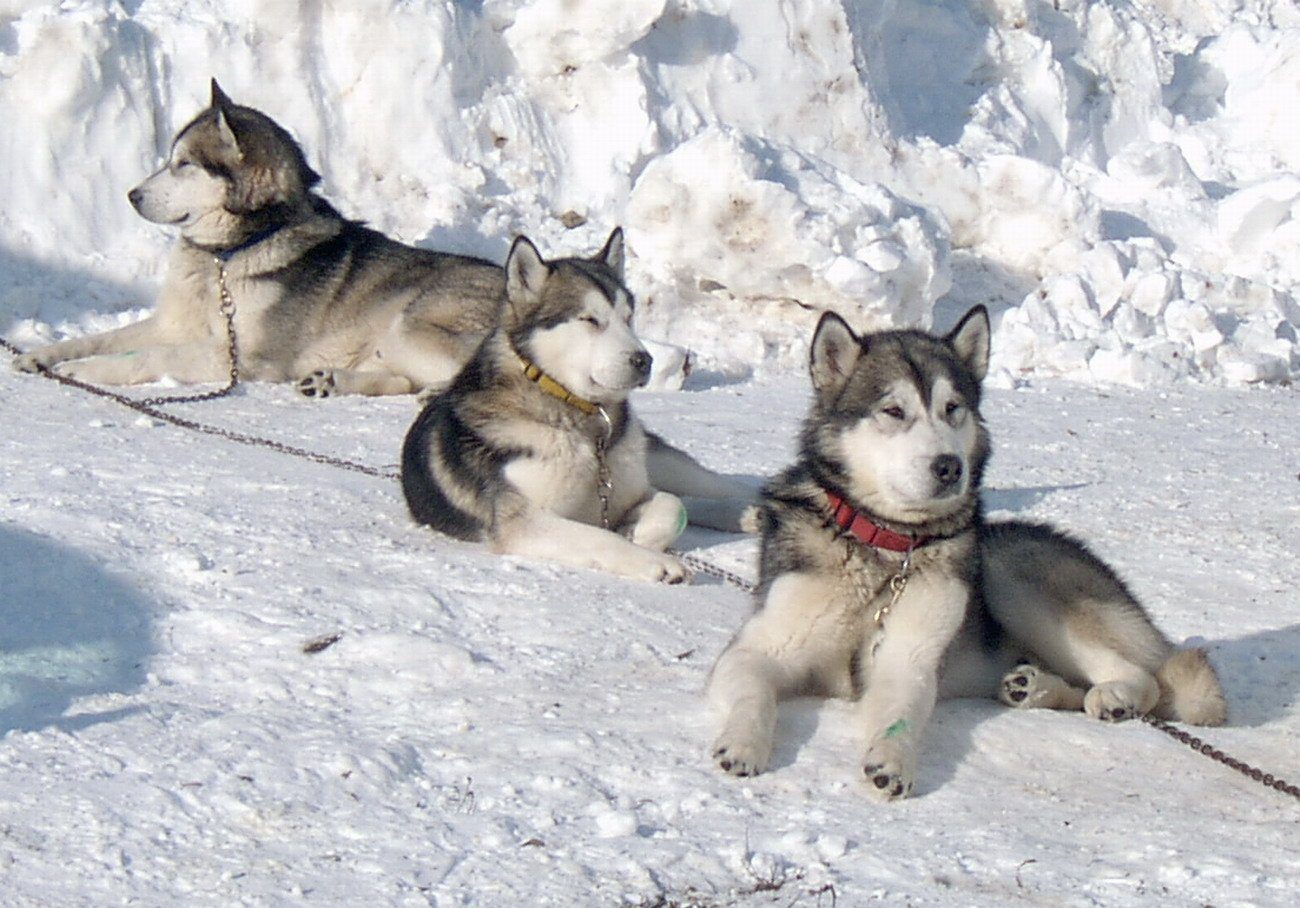
    The origin of this dog is Alaska and Canada. These fully domesticated dogs came thousands of years ago. Today, the Alaskan sled dogs They can be crossed, type Husky, or a combination of several. They also vary in size and build depending on the use of the dog., to compete or work.

    Sled drivers usually distinguish between Alaskan Husky and crossbreeding, in an informal way, so it is possible that this type of dog has a degree of northern dog appearance.

    Most of the Alaskan Husky have pointed ears, qualifying, in fact, as spitz type dogs.

    There are some specializations within this type, as the Mackenzie River Husky or the MALAMUTE, the Alaskan of Sprint as the Eurohound, or distance.

    It must be borne in mind that in sledge racing championships, These dogs can come with loaded sledges to the 30 km/h and that runs for three days at a rate of between 30 to 50 km daily.

    The Alaskan They are valued for their toughness and resistance. They earn an average speed of 31 km/h.

    Alaskan Husky Physical Characteristics

    This type of dogs, at least those that are used to speed racing, are of moderate size, with an average 21 to 25 kg for the males and 17 to 19 kg for the females.

    The eyes They can be any color, many are blue. The eyes blues are not considered an essential feature of this race. The fur It has two layers, short hair and of medium length, Although not much, and usually less dense than pure breed of the North, the length of the shortest layer is governed by the need for an effective heat dissipation during races.

    Athletic and generally, healthy. Its Life expectancy is usually between 10 to 15 years.

    Character and skills

    They tend to vary greatly in personality both in colour and appearance. But, in general terms, They are very affectionate dogs, to live with other dogs and humans.

    These dogs they are not suited to a lifestyle of urban apartments, that they need a constant source of exercise, and due to its incredible resistance, It seems that they never tire. It is an adventurous and tends to be very quiet in the car rides. These dogs are happy to live outside or inside the home of its owners, But if he leaves out, It is not recommended if you have a perfect lawnโ€ฆ, are amateur digging wellsโ€ฆ

    His hair tends to be self-cleaned just like a Mally or a Siberian Husky, which is why they need less frequent baths, In addition, they do not usually smell. They have a season of hair shedding in the spring and, Unlike in the Siberians, Malamutes or German shepherds, they may not leave large quantities of hair around the House all year round.

    Nothing is impossible obstacles to this type of dogs, that they tend to go up to almost two metres away the sitting position. Although swimming is not his forte, they tend to show any resistance or fear of the water and you can train and motivate them to make them good swimmers. Usually very good vision and sense of smell, which it makes them very good hunters.

    Alaskan Husky Pictures

    Vรญdeos Alaskan Husky

    Siberian Husky runs with Bike! Springer Bike with your Dog

    Type and recognitions:

    • Nordic Sledge Dogs
    • They are not recognized by the AKC, nor by the FCI

    Alternative names

    1. Alaskan Husky (English).
    2. Alaskan Husky, Alaskan (French).
    3. Alaskan Husky (German).
    4. Alaskan Husky (Portuguese).
    5. Alaskan Husky (espaรฑol).