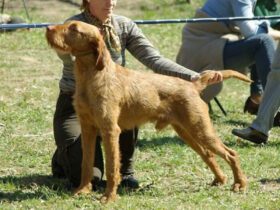
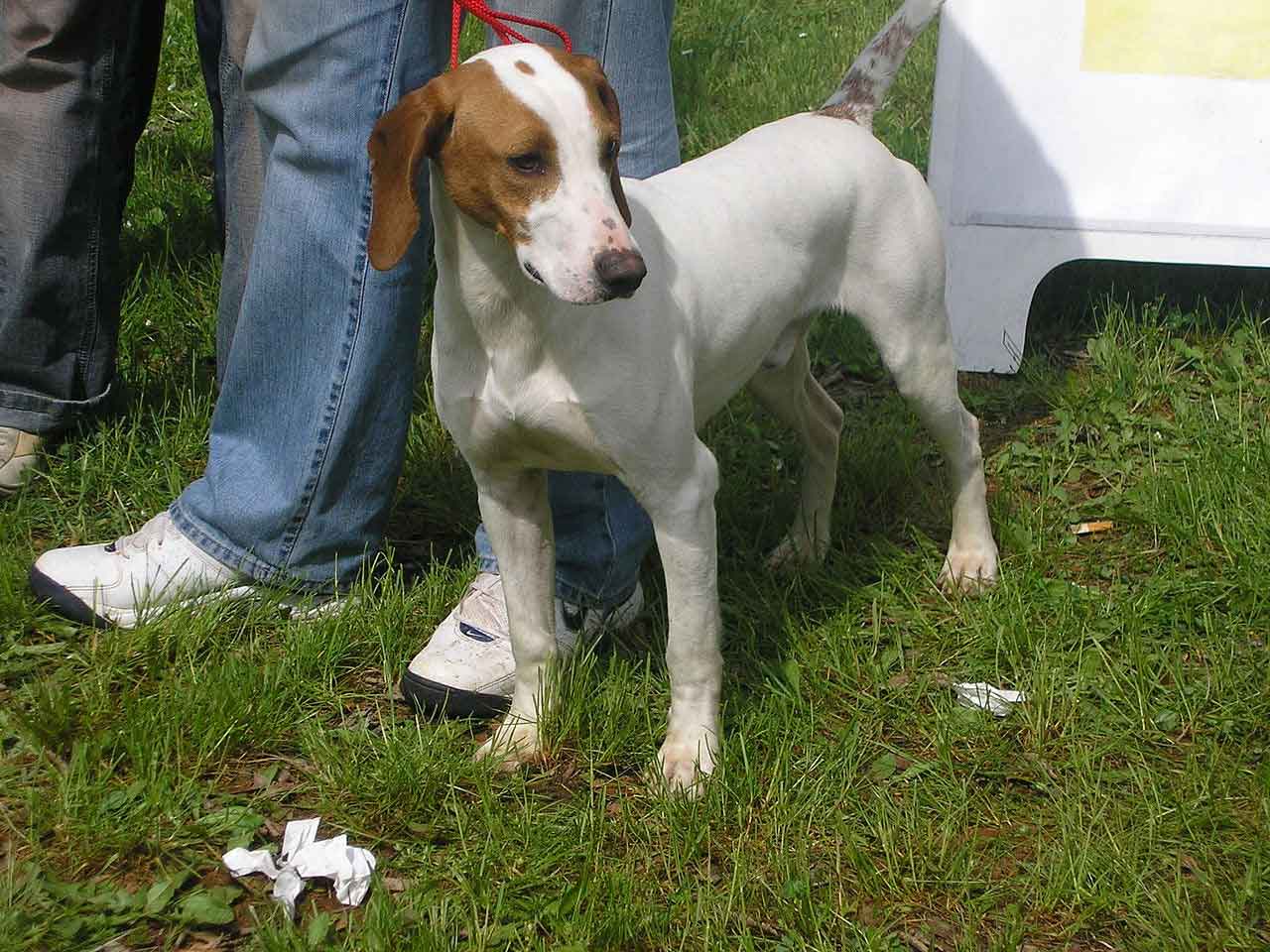
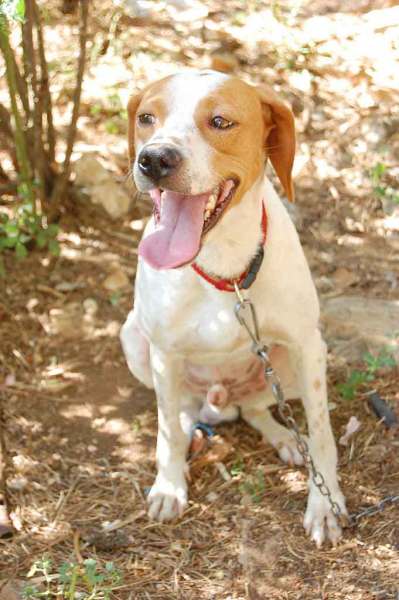
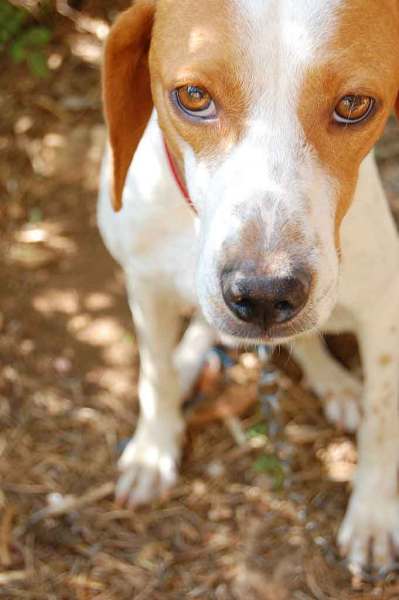
โ–ท The world of Pets: Dogs, cats, birds, reptiles, amphibians

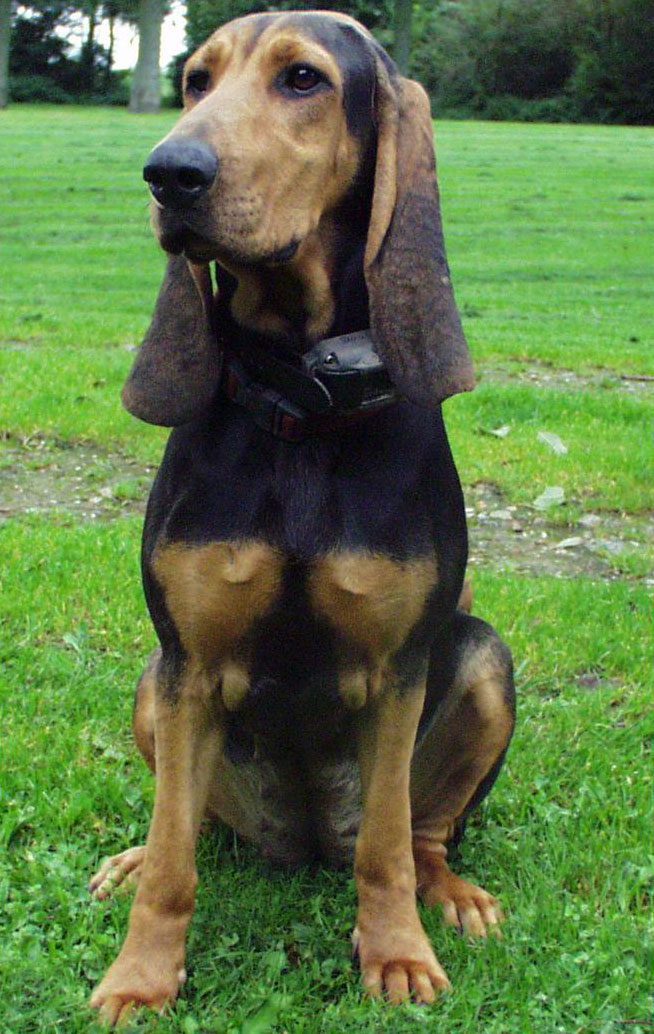
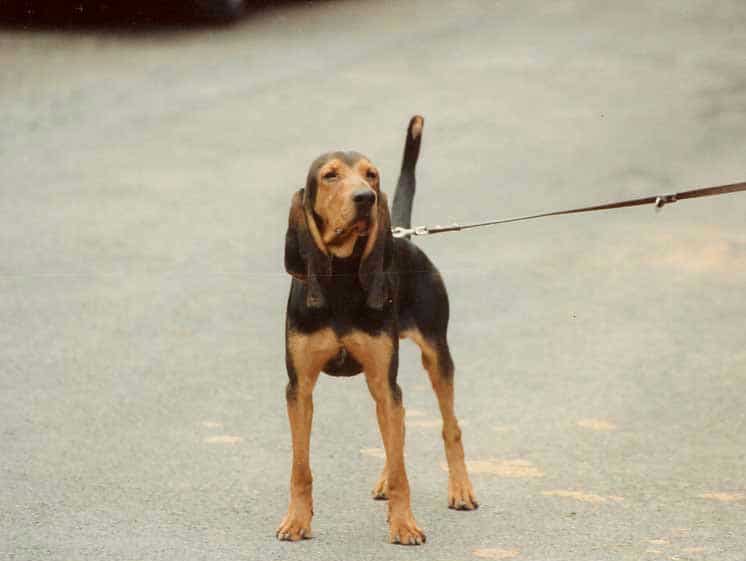
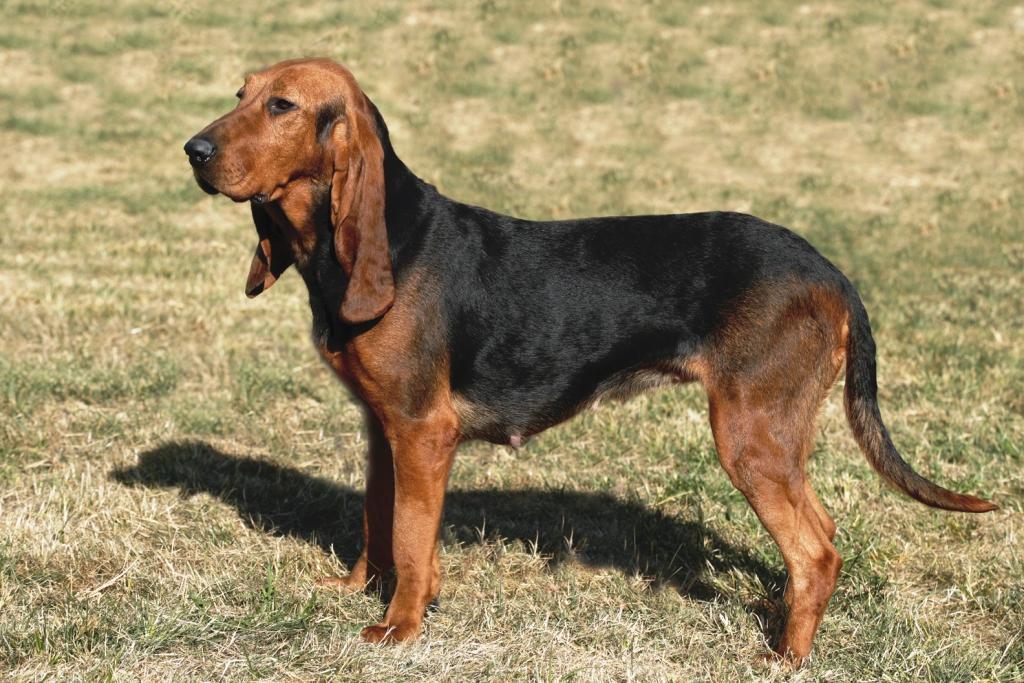
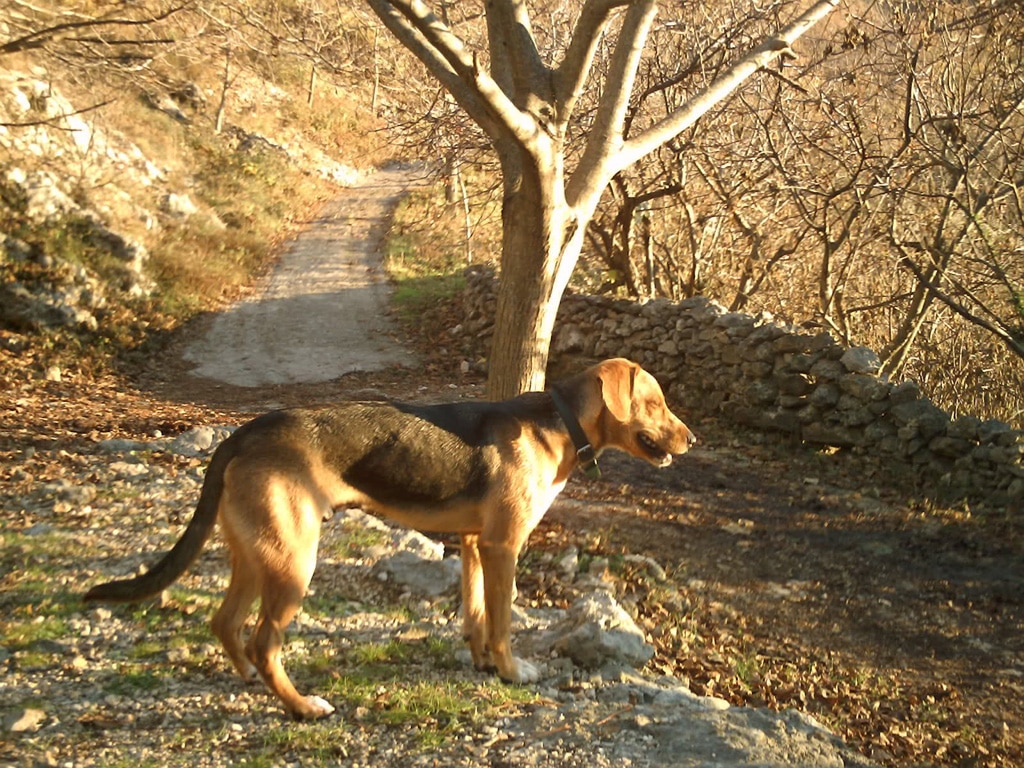
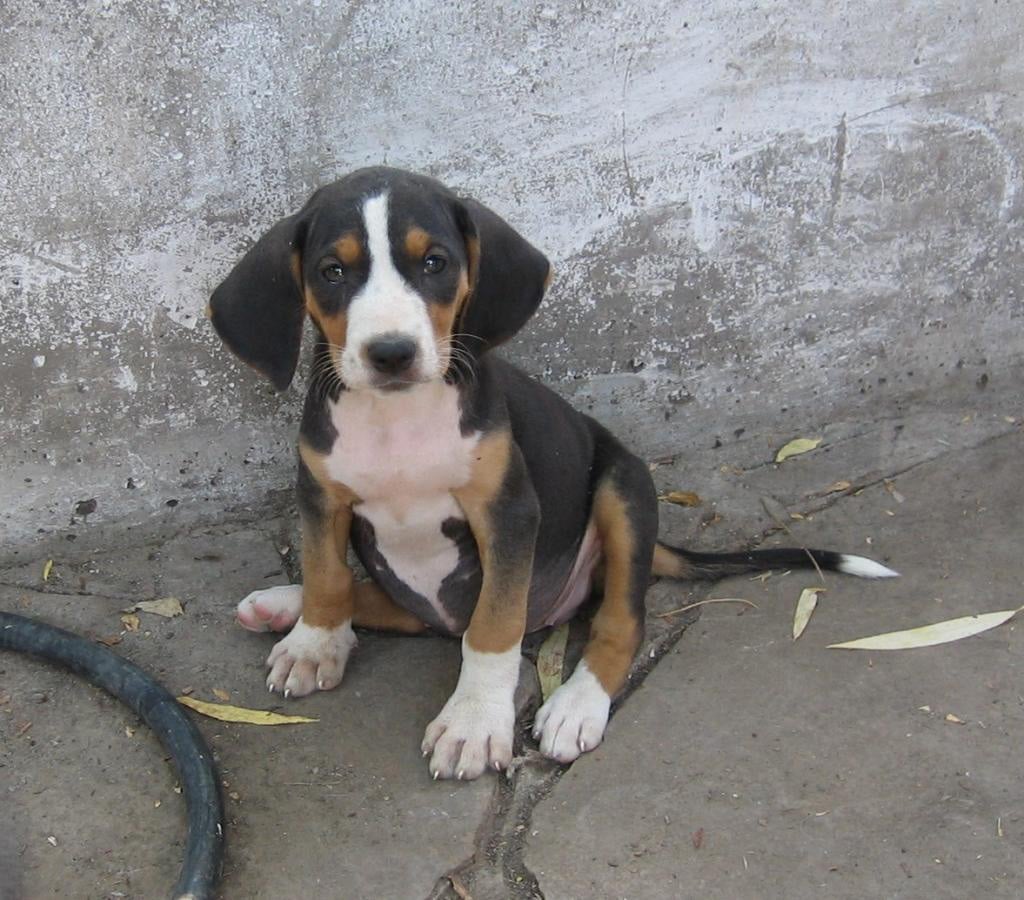
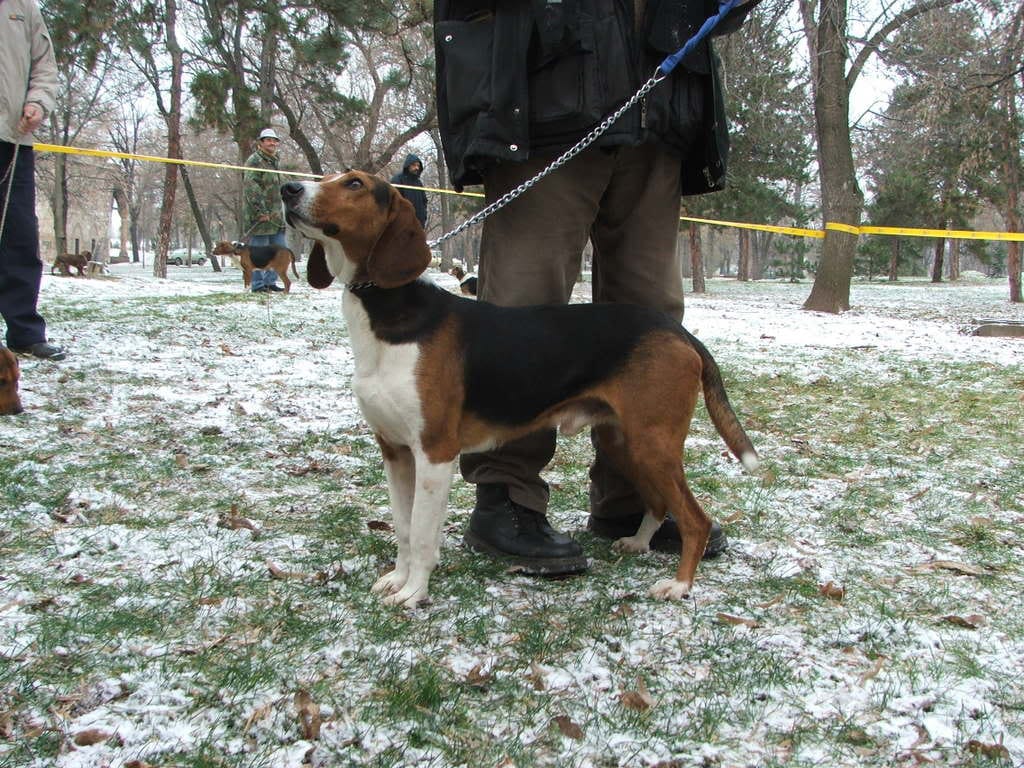
Jura Hound (Bruno Jura Hound)
SuizaFCI 59 . Medium-sized Hounds

Sabueso del Jura

The Jura Hound It is very distant with strangers and needs firm handling if kept as pets.

Content

History

In the year of 1882 set a standard for each of the five existing varieties of the Swiss Hound. In 1909 reviewed these standards confirming the total disappearance of the Thurgau Hound.
The 22 in January of 1933 established a uniform standard for the 4 varieties of the Swiss Hound. The original range of the Jura hound type St. Hubert has now disappeared.

The Jura Hound It is a domestic dog developed in the middle ages for hunting in the Jura mountains, on the border between Switzerland and France.

Already in Roman times these hounds were known in Switzerland.

The Jura Hound He is known for his tracking abilities and like other hounds he has the ability to follow a perfume for miles through the rocky terrain of the border mountains between France and Switzerland.. It is mainly used for the hunting of the Hare.

There are four varieties of Swiss Hound:

Most kennel clubs and organizations treat these breeds as a single breed with multiple varieties..

Physical characteristics

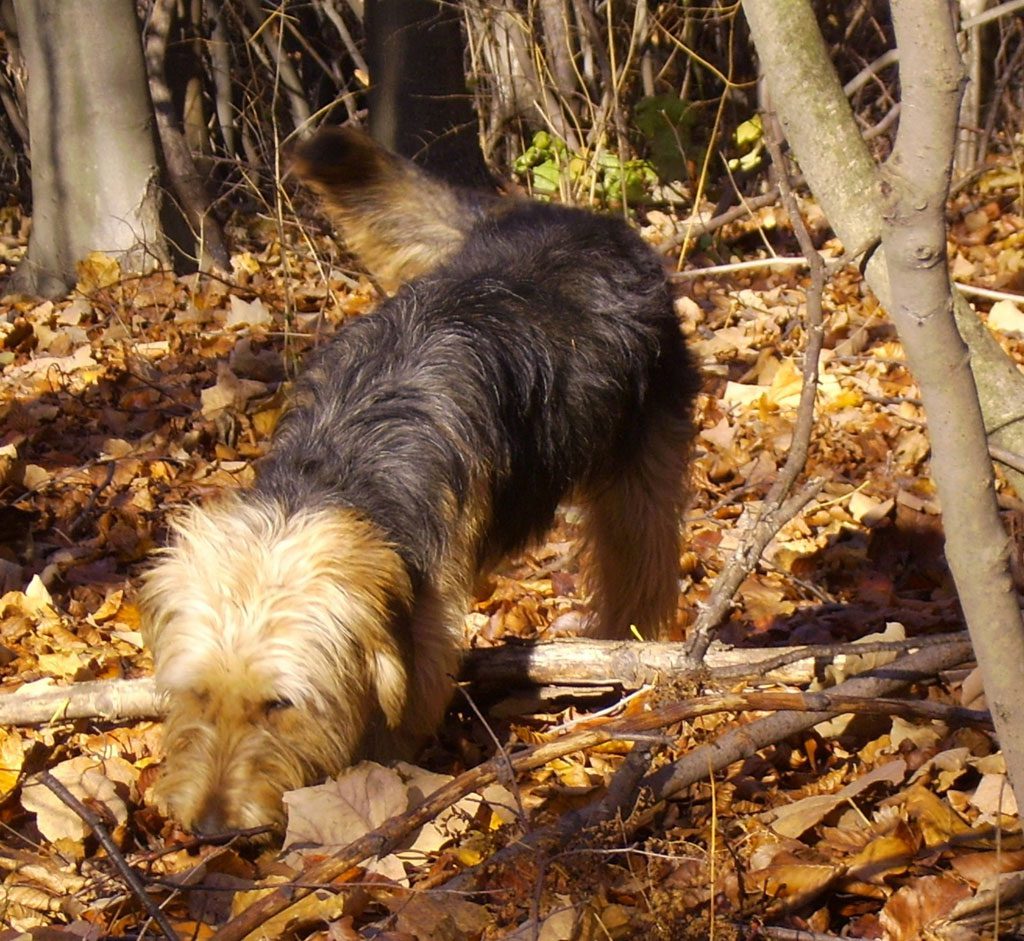
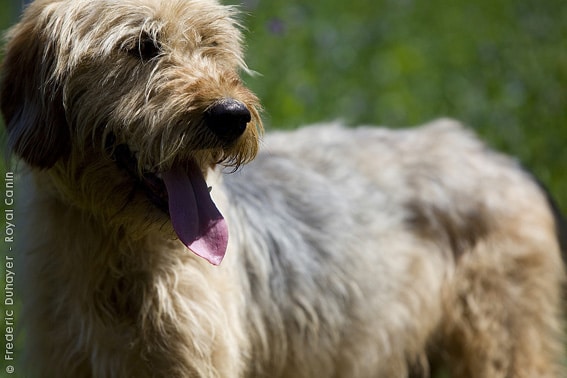
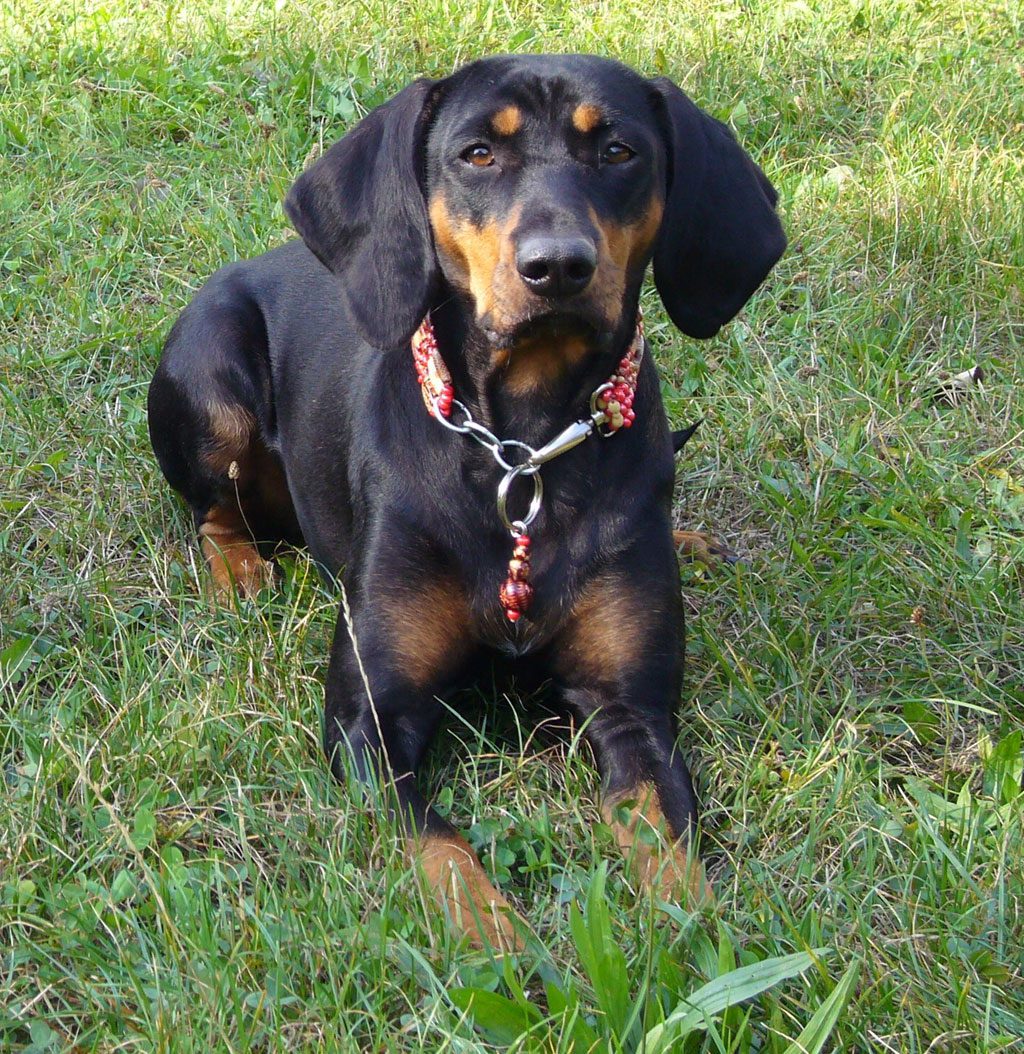
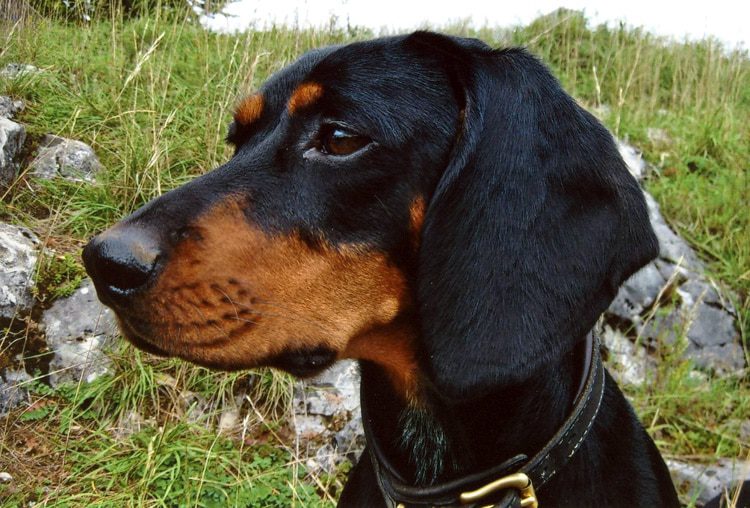
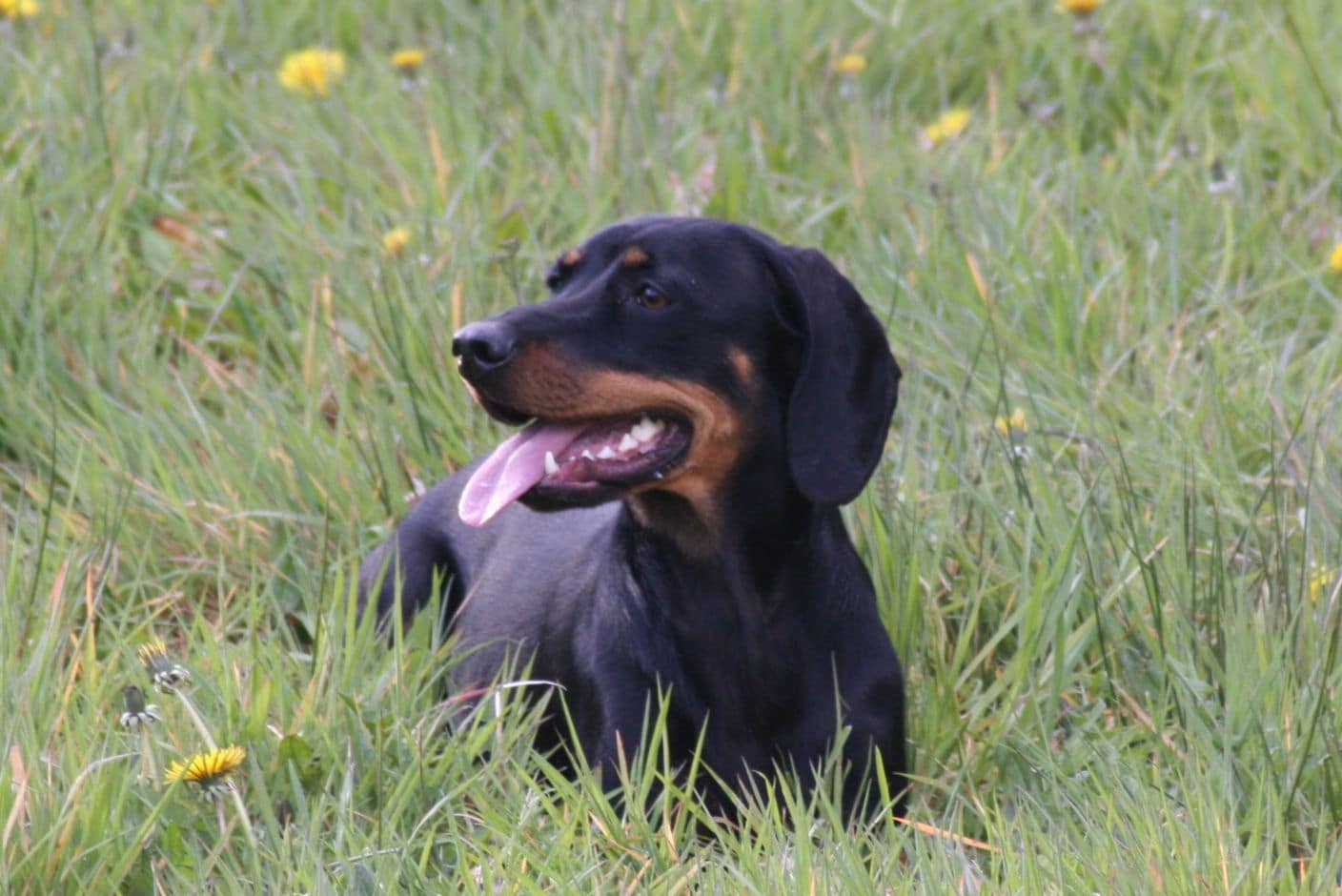
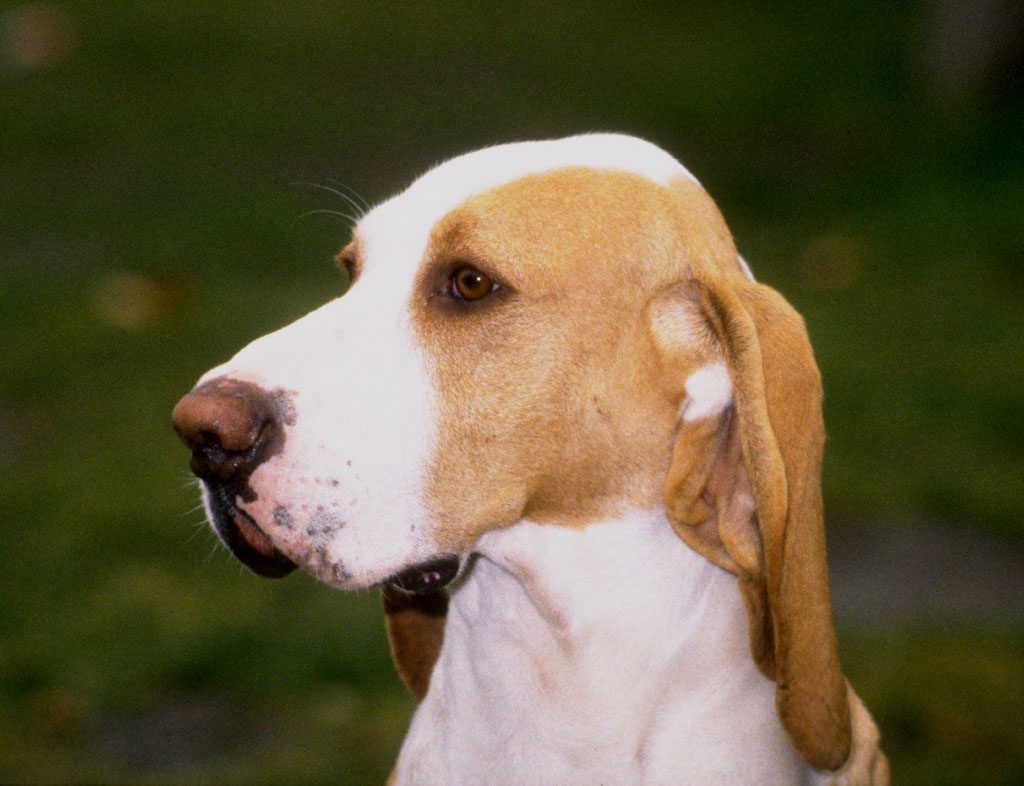
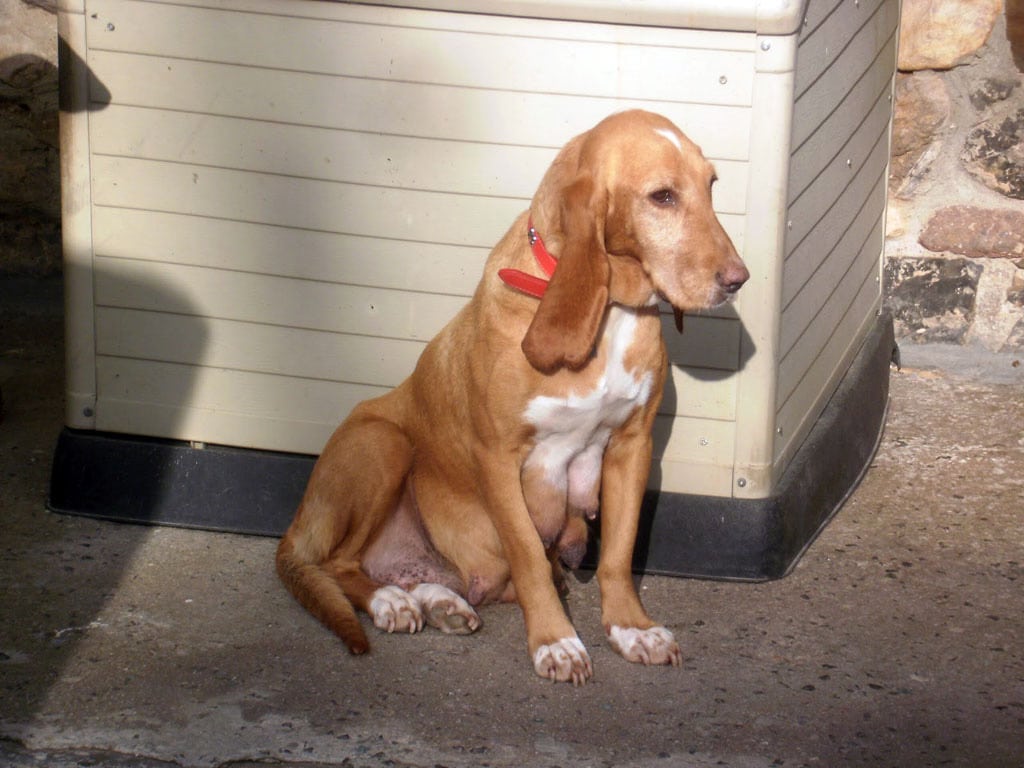
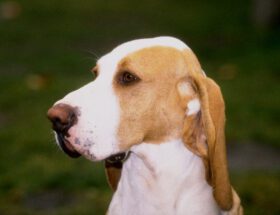
These dogs have a large skull, so their heads seem to be much larger than its small robust bodies. Their ears are flexible and hang down around their muzzle and eyes, giving it a warm and friendly appearance. Your body has some wrinkles around the chest and neck area. Their bodies are elongated and thin and long tail. They are usually a color dark bronze or a reddish Fawn.

Its size is similar to the Bernese Hound, but it differs in the width of your head, being associated with the St. Hubert Hound.

Their life expectancy is of 12 to 13 years, and can weigh between 15 and 20 kg, with a height of 43 to 58 cm. up the cross.

Character and skills

These dogs can be known as little adventurers. They like to explore new and interesting terrain in which have never been before. Son, final ideal for anyone that loves to go on walks and exercise, Since in that environment be shown fully happy. As good Hound, anything, even if it is in its territory.

It is used mainly for hunting hare and wild boar..

They are very protectors and they lash out against anyone trying to do harm to their owners. They are very distant with strangers and need firm handling if kept as pets.

Well trained is a loving, friendly dog with children.

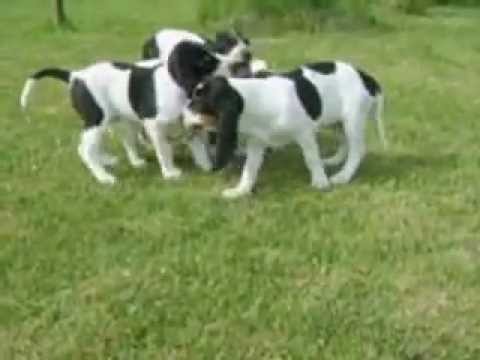
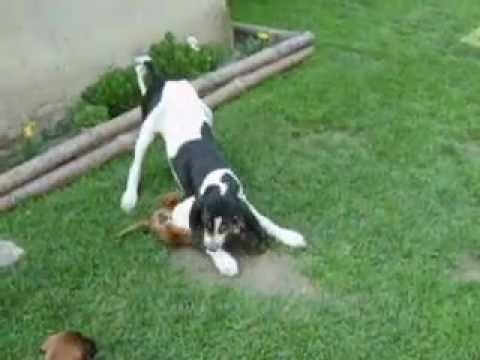
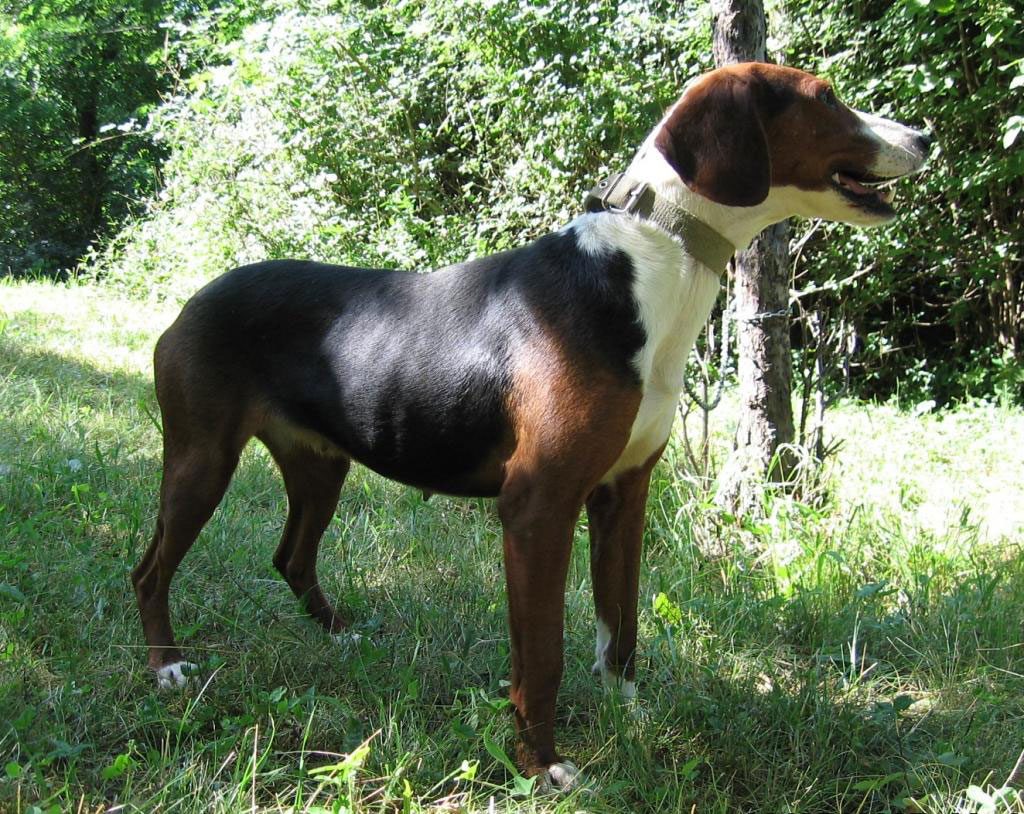
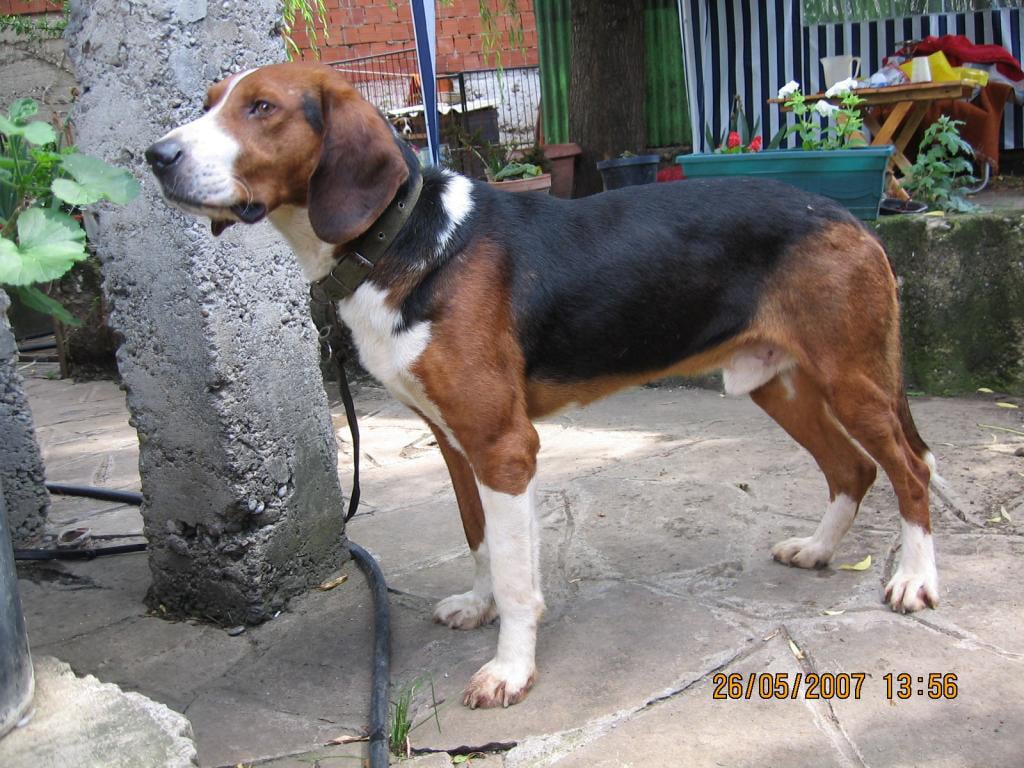
ยซJura Houndยป images

ยซJura Houndยป Videos

Type and recognitions:

  • FCI CLASSIFICATION:
  • Group :
  • Section : . .

Federations:

  • FCI – Group 6: Scent hounds, and related breeds. – Section 1.2: Medium-sized Hounds. โ“˜
  • UKCScenthounds โ“˜

FCI breed standard "Jura Hound (Bruno Jura Hound)"

Origin:
Switzerland, France

Date of publication of the valid original standard:
28.11.2001

Use:

It is a small game hound that hunts hares, deer, foxes and sometimes wild boars. He is an independent hunter by hunting with a bark. Searches and corners its prey with great safety even in difficult terrain.


General appearance:

It is a dog with medium height at the withers. Your body structure indicates strength and tenacity. Its slim head with long snout and long ears give it an expression of nobility.

There are four varieties of Swiss Hound :

  • Bernese Hound
  • Jura Hound
  • Lucerne Hound
  • Schwyz Hound

IMPORTANT PROPORTIONS :

โ€ข Body length : Height at withers = approx. 1.15 : 1.
โ€ข Height of the withers : chest depth = approx. 2 : 1.
โ€ข Length of the nasal shank : skull length = approx. 1 : 1.


Behavior / temperament:

Lively and passionate about hunting. Sensitive, manageable and faithful.

Head:

---

Cranial region:
  • Skull : Long, narrow, delgado, noble. Bulging skull, visible occipital protrusion. The direction of the longitudinal axis of the skull and the muzzle shows a slight divergence. No frontal groove, no folds or wrinkles.
  • Depression links (Stop) : Not too developed.

facial region:

  • Truffle : Completely black, well developed; nostrils wide open.
  • Snout : Nobly developed, narrow ; it is not square or pointed ; the muzzle is straight or very slightly convex.
  • Lips : Moderately developed, the upper lips perfectly cover the lower jaw ; slightly open corner.
  • Jaws / Teeth : Powerful jaw. Powerful scissor bite, regular and complete, that is, the upper incisors overlap the lower ones without leaving space between them and the teeth are implanted vertically in the maxilla. Pincer bite allowed. The lack of one or two PM1 or PM2 is acceptable (premolars 1 or 2) . M3 are not taken into account (molars).
  • Cheeks : Loose, non-protruding supraciliary arches.

Eyes : They are more or less light or dark brown depending on the color of the coat ; they are medium in size and slightly oval. The edges of the eyelids are well pigmented. The eyelids are well adherent. The expression is sweet.

Ears : Placed below the eye line, in the posterior part of the cranial region and never implanted in its maximum width. Its length must reach at least the tip of the nose. The pinna is not prominent. The ears are thin. He wears them down, bent and twisted ; they are rounded at the bottom and have a fine, soft coat.

Neck:

Long, elegant, with good musculature ; throat skin is loose without forming a noticeable dewlap.

Body:

  • top line : The neck, the back, The rump and tail form a harmonious and noble line.
  • Cross : Bit strong, free and elegant neck insert.
  • Back : Firm and straight. : Muscular and slightly arched.
  • Rump : Elongated, extends the line of the back harmoniously and descends gently. It is not higher than the cross. The crest of the iliac bone is not too prominent.
  • Breast : Deeper than wide, well descended, reaches to the tips of the elbows. Elongated rib cage with slightly arched ribs.
  • Bottom line and belly : Belly slightly pulled back ; full flanks.

Tail:

Inserted in the extension of the croup. It is of medium length and tapers towards the tip ; at its end it has a slight incline up ; noble. In general, it remains hanging at rest and when walking calmly, without showing an important bend ; When he is attentive or in action he carries it along the line of his back , but never resting in it nor in a curled way. Is well covered with hair, but it doesn't have a spike shape.

Tips

PREVIOUS MEMBERS :

  • As a whole : They are well muscled, thin and not heavy in appearance. Seen from the front they are parallel and from the side they look vertical ; his bones are strong with his feet pointed forward.
  • Shoulder : Long oblique shoulder blades, closely linked to the rib cage. The ideal angulation of the scapulohumeral joint is approximately 100ยฐ.
  • Arm : A little longer than the shoulder blade, placed obliquely, closely attached to the chest. His musculature is fine.
  • Elbows : Naturally glued to the side.
  • Forearm : Straight, strong, delgado.
  • Carpo : Strong, wide metacarpus : Relatively short; Seen from the front it is located on the perpendicular line of the forearm; seen from the side it is slightly inclined.
  • Front feet : Rounded, with compact fingers ; hard and rough pads ; strong nails whose color depends on the color of the coat.

LATER MEMBERS :

  • As a whole : They have strong muscles and are in a balanced relationship with the forelimbs ; seen from behind the hind legs are vertical and parallel.
  • Thigh : Long and oblique, powerful although his muscles are thin. The angulation of the coxofemoral joint is approximately 100ยฐ.
  • Knee : No inward or outward deviations. Angulation of the femoral-tibian joint approximately 120ยฐ.
  • Leg : Relatively long, thin, visible muscles and tendons under the skin.
  • Hock : Tibiotarsal joint angulation approximately 130ยฐ.
  • Metatarsus : Pretty short, placed vertically and parallel. Without spurs, except in countries, in which amputation is not allowed by law.
  • Rear feet : Rounded, with compact fingers, hard and rough pads ; strong nails whose color depends on the color of the coat.

Movement:

It is unfolded, regular, harmonious and with good scope. Has good impulse from the hindlimbs. Drive the limbs parallel and straight. The cross moves smoothly and regularly up and down, the back remains straight and the head and neck wobble slightly from side to side.

Mantle

SKIN : Fina, flexible, well adherent, whose color varies in each of the four varieties.

โ€ข Bernese Hound : Skin is black under black hair and blackish-white marbling under white hair.
โ€ข Jura Hound : She is black under black hair and lighter under tan hair..
โ€ข Lucerne Hound : She is black under black hair and lighter under blue-flecked hair..
โ€ข Schwyz Hound : It is dark gray under the orange hair and blackish-white marbling under the white hair..

HAIR : Is short, smooth, thick, very fine on the head and ears.

COLOR :

โ€ข Bernese Hound : White with black spots or a black saddle-shaped spot. Tan color from pale to intense over the eyes, cheeks, on the inside of the ears and around the anus. Sometimes very lightly splattered (black splash).

โ€ข Jura Hound : Tan with black cape, sometimes nuanced black or black with tan over the eyes, cheeks, around the anus and on the extremities ; sometimes with a small white spot on the chest ; this stain may be splattered (black or gray splashes).

โ€ข Lucerne Hound : Called blue, with a mixture of black and white hairs, intensely splashed, with black spots or a saddle-shaped spot ; tan color from pale to intense over the eyes, cheeks, on the chest, around the anus and on the extremities ; a black cape is allowed.

โ€ข Schwyz Hound : White with orange or orange "saddle" spots, sometimes with orange splashes ; an orange coat is allowed.


Size and weight:

Height to the cross :

  • Males : 49-59 cm..
  • females : 47-57 cm No tolerance.


Fouls:

Any deviation from the aforementioned criteria is considered as a fault and the severity of this is considered to the degree of the deviation to the standard and its consequences on the health and well-being of the dog..

โ€ข Rough appearance, vulgar, weak body structure.
โ€ข Discordant proportions between body length, the height of the withers and the height of the chest.
โ€ข Skull too wide, too convex or too flat.
โ€ข Stop too marked.
โ€ข Very short or very long snout, too square or pointed.
โ€ข Concave nasal bridge.
โ€ข Lack of more than two premolars PM1 or PM2. Los M3 (molars 3) are not taken into account.
โ€ข Thick lips.
โ€ข Light eyes, acute expression, non-adherent eyelids.
โ€ข Ears that are too short or flattened, thick or set very high.
โ€ข Very short neck.
โ€ข Double chin too marked.
โ€ข Saddled or arched back (carp back).
โ€ข Croup too inclined or too short.
โ€ข Rib cage not deep enough, too flat or barrel-shaped.
โ€ข Retracted belly, fallen flanks.
โ€ข Tail with poor insertion, carried too high, very bent, stooped, very coarse or spike-shaped tail.
โ€ข Extremities with bones that are too thin or in a bad position.
โ€ข Very sloping shoulders, arm too short.
โ€ข Weak carpal joints.
โ€ข Insufficient angulations of the hind limbs ; cow or barrel shaped limbs.
โ€ข Dewclaws on the hind limbs, except in countries in which amputation is not permitted by law.
โ€ข Rough coat, not smooth.
โ€ข Flaws in color and markings.

  1. Bernese Hound : Too many black splashes on the white. Tan or white on the outside of the ears.
  2. Jura Hound : Uniform color. Noticeable white patch or heavily speckled patch on the chest.
  3. Lucerne Hound : Lack of ยซ blue ยป splash. Tan on the outside of the ears.
  4. Schwyz Hound : Too many orange splashes on the white. Uniform color. White on the outside of the ears.

โ€ข Slightly fearful or aggressive behavior.

MISS PLAYOFFS

โ€ข Excessively fearful or aggressive dog.
โ€ข Atypical general appearance of the breed.
โ€ข Completely depigmented nose.
โ€ข Upper or lower prognathism, incisor arcade deviated.
โ€ข Ectropion, entropion (even if it had been operated).
โ€ข Horn tail, threaded, knotty the hook.
โ€ข Size above or below tolerance.

Any dog โ€‹โ€‹showing clear signs of physical or behavioral abnormalities must be disqualified..


N.B.:

Males should have two normal-appearing testicles fully descended into the scrotum..

Source: F.C.I - International Cynological Federation

Varieties of ยซSwiss Houndsยป

The four varieties of Swiss hounds have their own specific hunting characteristics:

– The Bernese Hound, with her beautiful throat ("the howler of the Jura"), demanding, mainly used for hares;
– The Jura Hound, an excellent recuperator
– The Lucerne Hound, reminiscent of Small Blue Gascony, he is an active and passionate dog that hunts deer very well;
– The Schwyz Hound, less widespread outside of Switzerland, is reserved for rabbits and hares.

Alternative names:

1. Bruno Jura Hound (English).
2. Bruno du Jura (French).
3. (frz. Bruno du Jura) (German).
4. Sabujo Bruno de Jura (Portuguese).
5. Fernando del Jura, Bruno del Jura (espaรฑol).

โ–ท The world of Pets: Dogs, cats, birds, reptiles, amphibians

Finnish Hound
Finlandia FCI 51 - Medium-sized Hounds.

Finnish Hound

The Finnish Hound he is friendly, calm and never aggressive. He is energetic in hunting and is a versatile tracker.

Content

History

As its name implies, the Finnish Hound It is a breed of dog native to Finland. His story is the same as that of many other hounds, as it was developed in response to the need for a hunting dog perfectly adapted to its environment.

It is the result of a breeding program started at the beginning of the 19th century by several breeders who used the English Foxhound and several hounds, as well as French and German hunting dogs. The aim of these crosses was to create an animal capable of withstanding the extreme temperatures of Finnish winters, with excellent resistance in mountainous terrain, a trumpet bark to alert hunters and a particularly developed sense of smell that would allow it to excel at tracking hares and foxes. This breeding program was a success, and the bitch he gave birth to, call Suomenajokoira, quickly gained popularity thanks to his admirable hunting skills and friendly temperament.

When it was founded Suomen Kennelliitto, Finland's leading dog organization, in 1889, his first initiative was to develop a standardized hound breed from Finland. Many breeders came forward to try to get their production recognized as the standard to follow. Three dogs were selected in the organization's first dog show in 1891, and eight more were added the following year. The first breed standard of Finnish Hound It was established in 1893 based on these individuals. It was decided, among other things, accept only fawn as coat color. But, this color did not completely stabilize, and individuals from successive litters very often had coats of other colors, like black and white. This forced the Kennelliitto to also recognize a tricolor coat (leonado, black and white) early twentieth century, which finally became the norm. The standard evolved again in small touches later, but in its main lines it has remained the same since 1932.

The Fรฉdรฉration Cynologique Internationale (FCI) recognized the breed in 1954, but I didn't have many emulators. These may include, it wasn't until more than 40 years later, in 1996, that the United Kennel Club (UKC) he did the same. The other reference organization in the United States, the American Kennel Club (AKC), has not yet taken the step.

In fact, just like the prestigious British Kennel Club or the Canadian Kennel Club (CCC), for example, most national organizations do not yet recognize the Finnish Hound.

Outside Finland, the Finnish Hound remains totally unknown to the general public.

On the other hand, the Finnish Hound is much more popular in his native Finland, to the point of appearing in the Top 10 of the most common breeds in the country, which makes it the most widespread national breed. But, with about 1.000 births per year registered in Suomen Kennelliitto, has been in free fall for several decades. In fact, at the dawn of the 21st century the number was more than 2500, and at the end of the 90 even exceeded 4000. This sharp decline is due to increasing urbanization and the decline in hunting activities.

The same development can be found in the other Scandinavian countries that have adopted the Finnish Hound, namely, Sweden and Norway. In the first, the number of births registered each year in the Svenska Kennelklubben is now within 400, compared with more than double at the end of the 1990. The number of births registered in the Svenska Kennelklubben is now little more than 150 by year, compared to more than triple that number in the late 1990s.

The Finnish Hound still commonly used as a hunting dog in Finland, Sweden and Norway, but they are practically unknown outside the Scandinavian region.

Photo: Finnish Hound by RemoteFly, CC BY-SA 3.0, via Wikimedia Commons

Caracterรญsticas fรญsicas ยซSabueso finlandรฉsยป

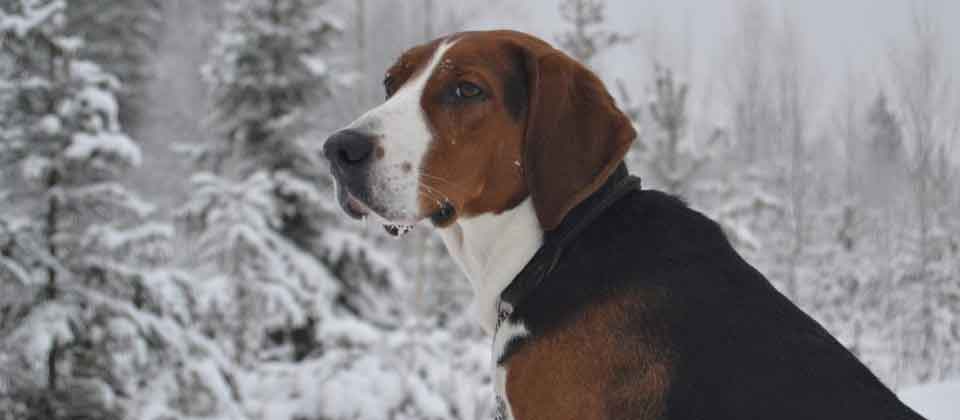
Athletics, resistant and strong, the Finnish Hound he has a robust and muscular silhouette and a medium size. His body is rectangular, with a deep chest and well sprung ribs. The tail is carried low; is wide at the base and tapers to a point at the end.

The head is well proportioned in relation to the body and slightly domed. A characteristic detail of the breed is the upper lip, that falls to the sides of the mouth forming an N-shaped curve when viewed from the front. His eyes are dark brown with a calm expression. The ears are large, plan, falls and not very long.

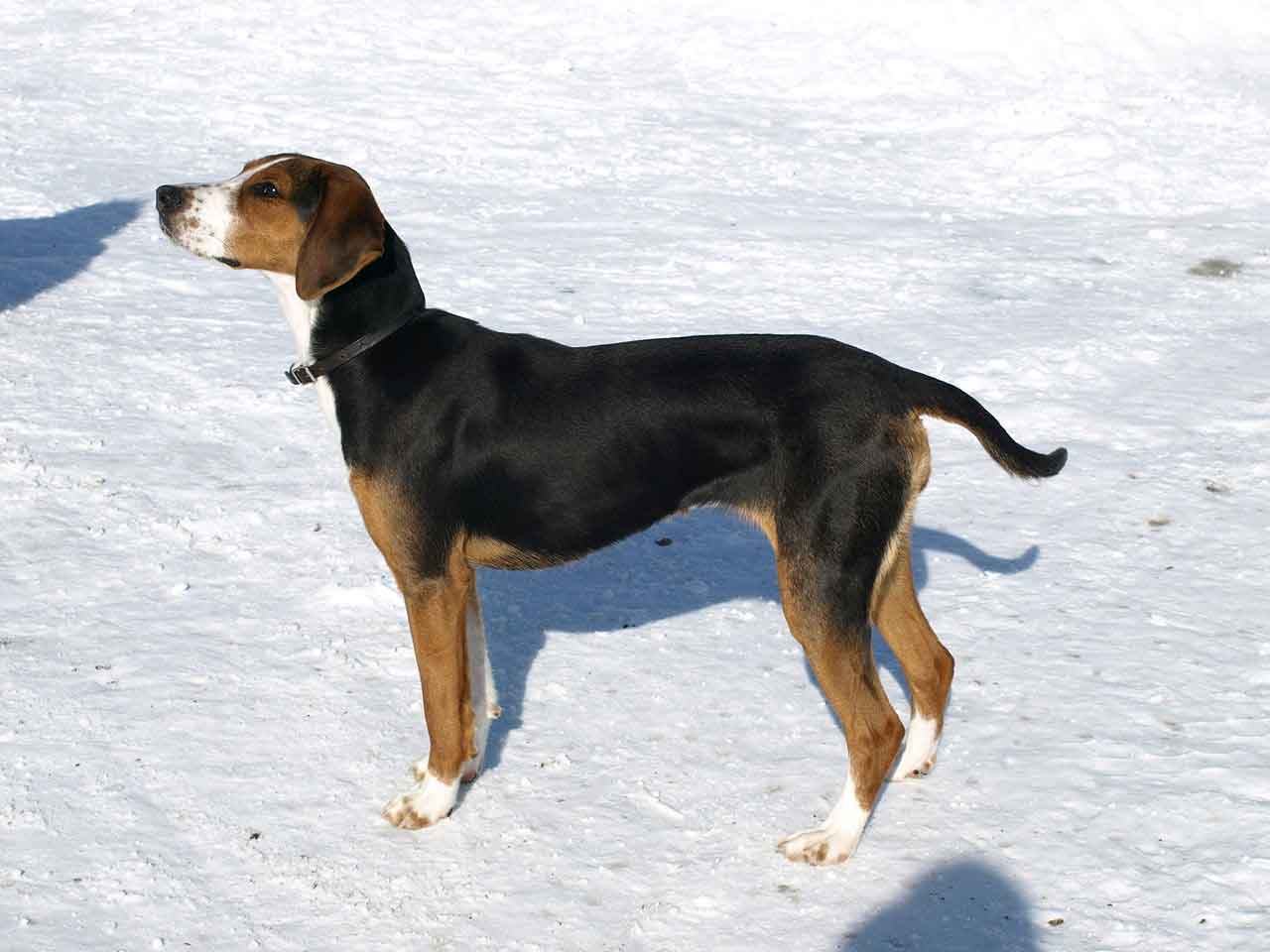
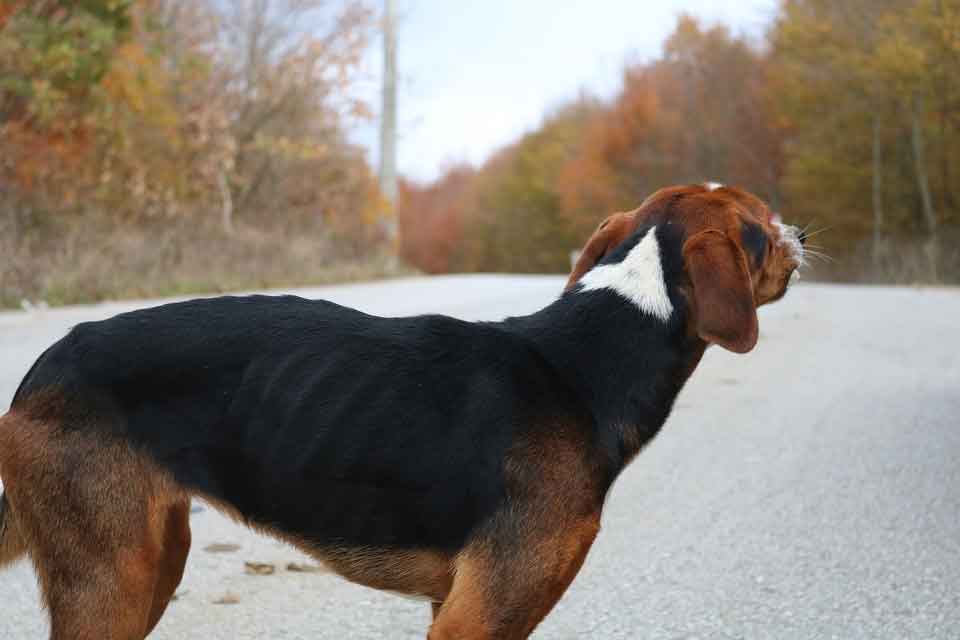
The Finnish Hound have a double coat consisting of a short undercoat, dense and smooth in texture and a medium length top coat, straight and quite hard. The coat is tricolor, mixing black, fawn and white. Specifically, the fur is black, while the head, the outer parts of the legs and shoulders are tawny. At the same time, white markings are generally present on the muzzle, the neck, the chest, the belly, the feet and the tip of the tail.

Last, sexual dimorphism is only slightly marked in this breed, since the females are on average barely 3 cm smaller than males.

Carรกcter y aptitudes ยซSabueso finlandรฉsยป

The Finnish Hound it is above all a true working dog with a highly developed predatory instinct and a strong character.

Decades of independent hunting have caused them to be stubborn and stubborn. For this reason, not recommended for a novice teacher: only an experienced and firm owner can establish and maintain the appropriate level of authority to elicit acceptable behavior from him.

This does not detract from its formidable hunting qualities., an activity in which he is alert, energetic and durable. It is mainly used to hunt hare, fox and sometimes wildcat. Regardless of weather and terrain, he is always there and never spares his efforts, able to follow a trail for hours in terrible weather conditions – aided by his highly developed sense of smell. He is also a very vocal hunting dog., appreciated for its characteristic barks, who plays a key role in allowing his master to follow him even when he is out of sight, and to alert of the presence of hunting.

To counter his unlimited energy while hunting, the Finnish Hound is generally calm and friendly during periods of rest, especially when they are at home.

Once trained and socialized, the Finnish Hound blends surprisingly well into family life. They are known to be very affectionate and are constantly on the lookout for human company., forming extremely close ties with their owners. He is also a dog that loves children. But, they must be taught to interact with him appropriately and to respect him, since they may not appreciate being mistreated. In any case, a young child should never be left alone with a dog, regardless of race.

His good relations with humans are not limited to his family circle. He is usually very nice to strangers. In other words, although its thunderous barks might suggest that it is a good watchdog, this is not the case at all.

The Finnish Hound is also sociable with other hounds, especially if they have been well socialized from a young age. So, it is perfectly conceivable to adopt a second dog to keep him company.

This is all the more true as his closeness to his masters makes him easily suffer from separation anxiety when left alone for too long., since it needs a lot of attention. The presence of a small playmate can help alleviate the problem.

In any case, it must not be a cat, rodent, bird or any other small animal. In fact, even if you are used to being around him, it is evident that he would not be safe in his presence, because the predatory instincts of the Finnish Hound they can take control at any time. It also, it is recommended to always keep it on a leash during your daily walks, to prevent you from rushing in pursuit of small animals that would pass.

The Finnish Hound it is very resistant and extremely active, so you need a lot of exercise every day. In the days when you used to hunt, your tracking activity should be an appropriate amount of exercise. The rest of the time, you need at least an hour of vigorous exercise a day: run, long walks, etc.

Keeping an active mind is also very important, so it is advisable to train him regularly to follow the tracks or play ball. This helps maintain your mental well-being., In addition to your physical health.

To be happy, the Finnish Hound needs constant access to a sufficiently large outdoor space in which to run freely. It is essential that the area is fenced in to prevent the Finnish Hound chase the surrounding animals. Not suitable for a small house without a garden or in an apartment. Wherever i live, his hunting nature causes him to bark a lot and can be a source of tension with potential neighbors.

Educacciรณn ยซSabueso finlandรฉsยป

The Finnish Hound he is intelligent and full of energy, but it is a difficult breed to train. Accustomed since its creation to hunt alone, over time has developed a strong character, independent and stubborn. He needs to have before him a master who is at least as determined, that is to say, experienced, able to show your dog that he makes up his mind and to keep a firm hand in his education throughout his life. So, not recommended for a beginning teacher, on which he would soon gain the upper hand. It also, if it is important that the rules are clear and defined from the beginning by the master, it is equally important that they are constant over time and consistent from person to person, that is to say, that all members of the house enforce them to the letter.

The Finnish Hound it's hard to handle, but it shows real sensitivity, as evidenced by his closeness to his family. So, punishments can affect you emotionally; it is preferable to take a positive approach to educate him, using positive reinforcement techniques and therefore the use of rewards: candies, petting, stimuli…

In any case, hunting practice and the ability to follow a trail require very little training, since they are things that he knows how to do instinctively.

But, is strongly inclined to want to use his hunting skills in circumstances that do not lend themselves to it, for example, rushing potential small prey on walks. Teaching your dog to remember is therefore of particular importance with the Finnish Hound. But, this can be difficult, because once he's thrown on a track, can be very reluctant to abandon it, completely ignoring the orders of its owner. Feel free to start and perfect your training in a safe, enclosed space such as your home or garden before attempting outdoor exercise..

It also, It must be remembered that this breed has been encouraged from its beginnings to bark frequently and loudly. If it's not meant to be used for hunting, it is possible to try to teach your dog to refrain from barking. But, although the latter can be reduced by specific training started at a very young age, it is impossible to hunt completely naturally, that is to say, make them disappear completely.

Finally, like any dog, benefits from being socialized from their first months, to become a balanced adult who knows how to be among humans. In addition to confronting him with a wide range of situations and stimuli (noises, smells, etc.), it should be introduced without delay to the people you will meet later in life (family, friends, neighbors, veterinary, etc.), as well as getting used to cross all kinds of humans, congeners and representatives of other species. Given their hunting instinct, This last point is not unimportant.: the more accustomed you are to the presence of other animals, less likely to hunt them later.

Salud ยซSabueso finlandรฉsยป

The Finnish Hound is generally robust and healthy.

Its dense fur provides excellent protection against cold and weather, but also against the heat. Although they need shade or even air conditioning in hot weather, the Finnish Hound is generally able to adapt to almost any climate.

The main health problems the breed is most prone to are:

  • Ataxia cerebelosa, generally hereditary, which affects coordination of movements and prevents affected puppies from moving. Then it is necessary to euthanize them;

Certain heart conditions:

  • Valvular disease, heartworm (Dirofilaria immitis) and cardiomyopathy;
  • Lymphoma, a type of cancer that affects lymphocytes, white blood cells that help the immune system fight infection. Symptoms depend on location and stage, but the most common are lack of appetite, weight loss, general weakness and lethargy, and enlarged lymph nodes in the neck. Treatment with chemotherapy and radiation therapy is usually started, but relapses are common;
  • Hip and elbow dysplasia, orthopedic conditions marked by a hereditary predisposition, where the bones don't fit well. This leads to movement difficulties (limp, etc.);
  • Ear infections (ear infections, etc.), favored by the drooping shape of their ears;
  • Black hair follicular dysplasia, a rare dermatological condition that causes black hair loss in the first weeks of a puppy's life, to the point that it usually disappears before their first birthday. It does not usually affect the health of the dog, but it can irritate the skin and make it susceptible to infection;
  • Atopic dermatitis, an inflammatory skin condition caused by an allergy. It usually has a genetic cause and is manifested by itching, systematic scratching and licking of the paws, armpits and face.

It also, an individual used for hunting is also more exposed to the risk of injury, parasites, thorns… It is highly recommended to check it every time you return home, to make sure everything is okay.

Adopting a breeder Finnish Hound serious and responsible (breed club member for example) normally allows to have the best guarantees regarding the present and future good health of the animal. Must be able to present a certificate of good health established by a veterinarian, the history of the vaccines administered and the results of the genetic tests carried out on the parents and / or the puppy in relation to diseases that may have a hereditary dimension.

It also, as with all dogs, must be taken at least once a year to a veterinarian for a complete health check. This will ensure you stay up to date on your vaccinations and can lead to early detection of any problems.. At the same time, it is important to make sure that you renew your deworming treatments whenever necessary. This is even more important as you spend a lot of time outdoors.

Utilizaciรณn del ยซSabueso finlandรฉsยป

The Finnish Hound is a renowned hunting dog in his homeland, where has always been, and it still being, used to hunt rabbits, foxes, wildcats and sometimes even moose. They prefer to work alone and are particularly good at following tracks in the air or on the ground., barking loudly.

Although the main purpose of breeding this breed has never been to make a pet, fits surprisingly well into family life and can sometimes be kept just for that purpose. But, only suitable for an experienced teacher, who lives in a house with a big garden, often present, and able to meet their high needs for physical activity.

Last, the Finnish Hound is loyal, Gentile, loving and affectionate with their owners: all the qualities that can make him a good psychological support dog for his owners. Their sensitivity and close bond with their owners allows them to react intuitively to their owners' emotions and offer comfort when they notice something is wrong..

Comprar ยซSabueso finlandรฉsยป

In finland, the purchase price of a puppy of Finnish Hound it is usually between 600 and 800 EUR. The amount charged depends on the prestige of the breeding, the lineage from which the animal descends, as well as its intrinsic characteristics, especially physical, so there may be price differences within the same litter.

As the breed is very difficult to find outside of Scandinavia, importing from abroad is often the only option. In this case, transportation and administrative costs are added to the purchase price, not to mention the cost of possible registration in the national registry of the country of adoption. It also, It is important, of course, ensure that the regulations for importing a dog from abroad are followed.

Characteristics "Finnish Hound"

Coexistence is important that you have with your new friend. Before considering the acquisition of a dog of the breed "Finnish Hound" you know certain factors. Not all breeds of dogs are apt to live in an apartment, you must take into account his character, their need for exercise, their interaction with other pets, their care and if you have small children, their level of tolerance towards them.

Adaptation โ“˜

4,0 of 5 stars (based on 1 review)

friendly dog โ€‹โ€‹โ“˜

3,0 of 5 stars (based on 1 review)

hair loss โ“˜

3,0 of 5 stars (based on 1 review)

Affection level โ“˜

5,0 of 5 stars (based on 1 review)

Need for exercise โ“˜

4,0 of 5 stars (based on 1 review)

Social need โ“˜

4,0 of 5 stars (based on 1 review)

Home โ“˜

4,0 of 5 stars (based on 1 review)

Toilet โ“˜

1,0 of 5 stars (based on 1 review)

Friendly with strangers โ“˜

4,0 of 5 stars (based on 1 review)

barking โ“˜

4,0 of 5 stars (based on 1 review)

Health โ“˜

3,0 of 5 stars (based on 1 review)

Territorial โ“˜

4,0 of 5 stars (based on 1 review)

Cat friendly โ“˜

2,0 of 5 stars (based on 1 review)

Intelligence โ“˜

4,0 of 5 stars (based on 1 review)

Versatility โ“˜

4,0 of 5 stars (based on 1 review)

Child friendly โ“˜

4,0 of 5 stars (based on 1 review)

Surveillance โ“˜

4,0 of 5 stars (based on 1 review)

joy โ“˜

4,0 of 5 stars (based on 1 review)

Images "Finnish Hound"

Finnish Hound

Finnish Hound

Photos:

1 – Sabueso finlandรฉs by https://pixabay.com/fi/photos/koira-nรคlkรค-pelko-vihainen-5317972/
2 – Finnish hound by https://www.hankikoira.fi/koirarodut/suomenajokoira

Videos "Finnish Hound"

Finnish River Dog drives a fox

Suomenajokoira ajaa kettua
Finnish Hound / Finnish Hound

Finnish Hound / Finnish Hound

Type and recognitions:

  • FCI CLASSIFICATION:
  • Group :
  • Section : . .

Federations:

  • FCI – Group 6: Scent hounds, and related breeds. – Section 1.2: Medium-sized Hounds. โ“˜

FCI breed standard "Finnish Hound"

Origin:
Finland

Date of publication of the valid original standard:
17.07.1997

Use:

Perro utilizado para seguir el rastro en la cacerรญa de la liebre y la zorra. Su entusiasmo por cazar no declina aรบn en las circunstancias mรกs difรญciles. Trabaja en forma independiente, es un rastreador polivalente que persigue a su presa con un ladrido sonoro.


General appearance:

Medium -sized tricolor dog provided to the body which is visibly longer than high at the cross level; It is strong constitution, without being heavy. The support area when standing is as long as the body or slightly longer; View from the front is as wide as the thorax and seen from behind is as wide as seen from the front. Sex characteristics should be well marked.

IMPORTANT PROPORTIONS :

โ€ข The relationship between body length and height to the cross is 1.1 to 1.
โ€ข The height of the thorax reaches half the height to the cross.
โ€ข The length of the snout is equal to the length of the skull. The length of the skull is equal to its width and depth.


Behavior / temperament:

He is a calm dog, energetic and friendly, never aggressive.

Head:

---

Cranial region:

Seen from the front, The skull is proportionally wide and bulging in its upper part. The forehead is slightly convex view from the sides. The upper line of the skull is parallel to that of the nasal cane; The groove between the eyes is barely visible; supraciliary arches and occipucio are clearly visible.

  • Depression links (Stop) : Supraciliary arches accentuate the light stop, But well defined.

facial region:

  • Truffle : Well developed, black; Large and mobile windows.
  • Snout : It is the same length as the skull, It is moderately deep and slightly thinns; the nasal helm is straight. The lower lip forms the lower line, which is almost parallel to the upper line of snout.
  • Lips : Well developed and pigmented. The upper lip is beautifully arched. The lips and corners of the mouth are closely adjusted.
  • Jaws / Teeth : The jaws are strong. The teeth are well developed and placed symmetrically in the jaws. Dentition is normal and complete. Tight scissors bite.
  • Cheeks : Moderately clean.

Eyes : Medium-sized, not outstanding, slightly oval, dark brown, well directed forward. Calm expression. The eyelids are black.

Ears : They hang with the front edge glued to the head. They are crooked so that the posterior edge is directed out and the tip of the ear almost forward. They are implanted in the line that goes from the nose to the eyes. They are flat and reach beyond half of the snout when they are forward.

Neck:

Of moderate length, muscular, clean; The upper line only slightly arched. When the dog is on feet, The tip of the nose is at the top of the upper line of the neck or slightly higher.

Body:

  • Back : Medium length, straight and muscular.
  • Pork loin : Rather short and strong.
  • Rump : Well developed, long and strong, slightly tilted. Profile view, The upper back line continues in a beautifully arched rump
  • Breast : Long and deep, Reach to the elbows. Well arched ribs, clearly visible.
  • bottom line : Slightly retracted.

Tail:

Low insertion, slightly curved, reaches even the warm-tarsian joints. It is thick at its root and thinns towards the tip. At rest it hangs near the posterior members; During the movement you can lift it, But not above the top line level. The hair that covers the tail is similar to the rest of the body.

Tips

PREVIOUS MEMBERS :

  • As a whole : They are well angled. Seen from the front, they are straight and parallel. The forearms are vertical. The deepest point of the chest is at the elbow level. The arm and forearm have the same length.
  • Shoulder : Rather long, oblique and strong; glued to the body but very mobile.
  • Arms : They have the same length as the scapulars, clearly inclined and strong.
  • Elbows : Well directed back, very attached and parallel to the body. : Strong and tendon with oval and strong bones.
  • Metacarpus : Slightly sloping.
  • Previous feet : Slightly oval and high, with toes well arched and together. hard nails, black preferably. Elastic pads, preferably black and covered on the sides of a dense fur.

LATER MEMBERS :

  • As a whole : They're strong, well angled, straight and parallel, seen from the back.
  • Thigh : Length and width, strong muscles covered.
  • Knee : Points forward. The previous line of the posterior member has a slight curvature.
  • Leg : Moderately wide, sinewy.
  • Warm-tarsal joints : Strong, rather low.
  • Metatarsus : Rather short and strong, vertical.
  • Hind feet : Of equal conformation as the previous feet, Always pointing forward.

Movement:

Light and effective trot with strides that cover space. The upper line remains level and firm during movement. The limbs move in parallel.

Mantle

SKIN :Thick, Well stuck throughout the body without presenting wrinkles.

HAIR : The undercoat is short, Dense and soft texture. The outer layer is medium -long, footprint, straight, Dense and rather rough.

COLOR : It is tricolor. It has a black or intense black mantle on the head, partes inferiores del cuerpo, shoulders, muslos y tambiรฉn en algunas otras partes de los miembros. It usually presents white marks in the head, neck, backsplash, lower parts of the limbs and at the tip of the tail.


Size and weight:

Height to the cross :

  • Males 55 โ€“ 61 cm.,
  • hembras desde 52 โ€“ 58 cm..

Ideal height :

  • Males from 57 โ€“ 59 cm.,
  • hembras desde 54 โ€“ 56 cm..


Fouls:

Any deviation from the aforementioned criteria is considered as a fault and the severity of this is considered to the degree of the deviation to the standard and its consequences on the health and well-being of the dog..

โ€ข Constitution too light or too heavy.
โ€ข Incorrect sexual characteristics.
โ€ข Clearly triangular head shape.
โ€ข Loose skin.
โ€ข Short or pointed snout.
โ€ข Bite in clamp or light superior prognathism.
โ€ข Square or too long body.
โ€ข Grupa corta y al mismo tiempo empinada.
โ€ข Long feet, flattened, fingers apart.
โ€ข Short and remarkably soft fur.
โ€ข Salpized color.
โ€ข Clearly interrupted mantle.
โ€ข A lot of gray hair or wolf hair.
โ€ข Height at withers 1 cm greater or less than the one established in the standard.
โ€ข Lightly shy or exaggeratedly gross with other dogs.

MISS PLAYOFFS

โ€ข Shyness or aggressiveness.
โ€ข Total lack of pigment in the truffle.
โ€ข LOWER PROGNATISM The Marked Superior Prognosis.
โ€ข Broken tail.
โ€ข Height to the cross more than 1 cm greater or less than the one established in the standard.

Any dog โ€‹โ€‹showing clear signs of physical or behavioral abnormalities must be disqualified..


N.B.:

Males should have two normal-appearing testicles fully descended into the scrotum..

Source: F.C.I - International Cynological Federation

Alternative names:

1. Finnish Bracke (English).
2. Chien courant finnois (French).
3. (Suomenajokoira, Finnenbracke, Finsk Stรถvare) (German).
4. (em finlandรชs: Suomenajokoira) (Portuguese).
5. (en finlandรฉs: Suomenajokoira) (espaรฑol).

โ–ท The world of Pets: Dogs, cats, birds, reptiles, amphibians

Bosnian Broken-haired Hound – Bosnian Broken-haired Hound
Bosnia FCI 155 . Medium-sized Hounds

Sabueso de bosnia de pelo duro - Barak

The Bosnian Hound, nicknamed Barak, It is a dog developed in Bosnia.

Content

History

This medium-sized breed of hound has been bred in Bosnia since the 19th century, at that time still under the name ยซHound of Illyriaยซ. Later the name was changed to ยซBosnian Broken-haired Hound – Bosnian Broken-haired Houndยซ. It is also called "Bracke Bosniaยซ. They have a full and deep bark.

Its origin dates back to the crossing of local dog breeds (for example, Pariah) and greyhounds, from the Mediterranean area. With his resilient and persevering nature, shows itself as an excellent hunting companion, but also serves in his home country as a companion, family and guard dog.

The famous ancestor of the Bosnian Hound is the St. Hubert Hound (or Bloodhound), It was par excellence the hunting dog in the 7th century.

Barak's name is believed to come from the Turkish word 'Barak', the nominaban dogs of hard hair or thick hair.

Physical characteristics

The Bosnian Broken-haired Hound – Bosnian Broken-haired Hound he is a very robust dog, with a long, somewhat broad head and bushy, pronounced eyebrows. So, a serious, partly strict but also cheerful facial expression develops in this breed. The back is very muscular and wide, the loin is short and also muscular, while the rump is broad and slightly sloping (especially in females). The so-called hip humps are slightly prominent. The ears are of medium height, wide, falls and a little thick. Towards the tip, they get thinner and in the end they get rounded.

The coat of the Bosnian hound it is very long, hard and hairy, with a lot of inner layer. So, It is especially in harsh climates and in cold and humid weather, broad protection.

The Bosnian Broken-haired Hound has a size of 46 to 56 cm with a weight of 16 to 24 kg. Their life expectancy is of 12 to 14 years.

Their fur can be yellow-red, wheat yellow, earth gray or a little blackish. There may be white marks on the head (fire or star), down the throat, below the neck, on the chest, under chest, on the tip of the tail or on the legs. Coat colors can also appear in different color combinations.

The Bosnian hound requires a bit more grooming, the coat must be combed regularly and freed from coarse dirt.

Character and skills

The Bosnian Broken-haired Hound – Bosnian Broken-haired Hound appears with a lively temperament, great resistance and a lot of courage. The breed is very hardy and was used as a sniffer dog in the mountainous landscape of Bosnia. But besides being a hunting dog, the Bosnian Broken-haired Hound it is also an excellent watchdog, that hardly ever breaks or bites. He is a typical working dog., where excellent skills are the main focus of parenting.

But, he is a friendly dog, that gets along well with children and their peers. So, he is also a great companion and a family dog, he likes to be close to his owners and is always happy to be caressed.

The Bosnian Broken-haired Hound – Bosnian Broken-haired Hound needs a lot of exercise and occupation possibilities daily. Whoever decides on a Bosnian Broken-haired Hound, you should consider that this breed is not at all suitable for a life as a city dog. The optimal would be to keep it in a rural area, with a large property and sufficient runoff area.
Also in breeding their owners must be consistent, because this breed has a certain stubbornness and a strong hunting instinct. But, if you use the docile nature of the Bosnian hound, you will get an anxious dog, loyal and hardworking, who likes to take on new challenges. Besides, scores with excellent social behavior and irresistible charm!

Observations:

It is virtually unknown outside the territory of the former Yugoslavia.

Images Bosnian Broken-haired Hound – Bosnian Broken-haired Hound

Videos Bosnian Broken-haired Hound – Bosnian Broken-haired Hound

Type and recognitions:

  • FCI CLASSIFICATION:
  • Group :
  • Section : . .

Federations:

  • FCI – Group 6: Scent hounds, and related breeds. – Section 1.2: Medium-sized Hounds. โ“˜
  • UKCScenthound Group โ“˜

FCI breed standard "Bosnian Broken-haired Hound – Bosnian Broken-haired Hound"

Origin:
Bosnia y Herzegovina

Date of publication of the valid original standard:
15/01/1973

Use:

Good working bloodhound dog, it is resistant and persistent, with a loud bark of high pitch and sometimes low pitch.


General appearance:

It is a robust dog; its fur is long and shaggy; long and moderately wide head, pronounced and bushy eyebrows. Serious expression, serious, but playful. The basic color is reddish yellow or earth gray with white markings in the lower regions.

IMPORTANT PROPORTIONS: The length of the body must exceed the height at the withers by a 10%.


Behavior / temperament:

It is a dog with a lively temperament, brave and persistent.

Head:

As a whole: Profile view, the occipital Protuberance is well developed, the frontal region is slightly convex and the moderate stop. Straight nose cane. Snout in a rectangular shape, covered with abundant a moustache and beard. View from the top, the head is of medium width, narrowing towards the nose. The muzzle is slightly longer than the skull. The total length of the head is of approximately 20 to 25 cm..

Cranial region:
  • Skull: Very pronounced supraorbital arches. To the touch, front Groove feels moderately developed.
  • Depression links (Stop): It presents a moderate pitch.

facial region:

  • Truffle: Long, with wide open Windows, pigmented dark brown or black.
  • Snout: Strong, long, deep, broader at its root, slimming to the truffle.
  • Lips: Stiff and a little thick.
  • Jaws / Teeth: Strong teeth; scissor bite, full dentition.
  • Eyes: Large, oval, Hazel, with a smart and playful expression.
  • Ears: Moderately high insertion, moderate and wide long. Pendulosas, slightly thick, being thin and rounded at the tip.

Neck:

  • Profile: The insertion in the head shows a sharp demarcation. The neck is oblique from the top down.
  • Form: Average width, increases its depth to the region of the chest. Muscular.
  • Skin: Adherent, flexible and covered with dense hair.


Body:

  • top line: It leans slightly towards the rump.
  • Cross: Moderately steep.
  • Back: Wide and muscular.
  • Lumbar region: Short and muscular.
  • Rump: Slightly inclined and wide (especially in females). The barely visible hip bones.
  • Breast : Long, average amplitude, slightly rounded ribs; its depth reaches at least up to elbows. Ample ribcage.
  • Belly and flanks: Slightly retracted belly.

Tail:

Properly inserted, thicker at its root, slimming to tip; it reaches up to the joint foot warm or slightly below. Held slightly curved upward in the form of scimitar. Well covered with hair.

Tips

PREVIOUS MEMBERS:

  • As a whole: Viewed in profile and from the front, the forelimbs are vertical, straight and parallel
  • Shoulder: Long, oblique and muscular.
  • Scapulohumeral angle: It must be 90ยฐ.
  • Arm: Long and muscular. Elbows set close to the body
  • Forearm: Vertical, straight, muscular and strong.
  • Articulation of the carpus: Just apparent.
  • Metacarpus: Short, vertical or slightly inclined at an angle of 10ยฐ with the vertical line.
  • Front feet: Cat feet, well United fingers, hard pads, strong and well pigmented nail.

LATER MEMBERS:

  • As a whole: Seen from the rear and profile, the hind limbs are vertical and parallel.
  • Thigh: Moderate long, wide and muscular.
  • Leg: Strong, long, oblique and muscular.
  • Warm-foot joint: Strong and well positioned.
  • Metatarsus: Perpendicular to the ground, short and strong.
  • Rear feet: Same as previous, but a little longer.

Movement:

Long and energetic steps.

Mantle

SKIN: Moderate thickness, elastic, adherent, well pigmented and covered with dense hair.

HAIR: Long, hard, Ogres, disheveled with a dense internal NAP.

COLOR: The basic color can be yellow wheat, yellow red, Earth grey or blackish. White markings on the head are often found (Star, list), under the throat, down neck, above or below the chest, lower parts of the members or at the tip of the tail. Color can be combined with bi-color or tri-color.


Size and weight:

  • Height to the cross: Of 46 to 56 cm., ideal height 52 cm., in the females a little less.
  • Weight: Of 16 to 24 kg, ideal weight 20 kg.


Fouls:

Any deviation from the aforementioned criteria is considered as a fault and the severity of this is considered to the degree of the deviation to the standard and its consequences on the health and well-being of the dog..

SERIOUS FAULTS:

  • Insufficient proportions between parts.
  • Light bone structure.
  • Weak muscles.
  • Head long and heavy than in the standard.
  • Bitefork clamp.
  • Inadequate pigmentation of the edges of the eyelids and the belfos.
  • Folded or erect ears.
  • Chin only slightly pronounced.
  • Slightly sunken or arched back.
  • Too wide or narrow chest.
  • Irregularities of the extremities and the angles joints.
  • Hare feet.
  • Not enough United fingers, presence of spurs.

MISS PLAYOFFS:

  • Aggressive or fearful dog.
  • Disproportion between the different parts of the body and especially between the height and the length of the body.
  • Non-typical head, excessively rough.
  • Depigmentation of the nose, the edges of the eyelids and the belfos.
  • Signs of degeneration of the dentition (lack of teeth), and of the jaws.
  • Very clear eyes or gazeos.
  • Diverted or curled tail.
  • Hocks cow or barrel-shaped.
  • Too long hair, woolly, wavy or curly.
  • All colors other than those listed, But first and foremost chocolate and black.
  • Height at the withers or too little.
  • Any dog โ€‹โ€‹showing clear signs of physical or behavioral abnormalities must be disqualified..


N.B.:

Males should have two normal-appearing testicles fully descended into the scrotum..

TRANSLATION: Federation Canรณfila Mexicana, A.C.

Source: F.C.I - International Cynological Federation

Alternative names:

1. Bosnian Broken-haired Hound, Bosnian Rough-haired Hound, Bosnian Rough-coated Hound, Bosnian Coarse-haired Hound, Bosnian Hound, Illyrian Hound, Barak (English).
2. Chien courant d’Illyrie, Barak (French).
3. Barak, Illyrischer Laufhund (German).
4. Sabujo-da-bรณsnia, Barak (Portuguese).
5. Cazador bosnio, Sabueso bosnio, Barak (espaรฑol).

โ–ท The world of Pets: Dogs, cats, birds, reptiles, amphibians

Austrian Black and Tan Hound
Austria FCI 63 - Medium-sized Hounds.

Sabueso austriaco negro y fuego

The Austrian Black and Tan Hound is very emotional. Perceives the mood of its owner.

Content

History

The Austrian Black and Tan Hound It is a breed of dog originating in Austria. It is believed that he is the true descendant of the original Celtic Hound, Although there is no known history of the Austrian Black and Tan Hound until after mid-19th century. This historical bump is due to the fact that in the past the breeding was not regulated.

The Austrian Black and Tan Hound, from its origins, It was used for monitoring or tracking of injured animals, Commonly, in places of significant altitude.

Physical characteristics

The Austrian Black and Tan Hound is a dog medium-sized and well solid structure. His head shows a wide skull and little pronounced occipital region with well marked stop.

It has glossy dark brown eyes that convey a lively look and alert. The ears are of high insertion and medium-sized, rounded, not very broad and hang onto the cheek. The tail is long and will fine tuning towards the tip, it is dropped but slightly curved.

The coat of the Austrian Black and Tan Hound It is smooth, soft to the touch, dense, short (a few 2 cm length) and very bright.

The coloration of this breed It is very important since that is its touch of distinction, they should be black as a basis, with small and clearly defined, fire to light brands range from pale tawny to dark. Two tawny markings above the eyes must be present.

This breed has a hypersensitive smell.

The height at the withers of Austrian Black and Tan Hound will of 48 56 cm. And his weight is around between the 19 and 20 Kg.

Thanks to its excellent ability to work, both high mountains and Plains land, the Austrian Black and Tan Hound is highly prized as a bloodhound and blood trail dog. His fine sense of smell allows him to carry out searches with complete security (especially of hares).

Character and skills

Is alive, attentive, reserved with strangers but friendly and does not show any signs of shyness.

While it is used for hunting Hound (for tracking), It is an animal that adapts well to family life, but if we make the commitment to have a Austrian Black and Tan Hound, We must be able to give the animal enough to make you happy.

A few good country walks would keep him cheerful., In addition to (as with all dogs) a good daily walk.

It is a very emotional dog that perceived especially mood of its owner.

Photos ยซAustrian Black and Tan Houndยป

ยซAustrian Black and Tan Houndยป Videos

Type and recognitions:

  • FCI CLASSIFICATION:
  • Group :
  • Section : . .

Federations:

  • FCI – Group 6: Scent hounds, and related breeds. – Section 1.2: Medium-sized Hounds. โ“˜
  • UKCScenthounds โ“˜

FCI breed standard "Austrian Black and Tan Hound"

Origin:
Austria

Date of publication of the valid original standard:
10.10.1995

Use:

The Black and Tan Austrian Hound is a hunting dog generally highly regarded for its special aptitudes for heavy work as a tracker and as a hound., both on the mountainous terrain and on the plains.


General appearance:

Is medium sized. His body structure is strong, elongated and elastic.


Behavior / temperament:

It has a fine smell. He is a very good hound, especially when hunting with barking hares.. Crawls safely and willingly and is pleasant in character.

Head:

---

Cranial region:
  • Skull: Large, shallow occipital protrusion.

facial region:

Truffle: black.
Snout: Strong, straight muzzle.
Lips: well developed, adherents, fully pigmented.
Jaws / Teeth: Powerful scissor bite. You want a complete denture with 42 Dental parts; the total lack of two PM1 or PM2 (premolars 1 or 2 ) is tolerated; the M3 (molars 3) they are not taken into account.
Eyes: Clear, dark brown, showing no redness at the corner of the eyes.
Ears: Medium-sized, not too wide, high insertion, rounded in its bottom edge; hang flattened.

Neck:

Medium long, very strong; the presence of a double chin is not desirable.

Body:

  • Cross: Well marked.
  • Back: Long.
  • Pork loin: Slightly raised.
  • Rump: Slightly sloping down.
  • Breast : Broad and deep.

Tail:

Long, progressively tapering towards the tip, a little bent; during rest he carries it down; on its underside it has hard hair, but the brush is not too rough.

Tips

PREVIOUS MEMBERS: Strongly developed, straight.

  • Shoulder: Placed obliquely, endowed with strong muscles.

LATER MEMBERS: With good angle.

  • Thighs: Thin, moderately developed and long.

FEET: Strong, round and arched. Fingers close together; hard black nails; large, hard pads.

Movement:

Elegant, covers the ground.

Mantle

HAIR: Smooth, well adjusted, thick, dense, stretchy with a velvet sheen. Approximate length of 2 cm..

COLOR: Black with some well-defined tan spots from light to dark brown. Two fire marks must be present above the eyes (four eyes = Vierรคugl)


Size and weight:

Height to the cross: 48 โ€“ 56 cm.
  • Males : 50 โ€“ 56 cm.
  • females : 48 โ€“ 54 cm.


Fouls:

Any deviation from the above mentioned criteria is considered to lack, and the gravity of this refers to the degree of deviation to the standard and its impact on the health and well-being of the dog.
  • Skull too narrow.
  • Wide snout.
  • Wrinkled ears, too pointed, short and thin.
  • Tail too short, thin, or very bent up, no thick hair on her lower face.
  • Weak limbs.
  • Shy character.
MISS PLAYOFFS:
  • Aggressive or fearful dog.
  • Upper or lower prognathism. Lack of more than two premolars 1 or 2.
  • Any other color other than described.
  • Lack of noticeable fire spots over the eyes (four eyes).
Any dog โ€‹โ€‹showing clear signs of physical or behavioral abnormalities must be disqualified..


N.B.:

Males should have two normal-appearing testicles fully descended into the scrotum..

Source: F.C.I - International Cynological Federation

Alternative names:

1. Bracke, Vierรคugl (English).
2. Brachet autrichien noir et feu (French).
3. Kรคrntner Bracke, ร–sterreichische Glatthaarige Bracke (German).
4. (em alemรฃo: brandlbracke) (Portuguese).
5. Austriaco negro y fuego (espaรฑol).

โ–ท The world of Pets: Dogs, cats, birds, reptiles, amphibians

Spanish Hound
Espaรฑa FCI 204 . Medium-sized Hounds

Sabueso Espaรฑol

The Spanish Hound It is described in the "Book of Monterรญa" of King Alfonso XI (1312-1350).

Content

HISTORY ยซSPANISH HOUSEยป

Already in the fourteenth century, a dog of this breed was described by King Alfonso XI. But also other documents from this time referred to its existence.

Due to the increasing isolation in the Iberian Peninsula, the breed was kept completely pure and there were no crosses with other dog breeds.

Almost with all likelihood we are faced with a race descended from ยซCanis segusiusยซ, tracking dog used by Celtic peoples settled in central France.

The first description of peninsular hounds appears in the โ€œBook of the Monterรญa of Alfonso XIโ€, King of Castile, written during the second half of the s. XIV, that in his chapter 39 talk about "which doneness should be the hounds and the sabuesasโ€.

Over the years the Spanish Hound went repeatedly hunting small game, like hares, rabbits or foxes. He often hunted together with other dogs in the pack.

It also, was used to recover the shooting game. But also in the police force he soon had a very important task.

Full of enthusiasm for action, this spunky breed of dog proved to be a tracking dog, that already chased many trails. Due to his enormous eagerness to work and his resistance, was able to help clear up all the cases and make his teachers proud.

Still used for those tasks, preferably in your home country, Spain.

Physical characteristics "Spanish hound"

The coat of the Spanish Hound often a bit reminiscent of a cow. Often has a white background on which there are various dots and patterns.

These can be black, White, red or also multicolored. Most of the back is affected by color patterns, occasionally also the sides.

Its pelage is short, thin but nevertheless dense. Doesn't have much underlayer, making it suitable for allergy sufferers.

The Spanish Hound It belongs to the category of "medium -sized dogs". Males reach a shoulder height of up to 57 cm., the females up 53 cm.. The average weight is between 20 and 25 kg, females tend to be somewhat lighter.

Character and skills "Spanish hound"

The Spanish Hound he is a fearless hunter, eager and reliable, that nothing is lost so fast. Has an enormous need to move, who has to live regularly.

It is a minor hunting dog, which is also used for wild boar hunting, roe deer, the deer, the wolf or the bear, because in addition to being very skilled in the search, I have a determination out of the ordinary. He is also gifted with the trail of blood. Excels in hare hunting, in which he transmits to the hunter the development of the search with his voice modulations.

As a member of the family it is not very suitable, because the rhythm of life in a big city is not made for this active breed of dog. Under no circumstances do you want to be alone for hours every day.. Daily walks are mandatory with him.

He is friendly and loyal to his human being and at home he is quite calm. And you need this calm even if you have been in nature for many hours.

How do you want to find peace and quiet within the four walls of a home?, does not get along with young children. The over-excitement of children does not come at all well. But if your freedom is granted, he soon becomes a loving friend to them too. But there are certain limits!

Suspicion of strangers, so it is also a good watchdog.

The Spanish Hound is very independent and despite unconditional loyalty to his humans, always has a mind of its own.

This is why it is so important that you get the right education from the start. This must be done consistently, but nevertheless with love and patience.

Maintenance and care of the "Spanish hound"

In a narrow city apartment, that possibly on a 5th floor, a Spanish Hound has as much to look for as an elephant in a china shop. I could possibly come here in the long run to a similar result. If our Scent hound you don't have your usual workload, it may be that he destroys the furniture for lack of challenge.

A house with a large garden is an absolute must for this energetic hunter.. At the same time this aspect also relieves the owners, if our dog can let off steam regularly in the garden. Then he is already more relaxed and calm when he goes out for a walk, although he still has a lot of energy. Long walks are absolutely necessary for him.

Care:

His short coat does not require much care and his health is generally very good.

However, there must be a competent veterinarian who regularly deals with tick treatments, deworming, caring for teeth and claws, your anal glands and also from routine blood tests.

Characteristics "Spanish Hound"

Coexistence is important that you have with your new friend. Before considering the acquisition of a dog of the breed "Spanish Hound" you know certain factors. Not all breeds of dogs are apt to live in an apartment, you must take into account his character, their need for exercise, their interaction with other pets, their care and if you have small children, their level of tolerance towards them.

Vitality

4,0 of 5 stars (based on 1 review)

Ladrador

3,0 of 5 stars (based on 1 review)

Vigilance instinct

2,0 of 5 stars (based on 1 review)

Protection instinct

1,0 of 5 stars (based on 1 review)

Relationship with children

3,0 of 5 stars (based on 1 review)

Relationship with dogs

4,0 of 5 stars (based on 1 review)

Learning capacity

3,0 of 5 stars (based on 1 review)

Need exercise

4,0 of 5 stars (based on 1 review)

Friendly with strangers

2,0 of 5 stars (based on 1 review)

Health

4,0 of 5 stars (based on 1 review)

Friendly with cats

2,0 of 5 stars (based on 1 review)

Intelligence

3,0 of 5 stars (based on 1 review)

Images of the "Spanish hound"

Videos of the "Spanish hound"

Type and recognitions:

  • FCI CLASSIFICATION:
  • Group :
  • Section : . .

Federations:

  • FCI – Group 6: Scent hounds, and related breeds. – Section 1.2: Medium-sized Hounds. โ“˜
  • The Royal Canine Society of Spain. โ“˜

FCI breed standard "Spanish Hound"

Origin:
Spain

Date of publication of the valid original standard:
26/05/1982

Use:

Small game trail dog, though he doesn't despise the big game trail, either wild boar, deer, corzo, fox wolf or bear. The hunter, informed by voice (beat or beat) of the dog and its modulations, you will know the development of the trail hunt and its incidents such as old or recent trail, double trail, โ€ณ Stop beat or call dead โ€ณ. The Spanish hound is the great specialist in the Hunting of Liebres โ€ณ Vuelta โ€ณ and is extremely effective in the Rastro of Blood.


General appearance:

It is a medium-sized dog, eummetric and longilรญneo. With a beautiful head and long ears. Highlights the high thoracic perimeter of the race and the longitudinal diameter that widely exceeds the raised to the cross. Compact skeleton and strong members; fine hair, smooth and stuck. Fresh look, sad and noble.

IMPORTANT PROPORTIONS: Longylรญnea Structure.

โ€ข Longitudinal diameter widely (7 - 10 cm.) higher than the raised to the cross.
โ€ข Skull-hocic relationship = 1:1, that is, equal in lengths.


Behavior / temperament:

Loving and meek, it is a beautiful animal, that in combat with big game pieces proves to possess a rare bravery and courage.

Head:

Harmonica, provided with the rest of the body and long. Divergent skull-facial lines. The joint facial craneo-region viewed from above should be very uniform and elongated, without giving feeling of pointed snout.

Cranial region:
  • Skull: Average width, being higher in males. Convex profile. The width of the skull should be equal to its length. Seen from the front, It should be vaulted. Simply marked occipital Crest.
  • Depression links (Stop): Soft, little sharp.

facial region:

  • Truffle: Grand, wet and wide and wide development windows. Its color ranges from a light brown to a deep black, always accompanying the color of mucous membranes.
  • Snout: Straight profile, admitting light subconvexidad in the terminal section. Seen from above it appears moderately rectangular, decreasing its width in direction to the truffle.
  • Lips: The superior must cover decidedly lower being loose and detached with moderation. The bottom is marked labial commissure. Mucous membranes must be of the same color that the truffle. Palate of color of mucous membranes with marked ridges.
  • Jaws / Teeth: Scissor bite. Teeth white and healthy; Canine well-developed; There are all the premolars.

Eyes: Medium, macaroons, Hazelnut dark color. Sad looking, noble and intelligent. The color of the truffle pigmented eyelids; mucous membranes attached to the eyeball, admitting Dim relaxation resting.

Ears: Large, long and falls. Of soft texture, rectangular and round tip; They are inserted below the line of the eyes and hang freely in Tirabuzรณn. Without exerting traction have widely exceed the truffle. Venous network visible and a flor de piel.

Neck:

Conical trunk, wide and powerful, muscular and flexible. Thick and very loose skin, that is marked and released but not exaggerated dewlap.

Body:

Strongly rectangular, very strong and robust, of a large chest perimeter that must be superior in 1/3 to the height at the withers: height at the withers 3, chest perimeter 4.

  • top line: Straight with slight concavity on the back and convexity on the spine, Race characteristics, but not ensillamiento.
  • Cross: Ahead and simply marked.
  • Back: Powerful, wide, accused length.
  • Pork loin: Very long, width, powerful and slightly raised.
  • Rump: Powerful, wide. With a tendency towards horizontal. The height at the Croup should be equal to or less than the height at the withers: taking into account the existing racial trend to be elevated, will be allowed slightly.
  • Breast : Highly developed, width, deep and high, widely reaching the elbow. Tip of the sternum marked. Ribs with intercostal of broad and rounded spaces, you are home a large rib cage.
  • Belly and flanks: Little collected belly, very notable and descended flanks and ample sidewalls.

Tail:

Thickness birth and average insertion. Strong and full of very short hair forming a small brush at the tip. At rest, your port is light, curved and low beyond the Hock; in work and movement, is high in Sabre without excess and mostra a continuous lateral movement of jig. Never straight up or resting on the rump.

Tips

PREVIOUS MEMBERS: Perfectly Plumb, straight, parallel; They give short and tendons are clearly appreciated. The length of the forearm must be equal to the shoulder.

  • Strong bone; with powerful Metacarpus and well bonded to the thorax elbows.
  • Shoulder: Oblique scapula, rounded, muscled and similar to the arm length. Scapular-humeral angle close to 100 degrees.
  • Arm: Strong.
  • Elbows: Stuck to the chest. Humer-Radial Angle near the hundred and twenty degrees.
  • Forearm: Straight, short and well poised. Strong bone.
  • Metacarpus: Strong bone and powerful. Seen little laterally inclined.
  • Previous feet: Of cat. Tight toes, high and strong phalanx. Hard and strong nails; spacious, resistant pads. Interdigital membrane moderate and provided with fine hair.

LATER MEMBERS: Powerful, muscular and excellent angles. Correct limbs, hocks without deviations, long metatarsus and strong feet. Provide your pet force, agility and thrust required for slopes land very rough and with notable drop-offs.

  • Thigh: Strong and muscular. Coxal-femoral angle close to 100 degrees.
  • Leg: Half length, muscular. Stifle-tibial angle close to fifteen hundred grades.
  • Hocks: Well marked, with clear appreciation of the tendon. Angle of the open Hock, close to one hundred twenty degrees.
  • Hind feet: Of cat, slightly oval. More elongated than the previous feet. Presence or not of spurs that are usually simple, rarely double, admitting your amputation.

Movement:

Preferred movement is the trot, still a long, sustained and economic, without any tendency to laterality or amble. Particular attention to elbows and hocks will be presented during the movement. Exist during the March natural trends in the race walking sniffing with low head.

Mantle

SKIN: Highly elastic, thick, pink, by all zones, forming sometimes frontal wrinkles in head position low.

HAIR: Bushy, short, fine and glued. Distributed by the body to interdigital spaces.

COLOR: White and orange, with a predominance of one or another color and distributed in well-defined irregular spots and no speckle. The orange color can range from a tone lighter (lemon) to the strong reddish brownish.


Size and weight:

Seen in this race a high index of sexual dimorphism that is reflected in the difference in size between males and females, being females significantly more low and less girth.

Height to the cross:

  • Males: of 52 to 57 cm..
  • females: of 48 to 53 cm..

A centimeter of lodging tolerance is admitted for copies of excellent proportions.


Fouls:

Any deviation from the aforementioned criteria is considered as a fault and the severity of this is considered to the degree of the deviation to the standard and its consequences on the health and well-being of the dog..

  • Profile of the acarnerado snout, but without excess.
  • Bite in clamp; absence of any premolar.
  • Eyelids so relaxed cause little visible conjunctiva.
  • Weak and distorted upper line during march.
  • Elevation of the region of the spine, Although permitted, It should not be never exaggerated.

SERIOUS FAULTS

  • Frail.
  • Snout blunt or pointed in excess.
  • Moderate upper prognathism. Absence of canine or Premolar, not due to trauma.
  • Entropion or ectropion.
  • Amputated ear.
  • Upper lines.
  • Height at the Croup very higher than the height at the withers.
  • Scarce thoracic perimeters.
  • Too high or resting on the rump tail. amputated tail.
  • Wrong limbs, weak or deviant.
  • Outgoing elbows during the March or in station.
  • Cow hocks.
  • Lateral braceos during operation.
  • Wavy hair, hard or mediumlength.
  • Barks.
  • Unbalanced character, excessive shyness, nervousness or aggressiveness.

MISS PLAYOFFS

  • Aggressive or fearful dog.
  • Longitudinal diameter equal to or less than the height at the withers.
  • Split nose.
  • Excessive upper prognathism. Any degree of lower prognathism.
  • Hard or long hair. Woolly hairs indicating miscegenation.
  • Copies tri-color or with brands heat in beak and members.
  • Any dog โ€‹โ€‹showing clear signs of physical or behavioral abnormalities must be disqualified..


N.B.:

Males should have two normal-appearing testicles fully descended into the scrotum..

Source: F.C.I - International Cynological Federation

Alternative names:

1. Spanish Scenthound (English).
2. Sabueso espaรฑol (French).
3. Sabueso Espaรฑol (German).
4. Sabueso Espaรฑol (Portuguese).
5. Sabueso Asturiano, Sabueso Navarro, Sabueso Santanderino, Sabueso Alavรฉs (espaรฑol).

โ–ท The world of Pets: Dogs, cats, birds, reptiles, amphibians

Bernese Hound
Suiza FCI 59 . Medium-sized Hounds

Bernese Hound

The Bernese Hound It is mainly used for hunting hare.

Content

History

The Swiss Hound has a very ancient origin. Its existence in Switzerland since the time of the Romans is verified thanks to a mosaic discovered in Avanches that represents hunting dogs whose characteristics coincide with the varieties of Swiss Hound. In the 15th century it was appreciated by Italian fans and in the 18th century by the French due to its extraordinary ability to hunt hare.. Its original local breeding was probably influenced by French small game dogs brought to Switzerland by mercenaries.. In the year 1882 a standard was established for each of the five existing varieties of Swiss Hound. In 1909 These standards were revised, confirming the total disappearance of the Thurgau Hound. The 22 in January of 1933 established a uniform standard for the 4 Swiss Hound varieties. The original variety of Jura Hound type St. Hubert has disappeared today.

There are four varieties of Swiss Hound:

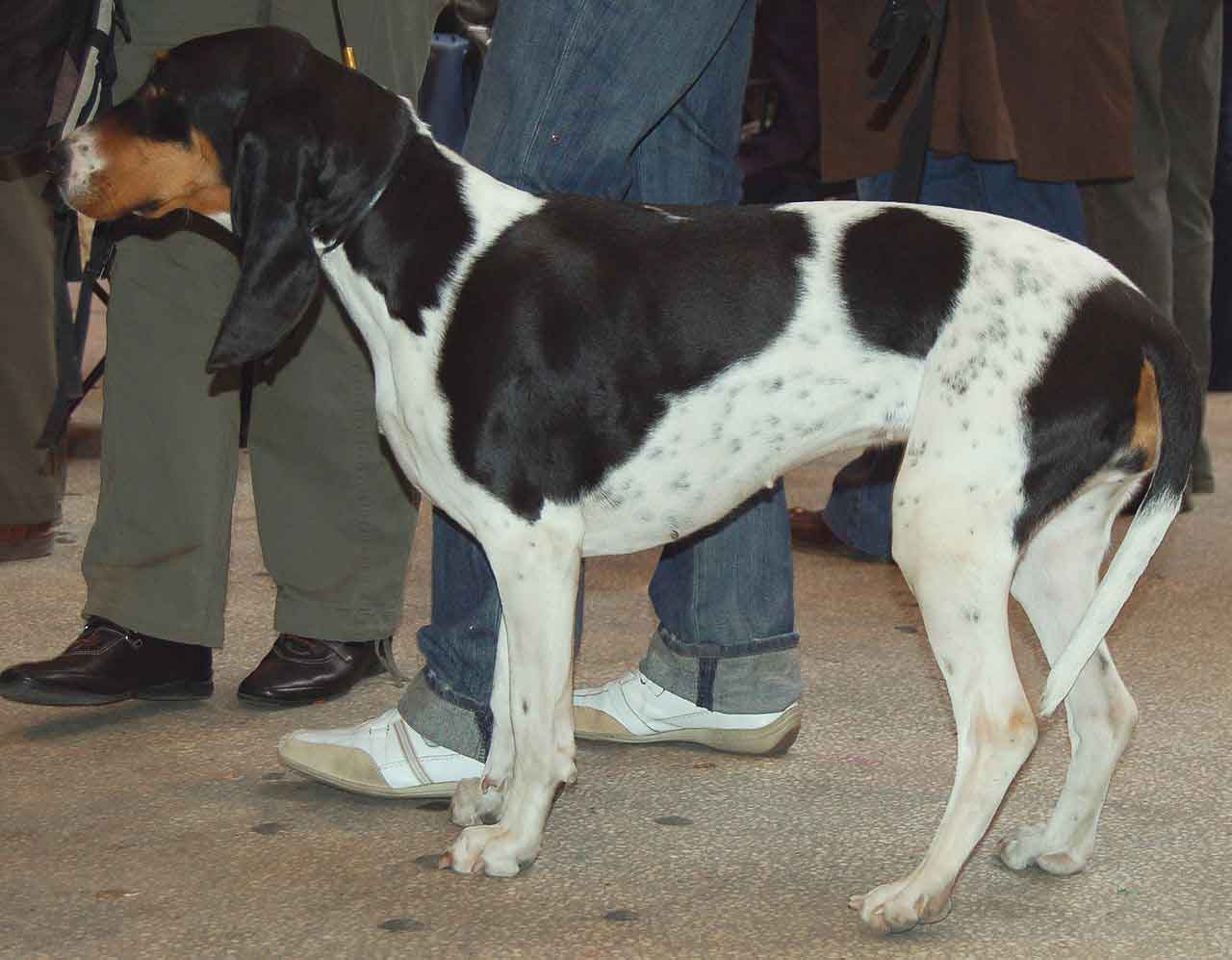
Photo: Bernese Hound during dogs show in Katowice, Poland by Lilly M, CC BY-SA 2.5, via Wikimedia Commons

Physical characteristics

In the Bernese Hound the coat is white with black spots or saddle, sometimes slightly mottled. Light to dark beige marks the upper part of the eyes, cheeks, the inner side of the ears and around the anus.

▷ Male weight: 15 to 20 kg
▷ female weight: 15 to 20 kg
▷ The size of the male: 49 to 59 cm.
▷ female size: 49 to 59 cm.

Character and skills

The Bernese Hound he is alive and passionate. Its sensitivity is valued as positively as its ease of use and its attachment to the dog handler. When you follow a clue, expansive and fluid movements are noticeable, as well as the good thrust of the hindquarters. You can feel strength, stamina and temperament, so her fine nose is closely tied to the track.

Acute smell is atypical for Bernese Hound, whose passion for hunting is so tireless that the dog handler must prevent the dog from exaggerating beforehand. Otherwise, the dog chases the prey until he catches it himself. Diligent search is desirable, but the dog, except when used in the pack, must always remain in the hand of his guide.

While the Bernese Hound he was used in his homeland mainly as a lone deer hunter, foxes and hares; In western Switzerland, wild boar hunts are also carried out with hound dogs. In France and Italy they are more likely to continue to be used for herd hunting of hare, wild boar and deer.

In Switzerland, the Bernese Hound They are mainly used for patent and district hunting. In patent hunting, three to six hunters usually form a hunting party. They are distributed among the different posts and the dogs are tied simultaneously at a previously agreed time. This promotes the independent search of each dog and also the pursuit of hares or deer as a lone hunter.. For the hunt to be successful, the hunter must know which path the game will take to be able to shoot it with a shotgun at a maximum distance of 30 m.
During a hunt on hunting ground there are large groups of up to 30 hunters. The hunt leader distributes the hunters in different positions, while a hunter goes on the hunt with all the dogs, and finally hold all the dogs at once. Here the hunt leader must know how the game flees and, therefore, distribute hunters' positions. While hunting in the hunting ground, the hare, the deer and sometimes also the fox are shot from a maximum distance of 30 m.

Off the hunt, the Bernese Hound he is a nice and quiet family member. with whom you are closely linked.

Characteristics "Bernese Hound"

Coexistence is important that you have with your new friend. Before considering the acquisition of a dog of the breed "Bernese Hound" you know certain factors. Not all breeds of dogs are apt to live in an apartment, you must take into account his character, their need for exercise, their interaction with other pets, their care and if you have small children, their level of tolerance towards them.

Adaptation โ“˜

3,0 of 5 stars (based on 1 review)

friendly dog โ€‹โ€‹โ“˜

4,0 of 5 stars (based on 1 review)

hair loss โ“˜

3,0 of 5 stars (based on 1 review)

Affection level โ“˜

5,0 of 5 stars (based on 1 review)

Need for exercise โ“˜

5,0 of 5 stars (based on 1 review)

Social need โ“˜

4,0 of 5 stars (based on 1 review)

Home โ“˜

4,0 of 5 stars (based on 1 review)

Toilet โ“˜

2,0 of 5 stars (based on 1 review)

Friendly with strangers โ“˜

4,0 of 5 stars (based on 1 review)

barking โ“˜

4,0 of 5 stars (based on 1 review)

Health โ“˜

4,0 of 5 stars (based on 1 review)

Territorial โ“˜

4,0 of 5 stars (based on 1 review)

Cat friendly โ“˜

2,0 of 5 stars (based on 1 review)

Intelligence โ“˜

4,0 of 5 stars (based on 1 review)

Versatility โ“˜

3,0 of 5 stars (based on 1 review)

Child friendly โ“˜

4,0 of 5 stars (based on 1 review)

Surveillance โ“˜

4,0 of 5 stars (based on 1 review)

joy โ“˜

5,0 of 5 stars (based on 1 review)

Videos "Bernese Hound"

Bernese Hound (02 June 2012)
Berner Laufhund
Bernese Hound - Celer Cervarius and puppy ๐Ÿ™‚
Berner Laufhund

Type and recognitions:

  • FCI CLASSIFICATION:
  • Group :
  • Section : . .

Federations:

  • FCI – Group 6: Scent hounds, and related breeds. – Section 1.2: Medium-sized Hounds. โ“˜
  • UKCScenthounds โ“˜

FCI breed standard "Bernese Hound"

Origin:
Switzerland

Date of publication of the valid original standard:
28.11.2001

Use:

It is a small game hound that hunts hares, deer, foxes and sometimes wild boars. He is an independent hunter by hunting with a bark. Searches and corners its prey with great safety even in difficult terrain.


General appearance:

It is a dog with medium height at the withers. Your body structure indicates strength and tenacity. Its slim head with long snout and long ears give it an expression of nobility.

There are four varieties of Swiss Hound :

  • Bernese Hound
  • Jura Hound
  • Lucerne Hound
  • Schwyz Hound

IMPORTANT PROPORTIONS :

โ€ข Body length : Height at withers = approx. 1.15 : 1.
โ€ข Height of the withers : chest depth = approx. 2 : 1.
โ€ข Length of the nasal shank : skull length = approx. 1 : 1.


Behavior / temperament:

Lively and passionate about hunting. Sensitive, manageable and faithful.

Head:

---

Cranial region:
  • Skull : Long, narrow, delgado, noble. Bulging skull, visible occipital protrusion. The direction of the longitudinal axis of the skull and the muzzle shows a slight divergence. No frontal groove, no folds or wrinkles.
  • Depression links (Stop) : Not too developed.

facial region:

  • Truffle : Completely black, well developed; nostrils wide open.
  • Snout : Nobly developed, narrow ; it is not square or pointed ; the muzzle is straight or very slightly convex.
  • Lips : Moderately developed, the upper lips perfectly cover the lower jaw ; slightly open corner.
  • Jaws / Teeth : Powerful jaw. Powerful scissor bite, regular and complete, that is, the upper incisors overlap the lower ones without leaving space between them and the teeth are implanted vertically in the maxilla. Pincer bite allowed. The lack of one or two PM1 or PM2 is acceptable (premolars 1 or 2) . M3 are not taken into account (molars).
  • Cheeks : Loose, non-protruding supraciliary arches.

Eyes : They are more or less light or dark brown depending on the color of the coat ; they are medium in size and slightly oval. The edges of the eyelids are well pigmented. The eyelids are well adherent. The expression is sweet.

Ears : Placed below the eye line, in the posterior part of the cranial region and never implanted in its maximum width. Its length must reach at least the tip of the nose. The pinna is not prominent. The ears are thin. He wears them down, bent and twisted ; they are rounded at the bottom and have a fine, soft coat.

Neck:

Long, elegant, with good musculature ; throat skin is loose without forming a noticeable dewlap.

Body:

  • top line : The neck, the back, The rump and tail form a harmonious and noble line.
  • Cross : Bit strong, free and elegant neck insert.
  • Back : Firm and straight. : Muscular and slightly arched.
  • Rump : Elongated, extends the line of the back harmoniously and descends gently. It is not higher than the cross. The crest of the iliac bone is not too prominent.
  • Breast : Deeper than wide, well descended, reaches to the tips of the elbows. Elongated rib cage with slightly arched ribs.
  • Bottom line and belly : Belly slightly pulled back ; full flanks.

Tail:

Inserted in the extension of the croup. It is of medium length and tapers towards the tip ; at its end it has a slight incline up ; noble. In general, it remains hanging at rest and when walking calmly, without showing an important bend ; When he is attentive or in action he carries it along the line of his back , but never resting in it nor in a curled way. Is well covered with hair, but it doesn't have a spike shape.

Tips

PREVIOUS MEMBERS :

  • As a whole : They are well muscled, thin and not heavy in appearance. Seen from the front they are parallel and from the side they look vertical ; his bones are strong with his feet pointed forward.
  • Shoulder : Long oblique shoulder blades, closely linked to the rib cage. The ideal angulation of the scapulohumeral joint is approximately 100ยฐ.
  • Arm : A little longer than the shoulder blade, placed obliquely, closely attached to the chest. His musculature is fine.
  • Elbows : Naturally glued to the side.
  • Forearm : Straight, strong, delgado.
  • Carpo : Strong, wide metacarpus : Relatively short; Seen from the front it is located on the perpendicular line of the forearm; seen from the side it is slightly inclined.
  • Front feet : Rounded, with compact fingers ; hard and rough pads ; strong nails whose color depends on the color of the coat.

LATER MEMBERS :

  • As a whole : They have strong muscles and are in a balanced relationship with the forelimbs ; seen from behind the hind legs are vertical and parallel.
  • Thigh : Long and oblique, powerful although his muscles are thin. The angulation of the coxofemoral joint is approximately 100ยฐ.
  • Knee : No inward or outward deviations. Angulation of the femoral-tibian joint approximately 120ยฐ.
  • Leg : Relatively long, thin, visible muscles and tendons under the skin.
  • Hock : Tibiotarsal joint angulation approximately 130ยฐ.
  • Metatarsus : Pretty short, placed vertically and parallel. Without spurs, except in countries, in which amputation is not allowed by law.
  • Rear feet : Rounded, with compact fingers, hard and rough pads ; strong nails whose color depends on the color of the coat.

Movement:

It is unfolded, regular, harmonious and with good scope. Has good impulse from the hindlimbs. Drive the limbs parallel and straight. The cross moves smoothly and regularly up and down, the back remains straight and the head and neck wobble slightly from side to side.

Mantle

SKIN : Fina, flexible, well adherent, whose color varies in each of the four varieties.

โ€ข Bernese Hound : Skin is black under black hair and blackish-white marbling under white hair.
โ€ข Jura Hound : She is black under black hair and lighter under tan hair..
โ€ข Lucerne Hound : She is black under black hair and lighter under blue-flecked hair..
โ€ข Schwyz Hound : It is dark gray under the orange hair and blackish-white marbling under the white hair..

HAIR : Is short, smooth, thick, very fine on the head and ears.

COLOR :

โ€ข Bernese Hound : White with black spots or a black saddle-shaped spot. Tan color from pale to intense over the eyes, cheeks, on the inside of the ears and around the anus. Sometimes very lightly splattered (black splash).

โ€ข Jura Hound : Tan with black cape, sometimes nuanced black or black with tan over the eyes, cheeks, around the anus and on the extremities ; sometimes with a small white spot on the chest ; this stain may be splattered (black or gray splashes).

โ€ข Lucerne Hound : Called blue, with a mixture of black and white hairs, intensely splashed, with black spots or a saddle-shaped spot ; tan color from pale to intense over the eyes, cheeks, on the chest, around the anus and on the extremities ; a black cape is allowed.

โ€ข Schwyz Hound : White with orange or orange "saddle" spots, sometimes with orange splashes ; an orange coat is allowed.


Size and weight:

Height to the cross :

  • Males : 49-59 cm..
  • females : 47-57 cm No tolerance.


Fouls:

Any deviation from the aforementioned criteria is considered as a fault and the severity of this is considered to the degree of the deviation to the standard and its consequences on the health and well-being of the dog..

โ€ข Rough appearance, vulgar, weak body structure.
โ€ข Discordant proportions between body length, the height of the withers and the height of the chest.
โ€ข Skull too wide, too convex or too flat.
โ€ข Stop too marked.
โ€ข Very short or very long snout, too square or pointed.
โ€ข Concave nasal bridge.
โ€ข Lack of more than two premolars PM1 or PM2. Los M3 (molars 3) are not taken into account.
โ€ข Thick lips.
โ€ข Light eyes, acute expression, non-adherent eyelids.
โ€ข Ears that are too short or flattened, thick or set very high.
โ€ข Very short neck.
โ€ข Double chin too marked.
โ€ข Saddled or arched back (carp back).
โ€ข Croup too inclined or too short.
โ€ข Rib cage not deep enough, too flat or barrel-shaped.
โ€ข Retracted belly, fallen flanks.
โ€ข Tail with poor insertion, carried too high, very bent, stooped, very coarse or spike-shaped tail.
โ€ข Extremities with bones that are too thin or in a bad position.
โ€ข Very sloping shoulders, arm too short.
โ€ข Weak carpal joints.
โ€ข Insufficient angulations of the hind limbs ; cow or barrel shaped limbs.
โ€ข Dewclaws on the hind limbs, except in countries in which amputation is not permitted by law.
โ€ข Rough coat, not smooth.
โ€ข Flaws in color and markings.

  1. Bernese Hound : Too many black splashes on the white. Tan or white on the outside of the ears.
  2. Jura Hound : Uniform color. Noticeable white patch or heavily speckled patch on the chest.
  3. Lucerne Hound : Lack of ยซ blue ยป splash. Tan on the outside of the ears.
  4. Schwyz Hound : Too many orange splashes on the white. Uniform color. White on the outside of the ears.

โ€ข Slightly fearful or aggressive behavior.

MISS PLAYOFFS

โ€ข Excessively fearful or aggressive dog.
โ€ข Atypical general appearance of the breed.
โ€ข Completely depigmented nose.
โ€ข Upper or lower prognathism, incisor arcade deviated.
โ€ข Ectropion, entropion (even if it had been operated).
โ€ข Horn tail, threaded, knotty the hook.
โ€ข Size above or below tolerance.

Any dog โ€‹โ€‹showing clear signs of physical or behavioral abnormalities must be disqualified..


N.B.:

Males should have two normal-appearing testicles fully descended into the scrotum..

Source: F.C.I - International Cynological Federation

Varieties of ยซSwiss Houndsยป

The four varieties of Swiss Hounds have their own specific hunting characteristics.:

– The Bernese Hound, with her beautiful throat ("the howler of the Jura"), demanding, mainly used for hares;
– He "Jura Houndยซ, an excellent recuperator
– The Lucerne Hound, reminiscent of Small Blue Gascony, he is an active and passionate dog that hunts deer very well;
– The "Hound of Schwyz", less widespread outside of Switzerland, is reserved for rabbits and hares.

โ–ท The world of Pets: Dogs, cats, birds, reptiles, amphibians

Serbian tricolour hound
Serbia FCI 229 . Medium-sized Hounds

Sabueso tricolor serbio

The Serbian tricolour hound it is rare even in its country of origin and to see it abroad is almost impossible.

Content

History

The Serbian tricolour hound (Srpski Trobojni Goniฤ or Trobojac) It is considered one of the rarest species that exist. This breed is one of the three types of dogs developed in the former Yugoslavia. Before the disintegration of Yugoslavia, The breed was known as the "Yugoslav Tricolor Hound", changing its name in 1991 after the dissolution of Yugoslavia.

In 1946 It was debated whether this race was independent or just a variety of the ยซSerbian houndยซ; finally given separate breed status and a first standard set. This breed was presented at the International Dog Show in Belgrade on 7 and 8 in June of 1950. The Serbian tricolour hound was recognized as a breed by the FCI the 25 in July of 1961 and the standard was published.

From the beginning, these dogs have been used as hunting companions. They are ruthless hunters of small game like foxes and rabbits. Due to his strength and fearless nature, they are also used to hunt wild boar, wild boars and other game animals. Unlike other Hounds that hunt on a leash, this breed can run freely and search for prey on its own. This independent hunter will never kneel in the face of difficult terrain. In search of prey, uses your excellent sense of smell, and with a penetrating voice will inform the hunter when he finds it.

Unfortunately, this persistent and tireless hunter is not known among hunting enthusiasts in other countries, so this rare breed is relatively unknown in other parts of the world.

Physical characteristics ยซSerbian tricolor houndยป

All three Yugoslav dog breeds evolved from Phoenician merchant dogs and have almost identical characteristics, which is why they are often mistakenly identified as the same race. What distinguishes the Serbian tricolour hound of the other two races is the white mark on the chest, which emphasizes the striking print of dark red hair in the background and a black cloak.

The coat of the Serbian tricolour hound it is waterproof, short and bright. Slightly thick with a well developed undercoat, spreads well throughout the body. Both in the area of รขโ‚ฌโ€นรขโ‚ฌโ€นthe rear thigh and in the lower part of the tail the coat is slightly elongated.

The coat of the Serbian tricolour hound has a deep red or fox red background color, of which a saddle or black fur stands out. The black partly reaches the head of the dog and forms two dark marks on the temples. White forms a full or partial collar under or around the neck.

On the dog's head white is pronounced like a cutout. On the muzzle it can also be seen as a spread fire. If the dog has a white mark on its chest, this is permissible, although it extends to the end of the sternum and reaches both the belly and the interior of the hind limbs.

The tip of the tail can also be completely white. But, total white coat should be less than one third of total body. The Serbian tricolour hound also has medium length ears, high, found near the cheeks.

The height the male will of 45 to 55 cm and in the female of 44 to 54 cm., the weight of Serbian tricolour hound will of 20 to 25 kg.

The life expectancy of the Serbian tricolour hound, round the 12 years.

Character and aptitudes ยซSerbian tricolor houndยป

The breed is characterized by an intense temperament, always reliable and very loyal in his relationship with his pack. But, the Serbian tricolour hound also has a very friendly nature. On the one hand, dogs are suitable as watchdogs. On the other hand, can be used for dressage.

The Serbian tricolour hound is hard-working and optimally equipped to work even on difficult terrain. Due to its attentive and excellent eyes and its high performance, is an ideal hunting dog.

At home he behaves warmly and calmly. But, as soon as it is in working mode, is extremely energetic and very persistent.

If you get a Serbian tricolour hound, you will get a breed that will be a friendly and obedient companion dog. He always tries to please his owner. But, the prerequisite for this is that it is sufficiently busy when not used for hunting.

ยซSerbian tricolor houndยป images

Videos ยซSerbian tricolor houndยป

Type and recognitions:

  • FCI CLASSIFICATION:
  • Group :
  • Section : . .

Federations:

  • FCI – Group 6: Scent hounds, and related breeds. – Section 1.2: Medium-sized Hounds. โ“˜
  • AKCHound โ“˜

FCI breed standard "Serbian tricolour hound"

Origin:
Serbia, Montenegro

Date of publication of the valid original standard:
26.11.2002

Use:

Scent hounds


General appearance:

Medium-sized dog with a robust build. He has a great temperament, He is impetuous and energetic.

IMPORTANT PROPORTIONS:

โ€ข Body length, taken from the tip of the shoulder to the tip of the buttock, exceeds in a 10% the height at the withers.
โ€ข The length of the head corresponds to the 45% the height at the withers.


Behavior / temperament:

Selfless, friendly, hot-tempered; self-confident, demonstrates remarkable tenacity.

Head:

Longheaded, thin; the upper lines of the skull and nasal passage are divergent.

Cranial region:
  • Skull: Seen from the front and profile, It is slightly bulky; the frontal furrow is pronounced. The occipital Protuberance is little developed. The distance between the ears ligament corresponds to that between depression slightly and the occipital Protuberance. The superciliary arches are little spoken.
  • Depression links (Stop): It is not very pronounced.

facial region:

  • rufa: Well-developed and always black.
  • Snout: Cuneiform, shorter than the skull; the proportion being searched between the length of the muzzle and the skull is of 8,5: 10. It progressively decreases depression slightly with truffle. Cano-nasal is straight. The lateral lines of the muzzle are convergent.
  • Lips: Thin, together, moderately developed, fairly short and rounded at the tip of the snout. The edge of the lips should be black. The upper lip slightly exceeds the lower; the commissure is firm.
  • Jaws / Teeth: The jaws are strong and have a scissor-shaped joint., uniform and complete. Is accepted in the form of clip joint.
  • Cheeks: Flat.

Eyes: Almond biscuits, almost oval, medium-sized, in slightly oblique position. The edge of the eyelid pigmentation is dark (preferably black). The color of the iris is as dark as possible.

Ears: High are presented; medium length, pendants. Close to cheeks, they are moderately wide. The tip is slightly oval shaped. The ears are more thin than thick.

Neck:

Strong, of a length which corresponds almost to the head. The top line is slightly arched. The neck forms an angle with the horizontal of 45 a 50ยฐ.

Body:

Rectangular, its length exceeds of a 10% the height at the withers.

  • Top margin: Straight.
  • Cross: It is little pronounced.
  • Back: Well muscled, straight, strong, elongated.
  • Pork loin: Well muscled. Its length is almost equal to that of the rump.
  • Rump: Slightly inclined (of 20 to 25% in relation to the horizontal), well muscled, wide.
  • Breast : Strong. Its height corresponds to the 50% the height at the withers; Its perimeter exceeds this one by a 20%.
  • Bottom margin and belly: The oval tip of sternum is slightly outgoing. The belly is slightly raised.

Tail:

Extends the line of the rump. It is thick in the birth and decreases gradually towards the end, arriving at the level of the Hock. Slightly stooped upwards, appears lower than the line of the back. It is covered by abundant hair.

Tips

PREVIOUS MEMBERS:

  • In general: Strong, straight, well muscled, parallel.
  • Scapula: Approximately of the same length as the arm, muscular, solid, well attached to the chest wall. This forms an angle of 45 at 50ยฐ relative to the horizontal.
  • Arm: Well glued to the body, strong, muscular, approximately of the same length as the scapula. In relation to the horizontal, forming an angle of 45 a 55ยฐ.
  • Elbow: Well glued to the body, solid; the height from the ground to the elbow corresponds to the 50% the height at the withers.
  • Forearm: Straight, strong, well muscled.
  • Carpo: Solid.
  • Metacarpus: Strong, slightly oblique (up to 15ยฐ relative to the vertical).
  • Front feet: Jack's foot, with fingers together and solid. The nails are strong, preferably dark black. Bearings, Dark they are well developed.

LATER MEMBERS:

  • In general: Strong, straight, well muscled, parallel.
  • Thigh: Strong, well muscled, straight.
  • Babilla: Solid, parallel to the plane of the body. With an angle of about 120ยฐ.
  • Leg: Well muscled, of a length approximately equal to the thigh.
  • Hock: Strong, its angle measured ones 135 a 140ยฐ.
  • Metatarsus: Strong, almost vertical.
  • Rear foot: A little longer than the previous foot; fingers together and solid; fingernails, dark black, they are strong. Plantar bearings are resistant and elastic, dark colored.

Movement:

Elongated step, extended and vigorous strides. Preferred movement is loose trot, uniform, harmonious and well sustained.

Mantle

SKIN: Elastic, well Pigmented; adheres well to the body.

HAIR: Short, abundant, bright, a bit dense, taut on the body ; the inner layer of hairs is fairly well-developed. The hair is a little longer on the back edge of thighs and the underside of the tail.

COLOR: The base color is a deep red or reddish color Fox, with a blanket or Chair black. Black may reach head, where it forms black marks on temples.

White, star pattern on the head and a stripe that extends over the snout, It forms a partial or full collar underneath and around the neck. A white mark on the front part of the chest is allowed, This can be extended up to the tip of the sternum and reach the belly and inside of legs. The tip of the tail may be white. White must not exceed the third of the surface of the body.


Size and weight:

Height to the cross.

  • Males: 45 to 55 cm., ideal size 51 cm..
  • females: 44 to 54 cm., ideal size 49 cm..


Fouls:

Any deviation from the above mentioned criteria is considered an absence and severity of this refers to the degree of deviation to the standard and its impact on the health and welfare of the dog.

MISS PLAYOFFS

  • Aggressive or fearful dog.
  • Upper or lower prognathism.
  • Absence of a tooth, the absence of two premolars is acceptable 1 (PM1).
  • Different color eye.
  • Body too long.
  • Threaded queue, high or threaded insert on the back. Tip of tail hook-shaped or diverted laterally.
  • White markings with the background of the coat color spots.
  • White color that is more than one third of the surface of the body.
  • Presence of a fourth color.
  • Top or bottom size prescribed by the standard.
  • Any dog โ€‹โ€‹showing clear signs of physical or behavioral abnormalities must be disqualified..


N.B.:

Males should have two normal-appearing testicles fully descended into the scrotum..

TRANSLATION: IRIS Carrillo (Puerto Rico Kennel Federation).

Source: F.C.I - International Cynological Federation

Alternative names:

1. Serbian: (ัั€ะฟัะบะธ ั‚ั€ะพะฑะพั˜ะฝะธ ะณะพะฝะธั‡, srpski trobojni goniฤ or ั‚ั€ะพะฑะพั˜ะฐั†, trobojac) Yugoslavian Tricolour Hound (English).
2. Chien courant yougoslave tricolore (French).
3. Original name: (Jugoslavenski Trobojni Gonic), Trikolor Laufhund, Dreifarbiger Jugoslawischer Laufhund (German).
4. in Serbian: (srpski trobojni gonic) (Portuguese).
5. En servio: srpski trobojni goniฤ o trobojac, Sabueso yugoslavo tricolor (espaรฑol).

Other hounds:

Great Anglo-French Tricolour Hound

Great Anglo-French Tricolour Hound

The Great Tricolor Anglo-French Hound is considered rare, very little spread outside of France and currently little ...
Spanish Hound

Spanish Hound

The Spanish Hound is described in the "Book of hunting" of King Alfonso XI (1312-1350). Content History "Spanish Hound" ...
Great Anglo-French White and Black Hound

Great Anglo-French White and Black Hound

The Great Anglo-French Black and White Hound can be used both in packs and individually.. History Content This breed is ...
Grand Griffon Vendรฉen

Grand Griffon Vendรฉen

The Great Vendean Griffon is a dog of great character, beautiful cloak and dreamy look. It's a pity his time ...
Hellenic Hound

Hellenic Hound

It stands out for its particularly harmonious voice. Contents History The Hellenic Hound has ancient origins, since their ancestors were already ...
Italian Rough-Haired Hound

Italian Rough-Haired Hound

The Italian Wirehaired Hound is reserved, wise, calm and thoughtful in his work. Contents History The Italian Hound ...

โ–ท The world of Pets: Dogs, cats, birds, reptiles, amphibians

Istrian Shorthaired Hound
Croacia FCI 151 . Medium-sized Hounds

Istrian Shorthaired Hound

There is also a "Wire-Coated Istrian Hound" of slightly larger size..

Content

History

The Istrian Shorthaired Hound is an ancient breed of hound dog originating from Istria, whose origins are lost in dark prehistory. The frescoes (1474, Chapel of the Virgin Mary in Beram, near Pazin), the paintings (including Titian, first half of the 18th century), and the chronicles (1719, Bishop Bakic of Djakovo) bear witness to it.

The Istrian Shorthaired Hound, highly appreciated for its excellent hunting qualities, was sold from Istria to neighboring countries. The first inscriptions in the herd book date from 1924, the breed was recognized by the FCI already in 1949, but the standard wasn't published until 1973.

Today, the Istrian Shorthaired Hound it is quite common in and around Istria and is still very popular with hunters due to its excellent characteristics.

Photos:

1 – Istrian Shorthaired Hound at a dog show in Zadar, Croatia (CACIB 2006.) by Mirta12, CC0, via Wikimedia Commons

Physical Characteristics Istrian Shorthaired Hound

The Istrian Shorthaired Hound he is a medium sized running dog, who appears elegant and distinguished in his build and movements. The height at the withers in both males and females is between 44 and 56 cm., the weight of the dogs is 14 to 20 kg, the optimum is 18 kg.

The coat of these dogs is thin, dense and, as the name reflects, short. This short-haired variant is somewhat smaller than the wire-haired version of the Istrian Hound.. The basic color of the coat is white with orange yellow tints. As a whole, the coat is shiny.

The life expectancy of dogs is 12 – 14 years.

Character and skills Istrian Shorthaired Hound

The characteristic of Istrian Shorthaired Hound it's his distinctive hunting instinct. The dogs have always been used as hunting dogs and still show corresponding characteristics today.. This includes his liveliness and his passion for hunting itself.. Like most hunting dogs, these dogs have little instinct for protection and are therefore quite unsuitable for guarding and protection tasks.

While the Istrian Shorthaired Hound be able to live your hunting instinct and feel fully occupied, has a gentle and friendly disposition. It is obedient and loyal to its owner. Your posture is nice.
It also, these dogs are smart and insightful, so they must be challenged in this regard as well. If the dogs are not kept according to their nature, they often get stubborn and sometimes even start poaching.

Keeping an Istrian Shorthaired Hound

The Istrian Shorthaired Hound It, by its nature, first of all a tracking dog. It is particularly suitable for hunting foxes and hares and is used almost exclusively for this purpose in its native country.. It is important that the dogs of this breed are kept by a hunter and encourage them to go hunting and take the trail., so it should be considered as an example for animals. Despite your gentle nature, they are not suitable as pure family dogs, as their pronounced hunting instinct would be neglected too.

Images "Istrian Shorthaired Hound"

Photos:

2 – Luri the Istrian Shorthaired Hound in a dog shelter in Zadar, Croatia by Mirta12, CC BY-SA 3.0, via Wikimedia Commons
3 – Luri the Istrian Shorthaired Hound in a dog shelter in Zadar, Croatia. He was underweight when the photo was taken by Mirta12, CC BY-SA 3.0, via Wikimedia Commons
4 – Luri the Istrian Shorthaired Hound in a dog shelter in Zadar, Croatia. He was underweight when the photo was taken by Mirta12, CC BY-SA 3.0, via Wikimedia Commons
5 – Istrian Shorthaired Hound Luri in a dog shelter in Zadar. When the photo was taken, he was underweight by Mirta12, CC BY-SA 3.0, via Wikimedia Commons
6 – Istrian Shorthaired Hound puppies at a dog show in Zadar, Croatia (CACIB 2006.) by Mirta12, CC BY-SA 3.0, via Wikimedia Commons

Videos "Istrian Shorthaired Hound"

Type and recognitions:

  • FCI CLASSIFICATION:
  • Group :
  • Section : . .

Federations:

  • FCI – Group 6: Scent hounds, and related breeds. – Section 1.1: Large-sized Hounds. โ“˜
  • UKCScenthound Group โ“˜

FCI breed standard "Istrian Shorthaired Hound"

Origin:
Croatia

Date of publication of the valid original standard:
3.11.2014

Use:

tireless hound, especially suitable for hare hunting, foxes and wild boars, although it can also be used as a tracking dog.


General appearance:

It is noble looking, with its snow white fur interspersed with yellow-orange spots. The hair is satin and fine. The head is long, narrow and thin. The body is agile. The tail is thin and slightly curled, Sabre-shaped.
This hound barks persistently, usually in a high pitched tone.

IMPORTANT PROPORTION : The length of the body must exceed the withers by a maximum of 10%.


Behavior / temperament:

Sweet character, docile, quiet, very attached to his master. Is energetic, and very passionate while hunting.

Head:

The length of the head fluctuates between 20 and 24 cm.. The forehead has no folds.

Cranial region:
  • Skull : In profile, the occipital protrusion is pronounced. The forehead is slightly arched, presenting a smooth transition towards the nasal bridge, which is straight. View from the top, the forehead is long and rather narrow, with an apparent frontal groove.
  • Depression links (Stop) : Outfit, no sharp sinking.

facial region:

  • Truffle : It is black, or at least brown. The nostrils are wide open.
  • Snout : It is long, width at the base, gradually tapering towards the limb. The nasal helm is straight.
  • Teeth : They're strong. The joint is in the form of scissors, uniform. Teeth are complete.
  • Eyes : They have an oval shape; they do not appear nor sunk, nor protruding. The iris should be as dark a color as possible. The eyelids are black or brown. The look is clear and expressive.
  • Ears : They are fine, with a broad ligament, implanted slightly above the horizontal line of the eyes; become narrower at the end. They are considered long, when carried forward along the bridge of the nose, they reach the canines; they are very long, when the canines exceed. They must be at least semi-long and reach the zygomatic arches.

Neck:

The upper profile is slightly arched in the nape region. The junction with the head is perceptible in the posterior part of the occipital protuberance. The neck is obliquely inserted into the trunk. Neck contour is compact. From the occipital protuberance to the withers, the neck measures of 15 to 20 cm.. The skin is stretched, no jowls or folds

Body:

The upper margin gently descends from the withers towards the rump.

  • Back : It is wide, straight and muscular.
  • Pork loin : Wide and short.
  • Rump : Long and wide; slightly inclined or horizontal. It is longer in females than in males. In the region of the rump the height is about one finger less than in the region of the withers. The haunches are barely noticeable.
  • Breast : Well inclined; reaches at least to the elbow. Normally, its circumference exceeds the height at the withers by some 12 cm.. The ribs are rounded. The front of the chest is well developed, but the tip of the sternum is barely visible.
  • Belly and flanks : The superior margin rises gently from the sternum to the inguinal region, therefore, the belly is slightly raised.

Tail:

Thick at its base, diminishing in its limb. The finer the tail, the greater the noble aspect of the dog. It is high implantation, of medium length and does not exceed the level of the hock. It comes slightly curled up.

Tips

PREVIOUS MEMBERS :

  • Shoulder pads : Long, oblique and well attached to the chest.
  • Elbows : Well applied to the body.
  • forearms : Perfectly vertical, well muscled.
  • Carpi : They are barely distinguishable from the forearm.
  • Metacarpus : They are straight and short. They can be slightly inclined, but the angle they form with the vertical never exceeds 10ยฐ.
  • Front feet : They look more like a cat's foot than a hare's. They are light, with fingers together. The pads are arched and firm; nails are solid.

LATER MEMBERS : Seen from the back, thigh, Leg, the hock tendon and the metatarsal are on the same vertical.

  • Thigh : Is short, wide and muscular.
  • Knee : The kneecap is wide, set high.
  • Legs : long, oblique and well muscled.
  • Hock : It's compact.
  • Metatarsals : Short, vertical or very slightly inclined, forming an angle of 10ยฐ to 20ยฐ with the vertical.
  • Hind feet : Similar to the forwards. However, they are a little longer.

Movement:

It is agile, uniform, loose.

Mantle

SKIN : Is elastic, is well applied over the entire body. Does not form folds. It is a pinkish color.

HAIR : It is flat, fine and shiny. Sometimes longer on the back of the thighs and on the inside of the tail, but this characteristic is not valued.

COLOR : The background color is snow white. In principle, the ears are orange; color that extends beyond the base of the ears and covers both sides of the forehead to the eye region, which gives the face its characteristic mask appearance. We mean a star if, on the upper part of the forehead there is a more or less large spot of the same orange color. The ears may also be dotted with orange spots, which is highly appreciated and considered as a sign of purebred. Yellow-orange spots can be seen in the form of specks or strips spread over any part of the body, but more often in the region of the tail ligament. They should never be so numerous as to dominate the white background color. The tone of the spots should be accentuated, never pale, nor dark, not even brown, which would show signs of a mixture of races. The presence of a third color is not allowed, not even in some hairs. The coat may be uniform white, without any stain.


Size and weight:

Height to the cross : It is of 44 to 56 cm..

Ideal size

  • for males : 50 cm.,
  • for females : 48 cm..

Weight : In an adult male it is about 18 kg.


Fouls:

Any deviation from the aforementioned criteria is considered as a fault and the severity of this is considered to the degree of the deviation to the standard and its consequences on the health and well-being of the dog..

MINOR FAULTS

โ€ข Spots with partial depigmentation on the nose or on one eyelid. Nose with a very clear pigmentation.
โ€ข Convex or slightly sunken back.
โ€ข Croup too oblique.
โ€ข Thin or too solid belly.

MISS PLAYOFFS

โ€ข Aggressive or fearful dog.
โ€ข Lack of proportion between body length and height at the withers.
โ€ข Head too short.
โ€ข Spots with abundant depigmentation, or total depigmentation of the nose.
โ€ข Muzzle too short, very pointed or obtuse.
โ€ข Upper or lower prognathism.
โ€ข Incorrect joint.
โ€ข Different colored eyes.
โ€ข Ligament of the ears set very high.
โ€ข Curled tail, deviated to one side or corkscrew. Cropped tail.
โ€ข Elbows too far apart.
โ€ข Twisted forearms.
โ€ข Pasterns too oblique.
โ€ข Hair that is too long.
โ€ข Any color other than yellow-orange.
โ€ข Size above or below the norms established by the standard.

Any dog โ€‹โ€‹showing clear signs of physical or behavioral abnormalities must be disqualified..


N.B.:

Males should have two normal-appearing testicles fully descended into the scrotum..

Source: F.C.I - International Cynological Federation

Alternative names:

1. Original name – Istarski Kratkodlaki Goniฤ (English).
2. Chien courant d’Istrie ร  poil ras (French).
3. Istarski Kratkodlaki Goniฤ (German).
4. Istarski kratkodlaki gonic (Nome original) (Portuguese).
5. Nombre original – Istarski Kratkodlaki (espaรฑol).