 FCI 204 . Medium-sized Hounds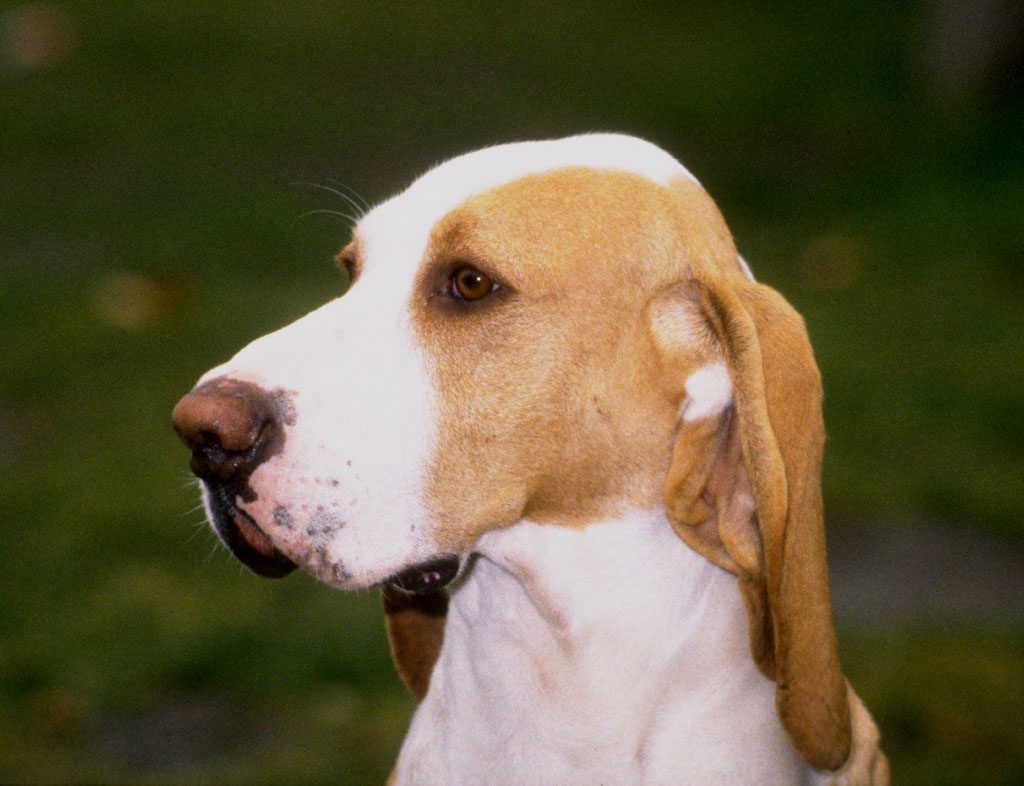
Content |
|---|
HISTORY «SPANISH HOUSE»
Already in the fourteenth century, a dog of this breed was described by King Alfonso XI. But also other documents from this time referred to its existence.
Due to the increasing isolation in the Iberian Peninsula, the breed was kept completely pure and there were no crosses with other dog breeds.
Almost with all likelihood we are faced with a race descended from «Canis segusius«, tracking dog used by Celtic peoples settled in central France.
The first description of peninsular hounds appears in the “Book of the Montería of Alfonso XI”, King of Castile, written during the second half of the s. XIV, that in his chapter 39 talk about "which doneness should be the hounds and the sabuesas”.
Over the years the Spanish Hound went repeatedly hunting small game, like hares, rabbits or foxes. He often hunted together with other dogs in the pack.
It also, was used to recover the shooting game. But also in the police force he soon had a very important task.
Full of enthusiasm for action, this spunky breed of dog proved to be a tracking dog, that already chased many trails. Due to his enormous eagerness to work and his resistance, was able to help clear up all the cases and make his teachers proud.
Still used for those tasks, preferably in your home country, Spain.
Physical characteristics "Spanish hound"
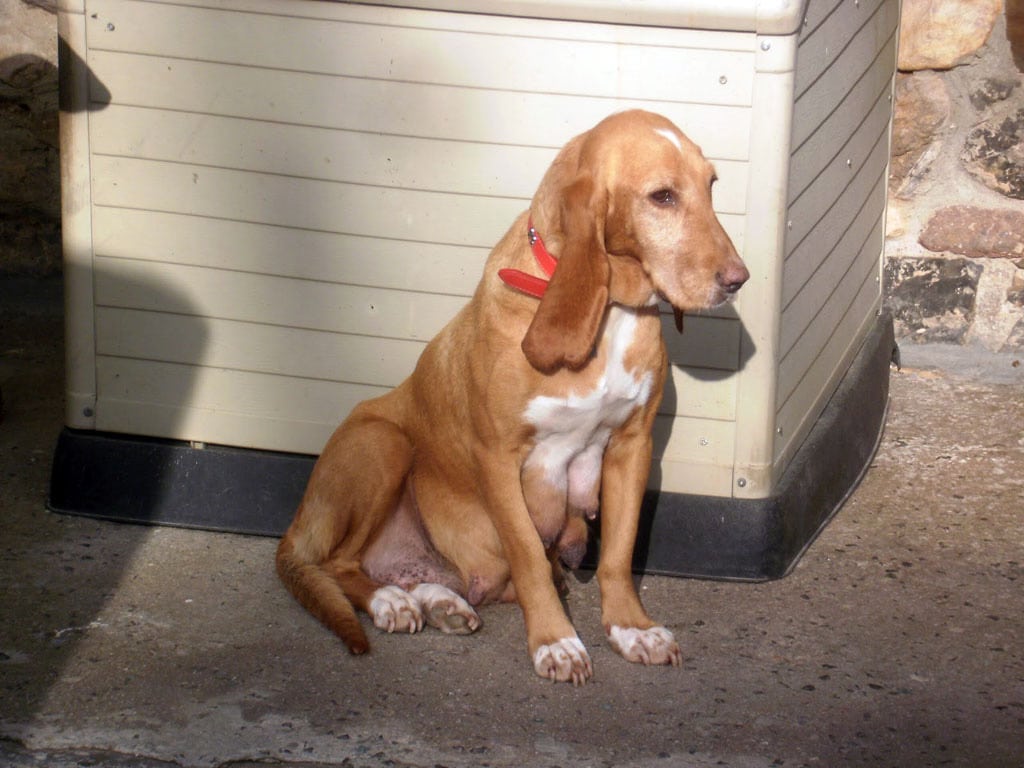
The coat of the Spanish Hound often a bit reminiscent of a cow. Often has a white background on which there are various dots and patterns.
These can be black, White, red or also multicolored. Most of the back is affected by color patterns, occasionally also the sides.
Its pelage is short, thin but nevertheless dense. Doesn't have much underlayer, making it suitable for allergy sufferers.
The Spanish Hound It belongs to the category of "medium -sized dogs". Males reach a shoulder height of up to 57 cm., the females up 53 cm.. The average weight is between 20 and 25 kg, females tend to be somewhat lighter.
Character and skills "Spanish hound"
The Spanish Hound he is a fearless hunter, eager and reliable, that nothing is lost so fast. Has an enormous need to move, who has to live regularly.
It is a minor hunting dog, which is also used for wild boar hunting, roe deer, the deer, the wolf or the bear, because in addition to being very skilled in the search, I have a determination out of the ordinary. He is also gifted with the trail of blood. Excels in hare hunting, in which he transmits to the hunter the development of the search with his voice modulations.
As a member of the family it is not very suitable, because the rhythm of life in a big city is not made for this active breed of dog. Under no circumstances do you want to be alone for hours every day.. Daily walks are mandatory with him.
He is friendly and loyal to his human being and at home he is quite calm. And you need this calm even if you have been in nature for many hours.
How do you want to find peace and quiet within the four walls of a home?, does not get along with young children. The over-excitement of children does not come at all well. But if your freedom is granted, he soon becomes a loving friend to them too. But there are certain limits!
Suspicion of strangers, so it is also a good watchdog.
The Spanish Hound is very independent and despite unconditional loyalty to his humans, always has a mind of its own.
This is why it is so important that you get the right education from the start. This must be done consistently, but nevertheless with love and patience.
Maintenance and care of the "Spanish hound"
In a narrow city apartment, that possibly on a 5th floor, a Spanish Hound has as much to look for as an elephant in a china shop. I could possibly come here in the long run to a similar result. If our Scent hound you don't have your usual workload, it may be that he destroys the furniture for lack of challenge.
A house with a large garden is an absolute must for this energetic hunter.. At the same time this aspect also relieves the owners, if our dog can let off steam regularly in the garden. Then he is already more relaxed and calm when he goes out for a walk, although he still has a lot of energy. Long walks are absolutely necessary for him.
Care:
His short coat does not require much care and his health is generally very good.
However, there must be a competent veterinarian who regularly deals with tick treatments, deworming, caring for teeth and claws, your anal glands and also from routine blood tests.
Characteristics "Spanish Hound"
Coexistence is important that you have with your new friend. Before considering the acquisition of a dog of the breed "Spanish Hound" you know certain factors. Not all breeds of dogs are apt to live in an apartment, you must take into account his character, their need for exercise, their interaction with other pets, their care and if you have small children, their level of tolerance towards them.
Vitality4,0 of 5 stars (based on 1 review)
|
Ladrador3,0 of 5 stars (based on 1 review)
|
Vigilance instinct2,0 of 5 stars (based on 1 review)
|
|---|---|---|
Protection instinct1,0 of 5 stars (based on 1 review)
|
Relationship with children3,0 of 5 stars (based on 1 review)
|
Relationship with dogs4,0 of 5 stars (based on 1 review)
|
Learning capacity3,0 of 5 stars (based on 1 review)
|
Need exercise4,0 of 5 stars (based on 1 review)
|
Friendly with strangers2,0 of 5 stars (based on 1 review)
|
Health4,0 of 5 stars (based on 1 review)
|
Friendly with cats2,0 of 5 stars (based on 1 review)
|
Intelligence3,0 of 5 stars (based on 1 review)
|
Images of the "Spanish hound"
 enlamira
 tuamigoelperro
 moldeandolaluz
 tuamigoelperro
 puppiesforsale
 difusionesanimal
 difusionesanimal
 prosabuesos
Videos of the "Spanish hound"
 Spanish hound puppies
 Dogs life: Prog. 32 1/2- Spanish Hound- POA Salta national tournament
 Spanish Hound.
 Spanish Hound
Type and recognitions:
- FCI CLASSIFICATION: 204
- Group 6: Scent hounds, and related breeds.
- Section 1.2: Medium-sized hound-type dogs.. With proof of work..
Federations:
- – FCI – Group 6: Scent hounds, and related breeds. – Section 1.2: Medium-sized Hounds. ⓘ
- – The Royal Canine Society of Spain. ⓘ
FCI breed standard "Spanish Hound"
Use:
Small game trail dog, though he doesn't despise the big game trail, either wild boar, deer, corzo, fox wolf or bear. The hunter, informed by voice (beat or beat) of the dog and its modulations, you will know the development of the trail hunt and its incidents such as old or recent trail, double trail, ″ Stop beat or call dead ″. The Spanish hound is the great specialist in the Hunting of Liebres ″ Vuelta ″ and is extremely effective in the Rastro of Blood.
General appearance:
It is a medium-sized dog, eummetric and longilíneo. With a beautiful head and long ears. Highlights the high thoracic perimeter of the race and the longitudinal diameter that widely exceeds the raised to the cross. Compact skeleton and strong members; fine hair, smooth and stuck. Fresh look, sad and noble.
IMPORTANT PROPORTIONS: Longylínea Structure.
• Longitudinal diameter widely (7 - 10 cm.) higher than the raised to the cross.
• Skull-hocic relationship = 1:1, that is, equal in lengths.
Loving and meek, it is a beautiful animal, that in combat with big game pieces proves to possess a rare bravery and courage.
Head:
Harmonica, provided with the rest of the body and long. Divergent skull-facial lines. The joint facial craneo-region viewed from above should be very uniform and elongated, without giving feeling of pointed snout.- Skull: Average width, being higher in males. Convex profile. The width of the skull should be equal to its length. Seen from the front, It should be vaulted. Simply marked occipital Crest.
- Depression links (Stop): Soft, little sharp.
facial region:
- Truffle: Grand, wet and wide and wide development windows. Its color ranges from a light brown to a deep black, always accompanying the color of mucous membranes.
- Snout: Straight profile, admitting light subconvexidad in the terminal section. Seen from above it appears moderately rectangular, decreasing its width in direction to the truffle.
- Lips: The superior must cover decidedly lower being loose and detached with moderation. The bottom is marked labial commissure. Mucous membranes must be of the same color that the truffle. Palate of color of mucous membranes with marked ridges.
- Jaws / Teeth: Scissor bite. Teeth white and healthy; Canine well-developed; There are all the premolars.
Eyes: Medium, macaroons, Hazelnut dark color. Sad looking, noble and intelligent. The color of the truffle pigmented eyelids; mucous membranes attached to the eyeball, admitting Dim relaxation resting.
Ears: Large, long and falls. Of soft texture, rectangular and round tip; They are inserted below the line of the eyes and hang freely in Tirabuzón. Without exerting traction have widely exceed the truffle. Venous network visible and a flor de piel.
Neck:
Conical trunk, wide and powerful, muscular and flexible. Thick and very loose skin, that is marked and released but not exaggerated dewlap.Body:
Strongly rectangular, very strong and robust, of a large chest perimeter that must be superior in 1/3 to the height at the withers: height at the withers 3, chest perimeter 4.
- top line: Straight with slight concavity on the back and convexity on the spine, Race characteristics, but not ensillamiento.
- Cross: Ahead and simply marked.
- Back: Powerful, wide, accused length.
- Pork loin: Very long, width, powerful and slightly raised.
- Rump: Powerful, wide. With a tendency towards horizontal. The height at the Croup should be equal to or less than the height at the withers: taking into account the existing racial trend to be elevated, will be allowed slightly.
- Breast : Highly developed, width, deep and high, widely reaching the elbow. Tip of the sternum marked. Ribs with intercostal of broad and rounded spaces, you are home a large rib cage.
- Belly and flanks: Little collected belly, very notable and descended flanks and ample sidewalls.
Tail:
Thickness birth and average insertion. Strong and full of very short hair forming a small brush at the tip. At rest, your port is light, curved and low beyond the Hock; in work and movement, is high in Sabre without excess and mostra a continuous lateral movement of jig. Never straight up or resting on the rump.Tips
PREVIOUS MEMBERS: Perfectly Plumb, straight, parallel; They give short and tendons are clearly appreciated. The length of the forearm must be equal to the shoulder.
- Strong bone; with powerful Metacarpus and well bonded to the thorax elbows.
- Shoulder: Oblique scapula, rounded, muscled and similar to the arm length. Scapular-humeral angle close to 100 degrees.
- Arm: Strong.
- Elbows: Stuck to the chest. Humer-Radial Angle near the hundred and twenty degrees.
- Forearm: Straight, short and well poised. Strong bone.
- Metacarpus: Strong bone and powerful. Seen little laterally inclined.
- Previous feet: Of cat. Tight toes, high and strong phalanx. Hard and strong nails; spacious, resistant pads. Interdigital membrane moderate and provided with fine hair.
LATER MEMBERS: Powerful, muscular and excellent angles. Correct limbs, hocks without deviations, long metatarsus and strong feet. Provide your pet force, agility and thrust required for slopes land very rough and with notable drop-offs.
- Thigh: Strong and muscular. Coxal-femoral angle close to 100 degrees.
- Leg: Half length, muscular. Stifle-tibial angle close to fifteen hundred grades.
- Hocks: Well marked, with clear appreciation of the tendon. Angle of the open Hock, close to one hundred twenty degrees.
- Hind feet: Of cat, slightly oval. More elongated than the previous feet. Presence or not of spurs that are usually simple, rarely double, admitting your amputation.
Movement:
Preferred movement is the trot, still a long, sustained and economic, without any tendency to laterality or amble.
Particular attention to elbows and hocks will be presented during the movement. Exist during the March natural trends in the race walking sniffing with low head.Mantle
SKIN: Highly elastic, thick, pink, by all zones, forming sometimes frontal wrinkles in head position low.
HAIR: Bushy, short, fine and glued. Distributed by the body to interdigital spaces.
COLOR: White and orange, with a predominance of one or another color and distributed in well-defined irregular spots and no speckle. The orange color can range from a tone lighter (lemon) to the strong reddish brownish.
Size and weight:
Seen in this race a high index of sexual dimorphism that is reflected in the difference in size between males and females, being females significantly more low and less girth.
Height to the cross:
- Males: of 52 to 57 cm..
- females: of 48 to 53 cm..
A centimeter of lodging tolerance is admitted for copies of excellent proportions.
Fouls:
Any deviation from the aforementioned criteria is considered as a fault and the severity of this is considered to the degree of the deviation to the standard and its consequences on the health and well-being of the dog..
- Profile of the acarnerado snout, but without excess.
- Bite in clamp; absence of any premolar.
- Eyelids so relaxed cause little visible conjunctiva.
- Weak and distorted upper line during march.
- Elevation of the region of the spine, Although permitted, It should not be never exaggerated.
SERIOUS FAULTS
- Frail.
- Snout blunt or pointed in excess.
- Moderate upper prognathism. Absence of canine or Premolar, not due to trauma.
- Entropion or ectropion.
- Amputated ear.
- Upper lines.
- Height at the Croup very higher than the height at the withers.
- Scarce thoracic perimeters.
- Too high or resting on the rump tail. amputated tail.
- Wrong limbs, weak or deviant.
- Outgoing elbows during the March or in station.
- Cow hocks.
- Lateral braceos during operation.
- Wavy hair, hard or mediumlength.
- Barks.
- Unbalanced character, excessive shyness, nervousness or aggressiveness.
MISS PLAYOFFS
- Aggressive or fearful dog.
- Longitudinal diameter equal to or less than the height at the withers.
- Split nose.
- Excessive upper prognathism. Any degree of lower prognathism.
- Hard or long hair. Woolly hairs indicating miscegenation.
- Copies tri-color or with brands heat in beak and members.
- Any dog showing clear signs of physical or behavioral abnormalities must be disqualified..
Males should have two normal-appearing testicles fully descended into the scrotum..
Source: F.C.I - International Cynological FederationAlternative names:
1. Spanish Scenthound (English).
2. Sabueso español (French).
3. Sabueso Español (German).
4. Sabueso Español (Portuguese).
5. Sabueso Asturiano, Sabueso Navarro, Sabueso Santanderino, Sabueso Alavés (español).