โ–ท The world of Pets: Dogs, cats, birds, reptiles, amphibians

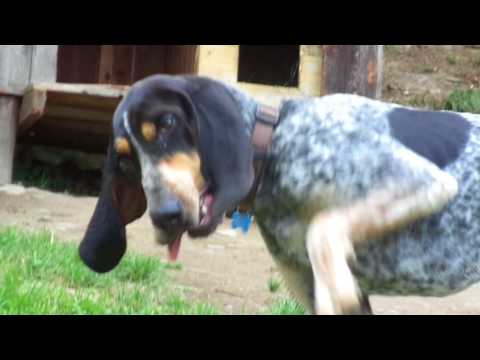
Small Blue Gascony
Francia FCI 31 - Medium-sized Hounds

Small Blue Gascony

The Small Blue Gascony, in general, they are considered docile and very attached to their master, very friendly with children and sociable with other dogs.

Content

History

The Small Blue Gascony is a short legged version of the Great Gascony Blue, his ancestor. But, although the history of the latter extends deep into the history of all of Europe and even the United States, its history has remained closely linked to its country of origin, France.

Its appearance dates back to the end of the Middle Ages, and more precisely to the sixteenth century. The development of the breed is not the result of crossing the Great Gascony Blue with smaller dogs, but simply from a true selective breeding program that consists of selecting and breeding the smallest individuals, generation after generation. Although they were very efficient in hunting wild boar and large game in packs, the Great Blue was nevertheless a heavy hound, and was not entirely satisfactory in tracking small game in the high forests.

The Small Blue Gascony was therefore developed for the specific purpose of hunting rabbits, hares and other small game animals. Faster than its predecessor, inherited its tracking and exploration skills from its predecessor. Its use spread in France beyond its region of origin, Gascuรฑa (in the southwest of the country). Unlike many dog โ€‹โ€‹breeds that were decimated during these periods, did not suffer much with the French Revolution and the two World Wars. Thanks to his skill in hunting rabbits, has been able to get through these clashes in French history without too many losses, and remain present in relatively constant numbers despite events.

But, despite this resistance and its renowned performance in hunting small game, very little was exported, unlike his older brother, that set foot in the United States as early as the 18th century. This is mainly due to the fact that Small Blue, raised in herds, it was much less profitable to hunt than the Great Blue, that it was able to attack larger prey and thus provide more food. But, in France, despite this disadvantage, became progressively more popular than with hunters and families.

However, gained visibility on the international scene in 1963, cuando the International Cynological Federation (FCI) officially recognized the breed. El American United Kennel Club (UKC) did the same in 1991. But, he still has a long way to go in this respect, as they have not been emulated by many other major organizations. These may include, so far, nor the other great American organization, the American Kennel Club (AKC), nor his neighbor the Canadian Kennel Club (CCC), nor the prestigious British Kennel Club, they have taken the step.

In fact, the Small Blue Gascony is still today mainly present in its country of origin. It has even become more and more popular there in recent decades.. This was particularly surprising in the 1990s. 1980, when it happened 50 annual entries in the Livre des Origines Franรงais (LOF) in the early years of the decade to more than 200 at the end, that is to say, quadrupled. The trend increased in the early 1990s 1990, and the number stabilized at around 450 per year from 1993. There is a new rise at the dawn of the 21st century, when the 550 registrations per year. From 2006 there is a steep decline, so that by the end of 2010 there are only a few 350 births per year. But, this is still more than four times the number that its predecessor, the Great Gascony Blue, can boast.

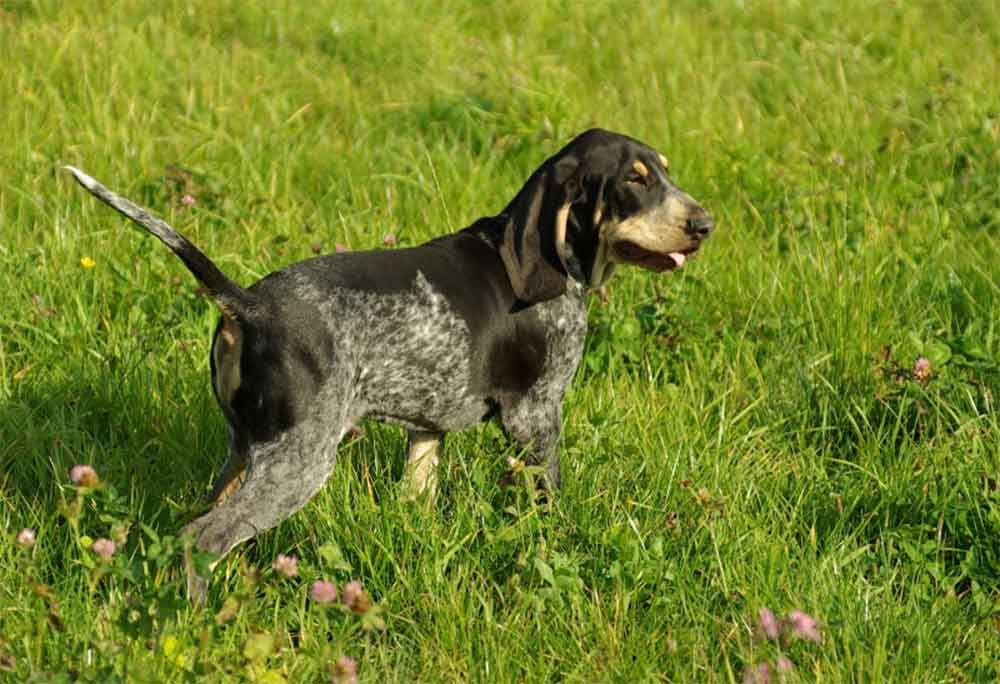
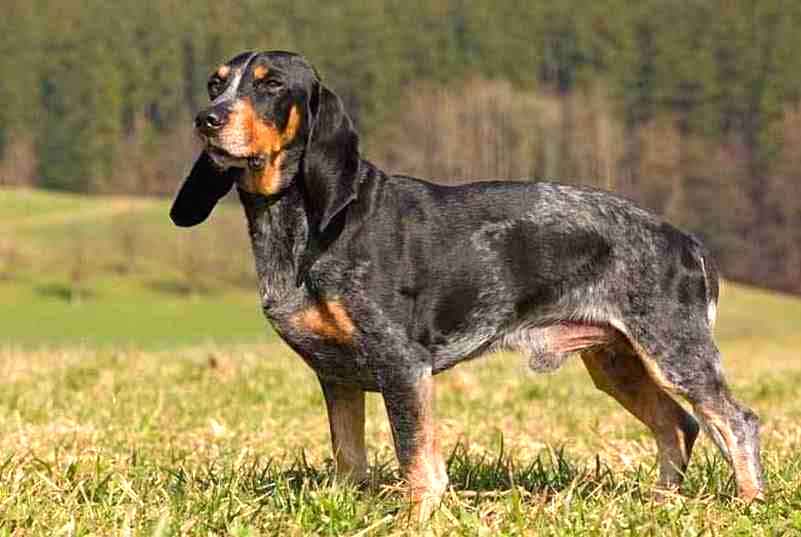
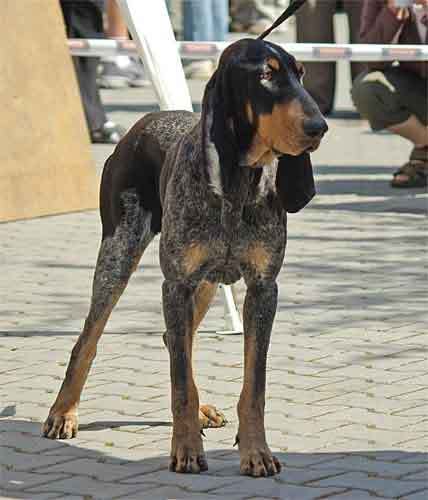
Photo: Small Blue Gascony Hound, male ยซBrigand od Smutne rickyยป from kennel ยซLe Bleu Cardinalis FCIยป, Poland. The owner – Katarzyna Bujko by Katarzyna Bujko, CC BY 3.0, via Wikimedia Commons

Physical characteristics ยซLittle blue Gascogne houndยป

The Small Blue Gascony has an appearance very close to that of his ancestor, the Great Gascony Blue, and even its size is not so far from the latter, whatever his name is. In fact, with a height of 50 to 58 cm to the cross, is actually a medium-sized dog. The term "small" is more appropriate to describe the size of the game it was designed for..

The Small Blue Gascony has a noble and proud appearance and a rather gentle general expression. His body is well supported by his back, no excess length, with a slightly sloping croup and a long, open chest that falls to elbow height. Its front legs are powerful and its shoulders are muscular. In general, has a balanced musculature and bone structure, without excess. Its tail is thin and carried like a saber blade.

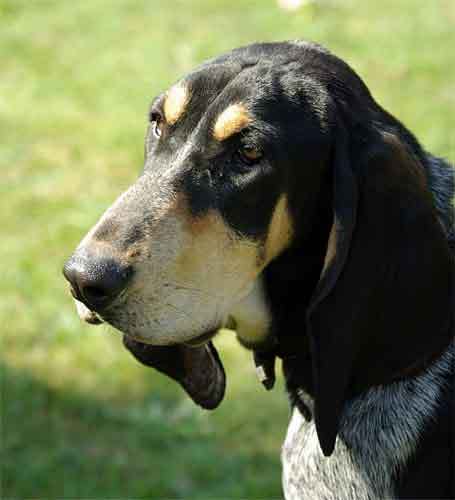
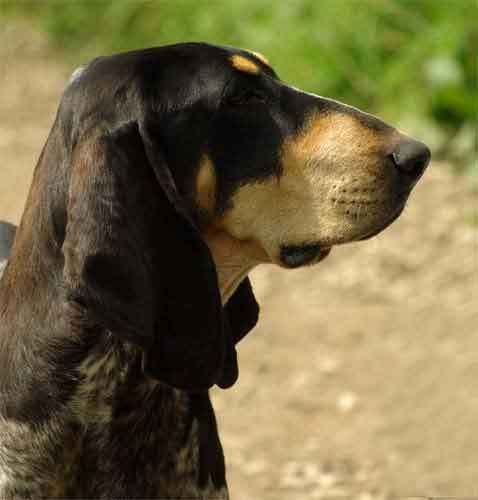
Head is slightly domed when viewed from the front, and the forehead is full. The stop (distance between the two eyes) it is little accentuated. The eyes are brown. The nose is very black and wide, and the nostrils are wide open. The whisker pads are not very thick and quite long: the upper lip falls back covering the lower lip. The snout (upper part of muzzle) is the same length as the skull; is strong and slightly arched, which contributes to giving it a noble look. The ears are moderately thin, dangling and curly. Very long, can reach the end of your nose, or even lower.

The skin of the Small Blue Gascony it is flexible, black or very mottled with black spots, and in any case never completely white. Their mucous membranes are also black. Its pelage is short, semi-thick and well furnished. Its fur is completely mottled, black and white, with a slate bluish glow, hence its name.

It also, may have more or less numerous and more or less large blackheads. These may include, at head level, usually has two black dots that are not on the top of the skull but that surround its eyes and cover its ears. At the top of the skull there is a white spot with a small oval black dot, typical of the breed. The upper part of the eyebrows are marked with more or less bright tan spots. Traces of tan are also found on the cheeks, the chops, inside the ears and sometimes on the legs and under the tail.

Last, sexual dimorphism is not very pronounced in this breed: males and females are generally very similar in size and dimensions.

Character and aptitudes ยซLittle blue Gascogne houndยป

The Small Blue Gascony he is a dog with a pleasant character, calm and affectionate. He is a very good companion dog., but it requires a lot of physical exercise and wide open spaces. Your ideal space is a house with land. It is necessary to take them out for a daily walk outside of hunting season. Dogs are generally very attached to their master. They are also kind to children and sociable with other animals. (dogs, cats…).

It is a hunting dog that runs well, very diligent in his hunting style, ideal for running after hare. It also shows good qualities for hunting big game, for example wild boar hunting. Finally, the Small Blue Gascony has a magnificent voice and a fine sense of smell.

Hygiene and health of the โ€œLittle Blue Gascogne Houndโ€

Grooming

The Small Blue Gascony often lives outdoors and requires only rudimentary grooming. If you live in the house, weekly brushing is recommended. It can also be useful to bathe him when he returns from hunting…

Care

When you come back from hunting or walking, inspect his feet and ears Small Blue Gascony looking for thorns (herbs that get into the skin causing pain and infections). Your floppy ears may be prone to ear infections. It is advised to examine and wash them once a week.

Health

The Small Blue Gascony he is a robust dog. You may suffer from otitis. Itching or a bad smell should alert you. The Small Blue Gascony you can also be injured while hunting. A fracture immediately leads to a loss of pressure in the affected limb. Skin tears may be more inconspicuous in the coat. Inspect his wound carefully when you return from the hunt..

Food

The dog's diet will depend on both its breed and weight and its lifestyle. The one with Small Blue Gascony must consider, among other things, your activity.

How much does a โ€œLittle Blue Gascogne Houndโ€ cost?

The price of a puppy Small Blue Gascony often haunt them 650 EUR, but it can reach the 1000 euros for the best subjects.

As in any other race, the price charged depends on the prestige of the kennel, of the lineage from which the dog descends and its intrinsic characteristics and, in particular, of its conformity with the standard. This explains why there may be price differences between puppies from the same litter.

In any case, the Small Blue Gascony hard to find outside France, and this is particularly true in North America, despite its recognition by the American UKC. In the case of an import from France, transportation and administrative costs are added to the purchase price. It also, it is necessary, of course, respect the regulations regarding the importation of a dog from abroad.

Images "Small Blue Gascony"
Photos:

1 – Little Gascony Blue Hound by Katarzyna Bujko, CC BY 3.0, via Wikimedia Commons
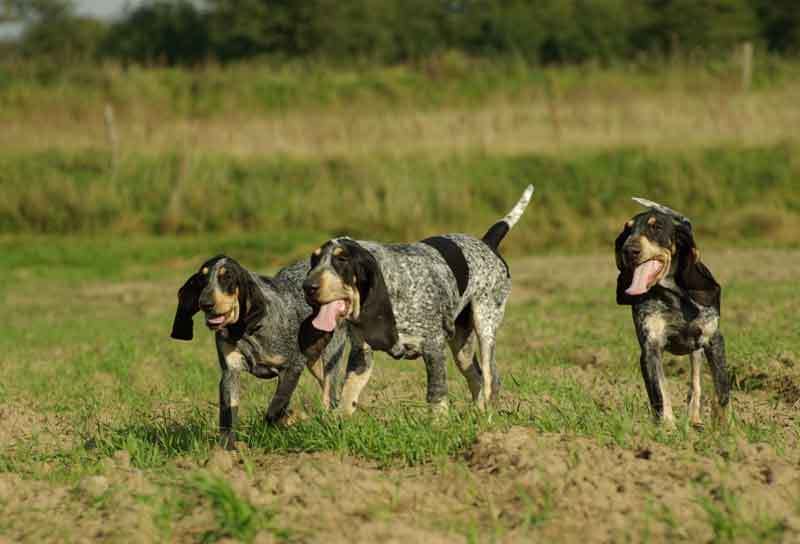
2 – Small Blue Gascony Hound, ยซBella, Baron i Brigand od Smutne rickyยป from kennel ยซLe Bleu Cardinalis FCIยป, Poland. The owner – Katarzyna Bujko by Katarzyna Bujko, CC BY 3.0, via Wikimedia Commons
3 – Small Blue Gascony Hound, female ยซClea z Beckovaยป from kennel ยซLe Bleu Cardinalis FCIยป, Poland. The owner – Katarzyna Bujko by Katarzyna Bujko, CC BY 3.0, via Wikimedia Commons
4 – Small Blue Gascony Hound, female ยซClea z Beckovaยป from husbandry ยซLe Bleu Cardinalis FCIยป, Poland. The owner – Katarzyna Bujko by Katarzyna Bujko, CC BY 3.0, via Wikimedia Commons
5 – Small Blue Gascony Hound, female ยซClea z Beckovaยป from kennel ยซLe Bleu Cardinalis FCIยป, Poland. The owner – Katarzyna Bujko by Katarzyna Bujko, CC BY 3.0, via Wikimedia Commons
6 – Small Blue Gascony Hound, male ยซCar z Beckovaยป from kennel ยซOd Smutnรฉ ล™รญฤkyยป, Czech. The owner – Slavomรญr Hanรกฤek by Katarzyna Bujko, CC BY 3.0, via Wikimedia Commons

Videos "Small Blue Gascony"

RAMBO - Small blue gascony - Unconditional love

RAMBO – โ€œLittle Blue Gasconyโ€ – Unconditional love
hare with blue gascogne cubs

hare with โ€œPetit Bleu de Gascogneโ€

Type and recognitions:

  • FCI CLASSIFICATION:
  • Group :
  • Section : . .

Federations:

  • FCI – Group 6: Scent hounds, and related breeds. – Section 1.2: Medium-sized Hounds. โ“˜
  • UKCScenthounds โ“˜
  • Central Canine Society โ“˜

FCI breed standard "Small Blue Gascony"

Origin:
France

Date of publication of the valid original standard:
24.01.1996

Use:

This is a multi-use dog. It is used for hunting with a shotgun., and sometimes to chase the game like a hound. His favorite house is the smallest (Hare) but he also goes on the hunt for big game.


General appearance:

It is a medium-sized dog, well proportioned and distinguished.


Behavior / temperament:

He has a good sense of smell and is good at hunting.. It has a loud bark and easily joins the pack.. He is calm and affectionate and obeys easily.

Head:

---

Cranial region:
  • Skull : Seen from the front, It is somewhat domed and not too wide. The occipital protuberance is slightly marked. Seen from above, the back has a shallow ogival shape. Forehead is bulging.
  • Depression links (Stop) : Sharp.

facial region:

  • Truffle : Black and wide. The Windows are wide open.
  • Snout : It is the same length as the skull and is strong. The nasal cannula is often slightly arched..
  • Lips : They are not very thick or developed. The upper lip covers the lower lip.
  • Jaws/Teeth : The joint is in the form of scissors. The incisors are set at right angles to the jaws..
  • Cheeks : Thin.

Eyes : They are oval in shape and brown in color.. Your expression is sweet.

Ears : They are crooked and moderately thin. They should at least reach the tip of the nose..

Neck:

It is long and has some double chin.

Body:

  • Back : Well accented.
  • Pork loin : Well united, and not too long.
  • Rump : Slightly oblique.
  • Breast : It is long and descends to the level of the elbow. The sternum is quite protruding. Delicately rounded ribs.
  • Flank : It's flat and deep.

Tail:

It is thin and reaches to the tip of the hock. It is carried proudly in the shape of a saber.

Tips

PREVIOUS MEMBERS : Seen in conjunction, They are quite robust.

  • Shoulder : Muscular and moderately oblique.
  • Elbows : Glued to the body.
  • forearms : Strong bones.

LATER MEMBERS : Seen as a whole they are well proportioned.

  • Thighs : Quite long, muscular, although not in excess.
  • Hock : Width, slightly angled and close to the ground.

FEET : They have an oval shape; the fingers are thin and close together. The pads and nails are black.

Movement:

Regular and executed with ease.

Mantle

SKIN : Elastic. Black, or strongly streaked with black spots. It's never completely white. The mucous membranes are black.

HAIR : Short, semi-thick and well dense.

COLOR : Completely speckled with black and white, imparting a slate blue reflection. It may or may not be marked with more or less extended black spots. Usually, there are two black spots on each side of the head, that cover the ears, circle the eyes and stop at the cheeks. These do not join over the top of the head, but they leave a white space in the center of which there is often a small oval black spot., typical of the breed. Above the eyes there are two more or less bright tan marks located on the zygomatic arches simulating four eyes.. Traces of tan can also be found on the cheeks, the lips, the inside of the ears, the limbs and under the tail.


Size and weight:

Height to the cross :

  • For males : 52 to 58 cm.,
  • for females : 50 to 56 cm..


Fouls:

Any deviation from the above mentioned criteria is considered as missing and the gravity of this is considered in proportion to the degree of deviation to the standard and its consequences on the health and well-being of the dog.

Head :

โ€ข Short.
โ€ข Skull too flat, Strait, or width.
โ€ข Short ears, high insertion, that are not twisted enough.

Body :

โ€ข Too long, loose top line, lack of volume.
โ€ข Croup sagging.
โ€ข Diverted tail.

Tips :

โ€ข Insufficiently developed bones.
โ€ข Straight shoulders.
โ€ข Hock closed, seen from behind.
โ€ข Crushed feet.

Behavior :

โ€ข Shy dog.

MISS PLAYOFFS :

โ€ข Fearful or aggressive dog.
โ€ข Characteristics that do not correspond to the type.
โ€ข Notable lack that causes any impediment.
โ€ข Serious anatomical deformation.
โ€ข Upper or lower prognathism.
โ€ข Light eyes.
โ€ข Any other coat that is not established by the standard.

Any dog โ€‹โ€‹showing clear signs of physical or behavioral abnormalities must be disqualified..


N.B.:

Males should have two normal-appearing testicles fully descended into the scrotum..

Source: F.C.I - International Cynological Federation

Alternative names:

1. Petit bleu de Gascogne (English).
2. Petit bleu de Gascogne (French).
3. Petit bleu de Gascogne (German).
4. Petit bleu de Gascogne (Portuguese).
5. Petit bleu de Gascogne, Sabueso azul de Gascuรฑa (espaรฑol).

โ–ท The world of Pets: Dogs, cats, birds, reptiles, amphibians

Small swiss hound
Suiza FCI 60 . Small-sized Hounds

Small Bernese hound
Small Bernese hound
The dog Small swiss hound, little stimulated, tends to become a nuisance pet that can be difficult to train.

Content

History

In the early 20th century, hunting began to change in Switzerland. Private hunting grounds were introduced and the standard size of the Swiss Hound he was too fast and enthusiastic to hunt properly within these smaller hunting grounds. The hunters decided to develop a different breed of hunting that could hunt efficiently and effectively within the closed private hunting grounds.. Many people think that Small swiss hound it's just a smaller version of the Swiss Hound. While this is partly true, They are a different race that originated from crossing the Swiss Hound with the Basset Hound. The ultimate goal was to develop a breed that was shorter and smaller., but also had the same four color variants as the Swiss Hound. The resulting dogs were expected to have a strong sense of smell for nose work and a melodious voice to sound the alarm when hunting..

The Small swiss hound He is an outstanding hunter and has the ability to track scents for miles over rough terrain. The Small swiss hound became the hunting dog of people hunting on private land.

The United Kennel Club recognized the Small swiss hound in 2006. The Federation Cynologique Internationale (FCI) accepted them and adopted the official breed standard under the name Schweizer Niederlaufhund in 2015.

The Small swiss hound still a popular hunting companion in his native Switzerland.

Photo: Small Bernese Hound Smooth-coated male by Canarian, CC BY-SA 4.0, via Wikimedia Commons

Physical characteristics

In proportion smaller than the Swiss Hound. Its body shape is rectangular, moderately long, and strong conformation. Medium size head, thin, elegant, with friendly facial expression
and attentive. His ears are very long, low insertion, and he wears them folded. Thin and strong limbs. When walking calmly, he has his tail hanging, in activity bends it slightly upwards.

The Small swiss hound comes in four different varieties. The only difference between the varieties is the color, but each variety has its own name.

Variants Small swiss hound

Small hound of Juraequeรฑo de Jura
Small Jura hound
Small Bernese hound
Small Bernese hound
Small Schwyz hound
Small Schwyz hound
Small Lucerne hound
Small Lucerne hound
  • The Small Jura hound has a smooth coat that is black with tan markings found over the eyes.
    The Small Jura hound has only one coat and may only have a small amount of white on its body.
  • The Small Bernese hound has two types of fur:
    the smooth coat and the rough coat.
    The rough coat has a single hard coat and a small beard.
    The Small Bernese hound it's black and white with fiery marks over its eyes; many call it tricolor.
  • The Small Schwyz hound has a single, smooth coat that is predominantly white with yellow-red spots; orange-red spots are also acceptable.
  • The Small Lucerne hound has a single smooth coat that is predominantly white but mottled with black or gray giving the illusion of a blue body. They have black spots with tan markings over their eyes.

  • Photos:

    1 – Small Bernese Hound Smooth-coated male by Canarian, CC BY-SA 4.0, via Wikimedia Commons
    2 – Jura low-run dog by Bhv The Max
    3 – This dog is a small Schwyz Hound by pets.ch
    4 – Little Lucerne Hound by carlosh catalog

    Character and skills

    When he's hunting, the Small swiss hound is tireless and relentless, exhibiting impressive endurance and strength of character. They tend to be lively and excitable, eager to do their job. Most of the Small swiss hound they are happy to hunt regardless, without any royal order from his master.

    Despite being bred to hunt, most breed members can make the transition from working bloodhound to family pet easily and are generally affectionate and demonstrative with their owners. They are good friends with children and other dogs, but they cannot be trusted with small animals, including cats and rabbits.

    The temperaments of individuals vary, and while some may be quiet and peaceful house guests, others may be excitable and jumpy. Dogs with more energy can often be taught to settle inside the house once they have been properly exercised.. Ideally, the exercise should take the form of hunting, as this not only burns off excess energy but also occupies your inquisitive mind. The dog Small swiss hound, little stimulated, tends to become a nuisance pet that can be difficult to train.

    Not being an aggressive dog, the Small swiss hound should not be used as a guard dog as it does not tend to scare off intruders and does not usually feel the need to guard your property.

    โ€œSmall Swiss Houndโ€ Training

    The phrase "small dog syndrome" may be mentioned when talking about Small swiss hound, as they have a reputation for acting like large dogs in small dog bodies. Full of confidence, lively and independent, this is not a breed for the novice trainer. Obedience work can be a particular challenge, since they have a free-spirited character and a mind of their own.

    Coaches must be firm and inflexible, keeping your training sessions short and interesting to keep the dog's interest. How this breed likes to assume a dominant position in the home, he should be taught his place from an early age, to avoid any bad behavior.

    most dogs Small swiss hound they are still used as hunting dogs in Switzerland today, meaning your exercise requirements are easily met during hunting season. In the case of non-working dogs, or when the hunting season is over, owners should take time to meet the needs of this active hound.

    A rural setting is the ideal place for Small swiss hound, who needs wide terrain to explore and does not enjoy being confined. It is essential that your property is securely fenced to avoid solo adventures.

    Health ยซSmall Swiss Houndยป

    There are not many diseases that affect the Small swiss hound more than other races, but there are a handful of conditions that should be watched in individuals:

    ear infections

    Hanging ears are prone to developing ear infections., particularly if a dog spends a lot of time outside wet and muddy. Keeping your ears clean can prevent this from becoming a problem..

    Hip Dysplasia

    Malformed hip joints can lead to lifelong discomfort and reduced mobility. x-rays of the hips (a process called โ€œhip scoringโ€) should be performed when a breeding dog is over one year of age to ensure that its hips are of a good enough quality to be passed down.

    Grooming ยซSmall Swiss Houndยป

    Although there are a number of different coat types within the breed, all are easy to maintain and need little in the way of grooming. Weekly brushing will suffice. The Small swiss hound you will only need to be bathed a few times a year. If owners feel the need to disguise their "dog smell" they can use dry shampoo, avoiding the risk of drying out their skin and coat.

    Ears of the Small swiss hound should be cleaned weekly and ideally checked daily for signs of infection. They must be completely dried after getting wet.

    Characteristics "Small swiss hound"

    Coexistence is important that you have with your new friend. Before considering the acquisition of a dog of the breed "Small swiss hound" you know certain factors. Not all breeds of dogs are apt to live in an apartment, you must take into account his character, their need for exercise, their interaction with other pets, their care and if you have small children, their level of tolerance towards them.

    Adaptation โ“˜

    3,0 of 5 stars (based on 1 review)

    friendly dog โ€‹โ€‹โ“˜

    4,0 of 5 stars (based on 1 review)

    hair loss โ“˜

    4,0 of 5 stars (based on 1 review)

    Affection level โ“˜

    5,0 of 5 stars (based on 1 review)

    Need for exercise โ“˜

    3,0 of 5 stars (based on 1 review)

    Social need โ“˜

    3,0 of 5 stars (based on 1 review)

    Home โ“˜

    3,0 of 5 stars (based on 1 review)

    Toilet โ“˜

    2,0 of 5 stars (based on 1 review)

    Friendly with strangers โ“˜

    4,0 of 5 stars (based on 1 review)

    barking โ“˜

    4,0 of 5 stars (based on 1 review)

    Health โ“˜

    5,0 of 5 stars (based on 1 review)

    Territorial โ“˜

    4,0 of 5 stars (based on 1 review)

    Cat friendly โ“˜

    2,0 of 5 stars (based on 1 review)

    Intelligence โ“˜

    3,0 of 5 stars (based on 1 review)

    Versatility โ“˜

    3,0 of 5 stars (based on 1 review)

    Child friendly โ“˜

    5,0 of 5 stars (based on 1 review)

    Surveillance โ“˜

    4,0 of 5 stars (based on 1 review)

    joy โ“˜

    3,0 of 5 stars (based on 1 review)

    Videos "Small swiss hound"

    Swiss low-legged dog + Schweizer Laufhund + Orange hound + pets
    Swiss low-legged dog + Schweizer Laufhund + Orange hound
    Swiss Hound CERVA
    Schweizer Laufhund CERVA

    Type and recognitions:

    • FCI CLASSIFICATION:
    • Group :
    • Section : . .

    Federations:

    • FCI – Group 6: Scent hounds, and related breeds. – Section 1.3: Small-sized Hounds. โ“˜
    • UKCScenthounds โ“˜

    FCI breed standard "Small swiss hound"

    Origin:
    Switzerland

    Date of publication of the valid original standard:
    28.11.2001

    Use:

    It is a hunting dog in the strict sense of the word.. He is an independent hunter by hunting with a bark ; searches and corners its prey with great safety even in difficult terrain. The Small Swiss Hound is also used to bleed the injured animal.


    General appearance:

    Hound type dog (Hound), in proportion smaller than the Swiss Hound with a height of the withers of 35-43 cm for males and 33-40 cm for females; its body shape is rectangular, moderately long, and strong conformation. Medium size head, thin, elegant, with friendly and attentive facial expression. His ears are very long, low insertion, and he wears them folded. Moderately wide and high chest and costal arch that provide plenty of space for the heart and lungs. Thin and strong limbs. When walking calmly, he has his tail hanging, in activity bends it slightly upwards.

    Color varieties :

    โ€ข Small Bern Hound,
    โ€ข Small Jura Hound,
    โ€ข Small Lucerne Hound and
    โ€ข Small Schwyz Hound.


    Behavior / temperament:

    Of fine smell, It is agile and resistant ; small hunting dog, passionate, that keeps the trail safe and hunts with persistent harmonious bark. He is kind in nature, neither fearful nor aggressive. His temperament is calm, but lively.

    Head:

    Thin, elegant. Seen from the front it is long and narrow and slowly widens towards the cheeks..

    Cranial region:
    • Skull : Slightly convex, no wrinkles on the front, without front groove. Not very prominent occipital crest. The line that goes from the occipital crest to the stop is almost the same length and forms a parallel line with the line that goes from the stop to the nose..
    • Depression links (Stop) : Moderately marked.

    facial region:

    • Truffle : It is dark with wide open windows.
    • Snout : Powerful, quite long and moderately deep, nape pointed. The nasal canal preferably straight or slightly convex, rather narrow.
    • Lips : Upper lips slightly hanging and with rounded edges in the anterior part, never pointed. Closed lip corner.
    • Jaws / Teeth : Very strong scissor bite, regular and complete, That is, the upper incisors overlap the lower ones without leaving space between them.. The teeth are implanted in an upright position in the powerful jaw. Pincer bite is allowed. The lack of two PM1 or PM2 is tolerated (premolars 1 or 2 ). The flap of M3 (molars 3) is not taken into account.
    • Cheeks : Poorly developed.

    Eyes : dark, clean, slightly oval in shape; friendly expression. They should not be sunken or protruding. The eyelid slit is rigid with well adherent eyelids. Edges of the eyelids with good pigmentation.

    Ears : Low insert, narrow and a little backwards, no higher than the eye line. In length they reach at least to the tip of the nose. ; He wears them well folded and they hang close to his cheeks ; Their texture is soft and they are covered with fine hair.. The pinna does not protrude.

    Neck:

    Moderately long, light and elegant, but with good muscles. Throat skin is loose, but a noticeable double chin is not desired.

    Body:

    • top line : Harmonica, descends slightly from the insertion of the neck to the rump.
    • Back : Straight, firm, moderately long.
    • Pork loin : Wide and strong, flexible.Grupa : Gently descend towards the insertion of the tail; hips should not be visible.
    • Breast : Width and height, reaching up to elbow height; the tip of the sternum is visible, but not too prominent. The ribs are long and moderately rounded. The costal arch extends well posteriorly.
    • Bottom line and belly : The belly line is slightly raised towards the hind limbs. The flanks are moderately full.

    Tail:

    Low insertion in harmonious continuation with the croup ; medium length, reaching at least to the hock ; with enough hair ; ends in an elegant point, no true feathers. At rest and when walking it hangs without noticeable flexion. When active or excited, he carries it slightly raised., but never turned on the back.

    Tips

    PREVIOUS MEMBERS

    • As a whole : His muscles are strong, but it doesn't give the impression of being heavy. Seen from the front the forelimbs are thin, very straight and upright with good bones and solid feet, directed forward.
    • Shoulder : His muscles are strong ; the shoulder blades are flat and close together, relatively long and placed obliquely ; the angle of the shoulder joint is approximately 90ยฐ.
    • Arm : Almost as long as the shoulder blades, placed in an oblique position.
    • Elbows : Stuck naturally against the side.
    • Forearm : Strong, delgado, very straight, a little shorter than arms.
    • Ulnocarpal joint : Strong.
    • Metacarpus : Short ; seen from the front, its position is vertical, never deviated ; seen from the side it should never be completely straight, but slightly inclined in relation to the ground.
    • Front feet : Rounded, firm, compact. Short fingers, well arched. Hard and rough pads. solid nails. Fine fur between the fingers.

    LATER MEMBERS :

    • As a whole : They have strong muscles, well proportioned compared to previous members. Good angulations at the knee and hock joints (tibio-tarsiana). Parallel hindlimbs, neither too close nor too far apart. In a natural position they should be placed slightly backwards. Bones a little less strong than those of the forelimbs.
    • Thigh : Good length and width, strong and well muscled.
    • Knee : good angulation ; turned neither in nor out.
    • Leg : Proportionately long, with inclined position. The bones are a little less strong than those of the forelimbs.
    • Warm-foot joint : Strong, well angled, low placement.
    • Metatarsus : Short, seen from behind in a straight and parallel position.
    • Rear feet : Quite round and firm ; closed and short fingers ; hard and rough pads. Strong nails. Fine hair between fingers. Without spurs, except in countries in which amputation is not permitted by law.

    Movement:

    • Preferred natural movements : trot or gallop which both cover a lot of ground. At a trot, movement must be free and dynamic, with long steps of the forelimbs and strong impulse of the hind limbs. Limbs move in straight, parallel lines.
    • forward action : Nor narrow, nor deviated, with fingers neither too far apart nor closed.
    • Rear action : practically parallel, with notable momentum, neither too narrow nor too wide, neither in the form of a cow nor a barrel.


    Mantle

    SKIN : Well adherent and laid, without wrinkles.

    COAT

    HAIR :

    โ€ข Smooth fur : Short, smooth, well adherent, thinner on the head and ears.

    โ€ข Hard hair : Lasted, elastic, good paste ; with little internal fleece ; the beard is poorly developed.

    COLOR :

    There are four color varieties.

    • Small Bernese hound: This variety exists with hard hair and with straight hair.. Always tricolor : white black and tan (red). The basic color is white with large black plates. White very lightly splashed with black is acceptable. fire color (reddish-brown markings) on the eyes, cheeks, on the inside and upper region of the ears and around the anus. A black cloak is allowed. Black skin under black hair, blackish-white marbling beneath the white hair.
    • Small Jura hound: This variety exists with straight hair, rarely with double hair (Stockhaar). Preferably deep black with tan markings over the eyes, cheeks, in the chest and/or extremities. O well : reddish-brown color (fire) with black cape or black โ€œsaddleโ€. A small white spot on the chest is tolerated.. Black skin under black hair and lighter under tan hair.
    • Small Lucerne hound: This variety has straight hair. Basic color white- dense grayish or black-white dotted with large dark or black plates. fire color (reddish-brown markings) on the eyes, cheeks, below the tail insertion, in the chest and extremities. A black cloak is allowed. Black skin under black hair and lighter under blue-flecked hair..
    • Small Schwyz hound: This variety has straight hair. Basic color white, with large or smaller yellow-reddish or red-orange plates. Some isolated red splashes are not considered a fault. Dogs with red coats are allowed. Dark gray skin under orange hair and lighter under blue-flecked hair.


    Size and weight:

    Height to the cross : Males : 35 โ€“ 43 cm.,females : 33 โ€“ 40 cm. Tolerance : +/- 2 cm.


    Fouls:

    Any deviation from the aforementioned criteria is considered as a fault and the severity of this is considered to the degree of the deviation to the standard and its consequences on the health and well-being of the dog..

    โ€ข Bones that are too thin or too coarse ; lack of substance.
    โ€ข Thick head, not very harmonious.
    โ€ข Partially flesh-colored nose.
    โ€ข Clear eye or lost expression.
    โ€ข Ears set too high ; flat ears, thick or very short.
    โ€ข Noticeably developed double chin.
    โ€ข Saddled or arched back (carp).
    โ€ข Short croup, inclined.
    โ€ข Shallow chest, flat or barrel-shaped. Irregular rib cage (crushed ribs : bell-shaped chest).
    โ€ข Tail carried too high, very bent.
    โ€ข Curved forelimbs, deviated inward or outward.
    โ€ข Straight back (very open angle) ; arm too short.
    โ€ข Weak ulnocarpal joint, crushed metacarpus.
    โ€ข Crushed feet, hare feet.
    โ€ข Angles of the hind limbs that are too straight ; cow-shaped or barrel-shaped limbs.
    โ€ข Lack of color and markings.- In the little Bern Hound : too much black splashes on the white.- In the small Schwyz Hound : too much red-orange splashes on the white. carbon coat (tight) in the ears, at the insertion of the tail and/or on the plates.
    โ€ข Questionable behavior, slightly aggressive.

    MISS PLAYOFFS

    โ€ข Very fearful or aggressive behavior.
    โ€ข Completely flesh-colored nose.
    โ€ข Upper or lower prognathism, incisor arcade deviated.
    โ€ข Lack of incisors or canines; canines in incorrect position; lack of more than three premolars and/or molars.
    โ€ข Entropion, ectropion.
    โ€ข Sternum too short, broken chest.
    โ€ข Curled or broken tail.
    โ€ข All color combinations that do not correspond to those indicated in the standard.
    โ€ข Height at withers : Males less than 33 cm and greater than 45 cm.Females less than 31 cm and greater than 42 cm..

    Any dog โ€‹โ€‹showing clear signs of physical or behavioral abnormalities must be disqualified..


    N.B.:

    Males should have two normal-appearing testicles fully descended into the scrotum..

    Source: F.C.I - International Cynological Federation

    Alternative names:

    1. Schweizerischer Niederlaufhund (English).
    2. Schweizerischer Niederlaufhund (French).
    3. Schweizer Niederlaufhund (German).
    4. Schweizerischer Niederlaufhund (Portuguese).
    5. (en suizo, Schweizerischer Niederlaufhund) (espaรฑol).

    โ–ท The world of Pets: Dogs, cats, birds, reptiles, amphibians

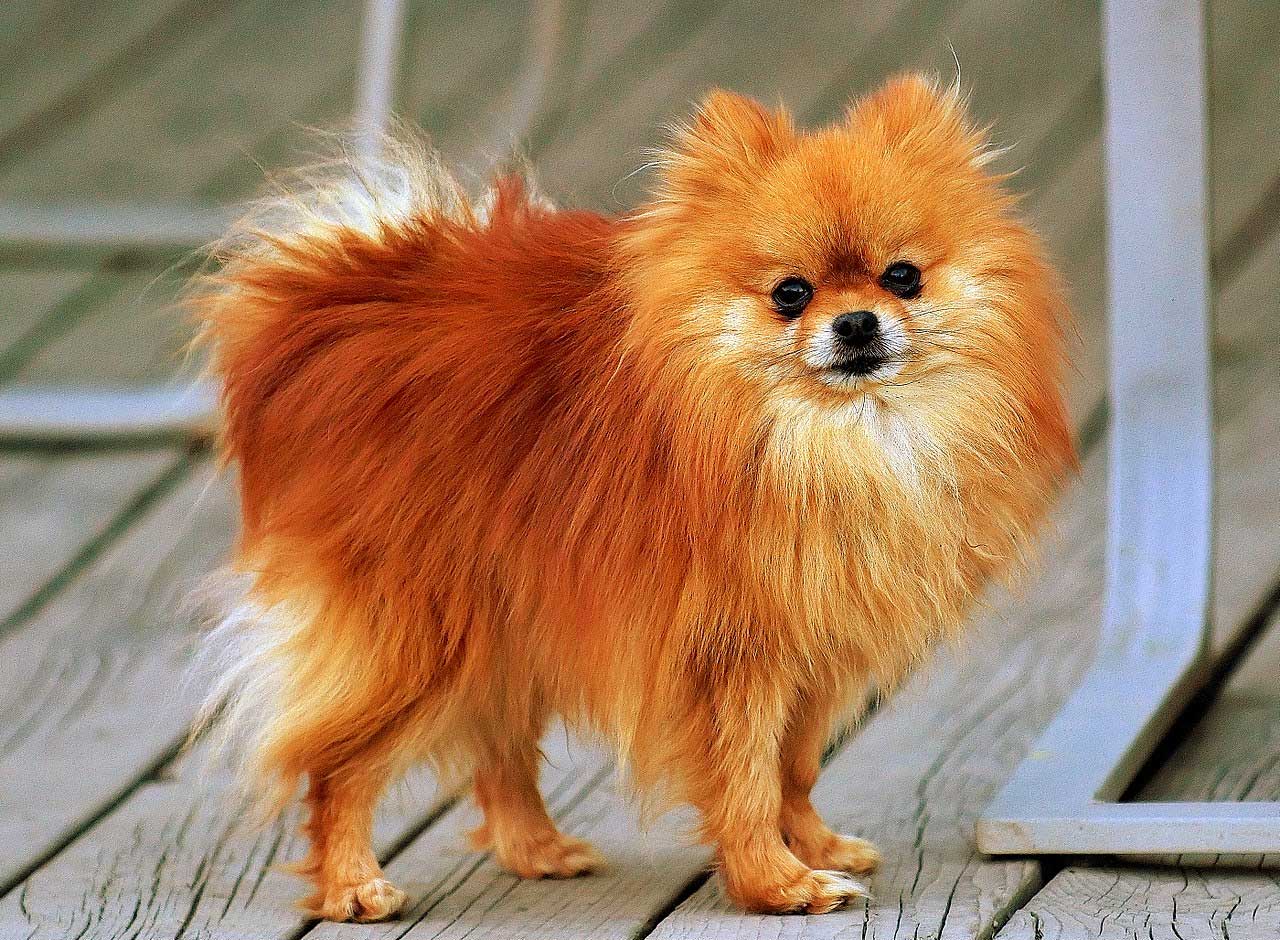
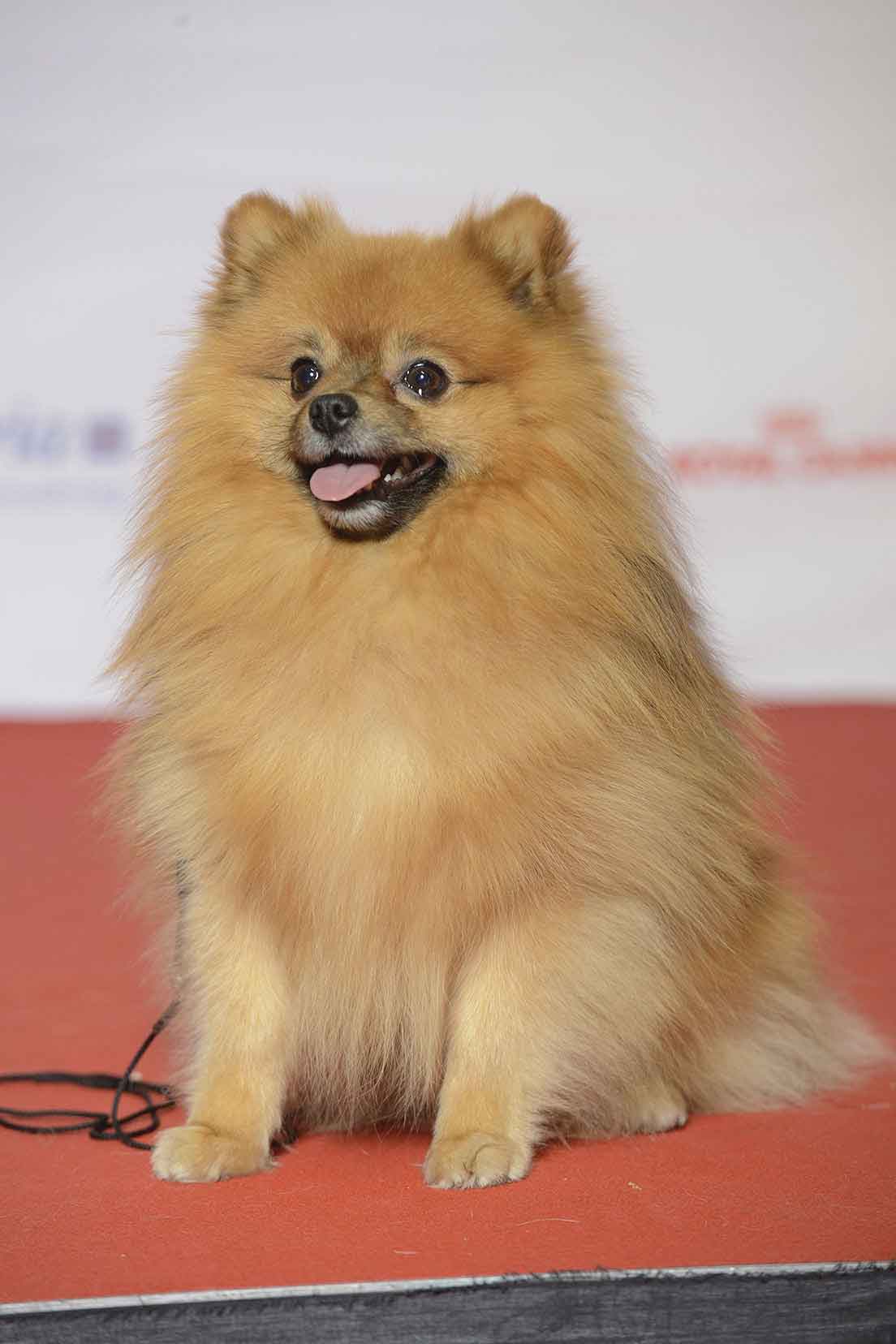
    Pomeranian
    Alemania FCI 97 . European Spitz

    Pomeranian

    The Pomeranian very active, independent, Intelligent, brave and loyal.

    Content

    History

    The Pomeranian (Deutscher Spitz;, Pomeranian Lulu or Deutscher Zwergspitz) It is a dog of the Spitz family, named for the region of Pomerania Central, Eastern Germany, and is classified as a dog ยซToyยป due to its small size.

    The ancestors of the Pomerania were Iceland and Lapland sled dogs, He came to Europe because of Pomerania.

    The region of Pomerania, bathed in the north by the Baltic Sea and bounded in the west by the island of Rรผgen and in the east by the Vistula River, It was occupied by many peoples, celts, Slavs, Poles, Swedes, Danish and Prussian. Its name comes from Pomore or Pommern, which means "by the sea", and it was given in times of Charlemagne. Is in Pomerania where the Spitz won fame as a pet and dog work.

    Read more

    โ–ท The world of Pets: Dogs, cats, birds, reptiles, amphibians

    Kleinspitz (Miniature or Small Spitz)
    Alemania FCI 97 . European Spitz

    Kleinspitz (Miniature or Small Spitz)

    The Kleinspitz (Miniature or Small Spitz) he is a loving and attentive dog, that is very people-oriented.

    Content

    History

    The Kleinspitz (Miniature or Small Spitz) (Kleinspitz) is a variety of German Spitz, which today is available in five different sizes and in numerous colors. The exact origin of dogs spitz it is difficult to determine. In many regions there are indications of an early appearance of the breed. These may include, in the terracotta pieces Mycenaean or in the Greek vases you can already find illustrations of similar dogs. From the Middle Ages, the Spitz guard and court dogs were popular, especially among the rural population. The obedient dogs took their duties as court protectors so seriously that they pinched the "intruders" on their calves.. For this reason, Spitz was formerly considered a loved one.

    At the beginning of directed breeding, all representatives of the breed with a height at the withers less than 29 centimeters were summarized under the term Kleinspitz (Miniature or Small Spitz). As it was mainly in the area of Mannheim, It was also known as "Mannheimer Spitzยซ. Only later did the Dwarf Spitz (Pomeranian) with a height at the withers of up to 22 centimeters was developed as a separate variety. Internationally the breed belongs to the group 5 of the FCI โ€œSpitz and dogs of the original typeโ€ in the section 4 ยซEuropean Spitzยซ.

    Physical characteristics

    With a height at the cross of 23 to 29 centimeters, the Kleinspitz (Miniature or Small Spitz) is the second smallest of the five varieties of German Spitz. Just the Pomeranian (Zwergspitz) is smaller. His pointed ears and mischievous eyes resemble those of a fox and give him a cheerful and mischievous appearance.. It has a dense and protruding coat, consisting of two layers. The top layer is soft and long, while the undercoat is soft and dense. Around the neck the fur forms a mane like that of a lion and the bushy tail is carried over the back. Most of the coat color is black, brown, white, orange and cloudy gray. But some tips are cream too, cream-saber, orange-saber, black and tan.

    Character and skills

    The Kleinspitz (Miniature or Small Spitz) he is a loving and attentive dog, that is very people-oriented. Like all German Spitz, does not like to be alone and is glad of the full attention of their owners. They are quite reserved and wary of strangers. Puppies defend their territory with force and tend to bark when they are not trained. But, due to its charming nature and lack of hunting instinct, the little ones spitz they are also easy to train for beginners. With proper training you can take your dog off leash without any problem.. Although he can sometimes be a bit rebellious and cheeky, the four-legged friend gets along with other dogs.

    Kleinspitz Education

    Despite its small size, the Kleinspitz (Miniature or Small Spitz) he is a dog to be taken seriously and needs constant training. So, show the puppy from day one the basic rules and do not allow him to do anything that he is not allowed to do as an adult dog. Don't let her charm and cuteness bewitch you. In the young years, dogs learn better and want to please their owner. When training the puppy, you should not rush anything and allow time for new orders. Success is best achieved with consistency and praise. Early socialization is very important, especially for the cheeky ones Spitz. In this way he learns to deal with other dogs and remains more relaxed in everyday life.. It is recommended to attend a puppy school or a trainer.

    Activities with the little Spitz

    The Kleinspitz (Miniature or Small Spitz) he is a lively and attentive dog that loves to be by your side at all times. Daily walks are the order of the day with him in any weather. Dog sports such as agility are also suitable for sports workload. For the mental load you can provide with the intelligence toy. Smart tops are also known for their love of learning tricks and tricks. The loving Spitz is with a good education a nice companion dog. You can easily take it with you on vacation or on small trips.

    Health and care Kleinspitz

    Despite its long fur, the Kleinspitz (Miniature or Small Spitz) it is not a breed that requires much care. Protruding hairs give it a natural firmness, that hardly tangles. So, just comb the coat from time to time and remove any dirt. Your dog will be pleased with the extra care. But, during the coat change, the small spitz also need your help to get rid of superfluous hair. The Spitz it is also one of the least susceptible breeds in terms of health. Some members of the breed are susceptible to tartar, but it can be prevented by using chewing bone or a dog toothbrush.

    Buy a Kleinspitz

    Due to its size, the Kleinspitz (Miniature or Small Spitz) it is also suitable for smaller homes and will be happy both in a city apartment and in a house. The most important thing is to give him enough exercise and not treat him like a lap dog. The cheerful and affectionate dog is well suited to singles or pensioners, but also fits in a family without problems. The puppy needs one or more caregivers who take care of it daily. So you should think carefully about buying a puppy from Kleinspitz (Miniature or Small Spitz) and not rush anything.

    If you are sure that the breed suits you, you have to find a serious breeder. For a purebred puppy with papers and vaccines, many breeders charge up to 1.500 EUR. A laudable alternative is, therefore, a shelter dog. Like the German Spitz they only differ in size, you will also be happy with a Pomeranian or a Mittelspitz (Standard or Medium Spitz).

    Kleinspitz Videos

    Puppies Spitz Aleman. Kleinspitz

    youtube.com/watch?v=gd617m1XHCo

    Our kennel of Kleinspitz

    youtube.com/watch?v=1-Mssh1KaZc

    Type and recognitions:

    • FCI CLASSIFICATION:
    • Group :
    • Section : . .

    FCI breed standard "Kleinspitz (Miniature or Small Spitz)"

    Origin:


    Date of publication of the valid original standard:
    04.09.2019.

    Use:

    Guard and companion dog.


    General appearance:

    TheSpitzThey attract attention for their beautiful separated fur with the presence of a very dense undercoat.. The neck surrounded by an abundant mane and the tail covered with long hair is striking., turned up and spread boldly on the back. The head is similar to that of the fox with diligent eyes and small pointed ears. The ears, placed very close to each other, confer toSpitzhis characteristic relaxed appearance.

    important proportions

    Proportion of 1:1 between the height at the withers and the length of the dog.


    Behavior / temperament:

    TheGerman Spitz is constantly attentive, is active and exceptionally dependent on his master. Learn quickly and can be trained easily. His distrust of strangers and his lack of interest in hunting allow him to be considered the ideal watchman for the house and farm.. Its most notable characteristics are its resistance to weathering., its robustness and longevity.

    Head:

    ---

    Cranial region:
    • Skull: The skull ofSpitzis medium-sized; viewed from above seems to swell back becoming more narrow wedge shaped to the tip of the nose.
    • Depression links (Stop): Little steep until marked, but never abrupt.

    facial region:

    • Truffle: Round, small, black; in all theSpitzbrown in color is dark brown in color.
    • Snout: Not very long, Neither coarse nor pointed; It presents a good proportion in relation to the skull (in the Spitz type Keeshond/Wolf, in the large Spitz and medium Spitz the ratio snout/skull is approximately 2/3, in the small Spitz and in theSpitz enano/Pomerania is approximately 2/4).
    • Lips: They are not hanging; they are well bonded and do not form folds in the corners. They are black in all colours, in theSpitzbrown in color are brown in color.
    • Jaws/Teeth: The jaws are normally developed and show a complete scissors bite with 42 teeth, That is, the upper incisors fall closely in front of the lower incisors., teeth being implanted perpendicular to the jaws. InSmall and dwarf spitz/Pomeranian the loss of a few promolars is tolerable. A pincer bite is allowed in all varieties ofSpitz.
    • Cheeks: The cheeks are slightly round and are not prominent.
    • Eyes: The eyes are medium-sized, elongated, a little oblique, dark colored. The eyelids have black pigmentation in all color varieties and are only dark brown in theSpitzof brown variety.
    • Ears: The pointed ears in the shape of a pointed triangle are small and rather closely placed together.. Its inclusion is high. They always remain erect with a rigid tip.

    Neck:

    The neck is moderately long and presents a broad inclusion with shoulders; the neck is slightly convex, without dewlap and covered with a mane shaped collar.

    Body:

    • top line: The top line begins at the tip of the erect ears and passes in a gentle arc over the short, straight back.. The deployed and with abundant fur tail partially covers the back and rounded silhouette.
    • Cross/Back: The high cross falls imperceptibly on the short back, straight and strong.
    • Pork loin: Short, wide and strong.
    • Rump: The rump is short and wide, unexpired.
    • Breast : Deep chest, well arched; the apron is well developed.
    • Bottom line and belly: The chest is expanded as much as possible back; the abdomen is moderately retracted.

    Tail:

    The tail has a high insertion and a medium length; bends upward from the root and rolls over the back, spreading firmly. Well covered with thick hair. A double loop in the tip of the tail is acceptable.

    Tips

    Former members

    • As a whole: Straight, large on the front.
    • Shoulder: The scapula is long, placed backwards at an angle. The arm, showing almost the same length, with the scapula forms an angle of approximately 90 degrees. Shoulders with good musculature are closely linked with the chest.
    • Arm: Medium length, robust and fully straight on the trunk, covered with long hair in the form of pen in the posterior region.
    • Elbows: The elbow joint is strong, close to the chest without bending inward or outward.
    • Metacarpus: The Metacarpus strong and medium length, forms an angle of approximately 20ยฐ in relation to the perpendicular line.
    • Front feet: The front feet are as small as possible, round, compact, as cat with well arched toes feet. Pads and nails are black in all varieties of Spitz, and they are only dark brown on brown dogs.

    Later members

    • As a whole: The hindquarters are very muscular, covered with very long hair up to the Hock joint. The hind limbs are straight and parallel to each other..
    • Thigh and leg: They have approximately the same length.
    • Knee: The knee joint is strong, slightly angled and, during the movement, It does not twist outward or inward.
    • Metatarsus: Medium length, very strong, maintains a position perpendicular to the ground.
    • Rear feet: The hind feet are as small as possible, round, with toes well arched and together, as cat feet. Pads are hard. The color of nails, pads is much darker.

    Movement:

    TheSpitzmoves with enough coordination, with a good push and almost floating in light trot.

    Mantle

    Skin

    The skin should be well attached to the body, without kinking.

    Fur

    TheSpitzThey have a double coat covered with hair: the outer layer is long-haired, straight and separate and the inner layer is short-haired, dense and woolly. The head, ears, anterior surface of the forelimbs and hindlimbs and feet are covered by short, dense hair (velvety). The rest of the body is long and abundant hair. The hair should not be wavy, chino, or form hair, You must not present a stripe on the back. A thick mane covers the neck and shoulders. The rear face of the forelimbs has hair in the form of feathers. The hindquarters should be covered with long hair from the rump to the Hock joint. The queue must be covered with hair is long and abundant.

    Color

    • Wolf Spitz/Keeshond: Grayish.
    • Grossespitz (Giant or Large Spitz) Negro, brown, white.
    • Mittelspitz (Standard or Medium Spitz): Negro, brown, white, orange, grey, other colors.
    • Kleinspitz (Miniature or Small Spitz): Negro, brown, White Orange, grey, other colors.
    • Spitz enano/Pomerania: Negro, brown, white, orange, grey, other colors.
    • Black Spitz: The fur of the black Spitz should be dark in the skin as well as internal NAP and the color of the outer layer should be jet black color without any white spot.
    • Brown Spitz: The Brown Spitz should have a uniform dark brown color.
    • White Spitz: The hair should be pure white, no yellowish tones that can often occur in the ears.
    • Spitz anaranjando: The Orange Spitz should have a single uniform colour in the average range of the RAL (Registration International of the color scale).
    • Greyish Spitz/Keeshond: Gray is understood as grey silver with black hair tips. Snout and ears are dark. Around the eyes there is a drawing in the shape of glasses consisting of a delicate black line. (It extends from the outer corner of the eye to the lower part of the inclusion of the ear) or in broken lines and shading that draw short eyebrows, but expressive. Mane and ring shoulders are a tone clear. The anterior and posterior members are grey silver unmarked black below the elbows and knees, except delicate stripes on your fingers (pencilling). The tip of the tail is black. The lower part of the tail and the buttocks are grey Silver clear.
    • Spitz other colours: Under this description all tones are included as: cream-coloured, cream-saber, anaranjado-Sable, black with tan and stained. The spotted must have a white background color. Black stains, brown, gray or orange should be distributed throughout the body.


    Size and weight:

    Height to the cross

    • Wolf Spitz/Keeshond: 49 cm ยฑ 6 cm..
    • Grossespitz (Giant or Large Spitz) : 46 cm ยฑ 4 cm..
    • Mittelspitz (Standard or Medium Spitz): 34 cm ยฑ 4 cm..
    • Kleinspitz (Miniature or Small Spitz): 26 cm ยฑ 3 cm..
    • Spitz enano/Pomerania: 20 cm ยฑ 2 cm. (are undesirable specimens measuring less than 18 cm.).

    Weight

    Any variation in the size of theGerman Spitz must have a corresponding variation in its weight.


    Fouls:

    Any deviation from the above criteria is considered missing and the seriousness is considered to the extent of the deviation to the standard.

    Serious misconduct

    • Defects in the Constitution.
    • Head too flat or sharp Apple-shaped.
    • Truffle, eyelids and lips of flesh-colored.
    • Defects in the premolars in Wolf Spitz/Keeshond, Medium and large Spitz.
    • Eyes too big or clear or very outgoing.
    • Defects in the movement.
    • Absence of classic drawing of the face inSpitzgrey.

    ELIMINATING fAULTS

    • Aggressive or fearful dog.
    • Open fontanel.
    • Upper or lower prognathism.
    • Entropion or ectropion.
    • Floppy ears.
    • White spots visible on allSpitznon white.

    Any dog โ€‹โ€‹showing clear signs of physical or behavioral abnormalities should be disqualified..


    N.B.:

    Males should have two normal-appearing testicles fully descended into the scrotum..

    Source: F.C.I - International Cynological Federation

    โ–ท The world of Pets: Dogs, cats, birds, reptiles, amphibians

    Ibizan Hound
    Espaรฑa FCI 89 . Primitive type - Hunting Dogs

    Ca Eivissenc

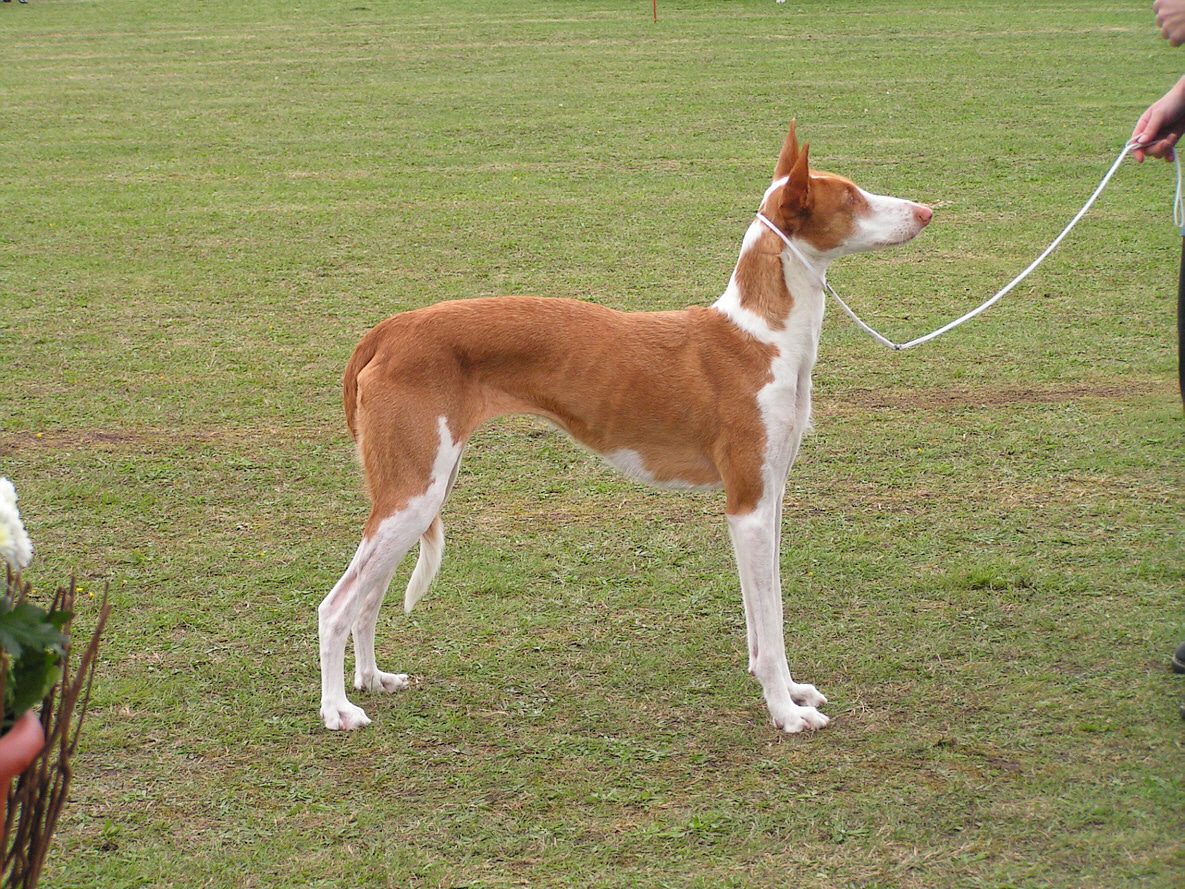
    The Ibizan Hound is one of the medium sized Greyhound, very similar to Pharaoh Hound.

    Content

    History

    The Ca Eivissenco or โ€œPodenco Ibicencoโ€, It is a breed canine Spanish Ibiza (Spain). It gets its name from the island Ibiza, belonging to the Group of islands in the Balearic Islands, bathed by the Mediterranean.

    This dog, has a highly developed sense of sight and hearing, that is why he has been assigned to hunting, especially in the rabbit, both day and night.

    It is a type of primitive and rustic dog, considered one of the oldest breeds that exist and can be seen the tombs of the Pharaohs and museums whose first signs can be traced back to the 3.400 A.C.

    The Ibizan Hound is one of the medium sized Greyhound, very similar to Pharaoh Hound. Without a doubt a descendant of the old Egypt dogs, that's what the written theories about race say..

    The origin of this breed is Spain, comes from the island of Ibiza. The city of Ibiza was founded in the 654 A.C. by the Carthaginians and it is a conjecture establishes the possibility that the first settlers took with them their dogs of Egyptian origin for simple company and to hunt the rabbits that were abundant on the island.

    But various genetic studies carried out in recent years have come to the conclusion that contrary to the widespread belief that the podenco is a type of primitive dog imported a few years ago 3.000 the area of middle years, These dogs actually have a close genetic relationship with the rest of the European hunting dogs and are no more "primitive" than most of them... The researcher Antoni Pedro Marรญ, details different aspects of the morphology, ethology and ecology of Ca Eivissenc in his work Native Races of the Pitiรผses.

    Did you know??

    The resemblance of the Ibizan with representations of the Egyptian god Anubis dog is one of the reasons why it is often thought to be an ancient race.

    Physical characteristics

    Elegant and agile, with an athletic and attractive outline, and with an elastic trot.

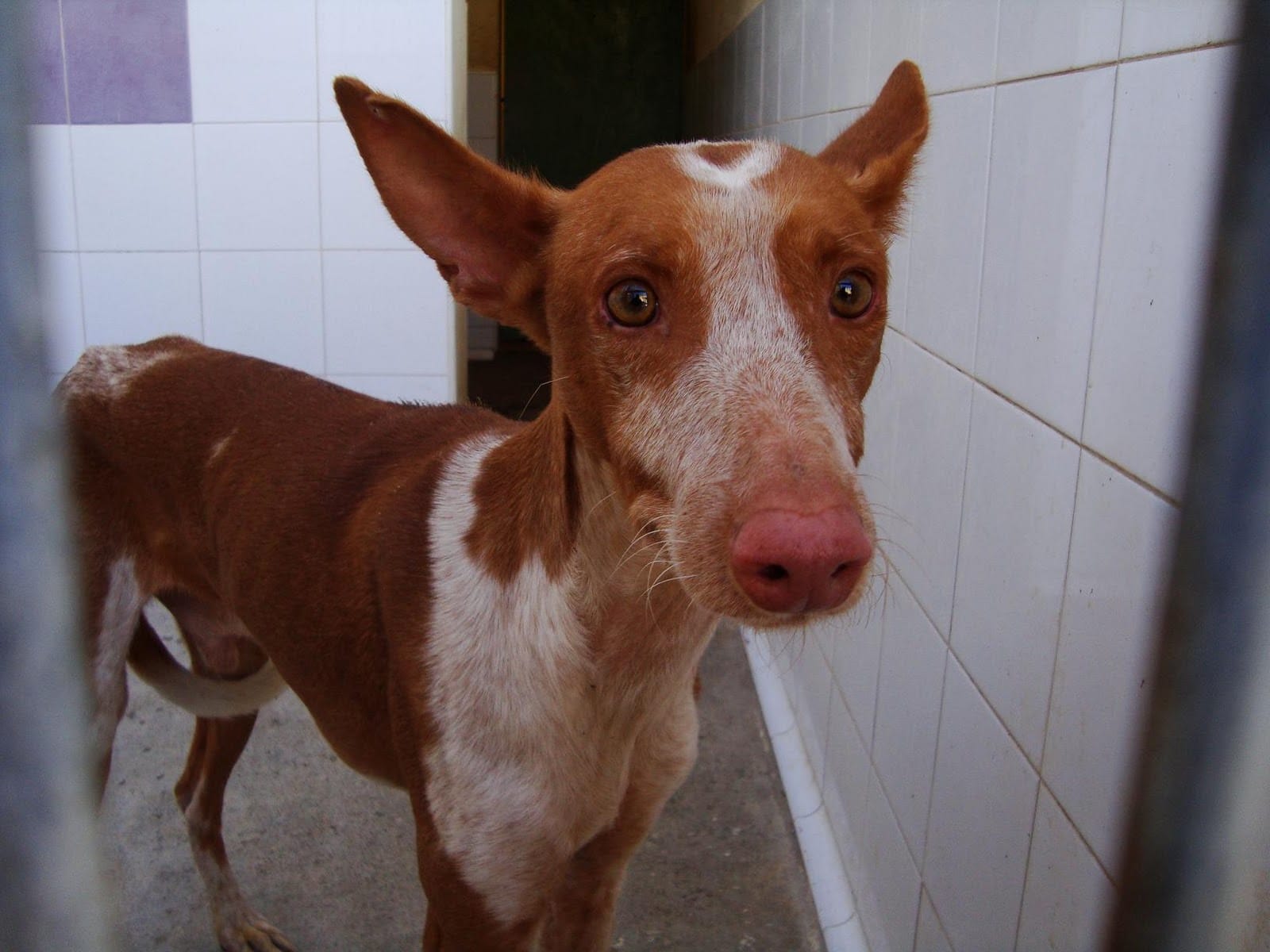
    The Ibizan Hound has a long, narrow head, sharp cone-shaped; the skull is long and narrow with a little pronounced Stop. The ears must be straight, towards front and very mobile; oblique eyes, small and always amber clear.

    The nose is flesh-colored and usually be taken into account to determine the purity of the breed. The color will always be blanco-marron, Blanco-leonado or unicolor, although this last possibility is more rare to find them. The weight varies between the 18 and 24 Kg, Depending on whether it's a male or a female, as well as if he is too well or poorly fed. With regard to the height of the dog there are also many disputes since fashion has at times imposed more slender and tall dogs that the found in the Pitiusas Islands.

    The current standard is one height of between 66 and 72 cm., It is very far from reality and the first official standard. The dogs that are bred in Ibiza and Formentera are shorter than the maximum height allowed.

    Via: criadorscaeivissenc

    Character and skills

    Pet is an excellent. Very easy to maintain when treated well and will respect your space. He is a dog that thinks for himself and there are times when he prefers not to have to show his appreciation to his master or be appreciated.; just let it quiet. It requires patience when it is trained.

    It is not recommendable for the home where children are (He has no patience and is very independent). Generally does not get along well with other pets. Can maintain you in apartment or House, When receive plenty of daily exercise.

    Characteristics "Ibizan Hound"

    Coexistence is important that you have with your new friend. Before considering the acquisition of a dog of the breed "Ibizan Hound" you know certain factors. Not all breeds of dogs are apt to live in an apartment, you must take into account his character, their need for exercise, their interaction with other pets, their care and if you have small children, their level of tolerance towards them.

    Adaptation โ“˜

    4,0 of 5 stars (based on 1 review)

    friendly dog โ€‹โ€‹โ“˜

    3,0 of 5 stars (based on 1 review)

    hair loss โ“˜

    3,0 of 5 stars (based on 1 review)

    Affection level โ“˜

    5,0 of 5 stars (based on 1 review)

    Need for exercise โ“˜

    4,0 of 5 stars (based on 1 review)

    Social need โ“˜

    3,0 of 5 stars (based on 1 review)

    Home โ“˜

    1,0 of 5 stars (based on 1 review)

    Toilet โ“˜

    1,0 of 5 stars (based on 1 review)

    Friendly with strangers โ“˜

    2,0 of 5 stars (based on 1 review)

    barking โ“˜

    3,0 of 5 stars (based on 1 review)

    Health โ“˜

    3,0 of 5 stars (based on 1 review)

    Territorial โ“˜

    3,0 of 5 stars (based on 1 review)

    Cat friendly โ“˜

    2,0 of 5 stars (based on 1 review)

    Intelligence โ“˜

    3,0 of 5 stars (based on 1 review)

    Versatility โ“˜

    2,0 of 5 stars (based on 1 review)

    Child friendly โ“˜

    3,0 of 5 stars (based on 1 review)

    Surveillance โ“˜

    3,0 of 5 stars (based on 1 review)

    joy โ“˜

    3,0 of 5 stars (based on 1 review)

    Ibizan Hound Images

    Videos Ibizan Hound

    Type and recognitions:

    • FCI CLASSIFICATION:
    • Group :
    • Section : . .

    Federations:

  • Federations: FCI โ“˜, AKC โ“˜, ANKC โ“˜, CKC โ“˜, โ€‹KC โ“˜, NZKC โ“˜, UKC โ“˜

  • FCI breed standard "Ibizan Hound"

    Origin:
    Spain

    Date of publication of the valid original standard:
    26.05.1982

    Use:

    Is used, above all, in the rabbit hunt without a shotgun, day and night, well they lift them easily, even in places with a lot of vegetation due to the fineness of their smell, because he uses himself and his hearing more than his sight.. For their agility and cunning they soon collect the piece, especially hunting several dogs together; When a dog shows a piece, the others surround it at a certain distance, stalking the passage of that piece., they only beat when they see or hear the piece and also when they have closed it, all of them show and charge the piece by flipping the tail during it, the sample is easily broken.

    It is also used to hunt hares and big game.. They are good collectors. To form packs, they are used, except for exceptions, females and at most one male, because they do not help each other hunting and are quarrelsome. When a pack has taken a few thousand rabbits, the peculiarity occurs that some dogs from the same, they no longer hunt until after a long rest. This is called โ€œEnconillarseโ€.


    General appearance:

    The length of the tip of the snout to the eye is the same as the distance between them and the occipital.


    Behavior / temperament:

    ---

    Head:

    Long head, narrow cone truncated near your base, excessively dry, rather small in relation to the body.

    Cranial region:
    • Skull: Dolicocephalic, long or crushed; prominent occipital bone; narrow forehead and flat.
    • Stop: Poorly defined.

    facial region:

    • Truffle: Slightly convex, flesh-colored; Open nostrils.
    • Snout: Prominent, protrudes from the lower jaws; is narrow, long and colour harmonising with the coat meat.
    • Lips: Fine, collected, flesh-colored.
    • Teeth: In perfect opposition, White, well placed, with the Scissor bite.

    Eyes: Oblique, small, Amber clear, Recalling the color of candy; Amber can be more or less intense, depending on the color of the coat. With a not very noble look, very intelligent, shy and distrustful.

    Ears: Always rigid; directed forward, to the sides horizontally or backward; to when the dog is excited, very moving; the center of the base is located at the level of the eyes; elongated rhomboid-shaped, truncated to one third of its longest diagonal. They are fine, without hairs inside; median, not overly large.

    Neck:

    Very dry, both at the bottom and top. Its length is one-quarter the length of the body; slightly arched, muscled; the skin is taut, Lisa, without jowl. The hair is usually longer and dense in the upper lower part of this area, noticing more in straight hair.

    Body:

    The general aspect of the body is symmetrical, subconvex and medioline, quite matched dimensions, picked up, slightly longer without measure fixed difference.

    • Cross: Outstanding, high, dry and long.
    • Back: Straight, long and flexible; strong muscles, but flat.
    • Pork loin: Arcuate, average width, strong and powerful.
    • Rump: At desk, of very powerful and hard muscles, with a bone structure shows.
    • Breast : Deep, narrow and long, without elbows, sternum angle very sharp and prominent; flat ribs.
    • Belly: Collected but not agalgado.

    Tail:

    Low insertion; passing between the legs to reach the spine, monitors (towards the tip around the tail a few longer and thicker hairs slightly separated in a spike shape), long; somewhat thicker in his birth, will tweaking gradually; at rest falls naturally; in action is in the form of sickle, more or less closed, preferably is not straight or screwed too on the back.

    Tips

    PREVIOUS MEMBERS: They are aplomados, symmetric; seen from the front arms are close together; collected set, limbs long giving the impression of a thin animal, Agile but strong.

    • Shoulder: Oblique scapulae, strong and free in their movements.
    • Arms: Very long, straight and strong, and very together.
    • Elbows: Comprehensive and outstanding, parallel to the median plane of the body, never come out.
    • Forearm: Wide at its bottom end.
    • Metacarpus: Powerful, strong, width, right well.

    LATER MEMBERS: Plumb, long muscles, strong, dry, flattened muscle.

    • Hocks: Toggle, widths, close to the ground (descending), well Plumb, Neither outwards nor inwards.

    FEET: Trend of Hare, tight and long fingers, well trimmed hair interdigital spaces, very strong and generally white nails, Sometimes the color of hair; very hard pads.

    Movement:

    The preferred way is a trot suspended; the Gallop is very fast, giving feeling of agility.

    Mantle

    SKIN: Tense, attached to the body; Pink pigmentation, It can vary from color in the regions in which the layer is different.

    HAIR: Smooth, hard or long.

    • The smooth should not be silky but strong and shiny.
    • The hard must be rough, well populated, somewhat shorter on the head and ears, longer in the back of the thighs and the underside of the tail; the beard is very appreciated; the length is softer and must be at least one length 5 cm with the heavily populated head.

    COLOR: Preferably white and Red, unicolores white or red, although the fawn could also be admitted as long as it is an extraordinary specimen., Although never accept this color for hair.


    Size and weight:

    Height to the cross:

    • For males :  66 to 72 cm.,
    • for females :  60 to 67 cm..

    Without being very demanding, Since of approximate measurements you can always accept that they are proportionate and aesthetic.


    Fouls:

    Any deviation from the aforementioned criteria is considered as a fault and the severity of this is considered to the degree of the deviation to the standard and its consequences on the health and well-being of the dog..

    SERIOUS FAULTS :

    • Short and wide head.
    • Very marked stop.
    • Lack of a premolar.
    • Floppy ears.
    • Depressed Center ribbing.
    • Elbows out.
    • Cow hocks.
    • Feet out.
    • Cross feet and hocks in motion.

    MISS PLAYOFFS :

    • Aggressive or fearful dog.
    • Phased skull.
    • Brown pigmentation or black spots on truffle.
    • Any form of prognathism.
    • Eyelids and lips brownish red.
    • Miss indicating a junction with a Greyhound or a hound, that is to say :
      • folded ears
      • Dark eyes
      • Wide rump
      • Little defined sternum
      • Separate forelimbs
      • Thighs wide and rounded, with bulging veins


    N.B.:

    โ€ข Males must have two normal-appearing testicles fully descended into the scrotum..
    โ€ข Only functionally and clinically healthy dogs, with the typical conformation of the breed, should be used for parenting

    Source: F.C.I - International Cynological Federation

    Alternative names:

    1. Ibizan Warren Hound, Ca Eivissenc, IBIZAN PODENCO (English).
    2. Chien de garenne des Balรฉares (French).
    3. Ca Eivissenc (German).
    4. Podenco ibicenico (Portuguese).
    5. Ca Eivissenc (espaรฑol).

    โ–ท The world of Pets: Dogs, cats, birds, reptiles, amphibians

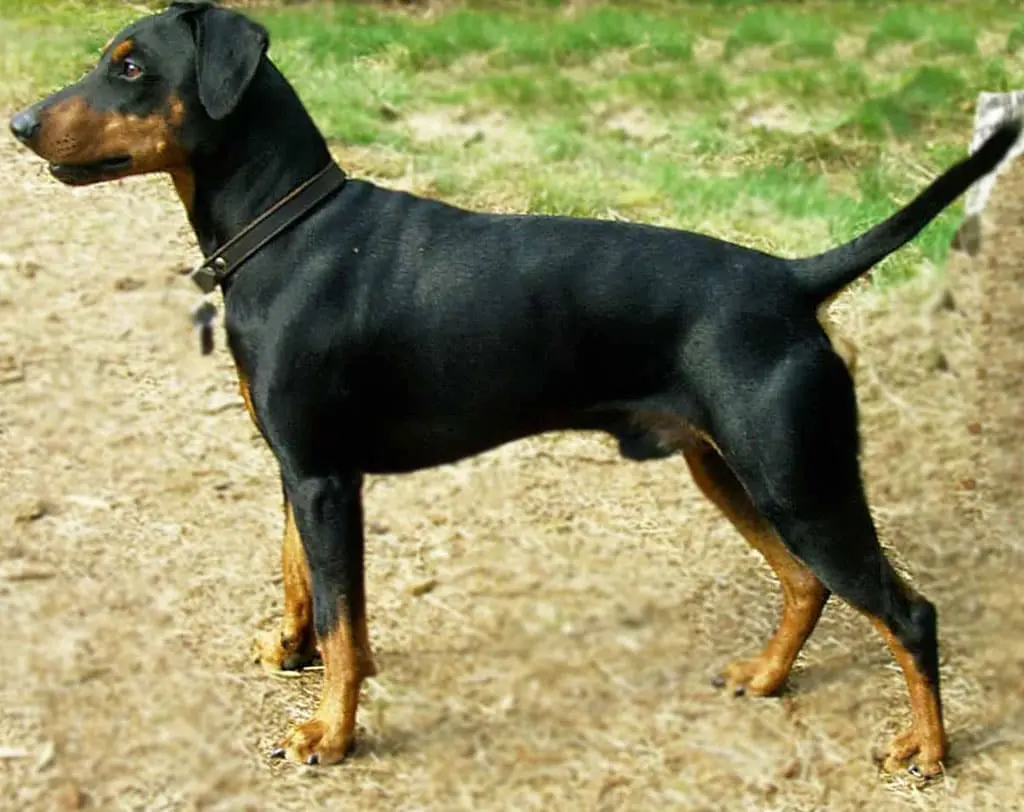
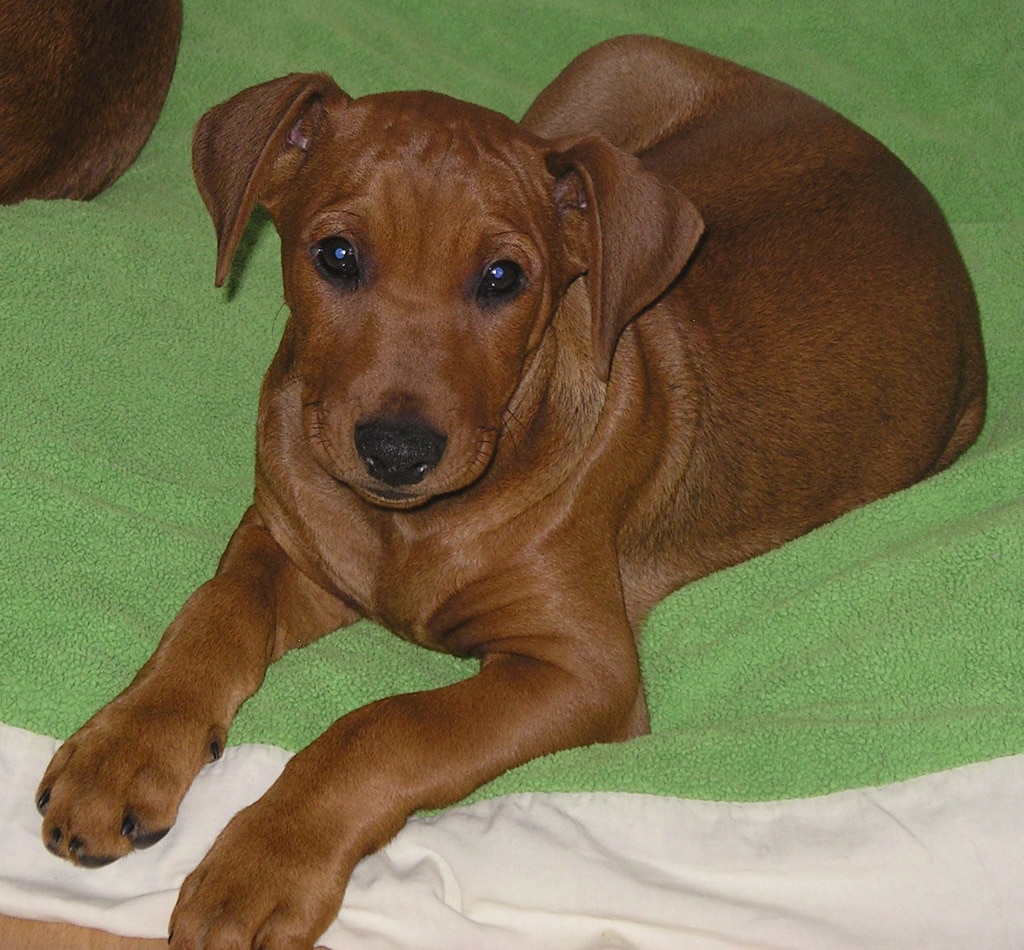
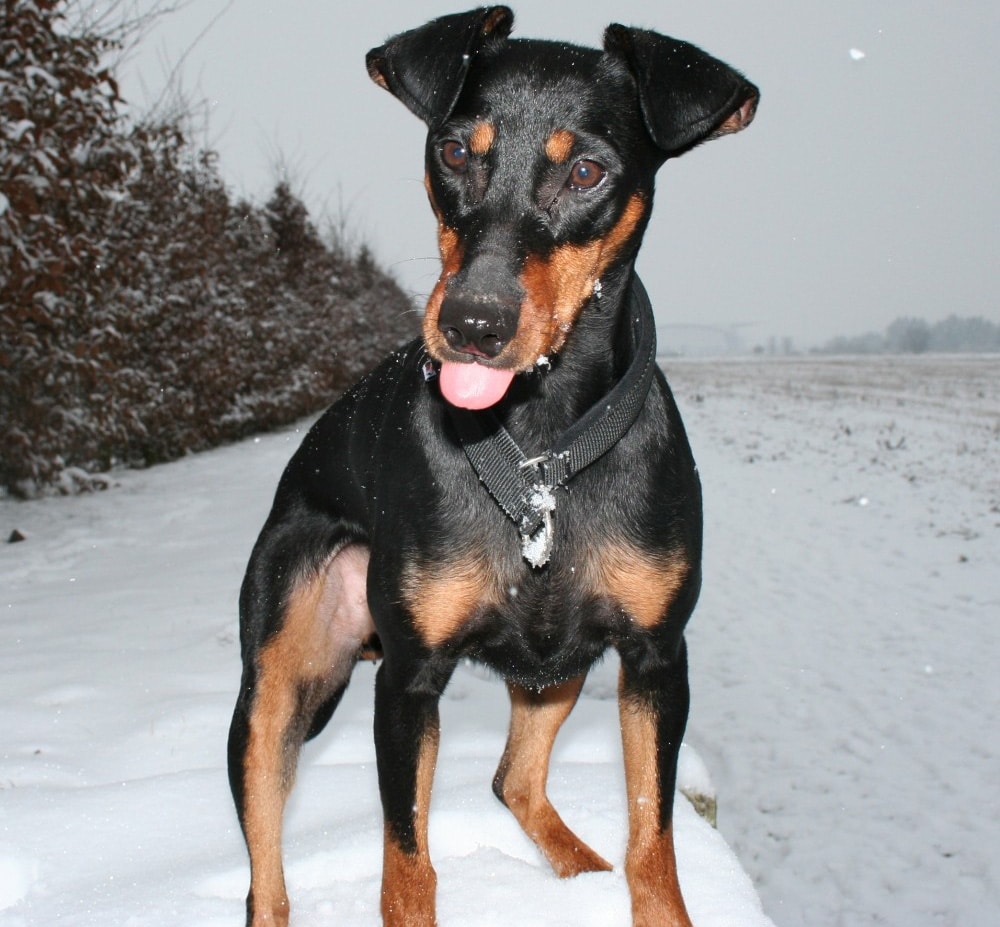
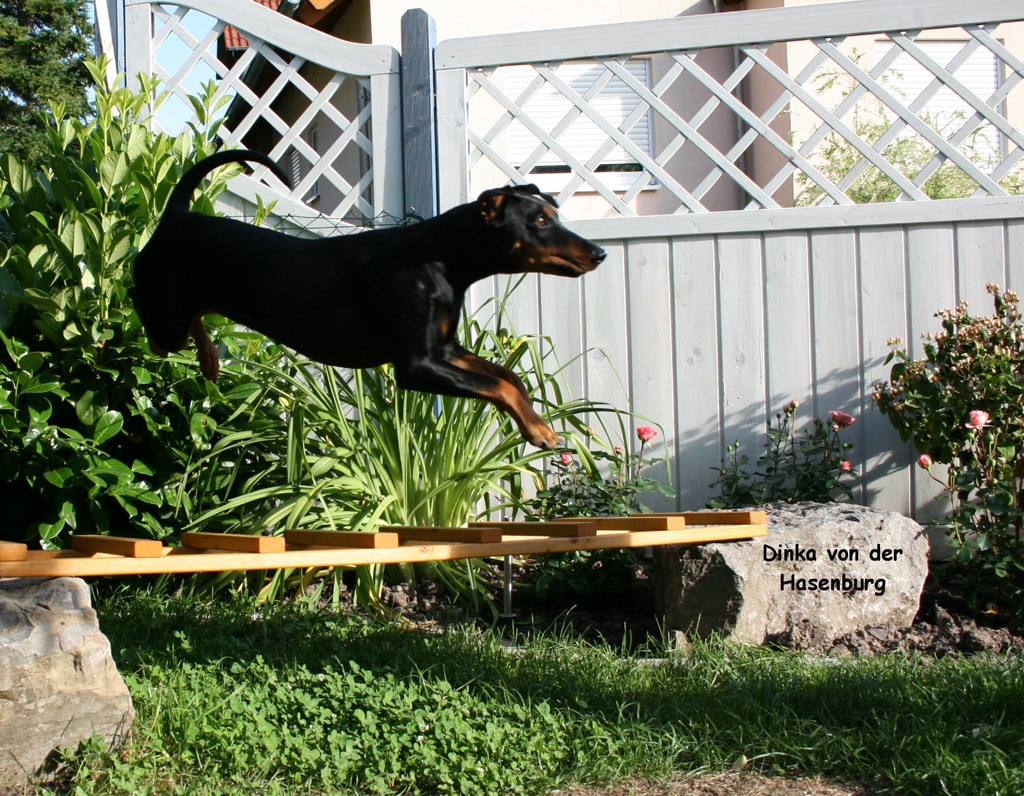
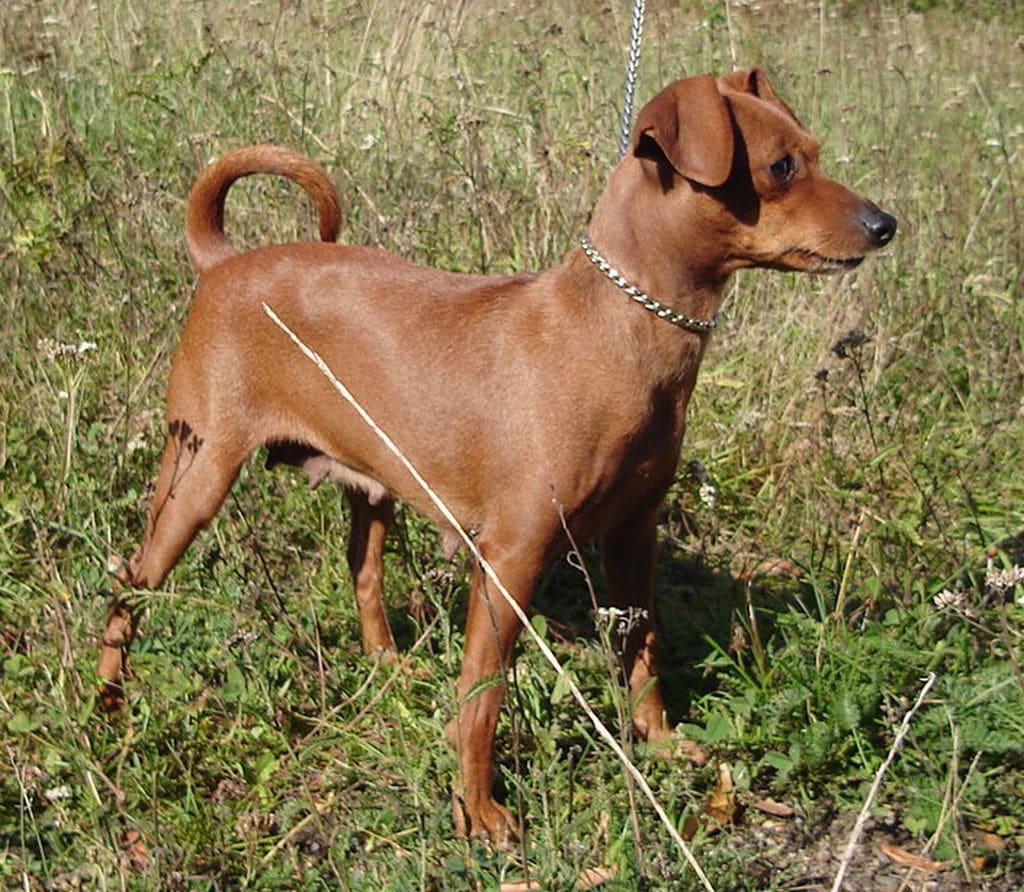
    German Pinscher
    Alemania FCI 184 . Pinscher and Schnauzer type

    Pinscher Alemรกn

    The German Pinscher is a dog, extremely, active and lively, alert and vigilant.

    Content

    History

    The German Pinscher (from the German pinscher "biter") It is a breed of dog that belongs to the family of Pinscher.

    This race, whose origins date back to the 15th century and which is also related to the Schnauzer, It was originally a dog used by the farmers of Germany to control rodent pests. It is believed that he is descended from crosses between old German dogs and some black Terrier used to hunt rodents.

    It is also the breed that arose the Dobermann and the so-called Miniature Pinscher. In Germany, due to the fame that were acquiring the dog shows in the rest of Europe and America, a standard of the breed was established in the year 1879, year in which it was also recognized as a race.

    Currently, the Pinscher It is considered more of a companion and guard dog than a hunting dog or vermin controller. As a companion dog it is ideal, its size enables live perfectly in a flat in city, although, like any other dog, you need to do exercise.

    In its role as a guard dog, of course, is not as imposing as his descendant the Dobermann, but their functions.

    The use of Pinscher as a watchdog it is very satisfying, It is a dog that defends well property without falling (insofar as it is well educated) in the territoriality to his master, staying true to this at all times.

    Although it has always been considered that the Pinscher it is a very attractive breed of dog, It has never exceeded the popularity of his descendants: the Pinscher the Dobermann and miniature. In fact, according to a study conducted by the Kennel Club, the Pinscher miniature is almost 8 some times larger than the Pinscher and the Doberman 138 times more popular than this.

    Physical characteristics

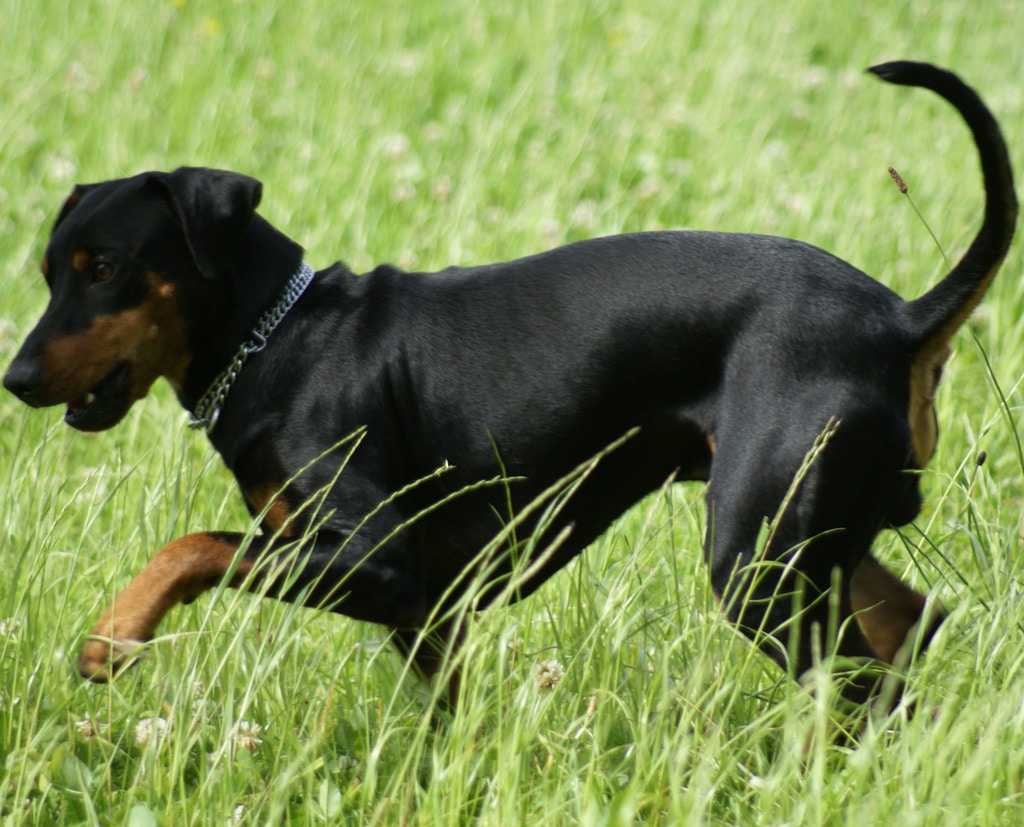
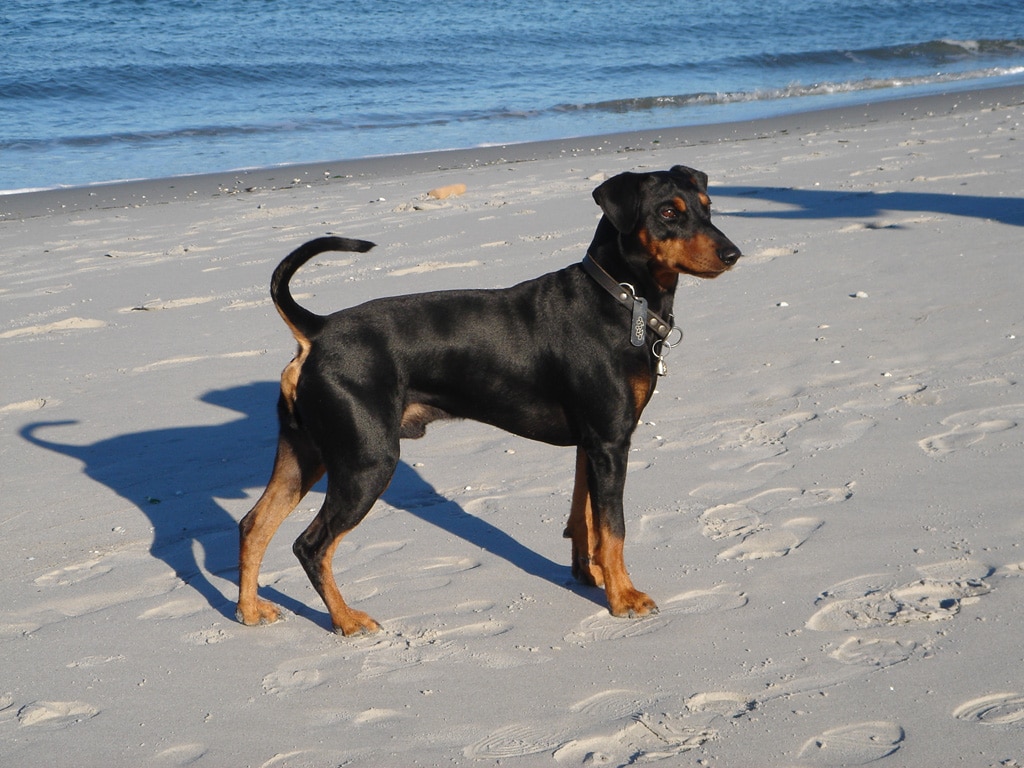
    The Pinscher is a dog of size medium, between 45 and 50 cm., proud bearing and strong muscles, with a weight around the 18 kg (14 to 20 kg).

    It has a head thin and snout elongated, ears median, slightly bent at birth, they hang from the head of the dog and they are generally cut.

    Neck of average length, wide and strong, trunk slim and elegant lines. Regard to the tail, like the ears, also tends to be amputated.

    The fur, It is short and rough, it comes in shades of red, brown or black, and fire in the belly and chest.

    Their fur is short and smooth, does not require much care, just brushing regularly to remove dead hair.

    Character and skills

    Because of its vitality require quite some exercise outdoors, You can fix left him free in an open field so that it can run and romp.

    As well, related to the latter, It is a suitable dog to accompany people who practice physical exercise, such as running or cycling.

    It is a dog, extremely, active and lively, alert and vigilant. It is often wary of strangers.

    It would also be necessary, given his character slightly dominant, teach him to respect rules and who is charge at home.

    We need to socialize from very small, because the dominant character leads him to not tolerate the presence of other dogs too. Then, If he is raised with another dog from a young age, they will have a duo of inseparable barkers at home.

    German Pinscher Health

    All purebred dogs have the potential to develop genetic health problems, just as all people have the potential to inherit a particular disease. Run, do not walk, from any breeder that does not offer a health guarantee on puppies, to tell you that the breed is 100 percent healthy and has no known problems, or tell you that your puppies are isolated from the main part of the home for health reasons. A reputable breeder will be honest and open about the breed's health problems and the incidence with which they occur in their lines..

    Having said that, the German pinschers they are quite healthy, and breeders want to keep them that way.

    Do not buy a puppy from a breeder who cannot provide you with written documentation that the parents have been cleared of health issues affecting the breed. Getting dogs "vet checked" is not a substitute for genetic health testing.

    Remember that after bringing a new puppy home, has the power to protect you from one of the most common health problems: the obesity. Keep a german pinscher with a proper weight is one of the easiest ways to prolong your life. Make the most of your preventive skills to help ensure a healthier dog for life.

    German Pinscher Grooming

    The short and smooth coat of the German Pinscher makes it easy to style. One bath every three months (or when it gets dirty) with a mild shampoo is all you need, in addition to brushing once a week with a natural bristle brush or glove. Use hair conditioner / polisher to brighten hair.

    The rest is basic care. Trim nails as needed, usually once a month. Brush your teeth frequently for general good health and fresh breath. Check ears weekly for dirt, redness or odor that may indicate an infection. If the ears look dirty, clean them with a cotton ball moistened with a mild, pH-balanced ear cleaner. Enter the toilet of the German Pinscher when I'm too young to learn to accept it, especially the nail cut, with patience.

    Characteristics "German Pinscher"

    Coexistence is important that you have with your new friend. Before considering the acquisition of a dog of the breed "German Pinscher" you know certain factors. Not all breeds of dogs are apt to live in an apartment, you must take into account his character, their need for exercise, their interaction with other pets, their care and if you have small children, their level of tolerance towards them.

    Adaptation โ“˜

    3,0 of 5 stars (based on 1 review)

    friendly dog โ€‹โ€‹โ“˜

    3,0 of 5 stars (based on 1 review)

    hair loss โ“˜

    3,0 of 5 stars (based on 1 review)

    Affection level โ“˜

    4,0 of 5 stars (based on 1 review)

    Need for exercise โ“˜

    4,0 of 5 stars (based on 1 review)

    Social need โ“˜

    3,0 of 5 stars (based on 1 review)

    Home โ“˜

    3,0 of 5 stars (based on 1 review)

    Toilet โ“˜

    2,0 of 5 stars (based on 1 review)

    Friendly with strangers โ“˜

    3,0 of 5 stars (based on 1 review)

    barking โ“˜

    3,0 of 5 stars (based on 1 review)

    Health โ“˜

    4,0 of 5 stars (based on 1 review)

    Territorial โ“˜

    5,0 of 5 stars (based on 1 review)

    Cat friendly โ“˜

    3,0 of 5 stars (based on 1 review)

    Intelligence โ“˜

    4,0 of 5 stars (based on 1 review)

    Versatility โ“˜

    4,0 of 5 stars (based on 1 review)

    Child friendly โ“˜

    3,0 of 5 stars (based on 1 review)

    Surveillance โ“˜

    4,0 of 5 stars (based on 1 review)

    joy โ“˜

    5,0 of 5 stars (based on 1 review)

    German Pinscher Images

    German Pinscher videos

    Type and recognitions:

    • FCI CLASSIFICATION:
    • Group :
    • Section : . .

    Federations:

    • FCI – Pinscher and Schanuezer dogs. Molossian type Dogs and Swiss Mountain and Cattle Dogs. , Section 1: Pinscher and Schnauzer. โ“˜
    • AKC – Dogs working โ“˜
    • ANKC – Group 6 (utility dogs) โ“˜
    • CKC – Group 6 – Non-Sporting โ“˜
    • โ€‹KC – Working dogs โ“˜
    • NZKC – Utility dog โ“˜
    • UKC – Terrier โ“˜

    FCI breed standard "German Pinscher"

    Origin:
    Germany

    Date of publication of the valid original standard:
    06.03.2007

    Use:

    Guard and company.


    General appearance:

    The German Pinscher is short-haired and straight, medium-sized, of proud presence, contour of flowing lines, elegant and square construction. He is strong like the Schnauzer and his well developed musculature is clearly evident during the movement given his short and smooth coat.


    IMPORTANT PROPORTIONS:

    • The construction should as much as possible appear square in relation to body length and the height to the cross.
    • The total length of the head (from the tip of the truffle to the occipital protuberance) you must keep a relationship of 1:2 with body length (from the cross to the tail insert).


    Behavior / temperament:

    With a lot of temperament, liveliness, self-assurance, mental balance and intelligent prudence coupled with perseverance make him an excellent family dog, guard and company.

    Head:

    ---

    Cranial region:
    • Skull: Strong and elongated, with the back of the little marked head. The occiput should not be too marked; the forehead is flat and parallel with the nasal cannula.
    • Depression links (stop): Soft, although clearly marked.

    facial region:

    • Truffle: Well developed and always black.
    • Snout: It ends in a truncated crib. The nasal cannula is straight.Belfos: Blacks, rest firm and plans on the jaws; the corner of the lips is closed.
    • Jaws / Teeth: Powerful upper jaw and lower. The bite is scissors, strong and full (42 clean teeth and white according to the dental formula of dogs). They should close well. The chewing musculature is strongly developed without forming bothering cheeks.


    • EYES: dark, oval and with adherent and pigmented black eyelids.
    • EARS: Bent and falls, high insertion, โ€œVโ€ shaped; the inside edges of the ears rest on cheeks. The ears are directed forward in the direction of the temple. The parallel fold should not exceed the top line of the skull.

    Neck:

    Of aristocratic porte, not too short; without interruption, must flow harmoniously towards the cross; dry, without dewlap and loose in the throat skin. The skin of the throat is firm, without wrinkles.

    Body:

    • top line: Descending slightly from the withers backwards.Cross: It is the highest point of the top line.
    • Back: Strong, short, firm.
    • Pork loin: Short, strong, deep. The distance from the last rib to the hip is short so that the dog appears compact.Rump: Slightly rounded, imperceptibly towards the tail insert.
    • Breast : Moderately wide, oval cut, deep up to elbows. The parapet is especially marked by the tip of the breastbone.
    • bottom line: Flanks not excessively gathered so as to provide a nice wavy line along the lower part of the thorax..

    Tail:

    Natural, the goal being to make it Sabre or sickle-shaped.

    Tips

    PREVIOUS MEMBERS: The forelimbs are, seen from the front, vigorous, straight and placed not too close together. Seen side forearms are straight.

    • Shoulder: The scapula is firmly resting on the chest. Well muscled on both sides of the spine of the bone, stands out for above the vertebrae of the spine in its thoracic section. As much as possible and lean back, forms an angle of 50ยบ with the horizontal.
    • Arm: Well on the body, strong and muscular; forms an angle of approximately 95ยบ to 105ยบ with the scapula.
    • Elbows: Tight, not rotated or outward or inwardForearm: Straight seen from front and profile; strongly developed and well muscled.Carpo: Strong and stable.
    • Metacarpus: Strong and slightly elastic, seen from the front straight, of slightly oblique profile in relation to the ground.
    • Previous feet: Short and round, fingers pinched each others and arched (cat feet), strong pads, short nails, black and strong.

    LATER MEMBERS: Views of oblique profile, from the back, they are parallel and not too close together.

    • Thigh: Moderately long, width, and strongly muscled.Knee: Must not be turned neither inward nor outward.
    • Leg: Long and strong, sinewy, continuing in a powerful Tarsus.
    • Hock: Well angled, strong, firm, not turned neither inward nor outward.
    • Metatarsus: Perpendicular in relation to the ground.
    • Hind feet: A little longer than the previous ones. Fingers tightened one another well arched; nails short, black.

    Movement:

    The German Pinscher is a jogger. During the movement the back remains firm and relatively quiet. The beginning of the movement is harmonious, insurance, full of strength, free and good range. It is typical for trotters to have great ground coverage with clean, fluid movement., with a powerful drive and a wide front extension.

    Mantle

    • SKIN: Firm throughout the body.

    MANTLE

    • Fur: Short and bushy, shiny and tight to the body, without bald regions.

    Color:

    • Unicolor: Red Deer, red-brown to dark red-brown.black and tan: black hair lacquer with fiery red to brown markings. It is desirable that the trade marks are possible dark, saturated and well-defined. Fire marks are located: on the eyes, on the underside of the neck, in the Metacarpus, in feet, on the inner faces of the hind and the perineum. In the sill, two triangles of equal size clearly separated one from the other.


    Size and weight:

    Height to the cross: Males and females: 45 until 50 cm.. Weight: Males and females: 14 until 20 kg.


    Fouls:

    Any deviation from the aforementioned criteria is considered as a fault and the severity of this is considered to the degree of the deviation to the standard and its consequences on the health and well-being of the dog..


    In particular:

    • Heavy or light appearance, petizo or patilargo.
    • Heavy or round skull.
    • Wrinkles on the forehead.
    • Short snout, pointed or narrow.
    • Bite in clamp.
    • light eyes, too small or too big.
    • Inclusion of low or very long ears, ears carried different from each other.
    • Strongly prominent cheek bones.
    • The throat loose skin.
    • Too long back, collected or soft.
    • Encarpado back.
    • fallen group.
    • Long feet.
    • Amble step.
    • High way.
    • Fine animal hair.
    • eel line, Dark saddle, mantle clear.
    • 1 cm.. above the upper limit of height or 1 cm.. below the lower height limit.

    SERIOUS FAULTS:

    • Lack of type in the expression of sex (for example, male female).
    • Lightweight aspect.
    • Lack of parallelism skull/snout.
    • Amanzanado skull.
    • Elbows rotated out.
    • After not quite angled or barrel.
    • Hocks rotated inwards.
    • Deviation between 1 and 3 cm above the upper limit or lower limit of height.

    FALTAS DESCALIFICANTES:

    • Aggressiveness or extreme shyness.
    • Any dog โ€‹โ€‹showing clear signs of physical or behavioral abnormalities.
    • Evil, exaggerated suspicion, nervous behavior.
    • Any deformity.
    • Markedly inverted sexual characteristics.
    • Lacking bite, upper or lower prognathism, incisor arcade deviated.
    • Miss runner in each region as construction defects, hair and color.
    • Diversion of more than 3 cm.. of the upper and lower height limits.


    N.B.:
    • Males should have two normal-appearing testicles fully descended into the scrotum..
    • Only functionally and clinically healthy dogs, with the typical conformation of the breed, should be used for parenting.

    The latest changes are in bold.

    Source: F.C.I - International Cynological Federation

    Alternative names:

    1. Deutscher Pinscher (English).
    2. Deutscher Pinscher (French).
    3. Deutscher Pinscher (German).
    4. (em alemรฃo: Deutscher Pinscher) (Portuguese).
    5. Pinscher Mediano, Pinscher Estรกndar, Pinscher de pelo รกspero, Mordedor alemรกn (espaรฑol).

    โ–ท The world of Pets: Dogs, cats, birds, reptiles, amphibians

    Miniature Pinscher
    Alemania FCI 185 . Pinscher and Schnauzer type

    Pinscher Miniatura

    The Miniature Pinscher has much temperament, vitality and is an excellent companion dog.

    Content

    History

    It is often thought that the Pinscher miniatura is a German Pinscher small, but it predates that race at least in 200 years. Originally paid for his maintenance as a buzzard in the German pens. It is believed to have been created by the crossing of races as diverse as the Sausage dog, the old german pinscher, the Manchester Terrier and the Italian Greyhound. The result was a spirited and fearless puppy.

    It was very popular in Germany and Scandinavian countries., but it is not surprising that its international star began to grow. The Pinscher miniatura was first registered with the American Kennel Club in 1925 like Terrier for his mouse experience. The Miniature Pinscher Club of America was formed in 1929, and the dogs were reclassified as a toy breed in 1930. In America they were called Pinscher (Toy) until 1972, when they were renamed Miniature Pinscher.

    Today, the Miniature Pinscher ranks 40th among AKC registered breeds, below 17th in 2000. As with many breeds, has changed position at the whim of the public, possibly because he's not the cute little lapdog some thought he would be, or simply because other breeds have captured the attention of the public.

    Physical characteristics

    The Pinscher miniature is the achicada image of the German Pinscher, flawless dwarfism. Its elegant square construction is clearly visible through her short hair, smooth and tight.

    Its proportions are square because it has the same length as the cross height, between the 25 and 30 cm..

    Its weight varies between the 4 and 6 kg maximum, at risk of suffering from the heart.

    The hair is short and smooth, admitting only copies monocolores Red in their different shades and copies bicoloured Black with fire marks.

    Traditionally, the Miniature Pinscher was the tail and ears cut, but now this practice is prohibited throughout the European Union.

    Character and skills

    A small dog with a great attitude and a bigger mouth, the Miniature Pinscher he has no idea he's not as big as a Doberman. Will face any threat, including a dog many times bigger than him. Will try to protect his family, will chase cats out of the yard and sound the alarm whenever he deems necessary, which is constant. And although it will fit in your puppy bag, you won't like to be there. This is a dog with a mind and a will of its own, not an accessory.

    Don't let its designation as a toy dog รขโ‚ฌโ€นรขโ‚ฌโ€นfool you. Like his older Terrier cousins, the Pinscher miniatura dig, will bark and chase anything that moves, including squirrels, cats and quite possibly other dogs. Unless well-bred and well-socialized – and sometimes even despite such advantages – is prone to being an annoying barker, suspicious of strangers and not very good with children.

    The Pinscher miniatura It can be wonderful with older kids as long as the kids don't mistreat them. Their activity and energy level is suitable for children, and loves to be a family dog. Monitor interactions with young children so they don't hurt the dog, or viceversa.

    Due to his tendency to be protective and territorial, the assertive, proud and stubborn Pinscher miniatura needs a firm and consistent training from the puppy stage to control his bites, as well as any tendency to bark inappropriately. Don't let him get away with bad behavior or he'll quickly become an almost impossible habit to break. It also, like many small dogs, Miniature Pinschers are difficult to house train; firmness and consistency are the keys to success.

    The Miniature Pinscher is innately curious and likes toys that move or make noises. But, it is likely that at some point he will try to eat the toys… will gut a squeaky toy in no time. Flimsy rubber or plastic aren't the best bets for him.

    Start training your puppy Pinscher miniatura the day i bring it home. Even at 8 or 10 weeks of age, He is able to absorb everything you can teach you. If possible, Take it to a trainer when you have between 10 and 12 weeks, and socializes, socialice, socialice. But, Note that many kinds of training puppies require certain vaccinations (such as kennel cough) stay up to date, and many vets recommend limited exposure to other dogs and public places until puppy vaccinations have been completed (including that of rage, distemper and parvovirus). Instead of formal training, You can start training your puppy to socialize at home and among family and friends until immunizations are completed in the puppy.

    Talk to the breeder, Describe exactly what you want in a dog and ask for help choosing a puppy. Breeders see their puppies daily and can make incredibly accurate recommendations once they know something about their lifestyle and personality.. If you are looking for a Pinscher miniatura, look for one whose parents have nice personalities and who has been well socialized since the puppy's first stage.

    Miniature Pinscher Health

    All dogs have the potential to develop genetic health problems, just as all people have the potential to inherit a particular disease. Run, do not walk, from any breeder that does not offer a health guarantee on puppies, to tell you that the breed is 100 percent healthy and has no known problems, or tell you that your puppies are isolated from the main part of the home for health reasons. A reputable breeder will be honest and open about the breed's health problems and the incidence with which they occur in their lines..

    The Miniature Pinscher is prone to some health problems. Here's a brief rundown of some of the conditions you should be aware of.

    Like most small dogs, Miniature Pinscher's knees can be unstable and can come out of position easily, the common condition known as luxating patellas. This is one of the reasons why it is essential to keep your Miniature Pinscher at a proper weight..

    Hip disease known as Legg-Calve-Perthes disease occurs in Min Pins. Causes a reduction in the blood supply to the head of the hind leg bone, which then begins to degrade. The first sign of Legg-Calve-Perthes, the limp, usually appears when the puppy has 4 to 6 months of age. In many cases, treatment requires surgery to remove the head of the leg bone.

    Mucopolysaccharidosis VI, the MPSVI, it is a genetic defect in the way the body processes certain molecules. An accumulation of dermatan sulfate (a complex molecule) can occur in specific areas of the body. Stunted growth, joint damage, cloudiness of the eyes (which may look like waterfalls) and damage to the heart valves are some of the consequences of MPSVI. DNA test can identify affected dogs, carriers and normals. Breeding two carriers can produce affected puppies.

    Other conditions that affect race include diabetes, dislocation of the elbow, congenital deafness and eye problems such as progressive retinal atrophy, glaucoma and hypoplasia of the optic nerve.

    Not all of these conditions are detectable on a growing puppy, and it can be difficult to predict whether an animal will be free of these diseases, so you should find a trusted breeder who is committed to raising the healthiest animals possible. Must be able to produce independent certification that the dog's parents (and grandparents, etc.) have been tested for genetic defects and considered healthy for breeding. As minimum, breeder must have hip and knee evaluations of both breeding dogs.

    If the breeder tells you that you do not need to do these tests because you have never had problems in your lines, your dogs have been vet checked, or any of the other excuses bad breeders have to skimp on their dogs' genetic testing, vaiyase.

    Careful breeders screen their breeding dogs for genetic diseases and breed only the healthiest, best-looking specimens., but sometimes Mother Nature has other ideas and a puppy develops one of these diseases despite good husbandry practices. Advances in veterinary medicine mean that in most cases dogs can still live a good life. If you are going to have a puppy, ask the breeder about the ages of the dogs in their lines and what they died of.

    Not all visits from Pinscher miniatura to the vet they are due to a genetic problem. Due to its size and athletics, broken legs are not uncommon.

    Remember that after bringing a new puppy home, has the power to protect you from one of the most common health problems: the obesity. Keep a Pinscher miniatura with a proper weight is one of the easiest ways to prolong your life. Make the most of diet and exercise to help ensure a healthier dog for life.

    Caring for the Miniature Pinscher

    Miniature Pinschers are very easy to groom due to their short, soft fur. Just use a bristle brush once or twice a week. They lose an average amount, but its small size means less hair is lost than in a larger dog with the same type of short hair.

    Bathe the Miniature Pinscher as desired or only when it gets dirty. With the gentle dog shampoos available now, You can bathe a Miniature Pinscher weekly if you want without damaging its coat.

    As with all Toy breeds, dental problems are common. Brush your Miniature Pinscher's teeth daily with a vet-approved pet toothpaste and have them checked regularly by your vet. Nails should be cut every two weeks; should not hear the clicking of the toenails when the dog walks.

    Characteristics "Miniature Pinscher"

    Coexistence is important that you have with your new friend. Before considering the acquisition of a dog of the breed "Miniature Pinscher" you know certain factors. Not all breeds of dogs are apt to live in an apartment, you must take into account his character, their need for exercise, their interaction with other pets, their care and if you have small children, their level of tolerance towards them.

    Adaptation โ“˜

    5,0 of 5 stars (based on 1 review)

    friendly dog โ€‹โ€‹โ“˜

    2,0 of 5 stars (based on 1 review)

    hair loss โ“˜

    2,0 of 5 stars (based on 1 review)

    Affection level โ“˜

    5,0 of 5 stars (based on 1 review)

    Need for exercise โ“˜

    2,0 of 5 stars (based on 1 review)

    Social need โ“˜

    4,0 of 5 stars (based on 1 review)

    Home โ“˜

    4,0 of 5 stars (based on 1 review)

    Toilet โ“˜

    1,0 of 5 stars (based on 1 review)

    Friendly with strangers โ“˜

    3,0 of 5 stars (based on 1 review)

    barking โ“˜

    5,0 of 5 stars (based on 1 review)

    Health โ“˜

    2,0 of 5 stars (based on 1 review)

    Territorial โ“˜

    4,0 of 5 stars (based on 1 review)

    Cat friendly โ“˜

    3,0 of 5 stars (based on 1 review)

    Intelligence โ“˜

    5,0 of 5 stars (based on 1 review)

    Versatility โ“˜

    4,0 of 5 stars (based on 1 review)

    Child friendly โ“˜

    3,0 of 5 stars (based on 1 review)

    Surveillance โ“˜

    5,0 of 5 stars (based on 1 review)

    joy โ“˜

    4,0 of 5 stars (based on 1 review)

    The Miniature Pinscher pictures

    Videos del Pinscher Miniatura

    Type and recognitions:

    • FCI CLASSIFICATION:
    • Group :
    • Section : . .

    Federations:

    • FCI – Pinscher and Schanuezer dogs. Molossian type Dogs and Swiss Mountain and Cattle Dogs. , Section 1: Pinscher and Schnauzer. โ“˜
    • AKC – Toys โ“˜
    • ANKC – Group 1 (Toys) โ“˜
    • CKC – Group 5 – (Toys) โ“˜
    • โ€‹KC – Toys โ“˜
    • NZKC – Toys โ“˜
    • UKC – Companion Breeds โ“˜

    FCI breed standard "Miniature Pinscher"

    Origin:
    Germany

    Date of publication of the valid original standard:
    06.03.2007

    Use:

    Pet and home dog


    General appearance:

    The Pinscher miniature is the achicada image of the German Pinscher, flawless dwarfism. Its elegant square construction is clearly visible through her short hair, smooth and tight.


    IMPORTANT PROPORTIONS:

    • The construction should as much as possible appear square in relation to body length and the height to the cross.
    • The total length of the head (from the tip of the truffle to the occipital protuberance) you must keep a relationship of 1:2 with body length (from the cross to the tail insert).


    Behavior / temperament:

    With a lot of temperament, full of life, self-confident, balanced. All this makes it an excellent family dog โ€‹โ€‹and for company..

    Head:


    Cranial region:
    • Skull: Strong and elongated, with the back of the little marked head. The forehead is flat and parallel with the nasal helm.
    • Depression links (stop): Soft, Although clearly defined.

    facial region:

    • Truffle: Well developed and black.
    • Snout:It ends in a truncated crib. The nasal helm is straight.
    • Belfos: Blacks, rest firm and plans on the jaws; the corner of the mouth is closed.
    • Jaws/Teeth: Powerful upper jaw and lower. The bite is scissors, strong and full (42 clean and white teeth according to tooth formula of the dog). You must close properly. Muscles of chewing this strongly developed without forming cheeks that disturb.
    • Eyes: dark, oval, the edges of the acceding and pigmented black eyelids.
    • Ears: erect; bent, high insertion, โ€œVโ€ shaped; the inside edges of the ears rest on cheeks. The ears are directed forward in the direction of the temple. The parallel fold should not exceed the top line of the skull.

    Neck:

    Of aristocratic porte, not too short; without interruption, It should flow harmoniously on the cross; dry, without dewlap and loose in the throat skin. The skin of the throat is firm, without wrinkles.

    Body:

    • Top line: Slightly descending from the cross back.
    • Cross: It is the highest point of the top line.
    • Back: Strong, short, firm.
    • Pork loin: Strong. The distance from the last rib to the hip is short so that the dog appears compact.
    • Rump: Slightly rounded and imperceptibly through the inclusion of the queue.
    • Breast : Moderately wide, oval cut, deep up to elbows. The apron is especially marked by the tip of the sternum.
    • bottom line: Flanks not excessively gathered so as to provide a nice wavy line along the lower part of the thorax..

    Tail:

    Natural, the goal being to make it Sabre or sickle-shaped.

    Tips

    PREVIOUS MEMBERS: The forelimbs are, seen from the front, vigorous, straight and placed not too close together. Profile viewed forearms are straight.

    • Shoulder: The scapula is firmly resting on the chest. Well muscled on both sides of the spine of the bone, It overhangs the vertebrae of the column in the thoracic segment. As much as possible well cast and tilted backward, forms an angle of 50ยบ with the horizontal.
    • Arm: Well on the body, strong and muscular; forms an angle of approximately 95ยบ to 105ยบ with the scapula.
    • Elbows: Tight, not rotated or outward or inward.
    • Forearm: Straight seen from front and profile; strongly developed and muscular.
    • Carpo: Strong and stable.
    • Metacarpus: Strong and elastic, seen from the front straight, profile I slightly oblique in relation to the ground.
    • Front feet: Short and round ; fingers pinched each others and arched (cat feet) ; strong pads ; short nails, black and strong.

    LATER MEMBERS: Views of oblique profile, from the back, are parallel and not too together.

    • Thighs: Moderately long, widths, and heavily muscular
    • Knee: Must not be turned neither inward nor outward
    • Leg: Long and strong, sinewy, continuing in a powerful Tarsus
    • Hock: Well angled, strong, firm, not turned neither inward nor outward
    • Metatarsus: Perpendicular in relation to the ground
    • Rear feet: A little longer than the front. Fingers tightened one another well arched ; nails short, black.

    Movement:

    The Pinscher miniature is a m. During the movement the back remains firm and relatively quiet. The beginning of the movement is harmonious, insurance, full of strength, free and good range. It is typical for trotters to have great ground coverage with clean, fluid movement., with a powerful drive and a wide front extension.

    Mantle

    SKIN: Firm throughout the body

    COAT: Short and thick hair, shiny and tight to the body, without bald regions.

    COLOR

    • Unicolor: Red Deer, Jatoba to red oscuro-marron.
    • black and tan: Black hair lacquer with red fire marks to Brown. It is desirable that the trade marks are possible dark, saturated and well-defined. Fire marks are located : on the eyes, on the underside of the neck, in the Metacarpus, in feet, on the inner faces of the hind and the perineum. In the sill, two triangles of equal size clearly separated one from the other.


    Size and weight:

    • HEIGHT AT THE WITHERS (Males and females): 25 until 30 cm..
    • WEIGHT (Males and females): 4 until 6 kg.


    Fouls:

    Any deviation from the aforementioned criteria is considered a fault and the severity of this is considered to the degree of the deviation from the standard and its consequences on the health and well-being of the dog.


    In particular:

    • Look heavy or light, petizo or patilargo.
    • Heavy or round skull.
    • Wrinkles on the forehead.
    • Short snout, pointed or narrow.
    • Bite in clamp.
    • light eyes, too big or too small.
    • Inclusion of low or very long ears, ears carried different from each other.
    • The throat loose skin.
    • Too long back, collected or soft.
    • Encarpado back.
    • fallen group.
    • Long feet.
    • Amble step.
    • High way.
    • Fine animal hair.
    • eel line, Dark saddle, mantle clear, spotted fur.
    • 1 cm.. above the upper limit of height or 1 cm.. below the lower height limit.

    SERIOUS FAULTS:

    • Lack of type in the expression of sex (for example female male).
    • Lightweight aspect.
    • Lack of parallelism skull/snout.
    • Amanzanado skull.
    • Elbows rotated out.
    • Hocks rotated inwards.
    • After not quite angled or barrel.
    • Deviations of more of 1 cm.. and less than 2 cm.. at the maximum and minimum heights respectively.

    MISS PLAYOFFS:

    • Shyness, aggressiveness, evil, exaggerated suspicion, nervous behavior.
    • Any deformity.
    • Lack of type.
    • Lacking bite, upper or lower prognathism, Arcade of the offset incisors.
    • Miss runner in each region as construction defects, hair and color.
    • Deviations of more of 2 cm.. of the upper and lower height limits.

    Any dog โ€‹โ€‹showing clear signs of physical or behavioral abnormalities must be disqualified..


    N.B.:

    Males should have two normal-appearing testicles fully descended into the scrotum..

    TRANSLATION: Lucas Rodriguez Bazzurro.

    Source: F.C.I - International Cynological Federation

    Alternative names:

    1. Min Pin, King of the Toys (English).
    2. Pinscher Nain (French).
    3. Rehpinscher, Miniature Pinscher, Minpin, Minidoberman; in ร–sterreich auch unter Rehrattler bekannt (German).
    4. Pinscher miniatura (Portuguese).
    5. Pinscher enano (espaรฑol).

    โ–ท The world of Pets: Dogs, cats, birds, reptiles, amphibians

    Austrian Pinscher
    Austria FCI 64 . Pinscher and schnauzer type

    Austrian Pinscher 1

    Self-confidence, lively, attentive, playful, especially attached

    Content

    History

    The Austrian Pinscher descends from old Austrian Landpinscher, which was still widespread in the second half of the 19th century as a frugal and versatile farm dog. In 1921 a pure breeding plan was started. Against him german pinscher, seems wider, more robust and more primitive. Emil Hauck became familiar with this type of dog during his travels at the beginning of the 20th century and worked for the recognition of the breed by the ร–KV and the FCI.. The 16 in October of 1928, this breed was recognized as Austrian Shorthaired Pinscher por la ร–KV. In the year 2000 the breed name was changed to Austrian Pinscher.

    But, according to the breeders association, the number of dogs decreased in the decade of 1970 so much so that only one stud dog remained, Diocles of Angers. Starting from this, the breed was preserved using โ€œLandpinschersโ€. The โ€œLandpinschersโ€ are still used in breeding. The โ€œLandpinschersโ€ are dogs that correspond to the Austrian Pinscher in terms of phenotype and are relatively stable in terms of breeding, without being specifically bred as pedigree dogs in the sense of modern dog breeding.

    Physical characteristics

    It is a medium to small size dog. The eyes are large, with the dark iris. The ears are usually "V" shaped., but there are also buttons, semi-straight or straight. Breeders try to set as far as possible a ยซVยป shaped ear that, otherwise, is already the most common. The tail is implanted high, the dog the coiled cam, frequently on the back, and it's short and thick. Can also be shortened.

    • Fur: short, straight and with undercoat. Remember the smooth-haired fox terrier.
    • Color: the most frequent are wheat yellow, brown yellow, leonado, fawn red and black with fiery spots. Almost always with large white spots on the chest, snout, throat, neck, nape, extremities and tip of tail. The specimens with the mottled coat, completely black or white and fire are not desirable.
    • Size: 35 to 50 cm., more frequently in tone to the 40 cm..

    Character and skills

    It is a vigorous little dog, bold, temperamental and very resistant. It is a great surveillance dog; on the other hand, it is not spread as a companion dog, among other things because it is very barking. But, medium-small dogs do not meet the demands of someone who wants a dog for the apartment (always as small as possible), nor those who want a watchdog (preferably medium-large size), and for this reason the spread of the breed is very limited.

    Observations

    He has good hunting attitudes.

    Characteristics "Austrian Pinscher"

    Coexistence is important that you have with your new friend. Before considering the acquisition of a dog of the breed "Austrian Pinscher" you know certain factors. Not all breeds of dogs are apt to live in an apartment, you must take into account his character, their need for exercise, their interaction with other pets, their care and if you have small children, their level of tolerance towards them.

    Adaptation โ“˜

    3,0 of 5 stars (based on 1 review)

    friendly dog โ€‹โ€‹โ“˜

    2,0 of 5 stars (based on 1 review)

    hair loss โ“˜

    5,0 of 5 stars (based on 1 review)

    Affection level โ“˜

    4,0 of 5 stars (based on 1 review)

    Need for exercise โ“˜

    4,0 of 5 stars (based on 1 review)

    Social need โ“˜

    2,0 of 5 stars (based on 1 review)

    Home โ“˜

    3,0 of 5 stars (based on 1 review)

    Toilet โ“˜

    2,0 of 5 stars (based on 1 review)

    Friendly with strangers โ“˜

    2,0 of 5 stars (based on 1 review)

    barking โ“˜

    2,0 of 5 stars (based on 1 review)

    Health โ“˜

    3,0 of 5 stars (based on 1 review)

    Territorial โ“˜

    5,0 of 5 stars (based on 1 review)

    Cat friendly โ“˜

    2,0 of 5 stars (based on 1 review)

    Intelligence โ“˜

    4,0 of 5 stars (based on 1 review)

    Versatility โ“˜

    4,0 of 5 stars (based on 1 review)

    Child friendly โ“˜

    4,0 of 5 stars (based on 1 review)

    Surveillance โ“˜

    4,0 of 5 stars (based on 1 review)

    joy โ“˜

    4,0 of 5 stars (based on 1 review)

    Images "Austrian Pinscher"

    Type and recognitions:

    • FCI CLASSIFICATION:
    • Group :
    • Section : . .

    Federations:

    • FCI – Pinscher and Schanuezer dogs. Molossian type Dogs and Swiss Mountain and Cattle Dogs. . Section 1.1 Pinscher type. โ“˜
    • UKC – Terriers โ“˜

    FCI breed standard Austrian Pinscher

    FCIFCI - Austrian Pinscher
    Pinscher

    Alternative names:

    1. Austrian Shorthaired Pinscher (English).
    2. Oesterreichisher Kurzhaariger Pinscher (French).
    3. ร–sterreichischer Pinscher (German).
    4. ร–sterreichischer Pinscher (Portuguese).
    5. Pinscher austriaco de pelo corto (espaรฑol).

    Photos:

    1 – Pinczer_Austrian at the World Dog Show in Poznaล„ by chained / CC BY-SA
    2 – Austrian Pinscher at the World Dog Show in Poznaล„ by chained / CC BY-SA
    3 – Pinscher austriaco by https://pxhere.com/es/photo/1603530
    4 – Pinscher austriaco by https://pxhere.com/es/photo/1593828
    5 – Austrian Pinscher at the World Dog Show in Poznaล„ by chained / CC BY-SA