โ–ท The world of Pets: Dogs, cats, birds, reptiles, amphibians

Lhasa Apso
Tรญbet FCI 227 - Tibetan breeds.

Lhasa Apso

The Lhasa Apso is an intelligent dog, but independent and stubborn.

Content

History

Originally from Tibet, the Lhasa Apso He is known in his home country as "Apso Seng Kyi", which means "dog with the roar of a lion", probably in reference to its characteristic bark and its appearance quite similar to that of a miniature lion.

DNA studies have established that it is one of the oldest domestic dogs: the first specimens would have appeared several thousand years before our era. They have also shown that it is one of the dog breeds most closely related to the wolf, although its appearance does not necessarily suggest it.

For a long time they were mistaken for the Tibetan Terrier, until separate rules were established that facilitated their differentiation. The distinction was made mainly on the basis of size, being the Tibetan Terrier bigger and, Therefore, more of a deterrent as a guard dog.

Considered sacred in its country of origin, It was forbidden to be sold and was raised exclusively by nobles and monks to watch over and protect palaces., Isolated Buddhist temples and monasteries in the Himalayan mountains. His job was to raise the alarm in case of intrusion or potential danger, while his cousin, the Tibetan Mastiff, put all his imposing stature to deter malicious individuals from going any further. The monks believed that when the owner of a Lhasa Apso I died and was not yet ready for Nirvana, his soul was reincarnated in the body of his animal.

It was also customary to use it as a gift for foreign leaders. It also, only the Lhasa Apso gifts from the Dalai Lama could leave the country. They always happened in pairs, to bring luck and prosperity to the recipient. This is how the first subjects were introduced into China towards 1583, at the beginning of the Manchu dynasty.

The international diffusion of Lhasa Apso

It was not until the dawn of the 20th century that the Lhasa Apso came to europe, and more specifically in 1904. It was then that the first import to the UK took place., when British soldiers returning from the expedition to Tibet led by Francis Younghusband brought back representatives of the breed. But, was not up 1964 when the Kennel Club, the main canine organization in the country, officially recognized the breed.

In France, was introduced in 1949 by Miss Violette Dupont.

The Lhasa Apso first set foot in North America in 1933, when Thubten Gyatso (1876-1933), the XIII Dalai Lama, offered one to the explorer and naturalist Charles Suydam Cutting (1889-1972).

It took the American Kennel Club only two years to officially recognize the breed, as he did in 1935. The other most important canine organization in the country, el United Kennel Club, waited until 1975 to do the same.

The International Cynological Federation (FCI), that coordinates the organizations of a hundred countries, recognized the Lhasa Apso in 1969.

Popularity

The Lhasa Apso is now very popular and is present all over the world.

In United States, ranks 70 (of something less than 200) in the breed ranking established by the American Kennel Club according to the number of births registered each year in the organization. This marks a certain decline compared to the first years of the 21st century., when he was rather in the position 40.

In the United Kingdom, the breed is also in sharp decline, after having peaked. Like this, while the number of annual births registered by the Kennel Club was around 4.000 in the middle of the Decade of 2000 and exceeded 4.500 early in the decade 2010, then collapsed, to the point of dividing by three, with, Therefore, less than 1.500 annual records at the end of the decade of 2010.

The situation is quite similar in France, where the breed reached its peak popularity in the early years 90, with more than 1.500 births in some years. But, before the dawn of the 21st century, they had already regressed below a thousand. The Lhasa Apso recovered in the second half of the decade of 2000, flirting with the numbers reached at their peak. But, fell back from 2012, and abruptly. Like this, during the decade of 2010, the number of people registered each year in the French Book of Origins (LOF) divided by two, ending the decade in less than 700.

Physical characteristics

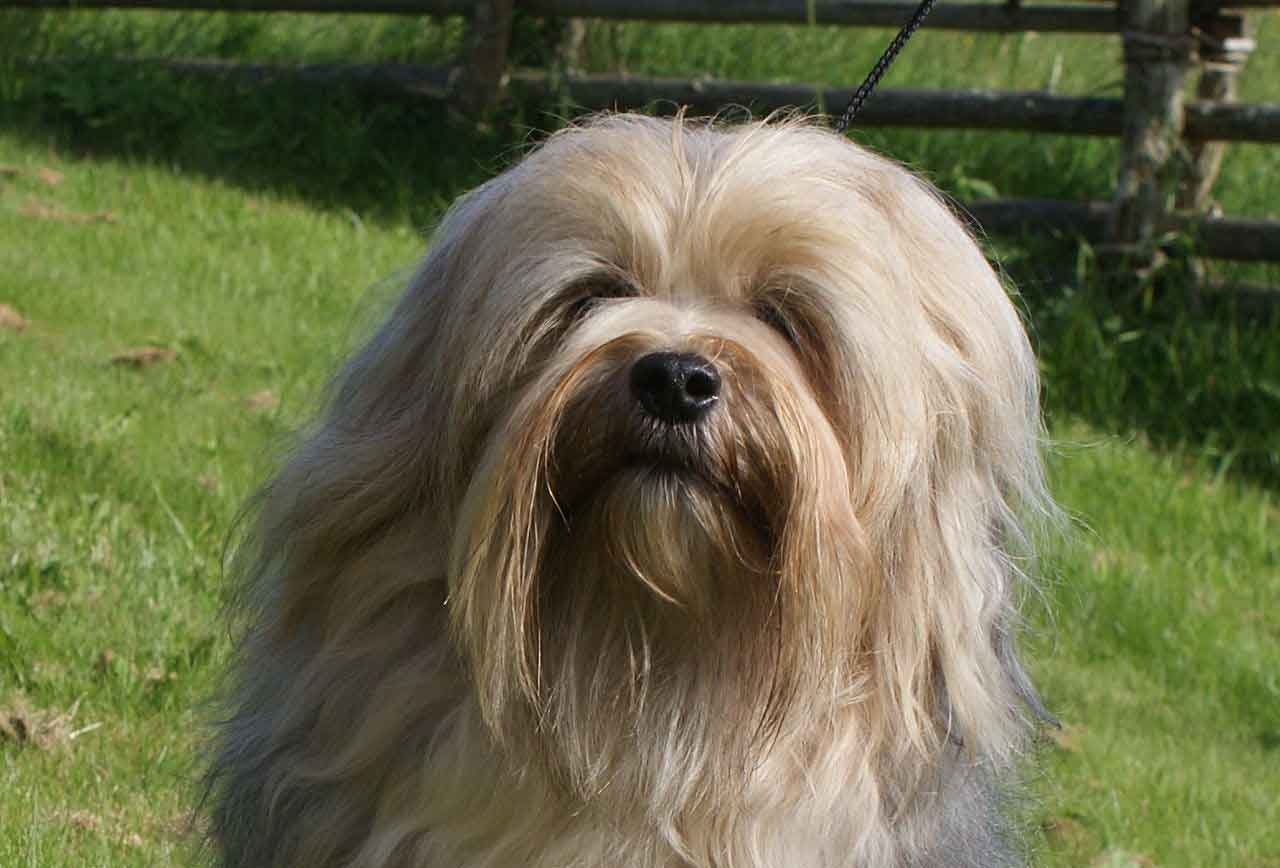
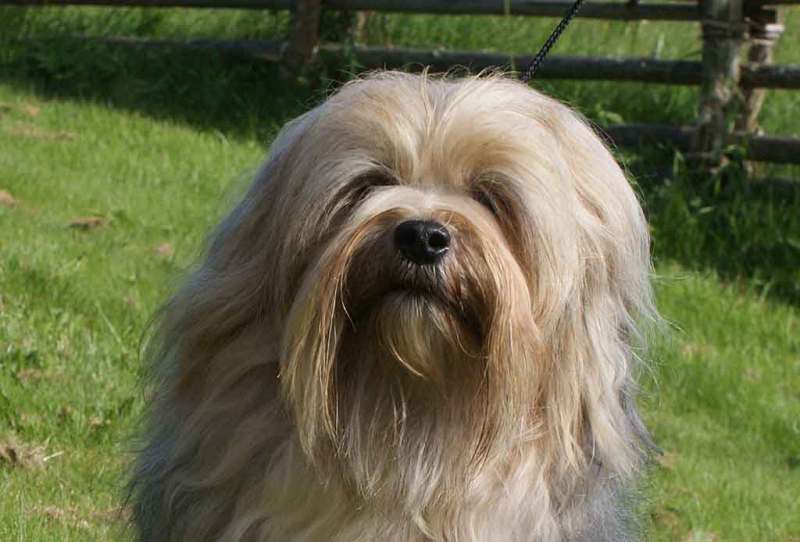
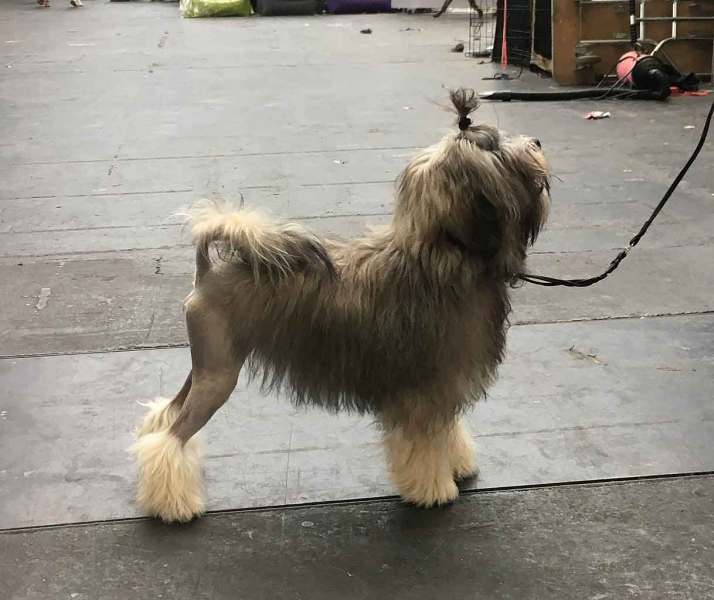
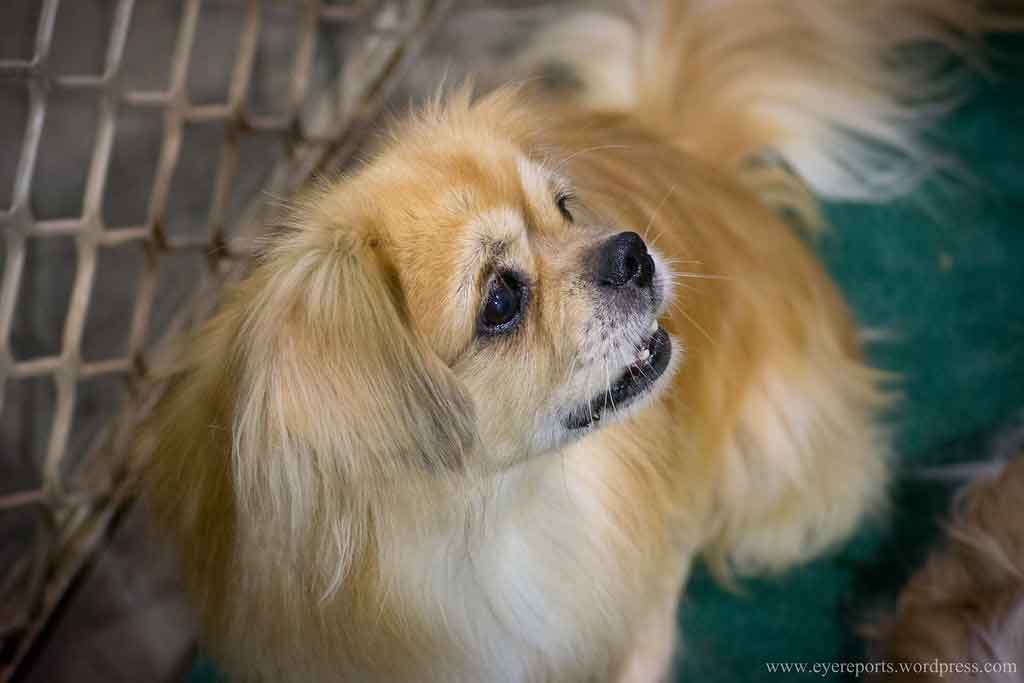
The Lhasa Apso it is a small dog with a robust and harmonious appearance. His body is longer than high, and well proportioned. Its front legs are straight. The tail is set high on the back and covered by a long lock of hair.

The skull is small and slightly rounded, with a well defined stop. The ears are soft, medium in size and covered with long hair. Very often hidden under a long fringe of hair, eyes are dark brown and oval. They have an alert expression. The snout is short, straight but not square, and ends in a black nose.

The coat of the Lhasa Apso consists of a medium density undercoat and a long topcoat, Lisa, dense and hard. Hair covers the entire body and usually touches the ground, without ever impeding their movements.

But, because they shed relatively little, they are often promoted as a breed of dog hypoallergenic, which makes them suitable for people with allergies to dogs. But, keep in mind that no breed is totally hypoallergenic: a person who is in this case should always try to carry out a test in real conditions for several hours before any adoption.

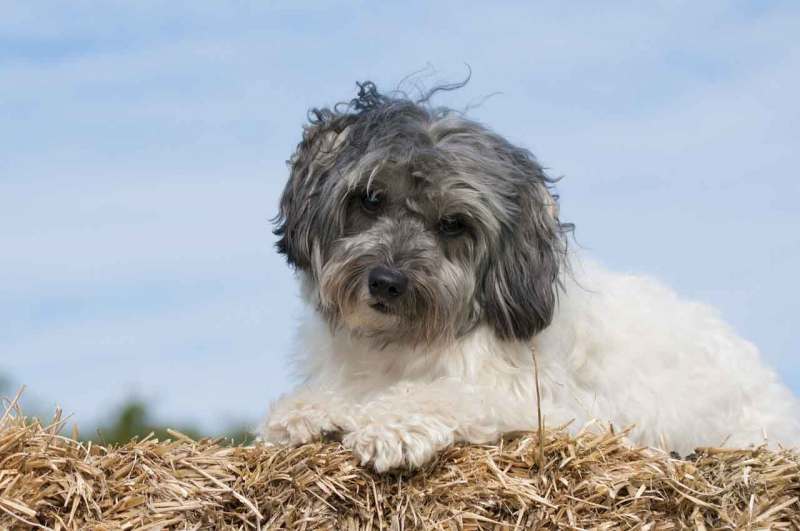
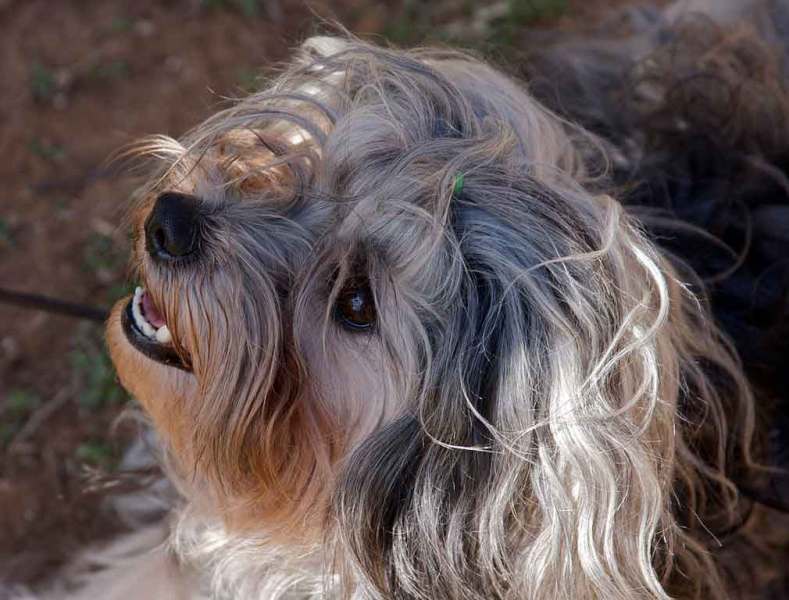
In any case, the coat can be of various colors: dorado, sand, honey, dark grey, Slate, black, white or brown. It is smooth in some individuals, and particolorada (that is to say, that mixes several colors) in others.

Last, sexual dimorphism is not very pronounced in this breed: males and females are very similar in size.

Size and weight

▷ Male size: 20 – 30 cm.
▷ female size: 18 – 28 cm.
▷ Male weight: 5 – 7 kg
▷ female weight: 4 – 6 kg

Character and skills

The Lhasa Apso He is very loving and protective of his owners. But, despite the close bond he has with them, his independent nature allows him to handle loneliness without difficulty. He is not one of those who suffer from separation anxiety when his owners are absent for a few hours.

Get along well with children old enough to have learned to interact with and respect an animal, which makes him a very good playmate. On the other hand, by not being very patient, can quickly become overwhelmed by young children who are noisy, that move a lot or that hurt you, and then he risks at any moment to react abruptly. So, it is not recommended that you live with younger children. In any case, Whatever your race, a dog should never be left alone with a young child without adult supervision.

Probably because he loves his family and seeks to protect them, the Lhasa Apso It, on the other hand, suspicious of strangers. They do not hesitate to bark when they perceive a threat or a stranger approaching their home, and are usually perceptive enough to quickly determine if the person is a friend or foe of their family. So, he is an excellent alert dog. But, not only uses their vocalizations to raise the alarm: it is known to bark a lot, even in situations that don't justify it. This is probably due to his highly developed hearing., that allows you to hear noises and sounds inaudible to humans and even to some other races.

Living with their little fellows usually goes well, how much have they grown up together. Otherwise, for its dominant character, it can be more complicated. Given its size, it is also better to avoid living with a large dog, since it could inadvertently hurt you, for example while playing together. There is also a risk with people who are on your walks. In fact, as he is very brave and sees himself as bigger and more powerful than he really is, does not hesitate to play with (or sometimes face) other dogs much bigger than him, not realizing that they could unintentionally hurt you during their interactions.

Have you share your home with a representative of another species (cat, rodent, bird…) it is very possible. In fact, does not have a very pronounced predatory instinct, and he is not one of those who begins to chase the small animals that are during his walks. The only exception are those who dare to enter their territory, for example in your garden.

The Lhasa Apso you don't need much to satisfy your need for exercise. But, half an hour a day, through two or three walks and / or play sessions, is a minimum below which you should not keep it balanced. On the other hand, if you are happy to accompany your masters on short walks, its resistance is quite limited: you don't have to count on him to walk for hours. In fact, its low level of activity makes it an ideal companion for the elderly or sedentary. However, do not neglect to exercise daily, both for their psychological and physical well-being, especially since it is a breed of dog that tends to be overweight.

It also, the Lhasa Apso not only needs to be physically stimulated. In fact, You also have to take advantage of his curiosity and his great intelligence so that he is psychologically balanced. So, It may be convenient not only to vary the routes and activities of the walk, but also, for example, regularly teach him new tricks or let him play different dog sports such as agility, obedience or rally, that allow you to exercise both physically and mentally.

As soon as your needs are met, easily adapts to all places in life, showing himself capable of living both in the city and in the country, in an apartment like in a house. Having said that, even if you have access to a garden, your independence does not mean you can spend most of your time there, away from their masters. In fact, to be happy and balanced, you need to be surrounded and interact with your family.

But, it is important to note that the Lhasa Apso is independent, stubborn and not really inclined to spontaneously obey. It also, if you don't like something, does not hesitate to express his discontent. It also, matures very slowly and can remain a puppy in your head until 3 years. So, not really suitable for a person who has no experience with dogs, since it could give you too much trouble.

Education

The Lhasa Apso is an intelligent dog, but independent and stubborn. It also, matures slowly, to the point that some individuals remain puppies on their heads for up to three years. Obviously, this is not without consequences on their education: has difficulty concentrating and taking learning sessions seriously.

Everything is combined so that obeying is not necessarily the most natural thing for him, not the first thing on his priority list. This is all the more true as he is dominant and does not hesitate to question the rules and test the limits.; if he perceives a flaw that allows him to do what he pleases or even occupy the role of leader, does not hesitate to exploit it.

So, its owner must be firm from the first months and not let it get away with it, at the risk of allowing โ€œsmall dog syndromeโ€ to develop. The latter appears when the owners, too moved by the pretty and harmless looks of their young companion, do not correct -or not enough- their inappropriate behaviors (grunts, barking, aggressiveness…), like they would with a bigger dog. This is the best way to make it disobedient, aggressive, disturbed and hard to live. It also, then it is very difficult to correct the situation, once bad habits have been established.

This is the case, for example, of the barking, since it is known to bark excessively. Do not wait to try to make him understand the circumstances in which it is useless to do so and those in which, on the other hand, is pertinent. You also have to teach him to stop when asked.

To avoid drifts or failures in your education, It is important that each of the members of the house is involved in it and makes sure that the current regulations are respected to the letter. These rules must be established from their arrival in the family and be constant over time and from one person to another., otherwise he runs the risk of getting lost and not being able to understand what is expected of him.

It also, either to make him assimilate the rules or to teach him various useful things, a certain regularity is necessary to obtain results, and it is better to start from your arrival in the family. Short daily sessions are great for keeping you focused on the tasks at hand, as it tends to get bored quickly. Positive reinforcement is the best training method: rewarding him with treats and stimuli is much more effective than harsh punishment.

Last, like any dog, the socialization of Lhasa Apso should be started at an early age, during which it is more malleable and adaptable. To become a well-adjusted adult and behave correctly in all circumstances, needs to meet as many people and animals as possible during the first months of life, as well as being exposed to all kinds of situations and stimuli.

Health

The Lhasa Apso is generally robust and healthy. It is also not unusual for representatives of the breed to live to 20 years or more.

It also, its Tibetan origins and its well-stocked coat (that is not alien) explain why it is particularly resistant to cold and humidity. On the other hand, is much less comfortable when mercury peaks, or even frankly in great difficulty., your flattened face implies a markedly lower than average respiratory ventilation capacity and, Therefore, a less good ability to regulate your internal temperature by panting.Particularly prone to heatstroke, it's not done, for example, to live in a Mediterranean climate.

Although he is in good general health, It is possible that he will suffer from various more or less serious pathologies throughout his life. The health problems to which he is predisposed are:

  • the brachycephalic syndrome, Which affectssnub-nosed and star-nosed dog breeds.In fact, this morphological peculiarity predisposes the animal to various health problems, like breathing difficulties, eye diseases or digestive disorders. Surgical intervention may be considered to enlarge the animal's nostrils and thus increase its respiratory capacity;
  • the Hip Dysplasia, joint malformation whose appearance may be enhanced by a hereditary predisposition, produces pain and lameness in the hips and inevitably progresses toosteoarthritis aas the dog ages;
  • the dislocation of the patella (or dislocation of the patella), common in small dogs. It occurs when the kneecap moves in or out of the knee and can cause pain and / the cojera;
  • the herniated disc, a disease of the spine that causes pain that is increasingly difficult for the animal to face, which can therefore be aggressive when manipulated or the door. It also has more and more difficulties to move, he even ends up paralyzed.In less advanced cases, rest and medication are usually sufficient, but in others surgery is necessary;
  • inguinal hernia, manifested by the appearance of a soft, painless mass between the inner thigh and the abdomen. It mainly affects unsterilized women and is cured by surgical intervention;
  • congenital renal dysplasia, a malformation of the kidneys whose symptoms can be very varied: growth retardation, dull coat, lack of appetite, dirt … In all cases, it is a serious and incurable disease;
  • urolitiasis (or bladder stone), which is the formation of stones in the urinary tract., the dog experiences difficulty urinating or even gets dirty and / or the presence of blood in the urine. Treatment consists of surgical removal of the stone;
  • congenital hydrocephalus, a disease of the nervous system that can have many consequences: strabismus, bulging skull, stunted growth, locomotive difficulties,epileptic attacks, vision problems … Medical treatments reduce symptoms, but it is also possible to consider a surgical intervention to solve the problem at the source;
  • type B hemophilia (or Christmas disease), a blood clotting disorder that is often inherited, affects mainly males and causes heavy or prolonged bleeding, as well as the spontaneous appearance of bruises. It is a serious and incurable pathology: even if thedog transfusionsare possible during severe bleeding, usually dies young;
  • the periodontics, an irreversible inflammatory disease of the gingival tissue uncommon in all canines and particularly insmall breeds.It appears due to poor oral hygiene and causes inflammation of the gums. In the most serious cases, teeth eventually loosen and fall out at an early stage, thetreatment of periodontics isbased on desquamation and good oral hygiene When the disease is in an advanced stage, surgery is needed to remove affected teeth;
  • the infectionsof the ear, frequent inflammation indog breeds with floppy ears;
  • the dermatitis by Malassezia, a dermatological disease caused by the multiplication of the yeast called Malassezia, which usually causes redness, itching and greasing the skin of the animal;
  • the adenitis sebรกcea, a relatively rare skin disease destroys the sebum-producing glands, causing dry skin, total or partial hair loss and the appearance of scabs that can give off bad odors. Treatments are available to reduce the symptoms, but the disease itself is incurable;
  • allergies, either food allergies or atopy., the animal scratches repeatedly and skin lesions may appear.

The Lhasa Apso it is also particularly prone to certain eye diseases:

  • the progressive atrophy, an incurable inherited disease characterized by degeneration of the retina, resulting in progressive loss of vision, night and then day, until the individual becomes totally blind;
  • the glaucoma, an eye disease that can be inherited. It causes degeneration of the optic nerve and retina. This painful pathology for the animal rapidly progresses to total or partial loss of sight, unless it is seen urgently;
  • dry conjunctivitis, a disease that can be inherited due to insufficient tear production, resulting in dry eye, inflammation of the eyelids, Red eyes, repeated blinking of the eyelids, presence of scabs and / or yellowish discharge. All of these symptoms obviously cause pain and discomfort to the animal. In severe cases, sores can also develop and cause ulcers that can lead to perforation or loss of the eye. This condition usually requires lifelong treatment;
  • nictitating gland prolapse (or cherry eye), an ophthalmological condition of the lacrimal gland. The most common signs are the appearance of a small red ball in the inner corner of the eye and watery eyes. It is treated with surgical intervention;
  • the entropion, which corresponds to a curl of the edge of the eyelid towards the inside of the eye and can be inherited., irritation and inflammation of the cornea and conjunctiva, caused by repeated eyelash rubbing and / or hairs in fragile parts of the eye. The problem can be solved with the help of surgery;
  • corneal dystrophy, a corneal disease often inherited in origin that results in clouding of the cornea in both eyes.There are two types of dystrophies: lipid and endothelial. The former do not compromise vision and do not require special treatment. The latter, on the other hand, can cause blindness, but it is treatable by surgery;
  • distiquiasis, an eye disease characterized by abnormally implanted eyelashes which may be asymptomatic or cause irritation, itchiness, redness of the eyes or even the formation of acorneal ulcer.Different techniques are used to treat affected people;
  • It also, the Lhasa Apso has a fairly high risk of Obesity.The latter can cause or aggravate many pathologies, and therefore have a significant impact on the health of the animal.

The list of ailments to which you are predisposed Lhasa Apso can be overwhelming at first glance, but it should be remembered that they are still rare and that most representatives of the breed spend their lives trouble-free. This is confirmed in particular by a study carried out in 2004 by the Kennel Club and the British Association of Small Animal Veterinarians: the 32% of the deaths studied were simply caused by old age (32%), way ahead of cancers (18%) and diseases, kidneys (7%).

But, knowing that some of the diseases to which the breed is predisposed are or may be hereditary, it is important to adopt from acreatorrigorous ofLhasa Apso.In fact, in addition to guaranteeing quality socialization to the puppies, a serious breeder routinely performs genetic testing on individuals he plans to breed (or also in the offspring obtained), to prevent the transmission of a hereditary defect., must be able to present the results of the tests in question, in addition to presenting a certificate of good health established by a veterinarian as well as the detail of the vaccines administered, recorded in the puppy's health or vaccination record.

Once the animal is adopted, We must not lose sight of the fact that it is particularly fragile throughout its growth., particularly when it comes to your bones and joints., it is strongly recommended not to force him to make excessive physical efforts during this period, since you would run the risk of injuring yourself or even developing malformations, with potentially long-lasting consequences.This is all the more true since this dog is predisposed to certain joint problems (dislocation of the patella and Hip Dysplasia).

Finally, whatever your age and like any other race, everything Lhasa Apso must be taken at least once a year to the vet for a complete check-up, that at the same time allows you to ensure that you are kept up to date with your vaccination withdrawal.

Life expectancy

14 years

Grooming

The Lhasa Apso It is not for those who do not have time or desire to spend a lot of time caring for their dog's coat. In fact, to remove dead hair and prevent mat formation, its long coat must be brushed at least three or four times a week, with a special brush or glove. Although the molt remains moderate throughout the year, brushing should be done daily during spring and fall seasonal moult.

If it is not maintained regularly enough, hair gets tangled, preventing the skin from breathing. This favors the proliferation of bacteria and the skin problems that they can cause. It also, it is very painful for the animal - even impossible- detangle the hairs with a simple brush, and then it is usually necessary to go through a professional hairdresser.

It also, as the length of its fur makes it often touch the ground, tends to easily accumulate dirt and give off bad odors. So, it is necessary to wash it with a shampoo adapted to dogs, once every one or two months. But, you should not wash your dog more than this, as this will remove the sebum that protects you from skin problems. When you bathe, you must be careful not to get the inside of your dog's ears wet, since they are especially sensitive. It is also recommended to clean the dog's coat directly after bathing rather than letting it air dry, since this could reduce its beauty and shine.

To avoid the task of untangling, or to be needed less often, many owners of Lhasa Apso choose to keep their pet's hair short. Whether they do it themselves or use the services of a professional dog groomer, the coat should be trimmed with scissors or trimmed every two months to keep the coat clean.

But, even if the fur stays long, a small cut is necessary every one or two months to prevent the animal from being hindered when moving and to reduce the risk of infection caused by small plants or spikelets that get stuck in the fur.

The hanging ears of the Lhasa Apso they also require special attention. In effect, this morphological particularity means that moisture and dirt can easily accumulate there, and be the source of infections such as otitis. So, you have to inspect them and, if required, clean them once a week, and dry them every time they have been in contact with water or have spent a long time in a humid place.

The weekly maintenance of your ears is also the occasion to check your eyes and clean their contour, to reduce the risk of infections.

You can also take the opportunity to brush your dog's teeth, making sure to use a toothpaste specially designed for dogs. This will help prevent tartar buildup., which can cause bad breath and, above all, the appearance of oral diseases such as periodontal disease, which is very common in Lhasa Apso and it can have serious consequences on your health. Knowing this, the ideal is to brush several times a week, or even every day.

Looking at its claws, natural wear and tear is usually enough to file them. But, when the animal becomes older and / or less active, they can get too long and bother you, or even injuring you. In this case, they need to be trimmed with a claw trimmer or special file.

Whether the fur, the ears, the eyes, teeth or claws, maintaining a Lhasa Apso should not be done randomly. It is useful to learn them the first time with a vet or groomer if in doubt, to know the good techniques and to be able to act effectively and safely, without hurting or harming your pet. It also, how many hairdressing sessions will be throughout your life, It is convenient that the dog grooming sessions run as smoothly as possible: getting used to it since childhood is an excellent way to achieve it.

Food

Like any dog, the diet of Lhasa Apso must suit your age, your level of physical activity and your health status. It is recommended to opt for high quality croquettes or industrial patรฉs, to provide you with all the nutritional inputs you need on a daily basis.

In any case, its small size should not lead one to believe that it can be fed with food intended for cats. In fact, the two species do not have the same nutritional needs, and he would suffer both deficiencies of some nutrients and excesses of others.

In this case, it is even more important to be attentive, since this breed has a predisposition to being overweight. This is even more true in the case of a neutered individual, because the risk of obesity is then more important. Dividing your daily allowance into at least two meals is a good way to keep you from crying out throughout the day., since he knows that a second meal awaits him a little later. It is also better to avoid abusing the treats, although they can obviously be very effective in educating you. A good habit may be to systematically deduct your caloric intake from your daily allowance., In addition to, of course, opt for low-calorie products.

At the same time, weighing the dog once or twice a month makes it possible to quickly detect any deviations. If this is confirmed or even accentuated in the following measurements, it is advisable to take the dog to the vet, since only he can determine the cause of the problem and remedy it. In fact, your diet and activity level are not always the cause: weight gain may be due to illness or a reaction to treatment, for example.

Last, like any dog, the Lhasa Apso must have water available throughout the day, regularly renewed so that it is always fresh.

Utility

Until the 20th century, the Lhasa Apso It was used by Tibetan monks and nobles to guard and protect palaces, Buddhist temples and monasteries. His extremely fine hearing allowed him to alert quickly in case of danger.

In fact, even today, its courage and protective nature allow it to stand out as a warning dog.

But, now we find it used mainly as a companion animal. In fact, his affectionate and cheerful character makes him an endearing companion. If we add their low need for exercise, we will understand that it easily finds its place in many homes and places in life. This is especially true because they shed less hair and produce less dandruff than many other breeds., making them a great potential choice for someone with a dog allergy. Having said that, since there can be big differences from one individual to another and no dog is totally hypoallergenic, real-life testing is always essential by spending several hours with the animal you are considering adopting.

Its small size, its long coat and elegance also make the Lhasa Apso a regular at dog shows. However, Any owner who considers entering their dog in beauty contests must have a lot of time and a marked interest in hairdressing., since then a daily brushing and several hours of maintenance a week is necessary to maintain a well-groomed coat and address these events in the best conditions.

His kindness and sweetness also make him a very good hospital therapy dog, nursing homes and nursing homes.

Last, their intelligence and liveliness can be put to the test in various dog sports such as agility, obedience or rally.

Price

The price of a puppy Lhasa Apsoor ranges between 500 and 1.500 EUR, being the average of about 900 EUR, without great differences between males and females.

whatever the country, the significant price differences between the specimens are generally explained by the greater or lesser conformity of the animal with the breed standard, as well as the prestige of the breeding and the lineage from which it comes.


Breeders of the breed "Lhasa Apso"

โ–ท Sorgiรฑa-Meiga – Contact: sorginameiga@hotmail.com – Telephone: 696 214 610 / 629 088 980

โ–ท AQUANATURA – C/ Roger de Flor nยบ 45-51 – 08013 – Email: aquanatura@aquanatura.es -Tel : 933 095 977 – 933 152 057 / 933 103 463 – 932 691 020 – No. Zoo Center: B2501193 – Barcelona

Characteristics "Lhasa Apso"

Coexistence is important that you have with your new friend. Before considering the acquisition of a dog of the breed "Lhasa Apso" you know certain factors. Not all breeds of dogs are apt to live in an apartment, you must take into account his character, their need for exercise, their interaction with other pets, their care and if you have small children, their level of tolerance towards them.

Adaptation โ“˜

4,0 of 5 stars (based on 1 review)

friendly dog โ€‹โ€‹โ“˜

3,0 of 5 stars (based on 1 review)

hair loss โ“˜

3,0 of 5 stars (based on 1 review)

Affection level โ“˜

5,0 of 5 stars (based on 1 review)

Need for exercise โ“˜

2,0 of 5 stars (based on 1 review)

Social need โ“˜

2,0 of 5 stars (based on 1 review)

Home โ“˜

3,0 of 5 stars (based on 1 review)

Toilet โ“˜

4,0 of 5 stars (based on 1 review)

Friendly with strangers โ“˜

3,0 of 5 stars (based on 1 review)

barking โ“˜

4,0 of 5 stars (based on 1 review)

Health โ“˜

3,0 of 5 stars (based on 1 review)

Territorial โ“˜

4,0 of 5 stars (based on 1 review)

Cat friendly โ“˜

3,0 of 5 stars (based on 1 review)

Intelligence โ“˜

4,0 of 5 stars (based on 1 review)

Versatility โ“˜

3,0 of 5 stars (based on 1 review)

Child friendly โ“˜

4,0 of 5 stars (based on 1 review)

Surveillance โ“˜

3,0 of 5 stars (based on 1 review)

joy โ“˜

5,0 of 5 stars (based on 1 review)

Images "Lhasa Apso"

Photos:

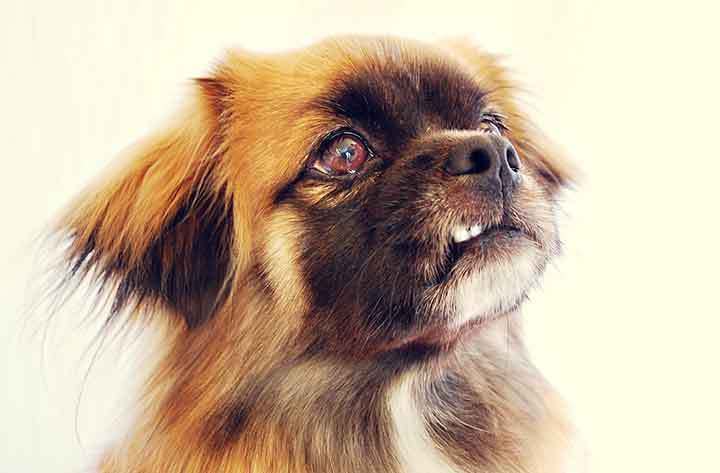
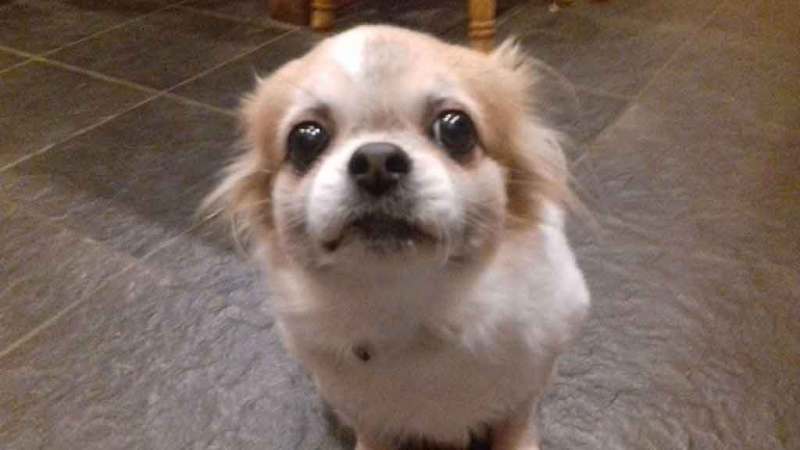
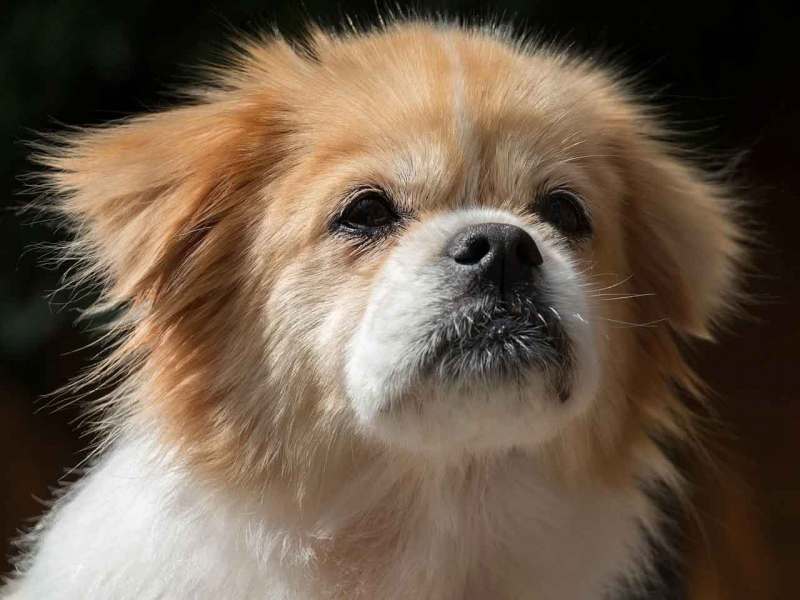
1 – A dog Lhasa Apso, With white hair she is two years old, her name is Yuna by Yuna89bcn, CC BY-SA 3.0, via Wikimedia Commons
2 – Lhasa Apso female with 6 meses by Lcfrederico, CC BY-SA 4.0, via Wikimedia Commons
3 – ยซThe Apsoยป by https://en.wikipedia.org/wiki/File:Lhasa_Apso_Puppy_Clip.jpg
4 – ยซThe Apsoยป by https://en.wikipedia.org/wiki/File:Lhasa_Apso,_aged_16_months.jpg
5 – ยซThe Apsoยป by Flickr user lisaschaos . Photo uploaded to commons by user ltshears, CC BY-SA 2.0, via Wikimedia Commons
6 – ยซThe Apsoยป by https://en.wikipedia.org/wiki/File:Skoda_new_064.jpg

Videos "Lhasa Apso"

Lhasa Apsos | Breed Judging 2023

Type and recognitions:

  • FCI CLASSIFICATION:
  • Group :
  • Section : . .

Federations:

  • FCI – Group 9: Section 5: Tibetan breeds โ“˜
  • AKCToy โ“˜
  • ANKC – (Toy) โ“˜
  • CKC – Group 5 โ€“ (Toy) โ“˜
  • โ€‹KC – Toy โ“˜
  • NZKCToy โ“˜
  • UKC – Group 8 – Companion dog โ“˜

FCI breed standard "Lhasa Apso"

Origin:
China

Date of publication of the valid original standard:
18.03.2015

Use:

Companion dog.


General appearance:

It is a well balanced dog, vigorous and with a thick coat.


Behavior / temperament:

Cheerful and self-confident character. Alert, balanced yet cautious towards strangers.

Head:

The head should be covered with abundant long hair that falls over the eyes.; must have a well-developed beard and mustaches.

Cranial region:
  • Skull: Moderately narrow, that sinks behind the eyes; must not be completely flattened, domed, or apple-shaped.
  • Depression links (stop): Medium.

facial region:

  • Truffle: black.
  • Snout: It should measure almost 4 cm and must not be square; the length of the muzzle from the tip of the nose is approximately one third of the total length of the head, between the truffle and the occiput.
  • Nose cane: Straight.
  • Jaws/Teeth: The upper incisors close just behind the lower, that is to say, its bite is reverse to the scissor bite. The incisors should be set in as wide and straight a line as possible.. Full denture is desirable.
  • Eyes: Dark in color and medium in size, placed forward and oval in shape; they should not be large and bulging, nor small and sunken. They must not show the white color of the balloon at the top or bottom.
  • Ears: Hanging and covered with abundant fringes.

Neck:

Strong and well arched.

Body:

Its length from the point of the shoulders to the point of the buttock must be greater than its height to the region of the withers.

  • Back: level top line.
  • Pork loin: Strong.
  • Chest: Ribs extending well back.

Tail:

High insertion, well carried on the back, but not fit "pot handle". Often bent near the tip. Covered with abundant fringes.

Tips

Former members

Straight and covered with abundant hair.

  • Shoulder: Well inclined backwards.

Later members

Well developed and muscular. With good angle. Well endowed with abundant hair.

  • Hocks: Viewed from behind, they should look parallel and not too close together..

Pies

Round, like the cat, with solid foot pads. They must be covered in hair.

Movement:

Light and agile.

Mantle

Fur

The hair of the outer coat must be long, abundant, straight, hard textured; should not be woolly or silky. Must have a moderate layer of undercoat.

Color

Dorado, sand, honey, dark grey, Slate, smoke, multicolor, black, white or brown. All of these colors are equally acceptable.


Size and weight:

The ideal height for males is 25,4 cm.; females are slightly smaller.


Fouls:

Any deviation from the aforementioned criteria must be considered as a fault and the severity of this is considered to the degree of the deviation from the standard and its consequences on the health and well-being of the dog..

Any dog โ€‹โ€‹showing clear signs of physical or behavioral abnormalities should be disqualified..


disqualifying fouls:

  • Aggressiveness or extreme shyness.
  •  Any dog โ€‹โ€‹showing clear signs of physical or behavioral abnormalities.


N.B.:

Males should have two normal-appearing testicles completely descended into the scrotum..

Source: F.C.I - International Cynological Federation

Alternative names:

1. Lhasa, Lion Dog (English).
2. Apso Seng Kyi (French).
3. Lhasaterrier, Lรถwenhund (German).
4. Nome original ๆ‹‰่–ฉ็Šฌ (Portuguese).
5. Perro leรณn/span> (espaรฑol).

โ–ท The world of Pets: Dogs, cats, birds, reptiles, amphibians

Tibetan Terrier
Tรญbet FCI 209 . Tibetan breeds.

The Tibetan Terrier, despite being considered a sacred dog in Tibet, He also accompanied the shepherds.

Terrier Tibetano

Content

Characteristics "Tibetan Terrier"

Coexistence is important that you have with your new friend. Before considering the acquisition of a dog of the breed "Tibetan Terrier" you know certain factors. Not all breeds of dogs are apt to live in an apartment, you must take into account his character, their need for exercise, their interaction with other pets, their care and if you have small children, their level of tolerance towards them.

Adaptation โ“˜

2,0 of 5 stars (based on 1 review)

friendly dog โ€‹โ€‹โ“˜

3,0 of 5 stars (based on 1 review)

hair loss โ“˜

3,0 of 5 stars (based on 1 review)

Affection level โ“˜

4,0 of 5 stars (based on 1 review)

Need for exercise โ“˜

2,0 of 5 stars (based on 1 review)

Social need โ“˜

3,0 of 5 stars (based on 1 review)

Home โ“˜

4,0 of 5 stars (based on 1 review)

Toilet โ“˜

3,0 of 5 stars (based on 1 review)

Friendly with strangers โ“˜

2,0 of 5 stars (based on 1 review)

barking โ“˜

3,0 of 5 stars (based on 1 review)

Health โ“˜

5,0 of 5 stars (based on 1 review)

Territorial โ“˜

4,0 of 5 stars (based on 1 review)

Cat friendly โ“˜

3,0 of 5 stars (based on 1 review)

Intelligence โ“˜

4,0 of 5 stars (based on 1 review)

Versatility โ“˜

2,0 of 5 stars (based on 1 review)

Child friendly โ“˜

5,0 of 5 stars (based on 1 review)

Surveillance โ“˜

3,0 of 5 stars (based on 1 review)

joy โ“˜

5,0 of 5 stars (based on 1 review)

History

As the name suggests, the Tibetan Terrier was born on the roof of the world, in the heart of Central Asia.

They celebrate their second millennium, since the first writings on them date back to the beginning of our era. Probably related to the Hungarian Puli, the Tibetan Terrier, contrary to what its name might suggest, it was originally a sheepdog. He lived in harmony with the Tibetan monks and the nomads, and his life led him to live with the sheep, the horses and yaks that he guarded. He also herded the herds in mountainous areas too difficult for the larger dogs.. A good sentry, warned as soon as someone approached. In summary, the Tibetan Terrier was both recognized and Sheepdogs as Companion and Toy Dogs.

Out of respect for his soul, tradition dictated that the most vicious pup in a litter should not be killed. On the other hand, was handed over to the monks, who granted him a monastic life. Next to him, was subjected to regular work. This would partly explain the particular character of the Tibetan Terrier. This dog is devoid of all aggressiveness, perhaps because he lived the secluded life of the monasteries and shared everything with his master, being totally part of the family. It is also said that it was reputed to bring good luck..

In fact, considered as a sacred animal and guardian of the temples, this dog was the object of a true cult.

Over the years 20, the DRA. Agnes Greig, an english doctor, received a couple of Tibetan Terrier of one of his patients, a tibetan princess. This is how this breed came to Europe, when the doctor brought these gifts to his country. Was not up 1930 that the Kennel Club of India recognized the Tibetan Terrier as a pure breed, and in 1931 that the British Kennel Club he did the same.

Before being mistakenly named "Tibetan Terrier" by the English, who classified it in the group of Terriers, The Tibetans called it "Chung-chung-paยซ, What does "little person" mean? (unlike in the Tibetan Mastiff (Do-Khy), who was called "big person"), o ยซApso Tchenpoยซ, which means โ€œBig Apsoโ€, in opposition to the "small Apso" which is the Lhasa Apso.

The French had proposed calling it Tibetan Griffin, but this proposal was not kept. Even today, although call it Pastor tibetanor would it be much more appropriate, this breed still carries a misleading name.

Physical characteristics

The Tibetan Terrier He is a medium-sized dog with a robust complexion and a determined expression.. They are recognized by their fur, generously endowed with long hair that covers most of his body. Has the appearance of a dog that can fit in a perfect square.

▷ Fur: long, abundant, fine (without being silky or woolly), smooth or corrugated (never curled), with a fine, woolly undercoat.
▷ Color: All coat colors are allowed, except chocolate and liver. White, grey, cream, dorado, black, Particolored and tricolor.
▷ Head: Well stocked with long hair, falling forward, but never about the eyes. Medium length skull, moderately sharp between ear and eye. The stop is slightly marked.
▷ Ears: V shape, pendants, set high on the sides of the skull and well feathered.
▷ Eyes: His eyes are lined with very long lashes, round, large, quite separate and dark brown.
▷ Body: Muscular, powerful, straight back, short, slightly arched loins, horizontal rump and chest that reaches to the elbow.
▷ Tail: High insertion, average length, happily carried in a loop over the back, with abundant hair.

Size and weight

▷ Male size: 35 – 40 cm.
▷ female size: 35 to 40 cm.
▷ Male weight: 8 – 13 kgs.
▷ female weight: 8 – 13 kgs.

Character and skills

The Tibetan Terrier not a real terrier: It is a Shepherd Dog belonging to the group of Companion Dogs..

This faithful companion is endowed with many attractions. Its sociable, lively, smart and full of energy, and they are neither shy nor aggressive. It is a dog that adapts perfectly to the elderly or to single people who want company.

If you are wary of strangers, may be a barker, but he also knows very quickly that there is no danger, if required. Then it quickly calms down.

He has great security in the mountains and is endowed with a sharp intelligence that allows him to react very quickly to danger., but also behave like a gentleman in the city. Always ready to go out for a walk, he also knows how to be close to his master if he can't go out, because you settle for very little exercise.

If we add to this that it is not very noisy, we quickly understand that it is a breed of dog that can live in an apartment without problem.

Last, not content with being too demonstrative with his master and cuddly as desired, the Tibetan Terrier often appreciates the company of another dog or cat, and gets along very well with children, as long as they respect him and remember that he is not a stuffed animal. On the other hand, it is a dog that tolerates loneliness quite badly, much preferring the presence of his master in all circumstances.

Education

Very smart dog, it is easy and pleasant to work with Tibetan Terrier, although you need to understand the usefulness of what you are being asked to do.

Quite stubborn and not very submissive by nature, the Tibetan Terrier requires from an early age a faultless education, quite firm, but fair. His master must have "an iron hand in a velvet glove" and be infallible., because in general, smart dogs tend to find loopholes, and they can try to take the place of the leader of the pack if they consider that this place is vacant.

Health

The Tibetan Terrier it is a robust and resistant dog that does not have particular health problems. It even has a certain longevity.

Thus, two affections are usually noticed:

  • An abnormality of the vascular supply of the retina, which can lead to long-term blindness;
  • Hip Dysplasia, to a greater or lesser degree.

You can also suffer from deafness or neurological disorders, and also seems to be predisposed to diabetes mellitus.

Life expectancy

14 years

Grooming

During their annual molts, in spring and autumn, the Tibetan Terrier lose a lot of hair, which is quite visible as it has a long coat. During this time, it is necessary to brush it almost every day to avoid knots and maintain the beauty of its coat.

The rest of the year, thorough and regular brushing is necessary every other day. But, mowing can be used to simplify maintenance.

It also, hair under your pads should be cut regularly.

Price:

The purchase price of a Tibetan Terrier ranges from โ‚ฌ900 to โ‚ฌ1000.

Breeders of the ยซTibetan Terrierยป

Images "Tibetan Terrier"

Photos:

1 – Tibetan Terrier in the snow by Mr407SW, Public domain, via Wikimedia Commons
2 – Tibetan Terrier of about 7 meses by PateraIncus, CC BY-SA 3.0, via Wikimedia Commons
3 – Tibetan Terrier by Ian McFeganFlickr
4 – Tibetan Terrier purebred male 8 years sporting a 'puppy cut’ by Getsnarky, CC BY-SA 4.0, via Wikimedia Commons
5 – Tibetan Terrier Daisy, taking a breather during agility class at Dog Barn, 16 in March of 2012 by Ian McFeganFlickr
6 – Tibetan Terrier by Acid Pix, CC BY 2.0, via Wikimedia Commons

Videos "Tibetan Terrier"

Type and recognitions:

  • FCI CLASSIFICATION:
  • Group :
  • Section : . .

Federations:

  • FCI – Group 9: Section 5: Tibetan breeds โ“˜
  • AKCToy โ“˜
  • ANKC – (Toy) โ“˜
  • CKC – Group 5 โ€“ (Toy) โ“˜
  • โ€‹KC – Toy โ“˜
  • NZKCToy โ“˜
  • UKC – Group 8 – Companion dog โ“˜

FCI breed standard "Tibetan Terrier"

Origin:
China

Date of publication of the valid original standard:
22.08.2017.

Use:

Companion dog.


General appearance:

It is a medium-sized dog, robust, longhair, generally square in profile.


Behavior / temperament:

Lively, of good character. He is a faithful companion dog, with many attractions. It is a sociable dog, alert, smart and brave, never intractable or bellicose. Prudent with strangers.

Head:

Must be well covered with long hair, which falls forward but not on the eyes and should not affect the dog's vision. The lower jaw must have a small beard, but not exaggerated. In general you should have a determined expression..

Cranial region:
  • Skull : It has a medium length, it is not wide or rough; tapers slightly from ear insertion to eyes. It is neither dome-shaped nor completely flat between the ears.
  • Depression links (Stop) : It is checked,  but it's not exaggeratedly deep.

facial region:

  • Truffle : black.
  • Snout : Strong. The distance from the eye to the tip of the nose should be equal to the distance from the eye to theocciput.
  • Jaws/Teeth : The lower jaw must be well developed. The incisors should be set in a slight curve, located at the same interval and perpendicular to the maxilla. Inverted scissor or scissor bite.
  • Cheeks : The zygomatic bones are curved but should not be protruding so that they appear protruding.
  • Eyes : Large, round, neither bulging nor sunken; They should be placed quite far apart from each other.. Dark brown in color with black pigmented edges of the eyelids.
  • Ears : Hanging but not worn too close to the head; V-shaped, not too bigset somewhat high on the sides of the skull and with heavy stripes.

Neck:

Strong, muscle, medium length that allows the head a bearing above the level of the back and giving a balanced overall appearance. Flows to well-placed shoulders.

Body:

Well muscled, compact and strong.
  • top line : Straight.
  • Pork loin : Short, slightly arched.
  • Rump : Level.
  • Breast  : Good arching of the ribs with the depth of the chest to the level of the elbows. Ribs well back.

Tail:

Medium length, set quite high and carried happily curled over the back. It must be very well covered with stripes. Often knotted near the tip, which is allowed.

Tips

Former members

  • General appearance: They must be well provided with abundant hair
  • Shoulder : well laidand good long.
  • ForearmGood length and sloping.
  • Arm: Right and parallel extremities.
  • Metacarpus : Slightly sloping.
  • Previous feet: Large, round, well provided with abundant hair between toes and pads. The dog must rest perfectly on the pads; fingers should not be arched.

Later members

  • General appearanceWell covered with thick hair and well muscled. Well angled knees and well lowered hocks level the top line and give good momentum.
  • Knees : Well angulated.
  • Hocks :    Well descended.
  • Hind feet: Large, round, well provided with abundant hair between toes and pads. The dog must rest perfectly on the pads; fingers should not be arched.

Movement:

Uniform; long range and smooth thrust. When the dog walks or jogs, the hind limbs should not follow either inside or outside the movement of the forelimbs.

Mantle

Fur

  • Fur :  Has a double coat of hair.
Undercoat hair is fine and woolly. The hair on the outer coat is abundant, fine, although never it is silky and woolly; is long; either smooth or wavy, but never curly.
 

Color

White, dorado, cream, gray or smoky, black, bicolor and tricolor. Actually all colors are allowed, with the exception of chocolate or liver color.


Size and weight:

Height to the cross:
  • Males: 36 -  41 cm..
  • females: they are slightly smaller.


Fouls:

Any deviation from the aforementioned criteria must be considered a fault and the seriousness of the fault is considered to the degree of the deviation from the standard and its consequences on the health and well-being of the dog..

disqualifying fouls:

  • Aggressive or fearful dog.
  • Any dog โ€‹โ€‹showing clear signs of physical or behavioral abnormalities must be disqualified..


N.B.:
Males should have two normal-appearing testicles fully descended into the scrotum..
The latest changes are in bold.

Source: F.C.I - International Cynological Federation

Alternative names:

1. Tsang Apso, Dokhi Apso (English).
2. Terrier du Tibet, Dhoki Apso (French).
3. Tibetan Terrier, Tsang Apso (German).
4. Tibetan Terrier (Portuguese).
5. Tibetan Terrier, Lhasa Terrier, Tibet Apso,
Tsang Apso
(espaรฑol).

โ–ท The world of Pets: Dogs, cats, birds, reptiles, amphibians

Pekingese
China Inglaterra FCI 207 . Japan Chin and Pekingese

Pekinรฉs

The Pekingese She loves being the center of attention and will ask to be integrated in all family activities.

Content

History

The Pekingese or Pequinรฉs It is a breed of companion dog, developed in China. This small breed of dog is a native of the East Asian area, and is considered a departure from the mythical shaggy dogs of Tibet. Referral after referral, known in Korean prints first official documentation of ago 4.000 years, and others from the 8th century immersed in the Imperial Court of China, in the middle of H'ang Dynasty.

For the Empire, this animal arose in a mythological era, and here is a small paragraph about this origin: โ€œ-Lovely in love with a little monkey, the Lion King sought permission to marry her God magician Hai Ho. -If you are willing to sacrifice your strength and your size, I give my consent, It was the answer of the god.

Read more

โ–ท The world of Pets: Dogs, cats, birds, reptiles, amphibians

Maltese
Italia FCI 65 . Bichons

The Maltese is very sensitive, and you prefer a home that is stable.

Bichรณn Maltรฉs

Content

Characteristics "Maltese"

Coexistence is important that you have with your new friend. Before considering the acquisition of a dog of the breed "Maltese" you know certain factors. Not all breeds of dogs are apt to live in an apartment, you must take into account his character, their need for exercise, their interaction with other pets, their care and if you have small children, their level of tolerance towards them.

Adaptation โ“˜

5,0 of 5 stars (based on 1 review)

friendly dog โ€‹โ€‹โ“˜

5,0 of 5 stars (based on 1 review)

hair loss โ“˜

1,0 of 5 stars (based on 1 review)

Affection level โ“˜

5,0 of 5 stars (based on 1 review)

Need for exercise โ“˜

1,0 of 5 stars (based on 1 review)

Social need โ“˜

5,0 of 5 stars (based on 1 review)

Home โ“˜

5,0 of 5 stars (based on 1 review)

Toilet โ“˜

5,0 of 5 stars (based on 1 review)

Friendly with strangers โ“˜

5,0 of 5 stars (based on 1 review)

barking โ“˜

5,0 of 5 stars (based on 1 review)

Health โ“˜

3,0 of 5 stars (based on 1 review)

Territorial โ“˜

4,0 of 5 stars (based on 1 review)

Cat friendly โ“˜

5,0 of 5 stars (based on 1 review)

Intelligence โ“˜

5,0 of 5 stars (based on 1 review)

Versatility โ“˜

3,0 of 5 stars (based on 1 review)

Child friendly โ“˜

1,0 of 5 stars (based on 1 review)

Surveillance โ“˜

3,0 of 5 stars (based on 1 review)

joy โ“˜

4,0 of 5 stars (based on 1 review)

History

The Maltese It is a canine breed that has existed since ancient times and was already widespread in Mediterranean cultures.. But, contrary to what its name might suggest, its exact origin remains uncertain, but it seems to come from one of the countries of the Mediterranean basin. Along its history, it has been given many names, as Melitae Dog, Ye Ancient Dogge of Malta or Maltese Lion Dog. But, Today it is mainly known as Maltese or Maltese dog.

Archaeological finds tend to confirm that the Maltese it even existed in ancient egypt. In fact, in a tomb dating from the reign of Ramses II (1304 a.C. to 1214 a.C.) a statuette was found representing a dog that looks like him in everything. So, we can assume that the Egyptians considered it a sacred animal.

Maybe because, like Europeans later, they thought it was capable of curing diseases, or at least they discovered that he was able to calm the sick by snuggling up next to them.

They weren't the only ones who honored him, since the Greeks also built graves for their deceased dogs. The dog was also found in ancient Greece, to the point that the famous philosopher Aristotle (384 a.C. – 322 a.C.) mentioned it in his zoological work History of animals. He mentioned a breed of small dog that he called in Latin canes melitenses, What does "Maltese dog" mean?.

Before the beginning of the Christian era, Maltese was also very popular with the Romans. Many noblewomen owned one and never went out without it.. They wore it on the bodice or sleeve, as a jewel or an accessory. This trend continued well beyond ancient Rome.

In the 1st century, Roman Emperor Claudius (10 a.C. – 54 d.C.) he was probably the most famous Maltese owner. Regarding St. Publius (33 d.C. – 112 d.C.), Roman governor of Malta who owned a Maltese named Issa, asked the poet Marcial to write a eulogy for his dog, what he did in his Epigrams collection.

The Maltese came to the British Isles during the reign of Henry VIII (1491-1547), and there he also became very popular among the upper classes, especially among women, who used him as a companion and lap dog. It was appreciated for its beauty, while its small size allowed them to easily carry it on their blouses. It was especially adopted by Queen Elizabeth I (1533-1603).

Although it survived many wars and conflicts over the years, the breed was about to disappear around the seventeenth and eighteenth centuries, after unfortunate attempts to miniaturize it to the maximum. To save her it was necessary to cross with the Poodle, Small Spaniels and Asian Miniature Dogs.

Despite its success and presence in many countries, the breed was not introduced to North America until the 19th century. However, one of its representatives (white) was present at the first dog show in the history of the United States, the Westminster Kennel Club Dog Show, which was held for the first time in 1877. There it was shown with the name of Maltese Lion Dog.

The breed was soon recognized by the American Kennel Club (AKC), already in 1888. But, was not up 1948, 60 years later, when the other most important canine organization in the country, el United Kennel Club (UKC), he did the same. But, American organizations were more active than the Fรฉdรฉration Cynologique Internationale (FCI), who waited until 1955 to recognize the Maltese.

Physical characteristics

They weigh between 1,8 and 4 kg. Being the maximum weight in adulthood of 3 kg in females and 4 kg in males. Its height is of 20 to 25,5 cm., and they have a compact body.

The Maltese it is a small dog with a noble and elegant appearance, and a fluid and graceful walk.

Your body is well proportioned, his chest is quite deep and his ribs are well sprung.

Like other Spitz breeds, its tail curves between the hips until it touches the rump. Carries high and can be curved sideways.

The head is proportional to the size of the body. The skull is slightly rounded and quite wide between the ears. The ears are set low and triangular in shape. The eyes are round and dark brown, with a soft but alert look. The eyelids conform to the eyeball and are pigmented black. The muzzle is fine, average length, and ends in a black nose.

The coat of the Maltese It is thick, shiny and silky. No undercoat, but a layer of long straight hair all over the body, no waves or curls. On the sides, hangs to the ground, which almost gives the impression that the dog is floating.

The fur is white, but a shade of ivory and lemon strokes are allowed. Until the end of the 19th century, it was even possible to use other coat colors. But, at that time, all colors other than solid white were deprecated, so breeders focused solely on individuals with white fur.

As they have no undercoat and shed relatively little, Maltese are often considered a hypoallergenic breed. Although none of them are hypoallergenic, they are usually well tolerated by people allergic to dogs. However, This does not exempt any potential adopter who suffers from this allergy from carrying out a test in real conditions before taking the step..

Last, sexual dimorphism is not very pronounced in this breed: males and females are about the same size.

Some breeders offer the Maltese miniature, whose weight is around 2 kg, or even less. These dogs not only don't conform to the breed standard, Rather, this extreme miniaturization is often accompanied by genetic problems and, in general, health risks. So, you better stay away from them.

In comparison to the Yorkshire Terrier or the Chihuahua, the Maltese you are not as likely to have fingernails or other diseases that can shorten your life.

Popularity

Still today, the Maltese it is still very popular and is present all over the world.

In United States, is around the post 30 (out of a total of 195) in the breed ranking established by the American Kennel Club (AKC) according to the number of births registered each year in the organization. But, this marks a steady decline from, at least, early 21st century, when I was about the twentieth position.

At the same time, on the other hand, has greatly increased its popularity in the UK: while in the middle of the decade of 2000 there were some 400-500 Annual Kennel Club Enrollments, This figure is around the 1100, and has been fairly stable since 2012.

The situation is different in France, since the number of annual entries in the French Origin Book (LOF) almost never stopped increasing for at least half a century. He was in his early twenties 70, a quarantine at the end of this decade, and then multiplied by ten during the 80, until exceeding 400. The trend continued over the years 90, until it stabilized around the 600 at the end of the decade and, Therefore, at the beginning of the 21st century. This trend continued until the decade of 2010, characterized by an increase in 50%, ending with more than 900 births per year.

In Switzerland, it is the 13th most popular breed in the country. There are more than 7000 people registered in the Swiss Amicus database.

Did you know??

The sweet little one Maltese dog is the favorite of celebrities, including Halle Berry, Heather Locklear y Eva Longoria. Could it be because they are so adorable in photographs? We think so.

Character and skills

"Maltese"

Kind, loving and affectionate with their masters, the Maltese he is also very attentive to his emotions, and is able to comfort them in difficult times. He is very active and maintains a youthful spirit all his life..

Your attachment to family is so strong that it can be problematic if you are alone too often or for too long. In fact, does not tolerate loneliness well and, therefore, you are likely to suffer from separation anxiety in such circumstances, what can drive, for example, destructive behavior or incessant barking. So, not suitable for a teacher who spends most of his days away from home.

Have him share his home with another dog or with a representative of another species (cat, rodent, bird…) it is a good way to help you better cope with the absences of your masters. But, this is only possible if you have grown up together or if you are used to living with other animals since childhood. In fact, in the event that another animal comes one day to your family, they are likely to be jealous and do not appreciate having to share their master's attention with another animal. In any case, given its small size, it is not advisable to make him live with a large congener, since it could inadvertently hurt you, for example just playing with him.

Its small size and fragile bone structure also explain why it is not recommended to live with young children.. In fact, the latter are quick to have too abrupt gestures towards him, especially during playtime, and could inadvertently hurt you. It also, even if it's not like that, may become scared and overwhelmed when faced with young children who are moving around a lot and making noise, which could cause inappropriate reactions on your part. In any case, a small child should never be left alone with a dog without adult supervision, regardless of race.

Not content with being around family members, the Maltese he's kind to strangers too, as long as I see there is nothing to fear from them. But, this does not prevent you from barking when you perceive a threat or a stranger approaching your home, which makes him a very good alert dog.

The Maltese's need for exercise is very moderate, making it a good breed for older people. Half an hour of activity a day is more than enough, for example, two or three short walks a day and / or small play sessions. But, he also likes dog sports like agility, obedience and rally, but its resistance is limited. In any case, he is always delighted to discover new things and learn new tricks.

As soon as you exercise enough, is quiet, able to adapt to any living space, and is delighted to spend long periods of time with his master, receiving pampering. It is therefore a breed of dog adapted to apartment living., who can be happy both in the city and in the country, in a big house with a garden. But, not made to spend most of the time outside. This is especially true in winter, since its lack of undercoat makes it sensitive to cold. But also the rest of the year, because its small size can make it prey for potential predators (birds Raptors, foxes…), plus the risk of it being stolen by malicious people. In any case, it is not about relegating it abroad, away from his family: accustomed for centuries to living in the heart of homes and loving to be the center of attention, you need to live and interact with your family to be happy and balanced.

Observations

Unlike other dogs the Maltese need little physical activity, What are good candidates for older people. Hunting mice, and they keep them away from the House.

Taking them for a walk would also serve to make them sociable since they do not require much exercise, adults should keep the weight and the best way to do this is by controlling what you eat and taking them for a walk. We must pay attention to the hair, and the help of a dog hairdresser may be required from time to time. You must be careful with approaching other dogs that are very nervous and are uncontrollable.

They can make stunts, How to keep standing on their hind legs for several minutes. Although perfectly adapted to living in apartments for its small size and domestic, love to walk in the open air. To be a difficult race, about all when they are puppies, they require many care. It is recommended to feed with feed, and though loves food human should never be given chocolate, It is highly deadly to this race.

Education

Like any dog, the socialization of Maltese must start at a very young age, period during which it is more malleable and adaptable. It is advisable to make you know as many different individuals and animals as possible, as well as exposing him to all kinds of situations and environments. This is essential for it to be an animal with a good head and serenity in all circumstances..

At the same time, given the very strong level of attachment to their humans that characterizes this breed, teaching the puppy to endure loneliness is part of the priorities of their education, to avoid that the absences of their masters suppose a later problem.

The Maltese he is smart and likes to please his owners. But, sometimes he is stubborn, which can complicate the learning sessions a bit. Ideally, opt for the positive reinforcement training method, since they are not receptive to reprimands and respond much better to stimuli and treats. But, it is important not to abuse the treats or discount them from your dog's daily intake to avoid weight gain.

In any case, you can't miss inappropriate behavior (grunts, barking, aggressiveness, refusal to obey…) when he is young, with the argument that it is small, beautiful and harmless. This would be the best way to make him develop "small dog syndrome", that is to say, get used to doing what you want in any circumstance, and become dominant, aggressive and difficult to live with. So, its owner must be firm from the start and make sure to establish - and enforce- clear rules, long-term constant and applied uniformly by all household members.

Health

The Maltese they are generally robust and healthy dogs.

But, due in particular to the absence of an undercoat, it is particularly sensitive to cold and humidity. When temperatures are cold, should be covered with adog coat.In any case, you are not meant to live in an area where the weather is cold for much of the year.

It also, of course, not completely free from health problems, many of which are common to other small breeds.The conditions to which you are predisposed are:

  • The Hip Dysplasia, joint malformation whose appearance can be enhanced by a hereditary predisposition, produces pain and lameness in the hips and causes the appearance ofosteoarthritiswhen the animal gets old;
  • The dislocation of the patella (or dislocation of the patella), common in dogs. It occurs when the kneecap moves in or out of the knee and can cause pain or lameness of varying degrees of severity. In the most severe cases, an operation is necessary;
  • The tracheal collapse, a respiratory disease that mainly affectssmall dogsand corresponds to a reduction in the diameter of the trachea. The most common sign is a dry and chronic cough, but it can also cause great shortness of breath. If necessary, it may be necessary to place a prosthesis;
  • The cryptorchidism, often a hereditary defect that prevents the animal's testicles from descending into the scrotum. The only solution then is to remove them surgically to avoid further complications, which leads to the sterilization of the animal;
  • Congenital portosystemic derivation, a vascular abnormality that can cause growth retardation, weight loss or even neurological problems and / or digestive.In some people, the symptoms are subtle, which makes the diagnosis of the disease later. This pathology, whose cause may be hereditary, can be cured by surgical intervention;
  • Hydrocephalus, a disease of nervous system in dogs.Symptoms vary from individual to individual (bulging head, growth retardation, nervous disorders, etc.), but the vital prognosis is never very good;
  • shaking dog syndrome, a disease that mainly affects small dogs in white coats. It consists of inflammation of the cerebellum and causes attacks of involuntary tremors throughout the body and lack of coordination. The symptoms usually begin to appear between the 9 months and 2 years and can be reduced, or even disappear, with drug treatment;
  • Hypoglycemia, which mainly affects diabetics and corresponds to a significant decrease in blood glucose level. The symptoms of the problem are loss of appetite, lethargic state, tremors and unsteady gait, in the most severe cases, can lead to coma and then death of the animal, if you are not given sugar one way or another;
  • The Cushing's disease, a hormonal disease whose most common clinical signs include increased appetite, thirst and amount of urine produced, muscle atrophy or the appearance ofalopecia;
  • The gradual retention atrophy, an incurable inherited disease that consistently affects both eyes at the same time, causing retinal degeneration and progressive loss of vision, at night and then day;
  • The glaucoma, an eye disease that can be inherited and causes degeneration of the optic nerve and retina due to abnormally high pressure in the eye. This painful pathology for the animal rapidly evolves into total or partial loss of sight, unless it is attended urgently;
  • The waterfall, It mainly affects the elderly and is a clouding of the lens Causes vision disturbances, up to total loss of sight if uncontrolled, only an operation can allow the animal to regain good vision;
  • The otitis, frequent inflammation indogs with floppy ears.

It also, the Maltese is easily susceptible to obesity, that can cause or aggravate many existing pathologies, and therefore have a very negative impact on your health. This is all the more true as it constitutes a vicious circle., because an overweight dog becomes less active and, Therefore, being overweight tends to increase.

Finally, even if it is not strictly speaking a disease, is also subject to reverse sneezing (or reverse sneezing).This is manifested by short-lived seizures during which you make loud noises when you inhale that may give the impression that you are choking. Seizures are usually rare and harmless., if they repeat too often, a veterinarian should be consulted to confirm that it is not another condition.

Although the list of diseases the breed is predisposed to can be terrifying, It must be taken into account that its prevalence is low and that most people lead perfectly healthy lives. This is also confirmed by a study carried out in 2004 by the Kennel Club and the British Association of Small Animal Veterinarians, as old age was found to be the leading cause of death in this breed, on a par with cancer. Cardiac causes rank third and together account for more than half of the observed deaths.

The number of diseases to which the breed is predisposed that are or may be hereditary, choosing acreator of Malteseshould not be left to chance: directly influences the probability of obtaining a healthy animal and that it continues to be so., in addition to ensuring thepuppy socialization from its first weeks, A serious breeder refrains from reproducing an individual capable of transmitting a hereditary affection to all or part of his offspring., must be able to present the results of DNA tests performed to parents (and possibly the young) and that they demonstrate that they are free from hereditary defects., it is better not to take unnecessary risks and turn to another breeder., You must also provide a certificate of good health established by a veterinarian as well as details of the vaccinations received, recorded in the puppy's health or vaccination registry.

Later, it is strongly recommended not to make him make prolonged or excessively intense physical efforts during his growth, period when your bones and joints are still very fragile. You would risk injury or malformations, potentially with lifelong consequences. This is even more important because you are predisposed to various joint problems:dislocation of the patella,Hip Dysplasia,etc.

Finally, like any dog, should be taken at least once a year to the vet for a complete checkup, that sometimes you can detect a problem that is still embryonic and treat it as best as possible.It is also an opportunity to perform the necessary booster injections.. At the same time, to prevent the risk of parasites and the multiple diseases that accompany them, your teacher should make sure to renew your deworming treatments throughout the year, whenever necessary.

Life expectancy

15 years

Grooming

The coat of the Maltese requires a lot of daily care. In fact, to avoid knots and keep it clean and shiny, it is advisable to brush it every day with a special brush or glove and use a detangling and revitalizing spray. But, the absence of undercoat means that it is not subject to seasonal shedding and that it loses very little.

The length of her hair makes dirt build up easily, so it tends to quickly give off bad odors. To remedy it, it is necessary to wash it on average once a month. But, you must not go any further: excessive frequency could harm the balance of your skin, by eliminating the sebum that it produces naturally and that protects it from skin problems. It also, systematically use a shampoo specially designed for dogs, also with the risk of damaging your skin, and avoid wetting the inside of your ears, as they are especially prone to ear infections and other infections.

It is also recommended not to let the hair air dry, but clean it directly with a towel after bathing, so that its coat is beautiful once dry.

It also, to avoid being embarrassed by the length of your hair at eye level, it may be a good idea to tie it at the top of the head with a small elastic band or a hair clip.

So that daily detangling is less heavy, It may also be a good idea to take your dog to a professional groomer every one to two months for a short haircut., or do it yourself, for the most skilled. Helps keep the coat neat, prevents dirt from accumulating on the hair and prevents bad odors, common when the coat is long.

It also, hair between the pads and around the ears and eyes should be trimmed once a month to reduce the risk of infection caused by any small plants or spikes that may be stuck in the fur.

You also have to pay special attention to their droopy ears., since this morphological characteristic increases the risk of infections at this level (otitis, etc.). So, they must be inspected and cleaned once a week, and get into the habit every time they get wet or moisture builds up on them.

The weekly maintenance of your ears is also an opportunity to check that there are no tear stains at the corner of your eyes., due to a blocked tear ducts, a very common problem in Maltese. Then, just clean them with a special lotion or with a cotton pad soaked in physiological serum, and then gently wipe them with a cloth. In case of constant and / or continuous discharge, a veterinarian should be consulted.

Looking at your teeth, they must be cleaned with a dog toothpaste at least once a week, using a toothbrush or finger bowl. This routine is important to prevent tartar buildup and the problems it can cause: bad breath, diseases, etc. The ideal for optimal oral health is even to do it several times a week, or even every day.

Utility

The Maltese It is one of the oldest companion dog breeds in the world., fulfilling this function since ancient times. Her beautiful fur, its small size, his friendly temperament and the fact that he is a very calm breed of dog made him a very popular companion for women of high society, as well as many historical figures, both in antiquity and in Renaissance Europe and subsequent centuries. He even had a reputation for healing the sick., or at least alleviate them. In other words, the important place he occupied in his master's life was not new.

In fact, things haven't changed much nowadays, since they are mainly used as companion dogs. But, needs their owners to be present enough by their side on a daily basis, in addition to having time to dedicate to its maintenance.

They are often recommended for people with allergies to dogs, since their lack of undercoat and their moderate shedding make them a fairly hypoallergenic companion. But, keep in mind that no race is 100% hypoallergenic, since all dogs produce dandruff, and there may be quite noticeable differences between individuals, even within the same litter. So, Anyone who suffers from this type of allergy and wishes to adopt a Maltese must first spend a few hours with the proposed animal, to make sure no allergic reaction occurs.

It also, its small size, its shiny white fur, his elegance and graceful gait make the Maltese a must-have in beauty pageants, where he wins prizes very often. But, if you want to expose your dog to a dog show, you better have plenty of time for grooming sessions, since the maintenance of the Maltese coat for this type of event can be time consuming.

Perhaps a more enjoyable way to spend time with him is to train him in various dog sports. In fact, his desire to please his master and his liveliness make him a good competitor in agility competitions, obedience, rally and crawl.

Last, your kindness and kindness, as well as his cheerful and attentive character, make it sometimes used as a therapy dog, since his temperament facilitates contact with the sick.

Price

The price of a puppy Maltese varies between the 650 and 2500 EUR, being the average of about 1600 EUR, without great differences between males and females. Whether in Europe, It is not very difficult to find a Maltese breeder, because they are numerous.

In United States, the offer is wide and the price is similar. You just have to make sure you respect the regulations regarding the importation of a dog from abroad, and keep in mind that transportation costs and administrative fees are added to the purchase price.

Whatever the place, the price difference from one individual to another is explained, in particular, by the greater or lesser conformity of each with the breed standard. The kennel's prestige also comes into play, as well as the lineage from which they descend.

ยซMalteseยป images

Videos ยซMaltese Bichonยป

Type and recognitions:

  • FCI CLASSIFICATION:
  • Group :
  • Section : . .

Federations:

  • FCI – Group 9 Section 1 โ“˜
  • AKC – Toy Group โ“˜, ANKC โ“˜
  • ANKC Group 1 (Toys) โ“˜
  • CKC – Group 5 – Toys โ“˜
  • โ€‹KC – Toy โ“˜
  • NZKC – Toy โ“˜
  • UKC – Company โ“˜

FCI breed standard "Maltese"

Origin:
Italy

Date of publication of the valid original standard:
27.11.1989

Use:

Companion dog.


General appearance:

Small in size and elongated trunk. It is covered with very long white hair. He is very elegant and his head posture is haughty and distinguished..

important proportions:

The length of the trunk exceeds by 38% the height at the withers. The length of the head is equal to 6/11 the height at the withers.


Behavior / temperament:

Alert, affectionate, very docile and very intelligent.

Head:

Its length is equal to 6/11 the height at the withers. It is very wide and its width barely exceeds half of its length..

Cranial region:
  • Skull: Its length is slightly longer than that of the snout; the bizygomatic width is equal to its length, and consequently greater than half the length of the head. Seen from above it is slightly ovoid in shape; the top of the skull is flat, with a very little marked occipital process. The protuberances of the frontal bones and eyebrows are well developed. The frontal sulcus is not visible, since it is little marked. The lateral faces are slightly convex.
  • Depression links (Stop) : Very marked, forming an angle of 90ยฐ.

facial region:

Truffle: It is located in the extension of the nasal cannula and, profile view, its front face is vertical. It is voluminous, with nostrils wide open; It is rounded in shape and its color is strictly black.

  • Snout: Its length is equal to 4/11 of head length; is therefore slightly less than half. Sub-orbital regions are well delineated. Its height is less than the length by a little more 20%. Side faces are parallel, but the snout, seen from the front, It shouldn't look square., since the anterior face is linked to the lateral faces in a series of curves. The nasal cannula is rectilinear, with well-marked grooves in its central part.
  • Lips: Seen from the front, the upper lip forms a very open arch where it joins. It is not very high, and so the commissure is not visible. The upper lip adapts perfectly to the lower lip, such that the lower profile of the snout is defined by the jaw. The edges of the lips are strictly black.
  • Jaws: Normally developed and thin in appearance; They are perfectly adjusted. The jaw, whose branches are rectilinear, It's not even prominent, nor elusive in the previous part.
  • Teeth: The arches are perfectly adjusted and the incisors have a scissor joint.. The teeth are white; the teeth are well developed and complete.
  • Eyes: Open, alert expression, larger than normal; the eyelid aperture resembles a circle. The eyelids are tightly attached to the eyeball, which is not sunken but rather protruding. The eyes are located on the same almost frontal plane, They are dark ocher in color and the edges of the eyelids are black. Seen from the front, the sclera should not be visible.
  • Ears: They are almost triangular in shape, Its width represents around 1/3 its length. They are implanted high above the zygomatic arch. They are not very erect, hanging and touching the lateral faces of the skull.

Neck:

Although it is covered with abundant hair, the demarcation with the nape of the neck is clearly visible. The upper profile is arched. Its length represents about half the height at the withers.. It is erect and your skin is not flaccid.

Body:

Its longitude, Measured from the tip of the shoulder to the tip of the buttock, exceeds in a 38% the height at the withers.

  • top line: It is rectilinear until the implantation of the tail.
  • Cross: It protrudes slightly from the line of the back.
  • Back: Its length comprises around 65% the height at the withers.
  • Rump: In the extension of the dorso-lumbar line, the rump is very wide and long; Its obliquity is 10ยฐ below the horizontal.
  • Breast : The thorax is broad and descends below the line of the elbows; the ribs are not too tight. The thoracic perimeter exceeds 2/3 the height at the withers. The region of the sternum is well elongated.

Tail:

It is located in the extension of the rump, It is thick at the root and thin at the tip. Its length corresponds to 60% the height at the withers. It forms a single large curve whose tip falls between the haunches touching the rump. Tail that bends over one side of the body is tolerated.

Tips

  • Former members : Taken together, They are well applied to the body and are well poised.
  • Scapula: Its length represents 1/3 of the height at the withers and its obliquity below the horizontal is 60 to 65 degrees. Relative to the median plane of the body, approaches the vertical.
  • Arm: It is longer than the shoulder, includes between 40 to 45% the height at the withers; Its obliquity below the horizontal is 70%. It is well applied to the body in its upper two-thirds and its longitudinal direction is almost parallel to the median plane of the body..
  • Elbows: They are parallel to the median plane of the body.
  • Forearm: He is thin and has little visible muscle; However, the bones are rather robust in relation to the size of the breed.. It is less long than the arm and measures 33% the height at the withers. His height, Measured from the floor to the tip of the elbow, comprises around 55% the height at the withers.
  • Carpo: It is located in the vertical axis of the forearm; has great mobility; It does not have knots and is covered by a thin skin.
  • Metacarpus: It has the same characteristics of the carpus and, due to its short length, es vertical.
  • Previous foot: It is rounded, with toes well arched and together; center pad and digital pads are black; the nails are also black, or at least a dark color.
  • Later members : Seen in conjunction, They have robust bones and are parallel to each other. Seen from the back, They are vertical from the tip of the gluteus to the floor.
  • Thigh: Its bones are robust and its posterior edge is convex.. It is parallel to the median plane of the body; its direction from top to bottom and from back to front is somewhat oblique in relation to the vertical. Its length reaches about 40% from the height to the withers and its width is a little less than its length.
  • Leg: The groove is barely visible; Its obliquity below the horizontal is 55ยฐ. The leg is slightly longer than the thigh.
  • Hock: Its anterior angle is 140ยฐ.
  • Metatarsus: The distance from the floor to the tip of the tibiotarsal joint is slightly greater than 1/3 the height at the withers. Its length corresponds to the height of the hock. The metatarsus has perfect poise.
  • Rear foot: It is rounded like the previous one and has the same characteristics.

Movement:

Uniform, skimming the ground, executed with ease; during trotting the steps are short and fast.

Mantle

Skin : It is well attached to the entire body; It has dark, wine-red spots, especially on the back.. The edge of the eyelids, the third eyelid and the edge of the lips are black.

open the trunk, of which the configuration continues without opening, nor form locks. Tufts on the forelimbs are allowed, from elbow to foot, and on the hind limbs, from knee to foot. There is no inner coat of hairs. The hair on the head is very long, both on the snout, where it mixes with the beard, like on the skull, where it falls until it mixes with that of the ears. Tail hair falls on only one side of the body, that is, on the flank and on the thigh, and it is so long that it reaches the hock.

  • Color : Pure white. pale ivory is allowed. Pale orange tones are allowed on condition that they give the impression of being spots.. This, However, is not desirable and constitutes an imperfection.


  • Size and weight:

    • Height to the cross: Of 21 to 25 cm in males. Of 20 to 23 cm in females.
    • Weight: Of 3 to 4 kg.


    Fouls:

    Any deviation from the aforementioned criteria is considered as lack and the seriousness of it is considered to the degree of deviation to the standard and its impact on health and welfare of the dog.

    • Bilateral strabismus.
    • Trunk length, that exceeds 43% the height at the withers.

    serious fouls

    • Visibly bulging nasal passage.
    • Marked underbite, if it alters the external appearance of the snout.
    • Size larger than 26 cm., and less than 19 cm in males, and higher than 25 cm., and less than 18 cm in females.

    ELIMINATING fAULTS

    • Marked divergence or convergence of the craniofacial axes.
    • Total depigmentation of the nose, or truffle of another color other than black.
    • Upper prognathism.
    • Eyes gazeos.
    • Total depigmentation of the eyelids.
    • Anurismo; brachyurism, so much congenital, as artificial.
    • Curly hair.
    • Any color other than white, except pale ivory.
    • Spots of different colors, regardless of its extension.

    Any dog โ€‹โ€‹showing clear signs of physical or behavioral abnormalities should be disqualified..


    N.B.:

    Males should have two normal-appearing testicles fully descended into the scrotum..

    Source: F.C.I - International Cynological Federation

    Alternative names:

    1. Maltese, Sleeve Dog (English).
    2. Bichon maltais (French).
    3. Malteser (German).
    4. Maltรชs, bichon maltรชs (Portuguese).
    5. Bichรณn maltรฉs, Maltaise, Couton, Mini Maltรฉs, Pulguis (espaรฑol).

    โ–ท The world of Pets: Dogs, cats, birds, reptiles, amphibians

    Shih Tzu
    Tรญbet FCI 208 . Tibetan breeds.

    Shih Tzu

    The hair Shih Tzu needs a lot of care, especially with the exhibition specimens

    Content

    History

    The Shih Tzu It is a very ancient breed of dog (the first data found on them date from the 10th century to. C.) originating in China. There is an opinion widely about his origin, but often give acceptable they are descended from similar Tibetan dogs Lhasa Apso.

    Like the Lhasa Apso, the Shih Tzu They are a race linked in some way with the Buddhist religion. The Chinese bred them and primped so they seem somewhat Lions. Even the name of the race, "Shi Tzu", means "lion dog", which is usually blamed on the strong and deep bark of these animals.

    They were highly prized in China as guard dogs.

    In the seventeenth century the history of the Shih Tzu. The Dalai Lama, wanting to fill of gifts to the Chinese emperor, He gave some examples of this breed. Ending the 19th century, Tsโ€™eu-hi, empress who was the grandmother of the last emperor, I was a big fan of the Shih Tzu and for this reason it had more than a hundred and specialized caregivers. When in 1908 the Empress died, the Shih Tzu suffered a severe blow.

    At the beginning of the 1930s, He began to creep into houses of Chinese elders, leaving the ivory tower. And in that time he received some names: Lhasa Lion Dog, Tibetan Poodle, etc. And in 1934 was founded the Peking Kennel Club.

    In 1937, the invasion of China by the Japanese was the reason for the disappearance of the Shih Tzu in China, your country of origin. But, Luckily, Europeans had already become fond of this breed, that in 1955 began to be extended by United States.

    After her appearance, the Shih Tzu they replaced the Lhasa Apso as the favourite dogs of nobles and emperors. Travelers who visited the eastern country during that time brought the fashion for these small, hairy dogs to Europe and, later, to America, where made a strong impression. In the modern era, the fashion of the Shih Tzu gradually disappeared, and after the Communist revolution the dog breed was considered extinct in China, although it had already penetrated deeply in the West.

    All the genetic inheritance of Shih Tzu comes from seven pairs of dogs, including a Pekingese, that through the efforts of several historians have been able to be identified.

    Physical characteristics

    The head of these dogs is small in proportion to the rest of your body, and eyes, black (and rarely even blue or brown) they are always huge, so there they deserve special care if you want to avoid health problems.

    Her hair is long and very dense, but never curly (are allowed a bit of undulation), and it can be of all colors, Although it is more normal to the front and the end of the tail are white. The ears are large and pendants, and they have so much hair that seem to form a whole with the hair in the neck.

    The snout is short and flat, sometimes causing them breathing problems; for example, is quite common that they ronquen soundly. The average length of life of this dog is fourteen years, However, a Shih Tzu that has been well cared for and has not had major health problems can live up to twenty-three years, in the case of one of the longest known dog breeds. Their colours can be white, dorado, black, liver, Silver, Red or brindel. The Shih Tzu They are animals that, due to their type of hair, do not give allergies to allergic people.

    Physically they are not very tall (they measured a maximum 26,7 cm and weigh in 4,5 to 8,1 kg).

    Character and skills

    Dog breeds are often created for a specific purpose.. In this case, the purpose of Shih Tzu is to be a partner. Has no hunting instinct, nor on guard, and is never aggressive. He was selected just to be a faithful and loving friend.

    Dog shih tzu vs Cat Funny Fight

    The Shih Tzu It, Therefore, a dog that gets along with everyone, both with children and adults. Also appreciates other animals, especially felines. Sometimes it is said to be a "dog-cat", since its behavior is very similar to that of a feline. In fact, he decides when he wants to be caressed, and once he is an adult, he really appreciates just sitting still on his cushion. It also, tends to be independent and to obey only if you want. It also, like many small breeds of dogs, can be somewhat difficult.

    But, the Shih Tzu he is a tender and calm companion, but also full of joy. He loves to play and to be taken care of: his master is everything to him. In fact, can't stand loneliness; if your family is usually far away, the company of another animal is welcome.

    The Shih Tzu live as well in apartment as at home. Perfectly adapted to city life, he barks little and his calm character allows him to be carried everywhere: he will remain calmly at the feet of his master. Having said that, not a dog that needs a lot of exercise; a daily walk and games are enough for him. All this makes it an ideal dog for an older person., if it is willing to take on the daily maintenance it requires.

    Education

    Intelligent and endowed with a good learning ability, the Shih Tzu is nevertheless a stubborn dog. He does not like to obey blindly, and even less that they force him. Your master will have to be persistent and cunning. It is advisable to go through the game and fun rather to make him learn the orders.

    Health

    The Shih Tzu is generally in good health.

    But, you are at risk of developing brachycephalic syndrome, because of his crushed face.

    It also, is a dog that can be prone to ear infections, because of his drooping ears, or cataracts for his bulging eyes. You can also get contact conjunctivitis, in case your hair falls into your eyes. That is why it is advisable to lift the hair by putting a toupee on it.. In general, your eyes and ears should be checked regularly.

    It also, being longer than tall, the Shih Tzu may have back problems, especially at the level of the intervertebral disc. It is advised to avoid going up and down the stairs too often. So, in the absence of elevator, it is better to take it.

    It also, also has a predisposition to atopia, risk that increases if your hair is poorly cared for.

    He is a greedy dog, who is prone to obesity. So, it is necessary to take care of the amount of food eaten. A maximum of 100 grams of kibble per day.

    Last, if the cold doesn't bother you, the Shih Tzu it is instead sensitive to heat: in summer, it is necessary to shorten the walks, or perform them away from temperature peaks.

    Grooming

    To the Shih Tzu you have to take care of them with time and a lot of patience.

    The maintenance of Shih Tzu requires careful attention.

    In addition to the daily hairstyle, it is recommended to groom your Shih Tzu each 3 or 4 weeks. If cleaning is done at home, using a highly nourishing dog shampoo and conditioner will make the job easier. You have to dry the dog with a hair dryer, so that it does not catch cold.

    On the other hand, it should be noted that the Shih Tzu only changes, making it one of the most hypoallergenic dog breeds.

    On the other hand, his eyes and teeth must be cleaned daily, and the ears once a week.

    Food

    You must be careful, as well, with food: they are delicate stomach dogs, normally they do not accept well anything else other than dry food. Veterinarians recommend give milk without lactose because many of them cannot tolerate.

    Characteristics "Shih Tzu"

    Coexistence is important that you have with your new friend. Before considering the acquisition of a dog of the breed "Shih Tzu" you know certain factors. Not all breeds of dogs are apt to live in an apartment, you must take into account his character, their need for exercise, their interaction with other pets, their care and if you have small children, their level of tolerance towards them.

    Adaptation โ“˜

    2,0 of 5 stars (based on 1 review)

    friendly dog โ€‹โ€‹โ“˜

    4,0 of 5 stars (based on 1 review)

    hair loss โ“˜

    1,0 of 5 stars (based on 1 review)

    Affection level โ“˜

    4,0 of 5 stars (based on 1 review)

    Need for exercise โ“˜

    2,0 of 5 stars (based on 1 review)

    Social need โ“˜

    4,0 of 5 stars (based on 1 review)

    Home โ“˜

    3,0 of 5 stars (based on 1 review)

    Toilet โ“˜

    4,0 of 5 stars (based on 1 review)

    Friendly with strangers โ“˜

    3,0 of 5 stars (based on 1 review)

    barking โ“˜

    2,0 of 5 stars (based on 1 review)

    Health โ“˜

    3,0 of 5 stars (based on 1 review)

    Territorial โ“˜

    2,0 of 5 stars (based on 1 review)

    Cat friendly โ“˜

    4,0 of 5 stars (based on 1 review)

    Intelligence โ“˜

    4,0 of 5 stars (based on 1 review)

    Versatility โ“˜

    3,0 of 5 stars (based on 1 review)

    Child friendly โ“˜

    4,0 of 5 stars (based on 1 review)

    Surveillance โ“˜

    1,0 of 5 stars (based on 1 review)

    joy โ“˜

    4,0 of 5 stars (based on 1 review)

    Images "Shih Tzu"

    Photos:

    1 – "Shih Tzu" Name: fibi (female), 1,5 years in the photo by Wawri (Tomasz Wawak), CC BY-SA 2.5, via Wikimedia Commons
    2 – "Shih Tzu" Tommy by IrinaOnt, CC BY-SA 4.0, via Wikimedia Commons
    3 – "Shih Tzu" in Tallinn duo CACIB, 17-18 in August of 2013, concurso Best in Puppies by Thomas, CC BY-SA 3.0, via Wikimedia Commons
    4 – I am a "Shih Tzu" I was born on 2 in February of 2012 by User:Andy the shihtzu, CC BY-SA 3.0, via Wikimedia Commons
    5 – "Shih Tzu" pure blood, squirrel by Gabsy, CC BY 3.0, via Wikimedia Commons
    6 – "Shih Tzu" freshly shorn by Yvonne Hering, CC BY-SA 3.0, via Wikimedia Commons

    Videos "Shih Tzu"

    Type and recognitions:

    • FCI CLASSIFICATION:
    • Group :
    • Section : . .

    Federations:

    • FCI – Group 9: Section 5: Tibetan breeds โ“˜
    • AKCToy โ“˜
    • ANKC – (Toy) โ“˜
    • CKC – Group 5 โ€“ (Toy) โ“˜
    • โ€‹KC – Toy โ“˜
    • NZKCToy โ“˜
    • UKC – Group 8 – Companion dog โ“˜

    FCI breed standard "Shih Tzu"

    Origin:
    Tibet, China

    Date of publication of the valid original standard:
    18.03.2015

    Use:

    Companion dog.


    General appearance:

    It is a vigorous dog, copiously covered with hair, of haughty bearing and a face in the shape of a chrysanthemum.


    Behavior / temperament:

    Intelligent, active and alert. Friendly and independent.

    Head:

    Wide, round, with width between the eyes. The hair on the head should be shaggy and fall well over the eyes.. Must have a full beard and mustache. The nose hair should grow upwards, giving it a characteristic chrysanthemum-shaped effect..

    Cranial region:
    • Depression links (Stop): Well defined.

    facial region:

    • Truffle: It is black, although it can be dark liver in those dogs with liver color or spots of that color.. The top of the nose should be in line with or slightly below the edge of the eye. The nostrils are wide and open. A downward sloping nose is highly undesirable., just like the nostrils tight.
    • Snout: Large, square, short, plane, hairy and wrinkle-free. The distance from the tip to the frontonasal depression (stop) must be almost 2,54 cm.. Muzzle level or slightly tilted upwards at the tip. The pigmentation of the muzzle should be as uniform as possible.
    • Lips: Well contiguous.
    • Jaws/Teeth: Wide mouth. Pincer bite or with a slight lower prognathism.
    • Eyes: Large, round, dark colored, placed well apart from each other, although they are not jumpy. They have an affectionate expression. In liver-colored specimens or with spots of that color, lighter colored eyes are allowed. The white part of the eyeball should not be visible.
    • Ears: Large, pendants; long pavilion. Its implantation is slightly below the crown of the skull, and they are covered with hair so dense that it seems to merge with the hair on the neck..

    Neck:

    Well proportioned, delicately arched, with sufficient length to carry the head proudly.

    Body:

    Its length from the region of the withers to the base of the tail is greater than the height at the withers..

    • Back: Straight.
    • Pork loin: Well coupled and robust.
    • Breast : Broad and deep.

    Tail:

    Covered with abundant feather-shaped hair and carried happily on the back. High insertion. The height of the tail should be approximately the same as the skull, so that the dog has a balanced profile.

    Tips

    Former members

    They are short, muscular and strong boned, as straight as possible, compatible with a wide and deep chest.

    • Shoulder: Firms, well leaning back.


    Later members

    Short, muscular and broad boned. Seen from behind they should look straight. They should look voluminous due to the abundance of hair.

    • Thighs: Well rounded and muscular.

    Pies

    Round, firm and with thick foot pads; They appear large due to the abundance of hair that covers them.

    Movement:

    Of proud bearing, harmonious and easy movement; the forelimbs are directed well forward, with a strong push of the hind limbs; these show the footpads completely.

    Mantle

    Fur

    Long, thick, not curly, with a good undercoat. A slight undulation is allowed. It is highly recommended to tie the hair on top of the head..

    Color

    All colors are allowed. In specimens of various colors it is highly desirable that they have a white tuft on the forehead and at the tip of the tail..


    Size and weight:

    Height to the cross

    It should not exceed 26,7 cm.. The conformation and characteristics of the breed will always be of primary importance., and in no way should only the size be taken into account.

    Weight

    Of 4,5 to 8,1 kg. The ideal weight is between 4,5 and 7,3 kg.


    Fouls:

    Any deviation from the aforementioned criteria must be considered a fault and the seriousness of the fault is considered to the degree of the deviation from the standard and its consequences on the health and well-being of the dog..

    Any dog โ€‹โ€‹showing clear signs of physical or behavioral abnormalities should be disqualified..

    disqualifying fouls:

    • Aggressiveness or extreme shyness.
    • Any dog โ€‹โ€‹showing clear signs of physical or behavioral abnormalities.


    N.B.:
    • Males should have two normal-appearing testicles fully descended into the scrotum..
    • Only functionally and clinically healthy dogs, with the typical conformation of the breed, should be used for parenting.

    Source: F.C.I - International Cynological Federation

    Alternative names:

    1. Chrysanthemum Dog (English).
    2. Chien lion (French).
    3. Lรถwenhund, shih-tzu-kou (German).
    4. Chinese Lion (Portuguese).
    5. Perro leรณn chino (espaรฑol).

    โ–ท The world of Pets: Dogs, cats, birds, reptiles, amphibians

    Havanese
    Cuba FCI 250 . Bichons

    Thanks to its nature, the Havanese is used in therapy with animals

    Bichรณn Habanero

    Content

    Characteristics "Havanese"

    Coexistence is important that you have with your new friend. Before considering the acquisition of a dog of the breed "Havanese" you know certain factors. Not all breeds of dogs are apt to live in an apartment, you must take into account his character, their need for exercise, their interaction with other pets, their care and if you have small children, their level of tolerance towards them.

    Adaptation โ“˜

    5,0 of 5 stars (based on 1 review)

    friendly dog โ€‹โ€‹โ“˜

    5,0 of 5 stars (based on 1 review)

    hair loss โ“˜

    1,0 of 5 stars (based on 1 review)

    Affection level โ“˜

    5,0 of 5 stars (based on 1 review)

    Need for exercise โ“˜

    1,0 of 5 stars (based on 1 review)

    Social need โ“˜

    5,0 of 5 stars (based on 1 review)

    Home โ“˜

    5,0 of 5 stars (based on 1 review)

    Toilet โ“˜

    3,0 of 5 stars (based on 1 review)

    Friendly with strangers โ“˜

    4,0 of 5 stars (based on 1 review)

    barking โ“˜

    3,0 of 5 stars (based on 1 review)

    Health โ“˜

    3,0 of 5 stars (based on 1 review)

    Territorial โ“˜

    4,0 of 5 stars (based on 1 review)

    Cat friendly โ“˜

    5,0 of 5 stars (based on 1 review)

    Intelligence โ“˜

    5,0 of 5 stars (based on 1 review)

    Versatility โ“˜

    5,0 of 5 stars (based on 1 review)

    Child friendly โ“˜

    5,0 of 5 stars (based on 1 review)

    Surveillance โ“˜

    4,0 of 5 stars (based on 1 review)

    joy โ“˜

    4,0 of 5 stars (based on 1 review)

    History

    Like all kind dogs Bichon, as the Coton de Tulear, the Bolognese or the Maltese, the Havanese has its origins in the western Mediterranean, on the Spanish and Italian coasts.

    There are several theories about its appearance.. According to some historians, descends from Bichรณn de Tenerife, that was brought to Cuba in the 18th century, when several settlers began to settle on the island. Others believe that it is descended from Barbet and the Poodle French bred in France before being brought to Cuba by Spanish settlers, also during the 18th century. But, this hypothesis is much less plausible than the first.

    In any case, as soon as you get to the island, their ancestors evolved to adapt to the climate, developing a lightweight, insulating coat to better tolerate heat. They also crossed paths with Blanquitos de la Habana, another Bichon-type dog that was already established on the island, but that has disappeared. Other crosses were probably made with Maltese, also imported by the settlers. The result was a more massive dog, rustic and robust.

    It also, Cuba was subject to trade restrictions imposed by Spain at that time, and remained isolated for some time: this facilitated the development of a specifically local breed. During the 18th century, the breed was called Habanera, in reference to the city of Havana, capital of Cuba. They differed from other Bichon-type dogs by their fur, softer and that it could be of other colors besides white, and by its morphology. In fact, I was both smaller and bigger than them.

    At the beginning of the 19th century, the Havanese had become a very popular pet among Cuban aristocratic families. European travelers also fell under its spell, and some took them to england, Spain and France, which is why they also became fashionable in Europe in the middle of the century. Writer Charles Dickens (1812 – 1870) and queen victoria (1819 – 1901) were some of the celebrities who owned them and who had a special predilection for this breed.

    After the Cuban revolution of 1959, the race had a bad time. In fact, their number greatly decreased, to the point of being on the verge of extinction. But, some subjects accompanied people fleeing the chaos and went into exile abroad, especially in the state of Florida, in United States. Diplomatic tensions, sometimes very strong, they did not prevent Havanans from beginning to be known in the country. In fact, the breed probably owes its salvation to the individuals brought to the United States, as disturbances in their native territory caused a drastic drop in their numbers. In fact, although the breed continued to be present in Cuba during this period, it was primarily American enthusiasts who took up the breeding torch at this time in history.

    Specialists emphasize in particular the importance of 11 specimens born on the island and who accompanied their masters to the United States: served as the basis for the selection made to constitute new lines. In fact, These 11 dogs were commissioned over the years 70 by the Goodales, a couple of American breeders. Enchanted by the intelligence of the race, its affectionate character and its great resistance to the hot and humid climate of Florida, they gave birth to puppies from the ten copies they possessed and developed a breeding program that was decisive. In fact, It is thanks to his work that the habanero had a new life in the United States and that new lines were born there, based on dogs born in Cuba. The first births took place in 1974, and in 1979 a breed club was created, the Havanese Club of America (HCA). Quickly, went from 9 to more than 400 Member, which shows how quickly this dog found an audience.

    The recognition of Havanese

    Although this country played a decisive role in the survival of the race, the official recognition of Havanans in the United States came late. In effect, we had to wait until 1991 for the United Kennel Club (UKC) take the step. The other local reference organization, the American Kennel Club (AKC), he did the same 5 years later, in 1996.

    El Canadian Kennel Club (CKC) followed him in 1999.

    On the other hand, the Fรฉdรฉration Cynologique Internationale (FCI) distinguished himself by recognizing the Havanese in 1963. This contributed to its spread in Europe., where the breed did not really enjoy the same popularity as in the second half of the 19th century.

    In the United Kingdom, was recognized by the prestigious and influential Kennel Club in 1993.

    More broadly, the Havanese is now recognized by all major international and national institutions in the world.

    The situation of Havanese in Cuba

    In Cuba, the flight of a large number of aristocrats (the same ones that constituted the main population of owners of this dog) to the United States and elsewhere could have raised fears of a disappearance of the race in the country.

    But, this was avoided, since not all the owners of habaneros left, and some offspring continued to exist. Even in 1991 the Cuban Club of the Havanese (CCBH) with the aim of promoting the breed, protect it and promote its development. It also, of course, is recognized by the national canine organization, the Cynological Federation of Cuba (FCC).

    Today, the Havanese It is considered the national breed of Cuba – She is the only one from this country.). Obviously, is recognized by the national canine organization, the Cynological Federation of Cuba (FCC). Enthusiasts now hope that the resumption of relations between the United States and the island will allow the exchange of dogs to expand the gene pool of Cuban and American bloodlines..

    Did you know??

    The Habanero It is the national dog of Cuba. Descend from the already gone Blanquito de la Habana; the Blanquito descends from Bichรณn Tenerife, too late.

    Popularity

    In the news, the Havanese is known and distributed all over the world, and is increasingly successful in many countries.

    This is the case, in particular, from France, where each year some 800 dogs in the French Stud Book (LOF). The breed experienced an especially pronounced boom among 2009 and 2014, going from about 250 births per year to more than 700. Prior to that, the number had already doubled in the first decade of the 21st century, starting from a hundred, stable or even slightly inferior to the years 90.

    In Switzerland, statistics from the Amicus Database show it to be the 20th most common breed in the country, With almost 5.000 registered copies.

    The success of Havanese it is even more pronounced in Canada, where it is solidly anchored at the Top 10 of the most popular breeds in the country in view of the number of registrations in the CKC, standing between the 5th and 7th position depending on the year. The breed is also on the rise, since at the end of the decade of 2000 ranked 15th.

    Its popularity is not denied in the United States either., where the stall is around 25 (of about 200) in the breed ranking established by the AKC based on the number of births registered each year in the organization. In the middle of the Decade of 2000, rather occupied the position 40, and around the 30 early in the decade 2010.

    The Havanese is also increasingly popular in the UK, for example. In fact, at around 500 specimens registered annually with the KC at the end of 2010, more than double the score at the beginning of the decade, when some 200 births per year.

    Physical characteristics

    The Havanese is a small vigorous dog low on short legs, longhair, abundant, soft, preferably wavy. Their movements are alive and elastic.

    Its height to the cross is of 21 to 29 cm., with the ideal of breed between 22,9 and 26,7 cm.. Its height is slightly smaller than the length from the shoulder to the hind legs, which should give the appearance of being slightly longer than it is tall. A unique aspect is the line of its back, straight but not horizontal. Their weight is between the 3,6 and 6,8 kg.

    The truffle is black, the eyes are very large, in the form of almond, never round, Brown most obscure. It has a friendly expression. The contour of the eye should be dark brown to black. The ears are medium in length, implemented relatively high, falling along the cheeks forming a fold that elevates them slightly. Its tip is a bit strong tip. They are covered with hair in long fringes. Nor distant as windmill blades, or glued to the cheeks. It takes the high tail, in the form of pastoral staff (with the curved upper limb, in the form of scrolls) or, preferably, wound on the back; It is equipped with a fringe of long silky hairs.

    With regard to their coat, the inner layer lanosa, is poorly developed; is often absent altogether. The layer of coverage is very long (12-18 cm in an adult dog), soft, flat or wavy, and it can be curly, wicks.

    There are two varieties of color:

    • Pure completely white, Fawn in different shades of the Griffon clear del habano (wetwood tobacco colour); spots of the mantle in these colors, sometimes slightly carborane.
    • White coat colors, light tawny to Brown, with black spots, black cloak. With the black nose and dark pigment around eyes, except for the chocolate-colored dogs, It can have dark brown pigment around the nose.

    Mantle's hair should be long, soft, fluffy, silky and should be brushed frequently so that you do not enrede and form knots.
    Many people consider Havanese Bichon a hypoallergenic dog.

    โ€œHavanese Bichonโ€ Grooming

    Provided that carried his dog an aesthetic Center, remind the professional stylist to revise the ears of your dog so that clean excess match, dust and dirt that might be present; as well as remove excess hair that grows in the ear hole. Deeper ear cleanings can only be done by the veterinarian.

    It is important that you as the owner check your dog's ears and ears at least once a week to avoid more serious problems.. See where this is necessary for inspection and care to the veterinary doctor. Professional groomers should inform the owners of the pets they serve about possible ear problems so that they can be taken care of properly.

    The nails should be cut each 3 to 4 weeks on average, their nails should measure approximately 1 cm., counting the root (which should measure up to half a centimeter). It is recommended that the cutting of nails do the veterinary doctor or the professional stylist. Owners if they do not have adequate experience should ask for advice to learn how to cut them; always using the tools in good condition and appropriate. Never cut the nails of your dog if you don't have special healing powder to control accidental bleeding that might be present. It is important that the dog is confident, post which tends to be aggressive in defending their legs.

    The hair is very thin and fine. It is recommended to consistently styling each 2 or 3 days to prevent knots or lint from forming. It also, the hair helps to get rid of the unhealthy hairs. The breed standard provides for a cut of hair around their feet to avoid that look like a round pie and a small cut around the eyes for hygienic reasons, but no more cutting to participate in dog shows.

    The hair of the Cubs is different from adult dogs, for this reason the agreement differently may be necessary. Check with your professional stylist. Remember your stylist to clean the anal glands of your dog as part of the routine of aesthetics; a veterinarian can also and recommend him to you each time this procedure must be your dog. The problems of anal glands are risky and uncomfortable.

    Character and skills

    They are very playful and good dogs with older people, rather than with the children. They love to climb on furniture and are one of the smallest companion breeds around..

    The Havanese is exceptionally awake, It's easy to educate as alarm dog. Affectionate, cheerful nature, is nice, warm, funny, playful and even a little jester. He wants his entire family, including parents and children, and play endlessly with them. Rarely behaves aggressively, is friendly and is rarely shy or nervous around people, but still suspicious of strangers.

    Ready and active, the Havanese has a light and elastic walk (physically given by his body), enough showy and agile as to emphasize their nature happy, also tends to be proud and conceited. It has free movements of the front limbs which move straight forward and the rear ones giving the push in a straight line.. It would always seek care through tricks as running from one room to another as fast as possible. You don't need too much exercise. This is a very people-oriented variety; They also have the habit of persecuting people without being possessive and play without attack.

    The key word of this race is natural. The standard of the American Kennel Club speaks of one playful character rather than decorative and should reflect a Toy by its size and by playing with children and do tricks, not to be lying on a Silk Pillow.

    Thanks to its nature, These dogs are used in therapy with animals, as for the deaf and in detection of termite among other assistance dog.

    Price

    The price of a puppy Havanese round the 1200 euros on average. But, this amount hides great disparities, since the price range goes from 700 to 2500 EUR.

    whatever the country, the amount required depends on several criteria, as the quality of the lineage from which the animal comes, the prestige of the kennel, as well as, and above all, the intrinsic characteristics of the puppy, especially on the physical plane, that is to say, its greater or lesser approximation to the breed standard.

    Images ยซHavaneseยป

    ยซHavaneseยป Videos

    Type and recognitions:

    • FCI CLASSIFICATION:
    • Group :
    • Section : . .

    Federations:

    • FCI – Group 9 Section 1 โ“˜
    • AKC – Toy Group โ“˜, ANKC โ“˜
    • ANKC Group 1 (Toys) โ“˜
    • CKC – Group 5 – Toys โ“˜
    • โ€‹KC – Toy โ“˜
    • NZKC – Toy โ“˜
    • UKC – Company โ“˜

    FCI breed standard "Havanese"

    Origin:
    Cuba

    Date of publication of the valid original standard:
    31.10.2016

    Use:

    Companion dog.


    General appearance:

    The Havanese is a vigorous little dog, low on legs, longhair, abundant, soft and preferably wavy. Their movements are alive and elastic.

    important proportions: The length of the muzzle is equal to the distance between the frontal-nasal depression and the occipital protuberance.

    The relationship between the length of the body (measured from the tip of the shoulder to the tip of the buttock) and the height at the withers is 4/3.


    Behavior / temperament:

    Exceptionally awake, It's easy to educate as alarm dog. Affectionate, cheerful nature, is nice, warm, funny, playful and even a little jester. He loves the boys and plays endlessly with them.

    Head:

    Long Middle, the relationship between the length of the head and the length of the trunk (measured from the withers to the birth of the tail) is of 3/7.

    Cranial region:
    • Craging: Flat to slightly convex, broad; slightly elevated forehead; seen from above,  it is round at the back and almost straight and square on the other three sides.
    • Dfronto-nasal depression (Stop): Moderately marked.

    facial region:

    • Trufa: black or brown.
    • Hocico: It becomes progressively thinner and slightly towards the truffle; neither pointed nor truncated.
    • Labios: Fine, net, tight.
    • Jaw/Teeth:  Scissor-shaped bite. A complete denture is sought. Absence of premolars is tolerated 1 (PM1) and molar 3 (M3).
    • Cheeks: Very flat, not prominent.
    • Eyes: So big, in the form of almond, Brown most obscure. friendly expression. The contour of the eye should be dark brown to black.
    • Ears: Relatively high deployed, fall along the cheeks in an inconspicuous crease that raises them slightly. Its tip is a bit strong tip. They are covered with hair in long fringes. Nor distant as windmill blades, or glued to the cheeks.

    Neck:

    Long Middle.

    Body:

    The length of the body slightly exceeds the height at the withers. top line: Straight, slightly arched at the loin. Rump: Well inclined.

    • Costillas: Well arched.
    • Belly: Well collected.

    Tail:

    carried high, in the form of pastoral staff (with the curved upper limb, in the form of scrolls) or, preferably, wound on the back; It is equipped with a fringe of long silky hairs.

    Tips

    Former members:
    • Ageneral appearance: Straight and parallel, dry; good bones. The distance between the floor and the elbow should not be greater than the distance between the elbow and the withers.
    • Pinis previous: A bit elongated, small, compact.
    Later members:
    • Ageneral appearance: Good bones; moderate angulations.  
    • Hind feet: A bit elongated, small, compact.

    Movement:

    The Havanese has a light and elastic walk, colorful and agile enough to underline its cheerful character. Well free movement of the forelimbs, which move straight ahead, the posterior ones giving the push in a straight line.

    Mantle

    Plink: The inner layer, woolly, is poorly developed; is often absent altogether. The layer of coverage is very long (12-18 cm in an adult dog), soft, flat or wavy, and it can be curly, wicks.

    Any arrangement is prohibited, all hair length matching with scissors and all waxing.

    Exception: a cleaning of the hairs of the feet is authorized, the hairs on the forehead can be slightly trimmed so that they do not cover the eyes, and the hairs on the muzzle may be slightly trimmed, but it is preferable to leave them natural.

    Codor: Rarely completely pure white, leonado in its different shades (it is admitted with light carbonation), black, tan brown, tobacco color, reddish brown. Stains are allowed in the listed colors. Tan markings are allowed in all shades.


    Size and weight:

    Height to the cross: of 23 to 27 cm.

    Tolerance: of 21 to 29 cm.


    Fouls:

    Any deviation from the aforementioned criteria is considered as a fault and the severity of this is considered to the degree of the deviation to the standard and its consequences on the health and well-being of the dog..

    Serious misconduct:
    • General appearance without tip
    • Truncated or pointed snout, whose length is not identical to that of the skull.
    • bird of prey eyes; eyes that are too sunken or prominent; depigmented spots on the eyelids
    • Too long or too short body.
    • Straight tail, not carried elevate
    • Former members "in lira" (nearby carpus, feet turned outward).
    • Deformed pies.
    • Wire-haired,  sparse hair;  short hair except in puppies; groomed hair.
    disqualifying fouls:
    • Aggressiveness or extreme shyness.
    • Any dog โ€‹โ€‹showing clear signs of physical or behavioral abnormalities.
    • Aggressive or fearful dog.
    • Depigmented truffle.
    • Upper or lower prognathism.
    • Ectropion and entropion; eyelid edges completely depigmented.
    • Size that exceeds or does not reach the norms indicated by the standard.


    N.B.:
    • Males should have two normal-appearing testicles fully descended into the scrotum..
    • Only functionally and clinically healthy dogs, with the typical conformation of the breed, should be used for breeding

    Lthe latest changes are in bold.

    Source: F.C.I - International Cynological Federation

    Alternative names:

    1. Havanese dog, Havanese Cuban Bichon (English).
    2. Bichon havanais (French).
    3. Havaneser (German).
    4. Bichon havanรชs, Havanese (Portuguese).
    5. Bichรณn Habanero, Habanรฉs (espaรฑol).

    โ–ท The world of Pets: Dogs, cats, birds, reptiles, amphibians

    King Charles Spaniel
    England FCI 128 . English Toy Spaniels

    English Toy Spaniel

    The King Charles Spaniel it is a gentle and calm dog in any circumstance.

    Content

    History

    Already in the sixteenth century there was talk of King Charles Spaniel. Much appreciated by all the kings who succeeded the crown of England, it is above all with Carlos II that they will have a privileged relationship. It is in homage to him that he was given the name of King Charles to the race. In fact, Carlos II dedicated a great passion to them. He had many, who came and went as they pleased through the corridors of the Royal Palace. They even had a privileged status!!

    Knights took him hunting while ladies hugged him by the fire. He had managed to make himself indispensable to the Court..

    But, at that time, the muzzle was pointed. It was after the crossing with the Japanese Chin that the flat nose standard emerged. The Cavalier King Charles spaniel, another closely related race, is slightly larger, with a less flat nose.

    Accepted by the FCI at 1965, the King Charles Spaniel is based on standards that were last revised in 2010.

    Physical characteristics

    Selected to be small in size, the silhouette of the King Charles Spaniel fits in a square. They are elegant dogs with low, elongated ears and wavy fringes that hang flirtatiously down the cheeks.. His dark eyes are very big, a bit protruding and far apart. The skull is voluminous with a well marked stop and a very short muzzle.. The jaw is slightly lower, but the tongue does not stick out. The body is compact, with straight legs, wide chest and fringed tail carried along the hocks. Some choose to cut it.

    ▷ Size of King Charles Spaniel: Among 25 cm and 35 cm.
    ▷ Weight of King Charles Spaniel: Among 3,5 kg and 6 kg
    ▷ Hair of the King Charles Spaniel: Long and fringed on the legs, ears and tail. The coat is silky and shiny, smooth with a slight wave.

    Character and skills

    It is difficult to find a dog that is easier to live with. The King Charles Spaniel is not a guard dog, since he doesn't bark much. Very attached to his master and the whole family, knows how to "disappear" from the landscape when his master does not have time to dedicate to him. So, No need to wait for it to come to you and anticipate its needs!!

    He is very comfortable with young children, the elderly and the disabled, is nice, cheerful and patient with everyone. Said to have calming properties to combat anxiety since the 17th century. In England, It is said to be "comforting".

    It's not especially sporty, he likes comfort, the nap and the pillow. Do not forget that you must do enough sports to maintain good health..

    More reserved than his cousin the Cavalier King Charles spaniel, remains gentle and calm in all circumstances.

    Its reserve does not make it an aggressive animal with strangers. Intelligent and playful, the king charles spaniel enjoys the company of children. Appreciates pampering and displays of affection in general. It is no coincidence that he is often compared to a cat.

    In an apartment or a house, the King Charles Spaniel is equally happy. As long as she can snuggle with her master and show her joy whenever she feels like it., will be happy. Older people like it a lot.

    Education

    Your sense of smell, his hearing and his intelligence make him not only a pleasant dog to live with, but also relatively easy to train. It is enough to indicate the limits that it should not cross and offer it good socialization so that it is an excellent life partner.. To the King Charles Spaniel loves to play: take advantage of this trait to hone their education and strengthen your bonds.

    Health

    With regard to health, the King Charles Spaniel needs to be watched regarding your eyes, ears, respiratory system and heart. Similar to the Cavalier King Charles spaniel, you are likely to have microphthalmia, which may be associated with cataracts. You may also have problems with ear irritation and breathing and/or heart difficulties.. Last, you should know that childbirth can be complicated in females.

    Grooming

    The King Charles Spaniel molts twice a year, one in autumn and one in spring. Its abundant fur, his fringed ears and eyes should be maintained regularly to keep him clean and healthy.

    For its hygiene it is recommended to brush the dog once a week, using an iron brush without bristles or a soft brush, and then with a fine comb. You have to take care that your hair does not form knots. The dog must be bathed every two months, making sure to use a special dog shampoo and previously remove the knots.

    Characteristics "King Charles Spaniel"

    Coexistence is important that you have with your new friend. Before considering the acquisition of a dog of the breed "King Charles Spaniel" you know certain factors. Not all breeds of dogs are apt to live in an apartment, you must take into account his character, their need for exercise, their interaction with other pets, their care and if you have small children, their level of tolerance towards them.

    Adaptation โ“˜

    2,0 of 5 stars (based on 1 review)

    friendly dog โ€‹โ€‹โ“˜

    5,0 of 5 stars (based on 1 review)

    hair loss โ“˜

    3,0 of 5 stars (based on 1 review)

    Affection level โ“˜

    5,0 of 5 stars (based on 1 review)

    Need for exercise โ“˜

    1,0 of 5 stars (based on 1 review)

    Social need โ“˜

    3,0 of 5 stars (based on 1 review)

    Home โ“˜

    5,0 of 5 stars (based on 1 review)

    Toilet โ“˜

    3,0 of 5 stars (based on 1 review)

    Friendly with strangers โ“˜

    3,0 of 5 stars (based on 1 review)

    barking โ“˜

    3,0 of 5 stars (based on 1 review)

    Health โ“˜

    3,0 of 5 stars (based on 1 review)

    Territorial โ“˜

    1,0 of 5 stars (based on 1 review)

    Cat friendly โ“˜

    3,0 of 5 stars (based on 1 review)

    Intelligence โ“˜

    4,0 of 5 stars (based on 1 review)

    Versatility โ“˜

    2,0 of 5 stars (based on 1 review)

    Child friendly โ“˜

    3,0 of 5 stars (based on 1 review)

    Surveillance โ“˜

    2,0 of 5 stars (based on 1 review)

    joy โ“˜

    3,0 of 5 stars (based on 1 review)

    Images "King Charles Spaniel"

    Photos:

    1 – King Charles Spaniel by https://www.publicdomainpictures.net/es/view-image.php?image=281614&picture=perfil-de-king-charles-spaniel
    2 – King Charles Spaniel by https://www.publicdomainpictures.net/es/view-image.php?image=281614&picture=perfil-de-king-charles-spaniel
    3 – King Charles Spaniel by https://www.publicdomainpictures.net/en/view-image.php?image=281620&picture=king-charles-spaniel
    4 – King Charles Spaniel sitting while looking up, during the dog show in Katowice – Saucer, Poland. by Pleple2000 10:18, 5 April 2006 (UTC), CC BY-SA 3.0, via Wikimedia Commons
    5 – King Charles Spaniel by Universe876 at Italian Wikipedia, CC BY 3.0, via Wikimedia Commons
    6 – King Charles Spaniel named blenheim by Canarian, CC BY-SA 4.0, via Wikimedia Commons

    Videos "King Charles Spaniel"

    Type and recognitions:

    • FCI CLASSIFICATION:
    • Group :
    • Section : . .

    Federations:

    • FCI – Group 9: Section 7: English Toy Spaniels โ“˜
    • AKCToy โ“˜
    • ANKC – Group 1 (Toy) โ“˜
    • CKC – Group 5 โ€“ (Toy) โ“˜
    • โ€‹KC – Toy โ“˜
    • NZKCToy โ“˜
    • UKC – Group 8 – Companion dog โ“˜

    FCI breed standard "King Charles Spaniel"

    Origin:
    United Kingdom

    Date of publication of the valid original standard:
    13.10.2010

    Use:

    Companion dog.


    General appearance:

    It is a refined dog, compact and robust.


    Behavior / temperament:

    He is a happy and intelligent toy spaniel dog, with a distinctive dome-shaped head. Reserved, docile and affectionate.

    Head:


    Cranial region:
    • Skull : Moderately large compared to size, It is dome-shaped and is full over the eyes.
    • Fronto depression?nasal (Stop) : Well defined.

    facial region:

    • Truffle : Black, with large, wide open nostrils, short and bulky up.
    • Snout : Square, wide and deep, well bulging up.
    • Lips : They must match exactly, giving it the nice finish.
    • >Jaws/Teeth : The lower jaw is wide. The bite should be slightly prognathic. The protruding tongue is a serious fault.
    • Cheeks : They should not fall under the eyes, but they must be well filled.
    • Eyes : relatively large and dark and placed well apart from each other. The eyelids form a right angle with the facial axis. The eyes should have a pleasant expression..
    • Ears : Low-set, they are hanging completely flattened next to the cheeks; they are very long and well provided with fringes.

    Neck:

    It is of medium length and arched, what makes me wear my head proudly.

    Body:

    • Back : Short and level.
    • Breast  :  Broad and deep.

    Tail:

    Previously optional amputation.
    • amputee : With good fringe, not carried above the level of the back.
    • Without amputating : With good fringe, not carried above the level of the back. On balance sheet with the rest of the dog.


    Tips

    Former members

    • Shoulder : well laid.
    • Elbows : Well together to the ribs, without turning in or out.
    • Forearm: shortand straight.
    • Metacarpus : Strong.
    • Previous feet: compacts, well stuffed and provided with fringed hair; fingers with good joints. They should have the round shape of a cat's feet, with good pads.

    Later members

    • General appearance: They must have enough muscle to provide a strong push.
    • Knees : Well angulated.
    • Metatarsus: Hockswell descended and outlined. Viewed from behind they should appear straight, without turning in or out.
    • Hind feet: compacts, well stuffed and provided with fringed hair; fingers with good joints. They should have the round shape of a cat's feet, with good pads.

    Movement:

    His movement is unwrapped, active and elegant, with impulse coming from his hind limbs. A premium movement is highly desirable.

    Mantle

    Fur

    • Fur : Long, silky and straight, slight waviness is allowed. Hair should never be curly. The extremities, the ears and tail must be well provided with long fringed hair.

    Color

    • Black and Tan : Glossy deep black, with fire spots. Glossy mahogany on the muzzle, the extremities, the chest, inside the ears and on the underside of the tail. Little fire marks over the eyes. The white spot on the chest is not admitted.
    • Tricolor : Pearl white background, with well distributed black spots and bright tan spots on the cheeks, inside the ears and on the underside of the tail; small fire marks over the eyes. A broad patch of white (lucero) between the eyes and up on the forehead.
    • Blenheim : Reddish brown spots well distributed on a pearly white background. A wide star, clear with him "spot" (lunar) in the center of the skull, which should be a light reddish brown spot the size of a "penny".
    • ruby : A uniform deep reddish brown color. The white spot on the chest is a serious fault.


    Size and weight:

    Of 3,6 to 6,3 kg.


    Fouls:

    Any deviation from the aforementioned criteria should be considered as a fault, and the severity of this is considered to the degree of the deviation to the standard and its consequences on the health and well-being of the dog.

    disqualifying fouls:

    • Aggressiveness or extreme shyness.
    • Any dog โ€‹โ€‹showing clear signs of physical or behavioral abnormalities.


    N.B.:
    Males should have two normal-appearing testicles., fully descended into the scrotum.
    The latest changes are in bold.

    Source: F.C.I - International Cynological Federation

    Alternative names:

    1. English Toy Spaniel, Toy Spaniel Charlies, Prince Charles Spaniel, Ruby Spaniel, Blenheim Spaniel (English).
    2. King Charles Spaniel (French).
    3. English Toy Spaniel (German).
    4. King charles spaniel (Portuguese).
    5. Toy spaniel inglรฉs, English Toy Spaniel, Spaniel del Rey Carlos (espaรฑol).

    โ–ท The world of Pets: Dogs, cats, birds, reptiles, amphibians

    Bichon Frise (Bichon ร ย  poil frisรฉ)
    Francia Belgica Spain FCI 215 . Bichons

    The owner of a Bichon Frise (Bichon ร ย  poil frisรฉ) You should avoid leaving it alone, suffers from anxiety when you're alone.

    Content

    Characteristics "Bichon Frise (Bichon ร ย  poil frisรฉ)"

    Coexistence is important that you have with your new friend. Before considering the acquisition of a dog of the breed "Bichon Frise (Bichon ร ย  poil frisรฉ)" you know certain factors. Not all breeds of dogs are apt to live in an apartment, you must take into account his character, their need for exercise, their interaction with other pets, their care and if you have small children, their level of tolerance towards them.

    Adaptation โ“˜

    5,0 of 5 stars (based on 1 review)

    friendly dog โ€‹โ€‹โ“˜

    5,0 of 5 stars (based on 1 review)

    hair loss โ“˜

    1,0 of 5 stars (based on 1 review)

    Affection level โ“˜

    5,0 of 5 stars (based on 1 review)

    Need for exercise โ“˜

    2,0 of 5 stars (based on 1 review)

    Social need โ“˜

    5,0 of 5 stars (based on 1 review)

    Home โ“˜

    5,0 of 5 stars (based on 1 review)

    Toilet โ“˜

    5,0 of 5 stars (based on 1 review)

    Friendly with strangers โ“˜

    5,0 of 5 stars (based on 1 review)

    barking โ“˜

    3,0 of 5 stars (based on 1 review)

    Health โ“˜

    3,0 of 5 stars (based on 1 review)

    Territorial โ“˜

    3,0 of 5 stars (based on 1 review)

    Cat friendly โ“˜

    5,0 of 5 stars (based on 1 review)

    Intelligence โ“˜

    3,0 of 5 stars (based on 1 review)

    Versatility โ“˜

    3,0 of 5 stars (based on 1 review)

    Child friendly โ“˜

    3,0 of 5 stars (based on 1 review)

    Surveillance โ“˜

    3,0 of 5 stars (based on 1 review)

    joy โ“˜

    3,0 of 5 stars (based on 1 review)

    History

    It is said that the Bichon Frise, also known as Bichon ร ย  poil frisรฉ, is the product of a cross between the Maltese and other small dogs, including Barbet (French Water Dog), ancestor of Poodle.

    Very present on the shore of the Mediterranean during the 14th century, would have been introduced to the Canary Islands by merchants and sailors who traveled the seas. At that time, the curly-haired Bichon was called Tenerife, by the name of one of the Canary Islands.

    It was at the beginning of the 16th century when the Bichon Frise made its appearance in France, more specifically under the reign of Francisco I (1494-1547), that made him her favorite companion. Later, King Henry IV (1553-1610), that he was a great admirer of the breed, made it a very popular companion dog and requested by the ladies and gentlemen of the Court.

    The heyday of Bichon Frise lasted until the 18th century, two centuries marked by the interest of the great painters of the time for this little dog. We find it for example in 1770 in the work of the painter Jean-Honorรฉ Fragonard, The sweet ticket, depicting a woman with a magnificent bichon frize. In 1795, Francisco Goya painted The Duchess of Alba, with a Bichon Frise lying at his feet. Madame de Pompadour (1721-1764), Louis XV's favorite (1710-1774), would have had several Bichon Frise.

    During the Second Empire (1852-1870), the Bichon Frise, always in fashion, progressively left the halls of the aristocracy and became very popular with the general population. Appreciated for his intelligence and agility, accompany the entertainers in the streets, to jugglers and other organ players.

    Unfortunately, as with many breeds of dogs, World War I was a severe blow to the Bichon ร ย  poil frisรฉ, and during the interwar period, the breeders of Bichon Frise almost entirely disappeared.

    Fortunately, a passionate Belgian breeder and lover of the breed allowed it to survive by organizing several reproductions in the decade of 1920. France officially recognized the breed in 1933.

    World War II and its terrible consequences, in both human and animal terms, were a second blow to the race, you had to wait three decades before seeing a new boom.

    In 1960, the Fรฉdรฉration Cynologique Internationale (FCI) officially recognized the Bichon ร  poil frisรฉ, giving him Belgian and French origins, but it wasn't until the decade of 1970 when his popularity really started to grow.

    In United States, the Bichon Frize Club of America was created in 1964, and the breed was recognized by the American Kennel Club (AKC) in 1973.

    In France, el Club of Bichons and Small Dogs Lions trabaja desde 1947 to defend and improve the Bichon Frise, but also the Bichon Maltese, the habanero, the Bichon Bolonais and the Little Lion Dog.

    • Japanese canine Club: Recognized the dogs miniature group in 1972.
    • Organization International Dogshow: Recognized in the Group of Companion Dogs in 1972.
    • American Kennel Club: AKC (United States). Entered into regular classes in 1973.
    • Canadian Kennel Club: CKC (Canada). Classified in the Group of dogs not hunters in 1975.
    • United Kennel Club: UKC (United States). Recognized in 1981.
    • The Kennel Club: KC (Great Britain).

    These associations allow having useful references to estimate the popularity of the breed, Learn about the effort to keep defined, get advice for purchasing a purebred puppy and see this race to compete.

    Physical characteristics

    The Bichon Frise it's a small dog, light and very elegant. His skull is flat, his stop is not very marked and his nose is quite black. His round eyes are dark (between dark brown and black) and his ears are thin, falls and with a lot of hair. The tail is carried erect and gracefully curved, but not curled.

    Their coat is fine, soft, silky, slightly curly. Relatively long, of 7 to 10 cm.. It has an inner mantle of wool.

    Hair color can be white or brown very clearly. The height at the cross in the males is of 24 to 26.5 cm and the females of 23 to 30 cm.. The standard weight of the Bichon Frise lies between 3 and 6 Kg.

    Life expectancy

    They tend to live in 12 to 15 years.

    Character and skills

    Happy, lively and fearless, the Bichon Frise He is a small dog who easily expresses and communicates his joie de vivre. Very cuddly, loving and playful, he likes to be taken care of, and his mischief makes his charm. Very attached to his master, he is a dog that loves family life.

    So that, the Bichon Frise It is an ideal companion dog for all age groups., as playful with children as kind to the elderly. He also likes to be around active people, with which you can share some canine sports activity, like caniVTT or agility.

    Living in an apartment suits you just as well as living in a house with a garden, as long as your need for exercise is met with at least one walk a day.

    Well mannered, tolerate loneliness wisely and without barking for hours, although he undeniably seeks the company.

    Very sociable, gets along as well with humans as with other animals, including cats. Like this, the Bichon Frise he's a bad watchdog, although it can alert to the presence of a stranger through some barking.

    Education

    The Bichon Frise (Bichon ร ย  poil frisรฉ) easy to educate as long as clear and precise hierarchical references are given from a young age. His master must be firm, but without excesses or brutality, patient and consistent.

    Sometimes it can be a cheater, but he knows how to do it to get what he wants. Like this, its owner should not be overwhelmed, because a badly mannered dog that only does what it wants is a dog that is not comfortable with itself, In addition to being difficult for its owner to live with.

    Naturally docile, vivacious and intelligent, the Bichon Frise is the ideal candidate for learning tricks or for obedience, because he quickly assimilates what is expected of him.

    Health

    The Bichon Frise he is a robust dog, cold and heat resistant. It is even one of the longest-lived dogs, with a life expectancy of up to 16 years.

    But, this does not prevent you from being predisposed to certain diseases such as cutaneous lymphoma, mycosis fungoides, joint disorders (dislocation of patella, Legg-Perthes-Calvรฉ disease, etc.) or eye disorders (cataract, stromal corneal dystrophy, etc.).

    Grooming

    The Bichon Frise, whose molt is almost non-existent, it is one of the most hypoallergenic dog breeds.

    But, their coat requires a lot of maintenance. In effect, you have to brush it every day, at the risk of having so many knots that it is necessary to take it to a hairdresser to be sheared.

    It is also a good idea to bathe your dog once a month with a nourishing dog shampoo., followed by an equally nourishing conditioner, to facilitate daily detangling and keep her beautiful white coat looking perfect.

    To avoid the stripes that brown the pure white fur of the Bichon Frise, it is also necessary to clean the eyes every day.

    It also, croquettes are preferable to other types of food, as they prevent whiskers from turning brown.

    You should also take special care with your dog's ears and, in particular, prevent hair from growing on them, as it could allow moisture to settle in them and cause ear infections. Hair in the ear canal can be easily removed with tweezers.

    Last, it is advisable to take the Bichon ร ย  poil frisรฉ to the groomer three or four times a year to get her long curly locks shortened.

    ยซBichon Frizeยป images

    ยซBichon Frizeยป Videos

    Type and recognitions:

    • FCI CLASSIFICATION:
    • Group :
    • Section : . .

    Federations:

    • FCI โ“˜
    • AKC โ“˜
    • ANKC โ“˜
    • CKC โ“˜
    • โ€‹KC โ“˜
    • NZKC โ“˜
    • UKC โ“˜

    FCI breed standard "Bichon Frise (Bichon ร ย  poil frisรฉ)"

    Origin:
    Spain, Belgium, France

    Date of publication of the valid original standard:
    10.01.1972

    Use:

    Companion dog


    General appearance:

    A cheerful little dog, with a lively and very loose movement and curly white hair like a corkscrew. Wear your head with pride; the eyes are dark, cheerful and expressive. The tail is carried gracefully curved over the back.

    important proportions:

    The Bichon Frize is longer than it is tall, body length (from the tip of the shoulder to the tip of the ischium) is greater than the height at the withers. The body is rectangular. The ratio of the length of the skull to the length of the muzzle is 3-2. The depth of the chest is equal to the height measured from the ground to the elbows.


    Behavior / temperament:

    It is a true companion dog that can be taken anywhere without problems.. He is not nervous or barks often, is very sociable towards people and dogs, even if you don't know them. He has a great capacity for adaptation and is very attached to his masters.

    Head:

    Maintain harmony with the body.

    Cranial region:
    • Skull : On palpation, the skull is rather flat, even though the hair adornment makes it look round. The skull is longer than the muzzle.
    • Depression links (Stop) : Little pointed.

    facial region:

    • Nose: rounded, black, lustrous and granular in structure.
    • Snout: Very wide at the base, without tapering too much towards the nose, forming 2/5 of head length. Straight nasal bridge, neither pointing down nor tilted up.
    • Lips: Fine, rather skinny, falling just enough to cover the lower lip, but never heavy or pendulous; usually pigmented black down to the corner. The lower lip should not be heavy, visible or loose. The corner of the lips is tight and does not allow the inside of the lips to be visible.
    • Jaws / Teeth: Upper and lower jaw wide, each with six evenly set incisors. Scissor bite preferred; pincer bite is tolerated. Full dentition preferred.
    • Cheeks: Flat.
    • Eyes: Very dark, medium-sized, rather round in shape, never almond shaped or protruding. They must not be positioned obliquely. The pigmentation of the eyelids must be completely black. When the dog looks ahead, the whites of the eyes should not be visible.
    • Ears: The ears are droopy and well covered with abundant hair.. Inserted above the eye line, forming an equilateral triangle and hanging vertically along the cheeks. When they stretch forward, the leather must reach at least the corner of the lips, and in most it reaches the middle of the snout. The ears are mobile, especially when something catches the dog's attention.

    Neck:

    Rather long, carried high and proud. It is round and thin close to the skull, gradually widening to gently insert into the shoulders. Its length is about a third of the body length. No double chin.

    Body:

    • top line: Straight, approximately horizontal to base of tail.
    • Cross: It is quite marked.
    • Back: Horizontal, good musculature. Pork loin: Broad and muscular, slightly arched.
    • Rump: wide, slightly rounded, very slightly inclined.
    • Breast : Well developed, well lowered to the elbows, deep chest, floating ribs are well sprung and do not end abruptly, the chest is rather long.
    • Bottom line and belly: The lower part of the chest rises slightly towards the belly line with a moderate rise. The flanks are well set back; the skin is thin and not loose.

    Tail:

    Set moderately high, slightly below the line of the back, It is carried elevated and gracefully curved in line with the spine, without being coiled or amputated. The tip of the tail, regardless of hair, does not touch the back of the dog. Hair ornament may fall on the back. The tail should not hang down when the dog is in motion.

    Tips

    Former members:
    • General appearance: Seen from the front, the forelimbs are straight. Moderate bone.
    • Shoulder: well laid.
    • Arm: Forming a good angle with the shoulders.
    • Elbows: Well attached to the body.
    • Forearm: straight and perpendicular seen from all sides.
    • Metacarpus: Short and straight seen from the front, very slightly sloping seen from the side.
    • Previous feet: tight, round and knuckles well up, neither in nor out, pads should be black and nails should preferably be black.
    Later members:
    • General appearance: The pelvis is wide. The hind limbs are well muscled and seen from behind, They are parallel to each other. They are vertical.
    • Thigh: wide and muscular. Knee: Well angled, neither turned in nor out.
    • Leg: About the same length as the thigh.
    • Hock: Low placement and well marked.
    • Metatarsus: Slim without spurs.
    • Hind feet: Tight, round and knuckles well up, neither in nor out, pads should be black and nails should preferably be black.

    Movement:

    Fast moving, free, covering a lot of ground. During the jog, the head is carried high, the tail well curved on the back. Hind limbs with good thrust. Parallels.

    Mantle

    Skin: Stretched all over the body; dark pigmentation preferred; However, does not influence hair color. The scrotum should preferably be black.

    Fur: Profuse hair. Outer layer hair forms loose spiral-like curls (This is the structure of the curly). A soft and dense undercoat must be present. Hair is neither straight nor corded, ni lanudo, ni en maraรฑado.

    Color: Pure white. But, prior to the 12 months of age, hair may tend to be slightly beige (champagne), but this should not cover more than 10% dog.


    Size and weight:

    Height to the cross: 25 to 29 cm.. A tolerance of 1 cm in plus is accepted for males; A tolerance of 2 cm in less is accepted for females, as long as the proportions are balanced and the sexual dimorphism is well marked.

    Weight: About 5 kg, in proportion to size.


    Fouls:

    Any deviation from the aforementioned criteria is considered as a fault and the severity of this is considered to the degree of the deviation to the standard and its consequences on the health and well-being of the dog..

    Serious misconduct:

    โ€ข Temperament: A dog that lacks self-confidence.

    โ€ข Head: pointed snout.

    โ€ข Nose: Loss of pigmentation.

    โ€ข Lips: Pink or partially pigmented, hanging corners of the lips.

    โ€ข Eyes: color clear, incomplete pigmentation of the edge of the eyelids, visible white. The hair under the eyes should not have traces of tear secretions.

    โ€ข Chest: underdeveloped.

    โ€ข Cola: threaded, forming a ring, lifted perpendicularly or dropped during movement.

    โ€ข Extremities: insufficient angulations. โ€ข For the: not profuse enough and / or wrong curling causing hair to split open or be straight.

    โ€ข Color: Hair coloring (except for dogs under 12 months).

    disqualifying fouls:

    โ€ข Aggressiveness or extreme shyness. Any dog โ€‹โ€‹showing clear signs of physical or behavioral abnormalities.

    โ€ข Prognathism (upper or lower prognathism).

    โ€ข Total depigmentation of the nose, the edges of the lips and eyelids.

    โ€ข Eyes: Small, almond shape, protruding, too light or sharp eyes.

    โ€ข For the: Total absence of a curly texture.

    โ€ข Color: Any hair color other than white in specimens over 12 months.

    โ€ข Size: Out of tolerance.

    โ€ข General aspect: Any evidence of dwarfism.

    โ€ข General appearance: Any dog รขโ‚ฌโ€นรขโ‚ฌโ€นwhose general structure is inscribed in a square.


    N.B.:
  • Males should have two normal-appearing testicles fully descended into the scrotum..
  • Only functionally and clinically healthy dogs, with the typical conformation of the breed, should be used for parenting
  • Complement to the Standard

    Cuts accepted.

    • Head: The ears, beard and mustache are shortened and shaped to give the head either a round or bell shape.
    • Body: In order to give the impression of elegance and slenderness, hair is shortened (but not less than 3 cm.) on the back and flanks. The lower part of the belly is covered with hair.
    • Limbs and feet: cylindrical appearance.
    • Tail: It should not be cropped.

    Source: F.C.I - International Cynological Federation

    Alternative names:

    1. Bichon Frise (English).
    2. Bichon ร  poil frisรฉ (French).
    3. Bichon Frisรฉ, hannover’scher schweisshund (German).
    4. Bichon frisรฉ (Portuguese).
    5. Bichon de pelo rizado, Bichรณn Tenerife (espaรฑol).