โ–ท The world of Pets: Dogs, cats, birds, reptiles, amphibians

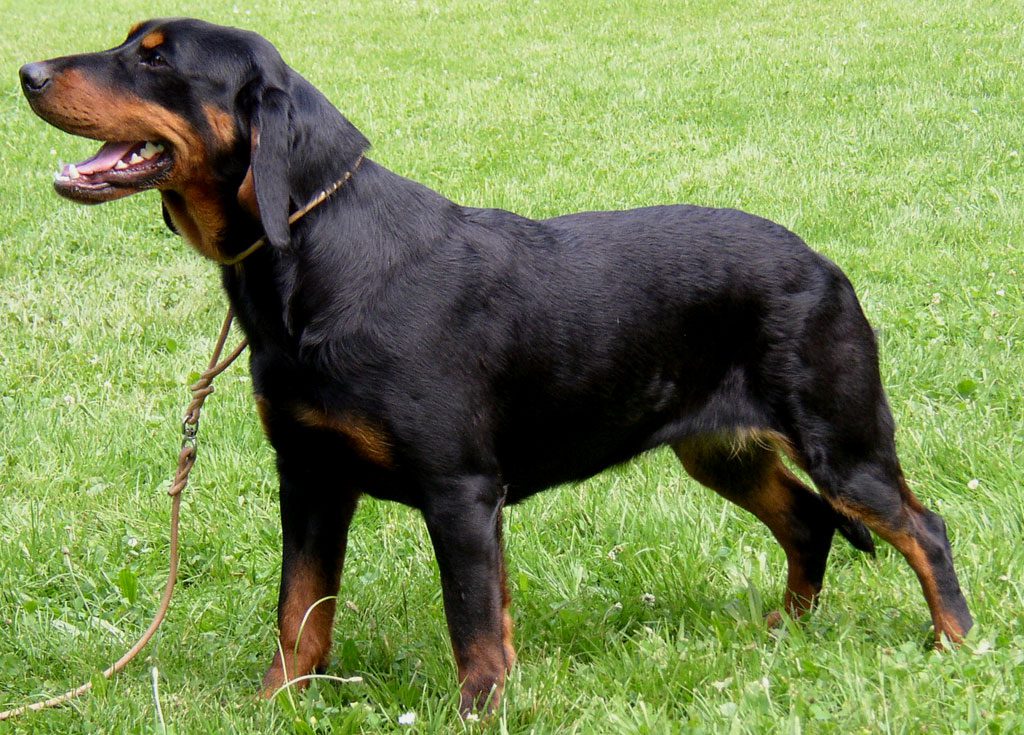
Schipperke
Bรฉlgica FCI 83 . Sheepdogs

Schipperke

The Schipperke is a happy dog, resistant, energetic, a skillful Hunter and good guardian.

Content

History

The origins of the Schipperke they are very old. Already, In documents dating from the end of the 17th century, there is talk of a dog whose characteristics perfectly describe a specimen of Schipperke, who lived mainly with the midwives of the Saint Gรฉey neighborhood of Brussels.

It is the typical dog of the shoemakers of that time that, In addition to making shoes, they used to organize very peculiar dog shows., Since that most importantly was not the aspect of canine copy but the necklace that had been, manufactured by hand by the shoemakers.

Some authors speak of a legend that, somehow describes a key feature of this dog.

Apparently, in one of those dog shows a zapatero not endured defeat and moved by the ira that it caused him to lose in an outburst was and cut off the tail to the winning dog.

But, against all odds the copy of the amputated tail was so successful that thereafter the amputation of the tail began to apply to all copies.

On behalf of the race comes from the Flemish, Schipperke means "little boatman". And the man was given because this dogs accompanied the archers that pass through the channel of Flanders, they were aboard the boats eliminate any small vermin that would cast and also performed guard duties, given that barked furiously to any strange.

With how small it is, it is a dog that has many typical characteristics of large breeds.

The Schipperke It is one of the smallest Spitz-type, with which it shares much similar. Among those breeds of medium to small size similar in appearance to the Schipperke, in different parts of the world we find the Wolfsspitz (Keeshond), GroรŸspitz, Mittelspitz, Kleinspitz, Zwergspitz (Pomeranian), Samoyed, the Norwegian Elkhound, Volpino Italiano, Secular, Finnish Spitz, India Spitz, Japanese Spitz and the American Eskimo dog.

The Schipperke was first recognized as a standardized breed in the year 1880, but was formalized in the year 1889. Much of what is known of its origins and early history comes from Hunting and fishing, a Frenchman who wrote for the magazine ยซHunting and fishingยซ, articles of which were translated into English and published by the English magazine ยซEl Stockkeeperยป.

Physical characteristics

At first sight, the Schipperke looks like a Belgian Shepherd Groenendael miniature.

It is of a small dog, very elegant but well made and muscular. Its quite similar to a Fox head, with a broad forehead that narrows as the eyes approach.

There are two varieties, whose only distinction is the weight. In the smaller of 3 to 5 kg and the largest of 5 to 9 kg.

The snout It is sharp and has a pronounced stop. The ears are small, triangular and slightly separated.

The eyes they are brown in color and rather oval shaped. Its characteristic coat is made up of long, very black hair and is totally waterproof.. It is significantly longer in the collar area, horsehair, the bodice and back of legs.

The color The only one recognized by the FCI is the chestnut black. As they grow older, It is normal to be detected small of coloration forming a gray color in places such as the snout.

The puppies are born with tails in different lengths, and in Canada and the United States, the tail is usually docked the day after birth. In countries that have a ban on tail docking, the Schipperke they show off their natural tail, It falls curved over the back of the dog.

Character and skills

They are curious by nature and overflow with energy, they need enough exercise and good monitoring.

Known for his stubborn temperament, mischievous and stubborn, to the Schipperke it defines, times, As the "small black Foxยซ, he "Black Tasmanian Devil" or the "black devilยซ.

Proper training is important, because they are very intelligent and independent, and that coupled with the stubbornness… bad combination, they are what gives them the win. They are territorial, and they can not get along with other males.

The Schipperke has no particular health problems, they tend to live until the 17 or 18 years. But, inactivity, lack of exercise and overnutrition are very harmful, and can lead to problems in the joints, the bones and the conditions of the teeth, heart, lung or digestive system.

The regular weekly brushing is usually sufficient to keep the coat in good condition. No need to cut hair, they tend to move it several times a year (the females, more than males).

Observations

The Schipperke, is the ideal companion for lovers of horse-riding, post that usually develops in a natural way a very close relationship between this dog and horses.

It is also the dog ideal for excursions, Despite its small size it is tireless.

Characteristics "Schipperke"

Coexistence is important that you have with your new friend. Before considering the acquisition of a dog of the breed "Schipperke" you know certain factors. Not all breeds of dogs are apt to live in an apartment, you must take into account his character, their need for exercise, their interaction with other pets, their care and if you have small children, their level of tolerance towards them.

Adaptation โ“˜

4,0 of 5 stars (based on 1 review)

friendly dog โ€‹โ€‹โ“˜

4,0 of 5 stars (based on 1 review)

hair loss โ“˜

3,0 of 5 stars (based on 1 review)

Affection level โ“˜

3,0 of 5 stars (based on 1 review)

Need for exercise โ“˜

5,0 of 5 stars (based on 1 review)

Social need โ“˜

2,0 of 5 stars (based on 1 review)

Home โ“˜

2,0 of 5 stars (based on 1 review)

Toilet โ“˜

2,0 of 5 stars (based on 1 review)

Friendly with strangers โ“˜

3,0 of 5 stars (based on 1 review)

barking โ“˜

3,0 of 5 stars (based on 1 review)

Health โ“˜

4,0 of 5 stars (based on 1 review)

Territorial โ“˜

5,0 of 5 stars (based on 1 review)

Cat friendly โ“˜

3,0 of 5 stars (based on 1 review)

Intelligence โ“˜

4,0 of 5 stars (based on 1 review)

Versatility โ“˜

4,0 of 5 stars (based on 1 review)

Child friendly โ“˜

5,0 of 5 stars (based on 1 review)

Surveillance โ“˜

4,0 of 5 stars (based on 1 review)

joy โ“˜

5,0 of 5 stars (based on 1 review)

Images of the ยซSchipperkeยป

Videos del ยซSchipperkeยป

Type and recognitions:

  • FCI CLASSIFICATION:
  • Group :
  • Section : . .

Federations:

  • Federations: FCI โ“˜, AKC โ“˜, ANKC โ“˜, CKC โ“˜, โ€‹KC โ“˜, NZKC โ“˜, UKC โ“˜

FCI breed standard "Schipperke"

Origin:
Belgium

Date of publication of the valid original standard:
28.07.2009

Use:

Small guard and companion dog


General appearance:

Lupoide, the Schipperke is a small-sized shepherd, but of very solid construction. His head is cuneiform, well developed skull and relatively short snout. Your body is harmonious, short, quite wide and compact, but the limbs have fine bones. Its fur is very characteristic, very abundant and straight that forms a necklace, horsehair, bib and pants, which gives it its unique silhouette. Sexual dimorphism (sexual differentiation) is marked. Its morphology, as well as
its characteristics and its shepherd dog character, all this in a small size, explain their great popularity, that extends far beyond the Belgian borders.
 
IMPORTANT PROPORTIONS:

  • The height at the withers is equal to the length of the body, is therefore a square-built dog.
  • The chest is well lowered to the level of the elbows.
  • The muzzle is visibly less long than half the length of the head.


Behavior / temperament:

An excellent little watchdog, exceptional "warning", overflowing with vitality, distant with strangers. Always in movement, agile, tireless, continually busy with what's going on around you, very aggressive when it comes to taking care of the objects that have been entrusted to him, very sweet with children, always curious to know what happens behind a door or an object that is going to be moved, betraying his impressions with his shrill voice, his mane and bristling dorsal hairs. He's a sniffer who hunts rats, moles and other vermin.

Head:

Form Lupoid, cuneiform, but not too long, and wide enough to be in harmony with the rest of the body. The supraorbital and zygomatic arches are moderately arched. The transition of the cranial region to the facial region is visible, but it is not very pronounced.

Cranial region:

Fairly broad forehead, drops into the eyes, profile view is slightly rounded. The upper lines of the skull and the nasal passage are parallel.

  • Depression front naso (Stop): Marked, but without exaggeration.

facial region:

  • Nose: Small, Truffle always black.
  • Snout: It is made more pointed towards the region of the truffle ; well chiseled, not very long, the tip is not truncated; the length is approximately 40% the total length of the head ; straight nose cane.
  • Lips: Blacks, well together.
  • Jaws/Teeth: Healthy and well implanted teeth. ยซScissors biteยป. A "pincer" bite is accepted.. Complete denture, the dental formula for. The absence of one or two premolars is acceptable 1 (1 PM1 or 2 PM1) or a premolar 2 (1 PM2) and are not taken into consideration the molars 3 (M3).
  • Cheeks: Droughts, they blend smoothly with the sides of the snout.
  • Eyes: Dark brown in color, small, almendrada form, or sunk, or prominent ; the look is mischievous, intense and penetrating; the eyelids are lined in black.
  • Ears: Straight, very small, pointy, triangular (the more possible equilateralmente), set high, but not very close together, firm, excessively mobile.

Neck:

Strong, powerfully muscular; It seems more bulky because of the abundant hairs on the collar. Is medium length, well loose, good sized, is more erect when the dog is attentive, with the slightly arched top margin.

Body:

Short and broad, therefore compact, but not too bulky or heavy, Ideally square (inscriptible in a box). So that, its length, from the tip of the shoulder to the tip of the buttock, It is approximately equal to the height at the withers.

  • top line: The top margin of the back and the spine is straight and taut, often it rises slightly from rump to cross.
  • Cross: Very sharp. It seems even more raised because of the mane.
  • Back: Short, straight and strong.
  • Pork loin: Short, broad and compact.
  • Rump: Short, wide and horizontal; the rear of the rump, and therefore the union between the rump and the tip of the buttock, It is harmoniously rounded, what is known as โ€œguinea pig buttโ€.
  • Breast : Well descended to the level of the elbows; wide in front and behind the shoulders, so that, the ribs are well arched; profile, the front part of the chest (backsplash) is well prominent.
  • bottom line: The lower part of the chest is well descended, reaching to the elbows, upload lightly and harmoniously towards the belly, It is slightly raised, or pendant, or agalgado (withdrawn).

Tail:

High implementation. Some dogs are born Anurans (completely tailless) or with rudimentary or incomplete queue (stump tail or short tail) and they may not be penalized by this. At rest, a natural tail (at least reaches the Hock) should preferably be dropped and can be raised in action, in the extension of the top line, but it is preferable that it does not exceed. Accepted the tail curled or carried on the back.

Tips

Thin bones that are well below the body.

PREVIOUS MEMBERS

  • As a whole: They are well aplomados seen from all angles, and they are perfectly parallel, seen from the front; its length, from the ground up to the elbows, It is almost equal to the half of the height at the withers.
  • Shoulder: Long and well oblique, the angulation of the shoulder is normal.
  • Arms: Long and enough oblique.
  • Elbows: Firms, or peeled, or together.
  • forearms : Straight, seen from the front are quite separate.
  • Carpi (dolls): Smooth and firm.
  • Metacarpus: Rather short. Seen from the front, in straight prolongation of the forearms, profile, at least very slightly inclined.
  • Previous feet: Small, round and together (ยซ cat's foot ยป); the arched toes; short nails, strong and always black.

LATER MEMBERS

  • As a whole: They must be under body, and be perfectly parallel, seen from the back.
  • Thighs: Long, very muscular. They seem to be wider due to the dense pants.
  • Knee: Approximately in composure with the rump; the angle of the knee is normal.
  • Legs: Approximately of the same length as the thighs.
  • Hocks: good angulation, without exaggeration.
  • Metatarsals: Rather short; the presence of spurs is not desirable.
  • Hind feet: As the front or a little bit longer than.

Movement:

At a trot, the movements are elastic, firm, with median amplitude, a good boost of the hind, the back stays horizontal and members move in parallel ; The movement of the forelimbs must be in harmony with that of the hindlimbs and the elbows must not separate. At a higher rate, Members converge.

Mantle

  • SKIN: Tight all over the body.
  • Fur: The outer layer of hair is abundant, dense, straight, enough hard, of fairly firm texture, therefore, is dry and sturdy to the touch, and shape with the inner layer of hair, It is soft and dense, excellent protection. Hair is short on the ears and short on the head, the front of the previous members, hocks and rear cannons. On the body, the hair is medium length and glued.

Around the neck the hair is much longer and more separate, starting at the outside edge of the ears, forming, especially in the male, but also in the female, a wide and very typical ยซnecklaceยป (long hairs around the neck, on each side stem), a "mane" (long hairs on the upper region of the neck, that extend even over the cross and even the shoulders) and a "bib" (long hairs on the lower region of the neck and the front of the chest (backsplash), that spread between the forelimbs and are progressively completed under the breast). On the back of the thighs, long and abundant hairs, that cover the anal region and whose tips are directed inward in a very typical way, they form the ยซtrousersยป. The tail is adorned with a hair of the same length as the body hair.

  • Color: Negro backpack. The inner layer of hair should not be absolutely black, but it can be also dark gray if it is covered entirely by the outer layer of hair. Are accepted a little gray due to age, for example on the snout.


Size and weight:

Weight: Of 3 to 9 kg. Looking for an average weight of 4 to 7 kg.


Fouls:

Any deviation from the above mentioned criteria is considered an absence and severity of this refers to the degree of deviation to the standard and its impact on the health and welfare of the dog.

General appearance: Heavy, lack of substance; paticorto patilargo ; elongated body, rectangular (inscriptible in a rectangle).
Head: Too long or too short. Lines of the skull and nasal cannula that are not parallel; appearance of Fox; very outgoing supraorbital or zygomatic arches.

  • Cranial region: Too narrow, very rounded or arched front (โ€œapple-shapedโ€).
  • Snout: Very long, gripper; thick, truncated; convex nose cane (Roman).
  • Teeth: Misaligned or poorly implemented incisors.
  • Eyes: Large, round or prominent, color clear (the color "hazelnut" is still accepted).

Body:

  • Breast : Strait, plane, cylindrical; not enough descended.
  • Rump: Long, inclined, about-high; interrupted curvature of the back edge (transition grupa-parte back of thighs).
  • Members: Too little or too much angled members.
  • Movement: Cerrado, very short strides, with very little momentum, bad transmission in the back (when the dorsal line does not remain correct in action), movement raised the forelimbs or hopping in the subsequent.

Fur:

  • Fur: Too short (Satin), too long, little, soft or silky, wavy, very close to the body or too pendant; very little or no necklace, horsehair, breast or trouser (more serious is lacking in the male, especially the absence of necklace). Lack of hair on the bottom layer.
  • Color: Grey reflections, Brown or reddish in the upper layer of hair. Some occasional white hairs on the toes.

Character: Apathetic or shy dog.

SERIOUS FAULTS

  • Teeth: Absence of an incisor (1 I), three premolars 1 (3 PM1), or two premolars 2 (2 PM2).

FALTAS DESCALIFICANTES

  • Aggressive or fearful dog.
  • Any dog โ€‹โ€‹showing clear signs of physical or behavioral abnormalities must be disqualified..
  • Lack of racial.
  • Upper prognathism; lower prognathism, even without loss of contact (inverted articulation) ; Cross occlusion ; crooked mouth ; absence of a canine (1 C), a tooth top butcher (1 PM4) or lower (1 M1) or a molar (1 M1, or 1 M2, except for the M3), of a premolar 4 (Lower PM4), of a premolar 3 (1 PM3) and another tooth, or four teeth in total or more (except the four premolars 1).
  • Depigmentation of the nose, the lips and eyelids.
  • Hanging ears or semi erect.
  • Long and soft or silky hair, therefore a coat evidently of the "long hair" type; long ear hair fringes, on the back of the members, etc.; total absence of an inner layer of hair.
  • Color: Top coat of any color that is not black (except for the gray reflections, brownish or reddish) or with very small white spots, still in the fingers.
  • Weight clearly outside the prescribed limits.


N.B.:

Males must have two normal-appearing testicles completely descended into the scrotum..

TRANSLATION: IRIS Carrillo (Puerto Rico Kennel Federation). Reviewed by Dr. Robert Pollet.

Source: F.C.I - International Cynological Federation

Alternative names:

1. Spitske (English).
2. Spitske (French).
3. [Aussprache: หˆsxษชpษ™rkษ™] (German).
4. Skip, Schip, Spitske (Portuguese).
5. Spitzke, Pequeรฑo barquero (espaรฑol).

โ–ท The world of Pets: Dogs, cats, birds, reptiles, amphibians

Shetland Sheepdog
Escocia FCI 88 . Sheepdogs.

Shetland Sheepdog

The Shetland Sheepdog it's really friendly, lovely with children, intelligent and loyal.

Content

History

In the 19th century, in the North Shetland Islands of Scotland, the ancestors of Shetland Sheepdog, often called Sheltie, they helped the flocks of sheep and sounded the alarm when strangers approached their farm.

But, the exact origins of this dog are as obscure as the mist that covers its homeland. Its resemblance to him Rough Collie supports the theory that it descends from these dogs, believed to have been imported from Scotland. But, Colleys breeders and various specialists refute this claim.

For them, the Sheltie would have developed in isolation on these islands, and would be the result of different crosses. The races most frequently cited as contributors to its creation are the Icelandic Sheepdog, the Yakki de Groenlandia (an extinct race), the Cavalier King Charles spaniel, the Pomeranian and the Border Collie.

In any case, at the beginning of the 20th century it was often crossed Rough Collie, which reinforced the resemblance between the two races.

What is certain is that its small size was the result of the most rational selection work. Like the "Shetland pony", known for its miniature size, locals gave preference to animals that needed little food, a rare commodity in this difficult region.

Although the Shetland Sheepdog it was especially appreciated in its native islands for its qualities of a sheepdog and alert, it was mainly her appearance that got her out of there. Visitors to England in the late 19th century were delighted with the small size and texture of the dog's coat. Shetland Sheepdog, and soon they wanted to take something home, which they did. Soon, some locals decided to start breeding for export, selecting breeders for height and coat. More and more individuals set out to conquer Britain and then the rest of the world. But, there were neither breed standards nor consultations between the different breeders, so the race developed in directions sometimes very distant from each other.

Things changed after the official recognition in 1909 by the Kennel Club, the leading organization in Great Britain. The name chosen was simply the name by which the dog had been known until then., the Shetland Sheepdog. This recognition helped to stabilize the breed by establishing a well-defined framework in which the different breeders had to work..

But, the chosen name was not to the liking of the colleys breeders, who pressured them and won their case in 1914: then it was officially renamed as Shetland Sheepdog.

In the meantime, the first specimens had reached the United States and, already in 1911, the American Kennel Club (AKC) also accepted it. Was not up 1948 that the United Kennel Club (UKC), the other reference organization in the United States, he did the same. It was followed by the Fรฉdรฉration Cynologique Internationale (FCI) in 1954, as well as by all other important institutions, including the Canadian Kennel Club (CCC).

Although the Shetland Sheepdog is now common worldwide, paradoxically it has become rare on its home island, where it has been replaced by the Border Collie for grazing.

This decline can also be seen in the rest of Britain. These may include, Annual Kennel Club enrollments have dropped from more than 1300 less than 800 in less than a decade.

The phenomenon is also occurring in the United States, where he now occupies the position 25 (of a little less than 200) on the AKC popularity rankings, based on the annual number of people registered in the organization. In other words, has lost a lot of ground compared to the decades of 1980 and 1990, in which he was almost constantly among the 10 first, reaching a maximum of 40.000 records in 1993. The fall is slow but steady, since at the beginning of 2010, was still in the 20 first positions.

The "father" race Shetland Sheepdog o โ€œSheltieโ€ as they are often nicknamed, they are the Border Collie.

Physical characteristics

The Sheltie they have a double mantle, What makes this breed peleche much more than other dogs. Long hair covering the thick and soft layer base, is repellent to water, while the base layer provides relief from hot and cold.

There are three main colors: Sable, It ranges from the Golden to mahogany; Tri-color, formed by the black, White and Tan, and blue mirlo, composite grayscale, white, black and Tan.

black and white: it is less common but still acceptable.

Sand: the best-known color, dominates over other colors. The shadow Sabre, or mahogany can sometimes be confused with the Sheltie tricolor because of the large amount of dark shading in their coats. Another name for him Sheltie "shading", is trifactorado sable and white. This name comes from the mixture of a tricolor and a sable and white. Another acceptable but less common color is the Sable Blackbird., that it can sometimes be difficult to distinguish between the regular sable after puppyhood. The Sable merle has patches of dark brown on a light brown background compared to the black and grey blue Merle.

There are other two colors that are a bit rare, which are unacceptable in the ring. The White Color-headed (majority of white with the head "normally" marked), It is the product of two dogs crossed white facotrados. Double Merle, the product of the crossing of two Sheltie blue merle, they can be crossed but have a high incidence of deafness or blindness than other colors.

The ideal height at the cross, in males 37,5 cm.. The females. 35,5 cm.. One greater diversion of 2,5 cm above or below these measures is regarded as highly undesirable.

Character and skills

It is an excellent companion dog, highly loyal. It is joyful, intelligent and always ready to obey. The Sheltie is love, loyal and affectionate with the family and of course, on the sidelines, with strangers; for this reason the Sheltie must be socialized. Some may be very reserved. This breed gets along very well with children if they are raised with them from a young age.; However, its small size makes it easy for a child to accidentally harm them, This monitoring is necessary. Well consider bringing an adult Sheltie for a House with young children, they may not be compatible.

Some Sheltie tend to show a similar to a Terrier personality that tends to be hyperactive, and always ready, However this temperament is not sanctioned in the breed standard. Some may be shy, but this temperament is specifically discouraged by the standard. The trend towards shyness, It can be reduced with proper socialization. The average Sheltie is an excellent watch dog, giving alarm barks when a person is at the door or pass a car on the street.

The herding instinct is strong in many Sheltie. Love to chase and pasture including, squirrels, ducks, pigeons and children. The Sheltie love run in large open areas.

They normally love to play. They are better with a sensitive owner, but firm. The Sheltie is, first and foremost, a smart pastor and love to keep them busy, Although his level of activity, usually, It coincides with the level of its owner. As they are very intelligent, they are highly trainable. Lack of exercise and intellectual stimulation, It can lead to undesirable behaviors, including excessive barking, phobias and nervousness. Fortunately the annoying behaviors may decrease largely by an hour of exercise to make the dog with its owner.

in your category, the breed dominates Dog Agility competition. They also look at obedience competition, Flyball, Grazing, Tracking and proof of talent.

It is a very intelligent dog, according to Dr.. Stanley city, expert on animal intelligence. The Sheltie is one of the brightest dogs occupying the position number 6 in the Ranking of 132 evaluated races. His research determined that an average Sheltie could understand a new command in less than 5 repetitions and would obey the command the first time the 95% of the times or more.

Health

Similar to the Rough Collie, There is a tendency to inherit malformations and diseases in the eye. Each puppy should have his eyes examined by a qualified eye veterinarian. Some lines may be susceptible to hypothyroidism, epilepsy, Hip Dysplasia, or skin allergies. The life expectancy of the Sheltie is between 10 and 15 years, Although some in some it may be more, and in others may be less.

Von Willebrand disease is an inherited bleeding disorder. The Sheltie breed, affected dogs, as a general rule, they do not live long. The Sheltie carry type III Von Willebrand, which, It is the most severe of the three levels. There are DNA tests that were developed to find the disease in dogs Sheltie. It can be done at any age and will showcase one of the following results: affected, carrier or affected not. The Sheltie may also suffer from hypothyroidism, It is the low functioning of the thyroid gland. Clinical symptoms include, loss of hair, on low weight and faintness.

Although small breed dogs are unlikely to be affected by hip dysplasia, It has been identified in some specimens of Sheltie. Occurs when the head of the femur and the acetabulum do not fit correctly, This causes pain and/or lameness. Hip Dysplasia is thought to be genetic; Many breeders sent to test their dogs to certify that they are free from this.

Characteristics "Shetland Sheepdog"

Coexistence is important that you have with your new friend. Before considering the acquisition of a dog of the breed "Shetland Sheepdog" you know certain factors. Not all breeds of dogs are apt to live in an apartment, you must take into account his character, their need for exercise, their interaction with other pets, their care and if you have small children, their level of tolerance towards them.

Adaptation โ“˜

4,0 of 5 stars (based on 1 review)

friendly dog โ€‹โ€‹โ“˜

3,0 of 5 stars (based on 1 review)

hair loss โ“˜

4,0 of 5 stars (based on 1 review)

Affection level โ“˜

4,0 of 5 stars (based on 1 review)

Need for exercise โ“˜

4,0 of 5 stars (based on 1 review)

Social need โ“˜

4,0 of 5 stars (based on 1 review)

Home โ“˜

3,0 of 5 stars (based on 1 review)

Toilet โ“˜

3,0 of 5 stars (based on 1 review)

Friendly with strangers โ“˜

3,0 of 5 stars (based on 1 review)

barking โ“˜

5,0 of 5 stars (based on 1 review)

Health โ“˜

5,0 of 5 stars (based on 1 review)

Territorial โ“˜

3,0 of 5 stars (based on 1 review)

Cat friendly โ“˜

3,0 of 5 stars (based on 1 review)

Intelligence โ“˜

5,0 of 5 stars (based on 1 review)

Versatility โ“˜

4,0 of 5 stars (based on 1 review)

Child friendly โ“˜

5,0 of 5 stars (based on 1 review)

Surveillance โ“˜

2,0 of 5 stars (based on 1 review)

joy โ“˜

4,0 of 5 stars (based on 1 review)

Type and recognitions:

  • FCI CLASSIFICATION:
  • Group :
  • Section : . .

Federations:

  • FCI – Group 1 Herding dogs, Section 1 Sheepdogs โ“˜
  • AKC – PASTORAGE โ“˜
  • ANKC – Group 5 (Working dogs) โ“˜
  • CKC – Group 5 (Pastoral) โ“˜
  • โ€‹KC – Pastoral โ“˜
  • NZKC – Work โ“˜
  • UKCScenthounds โ“˜

FCI breed standard "Shetland Sheepdog"

Origin:
Scotland, United Kingdom

Date of publication of the valid original standard:
19.08.2013

Use:

Shepherd dog


General appearance:

The Shetland Sheepdog is a small-sized, long-haired working dog, Of great beauty, no signs of heaviness or coarseness, free and graceful action. Its structure must be symmetrical so that no part of its body appears disproportionate.
The fur, very abundant mane and bib, the beauty of the head and the sweetness of the expression combine to present the ideal specimen.

IMPORTANT PROPORTIONS;
The skull and muzzle must be the same length, the balance point being the internal angle of the eye.
Slightly longer from point of shoulder to point of croup than height at withers.


Behavior / temperament:

It is an alert dog, delicate, Intelligent, strong and active. Affectionate and loyal to his master, reserved with strangers, but never nervous.

Head:

The head should be refined and elegant without exaggeration; viewed from above or from the side should be in the shape of a long truncated wedge, that is refined from the ears to the truffle. Width and depth of the skull must be proportionate to its length and the length of the muzzle. It should be considered in conjunction with the size of the dog.

Cranial region:
  • Skull : Flattened, moderately wide between the ears, without showing any occipital protuberance. The upper line of the skull is parallel to - the upper line of the snout.
  • Depression links ( Stop) : Light, but defined.

facial region:

The characteristic expression is obtained from the perfect harmony and combination of the skull and snout, of the form, the color and placement of your eyes and the correct position and bearing of your ears.

  • Truffle : black.
  • Snout : Well rounded.
  • Lips : Blacks, firm.
  • Jaws / teeth : Jaws of equal length, net and strong, well developed lower jaw. Healthy teeth with perfect scissor bite, regular and complete, that is to say that the internal face of the maxillary incisors is in close contact with the outer side of the lower incisors and placed at right angles to the jaws. It is highly desirable that the denture contains 42 properly placed teeth.
  • Cheeks : Flat, bind gently with the muzzle.
  • Eyes : Are medium-sized, almond shaped and placed in an oblique position. Color should be dark brown, except in the case of merle specimens, in which one or both eyes may be blue or streaked blue. The rims of the eyes should be black.
  • Ears : Small, moderately wide at the base, placed fairly close to each other at the top of the skull. When the dog is at rest, they are thrown back; When it is attentive it brings them forward and carries them semi -erect with the fallen tips forward.

Neck:

Muscular and well arched, long enough to wear your head proudly.

Body:

  • Back : Straight, with a delicate curvature.
  • Rump : Gradually descends towards the hind limbs.
  • Breast : Deep, descends to the elbows. The ribs are well sprung, but taper in the lower half to allow free movement of the forelimbs and shoulders.

Tail:

Has a low implantation, vertebrae gradually decrease in size towards the tip, which reaches at least the hocks. It is provided with abundant hair and has a slight upward curvature. When the dog is moving it can be carried slightly raised, but never on the back and curled.

Tips

FORELIMBS

Forelimbs appear straight when viewed from the front; they are muscular and well proportioned with strong but not heavy bone.

  • Shoulder : The shoulder blades should be tilted, separated in the cross region only by the vertebrae, and should slope outward to allow for the desired bowing of the ribs. The shoulder joint must be well angulated.
  • Arm : Arm and scapula should be approximately the same length.
  • Elbows : The humerus-radio-cubital joint (elbow) is equidistant from the ground to the region of the cross.
  • Metacarpus : Strong and flexible.

HINDQUARTERS

  • Thigh : Wide and muscular; the femur should join the pelvis at a right angle.
  • Knee : The femoro-tibio-patellar joint must have a marked angulation.
  • Hock : crisp, angled, well descended. With strong bones. Viewed from behind they should be straight.
  • Pies : Oval, with strong pads. Fingers arched and together.

Movement:

Of agile movement, reunited and funny; with a driving due to the posterior members that cover the maximum extension with the minimum effort. Ambling movement is highly undesirable, march across the limbs, swinging the body, as well as the rigid and important vertical displacement.

Mantle

HAIR:

  • The coat is double: the outer coat is long hair, rough and smooth. The undercoat is short haired, smooth and dense. The mane and chest have abundant hair. The forelimbs have abundant fringes. Hind limbs, on the hocks, they are covered with very abundant hair, while below them, the hair is shorter. The coat should accommodate the body and not dominate or change the shape of the dog. The hair on the face is short. Short-haired specimens are highly undesirable.

COLOR:

  • Cebellina : Light or dark. All shades are admitted, from pale gold to dark mahogany; but those tones must be of an intense tone. Wolf and gray colors are undesirable.
  • Tricolor : Intense black color on the body, and in them bright fire colored spots are preferred.
  • Blue Merle : Light silver blue, splashed or mottled with black. Deep tan stains are preferred, although its absence should not be penalized. Large black markings and slate or rust-colored markings on the outer or inner coat of hair are highly undesirable. The overall appearance should be blue.
  • Black and white and black and tan : They are also recognized colors.
    White spots may exist (except in the black and tan specimens) on the forehead, the collar and the sill, the chest, the limbs and the tip of the tail. All or some white spots are preferable (except in the black and tan specimens), but its absence should not be penalized. White spots on the body are highly undesirable.


Size and weight:

Ideal height at the withers :

  • Males : 37 cm.
  • females : 35,5 cm.

    One greater diversion of 2,5 cm above or below these measurements is considered highly undesirable.


Fouls:

Any deviation from the aforementioned criteria is considered a fault, and the severity of this is considered in proportion to the degree of the deviation to the standard and its consequences on the health and well-being of the dog.


FALTAS DESCALIFICANTES

  • Aggressive or fearful dog.

Any dog โ€‹โ€‹showing clear signs of physical or behavioral abnormalities must be disqualified..


N.B.:

Males should have two normal-appearing testicles fully descended into the scrotum..
Only functionally and clinically healthy dogs, with the typical conformation of the breed, They should be used for parenting.

DATE OF PUBLICATION OF THE ORIGINAL VALID STANDARD: 19.08.2013.
TRANSLATION: Lic. Valverde Calvo (Costa Rica) and Jorge Nallem (Uruguay).
Information obtained fromhttps://www.fci.be/es/nomenclature/PERRO-PASTOR-DE-SHETLAND-88.html

Source: F.C.I - International Cynological Federation

Alternative names:

1. Shetland Collie, Dwarf Scotch Shepherd, Sheltie (English).
2. Shetland, Sheltie (French).
3. Sheltie (German).
4. Sheltie (Portuguese).
5. Miniature Collie, Sheltie (espaรฑol).

โ–ท The world of Pets: Dogs, cats, birds, reptiles, amphibians

St. Hubert Hound
Bรฉlgica FCI 84 . Large-sized Hounds

Sabueso de San Huberto

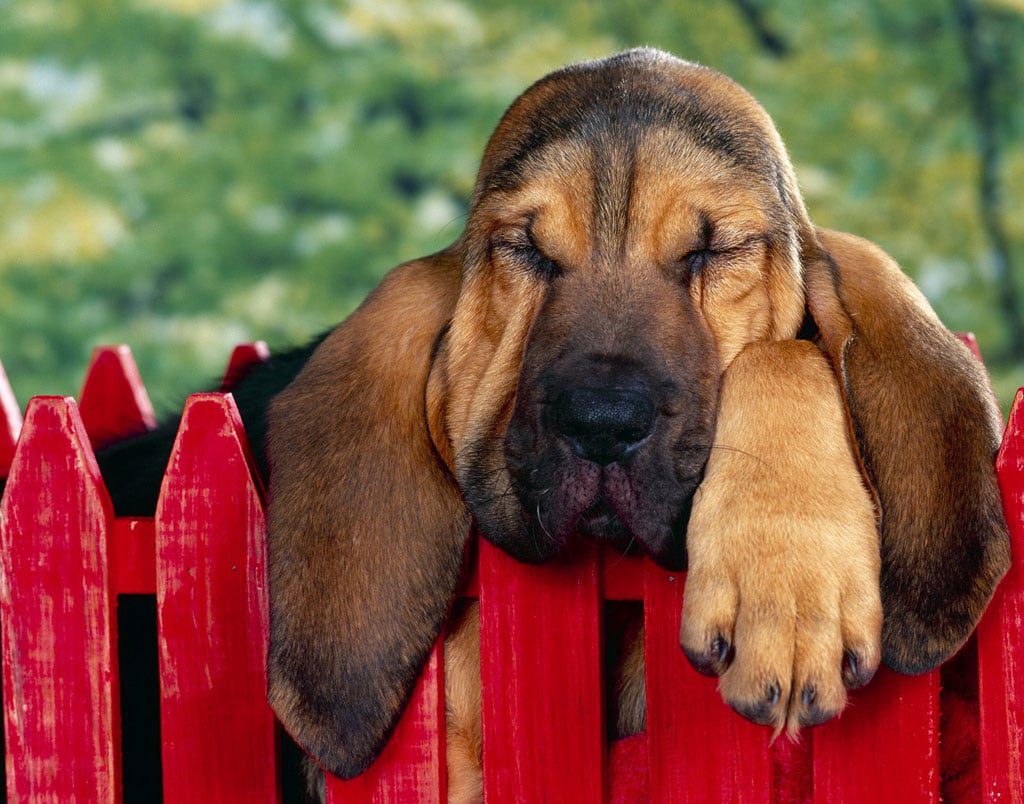
The St. Hubert Hound It is the dog with the more developed nose around the globe

The St. Hubert Hound (in English, known as Bloodhound) It is a breed of dog originally from Belgium, more specifically in the region of the Ardennes. It is one of the different breeds of hound recognized by the FCI in your group 6.

Traditionally the monks of the Saint Hubert monastery as the creators of the race.

Read all about this race by clicking on: Bloodhound.

  • Alternative names: Chien de Saint-Hubert / St. Hubert Hound / Bloodhound / Bluthund
  • Group 6 / Section 1.1 – Large-size hounds

Dogs breeds: St. Hubert Hound


โ–ท The world of Pets: Dogs, cats, birds, reptiles, amphibians

Stichelhaar
Alemania FCI 232 . Braque Type

Stichelhaar

The Stichelhaar is a versatile hunting dog, that originated in Frankfurt, Germany. It is a cross between dog type German Shepherd wire-haired and other races of that style, but more detailed information about its origins is unknown.. The only thing that can be confirmed is that this breed was developed at the beginning of 1900.

The Stichelhaar is a medium-sized dog, with a weight around 20 Kg. And a height of 60 to 66 cm to the cross. The eyes are oval and Brown in colour and their ears glued to the head.

The coat can be of various colours, as Brown, blend of white and Brown, or a range within the chestnut brown range. The mantle is relatively short and Bristly.

This breed has not become popular because of his tendency to bite.

The Stichelhaar are dogs with a difficult character, they are very dominant. They tend to be very aggressive to strangers, and it will accept only a single master.

It is an ideal to live outdoor dog breed.

Dogs breeds: Stichelhaar


โ–ท The world of Pets: Dogs, cats, birds, reptiles, amphibians

Slovak Hound
Eslovaquia FCI 244 - Medium-sized Hounds

Kopov Eslovaco

The Slovak Hound (Slovenskรฝ Kopov or Slovakian Hound) It is a breed of dog of size medium hound type. Originally from Slovakia, was bred for boar hunting, not as a pet or exhibit it in dog shows (Showdog).

The club of the breed was created in Bratislava in 1988.

It appears listed by the FCI under breed number 244, group 6, Scent hounds, and related breeds, section 1.2 Medium-sized Hounds.

Promoted in the United States as a rare breed for those looking for a unique hunting dog.

Name "Black Forest Hound"apparently it was created in the US for marketing reasons, It has nothing to do with the Black Forest.

The Slovak Hound it is a typical hunting dog in appearance, with a muscular body, long legs, long tail, the ears are long and loose. The short coat is always black, with reddish markings (black and tan). Dogs must weigh around 16 kg and must be measured, approximately, 46 cm to the cross, females are slightly smaller. This is the ideal size is described in the breed standard.

The Slovak Kopov is more full-bodied than the American breed Black and Tan Coonhound, but it is lighter than other similar dogs from Poland, such as the Ogar Polski or Polish Hound which is the largest hound in the country. The eyes are always dark, deep, and they have a look of bravery and courage.

Although it is an independent dog, is intelligent, and is easy to train. It also, It is blessed with a great sense of direction.

The Slovak Hound It is a well-known hunting dog since ancient times., the breed was recognized for the first time in the year 1870. The races of Austrian Black and Tan Hound, Polish Hound and Hungarian hound (Transylvanian Scent Hound) is thought to they have formed part of their ancestors. The etymology of the name seems to allude to the color of the dog.

The Slovak Hound was developed and used as a hunting dog, There is an animal that sole have as a pet or is usually present to dog competitions (Showdog). It has been bred for hunting, especially wild boars, hence its fierceness. Although it is very common in its area of โ€‹โ€‹origin, rarely seen in other countries. The Slovak Hound is similar to other Eastern European hounds in appearance and hunting style. It is very faithful to his master, He is an outdoor dog...

โ–ท The world of Pets: Dogs, cats, birds, reptiles, amphibians

Sardinian Shepherd Dog
Italia Not recognized by the FCI

Dogo Sardo

Content

History

The Sardinian Shepherd Dog It is a breed of dog of Italian origin used as a watchdog of properties, livestock guardian dog, combat and working dog, in general.<>

It is a rare breed and quite unknown outside Italy, the Sardinian Shepherd Dog It was developed in the towns of Sardinia like a group dog Molossoid, mastiff type suitable for all types of work. From an aggressive guardian, an excellent pastor for the protection of livestock and a delicate and careful with their flocks farmer, up a fierce wrestler.

The race Sardinian Shepherd Dog is so valued by the people of Sardinia that -usually- they refuse to sell their puppies to foreigners.

The fact that the puppies are born and raised in Sardinia, has contributed to making it difficult to determine the heredity of the breed. It is almost certain that its descent is found in the same root as the rest of the ancient dogs with similar characteristics that existed in the Middle Ages., shared legacy with the Neapolitan mastiff, Cane Corso, Calabrese Bucciriscu and others.

The Sardinian Shepherd Dog rarely seen outside of his native region, and there are no written rules, nor standard that regulates its characteristics, because they are not recognized by the Federation Cynologique Internationale (FCI).

For more confusion the population of Sardinia, defends that there are two separate races of Sardinian Shepherd Dog, one would be Fonnese Pastore that it is a Long-haired shepherd dog, and the other the real one Sardinian Shepherd Dog What, locally, is known as Pertiatzu Cani and he has short hair, similar to the Cane Corso . This confusion comes from this name Fonnese Mastino has been erroneously used to name the Sardinian Shepherd Dog.

In reality the Fonnese Mastino (or Mastรญn Fonnese) is the smooth-coated variety of the breed Fonnese Pastore, that was born from the crossing of a Pastor Fonnese with a Sardinian Shepherd Dog.

Physical characteristics

Returning to our protagonistโ€ฆ The Sardinian Shepherd Dog he is a very muscular and athletic dog, a working dog, differs from the Cane Corso, in some characteristic facial features such as its long snout and skin that is closer to the body. Some Dogo Sardo that were bred in rural areas have quite lupoid characteristics (the longer snout than normal), but in those casesโ€ฆ its purity is questionable.

The body of the Sardinian Shepherd Dog he is thin and strong, with a powerful neck and extremities of the same characteristics. The ears are usually cropped, and in some cases they are almost completely eliminated, While the tail can be cut or not.

Although there is no standard on the Sardinian Shepherd Dog, Several experts agree that these dogs have an average altitude of 56 to 68 cm to the cross and a weight of 30 to 45 kg, but not this parameter can be set, is just orientative.

It has a huge head, with cheek muscles (that they are handed down), has a snout -slightly- shorter than the skull, teeth strong and bite in scissors.

His eyes are amber (in different shades). The layer of hair is short and very thick hair (comparable to that of the wild boar), even the coat tabby in one of its various shades resembles a wild boar, they are rarely white.
The appearance of the Dogo Sardo denotes elegance, power and wildness at the same time.

It tends to be very attached to the family (especially with the children), and distant with strangers and do not tolerate other males because of their dominant spirit. It is very good for the guard.

Character and skills

The Sardinian Shepherd Dog It, in fact, a faithful hound with an easy gait. Known for his intelligence and diligence, it is also a particularly dignified and aggressive dog, in fact you need a lot of physical activity.

Although he is used to living alone, is not violent towards other animals or people. He is very attached to his owner, whom he protects and blindly obeys. Has excellent instincts, so it can also be said that it is a defense and hunting dog.

โ–ท The world of Pets: Dogs, cats, birds, reptiles, amphibians

Swedish Elkhound
Suecia Jรคmthund

Elkhound Sueco

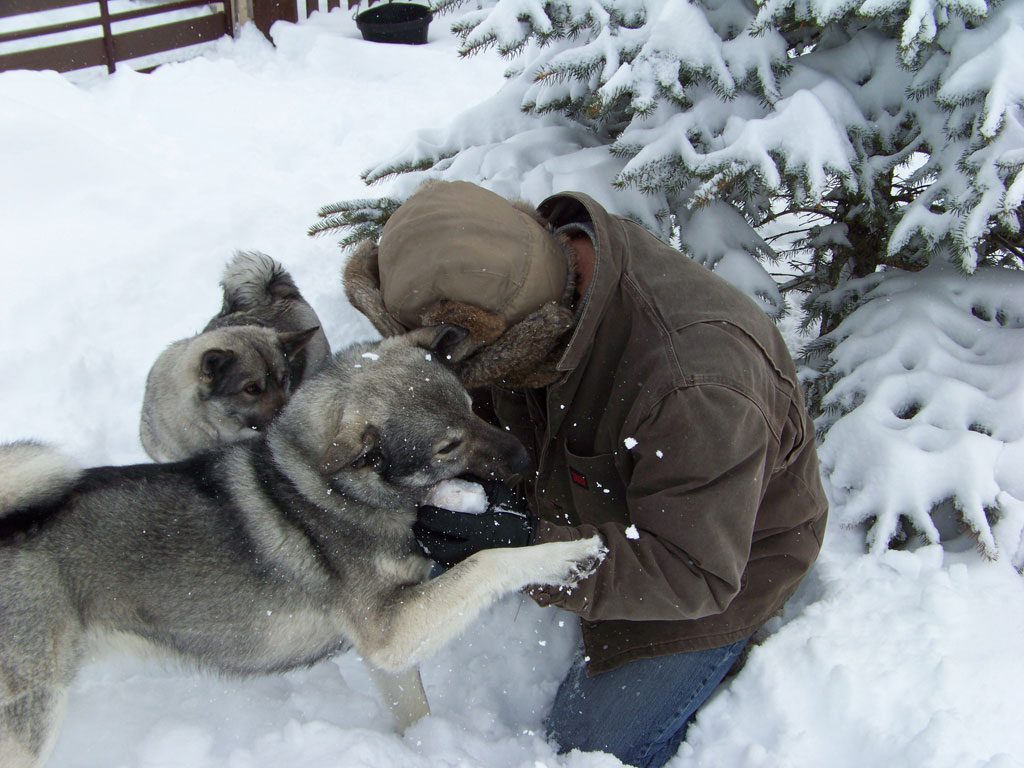
The Swedish Elkhound, also called Jรคmthund, It is a breed of dog of Spitz type of Northern Europe. Jรคmthund is an eponym of Jรคmtland, central province of Sweden.

This race, of similar appearance to the Wolf, It was recognized by the FCI from 1946, due to the intensive work of Aksel Lindstrรถm and others. Prior to that, the Jรคmthund and the Norwegian Elkhound were seen as the same breed.

Read all about the race by clicking on: Jรคmthund.

Swedish Elkhound