โ–ท The world of Pets: Dogs, cats, birds, reptiles, amphibians

Shar Pei
China FCI 309 - Molossoid - Dogo

Shar Pei

The Shar Pei he is affectionate with his owner; he is quite reserved with strangers.

Content

History

Dogs like breed Shar Pei have existed in southern China for centuries, perhaps from the Han dynasty around 200 A.C. Archaeologists have found statues from that period showing a dog similar to the Shar-Pei.. Later evidence includes a 13th century document referring to a wrinkled dog.

The first Shar-Pei they were farm and working dogs. They watched over property and livestock, they hunted and herded flocks. The Shar-Pei was a guardian of the house otherwise, as well. His purple tongue, shared with another race, the Chow Chow, and their wrinkled skin was believed to ward off evil spirits. In addition to being working dogs, the Shar Pei fighting dogs were also popular. Their loose fur and rough fur made it difficult for the other dog to hold on to them..

Life has always been hard in China, but for the Shar Pei became very dangerous after the communist takeover in the early 20th century. In the People's Republic of China, Dogs were a symbol of a decadent past and were virtually eliminated in the 1990s. 1950. Only a few remained in rural areas, as well as in Hong Kong (still under British rule at the time) and in Taiwan, plus a few that had been exported to the United States in 1966.

In 1973, a Hong Kong breeder named Matgo Law appealed to Western dog aficionados to help save the breed, it was on the verge of extinction. The unusual wrinkled dogs sparked enthusiastic interest among Americans and quickly became "the" dog to have.. The Shar Pei were fully recognized by the American Kennel Club in 1992. After that first burst of popularity, have achieved a moderate level of interest, they are currently in the position 50, below the post 37 a decade.

Physical characteristics

It is a robust dog, solid, compact, shorthair. The head is large in proportion to the body. The skull is wide and flat, and the โ“˜stop, very little pronounced. The forehead and the orbital region are covered with abundant and fine wrinkles that extend downwards forming ; eyes are small, sunken, black or brown color in beige specimens. Ears are very small, equilateral triangle, and high insertion and facing forward, above the eyes. The skin forms folds throughout the body, which is a peculiarity of the breed. The tail is inserted high and its carriage in the shape of a trunk above the back is characteristic., without touching it.

  • Fur: thick, very short and straight, with a very visible hardness.
  • Color: black, brown, leonado, beige and cream.
  • Size: 40 – 51 cm..

The Chinese line presents fewer wrinkles than the American one. Females are smaller in size than males.

Character and skills

The Shar Pei he's a little snobby. He's naturally reserved with people he doesn't know and stays aloof once they're introduced. Extensive socialization at a young age is necessary to prevent it from becoming too territorial or aggressive. Only family members receive the overwhelming devotion of this independent dog., alert and intelligent that watches the world go by in a calm and dignified way.

One Shar Pei it's quiet in the house. It is a remarkable watchdog and rarely barks unless it is playing. If they hear it, you should go and see what has caught your attention. A short, quick walk meets your exercise needs.

It is a strong and confident dog that learns fast, so don't put off training. The Shar Pei is independent and strong-willed. Be firm but never harsh or physical with him.. Teach him from the beginning to accept grooming procedures like trimming nails, clean ears and brush teeth. You never want you Shar Pei learn that you can be physically intimidated into stopping these procedures.

like most dogs, to the Shar Pei He doesn't like to have his feet touched and he doesn't like to have his nails cut. That also applies to other procedures..

The Shar Pei is a watchdog that has hunted and fought with other dogs. to most of the Shar Pei They do not like the company of other dogs., and are easily excited by aggression. A securely fenced yard will prevent you from conflict with other dogs or trying to expand your territory to include the entire block..

Start training your puppy the day you bring him home. Even at eight weeks old, He is able to absorb everything you can teach him. Don't wait until you have 6 months to start train or have to deal with more stubborn dog. If possible, Take it to a trainer when you have between 10 and 12 weeks, and socializes, socialice, socialice. But, Note that many kinds of training puppies require certain vaccinations (such as kennel cough) stay up to date, and many veterinarians recommend limited exposure to other dogs and public places until puppy vaccinations (including rabies, distemper and parvovirus) They are completed. Instead of formal training, You can start training your puppy to socialize at home and among family and friends until immunizations are completed in the puppy.

Talk to the breeder, Describe exactly what you want in a dog and ask for help choosing a puppy. Breeders see puppies daily and can make incredibly accurate recommendations once they know something about their lifestyle and personality. Whatever you want from a Shar Pei, look for one whose parents have nice personalities and who has been well socialized since the puppy's young age.

Health of the ยซShar Peiยป

All dogs have the potential to develop genetic health problems, just as all people have the potential to inherit a particular disease. Run, do not walk, from any breeder that does not offer a health guarantee on puppies, to tell you that the breed is 100 percent healthy and has no known problems, or tell you that your puppies are isolated from the main part of the home for health reasons. A reputable breeder will be honest and open about the breed's health problems and the incidence with which they occur in their lines..

The Shar Pei have many health problems, and their owners can develop a close relationship with their vet. Concerns include hip and elbow dysplasia; patella dislocation; Hypothyroidism; eye problems such as entropy, retinal dysplasia and glaucoma, allergies and infections of the skin folds.

A unique problem is a disease called c fever, a condition in which the dog experiences periodic fevers and its hock joints swell. Accompanying signs may include lethargy, vomiting, diarrhea and shallow breathing.

Not all of these conditions are detectable on a growing puppy, and it is impossible to predict if an animal will be free of these diseases, so you must find a reputable breeder who is committed to raising the healthiest animals possible.. Must be able to produce independent certification that the dog's parents (and grandparents, etc.) have been examined for common defects and considered healthy for breeding. That's where health records come in..

Careful breeders screen their breeding dogs for genetic diseases and breed only the healthiest, best-looking specimens., but sometimes mother nature has other ideas and a puppy develops one of these diseases despite good husbandry practices. Advances in veterinary medicine mean that in most cases dogs can still live a good life. If you are going to have a puppy, ask the breeder about the ages of the dogs in their lines and what they died of.

Remember that after you have welcomed a new puppy into your home, has the power to protect you from one of the most common health problems: the obesity. Keep a Shar Pei with proper weight is one of the easiest ways to extend your life. Make the most of your preventive skills to help ensure a healthier dog for life.

Care of the ยซShar Peiยป

Grooming requirements depend on each Shar Pei. Weekly brushing can meet the needs of both the "short-haired" variety and the "brushed" type. (slightly longer), but some Shar Pei of either type can be prone to skin problems. Dogs with skin problems may need a weekly bath and daily brushing.

All the Shar Pei need regular wrinkle care. Wrinkles should be cleaned with a damp cloth and then dried completely to prevent infection.. Do not oil the skin.

The Shar Pei they have small ears, tight and triangular that predispose them to chronic ear problems because there is not enough air circulating in the narrow ear canal. Although it is not so easy to clean the ears of a Shar Pei as it is for most races, regular cleaning should be done to help prevent recurrent yeast or bacterial infections.

Bathe your dog as you like or only when it gets dirty. With the gentle dog shampoos available now, can bathe a Shar Peiweekly if you wish without damaging your coat.

The rest is basic care. Trim nails as needed, usually every few weeks. Brush your teeth for general good health and fresh breath.

Characteristics "Shar Pei"

Coexistence is important that you have with your new friend. Before considering the acquisition of a dog of the breed "Shar Pei" you know certain factors. Not all breeds of dogs are apt to live in an apartment, you must take into account his character, their need for exercise, their interaction with other pets, their care and if you have small children, their level of tolerance towards them.

Adaptation โ“˜

3,0 of 5 stars (based on 1 review)

friendly dog โ€‹โ€‹โ“˜

2,0 of 5 stars (based on 1 review)

hair loss โ“˜

2,0 of 5 stars (based on 1 review)

Affection level โ“˜

5,0 of 5 stars (based on 1 review)

Need for exercise โ“˜

2,0 of 5 stars (based on 1 review)

Social need โ“˜

3,0 of 5 stars (based on 1 review)

Home โ“˜

4,0 of 5 stars (based on 1 review)

Toilet โ“˜

3,0 of 5 stars (based on 1 review)

Friendly with strangers โ“˜

1,0 of 5 stars (based on 1 review)

barking โ“˜

1,0 of 5 stars (based on 1 review)

Health โ“˜

5,0 of 5 stars (based on 1 review)

Territorial โ“˜

3,0 of 5 stars (based on 1 review)

Cat friendly โ“˜

3,0 of 5 stars (based on 1 review)

Intelligence โ“˜

5,0 of 5 stars (based on 1 review)

Versatility โ“˜

3,0 of 5 stars (based on 1 review)

Child friendly โ“˜

1,0 of 5 stars (based on 1 review)

Surveillance โ“˜

3,0 of 5 stars (based on 1 review)

joy โ“˜

3,0 of 5 stars (based on 1 review)

Images "Shar Pei"

Photos:

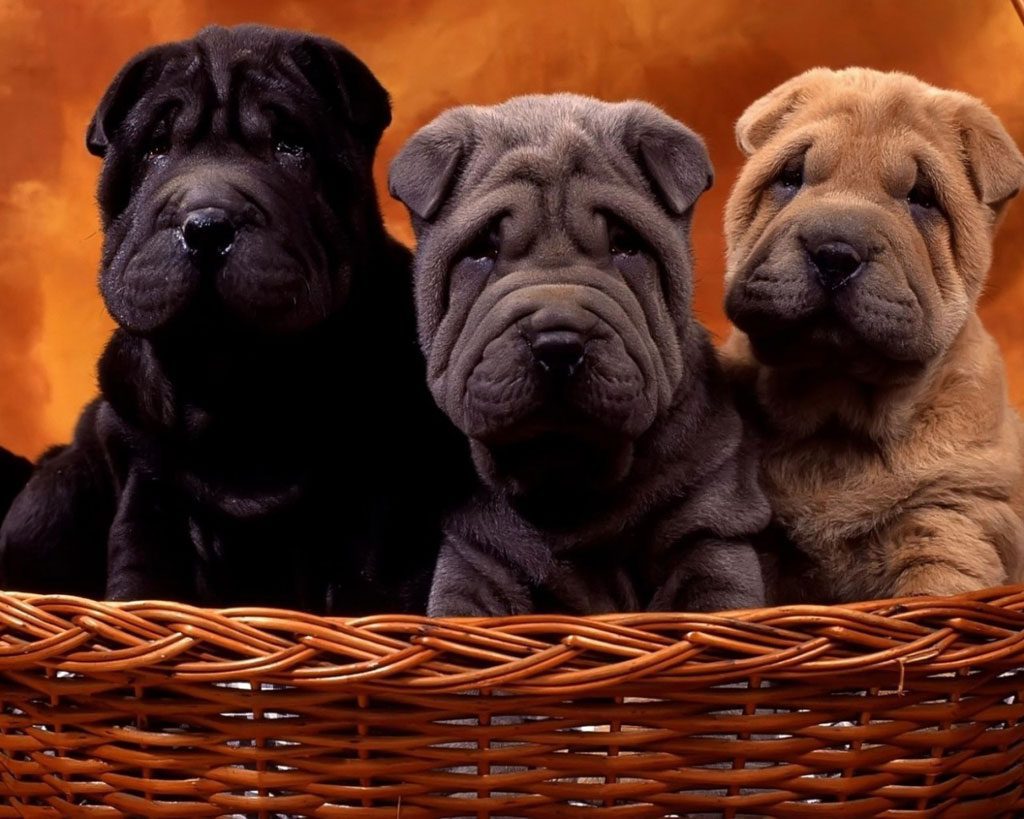
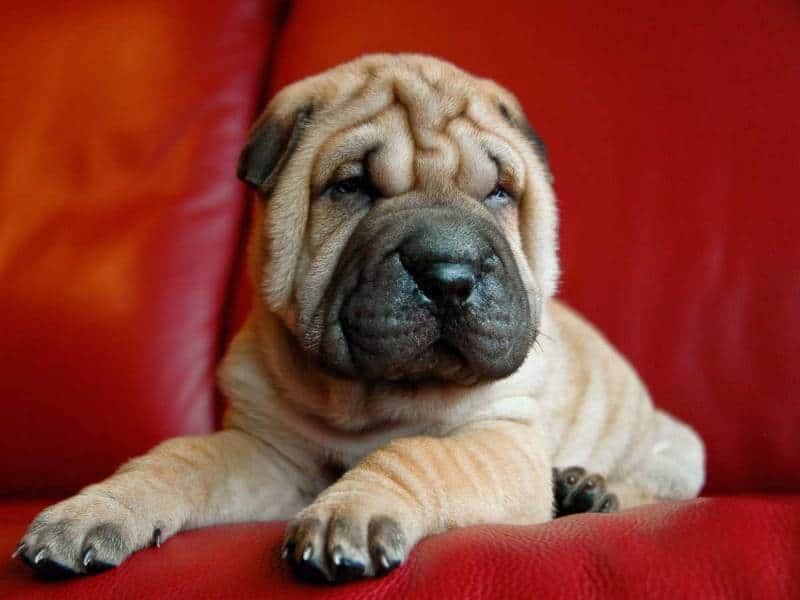
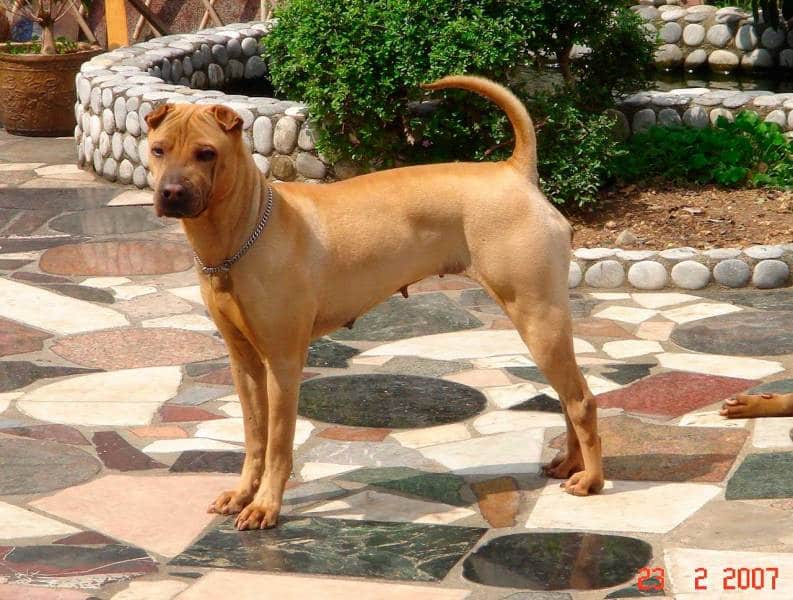
1 – This is a typical photo of a bone mouth traditional Shar-Pei. CH Dali Pinky, Hong Kong Kennel Club Champion by No machine-readable author provided. Inuyasya1106 assumed (based on copyright claims). / Public domain
2 – Shar_Pei_female_of_7_months._Chinese_line by Mcarrillo / CC BY-SA
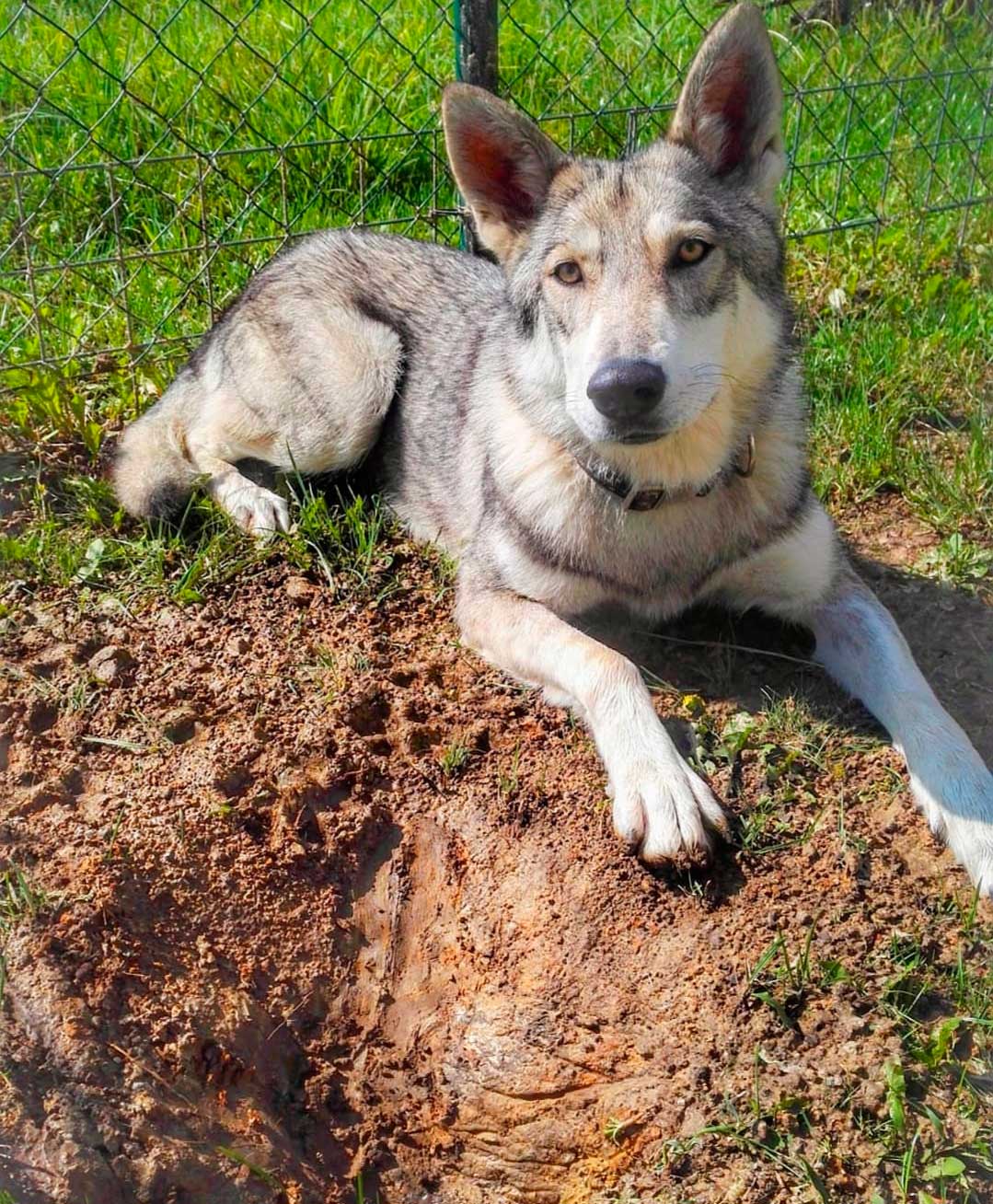
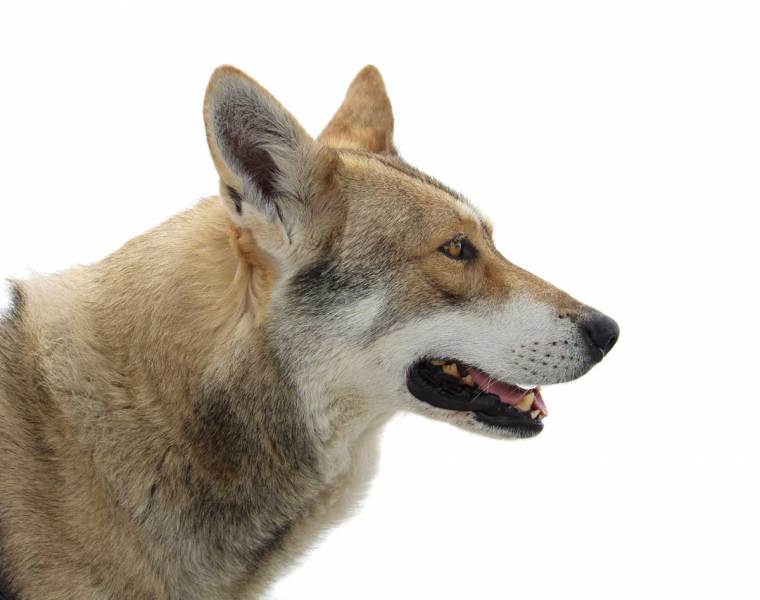
3 – Shar Pei by https://pxhere.com/es/photo/1267570
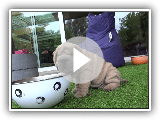
4 – Shar Pei by https://pxhere.com/es/photo/1169173

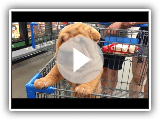
Videos "Shar Pei"

Type and recognitions:

  • FCI CLASSIFICATION:
  • Group :
  • Section : . .

Federations:

  • FCI – Pinscher and Schnauzer-Molossoid type dogs – Swiss Mountain Dogs and Cattledogs. Section 2.1 Molossoid, mastiff type. โ“˜
  • AKC – Non-Sporting โ“˜
  • ANKC – Group 7 (Non-Sporting) โ“˜
  • CKC – Group 6 – Non-Sporting โ“˜
  • โ€‹KC – Utility dog โ“˜
  • NZKC – Non-Sporting โ“˜
  • UKC – Northern Breed โ“˜

FCI breed standard "Shar Pei"

Origin:
China

Date of publication of the valid original standard:
14.04.1999

Use:

Hunting and guard dog.


General appearance:

This is a medium-sized dog, Active, compact, square, short loin. Wrinkles of the skull and cross, Its small ears and hippo-like snout give it a unique appearance.. Males are more robust than females.

IMPORTANT PROPORTIONS: HeightShar Pei, from the cross to the ground, is approximately equal to the length of the body, from the tip of the shoulder to the tip of the buttock, especially in males.

The length of the nose to the naso-frontal depression is approximately equal to that of the naso-frontal depression to the occiput.


Behavior / temperament:

This is a calm animal, independent, loyal and affectionate with his family.

Head:

It's rather big, in proportion with the body. Wrinkles that form on the forehead and cheeks extend downward to form the double chin.

Cranial region:
  • Skull: Flat and spacious.
  • Depression links (Stop): Moderate.

facial region:

  • Truffle: It is great, wide, preferably black, but any other color that harmonizes with the coat color is allowed. The nostrils are wide open.
  • Snout: It is characteristic of the breed. Width, from the root to the tip of the nose, no sign of decline. The lips and the upper part of the muzzle are very full. The presence of a bulge in the nose is allowed.
  • Mouth: Language, the palate, the gums and lips are preferably bluish black. Pink spotted tongue allowed. Solid pink tongue is considered highly inappropriate. In dogs with diluted colored fur, the tongue is solid lavender.
  • Jaws / Teeth: The jaws are strong, with a perfect scissor joint (The upper incisors overlap the lower incisors in close contact and are at right angles to the jaws.). The fleshiness of the lower lip should not be so excessive as to interfere with the function of the jaws..

EYES: Are dark, almond shaped and frowning look. Lighter color is allowed in dogs with diluted coat. Nor the skin around the eyes, nor the folds, nor the hair, must impede normal function of the eyeball or eyelid. Any indication of irritation of the eyeball, the conjunctiva or the eyelids is considered highly undesirable. There must be no presence of entropion.

EARS: Very small, rather thick, equilateral triangular shape. The tips are slightly rounded. High implementation, with the tips pointed towards the eyes. Present well forward over the eyes; they are well separated and well attached to the skull. Erect ears are highly undesirable.

Neck:

Medium length, strong, well implanted in the shoulders. Loose skin under the neck should not be excessive.

Body:

The presence of body skin folds in adult dogs is considered highly undesirable, except at the cross and at the tail, where the folds must be moderate.

  • top line: Descend slightly behind the cross, then he stands up a little on his back.
  • Back: Short and strong.
  • Pork loin: Short, width, slightly arched.
  • Rump: Rather flat.
  • Breast : Broad and deep; the sternum region reaches the elbow. bottom line: Rises slightly below the back.

Tail:

Thick and round at the base; gradually thin to a fine point. Well established, a distinctive feature of the breed. Can be tall and hunched, carried in a closed curl, hunched over or falling to one side or the other of the back. The absence of tail or the cut tail are highly undesirable.

Tips

PREVIOUS MEMBERS: Straight, of moderate length, for strong bones. There is no presence of wrinkles in the forelimbs.

  • Shoulder: Muscular, well established and inclined.
  • Metacarpus: Slightly sloping, strong, รโ€œรหœรโ€˜รลกรหœรโ€ข.
  • Previous feet: Moderate in size, compact; they are not crushed.
    Fingers have strong joints. There is no presence of spurs on the hind feet.

LATER MEMBERS: They are muscular, strong, moderately angulated. Seen from the back, They are perpendicular to the ground and parallel to each other.. The presence of wrinkles on the thighs, the legs, the metatarsals, as well as thick skin on the hocks are undesirable.

  • Hocks: Very low.
  • Hind feet: Moderate in size, compact; they are not crushed. Fingers have strong joints. There is no presence of spurs on the hind feet.

Movement:

Jogging is the favorite movement. It's free, agile, balanced, with good range in the forelimbs and strong momentum of the hindlimbs. When the dog increases speed, feet tend to converge on a center line. Walking on stilts is undesirable.

Mantle

  • Fur: It is a distinctive characteristic of the breed: shorthair, tough and piggy. On the trunk, the coat is straight and separated, but in the extremities it is more stuck. There is no presence of an internal layer of hairs. Hair length can vary between 1 to 2,5 cm.. It should never be trimmed.
  • Color: All solid colors, except for the White, are accepted. The tail and back of the thighs are often lighter in color. Darker shading is allowed along the back and on the ears.


Size and weight:

  • Height to the cross: 44 to 51 cm. (17,5 to 20 inches).


Fouls:

Any deviation from the aforementioned criteria is considered as a fault and the severity of this is considered to the degree of the deviation to the standard and its consequences on the health and well-being of the dog..

SERIOUS FAULTS:

  • Joint not presented in the form of scissors (as a transitional measure, very light upper prognathism is allowed).
  • Pointed snout.
  • Spots on the tongue (except pink spots).
  • big ears.
  • Low set tail.
  • Coat over 2,5 cm..

FALTAS DESCALIFICANTES:

  • Aggressiveness or extreme shyness.
  • Any dog โ€‹โ€‹showing clear signs of physical or behavioral abnormalities.
  • Flat head front, with pronounced higher prognathism; lower prognathism.
  • Solid pink tongue.
  • Inner bent lower lip, preventing the bite.
  • Round and bulging eyes; entropion or ectropion.
  • Skin, folds or hair that impede normal eye function.
  • erect ears.
  • Absence of tail or tail short of birth.
  • Presence of thick folds of skin on the trunk and extremities (except at the cross and the tail).
  • Non-solid color (albino, striped, with patches, with stains, black and fire color, chair-shaped coloring).

WARNING: Any artificial physical alteration made to theShar Pei (especially on the lips and eyelids) eliminate the dog from competition.


N.B.:
  • Males should have two normal-appearing testicles fully descended into the scrotum..
  • Only functionally and clinically healthy dogs, with the typical conformation of the breed, should be used for parenting.

    TRANSLATION: IRIS Carrillo (Federation of Puerto Rico). Official language: IN.
    Revision: SR. Jorge Nallem.

Source: F.C.I - International Cynological Federation

Alternative names:

1. Cantonese Shar-Pei (English).
2. Shar-peรฏ, sharpeรฏ (French).
3. Shar-Pei (German).
4. Shar-pei (Portuguese).
5. Sharpei (espaรฑol).

โ–ท The world of Pets: Dogs, cats, birds, reptiles, amphibians

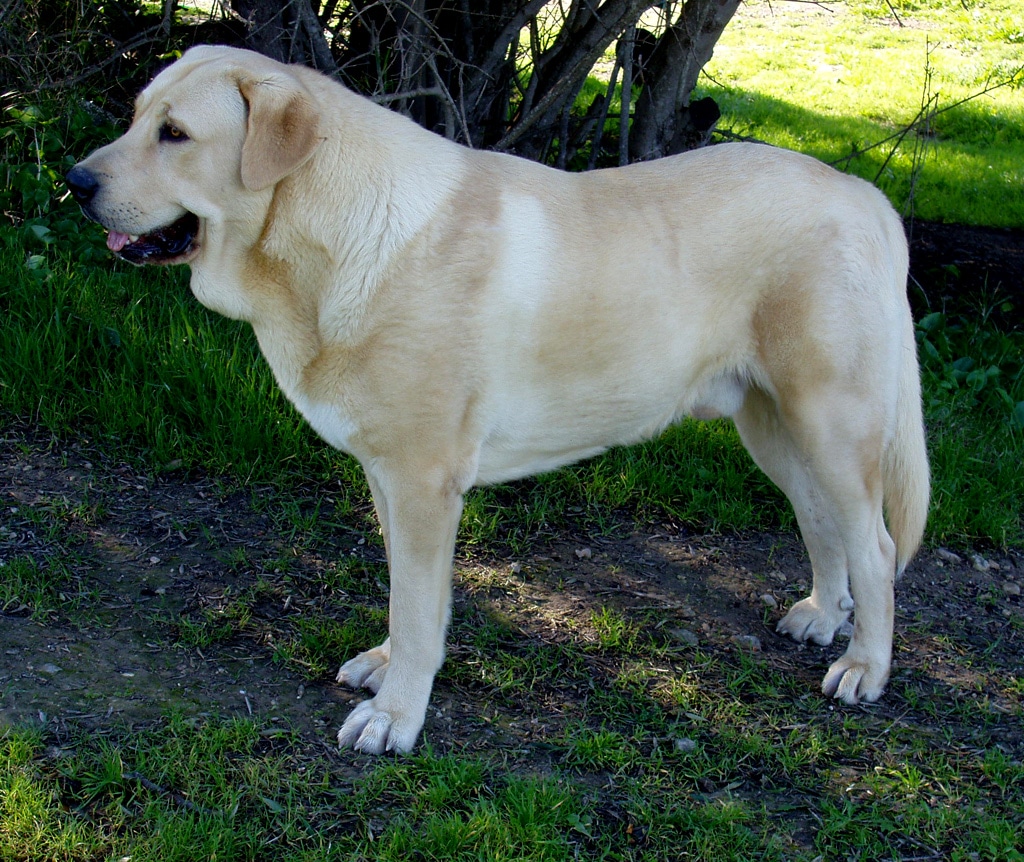
Estrela Mountain Dog
Portugal FCI 173 - Molossoid . Mountain

Estrela Mountain Dog

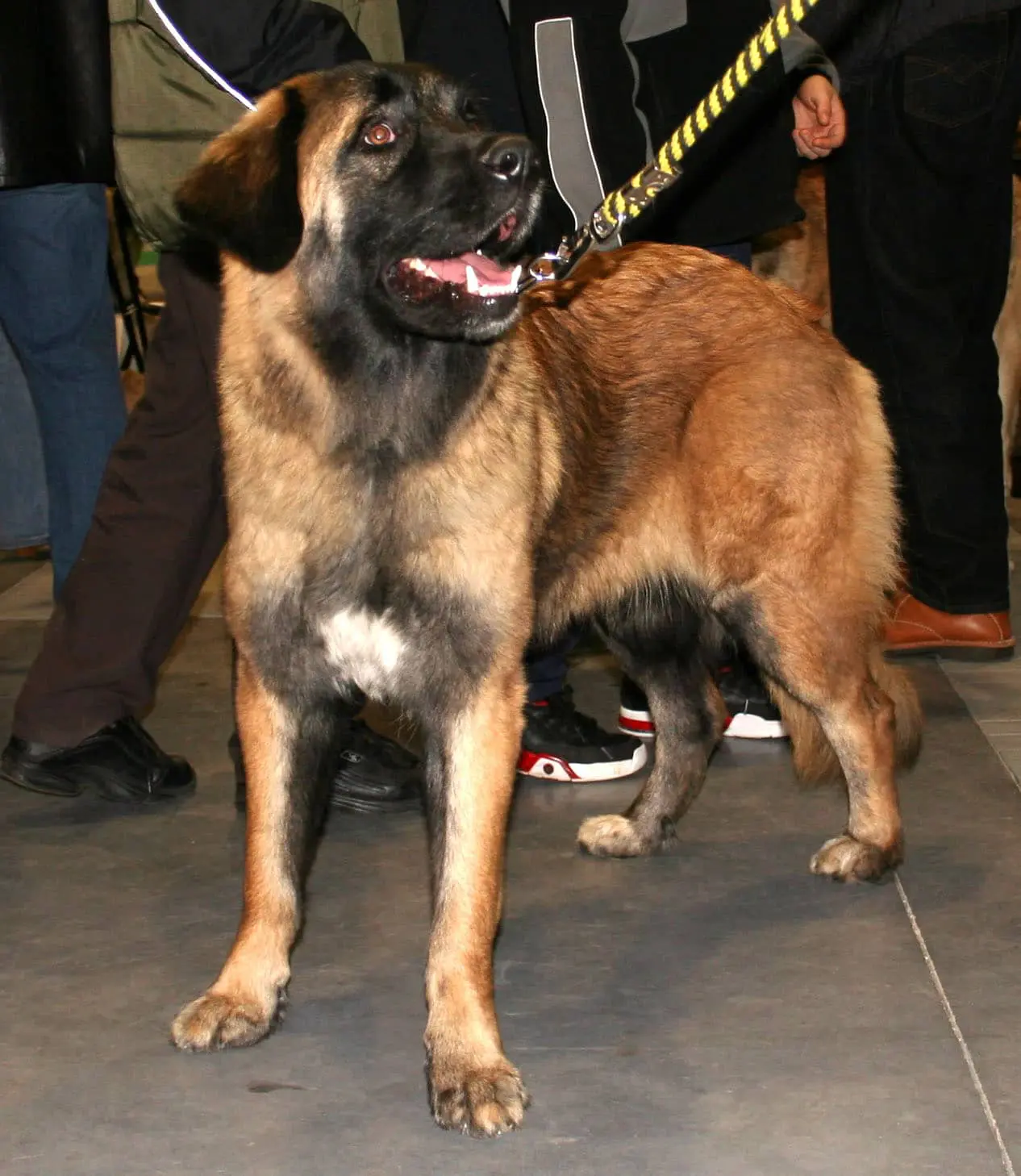
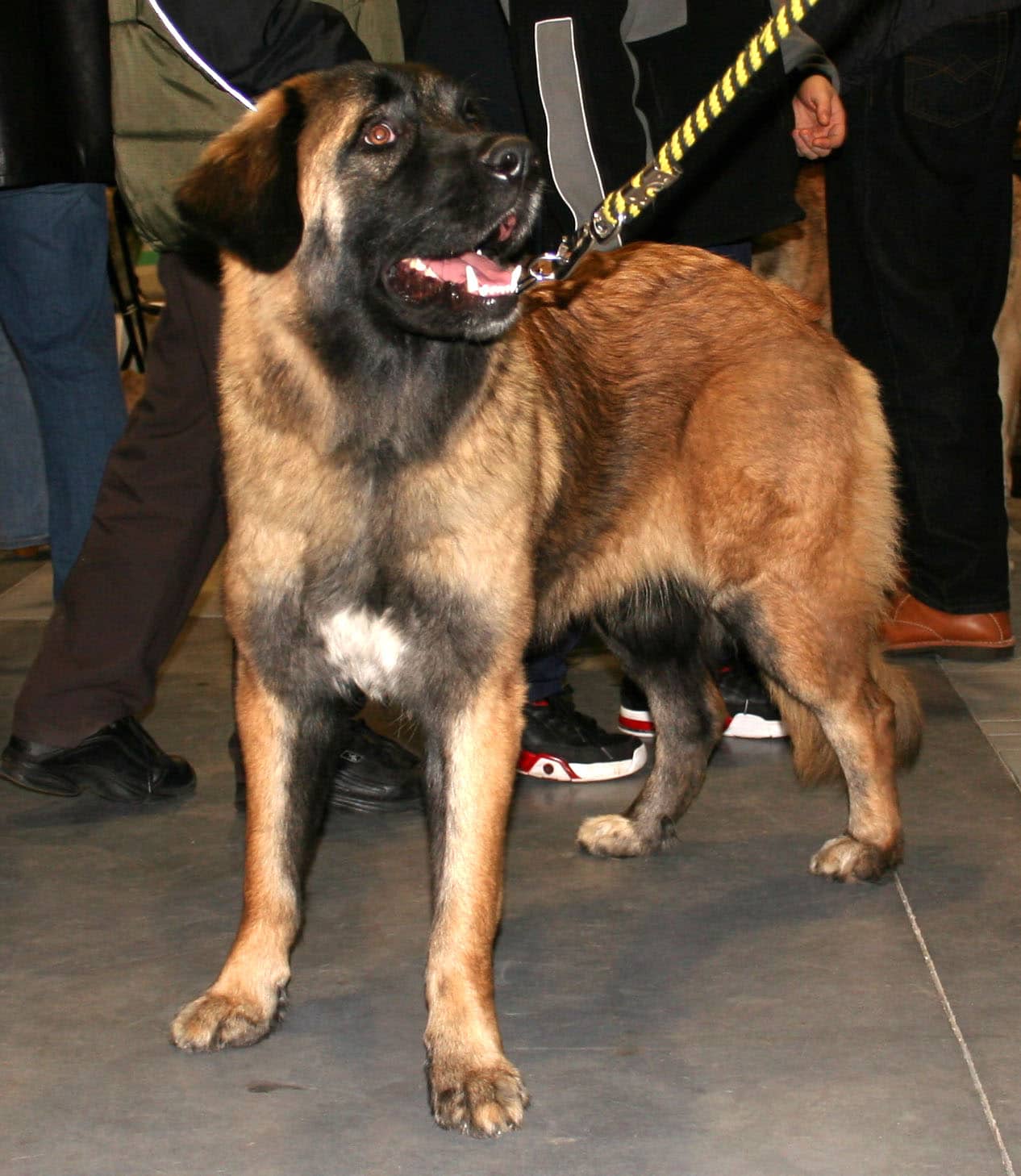
The Estrela Mountain Dog is a big dog, rough lines and powerful appearance

Content

History

The Dog of the Sierra de la Estrela (Cรฃo da Serra da Estrela) It is a breed of dog native of Portugal, in the mountainous region that bears the same name. It has all the qualities required in this wild region, is intelligent, loyal and brave.

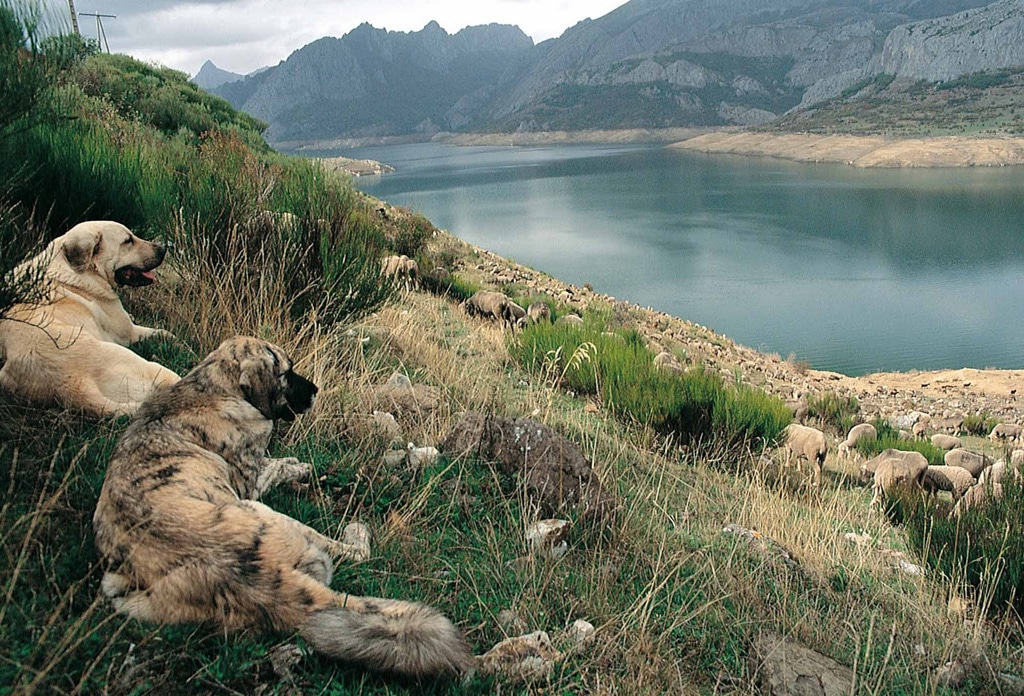
There are those who hold the theory that they were introduced to Portugal by the Visigoths and slowly to various parts of Europe.. The Estrela Mountain Dog was used mainly- in mountainous areas to accompany shepherds and flocks on their annual migrations, defending the wolves and thieves.

It is believed that the two varieties of existing hair: short hair and Longhair, they are due to regional variations. Contrary to what might be expected, the warmest region, the region of Manteigas, is where you could find the long-haired dogs, While short hair varieties were most frequent in the North, in Gouveia e Seia. Crosses between these two varieties were frequent.

In 1934 the standard of the breed was drafted, which was established according to its two varieties of layer. From this point, the cross between two varieties became undesirable. The publication of the rule in 1966 and the recognition of the breed by the FCI, have not brought more popularity to the breed. Over the years 60 and 70, the Portuguese emigrated looking for escape from the regime of poverty. The population of dogs Serra da Estrela declined drastically in that period, but the dedication of some breeders allowed the continuity of the breed.

Today, the Estrela Mountain Dog is highly requested, especially the variety of long hair. While the variety of short hair was more numerous at the beginning of the last century, is the variety of long hair that stands out, especially for being more eye-catching, stylish, with a larger. This made the breeders will focus primarily on the variety of long hair. Today the short-haired variety is particularly vulnerable and rare..

Physical characteristics

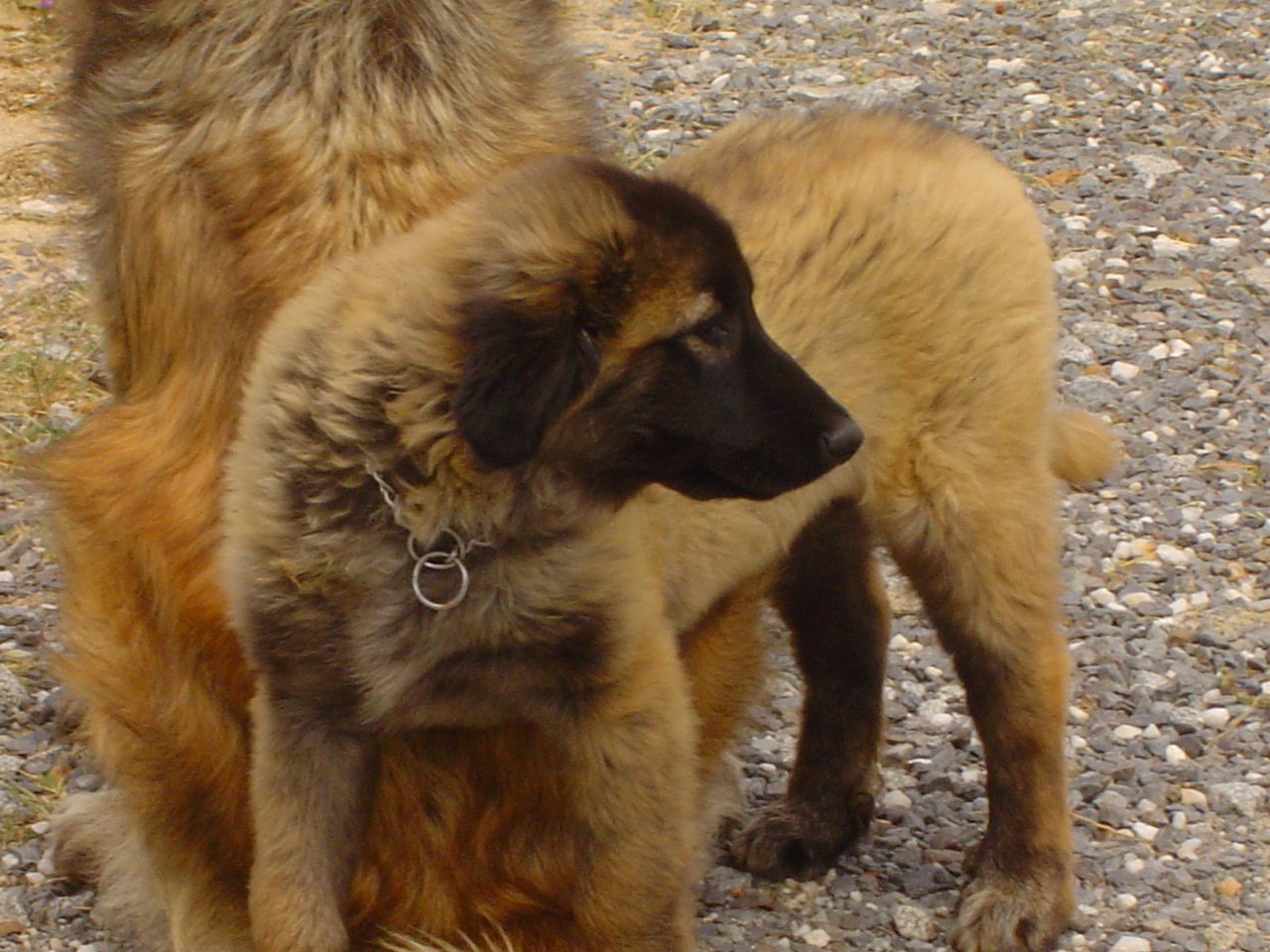
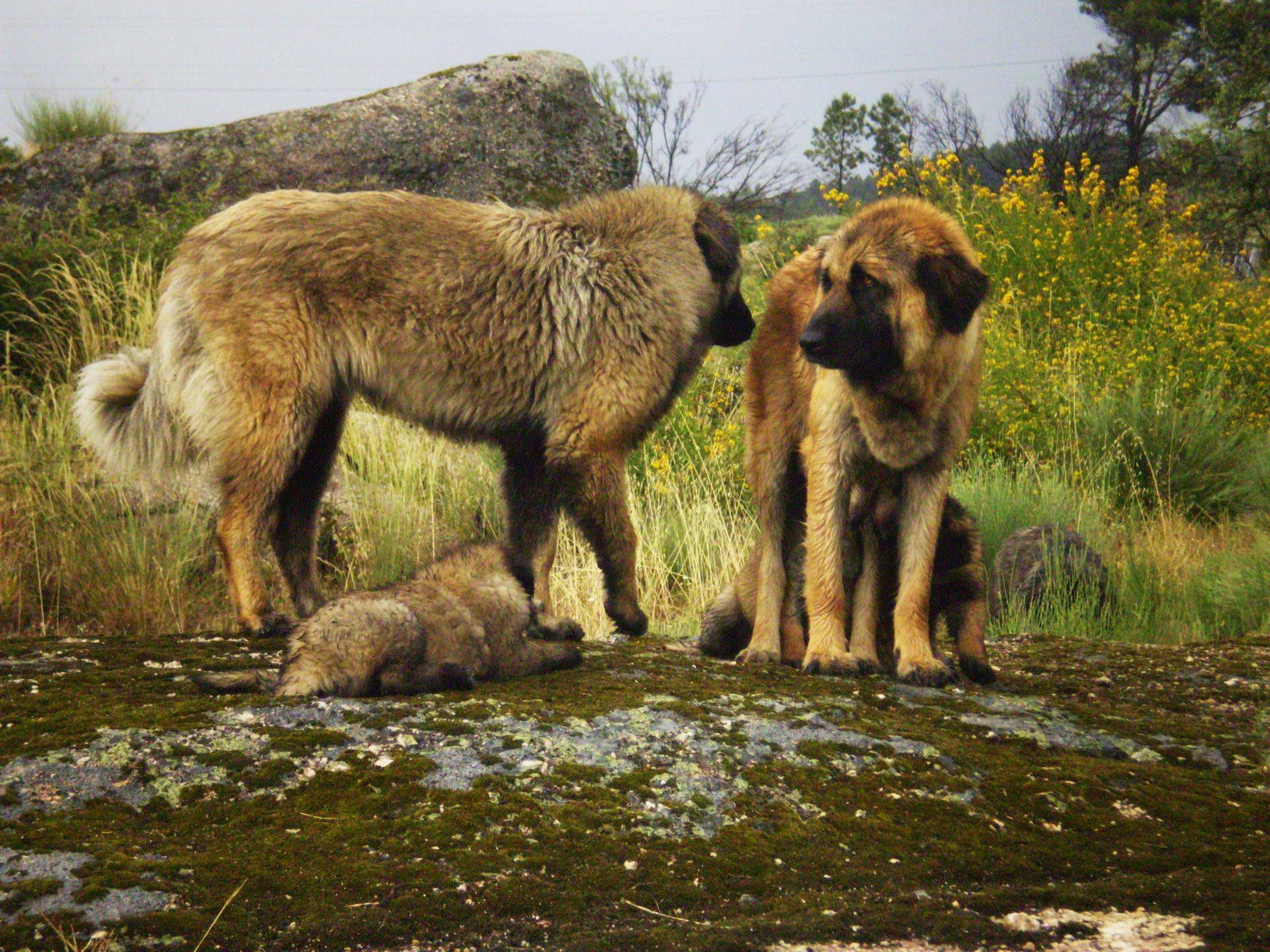
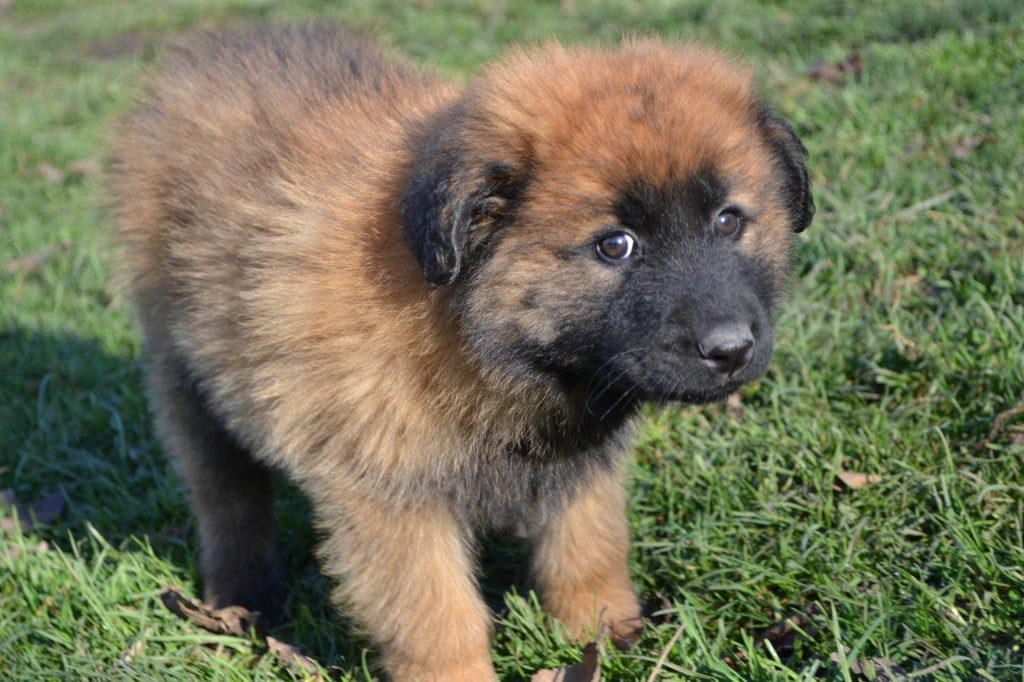
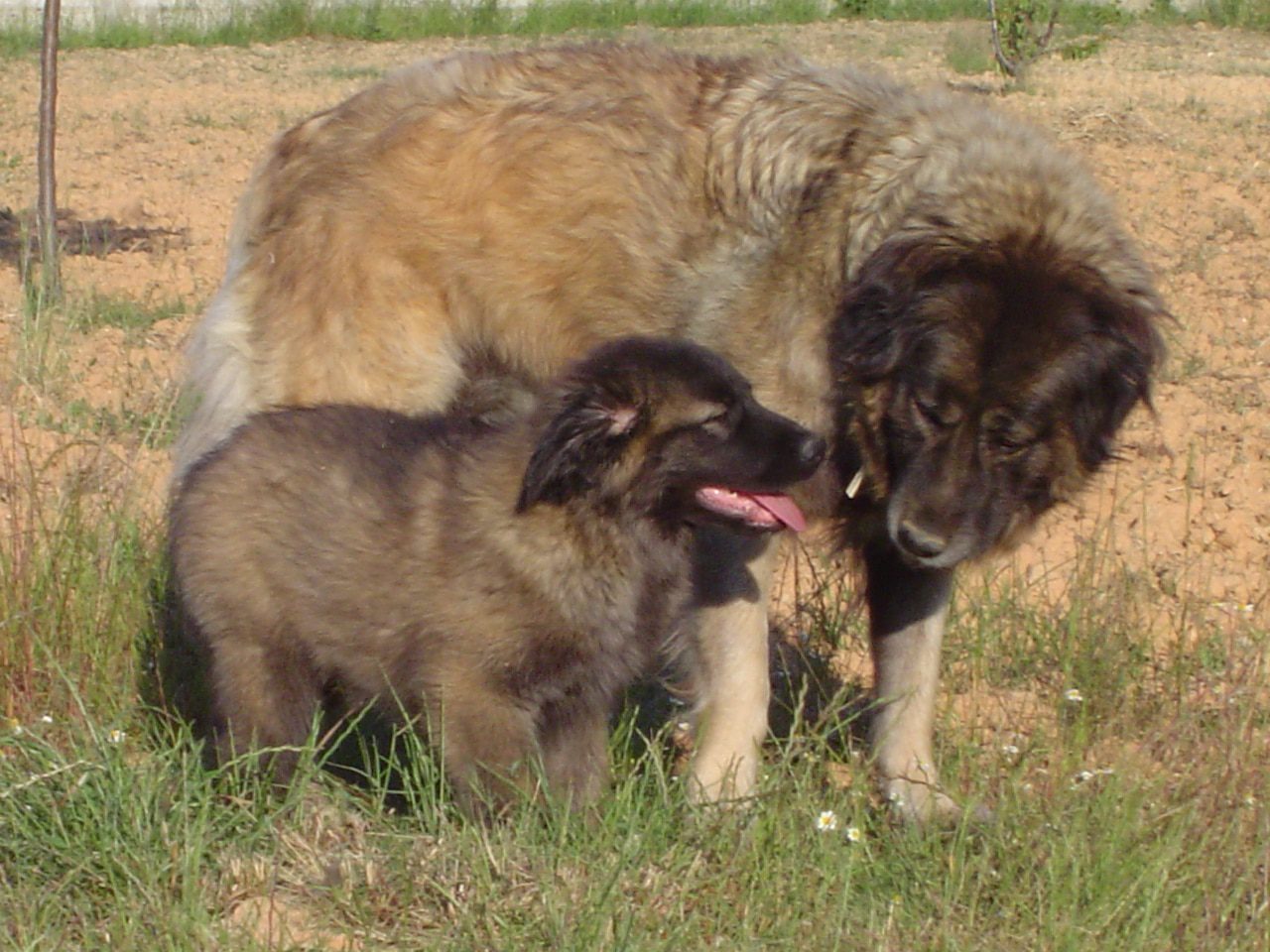
The Estrela Mountain Dog is a big dog, rough lines and powerful appearance. The head is huge, rounded and with a stunning skull. It has oval eyes, very expressive, Smart and serene.
The ears they are small and pendants, covered with a soft skin.

mastiff-type molosoid, the Estrela Mountain Dog has a broad chest and a slightly drooping rump. The members are strong and muscular. The tail is long, thick and slightly droopy.

There are two varieties of Estrela Mountain Dog: long hair and short hair. The hair is strong, thick, but not too rough. In some regions it is longer than others, especially in the queue, around the neck and back.

Only allowed the tawny colors, Lupine and yellow, monochrome or marbled.

Observations

Estrela Mountain Dog is a healthy dog, due to the strong natural selection which was exposed. But, There are some diseases of large animals with a higher incidence in this breed. The Dysplasia is one of them, especially that of hip. Due to this trend, owners must use quality diets, not exercise too your dog when he is young, avoid the steep stairs, breaks and slippery floors.

The variety of long hair they require more maintenance: brushed daily to untangle hair.
The variety of short hair only needs weekly brushings. Bathing should only be administered, only, When cannot be avoided,Since the protective greasiness of the skin can be damaged by cleaning products.

Character and skills

The Estrela Mountain Dog has always been kept with the sheep, While pastor was away from his flock the dog developed an independent organization and this led to his character of excellent guard dog.

It is also used for self defense and as a dog shot.

The Estrela Mountain Dog, due to its isolation and difficult access, It has become the home of this breed of dog. His hard hair helps you survive the harsh winters of the region. Each race has its specific character developed throughout its existence, of their own history.

This more or less independent nature makes this breed adapts well to modern times, where instead of caring won, waits for their owners to return from work at the end of the day. They have a lot of patience.

The beauty of this dog, his intelligence and strength, are the characteristics that allow him to be in addition to an excellent guard, a good family dog and very tolerant with children.

Habitat Estrela Mountain Dog

The Estrela Mountain Dog it's a big dog with a big boost. So, an apartment in the city is not ideal for him. Fluctuations of time and temperature do not bother him much, so you prefer to spend the day outdoors. So, the ideal is a house with a large patio or garden where you can move freely. It also, does not want to do without his long walks. For many other canine sports, requiring reliable obedience, is however hardly suitable due to its obstinacy.

Nutrition Estrela Mountain Dog

The Estrela Mountain Dog requires a correspondingly large serving of food, which should also be considered when buying it. Proper dog feeding helps keep it healthy for a long time. Whether one wants to use dry or wet food is a matter of personal preference.. In particular, nutrition during growth, especially in large dogs, sets the course for later life.

While puppies and adult dogs need enough energy, young dogs need an adapted diet, protein rich, to ensure that your muscles and skeleton grow evenly. If the young dog grows too fast on food that is too high in energy, there is a risk of permanent joint problems and malpositions. It also, It should be noted that all large breeds of dogs are at risk of stomach upset if the daily ration is administered at one time.. So, it is better and healthier to divide the food into at least two servings in the morning and at night and then give the animal a break for digestion.

Education and care

Due to the close connection of the Estrela Mountain Dog with humans and their good understanding, good conditions are created for purposeful education. But, the race's own head should not be underestimated. The Hound of the Sierra de la Estrela dog stubbornly reacts to too much hardness in training and the orders he considers meaningless. Therefore, the right key to a successful workout is patience, empathy and a consistent hand. During training special attention should be paid to the tendency to dominate, especially in males.

Although this is rarely directed against humans, but mainly against other big dogs, can disturb harmonious interaction and, above all, The walking. Ideally, great importance should be given to socialization already in the breeder. You should also practice meeting other dogs as soon as possible after your dog has moved in.. You can learn that other dogs are an enrichment and not a danger and that dominant behavior is not tolerated. In a good dog school you will receive many tips when in doubt, which will facilitate the management of your Dog from the Sierra de la Estrela.

A lot brushed in the change of coat

The Estrela Mountain Dog has a dense coat with a lot of undercoat, that adapts to weather conditions. The change of coat is therefore strong in this breed. To facilitate this process for the animal and reduce the amount of dog hair at home, should be brushed sufficiently and correctly, especially during the period. Ideal for this purpose are the special brushes, they can comb the bottom layer. Outside the change of coat phase, brush once a week.. The rest of the preparation is limited to a minimum. Especially if the dog is outside and a lot in the meadows and forests, should be checked regularly for parasites. If required, claws must be shortened with claw pliers.

Typical health and illnesses

The Estrela Mountain Dog it is a very robust animal that does not have to fight with the typical diseases of the breed. But, being a very large breed, you may suffer from dysplasia of the hip joint. Breeders recognized by the FCI only use parents that are not affected by this disease for breeding purposes., which also greatly reduces the risk to offspring.

Estrela Mountain Dog life expectancy

As a healthy race, the Estrela Mountain Dog reaches an age of 10 to 12 years without difficulty and generally without many visits to the vet. Proper nutrition and parenting are the prerequisites for a long and healthy life.

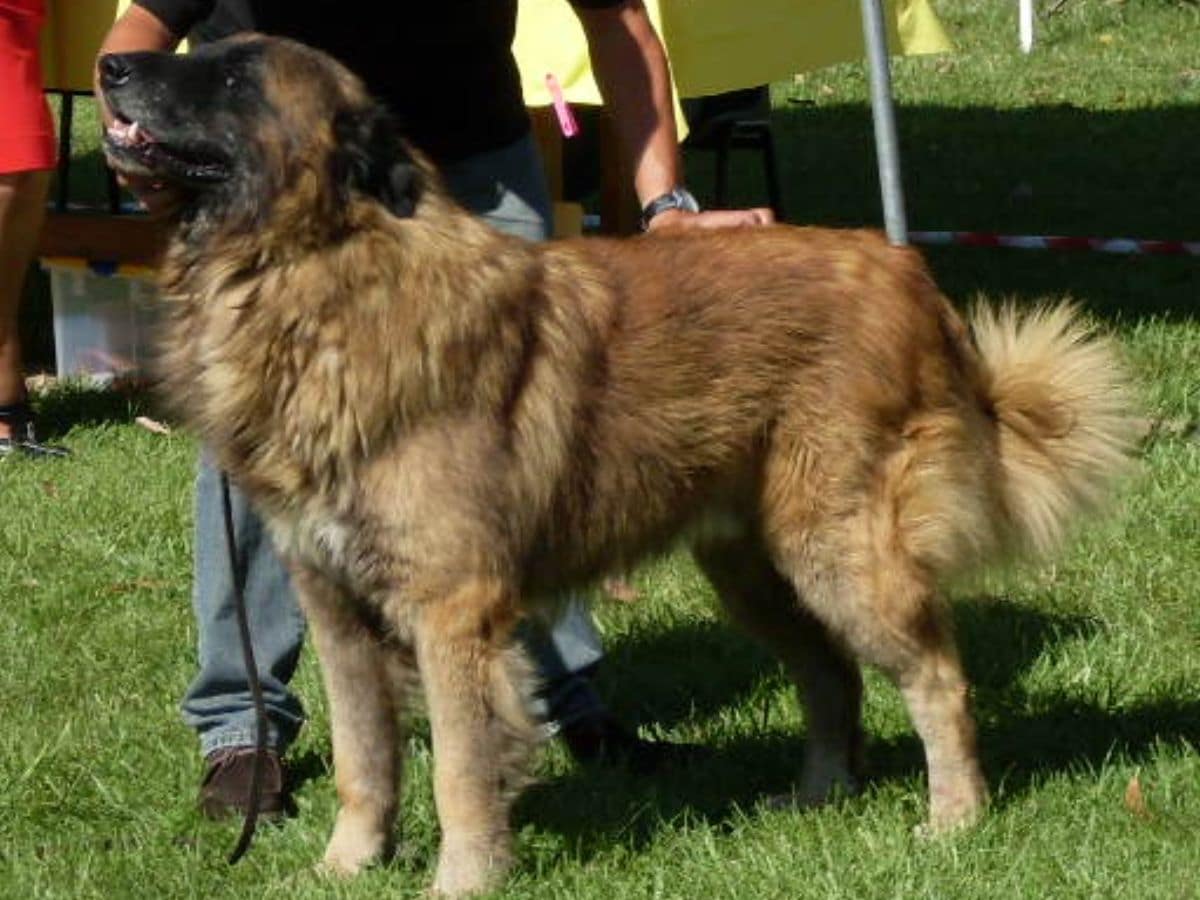
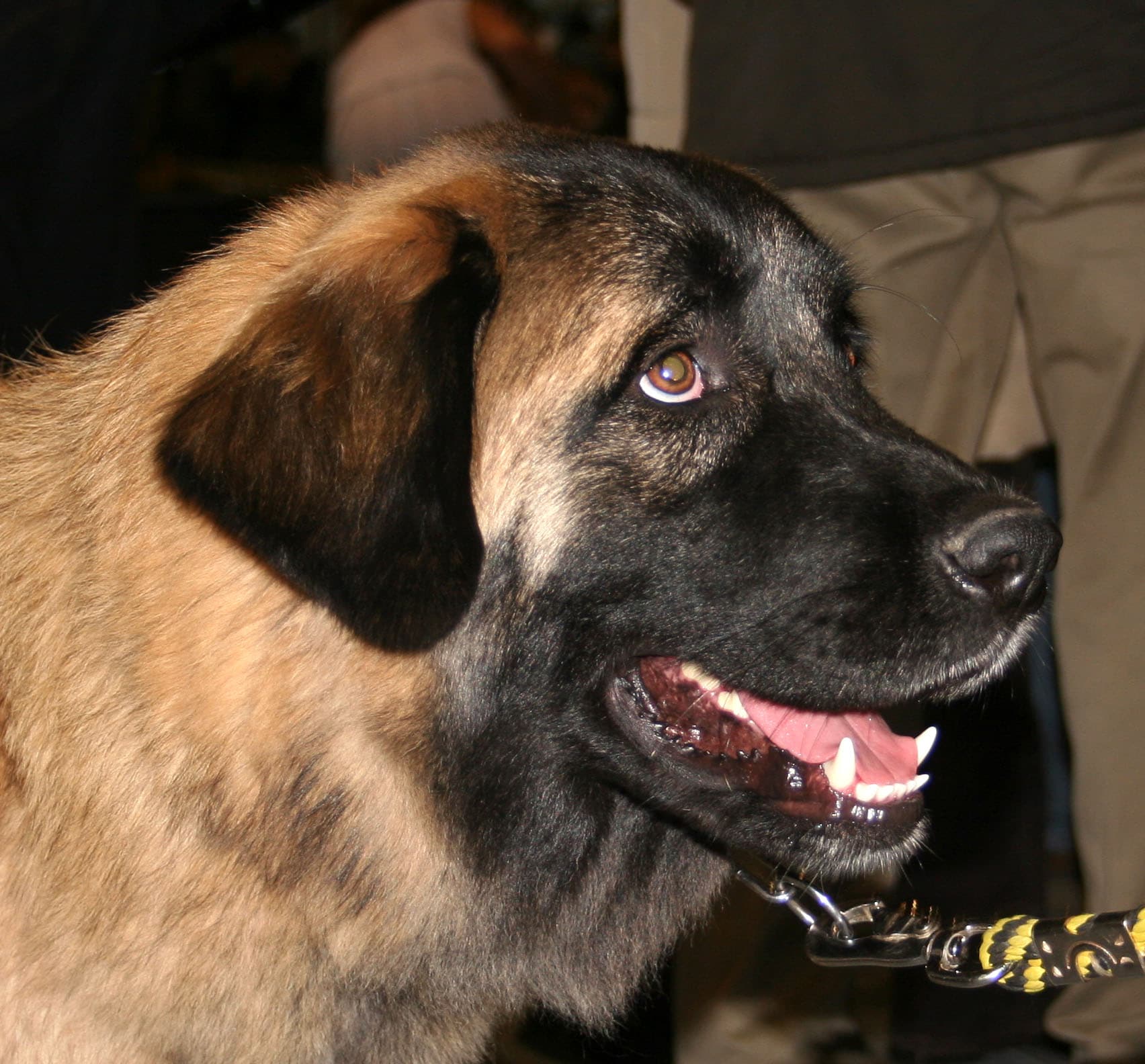
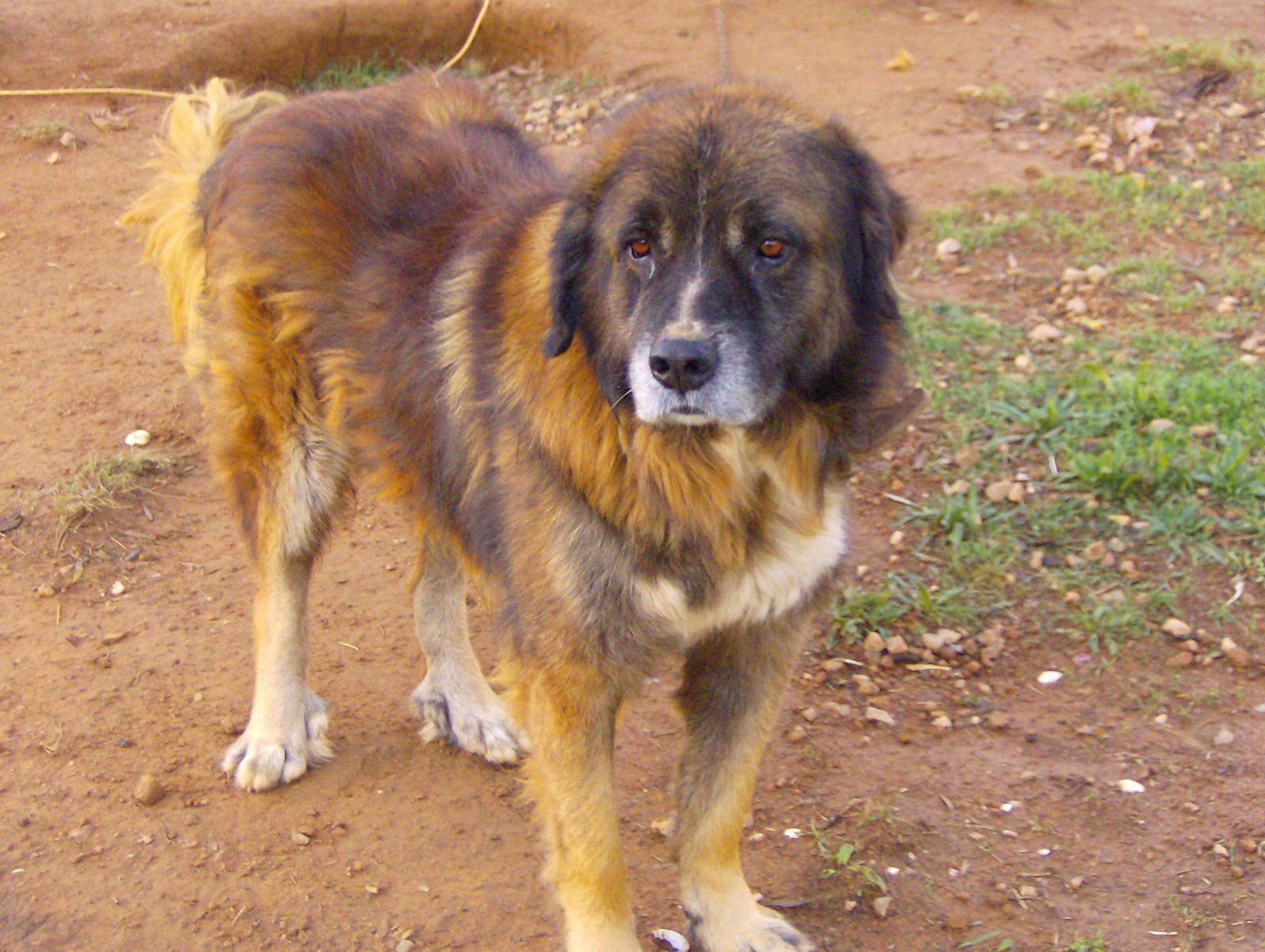
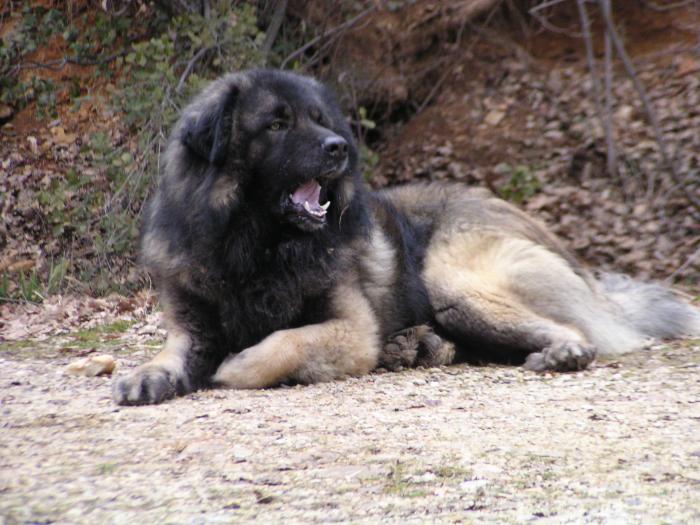
Photos Estrela Mountain Dog

Videos Estrela Mountain Dog

Type and recognitions:

  • FCI CLASSIFICATION:
  • Group :
  • Section : . .

Federations:

FCI โ“˜, AKC โ“˜, ANKC โ“˜, โ€‹KC โ“˜, NZKC โ“˜, UKC โ“˜ – The AKC does not have its own standard and instead is linked to the FCI

FCI breed standard "Estrela Mountain Dog"

Origin:
Portugal

Date of publication of the valid original standard:
04.11.2008

Use:

Herd guard dog, surveillance and companion dog also used in shooting work.


General appearance:

The Sierra de la Estrela Dog is a mastiff type. There are two varieties of hair: long and short. Rustic, of much substance with a strong movement and stunning attitudes.

The breed has a cheerful look, calm and expressive. Well proportioned, morphologically perfect, compact and rustic; The harmony of the whole is remarkable and demonstrates an ethnic purity of ancient races of the past.

IMPORTANT PROPORTIONS :

Medium long (long sub) tending to the middle line. Depth of chest is less than half of its height at the withers. The muzzle and the skull should be approximately the same length, If that is not the case, the skull should be slightly longer.


Behavior / temperament:

Inseparable companion of the pastor and faithful guardian of the herd protect against predators and thieves. Excellent dog guard farms and households, distrustful of strangers and typically docile towards its master.

Head:

Strong, voluminous. It is elongated and slightly convex profile view. Well positioned and provided to the body, the same as the relationship that keep the skull and facial, accentuate the harmony of the whole. Smooth skin over the skull and cheeks.

Cranial region:
  • Skull: Well developed, rounded skull facial longitudinal top spindles slightly divergent. Convex profile, superciliary arches slightly developed with a slightly apparent frontal fold. No prominent occipital protrusion.
  • Depression links (Stop) : Slightly pronounced, located at a more or less equal distance between the end of the nose and the occipital Protuberance.

facial region:

  • Truffle: Straight and aligned with the nasal bridge, well open Windows, big and black.
  • Snout: Elongate, slimming progressively towards the tip of the nose, but do not be sharpened. Almost straight nose cane, Although slightly hooked at the end.
  • Lips: Well developed but not thick, well bonded without tilting.  The mucous membranes of the mouth and palate, as well as the very pigmented black edge of the lips.
  • Jaws / Teeth: Well-defined mouth with well-developed jaws, full dentition with strong teeth, White and well implemented and good occlusion. Preferably bite in scissors, accepting bite on clamp.

Eyes: Horizontal, oval-shaped, at the level of the head; are medium-sized, aimed at small, symmetrical and wide open, with a calm and alert expression; Dark amber in colour preference. The eyelids are well bonded and pigmented black edges. A little marked eyebrows.

Ears: Small relative to the rest of the skull, form triangular, thin, rounded at their lower edge, pendants; inserted at a medium height, is tilted back slightly and hang to the sides of the head near the cheeks, revealing a part of your inner side in the base (called Pink ear).

Neck:

Straight, short and thick, correctly inserted on the shoulders and with a slight dewlap but not exaggerated.

Body:

  • top line: Straight. Level.
  • Back: Short preferably, well muscled.
  • Pork loin: Lumbar region wide, short, muscular and properly inserted to the rump.
  • Rump: Slightly inclined, short, broad and muscled. The height at the Croup should be equal to or slightly greater than the height at the withers.
  • Breast : Rounded, without being cylindrical, broad, long and well descended.
  • bottom line: The bottom line should gradually and gently rise from the sternum to the groin, not too wide belly, in proportion to the substance of the animal and harmoniously connected with the body.

Tail:

Robust, long, whose tip reaches the tibio-tarsal joint when the dog is standing or at rest. It is thick in the shape of a ยซ scimitar ยป, inserted at a medium height, well covered with stripes on the variety of long hair and hair ; is a hook at the end. The tail is carried below the horizontal line and falls naturally between the thighs when the dog is at rest. ; When stimulated or in action, it is carried higher than the horizontal line, forming an upward curvature., Go ahead, to the sides or down.

Tips

PREVIOUS MEMBERS: Plumb, with bones and joints strong, fairly open with unrestricted movement angles.

  • Forearm:  Straight, parallel, long, with strong bone and always cylindrical in shape.
  • Previous foot: Provided, never too round or too long, I in between a Jack's foot and a foot of Hare (not open), thick, fingers tightened with abundant hair between fingers, dark nails, preferably black, well developed, pads thick and hard.

LATER MEMBERS : Plumb, with bones and joints strong, fairly open with unrestricted movement angles.

  • Hock: Somewhat low, average opening, never leaning in or out.
  • Metatarsus: Vertical, always cylindrical in shape. Possible presence of single or double spur.
  • Rear foot: Identical to the previous foot.

Movement:

Normal and light.

Mantle

HAIR: Fur: Strong, very abundant, slightly thick, without excessive hardness with texture similar to the goat hair. The subhair is composed of a thin hair, short, abundant and matted. Usually lighter than outer hair color.

  • Long hair variety: Exterior smooth or slightly wavy hair, I uneven and some areas. In the Member, Below the elbows and legs it is shorter and thicker, as well as above the head., ears is gradually shorter from base to tip, being more thin and more soft. It is longest on the queue, where is well thick, thick and long hair. Around the neck and throat and on the thighs abundant long hair as well as on the sides of the forearm.
  • Variety short hair: Short hair, evenly distributed over the body, somewhat shorter on the head and members without having hair longer.

COLOR

The following colors are accepted and considered typical:

  •  Solid: yellow, Fawn and grey in all ranges of intensity of color;
  •  Wolf Gray: leonado, yellow and grey tones, usually with shaders more light and dark.
  • Striped: leonado, yellow or gray as a base with a black Brindle color.

In the craniofacial area a dark mask is typical.

White spots are allowed only on the limbs or feet before and after and a very small extension on the lower region of the neck and chest.


Size and weight:

  • Males : 65 to 73 cm..
  • females : 62 to 69 cm..

Tolerance + 2 cm..

WEIGHT :

  • Males: 45 โ€“ 60 Kg.
  • females: 35 โ€“ 45 Kg.


Fouls:

Any deviation from the aforementioned criteria is considered as a fault and the severity of this is considered to the degree of the deviation to the standard and its consequences on the health and well-being of the dog..

  • Appearance: Poor overall appearance, thinness or obesity.
  • Height: Outside the limits of the standard but with a tolerance of 2 cm.. of the upper limit.
  • Very narrow head, long and pointed.
  • Eyes: color clear.
  • Ears: incorrectly inserted, very long fleshy or round. Hanging completely flat.
  • Tail: Port on the back. Absence of hook.
  • Color: Absence of dark mask.

 SEVERE FAULTS

  • Behavior: Animals that show signs of shyness or nervousness.
  • Tail: Amputated or rudimentary.
  • Truffle: Pale nostrils, Truffle partially nonpigmented.
  • Ears: Amputee.
  • Fur: Other than described above.
  • Height:
  • Males :  Below the 65 cm.. or above 75 cm..
  • females: Below the 62 cm.. or above 71 cm..

MISS PLAYOFFS

  • Behavior:  Aggressive or too shy.
  • Typicity: Atypical.
  • Head: Too narrow, very long and very sharp, total absence of molosser type.
  • Jaws: Prognathism or enognatismo.
  • Eyes: Eyes of different colour or different size.
  • Tail: Anurismo.
  • Fur: Completely different hair than typical.
  • Color:  Any other color not mentioned in the standard. albinism.

Any dog โ€‹โ€‹showing clear signs of physical or behavioral abnormalities must be disqualified.


N.B.:

โ€ข Males must have two normal-appearing testicles fully descended into the scrotum..
โ€ข Only functionally and clinically healthy dogs, with the typical conformation of the breed, should be used for parenting.

Source: F.C.I - International Cynological Federation

Alternative names:

1. Portuguese Shepherd (English).
2. Chien de montagne portugais (French).
3. Serra da Estrela Berghund (German).
4. Perro de la sierra de la Estrela (Portuguese).
5. Perro de la Sierra de la Estrela (espaรฑol).

โ–ท The world of Pets: Dogs, cats, birds, reptiles, amphibians

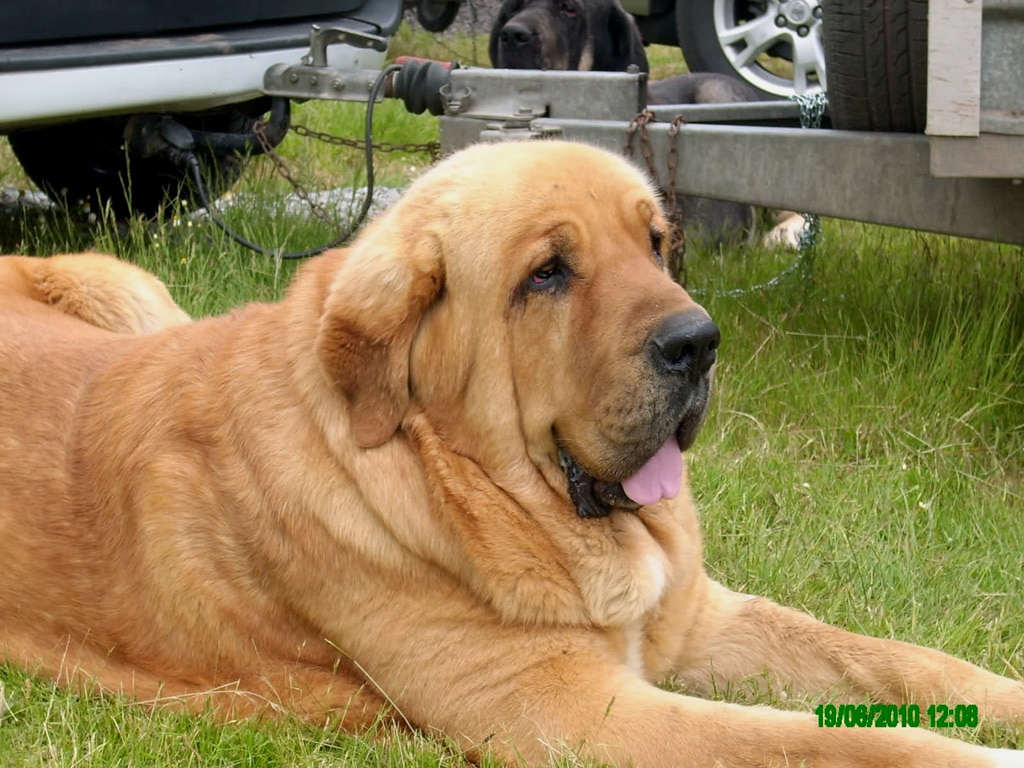
Spanish Mastiff
Espaรฑa FCI 91 - Molossoid . Mountain

Spanish Mastiff

The Spanish Mastiff, He is regarded as the oldest Spanish race.

Content

History

The Spanish Mastiff (also called Leonese Mastiff) is a breed of dog trotting type of large size, originally from Spain where it was abundant in almost the entire country and today is in a particular way in Leรณn, Zamora, Asturias and Cantabria. One of its varieties is the Pyrenean Mastiff.

This is a very old dog and like the other broadcast, descends from the molosser of Tibet (Tibetan Mastiff) He came to Europe via Asia minor.

Theories about the breed maintain that at least four thousand years ago the shepherds who inhabited the peninsula already used them as livestock guard dogs..

The natural resources and climate of the Iberian Peninsula gave rise to transhumance, for which reason, for many centuries the Spanish Mastiff has played the role of protector of flocks, especially from herds of 'merino sheep' whose history is closely linked to that of this dog breed. In some places it is known as the 'merinero dog' because it accompanies the Merino sheep..

The Spanish Mastiff, He is regarded as the oldest Spanish race.

The transhumant wandered through the royal canyons of Leรณn, crossing the Iberian Peninsula from North to South., and the Spanish Mastiff went with them defending the cattle from the attack of the wolf, the dog in addition to with its imposing nature, He had the protection of his abundant jowls as well as carlancas or carranclas, they are a species of thick metal with spiky necklaces.

Videos of the Spanish Mastiff
SPANISH MASTIFF. A NOBLE RACE.
Mastin Spanish /Spanish mastiff puppies in kennel Tornado Erben

At the end of the 19th century with the gradual disappearance of the grazing and transhumance, the Spanish Mastiff became 'unnecessary', if we add to that the Spanish Civil War and its consequent period of scarcity and -also- the sharp decline in the number of wolves, as a result we have that this breed of dog was on the verge of extinction.

During that time many specimens of Spanish Mastiff were sacrificed, Some were emasculated and other so many purchased by enthusiasts that breeders, guided more by love of the race than by knowledge, start you a totally disorganized parenting.

After the debacle, fortunately, the recovery of the breed has been achieved though with great difficulty.

The first standard of the Spanish Mastiff was approved by the International Cinological Federation in the year 1946, based on the characteristics of three specimens from central Spain, These specimens were a light type, that still remained in the cattle farms and that were also used for hunting big game, they were of good size, with long legs and her weight was around the 50 kg.

In 1981 a new standard was approved whose main objective was to recover the much larger Mastiff that was used in transhumance livestock.

That same year (1981) was founded the Spanish Association of the Spanish Mastiff Dog (AEPME) as official club of the breed.

Physical characteristics

It is a dog of large size, braquicรฉfalo and mesomorfo. Well proportioned, very powerful and muscular. Big and heavy, with skeleton compact.

There are no exact size limits., but they must be harmonious, in the males expected a height that not is lower to 77 cm. the cross and in the females, not less to 72 cm.. Those are the bare minimum., but always expected greater height.

The head is significantly large, has a crรกneo-hocico relationship of 6:4. If we look at the skull from the top is a square and uniform.

It has eyes small, almond-shaped and hazelnut or chestnut colour.

It has the ears triangular, median, flat and pendants. The legs are long, straight and fitted with good musculature.

The tail, inserted at medium altitude is very thick, flexible and wears it down, arriving at the height of the Hock.

Its the mantle This thick a thick hair hard, semilargo and smooth. The colors the most prized hair are uniforms (or solids), they may be dirty white, leonado, reddish, black, gray wolf, brown. Are also supported in the standard the atigrados, or white spotted robes.

Observations

As it's a race in recovery process, is very difficult to find perfect copies (that is to say, adjusted completely to the standard).

It is not a dog suitable for beginners, but it could be a very rewarding challenge for some enthusiast with the desire to breed a dog with a long history and gigantic potential like the Spanish Mastiff..

Character and skills

The Spanish Mastiff is a rustic dog, loving, tame, noble, very firm and self-confident.

It is generally quiet and affectionate, He is very loyal and devoted to their masters. It is-especially- suitable for children, for those who feel special attraction. As well, usually get along well with other dogs.

Essentially, is a calm and balanced guardian, but it can be very scary if they perceived danger to its owner and properties.

These dogs are very happy living in the open air, and especially given the opportunity for long and quiet walks, that will be necessary if we want our Mastiff to be happy and balanced.

Observations

As we mentioned in the โ€œHistoryโ€ section, the vicissitudes of the recovery of the race has led to chaos at the beginning of it..., and all that lack of control in the breeding, It has had a direct effect on the character of dog, it is for this reason that today we can find too aggressive specimens, and other, maybe more shy.

Fortunately, the great work which is carrying out the Spanish Association of the Spanish Mastiff Dog, focused on selection in breeding is very hopeful since good results are being obtained, and over time the problem will be eliminated.

Images of the Spanish Mastiff

Videos of the Spanish Mastiff

Type and recognitions:

  • FCI CLASSIFICATION:
  • Group :
  • Section : . .

Federations:

  • FCI – Pinscher and Schnauzer-Molossoid type dogs – Swiss Mountain Dogs and Cattledogs. Section 2.2 Molossoid, mountain type. โ“˜
  • AKC – FSS โ“˜
  • UKC – Watchdog โ“˜

FCI breed standard "Spanish Mastiff"

Origin:
Spain

Date of publication of the valid original standard:
26.05.1982

Use:

Nursery and defense. This breed is closely linked to transhumance and especially to merino cattle., whom he accompanied already in times of the Mesta, defending you from the wolf and other predators throughout all your movements and places, grass shelves in different seasons and location zones. Currently accompanies numerous herds, both shelves and transhumants, performing its ancestral function. It also performs the function of guard and defense of farms, people and properties in general.


General appearance:

It is a dog of large size, hypermetric and of medium proportions. Sublongilinear structure. Well proportioned, very powerful and muscular. compact skeleton. Large head and body with semi-long hair. Proportionality and functional harmony must be sought, both static and moving. His bark is hoarse, serious and deep, of great intensity, perceiving yourself at a considerable distance.

IMPORTANT PROPORTIONS: Body length greater than the height at the withers. The ratio of the length of the skull to that of the muzzle should be 3/2


Behavior / temperament:

It is a very intelligent dog, not devoid of beauty; his expression shows both qualities.

Rustic, loving, meek and noble, turns out to be a very firm dog against vermin and strangers, especially when he is defending farms or cattle. In its behavior you can see that it is a self-confident dog., metering of his forces for being aware of his enormous power.

Head:

As a whole: Grand, strong and broad-stem pyramidal. The skull-muzzle set, seen from above, must be square and uniform, and without a very marked diminution between the base of the snout and the temples. Moderately divergent craniofacial lines.

Cranial region:
  • Skull : Width, strong, sub-convex profile. The width of the skull must be equal to or greater than its length. Accentuated frontal sinuses. Marked occipital Crest.
  • Depression links (Stop): Soft, little sharp.

facial region:

  • Truffle: black, wet, big and wide.
  • Snout: Straight profile. Seen from above it appears moderately rectangular, gradually decreasing towards the truffle, maintaining a conspicuous width. In no case pointed.
  • Lips: The upper one should widely cover the lower one ; the lower one with detached mucosa forms a very loose lip corner. The mucous membranes must be black.
  • Jaws / Teeth: Scissor bite. White teeth, strong and healthy. Big fangs, sharp and forming good prey. Strong and powerful molars. Rather small incisors. All premolars exist. Black palate, with very marked ridges.
  • Eyes: Small in relation to the skull, preferably dark, Hazelnut coloured, watchful eye, noble, sweet and smart, of great severity before a stranger. Thick-skinned eyelids, Pigmented in black. The lower eyelid reveals part of the conjunctiva.
  • Ears: Mediums and falls, form triangular, plan, inserted above the eye line. At rest they droop and stick to the cheeks, without being too attached to the skull. At attention separated from the face and partially erect in its superior-posterior third. They should not be amputated.

Neck:

Truncated cone, width, strong, muscled, flexible. Thick and detached skin. Widely developed double chin.

Body:

  • As a whole: Rectangular. Strong and robust, denoting great power, but flexible and agile.
  • top line: Straight, horizontal, even on the move. Cross: Well marked.
  • Back: Powerful, musculada.
  • Pork loin: Long, wide and powerful, narrows as it reaches the ijar.
  • Rump: Wide and strong. Its inclination is about 45ยฐ in relation to the horizontal.. Elevation to the rump equal to the elevation to the cross.
  • Breast : Width, deep, muscular and powerful. The tip of the sternum marked. Ribs with wide intercostal spaces and rounded, not flat. The ratio of height at the withers/minimum thoracic perimeter should be approximately 1/3.
  • Belly and flanks: Very moderately tucked up belly; the flanks lowered and the flanks very wide.

Tail:

  • As a whole: Rectangular. Strong and robust, denoting great power, but flexible and agile.
  • top line: Straight, horizontal, even on the move. Cross: Well marked.
  • Back: Powerful, musculada.
  • Pork loin: Long, wide and powerful, narrows as it reaches the ijar.
  • Rump: Wide and strong. Its inclination is about 45ยฐ in relation to the horizontal.. Elevation to the rump equal to the elevation to the cross.
  • Breast : Width, deep, muscular and powerful. The tip of the sternum marked. Ribs with wide intercostal spaces and rounded, not flat. The ratio of height at the withers/minimum thoracic perimeter should be approximately 1/3.
  • Belly and flanks: Very moderately tucked up belly; the flanks lowered and the flanks very wide.


Tips

PREVIOUS MEMBERS:

  • As a whole: Perfectly Plumb, straight and parallel viewed from the front. The length of the forearm should be three times that of the metacarpus. Strong bones with powerful pasterns.
  • Back: Oblique, very muscular. Longer than the forearm. Scapulo-humeral angle close to 100ยฐ.
  • Arm: Strong, similar in length to the scapula.
  • Elbow: Well attached to the chest. Humero-radial angle close to 125ยฐ.
  • Forearm: Strong, perpendicular bone.
  • Metacarpus: Seen from the side with little inclination. It is practically in continuation of the forearm; bone fort.
  • Previous feet: Of cat. Tight toes. Strong phalanges, high and well arched. Robust and hard nails and pads. Moderate interdigital membrane with hair.

LATER MEMBERS:

  • As a whole: Powerful, muscular. Seen from the side suitable angulations in the form of wide articular angles. Correct poise, seen from behind and in profile. Hocks without deviations. They must be able to easily propel the dog, strength and elegance.
  • Thigh: Strong and muscular. Coxo-femoral angle close to 100ยฐ.
  • Knee: Femoro-tibial angle close to 120ยฐ Leg: Long, muscular and strong bone. Hock: Open angle, close to 130ยฐ.
  • Metatarsus: Well marked, with clear appreciation of the tendon. Presence or not of spurs that can be single or double, admitting your amputation.
  • Hind feet: Of cat. Slightly oval.

Movement:

The preferred way is the trot, it must be harmonious, powerful with no tendency to laterality. Without ambience.

Mantle

  • SKIN: Elastic, thick, abundant and pinkish, with darker pigmentations. All mucous membranes must be black.
  • Fur: Bushy, thick, semilargo, smooth, scattered throughout the body to interdigital spaces.

Two types of hair are distinguished, one of coverage on the back and another of protection on the ribs and flanks. Shorter on the limbs and longer and silkier on the tail.

  • Color: Indeterminate, uniform colors are most appreciated, yellow, leonados, red, blacks, cubs and fawns. Combined colors are also appreciated, p. e.g.. atigrados, peaks and ties.


Size and weight:

There are no maximum size limits, being appreciated within harmonious proportions, the largest specimens.

Height to the cross: Minimum limits:

  • Male 77cm
  • females 72 cm..

These lifts of wishes are largely overcome, being convenient to pass the males 80 cm and females 75 cm..


Fouls:

  • Males should have two normal-appearing testicles fully descended into the scrotum..
  • Only functionally and clinically healthy dogs, with the typical conformation of the breed, should be used for parenting.

Any deviation from the aforementioned criteria is considered as a fault and the severity of this is considered to the degree of the deviation to the standard and its consequences on the health and well-being of the dog..

MINOR FAULTS

  • Carried muzzle profiles, without excess.
  • Bite in clamp; absence of any premolar.
  • Weak dorso-lumbar line, distorted and undulating during the march.
  • Metacarpus, metatarsals and weak feet, not in excess.
  • Shyness, not overly accented.

SERIOUS FAULTS:

  • Exaggerated fragile or lymphatic appearance.
  • Pointed snout.
  • Moderate upper prognathism.
  • Absence of several premolars or canines if not due to trauma.
  • Excessive entropy or ectropion.
  • Ear amputation.
  • Tail resting on the rump.
  • Saddled dorso-lumbar line.
  • Height at the rump significantly higher than the height at the withers.
  • Tail docking.
  • Wrong limbs: weak or deviant.
  • Cow hocks, during the march or in station.
  • Lateral braceos during operation.
  • Wavy hair, curly or excessively long.
  • Unbalanced character, excessive shyness, cowardice or exaggerated aggressiveness.

FALTAS DESCALIFICANTES:

  • Aggressiveness or extreme shyness.
  • Any dog โ€‹โ€‹showing clear signs of physical or behavioral abnormalities must be disqualified..
  • Aggressive or fearful dog.
  • Light eyes accompanied by truffle or depigmented mucosa.
  • Split nose.
  • Any degree of lower prognathism; excessive upper prognathism.
  • light eyes.


N.B.:
  • Males should have two normal-appearing testicles fully descended into the scrotum..
  • Only functionally and clinically healthy dogs, with the typical conformation of the breed, should be used for parenting.

Source: F.C.I - International Cynological Federation

Alternative names:

1. Spanish mastiff, Mastรญn espaรฑol de campo y trabajo, Mastรญn ganadero, Mastรญn Leonรฉs, Mastรญn Extremeรฑo (English).
2. Mastin Leones (French).
3. Spanischer Mastiff, Mastรญn aus Leรณn (mastรญn leonรฉs), Mastรญn der Extremadura (mastรญn extremeรฑo), Mastรญn der Mancha (mastรญn manchego) (German).
4. Mastรญn espaรฑol (Portuguese).
5. Mastรญn Leonรฉs, mastรญn espaรฑol de campo y trabajo, mastรญn ganadero (espaรฑol).

โ–ท The world of Pets: Dogs, cats, birds, reptiles, amphibians

Schipperke
Bรฉlgica FCI 83 . Sheepdogs

Schipperke

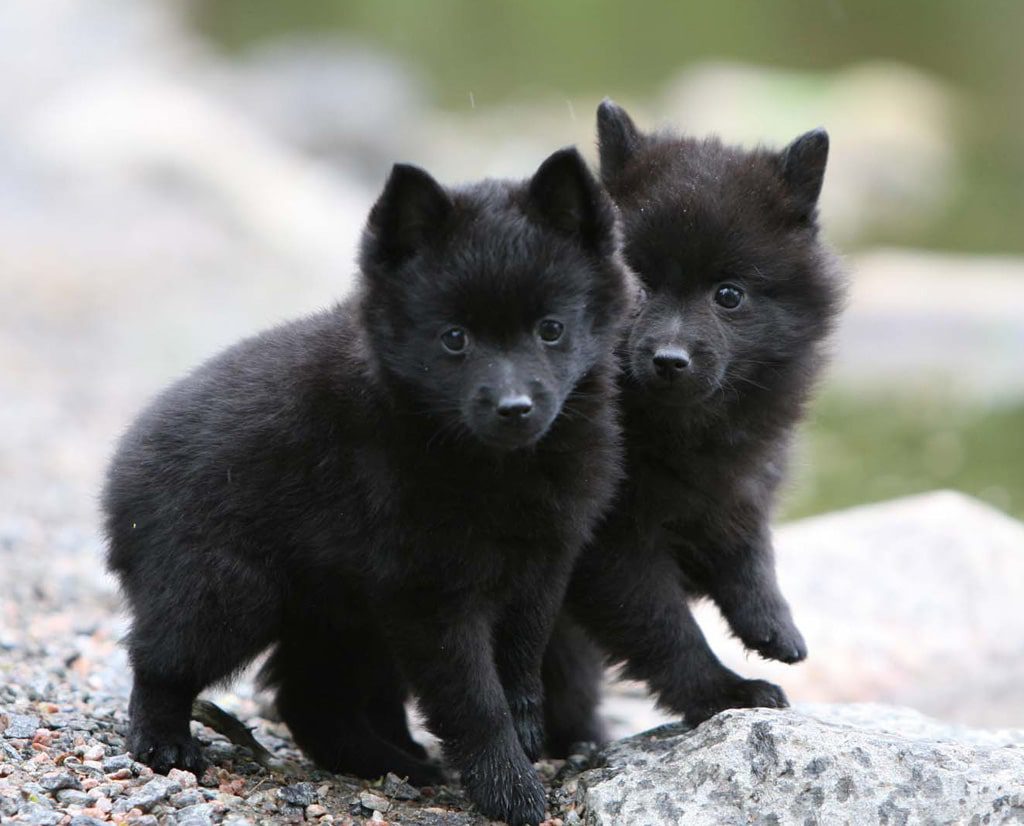
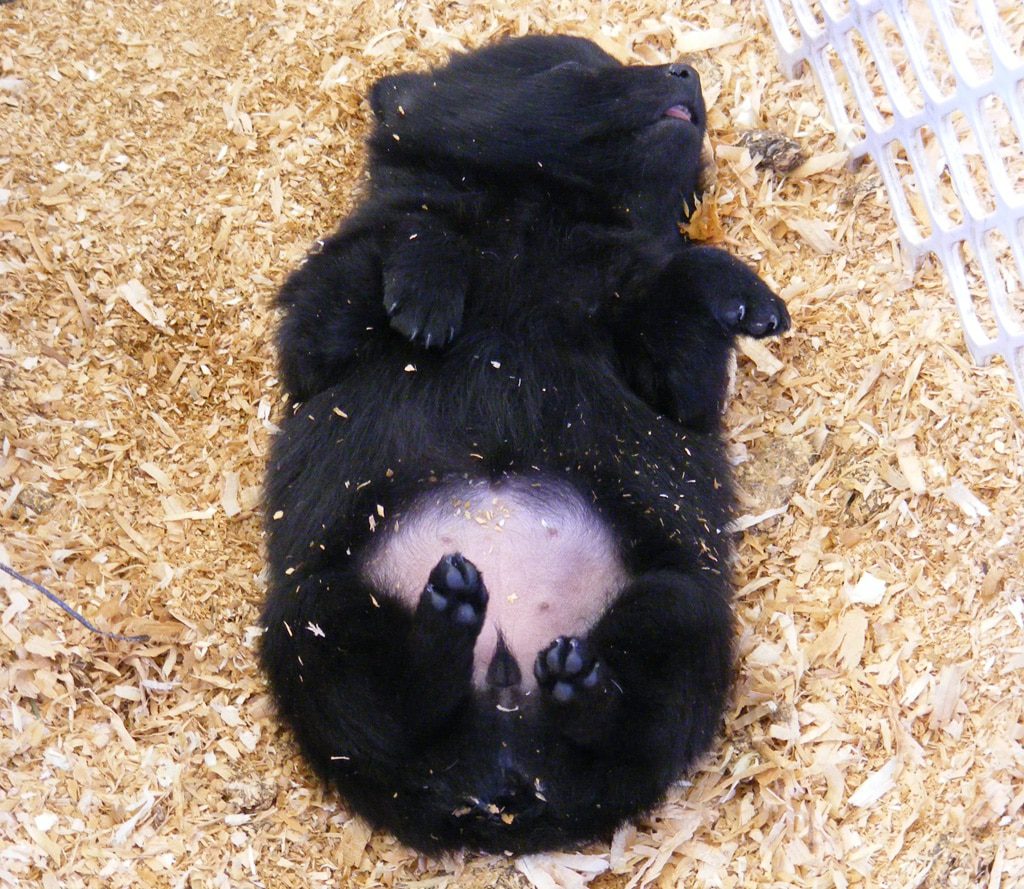
The Schipperke is a happy dog, resistant, energetic, a skillful Hunter and good guardian.

Content

History

The origins of the Schipperke they are very old. Already, In documents dating from the end of the 17th century, there is talk of a dog whose characteristics perfectly describe a specimen of Schipperke, who lived mainly with the midwives of the Saint Gรฉey neighborhood of Brussels.

It is the typical dog of the shoemakers of that time that, In addition to making shoes, they used to organize very peculiar dog shows., Since that most importantly was not the aspect of canine copy but the necklace that had been, manufactured by hand by the shoemakers.

Some authors speak of a legend that, somehow describes a key feature of this dog.

Apparently, in one of those dog shows a zapatero not endured defeat and moved by the ira that it caused him to lose in an outburst was and cut off the tail to the winning dog.

But, against all odds the copy of the amputated tail was so successful that thereafter the amputation of the tail began to apply to all copies.

On behalf of the race comes from the Flemish, Schipperke means "little boatman". And the man was given because this dogs accompanied the archers that pass through the channel of Flanders, they were aboard the boats eliminate any small vermin that would cast and also performed guard duties, given that barked furiously to any strange.

With how small it is, it is a dog that has many typical characteristics of large breeds.

The Schipperke It is one of the smallest Spitz-type, with which it shares much similar. Among those breeds of medium to small size similar in appearance to the Schipperke, in different parts of the world we find the Wolfsspitz (Keeshond), GroรŸspitz, Mittelspitz, Kleinspitz, Zwergspitz (Pomeranian), Samoyed, the Norwegian Elkhound, Volpino Italiano, Secular, Finnish Spitz, India Spitz, Japanese Spitz and the American Eskimo dog.

The Schipperke was first recognized as a standardized breed in the year 1880, but was formalized in the year 1889. Much of what is known of its origins and early history comes from Hunting and fishing, a Frenchman who wrote for the magazine ยซHunting and fishingยซ, articles of which were translated into English and published by the English magazine ยซEl Stockkeeperยป.

Physical characteristics

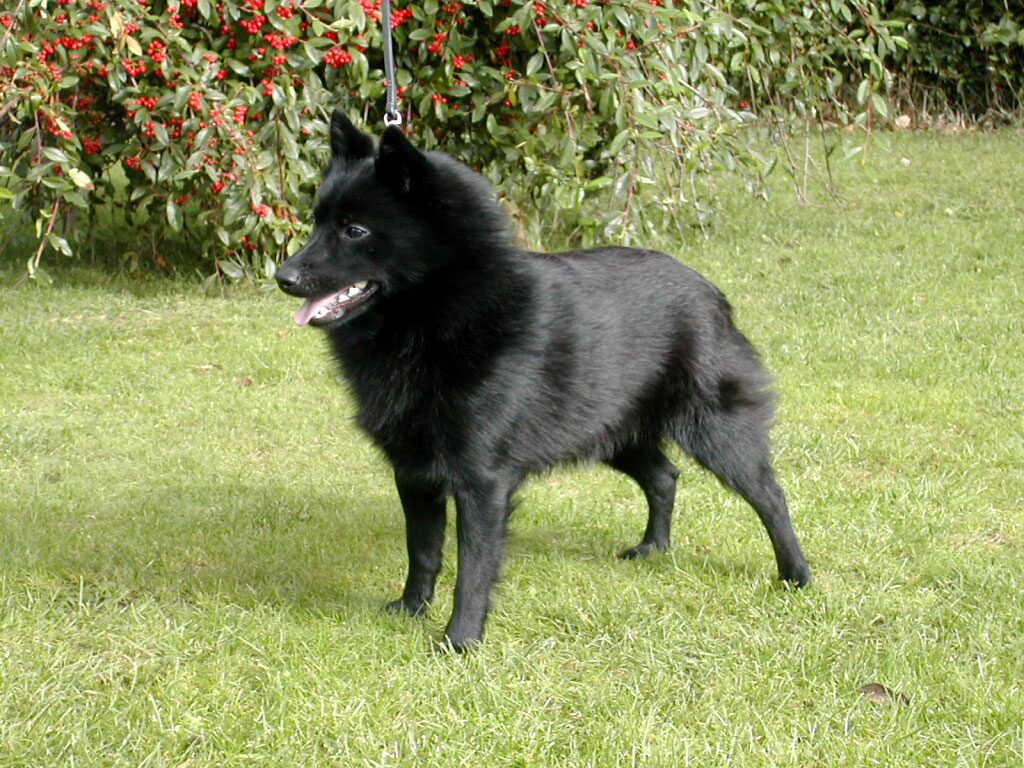
At first sight, the Schipperke looks like a Belgian Shepherd Groenendael miniature.

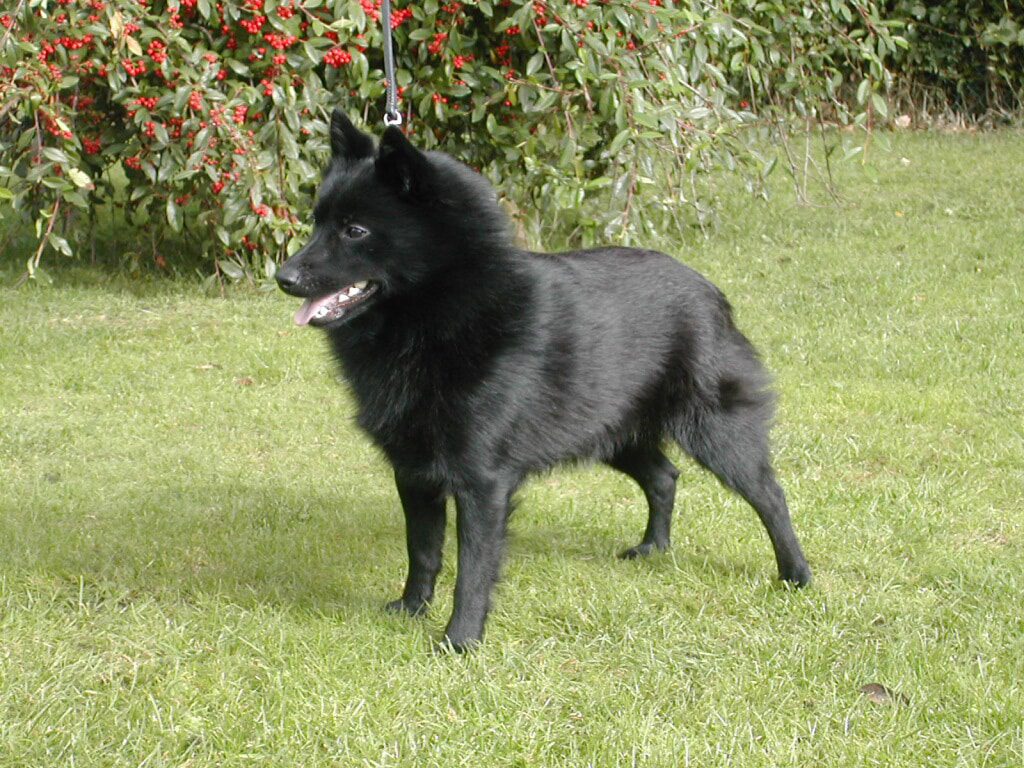
It is of a small dog, very elegant but well made and muscular. Its quite similar to a Fox head, with a broad forehead that narrows as the eyes approach.

There are two varieties, whose only distinction is the weight. In the smaller of 3 to 5 kg and the largest of 5 to 9 kg.

The snout It is sharp and has a pronounced stop. The ears are small, triangular and slightly separated.

The eyes they are brown in color and rather oval shaped. Its characteristic coat is made up of long, very black hair and is totally waterproof.. It is significantly longer in the collar area, horsehair, the bodice and back of legs.

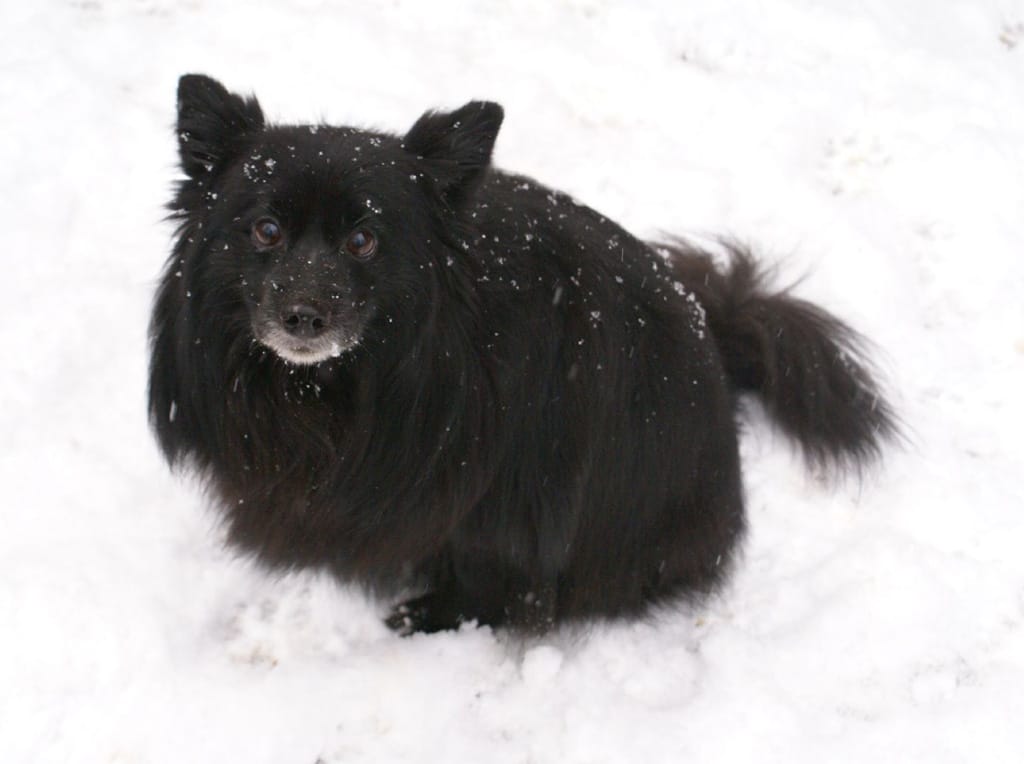
The color The only one recognized by the FCI is the chestnut black. As they grow older, It is normal to be detected small of coloration forming a gray color in places such as the snout.

The puppies are born with tails in different lengths, and in Canada and the United States, the tail is usually docked the day after birth. In countries that have a ban on tail docking, the Schipperke they show off their natural tail, It falls curved over the back of the dog.

Character and skills

They are curious by nature and overflow with energy, they need enough exercise and good monitoring.

Known for his stubborn temperament, mischievous and stubborn, to the Schipperke it defines, times, As the "small black Foxยซ, he "Black Tasmanian Devil" or the "black devilยซ.

Proper training is important, because they are very intelligent and independent, and that coupled with the stubbornness… bad combination, they are what gives them the win. They are territorial, and they can not get along with other males.

The Schipperke has no particular health problems, they tend to live until the 17 or 18 years. But, inactivity, lack of exercise and overnutrition are very harmful, and can lead to problems in the joints, the bones and the conditions of the teeth, heart, lung or digestive system.

The regular weekly brushing is usually sufficient to keep the coat in good condition. No need to cut hair, they tend to move it several times a year (the females, more than males).

Observations

The Schipperke, is the ideal companion for lovers of horse-riding, post that usually develops in a natural way a very close relationship between this dog and horses.

It is also the dog ideal for excursions, Despite its small size it is tireless.

Characteristics "Schipperke"

Coexistence is important that you have with your new friend. Before considering the acquisition of a dog of the breed "Schipperke" you know certain factors. Not all breeds of dogs are apt to live in an apartment, you must take into account his character, their need for exercise, their interaction with other pets, their care and if you have small children, their level of tolerance towards them.

Adaptation โ“˜

4,0 of 5 stars (based on 1 review)

friendly dog โ€‹โ€‹โ“˜

4,0 of 5 stars (based on 1 review)

hair loss โ“˜

3,0 of 5 stars (based on 1 review)

Affection level โ“˜

3,0 of 5 stars (based on 1 review)

Need for exercise โ“˜

5,0 of 5 stars (based on 1 review)

Social need โ“˜

2,0 of 5 stars (based on 1 review)

Home โ“˜

2,0 of 5 stars (based on 1 review)

Toilet โ“˜

2,0 of 5 stars (based on 1 review)

Friendly with strangers โ“˜

3,0 of 5 stars (based on 1 review)

barking โ“˜

3,0 of 5 stars (based on 1 review)

Health โ“˜

4,0 of 5 stars (based on 1 review)

Territorial โ“˜

5,0 of 5 stars (based on 1 review)

Cat friendly โ“˜

3,0 of 5 stars (based on 1 review)

Intelligence โ“˜

4,0 of 5 stars (based on 1 review)

Versatility โ“˜

4,0 of 5 stars (based on 1 review)

Child friendly โ“˜

5,0 of 5 stars (based on 1 review)

Surveillance โ“˜

4,0 of 5 stars (based on 1 review)

joy โ“˜

5,0 of 5 stars (based on 1 review)

Images of the ยซSchipperkeยป

Videos del ยซSchipperkeยป

Type and recognitions:

  • FCI CLASSIFICATION:
  • Group :
  • Section : . .

Federations:

  • Federations: FCI โ“˜, AKC โ“˜, ANKC โ“˜, CKC โ“˜, โ€‹KC โ“˜, NZKC โ“˜, UKC โ“˜

FCI breed standard "Schipperke"

Origin:
Belgium

Date of publication of the valid original standard:
28.07.2009

Use:

Small guard and companion dog


General appearance:

Lupoide, the Schipperke is a small-sized shepherd, but of very solid construction. His head is cuneiform, well developed skull and relatively short snout. Your body is harmonious, short, quite wide and compact, but the limbs have fine bones. Its fur is very characteristic, very abundant and straight that forms a necklace, horsehair, bib and pants, which gives it its unique silhouette. Sexual dimorphism (sexual differentiation) is marked. Its morphology, as well as
its characteristics and its shepherd dog character, all this in a small size, explain their great popularity, that extends far beyond the Belgian borders.
 
IMPORTANT PROPORTIONS:

  • The height at the withers is equal to the length of the body, is therefore a square-built dog.
  • The chest is well lowered to the level of the elbows.
  • The muzzle is visibly less long than half the length of the head.


Behavior / temperament:

An excellent little watchdog, exceptional "warning", overflowing with vitality, distant with strangers. Always in movement, agile, tireless, continually busy with what's going on around you, very aggressive when it comes to taking care of the objects that have been entrusted to him, very sweet with children, always curious to know what happens behind a door or an object that is going to be moved, betraying his impressions with his shrill voice, his mane and bristling dorsal hairs. He's a sniffer who hunts rats, moles and other vermin.

Head:

Form Lupoid, cuneiform, but not too long, and wide enough to be in harmony with the rest of the body. The supraorbital and zygomatic arches are moderately arched. The transition of the cranial region to the facial region is visible, but it is not very pronounced.

Cranial region:

Fairly broad forehead, drops into the eyes, profile view is slightly rounded. The upper lines of the skull and the nasal passage are parallel.

  • Depression front naso (Stop): Marked, but without exaggeration.

facial region:

  • Nose: Small, Truffle always black.
  • Snout: It is made more pointed towards the region of the truffle ; well chiseled, not very long, the tip is not truncated; the length is approximately 40% the total length of the head ; straight nose cane.
  • Lips: Blacks, well together.
  • Jaws/Teeth: Healthy and well implanted teeth. ยซScissors biteยป. A "pincer" bite is accepted.. Complete denture, the dental formula for. The absence of one or two premolars is acceptable 1 (1 PM1 or 2 PM1) or a premolar 2 (1 PM2) and are not taken into consideration the molars 3 (M3).
  • Cheeks: Droughts, they blend smoothly with the sides of the snout.
  • Eyes: Dark brown in color, small, almendrada form, or sunk, or prominent ; the look is mischievous, intense and penetrating; the eyelids are lined in black.
  • Ears: Straight, very small, pointy, triangular (the more possible equilateralmente), set high, but not very close together, firm, excessively mobile.

Neck:

Strong, powerfully muscular; It seems more bulky because of the abundant hairs on the collar. Is medium length, well loose, good sized, is more erect when the dog is attentive, with the slightly arched top margin.

Body:

Short and broad, therefore compact, but not too bulky or heavy, Ideally square (inscriptible in a box). So that, its length, from the tip of the shoulder to the tip of the buttock, It is approximately equal to the height at the withers.

  • top line: The top margin of the back and the spine is straight and taut, often it rises slightly from rump to cross.
  • Cross: Very sharp. It seems even more raised because of the mane.
  • Back: Short, straight and strong.
  • Pork loin: Short, broad and compact.
  • Rump: Short, wide and horizontal; the rear of the rump, and therefore the union between the rump and the tip of the buttock, It is harmoniously rounded, what is known as โ€œguinea pig buttโ€.
  • Breast : Well descended to the level of the elbows; wide in front and behind the shoulders, so that, the ribs are well arched; profile, the front part of the chest (backsplash) is well prominent.
  • bottom line: The lower part of the chest is well descended, reaching to the elbows, upload lightly and harmoniously towards the belly, It is slightly raised, or pendant, or agalgado (withdrawn).

Tail:

High implementation. Some dogs are born Anurans (completely tailless) or with rudimentary or incomplete queue (stump tail or short tail) and they may not be penalized by this. At rest, a natural tail (at least reaches the Hock) should preferably be dropped and can be raised in action, in the extension of the top line, but it is preferable that it does not exceed. Accepted the tail curled or carried on the back.

Tips

Thin bones that are well below the body.

PREVIOUS MEMBERS

  • As a whole: They are well aplomados seen from all angles, and they are perfectly parallel, seen from the front; its length, from the ground up to the elbows, It is almost equal to the half of the height at the withers.
  • Shoulder: Long and well oblique, the angulation of the shoulder is normal.
  • Arms: Long and enough oblique.
  • Elbows: Firms, or peeled, or together.
  • forearms : Straight, seen from the front are quite separate.
  • Carpi (dolls): Smooth and firm.
  • Metacarpus: Rather short. Seen from the front, in straight prolongation of the forearms, profile, at least very slightly inclined.
  • Previous feet: Small, round and together (ยซ cat's foot ยป); the arched toes; short nails, strong and always black.

LATER MEMBERS

  • As a whole: They must be under body, and be perfectly parallel, seen from the back.
  • Thighs: Long, very muscular. They seem to be wider due to the dense pants.
  • Knee: Approximately in composure with the rump; the angle of the knee is normal.
  • Legs: Approximately of the same length as the thighs.
  • Hocks: good angulation, without exaggeration.
  • Metatarsals: Rather short; the presence of spurs is not desirable.
  • Hind feet: As the front or a little bit longer than.

Movement:

At a trot, the movements are elastic, firm, with median amplitude, a good boost of the hind, the back stays horizontal and members move in parallel ; The movement of the forelimbs must be in harmony with that of the hindlimbs and the elbows must not separate. At a higher rate, Members converge.

Mantle

  • SKIN: Tight all over the body.
  • Fur: The outer layer of hair is abundant, dense, straight, enough hard, of fairly firm texture, therefore, is dry and sturdy to the touch, and shape with the inner layer of hair, It is soft and dense, excellent protection. Hair is short on the ears and short on the head, the front of the previous members, hocks and rear cannons. On the body, the hair is medium length and glued.

Around the neck the hair is much longer and more separate, starting at the outside edge of the ears, forming, especially in the male, but also in the female, a wide and very typical ยซnecklaceยป (long hairs around the neck, on each side stem), a "mane" (long hairs on the upper region of the neck, that extend even over the cross and even the shoulders) and a "bib" (long hairs on the lower region of the neck and the front of the chest (backsplash), that spread between the forelimbs and are progressively completed under the breast). On the back of the thighs, long and abundant hairs, that cover the anal region and whose tips are directed inward in a very typical way, they form the ยซtrousersยป. The tail is adorned with a hair of the same length as the body hair.

  • Color: Negro backpack. The inner layer of hair should not be absolutely black, but it can be also dark gray if it is covered entirely by the outer layer of hair. Are accepted a little gray due to age, for example on the snout.


Size and weight:

Weight: Of 3 to 9 kg. Looking for an average weight of 4 to 7 kg.


Fouls:

Any deviation from the above mentioned criteria is considered an absence and severity of this refers to the degree of deviation to the standard and its impact on the health and welfare of the dog.

General appearance: Heavy, lack of substance; paticorto patilargo ; elongated body, rectangular (inscriptible in a rectangle).
Head: Too long or too short. Lines of the skull and nasal cannula that are not parallel; appearance of Fox; very outgoing supraorbital or zygomatic arches.

  • Cranial region: Too narrow, very rounded or arched front (โ€œapple-shapedโ€).
  • Snout: Very long, gripper; thick, truncated; convex nose cane (Roman).
  • Teeth: Misaligned or poorly implemented incisors.
  • Eyes: Large, round or prominent, color clear (the color "hazelnut" is still accepted).

Body:

  • Breast : Strait, plane, cylindrical; not enough descended.
  • Rump: Long, inclined, about-high; interrupted curvature of the back edge (transition grupa-parte back of thighs).
  • Members: Too little or too much angled members.
  • Movement: Cerrado, very short strides, with very little momentum, bad transmission in the back (when the dorsal line does not remain correct in action), movement raised the forelimbs or hopping in the subsequent.

Fur:

  • Fur: Too short (Satin), too long, little, soft or silky, wavy, very close to the body or too pendant; very little or no necklace, horsehair, breast or trouser (more serious is lacking in the male, especially the absence of necklace). Lack of hair on the bottom layer.
  • Color: Grey reflections, Brown or reddish in the upper layer of hair. Some occasional white hairs on the toes.

Character: Apathetic or shy dog.

SERIOUS FAULTS

  • Teeth: Absence of an incisor (1 I), three premolars 1 (3 PM1), or two premolars 2 (2 PM2).

FALTAS DESCALIFICANTES

  • Aggressive or fearful dog.
  • Any dog โ€‹โ€‹showing clear signs of physical or behavioral abnormalities must be disqualified..
  • Lack of racial.
  • Upper prognathism; lower prognathism, even without loss of contact (inverted articulation) ; Cross occlusion ; crooked mouth ; absence of a canine (1 C), a tooth top butcher (1 PM4) or lower (1 M1) or a molar (1 M1, or 1 M2, except for the M3), of a premolar 4 (Lower PM4), of a premolar 3 (1 PM3) and another tooth, or four teeth in total or more (except the four premolars 1).
  • Depigmentation of the nose, the lips and eyelids.
  • Hanging ears or semi erect.
  • Long and soft or silky hair, therefore a coat evidently of the "long hair" type; long ear hair fringes, on the back of the members, etc.; total absence of an inner layer of hair.
  • Color: Top coat of any color that is not black (except for the gray reflections, brownish or reddish) or with very small white spots, still in the fingers.
  • Weight clearly outside the prescribed limits.


N.B.:

Males must have two normal-appearing testicles completely descended into the scrotum..

TRANSLATION: IRIS Carrillo (Puerto Rico Kennel Federation). Reviewed by Dr. Robert Pollet.

Source: F.C.I - International Cynological Federation

Alternative names:

1. Spitske (English).
2. Spitske (French).
3. [Aussprache: หˆsxษชpษ™rkษ™] (German).
4. Skip, Schip, Spitske (Portuguese).
5. Spitzke, Pequeรฑo barquero (espaรฑol).

โ–ท The world of Pets: Dogs, cats, birds, reptiles, amphibians

Shetland Sheepdog
Escocia FCI 88 . Sheepdogs.

Shetland Sheepdog

The Shetland Sheepdog it's really friendly, lovely with children, intelligent and loyal.

Content

History

In the 19th century, in the North Shetland Islands of Scotland, the ancestors of Shetland Sheepdog, often called Sheltie, they helped the flocks of sheep and sounded the alarm when strangers approached their farm.

But, the exact origins of this dog are as obscure as the mist that covers its homeland. Its resemblance to him Rough Collie supports the theory that it descends from these dogs, believed to have been imported from Scotland. But, Colleys breeders and various specialists refute this claim.

For them, the Sheltie would have developed in isolation on these islands, and would be the result of different crosses. The races most frequently cited as contributors to its creation are the Icelandic Sheepdog, the Yakki de Groenlandia (an extinct race), the Cavalier King Charles spaniel, the Pomeranian and the Border Collie.

In any case, at the beginning of the 20th century it was often crossed Rough Collie, which reinforced the resemblance between the two races.

What is certain is that its small size was the result of the most rational selection work. Like the "Shetland pony", known for its miniature size, locals gave preference to animals that needed little food, a rare commodity in this difficult region.

Although the Shetland Sheepdog it was especially appreciated in its native islands for its qualities of a sheepdog and alert, it was mainly her appearance that got her out of there. Visitors to England in the late 19th century were delighted with the small size and texture of the dog's coat. Shetland Sheepdog, and soon they wanted to take something home, which they did. Soon, some locals decided to start breeding for export, selecting breeders for height and coat. More and more individuals set out to conquer Britain and then the rest of the world. But, there were neither breed standards nor consultations between the different breeders, so the race developed in directions sometimes very distant from each other.

Things changed after the official recognition in 1909 by the Kennel Club, the leading organization in Great Britain. The name chosen was simply the name by which the dog had been known until then., the Shetland Sheepdog. This recognition helped to stabilize the breed by establishing a well-defined framework in which the different breeders had to work..

But, the chosen name was not to the liking of the colleys breeders, who pressured them and won their case in 1914: then it was officially renamed as Shetland Sheepdog.

In the meantime, the first specimens had reached the United States and, already in 1911, the American Kennel Club (AKC) also accepted it. Was not up 1948 that the United Kennel Club (UKC), the other reference organization in the United States, he did the same. It was followed by the Fรฉdรฉration Cynologique Internationale (FCI) in 1954, as well as by all other important institutions, including the Canadian Kennel Club (CCC).

Although the Shetland Sheepdog is now common worldwide, paradoxically it has become rare on its home island, where it has been replaced by the Border Collie for grazing.

This decline can also be seen in the rest of Britain. These may include, Annual Kennel Club enrollments have dropped from more than 1300 less than 800 in less than a decade.

The phenomenon is also occurring in the United States, where he now occupies the position 25 (of a little less than 200) on the AKC popularity rankings, based on the annual number of people registered in the organization. In other words, has lost a lot of ground compared to the decades of 1980 and 1990, in which he was almost constantly among the 10 first, reaching a maximum of 40.000 records in 1993. The fall is slow but steady, since at the beginning of 2010, was still in the 20 first positions.

The "father" race Shetland Sheepdog o โ€œSheltieโ€ as they are often nicknamed, they are the Border Collie.

Physical characteristics

The Sheltie they have a double mantle, What makes this breed peleche much more than other dogs. Long hair covering the thick and soft layer base, is repellent to water, while the base layer provides relief from hot and cold.

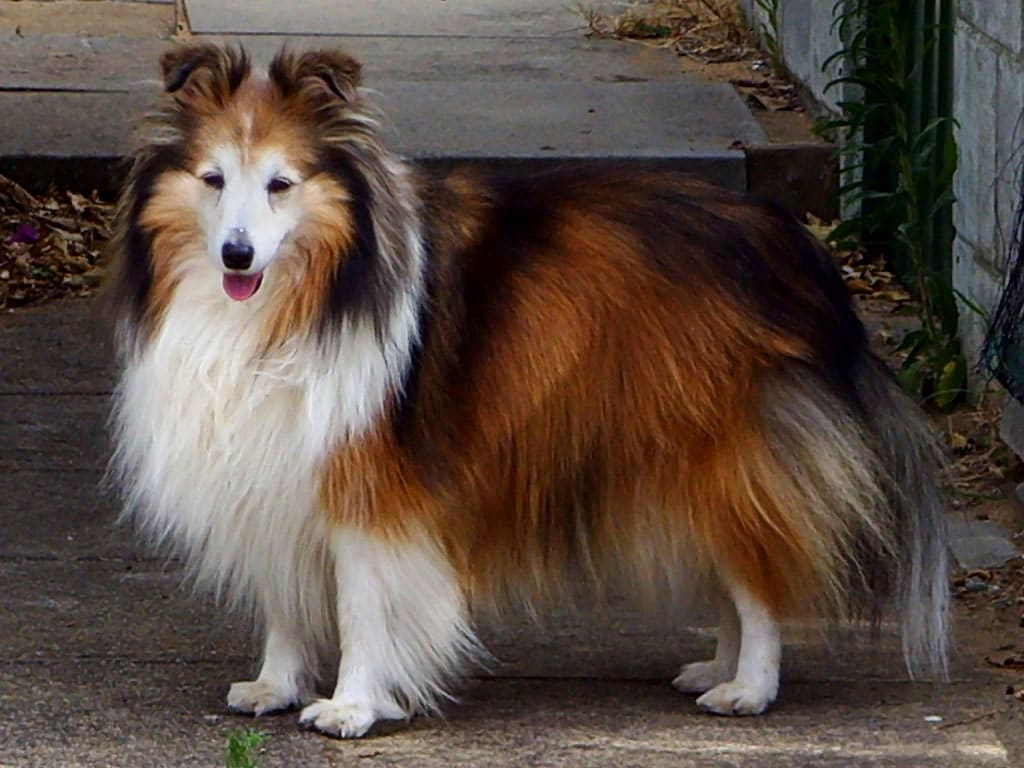
There are three main colors: Sable, It ranges from the Golden to mahogany; Tri-color, formed by the black, White and Tan, and blue mirlo, composite grayscale, white, black and Tan.

black and white: it is less common but still acceptable.

Sand: the best-known color, dominates over other colors. The shadow Sabre, or mahogany can sometimes be confused with the Sheltie tricolor because of the large amount of dark shading in their coats. Another name for him Sheltie "shading", is trifactorado sable and white. This name comes from the mixture of a tricolor and a sable and white. Another acceptable but less common color is the Sable Blackbird., that it can sometimes be difficult to distinguish between the regular sable after puppyhood. The Sable merle has patches of dark brown on a light brown background compared to the black and grey blue Merle.

There are other two colors that are a bit rare, which are unacceptable in the ring. The White Color-headed (majority of white with the head "normally" marked), It is the product of two dogs crossed white facotrados. Double Merle, the product of the crossing of two Sheltie blue merle, they can be crossed but have a high incidence of deafness or blindness than other colors.

The ideal height at the cross, in males 37,5 cm.. The females. 35,5 cm.. One greater diversion of 2,5 cm above or below these measures is regarded as highly undesirable.

Character and skills

It is an excellent companion dog, highly loyal. It is joyful, intelligent and always ready to obey. The Sheltie is love, loyal and affectionate with the family and of course, on the sidelines, with strangers; for this reason the Sheltie must be socialized. Some may be very reserved. This breed gets along very well with children if they are raised with them from a young age.; However, its small size makes it easy for a child to accidentally harm them, This monitoring is necessary. Well consider bringing an adult Sheltie for a House with young children, they may not be compatible.

Some Sheltie tend to show a similar to a Terrier personality that tends to be hyperactive, and always ready, However this temperament is not sanctioned in the breed standard. Some may be shy, but this temperament is specifically discouraged by the standard. The trend towards shyness, It can be reduced with proper socialization. The average Sheltie is an excellent watch dog, giving alarm barks when a person is at the door or pass a car on the street.

The herding instinct is strong in many Sheltie. Love to chase and pasture including, squirrels, ducks, pigeons and children. The Sheltie love run in large open areas.

They normally love to play. They are better with a sensitive owner, but firm. The Sheltie is, first and foremost, a smart pastor and love to keep them busy, Although his level of activity, usually, It coincides with the level of its owner. As they are very intelligent, they are highly trainable. Lack of exercise and intellectual stimulation, It can lead to undesirable behaviors, including excessive barking, phobias and nervousness. Fortunately the annoying behaviors may decrease largely by an hour of exercise to make the dog with its owner.

in your category, the breed dominates Dog Agility competition. They also look at obedience competition, Flyball, Grazing, Tracking and proof of talent.

It is a very intelligent dog, according to Dr.. Stanley city, expert on animal intelligence. The Sheltie is one of the brightest dogs occupying the position number 6 in the Ranking of 132 evaluated races. His research determined that an average Sheltie could understand a new command in less than 5 repetitions and would obey the command the first time the 95% of the times or more.

Health

Similar to the Rough Collie, There is a tendency to inherit malformations and diseases in the eye. Each puppy should have his eyes examined by a qualified eye veterinarian. Some lines may be susceptible to hypothyroidism, epilepsy, Hip Dysplasia, or skin allergies. The life expectancy of the Sheltie is between 10 and 15 years, Although some in some it may be more, and in others may be less.

Von Willebrand disease is an inherited bleeding disorder. The Sheltie breed, affected dogs, as a general rule, they do not live long. The Sheltie carry type III Von Willebrand, which, It is the most severe of the three levels. There are DNA tests that were developed to find the disease in dogs Sheltie. It can be done at any age and will showcase one of the following results: affected, carrier or affected not. The Sheltie may also suffer from hypothyroidism, It is the low functioning of the thyroid gland. Clinical symptoms include, loss of hair, on low weight and faintness.

Although small breed dogs are unlikely to be affected by hip dysplasia, It has been identified in some specimens of Sheltie. Occurs when the head of the femur and the acetabulum do not fit correctly, This causes pain and/or lameness. Hip Dysplasia is thought to be genetic; Many breeders sent to test their dogs to certify that they are free from this.

Characteristics "Shetland Sheepdog"

Coexistence is important that you have with your new friend. Before considering the acquisition of a dog of the breed "Shetland Sheepdog" you know certain factors. Not all breeds of dogs are apt to live in an apartment, you must take into account his character, their need for exercise, their interaction with other pets, their care and if you have small children, their level of tolerance towards them.

Adaptation โ“˜

4,0 of 5 stars (based on 1 review)

friendly dog โ€‹โ€‹โ“˜

3,0 of 5 stars (based on 1 review)

hair loss โ“˜

4,0 of 5 stars (based on 1 review)

Affection level โ“˜

4,0 of 5 stars (based on 1 review)

Need for exercise โ“˜

4,0 of 5 stars (based on 1 review)

Social need โ“˜

4,0 of 5 stars (based on 1 review)

Home โ“˜

3,0 of 5 stars (based on 1 review)

Toilet โ“˜

3,0 of 5 stars (based on 1 review)

Friendly with strangers โ“˜

3,0 of 5 stars (based on 1 review)

barking โ“˜

5,0 of 5 stars (based on 1 review)

Health โ“˜

5,0 of 5 stars (based on 1 review)

Territorial โ“˜

3,0 of 5 stars (based on 1 review)

Cat friendly โ“˜

3,0 of 5 stars (based on 1 review)

Intelligence โ“˜

5,0 of 5 stars (based on 1 review)

Versatility โ“˜

4,0 of 5 stars (based on 1 review)

Child friendly โ“˜

5,0 of 5 stars (based on 1 review)

Surveillance โ“˜

2,0 of 5 stars (based on 1 review)

joy โ“˜

4,0 of 5 stars (based on 1 review)

Type and recognitions:

  • FCI CLASSIFICATION:
  • Group :
  • Section : . .

Federations:

  • FCI – Group 1 Herding dogs, Section 1 Sheepdogs โ“˜
  • AKC – PASTORAGE โ“˜
  • ANKC – Group 5 (Working dogs) โ“˜
  • CKC – Group 5 (Pastoral) โ“˜
  • โ€‹KC – Pastoral โ“˜
  • NZKC – Work โ“˜
  • UKCScenthounds โ“˜

FCI breed standard "Shetland Sheepdog"

Origin:
Scotland, United Kingdom

Date of publication of the valid original standard:
19.08.2013

Use:

Shepherd dog


General appearance:

The Shetland Sheepdog is a small-sized, long-haired working dog, Of great beauty, no signs of heaviness or coarseness, free and graceful action. Its structure must be symmetrical so that no part of its body appears disproportionate.
The fur, very abundant mane and bib, the beauty of the head and the sweetness of the expression combine to present the ideal specimen.

IMPORTANT PROPORTIONS;
The skull and muzzle must be the same length, the balance point being the internal angle of the eye.
Slightly longer from point of shoulder to point of croup than height at withers.


Behavior / temperament:

It is an alert dog, delicate, Intelligent, strong and active. Affectionate and loyal to his master, reserved with strangers, but never nervous.

Head:

The head should be refined and elegant without exaggeration; viewed from above or from the side should be in the shape of a long truncated wedge, that is refined from the ears to the truffle. Width and depth of the skull must be proportionate to its length and the length of the muzzle. It should be considered in conjunction with the size of the dog.

Cranial region:
  • Skull : Flattened, moderately wide between the ears, without showing any occipital protuberance. The upper line of the skull is parallel to - the upper line of the snout.
  • Depression links ( Stop) : Light, but defined.

facial region:

The characteristic expression is obtained from the perfect harmony and combination of the skull and snout, of the form, the color and placement of your eyes and the correct position and bearing of your ears.

  • Truffle : black.
  • Snout : Well rounded.
  • Lips : Blacks, firm.
  • Jaws / teeth : Jaws of equal length, net and strong, well developed lower jaw. Healthy teeth with perfect scissor bite, regular and complete, that is to say that the internal face of the maxillary incisors is in close contact with the outer side of the lower incisors and placed at right angles to the jaws. It is highly desirable that the denture contains 42 properly placed teeth.
  • Cheeks : Flat, bind gently with the muzzle.
  • Eyes : Are medium-sized, almond shaped and placed in an oblique position. Color should be dark brown, except in the case of merle specimens, in which one or both eyes may be blue or streaked blue. The rims of the eyes should be black.
  • Ears : Small, moderately wide at the base, placed fairly close to each other at the top of the skull. When the dog is at rest, they are thrown back; When it is attentive it brings them forward and carries them semi -erect with the fallen tips forward.

Neck:

Muscular and well arched, long enough to wear your head proudly.

Body:

  • Back : Straight, with a delicate curvature.
  • Rump : Gradually descends towards the hind limbs.
  • Breast : Deep, descends to the elbows. The ribs are well sprung, but taper in the lower half to allow free movement of the forelimbs and shoulders.

Tail:

Has a low implantation, vertebrae gradually decrease in size towards the tip, which reaches at least the hocks. It is provided with abundant hair and has a slight upward curvature. When the dog is moving it can be carried slightly raised, but never on the back and curled.

Tips

FORELIMBS

Forelimbs appear straight when viewed from the front; they are muscular and well proportioned with strong but not heavy bone.

  • Shoulder : The shoulder blades should be tilted, separated in the cross region only by the vertebrae, and should slope outward to allow for the desired bowing of the ribs. The shoulder joint must be well angulated.
  • Arm : Arm and scapula should be approximately the same length.
  • Elbows : The humerus-radio-cubital joint (elbow) is equidistant from the ground to the region of the cross.
  • Metacarpus : Strong and flexible.

HINDQUARTERS

  • Thigh : Wide and muscular; the femur should join the pelvis at a right angle.
  • Knee : The femoro-tibio-patellar joint must have a marked angulation.
  • Hock : crisp, angled, well descended. With strong bones. Viewed from behind they should be straight.
  • Pies : Oval, with strong pads. Fingers arched and together.

Movement:

Of agile movement, reunited and funny; with a driving due to the posterior members that cover the maximum extension with the minimum effort. Ambling movement is highly undesirable, march across the limbs, swinging the body, as well as the rigid and important vertical displacement.

Mantle

HAIR:

  • The coat is double: the outer coat is long hair, rough and smooth. The undercoat is short haired, smooth and dense. The mane and chest have abundant hair. The forelimbs have abundant fringes. Hind limbs, on the hocks, they are covered with very abundant hair, while below them, the hair is shorter. The coat should accommodate the body and not dominate or change the shape of the dog. The hair on the face is short. Short-haired specimens are highly undesirable.

COLOR:

  • Cebellina : Light or dark. All shades are admitted, from pale gold to dark mahogany; but those tones must be of an intense tone. Wolf and gray colors are undesirable.
  • Tricolor : Intense black color on the body, and in them bright fire colored spots are preferred.
  • Blue Merle : Light silver blue, splashed or mottled with black. Deep tan stains are preferred, although its absence should not be penalized. Large black markings and slate or rust-colored markings on the outer or inner coat of hair are highly undesirable. The overall appearance should be blue.
  • Black and white and black and tan : They are also recognized colors.
    White spots may exist (except in the black and tan specimens) on the forehead, the collar and the sill, the chest, the limbs and the tip of the tail. All or some white spots are preferable (except in the black and tan specimens), but its absence should not be penalized. White spots on the body are highly undesirable.


Size and weight:

Ideal height at the withers :

  • Males : 37 cm.
  • females : 35,5 cm.

    One greater diversion of 2,5 cm above or below these measurements is considered highly undesirable.


Fouls:

Any deviation from the aforementioned criteria is considered a fault, and the severity of this is considered in proportion to the degree of the deviation to the standard and its consequences on the health and well-being of the dog.


FALTAS DESCALIFICANTES

  • Aggressive or fearful dog.

Any dog โ€‹โ€‹showing clear signs of physical or behavioral abnormalities must be disqualified..


N.B.:

Males should have two normal-appearing testicles fully descended into the scrotum..
Only functionally and clinically healthy dogs, with the typical conformation of the breed, They should be used for parenting.

DATE OF PUBLICATION OF THE ORIGINAL VALID STANDARD: 19.08.2013.
TRANSLATION: Lic. Valverde Calvo (Costa Rica) and Jorge Nallem (Uruguay).
Information obtained fromhttps://www.fci.be/es/nomenclature/PERRO-PASTOR-DE-SHETLAND-88.html

Source: F.C.I - International Cynological Federation

Alternative names:

1. Shetland Collie, Dwarf Scotch Shepherd, Sheltie (English).
2. Shetland, Sheltie (French).
3. Sheltie (German).
4. Sheltie (Portuguese).
5. Miniature Collie, Sheltie (espaรฑol).

โ–ท The world of Pets: Dogs, cats, birds, reptiles, amphibians

Saarloos wolfdog
Holanda FCI 311 - Sheepdogs.

Saarloos wolfdog

The Dutch Society of Saarloos wolfdog, is the only organism that can supply the puppies.

Content

History

The Sr. Leendert Saarloos (1884-1969) loved nature and also dogs. He realized that the dogs had become too humanized and he intended to, as a lover of the German Shepherd, of recovering the natural qualities of this breed to produce a better working dog. For this reason he crossed a male German Shepherd, Gerard van der Fransenum, a dog of the classic Prussian style, with Flowers, a female wolf that originated from the Siberian branch of the European type (1932). Breeding based on the father gave him a basic population of animals with a quarter of wolf blood. During the course of the next experimental phase with strict selection, a new race, the โ€ณEuropean Wolfdogโ€ณ had evolved. Selected animals of this breed provided good service as guide dogs., and at first they were believed to be adequate for this task.

Due to the increase in the proportion of wolf blood, usable skill, inherited from the original predecessor, Gerard, it was gradually lost and it became obvious that the breed was not suitable for use as a working or guide dog. Leendert Saarloos Legacy, not a working dog, but a dog with attributes more attached to nature, was recognized as a breed in 1975. at that time, the breed was named โ€ณSaarloos wolfdogโ€ณ in honor of its founder: Honor for whom honor deserves.

Physical characteristics

It is a dog type lupoid with powerful but light skeleton, with long limbs. The eyes, medium-sized, macaroons, are slightly oblique and preferably yellow in color. The expression is attentive and reserved time, but without a trace of fear. The ears, medium-sized, they have a fairly wide insertion and are pointed, fleshy and hairy. The tail is implanted quite low and at rest it takes the form of a saber, not too mobile. Can carry it high when active or intimidating.

Differences in secondary sex characteristics are pronounced between males and females.

  • Fur: hard and straight.
  • Color: from black with light blends to dark black (gray wolf), from brown with light blends to dark brown and from very light cream to white.
  • Size: males, of 65 to 75 cm.; females of 60 to 70 cm..

Character and skills

Strongly hierarchical, He is very attached to his owner and is wary of strangers.. It is a dog to enjoy and study (better as a couple or in a group) especially for fans of ethology, but it is not recommended to use it for guard and defense, because he tends to run away from man. Your reservation and your way of avoiding unknown situations, just like a wolf, are typical features of Saarloos wolfdog.

Images "Saarloos wolfdog"

Videos "Saarloos wolfdog"

Type and recognitions:

  • FCI CLASSIFICATION:
  • Group :
  • Section : . .

Federations:

  • FCI – Group 1 Herding dogs, Section 1 Sheepdogs โ“˜
  • UKC – Herding dogs โ“˜

FCI breed standard Saarloos wolfdog

FCIFCI - Saarloos wolfdog
Dog

Alternative names:

1. Saarloos wolfhond (English).
2. Saarloos (French).
3. Saarlooswolfhond (German).
4. Saarlooswolfhond (Portuguese).
5. Perro lobo Holandรฉs (espaรฑol).

Photos:

1 – Saarloos wolfdog from the Czech region by @Hippie_Saarloos / CC BY-SA
2 – Saarloos by Wolfdog by https://pxhere.com/es/photo/1389361
3 – Saarloos Wolfhond – Merlin v.d. Schattenwaldwoelfen by Boot Juliaan / CC BY-SA
4 – Saarloos Wolfhound by Corinne Benavides
5 – Saarloos Wolfhound by https://pxhere.com/es/photo/1127277

โ–ท The world of Pets: Dogs, cats, birds, reptiles, amphibians

Schapendoes
Holanda FCI 313 - Sheepdogs.

Schapendoes

The Schapendoes It is also used as a companion dog, but little known outside the Netherlands.

Content

History

At the end of the last century and the beginning of the present, appeared the Dutch schapendoes in most places in the Netherlands where there were moors and flocks of sheep. The shepherds esteemed him for his tireless spirit of work and for his intelligence.. It belongs to the versatile group of long-haired herding dogs that have a densely covered head. It is related to the Bearded collie, the Puli, the Polish Lowland Sheepdog, the Bobtail, the Berger de Brie, the Bergamasco and the German sheep pudding in the variety presented in Hessen, Odenwald and the lower Rhine regions. All these dogs similar to each other, are small mutations of mountain dogs.

The Schapendoes It was not recognized as a distinct breed until World War I and was close to extinction in the 1990s. 1940 due to the competition of the Border Collies imported. In 1947 a breed club was formed, el Dutch Schapendoes.

The race began its march towards a formal identity in 1954, when a breed standard and breeding book were established. But, it was not until 1971 that the Schapendoes gained full recognition as a Dutch race. The FCI (Federation Cynologique Internationale) recognized the breed in 1989.

Recognized by the United Kennel Club in 2006, the Schapendoes has been registered with the Foundation Stock Service of the American Kennel Club since 2005, but it doesn't have full recognition.

Physical characteristics

It is a long-haired and light-built dog. The eyes are quite big, rounded and brown, the expression must be frank, loyal and alive. The ears are inserted quite high, they are not thick or fleshy and hang freely by the head, the tail is long and covered with streaked hair, at rest hangs vertically, at a trot he carries it very high and curved, waving sensibly to the right and left; at gallop it remains straight and horizontal.

Its movements are elastic and agile; he is an exceptional jumper.

  • Fur: the cloak is very dense, with abundant subpelo. The hair is long and more than 7 cm.. in the hind limbs. It should not be completely smooth, but slightly wavy.
  • Color: all colors are allowed; preferably bluish gray with a tendency to black.
  • Size: males, of 43 to 50 cm.; females, of 40 to 47 cm..

Character and skills

The typical Schapendoes friendly and adaptable it is generally easy to get along with, as long as you get plenty of exercise and play. Although he is an independent thinker, is usually cooperative and wants to please. He tends to enjoy being with his people, so hope it stays close to you, inside or outside.

The Schapendoes works the sheep by elbowing their nose and shoulders, and you can try to do this with people too, especially with the children. Do not allow. On the positive side, He is generally a playful and energetic friend for children who are old enough to throw a ball for him, run with him and teach him tricks.

This is typically an intelligent breed that is quick to learn.. But it is important to be clear with the rules or he will try to avoid them if you are not consistent.

Its generally alert nature can make this breed a good watchdog.. Although grazing breeds have a tendency to be vocal, the Schapendoes not usually a great barker. But, can become an annoying barker if left to himself and bored.

Like most herding dogs, the Schapendoes requires a lot of socializing to make sure you don't get too cautious or suspicious. Socialize puppies at a young age with many people, different environments and circumstances so they can learn to adapt.

Start training a Schapendoes the day you bring it home or, before you know it, he will train him. (If these dogs were lawyers, they would know all the legal loopholes.) It is capable of absorbing everything you can teach it. Don't wait until you have 6 months to start training or you will have a more stubborn dog in your hands.

If possible, take it to a trainer when you have 10 to 12 weeks and socialize, socialice, socialice. But, Note that many kinds of training puppies require certain vaccinations (such as kennel cough) stay up to date, and many vets recommend limited exposure to other dogs and public places until puppy vaccinations (including rabies, distemper and parvovirus) They are completed. Instead of formal training, You can start training your puppy to socialize at home and among family and friends until immunizations are completed in the puppy.

Talk to the breeder, Describe exactly what you want in a dog and ask for help choosing a puppy. Breeders see their puppies daily and can make incredibly accurate recommendations once they know something about their lifestyle and personality..

The puppy Schapendoes Perfect not fully formed out of the whelping box. It is a product of his background and upbringing. Look for a puppy whose parents have good personalities and who has been well socialized from an early age.

Schapendoes Health

The Schapendoes is a generally healthy breed with a life expectancy of 12 to 15 years. All dogs have the potential to develop genetic health problems., just as all people have the potential to inherit a particular disease. Run, do not walk, from any breeder who does not offer a health guarantee for their puppies, that affirms that the race is 100 percent healthy and have no known problems or that your puppies are isolated from the main part of the home for health reasons. A reputable breeder will be honest and open about the breed's health problems and the incidence with which they occur in their lines..

The Schapendoes they are generally healthy, but there is some incidence of progressive retinal atrophy (ARP), an eye disease that can cause blindness. Responsible breeders do DNA testing of their dogs for PRA and have them examined by a certified ophthalmologist before breeding.. They also examine their dogs for hip dysplasia.

If a breeder tells you they don't need to do such testing because they have never had any problems in their lines or their dogs have been vet checked or give any other excuse for skimping on genetic testing of dogs, leave immediately.

Careful breeders screen their breeding dogs for genetic diseases and breed only the healthiest and best looking dogs, but sometimes Mother Nature has other ideas and a puppy develops one of these diseases despite good husbandry practices. Advances in veterinary medicine mean that in many cases dogs can still live a good life. If you are going to have a puppy, ask the breeder about the ages of the dogs in their lines and the typical causes of death.

Remember that after you have welcomed a new puppy into your home, has the power to protect you from one of the most common canine health problems: the obesity. Keep a Schapendoes being the right weight is one of the easiest ways to promote better overall health.

Schapendoes grooming

The Schapendoes has a dense double coat with fine fur that is slightly wavy. In its longest part, in the hindquarters, the hair is about 7 cm long. The head and face of the breed are characterized by a pompadour, a mustache and beard.

Considering how much hair you have, the Schapendoes is quite easy to style, does not require any trimming or trimming. It is normal for it to look a bit messy.

Even so, it is better to check it a few times a week so that it does not get tangled and brush it accordingly. To help prevent tangles, puppies may need to be groomed two to three times a week as their adult coat appears. Bathe the dog as needed.

You will not find the coat of your Schapendoes or the hair on your hand after stroking it, because the breed normally loses very little.

The rest is basic care. Trim nails every three to four weeks or as needed. brush your teeth often – with a vet-approved pet toothpaste – for good general health and fresh breath.

Characteristics "Schapendoes"

Coexistence is important that you have with your new friend. Before considering the acquisition of a dog of the breed "Schapendoes" you know certain factors. Not all breeds of dogs are apt to live in an apartment, you must take into account his character, their need for exercise, their interaction with other pets, their care and if you have small children, their level of tolerance towards them.

Adaptation โ“˜

5,0 of 5 stars (based on 1 review)

friendly dog โ€‹โ€‹โ“˜

4,0 of 5 stars (based on 1 review)

hair loss โ“˜

2,0 of 5 stars (based on 1 review)

Affection level โ“˜

5,0 of 5 stars (based on 1 review)

Need for exercise โ“˜

4,0 of 5 stars (based on 1 review)

Social need โ“˜

4,0 of 5 stars (based on 1 review)

Home โ“˜

3,0 of 5 stars (based on 1 review)

Toilet โ“˜

3,0 of 5 stars (based on 1 review)

Friendly with strangers โ“˜

2,0 of 5 stars (based on 1 review)

barking โ“˜

3,0 of 5 stars (based on 1 review)

Health โ“˜

3,0 of 5 stars (based on 1 review)

Territorial โ“˜

4,0 of 5 stars (based on 1 review)

Cat friendly โ“˜

3,0 of 5 stars (based on 1 review)

Intelligence โ“˜

5,0 of 5 stars (based on 1 review)

Versatility โ“˜

5,0 of 5 stars (based on 1 review)

Child friendly โ“˜

4,0 of 5 stars (based on 1 review)

Surveillance โ“˜

4,0 of 5 stars (based on 1 review)

joy โ“˜

5,0 of 5 stars (based on 1 review)

Images "Schapendoes"

Videos "Schapendoes"

Type and recognitions:

  • FCI CLASSIFICATION:
  • Group :
  • Section : . .

Federations:

  • FCI – Group 1 Herding dogs, Section 1 Sheepdogs โ“˜
  • AKC – PASTORAGE โ“˜
  • CKC – Group 7 – Herding dogs โ“˜
  • UKC – Herding dogs โ“˜

FCI breed standard Schapendoes

FCIFCI - Schapendoes
Schapendoes

Alternative names:

1. Dutch Schapendoes, Nederlandse Schapendoes (English).
2. Nederlandse Schapendoes (French).
3. Niederlรคndischer Schapendoes (German).
4. skapendus (Portuguese).
5. Nederlandse Schapendoes (espaรฑol).

Photos:

1- Schapendoes by Wikipedia
2 – Schapendoes by https://pxhere.com/es/photo/1414360
3 – Schapendoes by Svenska Mรคssan from Sweden / CC BY
4 – Schapendoes by publicdomainpictures

โ–ท The world of Pets: Dogs, cats, birds, reptiles, amphibians

Slovak Cuvac
Eslovaquia FCI 142 - Sheepdogs.

Slovak Cuvac

The Slovak Cuvac it's a good watchdog, faithful and very brave, always ready to fight intruders, even if it's bears or wolves.

Content

History

The white mountain dog breed group is derived from arctic-type wolves, whose survivors remained from the pre-glacial era in the mountainous areas of Europe, to where they reached the freezing limits. These areas are the mountainous slopes of the North Caucasus, the balkans, especially the Rodope mountains, the Carpathians, especially the Tatra, the slopes to the north of Abruzzo and finally the Pyrenees. In these cold and humid regions the mountain dog was introduced, also accompanied by an ancient flora and fauna which were still discovered by the Swedish researcher Wahlenberg in Scandinavia.. We can find a similar relationship with Nordic pets, for example, in Tatra regions in the Carpathians where the Huzul horse has as its predecessor the Gudbrandstal horse; in the same way, the Slovak Cuvac has an analogy with pomeranian sheepdog. Slovak alpine cowboy activity has a very old tradition.

The Slovak Cuvac along with the mountain sheep, the Huzul horse and the typical mountain inhabitants constitute the basic economic conditions to take advantage of the pastures for cattle raising. The Slovakian mountains belonged mostly to the free people who were not subjected to the serfdom of the Middle Ages; the people protected the borders of the country and their task was only to make sheep cheese. His institution was called the โ€ณWallach Allianceโ€ณ (Vallasky belt), based in Kaschau until the abolition of easements. The members of this military and pastoral group carried out their services in the rangelands, always accompanied by the typical surveillance dog. Tatra that also appear in many images. The Slovak Cuvac has shown his skills as a good caregiver, guardian and companion, as well as guide the flocks of sheep, to the care of the cattle and also in the pastures of turkeys and other domestic animals, as well as in the guard of various objects. Also the clients of the thermal stations who visited the alpine cowboys and who came to buy cheeses and other products, they looked with pleasure at these puppies covered in dense hair and bought them, taking this breed to lower places where it was often considered a luxury breed for its unique appearance.

In the Polish Tatra region, where there is a similar breed of mountain dog called goral dog, exceptionally strong specimens were commonly called "Liptauer", indicating its Slovak origin. In this way, It is also limited from the topographical point of view the region of the breeding of the Slovak Cuvac white. The genealogical record of the Slovak Cuvac was started in Czechoslovakia more than 30 years by Professor Anton Hruza of the Brรผnn Veterinary School. The initial material came from the Liptovska Luzna region, kokava, Vychodna from Tatrach and the surrounding area of รขโ‚ฌโ€นรขโ‚ฌโ€นRachovo in the Carpathians. The first hatchery was named โ€ณZe zlatรฉ studnyโ€ณ (from the golden well) and it was founded in Svitavy u Brna.

Breeding in the Carpathians was called โ€ณz Hoverlyโ€ณ (the Hoverla). Since then, the Breeders Club of Slovak Cuvac is based in Bratislava where exact registrations are made and exhibitions are organized, judgments and competitions that extend to the whole country. Other original bloodlines come from the Liptovskรฉ Hole regions, Velky Choc, buried, Martin, Jedlova and Jeseniky. The lines that have spread further are Topas, career, Simba, Hrdos, Ibro, Cuvo, Ass, Dinar, Samko, Bojar, Olaf and others. Genetically the Slovak Cuvac can be characterized as a leuzistic mountain dog with a black muzzle, and to a lesser extent as a flavistico white dog with brown snout and lighter eyes. From the combination of the mentioned genetic types, in which the first is dominant, some variations in color tonality originate, pigmentation of the eyes, of the eyelids, of the muzzle, lips and mucosa. By means of a strict selection in the direction of the first type, judges and breeders achieved the rate required for the current standard and its stabilization within the hatchery area. The number of club members with bred and kennel dogs has reached as many as 200 in the last times. Since then, we have 800 live and registered dogs throughout the Republic. The quality of our upbringing of Slovak Cuvac it reflects, among other things, in the favorable judgment made in international exhibitions (Prague, Brno, Liberec, Bratislava, Leipzig among others) with intense foreign competition.

Physical characteristics

Shows the typical solid and stocky appearance of mountain dogs. The bone is solid, the lively and vigilant temperament, fearless and attentive. The eyes are dark brown and oval. Ears are high and very mobile, of moderate length, hanging and almost attached to the head. The tail has a low implant and at rest descends to the hock. When the dog moves, he wears it curled on his back.

  • Fur: except for the head and limbs, where is shorter, the mantle constitutes a dense continuous covering without tufts in the tail and the haunches. The Mache have a marked mane. The subpelo, fine thick, it is completely covered by the hair and is less dense in summer.
  • Color: white. A yellowish blur at the end of the ears is supported but not desirable.
  • Size: males, of 62 to 70 cm.; females, of 59 to 65 cm..

Observations and tips

According to the tradition, only white individuals are selected to distinguish them at night from wild animals.

Character and skills

He is extremely faithful and brave and is always ready to face any harmful animal, even wolves and bears. In order to differentiate it during the night from the wild beasts of the field, it is only bred in white color, this being an ancient tradition.

He is very affectionate with his owner.

Characteristics "Slovak Cuvac"

Coexistence is important that you have with your new friend. Before considering the acquisition of a dog of the breed "Slovak Cuvac" you know certain factors. Not all breeds of dogs are apt to live in an apartment, you must take into account his character, their need for exercise, their interaction with other pets, their care and if you have small children, their level of tolerance towards them.

Adaptation โ“˜

4,0 of 5 stars (based on 1 review)

friendly dog โ€‹โ€‹โ“˜

4,0 of 5 stars (based on 1 review)

hair loss โ“˜

3,0 of 5 stars (based on 1 review)

Affection level โ“˜

4,0 of 5 stars (based on 1 review)

Need for exercise โ“˜

4,0 of 5 stars (based on 1 review)

Social need โ“˜

5,0 of 5 stars (based on 1 review)

Home โ“˜

3,0 of 5 stars (based on 1 review)

Toilet โ“˜

2,0 of 5 stars (based on 1 review)

Friendly with strangers โ“˜

3,0 of 5 stars (based on 1 review)

barking โ“˜

2,0 of 5 stars (based on 1 review)

Health โ“˜

4,0 of 5 stars (based on 1 review)

Territorial โ“˜

5,0 of 5 stars (based on 1 review)

Cat friendly โ“˜

3,0 of 5 stars (based on 1 review)

Intelligence โ“˜

4,0 of 5 stars (based on 1 review)

Versatility โ“˜

4,0 of 5 stars (based on 1 review)

Child friendly โ“˜

4,0 of 5 stars (based on 1 review)

Surveillance โ“˜

4,0 of 5 stars (based on 1 review)

joy โ“˜

2,0 of 5 stars (based on 1 review)

Images "Slovak Cuvac"

Videos "Slovak Cuvac"

Type and recognitions:

  • FCI CLASSIFICATION:
  • Group :
  • Section : . .

Federations:

  • FCI – Group 1 Herding dogs, Section 1 Sheepdogs โ“˜
  • AKC – PASTORAGE โ“˜
  • UKC – Herding dogs โ“˜

FCI breed standard Slovak Cuvac

FCIFCI - Slovak Cuvac
Chuvatch

Alternative names:

1. Slovak Cuvac, Slovak Chuvach, Tatransky Cuvac, Slovak tschuvatsch (English).
2. Slovenskรฝ ฤuvaฤ, cuvac (French).
3. Slovenskรฝ Cuvac (German).
4. Cuvac (Portuguese).
5. Cuvac eslovaco (espaรฑol).

Source:

1 – fci

Photos:

1 – Cuvac eslovaco by https://pxhere.com/es/photo/1323780
2 – Cuvac eslovaco by https://pxhere.com/es/photo/1323780
3 – Cuvac eslovaco by https://pxhere.com/es/photo/1424979
4 – Cuvac eslovaco by https://pxhere.com/en/photo/898976
5 – Cuvac eslovaco by https://pxhere.com/es/photo/1233682