โ–ท The world of Pets: Dogs, cats, birds, reptiles, amphibians

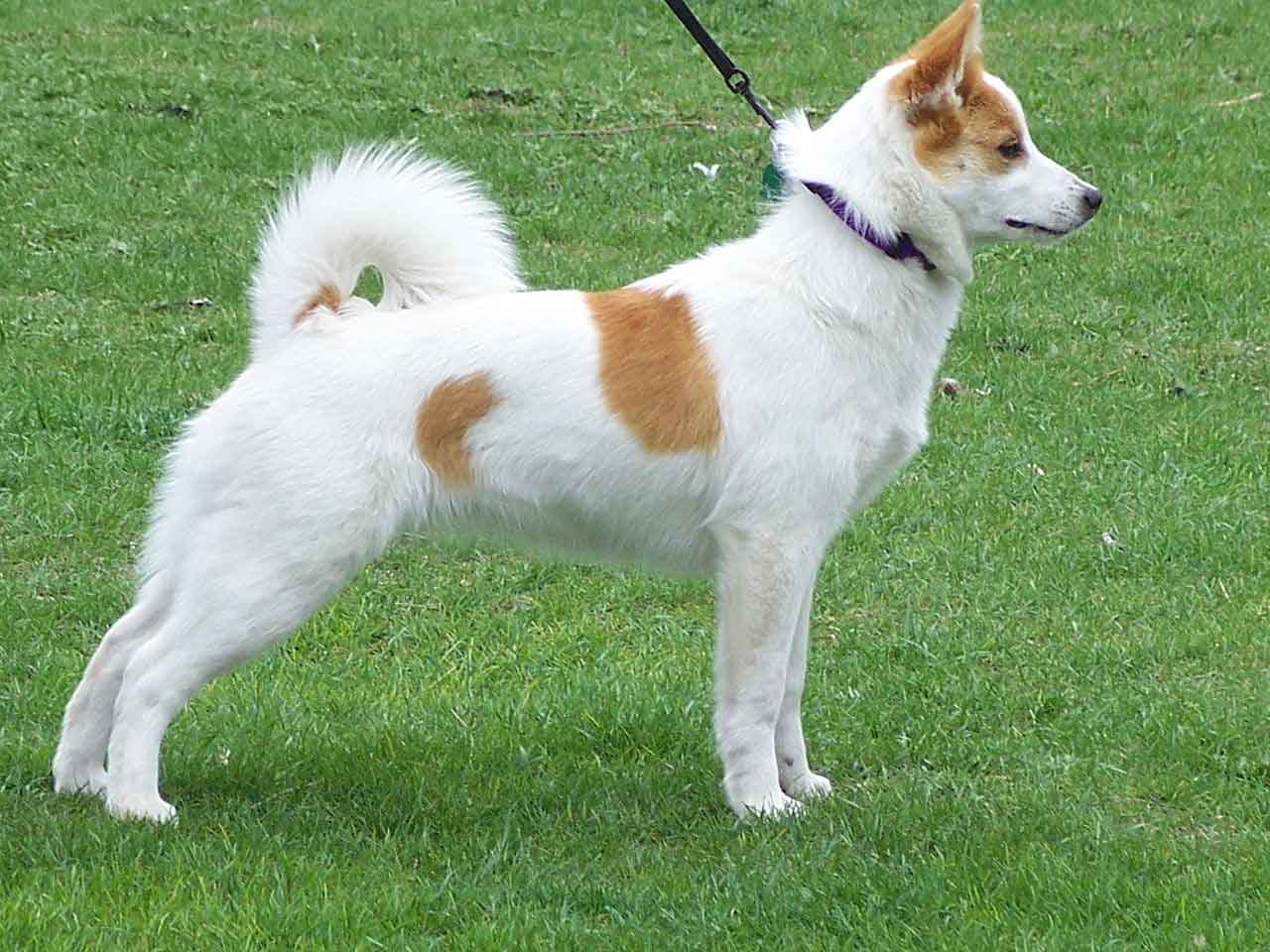
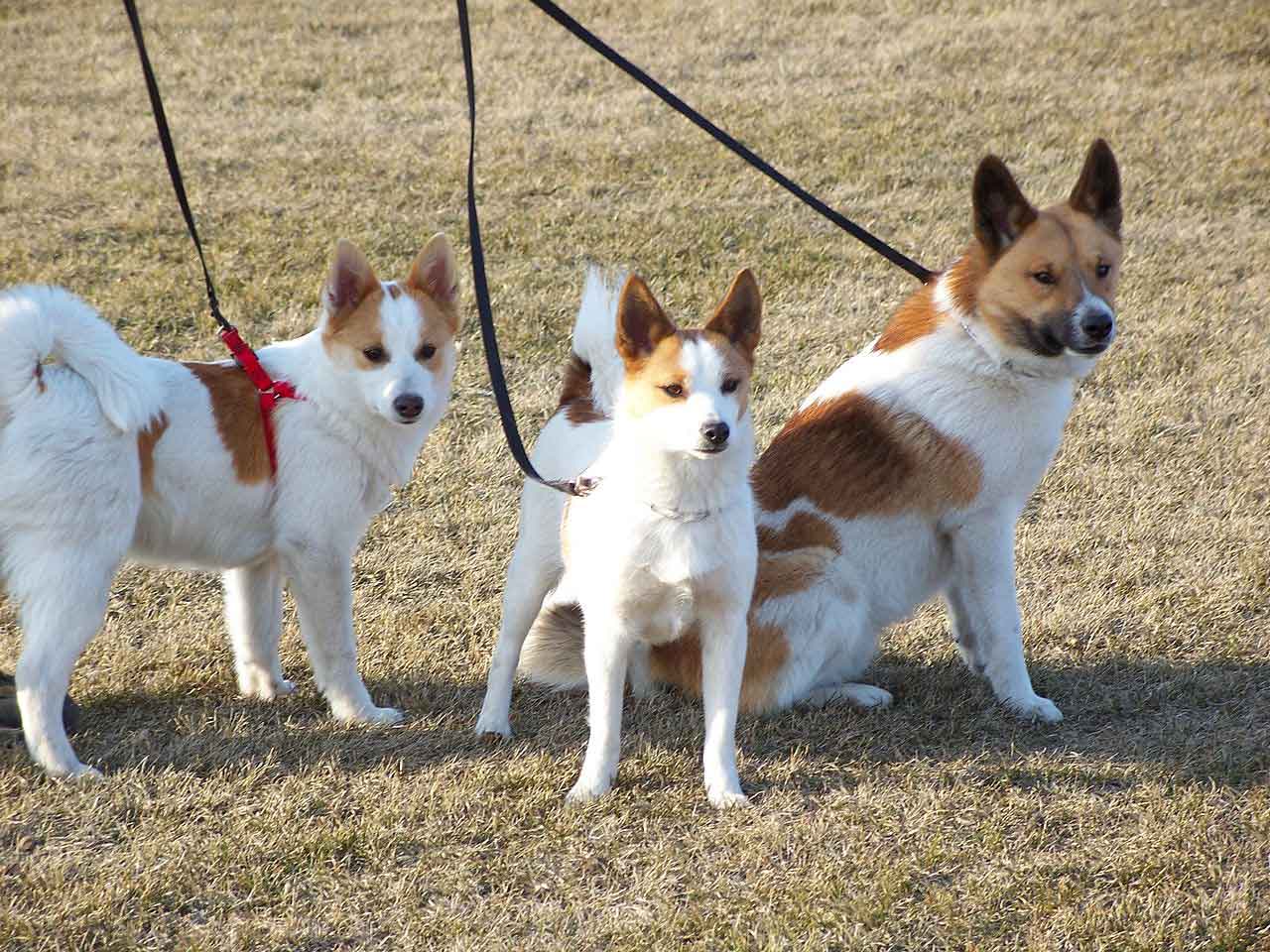
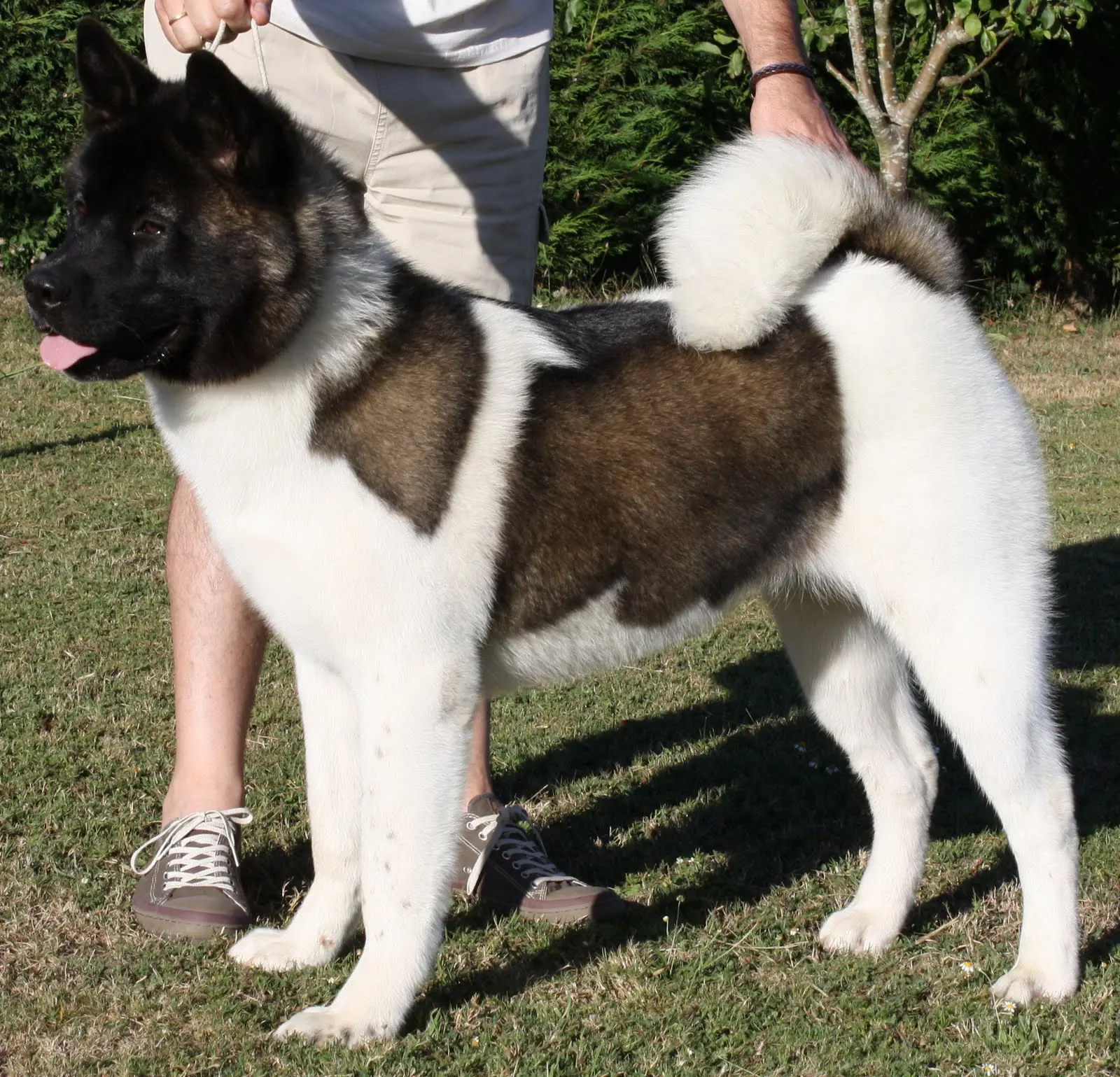
Greenland Dog
Dinamarca FCI 274 - Nordic Sledge Dogs

Greenlandรฉs

The Greenland Dog not an easy breed to control, it is necessary to thoroughly document their character.

Content

Characteristics "Greenland Dog"

Coexistence is important that you have with your new friend. Before considering the acquisition of a dog of the breed "Greenland Dog" you know certain factors. Not all breeds of dogs are apt to live in an apartment, you must take into account his character, their need for exercise, their interaction with other pets, their care and if you have small children, their level of tolerance towards them.

Adaptation โ“˜

2,0 of 5 stars (based on 1 review)

friendly dog โ€‹โ€‹โ“˜

4,0 of 5 stars (based on 1 review)

hair loss โ“˜

5,0 of 5 stars (based on 1 review)

Affection level โ“˜

3,0 of 5 stars (based on 1 review)

Need for exercise โ“˜

5,0 of 5 stars (based on 1 review)

Social need โ“˜

4,0 of 5 stars (based on 1 review)

Home โ“˜

4,0 of 5 stars (based on 1 review)

Toilet โ“˜

2,0 of 5 stars (based on 1 review)

Friendly with strangers โ“˜

2,0 of 5 stars (based on 1 review)

barking โ“˜

4,0 of 5 stars (based on 1 review)

Health โ“˜

4,0 of 5 stars (based on 1 review)

Territorial โ“˜

2,0 of 5 stars (based on 1 review)

Cat friendly โ“˜

1,0 of 5 stars (based on 1 review)

Intelligence โ“˜

4,0 of 5 stars (based on 1 review)

Versatility โ“˜

2,0 of 5 stars (based on 1 review)

Child friendly โ“˜

3,0 of 5 stars (based on 1 review)

Surveillance โ“˜

2,0 of 5 stars (based on 1 review)

joy โ“˜

5,0 of 5 stars (based on 1 review)

History

It belongs to the oldest dog breeds in the world.

For centuries, the Greenland Dog has accompanied the Inuit in their common homeland: It is said that more than 1.000 years he came with his ancestors from Siberia to North America. In the icy expanses it still serves the inhabitants as a versatile all-rounder and has always been bred specifically for its ability to work and its robustness.. Helped in hunting seals and polar bears, as well as in dragging loads through ice and snow, even over long distances. In times of need, it also served as food for the inhabitants in the past.

The outstanding physical abilities of the Greenland Dog they also sparked the interest of the first polar explorers, who saw him as an ideal companion for expeditions. These may include, Roald Amundsen, the most successful explorer of the Arctic and Antarctic, was also accompanied by Greenland dogs. The breed has its origin in Greenland and, therefore, is under the patronage of Denmark. Genetically, the Greenland Dog is identical to canadian eskimo dog, that is not recognized by the FCI. Today, the Greenland dog belongs to a total of four breeds of sled dogs. By his side are the Alaskan Malamute, the Samoyed and the Siberian Husky.

Physical characteristics

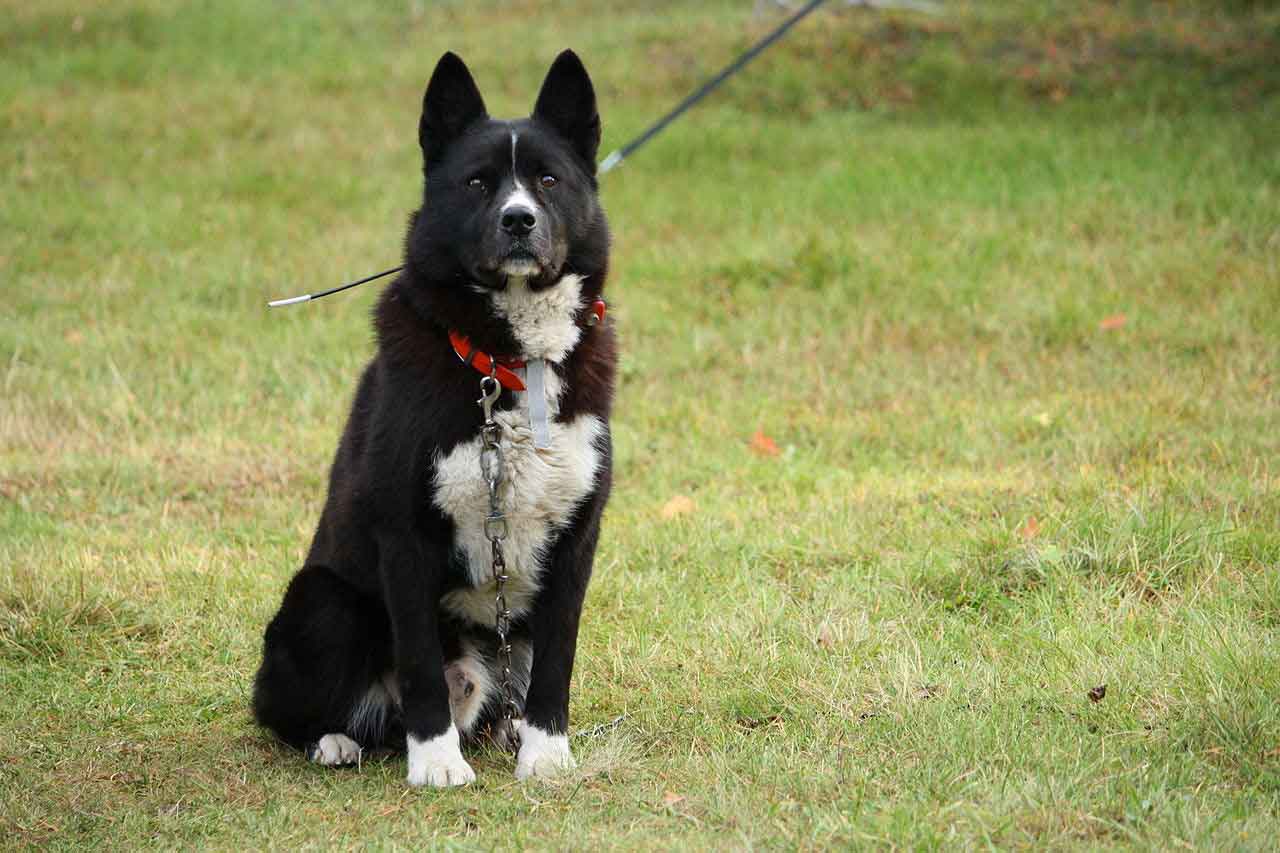
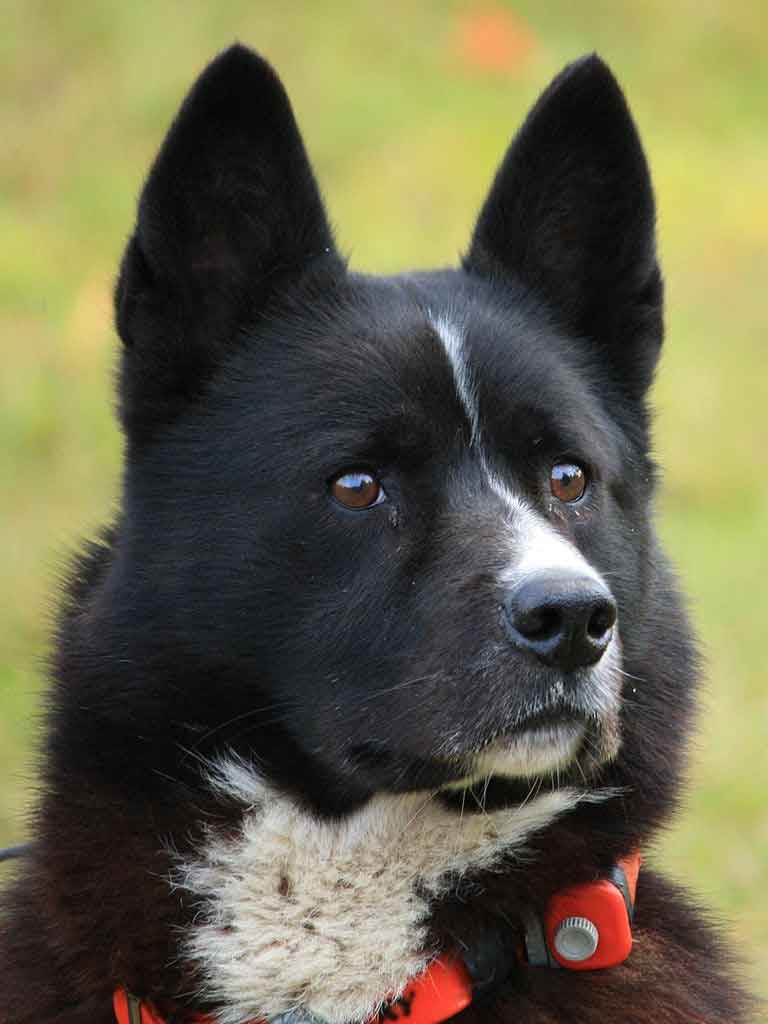
The characteristics of this dog have always been more important than its appearance. The strong build allows the Greenland Dog to drag loads through the snow for long periods of time. Size variations are possible, with males generally over 60 cm in height to the cross, females over 55 cm.. The ears are upright, triangular and slightly rounded at the tip. This sled dog wears its tail slightly curled on its back. The coat consists of a smooth undercoat and a fairly thick, smooth top coat. The fur is longer on the head, the legs and the lower part of the tail than the rest of the body. All coat colors except merle and albino are allowed. The eyes should be slightly slanted and dark – blue or different colored eyes lead to disqualification according to the standard.

Character and skills

From Greenland, the largest island in the world, this four-legged friend has conquered the hearts of many dog รขโ‚ฌโ€นรขโ‚ฌโ€นlovers. But, keeping a sled dog like this requires not only experience, but above all a lot of space and time to satisfy the need for movement of this robust worker.

The character of the breed is determined by its field of application: Like Inuit sled dogs, the greenlandic dogs they are very persistent and full of energy. It also, hunting companions are brave and show a pronounced hunting instinct. Because most of them lived in the pack and rendered their faithful services to several people, do not tend to bond strongly with people , but they are basically human friendly – and therefore are not suitable as watchdogs. But, they do not usually miss the opportunity to greet friends – or strangers – loudly and cheerfully.

Attention: The greenlandic dog may not bark much, but tends to howl a lot. He loves to live with other dogs in a pack.

Greenland Dog Education

Who wants to train a Greenland Dog need knowledge, experience with dogs and above all a lot of patience. A clear hierarchy is very important to the independent sled dog and will question it if the opportunity presents itself.. This applies to other dogs as well as their owners. You need a reliable consequence and a sensible education, accept your own head (stubborn) of the race. Exhausting this dog both physically and mentally is the basic requirement for a good education., as a little challenged sled dog will want to vent elsewhere, and this is probably not to the liking of its owners. It makes sense to go to puppy school with this dog, to be widely socialized with conspecifics of different sizes and breeds. If you want to train with the growing dog in a canine school, you should clarify in advance if the trainers have already had experience with the special character of sled dogs.

Greenland Dog Health

For centuries, robustness has been the main breeding objective of this four-legged friend, It is not surprising that the Greenland Dog be one of those breeds that have hardly any health restrictions. But, when i buy a puppy, look for parents who are free of hip dysplasia (HD) – some lines may have a slight tendency to this. As with all big dogs, the stomach can also be twisted, so it is important to take breaks after meals. Due to its origin and its fur, that adapts to icy conditions, These breeds are considered to be heat sensitive and, therefore, should not be kept in hot countries. Nor should you encourage your Greenland Dog to carry out sports activities above the 15 degrees Celsius. Your companion will feel correspondingly comfortable in the colder season. In winter, However, make sure you take proper care of the paws, as road salt can quickly lead to chapped or inflamed skin.

Greenland dog nutrition

One Greenland Dog in the use of sled dogs consumes enormous amounts of energy and needs an appropriately adapted diet. So, it is important to adapt the amount of food to the workload and the constitution of these dogs – information provided by manufacturers can only provide approximate guidelines. Of course, the puppy's energy requirement is not yet that high, since you should only move moderately anyway.

Feed your puppy three to four servings of a high-quality food per day.. Regardless of the age of your puppy, meat should be the first element of the diet and therefore the main component of food. It also, cereals have no place in dog food. If your quad performs well, increase the amount of food accordingly.

Food should be relatively high in fat and low in carbohydrates, as well as dietary fibers to supply your endurance athlete with sufficient energy. It is important that a session of physical activity is carried out with a time interval between the last meal – it is better to feed your Greenland dog three hours before training and in any case avoid too much exercise after feeding. This is the only way to minimize the risk of a life-threatening stomach twist. Of course, it is also important that fresh water is always available for your four-legged friend. On longer trips you should take adequate precautions and carry enough water with you.

Greenland dog care

A coarse-toothed comb is sufficient to comb the soft undercoat – this should be done regularly, especially during coat change, because the Greenland Dog misses – not only during this time – a relatively large amount of hair. If your partner has gotten dirty, usually it is enough to let the coat dry and then comb it well. Stubborn dirt should be gently rubbed off the coat with a damp cloth.. A bath is not normally necessary – if this happens, use a mild dog shampoo.

Especially with older dogs that move less, you should check if your partner is wearing out his claws enough and if necessary help with claw scissors. They also have eye and ear cleaners and dog tick tweezers ready to use when needed.. For dental care, for example, special dog treats are suitable. Or you can use a dog toothbrush and toothpaste, which is particularly effective in fighting tartar. Many dog รขโ‚ฌโ€นรขโ‚ฌโ€นowners perform this ritual for well-groomed small teeth regularly.. But, if you are considering this, you should get your puppy used to.

Employment for Greenland Dogs

Properly use a Greenland Dog in other latitudes it is a demanding task for which only a minority of dog lovers have enough time and space. Ideally, sled dog training should take place with him, which in turn is only possible to a very limited extent in most countries. An alternative is training with special trainers. As well โ“˜ Canicross offers sports owners the possibility to discover nature together with their partner. This four-legged friend also likes long walks through the woods as a supplement. Always be aware of your pronounced hunting instinct. It is essential that you have it under control to be able to enjoy relaxed walks. Always pay attention to an age-appropriate load and don't overload your four-legged companion.

Is a Greenland Dog right for me??

The Greenland Dog is a four-legged friend for sports connoisseurs who appreciate his independence and want to do many outdoor activities with him. Under no circumstances does this sled dog from the frozen expanses of Greenland belong to an apartment or even the city – nor does it belong to the warm regions of southern Europe. If you want to live with a greenlandic dog, you should think about buying two of them at once, because dogs like to be together with conspecifics. If you live in the country, you can keep your greenlandic dogs in a pack under the open sky in a leak-proof garden with an open kennel. So the heat sensitive sled dog can look for a shady spot in the summer – this should absolutely be available.

Of course, the Greenland Dog also happy with family connections. But, It is not the classic "one person dog". In any case, these companion animals are never primarily family or companion dogs, but rather working dogs – you should always be aware of this. If one can use your dog to his full capacity, they can live well with a family and so they are also extremely kid-friendly.

Cats or small animals are not suitable to live with this ambitious hunter. You don't have to be a professional dog if you decide to stay with this four-legged friend, but you must already have some experience with dogs and above all do not underestimate the time required for the workload. Due to these requirements, the Greenland Dog It is a breed for connoisseurs that can meet high maintenance demands.

Where do I find my desired Greenland dog??

One greenlandic dog is a rarity in Central Europe. So if you want a Greenland Dog move in with you, you should contact the Nordic dog breed clubs. They can arrange contacts with Greenland dog breeders – also abroad – and advise you on the breed requirements if necessary. If you are looking for a sled dog and cannot find one in your region, should consider whether one of the other three sled dog breeds would be an alternative: the Siberian Husky are much more common in Europe. With a little distance one also comes across relatively easily with breeders of malamutes de Alaska or samoyed. But: All breeds pose great challenges to their owners.

If you are looking for a greenlandic dog older and grown up, I should look for dogs of Nordic breeds, especially in animal shelters. Although you will most likely not find a purebred Greenlandic dog here, many Nordic dogs whose owners have underestimated their urge to move are waiting for a competent new home where they will be given enough occupancy. The most promising way to find them is to search the internet. If required, Nordic dog breed clubs can also give you tips on finding. Surely you will find a Nordic quadruped that will envelop you in a short time with its charm. Ideally, this person should not live too far from home., so that you and your potential new roommate can get to know each other before you decide to let her move in. Remember that these dogs live better with other dogs of the same species and clarify – with the breeder or the current foster home of the animal protection – how well the new dog fits in with an existing dog or if you decide to get a duo right away.

Images "Greenland Dog"

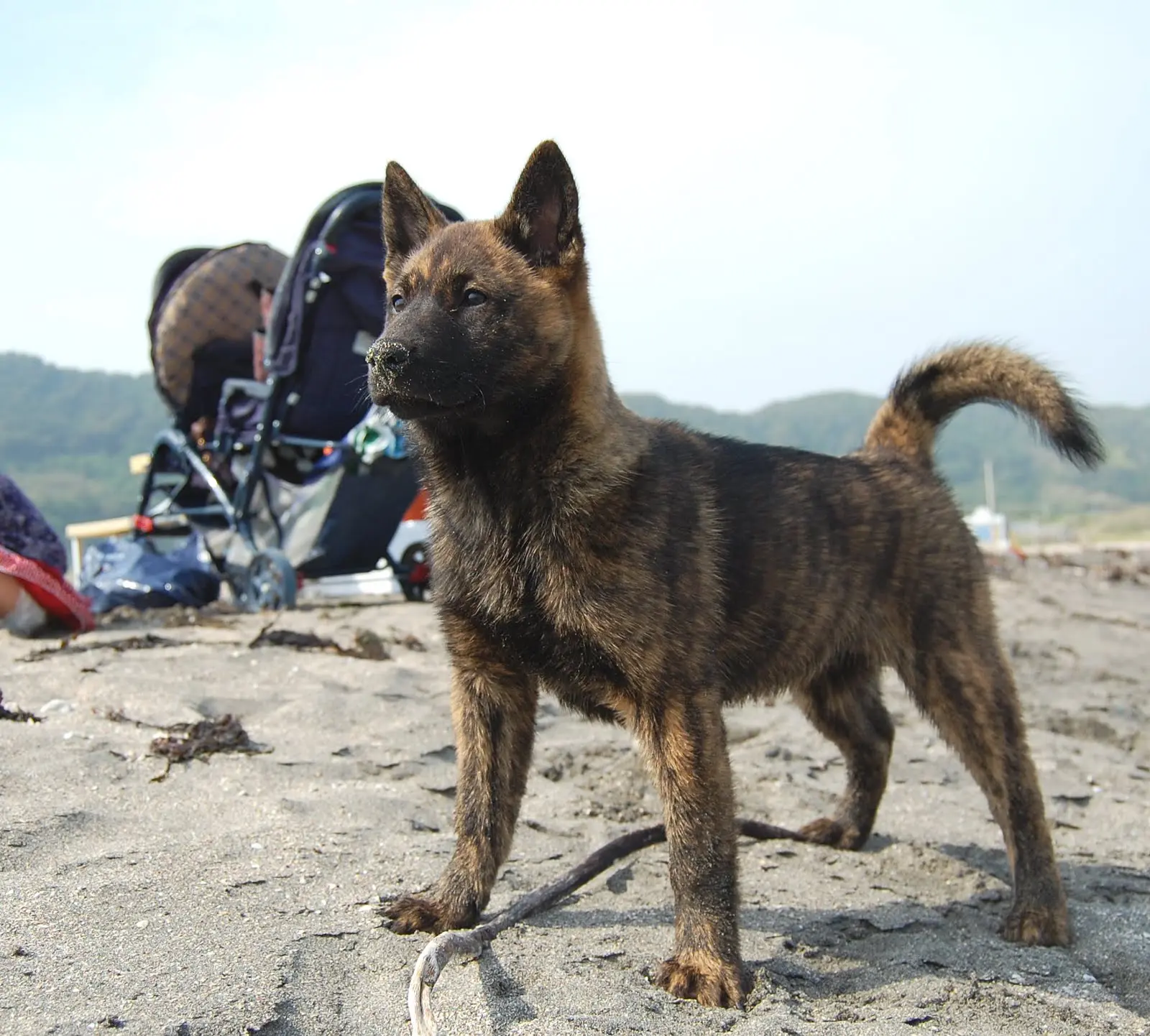
Photos:

1 – Lulo is the only Greenlandic dog kept as a pet in Upernavik, Groenlandia by Slaunger, edited by Thegreenj / CC BY-SA
2 – Greenland Dog by https://www.pikist.com/free-photo-sckxk
3 – Greenland Dog by https://www.needpix.com/photo/836500/greenland-dog-dog
4 – Greenland Dog by https://pixabay.com/es/photos/groenlandia-perro-de-groenlandia-1963005/
5 – Greenland Dog by https://www.pxfuel.com/en/free-photo-xodqt
6 – Greenland Dog by https://pixy.org/4674986/
7 – Greenland Dog by https://www.pikrepo.com/nemmp/brown-and-white-short-coated-dog-on-green-grass-during-daytime

Videos "Greenland Dog"

Type and recognitions:

  • FCI CLASSIFICATION:
  • Group :
  • Section : . .

Federations:

  • FCI – Group 5 – Section 1 Nordic Sledge Dogs. โ“˜
  • CKC – Nordic Sledge Dogs โ“˜
  • UKC – Nordic Sledge Dogs โ“˜

FCI breed standard "Greenland Dog"

Origin:
Denmark

Date of publication of the valid original standard:
03.11.2014

Use:

Sledge dog.


General appearance:

An extremely strong polar spitz, built to withstand tough sled dog work in arctic conditions. Some variation in size is allowed, assuming work ability and harmony are not affected.

IMPORTANT PROPORTIONS: The body is short and rectangular with a ratio of the height at the withers to the length of the body of 10 to 11. Slightly longer body is allowed in females.


Behavior / temperament:

The predominant temperamental qualities in the Greenland Dog are energy, mental strength and great courage. He is a passionate and tireless sled dog. With people โ€“ even strangers โ€“ he is friendly; because of his work as a sled dog, is not closely linked to a specific person and is therefore not suitable as a guard dog. When hunting seals and polar bears, he demonstrates a great hunting instinct..

Head:

---

Cranial region:
  • Skull: It is wide and slightly arched, wider between the ears.
  • Depression links (Stop): Defined, but not strongly marked.

facial region:

  • Truffle: big and dark, corresponding to coat color, Always brown (liver) in dogs with a red or brown coat and always dark in dogs with a sable coat.May turn pink during winter (โ€œsnow noseโ€).
  • Snout: Wedge shaped, wide at the base and tapering towards the nose, but without being pointed. The nasal bridge is straight and wide from the naso-frontal depression to the nose.
  • Lips: Slim and tight, very close to the teeth very strong. Jaws/Teeth: Powerful jaws with regular teeth, healthy and strong. Scissor bite.
  • Eyes: Dark eyes are preferred, but the color according to the coat is allowed. They are implanted in a slightly oblique position, but never sunken or bulging. The expression is frank and showing courage. Eyelids are tight.
  • Ears: Rather small, triangular, with rounded tips, carried firmly erect. The ears are very mobile and expressive regarding their position.

Neck:

Very powerful and rather short.

Body:

Strong and rather compact, slightly longer than the height at the withers.

  • top line: Horizontal or falling very slightly.
  • Back: Straight.
  • Pork loin: Width.
  • Rump: slightly sagging.
  • Breast : deep and wide, but the ribs should not be barreled.
  • Belly: Following the chest line. It is allowed to be slightly retracted.

Tail:

High implementation, thick and bushy. Carried in a curve or in a slight curl on the back.

Tips

PREVIOUS MEMBERS: Seen from the front the forelimbs are perfectly straight, with powerful muscles and heavy bones.

  • Shoulder: Moderately thrown back.
  • Arm: Straight and strong, slightly longer than scapulae. Elbow: Attached to the body, but allowing free movement.
  • Forearm: Straight and strong.
  • Articulation of the carpus: Strong and flexible.
  • Metacarpus: Strong and elastic, only slightly oblique.
  • Previous feet: Rather large, powerful and rounded, with strong nails and pads.

LATER MEMBERS: Seen from behind they are perfectly straight, very muscular, with powerful bones and moderate angulations.

  • Thighs: Powerful and very muscular.
  • Hock: Wide and strong, moderately angled. Hind feet: Same as previous feet.

Movement:

An efficient trot, harmonious, fluent and tireless is the most essential for a sled dog. On the track the dog should be presented on the free leash in a moderate trot to demonstrate good reach in front and good rear thrust. Seen head on when walking, the Greenland Dog does not move on a single track, but as the speed increases, the limbs gradually converge inward until the feet follow the center line.

Mantle

  • Fur: Double layer: soft, dense undercoat and straight, rough outer coat, no curls or ripples. On the head and the limbs the hair is rather short, on the body it is longer and more generous. The coat is long at the bottom of the tail, giving it a bushy appearance.
  • Color: Any color โ€“ solid or particolor โ€“ is allowed, except albinismand dogs with merle markingsthat should be disqualified.


Size and weight:

Height to the cross:

  • In males: 60 cm or more,
  • In females: 55 cm or more.


Fouls:

Any deviation from the aforementioned criteria is considered as a fault and the severity of this is considered to the degree of the deviation to the standard and its consequences on the health and well-being of the dog., and the dog's ability to perform its traditional task.

  • Light bones
  • Short members, close body of terrain.
  • Shy temperament.

SERIOUS FAULTS:

  • Conditions that negatively affect the general well-being of the dog.
  • Long, soft coat.
  • Ears that are not held firmly erect.

FALTAS DESCALIFICANTES:

  • Aggressiveness or extreme shyness.
  • Any dog โ€‹โ€‹showing clear signs of physical or behavioral abnormalities must be disqualified..
  • albinism.
  • Merle brands.
  • Eyes of different colour.
  • Blue eyes or gazeos.


N.B.:
  • Males should have two normal-appearing testicles fully descended into the scrotum..
  • Only functionally and clinically healthy dogs, with the typical conformation of the breed, should be used for parenting.

The latest changes are in bold.

TRADUCCION: Federation Canรณfila Mexicana, A.C. (Mvz Mauricio Martรญnez). Reviewed by Mr.. J. Nallem.

Source: F.C.I - International Cynological Federation

Alternative names:

1. Kalaallit qimmiat (Qimmeq), Grรธnlandshund, Grรผnlandshund, Esquimaux Dog (English).
2. Groenlandais (French).
3. Grรธnlandshund (German).
4. Gronlandshund (Portuguese).
5. Esquimal de Groenlandia, Groenlandรฉs (espaรฑol).

โ–ท The world of Pets: Dogs, cats, birds, reptiles, amphibians

Shikoku
Japรณn FCI 319 - Asian Spitz and related breeds

Shikoku

Less stubborn than the other Spitz breeds, the Shikoku, he is very little known outside his native land, Japan

Content

History

Ceramic figures from Japan that show representations of dogs have been preserved since ancient times., that look like this Japanese breed. The current breed dates back to crosses with the now extinct inu Japanese. The original field of application of these dogs was hunting, more precisely hunting in the prefecture of Kochi on isla de Shikoku – That is why the race is sometimes called ยซperro Kochiยซ. But, name Tosa-Inu, which is used in part in Japan, it's misleading, Because under the name ยซTosaยปThere is also another Japanese race. It also, three varieties of Shikoku, which were named after the respective region in which they live: pity, Hongawa and Hata. As the Hongawa region was the most difficult to access in the past, This variety is considered to be the least modified by other influences and the closest to the ideal of Shikoku. Today, the Shikoku It is considered the national dog of Japan along with the Akita.

Photos:

1 – ยซShikoku Inuยป by https://pxhere.com/en/photo/1589477

Shikoku Physical Characteristics

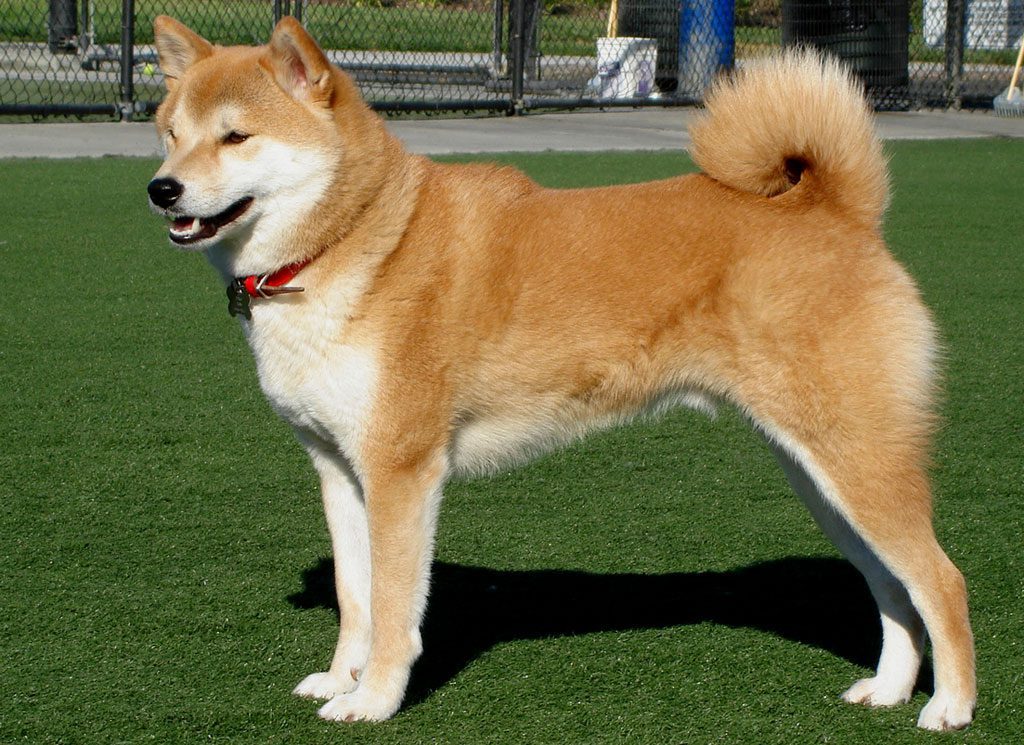
the typical silhouette Spitz characterizes the Shikoku: It has relatively small, erect ears and a compact body. The tail is well placed and curled over the back. This medium-sized breed with a height at the withers of about 53 cm is located between the Akita bigger and the Shiba Inu smallest within the Japanese family Spitz. For many laymen in Europe this four-legged friend is also reminiscent of a dog which is seen much more often here, the Siberian Husky. The Shikoku coat can be black sesame or white sesame. The dense coat consists, as is typical in dogs of the type Spitz, on a long, hard top coat over a soft, dense undercoat.

Shikoku character and abilities

Shikoku

The loyalty, intelligence and a certain stubbornness form the character of this dog with an agile nature. He is vigilant and behaves in a neutral manner to the point of distancing himself from strangers. When they meet conspecifics, conflicts can occur, particularly with males, because the Shikoku tend to dominate. As a hunting dog it is characterized by its corresponding sharpness.

His original behavior can also be seen in his dealings with people – he likes to lick his reference people and looks for physical contact. Sometimes shows a conspicuous preference for unpleasant odors from the human point of view. The Shikoku He is very agile and likes to be outdoors – however impetuous it may be on the move here, a Shikoku busy behaves calmly and pleasantly indoors, where he appreciates quiet hours and pampering. Although he is a stubborn dog, not as strong as the other races of Spitz from Japan. But: The special character of Spitz not suitable for all dog lovers.

Photo:

2 – Shikoku, female. Colour: sesame by https://commons.m.wikimedia.org/wiki/File:Shikokusesame1.jpg

Shikoku Care

The coat of this Japanese hunting dog is robust and easy to care for, but it must be brushed regularly, especially during coat change twice a year. advice: If you brush your dog every day during this time, It will greatly reduce hair loss at home and also shorten the "hairy phase" in a few days. Outside these few weeks of the year, grooming every few days is enough. Check your ears right now too, so you can clean them with dog ear cleaner if needed. You must bathe your dog very rarely, at most every few months, and then use a mild dog shampoo. But, it makes sense to get the puppy used to bathing. But, it is usually sufficient to simply remove the dried dirt from the coat. Check the length of the claws – especially with older dogs – to shorten claws that are too long with special pliers. This is how injuries are prevented.

Shikoku Education

If he Shikoku respects his two-legged pack leader as a wise and just leader, will gladly follow your instructions. But, first you need to earn the respect of this dog. Be consistent and bring some tolerance to the small, thick skull of this four-legged friend, that will never be completely subordinate.

Screaming or harshness will not help you and will destroy your relationship with this loyal companion.. A thorough knowledge of dog training is needed to direct the dominance and hunting instinct of dogs. Shikoku in regular courses. Please, keep in mind that only a well-trained breed of dog can make a well-behaved friend, otherwise you will look for another job.

Attending classes with dog trainers in general can be of great benefit, so that the Shikoku that tends to dominate, get stronger in social affairs and learn to get along with other dogs. Male dogs in particular can face challenges that need to be countered from puppyhood. So do not underestimate the importance of the socialization phase, because any omission can only be corrected with difficulty.

Shikoku Health

These robust dogs are considered tough and persistent. They hardly have a genetic disposition for disease, if the breeding is done responsibly. It goes without saying that you should only buy puppies from a reputable breeder who belongs to a club.. The breeder will give you competent information about the care of your animal and show you the corresponding tests. In good health, Shikoku reaches an average age of about 13 years.

Where can I find my Shikoku?

The breed is one of the very rare breeds outside of Japan. Consequently, find a puppy of Shikoku can be difficult if you have decided to have one as a new member of the family. But don't despair, because there are a handful of serious breeders in Europe who are dedicated to this breed. The first official litter outside of Japan was in 2000 in the Netherlands, where the breeders of Shikoku continue to regularly deliver litters to responsible hands. But, you may have to accept a longer trip before you can give your puppy a hug from Shikoku. No matter how rare the breed is, don't reduce the demands you can and should make on serious parenting. Learn about puppy care, of your health, ask the breeders and ask them to show you the appropriate tests, for example, in connection with exams for hip dysplasia. Of course, the breeder must also belong to a club. Will be happy to give you some good advice, but in return you will also have some questions to see if you can offer a good home to one of your protรฉgรฉs.

If you are looking for a Shikoku adult, you will need a lot of luck in europe. It is more promising to look for crosses of type Spitz in animal shelters and also get an impression of the breeds of Nordic Spitz.

Characteristics "Shikoku"

Coexistence is important that you have with your new friend. Before considering the acquisition of a dog of the breed "Shikoku" you know certain factors. Not all breeds of dogs are apt to live in an apartment, you must take into account his character, their need for exercise, their interaction with other pets, their care and if you have small children, their level of tolerance towards them.

Training ?

2,0 of 5 stars (based on 1 review)

Suitability of the apartment ?

2,0 of 5 stars (based on 1 review)

Can be alone all day ?

2,0 of 5 stars (based on 1 review)

Suitable as a first dog ?

2,0 of 5 stars (based on 1 review)

Weight gain ?

3,0 of 5 stars (based on 1 review)

Health ?

5,0 of 5 stars (based on 1 review)

Intelligence ?

4,0 of 5 stars (based on 1 review)

Kindness with child ?

4,0 of 5 stars (based on 1 review)

Tendency to bite ?

3,0 of 5 stars (based on 1 review)

Tendency to bark ?

4,0 of 5 stars (based on 1 review)

Tendency to flee ?

5,0 of 5 stars (based on 1 review)

hair loss strength ?

4,0 of 5 stars (based on 1 review)

Suitable as a guard dog ?

4,0 of 5 stars (based on 1 review)

Joy ?

4,0 of 5 stars (based on 1 review)

Cat friendliness ?

2,0 of 5 stars (based on 1 review)

Power level ?

4,0 of 5 stars (based on 1 review)

Videos "Shikoku"

Shikoku Ken / Shikoku Inu play
Shikoku ken in Japan Spring 2014 Shikoku dog
Shikoku ken in Japan Spring 2014 ๅ››ๅ›ฝ็Šฌ

Type and recognitions:

  • FCI CLASSIFICATION:
  • Group :
  • Section : . .

Federations:

  • FCI – Group 5: Spitz-type dogs and primitive type – Section 5: Asian Spitz and related breeds. โ“˜
  • CKC – [Without Miscellaneous] โ“˜

FCI breed standard "Shikoku"

Origin:
Japan

Date of publication of the valid original standard:
16.06.1999

Use:

Hunting and companion dog.


General appearance:

It is a medium-sized dog; And his musculature is well balanced, well developed and well defined. The ears are erect and the tail is curled or in the form of a hoz. Its structure is strong, Compact and solid bones.

IMPORTANT PROPORTION : The ratio of the height at the withers to the length of the body is 10 : 11.


Behavior / temperament:

It is a great resistance dog, vivacious with a sense of smell and acute ear. Is energetic and very alert, In addition to an enthusiastic hunter. With his master he is docile.

Head:

---

Cranial region:
  • Skull : Wide forehead.
  • Depression links (Stop) : shallow, although defined.

facial region:

  • Nose : Black.
  • Snout : Rather long and wedge -shaped. The nasal helm is straight.
  • Lips : Tight.
  • Jaws / Teeth : Strong teeth. The joint is in the form of scissors.
  • Cheeks : Well developed.
  • Eyes : Relatively small, triangular and well separated. Its color is dark brown.
  • Ears : They are small, triangularly and slightly inclined to the front. They appear well erect.

Neck:

Thick and strong.

Body:

  • Cross : High and well developed.
  • Back : Straight and strong.
  • Pork loin : Wide and muscled.
  • Breast : Deep. The ribs are well sprung.
  • Belly : Well collected.

Tail:

High implementation, It is thick and carried on the back firmly curved or curved like a hoose. The tip almost reaches the corvejรณn when the tail is down.

Tips

PREVIOUS MEMBERS :

  • Shoulder : Moderately inclined and developed muscles.
  • Elbows : They are well attached to the body.
  • forearms : Straight and well defined.
  • Metacarpus : Slightly inclined.

LATER MEMBERS : They're strong, well-developed muscles.

Hock : Moderately angular and very firm.

FEET : Well together; The fingers are well arched. The pads are hard and elastic. The nails are hard and black, or a dark color.

Movement:

Elastic, of small strides, Although light. The movement is fast, And it is possible to observe a quick rotation.

Mantle

HAIR : The outer hair of hairs is rough and straight. The undercoat of hairs is soft and dense. The tail hair is rather long.

COLOR : Sesame, Black Sesam and Sesam Red.

Sesam color definition :

โ€ข Sesame : Proportionate mix of black and white hairs.
โ€ข Black Sesam : More black hairs than white.
โ€ข Sesam rojo : Coat color red, mixed with black hairs.


Size and weight:

Height to the cross :

  • In males : 52 cm..
  • In females : 46 cm..

A tolerance of +/- 3 cm..


Fouls:

Any deviation from the aforementioned criteria is considered as a fault and the severity of this is considered to the degree of the deviation to the standard and its consequences on the health and well-being of the dog..

โ€ข Inverted sexual characteristics.
โ€ข Lightweight lower prognathism.
โ€ข Wide.
โ€ข Shyness.

MISS PLAYOFFS

โ€ข Aggressive or fearful dog.
โ€ข Pronounced upper or lower prognathism.
โ€ข Ears that do not appear upright.
โ€ข Hanging tail, short tail.

Any dog โ€‹โ€‹showing clear signs of physical or behavioral abnormalities must be disqualified..


N.B.:

Males should have two normal-appearing testicles fully descended into the scrotum..

Source: F.C.I - International Cynological Federation

Alternative names:

1. Kochi-ken, Shikoku-ken, Shikoku inu (English).
2. chien de Kลchi, shikoku-inu, kochi-ken, Shikoku inu (French).
3. Shikoku inu, Kochi-Ken, Shikoku-ken (German).
4. Shikoku inu, kochi-ken, Mikawa Inu, Shikoku-ken, cรฃo-lobo japonรชs (Portuguese).
5. Kochi-ken, Shikoku-ken, Shikoku (espaรฑol).

โ–ท The world of Pets: Dogs, cats, birds, reptiles, amphibians

Canadian Eskimo Dog
Canadรก FCI 211 . Nordic Sledge Dogs

Esquimal Canadiense

The dog Canadian Eskimo Dog it's a sled dog, the North of Canada natural. Possibly this is one of the most cold tolerant dogs.

Content

History

Similar to the Hotocho (or Mongolian sheepdog), the Canadian Eskimo (or Qimmiq en inuktitut) it is a very old canine breed, perhaps one of the first to accompany man to this part of the globe, almost ago 4.000 years. Faithful companion of the Inuit people of Thule, was bred and trained to become a tough working dog, able to travel long distances at a steady pace. It also, your complexion, their excellent sense of smell and intelligence were used to locate the breathing holes of seals for hunting and to protect families from musk oxen and polar bears..

In the Decade of 1920, the Canadian Eskimo remained closely associated with the Inuit culture, With almost 20.000 Eskimos working alongside men in the northern territories. But, this golden age was not going to last. In effect, the arrival of the snowmobile in the years 60, the massive and systematic killing of Inuit dogs by the Canadian government (officially, for public health reasons – unofficially, say some, to intimidate and forcibly assimilate Inuit peoples, eliminating their main work tool and a symbol of their culture), the introduction of new breeds of sled dogs such as the Siberian Husky, as well as a certain vulnerability to the diseases that these latter bring., are literally decimating purebred Canadian Eskimo populations. In 1963, there was only one Canadian Eskimo Dog registered in the breeding book of the Canadian Kennel Club, which then declared the race extinct.

This statement proved premature. But, it did not count on the tenacity of William Carpenter, Bill Thompson, John McGrath (founders of the Research Foundation of the Canadian Eskimo Dog) and Brian Ladoon (breeder and musher, that is to say, sled driver). With government support to preserve Inuit cultural heritage, the quartet undertook an expedition to the most remote regions of the Canadian Arctic in order to find purebred Canadian Eskimos. Their efforts paid off and, thanks to the specimens unearthed in the Inuit villages, a breeding program was launched. few years later, in 1970, there was nothing less than 200 animals. Today, this figure reaches the 300 individuals around the world.

Although the United Kennel Club American recognized the Canadian Eskimo as a race in its own right in 1996, was not up 2018, year in which the breed was recognized by the International Cynological Federationand (FCI) and Central Canine Society, when the breed really came to the forefront of the canine world and the general public and enlightened fans learned not only about the qualities of this dog, but also the precariousness of its existence.

But, although some specimens have crossed the Atlantic to the United Kingdom, the spread of the breed remains for the time being essentially limited to Canada and the United States, and even there, the breeders of Canadian Eskimo Dog they are still scarce.

Physical characteristics

At first sight, it is clear why the Canadian Eskimo has helped the Inuit people for so long. Strength, power, resistance and vigor are the first adjectives that come to mind when describing this dog capable of constant effort in difficult environmental conditions.

The Canadian Eskimo is of medium build, with a strong neck and chest, but with legs of medium height. With its well defined bones and muscles, his powerful and majestic physique reflects that he is mainly a very resistant dog, not very fast. It should be noted in passing that females are slightly smaller and less muscular than males.

It is also interesting to note that the Canadian Eskimo is quickly big enough to work: although it does not reach full maturity until around the 3 years of age, it is capable of transporting loads from the 7 months. Puppies are often described as miniature adults, with the ears upright and upright on the skull and the tail coiled from the third week.

Like most of the Spitz, the head of the Canadian Eskimo is angular and elevated, with straight, thick ears. The eyes are placed at an angle and give the animal a serious attitude. The bushy tail is carried high or curled on the back.

The coat of the Canadian Eskimo It is thick, with a smooth top layer and a dense and uniform wool bottom layer, providing optimal thermal insulation for adverse weather conditions. This makes them one of the most cold-adapted dog breeds.. Males also have a long mane that covers the neck and shoulders. Females usually have the shortest upper layer, which contributes to give the impression of a finer animal.

The breed standard does not allow smooth fur. So, the Canadian Eskimo must always have a coat with a combination of colors, without the distribution of one color taking precedence over the others:

  • Completely white fur with pigmentation around the eyes, on the nose and lips (is not an albino);
  • white coat with only a very small amount of red, buff (including cinnamon shading), gray or black around the ears and eyes;
  • white coat with red markings, beige, cinnamon, gray or black around the ears and eyes, or the head completely marked with these colors, sometimes with small spots of the same color on the body, usually around the hips or on the flank;
  • Red and white, or buff and white, or cinnamon and white, or black and white, with a distribution to 50% of each of the two colors in the different parts of the body;
  • red or beige or cinnamon, with white on the chest and/or on the legs and lower part of the body;
  • Sabre body or black or dark gray, with white on the chest and/or on the legs, under the body, occasionally extended to the neck like a gola;
  • silvery grey or greyish white fur;

Brown bottom layer and black top layer.

The white mask shaded around the eyes and/or around the nose, with or without dots above the eyes, it is a common physical characteristic in dogs with a well-defined color on the head. Very rarely, the dots above the eyes, as well as the cheek marks, can be buff-colored, adding a third color to a normally bicolored dog.

Size and weight

▷ Male size: 58 to 70 cm.
▷ female size: 50 to 60 cm.
▷ Male weight: 30-40 kg
▷ female weight: 18-30 kg

Character and skills

The character of Canadian Eskimo reflects the harsh environmental conditions in which he lives and the work that dots his daily life. So, it is closer to the wild animal domesticated by the tribal peoples in a logic of labor collaboration than to a real pet overflowing with affection for its master. Intelligent, brave, but always on guard, so sometimes it may seem distant.

This does not prevent this dog from being gentle and affectionate with his family, or express a friendly curiosity towards strangers your family welcomes. But moderation remains the key word for him.. The Canadian Eskimo rarely celebrates his master, although he does not hesitate to ask for a caress as a sign of recognition. As a pack dog, is fiercely loyal to his master, whom he considers the leader of the clan, and is less distant with it. Beware who shows signs of animosity towards this leader: the Canadian Eskimo it will quickly remind you of the meaning of the word respect, with many grunts.

The herds of Canadian Eskimo have a reputation for being very organized. From time to time some fights and scratches may occur, but it is not a sign of serious struggle or rebellion against the established leader.

It also, unlike many recent dog breeds, the Canadian Eskimo has retained a very sharp hunting instinct. The slightest encouragement, either the food, the start of a game or a fight, gives rise to a quick and very enthusiastic response by this dog. In fact, this dog is more suitable for a family of adults and should never be left with children, as this could lead to unintentional injury. You can live with dogs that do not belong to your herd, but with some reservations, since he tends to regard any animal smaller than him as a prey to devour rather than as a companion with whom to live. The cats, rodents and small dogs will be tested if they have to cohabit with it.

Last, as an outdoor dog par excellence, who appreciates cold temperatures and prefers to sleep outdoors if given the opportunity, the Canadian Eskimo is not at all a breed of dog adapted to a floor. They need to spend many hours outside each day to maintain their physical and mental fitness.. Sporty and hyperactive dog, used to pulling sleds, the ideal for him is to have a master as tough as him. In other words, it is a perfect companion for those who want to practice cani-rando, cani-mountain biking, ski joering, canikart… Without physical activity up to their capabilities, becomes a destructive and/or aggressive dog.

Last, being a very intelligent dog, is the king of escapes and mischief. There is no delicate plant or reinforced fence that resists it. If you have decided to be a runaway dog, it will be very difficult to stop.

Health

The Canadian Eskimo has excellent physical dispositions that make it resistant to many of the genetic diseases that are common in dogs of similar breeds.

But, although they are a force of nature in their natural environment, are more susceptible to parasites and skin diseases that develop in warmer temperatures. Thus, it's important not to forget dog vaccine reminders, and give regular preventive treatment against ticks and fleas.

It also, like many Nordic dogs, has predisposition to the following diseases:

– Hip Dysplasia
– waterfalls
– Arthritis;
– gastric torsion;
– entropion.

Life expectancy

10 – 15 years

Characteristics "Canadian Eskimo Dog"

Coexistence is important that you have with your new friend. Before considering the acquisition of a dog of the breed "Canadian Eskimo Dog" you know certain factors. Not all breeds of dogs are apt to live in an apartment, you must take into account his character, their need for exercise, their interaction with other pets, their care and if you have small children, their level of tolerance towards them.

Adaptation โ“˜

4,0 of 5 stars (based on 1 review)

friendly dog โ€‹โ€‹โ“˜

3,0 of 5 stars (based on 1 review)

hair loss โ“˜

3,0 of 5 stars (based on 1 review)

Affection level โ“˜

4,0 of 5 stars (based on 1 review)

Need for exercise โ“˜

5,0 of 5 stars (based on 1 review)

Social need โ“˜

3,0 of 5 stars (based on 1 review)

Home โ“˜

2,0 of 5 stars (based on 1 review)

Toilet โ“˜

2,0 of 5 stars (based on 1 review)

Friendly with strangers โ“˜

3,0 of 5 stars (based on 1 review)

barking โ“˜

2,0 of 5 stars (based on 1 review)

Health โ“˜

2,0 of 5 stars (based on 1 review)

Territorial โ“˜

4,0 of 5 stars (based on 1 review)

Cat friendly โ“˜

3,0 of 5 stars (based on 1 review)

Intelligence โ“˜

4,0 of 5 stars (based on 1 review)

Versatility โ“˜

3,0 of 5 stars (based on 1 review)

Child friendly โ“˜

4,0 of 5 stars (based on 1 review)

Surveillance โ“˜

3,0 of 5 stars (based on 1 review)

joy โ“˜

3,0 of 5 stars (based on 1 review)

Type and recognitions:

  • FCI CLASSIFICATION:
  • Group :
  • Section : . .

Federations:

  • FCI – Group 5 – Section 1 Nordic Sledge Dogs. โ“˜
  • CKC – Nordic Sledge Dogs โ“˜

FCI breed standard "Canadian Eskimo Dog"

Origin:
Canada

Date of publication of the valid original standard:
28.02.2018

Use:

For centuries this breed was used as a draft animal and was able to drag between 45 and 80 kg. per dog covering distances of 15 to 70 miles per day. It was also used as a hunting dog, to locate seal breathing holes for Inuit hunters. As a hunting dog, it also attacked and kept at bay the musk ox and the polar bear for the Inuit hunters.. In summer, The dog was used as a pack dog that could carry up to 15 kg.


General appearance:

The Canadian Eskimo Dog is a dog of moderate size, powerful build, with thick neck and chest and medium length legs. Typical of the Spitz family of dogs, has a wedge-shaped head with tall thick ears. The eyes are set obliquely giving a serious appearance. The dog has a bushy tail raised or curled over its back. About the same height at the hips as at the withers, medium to large in size and muscular, the dog displays a majestic and powerful physique that gives the impression that it is not made for speed but for hard work. Above all, the body must be muscular and not fat. Females will have a smaller and less muscular body than males. In the winter, the body is covered with an outer layer of straight or erect hair; underneath is a dense low-voltage layer that allows the animal to easily withstand the rigors of high latitudes. A mane-like growth of longer hair will appear over the neck and shoulder in male specimens.. The entire conformation of the Canadian Eskimo Dog must be one of strength, power and endurance balanced with agility, vigilance and audacity. The female of the breed will usually have a shorter coat than the male and will always be significantly smaller than the male.. Like young bitches, will be more boneless, among other things, with a narrower head that tends to produce a friendlier face than with men. Both males and females of the breed are known to have a rapid growth rate reaching working size around seven months. But, the maturation process extends to at least three years of age, giving them a very majestic look. The cubs have often been described as miniature adults, with erect ears and a curly tail at young ages between three and five weeks. There may be occasional periods during the adolescent growth stages when the ears may not be fully erect., but it is important to note that the Canadian Eskimo Dog's ears do not have the same gradual growth of erectness around four months of age., as seen in some other breeds.

important proportions:

The width of the forehead between the ears of males shall be 5 to 6 inches (13 to 15 cm.). In females, the distance will be 4-1 / 2 โ€“ 5-1 / 2 inches (11-14 cm.).


Behavior / temperament:

The temperament of the Canadian Eskimo Dog should reflect the tough, hardworking breed that it is. It should not be viewed as a domestic pet, but as a primitive dog originally domesticated by the Inuit for specific tasks in a harsh arctic environment. In general, mature canadian eskimo dog is kind and affectionate to the average guy, enjoying the attention. Even with strangers, dogs are rarely distant. Usually, exhibit fairly calm friendship and harmless curiosity or become completely distant. The dog is very pack oriented and, if raised as a group, dominant and subordinate roles will be played under the leadership of a fully dominant or boss dog. Behavior within a group or herd is generally well structured and controlled, but it is not uncommon to see battle scars or torn ears on dogs that originate from breeding areas where dogs are raised in groups or packs.. Compared to modern domestic breeds, The Canadian Eskimo Dog has an almost excessive response to any stimulus, either food, work, defense or game. For this reason, the dog should be a companion for adults and should not be considered a child's pet.

Head:

---

Cranial region:

Skull: Massive but well proportioned being wide and wedge-shaped. Although it is often described as a species of wolf, the head of the canadian eskimo dog has a higher forehead. Immature females will have a much narrower skull than the male.

facial region:

  • Truffle: The pigmentation of the nose will vary from black to light brown (especially in lighter colored dogs with red, cream or cinnamon on the body). Butterfly noses, sometimes they appeared with light brown noses.
  • Snout: Tapered and medium length.
  • Belfos: Black or brown with pink.
  • Mwalking / Teeth: The jaws are heavy and powerful and have large teeth with well-developed canine teeth.. The incisors meet in a scissor bite.
  • Eyes: In general, dark colored but hazel or yellow eyes will appear in the breed. They are small, widely spaced and set obliquely on head, which tends to look much wilder and more deceptive than the dog deserves.
  • Ears: Short, thick and slightly rounded ends. They are carried erect, they turn forward and cover themselves with dense short hair.

Neck:

Short, straight, thick and very muscular.

Body:

  • Generality: About the same height at the hips as at the withers.
  • Back: The spine when felt through the hair body is well pronounced.
  • Pork loin: Well developed.
  • Breast : Deep, wide and well muscled.
  • bottom line: There is very little flank curve Very little flank curve.

Tail:

Large and bushy and usually carried up or curled over the back. Mature bitches can sometimes bring their tails down.

Tips

Former members

  • Shoulder: Large, obliquely fitted with moderate musculature.
  • Forearm: Straight, but may appear to be leaning, due to the well-developed triceps muscle above and behind the elbow and the pronounced muscle in the forearm.
  • Front feet: Large, almost round, well bowed, with thick pads that are well arranged between them; However, under extremely cold winter conditions, this fur will grow to be too long to cover the bottom of the pads.

Later members

  • Generality: The hips can appear as pronounced and bony as the spine, and they are approximately the same height as the cross.
  • Thigh: The legs will be very muscular and the width of the thigh will carry well towards the hock..
  • Knee: Well folded.
  • Hock: From the back, the legs will appear straight with the hocks turning in and out.
  • Rear feet: Similar in design to the front but slightly longer.

Movement:

The working gait of this dog is a powerful, energetic trot with the hind legs moving in line with the front legs in the power movement., but showing some abduction during the forward movement of the stride. This can be especially pronounced in mature male dogs with many miles of harness.. This gait may seem uncomfortable to the untrained eye., but it is the result of a wide posture caused by well developed thighs. This particular gait is an efficient and well-balanced gait for pulling hard day after day.. The dog's movement must not appear in any way as a jerky or rowing movement. Females are much faster and freer in movement than heavier males and are capable of breaking the natural trotting stride and running or galloping for much longer distances than males..

Mantle

Skin

Should feel thick and resilient.

Fur: Subject to an annual molt, usually in August or September, the coat is thick and dense and the guard hairs are hard and rigid. This outer layer will vary from 3-6 inches (7-15 cm.) length. In males it will occur in a mane-like growth on the shoulder and neck, which makes the male appear much larger in size and taller at the withers than he actually is. The inner layer is very dense to provide excellent protection during the most extreme winter conditions. During the molt, This condition will release in clusters over a period of a few days. Females will generally have a shorter coat partly due to the additional shedding that will occur after the pups are born..

Color

No one color or color pattern should dominate the breed with the Canadian Eskimo Dog color and color patterns ranging from:

  • (to) A completely white body with pigmentation around the eyes, nose and lips (for example, not albino).
  • (b) White body with only the smallest amount of red, beige (including shades of cinnamon), gray or black around the ears or eyes.
  • (c) White bodies with red heads, polished, cinnamon, gray or black marks around the ears and eyes or the entire head and the occasional small spot of the same color on the body, usually around the hip or flank.
  • (d) Red and white, or cream and white, or tan and white or black and white with a distribution of approximately 50/50 of the two colors, in various parts of the body.
  • (and) Red body or soft body or tan body with white on the chest and / o legs and lower body.
  • (f) Saber or black body or dark gray body with white on the chest and / or legs and lower body that occasionally extend around the neck in the form of a necklace.
  • (g) Silver gray or greyish white body.
  • (h) Polished to brown under with black guard hairs.

Very common for dogs with solid color over most of the head is a white mask around the eyes and / or muzzle with or without white spots on the eyes. Very rarely, the spots over the eyes, as well as the marks on the cheeks, will be buff color, which will add a third color to an animal that normally has two colors.


Size and weight:

  • Height to the cross: Males: 58-70 cm., females: 50-60 cm..
  • Weight: Males: 30-40 kg, females: 18-30 kg.


Fouls:

Any deviation from the above mentioned criteria is considered to lack, and the severity of this is considered the degree of deviation from the standard and its consequences on the health and well-being of the dog and the dog's ability to perform its traditional task.

Serious misconduct

  • Head: square muzzle or loose lips, round or bulging eyes.
  • Neck: Long and thin.
  • Body: Narrow chest, over all lack of muscle, excess fat, sloping back, coarseness or lack of finer bones in bitches.
  • Legs: thin, fine boned or set beef.
  • Pies: flat or open.
  • Shelter: Short, off prime.

disqualifying fouls:

  • Aggressive or overly shy dogs.
  • Blue eyes.
  • Floppy ears, the exception is the ears torn by battle.
  • Trim or alter the coat using scissors.
  • There is no evidence of a curly or upright tail in male dogs (recognizing that a tail may occasionally hold down as a sign of subordination or stress).
  • Excess under or excess jaw.


N.B.:
  • Any dog โ€‹โ€‹showing clear signs of physical or behavioral abnormalities must be disqualified..
  • The aforementioned fouls that are more pronounced or more marked are eliminatory..
  • Males should have two normal-appearing testicles fully descended into the scrotum..
  • Only functionally and clinically healthy dogs, with the typical conformation of the breed, should be used for parenting.

Source: F.C.I - International Cynological Federation

Alternative names:

1. Canadian Inuit Dog, Qimmiq, Canadian Husky (English).
2. Inuit canadien, Qimmiq (French).
3. Canadian Eskimo Dog (German).
4. (em inglรชs: Canadian Eskimo Dog), Qimmiq (Portuguese).
5. (espaรฑol).

โ–ท The world of Pets: Dogs, cats, birds, reptiles, amphibians

Xoloitzcuintle
Mรฉsico FCI 234 . Primitive type

The Xoloitzcuintle is a quiet dog, affectionate, loving, sensitive and happy.

Content

History

One Xoloitzcuintle Mexican may be an unusual phenomenon, but it is by no means an eccentric invention of modern times. On the other hand, this breed of dog is probably many thousands of years old.

American dog researchers believe that the Xoloitzcuintle came to the west coast of Mexico on Chinese merchant ships. Others believe that it was introduced into Central America by Cortez and its occupying forces.

But, dogs that resembled the dog we know today existed in Mexico long before the arrival of the Spanish conquistadors – this is documented by archaeological finds. Scientists date a statue of about 1700 years before Christ. This proves that the Xoloitzcuintle Mexican is probably the oldest breed of dog in the American continent – and one of the oldest dog breeds in the world. Its exact origin is still unknown today., but it must be more than 4000 years. The fact that this dog can be seen in such art objects indicates that it was already considered valuable in pre-Christian times. Its name indicates that it was considered as the dog of the god Status, the aztec god of death.

ยซXoloitzcuintleยป: historical value

Today the breed of dog is supposed to have found many uses.: It was considered to be the companion of the souls of the deceased and therefore often had to give its life as a sacrificial animal or accompany its deceased owner to the grave.. At the same time, However, he was also a guardian of the house and farm and served as a hot water bottle due to his bare skin and high body temperature. The Mexican natives held the meat of the Xoloitzcuintle. One Xoloitzcuintle Naked was considered a delicacy and a diet enrichment.

Today it is kept as a companion and family dog โ€‹โ€‹and is considered intelligent., loving, sporty and calm. By nature you are sensitive and temperamental and want to be encouraged and kept busy. In very low temperatures and on hot sunny days, the owners of the Xoloitzcuintle they should protect their four-legged friend with a dog coat against hypothermia or with a special sunscreen against sunburn.

Physical characteristics ยซXoloitzcuintleยป

Height to the cross: 33 to 57 cm for dogs and bitches.

Weight: Weight depends on height.

The color:

The Xoloitzcuintle not furry, but it has a thick pile mop that goes from black to black-gray, Slate gray, dark grey, reddish, liver, bronze to golden yellow; sometimes stained. The skin is wrinkled on the head and neck and is grayish red. At birth, puppies are pink like piggies and don't look standard until they are one year old.

Typical and at the same time particularly striking are the bat ears of approx. 10 cm long, as well as almond eyes, which can be black to yellow.

Average life expectancy: 14 years

Character and aptitudes ยซXoloitzcuintleยป

The Xoloitzcuintle is a quiet dog, affectionate, loving, sensitive and happy. He clings a lot to his family and wants to follow you everywhere. He seems to follow your voice and is a warm companion, gentle and affectionate. For this reason it is often used as a therapy dog.. He is also an energetic and agile athlete who loves to play and needs a lot of exercise and attention..

He loves his toys and likes to play in the yard or garden, warm up in the sun and need your long daily walks. When i'm outdoors, should always be kept on a leash, since he likes to hunt small animals. It is not a dog that wants to be left alone in the yard. Can jump or climb over fences. Must participate in family activities and depends on your affections and interests.

Although he is tender and affectionate with his family, is quite reserved and distrustful of strangers and needs a little time to get used to you. It learns fairly quickly and is easy to train, although sometimes it can be quite independent. You have to train it with a lot of determination and discipline.

You are protective by nature and have a strong drive to protect your home and loved ones. The Xoloitzcuintle is usually a quiet dog that only barks when there is a good reason for it. He's also fearless and won't shy away from a fight. Can get along well with other dogs and pets, if you have lived with other animals from a young age. He also gets along very well with children if they treat him with respect.

He is an exceptionally robust and healthy dog โ€‹โ€‹who needs a sweater in the cold and extremely hot seasons to protect his bare home.. It is an odorless dog that does not lose its hair.

Care ยซXoloitzcuintleยป

The Xoloitzcuintle he is an unusual dog, why don't you pant, but sweats through your skin, like us. But your skin is sensitive to the sun, it even burns in the sun. That is why you should always have a sunscreen with a medium sun protection factor with you at sea., in the city, in the field and in the mountains. The advantage of this breed is that the Xoloitzcuintle cannot hide ticks or fleas under its fur.

Can be stored on a floor, but a house with a garden is more suitable. Oddly enough, to the Xoloitzcuintle loves to roll in the snow in winter and bathe in icy water. But before I'm ready, you should get used to it little by little. A warm coat is advisable for walks in winter. But, it should be a felt coat lined with cotton, because your naked and sensitive skin can react allergic to wool.

Nutrition ยซXoloitzcuintleยป

The Xoloitzcuintle needs a lot of water, especially in summer, as a lot of fluid evaporates through your skin. In extremely hot weather, water with a high mineral content should be given to avoid a lack of salt. It also, the Xoloitzcuintle you need a balanced diet with a high proportion of protein. Unfortunately, thickens quickly, so you should avoid fat and sugar. With less exercise, it is better to feed it with green beans and rice.

The breeding of the Xoloitzcuintle

Breeding this ancient dog breed is problematic. Animal welfare experts even recommend a ban on breeding. Hairlessness is inherited in a dominant way. A dog with mixed genetic makeup is naked, a hairless quadruped does not carry the gene for hairlessness. But, a Xoloitzcuintle homozygous and hairless is not viable and dies shortly after birth.

To ensure healthy offspring, a Xoloitzcuintle heterozygous and naked would have to mate with a furry representative. The offspring would be viable, but only half would have no hair. Since the furry variant is not recognized as a breed in many countries, the mating of two hairless animals is often practiced and the death of non-viable animals is accepted. This circumstance makes the breed controversial and appears again and again in the context of torture breeding.. It also, the hairlessness gene also increases the predisposition to jaw malformations and missing teeth, and Xoloitzcuintle Mexicans also have a stronger tendency to various skin diseases and immune deficiencies.

Health โ€œXoloitzcuintleโ€

In addition to concern about the difficulty of breeding, some health problems are particularly common in theXoloitzcuintle. The first and most important thing is dental defects, so dogs missing some or all of their teeth and/or jaw malformations are hereditary. It also, immunological deficiencies are frequently found and the breed is predisposed to skin diseases such as purulent inflammations. So, if you decide to choose this breed, it is important that you choose a breeder carefully and that you are willing to invest a lot of time and money in caring for your dog.

Images "Xoloitzcuintle"

Photos:

1 – A Xoloitzcuintle (Mexican Hairless Dog). by Micyaotl G.T., CC BY 2.0 , via Wikimedia Commons
2 – Xoloitzcuintli or Xoloitzcuintle by Alfredo&Sara aguirre, CC BY-SA 2.0, via Wikimedia Commons
3 – Hairless Dog, preHispanic. by Rod Waddington, CC BY-SA 2.0, via Wikimedia Commons
4 – Xoloitzcuintle by https://flic.kr/p/agfgec
5 – Xoloitzcuintle by https://pixabay.com/es/photos/imagen-perro-mascota-canino-2628918/
6 – Xoloitzcuintle or Mexican hairless dog in Mรฉrida, Yucatรกn, Mexico by Dรฉnes Emล‘ke, CC BY-SA 4.0, via Wikimedia Commons

Videos "Xoloitzcuintle"

HTTPS://youtube.com/watch?v=O4xn3Zzryr4
ยซXoloitzcuintleยป, the breed with historical value
HTTPS://youtube.com/watch?v=0Vk5iKiOd8w
ALL ABOUT XOLOITZCUINTLI: THE MEXICAN HAIRLESS DOG

Type and recognitions:

  • FCI CLASSIFICATION:
  • Group :
  • Section : . .

Federations:

  • FCI – Group 5: Spitz-type dogs and primitive type – Section 6: Primitive type. โ“˜

FCI breed standard "Xoloitzcuintle"

Origin:
Mexico

Date of publication of the valid original standard:
12.01.2009

Use:

Standard Variety: guard dog. Intermediate variety: guard dog. Miniature Variety: service dog.


General appearance:

  • Hairless variety: He is a very attractive dog; The main characteristic is the total or almost total absence of hair with soft and smooth skin.. His body is well proportioned with a wide chest and wide ribs., long limbs and long tail.
  • Variety with hair: It is a dog completely covered with very attractive hair.; with the same harmonious proportions of the hairless variety. Hair can be any color, length and texture. His body is well proportioned with a wide chest and wide ribs., long limbs and long tail.

IMPORTANT PROPORTIONS : The body, measured from the tip of the shoulders, to the tip of the hip and from the withers to the floor it is slightly longer in relation to its height, approximately 10:9. Body length in females may be slightly longer than in males, due to reproductive function. The length of the skull and snout are approximately the same.


Behavior / temperament:

He is a silent and calm dog, joyful, alert and intelligent, suspicious of strangers, good guardian and excellent companion. Never aggressive.

Head:

---

Cranial region:
  • Skull : It is lupoid type; wide and strong, wedge-shaped. Seen from the top it is wide and elegant, thinning towards the muzzle, with the occipital crest not very marked with the craniofacial axes almost parallel.
  • Depression links (Stop) : Light, but well defined.

facial region:

  • Truffle : The nose should be very dark in dark dogs, It can be brown or pink in tan-colored dogs., pink or brown in blonde dogs and spotted in spotted dogs.
  • Snout : Seen in profile it is straight, with very strong maxilla and jaws.
  • Lips : Tight and adherent.
  • Jaws / Teeth:
    • Xoloitzcuintle without fur: Strong jaw. The incisors must close perfectly in a scissor bite., The upper incisors surpass the lower incisors, touching the outer surface of the lower incisors with their inner surface., making the jaws square, pincer bite, edge to edge, is also allowed. The absence of some incisor teeth is not penalized, canines, premolars and molars, as well as rotated teeth, since some specimens do not have deep roots, Genetically, the absence of hair is closely linked to the absence of teeth..
    • Xoloitzcuintle with fur: Complete dentition with scissor or pincer bite required. Tongue: The tongue of the Xolos is generally pink, but it may have black marks, polka dots or stripes, this is a common characteristic in the breed, always placed inside the mouth.
  • Cheeks : Slightly developed.

Eyes : They are medium-sized and almond-shaped with an alert and extremely intelligent expression.. Color varies according to skin color, in black tones, brown, Brown, amber or yellow. They prefer the darkest possible and both of the same color. Well-pigmented eyelids in black, brown or gray in dark dogs, allowing light or pink eyelids in light dogs, without this being the most appropriate.

Ears:

  • Hairless variety: The ears are long, large, expressive, very elegant and delicate texture; remember bat ears. Always carried erect in a state of alert; In this position its axis must have an inclination of 50ยฐ to 80ยฐ in relation to a horizontal line.
  • Variety with hair: The ears are long, big and elegant. They can be erect or drooping. Any position is acceptable, both ears should be in the same position when alert.

Neck:

  • Top profile : Carried high, slightly arched.
  • Length : Proportionally long.
  • Form : Delgado, flexible, good muscular, and extremely elegant.
  • Neck skin: companies, elastic and adherent, without jowl. Puppies have wrinkles that disappear with age.


Body:

Strongly built.

  • Back: The top line appears perfectly straight.
  • Pork loin : Strong and muscular.
  • Breast : Seen in profile it is long and deep, descending to the elbow; the ribs are slightly arched, never flat. Seen from the front the parapet is of good width; the keel of the sternum is not prominent.
  • Belly: Elegantly branded. Muscular and moderately gathered abdomen.

Tail:

It is long and fine with some shaggy hairs., thinning from the base towards the tip in the Xoloitzcuintle hairless variety and completely covered in hair on the Xoloitzcuintle variety with hair; in motion it is carried joyfully and raised in a curved shape, never curled on the back. At rest it is pendant ending in a light hook. On some occasions he places it between the members because of the low temperatures., either, can be considered a sign of shyness. The tail should reach to the hocks. The position of the tail should be an extension of the rump when the dog is at rest.

Tips

PREVIOUS MEMBERS: Seen from the front they are straight and well poised., vertical to the floor.

  • Shoulder: Flat and muscular with good scapulo-humeral angulation that allows a long stride, free and elegant.
  • Elbows: Strong, firm and close to the chest, never outgoing.

LATER MEMBERS: The profile of the rump should be slightly convex, with an inclination of approximately 40 degrees to the horizontal, should be strong and muscular and the knee moderately bent. Seen from behind they appear perfectly straight and parallel to each other.. Coxo-femoral angulations, femoro-tibio-rotuliana and tibio-tarsiana are broad, indispensable to allow free and powerful action to the members. Joined hocks are heavily penalized. Hindquarters never narrow, seen from behind.

FEET: The feet are semi-long (hare foot) with fingers gathered and compact; They have hirsute hairs on the Xoloitzcuintle hairless variety, covered in hair Xoloitzcuintle variety with hair; The nails are black in dark specimens and lighter in bronze or blonde dogs.. Nails must be trimmed. The pads are strong and very resistant to any terrain. The interdigital membranes are well developed. Dewclaws must be amputated from all limbs, except in specimens that live in countries where laws prohibit it.

Movement:

According to the angles, must move freely with elegant steps, long and flexible; in a fast and easy trot, with head and tail always held high.

Mantle

SKIN:

  • Hairless variety: Due to the total absence of hair, The skin of this breed acquires great importance; it's smooth, very sensitive to touch and feels hotter as a result of direct heat emanation due to the absence of hair, However, body temperature is the same as other dogs with fur. Unlike haired breeds, in which heat is dispersed through natural ventilation, the skin requires more care, for lacking natural protection and being exposed to the sun and inclement weather. Accidental scars are not penalized. The dog usually sweats through its feet (interdigital pads and membranes) so he hardly gasps, It only does it in extreme heat. Should be free of obvious skin problems.
  • Variety with hair: The skin on the haired variety Xoloitzcuintle, It is soft and should be completely covered with hair.

HAIR:

  • Hairless variety: The characteristic of this breed is the total absence of hair on the body. (hairless or naked dog); although it has some hirsute hairs, short and dense of any other color on the forehead and nape of the neck, but it should never be longer than 2.5 centimeters and should never form a long, soft pompadour. It is common to find rough hair on the feet and at the end of the tail.; If it does not exist, it should not be penalized.
  • Variety with hair: This variety of Xoloitzcuintle has hair all over its body., may be scarce on the belly and on the inside of the hind limbs.

COLOR:

  • Skin variety without hair: Solid, dark uniform colors are preferred.
    The range varies from black, blackish gray, Slate gray, dark grey, reddish, liver, bronce or rubio; They can also be spotted in any color, including white or tricolor spots..
  • Hair variety with hair: It can present any color or combinations of colors in different shades., as well as having hair of any length or texture throughout the body.


Size and weight:

There are three sizes for males and females..

โ€ข Standard variety: older than 46 to 60 cm.. Of 46 โ€“ 60 cm tolerance + 2 cm in optimal quality specimens.
โ€ข Intermediate variety : older than 36 to 45 cm..
โ€ข Miniature variety : 25 to 35 cm..


Fouls:

Any deviation from the aforementioned criteria is considered a fault and the seriousness of this must be considered in exact proportion to the degree and effect on the health and well-being of the dog..

โ€ข Very wide head.
โ€ข Loose skin, loose and wrinkled in adult dogs.
โ€ข Loose neck skin, loose and wrinkled in adult dogs.
โ€ข Excessive double chin.
โ€ข Light eyes, round and bulging.
โ€ข Sunken back (lordosis) the arched (xifosis).
โ€ข Croup sagging.
โ€ข Jointed hocks.
โ€ข Tail curled over the back.
โ€ข Short tail.
โ€ข Pie plano.

SEVERE FAULTS

โ€ข Atypical dogs.
โ€ข Long, narrow body with short limbs.
โ€ข Hanging tongue.

DISQUALIFYING FOULS

โ€ข Aggressiveness or excessive shyness.
โ€ข Blue eyes or blue spots inside the eye.
โ€ข Any Xoloitzcuintle variety with hair or without hair that presents prognathism or enognathism
โ€ข Specimens with bad bite, that denote a poor position of the jaws.
โ€ข Cropped or drooping ears in the hairless variety Xoloitzcuintle.
โ€ข Cut tail.
โ€ข Hair on any part of the hairless variety Xoloitzcuintle, let it not be in the head, ears, neck, foot and tail.
โ€ข Albinism, blindness and deafness.
โ€ข Dogs larger than 62 cm and less than 25 cm..

Any dog โ€‹โ€‹showing physical or behavioral abnormalities, must be disqualified.


N.B.:

Males should have two normal-appearing testicles fully descended into the scrotum..

Source: F.C.I - International Cynological Federation

Alternative names:

1. Mexican hairless dog, xolo (English).
2. xolo, chien nu mexicain, chien nu du Mexique (French).
3. Xoloitzcuintle, Tepeizeuintli, xolo (German).
4. Xoloitzcuintle, xolo (Portuguese).
5. Xolo, Perro azteca, Perro mexica. Perro con y sin pelo mexicano, Bogar, xoloitzcuintli (espaรฑol).

โ–ท The world of Pets: Dogs, cats, birds, reptiles, amphibians

Jรคmthund
Suecia FCI 42 - Nordic Hunting Dogs

Jรคmthund

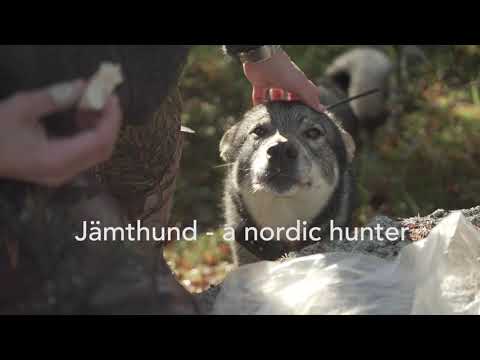
Still very old, the Jรคmthund was not recognized until the year 1946, It was previously confused with the Gray Norwegian Elkhound

Content

History

Only in 1946 the Jรคmthund (Jรคmthund) was recognized as a breed. But, the Jรคmthund it is a very old breed of dog, which is already known since the north of Sweden is populated.

The reason for this belated recognition is that the small Gray Norwegian Elkhound and the jรคmthund they were judged by the same race. At the end, this trial turned out to be untenable. The Jรคmthund mainly used to hunt moose, but it has also been used to hunt bears and lynxes, especially in the past.

Today the FCI recognizes three different moose dogs:

All three are assigned to buffers and dogs of the original type (group 5) and in them they are assigned to the section 2 ยซNordic Hunting Dogsยป.

Physical characteristics

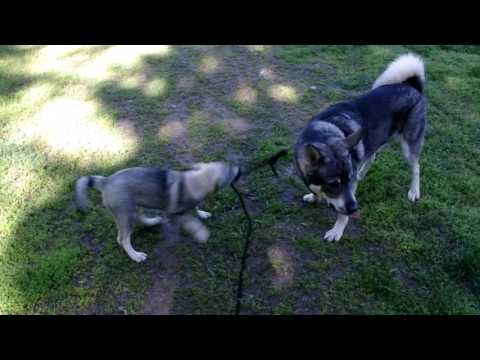
The Jรคmthund He is respected for his wolf-like appearance and his great and powerful stature. With a height at the cross of 57 to 65 centimeters and a weight of about 30 kg, It is the largest and heaviest of the three moose dogs recognized and at the same time the largest Nordic hunting dog. Throughout its long history, the Jรคmthund not only faced wolves, lynx and elk, but also adult bears, whom he faced fearlessly when hunting.

Character and skills

Blind obedience is a long way off for this self-assured and independent pedigree dog from the far north. After all, the Jรคmthund in Sweden has been hunting moose, lynxes and even bears bravely and on their own for thousands of years. Although he always keeps in touch with his hunter, this smart and independent breed doesn't need your orders.

Strong dog personality with many talents

Dog lovers who are interested in this breed should know that the practice of certain commands sometimes requires some effort. With stupid repetitions or even with force and violence you will not achieve anything with the Jรคmthund.

But, if you accept his character and thoughtful nature and have the skills to deal with such a strong personality, you can certainly train him to be a versatile companion and working dog. With inventiveness, patience, consistency and sensitivity, the persistent and powerful Jรคmthund can be trained not only to be a versatile hunting dog, but also an excellent herding dog, guardia, sled and rescue.

Very experienced hunting dog

Despite relatively late recognition as a separate breed, the origin of Jรคmthund goes back a long time. In the province of Jamtland, in central Sweden, which is decisive for his name, the type of dog has been known for thousands of years.

Even the first settlers in northern and central Sweden had dogs to hunt bears., Moose, lynxes and wolves. Hunters appreciated above all their enormous stamina and physical strength., with which the dog, independently and bravely, went out looking for game.

Today it is regarded in hunting circles as a fearless and energetic search dog., which is not only suitable for hunting loose hounds, it can also be used for hunting guide dogs. Search and pursue game in the dense forests of Scandinavia and remain silent until you have placed the animal. Only then does he give the hunter a signal through his barking that he can hit the target.. This type of hunting is called ยซstanding stillยซ.

The Jรคmthund as a family dog

Also as a family dog รขโ‚ฌโ€นรขโ‚ฌโ€นthe Jรคmthund it is very suitable, as long as enough space is given to the independent nature and great desire for freedom of this original hunting dog. So he's considered friendly, balanced, calm and fond of children. After an appropriate period of acclimatization, also accepts conspecifics, cats and other pets without any problem.

He meets strangers with a certain distrust according to his natural instinct for vigilance and protection.. Does not act nervous or aggressive. There is also no denying a certain joy of barking to this Nordic hunting dog.

Breeding and buying a Jรคmthund

In Sweden the Jรคmthund has long been known beyond hunting circles and is popular as a versatile utility and companion dog. In other countries of the world, However, the swedish pedigree dog is very rare. Although you can find breeders in Germany, Great Britain, the Netherlands and North America, searching and waiting for a purebred puppy can sometimes take years. So, it is advisable to contact a registered association for Nordic dogs, that can help you find breeders in Scandinavia.

What do I have to consider when buying a Jรคmthund?

Although the distance to the breeder is long, those interested should take the time to get to know the kennel, the animals and the breeder in detail before buying. Don't take home the first best puppy, Before making several visits, convince yourself that it is a serious parenting, that dogs are raised with a lot of experience and love.

In addition to health tests, vaccinations and the presence of all important papers and a pedigree, animals must grow up in a close relationship with their breeder from birth. The socialization of a Jรคmthund already begins in the first weeks of life. Living with his mother and brothers, but also with the breeder's family, puppies learn the most important rules of the nest.

What demands does the Jรคmthund to the owner?

One Jรคmthund need plenty of exercise. You must also be sufficiently disabled both physically and mentally. A life in gated communities, in the city and without a garden, it certainly doesn't do this kind of dog justice.

The Jรคmthund feels more comfortable in rural areas. There you can move freely and spend a lot of time in nature. If not used for hunting purposes, you should definitely offer alternative activities. Possible are examinations for companion dogs, dog tournaments or rescue dog training. Also bike rides, long walks or sledding shots in winter are suitable to satisfy the great momentum of movement of the Jรคmthund.

Is a suit for me Jรคmthund?

Before you start looking for a suitable breeder, you should ask yourself the following question: Is this nordic pedigree dog suitable for me and my life?

This becomes especially important if you don't want to keep Jรคmthund like a hunting dog, but exclusively as a family dog. In this case you must make sure that you have enough experience, time and space to satisfy this demanding and energetic four-legged friend.

When asking if this dog is a good match for me, of course you should also keep an eye on the costs. After all, owning a dog costs not only time but also money. In addition to the purchase price, dog tax and insurance, there are also equipment expenses, watch out, food and visits to the vet.

You may be interested in our article on this topic: Getting the puppies used to the new home: Basic equipment and tips.

What food does the Jรคmthund need?

More important than the price of the food should be the price of the ingredients. This does not mean that the most expensive food is always the best.. Much more important is that the composition is adjusted to the needs of your dog and these depend on quite individual criteria such as weight, age, activity level and health status.

Basically, the food of Jรคmthund, like all the other dogs, should consist mainly of meat. It is the most important energy supplier for the descendant of the wolf and must constitute at least the 80 percent of the diet. The meat is complemented with vegetables, important fruits and fats, that provide an optimal supply of nutrients.

The cereals, the sugar, artificial flavor enhancers and chemical preservatives, on the other hand, have no place in dog food, either dry food, wet food, even cooked or raw food (BARF).

ยซSwedish Elk Hunting Dogยป Care

The waterproof coat of the Jรคmthund repels dirt and moisture well, but still needs to be brushed regularly. It is best to comb your hair daily, especially during the layer change phase. This way you can remove dead hair in time and at the same time ensure that the amount of hair in your house stays within limits.. But, you should not expect meticulous cleaning in your home as the owner of this dog.

In addition to the toilet, claws should be trimmed regularly to avoid injury. Your roommate's ears and teeth should also be cleaned and checked at regular intervals., about two or three times a week.

Health ยซSwedish elk hunting dogยป

The Jรคmthunde they are very robust

Careful grooming is not just for cleanliness and hygiene, but above all for the health of your dog. Brush your dog regularly and check his ears, claws, eyes and teeth. This way you can quickly detect any changes and make an appointment with the vet on time.

Being overweight is a problem for all dog breeds and quickly causes more complaints. So, it is advisable to check your pet's weight regularly. Hand palpation is also a good way to determine if your dog is of normal weight.. You shouldn't be able to see your dog's ribs from a distance., but i should be able to feel them.

Otherwise, the health of Jรคmthund is very robust, and there is no need to fear the hereditary diseases typical of the breed. If you have time, experience, money and the desire to fully adapt to this breed, you will surely have many years of pleasure with him Jรคmthund.

Characteristics "Jรคmthund"

Coexistence is important that you have with your new friend. Before considering the acquisition of a dog of the breed "Jรคmthund" you know certain factors. Not all breeds of dogs are apt to live in an apartment, you must take into account his character, their need for exercise, their interaction with other pets, their care and if you have small children, their level of tolerance towards them.

Adaptation โ“˜

3,0 of 5 stars (based on 1 review)

friendly dog โ€‹โ€‹โ“˜

3,0 of 5 stars (based on 1 review)

hair loss โ“˜

4,0 of 5 stars (based on 1 review)

Affection level โ“˜

3,0 of 5 stars (based on 1 review)

Need for exercise โ“˜

5,0 of 5 stars (based on 1 review)

Social need โ“˜

3,0 of 5 stars (based on 1 review)

Home โ“˜

4,0 of 5 stars (based on 1 review)

Toilet โ“˜

3,0 of 5 stars (based on 1 review)

Friendly with strangers โ“˜

3,0 of 5 stars (based on 1 review)

barking โ“˜

5,0 of 5 stars (based on 1 review)

Health โ“˜

2,0 of 5 stars (based on 1 review)

Territorial โ“˜

4,0 of 5 stars (based on 1 review)

Cat friendly โ“˜

3,0 of 5 stars (based on 1 review)

Intelligence โ“˜

3,0 of 5 stars (based on 1 review)

Versatility โ“˜

3,0 of 5 stars (based on 1 review)

Child friendly โ“˜

4,0 of 5 stars (based on 1 review)

Surveillance โ“˜

4,0 of 5 stars (based on 1 review)

joy โ“˜

4,0 of 5 stars (based on 1 review)

Images "Jรคmthund"

Photos:

1 – Jรคmthund by Jorgen Blom / CC BY-SA
2 – Jรคmthund (Swedish Elkhound) in the woods. 2 years old male. by User:Arto Pรครคkkรถnen / CC BY-SA
3 – Jรคmthund by https://pxhere.com/es/photo/644232
4 – Jรคmthund by https://pxhere.com/es/photo/619009
5 – Jรคmthund by https://pxhere.com/es/photo/1289323
6 – Jรคmthund by https://pixabay.com/es/photos/perro-tronco-mascota-animales-2064314/
7 – Jรคmthund by HTTPS://pxhere.com/es/photo/753453

Videos "Jรคmthund"

Type and recognitions:

  • FCI CLASSIFICATION:
  • Group :
  • Section : . .

Federations:

  • FCI – Group 5 – Section 2 Nordic Hunting Dogs. โ“˜
  • UKC – Nordic Hunting Dogs. โ“˜

FCI breed standard "Jรคmthund"

Origin:
Sweden

Date of publication of the valid original standard:
25.03.2003

Use:

hunting dog.


General appearance:

Grand, spitz rectangular, defined cut, strong, with good substance but agile with good structure. He is strong and of solid constitution, but also agile and imposing looking. The body does not must give the impression of being very long, or too much heavy.


Behavior / temperament:

He is brave and energetic, but also stoically calm.

Head:

It is clearly defined and elongated, proportionally wide between the ears.

Cranial region:
Skull: It is slightly bulky.
Fronto depression-nasal (Stop): Clearly marked, but not too much deep.

facial region:

Snout: The distance from the naso-frontal depression to the nose is slightly shorter than from the naso-frontal depression to the occiput. Tapers progressively towards the tip of the nose. So much in profile, as front, should not give the impression of being pointed but flat. The muzzle is straight, wide and strong,wide nose.
Lips: Tight.
Jaws/Teeth: Scissor bite.
Cheeks: clean.
Eyes: Slightly oval, brown, the look is penetrating, but at the same time calm.
Ears: High insertion, perfectamente lifted, pointed and sensitive in use. Slightly longer than wide at the base.

Neck:

Long, clearly defined, powerful and good scope.

Body:

Powerful and well defined. Its length slightly exceeds its height at the withers.
Line top : Straight, with a slight inclination from the withers to the rump.
Pork loin: Wide and well developed.
Rump: Wide, only slightly inclined.
Breast : Deep well; the ribs are well arched.
Bottom line and belly: The belly is little collected.

Tail:

High implementation. Medium length and regular thickness. It is carried curled, but not firmaments bent over or near the back. Hair is abundant, although it does not form a fringe.

Tips

PREVIOUS MEMBERS:
  • Shoulder: The shoulder blades are long and well sloped back.
  • Elbows: Well attached to the rib cage.
  • forearms: Straight, well outlined and strong bone.
  • Front feet: Strong, slightly oval. They point straight ahead; fingers are good together.
 
LATER MEMBERS: Seen from the back, they are parallel.
  • Knee: Well angled.
  • Hock: Well angled.
  • Rear feet: With the same characteristics of the front feet.

Movement:

Must be powerful, free and wide-ranging. On the trot, the feet converge towards a midline (single tracking).

Mantle

HAIR: The outer layer is made up of a fairly tight hair, although not stretched. The undercoat is short haired, soft and clear, preferably cream colored. The hair is short on the head and the front of the limbs, and longer in the neck, the chest, the tail and back of the limbs and thighs.
 
COLOR: Light to dark gray. The characteristic brands are : light gray or cream on both sides of the muzzle, cheeks, the throat, chest, belly, limbs and under the tail.


Size and weight:

Height to the cross:
  • Males : 57 โ€“ 61 cm.. Ideal 61 cm..
  • females : 52 โ€“ 60 cm.. Ideal 56 cm..


Fouls:

Any deviation from the above mentioned criteria is considered to lack, and the gravity of this refers to the degree of deviation to the standard and its impact on the health and well-being of the dog.
  • Yellow eyes.
  • Twisted tail.
  • Cream marks covered in black.
  • Cloak too short.
  • Thin bone.
  • Short tail.
  • Straight tail.
 
SERIOUS FAULTS
  • Domed skull front and raised cheeks.
  • Pointed snout.
  • Dental missing apart from P1.
  • Square body shape.
  • Slim build.
  • Heavy, lymphatic construction.
  • flattened feet.
  • Entire white stripe from the throat to the tip of the sternum called "tie".
  • Insufficient posterior angulation.
  • Fine tail, whip type.
 
MISS PLAYOFFS
  • Aggressive or too shy.
  • Height at the withers different from those specified in the standard.
  • Enognatismo o prognatismo.
  • hanging ears.
  • Lack of characteristic cream-colored markings.
 
Any dog โ€‹โ€‹showing clear signs of physical or behavioral abnormalities must be disqualified..


N.B.:

Males should have two normal-appearing testicles fully descended into the scrotum..

The latest changes are in bold.

Source: F.C.I - International Cynological Federation

Alternative names:

1. Swedish Elkhound (English).
2. Jรคmthund (French).
3. Jรคmthund (German).
4. Jรคmthund, Elkhound sueco (Portuguese).
5. Elkhound sueco, Jรคmthund (espaรฑol).

โ–ท The world of Pets: Dogs, cats, birds, reptiles, amphibians

Peruvian Hairless Dog
Perรบ FCI 310 . Primitive type

Peruvian Hairless Dog

The Peruvian Hairless Dog is a friendly and adaptable companion.

Content

History

The exact origin of the Peruvian Hairless Dog. But, their ancestors seem to be deeply rooted in Peru: Illustrations on the vessels of Moche culture, show hairless dogs already in the 750 AC. Later, these funny animals were reserved for the rich Incas, who took care not to mate them with other native dogs. It was also the Incas who prohibited the consumption of dog meat in the northern regions of Peru..

When the Spanish conquered the country, they found many naked dogs among the orchids of the Incas, so the Europeans called them ยซperros de las floresยซ. During the period of conquest, the breed was almost extinct, but some specimens survived in remote villages where the inhabitants valued them for the partly mythical qualities attributed to them: Because of its special appearance, four-legged creatures were said to have a healing effect on certain diseases, for example, bone and joint diseases.

In 1985, the world's largest dog breeding organization, the Federation Cynologique Internationale (FCI), recognized the Peruvian Hairless Dog as an independent race. So Today There Are Officially Three Naked Dog Breeds. Besides of Peruvian Hairless Dog, these are the Mexican Naked Dog, also known by the beautiful name of ยซXoloitzcuintleยซ, and the Chinese Crested Dog. The three races are closely related to each other.

Physical characteristics

The name says it all: The most striking of the most Peruvian Hairless Dogs that's what's missing: the coat. But, the standard allows for some locks on the head and tail even in naked dogs without hair. Skin can be light or dark in different shades of color, smooth or white-spotted. But, not all naked dogs are naked, because there's a variant with hair: the so-called "hairy", which are essential for breeding for health reasons. About a third of naked dogs belong to this group.

Since 2013 hairy variants can also be seen in canine exhibitions, since they have been added to the standard. Your hair should be short and soft, all colors are allowed. The Peruvian Hairless Dog reminiscent of greyhounds in their physique. This slender breed of dog has large erect ears that can rest back, an elegantly curved and hanging tail and an athletic complexion.

Naked dog lovers can enjoy three size variations:

– The small version has a shoulder height of 25 to 40 cm..
– The median 40 to 50 cm..
– The Greats Peruvian Hairless Dogs have between 50 and 65 height cm.

The weight varies according to 4 to 25 kg. Only a few Peruvian Hairless Dogs have a full denture, but these usually include all representatives of the furry variant.

Character and skills

The Peruvian Hairless Dog is a friendly and adaptable companion. He prefers to be with his human with the one who has a close relationship. It belongs to very sociable dogs. He likes to integrate into a family and quickly befriends other pets and children. It is said that many Peruvian Hairless Dogs protect fervently, especially the women and children of the herd. Here it is important to be careful when visiting children that the Peruvian interprets offensive situations for his protรฉgรฉ and rushes to help his little two-legged friend unnecessarily..

Vivacious and curious, is a wonderful companion for outdoor activities, but behaves calmly and relaxed inside. He especially likes to get comfortable on his owner's lap and enjoys closeness and warmth.. To strangers he is often distant and alert, but not aggressive.

Education

Like a dog of the original type, the Peruvian Hairless Dog it also provides original behavior in the man-animal relationship. That's why it makes sense in educational matters if you already have any experience with dogs. But, even ambitious beginners can successfully train a Peruvian Hairless Dog. Clear rules and consistency are, as in most dogs, the key to success.

The Peruvian Hairless Dog is a sensitive four-legged friend – hard you'll only get the opposite with it – will retire. Some Peruvian Hairless Dogs tend to get scared or fear new situations. So, it is especially important to train this dog extensively and at the right pace to different situations without overloading it.

Your breeder will be able to give you some advice when you buy a puppy. Whether on a train journey, on a trip to the city center or on a visit home, introduce your partner into these everyday situations since you're a puppy. Regular training at a canine school, preferably already with the young puppy in the form of playgroups for puppies, is highly recommended and also reinforces the social side of the Peruvian Hairless Dog.

Breeding of the โ€œPeruvian Hairless Dogโ€

As already mentioned, during mating a special health feature should be taken into account: during breeding, the furry ones, that is to say, hairy representatives of the breed, should be crossed regularly. The reason for this is that the dominant allele of hairlessness can only lead to viable embryos in combination with a hair allele, that is to say, Heterozygosity. Homozygous hairless embryos are already reabsorbed in the uterus. As pure breeding for hairlessness is therefore not possible, hairless naked dogs also occur over and over again.

The Peruvian Hairless Dogs they usually have an incomplete denture, what doesn't usually restrict them. With the light-skinned specimens, especially at the beginning of summer, it's important to make sure they get used slowly in the sunlight, then tanning. Sun protection also makes sense, because otherwise dogs can develop severe sunburn, especially when they like to go to sunny places. Also in winter some specimens need protection from the weather in the form of a dog coat., because if they can't run, cool down quickly during normal ride. Smaller variants of the breed are more sensitive to this than larger ones.

One Peruvian Hairless Dog can reach an age of up to 15 years.

Care

With the naked representatives of the breed you can leave the comb with confidence. It also, has the great advantage that it can normally detect parasites in the skin of the Peruvian Hairless Dog immediately and apply appropriate antidotes – from tick tweezers to flea repellent. But, even the Peruvian Hairless Dog needs regular care. If required – some owners recommend once a week – wash it with a sponge and a mild dog shampoo. Some Peruvian Hairless Dogs tend to have dry skin, which can be remedied with soft moisturizers for fragrance-free babies or with olive or coconut oil. In summer, sunscreen is an indispensable tool for light-colored dogs. Cut the claws of your Peruvian Hairless Dog if they get too long and clean your four-legged friend's ears with a dog ear cleaner if necessary.

Buy a โ€œPeruvian Hairless Dogโ€

The Peruvian Hairless Dog are rare in Europe and therefore breeders are rare. Find the appropriate umbrella organizations in your country, that can help you in your search. In Germany, for example, el Club for Exotic Breed Dogs e.V. has a list of breeders, In Switzerland there is a "Swiss Naked Dog Club of Latin America", which is dedicated to the promotion of the two breeds of dogs: the Xoloitzcuintle and the Peruvian Hairless Dog. In these clubs and similar ones you can find information and contacts of ambitious breeders. Considering possible adoptions across national borders, consider what to consider when adopting puppies from abroad.

As a fan of naked dogs, you probably know the closely related races, the Xoloitzcuintle and the Chinese Crested Dog – perhaps one of these dogs could also be an option for you and is more likely to be found in your region. It also, openness to the other two races, as well as the crossings, it's usually a good idea if you want to give a home to a naked older dog. This usually requires some research. But in the meantime, Keywords like โ€œnaked dogs in distressโ€ on the Internet promise successes that lead adult naked dogs to look for a new place to live. Try to find out as much as possible about the story of your potential new fourth-legged partner.

Characteristics "Peruvian Hairless Dog"

Coexistence is important that you have with your new friend. Before considering the acquisition of a dog of the breed "Peruvian Hairless Dog" you know certain factors. Not all breeds of dogs are apt to live in an apartment, you must take into account his character, their need for exercise, their interaction with other pets, their care and if you have small children, their level of tolerance towards them.

Training ?

4,0
4,0 of 5 stars (based on 30 reviews)
Great
Very good
Media
Mala
Very bad

Suitability of the apartment ?

3,0 of 5 stars (based on 1 review)

Can be alone all day ?

2,0 of 5 stars (based on 1 review)

Suitable as a first dog ?

3,0 of 5 stars (based on 1 review)

Weight gain ?

3,0 of 5 stars (based on 1 review)

Health ?

3,0 of 5 stars (based on 1 review)

Intelligence ?

3,0 of 5 stars (based on 1 review)

Kindness with child ?

3,0 of 5 stars (based on 1 review)

Tendency to bite ?

2,0 of 5 stars (based on 1 review)

Tendency to bark ?

3,0 of 5 stars (based on 1 review)

Tendency to flee ?

2,0 of 5 stars (based on 1 review)

hair loss strength ?

1,0 of 5 stars (based on 1 review)

Suitable as a guard dog ?

3,0 of 5 stars (based on 1 review)

Joy ?

3,0 of 5 stars (based on 1 review)

Cat friendliness ?

3,0 of 5 stars (based on 1 review)

Power level ?

3,0 of 5 stars (based on 1 review)

Images "Peruvian Hairless Dog"

Photos:

1 – ยซHairless dog of Peruยป by Paradais Sphynx, CC BY-SA 3.0, via Wikimedia Commons
2 – ยซHairless dog of Peruยป by No machine-readable author provided. Manuel Gonzรกlez Olaechea assumed (based on copyright claims)., CC BY-SA 3.0, via Wikimedia Commons
3 – ยซHairless dog of Peruยป by Carlos Adampol Galindo from DF, Mexico, CC BY-SA 2.0, via Wikimedia Commons
4 – ยซHairless dog of Peruยป by Marina Alonso Esparrรฉ, CC BY-SA 4.0, via Wikimedia Commons
5 – ยซHairless dog of Peruยป by Carlos Adampol Galindo from DF, Mexico, CC BY-SA 2.0, via Wikimedia Commons
6 – ยซHairless dog of Peruยป by Carlos Adampol Galindo from DF, Mexico, CC BY-SA 2.0, via Wikimedia Commons
7 – ยซHairless dog of Peruยป by Pleple2000, CC BY-SA 3.0, via Wikimedia Commons

Videos "Peruvian Hairless Dog"

PERUVIAN DOG : The story of the VIRINGO dog, the mascot of ancient Peru

THE PERUVIAN HAIRLESS DOG - STRANGE OR CUTE?

Type and recognitions:

  • FCI CLASSIFICATION:
  • Group :
  • Section : . .

Federations:

  • FCI – Group 5: Spitz-type dogs and primitive type – Section 6: Primitive type. โ“˜

FCI breed standard "Peruvian Hairless Dog"

Origin:
Peru

Date of publication of the valid original standard:
08.10.2012

Use:

Companion dog


General appearance:

According to its general confirmation, it is a slender and elegant specimen., whose aspect expresses speed, strength and harmony without appearing crude.
This breed's fundamental characteristic is the absence of hair on the body.. Another of its peculiarities is that its teeth, almost always, is incomplete. Of noble and affectionate character with those at home; reserved with strangers; awake, alert and guardian.

important proportions:

The relationship between the height at the withers and the length of the body is 1:1, allowing the body of the females slightly longer than that of the males.


Behavior / temperament:

Noble and affectionate with those at home while remaining awake and alert. In the presence of strangers, becomes suspicious and guardian.

Head:

Lupoid conformation.

Cranial region:
  • Skull:Mesocephalus. Ortoide (the direction of the superior cranio-facial axes is parallel), accepting slight divergence. The skull seen from the top is wide, tapering towards the nose.. Superciliary arches are moderately developed. The occipital crest is poorly marked.
  • Depression links (Stop): Bit strong (approximately 140ยฐ).

facial region:

  • Truffle:The color of the nose should harmonize with the color of the skin, in its various shades.
  • Snout:In profile, maintains a straight line.
  • Lips:The lips should be as tight as possible and adhere to the gums..
  • Jaws/Teeth:The incisors should fit for a scissor bite and the canines are normally developed. The absence of one or all pre-molars or molars is allowed. The jaw is poorly developed.
  • Cheeks:Normally developed.

Eyes:Of attentive and intelligent expression. They should be medium in size, slightly almond shaped, or sunk or bulging, with a normal and regular location, that is to say, neither too close nor too far. Color may vary from black, going through dark brown and in descending tones to yellow, harmonizing with skin color. In all cases both eyes must be the same color. The color of the eyelids may be from black to pink for specimens whose facial area is light, allowing those of light or pink colors but not being the most recommended.

Ears:The ears should be erect in attention, while at rest they are glued back. The ears are medium long, wide at the base and gradually tapering to an almost pointed end. Its insertion begins on the top of the skull, ending laterally and obliquely. The axes of the ears in the erect position can vary their angle relative to each other, approaching 90ยฐ.

Neck:

  • Top profile:Arcuate (convex).
  • Length:About the same length as the head.
  • Form:Looks like a truncated cone. Flexible and well-muscled.
  • Skin:Fina, smooth and elastic. Intimately adhered to the subcutaneous tissue. No double chin.


Body:

Mesomorfo.

  • top line:Rectilinear, although certain specimens mark a dorso-lumbar convexity, getting lost with the rump.
  • Cross:Little pointed.
  • Back: Rectilinear top profile, with well-developed back muscles, forming in many cases a muscular biconvexity along the entire dorsal region, extending to the lower back.
  • Pork loin:Must be strong and muscular. Its length is approximately 1/5 the height at the withers.
  • Rump:The upper profile is slightly convex. Its inclination with respect to the horizontal, makes an angle of approximately 40ยฐ. Solid and muscular in shape, ensuring a good push.
  • Breast :The chest seen from the front will have good width without being excessively, descending almost to the elbow. The ribs should be slightly arched and never flat. The perimeter of the chest measured behind the elbows should be approximately 18% greater than the height at the withers.
  • Lower profile / Belly:The lower profile is formed by a well-marked elegant line, starting at the lower part of the chest and determining in the ventral retraction, which should be well delineated without being excessive.

Tail:

The tail is set low. Good thickness at the start, tapering to the tip. In a state of action, the tail may rise forming a curve without actually curling over the back.. At rest he wears it hanging with a light hook with the tip up. Sometimes it is tucked into the belly. Its length will come close to the hock. The queue must be full.

Tips

Former members

Well attached to the trunk; viewed from the front will be perfectly plumb, not sticking out elbows. Your scapulo-humeral angle will range between 100ยฐ and 120ยฐ.
Side views, the resulting angle between the pasterns and the vertical is between 15ยฐ to 20ยฐ.

  • Front feet:Semi-lengths approaching the hare's foot. The pads are strong and heat resistant. The interdigital membranes are well developed. Preferably, the nails are black in the black specimens and clear in the lighter specimens.

Later members

The muscles are round and elastic. The curvatures of the buttocks are evident. The coxofemoral angle should be between 120ยฐ to 130ยฐ. The femoral-tibial angle should be 140ยฐ. The limbs seen from behind are well plummeted. The dewclaws must be removed.

  • Rear feet:Equal to the forwards.

Movement:

Due to the angulations already described in the structures of its members, these specimens move with a shorter but faster pace and at the same time quite cushioned and flexible.

Mantle

Skin: The skin will be smooth and elastic over its entire body surface, being able to form certain surrounding and almost concentric lines on the head, around the eyes and cheeks. It is proven that the internal and external or dermal temperature, is exactly the same as the other races. The absence of fur results in a totally direct emanation of heat unlike the specimens with hair, in which heat is dissipated through them by natural ventilation.

Fur: For being a naked race, will be missing cover, admitting vestiges of hair on the head, at the tip of the limbs, the tip of the tail and sometimes some very thin hairs on the back.

Color: The color of the hairs may vary from black to black specimens., black slate, black elephant, bluish-black, full range of gray, gradient dark brown to light blonde. All these colors can be uniform or with pink spots anywhere on the body.


Size and weight:

Height to the cross

There are three types of sizes for males and females.

  • Petit:Of 25 to 40 cm..
  • Medium-:Of 40 to 50 cm..
  • Grand:Of 50 to 65 cm..

Weight

The weight is in relation to the three sizes for males and females..

  • Petit:Of 4 to 8 kg.
  • Medium-:Of 8 to 12 kg.
  • Grand:Of 12 to 25 kg.


Fouls:

Any deviation from the above criteria is considered missing and the seriousness is considered to the extent of the deviation to the standard.

  • Semi-erect ears.
  • Presence of dewclaws on the hind limbs.

ELIMINATING fAULTS

  • Aggressive or fearful dog.
  • Upper or lower prognathism.
  • Deviation of the lower jaw.
  • Hanging or cropped ears.
  • Anurismo. Braqui Tourism. amputated tail.
  • Excess hair described in the standard.
  • Presence of hairs in other parts of the body where it is not indicated.
  • albinism.

Any dog โ€‹โ€‹showing clear signs of physical or behavioral abnormalities must be disqualified..


N.B.:

Males should have two normal-appearing testicles., fully descended into the scrotum.

Source: F.C.I - International Cynological Federation

Alternative names:

1. Perro Sin Pelo de Perรบ, Inca Hairless Dog, Viringo, Peruvian Inca, Orchid, Calato, Peruvian Walking Dead dog, Dielmatian (English).
2. Chien nu Inca (French).
3. Peruanischen Nackthund (German).
4. Perro Sin Pelo del Perรบ, viram (Portuguese).
5. Perro calato, Perro chimo, Perro chimoc, Perro chimรบ, Perro de , orquรญdea peruano, Perro inca, Perro peruano, Perro peruano sin pelo, Perro pila, Perro sin pelo del Perรบ, Perro sin pelo peruano
Viringo
(espaรฑol).

โ–ท The world of Pets: Dogs, cats, birds, reptiles, amphibians

Eurasian
Alemania FCI 291 . Asian Spitz and related breeds
Eurasier

The Eurasian is self-confident, quiet, tolerant, adaptable, willing to learn and smart.

Content

History

In the Decade of 1960, Julius Wipfel raised females of Keeshond (Wolfspitz) and males of Chow-Chow en Weinheim, Baden-Wuerttemberg, initially the Wolf-Chow. He finally raised this dog with him Samoyed and obtained an original dog with a natural structure and a balanced character.

In 1973 the breed was recognized by the Fรฉdรฉration Cynologique Internationale (FCI) and it is, therefore, the youngest German dog breed. The youngest breed, officially recognized German breed owes its name to its original European breeds (Keeshond = EUR) and asian (Chow-Chow and Samoyed = ASIER). The task of the robust companion and family dog โ€‹โ€‹with character was not even hunting, nor grazing, nor on guard. The Eurasian was bred solely as a social partner for humans.

Physical characteristics

The Eurasian is balanced, well built, medium-sized, with erect ears. It can be of different colours: beige, reddish brown, the Grey Wolf, black. A characteristic feature is the pattern of the coat of agoutis and the patterns of bands and stripes, that for example wolves also have.
The male has a height of 52 to 60 the cross and weighs cm, approximately, of 23 to 32 kg. The female has a height of 48 to 56 cm to cross and weighs between 18 to 26 kg.
Typical of the coat of the Eurasian is his dense undercoat, which is an excellent protection against the cold and also repels dirt. Just the muzzle, the face, the ears and the front of the legs are short-haired. The tail, the back of the front legs and the back legs have long hairs.

By the way, the Eurasian get their tongues partially and sometimes even completely blue from the Chow-Chow, whose blue tongue merged with the pink tongue of the Keeshond and Samoyed.

Character and skills

The Eurasian is self-confident, quiet, tolerant, adaptable, willing to learn and smart. Above all, animals are very close to their family members, which does not make them a one man dog.

The Eurasian they need constant and close contact with their humans and are therefore completely unsuitable for housing in kennels. In an animal shelter, these sensitive dogs would suffer extraordinarily and eventually wither away. How the Eurasiers are so focused on their family, should not be left in the hands of other people, even when they are on vacation. Wants to be with his family, always and everywhere.

These sensitive animals have a special feeling for the mood and disposition of their humans, and have a distinctive social behavior towards others Eurasian. It also, dogs of this breed are elegant, self-confident and at the same time pleasantly stubborn. They can even trick their owners into getting their way.

Activities with the Eurasian

Although the Eurasian does not have pronounced hunting behavior, a certain prey drive may be present, as in most dogs. But, with a loving consistency, understanding, patience and treats, the Eurasian can be trained to become trouble-free and appreciative companions, that adapt to all situations in life. But, training in an outer hand is out of the question for a Eurasian. If you demand absolute obedience to a dog, you must choose another race.

The Eurasian they need about two hours of exercise a day. Your urge to move can be ideally satisfied by jogging, cycling the agility. Monotonous retrieval games like โ€œfetch for sticksโ€ quickly bore this intelligent animal..

Eurasian care

Despite the dense undercoat, the care of the coat of the Eurasian it is not complicated and is limited to brushing once a week only during the change of coat, must be combed daily. The Eurasier's tongue varies from pink to an infinite number of varieties from pied blue to pure blue.. The inheritance of Chow-Chow fascinates many passers-by and often leads to confusion with the Chinese race. A Eurasier is an incorruptible friend for life.

Buying a Eurasian from a breeder

If you want to buy a puppy of Eurasian, you will need to be prepared for waiting periods, because there are only some 300 or 400 puppies per year under the umbrella organization of the VDH (German Canine Federation. Cubs Eurasian cost around 1000 EUR.

Characteristics "Eurasian"

Coexistence is important that you have with your new friend. Before considering the acquisition of a dog of the breed "Eurasian" you know certain factors. Not all breeds of dogs are apt to live in an apartment, you must take into account his character, their need for exercise, their interaction with other pets, their care and if you have small children, their level of tolerance towards them.

Adaptation โ“˜

1,0 of 5 stars (based on 1 review)

friendly dog โ€‹โ€‹โ“˜

4,0 of 5 stars (based on 1 review)

hair loss โ“˜

3,0 of 5 stars (based on 1 review)

Affection level โ“˜

5,0 of 5 stars (based on 1 review)

Need for exercise โ“˜

2,0 of 5 stars (based on 1 review)

Social need โ“˜

2,0 of 5 stars (based on 1 review)

Home โ“˜

4,0 of 5 stars (based on 1 review)

Toilet โ“˜

3,0 of 5 stars (based on 1 review)

Friendly with strangers โ“˜

3,0 of 5 stars (based on 1 review)

barking โ“˜

2,0 of 5 stars (based on 1 review)

Health โ“˜

4,0 of 5 stars (based on 1 review)

Territorial โ“˜

4,0 of 5 stars (based on 1 review)

Cat friendly โ“˜

3,0 of 5 stars (based on 1 review)

Intelligence โ“˜

4,0 of 5 stars (based on 1 review)

Versatility โ“˜

4,0 of 5 stars (based on 1 review)

Child friendly โ“˜

5,0 of 5 stars (based on 1 review)

Surveillance โ“˜

4,0 of 5 stars (based on 1 review)

joy โ“˜

3,0 of 5 stars (based on 1 review)

Images "Eurasian"

Photos:

1 – Kai de Eurasipomer (Nombre original Selly de Eurasipomer) by Siasegos / CC BY-SA
2 – Eurasier by https://commons.wikimedia.org/wiki/File:Eurasier_liegend.jpg
3 – Eurasier by https://flic.kr/p/eKr7Rv
4 – Eigen gemaakte foto van een Eurasier (hondenras) by Ekta / CC BY-SA
5 – A beautiful Eurasier male I met during a walk. His name is Haiko vom Born by https://flic.kr/p/UAo4j3
6 – Adult tan and black eurasier dog on body of water by https://www.pikrepo.com/fwskj/adult-tan-and-black-eurasier-dog-on-body-of-water

Videos "Eurasian"

Eurasian - Breed of dog
Dogs breeds: Eurasian
Raffi - Eurasian - 3 Week Residential Dog Training at Adolescent Dogs
Raffi – Eurasian – 3 Week Residential Dog Training at Adolescent Dogs

Type and recognitions:

  • FCI CLASSIFICATION:
  • Group :
  • Section : . .

Federations:

  • FCI – Group 5: Spitz-type dogs and primitive type – Section 5: Asian Spitz and related breeds. โ“˜
  • ANKC – Non sporting โ“˜
  • CKC – Group 3 – Working Dogs โ“˜
  • โ€‹KC – Utility โ“˜
  • NZKC – Non Sporting โ“˜
  • UKC – Northern Breeds โ“˜

FCI breed standard "Eurasian"

Origin:
Germany

Date of publication of the valid original standard:
06.01.1994

Use:

Companion dog.


General appearance:

medium size dog, harmonious structure, Spitz type, with erect ears, in different shades. The length of the hair allows us to distinguish the proportions of the body. regular bone structure.

IMPORTANT PROPORTIONS : The length of the body is a little greater than the height of the withers. The relationship between the length of the snout and the length of the cranial region is almost the same.


Behavior / temperament:

He is a trusting dog, calm, equanimous and with great resistance to any provocation. He is vigilant and alert without being loud; develops a strong relationship with his family. It is reserved with strangers, without being aggressive; does not show hunting instinct.
To achieve a complete development of these characteristics, The Eurasian dog needs intimate and constant domestic contact with its family, but also comprehensive and consistent training.

Head:

As a whole : balanced skull, not very wide. The head is wedge-shaped when viewed from above and from the sides.. The nasal cannula and the cranial region are placed in parallel.

Cranial region:
  • Skull : Flat forehead with a marked frontal furrow. Well-defined occipital protuberance.
  • Depression links (Stop) : Unremarkable.

facial region:

  • Nose : Medium-sized, truffle with black pigmentation.
  • Snout : Neither too thick nor too pointed. Gradually tapers forward to the nose. The nasal cannula and the horns of the lower jaw are straight.
  • Lips : Tight edges of the lips and black pigmentation.
  • Jaws / Teeth : Strong jaws, They form a wide arch in the lower jaw. Strong and complete teeth (42 teeth according to the usual formation of the teeth); scissors or pincer bite. The upper incisors slightly surpass the lower incisors or are in perfect opposition to each other. The premolars and molars must be placed in a line without gaps between them.. All teeth should be vertical in relation to the jaw.
  • Cheeks : Not very pronounced.
  • Eyes : dark, medium-sized, neither sunken nor protruding. Slightly oblique opening of the eyelids. Edge of the eyelids with black and very adherent pigmentation.
  • Ears : They are separated by approximately the width of the base of an ear.. Its size is medium and its shape is triangular..
    The tips of the ears are slightly round and should be erect.. The tips of the ears and the center of the stop form approximately an equilateral triangle.

Neck:

Of average length, in harmony with the general appearance. Good musculature. The skin is very adherent in the throat region. Harmonious transition to the rest of the body.

Body:

  • As a whole : The body is strong, with the trunk not very short.
  • Cross : Marked.
  • Back : Firm and straight, with very good muscles.
  • Pork loin : With good length, good width and very good muscles.
  • Rump : Straight, wide and strong.
  • Breast : Reaches up to the elbows, with oval-shaped rib cage. Well developed sill, although not too prominent. Long sternum, that extends well back.
  • bottom line : Get up slightly.

Tail:

With straight insert, round and firm, of good thickness, tapering towards the tip. Has thick fur. The tail is carried folded over the back, or a little to one side or well rolled. When it hangs it reaches up to the hock joint.

Tips

PREVIOUS MEMBERS :

  • As a whole : Viewed from the front, They are placed straight and parallel. Viewed from the side, They are moderately angled. The arm and forearm are almost the same length.
  • Shoulder : With good muscles. Scapulas placed in a slightly oblique shape.
  • Arm : Of medium length and with good muscles.
  • Elbow : Close to the rib cage. Forearm : Of average length, with good musculature.
  • Articulation of the carpus : Strong.
  • Metacarpus : Of average length. Seen from the front it is completely straight; seen from the side it is directed slightly forward.
  • Front foot : Oval, compact fingers, moderately arched. Strong nails with dark pigmentation. Imitation pads, thick with black pigmentation. Dense fur between the pads.

LATER MEMBERS :

  • As a whole : Seen from behind they are placed straight and parallel and seen from the side they are moderately angled. Thigh and leg are almost the same length.
  • Pelvis : slightly oblique.
  • Thigh : Of medium length and strongly muscled.
  • Knee : Stable, not too open.
  • Leg : Of average length, good musculature.
  • The Hock joint : Placed in a not very low position, stable, no deviations outwards or inwards.
  • Metatarsus : With good length and width, seen from the side it is placed in a vertical position.
  • Rear foot : Oval, compact fingers, moderately arched. Strong nails with dark pigmentation. Firm pads, thick and black pigmented. Thick fur between the pads.

Movement:

Covers a lot of ground, with a lot of thrust and good reach.

Mantle

SKIN : Adherent, Pigmented.

HAIR : Throughout the body it has a thick undercoat.; the outer coat is of medium length and the hair is not too close together. The hair is short on the muzzle, face, ears, and anterior part of the limbs. The tail, the back of the forelimbs and hindlimbs are covered with long hair (feathers).The fur on the neck is slightly longer than on the rest of the body., sรญn formar una melena.

COLOR : All colors and their respective combinations are allowed, excluding pure white, the presence of white spots and liver color.


Size and weight:

Height to the cross :

  • Males : 52 โ€“ 60 cm.
  • females : 48 โ€“ 56 cm..

Weight :

  • Males : 23 โ€“ 32 kg
  • females : 18 โ€“ 26 kg.

The balance between proportions is very important, However, The ideal values โ€‹โ€‹to achieve are the average weight and size.

Height to the cross :

  • Males : 56 cm.
  • females : 52 cm..

Weight :

  • Males : 26 kg
  • females : 22 kg.


Fouls:

Any deviation from the aforementioned criteria is considered as a fault and the severity of this is considered to the degree of the deviation to the standard and its consequences on the health and well-being of the dog..

MISS PLAYOFFS

โ€ข Aggressive or fearful dog.
โ€ข Fear, shyness, excessive distrust.
โ€ข Deficiencies in sexual characteristics.
โ€ข Lack of one or more incisors or canines, lack of one or more premolars 3 or 4 as well as one or more molars 1 or 2; bite defects.
โ€ข Ectropion, entropion; very deep or very small eyes.
โ€ข Distichiasis (eyelashes placed in two lines).
โ€ข Semi-erect or drooping ears.
โ€ข Broken tail.
โ€ข Noticeable lack of pigment.

Any dog โ€‹โ€‹showing clear signs of physical or behavioral abnormalities must be disqualified..


N.B.:

Males should have two normal-appearing testicles fully descended into the scrotum..

Source: F.C.I - International Cynological Federation

Alternative names:

1. Eurasian Dog (English).
2. Eurasier (French).
3. Eurasier (Hunderasse) (German).
4. Eurasier (Portuguese).
5. Eurasian (espaรฑol).

โ–ท The world of Pets: Dogs, cats, birds, reptiles, amphibians

Ibizan Hound
Espaรฑa FCI 89 . Primitive type - Hunting Dogs

Ca Eivissenc

The Ibizan Hound is one of the medium sized Greyhound, very similar to Pharaoh Hound.

Content

History

The Ca Eivissenco or โ€œPodenco Ibicencoโ€, It is a breed canine Spanish Ibiza (Spain). It gets its name from the island Ibiza, belonging to the Group of islands in the Balearic Islands, bathed by the Mediterranean.

This dog, has a highly developed sense of sight and hearing, that is why he has been assigned to hunting, especially in the rabbit, both day and night.

It is a type of primitive and rustic dog, considered one of the oldest breeds that exist and can be seen the tombs of the Pharaohs and museums whose first signs can be traced back to the 3.400 A.C.

The Ibizan Hound is one of the medium sized Greyhound, very similar to Pharaoh Hound. Without a doubt a descendant of the old Egypt dogs, that's what the written theories about race say..

The origin of this breed is Spain, comes from the island of Ibiza. The city of Ibiza was founded in the 654 A.C. by the Carthaginians and it is a conjecture establishes the possibility that the first settlers took with them their dogs of Egyptian origin for simple company and to hunt the rabbits that were abundant on the island.

But various genetic studies carried out in recent years have come to the conclusion that contrary to the widespread belief that the podenco is a type of primitive dog imported a few years ago 3.000 the area of middle years, These dogs actually have a close genetic relationship with the rest of the European hunting dogs and are no more "primitive" than most of them... The researcher Antoni Pedro Marรญ, details different aspects of the morphology, ethology and ecology of Ca Eivissenc in his work Native Races of the Pitiรผses.

Did you know??

The resemblance of the Ibizan with representations of the Egyptian god Anubis dog is one of the reasons why it is often thought to be an ancient race.

Physical characteristics

Elegant and agile, with an athletic and attractive outline, and with an elastic trot.

The Ibizan Hound has a long, narrow head, sharp cone-shaped; the skull is long and narrow with a little pronounced Stop. The ears must be straight, towards front and very mobile; oblique eyes, small and always amber clear.

The nose is flesh-colored and usually be taken into account to determine the purity of the breed. The color will always be blanco-marron, Blanco-leonado or unicolor, although this last possibility is more rare to find them. The weight varies between the 18 and 24 Kg, Depending on whether it's a male or a female, as well as if he is too well or poorly fed. With regard to the height of the dog there are also many disputes since fashion has at times imposed more slender and tall dogs that the found in the Pitiusas Islands.

The current standard is one height of between 66 and 72 cm., It is very far from reality and the first official standard. The dogs that are bred in Ibiza and Formentera are shorter than the maximum height allowed.

Via: criadorscaeivissenc

Character and skills

Pet is an excellent. Very easy to maintain when treated well and will respect your space. He is a dog that thinks for himself and there are times when he prefers not to have to show his appreciation to his master or be appreciated.; just let it quiet. It requires patience when it is trained.

It is not recommendable for the home where children are (He has no patience and is very independent). Generally does not get along well with other pets. Can maintain you in apartment or House, When receive plenty of daily exercise.

Characteristics "Ibizan Hound"

Coexistence is important that you have with your new friend. Before considering the acquisition of a dog of the breed "Ibizan Hound" you know certain factors. Not all breeds of dogs are apt to live in an apartment, you must take into account his character, their need for exercise, their interaction with other pets, their care and if you have small children, their level of tolerance towards them.

Adaptation โ“˜

4,0 of 5 stars (based on 1 review)

friendly dog โ€‹โ€‹โ“˜

3,0 of 5 stars (based on 1 review)

hair loss โ“˜

3,0 of 5 stars (based on 1 review)

Affection level โ“˜

5,0 of 5 stars (based on 1 review)

Need for exercise โ“˜

4,0 of 5 stars (based on 1 review)

Social need โ“˜

3,0 of 5 stars (based on 1 review)

Home โ“˜

1,0 of 5 stars (based on 1 review)

Toilet โ“˜

1,0 of 5 stars (based on 1 review)

Friendly with strangers โ“˜

2,0 of 5 stars (based on 1 review)

barking โ“˜

3,0 of 5 stars (based on 1 review)

Health โ“˜

3,0 of 5 stars (based on 1 review)

Territorial โ“˜

3,0 of 5 stars (based on 1 review)

Cat friendly โ“˜

2,0 of 5 stars (based on 1 review)

Intelligence โ“˜

3,0 of 5 stars (based on 1 review)

Versatility โ“˜

2,0 of 5 stars (based on 1 review)

Child friendly โ“˜

3,0 of 5 stars (based on 1 review)

Surveillance โ“˜

3,0 of 5 stars (based on 1 review)

joy โ“˜

3,0 of 5 stars (based on 1 review)

Ibizan Hound Images

Videos Ibizan Hound

Type and recognitions:

  • FCI CLASSIFICATION:
  • Group :
  • Section : . .

Federations:

  • Federations: FCI โ“˜, AKC โ“˜, ANKC โ“˜, CKC โ“˜, โ€‹KC โ“˜, NZKC โ“˜, UKC โ“˜

  • FCI breed standard "Ibizan Hound"

    Origin:
    Spain

    Date of publication of the valid original standard:
    26.05.1982

    Use:

    Is used, above all, in the rabbit hunt without a shotgun, day and night, well they lift them easily, even in places with a lot of vegetation due to the fineness of their smell, because he uses himself and his hearing more than his sight.. For their agility and cunning they soon collect the piece, especially hunting several dogs together; When a dog shows a piece, the others surround it at a certain distance, stalking the passage of that piece., they only beat when they see or hear the piece and also when they have closed it, all of them show and charge the piece by flipping the tail during it, the sample is easily broken.

    It is also used to hunt hares and big game.. They are good collectors. To form packs, they are used, except for exceptions, females and at most one male, because they do not help each other hunting and are quarrelsome. When a pack has taken a few thousand rabbits, the peculiarity occurs that some dogs from the same, they no longer hunt until after a long rest. This is called โ€œEnconillarseโ€.


    General appearance:

    The length of the tip of the snout to the eye is the same as the distance between them and the occipital.


    Behavior / temperament:

    ---

    Head:

    Long head, narrow cone truncated near your base, excessively dry, rather small in relation to the body.

    Cranial region:
    • Skull: Dolicocephalic, long or crushed; prominent occipital bone; narrow forehead and flat.
    • Stop: Poorly defined.

    facial region:

    • Truffle: Slightly convex, flesh-colored; Open nostrils.
    • Snout: Prominent, protrudes from the lower jaws; is narrow, long and colour harmonising with the coat meat.
    • Lips: Fine, collected, flesh-colored.
    • Teeth: In perfect opposition, White, well placed, with the Scissor bite.

    Eyes: Oblique, small, Amber clear, Recalling the color of candy; Amber can be more or less intense, depending on the color of the coat. With a not very noble look, very intelligent, shy and distrustful.

    Ears: Always rigid; directed forward, to the sides horizontally or backward; to when the dog is excited, very moving; the center of the base is located at the level of the eyes; elongated rhomboid-shaped, truncated to one third of its longest diagonal. They are fine, without hairs inside; median, not overly large.

    Neck:

    Very dry, both at the bottom and top. Its length is one-quarter the length of the body; slightly arched, muscled; the skin is taut, Lisa, without jowl. The hair is usually longer and dense in the upper lower part of this area, noticing more in straight hair.

    Body:

    The general aspect of the body is symmetrical, subconvex and medioline, quite matched dimensions, picked up, slightly longer without measure fixed difference.

    • Cross: Outstanding, high, dry and long.
    • Back: Straight, long and flexible; strong muscles, but flat.
    • Pork loin: Arcuate, average width, strong and powerful.
    • Rump: At desk, of very powerful and hard muscles, with a bone structure shows.
    • Breast : Deep, narrow and long, without elbows, sternum angle very sharp and prominent; flat ribs.
    • Belly: Collected but not agalgado.

    Tail:

    Low insertion; passing between the legs to reach the spine, monitors (towards the tip around the tail a few longer and thicker hairs slightly separated in a spike shape), long; somewhat thicker in his birth, will tweaking gradually; at rest falls naturally; in action is in the form of sickle, more or less closed, preferably is not straight or screwed too on the back.

    Tips

    PREVIOUS MEMBERS: They are aplomados, symmetric; seen from the front arms are close together; collected set, limbs long giving the impression of a thin animal, Agile but strong.

    • Shoulder: Oblique scapulae, strong and free in their movements.
    • Arms: Very long, straight and strong, and very together.
    • Elbows: Comprehensive and outstanding, parallel to the median plane of the body, never come out.
    • Forearm: Wide at its bottom end.
    • Metacarpus: Powerful, strong, width, right well.

    LATER MEMBERS: Plumb, long muscles, strong, dry, flattened muscle.

    • Hocks: Toggle, widths, close to the ground (descending), well Plumb, Neither outwards nor inwards.

    FEET: Trend of Hare, tight and long fingers, well trimmed hair interdigital spaces, very strong and generally white nails, Sometimes the color of hair; very hard pads.

    Movement:

    The preferred way is a trot suspended; the Gallop is very fast, giving feeling of agility.

    Mantle

    SKIN: Tense, attached to the body; Pink pigmentation, It can vary from color in the regions in which the layer is different.

    HAIR: Smooth, hard or long.

    • The smooth should not be silky but strong and shiny.
    • The hard must be rough, well populated, somewhat shorter on the head and ears, longer in the back of the thighs and the underside of the tail; the beard is very appreciated; the length is softer and must be at least one length 5 cm with the heavily populated head.

    COLOR: Preferably white and Red, unicolores white or red, although the fawn could also be admitted as long as it is an extraordinary specimen., Although never accept this color for hair.


    Size and weight:

    Height to the cross:

    • For males :  66 to 72 cm.,
    • for females :  60 to 67 cm..

    Without being very demanding, Since of approximate measurements you can always accept that they are proportionate and aesthetic.


    Fouls:

    Any deviation from the aforementioned criteria is considered as a fault and the severity of this is considered to the degree of the deviation to the standard and its consequences on the health and well-being of the dog..

    SERIOUS FAULTS :

    • Short and wide head.
    • Very marked stop.
    • Lack of a premolar.
    • Floppy ears.
    • Depressed Center ribbing.
    • Elbows out.
    • Cow hocks.
    • Feet out.
    • Cross feet and hocks in motion.

    MISS PLAYOFFS :

    • Aggressive or fearful dog.
    • Phased skull.
    • Brown pigmentation or black spots on truffle.
    • Any form of prognathism.
    • Eyelids and lips brownish red.
    • Miss indicating a junction with a Greyhound or a hound, that is to say :
      • folded ears
      • Dark eyes
      • Wide rump
      • Little defined sternum
      • Separate forelimbs
      • Thighs wide and rounded, with bulging veins


    N.B.:

    โ€ข Males must have two normal-appearing testicles fully descended into the scrotum..
    โ€ข Only functionally and clinically healthy dogs, with the typical conformation of the breed, should be used for parenting

    Source: F.C.I - International Cynological Federation

    Alternative names:

    1. Ibizan Warren Hound, Ca Eivissenc, IBIZAN PODENCO (English).
    2. Chien de garenne des Balรฉares (French).
    3. Ca Eivissenc (German).
    4. Podenco ibicenico (Portuguese).
    5. Ca Eivissenc (espaรฑol).