โ–ท The world of Pets: Dogs, cats, birds, reptiles, amphibians

Rottweiler
Alemania FCI 147 - Molosoids โ€“ Doge

Rottweiler

The Rottweiler is a quiet dog, docile and faithful family.

Content

History

The Rottweiler is one of the breeds of German origin that is recognized by the Federation Cynologique Internationale (FCI). The Rottweiler is a dog trotting type.

The history of the Rottweiler dates back to the 19th century. The city of Rottweil in present-day Baden-Wรผrttemberg was known for its cattle trade.. To keep animals under control on their way to pasture, farmers and butchers had to use intelligent and persistent companion dogs. At the beginning, these dogs were therefore called butcher dogs, later they were finally given the name Rottweiler due to its proximity to the city of Rottweil. Other theories about the history of the Rottweiler breed say that the canine breed was already used for cattle breeding in Rome and therefore came with the Romans through the Alps to the city of Rottweil. In the early 20th century, when people were looking for a suitable police dog, it soon became clear that the Rottweiler, with his strong, muscular stature and intrepid temperament, was particularly suitable. In 1910 the Rottweiler was officially recognized as a police dog.

those characteristics, they made it an indispensable both for farmers and butchers Assistant.

Physical characteristics

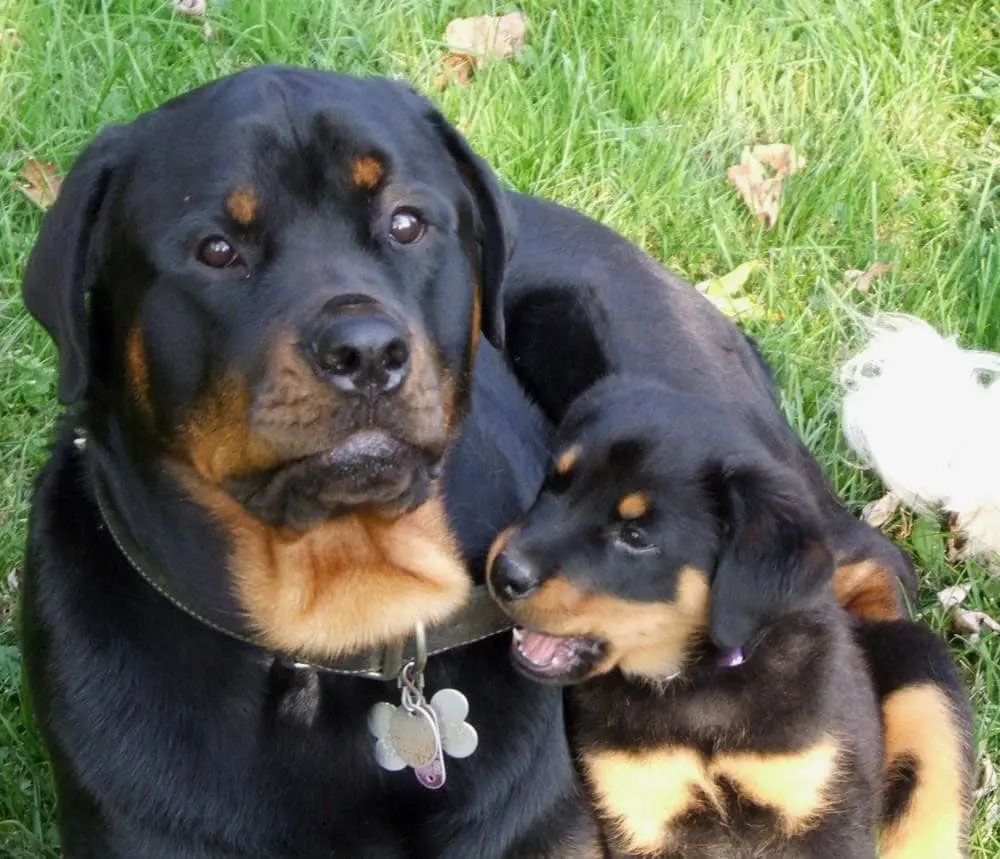
The Rottweiler is a medium to large dog, muscular, sturdy and strong with powerful teeth. Although its shape is quite robust, the Rottweiler has great resistance and is very agile. According to the breed standard, the height at the withers of a male dog is 68 cm., that of a female dog 63 cm.. The weight of a Rottweiler is between approx. 42 kg ( female) and approx. 50 kg (male). Rottweiler coat consists of a black top layer and bottom layer. The black top layer is described by the VDH (German Canine Federation) as "medium length", thick, dense and tight", while the bottom layer should not protrude from the top layer. The Rottweiler's coat is slightly longer on the hind legs. Characteristic for the Rottweiler is also the so-called blight, which means clearly defined brown-red markings on the lips, the snout, the eyebrows, under the root of the tail and on the chest.

Within this breed we can find two breeding lines, the European, considered the original and the American. The American line is characterized by taller specimens and more stylized bodies., on the other hand, European line dogs have a more compact and robust body with a shorter height.

Character and skills

Although the Rottweiler is a race that has been used for defence work, his work and typicity requires that they are described as friendly, happy talk, quiet, faithful, obedient and willingness to work. In the latest studies of aggressiveness in breeds, this was not among the top ten.

In addition the Rottweiler dog is located within the ten most intelligent dogs, they are dogs of great trust and kindness, You can be glad that it will meet the desired objective.

An important attribute that has the Rottweiler is his adiestrabilidad. It is a very intelligent and obedient dog, able to learn many tasks.

According to the classification made by Stanley Coren after analyzing the responses of more than 200 work of the AKC judges ("The Intelligence of Dogs", Stanley city, Ediciones B, 1995), the Rottweiler is the No. 9 from the list.

Its history as a shepherd, as military dog and care as well as dog obedience and exhibition, speaks highly of his versatility.

The Rottweilers are ideal as protectors of the family and property. You agree to all the members of the family and protect both the father and the son. The Rottweilers usually do not have Favorites, Although there are exceptions. They tend to be individualists, and this is due, Once again, are creatures with discernment and lists.

Their intelligence "affects" their trainability. Just like, frequently, It is said of the cats, they are too ready to wait for repetition of an order. Once they have executed her once or twice as you like, Surely they tired of the game and seek a better output. Why do humans insist on doing these things so many times?? I already got the idea the first time and it wasn't that excitingโ€ the Rottweiler seems to think.

In Spain the breed of dog Rottweiler It is classified as "Potentially Dangerous" by Royal Decree. This means that in the Spanish State, potentially dangerous breeds are regulated by the Law 50/1999, of the 23 from December and the Royal Decree 287/2002, of the 22 March.

So, for its possession you must obtain the license for possession of potentially dangerous dogs and register in the corresponding Municipal registration of potentially dangerous animals. One of the things that are required for this license is insurance of civil liability to third parties.

Some need more help than others, but patience is always required when you train a dog, regardless of what race.
Please understand that nothing wrong with owning a Rottweiler there is. They are amazing dogs and wonderful companion animals.. This is not an issue of race, but rather individuals who are involved with the canine behavior modification.

Rottweiler maintenance

Since the Rottweiler was bred as a persistent working dog and therefore needs a lot of leash in order to function properly, keeping him in the kennel is out of the question. But, due to its robustness, can stay out if there is a good family connection and corresponding workload. It is important to socialize the Rottweiler from the beginning through specific training and attendance at a dog school and accustom it to different situations and people.. Due to its character, the Rottweiler can be used very well as a service dog, guard dog, rescue dog or guide dog for the blind. Although it is not the classic family dog, living with children is usually not a problem. Due to its size and strength, wild games with children should be avoided, and children should not walk alone with the Rottweiler due to its enormous traction. Proper maintenance a Rottweiler includes not only a demanding occupation but also a good education.

The life expectancy of a Rottweiler

The life expectancy of a Rottweiler is with 8-10 years somewhat below average value. Unlike small dog breeds, the musculoskeletal system of larger dog breeds is already under great stress during the growth phase, causing signs of wear earlier.

Buy a Rottweiler

Before deciding on a Rottweiler, one must closely examine their attitude and character and carefully consider whether this breed is really suitable. The following questions must be answered affirmatively: Can I offer the Rottweiler enough space and exercise?? Do I have time to take care of the animal enough? Do all family members agree with the dog? Do I trust the education of a Rottweiler? Can I take my dog โ€‹โ€‹on vacation or what alternatives are there? If you finally decide to get a Rottweiler, doesn't necessarily have to come from a breeder. Why don't you visit the animal shelter?- Maybe you'll find a Rottweiler there that you can give a good home to.. Here the purchase is also much cheaper than with a breeder.

Rottweiler Education

The correct education is very important for a Rottweiler to promote its generally human and balanced character.. Your position in the family hierarchy should be clear to the dog from the start., so that he learns to obey and respect his master. Consistency is extremely important in Rottweiler education, and should be dominant, but without harshness. As a responsible dog owner, you must act with sovereignty, calm and especially with consideration when training a Rottweiler. The Rottweiler recognizes these positive leadership qualities, which ultimately makes him a loyal companion. As in the case of any other dog, training should begin at the puppy's age, where positive behavior is rewarded with praise, for example in the form of sweets. Caution: With insufficiently dominant leadership or erroneous and inconsistent education, Rottweiler can develop dangerous behavior – this shows the great role that the correct education of the Rottweilers plays.

Rottweiler Health and Care

Since the Rottweiler's coat is rather short to medium long, the toilet is not very complex. But, due to its agile nature, impurities can quickly accumulate on the coat, so grooming should not be neglected entirely. Occasional brushing is completely sufficient. For Rottweiler coat length, special brushes for dogs, but also cotton gloves have proven to be very effective. In addition to the toilet, foot care, as well as eye care, ears and nails should be considered to the usual extent.

Breed-specific diseases

As with many other large dogs, certain diseases occur more frequently in Rottweiler dogs. These include hip dysplasia and elbow dysplasia, both are poor development of the respective joints. Because this is due to a genetic disposition, an X-ray examination must be presented in a breed aptitude test. To prevent disease, care must be taken that the animal is not overweight and gets enough exercise. Leukoencephalomyelopathy is also a hereditary disease. It leads to progressive paralysis in young animals and is not curable., although it occurs quite infrequently. On the other hand, in recent years, heart disease has been reported more frequently in this breed. Constriction of the nerves of the heart, for example, is inherited and affects the reflux of blood from the heart, which ultimately leads to limited performance of the Rottweiler.

Rottweiler feed

Like any other dog, the Rottweiler needs a species-appropriate diet. To prevent overweight and resulting breed diseases, such as hip and elbow dysplasia, dog food should not be too fatty and above all low in protein. It is also important that the Rottweiler feeds in moderation and has limited access to the feeding bowl. Instead of being able to use a large portion of food, Dog owners must distribute food appropriately for their โ€œRottiโ€. Whether dry or wet food is better for the Rottweiler, the dog owner must decide for himself.

Rottweiler puppies prefer to eat what they are used to eating from their breeder. So, it makes sense to continue feeding this food for the time being and only change food when the dog is older and may have different needs than its food. It's best to just try what the Rottweiler likes best: in addition to dry and wet food, also a healthy alternative to barking at the dog.

Characteristics "Rottweiler"

Coexistence is important that you have with your new friend. Before considering the acquisition of a dog of the breed "Rottweiler" you know certain factors. Not all breeds of dogs are apt to live in an apartment, you must take into account his character, their need for exercise, their interaction with other pets, their care and if you have small children, their level of tolerance towards them.

Adaptation โ“˜

3,0 of 5 stars (based on 1 review)

friendly dog โ€‹โ€‹โ“˜

1,0 of 5 stars (based on 1 review)

hair loss โ“˜

3,0 of 5 stars (based on 1 review)

Affection level โ“˜

3,0 of 5 stars (based on 1 review)

Need for exercise โ“˜

3,0 of 5 stars (based on 1 review)

Social need โ“˜

5,0 of 5 stars (based on 1 review)

Home โ“˜

3,0 of 5 stars (based on 1 review)

Toilet โ“˜

1,0 of 5 stars (based on 1 review)

Friendly with strangers โ“˜

1,0 of 5 stars (based on 1 review)

barking โ“˜

2,0 of 5 stars (based on 1 review)

Health โ“˜

3,0 of 5 stars (based on 1 review)

Territorial โ“˜

5,0 of 5 stars (based on 1 review)

Cat friendly โ“˜

3,0 of 5 stars (based on 1 review)

Intelligence โ“˜

4,0 of 5 stars (based on 1 review)

Versatility โ“˜

3,0 of 5 stars (based on 1 review)

Child friendly โ“˜

2,0 of 5 stars (based on 1 review)

Surveillance โ“˜

3,0 of 5 stars (based on 1 review)

joy โ“˜

5,0 of 5 stars (based on 1 review)

Rottweiler Images

Rottweiler Videos

Type and recognitions:

  • FCI CLASSIFICATION:
  • Group :
  • Section : . .

Federations:

  • FCI – Pinscher and Schnauzer-Molossoid type dogs – Swiss Mountain Dogs and Cattledogs. Section 2.1 Molossoid, mastiff type. โ“˜
  • AKC – Working dogs โ“˜
  • ANKC – Group 6 (utility dogs) โ“˜
  • CKC – Group 3 (working dogs) โ“˜
  • โ€‹KC – Working dogs โ“˜
  • NZKC – Utility dog โ“˜
  • UKC – Watchdog โ“˜

FCI breed standard "Rottweiler"

Origin:
Germany

Date of publication of the valid original standard:
15.06.2018

Use:

Utility dog, service and company.


General appearance:

The Rottweiler is a medium to large sized dog, robust, neither heavy nor light, neither with limbs too high nor weak. Its correctly proportioned construction, Compact and powerful, Lets conclude that it is a very powerful dog, agile and resistant.

IMPORTANT PROPORTIONS: The length of the body, measured from the tip of the sternum (chest bone) to the ischial tuberosity, must not exceed the height at the withers by more than one 15%.


Behavior / temperament:

The rottweiler hasaffable tendency, placid in basic arrangement, very devoted, obedient, docile and willing to workIts appearance is natural and rustic, his behavior is self-confident, stable and fearless. Reacts to its surroundings with great attentionand at the same time in a temperate way.

Head:

---

Cranial region:
  • Skull: Medium length, relativelywidth between ears. Side view, the forehead is moderately arched; the occipital Protuberance is well developed, without being too noticeable.
  • Depression links (Stop)Relatively strongThe front grooves are not too deep.

facial region:

  • Truffle: Well developed, rather wide than rounded, with relatively large nostrils, always black.
  • Snout: In relation to the area of รขโ‚ฌโ€นรขโ‚ฌโ€นthe skull, it should not give the impression of being shortened or elongated.The relationship between the length of the muzzle and the length of the skull is approximately 1 to 1.5. Straight nose bridge, wide at its insertion, moderately decreases in width from back to front.
  • Lips: Blacks, well pasted. The corner of the mouth is tightly closed; gums as dark as possible.
  • Jaws / Teeth: Both the upper and lower jaws are very strong and wide.. Healthy teeth, strong and full (42 parts). With scissor bite, upper incisors overhang lower incisors tightly.
  • Cheeks: Pronounced zygomatic arches.

EYES: Medium-sized, almendrada form, dark brown; with well-adherent eyelids.
EARS: Medium-sized, pendants, triangular, very separated and set high. With the ears well glued and placed forward, which makes the skull area of รขโ‚ฌโ€นรขโ‚ฌโ€นthe impression to be wider.

Neck:

Strong, long, good muscular, slightly arched, clean, double chin freeorskinloose.

Body:

  • Back: Straight, strong and stiff.
  • Pork loin: The lumbar region is short, strong and deep.
  • Rump: Wide, medium length, slightly rounded, without being straight, not even with much fall.
  • Breast : Spacious, broad and deep (approx.. 50% the height of the cross), with a well-developed sill and bulky rib.
  • Abdomen: Not collected flanks.

Tail:

In natural condition, strong, at the level and in an extension of the upper line; in atention, when aroused or on the move can bring her up with a slight curve; in idle it can hang up.Bringing it down between the legs the tail reaches the hocks or is a little longer.

Tips

PREVIOUS MEMBERS:

  • As a whole: Seen from the front they are straight and not very together. The forearms, seen from side, they are straight. The inclination of the scapula in relation to the horizontal is 45ยฐ.
  • Shoulder: Well-placed.
  • Arms: Well glued to the trunk.
  • forearms: Strongly developed and muscular.
  • Metacarpus: Slightly elastic, strong, slightly oblique.
  • Front feet: Round; closed and swollen fingers. Hard pads; short nails, black and strong.

LATER MEMBERS:

  • As a whole: Seen from behind are straight, parallel and not very together. In the natural position, obtuse angles are formed between the thigh and the iliac bone., between the thigh and the leg (knee), and between the leg and the metatarsus (Hock).
  • Thigh: Moderately long, width and heavily muscled.
  • Leg: Long, strong, with many muscles, sinewy.
  • Hock: Powerful; well angled, not steep.
  • Rear feet: A little longer than the front; also closed fingers, bulky and heavy.

Movement:

The Rottweiler is a m, remaining your back strong and with little movement. The development of the movement is harmonious, insurance, with force and free, with wide steps.

Mantle

SKIN: Skin tight head throughout the area; form small wrinkles on the forehead when the dog is at attention.

HAIR: Composed of outer layer and internal NAP. The external layer hair is medium long, hard, thick and tight; internal NAP must not protrude beyond the external hair. In the hind, the hair is a little longer.

COLOR: Negro, with well-defined fire marks of a bright pardo-rojizo color on the cheeks, snout, throat, chest and members, as well as above the eyes and under the tail.


Size and weight:

Males:

  • Height to the cross: 61-68 cm..
  • Of 61 to 62 cm.: small; of 63-64 cm.: medium-.
  • Of 65-66 cm.: large (correct size); of 67-68 cm.: very large.
  • Weight: Approximate: 50 kg.

females:

  • Height to the cross: 56-63 cm..
  • Of 56 to 57 cm.: small; of 58 to 59 cm.: medium.
  • Of 60-61 cm.: large (correct size); of 62-63 cm.: very large.
  • Weight: Approximate: 42 kg.


Fouls:

Any deviation from the aforementioned criteria is considered as a fault and the severity of this is considered to the degree of the deviation to the standard and its consequences on the health and well-being of the dog..

General appearance: Lightweight overall appearance, fragile; too high limb; weak bones and muscles.

  • Head: Head of hounds, narrow, light; too short or too long, Tosca; Flat front; absent or little noticeable stop.
  • Snout: Pointed or long; split nose; borrego type nose cane (convex), or depressed (concave); drooping nasal bridge (eagle); Truffle stained or color clear.
  • Lips: Not together, pink or stained; Open the lips angle.
  • Jaws: Narrow jaw.
  • Teeth: Bite of iron.
  • Cheeks: Very prominent.
  • Eyes: clear, deep, bulging or round. Loose eyelids.
  • Ears: Too low, heavy, long, drooping, bent backwards, as well as separate the size of the uniform.
  • Neck: Too long, delgado, weak muscles, with loose skin or dewlap.
  • Body: Too long, too short, Strait.
  • Back: Too long, weak, past due or outstanding (convex).
  • Rump: Drop, too short, long or straight.
  • Breast : Chest with a flat rib, barrel or Strait, backwards.
  • Tail: Too high or too low implementation.
  • Former members: Close together, not straight; steep shoulder; elbows not quite clinging to the body or separated; too long forearms, short or steep; weak or steep Metacarpus; crushed feet; very flat fingers, destitute or very bulky; Nail Color clear.
  • Later members: Flat thighs; closed or cow type tips; the very acute or obtuse angles of the joints; Spurs.
  • Skin: The wrinkled facial skin.
  • Fur: Soft; too short or too long, wavy; absence of internal NAP.
  • Color: Wrong color marks, too big, or not clearly defined.

MISS PLAYOFFS

  • Behavior: Shy animals, shy, cowards, aggressive, overly suspicious, nervous and afraid of shots that show.
  • General appearance: Marked investment in the sexual nature (that the male presents female characteristics or vice versa).
  • Teeth: Upper or lower prognathism, incisor arcade deviated; absence of an incisor tooth, Tusk, a premolar or a molar.
  • Eyes: Entropion, ectropion, yellow eyes; anisochromia (eyes of different colour).
  • Tail: Quebrada, threaded, strongly diverted laterally.
  • Fur: Markedly long or wavy.
  • Color: Any discrepancy from the characteristic black color with reddish-brown spots; white spots.
  • Any dog โ€‹โ€‹showing clear signs of physical or behavioral abnormalities must be disqualified..


N.B.:
  • Males should have two normal-appearing testicles fully descended into the scrotum..
  • Only functionally and clinically healthy dogs, with the typical conformation of the breed, should be used for parenting.

TRANSLATION: Federation Canรณfila Mexicana a.c..

The latest changes are in bold.

Source: F.C.I - International Cynological Federation

Alternative names:

1. Rott, Rottie (English).
2. Rottweiler (French).
3. Rottweiler Metzgerhund (German).
4. Rottweiler Metzgerhund (Portuguese).
5. Rottie, Rott (espaรฑol).

โ–ท The world of Pets: Dogs, cats, birds, reptiles, amphibians

Greater Swiss Mountain Dog
Suiza FCI 58 - Swiss Cattle Dogs

Gran Boyero Suizo

Despite its impressive size and weight, The Greater Swiss Mountain Dog is strong and agile.

Content

History

The Greater Swiss Mountain Dog is an old Swiss farm dog. It is the largest of the family of mountain dogs. These served in the mountains and valleys of the Swiss Alps as a complete tool for farmers. They watched the house and the farm. If a herd of cows had to be moved from one meadow to another, they made sure everyone stayed on the road and no cow was left behind.

The great mountain dogs, from which the current one emerged Greater Swiss Mountain Dog, harnessed in front of larger wagons and served as all-terrain and mountain tractors, more or less like the old one Unimog. It was not unusual for them to be harnessed in pairs in front of a cart full of valuable cheese, so they could independently find their way from the alpine pasture to the village, to the merchant and back. Mountain Dogs and Swiss Cattle Dogs used to be a single family of dogs. What they have in common is a strong bond with family and their farm., a confident self-awareness, a widely lost hunting instinct, a high degree of vigilance, a loving attitude towards his own people and a reserved attitude towards strangers.

A few ago 100 years, mountain dogs were divided into four breeds: Entlebucher, Appenzeller, Berne, Greater Swiss Mountain Dog – in order of size. This and the artificial fixation in a tricolorism conceived by the breed have not been good for the health of these great dogs.. So the statistics of the British Kennel Club 2014 document a life expectancy of only 8 years for Mountain Dogs and Bovine Dogs. Healthy servants could easily live 4 more years. More about this in the portrait of the respective mountain and cattle dogs.

The Greater Swiss Mountain Dog became a valuable companion dog, but still has the skills of a working dog. In 1912 The "Club of Great Swiss Mountain and Cattle Dogs" was founded in Switzerland.

Physical characteristics

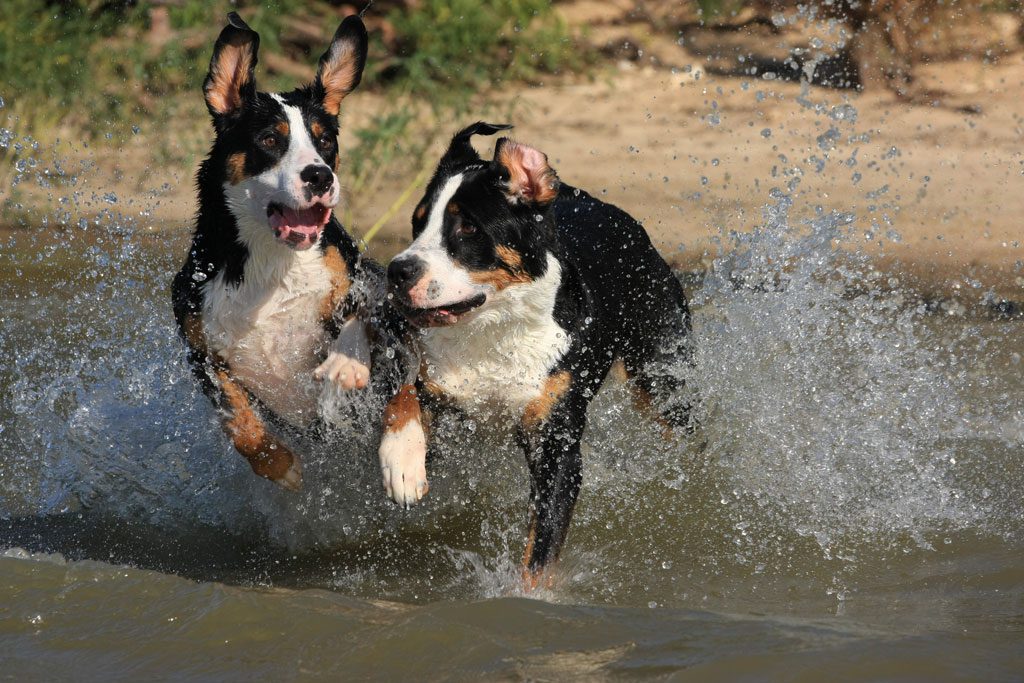
The Greater Swiss Mountain Dog is a big dog, robust, strong-boned and well-muscled. Radiates sovereign calm and self-confident composure, and that's how it is. The difference between the sexes should be quite large.
The males must have a height at the withers of 65 to 72 centimeters, the females of 60 to 68. The weight is between 35 and 50 kg.

The standard establishes numerous regulations on the details of coloring, texture and pattern of its coat. I should have brush hair and be tricolor. We see detailed regulations, where white marks are allowed and where they are not. In the interest of dogs, do not take these external characteristics so seriously, that are only devised by your breeder. Turning those details into breeding selection criteria is not in the interest of the welfare of the offspring. Greater Swiss Mountain Dog, they only have an extremely small gene pool anyway. What matters is the character and physical condition of the dogs. this last, Unfortunately, not too rare a problem. The Greater Swiss Mountain Dog it has better qualities than the color of its coat.

Character and skills

The Greater Swiss Mountain Dog feel more comfortable in the field. He wants to be moved and you can experience wonderful stress-free walks in nature with him. As it has little hunting instinct and usually has a good ear, you can enjoy relaxed and stress-free hours outdoors with it, even without a strap. But, It is not a companion dog for athletes..

One Greater Swiss Mountain Dog not suitable for life in the middle of the big city. You don't need a house with a big garden, what would be ideal. He likes to have a land or a yard where he can take care of things. Otherwise, does not have any special requirement regarding its maintenance. Most important is their close integration into the human family. For a permanent or even partial stay in a kennel these dogs are completely unsuitable.

Educating the Greater Swiss Mountain Dog

One Greater Swiss Mountain Dog can be trained very well. He likes to learn. It is strongly oriented towards its people, what you can use well. The Great swiss you can read the mood and wishes of your people on their faces. This in turn means that one must approach one's education with feeling and of course with consequence.. He has a pronounced sense of justice and, the other way, expect an equally fair deal. One must not only accept their occasional stubbornness, but you must like it. They challenge an intimate and mutually respectful relationship between dog and owner. The reward is a happy coexistence for both parties.

Care and health of the Greater Swiss Mountain Dog

The Greater Swiss Mountain Dog it is very easy to care for, just brush it occasionally.

Like many large dog breeds, tends to have hip problems (HD) or elbows (ED). La endogamia, unfortunately partly strong, has a negative effect on physical fitness and life expectancy.

Nutrition / Food

The Greater Swiss Mountain Dog has no special demands on their diet. Like many dogs of his size, tends to churn your stomach. Therefore you should not eat too fast and let it rest after eating.. Veterinarians often recommend an elevated feeding bowl, that can be purchased in specialized stores. During the breeding season, special attention must be paid to an adapted nutrition.

The life expectancy of the Greater Swiss Mountain Dog

One Greater Swiss Mountain Dog is relatively strongly affected by inbreeding and breeding selection that is one-sidedly oriented toward outward appearances, such as fur color details. So, their life expectancy has decreased in part enormously. It's between eight and -healthily- twelve years.

Buy a Greater Swiss Mountain Dog

When buying a puppy you must be careful that no ancestor appears twice in the pedigree. (endogamia). Otherwise, you should look for a breeder affiliated with the Swiss Mountain and Cattle Dog Club. You can also find the dog of your dreams at the animal shelter or in an emergency initiative.

Characteristics "Greater Swiss Mountain Dog"

Coexistence is important that you have with your new friend. Before considering the acquisition of a dog of the breed "Greater Swiss Mountain Dog" you know certain factors. Not all breeds of dogs are apt to live in an apartment, you must take into account his character, their need for exercise, their interaction with other pets, their care and if you have small children, their level of tolerance towards them.

Adaptation โ“˜

3,0 of 5 stars (based on 1 review)

friendly dog โ€‹โ€‹โ“˜

4,0 of 5 stars (based on 1 review)

hair loss โ“˜

3,0 of 5 stars (based on 1 review)

Affection level โ“˜

4,0 of 5 stars (based on 1 review)

Need for exercise โ“˜

3,0 of 5 stars (based on 1 review)

Social need โ“˜

4,0 of 5 stars (based on 1 review)

Home โ“˜

2,0 of 5 stars (based on 1 review)

Toilet โ“˜

1,0 of 5 stars (based on 1 review)

Friendly with strangers โ“˜

3,0 of 5 stars (based on 1 review)

barking โ“˜

4,0 of 5 stars (based on 1 review)

Health โ“˜

3,0 of 5 stars (based on 1 review)

Territorial โ“˜

5,0 of 5 stars (based on 1 review)

Cat friendly โ“˜

3,0 of 5 stars (based on 1 review)

Intelligence โ“˜

4,0 of 5 stars (based on 1 review)

Versatility โ“˜

4,0 of 5 stars (based on 1 review)

Child friendly โ“˜

4,0 of 5 stars (based on 1 review)

Surveillance โ“˜

3,0 of 5 stars (based on 1 review)

joy โ“˜

5,0 of 5 stars (based on 1 review)

Images "Greater Swiss Mountain Dog"

Photos:

1 – Greater Swiss Mountain Dog, tricolour by Canarian / CC BY-SA
2 – Greater Swiss Mountain Dog by jude / CC BY
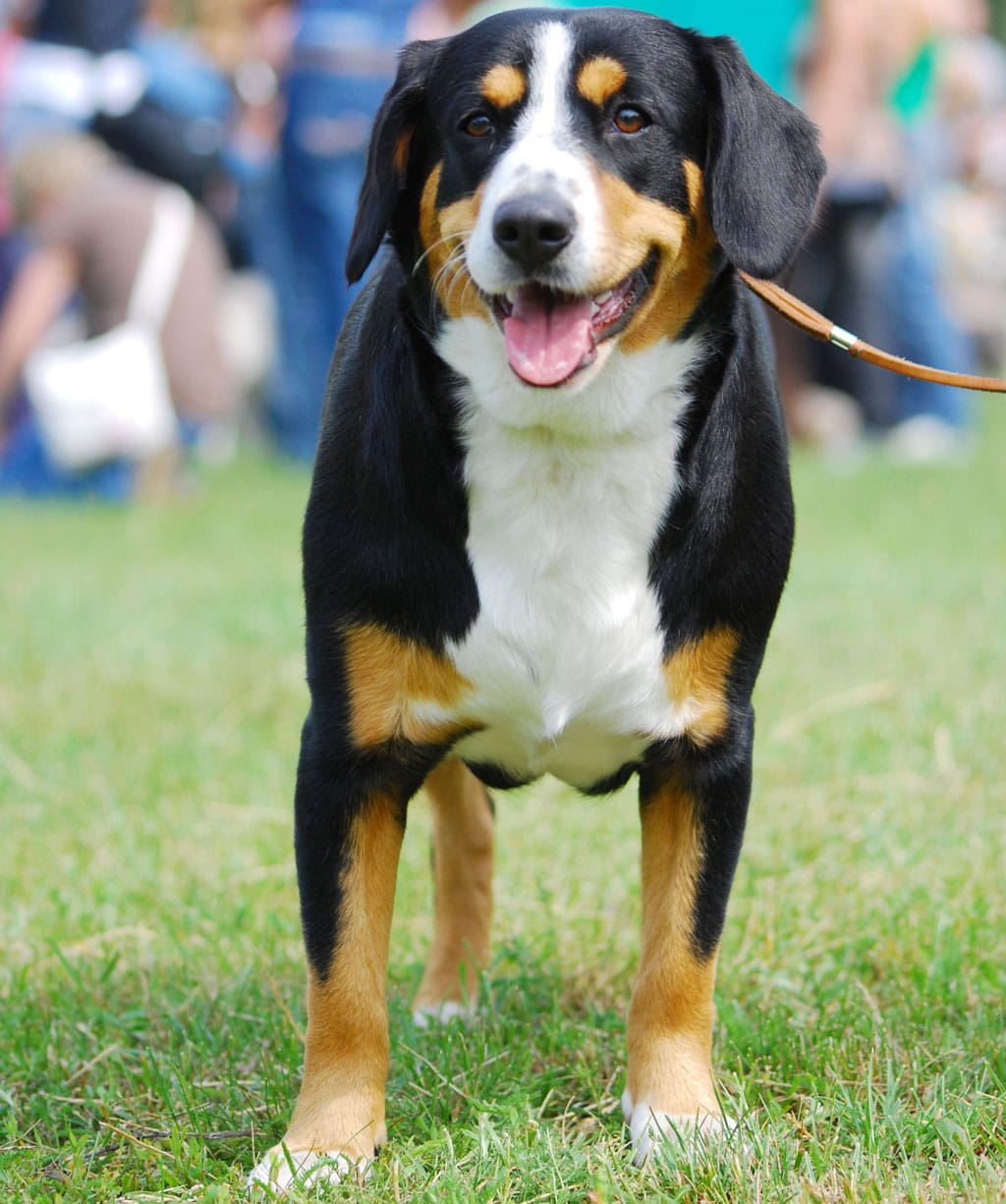
3 – Big Swiss Mountain Dog and Entlebucher Mountain Dog during International show of dogs in Katowice – Saucer, Poland by Pleple2000 / CC BY-SA
4 – All Mountain Dogs: Greater Swiss Mountain Dog, the Bernese Mountain Dog, the Appenzeller Mountain Dog an the Entlebucher Mountain Dog by Shining dog / CC BY-SA

Videos "Greater Swiss Mountain Dog"

Type and recognitions:

  • FCI CLASSIFICATION:
  • Group :
  • Section : . .

Federations:

  • FCI – Pinscher and Schnauzer-Molossoid type dogs – Swiss Mountain Dogs and Cattledogs. Section 2.2 Molossoid, mountain type. โ“˜
  • AKC – Working dogs โ“˜
  • CKC – Working dogs โ“˜
  • โ€‹KC – Working dogs โ“˜
  • UKC – Watchdog โ“˜

FCI breed standard "Greater Swiss Mountain Dog"

Origin:
Switzerland

Date of publication of the valid original standard:
25.03.2003

Use:

Originally used as a guard and traction dog. He is currently used as a family dog., companionship and protection.


General appearance:

It is a tricolor dog, robust, strong bone and good musculature. Despite its size and weight, demonstrates agility and endurance. The sexual characteristics of the male and female are pronounced.

IMPORTANT PROPORTIONS:

  • body length (measured from the tip of the shoulder to the tip of the buttock: height of the cross: = 10 : 9.
  • Chest depth: height of the cross: = 1 : 2.
  • Length of the skull: nose length: = 1 : 1.
  • Skull width: muzzle width: = 2 : 1.


Behavior / temperament:

insurance, attentive, awake and fearless in everyday situations, kind and dependent with people he trusts and self-confident in relation to strangers; medium temperament.

Head:

In relation to the body, it's strong but not heavy. The head of the males is more powerful than that of the females.

Cranial region:
  • Skull: Flat and wide with a front groove that gradually heads and disappears upward.
  • Depression links (Stop): Notorious.

facial region:

  • Truffle: black.
  • Snout: Strong, longer than deep, without looking pointy from above or from the sides. Straight nose cane, no middle groove.
  • Lips: Poorly developed, tight; black pigmented; not hanging.
  • Jaw โ€“ Teeth: Strong jaws. Full scissor bite, strong and regular. Lack of 2 teeth (premolars 1 y/ o 2) is tolerated. The absence of the M3 is not taken into account.

Eyes: Medium, in the form of almond, not deep or bulging, hazelnut brown or chestnut, of happy and awake expression. Eyelids are well attached. The darkly pigmented edge of the eyelids.

Ears: Medium-sized, triangular and fairly high set. When the dog is calm, supported and flat; when you are attentive, directs them forward. With enough hair both on the outside and on the inside.

Neck:

Strong, muscular, chubby and no chin.

Body:

Slightly longer than the height at the withers.

  • Back: Moderately long, strong and straight.
  • Pork loin: Wide and well muscled.
  • Rump: Long and wide, with a gently rounded fall; neither too high nor abruptly dropped.
  • Breast : Strong, width, reaching to the elbows; round-oval rib diameter chest neither flat nor crowded. Well developed sill.
  • Abdomen and lower line: The abdomen and flanks are poorly gathered.


Tail:

Inserted in harmonic continuation with the rump. Pretty heavy, reaching the hock; if the dog is calm, the tail hangs; if you are at attention or on the move, wears it higher and slightly curved, but never ringed or on the back.

Tips

PREVIOUS MEMBERS:

  • As a whole: Seen from ahead straight and parallel placed rather apart.
  • Shoulder: The long shoulder blade, strong, inclined, glued and well muscled, forming a not very obtuse angle with the arm.
  • Forearm: Straight and strong bone.
  • Metacarpus: Strong, seen from the front, in straight extension of the forearm; seen from the sides almost perpendicular.

LATER MEMBERS:

  • En set: Seen from behind, straight and not too close. Metatarsals and feet must not be inclined inward or outward; dewclaws must be amputated, except in countries, in which amputation is not permitted by law.
  • Thigh: Rather long, width, strong and well muscled.
  • Knee: Claramente an obtuse angle.
  • PinScheme: Relatively long.Hock: Strong and well angled.

FEET: Strong, straight, closed, fingers well together, well arched and strong nails.

Movement:

Wide and uniform in all types of gears. Good forward reach and good momentum from hindlimbs. When jogging, limbs move in a straight line, seen both in front and behind.

Mantle

  • Fur: double hair, composed of dense outer layer of medium length, and inner fleece, equally dense, preferably dark gray to black. Short external hair is allowed, if the inner fleece is thick.
  • Color: Typically tricolor: Basic color is black with symmetrical reddish-brown fire markings and white markings. The reddish-brown fiery markings lie between black and white on the cheeks, above the eyes, on the inner side of the ears, at the sides of the chest, on all four limbs and at the bottom of the tail. White markings are located on the head (forehead and muzzle), from throat to chest (without interruption), on the feet and at the tip of the tail. Between the white mark on the forehead and the brown fire marks- reddish over the eyes should be a black streak. White spot on neck or white collar is tolerated.


Size and weight:

TAHAND:  
Alturto the cross In males: 65 โ€“ 72 cm.,
  In females: 60 โ€“ 68 cm..


Fouls:

Any deviation from the aforementioned criteria is considered as a fault and the severity of this is considered to the degree of the deviation to the standard and its consequences on the health and well-being of the dog..

  • Dubious behavior.
  • Lack of other teeth, maximum two premolars (PM1 and / or PM2). M3s are not taken into account caliper bite.
  • light eyes; insufficient eyelid occlusion
  • Mantle: Internal fleece of brownish-yellowish or light gray color visible. Dirty colors.
  • Lack of marking
    • Lack of white mark on the head; very wide list.
    • White mark of the muzzle visibly reaching beyond the corners of the lip
    • ยซWhite bootsยป (white color that reaches above the metacarpal or metatarsal joints.
  • Notoriously asymmetrical drawings

FALTAS DESCALIFICANTES:

  • Aggressiveness or extreme shyness.
  • Any dog โ€‹โ€‹showing clear signs of physical or behavioral abnormalities must be disqualified..
  • Upper or lower prognathism, arcade of the deviated incisors
  • Entropion, ectropion.
  • One eye or two blue eyes.
  • Short hair without undercoat.
  • Long hair.
  • Non tricolor dog.
  • Basic color other than black.


N.B.:
  • Males should have two normal-appearing testicles fully descended into the scrotum..
  • Only functionally and clinically healthy dogs, with the typical conformation of the breed, should be used for parenting.

TRANSLATION: Federation Canรณfila Mexicana a.c.

Source: F.C.I - International Cynological Federation

โ–ท The world of Pets: Dogs, cats, birds, reptiles, amphibians

Yugoslavian Shepherd Dog Sharplanina
Yugoslavia FCI 41 - Molossoid . Mountain

Yugoslavian Shepherd Dog Sharplanina

The Yugoslavian Shepherd Dog Sharplanina is a brave dog, quiet, safe and reserved with strangers.

Content

History

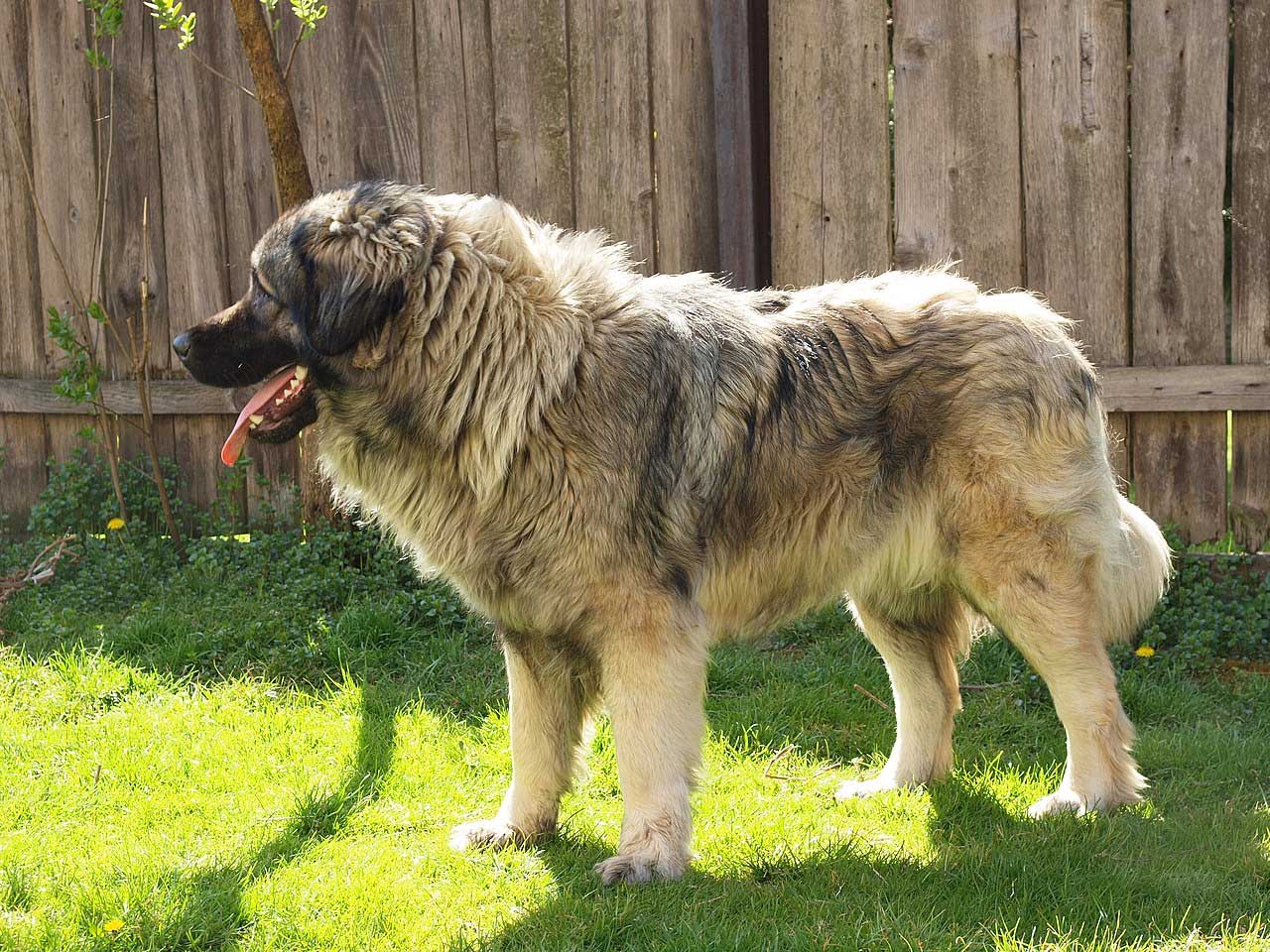
As it is the case with many breeds, the true origins of this big guy are unknown, although there are theories that try to approach them. Some authors raised that their ancestors were the ancient molossians, especially dogs from Greece and livestock guarding dogs from Turkey.

Other authors believe that the Yugoslavian Shepherd Dog Sharplanina, drift of Asian dogs that arrived in Europe accompanied by migration of peoples who were engaged in raising them. This theory is the most widely accepted today..

The race was initially recognized by the Federation Cynologique Internationale (FCI) in 1939 under the name Illyrian Shepherd Dog, demonstrating the ancient name of the native region of these dogs.

In 1957, at the request of the Yugoslav Canine Federation (JKS), the FCI changed the name to Yugoslav Shepherd DogYugoslavian Shepherd Dog Sharplanina, because it is in the ล ar Mountains (ล ar Planina in South Slavic languages, is a mountain range located on the southern border of Serbia in the province of Kosovo and in the northwestern part of the Republic of Macedonia), where is concentrated the largest number of specimens of the breed.

If there is something indisputable it is that the Yugoslavian Shepherd Dog Sharplanina, lives since ancient times in the mountainous regions of the former Yugoslavia, from where it has spread throughout the Balkan Peninsula and recently, beyond these borders.

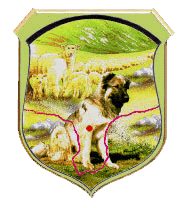
Escudo de DragasThe image of the Yugoslavian Shepherd Dog Sharplanina appears on the obverse of the coin 1 Denar, issued in the Republic of Macedonia in the year 1993, and is also the emblematic protagonist of the Dragaลก shield, a city in the South of Kosovo, which is located in the region of the ล ar Mountains.

The Yugoslavian Shepherd Dog Sharplanina has reached the ranches of North America as an esteemed sheepdog and cattle guardian. Predator problems have been greatly diminished once a Yugoslavian Shepherd Dog Sharplanina , takes the responsibility of a herd. You are one of the few dogs that can chase away a wolf or bear.

Physical characteristics

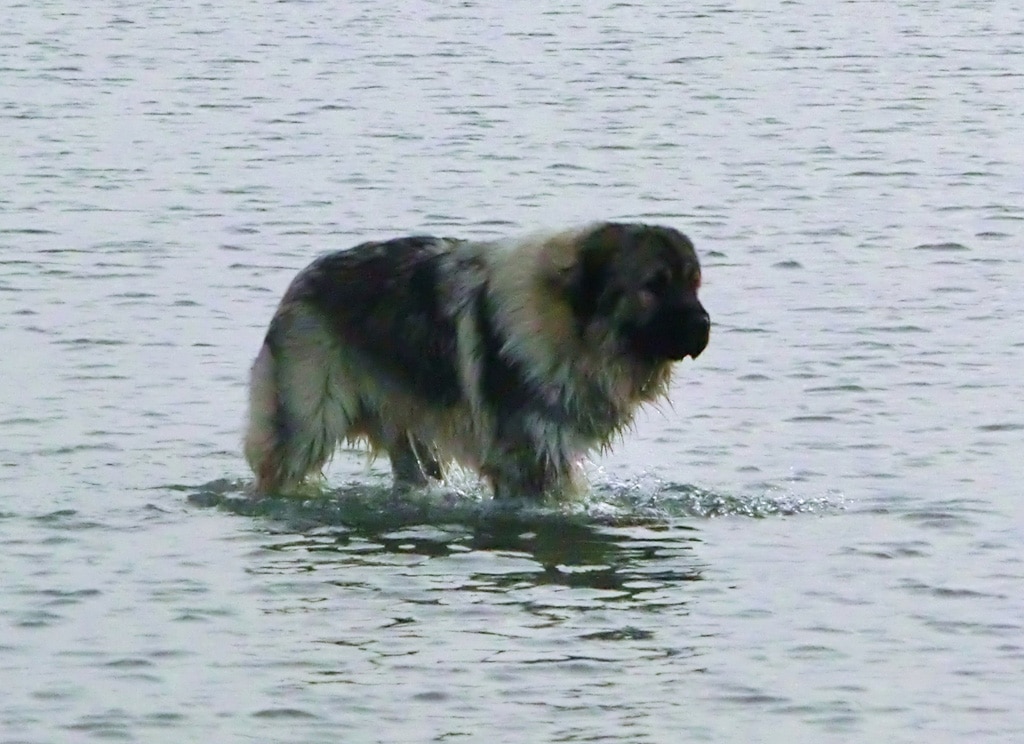
The Yugoslavian Shepherd Dog Sharplanina, is a large size dog, It is quite above average when it comes to large breeds. It is also robust and equipped with a strong Constitution.

The height males average is of 56 to 62 cm and females is of 54 to 58 cm.. The length of the body is slightly greater than the height at the withers.

Although some authors speak of the existence of individuals whose actions were between 75 and 85 cm. of height and a weight of 65 to 100 kg.

– The huge head is proportional to the body, It has the skull slightly convex and slightly longer than the muzzle.
– The eyes of the Yugoslavian Shepherd Dog Sharplanina they are almond-shaped and chestnut-colored (light or dark), transmit an expression of serenity but the look is penetrating.
– The ears they are medium-sized, flat and hang on the cheeks.
– The tail It is long and Sabre-shaped, if it is in a state of alert, it carries it high, barely exceeding the line of the back.
– The fur It is long in some parts of the body and short in others. In the head, the ears and the anterior part of the extremities, is short. The length of the neck, the body and the back of the limbs and tail, is long.
– Regard to the the fur color, all uniform colors are supported but it is preferable to be gray iron and gray very dark. As well, at the top of the head, the neck and the trunk have darker hair.

Character and skills

The Yugoslavian Shepherd Dog Sharplanina it is silent, active and very protective, extremely bright, but very independent. It is an extremely good watchdog, and very reserved with strangers. The Yugoslavian Shepherd Dog Sharplanina they are calm sheepdogs, very smart, which is why, wisely, they choose their friends, trust no one too fast. They are naturally fearless defenders of the pack, as well as his master and his property, so everything he considers his property is jealously and unconditionally guarded. This is a dog with character and very dominant that requires work.. If we just want this dog to be a companion, constant professional education from an early age is essential.

The animals that live with him on the farm will be under his protection and there is no need to fear for them.. But, does not tolerate strange and unknown animals, often aggressive, and the same problems can happen with smaller pets, that can be seen as prey.

She will get along well with the children she will be together with from an early age, will be devoted and protective of them, and you may consider children you don't know as uninvited guests, so we must be very careful. You must be especially careful with younger children, since he will watch over them all the time due to the shepherd's instinct, but if the children want to get away, will drag them back, so you can injure them without realizing it.

Observations

Similar to the Caucasian Shepherd Dogthat is very much– has a temperament more characteristic of a guard dog than a herd dog.

Let us not forget that this agility, He was selected to defend the herds of the attack of wolves that were previously very numerous in their homeland.
It is necessary that the owner of this dog is a person responsible and very conscious of the copy that is in charge of, the Yugoslavian Shepherd Dog Sharplanina, It has a specially developed and powerful teeth, It can be a real danger if the dog is not given a correct and healthy education.

Education "Chaplanina pastor dog"

This is not a suitable dog for beginners. He is very suspicious and incorruptible. Usually, is completely loyal to a single owner. Education must be clear, consistent and should be carried out from the first meeting with the puppy. Early socialization is mandatory. With an inadequate education, this dog can become uncontrollable, very aggressive, dangerous even to the owner.

Required activity

These dogs really need a lot of exercise. If the dog goes to work on a farm, will meet your daily career needs while working, otherwise, need a longer walk or daily run.

Suitable environment

This is a dog suitable exclusively for outdoor life. You will feel better on a farm or in a larger rural fenced yard because you will be able to run freely and perform your primary role as a sheepdog..

Care "Chaplanina Pastor Dog"

Your care is not too demanding. Thick hair just needs brushing once in a while, once a week will be enough, except when you change your coat that more frequent brushing is recommended. As with other dogs, this breed also needs to clean their ears, eyes and shorten their claws.

Health "Chaplanina pastor dog"

No known genetic health problems, it is considered a relatively healthy breed. As with other large breeds, hip dysplasia can occur in this breed.

Images "Chaplanina Pastor Dog"

Videos "Chaplanina pastor dog"

Type and recognitions:

  • FCI CLASSIFICATION:
  • Group :
  • Section : . .

Federations:

  • FCI – Pinscher and Schnauzer-Molossoid type dogs – Swiss Mountain Dogs and Cattledogs. Section 2.2 Molossoid, mountain type. โ“˜
  • CKC – Miscellaneous list โ“˜
  • UKC – Watchdog โ“˜

FCI breed standard "Yugoslavian Shepherd Dog Sharplanina"

Origin:
Macedonia, Serbia, Montenegro

Date of publication of the valid original standard:
24/11/1970

Use:

---


General appearance:

to) It is robust, of strong Constitution, well proportioned.
Its size is above normal. Is covered in long hair, dense and quite thick, giving your body a more collected look. companies, possesses a calm temperament and good character: knows how to be a good defender without attacking. He is faithful to his master and incorruptible.

b) Height to the cross: In the male, the average is 62 cm., and in the female it is 58 cm.. Large dogs are preferred.
The dogs below 56 cm and bitches below 54 cm are excluded from reproduction. In working dogs the weight is 35 to 45 kg in males and 30 to 40 kg in females.

c) body length: It is slightly greater than the height at the withers: of 8 to 10% from height to withers in dogs, and 10 to 12% in
the bitches.


Behavior / temperament:

---

Head:

Is provided to the body and measures about 25 cm., or a 40% the height at the withers. The skull is slightly longer than the muzzle, 58 and 42% respectively of the total length of the head. The female has a little longer snout (57 and 43%). The top of the skull is slightly convex and the profile of the nasal helm is straight. The lines of both profiles are convergent.

Cranial region:
  • Skull: The cranial region is wide, with a medium marked Groove. Seen from side and from above is slightly convex and little bulky.
  • Depression links (stop) : It is little pronounced.

facial region:

  • Snout: It is shorter than the skull. Wide and deep at the base, light and gradually are reduced. The nasal helm is straight and wide. The profile of the lower jaw begins with an arch and is confirmed by a straight line that diverges from the profile of the nasal bridge..
  • Truffle: Is wide and black.
  • Lips: They are moderately thick and stretched. The upper lip slightly exceeds the lower. The corners are well connected, and they are not never reversed.
  • Teeth: They are comprehensive and applied in scissor bite.
  • Eyes: Almond biscuits; or large, or sunk. Are dark or light brown, and calm expression, but penetrating and never afraid. Both the eyelids and visible mucous membranes are black.
  • Ears: Located at the level of the prolongation of an imaginary line that starts from the tip of the nose and passes through the inner corner of the corresponding eye, or below. They are hanging and fall glued along the cheeks. They are V-shaped and medium in length.; When stretched them slightly arriving to the inner corner of the eye. They are covered with short dense pile.

Neck:

The upper profile is slightly convex or straight at the top of the neck. The lower profile is straight. The neck is of medium length, but due to the long and bushy hair seems shorter. It is wide, deep and muscular, well attached to the head and body, no sharp demarcation. It is slightly elevated in relation to the dorsal line. Your skin is stretched and does not double chin. The hair is dense, long and rough, and arriving at the head it forms a sort of well marked necklace, which apparently increases the breadth and depth of this part of the head.

Body:

As a whole, the top line is horizontal, or slightly inclined starting from the cross to the rump. In dogs bred in the mountain, be tolerated that the height of the rump is just greater than the height at the withers, Although this is not desirable. The body is slightly longer than the height at the withers.

  • Cross: Slightly marked and wide. It is strongly attached to the neck and the demarcation is inconspicuous.
  • Back: Straight and wide; is not too long.
  • Pork loin: The lumbar region is shorter than, wide and well muscled.
  • Rump: Is medium length, oblique, wide and well muscled.
  • Breast : The chest is deep and medium length; along with the bottom edge reaches the elbow. The ribs are slightly arched. The chest is wide and muscled. Chest girth should be at least 20% greater than the height at the withers.
  • Belly: Built and muscular. Lower profile line rises slightly from front to back. The legs are fairly short. The depression of the rump is marked.
  • Tail: It is long and at least reaches the tip of the Hock. The top margin of the rump, that it does not have a sharp demarcation, extends to the margin of the tail. This is large at the base and gradually reduces towards its end. The hair of the tail is dense and its bottom edge is longer, forming bangs. The oxtail Sabre-shaped and when the dog is moving is raised. When the dog is in motion, the tail may be above the line of the back..

Tail:

It is long and reaches at least to the point of the hock. The top line of the croup, that it does not have a sharp demarcation, extends to the margin of the tail. This is large at the base and gradually reduces towards its extremity.. The hair on the tail is bushy and longer on its lower edge., forming bangs. The tail is shaped like a saber and when the dog is in motion it appears raised. When is the dog moving, tail can be found above backline.

Tips

Seen as a whole are well shaved and commensurate with the body. The height of the tip of the elbow is a 55% the height at the withers. The different parts of the limbs are in proportion to each other and to the rest of the body..

  • Shoulder: It is sufficiently long and wide and is well attached to the body. It is slightly oblique and forms an angle of 65ยฐ with the horizontal line..
  • Arm: It is more oblique than shoulder, forming an angle of 55ยฐ with the horizontal line. The angle of the elbow (humeral-radial angle), is 145ยฐ. The elbow is wide, It is well located and very little separated ribs.
  • Forearm: Is vertical, of bones, and well-developed musculature. It is long, and his back is covered with long hairs that are fringe.
  • Carpo: Width, thickness and presents a slight demarcation.
  • Metacarpus: It is wide, strong and slightly oblique.
  • Pies: Strong, oval-shaped, with fingers arched and well together. The nails are black and solid. Digital pads and Plantar are firm, though flexible. Are black or a dark pigmentation.

HINDQUARTERS: Seen from the back, the position of the hind legs is uniform and slightly larger than the forelimbs. In profile, is also uniform, with the angles of the joints sufficiently closed.

  • Thigh: Muscled, strong and rounded. It is oblique, forming with the horizontal line an angle similar to that of the shoulder. The angle of the knee (stifle-tibial angle) It is a little more open than the scapular-humeral angle (around 125ยฐ). The knee is solid and wide.
  • Leg: It is oblique, strong, with a long enough musculature and well-marked bangs.
  • Hock: Wide and fairly open (an angle of about 130ยฐ).
  • Metatarsus: It is a bit less oblique to the Metacarpus. Rarely presents Spurs, But if this is low, they should be disposed.

Movement:

The step is long and agile. Preferred movement is the trot, high strides and medium length. During the Gallop motion is somewhat heavy, but long jumps well covering the field.

Mantle

SKIN: Is of medium thickness; elastic and well stretched on different parts of the body. There is no presence of dewlap. All visible mucous membranes are black, or a dark pigmentation.

Fur: The head, the ears and the outer parts of the limbs are covered with short hairs. The neck, the body, later parts of the limbs and tail are covered with long hairs almost stretched and slightly thick. The inner layer of hair presents a short hair, finest, very thick and abundant. Dl hair is in the cross the length of 10 to 12 cm.; cannot be shorter than for 7 cm..

Color: This is a dog of a single color. All the shades of colors are supported, from white, until dark brown, almost black. The most valued colors are greenish gray (grey iron), the dark grey. Piebald fur or white spots are not allowed. Pigmented dogs allow small white markings on the chest region and fingers, Although this is not desirable. The background color is more pronounced on the upper parts of the head in all pigmented dogs, the neck and trunk.

On the lower parts of the body, There is a degradation of color, and the color is lighter in the lower parts of the extremities, arriving at the gray beige or dirty. In no case should these degradations appear well delimited, imparting a light marking or piebald appearance.


Size and weight:

---


Fouls:

Any deviation from the above mentioned criteria is considered an absence and severity of this refers to the degree of deviation to the standard and its impact on the health and welfare of the dog.

MINOR FAULTS

  • Insufficient breadth of the cranial region, and the slightly longer snout.
  • well developed jaws.
  • Length and depth of chest insufficient.
  • Too flat ribs, or too arched.
  • Pronounced aplomb defects.
  • A bit shorter hair, as long as the fringes are clearly visible.
  • White markings on the chest region and feet.
  • A slight reduction of the tail.
  • The foot of Hare, as well as other minor physical offenses.

SERIOUS FAULTS

  • Too long snout, or too sharp.
  • High set ears, or they deviate from the head (they are not enough stuck to the cheeks).
  • Bite in the form of iron.
  • Sunken back.
  • Tail that falls to the side.
  • Lymphatic Constitution, as well as other serious physical offenses.

MISS PLAYOFFS

  • Aggressive or fearful dog.
  • Absence of premolars.
  • A difference marked between body length and the height at the withers.
  • Insufficient Withers height.
  • The lower hair length to 7 cm..
  • Large white markings (piebald fur), stripes (atigrados), depigmentation of the visible mucous membranes and eyes.
  • Signs of degeneration (braquignatismo or prognathism, short birth tail, or lack thereof, too depressed back, and other signs of degeneration.
  • Any dog โ€‹โ€‹showing clear signs of physical or behavioral abnormalities must be disqualified..


N.B.:

โ€ข Males must have two normal-appearing testicles fully descended into the scrotum..
โ€ข Only functionally and clinically healthy dogs, with the typical conformation of the breed, should be used for parenting.

Source: F.C.I - International Cynological Federation

Alternative names:

1. Illyrian Shepherd Dog, ล arplaninac (English).
2. berger yougoslave, charplanina, charplaninatz berger albanais, sarplaninac (French).
3. ล arplaninac, Jugoslovenski Ovฤarski Pas โ€“ ล arplaninac, Jugoslawischer Hirtenhund โ€“ ล arplaninac, Illyrischer Schรคferhund (German).
4. ล arplaninac, Charplaninatz, Sarplaninac (Portuguese).
5. Charplaninatz, Perro ovejero ilirio, Perro pastor ilirio, Perro montaรฑรฉs de Serbia, Perro pastor de Serbia, Perro montaรฑรฉs macedonio, Perro pastor macedonio, ล ar Planinac (o ล ar Planinec), Perro pastor yugoslavo, Perro montaรฑรฉs yugoslavo (espaรฑol).

โ–ท The world of Pets: Dogs, cats, birds, reptiles, amphibians

St. Bernard
Suiza FCI 61 - Molossoid . Mountain

San Bernardo

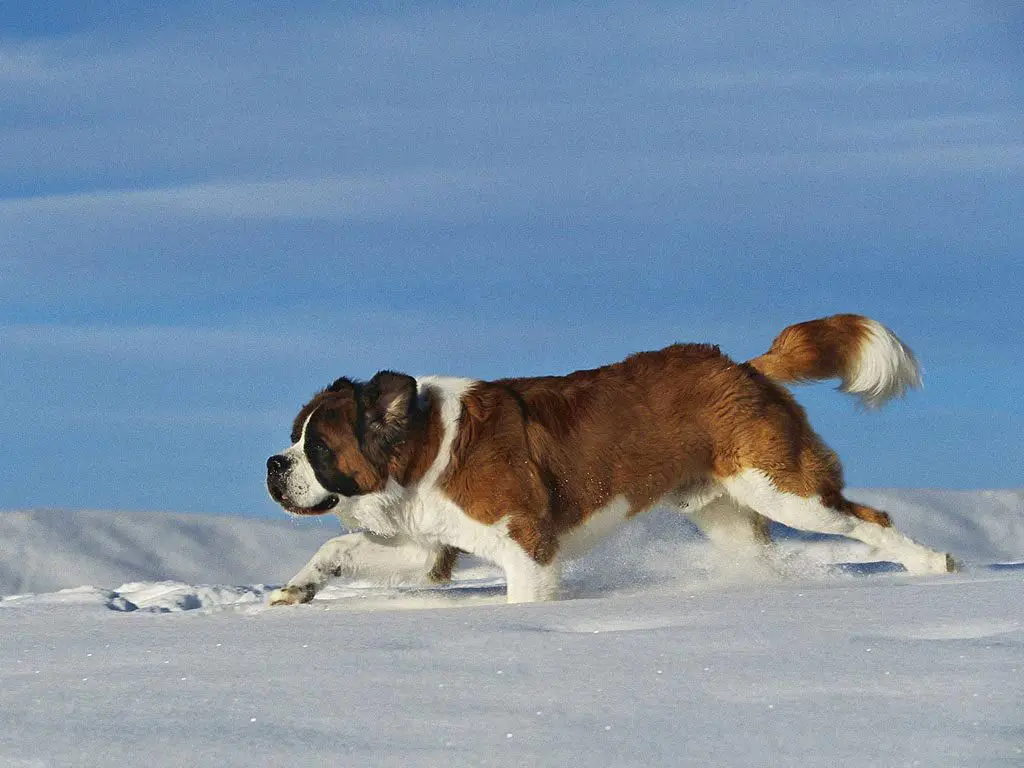
The St. Bernard It is very affectionate and has an innate sense of relief especially in the snow.

Content

History

The St. Bernard It is a breed of dog whose name in other languages: St. Very, Bernhardiner, Chien du Saint-Bernard, Saint Bernard Dog.

According to breed historians, the St. Bernard, descended from the ancient molossians Asian, whose ancestral form was and is represented by the Tibetan Mastiff.

A team of researchers from the University of Manchester, directed by Chris Klingenberg of the Faculty of biological sciences, reviewed 47 skulls of St. Bernard donated by Swiss breeders to the Natural History Museum in Bern covering a period of 120 years, from modern copies until those old dogs of the time that was initially defined the standard of the breed. It was found that the traits stipulated in the breed standard of the St. Bernard have become more exaggerated over time, as breeders selected dogs that had the desired physical attributes.

Compared to their ancestors, the St. Bernard modern has the widest skull, the angle between the nose and the forehead more pronounced, and also a more significant bump over the eyes. These changes are described exactly as desired in the breed standards. Clearly, not due to other factors such as overall growth, since they do not provide the animal with any physical advantage, so we can be sure of have evolved only by selective breeders considerations.

This research shows how the selection, either natural or in this case artificially influenced by the man, It is the fundamental driving force behind the evolution of life on the planet.

In the year 923 born Bernard of Menthon in Menton, region of Savoy (France), which he became Archdeacon of Aosta, in the Italian Alps, dedicated to spreading the Christian faith among the inhabitants of the Alps. In one of these Alpine passes was founded in the year 1049 the Hospice of the Gran San Bernardo, to help, help and shelter to hikers who were the step. The Holy, Catholic scholar and theologian, He was part of the Cistercian order or better known as Trappist, as fellow (the Trappist monks) in Switzerland they had a dog of this breed as a companion around the 16th century.

In the great Mount St mountain pass. Bernhard, to 2.469 meters above the sea level, monks founded in the 11th century, a hospice for travellers and pilgrims. there they were raised, Since the mid-17TH century, big mountain dogs for guard and surveillance. The existence of those dogs is documented graphically from 1695 written in a chronicle of the Hospice from the year 1707.

These dogs were soon used as guard dogs and, especially, as rescue dogs for travellers lost in the fog and snow.

There are chronicles published in many languages โ€‹โ€‹about the numerous lives that were saved by these dogs from the "white death" and stories of soldiers who crossed the mountain pass with Napoleon Bonaparte towards 1800, in the 19th century, they spread the dog's fame for St. Bernard all over Europe.

Already called at that time ยซBarry Hundยซ, And the legendary ยซBarryยปIt became the symbol of the rescue dog. The direct ancestors of the dog of St. Bernard were the very widespread oversized dogs, peasants of the region. These large dogs became only a few generations, an ideal pattern, in the current race.

As a result of an international cynological congress held on 2 in June of 1887, the dog of St. Bernard was officially recognized as a Swiss breed and the breed standard became mandatory. Since then the San Bernardo dog became the "Swiss national dog".

Heinrich Schumacher Holligen, was the first, in 1867 creating genealogical documents for their dogs. In February of 1884 The ยซSchweizerische Hundestammbuchโ€ (Swiss races book, SHSB). The first entry was that of St. Bernard ยซLeรณnยป, followed by other 28 annotations also of dogs of St. Bernard. The 15 in March of 1884 The ยซSchweizerische St. Bernhardsclubยป (Swiss Dog Club St. Bernard) in Basel.

Physical characteristics

The Saint Bernard, is classified in the Group 2: Dog type Pinscher and Schnauzer, Molosoides and mountain dogs and Swiss Cattle Dogs, and other races; section 2; Molossoid, 2.2 Type mountain (without working trial). Of the FCI (Federation Cynologique Internationale).

There are two varieties of the dog St. Bernard:

  • The variety of short hair (double hair, Stockhaar).
  • The long-haired variety.

Two varieties are of great stature and of a noble general appearance; they have a vigorous body, robust, harmonic and muscular, as well as an imposing head with an expression of attention on the face.

The cross appeal is, minimum of 70 cm for males and 65 cm for females. The FCI standard sets a maximum of 90 cm for males and 80 cm for females (dogs exceeding the maximum height is not devaluarรกn if its general aspect is harmonic and its proper motion).

In general the size is defined as:

  • ยซVery largeยซ, to be optimal in San Bernardo, When exceeds the 86 cm in males and the 80 cm in females.
  • ยซGrandยปWhen it goes from 82 to 86 cm in males and 75 to 80 cm in females.
  • ยซMediaยปWhen it goes from 78 to 82 cm in males and 70 to 75 cm in females.
  • ยซSmallยปWhen it goes from 70 to 78 cm in males and 65 to 70 cm in females.

In it "golden period of St. Bernardโ€ (1920-1940) were very rarely seen in exposures lower males to 80 Switzerland cm, of Germany, in the Netherlands and the subjects were not so rare above the 90 cm..

Also currently a good San Bernardo to access the championship would never have to be -with some exceptions- below the 80-82 cm and abundantly exceed such limit to reach above if possible the maximum of the German Mastiff and of the Irish Wolfhound but with greater volume, greater length of the trunk and heavier, course.

Character and skills

The dog's St. Bernard radiates calm and tranquility. He is balanced and self-confident.. Despite its imposing size, it is sensitive and has a gentle nature. His "stubbornness" is typical of this race, not only in appearance. The St. Bernard is trustworthy and kind, even with strangers. There is hardly a dog that has such a tolerant and balanced nature. Quietly he lets himself be caressed and understood by children he does not know. There is hardly a dog as fond of children as the St. Bernard. Nothing seems to bother him.

But, has an alert protective instinct. Defends his family and territory inflexible and extremely effective. One St. Bernard healthy and well socialized never loses control. It is not a barking dog and will stop any intruder quietly and abruptly. How do you like to live outside, still suitable as a guard and protection dog – but it is not in any way a dog to be in a kennel. The basis of this is the close connection with your human family, who should be the center of attention. Because he is affectionate and needs a lot of contact with humans as well as with other dogs.. After all, the close connection with his master is the decisive basis of his education.

Due to its size and strength, a St. Bernard a dog is not for beginners. It also, its maintenance is – as with all big dogs – very complex. If you want to buy a dog from St. Bernard, You must first be clear about some basic things:

The extreme dimensions bring with them quite practical problems. This starts with the car. And what if the adult giant is sick or cannot walk for a while due to age?? The St. Bernard not a dog for an apartment. The floor of the house should not be slippery. The dog should not have to climb the stairs frequently. To the St. Bernard he likes to travel; not an athlete, and take it easy. In the interest of your fitness, one should ensure that he exercises outdoors every day. Ideally, a St. Bernard stay in the field.

St. Bernard Education

To have fun with your dog St. Bernard, consistent education from the puppy's age is a basic requirement. 60 and more kilos of stubbornness, reluctantly following instructions, it's not a fun thing. Also keep in mind that the St. Bernard It, in case of doubt, much stronger than any well-trained man.

A deep and intimate bond with your caregiver is the basis of education, never difficulties or coercion. As puppies it must be carried with a stoic consistency. In his youth, the St. Bernard they are usually very lively and challenge the leadership of their humans. But, the dog of St. Bernard can be well educated. His calm and kind nature even forgives this or that mistake. But a solid education foundation with clear rules for daily life is an absolute prerequisite for your future attitude..

St. Bernard health and care

Coat care is simple. Regular brushing is enough. During the change of coat, twice a year, everything is a little more complex.

The main health problem of St. Bernard is the extreme breeding, breeding for gigantism. Puppies and young dogs of such breeding already grow too fast. So, it's about body coordination problems. Epilepsy and other diseases accompany the giant that is becoming. Life expectancy decreases dramatically. The enormous growth and associated rapid weight gain is an extreme challenge for the entire body.. The dog's fingerprint is not designed for such giants. the heads, however "typical" they seem, they have also been raised to be unhealthy and powerful, which can cause problems at birth.

One should pay attention to the eyes: Droopy eye or droopy eyelid is a widespread problem, especially with particularly powerful heads, that requires lifelong care and can seriously damage the eyes. Professor Distl of the Hannover University of Veterinary Medicine considers the St. Bernard as one of the breeds in which epilepsy is more common. Various types of cancer such as osteosarcoma also appear to be common in St. Bernard. The breed is strongly affected by dysplasia of the hip joint, as well as other skeletal diseases.

Nutrition / Food

Puppies and young dogs, they grow very fast, require expert guidance for proper nutrition. At the same time, attention should be paid to controlled exercise, neither too much nor too little. In the adult Saint Bernard there is a risk of stomach torsion. Otherwise, as with any big dog, the same applies to food: good and hearty.

The life expectancy of a St. Bernard

The legendary Barry I had 14 years, 10 of which he spent them on active rescue service in the Gran San Bernardo. Today is different, made by the man. Today, the St. Bernard is one of the dogs with the lowest life expectancy. The colossi of today reach only 6 to 8 years. Only very rarely does he reach an age of 10 years or more. On the other hand, a St. Bernard raised healthy with a weight lower than 70 kg is a robust dog and, despite its size, very frugal, without problems can live 10 years.

Buy a St. Bernard dog

Before buying a St. Bernard, you should check very carefully if you really have all the requirements to be able to spend many wonderful years with this giant. Only when all this clears up, a breeder must be found and contacted long before purchase. Special importance must be given to the fact that the breeder avoids exaggeration. Dogs in your kennel should not be large or too heavy. Also the heads should not be too powerful. It also, make sure that no epilepsy occurred in the ancestors. In any case, it should be clear that a puppy is only bought directly from a serious breeder. Better pay a few hundred euros more for a puppy from a serious breeder. These euros have a good opportunity to become the best investment of your life. Coming from a serious upbringing, a puppy of St. Bernard costs between 1.500 and 2.000 EUR.

Characteristics "St. Bernard"

Coexistence is important that you have with your new friend. Before considering the acquisition of a dog of the breed "St. Bernard" you know certain factors. Not all breeds of dogs are apt to live in an apartment, you must take into account his character, their need for exercise, their interaction with other pets, their care and if you have small children, their level of tolerance towards them.

Adaptation โ“˜

4,0 of 5 stars (based on 1 review)

friendly dog โ€‹โ€‹โ“˜

5,0 of 5 stars (based on 1 review)

hair loss โ“˜

3,0 of 5 stars (based on 1 review)

Affection level โ“˜

5,0 of 5 stars (based on 1 review)

Need for exercise โ“˜

2,0 of 5 stars (based on 1 review)

Social need โ“˜

4,0 of 5 stars (based on 1 review)

Home โ“˜

3,0 of 5 stars (based on 1 review)

Toilet โ“˜

4,0 of 5 stars (based on 1 review)

Friendly with strangers โ“˜

3,0 of 5 stars (based on 1 review)

barking โ“˜

3,0 of 5 stars (based on 1 review)

Health โ“˜

5,0 of 5 stars (based on 1 review)

Territorial โ“˜

5,0 of 5 stars (based on 1 review)

Cat friendly โ“˜

5,0 of 5 stars (based on 1 review)

Intelligence โ“˜

3,0 of 5 stars (based on 1 review)

Versatility โ“˜

3,0 of 5 stars (based on 1 review)

Child friendly โ“˜

5,0 of 5 stars (based on 1 review)

Surveillance โ“˜

2,0 of 5 stars (based on 1 review)

joy โ“˜

5,0 of 5 stars (based on 1 review)

St. Bernard Images

St. Bernard Videos

Type and recognitions:

  • FCI CLASSIFICATION:
  • Group :
  • Section : . .

Federations:

  • FCI – Pinscher and Schnauzer-Molossoid type dogs – Swiss Mountain Dogs and Cattledogs. Section 2.2 Molossoid, mountain type. โ“˜
  • AKC – Workgroup โ“˜
  • ANKC – Group 6 (utility dogs) โ“˜
  • CKC – Workgroup โ“˜
  • โ€‹KC – Workgroup โ“˜
  • NZKC – Utility dog โ“˜
  • UKC – Watchdog โ“˜

FCI breed standard "St. Bernard"

Origin:
Switzerland

Date of publication of the valid original standard:
04.04.2016.

Use:

Company, Guard and Farm Dog.


General appearance:

There are two varieties of San Bernardo:

  • Variety of short hair (double mantle, "Stockhaar")
  • Long hair variety.

The two varieties are considerable size and an impressive general appearance. They have a balanced body, powerful, Strong and muscular with an impressive head and a facial expression alert.

IMPORTANT PROPORTIONS

  • The desired proportion between the height of the cross and the length of the body (measured from the tip of the shoulder to the tip of the buttock) is of 9 : 10.
  • The desired proportion between the height to the cross and the depth of the chest is reflected in the sketch of the beginning.
  • The total length of the head is slightly larger than a third of the height of the cross.
  • The proportion between the depth of the snout (measured at its root) And its length is approximately 2 : 1.
  • The length of the snout is slightly larger than the third part of the length of the head.


Behavior / temperament:

Friendly by nature. Quiet temperament to cheerful; vigilant.

Head:

Powerful, imposing and very expressive.

Cranial region:
  • Skull: Strong and wide. Seen from the front and profile the top part of the skull is slightly domed. When is the dog at attention, The insertion of the ears forms a straight line with the upper part of the skull which laterally has a soft curvature towards high and strongly developed cheeks. The inclination from forehead to well steep snout. The occipital Protuberance should shortly be accented. The orbitals above arches strongly developed. Clearly marked front Groove starts on the forehead and extends to the top of the head. Skin from the forehead over the eyes forms slight folds that converge toward the central sulcus. When is the dog at attention, they are usually almost imperceptible.
  • Depression links (Stop): Strongly pronounced.

facial region:

  • Truffle: Wide and square with well marked angles, well open nostrils. The truffles must be black.
  • Snout: Uniformly wide. Nasal helm straight with a slight furrow in the Center.
  • Belfos: Pigmented edges of black. The Belfos of the upper jaw must be highly developed, shoulder straps, but not too pendants; they form a wide arc towards the nose. The corners must be visible.
  • Jaws/Teeth: Upper and lower jaws strong, wide and the same length.
  • Bitescissors or well developed clamp, regular and complete. It allows light lower prognathism, provided that the incisors do not lose contact. The absence of the PM1 is tolerated (premolars 1) and the M3.
  • Eyes: Medium-sized, they can be dark brown to hazelnut; moderately sunken. friendly expression. The edges of the eyelids are completely Pigmented.
  • A full closure is desirable, natural. Is allowed a small fold on the bottom with little visible conjunctival eyelid and a small crease on the upper eyelid.
  • Ears: Medium-sized, high and wide insertion. Highly developed Pavilion. Lobes soft triangle with rounded tip. The back edge is slightly separated from the head, While the above should be set to the cheeks.

Neck:

Strong and good long. The double chin neck and throat, moderately developed.

Body:

  • As a whole: The general impression should be, harmonica, well muscled and imposing.
  • Cross: Well developed.
  • Back: Wide, powerful and strong. The upper line is straight and level to the lumbar region.
  • Rump: Long, slightly descending with a harmonious transition to the insertion of the tail.
  • Breast : Moderately deep chest with well sprung ribs, but not abarriladas. You must not get below the elbows.
  • Abdomen and lower line: Slight upward backward.

Tail:

Of wide and strong base, It should be long and heavy.
  • The last vertebra must reach at least the corvejรณn joint. At rest you must hang straight or slightly curved up in the last third. In State care may be higher.


Tips

Former members:

  • As a whole: Seen from the front, rather wide position. Members must be straight and parallel.
  • Shoulder: Inclined scapula, muscular and firmly attached to the body.
  • Arm: As long as the scapula. The angle between the scapula and the arm must not be too open.
  • Elbow: Attached to the body.
  • Forearm: Straight, strong bone and muscles dry.
  • Metacarpus: Seen from the front must be vertical in its extension to the forearm. Viewed laterally must be slightly oblique.
  • Front feet: Widths, with strong fingers, together robust and highly arched.

Later members:

  • As a whole: Moderately angled rear limbs and muscled. Seen from the rear must be parallel and not together.
  • Thigh: Robust, muscular and wide.
  • Knee: Well angled and not turn inward or outward.
  • Leg: Fairly long and oblique.
  • Hocks: Moderately angled and strong.
  • Metatarsals: Seen from the back as straight and parallel.
  • Hind feet: Widths, with strong fingers, together robust and highly arched. The Spurs are tolerated if not they interfere with normal movement.

Movement:

Harmonic, long steps. Good push from the hind limbs. The back remains firm and stable. The previous and subsequent members must advance in a straight line when walking.

Mantle

  • Short hair (double hair): Dense outer layer, smooth and stuck to the body. Internal NAP thick. Thighs with fringes of not very notable hairs. Tail with thick hair.
  • Long hair: Outer layer of hairs of medium length, smooth. Abundant internal NAP. On the hip and rump, the hair can be somewhat wavy. Thighs with fringes of abundant hair and forelimbs with flags. Face and ears with short hair. Tail with abundant bushy hair.

COLOR: The basic color is white with reddish brown spots smaller or larger (spotted dogs), to form a continuous blanket of uninterrupted reddish brown on the back and flanks (dogs with mantle). This mantle interrupted by white veins have the same value. The reddish brown tabby is allowed. The yellowish-brown is tolerated. The dark brown on the head is much appreciated. Will tolerate some light traces of black color on the body.

  • Major brands: Sill, feet, the tail, nose cane, headband and nape.
  • Desirable markings: White collar.
  • dark mask symmetrical.


Size and weight:

Minimum height:

  • Males: 70 cm..
  • females: 65 cm..

Maximum height:

  • Males: 90 cm..
  • females: 80 cm..
  • Dogs exceeding the maximum height is not devaluarรกn in its judging if their general appearance is harmonious and correct movement.


Fouls:

Any deviation from the above mentioned criteria is considered as missing and the gravity of this is considered in proportion to the degree of deviation to the standard and its consequences on the health and well-being of the dog.

  • Characteristics of sex not sufficiently developed.
  • Non-harmonic overall appearance.
  • Very short relative to the height of the cross member.
  • Excess of folds in head and neck.
  • Muzzle too long or too short.
  • Belfos of lower jaw hanging and turned out.
  • Lack of teeth (except the PM1 and the M3) ; small teeth (especially the incisors).
  • Slight lower prognathism.
  • light eyes.
  • Eyelids too loose.
  • Back saddle or in tent.
  • Rump too high or too falling.
  • Tail coiled on top of the back.
  • Absence of white markings deemed important.
  • Curved or very returned former members out.
  • Later in the form of Coop members, de โ€œXโ€, or too straight.
  • Faulty movement.
  • Curly hair.
  • Incomplete or lack of it in the truffle pigmentation, belfos, eyelids and around the nose.
  • Wrong basic color, small splashes or spots of wetwood color on white.

MISS PLAYOFFS

  • Fearful dogs, aggressiveness.
  • Upper prognathism, marked lower prognathism.
  • Blue eyes.
  • Entropion, ectropion.
  • Completely white or completely brown reddish coat (absence of the basic color).
  • Coat of a different color.
  • Dogs that do not reach the minimum height.
  • Any dog โ€‹โ€‹showing clear signs of physical or behavioral abnormalities must be disqualified..


N.B.:

Males should have two normal-appearing testicles., fully descended into the scrotum.

  • This revised standard shall be applicable from April 2004.

TRANSLATION: Brรญgida Nestler.

Source: F.C.I - International Cynological Federation

Alternative names:

1. St. Bernhardog, Bernhardinner, Alpine Mastiff (archaic), Saint, Saint Bernard (English).
2. Grand-Saint-Bernard (French).
3. St. Bernhardshund, Chien du Saint-Bernard, Saint Bernard Dog, Perro San Bernardo (German).
4. Cรฃo de Sรฃo Bernardo (Portuguese).
5. Gran San Bernardo (espaรฑol).

โ–ท The world of Pets: Dogs, cats, birds, reptiles, amphibians

Appenzell Cattle Dog
Suiza FCI 46 - Swiss Cattle Dogs

Boyero de Appenzell

The Appenzell Cattle Dog kept in a principle in general as a farm dog.

Content

History

The Appenzell Cattle Dog (Appenzeller Sennenhund) It is a breed of dog of medium size, one of the four regional breeds of Sennenhund (Type of dogs from the Swiss Alps). The name Sennenhund refers to people Senn, dairy and livestock farmers in the Swiss Alps. Appenzell It is an Alpine region of northeast of Switzerland.

There are two theories about the origin of the Appenzell Mountain Dog. A, It is a native breed dating back to the bronze age, and the other, It descends from the molossians and he was taken to Switzerland by the Romans. In any case, It is one of the four Swiss Sennenhund. The Appenzell is the rarest of the four. It is an excellent dog of herd. Tireless and great firmness in the mountains. It also adapts to pull a cart and is used to bring the milk and cheese among traders of the Swiss valleys.

The first Club and Book of Origins of the breed were started in 1906 by Albert Heim and other, who wrote the first breed standard in 1916. One of the earliest references to the predecessors of the race was embodied in a book of 1853, โ€œTierleben der Alpenweltโ€ (Animal life in the Alps), referring to the dogs in the Appenzell region. The Appenzell Mountain Dog was recognized -internationally- as a separate breed in 1989.

Physical characteristics

The Appenzell Cattle Dog is a great mountain dog, has a height of 47 to 58 cm to the cross and a weight of 22 to 32 kg. Like the other Sennenhund, It is a large dog and has a layer of tricolor hair that distinguishes.

It is a dog of large muscles but not very full-bodied, with wide and flat skull, and a snout that tapers towards the truffle. Eyes small and dark; and ears, slopes. It is the only one of the Swiss Cattle Dogs to have its tail wrapped around its back.. The hair is cut, bright and bushy. Color: It supports the black and Tan with white markings on the chest, the head and feet

Character and skills

The Appenzell Cattle Dog was initially kept as herd guardian, dog shooting, and in general, as a farm dog.

The race was also used for grazing and as a guard dog. Today the breed is kept primarily as a companion, and excels in obedience competitions and Schutzhund.

Like all large working dogs, very active, which is why, This race should be socialized at an early age with other dogs and people, and always with normal activity and training that can live safely as a pet (given its size, It may be a problem if you do not receive adequate education). According to the breed standard, dogs they are cheerful in spirit, playful, and distrustful to strangers.

Despite its fairly strong character, tends to be always quiet, nice. If not go to custody, behave amicably with everyone. It is the most docile of Swiss boyeros and, therefore, the easiest of train, but it is also the most barking.

Appenzell Cattle Dog Education

The Appenzell Cattle Dog can be well trained. He loves to learn and he does it with enthusiasm. It is strongly oriented towards its humans, which can be put to good use. The Appenzell Cattle Dog you can read the mood and wishes of your people on their faces. That in turn means that you have to approach your education with feeling., and of course with consistency. He has a pronounced sense of justice and, therefore, he challenges people to treat him fairly. It is important that already in the puppy stage you begin to control their joy of barking, who once characterized him as a good cut dog.

Appenzell Cattle Dog care and health

The Appenzell Cattle Dog it is very easy to care for, brushing here and there is enough.

Regarding your health, tend to have trouble with their hips (HD) or knees (ED), up to falls. In old age you can see a tendency to skin tumors. Partially strong inbreeding has a negative effect on fitness and life expectancy.

Nutrition / Food

The Appenzell Cattle Dog you have no special requirements in your diet. Have a healthy appetite and tend to be overweight, especially in old age.

The life expectancy Appenzell Cattle Dog

The Appenzell Cattle Dog it is relatively strongly affected by inbreeding and a breeding selection that is one-sidedly oriented towards outward appearances, such as fur color details. So, their life expectancy has decreased in part enormously. It's between eight and -healthily- twelve years.

Buy Appenzell Cattle Dog

When buying a puppy care must be taken that the ancestor in the puppies' pedigree does not appear twice. (endogamia). Otherwise, you should look for a breeder affiliated with the Swiss Mountain Dog Club. You can also find the dog of your dreams at the animal shelter or in an emergency initiative. You can get a puppy in a serious kennel from 1200 EUR.

Characteristics "Appenzell Cattle Dog"

Coexistence is important that you have with your new friend. Before considering the acquisition of a dog of the breed "Appenzell Cattle Dog" you know certain factors. Not all breeds of dogs are apt to live in an apartment, you must take into account his character, their need for exercise, their interaction with other pets, their care and if you have small children, their level of tolerance towards them.

Adaptation โ“˜

2,0 of 5 stars (based on 1 review)

friendly dog โ€‹โ€‹โ“˜

4,0 of 5 stars (based on 1 review)

hair loss โ“˜

3,0 of 5 stars (based on 1 review)

Affection level โ“˜

5,0 of 5 stars (based on 1 review)

Need for exercise โ“˜

5,0 of 5 stars (based on 1 review)

Social need โ“˜

2,0 of 5 stars (based on 1 review)

Home โ“˜

4,0 of 5 stars (based on 1 review)

Toilet โ“˜

3,0 of 5 stars (based on 1 review)

Friendly with strangers โ“˜

4,0 of 5 stars (based on 1 review)

barking โ“˜

5,0 of 5 stars (based on 1 review)

Health โ“˜

4,0 of 5 stars (based on 1 review)

Territorial โ“˜

4,0 of 5 stars (based on 1 review)

Cat friendly โ“˜

3,0 of 5 stars (based on 1 review)

Intelligence โ“˜

5,0 of 5 stars (based on 1 review)

Versatility โ“˜

5,0 of 5 stars (based on 1 review)

Child friendly โ“˜

4,0 of 5 stars (based on 1 review)

Surveillance โ“˜

5,0 of 5 stars (based on 1 review)

joy โ“˜

4,0 of 5 stars (based on 1 review)

Images Appenzell Cattle Dog

Videos Appenzell Mountain Dog

Type and recognitions:

  • FCI CLASSIFICATION:
  • Group :
  • Section : . .

Federations:

FCI โ“˜, AKC โ“˜, ANKC โ“˜, UKC โ“˜

FCI breed standard Appenzell Cattle Dog

FCIFCI - Appenzell Cattle Dog
Cattle

Alternative names:

1. Appenzeller, Appenzeller Cattle Dog, Appenzeller Mountain Dog (English).
2. Bouvier d’Appenzell (French).
3. Appenzeller (German).
4. Appenzeller Sennenhund (Portuguese).
5. Appenzeller (espaรฑol).

โ–ท The world of Pets: Dogs, cats, birds, reptiles, amphibians

Rafeiro of Alentejo
Portugal FCI 96 - Molossoid . Mountain

Rafeiro of Alentejo

The Rafeiro of Alentejo It is an excellent watchdog in the haciendas and houses of the Alentejo.

Content

History

The Rafeiro of Alentejo (Alentejo Mastiff), as the name reflects, comes from the Portuguese region of Alentejo, extending south of the Tagus River to the Algarve. The pedigree dog, that within the FCI belongs to the Group 2 (Molossoid), Mountain Dogs subsection, has a long history as a herding dog. Although little is known about the exact origin of this rare breed, their parents are supposed to be found in the molossian dogs of the Middle East. The Estrela Mountain Dog (Star Mountain Dog), also from portugal, was probably also involved in its origin.

In the Alentejo lowlands, shepherds used the Rafeiro of Alentejo to herd and drive cattle. It also, the intrepid four-legged friend protected the flock entrusted to him by reliably avoiding attacks by wild animals or rustlers. Especially at night the Rafeiro of Alentejo defended his flock to the blood. The wealthy large landowners appreciated the imposing dog not only as a vigilant protector, but also as a status symbol of strength and power.

As industrialization advanced and the large latifundia decreased, the rafeiro it got weirder. In the early 20th century, dogs of this type were almost extinct. But, a small circle of enthusiasts ensured that the breed was preserved. In 1940 a first breed standard was established. 14 years later, the Fรฉdรฉration Cynologique Internationale (FCI) finally recognized the breed.

Physical characteristics

When the Rafeiro of Alentejo, cattle thieves and wild animals quickly flee: Who would want to mess with such a big and powerful dog?

With a height at the withers of up to 76 cm and a weight of approximately 50 kg, the Portuguese breed dog has a very striking appearance. His massive head and strong, muscular body give a defensive impression.. Look calmly at your opponent with small brown eyes, between which there is a slight groove, but nothing escapes your watchful eye.

Despite its bulky shape and somewhat heavy and slow gait, the body of the Rafeiro of Alentejo seems to be rather long than wide. The neck offers a good transition to the shoulder, the back is straight. The tail is well furnished and thickened at the base, rather low and forms a slight upward curve when excited. In rest position it reaches to the hock. Ears of the Rafeiro they are medium in size and fall to one side when folded.

The dense and smooth coat of the Portuguese Sheepdog is short to medium length and has abundant undercoat, giving you reliable protection in all weather conditions. The Rafeiro of Alentejo it is available in black, gray wolf, leonado or yellow with or without white spots. A white base color with yellow spots is also allowed., as well as brindle specimens according to the breed standard.

Character and skills

At night, the Rafeiro of Alentejo he is in his best moment: nothing escapes your watchful eye, his good sense of smell and his excellent ears. Anyone who dares to enter their territory is captured without notice and, if required, wholesale. Pastors who have a Rafeiro they no longer have to fear rustlers or poachers.

Like a purebred dog, whose sole task is to accompany and protect his family, the Portuguese breed dog is completely unsuitable. Although he is faithful and loyal to his family, his innate sharpness is difficult to control even with consistent upbringing. After all, the intelligent and self-confident Rafeiro of Alentejo has always been used to working and acting independently. But, the will to subordinate and obedience are not among its strong points.

Who wants to keep a Rafeiro of Alentejo You must be able to offer him a large territory in which his watchful and protective instinct can live according to his mood. This does not mean, of course, that one should just let this dog go. A responsible owner socializes and educates his dog from the beginning. Shows you clearly who holds the reins in your hand and where your limits are. At the same time, he also accepts that his four-legged friend needs his freedom. The Rafeiro will never become a "good lapdog".

Buy a โ€œRafeiro del Alentejoโ€

Those interested in a Rafeiro of Alentejo Purebreds sometimes have to go a long way to find a suitable breeder. But, people who want to buy this dog on a whim, should refrain from buying it. The Rafeiro it is and continues to be an excellent herd dog and should be kept in that context. Who wants to make it a suitable companion dog for the family, You are not doing yourself or the dog any favors..

Health and life expectancy of the โ€œRafeiro del Alentejoโ€

The typical diseases of the breed are hardly known due to the low propagation of the breed. The Rafeiro it is a very robust dog whose life expectancy is comparatively high, of 12 to 14 years. But, like all dogs of their size and format, You may also have joint problems such as hip joint dysplasia or elbow dysplasia.

The โ€œRafeiro del Alentejoโ€ diet

In principle, this breed has no specific dietary needs. But, a balanced and healthy diet is, of course, also important for this dog – also or especially regarding possible joint problems. So, following the high energy puppy diet, a fairly low protein food should be given first to prevent the young dog from growing too quickly. In the adult dog, the energy value of the food can increase again. Now, fresh meat, through which the necessary amount of animal protein is absorbed, should mainly fill the feeding bowl. Fresh vegetables and rice are suitable as a healthy garnish. Fish can be given as an alternative to meat.

Characteristics "Rafeiro of Alentejo"

Coexistence is important that you have with your new friend. Before considering the acquisition of a dog of the breed "Rafeiro of Alentejo" you know certain factors. Not all breeds of dogs are apt to live in an apartment, you must take into account his character, their need for exercise, their interaction with other pets, their care and if you have small children, their level of tolerance towards them.

Adaptation โ“˜

3,0 of 5 stars (based on 1 review)

friendly dog โ€‹โ€‹โ“˜

2,0 of 5 stars (based on 1 review)

hair loss โ“˜

3,0 of 5 stars (based on 1 review)

Affection level โ“˜

4,0 of 5 stars (based on 1 review)

Need for exercise โ“˜

3,0 of 5 stars (based on 1 review)

Social need โ“˜

1,0 of 5 stars (based on 1 review)

Home โ“˜

3,0 of 5 stars (based on 1 review)

Toilet โ“˜

2,0 of 5 stars (based on 1 review)

Friendly with strangers โ“˜

2,0 of 5 stars (based on 1 review)

barking โ“˜

4,0 of 5 stars (based on 1 review)

Health โ“˜

3,0 of 5 stars (based on 1 review)

Territorial โ“˜

5,0 of 5 stars (based on 1 review)

Cat friendly โ“˜

2,0 of 5 stars (based on 1 review)

Intelligence โ“˜

4,0 of 5 stars (based on 1 review)

Versatility โ“˜

1,0 of 5 stars (based on 1 review)

Child friendly โ“˜

3,0 of 5 stars (based on 1 review)

Surveillance โ“˜

5,0 of 5 stars (based on 1 review)

joy โ“˜

1,0 of 5 stars (based on 1 review)

Type and recognitions:

  • FCI CLASSIFICATION:
  • Group :
  • Section : . .

Federations:

  • FCI – Pinscher and Schnauzer-Molossoid type dogs – Swiss Mountain Dogs and Cattledogs. Section 2.2 Molossoid, mountain type. โ“˜
  • AKC – FSS โ“˜
  • UKC – Watchdog โ“˜

FCI breed standard "Rafeiro of Alentejo"

Origin:
Portugal

Date of publication of the valid original standard:
04.11.2008

Use:

It is an excellent watchdog on Alentejo farms, and is also a highly esteemed herding dog. It's me


General appearance:

It is a dog of large size, strong, rustic, sober. With a slightly convexilinear profile. It is sublongilinear (a little longer than wide).

  • IMPORTANT PROPORTIONS: Rectangular (Sub- longilinear) with a height at the withers somewhat less than the length of his body.
  • Width of the skull with respect to the length of the head must have a ratio of 1/ 2
  • Muzzle length and skull must have a ratio of 2 / 3
  • Chest depth should be slightly less than half the height at the withers.


Behavior / temperament:

An excellent farm dog and property watchdog. It is also very useful as a livestock protector., more vigilant during the night, being very serious when entrusted with any territory or property.

Her expression is calm and confident, never aggressive or shy.

Head:

Voluminous tending to be massive in proportion to the size of the dog, wide at the back of the skull, narrow and less convex in the antecara. The upper facial skull axis is moderately divergent.

Cranial region:
  • Skull: Width; bulging on both axes. Superciliary arches are not prominent. The front groove is not very pronounced between and above the eyes. The occipital protuberance is hardly apparent. The interatrial space is of a regular and slight curvature.
  • Depression links (Stop): It is little pronounced

facial region:

  • Truffle: Oval and black in color. Its limb is slightly truncated from top to bottom and front to back.. Well open nasal Windows.
  • Snout: Bulging cross section. The profile of the nose is straight. The length of the muzzle is less than that of the skull. It is of medium amplitude.
  • Lips: Slightly stooped from the front, overlapping and well broken. They are thin, firm, with a slightly curved bottom profile.
  • Jaws / Teeth: Strong, well developed and well opposed. Scissor bite, accepted in clamp.
  • Cheeks: Slightly evident with the prominent masonic zone. Eyes: Small, almost shallow ellipticals. They are brown (preferably dark), horizontal, and little. The eyelids have a firm and adherent dark pigmentation to the eyes. With a calm expression.

Ears: Medium insertion. They are bent, hang over the sides and have little movement. When the animal is active, his ears are kept bent, upright at the base and more vertically flexed. They are triangular, small and narrow at the base; its width at the base is equal to the length of the pavilion's middle axis.

NECK: Well placed on the shoulders, straight, short, strong with a simple and uniform longitudinal jowl, proportioned to size.

Neck:

Well placed on the shoulders, straight, short, strong with a simple and uniform longitudinal jowl, proportioned to size.

Body:

It is strong, good muscular, somewhat longer than its height at the withers, bulky.

  • top line: Right, almost level, slight tilt from the rear is tolerated.
  • Cross: Not prominent, well connected to the neck. Back: Slightly inclined, tending to horizontal.
  • Pork loin: Straight and medium length. It is broad, well muscled and slightly bulky.
  • Rump: Slightly inclined, long Middle, broad and muscular, in relation to the substance.
  • Sill: Not very apparent, broad.
  • Breast : Large, either lowered or slightly above elbow level.
  • Ribs: Well arched, slightly leaning towards the rear.
  • Belly and haunches: Almost horizontal sternum. It is not thin and extends the line of the sternum.

Tail:

It is long and thick, medium insertion following the line of the rump. It has a curve in its limb, but it's not bent. When the dog is at rest it falls under the hock; when it is active, it can become twisted.

Tips

PREVIOUS MEMBERS: They're strong, separated; viewed from the front and side, they are well poised.

  • Shoulder: Strong, long Middle, well-developed and muscular. Scapula โ€“ humerus angle approximately 105ยบ.
  • Arm: Strong, long Middle, leaning and muscular.
  • Elbows: Stuck to the chest, without leaning in or out. Radius โ€“ humerus angle between 130ยบ and 135ยบ.
  • Forearm: Is vertical, long, thick and well muscled.
  • Carpo: Thick. With good articulation.
  • Metacarpus: It is thick, medium length and slightly sloping. Previous feet: They are not crushed. Fingers are thick and long, they are well closed and not very hunched. The nails are strong and their color varies according to the hair.. The pads are thick and tough.

LATER MEMBERS: Strong, separated, and seen from behind and from the side they are well poised.

  • Thigh: Long, width, inconspicuous muscles. Hip โ€“ femur angle approximately 105ยบ.
  • Knee joint: Strong articulation, in line with the body without leaning or outwards, Femur โ€“ tibia angle between 125ยบ and 130ยบ. Leg: Slightly sloping and of medium length. It is muscular. Hock: Medium tall. He is thin. Tibia โ€“ tarsus angle approximately 140ยบ.
  • Metatarsus: Thick, medium length, slightly tilted. Can have single or double dewclaws.
  • Hind feet: They are not crushed. Fingers are thick and long, they are well closed, and they are not very hunched. The nails are strong and their color varies according to the hair.. The pads are strong and durable.

Movement:

Heavy, slow and undulating without exaggeration.

Mantle

SKIN: The skin is thick and slightly loose. The mucosa is partially or totally pigmented in black.

  • Fur: Should be short or preferably semi-long. It is thick, smooth and dense. It is distributed regularly on the body and extends to the interdigital spaces.
  • Color: Black, wolf, leonado or yellow. White with these colors or these colors with white, spotted, striped or tabby.


Size and weight:

Height to the cross:

  • Males: 66 to 74 cm..
  • females: 64 to 70 cm..

Weight:

  • Males: 45 to 60 kg.
  • females: 35 to 50 kg.


Fouls:

Any deviation from the aforementioned criteria is considered as a fault and the severity of this is considered to the degree of the deviation to the standard and its consequences on the health and well-being of the dog..

  • Behavior: Shyness.
  • Apgeneral arience: General poor appearance, thinness, Obesity.
  • Caรฑa nasal: Long, close, somewhat curved in profile with a vertically truncated truffle.
  • Lรญnand Superior: barbed back the ensillado.
  • Glikeness: Too much fall, long, close.
  • Colto: With very high insertion, or very low.
  • Formertremedies: Cow hock, very wide in the front, wrong angulations, lack of correct poise.
  • PinIt: Disproportionate to body size, open foot or hare foot,
  • Plink: Bad look of the coat Long hair, wavy the fence.

SERIOUS FAULTS:

  • ApGeneral arience: Light or lymphatic structure.
  • Cthey are not coming: Disproportionate to the size of the dog, lack of volume, stop pronounced, flat or narrow skull, parallel upper longitudinal facial skull axes
  • Ojors: Light color, non-elliptical, inclined, poorly adherent eyelids to the eyeball.
  • Obars: Large, rounded, not folded, not hanging, partially amputated
  • CUit: Absence of double chin, too many folds or double chins.
  • Pecho: Strait, flat ribs
  • Colto: Curved when at rest, a hook on the tip, Amputee cuts.
  • Mucous membranes: Absence of partial external pigmentation of the mouth, eyelids, lips and nose.
  • Tby hand: Males: less than 66 cm.. or more than 75 cm.. females: less than 64 cm.. or more than 71 cm.

FALTAS DESCALIFICANTES:

  • Aggressiveness or extreme shyness.
  • Any dog โ€‹โ€‹showing clear signs of physical or behavioral abnormalities must be disqualified..
  • Tinpincity: Atypical.
  • ApGeneral arience: Extremely light or lymphatic structure.
  • Cthey are not coming: Narrow and long.
  • Caรฑa nasal: Excessively long, the arched profile.
  • Dinentities: Upper or lower prognathism.
  • Ojors: clear, different color or dimensions, partly covered by the third eyelid.
  • Obars: High or low implanted, rounded or large.
  • Colto: Absence (anuria).
  • Mucous: absence of black color in the truffle, the Windows, mouth and lips (albinism).
  • Plink: Satin.


N.B.:
  • Males should have two normal-appearing testicles fully descended into the scrotum..
  • Only functionally and clinically healthy dogs, with the typical conformation of the breed, should be used for parenting.

TRANSLATION: Rafael Santiago (Puerto Rico).

Technical review: Miguel Angel Martinez (Federation Cynologique Argentina).

Source: F.C.I - International Cynological Federation

Alternative names:

1. Rafeiro do Alentejo, Alentejo-Mastiff, alentejo mastiff (English).
2. mรขtin de l’Alentejo, mastiff de l’Alentejo (French).
3. Rafeiro do Alentejo, Rafeiro, Alentejo-Mastiff (German).
4. Mastim Portuguรชs, Mastim do Alentejo (Portuguese).
5. Mastรญn del Alentejo (espaรฑol).

Photos:

1 – Rafeiro of Alentejo by https://brit-petfood.com/hr/node/8006

โ–ท The world of Pets: Dogs, cats, birds, reptiles, amphibians

Majorca Mastiff (Majorcan mastiff dog)
Espaรฑa FCI 249 - Molossoid - Dogo

The Majorca Mastiff is a gentle dog, extremely affectionate with their owners, faithful to his master

Ca de Bou

Content

Characteristics "Majorca Mastiff (Majorcan mastiff dog)"

Coexistence is important that you have with your new friend. Before considering the acquisition of a dog of the breed "Majorca Mastiff (Majorcan mastiff dog)" you know certain factors. Not all breeds of dogs are apt to live in an apartment, you must take into account his character, their need for exercise, their interaction with other pets, their care and if you have small children, their level of tolerance towards them.

Adaptation โ“˜

5,0 of 5 stars (based on 1 review)

friendly dog โ€‹โ€‹โ“˜

2,0 of 5 stars (based on 1 review)

hair loss โ“˜

3,0 of 5 stars (based on 1 review)

Affection level โ“˜

2,0 of 5 stars (based on 1 review)

Need for exercise โ“˜

4,0 of 5 stars (based on 1 review)

Social need โ“˜

2,0 of 5 stars (based on 1 review)

Home โ“˜

3,0 of 5 stars (based on 1 review)

Toilet โ“˜

2,0 of 5 stars (based on 1 review)

Friendly with strangers โ“˜

3,0 of 5 stars (based on 1 review)

barking โ“˜

3,0 of 5 stars (based on 1 review)

Health โ“˜

3,0 of 5 stars (based on 1 review)

Territorial โ“˜

5,0 of 5 stars (based on 1 review)

Cat friendly โ“˜

2,0 of 5 stars (based on 1 review)

Intelligence โ“˜

4,0 of 5 stars (based on 1 review)

Versatility โ“˜

3,0 of 5 stars (based on 1 review)

Child friendly โ“˜

4,0 of 5 stars (based on 1 review)

Surveillance โ“˜

5,0 of 5 stars (based on 1 review)

joy โ“˜

4,0 of 5 stars (based on 1 review)

History

The Majorcan mastiff dog, also known as Majorca Mastiff in Catalan or Perro de presa mallorquรญn in Spanish, is a fairly old dog whose history remains unclear.

It is believed to have originated from a number of races, especially the Spanish Mastiff and the Alano, that crossed over the centuries.

The result of these crosses came to Mallorca in the thirteenth century, specifically in 1229, during the conquest of the island by King James I of Aragon. Some of these dogs remained there and were bred with local dogs.. The resulting individuals turned out to be much less sensitive to heat and adapted very well to local conditions. They began to be used by the local population to monitor houses and livestock.

It was also in the thirteenth century when the butchers of the island found in the dog an assistant for his ability to control livestock, especially bulls, before and during their sacrifice. In fact, his powerful jaw made him able to keep them immobile by holding them firmly by the nose.

At the same time, it was also used by the Knights of Malta in battle and to guard the camps. It also, he was unrivaled in his ability to breach enemy camps, which greatly facilitated the assaults.

In 1713 the Treaties of Utrecht are ratified, which put the island of Mallorca under British rule. The English then introduced their own guard and fighting dogs in the Balearic Islands. Mallorcan dogs were bred with the Bulldog, and the result of these crossings was called "Ca de Bou", which is a translation of the English word ยซBulldogยป ("bull" means bull) in Catalan. This name reflects the main use given to it. In fact, at the beginning of the 18th century, the bull-baiting, show in which a pack of dogs had to kill a bull, it was widespread and very popular in England, and the English did not stop importing it to Mallorca.

The Majorca Mastiff they also began to hunt wild boar and deer. It was also used for many years as a watchdog on ships, especially in case of pirate attacks, and sometimes you ate when there was nothing to eat.

Following the ban on bull hunting in 1835, was limited to two main functions: watchdog and hunter.

An eventful twentieth century

In the early 20th century, the Majorcan mastiff dog became better known. The first written record of the breed dates from 1907.

In 1923, the first representative of the breed was inscribed in the Spanish studbook. One year later, in Barcelona, made his first appearance at a dog show.

But, its development was greatly hampered by the famines of the decades of 1920 and 1930. Then, like many other breeds, was affected by World War II. Its population declined considerably throughout the period.

However, in 1946 a breed standard was developed, but it was not recognized by the International Cynological Federation (FCI) until about twenty years later, in 1963. But, by then there were probably no more left Majorca Mastiff pure. It also, the interest of breeders and individuals had largely shifted to other breeds that were expanding rapidly at the time, as the Great Dane, the German Shepherd and the Rottweiler.

In the Decade of 1980, the Majorca Mastiff, as it was known after the war, actually ceased to exist, especially due to the numerous crosses with Mallorcan sheepdogs (Ca de Bestiar). The latter came from the same region as the Majorca Mastiff and they brought their brindle coat. But, these unions substantially modified the characteristics of the Majorca Mastiff, so that it gradually moved away from the description given in the official standard.

But, passionate and determined breeders tried to save the breed and ensure that it kept the characteristics as close as possible to the registered standard. They set out to find individuals as close as possible to their ancestors. Two specimens called Tito and Anastasia (father and daughter, respectively), who were the first individuals considered sufficiently similar to the Majorca Mastiff of yesteryear. Its union and crossing with other crossed dogs on the island helped to resurrect the breed from a solid base. But, the number of breeders is still very low and the breed remains confidential. The specimens obtained did not leave the island and were reserved for the national market., where they were highly coveted for dogfighting.

In 1992 dogfighting was banned in the Balearic Islands, and it was then that the breed began to be exported slowly. The opening to the international market also allowed the introduction of new breeders in the lines, in order to expand the genetic heritage of the breed; they were both subjects of unknown origin with physical traits similar to the race, as hybrids of Majorcan mastiff dog.

These exports gave rise to numerous hatcheries in a wide variety of countries., where the Majorca Mastiff It is used both as a companion dog and as a guard dog.. In fact, it can be said that it was the export of the breed that almost saved it, since in Mallorca itself it is now only present in very limited numbers.

The recognition and popularity of the โ€œMajorcan Bulldog Dogโ€

In the last decades, the reputation of the Majorcan mastiff dog has increased and their number has grown in many countries, but there is still a long way to go. In fact, its recognition by the main canine organizations in the world is still very partial, which obviously limits its visibility and dissemination.

In France, in the first decade of the twenty-first century, went from a handful of records a year to about fifty, and then the number skyrocketed in a few years, until exceeding 200 annual births in 2014. Since then, has hovered around this value.

Further east, countries such as Poland and Russia have welcomed a good number of representatives of the breed since the beginning of its international spread. Some even claim that over the years 90 there were more than 2.000 Majorca Mastiff only in the city of Moscow. This is likely to be unfounded, but the fact is that it was quickly appreciated there, and still appreciated.

It is also especially popular in Puerto Rico, where there is a prestigious locally developed lineage, which was created from the Spanish champion Chimo and other quality specimens that were sent there.

There are also several representatives of the breed in Holland, Denmark, Finland and Sweden. But, this is still quite embryonic, as evidenced by the low number of breedings in these countries.

In United States, the Majorcan mastiff dog It was recognized in 2006 by the United Kennel Club (UKC). But, the other reference organization in the country, the American Kennel Club (AKC), has not yet taken the step. Further north, the Canadian Kennel Club (CKC) he doesn't recognize it either. In fact, in North America, both the reputation of the breed and its diffusion are still very low.

In the United Kingdom, where it was introduced in 2001, it is also not recognized by the prestigious Kennel Club (KC).

In Spain, not only on the island of Mallorca the Majorca Mastiff is discreet. In fact, the Royal Canine Society of Spain (RSCE), the main canine organization in the country, received less than 50 enrollment requests per year to mid-year 2010, figure that was even reduced to less than 20 at the end of the decade.

Physical characteristics

He has a bulky head, solid and the skull is wide. The eyes are oval and somewhat oblique; in the color, the more dark best. The ears are short and played backwards. The body is a massif with included belly. The forelimbs are strong and the tail reaches to the Hock. The coat is short and rough.

The favorite colors in your order are: the striped, the Fawn and black. In the striped prefer the dark tones in the leonados the intense nuances. The white spots are admitted in the previous members, chest and tolerated up to a maximum of 30 % the surface of the body. The black mask is also supported.

The Ca de Bou or Majorcan Dogo, It is a dog reserved and suspicious with strangers. It has an extraordinary adaptation, but it is not a dog to place in any hand. Their education and socialization should be initiated as soon as possible because the breed is naturally dominant.

The care of the fur is a simple weekly brushing and a regular cleaning of the ears and eyes. It is a rustic dog that adapts well to changes in temperature and withstands inclement weather well..

Character and skills

Although the Majorca Mastiff it has been used in its history for quite violent tasks, like bull hunting, the slaughter of bulls or the fighting of dogs, he is surprisingly very affectionate and has an excellent temperament. In fact, tends to create a very strong bond with his family.

They will do anything to protect their family and are very good watchdogs.. In fact, has a strong protective instinct and is very suspicious of strangers. But, although it can be impressive and dissuasive when needed, he only shows aggression when he feels his family is in danger. On the other hand, when dealing with people you don't know, he is always cautious, but he refers to his teacher to determine whether or not they are to be trusted. If the landlord invites someone you don't know to the house, will normally keep distance, but will not intervene in an untimely or even aggressive way. However, good socialization is necessary from an early age to avoid excessive distrust of all strangers.

Fits well with children, with whom he is patient and kind. He is even-tempered and likes spending time playing with them as much as being quiet on the couch. But, as with any dog รขโ‚ฌโ€นรขโ‚ฌโ€นof any breed, should never be left alone with a young child without adult supervision. This is especially true because it is relatively heavy and can easily push or knock over a young child..

On the other hand, the Majorca Mastiff tends to get along very well with other dogs, both with those who share their home and with those who are on a walk. But, if the dog is a male and is in the presence of another male with a dominant temperament, a rivalry relationship may develop. So, it is better to avoid this type of coexistence and to take precautions to avoid any fight when you meet other dogs, in particular doing gradual introductions.

As they don't have a strong hunting instinct, his relationships with small animals, as cats, rodents or birds, they are usually quiet. If you have to live with them on a daily basis, the ideal is to present them as soon as possible, but his great sociability makes it possible to integrate newcomers into his house even if he has always been the only animal.

Perhaps because it has been used to being used in so many ways and in so many different environments throughout its history., the Majorcan mastiff dog is generally very adaptable, so much so that it is possible that he lives in a flat. But, for your well-being, it is better that I live in a house with a garden, since he likes to run and exercise a lot. To feel good on its legs and on its head, usually needs an hour of activity a day, which can consist of walks or games in the garden. In any case, long daily outings are essential if you don't have access to a garden. They are always happy to accompany their owners on walks, and are well suited to active and sporty families. An elderly or very sedentary person, on the other hand, may not satisfy your need for activity and would be better off with another breed.

In addition to participating in the activities of their owners, can, of course, distinguish yourself in various dog sports such as agility, el cane-cross, The tracking, the RCI or the ring. It can even be made to pull a light trolley that the children sit in..

In any case, considering his past as a working dog, to the Majorca Mastiff he likes to be assigned tasks. These may include, takes his role as guardian very seriously: although it is not necessarily obvious at first glance, always watch out for the slightest noise or movement, and shows great reactivity. In general, Giving him chores to do and keeping him busy is the best way to ensure he thrives..

Once you are in your right mind, the Majorcan mastiff dog it is quiet and very quiet. He is not one of those who annoys the neighbors, he just barks in his role as guardian, that is to say, when a stranger enters your territory and tries to show you that you better leave.

Nor is he one of those who let themselves be heard when their owners are not: although he especially likes to be in contact with them, knows how to stay alone without suffering separation anxiety.

In summary, as long as he is well socialized and educated, and as long as you have enough opportunities to exercise, the Majorcan mastiff dog it is a fairly easy dog รขโ‚ฌโ€นรขโ‚ฌโ€นto carry. It is even an ideal breed choice for those who wish to acquire their first Molossian type dog., since it does not constitute a danger for his family and he is also very sociable with other animals in general.

But, this is only possible if the dog's place in the family hierarchy is perfectly clear and, Therefore, if he has a master who knows from the beginning how to position himself as a leader and how to be strict when necessary. Although the Majorca Mastiff it is quite easy to train and handle compared to other similar breeds, still a giant, so it is better that it is in the hands of a person who already has some experience in dog training.

Education

The Majorcan mastiff dog is an independent and determined thinker. So, can be very overbearing if not confronted by an experienced dog training person, who knows how to show both firmness and consistency to behave as a leader and make his dog understand who is the master.

So, your education should start at an early age, when it is still more impressionable, to lay the foundations on which the coexistence will be based throughout his life. As such, you have to be firm, but also soft, at the risk of antagonizing him or damaging the quality of his relationship with his owners.

The latter must also show some coherence: the rules should not only be fixed in time, but also from one person to another, that is to say, everyone should be in phase on what the dog is or is not entitled to do. The dog did not understand why one person allowed him to get on the sofa when another had strictly prohibited it the previous time.

As long as these conditions are met throughout the education of the Majorcan mastiff dog, things are going well; it is easy to carry and learns quickly.

This is even more true if your teacher is in charge of organizing small training sessions and asking you to do various things.. In this way, stays focused all the time, instead of boring you and losing your attention with long and repetitive sessions.

Learning is also easier and more enjoyable for everyone when the owner opts for methods based on positive reinforcement., that is to say, rewarding (with a word of encouragement, a caress, a treat…) good behavior and ignoring bad. In fact, punishment-based techniques quickly frustrate the dog, and an operation based on the constraint, although it may work in the short term, usually limits the prospects for evolution, or even counterproductive - or even dangerous- long-term. The Majorca Mastiff he is not one of those who turn against his master, but if he is brutal with him and uses bad methods, You may end up responding to what you perceive as assault with an equally violent reaction.

Last, all dogs benefit from being socialized as soon as possible, but this is especially true for the Majorcan mastiff dog. In fact, his developed instinct for protection generally leads him to distrust strangers and, Therefore, to be especially reserved with them. Not the type to get unnecessarily aggressive towards them, but it is preferable to ensure that you do not show an excessive reserve every time a visitor arrives at your house. As such, nothing like making him meet a wide range of people in all kinds of situations from his first months, so that little by little you will better accept the confrontation with strangers. The same goes for exposure to other dogs and animals of all kinds, as well as to all kinds of environments and stimuli (noises, smells, etc.). The sooner and more intensely a dog is socialized, the easier it will be for you to move around in the human world, whatever the circumstances.

Health

The Majorcan mastiff dog generally in very good health and predisposed to few problems., it is a very resistant dog in general.

This also applies to temperatures., used to the quite hot climate of the island of Mallorca, it is very resistant to high temperatures., not very sensitive to cold either, although this is really not a common thing in his homeland.

Among the diseases to which you are particularly predisposed, we can mention: brachycephalic syndrome, which affects dog breeds with flattened nose and short nose. In effect, This anatomical peculiarity notably translates into narrow nostrils and an excessively narrow nasal cavity, which implies respiratory failure, manifested especially during physical exertion and / or in case of strong heat. It can also be the cause of various digestive problems (vomiting, etc.). If the most serious cases must be treated by means of a surgical act to increase the respiratory capacity of the animal, most of those affected live in a more or less normal way as soon as their owner saves them from too intense physical effort (above all, especially when it's hot or humid) and carefully monitor your diet to avoid being overweight (a problem the breed is not particularly prone to).French Bulldog or the Pug;

  • The Hip Dysplasia, joint malformation in which the femur is not correctly positioned in the pelvic cavity of the hip joint, causing pain and lameness, as well as osteoarthritis as we age. Is problem, whose appearance is often favored by a hereditary predisposition, can be treated or alleviated by surgical intervention;
  • The dilation-torsion of the stomach, a problem that particularly affects medium-large dogs. It can happen especially when the animal ingests large amounts of food too quickly. It consists of sudden and excessive swelling of the stomach, that folds on itself;this blocks the evacuation of gases and interrupts blood circulation. Without prompt medical intervention, dog death occurs quickly;
  • The entropion, where the lid of one eye turns inward in contact with the eyeball. This problem can be inherited and causes severe irritation to the eye.. It is quite possible to remedy this by surgery;
  • The ectropion, corresponding to a curl defect of the lower eyelid. Then, the eye is no longer adequately protected, causing more or less severe irritation and conjunctivitis. Once again, this condition can be inherited and can be cured with surgery.

Although the breed is not predisposed to a large number of diseases, it is important to go to a breeder of Majorcan mastiff dog serious and competent. In effect, this allows the adopted puppy to have benefited from a good living environment and good socialization from its first weeks, but also and above all to maximize the chances that you enjoy good health and the rest. In fact, a serious breeder avoids breeding a dog with a hereditary defect such as Hip Dysplasia., because there would be a significant risk of transmission to young people. If you do not present them spontaneously, as should be the case, you should be asked for the results of the corresponding tests carried out on the parents or the puppy.

You must also always be able to provide a certificate of good health of the puppy prepared by a veterinarian, as well as a health or vaccination record, that proves that the child has received all the necessary vaccines. Once the animal has returned to its new home, should never be forgotten, during the following months, that is still growing and, therefore, particularly fragile. Thus, until I am about a year and a half, it is important to avoid any physical exercise that is too intense or too long, otherwise your joints or bones could suffer seriously. Or even end up presenting developmental defects that can incapacitate him throughout his life. This is all the more true as Majorca Mastiff is predisposed to Hip Dysplasia.

Last, even once this growth period has passed and the animal has become an adult, it is important to always pay attention to your health. As such, nothing substitutes for a complete check-up at a vet at least once a year, to ensure that no problem appears that cannot be detected by an inexperienced person. These regular appointments also offer the opportunity to be reminded of your vaccinations., so you never stop being protected. It should also be used against internal and external parasites, so it is up to your teacher to renew your antiparasitic treatments whenever necessary, throughout the year.

Life expectancy

11 years

Grooming

The Majorca Mastiff it is an easy breed to care for, and this is especially true for their fur. A weekly brushing is more than enough to keep it in good condition. But, not so during moulting periods, in spring and autumn: much more must be done each day, to allow good removal of dead hairs.

It also, as it is not dirty or smells bad, rarely need a bath. Unless it was especially dirty during an outing or in contact with toxic material, do it 2 or 3 times a year is more than enough. It may also be wise to do this at the same time as your seasonal shedding to save time during these periods., since it removes a good amount of dead hair. In any case, always use a shampoo specially developed for dogs, since the pH of your skin is different from that of human skin.

It also, although their ears are not especially prone to infection, they should be checked and cleaned once a week to prevent dirt or moisture from accumulating that could cause infection.
Your eyes are also not immune to infection, so you also have to check and clean them weekly to prevent dirt from accumulating.

Brushing your dog's teeth is also a good habit that should be established at least once a week, making sure to use a dog-specific toothpaste each time. This helps prevent plaque formation., which can cause serious health problems when it turns into tartar. If possible, it is advisable to opt for an even higher frequency, even daily.

As for the claws, this adaptable dog wears them down to a greater or lesser extent, according to the activity level of your family and your living environment. A dog that walks and spends a lot of time a day does not need to have its nails trimmed manually, since they file themselves, especially if it is on a hard surface like asphalt. But, if the dog lives in a flat and is not very active, it needs to be trimmed regularly. Too long claws can be very annoying for the dog, especially when traveling. It also, if they break, they can hurt the dog. In fact, as soon as the friction with the hard ground is heard, they have become too long and have to be cut.

Whether the fur, the ears, the eyes, teeth or claws, grooming your dog requires a minimum of precision and vigilance. If you don't, not only can you fail in grooming your dog, but it can hurt you, or even injure it. So, the first time it is best to seek the advice of a veterinarian or professional dog groomer, and learn from him how to take care of his Majorca Mastiff.

The sooner you train your dog, the better it will be for the rest of your life.

Food

Feeding a Majorcan mastiff dog it is not an arduous task: is perfectly fine with a balanced, quality industrial diet. Homemade rations are another perfectly adequate option, as long as they are well composed and, Therefore, are able to meet your nutritional needs. As such, should consist mainly of meat, but they can also contain large bones, remains, vegetables and rice.

In any case, the amount given must be consistent with his age, your health and the amount of physical exercise you get on a daily basis.

It also, the fact that it is prone to dilation-torsion of the stomach means that some precautionary rules should be observed when feeding the Majorcan mastiff dog. So, it is essential to divide your daily ration into at least two meals, and that these be taken in stride. It also, should not be preceded or followed by any intense or prolonged activity for an hour.

Although this breed is not very prone to obesity, it is important to regularly monitor the dog's weight. In fact, no one is immune to sudden and significant weight gain, especially after sterilization. Weighing your dog about once a month will allow you to quickly spot any unexplained deviations, so that you can take your dog to the vet if the deviation is confirmed or even increased during the following measurements. In fact, only a health professional can make a reliable diagnosis and indicate how to remedy the problem, because diet and lack of activity are not the only possible causes of being overweight: it can also be caused by illness or a reaction to treatment.

Last, like all dogs, the Majorca Mastiff a bowl of clean, fresh water should always be available to you.

Price

The Majorcan mastiff dog can be found at various prices. In all cases, the latter depend, in particular, of the reputation of the kennel, from the line the pup came from, but also of its intrinsic qualities, in particular of their physical qualities, especially of its greater or lesser conformity and its color.

In fact, the brindle color is the most sought after in this breed, what can explain the price differences, sometimes substantial, even within the same litter.

In Spain, the average price of a companion puppy is around 700 EUR. Obviously, like in other places, can be much higher for the best subjects. Those sold with a confirmation guarantee, whose attributes will allow them to be exhibited in dog shows or used as breeders, can reach much higher sums, up to several thousand euros.

Majorca Mastiff Images

Videos Ca de Bou

Type and recognitions:

  • FCI CLASSIFICATION:
  • Group :
  • Section : . .

Federations:

FCI โ“˜, UKC โ“˜

FCI breed standard "Majorca Mastiff (Majorcan mastiff dog)"

Origin:
Spain

Date of publication of the valid original standard:
11.12.1996

Use:

Guard and defense dog


General appearance:

Race typically molosoid, slightly elongated, strong and powerful. Medium rise, with marked sexual differentiation in cranial volume, higher in the male than in the female.


Behavior / temperament:

Quiet nature, that demonstrates bravery and courage, being sociable to the humane treatment and faithful and grateful to its owner. In the work of guard and defense, acts as an unbeatable guardian. At rest he appears confident and self-assured.; being alert, his gaze is penetrating.

Head:

Strong, solid

Cranial region:
  • Skull: Grand, width, tending towards the square, with a larger perimeter than the size at the withers, essentially in males. Wide front and flat, with well-marked front Groove; front, skull shape belies the occipital. The upper line of the skull and the supranasal line are almost parallel, with slight convergence.
  • Depression links (Stop): Profile, well marked and outstanding. Head on, perceptible only by the superciliary arches that delimit a clear frontal furrow.

facial region:

Very strong and prominent jaw muscles, developed up to the average level of eyes, and although it has some wrinkles on the sides of the masseter, It can be said that, in general, of the head do not skin wrinkles.

  • Truffle: Black and wide. Between the Windows you have well defined filter.
  • Snout: Born from the inner corner of the eyes, wide, tapered, Recalling a truncated cone of base profile broadband; with straight and slightly ascending supranasal line. The length of the muzzle must be in relationship 1/3 with respect to the head.
  • Lips: Upper lips are superimposed on the lower half of the snout, where it appears the labial commissure. The top is rather picked, While the lower retracting at its Center, and no they highlight is the lips when the mouth is closed. Oral cavity with marked striae and black gum edges, the rest of your mouth Red.
  • Jaws / Teeth: Powerful JAWS with well aligned incisors, Canine something separate, White complete teeth and strong with bite prognata; without being excessive this lower prognathism, It should be a maximum of one centimeter. They shall never see teeth with mouth closed.
  • Eyes: Large, oval, with opening wide, steep and somewhat oblique, color as dark as possible relative to the layer, without let see the conjunctiva; seen from the front can't see white ; situated low and far apart.
  • Ears: High and lateral deployment, rather small and pitches back and curved, showing the ear ; the guy named rosa. At rest the end of the ear lies at a level below the eye.

Neck:

Strong, thickness and provided, at his birth he has a similar to the diameter of the head width ; well linked with the cross. Something loose skin, being a thin dewlap permitted.

Body:

  • Kidneys and flanks: Short, relatively narrow and forming an arch pronounced to the rump.
  • Rump: Approximately from 1 to 2 cm taller than the cross, inclined at about 30ยฐ from the horizontal, somewhat narrower than the thorax.
  • Chest: Rib something cylindrical, deep up to the height of the elbows, width to the height of the cross, due to the separation of the shoulder blades.
  • Lower profile: Parallel to the ground chest, Belly gently up and collected, never agalgado.

Tail:

Implemented low, thick at its root, it thins to its end that reaches the hock, and finished in tip; during rest falls naturally, while in action it arches slightly and is arranged at the level of the dorsal line.

Tips

PREVIOUS MEMBERS:

  • Shoulder: Moderately short, some prominent and slightly oblique.
  • Arms: Straight, plumb and separated from each other.
  • Elbows: Separated due to the breadth of chest, but never open.
  • forearms: Well muscled, straight and thick bones.
  • Previous feet: Strong, with fat fingers, slightly round and well United; lightly pigmented pads.

LATER MEMBERS: Muscled, longer than the previous ones.

  • Thighs: Long ; natural joints.
  • Hocks: Short, straight and strong. Undesirable Spurs.
  • Hind feet: Strong, with fat fingers longer than the previous toes, presenting its oval shaped joint; preferably pigmented pads.

Movement:

The typical gait of the breed is the trot.

Mantle

Rather thick, firmly attached to the body, except in the neck, It can form slight double chin.


COAT

  • HAIR: Short and rough to the touch.
  • COLOR: Striped, black & Fawn, desirable in this order. For the atigrados dark tones are preferable; tawny in intense colors.

white spots are allowed in forefeet, chest and muzzle, up to a maximum total of a 30%. Also supports the black mask.


Size and weight:

Height to the cross:

  • Males of 55 to 58 cm.
  • females of 52 to 55 cm..

Weight:

  • In males ranges from the 35 to 38 kg
  • In females ranges from the 30 to 34 kg.


Fouls:

Any deviation from the aforementioned criteria is considered as a fault and the severity of this is considered to the degree of the deviation to the standard and its consequences on the health and well-being of the dog..


SERIOUS FAULTS

  • Individuals whose height at the withers is higher than the rump.
  • Inferior prognathism that is greater than one centimeter.
  • Scissor bite, or clip.
  • Lack of two premolars.
  • Individuals who do not have ears in pink, This is glued together and flat ears to the face ; and with ears erect on its base, still being in pink in its final third.
  • Queue type bulldog.
  • Any other fault that its gravity apart from the standard.

MISS PLAYOFFS

  • Aggressive or fearful dog.
  • Upper prognathism.
  • Eyes clear and yellow.
  • Amputated ears or tail.
  • White color more of 30% in parts of the body that are not above feet, chest and muzzle.
  • Any other colouring stains.

INDICATIVE MEASUREMENTS IN A STANDARD DOG

  • Weight 36 kg
  • Height at Croup 58 cm.
  • Height in cross 56 cm.
  • Chest perimeter 78 cm.
  • Head circumference 59,5 cm.
  • Distance occipital to the birth of the tail 73 cm.
  • Distance of the occipital to snout 22 cm.
  • Distance from the muzzle to the frontal trough 8 cm.

Any dog โ€‹โ€‹showing clear signs of physical or behavioral abnormalities must be disqualified..


N.B.:

Males should have two normal-appearing testicles fully descended into the scrotum..

Source: F.C.I - International Cynological Federation

Alternative names:

1. Mallorquin Mastiff, Mallorquin Bulldog, Silverback (English).
2. Dogue de Majorque (French).
3. Ca de Bou (German).
4. Ca de bou, Dogo maiorquino (Portuguese).
5. Dogo mallorquรญn, perro de presa mallorquรญn, Presa mallorquรญn (espaรฑol).

โ–ท The world of Pets: Dogs, cats, birds, reptiles, amphibians

Newfoundland
Canadรก FCI 50 - Molossoid - Mountain

Terranova

The Newfoundland radiates majestic serenity.

Content

History

The Newfoundland was born on the east coast of Canada. The great island of Newfoundland, which is in front of Canada, gave him his name. The fact that it descends from the dogs of the Vikings of pre-Columbian times or from the dogs of the Indians is a legend that has not been proven until now.. Its relationship with the molossi can be seen but also proved in the genetic map of the Heidi G dog breeds. Parker.

Probably the ancestors of the Newfoundlands came with the first settlers as molossi from Europe. It proved to be an aid to fishermen and sealers and was occasionally useful when hunting bear and big game on land.. It transported loads and served as a draft dog for the sleds with the dead game.. Working with fishermen in the rough North Atlantic was extremely demanding. The Newfoundland had to think, had to do heavy work on the networks. The Newfoundland saved the lives of the castaways over and over again. In this way, he developed the peculiarities of his character and physique that allowed him to face the harsh weather conditions on land and the dangers of the sea as a water and rescue dog..

With the cod ships he came to England over and over again as early as the 18th century. Here he became famous early on due to his impressive achievements. Was not up 1886 that the Club of Newfoundland in England, and soon after, in 1893, The club of Newfoundland for the Continent, now called the "German Club of Newfoundlandยซ. Even today, Newfoundland keep working as a water rescue dog.

Did you know??

One Newfoundland named Rigel sank with the Titanic and swam alongside a lifeboat for three hours in the icy water, apparently looking for its owner, that had gone down with the ship. The people in the lifeboat were nearly run over by the steamer Carpathia because the crew could not hear their faint cries., but Rigel's bark was noticed and the people and the dog were saved.

Physical characteristics

The Newfoundland is a big dog. According to the standard, adult males must weigh an average of 68 kg and females 54 kg. It is a very strong dog, very muscular and with long dense hair. Her coat is water repellent. It has a strong and soft undercoat, which makes it look even bulkier. This shouldn't tempt you to raise him like a teddy bear.. Because the real Newfoundland combines enormous power with agility, sportiness and impressive skills in the water. Its exterior does not deceive its interior. Master challenges with a committed calm. The hair on your head, muzzle and ears is short and thin. The front and rear legs are covered in fur. The tail is completely covered in long thick hair. The black, brown and black and white are allowed as coat colors.

Character and skills

Even the mere appearance of Newfoundland has a relaxing and calming effect, at least for people who are not usually afraid of dogs. The Newfoundland radiates majestic serenity. Its character is as stable as it appears on the outside. It has a friendly and kind nature. But that must not be misleading: He knows very well how to distinguish between friend and enemy, which you can unequivocally underline by your calm but more determined appearance. If required, defends his family with all his might without hesitation. Barking is not necessary to be heard.

He is extremely friendly with his friends. The Newfoundland he is very close to his family and loves children more than anything. He wants education and he absolutely needs it. Because like a powerful big dog it is always stronger than the other end of the leash.. Sometimes he has a hard head, but after a friendly request from his master or caretaker he does everything, as long as it's well connected. The Newfoundland impresses by the unity of two apparently irreconcilable poles: on the one hand it radiates calm and tranquility, on the other hand it can save people from drowning in a short time in the most difficult conditions. Usually, the Newfoundlands are real water rats. They are excellent swimmers, which they are happy to proudly demonstrate.

The Newfoundland not a dog for the city or a flat. He likes long walks, but water is the best for him. Due to its strength and the high technical demands of its maintenance, not suitable for beginners, although it can be trained and managed well. It is a great family dog. But he also likes to sleep outside, even with wind and rain. What you don't need is running or doing activities in the heat.

The Newfoundland It is a natural lifeguard and can be a good helper for parents who have a pool or enjoy taking children to the lake or ocean, although you should never be solely responsible for your safety.

Newfoundland Education

The Newfoundland can be educated very well. It is intelligent, interested and quickly understand what you are allowed to do and what you are not. Sometimes it's a little slow, but a little motivated, he is very cooperative and strives to make his master and lady happy. The puppy should already show itself clearly and without exception where the hammer hangs. There should be no doubt about the orientation of your humans, as well as about the intimate relationship and respect for him.

It must always be kept in mind that this dog is the physically strongest and that leadership only works through unquestioning recognition of the human leadership role.. With praise and results, basically you can achieve everything with it. On the basis of a good education you can train him very well Newfoundland. Many terranovas they are successfully used as guide dogs for the blind and especially as water rescue dogs, but also on land. For this you can do work tests with water in the clubs.

Caring for a Newfoundland

Maintain and care for the Newfoundland it is very expensive. The dense, weather-resistant coat must be brushed every day with a special brush.. Should not be sheared or trimmed. Due to its constitution and dense coat, do not tolerate heat well.

Nutrition / Food

Like all large dogs, Newfoundland need a lot of food. Especially in the growth phase you need professional nutritional planning.

Newfoundland life expectancy

Life expectancy is between 8 and 12 years. That depends a lot on the upbringing. Thin and light dogs tend to age more than heavy, plump dogs.

Newfoundland Health

as could be predicted, given its large size, the Newfoundland can suffer a series of joint and structural problems. It is important that young and growing dogs are kept lean and are not allowed to exercise too hard or eat too much, since this will cause injuries and problems that can be paralyzing in the future. In fact, all the Newfoundland they need to stay slim, since obesity increases the chances of them developing structural problems and makes them more painful when they occur.

One such structural problem is genetic hip deformation known as hip dysplasia.. The head of the femur does not fit well into the hip socket; with the time, the cartilage in the joint wears away and the underlying bone is damaged. Serious arthritis occurs that usually affects very young dogs. In some cases, expensive surgery required, including total hip replacement surgery. If not treated, the dog will suffer pain and a poor quality of life. Elbow dysplasia is another inherited joint problem, resulting from abnormal elbow formation.

The possibility that a Newfoundland develop dysplasia of the hip or elbow just because the parents are free of the disease, although it reduces the possibilities. And while a puppy's bones keep growing, it can sometimes be difficult to confirm a diagnosis, depending on the tests performed and the severity of the condition.

To each Newfoundland X-rays of your dog's hips and elbows should be taken by two years of age, regardless of whether or not he shows symptoms of lameness or stiffness. For dogs that show lameness before that age (that is to say, during the puppy stage), diagnostic tests should be performed promptly.

The Newfoundlands are at risk of heart disease, including dilated cardiomyopathy and subaortic stenosis (SAS). There is currently no genetic test for SAS, who has a complex inheritance, making it difficult to develop a test. Breeders must not breed Newfoundland with no signs of SAS and puppies should be examined by a certified veterinary cardiologist.

Cystinuria is a genetic kidney defect that leads to the formation of bladder stones that are very difficult to manage with diet or medication and often requires surgery both to remove the bladder stones and to repair urinary obstructions.. There may be no early signs that the dog is forming cystine stones, which can create a life-threatening emergency if they cause an obstruction. Fortunately, there is a genetic test for cystinuria. Given the availability of the genetic test, no need for a breeder to produce a dog with the disorder

Not all of these conditions are detectable on a growing puppy, and it can be difficult to predict whether an animal will be free of these diseases, so a reputable breeder must be found who is committed to raising the healthiest animals possible. Must be able to produce an independent certification that the parents of the dog (and grandparents, etc.) have been screened for these defects and considered healthy for breeding. That's where health records come in..

Not all visits by Newfoundland to the vet they are due to a genetic problem. It is known that the Newfoundland experience cruciate ligament rupture. They are also among the deep-breasted breeds predisposed to bloating., a condition in which the stomach is distended by gas and may twist in on itself (called gastric torsion), cutting off blood flow. Swelling and torsion appear very suddenly, and a dog that was fine a minute can die a few hours later. Watch for symptoms such as restlessness and pacing, la baba, the paleness of the gums, lip licking, unsuccessful attempt to vomit and signs of pain. Swelling requires immediate veterinary intervention, and surgery is necessary in many cases. Unfortunately, dogs that have swollen can do it again, So most veterinarians offer a procedure known as gastropexy or "stomach turning.", which anchors the stomach to the body wall to help prevent future twisting. This procedure can also be done as a preventive measure.

Buy a Newfoundland

You should only buy a puppy locally from a breeder who is affiliated with the FCI. should come from a baby, where dogs are rather sporty, thin and not too fat and ยซbearyยป. A puppy in the kennel is usually sold at a price between 1500 and 2000 EUR.

Valuations "Newfoundland"

Coexistence is important that you have with your new friend. Before considering the acquisition of a dog of the breed "Newfoundland" you know certain factors. Not all breeds of dogs are apt to live in an apartment, you must take into account his character, their need for exercise, their interaction with other pets, their care and if you have small children, their level of tolerance towards them.

Adaptation โ“˜

5,0 of 5 stars (based on 1 review)

friendly dog โ€‹โ€‹โ“˜

4,0 of 5 stars (based on 1 review)

hair loss โ“˜

5,0 of 5 stars (based on 1 review)

Affection level โ“˜

4,0 of 5 stars (based on 1 review)

Need for exercise โ“˜

3,0 of 5 stars (based on 1 review)

Social need โ“˜

4,0 of 5 stars (based on 1 review)

Home โ“˜

3,0 of 5 stars (based on 1 review)

Toilet โ“˜

5,0 of 5 stars (based on 1 review)

Friendly with strangers โ“˜

4,0 of 5 stars (based on 1 review)

barking โ“˜

3,0 of 5 stars (based on 1 review)

Health โ“˜

5,0 of 5 stars (based on 1 review)

Territorial โ“˜

5,0 of 5 stars (based on 1 review)

Cat friendly โ“˜

5,0 of 5 stars (based on 1 review)

Intelligence โ“˜

4,0 of 5 stars (based on 1 review)

Versatility โ“˜

3,0 of 5 stars (based on 1 review)

Child friendly โ“˜

5,0 of 5 stars (based on 1 review)

Surveillance โ“˜

3,0 of 5 stars (based on 1 review)

joy โ“˜

5,0 of 5 stars (based on 1 review)

Images "Newfoundland"

Photos:

1 – Terranova by Maria Amaro Jimenez / CC BY-SA
2 – Terranova by https://pixabay.com/es/photos/terranova-perro-negro-609531/
3 – Terranova by https://pxhere.com/es/photo/112392
4 – Terranova by https://www.publicdomainpictures.net/es/view-image.php?image=197196&picture=newfoundland-cute-puppy-dog
5 – Terranova by https://www.pxfuel.com/es/free-photo-obraa
6 – Terranova by https://www.pxfuel.com/es/free-photo-jttkx

Videos "Newfoundland"

Type and recognitions:

  • FCI CLASSIFICATION:
  • Group :
  • Section : . .

Federations:

  • FCI – Pinscher and Schnauzer-Molossoid type dogs – Swiss Mountain Dogs and Cattledogs. Section 2.2 Molossoid, mountain type. โ“˜
  • AKC – Dogs working โ“˜
  • ANKC – Group 6 (utility dogs) โ“˜
  • CKC – Group 3 โ“˜
  • โ€‹KC – Working dogs โ“˜
  • NZKC – Utility dog โ“˜
  • UKC – Watchdog โ“˜

FCI breed standard "Newfoundland"

Origin:
Canada

Date of publication of the valid original standard:
29.10.1996.

Use:

Sled dog for heavy loads, water dog.


General appearance:

The Newfoundland has a powerful body, solid, muscular. Their movements are well coordinated.

IMPORTANT PROPORTIONS: The length of the body, measured from the scapulo-humeral joint to the tip of the ischium, is greater than the distance from the cross to the ground (height to the cross). The body is compact. The female's body may be slightly longer and less massive than the male's. From the withers to the lower chest the distance is slightly greater than from the lower chest to the ground.


Behavior / temperament:

The expression of the Newfoundland reflects kindness and sweetness. Worthy, happy and creative, is characterized by its genuine gentleness and serenity.

Head:

Solid. The female's head has the same general configuration as the male's, but it is less massive.

Cranial region:
  • Skull: It is wide; the apex is slightly arched and the occipital bone is well developed.
  • Depression links (Stop): It is well observable, but never abrupt.

facial region:

  • Truffle: Wide and well pigmented. Windows are well developed. In black dogs and black and white, It is black; it is brown in dogs of this same color.
  • Snout: Definitely square, deep and moderately short. It is covered by short fine hair and has no wrinkles. The corners of the lips are apparent, but not too pronounced.
  • Belfos: soft.
  • Jaws / Teeth: The bite is uniform or scissor-shaped.

Eyes: Moderately sunken and relatively small. They are well separated and there is no presence of a third eyelid.. They are dark brown in black and black and white dogs. Lighter shades are allowed in brown dogs.

Ears: They are relatively small, triangular and rounded edges. They sit back on both sides of the head and are very heavy.. When the adult dog's ear is extended forward, it reaches the inner corner of the eye on the same side of the head.

Neck:

It is strong, muscular and well-seated on the shoulders. It is long enough to allow a distinguished bearing of the head. The double chin should not be excessive.

Body:

The bone structure is everywhere solid. In profile, the body is deep and vigorous.

  • top line: It is horizontal and firm from the cross to the rump.
  • Back: Wide.
  • Pork loin: Strong and well muscled.
  • Rump: Wide. Tilts at a 30ยฐ angle.
  • Breast : Width, deep and spacious; the ribs are well arched.
  • bottom line: Almost uniform and never raised.

Tail:

While the Newfoundland is swimming, the tail serves as rudder; therefore, It must be strong and wide at the root. When the dog is at rest, the tail is down, perhaps forming a small curve at the tip; reaches the hock or a little lower. When the dog is moving or animated, the tail is carried straight with a slight upward curve, but it never comes rolled up on the back, nor curved between the hind limbs.

Tips

PREVIOUS MEMBERS: They are straight and parallel also when the dog walks or jogs slowly.

  • Shoulder: They are well muscled and oblique.
  • Elbows: stuck to the chest.
  • Metacarpus: They are slightly inclined.
  • Previous feet: Large and in proportion to the body. They are rounded and compact, with also compact and firm fingers. The fingers have an interdigital membrane.

LATER MEMBERS: Since the urge to drag heavy loads, swimming and covering a lot of ground efficiently depends largely on the hindquarters, in Newfoundland their structure is very important. The pelvis must be strong, wide and long.

  • Thigh: He is broad and muscular.
  • Knee: It is well angled, but not enough to give the impression that the dog is crouched.
  • Leg: It is strong and quite long.
  • Hocks: They are relatively short and are well lowered and separated, parallel to each other. They don't even deviate inwards, nor out.
  • Hind feet: Firm and compact. In case of dewclaws, these must have been removed.

Movement:

The Newfoundland's forelimbs have good range and their hindlimbs give a strong boost, which denotes ease and strength. A slight rocking of the back is considered natural. As speed increases, the top line remains uniform.

Mantle

  • Fur: The Newfoundland has a double layer of waterproof hair. The outer layer is moderately long and straight hair without curls; a slight wave is allowed. The inner layer is soft and dense. It is denser in winter than in summer, but still it is always existing in the rump and chest. The hair of the head, the muzzle and ears are short and thin. Front and rear limbs have bangs. The tail is completely covered with long, dense hair, but it has no flag shape. Any haircut or grooming should not be encouraged.
  • Color: Negro, black and white and chestnut.
    • Negro: This is the traditional color. It should be as uniform as possible, but a slight tan tone is allowed. White markings on chest are also allowed, fingers and tip of tail, the both.
    • black and white: This variety has historical significance for the breed. The preferred marking pattern is: black head, preferably with a white list that extends to the muzzle, black saddle with uniform markings and black upper back and tail. Other parts of the body should be white with minimal mottling.
    • Chestnut: This color ranges from chocolate to bronze. White markings on chest allowed, fingers and tip of tail, the both. Black and white and brown dogs must be shown in the same class as blacks.


Size and weight:

Height to the cross: The average height at withers in adult males is 71 cm and of 66 cm in adult females. The average weight is approximately 68 kg in males and 54 kg in females.

A large animal is valued, but this should not be more important than the general state of health, symmetry, strong structure and correct movement.


Fouls:

Any deviation from the aforementioned criteria is considered as a fault and the severity of this is considered to the degree of the deviation to the standard and its consequences on the health and well-being of the dog..

  • General appearance: very long limbs, lack of substance.
  • General structure of the bones: flojedad, fine bones.
  • Character: aggressiveness or shyness.
  • Narrow head.
  • Long or pointed snout.
  • Pronounced noses.
  • Round eyes, saltones, yellow, or with a pronounced third eyelid.
  • Convex back, float or concave.
  • Forelimbs: sunken metacarpus, crushed feet, fingers that turn inward or outward, absence of membrane between fingers.
  • Hind limbs: knee joint very straight, cow hocks, crowded limbs, feet twisted inward.
  • Short tail, long, doubled or bent.
  • Take short, quick steps, dragging the feet, obliquely displaced like a crab; tight and knitting motion, crossing the front limbs, with deviated feet in or out; high movement (hockney action); amble step.
  • Sparse hair; absence of inner layer of hair

FALTAS DESCALIFICANTES:

  • Aggressiveness or extreme shyness.
  • Any dog โ€‹โ€‹showing clear signs of physical or behavioral abnormalities must be disqualified..
  • Upper or lower prognathism, arch of deviated incisors.
  • Short straight hair.
  • Marks of a color other than white on black or brown dogs.
  • Any color other than black or black and white or brown.


N.B.:
  • Males should have two normal-appearing testicles fully descended into the scrotum..
  • Only functionally and clinically healthy dogs, with the typical conformation of the breed, should be used for parenting.

TRANSLATION: IRIS Carrillo (Puerto Rico Kennel Federation).

Source: F.C.I - International Cynological Federation

Alternative names:

1. Newfs, Newfies (English).
2. Retriever de Terre-Neuve, Chien de Terre-neuve (French).
3. Newfoundland (German).
4. Cรฃo terra-nova (Portuguese).
5. Perro de Terranova (espaรฑol).