▷ The world of Pets: Dogs, cats, birds, reptiles, amphibians

Medium-Sized Anglo-French Hound
Francia FCI 325 - Medium-sized Hounds

Medium-Sized Anglo-French Hound

The Medium-Sized Anglo-French Hound It is not a dog that adapts to life in an apartment if there is no way for it to release its great energy..

Content

History

The breed had been around for a long time and various dog lovers like Mr M. Légeron, A. Rivot porthole, Willekens, Gairal, Daubigné had tried in vain to have it officially recognized.

Hare hunters had created this small order dog from medium-sized French breeds: Porcelaine, Gascon Saintongeois, Poitevin hound in crossbreeding with English dogs like him Beagle, several varieties of Harriers, even the little one English Foxhound. The objective of these crosses was to improve the construction of their dogs and thus increase the speed and attitude to take.

In any case it is a typical French hunting dog, in which English blood also flows. In 1957 the first official recognition of the breed took place in France, followed by the FCI in 1978.

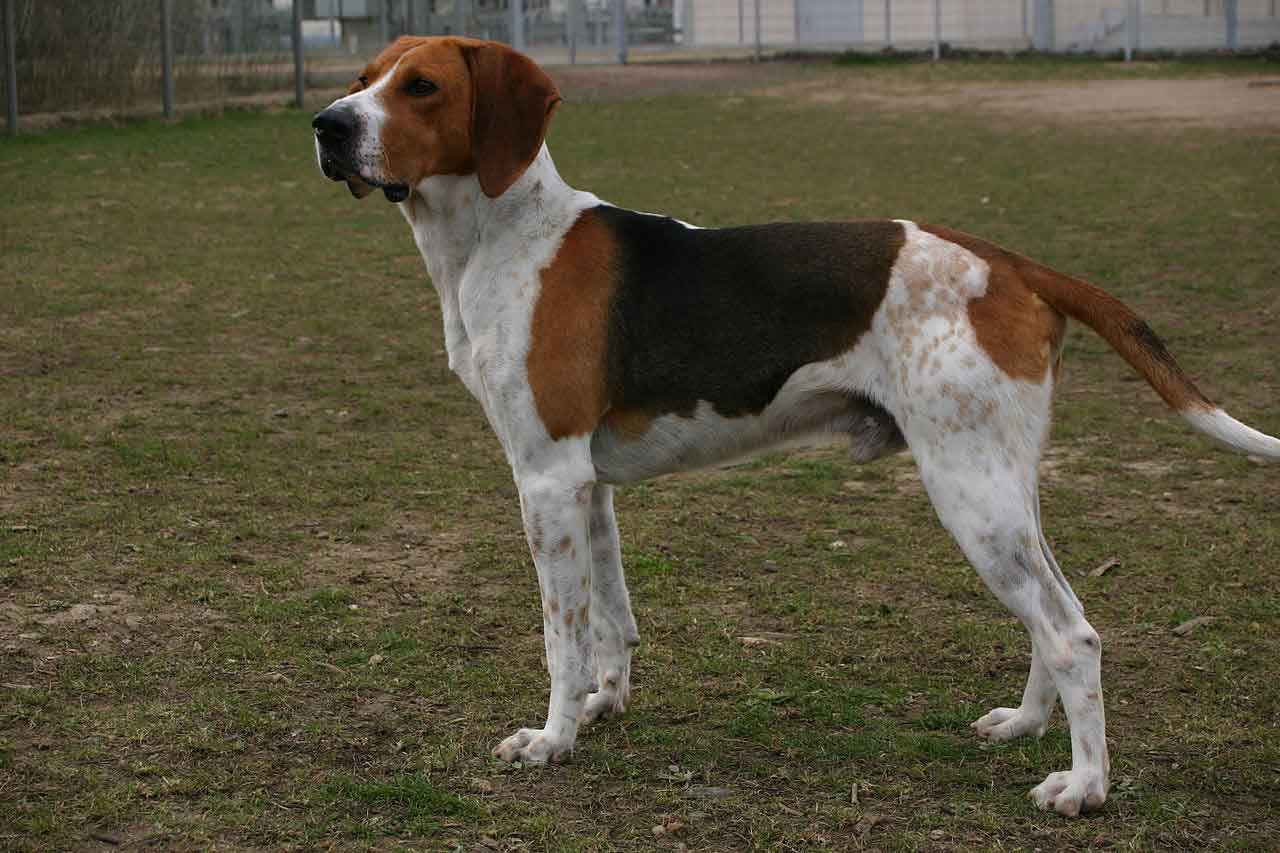
Photo: Anglo-français de petite vénerie by Jwh at Wikipedia Luxembourg, CC BY-SA 3.0 LU, via Wikimedia Commons

Physical characteristics «Medium Anglo-French Hound»

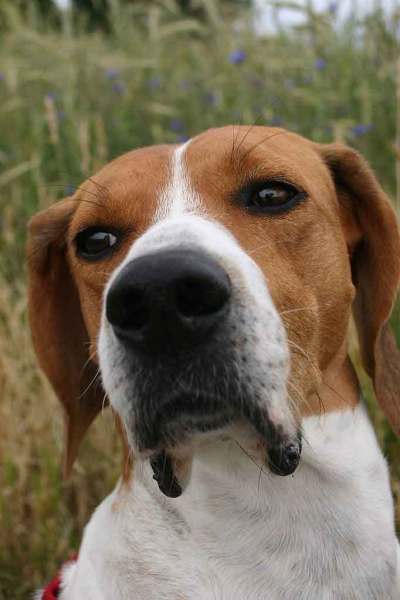
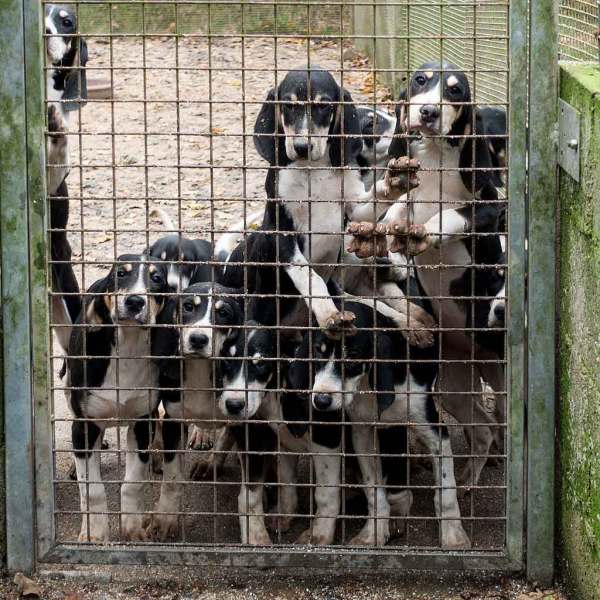
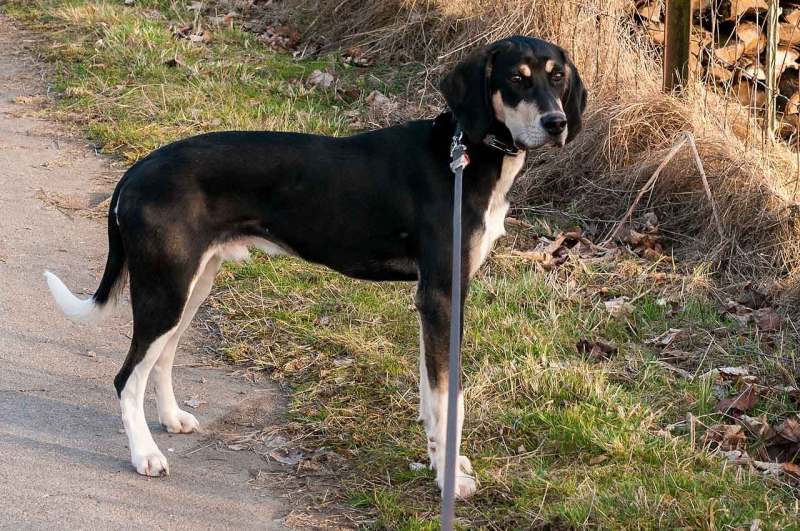
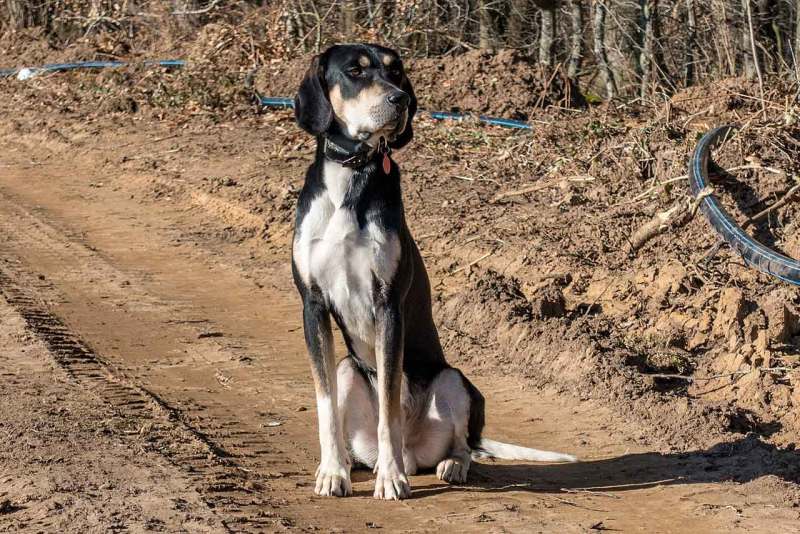
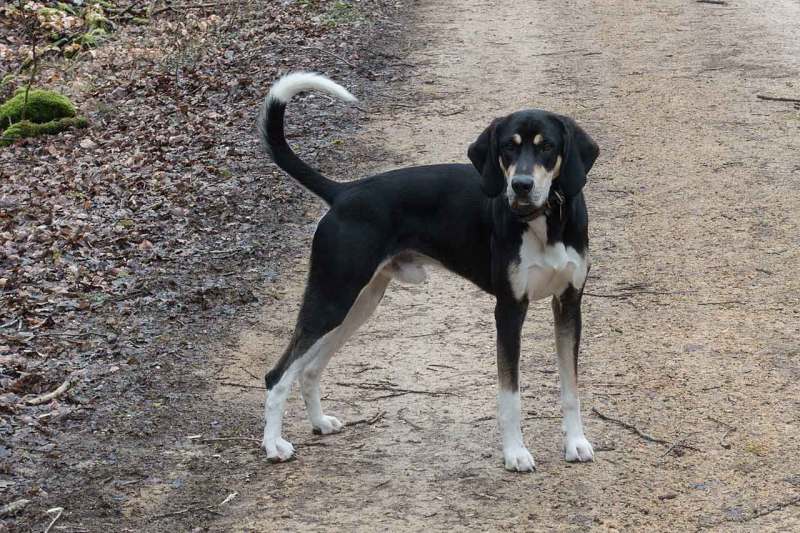
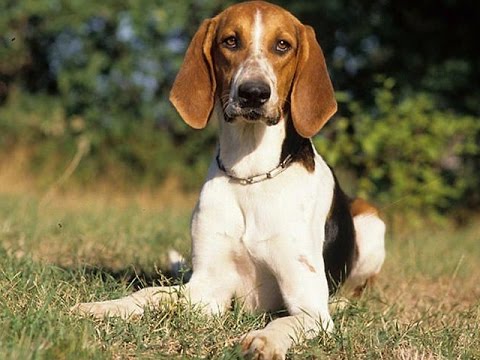
The Medium-Sized Anglo-French Hound – or also called Anglo-Français de Petite Vénerie – He is of medium size and a dog with a powerful constitution, but it never seems heavy. In its appearance it reminds of the dogs of the French pack. According to the breed standard, the head should be long and not too wide. The hair is short, thick and smooth and can be two or three colors (white and orange or black, white with brown).

The eyes are large and soft but lively in expression.. The ears located under the line of the eyes are soft, slightly turned inwards and medium in size. The tail is of medium length and quite thin. The limbs are strong, with straight and broad forequarters in profile and muscular hindquarters with low set hocks.

Character and skills «Medium Anglo-French Hound»

The Medium-Sized Anglo-French Hound is described as balanced and bold, independent, smart and leader, proud and trustworthy. He is affectionate and loyal to his owners. But, adult dogs are suspicious of strangers.

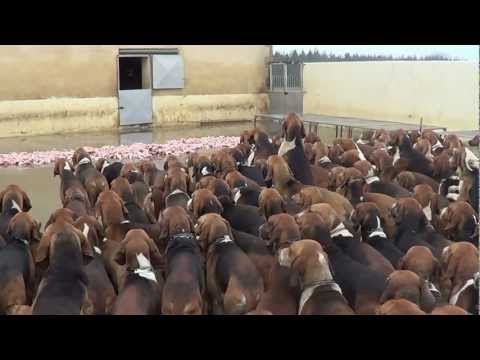
These dogs today make up the vast majority of hare and fox hunting packs.. But shooters increasingly appreciate its fine-nosed qualities., resistance, good throat, easy to put on, wise in the hunt and in the kennel.

In the last twenty years, The number of Medium-Sized Anglo-French Hounds medium has improved both in quality and quantity. But, the breeders, and buyers in particular, they must register their dogs with the LOF (Central Canine Society) to better control the selection.

Activities and exercise with the “Medium Anglo-French Hound”

This dog loves to move, needs a lot of exercise and wants to work. You have to spend about four hours a day intensely with him. The breed is suitable for training as a hunting dog, but also for various dog sports. Keeping the dog in the house is strongly discouraged: The Medium-Sized Anglo-French Hound needs and wants a lot of space and would like to have free access to the garden also outside of "walking hours".

Education of the “Medium Anglo-French Hound”

To the Medium-Sized Anglo-French Hound he likes to learn, he is submissive and also has an intelligent mind. But, has a strong hunting instinct, so your education should start soon and therefore, Any “oddities” this dog acquires in his youth must be addressed as they are difficult to correct later..

Care and health of the "Medium Anglo-French Hound"

The short and dense coat of this dog does not require any special care, cleans itself almost by itself. Its legs, However, should be checked regularly. Especially when used as a hunting dog, injuries and problems are more likely to occur.

In rare cases there is a tendency to osteoarthritis and bone tumors.

Images "Medium-Sized Anglo-French Hound"

Photos:

1 – Anglo-français de petite vénerie, op der Haard, Diddeleng by Jwh at Wikipedia Luxembourg, CC BY-SA 3.0 LU, via Wikimedia Commons
2 – Anglo-français de petite vénerie, Kackeschbësch, Éiter by Jwh at Wikipedia Luxembourg, CC BY-SA 3.0 LU, via Wikimedia Commons
3 – Anglo-français de petite vénerie by Jwh at Wikipedia Luxembourg, CC BY-SA 3.0 LU, via Wikimedia Commons
4 – Anglo-français de petite vénerie, 7 months, Wesley by Jwh at Wikipedia Luxembourg, CC BY-SA 3.0 LU, via Wikimedia Commons
5 – Anglo-français de petite vénerie (white and black with pale tan markings) three and four months old puppies. by Jwh at Wikipedia Luxembourg, CC BY-SA 3.0 LU, via Wikimedia Commons
6 – Anglo-français de petite vénerie by Jwh at Wikipedia Luxembourg, CC BY-SA 3.0 LU, via Wikimedia Commons

Videos "Medium-Sized Anglo-French Hound"

Anglo Français de petite vénerie
le repas

Type and recognitions:

  • FCI CLASSIFICATION:
  • Group :
  • Section : . .

Federations:

  • FCI – Group 6: Scent hounds, and related breeds. – Section 1.2: Medium-sized Hounds.
  • Central Canine Society

FCI breed standard "Medium-Sized Anglo-French Hound"

Origin:
France

Date of publication of the valid original standard:
26.01.1983

Use:

Hound for hunting small game.


General appearance:

This is a dog of solid and balanced configuration, no appearance of heaviness. In profile, Your silhouette should be that of a well-structured French dog..


Behavior / temperament:

---

Head:

It is long and not very wide. The occipital protrusion is little accentuated.

Cranial region:
  • Skull : Slightly convex, without being bulged.
  • Depression links (Stop) : Bit strong.

facial region:

  • Truffle : Well pigmented ; the Windows are wide open.
  • Snout : Medium elongated and somewhat pointed in appearance; the nasal cannula is straight or slightly arched.
  • Belfos : The upper lip covers the lower lip.
  • Eyes : Large, browns. Your expression is sweet, but lively.
  • Ears : They are inserted delicately below the eye line. They are flexible, slightly twisted, of medium width and reach at least two fingers from the beginning of the nose.

Neck:

Loose, without jowl.

Body:

  • Back : Strong and straight.
  • Pork loin : Quite short and muscular.
  • Rump : Slightly inclined and quite long.
  • Breast : It is well developed. It is well descended and reaches at least to the tip of the elbow. Ribs are long and moderately rounded.
  • Flanks : They are quite solid and somewhat raised, but without a thin appearance.

Tail:

Of medium length and quite thin. It is well inserted in the extension of the line of the spine. It is covered by abundant hair, without being spiked (towards the tip and around the tail, a few longer and thicker hairs slightly distant in the shape of a spike.)

Tips

PREVIOUS MEMBERS : Seen in profile, they are strong, wide and straight.

  • Shoulder : The shoulder blades are long, flat and oblique. They are well applied to the chest.

LATER MEMBERS :

  • Thigh : He is muscular and well leaned.
  • Hock : Slightly angled and lies close to the ground.

FEET : They are thin and compact.

Movement:

---

Mantle

SKIN : It's fine, without folds; the tissues are dense.

HAIR : Is short, tight and smooth.

COLOR :

• Tricolor : Black and white with raised fire color (the truffle is black).
• Black and white with pale tan color (the truffle is black).
• Bicolor : White and orange (the truffle is tobacco colored).


Size and weight:

Height to the cross : Of 48 to 56 cm.. With a minimum and maximum tolerance of 2 cm in exceptional specimens.


Fouls:

Any deviation from the aforementioned criteria is considered as a fault and the severity of this is considered to the degree of the deviation to the standard and its consequences on the health and well-being of the dog..

• In general, all common defects in bloodhounds.
• Very short or very wide head.
• Round skull.
• Depigmented nose in the form of spots.
• Square snout.
• Upper or lower prognathism.
• Too accentuated lips.
• Prominent eyes, light eyes.
• Very high set ears, wide, short or very flat.
• Neck too short, presence of double chin.
• Cylindrical body.
• Heavy shoulders.
• Thick tail,and short or spiked.
• Loose skin tissues.

Any dog ​​showing clear signs of physical or behavioral abnormalities must be disqualified..


N.B.:

Males should have two normal-appearing testicles fully descended into the scrotum..

Source: F.C.I - International Cynological Federation

Alternative names:

1. Anglo-Français de Petite Vénerie (English).
2. Anglo-français de petite vénerie (French).
3. Anglo-Français de petite vénerie (German).
4. Anglo-Français de petite vénerie (Portuguese).
5. Sabueso anglo francés de tamaño mediano, Anglo-francés para la caza menor, Anglo-francés de tamaño medio (español).

▷ The world of Pets: Dogs, cats, birds, reptiles, amphibians

Silky Terrier
Australia FCI 236 . Toy Terriers

Australian Silky Terrier

The Silky Terrier not appropriate to live with other smaller pets.

Content

History

The Silky Terrier is a native of Australia dog, Although the types and ancestral breeds were of Great Britain. The ancestors of the Australian Silky Terrier include the Yorkshire Terrier (originating in England and Scotland before being considered) and the Aussie (descended from wire-haired Terriers brought from Britain to Australia in the 19th century 19), but the records do not indicate whether early dogs were simply Terrier Australian born with silky fur, or if there was an attempt to create a breed apart.

In accordance with the American Kennel Club, the race began at the end of the 19th century, being result of crosses between a Yorkshire Terrier and Aussie. At the beginning, the breed became known as “the sydney silk”, since it was located mainly in the city of Sydney, Australia. Although most Australian breeds are listed as working dogs, el Australian Silky Terrier, is considered to be, was raised –mainly- to be an urban pet and companion of the family, but also It is a breed known for killing snakes in Australia.

Videos "Silky Terrier"

Until 1929, the Terrier australiano, the Silky Terrier and the Yorkshire Terrier they were not clearly defined, in the same litter, three dogs could be born of breeds that over time were considered, different. According to existing information, they were separated by the appearance in different types once they raised separately.

After 1932 in Australia, miscegenation was tweaking, and in 1955 the name of the race officially became Australian Silky Terrier. The breed was recognized by the national canine Council of Australia, in 1958 in the Toy group.

During and after World War II American soldiers who had been sent to Australia, return to United States, they brought several Australian Silky Terrier. Photographs in the newspapers of the time (1954), They show the soldiers, back home wearing their pets Australian Silky Terrier, and this caused a rise in popularity to the race, and Australian Silky Terrier hundreds were imported from Australia to the United States.

The American Kennel Club He acknowledged the race as the Silky Terrier in 1959, like the United Kennel Club ((UNITED STATES)UU.) in 1965, and the Canadian Kennel Club. The breed is recognized by all major canine clubs of the English speaking world, and internationally by the International Cynological Federation as breed number 236.

Physical characteristics

The Australian Silky Terrier is a Terrier, but is usually placed in the Group of dogs Toy type, instead of the Terrier group, due to its small size. The Federation Cynologique Internationale has a special section of the Terrier group that includes only the smaller dogs, While other canine clubs, place the breed in the Toy group, but universally everyone agrees that the breed type is Terrier.

His mantle's hair is grey, Griffon's soft texture and bluish, smooth and long. It requires constant maintenance and brushing. An Australian Silky Terrier should be about 23 to 25 cm to cross and weighs between 3.6 and 8 kg, Although the steps may vary between the different federations. It should be a little bit longer than that width (about one-fifth longer than the height at the cross).

El Silky terrier australiano, small, almond-shaped eyes. according to the rules, the eyes are considered to lack. The ears are small and erect. It has a tail of high adjustment and small feet, almost like a cat. The hair should be long. The hair on the face and ears is usually cut.

This breed must have with a Barber every three weeks and their teeth should be brushed. Terriers are notorious for having tooth and gum problems..

The layer of Silky Terrier is very susceptible to tangles and mats and requires daily brushing and the hairstyle. This breed requires a deep commitment to the owners. To keep the shiny fur, regular washing is necessary. Using an avocado and oatmeal shampoo will help relieve itchy skin., characteristic dryness of this breed.

Character and skills

The breed standard describes the ideal temperament of the Australian Silky Terrier as a sharp warning and active. They love to have opportunities to run and play, but you must have a well-fenced garden. They also enjoy vigorous walks and play ball. What can be done to combat the boredom will be well received by these small.

Though in the past it was used as mouse-eared dog although currently its main function is to be a pet since it adapts without any problem to life in houses or apartments. Gets along very well with people who respect him and cared for. It can cause problems with other dogs because despite their tiny size they tend to be slightly angry. It is not appropriate to live with other small pets. Thanks that you be walking. Live an average of 15 years.

Australian Silky Terrier pictures

Videos Australian Silky Terrier

Group 3 / Section 4 – Pet Terrier

▷ The world of Pets: Dogs, cats, birds, reptiles, amphibians

Sloughi (Arabian Greyhound)
MarruecosArgeliaTunezLibia FCI 188 . Short-haired Sighthounds

Sloughi

It is said that the Sloughi (Arabian Greyhound), is the most intelligent hound.

Content

History

Native to North Africa and probably descended from the ancient "Egyptian Greyhound", it is said that the Sloughi took its name from the town of Sloughito in Tunisia. Its exact origins are unclear., but it is known that it was used for centuries by the Berber people and the Bedouin tribes to hunt gazelles, jackals, foxes and hares. In fact, thanks to its speed and resistance, could chase game across vast expanses of wilderness, which explains why it was the favorite dog of nomads. His sense of observation and his highly developed instinct also made him - and make him- an excellent herding dog. Last, it was also a domestic animal for them, since he was allowed to sleep with them in the tent at night. They even covered him with a blanket to protect him from the cold..

The first Sloughis arrived in Europe in the mid-nineteenth century, after the conquest of Algeria by France. The breed was recognized by the Federation Cynologique Internationale (FCI) in 1934. World War II halted its development, since many breeders had to euthanize their animals due to lack of food or export them to countries that were saved from the conflict. The Sloughi it then became extremely rare until the end of the Algerian war (1954-1962), when the French soldiers brought to their country some specimens of the breed, which relaunched its expansion into European territory.

Tagiurie el Sian it was the first Sloughi that arrived in the United States in 1973. Originally from Tunisia, crossed the Atlantic with his owners Kaethe y Carl Rodarty. Unfortunately, due to his age and lack of females, could not have offspring. In fact, the breed was not really established in the country until 1979, When Carole Cioce imported two Sloughis from Germany to California.

Most representatives of the breed in North America today are descended from individuals imported from European countries. (France, Netherlands, Germany, etc.), although some come directly from North Africa, especially from Algeria, Libya and Tunisia.

The breed was recognized by the United Kennel Club (UKC) in 1995, and the other reference body of the country, the American Kennel Club (AKC), did the same in 2016. El Canadian Kennel Club (CKC), on the other hand, has not yet taken the step.
The popularity of the CKC in the neighboring country is certainly not a reason for it to do so.. The Sloughi It is one of the rarest dog breeds in the United States, being last in 2018 in the ranking established by the AKC based on the number of annual births registered in the organization.

In fact, the Sloughi It is now one of the rarest breeds of sighthounds in the world. In France, occur between 30 and 50 registrations per year in the Livre des Origines Français (LOF). The figure has been relatively stable since the middle of the years 80, while at the beginning of that decade it was rather twice. Compared, every year they are born around 1.400 hounds Whippet. In Great Britain, race is even confidential, since some years no birth is registered in the prestigious Kennel Club, the canine body of reference in the country.

The Sloughi it is also in danger of extinction in the Maghreb countries. Their number continues to decrease., mainly due to the scarcity and protection of certain species it hunts and the sedentarization of the Bedouin tribes, who need your help less and less to protect their herds.

In the news, Morocco has the largest number of Sloughis of the world. It's hard to know the exact number, but specialists estimate that the population is about 600 individuals.

Photo: by Benutzer:Claggi, CC BY-SA 3.0, via Wikimedia Commons

Physical characteristics

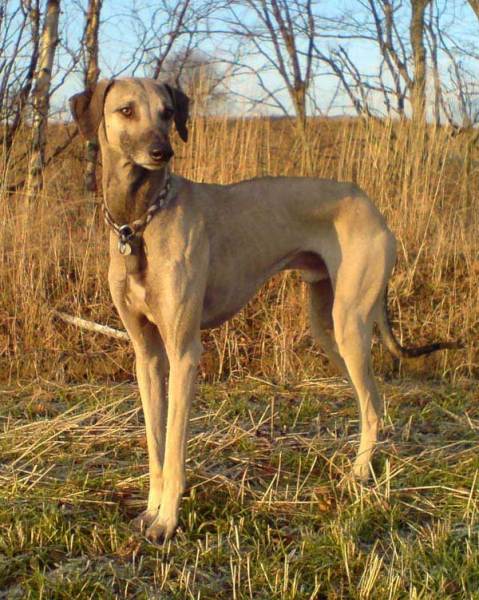
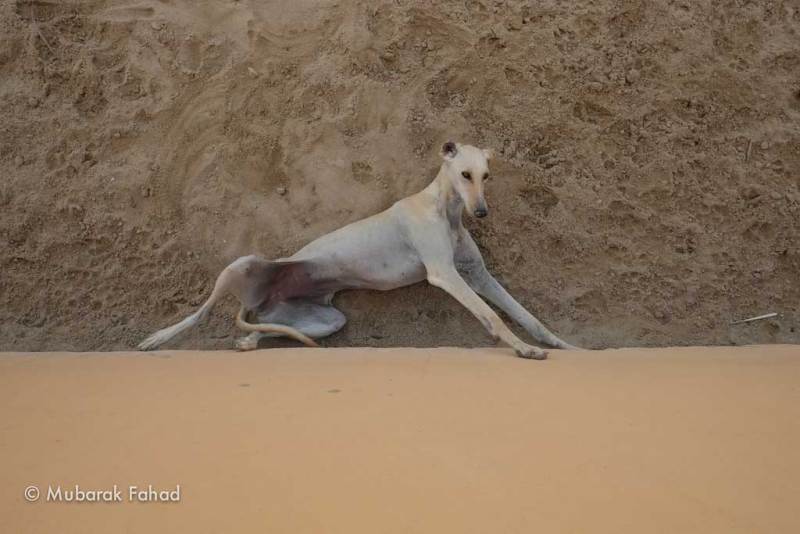
The Sloughi it is one of the largest dog breeds. Like the other races of Sighthounds, looks slim and athletic. This is due to their thin and tight skin, to his short coat, fine and closed, to his lean musculature and his very pronounced bone structure. Its general appearance is that of a noble dog, very elegant and stylish, but specially built for speed.

His chest is wide, encased by flat ribs, long and slightly curved on the back third of the chest. The belly is tight and the back is short, almost horizontal between the withers and the hips. Straight legs, Bony and muscular are an important part of the dog's formidable speed.

Profile, the head is long and thin. Seen from above, the skull is wide. Tapers to the end formed by the nose, reminiscent of the shape of a valley. The nose is black and slightly descending, and the nostrils are wide open.

The eyes are large and dark, with a soft and melancholy look. The edge of the eyelids is pigmented. The ears are droopy, triangular in shape and slightly rounded at the tips. The jaw is strong and regular.

Coat colors vary from light sandy to reddish, with or without black mask or cape. The most common are the black sand mask and the brindle sand.

Last, sexual dimorphism is not very pronounced, since the males are usually not more than 10 cm taller than females, which is modest compared to the size of the animal.

Size and weight

▷ Male size: 66 to 72 cm.
▷ female size: 64 to 69 cm.
▷ Male weight: 20-25 kg
▷ female weight: 19-22 kg

Character and skills

Although it is not very demonstrative, the Sloughi he is devoted and loyal, and tends to be a single owner dog. When they join their owner, is for all the life, so it is very difficult for them to join another family if their owner is abandoned or dies.

They get along well with children, but it is better if they are of a certain age and have learned to interact with an animal. In fact, given its size, could unintentionally push a smaller one, or forcefully push away an older one who disrespects you. In any case, whatever the race and the degree of proximity, a small child should never be left alone with a dog.

Their sociability with humans is often limited to family members. With strangers, they are much more reserved, and will bravely defend their own if they feel threatened in any way.

In more general terms, can easily become anxious when faced with new situations. Thus, it is essential to socialize him as soon as possible to prevent him from becoming a fearful and / or unnecessarily aggressive dog.

You can also live with animals of other species (cats, rodents, etc.), as long as they grew up together and you consider them part of your family. On the other hand, as his hunting instinct is highly developed, the subsequent introduction of another animal into the home where you live can be problematic.

As for living under the same roof as a partner, this coexistence does not usually pose problems if you have grown up with him. Otherwise, it all depends on the size of the newcomer. Yes it's small, is likely to be regarded as prey. From his past as a hunter and rancher, preserves the need for space and exercise. So, you need at least one hour of physical exercise a day to get rid of your excess energy and stay balanced. So, they are ideal candidates for dog sports, starting, of course, for the tests intended for sighthounds (racing in cinodromes, decoy chase…). It is also an ideal breed of dog for an athlete, who likes to accompany on their outings; canicross and cani-VTT are activities perfectly adapted to it, and certainly more recommendable than sighthound races. On the other hand, having a strong hunting instinct, he can chase any small animals he meets at any time, especially cats. So, it is essential that you obey the call, and in any case it is better to carry him on a leash during walks, to avoid any risk of leakage. In fact, once a Sloughi olido has a hold, no longer really responsive to his master's instructions, so it is extremely difficult to make him return.

This is all the more true since, even with a lot of training, is often far from being the most obedient dog in the world. It also, cannot be trusted to keep a low profile if reprimanded: given his strong character, it would be the opposite. So, it is up to the owner to be firm from an early age, so as not to be dominated by his imposing companion.

The great need for exercise of the Arabian Greyhound and its size make, although I rarely bark (even in the presence of strangers), not really adapted to living in a flat. But, can live in an apartment, as long as he is taken out several times a day and can satisfy his need for exercise. A house is still preferable. But, it is important to ensure that the garden is well fenced, since the Sloughi is naturally elusive. Using an underground electric fence would not be a viable solution with such a dog., since the annoyance of the electrical impulses would be less strong than his determination to flee and follow who knows what trail. On the other hand, although I tolerate loneliness relatively well, it is not convenient that I live outside. In fact, its short and fine fur makes it very sensitive to cold, and he needs to bond with his humans anyway, to whom he is more attached than sometimes is thought.

Education

The Sloughi He is a shy dog ​​and is easily frightened by what he does not know. So, their socialization should take place from a very young age, when it is most malleable, so that you face the maximum number of people and situations and learn to adopt the appropriate behaviors in all circumstances, to become a perfectly balanced adult.

You should also put him in contact with other animals, especially with cats, rodents and other small animals, to try to prevent him from seeing them as prey when he later crosses paths with them.

With his great intelligence and keen sense of observation, learns quickly… if you want. In fact, obedience is not his strong point: It is not a dog that strives to satisfy or even anticipate the requests of its master. So, you need to be firm in your education, but also show patience, to respect his character. Trying to break in could only be detrimental to the future, since it is a proud and sensitive animal, who does not appreciate reprimands. His temperament makes him an ideal client for the positive reinforcement dog training method, and sweets are usually the key to success.

Last, teaching your dog to remember is especially important to be able to enjoy walks outdoors with peace of mind, since the Sloughi retains a strong predatory instinct and, therefore, can launch itself at any time in pursuit of an animal that it considers prey. This is even more true because, given its maximum speed, it is very difficult to reach it.

Health

The Sloughi it is a healthy breed of dog. Has a low risk of inherited diseases and a longer life expectancy than other dogs of the same size.

But, are prone to injury while running and are more prone to certain ailments.

This is the case, in particular, of the progressive retinal atrophy of APR-RCD type (rod and cone dysplasia), an inherited disease that causes a malformation of the retina: the puppy's eyesight deteriorates from 6 months old and, usually, goes completely blind before the year. There is a blood test that can determine whether or not an individual is a carrier of the gene responsible for this disease. So, before adopting a representative of this breed, it is recommended to do the test, to avoid any risk at this level. Of course, knowing that it is a hereditary disease, a good breeder does not breed an individual carrying the gene.

Like all large dog breeds, it is also more prone to stomach dilation-torsion syndrome. This condition is an absolute emergency, as it is likely to die if not treated by a vet very quickly.

It also, like most breeds of "Sighthounds", the Sloughi is especially sensitive to anesthesia and medications. Thus, it is advisable to turn to a veterinarian who knows the specificities of these dogs in this regard.

Another peculiarity of this dog is its very high pain tolerance., so sometimes it is difficult to detect that you are suffering. So, be especially attentive to any change in behavior that may betray a health problem.

Last, due to its origins and its fur, the Sloughi not a cold weather breed. Thus, when temperatures are low, it is important to avoid spending too much time outside and to cover it with a suitable coat for dogs.

Life expectancy

12 years

Grooming

The Sloughi is the archetype of easy-care dog.

Brushing his short coat once or twice a week with a soft brush or brushing glove is perfectly sufficient to remove dead hairs and keep his coat clean.. Their molt is even more limited since, unlike many other breeds, does not suffer seasonal molts.

It also, the coat is self-cleaning, so it does not give off bad odors and it is not necessary to wash it regularly. Under normal circumstances, two or three times a year is more than enough, but, of course, you should not hesitate to bathe your dog if he has become very dirty and / or if harmful substances have spread through his coat.

As in any race, oral hygiene is very important and should not be neglected. The toothbrush is the most effective accessory to prevent the accumulation of tartar, strengthen gums and prevent bad breath.

It also, although your dog is not at particular risk of ear infections, despite the dangling shape of his ears, it is necessary to inspect and clean your ears at least once a week. This weekly session is also an opportunity to review - and if necessary clean- the eyes.

Last, natural wear and tear is usually enough to trim your claws. But, when you get older and / or less active, they can be too long, and then they can annoy or even hurt you. In this case, it is advisable to trim them with a special file or with a claw trimmer.

As in the case of any dog, the sooner you get used to the different manipulations that your care entails, the less likely you are to have problems later.

Food

The diet of the Sloughi should consist primarily of lean meat, rice and vegetables. It is preferable to choose a quality food, either in the form of industrial croquettes, pate or homemade food. The amount to be given varies according to the size, the age and physical activity of the animal. By the way, don't be fooled by its slim look and slightly visible ribs: this is part of his physical characteristics and is not at all a sign that he is malnourished. No need to worry about it, but the abnormal would be the opposite.

In general, the more effort and activity your dog makes, more food will be needed to make up for the loss of energy. It is advisable to divide it into at least two meals, one in the morning and one at night, to reduce the likelihood of digestive problems such as stomach bloating or distention.

To avoid the latter, meals should be taken in a quiet place and one hour away from walks or any strenuous physical activity.

Last, as in the case of all dogs, it is essential to guarantee the availability of fresh water throughout the day.

Use

Known as the "lord of the dogs" in Moroccan culture, the Sloughi has long been appreciated for its hunting skills, agility, endurance and speed. It can reach a speed of up to 55 km / h along 300 m, to the point that there is an Arabic saying that says that "when a Sloughi see a gazelle pluck a blade of grass, "It will be at his level before he finishes chewing it.".

In the north of Africa, where is he from, It was mainly used as a guard dog to protect herds, as well as to hunt hares, foxes, jackals or gazelles.

But, in 1844, a French law prohibited hunting with Sighthounds and it was applied in the Maghreb territories that became part of France in the 19th century.

Since 2004, hunting with greyhounds is again allowed in some Maghreb countries, but under certain conditions. But, is still banned in Europe, except for Spain.

In United States, has sometimes been used to hunt coyotes.

In their homelands, the Sloughi It is still used by nomads as a guard dog for their herds, although this practice tends to disappear as tribes settle.

Their loyalty and unwavering devotion to their master also make them very good companion dogs., as long as their families are able to meet their great need for exercise.

Last, his lean and athletic nature makes him a good competitor in racing and sight pursuit events, although it is not as fast as an "English Greyhound".

Precio «Sloughi (Arabian Greyhound)»

The price of a puppy Sloughi ranges between 900 and 1300 EUR. The price of a copy depends on its conformity with the standard, of the reputation of his lineage, of the prestige of the kennel and also of its sex: females are considerably more expensive than males.

It is also possible to import a Arabian Greyhound straight from north africa. The purchase price is more affordable (between 500 and 750 EUR), but you must respect the regulations regarding the importation of a dog from abroad, and transport costs and administrative fees are added to the purchase price.

Adopting a Sloughi It can also be done through specialized retired greyhound associations. Many owners decide to part with their Sloughi when they can no longer compete. Sometimes they are also abandoned by owners who are not sufficiently informed of their needs. (especially in terms of physical activity) and they are not able to take proper care of them. Thus, these associations try to offer a second life to the greyhounds they host, allowing them to find a new family.

Characteristics "Sloughi (Arabian Greyhound)"

Coexistence is important that you have with your new friend. Before considering the acquisition of a dog of the breed "Sloughi (Arabian Greyhound)" you know certain factors. Not all breeds of dogs are apt to live in an apartment, you must take into account his character, their need for exercise, their interaction with other pets, their care and if you have small children, their level of tolerance towards them.

Adaptation ⓘ

3,0 of 5 stars (based on 1 review)

friendly dog ​​ⓘ

2,0 of 5 stars (based on 1 review)

hair loss ⓘ

2,0 of 5 stars (based on 1 review)

Affection level ⓘ

3,0 of 5 stars (based on 1 review)

Need for exercise ⓘ

5,0 of 5 stars (based on 1 review)

Social need ⓘ

2,0 of 5 stars (based on 1 review)

Home ⓘ

3,0 of 5 stars (based on 1 review)

Toilet ⓘ

1,0 of 5 stars (based on 1 review)

Friendly with strangers ⓘ

2,0 of 5 stars (based on 1 review)

barking ⓘ

1,0 of 5 stars (based on 1 review)

Health ⓘ

4,0 of 5 stars (based on 1 review)

Territorial ⓘ

4,0 of 5 stars (based on 1 review)

Cat friendly ⓘ

2,0 of 5 stars (based on 1 review)

Intelligence ⓘ

4,0 of 5 stars (based on 1 review)

Versatility ⓘ

3,0 of 5 stars (based on 1 review)

Child friendly ⓘ

4,0 of 5 stars (based on 1 review)

Surveillance ⓘ

4,0 of 5 stars (based on 1 review)

joy ⓘ

3,0 of 5 stars (based on 1 review)

Images "Sloughi (Arabian Greyhound)"

Photos:

1 – Sloughi male in the sunset by Denhulde, CC BY-SA 3.0, via Wikimedia Commons
2 – Sloughi by Tom´s photo gallery
3 – Sloughi 2013 Helsinki by Thomas, CC BY-SA 3.0, via Wikimedia Commons
4 – Sloughi by Mubarak Fahad
5 – Sloughi by http://www.sloughi-balkan.com/characteristics-2/
6 – Sloughi by https://www.akc.org/dog-breeds/sloughi/

Videos "Sloughi (Arabian Greyhound)"


Type and recognitions:

  • FCI CLASSIFICATION:
  • Group :
  • Section : . .

Federations:

  • FCI – Group 10: Section 3: Short-haired Sighthounds
  • Standard KC (The Kennel Club) – Hound
  • El American Kennel Club (AKC) – Hounds

FCI breed standard "Sloughi (Arabian Greyhound)"

Origin:
Morocco, Algeria, Tunisia, Libya

Date of publication of the valid original standard:
08.01.1998

Use:

Hunting in sight.


General appearance:

For its size, Due to the fineness of its tissues and its thin musculature, its general appearance is that of a distinguished and graceful dog.


IMPORTANT PROPORTIONS:

  • For a male of ideal height of 70 cm., the long scapulo-ischidia of the body should measure 67-68 cm..
  • For a female of ideal height at the withers of 65 cm., the long scapuloischidiaco of the body should measure 62-63 cm..
  • The relationship between the scapular-ischiadic length of the body and the height at the withers is 9,6 : 10 (0,96).
  • The relationship between the depth of the chest and the height at the withers is 4:10 (0,4).
  • The relationship between the length of the muzzle and the length of the head is 1:2 (0,5).


Behavior / temperament:

Though noble and proud, He is very attached to his owner and defends him in case of need. Has a hunting instinct and is capable of any sustained effort; he also likes the sweet comfort of a home.

Head:

Profile view, the head is elongated, elegant and fine, but quite important. From above, looks like a very elongated wedge, the skull forming the widest part, which progressively decreases as it approaches the tip of the nose.

Cranial region:
  • Skull: Seen in profile it is quite flat, the length between the ears measures 12 to 14 cm.. It is well rounded on the back forming a harmonious curve to the sides.. Supraorbital arches are barely visible. The frontal sulcus is barely marked. Occipital ridge and protuberance are barely visible.
  • Stop (naso-frontal depression) : Slightly marked.

facial region:

  • Truffle: Black, important enough to not seem pinched. Windows wide open. Not being supported by a bony structure, descends very slightly
  • Snout: Cuneiform, elongated without exaggeration, sensibly the same length as the skull. The muzzle is straight from its junction with the skull.
  • Lips : Thin and flexible, just cover the lower lip; the commissure should be visible as little as possible.
  • Jaws / teeth: Normal teeth; strong jaws and
    regular; scissor bite.
  • Eyes: big and dark, well lodged in orbital cavities, sometimes a little covered due to a slight skew of the eyelids. Sweet and a little sad expression, with a look like nostalgic. In light-coated dogs, eyes may be amber. The edges of the eyes are pigmented.
  • Ears: High insertion, slightly above the eye line. They fall well attached to the sides of the head, Not very large, form triangular, slightly rounded at the tip.

Neck:

Long, well delineated, with its slightly arched upper profile. Its length is sensibly equal to that of the head. The skin is thin, tight, without jowl. The hair is short.

Body:

  • top line: Gently and harmoniously bent with well protruding haunches that are at the same height or slightly higher than that of the withers.
  • Cross: Well outgoing.
  • Back: Short, almost horizontal
  • Pork loin: Short, clean, wide and slightly arched.
  • Rump: Huesuda, wide inclined without falling.
  • Breast : Not too wide, drops just down to elbow level. Well developed in length. Flat ribs.
  • Bottom line and belly: Long, elevated sternum. Belly and flanks well retracted. The bottom line draws a regular curve, neither interrupted nor very arched.

Tail:

Thin, skinny, inserted in the extension of the rump and carried below the line of the back. In its length, must reach at least the tip of the hock. At rest, the tip has a marked upward curvature

Tips

PREVIOUS MEMBERS: Perfect legs.

  • Shoulder: Long and oblique.
  • Arm: Strong.
  • Forearm: Bony and muscular.
  • Carpus and metacarpus: Flexible and strong.
  • Previous feet: Thin, oval and elongated; featured in many light Sloughi the hare's foot shape. The two middle fingers are clearly longer than the others. Nails are black or colored.

LATER MEMBERS: Seen from behind, perfect poise; flat muscles; protruding tendons.

  • Thigh: Flat and muscular.
  • Leg: Long and muscular.
  • Warm-foot joint (Hock): Strong and well angled.
  • Metatarsus: Strong, No Spurs.
  • Hind feet: Thin, oval and elongated; featured in many light Sloughi the hare's foot shape. The two middle fingers are clearly longer than the others. Nails are black or colored.

Movement:

Paso, trot, gallop. Agile and light ride with good reach in movements. Must cover a lot of ground.

Mantle

  • SKIN: Very fine, attached to the body, no wrinkles or double chin.
  • HAIR: Very short, thick and fine.
  • COLOR: All shades from light sand to red sand; with or without black mask, with or without black cloak; tabby or not; shaded or not.


Size and weight:

HEIGHT AT THE WITHERS

  • For males: 66 - 72 cm.
  • For females: 61 - 68 cm.


Fouls:

Any deviation from the aforementioned criteria is considered as a fault and the severity of this is considered to the degree of the deviation to the standard and its consequences on the health and well-being of the dog..

  • Poor relationship between height at the withers and scapuloischiadic length.
  • Head and body a bit heavy.
  • Stop too much or too little marked.
  • light eyes.
  • Non-horizontal back line.
  • Narrow rump, too much or too little inclined.
  • Little retracted belly.
  • Rounded ribs
  • Chest not long enough, seen in profile interrupted lower line.
  • Very short tail, too hairy or badly worn.
  • Round and protruding muscles.
  • Hard and thick hair.
  • Small spot on the chest.


  • FALTAS DESCALIFICANTES:

  • Aggressiveness or extreme shyness.
  • Any dog ​​showing clear signs of physical or behavioral abnormalities.
  • Body clearly longer than tall, haunches lower than the withers
  • Depigmentation of the mucous membranes in the form of small white spots.
  • Upper or lower prognathism.
  • Ears erect or semi-erect with the tip pointing forward, ears too long, ears thrown back (ear in pink).
  • Semi-long hair.
  • Fringed limbs and tail.
  • White metacarpals or metatarsals (jumps), widespread white spots on the coat
  • Color not conforming to standard.


  • N.B.:
  • Males should have two normal-appearing testicles fully descended into the scrotum..
  • Only functionally and clinically healthy dogs, with the typical conformation of the breed, should be used for parenting.
  • Source: F.C.I - International Cynological Federation

    Alternative names:

    1. Uskay (Oska), Arabian Greyhound, Sloughi Moghrebi (English).
    2. Lévrier arabe, Lévrier berbère (French).
    3. Arabischer, Nordafrikanischer, Berber Windhund (German).
    4. Galgo árabe (Portuguese).
    5. Lebrel bereber, Lebrel árabe (español).

    ▷ The world of Pets: Dogs, cats, birds, reptiles, amphibians

    Saluki
    Egipto FCI 269 . Long-haired or fringed Sighthounds.
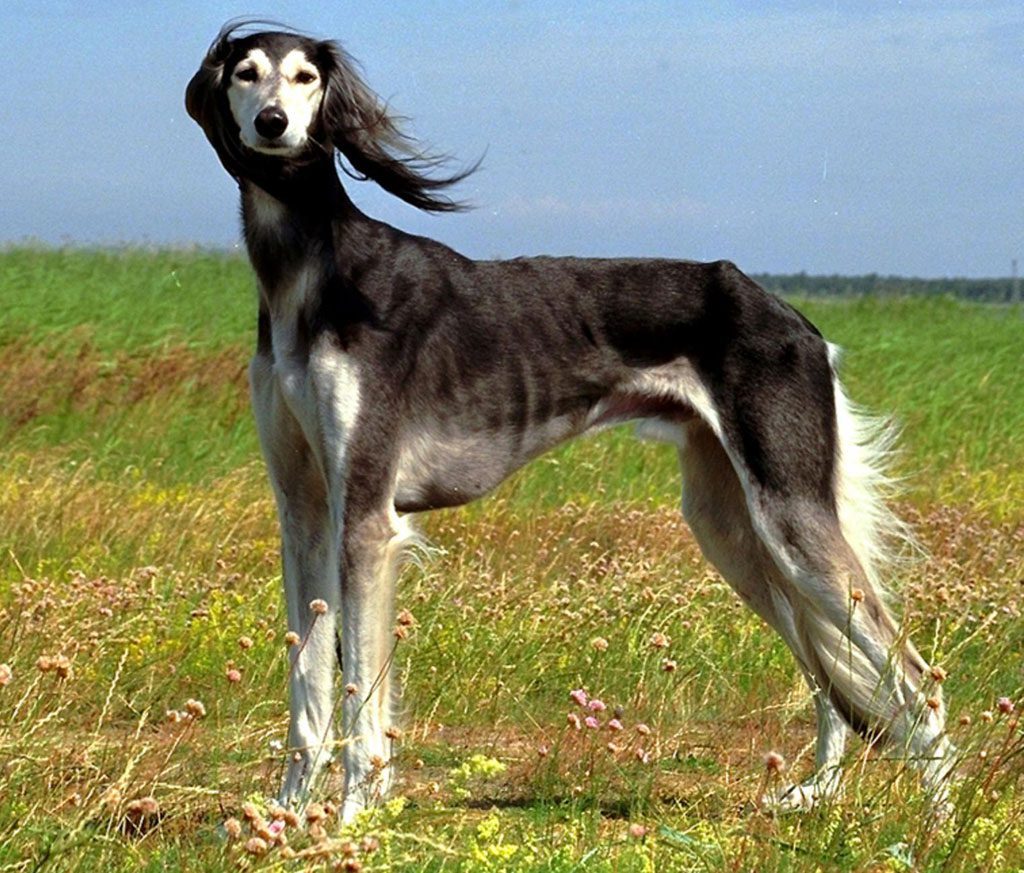
    Saluki

    In the Middle East a Saluki You can never be sold, You can only give away in signal estimation.

    Content

    History

    The Saluki, commonly known as "Royal Dog of Egypt", It is perhaps the oldest known breed of domesticated dog and the oldest of the Sighthounds, It is believed descended from wolves in the wilderness of Ara. The Bedouins hold them in high esteem and use them for hunting gazelles and as pets..

    As in the case of some other breeds in United States, including the Basenji and the Portuguese Podengo, the current Saluki population is descended from a small number of the first dogs to be introduced to the country since the 19th century.

    Read more

    ▷ The world of Pets: Dogs, cats, birds, reptiles, amphibians

    Japanese Chin
    FCI 206 . Japan Chin and Pekingese

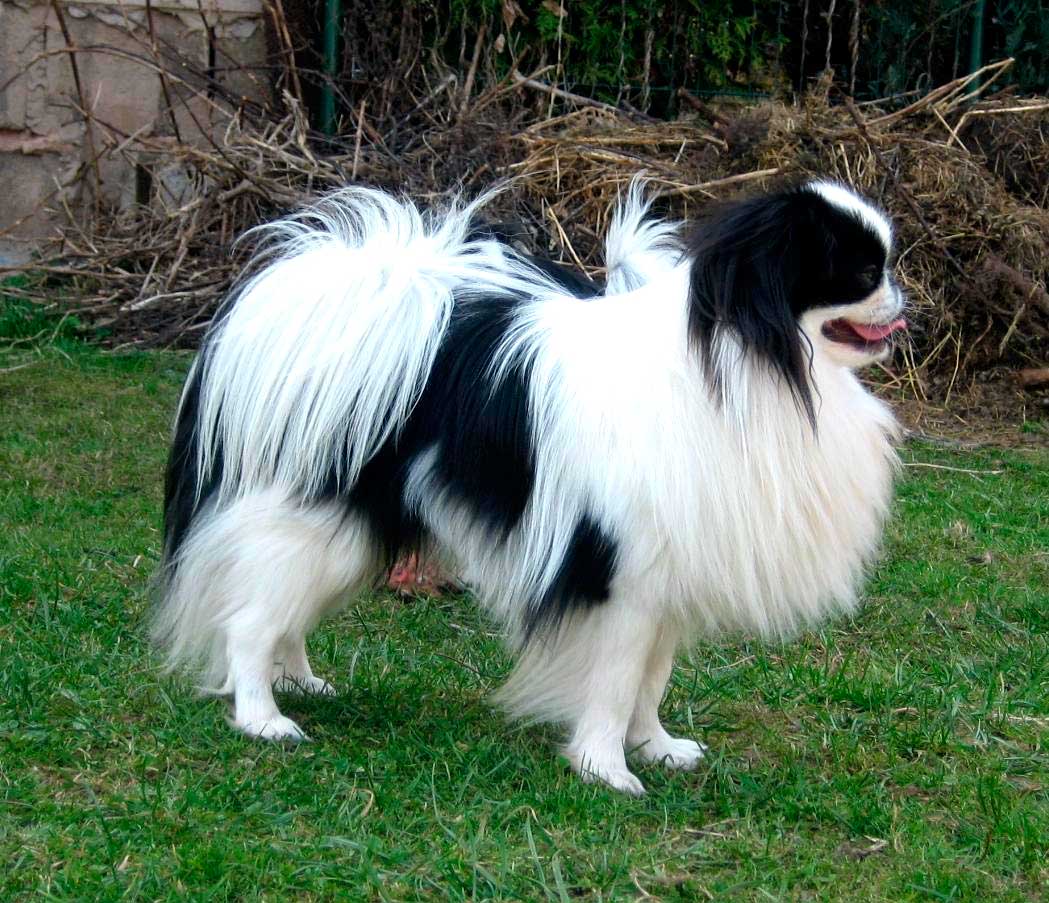
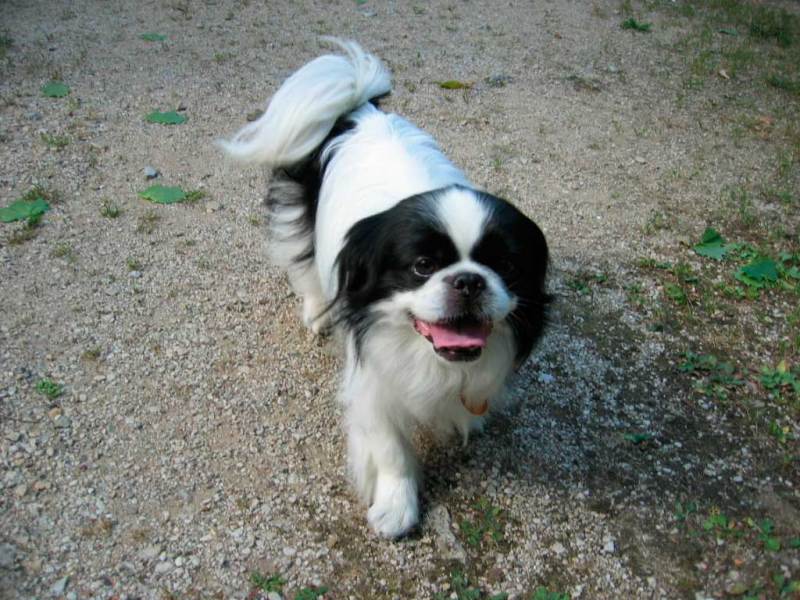
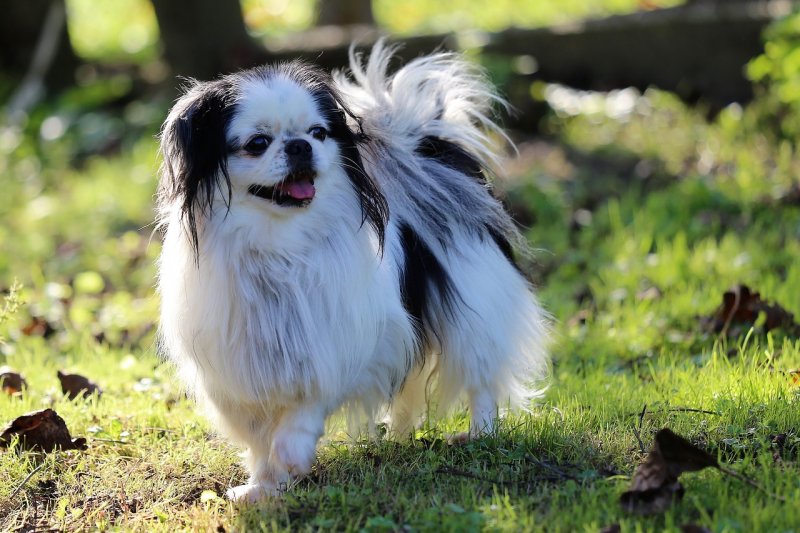
    It's a very special race, they have very feline attitudes, is more, It is said to have the character of a cat, and you will see why...

    Content

    Characteristics "Japanese Chin"

    Coexistence is important that you have with your new friend. Before considering the acquisition of a dog of the breed "Japanese Chin" you know certain factors. Not all breeds of dogs are apt to live in an apartment, you must take into account his character, their need for exercise, their interaction with other pets, their care and if you have small children, their level of tolerance towards them.

    Adaptation ⓘ

    5,0 of 5 stars (based on 1 review)

    friendly dog ​​ⓘ

    3,0 of 5 stars (based on 1 review)

    hair loss ⓘ

    3,0 of 5 stars (based on 1 review)

    Affection level ⓘ

    5,0 of 5 stars (based on 1 review)

    Need for exercise ⓘ

    1,0 of 5 stars (based on 1 review)

    Social need ⓘ

    5,0 of 5 stars (based on 1 review)

    Home ⓘ

    5,0 of 5 stars (based on 1 review)

    Toilet ⓘ

    2,0 of 5 stars (based on 1 review)

    Friendly with strangers ⓘ

    5,0 of 5 stars (based on 1 review)

    barking ⓘ

    2,0 of 5 stars (based on 1 review)

    Health ⓘ

    3,0 of 5 stars (based on 1 review)

    Territorial ⓘ

    4,0 of 5 stars (based on 1 review)

    Cat friendly ⓘ

    5,0 of 5 stars (based on 1 review)

    Intelligence ⓘ

    3,0 of 5 stars (based on 1 review)

    Versatility ⓘ

    3,0 of 5 stars (based on 1 review)

    Child friendly ⓘ

    2,0 of 5 stars (based on 1 review)

    Surveillance ⓘ

    3,0 of 5 stars (based on 1 review)

    joy ⓘ

    4,0 of 5 stars (based on 1 review)

    History

    The true origin of the Japanese Chin It is still controversial, Although a general consensus, concludes that originated in Spaniela.

    These dogs were brought to Japan around year 732. Some maintain the ancestors of these dogs first arrived to Japan around the year 732, as a gift from royalty Korea, while others argue that Japanese Chin copies were offered as a gift to the Empress of Japan in the middle of the sixth century, other theories assure that they arrived in Japan in the year 1000.

    But beyond all the controversy regarding the origin, all agree on one thing, the Japanese Chin, He is a real "Japanese", because it reflects the Japanese sensitivity to detail.

    The Japanese established various breeds of dogs, with a defined purpose that was work, that Japan considered something different, different from a «dog«, He was considered a work on farm animal, for hunting, to care for cattle, etc., but the Japanese Spaniel, it was something very special because it was strictly considered a companion dog.

    His appearance and distinctive personality was quickly captured the hearts of the Japanese and that led to ownership of these dogs to be limited to persons of Royal and noble blood.

    Due, every noble House was raising its own standard, why there are many variations of the Japanese Spaniel, in terms of size, the density of the layer, the eyes, the personality…

    Once the race was introduced in the West, a strong desire of the people by the smaller copies (those who weighed a maximum 4,5 Kg.), He carried that size was the most popular and became the official standard of various canine clubs around the world.

    Professor Von Ludvic Schulmuth studied canine origins from a discovery of skeletal remains of dogs found in human settlements dating back to the eighth millennium BC., in the Gobi desert. On the basis of the information collected, he created a genealogical tree of Tibetan dogs which gathered very interesting information concerning the origin of certain breeds that are today very popular.

    The Gobi Desert is a large desert region between Spaniela northern and southern Mongolia. Can be one of the deserts, or desert areas largest and most important worldwide. Around it the Altai Mountains and the steppes of Mongolia in the North, the Tibetan plateau and the northern Spaniela plain to the southwest. The word gobi means "desert".’ in Mongolian. The Gobi is composed of different geographic and ecological regions, based on its variations of climate and topography.

    Historically, the Gobi desert He is noted for being part of the Mongol Empire and the location of several important cities along the Silk Road.

    Occupying the 30% of the national territory, great Gobi Mongolia covers capricious montes, sandy dunes, vast plateaus, steppes with its aromatic herbs and, Since then, a varied animal world, within the canine ancestors found Professor Ludvic Von Schulmuth.

    Ludvic von Schulmuth defined as origin of certain dog breeds a former denizen dog of the Gobi desert, whose remains were found in places where stored manure or litter, and called them "Gobi Desert Kitchen Midden Dog", Several lines arose from this animal that gave rise to various breeds.. These may include, a small dog with soft hair and floppy ears that was the ancestor of Tibetan Spaniel, the Japanese Chin and Pekingese. Another branch that descends from the "Gobi Desert Kitchen Midden Dog" gave rise to the Continental Toy Spaniel and to the Chihuahua longhair. Y, another branch of the same dog of the Gobi desert, gave rise to the emergence of the Pug and Shih Tzu.

    There is also some documentation that indicates Portuguese sailors introduced the breed to Europe in the century 17 through the gift of some to Catherine of Braganza, Queen Consort of King Charles II of England, but there is more evidence that the first Japanese Spaniel which opened steps behind borders, It was a gift of the Emperor of Japan offered a U.S. Navy officer, Matthew C. Perry, When he visited East in 1853 to open bilateral trade. The naval officer, a litter seven Japanese took Spaniel, and to reach their land only survived two, and to whom he gave them is something that is still not known for sure.

    What we do have full certainty of is that the Japanese Spaniel, also known as the Spaniel Japanese has been the dog of Japanese royalty.

    Physical characteristics

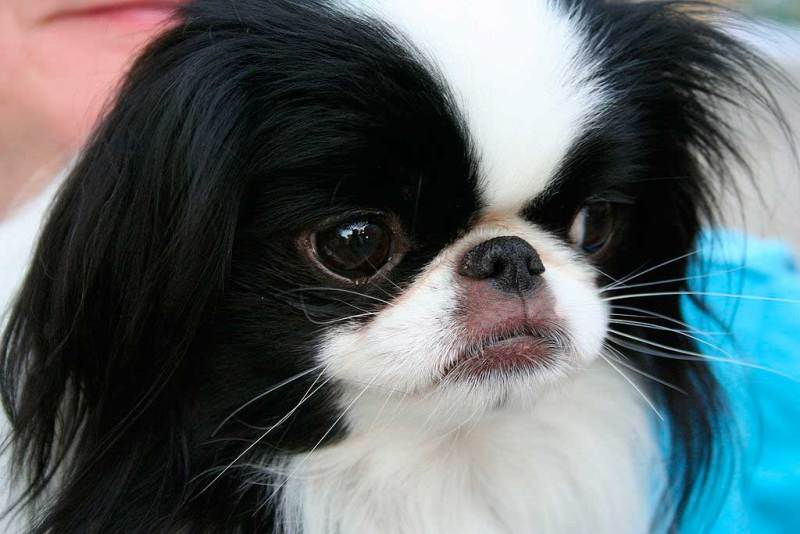
    This small dog of friendly aspect, It has a very similar appearance to that of the Pekingese, But unlike, its legs are longer, and the color of the fur is different; It may be black and white or red and white. The fur is soft and long; the large, dark eyes, well separated from each other; the tail, well endowed with hair, relies on the back; the ears are triangular in shape and small size; the snout is short and flattened, and large heads relative to their body.

    Character and skills

    According to the classification made by Stanley Coren after analyzing the responses of more than 200 the AKC judges ("The Intelligence of Dogs", Stanley city, Ediciones B, 1995), the Japanese Spaniel is No. 62 from the list.

    The Japanese Spaniel barks only when necessary in order to alert the family of the arrival of a visitor or something out of the ordinary, then is a quiet breed.

    It's a very special race, they have very feline attitudes, is more, is said to have the character of a cat, and you will see why...

    The Japanese Chin is always alert, He is intelligent and independent, and it uses its feet to wash and dry your face. Other feline features are your preferences for the rest in elevated surfaces, as the backups of the sofa and chairs. He has a spectacular ability to walk across a tea table without knocking over any objects., If that doesn't make it a cat total!!!

    These dogs were bred and trained for the purpose of loving his people. Although it is usually a quiet dog, He also known for the amount of mischief that make, Welcome to all, like the so-called "Spin Chin", they go around quickly in a circle as if they were dancing but resting only on their hind legs, While with their Forelegs dejan them interwoven and shaking them up top down at full speed, they are very funny.

    The Japanese Spaniel is an excellent companion dog., It is affectionate and loyal to his owner and, normally, happy to see other people, though some mistrust strangers. It is a dog who prefers the family environment, but they adapt very well in new situations and are often used as therapy dogs due to this trait and their love of people.. Socialization at an early age contributes to his temperament of develop optimally, is an emotionally balanced dog, by nature, but it is important to contribute.

    Some usually "sing", They produce a noise that can range from a minimal trill to a high pitch and quite low-pitched for their size., almost operatic quality that sounds like “booooooo”. On race Basenji in the right column you can see a video of the dog singing, it is very similar to what the Japanese Chin.

    Health

    The orbits of the eyes of large contribute to moisture in the face and the folds of skin around the crushed nose and facial area, You can trap moisture and cause fungus problems. The face should be cleaned from time to time with a damp cloth and the folds, with a cotton swab.

    Diet is an important factor in the health and condition of the Japanese Chin, many specimens may be allergic to corn, for example.

    Due to their small size they don't need too much exercise, although yes, requires frequent walks, because they are active and love to be outdoors. They adapt well to life in an apartment or small homes. On the other hand, their fur should brush your daily, as it is often about getting caught.

    Japanese Chin has a long life, to round the 15 years, but in many cases can be extended to more or less the 18 years of age.

    They weigh between 1,8 and 3,3 kand and measured at the cross, of 21 to 25 cm.. The litter is usually fairly small, of between 3 and 4 Puppies.

    Images "Japanese Chin"

    credits:

    1. Japanese Chin, young male by Pointer8 / CC BY-SA
    2. A Japanese Chin by LostinTexas (Alex Archambault) – Flickr
    3. A red Japanese Chin by LostinTexas (Alex Archambault) – Flickr
    4. Japanese Chin with tongue hanging out over crooked teeth by OliviaCC / Public domain
    5. A Japanese Chin puppy. By Rachel Harris (RLH) from Scottsdale, THE, U.S.A. / CC BY
    6. One of our neighbours has this small Japanese Chin. By Mark Hillary
    7. Japanese Chin by https://www.needpix.com/photo/download/1697007/dog-japanese-chin-animal-pet-sweet-white-black-nature-sunset
    8. Japanese Chin by Tingflorance / CC BY-SA
    9. Japanese Chin by Arnaud 25 / Public domain

    Videos "Japanese Chin"

    Type and recognitions:

    • FCI CLASSIFICATION:
    • Group :
    • Section : . .

    Federations:

    FCI , AKC , ANKC , CKC , ​KC , NZKC , UKC

    FCI breed standard Japanese Chin

    FCIFCI - Japanese Chin
    Spaniel

    Alternative names:

    1. Japanese Spaniel, Chin (English).
    2. Épagneul japonais ou chin (French).
    3. Chin (German).
    4. Chin (Portuguese).
    5. Chin Japonés, Chin (español).

    ▷ The world of Pets: Dogs, cats, birds, reptiles, amphibians

    Tibetan spaniel
    Tíbet FCI 231 . Tibetan breeds.

    Tibetan spaniel

    The Tibetan spaniel it is an awake and very active dog that is very close to its owner.

    Content

    History

    The Tibetan spaniel is a breed native to the mountainous regions of Tibet, as the name reflects. The ancestors of the Tibetan Spaniel are believed to have appeared two millennia ago, along with the Lhasa Apso, the Shih Tzu and the Pekingese, among others. This dog has long accompanied Buddhist monks in their temples, warning their masters and their companions (mainly to Tibetan Mastiff – Do-Khy) from the slightest intrusion.

    Even though it's called spaniel, has neither the qualities nor the heritage of a hunting dog. It has always been used as a companion and alert dog.. The first representatives of the breed to be brought to England arrived there at the end of the 19th century.. In United States, the Tibetan spaniel began to be adopted during the decade of 1960 and the national club dedicated to the breed was founded in 1971. 13 years later, earned recognition from the American Kennel Club. In the meantime, the 22 in August of 1961, the Fédération Cynologique Internationale (FCI) granted the breed its own ultimate status.

    Photo: Tibetan spaniel by gomagotiFlickr

    Physical characteristics

    ▷ Fur: silky, glued, smooth, average length, shorter on the face and in the front of the legs. The fringes are present on the back of the front legs. Hair and mane are less dense in females.
    ▷ Color: all colors are allowed, shades and combinations.
    ▷ Head: Small in relation to the body, proud port. The skull is slightly domed, medium width and length. The stop is light but it's marked.
    ▷ Ears: Medium-sized, high insertion, well feathered and hanging.
    ▷ Eyes: oval, dark brown, medium-sized, placed far apart, forward facing, showing an expressive and lively look.
    ▷ Body: rectangular, slightly longer than the height of the withers. The neck is moderately short, strong, covered with a mane (more pronounced in males than females). The loin is straight and the ribs are well sprung.
    ▷ The tail it is high insertion, happily held, forming a loop on the back when the dog is in action and provided with abundant hair.

    Size and weight

    ▷ Male size: 25 – 26 cm.
    ▷ female size: 22 – 24 cm.
    ▷ Male weight: 4 – 7 kg
    ▷ female weight: 4 – 7 kg

    Character and skills

    The Tibetan spaniel is an alert and active little dog that shows great intelligence. Your education is very easy. Loyal to his family and close to his masters, it is a dog that nevertheless needs independence.

    Accumulate many qualities such as affection, the softness, the sensibility. It is a dog very devoted to his family and that adapts as well to a family with children as to a single person or older. It is not an aggressive dog, but be wary of people you don't know, which makes him a very good alert and guard dog because he is full of security.

    The Tibetan spaniel is an indoor dog that fits perfectly into an urban lifestyle, In an apartment. The possibility of enjoying a fenced garden also suits you, but you should always be able to benefit from a shelter from bad weather.

    Education

    The Tibetan spaniel it is a social race that needs regular contact with its humans. They do not respond well when left alone for long periods of time. Having been developed as a companion dog by Tibetan monks, are emotional and empathic with the needs of their owners.

    It is important to socialize him Tibetan spaniel at a young age with a variety of people and situations. They are protectors of their family. Even after socializing, they tend to be distant with strangers. If you are scared or uncomfortable, a Tibetan spaniel will express mistrust with loud alarm barks.

    Although it is not a particularly athletic dog, he needs daily walks for his physical balance, psychological and emotional.

    Health

    The Tibetan spaniel it is a strong and healthy dog. But, the breed is prone to a number of diseases, such as the risk of patella luxation, generalized retinal atrophy, urinary stones and persistent pupillary membrane.

    Grooming

    The Tibetan spaniel It is subject to 2 seasonal moults per year. During these, you are likely to lose hair extensively. Apart from the changes, its maintenance is still undemanding, but it should be done regularly.

    It is recommended to brush the dog once a week outside the shedding periods and daily during them.. Special attention must be paid to the hygiene of the inside of their hanging ears to avoid possible infections. You can give it a bath every 3 or 4 months approximately, but it is not necessary to shear it.

    Food

    The Tibetan spaniel does not need a special diet. Not a very greedy dog. Like all dogs, a good quality diet is advised, adapted to his age, to your state of health and your physical exercise to keep you in good health.

    Price of Tibetan spaniel

    The price of a puppy Tibetan spaniel it will depend on the sex, the pedigree of the parents, compliance with breed standards, etc.

    ▷ Price of a Tibetan spaniel male: of 550 to 1200 EUR.
    ▷ Price of a female Tibetan spaniel : 600 to 1200 EUR.

    breeders of the Tibetan spaniel

    Characteristics "Tibetan spaniel"

    Coexistence is important that you have with your new friend. Before considering the acquisition of a dog of the breed "Tibetan spaniel" you know certain factors. Not all breeds of dogs are apt to live in an apartment, you must take into account his character, their need for exercise, their interaction with other pets, their care and if you have small children, their level of tolerance towards them.

    Adaptation ⓘ

    2,0 of 5 stars (based on 1 review)

    friendly dog ​​ⓘ

    4,0 of 5 stars (based on 1 review)

    hair loss ⓘ

    4,0 of 5 stars (based on 1 review)

    Affection level ⓘ

    3,0 of 5 stars (based on 1 review)

    Need for exercise ⓘ

    3,0 of 5 stars (based on 1 review)

    Social need ⓘ

    1,0 of 5 stars (based on 1 review)

    Home ⓘ

    3,0 of 5 stars (based on 1 review)

    Toilet ⓘ

    3,0 of 5 stars (based on 1 review)

    Friendly with strangers ⓘ

    2,0 of 5 stars (based on 1 review)

    barking ⓘ

    3,0 of 5 stars (based on 1 review)

    Health ⓘ

    3,0 of 5 stars (based on 1 review)

    Territorial ⓘ

    4,0 of 5 stars (based on 1 review)

    Cat friendly ⓘ

    4,0 of 5 stars (based on 1 review)

    Intelligence ⓘ

    4,0 of 5 stars (based on 1 review)

    Versatility ⓘ

    2,0 of 5 stars (based on 1 review)

    Child friendly ⓘ

    4,0 of 5 stars (based on 1 review)

    Surveillance ⓘ

    3,0 of 5 stars (based on 1 review)

    joy ⓘ

    3,0 of 5 stars (based on 1 review)

    Images "Tibetan spaniel"

    Photos:

    1 – Tibetan spaniel by Angelica, CC BY 2.0, via Wikimedia Commons
    2 – Close up view of a Tibetan spaniel by Docter Nick, CC BY-SA 4.0, via Wikimedia Commons
    3 – Buddy, Tibetan spaniel particolor of two years by Ladykransteer, CC0, via Wikimedia Commons
    4 – Tibetan spaniel by https://pixabay.com/es/photos/tibetano-spaniel-cachorro-perro-5214218/
    5 – Tibetan spaniel by Daimen.Richards, CC BY 2.0, via Wikimedia Commons
    6 – Tibetan spaniel relajado by DillyFan503, CC BY-SA 4.0, via Wikimedia Commons

    Videos "Tibetan spaniel"

    Type and recognitions:

    • FCI CLASSIFICATION:
    • Group :
    • Section : . .

    Federations:

    • FCI – Group 9: Section 5: Tibetan breeds
    • AKCToy
    • ANKC – (Toy)
    • CKC – Group 5 – (Toy)
    • ​KC – Toy
    • NZKCToy
    • UKC – Group 8 – Companion dog

    FCI breed standard "Tibetan spaniel"

    Origin:
    Tibet, China

    Date of publication of the valid original standard:
    18.03.2015

    Use:

    Companion dog


    General appearance:

    It is small, active and vigilant. Well balanced in its overall profile; the body is slightly longer than its height measured at the withers.


    Behavior / temperament:

    It is joyful, very intelligent and behaves with determination. It is reserved with strangers, vigilant, fair, but independent.

    Head:

    It is small in proportion to the body; wears it proudly. His expression is masculine, but without showing coarseness.

    Cranial region:
    • Skull : It is slightly domed, of moderate length and width.
    • Stop : Slightly marked, but defined.

    facial region:

    • Truffle : Preferably black.
    • Snout : Of average length, romo, padded, but without wrinkles. The chin shows some depth and width.
    • Jaws / Teeth : Shows a mild undershot. Regularly arranged teeth; and the lower jaw is wide between the canines. Full dentition is desirable. The teeth and tongue should not be visible while the mouth is closed.
    • Eyes : dark brown, oval, bright and expressive. Medium-sized, rather separated, but with the gaze directed towards the front. Black pigmented eyelid edges.
    • Ears : Medium-sized, pendants, with good pen in adults; quite high insertion. It is desirable that they are slightly separated from the head, but not floating. Large ears are atypical, heavy and low insertion.

    Neck:

    Medium short, strong and well set on the shoulders. Covered with a mane o "chal" (scarf) longer hair, which is more noticeable in males than in females.

    Body:

    Slightly longer from withers to root of tail, that the height measured up to the withers.

    • Back : Straight.
    • Ribs : Well arched.

    Tail:

    High insertion, covered with abundant hair in the shape of feathers and carried happily curled on the back during movement. (It should not be penalized if the tail hangs down while the dog is at rest.).

    Tips

    Former members

    Medium structure bone. Slightly curved forelimbs, but firm on the shoulders.

    • Shoulder : Well oblique.

    Later members

    Strong and well formed.

    • Knee : Moderate angulation.
    • Hocks : Placed well down; viewed from behind should be straight.

    Pies

    Feet shape "hare". Small and well-formed with fringes of hair between the toes that often extend over the feet. Round feet are undesirable, like cat.

    Movement:

    Fast movement, straight, free and energetic.

    Mantle

    Fur

    The outer layer is silky in texture, cuts on the face and on the front of the limbs, of moderate length on the body, rather tight and smooth. The undercoat is thin and dense. The ears and the back of the forelimbs have good stripes; the tail and thighs are well adorned with longer hair. The coat should not be overly developed. Females have less developed coat and mane than males.

    Color

    All colors and their combinations are admitted.


    Size and weight:

    Height to the cross

    Approximate size of 25,4 cm. (10 inches).

    Weight

    Ideal weight of 4,1 to 6,8 kg (9 – 15 English pounds).


    Fouls:

    Any deviation from the aforementioned criteria is considered a fault and the severity of it is considered to the extent of the deviation from the standard and its consequences on the health and well-being of the dog..
    Any dog ​​showing clear signs of physical or behavioral abnormalities should be disqualified..

    disqualifying fouls:

    • Aggressiveness or extreme shyness.
    • Any dog ​​showing clear signs of physical or behavioral abnormalities.


    N.B.:

    Males should have two normal-appearing testicles fully descended into the scrotum..

    Source: F.C.I - International Cynological Federation

    Alternative names:

    1. Tibbie (English).
    2. Du Tibet, Epagneul du Tibet (French).
    3. Tibetan Spaniel (German).
    4. Tibbie (Portuguese).
    5. Tibbie (español).

    ▷ The world of Pets: Dogs, cats, birds, reptiles, amphibians

    Shih Tzu
    Tíbet FCI 208 . Tibetan breeds.

    Shih Tzu

    The hair Shih Tzu needs a lot of care, especially with the exhibition specimens

    Content

    History

    The Shih Tzu It is a very ancient breed of dog (the first data found on them date from the 10th century to. C.) originating in China. There is an opinion widely about his origin, but often give acceptable they are descended from similar Tibetan dogs Lhasa Apso.

    Like the Lhasa Apso, the Shih Tzu They are a race linked in some way with the Buddhist religion. The Chinese bred them and primped so they seem somewhat Lions. Even the name of the race, "Shi Tzu", means "lion dog", which is usually blamed on the strong and deep bark of these animals.

    They were highly prized in China as guard dogs.

    In the seventeenth century the history of the Shih Tzu. The Dalai Lama, wanting to fill of gifts to the Chinese emperor, He gave some examples of this breed. Ending the 19th century, Ts’eu-hi, empress who was the grandmother of the last emperor, I was a big fan of the Shih Tzu and for this reason it had more than a hundred and specialized caregivers. When in 1908 the Empress died, the Shih Tzu suffered a severe blow.

    At the beginning of the 1930s, He began to creep into houses of Chinese elders, leaving the ivory tower. And in that time he received some names: Lhasa Lion Dog, Tibetan Poodle, etc. And in 1934 was founded the Peking Kennel Club.

    In 1937, the invasion of China by the Japanese was the reason for the disappearance of the Shih Tzu in China, your country of origin. But, Luckily, Europeans had already become fond of this breed, that in 1955 began to be extended by United States.

    After her appearance, the Shih Tzu they replaced the Lhasa Apso as the favourite dogs of nobles and emperors. Travelers who visited the eastern country during that time brought the fashion for these small, hairy dogs to Europe and, later, to America, where made a strong impression. In the modern era, the fashion of the Shih Tzu gradually disappeared, and after the Communist revolution the dog breed was considered extinct in China, although it had already penetrated deeply in the West.

    All the genetic inheritance of Shih Tzu comes from seven pairs of dogs, including a Pekingese, that through the efforts of several historians have been able to be identified.

    Physical characteristics

    The head of these dogs is small in proportion to the rest of your body, and eyes, black (and rarely even blue or brown) they are always huge, so there they deserve special care if you want to avoid health problems.

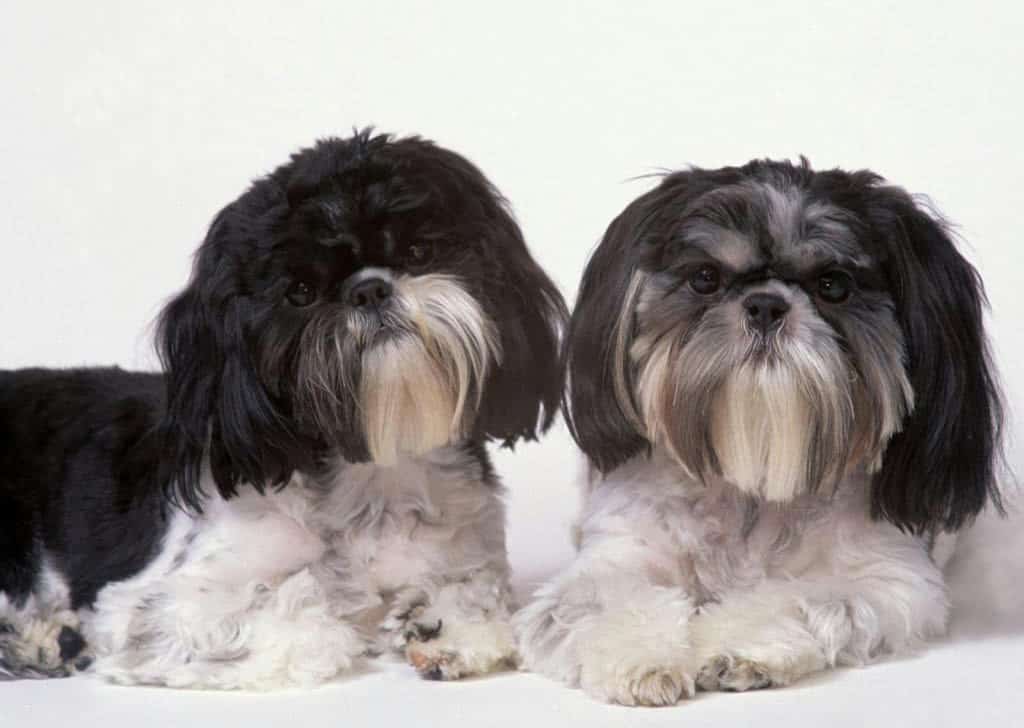
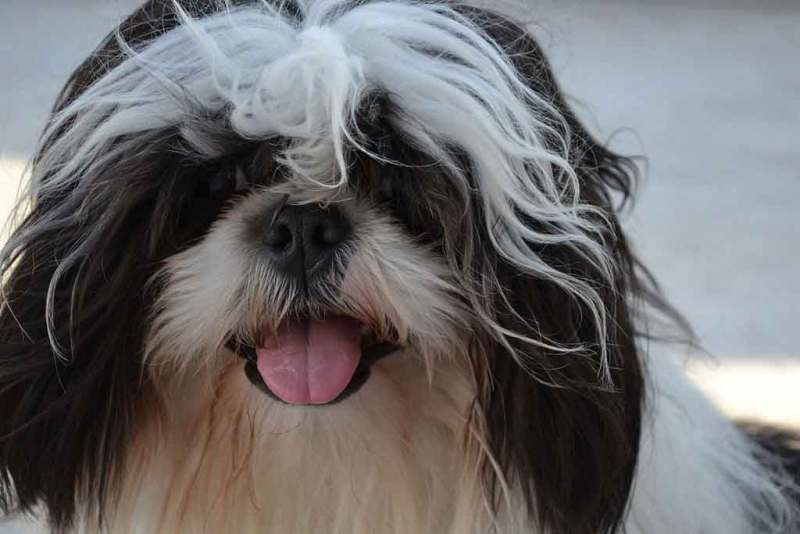
    Her hair is long and very dense, but never curly (are allowed a bit of undulation), and it can be of all colors, Although it is more normal to the front and the end of the tail are white. The ears are large and pendants, and they have so much hair that seem to form a whole with the hair in the neck.

    The snout is short and flat, sometimes causing them breathing problems; for example, is quite common that they ronquen soundly. The average length of life of this dog is fourteen years, However, a Shih Tzu that has been well cared for and has not had major health problems can live up to twenty-three years, in the case of one of the longest known dog breeds. Their colours can be white, dorado, black, liver, Silver, Red or brindel. The Shih Tzu They are animals that, due to their type of hair, do not give allergies to allergic people.

    Physically they are not very tall (they measured a maximum 26,7 cm and weigh in 4,5 to 8,1 kg).

    Character and skills

    Dog breeds are often created for a specific purpose.. In this case, the purpose of Shih Tzu is to be a partner. Has no hunting instinct, nor on guard, and is never aggressive. He was selected just to be a faithful and loving friend.

    Dog shih tzu vs Cat Funny Fight

    The Shih Tzu It, Therefore, a dog that gets along with everyone, both with children and adults. Also appreciates other animals, especially felines. Sometimes it is said to be a "dog-cat", since its behavior is very similar to that of a feline. In fact, he decides when he wants to be caressed, and once he is an adult, he really appreciates just sitting still on his cushion. It also, tends to be independent and to obey only if you want. It also, like many small breeds of dogs, can be somewhat difficult.

    But, the Shih Tzu he is a tender and calm companion, but also full of joy. He loves to play and to be taken care of: his master is everything to him. In fact, can't stand loneliness; if your family is usually far away, the company of another animal is welcome.

    The Shih Tzu live as well in apartment as at home. Perfectly adapted to city life, he barks little and his calm character allows him to be carried everywhere: he will remain calmly at the feet of his master. Having said that, not a dog that needs a lot of exercise; a daily walk and games are enough for him. All this makes it an ideal dog for an older person., if it is willing to take on the daily maintenance it requires.

    Education

    Intelligent and endowed with a good learning ability, the Shih Tzu is nevertheless a stubborn dog. He does not like to obey blindly, and even less that they force him. Your master will have to be persistent and cunning. It is advisable to go through the game and fun rather to make him learn the orders.

    Health

    The Shih Tzu is generally in good health.

    But, you are at risk of developing brachycephalic syndrome, because of his crushed face.

    It also, is a dog that can be prone to ear infections, because of his drooping ears, or cataracts for his bulging eyes. You can also get contact conjunctivitis, in case your hair falls into your eyes. That is why it is advisable to lift the hair by putting a toupee on it.. In general, your eyes and ears should be checked regularly.

    It also, being longer than tall, the Shih Tzu may have back problems, especially at the level of the intervertebral disc. It is advised to avoid going up and down the stairs too often. So, in the absence of elevator, it is better to take it.

    It also, also has a predisposition to atopia, risk that increases if your hair is poorly cared for.

    He is a greedy dog, who is prone to obesity. So, it is necessary to take care of the amount of food eaten. A maximum of 100 grams of kibble per day.

    Last, if the cold doesn't bother you, the Shih Tzu it is instead sensitive to heat: in summer, it is necessary to shorten the walks, or perform them away from temperature peaks.

    Grooming

    To the Shih Tzu you have to take care of them with time and a lot of patience.

    The maintenance of Shih Tzu requires careful attention.

    In addition to the daily hairstyle, it is recommended to groom your Shih Tzu each 3 or 4 weeks. If cleaning is done at home, using a highly nourishing dog shampoo and conditioner will make the job easier. You have to dry the dog with a hair dryer, so that it does not catch cold.

    On the other hand, it should be noted that the Shih Tzu only changes, making it one of the most hypoallergenic dog breeds.

    On the other hand, his eyes and teeth must be cleaned daily, and the ears once a week.

    Food

    You must be careful, as well, with food: they are delicate stomach dogs, normally they do not accept well anything else other than dry food. Veterinarians recommend give milk without lactose because many of them cannot tolerate.

    Characteristics "Shih Tzu"

    Coexistence is important that you have with your new friend. Before considering the acquisition of a dog of the breed "Shih Tzu" you know certain factors. Not all breeds of dogs are apt to live in an apartment, you must take into account his character, their need for exercise, their interaction with other pets, their care and if you have small children, their level of tolerance towards them.

    Adaptation ⓘ

    2,0 of 5 stars (based on 1 review)

    friendly dog ​​ⓘ

    4,0 of 5 stars (based on 1 review)

    hair loss ⓘ

    1,0 of 5 stars (based on 1 review)

    Affection level ⓘ

    4,0 of 5 stars (based on 1 review)

    Need for exercise ⓘ

    2,0 of 5 stars (based on 1 review)

    Social need ⓘ

    4,0 of 5 stars (based on 1 review)

    Home ⓘ

    3,0 of 5 stars (based on 1 review)

    Toilet ⓘ

    4,0 of 5 stars (based on 1 review)

    Friendly with strangers ⓘ

    3,0 of 5 stars (based on 1 review)

    barking ⓘ

    2,0 of 5 stars (based on 1 review)

    Health ⓘ

    3,0 of 5 stars (based on 1 review)

    Territorial ⓘ

    2,0 of 5 stars (based on 1 review)

    Cat friendly ⓘ

    4,0 of 5 stars (based on 1 review)

    Intelligence ⓘ

    4,0 of 5 stars (based on 1 review)

    Versatility ⓘ

    3,0 of 5 stars (based on 1 review)

    Child friendly ⓘ

    4,0 of 5 stars (based on 1 review)

    Surveillance ⓘ

    1,0 of 5 stars (based on 1 review)

    joy ⓘ

    4,0 of 5 stars (based on 1 review)

    Images "Shih Tzu"

    Photos:

    1 – "Shih Tzu" Name: fibi (female), 1,5 years in the photo by Wawri (Tomasz Wawak), CC BY-SA 2.5, via Wikimedia Commons
    2 – "Shih Tzu" Tommy by IrinaOnt, CC BY-SA 4.0, via Wikimedia Commons
    3 – "Shih Tzu" in Tallinn duo CACIB, 17-18 in August of 2013, concurso Best in Puppies by Thomas, CC BY-SA 3.0, via Wikimedia Commons
    4 – I am a "Shih Tzu" I was born on 2 in February of 2012 by User:Andy the shihtzu, CC BY-SA 3.0, via Wikimedia Commons
    5 – "Shih Tzu" pure blood, squirrel by Gabsy, CC BY 3.0, via Wikimedia Commons
    6 – "Shih Tzu" freshly shorn by Yvonne Hering, CC BY-SA 3.0, via Wikimedia Commons

    Videos "Shih Tzu"

    Type and recognitions:

    • FCI CLASSIFICATION:
    • Group :
    • Section : . .

    Federations:

    • FCI – Group 9: Section 5: Tibetan breeds
    • AKCToy
    • ANKC – (Toy)
    • CKC – Group 5 – (Toy)
    • ​KC – Toy
    • NZKCToy
    • UKC – Group 8 – Companion dog

    FCI breed standard "Shih Tzu"

    Origin:
    Tibet, China

    Date of publication of the valid original standard:
    18.03.2015

    Use:

    Companion dog.


    General appearance:

    It is a vigorous dog, copiously covered with hair, of haughty bearing and a face in the shape of a chrysanthemum.


    Behavior / temperament:

    Intelligent, active and alert. Friendly and independent.

    Head:

    Wide, round, with width between the eyes. The hair on the head should be shaggy and fall well over the eyes.. Must have a full beard and mustache. The nose hair should grow upwards, giving it a characteristic chrysanthemum-shaped effect..

    Cranial region:
    • Depression links (Stop): Well defined.

    facial region:

    • Truffle: It is black, although it can be dark liver in those dogs with liver color or spots of that color.. The top of the nose should be in line with or slightly below the edge of the eye. The nostrils are wide and open. A downward sloping nose is highly undesirable., just like the nostrils tight.
    • Snout: Large, square, short, plane, hairy and wrinkle-free. The distance from the tip to the frontonasal depression (stop) must be almost 2,54 cm.. Muzzle level or slightly tilted upwards at the tip. The pigmentation of the muzzle should be as uniform as possible.
    • Lips: Well contiguous.
    • Jaws/Teeth: Wide mouth. Pincer bite or with a slight lower prognathism.
    • Eyes: Large, round, dark colored, placed well apart from each other, although they are not jumpy. They have an affectionate expression. In liver-colored specimens or with spots of that color, lighter colored eyes are allowed. The white part of the eyeball should not be visible.
    • Ears: Large, pendants; long pavilion. Its implantation is slightly below the crown of the skull, and they are covered with hair so dense that it seems to merge with the hair on the neck..

    Neck:

    Well proportioned, delicately arched, with sufficient length to carry the head proudly.

    Body:

    Its length from the region of the withers to the base of the tail is greater than the height at the withers..

    • Back: Straight.
    • Pork loin: Well coupled and robust.
    • Breast : Broad and deep.

    Tail:

    Covered with abundant feather-shaped hair and carried happily on the back. High insertion. The height of the tail should be approximately the same as the skull, so that the dog has a balanced profile.

    Tips

    Former members

    They are short, muscular and strong boned, as straight as possible, compatible with a wide and deep chest.

    • Shoulder: Firms, well leaning back.


    Later members

    Short, muscular and broad boned. Seen from behind they should look straight. They should look voluminous due to the abundance of hair.

    • Thighs: Well rounded and muscular.

    Pies

    Round, firm and with thick foot pads; They appear large due to the abundance of hair that covers them.

    Movement:

    Of proud bearing, harmonious and easy movement; the forelimbs are directed well forward, with a strong push of the hind limbs; these show the footpads completely.

    Mantle

    Fur

    Long, thick, not curly, with a good undercoat. A slight undulation is allowed. It is highly recommended to tie the hair on top of the head..

    Color

    All colors are allowed. In specimens of various colors it is highly desirable that they have a white tuft on the forehead and at the tip of the tail..


    Size and weight:

    Height to the cross

    It should not exceed 26,7 cm.. The conformation and characteristics of the breed will always be of primary importance., and in no way should only the size be taken into account.

    Weight

    Of 4,5 to 8,1 kg. The ideal weight is between 4,5 and 7,3 kg.


    Fouls:

    Any deviation from the aforementioned criteria must be considered a fault and the seriousness of the fault is considered to the degree of the deviation from the standard and its consequences on the health and well-being of the dog..

    Any dog ​​showing clear signs of physical or behavioral abnormalities should be disqualified..

    disqualifying fouls:

    • Aggressiveness or extreme shyness.
    • Any dog ​​showing clear signs of physical or behavioral abnormalities.


    N.B.:
    • Males should have two normal-appearing testicles fully descended into the scrotum..
    • Only functionally and clinically healthy dogs, with the typical conformation of the breed, should be used for parenting.

    Source: F.C.I - International Cynological Federation

    Alternative names:

    1. Chrysanthemum Dog (English).
    2. Chien lion (French).
    3. Löwenhund, shih-tzu-kou (German).
    4. Chinese Lion (Portuguese).
    5. Perro león chino (español).

    ▷ The world of Pets: Dogs, cats, birds, reptiles, amphibians

    English Springer Spaniel
    Inglaterra FCI 125 . Flushing Dogs

    The English Springer Spaniel it is the oldest of all British hunting dogs.

    Content

    History

    The English Springer Spaniel is a distant descendant of dogs Spaniel type who arrived from Spain to the British Isles more than 1.500 years.

    Already in 1576, the Dr. John Caius described the descendants of these dogs from the Iberian Peninsula in his Treaty of English Dogs, but it wasn't until 1801 and Cynographia Britannica de Sydenham Edwards, naturalist and illustrator, when a distinction was made between Cockers smaller and Springers Taller.

    But, litters used to be a mix of both types, and the difference in names was simply based on the size. Both types were used to hunt game birds; his job was to detect and flush out the animal, which was then caught in a net, shot with a bow or, sometimes, captured by a specially trained hawk. The current names of the breeds derive from these hunts.: the Cockers excelled in hunting woodcock, While the English Springer Spaniel excelled at finding, make the game birds fly and collect the prey for the armed hunter.

    In the 19th century, breeders began to select dogs, so that the lines of dogs differed from region to region. The most imposing dogs were found in the region of Norfolk and they took the name of Norfolk Spaniel about 1850. This was the name by which all the greats were shown Spaniels at dog shows.

    This changed in 1902, When the Kennel Club (KC), Britain's leading organization, recognized the English Springer Spaniel as an independent race. It was given its own standard, very different from other similar looking dogs, and the breeding program became stricter.

    Only eight years later, in 1910, the breed was recognized by the American Kennel Club (AKC). The reputation of the breed grew considerably in North America from the decade of 1920. In 1932, was recognized by the United Kennel Club (UKC), the other leading organization in the United States. The Fédération Cynologique Internationale (FCI) followed him in 1954. In the news, the English Springer Spaniel is accepted by all major canine organizations, including Canadian Kennel Club (CKC).

    With a little less than 10.000 registrations per year in the CKC, the English Springer Spaniel is still one of the 10 Britain's most popular dog breeds. But, has been in decline since the early 1990s 2010, when they were almost born 13.000 each year.

    The trend is much more stable in France, where some 1.700 births in the Livre des Origines Français (LOF) since the early years of the 21st century. This figure had previously doubled in just a decade., since at the beginning of the years 90 it was rather around the 800, and even below 500 in the early 80.

    The same stability is found in the United States, where it has fluctuated, at least since the beginning of the 21st century, between the post 25 and the 30 AKC Breed Classification, based on the number of annual registrations in the organization. The UKC also produces a classification based on the number of births reported to it, in which it is among the 20 first.

    Photo: An eight year-old, male, liver and white English Springer Spaniel named by Xandercary, CC BY-SA 3.0, via Wikimedia Commons

    Physical characteristics

    The English Springer Spaniel has a compact and harmonious appearance. But, there is a real difference in morphology between individuals in lines destined for dog shows and those whose specialty is hunting and field trials: the former are much more massive than the latter

    In both cases, the English Springer Spaniel he is tall on legs, so much so that it is the tallest of the Spaniels of British origin. Her body, slightly rectangular, muscular and symmetrical, exudes power and agility. The legs are muscular and of solid bones, and end in round, compact legs.

    The tail has fringes, it is short and very mobile. It has long been docked to avoid hunting accidents, but now docking is prohibited in most countries.

    The head of the English Springer Spaniel it is quite wide, with a well-proportioned muzzle and well-developed nostrils. The eyes are medium in size, almendrada form, with a lively and soft expression. They must be dark hazel in color, but a light color is also possible, although it is considered a fault. The ears are long, wide and lobed. They fall back along the head and have attractive fringes.

    The undercoat is short, smooth and dense, while the top layer is longer, smooth and closed. The set is made to withstand inclement weather, but it also protects you from the various thorns and twigs that could hurt you in the undergrowth. The individuals of the working lines, however, generally have shorter hair than those of the beauty lines.-

    His fur is black and white or liver and white, and may have tan markings. Also in this case there is a certain divergence between show dogs and those intended to be pets or hunting dogs., since the fur of the former has more marked colors.

    Last, sexual dimorphism is not very marked in this breed: males are only slightly larger and heavier than females.

    Size and weight
      ▷ Male size: 48 – 51 cm.
      ▷ female size: 48 – 49 cm.
      ▷ Male weight: 18 – 22 kg
      ▷ female weight: 18 – 19 kg

    Varieties:

    From the age 40, the breeders of English Springer Spaniel have tended to distinguish between lines intended for dog shows and those intended for hunting or company.

    In effect, when it became apparent that the individuals who stood out on beauty pageant podiums and those who won job tests were never the same, this led some breeders to specialize, selecting their players either for their aesthetics or for their physical abilities.

    In fact, individuals destined for podiums are generally more massive, have stronger colors and less need to strain. But, no official organization considers them a variety in their own right: no standard distinguishes between show dogs and working dogs.

    Character and skills

    The English Springer Spaniel he is incredibly sociable, open and loving. They love the company of humans in general, and his family in particular. If left alone for a long time, may suffer from separation anxiety, which can lead to destructive behavior and incessant barking.

    On the other hand, can express his joy at seeing his master come back urinating on the carpet. To get rid of this bad habit, it is necessary to avoid that the return home is an event. So, it is advisable not to pay immediate attention to the dog, but take a few minutes to take off your shoes, hang up the coat, keep the keys… encouraging you to wait without undue excitement.

    If you bark when a person approaches, generally it is less to warn him than to invite him to come and pet him and play with him. So, can play the role of a warning dog, because he is listened to in every visit, but certainly not that of a guard dog that drives malicious people back. Welcomes both adults and children, with which you can spend hours running and playing in the garden. But, it is important to remember that, regardless of race, a dog should never be left alone with a small child, even though i have known him for years; all interactions must be under adult supervision.

    His sociable character also extends to his fellow men, although some signs of aggressiveness may appear, especially between individuals of the same sex. Living with cats and rodents is also usually without problems, but the same cannot be said for birds. Anyone who adopts this dog while keeping chickens or ducks in the garden will quickly understand why his hunting skills are unanimously recognized.…

    To feel good and show the full range of your interpersonal skills, the English Springer Spaniel need to be able to exercise. One hour of intense physical exercise (footing, games…) is necessary for your well-being, and appreciates taking long walks of several hours from time to time. It is, because, from a perfectly adapted companion for a person who wants to regularly take their dog for a walk. On the other hand, your outings in an urban environment should always be done on a leash, to prevent him from rushing after all the pigeons and birds he finds. During long walks in nature, it is better to let it evolve freely so that it can fully enjoy, but then it is wise to equip him with a GPS collar to be able to locate him at any time, for example if you wander off in search of woodcocks or other game.

    Although they have a reputation for being less active, dogs on show lines should also exercise for a minimum of one hour a day.

    As long as its owner is active and takes it out enough, can live in an apartment, even if it is not ideal for him: you better have access to a garden. You better have access to a garden, but this must be well fenced to prevent it from escaping if it sees birds or follows a friendly passerby who gives it a treat. In any case, you shouldn't spend most of your time alone in the garden: its place is inside, with his family.
    It also, physical exercise is not enough for it to be balanced: you also have to stimulate it mentally, especially because he is very intelligent and has a desire to learn just as great. If these qualities are not stimulated, you are likely to get bored, and then he can find something to do biting his master's shoes, throwing things or digging in the garden.

    Dog sports are a great way to keep your dog engaged both physically and mentally. Any activity works, but they are especially good at obedience competitions, track and search.

    Last, although some individuals never give voice to their dogs, the English Springer Spaniel tends to bark quite frequently. They do it to signal the approach of a person or to greet him, to warn of boredom or simply to attract attention. If this trend is not stopped at an early age, can cause problems with neighbors.

    Education

    Like any dog, the English Springer Spaniel must be socialized from the first weeks of life. If you don't have the opportunity to meet different people, to meet other animals and to face all kinds of situations, runs the risk of becoming shy or, on the other hand, to develop some aggressiveness.

    It is also necessary to get used to walking on a leash as soon as possible, as well as teaching him not to bark untimely. If their masters are absent often or for a long time, they should also help you understand that you can spend several hours alone without worrying, because his family will always return to him.

    With his above-average intelligence and willingness to do anything to please, the English Springer Spaniel is capable of achieving wonders, even under the guidance of a novice trainer. Like this, beyond the basic teachings, his thirst for learning allows him to assimilate many tricks. But, you have to be patient and be constant, as with any dog, and know how to detect when he starts to get bored to stop the session or move on to something else.

    In any case, traditional training methods are not at all suitable for this emotional dog, who has unlimited trust in humans, since they could traumatize him. Better to use positive reinforcement, that allows you to learn while having fun and takes advantage of your natural sociability.

    Health

    The English Springer Spaniel is generally quite robust and has a good life expectancy, to the point that many representatives of the breed reach the 15 years.

    Originally from Great Britain, the English Springer Spaniel has a waterproof coat that is not affected by the weather. Their undercoat is more or less dense depending on the climate of the region in which they live., and are equally resistant to cold and heat. But, they do not like extremes and should be able to shelter in the shade when it is hot, and have a cozy place to stay when the temperature drops.

    Given its popularity around the world for more than a century, no wonder so many different diseases have been recorded in this dog. The most frequent problems are :

    • The Hip Dysplasia, a malformation in the joint that is usually inherited and can cause locomotor difficulties. Genetic testing can greatly reduce risk;
    • Patellar luxation (or dislocation of the patella), when the kneecap moves out of position, causing a limp. It can be congenital or occur after an impact;
    • Progressive retinal atrophy, leading to retinal degeneration and total loss of vision. This disease appears to be increasing in the breed's population, although it is still rare;
    • The retinal dysplasia, a congenital malformation of the retina that, In most cases, does not affect vision;
    • The entropion, when the eyelid folds over the eye and causes irritation. This problem can be corrected by a simple surgical intervention.;
    • Phosphofructokinase deficiency, an enzyme responsible for the assimilation of glucose in the blood, that usually has no consequences and is often undetected. But, in severe cases, can lead to muscle loss, fever and hyperventilation;
    • Skin problems, either hereditary or due to an allergy.

    Other rare diseases have been reported in some individuals, like autoimmune diseases, the fucosidosis canina and the very rare and surprising rabies syndrome (not to be confused with rabies disease), when a peaceful dog is suddenly overcome by an attack of hyperagression for no apparent reason.

    It also, dogs used for hunting are more prone to accidents, lesions and parasites than other dogs.

    But, do not be fooled by the long list of diseases that can affect a English Springer Spaniel, most of which are very rare. A study conducted by the Kennel Club and the British Small Animal Veterinary Association in 2004 about almost 100 breed deaths showed that the main causes of death in this breed are various forms of cancer and advanced age.

    In any case, adopt from a breeder of English Springer Spaniel serious and responsible maximizes the chances of getting a healthy puppy, above all thanks to the tests that the animal or its parents will continue to carry out to ensure the absence of congenital or hereditary diseases -or susceptible to being so- like dysplasia, for example. The professional must also provide a certificate from a veterinarian who has examined the puppy and certifies that it is in good health., as well as the data of the administered vaccines, registered in your health or vaccination card.

    But, There is no use adopting a healthy puppy if you do not do what is necessary to keep it healthy, especially through appropriate preventive actions. One of the points to pay more attention in this matter is your ears: like any dog ​​with hanging ears, has a higher risk of infections at this level.

    Regular vet visits are another essential part of prevention. They should be scheduled at least once a year to detect the beginnings of a potential health problem and to make sure your dog is up to date on his vaccinations.

    Life expectancy

    Of 12 to 14 years

    Grooming

    The maintenance of the coat of the English Springer Spaniel is simple, but it takes some effort. In fact, molts throughout the year, and it should be brushed once or twice a week to keep its coat in good condition. During spring and fall molts, it is even necessary to brush it daily to remove excess dead hair.

    It also, as his fur is quite tight, does not hesitate to get into the puddles, so it can be useful to bathe him after a hunting trip or a particularly muddy trip to the forest, to prevent it from getting dirty and / or smells bad. Then you have to be careful to use a mild shampoo specifically designed for dogs., at the risk of damaging your skin.

    In general, It is also strongly recommended that you get into the habit of thoroughly inspecting your dog every time you spend long hours outdoors, either during a hunting day or a long excursion. This allows any injury to be detected immediately, spoilage or parasites, and act accordingly.

    It also, although he doesn't really tend to drool, not a very clean diner, mostly because it turns out that her long ears get soaked in her bowl. So, it is advisable to get in the habit of wiping your face with a towel after every meal.

    Your floppy ears deserve special attention, since this morphological characteristic makes moisture and dirt easily accumulate in them, with an increased risk of infection. So, should be examined and washed at least once a week.

    Take advantage to check that the eyes are clean, and clean them with a damp cloth if they are not.

    Your weekly maintenance session is also an opportunity to brush your teeth, to prevent the formation of dental plaque. Plaque can cause bad breath, tooth decay and other oral diseases. Ideally, do it more often..

    Last, even if your activity level makes natural wear and tear is enough to file your nails, it is advisable to take a look at them every 4 or 6 weeks to make sure they're not too long. Yes they are, could get in the way of walking, or even break and hurt you, so they need to be trimmed manually with a dog nail clipper. The first time, it may be a good idea to do this under the eye of a vet or groomer to make sure you are doing it right.

    Utility

    The English Springer Spaniel was developed for hunting, especially birds (mainly the woodcock), and it must be admitted that he continues to excel in the location and the fright of the hunt, and then return it to the hunter once he has killed it. They are still used for hunting around the world, tracking both small game birds and small game animals.

    They are also excellent companion dogs., loyal and loving, suitable for a home active enough to satisfy your need for plenty of exercise.

    His propensity to bark also makes him a good alert dog.. But, as it does more to welcome intruders (or even to be happy if they give him some goodies) that to repel them, he's a poor guard dog.

    When not used for hunting, physical and mental qualities of English Springer Spaniel can be admired at dog sports competitions. They tend to excel in disciplines such as flyball, obedience, agility, crawl and crawl.

    They have long been used in law enforcement and the military, and are currently used in Great Britain, United States, Canada, Sweden and Finland. In fact, his excellent sense of smell makes him a very good dog at detecting explosives, drugs, but also illegal immigrants at the borders.

    It is also common to find them as rescue dogs and search for accident victims., either in the mountains or in urban areas.

    Last, his closeness to humans and his sociable nature also make him a very good therapy dog, sometimes found in hospitals and nursing homes.

    Price "English Springer Spaniel"

    The price of a puppy English Springer Spaniel is of some 800 EUR, without much difference in price between males and females. This average hides a range of values ​​that go from about 500 euros for dogs with characteristics that are far from the standard, up to approximately double for those with prestigious ancestry and intended for dog shows.

    The price varies depending on the reputation of the breeder, the prestige of the lineage from which the animal comes, but also and above all its intrinsic physical characteristics.

    Characteristics "English Springer Spaniel"

    Coexistence is important that you have with your new friend. Before considering the acquisition of a dog of the breed "English Springer Spaniel" you know certain factors. Not all breeds of dogs are apt to live in an apartment, you must take into account his character, their need for exercise, their interaction with other pets, their care and if you have small children, their level of tolerance towards them.

    Adaptation ⓘ

    5,0 of 5 stars (based on 1 review)

    friendly dog ​​ⓘ

    5,0 of 5 stars (based on 1 review)

    hair loss ⓘ

    3,0 of 5 stars (based on 1 review)

    Affection level ⓘ

    5,0 of 5 stars (based on 1 review)

    Need for exercise ⓘ

    4,0 of 5 stars (based on 1 review)

    Social need ⓘ

    4,0 of 5 stars (based on 1 review)

    Home ⓘ

    5,0 of 5 stars (based on 1 review)

    Toilet ⓘ

    4,0 of 5 stars (based on 1 review)

    Friendly with strangers ⓘ

    5,0 of 5 stars (based on 1 review)

    barking ⓘ

    3,0 of 5 stars (based on 1 review)

    Health ⓘ

    4,0 of 5 stars (based on 1 review)

    Territorial ⓘ

    3,0 of 5 stars (based on 1 review)

    Cat friendly ⓘ

    3,0 of 5 stars (based on 1 review)

    Intelligence ⓘ

    5,0 of 5 stars (based on 1 review)

    Versatility ⓘ

    3,0 of 5 stars (based on 1 review)

    Child friendly ⓘ

    3,0 of 5 stars (based on 1 review)

    Surveillance ⓘ

    3,0 of 5 stars (based on 1 review)

    joy ⓘ

    5,0 of 5 stars (based on 1 review)

    Images "English Springer Spaniel"

    Photos:

    1 – English Springer Spaniel by Heinz Höfling, CC BY-SA 3.0, via Wikimedia Commons
    2 – Coffee, English-Springer-Spaniel, 8 Months by photo taken by Heinz Höfling [User:Hhoefling], CC BY-SA 3.0, via Wikimedia Commons
    3 – A black English Springer Spaniel named Oliver. by racermd5, CC BY 2.0, via Wikimedia Commons
    4 – English Springer Spaniel by https://pixabay.com/de/photos/hund-englisch-springer-spaniel-317039/
    5 – Mimi, English Springer Spaniel by Pedro Lopez
    6 – Tallinn, Estonia, duo CACIB 2013 August 17-18 by Thomas, CC BY-SA 3.0, via Wikimedia Commons

    Videos "English Springer Spaniel"

    Type and recognitions:

    • FCI CLASSIFICATION:
    • Group 8: Hunting Retriever Dogs. Hunting Lifting Dogs. Water dogs.
    • Section 2: Flushing Dogs. With working trial.

    Federations:

    • FCI – Group 8: Retrievers - Flushing Dogs - Water Dogs – Section 2: Retrievers
    • AKCSporting
    • ANKC Group 3 (Gundogs)
    • CKCSporting Dogs
    • ​KC – Gundog
    • NZKCGundog
    • UKCGun Dogs

    FCI breed standard "English Springer Spaniel"

    Origin:
    United Kingdom, England

    Date of publication of the valid original standard:
    28.07.2009.

    Use:

    Hunting retriever and lifting dog.


    General appearance:

    Symmetrical figure dog, compact, strong, happy and active. It is the longest in limb and the slimmest of all land British Spaniels.


    Behavior / temperament:

    dog friendly, cheerful and docile in spirit. Shyness and aggressiveness are highly undesirable.

    Head:

    ---

    Cranial region:
    • Skull: Medium-sized, quite wide, slightly rounded and rises from the forehead, forming a ridge or stop; it is divided between the eyes by a groove that disappears along the forehead towards the occiput that should not be pronounced.

    facial region:

    • Truffle: Well developed nose.
    • Snout: Its length must be in proportion to the skull; the muzzle should be quite wide and deep, well molded under the eyes.
    • Lips: Pretty deep and square.
    • Jaws / Teeth: Strong jaws with a regular and full scissor bite, that is to say that the inner side of the upper incisors is in close contact with the external surface of the lower incisors, the teeth being placed vertically in the jaws.
    • Cheeks: Flat.
    • Eyes: Medium-sized, macaroons, Neither prominent nor sunken, well placed (that do not show the ocular mucosa), of lively and kind expression. Dark hazelnut color. Light eyes are undesirable.
    • Ears: Lobulares, of good length and width, hanging fairly close to the head and inserting at the level of the eye line. Well endowed with long feather hair.

    Neck:

    Long, strong and muscular, without jowl. It should be slightly arched and taper towards the head.

    Body:

    Strong, neither too long nor too short.

    • Pork loin: Muscular, vigorous, slightly arched and well attached.
    • Breast : Deep and well developed chest. The ribs are well sprung.

    Tail:

    Previously the custom was to amputate the tail.
    • amputee: Low insertion, never with his bearing on the top line. With good fringe and cheerful in action.
    • Without amputating: Low insertion, never with his bearing on the top line. With good fringe and cheerful in action. In balance with the rest of the dog.


    Tips

    Former members:
    • General appearance: The forelimbs are straight and of good bones..
    • Shoulder: Well placed back.
    • Elbow: Well positioned close to the body.
    • Metacarpus: Strong, flexible.
    • Previous feet: Tight, compact and well round, with thick and strong pads.
    Later members:
    • General appearance: They must be well lowered.
    • Thighs: Widths, muscular and well developed.
    • Femoro-tibio-patellar joints (knee) and hocks: Moderately angled. Coarse hocks are undesirable.
    • Hind feet: Tight, compact and well round, with thick and strong pads.

    Movement:

    It has a strictly own movement. The forelimbs should extend forward from the shoulders, taking a long step, smooth and effortless. Hocks moving well under body, following the line of previous members. In slow motion it can ambulate, typical gait of this breed.

    Mantle

    • Fur: Denso, straight and weather resistant, never thick. The ears, forelimbs and hindquarters and body covered with moderately long feather hair.
    • Color: Liver and white, black and white, or either of these two colors with fire spots.


    Size and weight:

    51 cm. (20 inches).


    Fouls:

    Any deviation from the aforementioned criteria is considered as a fault and the severity of this is considered to the degree of the deviation to the standard and its consequences on the health and well-being of the dog., and the ability of the dog to carry out their traditional work.

    disqualifying fouls:

    • Aggressiveness or extreme shyness.
    • Any dog ​​showing clear signs of physical or behavioral abnormalities.


    N.B.:

    • Males must have two normal-appearing testicles fully descended into the scrotum..
    • Only functionally and clinically healthy dogs, with the typical conformation of the breed, should be used for parenting.

    The latest changes are in bold

    Source: F.C.I - International Cynological Federation

    Alternative names:

    1. Springer Spaniel (English).
    2. English Springer Spaniel (French).
    3. English Springer Spaniel (German).
    4. (em inglês: English Springer Spaniel) (Portuguese).
    5. (en inglés English Springer Spaniel) (español).