โ–ท The world of Pets: Dogs, cats, birds, reptiles, amphibians

Red-spectacled Parrot
Amazona pretrei

Red-spectacled Parrot

Unknown until years 80, when a few came to Europe

Content

Description:


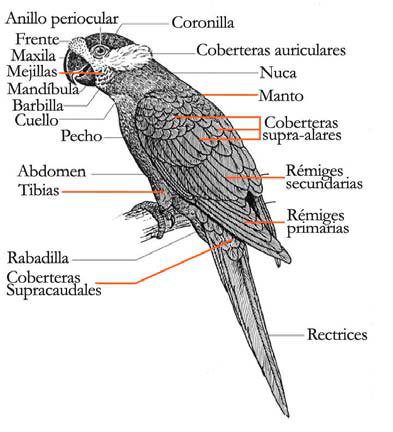
Anatomy-parrots

32 cm.. length and 295 g. of weight.

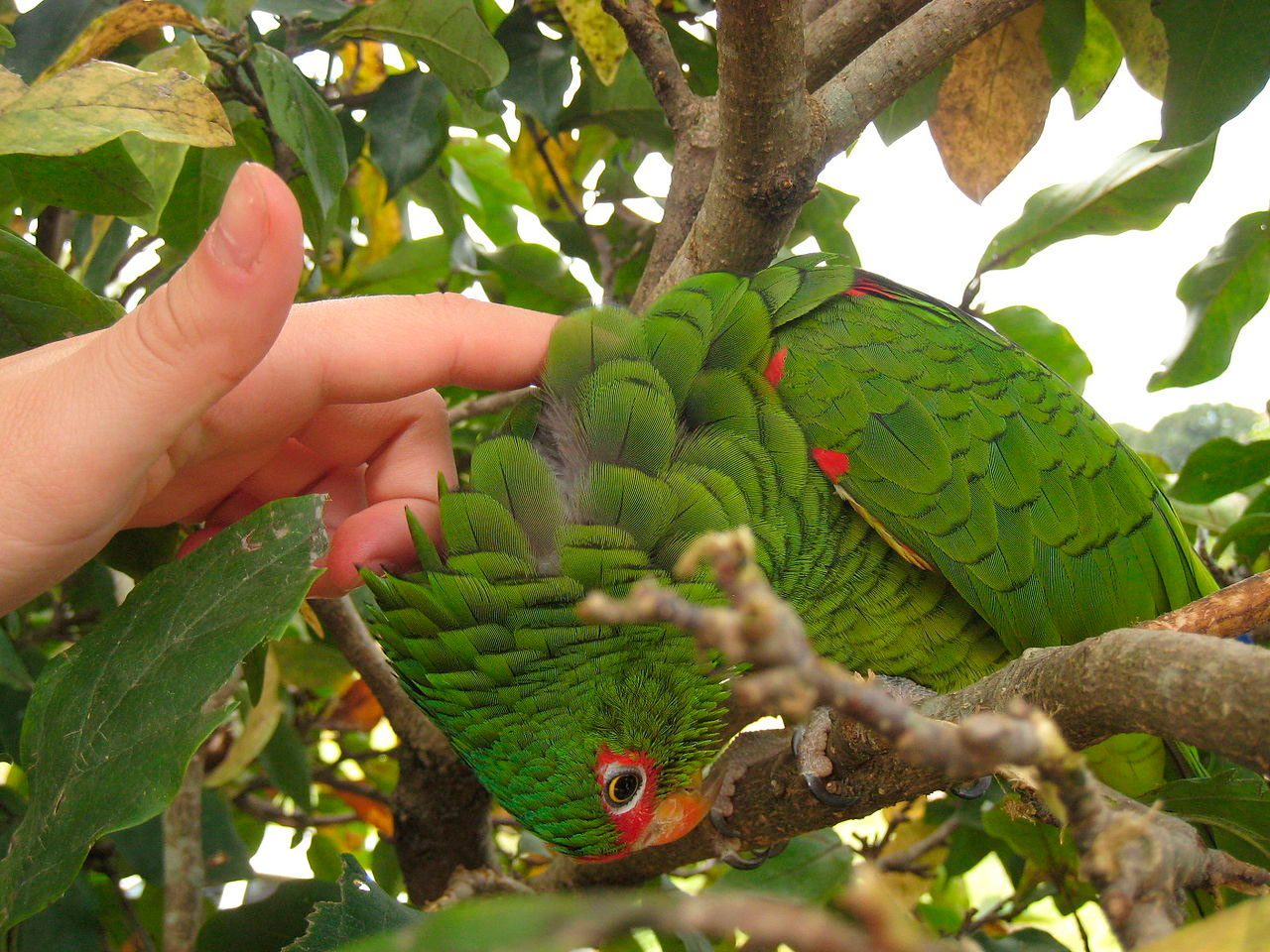
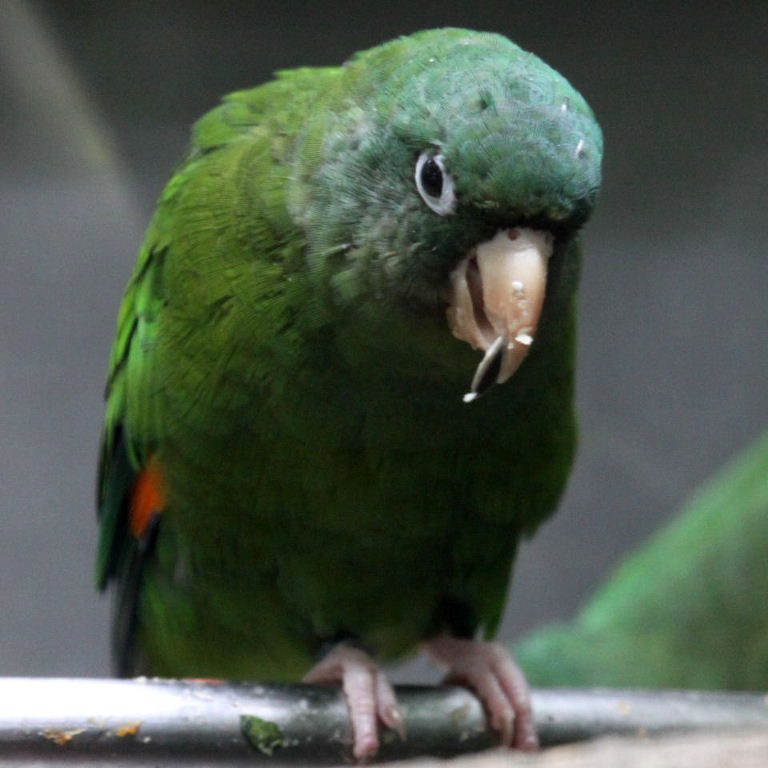
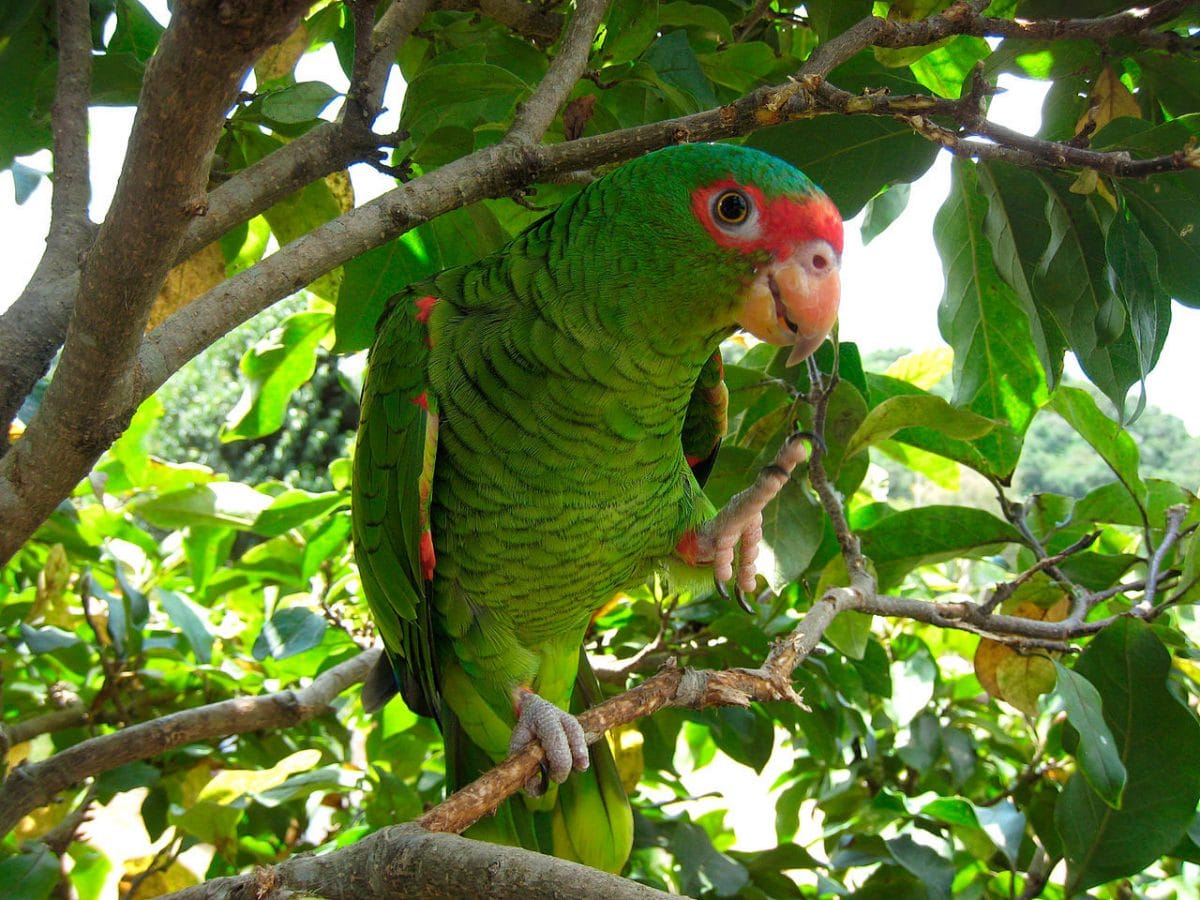
The Red-spectacled Parrot (Amazona pretrei) has the forecrown, lores, fore crown and upper cheeks up to the ear-coverts, bright red; back of the crown, nape, the mantle, back and rump, green with a narrow terminal band black in most feathers; scapulars green; uppertail-coverts pale green. Leading edge of wing, carpal area, alula and primary coverts, bright red; other coverts, narrow green with black tips.

Flight feathers, violet blue green tips. Under wings green. The underparts they are mostly green, slightly tinged with yellowish, with black tips on most feathers giving a scalloped effect; the thighs red; undertail-coverts pale yellowish green. Tail green with broad pale yellowish-green tip and patches of red on base of innerwebs of the three feathers outermost. The bill pale yellow with pale orange based on upper jaw; bare periophthalmic white; iris orange; legs gris pardusco.

Red-spectacled Parrot

The female probably it shows much less red in the wing with the carpal edge and primary coverts, mostly or completely green. Immature apparently similar to female adult.

Note Taxonomy:

Itร‚ยดs monotype. It is sometimes considered conspecific with Amazona tucumana, but they are best treated as forming a superspecies.

Sound of the Red-spectacled Parrot

Habitat:

"Red-spectacled Parrot"

Red-spectacled Parrot, Amazona pretrei

This rider is strongly associated with forests Araucaria angustifolia for use as roosts non-breeding season. It prefers open savanna forests and low riparian forests for reproduction, with trees and conifers of the genus Podocarpus, Scutia and Celtis and where they are absent Araucaria angustifolia. Most records place her at altitudes between 300-1.000 m, but they are distributed and breed at lower elevations in southern Rio Grande do Sul.

They disperse in pairs during breeding but are highly gregarious outside of breeding season. They form large concentrations community, often in plantations pinus exotic and Eucalyptus. The largest winter meetings coincide with the ripening seeds araucaria. flocks of 30 to 50 birds, composed of young adults and newborns, They may meet before the dispersion, from breeding areas to winter quarters.

Reproduction:

The Red-spectacled Parrot nest in tree hollows, for example, Casearia, Ouillaja brasiliensis and Ficus. With reproduce at the end of September to January, with young people and fledglings, usually, in early December in the south. Clutch 2-4 eggs.

Food:

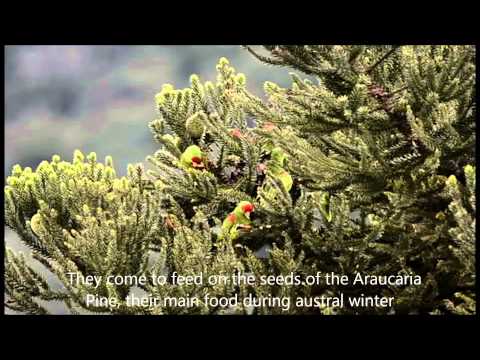
Foods reported include seeds of Araucaria angustifolia (especially important in May-August) and Podocarpus lambertii (important in some areas in January-February), fruits of Eugenia, Campomanesia and Melia. The diet is altered with the town and the station. They take a variety of fruit in the spring and summer (October to February), among others: Cupania, Eugenia, Phytolacca, Allophylus, Nectandra, Ocotea, Campomanesia, Cytharexylum, Myrcianthes, Blepharocalyx, Ficus and Symplocos.

The diurnal movements cover up 100 km, perhaps in relation with the availability of food.

Distribution and status:

Size of its range (breeding/resident ): 95.400 km2

This species is endemic to South Brazil and distributed only in the states of Rio Grande do Sul and Santa Catarina (Martรญnez, 1996). Some individuals have been recorded in the forests Missions, in the northeast of Argentina (Chebez 1994) and they have recently also been reported from Paraguay (sec Lowcn et al., 1997).

It is a kind Nomad; They tend to focus on the remaining forests Araucaria Southeast Santa Catarina between March and June to feed on seeds production Araucaria augustifolia. During August and January, the Red-spectacled Parrot They are dispersed in small flocks ranging from tens to hundreds of individuals in a wide distribution throughout the state Rio Grande do Sul, particularly in habitats Cima da Serra fields, Plateau East, Alto Uruguay, Depression Central and Southeast Saws.

Reductions in seed supply Araucaria They may have been the cause of change in the feeding of Ecological Station Aracuri-Esmeralda in 1991 (Municipality of many capons) to areas around Southeast Santa Catarina. Here the remaining forest patches of Araucaria They can provide enough seed to feed the populations Red-spectacled Parrot. The intensive cattle grazing and agriculture have almost eradicated habitat Araucaria. These habitat impacts have reduced natural regeneration and may also have reduced the number of nesting sites in old trees..

a census in 1994 It estimated the total population of the Red-spectacled Parrot in 10.000 individuals, Repeated surveys have shown the sizes of the nearby population 12.600 individuals in 1996. and about 16.300 individuals in 1997 (J. Martinez in litigation 1997, N. Prestes in the proceedings 1997).

Conservation:

State of conservation โ“˜


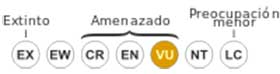
Vulnerable Vulnerable โ“˜ (UICN)โ“˜

โ€ข Current category of the Red List of the UICN: Vulnerable.

โ€ข Population trend: Decreasing.

Rationale for the Red List category

The combination of a comparison of population estimates 1971 and 1997 and deforestation rates over the same period suggest that the species has declined rapidly, qualifying the species as Vulnerable. Current threats loss of habitat and capture suggest that this decline is likely to continue.

Justification of trend

Se sospecha una continued rapid population decline due to destruction, degradation and fragmentation of habitat and illegal trade.

Conservation Actions Underway

โ€ข Appendix I and II of CITES.

โ€ข This species is considered Vulnerable nationwide (Silveira y Straube 2008, MMA 2014) and protected Brazilian law.

โ€ข There are breeding populations in five reserves and two southern winter feeding sites are protected. (Wege and Long 1995).

โ€ข Nevertheless, less than 1% Annual range, and less than 4% of each seasonal range is within protected areas (Marini et al., 2010).

โ€ข Provided artificial nests but not occupied (Snyder et to the ., 2000).

โ€ข Since 1991 It is conducting a campaign public awareness (Prestes et al . , 1997, Snyder et to the . 2000).

Conservation Actions Proposed

โ€ข Carry out surveys to obtain an estimate of the population size updated.

โ€ข Carry out periodic surveys to assess the population trends.

โ€ข Study the current levels of off-take for the trade.

โ€ข Monitor rates of habitat loss and degradation.

โ€ข Protect breeding areas in Caรงapava do Sul and Santana da Boa Vista.

โ€ข Improve the management of protected areas.

โ€ข Apply the law to collectors and, especially, dealerships, Looking for vehicles between December and February (Prestes et al ., 1997).

โ€ข Continue the campaign of sensitization.

The Red-spectacled Parrot in captivity:

Unknown until years 80, when a few reached Europe; not well known elsewhere.

relatively silent compared to other Amazonian species. Inquisitivas although generally quiet. have a nice nature, but they can occasionally be quite noisy, especially first thing in the morning and evening. They become confident relatively quickly. outside the breeding season, They can be set in a colony system. chewing hard and excellent flying and stair climbers, so they need ample opportunities for exercise.

Its captive breeding rarely it has succeeded.

It is believed that the main threat to this bird is the illegal domestic trade, particularly in the municipalities of Lagoa Vermelha, Barracao, Esmeralda and many capons. About 500 chicks are taken annually from nests to be sold in large urban centers Caxias do Sul, Florianรณpolis, Curitiba and Sรฃo Paulo (Prestcs et al., 1997).

It is a species that should only be kept in captivity for the purpose of achieving its reproduction and subsequent insertion into the wild..

Alternative names:

1 – Red-spectacled Parrot, Pretre’s Amazon, Pretre’s Parrot, Red spectacled Parrot, Red-spectacled Amazon (English).
2 – Amazone de Prรชtre (French).
3 – Prachtamazone (German).
4 – papagaio-da-serra, charรฃ, Charao, charรฃo, chorรฃo, maragato, Papagaio-charรฃo, papagaio-chorรฃo, serrano (Portuguese).
5 – Amazona Charao, Amazona de Cabeza Roja, Charao, CharaoChorao (espaรฑol).


scientific classification:

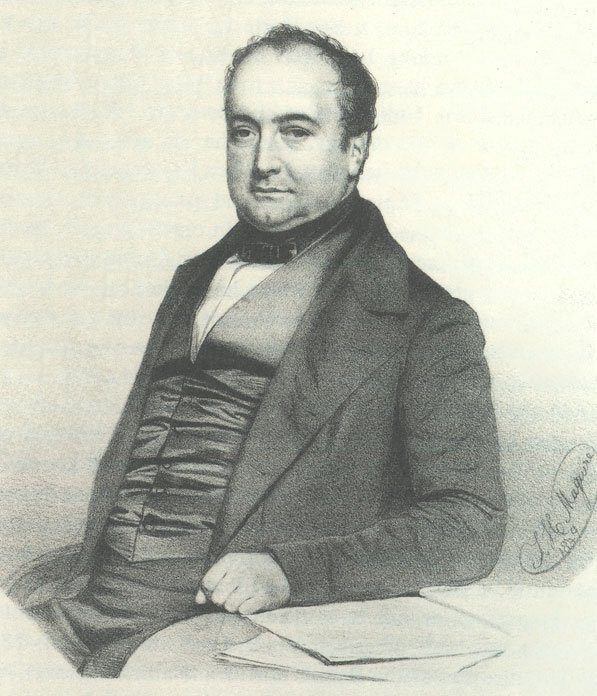
Temminck Coenraad Jacob

Order: Psittaciformes
Family: Psittacidae
Genus: Amazona
Scientific name: Amazona pretrei
Citation: (Temminck, 1830)
Protonimo: Psittacus pretrei


Images Red-spectacled Parrot:


Species of the genus Amazona


Sources:

Avibase
– Parrots of the World โ€“ Forshaw Joseph M
– Parrots A Guide to the Parrots of the World – Tony Juniper & Mike Parr
Birdlife

Photos:

(1) – Red-spectacled Amazon that is kept as a pet in Caxias do Sul, Rio Grande do Sul, Brazil By Marie (originally posted to Flickr as Perroquet familial) [CC BY-SA 2.0], via Wikimedia Commons
(2) – A pet Red-spectacled Amazon in a parrot cage. It is 32 cm land and 295 gm in wt By Amazona_pretrei_-bird_cage-8c.jpg: Andrea O Guimarรฃes derivative work: Snowmanradio [CC BY-SA 2.0], via Wikimedia Commons
(3) – Red-spectacled Amazon that is kept as a pet in Caxias do Sul, Rio Grande do Sul, Brazil. Some of its wing feathers are clipped By Amazona_pretrei_-Rio_Grande_do_Sul_-Brazil-8e.jpg: Mariederivative work: Snowmanradio [CC BY-SA 2.0], via Wikimedia Commons
(4) – Red-spectacled Amazon that is kept as a pet in Caxias do Sul, Rio Grande do Sul, Brazil By Marie [CC BY-SA 2.0], via Wikimedia Commons
(5) – Amazona pretrei, a native of the southernmost Brasil. Specimen in Palmitos Park, Gran Canaria By Bjoertvedt (Own work) [CC BY-SA 3.0 or GFDL], via Wikimedia Commons
(6) – A pet Red-spectacled Amazon in captivity. It has a ring on its right leg By Andrea O Guimarรฃes (originally posted to Flickr as Iโ€™m watching you) [CC BY-SA 2.0], via Wikimedia Commons
(7) – Red-spectacled Amazon that is kept as a pet in Caxias do Sul, Rio Grande do Sul, Brazil By Marie (originally posted to Flickr as Temporaire) [CC BY-SA 2.0], via Wikimedia Commons
(8) – Red-spectacled Amazon that is kept as a pet in Caxias do Sul, Rio Grande do Sul, Brazil By Marie (originally posted to Flickr as Calins… :)) [CC BY-SA 2.0], via Wikimedia Commons
(9) – A pet Red-spectacled Amazon in a parrot cage. It is 32 cm land and 295 gm in wt By Andrea O Guimarรฃes [CC BY-SA 2.0], via Wikimedia Commons
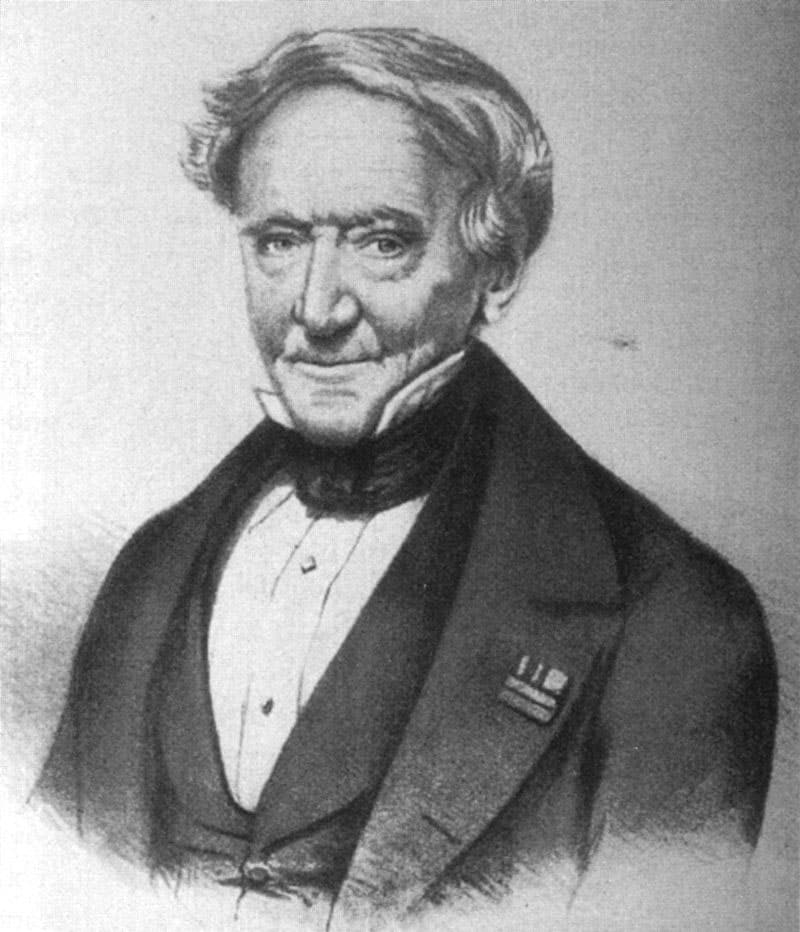
(10) – Amazona pretrei = Psittacus pretei = Priest Parrot By Jean-Gabriel Prรชtre (1768โ€“1849) [Public domain], via Wikimedia Commons

Sounds: Vitor Q. Piacentini, XC27028. accessible www.xeno-canto.org/27028.
โ–ท The world of Pets: Dogs, cats, birds, reptiles, amphibians

Red-necked Parrot
Amazona arausiaca

Red-necked Parrot
Red-necked Parrot (Amazona arausiaca) | By mikko.pyhala

Content

Description:


Anatomy-parrots

40 cm.. length and 650 g. of weight.

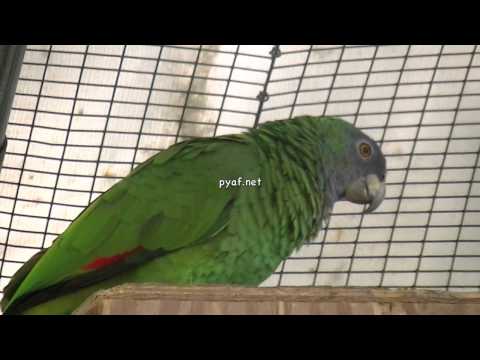
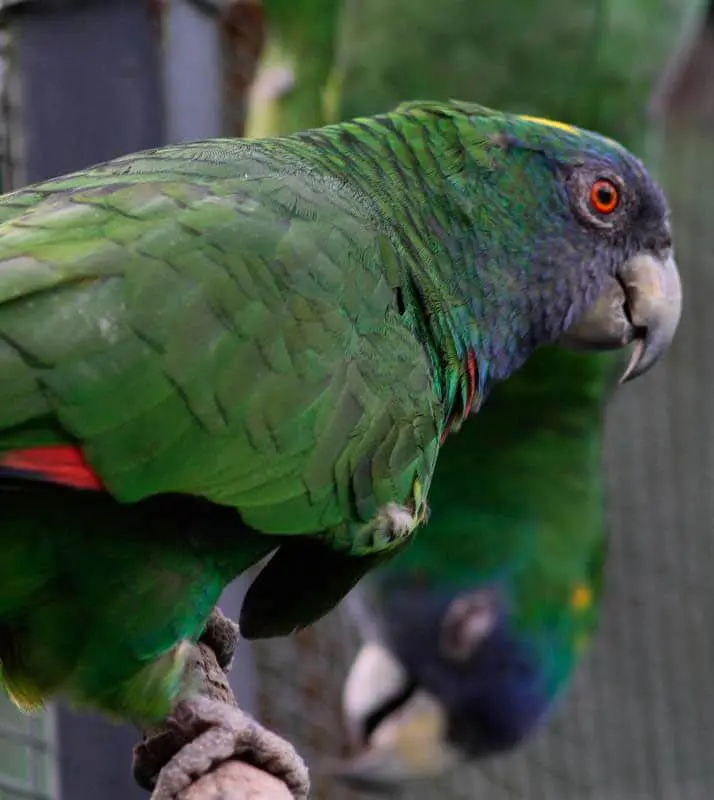
The Red-necked Parrot (Amazona arausiaca) has the lores, forecrown, front of crown, orbital area and upper cheeks, bright blue; back of the crown, nape and sides neck, with dark blue or blackish margins.

Mantle, back and scapulars, green with narrow faint dark margins giving subtle barred effect. Wing coverts green; carpal edge brighter yellowish green. Primaries green with blue tips; the three outer secondaries, red at the base, yellow and blue at the tips; four secondaries yellow and blue tips. The remaining secondary they are green. Under the wings, the coverts green; flight feather Bluish.

Red-necked Parrot

Chin and top of the throat, blue; the bottom throat and, sometimes, upper region chest, with patch resizable bright red; remaining chest and of the belly, green; undertail-coverts, brighter yellowish green. Tail bright green in the center, their outer feathers green tip yellowish green and red marks on the basis of the innerwebs. Bill horn; iris orange; legs grey

Both sexes are similar. It is thought that the immature It is similar to adult but with irises brown. The young fledglings They are significantly smaller than of adults during its first year.

  • Sound of the Red-necked Parrot.

Habitat:

Video "Red-necked Parrot"

Amazona arausiaca www.pyaf.net/

The Red-necked Parrot inhabits the canopy mountain rainforest, preferring forest areas with trees Tabonuco (Dacryodes excelsa), especially among 300-800 m (the highest density is found and altitudes 500-600 m) although occasionally they reported to 1.200 meters and formerly was a regular visitor (August October ) of the Coast zones.

Usually in small flocks or pairs; more numerous flocks feeding areas, outside the breeding season. Communal roosting in traditional sites, for example in large trees Dacryodes excelsa or Sloanea berteriana, They are using from year to year (but not necessarily all year).

Reproduction:

Nests in a large tree cavity with most nests reported in Dacryodes or Sloanea. breeding season February-June. low productivity probably just a clutch every two years and usually only one young per nest.

Food:

The diet It includes fruits of Dacryodes excelsa, Licania ternatensis, Richeria grandis, Amanoa caribaea, Simarouba amara, Symphonia globulifera, Chimarrhis cymosa, Pouteria pallida, Cordia elliptica, C. laevigata, Pithecellobium jupunba, Byrsonima martinicensis, Dussia martinicensis, Ormosia monosperma, Buchenavia capitata and Palmas Euterpes, egg yolks of Anacardium occidentale and fruits and buds of Lonchocarpus, as well orange crops, etc. Forages mainly in the canopy but also in sub-canopy and occasionally ground level. Usually it is fed in the morning and evening.

Distribution and status:

Size of its range (reproduction / resident): 190 km2

The Red-necked Parrot It is endemic to the Dominica Island in the Lesser Antilles. Formerly it spreads through the mountainous interior, including the northern peninsula. Contraction range from about 1950 with the existing population centered Morne Diablotin (1.447 m, the highest mountain Dominica) which it may have always been his main strength but whose southern slopes birds have been absent from the hurricane 1992.

small populations, reportedly, in the north of the peninsula (where apparently they are resident) and in the eastern center of the island. They can remain very small populations in the south. Recent sporadic observations of birds in low-lying areas of the north and east; other towns in the south suggest the gradual recolonization of the parts of the former range.

mainly residents but maybe (at least once) some regular seasonal foraging movements and some November-January nomadism. Although historical accounts tell of the abundance of this species, the drastic contraction in range and population have occurred since the mid-twentieth century with its gradual retreat in the most remote forests of northern and eastern. The decline is due to the loss of habitat, the hunting and capture bird cage.

The small existing population It is especially vulnerable to the loss of food plants and nesting sites due to hurricane damage. Although the effects of habitat loss may have been especially severe because of the preference of birds through the forests of low level (which it has been under pressure) They tolerate any disturbance and returned to the old feeding areas recently after conversion to plantations of fruit trees. The hunting It was probably the greatest threat to the seventies. Capture for local pet trade now under control due to a successful education campaign.

The population 1977 It was at least 350 birds (probably), but halved by the effects of hurricanes between 1979 and 1980. A Recovery since then 350 estimated birds 1990 and evidence of further increases to more than 500 in 1992. The remaining habitat is partially protected in the North Forest Reserve, but does not include neighboring critically important areas for conservation. Completely protected by national legislation.

Conservation:

State of conservation โ“˜


Vulnerable Vulnerable โ“˜ (UICN)โ“˜

โ€ข Current category of the Red List of the UICN: Vulnerable.

โ€ข Population trend: Increasing.

โ€ข Population size: 850-1000.

  • Rationale for the Red List category

The conservation actions He has helped this species to recover a population down from 1980. Still rated as vulnerable because its population is still very small and its range of small extent and restricted to a single island. But, if future declines in habitat available, could be reclassified as danger of extinction.

  • Justification of the population

Estimating population most recent is 850-1,000 mature individuals (PR Reillo a slightly. 2012), more or less equivalent to 1.200-1.500 individuals in total.

  • Justification trend

The population size has increased possibly only 150 birds in 1980, possibly even 1.200 birds currently, based on recent surveys and density estimates (PR Reillo in some. 2016). There is no new data on the evolution of the population, but the species is supposed to still rising.

Threats
    The loss of habitat in the lower elevations has been caused mainly by clearance for agriculture (Collar 1997). Although replanting fruit crops has benefited the species (Reillo y Durand 2008), the frugivorous diet of the Red-necked Parrot, conflict is causing local farmers (Douglas 2011). Damage caused by hurricanes has also been important: another hurricane the magnitude of Hurricane David could reverse recent population increases. Hunting and illegal trade are now low-level threats, but the illegal wildlife trade throughout the Caribbean is a constant concern and there is increasing pressure from illegal wildlife trade centered in Europe (PR Reillo in some. , 2016).
Conservation Actions Underway
    CITES Appendix I and II. It is fully protected by national legislation. Much of the remaining habitat is in the northern and central forest reserves, national parks and Morne Trois Pitons and Morne Diablotin, but adjacent areas, critically important, They are not protected (Juniper and Parr 1998). Since 1980, It has benefited from the joint efforts of government and non-governmental organizations to protect their habitat and sensitize the local population of the needs of this species. Research methods have recently improved to maximize ecological information acquired, while minimizing the disturbance of birds, and the study has provided important information on nesting behavior and parental care. Similarly, census methodologies have improved to give more accurate estimates of population size and density (Reillo y Durand 2008). The population is monitored annually. A recent doctoral thesis project examined the interaction of species with fruit crops in Dominica (PR Reillo in some. 2012).
Conservation Actions Proposed
    Continue the implementation of the protection of national parks Morne Diablotin and Morne Trois Pitons and forest reserves in central and northern. Continue to monitor the population each year. To investigate the effects of nest site (and the food) competition between this species and Imperial Parrot (Amazona imperialis). Continue to prohibit the trade in this species, exports of ex situ captive breeding, and importation of non-native parrots as pets in Dominica (PR Reillo in some. 2012).

Red-necked Parrot in captivity:

CITES Appendix I and II. It is fully protected by national legislation.

Alternative names:

Bouquet’s Parrot, Dominican Blue-faced Amazon, Dominican Blue-faced Parrot, Jacquot, Red necked Parrot, Red-necked Amazon, Red-necked Parrot (English).
Amazone ร  cou rouge, Amazone de Bouquet (French).
Blaukopfamazaone, Blaukopfamazone (German).
Papagaio-de-colar-vermelho (Portuguese).
Amazona de Cuello Rojo, Amazona Gorgirroja, Amazona gorjirroja, Jaco, loro de cuello rojo (espaรฑol).

scientific classification:

Order: Psittaciformes
Family: Psittacidae
Genus: Amazona
Scientific name: Amazona arausiaca
Citation: (Statius Mรผller, 1776)
Protonimo: parrot arausiacus

Images Red-necked Parrot:


Species of the genus Amazona


Sources:

  • Avibase
  • Parrots of the World โ€“ Forshaw Joseph M
  • Parrots A Guide to the Parrots of the World – Tony Juniper & Mike Parr
  • Birdlife

Photos:

(1) – Red-necked Amazon (Amazona arausiaca) – Author: mikko.pyhalaHBW
(2) – Red-necked Amazons at the Parrot Conservation and Research Centre Botanical Gardens, Roseau, Dominica By Andrew Szymanski (originally posted to Flickr as DSCF0031) [CC BY-SA 2.0], via Wikimedia Commons
(3) – Red-necked Amazons at the Parrot Conservation and Research Centre Botanical Gardens, Roseau, Dominica By Amazona_arausiaca_-Roseau_-Dominica_-aviary-6a.jpg: Andrew Szymanskiderivative work: Snowmanradio [CC BY-SA 2.0], via Wikimedia Commons
(4) – Amazona arausiaca Sunday, West Indies by Don FaulknerFlickr
(5) – BARRABAND, Jacques (1767/8-1809) [Parrot Bouquet (Red-necked Amazon, Amazona arausiaca)] From Natural History of Parrots (by Francois Levaillant, 1801-1805) – Wikimedia
(6) – Natural history of parrots /. In Paris :chez Levrault … ;an IX (1801)-an XIII (1805).. by Biodiversity Heritage LibraryFlickr

Sounds: Aristides Elias Elias, XC211593. accessible www.xeno-canto.org/211593

โ–ท The world of Pets: Dogs, cats, birds, reptiles, amphibians

Hellmayr's Parakeet
Pyrrhura amazonum

Hellmayr's Parakeet

Content

Description:


Anatomy-parrots

22 cm.. length.

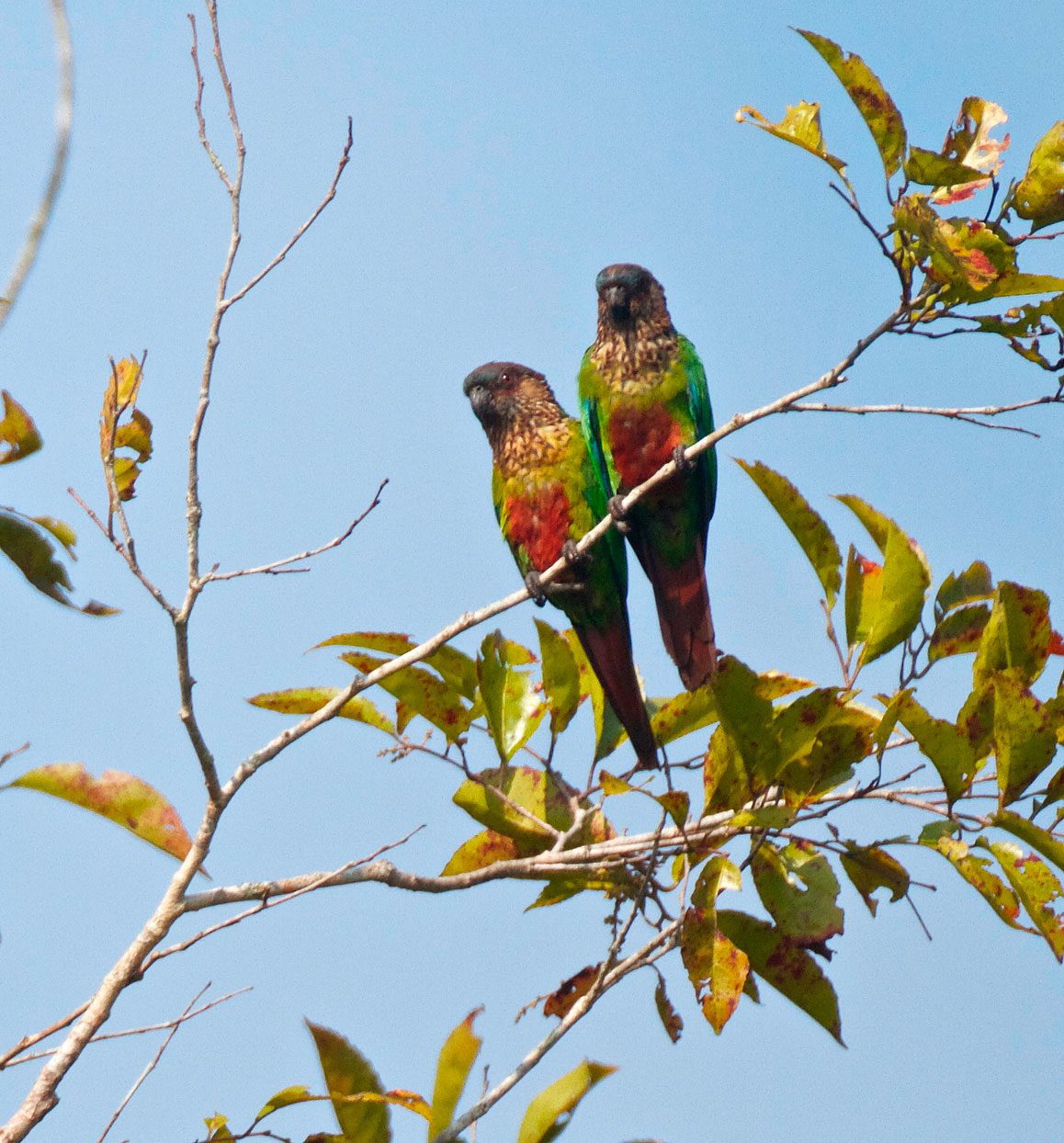
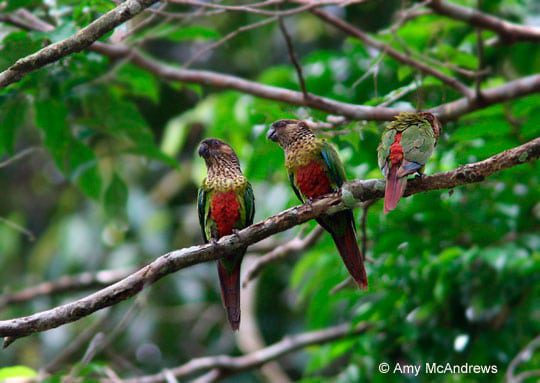
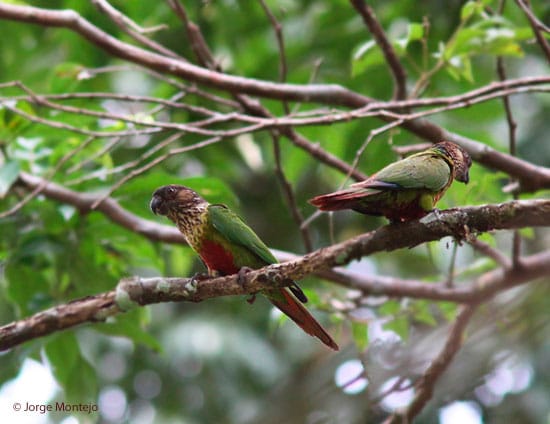
The Hellmayr's Parakeet (Pyrrhura amazonum) It is a mainly green parakeet; the area from crown at the nape it is dark brown; the belly, the rump and tip tail, They are dark red; below, the tail It is also dark red.

They have a patch whitish in ear-coverts; a blue band in front of eyes. The face It is dark reddish brown; the upper region chest It is greenish gray with gray scalloping; the bottom of the chest It is scaled with yellowish effect; the in bend of wing green; brown-red patch in the center of abdomen; of remiges blue (visible only in flight). Orbital ring blackish; the cheeks and ocular region are dark brown.
Bill grey-black; eyes orange brown.

The immature birds They have a darker plumage.

Taxonomic status:

Considered a subspecies of the Painted Parakeet by some authors

  • Sound of the Hellmayr's Parakeet.

Description 3 subspecies:

  • Pyrrhura amazonum amazonum

    (Hellmayr, 1906) – Nominal.


  • Pyrrhura amazonum lucida

    (Arndt, 2008 parrots[Arndt]) – Little or no blue on the front of the crown. Slightly smaller and paler than the Pyrrhura amazonum snethlageae


  • Pyrrhura amazonum snethlageae

    perico madeira – (Joseph & Bates,JM, 2002) – The bare periophthalmic is of color beige.

Habitat:

They are distributed in tropical moist forests and adjacent habitats. Itร‚ยดs social. Observed in pairs or groups. It is quite common in most of its range and inhabits several protected areas.. The Pyrrhura amazonum amazonum It is in the Amazon National Park, For, Brazil, while the Pyrrhura amazonum lucida It is in the The Cristalino State Park, Mato Grosso, Brazil.

Reproduction:

They build their nests in tree cavities.

Food:

With feed seed, flowers, fruit, berries and nuts. They are also considered local pests, as they regularly raid cornfields and orchards, occasionally causing considerable damage.

Distribution:

Size of its range (players / residents): 392.000 km2

Distribution 3 subspecies:

Conservation:

State of conservation โ“˜


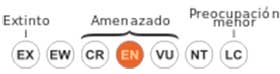
Endangered Endangered โ“˜ (UICN)โ“˜

โ€ข Current category of the Red List of the UICN: In danger of extinction.

โ€ข Population trend: Decreasing.

โ€ข Population size : Unknown.

Justification of the Red List of the Category

Based on a model of deforestation in the amazon basin, and their potential susceptibility to capture for the bird trade, It is suspected that the population of the Hellmayr's Parakeet It has declined rapidly over three generations, and therefore it has been classified as danger of extinction.

Justification of the population

Recent world population is unknown given taxonomic divisions.

Justification trend

This species is suspected that he has been able to lose 43,0 to 52,1% of suitable habitat within their distribution over three generations (18 years) based on a model of deforestation of the Amazon (Soares-Filho et to the . 2006, Bird et to the. 2011). Given the susceptibility of this species to capture, It suspected population decline by 50% in three generations.

Threats

The main threat to this species is that it is accelerating the Deforestation in the Amazon basin for livestock and soybean production, provided by the expansion of the road network (Soares-Filho et to the. 2006, Bird et to the. 2011).

The changes proposed by the Forest code of Brazil they reduce the percentage of land that a private owner has a legal obligation to keep as forest and include an amnesty for owners who deforested before July 2008 (who would later be absolved of the need to reforest illegally cleared land) (Bird et to the. 2011).

His capture for bird trade wild can represent a significant threat.

Conservation actions and ongoing research

It is not known any.

The proposed conservation and research actions

Expand the network of protected areas to effectively protect IBA.

Effectively manage the resources of existing protected areas and new, the use of new opportunities for financing the management of protected areas with the common goals of reducing carbon emissions and maximize biodiversity conservation.

conservation on private lands is also essential, through the expansion of market pressures for rational land management and prevention of logging on land not suitable for agriculture (Soares-Filho et to the. 2006).

Campaign against proposed changes to Forest code of Brazil that would lead to a decrease in the width of protected riparian forest areas such as Permanent Preservation Areas (APPs), that function as vital corridors in fragmented landscapes.

"Hellmayr's Parakeet" in captivity:

It is a bird in danger of extinction. Each captive specimen of this species which is capable of reproducing, must be placed in a well-managed captive breeding program and not sold as a pet, in order to ensure its long-term survival.

Alternative names:

Hellmayr’s Parakeet, Santarem Parakeet, Santarem Parakeet (Santarem) (English).
Conure de Hellmayr (French).
Santaremsittich (German).
Tiriba-de-hellmayr (Portuguese).
Cotorra de Santarรฉm, Perico Santarรฉm (espaรฑol).

scientific classification:

Carl Edward Hellmayr

Order: Psittaciformes
Family: Psittacidae
Genus: Pyrrhura
Scientific name: Pyrrhura amazonum
Citation: Hellmayr, 1906
Protonimo: Pyrrhura pictured on Amazon


Images Hellmayr's Parakeet:


Hellmayr's Parakeet Santarem Parakeet (Pyrrhura amazonum) Cristalino Jungle Lodge, Mato Grosso, Brazil

Hellmayr's Parakeet Santarem Parakeet โ€“ Cristalino Lodge, Brazil

Videos "Hellmayr's Parakeet"


Especies del gรฉnero Pyrrhura

Hellmayr's Parakeet (Pyrrhura amazonum)


Sources:

Avibase
– Parrots of the World โ€“ Forshaw Joseph M
– Parrots A Guide to the Parrots of the World – Tony Juniper & Mike Parr
Birdlife

Photos:

(1) – Pyrrhura or Amazon by snethlageae Blake MathesonFlickr
(2) – Santarem Parakeet (Pyrrhura amazonum) Cristalino Jungle Lodge, Mato Grosso, Brazil by Amy McAndrewsFlickr
(3) – Santarem Parakeet – Cristalino Lodge, Brazil by Jorge MontejoFlickr

Sounds: Jeremy Recall, XC235131. accessible www.xeno-canto.org/235131

โ–ท The world of Pets: Dogs, cats, birds, reptiles, amphibians

Newton's parakeet โ€ 
Psittacula exsul

Newton's Parakeet

Content

Description:

Of 40 centimeters length.

The male of the Newton's Parakeet (Psittacula exsul) It was probably green, with red patches on wings, also manifested in a variation bluish; only two skins of this species, both blue hue; the plumage It was generally greenish blue with gray shades; chest, abdomen and under cover tail slightly paler shades; head darker gray hue without; fine black line between cere and the eye; black bars cheek and narrow black strip on the neck, strip adjacent the blue-green; primaries blue-green; feathers on top of the tail blue-green, underside grey; mandible red top, mandible lower black; irises yellow; legs grey.

The female with narrow black stripe on the forehead; black bars cheek not extend to the side neck; crown washed with gray; upper jaw black.

Immature; No information

Habitat:

It was a kind forest who lived in areas of pine Pandanus and Palm trees.

Reproduction:

Probably similar to Reunion Parakeet (Psittacula eques)

Food:

According to reports, birds preferred nuts and fruits of Cassine East and Fernelia buxifolia.

Distribution:

The Newton's Parakeet It was endemic to the forests of Rodrigues, Mauritius (checks 1987).

It was said to be abundant by explorer Leguat in 1691 (Cowles 1987), but Pingre He noted that it was rare in 1761, and the last record was a bird captured in August of 1875 (Forshaw 2010).

It seems likely that the last birds were wiped out later that year, When the island suffered "the worst cyclonic season of the nineteenth century" (checks 1987).

Two complete specimens survive, plus several bones subfossil (Cowles 1987).


Conservation:

Rationale for the Red List category


This species was endemic to the Rodrigues Island, Mauritius, but it has not been seen since 1875 and now it is extinct.

โ€ข Current category of the Red List of the UICN: Extinct.
โ€ข The last record was a bird collected in August of 1875

It is believed that hunting and habitat loss greatly contributed to its decline, and that the final blow could have been given by heavy storms 1876. curiously, survived for much longer than most of the island's endemic bird species.

Justification of the population

extinct.

"Newton's parakeet โ€ " in captivity:

Leguat and his followers saw the birds – presumably Newton's Parakeet – feeding nuts, and they taught to speak to some of these parakeets, which certainly it is an indication of what these birds were tame. Apparently they became bilingual; They could speak both French and Flemish!! When Leguat and his small band of followers fled the island, a parakeet they took with them on their trip to Mauritius.

Alternative names:

Newton’s Parakeet, Newton’s Parrot, Rodrigues Parakeet, Rodrigues Ring-necked Parakeet, Rodriguez Parakeet (English).
Perruche de Newton (French).
Rodriguessittich, Rodrigues-Sittich, Rodriguez-Edelsittich (German).
Periquito-de-rodriguez (Portuguese).
Cotorra de Newton, Cotorra de Rodrigues (espaรฑol).


scientific classification:

Alfred Newton
Alfred Newton

Order: Psittaciformes
Family: Psittaculidae
Gender: Psittacula
Scientific name: Psittacula exsul
Subpoena: (Newton, A, 1872)
Protonimo: Palaeornis exaul


Especies del gรฉnero Psittacula

Sources:

โ€ข Avibase
โ€ข Parrots of the World โ€“ Forshaw Joseph M
โ€ข Parrots A Guide to the Parrots of the World – Tony Juniper & Mike Parr
โ€ข Birdlife

Photos:

(1) – Psittacula exsul (Newtonโ€™s Parakeet), female holotype specimen – Wikipedia
(2) – Sternum and mandible of Psittacula exsul, extracted from the female holotype specimen – Wikipedia

โ–ท The world of Pets: Dogs, cats, birds, reptiles, amphibians

Scarlet-breasted Lorikeet
Trichoglossus forsteni

Scarlet-breasted Lorikeet

Content

Description:

25 to 30 centimeters length and 100-157 g. of weight.

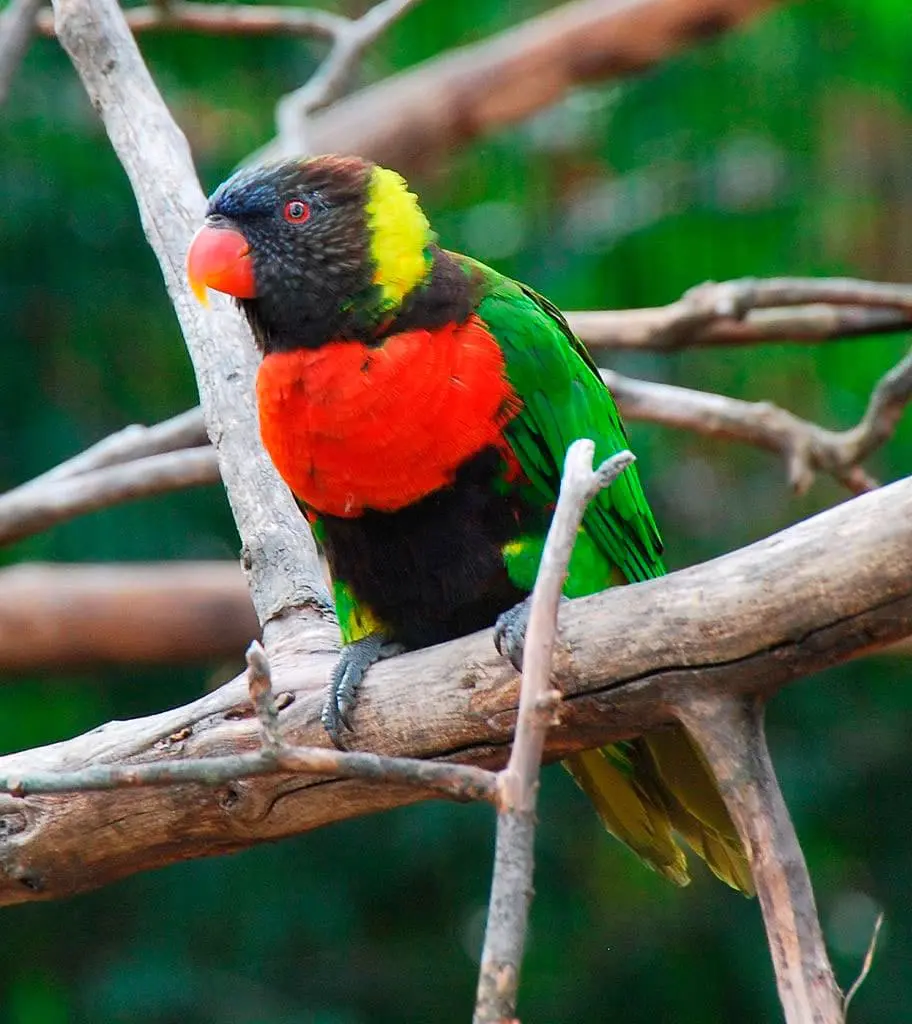
The distinctive and colorful Scarlet-breasted Lorikeet (Trichoglossus forsteni) has the head dark blue, neck pale green, chest smooth red, and belly dark blue. The remaining plumage It is a bright pale green, and the bill typical is red.

In flight the species shows a flash of bright yellow on the inside of all flight feather, and coverts bright red at the bottom of the wings.

  • Sound of the Scarlet-breasted Lorikeet.

taxonomy:

This taxon is considered a subspecies of Trichoglossus [haematodus, rosenbergii, moluccana, forsteni, capistratus, weberi] (sensu lato) by some authors.

The specific epithet forsteni commemorates the Dutch naturalist Eltio Alegondas Forestry.

Subspecies description
  • Trichoglossus forsteni djampeanus

    (Hartert 1897) – They differ from the species nominal by the fact that their head it is darker and more obviously streaked with bright purple/blue.


  • Trichoglossus forsteni forsteni

    (Bonaparte 1850) – Nominal.


  • Trichoglossus forsteni mitchellii

    (Gray,GR 1859) – Both adults have head black / brown with gray / green streaks in crown up to the cheeks; red / brown in occiput; chest red with minimal or no barring; neck yellow green; purple/black belly; smaller.


  • Trichoglossus forsteni stresemanni

    (Meise 1929) – As the species nominal but with paler chest orange / red; green washing occiput; feathers the mantle yellow / orange basis.

Habitat:

The Scarlet-breasted Lorikeet is located in lowlands and lower montane forests, including secondary growth and plantations, tending to be observed at the edges and around perturbed vegetation instead of inside the closed canopy forest (pit et to the. 1997). In Sumbawa the Trichoglossus forsteni varies from sea level to 800-1200 meters and up 2150 metres in Lombok (pit et to the. 1997); at least in Sumbawa, the variation in altitudinal range is attributed to the movements in monitoring trees in bloom in a large area (White y Bruce 1986).

Reproduction:

Birds have been reported in breeding conditions in May Sumbawa (White y Bruce 1986). It nests in a deep hole in a large tree (pit et to the. 1997).

Food:

No specific data, but presumably similar to Coconut Lorikeet (Trichoglossus haematodus)

Distribution:

Extension of the distribution (breeding/resident): 101.000 km2

The Scarlet-breasted Lorikeet (incorporating subspecies mitchelli, djampeanus and stresemanni) It is located on the islands of Bali, Lombok, Sumbawa, Tanahjampea and Kalaotowa, Indonesian.

An assessment of the state of the taxa that make up the species indicates that the species may no longer be present in Bali, It is extinct in Tanahjampea after capture, mainly before 1990, and it is not clear if he persists in kalatom (Eaton et al. 2015). In Lombok the species is still present, with a recent observation of a flock of 18 individuals above 1.500 metres in 2015 (F. Rheindt per Eaton et al. 2015), although given the lack of other records for many decades, it can be assumed that the population is likely to be small. Sumbawa now it may be the stronghold of the species, and it was suggested that the species is "secureยป (Eaton et al. 2015), and there is a large area of รขโ‚ฌโ€นรขโ‚ฌโ€นpotentially suitable habitat remaining on the island.

Subspecies distribution

Conservation:


Vulnerable


โ€ข Current category of the Red List of the UICN: Vulnerable.

โ€ข Population trend: Decreasing.

โ€ข Population size : 1600-7000 individuals.

Rationale for the Red List category

It is estimated that this newly divided species has a small population that is experiencing suspected moderately rapid population decline due to the pressure of the traps for wild bird trade. So, is classified as Vulnerable.

Justification of the population

It is estimated that the population size is lower to 10.000 mature individuals, based on a provisional assessment of locations where any numbers of the species are likely to be retained. It also, it is considered possible that the population supposedly higher in Sumbawa does not exceed 1.000 mature individuals.

Justification trend

It is suspected that the population is experiencing descent moderately fast because of unsustainable levels of exploitation.

Conservation actions and research in progress

Appendix II of the CITES, where they include species that are not necessarily threatened with extinction, but in which trade must be controlled in order to avoid utilization incompatible with their survival. CMS Appendix II (Convention on the Conservation of Migratory Species of Wild Animals).

Proposed Research and Conservation Actions

– Estimate the population and assess population trends and scale of capture pressure.
– Carry out a species-specific survey to identify important sites, in order to provide protection.
– Conduct research on their status and habitat use (with particular attention to food ecology and forest fragmentation).
– Initiate awareness campaigns to enlist the support of local people in protecting forests and preventing illegal trade.

"Scarlet-breasted Lorikeet" in captivity:

Rare in captivity. Each captive specimen of this species which is capable of reproducing, must be placed in a well-managed captive breeding program and not sold as a pet, in order to ensure its long-term survival. However it copies sold from the Loroparque Foundation at a price of around 400 EUR.

In captivity, It appeared in the late nineteenth and early twentieth century, for example, in 1896 It was imported by the London Zoo. The first offspring of the world recorded in 1990 on India.

The Scarlet-breasted Lorikeet It has a longevity 20 years in nature, 15-25 years in captivity.

Alternative names:

Rainbow Lorikeet (Sunset), Scarlet-breasted Lorikeet, Scarley-breasted Lorikeet, Sunset Lorikeet (English).
Loriquet ร  face bleue, Loriquet ร  tรชte bleue (de Forsten), Loriquet ร  tรชte bleue [forsteni], Loriquet de Forsten (French).
Bali-Allfarblori, Forstenlori (German).
Lรณris-de-forstein (Portuguese).
Lori de Puesta del Sol, Lori pechiescarlata (espaรฑol).


Charles Lucien Bonaparte

scientific classification:


Order: Psittaciformes
Family: Psittaculidae
Gender: Trichoglossus
Scientific name: Trichoglossus forsteni
Subpoena: Bonaparte, 1850
Protonimo: Psittacus forsteni

โ€œScarlet-breasted Loryโ€ Images:


"Scarlet Peechie Lori" (Trichoglossus forsteni)

    Sources:

    โ€ข Avibase
    โ€ข Parrots of the World โ€“ Forshaw Joseph M
    โ€ข Parrots A Guide to the Parrots of the World – Tony Juniper & Mike Parr
    โ€ข Birdlife

    Photos:

    (1) – Sunset Lorikeet (also known as the Scarlet-breasted Lorikeet and Forstenโ€™s Lorikeet) at Cincinnati Zoo, USA by Ted [CC BY-SA 2.0], via Wikimedia Commons
    (2) – A Sunset Lorikeet (also known as the Scarlet-breasted Lorikeet and Forstenโ€™s Lorikeet) at Cincinnati Zoo, Ohio, USA by Ted [CC BY-SA 2.0], via Wikimedia Commons
    (3) – Two Rainbow Lorikeets at Newport Aquarium. This subspecies of the Rainbow Lorikeet is also called Forstenโ€™s Lorikeet by Trichoglossus_haematodus_-Newport_Aquarium-8a.jpg: Jeff Kubinaderivative work: Snowmanradio [CC BY-SA 2.0], via Wikimedia Commons
    (4) – Two Rainbow Lorikeets at Newport Aquarium. This subspecies of the Rainbow Lorikeet is also called Forstenโ€™s Lorikeet
    Date 22 April 2009, 15:31 (UTC)_haematodus_-Newport_Aquarium-8a.jpg: Jeff Kubinaderivative work: Snowmanradio [CC BY-SA 2.0], via Wikimedia Commons
    (5) – Lories at the Jurong BirdPark, Singapore. Taken by Terence Ong in November 2006. Trichoglossus haematodus forsteni by rk, Singapore. Taken by Terence Ong in November 2006. Trichoglossus haematodus forsteniNo machine-readable author provided. Terence assumed (based on copyright claims). [GFDL, CC-BY-SA-3.0 or CC BY 2.5], via Wikimedia Commons

    Sounds: Patrik ร…berg, XC40063. accessible www.xeno-canto.org/40063

โ–ท The world of Pets: Dogs, cats, birds, reptiles, amphibians

Hyacinth Macaw
Anodorhynchus hyacinthinus


Hyacinth Macaw

Content

Description:

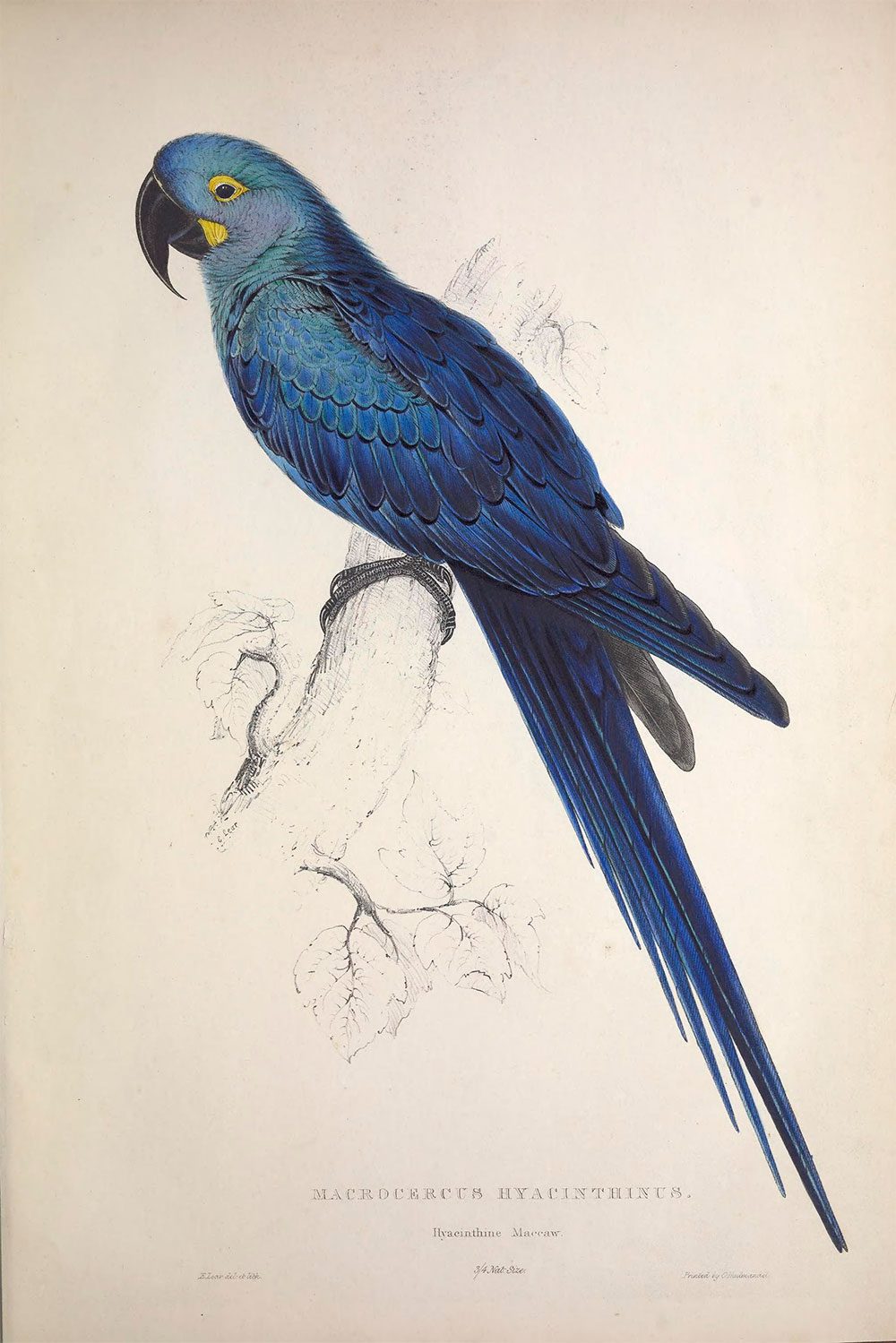
Hyacinth Macaw illustration

90 to 100 cm.. of length and a weight of 1,5 to 1,7 kg.

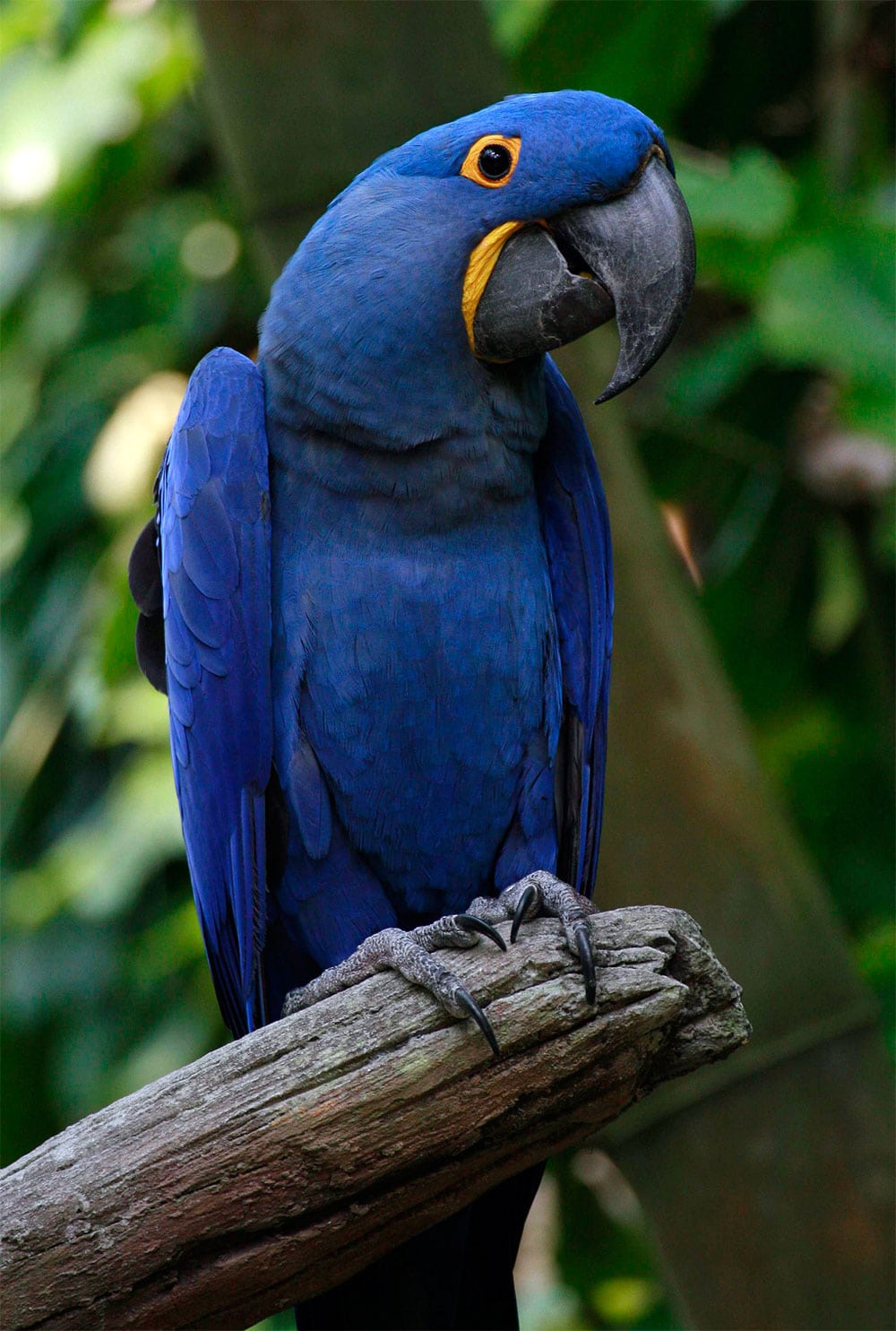
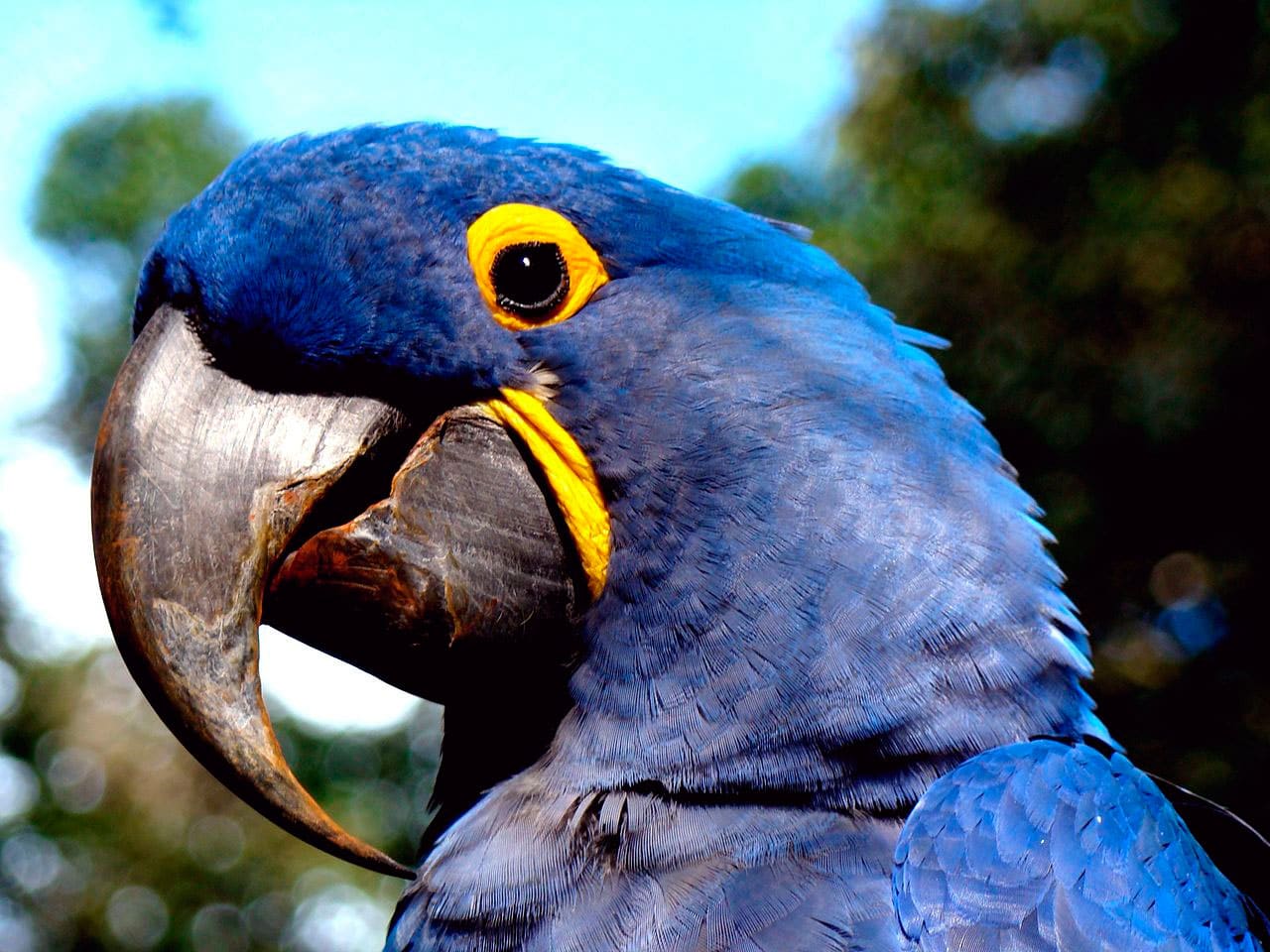
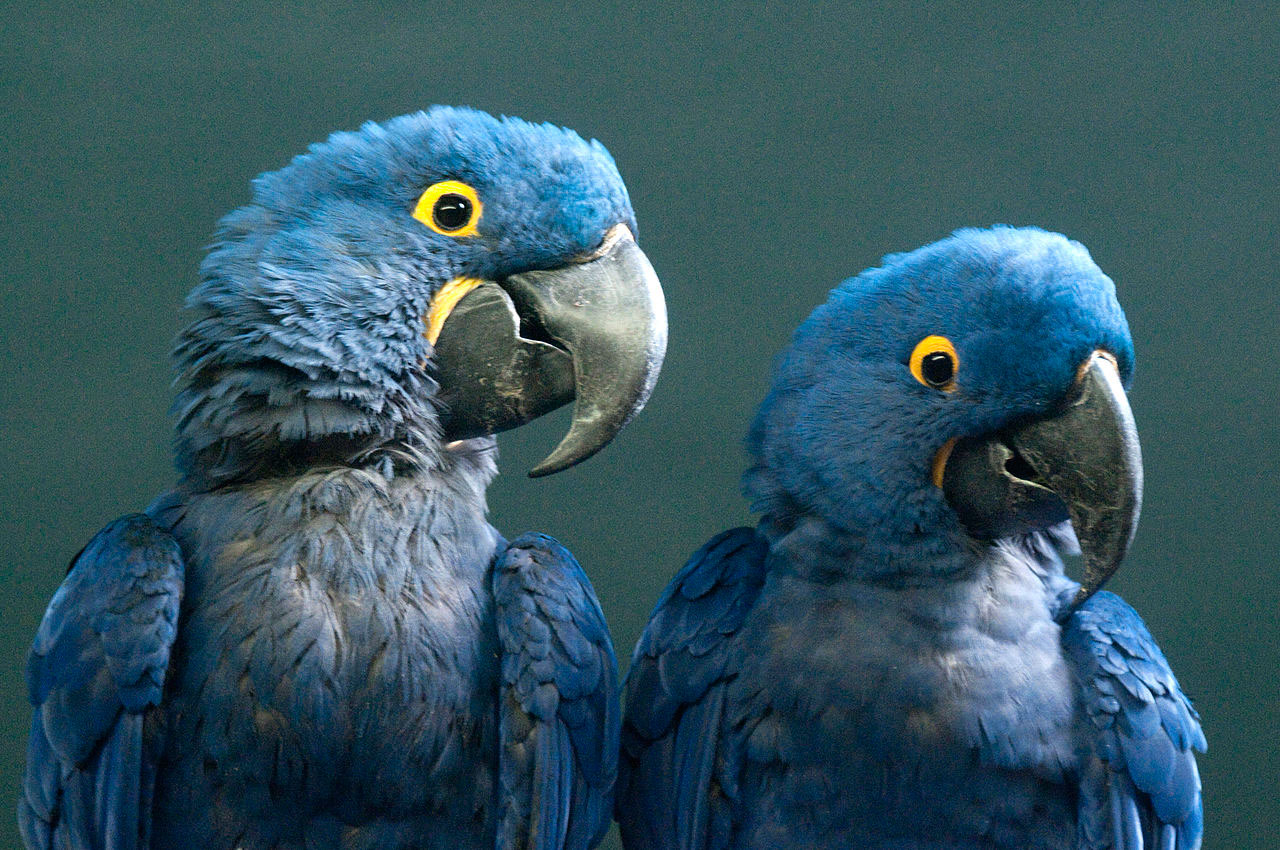
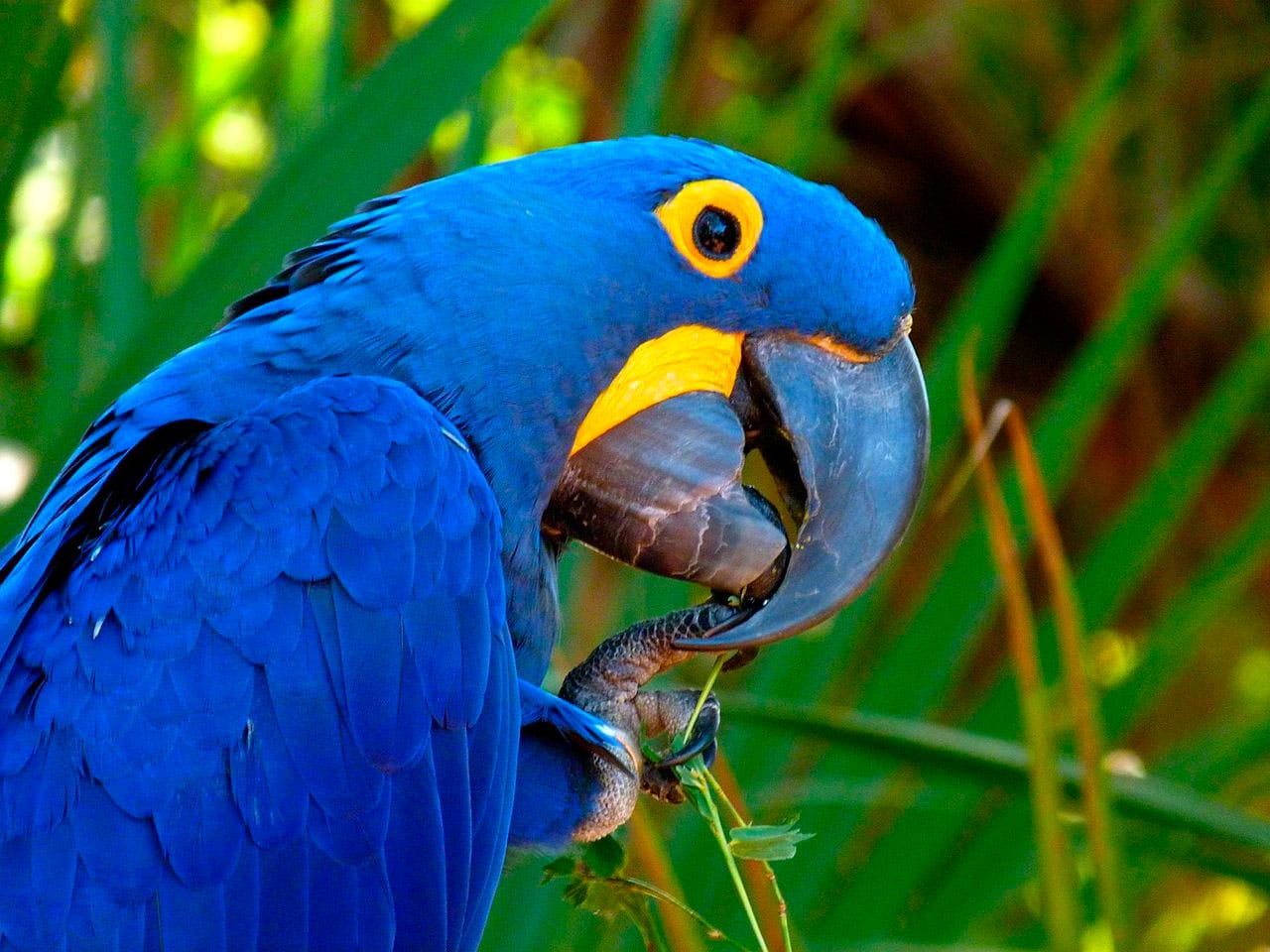
The Hyacinth Macaw (Anodorhynchus hyacinthinus) is the largest parrot; has a distinctive coloration, mostly blue intense, with different colors. Wings and tail below black. The basis of the bill and periocular ring, naked and yellow. The tail is very long, and its powerful bill Black is deeply curved and pointed.

The species Anodorhynchus glaucus, similar but smaller, extinct in the early 20th century, It may have been present in Bolivia.

Habitat:

The Hyacinth Macaw take advantage of a great diversity of habitats rich in various species of Palm trees with large seeds, of which feeds.

In the Brazilian Amazon avoid areas of more moisture, preferring lowland forests and seasonally wet formations with clear zones. In the drier parts of the northeast of Brazil inhabits areas of Plateau cut by Rocky valleys, steep with closed deciduous woodland, gallery forest and swamps with Mauritia flexuosa.

In the the Pantanal region birds frequent gallery forest with palm trees in areas covered with wet grass.

Apparently performs migratory movements.

Usually seen in pairs, family groups or small flocks (usually up to 10); much larger flocks reported before the decline.

Reproduction:

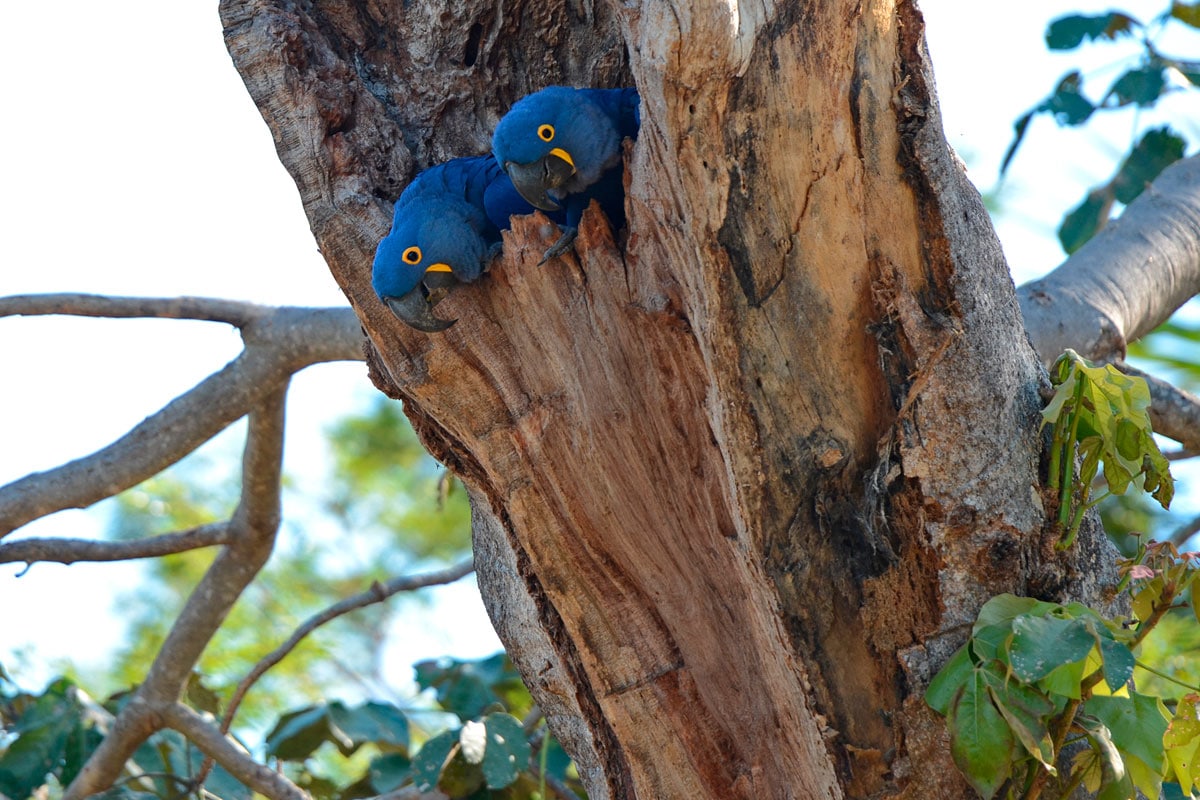
They nest in large tree hollows, in cracks in rocks from cliffs in the northeast of Brazil or in moriche or aguaje (Mauritia).

The favorite for nesting trees in the Mato Grosso, Brazil, include Enterolobium and Sterculia striata. In Northeast Brazil, the nest is located in Palms Mauritia dead or on cliffs.

They usually put one or two eggs, although only one young usually survives if the second egg hatches a few days after the first, since the smaller calf cannot compete with the larger for food.

The incubation period lasts about a month, and the male will assist his partner while she incubates the eggs.

Young people remain with their parents up to three months of age. They reach maturity and begin to play on the seven years.

The breeding season is from August to December, Maybe a little later in areas of pantanal.

Food:

The diet Hyacinth Macaw consists mainly of nuts, locally available of various Palms, including (on Amazonia) Maximiliana regia, Orbignya martiana and Astrocaryum, in the northeast of Brazil, of the Syagrus coronata and Orbignya eicherir, in areas of wetlands of Bone collectors and Acrocomia.

The palm nuts they take them from the own soil or plant (especially after a fire or when available as undigested remains in livestock droppings).

Other fruits that have information are the from the Ficus sp., as well as aquatic molluscs Pomacea.

Birds drink liquid from green palm fruits.

Distribution:

Its distribution includes the Centre of South America, Perhaps in several spacious separate areas.

In the Amazonia in For from the Tapajos River, to the East of the basin of the Tocantins River, extending to the South, possibly to the Northwestern area of Tocantins. At least before present North of the Amazon River (in Amapรก, amazon and Roraima, Brazil) and perhaps some specimens can still inhabit, Although there is no known recent records.

Distributed, as well, through the Northeast interior of Brazil, more or less centered on the Microregion of the Chapadas das Mangabeiras in the union between Maranhรฃo, Piauรญ, Goiรกs and Bay, Brazil (the region Gerais).

A third important population focuses on habitats wetlands of the upper basin of the Paraguay River in the southwest of Mato Grosso, Mato Grosso do Sul, Brazil, and extending into the adjacent area of the East of Bolivia and North end of Paraguay.

Reported as probable for the Mapori River to the South-East of Colombia (Vaupรฉs).

Movements General residents but perhaps seasonal in the Amazon in relation to the ecology of the plants on which they feed.

The territory between the three current major distributions, can still be busy even though recent trends given, They seem to indicate that this seems unlikely.

Formerly common in some areas (for example, Mato Grosso). Now they are rather unevenly distributed, with the recent and likely declines continuous in its population due mainly to the illegal trade internal and to the smaller, but significant, international market of live birds. Also hunted for its feathers (especially Pari) and as food. Declining in some areas (for example Eastern Amazonia), because of the alteration or loss of habitat.

Total estimated wild population in 3000 (1.992). CITES Appendix I.

VULNERABLE.

Conservation:


Vulnerable

โ€ข Current Red List of UICN: Vulnerable

โ€ข Population trend: Decreasing

The Hyacinth Macaw It has been subjected to a massive illegal trade. At least 10.000 birds were captured in the wild, in the decade of 1980, with a 50% destined to the Brazilian market (Mittermeier et to the. 1990).

Among 1983-1984, more than 2.500 birds were moved out of Black Bay, Paraguay, with others 600 extra at the end of 1980 (J. Pryor in litt., 1998). Although these numbers are now much smaller, illegal trade continues (for example 10 bird went through a pet market in Santa Cruz, Bolivia, in August 2004 until July 2005, where the birds were changing hands for 1.000 $ US and went to Peru [Herrera and Hennessey 2007]). More recently it has been noted that there appears to be almost no illegal trade in this species in Bolivia (B. Hennessey in litt. 2012).

Through its area of distribution, There is something of the local game for use as food and for its feathers.

In the Amazon, habitat loss has occurred for cattle ranching and hydroelectric power systems in the rivers Tocantins and Xingu.

In the Pantanal, only the 5% trees S. apetala have suitable cavities (Guedes 1993, Johnson 1996). Young trees are used as food for livestock and burned by frequent fires (Newton 1994).

The Gerais is it being quickly transformed by mechanized agriculture, ranching and plantations of exotic trees (Conservation International 1999).

In Paraguay, the preferred habitats of the Hyacinth Macaw are considered seriously threatened (N. Kochalka Lopez in litt. 2013) and the Paso Bravo National Park suffering from illegal logging.

Conservation Actions Underway:

    – CITES Appendix I and II, protected under Brazilian and Bolivian law and prohibition of exports from all countries of origin.

    – Many landowners in the Pantanal (more and more in the Gerais) they do not allow hunters on their property.

    – There are several studies long-term and conservation initiatives (for example. Anon 2004).

    – In the Refuge Caiman ecological in the Pantanal, the Hyacinth Macaw Project has used artificial nests and hatchling management techniques and raised awareness among farmers (Anonymous 2004).

Conservation Actions Proposed:

    – Study of the range, the current status of the population and the scope of the negotiation of the different parts of its area of distribution (Snyder et to the., 2000).

    – Assess the effectiveness of artificial nesting boxes (Snyder et to the., 2000).

    – To enforce the legal measures that hinder trade.

    – Experiment with ecotourism in one or two sites to encourage donors (Snyder et to the., 2000).

"Hyacinth Macaw" in captivity:

Rare up to 1970; then, starting at 1980, increased considerably in number of captive birds due to increased breeding.

Despite the prohibitions, many of these Macaws they are still trading at high prices (10.000 euros or more), due to its beauty and ease to mimic human language.

Rearing this species can be difficult and, Unfortunately, many chicks die each year in inexperienced hands.

From this page we strongly preserve these beautiful birds in their natural environment, sincerely not us seems reasonable to his tenure as a pet.

Alternative names:

Hyacinth Macaw, Blue Macaw, Black Macaw (English).
Ara hyacinthe (French).
Hyazinthara, Hyathinzara (German).
Arara-azul-grande, arara-azul, arara-hiacinta, arara-preta, arara-roxa, arara-una, canindรฉ (Portuguese).
arara-azul, Arara-azul-grande, arara-hiacinta, arara-preta, arara-roxa, Ararauna, arara-una, canindรฉ (Portuguese (Brazil)).
Guacamayo Azul, Guacamayo Jacinto, Papagayo azul (espaรฑol).
Jacinta azul, Paraba azul (Bolivia).
Vihina (Desana).
Kaheta (Carijona).
Guaรญa-hovy (Guarani).
Arara-รบna (Tupi Guaranรญ).

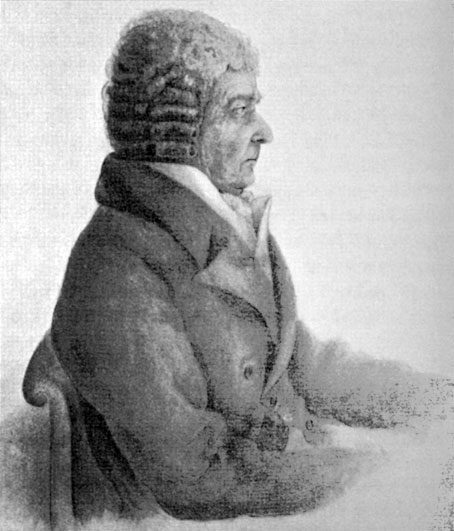
John Latham
John Latham

scientific classification:


Order: Psittaciformes
Family: Psittacidae
Genus: Anodorhynchus
Scientific name: Anodorhynchus hyacinthinus
Citation: (Latham, 1790)
Protonimo: Psittacus hyacinthinus


Images Hyacinth Macaw:

Videos "Hyacinth Macaw"


Species of the genus Anodorhynchus

ยซGuacamayo Jacintoยป (Anodorhynchus hyacinthinus)


Sources:

Avibase
– Parrots of the World โ€“ Forshaw Joseph M
– Parrots A Guide to the Parrots of the World – Tony Juniper & Mike Parr
– Birdlife
– Parrots, Parrots and macaws (Neotropical)

Photos:

(1) – Hyacinth Macaw also known as Hyacinthine Macaw at Disneyโ€™s Animal Kingdom Park by Hank Gillette [CC BY-SA 3.0 or GFDL], via Wikimedia Commons
(2) – A Hyacinth Macaw at Brevard Zoo, Florida, USA By Rusty Clark from merritt usland FLA (Brevard Zoo Hyacinth Macaw) [CC BY 2.0], via Wikimedia Commons
(3) – Hyacinthine Macaw at Melbourne Zoo, Australia By derivative work: Snowmanradio (talk)Anodorhynchus_hyacinthinus_-Australia_Zoo_-8.jpg: Erik (HASH) Hersman [CC BY 2.0], via Wikimedia Commons
(4) – Hyacinth Macaws at Stone Zoo, Stoneham, Massachusetts, USA By Eric Kilby (originally posted to Flickr as Squawking Heads) [CC BY-SA 2.0], via Wikimedia Commons
(5) – Hyacinthine Macaw (Anodorhynchus hyacinthinus) By Ana_Cotta (originally posted to Flickr as ARARA) [CC BY 2.0], via Wikimedia Commons
(6) – Hyacinth Macaws, Anodorhynchus hyacinthinus at the Aquarium of the Americas in New Orleans, Louisiana By Derek Jensen [CC BY 2.0], via Wikimedia Commons
(7) – A pair of Hyacinth Macaws and thier nest in Mato Grosso do Sul, Brazil By Geoff Gallice from Gainesville, FL, USA (Hyacinth macaws) [CC BY 2.0], via Wikimedia Commons
(8) – A Hyacinth Macaw preening at the Aquarium of the Americas, New Orleans, USA By Quinn Dombrowski (originally posted to Flickr as Dainty) [CC BY-SA 2.0], via Wikimedia Commons
(9) – Anodorhynchus hyacinthinus by Hans – Pixabay
(10) – Illustration Guacamayo Jacinto By Lear, Edward [CC BY 2.0 or Public domain], via Wikimedia Commons

Sounds: Niels Poul Dreyer (Xeno-canto)

โ–ท The world of Pets: Dogs, cats, birds, reptiles, amphibians

Golden-winged Parakeet
Brotogeris chrysoptera


Catita Alidorada

Content

Description:

Golden-winged Parakeet

18 cm.. height.
The Golden-winged Parakeet ((Brotogeris chrysoptera)) has a tail short and finished in tip, bill Of course, body almost all green.

Its main characteristic is to have wing a patch orange or gold and the end blue (more visible on the fly). Crown bluish, forecrown and throat orange.
The eye ring is whitish and without feathers; the irises is of color Brown dark and the legs flesh-colored.
The immature is distinguished by not having the Golden wing patch.

Subspecies description
  • Brotogeris chrysoptera chrysoptera

    (Linnaeus, 1766) – The nominal.


  • Brotogeris chrysoptera chrysosema

    (Sclater,PL) – Golden parakeets. Its plumage is generally more yellow. L0s adults have yellow-orange the forecrown and the regions between them eyes and the peak, on the sides of the head. There is a patch in the chin orange. The primary coverts are yellow. Son bigger the species nominal.


  • Brotogeris chrysoptera solimoensis

    (Gyldenstolpe, 1941) – Codajรกs Golden parakeets. Similar to subspecies nominal, but the frontal band is more pale and of color brown reddish. The patch of the chin is a yellow-brown color.


  • Brotogeris chrysoptera tenuifrons

    (Friedmann, 1945) – Black River Parakeets. Similar in appearance to the subspecies Brotogeris chrysoptera tuipara, with the exception of the frontal band orange, which is minimal or absent.


  • Brotogeris chrysoptera tuipara

    (Gmelin, 1788) – Parakeets Tuipara. It also seems to refer to the species, with the exception of its plumage that is usually more yellow. adults have a frontal band fine of color orange and a patch Orange in the chin. The lateral feathers with edges yellow. They are also bigger that the subspecies nominal.

Habitat:

Video – "Golden-winged Parakeet" (Brotogeris chrysoptera)

It inhabits in humid forest and savannah, more common to 300 meters although it has reported to them 1200 m. You in groups small of 8 to 16 individuals not reproductive time, It is common to see more than 100 consuming fruits in the canopy. Noisy when flying and silent when they feed on.

Reproduction:

Nest on trees, in hollows and termite mounds. Breeding season in November, February and April.

Food:

With feeds of the nectar of the flowers, fruit, figs, berries and seeds.

Distribution:

Size of the distribution (reproduction / resident): 3.110.000 km2

Its population is distributed between the East of Venezuela, Guyanas, Center and East of the Brazilian Amazon.

Subspecies distribution

Conservation:

State of conservation โ“˜


minor concern Minor Concern โ“˜ (UICN)โ“˜

โ€ข Current category of the Red List of the UICN: Least concern.

โ€ข Population trend: Decreasing.

Justification of the population

The size of the world population It has not been quantified, but this species is described as ยซcommonยป (Stotz et to the., 1996).

Justification of trend

It is suspected that this species has lost 20,7-24,8% of habitat suitable within their distribution during three generations (15 years), on the basis of a model of Amazon deforestation (Soares-Filho et to the., 2006, Bird et to the., 2011). So, It is suspected that will decrease in <25% durante tres generaciones.

"Golden-winged Parakeet" in captivity:

Rare in captivity. They are birds a bit nerve until you are acclimatized to its owner. They can be housed in an Aviary with other parrots.

Alternative names:

Golden-winged Parakeet, Golden winged Parakeet, Golden-winget parakeet, Tuipara Parakeet (English).
Toui para (French).
Braunkinnsittich (German).
periquitinho, Periquito-de-asa-dourada, periquito-de-asas-douradas, tuipara-de-asa-dourada, tuipara-de-asa-laranja, periquitinho, periquito-de-asas-douradas, tuipara-de-asa-dourada, tuipara-de-asa-laranja (Portuguese).
Catita Alidorada, Periquito de Alas Amarillas (espaรฑol).
Periquito Ala Dorada (Venezuela).

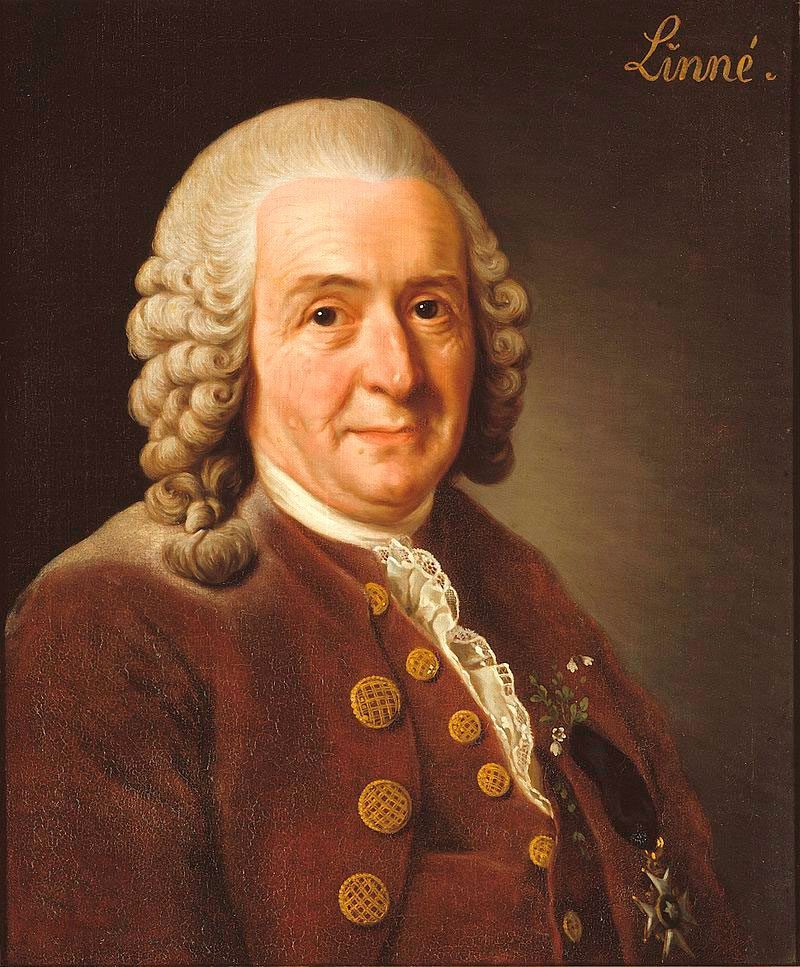
Carl Linnaeus
Carl Linnaeus

scientific classification:

Order: Psittaciformes
Family: Psittacidae
Genus: Brotogeris
Scientific name: Brotogeris chrysoptera
Citation: (Linnaeus, 1766)
Protonimo: Psittacus chrysopterus


Images "Golden-winged Parakeet"


Species of the genus Brotogeris

Sources:

Avibase
– Parrots of the World โ€“ Forshaw Joseph M
– Parrots A Guide to the Parrots of the World – Tony Juniper & Mike Parr
Birdlife
– Parrot Book, Parrots and macaws Neotropical

Photos:

(1) – animalphotos
(2) – Modern accepted name (2012) is Brotogeris chrysoptera By William Swainson, F.R.S., F.L.S. (Zoological Illustrations, Volume I.) [Public domain], via Wikimedia Commons

Sounds: controles-canto.org

โ–ท The world of Pets: Dogs, cats, birds, reptiles, amphibians

Red-faced Parrot
Hapalopsittaca pyrrhops

Red-faced Parrot

Content


Anatomy-parrots

Description:

23 cm.. height.

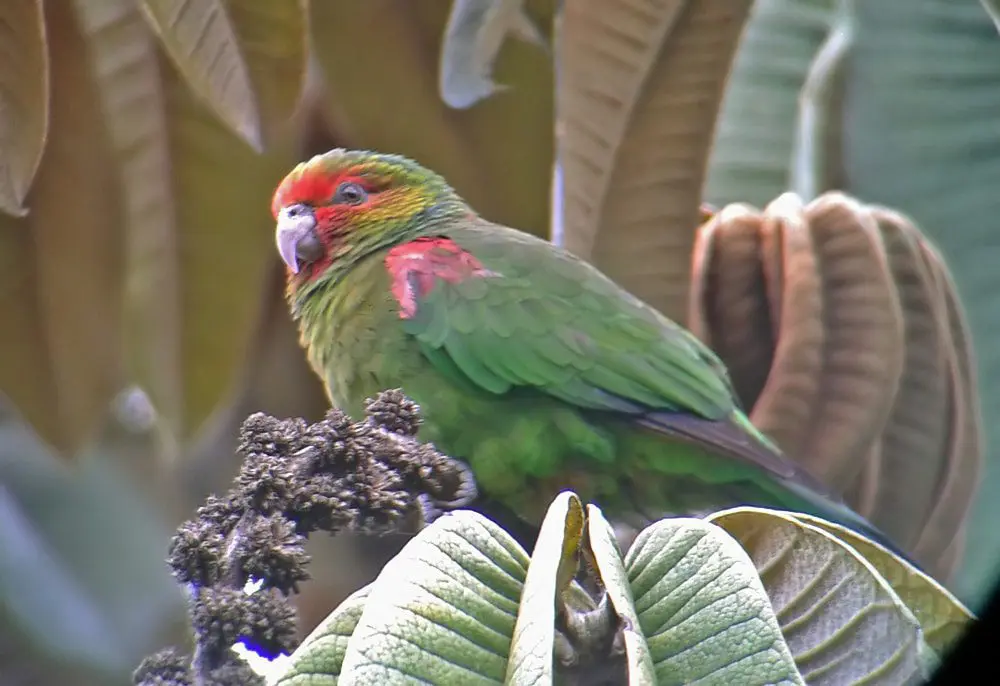
The Red-faced Parrot (Hapalopsittaca pyrrhops) It is distinguishable by the intense red in face and pink magenta in shoulder.

Of bill Of course, yellow feathers on the sides of the neck, crown Green with more bluish back.
Dorsally, wing with blue stain and end blackish; tail with blue border.
In flight, wing with armpit red, Blue-Green rest, tail Red with blue tip.
Youth with the face less red.

Habitat:

Rare. It inhabits in the Woods high Andean, near fells, edges and secondary forests, from the 2400 to 3500 m. They are gregarious, usually in pairs or small flocks of 4 to 6 individuals, rarely more.
They are mostly sedentary. But, can arise some movements seasonal altitudinal.

Reproduction:

Nest in the cavities of trees in October-January; the laying of eggs in late November; the chicks are born in early December, and they leave the nest in late January.

Food:

They feed in the canopy of the forest.
Its diet includes outbreaks, flowers, berries and seeds.

Distribution:

Size of the area of distribution (reproduction / resident): 33.800 km2

Inhabits the southern Andes Ecuador and North end of Peru.

Conservation:


Vulnerable


โ€ข Current category of the Red List of the UICN: Vulnerable.

โ€ข Population trend: Decreasing.

The population is estimated to be a number of 2.500-9.999 mature individuals.

Threats

Its decline is attributed to the destruction and fragmentation of habitat, largely through the conversion of burning forests to small farms (Jacobs and Walker, 1999).

Severe loss of this species can be expected due to deforestation and degradation of forests, by burning and grazing, on Cordillera de Chilla, Loja of Ecuador, although 1995 there were still extensive forest areas (Toyne and Flanagan 1997, Jacobs and Walker 1999).

"Red-faced Parrot" in captivity:

Unknown in the poultry.

Alternative names:

Red-faced Parrot, Ecuadorian Parrot, Red faced Parrot (English).
Caรฏque de Salvin, Caรฏque ร  face rouge (French).
Salvinpapagei, Salvins Zwergpapagei (German).
Red-faced Parrot (Portuguese).
Lorito Ecuatoriano (espaรฑol).
Loro de Cara Roja (Peru).


scientific classification:

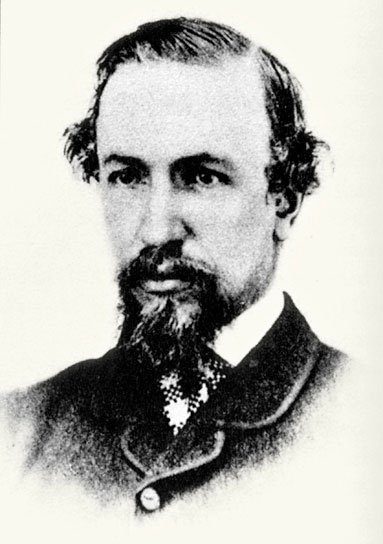
Salvin Osbert
Salvin Osbert

Order: Psittaciformes
Family: Psittacidae
Genus: Hapalopsittaca
Scientific name: Hapalopsittaca pyrrhops
Citation: (Salvin, 1876)
Protonimo: Pionopsitta pyrrhops

Images "Red-faced Parrot"

Videos "Red-faced Parrot"


"Ecuadorian Lorito" (Hapalopsittaca pyrrhops)


Sources:

  • Avibase
  • Parrots of the World โ€“ Forshaw Joseph M
  • Parrots A Guide to the Parrots of the World – Tony Juniper & Mike Parr
  • Birdlife
  • Parrot Book, Parrots and macaws Neotropical

  • Photos:

(1) – Red-faced Parrot (Hapalopsittaca pyrrhops) by Dusan M. Brinkhuizen – IBC

+ More