โ–ท The world of Pets: Dogs, cats, birds, reptiles, amphibians

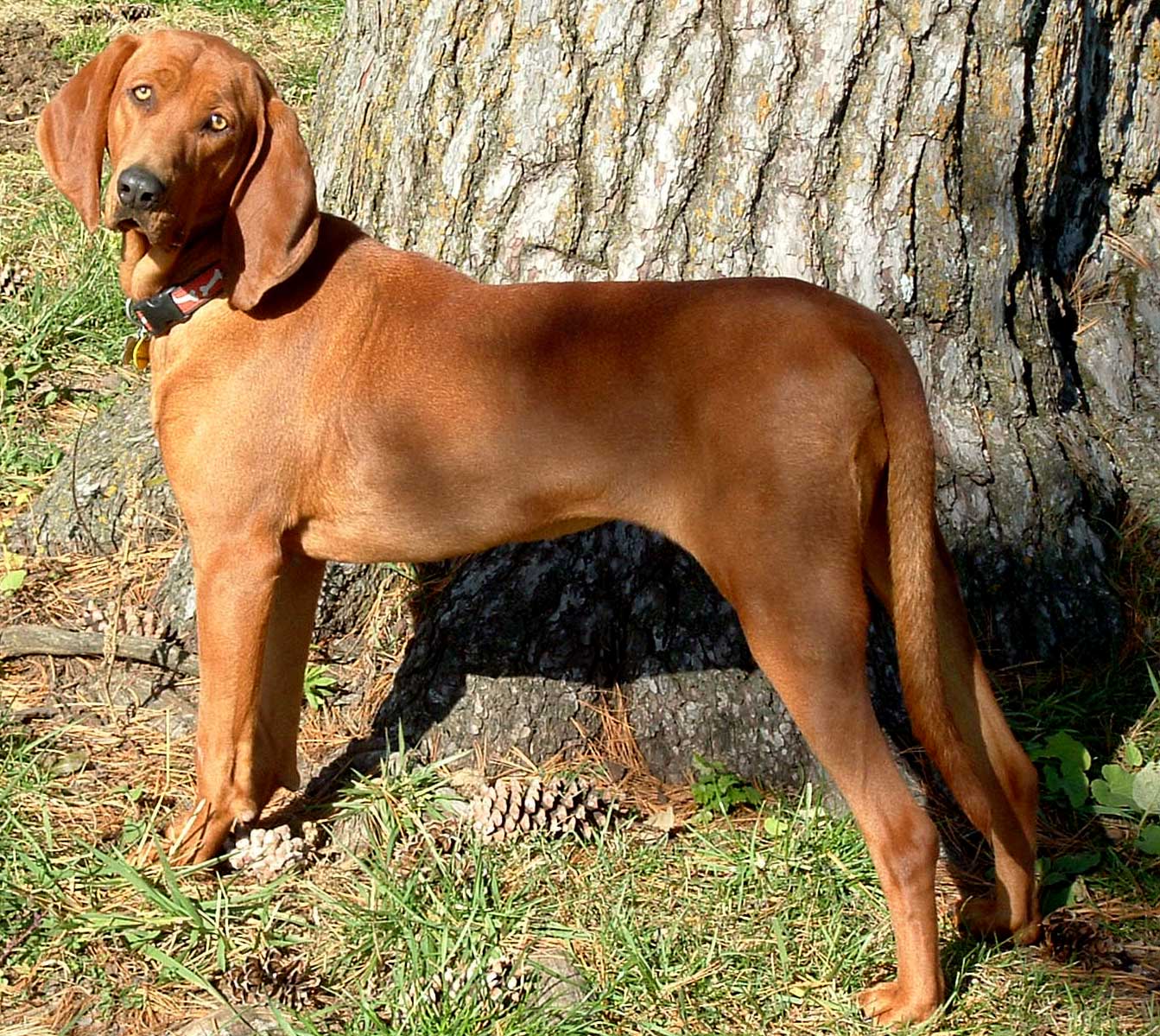
Redbone Coonhound
Estados Unidos Not recognized by the FCI

Redbone Coonhound

The Redbone Coonhound It is commonly used for hunting bears, raccoons and pumas.

Content

History

Redbone Coonhound It is a breed of dog of American origin which, Since its inception it has been used for hunting of bears, raccoons, and even, Pumas. Its physical characteristics and agility allow the Redbone Coonhound to hunt in swamps., in mountains and some tend to be used as water dogs (bailiffs).

According to the norm of American Kennel Club: โ€œThe Redbone Coonhound is a balanced blend of beauty and temperament, with a notorious air security and great talents for huntingโ€. This beautiful race won his first record in the American Kennel Club in the 1904.

Read more

โ–ท The world of Pets: Dogs, cats, birds, reptiles, amphibians

Ottos
Estados Unidos Not recognized by the FCI

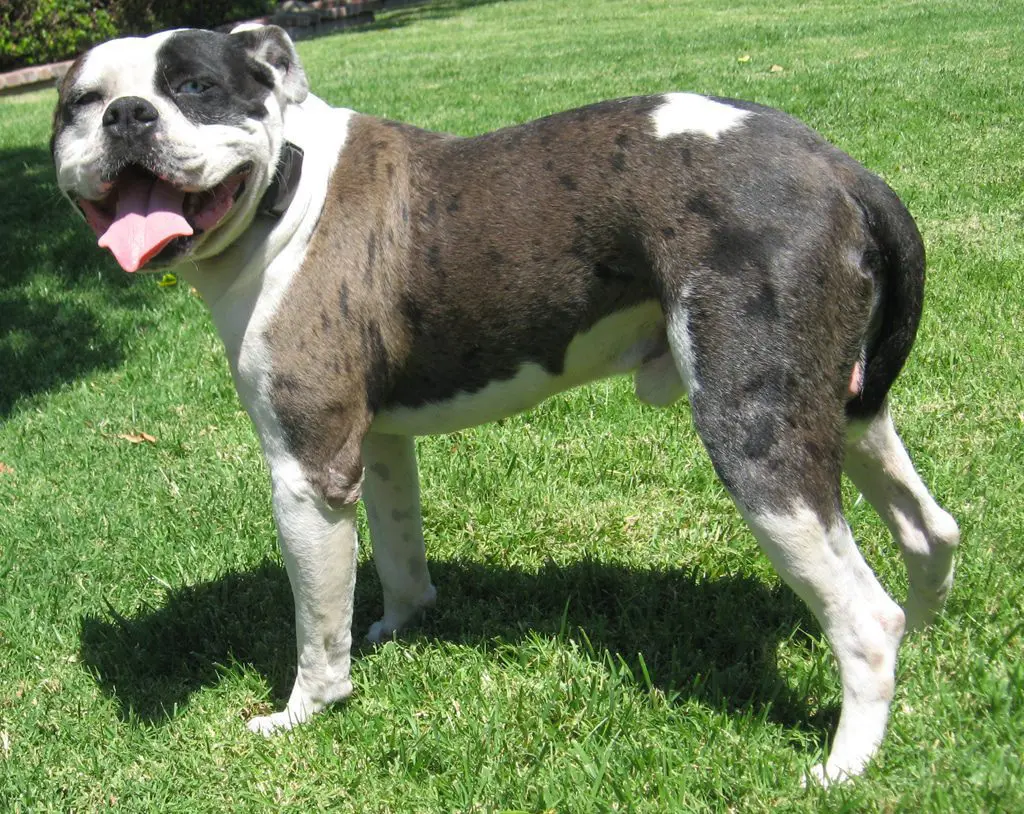
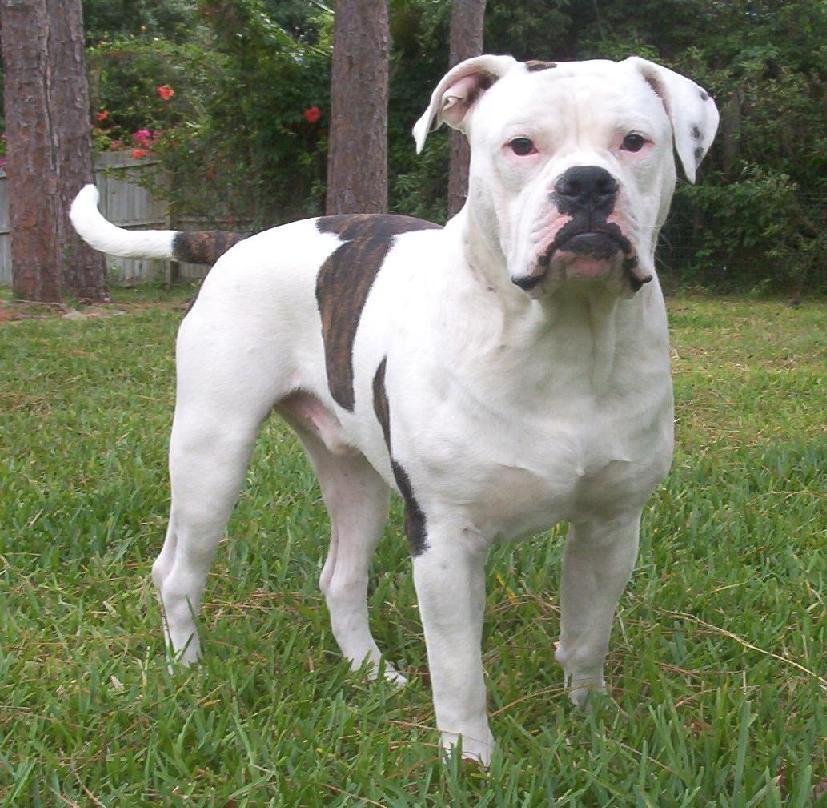
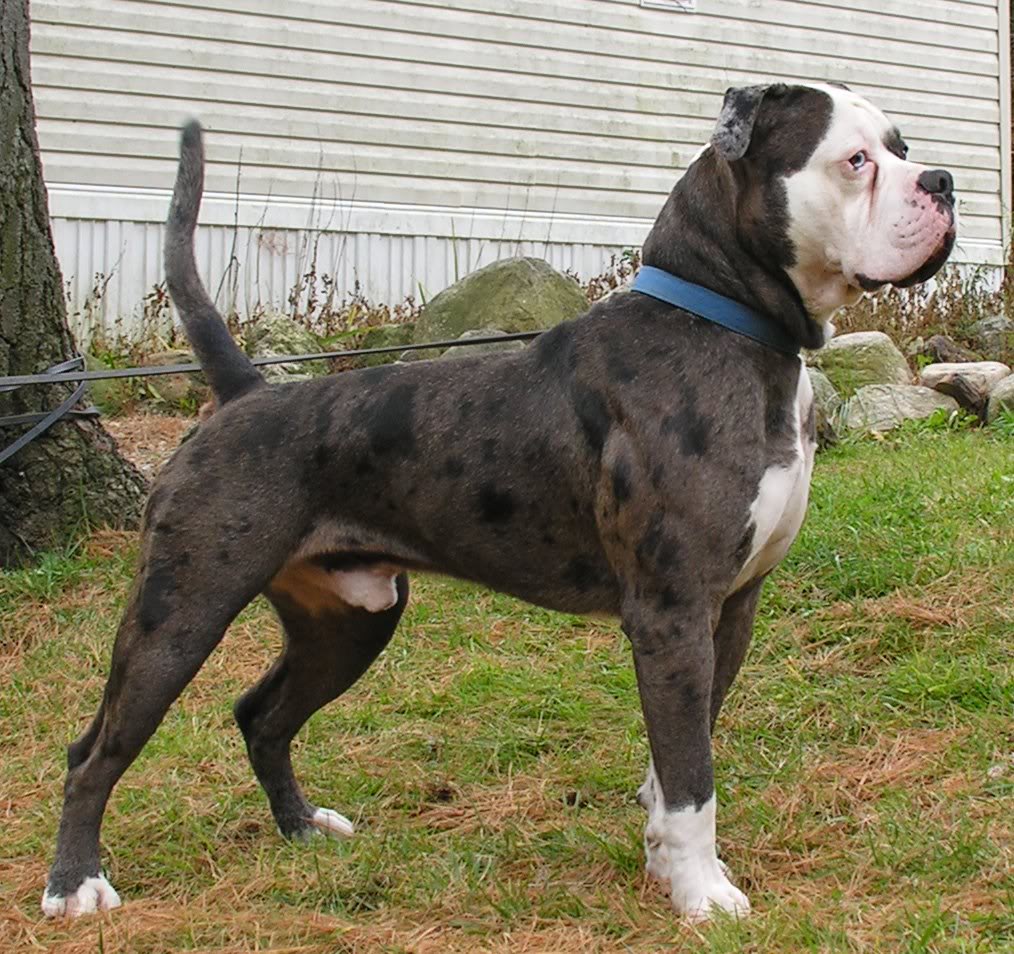
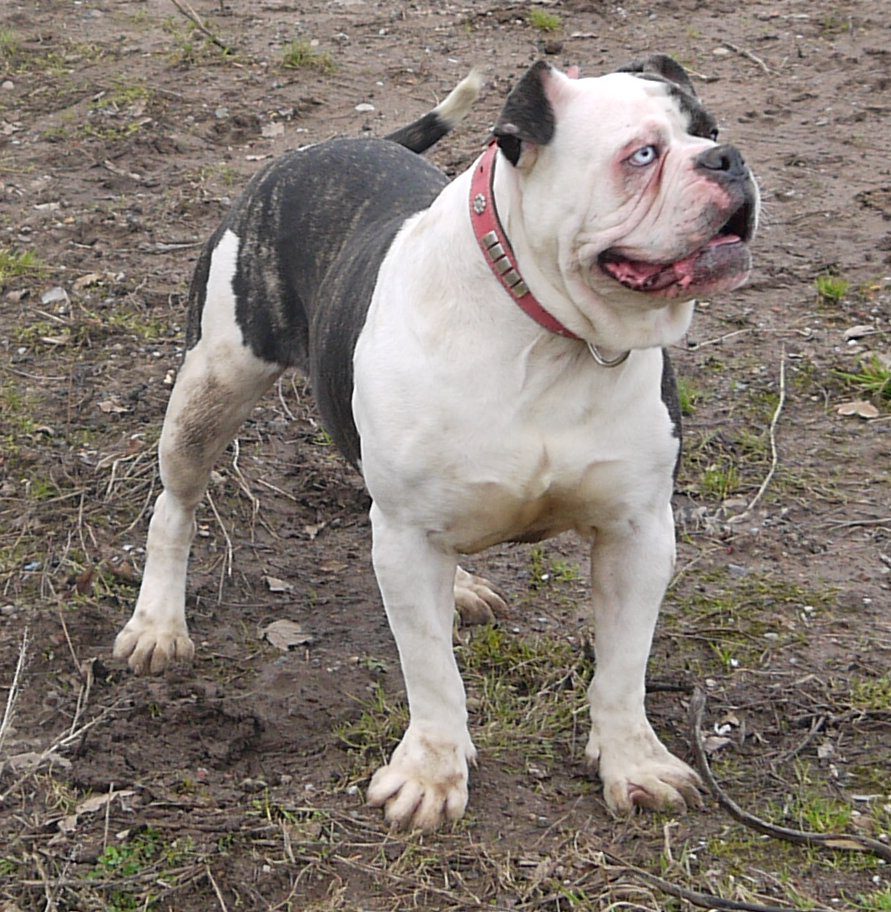
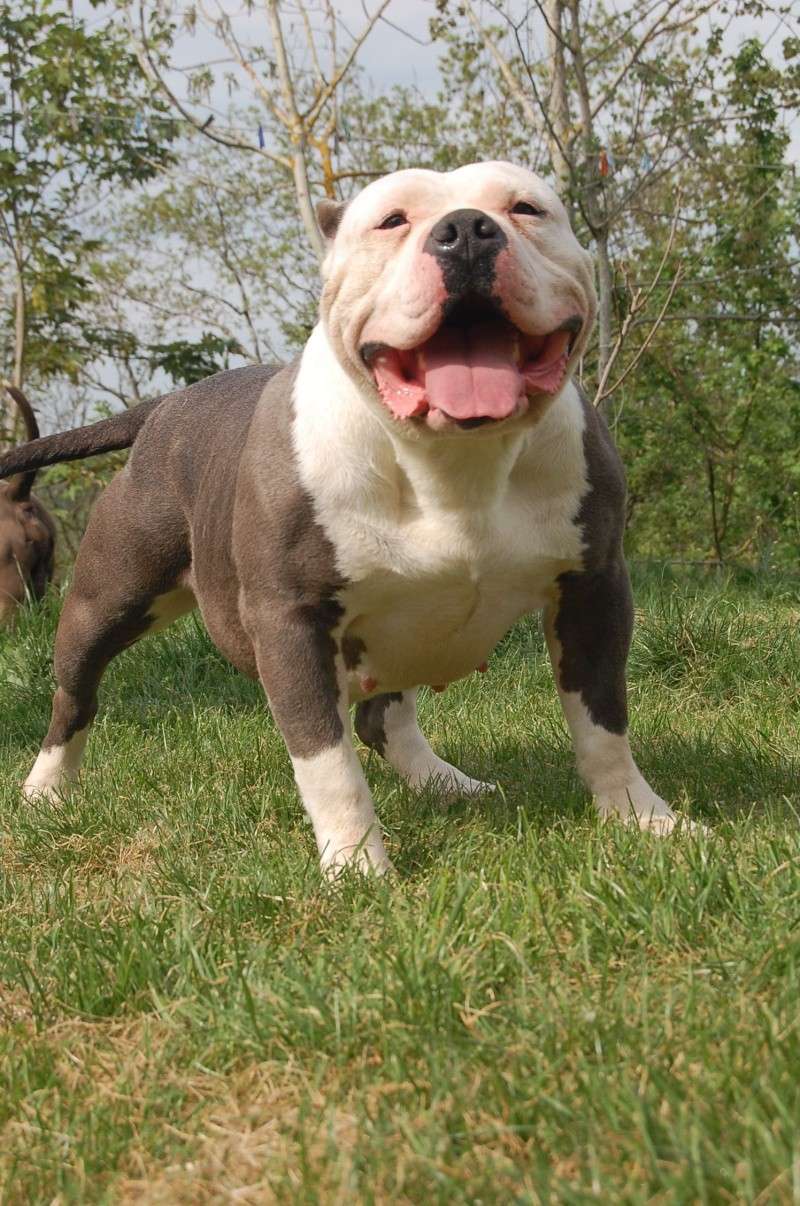
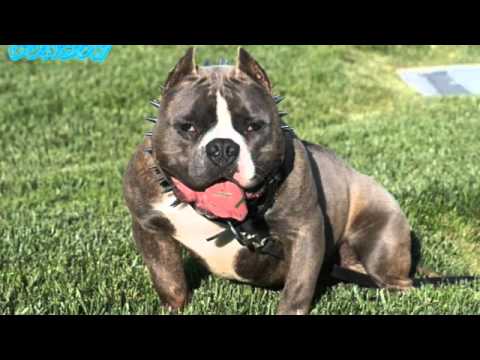
Bulldog Alapaha de sangre azul

Despite its similarity, not to be confused with the American bulldog

Content

Historia del ยซAlapaha Blue Blood Bulldogยป

Also Known As Otto Bulldog It is a breed of dog of American origin, considered rare due to the few existing copies. According to available information, They have been developed in the area Alapaha River in the southern region Georgia. They are renowned for their great sense of obedience, their agility and your protective character.

This was developed by crossing Old English Bulldog white (known as, White English Bulldogs), a Catahoula Bulldog and a reduced number of copies of Colby Pit Bull Terrier. The origins of the breed remain fuzzy, and this has caused much confusion…

While at first glance it is a Bulldog type. It is a stronger dog and a well-developed musculature (remarkable characteristic of the breed, compared to other varieties Bulldog).

Despite its similarity, not to be confused with American bulldog. This similarity resulted in actions pre-register many Alapaha Blue Blood Bulldog They were included in the ancestry of American bulldog.

Videos

While Alapaha Blue Blood Bulldog Association It has declared that it was founded in 1979, the earliest evidence of the existence of this club record dates of 1989 in California. That discrepancy has triggered multiple discussions.

The race was in danger of extinction until a small group of Southern, in 1979, in an attempt to rescue the Bulldog de Old Tymey Plantation del Sur, He founded the ABBA (Alapaha Blue Blood Bulldog Association), giving the aforementioned name and dedicated to the preservation of this unique type of dog.

Claims made by the Mrs. Lana Lane, nurturer and follower of the race, they dealt with the existence of records. But, little evidence exists to support his claim because in family lines described in the World Atlas of Dog Breeds as the founders of the breed.

The current records of this breed They include the following organisms:

The ACA (American Canine Association) who registered the first champion Under the title of Alapaha. ABBA (Alapaha Blue Blood Bulldog Association), CCR (National Kennel Club), (ABBBR) Alapaha Blue Blood Bulldog registry, CKC (Continental Kennel Club), WWKC (World Wide Kennel Club), UWABC (Kingdom of work Alapaha Bulldog Club & Registration), UCA (United Canine Association), and IOEBA (International Olde English Bulldogge Association), among them there is great variation in the type and standard.

Physical characteristics

Descriptions of their size vary greatly depending on the organism., but trying to reach an average consensus we would place the males in a weight ranging from 32 to 41 kg, and height the cross of 51 to 63 cm.. Females - slightly smaller, they weigh in 25 to 34 kg and measure of 45.7 to 55.9 cm in height to the cross.

The ears and tail They are left natural, without any cutout.

Their colors They are varied, preferably, You must have at least the 50% white body with spots. They can be, predominantly, solid color with white, or dry white. Patches or markings are generally color merle, striped, blue, black, chocolate, red, beige, or tricolor. Currently the most common are the tricolor mantle (both white, Merle, red, as well as beige, Merle, chocolate).

The eye color can vary from Brown to blue, and they usually see with one eye of each color copies or a finger eye colors.

Its pelage is short, hard and bright by nature, which is why, coat care requirements are minimal.

Character and skills

Coachable, obedient and responsible, with impressive capabilities as guardian Family and property. They have a strong instinct for protection and it's love at home.

Puppy must be socialized and trained using humane methods, since cruelty could stimulate the aggressiveness of the animal. Intelligent and quick learning, with assertive methods.

very energetic and athletic breed. Even so, They can be adapted perfectly to life in an apartment if sufficiently exercised and daily. While within the home displays inactive, quiet, It will be more happy with - at least- a medium size yard.

They were formerly used to work with livestock, especially in the capture of errant pigs. For that reason his muscles are long and powerful, this physical characteristic reminds us that for the dog to have optimal health it needs to be exercised regularly. They often enjoy long walks, run and play.

His life expectancy is from 12 to 15 years.

โ€œAlapaha Blue Blood Bulldogโ€ Images

โ€œAlapaha Blue Blood Bulldogโ€ Videos

Numb Skull the Alapaha Bulldog in the UK

Dogs breeds: ยซAlapaha Blue Blood Bulldogยป


Type and recognitions:

  • Race is not recognized by the FCI

Alternative names

1. Alapaha Blue Blood Bulldog, Otto Bulldog (English).
2. Alapaha Blue Blood Bulldog (French).
3. Buldogue Alapaha de sangue azul, Alapaha Blue Blood Bulldog (Portuguese).
4. Alapaha Blue Blood Bulldog (German).
5. Bulldog Alapaha de sangre azul, Alapaha Blue Blood Bulldog (espaรฑol).

โ–ท The world of Pets: Dogs, cats, birds, reptiles, amphibians

American Mastiff
Estados Unidos Not recognized by the FCI

The American Mastiff He was raised to be a family dog, his character and temperament attest to this...

Mastรญn Americano

Content

History

The American Mastiff It is a molossoid-type dog breed that was developed over many years of selective breeding by Fredericka Wagner of โ€œFlying W Farmsโ€ (Kennel dedicated to the race), in Piketon, Ohio, ago 20 or 25 years (the truth is that I've burned the tabs looking for the exact date... and I haven't found it).

The objective was to develop a dog that had the size, temperament, the provision, and the appearance of the Mastiff breed, but with fewer health problems and not losing as much saliva as the other varieties of Mastiff dog, and that life expectancy was greater.

Read more

โ–ท The world of Pets: Dogs, cats, birds, reptiles, amphibians

American Mastiff Panja
Estados Unidos Not recognized by the FCI

The race American Mastiff Panja, was initially bred to protect homes and properties.

American Mastiff Panja

Content

History

The American Mastiff Panja It is a breed of dog developed in United States, raised initially to protect the homes and properties of the people.

The term "panjaโ€, by which it is usually known this race, proceeds of Panja Kennels, a hatchery situated in the city of Flint (Florida) who was one of the first to initiate selective breeding with the aim of turning it into a defined breed.

Unfortunately, many American Mastiff Panja They were used by drug traffickers and people linked to crime in order to serve as guard dogs of their properties and that environment and the training techniques used (very hard) they have led to this race to develop an instinct of guard very exacerbated.

Its origin is due to a cross between several races between them found dogs as the Pit Bull and Rottweiler.

Since they have been recognized by the DRA (Dog Registry of America), people in general have started to look at these dogs with other eyes, and fortunately not already belong, exclusively, to the world of drug traffickingโ€ฆ they have been able to get away from their (forced) dark past. They are currently used as companion pets..

Panja bandog, Rock bandog, drug dealer bandog, Detroit rock dog, American mastiff panja, Panja, rockweiler, pitweiler : all these names refer to the same type of bandog, product of miscegenation between American Pitbull Terrier and Rottweiler, that it arose in the city of Detroit ago 30 years.

American Mastiff Panja

Recognized by: BBC, DRA
Group: Work

Physical characteristics

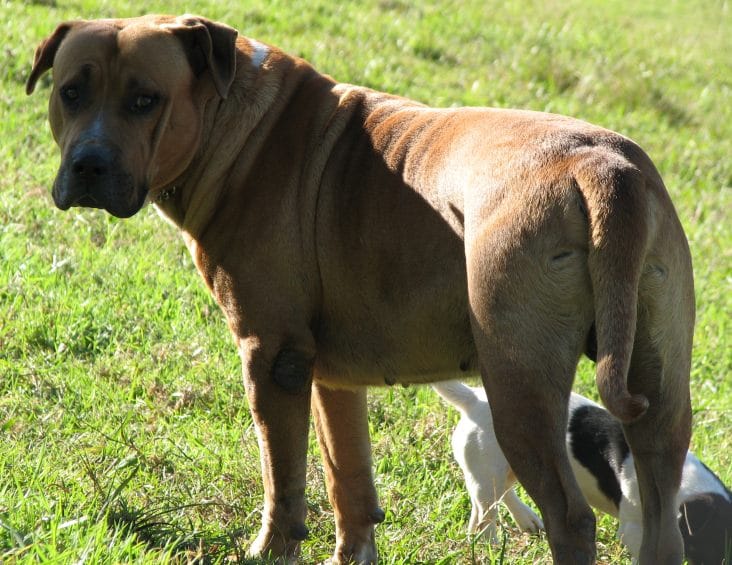
The American Mastiff Panja is a working dog with an athletic and muscular body. Broad chest and extremities well muscular, straight lines, for strong bones, with the slightly angled hocks. They have small eyes, almendrados expression alert and curious. They have a broad head and short ears.

Like his compatriot the American Mastiff, the American Mastiff Panja differs from other Mastiff breed dogs in that its belfos not protrude, and they not drool-worthy.

The layer of hair is short, flat and shiny, It can be of different colors. The tail is usually cut to 1/3 its natural length. The height to the cross goes of 55,88 cm to 66,04 cm.. Y, the weight of 36 kg to 45 kg. The life expectancy of these dogs is of 10 to 12 years.

Character and skills

The American Mastiff Panja It is a dog with a relaxed attitude and calm temperament. Son excellent pets and protectors of their family nucleus. In the United States most of the American Mastiff Panja they are great with young children. The natural instinct of the race is to protect, they believe that it is his duty to protect everything and everyone in your home.

They are dogs intelligent and obedient, obedience training is recommended to prevent the onset of boredom and collation destructive behaviors, as chewing. It is a guard dog by nature, so it will always be ready to alert their owners of any suspicious activity. They are wayward, they have a dominant personality, but they are also very kind and loyal companions.

The American Mastiff Panja is in general, a very healthy dog, he does not have any important health problems to highlight, but like other many breeds of dogs, It is possible that some copies are in one higher risk of developing Hip Dysplasia.

The American Mastiff Panja you can live peacefully in a small house or apartment if you exercise it properly. They are calm and very homemade dogs with propensity to be lazy, so it is important that their owners motivate them and take them out for long walks. It adapts well to all climates and can tolerate varying weather conditions. It will be happier with a small courtyard where can lie in the Sun and do not forget that the daily walks are ideal for this athletic breed.

Images ยซAmerican Mastiff Panjaยป

ยซAmerican Mastiff Panjaยป Videos

Alternative names:

1. American Mastiff Panja (English).
2. American Mastiff Panja (French).
3. American Mastiff Panja (German).
4. American Mastiff Panja (Portuguese).
5. "Mastรญn Americano Panja" (espaรฑol).

โ–ท The world of Pets: Dogs, cats, birds, reptiles, amphibians

Alaskan Husky
Estados UnidosNot recognized by the FCI . Nordic Sledge Dogs

Alaskan Husky

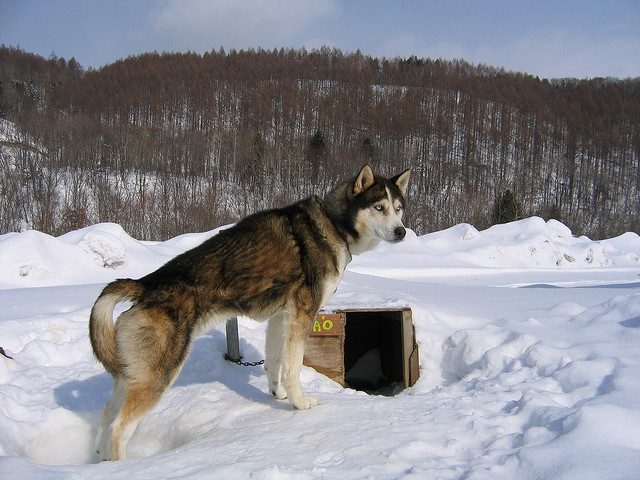
Alaskan - Autor de la foto: siva_lovehorses (flickr).

The Alaskan Husky is an athletic and generally healthy dog., specializes in sledding.

Content

Characteristics "Alaskan Husky"

Coexistence is important that you have with your new friend. Before considering the acquisition of a dog of the breed "Alaskan Husky" you know certain factors. Not all breeds of dogs are apt to live in an apartment, you must take into account his character, their need for exercise, their interaction with other pets, their care and if you have small children, their level of tolerance towards them.

Adaptation โ“˜

5,0 of 5 stars (based on 1 review)

friendly dog โ€‹โ€‹โ“˜

5,0 of 5 stars (based on 1 review)

hair loss โ“˜

4,0 of 5 stars (based on 1 review)

Affection level โ“˜

5,0 of 5 stars (based on 1 review)

Need for exercise โ“˜

2,0 of 5 stars (based on 1 review)

Social need โ“˜

3,0 of 5 stars (based on 1 review)

Home โ“˜

1,0 of 5 stars (based on 1 review)

Toilet โ“˜

3,0 of 5 stars (based on 1 review)

Friendly with strangers โ“˜

5,0 of 5 stars (based on 1 review)

barking โ“˜

4,0 of 5 stars (based on 1 review)

Health โ“˜

2,0 of 5 stars (based on 1 review)

Territorial โ“˜

3,0 of 5 stars (based on 1 review)

Cat friendly โ“˜

1,0 of 5 stars (based on 1 review)

Intelligence โ“˜

3,0 of 5 stars (based on 1 review)

Versatility โ“˜

3,0 of 5 stars (based on 1 review)

Child friendly โ“˜

3,0 of 5 stars (based on 1 review)

Surveillance โ“˜

5,0 of 5 stars (based on 1 review)

joy โ“˜

3,0 of 5 stars (based on 1 review)

Alaskan Husky history

Listed not so much as a breed of dog as a type or category of dog. There are no fixed pedigree characteristics, but rather for the purpose, it is to be a very efficient sled dog.

The origin of this dog is Alaska and Canada. These fully domesticated dogs came thousands of years ago. Today, the Alaskan sled dogs They can be crossed, type Husky, or a combination of several. They also vary in size and build depending on the use of the dog., to compete or work.

Sled drivers usually distinguish between Alaskan Husky and crossbreeding, in an informal way, so it is possible that this type of dog has a degree of northern dog appearance.

Most of the Alaskan Husky have pointed ears, qualifying, in fact, as spitz type dogs.

There are some specializations within this type, as the Mackenzie River Husky or the MALAMUTE, the Alaskan of Sprint as the Eurohound, or distance.

It must be borne in mind that in sledge racing championships, These dogs can come with loaded sledges to the 30 km/h and that runs for three days at a rate of between 30 to 50 km daily.

The Alaskan They are valued for their toughness and resistance. They earn an average speed of 31 km/h.

Alaskan Husky Physical Characteristics

This type of dogs, at least those that are used to speed racing, are of moderate size, with an average 21 to 25 kg for the males and 17 to 19 kg for the females.

The eyes They can be any color, many are blue. The eyes blues are not considered an essential feature of this race. The fur It has two layers, short hair and of medium length, Although not much, and usually less dense than pure breed of the North, the length of the shortest layer is governed by the need for an effective heat dissipation during races.

Athletic and generally, healthy. Its Life expectancy is usually between 10 to 15 years.

Character and skills

They tend to vary greatly in personality both in colour and appearance. But, in general terms, They are very affectionate dogs, to live with other dogs and humans.

These dogs they are not suited to a lifestyle of urban apartments, that they need a constant source of exercise, and due to its incredible resistance, It seems that they never tire. It is an adventurous and tends to be very quiet in the car rides. These dogs are happy to live outside or inside the home of its owners, But if he leaves out, It is not recommended if you have a perfect lawnโ€ฆ, are amateur digging wellsโ€ฆ

His hair tends to be self-cleaned just like a Mally or a Siberian Husky, which is why they need less frequent baths, In addition, they do not usually smell. They have a season of hair shedding in the spring and, Unlike in the Siberians, Malamutes or German shepherds, they may not leave large quantities of hair around the House all year round.

Nothing is impossible obstacles to this type of dogs, that they tend to go up to almost two metres away the sitting position. Although swimming is not his forte, they tend to show any resistance or fear of the water and you can train and motivate them to make them good swimmers. Usually very good vision and sense of smell, which it makes them very good hunters.

Alaskan Husky Pictures

Vรญdeos Alaskan Husky

Siberian Husky runs with Bike! Springer Bike with your Dog

Type and recognitions:

  • Nordic Sledge Dogs
  • They are not recognized by the AKC, nor by the FCI

Alternative names

1. Alaskan Husky (English).
2. Alaskan Husky, Alaskan (French).
3. Alaskan Husky (German).
4. Alaskan Husky (Portuguese).
5. Alaskan Husky (espaรฑol).

โ–ท The world of Pets: Dogs, cats, birds, reptiles, amphibians

American Bully
Estados Unidos Not recognized by the FCI. Companion dog.

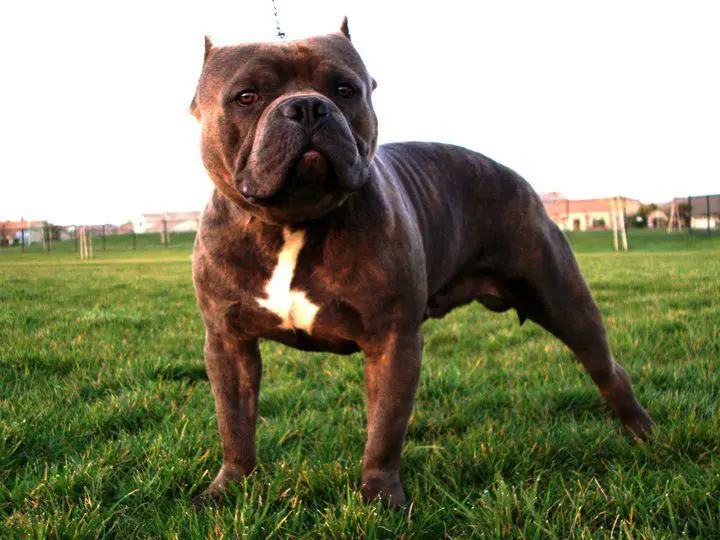
The American Bully ideal is very intelligent, endearing and versatile.
American Bully

Content

Characteristics "American Bully"

Coexistence is important that you have with your new friend. Before considering the acquisition of a dog of the breed ยซยซ you know certain factors. Not all breeds of dogs are apt to live in an apartment, you must take into account his character, their need for exercise, their interaction with other pets, their care and if you have small children, their level of tolerance towards them.

Adaptation โ“˜

2,0 of 5 stars (based on 1 review)

friendly dog โ€‹โ€‹โ“˜

2,0 of 5 stars (based on 1 review)

hair loss โ“˜

3,0 of 5 stars (based on 1 review)

Affection level โ“˜

5,0 of 5 stars (based on 1 review)

Need for exercise โ“˜

4,0 of 5 stars (based on 1 review)

Social need โ“˜

5,0 of 5 stars (based on 1 review)

Home โ“˜

3,0 of 5 stars (based on 1 review)

Toilet โ“˜

2,0 of 5 stars (based on 1 review)

Friendly with strangers โ“˜

3,0 of 5 stars (based on 1 review)

barking โ“˜

3,0 of 5 stars (based on 1 review)

Health โ“˜

4,0 of 5 stars (based on 1 review)

Territorial โ“˜

2,0 of 5 stars (based on 1 review)

Cat friendly โ“˜

2,0 of 5 stars (based on 1 review)

Intelligence โ“˜

3,0 of 5 stars (based on 1 review)

Versatility โ“˜

3,0 of 5 stars (based on 1 review)

Child friendly โ“˜

4,0 of 5 stars (based on 1 review)

Surveillance โ“˜

4,0 of 5 stars (based on 1 review)

joy โ“˜

4,0 of 5 stars (based on 1 review)

History

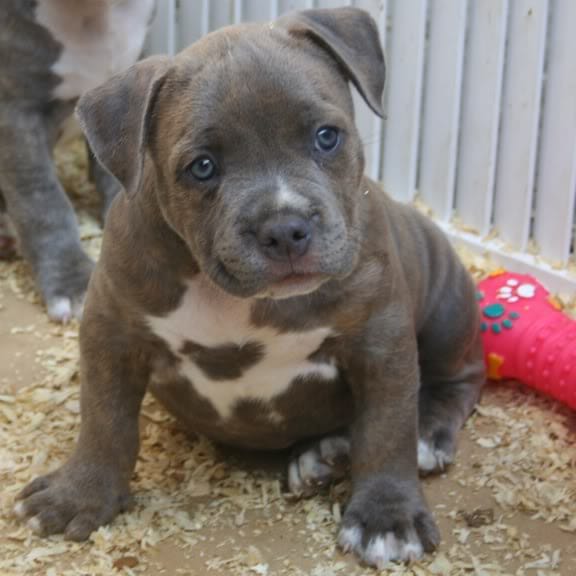
The American Bully was created in the years 80 and 90 in the United States based on American Staffordshire Terrier and the American Pitbull Terrier, and then it was completed with other races of type Bulldog, as the American bulldog, the English Bulldog and the French Bulldog.

The idea of รขโ‚ฌโ€นรขโ‚ฌโ€นcreating this breed of dog was Dave Wilson and Carlos Barksdale, founders of the world famous line Razor’s Edge Pit Bull. By owning some American Pit Bull Terriers, they invested in some very good lines and bought some of the best dogs of the time, mainly of the line Mayfield, but also some dogs Hemphil very good.

Later they contacted George Williams, a Washington breeder, D.C. They bought him the dog Diablo, and this purchase marked the beginning of the line Razor’s Edge. Diablo he was a fairly large and muscular dog, who had the size and build they were looking to add to their breeding program.

In fact, the intention of Dave Wilson was to create a breed of short, stocky dogs. His line was to have thicker legs and a bigger head than others Pit Bulls. I also wanted squarer and shorter muzzles. Like this, the line Razor’s Edge was similar to Pit Bull traditional, although he was less athletic and did not have the same drive.

When in 1997 the Pit Bull in your home county (Prince Georgeโ€™s, Maryland), Dave Wilson he was forced to leave the area and moved his breeding activity to Virginia. To perfect your line, spent a lot of time with other breeders to learn more about breeding and genetics. His vision of the dog he wanted was very clear: I had to have a different head.

In 2012, the kennel of Dave Wilson, Razor’s Edge Kennel, I had already created 7 generations of Pit Bulls pure breed. Unfortunately, although he did not want his dogs to be labeled as Pit Bull, could not get a pedigree for some of them and had to register them with the United Kennel Club (UKC) -the second largest dog club in the US, after the American Kennel Club (AKC)– as Pit Bull.

Dave began experimenting with many different lines of dogs, until he finally found the head he wanted. As the litters advanced, the line Razor’s Edge started to be really consistent. The heads of the dogs were quite large, but i also wanted the bones to be thicker.

Like this, mixing combinations of dogs and bloodlines, Dave finally got the style of Pitbull what did he want, called ยซBully Styleยซ. The dogs were small, with big heads, wide breasts, short snouts, big bones and short backs, but still within the standard of the United Kennel Club (UKC) and of the American Bully Kennel Club (ABKC).

Since the 15 in July of 2013, the race American Bully is officially recognized by the United Kennel Club.

Physical characteristics

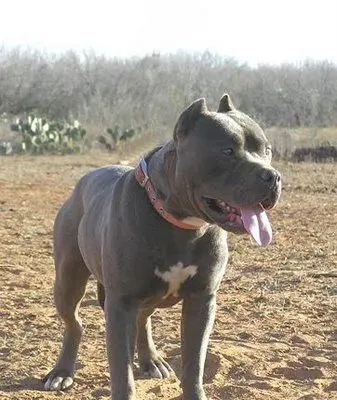
It is a dog Compact and somewhat intimidating at first sight, but with a good character that makes this dog its best and most outstanding feature.

With regard to the Constitution, It is a breed with an athletic and very muscular physique, with a large head, short back. It has short, glossy fur.

Its appearance reflects a strong foundation of American Pitbull Terrier, mixed with patterns of other type dog breeds Bull.

The general balance and correct proportions of an athlete are essential, and absolute solidity and adequate muscle tone are essential.

Size and weight

  • Weight: Of 31 to 54 kg
  • Male size: 43 to 51 cm.
  • female size: Of 40 to 48 cm.

Breed standard

The breed standards are documents produced by official bodies that list the conditions that a dog must meet. American Bully to be fully recognized as belonging to the race:

Character and skills

The American Bully it developed, first of all, as service dog. Despite its powerful appearance, his demeanor is gentle and friendly.

Some cases of aggression between species of the same race have been observed (especially same sex). For this reason, it is recommended that early socialization and training of puppies take place as soon as possible.

Well-adapted dogs, trained and socialized are confident, tolerant and, in general, kind to strangers. They are also smart and very eager to please, which makes training for dog sports and events easy and enjoyable. Any aggressive or fearful behavior, unprovoked, towards people is wrong for this breed.

The education of American Bully must be firm, but not brutal, because despite its appearance it is a sensitive dog.

Health

The American Bully he is a robust dog, that does not make the fortune of veterinarians, but it does not tolerate extreme temperatures, even if it is very cold (especially when there is humidity) as if it is very hot.

Like all dogs, the American Bully you may have a torn cruciate ligament (or a severe sprain) in the knee. So, it is better to avoid excessive sports activity while the puppy is growing.

It is a young breed, that does not necessarily present symptoms of hereditary or congenital diseases. But, some individuals may be prone to eye disease, nictitating gland prolapse, a condition that causes a red, rounded mass to appear at the inner corner of the dog's eye. This condition is easily treated with surgery..

Some individuals may also suffer from dysplasia, so a hip revision is highly recommended when the dog turns one year old. Similarly, It is recommended that individuals with movement coordination disorders undergo testing. This is because they can suffer from hereditary cerebellar ataxia, also known as spinocerebellar ataxia, a degenerative disorder of the cerebellum that causes, among other things, difficulties in coordinating movements.

Life expectancy

12 to 14 years

Grooming

The American Bully does not require too much maintenance. Regular brushing during the shedding period and a bath with a neutral pH dog shampoo when heavily soiled will suffice..

Food

The diet of the American Bully should be rich in protein and fat, with a good supply of calcium. It is possible to supplement the ration of croquettes with fresh meat or feed it exclusively with the BARF diet.

Legislation

Similar to the American bulldog, the American Bully It is a breed recognized by the American Bully Kennel Club and the United Kennel Club, but not for the Fรฉdรฉration Cynologique Internationale nor for the Sociรฉtรฉ Centrale Canine.

Like this, and a American Bully sold without registration, will be considered as a American Staffordshire Terrier, but it will never be confirmable, due to their morphological differences. Similarly, and a American Bully sold without pedigree ABKC, the owner may have problems. In fact, to own a American Bully and prove their belonging to the race, a pedigree of American Bully issued by the American Bully Kennel Club.

Last, but the American Bully don't be a categorized dog, a category diagnosis is recommended when the dog reaches one to one and a half years of age. This exam, performed by a veterinarian, confirm or deny that the dog belongs to a categorized breed.

ยซAmerican Bullyยป images

American Bully Videos

AMERICAN BULLY VOL.2

โ–ท The world of Pets: Dogs, cats, birds, reptiles, amphibians

American Pitbull Terrier
Estados Unidos Not recognized by the FCI

American Pit Bull Terrier

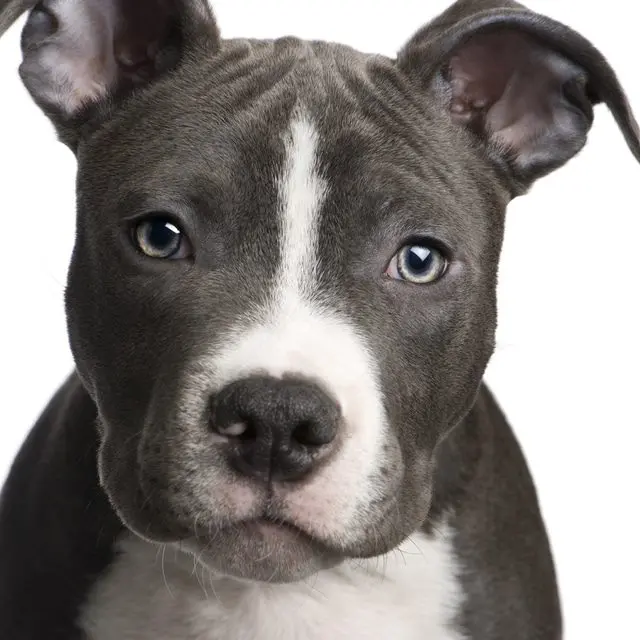
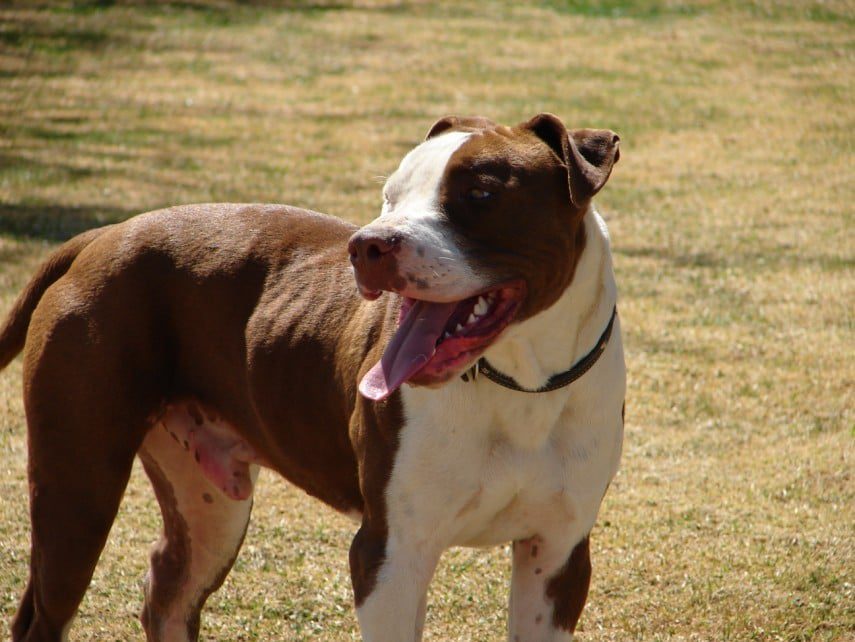
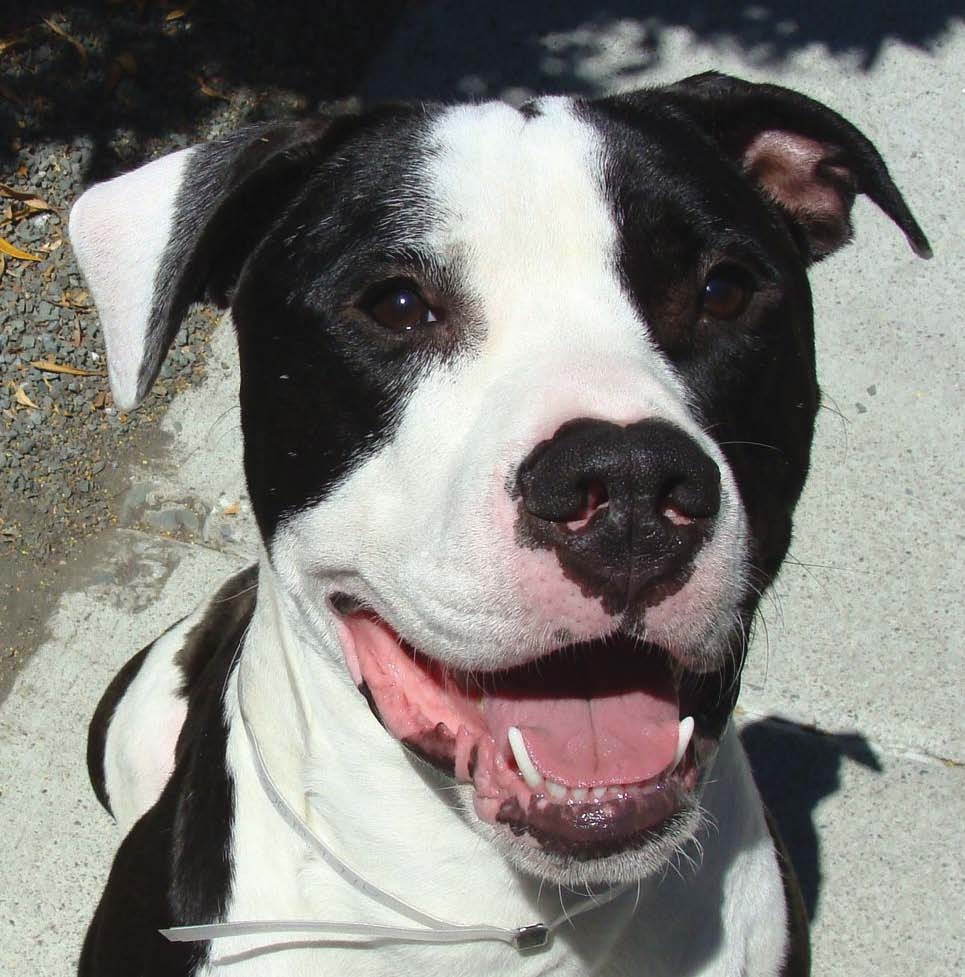
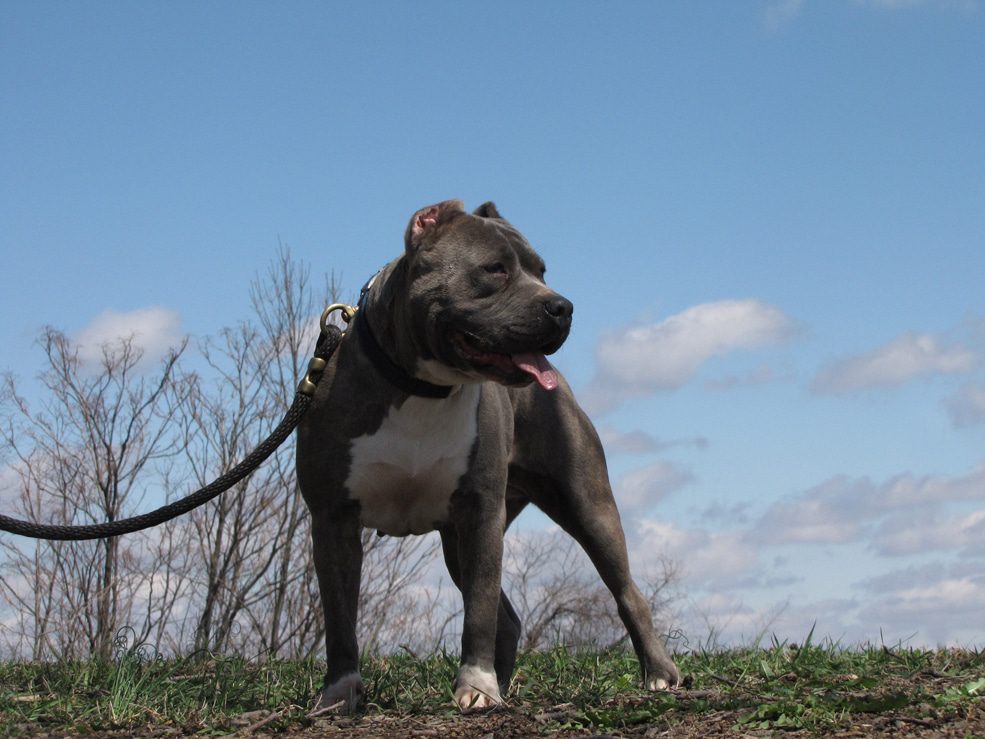
The American Pit Bull Terrier suele ser de naturaleza amable, even with strangers.

Content

History


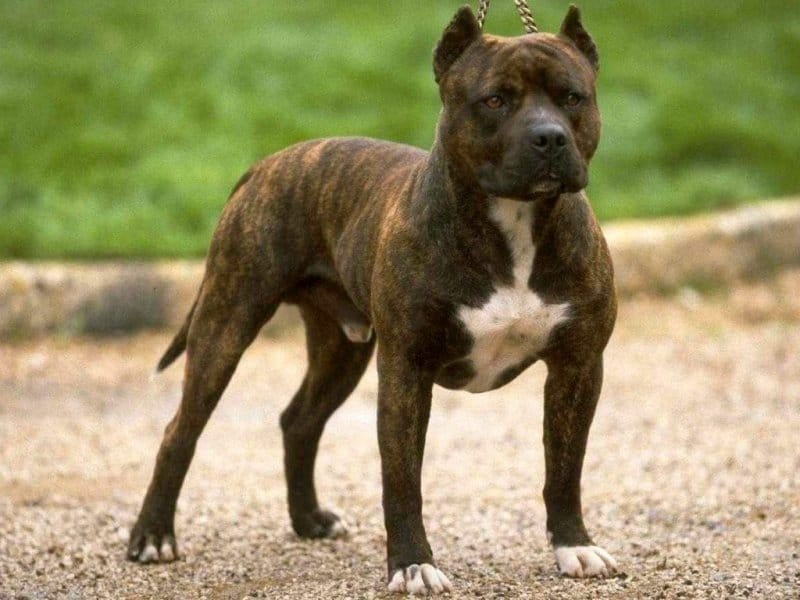
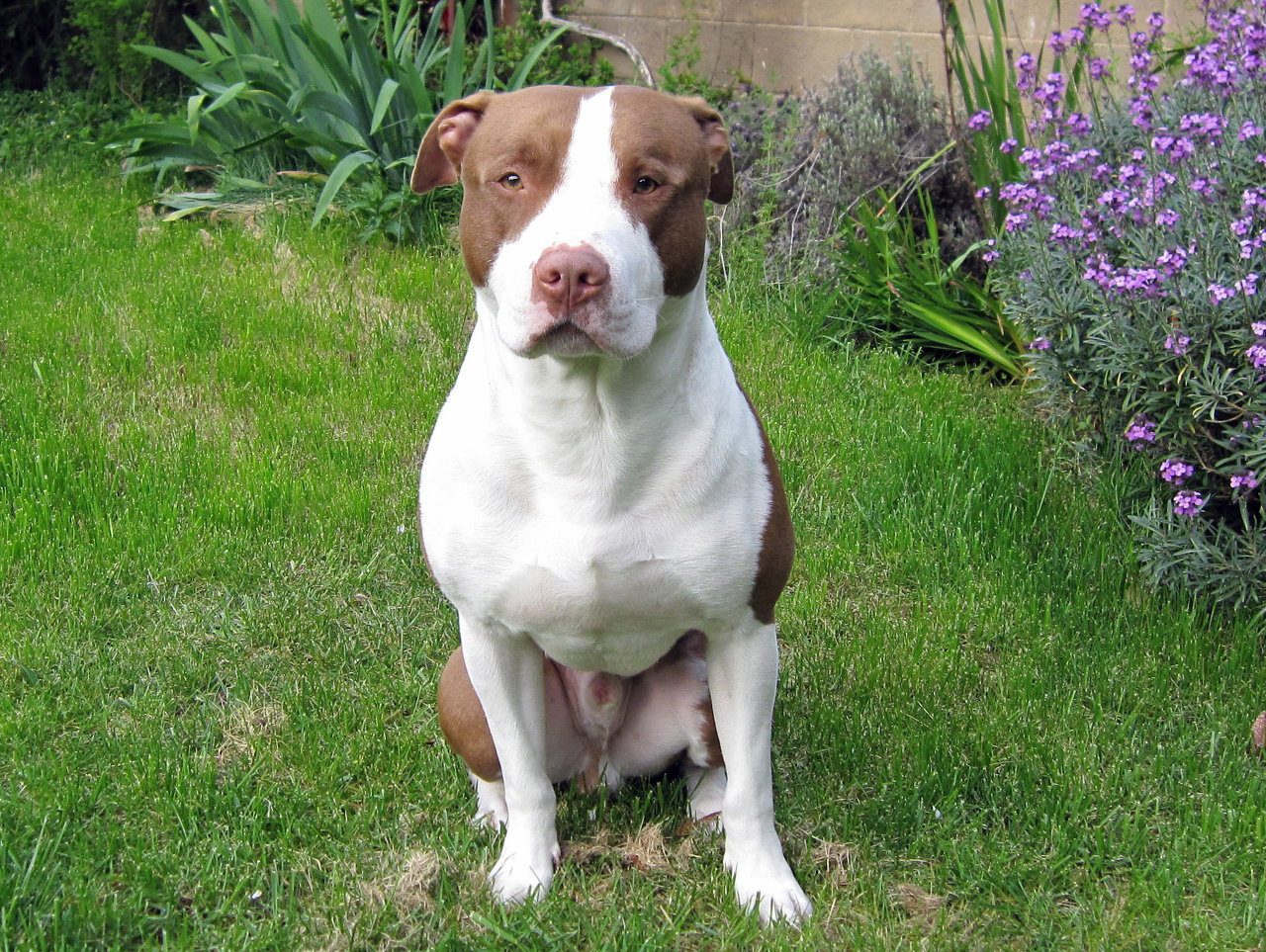
The American Pitbull Terrier is a pure breed of dog, originally from United States, It was forged from dogs imported from United Kingdom. Were used as fighting dogs until they were banned in 1976; they are now bred as pets and athletes in legal sports (Although it is still the favorite breed, dog fighting carried out clandestinely).

It should not be confused with other breeds mistakenly called "pit bulls.": Staffordshire Bull Terrier, American Staffordshire Terrier, Bull Terrier, American Bulldog and even more "distant" races, as the Dogo Argentino.

In Spain the American Pitbull Terrier He is considered a potentially dangerous breed of dogs by Royal Decree, by which to his possession must obtain the licence for possession of dangerous dogs and register it in the corresponding Municipal registry of potentially dangerous animals. One of the things that are required for this license is insurance of civil liability to third parties.

With the American Staffordshire Terrier, the confusion began when, at the beginning of the year 30, the American Kennel Club decided to give another name to the breed, American Staffordshire Terrier, with the end of that cease to be related to its past (The American Pit Bull Terrier was initially used as a dog fight). The American Pit Bull Terrier has not been recognized by the American Kennel Club, While the American Staffordshire Terrier, It is slightly larger, yes it has been recognized.

Otros nombres: APBT / Pit / Pitty

Physical characteristics

The APBT (American Pit Bull Terrier) is a dog's size medium, males usually weigh in 16 to 30 kg and females in 13 to 25 kg. They are known for their value, intelligence, dedication and loyalty. They are of athletic constitution and their breeding focuses mainly on the character and performance of the functional dog..

Are advised to socialize with other dogs from puppies to make to adult aggression towards these minor.

Currently the breed is going through a difficult time due to bastardization with other breeds for commercial reasons where massive dogs are sought, deformed, with exaggerated heads or true color, by having more acceptance and one greater than the APBT quote pure. There has also been crossbreeding by neophyte breeders who have crossed pitbulls cigars with dogs of similar breeds and even with dogs without breed. In this case these mixtures are no longer American Pit Bull and therefore their behavior will never be the same as that of a pure blood.

The American Pit Bull Terrier is recognized only by two records, ADBA and UKC, unlike the latter, the ADBA has the largest number of copies due to its defence and promotion of the breed.

According to the standard the characteristics of the breed are as follows:

Head: an exaggerated head, It will simply make you excessive weight that reduced you functionality when it comes to any type of work. An APBT, for all purposes provided in the head, It must appear two-thirds the width of the shoulders and a 25% more bandwidth on their cheeks to neck to the base of the skull. From the rear part of the skull to stop, It must be the same distance from the stop to the tip of the nose. The snout will be straight and square shape. The depth from the top of the head to the bottom of the jaw is important. The mandible is closed by the temporal fossa muscle., the pressure you need the animal on the coronoide process. The head will be a form of wedge view up from or side, and when viewed from front is round. We do not accept dogs with long lip.

Eyes: The eyes are round, separated from each other and located in a low position.

Teeth: Supported the closure in scissors (preferred), tongs and mild prognathism. The most important thing in the teeth of an APBT, that addition, the official judges of this breed of dog is that are based on a review of the standard, These are the tusks, that must slip through senior behind the lower.

Nose: The nose is dependent on the color of the dog, If it is white it should be red nose, If it is gray the must have grey until the bottom lip.

Neck: The neck should strongly be muscular to the base of the skull.

Rear train: This is the driving train of any four-legged animal. One 80% the work of an APBT develops in her hips and hind legs. A hip long and steep is extremely important, because it will give more support point to the femur, and it must be shorter than the tibia. The hips should be wide. To be this way it will take with them a wide back area, thus allowing a large surface for the insertion of the gluteus and biceps femoris muscles, they are the largest engines of the Powertrain.

Front of: The dog must have deep ribs. They are wide above, narrowing towards the bottom of. The ribs are home to the lungs, which are not deposits, but pumps. The ribs act like a bellows. Its effectiveness is linked on the difference between the volume of contraction and expansion. The depth of ribs gives more room for larger lungs. The shoulders should be slightly wider than the ribs at the height of the eighth rib. Too narrow shoulders not aguantarรกn an appropriate muscle structure, but also a too wide shoulders structure slows the animal and added too much unnecessary weight. The scapula must be to 45 degrees or less angle to the ground, and this will be wide and flat. The elbows should settle levels, with the humerus in a path almost parallel to the spine. The elbow must come under your ribs. The forearm, it should be only slightly longer than the humerus and the humerus should be thick and solid, nearly twice the thickness of the metatarsals at the height of the Hock. The front legs and shoulders must be able to withstand a lot of work and the thickness of the same here can become a virtue.. The feet should be small and inserted high in the ranillas or trabaderas.

Tail: The tail will be inserted under; It must be long until a little before reaching the hocks. This has a thick to decline until the end. You must have form of crank when the dog is relaxed.

Mantle: The mantle can be of any color or combination of them. It should be short and strong. The luster of the mantle usually reflects the health of the APBT, vital sign.

Skin: It should be thick and loose, but not with folds, with the exception of the neck and chest, that should be loose enough to show some vertical folds.

Height to the cross: The height at the cross of males may vary between the 38 cm and the 48 cm., and in females, from the 35 cm. up the 45 cm..

Weight: Despite what many people believe, the APBT they are a small canine breed, at most medium, finding the weight of the males may vary between the 16 kg and the 28 kg, and the females from the 13 kg to the 27 kg. One can have an exemplary pure APBT that although three or four kilograms above these weights, but of course he would have to be fat.

General aspect: The APBT should be square seen from side, the distance from the shoulder to the point of hip to be equal to the distance of the shoulder to the ground. The animal high step and will have a maximum point of their body weight support.

The American Pit Bull Terrier he is a complete athlete. Its morphology is designed for speed, power, agility and stamina.

Character and skills

The American Pit Bull Terrier suele ser de naturaleza amable, even with strangers. Many specimens have strong hunting instincts, so it will not be uncommon to see your Pit Bull run after cats or other small animals that are running away...

As with any breed of dog, proper training and socialization at an early age is a necessity. According to his temperament standard, "aggressive behavior towards human beings is not characteristic of the breed and is highly undesirable", because due to his powerful physique, the American Pit Bull Terrier needs an owner who is able to socialize it carefully and train it in obedience, in order to avoid any bad drink...

They are dogs with a lot of energy and need exercise and stimulation to channel their energy correctly and avoid becoming frustrated., boredom, or destructive behavior.

If we take care of responsibly and if it is properly socialized, our American Pit Bull Terrier, will be an excellent pet.

To remember:

This is what their standard dictates... "aggressive behavior towards human beings is not characteristic of the breed and is something very undesirable". Which confirms that, NO there are aggressive dogs, it is their masters who highlight these characteristics in the dog. Once again... the human hand that destroys everything...

ยซAmerican Pitbull Terrierยป images

ยซAmerican Pitbull Terrierยป Videos

The reality on the American Pit Bull Terrier.- I'm not what they say, I'm not what I appear!
โ–ท The world of Pets: Dogs, cats, birds, reptiles, amphibians

Mally
Estados Unidos FCI 243 . Nordic Sledge Dogs

Alaskan Malamute

The Mally he has a reputation for being stubborn and difficult to train among people who do not know him.

Content

Characteristics "Mally"

Coexistence is important that you have with your new friend. Before considering the acquisition of a dog of the breed "Mally" you know certain factors. Not all breeds of dogs are apt to live in an apartment, you must take into account his character, their need for exercise, their interaction with other pets, their care and if you have small children, their level of tolerance towards them.

Adaptation โ“˜

3,0 of 5 stars (based on 1 review)

friendly dog โ€‹โ€‹โ“˜

1,0 of 5 stars (based on 1 review)

hair loss โ“˜

5,0 of 5 stars (based on 1 review)

Affection level โ“˜

3,0 of 5 stars (based on 1 review)

Need for exercise โ“˜

4,0 of 5 stars (based on 1 review)

Social need โ“˜

4,0 of 5 stars (based on 1 review)

Home โ“˜

1,0 of 5 stars (based on 1 review)

Toilet โ“˜

5,0 of 5 stars (based on 1 review)

Friendly with strangers โ“˜

4,0 of 5 stars (based on 1 review)

barking โ“˜

4,0 of 5 stars (based on 1 review)

Health โ“˜

3,0 of 5 stars (based on 1 review)

Territorial โ“˜

5,0 of 5 stars (based on 1 review)

Cat friendly โ“˜

1,0 of 5 stars (based on 1 review)

Intelligence โ“˜

3,0 of 5 stars (based on 1 review)

Versatility โ“˜

2,0 of 5 stars (based on 1 review)

Child friendly โ“˜

4,0 of 5 stars (based on 1 review)

Surveillance โ“˜

4,0 of 5 stars (based on 1 review)

joy โ“˜

5,0 of 5 stars (based on 1 review)

History ยซAlaska Malamuteยป

Also called Alaskan Malamute, Dog is a native of the Arctic, and one of the oldest breeds in the sled dogs.

It's a dog with a strong appearance, strong, with good musculature. It is capable of carrying significant weight (until 20 kg) for tens of kilometres. This is a very ancient race, from the first races of sled dogs.

The Mally He was raised by a tribe of Inuit call mahlemiut. The meaning of the word mahle is unknown, But it is known that MIUT means "people of". Mahlemiut as Mahle people can therefore be interpreted. Following the English phonetics, the diction is then transformed into Malamute.

The area inhabited by the people of the Malamute were the banks of the Kotzebue Sound, a territory between two great rivers: the Kobuk and the Noatak. Men and women of the tribe of the mahlemiut (MALAMUTE) they were highly prized amongst other inuit tribes for their courage, his pride and his skill in hunting and fishing.

These dogs were famous for their beauty and for their characteristics of strength and endurance., that made them excellent elements for shooting. They were, in general, larger and more powerful than the other Nordic dogs, with similar in appearance to the Wolf and large and soft tails carried on the back. Contemporary witnesses tell it between 1870 and 1880 approximately, caribou, for unexplained reasons, they changed their usual migratory routes, thus depriving the Malamute tribes of an important source of livelihood.

Under these conditions, families could no longer afford to keep groups of dogs made up of more than two or three dogs.: testimonies of the time talking about men, women and even children helped their dogs to pull the sledges. So the population began to decline and the same fate befell their dogs.

His ability to bear heavy loads becomes apparent when he is chosen to go on expeditions to the Arctic Circle., as the two made Admiral Byrd. They were also used as a rescue of injured dog in World War II.

His presence, always with the head-up, It gives some impressive aspect that, However, It is not at odds with a very friendly and playful character with their owners, Although it gives the impression of being a very serious dog anyone that knows no race.

Read all about the race: Alaskan Malamute

Type and recognitions:

  • Group 5 / Section 1, Nordic Sledge Dogs
  • FCI 243, AKC, ANKC,โ€‹ CKC, KC, NZKC, UKC

Alternative names

1. Alaskan Malamute, Mal, Mally (English).
2. Malamute de l’Alaska (French).
3. Alaskan Malamute (German).
4. (Portuguese).
5. Alaskan malamute (espaรฑol).