โ–ท The world of Pets: Dogs, cats, birds, reptiles, amphibians

Coconut Lorikeet
Trichoglossus haematodus

Coconut Lorikeet

Content

Description:

26 cm.. of length and weight 100-157 g.

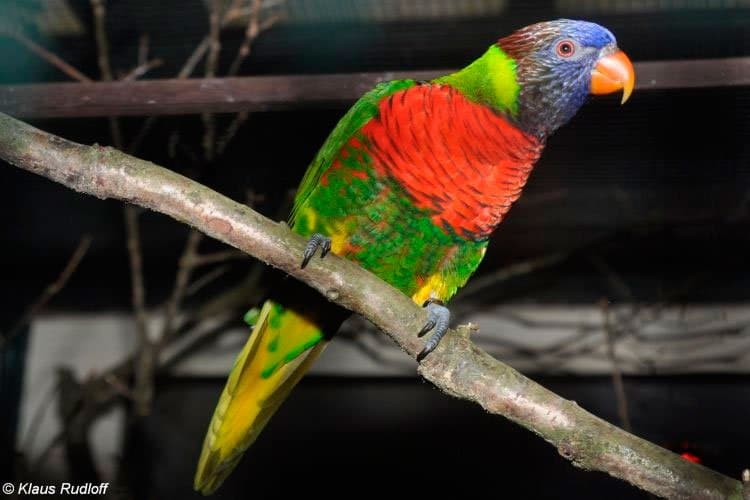
The Coconut Lorikeet (Trichoglossus haematodus) are colourful birds that find us almost all the colours of the Rainbow in their plumage.

Have the front of the crown, face and throat Dark bluish mauve, with violet stripes on the front of the crown, ear-coverts and part low of them cheeks; the rest of the head is dark blue with the bases of feathers brown-black color, especially around the rear of the crown and throat, and with greenish stripes at the rear of the crown.

The upperparts are of color green brilliant with specks of color reddish in the center of the the mantle (bases of feathers), and collar back brighter yellowish green.

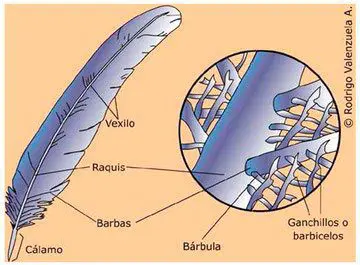
The primaries with the tips blackish; a patch bright yellow in the innerwebs of the flight feather, that tends to orange in the secondaries; outerweb of the primaries and under wing-coverts, green. Underwing-coverts orange-red; the flight feather dark gray in tips.

The Breast , the upper part of the abdomen and flanks bright reddish orange top, barred dark blue, tending to green at the bottom of the chest; abdomen with brands of color green in the Center, sometimes forming a discrete patch or interspersed with reddish orange; abdomen and the thighs with a beaming green and yellow with bases of color yellow; undertail-coverts of color yellow with tips of color green glossy. Upper, the tail of color green with them innerwebs of the lateral feathers yellowish: undertail, the tail greyish green in the outerweb, yellow in the innerwebs.

The bill orange red: the irises orange-red; legs gray or greenish gray.

Both sexes are very similar.

The immature they are more muted than adults, with the bill and the irises dark brown and tail more pointed.

  • Sound of the Coconut Lorikeet.

Description of subspecies of Trichoglossus haematodus
  • Trichoglossus haematodus caeruleiceps

    (Albertis & Salvadori, 1879) – The blue of the head is more pale, Red is orange-red with the lined in very narrow and dark blue. Abdomen Blackish and band of the neck yellow.


  • Trichoglossus haematodus deplanchii

    (Verreaux,J & Des Murs, 1860) – 26 cm.. of length and a weight of 140 gr.

    The Coconut Lorikeet (deplanchii) (Trichoglossus haematodus deplanchii) is a variation of the nominal (Trichoglossus Haematodus)

    Similar to the nominal Haematodus, but plumage slightly paler. The head has a very bright blue. Reddish orange on the chest, similar to the Trichoglossus haematodus massena, only that more alive. The abdomen is of color green beige and is extends to the part back from the neck. The the thighs and the feathers under the tail yellow and the upper part of the tail olive green.


  • Trichoglossus haematodus flavicans

    (Cabanis & Reichenow, 1876) – Something bigger, 27 cm approximately in length. Its plumage varies from green to olive green and yellow opaque. Breast and neck reddish colour with fine dark edges. Forehead and contour of eyes violet blue.


  • Trichoglossus haematodus haematodus

    (Linnaeus, 1771) – The nominal


  • Trichoglossus haematodus intermedius

    (Rothschild & Hartert, 1901) – 26 cm approximately in length. The blue of the head extends slightly less. The neck is yellow and the abdomen dark green.


  • Trichoglossus haematodus massena

    (Bonaparte, 1854) – 25 cm.. length.

    The Coconut Lorikeet (massena) (Trichoglossus haematodus massena) is a variation of the nominal (Trichoglossus Haematodus).

    The plumage is similar to the of the Ornate Lory except that it is usually paler. The head is blue, ending at the nape with dark brown feathers interspersed with more Brown clear. The chest is of color reddish with a narrow edging blue dark. In some cases, You can see some areas yellow in the plumage of the chest. The abdomen is green; but there may be some kind of mark on the bottom of the abdomen blue-violet.

    The eyes are of color orange in the adult and Brown in the youth. The bill is red orange.


  • Trichoglossus haematodus micropteryx

    (Stresemann, 1922) – Somewhat smaller, 25 cm approximately in length. The plumage is something more pale, the chest reddish orange with narrow edging of dark blue. Abdomen dark green. Band of the neck greenish yellow.


  • Trichoglossus haematodus nesophilus

    (Neumann, 1929) – 26 cm approximately. Very similar to the Trichoglossus Haematodus Flavicans but with feathers underneath of the tail are green.


  • Trichoglossus haematodus nigrogularis

    (Gray,GR, 1858) – Something bigger, 28 cm., approximately, length. Is similar to the Trichoglossus Haematodus Caeruliceps, but the blue of the head It is more dark and often have more red feathers on the neck.

Habitat:

The Coconut Lorikeet they are parrots of the Plains and Highlands. They are distributed by a wide variety of habitats such as mangrove forests, Moors and heathland near the coast, wooded meadows, tree galleries, reforestation during regeneration and rainforests.
In all cases, they need places with abundant flowers.

The Coconut Lorikeet they have also colonized habitats formed by man: coconut plantations, orchards and gardens on the outskirts of cities. They mark a greater preference for edges and clearings inside the dense jungles. Gladly tolerate the areas with degraded vegetation and plantations of small size in the small atolls.

They are birds sedentary, that does not prevent to do short trips looking for trees in flower. Because of these movements, populations appear to vary locally. Very gregarious, they live in pairs or in bands that can vary from a few birds to several hundred, Depending on the availability of food resources.

These birds are very active and noisy, flying a bit randomly above the tops of the trees or climbing up the branches in search of flowers or fruits.

during their search for food, the Coconut Lorikeet they usually share the space with other species of frugivores.
When they are hidden among the leaves, their cries of call reveal their presence.

They adopt a flight very quick and direct.
Son monogamous. During courtship, the couple is side-by-side, swaying, the neck forward and the pupil dilated. They wave irregularly wings to reveal the clear band that crosses its sub-wing.

Reproduction:

The breeding season performed at different times depending on the distribution area.
The species nominal eat your laying between September and December. Both members of the couple set up their nests in a tree cavity, usually a eucalyptus. Several nests, two or three may be in the same tree, but the entrance of the nest will fiercely defend against any intrusion.

In the the Admiralty Islands, the Coconut Lorikeet Sometimes they nest in the ground. The female normally lays 2 eggs on a bed of wood rotting chips. She incubated alone for a few 25 days.

The young chicks are altricial and need to 8 weeks to fend for if same. As soon as they are autonomous, they bind to the bedrooms and common bands.

Food:

The Coconut Lorikeet they have a bill acute equipped with a language composed of some structures similar to hairs tiny called papilla it help excavate the pollen and the nectar from the flowers.
Also eat fruits, berries, seeds, outbreaks and insect larvae.

In Australia, they forage primarily in eucalyptus trees and trees of the genus Banksia, in particular, coastal Banksia (Banksia integrifolia) and river banksia (seminuda), trees that often exceed the 15 metres in height.
They are also found in farmland, since they are particularly cultivated fruits and seeds Milky enthusiasts.
Easily entering gardens to steal fruit and not disdain approaching feeders

Distribution:

Size of its range (breeding/resident ): 5,310,000km 2

Endemics Oceania, at the edge of the Asian continent.
Can be found in Australia, in the East of Indonesian, Papua New Guinea, New Caledonia, the Solomon Islands and Vanuatu.

In Australia, mostly found on the coast, to the North of Queensland in the South of Australia and Tasmania.

Distribution of subspecies Trichoglossus haematodus

Conservation:


minor concern

โ€ข Red List category of the UICN current: Least concern

โ€ข Population trend: Decreasing

The species has undergone intense trade: from 1981 When it began trading in CITES Appendix II and through the year 2005, 100.388 individuals were captured in the wild and reported in the international trade.

In some places of Australia, It is hunted for food and feathers are later used in ritual ceremonies

"Coconut Lorikeet" in captivity:

I recommend to read first hand information:

KNOWING THE Coconut Lorikeet

Alternative names:

Coconut Lorikeet, Rainbow Lorikeet (Coconut) (English).
Loriquet ร  tรชte bleue (French).
Allfarblori (German).
Lรณris-arco-รญris (Portuguese).
Lori Arcoiris, Lori de cocotero, Tricogloso de Pecho Rojo (espaรฑol).

Carl Linnaeus
Carl Linnaeus

scientific classification:


Order: Psittaciformes
Family: Psittaculidae
Scientific name: Trichoglossus haematodus
Citation: (Linnaeus, 1771)
Protonimo: Psittacus haematod . [sic]

โ€œCoconut loryโ€ images:

Videos "Coconut Lorikeet"


"Coconut lory" (Trichoglossus haematodus)


    Sources:

    Avibase
    – Parrots of the World โ€“ Forshaw Joseph M
    – Parrots A Guide to the Parrots of the World – Tony Juniper & Mike Parr
    Birdlife
    Oiseaux.NET

    Photos:

    (1) – Rainbow Lorikeet perching on a wooden post at Tanganyika Wildlife Park, Kansas, USA. by Snowmanradio โ€“ Wikipedia
    (2) โ€“ A Green-naped Lorikeet, T. h. haematodus, a sub-species of Rainbow Lorikeet, Trichoglossus haematodus at Jurong Bird Park, Singapore. by Benjamint444 โ€“ Wikipedia
    (3) โ€“ A Rainbow Lorikeet (Trichoglossus haematodus moluccanus) in Melbourne, Australia. by Alfred Sin โ€“ Wikimedia
    (4) โ€“ Lorikeets feeding on the flowering tree, Corymbia โ€˜Summer Beautyโ€™ (cultivar). Photographed in suburban Brisbane, Australia. by Tatiana Gerus โ€“ Wikimedia
    (5) โ€“ Two birds preening each other. Jervis Bay, New South Wales, Australia by Arnie Hollyman โ€“ ibc.lynxeds.com

    Sounds: Patrik ร…berg, XC215305. accessible www.xeno-canto.org/215305

โ–ท The world of Pets: Dogs, cats, birds, reptiles, amphibians

Andean parakeet
Bolborhynchus orbygnesius

Catita andina

Content

Physical characteristics

16 cm.. height.
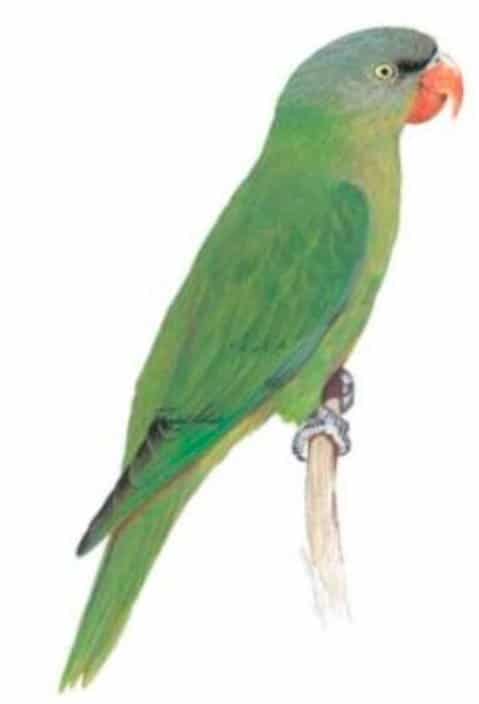
The Andean parakeet (Bolborhynchus orbygnesius) is usually dark green, with blue wing patch (visible in flight), clear peak, tail broad at the base and finished at tip of yellowish color with bluish tinge in the interior.

Sound of the Andean parakeet.

Habitat:

Video – "Andean parakeet" (Bolborhynchus orbygnesius)

It is usually found in deserts and semi-arid areas, between 3000 to 4000 m (It has been reported to the 1500 and to the 6000 m).
Possibly perform altitudinal migration, descending to mountainous valleys after reproduction. You can also visit rural areas and agricultural land.

Reproduction:

Walks in couple or flocks of more or less 300 individuals. They breed in caves dug into ravines.

Food:

The diet consists of seeds, buds and fruits.

Conservation:

State of conservation โ“˜


minor concern Minor Concern โ“˜ (UICN)โ“˜

This species has a very large distribution area and, therefore, does not approach thresholds for Vulnerable based on range size criteria (presence extension <20 000 km2 combinada con un tamaรฑo de distribuciรณn decreciente o fluctuante, extensiรณn>30 % decrease in ten years or three generations). Population size has not been quantified., but not believed to approach the thresholds for Vulnerable based on population size criteria (<10 000 individuos maduros con una disminuciรณn continua estimada en>10 % in ten years or three generations, or with a population structure).

Population size: unknown

The population trend: Stable

presence extension (breeding/resident): 655 000 km 2

Distribution:

Catita andina

It is found in northwestern Peru to Bolivia and west of the Andes in Peru..

"Andean parakeet" in captivity

They are shy and quiet birds, very sensitive to cold, stress and infections. Birds may die without apparent reason. They are rare in captivity.

Alternative names:

1. Andean Parakeet (English).
2. Toui de d'Orbigny (French).
3. Andensittich (German).
4. Periquito-andino (Portuguese).
5. "Catita andina", Perico Andino (espaรฑol).


Andean parakeet (Bolborhynchus orbygnesius)


Images "Andean parakeet"


Species of the genus Bolborhynchus

Sources:

– Parrot Book, Parrots and macaws Neotropical
– Photo: For Charles Hesse – All rights reserved

โ–ท The world of Pets: Dogs, cats, birds, reptiles, amphibians

Blue-fronted Lorikeet
Charmosyna toxopei

Content


Anatomy-parrots

Description

16 cm.. length.

Blue-fronted Lorikeet

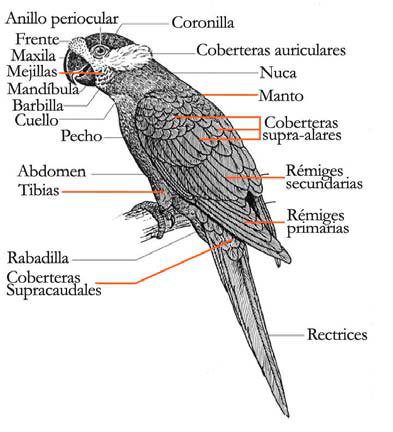
The forecrown of the Blue-fronted Lorikeet (Charmosyna toxopei) is bright green, the front of the crown, above the eyes is bright blue; rest of the head green. Upperparts green, bright in the rump. Wings Green with blackish inner feathers. The underwing-coverts green; flight feather Blackish with yellow band in the whole lower part of the secondaries. The underparts brighter yellowish green. Tail green, with red bases and blackish stain. The bill orange; the irises yellow orange; legs orange-red.

Habitat:

If recent observations were in fact of the Blue-fronted Lorikeet, species can be nomadic, moving from high to low altitude on the basis of the availability of food (like some other small parrots). This could explain the paucity of records, especially for a species already by itself it is distributed sparsely. The other possibility is that the birds are distributed only in the forested hills.

Interviews with local residents suggest that the species moved to the lowlands during the two annual seasons of heat, in March-April and August-November.

Reproduction:

There is no data.

Food:

The locals who live in the plateau frog They reported that the bird feeds on nectar and pollen from the trees in flower.

Distribution:

Endemic to Buru, Indonesian. Obviously, is a rare species, and virtually nothing is known of its State. The original specimens were collected in the wooded hills between 850 m and 1.000 m.

In 1980 the species was reported to be quite common in plantations, secondary and primary forest, but this record has been suggested as a reference to the Red-flanked Lorikeet (Charmosyna placentis) (the record of this species from Buru It is in fact wrong). In 1989 two flocks of five to six birds, supposedly this species, they were seen during a selective felling of forests to 600 meters on the Teluk Bara. There is also a report of 1993 of four small unidentified parakeets seen in the same area as the observations of 1.980. The species are now considered endangered by Birdlife International, although a thorough search must be carried out before its status can be fully determined. VULNERABLE.

Conservation:


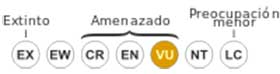
critical hazard

โ€ข Current IUCN Red List category: Critical Hazard

โ€ข Population trend: Decreasing

โ€ข Population size: 50-249 mature individuals

Although there are few records (confirmed or unconfirmed) of the species, It is suspected that it is declining due to loss of forests in the lowlands.

Most of the forests in the coastal lowlands of Buru have they been clarified, and much of the forest in the northern part of the island has been connected shape selective or degraded and fragmented by migratory agriculture, in such a way that only a few small patches of lowland primary forest remain. But, the island's gardens still contain many indigenous tree species. In 2010, There was at least one search operation on a large scale above Buru, located in the lowlands. But, extensive forests of mountain of the island remain largely without being scanned. The topography of the mountain range Kaplamandan is the hope that almost all of the montane forest is inaccessible to loggers (A. Gray in litt. 2010).

All of the original specimens were captured alive using lime, However, the species is not kept as a pet, does not seem to be listed. Have a distribution of mountain which is close to the maximum altitude within its distribution area, does this species is potentially susceptible to climate change (BirdLife International data not publ.).

"Blue-fronted Lorikeet" in captivity:

Not found in captivity.

Alternative names:

Blue-fronted Lorikeet, Blue fronted Lorikeet, Buru Lorikeet (ingles).
Lori de Buru (French).
Burolori, Burulori (German).
Lori de Buru (espaรฑol).

scientific classification:

Order: Psittaciformes
Family: Psittaculidae
Genus: Charmosyna
Scientific name: Charmosyna toxopei
Citation: (Siebers, 1930)
Protonimo: Hypocharmosyna toxopei

Images "Blue-fronted Lorikeet"

————————————————————————————————

ยซLori de Buruยป (Charmosyna toxopei)


Sources:

Avibase
– Parrots of the World โ€“ Forshaw Joseph M
– Parrots A Guide to the Parrots of the World – Tony Juniper & Mike Parr
– Birdlife

โ–ท The world of Pets: Dogs, cats, birds, reptiles, amphibians

Alexandra's Parrot
Polytelis alexandrae

Alexandra's Parrot

Content


Anatomy-parrots

Description

45 cm. length, including its long, narrow tail, and around 92 g. of weight.

The head of the Alexandra's Parrot (Polytelis alexandrae) is light olive brown color, heavily washed in blue pastel in the Crown area, the nape of the neck, and slightly below the eyes; the Chin and throat pale pink.

Mantle and scapulars Brown olive-tinged greenish and fine dark stripes; back and rump, color pastel blue; upper coverts greenish-gray tail. Upper coverts bright yellowish green wings, with a few more green feathers around the curve of the wing; Dark greenish blue primary coverts; primary blue-green with yellowish-brown, and dark brown margin leading edge for the vane inner (the third rรฉmige primary has the tip spatula-shaped. ); secondary of pale blue-green with a yellowish margin (more pronounced in vane outer); greenish grey tertials with vane more obscure internal. Wing of bright green feathers, more yellow towards leading edge; undertail, wings greyish Brown with large pale yellow inner margin to the vane inner. Usually gray olive underparts pale, with the pink color of the throat which runs on top of the chest; belly and flanks washed clear bluish green; thighs and lower flanks with increase in pink; coverts yellow olive color infracaudales. Upper, tail Brown olive green near the axis and blue toward tip-washed, lateral feathers bluish grey and pink-tipped; undertail, Black tail with tips and margins of pink.

The beak is red with a grey periophthalmic ring; orange-yellow irises; grey legs.

Female has a shorter tail (average of 6 cm.. less than the male) and it lacks of spatula in the third tip rรฉmige primary. The wing coverts are greener and more off. And the mantle shows less green Suffusion. Crown, back and rump are less blue.

Immature similar to females and males acquire the adult plumage in about 14 to 18 months.

Habitat:

Highly nomadic and little known in the wild.

Inhabits the deserts of sand from the arid Center of Australia, often far from water. Birds can reach an area which have been absent for many years, reproduce, and quickly exit again.

They are found in mound grasslands, dry forests of coastal eucalyptus, thickets of acacia, mulga (Acacia aneura) and deserts with scattered Oaks (Allocasuarina decaisneana).

The birds are alone, in pairs or in small groups of up to 15 Member. There are also some earlier records of larger breeding colonies.

Reproduction:

The breeding season has been recorded from September to January, Although the nesting can be irregular and probably depend on the rainfall of rain and is also sometimes colonial.

During courtship, the male raises some feathers on its Crown and extends its wings and tail.

Favorite nesting place is a large hole in a Red eucalyptus (Eucalyptus camaldulensis) lined with a pile of rotting wood dust (the desert oak It has also been used).

Of four to six white eggs make up the implementation, incubated by the female for a few 21 days. While the female is incubating, the male takes care of your power. The young are fed during 5-6 weeks and become independent from three to five weeks after leaving the nest.

Food:

The birds feed on the ground and can be very meek. The diet includes seeds of Spinifex (Triodia mitchelli) and Herb mulga (Bipartite Danthonia). As well, according to sources, they can feed on nectar.

Distribution:

The Alexandra's Parrot are confined to the interior of Australia, where usually are very rare and few records. The species is an irregular visitor, It may not appear in parts of its distribution area for two decades or more.

Are distributed in Western Australia, from the North of the Great sandy desert to the West of the fitzroy river, about Wiluna, Sandstone, Menzies and Coolgardie and East through the deserts Gibson and Great victory.

Occurs in the Northern Territory to the North of the area of Newcastle Waters and Stuart Plains, and to the South up to around Alice Springs.

In Queensland, It is very rare in the South-western end, but there is a recent breeding record around Cloncurry.

In South Australia, extends to the East, about Oodnadatta, and there is a record of 1986 in the Great Victoria desert some 25 kilometers to the North of the Nurrari Lakes.

There is disagreement about its conservation status. The recent lack of records of large groups of reproduction, He cited as a possible indication of population decline, but there is little real information, and it suggests that the world's population can be estimated between 1.000 and 20.000 birds. A recent study suggests the species could be irruptive rather than nomadic, and that a population nucleus may be resident in the area around the Tobin Lake, Western Australia.

Trade, fires, changing land use regimes and predation, they have been cited as potential threats.

Protected by law.

A large number in captivity.

VULNERABLE

Conservation:


Near-threatened


โ€ข Current category of the Red List of the UICN: Near threatened

โ€ข Population trend: Stable

The population of the Alexandra's Parrot It is estimated, with low reliability, in 5 000 birds breeding (Garnett and Crowley 2000).

There is no firm evidence to determine the general trend of the number of Princess Parrot that exist. But, the rate appears to have decreased (Garnett and Crowley 2000), and recent sightings (in different places of Tobin Lake in the Great sandy desert) they have only been small batches (Garnett 1993; Garnett and Crowley 2000). On the other hand, historical records include reports of large flocks and large breeding colonies (Forshaw and Cooper 2002; North 1912; Parker 1971; Whitlock 1924).

The Alexandra's Parrot It has not been registered crossed with other species in nature. It is unlikely that any interbreeding occurs because the other two members of the genus Polytelis, the Superb parrot (Polytelis swainsonii) and the Regent Parrot (Polytelis anthopeplus), they usually do not occur in the same places as the Princess Parrot (Higgins 1999).

Remote areas occupied by species, its irregular presence in most places, and the lack of information about their movements, make it difficult to accurately estimate population size (Higgins 1999).

Conservation Actions Proposed

โ€ข Study the ecology of species, about the Tobin Lake or the Great Victoria desert to determine the likely constraints on population size.

โ€ข Monitoring of sightings to characterize the habitat and habitat models to verify the needs and historical responses to fire and precipitation throughout the distribution of the species.

โ€ข Use research information to develop a management strategy.

โ€ข Protect the areas where the species breeds..

"Alexandra's Parrot" in captivity:

Not too noisy, good whistling, and friendly disposition. It is a robust bird able to tolerate reasonable temperatures. Susceptible to infections in the eyes.

According to records, a female lived 23,9 years in captivity.

common in captivity.

Pure birds, with colors typical of their species are increasingly difficult to find.

The Alexandra's Parrot they can be accommodated in a wide variety of sizes of aviaries. It is best to raise them as couples, They seem to play better if they can see or listen to another pair of the same species. An Aviary of 4 meters long is considered the minimum to adequately house these birds.

Have brought successfully as a colony of 3-5 couples in a large aviary.

Non-toxic hardwood branches can be placed in the Aviary of birds so that they can chew them. This entertains our parakeets, helping to minimize boredom and providing them with a little exercise for supico. Natural branches of different diameters, and placed in different angles, they can be used for hangers. These natural hangers can be chewed by birds and may need to be replaced periodically. Birds can chew the flowers and fruiting bodies on the branches.

Its diet It requires a mixture of quality of food for parrots and a variety of fruits, such as the Apple and orange, as well as a variety of vegetables – corn, chard, usually providing green food and green leafy vegetables. Sowing grasses, If they are available. Soaked or sprouted seeds if they are available.

Commercial dry pellets can be part of a balanced diet.

Some birds will eat insects, as mealworms, especially around the breeding season. The insects will provide adult and young birds with a good source of easily digestible protein.. Insects can serve food to these birds on your daily diet.

The breeding season These parrots begins in March; the implementation is of 3 to 7 eggs, and incubation lasts approximately 20 days; the young become independent to the 50 days; occasionally breeding occurs 2 times a year. It is frequent that the female sexually mature in the first year, the male after the second year; couples can stay in adjacent aviaries each other separated by double metal fabric.

Alternative names:

Alexandra’s Parrot, Gould princess parrot, Pilpul, Princess Alexandra’s Parrot, Princess Parrot (ingles).
Perruche d’Alexandra, Perruche, Perruche ร  calotte bleue, Perruche Princesse-de-Galles, Princesse-de-Galle (French).
Alexandrasittich, Alexandra-Sittich, Blaukappensittich, Grosser Alexandersittich (German).
Periquito-princesa (Portuguese).
Perico Princesa, Periquito Princesa de Gales (espaรฑol).

scientific classification:

Order: Psittaciformes
Family: Psittaculidae
Genus: Polytelis
Scientific name: Polytelis alexandrae
Citation: Gould, 1863
Protonimo: Polyteles alexandrae

ยซPrincess Parakeetยป Images:

————————————————————————————————

ยซPrincess Parakeetยป (Polytelis alexandrae)

Sources:

Avibase
– Parrots of the World โ€“ Forshaw Joseph M
– Parrots A Guide to the Parrots of the World – Tony Juniper & Mike Parr
– Birdlife
– AnAge: The Animal Ageing and Longevity Database – Genomics.senescence.info

Photos:

(1) – Pet Info Club – petinfoclub.com
(2) – Princess Parrot at Cincinnati Zoo, USA By Ted (originally posted to Flickr as DSC_0026) [CC BY-SA 2.0], via Wikimedia Commons
(3) – Princess Parrot at Cincinnati Zoo, USA By Ted (originally posted to Flickr as DSC_0063) [CC BY-SA 2.0], via Wikimedia Commons
(4) – A blue mutant Princess Parrot at Flying High Bird Sanctuary, Australia By paulgear (Picasa Web Albums) [CC BY-SA 3.0], via Wikimedia Commons
(5) – ยฉ2013 Simon J.. Tonge – calphotos

Sounds: Nigel Jackett (Xeno-canto)

โ–ท The world of Pets: Dogs, cats, birds, reptiles, amphibians

Deville's Parakeet
Pyrrhura lucianii


Deville's Parakeet

Content

Description:

21-23 cm.. height.

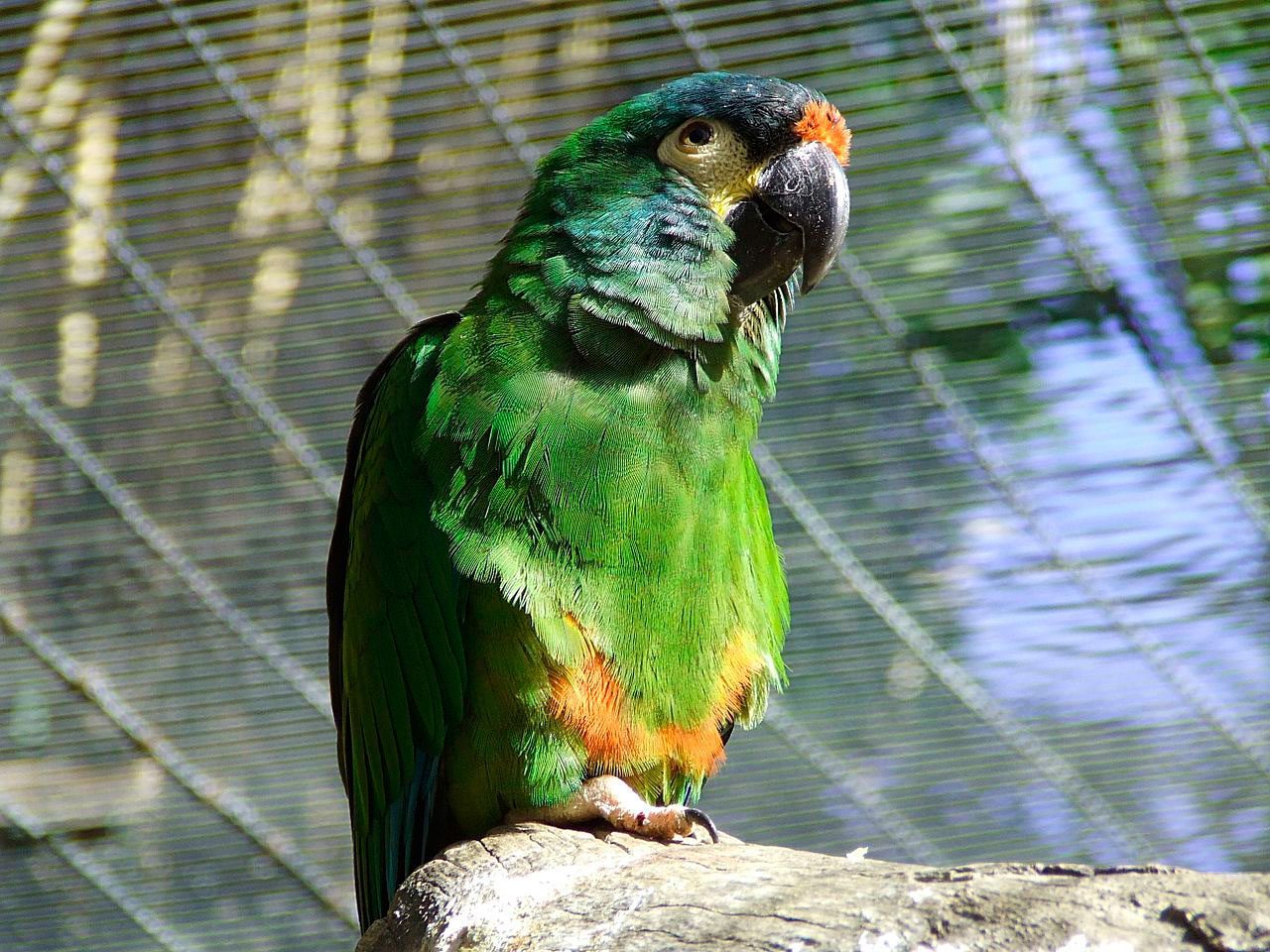
the showy plumage of the Deville's Parakeet (Pyrrhura lucianii) is generally Green, darker in the lower parts, the crown is dark brown, the forecrown and face is brownish red in colour; cheeks brick red, faded of blue, ear-coverts brownish yellow, neck and chest with the typical scales very visible due to the black and yellow contrast of the feathers. The ventral coat of arms, reddish, is well defined; in flight the dark red spot is notorious for the abdomen. Well defined are the reddish marks on the rump and in his long tail; the flight feather they are blue.

It has periocular ring Of course, irises brown, bill blackish and legs grey pink.

Note:

Until recently this species was included along with the Pyrrhura subandina, Pyrrhura caeruliceps, Pyrrhura pantchenkoi within the species Pyrrhura picta.

Habitat:

Found in altitudes of 800 m, in forests Terra firm and vรกrzea, including forest margins and near clearings with tall trees. In forests low semi humid, up close 100 m.

Seen in pairs, groups of three or flocks of up to 20 individuals.

Reproduction:

Little is known about the reproductive cycle of this species, probably nesting in large trees, in cavities or in nest of woodpeckers abandoned, with one laying estimated in 5-7 eggs.

Food:

With feeds a wide variety of fruits, flowers, seeds and algae, possibly.

Distribution:

Size of the distribution (breeding/resident): 47,200 km2

Restricted to the State of amazon in the Northwest Amazon of Brazil.

This species is supposed fairly common within its range, However, This can not be confirmed since this time rare remote region is visited by researchers.

Conservation:

โ€ข Red List Category: Least concern

โ€ข Population trend: Decrease

State of conservation โ“˜


minor concern Minor Concern โ“˜ (UICN)โ“˜

The status of their populations is unknown, but for the good condition of the habitat, it can be assumed that they are in good state of conservation.

While the trend of the population seems to be decreasing, do not believe that the decline is fast enough for approaching the threshold of vulnerable under the criterion of population trend

"Deville's Parakeet" in captivity:

Although he is a parrot rare in captivity, its potential as a domestic fowl is excellent, provided there are hand raised and socialized from an early age. The newly imported birds are usually shy and nervous and often they remain reserved.

It is usually inquisitive and active, enjoy flying and requires plenty of exercise and a spacious cage. Usually, It is not too noisy unless it is excited (as it is usually the case of all species Pyrrhura).

Once acclimatized, These parrots are quite robust. Enjoy with the bath by what are them must provide a dish of water little deep to daily. Also the love chew branches fresh.

Alternative names:

Deville’s Parakeet, Bonaparte’s Parakeet (English).
Conure de Bonaparte, Conure de Luciani (French).
Bonapartesittich, Prinz Luzians Rotschwanzsittich (German).
Tiriba-de-deville (Portuguese).
Cotorra de Bonaparte, ร‘รกngaro de Deville, Perico de Deville, Cotorrita barriguiroja (espaรฑol).
Perico de Bonaparte (Peru).

scientific classification:

Order: Psittaciformes
Family: Psittacidae
Genus: Pyrrhura
Scientific name: Pyrrhura lucianii
Citation: (Deville, 1851)
Protonimo: Conurus Lucianii

Images Deville's Parakeet:


Especies del gรฉnero Pyrrhura

Deville's Parakeet (Pyrrhura lucianii)


Sources:

Avibase
– Parrots of the World โ€“ Forshaw Joseph M
– Parrots A Guide to the Parrots of the World – Tony Juniper & Mike Parr
Birdlife

Photos:

(1) – Maracana luciani Dev. & Cast. Pyrrhura lucianii = (Deville, 1851) by Francis de Laporte de Castelnau [Public domain], via Wikimedia Commons

Sounds: Daniel Lane (Xeno-canto)
โ–ท The world of Pets: Dogs, cats, birds, reptiles, amphibians

Spectacled Parrotlet
Forpus conspicillatus

Spectacled Parrotlet

Content

Description:

Spectacled Parrotlet

12,7 to 13,9 cm.. height.

The male of the Spectacled Parrotlet (Forpus conspicillatus) has a yellowish green forehead extending the cheeks and to the throat.

The underparts They are slightly off in colouration, with a bluish gray suffusion in chest. The area surrounding the eyes It is cobalt blue. The wings and upperparts is dark green, with the back and rump blue-violet color, with a darker shade on own rear.

The bill Pink is white. The legs They are pink. The irises is dark brown.

the colors of the female they are duller in terms of the general coloring. Their upperparts They are brighter, with the area around the eyes, emerald green. The underparts They are more yellowish green.

Description 3 subspecies:

  • Forpus conspicillatus caucae

    (Chapman, 1915) – It is paler and blue around the eyes is lighter and is just behind these.


  • Forpus conspicillatus conspicillatus

    (Lafresnaye, 1848) – Nominal.


  • Forpus conspicillatus metae

    (Borrero & Hernandez-Camacho, 1961) – Blue around eyes It is very small.

Habitat:

It is very common. It is found in varied ecosystems, patches of forest, clear with scattered trees, cultivated areas, from 200 m to 1800 m (migrate attitudinally up 2600 metres in Bogotรก). They are noisy flocks of more of 120 individuals.

Reproduction:

Nest in postholes and termiteros.

Food:

Feeds on grass and weed seeds, fruit, berries, flowers and buds.

Distribution:

Size of the area of distribution (reproduction / resident): 822.000 km2

Patchy and discontinuous distribution. east of Panama, Colombia and West of Venezuela.

Distribution 3 subspecies:

  • Forpus conspicillatus caucae

    (Chapman, 1915) – Southwest of Colombia, to the West of the Andes (Cauca and Nariรฑo); possibly west of Ecuador.


  • Forpus conspicillatus conspicillatus

    (Lafresnaye, 1848) – Nominal. From the tropical eastern Panama north central Colombia.


  • Forpus conspicillatus metae

    (Borrero & Hernandez-Camacho, 1961) – Slope of the Andes of Colombia to the west end of Venezuela.

Conservation:

State of conservation โ“˜


minor concern Minor Concern โ“˜ (UICN)โ“˜

โ€ข Current category of the Red List of the UICN: Least concern.

โ€ข Population trend: In increased.

Justification of the population

The size of the world population It has not been quantified, but this species is described as ยซcommonยป (Stotz et to the., 1996).

Justification of trend

It is suspected that the population is increasing as habitat degradation is creating new areas of suitable habitat.

"Spectacled Parrotlet" in captivity:

In captivity is common in some European countries, rare elsewhere. It is a bird lively, Intelligent and with attitude. They are highly valued for being quiet; they can learn many words and whistle very well. Son loving and they love spending time with their owners, However, they are happy and independent enough to happily play with their toys while the owner is absent. Need much space as it is a bird very active, as well as different toys.

Alternative names:

Spectacled Parrotlet (English).
Toui ร  lunettes, Perruche-moineau ร  lunettes (French).
Brillensperlingspapagei, Augenring-Sperlingspapagei, Brillenpapagei (German).
Tuim-da-colรดmbia (Portuguese).
Catita Enana Pรกlida, Cotorrita de Anteojos, Periquito de Anteojos (espaรฑol).
Periquito Ojiazul (Venezuela).

scientific classification:

Order: Psittaciformes
Family: Psittacidae
Genus: Forpus
Scientific name: Forpus conspicillatus
Citation: (Lafresnaye, 1848)
Protonimo: Psittacula conspicillata

Images Spectacled Parrotlet:

Videos of the "Spectacled Parrotlet"


Species of the genus Forpus

Spectacled Parrotlet (Forpus conspicillatus)


    Sources:

    Avibase
    – Parrots of the World โ€“ Forshaw Joseph M
    – Parrots A Guide to the Parrots of the World – Tony Juniper & Mike Parr
    Birdlife
    – parrots book, parrots and macaws Neotropical.

    Photos:

    (1) – A female Spectacled Parrotlet in Manizales, Caldas, By Julian Londono from Colombia Manizales, Colombia [CC BY-SA 2.0], via Wikimedia Commons
    (2) – A male Spectacled Parrotlet in Manizales, Caldas, By Julian Londono from Colombia Manizales, Colombia [CC BY-SA 2.0], via Wikimedia Commons
    (3) – A pair of Spectacled Parrotlets in Manizales, Caldas, By Julian Londono from Colombia Manizales, Colombia [CC BY-SA 2.0], via Wikimedia Commons
    (4) – A male Spectacled Parrotlet in Colombia just outside the entrance of its nest By Rogier Klappe [CC BY 2.0], via Wikimedia Commons
    (5) – Spectacled Parrotlet (Forpus conspicillatus) by Ron KnightFlickr
    (6) – PSITTACULA CONSPICILLATA By Internet Archive Book Images [No restrictions], via Wikimedia Commons

    Sounds:

โ–ท The world of Pets: Dogs, cats, birds, reptiles, amphibians

Plum-faced Lorikeet
Oreopsittacus arfaki

Plum-faced Lorikeet

Content

Description

15 cm.. length between 16 and 23 g. of weight.
Plum-faced Lorikeet

The hood of the Plum-faced Lorikeet (Oreopsittacus arfaki), from the top of bill up to the crown rear, is Scarlet Red ; chin and Spada color plum (with bluish Sheen), broken by two rows of thin stripes.

Upperparts of color green uniform with a light spread of olive in the the mantle. Wings, views from the top are green; vane internal to the flight feather, blackish in color and vane external to the primaries outermost, bluish green. Underwing-coverts and axillary, red (Outer secondaries slightly marked with yellow); flight feather Blackish with yellow central band. The mauve of it chin be extended slightly in the throat; top of the chest green, center of chest and belly bathed in orange-red; under belly green; undertail-coverts green, lightly bathed in yellow on sides. Uppertail green, merging to blackish and ending in pinkish-Red, in the tip lighter fusion: below, the tail is red with marked with black side feathers.

The bill black; irises blackish brown; legs grey.

Female lack of top red (but you can show a bit of red on the part rear of the Crown).

Immature male with only red on the back of the crown. The young birds have a slightly 'scaly' appearance; also off the tip of orange-yellow color of the tail.

Description 3 subspecies

  • Oreopsittacus arfaki arfaki

    (Meyer,AB, 1874) – The nominal.


  • Oreopsittacus arfaki grandis

    : (Ogilvie-Grant, 1895) – Greater than the nominal. Lack of the flanks redorange and markings of the belly of the other two subspecies.


  • Oreopsittacus arfaki major

    : (Ogilvie-Grant, 1914) – Larger that the nominal and more red-tipped in the tail.

Habitat:

The distribution of the Plum-faced Lorikeet is more or less continuous in the extension of the moss forests; the species is mainly found among the 2.000 and 3,750 m, but can observe is to 1.000 m occasionally. Be found with greater frequency in pairs or small flocks very vocal. They feed acrobatically in the canopy; They also feed on plants, especially in the flowers of epiphytes, often in the company of other flower aficionados such as the lories of the genus Neopsittacus.

Reproduction:

Habits of nesting unknown, birds in reproductive attitudes they have been observed in August and October. The display of marks under the wings have been observed in pairs and can be linked to courtship, as well as by the male head rolling.

Food:

It feeds on pollen, nectar, possibly, flowers, fruit (especially Schefflera) and berries.

Distribution:

Size of the area of distribution (reproduction / resident): 108.000 km2

New Guinea in Irian Java (Indonesian) and Papua New Guinea, ranging from the East ofVogelkop to the Huon Peninsula and ranges from the Southeast. A small number of captivity

Distribution 3 subspecies:

  • Oreopsittacus arfaki arfaki

    (Meyer,AB, 1874) – The nominal.


  • Oreopsittacus arfaki grandis

    : (Ogilvie-Grant, 1895) – Mountains of the Central and East of Papua New Guineto, including, those in the southeast of the region of the Huon Peninsula and Sepik, extending to the West of Victor Emanuel Range


  • Oreopsittacus arfaki major

    : (Ogilvie-Grant, 1914) – Snow Mountains (Papua New Guinea)

Conservation:


minor concern

โ€ข Current IUCN Red List category: Least concern

โ€ข Population trend: Stable

The world population It has not been quantified, Although it is thought of more than 300.000 specimens. The species is reported to be quite common (pit et to the. 1997).

The population suspected to be stable in the absence of evidence of any reduction or substantial threats.

"Plum-faced Lorikeet" in captivity:

The Plum-faced Lorikeet is a bird quiet and at times active. Young birds are susceptible to stress and disease during the acclimatization; can die suddenly without apparent cause. They become much more resistant and less timid after acclimatization.. You can be accommodated with members of their own species in a system of colony.

It is very rare in captivity.

Alternative names:

Plum-faced Lorikeet, Plum faced Lorikeet, Plum-faced Mountain Lory, Plum-faced Mountain-Lory, Whiskered Lorikeet (ingles).
Lori bridรฉ (French).
Arfaklori, Arfakalori (German).
Lori Bigotudo, Lori de Bigotes (espaรฑol).

scientific classification:

Order: Psittaciformes
Family: Psittaculidae
Genus: Oreopsittacus
Scientific name: Oreopsittacus arfaki
Citation: (Meyer,AB, 1874)
Protonimo: Trichoglossus (Charmosyna) Arfaki

ยซWhiskered Loryยป Images:

Videos "Plum-faced Lorikeet"

————————————————————————————————

ยซOn Bigotryยป (Oreopsittacus arfaki)


Sources:

Avibase
– Parrots of the World โ€“ Forshaw Joseph M
– Parrots A Guide to the Parrots of the World – Tony Juniper & Mike Parr
– Birdlife

Photos:

(1) – Dansk Lori Klub
(2) – arfak lori man oreopsittacus arfaki – photobucket
(3) – By Katerina Tvardikova – pngbirds.myspecies.info
(4) – By Guy Dutson – lynx
(5) – By Katerina Tvardikova – pngbirds.myspecies.info
(6) – Illustration – HBW.com

Sounds: Patrik ร…berg (Xeno-canto(

โ–ท The world of Pets: Dogs, cats, birds, reptiles, amphibians

Mallee Ringneck
Barnardius barnardi

Mallee Ringneck

Content


Anatomy-parrots

Perico description of Barnard

Of 35 cm.. length between 105 and 143 g. of weight.

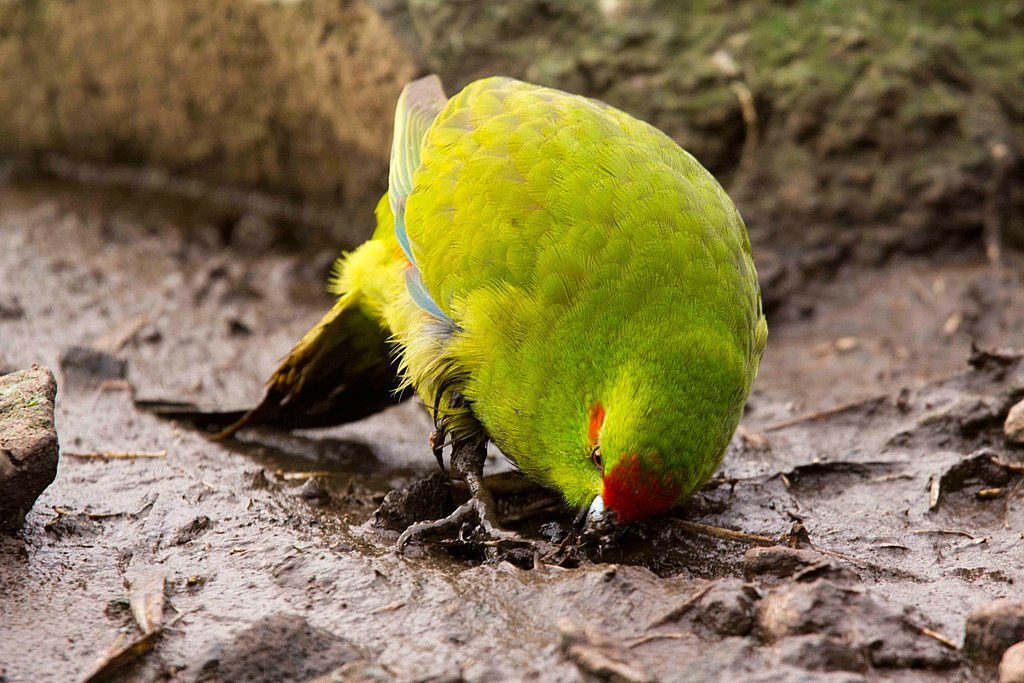
The Mallee Ringneck (Barnardius barnardi) has the plumage predominantly Green, crown and sides of the head bright green, with the cheeks slightly tinged blue and a small red band across the forecrown. The neck It is olive brown with a yellow ring around its back.

The lower area of the back is dark blue. The chest and the abdomen are turquoise blue, separated one from the other by a transverse band of yellow color which is more or less wide. The curvature of the wing It shows a greenish blue that overflows on the mantle.

The greater coverts are yellowish-green. The secondaries They are pale blue, In contrast with the covered and primaries which they are dark blue.

The underparts is blue. The upperparts tail is dark green, their central feathers with blue spikes and outer blue with pale tips.

The bill is whitish grey. The strait bare periophthalmic is solid gray. The irises is of color Brown dark and the legs grey.

The female It has colors more muted than your partner. The back and the lumbar area show a dark greenish gray. The underside is grey, with a more or less visible clear band.

The immature with even duller colors than females. They have the neck and back of the crown brown. The cheeks blues are often more developed. The back and tail are greyish green. The band underwing usually visible.

    Two species were traditionally recognized in the genus Barnardius, Barnardius zonarius and Barnardius barnardi, but both hibridaban in the contact area and are currently considered a single species.

    Taxonomic status:

This taxon is considered a subspecies of Barnardius [zonarius or Barnardi] (sensu lato) by some authors
Subspecies Barnardius barnardi

  • Barnardius barnardi barnardi

    : (Vigors and Horsfield, 1827) The nominal species
  • Barnardius barnardi whitei

    : (Mathews, 1912) Of 35 cm.. length. It has feathers off, especially the chest and abdomen where the turquoise color is absent. Female plumage more clear than the nominal. Is believed to be a hybrid of the Barnardius Zonarius with the Barnardius Barnardi.

  • Barnardius barnardi macgillivrayi

    : (North, 1900) Of 33 cm.. length. More small, more pale, with the greenish-yellow forehead more pale and with clear bright blue hue on the cheeks and below the headphone feathers. Broad band of yellow on the abdomen.

Barnard's Parakeet Habitat:

The Parakeets Barnard They are mainly sedentary, but there may be some moves to small scale in response to climate change.

The species occupies the arid areas of mallee composed almost exclusively of Eucalyptus gracilis. Also found in shrubs of acacia and cypresses and in a wide variety of very similar habitats.

The species living in the areas of the North has a clear preference for the rubber Red (Eucalyptus camaldulensis) It covers temporary streams and shows a more arboreal lifestyle.

Generally less common in populated areas and in more humid regions. Large flocks are more rare to observe; pairs or small groups are the usual social units.

Less bold and curious that the Australian Ringneck, Although the two species share habits, diet and cortejo similar.

The Mallee Ringneck have been recorded feeding in the company of the Crimson Rosella (Platycercus elegans), Pale-headed Rosella (Platycercus adscitus), Red-rumped Parrot (Psephotus haematonotus) and Bluebonnet

Reproduction:

During courtship, the male shrugs, causing the wings to vibrate slightly.
Like most other parrot species, the Mallee Ringneck they have as a practice gnaw and chew wood, whether to put his personal stamp on his favorite tree, or to enlarge the cavity entrance. This activity allows them to keep their beaks in good condition.

The nest is usually in a hollow tree, and usually four to five eggs make up the implementation, deposited on a base of wood decaying waste.

In the North, breeding season tends to be governed by weather, and the nesting coincides with the end of the wet planting season.

In the South, playback starts in July or August and the season can be extended until January with a second litter. Incubation lasts around 20 days and is carried out by the female.

The young birds leave the nest after 5 weeks, but remain in the household with his parents for a while.

Food:

The Mallee Ringneck they are mainly vegetarians, they feed on seeds – Melon seeds (Cucumber myriocarpus), bitter melons (Citrullus lanatus), fruits of the tree of the tobacco (introduced), fruits, nectar and flowers. Its menu is complemented with insects and larvae.

ยซBarnard's Parakeetยป Distribution:

The Mallee Ringneck they are distributed through the interior of the East Australia, to the West of the Great dividing range, with a practically isolated population in the Northwest of Queensland, stretching across the border of the Northern Territory, along the nicholson river, in the North, and reaching Glenormiston, and western part of Queensland, in the South; its eastern limit is about Kynuna.

The the Northern subspecies meets the nominal species in the region of Range Forsythe, and extends to the South, with its eastern boundary running near Barcaldine, Mitchell and Goondiwindi, and in New South Wales.

To the South extends East through Moree, Dubbo and Wagga Wagga to get up to Kerang in Victoria.

In the West, the species is dispersed through of Western Queensland to the region of Cooper Creek of South Australia around Innamincka.

In New South Wales, is located to the West of the basin of the darling river, about Broken Hill.

Distributes lengthwise of the murray river, and in Victoria It extends through the Northwest corner to the South, until around Edenhope.

In the southeast of South Australia ranges through Naracoorte and Mount Lofty Ranges in Port Augusta and Montes Flinders, where is integrated with the Australian Ringneck; the two species are also more North.

Getaways birds have been registered in Brisbane, Melbourne and Sydney.

Subspecies B distribution. barnardi

  • Barnardius barnardi barnardi

    (Vigors and Horsfield, 1827) The nominal species

  • Barnardius barnardi whitei

    (Mathews, 1912) Flinders Ranges, South Australia

  • Barnardius barnardi macgillivrayi

    (North, 1900) This, Territory of the North and Northwest Queensland

Conservation ยซBarnard's Parakeetยป:


minor concern


โ€ข Current category of the Red List of the UICN: Least concern

โ€ข Population trend: Growing

The species is considered common throughout its range..

The world population is estimated at around 500 000 individuals and it seems stable.

But, seems less able to adapt to the changes that have occurred in the habitat that the Australian Ringneck.

In captivity:

The Mallee Ringneck It is appreciated as a pet, but the birds in captivity are relatively few.

Una muestra viviรณ 17,9 years in captivity. According to some sources, these animals can live up to 31,6 years in captivity, but this has not been verified.

Most common in Europe and Australia; not so much in the United Kingdom or United States.

Initially it is a timid and nervous bird, Although soon it acclimatizes caregiver. Bonding with a partner to do when both birds are young, as adults they do not usually live in harmony. Aggressive with other parrots.

Alternative names:

Mallee Ringneck, Mallee Parrot, Mallee Ringneck Parrot, Ringneck Parrot (ingles).
Perruche de Barnard, Barnardius barnardi, Perruche cloncurry (French).
Barnardsittich, Barnard Sittich, Barnard-Sittich (German).
Periquito-de-Barnard (Portuguese).
Perico de Barnard (espaรฑol).

scientific classification:

Order: Psittaciformes
Family: Psittaculidae
Genus: Barnardius
Scientific name: Barnardius barnardi
Citation: (Vigors & Horsfield, 1827)
Protonimo: Platycercus theelectronicjumper

Images "Mallee Ringneck"

Videos "Mallee Ringneck"

ยซBarnard's Pericoยป (Barnardius barnardi)


    Sources:

    Avibase
    – Parrots of the World โ€“ Forshaw Joseph M
    – Parrots A Guide to the Parrots of the World – Tony Juniper & Mike Parr
    – LoroMania
    AnAge: The Animal Ageing and Longevity Database – Genomics.senescence.info
    – Birdlife

    Photos:

    (1) – By AlexKant – Israel> Petach Tikva Zoo – ZooChat

    Sounds: Patrik ร…berg (Xeno-canto)