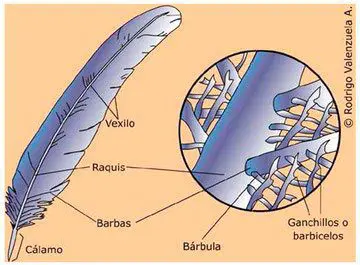
โ–ท The world of Pets: Dogs, cats, birds, reptiles, amphibians

Black Parrot
Coracopsis nigra

Black Parrot

Black Parrot

Content
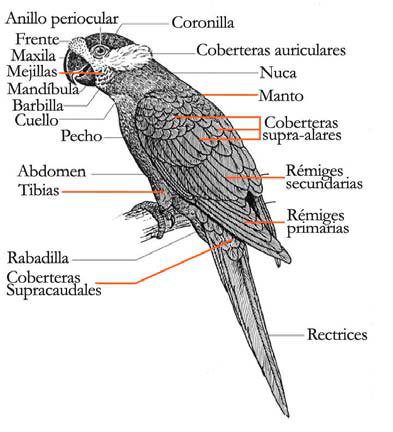

Anatomy-parrots

Description

35 to 40 cm. length and a weight between 215 and 315 gr.

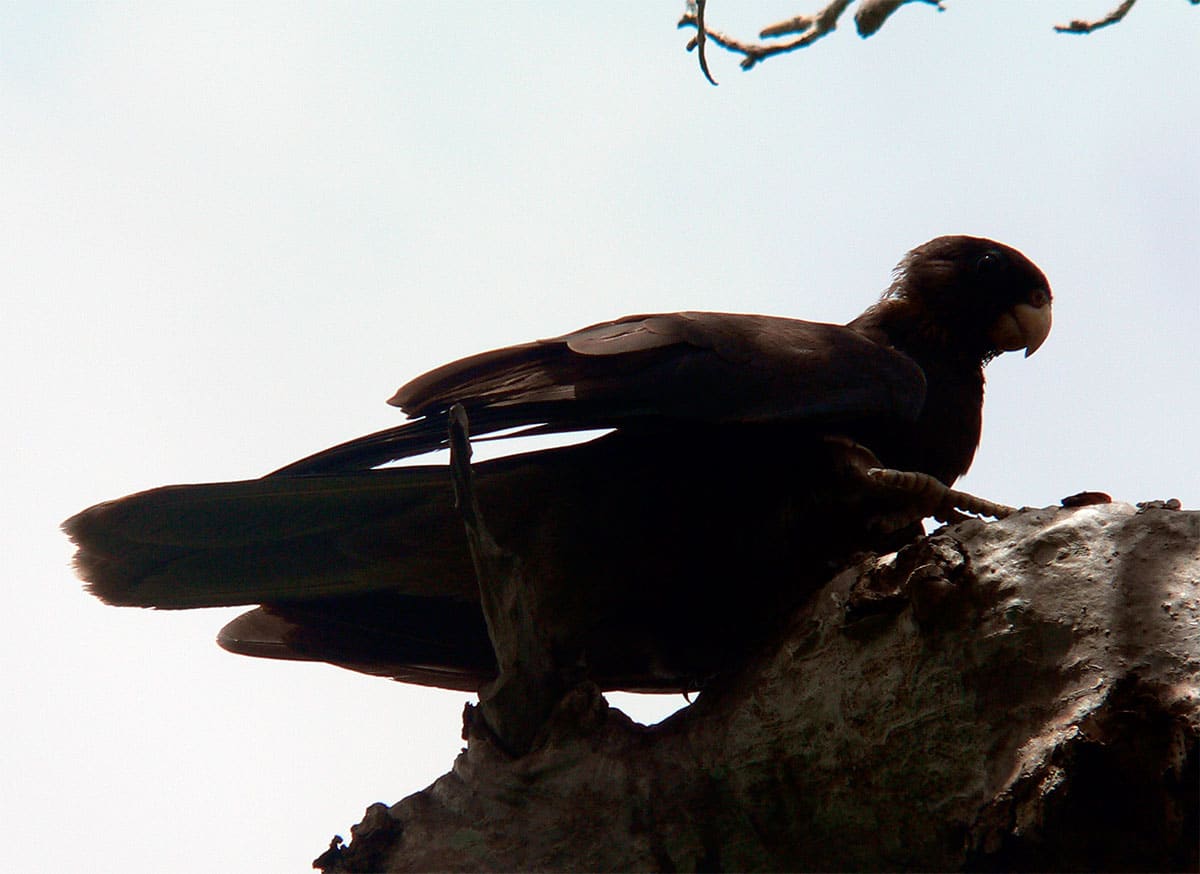
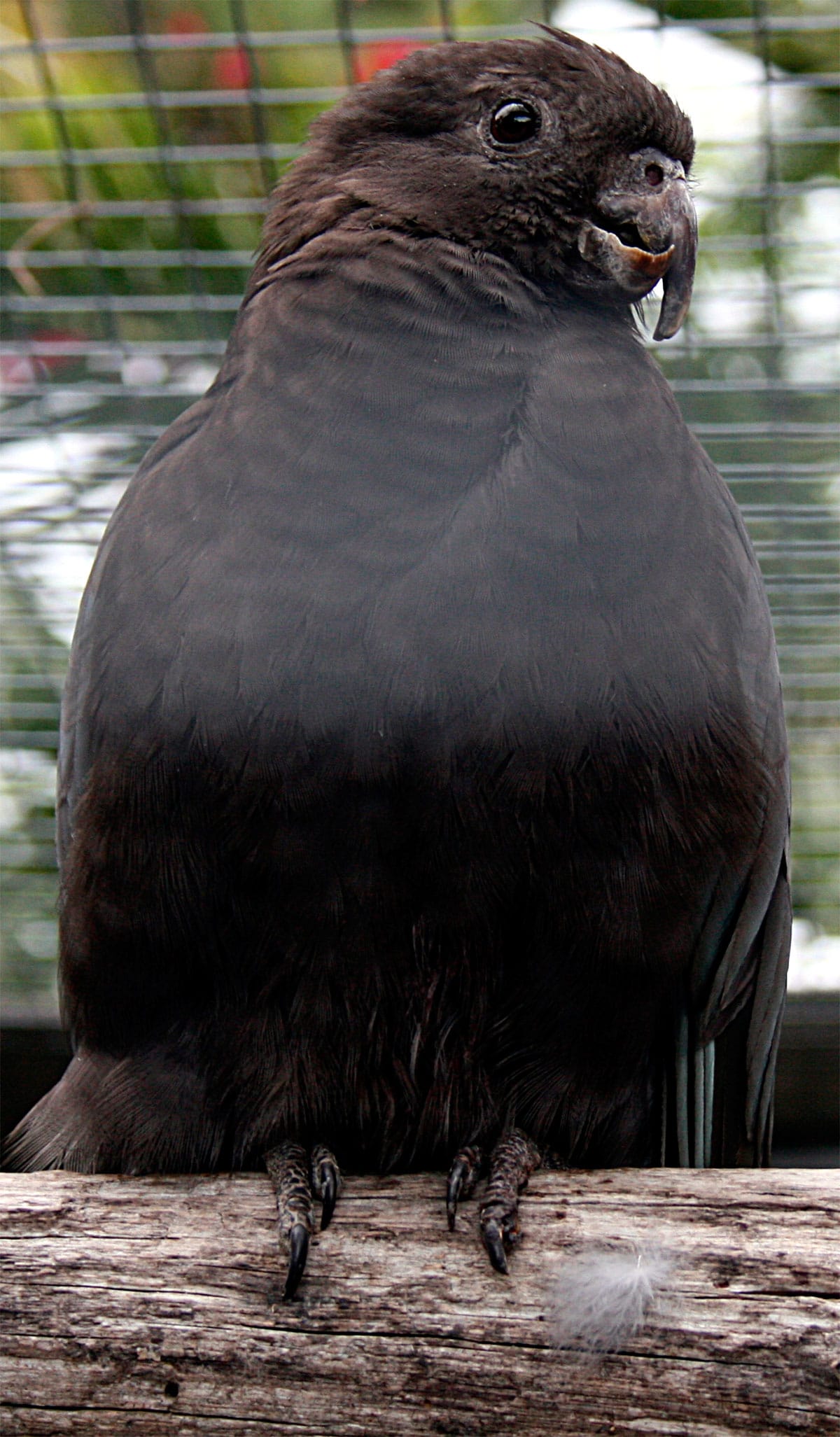
The plumage of the Black Parrot (Coracopsis nigra) It, usually, blackish brown (iridescent green glow during breeding season) with inconspicuous grayish color marks in undertail- coverts and gray in vane external to the primary.

Bottom of flight feathers pale grey. Upper, the tail brown-black color; undertail, light grey: subterminal band dark.

The bill color horn, more off-white to modify the moult; irises dark brown: periophthalmic ring grey-brown (does not reach the peak); legs dark brown.

Sound of the โœฉ Black Parrot โœฉ.

Without sexual dimorphism.

Immature paler than adults with pale undertail- coverts and yellowish tint in the bill; Tips of the feathers of the tail pale grey.

Subspecies description

  • Coracopsis nigra libs

    (Bangs, 1927) – Paler and with the underparts browner than the nominal species; back bluish grey tinted. No dark subterminal band on the tail.

  • Coracopsis nigra nigra

    (Linnaeus, 1758) – Nominal species

  • Coracopsis nigra sibilans

    (Milne-Edwards & Oustalet, 1885) – Smaller, of about 30 cm., and paler than the nominal species. The chocolate color replaces the blackish brown of the nominal. No grey in the vane the primary external

Habitat:

The Black Parrot are resident with some movements of foraging day.

It is found in a wide variety of forests and savanna areas, including ecosystems modified by man, wooded land of cities and towns, as well as primary forests, from the level of the sea up to 2,050 m altitude.

You can see more on the dense forests, swamp forest (including mangroves) and scrublands, that the Vasa Parrot, in order to avoid large areas of humid forests.

Usually seen in small noisy groups, either flying or sitting on the tops of the trees; active on moonlit nights.

In Seychelles, However, the Black Parrot seldom form flocks and in general you seen alone or in pairs, except when the food, locally, they are abundant.

Is not known to form mixed flocks with the Vasa Parrot.

Reproduction:

Nest in the hollow trunk of tree or in a branch, usually above the 15 m.

Breeding probably from November to February.

Clutch of 2 to 8 eggs.

Food:

The Black Parrot they feed on seed, berries, fruits and nuts; more frugivorous than Vasa Parrot.

Specific articles reported on their diet include fruits of Afzelia bijuga and Chassalia, seeds of Cinnamosma fragrans, flowers of Symphonia and some types of leaves.

In Madagascar, according to sources, It has reported consumption of Insect Galls on the part of the Black Parrot.

They attack crops and in the Comoros they are real pests in cocoa plantations, feeding on immature pods.

The main food of the population of Praslin include: Verschaffeltia splendida, Averrhoa bilimbi, Phoenicophorium borsigianum, Deckenia nobilis, Chrysobalanus icaco and Ficus rubra.

Distribution:

Endemic to Madagascar, The Comoros archipelago (Grand Comore and Anjouan) and Praslin island (Seychelles), where it was possibly introduced.

Subspecies distribution

  • Coracopsis nigra libs

    (Bangs, 1927) – Can be found in the West of Madagascar.

  • Coracopsis nigra nigra

    (Linnaeus, 1758) – Nominal species

Conservation:


minor concern


  • Current Red List of UICN: Least concern
  • The population trend: Stable

The species that are found in Madagascar and the Comoros they are generally described as common.

Officially treated as pests in Madagascar where the Black Parrot they are persecuted because of the damage caused in crops; Also hunted as food and as domestic fowl.

Despite their intense persecution, apparently they are not at risk and are distributed in many protected areas of Madagascar.

The size of the world's population has not been quantified.

The subspecies of the Praslin island (Seychelles), found in the The Valle de Mai nature reserve, is located in critical state (probably less than 100 birds). Competition for nesting sites with the common mine (Acridotheres tristis) can be one of the threats of the remaining birds.

The โ€œBlack Parrotโ€ in captivity:

It is possible to keep them in community with its kind, but out of breeding period. At first he can be shy. It is a active parrot and nervous, generally outgoing Once accustomed to people and environment, tends to be entrusted, although it also depends a lot on its breeding method (natural or by hand) and earlier experiences.

As a pet it can be a wonderful company., loving, playful and very smart.

With regard to its longevity, sources they indicate that a sample lived 34.1 years in captivity.

Alternative names:

Black Parrot, Lesser Vasa Parrot, Lesser Vasa-Parrot (English).
Vaza noir, Perroquet noir (French).
Rabenpapagei (German).
Papagaio preto (Portuguese).
Loro Negro (espaรฑol).

scientific classification:

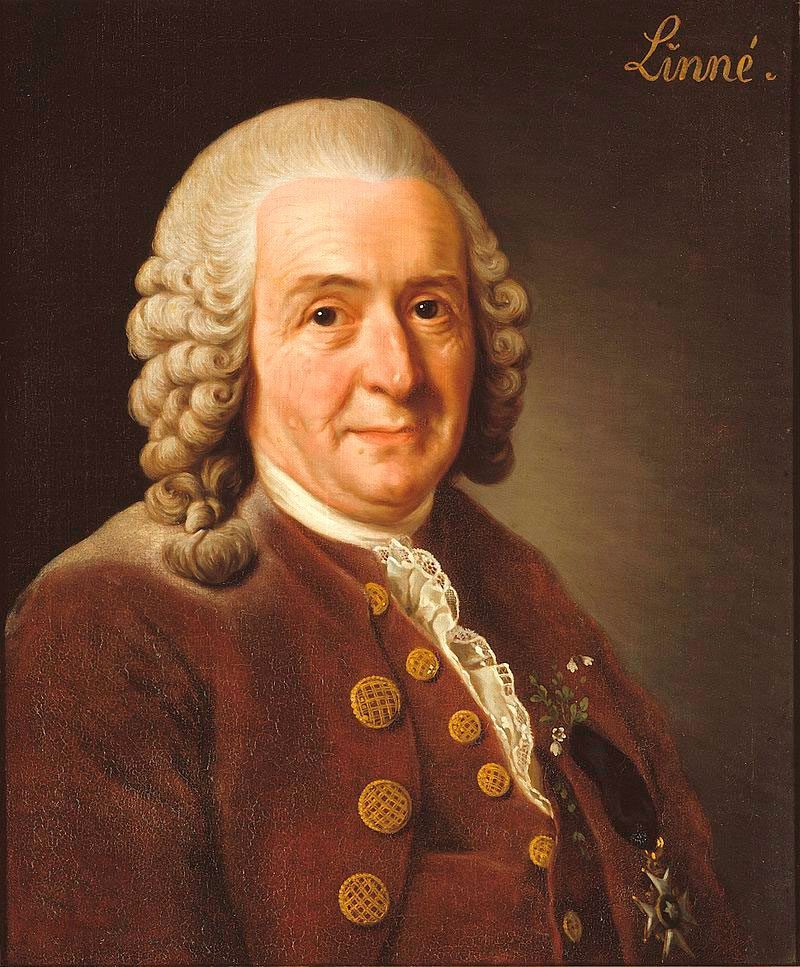
Carl Linnaeus
Carl Linnaeus

Order: Psittaciformes
Family: Psittaculidae
Genus: Coracopsis
Scientific name: Coracopsis nigra
Citation: (Linnaeus, 1758)
Protonimo: Psittacus niger

ยซBlack Parrotยป Images:

————————————————————————————————

ยซBlack Parrotยป (Coracopsis nigra)

Sources:

Avibase
– Parrots of the World โ€“ Forshaw Joseph M
– Parrots A Guide to the Parrots of the World – Tony Juniper & Mike Parr
– Birdlife
– Parromania

Photos:

(1) – Madeira_botanischer_garten_Coracopsis_nigra By Hedwig Storch (Own work) [GFDL or CC BY-SA 3.0], via Wikimedia Commons
(2) – Lesser Vasa Parrot (also known as the Black Parrot). Two in a cage with a nestbox By TJ Lin (originally posted to Flickr as pic-264) [CC BY-SA 2.0], via Wikimedia Commons
(3) – Lesser vasa parrot (coracopsis nigra) in Anjajavy Forest, Madagascar By Charlesjsharp (Own work) [CC BY-SA 3.0], via Wikimedia Commons
(4) – Lesser Vasa Parrot or Black Parrot (Coracopsis nigra); picture taken at Mangily, Western Madagascar By Axel Strauss (Own work) [GFDL or CC BY-SA 3.0], via Wikimedia Commons
(5) – Male Lesser Vasa Parrot in an aviary at Tropical Birdland, Leicestershire, England By Snowmanradio (Own work) [CC BY-SA 3.0 or GFDL], via Wikimedia Commons

Sounds: Mike Nelson (Xeno-canto)
โ–ท The world of Pets: Dogs, cats, birds, reptiles, amphibians

Red-bellied Macaw
Orthopsittaca manilatus


Guacamayo Ventrirrojo

Content

Description:

50 to 51 cm.. length and a weight between 292 and 390 g.

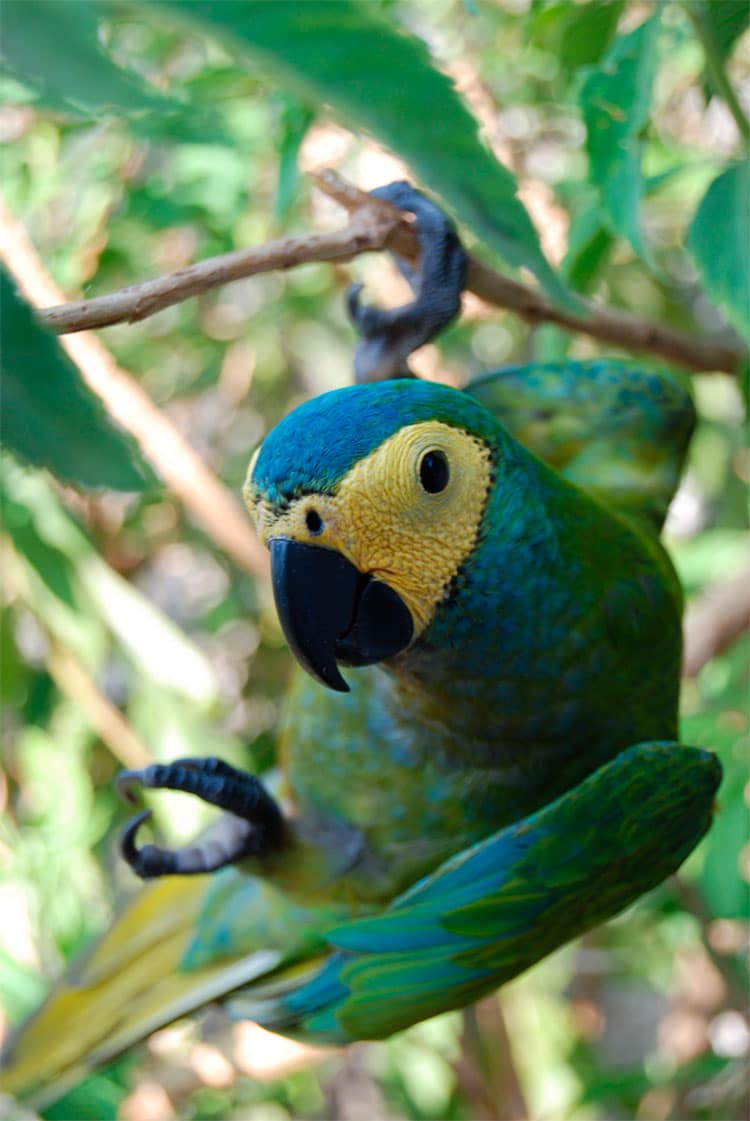
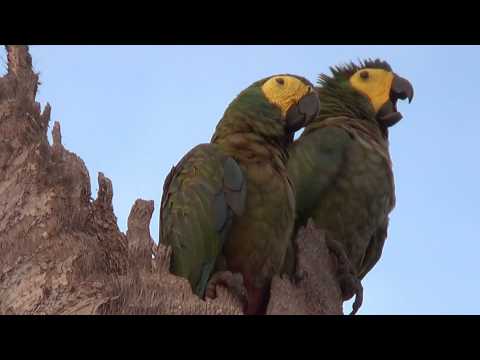
The Red-bellied Macaw (Orthopsittaca manilatus) is a medium-sized Macaw; has the forecrown and crown a bright blue, gradually faded to blue-green color in the area of the nape and on both sides of the neck. The the mantle and scapulars are green grass with impregnations color olive and yellow edges, producing, altogether, a flaky effect; the back and rump are green grass, with some feathers tipped pale bluish. The uppertail-coverts grass-green. The lesser and median coverts green grass impregnated with green olive with yellowish margins; alula and primary coverts green with vane outer blue; large inner coverts green.

The flight feather bordered with blue and green tips. Under, the wings with coverts yellowish-green and flight feather yellowish. The feathers of the throat and top of the chest are pale grey blue in the Center and yellowish-green in the margins; those of the lower area of the chest and top of the belly without tones pale in the Center, but with some feathers with margins off dark red; belly dark red; undertail-coverts bluish green. Upper, the tail green color in the Center with yellowish margins; upor down yellow.

Bill black; nude part of lores and cheeks yellowish white; irises dark brown; legs dark gray.

Sexes similar
, the males, possibly, bigger.

Immature clear tip in the bill and smaller patch of dark red color of the belly.

Habitat:

Lives in Savanna and flooded forest, where there are Palm trees, in altitudes close to the 500 m. Very dependent from the Palma de moriche or aguaje (Mauritia flexuosa), which feeds, staying almost invisible due to its Green plumage.

Occasionally wander in by cultivated areas and have been in the mangroves.

gregarious, flocks of more of 100 observed birds. Usually, they rest in the branches of the Mauritia Palms, where they remain hidden among the foliage of leaves.

Reproduction:

They nest in holes of las palmas dead found near or surrounded by water, often use the nests of the Orange-winged Parrot (Amazona amazonica), of Trinidad and Tobago.

The breeding season is from February to September in Trinidad and Tobago; from February to may in Colombia; from February to June in Guyana. The size of the put is of 2 to 6 eggs with a period of incubation of approximately 27 days. The young begin to feather already in the eleventh week. Take an average of 2 to 3 years to mature, remaining during that period very close to their parents.

Food:

Usually feeds on the fruits of the Palm tree Mauritia flexuosa they are present during the season dry when other fruits are scarce, as well as other palm trees such as Roystonea oleracea and Euterpe.

The Red-bellied Macaw communicate with each other with calls when there is a localized food source.

They roost in Palm trees full of fruit and used its beak to peel hard fruits to expose the pulp. Son, unlike most parrots, seed predators, but partially, since they eat the fruit, leaving intact the endocarpio (Darnell and Bergstrom 2002; Janzen 1981; Kristosh and Marcondes Machado-2001).

Some lick attempt to fly with the seed at its peak, and unintentionally may fall between two palm trees. Seed drop and feeding behavior, in order to avoid damaging the seed, It makes these macaws and other psittacidas agents of seed dispersal.

Distribution:

Size of the area of distribution (reproduction / resident): 7.150.000 km2

The Red-bellied Macaw is distributed to the North of South America to the East of the Andes.

In Colombia its range is from Goal and West of Vaupรฉs until Putumayo and amazon, spreading northeast of Venezuela until Trinidad and Tobago and Guianas, where apparently, they are restricted to coastal areas.

Are distributed to the East of Ecuador, Northeast of Peru, North of Bolivia and much of the Brazilian Amazon, to the East of For and from the West of Bay and Goiรกs until Mato Grosso. Apparently absent most of Venezuela and North of the Amazon basin of Brazil, in the basin of the Black river.

A small population reported in the North of Sรฃo Paulo, Brazil.

Probably residents in some areas, although migratory in others, for example, in the Northwest of Bolivia, where been observed have to these macaws in the months of September to November, being absent from November to January.

Share on a local scale; the distribution is closely related to the palms of Mauritia. Probably stable population. But, in the northeast of Brazil fruit Mauritia It is used in the manufacture of confectionery products and the trunks of the palms for some construction purposes..

Rare in captivity.

Conservation:


minor concern

โ€ข Red List category of the UICN current: Least concern.

โ€ข Population trend: Stable.

Global population size has not been quantified, but this species is described as quite common.

The populations of the Red-bellied Macaw they depend of the Palms Mauritia for food and nesting. These trees are widely used for construction, and that is why you can have bad consequences for the future of the species.

These birds are threatened by the felling of these Palm trees and capture for the pet trade. But, This species tends to be common in most of their habitats, with the exception of Colombia, Guyana and Venezuela, where it is threatened by Habitat loss.

"Red-bellied Macaw" in captivity:

Rare bird cage.

It is extremely difficult to keep these birds alive in captivity., because, mainly, to your excitable personality, and its diet low in fat and high in carbohydrates.

The export and import for the pet trade often brings with it a mortality of the 100%; captive-bred chicks have a very low survival rate. A high percentage die at an early age kidney disease. Its acquisition as a pet is very questionable.

The only country that exports these birds in recent years is Guyana.

Due to the lack of commercial availability of nuts of moriche Palm, peeled unsalted peanuts have been used as a staple in the diet of these birds in captive. They should not be fed with the typical commercial seed, especially fat seeds such as of the Sunflower.

A nutritional analysis of the natural diet of the Red-bellied Macaw He revealed that this was made up of high levels of beta carotene, of carbohydrates and zero fat. This explains its propensity to obesity in captivity. Almost all parrots usual diets are too high in fat content, with what the Vitamin A supplements in the form of beta carotene they are essential.

Deficiencies of Vitamin A are usually made to notice very quickly, giving rise to many serious diseases, being able to get to many of them deadly.

The beta carotene is the only way Vitamin A that do not require fat to be absorbed. The successful reproduction This species only has been able to achieve by adjusting your diet.

The pups fed by hand are much quieter than adults and are able to metabolize fat more efficiently than adults. Once weaned, they remain in need of a very low fat diet.

There are no data of your longevity in captivity, Although in nature, possibly, they can live around the 40 years.

Is not a bird to keep in captive. A responsible attitude should be to place these beautiful birds in breeding programs so that future generations can enjoy them..

More information –>

Alternative names:

Red-bellied Macaw, Red bellied Macaw, Small Red-bellied Macaw (English).
Ara macavouanne, Ara ร  ventre rouge (French).
(German).
Maracanรฃ-do-buriti, arararana, ararinha, maracanรฃ-de-cara-amarela (Portuguese).
Guacamaya Buchirroja, Guacamayo Ventrirrojo, Maracanรก de Vientre Rojo (espaรฑol).
Guacamayita morichalera, Guacamaya Buchirroja (Colombia).
Guacamayo barriga roja, Perico morichalero (Venezuela).
Guacamayo ventrirrojo (Ecuador).
Maracanรก ventrirroja, Parabachi de palmar (Bolivia).
Evaรญ (Chimani).
Ararinha (tupi).
Quequeto (Guahibo).
Ectoa (Barasana).

Pieter Boddaert
Pieter Boddaert

scientific classification:


Order: Psittaciformes
Family: Psittacidae
Genus: Orthopsittaca
Scientific name: Orthopsittaca manilatus
Citation: (Boddaert, 1783)
Protonimo: Psittacus manilatus


Images Red-bellied Macaw:

Videos "Red-bellied Macaw"

MARACANรƒ-DO-BURITI: Canto! (ORTHOPSITTACA MANILATA), RED-BELLIED MACAW, Yellow-faced Maracanรฃ,


ยซVentrirrojo Guacamayoยป (Orthopsittaca manilatus)


Sources:

  • Avibase
  • Parrots of the World โ€“ Forshaw Joseph M
  • Parrots A Guide to the Parrots of the World – Tony Juniper & Mike Parr
  • Birdlife
  • Wikipedia

Photos:

(1) – Red-bellied Macaw Orthopsittaca manilata in Goiรขnia, Brazil By A C Moraes (originally posted to Flickr as Tocci) [CC BY 2.0], via Wikimedia Commons
(2) – Two Red-bellied Macaws flying near the Amerindian Reservation of Santa Mission, Guyana By Feroze Omardeen [CC BY 2.0], via Wikimedia Commons
(3) – A little girl in San Martin, Peru with a pet juvenile Red-bellied Macaw on her right shoulder By Michael Nickel (originally posted to Flickr as girl with lorito) [CC BY 2.0], via Wikimedia Commons
(4) – Buchirroja Guacamaya ( Orthopsittaca manilatus) by Marcello Magnussen – wiki_aves_colombia
(5) – Buriti maracana chicks in the nest, Orthopsittaca manilatus by Osvaldo Scalabrini

โ–ท The world of Pets: Dogs, cats, birds, reptiles, amphibians

Red-tailed Parrot
Amazona brasiliensis

Red-tailed Parrot

Content

Description:

37 cm.. length and 430 g. of weight.

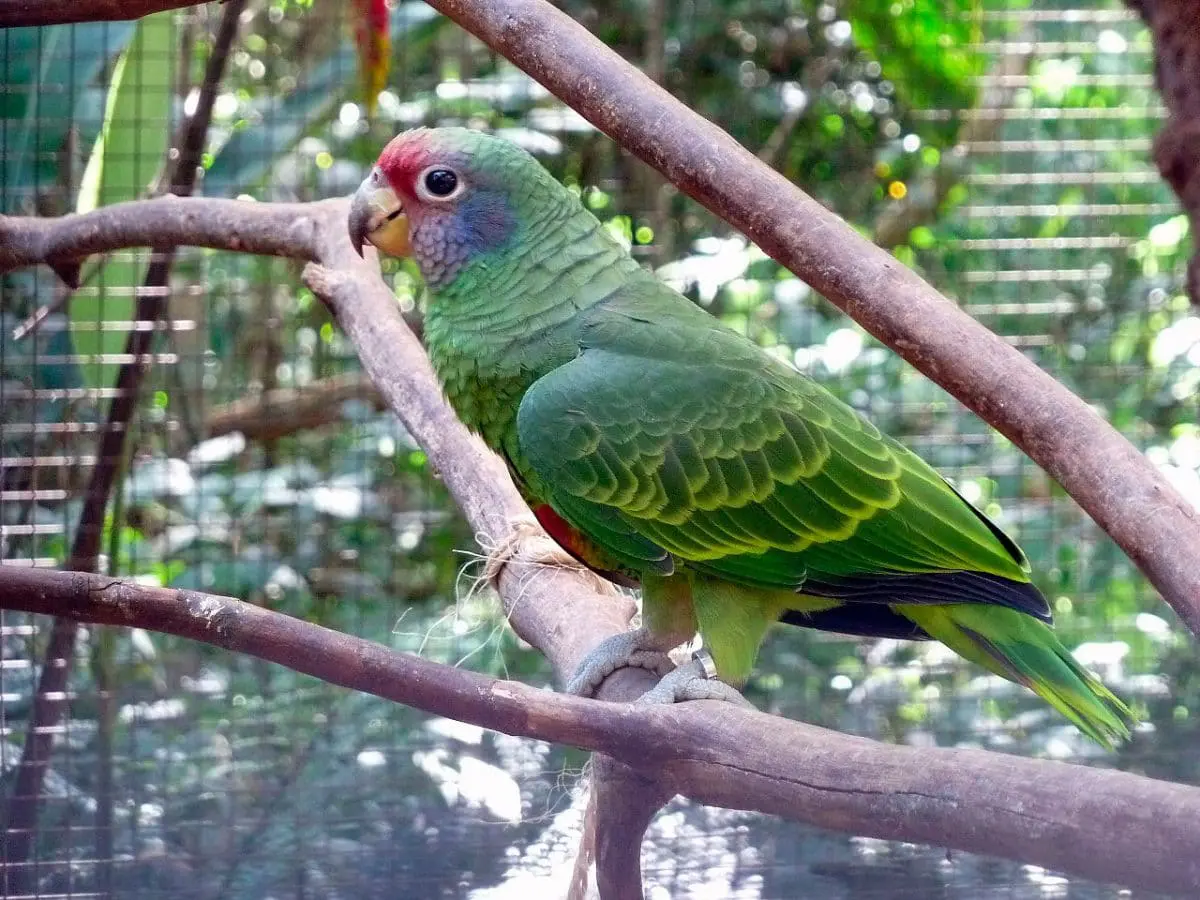
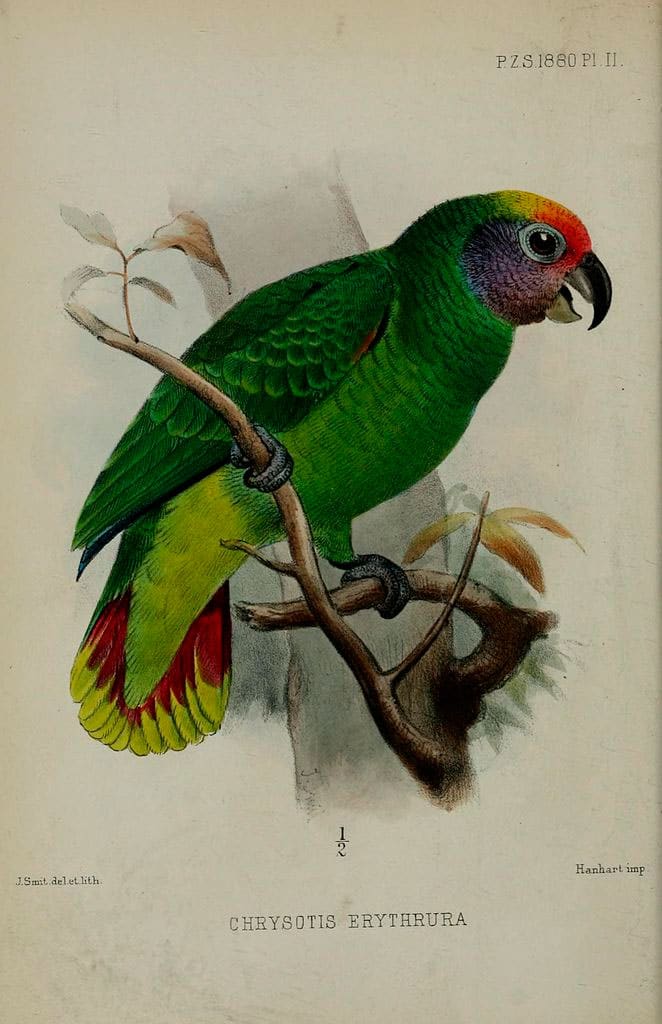
The Red-tailed Parrot (Amazona brasiliensis) has forecrown, front of crown and lores, red; Subsequent red feathers crown with purple tips; cheeks, ear-coverts, sides neck and throat, mauve-blue; back of the crown and nape, green with black tips.

Upperparts green, some feathers rump with yellow points. The median, greater coverts and secondary internal clearly appear yellow; edge front of the wing Red and yellow; primaries grey-black, secondaries green, turning blue towards the tips.


Anatomy-parrots

Under the wings, brighter yellowish green; flight feather of black and blue color on the basis of innerwebs. Underparts brighter yellowish green, paler in undertail-coverts. Tail green with broad greenish-yellow tips, lateral feathers marked basally with purplish-blue on outerweb and tipped yellowish-green with broad subterminal band red.

Red-tailed Parrot

Bill pale horn with dark tip; irises orange; legs pink-gray.

Both sexes are similar. The immature It is less extensive in red head, a plumage darker overall and irises darker.

  • Sound of the Red-tailed Parrot.

taxonomic note:

The molecular study suggests that this species is closest to the Orange-winged Parrot (Amazona amazonica). Previously it thought to form a group with Blue cheeked Parrot (Amazona dufresniana) and Red-browed Parrot (Amazona rhodocorytha), and it has been treated as conspecific with one or both. monotypic.

Habitat:

Video "Red-tailed Parrot"

The Red-tailed Parrot dwells in a restricted area or coastal lowland forest and wetlands with rare species and structural diversity, including moist lowland forests, restinga, freshwater marshes and mangroves. Your preferred coastal habitats have complex channel networks, swamps and wetlands. Trees characteristic of its forest habitat include Luehea and Andira, while the vegetation of the islands, where they sleep and breed, They are dominated by several species Halophyte and formations restinga.

Apparently, some birds are practically living in flooded forests, probably due to increased availability of nests. Sympatric presence and partnership with the Red-spectacled Parrot (Amazona pretrei) in forests Araucaria, probably wrong. Lives in altitudes not exceeding the 300-400 m, Although there are records to 700 metres in Paranรก. Forman communal shelters (often in mangroves) during at least part of the year, with more than 750 birds reported at a meeting (1985).

Reproduction:

They nest in the cavity of a living or dead tree, for example, palms Jerivรก (Syagrus romanzoffianum) and guanandi (Callophyllum Brasiliense) and occasionally arboreal nests of termites; height generally, but recorded only a nest 1 meter above the floodwater. Usually it played in flooded or swampy areas, including mangroves. breeding season in September to February, in some cases in April. Clutch 5-4 eggs. The eggs are hatch during 27 to 28 days, and the period until nest abandonment is thought to last from 50 to 55 days

Food:

The fruits of Callophyllum Brasiliense They are considered of considerable importance in the diet of the Red-tailed Parrot, with fruits Syagrus romanzoffianum and Psidium cattleyanum also taken in quantity; other registered foods include flowers, fruits of Erythrina speciosa, fruits of Euphorbia and Myrcia and insects in fruit. They feed in pairs or groups up 20 birds.

Distribution and status:

Size of its range (breeding/resident): 10.100 km2

The Amazona Colirroja et is confined to a small area in the southeast coastal of Brazil, in the states of Sรฃo Paulo and Paranรก. In coastal areas Sรฃo Paulo It extends southwest of Itanhaรฉm, including the isla Long and isla del Cardoso, and virtually all coastal areas of neighboring Paranรก, from Guaraquecaba, Antonina and Paianagua, until Guaratuba and several offshore islands adjacent, eg Mel Island.

Possibly they inhabit the extreme northeast Santa Catarina, adjacent to Paranรก, but there are no reliable records. An old record Rio Grande do Sul it seems unlikely. possibly some seasonal movements lower in winter (May-August).

The rapid decline in population in the twentieth century it is due in part to the loss of habitat, with most areas densely settled and totally deforested, the remaining threatened are given by urbanization (for example, in isla Long), the felling of trees nesting and feeding, as well as the Palmas for human use (shipbuilding and food) and conversion of wetlands for water buffalo and rice production (birds also face competition from grazing animals for consumption of fruits Erythrina speciosa). But, direct human exploitation of the species is not now a less serious problem, some related to their hunting for food, although most suffer their capture illegal for trade. A recent study 49 showed that nests 41 of them they were illegally stolen their young, while the 1,27% available habitat was lost only in 1993.

Total wild population estimated in 3.600 birds (1995) with rapid decline of several hundreds Predicted. Distribution area probably no more than 6.000 km2, with large parts of this extension susceptible to sea level rise caused by climate change.

protected by national legislation. Live in several areas protected (for example, Isla del Cardoso, Sao Paulo), but in them there is only a very small proportion of birds.

Conservation:

State of conservation โ“˜


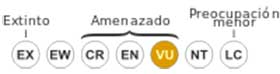
Vulnerable Vulnerable โ“˜ (UICN)โ“˜

โ€ข Current category of the Red List of the UICN: Vulnerable.

โ€ข Population trend: Increasing.

โ€ข Population size : 6000-6700.

  • Rationale for the Red List category

The catch for cage bird trade and loss of habitat are the major threats to this species. Despite the heavy pressure to capture the early nineties, It is believed that the range of the species remained essentially the same, and populations have been stable or declined less steeply than feared, According to a recent estimate that suggests a population increase. Due to its small breeding range and highly fragmented habitat, the species qualifies as Vulnerable.

conservation project "Red-tailed Parrot"

Amazona brasiliensis - Puffin of red-tailed - Red Parrot-tailled
  • Justification of the population

The winter counts in 2015 registered 7.464 and individuals in Paranรก 1.712 in Sรฃo Paulo, with both populations continuing to increase (D. Waugh in some ., 2015). The population It is estimated, therefore, between 9.000 and 10.000 individuals, equivalent approximately to 6.000 to 6.700 mature individuals.

  • Justification of trend

It is suspected that the conservation measures long term have contributed to a recent increase in population at a rate unquantified, although habitat fragmentation and poaching remain significant threats (Waugh 2006).

Threats
    In the municipality of Canaanite (a quarter of the distribution of the species) (Freire 1994), has been caught during the breeding period of 1991-1992 for domestic trade and (especially) international with 356 birds. Of 47 controlled nests between 1990 and 1994, six were naturally default and the other 41 stolen by human (Freire 1997). Nest cavities are almost always damaged when the chicks are captured, reducing the number available (Freire 1994). Habitat loss persists for shipbuilding, banana plantations, cattle and buffalo and beach houses (Lalime 1999, Snyder et to the., 2000). They cut the Palmitos for processing in Guaraqueรงaba (Lalime 1999). The proposed construction of a bridge to Ilha Comprida increase the pressure of tourism and habitat conversion (Snyder et to the., 2000).
Conservation Actions Underway
    CITES Appendix I and II and protected by Brazilian law. This species is not considered of conservation concern nationwide in Brazil (MMA 2014). They are distributed within 15 protected areas, but these do not apply locally (Freire 1994, Lalime 1999). The Superagui National Park in Paranรก, It is a bastion for the protection of the species (R. Bรณรงon in litt., 2006). The creation of new reserves is hampered by economic interests (Freire 1994). Several programs are increasing local awareness (Freire 1994, Lalime 1999 , Padua et al. 2001). Conservation projects and protected areas created in the area of รขโ‚ฌโ€นรขโ‚ฌโ€นdistribution of species appear to be paying off, although there are still pitfalls. There are herd books and successful captive breeding programs in the European Union and Brazil (Lucker 1998) and the provision of artificial nests and repair of natural nesting cavities is enhancing reproductive success in the wild (Waugh 2006). Conservation Project of the Amazon Redstart is monitoring the population in Paranรก (R. Bรณรงon in litt., 2006).
Conservation Actions Proposed
    Conduct surveys to monitor population trends and support captive breeding programs. Monitoring discount rates for trade. Monitor trade levels. Monitor the rates of loss and degradation of habitat. Apply laws on trafficking, especially in the paths to breeding islands (Lalime 1997, Lalime 1999). effectively protect existing reserves (Lalime 1997, Lalime 1999). formally appoints the Ilha Comprida State Park and Ecological Station Itapanhapina (Snyder et to the., 2000). Expand Superagรผi National Park to include Ilha do Pinheiro (Snyder et to the., 2000). Reforest nursery islands (Lalime 1999). Continue and expand awareness efforts (Lalime 1999).

The "Red-tailed Parrot" in captivity:

CITES Appendix I and II and protected by the Brazilian legislation.

Each captive specimen of this species which is capable of reproducing, It is placed in a Program well managed captive breeding and not be sold as a pet, in order to ensure long term survival.

Alternative names:

Blue-cheeked Parrot, Blue-faced Parrot, Brazilian Green Amazon, Brazilian Green Parrot, Red tailed Parrot, Red-tailed Amazon, Red-tailed Parrot (English).
Amazone ร  joues bleues (French).
Rotschwanzamazone (German).
papagaio, papagaio-de-cara-roxa (Portuguese).
Amazona Brasilera, Amazona Colirroja (espaรฑol).
Marreco ananai (Brazil)

Carl Linnaeus

scientific classification:


Order: Psittaciformes
Family: Psittacidae
Genus: Amazona
Scientific name: Amazona brasiliensis
Citation: (Linnaeus, 1758)
Protonimo: Psittacus brasiliensis


Images Red-tailed Parrot:


Species of the genus Amazona


Sources:

Avibase
– Parrots of the World โ€“ Forshaw Joseph M
– Parrots A Guide to the Parrots of the World – Tony Juniper & Mike Parr
– Birdlife

Photos:

(1) – A Red-tailed Amazon at Parque das Aves, Foz do Iguaรงu, Brazil By Kee Yip from Union City, California, USA (IMG_4509_P1040018) [CC BY 2.0], via Wikimedia Commons
(2) – A juvenile Red-tailed Amazon which is grasping something in its right foot, probably to chew or eat it By writhedhornbill (originally posted to Flickr as Red tailed amazon) [CC BY 2.0], via Wikimedia Commons
(3) – Red-tailed Amazon (Amazona brasiliensis) bird Park, Foz do Iguaรงu, Brazil By http://www.birdphotos.com (Own work) [GFDL or CC BY 3.0], via Wikimedia Commons
(4) – Red-tailed Amazon at the zoo By Elcio Ferreira [CC BY-SA 2.0], via Wikimedia Commons
(5) – A Red-tailed Amazon at Parque das Aves, Foz do Iguaรงu, Brazil By Chad Bordes (Picasa Web Albums) [CC BY 3.0], via Wikimedia Commons
(6) – CHEYSOTIS ERYTHRURA By Zoological Society of London.; Zoological Society of London. [CC BY 2.0 or Public domain], via Wikimedia Commons

Sounds: Antonio Silveira, XC109467. accessible www.xeno-canto.org/109467

โ–ท The world of Pets: Dogs, cats, birds, reptiles, amphibians

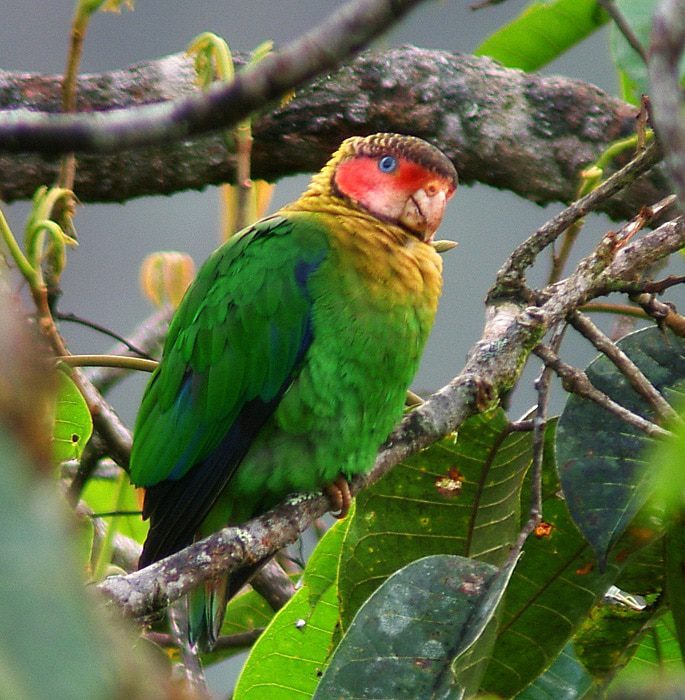
Rose-faced Parrot
Pyrilia pulchra

Lorito Carirrosado

Content


Anatomy-parrots

Description:

23 to 26 cm.. height.

The Rose-faced Parrot (Pyrilia pulchra) be distinguished easily by your face and both sides of neck purple-red with black margin; crown and throat grayish coffee. General green olive in the back and beige in the belly. Wings with the part superior mixed with yellow or red orange and the rest green blue.

Stubby-looking and tail short. The immature they have only have a red line on the eye and the ear While their cheeks are coffee Green.

Habitat:

The Rose-faced Parrot is a parrot little known, which is commonly found between 1,200 and 2,100 m above sea level, Although has been observed at altitudes as low as 200 m. Inhabits humid and semi-deciduous forests of lowlands and temperate. According to the information available, is known that this Parrot is often feed is on the canopy of forests, Although visit disturbed areas and crops. Flying in pairs or groups of size variable up to of 25 or more.

Reproduction:

The data on reproduction are scarce. But, they have observed individuals with gonads developed between November and February in the Chocรณ, in Colombia and Ecuador.

Food:

Its diet It is little known, but some observations indicate that includes in its feeding fruits of Oenocarpus bataua (Arecaceae) and other fruits from species wild and plants cultivated as banana and corn.

Distribution:

Size of the area of distribution (reproduction / resident): 195.000 km2

Are you can observe in freedom from the West of Colombia to the West of Ecuador.

Conservation:


minor concern


โ€ข Current category of the Red List of the UICN: Least concern.

โ€ข Population trend: Stable.

Justification of the population

The population size World has not been quantified, but this species is described as "uncommon and irregularly distributed" (Stotz et to the., 1996).

Justification of trend

It is suspected that the population is stable in absence of evidence of any decline or threatens substantial.

"Rose-faced Parrot" in captivity:

Not usually seen in aviculture. Extremely sensitive, has ever survived more than one couple of months in captivity.

Alternative names:

Rose-faced Parrot, Beautiful Parrot, Rose faced Parrot (English).
Caรฏque ร  joues roses (French).
Rosenwangenpapagei, Rosenwangen-Papagei (German).
Rose-faced Parrot (Portuguese).
Cotorra Carirrosada, Lorito Carirrosado, Lorito de Cara Rosada (espaรฑol).

scientific classification:

Order: Psittaciformes
Family: Psittacidae
Genus: Pyrilia
Scientific name: Pyrilia pulchra
Citation: von Berlepsch, 1897
Protonimo: Pionopsitta pulchra

Images "Rose-faced Parrot"

Videos "Rose-faced Parrot"

ยซPink-faced Parrotยป (Pyrilia pulchra)


Sources:

  • Avibase
  • Parrots of the World โ€“ Forshaw Joseph M
  • Parrots A Guide to the Parrots of the World – Tony Juniper & Mike Parr
  • Birdlife
  • Parrot Book, Parrots and macaws Neotropical
  • parrots.org
  • Rodriguezโ€“Mahecha & Hernandezโ€“Camacho 2002

  • Photos:

(1) – photo ยฉstolmstead Flickr.com

โ–ท The world of Pets: Dogs, cats, birds, reptiles, amphibians

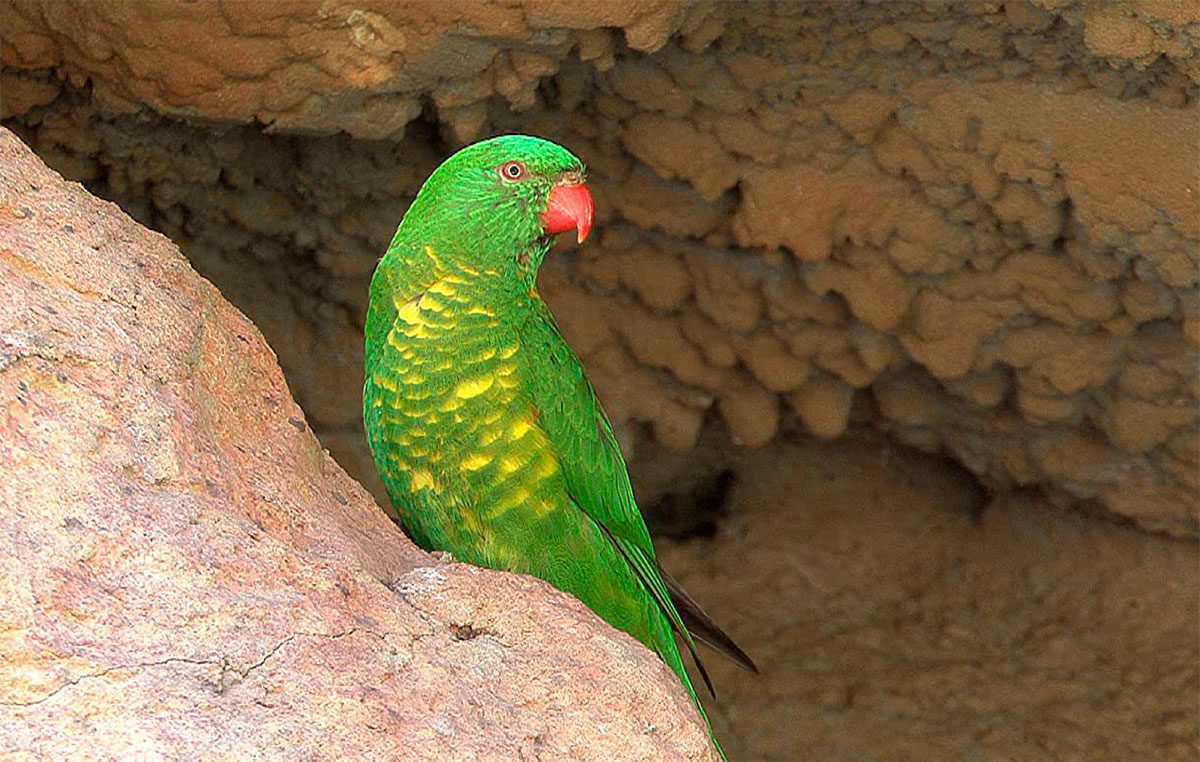
Scaly breasted Lorikeet
Trichoglossus chlorolepidotus

Scaly breasted Lorikeet

Content

Description

23 cm.. length and a weight between 75 and 95 gr.

The plumage of the Scaly breasted Lorikeet (Trichoglossus chlorolepidotus) is usually green.

The part back from your neck, the throat and the chest has several brands of yellow.
Under its tail, the the thighs and the sides of the body they are clearly marked with yellow.
Under its wing , and more specifically by the part inferior of them flight feather, its color is reddish orange.
The circle around the eyes is narrow and grey. Its irises is yellowish-Orange. The legs are ash and the bill orange.

The immature are equal to adults, but with less scalloped yellow; the thighs Brown pale and tail shorter. The bill brown. The eye ring White grey.

Habitat:

The Scaly breasted Lorikeet they are distributed by many forest habitats, including parks and Gardens located on the outskirts of cities and farmland, where are the flowering trees present.

They usually found in coastal areas and adjacent plateaus.

They have a strong preference for agricultural land and coastal scrub that are dominated by trees of the genus Banksia.

They can also be seen along the rivers, to the West of the Great dividing range. They can live up to 600 m.

The Scaly breasted Lorikeet they have quite similar patterns to the of the Coconut Lorikeet. It is not uncommon to find them together in mixed flocks where one of the two species generally outnumbers the other..

Most of the time, the Scaly breasted Lorikeet they live in pairs or in small groups of up to 10 individuals. They are most active at dawn, shortly after the dormitories are scattered.

They usually roam locally. These short trips are motivated by the search for food.

During flowering of trees, large groups may intervene if resources are abundant. The dispersion of groups is immediately after flowering.

In urban districts, are sedentary Since the sources of food are abundant in the gardens during all the year.

They are particularly friends of cultivated fruit, arriving to cause much damage in the orchards.

These birds have a flying fast and direct. When they are in the air they are immediately identifiable by its green head and bright orange red wings bass. When flying over the tops of them trees with rhythms fast, their wings produce a buzzing sound which is easily audible.

Reproduction:

The nesting season comprises of mayo to February in the North of the area of distribution, probably related to the decrease of rainfall.

In the southern part of the State of Victoria It takes place between August and January.

The Scaly breasted Lorikeet They nest in tree cavities, usually at a considerable height from the ground. They cover the bottom of the nest with a layer of sawdust and then lay two or three white eggs., oval in shape.

The incubation lasts a few 25 days. The male spends most of its time near hollow, but it does not seem to participate in the incubation. Both parents feed the chicks until they leave the nest, of 6 to 8 weeks after hatching.

Food:

The Scaly breasted Lorikeet they have a scheme rather similar to the of the Coconut Lorikeet. Both species feed primarily on nectar and pollen from the flowers especially the Niaouli (Melaleuca quinquenervia).

They feed also on flowers, berries, fruit, seeds, small insects and their larvae. Are big lovers of the fruits cultivated. They also enter sorghum and corn fields because they crave small immature milky grains..

Distribution:

Size of the area of distribution (reproduction / resident): 2.310.000 km2

The Scaly breasted Lorikeet being endemic to the Australian continent.

Its area of distribution extends from Bamaga in the extreme north of Queensland the District of Illawarra, on the South coast of New South Wales.

These birds are sedentary and abundant in the North, nomadic and less numerous in the South. They were introduced in the District of Melbourne, in the State of Victoria.

Conservation:


minor concern


โ€ข Current IUCN Red List category: Least concern

โ€ข Population trend: Stable

The population World has not been quantified, but is estimated above 100.000 specimens.

The species is described as common in the center of its area of distribution and more rare toward the areas north and South of their area of distribution.

It is suspected that the population It stable in the absence of evidence of any reduction or substantial threats.

"Scaly breasted Lorikeet" in captivity:

Rare out of Australia; small number in the United States and the United Kingdom.

Gregarious, playful and loud. A bit messy due to a diet of nectar.
Its life in captivity ranges between 20 and 25 years.

Alternative names:

Scaly breasted Lorikeet, Scalybreasted Lorikeet, Scaly-breasted Lorikeet (ingles).
Loriquet vert, Loriquet ร  poitrine squameuse, Loriquet รฉcaillรฉ (French).
Schuppenlori (German).
Lรณris-verde-de-peito-escamosos (Portuguese).
Lori Escuamiverde, Tricogloso de Pecho Escamoso (espaรฑol).

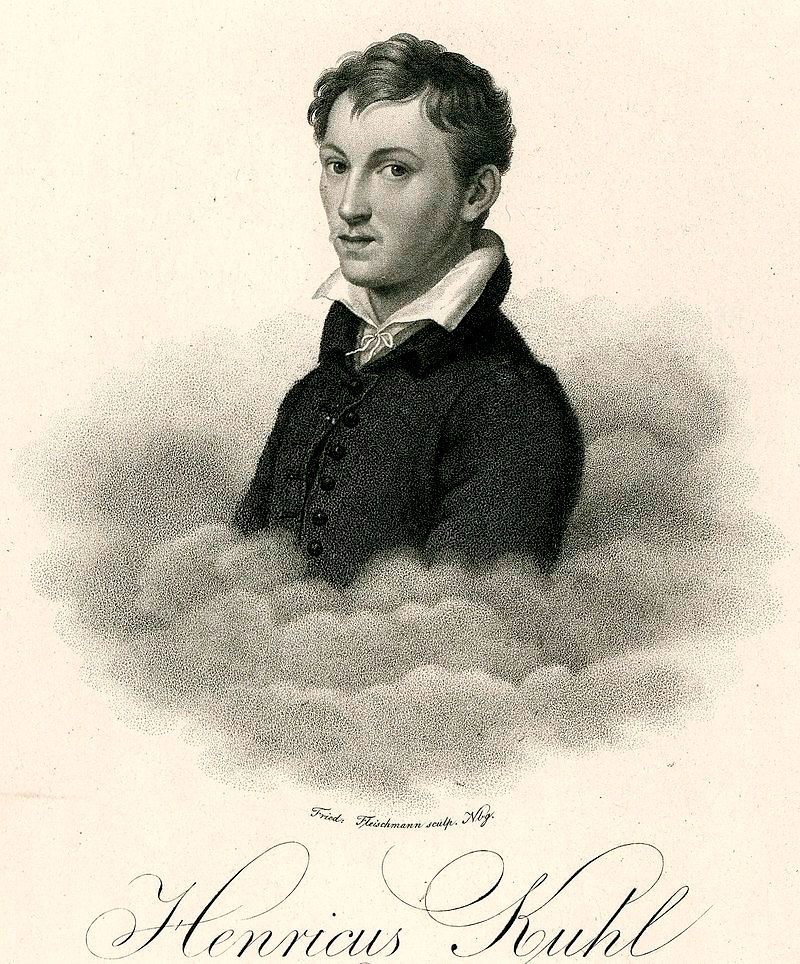
Kuhl, Heinrich
Heinrich Kuhl

scientific classification:


Order: Psittaciformes
Family: Psittaculidae
Genus: Trichoglossus
Scientific name: Trichoglossus chlorolepidotus
Citation: (Kuhl, 1820)
Protonimo: Psittacus chlorolepidotus


Images ยซGreen-skinned Loryยป:

Videos "Scaly breasted Lorikeet"

——————————————————————————————————-

ยซGreen-skinned Loryยป (Trichoglossus chlorolepidotus)


Sources:
Avibase
– BirdLife.org
– Parrots of the World โ€“ Forshaw Joseph M
– Parrots A Guide to the Parrots of the World – Tony Juniper & Mike Parr

Photos:

– Josep de el Hoyo – IBC.lynxeds.com
– by Tobias Spaltenberger – Two Scaly-breasted Lorikeets at Taronga Zoo, Australia. – Wikimedia
– by Ken Havard – IBC.lynxeds.com
– by Aviceda – Wikipedia
– by Jeremy Eades – Wikipedia

Sounds: Peter Woodall (Xeno-canto)

โ–ท The world of Pets: Dogs, cats, birds, reptiles, amphibians

Double-eyed Fig-Parrot
Cyclopsitta Diophthalma


Double-eyed Fig-Parrot

Content

Description

13 to 16 cm.. length and a weight between 25 and 56 g..

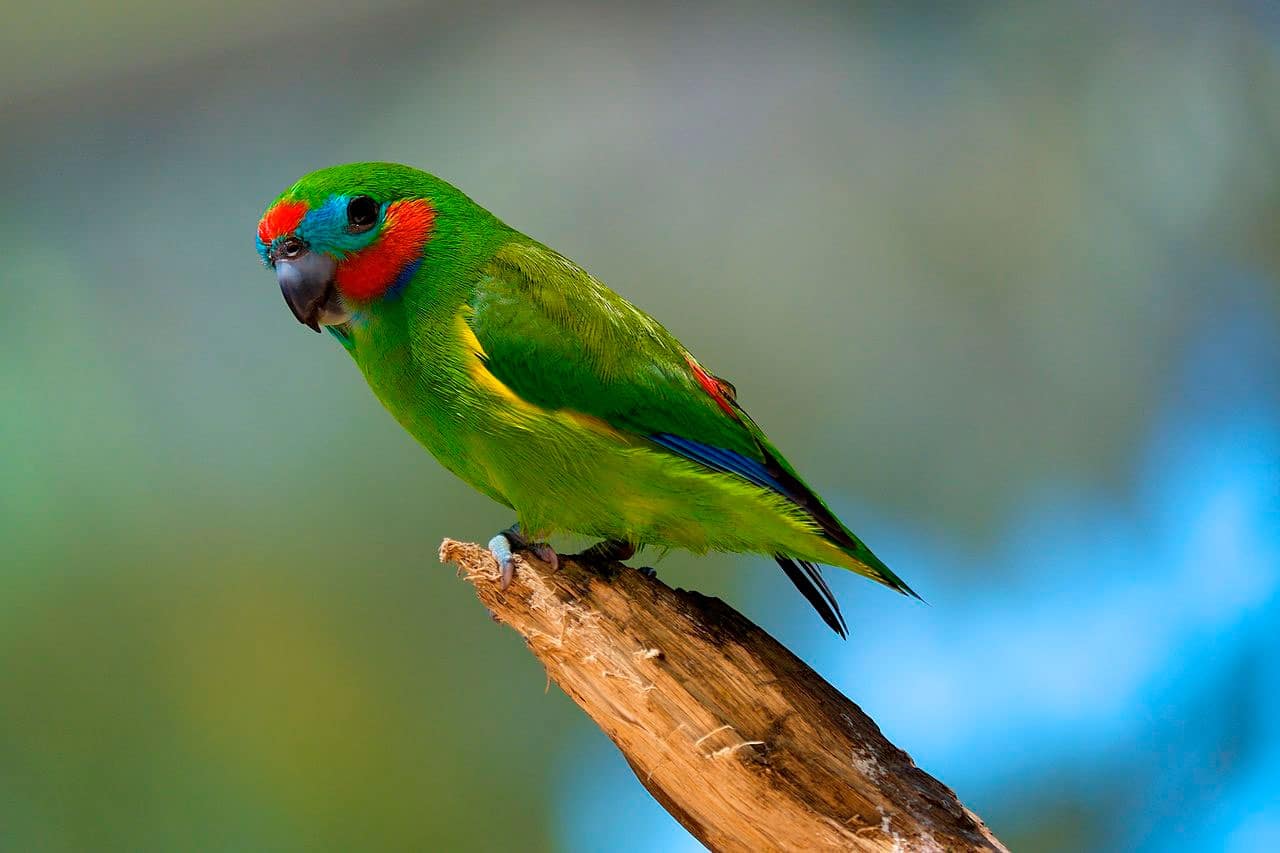
The Double-eyed Fig-Parrot (Cyclopsitta Diophthalma) half of the crown, lores, cheeks and headphones feathers bright Scarlet color with some slightly elongated feathers; bright turquoise brand above and in front of the eyes, that it extends slightly backwards above and below; green line above and behind the eyes; brand violet-blue light under the red on the back of the headphones feathers that extends to the throat; narrow yellowish Orange behind the red band of the crown, Fusion to the green in the part back from the crown.

Upperparts with indistinct diffusion of color bright green olive on the the mantle. Wing coverts, bright green; primary coverts blue; primaries with vane external of color blue turquoise pale and vane blackish internals; flight feather (except the primary outer) with band of yellowish white color visible from below; inner coverts marked in red, wing feathers bordered with yellow green.

The underparts paler; Green over yellow that the upperparts, with a strong Flash of yellow along the flank, about the bend of wing. Upper, the tail green; grey below.

Robust bill, notched grey lead and a blackish tip; cere dark grey; irises dark brown; legs Green grey.

The female has the cheeks brown, not red.

Immature as the females. The young male acquire the plumage adult in 14 months.

Subspecies description

Subspecies description
  • Cyclopsitta diophthalma diophthalma

    : (Hombron and Jacquinot, 1841) – The nominal

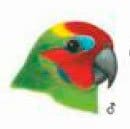
  • Diophthalma diophthalma aruensis - male

  • Cyclopsitta diophthalma aruensis

    : (Schlegel, 1874) – Of 14 cm.. length. The plumage is greenish-yellow, the blue area on the eyes has greenish hue , Blue cheeks are lined with mauve colouration and extends to the bottom of the peak.

    Female similar to the male but all the red marks are replaced by a pale blue.

  • Diophthalma diophthalma coccineifrons

  • Cyclopsitta diophthalma coccineifrons

    : (Sharpe, 1882) – Of 14 cm.. length.

    It is usually something more dark. The Crown is red bordered with a broad yellow band.

    The female has less yellowish white.

  • Diophthalma diophthalma virago - male

  • Cyclopsitta diophthalma virago

    : (ECTION Hartert, 1895) – Of 14 cm.. length.

    Green is more pale, the red zones of the face are less extensive and more pale.
    Yellow edge of the very weak Crown.

    Juveniles as adult females

  • Diophthalma diophthalma inseparabilis

  • Cyclopsitta diophthalma inseparabilis

    : (ECTION Hartert, 1898) – Of 14 cm.. length.

    The Red coloration is reduced to a small spot on the forehead, the rest of the forehead is bluish.

    Similar to males females.

    Juveniles as adult females.

  • Diophthalma diophthalma macleayana

  • Cyclopsitta diophthalma macleayana

    : (EP Ramsay, 1874) – Of 14 cm.. length.

    The Red is reduced to a red spot in the front area and lower cheeks. The yellow border in the area of the Crown is absent, sides of the forehead and eyes blue with green. The azul-violaceos edges of the cheek extends to below the peak.

    Females more yellowish and the bottom of the cheeks is white Brown.

    Equal to the adult female juveniles.

  • Diophthalma diophthalma marshalli

  • Cyclopsitta diophthalma marshalli

    : (Iredale, 1946) – Of 14 cm.. length.

    Green is more beige and the azul-malva coloration extends to the area under the peak.

    Females have pale blue color where the male has red and blackish brown cheek bottom area.

    Juveniles as adult females.

  • Diophthalma diophthalma coxeni

  • Cyclopsitta diophthalma coxeni

    : (Gould, 1867) – It's a bit more large, of about 15 cm.. approximately, No red forehead and face with some reddish feathers, the cheeks and orange headphones feathers. Blue front clear and without yellow stripe. The area of the eyes is absent blue. Blue edges of the bottom of the cheeks is variable.

    The females are more yellowish with less or absent red in the face.

    Equal to the adult female juveniles.

Habitat:

The Double-eyed Fig-Parrot are sedentary, with some dispersion after the breeding season. It is in a range of habitats from low to medium altitude, including jungle, secondary vegetation, on the edge of the Woods, riparian forest and occasionally dry forests and open forests of eucalyptus.

In Australia There are also birds in parks, Gardens, scrub, cultivated areas and mangroves; the Diophthalma diophthalma coxeni, probably, concentrated in the alluvial forest, but it was also visible in the forests of dry lowlands and hills of rainforest.

The species is highly dependent of the Ficus figs in all habitats.

The birds are usually found in pairs or in small groups, calling the attention with their constant calls acute while flying above the canopy.

They feed in silence, moving quietly through the foliage, often giving away their presence only by falling debris, Since break the shell of the fruit to reach its seeds.
outside the breeding season, groups of up to 200 birds can be nested together, dissolving into smaller groups to feed themselves during the morning and afternoon.

When alarmed, they move their wings in an agitated manner.

during the rains, the bath is carried out with wet foliage, and mutual grooming is common.

Reproduction:

The breeding season of the Double-eyed Fig-Parrot, probably begins in New Guinea during the month of March, in Australia the main season runs from August to November.

When the birds are played are divided into pairs, territorial around their food trees. The nest It is a cavity that is expanded in a trunk at a height between 8 and 20 meters above the ground. Most of the nest preparation is carried out by the female., that takes refuge in the hole and spends a large part of the day there during its excavation. She can experiment with more than one nest.

Courtship feeding is common. The entrance hole is about 4 cm in diameter, and putting two white eggs are deposited, at intervals of 48 hours, in one camera, some 20 centimetres below the entry hole.

The incubation hard 18 days and the young will leave the nest in 7-8 weeks, After having been fed during the first 3 to 4 weeks, only for the female. They return to settle in the hollow for a short period of time after having left the nest.

Food:

The fig seeds they are their main food, birds often return to the same ripe fruits ending all their seeds. The diet also includes whole fruits small, nectar, insect larvae and fungi or lichens collected from the barks. Birds may feed in groups with others Fig parrots and, in Australia, with Rosella parakeets and other species of parrots.

Distribution:

The Double-eyed Fig-Parrot is distributed throughout much of New Guinea and parts of the northeast of Australia. At the West end is located in Waigeo, Salawati, Misool and Rafiau in the West Papua islands, Indonesian.

Is widespread but distributed unevenly through the continental part of New Guinea, absent only in the center of the Doberai Peninsula and the central belt of mountains above the 1.600 m, Although there have previously been to 1.800 meters at the local level.

You can see in the islas Aru and Fergusson, in the Islands Goodenough in the D'Entrecasteaux Group, and in Tagula in the Louisiade group.

In Australia, the most northerly of the three isolated populations, is the tip of the Cape York Peninsula, from Jardine River in the northwest of the country, to the South, around East of Lockhart River, sometimes in the South to the extreme north of the Princess Charlotte Bay; the population Centre occupies the coastal district of everything Cooktown in the North through Cairns and the District Atherton, about South of Townsville; the southern-most population, now very reduced, with less than 50 records in the last century, formerly extended from Gympie, Queensland, to the South, about Richmond River, New South Wales, arriving inland up to the Bunya mountains (in 1976 two birds were about the Koreelah National Park, in February and two close Lamington National Park in December).

The estimate of the world population is above the 100.000 individuals and stable, but the State two of its subspecies is less secure:

– Cyclopsitta Diophthalma macleayana: has a population of 5.000 individuals and may be in decline, Although multiply in parks and gardens around Cairns.
– Cyclopsitta Diophthalma coxeni: just left 200 birds, After having reduced its population as a result of the destruction of the forests of lowlands along its limited distribution area.
– The third Australian subspecies, Cyclopsitta Diophthalma marshalli it's still pretty common.

In New Guinea, the species dispersed, and is considered to be rare in the Doberai Peninsula and absent from many parts of the lowlands of the South, is mainly distributed in the Highlands of the South basin. The Orange-breasted Fig-Parrot It probably replaces this species in much of this area. It is likely that the species has not been recorded accurately due to its small size and discreet habits. Protected by law in Australia. The Diophthalma diophthalma coxeni appears in the Appendix I of the CITES

Subspecies distribution

Subspecies distribution

Conservation:


minor concern


โ€ข Current IUCN Red List category: Least concern

โ€ข Population trend: Stable

The size of the world population Double-eyed Fig-Parrot It has not been quantified, Although it is estimated at more than 100,000 specimens. But, the Diophthalma diophthalma coxeni is in critical hazard, with a population between 50 and 200 individuals; the Diophthalma diophthalma macleayana with a population of some 5.000 individuals and the Diophthalma diophthalma marshalli generally uncommon

The population, of the nominal species, is suspected to be stable in the absence of evidence of any reduction or substantial threats.

"Double-eyed Fig-Parrot" in captivity:

Rare in captivity.
Not social with people. Welcome in the distance.

Alternative names:

Double-eyed Fig-Parrot, Double eyed Fig Parrot, Double-eyed Fig Parrot, Two-eyed Fig Parrot (ingles).
Psittacule double-oeil (French).
Rotwangen-Zwergpapagei (German).
Papagaio-do-figo-de-cara-azul (Portuguese).
Lorito de Cuatro Ojos, Lorito Dobleojo, Lorito de la higuera de doble ojo (espaรฑol).

scientific classification:

Order: Psittaciformes
Family: Psittaculidae
Scientific name: Cyclopsitta Diophthalma
Genus: Cyclopsitta
Citation: (Hombron & Jacquinot, 1841)
Protonimo: Psittacula diophthalma

Images "Lorito double":

Videos "Double-eyed Fig-Parrot"

————————————————————————————————

ยซLorito Doublerojoยป (Cyclopsitta Diophthalma)


Sources:

– Avibase
– Parrots of the World โ€“ Forshaw Joseph M
– Parrots A Guide to the Parrots of the World – Tony Juniper & Mike Parr
– Loromania

Photos:

(1) – ยซCyclopsitta diophthalma-Birdworld Kuranda, Queensland, Australia-male-8aยป by ShotophotoDouble Eyed Fig ParrotUploaded by snowmanradio. Licensed under CC BY-SA 2.0 via Wikimedia Commons.
(2) – John Gerrard Keulemans [Public domain], via Wikimedia Commons
(3) – ยซCyclopsitta diophthalma-Mossman Gorge, Daintree National Park, Queensland, Australia-male-8ยป by James Island from Brisbane, Australia – Double-Eyed Fig-ParrotUploaded by snowmanradio. Licensed under CC BY 2.0 via Wikimedia Commons.
(4) – ยซCyclopsitta Diophthalma (female) -Cairns-8ยป by David Cook Wildlife Photography – originally posted to Flickr as Double-eyed Fig-Parrot (Cyclopsitta Diophthalma). Licensed under CC BY-SA 2.0 via Wikimedia Commons.
(5) – Birds-pet-wallpapers
(6) – By tamandua – PBase

Sounds: Andrew Spencer (Xeno-canto)

โ–ท The world of Pets: Dogs, cats, birds, reptiles, amphibians

Timneh Parrot
Psittacus timneh


Loro Timneh

Content


Anatomy-parrots

Description:

28 to 32 cm.. length and a weight between 275 and 375 g..

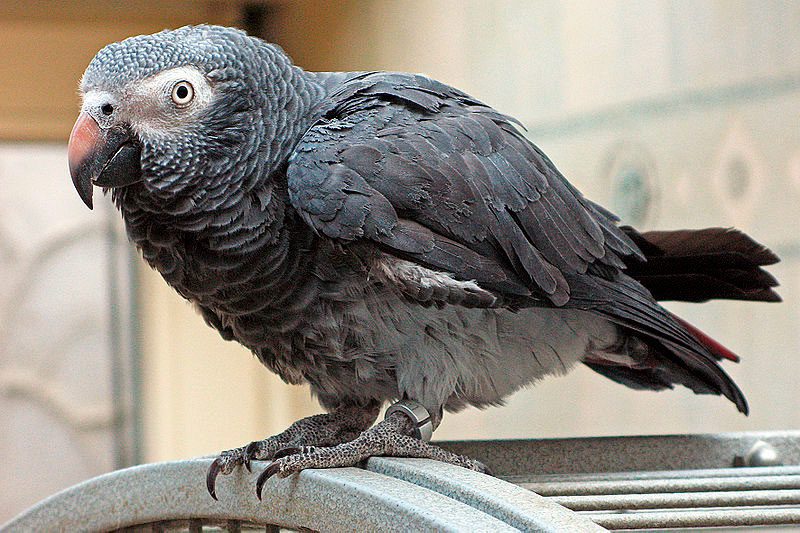
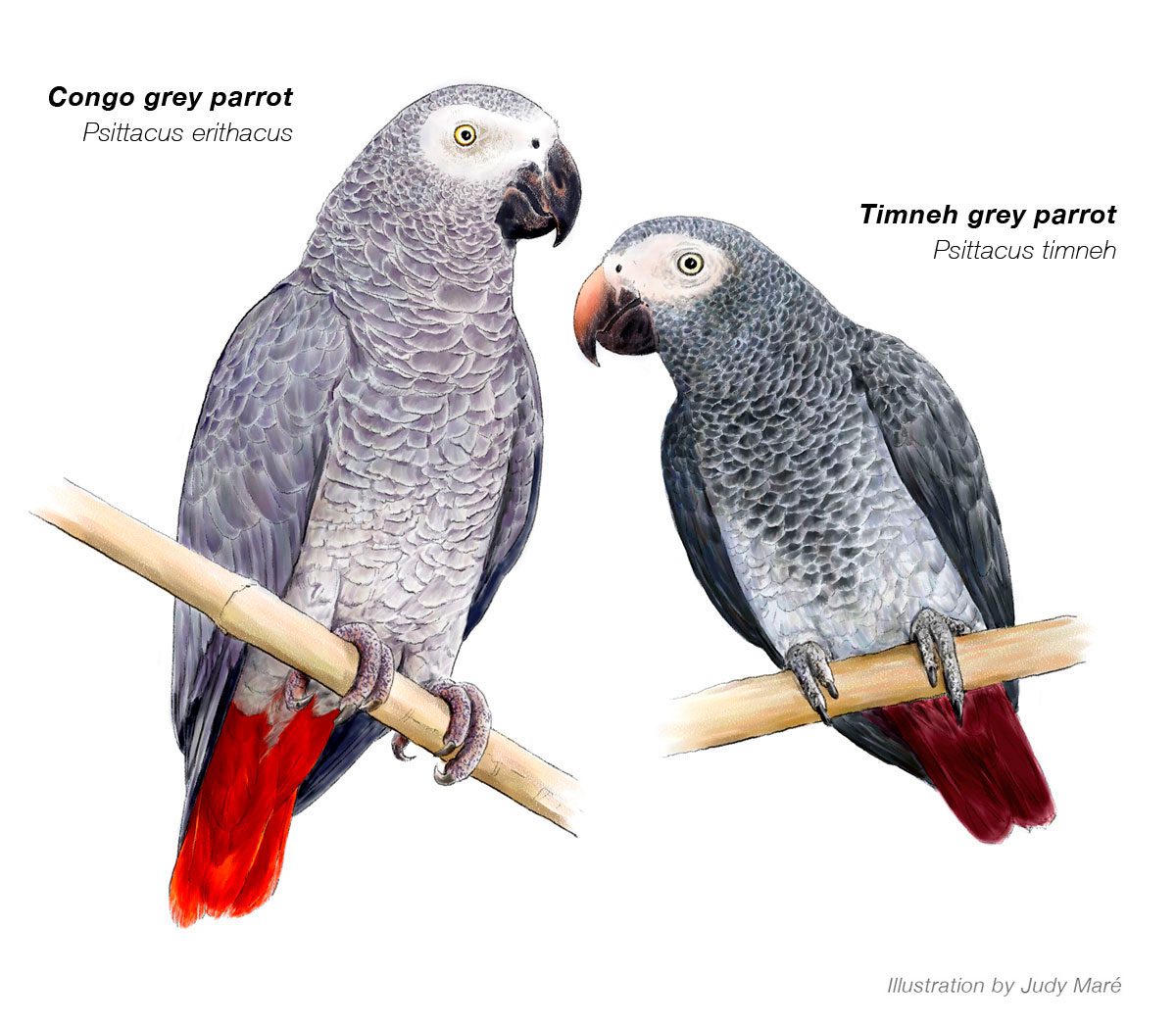
The Timneh Parrot (Psittacus timneh) is darker than Grey Parrot and the Red of the the tail feathers more off, darker and usually Brown (not Scarlet).

The uppertail-coverts son grises, dyed red (not Scarlet).

The bill It is mostly black, but it has an ivory-coloured or pinkish in the upper third of the upper jaw.

There is no visible difference between male and female.

The youth they have black eyes that become a yellowish cream at the age of two years.

Smaller that the Grey Parrot

Description 2 subspecies:

  • Psittacus timneh princeps

    (Alexander, 1909) – Darker and slightly larger than the subspecies Psittacus timneh timneh, although its size is still below the Grey Parrot (Psittacus erithacus). The feathers of the tail are as red as those of Grey Parrot, but marked by a greater contrast with the almost black feathers body, giving a different impression this subspecies. The eyes are yellow, the bill It is black and legs are dark gray.


  • Psittacus timneh timneh

    (Fraser, 1844) – Nominal.

Habitat:

Ilustraciรณn por Judy Marรฉ
Illustration by Judy Mare

Although they normally inhabit the dense forests, they are also usually seen at the edges of forests, clear, gallery forest, mangroves, tree-lined sheets, cultivated areas, and even the gardens, Although it is not clear if it's self-sustaining populations.

You can do seasonal movements out of the drier areas of its distribution in the station area dry.

Sometimes travel long distances to feed. They nest in hollow trees high above the ground. Found in small flocks of a few dozen, usually no more. Flocks of birds can be noisy.

Reproduction:

Little known difference with regard to the Grey Parrot.

The breeding season is usually from November to April in the westernmost areas of west africal, probably, especially during the season dry.

During the season of breeding they put in 2 to 4 eggs, every two or three days. These hatch in 28-30 days and the young are independent in 12 to 14 weeks.

Food:

In the wild, the Timneh Parrot they eat seeds, nuts, fruits and vegetables. they climb trees, instead of flying, to collect food and keep it with one leg while eating. They enjoy eating the external Walnut meat of the Palm oil, and have been observed eating snails.

In West Africa, his hobby is known for beads, attacking cornfields and becoming considered pests in certain places.

Distribution:

Size of the area of distribution (reproduction / resident): 541.000 km2

They are distributed in the West, in the humid forest areas of the Upper Guinea and bordering savannahs of West Africa from Guinea-Bissau, Sierra Leone and South of Mali to the East of Ivory Coast, at least a 70 kilometers to the East of the bandama river.

The wild population is distributed along with the species nominal in Abidjan, Ivory Coast.

Distribution 2 subspecies:

  • Psittacus timneh princeps

    (Alexander, 1909) – Principe Island (gulf of guinea).


  • Psittacus timneh timneh

    (Fraser, 1844) – Nominal. South of Guinea, Sierra Leone and Liberia, as well as the western part of Ivory Coast. There are also smaller groups Guinea Bissau and Mali. Populations Senegal They have disappeared fish trade.

Conservation:


Vulnerable


โ€ข Current Red List of UICN: Vulnerable

โ€ข Population trend: Decreasing

Its population is estimated between 100,000 and 500,000 exemplary and decreasing.
The P. erithacus, before the division of the timneh, He was put in the Appendix II of CITES with all Psittaciformes in 1981 at the request of Switzerland and Liechtenstein. Due to concerns about the effects of the large number of this species traded, It was the subject of a review of significant trade of the CITES, in which was listed as "possible concern" (Inskipp et to the. 1988).

The Animals Committee of the CITES he imposed a sanction of two years from January of 2007 on exports of timneh from four countries of West Africa (Ivory Coast, Liberia, Sierra Leone and Guinea), and banned the import of wild birds into the EU in 2007 (Anon 2011).

In 2009 Guinea exported 720 timneh, Despite having a share of 0 (Anonymous 2011).

The controlled legal trade by CITES may represent only a small proportion of total numbers caught in the wild.

The species is found in a number of protected areas.

A PhD study assessed the distribution, abundance and the impacts of trade and habitat loss for the timneh started in 2011 (Anon 2011).

Conservation Actions Proposed:

    โ€ข Ensure that proposed trade restrictions are enforced.

    โ€ข Monitor wild populations to determine ongoing trends..

"Timneh Parrot" in captivity:

Poultry are known in a manner abbreviated as TAG (Timneh African grey).

The Parrot Timneh is equivalent in intelligence and ability of his Congo counterpart, the Grey Parrot, being, generally, less nervous and with a great ability to imitate sounds (they often learn to imitate human sounds before the Grey Parrot). They can have a wide vocabulary of hundreds of words.

Unlike the Parrot Yaco, their voices are not an exact replica of the voice of the person you are copying. The Timneh Parrot they have their own special little voice.

Alternative names:

Timneh Parrot, Gray Parrot (Timneh), Sierra Leone Gray Parrot, Sierra Leone Grey Parrot, Zambesi Green Pigeon (English).
Perroquet timneh (French).
Timnehgraupapagei (German).
papagaio-timneh (Portuguese).
Loro timneh, Loro Gris de Cola Vinagre (espaรฑol).

scientific classification:

Order: Psittaciformes
Family: Psittacidae
Genus: Psittacus
Scientific name: Psittacus timneh
Citation: Fraser, 1844
Protonimo: Psittacus Timneh

ยซTimneh Parrotยป Images:

————————————————————————————————

"Two Timneh" (Psittacus timneh)


Sources:

Avibase
– Parrots of the World โ€“ Forshaw Joseph M
– Parrots A Guide to the Parrots of the World – Tony Juniper & Mike Parr
– Birdlife

Photos:

(1) – Timneh African Grey Parrot (Psittacus erithacus timneh) Pet parrot sanding on a cage By Peter Fuchs (Flickr) [CC BY-SA 2.0], via Wikimedia Commons
(2) – Two pet Timneh African Grey Parrots perching on a manโ€™s arm By rebeccakoconnor (originally posted to Flickr as Timneh Greys) [CC BY 2.0], via Wikimedia Commons
(3) – Timneh African Grey Parrot (Psittacus erithacus timneh). A pet parrot standing on a cage. Photo shows the maroon tail feathers By Peter Fuchs (originally posted to Flickr as henry tired) [CC BY-SA 2.0], via Wikimedia Commons
(4) – A Timneh African Grey Parrot at Birds of Eden, South Africa By Graham (originally posted to Flickr as IMG_0972) [CC BY-SA 2.0], via Wikimedia Commons
(5) – A Timneh African Grey Parrot that is allowed to fly free in Tropical Birdland, Leicestershire, England I, Snowmanradio [GFDL or CC-BY-SA-3.0], via Wikimedia Commons
(6) Ilustraciรณn by Judy Marรฉ – Africa Geographic Magazine

Sounds: Etienne Leroy (Xeno-canto)
โ–ท The world of Pets: Dogs, cats, birds, reptiles, amphibians

Blue-crowned Conure
Psittacara acuticaudatus


Blue-crowned Conure

Content

Description:

33-38 cm.. length and a weight between 170 and 176 g..

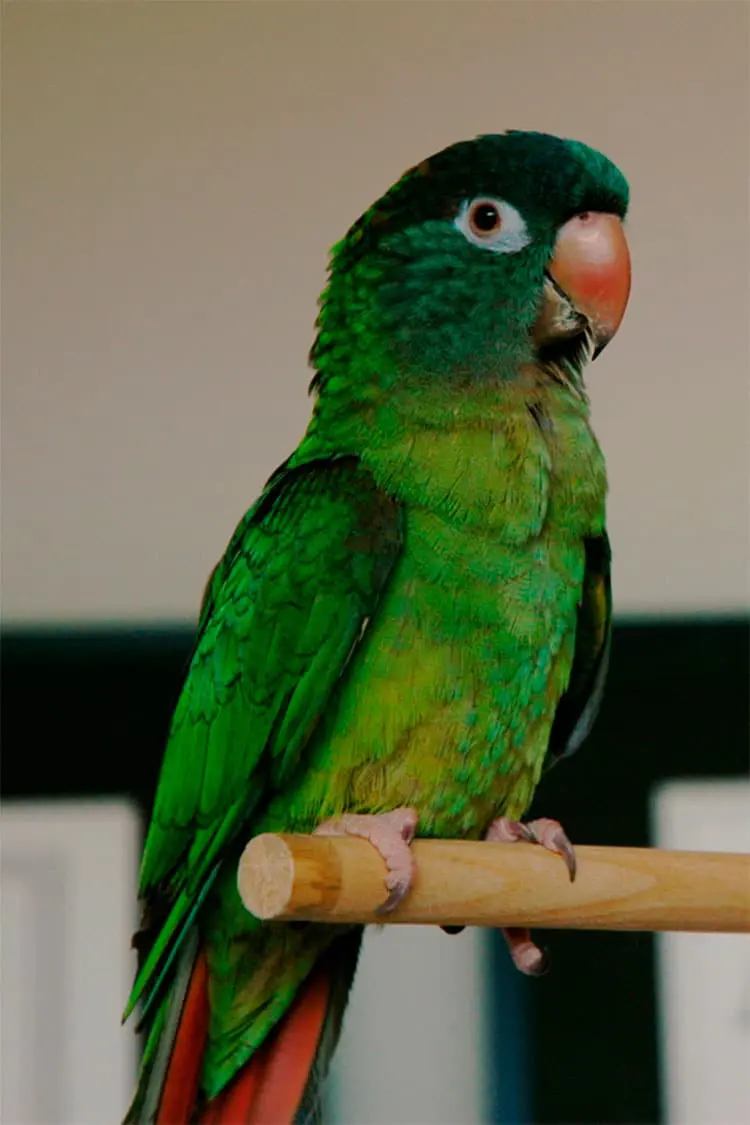
The Blue-crowned Conure (Psittacara acuticaudatus) It is one of the largest of the genus birds Aratinga. elongated body, and long tail gradada, equal to all the Aratinga.

You have the front of the crown, the forecrown, the cheeks and lores pale bright blue. The sides of the neck, the nape, the the mantle, scapulars and back are bright green; the rump and uppertail-coverts are green pale. Upperwing-coverts bright green; alula with blue dye.

Anatomy-parrots Primaries and secondaries green above, with pinkish tinge in the vane inner, olive gold below. Underwing-coverts green.

The underparts are pale green with shades of olive green; some feathers of the chest drenched blue. Upper, the tail green color in the vane outer, red brick in the vane inner with fusion of opaque green tips; undertail, the tail Red, distally faded to pale brown brick.

Ilustraciรณn Aratinga Cabeciazul

Rosacea the upper jaw, greyish the lower; nude orbital region creamy white; irises yellowish-orange; legs pale pink.

Sexes similar in plumage.

The immature has the blue color of the head restricted to the forecrown and to the crown, no blue tint in the chest. The copies juveniles of the nominal species has bill a paler tone.

Subspecies description
Subspecies

A more thorough research is needed to assess the taxonomic status of this species. The date of the original publication of the subspecies koenigi It is discussed; This and the use of nigrirostris apparently synonymous (by the same author) requires clarification. Five recognized subspecies.

  • Psittacara acuticaudatus acuticaudatus

    (Vieillot, 1818) – The species nominal


  • Psittacara acuticaudatus haemorrhous

    (Spix, 1824) – Both jaws pale pink, underparts bright green and blue of the head narrower that the of the nominal species.


  • Psittacara acuticaudatus koenigi

    (Arndt, 1995) – Similar to the subspecies ยซharmorrhousยซ, but with the vane inner at the bottom of the the tail feathers less reddish brown. Smaller (34 cm.).


  • Psittacara acuticaudatus neoxenus

    (Cory, 1909) – Similar to the subspecies ยซhaemorrhousยป but bluish-green in color chest and the belly; smaller than other subspecies except ยซkoenigiยป (34cm.).


  • Psittacara acuticaudatus neumanni

    (Blake & Traylor, 1947) – Only the forecrown, the lores and the front of the crown, are blue, Green the rest of the head.

Habitat:

Video – "Blue-crowned Conure"

Lolita. Aratinga acuticaudata

The Blue-crowned Conure they live in dry deciduous forests and open habitats including habitats semi-desiertos associated. Registered in the caatinga and the closed with vegetation of Palms Mauritia in the northeast of Brazil, in gallery forest Venezuela and Colombia, deserts in Bolivia, and pampas in Argentina; Also cultivated areas and grassland in dry forest areas.

In general, they live in the lowlands (400 m in Colombia, 600 metres in Venezuela), but ascend to 2650 m in Bolivia, in leguminous forest habitats with columnar cacti.

Usually, in pairs or small flocks, but with larger aggregations outside the breeding season, especially where is food abundant, resulting in considerable local movement and consequent fluctuations in local bird numbers.

In some places, birds roost in crevices of the rocky cliffs. Observed in association with the Mitred Parakeet (Psittacara mitratus) and White-eyed Parakeet (Psittacara leucophthalmus).

Reproduction:

Nest in high tree cavities, among the cultivated species are included as the Mango wave guava; in some areas nested in the cavities of the cliffs sandstone.

The egg laying, generally three to four, takes place in December in Paraguay and Argentina; the brood probably between the months of March and July in Venezuela.

The female incubated eggs during 26 days, and chicks they leave the nest a few 52 days after birth.

Food:

The Blue-crowned Conure they feed in the trees in bushes, and also in land.

Reported foods that make up their diet include seeds of sorghum and Bambusa, berries of Condalia lineata, fruit of Cactus and crops as the Mango Mangifera, possibly also feed on of insects.

Distribution:

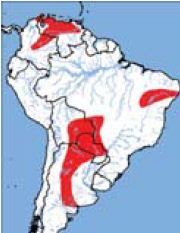
Its distribution is discontinuous and wide much of South America. Can be observed in several separate populations from Venezuela to Argentina. One of the largest areas of distribution extends from the northeast of Colombia (to the southeast of the Andes to Department of Meta), including the Guajira Peninsula and Sierra Nevada de Santa Marta in the Northwest of Venezuela to the East of Monagas (including the Margarita Island) and South to the North of Bolรญvar.

A second population of the Blue-crowned Conure resides in the Northwest of Brazil, to the East of Piauรญ, North of Bay, Pernambuco and Alagoas. A third You can see from the East of Bolivia and West of Mato Grosso, Brazil, even more to the South, through Paraguay and South of Argentina until The Pampa and southwest of Buenos Aires, perhaps also some individuals in the West of Uruguay.

Pretty common in Colombia. Frequent in Venezuela, although the abundance of birds varies with the season. From just frequent up to quite common in Bolivia. In Northeast Brazil It is most abundant in some locations Parrot. Of common to quite common (but possibly in decline) in the North of Argentina.

Possibly extinct or very rare in West Uruguay. In the Margarita Islands very few examples (between 100 and 200 birds released) the loss of habitat due to tourism, his capture as a domestic fowl, and due to their predation by rats.

There are a large number of specimens in captivity (more than 94.000 birds were exported from Argentina in the period between 1985-1990).

Subspecies distribution
Subspecies

Conservation:

State of conservation โ“˜


minor concern Minor Concern โ“˜ (UICN)โ“˜

โ€ข Red List category of the UICN current: Least concern

โ€ข Population trend: Decreasing

The size of the world population It has not been quantified.

The Blue-headed Parakeet is common in most of its distribution. But like almost all species of parrots, It is threatened by deforestation and the degradation of the habitat.

Some subspecies, in particular the ยซPsittacara acuticaudatus neoxenusยป are threatened by cage bird trade. Since 1981 When it was included in the Appendix II, 193,299 individuals were captured in the wild and reported for international trade (UNEP-WCMC trade database CITES, January 2005).

The predation of nests seen as a threat by the rats. But, the Blue-crowned Conure is not considered threatened by now.

"Blue-crowned Conure" in captivity:

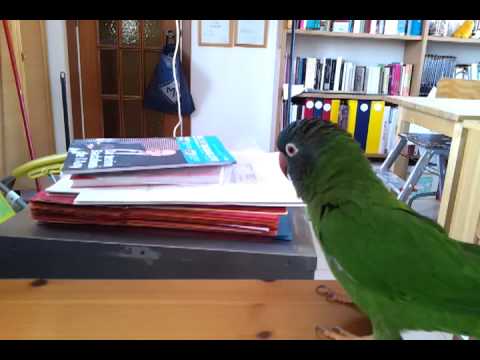
Birds are very sociable, very attached to their owners. It is also known have to imitate the human voice, able to learn some words and short sentences.

With regard to its longevity, according to sources, a specimen lived for 31 years in captivity

Its feeding in captivity it is omnivorous and varied, will include sunflower and pumpkin seeds, Tender corn, Green peanuts, oats, wheat, caรฑamones, In addition to fruits and vegetables: Apple, pear, banana, lettuce, Escarole, etc. During the breeding and fattening, You will be offered biscuit paste and egg yolk.

Paulie

Until the release of the movie ยซPaulieยซ, It presented a Blue-crowned Conure, This species was one of the secrets better kept in poultry production.

Alternative names:

Blue-crowned Conure, Blue crowned Parakeet, Blue-crowned Parakeet, Sharp-tailed Conure (English).
Conure ร  tรชte bleue, Conure ร  front bleu, Perriche ร  tรชte bleue, Perruche ร  tรชte bleue (French).
Spitzschwanzsittich (German).
Periquito-de-cabeรงa-azul, Aratinga-de-testa-azul, Aratinga-de-testa-azul / Periquitรฃo, jandaia-de-cabeรงa-azul, maracanรฃ, periquitรฃo, periquito-de-bico-rosa, periquito-de-pรฉ-rosa (Portuguese).
Aratinga Cabeciazul, Calacante comรบn, Calancate, Calancate Comรบn, Loro Cabeza Azul, Maracanรก cabeza azulada, Perico Frentiazul, Periquito de Cabeza Azul (espaรฑol).
Calacante comรบn, Calancate, Calancate Comรบn (Argentina).
Calancate (Bolivia).
Loro frentiazul, Perico Frentiazul (Colombia).
Maracanรก cabeza azulada (Paraguay).
Loro Cabeza Azul (Uruguay).
Carapaico, ร‘angaro (Venezuela).
Marakana, ร‘endai (Guarani).

scientific classification:

Order: Psittaciformes
Family: Psittacidae
Genus: Psittacara
Scientific name: Psittacara acuticaudatus
Citation: (Vieillot, 1818)
Protonimo: Psittacus acuticaudatus

  • Clements, version 2017: Thectocercus acuticaudatus

Images Blue-crowned Conure:


Species of the genus Psittacara

Sources:

  • Avibase
  • Parrots of the World โ€“ Forshaw Joseph M
  • Parrots A Guide to the Parrots of the World – Tony Juniper & Mike Parr
  • Birdlife

  • Photos:

(1) – Blue-crowned Parakeet, Blue-crowned Conure, or sharp-tailed conure (Aratinga acuticaudata) By John Graziano en:user:Gnocchi [GFDL, CC-BY-SA-3.0, GFDL or CC-BY-SA-3.0], via Wikimedia Commons
(2) – Blue-crowned Parakeet (also known as Blue-crowned Conure and Sharp-tailed Conure) in the square of the small village of San Isidro, Santa Cruz dept, Bolivia By Hรฅkan Sandin [CC BY-SA 2.0], via Wikimedia Commons
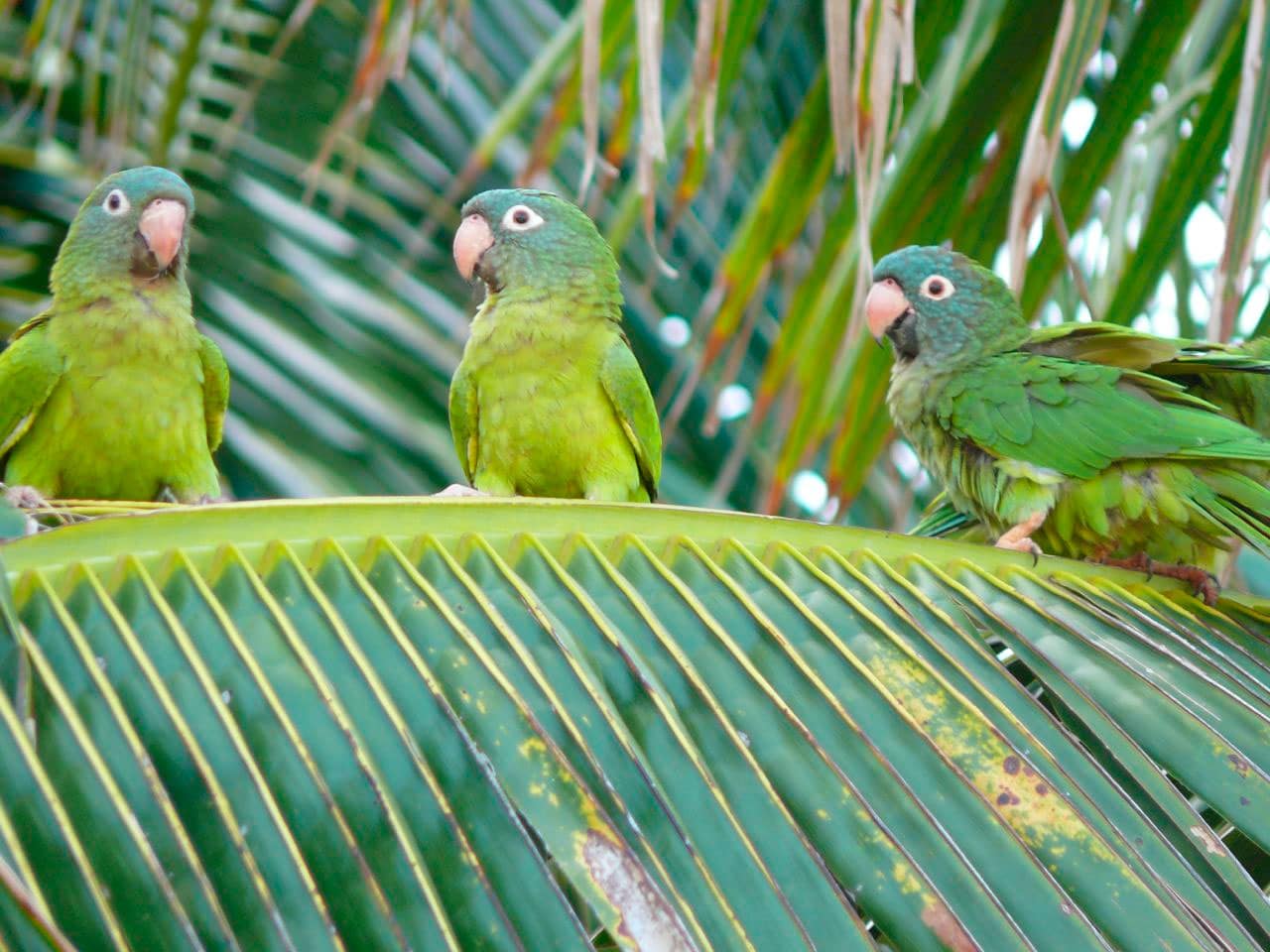
(3) – Feral Blue-crowned Parakeets (also knows as Blue-crowned Conure and Sharp-tailed Conure) in Miami, Florida, USA By Kevin from Rotterdam, The Netherlands (threesomeUploaded by Snowmanradio) [CC BY 2.0], via Wikimedia Commons
(4) – A feral Blue-crowned Parakeet in Pompano Beach, Florida, USA By John Spade from Pompano Beach, USA (Guava ThiefUploaded by snowmanradio) [CC BY 2.0], via Wikimedia Commons
(5) – Blue-crowned Parakeet, Blue-crowned Conure, or sharp-tailed conure (Aratinga acuticaudata) By Richard (originally posted to Flickr as Looking at you!) [CC BY 2.0], via Wikimedia Commons
(6) – Conurus acuticaudatus = Aratinga acuticaudata (Blue-crowned Parakeet) Marc Athanase Parfait Oeillet Des Murs [Public domain], via Wikimedia Commons