▷ The world of Pets: Dogs, cats, birds, reptiles, amphibians

Mudi
Hungría FCI 238 - Sheepdogs

Mudi

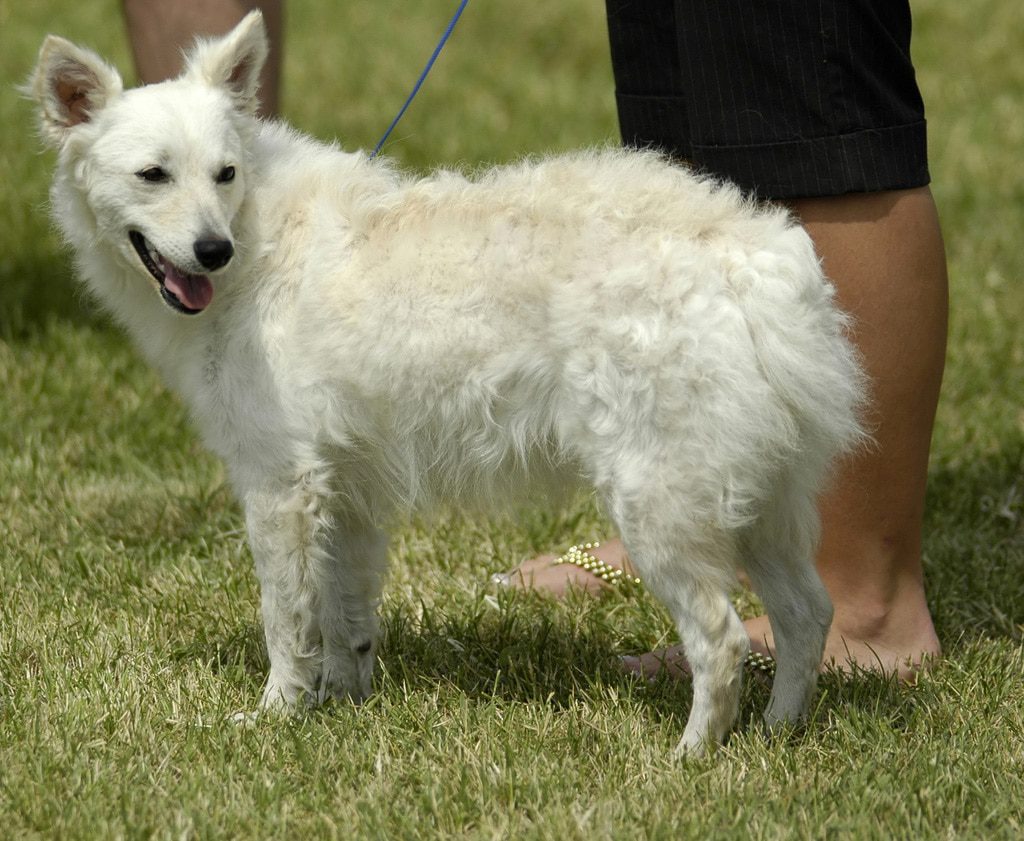
The Mudi is a single master dog, and a rare breed outside its native Hungary.

Content

History

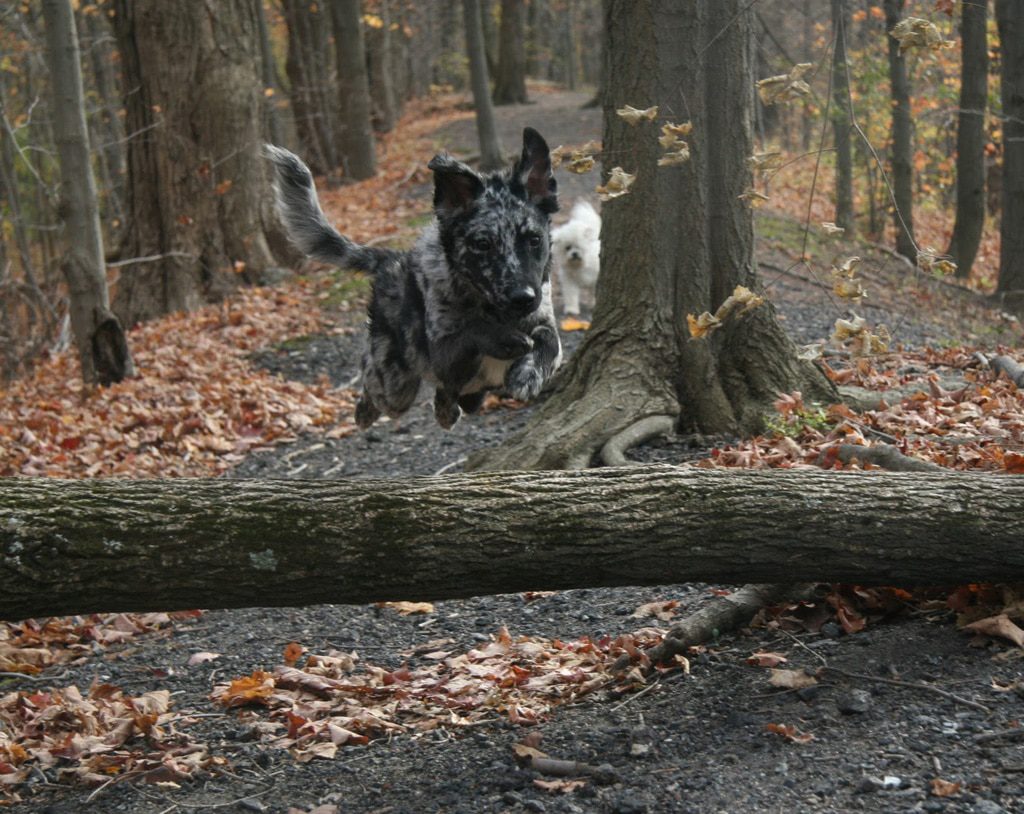
The Mudi is the name of a canine breed of herding dog rare, originally from Hungary.

According to existing documentation, some currents maintain that the Mudi was formed in Hungary spontaneously, between the 19th and 20th centuries.

Others reply that the Pumi, the Puli and the Croatian Sheepdog, are close relatives of Mudi.

Are what, they are their ancestor and the form in which it existed, What is known for sure is that the Mudi, has survived this time thanks to the appreciation of the shepherds who praise his innate ability in which protection of livestock with regard.

In the year 1936 wrote the first breed standard, naming it Mudi.

The herd book is still open, that means that more and more dogs of this type, they live in their homeland, incorporated into breeding records.

The Mudi, is currently a "rare breed” there are few specimens in their native country, and outside of Hungary if there is…, very few inches.

In Hungary they have been fighting for years to keep the breed alive. As it has been the case with many breeds of dogs pastors, their copies have declined to the rhythm of the socio-cultural advancement.

Before, herds of cattle were numerous and sheepdogs…, essential, This situation has changed a lot from time to time and along the way we have lost many canine breeds specialized in working with cattle..

Physical characteristics

Usually weigh between 8 and 13 kg and measure between 38 and 48 centimeters to the cross.

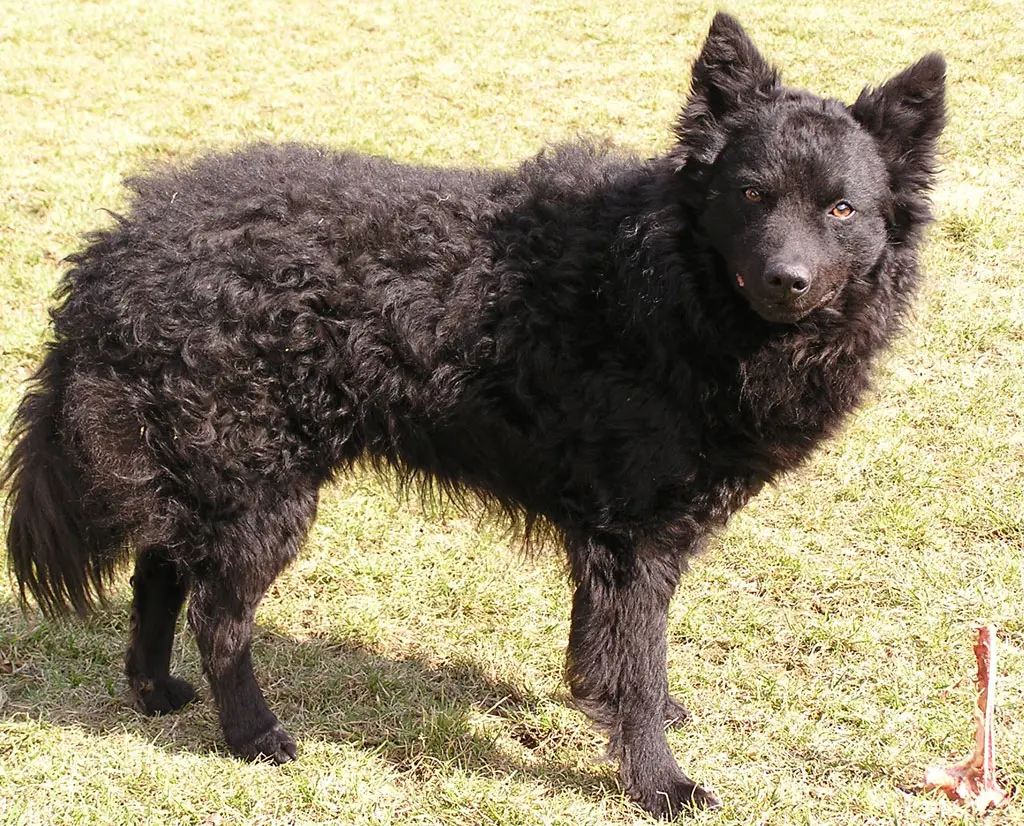
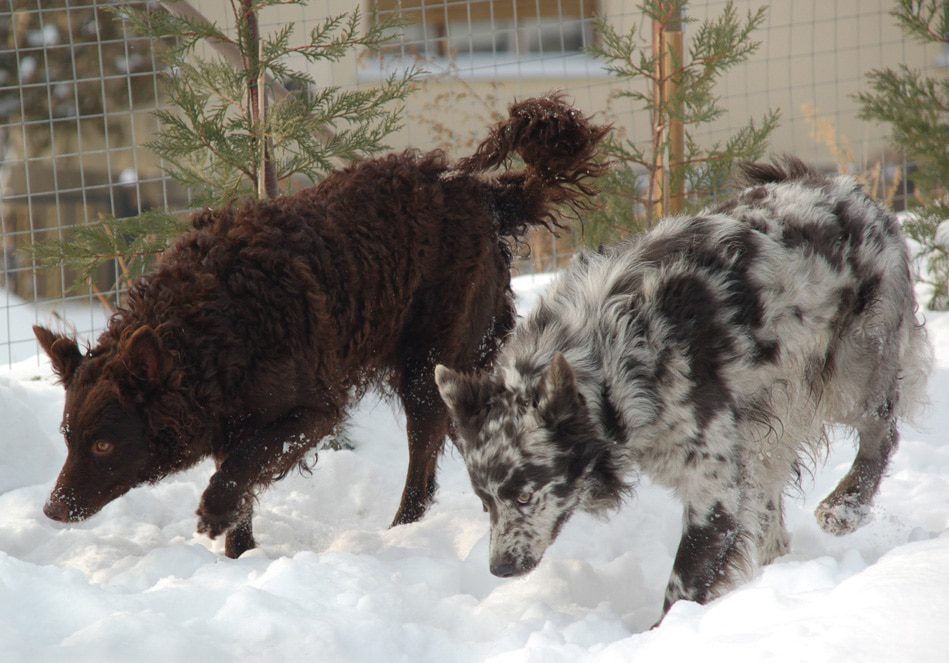
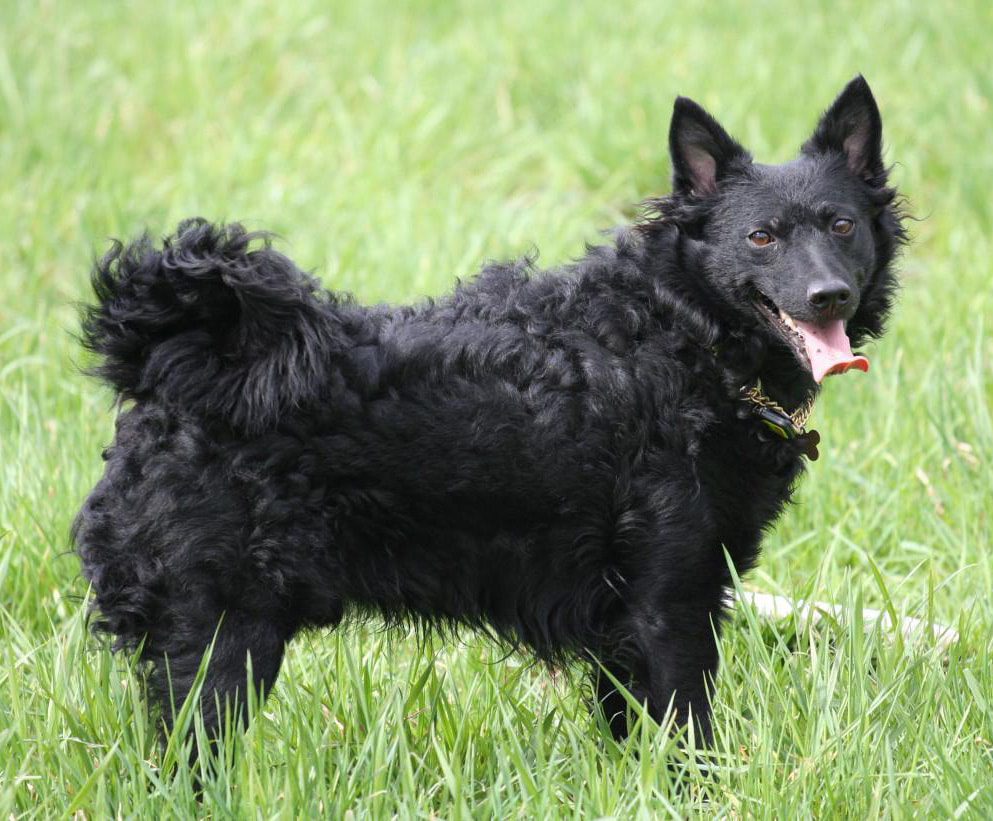
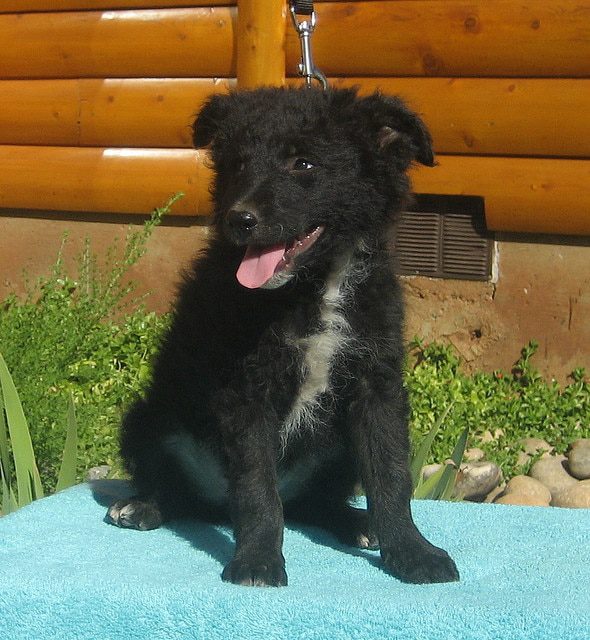
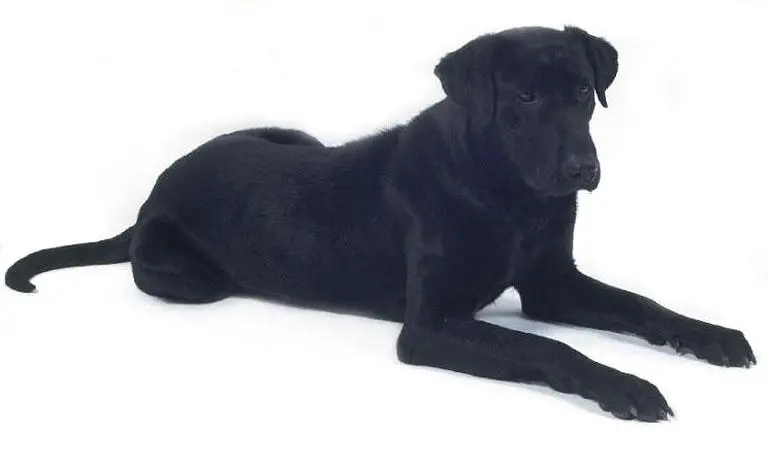
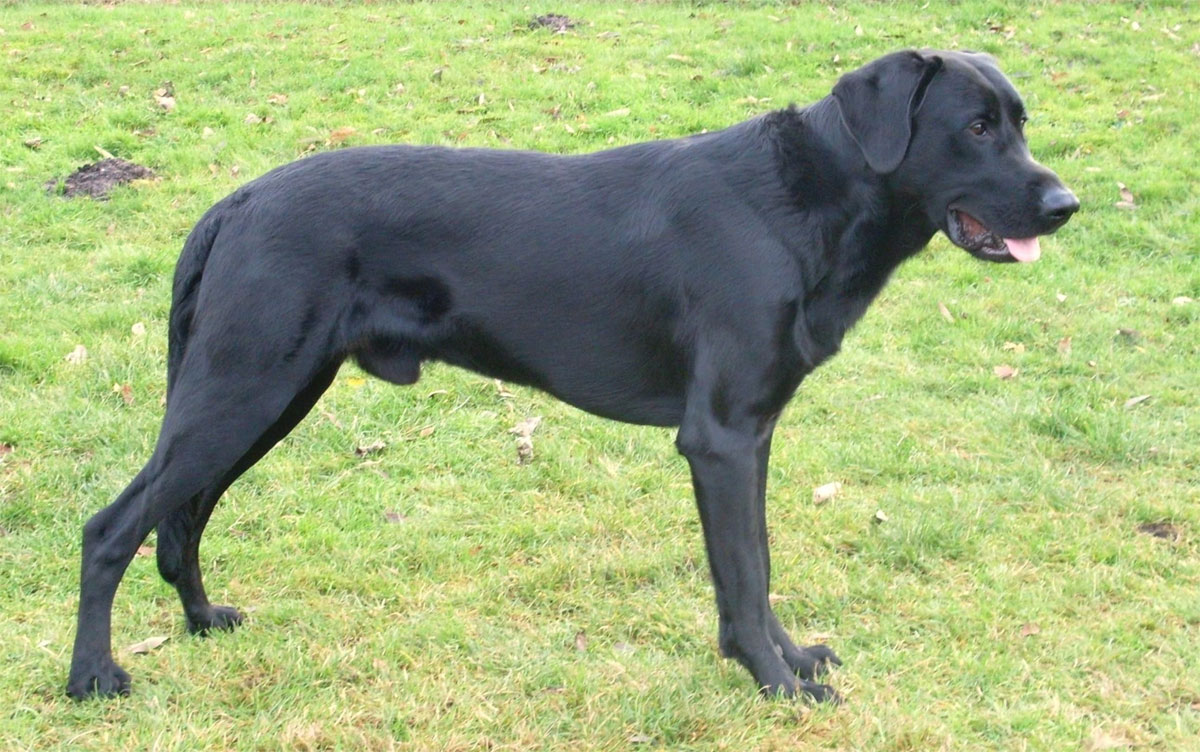
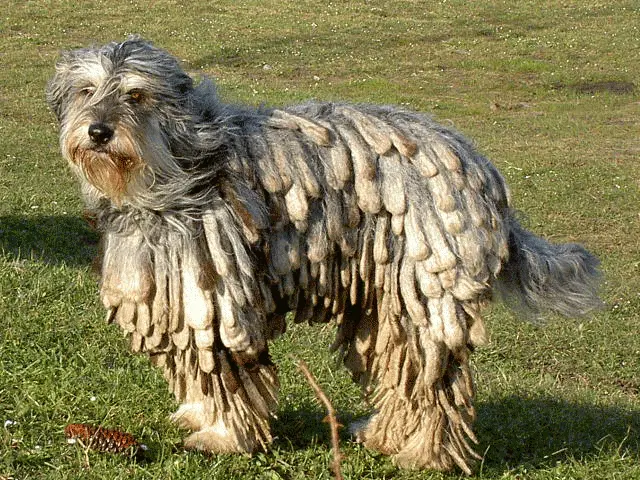
The mantle is medium wavy or curly, with short hair on the face and legs. The colors accepted are black, Ash, brown, white, Fawn and merle.

The Mudi can have the tail short birth or birth with them long and cut them.

It is a very versatile dog, You can be on a farm, You can hunt, exterminate rodents, make guardian, dog herds and as dog boyero.

Although it is a much less popular breed than the Puli and the Komondor in your country of origin, owners always recognize his superiority due to his versatile talent and always friendly and working arrangement.

  • Fur: varies by region. The head and limbs are covered in short hair, straight and smooth. On other parts of the body there is hair of a length between and cm, dense, undulating and shiny. the undercoat is arranged in spirals and stripes.
  • Color: glossy black or white, but there are also white mantles with black stripes or black ones with white stripes, with medium-sized spots and uniform distribution.
  • Size: 35 to 47 cm..

The hair of the Mudi, Unlike other dog breeds, has much pigment. Surfaces devoid of hair, They must be totally black, However, the pads and nails are slate grey.

Character and skills

The Mudi is a very active race. If you live in the city, you need to take a brisk walk every day, or run.

It also, it would be beneficial for his health if he had an outdoor area where he can run to his heart's content, they need a lot of exercise to stay healthy… and happy.

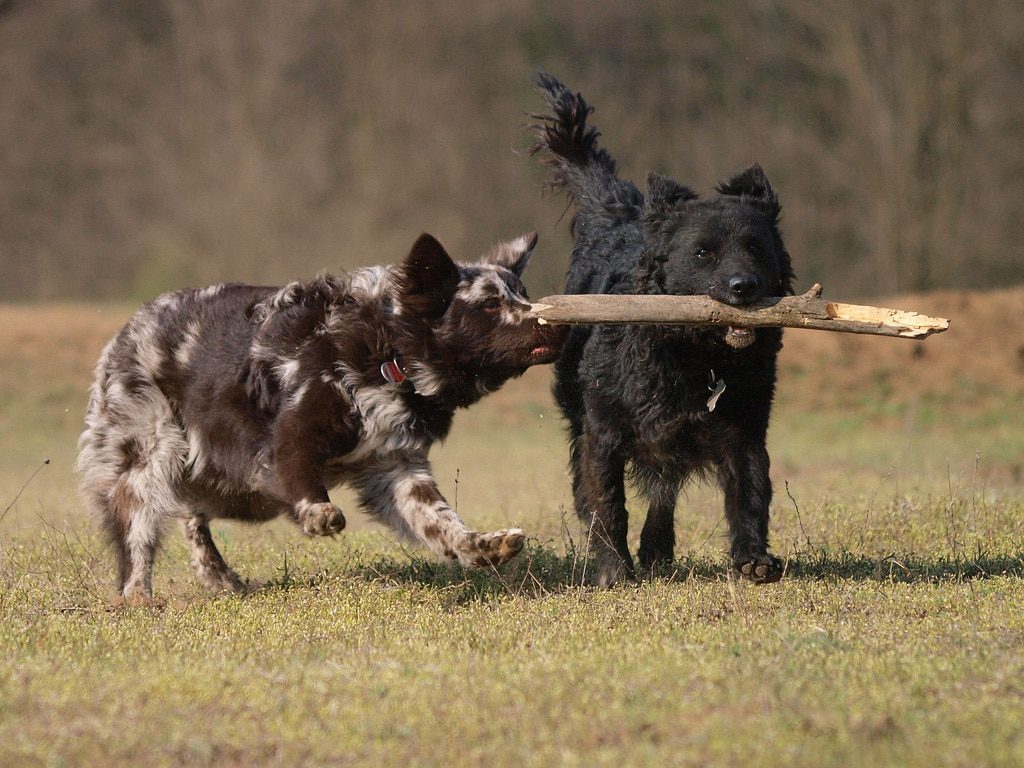
To the Mudi She loves to play and Excel in all kinds of sports Canine as the Frisbee, for example.

Can also compete in the agility, obedience, Rally obedience, Schutzhund, show, flyball, and tracking. It has strong instinct and grazing capacity, with appropriate training, could also compete in grazing trials.

A Mudi can live in a house doing enough exercise, but always they need ample space to run and play. They are active and they can live, perfectly, in the open air.

Their life expectancy is around the 14 years.

Mudi Health

The Mudi is a generally healthy breed with a life expectancy of 12 to 14 years.

Health problems seen in the Mudi include epilepsy, Hip Dysplasia, cataract, elbow dysplasia and patellar dislocation.

If a breeder tells you they don't need to do those tests because they've never had any problems in their lines or because their dogs have been checked out by a vet or if they give any other excuse to skimp on genetic testing of their dogs, leave immediately.

Careful breeders screen their breeding dogs for genetic diseases and breed only the healthiest and best looking dogs, but sometimes Mother Nature has other ideas and a puppy develops one of these diseases despite good husbandry practices. Advances in veterinary medicine mean that in many cases dogs can still live a good life. If you are going to have a puppy, ask the breeder about the ages of the dogs in their lines and what their cause of death was.

Remember that after you have welcomed a new puppy into your home, has the power to protect you from one of the most common canine health problems: the obesity. Keeping a Mudi at the right weight is one of the easiest ways to extend his life..

Kuvasz grooming

The coat of the Mudi loose the dirt (and the hair, of course) and does not require frequent bathing. A weekly brushing is usually all that is needed and the coat does not need to be trimmed.

If your Mudi is like most, you will enjoy swimming in a pool, a lake or the ocean. Thereafter, rinsed with fresh water to remove chlorine, algae or salt and restore shine to your coat.

The Mudi sheds her coat in the spring and doesn't get it back fully until late summer.

The rest is basic care. Trim nails every few weeks or as needed. brush your teeth often – with a vet-approved pet toothpaste – for good general health and fresh breath.

Characteristics "Mudi"

Coexistence is important that you have with your new friend. Before considering the acquisition of a dog of the breed "Mudi" you know certain factors. Not all breeds of dogs are apt to live in an apartment, you must take into account his character, their need for exercise, their interaction with other pets, their care and if you have small children, their level of tolerance towards them.

Adaptation ⓘ

5,0 of 5 stars (based on 1 review)

friendly dog ​​ⓘ

3,0 of 5 stars (based on 1 review)

hair loss ⓘ

2,0 of 5 stars (based on 1 review)

Affection level ⓘ

5,0 of 5 stars (based on 1 review)

Need for exercise ⓘ

4,0 of 5 stars (based on 1 review)

Social need ⓘ

5,0 of 5 stars (based on 1 review)

Home ⓘ

3,0 of 5 stars (based on 1 review)

Toilet ⓘ

2,0 of 5 stars (based on 1 review)

Friendly with strangers ⓘ

3,0 of 5 stars (based on 1 review)

barking ⓘ

4,0 of 5 stars (based on 1 review)

Health ⓘ

3,0 of 5 stars (based on 1 review)

Territorial ⓘ

3,0 of 5 stars (based on 1 review)

Cat friendly ⓘ

3,0 of 5 stars (based on 1 review)

Intelligence ⓘ

5,0 of 5 stars (based on 1 review)

Versatility ⓘ

5,0 of 5 stars (based on 1 review)

Child friendly ⓘ

3,0 of 5 stars (based on 1 review)

Surveillance ⓘ

5,0 of 5 stars (based on 1 review)

joy ⓘ

5,0 of 5 stars (based on 1 review)

Mudi Images

Videos "Mudi"

Type and recognitions:

  • FCI CLASSIFICATION:Group 1 –> Pastor and Boyeros dogs (except Swiss Cattle Dogs)
    / Section 1 –> Pastor dogs. Without working trial.
  • FCI 238
  • Federations:
    • – FCI – Group 1 Herding dogs, Section 1 Sheepdogs ⓘ
    • – AKC – PASTORAGE ⓘ
    • – FSS – ⓘ
    • – CKC – Group 7 – Herding dogs ⓘ
    • – UKC – Herding dogs ⓘ

    FCI breed standard Mudi

    FCIFCI - Mudi
    Mudi

    Alternative names:

    1. Hungarian Mudi, Canis Ovilis Fenyesi (English).
    2. Mudi (French).
    3. Mudi (German).
    4. Mudi (Portuguese).
    5. Mudi húngaro (español).

    ▷ The world of Pets: Dogs, cats, birds, reptiles, amphibians

    Komondor
    Hungria FCI 53 - Sheepdogs

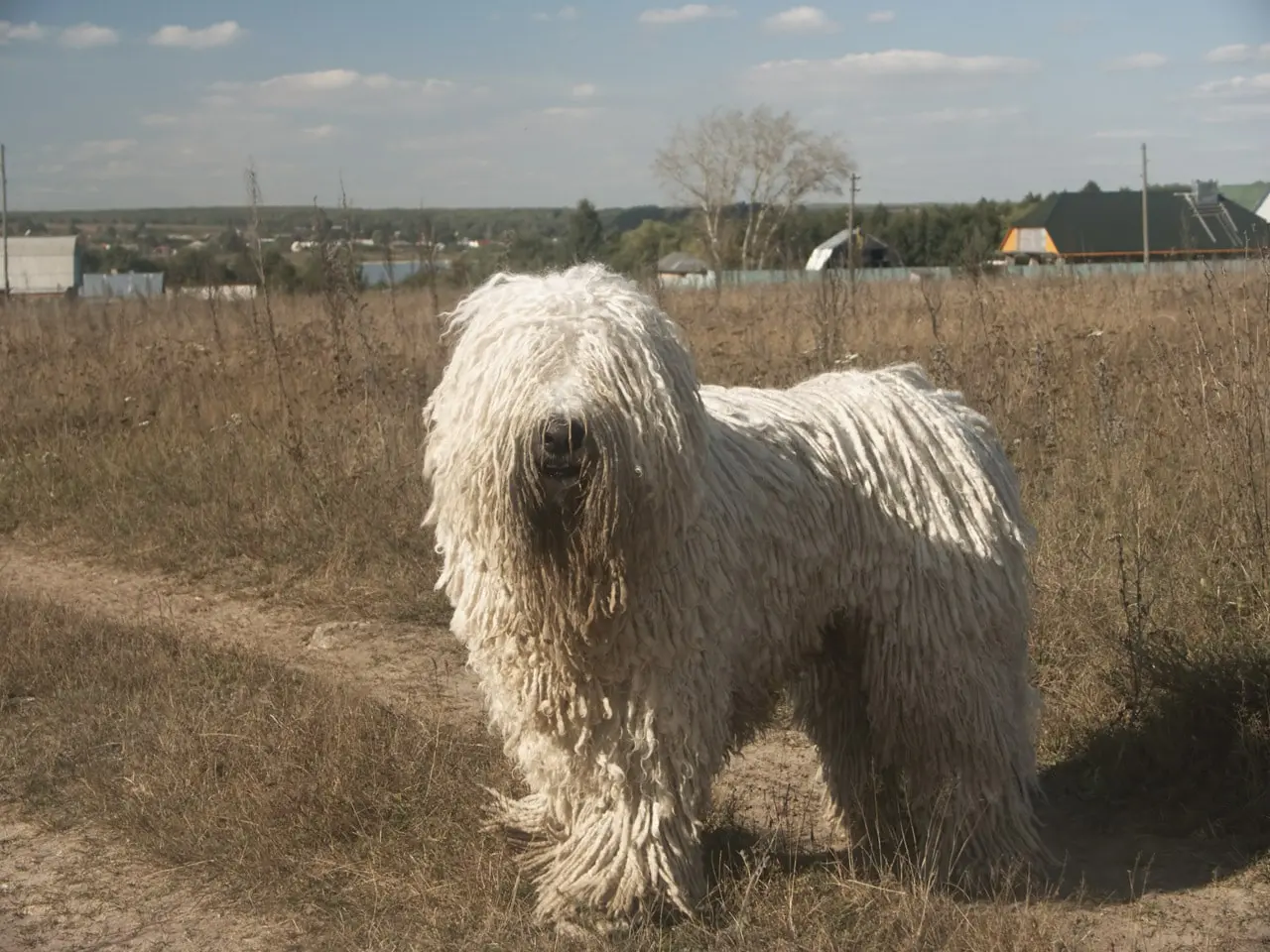
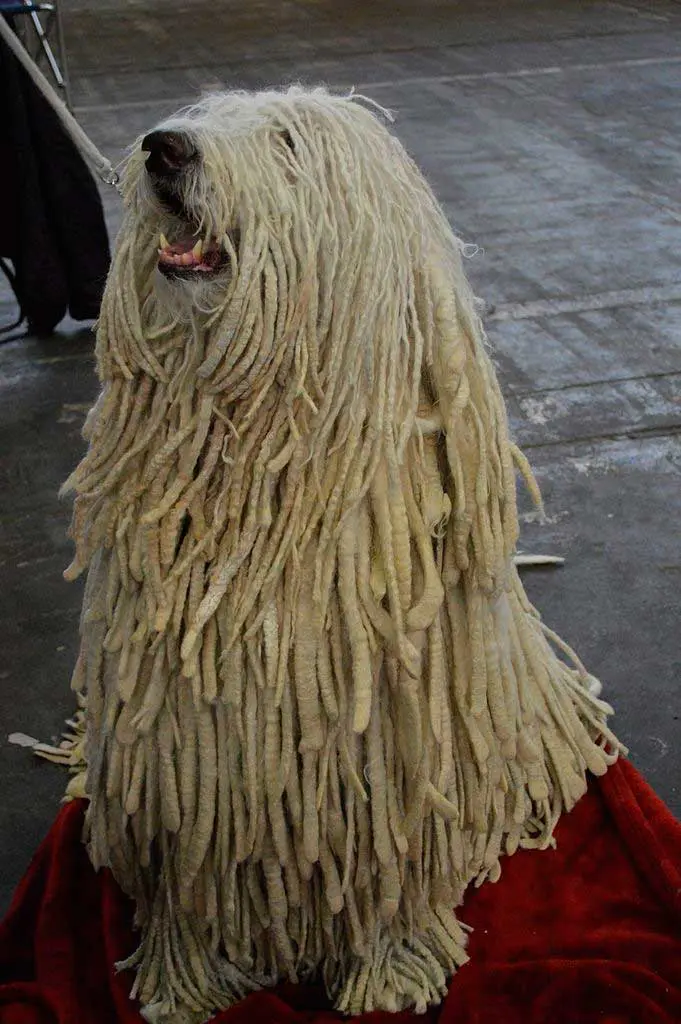
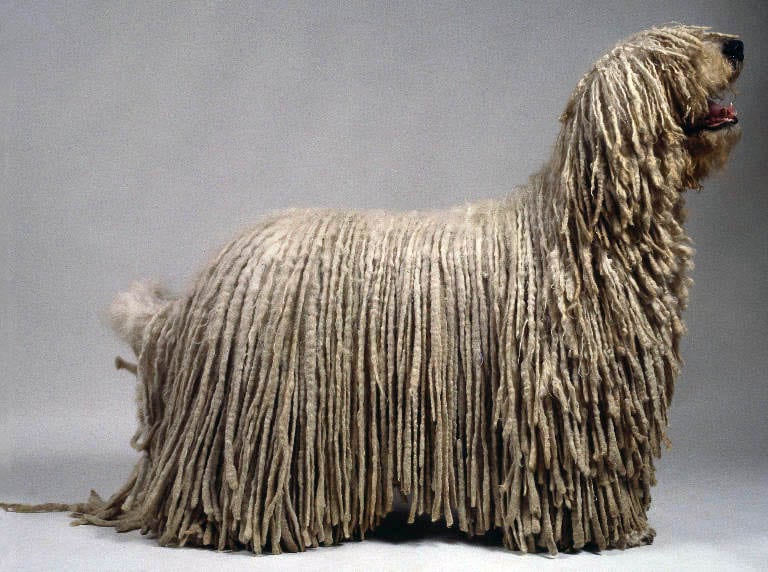
    The Komondor It is a breed of guard dog and pastor, originally from Hungary. Its main characteristic is the peculiar appearance of its fur., that falls in tufts like dreadlocks.

    Komondor

    Content

    Characteristics "Komondor"

    Coexistence is important that you have with your new friend. Before considering the acquisition of a dog of the breed "Komondor" you know certain factors. Not all breeds of dogs are apt to live in an apartment, you must take into account his character, their need for exercise, their interaction with other pets, their care and if you have small children, their level of tolerance towards them.

    Adaptation ⓘ

    3,0 of 5 stars (based on 1 review)

    friendly dog ​​ⓘ

    2,0 of 5 stars (based on 1 review)

    hair loss ⓘ

    1,0 of 5 stars (based on 1 review)

    Affection level ⓘ

    3,0 of 5 stars (based on 1 review)

    Need for exercise ⓘ

    3,0 of 5 stars (based on 1 review)

    Social need ⓘ

    3,0 of 5 stars (based on 1 review)

    Home ⓘ

    2,0 of 5 stars (based on 1 review)

    Toilet ⓘ

    5,0 of 5 stars (based on 1 review)

    Friendly with strangers ⓘ

    1,0 of 5 stars (based on 1 review)

    barking ⓘ

    4,0 of 5 stars (based on 1 review)

    Health ⓘ

    3,0 of 5 stars (based on 1 review)

    Territorial ⓘ

    5,0 of 5 stars (based on 1 review)

    Cat friendly ⓘ

    4,0 of 5 stars (based on 1 review)

    Intelligence ⓘ

    4,0 of 5 stars (based on 1 review)

    Versatility ⓘ

    4,0 of 5 stars (based on 1 review)

    Child friendly ⓘ

    3,0 of 5 stars (based on 1 review)

    Surveillance ⓘ

    3,0 of 5 stars (based on 1 review)

    joy ⓘ

    5,0 of 5 stars (based on 1 review)

    History

    The Komondor is a breed of dog originating from Hungary, where it has been fulfilling its mission as a herding dog for more than 1000 years. Its long white fur allows it to blend in with the flocks of sheep it cares for and which it especially resembles.. So you can take threatening predators by surprise, including impressive opponents such as bears or wolves.

    It probably originated from the dogs that came to Hungary with the Magyars, nomads who came from Central Asia around the year 900 d.C. and they took their dogs to tend their flocks of cattle and sheep. Other experts argue that the ancestors of Komondor they arrived with the cumans, another Turkish nomadic people who, after the Mongol invasion of 1237, took refuge in present-day Hungary.

    It is this last hypothesis that we find in the name of the race, since the term "Komondor" comes from "Quman-dur«, which means "Dog of the Cumans". Although researchers have found the remains of these dogs in Cuman cemeteries dating back to the 13th century, the oldest written description dates from the 16th century.

    At the end of the 17th century it was very popular in Hungary, and has remained so ever since. Raised and selected for their courage and strength, It was used mainly in the field to monitor farms, and in the mountains to protect the flocks of sheep. Hungarians are very proud of this dog, to which is attributed the considerable decrease in the number of wolves in his country, and that it was not crossed or modified until the middle of the 20th century.

    Komondor entered the United States between the wars, and the American Kennel Club (AKC) recognized the breed in 1937. But, World War II and then the Cold War ended imports from Hungary.

    In more general terms, the breed suffered greatly during these difficult times, seeing that their number decreased considerably. During World War II, many of their representatives were assassinated by the German military, since it was impossible for them to access the farms and houses of the country while this imposing guard dog protected them. Obviously, conflicts also limited its export to other countries.

    In the Decade of 1960, Hungarian and American breeders were able to renew their ties, so the import of the Komondor to the United States. While the race was on the brink of extinction (even in your country of origin, mostly due to the consequences of the war), saw their numbers grow considerably and their notoriety do the same, both in Hungary and abroad.

    In the United States, attempts in the west of the country to use it as a grazing show promise, and its use throughout the country has been increasing considerably. Logically, el United Kennel Club (UKC), another canine organization of reference in the country, recognized it as an official breed in 1983.

    In Europe, over the years 50, the Komondor was crossed with him South Russian Ovcharka, to get new bloodlines. It is also at this time - and more precisely in 1954- When the Komondor was recognized by the Fédération Cynologique Internationale (FCI).

    Finally, at the end of the 20th century, there was a new crossing with other breeds of sheepdogs such as the Catalan Sheepdog, the Pyrenean Shepherd, the Bergamasco Shepherd or the Cão da Serra de Aires.

    But, this is a rare breed of dog, regardless of the country. In fact, even in the country where a large proportion of the population is, the United States, it is not very common. These may include, just occupy around the place 160 (of 190) in the ranking of the most popular dogs in the United States, based on number of annual AKC registrations.

    In France, it is also discreet, since the average number of annual registrations in the Livre des Origines Français (LOF) it's around of 15 since the beginning of the 21st century. It has even experienced a certain decline, since this number was more or less in the thirties around the nineties. Not much better, for example, en el Reino Unido, where the number of registrations per year with The Kennel Club rarely exceeds ten.

    Physical characteristics

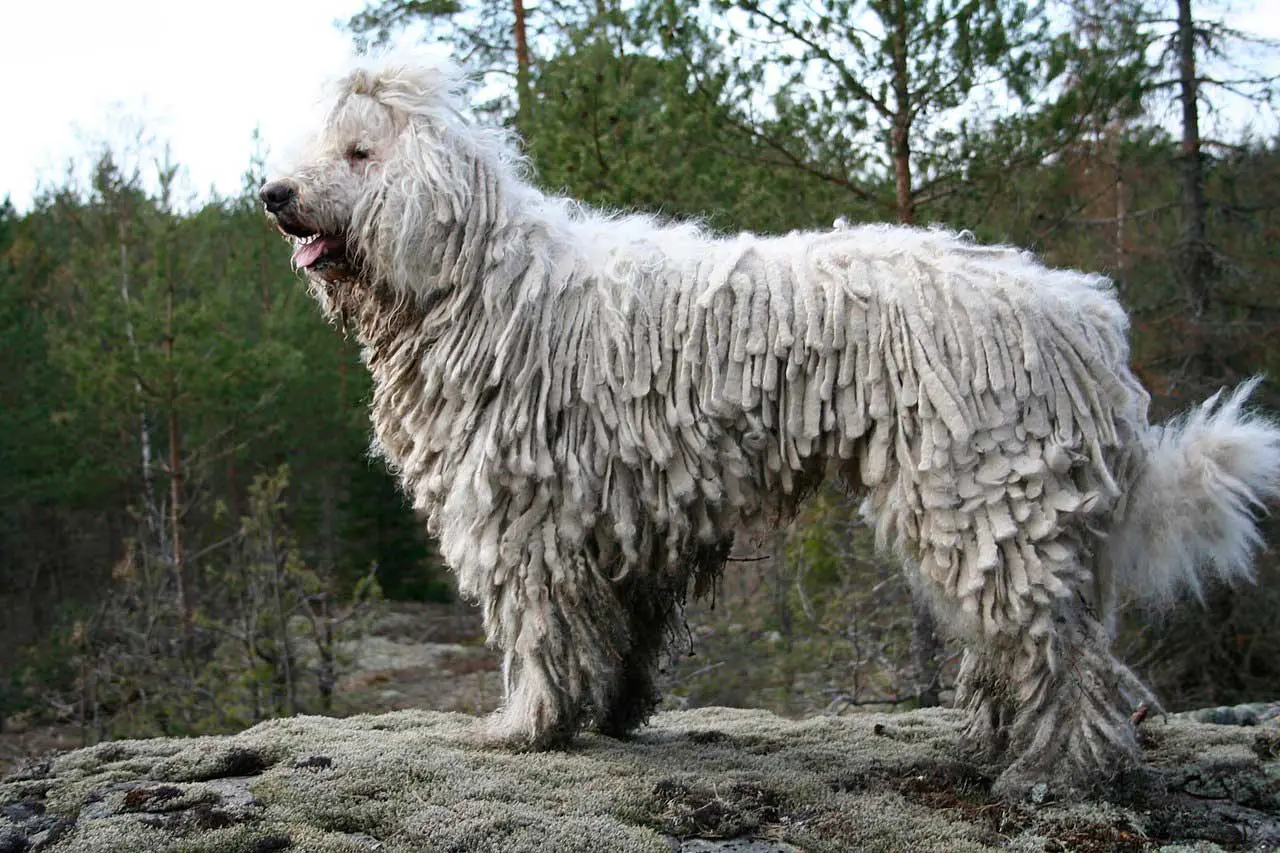
    The Komondor it is a large and strongly built dog. Your outward appearance, that of a winner and his majestic posture arouse respect in the observer and eventually also fear. Not flattering by nature. The robust body is covered by long hair, always bushy without exception, matted, tufted. Seen in profile, the body is a rectangle lying, almost a square. Protruding above the body, the head appears very densely hairy. The tail is carried hanging with the tip bent almost reaching the horizontal.

    Fur: thick and bushy, holding to be felted or strung (in the latter case it is not felted). Presence of sunpelo.

    Color: White, white profile.

    Size: males, of 65 – 80 cm., for a weight of 50 – 60 kg; females, of 55 -70 cm., for a weight of 40 – 50 cm..

    Observations and tips.

    The coat may seem difficult to care for, but it doesn't really need any care. It should not even be brushed because its hardiness must be kept intact. For hygiene reasons, must bathe regularly.

    Character and skills

    Unwavering courage in the defense and care of the herds in his charge, also from his territory and his master's house. Attack silently and boldly. Consider your district as if it belonged to you, in that it does not admit any strange being. Is distrustful. Your day is happy when you can spend it controlling your territory. During the night it remains in permanent movement.

    With good training and in expert hands it can be a good defense dog, although quite conflicting with other dogs, and can bite a man if he is not socialized from the earliest age. Fortunately, it is very docile and a signal from its owner is enough to stop it when it decides to attack.

    Komondor toilet

    Komondor's coat begins to lace up when he is eight months to one year old. The coat does not come off much, but the laces must be separated regularly to maintain their appearance, and the coat attracts the dirt. Once a Komondor passes the puppy stage, its fur will probably never have its former pristine whiteness. The coat should never be dirty, tangled or foul-smelling.

    To avoid problems, ask the breeder to show you how to care for the coat. Trimming the hair around the mouth and cleaning the dog's face after meals is one way to help reduce odor..

    The rest is basic care. Trim nails as needed, usually every week or two. Keep your ears clean and dry. Brush teeth frequently with a vet-approved pet toothpaste for overall good health and fresh breath.

    Komondor Health

    The Komondor they are generally healthy, but the conditions that are sometimes seen in the breed include hip dysplasia, eye problems like entropion (a deformity of the eyelid), and juvenile falls, and swelling, also known as gastric torsion or gastric dilatation volvulus.

    Do not buy a puppy from a breeder who cannot provide you with written documentation showing that the parents were exempted from health problems affecting the breed. Having dogs undergo a "vet check" is not a substitute for genetic health testing.

    Remember that after bringing a new puppy home, has the power to protect you from one of the most common health problems: the obesity. Keep a KomondorA proper weight is one of the easiest ways to extend your life. Make the most of your preventive skills to help ensure a healthier dog for life.

    Images "Komondor"

    Videos "Komondor"

    Type and recognitions:

    • FCI CLASSIFICATION:
    • Group :
    • Section : . .

    Federations:

    • – FCI – Group 1 Herding dogs, Section 1 Sheepdogs ⓘ
    • – AKC – PASTORAGE ⓘ
    • – ANKC – Group 5 (working dogs) ⓘ
    • – CKC – Group 7 – Herding dogs ⓘ
    • – ​KC – Pastoral ⓘ
    • – NZKC – Working dog ⓘ
    • – UKC – Herding dogs ⓘ

    FCI breed standard "Komondor"

    Origin:
    Hungary

    Date of publication of the valid original standard:
    06.04.2000

    Use:

    Shepherd dog.


    General appearance:

    The Komondor is a large, heavily built dog. Your outward appearance, that of a winner and his majestic posture arouse respect in the observer and eventually also fear. Not flattering by nature. The robust body is covered by long hair, always bushy without exception, matted, tufted.
    Seen in profile, the body is a rectangle lying, almost a square. Protruding above the body, the head appears very densely hairy.

    The tail is carried hanging with the tip bent almost reaching the horizontal. The coat is ivory in color.


    IMPORTANT PROPORTIONS

  • The length of the body is slightly greater than the height at the withers.
  • The depth of the chest corresponds to almost half the height at the withers.
  • The muzzle is slightly shorter than half the length of the head.


  • Behavior / temperament:

    Unwavering courage in the defense and care of the herds in his charge, also from his territory and his master's house. Attack silently and boldly. Consider your district as if it belonged to you, in that it does not admit any strange being. Is distrustful. Your day is happy when you can spend it controlling your territory. During the night it remains in permanent movement.

    Head:

    Wide and well proportioned to the body. Even the thick fur that covers her like an umbrella doesn't make her look disproportionate either..

    Cranial region:
    • Skull: Arcuate. Supraciliary arches are well developed.
    • Depression links (Stop): Well marked, Although not abrupt.

    facial region:

    • Truffle: It is right, of abrupt and black cut.Snout: Not pointed. The nasal helm is straight.
    • Lips: Blacks. The maxillas and bite are firm.
    • Flecuda lips commissure.
    • Jaws / Teeth: Very muscular maxillas, strong and powerful. Scissor bite, regular and complete according to the dog's dental formula.

    EYES: Placed in horizontal position, They are dark brown. The edges of the eyelids are black and support firm on the eyeball.


    EARS: Of medium height insert in the arched skull. They are directly and clearly pendant and present a form of "V" or "U". The ears do not rise during attention or when the dog goes to the offensive.

    Neck:

    Very well muscular. Forms an angle of 35º in relation to the horizontal. Calmly and in a friendly situation is carried out almost after the back line. Is shorter than long long. Without Powile and Golilla.

    Body:

    top line: The parts of the body that make up the upper line are wide and richly muscular.

  • Cross: Long enough, marked in front.Back: Short.
  • Pork loin: Long Middle.
  • Rump: Wide, long Middle. Gently descendant.
  • Breast : Broad and strongly muscular. rib cage: moderately deep, wide, long.
  • Belly: Slightly collected.


    Tail:

    Low insert, Clearly pendant; The distal sector of the tail presents a soft curvature close to the horizontal. It is desired that the tail reaches the corvejón. Being the excited dog, Raise the tail to the height of the dorsal line.

    Tips

    PREVIOUS MEMBERS: The judgment of the limbs is largely harmed through the long and tangled fur that covers them. The previous members are like columns and seen both in front and profile, They are rights, parallel and perpendicular to the ground. The chest is wide and is located between the limbs quite separate one from another, robust and free movement. The limbs are firmly linked to the body. The bone structure is strong and powerful. Members are bulky.

    • Shoulder: The scapulas are slightly oblique. The upper tips of the scapulas are located in a vertical with the deepest point of the chest.
    • Previous feet: Large, firm and fingers together. The pads are gray slate, full and well padded. The nails are gray.

    LATER MEMBERS: The posterior members hold the body from moderate angles. In continuation of the medium length rump, wide and strongly muscular posterior limbs.

    • Thigh: powerfully muscled, bulky.
    • Hind feet: The rear feet are longer than the strikers or equal. The spurs will be removed.

    Movement:

    Soft displacement, free and moderate. The step is broad and with good land coverage.

    Mantle

    Fur: The body is covered by long hair in its entirety. The fur is composed of an outer layer of rustic hair and a finer internal wool.

    • The character of the fur is given by the relationship between the outer layer of hair and the internal wool. The fur in tufts and with a tendency to entangle is a basic requirement. A similarly dense fur, wavy and cordoned is also admitted. Small strands are few or not tangled. The fur reaches its maximum length on the rump, In the spine region and on the back of the thighs (minimal 20-27 cm.) ; In the back, to the sides of the chest and in the area of the scapulae, It is middle long (minimum 15-22cm.) ; cheeks, The supraciliary arcades, In the upper region of the skull, in the ears, in the neck and extremities, It is shorter (10-18 cm.). The shortest hair (9-11 cm.) They are found in the Belfos and under the limbs. They are not desirable hairstyles or maintenance hairs.
    • Color: Ivory.


    Size and weight:

    Height to the cross

    • Males: minimal 70 cm.. females: minimal 65 cm..

    Weight

    • Males: 50 – 60 kg.
    • females: 40 – 50 kg.

    The breed presents few types of type and is largely homogeneous, since he has always raised following the same goal.


    Fouls:

    • Any deviation from the aforementioned criteria is considered as a fault and the severity of this is considered to the degree of the deviation to the standard and its consequences on the health and well-being of the dog.. Specifically:
    • Lack of pigmentation in the truffle, Eyes and edges of the eyelids.
    • Loose eyelids.
    • Ringed tail.


      FALTAS DESCALIFICANTES:

      Aggressiveness or extreme shyness.

    • Any dog ​​showing clear signs of physical or behavioral abnormalities.
    • Flacid structure of the body with insufficient musculature.
    • Upper or lower prognathism, incisor arcade deviated.
    • Entropion and ectropion
    • Light and erect ears.
    • Short tail (3 cm.. above the corvejón)
    • Heavy limbs and lack of movement.
    • Colors other than admitted, Various colored furs.
    • Height to the cross below the minimums required by the standard.


    N.B.:
    • Males should have two normal-appearing testicles fully descended into the scrotum..
    • Only functionally and clinically healthy dogs, with the typical conformation of the breed, should be used for parenting.

    Source: F.C.I - International Cynological Federation

    Alternative names:

    1. Hungarian Commonmop, Hungarian Sheepdog, Mop Dog (English).
    2. Komondor (French).
    3. Komondor (German).
    4. Komondor (Portuguese).
    5. Komondor Húngaro, Ovejero Húngaro / Perro Guardián (español).

    Photos:

    1 – A Komondor lying down by David Blaine from Spokane, USA / CC BY
    2 – Komondor Halfhegtarens Warlock (Flea by Kari / CC BY-SA
    3 – Ch. Gillian’s Quintessential Quincy (born April 17, 2007), a male Komondor at the working group judging in the 2007 Westminster Kennel Club Dog Show by https://commons.wikimedia.org/wiki/File:Komondor_Westminster_Dog_Show.jpg
    4 – www.petsadviser.com, rather than Flickr if you use this photo. Thanks for your cooperation. 2015 Westminster Kennel Club Dog Show, New York City.

  • ▷ The world of Pets: Dogs, cats, birds, reptiles, amphibians

    Majorca Shepherd Dog
    España FCI 321 . Sheepdogs

    Ca de Bestiar

    The Majorca Shepherd Dog or "Cattle", It is a breed of dog originating in Mallorca.

    Content

    History

    Also known as “Ca de Bestiar”, this breed is believed to have existed since ancient times. Through the years, this dog would have been bred with a variety of local Mallorcan dogs, as well as with other European Shepherd dogs, and it was not until 1970 which he puts any restrictions on their upbringing. In fact, its breed standard was written as recently as 1980. It was in 2006 the UKC ⓘ recognized the breed within his Group of Sheepdogs.

    Appreciated through the centuries by the Spaniards for their ability to be a versatile farm dog, the Majorca Shepherd Dog It was used both to herd flocks and to monitor property and animals. It has also been reported that the Majorca Shepherd Dog was widely used in dogfighting, a practice that is now illegal. Although it is still used on farms today, and is also often kept as a companion animal, this rare breed once seen internationally and is considered a rare breed.

    Physical characteristics

    The Majorca Shepherd Dog is a large size dog, average weight, well proportioned, rustic, strong and large muscles, flexible and robust.

    There are two varieties: long hair and most widespread short-haired. The head is well modeled, large and provided with the body, but not so much as to look like a molosser. Craniofacial shafts are slightly convergent; the relationship between the skull and the muzzle is of 1:1.

    The color eyes goes from amber to dark brown, and his expression is intelligent and enigmatic.

    The ears, small in relation to the head, they are triangular, inserted at the top and are normally bent, with dropped tips.

    The tail Start horizontally, is horizontal section, It has thick base and it tapers towards the tip.

    Fur: the short hair variety has quite thin Undercoat. In the variety of long hair, hair coverage can reach a length of 7 cm and it is slightly wavy. In both varieties should be soft and fine.

    Color: the only one admitted is black, optionally with white spots on chest and feet.

    Size: males, of 66 to 73 cm.; females, of 62 to 68 cm.. The weight is usually of 40 kg approximately.

    Character and skills

    He is a shepherd dog with skills for the job of guard and defense. It´s Intelligent, docile and affectionate, although as a puppy he is usually shy and reserved. For this reason it is important to socialize it to the maximum to avoid that it closes in on itself.

    The adult is very suspicious of strangers and he is united by a very strong bond with his master. Her enigmatic gaze not glimpse of his thoughts. It has an extraordinary courage and willing to everything in order to defend their loved. It's a little known breed outside the Balearic Islands, so to acquire a good puppy should address to breeders of the Islands.

    Images «Majorcan shepherd dog»

    “Majorcan Shepherd Dog” videos

    Type and recognitions:

    • FCI CLASSIFICATION:
    • Group :
    • Section : . .

    Federations:

    • – FCI ⓘ

    FCI breed standard "Majorca Shepherd Dog"

    Origin:
    Spain

    Date of publication of the valid original standard:
    26.05.1982

    Use:

    Herding dog, guardian and defense


    General appearance:

    Sub-convex profile dog, large without being exaggerated and medium-weight size. It is totally black or black with white spot on chest, well proportioned, rustic, strong, muscular, robust and agile. There are two varieties of hair:

    • Short hair, the most common variety.
    • Long hair.

    IMPORTANT PROPORTIONS:

    Dog subhipermetrico, midline and subconvex.

    • The female accepts a longitudinal diameter of up to a 3% greater than the height of the cross.
    • Length of the muzzle is equal to the length of the skull.
    • The length of the head must be equal to the length of the neck.
    • In adult males the thoracic perimeter, taken together the cross behind the elbows, It is about a cms rather than its height at the withers.


    Behavior / temperament:

    Dog of great nobility, only an owner that accepts loads of strangers with difficulty.
    Intelligent, docile, loving, shy on end and reserved in his youth ; his sentimentality comes to unsuspected. Faithful to his master until death. If we explore in his eyes it will give us the feeling thinks. It is courageous and quarrelsome.

    Head:

    Slightly triangular profile; view dorsally is wider at the top than at the bottom; solid, but not heavy; large enough to accommodate a good intelligence; well molded and proportionate to the body; It must be rather large, but never a trotting type. The supranasal line is parallel to the cranial line. Slightly divergent skull-facial axes.

    Cranial region:
    • Skull: Sub-convex profile. The width of the head, taken between the storms, It should be slightly higher ( approximately 1,2 %) to the length between the supraorbital line and the occipital crest. A slight groove can be seen in the first third of the frontal midline. Marked occipital Crest.
    • Depression links (Stop): Marked, but never sudden, in mild decline.

    facial region:

    • Truffle: Wet, fresh, black, large, with broad nostrils; No split. It despuntuará significantly if you have stains of barks or lighter.
    • Snout: Width, rather strong ; It should not be in tip, but its height and width should be accentuated as it approaches the orbits. In the variety « Ca cabrer » (Longhair) more pointed. The dorsal profile of the nasal helm is sub-convex. The profile of the branches of the lower jaw is straight. Black color palate.
    • Lips: Black ; the high not seen to the bottom while your mouth closed ; the labial commissure is little noticeable and they go unnoticed because they are well proportioned to the head.
    • Jaws / Teeth: Very white teeth, well developed and well placed, closed scissors, making the incisors true upper ends prey with the lower canines. The molars developed.
    • Eyes: Rather small, slightly almond ; are not prominent nor sunken in orbits ; not far apart from each other, centered, slightly oblique, lively. Color between the Rosemary honey (something clear) and of the honey, carob (dark). Enigmatic expression, with look smart and sad at the same time, where denotes even distrust. The eyelids are thin, black and oblique, close to the eye.
    • Ears: Broken, small size in relation to the head, triangular, reaching the tear in the eye of its corresponding side tip, or is approximately equal to the length of your skull. Without amputating, slightly thick, high insertion, separating your tip slightly skull, with a longitudinal fold and another cross around the first third.
    • Position of the ears: usually bent and dropped, something separate from the muzzle. Played back in standby ; in State care by the transverse fold levantadolas, separating them from the snout than usual.

    Neck:

    Massif, muscular, strong and proportionate to the head and body. Thick, with very little double chin, cylindrical, its diameter accentuating more at the base. The skin is tough and elastic, or fine or thick, firmly attached to the neck at its top and sides, more detached on the bottom.

    Body:

    • As a whole: Robust, very well proportioned, giving the impression of strength and agility while.
    • Cross: Marked and at least at the same height as the top of the rump ; the large area between the scapulae and strong.
    • Dorso-lumbar line: Straight, horizontal, never built.
    • Pork loin: Wide and powerful.
    • Rump: Medium, slightly rounded, wide, powerful and muscular; never prominent or fallen. The top should be at the same height as the cross. Its interiliac width must be equal to the iliac-ischial length .
    • Breast : Wide and high, maximum reaching the elbow; a width approximately equal to the length of the neck; quite deep, not prominent, with slightly pronounced sternum. Arched ribs (non-flat or in barrel).
    • Belly and flanks: Fairly bulky flanks. Slightly gathered belly, never agalgado, nor descended to be confused with continued chest. Something stylish, You must give the impression of agility.

    Tail:

    Horizontal insertion and circular section, rather thick at its birth. Some 8 cm base flattens slightly at its lower profile, in a few 10 length cm, to continue then the tapered circular to its end. Without amputating. Of a length that must reach at least the hock, without touching the ground. No tuft or fringe, Although it is authorised, If this is light, copies of older. In the variety of long hair you must have abundant and long fringe. Size of the queue : at rest naturally drooping or slightly curved outward, slightly touching the hocks, default is considered serious if your tip should touch the ground. Undulating and raised more than the horizontal sickle-shaped, without screwing it, When in action.

    Tips

    PREVIOUS MEMBERS:

    • As a whole: Strong Member ; correct limbs ; seen from the front and in profile parallel to each other and perpendicular to the ground.
    • Shoulder: Oblique and strong.
    • Scapulo-humeral angle: 115°.
    • Arms: Of equal length to the scapula.
    • Elbows: Without deviations, glued to the chest. Radial-humerus angle : 130°.
    • Forearm: Strong, well angled, perpendicular. Vertical bones, strong, long and right.
    • Metacarpus: Short and slightly tilted.
    • Previous feet: Almost of Hare (something shorter and wider than they), finger semialtos, semiarqueados, together, and with the very hard and black pad. Without acute interdigital membrane.

    LATER MEMBERS:

    • As a whole: Muscular, strong ; correct limbs. Dimmed and hard muscle relief.
    • Coxo-femoral angle: 115°, peer-to-scapulo-humeral.
    • Thigh: Strong and muscular.
    • Stifle-tibial angle: 130°, same as the humerus-radial
    • Leg: Long and powerful.
    • Hock: Little pronounced, very open 135° angulation. The height of the Hock is about somewhat lower than the one-third of its height at the withers.
    • Metatarsus: Well marked.
    • Hind feet: Almost of Hare, crushed, with fingers together and semiarqueados. Pad hard and black. Arched nails, black and hard. Without acute interdigital membrane. May be born with or without Spurs, in the first case they must amputate.

    Movement:

    His way of walking must be firm and elegant. The trot on diagonal bipeds, Tip slightly posterior third, respect to the previous. The Gallop will be franco, fast rustic, the rear legs wide apart at its base with soil, placing them outside of the hands, as if it were jumping. The preferred step and the work is the Gallop.

    Mantle

    SKIN: Elastic, without folds, hard and light grey.

    • HAIR: Short and glued to the skin, its length ranging about 1,5 cm to 3 cm on the spine ; very fine Undercoat, low thickness and very attached to the skin. In the long-haired variety may be slightly wavy on the spine, approximate length of more of 7 cm according to the time of year, with the largest winter. Well distributed and thin Undercoat, grow hair in their normal length in the fringe of the queue, Tip of the ears and back of the limbs. In both varieties should be smooth, hard and quite thin.
    • COLOR: The only color supported is black, varieties of Jet, regular and peceno. The target is supported only in the chest, in the form of thin tie under neck and anterior and posterior foot, highlighting according to its easy visibility on nails and tips of the toes. The Jet Black landmark is the most appreciated, nature of the ordinary black and the peceno.


    Size and weight:

    • Height to the cross: Among 66 and 73 cm for males. Among 62 and 68 cm for females.
      Specimens with heights of one cm or so are allowed at the limits indicated ; in this case you must subtract score.
    • Weight: Environment to 40 kg.


    Fouls:

    Any deviation from the aforementioned criteria is considered as a fault and the severity of this is considered to the degree of the deviation to the standard and its consequences on the health and well-being of the dog..

    SERIOUS FAULTS

    •  Dogs that drool-worthy.
    •  Cut fangs.
    •  Very raised ears rest, very large very separated from the face or completely glued to it.
    •  Very collected belly (whippety).
    •  Threaded queue; white tail tip.
    •  White spot of chest of more of 1 dm².
    •  All fingers of a foot white.

    MISS PLAYOFFS

    •  Aggressive or fearful dog.
    •  Mastiff head, very wide and heavy or Hound, long and narrow with just pronounced stop.
    • Truffle pink or white.
    •  Upper or lower prognathism more of 3 mm.
    • • Eyes of different colors from each other ; eye that is not of the color that goes from the Rosemary honey (something clear) the carob-honey (dark) ; very clear eye.
    • Amputated ears, stiff in action or almost stiff at rest.
    •  Double chin neck, more thickly along the skull than at its base, longer that a 10% length ranging from truffles to the occipital Crest.
    •  Body too long or too short ; height of the top of the rump in a 3% greater than the height at the cross.
    •  Very thick tail, or of equal thickness at the base and tip ; excessively long to touch the ground ; amputated or missing you each 2 cm to reach the Hock ; with abundant fringe in the variety of short hair, with or without bangs in long hair variety.
    •  Other color than black, or, in dogs being black, an anterior or posterior foot white or another color ; members shod in white on any number of limbs ; not totally black body (with the exception of the chest, very few hairs on the belly, perpucio or tip of the tail), stains, without disqualify, they notably despuntuarán. They despuntuarán not consequential white hairs of bites, trauma or other similar injuries, or the white hairs from the face own age. White fingers not disqualify, unless the animal is more than six, despuntuando notably each ; a single finger white or another color in the previous feet disqualifies the dog.
    •  Height of the cross over of 74 cm in males and more of 70 cm in females. The cross of less height of 66 cm in males and less of 60 cm in females.
    •  Under weight of 30 kg and over 50 kg in males, under weight 25 kg and over 45 kg in females ; even being within the aforementioned limits, very skinny dogs, visibly obese or very saddled (having tolerance in pregnant females).

    SCALE OF POINTS

    • General appearance and temperament – 21 points
    • Presentation (cleaning and porte) – 4 points
    • Fur (length and hardness) – 4 points
    • Layer (color and brightness, 7+2) – 9 points
    • Temperament/Behavior – 4 points
    • Head – 21 points
    • Skull and stop – 4 points
    • Snout, nose and lips – 5 points
    • Teeth and palate (2+1) – 3 points
    • Eyes – 5 points
    • Color – 2 points
    • Form, size and separation – 2 points
    • Eyelids – 1 point
    • Ears (form, thickness, inclusion, size) – 4 points
    • Neck – 4 points
    • Trunk – 21 points
    • Cross – 1 point
    • Back and back – 5 points
    • Rump – 3 points
    • Belly – 2 points
    • Breast , chest, Ribeye, size – 10 points
    • Tail (form, length and fringes) – 2 points
    • Limbs – 19 points
    • Previous aplombs – 6 points
    • Later aplombs – 8 points
    • Feet ant. and post., fingers, nails hardness of the pads – 5 points
    • Movement – 12 points
    • Ear bearing – 3 points
    • Tail bearing – 3 points
    • Jogging – 2 points
    • Gallop – 4 points

    Total : 100 points


    Proportional measurements (ideal for the male)

    • Weight – 41 kg
    • Height at the withers – 71 cm.
    • Height to the rump – 71 cm.
    • Chest height – 39 cm.
    • Longitudinal diameter – 71 cm.

    Head

    • Muzzle length – 13 cm.
    • Skull length – 13 cm.
    • Total head length – 26 cm.
    • Neck length – 26 cm.
    • Ear Longiud – 13 cm.
    • Tail length – 52 cm.
    • Raised to hock – 23 cm.

    Length of the hair on the back

    • Short hair variety – 2 cm.
    • Long hair variety (between seasons) – 7 cm.
    • Head width – 15 cm.
    • Thoracic perimeter – 81/83 cm.
    • Chest width – 26 cm.
    • Neck circumference – 49 cm.

    Any dog ​​showing clear signs of physical or behavioral abnormalities must be disqualified..


    N.B.:

    Males should have two normal-appearing testicles fully descended into the scrotum..

    Source: F.C.I - International Cynological Federation

    Alternative names:

    1. Majorca Shepherd Dog, Ca de bestia, Pastor mallorquín (English).
    2. Berger de Majorque (French).
    3. Ca de Bestiar (German).
    4. Ca de Bestiar (Portuguese).
    5. Pastor-maiorquino, Ca de Bestiar, Pastor mallorquín (español).

    ▷ The world of Pets: Dogs, cats, birds, reptiles, amphibians

    Bergamasco – Bergamasco Shepherd
    Italia FCI 194 . Sheepdogs

    The Shepherd Bergamasco It is never aggressive despite the fact that it is a good guardian of the House

    Bergamasco

    Content

    History

    The Bergamasco It is a breed of dog originating in the Italian Alps, used as a herding dog. Its appearance recalls to the of the Komondor (hungarian dog).

    This breed comes from contact with dogs of nomadic shepherds and their flocks that came from East to West. The Pastor's Ancestors Bergamasco They are located in the area of ​​the Alps, an ideal area to display their characteristics.

    Since 1300 the use of these dogs is determined by herding herds of sheep typical of Bergamo. In the four centuries that followed, The Shepherd Bergamasco, has increased with the expansion of sheep farming. After 1700, However, After a gradual reduction of the pastoral activity, This race began to decrease its population, to almost extinction during the two world wars.

    In 1890 The breed is still called "mountain dog" and, in 1949 the company of lovers of the Pastor is founded Bergamasco. A few years later, Finally formalized the name: Bergamasco.

    Physical characteristics

    The tail is thick and strong at the base, Tuning towards the tip. Is covered with hard hair slightly wavy. Allowed colors are all shades of black (not bright), even with grey spots. The color should be determined from the root of the hair, because the part of Tufts often form different tones.

    The coat is very abundant, long, wavy, rough texture (goat) at the front of the trunk, of wool (sheep) the other half, less hard in the head.

    The eyes are large, more or less dark, with eyelids slightly oval. The ears are upright, but they fall in the last two thirds. The length of the muzzle is equal to the skull. As a whole it is large and parallelepiped in shape.. The skull is wide and slightly convex between the ears. Feet are oval-shaped, with toes well arched and closed.

    Did you know??

    The mat coat of the Bergamasco it is to protect him from bad weather and from predators that he might have to drive away in defense of his flock.

    Character and skills

    He has a temper, obedient and responsive, is a very versatile dog, their ability to learn and to decide, along with the inborn patience, make it a dog suitable for various uses. The family is identified as his flock, and to be a sheep dog, likes to keep everyone together. It will always be aware of the Group.

    It is a great companion, for adults and children, to those who consider their puppies (the weak family part), and you care them with much more attention. It is very Protector, but nothing possessive. It is never aggressive despite the fact that it is a good guardian of the House, effective to deter, but not to be dangerous.

    Observations

    As a recommendation, It is important to care for their fur because they are many knots, and so it is good to styling it with the hands to untangle. We recommend bathing but let it dry in the Sun. It has one of the robes that needs less maintenance, to weights of appearances.

    «Bergamasco» images

    “Bergamasco” videos

    Type and recognitions:

    • FCI CLASSIFICATION:
    • Group :
    • Section : . .

    Federations:

    • FCI ⓘ
    • AKC ⓘ
    • ANKC ⓘ
    • CKC ⓘ
    • KC ⓘ
    • NZKC ⓘ
    • UKC ⓘ

    FCI breed standard "Bergamasco – Bergamasco Shepherd"

    Origin:
    Italy

    Date of publication of the valid original standard:
    27.11.1989.

    Use:

    Shepherd dog.


    General appearance:

    Pastor "Bergamasco" is a medium-sized dog, rustic looking, with abundant fur over the entire body, strong, but well proportioned. Its general appearance is that of a dog of medium proportions whose body tends to be a square. It is harmonic, so much for the dimension (heterometry = normal relationships between size and different parts of the body), as per the profiles (Alloidism = concordance between head and body profiles).


    Behavior / temperament:

    The role of the Pastor "Bergamasco" it's about driving and tending the herd, work for which he shows an excellent disposition thanks to his vigilance, concentration and psychological balance. His faculty of learning and determination, combined with his restraint and patience make him an excellent watchdog and companion dog, suitable for the most diverse uses. Establishes, also a close relationship with man.

    Head:

    The length of the muzzle is equal to the length of the skull. In its parallelepipedic set the head appears large. The skin should not be thick, but well applied to the underlying tissues, and without forming wrinkles.

    Cranial region:
  • Skull: The skull is wide and slightly convex between the ears, it is also broad and rounded in the region of the forehead. The superior longitudinal axes of the skull and muzzle are parallel. The length of the skull is equal to that of the muzzle. Its width should not exceed half the length of the head. The bumps on the forehead are developed, both longitudinally, how cross; the zygomatic arches are well marked. The middle suture?frontal (the methodical) is marked, occipital protuberance is observable and protruding.
  • Stop: The stop has a uniform but pronounced slope due to the marked bones of the nose and forehead, frontal bumps and brow ridges.
  • facial region:

    • Truffle: In line with the snout with the upper profile curved, wide open windows, wet, fresh and big. Profile view should not be protruding. The color of the truffle is black.
    • Snout : It progressively tapers to its extreme and the lateral faces converge slightly, so that it is not pointed, but truncated, with the inside face rather flat. Its length is equal to the length of the skull. Its width, measured at mid-length it reaches approximately the 50% its length.
      The height of the muzzle should not be less than half its length. The upper profile of the muzzle, traced by the profile of the nasal bridge, it is rectilinear.
      The lower profile of the muzzle is not determined by the lip, but for the jaw. Because of this conformation, the corner of the mouth does not fall.; the muzzle is well cleft, so that the corner of the mouth is at the level of an imaginary vertical drawn from the outer corner of the eye. The profile of the lower jaw is more or less rectilinear.
    • Lips : Fine and not very outstanding, They separate under the bridge of the nose, drawing a very open arc that forms a third of a circle.; in this way the teeth of the jaw are barely covered. The edges of the lips are well pigmented.
    • Jaws : The body and the lower and upper maxillary branches are well developed and broad..
      Teeth : Whites; the denture is complete and well developed, incisors are aligned regularly. The joint is in the form of scissors.
    • Cheeks : Little prominent.
    • Eyes : So big; neither bulging nor sunken, iris darker or lighter than brown, depending on the color of the coat. Placed forward; his expression is soft, serene and attentive. The shape of the eyelid is slightly oval and the angle of the eyelid to the horizontal is only slightly oblique. Eyelids fit tightly over the eye, edge of the eyelids pigmented black, the eyelashes are particularly long so that they can lift the hair that falls from the forehead over the eyes.
    • Ears : High insertion; they are semi-fallen, that is to say, that only the terminal thirds up to the rounded tip are falls. When the dog is attentive the ear stands slightly at the base. Its shape is triangular. The length of the ear is between 11 and 13 cm., its width is 6,5 to 8 cm.. Features a wide base, that in the back extends to the ligament that goes from the head to the neck, while the front reaches the middle of the skull. The limb is slightly rounded. On the ears the hair is somewhat wavy and soft, while at the tip it ends in bangs.

    Neck:

    The upper profile is slightly convex. The neck is slightly shorter than the head; in effect, in extension does not exceed 80% of head length. Neck perimeter, measured at half its length, must be at least twice its length. The skin should never be flaccid, therefore there should be no trace of a double chin. Hair must be thick.

    Body:

    • top line : The withers stand out quite a bit from the rectilinear dorsal profile. The lumbar region has some convexity and the rump is slightly oblique.
    • Cross : Tall and long. The neck harmoniously joins the trunk.
    • Back : Rectilinear, well muscled and wide, its length reaches around 30% the height at the withers. The lumbar region is well connected to the line of the back and the croup. The length of the lumbar region reaches around the 20% the height at the withers, in this way it is much shorter than the dorsal region. The breadth of the lumbar region is roughly equal to its length; the musculature of the entire region is well developed.
    • Rump : Wide, robust, well muscled and oblique, with a tilt of the 30% under the horizontal; its transverse width, between the two haunches, must reach 1/7 the height at the withers.
    • Breast : It must be wide, well arched, descending to the level of the elbows. Its perimeter (measured behind the elbows) surpasses the 25% the height at the withers. Its transverse diameter must reach 30% the height at the withers. The depth and height of the chest should reach the 50% the height at the withers.
    • bottom line : Starting from the sternum, the lower profile rises very slightly towards the belly, which is therefore low. The length of the flanks must correspond to that of the lumbar region, which is short. The depression of the flanks is minimal.

    Tail:

    Located in the lower third of the rump, thick and strong at the base and gradually tapering towards the tip. Covered with slightly wavy goat hair type hair. The length of the tail often reaches the hock when the dog is standing; preferably it should be shorter. At rest the tail is carried in the shape of a saber, that is, hanging in the first two thirds, with the final third slightly curved. In action the dog wags his flag tail, sideways.

    Tips

    Former members
  • Forearm : This one is vertical, its length is at least equal to that of the arm. Musculature and bones are well developed.
  • Carpi : Extends the vertical line of the forearm. Has great mobility, he is thin, with a clearly protruding fish bone.
  • Metacarpus : It must be slim and highly mobile. Seen from the front, must be located in the same vertical plane as the forearm. Seen in profile it is a bit oblique at the front.
  • Pie : Oval (hare foot) with well-knit and arched fingers. Strong nails, curvy and pigmented. The footpads are dark in color.

    Former members

    As a whole, these adapt well to the size of the dog. Legs are normal, both seen in profile, as from behind.

    • Thigh : It is long, width, good muscular, with a slightly convex trailing edge. Its length exceeds about 30% the height at the withers, and its width the 75% its length. The opening of the coxofemoral angle varies between 100 and 105 degrees.
    • Leg : Strong bones and fine muscles, leg groove is well marked. Leg length reaches around 1/3 the height at the withers. Its inclination above the horizontal is about 55 degrees.
    • Knee : It is well plumb in the line of the extremity and is not deviated either inwards or outwards.. The femoral angle?tibial is open and measures between 130 and 135 degrees.
    • Hock : The lateral faces of the hock should be very wide. The distance from the point of the hock to the ground should not be less than 25% the height at the withers. The aperture of the tibiotarsian joint angle varies between 140 and 145 degrees.
    • Metatarsus : Its length reaches a 15% the height at the withers, if measured separately; if on the contrary it is calculated from the tip of the calcaneus, its length is equal to that of the hock. Your direction must be vertical. Any dewclaws that eventually appear should be removed.
    • Pie : It must have the same characteristics as the front foot


    Movement:

    The step must be agile and long; the trot, quite elongated and resistant, is the preferred move. Thanks to its conformation, the dog can easily go at a running gallop, movement that is able to maintain for a long time.

    Mantle

    • Skin : It should be fine all over the body, but especially in the ears and in the forelimbs; must be well applied to the body. The neck should not have a double chin and the head should not have wrinkles. The color of the mucous membranes and the third eyelid must be black.
    • Fur : Very abundant, long and of different texture depending on the region. Its texture is rough (goat hair) particularly on the front of the trunk. From the middle of the chest towards the back, and on all limbs, the hair tends to form tufts or is already organized into tufts depending on the age of the dog; these strands must come out of the upper part of the dorsal region and fall on the lateral planes of the trunk. On the head the hair is less coarse and covers the eyes. The hair should be evenly distributed over the extremities, forming soft locks that reach to the ground, resembling a kind of pilaster on the front and tufts on the back, although without forming bangs. Underlying hair is so short that the skin is not easily visible. It should be soft to the touch.
    • Color : Uniform gray, with gray spots in all possible shades, ranging from delicate and moderate gray, to a lighter or darker shade, until reaching black. Isabela and light reddish shades are accepted. A solid black coat is acceptable if it is truly dull (it's gone). Solid white fur is not allowed. White spots are tolerated when their surface does not exceed one fifth of the total surface of the coat.


    Size and weight:

    Height to the cross : For males the ideal height at the withers is 60 cm., with a tolerance of 2 cm more or less. for females, is of 56 cm., with the same tolerance of 2 cm more or less.

    Weight :

    • Males : 32 to 38 kg.
    • females : 26 to 32 kg.


    Fouls:

    Any deviation from the above mentioned criteria is considered to lack, and the gravity of this refers to the degree of deviation to the standard and its impact on the health and well-being of the dog.

    These modalities apply equally to dogs with very small heads and those with permanent amble..

    ELIMINATING fAULTS :
    • Convergent or divergent craniofacial axes.
    • Accentuated mandibular prognathism which causes disfigurement. Bilateral strabismus.
    • Partial depigmentation of the nose.
    • Size that exceeds to a greater or lesser degree the margins indicated by the standard
    • Trumpet-shaped tail.


    Disqualifying fouls :
    • Aggressive or fearful dog.
    • Total depigmentation of the nose.
    • Clearly bulging or concave nasal bridge.
    • Total bilateral depigmentation of the eyelids.
    • Eyes of different colour (even if it's only one).
    • Jaws : prognatismo superior.
    • Tail absence, brachyurism, tail that curls over the back.
    • Coat color : the white surpasses 1/5 of the total area.
    • Skin : total depigmentation at the edge of the lips.

    Any dog ​​showing clear signs of physical or behavioral abnormalities must be disqualified..


    N.B.:

    Males should have two normal-appearing testicles., fully descended into the scrotum.

    Source: F.C.I - International Cynological Federation

    Alternative names:

    1. Bergamasco Shepherd Dog, Bergamasco Sheepdog, Bergamasco (English).
    2. Cane da pastore bergamasco (French).
    3. Cane da pastore Bergamasco (German).
    4. (em italiano: Cane de pastore Bergamasco) (Portuguese).
    5. Pastor de Bergamasco (español).

  • ▷ The world of Pets: Dogs, cats, birds, reptiles, amphibians

    Old English Sheepdog (Bobtail)
    Gran Bretañaa FCI 16 . Sheepdogs

    The Old English Sheepdog It is possibly the breed that needs the most care regarding its hair.

    Antiguo Perro Pastor Inglés

    Characteristics "Old English Sheepdog (Bobtail)"

    Coexistence is important that you have with your new friend. Before considering the acquisition of a dog of the breed "Old English Sheepdog (Bobtail)" you know certain factors. Not all breeds of dogs are apt to live in an apartment, you must take into account his character, their need for exercise, their interaction with other pets, their care and if you have small children, their level of tolerance towards them.

    Content

    Adaptation ⓘ

    3,0 of 5 stars (based on 1 review)

    friendly dog ​​ⓘ

    3,0 of 5 stars (based on 1 review)

    hair loss ⓘ

    5,0 of 5 stars (based on 1 review)

    Affection level ⓘ

    5,0 of 5 stars (based on 1 review)

    Need for exercise ⓘ

    3,0 of 5 stars (based on 1 review)

    Social need ⓘ

    5,0 of 5 stars (based on 1 review)

    Home ⓘ

    1,0 of 5 stars (based on 1 review)

    Toilet ⓘ

    5,0 of 5 stars (based on 1 review)

    Friendly with strangers ⓘ

    2,0 of 5 stars (based on 1 review)

    barking ⓘ

    4,0 of 5 stars (based on 1 review)

    Health ⓘ

    3,0 of 5 stars (based on 1 review)

    Territorial ⓘ

    5,0 of 5 stars (based on 1 review)

    Cat friendly ⓘ

    3,0 of 5 stars (based on 1 review)

    Intelligence ⓘ

    4,0 of 5 stars (based on 1 review)

    Versatility ⓘ

    3,0 of 5 stars (based on 1 review)

    Child friendly ⓘ

    5,0 of 5 stars (based on 1 review)

    Surveillance ⓘ

    3,0 of 5 stars (based on 1 review)

    joy ⓘ

    5,0 of 5 stars (based on 1 review)

    History

    The Old English Sheepdog or Bobtail. It is a breed of dog guard or shepherds dogs family.

    The race was created in England, more specifically, in the west, in the mid-19th century, to control the sheep and beef cattle in the rural area. While the race is born and develops in England, there is more than one theory that explains its origin.

    Some authors raised the breed descended from dogs brought from Central Europe by the Romans, that over time they were crossing with different English races, including the English mastiff giving rise to Old English Sheepdog.

    Other scholars of the race stress that it is a very old dog and possibly his most significant ancestor is the famous Asian Shepherd What, It has helped the existence of the Berger de Brie in France, of the Bergamasco Shepherd in Italy, and of the Komondor in Hungary.

    According to this second current, the first copies of Bobtail they were selected for the first time in an era marked by the savage rivalry between England and France, the Of the hundred years ' war (1337-1453).

    Y, finally, they pose in their ancestors, appears with total security the Berger de Brie.

    In addition to in England this dog took many acceptance and dissemination among the Spanish shepherds in the 19th and 20th centuries by their excellent conditions and skills for the care of livestock.

    Physical characteristics

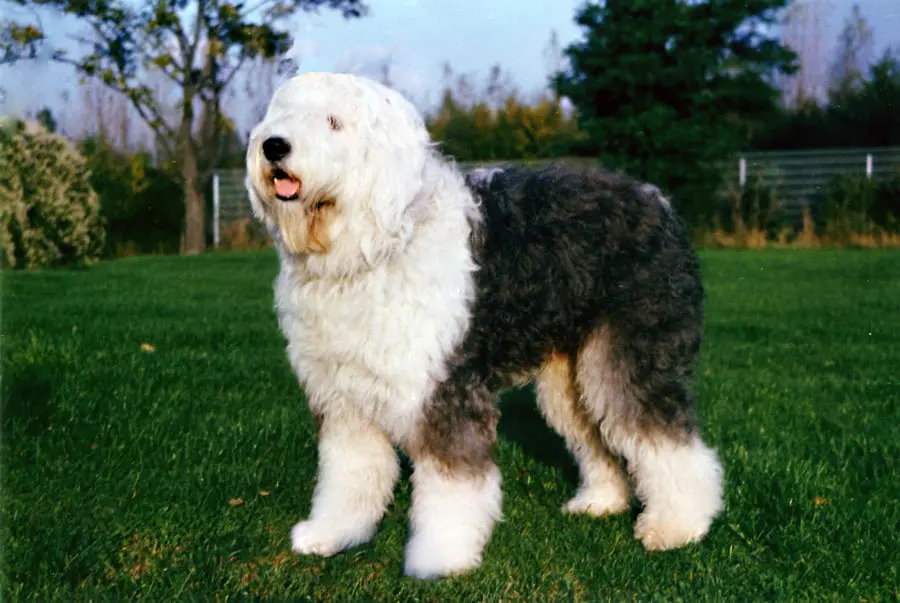
    It is a dog great size and scale, with a height around the 63 cm.. and a weight between the 30 and 40 kg.

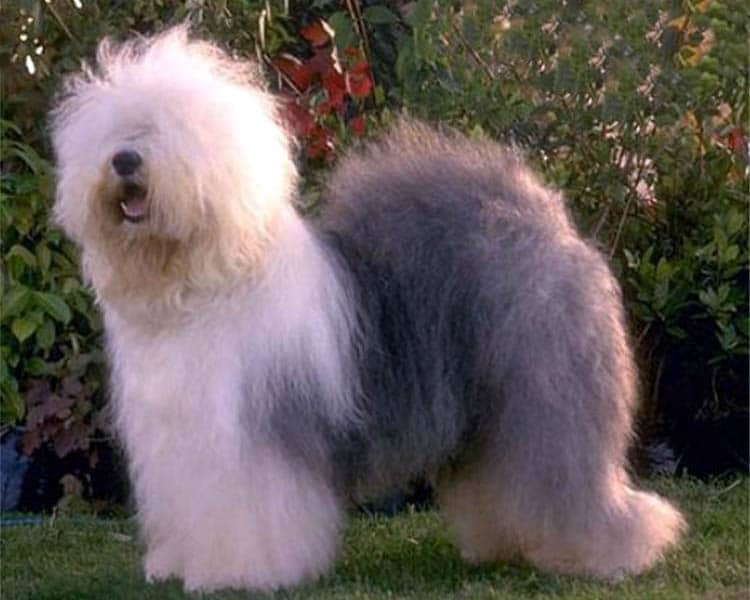
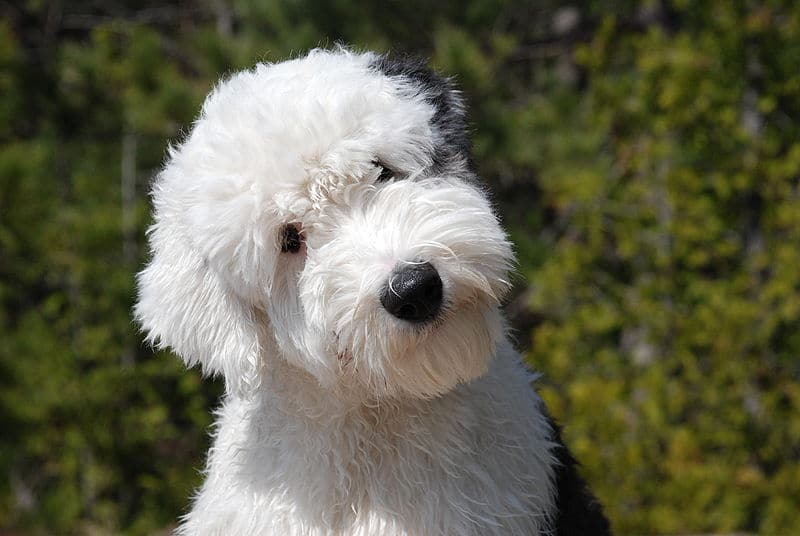
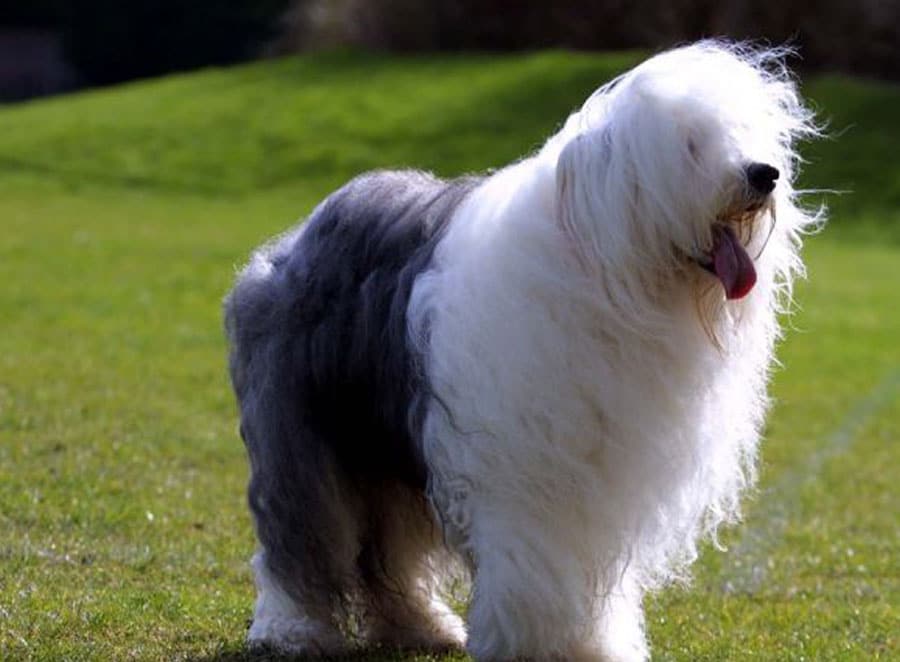
    Small and floppy ears, coated with hair, strong and elongated neck, abundant hair desgreñado and rough touch, with a range of colors that can range from grey, grey, Blue to blue merle, with or without white markings on the head, bottom of the stomach or forelimbs.

    The tail is often be amputated, or are there simply copies that are already born without it, hence its name Bobtail which in means «cut tail«, The search for this characteristic trait is believed to have been due to the desire of English breeders not to pay taxes., already before the dogs with tails were thought to be luxury goods. This dog has a very characteristic bark in the canine world, serious and pervasive.

    Did you know??

    There is no upper limit to the height of the Old English Sheepdog. Females usually measure 53 cm , the males 56 cm . That's because the sheep varied in size, so the dogs used to herd them they also varied in size.

    Character and skills

    Video "Old English Sheepdog (Bobtail)"

    The Bobtail, tolerant character, It is an excellent dog for living together with children and other pets. They are able to easily adapt themselves to different conditions.. Faithful and intelligent It adapts to life in an apartment if necessary, always with the company of its owner. It is important to train it well from small, It is to learn fast and responsive dog.

    The Old English Sheepdog he is a very good worker and is able to carry out orders, but it won't if the instruction if they believe that they are stronger minded than the human herd members.

    They have a strong herding instinct and can treat the flock to shock people, never to bites. It is necessary to learn from an early age that humans are not part of his flock.
    This dog is possibly the more care you need for your hair, that should be dealt with by canine professionals. As well, but to adapt to living in small spaces, you need a daily dose of exercise in the open air, because otherwise it could become destructive with the furniture in the house. Due to its thick coat is not a recommended race to live in warm places.

    Health

    The Bobtail have a predisposition to certain skin conditions:

    – atopy ;
    – demodecy;
    – Furunculosis bacteriana (in the legs).

    Life expectancy

    13 years

    Grooming

    The maintenance of "Old English Sheepdog (Bobtail)" it is tedious due to its fur. Grooming is recommended every 4 or 6 weeks, otherwise shearing is inevitable.

    Images «Old English Sheepdog»

    “Old English Sheepdog” Videos

    Home Again Chip saves Texas Old English Sheepdog

    Type and recognitions:

    • FCI CLASSIFICATION:Group 1 –> Pastor and Boyeros dogs (except Swiss Cattle Dogs). – Section 1 –> Pastor dogs. Without working trial.
    • FCI 16
    • Federations: FCI ⓘ, AKC ⓘ, ANKC ⓘ, CKC ⓘ, ​KC ⓘ, NZKC ⓘ, UKC ⓘ

    FCI breed standard "Old English Sheepdog (Bobtail)"

    Origin:
    United Kingdom

    Date of publication of the valid original standard:
    13.10.2010

    Use:

    Shepherd dog.


    General appearance:

    It is a strong dog, symmetric, square, very harmonious construction and robust constitution. Absolutely no weakness in the limbs. Completely covered in abundant hair. He is a muscular dog, solid and with a very intelligent expression. Natural shapes should not be artificially modified using scissors or shearing machines.. Of great vitality, presenting a slightly ascending upper line and, seen from above, a pear-shaped body. Has a typical sway when walking with an ambling gait or with a normal gait. His barking has a characteristic timbre.


    Behavior / temperament:

    It is a docile dog with a good character. Bold, fell, and trustworthy. Not in any way fearful or aggressive if not provoked.

    Head:


    Cranial region:
    • Skull : Bulky and square in shape. The supra-orbital region is well arched.
    • Depression links (Stop) :  Well defined.

    facial region:

    • Truffle : Large and black. The nostrils are wide.
    • Snout :  Strong, square and truncated,
    • Jaws / teeth : Strong teeth, large and well placed. Scissor bite : The jaws are strong and articulated in a perfect scissor shape., regular and complete, that is to say, that the upper incisors cover the lower ones in close contact and are set square in relation to the jaws. Pincer bite is tolerated but undesirable.
    • Eyes :  Separate. Dark-colored eyes or gazey eyes. The two blue eyes are admitted. Light eyes are a flaw. Pigmented eye rim will be preferred.
    • Ears :  Small and stuck to the sides of the head,

    Neck:

    Good length, strong and gracefully arched.

    Body:

    Rather short and compact.

    • Pork loin : Very robust, wide and slightly arched.
    • Breast : Well lowered and wide. The ribs are well sprung.

    Tail:

    Previouslycustom wasamputate the tail or naturally borntailless.
    • amputee: Usually completely amputated.
    • Without amputating : natural size. With good fringes and abundant hard-textured hair.


    Tips

    Former members
    • Shoulder : The scapulae should be well oblique, more  closer in the area of ​​the cross than in the shoulders. Loaded shoulders are undesirable.
    • Elbows : Tight to the chest.
    • Forearm: Perfectly straight forelimbs ; his skeleton is very strong, holding the body so that it is not close to the ground.
    • Previous feet: They must not be turned either inwards or outwards. They are small and tight. Well arched fingers, thick and solid ear pads.
    Former members
  • General appearance: The posterior third is well covered with hairs, round and muscular.
  • Knee : Well angled, but without exaggeration
  • ;Leg : Long and well developed.
  • Hock : Well descended.
  • Metatarsus: Seen from behind, they must be perfectly straight.
  • Rear foot: They must not be turned either inwards or outwards. They are small and tight. Well arched fingers, thick and solid ear pads.
  • Movement:

    When walking, the rear one sways like a bear. At a trot, the extension is easy and the drive given by the rear is powerful. The members move in planes parallel to the axis of the body. Very elastic canter. In slow movements, certain dogs may have a tendency to walk at a walking pace. In motion, the dog may adopt a naturally lower head stature.

    Mantle

    • Fur : Abundant, very rough in texture ;  it is not smooth, but hirsute and free of loops. The undercoat is waterproof. The head and skull are well covered with hair. Ears are moderately covered. Neck well covered, as well as the anterior limbs, especially their surroundings. Hair is more abundant in the posterior third than in the rest of the body. Quality should be given more importance, to hair texture than to length andabundance.
    • Color : Any shade of gray, grayish or blue. The body and posterior third are uniform in color, with or without small white spots on the extremities of the limbs (socks). White spots in solid color areas should be rejected.  The head, the neck, forelimbs and lower belly should be white, with or no stains. Any brown hue is undesirable.


    Size and weight:

    Height to the cross

    • Males:    61 cm ,
    • females:   56  cm .

    The type and balance of shapes are of utmost importance and should not, in no case, be slaughtered for the carving.


    Fouls:

    Any deviation from the aforementioned criteria is considered a fault and its severity is considered to the degree of deviation from the standard and its consequences on the health and well-being of the dog and the dog's ability to perform its traditional task..

    disqualifying fouls
    • Aggressive or fearful dog
    • Any dog ​​showing clear signs of physical or behavioral abnormalities must be disqualified..


    N.B.:

    Males should have two normal-appearing testicles fully descended into the scrotum..

    The latest changes are in bold.

    Source: F.C.I - International Cynological Federation

    Alternative names:

    1. Shepherd’s Dog, bob-tailed sheep-dog, Bob-tail, Bobtail (English).
    2. Chien de berger anglais ancestral (French).
    3. Stummelschwanz, Schäferhund, Altenglischer (German).
    4. Old english sheepdog, Ovelheiro-inglês (Portuguese).
    5. Antiguo pastor inglés, Bobtail (español).

    ▷ The world of Pets: Dogs, cats, birds, reptiles, amphibians

    Belgian Shepherd
    Bélgica FCI 15 . Sheepdogs

    Pastor Belga

    The Belgian Shepherd originates from Belgium, the Campine region and North of Brabant.

    Content

    History

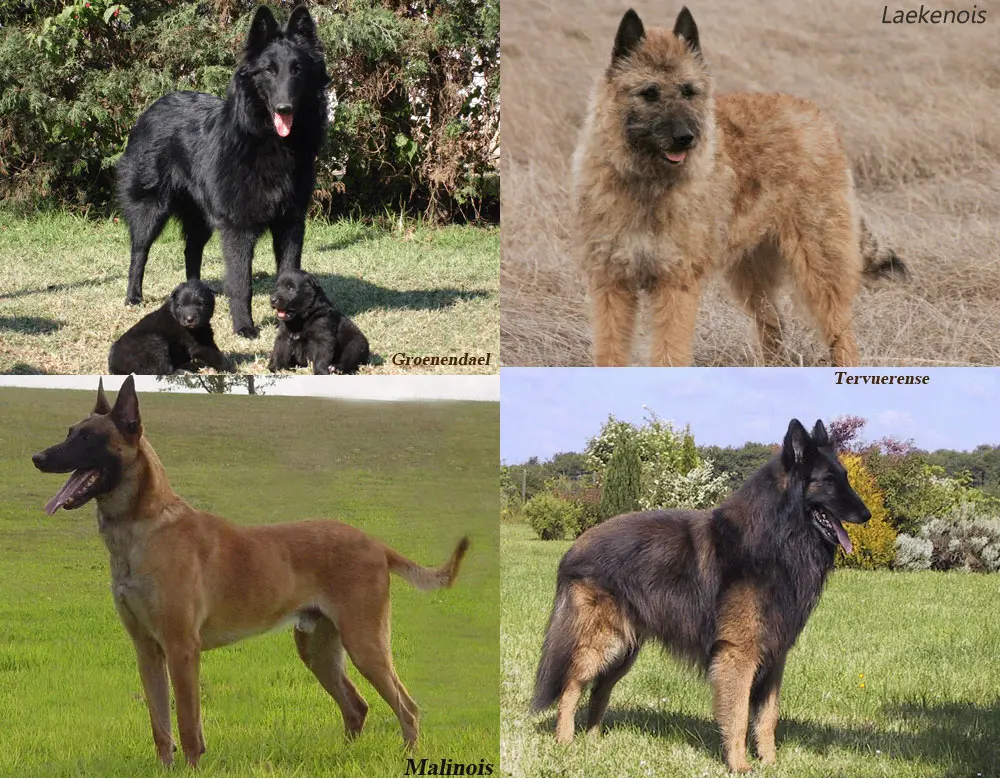
    The Belgian Shepherd Dog is the name of four breeds or varieties of dogs, depending on the Cynological Association we consult. The four breeds or varieties are: Groenendael, Laekenois, Tervueren and Malinois.

    At the end of the 19th century, in Belgium there was a large number of herding dogs whose type was heterogeneous and their coats were of great diversity. In order to put order into this situation, some cinófilos (cinógrafos) enthusiasts formed a group led by Professor A. Reul, the school of veterinary medicine of Cureghem, who can be considered as a true pioneer and founder of the race.

    The Belgian Shepherd was officially born as a race between 1891 and 1897. The 29 in September of 1891, The "Belgian Sheepdog Club" was founded in Brussels and that same year, the 15 November, Professor A.. Reul manages to gather in Cureghem, 117 dogs, allowing you to carry out a census and form a group with the best copies. In the following years becomes a real selection, making an extreme inbreeding on some stallions.

    Read more

    ▷ The world of Pets: Dogs, cats, birds, reptiles, amphibians

    Dutch Shepherd
    Holanda FCI 223 - Sheepdogs.

    Dutch Shepherd

    The most widespread variety of Dutch Shepherd she is the one with long hair, but the breed is almost unknown outside the Dutch borders.

    Content

    History

    The Dutch shepherd descends directly from the belgian shepherds, who looks a lot like (including subdivision into three hair varieties).

    Originally the main function of the Dutch shepherd It was typical of a country shepherd dog. From the earliest times the Dutch had an agricultural culture, among others, made up of flocks of sheep. The dogs had to keep the flock away from the sowing, which they did patrolling the borders of the road and the fields. They also accompanied the transfer of the herd to the common meadows, markets and ports. In the farm, they kept the chickens out of the kitchen yard, cows were herded for milking and the milk cart was pulled. They also alerted farmers if anyone entered. About 1900, the herds had almost disappeared in the Netherlands. The Dutch Shepherd's versatility made him suitable for training, which at that time was beginning to become popular. Thus began a new career as a police dog., search and rescue and as a guide dog for the blind. In any case, he is still capable of herding herds.. The first breed standard dates from 12 in June of 1898.

    Physical characteristics

    It is a dog of medium size and weight, quite muscular, Powerfully built and well proportioned. His expression is intelligent and temperament, live. The eyes are dark in color, medium-sized, macaroons, somewhat oblique and never round. The ears, smaller than big, they are straight and facing the front, and inserted high. The tail, that at rest hangs straight or forms a slight curve, reaches the tip of the hock. When it is active, the dog is elegantly elevated, never coiled; never falls on the sides.

    • Fur: the short-haired variety has a well attached coat; the long-haired one has straight hair, and the variety of hard hair has it thick and hard; on the head it forms prominent eyebrows, mustaches and beard. Depending on the cloak, in the breed there are three varieties: shorthair, long and hard.
    • Color: striated but the least intensely, on brown background (golden fluted) or gray (fluted gray). The stripes are less evident in hard-haired specimens. Black mask is preferable.
    • Size: males, of 57 to 62 cm.; females, of 55 to 60 cm..

    Character and skills

    Affectionate, obedient, docile, vigilant, trustworthy, undemanding and very resistant. Always watch out, active and endowed with the true nature of a shepherd dog. It is a little less reactive and less nervous than Belgian Shepherd, the one who looks like, However, even in character.

    The Dutch Shepherd works willingly with his master and is able to cope with any task assigned to him.
    Herding larger herds must have the ability to work in conjunction with various other dogs..

    Characteristics "Dutch Shepherd"

    Coexistence is important that you have with your new friend. Before considering the acquisition of a dog of the breed "Dutch Shepherd" you know certain factors. Not all breeds of dogs are apt to live in an apartment, you must take into account his character, their need for exercise, their interaction with other pets, their care and if you have small children, their level of tolerance towards them.

    Adaptation ⓘ

    4,0 of 5 stars (based on 1 review)

    friendly dog ​​ⓘ

    3,0 of 5 stars (based on 1 review)

    hair loss ⓘ

    3,0 of 5 stars (based on 1 review)

    Affection level ⓘ

    4,0 of 5 stars (based on 1 review)

    Need for exercise ⓘ

    5,0 of 5 stars (based on 1 review)

    Social need ⓘ

    3,0 of 5 stars (based on 1 review)

    Home ⓘ

    3,0 of 5 stars (based on 1 review)

    Toilet ⓘ

    3,0 of 5 stars (based on 1 review)

    Friendly with strangers ⓘ

    4,0 of 5 stars (based on 1 review)

    barking ⓘ

    2,0 of 5 stars (based on 1 review)

    Health ⓘ

    4,0 of 5 stars (based on 1 review)

    Territorial ⓘ

    5,0 of 5 stars (based on 1 review)

    Cat friendly ⓘ

    3,0 of 5 stars (based on 1 review)

    Intelligence ⓘ

    5,0 of 5 stars (based on 1 review)

    Versatility ⓘ

    4,0 of 5 stars (based on 1 review)

    Child friendly ⓘ

    4,0 of 5 stars (based on 1 review)

    Surveillance ⓘ

    4,0 of 5 stars (based on 1 review)

    joy ⓘ

    4,0 of 5 stars (based on 1 review)

    Images "Dutch Shepherd"

    Videos "Dutch Shepherd"

    Type and recognitions:

    • FCI CLASSIFICATION:
    • Group :
    • Section : . .

    Federations:

    • – FCI – Group 1 Herding dogs, Section 1 Sheepdogs ⓘ
    • – AKC – PASTORAGE ⓘ
    • – ANKC – Group 5 (working dogs) ⓘ
    • – ​KC – Pastoral ⓘ
    • – NZKC – Working dog ⓘ
    • – UKC – Herding dogs ⓘ

    FCI breed standard Dutch Shepherd

    FCIFCI - Dutch Shepherd
    Pastor

    Alternative names:

    1. Dutch Herder, Hollandse Herder (English).
    2. Berger hollandais (French).
    3. Holländischer Schäferhund (German).
    4. Pastor holandês (Portuguese).
    5. Perro de pastor holandés (español).

    Photos:

    1 – Short-haired Dutch Shepherd stacked by CaroleField / CC BY-SA
    2 – Silverbrindle and goldbrindle are the approved colors of the breed by Lissunmusta / CC BY-SA
    3 – Short-haired brindle male Dutch Shepherd named Black, 2 years old, owned by Jason Paluck by Wikipedia
    4 – Adult brindle Dutch shepherd by https://www.pikrepo.com/fyvdb/adult-brindle-dutch-shepherd
    5 – dutch shepherd by https://www.peakpx.com/504961/dutch-shepherd
    6 – Dutch shepherd by https://pxhere.com/en/photo/1387398
    7 – Neros van Guard is a Dutch Shepherd imported from Canada to the USA by Ulyseemuff / CC BY-SA

    ▷ The world of Pets: Dogs, cats, birds, reptiles, amphibians

    Slovak Cuvac
    Eslovaquia FCI 142 - Sheepdogs.

    Slovak Cuvac

    The Slovak Cuvac it's a good watchdog, faithful and very brave, always ready to fight intruders, even if it's bears or wolves.

    Content

    History

    The white mountain dog breed group is derived from arctic-type wolves, whose survivors remained from the pre-glacial era in the mountainous areas of Europe, to where they reached the freezing limits. These areas are the mountainous slopes of the North Caucasus, the balkans, especially the Rodope mountains, the Carpathians, especially the Tatra, the slopes to the north of Abruzzo and finally the Pyrenees. In these cold and humid regions the mountain dog was introduced, also accompanied by an ancient flora and fauna which were still discovered by the Swedish researcher Wahlenberg in Scandinavia.. We can find a similar relationship with Nordic pets, for example, in Tatra regions in the Carpathians where the Huzul horse has as its predecessor the Gudbrandstal horse; in the same way, the Slovak Cuvac has an analogy with pomeranian sheepdog. Slovak alpine cowboy activity has a very old tradition.

    The Slovak Cuvac along with the mountain sheep, the Huzul horse and the typical mountain inhabitants constitute the basic economic conditions to take advantage of the pastures for cattle raising. The Slovakian mountains belonged mostly to the free people who were not subjected to the serfdom of the Middle Ages; the people protected the borders of the country and their task was only to make sheep cheese. His institution was called the ″Wallach Alliance″ (Vallasky belt), based in Kaschau until the abolition of easements. The members of this military and pastoral group carried out their services in the rangelands, always accompanied by the typical surveillance dog. Tatra that also appear in many images. The Slovak Cuvac has shown his skills as a good caregiver, guardian and companion, as well as guide the flocks of sheep, to the care of the cattle and also in the pastures of turkeys and other domestic animals, as well as in the guard of various objects. Also the clients of the thermal stations who visited the alpine cowboys and who came to buy cheeses and other products, they looked with pleasure at these puppies covered in dense hair and bought them, taking this breed to lower places where it was often considered a luxury breed for its unique appearance.

    In the Polish Tatra region, where there is a similar breed of mountain dog called goral dog, exceptionally strong specimens were commonly called "Liptauer", indicating its Slovak origin. In this way, It is also limited from the topographical point of view the region of the breeding of the Slovak Cuvac white. The genealogical record of the Slovak Cuvac was started in Czechoslovakia more than 30 years by Professor Anton Hruza of the Brünn Veterinary School. The initial material came from the Liptovska Luzna region, kokava, Vychodna from Tatrach and the surrounding area of ​​Rachovo in the Carpathians. The first hatchery was named ″Ze zlaté studny″ (from the golden well) and it was founded in Svitavy u Brna.

    Breeding in the Carpathians was called ″z Hoverly″ (the Hoverla). Since then, the Breeders Club of Slovak Cuvac is based in Bratislava where exact registrations are made and exhibitions are organized, judgments and competitions that extend to the whole country. Other original bloodlines come from the Liptovské Hole regions, Velky Choc, buried, Martin, Jedlova and Jeseniky. The lines that have spread further are Topas, career, Simba, Hrdos, Ibro, Cuvo, Ass, Dinar, Samko, Bojar, Olaf and others. Genetically the Slovak Cuvac can be characterized as a leuzistic mountain dog with a black muzzle, and to a lesser extent as a flavistico white dog with brown snout and lighter eyes. From the combination of the mentioned genetic types, in which the first is dominant, some variations in color tonality originate, pigmentation of the eyes, of the eyelids, of the muzzle, lips and mucosa. By means of a strict selection in the direction of the first type, judges and breeders achieved the rate required for the current standard and its stabilization within the hatchery area. The number of club members with bred and kennel dogs has reached as many as 200 in the last times. Since then, we have 800 live and registered dogs throughout the Republic. The quality of our upbringing of Slovak Cuvac it reflects, among other things, in the favorable judgment made in international exhibitions (Prague, Brno, Liberec, Bratislava, Leipzig among others) with intense foreign competition.

    Physical characteristics

    Shows the typical solid and stocky appearance of mountain dogs. The bone is solid, the lively and vigilant temperament, fearless and attentive. The eyes are dark brown and oval. Ears are high and very mobile, of moderate length, hanging and almost attached to the head. The tail has a low implant and at rest descends to the hock. When the dog moves, he wears it curled on his back.

    • Fur: except for the head and limbs, where is shorter, the mantle constitutes a dense continuous covering without tufts in the tail and the haunches. The Mache have a marked mane. The subpelo, fine thick, it is completely covered by the hair and is less dense in summer.
    • Color: white. A yellowish blur at the end of the ears is supported but not desirable.
    • Size: males, of 62 to 70 cm.; females, of 59 to 65 cm..

    Observations and tips

    According to the tradition, only white individuals are selected to distinguish them at night from wild animals.

    Character and skills

    He is extremely faithful and brave and is always ready to face any harmful animal, even wolves and bears. In order to differentiate it during the night from the wild beasts of the field, it is only bred in white color, this being an ancient tradition.

    He is very affectionate with his owner.

    Characteristics "Slovak Cuvac"

    Coexistence is important that you have with your new friend. Before considering the acquisition of a dog of the breed "Slovak Cuvac" you know certain factors. Not all breeds of dogs are apt to live in an apartment, you must take into account his character, their need for exercise, their interaction with other pets, their care and if you have small children, their level of tolerance towards them.

    Adaptation ⓘ

    4,0 of 5 stars (based on 1 review)

    friendly dog ​​ⓘ

    4,0 of 5 stars (based on 1 review)

    hair loss ⓘ

    3,0 of 5 stars (based on 1 review)

    Affection level ⓘ

    4,0 of 5 stars (based on 1 review)

    Need for exercise ⓘ

    4,0 of 5 stars (based on 1 review)

    Social need ⓘ

    5,0 of 5 stars (based on 1 review)

    Home ⓘ

    3,0 of 5 stars (based on 1 review)

    Toilet ⓘ

    2,0 of 5 stars (based on 1 review)

    Friendly with strangers ⓘ

    3,0 of 5 stars (based on 1 review)

    barking ⓘ

    2,0 of 5 stars (based on 1 review)

    Health ⓘ

    4,0 of 5 stars (based on 1 review)

    Territorial ⓘ

    5,0 of 5 stars (based on 1 review)

    Cat friendly ⓘ

    3,0 of 5 stars (based on 1 review)

    Intelligence ⓘ

    4,0 of 5 stars (based on 1 review)

    Versatility ⓘ

    4,0 of 5 stars (based on 1 review)

    Child friendly ⓘ

    4,0 of 5 stars (based on 1 review)

    Surveillance ⓘ

    4,0 of 5 stars (based on 1 review)

    joy ⓘ

    2,0 of 5 stars (based on 1 review)

    Images "Slovak Cuvac"

    Videos "Slovak Cuvac"

    Type and recognitions:

    • FCI CLASSIFICATION:
    • Group :
    • Section : . .

    Federations:

    • – FCI – Group 1 Herding dogs, Section 1 Sheepdogs ⓘ
    • – AKC – PASTORAGE ⓘ
    • – UKC – Herding dogs ⓘ

    FCI breed standard Slovak Cuvac

    FCIFCI - Slovak Cuvac
    Chuvatch

    Alternative names:

    1. Slovak Cuvac, Slovak Chuvach, Tatransky Cuvac, Slovak tschuvatsch (English).
    2. Slovenský čuvač, cuvac (French).
    3. Slovenský Cuvac (German).
    4. Cuvac (Portuguese).
    5. Cuvac eslovaco (español).

    Source:

    1 – fci

    Photos:

    1 – Cuvac eslovaco by https://pxhere.com/es/photo/1323780
    2 – Cuvac eslovaco by https://pxhere.com/es/photo/1323780
    3 – Cuvac eslovaco by https://pxhere.com/es/photo/1424979
    4 – Cuvac eslovaco by https://pxhere.com/en/photo/898976
    5 – Cuvac eslovaco by https://pxhere.com/es/photo/1233682

    + More