▷ The world of Pets: Dogs, cats, birds, reptiles, amphibians

Belgian Shepherd
Bélgica FCI 15 . Sheepdogs

Pastor Belga

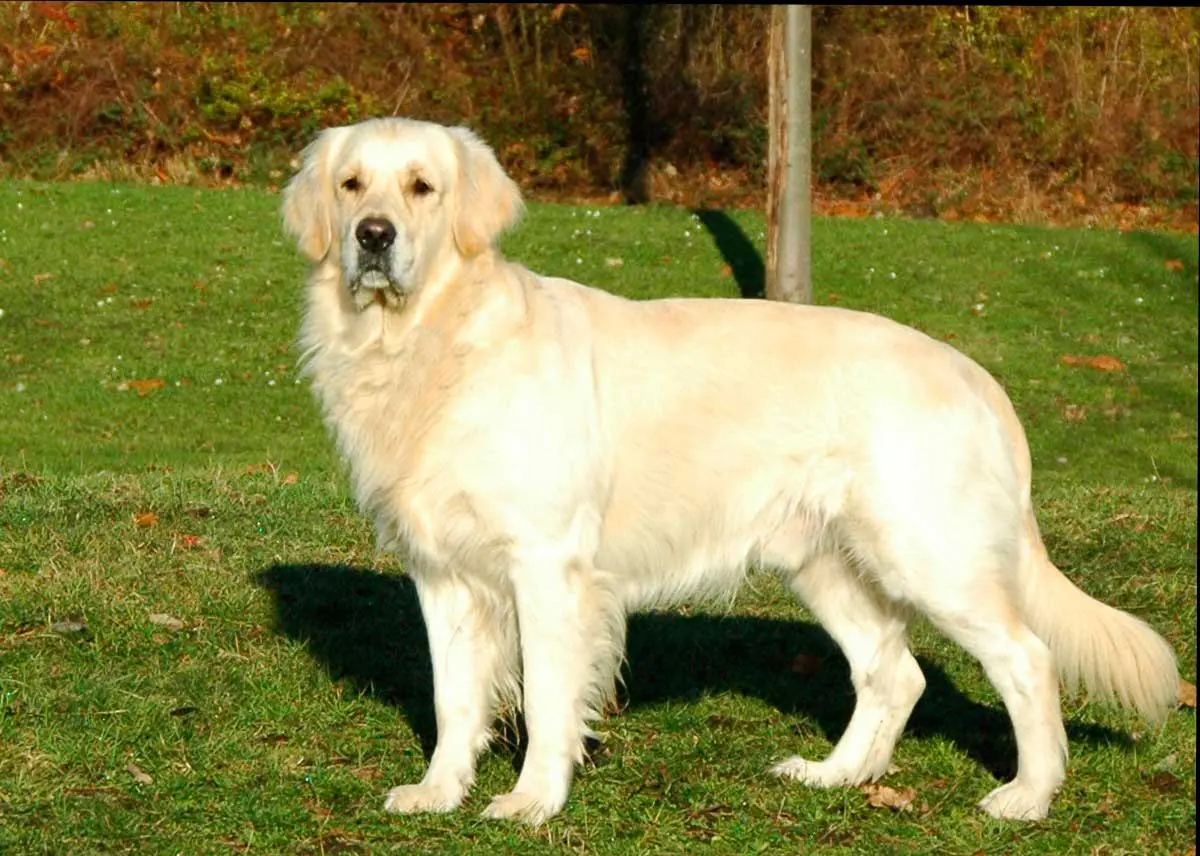
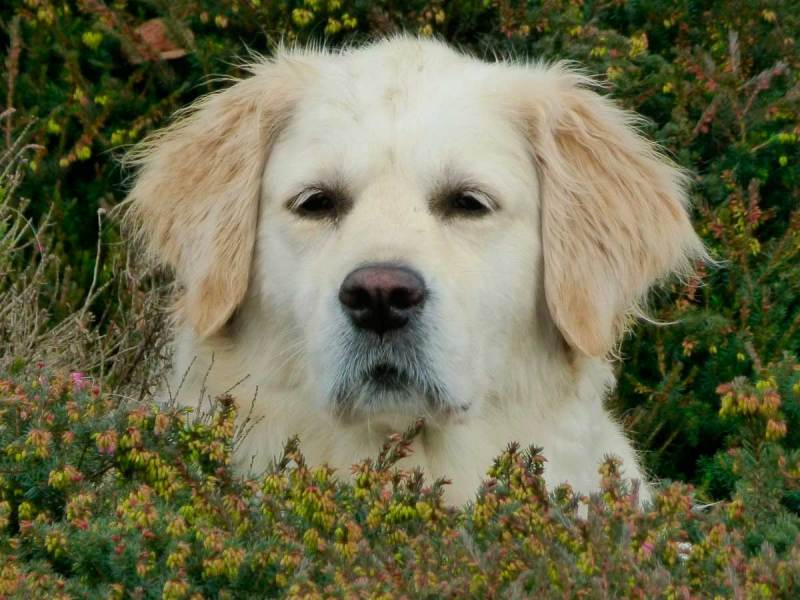
The Belgian Shepherd originates from Belgium, the Campine region and North of Brabant.

Content

History

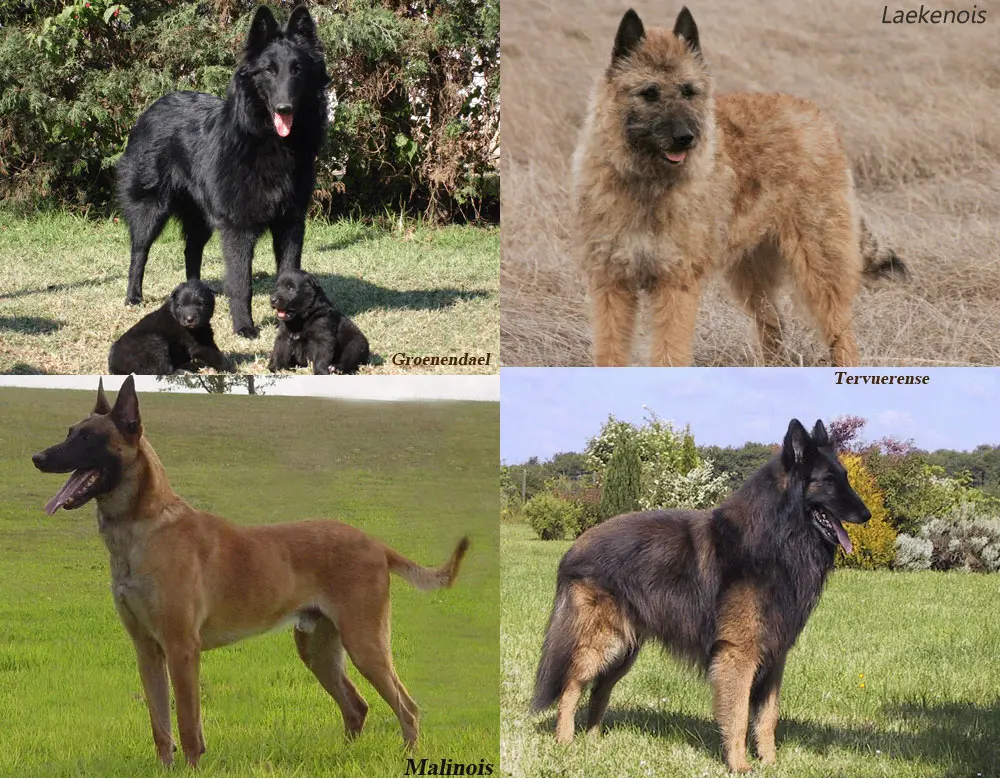
The Belgian Shepherd Dog is the name of four breeds or varieties of dogs, depending on the Cynological Association we consult. The four breeds or varieties are: Groenendael, Laekenois, Tervueren and Malinois.

At the end of the 19th century, in Belgium there was a large number of herding dogs whose type was heterogeneous and their coats were of great diversity. In order to put order into this situation, some cinófilos (cinógrafos) enthusiasts formed a group led by Professor A. Reul, the school of veterinary medicine of Cureghem, who can be considered as a true pioneer and founder of the race.

The Belgian Shepherd was officially born as a race between 1891 and 1897. The 29 in September of 1891, The "Belgian Sheepdog Club" was founded in Brussels and that same year, the 15 November, Professor A.. Reul manages to gather in Cureghem, 117 dogs, allowing you to carry out a census and form a group with the best copies. In the following years becomes a real selection, making an extreme inbreeding on some stallions.

Read more

▷ The world of Pets: Dogs, cats, birds, reptiles, amphibians

Miniature American Shepherd
Estados Unidos FCI 270 . Sheepdogs

Miniature American Shepherd

With his alert expression, attentive and intelligent, the Miniature American Shepherd has all the qualities of Sheepdogs

Content

History

In forty years, Americans have managed to fix the characteristics of this new breed, from the strains of small Australian Shepherds. Recently, the American Kennel Club (AKC) agreed to integrate and, therefore, recognize the Miniature American Shepherd as a race in its own right, integrating it into the Herding Group “Shepherd Dogs” … next to his ancestor, the Australian Shepherd.

In the decade of 1960, the little ones Australian Shepherd who worked on the United States rodeo circuit were selectively bred to further reduce their size. The new breed was originally called the Miniature “Australian Shepherd”. "They became especially popular with riders who traveled to horse shows, since his intelligence, "loyalty and size made them an excellent travel companion.", say the experts of the Club del Miniature American Shepherd from the USA. "In this way its popularity spread throughout the country."

Currently, the breed is recognized by the FCI (International Cynological Federation), in view of the number of breeders that are embarking on the selection of this breed of dog in Europe.

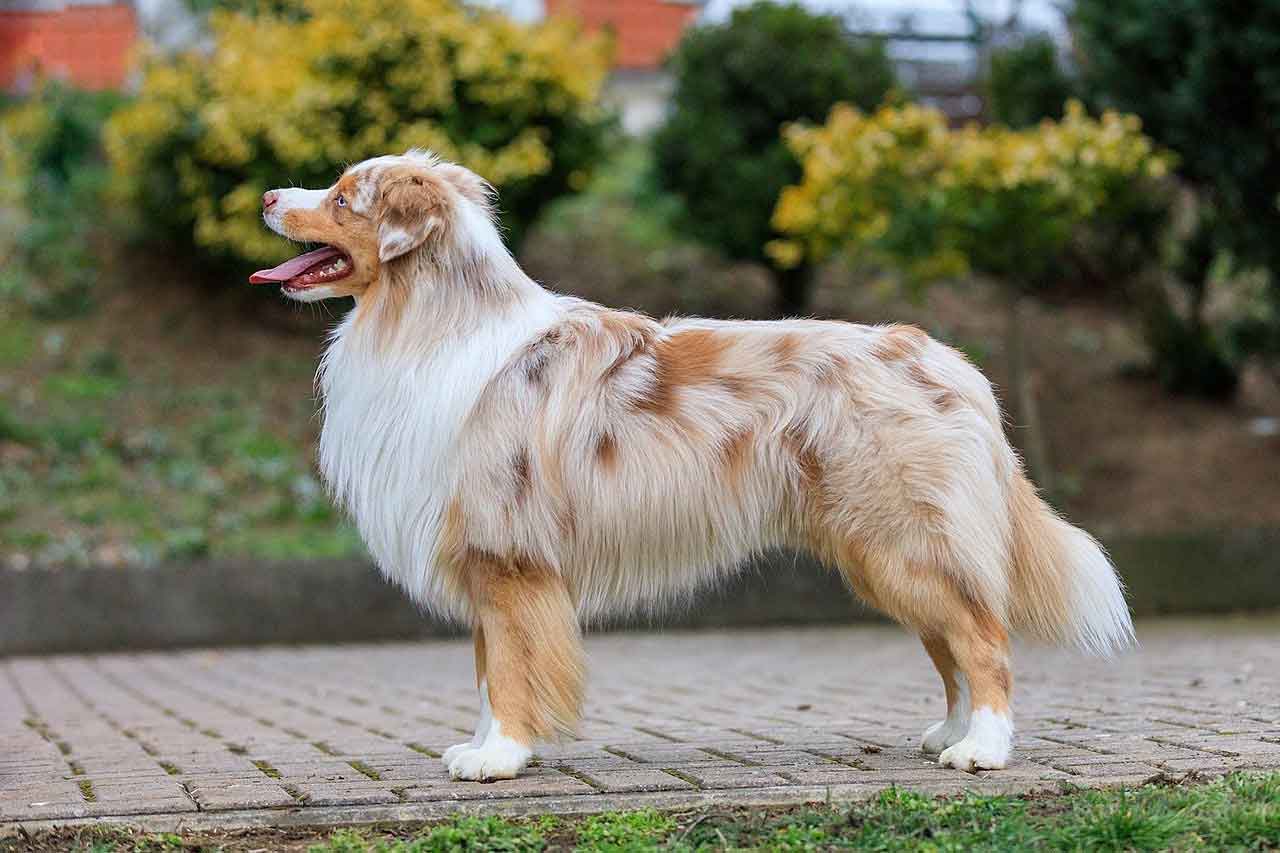
Photo: Buddy» Miniature American Shepherd – Lost Island’s Roy ‘Arsenal’ Harper – bred by: Julia Bettendorf, Lost River Miniature American Shepherds – Jugabe3b, CC BY-SA 4.0, via Wikimedia Commons

Physical characteristics

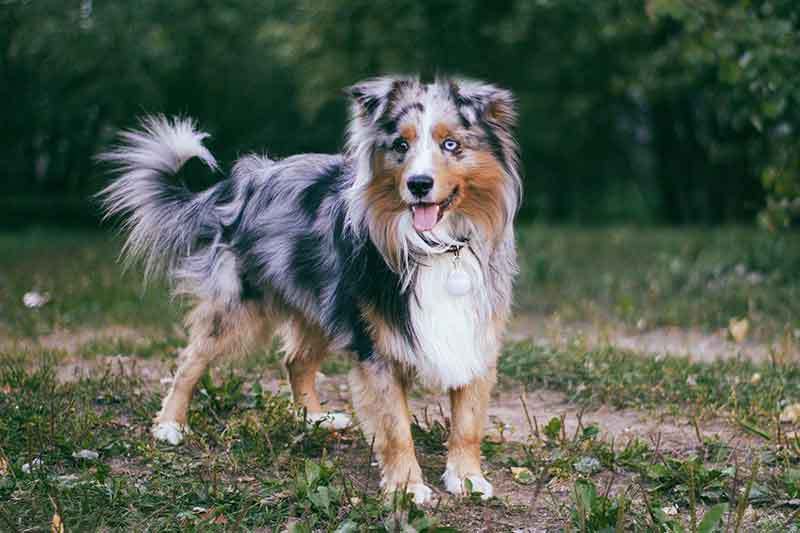
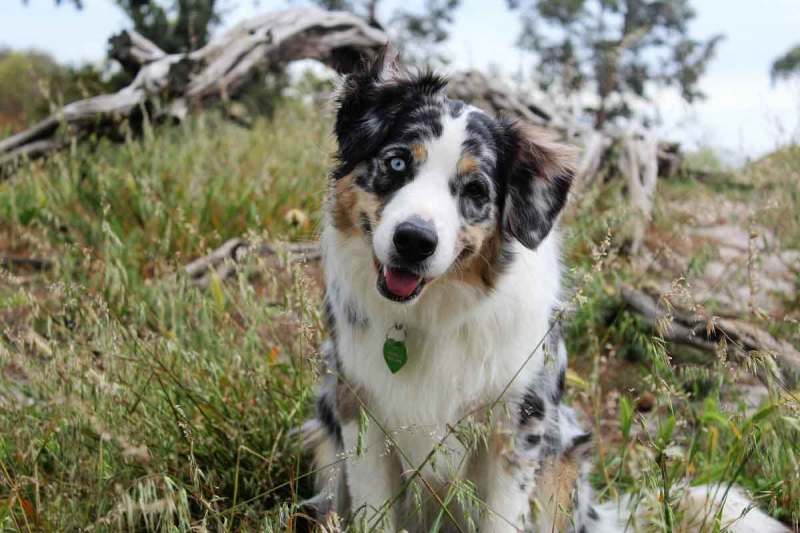
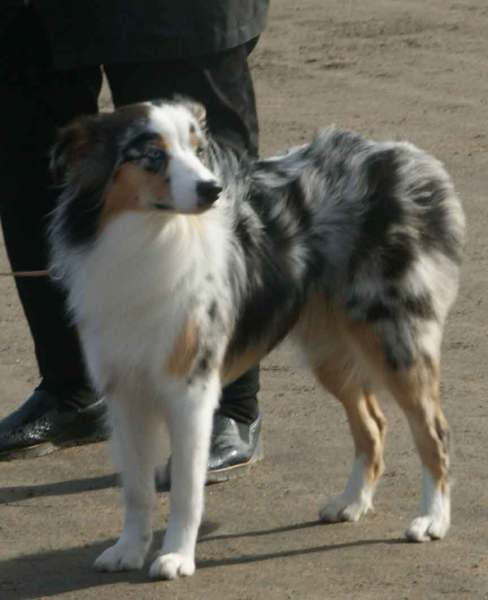
The Miniature American Shepherd shares many physical traits with its predecessor the Australian Shepherd, only on a smaller scale. The females measure between 33 – 43 cm at shoulder; the males between 35,5 – 46 cm.. Despite its size, they are every inch a real herding dog: energetic, versatile, robust and extremely bright. Striking fur comes in black, blue merle, red and red merle. (Merle exhibits any amount of marbling, spots or mottling.) The Miniature American Shepherd they move with the smooth, agile stride of a dog built for hard work on rough terrain.

Character and skills

With his alert expression, attentive and intelligent, dogs Miniature American Shepherd they have all the qualities of a little Shepherd dog, with a pronounced instinct to lead and watch over the herds. Easy to train, able to respond to a variety of demands that allow them to evolve in different sports disciplines. the Miniature American Shepherd However, they are reserved for people who are not familiar to them.. But once you "know" them, becomes a wild playmate, and capable of real feats, thanks to its agility and small size.
Like all working dogs, especially those able to work in their original profession, when in a situation with a herd of animals, their behavior changes and they become attentive and tireless helpers.

Its small size, your cleanliness reduced to a minimum, their adaptability and listening skills, greatly facilitate your life and your education in the city. But, like all shepherds, you need to spend and "empty" your overflowing energy. Beautiful walks and runs in the forest are essential to maintain your tone, his physical form and his playful character.

Health and nutrition

This solid and sturdy dog, just like their ancestors, does not pose any particular problem in feeding. His health is that of a dog from generations of working dogs, although many buyers take the step of having a companion dog that is easy to live with. Never forget where it comes from, as you deserve regular physical activity to maintain your figure and strength.

The Miniature American Shepherd is generally a healthy dog, and responsible breeders test their breed for health conditions, communicating with other breeders dedicated to working together for the health of the breed and the preservation of the unique qualities of the breed.

Although the Miniature American Shepherd it is a relatively healthy breed, the following complications have been observed:

  • Juvenile cataracts
  • PRA (progressive retinal atrophy)
  • Iris Colobomas
  • PPM (persistent pupillary membrane)
  • Regular visits to the vet for checkups and parasite control help ensure a long and healthy life for the dog.

    Grooming

    The Miniature American Shepherd has a double coat, with a longer outer coat and a wool underlayer. The breed shows a good amount, even more so during shedding season, which can happen once or twice a year. Weekly brushing, daily during molting season, will help remove dirt and loose hair and keep the dog looking its best. Balls or tangles can be resolved with a finer brush or metal comb. As in all races, nails must be trimmed regularly, too long nails can cause discomfort to the dog.

    Training

    As in all races, early socialization and training classes for puppies are recommended, which help to ensure that the dog becomes a well-adjusted and well-behaved companion. Smart and willing to please, the Miniature American Shepherd is highly trainable and will reach its best potential as a partner when taught at least basic obedience.

    Physical exercises

    The Miniature American Shepherd he is active and athletic, and requires a moderate amount of exercise but is also very adaptable to your family's way of life. They do well as city dogs as long as their owners provide them with enough exercise.. They enjoy outings with their people that will occupy both their mind and their body. They enjoy and excel at many dog ​​events, including obedience, agility and tracking.

    Characteristics "Miniature American Shepherd"

    Coexistence is important that you have with your new friend. Before considering the acquisition of a dog of the breed "Miniature American Shepherd" you know certain factors. Not all breeds of dogs are apt to live in an apartment, you must take into account his character, their need for exercise, their interaction with other pets, their care and if you have small children, their level of tolerance towards them.

    Adaptation ⓘ

    3,0 of 5 stars (based on 1 review)

    friendly dog ​​ⓘ

    4,0 of 5 stars (based on 1 review)

    hair loss ⓘ

    3,0 of 5 stars (based on 1 review)

    Affection level ⓘ

    5,0 of 5 stars (based on 1 review)

    Need for exercise ⓘ

    4,0 of 5 stars (based on 1 review)

    Social need ⓘ

    4,0 of 5 stars (based on 1 review)

    Home ⓘ

    3,0 of 5 stars (based on 1 review)

    Toilet ⓘ

    2,0 of 5 stars (based on 1 review)

    Friendly with strangers ⓘ

    4,0 of 5 stars (based on 1 review)

    barking ⓘ

    3,0 of 5 stars (based on 1 review)

    Health ⓘ

    4,0 of 5 stars (based on 1 review)

    Territorial ⓘ

    4,0 of 5 stars (based on 1 review)

    Cat friendly ⓘ

    3,0 of 5 stars (based on 1 review)

    Intelligence ⓘ

    5,0 of 5 stars (based on 1 review)

    Versatility ⓘ

    5,0 of 5 stars (based on 1 review)

    Child friendly ⓘ

    4,0 of 5 stars (based on 1 review)

    Surveillance ⓘ

    3,0 of 5 stars (based on 1 review)

    joy ⓘ

    4,0 of 5 stars (based on 1 review)

    Images "Miniature American Shepherd"

    Photos:

    1 – Blue Merle Miniature American Shepherd by Lextergrace, CC BY-SA 4.0, via Wikimedia Commons
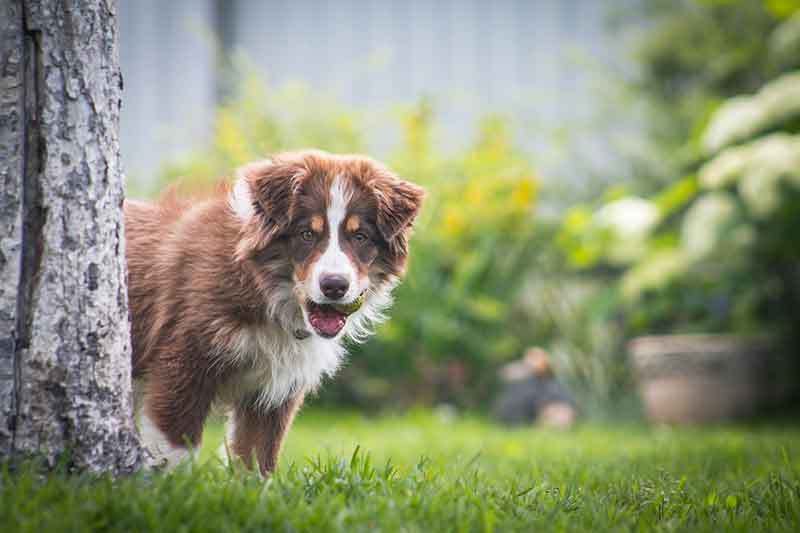
    2 – Miniature American Shepherd with Frisbee by Mullinspw, CC0, via Wikimedia Commons
    3 – Miniature american shepherd puppy by TanSinVic, CC BY-SA 4.0, via Wikimedia Commons
    4 – Miniature american shepherd by TanSinVic, CC BY-SA 4.0, via Wikimedia Commons
    5 – Miniature American Shepherd, blue merle, female by Canarian, CC BY-SA 4.0, via Wikimedia Commons
    6 – American miniature shepherd by https://pxhere.com/en/photo/1029669

    Videos "Miniature American Shepherd"

    Type and recognitions:

    • FCI CLASSIFICATION:
    • Group :
    • Section : . .

    Federations:

    • FCI ⓘ
    • AKC ⓘ

    FCI breed standard "Miniature American Shepherd"

    Origin:
    United States

    Date of publication of the valid original standard:
    04/09/2019

    Use:

    Utilization

    As the name suggests, is a herding dog. Can work in herds of farm animals (sheep, cows, horses).


    General appearance:

    The Miniature American Shepherd is a small sheepdog of the United States of America. It is slightly longer than it is tall with a moderate bone structure in proportion to its body size and weight without extremes.. His movements are fluid, easy and balanced. His exceptional agility combined with strength and ​​resistance allows you to work on a wide variety of terrain. This very versatile and energetic dog is an excellent athlete with great intelligence and a willingness to please those to whom he is present. dedicated. He is a faithful companion and a hard worker. His expression is attentive. Fur hairs, medium length and texture, can be solid in color or mixed with or without whiteness, with or without fires. Traditionally has no tail, shortened or natural short tail.
    A solid build with a mid-frame in relation to its size and weight. The structure of the dog reflects masculinity without being too rough for males.. Females appear feminine without being too light. Overall structure gives an impression of strength without being over the top.

    important proportions

    Length, measured from the tip of the sternum to the tip of the buttock, is slightly higher than the height, measured from the top of the cross to the ground.


    Behavior / temperament:
    The Miniature American Shepherd is an intelligent working dog. Has a pronounced instinct for behavior and keeping herds. He is an exceptional companion, versatile and very easy to educate. Although reserved with strangers, He is not shy. He is an energetic and long-lasting worker who adjusts his behavior and shows the right emotion for the task at hand. With his family he is protective, devoted and faithful.

    Head:

    ---

    Cranial region:

    Head

    The head must be clearly drawn and in proportion to the dog's body. The expression is alert, attentive and intelligent. The dog may express a reserved look and / or vigilant towards foreigners.

    Skull

    The skull is flat or slightly domed and may show a slight occipital protrusion. The width and length of the skull are equal.

    Depression links (stop)

    It is moderate but defined.

    facial region:

    Truffle

    The truffle is liver pigmentation for red or red merle and black subjects for black or blue merle subjects. Fully pigmented truffle is preferred.

    Snout

    Fades a bit of the truffle base and rounds out at the end. The length of the muzzle is equal to that of the skull in the profile. The top line of the skull and the chamfer line are slightly oblique to each other, and the top line of the skull forms a slight downward angle.

    Jaws / Teeth

    The teeth must be complete and in scissors. Dogs with broken teeth, missing or accidentally discolored will not be penalized.

    Eyes

    The eyes are obliquely set, in the form of almond, without projection or sunken and in proportion to the head. Whatever the color of the dress, all eye colors are allowed. Eyes are allowed, specks and specks. The edge of the eyelid has liver pigmentation for red or red merle subjects and black pigmentation for black or blue merle subjects.

    Ears

    The ears are triangular, medium-sized, attached to the top of the head. When is the dog attentive, fold back or to the side, ru Роза.

    Neck:

    The neck is solid and in proportion to the body, is of medium length and slightly curved. Neck fits well between shoulders.


    Body:

    Generality

    The body is firm and well muscled but without exaggeration.

    Back

    Firm and straight in static as well as in motion.

    Pork loin

    Strong and wide seen from above.

    Rump

    Moderately inclined.

    Breast

    The chest is full and deep. Reaches elbow with well-curved ribs.

    bottom line

    Moderately elevated.

    Tail:

    Traditionally has no tail, shortened or natural short tail. The long, uncut tail can form a slight curve when the dog is around. Resting. When the dog is moving, can be used with a slightly steeper curve.


    Tips

    Former members

    Generality

    The front legs are well muscled and balanced with the hindquarters.

    Shoulder

    Shoulders are long, plans, quite close to the withers and well inclined.

    Arm

    The humerus should be the same length as the scapula and form a right angle with it.

    Elbow

    The elbow joint is equidistant from the floor and the tourniquet. The elbows should be close to the ribs.

    Forearm

    They are straight and strong. The bone is oval instead of round.

    Metacarpus

    Metacarpals are short, thick and strong but still flexible, showing a slight angle seen from the side.

    Front feet

    The feet are oval, compact, with tight fingers. The toes are well arched. The pads are thick and elastic. Nails are short and hard. Lugs can be removed in countries that allow the practice.

    Later members

    Generality

    The width of the hindquarters is equal to that of the front hand at the shoulders. Эль angle, roughly right, formed by the scapula and humerus corresponds to that formed by the pelvis and thigh.

    Knee

    Hot flashes are clearly drawn.

    Hock

    The hocks are short, perpendicular to the ground and parallel to each other as seen from behind.

    Rear feet

    The feet are oval, compact, with tight fingers. The toes are well arched. The pads are thick and elastic. Nails are short and hard. Lugs can be removed in countries that allow the practice.

    Movement:

    The steps are fluid, clear and easy. The American Mini Shepherd shows great ease in his movements with well covered strides. The forelimb and hindlimb move in planes parallel to the median axis. As speed increases, front and hind legs converge toward the median plane, while the top remains firm and horizontal. The Miniature American Shepherd must be agile and able to change course and pace instantly.


    Mantle

    Fur

    The hair is of medium and long texture, straight to wavy. The inner layer varies according to the seasons. Hair is short and straight on the head and the front of the front legs. The back of the front legs and the panties are moderately provided. The mane and culture are more marked in males than in females. The ears, the feet, the back of the hocks and tail can be fixed. The dog must be presented with natural hair.

    Color

    The colors are varied and unique. In no order of preference, recognized colors are black, red, merle blue and merle red. The blackbird will be exposed with any number of stains, spots or stains. Undercoat may be slightly lighter than undercoat hair. Asymmetric markings are not a defect.
    No fire marks required (Sun tanning). When they are present, are allowed in the following locations: around the eyes, in feet, in the legs, below the neck, in the face, at the bottom of the ear, under the base of the tail, and panties can also emphasize the end result. The tone of the marks "fire" can range from creamy beige to black red, no preference.
    White markings are not mandatory and must not be invasive. They are limited to the mouth, cheeks, skull, neck, with a partial or full collar, chest, belly, forelimbs and hindquarters to the end of the hock. The tip of the tail may be white. The eyes must be completely surrounded by color. Rolling eyes are forbidden. The ears should preferably be completely covered with colored hair. If there is white in the ear, should not be more than 25% in one ear.


    Size and weight:

    Size and weight

    Height to the cross

    The size for males should be between 35,5 cm and 45,5 cm to the cross.
    The size for females should be between 33 cm and 43 cm to the cross.


    Fouls:

    Any deviation from the above mentioned criteria is considered to lack, and the severity of this is considered the degree of deviation from the standard and its consequences on the health and well-being of the dog and the dog's ability to perform its traditional task.

    Serious misconduct

    ▷Ears hanging or fully erect.
    ▷25 to 50% unpigmented truffle.
    ▷Atypical hair.
    ▷White markings covering more than 25% from the surface of the ears.
    ▷The hair roots of a white necklace protruding from the cross.

    disqualifying fouls:

    ▷Aggressive or shy dog.
    ▷Lack of type.
    ▷Size at the withers outside the limits of the standard: less than 35,5 cm and more than 45,5 for males, less than 33 cm and more than 43 cm for females.
    ▷More than 50% unpigmented truffle.
    ▷Color no compatible, different from those allowed by the standard.
    ▷The color of the mucous membranes does not match the dress.
    ▷Non-pigmented hairs.
    ▷Eyes not completely colored.
    ▷White tasks in another place that is not specified in the standard.
    ▷The lowest or highest prognathism.
    ▷Cryptorchid or perro monorchid.


    N.B.:
    NB:
    • Any dog ​​showing clear signs of physical or behavioral abnormalities must be disqualified..
    • The aforementioned fouls that are more pronounced or more marked are eliminatory..
    • Males should have two normal-appearing testicles fully descended into the scrotum..
    • Only functionally and clinically healthy dogs, with the typical conformation of the breed, should be used for parenting.

    Source: F.C.I - International Cynological Federation

    Alternative names:

    1. Miniature Australian Shepherd, MAS (English).
    2. Miniature Australian Shepherd (French).
    3. Miniature Australian Shepherd, Mini-Aussie (German).
    4. Miniature Australian Shepherd (Portuguese).
    5. Miniature Australian Shepherd (español).

    ▷ The world of Pets: Dogs, cats, birds, reptiles, amphibians

    South Russian Ovcharka
    Rusia FCI 326 . Sheepdogs

    South Russian Ovcharka

    The South Russian Ovcharka it is a dog that reacts fast, is strong, balanced and lively, with a tendency to be dominant and very active in defense.

    Content

    History

    The ancestry of the South Russian Ovcharka It comes from the thick-haired bearded dogs that were brought along with fine wool sheep to the steppe regions of the South from Spain. This fact is mentioned in volume XXVI (1830 and., St. Petersburg) from the complete collection of the laws of the Russian Empire. These agile medium-sized dogs, modern-like Catalan Atura dog, they were able to corner the flocks of sheep and protect them. These dogs brought from Spain spontaneously mated with local shepherds and hunting dogs, who had been bred there like sheep since ancient times. Later, these crossbreeds spread throughout the southern regions of Russia and they were even known abroad, In Western countries or in Europe as "the Russian shepherd". In 1867, a gold medal was awarded to Russian Shepherd Dog at the World Fair in Paris for its beauty. But, the real selection started in 1898, in Crimea, en Askania – Nova, the demesne of the Russian baron of German origin Mr. Friedrich von Falz-Fein. He was the person who gave the race typical modern features and called her «South Russian Ovcharka«.

    Numerous breedings with local hounds had led to increased height and dominance of white color, they added some confirming lightness and a few chest flattens typical of fast running dogs, as well as a tucked-in belly and more pronounced angulations of the hindquarters. The latest typical characteristics of conformation and name «South Russian Ovcharka»They were finally assigned to the race in the period of the USSR, in the early decade of 1930, when the first official breed standard was approved. The dogs of South Russian Ovcharka they are easy to maintain and can easily adapt to various weather conditions due to their resistance, and they are always ready to protect their owners and their properties. These dogs are exceptionally loyal and dedicated to their owners., but at the same time it should not be expected that the South Russian Ovcharka be friendly to strangers.

    Physical characteristics

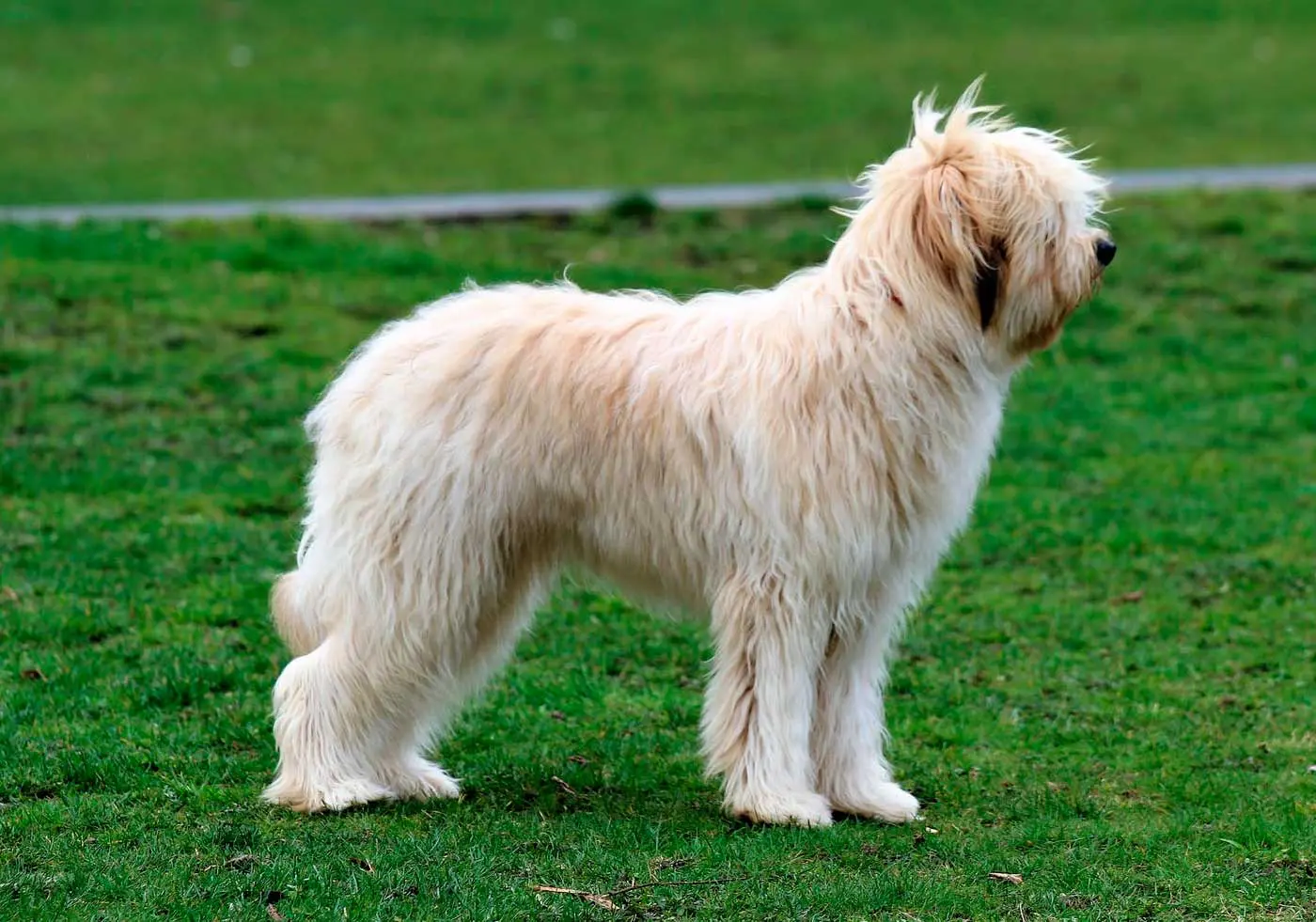
    The South Russian Ovcharka it is a medium to large size dog, medium-bodied, not robust, with strong bones and dry, powerful muscles. Sexual dimorphism is well defined, males are more bulky compared to females and have larger heads. The top line is a characteristic feature of the breed; forms a slight curve over the spine. The body, the head, the limbs and tail are covered in thick fur, long and disheveled that gives a deceptive impression of clumsiness and heaviness, but actually the South Russian Ovcharka he is a fast and agile dog. The eyes, slightly almond-shaped, must be dark and horizontally arranged. The ears are relatively small, triangular and hanging.

    • Fur: the cloak is made up of long hair (10-15 cm.), often dense and slightly wavy, hard with abundant undercoat.
    • Color: uniform white allowed, White grey (Ash), white with gray traces, stained gray; fawn white robes are rarer, straw and completely gray.
    • Size: males, minimal 65 cm.; females, minimal 62 cm.. Individuals of 75 cm or more.

    Observations and tips

    Puppies are sometimes born light gray in color and turn white with the first shedding.

    Character and skills

    It is a dog that reacts fast, is strong, balanced and lively, with a tendency to be dominant and very active in defense. Very smart and responsive, is very balanced but easily takes action if your family's safety is threatened. It is very good with the owners, children included.

    Images "South Russian Ovcharka"

    Videos "South Russian Ovcharka"

    Type and recognitions:

    • FCI CLASSIFICATION:
    • Group :
    • Section : . .

    Federations:

    • – FCI – Group 1 Herding dogs, Section 1 Sheepdogs ⓘ
    • – UKC – Herding dogs ⓘ

    FCI breed standard South Russian Ovcharka

    FCIFCI - South Russian Ovcharka
    Pastor

    Alternative names:

    1. Yuzhnorússkaya Ovcharka, Ukrainian Ovcharka, Ukrainian Shepherd Dog, Yuzhak, South Ukrainian Ovcharka, South Russian Shepherd Dog, South Russian Sheepdog (English).
    2. berger de l’Ukraine (French).
    3. Juschnorusskaja Owtscharka, Südrussischer Schäferhund, Ioujnorousskaïa Ovtcharka (German).
    4. pastor-da-ucrânia (Portuguese).
    5. Pastor Ucraniano, Pastor del sur de Rusia (español).

    Photos:

    1 – South Russian Shepherd by https://www.pexels.com/es-es/foto/perro-2042862/
    2 – South Russian Ovcharka during dog’s show in Racibórz, Poland by user:chained / CC BY-SA
    3 – South Russian Ovcharka during dog’s show in Racibórz, Poland by user:chained / CC BY-SA
    4 – South Russian Ovcharka during dog’s show in Racibórz, Poland by user:chained / CC BY-SA
    5 – Wikimania Images by Sailesh by Sailesh Patnaik / CC BY-SA

    ▷ The world of Pets: Dogs, cats, birds, reptiles, amphibians

    Slovak Cuvac
    Eslovaquia FCI 142 - Sheepdogs.

    Slovak Cuvac

    The Slovak Cuvac it's a good watchdog, faithful and very brave, always ready to fight intruders, even if it's bears or wolves.

    Content

    History

    The white mountain dog breed group is derived from arctic-type wolves, whose survivors remained from the pre-glacial era in the mountainous areas of Europe, to where they reached the freezing limits. These areas are the mountainous slopes of the North Caucasus, the balkans, especially the Rodope mountains, the Carpathians, especially the Tatra, the slopes to the north of Abruzzo and finally the Pyrenees. In these cold and humid regions the mountain dog was introduced, also accompanied by an ancient flora and fauna which were still discovered by the Swedish researcher Wahlenberg in Scandinavia.. We can find a similar relationship with Nordic pets, for example, in Tatra regions in the Carpathians where the Huzul horse has as its predecessor the Gudbrandstal horse; in the same way, the Slovak Cuvac has an analogy with pomeranian sheepdog. Slovak alpine cowboy activity has a very old tradition.

    The Slovak Cuvac along with the mountain sheep, the Huzul horse and the typical mountain inhabitants constitute the basic economic conditions to take advantage of the pastures for cattle raising. The Slovakian mountains belonged mostly to the free people who were not subjected to the serfdom of the Middle Ages; the people protected the borders of the country and their task was only to make sheep cheese. His institution was called the ″Wallach Alliance″ (Vallasky belt), based in Kaschau until the abolition of easements. The members of this military and pastoral group carried out their services in the rangelands, always accompanied by the typical surveillance dog. Tatra that also appear in many images. The Slovak Cuvac has shown his skills as a good caregiver, guardian and companion, as well as guide the flocks of sheep, to the care of the cattle and also in the pastures of turkeys and other domestic animals, as well as in the guard of various objects. Also the clients of the thermal stations who visited the alpine cowboys and who came to buy cheeses and other products, they looked with pleasure at these puppies covered in dense hair and bought them, taking this breed to lower places where it was often considered a luxury breed for its unique appearance.

    In the Polish Tatra region, where there is a similar breed of mountain dog called goral dog, exceptionally strong specimens were commonly called "Liptauer", indicating its Slovak origin. In this way, It is also limited from the topographical point of view the region of the breeding of the Slovak Cuvac white. The genealogical record of the Slovak Cuvac was started in Czechoslovakia more than 30 years by Professor Anton Hruza of the Brünn Veterinary School. The initial material came from the Liptovska Luzna region, kokava, Vychodna from Tatrach and the surrounding area of ​​Rachovo in the Carpathians. The first hatchery was named ″Ze zlaté studny″ (from the golden well) and it was founded in Svitavy u Brna.

    Breeding in the Carpathians was called ″z Hoverly″ (the Hoverla). Since then, the Breeders Club of Slovak Cuvac is based in Bratislava where exact registrations are made and exhibitions are organized, judgments and competitions that extend to the whole country. Other original bloodlines come from the Liptovské Hole regions, Velky Choc, buried, Martin, Jedlova and Jeseniky. The lines that have spread further are Topas, career, Simba, Hrdos, Ibro, Cuvo, Ass, Dinar, Samko, Bojar, Olaf and others. Genetically the Slovak Cuvac can be characterized as a leuzistic mountain dog with a black muzzle, and to a lesser extent as a flavistico white dog with brown snout and lighter eyes. From the combination of the mentioned genetic types, in which the first is dominant, some variations in color tonality originate, pigmentation of the eyes, of the eyelids, of the muzzle, lips and mucosa. By means of a strict selection in the direction of the first type, judges and breeders achieved the rate required for the current standard and its stabilization within the hatchery area. The number of club members with bred and kennel dogs has reached as many as 200 in the last times. Since then, we have 800 live and registered dogs throughout the Republic. The quality of our upbringing of Slovak Cuvac it reflects, among other things, in the favorable judgment made in international exhibitions (Prague, Brno, Liberec, Bratislava, Leipzig among others) with intense foreign competition.

    Physical characteristics

    Shows the typical solid and stocky appearance of mountain dogs. The bone is solid, the lively and vigilant temperament, fearless and attentive. The eyes are dark brown and oval. Ears are high and very mobile, of moderate length, hanging and almost attached to the head. The tail has a low implant and at rest descends to the hock. When the dog moves, he wears it curled on his back.

    • Fur: except for the head and limbs, where is shorter, the mantle constitutes a dense continuous covering without tufts in the tail and the haunches. The Mache have a marked mane. The subpelo, fine thick, it is completely covered by the hair and is less dense in summer.
    • Color: white. A yellowish blur at the end of the ears is supported but not desirable.
    • Size: males, of 62 to 70 cm.; females, of 59 to 65 cm..

    Observations and tips

    According to the tradition, only white individuals are selected to distinguish them at night from wild animals.

    Character and skills

    He is extremely faithful and brave and is always ready to face any harmful animal, even wolves and bears. In order to differentiate it during the night from the wild beasts of the field, it is only bred in white color, this being an ancient tradition.

    He is very affectionate with his owner.

    Characteristics "Slovak Cuvac"

    Coexistence is important that you have with your new friend. Before considering the acquisition of a dog of the breed "Slovak Cuvac" you know certain factors. Not all breeds of dogs are apt to live in an apartment, you must take into account his character, their need for exercise, their interaction with other pets, their care and if you have small children, their level of tolerance towards them.

    Adaptation ⓘ

    4,0 of 5 stars (based on 1 review)

    friendly dog ​​ⓘ

    4,0 of 5 stars (based on 1 review)

    hair loss ⓘ

    3,0 of 5 stars (based on 1 review)

    Affection level ⓘ

    4,0 of 5 stars (based on 1 review)

    Need for exercise ⓘ

    4,0 of 5 stars (based on 1 review)

    Social need ⓘ

    5,0 of 5 stars (based on 1 review)

    Home ⓘ

    3,0 of 5 stars (based on 1 review)

    Toilet ⓘ

    2,0 of 5 stars (based on 1 review)

    Friendly with strangers ⓘ

    3,0 of 5 stars (based on 1 review)

    barking ⓘ

    2,0 of 5 stars (based on 1 review)

    Health ⓘ

    4,0 of 5 stars (based on 1 review)

    Territorial ⓘ

    5,0 of 5 stars (based on 1 review)

    Cat friendly ⓘ

    3,0 of 5 stars (based on 1 review)

    Intelligence ⓘ

    4,0 of 5 stars (based on 1 review)

    Versatility ⓘ

    4,0 of 5 stars (based on 1 review)

    Child friendly ⓘ

    4,0 of 5 stars (based on 1 review)

    Surveillance ⓘ

    4,0 of 5 stars (based on 1 review)

    joy ⓘ

    2,0 of 5 stars (based on 1 review)

    Images "Slovak Cuvac"

    Videos "Slovak Cuvac"

    Type and recognitions:

    • FCI CLASSIFICATION:
    • Group :
    • Section : . .

    Federations:

    • – FCI – Group 1 Herding dogs, Section 1 Sheepdogs ⓘ
    • – AKC – PASTORAGE ⓘ
    • – UKC – Herding dogs ⓘ

    FCI breed standard Slovak Cuvac

    FCIFCI - Slovak Cuvac
    Chuvatch

    Alternative names:

    1. Slovak Cuvac, Slovak Chuvach, Tatransky Cuvac, Slovak tschuvatsch (English).
    2. Slovenský čuvač, cuvac (French).
    3. Slovenský Cuvac (German).
    4. Cuvac (Portuguese).
    5. Cuvac eslovaco (español).

    Source:

    1 – fci

    Photos:

    1 – Cuvac eslovaco by https://pxhere.com/es/photo/1323780
    2 – Cuvac eslovaco by https://pxhere.com/es/photo/1323780
    3 – Cuvac eslovaco by https://pxhere.com/es/photo/1424979
    4 – Cuvac eslovaco by https://pxhere.com/en/photo/898976
    5 – Cuvac eslovaco by https://pxhere.com/es/photo/1233682

    ▷ The world of Pets: Dogs, cats, birds, reptiles, amphibians

    Schapendoes
    Holanda FCI 313 - Sheepdogs.

    Schapendoes

    The Schapendoes It is also used as a companion dog, but little known outside the Netherlands.

    Content

    History

    At the end of the last century and the beginning of the present, appeared the Dutch schapendoes in most places in the Netherlands where there were moors and flocks of sheep. The shepherds esteemed him for his tireless spirit of work and for his intelligence.. It belongs to the versatile group of long-haired herding dogs that have a densely covered head. It is related to the Bearded collie, the Puli, the Polish Lowland Sheepdog, the Bobtail, the Berger de Brie, the Bergamasco and the German sheep pudding in the variety presented in Hessen, Odenwald and the lower Rhine regions. All these dogs similar to each other, are small mutations of mountain dogs.

    The Schapendoes It was not recognized as a distinct breed until World War I and was close to extinction in the 1990s. 1940 due to the competition of the Border Collies imported. In 1947 a breed club was formed, el Dutch Schapendoes.

    The race began its march towards a formal identity in 1954, when a breed standard and breeding book were established. But, it was not until 1971 that the Schapendoes gained full recognition as a Dutch race. The FCI (Federation Cynologique Internationale) recognized the breed in 1989.

    Recognized by the United Kennel Club in 2006, the Schapendoes has been registered with the Foundation Stock Service of the American Kennel Club since 2005, but it doesn't have full recognition.

    Physical characteristics

    It is a long-haired and light-built dog. The eyes are quite big, rounded and brown, the expression must be frank, loyal and alive. The ears are inserted quite high, they are not thick or fleshy and hang freely by the head, the tail is long and covered with streaked hair, at rest hangs vertically, at a trot he carries it very high and curved, waving sensibly to the right and left; at gallop it remains straight and horizontal.

    Its movements are elastic and agile; he is an exceptional jumper.

    • Fur: the cloak is very dense, with abundant subpelo. The hair is long and more than 7 cm.. in the hind limbs. It should not be completely smooth, but slightly wavy.
    • Color: all colors are allowed; preferably bluish gray with a tendency to black.
    • Size: males, of 43 to 50 cm.; females, of 40 to 47 cm..

    Character and skills

    The typical Schapendoes friendly and adaptable it is generally easy to get along with, as long as you get plenty of exercise and play. Although he is an independent thinker, is usually cooperative and wants to please. He tends to enjoy being with his people, so hope it stays close to you, inside or outside.

    The Schapendoes works the sheep by elbowing their nose and shoulders, and you can try to do this with people too, especially with the children. Do not allow. On the positive side, He is generally a playful and energetic friend for children who are old enough to throw a ball for him, run with him and teach him tricks.

    This is typically an intelligent breed that is quick to learn.. But it is important to be clear with the rules or he will try to avoid them if you are not consistent.

    Its generally alert nature can make this breed a good watchdog.. Although grazing breeds have a tendency to be vocal, the Schapendoes not usually a great barker. But, can become an annoying barker if left to himself and bored.

    Like most herding dogs, the Schapendoes requires a lot of socializing to make sure you don't get too cautious or suspicious. Socialize puppies at a young age with many people, different environments and circumstances so they can learn to adapt.

    Start training a Schapendoes the day you bring it home or, before you know it, he will train him. (If these dogs were lawyers, they would know all the legal loopholes.) It is capable of absorbing everything you can teach it. Don't wait until you have 6 months to start training or you will have a more stubborn dog in your hands.

    If possible, take it to a trainer when you have 10 to 12 weeks and socialize, socialice, socialice. But, Note that many kinds of training puppies require certain vaccinations (such as kennel cough) stay up to date, and many vets recommend limited exposure to other dogs and public places until puppy vaccinations (including rabies, distemper and parvovirus) They are completed. Instead of formal training, You can start training your puppy to socialize at home and among family and friends until immunizations are completed in the puppy.

    Talk to the breeder, Describe exactly what you want in a dog and ask for help choosing a puppy. Breeders see their puppies daily and can make incredibly accurate recommendations once they know something about their lifestyle and personality..

    The puppy Schapendoes Perfect not fully formed out of the whelping box. It is a product of his background and upbringing. Look for a puppy whose parents have good personalities and who has been well socialized from an early age.

    Schapendoes Health

    The Schapendoes is a generally healthy breed with a life expectancy of 12 to 15 years. All dogs have the potential to develop genetic health problems., just as all people have the potential to inherit a particular disease. Run, do not walk, from any breeder who does not offer a health guarantee for their puppies, that affirms that the race is 100 percent healthy and have no known problems or that your puppies are isolated from the main part of the home for health reasons. A reputable breeder will be honest and open about the breed's health problems and the incidence with which they occur in their lines..

    The Schapendoes they are generally healthy, but there is some incidence of progressive retinal atrophy (ARP), an eye disease that can cause blindness. Responsible breeders do DNA testing of their dogs for PRA and have them examined by a certified ophthalmologist before breeding.. They also examine their dogs for hip dysplasia.

    If a breeder tells you they don't need to do such testing because they have never had any problems in their lines or their dogs have been vet checked or give any other excuse for skimping on genetic testing of dogs, leave immediately.

    Careful breeders screen their breeding dogs for genetic diseases and breed only the healthiest and best looking dogs, but sometimes Mother Nature has other ideas and a puppy develops one of these diseases despite good husbandry practices. Advances in veterinary medicine mean that in many cases dogs can still live a good life. If you are going to have a puppy, ask the breeder about the ages of the dogs in their lines and the typical causes of death.

    Remember that after you have welcomed a new puppy into your home, has the power to protect you from one of the most common canine health problems: the obesity. Keep a Schapendoes being the right weight is one of the easiest ways to promote better overall health.

    Schapendoes grooming

    The Schapendoes has a dense double coat with fine fur that is slightly wavy. In its longest part, in the hindquarters, the hair is about 7 cm long. The head and face of the breed are characterized by a pompadour, a mustache and beard.

    Considering how much hair you have, the Schapendoes is quite easy to style, does not require any trimming or trimming. It is normal for it to look a bit messy.

    Even so, it is better to check it a few times a week so that it does not get tangled and brush it accordingly. To help prevent tangles, puppies may need to be groomed two to three times a week as their adult coat appears. Bathe the dog as needed.

    You will not find the coat of your Schapendoes or the hair on your hand after stroking it, because the breed normally loses very little.

    The rest is basic care. Trim nails every three to four weeks or as needed. brush your teeth often – with a vet-approved pet toothpaste – for good general health and fresh breath.

    Characteristics "Schapendoes"

    Coexistence is important that you have with your new friend. Before considering the acquisition of a dog of the breed "Schapendoes" you know certain factors. Not all breeds of dogs are apt to live in an apartment, you must take into account his character, their need for exercise, their interaction with other pets, their care and if you have small children, their level of tolerance towards them.

    Adaptation ⓘ

    5,0 of 5 stars (based on 1 review)

    friendly dog ​​ⓘ

    4,0 of 5 stars (based on 1 review)

    hair loss ⓘ

    2,0 of 5 stars (based on 1 review)

    Affection level ⓘ

    5,0 of 5 stars (based on 1 review)

    Need for exercise ⓘ

    4,0 of 5 stars (based on 1 review)

    Social need ⓘ

    4,0 of 5 stars (based on 1 review)

    Home ⓘ

    3,0 of 5 stars (based on 1 review)

    Toilet ⓘ

    3,0 of 5 stars (based on 1 review)

    Friendly with strangers ⓘ

    2,0 of 5 stars (based on 1 review)

    barking ⓘ

    3,0 of 5 stars (based on 1 review)

    Health ⓘ

    3,0 of 5 stars (based on 1 review)

    Territorial ⓘ

    4,0 of 5 stars (based on 1 review)

    Cat friendly ⓘ

    3,0 of 5 stars (based on 1 review)

    Intelligence ⓘ

    5,0 of 5 stars (based on 1 review)

    Versatility ⓘ

    5,0 of 5 stars (based on 1 review)

    Child friendly ⓘ

    4,0 of 5 stars (based on 1 review)

    Surveillance ⓘ

    4,0 of 5 stars (based on 1 review)

    joy ⓘ

    5,0 of 5 stars (based on 1 review)

    Images "Schapendoes"

    Videos "Schapendoes"

    Type and recognitions:

    • FCI CLASSIFICATION:
    • Group :
    • Section : . .

    Federations:

    • – FCI – Group 1 Herding dogs, Section 1 Sheepdogs ⓘ
    • – AKC – PASTORAGE ⓘ
    • – CKC – Group 7 – Herding dogs ⓘ
    • – UKC – Herding dogs ⓘ

    FCI breed standard Schapendoes

    FCIFCI - Schapendoes
    Schapendoes

    Alternative names:

    1. Dutch Schapendoes, Nederlandse Schapendoes (English).
    2. Nederlandse Schapendoes (French).
    3. Niederländischer Schapendoes (German).
    4. skapendus (Portuguese).
    5. Nederlandse Schapendoes (español).

    Photos:

    1- Schapendoes by Wikipedia
    2 – Schapendoes by https://pxhere.com/es/photo/1414360
    3 – Schapendoes by Svenska Mässan from Sweden / CC BY
    4 – Schapendoes by publicdomainpictures

    ▷ The world of Pets: Dogs, cats, birds, reptiles, amphibians

    Saarloos wolfdog
    Holanda FCI 311 - Sheepdogs.

    Saarloos wolfdog

    The Dutch Society of Saarloos wolfdog, is the only organism that can supply the puppies.

    Content

    History

    The Sr. Leendert Saarloos (1884-1969) loved nature and also dogs. He realized that the dogs had become too humanized and he intended to, as a lover of the German Shepherd, of recovering the natural qualities of this breed to produce a better working dog. For this reason he crossed a male German Shepherd, Gerard van der Fransenum, a dog of the classic Prussian style, with Flowers, a female wolf that originated from the Siberian branch of the European type (1932). Breeding based on the father gave him a basic population of animals with a quarter of wolf blood. During the course of the next experimental phase with strict selection, a new race, the ″European Wolfdog″ had evolved. Selected animals of this breed provided good service as guide dogs., and at first they were believed to be adequate for this task.

    Due to the increase in the proportion of wolf blood, usable skill, inherited from the original predecessor, Gerard, it was gradually lost and it became obvious that the breed was not suitable for use as a working or guide dog. Leendert Saarloos Legacy, not a working dog, but a dog with attributes more attached to nature, was recognized as a breed in 1975. at that time, the breed was named ″Saarloos wolfdog″ in honor of its founder: Honor for whom honor deserves.

    Physical characteristics

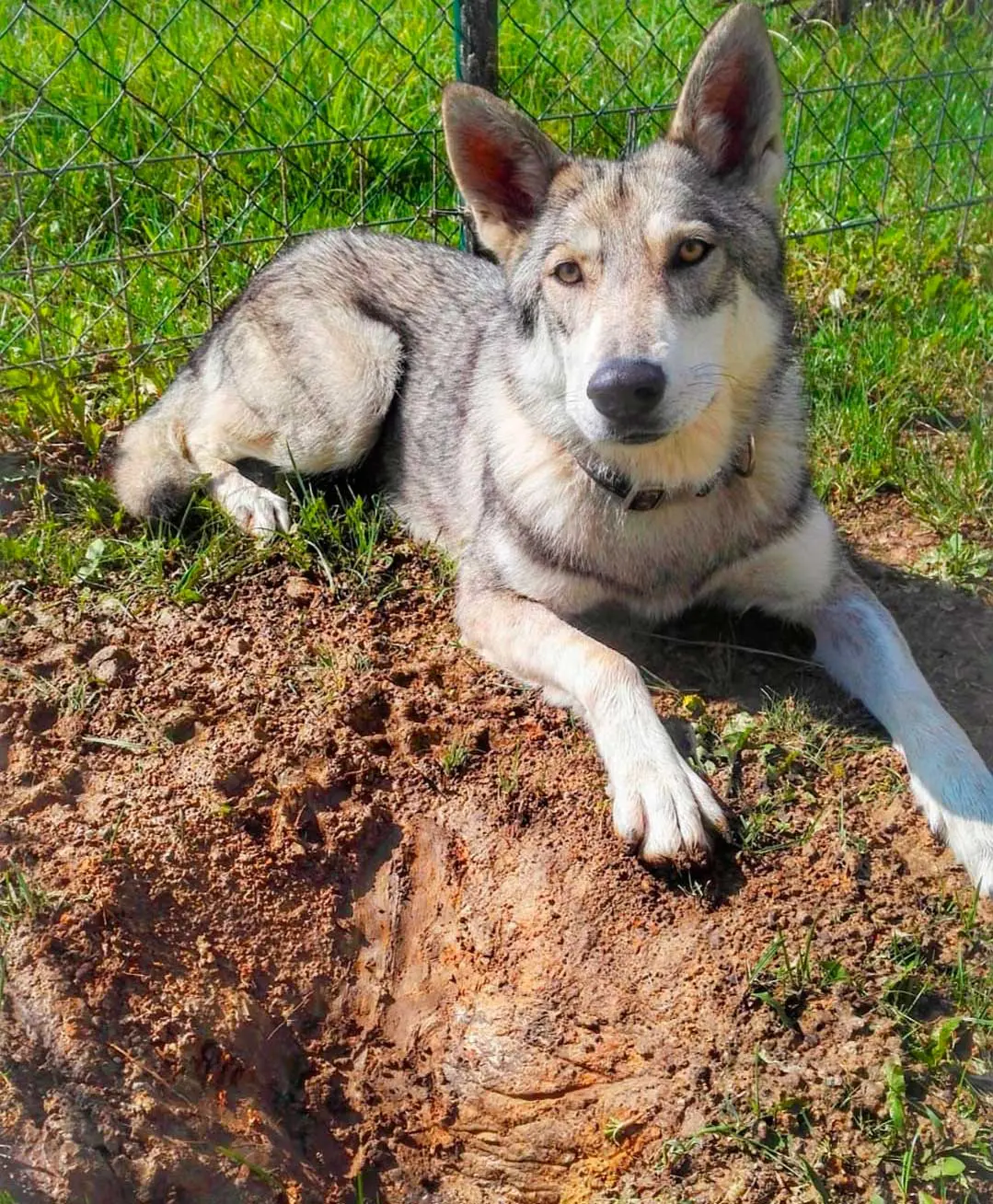
    It is a dog type lupoid with powerful but light skeleton, with long limbs. The eyes, medium-sized, macaroons, are slightly oblique and preferably yellow in color. The expression is attentive and reserved time, but without a trace of fear. The ears, medium-sized, they have a fairly wide insertion and are pointed, fleshy and hairy. The tail is implanted quite low and at rest it takes the form of a saber, not too mobile. Can carry it high when active or intimidating.

    Differences in secondary sex characteristics are pronounced between males and females.

    • Fur: hard and straight.
    • Color: from black with light blends to dark black (gray wolf), from brown with light blends to dark brown and from very light cream to white.
    • Size: males, of 65 to 75 cm.; females of 60 to 70 cm..

    Character and skills

    Strongly hierarchical, He is very attached to his owner and is wary of strangers.. It is a dog to enjoy and study (better as a couple or in a group) especially for fans of ethology, but it is not recommended to use it for guard and defense, because he tends to run away from man. Your reservation and your way of avoiding unknown situations, just like a wolf, are typical features of Saarloos wolfdog.

    Images "Saarloos wolfdog"

    Videos "Saarloos wolfdog"

    Type and recognitions:

    • FCI CLASSIFICATION:
    • Group :
    • Section : . .

    Federations:

    • – FCI – Group 1 Herding dogs, Section 1 Sheepdogs ⓘ
    • – UKC – Herding dogs ⓘ

    FCI breed standard Saarloos wolfdog

    FCIFCI - Saarloos wolfdog
    Dog

    Alternative names:

    1. Saarloos wolfhond (English).
    2. Saarloos (French).
    3. Saarlooswolfhond (German).
    4. Saarlooswolfhond (Portuguese).
    5. Perro lobo Holandés (español).

    Photos:

    1 – Saarloos wolfdog from the Czech region by @Hippie_Saarloos / CC BY-SA
    2 – Saarloos by Wolfdog by https://pxhere.com/es/photo/1389361
    3 – Saarloos Wolfhond – Merlin v.d. Schattenwaldwoelfen by Boot Juliaan / CC BY-SA
    4 – Saarloos Wolfhound by Corinne Benavides
    5 – Saarloos Wolfhound by https://pxhere.com/es/photo/1127277

    ▷ The world of Pets: Dogs, cats, birds, reptiles, amphibians

    Dutch Shepherd
    Holanda FCI 223 - Sheepdogs.

    Dutch Shepherd

    The most widespread variety of Dutch Shepherd she is the one with long hair, but the breed is almost unknown outside the Dutch borders.

    Content

    History

    The Dutch shepherd descends directly from the belgian shepherds, who looks a lot like (including subdivision into three hair varieties).

    Originally the main function of the Dutch shepherd It was typical of a country shepherd dog. From the earliest times the Dutch had an agricultural culture, among others, made up of flocks of sheep. The dogs had to keep the flock away from the sowing, which they did patrolling the borders of the road and the fields. They also accompanied the transfer of the herd to the common meadows, markets and ports. In the farm, they kept the chickens out of the kitchen yard, cows were herded for milking and the milk cart was pulled. They also alerted farmers if anyone entered. About 1900, the herds had almost disappeared in the Netherlands. The Dutch Shepherd's versatility made him suitable for training, which at that time was beginning to become popular. Thus began a new career as a police dog., search and rescue and as a guide dog for the blind. In any case, he is still capable of herding herds.. The first breed standard dates from 12 in June of 1898.

    Physical characteristics

    It is a dog of medium size and weight, quite muscular, Powerfully built and well proportioned. His expression is intelligent and temperament, live. The eyes are dark in color, medium-sized, macaroons, somewhat oblique and never round. The ears, smaller than big, they are straight and facing the front, and inserted high. The tail, that at rest hangs straight or forms a slight curve, reaches the tip of the hock. When it is active, the dog is elegantly elevated, never coiled; never falls on the sides.

    • Fur: the short-haired variety has a well attached coat; the long-haired one has straight hair, and the variety of hard hair has it thick and hard; on the head it forms prominent eyebrows, mustaches and beard. Depending on the cloak, in the breed there are three varieties: shorthair, long and hard.
    • Color: striated but the least intensely, on brown background (golden fluted) or gray (fluted gray). The stripes are less evident in hard-haired specimens. Black mask is preferable.
    • Size: males, of 57 to 62 cm.; females, of 55 to 60 cm..

    Character and skills

    Affectionate, obedient, docile, vigilant, trustworthy, undemanding and very resistant. Always watch out, active and endowed with the true nature of a shepherd dog. It is a little less reactive and less nervous than Belgian Shepherd, the one who looks like, However, even in character.

    The Dutch Shepherd works willingly with his master and is able to cope with any task assigned to him.
    Herding larger herds must have the ability to work in conjunction with various other dogs..

    Characteristics "Dutch Shepherd"

    Coexistence is important that you have with your new friend. Before considering the acquisition of a dog of the breed "Dutch Shepherd" you know certain factors. Not all breeds of dogs are apt to live in an apartment, you must take into account his character, their need for exercise, their interaction with other pets, their care and if you have small children, their level of tolerance towards them.

    Adaptation ⓘ

    4,0 of 5 stars (based on 1 review)

    friendly dog ​​ⓘ

    3,0 of 5 stars (based on 1 review)

    hair loss ⓘ

    3,0 of 5 stars (based on 1 review)

    Affection level ⓘ

    4,0 of 5 stars (based on 1 review)

    Need for exercise ⓘ

    5,0 of 5 stars (based on 1 review)

    Social need ⓘ

    3,0 of 5 stars (based on 1 review)

    Home ⓘ

    3,0 of 5 stars (based on 1 review)

    Toilet ⓘ

    3,0 of 5 stars (based on 1 review)

    Friendly with strangers ⓘ

    4,0 of 5 stars (based on 1 review)

    barking ⓘ

    2,0 of 5 stars (based on 1 review)

    Health ⓘ

    4,0 of 5 stars (based on 1 review)

    Territorial ⓘ

    5,0 of 5 stars (based on 1 review)

    Cat friendly ⓘ

    3,0 of 5 stars (based on 1 review)

    Intelligence ⓘ

    5,0 of 5 stars (based on 1 review)

    Versatility ⓘ

    4,0 of 5 stars (based on 1 review)

    Child friendly ⓘ

    4,0 of 5 stars (based on 1 review)

    Surveillance ⓘ

    4,0 of 5 stars (based on 1 review)

    joy ⓘ

    4,0 of 5 stars (based on 1 review)

    Images "Dutch Shepherd"

    Videos "Dutch Shepherd"

    Type and recognitions:

    • FCI CLASSIFICATION:
    • Group :
    • Section : . .

    Federations:

    • – FCI – Group 1 Herding dogs, Section 1 Sheepdogs ⓘ
    • – AKC – PASTORAGE ⓘ
    • – ANKC – Group 5 (working dogs) ⓘ
    • – ​KC – Pastoral ⓘ
    • – NZKC – Working dog ⓘ
    • – UKC – Herding dogs ⓘ

    FCI breed standard Dutch Shepherd

    FCIFCI - Dutch Shepherd
    Pastor

    Alternative names:

    1. Dutch Herder, Hollandse Herder (English).
    2. Berger hollandais (French).
    3. Holländischer Schäferhund (German).
    4. Pastor holandês (Portuguese).
    5. Perro de pastor holandés (español).

    Photos:

    1 – Short-haired Dutch Shepherd stacked by CaroleField / CC BY-SA
    2 – Silverbrindle and goldbrindle are the approved colors of the breed by Lissunmusta / CC BY-SA
    3 – Short-haired brindle male Dutch Shepherd named Black, 2 years old, owned by Jason Paluck by Wikipedia
    4 – Adult brindle Dutch shepherd by https://www.pikrepo.com/fyvdb/adult-brindle-dutch-shepherd
    5 – dutch shepherd by https://www.peakpx.com/504961/dutch-shepherd
    6 – Dutch shepherd by https://pxhere.com/en/photo/1387398
    7 – Neros van Guard is a Dutch Shepherd imported from Canada to the USA by Ulyseemuff / CC BY-SA

    ▷ The world of Pets: Dogs, cats, birds, reptiles, amphibians

    Puli
    Hungría FCI 55 - Sheepdogs

    Puli

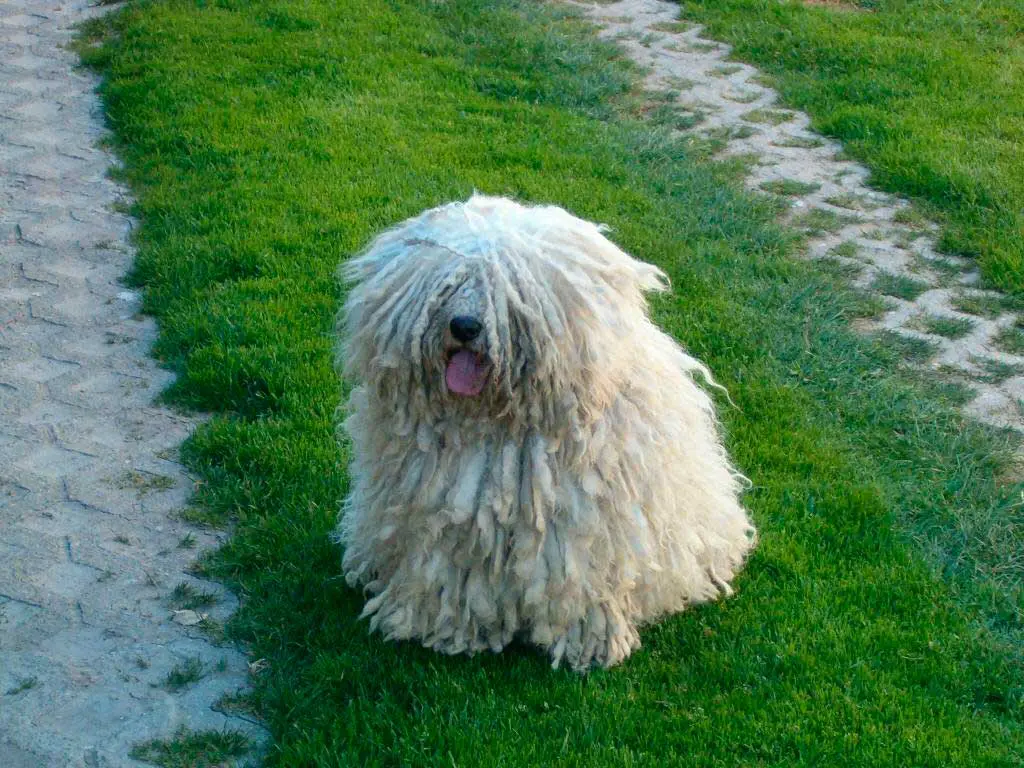
    With its black lace cape, gray or white, the Puli, a herding breed of sheep originating from Hungary

    Content

    Adaptation ⓘ

    3,0 of 5 stars (based on 1 review)

    friendly dog ​​ⓘ

    3,0 of 5 stars (based on 1 review)

    hair loss ⓘ

    3,0 of 5 stars (based on 1 review)

    Affection level ⓘ

    4,0 of 5 stars (based on 1 review)

    Need for exercise ⓘ

    4,0 of 5 stars (based on 1 review)

    Social need ⓘ

    3,0 of 5 stars (based on 1 review)

    Home ⓘ

    4,0 of 5 stars (based on 1 review)

    Toilet ⓘ

    5,0 of 5 stars (based on 1 review)

    Friendly with strangers ⓘ

    2,0 of 5 stars (based on 1 review)

    barking ⓘ

    4,0 of 5 stars (based on 1 review)

    Health ⓘ

    3,0 of 5 stars (based on 1 review)

    Territorial ⓘ

    5,0 of 5 stars (based on 1 review)

    Cat friendly ⓘ

    3,0 of 5 stars (based on 1 review)

    Intelligence ⓘ

    5,0 of 5 stars (based on 1 review)

    Versatility ⓘ

    3,0 of 5 stars (based on 1 review)

    Child friendly ⓘ

    4,0 of 5 stars (based on 1 review)

    Surveillance ⓘ

    4,0 of 5 stars (based on 1 review)

    joy ⓘ

    5,0 of 5 stars (based on 1 review)

    History

    The Puli has been known in Hungary for at least 1.000 years. Dogs like the Puli were brought to Hungary by the Magyar invaders. Dogs look like Tibetan Terrier, and it is possible that this race is one of its ancestors.

    The type of work dogs did depended on their size and color. Light-colored dogs were most useful at night so they could be easily seen, while those of dark color worked during the day. Among the white flocks, were easier to see by the pastor.

    During the 17th century, the Puli almost lost as a breed due to crossbreeding with sheepdogs from France and Germany. In 1912, a program was started to revive the breed. In 1915 A breed standard was drafted and approved by the (FCI) International Cynological Federation in 1924. The dogs had made their first appearance at a Budapest dog show a year earlier and were divided into three classes.: of work, exposure and dwarf. In 1934 breed standard was revised and dogs were divided by height: large, medium and dwarf. An inscription of 1935 in the Hungarian herd book it notes four sizes: large (policeman), medium- (work), small and dwarf. Medium size was the most popular.

    Physical characteristics

    It's a solid dog, lean but muscular. The head is small and thin; front view looks round and in profile, elliptical. The skull is rounded; the nasal canal straight and shorter than the skull, with the stop well marked. The eyes are brown; the gaze is attentive and lively.

    has droopy ears; V-shaped. The body gives an impression of great solidity: the height at the withers is somewhat greater than the length of the trunk.

    The limbs are straight and muscular. The size of the tail is curved and on the kidneys.

    Observations and tips:

    Puli's hair is not easy to keep clean. You must avoid getting dirty because you cannot brush or wash.

    • Fur: it is so dense that it makes it difficult to examine the different parts of the body. The head appears round due to the hair that falls over the eyes, that hides them. The coat is made of thick textured hair and a fine undercoat: the right proportion between thick and fine hair determines the “narrow” felting, what is the desired. If there is too much thick hair, the coat is thin. On the other hand, if there is too much fine hair, the cloak will be too pressed. The stringy cloak is made up of uniform hairs that form wavy highlights. Curls are less prone to felting and form long strings. The hair is long on the rump, kidneys and thighs (of 8 to 18 cm.), so that in certain cases, while the dog is standing, hair almost touches the ground. On the other hand, it is moderately short on the head and on the feet.
    • Color: depending on the variety, black, black with reddish highlights, different shades of gray, and white.
    • Size: males, of 40 to 44 cm.; females, of 7 to 41 cm..

    Character and skills

    Dreadlocks usually attract the attention of those unfamiliar with the Puli. But for those who know him and love him, it is his personality that shines.

    The Puli is an affectionate and loving dog that enjoys being with his family. It is intelligent, agile and has a strong work ethic. He is wary of strangers and takes care of his family, but should not be too shy or aggressive.

    Like most herding breeds, the Puli is independent and strong-willed. You need a nice hand, but firm, to achieve their best behavior. The Puli has a tendency to bark, another trait of grazing, so any training program must include a "Quiet" command.

    The Puli is a capable athlete, known for being able to climb a fence 180 cm.. Fenced yard and lots of supervision required.

    Training should begin immediately for the Puli puppy. Even at 8 weeks of age, is capable of learning good manners. Never wait until i have 6 months to start training, or you will have a more stubborn dog to handle. If possible, take it to a puppy trainer when you have 10 to 12 weeks of age, and socializes, socialice, socialice. But, Note that many kinds of training puppies require certain vaccinations (such as kennel cough) stay up to date, and many veterinarians recommend limited exposure to other dogs and public places until puppy vaccinations (including rabies, distemper and parvovirus) They are completed. Instead of formal training, You can start training your puppy to socialize at home and among family and friends until immunizations are completed in the puppy. You can also invite people to your home, to get used to receiving visitors. These experiences as a young dog will help you become a sensible and calm adult dog..

    Talk to a reputable and experienced Puli breeder. Describe exactly what you are looking for in a canine companion, and ask for help selecting a puppy. Breeders see puppies daily and can make incredibly accurate recommendations once they know something about their lifestyle and personality. Choose a puppy whose parents have pleasant personalities and who has been well socialized by the breeder since birth.

    Puli dog health

    The Puli are generally healthy, but the conditions that are sometimes seen in the breed include hip dysplasia, eye problems such as progressive retinal atrophy and deafness.

    Don't buy a puppy from a breeder who can't provide you with written documentation that the parents were cleared of health issues affecting the breed. Getting dogs "vet checked" is not a substitute for genetic health testing.

    Careful breeders screen their breeding dogs for genetic diseases and breed only the healthiest, best-looking specimens., but sometimes mother nature has other ideas and a puppy develops one of these diseases despite good husbandry practices. Advances in veterinary medicine mean that in most cases dogs can still live a good life. If you are going to have a puppy, ask the breeder about the ages of the dogs in their lines and what they died of.

    Remember that after you have welcomed a new puppy into your home, has the power to protect you from one of the most common health problems: the obesity. Keeping a Puli at the right weight is one of the easiest ways to extend his life.. Make the most of your preventive skills to help ensure a healthier dog for life.

    Puli dog grooming

    The Puli has a dense, weather resistant coat that can be wavy or curly but never silky. The undercoat is soft, woolly and dense. The hair clumps together easily and if left alone it will form shaggy cords as the dog matures, a partir de los 9 months of age. Depending on the coat texture and the amount of undercoat and outer coat, laces can be flat or round. It takes four to five years to fully grow and can reach the ground.

    The Puli coat can be brushed or left as a drawstring. If you plan to brush the coat instead of leaving it twine, start early and expect to brush every day or two.

    The coat doesn't fall off much, but the laces must be separated regularly to maintain their appearance, and they attract dirt and debris. The Puli's coat should never be dirty, tangled or foul-smelling. To avoid problems, ask the breeder to show you how to care for the coat. Trimming the hair around the mouth and cleaning the dog's face after meals is one way to help reduce odor.. Bathing and drying a Puli can take hours. Make sure it's dry to the skin, or it will smell musty. If you don't plan to display it, you can choose to keep your coat short for easy maintenance.

    The rest is basic care. Trim nails as needed and brush teeth frequently with a vet-approved pet toothpaste for overall good health and fresh breath. Check ears weekly for dirt, redness or odor that may indicate an infection. If the ears look dirty, clean them with a cotton swab moistened with a gentle, pH-balanced ear cleaner recommended by your veterinarian. Start brushing the Puli while you are young so that you get used to it and accept it willingly.

    Characteristics "Puli"

    Coexistence is important that you have with your new friend. Before considering the acquisition of a dog of the breed "Puli" you know certain factors. Not all breeds of dogs are apt to live in an apartment, you must take into account his character, their need for exercise, their interaction with other pets, their care and if you have small children, their level of tolerance towards them.

    Images "Puli"

    Videos "Puli"

    Type and recognitions:

    • FCI CLASSIFICATION:
    • Group :
    • Section : . .

    Federations:

    • – FCI – Group 1 Herding dogs, Section 1 Sheepdogs ⓘ
    • – AKC – PASTORAGE ⓘ
    • – ANKC – Group 5 (working dogs) ⓘ
    • – CKC – Group 7 – Herding dogs ⓘ
    • – ​KC – Pastoral ⓘ
    • – NZKC – Working dog ⓘ
    • – UKC – Herding dogs ⓘ

    FCI breed standard Puli

    FCIFCI - Puli
    Puli

    Alternative names:

    1. Hungarian Puli (English).
    2. Puli hongrois (French).
    3. Puli (German).
    4. Puli (Portuguese).
    5. Puli húngaro, Pulik (español).

    Photos:

    1 – Picture of a white Puli by http://www.rabakozi-nemes.hu / CC BY-SA
    2 – Pulik by No machine-readable author provided. Pleple2000 assumed (based on copyright claims). / CC BY-SA
    3 – Puli at the World Dog Show in Poznań by Wikipedia
    4 – White puli, sheared by age by Benutzer:Cryptodirum / Public domain
    5 – Puli would Haplochromis / CC BY-SA
    6 – Puli (Hungarian Shepherd), female, 2 years and a half by Wikipedia
    7 – Puli would https://pxhere.com/es/photo/1362559