โ–ท The world of Pets: Dogs, cats, birds, reptiles, amphibians

Sardinian Shepherd Dog
Italia Not recognized by the FCI

Dogo Sardo

Content

History

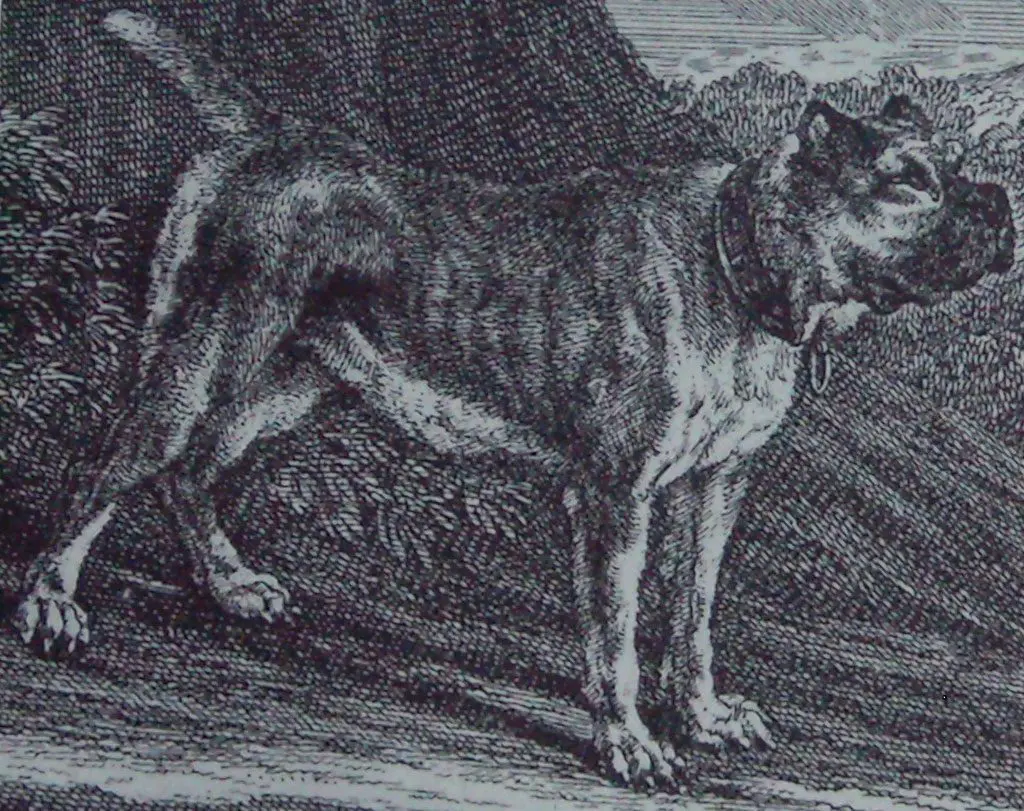
The Sardinian Shepherd Dog It is a breed of dog of Italian origin used as a watchdog of properties, livestock guardian dog, combat and working dog, in general.<>

It is a rare breed and quite unknown outside Italy, the Sardinian Shepherd Dog It was developed in the towns of Sardinia like a group dog Molossoid, mastiff type suitable for all types of work. From an aggressive guardian, an excellent pastor for the protection of livestock and a delicate and careful with their flocks farmer, up a fierce wrestler.

The race Sardinian Shepherd Dog is so valued by the people of Sardinia that -usually- they refuse to sell their puppies to foreigners.

The fact that the puppies are born and raised in Sardinia, has contributed to making it difficult to determine the heredity of the breed. It is almost certain that its descent is found in the same root as the rest of the ancient dogs with similar characteristics that existed in the Middle Ages., shared legacy with the Neapolitan mastiff, Cane Corso, Calabrese Bucciriscu and others.

The Sardinian Shepherd Dog rarely seen outside of his native region, and there are no written rules, nor standard that regulates its characteristics, because they are not recognized by the Federation Cynologique Internationale (FCI).

For more confusion the population of Sardinia, defends that there are two separate races of Sardinian Shepherd Dog, one would be Fonnese Pastore that it is a Long-haired shepherd dog, and the other the real one Sardinian Shepherd Dog What, locally, is known as Pertiatzu Cani and he has short hair, similar to the Cane Corso . This confusion comes from this name Fonnese Mastino has been erroneously used to name the Sardinian Shepherd Dog.

In reality the Fonnese Mastino (or Mastรญn Fonnese) is the smooth-coated variety of the breed Fonnese Pastore, that was born from the crossing of a Pastor Fonnese with a Sardinian Shepherd Dog.

Physical characteristics

Returning to our protagonistโ€ฆ The Sardinian Shepherd Dog he is a very muscular and athletic dog, a working dog, differs from the Cane Corso, in some characteristic facial features such as its long snout and skin that is closer to the body. Some Dogo Sardo that were bred in rural areas have quite lupoid characteristics (the longer snout than normal), but in those casesโ€ฆ its purity is questionable.

The body of the Sardinian Shepherd Dog he is thin and strong, with a powerful neck and extremities of the same characteristics. The ears are usually cropped, and in some cases they are almost completely eliminated, While the tail can be cut or not.

Although there is no standard on the Sardinian Shepherd Dog, Several experts agree that these dogs have an average altitude of 56 to 68 cm to the cross and a weight of 30 to 45 kg, but not this parameter can be set, is just orientative.

It has a huge head, with cheek muscles (that they are handed down), has a snout -slightly- shorter than the skull, teeth strong and bite in scissors.

His eyes are amber (in different shades). The layer of hair is short and very thick hair (comparable to that of the wild boar), even the coat tabby in one of its various shades resembles a wild boar, they are rarely white.
The appearance of the Dogo Sardo denotes elegance, power and wildness at the same time.

It tends to be very attached to the family (especially with the children), and distant with strangers and do not tolerate other males because of their dominant spirit. It is very good for the guard.

Character and skills

The Sardinian Shepherd Dog It, in fact, a faithful hound with an easy gait. Known for his intelligence and diligence, it is also a particularly dignified and aggressive dog, in fact you need a lot of physical activity.

Although he is used to living alone, is not violent towards other animals or people. He is very attached to his owner, whom he protects and blindly obeys. Has excellent instincts, so it can also be said that it is a defense and hunting dog.

โ–ท The world of Pets: Dogs, cats, birds, reptiles, amphibians

Bobtail
Gran Bretaรฑaa FCI 16 . Sheepdogs

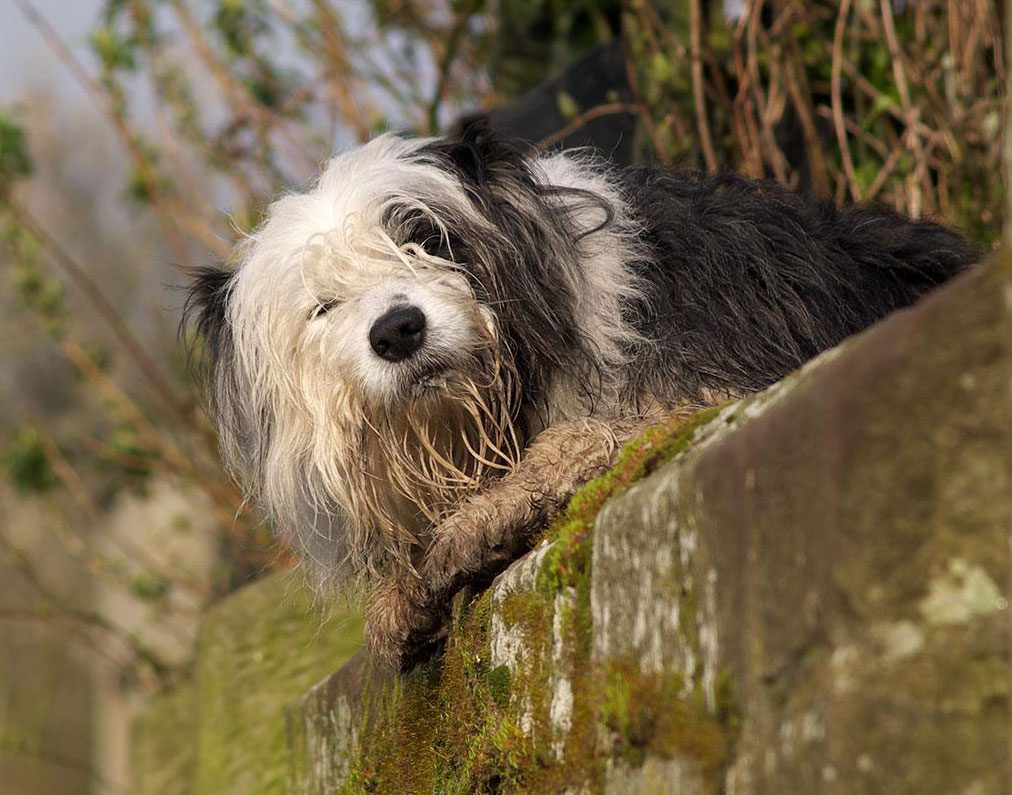
The Bobtail It is possibly the breed that needs the most care regarding its hair.

Bobtail

Bobtail (different from the English Shepherd dog breed), It is a breed of dog to family care or pastoral dogs.

The race was created in the West of England, in the middle of the s. 19TH, to control the sheep and beef cattle in the rural area.

Read all about the race by clicking on: Old English Sheepdog

  • Otros nombres: Old English Sheepdog / Bobtail / Berger anglais ancestral / Altenglischer Schรคferhund
  • Group 1 / Section 1 - Pastor dogs

โ–ท The world of Pets: Dogs, cats, birds, reptiles, amphibians

Berger de Brie
Francia FCI 113 - Sheepdogs

The Berger de Brie It is an excellent race to raise with children of all ages.

Briard

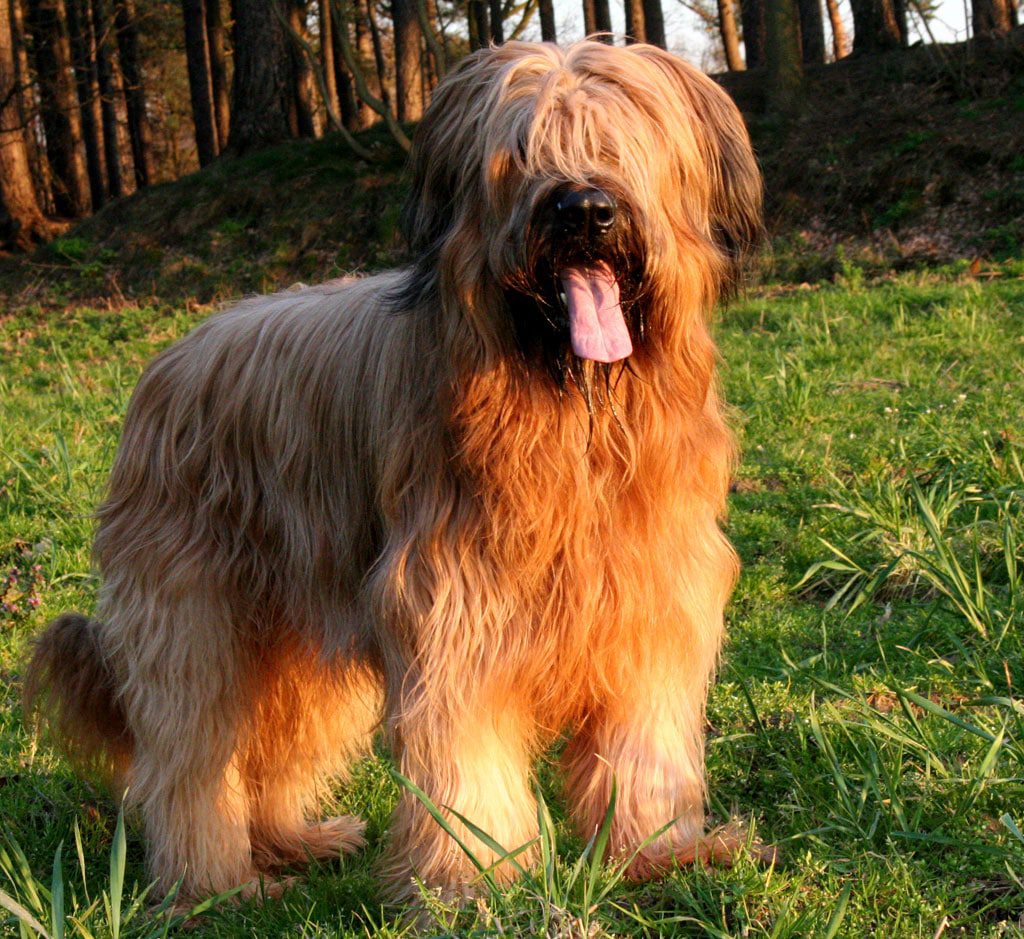
The Berger de Brie or Briard is a breed dog, one of the many existing breeds of dogs pastors. Its origin is French. The history of the Briard has already some centuries… Charlemagne, Napoleon, Thomas Jefferson and Lafayette, they all had a dog of this breed.

Some theories say that, the Briard is descended from Asian dogs brought to the region by the barbaric invasions that attacked Europe during the middle ages.

This former guardian of sheep and shepherd has also been used, as well, by the French Navy as Sentinel, messenger and in search of wounded soldiers because of his fine sense of hearing. They were used in the first world war in an indiscriminate way to bring them to extinction. This breed is still used as guardian and Shepherd of herds, as well as as a pet.

They became popular just after the ยซParis Dog Show" from 1863, in large part due to an improvement in the appearance of animal achieved by crossing with the Beauceron and the Barbet.

It is believed that they take their name from the French province of Brie, Although the animal not probably comes from this town. Currently, the population of shepherds of Brie is slowly recovering. It is believed that this breed is related to the Berger Picard.

Read all about the race –> Briard

โ–ท The world of Pets: Dogs, cats, birds, reptiles, amphibians

Basador
Estados Unidos - Hybrid of Basset Hound and Labrador Retriever

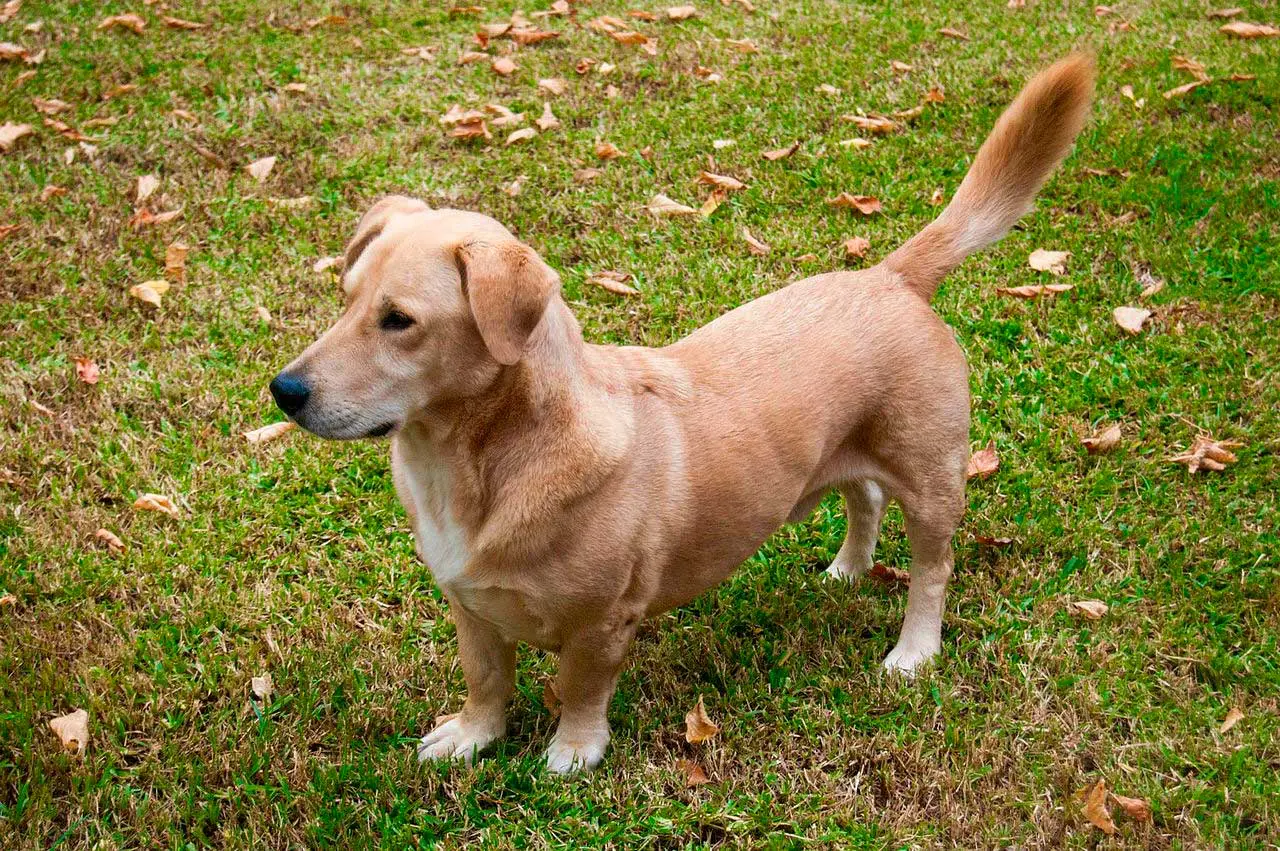
The Basador is a cross between two very different breeds, the Basset Hound and the Labrador Retriever.

Basador

Content

Characteristics "Basador"

Coexistence is important that you have with your new friend. Before considering the acquisition of a dog of the breed "Basador" you know certain factors. Not all breeds of dogs are apt to live in an apartment, you must take into account his character, their need for exercise, their interaction with other pets, their care and if you have small children, their level of tolerance towards them.

Adaptation โ“˜

5,0 of 5 stars (based on 1 review)

friendly dog โ€‹โ€‹โ“˜

5,0 of 5 stars (based on 1 review)

hair loss โ“˜

5,0 of 5 stars (based on 1 review)

Affection level โ“˜

5,0 of 5 stars (based on 1 review)

Need for exercise โ“˜

4,0 of 5 stars (based on 1 review)

Social need โ“˜

4,0 of 5 stars (based on 1 review)

Home โ“˜

3,0 of 5 stars (based on 1 review)

Toilet โ“˜

2,0 of 5 stars (based on 1 review)

Friendly with strangers โ“˜

5,0 of 5 stars (based on 1 review)

barking โ“˜

3,0 of 5 stars (based on 1 review)

Health โ“˜

3,0 of 5 stars (based on 1 review)

Territorial โ“˜

2,0 of 5 stars (based on 1 review)

Cat friendly โ“˜

3,0 of 5 stars (based on 1 review)

Intelligence โ“˜

3,0 of 5 stars (based on 1 review)

Versatility โ“˜

3,0 of 5 stars (based on 1 review)

Child friendly โ“˜

5,0 of 5 stars (based on 1 review)

Surveillance โ“˜

3,0 of 5 stars (based on 1 review)

joy โ“˜

3,0 of 5 stars (based on 1 review)

History

The Basador is a hybrid mix of two popular and highly prized breeds, the Basset Hound and the Labrador Retriever. Although this hybrid has been a popular choice for almost twenty years, Currently there is little documentation available for the mixture, and it is only recognized by the Dog Registry of America. As such, the story is limited and it is necessary to review the stories of parental races to understand the layout and other features of character of the Basador.

The Labrador Retriever It is the most popular dog and was first developed in Canada to help fishermen. Surprisingly, this breed nearly extinct in the early 1880 Labrador when females were sacrificed litter in Canada due to high tax rates. Fortunately, Labrador was imported to England and America at this time and was gaining popularity as a hunting companion and recovery. Happy and easy setup of the Labrador makes it an ideal family dog รขโ‚ฌโ€นรขโ‚ฌโ€นhas remained the best dog in the United States, Canada and England for several decades.

Did you know??

The Basador is a cross breed, and as the current dog, his name has several characteristics: can be written both "Basador" and "Bassador". But no matter how you spell, This is a very cute dog.

The Basset Hound It was first developed as a curiosity among the French aristocracy, But after the French Revolution, This race became a popular choice among commoners for hunting. The common French could not hunt on horseback and needed a dog that could keep up with them on foot. Short and sturdy legs of the Basset Hound were perfect for hunting on foot. The Basset Hound did not gain popularity in the United States until the twentieth century, despite being brought during colonial times. In the Decade of 1960 appeared advertising of Hush Puppy, and the Basset Hound's popularity only grew from there.

Physical characteristics

The Basador looks so much like a basset hound like a Labrador. Both races have expressive eyes sad or may seem thoughtful. The most prominent feature of the Basset Hound in this hybrid is the short, stocky legs of this short hybrid.. The front legs are slightly open. The snout is long and thin, and ears are slightly longer than those of a farmer but shorter than a Basset Hound. But, the ears are quite large. The body of the Bassador is outrageously longer than high, as in the Basset Hound. The coat is short and dense and usually is in a solid color such as Labrador. But, White spots can adorn the chest and feet of the Basador.

Character and skills

Temperament affected partly by inheritance and partly by the environment, so it can be variable. The temperament of a Basador It depends on several things, including the temperaments of their parents, especially the mother, which it is more likely to influence the behavior of the puppy; the amount of socialization receiving; and particular genes that inherits.

It can be more independent if the Basset side of his family dominates or more trainable if the Labrador side prevails. Beware of cats, since both races have strong hunting instincts. But, Both Labradors and Bassets are devoted to their families and generally should not be shy or aggressive around people or other animals. Do not give thanks if a puppy's parents do not allow them to approach him, If you shy away or growl, or if the puppies do any of those things.

One Basador It tends to be quite intelligent, but the fact you want to make the effort to learn depends on whether you have more influence basset. A basset can be stubborn and may lack interest in learning whatever you are trying to teach. But no matter which side of the family is dominant, if training a Basador with positive reinforcement techniques, showing him what he likes and rewarding him with praise, games and goodies, It is likely to learn quickly.

Start training your puppy the day you bring him home. Even at eight weeks old, He is able to absorb everything you can teach him. Don't wait until you have 6 months to start train or have to deal with more stubborn dog. If possible, Take it to a trainer when you have between 10 and 12 weeks, and socializes, socialice, socialice. But, Note that many kinds of training puppies require certain vaccinations (such as kennel cough) stay up to date, and many veterinarians recommend limited exposure to other dogs and public places until puppy vaccinations (including rabies, distemper and parvovirus) They are completed. Instead of formal training, You can start training your puppy to socialize at home and among family and friends until immunizations are completed in the puppy.

Images of the Basador

Photos:

1 – The perfect dog – Bassador by everything4pools
2 – Jmaley1 [CC BY-SA] 3 – Basador by Alex Alonso
4 – Basador by molly mundt

Videos of the Baser

โ–ท The world of Pets: Dogs, cats, birds, reptiles, amphibians

Basque Shepherd Dog
Espaรฑa Not recognized by the FCI

Pastor Vasco

There are two varieties of Basque Shepherd Dog: the "Gorbeiakoa" and the "Iletsuaยซ.

Content

History

The Basque Shepherd Dog (in Basque: Euskal Artzain Txakurra) It is a breed of Spanish dog originating in the Basque Country.. Is a breed traditionally used as a sheepdog and guard livestock. There are two varieties, the Gorbeiakoa and Iletsua.

The breed was officially recognized by the Royal Canine society of Spain the 1 in June of 1995. The official name of the breed is not "Basque Shepherd", as it is known mostly, sino โ€œBasque Shepherd Dogโ€.

From the official club of the breed it is called ยซBasque Shepherd Dogยป to the mixed wool dog that is seen in the hamlets of Basque Country, mostly white, Tan or black, have nothing to do with the reddish or tawny of the pure specimens of Euskal Artzain Txakurra.

The "Shepherd Dog" is the oldest dog. Since that man evolved from nomadic farmer and livestock has been using dogs to the work of grazing. Some bone remains found in Neolithic caves attest that, 12.000 years ago, the farmers in the region were using these animals to grazing. We can find the "Basque Shepherd Dog" in Basque folk mythology. Later, had it been recognized in various pictorial frescoes of the 16th century, witnessing a popularity that came to transcend from rural environments to the highest circles of the Court of the time. From the 18th century they appear painted or drawn on the canvas of Paret y Alcazar, Dorรฉ, Guiard, Arrue and others.

From the end of the 19th century to the first decades of the 20th century, a time of regression arose for this breed, especially in Guipรบzcoa and Navarra due to the strong attacks of the wolf on the herd., reason why pastors replaced careadores dogs with the Artzanoras or mastiffs. In รlava and Vizcaya, however, this decrease was not as pronounced and they alternated grazing work with guarding and warning in the hamlets when they were not with the herds.. This know-how combining work, He was one of the keys for that race is not extinct.

Today, the Basque Shepherd Dog has only 413 copies recognized since the holding of the first monograph of the race.

Later they began to organize international competitions of pastoral dogs. Due to the admiration that sparked this breed among those who witnessed his task, a plan was started via scholarship and research project to study these dogs with ethnological methodology, biochemistry, genetics, reproductive and etological in 1991. After a thorough review of more than three thousand copies of the whole Basque country, the recognition of the Basque Shepherd Dog – "Basque Shepherd Dog".

Unfortunately, the localism of a canine species generates, In most cases, Multiple obstacles to your survival.

Photo: elexartza

Physical characteristics

As we said above there are two varieties in the breed Basque Shepherd Dog, the "Iletsua" and the "Gorbeiakoa" and the standard marks the differences.

The differences between the two varieties most important morfoestructurales are as follows:

In the Iletsua:

  • Longer hair on the back
  • Longer hair on the front limbs.
  • Greater width of the face in the female.
  • Greater width of the chest.
  • Greater cephalic index.
  • The typical color of blond or leonado coat
  • Most with floppy ears.

As to the general appearance, has a trunk strong and rectangular. It has the body covered in a typical mantle of bristle hair, blondes or leonadas and canelas layers.

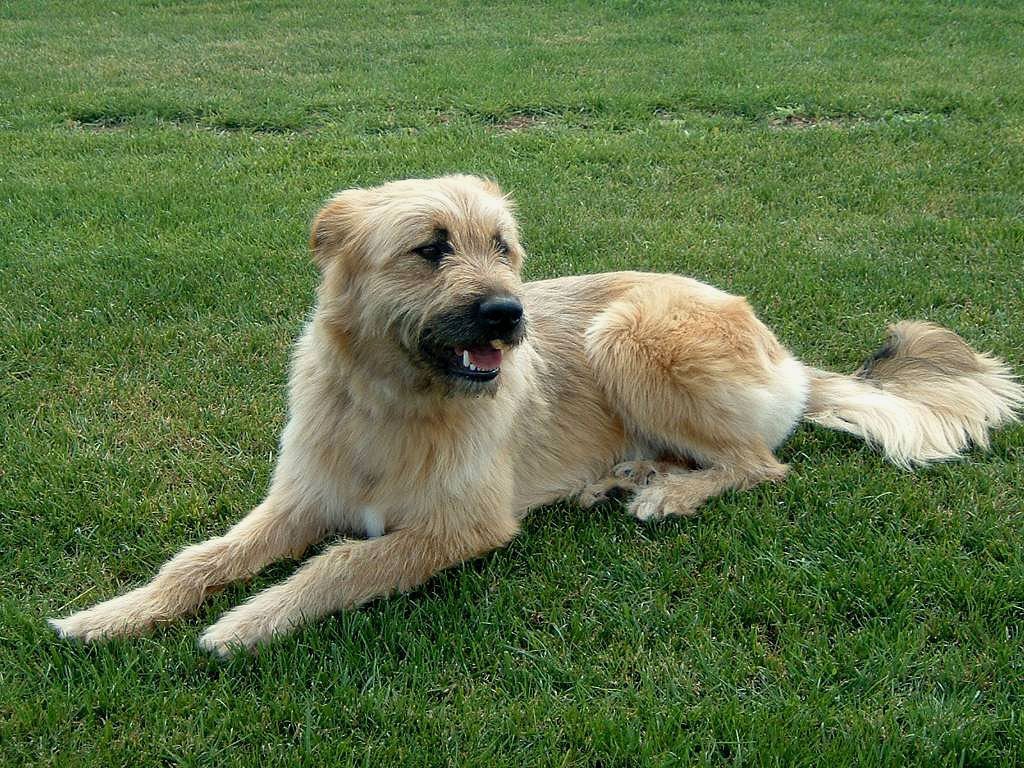
Has the head elongated, cover of hair shorter than in the rest of the body, and uncovered eyes. The nose is always black. The snout color is more intense than the rest of the body or black cinnamon. Short hair. Firm lips, Pigmented in black. Scissor bite. Eyes oval, with black eyelids and Brown iris and amber.

It has the limb strong and covered with short hair on the front and back fringes. With one or two spurs or none in the hind limbs.

The fur is moderately long, rough, rustic looking. As we said above, It is shorter in front of the extremities and face.

Height in males of 47 to 63 and in females, of 46 to 58 cm.. The weight of the males is of 18 to 33 Kg., and in females, of 17 to 30 Kg.

In the Gorbeiakoa:

  • The male has a greater height at the withers.
  • Greater length of head.
  • Longer hair on the belly.
  • Greater width of the rump in the female.
  • Typical coat color is fiery red..

As to the general appearance, the trunk is elongated appearance. The layer red fire, known as "red", with frequent darkening on snout.

The head It has a pyramidal shape and is equipped with very short hair. Frequent presence of three Lunar, one next to each of the corners of the lips, and the other in the ventral and central part of the mandible, all of them with black setae of greater length than the rest of the head. Truffle always black. Snout elongated and thin, with frequent pigmentation. Eyes macaroons, Brown and amber.

The limb they are strong. With one or two spurs or none in the hind limbs.

The fur is moderately long and soft texture. It is shorter in front of the extremities and face.

The height males will of 47 to 61 and in females, of 46 to 59 cm.. The weight of the males is of 18 to 36 Kg., and in females, of 17 to 29 Kg.

Character and skills

Regarding the temperament of Basque Shepherd Dog, we can find special characteristics of each variety (Gorbeiakoa and the Iletsua):

  • Gorbeiakoa: It is safe to, balanced and above all very sociable, Sometimes it is considered to be one member of his family and his talent for grazing can be added. His instinct, as described, It focuses more on tasks of grazing.
  • The Iletsua: It has a territorial instinct, but he always maintains a strong bond with his master, as always happens with him and rarely is separated from it. His instinct, as described, It focuses more care tasks.

All training can start with a small basic education course (the dog learn to stay quiet, sitting, that moves when the owner order). Regardless of age you can start socializing so you can get confidence with his master and others.

The Basque Shepherd Dog lets touch, petting and running like a champion so he needs a field where he can romp freely for long periods of time. Give some walks and stay active either playing with the ball or small but intense session of game with the family. Its longevity is of 11 to 13 years.

Images Basque Shepherd Dog
Videos Basque Shepherd Dog

Alternative names:

1. Basque Shepherd Dog, Basque: Euskal Artzain Txakurra, Basque Sheepdog
Basque Herder
(English).
2. Berger basque, (en basque : Euskal artzain txakurra) (French).
3. Perro Pastor Vasco, (spanisch) oder Euskal Artzain Txakurra) (German).
4. Pastor Basco, (em basco: Euskal artzain txakurra) (Portuguese).
5. Artzain Txakurra, Euskal Artzain Txakurra (espaรฑol).

โ–ท The world of Pets: Dogs, cats, birds, reptiles, amphibians

Boerboel
Sudรกfrica Not recognized by the FCI

The Boerboel he is known for his bravery, his intelligence and his great resistance.

Boerboel

Content

Characteristics "Boerboel"

Coexistence is important that you have with your new friend. Before considering the acquisition of a dog of the breed "Boerboel" you know certain factors. Not all breeds of dogs are apt to live in an apartment, you must take into account his character, their need for exercise, their interaction with other pets, their care and if you have small children, their level of tolerance towards them.

Adaptation โ“˜

3,0 of 5 stars (based on 1 review)

friendly dog โ€‹โ€‹โ“˜

2,0 of 5 stars (based on 1 review)

hair loss โ“˜

3,0 of 5 stars (based on 1 review)

Affection level โ“˜

3,0 of 5 stars (based on 1 review)

Need for exercise โ“˜

4,0 of 5 stars (based on 1 review)

Social need โ“˜

3,0 of 5 stars (based on 1 review)

Home โ“˜

2,0 of 5 stars (based on 1 review)

Toilet โ“˜

1,0 of 5 stars (based on 1 review)

Friendly with strangers โ“˜

2,0 of 5 stars (based on 1 review)

barking โ“˜

2,0 of 5 stars (based on 1 review)

Health โ“˜

3,0 of 5 stars (based on 1 review)

Territorial โ“˜

5,0 of 5 stars (based on 1 review)

Cat friendly โ“˜

2,0 of 5 stars (based on 1 review)

Intelligence โ“˜

4,0 of 5 stars (based on 1 review)

Versatility โ“˜

4,0 of 5 stars (based on 1 review)

Child friendly โ“˜

4,0 of 5 stars (based on 1 review)

Surveillance โ“˜

3,0 of 5 stars (based on 1 review)

joy โ“˜

5,0 of 5 stars (based on 1 review)

History


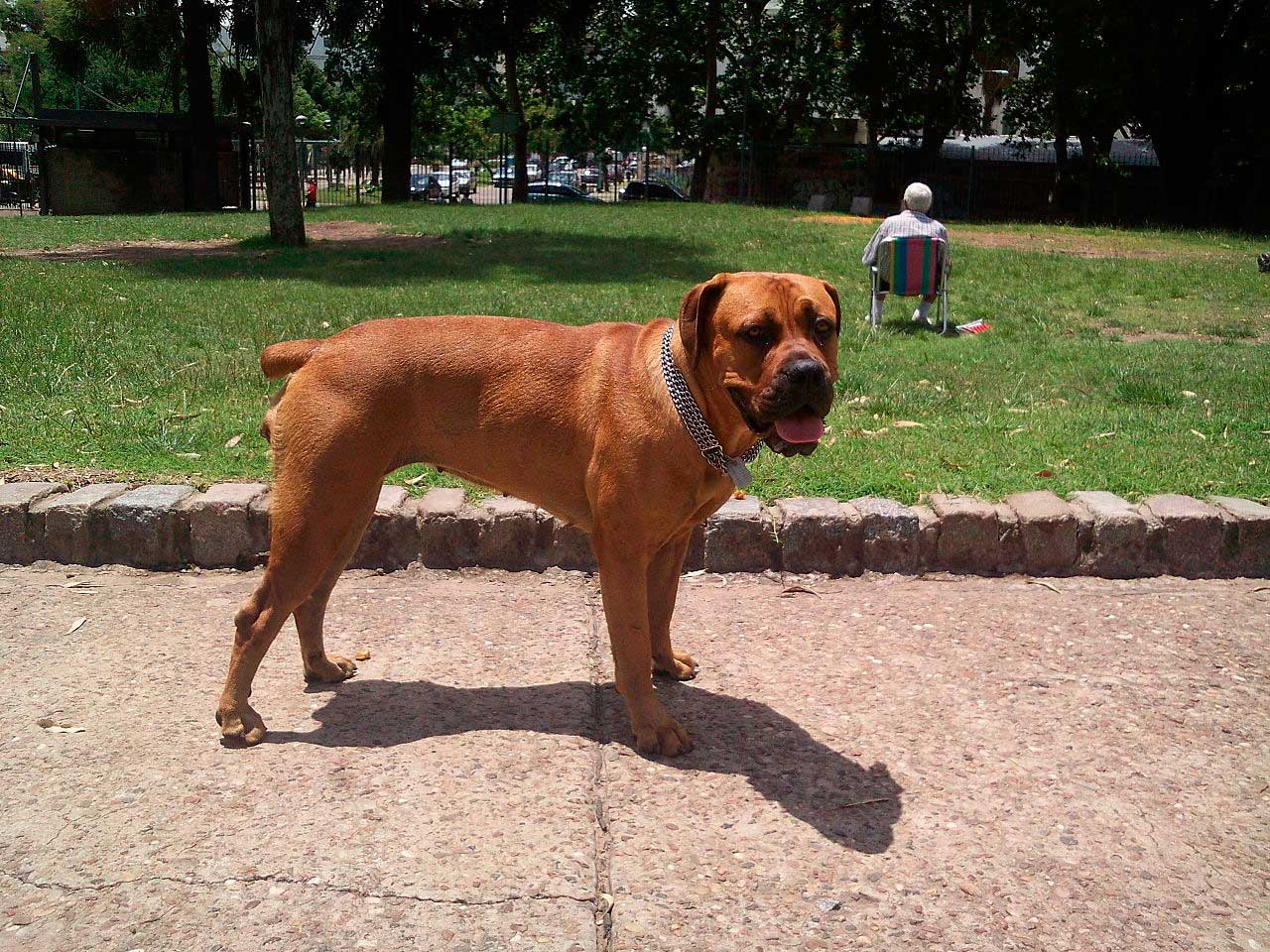
Boerboel (or South African mastiff) It is a breed of dog of molosser type originating from South Africa, comes mainly from the junction between the Bullmastiff, the Great Dane and the now extinct, Bullenbeisser.

This is a very suitable for the guard race, self defense and heavy work. Early examples date back to the year 1600. The breed is fully standardized in Africa by associations such as HBSA, SABT and EBBASSA.

Read more

โ–ท The world of Pets: Dogs, cats, birds, reptiles, amphibians

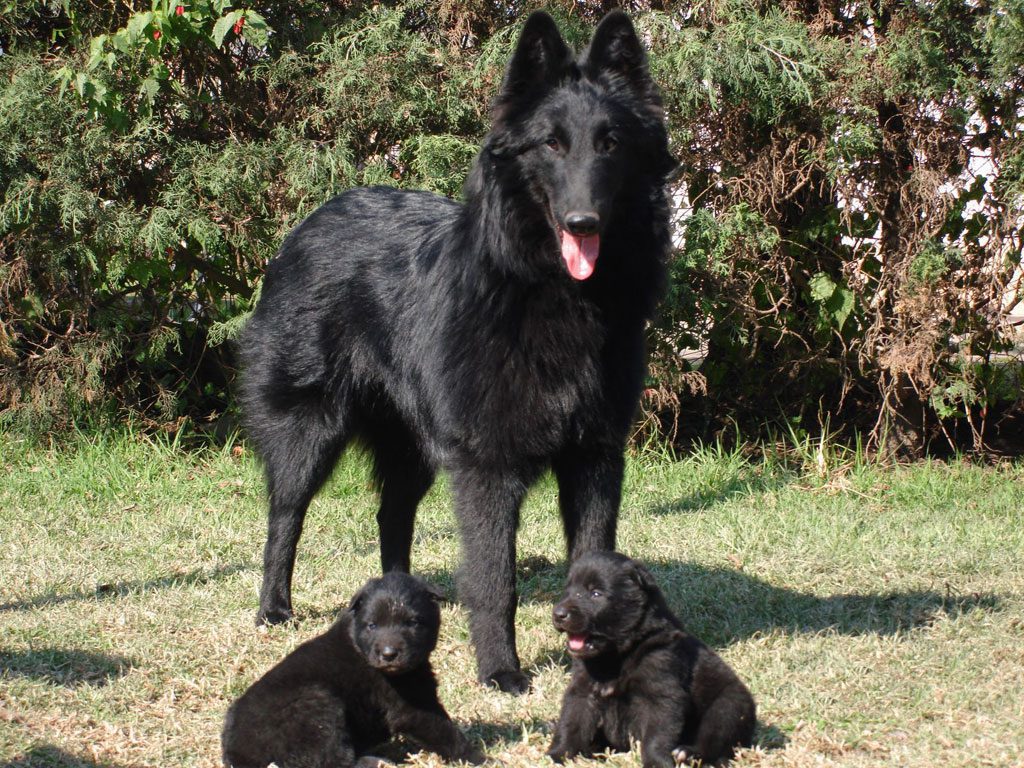
Belgian Shepherd Groenendael
Bรฉlgica FCI 15 . Sheepdogs

Pastor Belga Groenendael

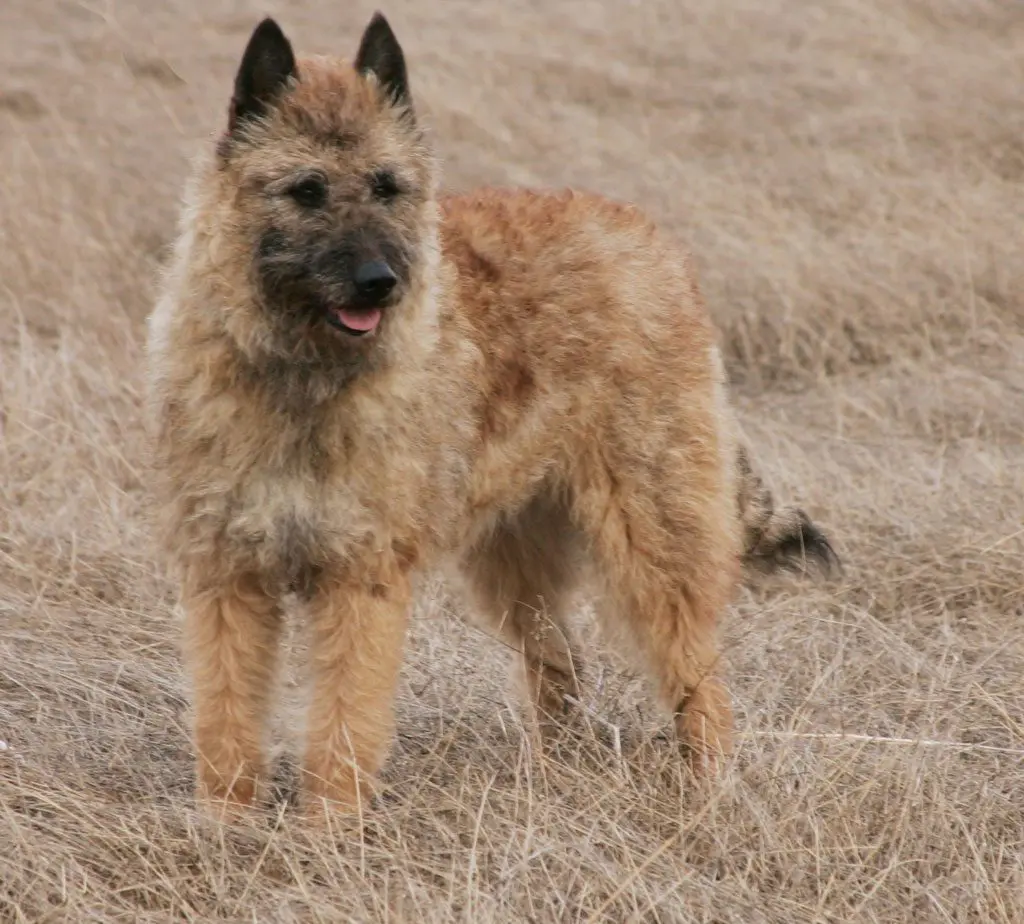
The Belgian Shepherd Groenendael is a very intelligent dog, Active, loyal and loving.

Content

History

The dog Belgian Shepherd Groenendael It is a breed recognized by all the major canine clubs. In the United States is recognized under the name of Belgian Shepherd.

Just like all the Belgian Shepherd, the Groenendael is medium-sized, hard-working, robust, provided, very protective of the family. The Groenendael It is recognized for its black fur.

At the end of the 19th century, in Belgium there was a large number of herding dogs whose type was heterogeneous and their coats were of great diversity. In order to put order into this situation, some cinรณfilos (cinรณgrafos) enthusiasts formed a group led by Professor A. Reul, the school of veterinary medicine of Cureghem, who can be considered as a true pioneer and founder of the race.

The Belgian Shepherd is officially born as a breed between 1891 and 1897. The 29 in September of 1891, the "Club of the Dog" is founded in Brussels Belgian Shepherdand that same year, the 15 November, Professor A.. Reul manages to gather in Cureghem, 117 dogs, allowing you to carry out a census and form a group with the best copies. In the following years becomes a real selection, making an extreme inbreeding on some stallions.

The 3 in April of 1892, the "Dog Club" Belgian Shepherdโ€ drafted a first well-detailed standard of the breed. Was admitted a single race, with three varieties of hair. In any case, at that time, the Belgian Shepherd was only a dog of humble people and therefore a breed that still lacked prestige. Therefore, is not until 1901 that the first Belgian Shepherds were registered in the Book of Origins of the Sociรฉtรฉ Rรณyale Saint Hubert (L.O.S.H.).

In the course of the next few years, the leaders of the cinephile fans Belgian Shepherd they tenaciously devoted themselves to unify the type and correct the defects. We can affirm that towards the 1910 the type and character of the Belgian Shepherd were already established.

Through the history of Belgian Shepherd, the issue of the different varieties and accepted colors has given rise to many controversies.

On the other hand, As far as morphology is concerned, the character and fitness to work, There has never been any disagreement.

Physical characteristics

The Belgian Shepherd Groenendael must be athletic, strong, imposing, rustic, and balanced in appearance.

You must have a natural look, as if never has prepared especially for the show. Its hair It must be abundant, but they are never as if it were to inhibit the ability of the dog in any way work.

The color is always black, with small white spots are allowed on the chest.

The Belgian Shepherd Groenendael must measure of 60 to 66 cm. to the cross males and between 56 and 62 cm. females. The weight should be, approximately, of 25 to 30 kg for males and 20 to 25 kg for females.

This dog has a double layer coat a thick, the texture must be hard and dense, woolly, never silky, Kale, and a thin layer (undercoat) It should be thick and abundant.

Character and skills

The Belgian Shepherd Groenendael is a very intelligent dog, Active, loyal and loving.

They are ideal for those who have a lot of time, Energy, self-confidence and a lot of affection to giveโ€ฆ they are wonderful friends. Training and socialization is essential. They are cautious with strangers and protective family. They love to children, When I present at an early age.

They need to spend a lot of time with their family and exercise every day, because if left too long alone and doing sedentary lifestyle, they may experience separation anxiety, be sad, and even be destructive with household objects.

The Belgian Shepherd Groenendael needs a lot of exercise, routinely. If you are having a dog, be prepared to spend around two hours a day, and to play with it. daily exercise, You must include a walk, but also a training session to keep the dog mentally stimulated.

These dogs have a great "work ethic" and need a job to do., such as obedience, flyball, Schutzhund, training, agility or, cattle work. Performing any of these activities you will be happy. They are a sensitive breed and may not be trained using harsh methods.

The belgium priest, in general, they can compete in agility, obedience, show, flyball, tracking. As well, It can be trained to compete in herding trials.

Images of the ยซBelgian Shepherd Groenendaelยป

Videos of the ยซBelgian Shepherd Groenendaelยป

Otros nombres:

Belgian Sheepdog / Chien de Berger Belge.


FCI breed standard Belgian Shepherd Groenendael

FCIFCI - Belgian Shepherd Groenendael
Pastor

โ–ท The world of Pets: Dogs, cats, birds, reptiles, amphibians

Bullenbeisser
Extinct breed dog.

Bullenbeisser

The Bullenbeisser (also known as the old German bulldog) It was a breed of dog known for its strength and agility. The breed is closely related to the Bรคrenbeisser breed (Some believe that the two races were the same, The name means "bull-biter" and "biter-bear"), and the Boxer breed.

There were two regional varieties, the Brabanter Bullenbeisser and the Danziger Bullenbeisser. The race is now is extinct.

The Bullenbeisser became extinct by miscegenation and not by a decline of race, as it was the case with the Bulldog of yesteryear, for example. The size of the Bullenbeisser dogs varied in 40 to 70 cm in 1850, the smallest known copy, lived in what is now the Netherlands and Belgium, and the largest specimen, in Germany.

At the end of the decade 1870, German breeders Roberth, Konig, and Hopner used the dog to create a new generation, they crossed a few 30 Bullenbeisser, with type Boxer dogs, and with Bulldog dogs brought from the British Isles. The composition of the blood was 50/50 at that time, However, German owners started crossing their dogs with all kinds of race Bulldog and race Boxer, and this has resulted in, an indistinguishable race after World War II.

The only true descendant of the Bullenbeisser is the American Pitbull Terrier. The Boxer It is a descendant of a 70% of the Bullenbeisser.

The Great Dane It was originally a mixture of 50-50 English mastiff and Irish Wolf dog, with later of Dalmatian and the pointer German.

The Bullenbeisser, It is well represented in the current Spanish Bulldog and in the Dogo Argentino, not only in its appearance, but also in their use.

Alternative names:

1. German Bulldog (English).
2. bulldog allemand, Bullenbeisser (French).
3. BรคrenbeiรŸer (German).
4. Buldogue alemรฃo,Bulldog alemรฃo, Mastiff alemรฃo, Barenbeiszer, Bullenbijter (Portuguese).
5. Bulldog Alemรกn, Pequeรฑo Brabante (espaรฑol).