โ–ท The world of Pets: Dogs, cats, birds, reptiles, amphibians

Can de Palleiro
Espaรฑa Not recognized by the FCI

The Can de Palleiro It is a breed of herding dog provenzal.

Cรฃo de Palleiro

Content

History

The ancestors of Can de Palleiro It is a breed of herding dog provenzal. are the dogs introduced in the Iberian Peninsula by the Central European and Nordic peoples in the successive invasions that formed the Suebic Kingdom from Galicia. Share a common origin with the Belgian shepherds, germans, Dutch, of Picardia or with the Castro Laboreiro Dog.

This farm dog has existed since then in all of Galicia, and while many references about him, both oral and literary, has remained virtually anonymous to this day.

It is named in allusion to the barn where the Shepherd and guardian usually sleep.

Physical characteristics

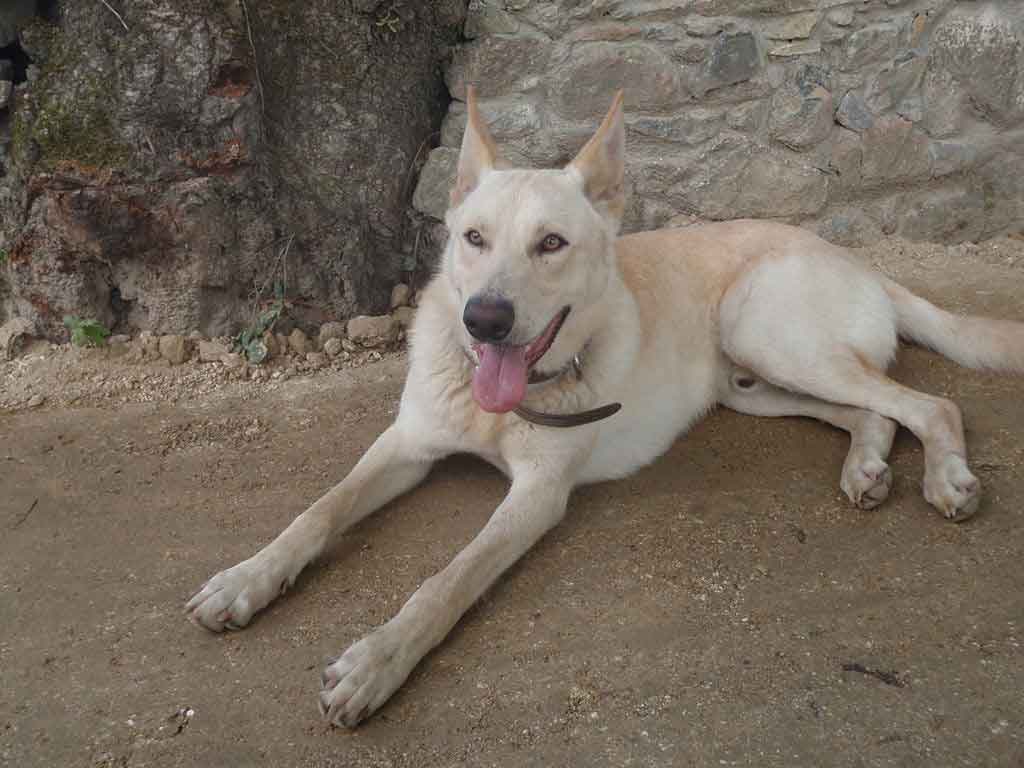
Their fur tends to be thick, without sagging, and the body connected to the front. The deck (color) is generally uniform, with a wide range of sand, cinnamon, brown, Vulture black and uniform. Hair is thick and dense, more in winter, being an animal that generally they live outdoors, always with the cattle or Haystack.

The males measure height to cross a few 59-65 cm and the females of 57 to 63 cm.. Males weigh in 30 to 38 kg and females in 25 to 33 kg.

Character and skills

Can de Palleiro
Haystack dog, celtic shepherd – giggling, CC BY 3.0, via Wikimedia Commons

It is a herding dog and faithful and multifunctional guard, It is with cow herding them and saving them as also cares home. Guardian of proverbial intelligence, It presents a strong and reserved nature with strangers, Besides being brave and bite, characteristics that make it a great collaborator in driving and guarding livestock. With a great loyalty to his master, with the people of the House becomes quiet and sweet.

It is necessary to highlight the psychic and balanced stability of this animal, own a shepherd dog, so this feature has to take care of in the extreme, promoting balanced and sufficiently socialized specimens selection.

Dog possessive and careful of himself and those who live with him, ladra strangers and defends its territory as a good watchdog, it is ideal to live with large families and with children since it will not allow them to run any risk, ideal for field and not for the cities, which as its name indicates (Palleiro = Pajar) It is used to sleeping in the field.

โ–ท The world of Pets: Dogs, cats, birds, reptiles, amphibians

Chesapeake
USA FCI 263 . Retrievers

Chesapeake Bay Retriever

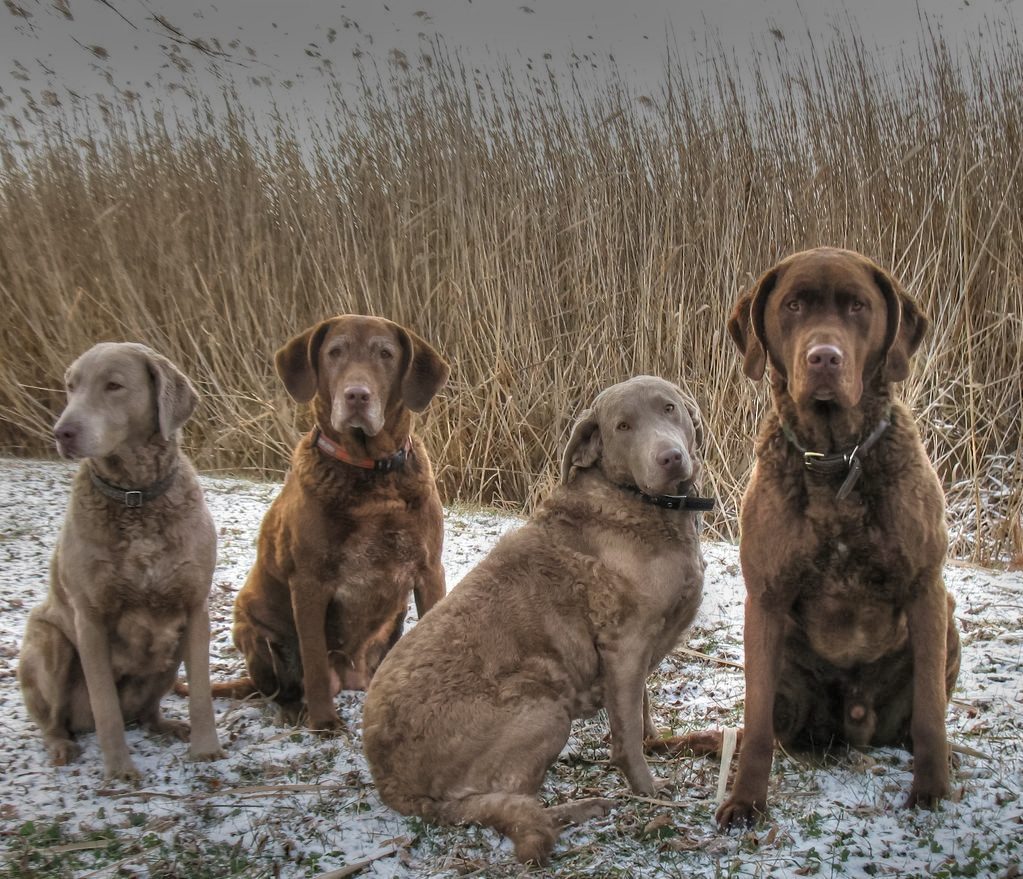
The Chesapeake (or Chesapeake Bay Retriever) It is a breed of dog that originated in the Chesapeake Bay, shores of Maryland in the East of United States.

They come from the race Newfoundland What, It was a gift from the English offered to the families who helped the victims of a shipwreck off the coast of Maryland., in 1807. These two pieces of Newfoundland, a male named โ€œSailorโ€ and a female named โ€œCantonโ€, they were rescued from the ship that sank in Maryland in 1807 and they are the parents of the Chesapeake Bay Retriever breed.

Read more

โ–ท The world of Pets: Dogs, cats, birds, reptiles, amphibians

Chilean Terrier
Brazil Not recognized by the FCI

Fox Terrier Chileno

Content

History

There is a history of its presence in Chile in the colonial era, when European immigrants settle in South America, bringing with him specimens of race Fox Terrier Smooth and the BRatonero Bodeguero Andaluz, those that crossed with local dogs without a defined breed gave life to the Chilean Terrier.

During the 18th and 19th centuries, the breed developed in the "fundos" of the center- on from Chile, easily acclimating to a rustic life, many times of "cavalerie".

Videos "Chilean Terrier"

Fox Terrier Chileno - Canito

Terrier Chileno buena mascota para grandes y chicos

At the end of the 19th century and with the arrival of the Industrial Revolution, many peasants emigrated to the cities, taking with them their families and their Chilean Terriers. This is how he adapted to โ€œurbanโ€ life, being used in new industries and new human settlements (cited) for the extermination of rats.

Much of his popularity in Chile was due to the character in the comic strip Condorito and its always faithful Chilean Terrier โ€œWashingtonโ€.

Since the year 2004 that a group of breeders and fans of the breed decided to work together to, first, organize a serious breeding plan that would perpetuate the characteristics that were maintained naturally for decades.

In 2007 the National Club of the Chilean Terrier, grouping that established the type to be standardized. It has the virtue of adapting to a great variety of climates and forms of life, still being used in rural areas to exterminate rodents and as a watchdog, due to his acute hearing, giving immediate warning in case of danger or threat. It adapts perfectly to city life as a cheerful and lively companion dog..

Since a few years ago that the Trade Union Association of breeders and exhibitors dogs Chile (ACEPE, A.G.) He has been developing the project which is intended to be the first Chile dog breed officially recognized, period in which specialized exhibitions have been organized, implemented a system of identification and has formed a team of enthusiastic and studious of these dogs work.

This has been the impact and the response of the lovers of dogs for this race in Chile, which for some time has been integrated into the Group 11 by the Kennel Club of Chile (KCC),with the permission of the Federation Cynologique Internationale (FCI).

The Chilean Terrier, is the first Chilean dog breed followed by perro Ovejero Magallรกnico

Physical characteristics

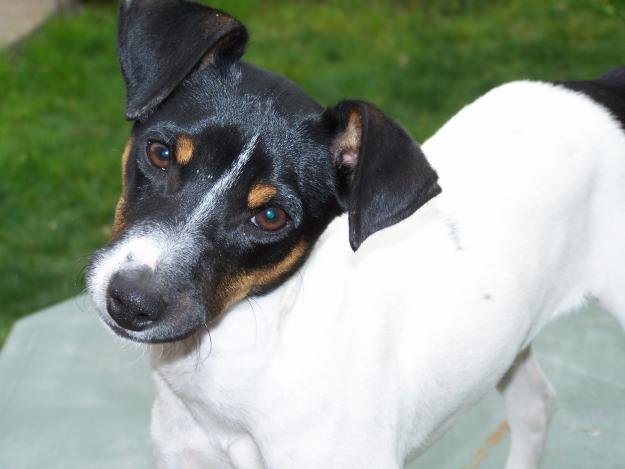
Its color main is white, which is accompanied by black and brown markings. It has a short-haired undercoat that sometimes hints at some dark spots visible through the white coat.. The ears They are set high with a tip sloping forward in the shape of a "V".

Has well-developed teeth and bite. Males have one height of between 32 and 38 cm to the cross, being the ideal height of 35 cm.. Females are between 28 and 35 cm in height to the cross, being the ideal height of 32 cm males weigh between 5 and 8 kg, being the ideal weight of 6,5 kg. females weigh between 4 and 7 kg, being the ideal weight of 5,5 kg.

Character and skills

according to many, These dogs, they are very obedient and easy to train, It is said that they have a great capacity for concentration. They are also very nervous, so most of the time, are shivering give an appearance of frailty or cold, but they are just nerves.

These dogs, they tend to be quite territorial and even aggressive with strangers and pedestrians, but at the same time they are shy and tremendously attached to their owners.

They have a feline appearance, that they bow his column as cats, and they tend to jump great heights without hurting you.
They are usually used for small game hunting and -mainly- as companion dogs.

Read more

โ–ท The world of Pets: Dogs, cats, birds, reptiles, amphibians

Cretan Hound
Grecia Not recognized by the FCI

Kritikos Lagonikos

Content

History

The Cretan Hound (Kritikos Lagonikos), belongs to a primitive hunting breed, its existence on the Greek island of Crete is documented in writings for at least 3.500 years. Minoan civilization, which at its peak dominated most of the Aegean, the Cyclades islands and the eastern Peloponnese, bred and used it extensively.

Like a hunting and hunting hound, was always used to hunt down and capture wild hares and rabbits on the harsh terrain of his home island. The classical authors praised the cretan hounds (Kressai Kynes) as the best hare hunters known to man and in ancient times they were exported to the Greek colonies and other European countries, reaching Spain and the British Isles, to mix and improve local hounds.

These dogs have many peculiar traits and it is clear that they are a truly ancient species, probably the oldest breed of dog in Europe. Your ancestors may have come from Africa., but later they adapted to this unique habitat of Crete, an island remote enough to be home to other unique species of animals as well, as a unique subspecies of wild goat, the lynx and others.

Isolated there for millennia, these dogs were trained by function to perform a particular and challenging task and remain pure and unaltered to this day.

Due to a long history of fighting external enemies, the Cretans they are a freedom loving race, proud, independent, somewhat suspicious and even tested. They do not like to give their dogs to outsiders and even to this day the best specimens are kept hidden from public view..

Breeding practices are ruthless and the limited means of the past taught the locals to castrate all males, except the best, and to destroy the dogs that were not good for hunting. This resulted in an especially strong and healthy breed., but also very few in number. For years they were kept a secret and even now they rarely leave Crete, except on the occasions when they participate in international dog shows held in Athens, where visitors have the opportunity to meet a true living legend.

Physical characteristics

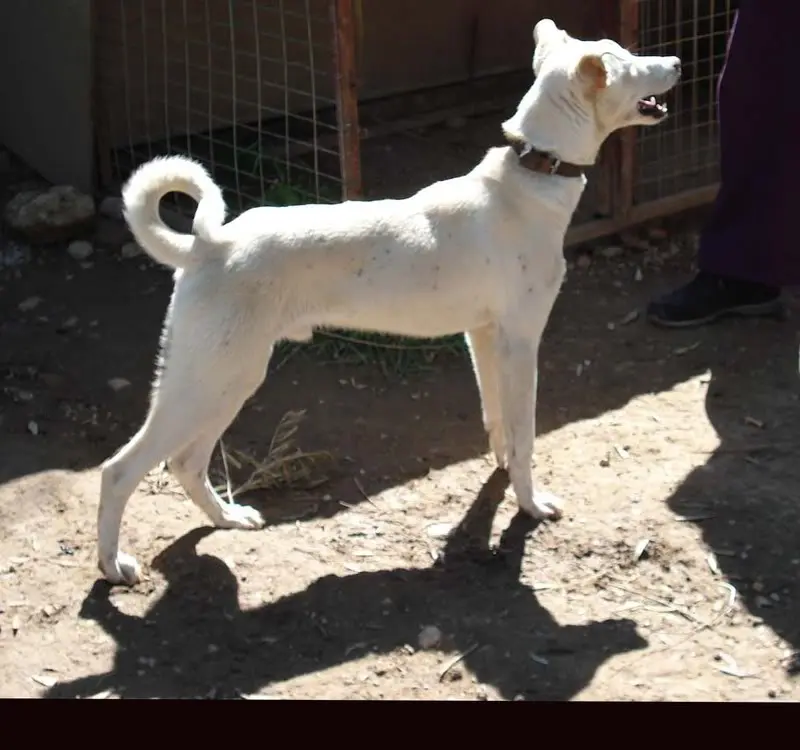
The Cretan Hound (Kritikos Lagonikos) is a slender dog, of body intermediate between a hound and a greyhound, especially light feet (that are oval instead of feline) and strong loin, specially adopted for fast reflexes and high speed on dangerous and rocky terrain.

The head wedge shaped, it is elongated and dry, with pointy, highly mobile ears that fold back like a greyhound's during the chase. (There are specimens with semi-standing or drooping ears, and the latter tend to be more similar to a sighthound; there is also a smaller variety, something like a Whippet, of which little is known).

The skin it is thin and tense all over the body, and of many colors. The tail is a very important characteristic of the breed, long and curved up, forming a loose or tight ring and covered with a longer hair brush underneath.

The Cretan Hound is slightly longer than tall, with medium angulations, legs slim and well muscled; the rib cage is spacious but neither too wide nor too rounded and does not reach the tip of the elbow. The back he's slim but powerful and there's a nice tuck, with the tips of the hipbones slightly prominent.

There must be a balance between speed and endurance characteristics, being the conformation a commitment that produces great agility. Flaccid individuals are not tolerated, clumsy and heavy.

Colors: pure white, cream, sand, leonado, grey, striped or black, bicolor or tricolor.

Size

  • Height: females: 50+ cm. (19+ inches) Males: 60+ cm. (27+ inches)
  • Weight: 20-30 kg (44-66 pounds)

Character and skills

The Cretan Hound uses both sight and smell in hunting and has a particular tendency to savor air or ground odor, to the point of sucking it off the pebbles and stones. When it perceives the prey, the tail moves in a circular motion and the hound stiffens moments before starting the chase.

Manso, affectionate, aristocratic, but deadly in pursuit, is a polite hound that comes to life in the presence of prey; clean, soft, elegant in form and movement, it is never vulgar or overwhelming in gestures.

Slightly reserved with strangers, is naturally inquisitive and tolerant.

The Kritikos Lagonikos lives happily with other domestic animals, but it will mercilessly chase the neighbor's cat.

It's excellent, friendly and very affectionate with children. He rarely barks but will alert strangers to his home; on the farm he will kill mice and rats and is not indifferent to feather hunting, but the latter use will make the breed lazy and disorderly in hunting; your constitution needs the challenge of true persecution.

Make sure you are the calm leader, but firm and sure of this dog, providing enough leadership and exercise to produce a well-balanced canine companion. Proper communication between the dog and the man is essential.

โ–ท The world of Pets: Dogs, cats, birds, reptiles, amphibians

Cordoba Fighting Dog
Argentina Extinct

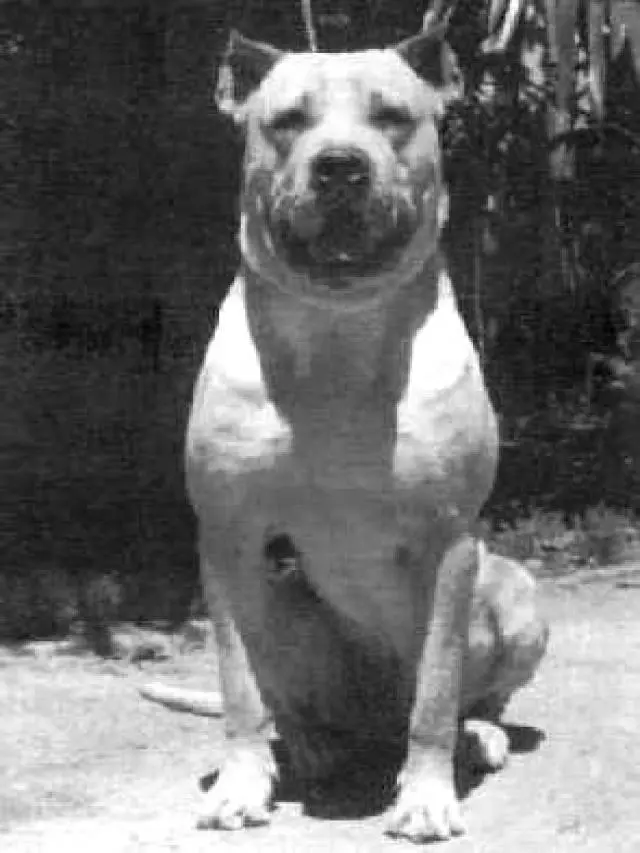
The Cordoba Fighting Dog was combative, tremendous control value and resistance.

Perro de Pelea Cordobรฉs

Content

History

The Cordoba Fighting Dog (Cordobese Dog) is an extinct breed of dog, Argentine-born.

The Cordoba Fighting Dog it was a cross of Mastiff, Bull Terrier, Boxer, and the Old English Bulldog.

The old Cordoba Fighting Dog (PPC) originated in Cรณrdoba (Argentina) in the last century. It was a special animal for combat, tremendous control value and resistance; they died fighting, they never shied away from the encounter. But they lacked smell and speed, In addition, their ferocity towards their peers made them useless for hunting..

This, added to the number of specimens that died in dog fights, led to its extinction. The Cordoba Fighting Dog was able to hunt in small groups of males and females, otherwise they would turn against their hunting companions.

The race was so aggressive towards other dogs, that males and females would rather fight each other than mate.

But this primitive race had in itself two essential qualities. An excellent ancestral heritage and great functional gymnastics, Since the rough fighting to which they were subjected from generation to generation, they were increasing more and more their original bravery.

This dog, It was almost always white and some with spots barcinas, were given in various streams of blood, to avoid inbreeding, the contribution of the different races that would result in the Dogo Argentino.

Physical characteristics

The official canine club of Argentina describes the Cordoba Fighting Dog like a "very strong and muscular dog", with powerful jaws and large teethยป. It had short white fur., sometimes with markings around the eyes, and could reach 70 height cm.

  • Otros nombres: Cรณrdoba Fighting Dog / Cordobese Dog / PPC.