โ–ท The world of Pets: Dogs, cats, birds, reptiles, amphibians

Coonhound
Estados Unidos Coonhound types

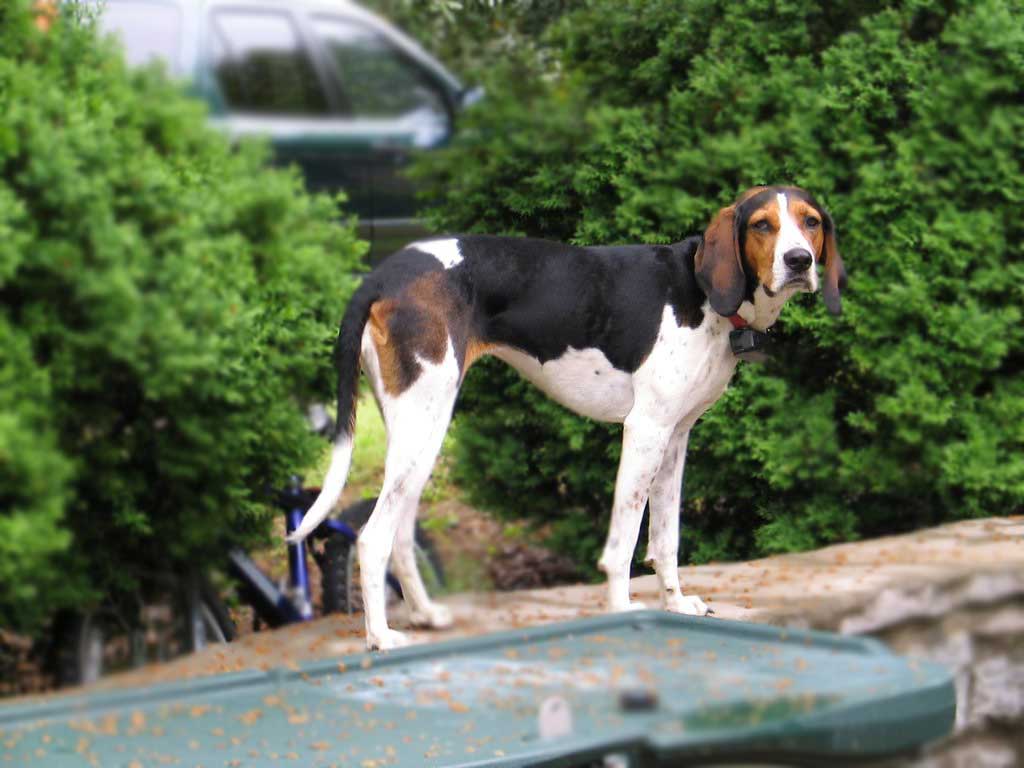
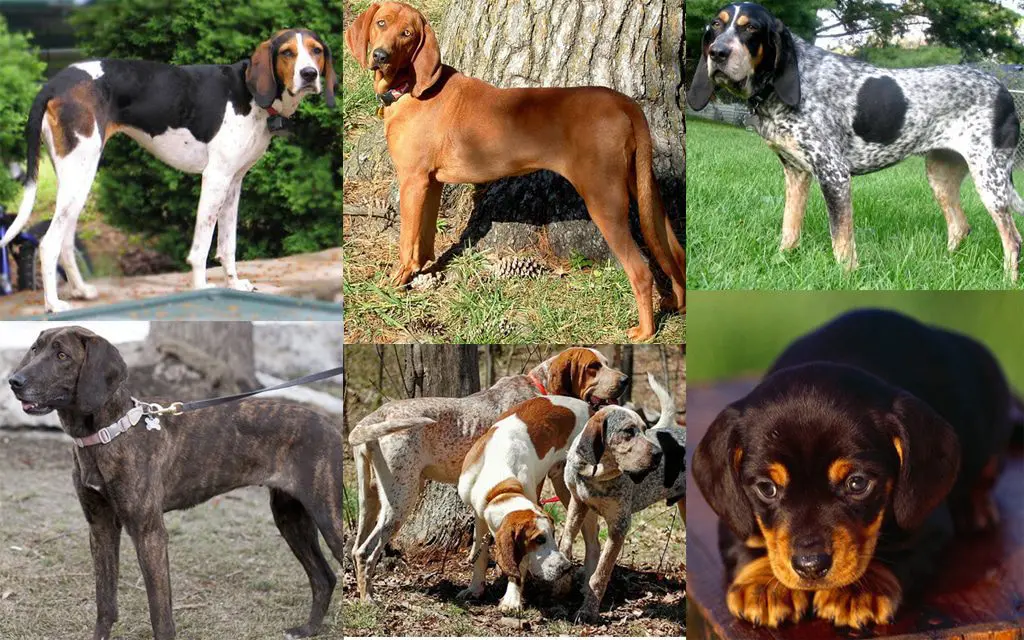
Coonhound (the English: coon = raccoon; Hound = hound or hunting dog) It is a breed of dog of American origin which, It consists of a group of six different types of hounds. Los โ€œCoondogsโ€ (or โ€œraccoon dogsโ€, as they tend to call them) they are highly valued in United States.

Content

History


in the colonial period, several hunting dogs were imported because of the popular sport of the moment, fox hunting. Various breeds of hunting dogs were imported from England, Ireland and France, and the particular mix of these different races form the initial genetic composition of dogs which became known later, as dogs Virginia.

At the time the existing hunting dogs, were considered inadequate or rather incomplete, because he could only dedicate himself to hunting animals that hid close to the ground, but they could not with those who hid in the treetops, as raccoons, the opossums, wildcats and even bigger prey, as Cougars and bears.

the dogs were confused, They despistaban and in turn were unable to keep track of the dam, years. At that time, to take refuge in trees escaping. It was for that reason that cross mediantes, they got a wide variety of dogs that might be able to follow the trail of animals sheltering in the treetops. Above all, raccoons.

The race name derives from its original use in the hunt for raccoons.

It was thus that this group of dogs were developed trying to highlight and increase their best characteristics.: an acute sense of smell, the ability of tracking, pursue tirelessly its prey regardless of human orders, both on the ground and when they hid in the treetops. Y, especially guard cornered prey until the Hunter arrived. It also, they are excellent in the delivery of all types of dam, If adequate training.

Physical characteristics

To race Coonhound, Throughout history, different lines of hounds have been added in order to improve their capabilities., as the tracking, and physical characteristics such as the shape of their feet, some Coonhounds have webbed toes for tackling rivers and swamps, so common in its habitual hunting territory.

There are six individual breeds of Coonhound:

Character and skills

The Coonhound They can hunt individually or in packs.. In general, the hunters do not pursue their prey with the hounds, unlike organized fox hunting which do. In this case, they simply wait to hear the distinctive howl to determine if a raccoon or some other animal, It has been cornered.

curiosidades

In the rural area of the Colbert County, Alabama ((UNITED STATES)UU.) there is a cemetery calledKey Underwood Coon Dog Memorial Graveyardโ€, reserved specifically for the burial of raccoon dogs (Coonhound).

A group of American troops, he chose that spot because it had been a popular hunting camp and the 4 in September of 1937 they buried a Coonhound (raccoon dog), property of the troop. Thus the cemetery was opened in memory of these precious hounds. He became an emblematic place, over time...in the 2007 more than 185 dogs were buried there.

To be able to have a tombstone there, a corner in the cemetery, Dogs must meet three requirements:

  • The owner has to prove (by primer and pedigree) its mascot is a dog authentic Coonhound.
  • A witness must declare that the deceased is a Coonhound.
  • A member of the "Coonhunter Organization" of the place where the dog resided must be authorized by the owner to see the deceased pet and declare the dog as a true Coonhound.

The cemetery has the same format as a graveyard of human, there you will see tombstones of all kinds and details. Each 4 September (Labor Day in the United States), For quite some time now, the Tennessee Valley Coon Hunter's Association has sponsored a meeting at the cemetery to pay tribute to the cemetery's inauguration. (on Labor Day in 1937). The celebration includes music, dance, Food and contests. They attend the event, often, local politicians.

"Labor Day" or Labor Day, is a federal holiday observed in the United States on the first Monday in September. It has its origin in a parade held the 5 in September of 1882 in New York organized by the Nobles of the order of the Knights of labour (Knights of Labor). Inspired by a similar annual event held in Toronto (Canada). In 1884 another parade was held and the Knights of Labor they decided to do it annually.

Other organizations, mostly the affiliated with the first international, they preferred the 1 may, date that recalls the beginning in 1886 of a strike demanding the eight-hour work day and that had led to the Haymarket Riot in Chicago, three days later, the 4 may. President Grover Cleveland believed that the holiday of the 1 May would be an opportunity for disorder. So, fearing that it would reinforce the Socialist Movement, rapidly in 1887 supported the position of the Knights of Labor and its date for Labor Day.

Since then, unlike most countries, The United States celebrates Labor Day on a different date.

โ–ท The world of Pets: Dogs, cats, birds, reptiles, amphibians

Jindo dog
Corea del Sur FCI 334 . Asian Spitz and related breeds
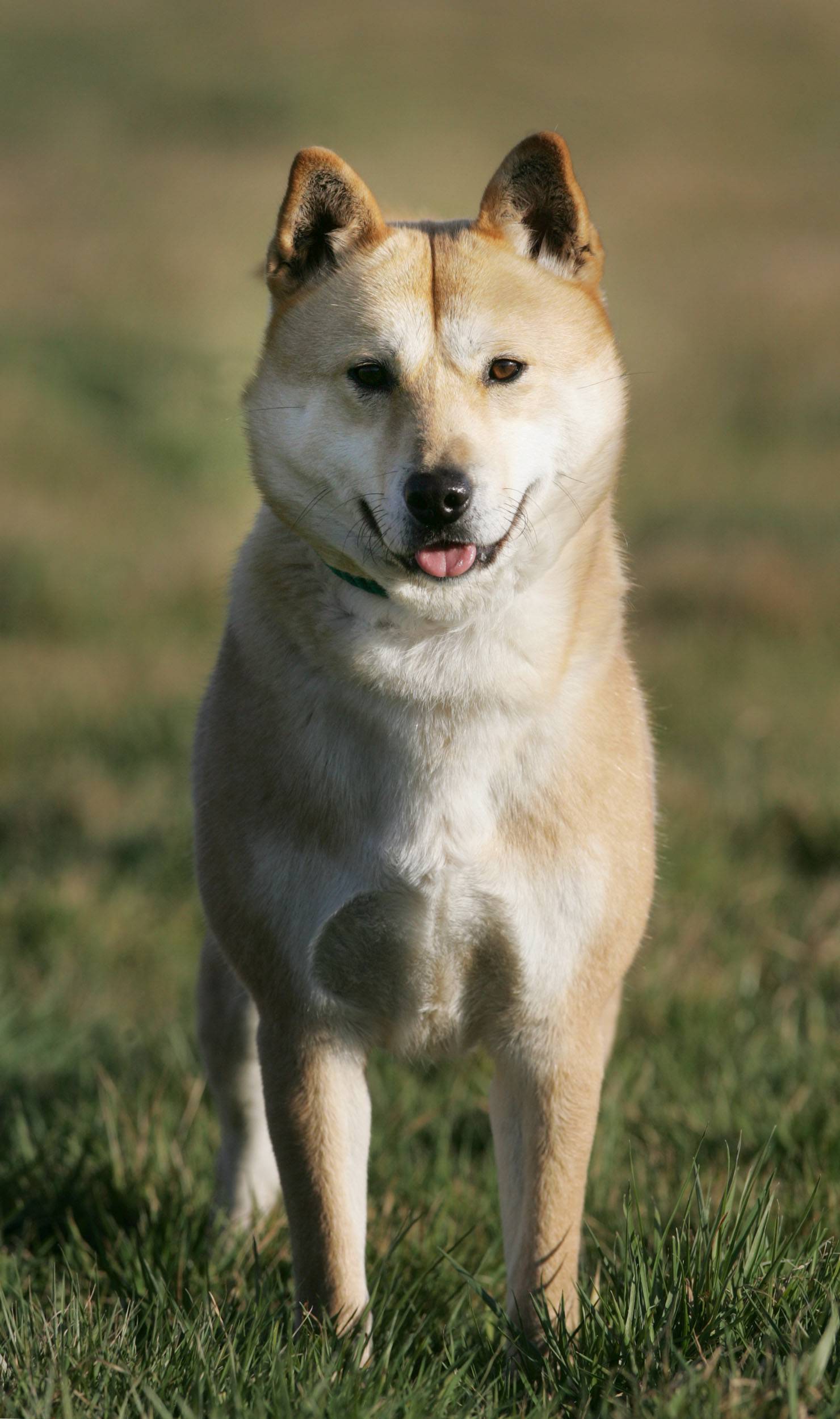
Korean Jindo Dog

There is no official written record- about the origin of the Jindo dog, but many authors agree that this breed has existed since several thousands of years ago in the Jindo Island, which is located at the southwestern tip of the Korean peninsula. But, There are different theories about its ancient origin and the most accepted indicates that the Korean Jindo Dog originates from Korea.; the race has been well-preserved in this island because of the difficulty in transport in the past. In Korea, the Korean Jindo Dog are called Jindo-Kae or Jindo-Kyon; Kae and Kyon are the Korean language words that mean dog.

The Korean Jindo Dog is a dog of medium size, well proportioned, used for hunting and as a guard. Its pricked ears and coiled or sickle-shaped tail give it a vivid expression of agility., Fortress, vigilance and dignity.

The Korean Jindo Dog has a very strong hunting instinct.; In addition to being bold, bravo, alert and careful, not allowed to tempt easily and is hot-headed. First and foremost, is extremely faithful to its owner. It is reserved with strangers. In general, is not affectionate with other animals, particularly with males. It also has a good sense of orientation. It is a dog of a single owner; He quickly agree to a new owner but it never forgets its ties with the previous owner who raised him since that was puppy. Stays clean and eat little.

The Korean Jindo Dog has a double layer of hair. The inner layer is smooth, dense, pale, But enough to sustain the outer layer. The outer layer is stiff and somewhat separated from the body. Compared with the hair covering the body, the hair of the head, members and ears is shorter, and neck, cross, back and trunk is longer. The hair of the tail and rear of the thighs is longer than the rest of the body.

The Korean Jindo Dog are famous for their ability to hunt, because of his bravery, cunning, and sensitivity.

In addition to the usual prey of hunting, his hunting prowess is displayed in a legend that tells that three Korean Jindo Dog, they killed a Siberian Tiger.

They have been used, mainly, in deer and wild boar hunting.

The Korean traditional game that is free of weapons, have a pack of Korean Jindo Dog, was a real treasure. They used to go hunting, a master and his pack, So when the dogs managed to capture their prey, one of the Korean Jindo Dog, I went in search of the master, to lead to the dam, while the rest of the pack stayed watching the prey from the appearance of scavengers.

The Korean Jindo Dog, He is known for his unwavering loyalty and friendly nature. Because of this, There is a false idea that a Korean Jindo Dog is loyal only to its first owner or who raised him from puppy. This idea is not entirely true, What is certain is that they tend to keep their love for the people who have taken care of them forever., Although change home, they still want their former masters.

Because the Jindo is an active and intelligent dog, It requires frequent interaction with people or another family dog. For some, the Jindo may even be too smart, since he usually thinks for himself. The same intelligence that allows the dog to learn commands and tricks very quickly may be too much to try to tame...

To be so lively, It is a dog that gets bored easily if it is alone or locked up for long periods of time., You can try to jump over a fence or wall, digging deep wells, and it may even be very destructive if left trapped at home. Because of this many Korean Jindo Dog is found in animal shelters, abandoned by owners who knew what they were getting into by accepting the responsibility that comes with owning a Korean Jindo Dog. It is a dog who doesn't like anything the water, above all flows, some of them don't even want to go out when it rains...

Jindo dog

โ–ท The world of Pets: Dogs, cats, birds, reptiles, amphibians

Types of Bichon
Bichons and related breeds

Content

It is called Bichon to a group of dog breeds that have as common characteristics being small, having long hair and a sweet and affectionate character.

It is believed that the Bichon term comes from Barbichรณn, as they were called the poodle puppies or Barbet and by similarity, the term was applied to these races.

The Federation Cynologique Internationale qualify the Bichon breeds within the Group IX, in a single section; section 1 Bichons and similar breeds.

In this section are included also 2 races which did not bear the name of Bichon but if share appearance and character:

The different varieties of Bichon

Maltese

Maltese

The Maltese is very sensitive, and you prefer a home that is stable. Content Assessments of Coexistence is important ...
Havanese

Havanese

Thanks to its nature, the Havanese is used in therapy with animals Content Assessments of Coexistence is important ...
Bichon Frise

Bichon Frise (Bichon ร ย  poil frisรฉ)

The owner of a Bichon Frize (Bichon ร ย  poil frisรฉ) You should avoid leaving it alone, suffers from anxiety when you're alone ...
Bolognese

Bolognese

The texture of the Bichon Bolognese coat is that of wool and should never be cut or clipped. ...
Coton de Tulear

Coton de Tulear

The Coton de Tulรฉar is very playful, to the point that the standard describes it by saying that "sometimes is ...
Lรถwchen

Lรถwchen

The Lรถwchen is the breed of dog that once had the honor, as the Portuguese water dog and ...

โ–ท The world of Pets: Dogs, cats, birds, reptiles, amphibians

Bluetick Coonhound
Estados Unidos Large-size hounds

Bluetick Coonhound
Photo: bscrittersitter.com
Like the other Coonhound, the Bluetick It is a race that much drooling and ladradores.

Content

History

The Bluetick Coonhound It is a breed of dog of the Group of Coonhound, usually bred in the South of United States. It originated in Louisiana, fruit of the cross of a Grand Blue of Gascony, Southwest of France dog, of a English Foxhound, of the American Foxhound, and Black And Tan Virginia Foxhound.

The Coonhound Bluetick, Although at the time it was registered, were not recognized by the United Kennel Club, as a separate breed until 1946. They are also recognized by the national canine Council of Australia and the Kennel Club of New Zealand. In April of 2009 the breed was accepted by the American Kennel Club and in December of 2009 He became eligible to compete in AKC Coonhound events.

Did you know??

The Bluetick can be found in various forms of pop culture. Emmylou Harris mentions a Bluetick named Gideon in her song "Red Dirt Girl", the mascot of the University of Tennessee is a Bluetick Coonhound named Smokey, and Bluetick star in a commercial for Miracle Whip.

Physical characteristics

The general body of the Bluetick Coonhound style is muscular and fast, thick but not built with stupidity. The head is rather high and tail carried over the back, no signs of fear or nervousness.

Read more

โ–ท The world of Pets: Dogs, cats, birds, reptiles, amphibians

Slovak Hound
Eslovaquia FCI 244 - Medium-sized Hounds

Kopov Eslovaco

The Slovak Hound (Slovenskรฝ Kopov or Slovakian Hound) It is a breed of dog of size medium hound type. Originally from Slovakia, was bred for boar hunting, not as a pet or exhibit it in dog shows (Showdog).

The club of the breed was created in Bratislava in 1988.

It appears listed by the FCI under breed number 244, group 6, Scent hounds, and related breeds, section 1.2 Medium-sized Hounds.

Promoted in the United States as a rare breed for those looking for a unique hunting dog.

Name "Black Forest Hound"apparently it was created in the US for marketing reasons, It has nothing to do with the Black Forest.

The Slovak Hound it is a typical hunting dog in appearance, with a muscular body, long legs, long tail, the ears are long and loose. The short coat is always black, with reddish markings (black and tan). Dogs must weigh around 16 kg and must be measured, approximately, 46 cm to the cross, females are slightly smaller. This is the ideal size is described in the breed standard.

The Slovak Kopov is more full-bodied than the American breed Black and Tan Coonhound, but it is lighter than other similar dogs from Poland, such as the Ogar Polski or Polish Hound which is the largest hound in the country. The eyes are always dark, deep, and they have a look of bravery and courage.

Although it is an independent dog, is intelligent, and is easy to train. It also, It is blessed with a great sense of direction.

The Slovak Hound It is a well-known hunting dog since ancient times., the breed was recognized for the first time in the year 1870. The races of Austrian Black and Tan Hound, Polish Hound and Hungarian hound (Transylvanian Scent Hound) is thought to they have formed part of their ancestors. The etymology of the name seems to allude to the color of the dog.

The Slovak Hound was developed and used as a hunting dog, There is an animal that sole have as a pet or is usually present to dog competitions (Showdog). It has been bred for hunting, especially wild boars, hence its fierceness. Although it is very common in its area of โ€‹โ€‹origin, rarely seen in other countries. The Slovak Hound is similar to other Eastern European hounds in appearance and hunting style. It is very faithful to his master, He is an outdoor dog...

โ–ท The world of Pets: Dogs, cats, birds, reptiles, amphibians

Chesapeake
USA FCI 263 . Retrievers

Chesapeake Bay Retriever

The Chesapeake (or Chesapeake Bay Retriever) It is a breed of dog that originated in the Chesapeake Bay, shores of Maryland in the East of United States.

They come from the race Newfoundland What, It was a gift from the English offered to the families who helped the victims of a shipwreck off the coast of Maryland., in 1807. These two pieces of Newfoundland, a male named โ€œSailorโ€ and a female named โ€œCantonโ€, they were rescued from the ship that sank in Maryland in 1807 and they are the parents of the Chesapeake Bay Retriever breed.

Read more

โ–ท The world of Pets: Dogs, cats, birds, reptiles, amphibians

Cretan Hound
Grecia Not recognized by the FCI

Kritikos Lagonikos

Content

History

The Cretan Hound (Kritikos Lagonikos), belongs to a primitive hunting breed, its existence on the Greek island of Crete is documented in writings for at least 3.500 years. Minoan civilization, which at its peak dominated most of the Aegean, the Cyclades islands and the eastern Peloponnese, bred and used it extensively.

Like a hunting and hunting hound, was always used to hunt down and capture wild hares and rabbits on the harsh terrain of his home island. The classical authors praised the cretan hounds (Kressai Kynes) as the best hare hunters known to man and in ancient times they were exported to the Greek colonies and other European countries, reaching Spain and the British Isles, to mix and improve local hounds.

These dogs have many peculiar traits and it is clear that they are a truly ancient species, probably the oldest breed of dog in Europe. Your ancestors may have come from Africa., but later they adapted to this unique habitat of Crete, an island remote enough to be home to other unique species of animals as well, as a unique subspecies of wild goat, the lynx and others.

Isolated there for millennia, these dogs were trained by function to perform a particular and challenging task and remain pure and unaltered to this day.

Due to a long history of fighting external enemies, the Cretans they are a freedom loving race, proud, independent, somewhat suspicious and even tested. They do not like to give their dogs to outsiders and even to this day the best specimens are kept hidden from public view..

Breeding practices are ruthless and the limited means of the past taught the locals to castrate all males, except the best, and to destroy the dogs that were not good for hunting. This resulted in an especially strong and healthy breed., but also very few in number. For years they were kept a secret and even now they rarely leave Crete, except on the occasions when they participate in international dog shows held in Athens, where visitors have the opportunity to meet a true living legend.

Physical characteristics

The Cretan Hound (Kritikos Lagonikos) is a slender dog, of body intermediate between a hound and a greyhound, especially light feet (that are oval instead of feline) and strong loin, specially adopted for fast reflexes and high speed on dangerous and rocky terrain.

The head wedge shaped, it is elongated and dry, with pointy, highly mobile ears that fold back like a greyhound's during the chase. (There are specimens with semi-standing or drooping ears, and the latter tend to be more similar to a sighthound; there is also a smaller variety, something like a Whippet, of which little is known).

The skin it is thin and tense all over the body, and of many colors. The tail is a very important characteristic of the breed, long and curved up, forming a loose or tight ring and covered with a longer hair brush underneath.

The Cretan Hound is slightly longer than tall, with medium angulations, legs slim and well muscled; the rib cage is spacious but neither too wide nor too rounded and does not reach the tip of the elbow. The back he's slim but powerful and there's a nice tuck, with the tips of the hipbones slightly prominent.

There must be a balance between speed and endurance characteristics, being the conformation a commitment that produces great agility. Flaccid individuals are not tolerated, clumsy and heavy.

Colors: pure white, cream, sand, leonado, grey, striped or black, bicolor or tricolor.

Size

  • Height: females: 50+ cm. (19+ inches) Males: 60+ cm. (27+ inches)
  • Weight: 20-30 kg (44-66 pounds)

Character and skills

The Cretan Hound uses both sight and smell in hunting and has a particular tendency to savor air or ground odor, to the point of sucking it off the pebbles and stones. When it perceives the prey, the tail moves in a circular motion and the hound stiffens moments before starting the chase.

Manso, affectionate, aristocratic, but deadly in pursuit, is a polite hound that comes to life in the presence of prey; clean, soft, elegant in form and movement, it is never vulgar or overwhelming in gestures.

Slightly reserved with strangers, is naturally inquisitive and tolerant.

The Kritikos Lagonikos lives happily with other domestic animals, but it will mercilessly chase the neighbor's cat.

It's excellent, friendly and very affectionate with children. He rarely barks but will alert strangers to his home; on the farm he will kill mice and rats and is not indifferent to feather hunting, but the latter use will make the breed lazy and disorderly in hunting; your constitution needs the challenge of true persecution.

Make sure you are the calm leader, but firm and sure of this dog, providing enough leadership and exercise to produce a well-balanced canine companion. Proper communication between the dog and the man is essential.

โ–ท The world of Pets: Dogs, cats, birds, reptiles, amphibians

St. Hubert Hound
Bรฉlgica FCI 84 . Large-sized Hounds

Sabueso de San Huberto

The St. Hubert Hound It is the dog with the more developed nose around the globe

The St. Hubert Hound (in English, known as Bloodhound) It is a breed of dog originally from Belgium, more specifically in the region of the Ardennes. It is one of the different breeds of hound recognized by the FCI in your group 6.

Traditionally the monks of the Saint Hubert monastery as the creators of the race.

Read all about this race by clicking on: Bloodhound.

  • Alternative names: Chien de Saint-Hubert / St. Hubert Hound / Bloodhound / Bluthund
  • Group 6 / Section 1.1 – Large-size hounds

Dogs breeds: St. Hubert Hound