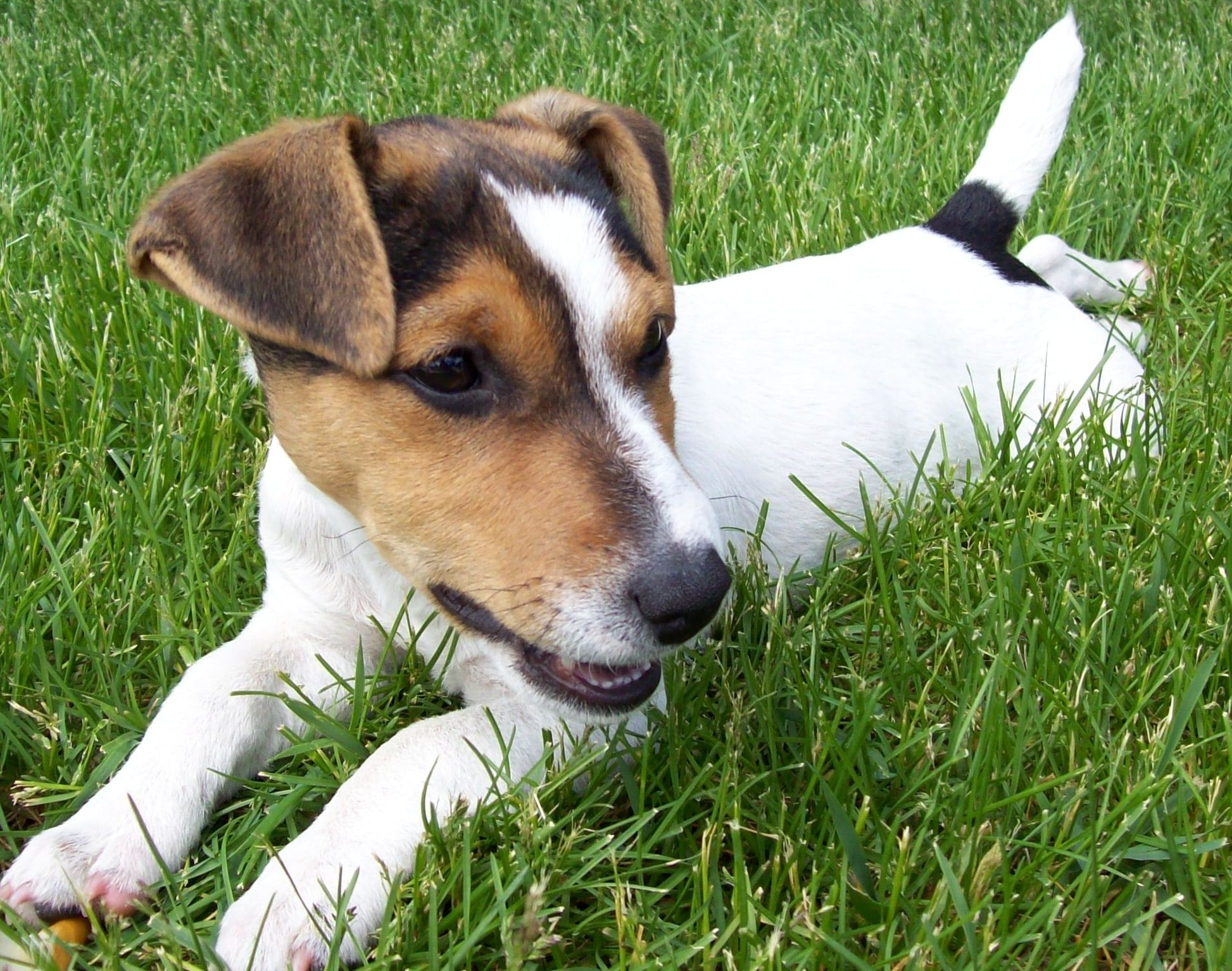
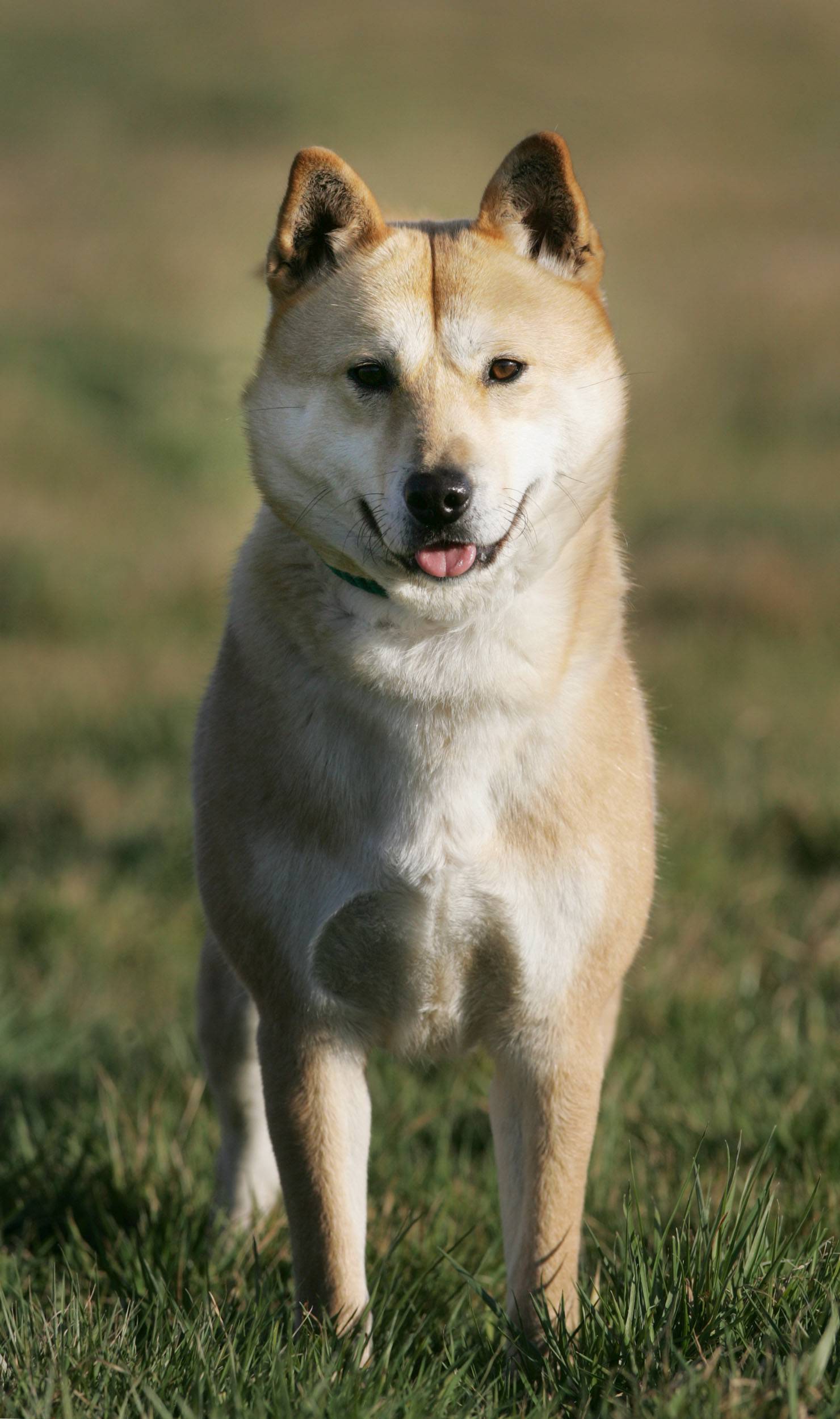
▷ The world of Pets: Dogs, cats, birds, reptiles, amphibians

Japanese Chin
FCI 206 . Japan Chin and Pekingese

It's a very special race, they have very feline attitudes, is more, It is said to have the character of a cat, and you will see why...

Content

Characteristics "Japanese Chin"

Coexistence is important that you have with your new friend. Before considering the acquisition of a dog of the breed "Japanese Chin" you know certain factors. Not all breeds of dogs are apt to live in an apartment, you must take into account his character, their need for exercise, their interaction with other pets, their care and if you have small children, their level of tolerance towards them.

Adaptation ⓘ

5,0 of 5 stars (based on 1 review)

friendly dog ​​ⓘ

3,0 of 5 stars (based on 1 review)

hair loss ⓘ

3,0 of 5 stars (based on 1 review)

Affection level ⓘ

5,0 of 5 stars (based on 1 review)

Need for exercise ⓘ

1,0 of 5 stars (based on 1 review)

Social need ⓘ

5,0 of 5 stars (based on 1 review)

Home ⓘ

5,0 of 5 stars (based on 1 review)

Toilet ⓘ

2,0 of 5 stars (based on 1 review)

Friendly with strangers ⓘ

5,0 of 5 stars (based on 1 review)

barking ⓘ

2,0 of 5 stars (based on 1 review)

Health ⓘ

3,0 of 5 stars (based on 1 review)

Territorial ⓘ

4,0 of 5 stars (based on 1 review)

Cat friendly ⓘ

5,0 of 5 stars (based on 1 review)

Intelligence ⓘ

3,0 of 5 stars (based on 1 review)

Versatility ⓘ

3,0 of 5 stars (based on 1 review)

Child friendly ⓘ

2,0 of 5 stars (based on 1 review)

Surveillance ⓘ

3,0 of 5 stars (based on 1 review)

joy ⓘ

4,0 of 5 stars (based on 1 review)

History

The true origin of the Japanese Chin It is still controversial, Although a general consensus, concludes that originated in Spaniela.

These dogs were brought to Japan around year 732. Some maintain the ancestors of these dogs first arrived to Japan around the year 732, as a gift from royalty Korea, while others argue that Japanese Chin copies were offered as a gift to the Empress of Japan in the middle of the sixth century, other theories assure that they arrived in Japan in the year 1000.

But beyond all the controversy regarding the origin, all agree on one thing, the Japanese Chin, He is a real "Japanese", because it reflects the Japanese sensitivity to detail.

The Japanese established various breeds of dogs, with a defined purpose that was work, that Japan considered something different, different from a «dog«, He was considered a work on farm animal, for hunting, to care for cattle, etc., but the Japanese Spaniel, it was something very special because it was strictly considered a companion dog.

His appearance and distinctive personality was quickly captured the hearts of the Japanese and that led to ownership of these dogs to be limited to persons of Royal and noble blood.

Due, every noble House was raising its own standard, why there are many variations of the Japanese Spaniel, in terms of size, the density of the layer, the eyes, the personality…

Once the race was introduced in the West, a strong desire of the people by the smaller copies (those who weighed a maximum 4,5 Kg.), He carried that size was the most popular and became the official standard of various canine clubs around the world.

Professor Von Ludvic Schulmuth studied canine origins from a discovery of skeletal remains of dogs found in human settlements dating back to the eighth millennium BC., in the Gobi desert. On the basis of the information collected, he created a genealogical tree of Tibetan dogs which gathered very interesting information concerning the origin of certain breeds that are today very popular.

The Gobi Desert is a large desert region between Spaniela northern and southern Mongolia. Can be one of the deserts, or desert areas largest and most important worldwide. Around it the Altai Mountains and the steppes of Mongolia in the North, the Tibetan plateau and the northern Spaniela plain to the southwest. The word gobi means "desert".’ in Mongolian. The Gobi is composed of different geographic and ecological regions, based on its variations of climate and topography.

Historically, the Gobi desert He is noted for being part of the Mongol Empire and the location of several important cities along the Silk Road.

Occupying the 30% of the national territory, great Gobi Mongolia covers capricious montes, sandy dunes, vast plateaus, steppes with its aromatic herbs and, Since then, a varied animal world, within the canine ancestors found Professor Ludvic Von Schulmuth.

Ludvic von Schulmuth defined as origin of certain dog breeds a former denizen dog of the Gobi desert, whose remains were found in places where stored manure or litter, and called them "Gobi Desert Kitchen Midden Dog", Several lines arose from this animal that gave rise to various breeds.. These may include, a small dog with soft hair and floppy ears that was the ancestor of Tibetan Spaniel, the Japanese Chin and Pekingese. Another branch that descends from the "Gobi Desert Kitchen Midden Dog" gave rise to the Continental Toy Spaniel and to the Chihuahua longhair. Y, another branch of the same dog of the Gobi desert, gave rise to the emergence of the Pug and Shih Tzu.

There is also some documentation that indicates Portuguese sailors introduced the breed to Europe in the century 17 through the gift of some to Catherine of Braganza, Queen Consort of King Charles II of England, but there is more evidence that the first Japanese Spaniel which opened steps behind borders, It was a gift of the Emperor of Japan offered a U.S. Navy officer, Matthew C. Perry, When he visited East in 1853 to open bilateral trade. The naval officer, a litter seven Japanese took Spaniel, and to reach their land only survived two, and to whom he gave them is something that is still not known for sure.

What we do have full certainty of is that the Japanese Spaniel, also known as the Spaniel Japanese has been the dog of Japanese royalty.

Physical characteristics

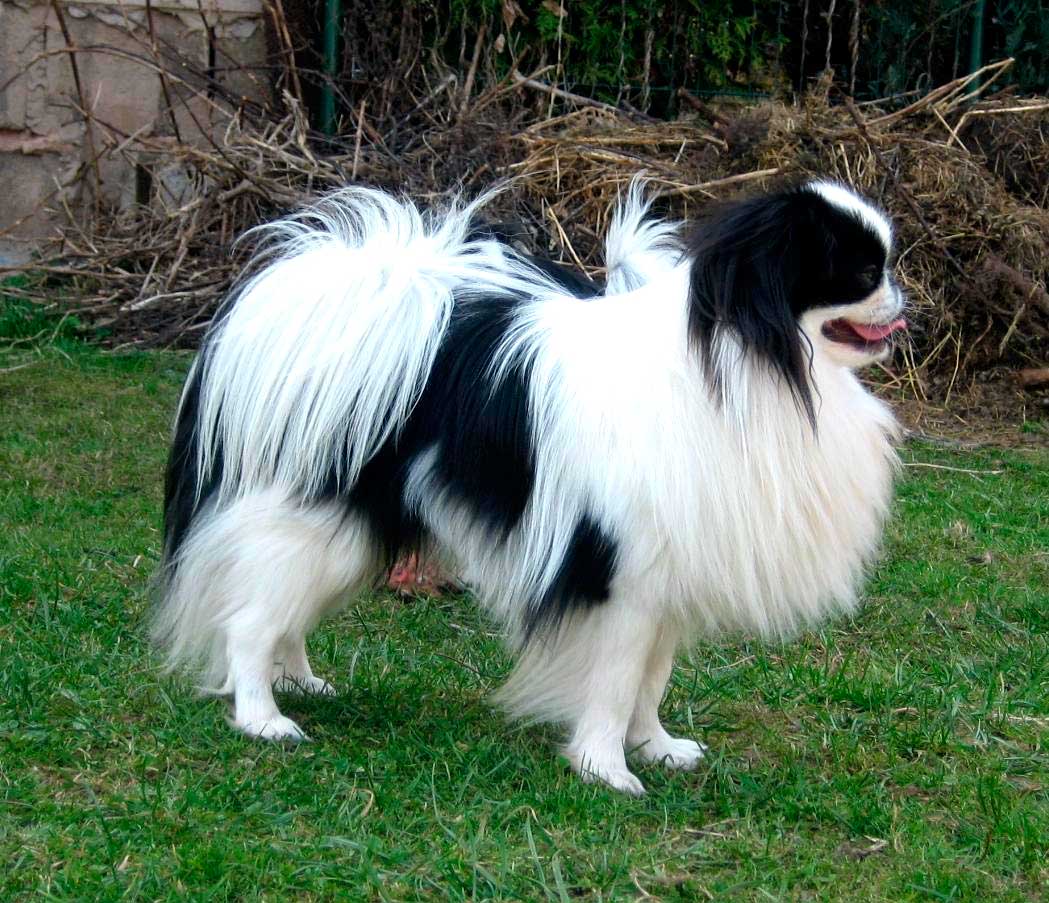
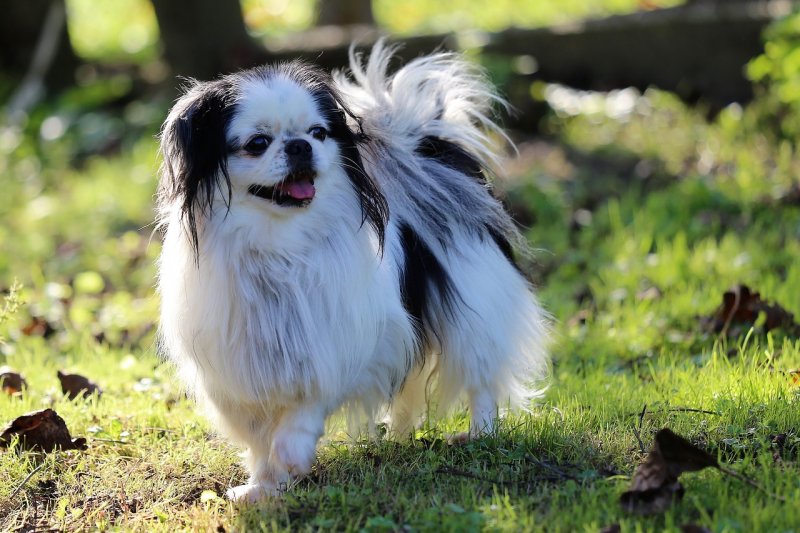
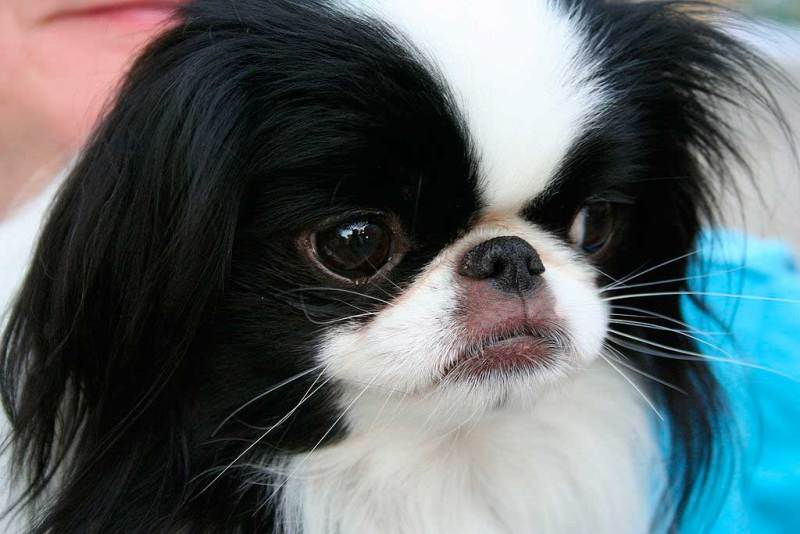
This small dog of friendly aspect, It has a very similar appearance to that of the Pekingese, But unlike, its legs are longer, and the color of the fur is different; It may be black and white or red and white. The fur is soft and long; the large, dark eyes, well separated from each other; the tail, well endowed with hair, relies on the back; the ears are triangular in shape and small size; the snout is short and flattened, and large heads relative to their body.

Character and skills

According to the classification made by Stanley Coren after analyzing the responses of more than 200 the AKC judges ("The Intelligence of Dogs", Stanley city, Ediciones B, 1995), the Japanese Spaniel is No. 62 from the list.

The Japanese Spaniel barks only when necessary in order to alert the family of the arrival of a visitor or something out of the ordinary, then is a quiet breed.

It's a very special race, they have very feline attitudes, is more, is said to have the character of a cat, and you will see why...

The Japanese Chin is always alert, He is intelligent and independent, and it uses its feet to wash and dry your face. Other feline features are your preferences for the rest in elevated surfaces, as the backups of the sofa and chairs. He has a spectacular ability to walk across a tea table without knocking over any objects., If that doesn't make it a cat total!!!

These dogs were bred and trained for the purpose of loving his people. Although it is usually a quiet dog, He also known for the amount of mischief that make, Welcome to all, like the so-called "Spin Chin", they go around quickly in a circle as if they were dancing but resting only on their hind legs, While with their Forelegs dejan them interwoven and shaking them up top down at full speed, they are very funny.

The Japanese Spaniel is an excellent companion dog., It is affectionate and loyal to his owner and, normally, happy to see other people, though some mistrust strangers. It is a dog who prefers the family environment, but they adapt very well in new situations and are often used as therapy dogs due to this trait and their love of people.. Socialization at an early age contributes to his temperament of develop optimally, is an emotionally balanced dog, by nature, but it is important to contribute.

Some usually "sing", They produce a noise that can range from a minimal trill to a high pitch and quite low-pitched for their size., almost operatic quality that sounds like “booooooo”. On race Basenji in the right column you can see a video of the dog singing, it is very similar to what the Japanese Chin.
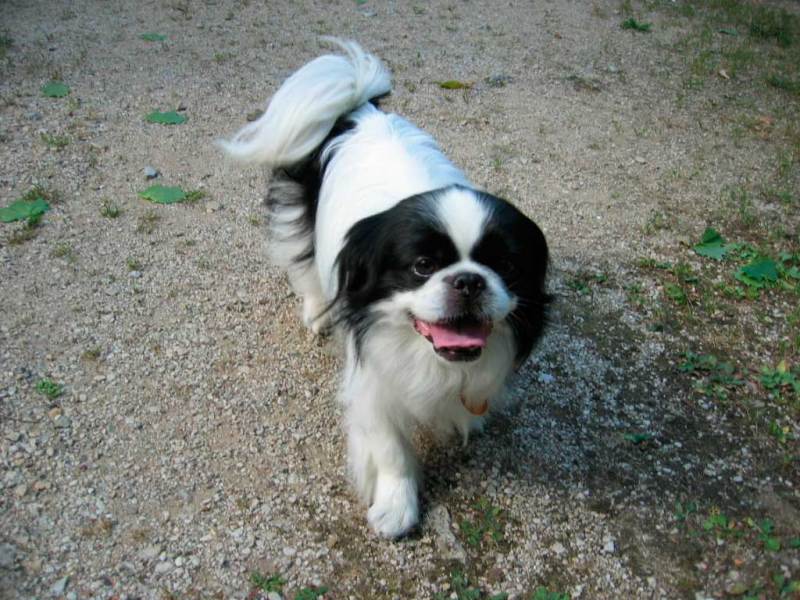
Health

The orbits of the eyes of large contribute to moisture in the face and the folds of skin around the crushed nose and facial area, You can trap moisture and cause fungus problems. The face should be cleaned from time to time with a damp cloth and the folds, with a cotton swab.

Diet is an important factor in the health and condition of the Japanese Chin, many specimens may be allergic to corn, for example.

Due to their small size they don't need too much exercise, although yes, requires frequent walks, because they are active and love to be outdoors. They adapt well to life in an apartment or small homes. On the other hand, their fur should brush your daily, as it is often about getting caught.

Japanese Chin has a long life, to round the 15 years, but in many cases can be extended to more or less the 18 years of age.

They weigh between 1,8 and 3,3 kand and measured at the cross, of 21 to 25 cm.. The litter is usually fairly small, of between 3 and 4 Puppies.

Images "Japanese Chin"

credits:

1. Japanese Chin, young male by Pointer8 / CC BY-SA
2. A Japanese Chin by LostinTexas (Alex Archambault) – Flickr
3. A red Japanese Chin by LostinTexas (Alex Archambault) – Flickr
4. Japanese Chin with tongue hanging out over crooked teeth by OliviaCC / Public domain
5. A Japanese Chin puppy. By Rachel Harris (RLH) from Scottsdale, THE, U.S.A. / CC BY
6. One of our neighbours has this small Japanese Chin. By Mark Hillary
7. Japanese Chin by https://www.needpix.com/photo/download/1697007/dog-japanese-chin-animal-pet-sweet-white-black-nature-sunset
8. Japanese Chin by Tingflorance / CC BY-SA
9. Japanese Chin by Arnaud 25 / Public domain

Videos "Japanese Chin"

Type and recognitions:

  • FCI CLASSIFICATION:
  • Group :
  • Section : . .

Federations:

FCI , AKC , ANKC , CKC , ​KC , NZKC , UKC

FCI breed standard Japanese Chin

FCIFCI - Japanese Chin
Spaniel

Alternative names:

1. Japanese Spaniel, Chin (English).
2. Épagneul japonais ou chin (French).
3. Chin (German).
4. Chin (Portuguese).
5. Chin Japonés, Chin (español).

▷ The world of Pets: Dogs, cats, birds, reptiles, amphibians

Jura Hound (Bruno Jura Hound)
SuizaFCI 59 . Medium-sized Hounds

Sabueso del Jura

The Jura Hound It is very distant with strangers and needs firm handling if kept as pets.

Content

History

In the year of 1882 set a standard for each of the five existing varieties of the Swiss Hound. In 1909 reviewed these standards confirming the total disappearance of the Thurgau Hound.
The 22 in January of 1933 established a uniform standard for the 4 varieties of the Swiss Hound. The original range of the Jura hound type St. Hubert has now disappeared.

The Jura Hound It is a domestic dog developed in the middle ages for hunting in the Jura mountains, on the border between Switzerland and France.

Already in Roman times these hounds were known in Switzerland.

The Jura Hound He is known for his tracking abilities and like other hounds he has the ability to follow a perfume for miles through the rocky terrain of the border mountains between France and Switzerland.. It is mainly used for the hunting of the Hare.

There are four varieties of Swiss Hound:

Most kennel clubs and organizations treat these breeds as a single breed with multiple varieties..

Physical characteristics

These dogs have a large skull, so their heads seem to be much larger than its small robust bodies. Their ears are flexible and hang down around their muzzle and eyes, giving it a warm and friendly appearance. Your body has some wrinkles around the chest and neck area. Their bodies are elongated and thin and long tail. They are usually a color dark bronze or a reddish Fawn.

Its size is similar to the Bernese Hound, but it differs in the width of your head, being associated with the St. Hubert Hound.

Their life expectancy is of 12 to 13 years, and can weigh between 15 and 20 kg, with a height of 43 to 58 cm. up the cross.

Character and skills

These dogs can be known as little adventurers. They like to explore new and interesting terrain in which have never been before. Son, final ideal for anyone that loves to go on walks and exercise, Since in that environment be shown fully happy. As good Hound, anything, even if it is in its territory.

It is used mainly for hunting hare and wild boar..

They are very protectors and they lash out against anyone trying to do harm to their owners. They are very distant with strangers and need firm handling if kept as pets.

Well trained is a loving, friendly dog with children.

«Jura Hound» images

«Jura Hound» Videos

Type and recognitions:

  • FCI CLASSIFICATION:
  • Group :
  • Section : . .

Federations:

  • FCI – Group 6: Scent hounds, and related breeds. – Section 1.2: Medium-sized Hounds.
  • UKCScenthounds

FCI breed standard "Jura Hound (Bruno Jura Hound)"

Origin:
Switzerland, France

Date of publication of the valid original standard:
28.11.2001

Use:

It is a small game hound that hunts hares, deer, foxes and sometimes wild boars. He is an independent hunter by hunting with a bark. Searches and corners its prey with great safety even in difficult terrain.


General appearance:

It is a dog with medium height at the withers. Your body structure indicates strength and tenacity. Its slim head with long snout and long ears give it an expression of nobility.

There are four varieties of Swiss Hound :

  • Bernese Hound
  • Jura Hound
  • Lucerne Hound
  • Schwyz Hound

IMPORTANT PROPORTIONS :

• Body length : Height at withers = approx. 1.15 : 1.
• Height of the withers : chest depth = approx. 2 : 1.
• Length of the nasal shank : skull length = approx. 1 : 1.


Behavior / temperament:

Lively and passionate about hunting. Sensitive, manageable and faithful.

Head:

---

Cranial region:
  • Skull : Long, narrow, delgado, noble. Bulging skull, visible occipital protrusion. The direction of the longitudinal axis of the skull and the muzzle shows a slight divergence. No frontal groove, no folds or wrinkles.
  • Depression links (Stop) : Not too developed.

facial region:

  • Truffle : Completely black, well developed; nostrils wide open.
  • Snout : Nobly developed, narrow ; it is not square or pointed ; the muzzle is straight or very slightly convex.
  • Lips : Moderately developed, the upper lips perfectly cover the lower jaw ; slightly open corner.
  • Jaws / Teeth : Powerful jaw. Powerful scissor bite, regular and complete, that is, the upper incisors overlap the lower ones without leaving space between them and the teeth are implanted vertically in the maxilla. Pincer bite allowed. The lack of one or two PM1 or PM2 is acceptable (premolars 1 or 2) . M3 are not taken into account (molars).
  • Cheeks : Loose, non-protruding supraciliary arches.

Eyes : They are more or less light or dark brown depending on the color of the coat ; they are medium in size and slightly oval. The edges of the eyelids are well pigmented. The eyelids are well adherent. The expression is sweet.

Ears : Placed below the eye line, in the posterior part of the cranial region and never implanted in its maximum width. Its length must reach at least the tip of the nose. The pinna is not prominent. The ears are thin. He wears them down, bent and twisted ; they are rounded at the bottom and have a fine, soft coat.

Neck:

Long, elegant, with good musculature ; throat skin is loose without forming a noticeable dewlap.

Body:

  • top line : The neck, the back, The rump and tail form a harmonious and noble line.
  • Cross : Bit strong, free and elegant neck insert.
  • Back : Firm and straight. : Muscular and slightly arched.
  • Rump : Elongated, extends the line of the back harmoniously and descends gently. It is not higher than the cross. The crest of the iliac bone is not too prominent.
  • Breast : Deeper than wide, well descended, reaches to the tips of the elbows. Elongated rib cage with slightly arched ribs.
  • Bottom line and belly : Belly slightly pulled back ; full flanks.

Tail:

Inserted in the extension of the croup. It is of medium length and tapers towards the tip ; at its end it has a slight incline up ; noble. In general, it remains hanging at rest and when walking calmly, without showing an important bend ; When he is attentive or in action he carries it along the line of his back , but never resting in it nor in a curled way. Is well covered with hair, but it doesn't have a spike shape.

Tips

PREVIOUS MEMBERS :

  • As a whole : They are well muscled, thin and not heavy in appearance. Seen from the front they are parallel and from the side they look vertical ; his bones are strong with his feet pointed forward.
  • Shoulder : Long oblique shoulder blades, closely linked to the rib cage. The ideal angulation of the scapulohumeral joint is approximately 100°.
  • Arm : A little longer than the shoulder blade, placed obliquely, closely attached to the chest. His musculature is fine.
  • Elbows : Naturally glued to the side.
  • Forearm : Straight, strong, delgado.
  • Carpo : Strong, wide metacarpus : Relatively short; Seen from the front it is located on the perpendicular line of the forearm; seen from the side it is slightly inclined.
  • Front feet : Rounded, with compact fingers ; hard and rough pads ; strong nails whose color depends on the color of the coat.

LATER MEMBERS :

  • As a whole : They have strong muscles and are in a balanced relationship with the forelimbs ; seen from behind the hind legs are vertical and parallel.
  • Thigh : Long and oblique, powerful although his muscles are thin. The angulation of the coxofemoral joint is approximately 100°.
  • Knee : No inward or outward deviations. Angulation of the femoral-tibian joint approximately 120°.
  • Leg : Relatively long, thin, visible muscles and tendons under the skin.
  • Hock : Tibiotarsal joint angulation approximately 130°.
  • Metatarsus : Pretty short, placed vertically and parallel. Without spurs, except in countries, in which amputation is not allowed by law.
  • Rear feet : Rounded, with compact fingers, hard and rough pads ; strong nails whose color depends on the color of the coat.

Movement:

It is unfolded, regular, harmonious and with good scope. Has good impulse from the hindlimbs. Drive the limbs parallel and straight. The cross moves smoothly and regularly up and down, the back remains straight and the head and neck wobble slightly from side to side.

Mantle

SKIN : Fina, flexible, well adherent, whose color varies in each of the four varieties.

• Bernese Hound : Skin is black under black hair and blackish-white marbling under white hair.
• Jura Hound : She is black under black hair and lighter under tan hair..
• Lucerne Hound : She is black under black hair and lighter under blue-flecked hair..
• Schwyz Hound : It is dark gray under the orange hair and blackish-white marbling under the white hair..

HAIR : Is short, smooth, thick, very fine on the head and ears.

COLOR :

• Bernese Hound : White with black spots or a black saddle-shaped spot. Tan color from pale to intense over the eyes, cheeks, on the inside of the ears and around the anus. Sometimes very lightly splattered (black splash).

• Jura Hound : Tan with black cape, sometimes nuanced black or black with tan over the eyes, cheeks, around the anus and on the extremities ; sometimes with a small white spot on the chest ; this stain may be splattered (black or gray splashes).

• Lucerne Hound : Called blue, with a mixture of black and white hairs, intensely splashed, with black spots or a saddle-shaped spot ; tan color from pale to intense over the eyes, cheeks, on the chest, around the anus and on the extremities ; a black cape is allowed.

• Schwyz Hound : White with orange or orange "saddle" spots, sometimes with orange splashes ; an orange coat is allowed.


Size and weight:

Height to the cross :

  • Males : 49-59 cm..
  • females : 47-57 cm No tolerance.


Fouls:

Any deviation from the aforementioned criteria is considered as a fault and the severity of this is considered to the degree of the deviation to the standard and its consequences on the health and well-being of the dog..

• Rough appearance, vulgar, weak body structure.
• Discordant proportions between body length, the height of the withers and the height of the chest.
• Skull too wide, too convex or too flat.
• Stop too marked.
• Very short or very long snout, too square or pointed.
• Concave nasal bridge.
• Lack of more than two premolars PM1 or PM2. Los M3 (molars 3) are not taken into account.
• Thick lips.
• Light eyes, acute expression, non-adherent eyelids.
• Ears that are too short or flattened, thick or set very high.
• Very short neck.
• Double chin too marked.
• Saddled or arched back (carp back).
• Croup too inclined or too short.
• Rib cage not deep enough, too flat or barrel-shaped.
• Retracted belly, fallen flanks.
• Tail with poor insertion, carried too high, very bent, stooped, very coarse or spike-shaped tail.
• Extremities with bones that are too thin or in a bad position.
• Very sloping shoulders, arm too short.
• Weak carpal joints.
• Insufficient angulations of the hind limbs ; cow or barrel shaped limbs.
• Dewclaws on the hind limbs, except in countries in which amputation is not permitted by law.
• Rough coat, not smooth.
• Flaws in color and markings.

  1. Bernese Hound : Too many black splashes on the white. Tan or white on the outside of the ears.
  2. Jura Hound : Uniform color. Noticeable white patch or heavily speckled patch on the chest.
  3. Lucerne Hound : Lack of « blue » splash. Tan on the outside of the ears.
  4. Schwyz Hound : Too many orange splashes on the white. Uniform color. White on the outside of the ears.

• Slightly fearful or aggressive behavior.

MISS PLAYOFFS

• Excessively fearful or aggressive dog.
• Atypical general appearance of the breed.
• Completely depigmented nose.
• Upper or lower prognathism, incisor arcade deviated.
• Ectropion, entropion (even if it had been operated).
• Horn tail, threaded, knotty the hook.
• Size above or below tolerance.

Any dog ​​showing clear signs of physical or behavioral abnormalities must be disqualified..


N.B.:

Males should have two normal-appearing testicles fully descended into the scrotum..

Source: F.C.I - International Cynological Federation

Varieties of «Swiss Hounds»

The four varieties of Swiss hounds have their own specific hunting characteristics:

– The Bernese Hound, with her beautiful throat ("the howler of the Jura"), demanding, mainly used for hares;
– The Jura Hound, an excellent recuperator
– The Lucerne Hound, reminiscent of Small Blue Gascony, he is an active and passionate dog that hunts deer very well;
– The Schwyz Hound, less widespread outside of Switzerland, is reserved for rabbits and hares.

Alternative names:

1. Bruno Jura Hound (English).
2. Bruno du Jura (French).
3. (frz. Bruno du Jura) (German).
4. Sabujo Bruno de Jura (Portuguese).
5. Fernando del Jura, Bruno del Jura (español).

▷ The world of Pets: Dogs, cats, birds, reptiles, amphibians

Jämthund
Suecia FCI 42 - Nordic Hunting Dogs
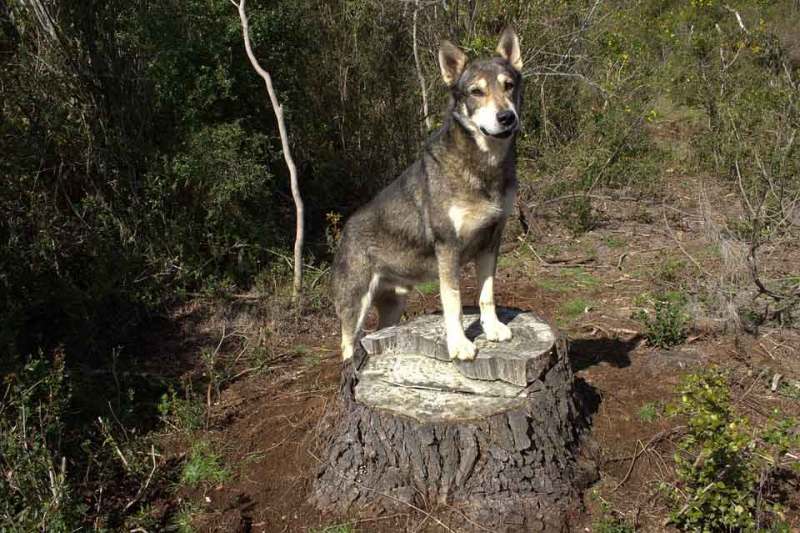
Jämthund

Still very old, the Jämthund was not recognized until the year 1946, It was previously confused with the Gray Norwegian Elkhound

Content

History

Only in 1946 the Jämthund (Jämthund) was recognized as a breed. But, the Jämthund it is a very old breed of dog, which is already known since the north of Sweden is populated.

The reason for this belated recognition is that the small Gray Norwegian Elkhound and the jämthund they were judged by the same race. At the end, this trial turned out to be untenable. The Jämthund mainly used to hunt moose, but it has also been used to hunt bears and lynxes, especially in the past.

Today the FCI recognizes three different moose dogs:

All three are assigned to buffers and dogs of the original type (group 5) and in them they are assigned to the section 2 «Nordic Hunting Dogs».

Physical characteristics

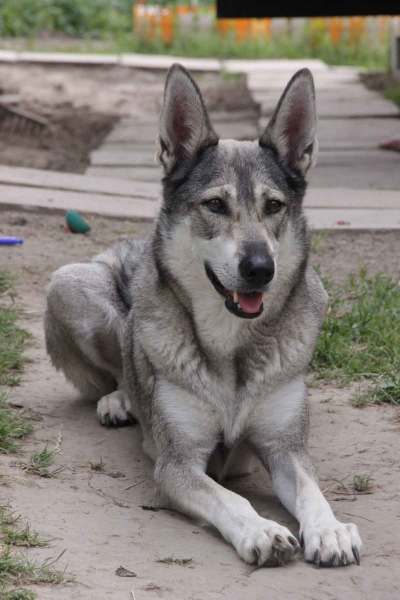
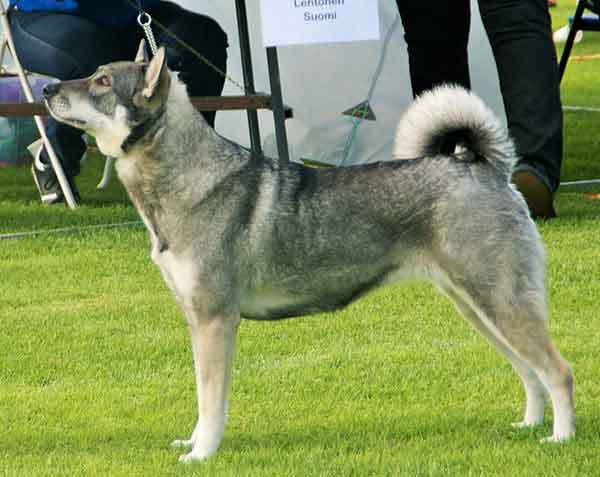
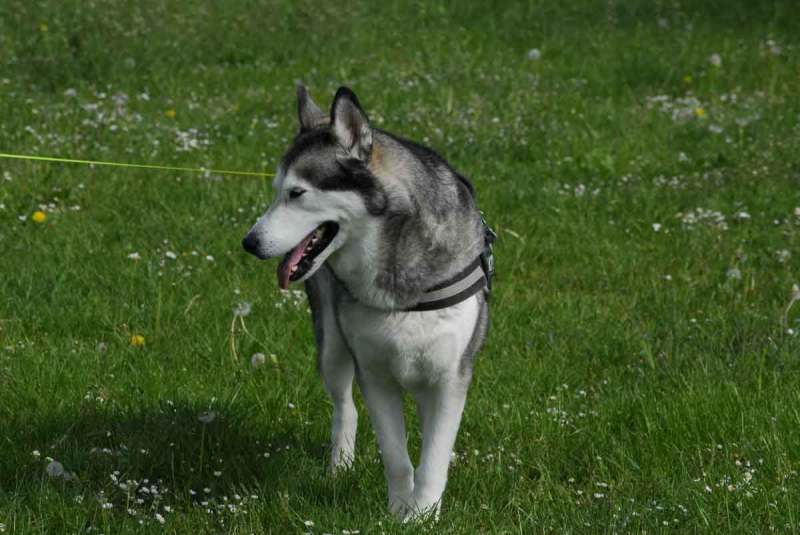
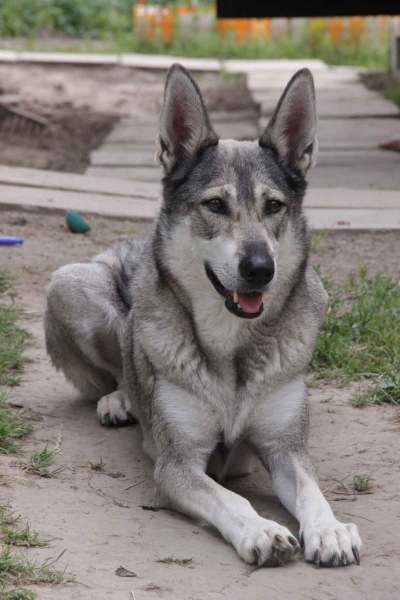
The Jämthund He is respected for his wolf-like appearance and his great and powerful stature. With a height at the cross of 57 to 65 centimeters and a weight of about 30 kg, It is the largest and heaviest of the three moose dogs recognized and at the same time the largest Nordic hunting dog. Throughout its long history, the Jämthund not only faced wolves, lynx and elk, but also adult bears, whom he faced fearlessly when hunting.

Character and skills

Blind obedience is a long way off for this self-assured and independent pedigree dog from the far north. After all, the Jämthund in Sweden has been hunting moose, lynxes and even bears bravely and on their own for thousands of years. Although he always keeps in touch with his hunter, this smart and independent breed doesn't need your orders.

Strong dog personality with many talents

Dog lovers who are interested in this breed should know that the practice of certain commands sometimes requires some effort. With stupid repetitions or even with force and violence you will not achieve anything with the Jämthund.

But, if you accept his character and thoughtful nature and have the skills to deal with such a strong personality, you can certainly train him to be a versatile companion and working dog. With inventiveness, patience, consistency and sensitivity, the persistent and powerful Jämthund can be trained not only to be a versatile hunting dog, but also an excellent herding dog, guardia, sled and rescue.

Very experienced hunting dog

Despite relatively late recognition as a separate breed, the origin of Jämthund goes back a long time. In the province of Jamtland, in central Sweden, which is decisive for his name, the type of dog has been known for thousands of years.

Even the first settlers in northern and central Sweden had dogs to hunt bears., Moose, lynxes and wolves. Hunters appreciated above all their enormous stamina and physical strength., with which the dog, independently and bravely, went out looking for game.

Today it is regarded in hunting circles as a fearless and energetic search dog., which is not only suitable for hunting loose hounds, it can also be used for hunting guide dogs. Search and pursue game in the dense forests of Scandinavia and remain silent until you have placed the animal. Only then does he give the hunter a signal through his barking that he can hit the target.. This type of hunting is called «standing still«.

The Jämthund as a family dog

Also as a family dog ​​the Jämthund it is very suitable, as long as enough space is given to the independent nature and great desire for freedom of this original hunting dog. So he's considered friendly, balanced, calm and fond of children. After an appropriate period of acclimatization, also accepts conspecifics, cats and other pets without any problem.

He meets strangers with a certain distrust according to his natural instinct for vigilance and protection.. Does not act nervous or aggressive. There is also no denying a certain joy of barking to this Nordic hunting dog.

Breeding and buying a Jämthund

In Sweden the Jämthund has long been known beyond hunting circles and is popular as a versatile utility and companion dog. In other countries of the world, However, the swedish pedigree dog is very rare. Although you can find breeders in Germany, Great Britain, the Netherlands and North America, searching and waiting for a purebred puppy can sometimes take years. So, it is advisable to contact a registered association for Nordic dogs, that can help you find breeders in Scandinavia.

What do I have to consider when buying a Jämthund?

Although the distance to the breeder is long, those interested should take the time to get to know the kennel, the animals and the breeder in detail before buying. Don't take home the first best puppy, Before making several visits, convince yourself that it is a serious parenting, that dogs are raised with a lot of experience and love.

In addition to health tests, vaccinations and the presence of all important papers and a pedigree, animals must grow up in a close relationship with their breeder from birth. The socialization of a Jämthund already begins in the first weeks of life. Living with his mother and brothers, but also with the breeder's family, puppies learn the most important rules of the nest.

What demands does the Jämthund to the owner?

One Jämthund need plenty of exercise. You must also be sufficiently disabled both physically and mentally. A life in gated communities, in the city and without a garden, it certainly doesn't do this kind of dog justice.

The Jämthund feels more comfortable in rural areas. There you can move freely and spend a lot of time in nature. If not used for hunting purposes, you should definitely offer alternative activities. Possible are examinations for companion dogs, dog tournaments or rescue dog training. Also bike rides, long walks or sledding shots in winter are suitable to satisfy the great momentum of movement of the Jämthund.

Is a suit for me Jämthund?

Before you start looking for a suitable breeder, you should ask yourself the following question: Is this nordic pedigree dog suitable for me and my life?

This becomes especially important if you don't want to keep Jämthund like a hunting dog, but exclusively as a family dog. In this case you must make sure that you have enough experience, time and space to satisfy this demanding and energetic four-legged friend.

When asking if this dog is a good match for me, of course you should also keep an eye on the costs. After all, owning a dog costs not only time but also money. In addition to the purchase price, dog tax and insurance, there are also equipment expenses, watch out, food and visits to the vet.

You may be interested in our article on this topic: Getting the puppies used to the new home: Basic equipment and tips.

What food does the Jämthund need?

More important than the price of the food should be the price of the ingredients. This does not mean that the most expensive food is always the best.. Much more important is that the composition is adjusted to the needs of your dog and these depend on quite individual criteria such as weight, age, activity level and health status.

Basically, the food of Jämthund, like all the other dogs, should consist mainly of meat. It is the most important energy supplier for the descendant of the wolf and must constitute at least the 80 percent of the diet. The meat is complemented with vegetables, important fruits and fats, that provide an optimal supply of nutrients.

The cereals, the sugar, artificial flavor enhancers and chemical preservatives, on the other hand, have no place in dog food, either dry food, wet food, even cooked or raw food (BARF).

«Swedish Elk Hunting Dog» Care

The waterproof coat of the Jämthund repels dirt and moisture well, but still needs to be brushed regularly. It is best to comb your hair daily, especially during the layer change phase. This way you can remove dead hair in time and at the same time ensure that the amount of hair in your house stays within limits.. But, you should not expect meticulous cleaning in your home as the owner of this dog.

In addition to the toilet, claws should be trimmed regularly to avoid injury. Your roommate's ears and teeth should also be cleaned and checked at regular intervals., about two or three times a week.

Health «Swedish elk hunting dog»

The Jämthunde they are very robust

Careful grooming is not just for cleanliness and hygiene, but above all for the health of your dog. Brush your dog regularly and check his ears, claws, eyes and teeth. This way you can quickly detect any changes and make an appointment with the vet on time.

Being overweight is a problem for all dog breeds and quickly causes more complaints. So, it is advisable to check your pet's weight regularly. Hand palpation is also a good way to determine if your dog is of normal weight.. You shouldn't be able to see your dog's ribs from a distance., but i should be able to feel them.

Otherwise, the health of Jämthund is very robust, and there is no need to fear the hereditary diseases typical of the breed. If you have time, experience, money and the desire to fully adapt to this breed, you will surely have many years of pleasure with him Jämthund.

Characteristics "Jämthund"

Coexistence is important that you have with your new friend. Before considering the acquisition of a dog of the breed "Jämthund" you know certain factors. Not all breeds of dogs are apt to live in an apartment, you must take into account his character, their need for exercise, their interaction with other pets, their care and if you have small children, their level of tolerance towards them.

Adaptation ⓘ

3,0 of 5 stars (based on 1 review)

friendly dog ​​ⓘ

3,0 of 5 stars (based on 1 review)

hair loss ⓘ

4,0 of 5 stars (based on 1 review)

Affection level ⓘ

3,0 of 5 stars (based on 1 review)

Need for exercise ⓘ

5,0 of 5 stars (based on 1 review)

Social need ⓘ

3,0 of 5 stars (based on 1 review)

Home ⓘ

4,0 of 5 stars (based on 1 review)

Toilet ⓘ

3,0 of 5 stars (based on 1 review)

Friendly with strangers ⓘ

3,0 of 5 stars (based on 1 review)

barking ⓘ

5,0 of 5 stars (based on 1 review)

Health ⓘ

2,0 of 5 stars (based on 1 review)

Territorial ⓘ

4,0 of 5 stars (based on 1 review)

Cat friendly ⓘ

3,0 of 5 stars (based on 1 review)

Intelligence ⓘ

3,0 of 5 stars (based on 1 review)

Versatility ⓘ

3,0 of 5 stars (based on 1 review)

Child friendly ⓘ

4,0 of 5 stars (based on 1 review)

Surveillance ⓘ

4,0 of 5 stars (based on 1 review)

joy ⓘ

4,0 of 5 stars (based on 1 review)

Images "Jämthund"

Photos:

1 – Jämthund by Jorgen Blom / CC BY-SA
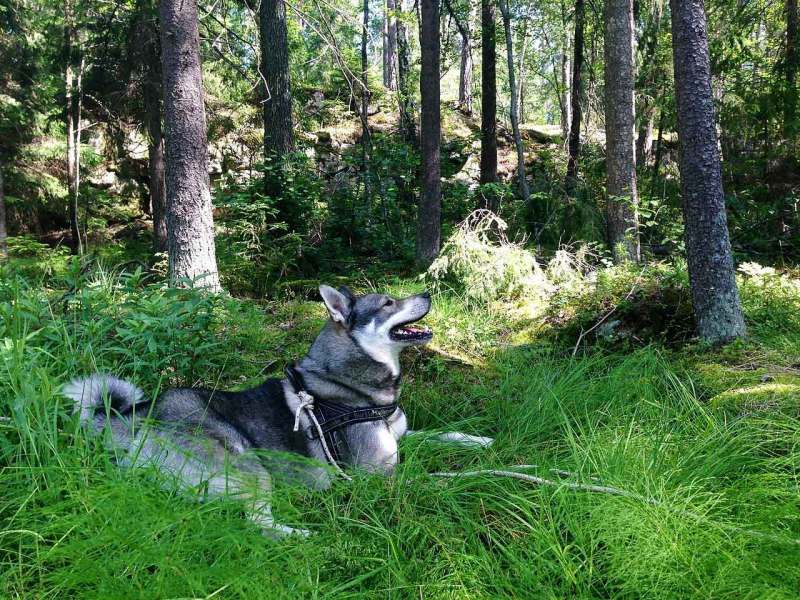
2 – Jämthund (Swedish Elkhound) in the woods. 2 years old male. by User:Arto Pääkkönen / CC BY-SA
3 – Jämthund by https://pxhere.com/es/photo/644232
4 – Jämthund by https://pxhere.com/es/photo/619009
5 – Jämthund by https://pxhere.com/es/photo/1289323
6 – Jämthund by https://pixabay.com/es/photos/perro-tronco-mascota-animales-2064314/
7 – Jämthund by HTTPS://pxhere.com/es/photo/753453

Videos "Jämthund"

Type and recognitions:

  • FCI CLASSIFICATION:
  • Group :
  • Section : . .

Federations:

  • FCI – Group 5 – Section 2 Nordic Hunting Dogs.
  • UKC – Nordic Hunting Dogs.

FCI breed standard "Jämthund"

Origin:
Sweden

Date of publication of the valid original standard:
25.03.2003

Use:

hunting dog.


General appearance:

Grand, spitz rectangular, defined cut, strong, with good substance but agile with good structure. He is strong and of solid constitution, but also agile and imposing looking. The body does not must give the impression of being very long, or too much heavy.


Behavior / temperament:

He is brave and energetic, but also stoically calm.

Head:

It is clearly defined and elongated, proportionally wide between the ears.

Cranial region:
Skull: It is slightly bulky.
Fronto depression-nasal (Stop): Clearly marked, but not too much deep.

facial region:

Snout: The distance from the naso-frontal depression to the nose is slightly shorter than from the naso-frontal depression to the occiput. Tapers progressively towards the tip of the nose. So much in profile, as front, should not give the impression of being pointed but flat. The muzzle is straight, wide and strong,wide nose.
Lips: Tight.
Jaws/Teeth: Scissor bite.
Cheeks: clean.
Eyes: Slightly oval, brown, the look is penetrating, but at the same time calm.
Ears: High insertion, perfectamente lifted, pointed and sensitive in use. Slightly longer than wide at the base.

Neck:

Long, clearly defined, powerful and good scope.

Body:

Powerful and well defined. Its length slightly exceeds its height at the withers.
Line top : Straight, with a slight inclination from the withers to the rump.
Pork loin: Wide and well developed.
Rump: Wide, only slightly inclined.
Breast : Deep well; the ribs are well arched.
Bottom line and belly: The belly is little collected.

Tail:

High implementation. Medium length and regular thickness. It is carried curled, but not firmaments bent over or near the back. Hair is abundant, although it does not form a fringe.

Tips

PREVIOUS MEMBERS:
  • Shoulder: The shoulder blades are long and well sloped back.
  • Elbows: Well attached to the rib cage.
  • forearms: Straight, well outlined and strong bone.
  • Front feet: Strong, slightly oval. They point straight ahead; fingers are good together.
 
LATER MEMBERS: Seen from the back, they are parallel.
  • Knee: Well angled.
  • Hock: Well angled.
  • Rear feet: With the same characteristics of the front feet.

Movement:

Must be powerful, free and wide-ranging. On the trot, the feet converge towards a midline (single tracking).

Mantle

HAIR: The outer layer is made up of a fairly tight hair, although not stretched. The undercoat is short haired, soft and clear, preferably cream colored. The hair is short on the head and the front of the limbs, and longer in the neck, the chest, the tail and back of the limbs and thighs.
 
COLOR: Light to dark gray. The characteristic brands are : light gray or cream on both sides of the muzzle, cheeks, the throat, chest, belly, limbs and under the tail.


Size and weight:

Height to the cross:
  • Males : 57 – 61 cm.. Ideal 61 cm..
  • females : 52 – 60 cm.. Ideal 56 cm..


Fouls:

Any deviation from the above mentioned criteria is considered to lack, and the gravity of this refers to the degree of deviation to the standard and its impact on the health and well-being of the dog.
  • Yellow eyes.
  • Twisted tail.
  • Cream marks covered in black.
  • Cloak too short.
  • Thin bone.
  • Short tail.
  • Straight tail.
 
SERIOUS FAULTS
  • Domed skull front and raised cheeks.
  • Pointed snout.
  • Dental missing apart from P1.
  • Square body shape.
  • Slim build.
  • Heavy, lymphatic construction.
  • flattened feet.
  • Entire white stripe from the throat to the tip of the sternum called "tie".
  • Insufficient posterior angulation.
  • Fine tail, whip type.
 
MISS PLAYOFFS
  • Aggressive or too shy.
  • Height at the withers different from those specified in the standard.
  • Enognatismo o prognatismo.
  • hanging ears.
  • Lack of characteristic cream-colored markings.
 
Any dog ​​showing clear signs of physical or behavioral abnormalities must be disqualified..


N.B.:

Males should have two normal-appearing testicles fully descended into the scrotum..

The latest changes are in bold.

Source: F.C.I - International Cynological Federation

Alternative names:

1. Swedish Elkhound (English).
2. Jämthund (French).
3. Jämthund (German).
4. Jämthund, Elkhound sueco (Portuguese).
5. Elkhound sueco, Jämthund (español).

▷ The world of Pets: Dogs, cats, birds, reptiles, amphibians

Japanese Spitz
Japón FCI 262 - Asian Spitz and related breeds

Japanese Spitz

The Japanese Spitz he is a very people-oriented dog.

Content

History

The strong similarity to the Mittelspitz (Standard or Medium Spitz) German allows us to suppose that the Japanese spitz descends from this same race. Other cynologists assume that the Spitz descends from the Nordic Spitz. One thing is for sure: the origin of Japanese spitz not in japan, but in Europe. From there he arrived in Japan at the beginning of the 20th century along with travelers.

The attractive white dog with the charming character quickly gained popularity among the Japanese population. With more caps from China, Canada and the US, own breeding was established in Japan in the years 20. While in Europe an attempt was made to increase the size of the lace, thus creating the German Spitz, the Japanese tended to opt for the more original compact form. In 1948 the Japanese Kennel Club established a first breed standard for the first time. As country of origin, Japan was indicated in the standard. The FCI, that has officially recognized the Japanese spitz from 1964, includes it today in the Group 5 (Spitz and dogs of the original type), as well as in the Subsection 5 (Asian Spitz and related breeds), under Standard No. 262.

In his native Japan, the Japanese spitz it was very popular for a long time, especially in the years 50 the last century. Although it is still more common there in terms of numbers than in Europe, the demand of the little companion is gradually changing. While in Japan the number of recently registered puppies is declining, is increasing in North America and Europe.

Physical characteristics «Japanese Spitz»

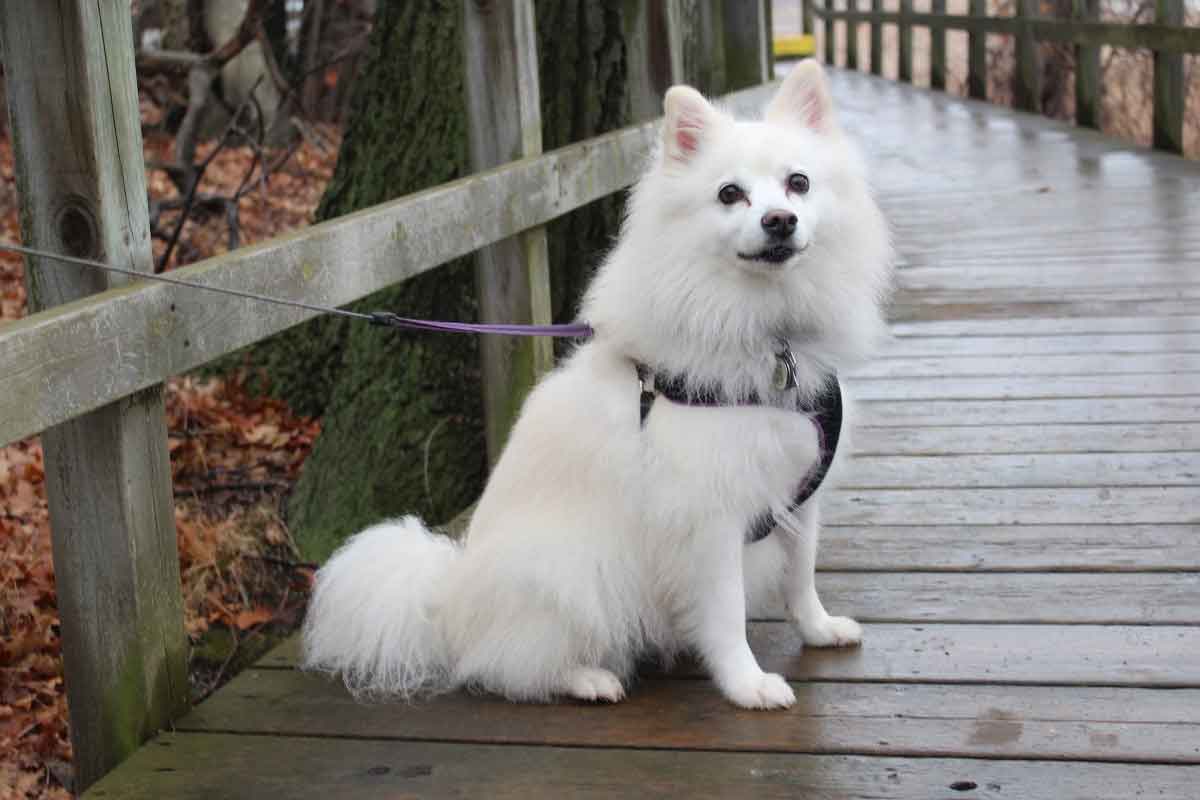
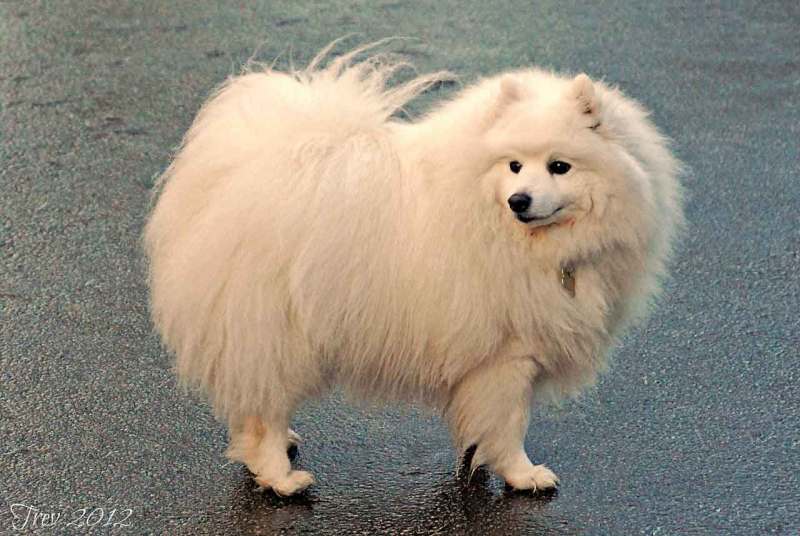
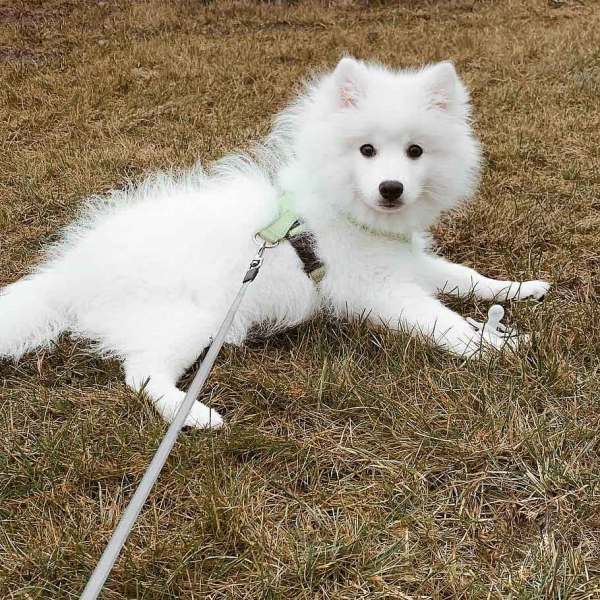
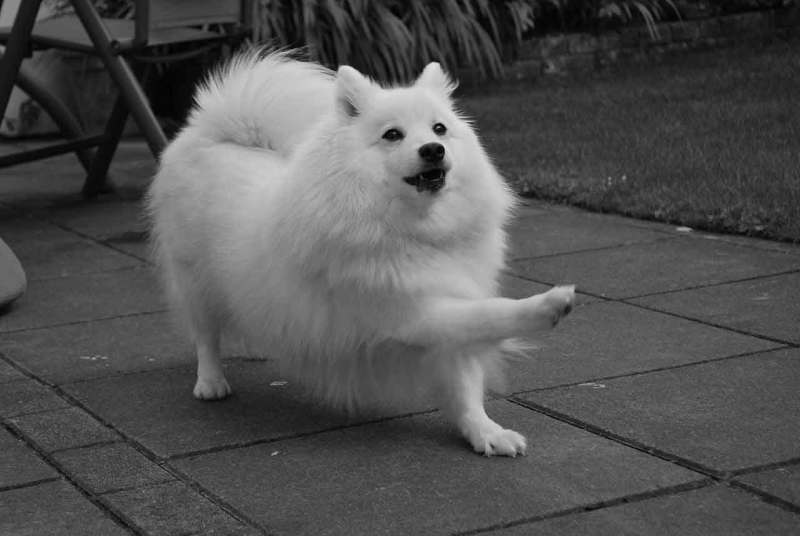
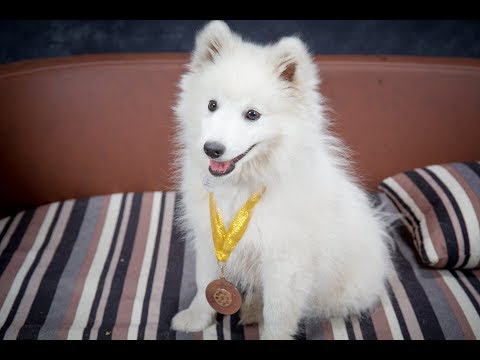
This breed is distinguished by the fact that it is exclusively pure white.. Thanks to his straight and dense hair, the Japanese Spitz seems strong. What is no less important, it is also caused by the swollen inner layer. The beautiful ruffle on the shoulder, neck and sill contributes to attractive appearance. Typical of the tail is a long and voluminous flag.

Despite her short legs, the Japanese Spitz is sporty and extremely agile. Due to its balanced proportions, the appearance of this compact pedigree dog is both striking and harmonious.

The height at the cross – the elevated transition from neck to back – tends to be of 30 to 38 cm in adult males. Females reach a somewhat smaller size. The Japanese Spitz weighs between 4,5 and 11 kg.

Character and abilities «Japanese Spitz»

The well balanced nature of the Japanese Spitz fits the very harmonious appearance. He is an attentive guard. Anyone who approaches him is not immediately signaled with a savage bark. Only when the Japanese pedigree dog feels a serious threat, gets loud and fights back vehemently.

At home, the Japanese Spitz behaves quite calmly. Abroad, on the other hand, he likes to show the energy he has inside him. To enjoy the Japanese Spitz, you must like a little dog who likes to play. You should also have fun on long trips with your four-legged friend.

The Japanese Spitz he is a very people-oriented dog. Whether it belongs to one person or has a master or caregiver at the same time, he does not care. He also likes to live with the family. The company of people is the priority. Pets or other pets are not enough. Although the Japanese spitz usually get along with them. So if you're short on time for a dog, a Japanese Spitz probably not the right thing for you.

The white puppy enjoys the company of people and would like to be with them always and everywhere.. He is very receptive and eager to learn. Which makes education in combination with devotion quite easy even for untrained dog owners.

An apartment in the city is suitable for him, as long as you are well occupied with extensive walks and activities.

«Japanese Spitz» Care

Despite the hereditary predisposition to many diseases, Many of the ailments can be avoided by taking proper care of your Spitz. Dental problems in particular can be prevented through regular dental care, that is to say, brush your teeth at least once a week, or better daily. Diseases or inflammations of the eyes, nose, ears and claws can also be detected and treated at an early stage through proper care and regular check-ups. Another important aspect of grooming is the care of the coat of the Japanese spitz. Despite the impressive and luxurious fur, This is not very elaborate and therefore it is usually sufficient if the hair is combed or brushed thoroughly twice a week. Only in the coat change phase (twice a year) grooming effort increases until daily styling.

Japanese Spitz health

An indication of good and serious parenting is the presentation of genetic test results.. The breeding animals used must have an impeccable genetic makeup to exclude genetic diseases from the start. Dogs in which hereditary diseases typical of the breed have occurred should be excluded from breeding for the sake of the health of the breed. This also includes the tendency to dislocate the patella (slipping of the patella out of its guide), which can also be inherited in many dogs, especially in small dog breeds. Also eye problems, such as distichiasis or narrowing of the tear ducts, as well as dental problems can occur with the Japanese spitz. No other diseases typical of the breed are known..

The correct nutrition of the «Japanese Spitz»

In a special way, correct nutrition contributes to the health and well-being of the Japanese spitz. Small dogs with a very compact constitution have a strong tendency to be overweight. Too many pounds can easily lead to joint disease and heart and circulation problems.. Overweight dogs are also at higher risk for diabetes.

As the owner of a Japanese spitz, you should always keep the amounts recommended by food manufacturers. It also, the dog should not be given too many treats between meals.

It is not only the quantity but also the quality of the food that is important. Besides vegetables or rice, good dog food consists largely of high-quality meat. Poor quality food often contains an excessive amount of cereals. Under no circumstances should it contain flavor enhancers or sweeteners.

Before buying, you should find out the exact composition of the dog food in the manufacturer's instructions. Several vendors offer good and safe dog food, both dry and wet.

It is not unusual for dog owners to prefer homemade dog food. This can also be an alternative to the ready-to-eat food available in stores for the Japanese spitz. But, it is essential that you acquire the necessary knowledge to cook balanced dog food for yourself.

The diet BARF it is also a good way to feed Japanese spitz with a healthy diet. BARF means «Bone And Raw Food» (Bones and raw foods). All food components, like meat, fish, vegetables or fruit, they are only given raw. Various vendors and specialty stores facilitate BARF to the dog owner. Like cooking food, this feeding method requires a certain amount of knowledge about the correct use of raw ingredients.

You must feed a puppy of 3 to 5 times a day, an adult raw food and bones 2 times a day.

Buying a "Japanese Spitz"

Despite the growing popularity and demand in the European and American continent, the Japanese spitz still belongs to the rare dog breeds. The waiting period for a new litter at a breeder can be very long. Who doesn't necessarily care about a purebred puppy, but also consider buying a Spitz adult, should – parallel to the search for a breeder – also look around the animal shelter, where over and over again Spitz or the crosses of Spitz they are waiting for a new and loving home. A puppy, on the other hand, should only be purchased from a serious and certified breeder.

How do I recognize a serious breeder?

When choosing a suitable breeder, various factors play a role. It's not just the "formalities" that must be correct, that is to say, the papers, the pedigree and the contract of sale, but also the personal reasons that ultimately decide the purchase. The breeder must, first, be understanding with you, and this cannot be found out with a short email or a short phone call. One or better several meetings are necessary to get a complete picture of the breeder and his dogs.. Does the breeder invite you to his house? Do you willingly show your "kennel" and do the animals live in close contact with the breeder's family? The first weeks are very important for the socialization of the puppies and therefore the environment must correspond absolutely to the affectionate nature of the puppies. Japanese spitz. It also, a serious breeder will be able to tell you a lot about the breed and its characteristics. They will also ask you about your life circumstances to make sure your puppy has fun with you..

Characteristics "Japanese Spitz"

Coexistence is important that you have with your new friend. Before considering the acquisition of a dog of the breed "Japanese Spitz" you know certain factors. Not all breeds of dogs are apt to live in an apartment, you must take into account his character, their need for exercise, their interaction with other pets, their care and if you have small children, their level of tolerance towards them.

Training ?

5,0 of 5 stars (based on 1 review)

Suitability of the apartment ?

4,0 of 5 stars (based on 1 review)

Can be alone all day ?

2,0 of 5 stars (based on 1 review)

Suitable as a first dog ?

5,0 of 5 stars (based on 1 review)

Weight gain ?

5,0 of 5 stars (based on 1 review)

Health ?

4,0 of 5 stars (based on 1 review)

Intelligence ?

4,0 of 5 stars (based on 1 review)

Kindness with child ?

5,0 of 5 stars (based on 1 review)

Tendency to bite ?

2,0 of 5 stars (based on 1 review)

Tendency to bark ?

2,0 of 5 stars (based on 1 review)

Tendency to flee ?

2,0 of 5 stars (based on 1 review)

hair loss strength ?

5,0 of 5 stars (based on 1 review)

Suitable as a guard dog ?

3,0 of 5 stars (based on 1 review)

Joy ?

4,0 of 5 stars (based on 1 review)

Cat friendliness ?

4,0 of 5 stars (based on 1 review)

Power level ?

4,0 of 5 stars (based on 1 review)

Images "Japanese Spitz"

Photos:

1 – Japanese spitz by https://pxhere.com/es/photo/1273902
2 – Japanese Spitz Siberia by 0894Leanne, CC BY-SA 3.0, via Wikimedia Commons
3 – Japanese Spitz Puppy by mostlegendary@gmail.com, CC BY-SA 3.0, via Wikimedia Commons
4 – Japanese spitz by https://www.pikist.com/free-photo-sixhn
5 – Japanese spitz by https://www.pxfuel.com/en/free-photo-xghfb
6 – Japanese Spitz by Trev Grant, CC BY 2.0, via Wikimedia Commons
7 – Japanese Spitz by https://www.pikrepo.com/fflza/japanese-spitz-near-wall

Videos "Japanese Spitz"

Kubo - Japanese Spitz Puppy - 2 Weeks Residential Dog Training
Kubo – Japanese Spitz Puppy – 2 Weeks Residential Dog Training
Japanese Spitz / Breed of dog
"Japanese Spitz" / Breed of dog

Type and recognitions:

  • FCI CLASSIFICATION:
  • Group :
  • Section : . .

Federations:

  • FCI – Group 5: Spitz-type dogs and primitive type – Section 5: Asian Spitz and related breeds.
  • ANKC – Group 7 (Non-Sporting)
  • CKC – Group 6 – Non-Sporting
  • ​KC – Utility
  • NZKC – Non-Sporting
  • UKC – Northern Breed Group

FCI breed standard "Japanese Spitz"

Origin:
Japan

Date of publication of the valid original standard:
16.06.1999

Use:

Companion dog.


General appearance:

Its body is covered with abundant white fur., the snout is sharp, triangular and erect ears, The tail is covered with long feather-shaped hair and curls over the back.. Robust and well balanced constitution, Its harmonious beauty gives it a lively appearance and dignity characteristic of this breed., that at the same time denotes elegance.

IMPORTANT PROPORTION : The relationship between the height at the withers and the length of the body is 10 : 11.


Behavior / temperament:

It is an intelligent dog, joyful, with keenness of senses. Boisterous nature is not allowed.

Head:

The size of the head should be in harmony with the body and should be moderately wide and rounded.

Cranial region:
  • Skull : The forehead is moderately developed. The back of the skull is very wide.
  • Depression links (Stop) : Defined.

facial region:

  • Nose : Small, rounded and black.
  • Snout : Pointed, the tip slightly rounded and well balanced. Lips adherent and preferably black.
  • Jaws / Teeth : Strong white teeth with scissor bite.

Eyes : Moderately large, almendrada form, placed slightly oblique, dark colored. The edges of the eyelids black.

Ears : High insertion, small, triangular, upright, directed forward and placed not too far apart.

Neck:

Moderately long and very muscular.

Body:

  • Cross : High.
  • Back : Straight and short.
  • Kidney region : Wide.
  • Chest : Wide and deep, well arched ribs.
  • Abdomen : Well collected.

Tail:

High insertion, moderately long and carried on the back.

Tips

PREVIOUS MEMBERS : Well inclined shoulders, forearms straight and elbows close to the body.

LATER MEMBERS : Muscular, the femoro-tibio-patellar joints (knees) and tibio-tarsals (hocks) moderately angled.

FEET : Cat feet. Thick and desirably black pads, the same as nails.

Movement:

Fast and active.

Mantle

HAIR : The hair of the outer coat is straight and remains separated. The hair of the undercoat is short, dense and soft texture. The face, the ears, the front part of the limbs and under the hocks are covered with short hair; the rest of the body is covered with long, abundant hair, especially from neck to shoulders, and the parapet that has a beautiful ruff of hair. The tail also has abundant long feather-shaped hair..

COLOR : Pure white.


Size and weight:

Height to the cross :

  • Males : 30 – 38 cm..
  • females : slightly smaller than males.


Fouls:

Any deviation from the aforementioned criteria is considered as a fault and the severity of this is considered to the degree of the deviation to the standard and its consequences on the health and well-being of the dog..

• Upper or lower prognathism.
• Firmly coiled tail.
• Shyness, noisy dog.

MISS PLAYOFFS

• Aggressive or fearful dog.
• Floppy ears.
• Tail not carried over the back.

Any dog ​​showing clear signs of physical or behavioral abnormalities must be disqualified..


N.B.:

Males should have two normal-appearing testicles fully descended into the scrotum..

Source: F.C.I - International Cynological Federation

Alternative names:

1. Nihon Supittsu (English).
2. Nihon Supittsu (French).
3. Nihon Supittsu (Japan-Spitz), Japanischer Spitz (German).
4. Nihon Supittsu (Portuguese).
5. Nihon Supittsu (español).

▷ The world of Pets: Dogs, cats, birds, reptiles, amphibians

Jamthund
Suecia FCI 42 - Nordic Hunting Dogs
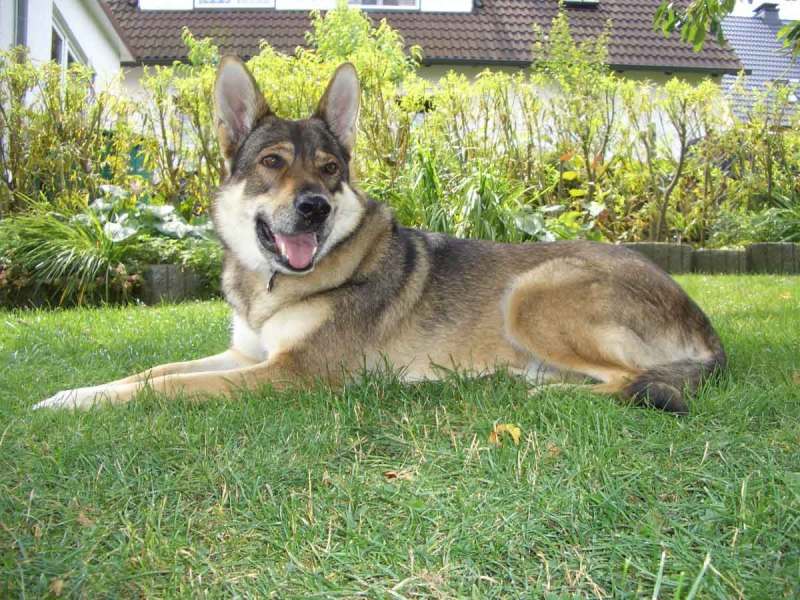
As with most breeds developed for hunting, the Jämthund requires a lot of regular exercise to keep fit, both physically and mentally.

swedish mountain dog

Content

Training ?

3,0 of 5 stars (based on 1 review)

Suitability of the apartment ?

1,0 of 5 stars (based on 1 review)

Can be alone all day ?

2,0 of 5 stars (based on 1 review)

Suitable as a first dog ?

2,0 of 5 stars (based on 1 review)

Weight gain ?

3,0 of 5 stars (based on 1 review)

Health ?

5,0 of 5 stars (based on 1 review)

Intelligence ?

4,0 of 5 stars (based on 1 review)

Kindness with child ?

4,0 of 5 stars (based on 1 review)

Tendency to bite ?

2,0 of 5 stars (based on 1 review)

Tendency to bark ?

4,0 of 5 stars (based on 1 review)

Tendency to flee ?

4,0 of 5 stars (based on 1 review)

hair loss strength ?

4,0 of 5 stars (based on 1 review)

Suitable as a guard dog ?

4,0 of 5 stars (based on 1 review)

Joy ?

3,0 of 5 stars (based on 1 review)

Cat friendliness ?

3,0 of 5 stars (based on 1 review)

Power level ?

5,0 of 5 stars (based on 1 review)

History

The Jamthund, also called Swedish Elkhound, It is a breed of dog of type Spitz northern europe. Jämthund is an eponymous of Jamtland, central province of Sweden.

This race, of similar appearance to the Wolf, It was recognized by the FCI from 1946, due to the intense work of Aksel Lindström and other. Prior to that, the Jämthund and the Gray Norwegian Elkhound they were seen as the same race.

Despite the short history in regards to the official recognition of the race, theories of the locals in Jamtland claim that the Jämthund have lived with them since the end of the last ice age. The Jamthund, they have been used (and they are used) for hunting Moose and pull sledges.

Physical characteristics

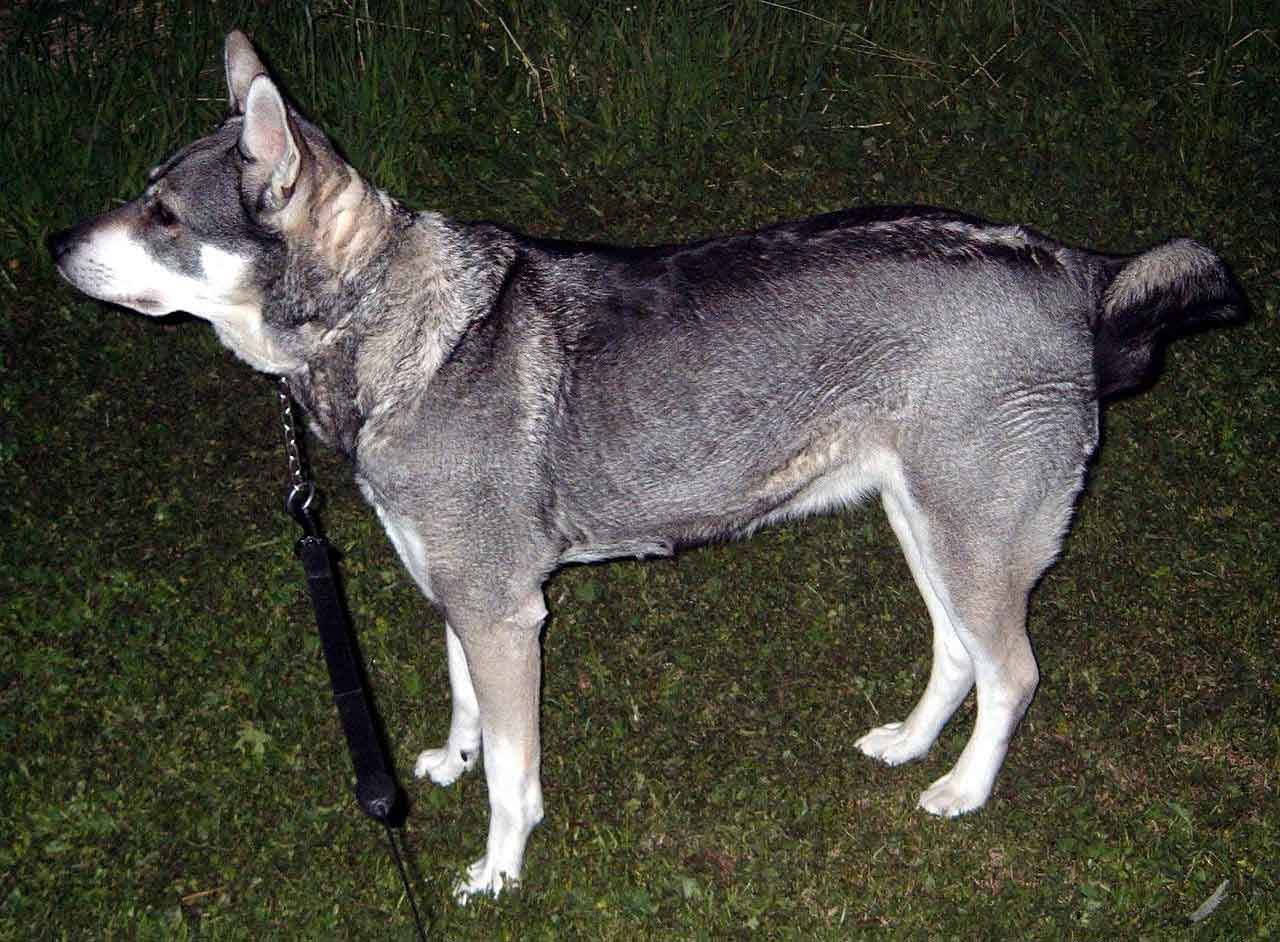
The Jamthund has erect ears, medium long nose, Brown eyes and mantle of double hair with two colors. The eyes are brown.

The Jämthund He is respected for his wolf-like appearance and his great and powerful stature. With a height at the cross of 57 to 65 centimeters and a weight of about 30 kg, It is the largest and heaviest of the three recognized moose dogs and at the same time the largest Nordic hunting dog. Throughout its long history, the Jämthund not only faced wolves, lynx and elk, but also adult bears, whom he faced fearlessly when hunting.

Character and skills

Despite the calm and affectionate with the members of the family, the Jämthund can be a bit dominant with other dogs and has a strong prey drive. It is a very versatile dog, easy adaptation, You will be happy to go to a hunting trip and return home safely, you will also be happy there. It tends to take everything very calmly and not vistas with ease, That makes him an excellent companion dog..

The Jämthund is easy to train, It will become a happy student who loves to please its owner.

It should be socialized at an early age to avoid problems of dominance and territoriality, When you get to adulthood.

As with most breeds developed for hunting, the Jämthund requires a lot of regular exercise to keep fit, both physically and mentally. He bored quickly if it stays inside for a long time and can be destructive.

It is an excellent companion, fell, quiet, balanced and very affectionate.

Jämthund care

The waterproof coat of the Jämthund repels dirt and moisture well, but still needs to be brushed regularly. It is best to comb your hair daily, especially during the layer change phase. This way you can remove dead hair in time and at the same time ensure that the amount of hair in your house stays within limits.. But, you should not expect meticulous cleaning in your home as the owner of this dog.

In addition to the toilet, claws should be trimmed regularly to avoid injury. Your roommate's ears and teeth should also be cleaned and checked at regular intervals., about two or three times a week.

What food does the Jämthund need?

More decisive than the price of the food should be the price of the ingredients. This does not mean that the most expensive food is always the best.. Much more important is that the composition is adjusted to the needs of your dog and these depend on quite individual criteria such as weight, age, activity level and health status.

Basically, the food of Jämthund, like all the other dogs, should consist mainly of meat. It is the most important energy supplier for the descendant of the wolf and must constitute at least the 80 percent of the diet. The meat is complemented with vegetables, important fruits and fats, that provide an optimal supply of nutrients.

The cereals, the sugar, artificial flavor enhancers and chemical preservatives, on the other hand, have no place in dog food, regardless of whether it is dry food, wet, even cooked or raw food (BARF).

Jämthund Health

Careful grooming is not just for cleanliness and hygiene, but above all for the health of your dog. Brush your dog regularly and check his ears, claws, eyes and teeth. This way you can quickly detect any changes and make an appointment with the vet on time.

Being overweight is a problem for all dog breeds and quickly causes more complaints. So, it is advisable to check your pet's weight regularly. Hand palpation is also a good way to determine if your dog is of normal weight.. You shouldn't be able to see your dog's ribs from a distance., but i should be able to feel them.

Otherwise, the Jämthund he is a very robust dog, and there is no need to fear the hereditary diseases typical of the breed. If you have the time, the experience, money and the desire to fully adapt to this breed, you will surely have many years of pleasure with him Jämthund.

Breeding and buying a Jämthund

In Sweden the Jämthund has long been known beyond hunting circles and is popular as a versatile utility and companion dog. In other countries of the world, However, this swedish dog is very rare. Although you can find breeders in Germany, Great Britain, the Netherlands and North America, searching and waiting for a purebred puppy can sometimes take years. So, it is advisable to contact a registered association for Nordic dogs, that can help you find breeders in Scandinavia.

What do I have to consider when buying a Jämthund?

Although the distance to the breeder is long, those interested should take the time to get to know the kennel, the animals and the breeder in detail before buying. Don't take home the first best puppy, but convince yourself in several visits that it is serious parenting, that dogs breed with a lot of experience and love.

In addition to health tests, vaccinations and the presence of all important papers and a pedigree, animals must grow up in a close relationship with their breeder from birth. The socialization of a Jämthund already begins in the first weeks of life. Living with his mother and brothers, but also with the breeder's family, puppies learn the most important rules of the nest.

What demands does the Jämthund make to the owner?

One Jämthund need plenty of exercise. You must also be sufficiently disabled both physically and mentally. A life in gated communities, in the city and without a garden, it certainly doesn't do this kind of dog justice.

The Jämthund feels more comfortable in rural areas. There you can move freely and spend a lot of time in nature. If not used for hunting purposes, you should definitely offer alternative activities. Possible are examinations for companion dogs, dog tournaments or rescue dog training. Also bike rides, long walks or sledding shots in winter are suitable to satisfy the great momentum of movement of the Jämthund.

Images "Jamthund"

Photos:

1 – Swedish Elkhound by Canarian / CC BY-SA
2 – A female Swedish Elkhound. Colour: wolf-grey with cream markings by Canarian / CC BY-SA
3 – PHOTO: EAST NEWS/COGIS JAMTHUND by https://flic.kr/p/qdryfN
4 – Jamthund by https://pxhere.com/es/photo/644232
5 – Jämthund (Swedish Elkhound) in the woods. 2 years old male by User:Arto Pääkkönen / CC BY-SA
6 – Jamthund by https://pixabay.com/es/photos/perro-retrato-animales-cachorro-5290821/

Videos "Jamthund"

4 Jämthund- a nordic hunter
Swedish Elkhounds - Jamthund Male Rico and Jamthund Female Aina
Swedish Elkhounds – Jamthund Male Rico and Jamthund Female Aina

Type and recognitions:

  • FCI CLASSIFICATION:
  • Group :
  • Section : . .

Federations:

  • FCI – Group 5 – Section 2 Nordic Hunting Dogs.
  • UKC – Northern Breeds

FCI breed standard "Jamthund"

Origin:
Sweden

Date of publication of the valid original standard:
25.03.2003

Use:

hunting dog.


General appearance:

Grand, spitz rectangular, defined cut, strong, with good substance but agile with good structure. He is strong and of solid constitution, but also agile and imposing looking. The body does not must give the impression of being very long, or too much heavy.


Behavior / temperament:

He is brave and energetic, but also stoically calm.

Head:

It is clearly defined and elongated, proportionally wide between the ears.

Cranial region:
Skull: It is slightly bulky.
Fronto depression-nasal (Stop): Clearly marked, but not too much deep.

facial region:

Snout: The distance from the naso-frontal depression to the nose is slightly shorter than from the naso-frontal depression to the occiput. Tapers progressively towards the tip of the nose. So much in profile, as front, should not give the impression of being pointed but flat. The muzzle is straight, wide and strong,wide nose.
Lips: Tight.
Jaws/Teeth: Scissor bite.
Cheeks: clean.
Eyes: Slightly oval, brown, the look is penetrating, but at the same time calm.
Ears: High insertion, perfectamente lifted, pointed and sensitive in use. Slightly longer than wide at the base.

Neck:

Long, clearly defined, powerful and good scope.

Body:

Powerful and well defined. Its length slightly exceeds its height at the withers.
Line top : Straight, with a slight inclination from the withers to the rump.
Pork loin: Wide and well developed.
Rump: Wide, only slightly inclined.
Breast : Deep well; the ribs are well arched.
Bottom line and belly: The belly is little collected.

Tail:

High implementation. Medium length and regular thickness. It is carried curled, but not firmaments bent over or near the back. Hair is abundant, although it does not form a fringe.

Tips

PREVIOUS MEMBERS:
  • Shoulder: The shoulder blades are long and well sloped back.
  • Elbows: Well attached to the rib cage.
  • forearms: Straight, well outlined and strong bone.
  • Front feet: Strong, slightly oval. They point straight ahead; fingers are good together.
 
LATER MEMBERS: Seen from the back, they are parallel.
  • Knee: Well angled.
  • Hock: Well angled.
  • Rear feet: With the same characteristics of the front feet.

Movement:

Must be powerful, free and wide-ranging. On the trot, the feet converge towards a midline (single tracking).

Mantle

HAIR: The outer layer is made up of a fairly tight hair, although not stretched. The undercoat is short haired, soft and clear, preferably cream colored. The hair is short on the head and the front of the limbs, and longer in the neck, the chest, the tail and back of the limbs and thighs.
 
COLOR: Light to dark gray. The characteristic brands are : light gray or cream on both sides of the muzzle, cheeks, the throat, chest, belly, limbs and under the tail.


Size and weight:

Height to the cross:
  • Males : 57 – 61 cm.. Ideal 61 cm..
  • females : 52 – 60 cm.. Ideal 56 cm..


Fouls:

Any deviation from the above mentioned criteria is considered to lack, and the gravity of this refers to the degree of deviation to the standard and its impact on the health and well-being of the dog.
  • Yellow eyes.
  • Twisted tail.
  • Cream marks covered in black.
  • Cloak too short.
  • Thin bone.
  • Short tail.
  • Straight tail.
 
SERIOUS FAULTS
  • Domed skull front and raised cheeks.
  • Pointed snout.
  • Dental missing apart from P1.
  • Square body shape.
  • Slim build.
  • Heavy, lymphatic construction.
  • flattened feet.
  • Entire white stripe from the throat to the tip of the sternum called "tie".
  • Insufficient posterior angulation.
  • Fine tail, whip type.
 
MISS PLAYOFFS
  • Aggressive or too shy.
  • Height at the withers different from those specified in the standard.
  • Enognatismo o prognatismo.
  • hanging ears.
  • Lack of characteristic cream-colored markings.
 
Any dog ​​showing clear signs of physical or behavioral abnormalities must be disqualified..


N.B.:

Males should have two normal-appearing testicles fully descended into the scrotum..

The latest changes are in bold.

Source: F.C.I - International Cynological Federation

Alternative names:

1. Swedish Elkhound (English).
2. Jämthund (French).
3. Jämthund (German).
4. Jämthund, Elkhound sueco (Portuguese).
5. Elkhound sueco, Jämthund (español).

▷ The world of Pets: Dogs, cats, birds, reptiles, amphibians

Jack Russell Terrier
Gran Bretañaa FCI 345 . Small sized Terriers.

Jack Russell Terrier

He has a bold and cheerful disposition and always appears full of self-confidence..

Content

History

The Jack Russel Terrier comes like most terrier breeds from England. It was first bred there more than 150 years by theologian John Russel. The future pastor had the nickname "Jack.", for which the dog breed was also named later. John Russel pursued the goal of creating a fox hunting terrier by crossing with other breeds. This should not only hunt foxes and other animals, but also chase them into their burrow and drive them out again.

Over the years, two types of Russel Terrier, a medium-sized variant, the Parson Russel Terrier, and another one of smaller size, the Jack Russel Terrier described here. The small-sized variant found its followers mainly in Australia, who used it mostly for hunting in rabbit holes. Due to crossbreeding with other breeds and exclusive breeding for hunting purposes, recognition as an independent race came relatively late.

So the dog was first listed by the Australian National Kennel Council in 1991 and in the year 2000 was recognized by the FCI.

Physical characteristics

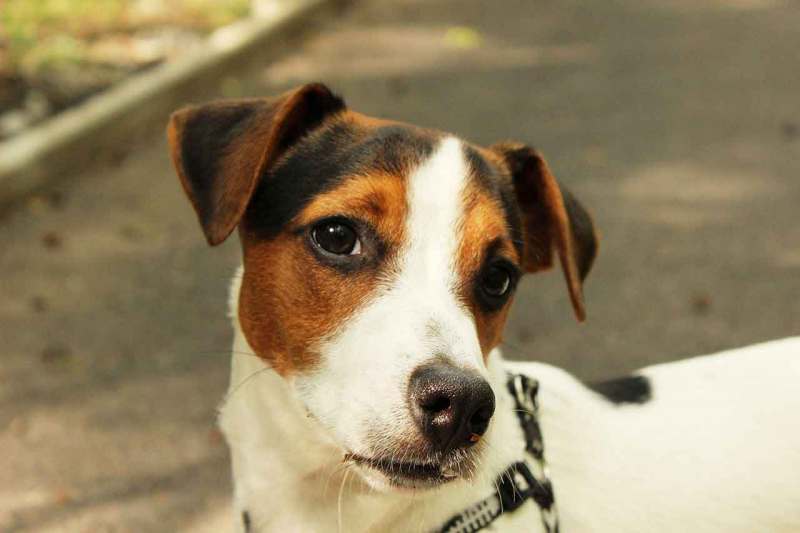
The appearance of the Jack Russel Terrier it is relatively easy to recognize. So he has a coat covered mostly in white, that bears black or brown markings. A completely white coat is also theoretically possible, but quite rare. The hairs are short and can be straight or coarse.

The Jack Russel Terrier it has an almost rectangular body shape and a height at the withers of up to 30 cm.. So, is on average 5 cm smaller than its direct relative, the Parson Russel Terrier. The weight of a Jack Russel Terrier can vary between 7 and 10 kg. The head of the Jack Russel it is quite thin and flat built. The dog's eyes are almond shaped and are normally surrounded by black eyelid edges.

Variedades «Jack Russel Terrier»

Jack Russell Terrier smooth hair
Jack Russell Terrier by the fence
Jack Russell Terrier through the fence
jack russell terrier hard hair
  • Straight hair variety
  • Wired hair variety
  • Wire hair variety

Character and skills

The Jack Russel Terrier he is an agile and lively dog ​​who loves to run in nature. He has a healthy self-confidence and is very brave.. Although her legs seem relatively short, loves to take long walks in nature. The dog is charged with energy and needs his run. In addition to sports activities, the dog also wants to be challenged on a mental level. One can make this possible thanks to sports modalities such as "Agility.". There he is with total commitment and tirelessly pursues his goal.

At the same time, the Jack Russel Terrier also very suitable as a family dog. In a calm and familiar environment, the dog is child friendly and has a social mindset.

Keeping and feeding a Jack Russel Terrier

Although the Jack Russel Terrier it's a smaller dog, there is a lot of power in him. The hunting instinct remains firmly anchored in it. You need to exercise a lot outdoors in nature. The Jack Russel it is a dog that needs to be encouraged and challenged by its owner. To push the dog to its limits, dog sports like agility are ideal.
Keeping the dog in an apartment is usually not a problem. But, it is practical to have a large garden in which the terrier can let off steam in between. The Jack Russel he is also a super family dog, that with the right training you will become a loving family member.

The Jack Russel Terrier usually has no special food preferences. It is important that the dog is fed a balanced diet. This means that the diet is based on a combination of a high meat content plus the addition of vegetables, fruits and cereals. The choice between dry or wet food is left to each owner. The food ration should be adapted to the size and workload of the dog.

Education and care of the Jack Russel Terrier

The Jack Russel Terriers they need a loving and consistent education. Already with the puppy you must define the rules and limits of coexistence. This is how the foundations of a common future are laid. Early neglect will regret later. The Jack Russel Terrier is an intelligent dog that wants to be challenged. So, it is important that you have the reins clearly in hand when dealing with the dog.

Due to its origin as a hunting dog, wants the guidance of its owner. Clear instructions and a system of positive rewards will be the best to encourage the dog in his development. With adequate training and if the dog is sufficiently exercised, adapts very well as a family dog ​​and integrates into it in an exemplary way.

Caring for a Jack Russel Terrier it is not usually complicated. In the rough-haired or hard-haired variety, the coat should be trimmed occasionally. Otherwise, brushing regularly is highly recommended. The dog can be cleaned with a damp cloth. The shampoo should not normally be used as it attacks the natural protection of the coat and skin.. In case of strong odors and a high level of dirt, a mild dog shampoo should be used.

Typical health and illnesses

The small quadrupeds are, Unfortunately, often very susceptible to disease. So, You should have a vet examine your dog as often as possible and parents undergo an examination for possible inherited diseases before purchasing. The possible clinical pictures with the Jack Russel Terrier are: Ataxia and myelopathy, atopia, dermatophytosis, cataract and catarrh, as well as other hereditary diseases.

Jack Russel Terrier life expectancy

The life expectancy of Terriers Jack Russel is of some 15-18 years.

Buy the Jack Russel Terrier breed

The Jack Russel Terriers can be purchased from numerous breeders. But, before buying, must ensure that the breeder is officially recognized. The Jack Russel Terrier responsible parenting can be obtained from a price of about 500 EUR.

Characteristics "Jack Russell Terrier"

Coexistence is important that you have with your new friend. Before considering the acquisition of a dog of the breed "Jack Russell Terrier" you know certain factors. Not all breeds of dogs are apt to live in an apartment, you must take into account his character, their need for exercise, their interaction with other pets, their care and if you have small children, their level of tolerance towards them.

Adaptation ⓘ

5,0 of 5 stars (based on 1 review)

friendly dog ​​ⓘ

1,0 of 5 stars (based on 1 review)

hair loss ⓘ

3,0 of 5 stars (based on 1 review)

Affection level ⓘ

5,0 of 5 stars (based on 1 review)

Need for exercise ⓘ

5,0 of 5 stars (based on 1 review)

Social need ⓘ

3,0 of 5 stars (based on 1 review)

Home ⓘ

1,0 of 5 stars (based on 1 review)

Toilet ⓘ

2,0 of 5 stars (based on 1 review)

Friendly with strangers ⓘ

3,0 of 5 stars (based on 1 review)

barking ⓘ

5,0 of 5 stars (based on 1 review)

Health ⓘ

3,0 of 5 stars (based on 1 review)

Territorial ⓘ

5,0 of 5 stars (based on 1 review)

Cat friendly ⓘ

1,0 of 5 stars (based on 1 review)

Intelligence ⓘ

5,0 of 5 stars (based on 1 review)

Versatility ⓘ

5,0 of 5 stars (based on 1 review)

Child friendly ⓘ

3,0 of 5 stars (based on 1 review)

Surveillance ⓘ

5,0 of 5 stars (based on 1 review)

joy ⓘ

5,0 of 5 stars (based on 1 review)

Images "Jack Russell Terrier"

Photos:

1 – Rough coat Jack Russell terrier by Sellys / CC BY-SA
2 . Jack Russell Terrier by Plank / CC BY
3 – Jack Russell Terrier by Steve-65 / CC BY-SA
4 – Portrait of Jack Russell Terrier in a park by Ria / CC BY-SA
5 – Jack Russell Terrier by DuncanMcC / Public domain
6 – Jack Russell Terrier by Plank / CC BY

Videos "Jack Russell Terrier"

Type and recognitions:

  • FCI CLASSIFICATION:
  • Group :
  • Section : . .

Federations:

  • FCI – Terriers 2 Small sized Terriers.
  • AKC – Terriers
  • ANKC – Terriers
  • ​KC – Terriers
  • NZKC – Terriers
  • UKC – Terriers

FCI breed standard "Jack Russell Terrier"

Origin:
United Kingdom

Date of publication of the valid original standard:
08.10.2012

Use:

A good working Terrier with the ability to go down to earth. An excellent companion dog


General appearance:

A strong working terrier, Active, of great character, with flexible body, long Middle. His deft movement matches his keen expression. The tail cut is optional and the coat can be short, hard or brittle.

PROPIMPORTANT ORTIONS: The dog as a whole is longer than tall, that is rectangular.

The depth of the body from the cross to the chest should be equal to the length of the front leg from the elbow to the ground. The circumference behind the elbows should be 40 to 43 cm..


Behavior / temperament:

Terrier vivaz, alert and active, with a sharp and intelligent expression. Bold and intrepid, friendly but quietly safe.

Head:

---

Cranial region:
  • Craging: The skull should be flat and of moderate width., gradually decreasing its width towards the eyes and thinning towards a wide muzzle.
  • Dfronto-nasal depression (Stop): Well defined but not pronounced.

facial region:

  • Trufa: black.
  • Horcico: The length from the stop to the truffle should be slightly shorter than the stop to the occiput.
  • Labios: Tight and pigmented in black.
  • Jaws / Teeth: Very strong, deep wide and powerful. Strong teeth closing in scissors.
  • Ojors: Small dark and with sharp expression. MUST NOT be prominent and must have well-attached eyelids. The edge of the eyelids must be pigmented in black. Almond biscuits.
  • Obars: Ears that are semi-droopy or fall forward, covering the external auditory canal, good texture and great mobility.
  • Cheeks: Cheek muscles should be well developed.

Neck:

Strong and clean allowing the head to be carried with balance.

Body:

  • Línand the top: Level. The length from the withers to the tail insert is somewhat greater than the height from the withers.
  • Itmor: Kidney region should be short, strong and very muscular.
  • Pecho: Chest deeper than wide, with good clarity from the floor, allowing the chest to be halfway down the cross to the ground. Ribs must be well arched from the spine, flattening to the sides so that the periphery behind the elbows can be held by two hands – approx.. 40 to 43 cm.. Point of the sternum clearly in front of the point of the shoulder.

Tail:

You can lower it at rest. In movement it must be erect and if it is cut the tip must be at the same level as the ears.

Tips

PREVIOUS MEMBERS:

  • Hormbros (Blades): Well sloped and not heavily muscled.
  • Brazos (Humerus): Long and angled enough to ensure that the elbows are positioned under the body.
  • Antarms: Straight bone from elbow to foot, seen from the front or side.
  • Pinis previous: Round, strong, padded, not big, moderately arched fingers, without turning in or out.

LATER MEMBERS:

  • ApGeneral arience: Strong and muscular, balanced in proportion to the scapulae.
  • Rodinllto: Well angled.
  • Corvejón: Close to the ground.
  • Metatarsals: Parallel when seen from behind and the specimen is standing freely.
  • Pinis later: Round, strong, padded, not big, moderately arched fingers, without turning in or out.

Movement:

Cash, free and elastic.

Mantle

Plink: Can be short, brittle or hard. Must be water resistant. The mantles must not be altered (ripped) to appear short or brittle.

Colorr: White must predominate, with black markingsand/orfire (tan). Fire markings can range from the palest to the strongest (Brown).


Size and weight:

Alturto ideal to the cross:

25 cm to 30 cm..

Pthat: The equivalent to 1 kg of weight per 5 height cm.

Example: a dog of 25 cm should weigh approx. 5 kg and a dog 30 cm must weigh 6 kg.


Fouls:

Any deviation from the aforementioned criteria is considered as a fault and the severity of this is considered to the degree of the deviation to the standard and its consequences on the health and well-being of the dog.and the dog's ability to perform its traditional task.

  • Lack of true Terrier characteristics
  • Lack of balance, example: over angle of any point
  • Heavy or shaky motion.
  • Defective denture.

FALTAS DISQUALIFYING:

  • Agextreme shyness.
  • Any dog ​​showing clear signs of physical or behavioral abnormalities must be disqualified..


N.B.:
  • Males should have two normal-appearing testicles fully descended into the scrotum..
  • Only functionally and clinically healthy dogs, with the typical conformation of the breed, should be used for parenting.

Itlatest changes are in bold.

TRADUCCION: J.Nallem (KCU) Suptechnical supervision: M.A. Martínez (FCA)

Source: F.C.I - International Cynological Federation

Alternative names:

1. JRT, Jack (English).
2. Jack Russell (French).
3. Jack Russell (German).
4. Jack Russell (Portuguese).
5. JRT, Jack (español).

▷ The world of Pets: Dogs, cats, birds, reptiles, amphibians

Japanese Terrier
Japón FCI 259 . Small sized Terriers.

Japanese Terrier

The Japanese Terrier it hardly enjoys diffusion and is practically to discover.

Content

History

In the middle of the Edo era, about 1700, a small dog appeared in Japan that looked very much like the type of terrier. It was the result of a cross between small Japanese dogs with English Fox Terrier Smooth, which was brought to the port of Nagasaki by Dutch sailors. At that time the port of Nagasaki was the only port open to Western countries., especially the dutch. After several generations, some descendants of these dogs were bred as a type of Italian Greyhound.

About 1900, al final de la era Meiji, Some of the best of the mentioned dogs were seen in the Kobe district and called "Kobe Terriers". His type was something between modern Fox Terrier Smooth and the modern Japanese Terrier. They were the first terriers to be bred in Japan. This "Kobe Terrier" and some of its ancestors were also called "Oyuki Terrier" and "Mikado Terrier" and are said to be carefully cared for by the premises and also by foreigners.

About 1916 an ancestor of the Japanese Terrier in the Nada district, near Kobe, A dog called "Kuro" (born in 1913 in Kobe), which means "black" in Japanese. This dog was a cross between a English toy terrier and Bull Terrier miniature, both imported from western countries. These pups were bred with bitches of the aforementioned Kobe Terrier. The result was a very short haired dog, thin and small of the Terrier type and was called Japanese Terrier (NIHON) since then. in those days, major breeders in Osaka county engaged in inbreeding and line breeding to cement appearance. Thanks to your efforts, the breed was firmly established in 1930.

In 1932 NIHON TERIA CLUB was founded under the presidency of Tamara KIKUJIRO. The Japanese Terrier it was ideal for city dog ​​breeders and became fashionable.

In 1940, where cities were built everywhere and with these cities grew the demand for a smaller and more active dog than the large guard dogs, the Japanese Terrier became very popular. But, in all its history, this breed was twice threatened with extinction. The first time, during WWII and again, about 1948, due to loss of popularity among the Japanese, since other western races were more fashionable.

Although the Japanese Terrier was recognized by the F.C.I. (Federation Cynologique Internationale) in 1964, this breed was practically unknown outside of Japan.

According to the documents, three basic lines of Japanese Terrier: «LANDMARK» (by Mr.. Nobuaki Shigematsu, Yamaguchi Prefecture), «TAIKO» (by Mr.. Sumiko Amano, Hamamatsu City) and "Tama Takahara" (by Mr.. Jun Takahara, Such).

About 1985, there was less than 50 bitches available for breeding throughout Japan. After the great efforts of some volunteers, who were aware of the need for immediate protection of the race, the number of dogs had reached about 400 breeding dogs after seven years.

So, special mention must be made of the efforts of Mr.. Jun TAKAHARA, whose commitment made the Japanese Terrier was known beyond the borders of Japan.

The breed was not seen in European countries until 1991, when a couple of Japanese Terriers arrived in France at the request of Mrs.. Luisa González de Castejón. Their dog names were "Kuroyuri Maru from Tama Takahara" (male) Y «Keshinome Brains De Tama Takahara» (female).

Another European breeder had also joined this adventure in the years 90: The Sr. Roberto Verde from Naples (Italy) he also owned three beautiful Japanese Terriers.

Time and time again there have been and still are some breeders who care for this breed, but unfortunately it was not possible to establish a stable population in Europe.

After 2 years of establishing contact with the Japanese breeder Mr.. Thoshihide OZAKI was able to import the FIRST Japanese Terrier the 4.11.2014 to AUSTRIA. «Yodogimi de Ozaki Farm JP» born 28.06.2014. This dog was registered with the Austrian Kennel Club (ÖHZB) con JAPT 1.

In order to create a breeding base, more dogs have been imported from Japan in recent years. In total 4 females were brought to Austria and two males (Ozaki Farm JP’s HIBIKI Swiss / 2017 & Ozaki Farm JP’s SHIN / 2018) were transferred to Switzerland. In 2017 the first Japanese Terrier.

Physical characteristics

It is a small dog, elegant in appearance, and a defined and compact configuration.

Shoulder height: 30 cm. – 33 cm.; Weight: a few 5 kg

Fur: Short (2mm) smooth, dense and glossy; the coat does not need any additional care;

Color: Head: Tricolor (fire and white); Body: Basic color white with small black or tan spots.

The breeders of the Japanese Terrier they are very demanding in terms of appearance and color markings, that are sometimes considered more important than your sports skills. The ideal colors and markings in a Japanese Terrier are the black, chocolate brown and beige: The head, ears and nose bone should be dark in color, black or chocolate brown. The muzzle to the nose and on each cheek and above each eye should be light brown. The lower jaw will be white. A clear "V" is visible in the neck. Occasionally there are also dark gray heads with light brown markings. But, this is considered to be the worst of the color variations. This is different with the deep black heads. This black color is allowed, because it reminds one of the old kobe dogs.

Character and skills

The Japanese Terrier not only is he a very intelligent puppy, but also mischievous and full of terrier temperament. Knowing him means loving him for his great sensitivity. He has a cheerful character and will participate in games with pleasure and joy.. It is a one-man dog whose devotion flatters its owner. As an attentive house dog will warn of the approach of a stranger but without being aggressive. It is very easy to train and can learn all kinds of tricks. His greatest effort is to please his owner. As a sports partner he has great skills and innate instincts. Has an excellent sense of smell and good eyesight, but still has no hunting ambitions. It's never quarrelsome, She gets along well with other dogs, especially with his own race.

It is an independent puppy, whose characteristics make it a pleasant "partner". It is suitable for young people, for both athletes and the young at heart. And one thing is especially important for the little terrier: snuggling with its owner.

Fitness: The Japanese Terrier it's a small dog, but still needs enough activity. It is the ideal companion for active people. Likes to learn and is therefore also suitable for mind games or dog sports that are suitable for small breeds.

It is a "skirt dog" in the positive sense. But that's only if you are tired of the many races!!

With the kids:

The Japanese Terrier is very attached to his owners and enjoys a good snuggle. But, he is not a babysitter dog. As in all small dog breeds, small body size has advantages when traveling, but it becomes a disadvantage with – and I say it with affection – the clumsy hands of children. This means that when they have children, make sure children handle the dog with care. Offer the dog an area where he can retreat if he becomes too heavy for him. If this is observed, nothing stands in the way of positive cooperation.

Correct nutrition Japanese Terrier

Proper nutrition is extremely important to avoid diet-related diseases. It is important to have a balanced diet that suits your beloved. Due to its active nature, the Japanese Terrier has its own nutritional requirements. It is very agile, so you should pay attention to a sufficient power supply.

High-quality whole foods are precisely tailored to your dog's nutritional needs. This ensures a supply of all the nutrients your dog needs.. High-quality prepared foods have the advantage that no feed additives are needed.

Terriers are often susceptible to allergies based on gluten-containing grains. In this case, you must ensure that the food contains other sources of carbohydrates. Rice or potatoes are a good alternative here. Food intolerance can lead to skin rashes, inflammation and digestive problems.

It is recommended to feed your terrier several times a day in small portions.. After each feeding, a pause in digestion must be ensured. You should refrain from eating before planned sports activities.

Care Japanese Terrier

The coat of his Japanese Terrier it is extremely easy to care, since it only measures about 2 cm long. Don't lose much, but you will enjoy removing loose hairs with a silicone glove. Even dandruff can be removed and the blood circulation of the skin is stimulated.

Your terrier's hair doesn't grow too thick. So, it is recommended to wear a coat during the cold months. If you stay outdoors for a longer period of time, protect your stomach and nose with sun milk.

When caring for your terrier's teeth, you should make sure that you do not feed him any food that contains sugar. These damage teeth, which in turn can lead to serious digestive problems.

The Japanese Terrier has a highly developed musculature, but its bone structure is quite fine. So, the use of a dog harness is recommended instead of a collar. If you stay home alone for a while, chewing bones of an appropriate size can be used as a toy.

Characteristics "Japanese Terrier"

Coexistence is important that you have with your new friend. Before considering the acquisition of a dog of the breed "Japanese Terrier" you know certain factors. Not all breeds of dogs are apt to live in an apartment, you must take into account his character, their need for exercise, their interaction with other pets, their care and if you have small children, their level of tolerance towards them.

Adaptation ⓘ

2,0 of 5 stars (based on 1 review)

friendly dog ​​ⓘ

3,0 of 5 stars (based on 1 review)

hair loss ⓘ

3,0 of 5 stars (based on 1 review)

Affection level ⓘ

5,0 of 5 stars (based on 1 review)

Need for exercise ⓘ

1,0 of 5 stars (based on 1 review)

Social need ⓘ

4,0 of 5 stars (based on 1 review)

Home ⓘ

3,0 of 5 stars (based on 1 review)

Toilet ⓘ

1,0 of 5 stars (based on 1 review)

Friendly with strangers ⓘ

3,0 of 5 stars (based on 1 review)

barking ⓘ

4,0 of 5 stars (based on 1 review)

Health ⓘ

4,0 of 5 stars (based on 1 review)

Territorial ⓘ

4,0 of 5 stars (based on 1 review)

Cat friendly ⓘ

3,0 of 5 stars (based on 1 review)

Intelligence ⓘ

4,0 of 5 stars (based on 1 review)

Versatility ⓘ

4,0 of 5 stars (based on 1 review)

Child friendly ⓘ

4,0 of 5 stars (based on 1 review)

Surveillance ⓘ

3,0 of 5 stars (based on 1 review)

joy ⓘ

5,0 of 5 stars (based on 1 review)

Images "Japanese Terrier"

Photos:

1 – At photo Amakakeru-Meiji White Oleander – Japanese Terrier on dogs show in Konopiska, Poland. The owner is Paweł Gąsiorski by https://commons.wikimedia.org/wiki/User:Pleple2000
2 – At photo Amakakeru-Meiji White Oleander – Japanese Terrier on dogs show in Konopiska, Poland. The owner is Paweł Gąsiorsk by Pleple2000 / CC BY-SA
3 – At photo Amakakeru-Meiji White Oleander – Japanese Terrier on dogs show in Konopiska, Poland. The owner is Paweł Gąsiorski by Pleple2000 / CC BY-SA
4 – At photo Amakakeru-Meiji White Oleander – Japanese Terrier on dogs show in Konopiska, Poland. The owner is Paweł Gąsiorski. by Pleple2000 / CC BY-SA
5 – A Japanese Terrier by Canarian / CC BY-SA
6 – Bernie Lindsey, my dog by Bernielindsey44 at en.wikipedia / Public domain
7 – At photo Amakakeru-Meiji White Oleander – Japanese Terrier. by Paweł Gąsiorski / CC BY-SA

Videos "Japanese Terrier"

Type and recognitions:

  • FCI CLASSIFICATION:
  • Group :
  • Section : . .

Federations:

  • FCI – Terriers 2 Small sized Terriers.
  • Japan Kennel Club – Terriers

  • FCI breed standard "Japanese Terrier"

    Origin:
    Japan

    Date of publication of the valid original standard:
    04.04.2016.

    Use:

    Companion dog


    General appearance:

    It is a small dog, elegant in appearance, and a defined and compact configuration. Hair measuring approximately 2 mm is very short.

    PROPIMPORTANT ORTIONS: The ratio of the height at the withers to the length of the body is 1: 1. The muzzle and the skull are the same length.


    Behavior / temperament:

    The Japanese Terrier is agile and with a lively temperament.

    Head:

    ---

    Cranial region:
    • Craging: Flat and moderately narrow.
    • Dnaso-frontal depression (stop): Not very defined.

    facial region:

    • Nariz: Black. The nasal helm is straight.
    • Labios: They are thin and tight.
    • JawsTeeth: Strong white teeth. The joint is in the form of scissors.
    • Cheeks: Thin, not bulky.
    • Ojors: Medium-sized, oval shape and dark in color.
    • Obars: High implementation. They are rather small, thin, V-shaped, and fall forward. But, bent and raised on both sides of the skull are allowed.

    Neck:

    It is of moderate length, strong, and gradually widens towards the dewlap-free shoulder region.

    Body:

    • Cruz: High.
    • Dorrso: Short and firm.
    • Itmor: Slightly arched.
    • Glikeness: Powerful.
    • Pecho: Deep, although the pectoral region is not too wide. The ribs are well sprung.
    • Línlower ea and bellyBellywell collected.

    Tail:

    Moderately thin; Traditionally, amputated in thecountry of origin. En the countries where the cut of tail is prohibited, the natural tail is slightly curved and tapers towards the tip. In motion it is moderately high.

    Tips

    PREVIOUS MEMBERS:

    • Hormbros: Slightly inclined.
    • Antarms: They are straight; the bones are not heavy.
    • Pinis previous: They are good together. The foot pads are elastic; nails are hard and preferably dark in color.

    LATER MEMBERS:

    • Thighs: Long.
    • Rodinllto: Moderately angled.
    • Ahock joint: Moderately angled.
    • Metatarsus: Vertical.
    • Pinis later: They are good together. The foot pads are elastic; nails are hard and preferably dark in color.

    Movement:

    It is light and agile.

    Mantle

    Plink: Short, smooth, dense and lustrous.

    Colorr: Tricolor, with a black head, fire and white. White with black spots, black marks or tan marks on the body.


    Size and weight:

    So much for males, as for females, height is about 30 to 33 cm..


    Fouls:

    Any deviation from the aforementioned criteria is considered as a fault and the severity of this is considered to the degree of the deviation to the standard and its consequences on the health and well-being of the dog..

    FALTAS DISQUALIFYING:

    • Aggressiveness or extreme shyness.
    • Any dog ​​showing clear signs of physical or behavioral abnormalities must be disqualified..
    • Long hair.
    • Pronounced upper or lower prognathism.


    N.B.:
    • Males should have two normal-appearing testicles fully descended into the scrotum..
    • Only functionally and clinically healthy dogs, with the typical conformation of the breed, should be used for breeding

    Itlatest changes are in bold.

    TRaduCCióNMrs. Brígida Nestler.

    ItsPETechnical review: SR. Miguel Angel Martinez.

    Source: F.C.I - International Cynological Federation

    Alternative names:

    1. Nippon Terrier, Nihon Teria, Nihon Terrier, Kobe Terrier, Mikado Terrier, Oyuki (snowy) Terrier (English).
    2. Nihon teria (French).
    3. Nippon-Terrier, Nishon-Terrier (German).
    4. nihon, nippon terrier (Portuguese).
    5. Nihon teria, Terrier Nipón, Terrier Japonés (español).

▷ The world of Pets: Dogs, cats, birds, reptiles, amphibians

Jindo dog
Corea del Sur FCI 334 . Asian Spitz and related breeds

Korean Jindo Dog

There is no official written record- about the origin of the Jindo dog, but many authors agree that this breed has existed since several thousands of years ago in the Jindo Island, which is located at the southwestern tip of the Korean peninsula. But, There are different theories about its ancient origin and the most accepted indicates that the Korean Jindo Dog originates from Korea.; the race has been well-preserved in this island because of the difficulty in transport in the past. In Korea, the Korean Jindo Dog are called Jindo-Kae or Jindo-Kyon; Kae and Kyon are the Korean language words that mean dog.

The Korean Jindo Dog is a dog of medium size, well proportioned, used for hunting and as a guard. Its pricked ears and coiled or sickle-shaped tail give it a vivid expression of agility., Fortress, vigilance and dignity.

The Korean Jindo Dog has a very strong hunting instinct.; In addition to being bold, bravo, alert and careful, not allowed to tempt easily and is hot-headed. First and foremost, is extremely faithful to its owner. It is reserved with strangers. In general, is not affectionate with other animals, particularly with males. It also has a good sense of orientation. It is a dog of a single owner; He quickly agree to a new owner but it never forgets its ties with the previous owner who raised him since that was puppy. Stays clean and eat little.

The Korean Jindo Dog has a double layer of hair. The inner layer is smooth, dense, pale, But enough to sustain the outer layer. The outer layer is stiff and somewhat separated from the body. Compared with the hair covering the body, the hair of the head, members and ears is shorter, and neck, cross, back and trunk is longer. The hair of the tail and rear of the thighs is longer than the rest of the body.

The Korean Jindo Dog are famous for their ability to hunt, because of his bravery, cunning, and sensitivity.

In addition to the usual prey of hunting, his hunting prowess is displayed in a legend that tells that three Korean Jindo Dog, they killed a Siberian Tiger.

They have been used, mainly, in deer and wild boar hunting.

The Korean traditional game that is free of weapons, have a pack of Korean Jindo Dog, was a real treasure. They used to go hunting, a master and his pack, So when the dogs managed to capture their prey, one of the Korean Jindo Dog, I went in search of the master, to lead to the dam, while the rest of the pack stayed watching the prey from the appearance of scavengers.

The Korean Jindo Dog, He is known for his unwavering loyalty and friendly nature. Because of this, There is a false idea that a Korean Jindo Dog is loyal only to its first owner or who raised him from puppy. This idea is not entirely true, What is certain is that they tend to keep their love for the people who have taken care of them forever., Although change home, they still want their former masters.

Because the Jindo is an active and intelligent dog, It requires frequent interaction with people or another family dog. For some, the Jindo may even be too smart, since he usually thinks for himself. The same intelligence that allows the dog to learn commands and tricks very quickly may be too much to try to tame...

To be so lively, It is a dog that gets bored easily if it is alone or locked up for long periods of time., You can try to jump over a fence or wall, digging deep wells, and it may even be very destructive if left trapped at home. Because of this many Korean Jindo Dog is found in animal shelters, abandoned by owners who knew what they were getting into by accepting the responsibility that comes with owning a Korean Jindo Dog. It is a dog who doesn't like anything the water, above all flows, some of them don't even want to go out when it rains...

Jindo dog