โ–ท The world of Pets: Dogs, cats, birds, reptiles, amphibians

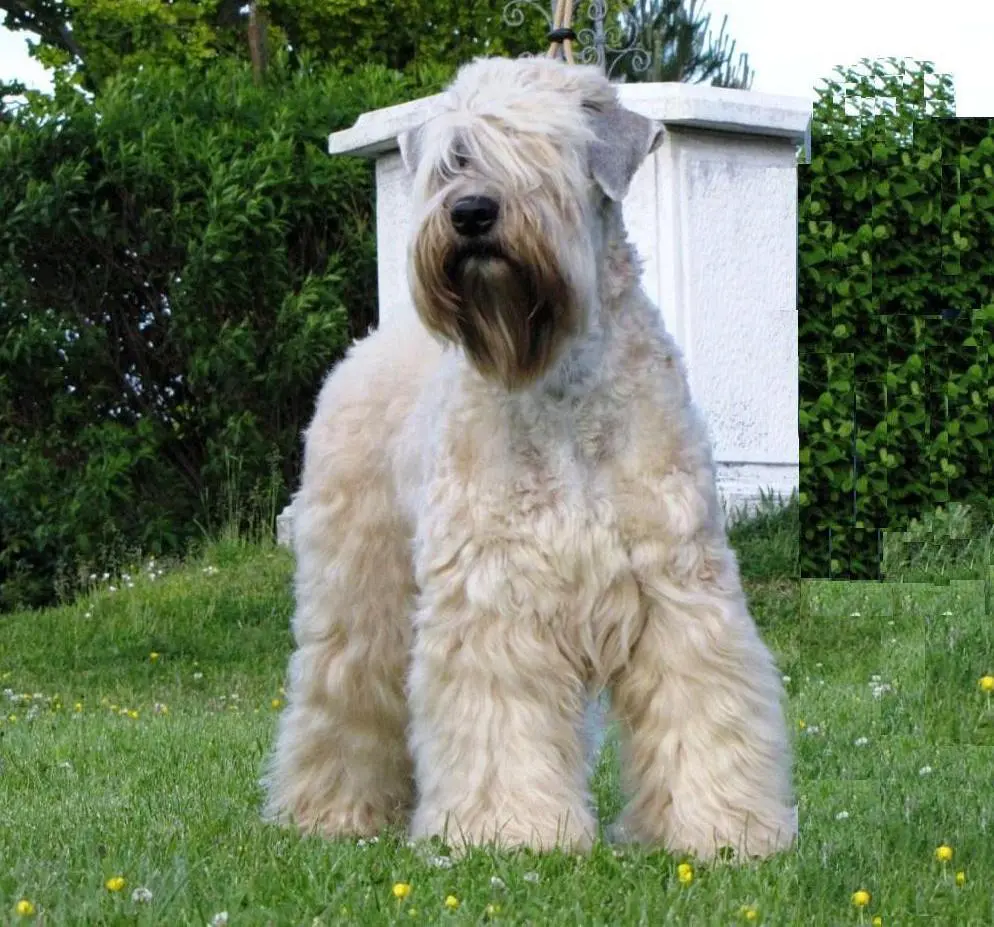
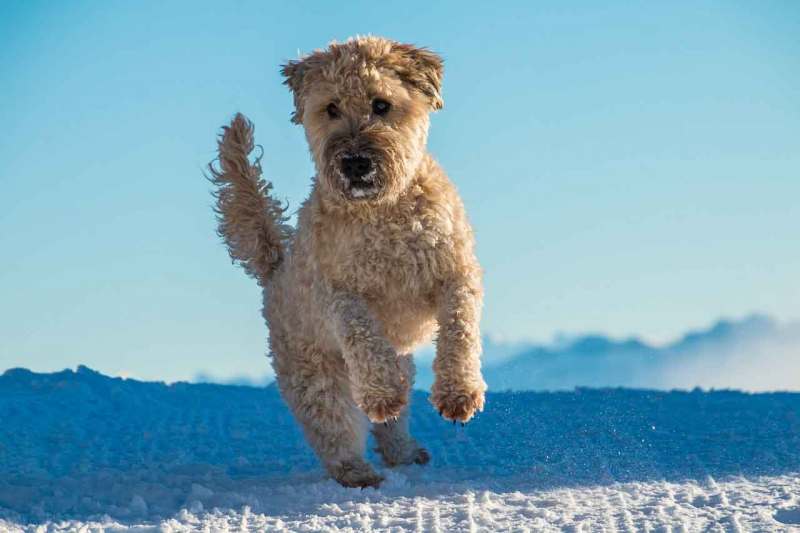
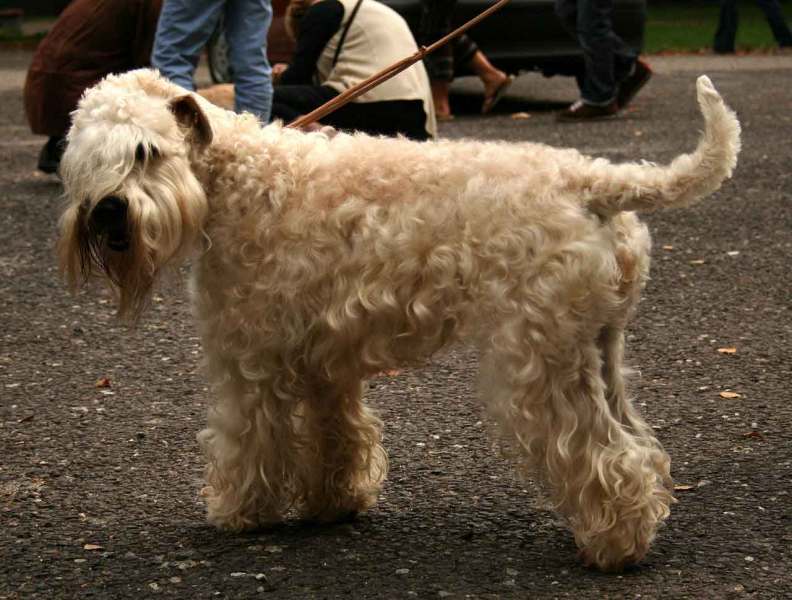
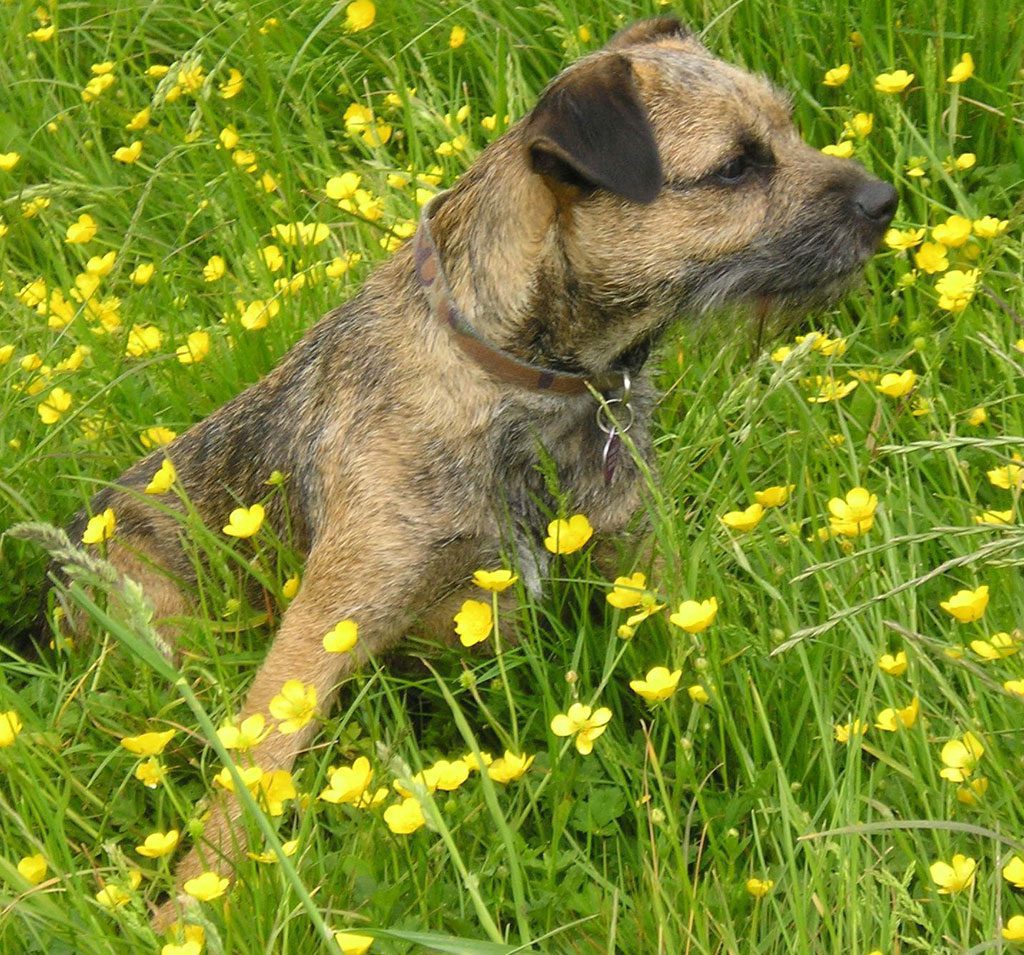
Norfolk Terrier
Inglaterra FCI 272 . Small sized Terriers.

Norfolk Terrier

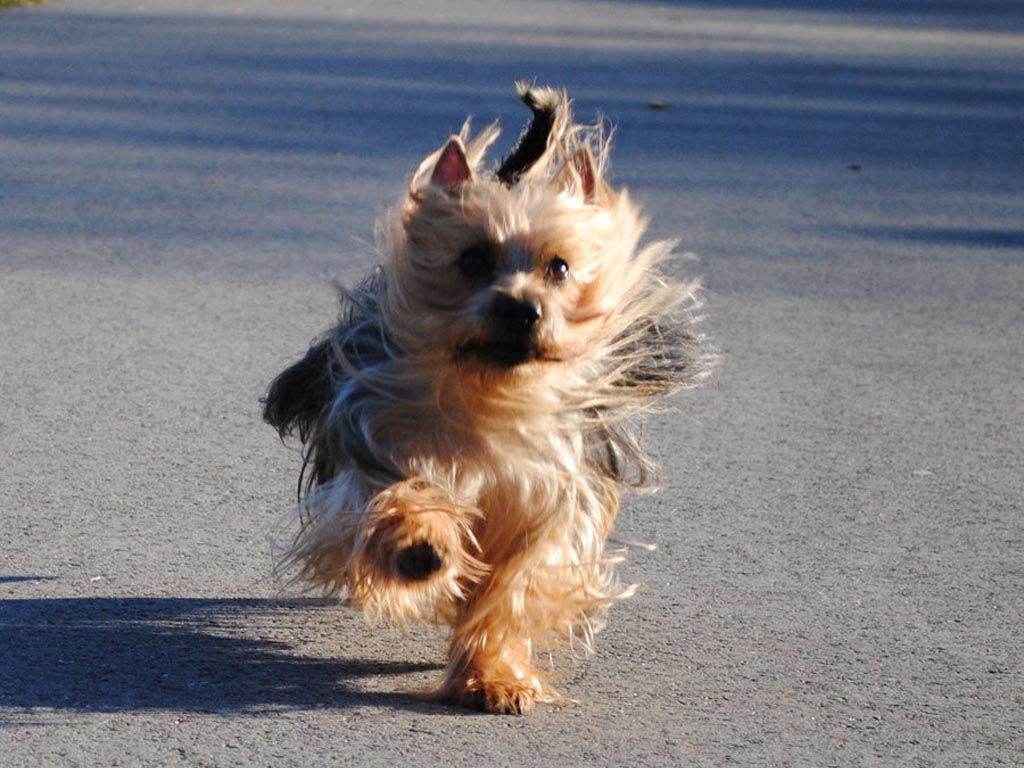
The Norfolk Terrier is lively, cheerful and adapts both the countryside and the city.

Content

History

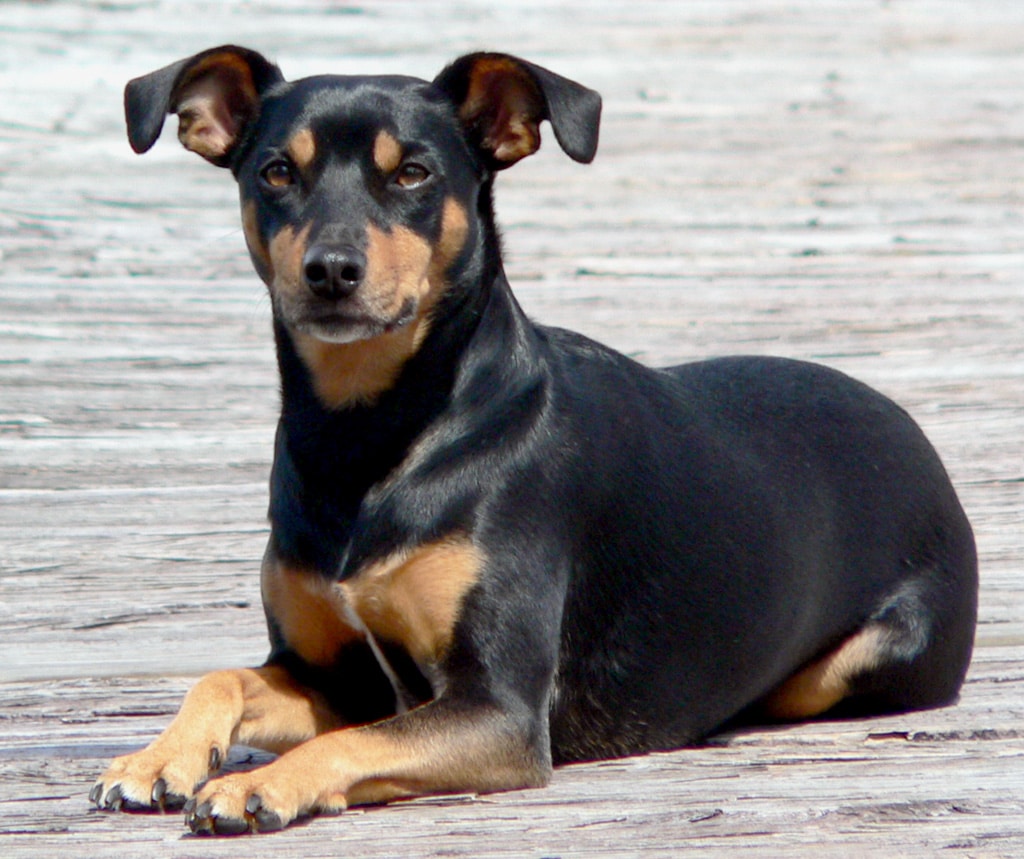
The Norfolk Terrier he is a very small terrier, low rise. Until 1964 formed a dog breed along with the Norwich Terrier. Both differ only in the shape of their ears. While the Norfolk Terrier has slanted ears, the Norwich Terrier has standing ears. In the past these dogs were raised together and it was always a surprise that puppies had ears. Because the judges at the shows at least felt they preferred lop-eared dogs, wanted to have floppy or tilted ears in a class of their own. But, either standing or with ears hanging, they are wonderful terriers, vivacious little ones you can enjoy. They come from the Middle East of England. There these little terriers served the town for many years as watchdogs and hunters at home and at court..

Keeping rats and mice, driving away a marten or fox that wanted to feed on chickens or pigeons at night, they proved to be useful helpers at home and in court. But, the small Norfolk Terrier was not, like many other somewhat larger terriers, used for active fox hunting, the marten and the otter. Didn't have to go in pursuit of these predators. He would not have lacked courage and determination. The Terriers de Norwich and Norfolk they were useful as a cat, but much more defensive and effective, especially when it came to fighting rats. They also had the added value of being watchdogs and danger alarms and were better able to deal with harsh, wet and cold weather conditions of central England.

So these little terriers were already widespread in cities centuries ago.. Consequently, they were bred solely for their suitability for their tasks. Either with upturned or drooping ears, it did not matter. As their tasks drifted away from rats to accompany the human psyche, the subtleties of his outward appearance also came into play. One separated the terrier into two breeds. In 1954, both were officially recognized by the FCI under the name of Norwich Terrier. The tipped-ear variant was recognized as a separate breed in 1962.

Physical characteristics

It is a small dog, clever, short limb, compact and vigorous; It has short back and its structure and strong bones.

Norfolk Terrier has a hair double layer: a hard top layer, ribbed and a warm and soft layer.

Ideally, is due comb the hair once a week to remove the loose hairs, dead and prevent mat.

Itร‚ยดs one of the smaller Terrier dogs, a "demon" for its size. Affectionate but not quarrelsome, robust Constitution.

The tail amputation is optional. Medium amputation, set level with the dorsal line and carried erect. Tail of moderate size to give the dog an overall balance, thick at the base and is tuned toward the tip, as straight as possible, happily held, but not in an excessive manner.

Its movement is natural, low and high thrust. Previous members directed straight forward from the shoulders. A good angulation of the hindlimbs provides you with a great driving force.

The Member posterior move in line with the anterior, with free movements from the hips, and they must bend well at the knees and hocks. level top line.

The hair It hard, rough texture (wire), straight and well attached to the body. Long and rough in the neck and shoulders.

The hair is short and smooth on the head and ears, with the exception of a few light eyebrows and mustache.

With regard to the color, We find all the shades of reddish, wheat, black and Tan or grey. Stains or white markings are undesirable, but allowed.

The height ideal to the cross is between 25 and 26 cm..

Character and skills

Norfolk Terrier should not be aggressive despite being able to defend itself if necessary. Them, along with Norwich Terrier and the Border Terrier, has the softer temperament of the Terrier group.

Videos of the Norfolk Terrier
Two norfolk terriers playing
Norfolk TerrierLightbox for Video by VideoLightBox.com v1.11

Like fellow, they love people and children and they are good pets. His level of activity is generally a reflection that the pace of its environment.

This breed should not stay or live outside, that thrive with human contact. In general, Norfolk Terrier does not generally dig, but, like any dog, will dig out of boredom when left alone for too long a period.

Usually, living well with other pets when introduced as a dog. In the open air, they are natural hunters and have a strong instinct for prey to small bugs.

The Norfolk Terrier is a dog self-confident, they are elegant, they are erect tail and head. A Norfolk Terrier that is shy or tucks its tail between its legs is unusual..

The typical Norfolk Terrier temperament is happy, cheerful and self-confident. His greatest punishment would be to be ignored by the family..

Norfolk Terrier were bred as barn dogs to rid the stables of animal pests. Today, they are household companions and must have a pleasant willingness to live with the people.

The life expectancy of a Norfolk Terrier is of 12 to 15 years.

Observations

Today, the demand for Norfolk Terrier is much more to offer

They are dogs that tend to have small litters and responsible breeders developed the breed, they only breed healthy dogs that are of good temperament, lineage, good pedigree and those that best reflect the breed standard.

Norfolk Terrier Education

The education of this breed is an often underestimated chapter. Although the already little dog looks so cute, especially in his first months of life, he is a true terrier very sure of himself. And such a terrier wants to be educated and guided. So, the Norfolk Terrier requires consequences in education from puppy age. Although small, dreams like most terriers in some corner of his brain of assuming leadership of the pack. Deep down he feels loose like a mastiff or a great dane. So you just have to take your education seriously.. Otherwise, there is no problem. He wants and needs the guidance of his master or mistress and is a docile companion., friendly and sociable, that always brings a smile to our faces.

Norfolk Terrier Health and Care

The coat should be regularly groomed. The Norfolk does not know a change of coat. Two or three times a year dead hair should be trimmed, that is to say, ripped – but with moderation.

The small Norfolk Terrier it is a fairly robust breed of dog.

Nutrition / Food

Norfolk Terrier nutrition has no problems.

Norfolk Terrier life expectancy

The Norfolk Terrier they tend to have robust health and an average life expectancy of 15 years and more.

Buy a Norfolk Terrier

The best way to buy your puppy Norfolk is to buy it locally from an FCI member breeder or take a look at the shelter. A dog of this breed costs around 1.000 EUR.

Characteristics "Norfolk Terrier"

Coexistence is important that you have with your new friend. Before considering the acquisition of a dog of the breed "Norfolk Terrier" you know certain factors. Not all breeds of dogs are apt to live in an apartment, you must take into account his character, their need for exercise, their interaction with other pets, their care and if you have small children, their level of tolerance towards them.

Adaptation โ“˜

5,0 of 5 stars (based on 1 review)

friendly dog โ€‹โ€‹โ“˜

4,0 of 5 stars (based on 1 review)

hair loss โ“˜

4,0 of 5 stars (based on 1 review)

Affection level โ“˜

4,0 of 5 stars (based on 1 review)

Need for exercise โ“˜

4,0 of 5 stars (based on 1 review)

Social need โ“˜

3,0 of 5 stars (based on 1 review)

Home โ“˜

4,0 of 5 stars (based on 1 review)

Toilet โ“˜

1,0 of 5 stars (based on 1 review)

Friendly with strangers โ“˜

4,0 of 5 stars (based on 1 review)

barking โ“˜

4,0 of 5 stars (based on 1 review)

Health โ“˜

4,0 of 5 stars (based on 1 review)

Territorial โ“˜

3,0 of 5 stars (based on 1 review)

Cat friendly โ“˜

4,0 of 5 stars (based on 1 review)

Intelligence โ“˜

4,0 of 5 stars (based on 1 review)

Versatility โ“˜

5,0 of 5 stars (based on 1 review)

Child friendly โ“˜

4,0 of 5 stars (based on 1 review)

Surveillance โ“˜

4,0 of 5 stars (based on 1 review)

joy โ“˜

5,0 of 5 stars (based on 1 review)

Norfolk Terrier pictures

Norfolk Terrier Videos

Type and recognitions:

  • FCI CLASSIFICATION:
  • Group :
  • Section : . .

Federations:

  • FCI – Terriers 2 Small sized Terriers. โ“˜
  • AKC – Terriers โ“˜
  • ANKC – Terriers โ“˜
  • CKC – Terriers โ“˜
  • โ€‹KC – Terriers โ“˜
  • NZKC – Terriers โ“˜
  • UKC – Terriers โ“˜

FCI breed standard "Norfolk Terrier"

Origin:
United Kingdom

Date of publication of the valid original standard:
13.10.2010

Use:

Terriers


General appearance:

It is one of the smallest ground dogs. Crafty, short limb, compact and vigorous; It has short back and its structure and strong bones. Honorable scars resulting from deterioration are allowable.


Behavior / temperament:

He is a "demon" for his size. Affectionate but not quarrelsome, robust Constitution. Alert and brave.

Head:

---

Cranial region:
  • Skull: Width, just slightly rounded and wide between the ears.
  • Depression links (Stop): Well defined.

facial region:

  • Snout: Strong and wedge-shaped; its length is less than a third of the distance measured from the occipital to the frontal-nasal depression (Stop).
  • Lips: Attached.
  • Bite / Teeth : Robust jaws, strong and fairly large teeth, with healthy teeth, complete and scissor bite, that is to say that the internal face of the upper incisors is in contact with the external face of the lower incisors; teeth should be set at right angles in the jaws.
  • Eyes: Oval, dark brown or black, with an alert expression and a smart and lively look.
  • Ears: Medium-sized and V-shaped, slightly rounded at the tip, carried forward along the cheeks.


Neck:

Strong and medium length.

Body:

Compact, short, level back, well rounded ribs.

Tail:

Previously optional tail amputation.
  1. Medium amputation, tail set level with dorsal line and carried erect.
  2.  Tail of moderate size to give the dog an overall balance, thick at the base and is tuned toward the tip, as straight as possible, happily held, but not in an excessive manner.


Tips

PREVIOUS MEMBERS:

  • General appearance: Sharp.
  • Shoulder: Well leaning back and approximately arm length.
  • Forearm: Short forelimbs, powerful and upright.
  • Previous feet: Round and with thick pads.

LATER MEMBERS:

  • General appearance: Well muscled.
  • Knee: Well angulated.
  • Metatarsus: Hockswell descended and straight when viewed from behind, endowed with great driving force.
  • Hind feet: Round and with thick pads.

Movement:

Natural, low and high thrust. The forelimbs are directed straight forward from the shoulders. A good angulation of the hindlimbs provides you with a great driving force. The hind limbs move in line with the forelimbs., with free movements from the hips, and they must bend well at the knees and hocks. level top line.

Mantle

  • Fur: Lasted, rough texture (wire), straight and close to the body. Long and rough in the neck and shoulders. The hair is short and smooth on the head and ears, with the exception of a few light eyebrows and mustache. Excessive grooming is undesirable.
  • Color: All shades of red, wheat, black and Tan or grey. Stains or white markings are undesirable, but allowed.


Size and weight:

The ideal height at the withers is: 25 cm..


Fouls:

Any deviation from the aforementioned criteria is considered as a fault and the severity of this is considered to the degree of the deviation to the standard and its consequences on the health and well-being of the dog..

FALTAS DESCALIFICANTES:

  • Aggressiveness or extreme shyness.
  • Any dog โ€‹โ€‹showing clear signs of physical or behavioral abnormalities must be disqualified..


N.B.:
  • Males should have two normal-appearing testicles fully descended into the scrotum..
  • Only functionally and clinically healthy dogs, with the typical conformation of the breed, should be used for parenting.

The latest changes are in bold.

TRADUCCION: Brรญgida Nestler / Original version: (IN) Technical supervision: Miguel Angel Martinez

Source: F.C.I - International Cynological Federation

Alternative names:

1. Norfolk (English).
2. Norfolk (French).
3. Norfolk (German).
4. Norfolk (Portuguese).
5. Terrier de Norfolk (espaรฑol).

โ–ท The world of Pets: Dogs, cats, birds, reptiles, amphibians

Irish Glenn of Imaal Terrier
Irlanda FCI 302 . Large and medium sized Terriers

It is generally believed that Irish Glenn of Imaal Terrier is less excitable than other Terriers, although it takes action immediately when prompted.

Glen of Imaal Terrier

Content

History

The Irish Glenn of Imaal Terrier originates from the Irish east coast, in county wicklow, which is in the ravine (=Valle) the Imaal. From this rough and wild valley this very old breed got its name. It was first mentioned around 1575.

Like old farm dog, the Irish Glenn of Imaal Terrier he had a very busy life and worked hard for his master. His job was to catch rats and mice on farms and operate smaller work machines like churns and work grinders., where I had to run on leather straps. He also accompanied his master on the fox hunt, the Badger and Otter. He worked in silence and if necessary he fought to the death. Before it was banned in Ireland, the Irish Glenn of Imaal Terrier also used in questionable dogfights. Of course, he was also the most loyal friend and guarded the house and the yard, never shied away from facing a much bigger and stronger opponent.

For its owner, the Irish Glenn of Imaal Terrier it was as important as his daily bread, although undemanding, frugal and tough enough to share the barren life of farmers. This harsh life brought with it a ruthless selection. Only the toughest and most frugal Terriers survived, what characterizes the breed until today.

The pedigree of Irish Glenn of Imaal Terrier it's an irish secret to this day. In Ireland itself, this Terrier has never been numerous and did not leave his ancestral home until 1980, when the owners preserved him as a true child of nature, marked by great courage, skill and endurance. In 1933 the breed was officially recognized by the Irish Kennel Club ( I.K.C.). The international recognition of the F.C.I. continued on 1981.

Physical characteristics

The Irish Glenn of Imaal Terrier it is small but strong and robust and weighs up to 16 kilograms with a maximum height at the withers of 36 centimeters. Its relatively small forward leaning ears are notable.. Its coat is medium length and consists of a rough top layer and a smooth bottom layer. It can be wheat colored, tabby blue or in different shades of red and gold. In the case of a dark-colored coat, a black-blue mask is common., which can also show as stripes over the ears, along the back and tail, so these marks become clearly clearer with increasing age.

Character and skills

Today the Irish Glenn of Imaal Terrier it is a gentle and docile family dog. Its balanced and faithful nature, as well as his average temperament make life with him very pleasant. The Irish Glenn of Imaal Terrier is very affectionate, always cheerful and in a good mood and preferably "in the middle". Enjoy all the attention and care, but without demanding anything. Rather, follows her around with her alert gaze and once she has gained attention, shows his joy about it with strong tail swipes. If the joy is particularly great, his temperament can also run away with him.

Children are welcome as playmates, if they show him the respect that he shows. Pets are accepted by him without problems when they get used to each other. The Irish Glenn of Imaal Terrier she is always friendly with strangers, and with his contagious joy, His charm and his irresistible look quickly have all the sympathies on his side.. After all, it is a terrier that radiates a lot of personality. He is open-minded and not afraid to learn new things. He likes to be everywhere with his nose. In general, everything that is new – Weird people, new environments, an object that has not been there before – it is very interesting and has to be examined very carefully. The Irish Glen of Imaal Terrier is a particularly attentive observer. Along with her charming nature and her desire to do everything right, is very adaptable and develops a very close relationship with his family. He likes to accompany them whenever possible. Like a very people-oriented terrier, I would defend them in an emergency, even to death. Feel more comfortable in your proximity.

What characterizes him Irish Glenn of Imaal Terrier is his great courage, his self-confidence and intelligence above average. Sufficient workload and intellectual work are important to the intelligent four-legged friend. Enjoy almost all activities, be it sports with dogs, search games or learning tricks – is available for all kinds of fun.

Despite its short legs, it is very agile, due to his muscular physique, a small power. Its special characteristics are its slightly curved front legs with the legs turned outward., his big head and his pronounced chest. The Irish Glenn of Imaal Terrier it is a very balanced dog, that radiates great calm on the one hand, but on the other hand you are immediately ready for action and, if required, vigorously watches over and defends your home and family.

The Irish Glenn of Imaal Terrier – the little irish with a big heart

Like a silent working terrier it hardly barks. It is also less excitable than other terriers. Sometimes you can see the Irish stubbornness, but the Irish Glenn of Imaal Terrier not resentful. Due to its origin it does not tolerate heat very well, he likes harsh weather and when the wind blows around his nose. But if the chemistry ain't right, or if the other dog brazenly approaches him, you will receive the message – "Glen doesn't like your attitude.". So, it is important to socialize with other dogs from the beginning and to have contact with many dogs of different ages.

โ€œIrish Imaal Glen Terrierโ€ Care

Because the Irish Glenn of Imaal Terrier still very original and not over-bred, still a very healthy and robust breed. Its coat has a rough top coat with a smooth undercoat that needs to be trimmed. Otherwise, his self-cleaning coat is very easy to care for. Coat color is wheat or Brindle (Blue striped).

A consistent but loving upbringing makes the Irish Glenn of Imaal Terrier a faithful companion, nice and gentle, which is easy to handle.

Life expectancy ยซIrish Imaal Glen Terrierยป

The Irish Glenn of Imaal Terrier is considered an original dog breed, which is in good health and robustness due to the absence of hereditary diseases caused by breeding. If maintained in a species-appropriate manner, will live an average of twelve years.

Images "Irish Glenn of Imaal Terrier"

Photos:

1 – Irish Glen of Imaal Terrier during International show of dogs in Katowice – Saucer, Poland. Breeder – Piotr Kuznik, http://www.irishglen.pl/ by Pleple2000 / CC BY-SA
2 – Irish Glen of Imaal Terrier during International show of dogs in Katowice – Saucer, Poland. Breeder – Piotr Kuznik, http://www.irishglen.pl/ by Pleple2000 / CC BY-SA
3 – Adult w:Glen of Imaal Terrier by photo by Scoo / CC BY-SA
4 – Irish Glen of Imaal Terrier during International show of dogs in Katowice – Saucer, Poland. Breeder – Piotr Kuznik, http://www.irishglen.pl/ by Pleple2000 / CC BY-SA
5 – Irish Glen of Imaal Terrier during International show of dogs in Katowice – Saucer, Poland. Breeder – Piotr Kuznik, http://www.irishglen.pl/ by Pleple2000 / CC BY-SA
6 – Glen of Imaalinterrieri by Sami Kronqvist / CC BY-SA

Videos "Irish Glenn of Imaal Terrier"

Type and recognitions:

  • FCI CLASSIFICATION:
  • Group :
  • Section : . .

Federations:

  • FCI – Terriers 1 Large and medium-sized terriers. โ“˜
  • AKC – Terriers โ“˜
  • ANKC – Terriers โ“˜
  • CKC – Terriers โ“˜
  • โ€‹KC – Terriers โ“˜
  • NZKC – Terriers โ“˜
  • UKC – Terriers โ“˜

FCI breed standard "Irish Glenn of Imaal Terrier"

Origin:
Ireland

Date of publication of the valid original standard:
27.01.2001

Use:

Like all other terriers, this stubborn little breed had to hunt badgers and foxes, as well as keeping the rat population to a minimum. In the news, he is a family dog, docile and sweet.


General appearance:

It is a medium-sized dog, with a medium length coat, very strong and gives the impression of maximum substance for its size.

IMPORTANT PROPORTIONS:

The body is longer than it is tall, close to the ground.


Behavior / temperament:

It is an active dog, agile and quiet when working. Courageous and gifted with courage when you need it, otherwise it is kind and docile, from which personality flows, his loyal and affective nature, makes him a very acceptable dog for the home and company. Irish Glen de Imaal is said to be less easily excitable than other terriers, although he is always ready to react if asked.

Head:

---

Cranial region:
  • Skull: Good width and reasonable length.
  • Depression links (Stop): Pronounced.

facial region:

  • Truffle: black.
  • Snout: Giving the impression of strength; narrowing towards the truffle.
  • Jaws: Strong.
  • Teeth: Healthy teeth, regular, strong and good size. Scissor bite.

Eyes: Brown, medium-sized, round and placed well apart. Light colored eyes should be penalized.

Ears: Small, When the dog is alert, it should be pink or semi-upright; when at rest they are carried backwards. Completely drooping or erect ears are undesirable..

Neck:

Very muscular and of moderate length.

Body:

Deep and long, longer than high.

  • top line: To level.
  • Pork loin: Strong.
  • Breast : Wide and strong, well sprung ribs.

Tail:

Cut. Firm at the root, well established and carried happily. Puppies' tails should be cut in half. A natural glue (not cut) It is allowed for countries where cutting them is prohibited by law.

Tips

PREVIOUS MEMBERS: Short, curved and with good bones.

  • Blades: Spacious, muscular and well leaning.
  • Anterior legs: Short, arching and good bone.
  • Pies: Compact and strong, with round foot pads. The front feet are slightly rotated out from the metacarpus.

LATER MEMBERS: Strong and well muscled.

  • Thighs: Well muscled.
  • Knee: Well angled.
  • Hocks: Without turning in or out.
  • Pies: Compact and strong with round foot pads.

Movement:

Free and without lifting the forelimbs too much. Effortlessly cover ground with good boost from hindquarters.

Mantle

Fur: Hair is medium in length and coarse in texture, with a soft undercoat. Hair can be groomed to make your figure look neat.

Color:

  • Blue tabby without the hue turning to black.
  • Wheat, from light wheat to a golden reddish hue
  • Puppies can be born blue, Wheat or Reddish Lighter-colored puppies generally have a bluish-colored mask, may have a blue stripe along the back, in the tail and in the ears. Darker marks will lighten with age.


Size and weight:

Height to the cross:

  • Males: 35,5 cm. (14 inches) is the maximum.
  • females: proportionally less.

Weight:

  • Males : 16 kg (35 English pounds).
  • females : proportionally less.


Fouls:

Any deviation from the aforementioned criteria is considered as a fault and the severity of this is considered to the degree of the deviation to the standard and its consequences on the health and well-being of the dog..

  • Hound ears.
  • With inferior or superior prognathism.
  • Body too short.
  • Straight front.

FALTAS DESCALIFICANTES:

  • Aggressiveness or extreme shyness.
  • Any dog โ€‹โ€‹showing clear signs of physical or behavioral abnormalities must be disqualified..
  • Black and fire color.
  • Narrow snout.


N.B.:

Males should have two normal-appearing testicles completely descended into the scrotum. Only functionally and clinically healthy dogs, with the typical conformation of the breed, should be used for parenting.

TRANSLATION: Lic. O. Valverde, reviewed by Dr. F. del Valle and updated by J. Nallem, Uruguayan Kennel Club.

Source: F.C.I - International Cynological Federation

Alternative names:

1. Irish Glenn of Imaal Terrier, Wicklow Terrier, Glen, Glennie (English).
2. Irish Glen of Imaal Terrier (French).
3. Irish Glen of Imaal Terrier (German).
4. Glen of imaal terrier (Portuguese).
5. Glen, Wicklow Terrier, Glen of Imaal Terrier, Irish Glen of Imaal Terrier (espaรฑol).

โ–ท The world of Pets: Dogs, cats, birds, reptiles, amphibians

Parson Russell Terrier
Inglaterra Estados Unidos FCI 339 . Large and medium sized Terriers
Parson Russell Terrier

The Parson Russell Terrier is a fearless dog, very happy, energetic and friendly.

Content

History

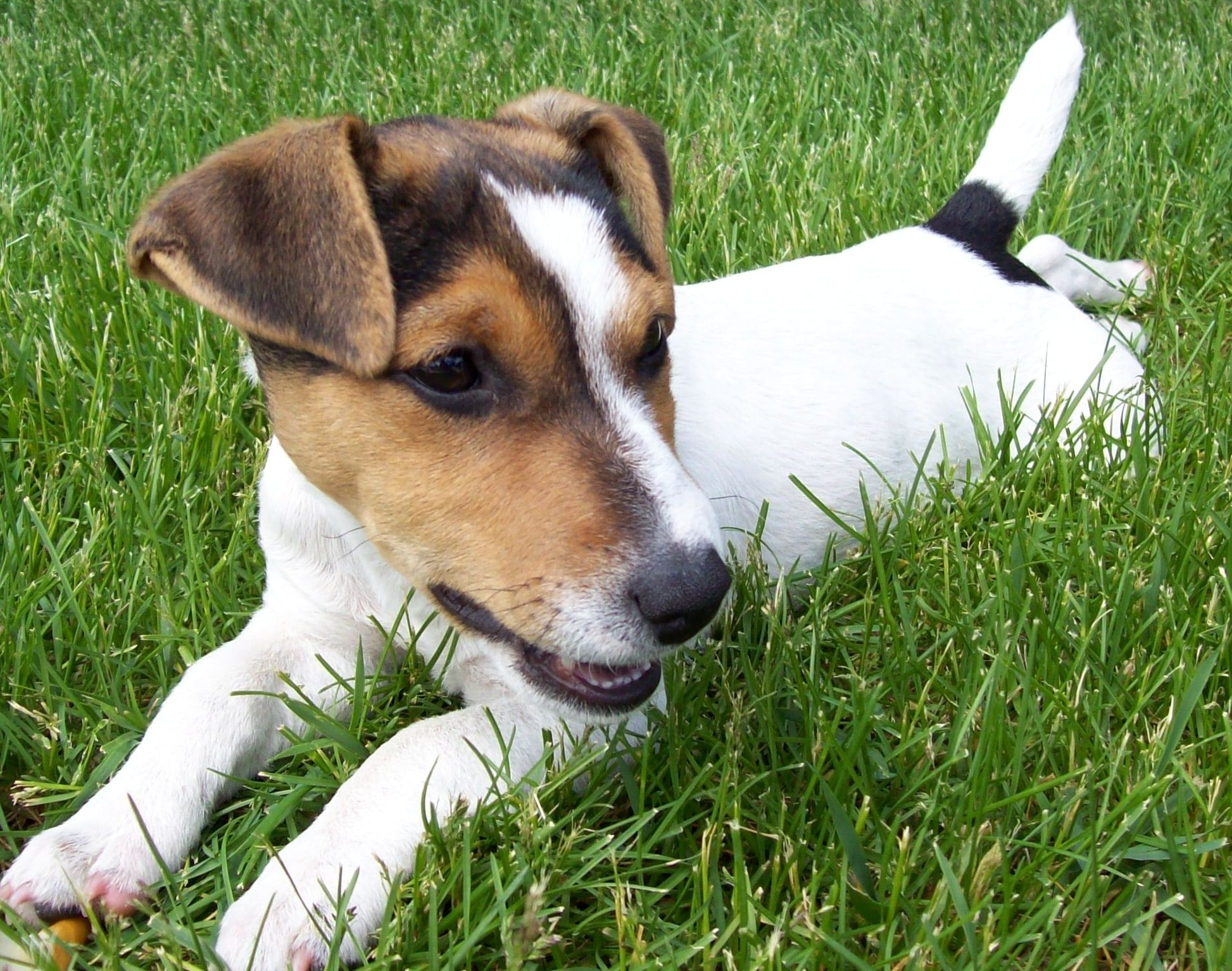
The Parson Russell Terrier it is a small to medium sized terrier. It's a hunting dog.

Although this breed of dog is very young in modern dog breeding, the Parson Russell Terrier is very close to the old and classic type of a terrier in character and appearance. Terriers form a large group within dogs. Its name is derived from the Latin ยซTerraยป for the earth. So they were dogs for work on the land. The first evidence is given by the ancient Romans. Already in the Middle Ages terriers are described in detail. His homeland is in the British Isles. Terriers existed throughout the country. In the stables they kept small vermin at bay. Even the big rats were not a problem for them. The hens, pigeons and rabbits protected them from martens and foxes. To keep chasing foxes, the terriers were sent to the trench.

The Parson Russell Terrier of today are made exactly for this purpose. They should and could get the fox out of the hole. At the same time, they had to run with the fox hunts in the pack, that is to say, they had to be able to follow the gallop of the hunt. All of these tasks require enthusiastic commitment, special courage, independent thinking and the so-called sharpness of predators.

The Parson Russell Terrier turned into a versatile hunting dog, it's not only suitable for underground work. In the 19th century the English shepherd Jack Russell he was a successful hunter, rider and above all breeder of Fox Terriers. In his long life as a breeder he greatly increased the performance of the Fox Terrier. They were now fit for all individual hunting tasks, they could work in the pack and in the den at the same time.

In Australia, only with the help of their dogs could a plague of foxes be contained. To thank this, these dogs were finally named after their breeder, the Parson ยซJack Russellยป Terrier. They were and are physically and mentally raised for work, no show dogs. So breeders and lovers of this terrier for a long time refused to join the system of modern pedigree dog breeding., because they did not want to see dogs evaluated primarily on their appearance and feared the negative consequences of the show business on the fitness and health of dogs. This has done this breed of dog very well..

Seriously raised, these are dogs that were largely spared from hereditary diseases and extremes in breeding. He "Jack Russell Terrierยป had a wide range of sizes from the beginning, rather short-legged and rather tall. Since performance was decisive, such refinements had no role. Now two breeds of dog have been made from the ยซJack Russell Terrierยป and the two lines have separated in breeding. The little one is still called Jack Russell Terrier, It has a height at the withers of up to 30 cm and is provided a little longer. The Parson it is a little taller and with more legs and in its rather square shape. Parish is another word for "pastor" in English.. So two breeds of dog are named after one person, el pastor Jack Russell. Both dogs are a credit to the Shepherd. In 2001 the new race Parson Russell Terrier was officially recognized.

Physical characteristics

The Parson Russell Terrier It is suitable for the working dog, Active, agile, built for speed and endurance. It gives the impression of balance and flexibility as a whole.

You can have hair smooth or hard if it is thick and dense to protect it from the inclement weather, like cold and damp. Its color It can be entirely white or predominantly white with brown spots, lemon or black or any combination of these colors, preferably stains should be limited to the head or the birth of the tail.

It measures to the cross between 33 and 36 cm., their weight approximate is of 8 to 10 kilos to be slightly larger in proportions that the version of the Jack Russell Terrier, although it should be noted that taller specimens exist as "Jack Russell" in some work clubs in the United Kingdom and the United States., due to what these clubs do not form part of the FCI and therefore, handle different to the recognized standard registers and accepted worldwide by the 84 member countries.

Character and skills

Parson Russell a fearless and friendly Terrier.

This breed was bred to hunt, Chase and corner foxes in its burrow, therefore, they carry in their genes, and if this activity does not form part of the life of your puppy, We recommend that, they should be exercised daily intensely since they are dogs with a huge dose of contained energy.

Perhaps its character lively and friendly has caused it to be one of the dog breeds preferred by many people as a pet.

But in reality it is a true working dog and we should not forget that if a specimen of... becomes part of our family..

Leave running, ride a bike, launch frisbee or ball - and teach him to bring them back-, It will help to strengthen the bond between the Parson and his owner while it educates, enjoys and is exercised.

Images ยซParson Russell Terrierยป

Videos ยซParson Russell Terrierยป

Type and recognitions:

  • FCI CLASSIFICATION:
  • Group :
  • Section : . .

Federations:

  • FCI – Terriers 1 Large and medium-sized terriers. โ“˜
  • AKC – Terriers โ“˜
  • ANKC – Terriers (utility dogs) โ“˜
  • CKC – Terriers โ“˜
  • โ€‹KC – Terriers โ“˜
  • NZKC – Terriers โ“˜
  • UKC – Terriers โ“˜

FCI breed standard "Parson Russell Terrier"

Origin:
United States, United Kingdom

Date of publication of the valid original standard:
22.08.2017.

Use:

Working terrier with the ability to work underground.


General appearance:

Efficient, active and agile, without exaggerations. Built for strength and power with an overall appearance of balance and flexibility. Honorable scars are allowed.

IMPORTANT PROPORTIONS: Well balanced. The total length from the tip of the shoulders to the tip of the ischium slightly greater than the height at the withers to the floor. The length from the nose to the stop is somewhat shorter than from the stop to the occipital protuberance.


Behavior / temperament:

Originally a terrier bred to work with the fox. A confident dog, energetic and cheerful who has the ability and conformation to work on the ground. Bold and friendly.

Head:

Wedge shaped.

Cranial region:
  • Skull: Plano, moderately wide gradually tapering to the eyes.
  • Depression links (Stop): Bit strong.

facial region:

  • Truffle: black.
  • Jaws / Teeth: Powerful and well muscled jaws. Good sized teeth with a perfect, regular and complete scissor bite. I.e., The upper incisors cover the lower incisors in close contact and are set squarely in relation to the jaws..
  • Cheeks: Not prominent.

Eyes: dark, almond shape, never prominent. Lively and intelligent expression.

Ears: Size in proportion to the head. In the shape of a โ€œVโ€ falling forward. The tips of the ears should reach the level of the outer corner of the eyes. The fold should not be above the level of the skull. Canopy of moderate thickness.

Neck:

Cleansed, muscle, good length, gradually widening and well placed on the shoulders.

Body:

  • Back: Strong, straight and flexible.
  • Pork loin: Strong and slightly arched.
  • Breast : Moderately lowered, without extending beyond the elbows. Behind the shoulders should encompass the palm of an average hand. Ribs worn well back, not too arched or too flat.

Tail:

Previously the custom was to amputate the tail.
  • amputee: Long complementing the body but maintaining a good grip. Strong, straight, moderately high insertion, very tall in movement.
  • Without amputating: Moderately long and as straight as possible, giving a good balance to the dog, thick at the base tapering towards the tip. Moderately high insertion, very tall in movement.


Tips

PREVIOUS MEMBERS:

  • ApGeneral arience: Moderate width between forelimbs, well placed under the body.
  • Hormbros: Wide and sloping, well defined on the cross.
  • Brazo: As long as the shoulders and with such angulation that the extremities are placed well under the body, below the tip of the cross.
  • Antarm: Strong and straight without leaning in or out. Arm length should be slightly greater than body depth.
  • Elbows: Glued to the body working freely on the sides.
  • Metacarpus: Strong and flexible.
  • Pinis previous: Compact with firm pads, moderately arched fingers, never flat open, without leaning in or out.

LATER MEMBERS:

  • ApGeneral arience: Strong, muscle with good angulations.
  • Knee: Good angulation without exaggeration.
  • PinScheme: Well developed.
  • Ahock joint: Low placement.
  • Metatarsals: Parallels, giving a lot of propulsion.
  • Hind feet: Like the previous ones.

Movement:

Libre, movement covering the surface, without exaggeration. The steps must be of good length, never forced or high steps. Posterior provides a strong push. Well coordinated, right movement back and forth.

Mantle

SKIN: It should be thick and loose.

MANTLE

  • Fur: Rough, broken the naturally rough smooth, straight, smooth, tight and bushy with good undercoat. Weather resistant. Abdomen and lower line covered with hair. The prepared cloak (Trimming) it must seem natural, never cut.
  • Color: White or predominantly white with fire markings, lemon or black or any combination of these colors. The color is preferably limited to the head and / or base of the tail but slight marks are accepted on the body.


Size and weight:

Height to the cross:

  • Ideal in males: 36 cm.
  • Ideal in females: 33 cm.

It is more important to maintain correctness and balance taking into account that this terrier, bred to work with the fox, behind the shoulders should encompass the palm of an average hand.


Fouls:

Any deviation from the aforementioned criteria is considered a fault and its severity is considered to the degree of deviation from the standard and its consequences on the health and well-being of the dog and the dog's ability to perform its traditional task..

FALTAS DESCALIFICANTES:

  • Aggressiveness or extreme shyness.
  • Any dog โ€‹โ€‹showing clear signs of physical or behavioral abnormalities must be disqualified..


N.B.:
  • Males should have two normal-appearing testicles fully descended into the scrotum..
  • Only functionally and clinically healthy dogs, with the typical conformation of the breed, should be used for parenting.

TRANSLATION: Brรญgida Nestler / Original version: IN.

Technical supervision: Miguel Angel Martinez.

Source: F.C.I - International Cynological Federation

Alternative names:

1. Parson, Parson Jack Russell Terrier (English).
2. Parson Russell terrier (French).
3. Parson (German).
4. Parson (Portuguese).
5. Parson, Parson Jack Russell (espaรฑol).

โ–ท The world of Pets: Dogs, cats, birds, reptiles, amphibians

Japanese Terrier
Japรณn FCI 259 . Small sized Terriers.

Japanese Terrier

The Japanese Terrier it hardly enjoys diffusion and is practically to discover.

Content

History

In the middle of the Edo era, about 1700, a small dog appeared in Japan that looked very much like the type of terrier. It was the result of a cross between small Japanese dogs with English Fox Terrier Smooth, which was brought to the port of Nagasaki by Dutch sailors. At that time the port of Nagasaki was the only port open to Western countries., especially the dutch. After several generations, some descendants of these dogs were bred as a type of Italian Greyhound.

About 1900, al final de la era Meiji, Some of the best of the mentioned dogs were seen in the Kobe district and called "Kobe Terriers". His type was something between modern Fox Terrier Smooth and the modern Japanese Terrier. They were the first terriers to be bred in Japan. This "Kobe Terrier" and some of its ancestors were also called "Oyuki Terrier" and "Mikado Terrier" and are said to be carefully cared for by the premises and also by foreigners.

About 1916 an ancestor of the Japanese Terrier in the Nada district, near Kobe, A dog called "Kuro" (born in 1913 in Kobe), which means "black" in Japanese. This dog was a cross between a English toy terrier and Bull Terrier miniature, both imported from western countries. These pups were bred with bitches of the aforementioned Kobe Terrier. The result was a very short haired dog, thin and small of the Terrier type and was called Japanese Terrier (NIHON) since then. in those days, major breeders in Osaka county engaged in inbreeding and line breeding to cement appearance. Thanks to your efforts, the breed was firmly established in 1930.

In 1932 NIHON TERIA CLUB was founded under the presidency of Tamara KIKUJIRO. The Japanese Terrier it was ideal for city dog รขโ‚ฌโ€นรขโ‚ฌโ€นbreeders and became fashionable.

In 1940, where cities were built everywhere and with these cities grew the demand for a smaller and more active dog than the large guard dogs, the Japanese Terrier became very popular. But, in all its history, this breed was twice threatened with extinction. The first time, during WWII and again, about 1948, due to loss of popularity among the Japanese, since other western races were more fashionable.

Although the Japanese Terrier was recognized by the F.C.I. (Federation Cynologique Internationale) in 1964, this breed was practically unknown outside of Japan.

According to the documents, three basic lines of Japanese Terrier: ยซLANDMARKยป (by Mr.. Nobuaki Shigematsu, Yamaguchi Prefecture), ยซTAIKOยป (by Mr.. Sumiko Amano, Hamamatsu City) and "Tama Takahara" (by Mr.. Jun Takahara, Such).

About 1985, there was less than 50 bitches available for breeding throughout Japan. After the great efforts of some volunteers, who were aware of the need for immediate protection of the race, the number of dogs had reached about 400 breeding dogs after seven years.

So, special mention must be made of the efforts of Mr.. Jun TAKAHARA, whose commitment made the Japanese Terrier was known beyond the borders of Japan.

The breed was not seen in European countries until 1991, when a couple of Japanese Terriers arrived in France at the request of Mrs.. Luisa Gonzรกlez de Castejรณn. Their dog names were "Kuroyuri Maru from Tama Takahara" (male) Y ยซKeshinome Brains De Tama Takaharaยป (female).

Another European breeder had also joined this adventure in the years 90: The Sr. Roberto Verde from Naples (Italy) he also owned three beautiful Japanese Terriers.

Time and time again there have been and still are some breeders who care for this breed, but unfortunately it was not possible to establish a stable population in Europe.

After 2 years of establishing contact with the Japanese breeder Mr.. Thoshihide OZAKI was able to import the FIRST Japanese Terrier the 4.11.2014 to AUSTRIA. ยซYodogimi de Ozaki Farm JPยป born 28.06.2014. This dog was registered with the Austrian Kennel Club (ร–HZB) con JAPT 1.

In order to create a breeding base, more dogs have been imported from Japan in recent years. In total 4 females were brought to Austria and two males (Ozaki Farm JPโ€™s HIBIKI Swiss / 2017 & Ozaki Farm JPโ€™s SHIN / 2018) were transferred to Switzerland. In 2017 the first Japanese Terrier.

Physical characteristics

It is a small dog, elegant in appearance, and a defined and compact configuration.

Shoulder height: 30 cm. – 33 cm.; Weight: a few 5 kg

Fur: Short (2mm) smooth, dense and glossy; the coat does not need any additional care;

Color: Head: Tricolor (fire and white); Body: Basic color white with small black or tan spots.

The breeders of the Japanese Terrier they are very demanding in terms of appearance and color markings, that are sometimes considered more important than your sports skills. The ideal colors and markings in a Japanese Terrier are the black, chocolate brown and beige: The head, ears and nose bone should be dark in color, black or chocolate brown. The muzzle to the nose and on each cheek and above each eye should be light brown. The lower jaw will be white. A clear "V" is visible in the neck. Occasionally there are also dark gray heads with light brown markings. But, this is considered to be the worst of the color variations. This is different with the deep black heads. This black color is allowed, because it reminds one of the old kobe dogs.

Character and skills

The Japanese Terrier not only is he a very intelligent puppy, but also mischievous and full of terrier temperament. Knowing him means loving him for his great sensitivity. He has a cheerful character and will participate in games with pleasure and joy.. It is a one-man dog whose devotion flatters its owner. As an attentive house dog will warn of the approach of a stranger but without being aggressive. It is very easy to train and can learn all kinds of tricks. His greatest effort is to please his owner. As a sports partner he has great skills and innate instincts. Has an excellent sense of smell and good eyesight, but still has no hunting ambitions. It's never quarrelsome, She gets along well with other dogs, especially with his own race.

It is an independent puppy, whose characteristics make it a pleasant "partner". It is suitable for young people, for both athletes and the young at heart. And one thing is especially important for the little terrier: snuggling with its owner.

Fitness: The Japanese Terrier it's a small dog, but still needs enough activity. It is the ideal companion for active people. Likes to learn and is therefore also suitable for mind games or dog sports that are suitable for small breeds.

It is a "skirt dog" in the positive sense. But that's only if you are tired of the many races!!

With the kids:

The Japanese Terrier is very attached to his owners and enjoys a good snuggle. But, he is not a babysitter dog. As in all small dog breeds, small body size has advantages when traveling, but it becomes a disadvantage with – and I say it with affection – the clumsy hands of children. This means that when they have children, make sure children handle the dog with care. Offer the dog an area where he can retreat if he becomes too heavy for him. If this is observed, nothing stands in the way of positive cooperation.

Correct nutrition Japanese Terrier

Proper nutrition is extremely important to avoid diet-related diseases. It is important to have a balanced diet that suits your beloved. Due to its active nature, the Japanese Terrier has its own nutritional requirements. It is very agile, so you should pay attention to a sufficient power supply.

High-quality whole foods are precisely tailored to your dog's nutritional needs. This ensures a supply of all the nutrients your dog needs.. High-quality prepared foods have the advantage that no feed additives are needed.

Terriers are often susceptible to allergies based on gluten-containing grains. In this case, you must ensure that the food contains other sources of carbohydrates. Rice or potatoes are a good alternative here. Food intolerance can lead to skin rashes, inflammation and digestive problems.

It is recommended to feed your terrier several times a day in small portions.. After each feeding, a pause in digestion must be ensured. You should refrain from eating before planned sports activities.

Care Japanese Terrier

The coat of his Japanese Terrier it is extremely easy to care, since it only measures about 2 cm long. Don't lose much, but you will enjoy removing loose hairs with a silicone glove. Even dandruff can be removed and the blood circulation of the skin is stimulated.

Your terrier's hair doesn't grow too thick. So, it is recommended to wear a coat during the cold months. If you stay outdoors for a longer period of time, protect your stomach and nose with sun milk.

When caring for your terrier's teeth, you should make sure that you do not feed him any food that contains sugar. These damage teeth, which in turn can lead to serious digestive problems.

The Japanese Terrier has a highly developed musculature, but its bone structure is quite fine. So, the use of a dog harness is recommended instead of a collar. If you stay home alone for a while, chewing bones of an appropriate size can be used as a toy.

Characteristics "Japanese Terrier"

Coexistence is important that you have with your new friend. Before considering the acquisition of a dog of the breed "Japanese Terrier" you know certain factors. Not all breeds of dogs are apt to live in an apartment, you must take into account his character, their need for exercise, their interaction with other pets, their care and if you have small children, their level of tolerance towards them.

Adaptation โ“˜

2,0 of 5 stars (based on 1 review)

friendly dog โ€‹โ€‹โ“˜

3,0 of 5 stars (based on 1 review)

hair loss โ“˜

3,0 of 5 stars (based on 1 review)

Affection level โ“˜

5,0 of 5 stars (based on 1 review)

Need for exercise โ“˜

1,0 of 5 stars (based on 1 review)

Social need โ“˜

4,0 of 5 stars (based on 1 review)

Home โ“˜

3,0 of 5 stars (based on 1 review)

Toilet โ“˜

1,0 of 5 stars (based on 1 review)

Friendly with strangers โ“˜

3,0 of 5 stars (based on 1 review)

barking โ“˜

4,0 of 5 stars (based on 1 review)

Health โ“˜

4,0 of 5 stars (based on 1 review)

Territorial โ“˜

4,0 of 5 stars (based on 1 review)

Cat friendly โ“˜

3,0 of 5 stars (based on 1 review)

Intelligence โ“˜

4,0 of 5 stars (based on 1 review)

Versatility โ“˜

4,0 of 5 stars (based on 1 review)

Child friendly โ“˜

4,0 of 5 stars (based on 1 review)

Surveillance โ“˜

3,0 of 5 stars (based on 1 review)

joy โ“˜

5,0 of 5 stars (based on 1 review)

Images "Japanese Terrier"

Photos:

1 – At photo Amakakeru-Meiji White Oleander – Japanese Terrier on dogs show in Konopiska, Poland. The owner is Paweล‚ Gฤ…siorski by https://commons.wikimedia.org/wiki/User:Pleple2000
2 – At photo Amakakeru-Meiji White Oleander – Japanese Terrier on dogs show in Konopiska, Poland. The owner is Paweล‚ Gฤ…siorsk by Pleple2000 / CC BY-SA
3 – At photo Amakakeru-Meiji White Oleander – Japanese Terrier on dogs show in Konopiska, Poland. The owner is Paweล‚ Gฤ…siorski by Pleple2000 / CC BY-SA
4 – At photo Amakakeru-Meiji White Oleander – Japanese Terrier on dogs show in Konopiska, Poland. The owner is Paweล‚ Gฤ…siorski. by Pleple2000 / CC BY-SA
5 – A Japanese Terrier by Canarian / CC BY-SA
6 – Bernie Lindsey, my dog by Bernielindsey44 at en.wikipedia / Public domain
7 – At photo Amakakeru-Meiji White Oleander – Japanese Terrier. by Paweล‚ Gฤ…siorski / CC BY-SA

Videos "Japanese Terrier"

Type and recognitions:

  • FCI CLASSIFICATION:
  • Group :
  • Section : . .

Federations:

  • FCI – Terriers 2 Small sized Terriers. โ“˜
  • Japan Kennel Club – Terriers โ“˜

  • FCI breed standard "Japanese Terrier"

    Origin:
    Japan

    Date of publication of the valid original standard:
    04.04.2016.

    Use:

    Companion dog


    General appearance:

    It is a small dog, elegant in appearance, and a defined and compact configuration. Hair measuring approximately 2 mm is very short.

    PROPIMPORTANT ORTIONS: The ratio of the height at the withers to the length of the body is 1: 1. The muzzle and the skull are the same length.


    Behavior / temperament:

    The Japanese Terrier is agile and with a lively temperament.

    Head:

    ---

    Cranial region:
    • Craging: Flat and moderately narrow.
    • Dnaso-frontal depression (stop): Not very defined.

    facial region:

    • Nariz: Black. The nasal helm is straight.
    • Labios: They are thin and tight.
    • JawsTeeth: Strong white teeth. The joint is in the form of scissors.
    • Cheeks: Thin, not bulky.
    • Ojors: Medium-sized, oval shape and dark in color.
    • Obars: High implementation. They are rather small, thin, V-shaped, and fall forward. But, bent and raised on both sides of the skull are allowed.

    Neck:

    It is of moderate length, strong, and gradually widens towards the dewlap-free shoulder region.

    Body:

    • Cruz: High.
    • Dorrso: Short and firm.
    • Itmor: Slightly arched.
    • Glikeness: Powerful.
    • Pecho: Deep, although the pectoral region is not too wide. The ribs are well sprung.
    • Lรญnlower ea and bellyBellywell collected.

    Tail:

    Moderately thin; Traditionally, amputated in thecountry of origin. En the countries where the cut of tail is prohibited, the natural tail is slightly curved and tapers towards the tip. In motion it is moderately high.

    Tips

    PREVIOUS MEMBERS:

    • Hormbros: Slightly inclined.
    • Antarms: They are straight; the bones are not heavy.
    • Pinis previous: They are good together. The foot pads are elastic; nails are hard and preferably dark in color.

    LATER MEMBERS:

    • Thighs: Long.
    • Rodinllto: Moderately angled.
    • Ahock joint: Moderately angled.
    • Metatarsus: Vertical.
    • Pinis later: They are good together. The foot pads are elastic; nails are hard and preferably dark in color.

    Movement:

    It is light and agile.

    Mantle

    Plink: Short, smooth, dense and lustrous.

    Colorr: Tricolor, with a black head, fire and white. White with black spots, black marks or tan marks on the body.


    Size and weight:

    So much for males, as for females, height is about 30 to 33 cm..


    Fouls:

    Any deviation from the aforementioned criteria is considered as a fault and the severity of this is considered to the degree of the deviation to the standard and its consequences on the health and well-being of the dog..

    FALTAS DISQUALIFYING:

    • Aggressiveness or extreme shyness.
    • Any dog โ€‹โ€‹showing clear signs of physical or behavioral abnormalities must be disqualified..
    • Long hair.
    • Pronounced upper or lower prognathism.


    N.B.:
    • Males should have two normal-appearing testicles fully descended into the scrotum..
    • Only functionally and clinically healthy dogs, with the typical conformation of the breed, should be used for breeding

    Itlatest changes are in bold.

    TRaduCCiรณNMrs. Brรญgida Nestler.

    ItsPETechnical review: SR. Miguel Angel Martinez.

    Source: F.C.I - International Cynological Federation

    Alternative names:

    1. Nippon Terrier, Nihon Teria, Nihon Terrier, Kobe Terrier, Mikado Terrier, Oyuki (snowy) Terrier (English).
    2. Nihon teria (French).
    3. Nippon-Terrier, Nishon-Terrier (German).
    4. nihon, nippon terrier (Portuguese).
    5. Nihon teria, Terrier Nipรณn, Terrier Japonรฉs (espaรฑol).

โ–ท The world of Pets: Dogs, cats, birds, reptiles, amphibians

German Hunting Terrier
Alemania FCI 103 - Large and medium sized Terriers

Jagdterrier

The German Hunting Terrier is in no way suitable exclusively as a companion or family dog.

Content

History

The German Hunting Terrier he is a high performance terrier. There are two varieties of it, the of wire hair and the of smooth hair. He is essentially a descendant of Fox Terrier. After World War I, some active hunters broke away from the Club de Fox Terrier to create a breed that would be oriented exclusively to hunting performance. This was successful and thus the German Hunting Terrier Club in 1926. Under the leadership of Dr. Herbert Lackner the new race, the German Hunting Terrier, was established systematically and finally very successfully.

After a separation from the brood of almost 100 years, you can certainly talk about a new breed today. It also, you can clearly see it in its appearance and also in the nature of this professional hunting dog. But, remained a terrier. One German Hunting Terrier you must be very brave, fearless and defensive. Must be able to work boar hunting without problems, which is one of the most difficult and dangerous tasks a hunting dog can master. Even today the German Hunting Terrier is still a highly prized hunting dog. Has become a versatile hunting assistant. Among other things, It is used very successfully in wild boar hunts., where it excels with amazing performances. His tireless work eagerness and leadership are especially appreciated while hunting..

The German Hunting Terrier he is fearless and with every fiber of his being he strives to do his job as well as possible. The German Hunting Terrier has been conceived as a breed from birth by hunters for hunters. Therefore, given exclusively to hunters. It is still successfully served today by the "Deutscher Jagdterrier-Club" in the VDH (German Canine Federation). It is exclusively cared for by breeders affiliated with this club. The breed is highly valued and popular with German hunters.

Physical characteristics

The German Hunting Terrier it is a small to medium sized dog with a distinctive appearance. He is a high speed terrier. Has an awake expression, well trained and full of tension, which leaves no doubt that you are always ready for an adventure. This is underlined by its wedge-shaped but not pointy skull, his deep and determined eyes and his ears leaned forward.

The standard briefly describes it:

The German Hunting Terrier is a small, generally black and red, compact and shapely hunting utility dog.

The small dog has a height at the cross of 33 to 40 centimeters in both male and female dogs. But, bitches should be a little bit lighter. In males, the weight, is of some 9 to 10 kg, in females 7,5 to 8,5. In the standard it says briefly, according to the proportions, neither too light nor too heavy. The German Hunting Terrierhas always been available in two types of fur: smooth hair, dense, hard and rough or thick straight hair. Its color is black, dark brown or black-gray mottled with red-yellow spots, very well defined clean marks.

Character and skills

The German Hunting Terrier is a thoroughbred hunting dog for the practicing hunter. The Hunter Terrier it's a power pack. It's not for people who imagine a potato-trainer. It is by no means exclusively suitable as a companion or family dog.. His history and highly developed hunting skills should also be on the mind of the non-hunter, when you think about keeping German Hunting Terrier as a companion dog. Can be a charming companion and family dog โ€‹โ€‹fond of children, but only on the basis of its species-appropriate use as a hunting dog. Here he is shown as a First Class Hunting Helper, who convinces again and again for his performance.

The German Hunting Terrier it's hard and persistent, easy to handle and calm and especially for a Terrier quite compatible with other dogs. The official FCI standard describes its character in this way:

The German Hunting Terrier is brave and tough, eager to work and persevere, vital and energetic, reliable, sociable and manageable, neither shy nor aggressive.

The breed attaches great importance to suitability for hunting, firmness of character, hunting intelligence, fearlessness and low sensitivity. Must be a versatile dog, hard, noisy and water-loving with a pronounced hunting instinct and excellent training ability. Your determination, vitality, high intelligence and close relationship with his master and caretaker make him a very interesting companion, but also demanding.

Education German Hunting Terrier

This breed of dog can be very well educated and trained.. The clear announcement and the consequence are the miracle words here based on a respectful and loving relationship with the master or caretaker.. This terrier has been bred for many generations for its performance and good training ability. Only dogs that perform excellently here are used for breeding. For you, as your caregiver, this is both an opportunity and an obligation. With experience, consistency and a clear statement based on a trusting and emotionally positive bond, you can achieve everything with it.

German Hunting Terrier health and care

These German hunting terriers are extremely easy to care for. Brushing here and there is enough. His health is very robust.

Nutrition / Food

Feeding a German Hunter Terrier has no problems.

The life expectancy of the German Hunting Terrier

as a rule, the German Hunting Terrier enjoys a long and vital canine life, often over 12 years.

Buy German Hunting Terrier

If you are looking for a German Hunter Terrier, must contact a hunter, Ranger or breeder who is a member of the Club German Hunting Terrier long before I plan to buy one. Dogs are normally only given to hunters. Here and there it can happen that a dog looks for another place. But then you should be able and willing to give him species-appropriate living conditions.. A puppy of this breed of dog costs around 1.000 EUR.

Images "German Hunting Terrier"

Photos:

1 – Jagdterrier by No machine-readable author provided. Richard Huber assumed (based on copyright claims). / Public domain
2 – German Jagdterrier by Tux-Man / CC BY-SA
3 – Jagdterrier during dogs show in Katowice, Poland by Lilly M / CC BY-SA
4 – German Hunting Terrier during dogs show in Katowice, Poland by Pleple2000 / CC BY-SA
5 – Jagdterrier during dogs show in Katowice, Poland by Lilly M / CC BY-SA
6 – Jagdterrier by Pleple2000 / CC BY-SA

Videos "German Hunting Terrier"

Type and recognitions:

  • FCI CLASSIFICATION:
  • Group :
  • Section : . .

Federations:

  • FCI – Terriers 1 Large and medium-sized terriers. โ“˜
  • UKC โ“˜

FCI breed standard "German Hunting Terrier"

Origin:
Germany

Date of publication of the valid original standard:
19.03.2015.

Use:

Variable utility hunting dog, especially for hunting in burrows or for raising game.


General appearance:

It is a useful dog for hunting., small, reddish black, compact and well proportioned.

IMPORTANT PROPORTIONS:

  • Ratio between chest circumference / height of the cross: chest circumference is 10 to 12 cm greater than the height of the cross.
  • Body length / cross height: the body is a little longer than the height of the cross.
  • Chest depth / cross heightis approximately the 55-60% the height of the cross.


Behavior / temperament:

It is spirited and strong, likes work and is constant, full of vitality and temperament, reliable, docile and affable, He is not shy or aggressive.

Head:

Elongated, a little wedge-shaped, but not pointy. Muzzle a little shorter than the skull from the occipital protuberance to the frontal-nasal depression.

Cranial region:
  • Craging: Flat, broad skull between the ears. A little narrower between the eyes.
  • Ston: Poorly developed.

facial region:

  • Trufa: In relation to the muzzle it should not be too narrow nor too small; should not be divided; always black; if the primary coat color is brown, the truffle can also be that color.
  • Horcico: Powerful, well developed cheeks, deep and strong lower jaw, well delineated chin.
  • Labios: Well adherent and with good pigmentation.
  • Jaw/Bite/Teeth: Teeth are big. The jaw is powerful and has a perfect scissor bite, regular and complete, in which the upper incisors overlap the lower incisors without leaving space, and the teeth are upright in the maxilla. Should have 42 teeth according to the dental formula.
  • Ojors: dark, small, oval, sunken; with attached eyelids and determined expression.
  • Obars: Semi-upright so that the tips adhere lightly to the head, high insertion, not very small, โ€œVโ€ shaped.

Neck:

Strong, not too long, right next to the body; widens toward insertion with shoulders.

Body:

  • Lรญnand the top: Straight.
  • Cruz: Marked.
  • Espalda: Strong, straight, not too short.
  • Pork loin: He has strong musculature.Rump: Very muscular, flat.
  • Torrax: Deep, well arched ribs, not very wide; long sternum; the ribs, well bowed, directed back.
  • Lรญnand the bottom: Forms an elegant backward arch, short and firm flanks, slightly retracted belly.

Tail:

With good insertion in the long rump, shortened by about a third of its length. Can be carried slightly less upright than vertically straight, must not be leaning on the back. (In countries where laws prohibit tail docking, it can remain natural and in that case it must be carried horizontally or in the form of a saber).

Tips

PREVIOUS MEMBERS

  • Apgeneral arience: The forelimbs, front views, straight and parallel are observed; from the sides they look plumb under the body. The distance from the floor to the elbow is almost the same as from the elbow to the withers.
  • Hormbros: Long scapula, well oblique and directed backwards; muscular shoulders. Good angulation between the scapula and the arm.
  • Brazo: It is as long as possible, slim with good muscles.Elbows: Glued to the body, no deviations outwards or inwards. Good angulation between the arm and forearm.
  • Antarm: Delgado, vertical, with robust bones.
  • Articulation of the carpus: Strong.
  • Metacarpus: Slightly leaning forward, skeleton rather robust than fragile.
  • Pinis previous: Frequently wider than later ones, with fingers close together, and thick enough pads, hard, strong and well pigmented. Feet are placed on the floor in parallel; no deviations outwards or inwards both when standing and during movement.

LATER MEMBERS:

  • Apgeneral arience: Viewed from behind they are straight and parallel. They have good angulations between the thigh and the leg, as well as between the leg and the metatarsus. Strong bones.
  • Thigh: Long, wide and muscular.
  • Rodinllto: Strong, with good angulation between the thigh and the leg.Leg: Long, muscular and tendon.
  • Atibio-tarsal articulation: Strong and deep.
  • Metatarsus: Short and vertical.
  • Pinis later: Oval, almost round, with fingers close together and pads thick enough, hard, strong and well pigmented. They step in parallel both standing and in motion and do not show deviations towards the inside or outside.

Movement:

It covers the ground, with good progress and momentum; is fluid; fore and hind limbs are kept straight and parallel, no strides.

Mantle

PIEL: Thick, very attached, without forming folds.

MANTLE

Plink: Rough fur, hard, dense and straight or straight and straight hair.

Colorr: Color is black, dark brown or grayish black mixed with clean markings, well outlined reddish yellow over the eyes (eyebrows), snout, chest, limbs and around the anus. A light or dark mask is also allowed; a small white mark is tolerated on the chest and on the fingers.


Size and weight:

Height of the cross:

  • Males: 33 to 40 cm.
  • females: 33 to 40 cm.

Weight: Acorresponds to the relation with the height, not too light and not too heavy.


Fouls:

Any deviation from the aforementioned criteria is considered as a fault and the severity of this is considered to the degree of the deviation to the standard and its consequences on the health and well-being of the dog.and the dog's ability to perform its traditional task.

FALTAS GRAVES:

  • Narrow skull; narrow or pointed snout.
  • Fleeing Jaw, close.
  • Weak teeth, any irregular position of the incisor
  • light eyes, too big or prominent.
  • erect ears, floating, too thick, insertion too low
  • Steep anterior limb
  • Overdue or carp back, too short.
  • Short sternum.
  • Sill seen from the front too narrow or wide.
  • Steep hind limb, too high.
  • Elbows strongly turned in or out.
  • Fingers too close together or apart; cow hocks, in the shape of an โ€œOโ€ or in a narrow position, both standing and moving.
  • crushed feet, cat feet, hare foot.
  • Tail tilted forward, insertion too low, hanging tail.
  • Short hair, woolly, fine, not adhered to the skin.
  • Hairless belly and inner thighs

FALTAS DISQUALIFYING:

  • Aggressiveness or extreme shyness.
  • Any dog โ€‹โ€‹showing clear signs of physical or behavioral abnormalities must be disqualified..
  • Atypical dogs
  • Upper or lower prognathism, deflected bite, partial or complete clamp bite, crossbite, irregularly placed teethon the top and/or bottom line, absence of teeth except M3.
  • Lack of pigmentation.
  • Entropion, ectropion, different colored eyes (anisochromia), blue or splattered eyes
  • Unauthorized coat colors
  • Height at the withers less than 33 cm and greater than 40 cm..


N.B.:
  • Males should have two normal-appearing testicles fully descended into the scrotum..
  • Only functionally and clinically healthy dogs, with the typical conformation of the breed, should be used for parenting.
  • Itlatest changes are in bold.

TRANSLATION: Brรญgida Nestler.
Technical supervision: SR. Miguel A. Martรญnez.

Source: F.C.I - International Cynological Federation

Alternative names:

1. Deutscher Jagdterrier, German Jagdterrier, German Hunting Terrier, German Hunt Terrier, Jagdterrier (English).
2. Jagdterrier (French).
3. Jagdterrier (German).
4. Jagdterrier (Portuguese).
5. Terrier alemรกn de caza, Terrier alemรกn (espaรฑol).

โ–ท The world of Pets: Dogs, cats, birds, reptiles, amphibians

Staffordshire bull terrier
Gran Bretaรฑa FCI 76 . Bull type Terriers

The Staffordshire bull terrier is the smallest of the Bull type Terriers and also the most popular in England.

Staffordshire bull terrier

Content

Characteristics "Staffordshire bull terrier"

Coexistence is important that you have with your new friend. Before considering the acquisition of a dog of the breed "Staffordshire bull terrier" you know certain factors. Not all breeds of dogs are apt to live in an apartment, you must take into account his character, their need for exercise, their interaction with other pets, their care and if you have small children, their level of tolerance towards them.

Adaptation โ“˜

3,0 of 5 stars (based on 1 review)

friendly dog โ€‹โ€‹โ“˜

1,0 of 5 stars (based on 1 review)

hair loss โ“˜

3,0 of 5 stars (based on 1 review)

Affection level โ“˜

5,0 of 5 stars (based on 1 review)

Need for exercise โ“˜

4,0 of 5 stars (based on 1 review)

Social need โ“˜

4,0 of 5 stars (based on 1 review)

Home โ“˜

3,0 of 5 stars (based on 1 review)

Toilet โ“˜

1,0 of 5 stars (based on 1 review)

Friendly with strangers โ“˜

5,0 of 5 stars (based on 1 review)

barking โ“˜

2,0 of 5 stars (based on 1 review)

Health โ“˜

3,0 of 5 stars (based on 1 review)

Territorial โ“˜

3,0 of 5 stars (based on 1 review)

Cat friendly โ“˜

2,0 of 5 stars (based on 1 review)

Intelligence โ“˜

4,0 of 5 stars (based on 1 review)

Versatility โ“˜

2,0 of 5 stars (based on 1 review)

Child friendly โ“˜

3,0 of 5 stars (based on 1 review)

Surveillance โ“˜

3,0 of 5 stars (based on 1 review)

joy โ“˜

3,0 of 5 stars (based on 1 review)

History

As its name implies, the Staffordshire bull terrier comes from the English city of Stafford and is a cross between different terriers.

In the 18th century the Staffordshire Bullterrier they were popular with the workers, in particular the Staffordshire coal miners (England), who enjoyed pitting them against each other. That association with fighting meant that the recognition of the breed did not come quickly., even though dog fighting had been banned in 1835. It was not until a century later that the Kennel Club of England recognized race. The American Kennel Club recognized the Staffordshire Bull Terrier in 1975.

Unlike other countries, where the breed is considered a fighting dog, in Great Britain it is a very popular family dog. there the Staffordshire It is also called "Nanny Dog" or "Nurse Dog" for its friendliness with children and is one of the five most common dog breeds..

Physical characteristics

The Staffordshire Bullterrier he is medium in size and has a compact stature, muscular, almost bulky. The characteristic are his ears, that are up high and leaning slightly forward.

Height:

Height at the withers between 35,5 and 40,5 cm..

Weight:

Males should reach a weight of 12,7 – 17 kg, females weigh between 11 and 15,4 kg.

Coat colors and length

The coat of the Staffordshire bull terrier is short, smooth and simple. Can be the colors red, white, black, cervato, blue or tabby.

Character and skills

The character of Staffordshire Bull Terrier it depends a lot on your attitude. Has a fearless and courageous nature and is faithful and kind from the start. With a loving but strict attitude and a close family relationship, the Staffordshire can become a loving companion. It also, he is considered faithful, persistent and dominant. These characteristics are unfortunately exploited by many dog โ€‹โ€‹owners who rude the Staffordshire Bull Terrier and train it to be strong and aggressive..

Fitness with family connection

In many countries the Staffordshire Bullterrier is classified as a dangerous fighting dog. Its maintenance is strongly restricted and the importation of the breed to many countries is prohibited. Apart from that, the Staffordshire it is easy to maintain, because it is very adaptable. It can be kept in a house as well as in a city apartment.. Needs a family connection and proximity to his master. So, not suitable for a kennel. The Staffordshire has a great need to move and likes to play. Daily exercise in combination with extensive ball games is, therefore, a need.

Staffordshire Bullterrier Education

The Staffordshire Bullterrier it is by no means a beginner dog. In the education of this breed it is important to bring out the traits of good character with consistency and loving rigor. Traits such as tenacity, dominance and fearlessness must be kept in check. Harsh training should be avoided so that the dog does not become aggressive and stubborn. To get used to Staffordshire Bullterrier other dogs and socialize them very well, a visit to the dog school is advisable. Especially important in education is the hierarchy. Even as puppies, to the Staffordshire they like to test their limits and try to take command. But, as an owner you should never be intimidated by your dog and you should make it clear, but with love, that you are higher in the hierarchy.

Health and care of the Staffordshire Bullterrier

coat care

The coat of the Staffordshire Bull Terrier it is very easy to care for. An occasional brushing is enough to remove dirt and dust and stimulate blood circulation.

Typical diseases

Like typical diseases, the Staffordshire Bullterrier may suffer from poor hip development (Hip Dysplasia) and elbows (elbow dysplasia) and dislocation of the patella (dislocation of patella). Eye diseases such as cataracts are also typical of the breed. But, most diseases can be detected early and treated well with a regular visit to the vet.

Nutrition / Food

A healthy and balanced diet is the basis for a long life for dogs. feed the Staffordshire Bullterrier with high quality food and ingredients is, therefore, a need. The dog being fed dry food, wet or BARF is irrelevant. It is only important that the food is free of dyes, preservatives and sugar and has a high meat content.

The life expectancy of the Staffordshire Bullterrier

If he Staffordshire remains in good health and is well cared for, easily reaches an age between 12 and 14 years.

Buy a Staffordshire Bullterrier

The Staffordshire It is classified as an attack dog in many countries and its maintenance is subject to a series of conditions. Before buying, one must therefore inform oneself thoroughly about the breed and restrictions. If the purchase decision is made, one must first look at various breeders and animals. As a registered breeder's dog, a Staffordshire Terrier It costs around 1000 EUR. A shelter dog, or from an animal welfare organization is much cheaper. Especially older dogs should not be accepted by beginners, because they can be more difficult in their education than puppies.

Images "Staffordshire bull terrier"

photos:

1 – Staffordshire Bull Terrier by https://es.m.wikipedia.org/wiki/Archivo:Staffie.jpg
2 – Staffordshire Bull Terrier by https://www.pxfuel.com/es/free-photo-oegwc
3 – Staffordshire Bull Terrier by https://pxhere.com/es/photo/343556
4 – Profile shot of a white Staffordshire Bull Terrier by Public Domain – no attribution required / CC0
5 – Brindle & white Staffordshire Bull Terrier by Serial Number 54129 / CC BY-SA
6 – Staffordshire Bull Terrier, called ยซKingยป, in Melbourne, Victoria, Australia by Ashoornamrood / CC BY-SA
7 – Black Staffordshire Bull Terrier sitting on a green lawn by Public Domain – no attribution required / CC0

Videos "Staffordshire bull terrier"

Type and recognitions:

  • FCI CLASSIFICATION:
  • Group :
  • Section : . .

Federations:

  • FCI – Group 3 – Section 3 Bull type Terriers. โ“˜
  • AKC – Terriers โ“˜
  • ANKC – Terriers โ“˜
  • CKC – Terriers โ“˜
  • โ€‹KC – Terriers โ“˜
  • NZKC – Terriers โ“˜
  • UKC – Terriers โ“˜

FCI breed standard "Staffordshire bull terrier"

Origin:
United Kingdom

Date of publication of the valid original standard:
24.06.1987

Use:

Terrier


General appearance:

It is a smooth-haired dog, well balanced and strong for his size. Muscular, active and agile.


Behavior / temperament:

It is traditionally a dog of unsurpassed courage and tenacity. Very intelligent and loving, especially with the children. Brave, fearless and completely reliable.

Head:

Short

Cranial region:
  • Craging: deep and wide.
  • Dnaso-frontal depression (Stop): Marked.

facial region:

  • Trufa: Negra.
  • Snout: Short.
  • Jaws / Teeth: Powerful jaws, well developed teeth; regular and complete denture with scissor bite, that is to say, that the inner face of the upper incisors is in close contact with the outer face of the lower incisors, teeth being placed perpendicularly in the jaws.
  • Labios: Close and clear.
  • Cheeks: Very pronounced cheek muscles.
  • Ojors: Preferably dark in color although a color related to the color of the coat is allowed. Medium-sized, round and positioned so that they face straight ahead. The eye contour must be dark in color.
  • Obars: In the shape of a โ€œroseโ€ or semi-erect; they should not be large or heavy. Ears that are completely droopy or erect are very undesirable..

Neck:

Muscular, rather short, sharp in outline and gradually widening towards the shoulders.

Body:

Short lumbar region.

  • Lรญnand the top: Level.
  • Pecho: Front width; deep chest, muscular and well defined; well arched ribs.

Tail:

Medium length, low implantation, gradually tapers towards the tip and should be carried quite low. It should not be screwed in too much and should resemble the handle of an old water pump.

Tips

PREVIOUS MEMBERS: Straight forelimbs, for strong bones, placed quite far apart, without showing weakness in the metacarpals, from which the feet are turned slightly outward.

  • Hormbros: Well inclined backwards.
  • Elbows: No loosening.

LATER MEMBERS: Well muscled. Members viewed from behind must appear parallel.

  • Afemoro-tibio-patellar joints (knees): Well angulated.
  • PinItThey must have thick foot pads, be strong and of medium size. The nails must be black in those copies of a single color.

Movement:

Libre, vigorous and agile, Without much effort. Limbs move parallel whether viewed from the front or from behind. Its hind limbs provide a strong thrust.

Mantle

  • Plink: Smooth, short, and stuck.
  • Colorr: Red, leonado, white, black or blue, or any of these colors with white. Any shade of brindle or any shade of brindle with white. Black and tan and liver color are very undesirable.


Size and weight:

The desirable height (in the region of the cross) Must be from 14 to 16 inches (35,5 cm to 40,5 cm.), which is related to the weight of the specimens.

The weight of the males should be 28 to 38 English pounds (12,7 kg to 17 kg) and that of the females of 24 to 34 English pounds (11 to 15,4 kg).


Fouls:

Any deviation from the aforementioned criteria is considered as a fault and the severity of this is considered to the degree of the deviation to the standard and its consequences on the health and well-being of the dog..

FALTAS DISQUALIFYING:

  • Aggressiveness or extreme shyness.
  • Any dog โ€‹โ€‹showing clear signs of physical or behavioral abnormalities must be disqualified..


N.B.:
  • Males should have two normal-appearing testicles fully descended into the scrotum..
  • Only functionally and clinically healthy dogs, with the typical conformation of the breed, should be used for parenting.

TRANSLATION: Lic. Oscar Valverde Calvo (Costa Rica)

Itlatest changes are in bold.

Source: F.C.I - International Cynological Federation

Alternative names:

1. Stafford, Staffy, (English).
2. Stafford, SBT (French).
3. SBT, Stafford (German).
4. Staffbull, Staffie, SBT (Portuguese).
5. Staffy, Stafford Inglรฉs, Stafford (espaรฑol).

โ–ท The world of Pets: Dogs, cats, birds, reptiles, amphibians

Irish Terrier
Irlanda FCI 139 . Large and medium sized Terriers

Terrier Irlandรฉs

The Irish Terrier it is a dog of pleasant appearance and endowed with an exceptional character.

Content

History

Where did the "Irish Terrier" originally come from??

The "Irish Terrier", he is a high-ranking terrier. It is often called the "Red Irishman" for its distinctive reddish coat.. Its roots are, as in all terriers, a little on the ground. The name Terrier is derived from the Latin ยซTerraยป for the earth. So they were dogs for movement on land and underground.

High-ranking terriers were supposed to run with the pack on fox hunts. When a fox took refuge in its burrow, the terriers had to chase him underground and get him out of the burrow, as it is called in the language of the hunters. One can imagine that the fox, after all a well fortified predator, does not voluntarily abandon its burrow. so a Irish Terrier I had to be very brave, fearless and defensive. Even today the "Red Irish" are hunting dogs in their hearts. They are not afraid and with every fiber they strive to do their job as well as possible. We can still experience all these qualities in the Irish Terrier as a companion dog.

They have a special charm but also the challenge of their ancestors.. But red Irish was also used in many different ways at home and on the farm.. He had to keep the yard free of mice and rats., protect chickens, pigeons and rabbits for the night of the martens and foxes. Finally, had to watch the farm and its inhabitants and, if necessary, protect them.

Ludwig Beckmann reported in 1895, in his two-volume work on the "Breeds of the Dog", that already in 1847 in Ireland they had begun to breed an independent terrier, the ancestor of the current Irish Terrier. At least that's what the Irish claimed, while the English for a long time dismissed this dog as a variety.

Until 1880 the color of the Irish Terrier was, in fact, still quite uneven. Only little by little did Irish breeders mark their dog with the red coat color as something special. But then it became very popular, even in England and especially in the US, where many Irish had emigrated. The first special breed club for Irish Terriers was founded very soon, the 31 in March of 1879 in Dublin. It was then the first race of Irish Terrier in being officially recognized by the British Kennel Club with Ireland as country of origin.

Physical characteristics

What is an "Irish Terrier" like??

The Irish Terrier it's a medium sized terrier, high-ranking and distinctive in appearance. This starts with their reddish fur. It is built almost square. The legs lower vertically, the long tail stands tall, the neck stretches up. The head, eyes and ears underline their alert appearance. You can feel that every fiber of his muscular body is under tension. The standard tells us…

…seem active, lively, agile and energetic and have a lot of substance without showing any clumsiness, because speed and endurance as well as strength are essential to the race. The Irish Terrier should not appear clumsy or amorphous; the contour of his body and figure must demonstrate speed, grace and fleetingness.

Their coat should be thick and lean in texture. Must be, according to technical jargon, broken or broken, that is to say, it should look tough and tough and, However, be extended. The head is also hairy, giving the impression of a beard. The "red Irish" must be uniformly red, wheat-red or yellow-red. Apart from color, the Irish Terrier reminds a bit of a small and elegant Airedale Terrier, which is also quite similar to him in character.

How tall is an "Irish Terrier"?

One Irish Terrier It has a height at the withers of about 45 centimeters with a weight of about 12 kg. Males are slightly larger and heavier than females.

How long does an "Irish Terrier" have??

as a rule, the Irish Terriers they enjoy a long canine life of more than 12 years in top physical condition.

Character and skills

The Irish Terrier it's a power pack. It is lively, alert, concise. Always attentive, vigilant, non-aggressive, but without fear and in an emergency you are also ready to fight. It is said that the Irish Terrier he is very hard on himself and would face dangers and even his own injuries with extreme contempt. It is still used as a working dog in its country of origin.. There he does a good job as a yard dog, guard and hunting. In today's hunting it is mainly used for post-shot work.. The official standard describes its character very accurately:

The Irish Terrier, although determined and able to face other dogs, is remarkably loyal, kind and affectionate with people; However, when he is attacked, show the courage of a lion and fight to the bitter end. It is wrongly said that the Irish Terrier he gets into fights with other dogs easily, sometimes even in the exhibition ring. Although it does not avoid any dispute when circumstances require it, the Irish Terrier it is easy to train and it is a sociable domestic dog; still embodies the qualities that, according to previous descriptions, They had made him the "guardian of the poor", "Friend of farmers and beloved of distinguished gentlemen.".

The Irish Terrier he is essentially a reckless and not a lapdog. But, nowadays it is doing very well as a companion and family dog. He is a faithful companion, vigilant, warm and loving for young and old, as long as one allows oneself and him the movement. It has a big character, self-confident and never submissive, that one should respect and appreciate. In his book about the Irishman "Jerry the Islander", the great writer Jack London expresses his respect for this great character in the following words: ยซJerry, you are gold, pure gold, inside and outside, and no dog in the whole world can compete with you. You have a heart of gold, golden dog; be good to me and love me, and I will be good to you and I will love you now and always.".

Care and health ยซIrish Terrierยป

The Irish Terriers they are very easy to care for. But, your coat should be professionally trimmed and should never be sheared. During clipping, three to four times a year, dead hair is professionally plucked.

Most Irish Terriers are in robust health. Here and there skin diseases occur (hiperqueratosis) or metabolic diseases (cistinuria). Sometimes inbreeding is a problem.

What food is best for an "Irish Terrier"?

The Irish Terrier has no special dietary needs. High quality food is of course good for your health. like most dogs, sometimes he likes a meaty beef bone.

Where can you buy an "Irish terrier"?

The best way to buy your puppy Irish Terrier is to buy it locally from a breeder registered with the FCI. You must have tested your dogs for the special risks of inherited diseases. There should also be no inbreeding, that can be estimated from the pedigree, if no name appears there twice. The breeder must have his litter well documented by photo. You should be able to see the litter along with the mother bitch, after the fix, in the place. Please, don't buy one Irish Terrier by Internet, because there is a high risk that the puppy will come from a dog vendor or breeder, normally well camouflaged.

Education and maintenance ยซIrish Terrierยป

Keep a Irish Terrier It is not a problem. It has no demands regarding the size of the apartment. The biggest challenge is his temperament. The Irish Terriers they need challenges of a physical and mental nature.

As a companion dog they are suitable for a wide range of tasks.. They are very suitable for various dog sports. The Irish Terriers are well positioned as joggers or in moderation, companions of a cyclist. Their aptitude and willingness to work means both a challenge and an obligation to their masters and mistresses., and that in any weather.

They must be used to other pets from birth, otherwise they will be seen as prey. The Irish Terriers they are very suitable as playmates for children, since they are prepared for any adventure and are robust enough to play with children. But, the house rules must be correct and the terrier must know his role in the family. On the street he tends to fight with other dogs. Due to its moderate size, his low weight and his good obedience – properly trained – is a companion without problems in all life situations.

Can be carried very well in the transport box, if you've gotten used to it from a young age. The typical Irish Terrier can be trained and educated very well. The clear announcement and the consequence are the magic words here based on a respectful and loving relationship with the master or mistress. Its undoubted leadership role must always be present, otherwise the irishman thinks he has to handle things himself.

Characteristics "Irish Terrier"

Coexistence is important that you have with your new friend. Before considering the acquisition of a dog of the breed "Irish Terrier" you know certain factors. Not all breeds of dogs are apt to live in an apartment, you must take into account his character, their need for exercise, their interaction with other pets, their care and if you have small children, their level of tolerance towards them.

Adaptation โ“˜

5,0 of 5 stars (based on 1 review)

friendly dog โ€‹โ€‹โ“˜

2,0 of 5 stars (based on 1 review)

hair loss โ“˜

2,0 of 5 stars (based on 1 review)

Affection level โ“˜

5,0 of 5 stars (based on 1 review)

Need for exercise โ“˜

4,0 of 5 stars (based on 1 review)

Social need โ“˜

4,0 of 5 stars (based on 1 review)

Home โ“˜

3,0 of 5 stars (based on 1 review)

Toilet โ“˜

3,0 of 5 stars (based on 1 review)

Friendly with strangers โ“˜

2,0 of 5 stars (based on 1 review)

barking โ“˜

4,0 of 5 stars (based on 1 review)

Health โ“˜

4,0 of 5 stars (based on 1 review)

Territorial โ“˜

5,0 of 5 stars (based on 1 review)

Cat friendly โ“˜

2,0 of 5 stars (based on 1 review)

Intelligence โ“˜

4,0 of 5 stars (based on 1 review)

Versatility โ“˜

2,0 of 5 stars (based on 1 review)

Child friendly โ“˜

4,0 of 5 stars (based on 1 review)

Surveillance โ“˜

4,0 of 5 stars (based on 1 review)

joy โ“˜

5,0 of 5 stars (based on 1 review)

Images "Irish Terrier"

Photos:

1 – Irish Red Terrier during dogโ€™s show in Racibรณrz, Poland by https://commons.wikimedia.org/wiki/User:Pleple2000
2 – Irish Terrier by Batman1000 / CC BY-SA
3 – Irish Terrier by Anne Sollerud / CC BY
4 – Irish Terrier puppy by https://www.flickr.com/people/24649496@N00
5 – Irish Red Terrier during dogโ€™s show in Racibรณrz, Poland by https://commons.wikimedia.org/wiki/User:Pleple2000
6 – Irish Red Terrier during dogโ€™s show in Racibรณrz, Poland by Pleple2000 / CC BY-SA

Videos "Irish Terrier"

Type and recognitions:

  • FCI CLASSIFICATION:
  • Group :
  • Section : . .

Federations:

  • FCI – Terriers 1 Large and medium-sized terriers. โ“˜
  • AKC – Terrier โ“˜
  • ANKC – Terrier โ“˜
  • CKC – Terrier โ“˜
  • โ€‹KC – Terrier โ“˜
  • NZKC – Terrier โ“˜
  • UKC – Terrier โ“˜

FCI breed standard "Irish Terrier"

Origin:
Ireland

Date of publication of the valid original standard:
13.03.2001

Use:

It's a farm dog, family pet, guard dog very susceptible to danger or injury, hunter and dog for work after shooting.


General appearance:

The dog must have an active appearance, lively, agile and wiry, a lot of substance, and at the same time free from clumsiness, since speed and endurance as well as strength are very essential. It should not be thick or robust, but to be well built within lines that denote speed and present an elegant racer appearance.


Behavior / temperament:

The Irish Terrier, although it is a hunting dog and capable of facing other dogs, is extremely loyal, of good temperament and loving with the man, but when attacked he has the courage of a lion and will fight to the end. His reputation for fooling around with other dogs, sometimes even on the show floor, does not deserve it. While it's true that you can be fierce when circumstances warrant, the Irish Terrier can be easily trained and is a delicate pet, staying true to his old description of being "the sentinel of the needy man", the farmer's friend and the gentleman's favorite ยป.

Head:

Long, wrinkle free.

Cranial region:
  • Craging: Flattened and fairly narrow between the ears; narrows slightly towards the eyes.
  • Dnaso-frontal depression (Stop): Hardly visible except in profile.

facial region:

  • Trufa: It must be black.
  • Labios: They must be very adherent, and on the outside they should be almost black.
  • Jaws: They must be strong, muscular, of good length and fearsome.
  • Dinentities: They must be strong, leveled, no cavities, the upper incisors slightly overlapping the lower incisors.
  • Cheeks: Not very prominent. They should have a slight decline under the eye, such that they do not present a Greyhound appearance.
  • Ojors: They must be dark in color, small, not prominent and full of life, fire and intelligence. Light or yellow colored eyes are very objectionable.
  • Obars: Small and V-shaped, of moderate thickness, well implanted in the skull and fall forward next to the cheeks. The upper line of the ear fold should be well above the level of the skull. Ears hanging to the side of the skull, like those of a hound, They are not a characteristic of the terrier, while semi-erect ears are even more undesirable. Ear hair should be shorter and darker in color than body hair.

Neck:

Of moderate length and gradually widens towards the scapulae, with good bearing and without dewlap. Generally has a small swirl of hair, visible on each side of the neck, which goes almost to the angle of the ear.

Body:

It must be symmetrical, neither too long nor too short.

  • Espalda: It must be strong and straight, without any appearance of slack behind the shoulders.
  • Itmor: Muscular and slightly arched; the back of the females may be slightly longer than that of the males.
  • Pecho: Deep and muscular, without being prominent or wide. Ribs should be quite arched, deep and carried well back.

Tail:

Very high insertion, happily held, but not on the back or curled; good firmness and substance and good length. By custom a third of its original length is amputated; must be well covered with coarse hair, hard, and must not be fringed or feather-shaped. Natural glue (without amputation) It is only allowed in countries where amputations are prohibited by law.

Tips

PREVIOUS MEMBERS:

  • Hormbros: They must be clear, long and well sloped back.
  • Elbows: They must move freely without any obstacles to the sides.
  • Antarms: Moderately long, perfectly straight with good bone and muscle.
  • Metacarpus: Short and straight, barely noticeable.

LATER MEMBERS: They must be strong and muscular.

  • Thighs: Powerful.
  • Rodinllas: Moderately angled.
  • Corvejones: Well descended.
  • PinIt: Feet should be strong, moderately round and moderately small; the arched toes, without turning in or out; black nails are very desirable. Healthy pads without corneal cracks or excressions.

Movement:

The fore and hind limbs should be brought straight forward and parallel; the elbows move parallel to the axis of the body, without any obstacles on the sides; the femoro-tibio-patellar joints (knees) they should not be turned in or out.

Mantle

  • Plink: Hair must be dense and wire-like in texture, and present a brittle appearance, tough but still flat. The hair grows so close and dense that when you separate it with your fingers you can't see the skin; should not be smooth or silky, not so long that it hides the figure of the body, particularly in the hind limbs, and should not have loops or curls. The hair on the face should have the same texture as that on the body, but it must be short (0,75 cms long), almost smooth and squashed; a sparse beard is the only long hair (and it is only long compared to the rest of the hair), which is a characteristic. A "goat" beard suggests the existence of bad, silky hair in general throughout the coat..
  • Members: They must not have fringes and must be covered, just like the head, hair with a hard texture like the one that covers the body, but not so long.
  • Colorr: Must be of a uniform color, bright red is more preferred, leonado rojizo, or reddish yellow. The white color sometimes appears on the chest, a small amount of white is frequently seen in those single-color breeds.


Size and weight:

Alturto the cross: About 45,5 cm. (18 inches).

Pthat: Males 12,25 kg (27 English pounds, The females. 11,4 kg (25 English pounds).


Fouls:

Any deviation from the above mentioned criteria is considered to lack, and the gravity of this refers to the degree of deviation to the standard and its impact on the health and well-being of the dog.

FALTAS DISQUALIFYING:

  • Aggressiveness or extreme shyness.
  • Any dog โ€‹โ€‹showing clear signs of physical or behavioral abnormalities must be disqualified..
  • Trufa: Any color other than black.
  • Jaw: Obvious overshot or overshot.
  • Colorr: Any color other than red, reddish yellow or reddish fawn. A small white spot on the chest is allowed, as in other breeds of uniform color.
  • PinIt: Corneal growths or cracks in the pads.


N.B.:
  • Males should have two normal-appearing testicles fully descended into the scrotum..
  • Only functionally and clinically healthy dogs, with the typical conformation of the breed, should be used for parenting.

TRANSLATION: Lic. Oscar Valverde (Costa Rica). Updated by J. Nallem (Uruguayan Kennel Club).

Source: F.C.I - International Cynological Federation

Alternative names:

1. Irish Red Terrier (English).
2. Irish Terrier (French).
3. Irischer Terrier (German).
4. Brocaire rua, rish red terrier, Irish terrier (Portuguese).
5. Irish Red Terrier, Irish terrier (espaรฑol).

โ–ท The world of Pets: Dogs, cats, birds, reptiles, amphibians

English Toy Terrier (black and tan)
Gran Bretaรฑaa FCI 13 . Toy Terriers

English Toy Terrier

In Great Britain they are increasingly rare and in the rest of Europe they are disappearing.

Content

History

The English Toy Terrier (black and tan) is closely related to the Manchester Terrier. It was originally called Black and Tan Terrier and was usually even larger than current specimens. They deliberately mated with him Italian Sighthound and only the smallest dogs were used for breeding.

They were originally kept in London as rat catchers. Due to its size, they were often put in a purse or coat pocket, where they should protect themselves from pickpockets. In the time of Queen Victoria it was very popular as a lap dog.

Physical characteristics

The English Toy Terrier (black and tan) he is a well balanced dog, elegant, compact, neat and clean construction.

Has a body weight of about 3,6 kg. The height of his body is about 30 cm.. With this size, the English toy terrier It is one of the smallest representatives of the group of terriers. So, falls in section 4 "Dwarf Terriers".

This breed is characterized by a slim body. All four legs are straight and very delicate. But, at the same time, the representatives of these Terriers are sporty and muscular, so they can easily accompany you on long walks.

At first sight, the little dog's large, upright ears stick out. The dog's muzzle is long and reminiscent of larger terriers. The eyes of the English toy terrier they are alert and awake. All the Toy Terriers ingleses They have the hair pattern "black and fire", what does black and tan mean. Most of the coat is black, but there are tan marks on some parts of the body. So the dog always has tan markings on his face and chest.. The coat of a English toy terrier it's short and smooth.

Character and skills

Today the English Toy Terrier (black and tan) belongs to the rare breeds and there are only a few breeders. And that, although this little terrier can be kept well even in city apartments. He is very close to his family and continues to be a good guardian, but tends to bark a little. He usually gets along well with children and is a tireless playmate. The little terrier also gets along with other dogs.

To the English Toy Terrier (black and tan) loves long walks and ball games. It can even be a good companion for shorter and not too fast jogging rounds.

The English Toy Terrier (black and tan) they still show typical terrier features. They are brave, testy, lively, alert and cheerful. They learn quickly, but they also need some consistency up front. They still have a hunting instinct, so from the beginning you must work to direct this instinct in an acceptable way.

Health and life expectancy

The English Toy Terrier (black and tan) tend to be a bit nervous, but otherwise they are quite healthy dogs. They can come to live off 13 to 15 years.

Similar breeds and relatives

The English Toy Terrier (black and tan) es similar al Manchester Terrier, the Italian Sighthound, the German Pinscher and the Doberman.

English Toy Terrier Care

This little terrier has an easy-care coat that never really needs to be washed. Once your English Toy Terrier has been lying, you can wash it with clean water. You should only use a dog shampoo if it is very dirty. Too frequent use of shampoos destroys the natural protective layer of the coat, what can cause skin diseases.

Its English toy terrier he is a robust dog that does not normally need a jacket. In very low temperatures it may be useful to protect your dog with a well-fitting jacket. Especially very small dogs get hypothermia when they are in the snow for a long period of time.. The jacket should fit well and not get in the way of your dog when he runs and plays.

Check your teeth English Toy Terrier regularly. Tartar can form here, which in the long run can lead to painful inflammation of the teeth. Care, a soft dog toothbrush can be used for brushing. A toothpaste for dogs is harmless and usually tastes quite good to animals.. Make sure to slowly and gently get your English Toy Terrier used to brushing their teeth..

The correct nutrition of the English Toy Terrier

The English toy terrier it is a very robust breed that gets along well with most foods. Due to its small body size it is important to provide the English toy terrier of enough energy. As such, for example, you can choose a type of food specially developed for small breeds. Small dogs have a greater renewal of energy than large ones. Another way of feeding is to give the dog fresh food or homemade food. Here too care must be taken to ensure sufficient calorie intake.

feed your English toy terrier several times a day, since the small dog can only absorb small amounts. Although healthy dogs usually have good teeth, the food components should not be too large.

Because the English toy terrier he is an adorable dog, many people tend to pamper him. But, many human foods are not suitable for dogs. So, their English toy terrier should only be fed with leftover food if it does not contain sugar or spices.

Suitable accessories for the English Toy Terrier

You don't need many accessories for your English toy terrier for everyday use. For food and water your dog needs at least two bowls. The water bowl should always be full and accessible to your dog.

Like the Toy Terriers ingleses they are very delicate animals, you should buy a well fitted harness. It is also important to use a light lead line. Pull lines are less suitable if your dog has not yet learned not to pull on the leash. A good alternative is to use a lightweight traction strap, that gives your dog freedom of movement.

To the playful English toy terrier loves to learn. So you can do a lot of sports with it which is also suitable for very small dogs. Dummies and other retrieval toys are good for training. It also, you English toy terrier will have a lot of fun with chew toys, that also support dental health.

Last, but no less important, should provide your English toy terrier a comfortable dog bed. There are several dog beds, almost all of them suitable. Whether your terrier is allowed on the couch or in bed, you can also give him a dog blanket there.

It is very important that you secure your English toy terrier in the car. An adapter for the belt buckles can be attached to the harness. This prevents skipping while driving and reduces the risk to your dog in the event of an accident. An alternative is to accustom your dog to a transport box. You can also take him on the train in a transport box if he is used to it.

Images "English Toy Terrier (black and tan)"

Photos:

1 – ENGLISH TOY TERRIER, NO JV-14 NO UCH X-Pected Dine Mites X-Factor by Svenska Mรคssan from Sweden / CC BY
2 – English Toy Terrier (Black & So) by AkselHelp / CC BY-SA
3 – English Toy Terrier by Lil Shepherd / CC BY
4 – English Toy Terrier by Lil Shepherd / CC BY
5 – English Toy Terrier by Lil Shepherd / CC BY
6 – Dog 2013 Helsinki 13-15/12/2013 by Thomas / CC BY-SA
6 – English toy terrier by https://pxhere.com/en/photo/883104

Videos "English Toy Terrier (black and tan)"

Type and recognitions:

  • FCI CLASSIFICATION:
  • Group :
  • Section : . .

Federations:

  • FCI – Group 3 – Section 4 Toy Terriers. โ“˜
  • โ€‹KC – Toy Group โ“˜

FCI breed standard "English Toy Terrier (black and tan)"

Origin:
United Kingdom

Date of publication of the valid original standard:
26.03.2009

Use:

Terrier


General appearance:

Well balanced, elegant, compact, neat and clean construction.


Behavior / temperament:

Toy dog (Toy), With the characteristics of the terriers. Alert, Remember that historically this dog could cruelly drive in the rats holes. Never overly nervous.

Head:

It is long, close, wedgeless without giving much emphasis to the cheese muscles; under the eyes is very full.

Cranial region:
  • Craging: Plano.
  • Stop: Little noticeable.

facial region:

  • Trufa: black.
  • Horcico: The muzzle gradually tapers to give the wedged shape, profile view very similar to looking from the front. Although it may give an impression of prognathism, it is not desirable to have a pointy appearance.
  • Labios: Well compressed.
  • Jaws / Teeth: Upper and lower jaw form a perfect and tight closure. Strong JAWS, with a perfect scissor bite, regular and complete, that is, the inner face of the upper incisors is in close contact with the outer face of the lower incisors and the teeth are placed perpendicularly in the maxillae. Uniform and strong teeth.
  • Cheeks: No emphasis of the muscles.
  • Ojors: Dark to black, without having light shadows on the iris. Of sizerelativelysmall, almond shape and oblique position, they are bright andnot prominent.
  • Obars: In the shape of a candle flame, slightly pointed, positioned very high and at the back of the skull, proportionally very close. A good reference point for size can be obtained by bending the ear forward, should not reach the eye. From nine months of age, ears must be erect. The entire pinna of the ear should point towards the front. The leather of the ear is thin.

Neck:

Long, with grace, slightly arched. The neck line descends on the shoulders in an elegant decline. Double chin is undesirable.

Body:

Compact, with head and limbs provided, producing a perfect balance.

  • Espalda: Little arched from behind the shoulders to the loins, The upper line later falling on the root of the tail.
  • Itmor: Well up.
  • Pecho: Narrow and deep with well sprung ribs.

Tail:

Thick at the root, tapering towards the tip. Low-set, without reaching below the hocks. Tail carried high excessively is undesirable.

Tips

PREVIOUS MEMBERS: Forelimbs fall straight from the shoulders, with the elbows close to the chest, making the front straight. Very desirable fine bone structure

  • Hormbros: Well positioned back.
  • Elbows: Well glued.

LATER MEMBERS: Well rounded loins and slightly rounded buttocks lead to good knee angulation. It is undesirable that the front extremities appear stuck under the body.

  • Corvejones: Positioned low, without twisting outward or inward.
  • PinIt: Refined, compact, with fingers wide apart, well arched with jet black nails; the middle fingers of the forelimbs are longer than the others; hind feet have the appearance of cat's feet. Hare's foot is undesirable.

Movement:

The ideal movement is similar to an extended trot. You don't want the "Hackney" step. Dragging is also undesirable. Agile hindlimb action, combining ease and precision with a good push, should be fluid to indicate firmness.

Mantle

Fur: Thick, closed and glossy. High density of short hair is required.

Color: black and tan. The black must have the coloration of ebony, and the fire must remember the firm chestnut color. The colors neither spill nor fade but meet abruptly, forming clear and defined lines in the division of colors.

The forelimbs are tan colored up to the carpal joint in front, following the inside and back of the forelimb down to the elbows; small black lines (brush strokes) on each finger, and a definite black mark (thumb mark) in the center of each metacarpus, also under the chin. The hind limbs are tan in front and inside, with a black bar that divides the tan color in the center of the legs. Much tan color on the outside of the hind limbs (breeching the falda) is undesirable. The muzzle is tan. The truffle is black, continuing the black color on the nasal bridge, forming a curve under the eyes to the base of the throat. Has a fire mark over each eye, and a small one on each cheek. The lower jaw and throat are also tan colored; The line of the lips is black. The hair inside the ears is fire. Tan behind the ears is undesirable. Each side of the chest has a little tan coloring, as well as the perineum and under the root of the tail. White patches are totally undesirable anywhere.


Size and weight:

The ideal weight is 2,7 to 3,6 kg (6 to 8 English pounds).

The ideal height at the withers is 25 to 30 cm. (10 to 12 inches).


Fouls:

Any deviation from the aforementioned criteria is considered as a fault and the severity of this is considered to the degree of the deviation to the standard and its consequences on the health and well-being of the dog..

FALTAS DISQUALIFYING:

  • Aggressiveness or extreme shyness.
  • Any dog โ€‹โ€‹showing clear signs of physical or behavioral abnormalities must be disqualified..


N.B.:
  • Males should have two normal-appearing testicles fully descended into the scrotum..
  • Only functionally and clinically healthy dogs, with the typical conformation of the breed, should be used for parenting.

Itlatest changes are in bold.

TRADUCCION: Federation Canรณfila Mexicana, A.C.

Source: F.C.I - International Cynological Federation

Alternative names:

1. ETT, English toy terrier (English).
2. Toy terrier anglais noir et feu (French).
3. English Toy Terrier (German).
4. English Toy Terrier (Portuguese).
5. Terrier miniatura negro y fuego, English toy terrier, Toy Terrier inglรฉs, TERRIER INGLร‰S DE JUGUETE NEGRO Y FUEGO (espaรฑol).