โ–ท The world of Pets: Dogs, cats, birds, reptiles, amphibians

Spanish Mastiff
Espaรฑa FCI 91 - Molossoid . Mountain

Spanish Mastiff

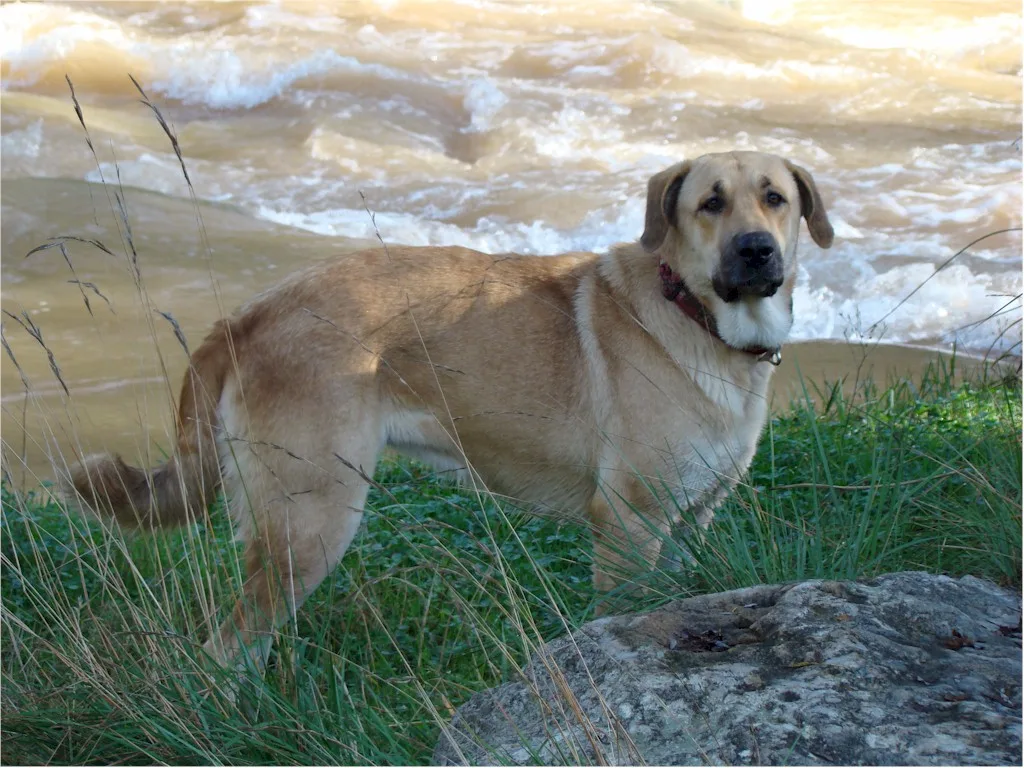
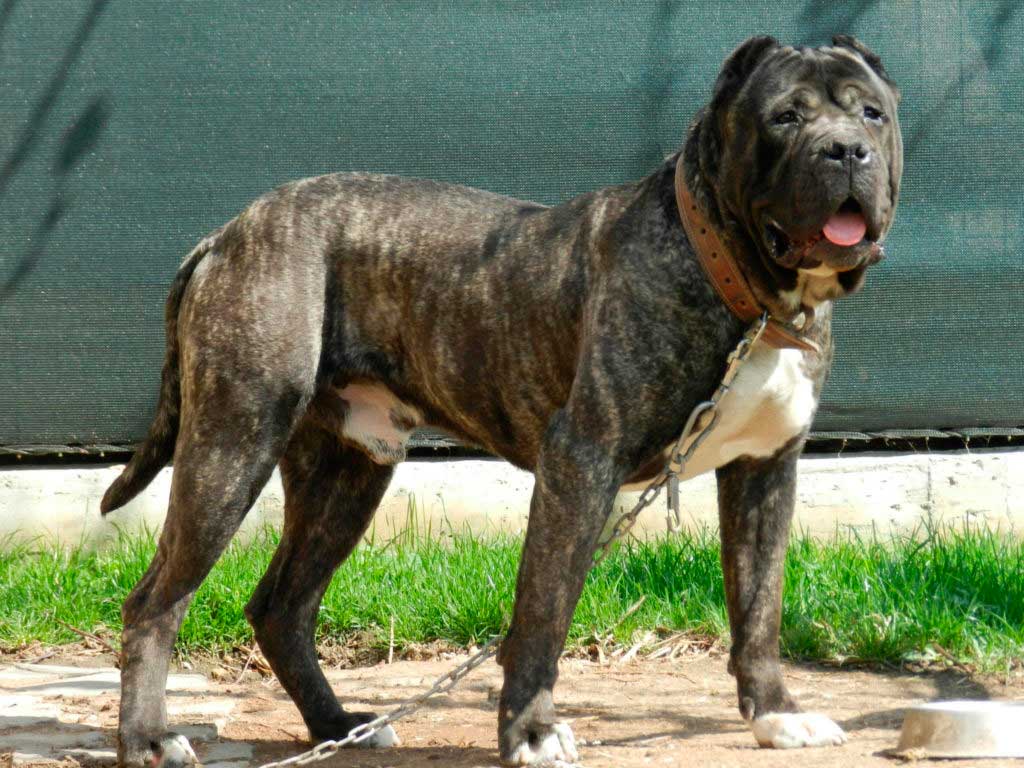
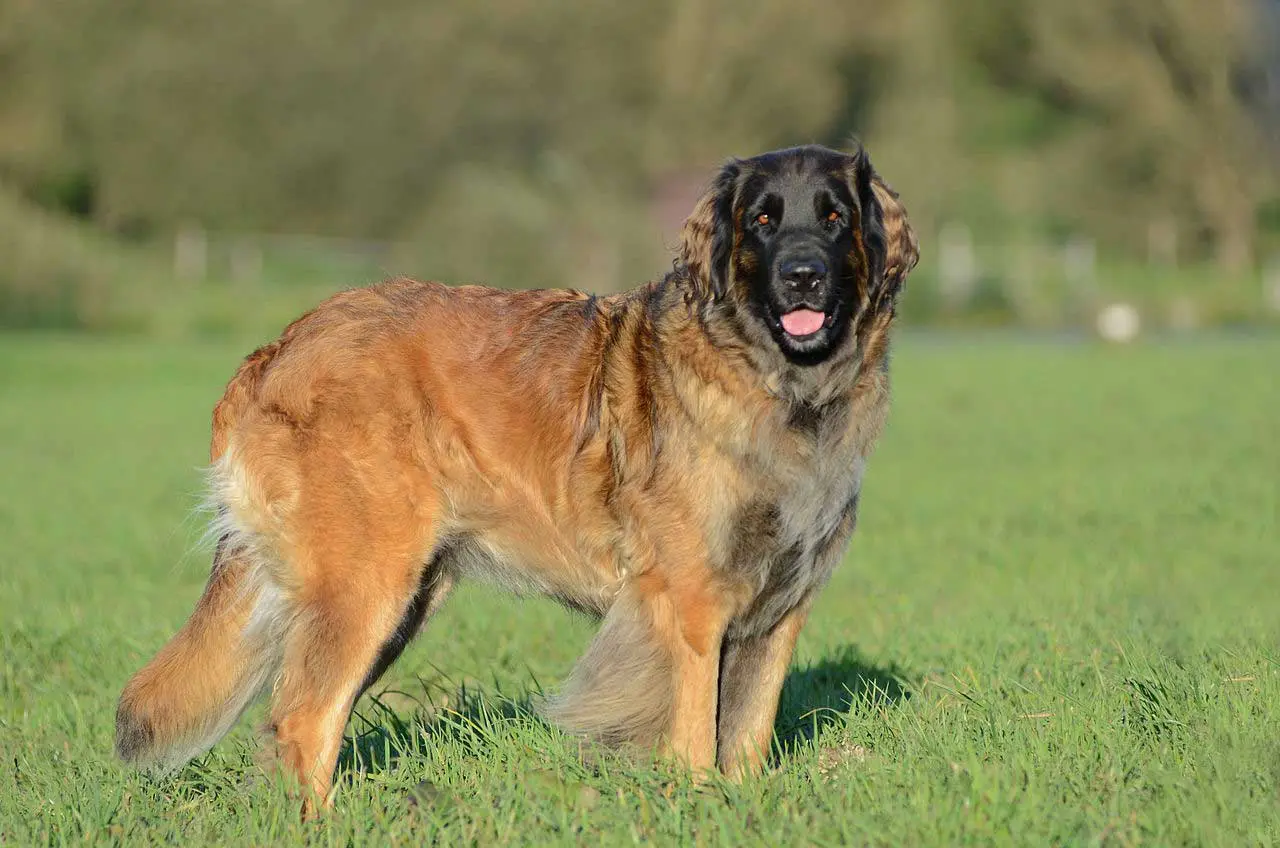
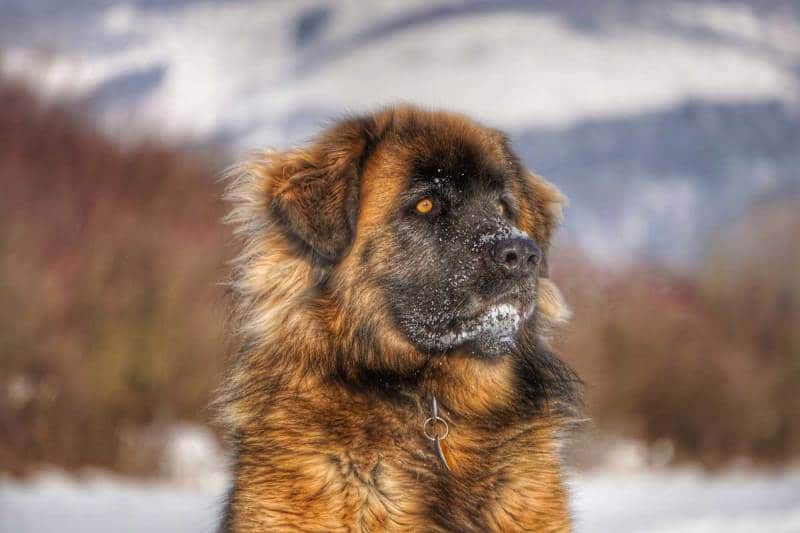
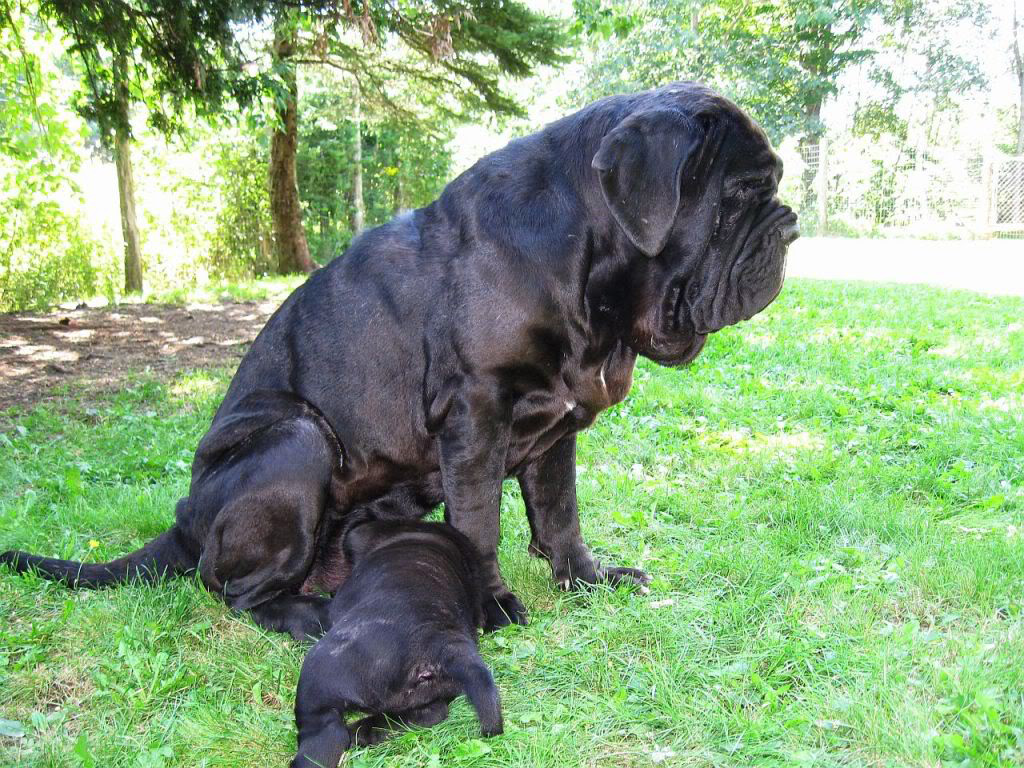
The Spanish Mastiff, He is regarded as the oldest Spanish race.

Content

History

The Spanish Mastiff (also called Leonese Mastiff) is a breed of dog trotting type of large size, originally from Spain where it was abundant in almost the entire country and today is in a particular way in Leรณn, Zamora, Asturias and Cantabria. One of its varieties is the Pyrenean Mastiff.

This is a very old dog and like the other broadcast, descends from the molosser of Tibet (Tibetan Mastiff) He came to Europe via Asia minor.

Theories about the breed maintain that at least four thousand years ago the shepherds who inhabited the peninsula already used them as livestock guard dogs..

The natural resources and climate of the Iberian Peninsula gave rise to transhumance, for which reason, for many centuries the Spanish Mastiff has played the role of protector of flocks, especially from herds of 'merino sheep' whose history is closely linked to that of this dog breed. In some places it is known as the 'merinero dog' because it accompanies the Merino sheep..

The Spanish Mastiff, He is regarded as the oldest Spanish race.

The transhumant wandered through the royal canyons of Leรณn, crossing the Iberian Peninsula from North to South., and the Spanish Mastiff went with them defending the cattle from the attack of the wolf, the dog in addition to with its imposing nature, He had the protection of his abundant jowls as well as carlancas or carranclas, they are a species of thick metal with spiky necklaces.

Videos of the Spanish Mastiff
SPANISH MASTIFF. A NOBLE RACE.
Mastin Spanish /Spanish mastiff puppies in kennel Tornado Erben

At the end of the 19th century with the gradual disappearance of the grazing and transhumance, the Spanish Mastiff became 'unnecessary', if we add to that the Spanish Civil War and its consequent period of scarcity and -also- the sharp decline in the number of wolves, as a result we have that this breed of dog was on the verge of extinction.

During that time many specimens of Spanish Mastiff were sacrificed, Some were emasculated and other so many purchased by enthusiasts that breeders, guided more by love of the race than by knowledge, start you a totally disorganized parenting.

After the debacle, fortunately, the recovery of the breed has been achieved though with great difficulty.

The first standard of the Spanish Mastiff was approved by the International Cinological Federation in the year 1946, based on the characteristics of three specimens from central Spain, These specimens were a light type, that still remained in the cattle farms and that were also used for hunting big game, they were of good size, with long legs and her weight was around the 50 kg.

In 1981 a new standard was approved whose main objective was to recover the much larger Mastiff that was used in transhumance livestock.

That same year (1981) was founded the Spanish Association of the Spanish Mastiff Dog (AEPME) as official club of the breed.

Physical characteristics

It is a dog of large size, braquicรฉfalo and mesomorfo. Well proportioned, very powerful and muscular. Big and heavy, with skeleton compact.

There are no exact size limits., but they must be harmonious, in the males expected a height that not is lower to 77 cm. the cross and in the females, not less to 72 cm.. Those are the bare minimum., but always expected greater height.

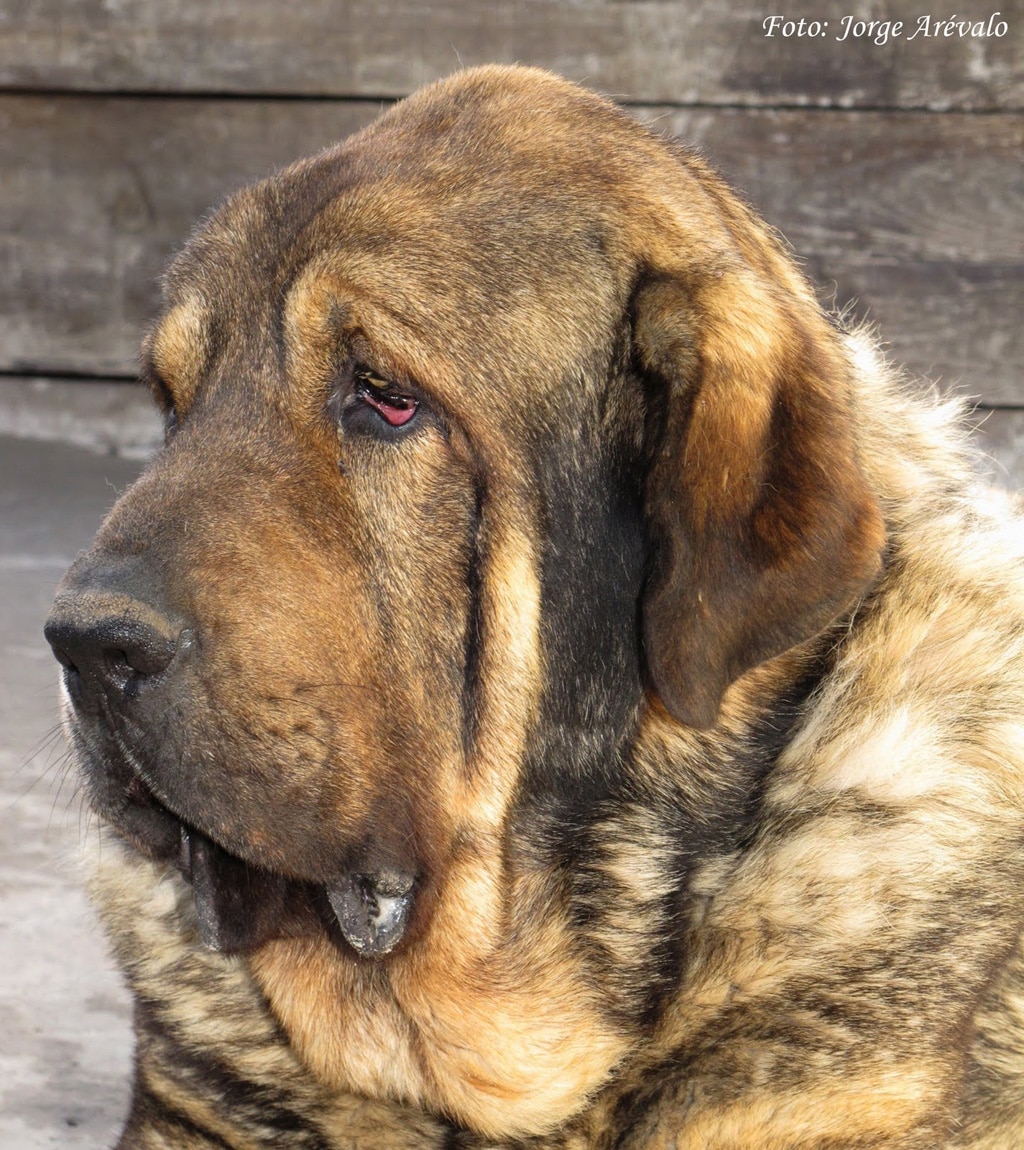
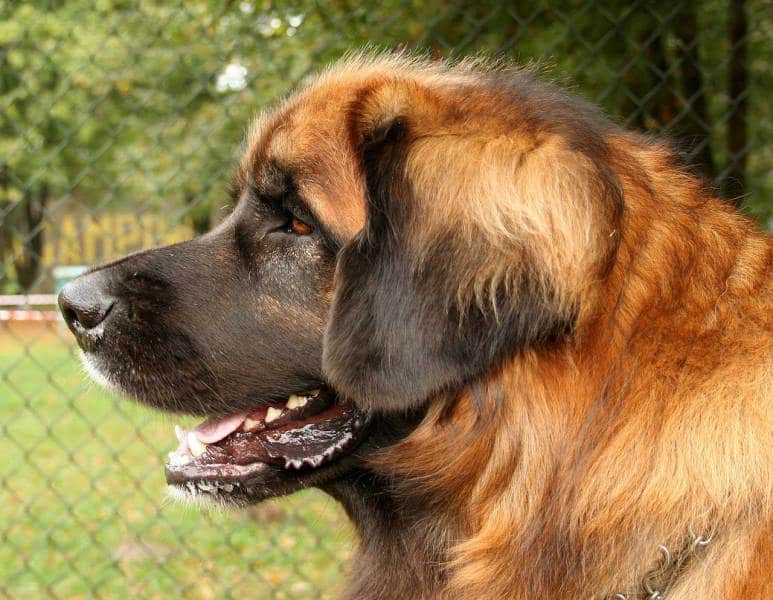
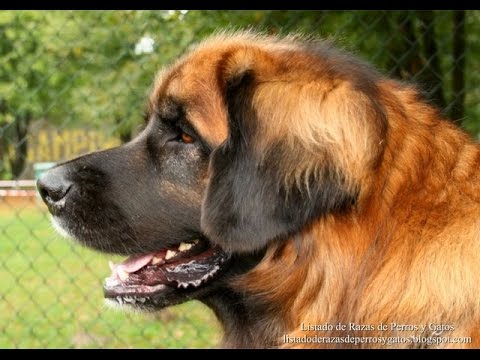
The head is significantly large, has a crรกneo-hocico relationship of 6:4. If we look at the skull from the top is a square and uniform.

It has eyes small, almond-shaped and hazelnut or chestnut colour.

It has the ears triangular, median, flat and pendants. The legs are long, straight and fitted with good musculature.

The tail, inserted at medium altitude is very thick, flexible and wears it down, arriving at the height of the Hock.

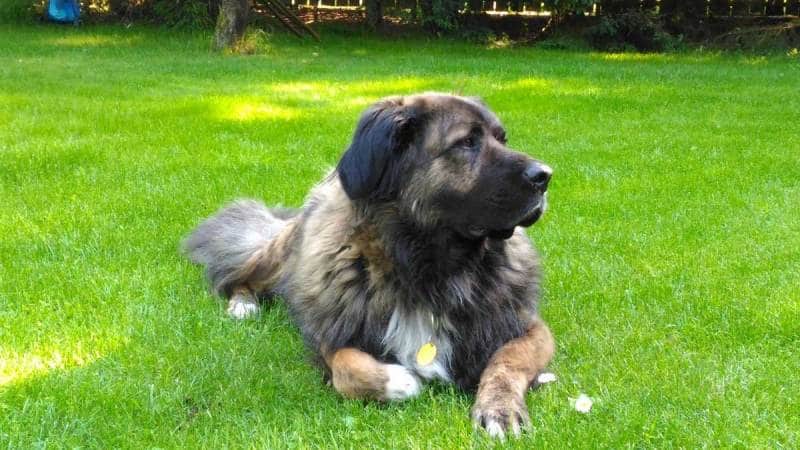
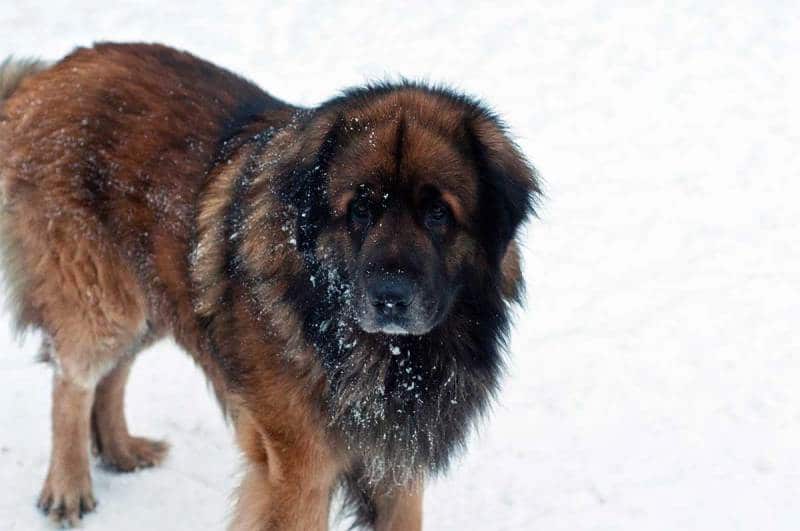
Its the mantle This thick a thick hair hard, semilargo and smooth. The colors the most prized hair are uniforms (or solids), they may be dirty white, leonado, reddish, black, gray wolf, brown. Are also supported in the standard the atigrados, or white spotted robes.

Observations

As it's a race in recovery process, is very difficult to find perfect copies (that is to say, adjusted completely to the standard).

It is not a dog suitable for beginners, but it could be a very rewarding challenge for some enthusiast with the desire to breed a dog with a long history and gigantic potential like the Spanish Mastiff..

Character and skills

The Spanish Mastiff is a rustic dog, loving, tame, noble, very firm and self-confident.

It is generally quiet and affectionate, He is very loyal and devoted to their masters. It is-especially- suitable for children, for those who feel special attraction. As well, usually get along well with other dogs.

Essentially, is a calm and balanced guardian, but it can be very scary if they perceived danger to its owner and properties.

These dogs are very happy living in the open air, and especially given the opportunity for long and quiet walks, that will be necessary if we want our Mastiff to be happy and balanced.

Observations

As we mentioned in the โ€œHistoryโ€ section, the vicissitudes of the recovery of the race has led to chaos at the beginning of it..., and all that lack of control in the breeding, It has had a direct effect on the character of dog, it is for this reason that today we can find too aggressive specimens, and other, maybe more shy.

Fortunately, the great work which is carrying out the Spanish Association of the Spanish Mastiff Dog, focused on selection in breeding is very hopeful since good results are being obtained, and over time the problem will be eliminated.

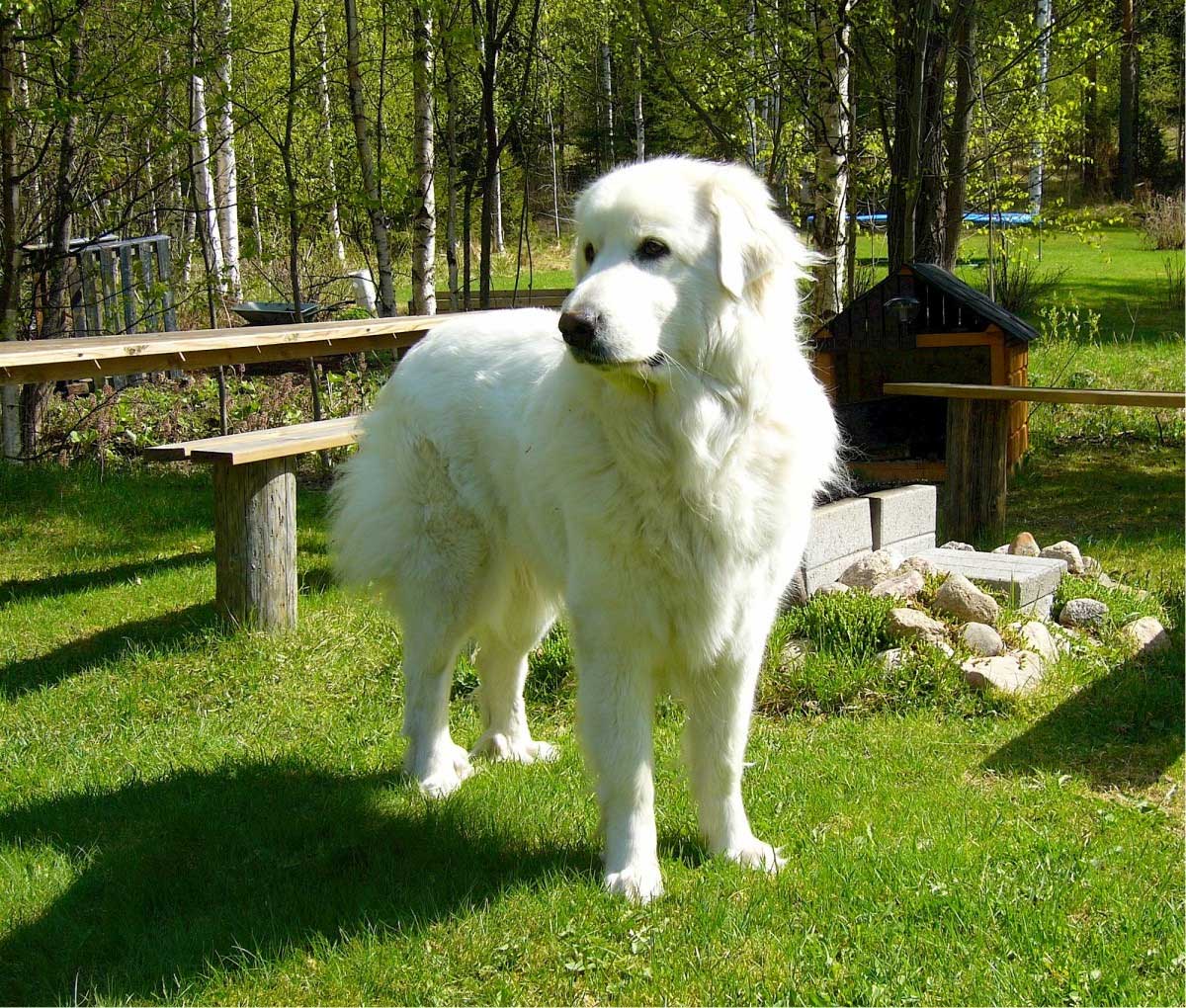
Images of the Spanish Mastiff

Videos of the Spanish Mastiff

Type and recognitions:

  • FCI CLASSIFICATION:
  • Group :
  • Section : . .

Federations:

  • FCI – Pinscher and Schnauzer-Molossoid type dogs – Swiss Mountain Dogs and Cattledogs. Section 2.2 Molossoid, mountain type. โ“˜
  • AKC – FSS โ“˜
  • UKC – Watchdog โ“˜

FCI breed standard "Spanish Mastiff"

Origin:
Spain

Date of publication of the valid original standard:
26.05.1982

Use:

Nursery and defense. This breed is closely linked to transhumance and especially to merino cattle., whom he accompanied already in times of the Mesta, defending you from the wolf and other predators throughout all your movements and places, grass shelves in different seasons and location zones. Currently accompanies numerous herds, both shelves and transhumants, performing its ancestral function. It also performs the function of guard and defense of farms, people and properties in general.


General appearance:

It is a dog of large size, hypermetric and of medium proportions. Sublongilinear structure. Well proportioned, very powerful and muscular. compact skeleton. Large head and body with semi-long hair. Proportionality and functional harmony must be sought, both static and moving. His bark is hoarse, serious and deep, of great intensity, perceiving yourself at a considerable distance.

IMPORTANT PROPORTIONS: Body length greater than the height at the withers. The ratio of the length of the skull to that of the muzzle should be 3/2


Behavior / temperament:

It is a very intelligent dog, not devoid of beauty; his expression shows both qualities.

Rustic, loving, meek and noble, turns out to be a very firm dog against vermin and strangers, especially when he is defending farms or cattle. In its behavior you can see that it is a self-confident dog., metering of his forces for being aware of his enormous power.

Head:

As a whole: Grand, strong and broad-stem pyramidal. The skull-muzzle set, seen from above, must be square and uniform, and without a very marked diminution between the base of the snout and the temples. Moderately divergent craniofacial lines.

Cranial region:
  • Skull : Width, strong, sub-convex profile. The width of the skull must be equal to or greater than its length. Accentuated frontal sinuses. Marked occipital Crest.
  • Depression links (Stop): Soft, little sharp.

facial region:

  • Truffle: black, wet, big and wide.
  • Snout: Straight profile. Seen from above it appears moderately rectangular, gradually decreasing towards the truffle, maintaining a conspicuous width. In no case pointed.
  • Lips: The upper one should widely cover the lower one ; the lower one with detached mucosa forms a very loose lip corner. The mucous membranes must be black.
  • Jaws / Teeth: Scissor bite. White teeth, strong and healthy. Big fangs, sharp and forming good prey. Strong and powerful molars. Rather small incisors. All premolars exist. Black palate, with very marked ridges.
  • Eyes: Small in relation to the skull, preferably dark, Hazelnut coloured, watchful eye, noble, sweet and smart, of great severity before a stranger. Thick-skinned eyelids, Pigmented in black. The lower eyelid reveals part of the conjunctiva.
  • Ears: Mediums and falls, form triangular, plan, inserted above the eye line. At rest they droop and stick to the cheeks, without being too attached to the skull. At attention separated from the face and partially erect in its superior-posterior third. They should not be amputated.

Neck:

Truncated cone, width, strong, muscled, flexible. Thick and detached skin. Widely developed double chin.

Body:

  • As a whole: Rectangular. Strong and robust, denoting great power, but flexible and agile.
  • top line: Straight, horizontal, even on the move. Cross: Well marked.
  • Back: Powerful, musculada.
  • Pork loin: Long, wide and powerful, narrows as it reaches the ijar.
  • Rump: Wide and strong. Its inclination is about 45ยฐ in relation to the horizontal.. Elevation to the rump equal to the elevation to the cross.
  • Breast : Width, deep, muscular and powerful. The tip of the sternum marked. Ribs with wide intercostal spaces and rounded, not flat. The ratio of height at the withers/minimum thoracic perimeter should be approximately 1/3.
  • Belly and flanks: Very moderately tucked up belly; the flanks lowered and the flanks very wide.

Tail:

  • As a whole: Rectangular. Strong and robust, denoting great power, but flexible and agile.
  • top line: Straight, horizontal, even on the move. Cross: Well marked.
  • Back: Powerful, musculada.
  • Pork loin: Long, wide and powerful, narrows as it reaches the ijar.
  • Rump: Wide and strong. Its inclination is about 45ยฐ in relation to the horizontal.. Elevation to the rump equal to the elevation to the cross.
  • Breast : Width, deep, muscular and powerful. The tip of the sternum marked. Ribs with wide intercostal spaces and rounded, not flat. The ratio of height at the withers/minimum thoracic perimeter should be approximately 1/3.
  • Belly and flanks: Very moderately tucked up belly; the flanks lowered and the flanks very wide.


Tips

PREVIOUS MEMBERS:

  • As a whole: Perfectly Plumb, straight and parallel viewed from the front. The length of the forearm should be three times that of the metacarpus. Strong bones with powerful pasterns.
  • Back: Oblique, very muscular. Longer than the forearm. Scapulo-humeral angle close to 100ยฐ.
  • Arm: Strong, similar in length to the scapula.
  • Elbow: Well attached to the chest. Humero-radial angle close to 125ยฐ.
  • Forearm: Strong, perpendicular bone.
  • Metacarpus: Seen from the side with little inclination. It is practically in continuation of the forearm; bone fort.
  • Previous feet: Of cat. Tight toes. Strong phalanges, high and well arched. Robust and hard nails and pads. Moderate interdigital membrane with hair.

LATER MEMBERS:

  • As a whole: Powerful, muscular. Seen from the side suitable angulations in the form of wide articular angles. Correct poise, seen from behind and in profile. Hocks without deviations. They must be able to easily propel the dog, strength and elegance.
  • Thigh: Strong and muscular. Coxo-femoral angle close to 100ยฐ.
  • Knee: Femoro-tibial angle close to 120ยฐ Leg: Long, muscular and strong bone. Hock: Open angle, close to 130ยฐ.
  • Metatarsus: Well marked, with clear appreciation of the tendon. Presence or not of spurs that can be single or double, admitting your amputation.
  • Hind feet: Of cat. Slightly oval.

Movement:

The preferred way is the trot, it must be harmonious, powerful with no tendency to laterality. Without ambience.

Mantle

  • SKIN: Elastic, thick, abundant and pinkish, with darker pigmentations. All mucous membranes must be black.
  • Fur: Bushy, thick, semilargo, smooth, scattered throughout the body to interdigital spaces.

Two types of hair are distinguished, one of coverage on the back and another of protection on the ribs and flanks. Shorter on the limbs and longer and silkier on the tail.

  • Color: Indeterminate, uniform colors are most appreciated, yellow, leonados, red, blacks, cubs and fawns. Combined colors are also appreciated, p. e.g.. atigrados, peaks and ties.


Size and weight:

There are no maximum size limits, being appreciated within harmonious proportions, the largest specimens.

Height to the cross: Minimum limits:

  • Male 77cm
  • females 72 cm..

These lifts of wishes are largely overcome, being convenient to pass the males 80 cm and females 75 cm..


Fouls:

  • Males should have two normal-appearing testicles fully descended into the scrotum..
  • Only functionally and clinically healthy dogs, with the typical conformation of the breed, should be used for parenting.

Any deviation from the aforementioned criteria is considered as a fault and the severity of this is considered to the degree of the deviation to the standard and its consequences on the health and well-being of the dog..

MINOR FAULTS

  • Carried muzzle profiles, without excess.
  • Bite in clamp; absence of any premolar.
  • Weak dorso-lumbar line, distorted and undulating during the march.
  • Metacarpus, metatarsals and weak feet, not in excess.
  • Shyness, not overly accented.

SERIOUS FAULTS:

  • Exaggerated fragile or lymphatic appearance.
  • Pointed snout.
  • Moderate upper prognathism.
  • Absence of several premolars or canines if not due to trauma.
  • Excessive entropy or ectropion.
  • Ear amputation.
  • Tail resting on the rump.
  • Saddled dorso-lumbar line.
  • Height at the rump significantly higher than the height at the withers.
  • Tail docking.
  • Wrong limbs: weak or deviant.
  • Cow hocks, during the march or in station.
  • Lateral braceos during operation.
  • Wavy hair, curly or excessively long.
  • Unbalanced character, excessive shyness, cowardice or exaggerated aggressiveness.

FALTAS DESCALIFICANTES:

  • Aggressiveness or extreme shyness.
  • Any dog โ€‹โ€‹showing clear signs of physical or behavioral abnormalities must be disqualified..
  • Aggressive or fearful dog.
  • Light eyes accompanied by truffle or depigmented mucosa.
  • Split nose.
  • Any degree of lower prognathism; excessive upper prognathism.
  • light eyes.


N.B.:
  • Males should have two normal-appearing testicles fully descended into the scrotum..
  • Only functionally and clinically healthy dogs, with the typical conformation of the breed, should be used for parenting.

Source: F.C.I - International Cynological Federation

Alternative names:

1. Spanish mastiff, Mastรญn espaรฑol de campo y trabajo, Mastรญn ganadero, Mastรญn Leonรฉs, Mastรญn Extremeรฑo (English).
2. Mastin Leones (French).
3. Spanischer Mastiff, Mastรญn aus Leรณn (mastรญn leonรฉs), Mastรญn der Extremadura (mastรญn extremeรฑo), Mastรญn der Mancha (mastรญn manchego) (German).
4. Mastรญn espaรฑol (Portuguese).
5. Mastรญn Leonรฉs, mastรญn espaรฑol de campo y trabajo, mastรญn ganadero (espaรฑol).

โ–ท The world of Pets: Dogs, cats, birds, reptiles, amphibians

Dogo Canario
Espaรฑa FCI 346 - Molossoid . Dogo

Dogo Canario

The aggressiveness of Dogo Canario should not be overly stimulated. It is an optimal guardian and defender without the need for training.

Content

History

The Dogo Canario It is a classic moloso. It is the offspring of an ancient and in this ancient form is only rarely found in Central Europe today.. It has many names: Presa Canario, Perro de Presa, Perro de Toro, Alano o Presa Canario. Dogs of the current type Dogo Canario they existed still ago 200 years everywhere. They were the old saupackers, bear teethers, guard dogs, butcher dogs, the ancestors of the current great danes, bulldogs, boxers and mastiffs. They are extremely strong and bulky dogs, that even today are summarized as molossers. They were already bred in ancient times and have always been highly appreciated. They were used on large farms, with livestock herds or for example on merchant ships such as guard and protection dogs, served as herding dogs and as hunting dogs for wild boar or bear. They served rulers like Hammurabi as war dogs, they had them carved in stone in full recognition does 3700 years.

Due to its strength, courage and determination, have been used as fighting dogs in the arenas of animal fighting since Roman times. Molossians have a commanding head with a rather short snout and long lips.. The ears are usually worn hanging. According to the traditions of antiquity in words and images, the main characteristics of the molossian have remained essentially the same for thousands of years, but in recent centuries and especially due to modern dog breeding, the classic type of molosser has been lost to some extent. In extreme cases strange shapes have been bred with many extremely short folds or snouts such as bulldogs or giants like him Great Dane or the Mastiff. The Dog is still raised in his homeland only for his performance at work.

So, chances are that the Dogo Canario still personify the type Molosoide as was common in the old days. It is clearly recognized as trotting, but does not suffer from cultivated exaggerations of any bodily characteristics or traits. Can only hope it stays that way. Unfortunately, breeders are very much at odds with Dogo Canario. They haven't even managed to agree on a name and a registry office. Since 1991 It has been officially considered as "The Canarian Presa Dog" among the natural symbols of the Canary Islands.. Meanwhile in 2001 the Spanish Ministry of Agriculture recognized these dogs as a national breed also under the name of Dogo Canario, the same dogs were then provisionally recognized as Dogo Canario by the world federation FCI in 2001 and finally in 2011. Other names are Perro de Presa y Alano. Alano It is an old word that means Great Dane.

Physical characteristics

The Dogo Canario, Perro de Presa, Perro de Toro, Alano o Presa Canario – all designations for the same four-legged friend – he is an elegant dog that radiates athletic power. He is an athletic, muscular, elongated but nevertheless typical molosser.

The skull-muzzle ratio is approximately 6:4. The upper lip rests a little flaccidly on the lower one. The eyes, medium-sized, they are oval and hazelnut, the ears, high, they are separated from each other and are shaped like a button; they are only amputated to remember their original function as a combat dog. The neck, long and muscular, shows a slight dewlap. The tail is implanted high: thick at the base, is tuned to the extreme. the belly is retracted, but the last ribs stand out only slightly, giving a harmonious harp shape. Limbs are sturdy, muscular and perfectly plumb; angulation of the hind limbs is not very marked.

The difference between male and female bulldogs desired by the FCI standard is therefore unnaturally large. In any case, desires of this standard for outward appearance should not be taken so seriously.

Because fortunately this originally preserved dog breed, robust and healthy has set its standard โ€œfor itselfโ€, more exactly for their performance at work, and has kept it in the practice of life until today. People, who now wants to put him in a standard of modern pedigreed dog breeding, don't even agree to the principle, as we can see in its history of the breed. Modern pedigreed dog breeding has done no breed of dog any good, both in terms of health and character. In old times, the Bulldog fitted with pleasure to the ears, so that they protruded upwards. This is now prohibited. Today they show large down-hanging ears..

  • Fur: short, without Undercoat, pretty hard.
  • Color: leonado or atigrado. The tabby specimens have a wide range of colors, from very dark to a light gray with a rather cold tone.
  • Size: males, of 61 to 66 cm.; females, of 57 to 62 cm..

Character

The Dogo Canario is a quiet dog, balanced and self-assured. He is a powerful and defensive athlete who can show his performance at any time. Like all molossi, he is extremely kind, has strong nerves and a high stimulus threshold. But, he is more eager to move and not as lethargic as most molossers today bred only as companions. One Dogo Canario well socialized is friendly to people who know and like children. It is very sociable. Towards strangers is at first a little distant without fear. He is an incorruptible guardian, fearless and protective of his family without being aggressive himself. The FCI standard describes the character desired by the breed:

Calm appearance; alert look. It is especially suitable as a watchdog… His temperament is even-tempered and he is very self-confident.. Deep barking. He is docile and kind to his family members and with strong ties to his master, but you may suspect strangers. Self-assured demeanor, elegant and somewhat distant. When you are alert, his attitude is confident and alert.

It must be added that the Dogo Canario rarely barks. But if it barks once, it's pretty awesome.

Fitness

The Dogo Canario is undemanding in terms of external conditions. Of course: a small apartment in the big city would not be optimal for your attitude. But other than that it's easy to maintain. It is also a working dog, a guard, a driver, a hunting dog for hunting wild boar. The Dogo Canario it is suitable as a family dog รขโ‚ฌโ€นรขโ‚ฌโ€นonly on the condition that it is well socialized, well educated and physically fit. You also have to take into account a fact: It is considered a "dangerous dog" in many countries.

Dogo Canario Education

The Dogo Canario can be trained well, but still not a beginner dog. It is intelligent, very sociable and eager to work. But at the same time he is very powerful and assertive. In case of doubt, always the strongest end of the strap. So, his master or caretaker should not leave doubts about his role as leader and this on the basis of natural authority. So this dog will gladly leave the leading role to his bipeds without reservation.. But it must be filled. The Dogo Canario it is even suitable for demanding tasks such as training as an assistance or protection dog. The basic requirement is that it comes from a serious breeder and that it has already been socialized there..

Dogo Canario health and care

The Dogo Canario has no special demands on your care.

Typical diseases

Breed-specific diseases are not known.. Due to his still short career as an official pedigree dog, it can be assumed that the population of the Dogo Canario, Presa Dog or Presa Canario – Whatever this ancient breed of dog is called – enjoys robust health.

Nutrition / Food

The Dogo Canario has no special demands on their diet.

Life expectancy Dogo Canario

There are no reliable figures on life expectancy. Seriously raised, the Dogo Canario should be able to live off 10 to 12 years.

Buy Dogo Canario

Before making a purchase, be aware that the restrictive attitude of the State can cause many problems in daily life and additional financial burdens. The Dogo Canario it is a large and powerful dog that belongs to the hands of an experienced teacher or lover. The cost of a Dogo Canario is of some 1200 EUR.

Characteristics "Dogo Canario"

Coexistence is important that you have with your new friend. Before considering the acquisition of a dog of the breed "Dogo Canario" you know certain factors. Not all breeds of dogs are apt to live in an apartment, you must take into account his character, their need for exercise, their interaction with other pets, their care and if you have small children, their level of tolerance towards them.

Adaptation โ“˜

4,0 of 5 stars (based on 1 review)

friendly dog โ€‹โ€‹โ“˜

1,0 of 5 stars (based on 1 review)

hair loss โ“˜

3,0 of 5 stars (based on 1 review)

Affection level โ“˜

4,0 of 5 stars (based on 1 review)

Need for exercise โ“˜

4,0 of 5 stars (based on 1 review)

Social need โ“˜

1,0 of 5 stars (based on 1 review)

Home โ“˜

3,0 of 5 stars (based on 1 review)

Toilet โ“˜

2,0 of 5 stars (based on 1 review)

Friendly with strangers โ“˜

2,0 of 5 stars (based on 1 review)

barking โ“˜

3,0 of 5 stars (based on 1 review)

Health โ“˜

4,0 of 5 stars (based on 1 review)

Territorial โ“˜

5,0 of 5 stars (based on 1 review)

Cat friendly โ“˜

2,0 of 5 stars (based on 1 review)

Intelligence โ“˜

4,0 of 5 stars (based on 1 review)

Versatility โ“˜

2,0 of 5 stars (based on 1 review)

Child friendly โ“˜

2,0 of 5 stars (based on 1 review)

Surveillance โ“˜

5,0 of 5 stars (based on 1 review)

joy โ“˜

3,0 of 5 stars (based on 1 review)

Images "Dogo Canario"

Photos:

1 – Canarian Presa Dog – Canary Dog by Kamen Rider Snipe / CC BY-SA
2 – Presa Canario dog – Dogo Canario by Basil Dragon / CC BY-SA
3 – Presa Canario by https://pxhere.com/es/photo/732874
4 – Canary bulldog, edited by Canecorsodog (en.Wikipedia) edited by Caronna 12:25, 6 February 2008 (UTC) / CC BY-SA
5 – Zai-Kan de Irema Curtรณ. Canary prey perro byManuel Curtรณ Jr. / CC BY-SA
6 – Presa Canario by Wikipedia
7 – Presa canario dog by https://pxhere.com/es/photo/75916

Videos "Dogo Canario"

Type and recognitions:

  • FCI CLASSIFICATION:
  • Group :
  • Section : . .

Federations:

  • FCI – Pinscher and Schnauzer-Molossoid type dogs – Swiss Mountain Dogs and Cattledogs. Section 2.1 Molossoid, mastiff type. โ“˜
  • AKC – FSS โ“˜
  • UKC – Watchdog โ“˜

FCI breed standard "Dogo Canario"

Origin:
Spain

Date of publication of the valid original standard:
26.11.2018

Use:

Guard dog and caring for cattle.


General appearance:

Large Medium-sized Molossoid Dog, straight profile and black mask. Robust and well proportioned.

IMPORTANT PROPORTIONS: The body is longer than its height at the withers. This characteristic is more pronounced in females..

The ratio of the skull to the antecara is 60-40 %. The width of the skull is 3/5 the total length of the head. The distance from the elbow to the ground must be 50 % height at withers in males and somewhat less in females.


Behavior / temperament:

calm look, attentive expression. Especially suitable as a guard dog and traditionally used to care for livestock. Balanced temperament and very self-confident. Low and deep bark. Obedient and docile with family members, very devoted to his master but can be reserved with strangers. Confident fitness, noble and somewhat distant. When he is alert his posture is firm with an alert attitude.

Head:

Solid, brachycephalic and compact in appearance covered in thick skin. Its shape tends towards a slightly elongated cube. The skull lines- facials are parallel or slightly convergent.

Cranial region:
  • Skull: Somewhat convex in anteroposterior and transverse direction. The frontal bone tends to be flat. The width is almost identical to its length.
    Pronounced zygomatic arches with well-developed but not prominent cheek and jaw muscles, covered in loose fur. Occipital bump only slightly marked.
  • Stop: The stop is pronounced but not abrupt. The fold between the frontal lobes is well defined and approximately two thirds the size of the skull.

facial region:

  • Truffle: Wide, heavily pigmented black. In the same line of the muzzle. Large nostrils to facilitate breathing.
  • Snout: Shorter than the skull, usually about the 40 % of the total length of the head. Width is 2/3 the width of the skull. Its base is very wide, slightly tapering towards the nose. Flat, straight nose without grooves.
  • Lips: The upper lip is hanging but not excessively. Seen from the front, the upper and lower lip join forming an inverted V. The edges are slightly divergent. The inside of the lips is dark.
  • Jaws / Teeth: Scissor bite or slightly prognathic bite, max. 2 mm. Tweezer bite is accepted but not desired due to tooth wear. The canines have a wide transverse distance. Teeth are wide with strong implantation base. Large molars, small incisors and well-developed canines.

EYES: Slightly oval, medium to large. Placed well apart but never sagging or protruding. Tight black eyelids, never fallen. Color varies from dark to medium brown depending on coat color. They should never be clear.

EARS: Medium size, set well apart with short fine hair. Naturally fall on both sides of the head. If they are folded they are shaped like a rose. Its insertion is slightly above the level of the eyes. Ears with a very high insertion or close together are considered unusual. In countries where amputation is permitted, they must be erect..

Neck:

Shorter than the length of the head. Skin on the lower part loose forming a slight dewlap. Solid and straight, tends to be cylindrical and muscular.

Body:

Long, wide and deep.

  • top line: Straight, without deformations supported by well-developed but poorly visible muscles. Rising slightly from the cross to the rump. The height at the rump is 1 โ€“ 2 cm greater than the height at the withers.
  • Rump: Average length, wide and rounded. It should not be long because it would limit your movement.. Females are usually wider.
  • Breast : High capacity and well-defined pectoral muscles. Seen both from the front and in profile, it must be lowered, at least down to elbow level. Chest circumference is generally equal to the height at the withers plus 45 %. Well arched ribs.
  • Bottom line and belly: Slightly collected and never lowered. The flanks only slightly pronounced.

Tail:

Thick at the base tapering towards the tip, reaching no further than the height of the hock. Middle insertion. During movement it lifts it in the shape of a saber but without stooping or leaning on the back. At rest it hangs right with a slight curve towards the end.

Tips

PREVIOUS MEMBERS:

  • Shoulder: With good inclination.
  • Arms: Well angled, oblique.
  • Forearm: Well balanced, straight. Strong bones and good musculature.
  • Elbows: They must not be glued to the ribs or open outwards. Metacarpus: Very solid and slightly inclined.
  • Previous feet: Cat foot with rounded toes, not very close.
    The foot pads are highly developed and black. Nails are dark. White nails should be avoided although it can happen according to the coat color.

LATER MEMBERS:

  • General appearance: Seen from behind strong and parallel without deviations.
  • Thighs: Long and very muscular.
  • Knee: Angulation is not very pronounced but should not be insufficient.
  • Metatarsals: Always well descended.
  • Hind feet: Slightly longer than the front ones and with similar characteristics.

Movement:

During movement, the Presa Canario is agile and elastic, covering the terrain well. Long step. The tail is brought down and the head is only slightly raised above the level of the back. When you are alert, the tail and the head are carried high.

Mantle

SKIN: Thick and elastic. Looser over and around the neck. When alert, the skin over the head forms symmetrical folds that form from the fold between the frontal lobes..

  • Fur: Short, rough, smooth without undercoat (may appear on the neck and on the back of the thigh). Rather rough to the touch. Very short and thin on the ears, slightly longer on the withers and on the back of the thighs.
  • Color: All shades from fawn to sand, from dark brown to light gray or blonde. All shades from tabby to sand. White marks are accepted on the chest, at the base of the neck or throat, front feet and back toes but this should be minimal. The mask is always black and should not be spread above eye level.


Size and weight:

Height at the withers:

  • Males: 60 to 66 cm..
  • females: 56 to 62 cm..

In the case of very typical specimens, 2 cm tolerance above or below limits.

Minimum weight:

  • Males: 50 Kg.
  • females: 40 kg.

Maximum weight:

  • Males: 65 kg.
  • females: 55 kg.


Fouls:

Any deviation from the aforementioned criteria is considered as a fault and the severity of this is considered to the degree of the deviation to the standard and its consequences on the health and well-being of the dog..

Bite in clamp

SEVERE FAULTS:

Any fault is considered severe when it affects the expression and limits the type of dog..
Incorrect head proportions
Extremely convergent craniofacial lines (stop too steep)
Loin and cross at the same height
Incorrect limb position
Square profile.
Triangular head, close (not cube)
Fine tail, threaded. High insertion.
Sunken or soggy back.
light eyes (yellow), very close to each other or oblique, sunken or bulging
Excessively prognathic bite.
Insufficient mask.
Absence of teeth (Except P 1)

FALTAS DESCALIFICANTES:

Aggressiveness or extreme shyness.
Any dog โ€‹โ€‹showing clear signs of physical or behavioral abnormalities.
Totally nonpigmented nose.
White marks not accepted.
Bite: enognรกtica.
Croup lower than the cross. Sloped top line.
Blue eyes or with tonal difference.
amputated tail.


N.B.:
  • Males should have two normal-appearing testicles fully descended into the scrotum..
  • Only functionally and clinically healthy dogs, with the typical conformation of the breed, should be used for parenting.

    TRANSLATION: Brรญgida Nestler

Technical supervision: SR. Miguel Angel Martinez

Source: F.C.I - International Cynological Federation

Alternative names:

1. Canary Mastiff, Canary Catch Dog, Canarian Dogo, Presa Canario.Dogo Canario, Presa (English).
2. dogo Canario (French).
3. Presa Canario, Kanarische Dogge (German).
4. Perro de presa canรกrio, Dogo canรกrio (Portuguese).
5. Perro de presa canario (espaรฑol).

โ–ท The world of Pets: Dogs, cats, birds, reptiles, amphibians

English mastiff
Inglaterra FCI 264 - Molosoids โ€“ Doge

Mastรญn Inglรฉs

The English mastiff He is extremely loyal and faithful to his family.

Content

History

The English mastiff It is a breed of dog of large size type trotting and English origin.

The history of this dog goes back to the year 55 to. c., time when the legions invaded Great Britain and to his surprise had to face an enemy that had two curious assistants, two dogs with striking characteristics.

One of them was strong and robust both body and members, with a large head and a short but powerful jaw.

That dog is possibly the ancestor of the Bulldog, and part of the current Bullmastiff.

The other dog had dimensions that were scary, looked more like a lion than a dog. This specimen was a direct descendant of the Mastiffs 'Asiriobabilonians' who had traveled to England by the Phoenicians five centuries before the Roman invasion.

Before this beanpole, the 'molossians of Epirus' which the Romans brought with them as their war dogs, they looked like Chihuahuas...

So once conquered 'Britain', the Romans, they expanded his army with several copies of those giant and fearful dogs who called "Pugnaces Britannici" and they used them, mainly in typical shows of the time...

They faced these dogs with huge wild beasts in the arenas of circuses, there they participated in bloody fights against bulls, bears and other dogs. As well, they were used as guardians of herds, bodyguard, protectors and companions.

The English Mastiff or Mastiff, is descended directly from those dogs.

A Mastiff arrived in America aboard the Mayflower, name of the ship that transported the so-called "Pilgrims" from England (United Kingdom), to the coast of what is today the United States of America, in the year 1620.

They were the first settlers, in settling on the coast of Massachusetts, forming the Plymouth Colony, and with them the English Mastiff.

There is documentary evidence that the English Mastiff first arrived in America on the Mayflower., but the standardization of the breed in United States did not occur until the end of the 19th century.

By the end of the second world war, the mastiffs were almost extinct in England. But, with the flow of imports of United States and Canada, the breed resurfaced and today its existence is not in any danger in England and has gained much popularity in North America..

Physical characteristics

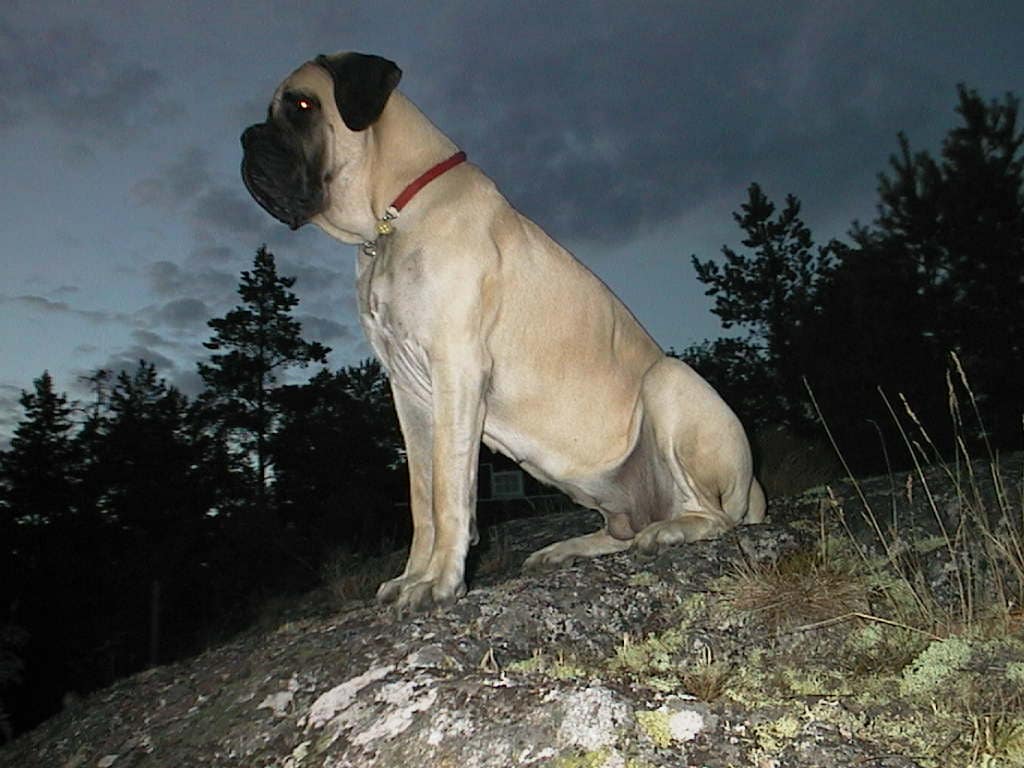
This is a race of powerful composition, burly, wide skull and the head usually has a square appearance.

Of size It must be very large and give the impression of power and strength, viewed from any angle. The body must be massive with great width and depth, especially between the Forelegs, cause these are well separated. While no height or weight have been specified for this race, the approximate height of 70 to 80 cm and the weight of 80 kg to 90 kg.

His hair is short and glued to the body and color may vary, while its snout, ears and nose, around the eyes is always black.

This is a particularly large dog that requires a correct diet and exercise. Normally live in 10 to 12 years.

Different colors are possible, for example, sand color, striped, brown or gray. Unfortunately the human tends to extremes and the mastiff was not spared from this.. So it has been raised bigger and heavier in recent decades.. His head has become increasingly massive and many folds have also been made. Giants could no longer reproduce naturally, they could no longer walk properly, his life expectancy was dramatically reduced.

Character and skills

Videos of the English Mastiff
Handsome English Mastiff
English Mastiff Samson Snaps Tree Branch!Lightbox for Video by VideoLightBox.com v1.11

The Mastiff breed is a combination of greatness, dignity, and bravery; calm and affectionate towards his owner, but capable of protecting.

He is a well-mannered dog but you need enough field to stretch his long body. It is an extremely loyal breed and, Although it shows no excessively, It is true to his family and is very good with children.

But, It can be very jealous for the protection of owners and should be handled sensibly, as it is exceptionally powerful and can be difficult to control.

Seeks proximity to its humans. It is a reliable protector for them. In case of acute threat to your humans, will try to keep danger away from them by facing the attacker with his body, but it won't attack him anymore. His calm and serene temperament makes him a loyal and child-friendly companion, who forgives everything. It gets along very well with other pets.

English Mastiff Education

Keep in mind that in an adult mastiff the leash is only symbolically a control. The mastiff easily has the power to maneuver the other end of the line at will.. But you don't want to do it, at least if you have enjoyed the basics of a good education. The Mastiff is very easy to train. Only their stubbornness has to be broken here and here a consistent softness is needed.. He wants to follow his master and caretaker and he does it very reliably. It is an elementary duty of the owner of a Mastiff to pay attention to a consequent education already in the puppy. This alone and not the strap makes wonderful walks in nature possible, that together with this four-legged friend become a balm for the soul of agitated people.

Care and health English Mastiff

Caring for a healthy mastiff is not problematic. Brushing the coat once a week is enough.

Typical diseases

Gigantism with copies of more than 90 kg, sometimes up to 120 kg, unbalances the entire natural dog building plan. Serious gait damage is just one consequence, and life expectancy is also greatly reduced. Bad habit of strong folding of the head and body often leads to chronic inflammations. As in most large dogs, we see hip or elbow dysplasia. Eye and heart disease can occur more frequently with mastiffs – the rule is always: the more serious, the greater the risk.

Nutrition / Food

You need a lot of high quality food. Especially in the growth phase you need a professional nutrition plan. It is helpful to have a feeding bowl in a high position to counteract the risk of stomach twisting. You should always pay close attention to their weight.

Characteristics "English mastiff"

Coexistence is important that you have with your new friend. Before considering the acquisition of a dog of the breed "English mastiff" you know certain factors. Not all breeds of dogs are apt to live in an apartment, you must take into account his character, their need for exercise, their interaction with other pets, their care and if you have small children, their level of tolerance towards them.

The life expectancy of the English Mastiff

Breeding errors, especially the tendency to gigantism, they have cost this dog, once extremely robust, many years of his life expectancy. Before they were 12, Today are 7 – 9 years.

Buy an English Mastiff

Buying a mastiff should be long-term and well-considered. You should carefully check if you have all the requirements to be able to spend many wonderful years with this giant.. If you are looking for a puppy, you must pay special attention that the dogs are not too massive. One should wonder about ancestors, its appearance, their illnesses, your age. Also to get a Mastiff with a stable character, you should just look directly at a serious breeder. For animal welfare reasons one should refrain from buying puppies from parents of more than 90 kg. Very occasionally there is also a mastiff in the animal shelter. Puppies raised in serious conditions cost around 2000 EUR.

Characteristics "English mastiff"

Adaptation โ“˜

5,0 of 5 stars (based on 1 review)

friendly dog โ€‹โ€‹โ“˜

3,0 of 5 stars (based on 1 review)

hair loss โ“˜

3,0 of 5 stars (based on 1 review)

Affection level โ“˜

5,0 of 5 stars (based on 1 review)

Need for exercise โ“˜

2,0 of 5 stars (based on 1 review)

Social need โ“˜

3,0 of 5 stars (based on 1 review)

Home โ“˜

3,0 of 5 stars (based on 1 review)

Toilet โ“˜

2,0 of 5 stars (based on 1 review)

Friendly with strangers โ“˜

3,0 of 5 stars (based on 1 review)

barking โ“˜

1,0 of 5 stars (based on 1 review)

Health โ“˜

4,0 of 5 stars (based on 1 review)

Territorial โ“˜

5,0 of 5 stars (based on 1 review)

Cat friendly โ“˜

5,0 of 5 stars (based on 1 review)

Intelligence โ“˜

3,0 of 5 stars (based on 1 review)

Versatility โ“˜

3,0 of 5 stars (based on 1 review)

Child friendly โ“˜

5,0 of 5 stars (based on 1 review)

Surveillance โ“˜

2,0 of 5 stars (based on 1 review)

joy โ“˜

5,0 of 5 stars (based on 1 review)

Images ยซEnglish Mastiffยป

ยซEnglish Mastiffยป Videos

Type and recognitions:

  • FCI CLASSIFICATION:
  • Group :
  • Section : . .

Federations:

  • FCI – Pinscher and Schnauzer-Molossoid type dogs – Swiss Mountain Dogs and Cattledogs. Section 2.1 Molossoid, mastiff type. โ“˜
  • AKC – Dogs working โ“˜
  • ANKC – Group 6 (utility dogs) โ“˜
  • CKC – Group 3 – Working dogs โ“˜
  • โ€‹KC – Working dogs โ“˜
  • NZKC – Utility dog โ“˜
  • UKC – Watchdog โ“˜

FCI breed standard "English mastiff"

Origin:
United Kingdom

Date of publication of the valid original standard:
13.10.2010

Use:

Defense and guard dog.


General appearance:

View from any angle, the head, in its outline it appears well square. Width is a sought after characteristic and the width of the skull is equal to two thirds of the total length of the head.

The body, width, alto, long and strong build. The limbs are well apart and in aplomb. The musculature is clearly drawn.

The size ishighly desiredbut onlyif it is on par with the build qualityand the correction is not maintained at all. Height and substance are two important points if they are correctly combined. Grand, powerful, well built.

IMPORTANT PROPORTIONS: The length of the body from the tip of the shoulders to the tip of the ischium is greater than its height at the withers.


Behavior / temperament:

Combination of nobility and courage. Take it easy, affectionate with their owners, but good guardian.Usually indifferent to strangers, shyness is unacceptable.

Head:

---

Cranial region:
  • Skull: The skull is wide between the ears. The forehead is smooth but wrinkles when the dog is attentive.. Eyebrows (supra-orbital arches) are slightly raised. The temporalis and masseter muscles are well developed. The cross section of the skull describes an arch. From the middle area between the eyes, a depression can be traced through the center of the forehead and extends to the middle of the skull., following the sagittal axis.
  • Depression links (Stop): Stop between the eyes well marked but not abrupt.

facial region:

  • Truffle: black. The nose, seen from the front, it is wide offering wide open nostrils and a profile view, it's flat (It is neither pointed nor retracted.).
  • Snout: The snout is short, width between the eyes, remaining this wide to the end of the nose.

The muzzle is truncated, that is to say, cut into square, Its anterior surface forms a right angle with the upper line of the snout., having a great width from the upper anterior border to the lower jaw. The length of the muzzle is equal to one third of the total length of the head. Muzzle circumference, measured at the midpoint between the eyes and the nose, represents three fifths of the head, measured in front of the ears.When is at rest, any exaggeration of folds or excess skin is unacceptable in adult dogs.

  • Lips: The lips are divergent, forming an obtuse angle in relation to the nasal septum (Septum). They are slightly hanging to offer a square profile.
  • Jaws / Teeth: The lower jaw is wide to the end. Healthy canines, powerful and well separated.Level incisors (bite clamp, edge to edge) or lower projection in front of the upper ones (reverse scissor bite) but never so much that they are visible with the mouth closed.
  • Cheeks: Well-developed temporal masseter and cheek muscles.

Eyes: Moderate size, well separated. Hazel eyes, as dark as possible. The conjunctiva not visible.Highly undesirable are the loose eyelids. Free from obvious eye problems.

Ears: Small, fine to the touch, well separated from each other.

High on the sides of the skull, in the form of prolonging the transverse upper profile. At rest, are placed flat adjacent to the cheeks.

Neck:

Slightly arched profile, medium length, very muscular. Its circumference is less around2,5 to 5 cm.of the head, measure in front of the ears.

Body:

  • top line: Level.
  • Back: Wide and muscular.
  • Pork loin: Wide and muscular, flat and very wide in females, slightly arched in males.
  • Breast : Chest width, deep and well descended in the sternal region. Ribs well arched and well rounded. False ribs are long and well developed towards the back of the chest.
  • Bottom line and belly: Flanks heavily lowered.

Tail:

High implanted, descending to the hocks or a little lower. Wide at birth and tapering to the extreme. Hangs right at rest, but in action it forms a curve, the end straightens; but it is never carried on the back.

Tips

PREVIOUS MEMBERS:

  • General appearance: Balanced and in harmony with the hind limbs.
  • Shoulder: They are slightly oblique, powerful and very muscular.
  • Arm: Slightly inclined, heavy and muscular. Elbows: Elbows are on the axis of the body.
  • Forearm: Strong Member, rights placed well apart, big bones.
  • Metacarpus: They are poised.
  • Previous feet: Large, roundand tight. Well arched fingers. black nails.

LATER MEMBERS:

  • General appearance: Very wide and muscular.Strength in the hind limbs is of utmost importance, cow hock in adult dogs is unacceptable.
  • Legs: Well developed.
  • Metatarsals: Angled hocks, well separated and always in aplomb both in season and on the move.
  • Hind feet: Large, roundand tight. Well arched fingers. black nails.

Movement:

Powerful with easy limb extension. Push from the rear, fluid, Right, steps covering the surface. Top line stays level during movement. The tendency to pasuqueo is undesirable. Absolute correction is essential.

Mantle

Fur: Short and flat on the body.But rough on the neck and shoulders.

Color: Tawny, apricot, or striped. In all cases the muzzle, ears and nose should be blackand the eyes are surrounded by blackextending upward.Excessive white color on the body is unacceptable, chest or feet.


Size and weight:

----


Fouls:

Any deviation from the aforementioned criteria is considered as a fault and the severity of this is considered to the degree of the deviation to the standard and its consequences on the health and well-being of the dog..

FALTAS DESCALIFICANTES:

  • Aggressiveness or extreme shyness.
  • Any dog โ€‹โ€‹showing clear signs of physical or behavioral abnormalities must be disqualified..


N.B.:
  • Males should have two normal-appearing testicles fully descended into the scrotum..
  • Only functionally and clinically healthy dogs, with the typical conformation of the breed, should be used for parenting.

The latest changes are in bold.

TRANSLATION: Brรญgida Nestler / Original version: (IN).

Technical supervision: Miguel Angel Martinez

Source: F.C.I - International Cynological Federation

Alternative names:

1. Mastiff, Old English Mastiff (English).
2. Old English Mastiff (French).
3. Old English Mastiff (German).
4. Mastiff inglรชs, Mastim inglรชs, Canis molossus, ะก. mastivus gladiator, Mastife inglรชs (Portuguese).
5. Old English Mastiff (espaรฑol).

โ–ท The world of Pets: Dogs, cats, birds, reptiles, amphibians

Boxer
Alemania FCI 144 - Molossoid - Dogo
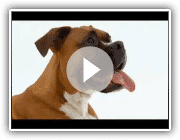
Boxer

The Boxer It is docile and boasts an unmatched loyalty with his family

Content

History of the BOXER

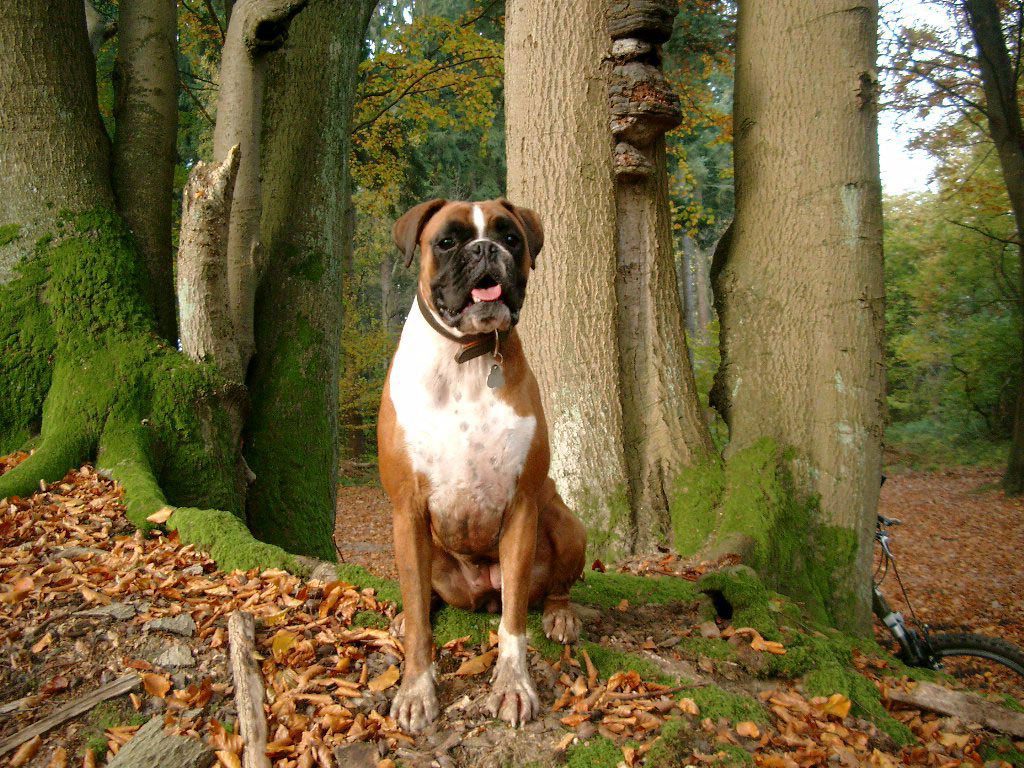
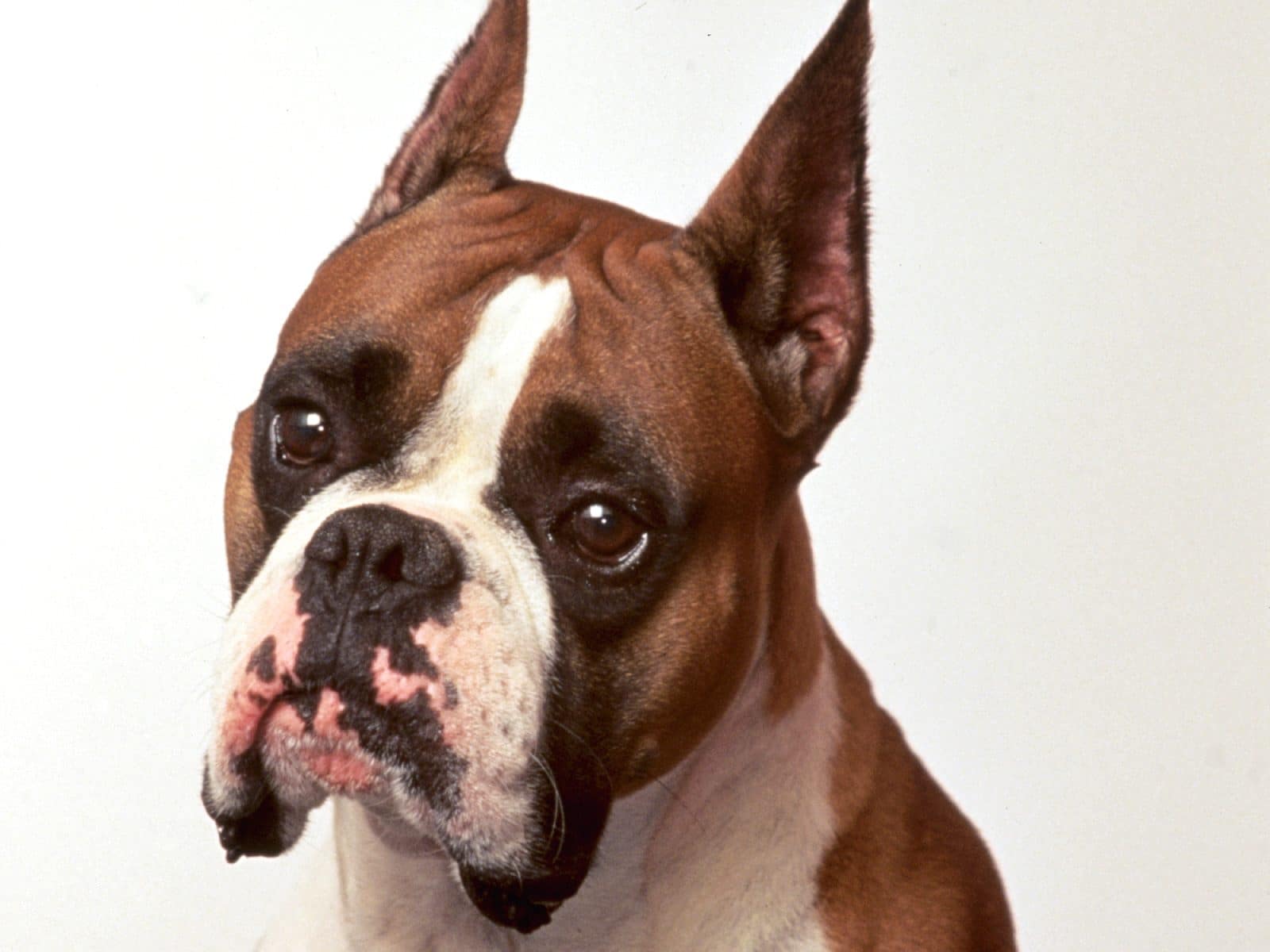
The Boxer It is a breed of working and companion dogs., medium-sized, of German origin. Obtained through the crossing of an Bullenbeisser and Bulldog.

Most canine historians agree that the Boxer has ancestors in dogs. Bullenbeisser. The Bullenbeisser (or out of bulls) they were hunting dogs, used for the hunting of the pig, wild boar and deer. Such expeditions for the hunting of wild animals used to cost the lives of several dogs., the game was horrible and painful both people and dogs (not to mention for wild boars). Some sources say that these huge medieval dogs had erect ears and large teeth., that would be used to hold the animal by the muzzle. It is likely that hunters cut off their ears in the way they do in some countries today., since this custom would seem to be in accordance with the primitive customs of those times.

Within a more civilized and utilitarian way, the ancestors of the Boxer were frequently used as butchers dogs, due to its ability to hold to a bull and lead him toward his barn, if he became rebellious. It is believed that the famous reputation of a dog called "Boxl", used by a Berlin butcher is what gave the breed its name. The derivation of the word Boxer as the name for a purebred dog is ironic, since the word "boxl" or "boxel" has as its translation, in essence, mestizo.

Physical Characteristics Boxer

Exist of varieties within the Boxer race:

  • The Griffon
  • The striped

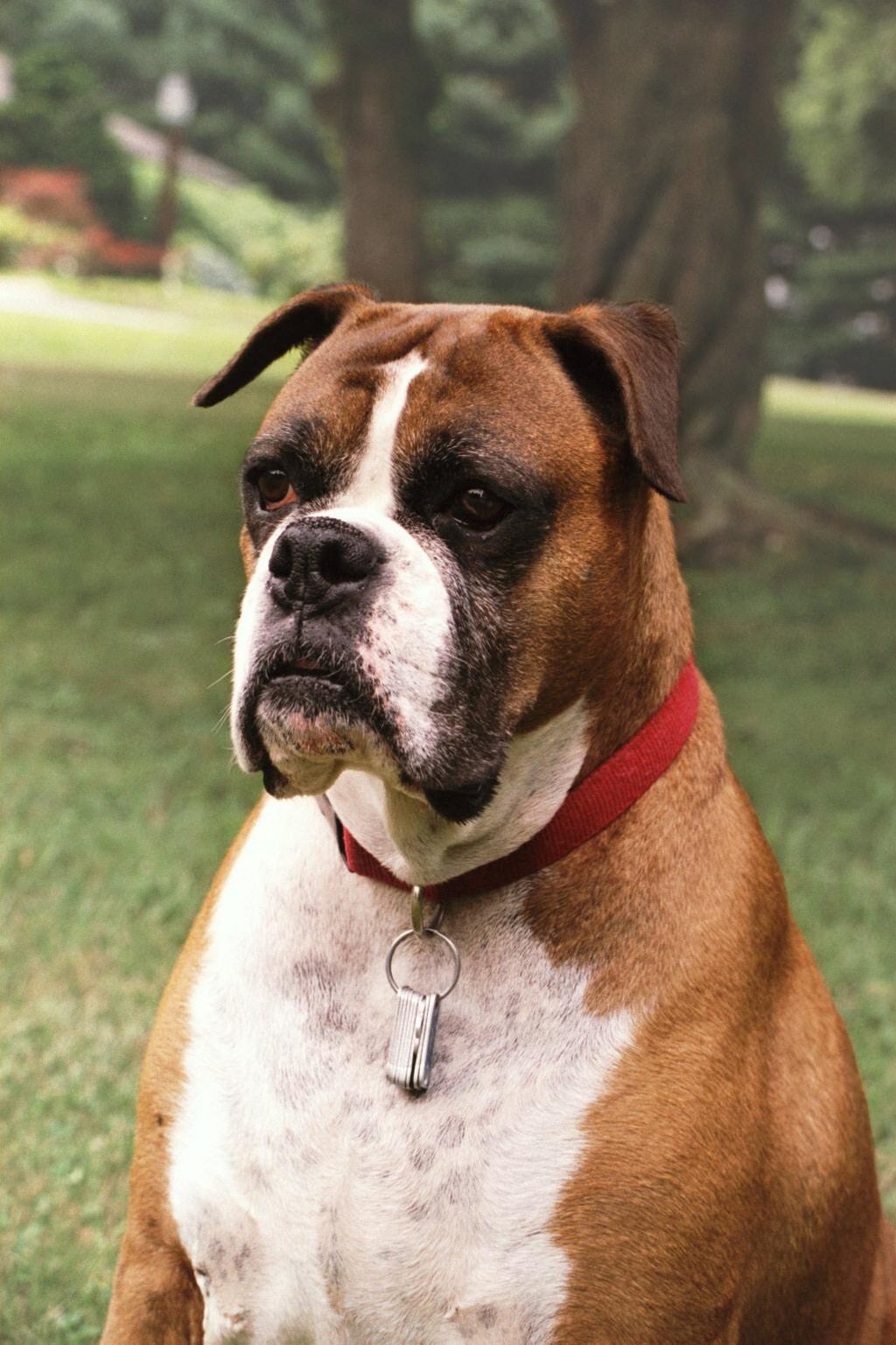
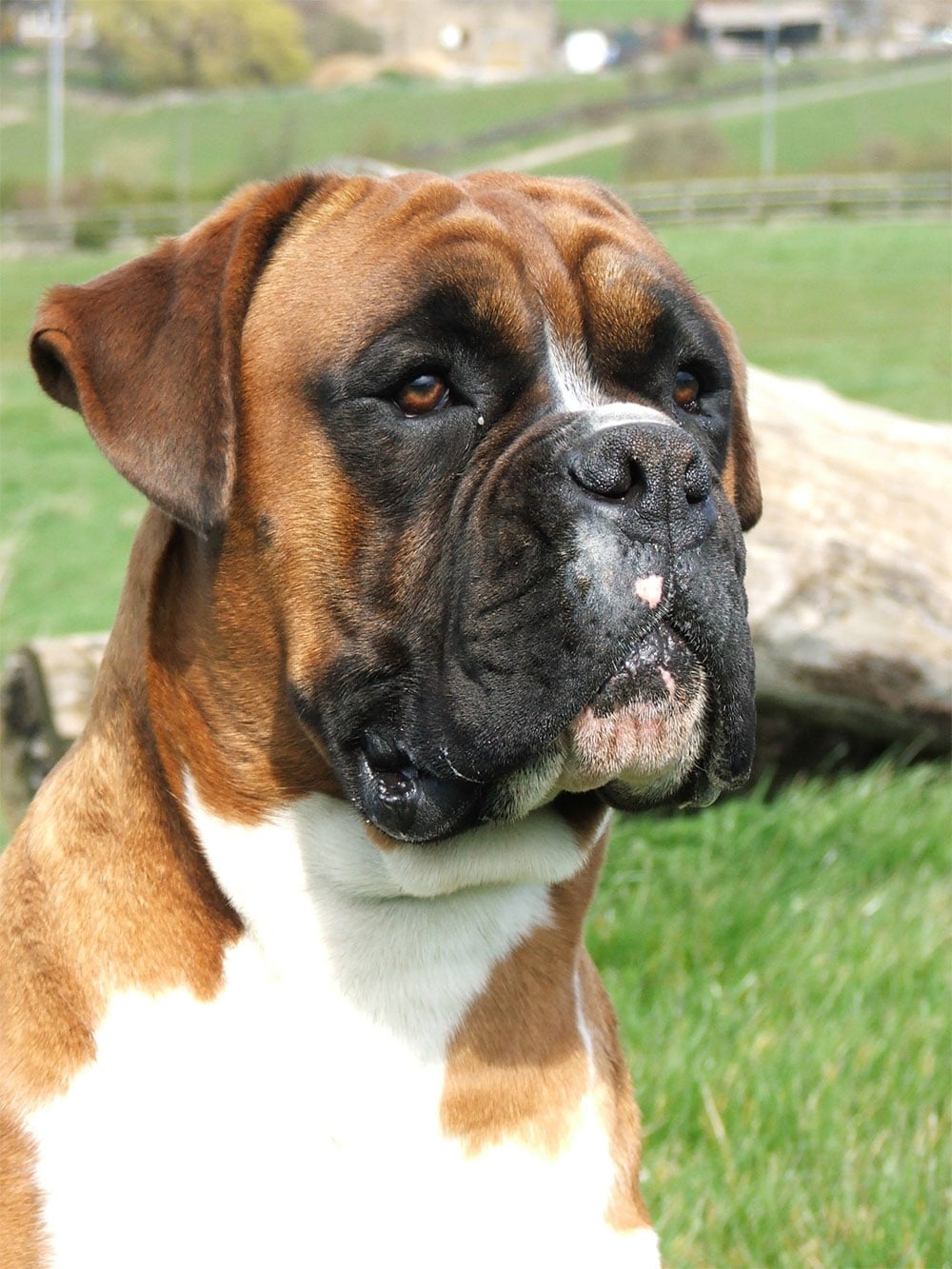
His physical traits include a strong head, prognathic lower jaw, whose jaw pressure is generally 122 kg per square centimeter, snout with characteristic black mask, traditionally farmers cut their ears so that they seem rather long and situated in high, dark brown eyes, Truffle wide and black, strong neck, rounded and muscular and well fat; chest wide and rooms well muscled hind.

With animal protection laws has allowed the dog to submit without cutting of ears and the tail of these animals, but in the standard of beauty, It looks more the Boxer cut ears and tail. Flat, drooping ears on both sides of the head, that give it a character "of the eternal puppy".

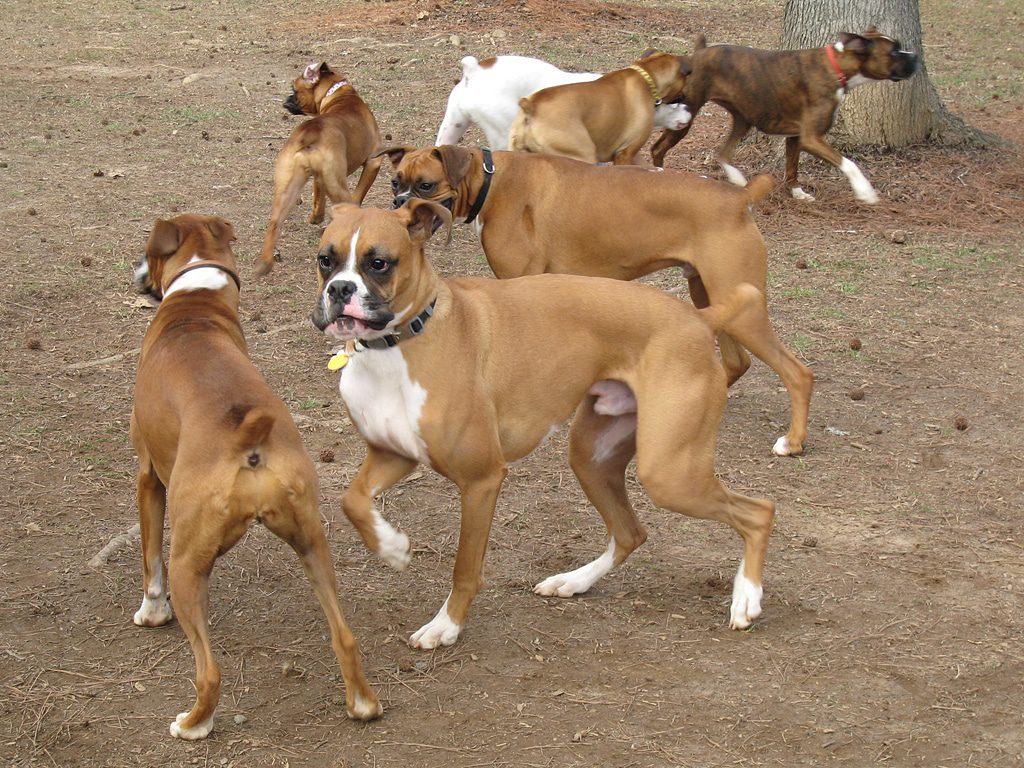
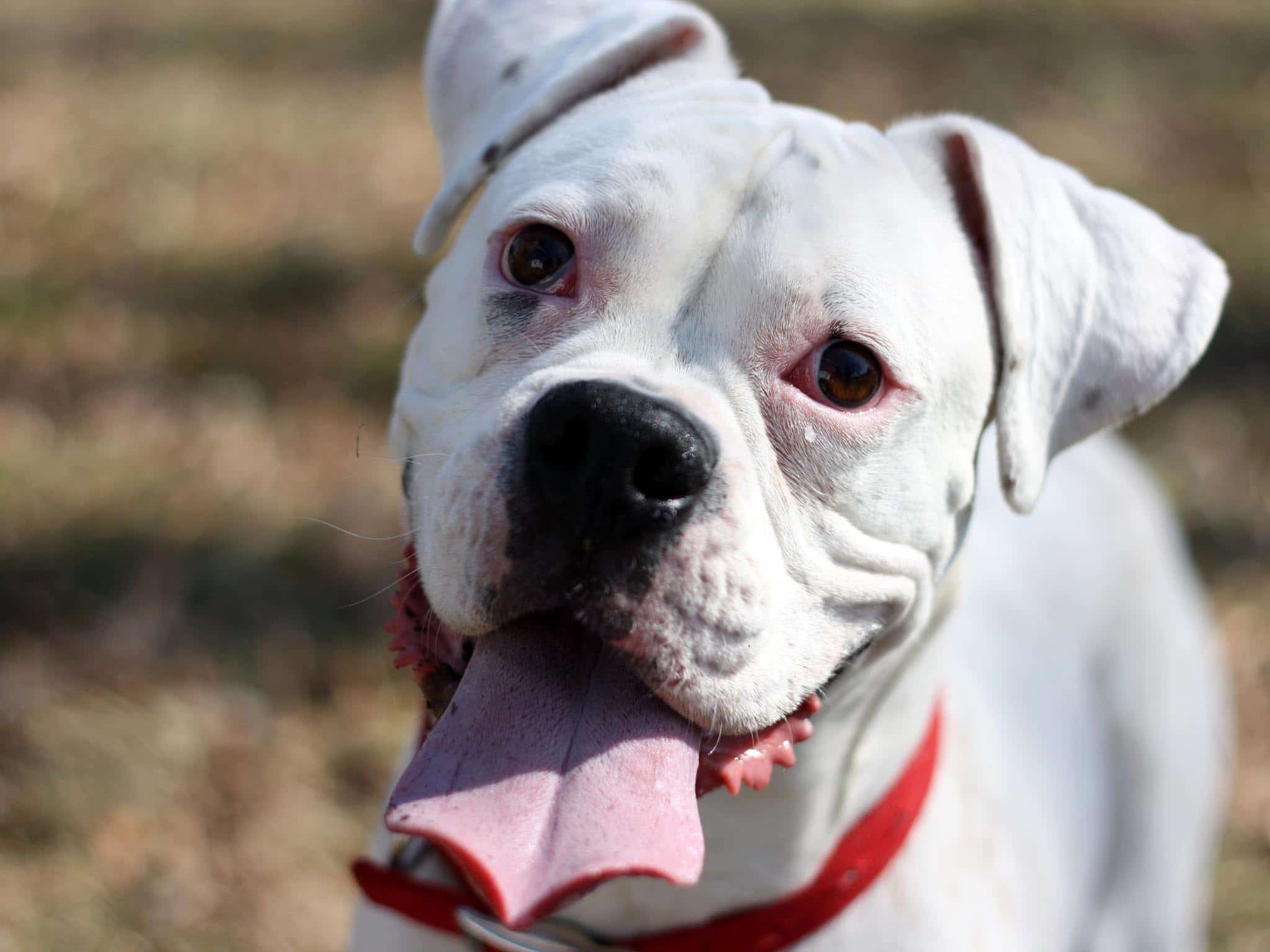
The Boxer has a short coat, bright and smooth, Griffon or striped color (standard, black or red, though these colors are scarce). Sometimes it has white spots (collar, chest and gloves), Although the all-white Boxer has been considered as a genetic defect, While the initial progenitor (Meta Von Der Passage) was white.

The height at the cross of males varies between the 57 and 63 centimeters. for females, the height at the cross must be between the 53 and 59 centimeters. The average weight of adult males is around the 30 kg, While that of females is around the 25 kg.

Did you know??

White boxers are not albinos and their color is not the result of a genetic mutation. In bรณxers, white is only one color. But white dogs tend to get sunburned and may have an increased risk of skin cancer.

Boxer character and skills

Due to its value, strength and agility, was chosen as a police dog in Germany, used as a guide for the blind and a fire dog for its great sense of smell and bravery in major catastrophes. It is a faithful dog, intelligent and watchful, It is certainly one of the most complete dogs that exists. It is docile and boasts an unmatched loyalty with his family. However it is fierce and dominant and may attack other dogs with high speed (especially in males) When is one of their own attacked. They are very good for children, If you have one of 1 year two is the ideal time to fond with children and adults.

For your good health and development, the Boxer Puppy needs enough exercise and a controlled diet. The amount of exercise and food depends on the age. The small puppy, before they are weaned and separated from their brothers, He plays with others until he tires, and all enroscan to rest. This exercise, with sufficient rest, It is essential for the growth of the puppies. as it grows, the Boxer needs exercise to keep in condition and develop his musculature. In addition to playing with different elements, as you can be a ball, It is essential to get the dog to walk on a daily basis.

They are very suitable as companion dogs, family and in dealing with children, In addition to good dogs work and sport, They also serve as guard. They are recommended by specialists to help people with psychological deficiencies, This is a clear proof of its docility.

Their training is recommended at an early age, due to the Boxer are usually have a strong personality, making his training much harder as an adult. They are very playful, so do not like being locked, they prefer to be outdoors, why you must walk them often and do some exercise with them. They are also dogs with a great capacity for learning.

White Boxer comments

The Boxer are susceptible to tumors. Among its possible problems is also dysplasia. They suffer from epilepsy. Many of them are usually sensitive skin and suffer from some type of skin disease; allergic dermatitis is the most common.

The white Boxer tend to be most susceptible to hereditary diseases, Since it is considered a failure of the crossing, These Boxer can not participate in any competition. The occurrence of these diseases is not high, and if this is added that the puppy will be purchased from a breeder, It provides all the certificates of health for their copies, much increases the chances of having a healthy animal.

The Boxer white They are not as appreciated as brown or another color. Said that they are not entirely of pure-bred, but this is not true. These dogs are equal to each other, but in another color. Given that may suffer from various health problems, not appreciate them much, but if the dog does not have any problem it is like any other. If you have a health problem we must not think that it is a dog mestizo or that it is not completely pure. In addition the Boxer White It is not accepted by the F.C.I.

In the Boxer breed, white markings are produced by the semi-recesivo gene sw. The Golden or atigrados Boxer with white markings carry a single copy of sw. The white Boxer lead 2 copies of sw. (Note: the white Boxer are not albinos. Albinism is determined by a different gene and exemplary albinos, Unlike in the Boxer white, they completely lacking pigmentation).

Unfortunately, the white color produced by the 2 copies of sw is associated with problems of deafness in a not inconsiderable percentage of cases. This type of deafness is set in the puppy in their first weeks of life, starting when the ear canal is still closed. The process is complex, but it can be summarized by saying that it occurs because of the absence of pigment-producing cells (melanocytes) in the inner tissues of the ear. The Boxer of gold or brindle color does not present any problem of deafness.

This type of deafness is not exclusive to the Boxer White, that is also produced in other breeds that are white for the same reason genetic (This is, the lead 2 copies of sw), for example the Dalmatian, White Bull Terrier and other.

Characteristics "Boxer"

Coexistence is important that you have with your new friend. Before considering the acquisition of a dog of the breed "Boxer" you know certain factors. Not all breeds of dogs are apt to live in an apartment, you must take into account his character, their need for exercise, their interaction with other pets, their care and if you have small children, their level of tolerance towards them.

Adaptation โ“˜

4,0 of 5 stars (based on 1 review)

friendly dog โ€‹โ€‹โ“˜

2,0 of 5 stars (based on 1 review)

hair loss โ“˜

3,0 of 5 stars (based on 1 review)

Affection level โ“˜

5,0 of 5 stars (based on 1 review)

Need for exercise โ“˜

5,0 of 5 stars (based on 1 review)

Social need โ“˜

5,0 of 5 stars (based on 1 review)

Home โ“˜

4,0 of 5 stars (based on 1 review)

Toilet โ“˜

1,0 of 5 stars (based on 1 review)

Friendly with strangers โ“˜

3,0 of 5 stars (based on 1 review)

barking โ“˜

2,0 of 5 stars (based on 1 review)

Health โ“˜

3,0 of 5 stars (based on 1 review)

Territorial โ“˜

5,0 of 5 stars (based on 1 review)

Cat friendly โ“˜

3,0 of 5 stars (based on 1 review)

Intelligence โ“˜

4,0 of 5 stars (based on 1 review)

Versatility โ“˜

3,0 of 5 stars (based on 1 review)

Child friendly โ“˜

3,0 of 5 stars (based on 1 review)

Surveillance โ“˜

4,0 of 5 stars (based on 1 review)

joy โ“˜

5,0 of 5 stars (based on 1 review)

Imรกgenes Boxer

boxer videos

Type and recognitions:

  • FCI CLASSIFICATION:
  • Group :
  • Section : . .

Federations:

FCI โ“˜, AKC โ“˜, ANKC โ“˜, CKC โ“˜, โ€‹KC โ“˜, NZKC โ“˜, UKC โ“˜

FCI breed standard Boxer

FCIFCI - Boxer
Boxer

Breeders list "Boxer"

REGISTER KENNEL

Boxer breeders

Offer your puppies for free. Sign up here.

  • This field is a validation field and should be left unchanged.

Alternative names:

1. German Boxer, Deutscher Boxer (English).
2. Boxer (French).
3. Boxer, Deutsche Boxer (German).
4. Boxer alemรฃo (Portuguese).
5. bรณxer alemรกn (espaรฑol).

โ–ท The world of Pets: Dogs, cats, birds, reptiles, amphibians

Leonberger
Alemania FCI 145 - Molossoid . Mountain
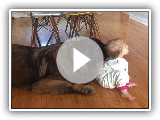
Leonberger

Once you get to know Leonberger dogs better, you will be enchanted by them forever.

Content

History

The Leonberger it is a very big and beautiful dog. In his head and in his charisma he remembers a St. Bernard and a lion at the same time. And this is not a coincidence, because the St. Bernard is one of the ancestors of Leonberger. The Leo, as his friends call it, It is a young and at the same time old breed of dog. This breed is ancient, because it has been specifically bred to the standard since 1846. The Leo It, therefore, one of the oldest dog breeds in modern breeding. At the same time it is a breed of young dog; because it was only created at that time. Most other pedigree dogs have a long history and originated from ancient working dog breeds..

The Leonberger, However, has a different and unique story. Among 1820 and 1850 San Bernardo became fashionable throughout Europe. The heroic exploits of the legendary St. Bernard Barry at the Great St. Bernard Pass in the Alps had a great effect. Barry has been shown to save more than 40 people of death by snow. Everywhere people wanted these big dogs and they were (and they are) really big dogs.

Breeders and traders were unable to meet the high demand. At the same time high prices were paid for a puppy of St. Bernard. So quite a few dog dealers from southwestern Germany helped out without further ado.. They mated St. Bernard with very big bitches from the region. The pups that looked like a St. Bernard they were sold as such, but for the others there were at most a few potatoes from a farmer. The dog trade was – as it still is today – a lucrative business and some sold hundreds of puppies a year and became rich.

Like Leonberg City Hall and dog vendor Heinrich Essig. An intelligent idea occurred to him and turned need into virtue. He created a brand out of the puppies that he could not market as St. Bernard. Instead of giving them away, sold the puppies for good money. Thus was born the Leonberger. Inspired by the lion from the coat of arms of his hometown, this new breed of dog has the appearance of a lion. His dogs were nicknamed Leonhardiner in the envious competition. Also in the official world of dogs these hybrids went unnoticed for a long time. Like this, el cinรณlogo Ludwig Beckmann, universally recognized at that time, He does not even mention the Leonhardiner in his work in two volumes "Die Rassen des sinks" (dog breeds) of 1895. From the point of view of health, such a genetically heterogeneous offspring is an advantage.

The Leonberger should be a success in all respects. Today it belongs to the primitive rocks of the world of purebred dogs., that no dog lover wants to miss. In 1895 The ยซInternational Dog Club was founded Leonbergerยซ, which quickly achieved official recognition of the Leonberger like race. In 1948 He was followed by the ยซGerman Dog Club LeonbergerยปBased in Leonberg, who still represents the Leonberger at VDH and around the world. The Leonberger has a unique charisma, imposing and at the same time friendly, quiet and just sovereign. Its appearance is reminiscent of a lion and its character is also majestic, peaceful and totally suitable for families.

Physical characteristics

The Leonberger It is an impressive large dog with a height at the withers in males between 72 and 80 cm and in females between 65 and 75 cm.. No weight given. But, will be some 80 kg. The standard describes its appearance as:

ยซAccording to its original purpose, the Leonberger it's a very big dog, strong, muscular and elegant at the same time. It is characterized by a harmonious build and a self-assured calm with a lively temperament.. Especially the male dog is powerful and powerful. "

Its coat should be medium soft to thick, broadly long, well lying. The Leo has a strong inner layer. The shapes of your physique should be recognizable. On the neck and chest, the fur, especially in males, must form a mane. The coat will be lion yellow, red, reddish brown and all the combinations between them, but always with a black mask. In favor of this lion gaze, hereditary factors related to health and longevity have been neglected.

A study published by the University of Vienna evaluated 7582 layers of Leonberger between 1932 and 2009. ยซIt was determined that the average death age of the Leonberger It was from 7,55 years". During the study period, life expectancy had even decreased in 1,5 years in the last three decades. With a healthy upbringing, 10 or 12 years would be normal. The breed has recognized these warning signs and is now focusing more on the health and extension of the life expectancy of these large dogs..

Character and skills

The mind of a Leonberger is pious as a lamb. Being with him is pure slowdown for man. The essence is described in the standard:

as family dog, the Leonberger is a pleasant companion in current living conditions, that can be carried everywhere without any difficulty and is characterized by a pronounced kindness towards children. He is neither shy nor aggressive. As a companion dog it is a pleasant companion., obedient and fearless in all life situations.

The strength of character required includes above all: self confidence, sovereign calm, average temperament (including game instinct), willingness to subordinate, good learning and memorizing ability and noise tolerance. The character of Leonberger impresses all dog lovers.

Once you get to know dogs better Leonberger, you will be enchanted by them forever. There is almost nothing that can disturb this giant. His very high stimulus threshold as well as his stoic composure are the necessary counterpart to his enormous strength.. These two poles thus characterize the nature of Leonberger. Here and there is something stubborn. Only good persuasion and pleading will help., then he will do everything for his master or lady. But as a family member he is very kind. Seeks proximity to its humans. It is a reliable protector for them. The Leonberger he is a great guy, a fascinating dog!

Fitness

The Leonberger not an easy dog รขโ‚ฌโ€นรขโ‚ฌโ€นto keep due to its size. By its nature, has very few demands. A daily walk, brushed once a week, that was all. You don't need a big garden, but a garden is already useful. He likes to take possession of it. So, a small apartment on the nth floor would not be for him. Does not fit in all cars. One must consider: You're mine, the whole car will get wet. Leo can bear the heat, but it should not be challenged. prefers the cold. The Leonberger he is a great friend and not an object for acting addicts.

It should also be borne in mind that in our current society, large dogs are often rejected. Some people just fear a giant like Leo, even if he behaves – as is normal for him – exemplary. This is one of the reasons why it is not advisable to keep it in the big city..

One must have a sufficient budget to be able to pay a lot of good food and, in case of doubt, also the vet. It also, should have considered before buying what to do if the dog is sick and may need to bring 80 kg or more. Last, but not less important, there are many practical things that have a profound influence on everyday life. Here one must take real responsibility and honestly look in the mirror if all the conditions for a happy coexistence with dogs are met. Leonberger. Who can claim this, is in an enviable situation of dog owner. The Leonberger worth a sin.

Leonberger's Education

It must be remembered that in a Leo adult, the leash is just a symbol of control. The Leonberger has the power to control the other end of the strap. But he doesn't want. The Leonberger it's basically easy to train. Only his stubbornness has to be broken here and there with consistent smoothness.. He wants to follow his lord and master and he does it very reliably. It is an elementary duty of the owner of a Leonberger to pay attention to a consistent education already in the puppy. Because only this and not the leash makes wonderful walks in nature possible, that together with this great four-legged friend become a balm for the soul of agitated people. The great dog should never be "educated" by bumps or barracks methods. Because that would cause the exact opposite of education and end in disaster..

Leonberger care

Caring for a healthy Leo is not a problem. Brushing the coat once a week is enough.

Nutrition / Food

You need a lot of high quality food. A raised bowl is useful to counteract the risk of stomach twisting. Always pay attention to the weight.

Leonberger Health

As in most large dogs, we see hip or elbow dysplasia. Osteosarcoma, the most common bone tumor in dogs, It is also very common in Leonberger.

Leonberge life expectancy

Before the life expectancy of a Leonberger It was from 12 years, today is from 7 to 9 years. The breeding is working to recover the possible natural life of a healthy dog. He is accompanied here by a research project of the University of Veterinary Medicine Hannover.

Buy a Leonberger

The purchase of a Leo it should be long-term and well thought out. You should carefully check if you have all the requirements to be able to spend many wonderful years with this giant.. If you are looking for a puppy, you should make sure above all that the dogs are not bred too much. Ask about ancestors, their illnesses, his age reached. You should see an FCI affiliated breeder Leonberger. Really, a Leonberger it costs about 2.000 EUR.

Images "Leonberger"

Photos:

1 – Leonberger bitch by The animal photography at de.wikipedia / CC BY-SA
2 – Leonberger by https://pxhere.com/es/photo/1394923
3 – Leonberger, head photographed in 2004 at a dog show in Dresden by Karina Leo-Steffen, uploaded here from –Caronna 13:43, 15 Apr 2005 (UTC) / CC BY-SA
4 – Leonberger by https://www.pexels.com/es-es/foto/75295/
5 – Leonberger by https://pxhere.com/es/photo/1434187
6 – Leonberger by Pleple2000 / CC BY-SA
7 – Leonberger by https://www.needpix.com/photo/1100946/dog-leonberger-giant-pedigree-purebred-animal-canine

Videos "Leonberger"

Leonberger - Breed of dog

Type and recognitions:

  • FCI CLASSIFICATION:
  • Group :
  • Section : . .

Federations:

  • FCI – Pinscher and Schnauzer-Molossoid type dogs – Swiss Mountain Dogs and Cattledogs. Section 2.2 Molossoid, mountain type. โ“˜
  • AKC – Working dogs โ“˜
  • ANKC – Group 6 (utility dogs) โ“˜
  • CKC – Working dogs โ“˜
  • โ€‹KC – Working dogs โ“˜
  • NZKC – Utility dog โ“˜
  • UKC – Watchdog โ“˜

FCI breed standard "Leonberger"

Origin:
Germany

Date of publication of the valid original standard:
04.01.1996

Use:

Watchdog, Company and family.


General appearance:

Complying with the original use purposes, the Leonberger is a big dog, strong, muscular and elegant at the same time. It is characterized by its harmonious body structure and poised tranquility, aware of his own worth with a lively temperament. The male is especially powerful and robust.


PROPIMPORTANT ORTIONS: Relationship of the height of the cross with the length of the body = 9:10; the depth of the chest corresponds almost to 50% the height of the cross.


Behavior / temperament:

As a family dog, the Leonberger adapts to modern living and room conditions and turns out to be a pleasant companion that can be taken anywhere without causing problems. It also, It is very friendly with children and is not shy or aggressive. As a companion dog it is a pleasant companion., obedient and fearless in all situations that arise. To achieve his nature and strength, he mainly needs:

  • Self -confidence and sovereign
  • Medium balanced temperament (urge to judge).
  • Willingness to submit.
  • Good learning ability and attention.
  • Be insensitive to noise.

Head:

In its entirety it is deeper than broad and seems longer than plump; the relationship between the muzzle and the cranial region is approximately 1:1. The skin is adherent on all parts and does not form frontal folds.

Cranial region:
  • Craging: Seen in profile and from the front it is slightly arched; is strong corresponding to the body and limbs, but it doesn't look heavy. The posterior region is not much wider than the region where the eyes are located.
  • Ston: It is clearly noticeable and moderately marked.

facial region:

  • Nariz: Black.
  • Horcico: It is long, but it never ends on end. The nose is in broad correspondence, never sunk, but rather slightly arched (ram's nose).
  • Labios: Adherents, black, with closed corners.Jaws / Teeth: Powerful jaws with a full scissor bite, regular and perfect with good adaptation of the upper incisors over the lower ones without leaving space. The teeth are implanted vertically in the maxilla, showing 42 healthy teeth according to dental formula (lack of M3 is tolerated). Caliper bite allowed; in the lower jaw there should be no narrowness next to the fangs.
  • Cheeks: Poorly developed.
  • Ojors: Light brown to as dark as possible, medium-sized, oval, or sunk or bulging, neither very together nor very separate from each other. Adherent eyelids, they don't show the conjunctiva. The whites of the eyes (visible part of the dermis) does not show redness.
  • Obars: High insertion and placed not far behind, pendants, medium-sized, stuck and fleshy.

Neck:

Forms a light curve that continues without interruption to the cross. It is longer than it is wide; has no loose or double chin.

Body:

  • Cruz: Pronounced, especially in the male.Back: Robust, straight, wide.
  • Itmors: Widths, powerful, well muscled.
  • Glikeness: Wide, relatively long, gently rounded, in the form of progressive transition to the root of the tail, never higher than the back.
  • Pecho: Large, deep, reaches at least to elbow height; not barrel-shaped but rather oval.
  • Lรญnand the bottom: Only slightly retracted.

Tail:

With lots of hair. When it is standing it carries it hung in a straight line; Also during the movement it folds only slightly without exceeding the back line.

Tips

PREVIOUS MEMBERS: Straight, parallel, not closed.

  • Shoulder / Arms: Long, obliquely placed; Among them form an angle not too obtuse. They have good muscles.
  • Elbows: Glued to the body.
  • Metacarpus: Strong, firm, viewed from the front they are straight and viewed from the side almost vertical.
  • Pinis previous: Straight (no deviations outwards or inwards), rounded, compact; well arched fingers; black pads.

LATER MEMBERS: Viewed from behind they are not placed too tightly; they are parallel; lukewarm joints- tarsians and feet do not deviate inward or outward.

  • Cadhere: In oblique position.
  • Thigh: Rather long; placed obliquely, has strong muscles. The thigh and leg form a fairly sharp angle.
  • Atibio-tarsal articulation: Powerful, with a marked angle between the leg and the metatarsal.
  • Pinis later: Straight, just a little long; arched toes; black pads.

Movement:

Cover the ground, it is balanced in all walks; good momentum and breakthrough; both during walking and jogging, observed front and back, conducts limbs in a straight line.

Mantle

  • Fur: Hair should be a little soft to hard, quite long, stuck and never form a streak; Despite having a lot of internal fleece, you can recognize the shapes of your body structure. The hair is smooth, although it is allowed to be slightly wavy; on the neck and chest (especially in the male) a mane is formed; There are visible feathers in the anterior members and "pants" marked in the posterior members.
  • Color: Yellow (lion color), red, reddish brown, also sand color (pale yellow, cream-coloured) and all its combinations, although with a black mask. Hair is allowed to have black tips; However, black should not be the basic hair color. The paleness of the basic color in the lower part of the tail, on the necklace, In the feathers of the previous members and in the "pants" of the posterior. A small white spot or a thin white streak is tolerated on the chest and white hairs on the fingers.


Size and weight:

Height to the cross:

  • Males: 72 โ€“ 80 cm., ideal measure 76 cm.,
  • females: 65 โ€“ 75 cm., ideal measure 70 cm..


Fouls:

Any deviation from the aforementioned criteria is considered as a fault and the severity of this is considered to the degree of the deviation to the standard and its consequences on the health and well-being of the dog..


FALTAS DESCALIFICANTES:

    • Aggressiveness or extreme shyness.
    • Any dog โ€‹โ€‹showing clear signs of physical or behavioral abnormalities must be disqualified..
    • Severe anatomical failures (p. e.g.. notable cow members, carp back marked, badly beaten back, exaggerated outward deviation in the forefoot, absolutely insufficient angulation in the shoulder joints, elbow, knee and tibial-tarsian).
  • brown truffle.
  • Excessive depigmentation on the lips
  • Lack of teeth (except the M3), superior and inferior prognathism; other faults in the bite.
  • Eyes without brown color.
  • Ectropiรณn, ectropion.
  • Tail too curled or carried too high and curled.
  • Brown pads.
  • Curly or frizzy hair.
  • Lack of color (brown with brown truffle and brown pads; Black with fire; silver black; deer color).
  • Total lack of mask
  • Too much white color (that reaches from the fingers to the carpus, stain on the chest larger than a hand, white color elsewhere).


N.B.:
  • Males should have two normal-appearing testicles fully descended into the scrotum..
  • Only functionally and clinically healthy dogs, with the typical conformation of the breed, should be used for parenting.


TRANSLATION: Federation Canรณfila Mexicana a.c..

Source: F.C.I - International Cynological Federation

Alternative names:

1. Leo, Gentle Lion, Gentle Giant (English).
2. Chien Leonberg (French).
3. Leo (German).
4. Leo (Portuguese).
5. Leo (espaรฑol).

โ–ท The world of Pets: Dogs, cats, birds, reptiles, amphibians

Neapolitan mastiff
Italia FCI 197 - Molosoids โ€“ Doge

Mastรญn Napolitano

Despite his fierce appearance, the Neapolitan mastiff It is a balanced dog and friend of children.

Content

History ยซMastin Napolitanoยป

The Neapolitan mastiff, like all broadcast, most likely descends from the molossus Tibetan. According to historical data, Italy has been inhabited since very remote times, which could date back to the second millennium before Christ..

This shows that this architect of Campania (South Italy region, on the coast of the Tyrrhenian Sea, whose capital is Naples) brings lot of history under its belt.

All European mastiffs descend from the Tibetan Mastiff, the oldest representative of dog breeds.
Probably the first Asian mastiffs were carried in the India Greece by Alexander the great, around the year 300 a.C.

Some historians argue that it was the Greeks who were known to the Romans these dogs so spectacular, to see them is struck and (for a change) they used them in their famous circuses like fighting dogs. The Neapolitan mastiff fought with Lions, bears, Tigers, He was also a dog bred for war.

According to the English cinofilia, on the other hand, the mastiff was taken to Britannia (term designated to the island of Great Britain before that occurred the Germanic invasions) by the Phoenicians in the year 500 to. C. from that moment the spread throughout Europe would have begun.

Beyond disagreements as to the diffusion of the breed you can ensure, years. At that time, that the "Neapolitan Mastiff" has lived in Campania for at least two thousand years, Although its first official appearance in the cinophilia data of 1946 and its official standard was approved in the year 1949.

During the course of World War II, the race was on the verge of extinction but was recovered by a writer and called cinรณlogo Piero Scanziani that between 1941 and 1980 published a dozen volumes of fiction and nonfiction, including various Cynology treatises. He was responsible for the reconstruction of the Neapolitan mastiff during the postwar period, and he did so on the basis of the few copies remaining.

Physical characteristics

ยซNeapolitan Mastiffยป Videos

Neapolitan Mastin ALACRAN
Neapolitan Mastin bruce dello stradone (Leonardo lopez)Lightbox for Video by VideoLightBox.com v1.11

The Mastino Napoletano impresses even from a distance with its impressive physique. Especially the huge head stands out. It is a typical molossoid head, but he has particularly pronounced full lips. His facial expression is cool and relaxed, his overall impression is impressive. Its coat is short and smooth.

Modern breeding has given the Mastino Napoletano an excess of loose skin, that borders on the torture of the brood. For animal welfare reasons only, one must make sure that the skin is taut and there are not too many wrinkles and folds. Only slight wrinkles should be allowed in the neck area and on the dewlap.. Especially the head has grown an overabundance of skin and wrinkles in recent decades, partly so extreme that dogs can barely see due to all the wrinkles. It also, severe wrinkles are a treasure for infections and itchiness.

According to him standard official of the breed the males of Neapolitan mastiff They must be measured of 66 to 72 cm in the cross and his weight is of 70 kg, males can easily reach up 90 kg, females should be measured in 60 to 68 cm.. The weight of the males due of 60 to 70 Kg and females of 50 to 60 kg.

The head is huge and short, the rounded and flattened skull between the ears. It has the straight snout, a great truffle and fat lips it fall heavily.

It has the eyes well separated and the accumulation of skin seems they were oval shaped but in reality are round. The ears are triangular, medium and high insertion.

The body, in general, It is longer than high with the neck well massif and the Pope and grupa broad. The tail is amputated two-thirds of its length.

The favorite colors they are the lead, the grey and black (sometimes with small white markings on the chest and the tip of the fingers), the fawn, the mahogany, the Fawn and stag.

All cloaks can be atigrados, but the possibility that a Neapolitan mastiff come out color "tabby" is one in a million.

Observations

Despite its large size, no need for large spaces to be happy, because it moves shortly. although yes, It is important to establish a relaxed routine of daily walks that help keep your muscles toned.

Another issue to highlight is that they significantly drool-worthy.

Character and skills

Despite his surly and even fierce aspect, the Neapolitan mastiff he is a peaceful dog, balanced, sweet, fell, very affectionate with the master and friend of children.

Never behaves aggressively without a real reason, But if he were to have the answer, could be terrible.

Its temperament is peaceful, but it may become aggressive if its owner is not able to educate him with wisdom and responsibility.

Due to its structure it solid, its movement is heavy and clumsy, but appearance because it is aware of its size and enough to see him interact with children to confirm (disarms in delicacy).

Has been dog of war, combat in the circus, police assistant, dog sledge drag, companion and self-defense dog. Currently it is trained as a guardian of houses and farms and is increasingly appreciated as a companion dog..

In fact, it is more a guard dog than a companion or exhibition dog. Of the molossians foster, It is the quietest character.

One Neapolitan mastiff serious upbringing is, therefore, educated, an extremely simple dog. Here and there the fat man is a bit stubborn. Only if it is good to persuade and ask for help, then it will do everything for its owner or caretaker. As a family member, is extremely adorable. He seeks the proximity of his humans and is a reliable protector.

In case of acute threat to your humans, will try to keep danger away from them by facing the attacker with his body, but it won't attack him anymore. Does all of this quietly. Barks very rarely. His calm and serene temperament makes him a loyal and child-friendly companion, who forgives everything. Towards strangers, However, is initially waiting and watching. The Neapolitan mastiff he's a cool guy and a fascinating dog.

Not an easy dog รขโ‚ฌโ€นรขโ‚ฌโ€นto keep just because of his strength. By its nature it has very few demands. A daily walk, sometimes brushing the coat, that is all. Only the food is a certain challenge in terms of quantity and quality. You don't need a big garden, but a garden is already useful. A small apartment on the nth floor would not be suitable. The Neapolitan mastiff he's a great partner, but it is not a companion for runners, dog athletes or performance junkies.

Education

It must be remembered that in a Neapolitan mastiff adult, the line is just a symbolic control. Large dog easily has the power to maneuver the other end of the leash at will. But he doesn't want, at least if you have enjoyed the basics of a good education. The Neapolitan mastiff it is very easy to train. Only his stubbornness has to be broken here and there with consistent smoothness.. He wants to follow his master and mistress and he does it very reliably. It is an elementary duty of an owner of Neapolitan mastiff pay attention to a consistent education already in the puppy. Because only education and not the leash makes wonderful walks in nature possible, that together with this calm four-legged friend they become a balm for the soul of agitated people.

Care and health ยซNeapolitan Mastiffยป

Caring for a Neapolitan mastiff healthy breed is not problematic. Brushing the coat here and there is enough.

Bad habit of extremely strong folding of the head and body often leads to chronic inflammation. They are usually a source of constant itching for dogs.. Sometimes it even makes vision difficult. Such dogs need expensive time and care.

Nutrition ยซMastรญn Neapolitanยป

You need a lot of high quality food. It is helpful to have an elevated feeding bowl to counteract the risk of stomach churning. Weight must always be carefully considered.

Life expectancy ยซNeapolitan Mastiffยป

Breeding mistakes have cost this dog, formerly robust, many years of his life expectancy. Before they were 12, today they are more likely to be 6 to 9 years. But, exact data not available.

Buy a "Neapolitan Mastiff"

The purchase of a Neapolitan mastiff it must be long-term and well considered. You should check carefully if you have all the requirements in order to spend many wonderful years together with this strong friend.. Also financially the attitude is a challenge. If you are looking for a puppy, you must make sure that the dogs are not too massive and wrinkled. You must ask about the ancestors, its appearance, their illnesses, your age. To get a Neapolitan mastiff solid character, you should just look directly at a serious breeder. For animal welfare reasons you should refrain from buying puppies from parents with severe wrinkles. A puppy Neapolitan mastiff from a good breeder costs about 2.500 EUR.

Characteristics "Neapolitan mastiff"

Coexistence is important that you have with your new friend. Before considering the acquisition of a dog of the breed "Neapolitan mastiff" you know certain factors. Not all breeds of dogs are apt to live in an apartment, you must take into account his character, their need for exercise, their interaction with other pets, their care and if you have small children, their level of tolerance towards them.

Adaptation โ“˜

2,0 of 5 stars (based on 1 review)

friendly dog โ€‹โ€‹โ“˜

1,0 of 5 stars (based on 1 review)

hair loss โ“˜

3,0 of 5 stars (based on 1 review)

Affection level โ“˜

3,0 of 5 stars (based on 1 review)

Need for exercise โ“˜

2,0 of 5 stars (based on 1 review)

Social need โ“˜

3,0 of 5 stars (based on 1 review)

Home โ“˜

2,0 of 5 stars (based on 1 review)

Toilet โ“˜

3,0 of 5 stars (based on 1 review)

Friendly with strangers โ“˜

1,0 of 5 stars (based on 1 review)

barking โ“˜

2,0 of 5 stars (based on 1 review)

Health โ“˜

5,0 of 5 stars (based on 1 review)

Territorial โ“˜

5,0 of 5 stars (based on 1 review)

Cat friendly โ“˜

3,0 of 5 stars (based on 1 review)

Intelligence โ“˜

3,0 of 5 stars (based on 1 review)

Versatility โ“˜

3,0 of 5 stars (based on 1 review)

Child friendly โ“˜

3,0 of 5 stars (based on 1 review)

Surveillance โ“˜

2,0 of 5 stars (based on 1 review)

joy โ“˜

5,0 of 5 stars (based on 1 review)

Images ยซNeapolitan Mastiffยป

ยซNeapolitan Mastiffยป Videos

Type and recognitions:

  • FCI CLASSIFICATION:
  • Group :
  • Section : . .

Federations:

  • FCI – Pinscher and Schnauzer-Molossoid type dogs – Swiss Mountain Dogs and Cattledogs. Section 2.1 Molossoid, mastiff type. โ“˜
  • AKC – Dogs working โ“˜
  • ANKC – Group 6 (utility dogs) โ“˜
  • CKC – Working dogs โ“˜
  • โ€‹KC – Working dogs โ“˜
  • NZKC – Utility dog โ“˜
  • UKC – Watchdog โ“˜

FCI breed standard "Neapolitan mastiff"

Origin:
Italy

Date of publication of the valid original standard:
13.11.2015

Use:

Protection and watchdog.


General appearance:

Big dog, heavy and solid with high volume appearance. The length of the trunk exceeds its height at the withers.

IMPORTANT PROPORTIONS: Body length is a 15% more than the height at the withers.

  • The skull-snout ratio is 2 to 1.
  • The length of the head is approximately 3,8 / 10 the height at the withers.
  • Neck is rather short.
  • Chest circumference is wide.


  • Behavior / temperament:

    Steady and loyal, is not aggressive. Guard dog of the property and its inhabitants, always vigilant, Intelligent, noble and majestic.

    Head:

    Short and massive, with the skull wide at the level of the zygomatic arches. The skin is abundant and has wrinkles and folds, of which the most accentuated and characteristic part of the external palpebral angle to descend to the labial angle. The superior longitudinal axes of the skull and muzzle are parallel.

    Cranial region:
    • Skull: The skull is wide and flat, particularly between the ears, seen from the front, it is slightly convex at the front. The zygomatic arches are very prominent, but with flat muscles. The protrusions of the frontal bones are well developed; the front groove is marked; occipital ridge is barely visible.
    • Stop: Well defined.

    facial region:

    • Truffle: Located in the prolongation of the nasal cavity, should not protrude from the anterior vertical line of the lips; it should be bulky and the large nostrils should be wide open. The color is according to the color of the fur: black for black specimens, dark gray in dogs of other colors, and the chestnut for brown dogs.
    • Snout: Very broad and deep; its width is approximately equal to the length. The length should be equal to one third of the length of the head. The sides are parallel so that, seen from the front, the shape of the muzzle is practically square. The depth of the muzzle is approximately twice its length.
    • Lips: fleshy, thick and full. The upper lip, seen from the front, forms an inverted "V" at its junction point. The lower lateral profile of the muzzle is determined by the upper lips, its lower part is the corner of the lips, with visible mucosa, located vertically from the outer corner of the eye.
    • Jaws / Teeth: Powerful with strong jaws and dental arches that fit together perfectly. The lower jaw should be well developed in width. Well developed white teeth, regularly aligned and complete in number. Scissor bite, that is, the upper incisors overlap the lower incisors in close contact, implanted in the vertical of the jaws; or pincer bite, that is, the upper incisors are joined edge to edge with the lower incisors. The outer edge of the upper incisors should be in close contact with the inner edge of the lower incisors.. An inverted scissor bite is tolerated.

    EYES: well separated on the same front level; rather round shape, but never protruding or too deep. Iris color is generally darker than coat color, except in shades of diluted shades where the color of the eyes is lighter. The skin never folds to interfere with the eyes.

    EARS: Small, in relation to the size of the dog, form triangular, located above the zygomatic arch, flat and glued to the cheeks. Ears are natural.

    Neck:

    The upper profile is slightly convex. Trunk rather short and conical, good muscular. The lower neck profile is well covered in loose fur that forms a well-separated double dewlap, but not exaggerated. Double chin begins at the level of the lower jaw and does not reach below the middle of the neck.

    Body:

    The length of the trunk exceeds by 15% the height at the withers.

    • top line: The upper line of the back is straight. Cross: It is wide, long and not very prominent.
    • Back: Width and length approximately 1/3 the height at the withers. The muscular and well developed lumbar region in its width should be harmoniously connected with the back.
    • Pork loin: Width, strong and muscular. The hip bones are prominent as they reach the upper lumbar line.. Breast : Large, with well-developed pectoral muscles. The rib cage is wide, with long, well-arched ribs. Chest circumference is wide. The tip of the sternum is at the level of the tip of the shoulder.

    Tail:

    It is wide and thick at the root; strong, slightly tapering towards the tip. Its length reaches the hock joint. At rest it carries it hanging and curved in the shape of a saber, in action raised horizontally or only slightly above the top line.

    Tips

    PREVIOUS MEMBERS:

    • General appearance: Previous members, from the floor to the tip of the elbow, seen in profile and from the front, they are vertical with a strong bone structure in proportion to the size of the dog.
    • Shoulder: Long and well sloped, muscles are well developed, long and well defined.
    • Arms: Well angled to the shoulder blade and with significant musculature.
    • Elbows: They must be parallel to the median plane of the body, that is to say, neither turn inward nor outward.
    • Forearm: Its length is almost equal to the length of the arm. Placed in a perfect upright position. Strong bone structure with lean, well-developed muscles.
    • Carpo: Width, slim and knotless, follows the vertical line of the forearm.
    • Metacarpus: Continue the vertical line of the forearm. Angulation and moderate length.
    • Previous feet: Round shape, large, fingers well arched and well joined. The pads are hard and well pigmented. The nails are strong, curved and dark colored.

    LATER MEMBERS:

    • General appearance: They must be powerful and robust, in proportion to the size of the dog and capable of giving the required propulsion during movement.
    • Thigh: Its length is 1/3 from the height to the cross and its obliqueness is about 60 ยฐ. Broad with thick muscles, prominent and clearly marked. Thigh bone and hip bone (femur and coxal) they form an angle of 90 ยฐ.
    • Knee: The femoro-tibial angle is about 110 ยฐ -115 ยฐ.
    • Leg: The length is slightly less than that of the thigh and of an obliqueness of 50 ยฐ -55 ยฐ, with a strong bone structure and well visible muscles.
    • Hock: The tibio-tarsal joint forms an angle of 140 ยฐ โ€“ 145 ยฐ.
    • Metatarsus: Strong and slim, almost cylindrical in shape, perfectly straight and parallel and quite low.
    • Hind feet: Smaller than the previous ones, round with well-joined fingers. Dry pads, hard and pigmented. The nails are strong, curved and dark colored.

    Movement:

    It is a typical characteristic of the breed. Movement is feline type, like the steps of a lion. It is slow and also resembles that of a bear. The jog is characterized by a strong push from the rear and a good extension of the front. The dog rarely gallops; the usual gait is walking and jogging. Ambition is tolerated.

    Mantle

    SKIN: Thick, abundant and loose throughout the body, especially on the head, where it forms numerous folds and wrinkles, and at the bottom of the neck where it forms a double dewlap. Never in abundance to interfere with the health and well-being of dogs.

    Fur: short, hard and bushy, the same length everywhere. Uniform length of 1,5 maximum cm. Must not show any trace of long hair.

    Color: Gray colors are preferred, leaden gray and black, although also brown, reddish and reddish rose, that sometimes have small white spots on the sill and on the fingertips. All colors can be brindle. Hazelnut tones accepted, soft gray and isabella.


    Size and weight:

    Height to the cross:

    • Males: 65-75 cm..
    • females: 60-68 cm..

    Weight:

    • Males: 60-70 kg.
    • females: 50-60 kg.


    Fouls:

    Any deviation from the aforementioned criteria is considered as a fault and the severity of this is considered to the degree of the deviation to the standard and its consequences on the health and well-being of the dog..

    SERIOUS FAULTS:

  • Pronounced undershot.
  • Tail size too high.
  • Size greater or less than the allowed limits.
  • FALTAS DESCALIFICANTES:

  • Aggressiveness or extreme shyness.
  • Any dog โ€‹โ€‹showing clear signs of physical or behavioral abnormalities.
  • Accentuated convergence or divergence of the cranial-facial axes.
  • Upper line of the snout concave or convex or very aquiline (roman nose).
  • Total depigmentation of the trua.
  • Upper prognathism.
  • Entropion / ectropion.
  • Eyes gazeos, total depigmentation of both edges of the eyelids; strabismus.
  • Absence of wrinkles, creases and double chin.
  • Absence of congenital or artificial glue.
  • Extensive white spots; white marks on the head.


  • N.B.:
  • Males should have two normal-appearing testicles fully descended into the scrotum..
  • Only functionally and clinically healthy dogs, with the typical conformation of the breed, should be used for breeding
  • TRANSLATION: Mrs. Brรญgida Nestler. Official language: IN.

    Technical direction: SR. Miguel Angel Martinez.

    Source: F.C.I - International Cynological Federation

    Alternative names:

    1. Mastino Napoletano Italian (English).
    2. Mรขtin de Naples, Napolitain (French).
    3. Neapolitanischer Mastiff (German).
    4. Mastino napoletano, Neapolitan mastiff (Portuguese).
    5. Mastรญn napolitano (espaรฑol).

    โ–ท The world of Pets: Dogs, cats, birds, reptiles, amphibians

    Bulldog
    Gran Bretaรฑa FCI 149 - Molossoid - Dogo

    Bulldog

    The Bulldog Currently he is a dog known for having a good humor.

    Content

    History

    The race Bulldog or English Bulldog, It was initially used for betting in dog fights, during the 17TH century (in 1835 This practice was banned in England). In the news, this dog is one of the symbols of England.

    Its origin is in the "ancient Greek dog", Kelb Thal Bulldog, or bulls Maltese dog: an imported breed to England, with ancient mastiffs crossed gave rise to the Old English Bulldog.

    The Bulldog of yesteryear was lighter and similar to the Boxer than the chubby current Bulldog; was a purely sporting animal. It was used in the creation of other races as: Bullmastiff, Boxer, Bull Terrier, and some hounds like him Beagle old type. As a fighting dog, it was an animal that only accepted the challenge of larger animals such as bears., bulls and even Lions.

    The origin of the name is due to the fact of being a dog butchers, that is to say, its function was to run the bulls, for believing that his meat was softer that way. Although it is probably a deformation of the name Band Dog or "Hardened Dog".
    It must be borne in mind that the old Bulldog have nothing to do with the current, they were only modified with crosses with other races like the Pug or Dutch bulldog; race of which Bulldog inherited its flattened snout as well as its plump muscles.

    Former Bulldogs were dogs of varied appearance, sometimes dogs elongated snout and all colors. It has to be taken into account that the former Bulldog was a working animal by which attached great importance to the character.

    Physical characteristics

    The Bulldog is a breed that is characterized by thick shoulders and a head large in proportion to their body. Generally thick folds of skin on his forehead, followed by a few black, large, round eyes. It has a short snout with folds above the nose, with a pendant Chin under neck, along with sagging lips and pointed teeth. The big legs give an idea, how strong is the dog that you have to deal with. Even a well-trained bulldog with an ideal weight seems to the uninitiated observer that it is a dog with excess pounds. He's really loaded with muscle and shouldn't have any fat on his ribs. All this translates into a very powerful and imposing appearance.

    Its pelage is short, smooth and elegant red color, beige, white, striped (color mixing, sometimes in irregular stripes) and various colors of these.

    Weight and height standard varies by country, but in general terms and averages, These dogs are usually measured in 30 to 40 cm. and weigh in 18 to 25 Kg. Some dog breeds need them they cut off the tail or her call after birth, the bulldogs are the few races that have naturally short and curly tail. A long, upright tail it is flaw in a Bulldog.

    Character and skills

    The Bulldog is friendly and courteous. There is hardly a quadruped that is so wholeheartedly devoted to humans. He greets his family and all the people he has held close to his heart at some point in his life with exuberant warmth.. Itร‚ยดs, mostly, a cool guy who can't be bothered by anything so quickly, not by a barking dog or by the vacuum cleaner running through its muzzle. But it can literally explode in an instant when it seems necessary. Then shoot like a rocket towards the front door and pile up with a dark bass in front of the alleged troublemaker.. In this situation, literally goes through the wall. The direct path is then his creed.

    But do not worry, the Bulldog can be controlled and bite accidents are practically impossible. When you realize you've scared a friend, almost embarrassed. Once the "danger" has been avoided, he lies down comfortably on his couch again seconds later and growls like nothing happened. At these extremes his mental heritage comes out once again. The Bulldog has a sovereign character, making it the ideal companion even in hectic big cities and a balm for our often stressed psyche.

    โ€œBulldogโ€ care

    The Bulldog has no special demands on your posture. It is a frugal and low maintenance companion, as long as you are healthy. The most important thing is that you feel the love of your humans. It can be easily kept in a small apartment as long as it has its place on the sofa with a cushion. This is sacred to him. But there shouldn't be too many stairs to climb. He loves his daily walks, you also need to stay fit, and is a smooth companion when traveling or in the restaurant. The Bulldog behaves perfectly and can also be left in the room for a few hours.

    But, when is hot, you have to let her rest. You have to be careful that you are neither physically nor mentally stressed. You should avoid long car trips even with air conditioning. Otherwise, it is perfectly suitable for traveling. to most of the Bulldogs they love to travel by car. Since he doesn't have a strong hunting instinct, you can walk with him relaxedly through the landscape, what he also likes Bulldog. You have to control yourself with food. Most of the Bulldogs they are voracious eaters, who empty their bowl in no time and then look at us with an innocent expression: "That, Thats not all, I'm supposed to starve here?ยป Being overweight is bad for your health, even in the Bulldogs.

    No special coat care necessary; occasional brushing is good for fur and psyche.
    Regular cleaning is necessary in case of exaggerated wrinkles.

    Nutrition / Food

    The Bulldog he's a greedy dog. He hurriedly empties the bowl and then asks with a disapproving look if that was it.. In the interest of your health and your tendency to be overweight, must keep short and always watch the total ration of sweets included. It is advisable to feed the English Bulldog with high quality food with a high meat content.

    Life expectancy

    Due to over-exploitation and exaggeration in its appearance, the Bulldog has a life expectancy of only 6,3 years according to the standard leading Kennel Club static. A typical Bulldog of serious breeding without exaggeration can easily reach the 10-12 years.

    Health "Bulldog"

    There is probably no dog, nor any animal, that was so deeply shaped and unfortunately deformed by us humans. This caused considerable health problems. In 2009 the Kennel Club of London, who is responsible for him, revised the standard of Bulldog in the sense of a healthier upbringing. Among other things, nose wrinkles are expressly prohibited. Unfortunately, these regulations are ignored in much of the breeding. Natural births are a rarity and mating is increasingly being replaced by artificial insemination by the vet. The Bulldog healthy is very easy to care.

    Many Bulldogs suffer from a deformation of the respiratory tract, it doesn't allow them to breathe freely. As a result, the heart is occasionally overloaded. It also, inflamed wrinkles, entropion (eyelid turned inward) and narrow ear canals are common clinical pictures of the Bulldog. It also tends to cause allergies..

    Education

    The basis of your education is a relationship of love and trust with your master and caregiver. Humans must take their stubbornness and occasional stubbornness with humor.. Otherwise, we have a problem. Not a receiver of orders. But, needs clear boundaries and rules that must be strictly adhered to. Because when you want something, can be very stubborn. The Bulldog wants to please his people, but check the meaning of each order. If you don't want something, there is no way to enter. The only way to get in is by asking.. But then he will do what he is asked. A relationship of trust, a good understanding of your individual personality and respect for him can be the basis of an extremely harmonious team, where the Bulldog follows its caregiver with only facial expressions and eye movements.

    Ideal family dogs

    The Bulldogs they are ideal family dogs. Social integration in the human family and participation in his life is the greatest for him. Also for us, the humans, your warm affection is always a cause for joy, smile and good mood. Does not have an innate behavior, like the herding or protective instinct, that could turn into trouble. It is an ideal playmate for children. Although at first glance it seems a bit awkward, he is surprisingly kind even to young children. He also gets along well with other pets..

    Buy a "Bulldog"

    Find a Bulldog healthy is not easy
    Buy a puppy from Bulldog it's not easy. Although there is a wide range of offers on the relevant Internet portals, these are mostly doubtful. Many of the Bulldogs offered there come from Eastern European or even German multipliers. Breeding dogs lead a miserable life and puppies often show their illnesses days after purchase. This can become a very expensive matter, not to mention suffering. The Bulldog seriously bred is an expensive dog to buy, precisely because their upbringing requires a lot of effort. Please, buy your Bulldog only from the local breeder from long ago, preferably breeders with all certifications. Take a close look at the breeder: Serious breeders like to show you their breeding dogs and document the health and age of their ancestors. But it is also recommended to take a look at the refuge – there may be an opportunity to offer a Bulldog a new home. The puppies of a serious breeder cost from 2500 EUR. No special maintenance costs are necessary, but the Bulldog has a high risk of disease and therefore a high risk of cost.

    Characteristics "Bulldog"

    Coexistence is important that you have with your new friend. Before considering the acquisition of a dog of the breed "Bulldog" you know certain factors. Not all breeds of dogs are apt to live in an apartment, you must take into account his character, their need for exercise, their interaction with other pets, their care and if you have small children, their level of tolerance towards them.

    Adaptation โ“˜

    5,0 of 5 stars (based on 1 review)

    friendly dog โ€‹โ€‹โ“˜

    5,0 of 5 stars (based on 1 review)

    hair loss โ“˜

    3,0 of 5 stars (based on 1 review)

    Affection level โ“˜

    5,0 of 5 stars (based on 1 review)

    Need for exercise โ“˜

    1,0 of 5 stars (based on 1 review)

    Social need โ“˜

    4,0 of 5 stars (based on 1 review)

    Home โ“˜

    5,0 of 5 stars (based on 1 review)

    Toilet โ“˜

    3,0 of 5 stars (based on 1 review)

    Friendly with strangers โ“˜

    5,0 of 5 stars (based on 1 review)

    barking โ“˜

    1,0 of 5 stars (based on 1 review)

    Health โ“˜

    5,0 of 5 stars (based on 1 review)

    Territorial โ“˜

    2,0 of 5 stars (based on 1 review)

    Cat friendly โ“˜

    5,0 of 5 stars (based on 1 review)

    Intelligence โ“˜

    3,0 of 5 stars (based on 1 review)

    Versatility โ“˜

    3,0 of 5 stars (based on 1 review)

    Child friendly โ“˜

    5,0 of 5 stars (based on 1 review)

    Surveillance โ“˜

    1,0 of 5 stars (based on 1 review)

    joy โ“˜

    5,0 of 5 stars (based on 1 review)

    ยซBulldogยป images

    ยซBulldogยป Videos

    Type and recognitions:

    • FCI CLASSIFICATION:
    • Group :
    • Section : . .

    Federations:

    FCI โ“˜, AKC โ“˜, ANKC โ“˜, CKC โ“˜, โ€‹KC โ“˜, NZKC โ“˜, UKC โ“˜

    FCI breed standard "Bulldog"

    Origin:
    England, United Kingdom

    Date of publication of the valid original standard:
    13.10.2010

    Use:

    Companion and deterrent dog.


    General appearance:

    It is a short haired dog, somethingheavy, rather short in stature, width, powerful and compact. Rather large head in proportion to its size, but no part of your body should be excessively large in relation to the others., thus breaking the general symmetry, making the dog look deformed or interfering with its ability to move. Cararelativelyshort, wide snout, blunt and inclined slightly upward, although not very excessive. Dogs showing respiratory problems are highly undesirable. Bodysomething short, of good structure. Strong Member, well muscled and robustno tendency to obesity. Tall and strong rear. females not so developed as males.


    Behavior / temperament:

    You must give the impression of determination, strength and activity. Alert, brave, fair, dependent, courageous, fierce in appearance, but holder of an emotional nature.

    Head:

    Side view, the head is very high and moderately cuts from the back up to the tip of the nose. Flat front with skin on and around the head, slightly loose and subtly wrinkledwithout excess never prominent or protruding from the face. The face, from cheek to nose bones, relatively short, with skinIt may be slightly  wrinkled. The distance from the interior of the eye angle (or the center of the depression slightly between the eyes) at the end of the tip of the nose, notshould be less than the distance the tip of the nose at the edge of the lower lip.

    Cranial region:
    • Skull: Skullrelatively large in circumference. Seen from the front it appears high from the angle of the lower jaw to the top of the skull, also wide and square. From the stop, a Groove extends to the middle of the skull, may continued his stroke to the vertex.
    • Depression links (Stop) : Defined.

    facial region:

    Seen from the front, several properties of the face,  must be equally balanced to both sides of an imaginary center line.

    Nose: Nose and large nostrils, wide, black, under no circumstances liver colored, Red or brown. Large nostrils wide and open, with a well defined line, vertical and straight in between I.

    Snout:  Short snout, width, downturned, deep from the corner of the eye to corner of mouth.

    The wrinkle on the nose, If it is present, full or broken, It should never negatively affect or obscure the eyes or nose.

    Narrow nostrils and heavy wrinkles over the nose are unacceptable and should be severely penalized.

    • Lips: Thick belfos, large, and deep, covering the sides of the lower jaw, but joining the lower lip in front. Teethnon-visible.
    • jaws and teeth: Wide jaws, strong, square, lower jaw projectingslightly towards front topwith a moderate slope upward. Wide, square jaws with six small front teeth between the canines, in an even row. Canines well separated from each other, large, strong teeth that should not be seen when the mouth is closed. When seen from the front, the lower jaw is seen exactly below the upper jaw and parallel to it..
    • Cheeks: Well rounded cheeks and extends laterally beyond the eyes.
    • Eyes: Seen from the front, located low in the skull, well separated from the ears. The eyes and the naso-frontal depression are in the same straight line, at right angles to the front furrow. Separate, however the external angles within the outer line of the cheeks. Round, moderate size, or sunk or prominent, very dark, almost black, not showing the white when they look directly in front. Free of obvious problems of eyes.
    • Ears: High insertion, that is the front edge of each ear (seen from the front) touch the edge of the skull in its top margin, so that they are as far apart as possible from each other, separated from the eyes as possible and high. Small, thin โ€œrose-shaped earsโ€ is correct, It is said that internal wrinkles fall back, the top edge, front internal, curving outward and backward, showing part of the inside of the ear canal.

    Neck:

    Moderate long, very thick, deep and strong. Well arched at the top, with somethingloose skin, thick and wrinkled around the throat forming one mild dewlap on each side.

    Body:

    • top line: It falls slightly to the back behind the tip of the blades (This is the lowest part) where thorn goes to the back (higher than the cross point) curving again more suddenly towards the tail, forming amild  bow a distinctive feature of the breed.
    • Back: Short back, strong, wide at the height of the scapulae. Chest: Chest width, prominent and deep. Body with well-defined ribs backwards. Chest deep and rounded. Well lowered between the front legs.Ribs not being flat at the sides, well rounded
    • Bottom line and belly: Abdomen retracted and not hanging.

    Tail:

    Low insertion, rather right out and then turning down. Rounded, smooth and devoid of fringe or wire-haired. Moderate long, short rather than long, thick at the base, fine tuning quickly towards a tip. You must take it down (without a clear upward curve at the tip) and never carried above the level of the top line. Absence of tail, reversed or too tight queue are undesirable.

    Tips

    FRONT MEMBER:

    • General appearance: Short front legs in proportion to the rear, but not so short as to make the back look like long or as to hinder the activity of the dog.
    • Shoulder: Wide shoulders with steep and deep scapulae, very powerful and muscular giving the appearance of being glued to the body.
    • Elbows: Elbows low and well away from the ribs.
    • Arm: Very Beefy front legs and strong, well developed, inserted separate good, thick, muscular and straight, the bones of the legs are large and straight, not bent or curved.
    • Metacarpus: Short metacarpals, straight and strong.
    • Previous feet: Straight and returned very slightly outward, moderately rounded and medium sized. Compact and thick fingers, well separated up, making knuckles prominent and high.

    LATER MEMBERS:

    • General appearance: Great legs and Forelegs, in proportionslightly longer than the front ones. Long legs and Forelegs from the spine to the Hock.
    • Knees: Knee wrapsvery slightly away from the body.
    • Metatarsus: Slightly sloping and well descended metatarsals.
    • Hind feet: Round and compact. Compact and thick fingers, well separated up, making knuckles prominent and high.

    Movement:

    Walking with short, quick steps on the tip of your fingers, the rear feet not lifted high, resembling the floor rozan, running with one or another shoulder relatively moving. The strength of the movement is of the utmost importance.

    Mantle

    • Fur: Texture fine, short, pasted and smooth (hard only small and paste, rather than wire)
    • COLOR : Solid or sooty, (is a single color with black mask or muzzle). Unicolores (It must be bright and pure of his type) how striped, Red in its various shades, trode, Griffon etc., White and parties (is the combination of white with any of the above colors) Flesh-colored, black and black and Tan are highly undesirable.


    Size and weight:

    • Males: 25  kgs.
    • females: 23  kgs


    Fouls:

    Any deviation from the above mentioned points should be considered as missing and the seriousness with which this is to be taken must be in exact proportion to its degree and its effect on the health and welfare of the dog.


    FALTAS DESCALIFICANTES :

    • Aggressive or fearful dog.
    • Any dog โ€‹โ€‹showing physical or behavioral abnormalities must be disqualified..


    N.B.:

    Males should have two apparently normal testicles, fully descended into the scrotum.


    TRANSLATION : Brรญgida Nestler / Original version : (IN)
    Technical supervision : Miguel Angel Martinez

    Source: F.C.I - International Cynological Federation

    Alternative names:

    1. British Bulldog, English Bulldog (English).
    2. Bulldog (French).
    3. Bulldog (German).
    4. Bulldog-inglรชs (Portuguese).
    5. Bulldog inglรฉs (espaรฑol).

    โ–ท The world of Pets: Dogs, cats, birds, reptiles, amphibians

    Pyrenean Mountain Dog
    Francia Espaรฑa FCI 137 - Molossoid . Mountain

    Pyrenean Mountain Dog

    The Pyrenean Mountain Dog is a guardian and protector with territorial claims.

    Content

    History

    The Pyrenean Mountain Dog is an ancient watchdog of the mountainous world of the Pyrenees. There it is officially called Chien de Montagne des Pyrรฉnรฉes. The people of the Pyrenees call him the cute little one Patou. The pyrenees, like a vast, deserted and rugged, previously inaccessible mountain range, form the natural border between France and Spain. Here there were and there are wolves and bears, with the consequent problem for ranchers. It also, sheep used to be one of the few livelihoods of the people here. While in Germany and other Central European countries people lament the return of the wolf and complain about the damage caused to game and sheep herds, in the Pyrenees dogs such as the Patou from time immemorial. And there are no complaints. Guard dogs are an integral part of every flock of sheep in the Pyrenees mountains.

    On the French side, they are officially called Chien de Montagne des Pyrรฉnรฉes or Pyrenรคenberghund, on the Spanish side Perro de montaรฑa de los Pirineos or Gran Pirineo. In addition to protecting herds against thieves, wolves and bears, also protected large estates. His powerful figure, his determination and ability to attack in an emergency were not without effect. The impression must have been so lasting that his work was already documented in writings from antiquity and the Middle Ages.. It is reported that the dogs would have recognized people from afar by their clothes. In 1391 it is said that the Count of Foix did a test. If he came disguised as a tramp, the dogs attacked him from afar without hesitation. If he came dressed as a count, he wasn't bothered.

    The Patou was not a uniform race in the past. In very remote valleys there were often local breeds, genetically isolated, optimized for your job task naturally, but in the end the same dogs came out with a very similar appearance and character, though they might have been genetically separated for generations. Extremely harsh living conditions obviously outweighed the disadvantages of inbreeding. Modern pedigree dog breeding took an interest in these impressive dogs very early on. Already at the first dog show in France, in 1863, a separate class was established for the Pyrenean Mountain Dog.

    An attempt was made to establish the Patou also outside the Pyrenees as a watchdog and protection. In 1907 the first standard was established in France. But, due to the two world wars and the associated famine period, the population of Patou outside the mountains suffered serious setbacks. In 1955 obtained the official recognition of the FCI – International Cynological Federation.

    Physical characteristics

    The Pyrenean Mountain Dog is a big dog, imposing, powerful and at the same time athletic and agile. Doesn't seem clumsy or massive, but rather elegant piecework. It has a medium length coat, very dense and flexible, which can be slightly wavy. The bottom layer is also very dense. To the colors that the official standard says:

    White or white with gray spots (badger gray or wolf gray), pale yellow or orange (rusty) in the head, ears and base of tail, sometimes also in the body.

    The Pyrenean Mountain Dog it has a majestic height at the withers 70 and 80 centimeters in males and 65 to 75 in females. The weight must be between 60 and 70 kg. The measurements are quite similar to those taken by the Conde de Bylandt when he first described the breed in 1897, when he simply called the dogs "Chien des Pyrรฉneรฉsยซ. The head of the Patou remember the contours of a molosser. Shows a very alert and attentive facial expression. It is a dog that rests in itself, who first of all observes everything, seemingly listless. This is underlined by his eyes, they're supposed to be sweet and dreamy, with its dark amber color.

    Character and skills

    The Pyrenean Mountain Dog is a guardian and protector with territorial claims. He looks cute and calm looking, sublime and imposing almost like a blank teddy bear, but you must not be wrong. It has a strong character combined with a very own but clear idea of รขโ‚ฌโ€นรขโ‚ฌโ€นhow it should behave – and the others in their domain. This idea is naturally shaped by its use throughout the centuries, where he had to defend his flock to life or death as a guard without the presence of the shepherd and, therefore, had to make decisions independently. The official standard classifies his character qualities as follows:

    Since the dog was used exclusively to protect herds against attacks by predators, its selection for breeding was based on its suitability as a guardian, their respectable appearance and also their relationship with the herd. The resulting characteristics are strength and agility., as well as the sweetness and attachment to his protรฉgรฉs. This watchdog has a tendency to independence and initiative, which requires some authority from his master.

    One Pyrenean Mountain Dog should only be held by an experienced and mentally strong person. First of all, not a family dog. But, it can become so if it has extremely competent guidance from its master or caretaker and if the external conditions are right. Only then can he be a good family dog รขโ‚ฌโ€นรขโ‚ฌโ€นand lovingly protect all members of the family., including other four-legged friends. It also, is a good guardian and extremely reliable protector of the house and all those who, in your opinion -which should be clarified-, belong to it. Towards strangers he is suspicious.

    Fitness

    The Pyrenean Mountain Dog it is extremely undemanding in its maintenance – if one ignores the aforementioned restrictions due to its nature as a watchdog. It is undemanding in its nutrition as well as in its accommodation. You can spend the whole year outside without problems – As long as you have a suitable and "adequate" hiding place, it does not mean either a kennel or a chain., because he must be able to move in his territory. This large, self-confident dog is quite sensitive and places great importance on a close emotional bond with his human family.. You need a trusting relationship with your master or caregiver.

    Thanks to modern pedigree dog breeding, the Patou is better prepared for a big city life than other herd protection dog breeds like the Kangal or the Central Asian Shepherd Dog. So if you have a large, well-fenced property in the country, if you have joy, fun, experience and the possibility of getting involved with these dogs, you can experience a particularly impressive and beautiful facet of the human-dog association.

    Pyrenean Mountain Dog Education

    The education of Pyrenean Mountain Dog belongs to the hands of a teacher or lover with deep experience and canine knowledge. Like any other race, Pyrenean mountain dogs must be well socialized and educated since they are puppies. It would be irresponsible to want to keep such a dog as a beginner.

    Care and health of the Pyrenean Mountain Dog

    Absolutely easy to care for and undemanding. The Pyrenean Mountain Dog generally enjoys very robust health. Some health problems may include hip dysplasia; heart problems such as tricuspid valve dysplasia; cancers like osteosarcoma (bone cancer); eye problems such as persistent pupil membranes, progressive retinal atrophy and cataracts; dissecting osteochondritis (an orthopedic problem), patellar dislocation (dislocation of the patella) and swelling.

    Nutrition / Food

    The Pyrenean Mountain Dog he has no problem with his diet.

    Life expectancy of the Pyrenean Mountain Dog

    The Pyrenean Mountain Dog have a very high life expectancy of 12 and sometimes more years relative to its size.

    Characteristics "Pyrenean Mountain Dog"

    Coexistence is important that you have with your new friend. Before considering the acquisition of a dog of the breed"Pyrenean Mountain Dog" you know certain factors. Not all breeds of dogs are apt to live in an apartment, you must take into account his character, their need for exercise, their interaction with other pets, their care and if you have small children, their level of tolerance towards them.

    Adaptation โ“˜

    4,0 of 5 stars (based on 1 review)

    friendly dog โ€‹โ€‹โ“˜

    3,0 of 5 stars (based on 1 review)

    hair loss โ“˜

    5,0 of 5 stars (based on 1 review)

    Affection level โ“˜

    3,0 of 5 stars (based on 1 review)

    Need for exercise โ“˜

    2,0 of 5 stars (based on 1 review)

    Social need โ“˜

    4,0 of 5 stars (based on 1 review)

    Home โ“˜

    2,0 of 5 stars (based on 1 review)

    Toilet โ“˜

    3,0 of 5 stars (based on 1 review)

    Friendly with strangers โ“˜

    2,0 of 5 stars (based on 1 review)

    barking โ“˜

    4,0 of 5 stars (based on 1 review)

    Health โ“˜

    5,0 of 5 stars (based on 1 review)

    Territorial โ“˜

    2,0 of 5 stars (based on 1 review)

    Cat friendly โ“˜

    4,0 of 5 stars (based on 1 review)

    Intelligence โ“˜

    4,0 of 5 stars (based on 1 review)

    Versatility โ“˜

    2,0 of 5 stars (based on 1 review)

    Child friendly โ“˜

    4,0 of 5 stars (based on 1 review)

    Surveillance โ“˜

    2,0 of 5 stars (based on 1 review)

    joy โ“˜

    5,0 of 5 stars (based on 1 review)

    Images "Pyrenean Mountain Dog"

    Photos:

    1 – Pyrenean Mountain Dog by https://pxhere.com/es/photo/774692
    2 – Pyrenees Mountain Dog, XI International Dog Show in Krakรณw by I, Lilly M / CC BY-SA
    3 – Great Pyrenees Mountain Dog by HeartSpoon / CC BY-SA
    4 – Pyrenees mountain dog by Arnaud 25 / CC BY-SA
    5 – Pasture of Anterne, Sixt-Fer-a-Cheval, Pyrenean Mountain Dog among the sheeps by Jerome Bon from Paris, France / CC BY
    6 – Pyrenean Mountain Dog by Emma.Martinet / CC0
    7 – Pyrenees mountain dog by I, Beninho / CC BY-SA

    Videos "Pyrenean Mountain Dog"

    Type and recognitions:

    • FCI CLASSIFICATION:
    • Group :
    • Section : . .

    Federations:

  • FCI – Pinscher and Schnauzer-Molossoid type dogs – Swiss Mountain Dogs and Cattledogs. Section 2.2 Molossoid, mountain type. โ“˜
  • AKC – Working dogs โ“˜
  • ANKC – Group 6 (utility dogs) โ“˜
  • CKC – Group 3 – Working dogs โ“˜
  • โ€‹KC – Sheepdogs โ“˜
  • NZKC – Utility dog โ“˜
  • UKC – Watchdog โ“˜

  • FCI breed standard "Pyrenean Mountain Dog"

    Origin:
    Spain, France

    Date of publication of the valid original standard:
    13.03.2001

    Use:

    Herd guard dog in mountain.


    General appearance:

    This is a large dog, imposing and very well proportioned, although without lacking a certain elegance.

    PROPIMPORTANT ORTIONS:

    • The maximum width of the skull is equal to its length.
    • The muzzle is slightly shorter than the skull.
    • The length of the body, from the tip of the shoulder, to the tip of the gluteus, is slightly higher than the height at the withers.
    • Chest height is equal to half the height at the withers or slightly less


    Behavior / temperament:

    Used to protect flocks alone from predator attacks, his selection was based on both his vigilance and deterrence skills, as in their attachment to the flock. As a result of this, its main qualities are strength and agility, as well as the sweetness and devotion towards those who protect him. This watchdog has a propensity for independence and a sense of initiative that require some authority from its master..

    Head:

    Is not very big, compared to the size of the dog. The side faces are quite flat.

    Cranial region:
    • Skull: The maximum width of the skull is equal to its length. It is slightly arched, because the sagittal crest is noticeable to the touch. Since the occipital protuberance is apparent, the cranium, on its back, It has an ogival shape. Superciliary arches are not marked, the middle groove is barely perceptible to the touch between the eyes.
    • Depression links (Stop): It has a slight inclination.

    facial region:

    • Truffle: It is completely black.
    • Snout: It is wide; somewhat shorter than the skull and progressively decreases towards its extremity. Seen from above, is V-shaped with a truncated tip. It is very solid under the eyes.
    • Lips: They are slightly hanging and cover just the lower jaw. Are black or well marked black, as well as the palate.
    • Jaws / Teeth: The denture must be complete and the teeth must be white and healthy. The joint is in the form of scissors (the upper incisors cover the lower ones without loss of contact). Articulation in the form of pliers is supported, as well as the two lower clips that fall towards the front.

    Eyes: They are rather small, almendrada form, slightly oblique, of intelligent and contemplative expression. Its color is amber brown. The eyelids are never loose and are lined with black. The look is sweet and dreamy.

    Ears: Present at eye level. They are quite small, triangular in shape and rounded at the extremity. They fall close to the head and appear a little higher when the dog is in action.

    Neck:

    It is strong, pretty short; the double chin is poorly developed.

    Body:

    The length of the body, from the tip of the shoulder, to the tip of the gluteus, is slightly higher than the height at the withers. The height of the sternum to the ground is almost equal to half the height at the withers, but never inferior.

    • top line: It is very firm.
    • Cross: It is wide.
    • Back: Good length, solid.
    • Pork loin: Medium length.
    • Rump: Slightly oblique; the haunches are quite outgoing.
    • Flank: It is little inclined.
    • Breast : It is not very inclined, but wide and deep. Descends to elbow level, no further down. Its altitude is equal to or slightly less than the height at the withers. Ribs are slightly rounded.

    Tail:

    Descend at least to the tip of the hock. It is bushy and forms a pompadour. Low, during rest, preferably with the hooked end. When is the dog in action, it rises on the back taking a well-rounded shape and only the limb touches the back (The mountain people call it the "arroundera" wheel.).

    Tips

    PREVIOUS MEMBERS: They are strong and plumb.

    • Shoulder: They are fairly oblique.
    • Arms: Muscular, medium length.
    • forearms: Straight, strong and well covered with fringe hairs.
    • Carpi: The wrist is in the extension of the forearm.
    • Metacarpus: Slightly oblique.
    • Previous feet: They are not very long and compact, with slightly arched fingers.

    LATER MEMBERS: They have hairs that form longer and busier fringes than the forelimbs. Seen from behind, are perpendicular to the ground.

    • Thighs: They are well muscled, not very long and fairly oblique; ยซwell trainedยป.
    • Knees: They are moderately angled and lie on the axis of the body.
    • Legs: Strong, medium length.
    • Hock: Width, thin and medium layered.
    • Pies: They are little elongated, compact, with slightly arched fingers.
    • Spurs: The hindquarters have double, well-formed spurs. The forelimbs sometimes have single or double dewclaws.

    Movement:

    The movement of the Pyrenean Mountain Dog is powerful and loose, never weighed; it is broader than fast and it does not lack a certain elasticity and elegance. This dog's angulations allow for a steady gait.

    Mantle

    SKIN: Thick and flexible. Often shows pigmentation spots all over the body.

    Fur: It is very bushy, smooth, quite long and loose, pretty rough on the shoulders and back. Longer at the tail and around the neck, where it can be slightly wavy. Trouser hair, finer and woolier, it's very bushy. The inner face of hairs is also thick.

    Color: White or white with gray appearance spots (badger hair or dark bay), pale yellow or orange, in the head, the ears and the tail. Badger hair spots are the most appreciated.


    Size and weight:

    Height to the cross:

    • Males: 70 to 80 cm.,
    • females: 65 to 75 cm..

    A tolerance of 2 cm in of the set size, in copies that correspond perfectly to the type.


    Fouls:

    Any deviation from the aforementioned criteria is considered as a fault and the severity of this is considered to the degree of the deviation to the standard and its consequences on the health and well-being of the dog..

    General aspect: General appearance that gives the impression of heaviness, aspect without distinction. Thick dog, not very energetic, lymphatic.

    Head:

    • Too heavy, rectangular
    • Very wide skull, forehead bulge
    • Very marked or non-existent naso-frontal depression
    • Very drooping lips that form belfo
    • Insufficient truffle pigmentation, the edge of the eyelids and lips

    Eyes: Round, sunken or bulging. Too big or too small, close together or far apart. Third visible eyelid. Hard expression.

    Ears: Wide, long, bent, forming folds. They come back; set high.

    Neck: Delgado, a little long or otherwise very short, giving the impression that the head is sunk on the shoulders. Chin very pronounced.

    Body: Sunken or convex top line, inclined, swollen or sagging belly.

    Breast : Very broad or narrow front part of the chest. Flat ribs, or on the contrary, barrel shape.

    Tail: With little hair or incorrect implantation. Very short or very long, without pompadour, does not take the form of a wheel when in action or does it continuously, even during rest.

    Former members:

    • They deviate inward or outward.
    • Very open scapulo-humeral angle.

    Later members:

    • They deviate inward or outward.
    • Straight or excessively angled hock.
    • Pies: Long, plans.
    • Fur: Short or curled, silky, soft. Absence of an inner layer of hairs.

    FALTAS DESCALIFICANTES:

    • Aggressiveness or extreme shyness.
    • Any dog โ€‹โ€‹showing clear signs of physical or behavioral abnormalities must be disqualified..
    • Color: Colors other than those indicated in the standard.
    • Truffle: In another color that is not absolutely black.
    • Jaws: Upper or lower prognathism, or any malformation of the jaws.
    • Eyes: Different colored spots on the eyelids, raptor eyes.
    • Spurs: Absence of dewclaws, single or double spur atrophy in hindquarters.
    • Size: Outside the limits of the standard.


    N.B.:

    โ€ข Males must have two normal-appearing testicles fully descended into the scrotum..
    โ€ข Only functionally and clinically healthy dogs, with the typical conformation of the breed, should be used for parenting.

    Source: F.C.I - International Cynological Federation

    Alternative names:

    1. Great Pyrenees, Patou, Montaรฑรฉs del Pirineo, Perro de Montaรฑa de los Pirineos, Can de Montaรฑa de os Perinรฉs, Chien des Pyrรฉnรฉes, Chien de Montagne des Pyrรฉnรฉes, Pyr, GP, PMD, Gentle Giant (English).
    2. montagne des Pyrรฉnรฉes, pastou, patou (French).
    3. Chien de Montagne des Pyrรฉnรฉes, Patou (German).
    4. Chien de Montagne des Pirรฉnรฉes (Portuguese).
    5. Gran Pirineo, Chien des Pyrรฉnรฉes, Chien de Montagne des Pyrรฉnรฉes, Gigante de los Pirineos, Gran Pirineu, Muntanya dels Pirineus, Patou (espaรฑol).