โ–ท The world of Pets: Dogs, cats, birds, reptiles, amphibians

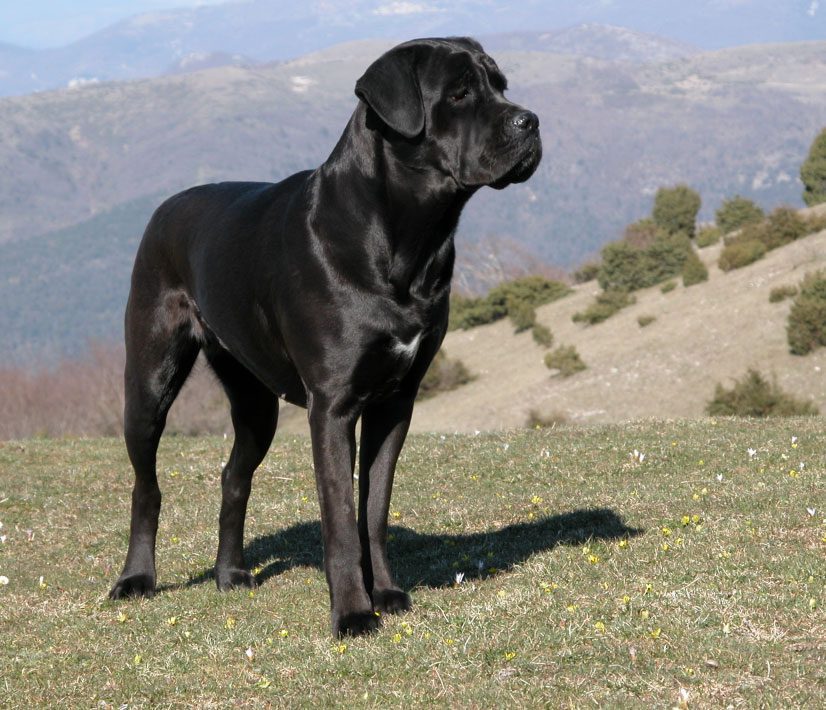
Caucasian Shepherd Dog
Rusia FCI 328 Molossoid . Mountain

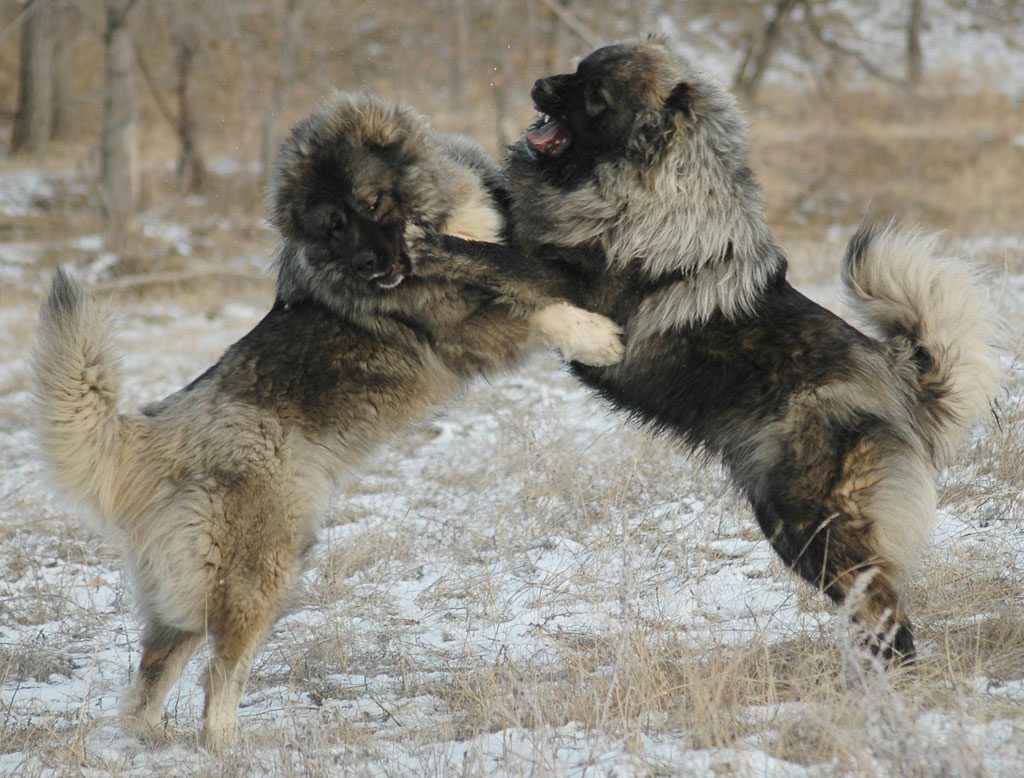
The Caucasian Shepherd Dog It is a healthy animal and stable temperament.

Pastor del Cรกucaso

Content

Characteristics "Caucasian Shepherd Dog"

Coexistence is important that you have with your new friend. Before considering the acquisition of a dog of the breed "Caucasian Shepherd Dog" you know certain factors. Not all breeds of dogs are apt to live in an apartment, you must take into account his character, their need for exercise, their interaction with other pets, their care and if you have small children, their level of tolerance towards them.

Adaptation โ“˜

4,0 of 5 stars (based on 1 review)

friendly dog โ€‹โ€‹โ“˜

2,0 of 5 stars (based on 1 review)

hair loss โ“˜

3,0 of 5 stars (based on 1 review)

Affection level โ“˜

4,0 of 5 stars (based on 1 review)

Need for exercise โ“˜

2,0 of 5 stars (based on 1 review)

Social need โ“˜

2,0 of 5 stars (based on 1 review)

Home โ“˜

2,0 of 5 stars (based on 1 review)

Toilet โ“˜

2,0 of 5 stars (based on 1 review)

Friendly with strangers โ“˜

2,0 of 5 stars (based on 1 review)

barking โ“˜

3,0 of 5 stars (based on 1 review)

Health โ“˜

2,0 of 5 stars (based on 1 review)

Territorial โ“˜

5,0 of 5 stars (based on 1 review)

Cat friendly โ“˜

3,0 of 5 stars (based on 1 review)

Intelligence โ“˜

3,0 of 5 stars (based on 1 review)

Versatility โ“˜

2,0 of 5 stars (based on 1 review)

Child friendly โ“˜

3,0 of 5 stars (based on 1 review)

Surveillance โ“˜

3,0 of 5 stars (based on 1 review)

joy โ“˜

5,0 of 5 stars (based on 1 review)

History ยซShepherd of the Caucasusยป

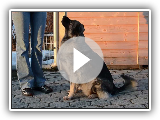
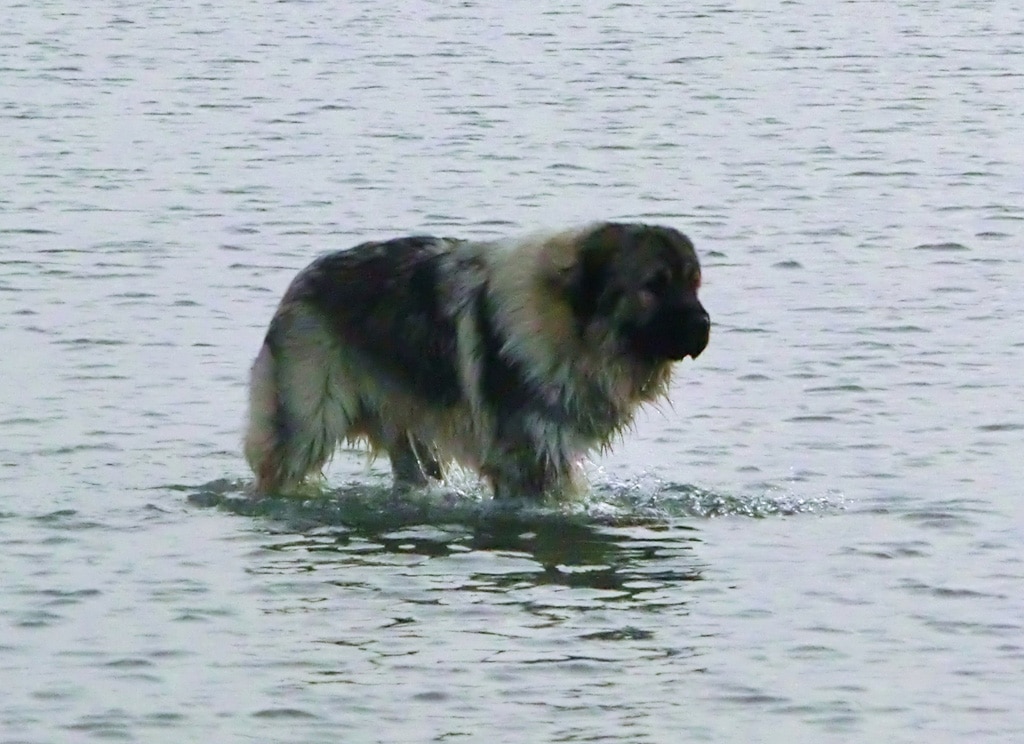
One Caucasian Shepherd Dog it is a large and very strong sheepdog that is very widespread in Russia. In the official standard it is called Kavkazskaya ovฤarka. The Caucasian Shepherd Dog they spread over a huge area, which includes the territory of Russia as well as the former Soviet Union. Only in the polar areas you can hardly see. In his homeland., theCaucasian Shepherd Dog are, therefore, quite different in detail and different types have been developed. In the steppe areas this breed is lighter and taller, in mountainous regions heavier and more compact. But in type and character it is the same everywhere. This is the result of your work task, which was and is the only criterion for breeding there for many centuries. At the end, the same requirements resulted in the same dogs. Their tasks are to herd and protect the herds, monitor and protect property and its people. They are archaic dogs, they probably came into existence in this form with the introduction of animal husbandry in the first place, and that was a few 10.000 years.

You can't fool a Caucasian Shepherd Dog. Has a clear understanding of their role. Typically, lies down in a high place next to his flock, to be able to observe everything around him. Her flock, their shepherds, his family and his properties are sacred to him. He is faithful and lovingly devoted to them. He is suspicious of everything else and does not hesitate to attack any sign that he interprets as hostile. It is extremely defensive and fearlessly opposes even wolves and bears. In this way it has protected the herds of cattle and the lonely properties of the shepherds, farmers, hostels, artisans and merchants from time immemorial. This extremely useful feature, even necessary for the functioning of such a society in the vast and lonely country, does not fit into today's tight and hectic society. There is hardly a piece of land large enough to provide the dog with Caucasian Shepherd Dog a workspace. He is used to other scales of the vastness of Russia.

It also, the zeitgeist in today's world demonizes all forms of aggression emanating from a dog. While it only takes one or two generations, larger property owners were proud that their dog was reliable and, in case of emergency, acute, I would fearlessly chase away a thief, such a feature is potentially life-threatening for today's dog. It runs the risk of being classified as a "dangerous dog" and in extreme cases, euthanasia. This is not an environment for a Caucasian Shepherd Dog. And so you can find it almost everywhere on the lists of supposedly dangerous dogs. It is an archetype of dog to which man owes a lot in his development. As a dog breed it has been described for a long time and in the oldest specialized books on dogs. But, in modern pedigree dog breeding, it was only officially recognized by the FCI in August 1984.

Physical characteristics ยซCaucasian Shepherdยป

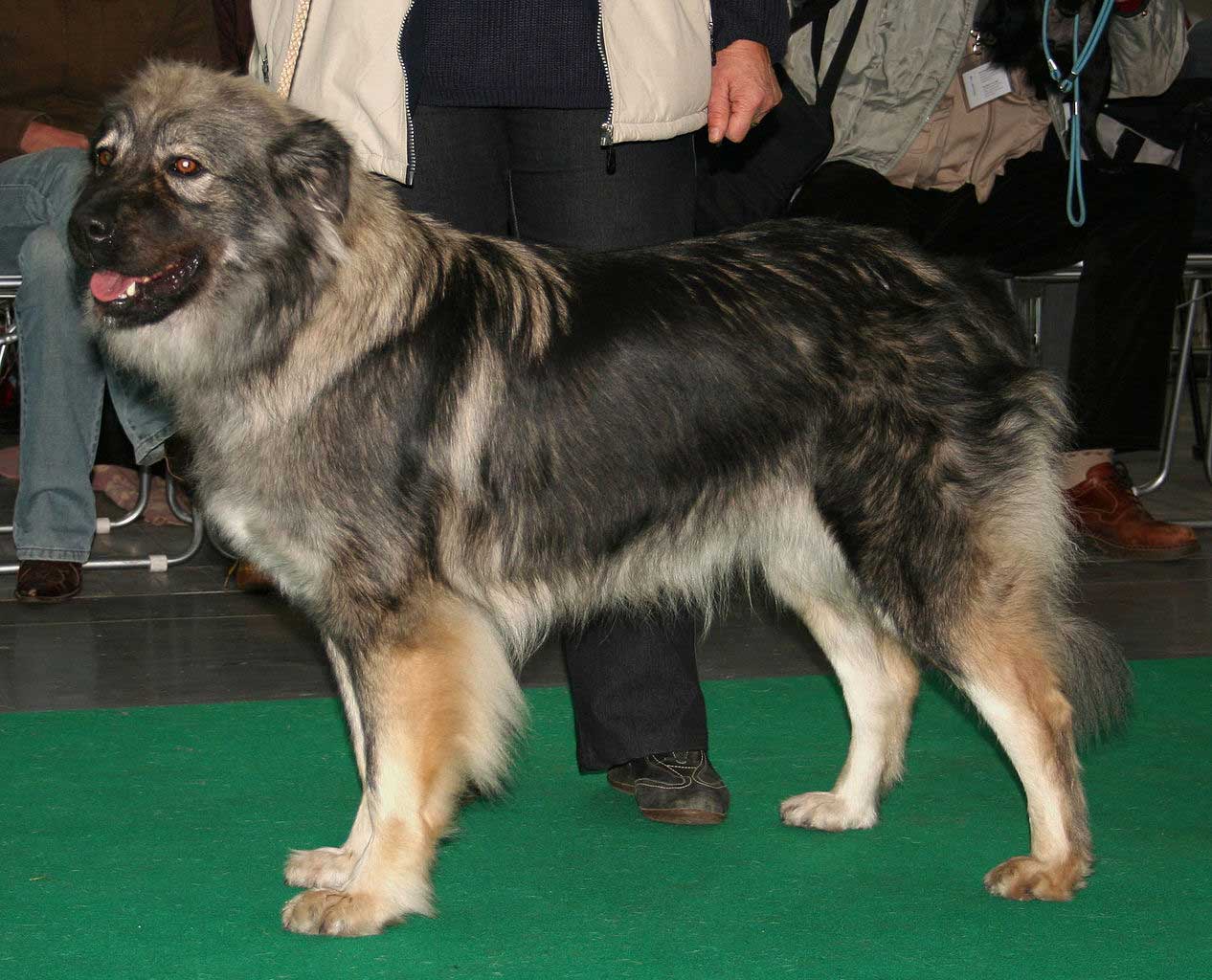
The Caucasian Shepherd Dog is a dog of harmonious structure, big and strong with plenty of bone and a powerful muscular system and a somewhat rectangular format. Well pronounced sexual dimorphism.
Males are masculine with a well-developed cross and a larger head compared to that of females. This is why they are more massive, bigger and sometimes their body is shorter than that of the females.
In dogs with a longer coat variety, the male has a distinguished mane.

Size and weight:

Height to the cross:

  • Males: Desired height 72 โ€“ 75 cm.. Minimum 68 cm..
  • females: Desired height 67 โ€“ 70 cm.. Minimum 64 cm..

Higher heights are accepted as long as the conformation is harmonic.

Weight:

  • Males: Minimum 50 Kg
  • females: Minimum 45 Kg.

Character and skills ยซCaucasian Shepherdยป

The Caucasian Shepherd Dog is a guardian and protector. The official standard classifies your character qualities unequivocally: "It must be strong, balanced and calm with a well-developed defensive reaction, which is actively expressed. Sharpness and distrust of strangers are typical.". And Caucasian Shepherd Dog is generally incompatible with other dogs! These traits, especially with a big and very strong dog that claims a large territory, are hardly compatible with the social conditions of today's world. It is a great experience to be able to form a close bond with a dog like this.. This also allows you to experience a completely different side of the dog than Caucasian Shepherd Dog, that of an extremely loving friend, loyal and affectionate. But, if one does not have the space and financial means to offer them in our latitudes an environment appropriate to their nature, this will hardly be possible.

Fitness

The Caucasian Shepherd Dog he is extremely undemanding in his attitude, if the general conditions already mentioned are ignored. One Caucasian Shepherd Dog does not need heating, toys or a harness on a leash. This breed is undemanding in its nutrition. That also applies to your accommodation.. You can spend the whole year outside without problems, if you want to spend the whole year abroad – as long as there is a suitable place to hide and "adequate" here definitely means neither a kennel nor even a chain.. Must be able to move in your territory. One Caucasian Shepherd Dog you accept, it even sensitively protects all the two- and four-legged friends it sees as belonging to its pack or family. But you need a clear boss. At first he is suspicious or even hostile towards everyone else.

Close relationship and competent guidance is required to walk on this dog's leash., which is definitely always stronger, and then be able to seamlessly move on to an aggressively barking terrier. it's possible, but it requires serious upbringing, a good socialization and an experienced teacher or lover, competent and very sensitive and at the same time thorough. The Caucasian Shepherd Dog is widely on the dangerous dog lists. It is forbidden to travel to the Netherlands or Denmark, since there is a risk that the dog will be confiscated on the streets and euthanized. One Caucasian Shepherd Dog not much of a beginner dog. That would even be irresponsible. Even from the hand of an experienced connoisseur, it requires in any case the basic external conditions for an attitude appropriate to its nature.

Education ยซCaucasian Shepherdยป

Raising a Caucasian Shepherd Dog in today's social conditions it is a very special challenge, only proven experts can master with the right framework conditions.

Care and health ยซCaucasian Shepherdยป

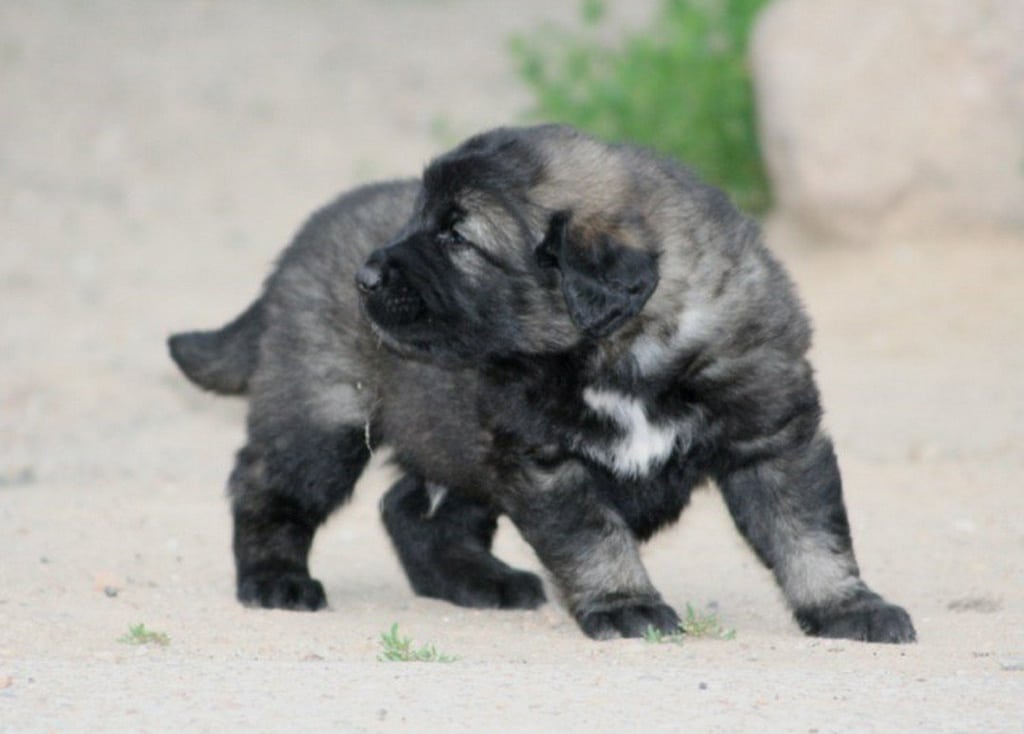
The Caucasian Shepherd Dog it has a double layer composed of a bottom layer and a top layer. The inner layer is soft and fine, while the outer coat hairs are long and thick. (The coat of a Caucasian Shepherd Dog It should never feel smooth or appear wavy.) Regarding the length, the coat can be long, medium or short. Dogs with long fur have a mane that surrounds their necks, as well as extensive plumage on the hind legs and tail, that looks thick and fluffy. Dogs with medium length fur do not have as much mane, and they have fewer feathers on the rest of the body. A short coat, the least common type, has no mane or fringe. Twice a year, when you change your coat, you have to brush it well.

Dogs of this breed enjoy very robust health.

Nutrition / Food

The Caucasian Shepherd Dog does not demand anything from your diet. Probably one of the dogs with less demands in this regard.

The life expectancy of the โ€œCaucasian Shepherdโ€

In relation to its size, a Caucasian Shepherd Dog has a very high life expectancy of 12 and sometimes more years.

Buy a โ€œCaucasian Shepherdโ€

The purchase of a Caucasian Shepherd Dog it should only be considered by experts who know exactly what they do, who have the appropriate experience and who have the appropriate rearing conditions. The puppies of this breed of dog cost around 1.000 EUR.

Images ยซCaucasian Shepherdยป

ยซCaucasian Shepherdยป Videos

Type and recognitions:

  • FCI CLASSIFICATION:
  • Group :
  • Section : . .

Federations:

  • FCI – Pinscher and Schnauzer-Molossoid type dogs – Swiss Mountain Dogs and Cattledogs. Section 2.2 Molossoid, mountain type. โ“˜
  • AKC – FSS (Foundation Stock Service) โ“˜
  • UKC – Watchdog โ“˜

FCI breed standard "Caucasian Shepherd Dog"

Origin:
Russia, Armenia, Georgia, Azerbaijan

Date of publication of the valid original standard:
13.10.2010

Use:

Guard and surveillance dog.


General appearance:

The โ€œCaucasian Shepherdโ€ Dog is a dog with a harmonious structure, big and strong with plenty of bone and a powerful muscular system and a somewhat rectangular format. Well pronounced sexual dimorphism. Males are masculine with a well-developed cross and a larger head compared to that of females. This is why they are more massive, bigger and sometimes their body is shorter than that of the females.

In dogs with a longer coat variety, the male has a distinguished mane.


Behavior / temperament:

The behavior is firm, Active, self-confident, courageously and independently. The โ€œCaucasian Shepherdโ€ Dog shows affection and devotion towards its master, he is an excellent guard dog.

PROPIMPORTANT ORTIONS:

  • Body length exceeds height at withers 3 โ€“ 8%.
  • The length of the forelimbs averages the 50 โ€“ 52% the height at the withers.
  • The length of the skull and the length of the muzzle is 3:2

Head:

---

Cranial region:

The head is big, solid and broad in the cheekbones. View from the top, the head is wedge-shaped with a wide base.

  • Craging: Solid and wide, rather flat antecara with a marked but not deep fold. Superciliary arches developed but not protruding. Barely visible occipital bone.
  • Dnaso-frontal depression (Stop): Noticeable but not clearly marked.

facial region:

  • Trufa: black, large with wide open nostrils without protruding from the outer lines of the snout. A black truffle in solid colors, spotted and peeping is desirable but not mandatory (but genetic blue or liver brown truffles are not allowed)
  • Horcico: Wide and deep tapering gradually towards the nose with strong jaws and chin. Great depth and well-filled under the eyes. The nasal bridge is wide. The upper line of the snout and skull run parallel.
  • Labios: Thick, tight and well pigmented.
  • Jaws / Teeth: Teeth must be healthy, white and strong; incisors together with each other in a line. Complete bite in scissors or forceps (42 teeth). Incisors or injured canines, broken or broken that do not affect the bite are not significant or the absence of PM1.
  • Cheeks: Well developed and highlighted by good chewing muscles.
  • Ojors: Moderate size, Oval shaped, not too deep, placed separate and oblique. Color is in different shades of brown, from dark to hazelnut. Black eyelids, dry, tight. Serious expression, attentive and inquisitive.
  • Obars: Moderate size, thick, Triangular shape, naturally hang, placed high and separate. Traditionally amputated in their country of origin. Natural ears are of equal value.

Neck:

Long Middle, strong, low insertion, transversely rounded. Crest pronounced especially in males.

Body:

Very well developed in all its dimensions, width, good musculature and well balanced.

  • Cruz: Well pronounced, moderately long. Height at withers slightly exceeds height at rump.
  • Dorrso: Straight, width, firm.
  • Itmor: Short, width, slightly arched.
  • Glikeness: Moderately long, wide, rounded, slightly inclined towards the base of the tail.
  • Pecho: Long, width, good ribs, in general deep as well as in its anterior part. Transversally has a broad oval shape. Well arched ribs, false long rib. Antepecho marked.
  • Lรญnlower ea and belly: Abdomen moderately retracted posteriorly.

Tail:

High insertion, curved sickle or curled. At rest it hangs up to the height of the hock; when the dog is alert the tail can be carried over the top line.

Tips

PREVIOUS MEMBERS:

  • ApGeneral arience: Good musculature. Seen from the front, straight and parallel members placed slightly apart.
  • Hormbros: Strong musculature. Moderately long, widths,
  • inclined to form an angle of approximately 100 degrees with the forearm. The scapula well next to the chest.
  • Antarm: Strong and muscular, well together.
  • Elbows: Set well back, parallel to the axis, without turning inward or outward.
  • Brazo: Straight, solid, moderately long, good musculature, transversely round.
  • Metacarpus: Short, solid, always straight viewed from the front and sides.
  • Pinis previous: Large, Round shape, well arched, well closed.

LATER MEMBERS:

  • ApGeneral arience: Seen from behind, rights, parallel and moderately spaced. Knees and hocks well enough angled when viewed from the side. The back should not be placed too far back.
  • Thigh: Width, good musculature, moderately long.
  • Rodinllto: Well angled enough.
  • PinScheme: Wide, good musculature, moderately long.
  • Hock joint: Ancha and inclined, well angled enough, firm, without leaning neither in nor out.
  • Metatarsus: Not too long, solid, always straight seen from the front or side.
  • Pinis later: Large, Round shape, well arched, well closed.

Movement:

Libre, elastic, without rushing with good thrust from the rear. Good stability in all joints and good coordination. Trotting tends to be the typical movement. The withers are at the same level as the rump and the dorsal line is relatively stable.

Mantle

PIEL: Thick, sufficiently elastic without creases or wrinkles.

  • Plink: straight, rough, separated with a well developed undercoat. The length of the outer coat as well as the undercoat should not be less than 5 cm.. The hair of the head and forelimbs is shorter and thicker. The tail is completely covered with bushy hair giving the appearance of thick and very hairy. The long outer hair forms โ€œbrushesโ€ over the ears, a โ€œmaneโ€ around the neck and โ€œpantsโ€ on the back of the thigh.
  • Colorr: Any solid color, piebald or spotted. Except for solid blacks; dilute black or black in any combination or genetic blue or liver brown.


Size and weight:

Alturto the cross:

  • Males: Desired height 72 โ€“ 75 cm.. Minimum 68 cm..
  • females: Desired height 67 โ€“ 70 cm.. Minimum 64 cm..

Higher heights are accepted as long as the conformation is harmonic.

Weight:

  • Males: Minimum 50 Kg
  • females: Minimum 45 Kg.


Fouls:

Any deviation from the aforementioned criteria is considered as a fault and the severity of this is considered to the degree of the deviation to the standard and its consequences on the health and well-being of the dog..

FALTAS GRAVES:

  • Structure too light or too rough.
  • Diffidence.
  • Deviations of sexual dimorphism.
  • Small head in proportion to the body, light, close, long, Tosca, brick or apple shaped head.
  • Abrupt stop.
  • Snout: sunken, concave or pointed.
  • Too small teeth, very separate, incisors not placed in a line, any deviation from the dental formula (except the absence of PM1)
  • Cheek bones not marked enough.
  • Big eyes, protruding, very clear, showing the third eyelid, drooping eyelids.
  • big ears, fine or very low insertion.
  • Steep or sunken top line, long, sunken or arched back, rump higher than the cross.
  • Square body, very rough, very long, narrow both front and back, extremities too long, very short chest, flat or sunken, short or steep rump.
  • Stump tail.
  • Bones, weak muscles and ligaments.
  • Absence of the correct angulations.
  • Forelimbs curved
  • Unbalanced movement.
  • Lack of thrust from the rear.
  • Too soft hair, curly, very short outer hair and no undercoat.

FALTAS DISQUALIFYING:

  • Aggressiveness or extreme shyness.
  • Any dog โ€‹โ€‹showing clear signs of physical or behavioral abnormalities must be disqualified..
  • Any deviation from the required bite.
  • Incomplete dental formula (absence of any teeth except third molars (M3) or first premolars
  • Entropion
  • Eyes gazeos, dark blue, green shading or different colored eyes.
  • amputated tail.
  • Constant hobbling or inability to achieve movement.
  • Black color in any variation, solid, diluted, cheep, spotted the like robe (except the mask).
  • Genetic blue in any variation or shade.
  • Truffle, bluish-gray pigmented lips and eyelids.
  • Genetic brown in all variations or shades.
  • Truffle, genetic brown lips and eyelids.
  • Fire colored markings on black dogs, blue or brown.
  • Height below minimum.
  • Severe deviations of sexual dimorphism in males.


N.B.:
  • Males should have two normal-appearing testicles fully descended into the scrotum..
  • Only functionally and clinically healthy dogs, with the typical conformation of the breed, should be used for parenting.

Itlatest changes are in bold.

TRANSLATION: Brรญgida Nestler / Original version: (IN)

Technical supervision: Miguel Angel Martinez.

Source: F.C.I - International Cynological Federation

Alternative names:

1. Nagazi, Caucasian Mountain Dog, Caucasian Ovcharka (English).
2. kavkazskaรฏa ovtcharka (French).
3. Kaukasischer Owtscharka, Kawkasskaja Owtscharka (German).
4. mastim-do-cรกucaso, Pastor-caucasiano, Ovcharka caucasiano, Mastim do cรกucaso, Cรฃo montanhรชs caucasiano, Cรฃo-urso-russo (Portuguese).
5. Pastor caucรกsico, Mastรญn del Cรกucaso, Perro de montaรฑa del Cรกucaso, Perro Pastor caucรกsico (espaรฑol).

โ–ท The world of Pets: Dogs, cats, birds, reptiles, amphibians

Karst Shepherd
Eslovenia FCI 278 - Molossoid . Mountain

Karst Shepherd

The Karst Shepherd a typical guard dog. Acts largely independently, which is also essential for the protection of the herd.

Content

History

The Karst Shepherd It is a breed that has existed for several centuries and belongs to the group of molosoids. Probably, This dog followed the Illyrian tribe in their migration through Styria and the Dalmatian islands and settled in the Slovenian region of the Karst Massif.. The first time that race is referred to in writing is in 1689, in the book of Baron Janez Vajkart Valvasor entitled ยซ The glory of the duchy of Carniole ยป. The breed and its standard were officially recognized on 2 in June of 1939 with the name of " Iliria Shepherd ยป during the general assembly of the F.C.I. in stockholm. During the F.C.I general assembly. in Bled-Slovenia in 1948, the standard was completed and the breed recognized again. But, to 16 in March of 1968, the Iliria Shepherd from the Karst massif, bore the same name as the Shepherd of the Sarplanina massif. In front of two shepherd dogs with the same name, the Yugoslav Central Society decided to name the one from the Karst region "Shepherd of the Karst Massif" and the other " Sarplaninac ยป. Since then, these two races are totally independent.

Physical characteristics

Externally, the Karst Shepherd they are hardly distinguishable from those of Yugoslavian Shepherd Dog Sharplanina. They are on average slightly smaller than their relatives who live further south, but the height at the withers accepted for breeding is the same for both breeds.

It is a dog's size medium, harmoniously built, robust, with well-developed muscles and a strong constitution.

The head is big, with powerful teeth. The eyes are almendrados, brown or almost black. The ears are set moderately high and fall flat in a "V" shape.. The tail, wide at the base, takes the form of a saber, drawing a light hook with the tip should reach the hock.
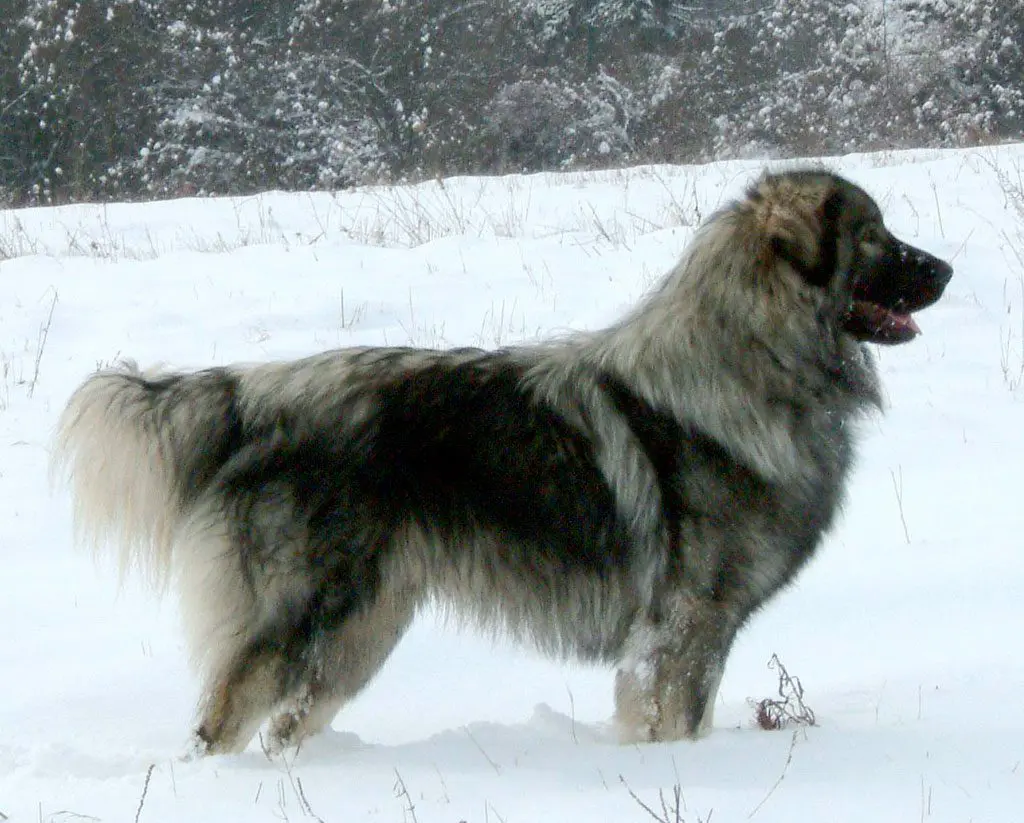
Fur: quite long, reaches the 14 cm.; the undercoat is well developed.

  • Color: grey iron. A dark shade is preferable on the cross; towards the abdomen and feet the color changes without visible transition to light gray or even sand color, with a dark gray band across the lower extremities. The dark mask on the head surrounded by beige gray hair.
  • Size: males, of 57 to 63 cm. (ideal 60 cm.); females, of 54 to 60 cm. (ideal 57 cm.).

Character and skills

The Karst Shepherd he is a typical watchdog. Acts largely independently, which is also essential for the protection of the herd. It is very territorial, brave and vigilant, but without biting. He is distrustful and even hostile to strangers, but a loyal and devoted companion of his master and his family.

The born Guardian needs early and careful socialization and loving but consistent education. He only submits to clear leadership.
Like all guard dogs, the Karst Shepherd is late development, reaches mental maturity only at 3-4 years.

He loves country life and being outdoors. Its ideal habitat is a house with a large parcel of land that it can monitor. With a close family relationship and a task that fits your natural waking instinct. The Karst Shepherd he is a nice companion dog, kind and also obedient, but he will never completely detach himself from his strong independence.

Overall Karst Shepherd It:

  • Incorruptible guard in the house
  • Does not get along with other dogs.
  • Patient, but still affectionate
  • Forgiving with children

Karst Shepherd Education and Maintenance

Only conditionally suitable for the city.
Outside the mountainous regions of Slovenia, these dogs are very rarely found. This is because, on the one hand, to his great need to move and, on the other hand, to the high demands of their education. The Karst Shepherd are more individual than other sheepdog breeds, as they are often left to their own devices in their โ€œnatural habitatโ€ and protect flocks independently. An experienced owner with a lot of patience and a sense of mind for your dog will have little trouble educating his Karst Shepherd towards an obedient and calm companion.

Karst Shepherd Health

The Karst Shepherd it's quite healthy for a sheepdog, but suffers from some typical problems of the breed. On average, they reach an age of 10 to 12 years and therefore become significantly older than most German shepherds. The Karst Shepherd, living in a family environment, they are less susceptible to disease than animals that have to sleep in kennels and are permanently exposed to the weather. Boredom is also a stressor and affects the mind and health of dogs..

Its claws must be shortened regularly.
They have sensitive ears that swell quickly.
Very long-growing dogs suffer more often from so-called dachshund paralysis (intervertebral disc disorders).
Dysplasia of the elbow and hip joints are also more common in these dogs..

Buy a Karst Shepherd

Several breeders of the Karst Shepherd they are members of the Dog Club of Southern and Eastern Europe.
Some Slovenian breeders offer their dogs for export.
Pay attention to good breeding conditions!!
Like the Karst Shepherd they are very rare outside of Slovenia, you will hardly be able to visit the breeder before buying. If you have the possibility, Combine buying a puppy with a multi-week vacation in Slovenia. If your puppy already knows you, you will feel much less stress during the transfer and during the first adaptation phase. You can also check the conservation conditions during a visit to the breeder.

Characteristics "Karst Shepherd"

Coexistence is important that you have with your new friend. Before considering the acquisition of a dog of the breed "Karst Shepherd" you know certain factors. Not all breeds of dogs are apt to live in an apartment, you must take into account his character, their need for exercise, their interaction with other pets, their care and if you have small children, their level of tolerance towards them.

Adaptation โ“˜

3,0 of 5 stars (based on 1 review)

friendly dog โ€‹โ€‹โ“˜

3,0 of 5 stars (based on 1 review)

hair loss โ“˜

3,0 of 5 stars (based on 1 review)

Affection level โ“˜

4,0 of 5 stars (based on 1 review)

Need for exercise โ“˜

4,0 of 5 stars (based on 1 review)

Social need โ“˜

2,0 of 5 stars (based on 1 review)

Home โ“˜

3,0 of 5 stars (based on 1 review)

Toilet โ“˜

2,0 of 5 stars (based on 1 review)

Friendly with strangers โ“˜

3,0 of 5 stars (based on 1 review)

barking โ“˜

2,0 of 5 stars (based on 1 review)

Health โ“˜

4,0 of 5 stars (based on 1 review)

Territorial โ“˜

5,0 of 5 stars (based on 1 review)

Cat friendly โ“˜

3,0 of 5 stars (based on 1 review)

Intelligence โ“˜

4,0 of 5 stars (based on 1 review)

Versatility โ“˜

3,0 of 5 stars (based on 1 review)

Child friendly โ“˜

4,0 of 5 stars (based on 1 review)

Surveillance โ“˜

5,0 of 5 stars (based on 1 review)

joy โ“˜

4,0 of 5 stars (based on 1 review)

Images "Karst Shepherd"

Photos:

1 – Owczarek_kraski en el World Dog Show en Poznan by Wikipedia
2 – Owczarek_kraski en el World Dog Show en Poznan by Pleple2000 / CC BY-SA
3 – Owczarek_kraski en el World Dog Show en Poznan by Pleple2000 / CC BY-SA
4 – Owczarek_kraski en el World Dog Show en Poznan by Wikipedia
5 – Owczarek_kraski en el World Dog Show en Poznan by Pleple2000 / CC BY-SA

Videos "Karst Shepherd"

Type and recognitions:

  • FCI CLASSIFICATION:
  • Group :
  • Section : . .

Federations:

  • FCI – Pinscher and Schnauzer-Molossoid type dogs – Swiss Mountain Dogs and Cattledogs. Section 2.2 Molossoid, mountain type. โ“˜
  • UKC – Watchdog โ“˜

FCI breed standard "Karst Shepherd"

Origin:
Slovenia

Date of publication of the valid original standard:
26.06.2000

Use:

The Shepherd of the Karst massif is a shepherd dog par excellence and a good guardian. In the news, increasingly used as a guard and defense dog. Although it is true that in recent times it is mainly a family dog, It does not stop being, in essence, a perfect shepherd dog.


General appearance:

This is a medium-sized dog, harmonious, robust, endowed with well-developed muscles and a strong constitution. The tail and ears are droopy. The hair, steel gray, it is long and abundant.

IMPORTANT PROPORTIONS:

  • Trunk length: height at the withers = 9 : 8 at least. A little longer in females.
  • Skull a little longer (13 to 14 cm.) that the muzzle (11 to 12 cm.).
  • Skull width (13 to 14 cm.) equal to its length.


Behavior / temperament:

Of good character, is brave and courageous without being too aggressive. It is dedicated to its master and moderately energetic temperament. Good incorruptible guardian, be wary of strangers. He is a pleasant and obedient companion dog., although it always retains a strong individuality.

Head:

Nice looking, although proportionally large relative to the body; it should not be fine, in tosca. The upper profiles of the skull and nasal canal are slightly convergent.. View from the top, it is wide in the region of the ears and decreases towards the region of the nose. Profile view, it is tall and rounded. Head length, from the occipital protuberance to the tip of the nose, is of 24 to 26 cm.. The skull is slightly longer than the muzzle.

Cranial region:
  • Skull: Pretty developed, muscular, delgado. Since its profile is slightly convex, seen from all sides it is rounded. The amplitude of the skull in the region of the ears is equal to its length. Zygomatic arcades are not accented, the front groove is moderate, the median ridge is slightly convex, without accentuating the occiput.
  • Depression links (Stop): It is a little marked, no sharp transition.

facial region:

  • Truffle: Black. Wide, well developed, slightly exceeds the front line.
  • Snout: Medium length. Width and height at its base, progressively decreases towards the nose area. The nasal helm is straight and wide.
  • Lips: They are thick, stretched, tight, without forming bags. They are black.
  • Jaws / Teeth: Teething is complete. Teeth are strong, especially the incisors. The bite is scissor-shaped.
  • Cheeks: laterally, they are somewhat bulky; they are plump, but not too developed, molding a fairly flat face.
  • Eyes: They are presented a little apart, no bumps, nor sunk in the orbits. Almond shaped. Its color ranges from light brown to dark brown. They are frank in expression, calm and firm, almost melancholic, because of the black color of the eyelids.
  • Ears: Moderately high implantation, its length is medium and its extremity extends to the outer corner of the eye. They fall along the cheeks in a "V" shape and the front edges are folded outwards..

Neck:

Width, thick, good muscular, oval cross section. The upper profile is rectilinear or slightly arched; the lower profile is rectilinear. Medium length (a few 25 cm.), it is deeply embedded between the shoulders and attached to the head by strong musculature. The skin is thick, well attached to the body, no dewlap. The coat is abundant with long hairs that form a very thick collar and mane, which makes the neck look beefier and shorter than it actually is. The bearing is haughty and slightly raised.

Body:

  • General appearance: It is well developed, medium length. The thoracic cavity is long.
  • top line: It is straight, horizontal or slightly oblique.
  • Cross: Long, not very high, of adequate width and well applied to the body.
  • Back: Straight, muscular and broad. Medium length.
  • Pork loin: The lumbar region is a little short, very muscular and broad. Rump: Medium length, broad and well muscled. The tail is slightly inclined at the birth.
  • Breast : It is well developed, bulky in length and breadth; the ribs are wide, flat and moderately arched. The front of the chest is well developed and the tip of the sternum is quite rounded. With a length of 25 to 28 cm., its circumference is 70 to 78 cm..
  • Bottom line and belly: The belly is slightly raised and tucked up, hard. The flanks are short, moderately shortened.

Tail:

It is solidly attached to the body; it is wide at its base. In its normal position, it is shaped like a saber and the extremity often traces a light hook. Medium length, must reach at least to the hock. It has abundant fur, with long hairs, but without forming a plume. When the dog is alert or on the move, the tail rises to or slightly above the back region. When the dog is at rest, the tail comes down.

Tips

PREVIOUS MEMBERS:

  • General appearance: They are straight when viewed from the front or in profile. In all its parts they unite very harmoniously with each other.
  • Shoulder: The shoulder blade is of medium length, width, oblique, well muscled and firmly attached to the body. The scapular angle- humeral is close to the right angle.
  • Arms: Relatively long, more oblique than the shoulder blade, endowed with strong musculature. They are well applied to the body.
  • Elbows: The humeral-radial angle is not very open. Well applied to the body, the elbows must be at least at the level of the sternum.
  • forearms: Of adequate length, straight. Bones and muscles are strong.
  • Carpi: Strong, well applied to the forearm as well as the metacarpus. Metacarpus: Widths, medium length, slightly oblique.
  • Previous feet: Of well proportioned dimensions to the trunk, its shape goes from oval to round. Fingers are well together and arched, nails are darkly pigmented. Central bearing and digital tubers are strong, black or darkly pigmented.

LATER MEMBERS:

  • General appearance: From behind, they are well proportioned and harmonize with the other parts of the body. Profile views, the angulations are closed enough.
  • Thighs: In the coxofemoral angle it is closed; thighs are long, widths, well muscled and solid.
  • Knee: Femoro-tibial angle slightly open, shapely knees. The kneecap is solid.
  • Legs: They are moderately long, inclined, robust. Hocks: Solid and moderately open.
  • Metatarsals: Massifs, short and straight. In the event that spurs appear, these must be removed.
  • Hind feet: With the same characteristics as the front feet.

Movement:

Harmonious, elastic, well coordinated steps. The favorite and most elegant movement is the trot. Galloping with long strides is less elegant

Mantle

SKIN: It's thick, compact, elastic, adheres well to the body and has no wrinkles; dark pigmentation; black pigmented lip and eyelid edge.

  • Fur: Well bushy, long, smooth; the inner layer of hairs is abundant. The head, the front edge of the ears and the front of the limbs are covered by short hair. The back edge of the ears features longer, softer hair. The upper part of the neck is covered by long hair, stretched and abundant that forms a mane. On the bottom, the hair is longer and softer, forming a collar that widens in the ligament of the neck. The trunk and belly have longer hair that becomes less hard on the belly. The tail, is usually bushy, but it doesn't form a plume. On the posterior aspect of the forelimbs, long soft hair forms bangs. On the posterior aspect of the posterior extremities, The hair is still long and thick and forms pants.. The length of the outer layer of hairs is about 10 cm..
  • Color: Steel gray. Especially on the cross, a dark shade is preferred. Towards the belly and feet region, color changes without visible transition to light gray or sand color, with dark gray specks on the front of the limbs. The dark mask of the head is surrounded by light brown-gray hair.


Size and weight:

Height to the cross:

  • In males, is of 57 to 63 (ideal size, 60 cm.),
  • In females, is of 54 to 60 cm. (ideal size, 57 cm.).
  • A tolerance of 2 cm others, but this will have a negative effect on the overall appreciation of the dog.

Weight: In the males of 30 to 42 kg, In the females of 25 to 37 kg.


Fouls:

Any deviation from the aforementioned criteria is considered as a fault and the severity of this is considered to the degree of the deviation to the standard and its consequences on the health and well-being of the dog..

MINOR FAULTS

  • Small flaws in the general constitution.
  • Somewhat small head, close, long or not high enough.
  • Indefinite naso-frontal depression.
  • Pronounced zygomatic arches.
  • Too plump or too plump cheeks.
  • Underdeveloped jaws.
  • Loose lips.
  • Very high or very low implantation ears; not close enough to the cheeks.
  • Eyes too wide, too clear, little apart.
  • Chin presence.
  • Slightly sunken back, slightly protruding or drooping rump.
  • Narrow chest, low tilt or barrel-shaped.
  • Narrow chest.
  • Tail too short.
  • Slightly defective limbs, fingers apart, hare foot.
  • Wrinkled or lightly pigmented skin. Absence of wrinkles on the forehead.
  • Insufficient pigmentation of the lip edge, of the eyelids and nose.
  • Hair that is not long enough.
  • Small white mark on the front of the chest, absence of mask.

SERIOUS FAULTS:

  • Serious offenses in the general constitution.
  • Square body silhouette.
  • Narrow head, too light or too coarse.
  • Very marked nasal-frontal depression.
  • Snout very pointed or very long.
  • Teeth: pincer bite, irregular alignment of incisors, lower canines that appear in front of the upper canines.
  • Clear eye.
  • erect ears.
  • Sunken back, rump visibly very raised.
  • Corkscrew or twisted tail.
  • The hind limbs are visibly separated when the dog walks.
  • Clumsy movement, especially in the hind limbs.
  • Soft and wavy hair.
  • Clear pigmentation of the mucosa, of the nose, and of the eyelids. White spot on the front of the greater chest of 2 cm wide and 10 cm length.

FALTAS DESCALIFICANTES:

  • Aggressiveness or extreme shyness.
  • Any dog โ€‹โ€‹showing clear signs of physical or behavioral abnormalities must be disqualified..
  • Exaggerated disproportion between different parts of the body.
  • Size below the minimum authorized by the standard.
  • Head too large in relation to the body.
  • Incomplete teeth. Prognathism or enognatismo.
  • Visibly narrow or wide standing position (barrel-shaped).
  • Tail very short or stump.
  • Depigmentation of the mucosa, of the nose or eyelids.
  • Any color other than gray, which must be at least clear. Two-color or multi-colored copies.
  • Well marked boundary between shades of gray. White markings on the chest or on the neck greater than 2 cm wide or 10 cm long.


N.B.:

Males should have two normal-appearing testicles fully descended into the scrotum..

Only functionally and clinically healthy dogs, with the typical conformation of the breed, should be used for parenting.

TRANSLATION: IRIS Carrillo (Federation Canรณfila de Puerto).

Source: F.C.I - International Cynological Federation

Alternative names:

1. KARST SHEPHERD DOG, kraลกki ovฤar, kraลกevec (English).
2. Kraski Ovcar (French).
3. Illyrischer Schรคferhund (German).
4. Pastor da รstria (Portuguese).
5. kraลกki ovฤar (espaรฑol).

โ–ท The world of Pets: Dogs, cats, birds, reptiles, amphibians

Kangal Shepherd Dog
Turquรญa FCI 331 - Molossoid . Mountain

Pastor de Anatolia

The Kangal Shepherd Dog is quiet, bold, independent, Intelligent, docile.

Content

History

The Kangal Shepherd Dog it is a large and very strong guard dog that is widespread in Turkey, especially in Anatolia. The Kangal Shepherd Dog It is officially called the Anatolian Shepherd Dog or in Turkish as Coban Kรถpegi.. The original name is Karabash. But, In the FCI these dogs are known as ยซKangal Shepherd Dogยซ. Because it is the name of an influential noble family from the Turkish province of Shivas, who very early began to breed Karabash professionally.

Dogs called Karabash (Schwarzkopf) they were called now Kangal Shepherd Dog with the name of the family of breeders. El Karabash o Kangal Shepherd Dog is native to the mountainous regions of Turkey. There he guards and protects the flocks of sheep. Does this job completely independently, often separated from people for weeks, and you have to decide on your own authority how to behave with strangers. These large and extremely strong dogs can also defend their flock against bears and wolves. Guarding and protecting property and its people is also one of its tasks.

The frugality and robustness of the breed is legendary, that is maintained even on a poor diet, which often consists only of human agricultural waste. These are archaic animals, that probably arose with the introduction of livestock a few years ago 10.000 years. One Kangal Shepherd Dog can't be fooled, because he has a clear understanding of his role. Typically, he lies down in a high place next to or within his flock to be able to observe everything that is in the surroundings. Her flock, his pastors and his family are sacred to him. So, is faithful and lovingly devoted to them. Suspicion of strangers. So, does not hesitate to attack when interpreting hostile behavior. As a watchdog, has been protecting the herds of cattle and the solitary properties of herders, Anatolian farmers and landowners from time immemorial.

This extremely useful feature, even necessary for the functioning of a life in the wide and lonely country, does not fit into a tight and hectic society of today's Central Europe. There is hardly a piece of land large enough for Kangal Shepherd Dog work. It is used to different standards than in the desert mountains of Anatolia. It also, a watchful race like the Kangal Shepherd Dog is quickly condemned as dangerous and aggressive in today's world. While it only takes one or two generations, larger property owners took pride in their dog being dependable and sharp in an emergency, such a trait is not desirable for today's dog. This is why you can find it almost everywhere on the lists of supposedly dangerous dogs. – and unfortunately too often in animal shelters.

The Kangal Shepherd Dog is an archetype of dog, to which man owes a lot in his development. As a dog breed it has been known, described and even revered for a long time. But, in modern pedigree dog breeding, it was only recognized by the FCI in August 1989.

Physical characteristics

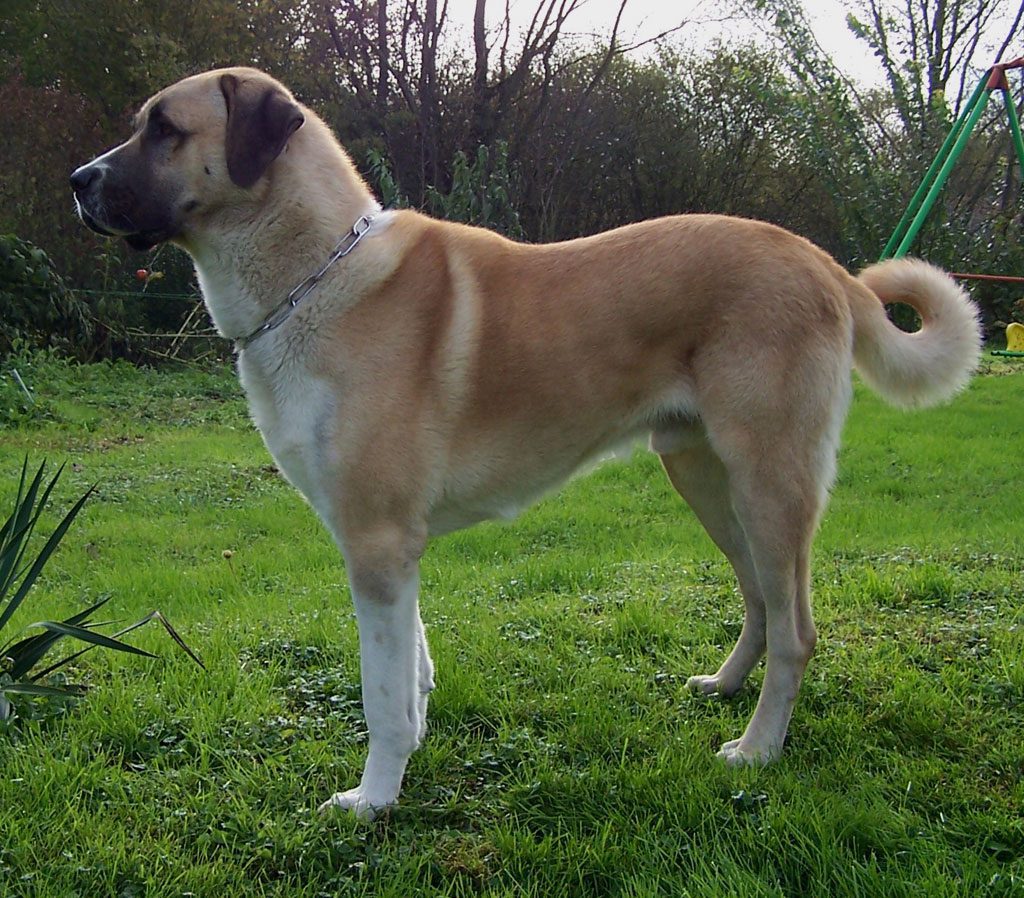
The Kangal Shepherd Dog, is a muscular breed, with a thick, powerful neck, wide head and robust body. His lips are tight in its snout and their ears with triangular and down.

The male measured between 72 โ€“ 78 cm. high and the female between 65 โ€“ 73 cm. and weigh between 44 and 60 kg.

The the mantle It can be several colors but the most common is "sesame", white cream and white with spots of color do not cover more than the 30% your body (type Piebald).

These colors they can be accompanied by a black mask on the face and/or ears. They have a double cloak of eyes hair that needs to be brushed once or twice a month during the warm season due to sweating.

They have a hair very hard on the neck to protect his throat. They seem heavier than you really are, due to his thick neck.

They are large costillares dogs but with small bellies.

Character and skills

The Kangal Shepherd Dog is an independent guardian and protector. The official standard describes his character qualities in this way.:

Balanced and bold, without aggressiveness, independent, very intelligent and leader. Proud and trustworthy. The Kangal Shepherd Dog is affectionate and loyal to his masters, but adult dogs are suspicious of strangers.

Towards other dogs, a Kangal Shepherd Dog is usually dominant and quite incompatible. These traits in a large dog breed, which is very strong and claims a large territory, are hardly compatible with life in today's Germany. It is a great experience to be able to form a close bond with a dog like this.. But, these animals can only develop their excellent qualities of character in their natural environment. Here this great sovereign dog is shown as a loving friend, faithful and affectionate. But, if you do not have the space and financial means to offer in our latitudes an environment appropriate to its nature, it is hardly possible to maintain the species Kangal Shepherd Dog appropriate.

Own Kangal Shepherd Dog is extremely undemanding. Does not need heating, no toys or harnesses on leashes. It is as frugal in its diet as almost no other animal. This also applies to your accommodation.. You can spend the whole year outside without problems, as long as you have a proper enclosure. Here "appropriate" does not mean either a kennel or a chain.. But, you need a very large area, which can become his kingdom. Here a robust enclosure with a solid steel fence of 2 m, because the Kangal Shepherd Dog wants to be able to move freely in its territory.

One Kangal Shepherd Dog you accept, even independently and self-confidently protects all two-legged and four-legged friends, what counts for your herd or family. So, especially needs a clear boss – absolutely! Towards all others, initially suspicious and even hostile. A close bond and an expert guide are required to walk this dog on a leash., which is always stronger when in doubt. Only in this way can the dog and the owner safely walk past an aggressively barking terrier.. it's possible, but it requires serious upbringing, a good socialization and an experienced owner, sensitive and at the same time without any insecurity.

The Kangal Shepherd Dog is increasingly on the lists of supposedly dangerous dogs and is not, from far, a dog for beginners. That would even be irresponsible. Even from the hand of an experienced connoisseur, external basic conditions are necessary for an attitude appropriate to the nature of the dog. In general, maintenance of this breed is quite difficult.

Care and health

The Kangal Shepherd Dog itself is absolutely easy to clean and undemanding. The coat should be brushed twice a year when the coat is changed.

The Kangal Shepherd Dog of serious upbringing enjoys a very robust health in all aspects.

Nutrition

The Kangal Shepherd Dog does not make any special demands on its nutrition. Probably one of the dogs with less demands in this regard.

Kangal Shepherd Dog's life expectancy

Because of its size, the Kangal Shepherd Dog has a very high life expectancy of 12 and sometimes more years.

For sale Kangal Shepherd Dog

You should only consider purchasing a Kangal Shepherd Dog if you are already an expert in dog breeding. Cubs Kangal Shepherd Dog cost around 1000 EUR.

โ€œKangal Shepherdโ€ Images

Videos ยซPastor Kangalยป

Type and recognitions:

  • FCI CLASSIFICATION:
  • Group :
  • Section : . .

Federations:

  • FCI – Pinscher and Schnauzer-Molossoid type dogs – Swiss Mountain Dogs and Cattledogs. Section 2.2 Molossoid, mountain type. โ“˜
  • โ€‹KC – Sheepdogs โ“˜
  • NZKC – Utility dog โ“˜
  • UKC – Watchdog โ“˜

FCI breed standard Kangal Shepherd Dog

FCIFCI - Kangal Shepherd Dog
Pastor

Alternative names:

1. Turkish Kangal, Anatolian Shepherd Dog, Kangal (Anatolian, Anadolu Kangalฤฑ, KarabaลŸ, Karayaka) (English).
2. berger dโ€™Anatolie (French).
3. ร‡oban KรถpeฤŸi, Tรผrkischer Hirtenhund (German).
4. Anatolian shepherd, Anatolian sheepdog (Portuguese).
5. ร‡oban KรถpeฤŸi, KarabaลŸ, AkbaลŸ, Karabash (espaรฑol).

โ–ท The world of Pets: Dogs, cats, birds, reptiles, amphibians

Sharplaninac
Yugoslavia FCI 41 - Molossoid . Mountain

ล arplaninac

The Sharplaninac is a brave dog, quiet, safe and reserved with strangers.

History

The Sharplaninac (ล arplaninac) (pronounced "sharplanรญnatz"), in Macedonian ล arplaninec, in Albanian Qen i Sharrit) is a dog of medium size in the region of the Balkans pastor.

As it is the case with many breeds, the true origins of this big guy are unknown, although there are theories that try to approach them. Some authors raised that their ancestors were the ancient molossians, especially dogs from Greece and livestock guarding dogs from Turkey.

Other authors believe that the ล arplaninac, drift of Asian dogs that arrived in Europe accompanied by migration of peoples who were engaged in raising them. This theory is the most widely accepted today..

The race was initially recognized by the Federation Cynologique Internationale (FCI) in 1939 under the name Illyrian Shepherd Dog, demonstrating the ancient name of the native region of these dogs.

In 1957, at the request of the Yugoslav Canine Federation (JKS), the FCI changed the name to Yugoslav Shepherd Dog-ล arplaninac, because it is in the ล ar Mountains (ล ar Planina in South Slavic languages, is a mountain range located on the southern border of Serbia in the province of Kosovo and in the northwestern part of the Republic of Macedonia), where is concentrated the largest number of specimens of the breed.

If there is something indisputable, it is that the ล arplaninac, lives since ancient times in the mountainous regions of the former Yugoslavia, from where it has spread throughout the Balkan Peninsula and recently, beyond these borders.

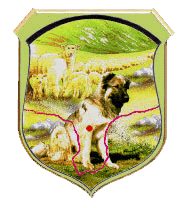
Escudo de DragasThe image of the ล arplaninac appears on the obverse of the coin 1 Denar, issued in the Republic of Macedonia in the year 1993, and is also the emblematic protagonist of the Dragaลก shield, a city in the South of Kosovo, which is located in the region of the ล ar Mountains.

The ล arplaninac has found its way to North American ranches as an esteemed sheepdog and guardian of livestock.. Predator problems have been greatly diminished once a ล arplaninac , takes the responsibility of a herd. The ล arplaninac is one of the few dogs that can chase away a wolf or a bear.

Physical characteristics

El ล arplaninac, is a large size dog, It is quite above average when it comes to large breeds. It is also robust and equipped with a strong Constitution.

The height males average is of 56 to 62 cm and females is of 54 to 58 cm.. The length of the body is slightly greater than the height at the withers.

Although some authors speak of the existence of individuals whose actions were between 75 and 85 cm. of height and a weight of 65 to 100 kg.

The huge head is proportional to the body, It has the skull slightly convex and slightly longer than the muzzle.

The eyes of the ล arplaninac are almond-shaped and brown in color (light or dark), transmit an expression of serenity but the look is penetrating.

The ears they are medium-sized, flat and hang on the cheeks.

The tail It is long and Sabre-shaped, if it is in a state of alert, it carries it high, barely exceeding the line of the back.

The fur It is long in some parts of the body and short in others. In the head, the ears and the anterior part of the extremities, is short. The length of the neck, the body and the back of the limbs and tail, is long.

Regard to the the fur color, all uniform colors are supported but it is preferable to be gray iron and gray very dark. As well, at the top of the head, the neck and the trunk have darker hair.

Sharplaninac: Standard FCI

DATE OF PUBLICATION OF THE ORIGINAL VALID STANDARD: 24/11/1970.

HEAD: Is provided to the body and measures about 25 cm., or a 40% the height at the withers. The skull is slightly longer than the muzzle, 58 and 42% respectively of the total length of the head. The female has a little longer snout (57 and 43%). The top of the skull is slightly convex and the profile of the nasal helm is straight. The lines of both profiles are convergent.

CRANIAL REGION:

Skull: The cranial region is wide, with a medium marked Groove. Seen from side and from above is slightly convex and little bulky.
Depression links (stop) : It is little pronounced.

FACIAL REGION:

  • Snout: It is shorter than the skull. Wide and deep at the base, light and gradually are reduced. The nasal helm is straight and wide. The profile of the lower jaw begins with an arch and is confirmed by a straight line that diverges from the profile of the nasal bridge..
  • Truffle: Is wide and black.
  • Lips: They are moderately thick and stretched. The upper lip slightly exceeds the lower. The corners are well connected, and they are not never reversed.
  • Teeth: They are comprehensive and applied in scissor bite.
  • Eyes: Almond biscuits; or large, or sunk. Are dark or light brown, and calm expression, but penetrating and never afraid. Both the eyelids and visible mucous membranes are black.
  • Ears: Located at the level of the prolongation of an imaginary line that starts from the tip of the nose and passes through the inner corner of the corresponding eye, or below. They are hanging and fall glued along the cheeks. They are V-shaped and medium in length.; When stretched them slightly arriving to the inner corner of the eye. They are covered with short dense pile.

NECK: The upper profile is slightly convex or straight at the top of the neck. The lower profile is straight. The neck is of medium length, but due to the long and bushy hair seems shorter. It is wide, deep and muscular, well attached to the head and body, no sharp demarcation. It is slightly elevated in relation to the dorsal line. Your skin is stretched and does not double chin. The hair is dense, long and rough, and arriving at the head it forms a sort of well marked necklace, which apparently increases the breadth and depth of this part of the head.

BODY: As a whole, the top line is horizontal, or slightly inclined starting from the cross to the rump. In dogs bred in the mountain, be tolerated that the height of the rump is just greater than the height at the withers, Although this is not desirable. The body is slightly longer than the height at the withers.

  • Cross: Slightly marked and wide. It is strongly attached to the neck and the demarcation is inconspicuous.
  • Back: Straight and wide; is not too long.
  • Pork loin: The lumbar region is shorter than, wide and well muscled.
  • Rump: Is medium length, oblique, wide and well muscled.
  • Breast : The chest is deep and medium length; along with the bottom edge reaches the elbow. The ribs are slightly arched. The chest is wide and muscled. Chest girth should be at least 20% greater than the height at the withers.
  • Belly: Built and muscular. Lower profile line rises slightly from front to back. The legs are fairly short. The depression of the rump is marked.
  • Tail: It is long and at least reaches the tip of the Hock. The top margin of the rump, that it does not have a sharp demarcation, It extends in the margin of the tail. This is large at the base and gradually reduces towards its end. The hair of the tail is dense and its bottom edge is longer, forming bangs. The oxtail Sabre-shaped and when the dog is moving is raised. When the dog is in motion, the tail may be above the line of the back..

FORELIMBS: Seen as a whole are well shaved and commensurate with the body. The height of the tip of the elbow is a 55% the height at the withers. The different parts of the limbs are in proportion to each other and to the rest of the body..

  • Shoulder: It is sufficiently long and wide and is well attached to the body. It is slightly oblique and forms an angle of 65ยฐ with the horizontal line..
  • Arm: It is more oblique than shoulder, forming an angle of 55ยฐ with the horizontal line. The angle of the elbow (humeral-radial angle), is 145ยฐ. The elbow is wide, It is well located and very little separated ribs.
  • Forearm: Is vertical, of bones, and well-developed musculature. It is long, and his back is covered with long hairs that are fringe.
  • Carpo: Width, thickness and presents a slight demarcation.
  • Metacarpus: It is wide, strong and slightly oblique.
  • Pies: Strong, oval-shaped, with fingers arched and well together. The nails are black and solid. Digital pads and Plantar are firm, though flexible. Are black or a dark pigmentation.

HINDQUARTERS: Seen from the back, the position of the hind legs is uniform and slightly larger than the forelimbs. In profile, is also uniform, with the angles of the joints sufficiently closed.

  • Thigh: Muscled, strong and rounded. It is oblique, forming with the horizontal line an angle similar to that of the shoulder. The angle of the knee (stifle-tibial angle) It is a little more open than the scapular-humeral angle (around 125ยฐ). The knee is solid and wide.
  • Leg: It is oblique, strong, with a long enough musculature and well-marked bangs.
  • Hock: Wide and fairly open (an angle of about 130ยฐ).
  • Metatarsus: It is a bit less oblique to the Metacarpus. Rarely presents Spurs, But if this is low, they should be disposed.

MOVEMENT: The step is long and agile. Preferred movement is the trot, high strides and medium length. During the Gallop motion is somewhat heavy, but long jumps well covering the field.

SKIN: Is of medium thickness; elastic and well stretched on different parts of the body. There is no presence of dewlap. All visible mucous membranes are black, or a dark pigmentation.

Fur: The head, the ears and the outer parts of the limbs are covered with short hairs. The neck, the body, later parts of the limbs and tail are covered with long hairs almost stretched and slightly thick. The inner layer of hair presents a short hair, finest, very thick and abundant. Dl hair is in the cross the length of 10 to 12 cm.; cannot be shorter than for 7 cm..

Color: This is a dog of a single color. All the shades of colors are supported, from white, until dark brown, almost black. The most valued colors are greenish gray (grey iron), the dark grey. Piebald fur or white spots are not allowed. Pigmented dogs allow small white markings on the chest region and fingers, Although this is not desirable. The background color is more pronounced on the upper parts of the head in all pigmented dogs, the neck and trunk.

On the lower parts of the body, There is a degradation of color, and the color is lighter in the lower parts of the extremities, arriving at the gray beige or dirty. In no case should these degradations appear well delimited, imparting a light marking or piebald appearance.

FAULTS: Any deviation from the above mentioned criteria is considered an absence and severity of this refers to the degree of deviation to the standard and its impact on the health and welfare of the dog.

MINOR FAULTS

  • Insufficient breadth of the cranial region, and the slightly longer snout.
  • well developed jaws.
  • Length and depth of chest insufficient.
  • Too flat ribs, or too arched.
  • Pronounced aplomb defects.
  • A bit shorter hair, as long as the fringes are clearly visible.
  • White markings on the chest region and feet.
  • A slight reduction of the tail.
  • The foot of Hare, as well as other minor physical offenses.

SERIOUS FAULTS

  • Too long snout, or too sharp.
  • High set ears, or they deviate from the head (they are not enough stuck to the cheeks).
  • Bite in the form of iron.
  • Sunken back.
  • Tail that falls to the side.
  • Lymphatic Constitution, as well as other serious physical offenses.

MISS PLAYOFFS

  • Aggressive or fearful dog.
  • Absence of premolars.
  • A difference marked between body length and the height at the withers.
  • Insufficient Withers height.
  • The lower hair length to 7 cm..
  • Large white markings (piebald fur), stripes (atigrados), depigmentation of the visible mucous membranes and eyes.
  • Signs of degeneration (braquignatismo or prognathism, short birth tail, or lack thereof, too depressed back, and other signs of degeneration.
  • Any dog โ€‹โ€‹showing clear signs of physical or behavioral abnormalities must be disqualified..

N.B.: Males should have two normal-appearing testicles fully descended into the scrotum..

TRANSLATION: Rafael Santiago (Puerto Rico).

Character and skills

The temperament of the puppy is described as an independent, distant with strangers, and quiet until, He is a threat to the flock, When in early the Shar bursting with rapid ferocity. The breed has a protective nature.

He is very affectionate with the family nucleus and adapts very well to home life..

It is a dog easy to train because he likes to learn new things. It is mainly a watchdog, despite being known as a typical sheepdog.

If it is trained to defend, You will need a quiet and strong person not transmitted not shred of nervousness, since being a super reactive dog could develop aggressive behavior, especially if the coach supports and welcomes those reactions.

The name comes from the cadena montaรฑosa ล ar (Shar Mountain) spanning the border of the Republic of Macedonia and Serbia, where is it found generally accompanying and keeping large herds of sheep when they graze.

The animal can work with cattle and serves as a watchdog. It was bred and used as a military dog โ€‹โ€‹under the government of Josip Broz Tito and is still employed by the Serbian Army..

Observations

Similar to the Caucasian Shepherd Dogthat is very much– has a temperament more characteristic of a guard dog than a herd dog.

Let us not forget that this agility, He was selected to defend the herds of the attack of wolves that were previously very numerous in their homeland.

It is necessary that the owner of this dog is a person responsible and very conscious of the copy that is in charge of, el ล arplaninac, It has a specially developed and powerful teeth, It can be a real danger if the dog is not given a correct and healthy education.

Pictures of the Sarplaninac

Videos del ล arplaninac

  • Otros nombres: Perro de pastor de Charplanina / Jugoslovenski Pas-Sarplaninac / Charplaninatz / Perro ovejero ilirio / Perro Pastor Ilirio / Perro montaรฑรฉs de Kosovo / Perro pastor de Kosovo / Perro montaรฑรฉs macedonio / Perro pastor macedonio / ล ar Planinac / ล ar Planinec / Perro Pastor Yugoslavo / Perro Montaรฑรฉs Yugoslavo.
  • Group 2 / Section 2 – Molosoides and mountain dogs.

Dogs breeds: Sharplaninac

โ–ท The world of Pets: Dogs, cats, birds, reptiles, amphibians

Bordeaux Mastiff
Francia FCI 116 - Molossoid - Dogo

The Bordeaux Mastiff It is very faithful to its owner and loving with children.

Mastรญn de de Burdeos

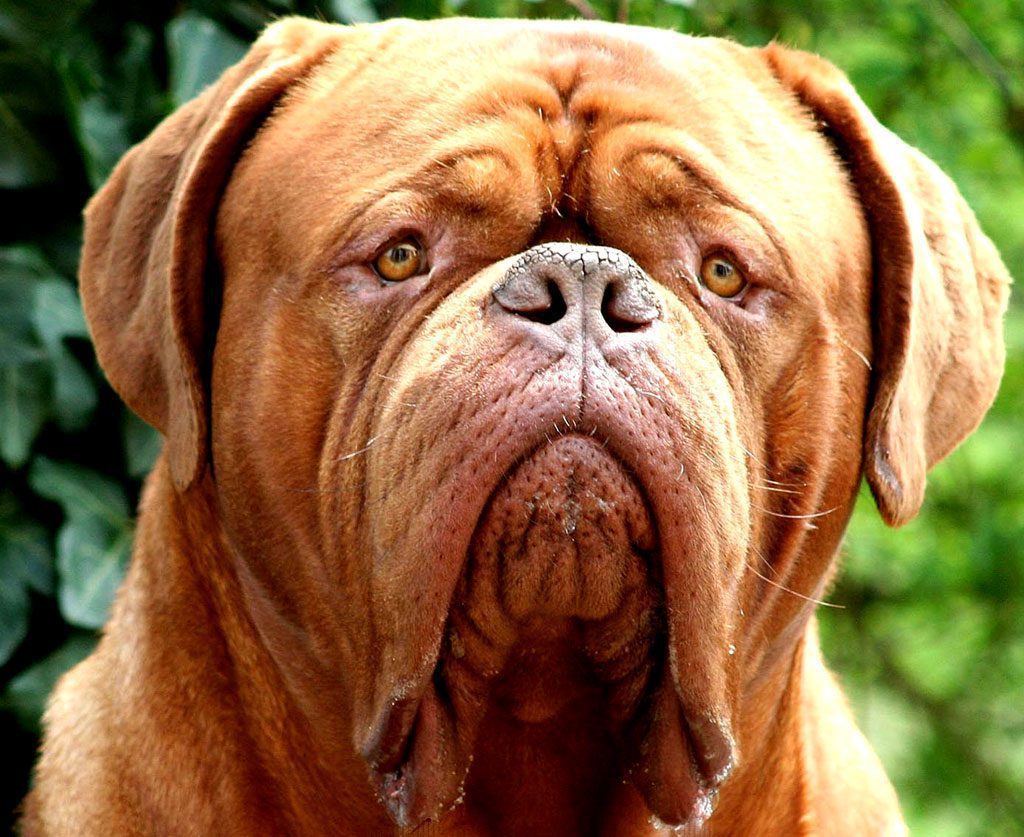
The Bordeaux Mastiff (Dogue de Bordeaux) is of French origin, is part of the large family of Mastiffs that even being of medium size turns out to be a dog of great strength and power, as a firm and determined to make it a great guard dog.

It is one of the most ancient French breeds, coming from the Eastern mastiffs arrived in Europe with the barbarian hordes. In more recent times, other races have contributed to the definition of this: the Mastiff, the English Bulldog, and the German Dogue.

The Bordeaux Mastiff is also called the "Doge of Bordeaux".

Otros nombres: Dogo de Burdeos / Dogue de Bordeaux / Bordeauxdogge

Crupo 2 / Section 2 – molosoids and mountain dogs.

Dogs breeds: Bordeaux Mastiff

Read all about the race by clicking on: Dogue de Bordeaux.

โ–ท The world of Pets: Dogs, cats, birds, reptiles, amphibians

Kavkazskaรฏa Ovtcharka
Rusia FCI 328 Molossoid . Mountain

The Kavkazskaรฏa Ovtcharka It is a strong dog, quiet, balanced but extremely reactive.

The Kavkazskaรฏa Ovtcharka (Caucasian Shepherd Dog) It is a very popular breed of dog in Armenia, Azerbaijan, Georgia, Russia, and other countries where herders need a lot of protection for their herds and properties.

A dog Kavkazskaรฏa Ovtcharka well bred should be a healthy animal, for strong bones, muscular build and stable temperament.

The very calm and very aggressive temperaments, they are considered to be serious flaws in a dog of this breed.

Otros nombres: Kavkazskaรฏa Ovtcharka / Circassian sheep dog / Caucasian Ovcharka / Armenian Khobun / Georgia Nagazi / Sage Ghafghazi / Kars ร‡oban KรถpeฤŸi / แƒ™แƒแƒ•แƒ™แƒแƒกแƒ˜แƒฃแƒ แƒ˜ แƒœแƒแƒ’แƒแƒ–แƒ˜ / Kavkasiuri nagazi / Caucasian Ovcharka / Caucasian Mountain Dog / Kars ร‡oban KรถpeฤŸi / Kavkazty Uasahichala / Circassian Sheep dog / ะะดั‹ะณั ะœัะปั‹ั…ัŠัƒะฐั…ัŒ (Adyghe melekhuah).

Group 2 / Section 2 – Molosoides and mountain dogs.

Dogs breeds: Kavkazskaรฏa Ovtcharka

โ–ท The world of Pets: Dogs, cats, birds, reptiles, amphibians

Italian mastiff
Italia FCI 343 - Molossoid - Dogo

The Italian mastiff It is a versatile and balanced dog that can adapt to all.

Mastรญn Italiano

Something small and elegant that the Neapolitan mastiff, the Italian mastiff (or Cane Corso) It was used in the past not only as a Cattle Dog but also in wild boar hunting., and as dog escort on long journeys of traders and, even, as a grip of Bull Dog.

Otros nombres: Cane Corso / Italianischer Corso-Hund / Italian Corso Dog / Italian Mastiff

Crupo 2 / Section 2 – molosoids and mountain dogs.

Dogs breeds: Italian mastiff

Read all about the race, by clicking on: Cane Corso.

โ–ท The world of Pets: Dogs, cats, birds, reptiles, amphibians

Brazilian Mastiff
Brazil FCI 225 - Molossoid - Dogo

Mastรญn Brasilero

The Brazilian Mastiff with their masters and the family is docile, obedient and tolerant with children.


The Brazilian Mastiff (also known as: Fila Brasileiro, Fila Dog and Cabeรงudo Boiadeiro or Brazilian Mastรญn) It is a breed of dog of Brazil of large and imposing appearance. For his temper, He is considered one of the best guardian.

This breed was created from the old Bulldog cross (aggressive temperament), English mastiff (body strength and vigour to bite) and of the Bloodhound (large capacity of smell to track).

Otros nombres: Fila Brasileรฑo / Cรฃo de Fila / Cabeรงudo Boiadeiro / Mastรญn Brasilero.

Crupo 2 / Section 2 – molosoids and mountain dogs.

Dogs breeds: Brazilian Mastiff

Read all about the race by clicking on: Fila Brasileiro.