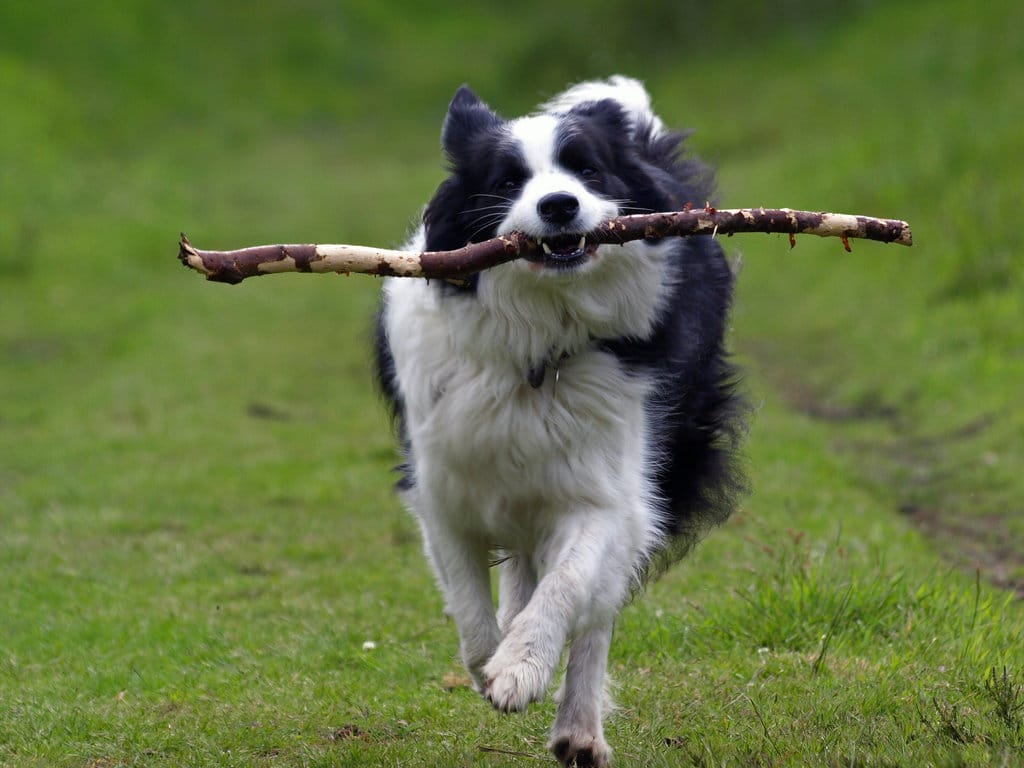
โ–ท The world of Pets: Dogs, cats, birds, reptiles, amphibians

Mudi
Hungrรญa FCI 238 - Sheepdogs

Mudi

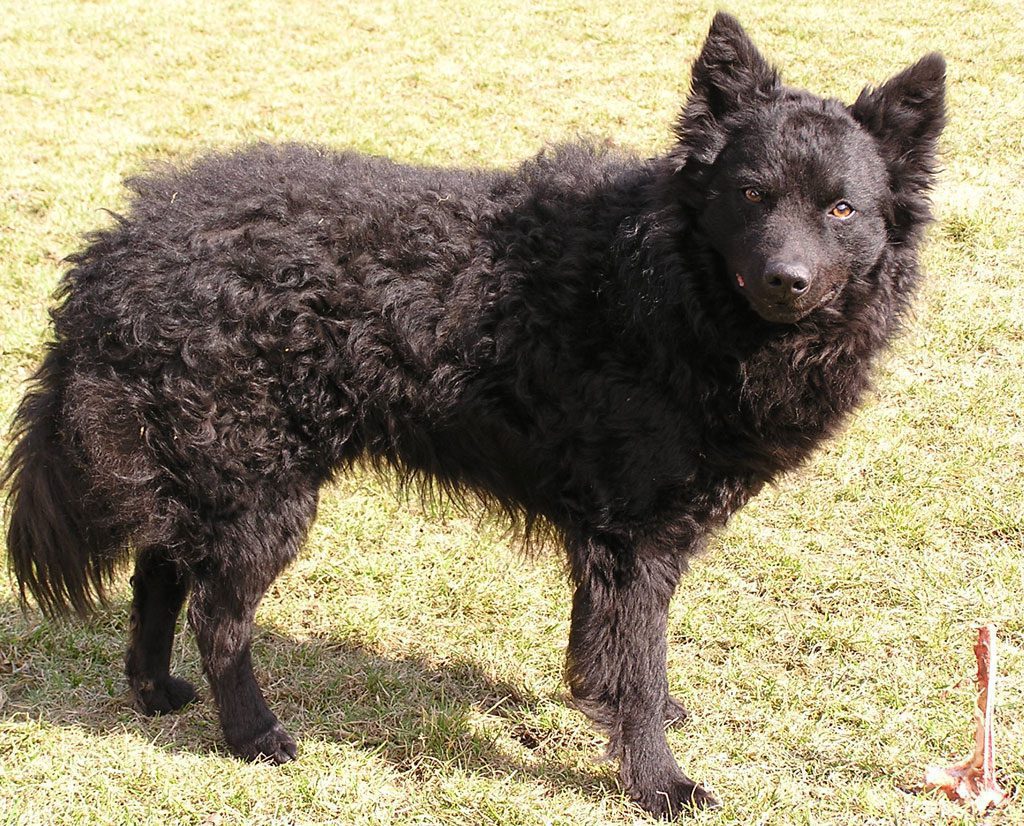
The Mudi is a single master dog, and a rare breed outside its native Hungary.

Content

History

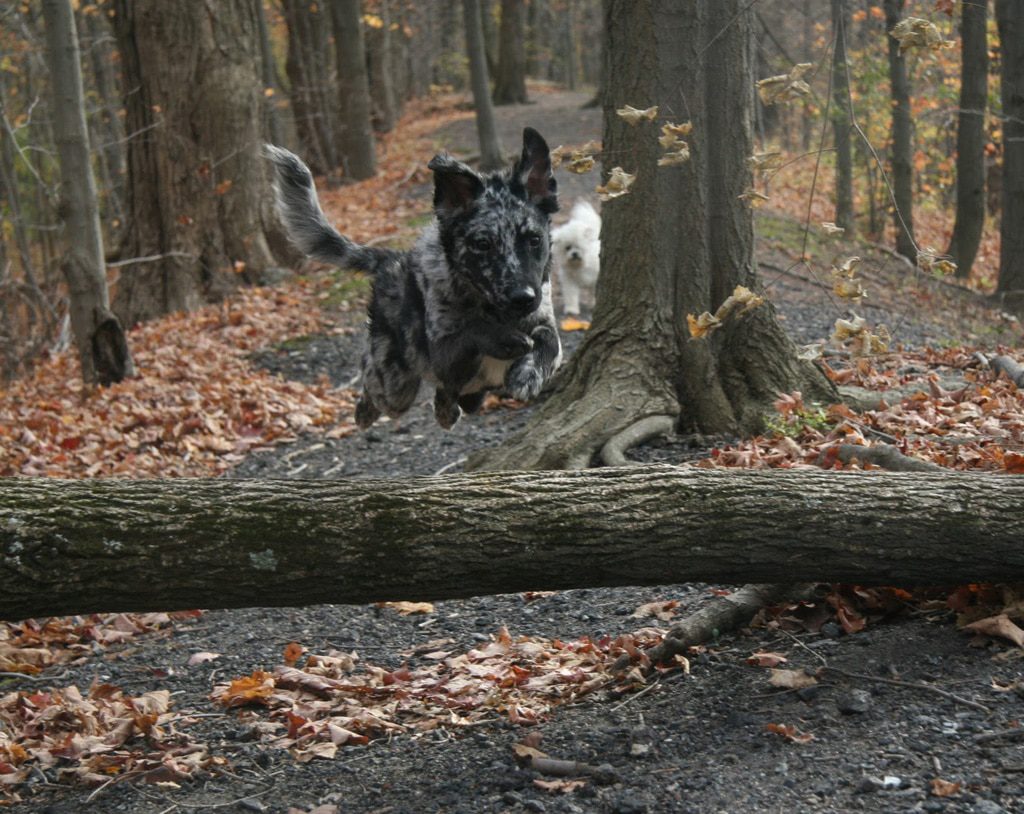
The Mudi is the name of a canine breed of herding dog rare, originally from Hungary.

According to existing documentation, some currents maintain that the Mudi was formed in Hungary spontaneously, between the 19th and 20th centuries.

Others reply that the Pumi, the Puli and the Croatian Sheepdog, are close relatives of Mudi.

Are what, they are their ancestor and the form in which it existed, What is known for sure is that the Mudi, has survived this time thanks to the appreciation of the shepherds who praise his innate ability in which protection of livestock with regard.

In the year 1936 wrote the first breed standard, naming it Mudi.

The herd book is still open, that means that more and more dogs of this type, they live in their homeland, incorporated into breeding records.

The Mudi, is currently a "rare breedโ€ there are few specimens in their native country, and outside of Hungary if there isโ€ฆ, very few inches.

In Hungary they have been fighting for years to keep the breed alive. As it has been the case with many breeds of dogs pastors, their copies have declined to the rhythm of the socio-cultural advancement.

Before, herds of cattle were numerous and sheepdogsโ€ฆ, essential, This situation has changed a lot from time to time and along the way we have lost many canine breeds specialized in working with cattle..

Physical characteristics

Usually weigh between 8 and 13 kg and measure between 38 and 48 centimeters to the cross.

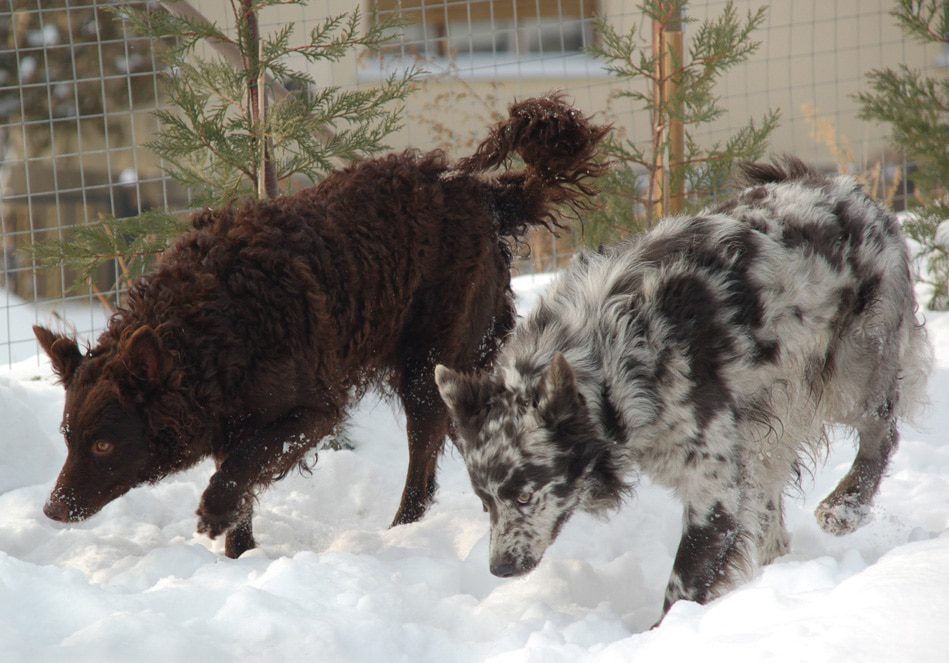
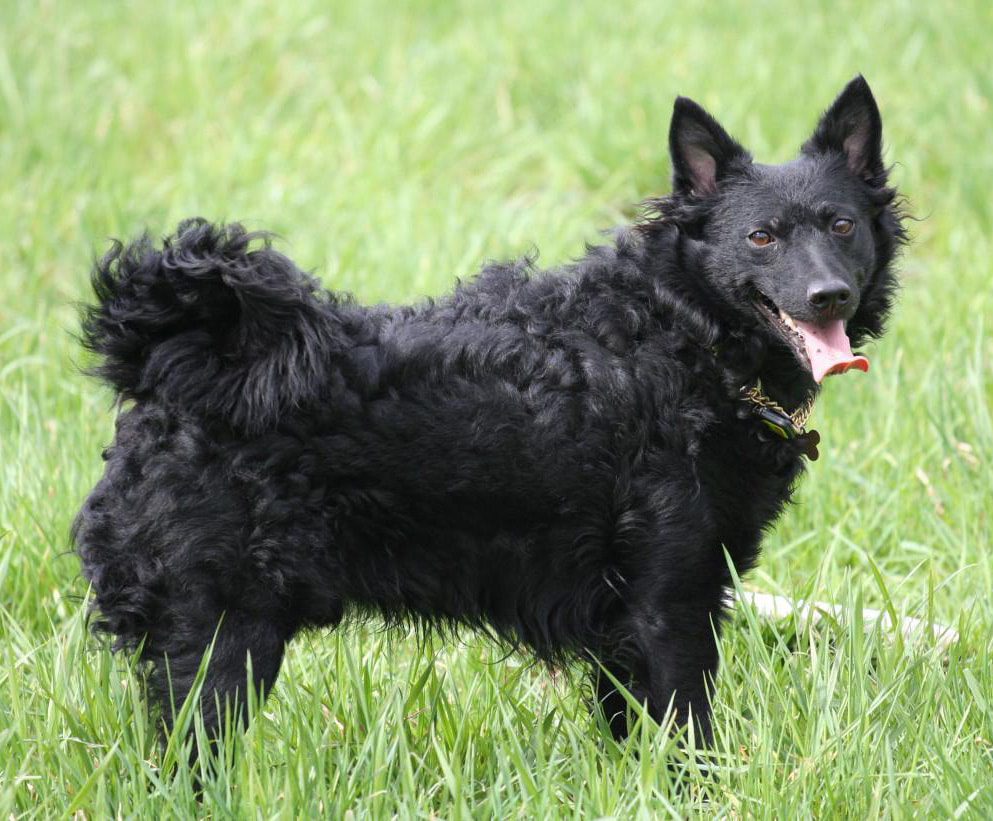
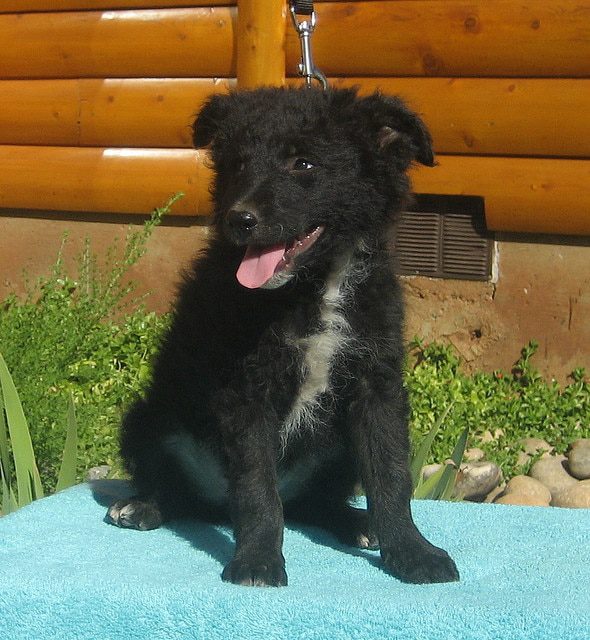
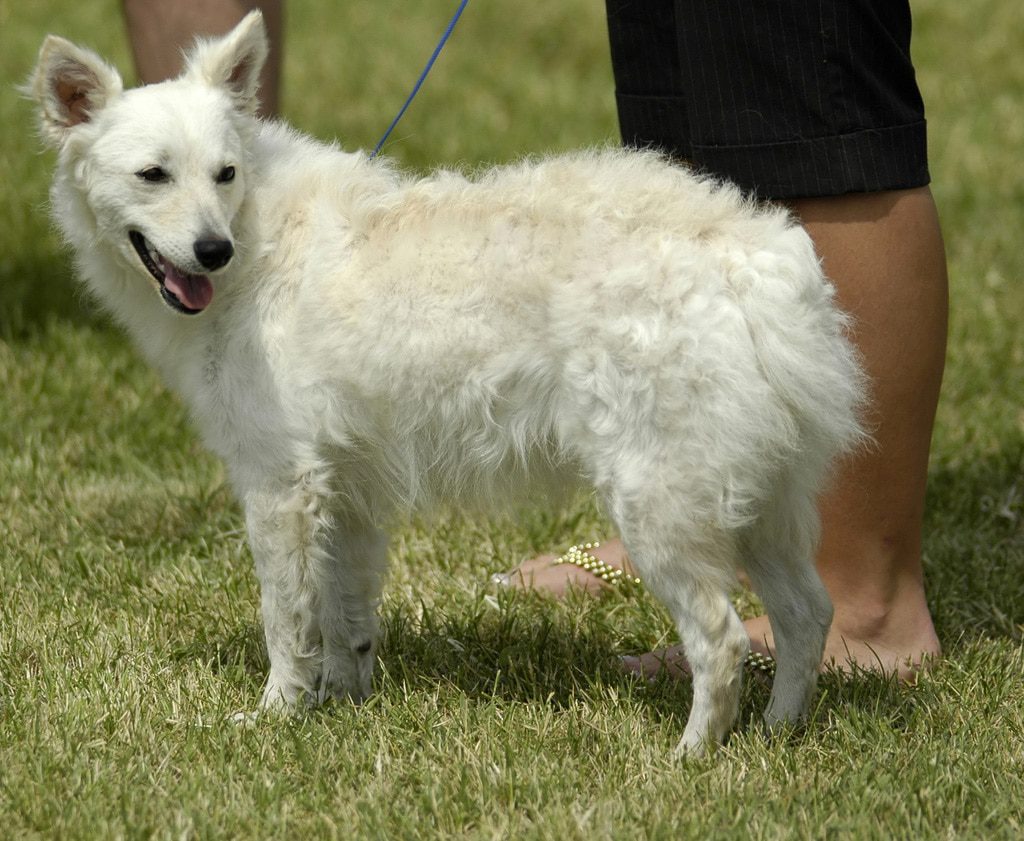
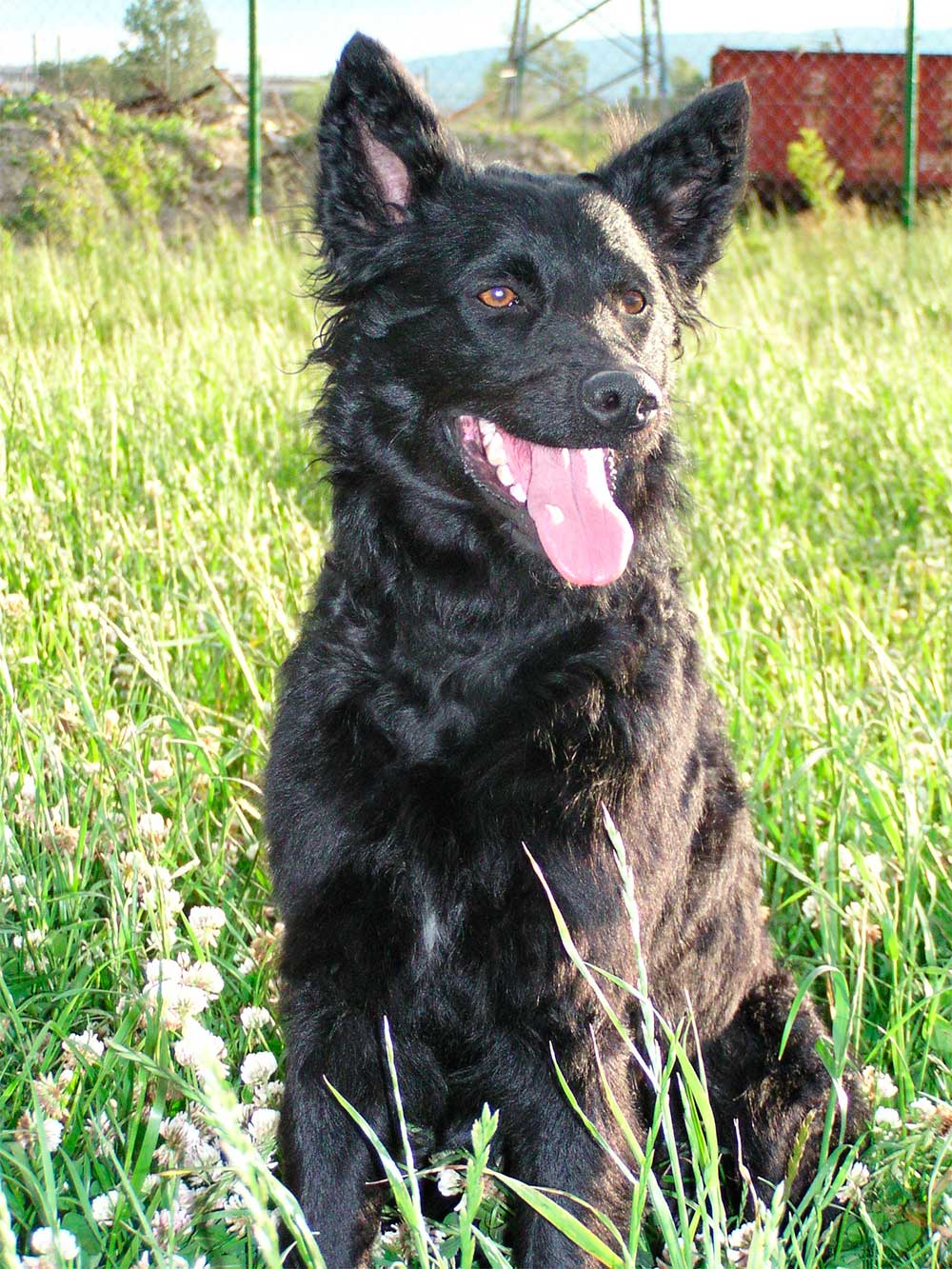
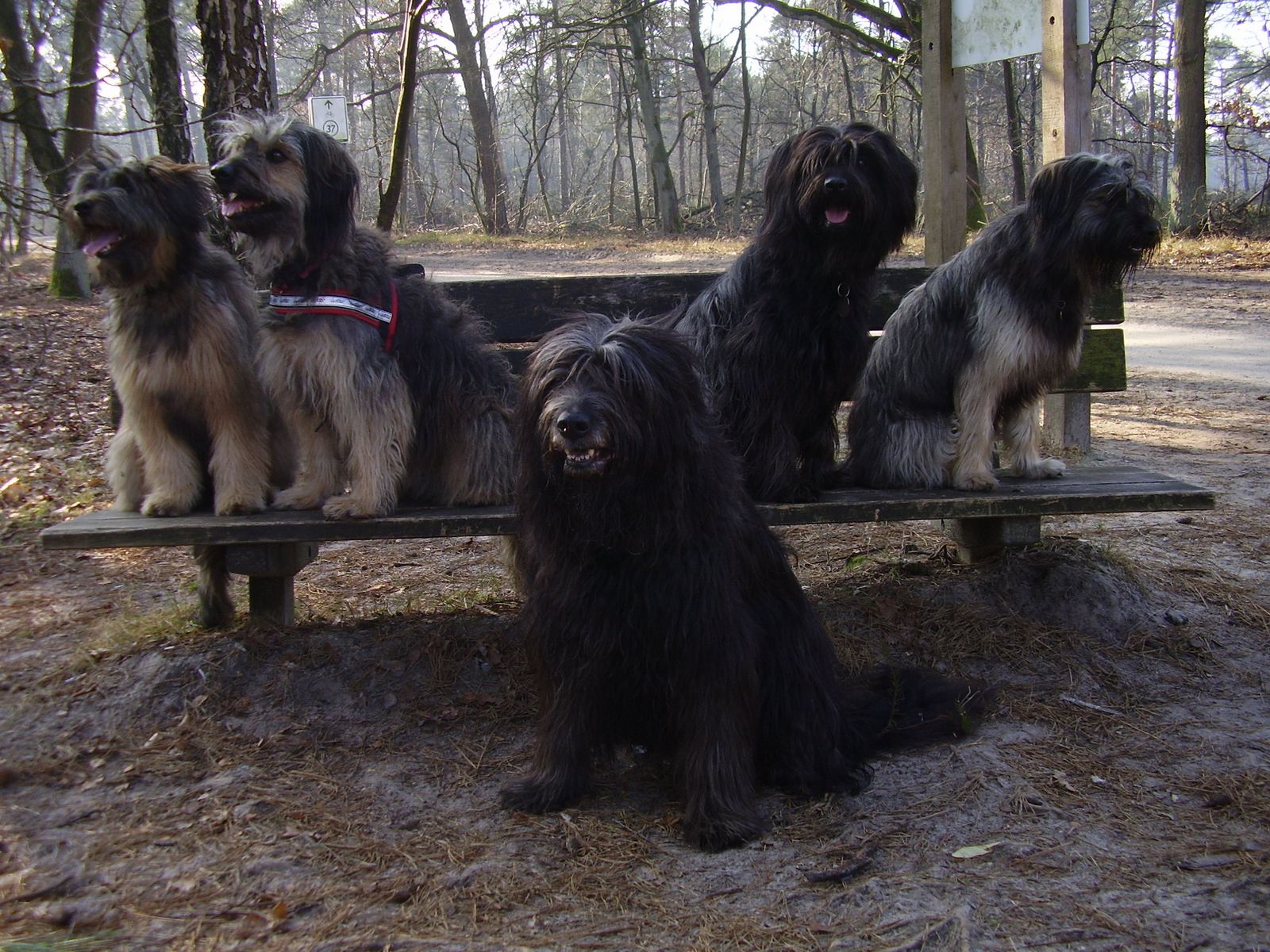
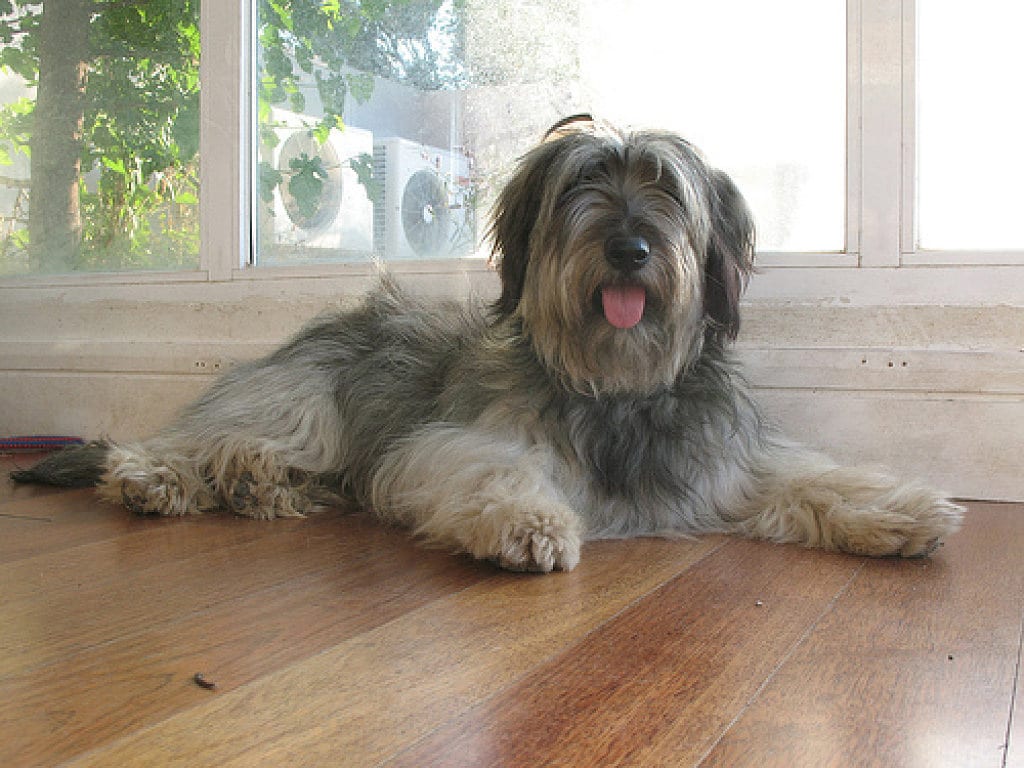
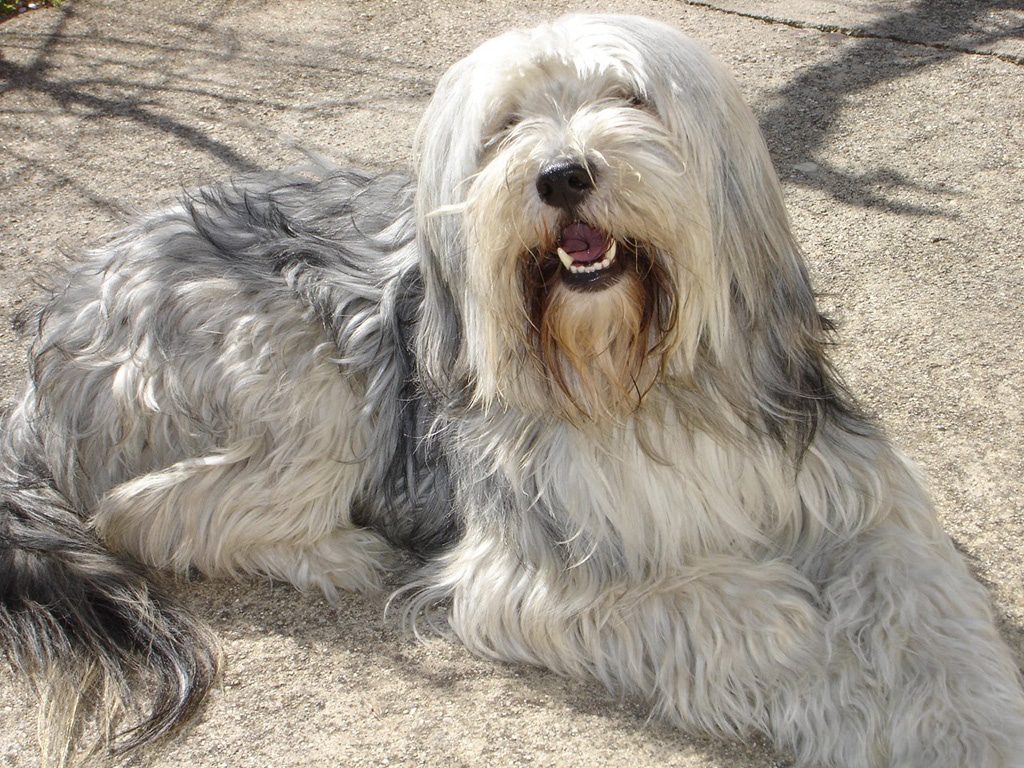
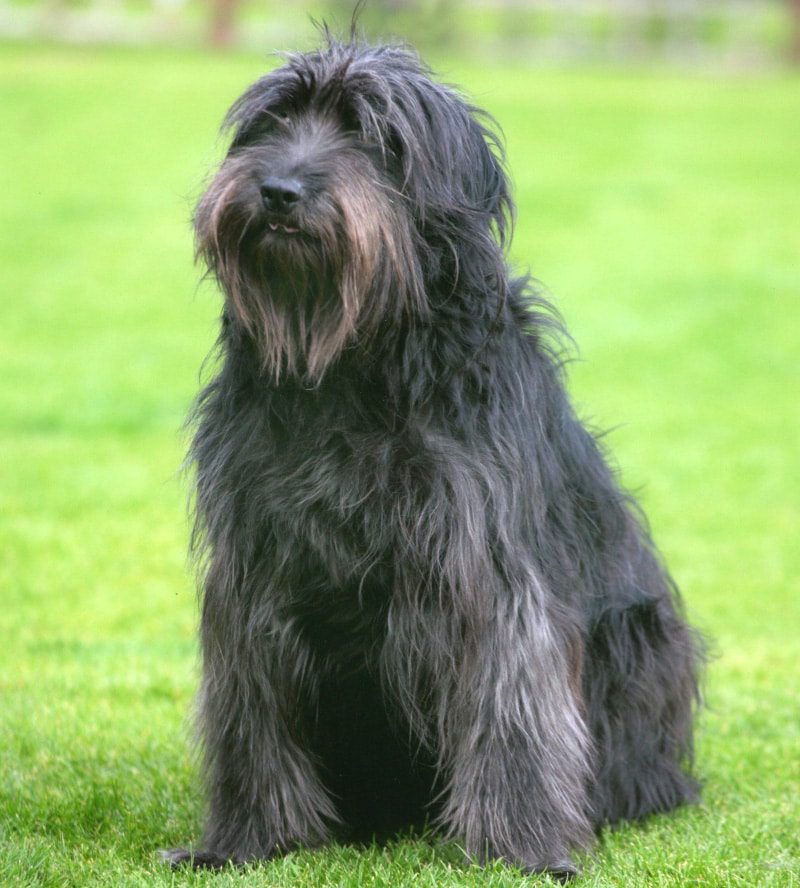
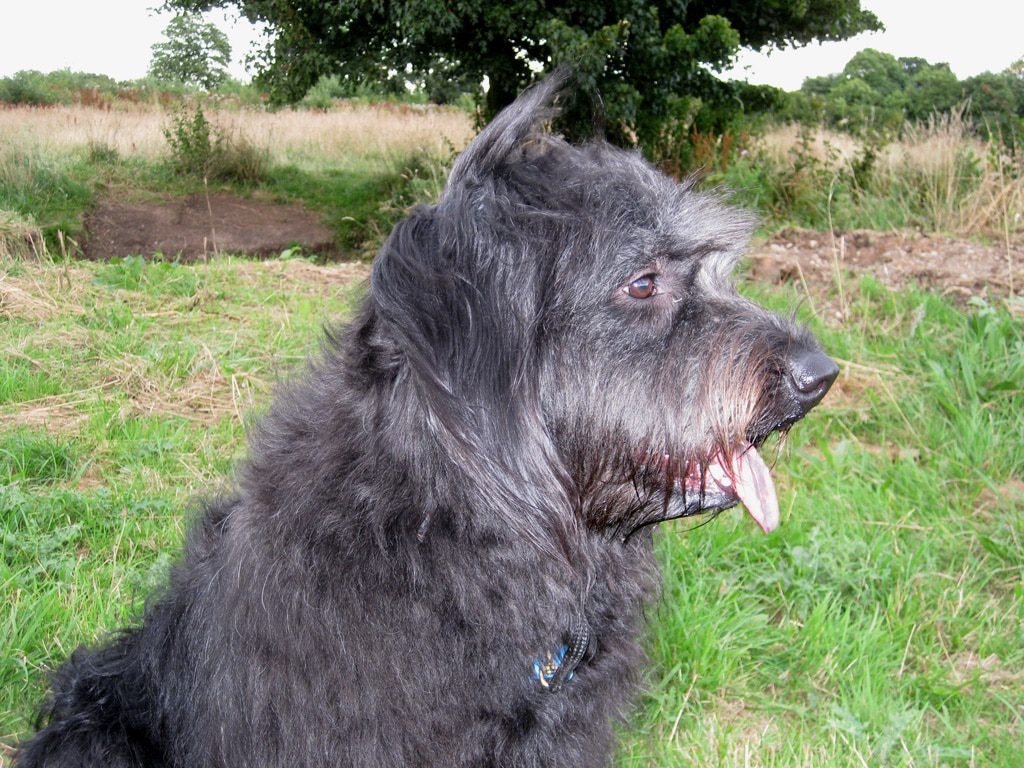
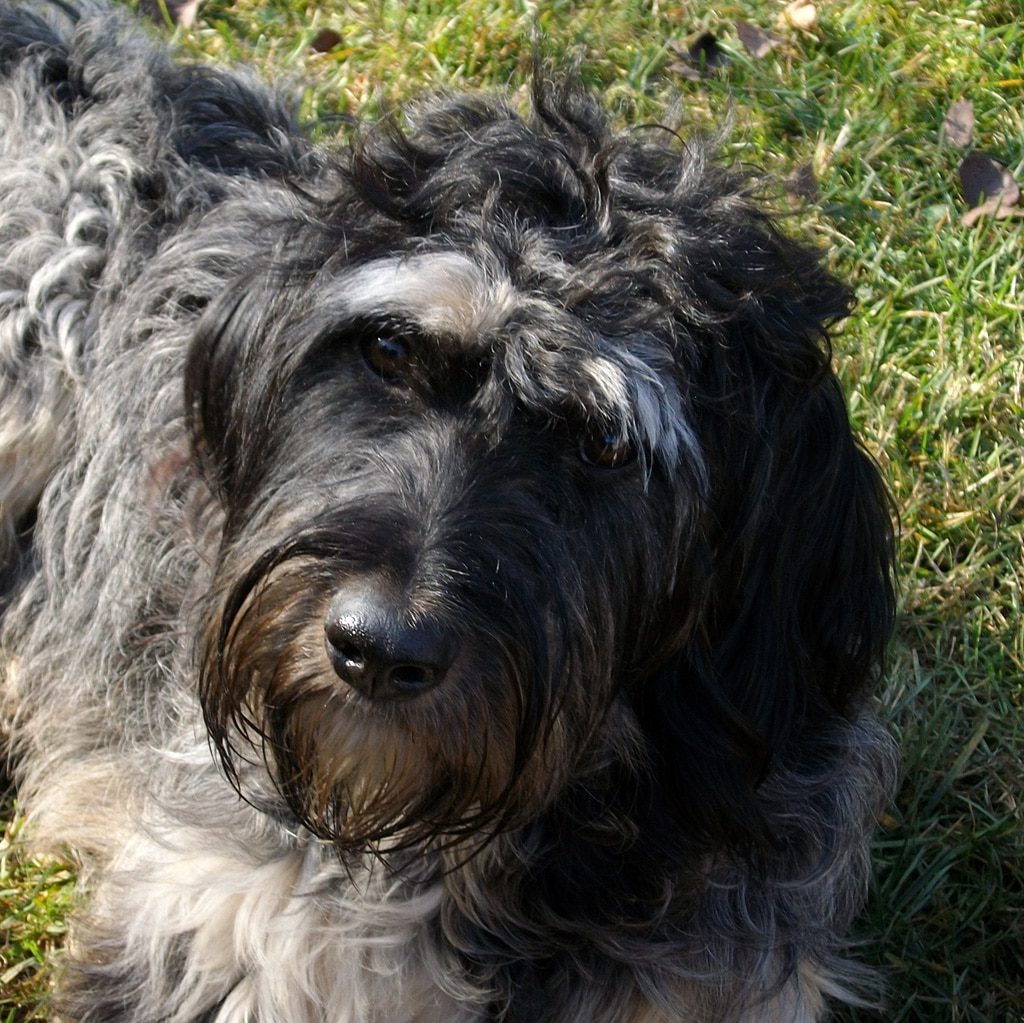
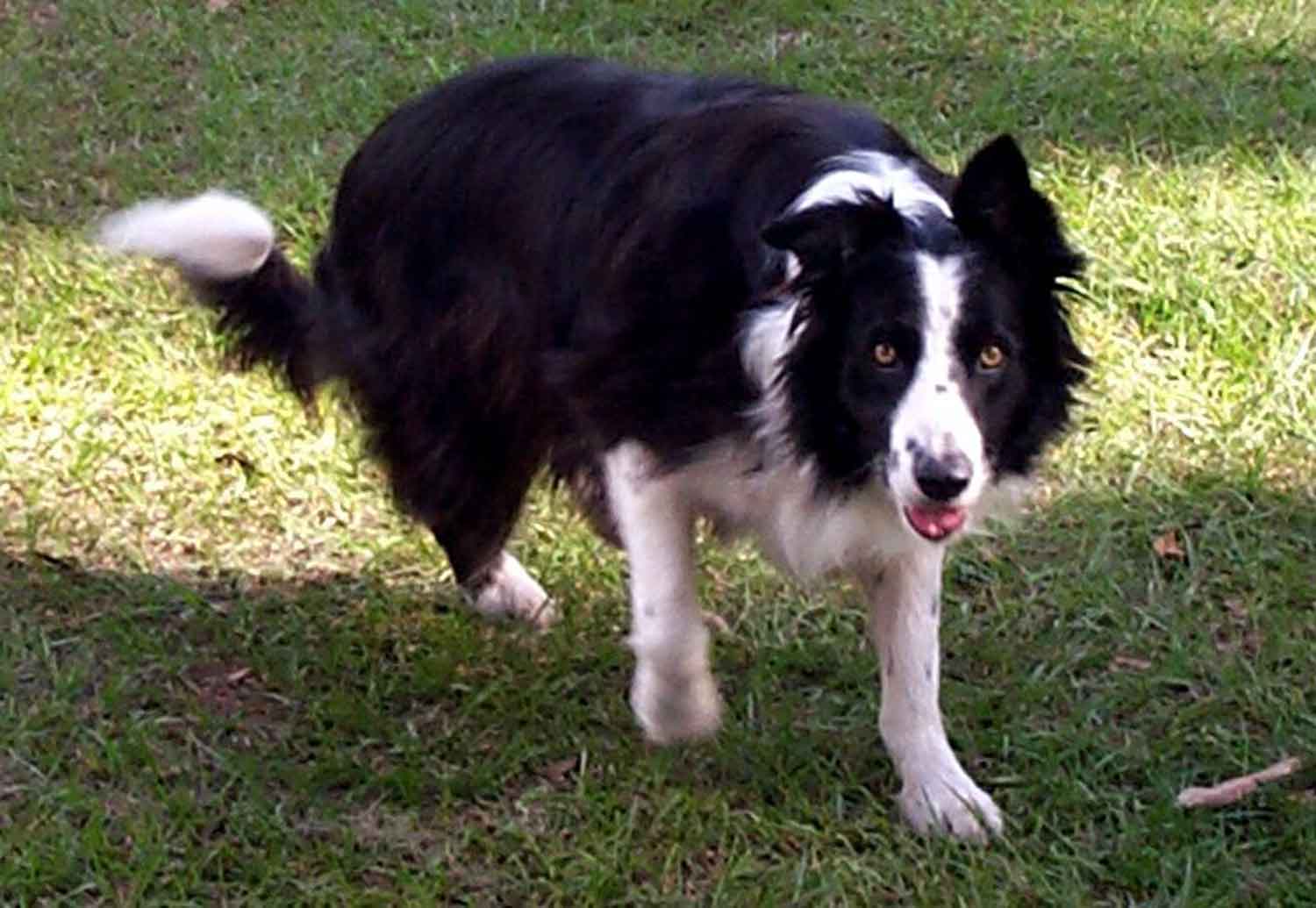
The mantle is medium wavy or curly, with short hair on the face and legs. The colors accepted are black, Ash, brown, white, Fawn and merle.

The Mudi can have the tail short birth or birth with them long and cut them.

It is a very versatile dog, You can be on a farm, You can hunt, exterminate rodents, make guardian, dog herds and as dog boyero.

Although it is a much less popular breed than the Puli and the Komondor in your country of origin, owners always recognize his superiority due to his versatile talent and always friendly and working arrangement.

  • Fur: varies by region. The head and limbs are covered in short hair, straight and smooth. On other parts of the body there is hair of a length between and cm, dense, undulating and shiny. the undercoat is arranged in spirals and stripes.
  • Color: glossy black or white, but there are also white mantles with black stripes or black ones with white stripes, with medium-sized spots and uniform distribution.
  • Size: 35 to 47 cm..

The hair of the Mudi, Unlike other dog breeds, has much pigment. Surfaces devoid of hair, They must be totally black, However, the pads and nails are slate grey.

Character and skills

The Mudi is a very active race. If you live in the city, you need to take a brisk walk every day, or run.

It also, it would be beneficial for his health if he had an outdoor area where he can run to his heart's content, they need a lot of exercise to stay healthyโ€ฆ and happy.

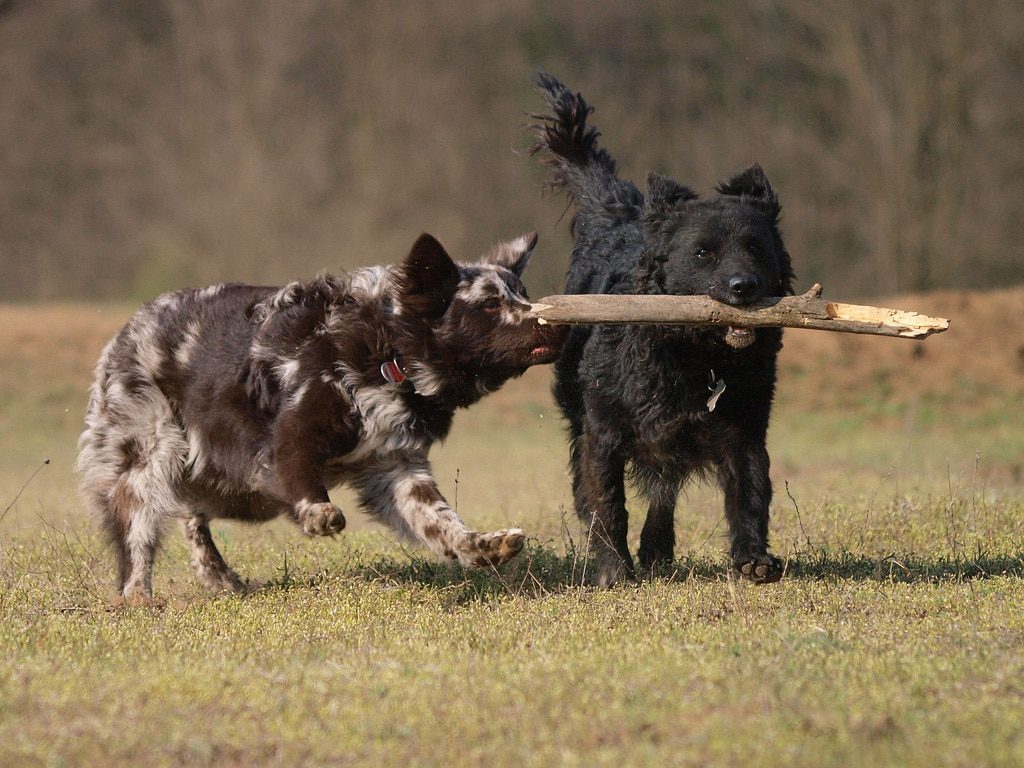
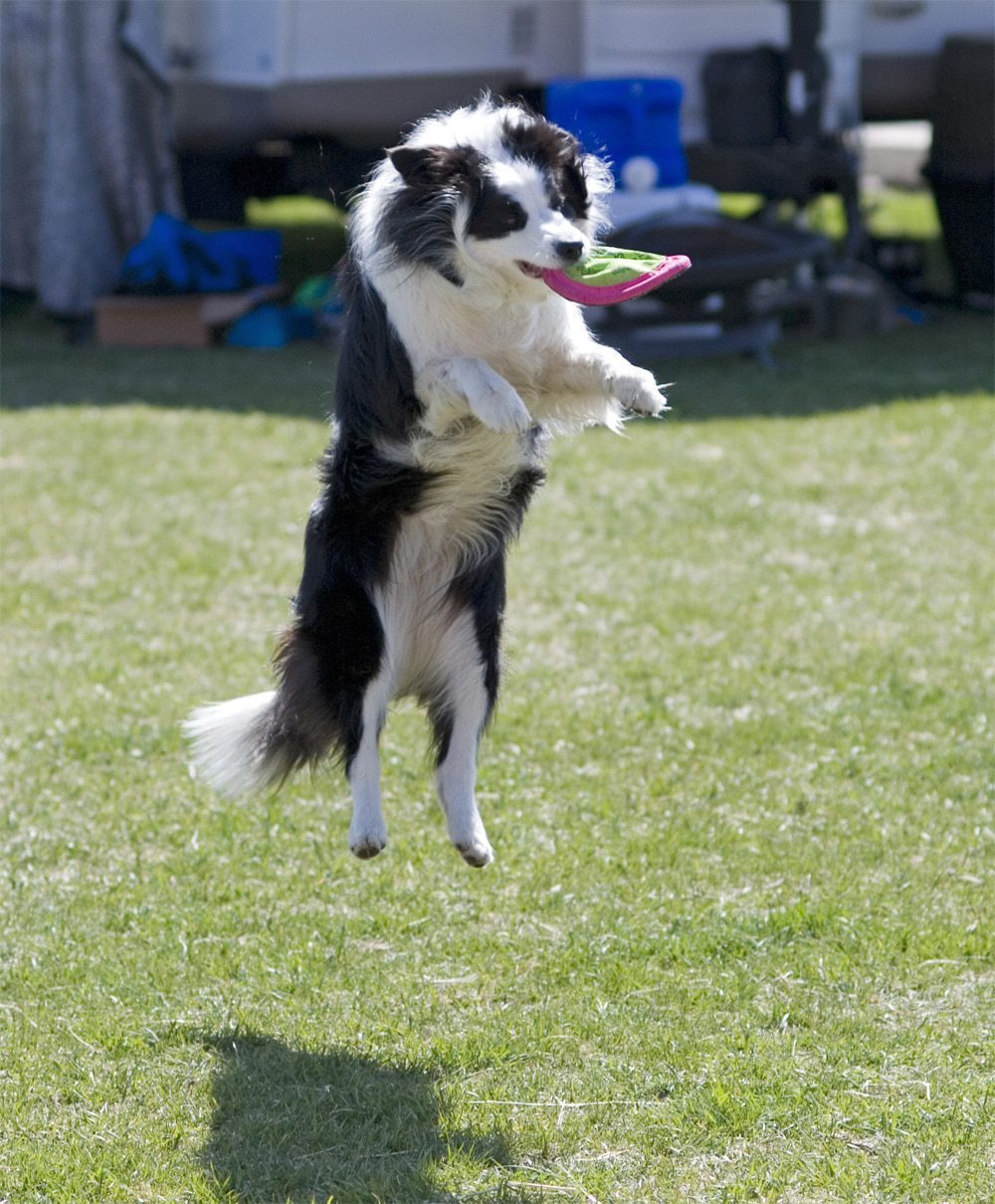
To the Mudi She loves to play and Excel in all kinds of sports Canine as the Frisbee, for example.

Can also compete in the agility, obedience, Rally obedience, Schutzhund, show, flyball, and tracking. It has strong instinct and grazing capacity, with appropriate training, could also compete in grazing trials.

A Mudi can live in a house doing enough exercise, but always they need ample space to run and play. They are active and they can live, perfectly, in the open air.

Their life expectancy is around the 14 years.

Mudi Health

The Mudi is a generally healthy breed with a life expectancy of 12 to 14 years.

Health problems seen in the Mudi include epilepsy, Hip Dysplasia, cataract, elbow dysplasia and patellar dislocation.

If a breeder tells you they don't need to do those tests because they've never had any problems in their lines or because their dogs have been checked out by a vet or if they give any other excuse to skimp on genetic testing of their dogs, leave immediately.

Careful breeders screen their breeding dogs for genetic diseases and breed only the healthiest and best looking dogs, but sometimes Mother Nature has other ideas and a puppy develops one of these diseases despite good husbandry practices. Advances in veterinary medicine mean that in many cases dogs can still live a good life. If you are going to have a puppy, ask the breeder about the ages of the dogs in their lines and what their cause of death was.

Remember that after you have welcomed a new puppy into your home, has the power to protect you from one of the most common canine health problems: the obesity. Keeping a Mudi at the right weight is one of the easiest ways to extend his life..

Kuvasz grooming

The coat of the Mudi loose the dirt (and the hair, of course) and does not require frequent bathing. A weekly brushing is usually all that is needed and the coat does not need to be trimmed.

If your Mudi is like most, you will enjoy swimming in a pool, a lake or the ocean. Thereafter, rinsed with fresh water to remove chlorine, algae or salt and restore shine to your coat.

The Mudi sheds her coat in the spring and doesn't get it back fully until late summer.

The rest is basic care. Trim nails every few weeks or as needed. brush your teeth often – with a vet-approved pet toothpaste – for good general health and fresh breath.

Characteristics "Mudi"

Coexistence is important that you have with your new friend. Before considering the acquisition of a dog of the breed "Mudi" you know certain factors. Not all breeds of dogs are apt to live in an apartment, you must take into account his character, their need for exercise, their interaction with other pets, their care and if you have small children, their level of tolerance towards them.

Adaptation โ“˜

5,0 of 5 stars (based on 1 review)

friendly dog โ€‹โ€‹โ“˜

3,0 of 5 stars (based on 1 review)

hair loss โ“˜

2,0 of 5 stars (based on 1 review)

Affection level โ“˜

5,0 of 5 stars (based on 1 review)

Need for exercise โ“˜

4,0 of 5 stars (based on 1 review)

Social need โ“˜

5,0 of 5 stars (based on 1 review)

Home โ“˜

3,0 of 5 stars (based on 1 review)

Toilet โ“˜

2,0 of 5 stars (based on 1 review)

Friendly with strangers โ“˜

3,0 of 5 stars (based on 1 review)

barking โ“˜

4,0 of 5 stars (based on 1 review)

Health โ“˜

3,0 of 5 stars (based on 1 review)

Territorial โ“˜

3,0 of 5 stars (based on 1 review)

Cat friendly โ“˜

3,0 of 5 stars (based on 1 review)

Intelligence โ“˜

5,0 of 5 stars (based on 1 review)

Versatility โ“˜

5,0 of 5 stars (based on 1 review)

Child friendly โ“˜

3,0 of 5 stars (based on 1 review)

Surveillance โ“˜

5,0 of 5 stars (based on 1 review)

joy โ“˜

5,0 of 5 stars (based on 1 review)

Mudi Images

Videos "Mudi"

Type and recognitions:

  • FCI CLASSIFICATION:Group 1 –> Pastor and Boyeros dogs (except Swiss Cattle Dogs)
    / Section 1 –> Pastor dogs. Without working trial.
  • FCI 238
  • Federations:
    • – FCI – Group 1 Herding dogs, Section 1 Sheepdogs โ“˜
    • – AKC – PASTORAGE โ“˜
    • – FSS – โ“˜
    • – CKC – Group 7 – Herding dogs โ“˜
    • – UKC – Herding dogs โ“˜

    FCI breed standard Mudi

    FCIFCI - Mudi
    Mudi

    Alternative names:

    1. Hungarian Mudi, Canis Ovilis Fenyesi (English).
    2. Mudi (French).
    3. Mudi (German).
    4. Mudi (Portuguese).
    5. Mudi hรบngaro (espaรฑol).

    โ–ท The world of Pets: Dogs, cats, birds, reptiles, amphibians

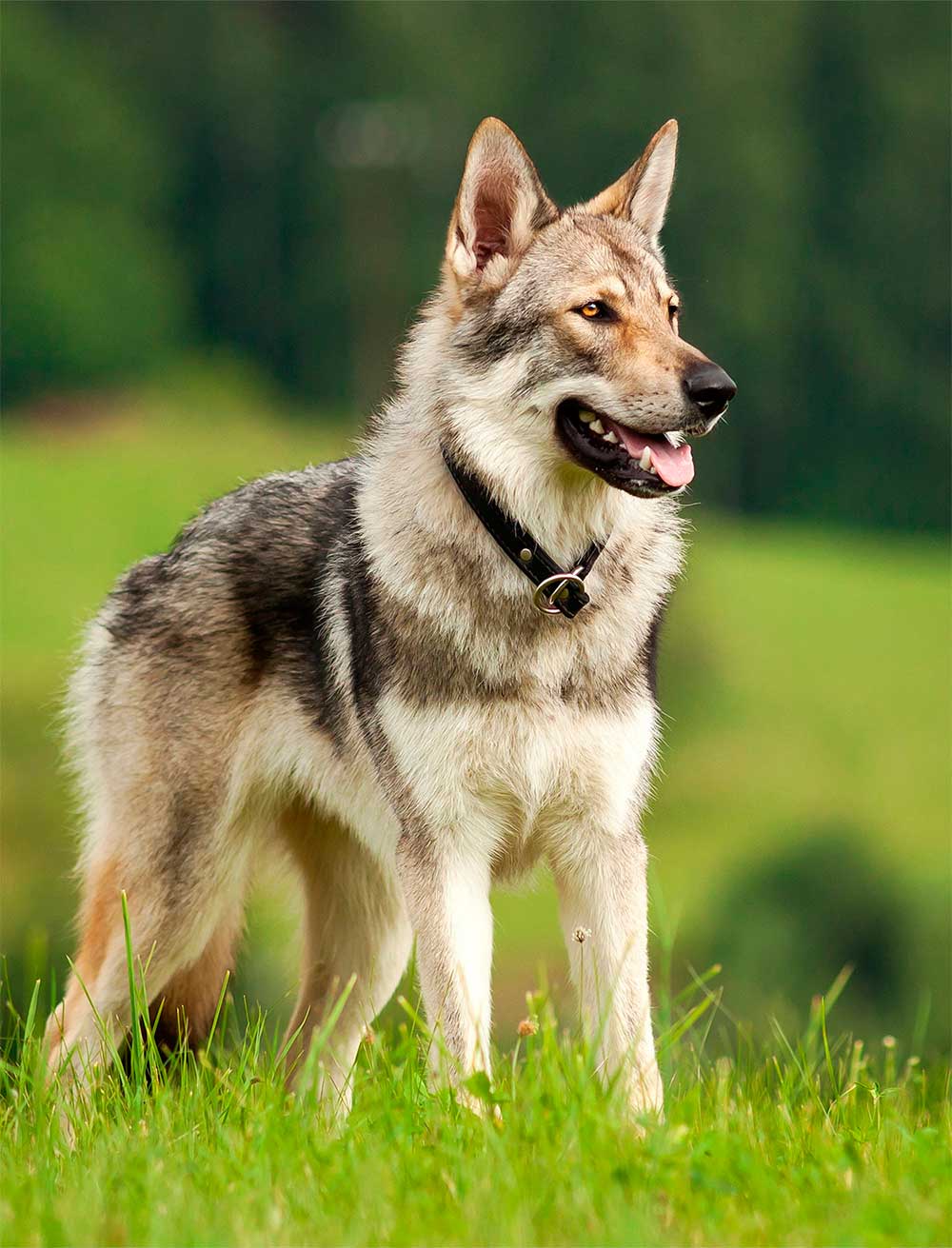
    Czechoslovakian Wolfdog
    Eslovaquia FCI 332 . Sheepdogs

    Czechoslovakian Wolf Dog

    Not a dog fit for everyone.

    Content

    History

    The Czechoslovakian Wolfdog It has its origin in the crossing experiments between the "Carpathian Wolf" and the German Shepherd carried out in the former Czechoslovak Socialist Republic from 1955 under the supervision of the SR. Karel Hartl, a renowned Czech cynologist and breeder. The scientific objective of these experiments was to determine the characteristics of these hybrids. (physical appearance, behavior, utility, fertility…), while the military tried to create a breed with the strength of the wolf and the docility of the dog, that could be used as an attack dog.

    The first births took place in 1958 at the border guard kennel in Libejovice, in the south of the country. Brita the wolf and the German Shepherd Cezar z Brezoveho Haje gave birth to 5 Puppies: Brent, Berta, Bono, Betty y Bessy.

    Betty was selected to continue the line at the Libejovice kennel, while his sister Berta was sent to the Samorin kennel (now Malacky) with the same goal. Their pups were used as patrol dogs by border guards, confirming that these hybrids were healthy, functional and fertile.

    After this initial success, the Brita Wolf was able to mate again with a new male German Shepherd named Kurt z Vaclavky. Like this, in 1960, Defender, Bigan, Trophy, Bill and Bima were born in the Libejovice kennel. The male Bikar was chosen to be sent to the Pohranicni kennel in Slovakia to continue this second lineage.

    The experiment stopped at 1965, not without some success: hybrids were able to reproduce, socialize with humans and be trained for different tasks. At the end of the experiment, 16 of these dogs remained in the care of the army, While 18 were given to civil breeders.

    Then new lines were created, as..:

    – Astra (female german shepherd dog) and Argo (Carpathian wolf male) in 1968;
    – Lejdy (female Carpathian wolf) y Boyar from Schotterhof (male german shepherd) in 1972;
    – Urta with the Guardian Guard (third generation hybrid female) and Sarik (male Carpathian wolf) in 1974;
    – Xela with the Guardian Guard (third generation female hybrid) and Sarik (Carpathian wolf male) in 1983.

    Name "Czechoslovakian WolfdogยปIt seems to have become common to designate these hybrids already in the decade of 1960, but it wasn't until 1982 that the efforts of Mr.. Karel Hartl were finally officially rewarded when this new breed was recognized by the Czechoslovakian Dog Breeders Committee, the canine organization of reference in the country.

    It developed quite quickly and to 1991 not less than 1552 Czechoslovakian wolfhounds were entered in the national register of pedigree dogs.

    In 1999, the Czechoslovakian Wolfdog was recognized by the Fรฉdรฉration Cynologique Internationale (FCI).

    In the news, are mainly found in Central Europe, but its popularity is growing rapidly in various Western European countries such as Italy, Germany, Spain and France. In France, for example, little more than 3.000 representatives of the breed have registered with the LOF (Book of French Origins) between 2010 and 2016, and the trend is increasing. His growing renown leads him to the gates of 10 Most popular dog breeds in France.

    On the other hand, the Czechoslovak Wolf dog has not actually crossed the English Channel: it is only one of the breeds recognized by the Kennel Club, the British organization of reference, and the FCI only has one approved kennel in the whole country.

    In United States, the AKC (American Kennel Club) partially recognizes it from 2001: their representatives can participate in competitions organized under the aegis of the organization, but they cannot register in the breed dog registry. On the other hand, the UKC (United Kennel Club) fully recognizes it, and has been doing it since 2006. It also, in 2011 an official breed club was established (el Czechoslovakian Vlcak Club of America). There are currently some 200 specimens in american territory.

    Physical characteristics

    It is a dog of strong constitution, medium-sized and rectangular in structure. It is similar to the wolf in constitution, movement, colors, cloak and mask. The head, symmetrical and well muscled, is shaped like a truncated wedge. the eyes are small, macaroons, amber, with well-attached eyelids.
    Ears are erect, thin, triangular and short. The tail is implanted high, but it hangs straight. When the dog is excited, lifts it up in a sickle.

    Fur: The coat is straight and adherent. In winter it has a very dense undercoat.
    Color: From yellowish gray to silver gray, with characteristic white mask.
    Size: Males measure at least 65 cm.. the females, minimal 60 cm..

    Character and skills

    The Czechoslovakian Wolfdog he is very devoted to his family, including children. But, their rather dominant nature can be problematic for young people. In any case, it is important to socialize him from an early age and never leave a young child alone with a dog, regardless of race.

    He is also sociable with his companions and other pets who live under the same roof., since he is used to their presence relatively early. On the other hand, woe to the cats, small dogs and other rodents that are unfamiliar to you and would have the bad idea to venture into your territory, or that they will meet during a walk: his hunting instincts were then all chances to regain the advantage.

    It also, he is as affectionate with his entourage as he mistrusts strangers: there is also necessary an education and socialization of the puppy started from an early age to avoid any later problem.

    Having a highly developed sense of hierarchy, He must face as soon as possible with his "herd leader", who should show their dog his place in the family hierarchy . The Czechoslovakian Wolfdog he is a dog that cannot stand loneliness, greatly preferring to live in the company of their pack, that is, his family. You are very likely to be unhappy if you have to be alone for long periods of time and are at risk of running away to join your family, or to feel excluded from the "pack" and lose confidence in his master.

    It also, the Czechoslovakian Wolfdog it is a very durable and active breed of dog, able to accompany his master even over very long distances that can exceed even those of a marathon, and whatever the weather conditions. In fact, being able to exercise daily is necessary for your physical and psychological well-being, and allows to avoid the risk of damage caused by the dog . It is an ideal companion for a sports lover who would like to, for example, jogging with your dog , go hiking with your dog or even ride a bike with your dog.. On the other hand, even more than for any other race, your handler should make sure to always be out front and thus show your dog who is the โ€œleader of the packโ€ .

    On the other hand, a person who prefers to spend his free time in front of a screen or immersed in a book is exposed to some difficulties if he thinks about adopting a Czechoslovakian Wolfdog …

    It also, by needing space, the latter is not a recommended breed of dog in apartments : it is much better to have a house with a garden. It is not uncommon to see him playing and sleeping there whatever the weather: it's not very hard, and is able to perfectly withstand bad weather. On the other hand, it is recommended that said garden be perfectly fenced, to avoid the risk of the dog escaping and wandering on public roads.

    The Czechoslovakian Wolfdog very little, if he barks. But when it does, it is impossible not to notice: similar to his ancestors the wolves , its howl is loud and can be heard over long distances. Daily, when you need to express yourself, opt for other means, like moans and grunts .

    Like this, this loyal and active dog will make a firm human companion happiness, sporty and available, but it is not recommended for people who have never had dogs before or who are often absent. In fact, the majority of failed adoptions are due to the fact that the human has not known how to impose himself as "leader of the pack" and / or has not been sufficiently available and active for his partner.

    Last, It should be remembered that this recent breed of dog is still under construction, so excessively fearful or aggressive subjects may appear.

    Price "Czechoslovak Wolf Dog"

    The price of a puppy Czechoslovakian Wolfdog is of some 1250 to 1500 EUR.

    creators of "Czechoslovakian Wolfdog"

    Register kennel

    Czechoslovak Wolf dog

    Offer your puppies for free. Sign up here.

    • This field is a validation field and should be left unchanged.

    Characteristics "Czechoslovakian Wolfdog"

    Coexistence is important that you have with your new friend. Before considering the acquisition of a dog of the breed "Czechoslovakian Wolfdog" you know certain factors. Not all breeds of dogs are apt to live in an apartment, you must take into account his character, their need for exercise, their interaction with other pets, their care and if you have small children, their level of tolerance towards them.

    Adaptation โ“˜

    4,0 of 5 stars (based on 1 review)

    friendly dog โ€‹โ€‹โ“˜

    2,0 of 5 stars (based on 1 review)

    hair loss โ“˜

    3,0 of 5 stars (based on 1 review)

    Affection level โ“˜

    4,0 of 5 stars (based on 1 review)

    Need for exercise โ“˜

    5,0 of 5 stars (based on 1 review)

    Social need โ“˜

    4,0 of 5 stars (based on 1 review)

    Home โ“˜

    2,0 of 5 stars (based on 1 review)

    Toilet โ“˜

    2,0 of 5 stars (based on 1 review)

    Friendly with strangers โ“˜

    2,0 of 5 stars (based on 1 review)

    barking โ“˜

    3,0 of 5 stars (based on 1 review)

    Health โ“˜

    3,0 of 5 stars (based on 1 review)

    Territorial โ“˜

    5,0 of 5 stars (based on 1 review)

    Cat friendly โ“˜

    2,0 of 5 stars (based on 1 review)

    Intelligence โ“˜

    4,0 of 5 stars (based on 1 review)

    Versatility โ“˜

    3,0 of 5 stars (based on 1 review)

    Child friendly โ“˜

    4,0 of 5 stars (based on 1 review)

    Surveillance โ“˜

    5,0 of 5 stars (based on 1 review)

    joy โ“˜

    3,0 of 5 stars (based on 1 review)

    Type and recognitions:

    • FCI CLASSIFICATION:
    • Group :
    • Section : . .

    Federations:

  • FCI โ“˜,
  • AKC โ“˜,
  • ANKC โ“˜,
  • UKC โ“˜

  • FCI breed standard Czechoslovakian Wolfdog

    FCIFCI - Czechoslovakian Wolfdog
    Dog

    Alternative names:

    1. Czechoslovak Vlcak (English).
    2. ฤŒeskoslovenskรฝ vlฤiak (French).
    3. tschechisch ฤeskoslovenskรฝ vlฤรกk, slowakisch ฤeskoslovenskรฝ vlฤiak (German).
    4. ฤŒeskoslovenskรฝ vlฤรกk (Portuguese).
    5. ฤŒeskoslovenskรฝ vlฤรกk, PLC (espaรฑol).

    Photo:
    Czechoslovakian Wolfdog by UsernameNotInUse / CC BY-SA

    โ–ท The world of Pets: Dogs, cats, birds, reptiles, amphibians

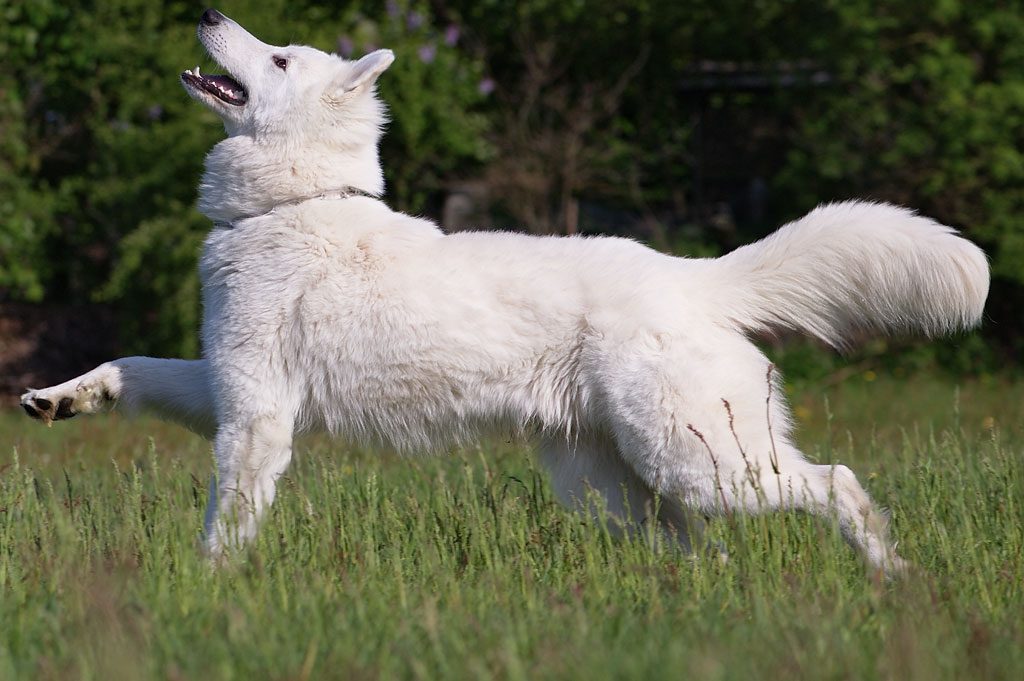
    White Swiss Shepherd Dog
    Suiza FCI 347 - Sheepdogs.

    Pastor Blanco Suizo

    The White Swiss Shepherd Dog is a dog of great temperament, attentive and guardian and never nervous.

    Content

    History

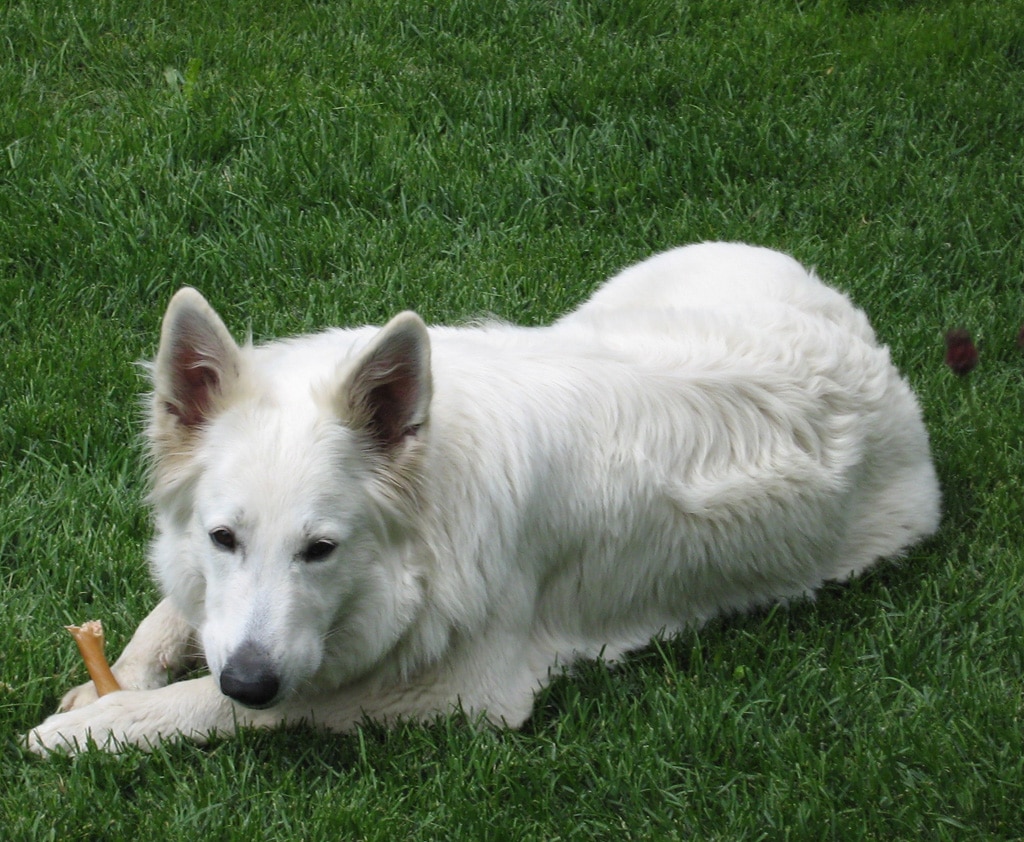
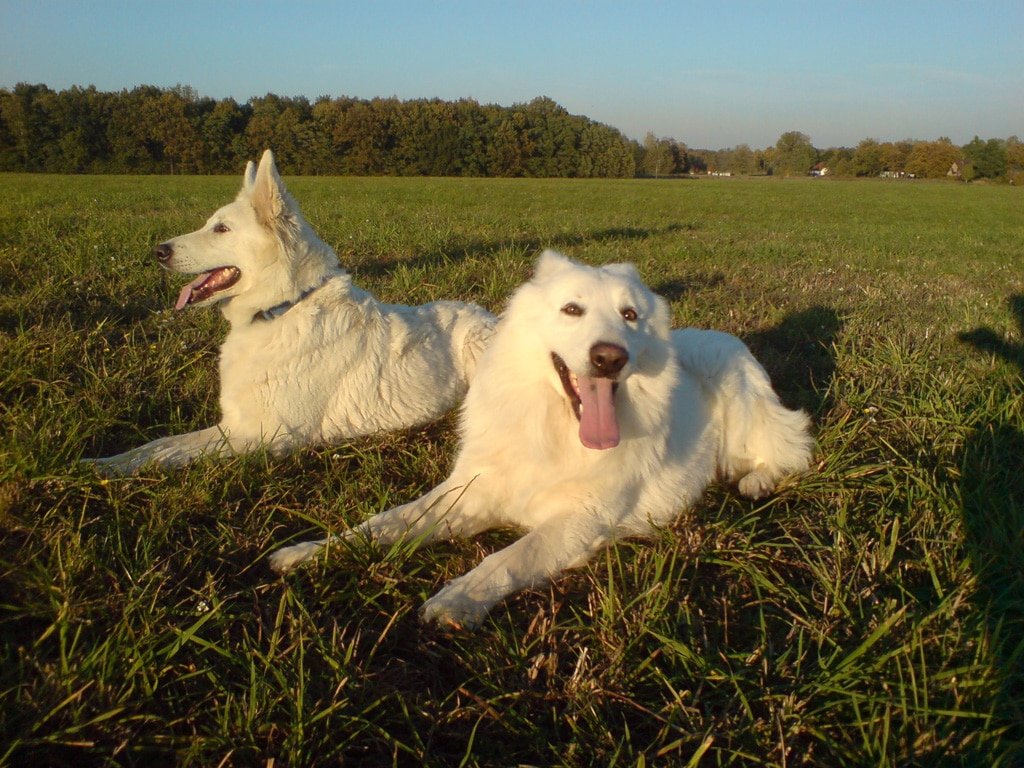
    The White Swiss Shepherd Dog a breed of dog is pastor of Swiss origin. Share origins with the German Shepherd, but has been recognized provisionally as a breed apart by the FCI.

    The 3 in April of 1899, the first dog German Shepherd, as we know it today, It was officially registered. This dog was a completely white male which was used by ranchers and sheepherders for grazing because it was very easy to distinguish it from the wolves.

    The first news about a hatchery White Swiss Shepherd Dog are earlier than the year 1900 and its origin is found in Alsace-Lorraine, to be more exact in the Royal Court of the Habsburgs. In their enclosure they had a kennel of purebred white shepherds.

    After the creation of the race German Shepherd, all colors were accepted. It was in the first decades of the 20th century, When were the white copies excluded, Therefore, persecuted and almost wiped out in Europe.

    Back in the years 70, Switzerland had imported the first specimens of white shepherds, while in Germany - as we said above- as these dogs did not meet the standard of the German Shepherd as we know it today, White shepherds were almost wiped out.

    The first Club of White Swiss Shepherd Dog was founded in the decade of 1970 in United States. For which reason, the race returned to appear in Europe. At first in Switzerland and Denmark, and later in Germany. Little by little, European Cynological societies began to open their stud books for the White Swiss Shepherd Dog.

    A dog born in 1966, it was the first White Swiss Shepherd Dog which was registered in Europe, in Switzerland.

    The breed was recognized in Switzerland of 1991, followed by the Netherlands in 1992. Czech Republic, Austria and Denmark, They also recognized the breed.

    Switzerland, Despite the low popularity of this breed, He recovered the race and also assumed the same motherhood, so in the 26 in November of the year 2002 the Federation Cynologique Internationale acknowledged - on a provisional basis- to the White Swiss Shepherd Dog, as a separate breed.

    Physical characteristics

    The White Swiss Shepherd Dog, to the naked eye and as far as the physical, He is a German Shepherd in all rule, It is only slightly more elongated and less angular.

    According to him standard, the White Swiss Shepherd Dog, is a dog from size medium, powerful, muscular and robust. According to the standard, males must have a tall cross ranging from 60 to 66 cm., females are slightly smaller their stature is about 55 to 61 cm..

    It has the ears large, straight and triangular. The tail scimitar-shaped, is low and at rest reaches the Hock.

    It is the eyes they are fed and slightly oblique tend to be of color dark brown or purplish-brown fire.

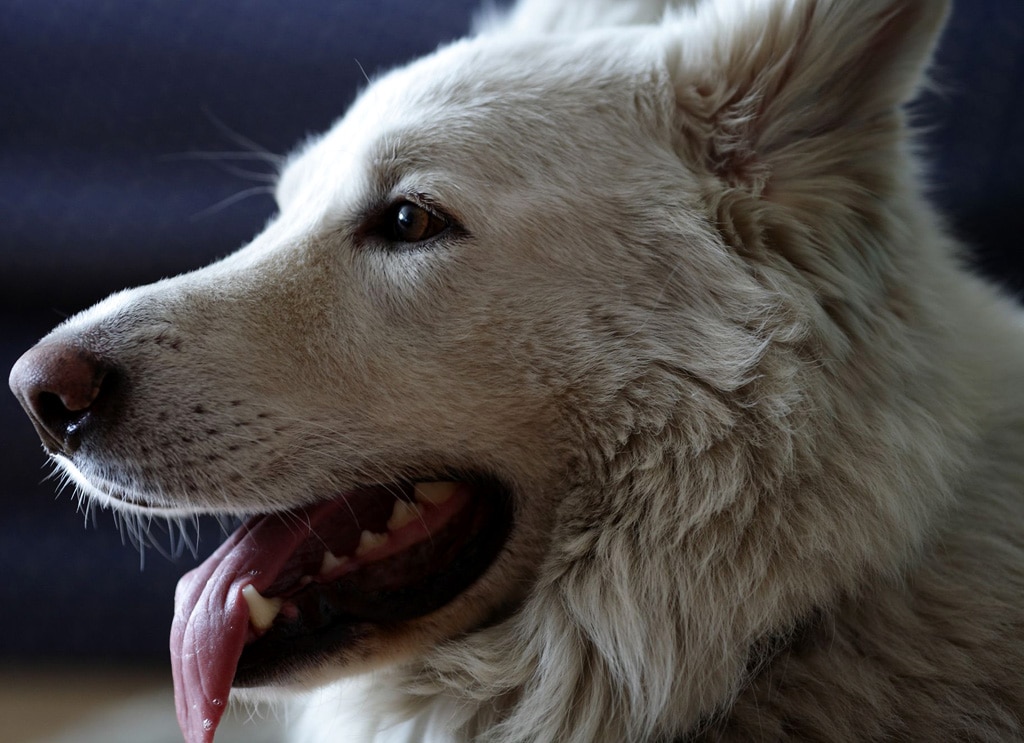
    And perhaps, The most outstanding feature of this beautiful dog is its white mantle of double layer and medium long length. Dense and well separated hair.

    The colour of the mantle is white. The nose, the lips and pads are absolutely black.

    In the year 1933, the white color of the coat was pointed out as a defect that had to be eliminated by the German Shepherd Club of Germany, of America and Canada.

    There are even theories, in the news, that continues to hold the white color is due to a physical defect, to a pathology but that type of theory lacks foundation and the first proof of it, It is a very healthy dog.

    Its white color comes from a simple recessive gene that both parents must be carriers to continue the color, that is the reality.

    Character and skills

    The German Shepherd, not only the color of the mantle but also in its character differ.

    While it is a dog of great temperament he displays never nervous, But if attentive and vigilant. It tends to be suspicious with strangers but never aggressive.

    It is a dog friendly, very Intelligent and learn with ease.

    Itร‚ยดs fair to his family and -as we said- he can be cautious with strangers, but should never show shy or fearful behavior and less aggressiveness. Some people think that the Arctic Wolf mixed with the breed, and that's where his caution comes from, but that only a legend.

    It is a balanced dog, very good watchdog and has even been trained as a guide dog on occasion.

    It is a great companion for everything physical exercise that is its scope, loves to play with sticks, balls, run…

    While its origin speaks of a shepherd dog, today despite the fact that in some countries it is still used in such tasks, is widely accepted as a companion dog.

    It adapts perfectly to the home, fond of children but remember that need exercise like all dogs, This always necessary if we want to keep happy balanced our puppies. Let's not forget that he is a working dog that needs physical and mental challenges.

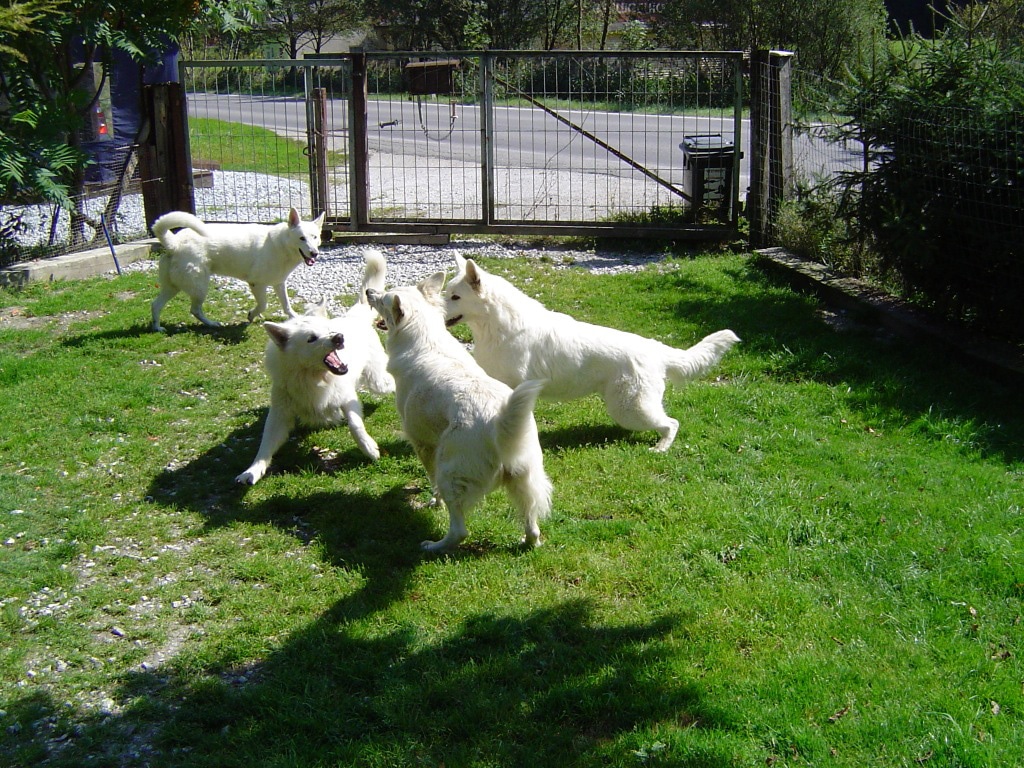
    The White Swiss Shepherd Dog gets along well with other dogs and, as well, It is usually good in agility competitions, search, rescue and obedience. They are also used as assistance dogs.

    The character of White Swiss Shepherd Dog it is softer than the German Shepherd, But if you take genius to protect his family, will not hesitate it to.

    White Swiss Shepherd Dog Images

    White Swiss Shepherd Dog videos

    Type and recognitions:

    • FCI CLASSIFICATION:
    • Group :
    • Section : . .

    Federations:

    • – FCI – Group 1 Herding dogs, Section 1 Sheepdogs โ“˜
    • – ANKC – Group 5 (working dogs) โ“˜
    • – โ€‹KC – Pastoral โ“˜
    • – NZKC – Working dog โ“˜

    FCI breed standard "White Swiss Shepherd Dog"

    Origin:
    Switzerland

    Date of publication of the valid original standard:
    04.07.2011

    Use:

    Family and companion dog.


    General appearance:

    It is a powerful White Shepherd dog, good muscular, medium-sized, with erect ears, double coat that can be medium or long; elongated; medium and elegant bone, harmonious silhouette.

    IMPORTANT PROPORTIONS: Moderately long with a rectangular shape: body length (from the tip of the shoulder to the tip of the ischium) and height at the withers = 12 : 10.

    The distance from the stop to the tip of the nose is slightly greater than from the stop to the occipital protuberance.


    Behavior / temperament:

    Lively and balanced temperament, enjoy the action, attentive with good ability to be trained. Friendly and discreet. With high social capacity and devoted to his master. Never skittish or aggressive without provocation. A cheerful and easily teachable working and sporting dog; with the ability to be educated in any discipline.
    Its high social capacity allows it to be integrated into any kind of events and situations.

    Head:

    ---

    Cranial region:

    Strong, clean cut and finely chiseled, in good proportion to the body. Wedge shaped, top or side view. The axes of the skull and muzzle are parallel.

    • Skull: Only somewhat rounded; the central groove is barely perceptible.
    • Depression links (Stop): Slightly marked, but clearly perceptible.

    facial region:

    Truffle: Medium-sized; black pigmentation is desirable; lighter pigmented and winter nose is accepted.

    • Snout: Powerful and moderately long in relation to the skull; straight nose bridge and lower muzzle line, converging slightly towards the nose.
    • Lips: Dried, closing fairly, as black as possible.
    • Jaws / Teeth: Strong and complete scissor bite. The teeth are set at right angles to the jaws.
    • EYES: Medium size, almendrada form, placed somewhat obliquely; brown to dark brown color, dark brown. Well attached eyelids, it is desirable that it has black edges.
    • EARS: erect, set high, parallel and directed forward; in the shape of an elongated triangle with a slightly rounded tip.

    Neck:

    Moderately long and well muscled, harmoniously inserting into the body, without jowl; the elegant upper neck line runs in a continuous line from the head, which is carried moderately high, to the cross.

    Body:

    • top line: Strong, muscular of medium length.Cross: Pronounced.
    • Back: Level and firm.Pork loin: Well muscled.
    • Rump: Long and medium wide, leans gently towards the root of the tail.
    • Breast : Not too wide. Its depth (approx.. the 50% of the height to the cross); reaching elbow; torch oval box, spreading well back. Marked chest.
    • Bottom line and belly: Thin flanks, firm: moderately retracted lower line.

    Tail:

    Saber-shaped and thick, slimming to tip; rather low insertion; reaching at least the hock; at rest it hangs downwards straight or with a slight saber-like curve in its last third; in action it takes it higher but never higher than the top line.

    Tips

    PREVIOUS MEMBERS:

    • General appearance: Strong, vigorous, with medium bone. Straight, seen from the front; only moderately separated; viewed profile, they are well angulated.
    • Shoulder: The scapula is long and well sloped, well angled; the entire shoulder region well muscled.
    • Arms: Of adequate length and well muscled.Elbows: They are well attached to the body.forearms: Long, straight and vigorous.Metacarpus: Firm and only slightly oblique.
    • Previous feet: Oval; fingers are well arched and close together, footpads are firm, resistant and black. Are desired dark nails.

    LATER MEMBERS:

    • General appearance: Strong, vigorous, with medium bone. Viewed from behind they are straight and parallel; while standing they are not too separated; viewed from the side with adequate angulation.
    • Thigh: Medium in length and well muscled.Knee: With adequate angulation.
    • Leg: Medium length, oblique, with solid bone and well muscular.
    • Hock: Strong, of good angulation.Metatarsus: Medium length, straight, robust.
    • Hind feet: Oval; hind feet are slightly longer than fore feet. Fingers are arched and well together, footpads are firm and black, dark nails are desired.

    Movement:

    Rhythmic sequence of steps with push and resistance; forelimbs reaching well forward, with strong push; the trot is free, with good ground cover.

    Mantle

    • SKIN: No creases with dark pigmentation.

    Fur:

    • Medium length mantle: Denso, glued with double hair; abundant undercoat covered with stiff hair, protection straight; the face, ears and forehead of limbs is covered by shorter hair; on the neck and on the back of the limbs the hair is slightly longer. Slightly wavy but hard hair is allowed.
    • Long hair: Denso, double glued mantle; with abundant undercoat covered with hard hair, protection straight. The face, ears and forehead of limbs are covered by shorter hair; on the neck the long hair forms a clear mane and on the back of the legs are short and the hair on the tail is dense. The length of the coat should never be exaggerated. Slightly wavy but hard hair is allowed.
    • Color: White.


    Size and weight:

    Height to the cross:

    • Males: 58 โ€“ 66 cm.. females: approximately 53 โ€“ 61 cm.Weight:
    • Males: 30 โ€“ 40 kg. females: approximately 25 โ€“ 35 kg.

    Typical dogs slightly below or above the stipulated measurements should not be disqualified.


    Fouls:

    Any deviation from the aforementioned criteria is considered as a fault and the severity of this is considered to the degree of the deviation to the standard and its consequences on the health and well-being of the dog., and the dog's ability to perform its traditional task.

    • Slight bay color overlapping (light yellow or shades of bay) on the tips of the ears, at the back and top of the tail.
    • Partial loss of pigmentation giving a mottled appearance to the nose, lips and / or on the edge of the eyelids.
    • Spurs. Except in countries where its removal is prohibited by law.


      SERIOUS FAULTS:
    • Heavy appearance, too short under construction (square silhouette).
    • Absence of sexual dimorphism.
    • Missing more than two PM1; M3 are not taken into account.
    • Floppy ears (hanging), semi-erect ears, button ears.
    • Severely falling top line.
    • Ring on tail, curled tail, hooked tail, tail carried higher than top line.
    • Soft mantle, silky outer hair; woolly, curly, open hair; decidedly long hair without undercoat.
    • Decidedly bay color (clear yellowish or bay overlay) on the tips of the ears, back or top of the tail.

      FALTAS DESCALIFICANTES:

    • Aggressiveness or extreme shyness.
    • Any dog โ€‹โ€‹showing clear physical or behavioral abnormalities.
    • Anxiety, fear in high degree, aggressiveness due to anxiety, unnecessary aggression, lethargic behavior.
    • One or both blue eyes. Protruding eyes.
    • Entropion, ectropion.
    • Upper or lower prognathism, deviated jaw.
    • Total loss of pigmentation in the nose, lips and / or edge of the eyelids.
    • Total loss of pigmentation in the skin or footpads.
    • albinism.


    N.B.:
    • Males should have two normal-appearing testicles fully descended into the scrotum..
    • Only functionally and clinically healthy dogs, with the typical conformation of the breed, should be used for parenting.

    Source: F.C.I - International Cynological Federation

    Alternative names:

    1. Berger Blanc Suisse, White German Shepherd (English).
    2. berger blanc (French).
    3. Berger Blanc Suisse (German).
    4. Pastor branco suรญรงo (Portuguese).
    5. Perro de pastor suizo blanco (espaรฑol).

    โ–ท The world of Pets: Dogs, cats, birds, reptiles, amphibians

    Croatian Sheepdog
    Croacia FCI 277 . Sheepdogs

    Croatian Sheepdog

    With a great instinct for working with the herd.

    Content

    History

    The Croatian Sheepdog It was described for the first time in 1374 by the Croatian bishop Peter Bichof. According to some sources, the breed was created in the eastern part of Slavonia, the vast agricultural plain of Croatia, to act as a guard and herding dog. Peter Bichof stated that the Croatian Sheepdog It was imported from the East by the Croats around the 7th century.

    It was the vet Stjepan Romic, considered the father of the race, who initiated the systematic breeding of the Croatian Sheepdog in 1935 en Djakovo (Croatia). His role was all the more important since he had previously carried out various investigations on the dog and had managed to unearth writings dating from various periods of the 18th century.. These documents describe the Croatian Sheepdog as it is known today.

    The breed was officially presented at 1949 in Zagreb (Croatia), and the first standard of the Croatian Sheepdog was written by Otto Rohr in 1951. He was recognized by the International Cynological Federation (FCI) in 1967, later for him United Kennel Kingdom (UKC) in 2006 and, finally, by the American Kennel Club (AKC) and Central Canine Society (SCC).

    Despite this recognition by the main canine organizations in the world, the Croatian Sheepdog has not really spread internationally: it is hardly seen outside of its home country and remains unknown to the general public. These may include, the Central Canine Society (Kennel Club inglรฉs) just signed up 38 Croatian shepherds at the LOF (French Origin Book) between 2010 and 2016, an average of just 5 dogs a year.

    Physical characteristics

    The Croatian Sheepdog is a dog at the lower limit of medium size. Short hair on the head and limbs is the characteristic sign of the breed.. The head is quite light with a cone shape. The stop is poorly marked. The eyes are medium in size, macaroons, with a lively expression; the color goes from brown to black. The ears are triangular, raised or semi-raised, medium length and set slightly to the side. Straight ears are referable and cutting is not allowed. The tail is implanted a little high, with long thick hair. It is cut so that it does not have a length greater than 4 cm in adult error.

    • Fur: hair length is 7 to 14 cm on the spine. The face is always covered with short hairs. The ears have short hair on the outer face and long on the inner. The hair is relatively soft, wavy and even curly. The undercoat must be dense.
    • Color: predominantly black although some white spots on the throat or chest are admitted.
    • Size: of 40 to 50 cm..

    Character and skills

    The Croatian Sheepdog is lively and alert, without being nervous. They are also smart, brave and loyal.

    Very obedient, they are also exclusive: they only have one master, to which they remain very attached and whose attention they demand. In fact, it is necessary for its balance.

    Sheepdogs par excellence, has an innate sense of herding and is a very hardy dog. Some ranchers claim that you can knock down all the cattle just by saying their name, no need for further instructions. His approach to the herd is a bit tighter and harsher than that of other sheepdogs, but still very effective. It can bite the animals in its charge, but does not cause injury. This aggressive tendency can be easily worked on during training. It also has the defect of barking easily, especially if his master is absent, hence the importance of training him from a young age.

    The dog lives very well with children. Energetic and playful, the Croatian shepherd gets along wonderfully with them and lavishes affection on them. His extraordinary attachment predisposes him to protect them, even to overprotect them. Not just anyone can get close to them. On the other hand, being a dominant dog by nature, can generally only live with other animals (dogs, cats, etc.) if he is used to their company from a young age.

    Last, are among the dogs adapted to life in a flat, whenever they carry out intense daily activity. In fact, like all sheepdogs, the Croatian shepherd needs to learn and be stimulated mentally and physically. They have been bred to work with humans and, Therefore, have developed the ability to interact with them, making them a learning breed. If they lack activity, can become noisy and even destructive.

    Education

    The intelligence of Croatian Sheepdog, its desire to please its owner and its predisposition to work make it an easy breed to train. This workout should be both gentle and firm.

    Health

    The Croatian Sheepdog has robust health and is very resistant to disease, especially if you spend the nights in the shelter of aboxofdog.In fact, most of his health problems are due to injuries related towork.

    But, may be subject to certain canine diseases that more generally affectactive and energetic dogs:

    • Theknee patella luxation: the joint swells and becomes painful, with early appearance of acanine arthritis.Treatment can range from the occasional use of pain relievers to knee surgery. It is a common disorder inshepherds dogs, they are very active.
    • Thetorsion of the stomach: all dogs can be affected by this disease, but croatian shepherds, they areBig Dogsand they exercise a lot, they are particularly vulnerable.
    • Last, females may have difficulty giving birth. If so, this implies endangering not only the dog, but also to unborn puppies, it is usually necessary to perform a cesarean section under general anesthesia., an owner who wantsraise your bitchYou should think carefully before consulting themating offers.This is a decision that should not be taken lightly., for both financial and safety reasons.

    Life expectancy

    12 to 14 years

    Grooming

    All owners of a Croatian Sheepdog they should brush their dogs regularly to remove dead hair and detangle pups. During the moulting season (Spring and autumn), this brushing should be done even once a day.

    If your dog has gotten too dirty due to the weather and / or his activity, it is necessary to give him a bath. But, this should not be done at regular intervals, since the bath irritates the skin of the animal and removes the oil layer that protects its fur. So, the rule is to avoid bathing the dog, except when really necessary.

    It may also be necessary to trim the dog's nails. But, if your pet does his daily exercise, this should not be the case, because dirt or harder surfaces will naturally erode them.

    It also, do not forget to deworm and vaccinate your dog regularly. How your dog is often outdoors for long periods of time, and is in frequent contact with other dogs and animals, are more likely to come into contact with many bacteria and viruses.

    Price

    The price of a puppy Croatian Sheepdog is usually between 800 and 1000 EUR.

    Characteristics "Croatian Sheepdog"

    Coexistence is important that you have with your new friend. Before considering the acquisition of a dog of the breed "Croatian Sheepdog" you know certain factors. Not all breeds of dogs are apt to live in an apartment, you must take into account his character, their need for exercise, their interaction with other pets, their care and if you have small children, their level of tolerance towards them.

    Adaptation โ“˜

    4,0 of 5 stars (based on 1 review)

    friendly dog โ€‹โ€‹โ“˜

    4,0 of 5 stars (based on 1 review)

    hair loss โ“˜

    3,0 of 5 stars (based on 1 review)

    Affection level โ“˜

    4,0 of 5 stars (based on 1 review)

    Need for exercise โ“˜

    2,0 of 5 stars (based on 1 review)

    Social need โ“˜

    3,0 of 5 stars (based on 1 review)

    Home โ“˜

    3,0 of 5 stars (based on 1 review)

    Toilet โ“˜

    1,0 of 5 stars (based on 1 review)

    Friendly with strangers โ“˜

    4,0 of 5 stars (based on 1 review)

    barking โ“˜

    4,0 of 5 stars (based on 1 review)

    Health โ“˜

    3,0 of 5 stars (based on 1 review)

    Territorial โ“˜

    5,0 of 5 stars (based on 1 review)

    Cat friendly โ“˜

    3,0 of 5 stars (based on 1 review)

    Intelligence โ“˜

    4,0 of 5 stars (based on 1 review)

    Versatility โ“˜

    4,0 of 5 stars (based on 1 review)

    Child friendly โ“˜

    4,0 of 5 stars (based on 1 review)

    Surveillance โ“˜

    4,0 of 5 stars (based on 1 review)

    joy โ“˜

    4,0 of 5 stars (based on 1 review)

    Type and recognitions:

    • FCI CLASSIFICATION:
    • Group :
    • Section : . .

    Federations:

    • – FCI โ“˜
    • – UKC โ“˜
    • – AKC โ“˜

    FCI breed standard Croatian Sheepdog

    FCIFCI - Croatian Sheepdog
    Pastor

    Alternative names:

    1. Hrvatski ovฤar, Kroatischer Schรคferhund (English).
    2. Berger de Croatie (French).
    3. Kroatischer Schรคferhund (German).
    4. Hrvatski Ovฤar (Portuguese).
    5. Perro de pastor croata (espaรฑol).

    Photo:

    croatian sheepdog Mawlch Gera by Michala Mraฤkovรก / Public domain

    โ–ท The world of Pets: Dogs, cats, birds, reptiles, amphibians

    Puli
    Hungrรญa FCI 55 - Sheepdogs

    Puli

    With its black lace cape, gray or white, the Puli, a herding breed of sheep originating from Hungary

    Content

    Adaptation โ“˜

    3,0 of 5 stars (based on 1 review)

    friendly dog โ€‹โ€‹โ“˜

    3,0 of 5 stars (based on 1 review)

    hair loss โ“˜

    3,0 of 5 stars (based on 1 review)

    Affection level โ“˜

    4,0 of 5 stars (based on 1 review)

    Need for exercise โ“˜

    4,0 of 5 stars (based on 1 review)

    Social need โ“˜

    3,0 of 5 stars (based on 1 review)

    Home โ“˜

    4,0 of 5 stars (based on 1 review)

    Toilet โ“˜

    5,0 of 5 stars (based on 1 review)

    Friendly with strangers โ“˜

    2,0 of 5 stars (based on 1 review)

    barking โ“˜

    4,0 of 5 stars (based on 1 review)

    Health โ“˜

    3,0 of 5 stars (based on 1 review)

    Territorial โ“˜

    5,0 of 5 stars (based on 1 review)

    Cat friendly โ“˜

    3,0 of 5 stars (based on 1 review)

    Intelligence โ“˜

    5,0 of 5 stars (based on 1 review)

    Versatility โ“˜

    3,0 of 5 stars (based on 1 review)

    Child friendly โ“˜

    4,0 of 5 stars (based on 1 review)

    Surveillance โ“˜

    4,0 of 5 stars (based on 1 review)

    joy โ“˜

    5,0 of 5 stars (based on 1 review)

    History

    The Puli has been known in Hungary for at least 1.000 years. Dogs like the Puli were brought to Hungary by the Magyar invaders. Dogs look like Tibetan Terrier, and it is possible that this race is one of its ancestors.

    The type of work dogs did depended on their size and color. Light-colored dogs were most useful at night so they could be easily seen, while those of dark color worked during the day. Among the white flocks, were easier to see by the pastor.

    During the 17th century, the Puli almost lost as a breed due to crossbreeding with sheepdogs from France and Germany. In 1912, a program was started to revive the breed. In 1915 A breed standard was drafted and approved by the (FCI) International Cynological Federation in 1924. The dogs had made their first appearance at a Budapest dog show a year earlier and were divided into three classes.: of work, exposure and dwarf. In 1934 breed standard was revised and dogs were divided by height: large, medium and dwarf. An inscription of 1935 in the Hungarian herd book it notes four sizes: large (policeman), medium- (work), small and dwarf. Medium size was the most popular.

    Physical characteristics

    It's a solid dog, lean but muscular. The head is small and thin; front view looks round and in profile, elliptical. The skull is rounded; the nasal canal straight and shorter than the skull, with the stop well marked. The eyes are brown; the gaze is attentive and lively.

    has droopy ears; V-shaped. The body gives an impression of great solidity: the height at the withers is somewhat greater than the length of the trunk.

    The limbs are straight and muscular. The size of the tail is curved and on the kidneys.

    Observations and tips:

    Puli's hair is not easy to keep clean. You must avoid getting dirty because you cannot brush or wash.

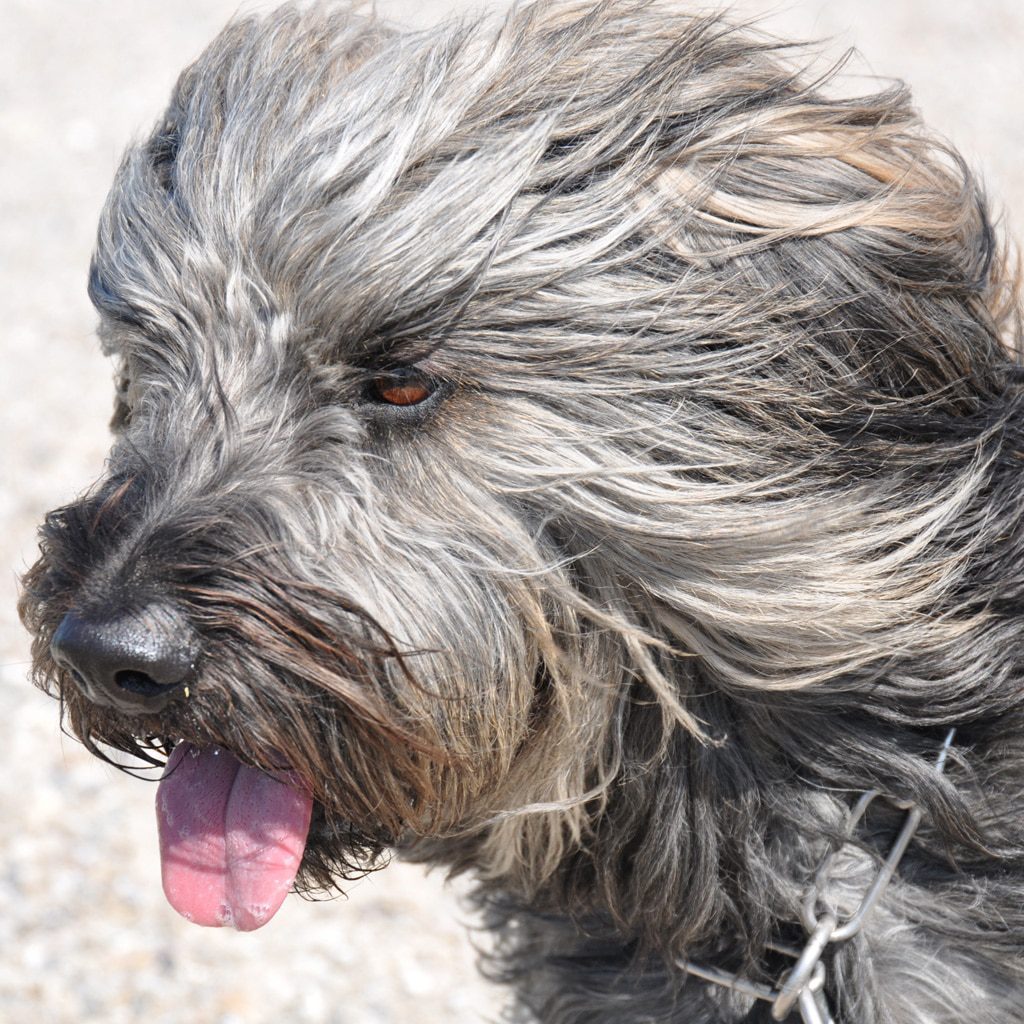
    • Fur: it is so dense that it makes it difficult to examine the different parts of the body. The head appears round due to the hair that falls over the eyes, that hides them. The coat is made of thick textured hair and a fine undercoat: the right proportion between thick and fine hair determines the โ€œnarrowโ€ felting, what is the desired. If there is too much thick hair, the coat is thin. On the other hand, if there is too much fine hair, the cloak will be too pressed. The stringy cloak is made up of uniform hairs that form wavy highlights. Curls are less prone to felting and form long strings. The hair is long on the rump, kidneys and thighs (of 8 to 18 cm.), so that in certain cases, while the dog is standing, hair almost touches the ground. On the other hand, it is moderately short on the head and on the feet.
    • Color: depending on the variety, black, black with reddish highlights, different shades of gray, and white.
    • Size: males, of 40 to 44 cm.; females, of 7 to 41 cm..

    Character and skills

    Dreadlocks usually attract the attention of those unfamiliar with the Puli. But for those who know him and love him, it is his personality that shines.

    The Puli is an affectionate and loving dog that enjoys being with his family. It is intelligent, agile and has a strong work ethic. He is wary of strangers and takes care of his family, but should not be too shy or aggressive.

    Like most herding breeds, the Puli is independent and strong-willed. You need a nice hand, but firm, to achieve their best behavior. The Puli has a tendency to bark, another trait of grazing, so any training program must include a "Quiet" command.

    The Puli is a capable athlete, known for being able to climb a fence 180 cm.. Fenced yard and lots of supervision required.

    Training should begin immediately for the Puli puppy. Even at 8 weeks of age, is capable of learning good manners. Never wait until i have 6 months to start training, or you will have a more stubborn dog to handle. If possible, take it to a puppy trainer when you have 10 to 12 weeks of age, and socializes, socialice, socialice. But, Note that many kinds of training puppies require certain vaccinations (such as kennel cough) stay up to date, and many veterinarians recommend limited exposure to other dogs and public places until puppy vaccinations (including rabies, distemper and parvovirus) They are completed. Instead of formal training, You can start training your puppy to socialize at home and among family and friends until immunizations are completed in the puppy. You can also invite people to your home, to get used to receiving visitors. These experiences as a young dog will help you become a sensible and calm adult dog..

    Talk to a reputable and experienced Puli breeder. Describe exactly what you are looking for in a canine companion, and ask for help selecting a puppy. Breeders see puppies daily and can make incredibly accurate recommendations once they know something about their lifestyle and personality. Choose a puppy whose parents have pleasant personalities and who has been well socialized by the breeder since birth.

    Puli dog health

    The Puli are generally healthy, but the conditions that are sometimes seen in the breed include hip dysplasia, eye problems such as progressive retinal atrophy and deafness.

    Don't buy a puppy from a breeder who can't provide you with written documentation that the parents were cleared of health issues affecting the breed. Getting dogs "vet checked" is not a substitute for genetic health testing.

    Careful breeders screen their breeding dogs for genetic diseases and breed only the healthiest, best-looking specimens., but sometimes mother nature has other ideas and a puppy develops one of these diseases despite good husbandry practices. Advances in veterinary medicine mean that in most cases dogs can still live a good life. If you are going to have a puppy, ask the breeder about the ages of the dogs in their lines and what they died of.

    Remember that after you have welcomed a new puppy into your home, has the power to protect you from one of the most common health problems: the obesity. Keeping a Puli at the right weight is one of the easiest ways to extend his life.. Make the most of your preventive skills to help ensure a healthier dog for life.

    Puli dog grooming

    The Puli has a dense, weather resistant coat that can be wavy or curly but never silky. The undercoat is soft, woolly and dense. The hair clumps together easily and if left alone it will form shaggy cords as the dog matures, a partir de los 9 months of age. Depending on the coat texture and the amount of undercoat and outer coat, laces can be flat or round. It takes four to five years to fully grow and can reach the ground.

    The Puli coat can be brushed or left as a drawstring. If you plan to brush the coat instead of leaving it twine, start early and expect to brush every day or two.

    The coat doesn't fall off much, but the laces must be separated regularly to maintain their appearance, and they attract dirt and debris. The Puli's coat should never be dirty, tangled or foul-smelling. To avoid problems, ask the breeder to show you how to care for the coat. Trimming the hair around the mouth and cleaning the dog's face after meals is one way to help reduce odor.. Bathing and drying a Puli can take hours. Make sure it's dry to the skin, or it will smell musty. If you don't plan to display it, you can choose to keep your coat short for easy maintenance.

    The rest is basic care. Trim nails as needed and brush teeth frequently with a vet-approved pet toothpaste for overall good health and fresh breath. Check ears weekly for dirt, redness or odor that may indicate an infection. If the ears look dirty, clean them with a cotton swab moistened with a gentle, pH-balanced ear cleaner recommended by your veterinarian. Start brushing the Puli while you are young so that you get used to it and accept it willingly.

    Characteristics "Puli"

    Coexistence is important that you have with your new friend. Before considering the acquisition of a dog of the breed "Puli" you know certain factors. Not all breeds of dogs are apt to live in an apartment, you must take into account his character, their need for exercise, their interaction with other pets, their care and if you have small children, their level of tolerance towards them.

    Images "Puli"

    Videos "Puli"

    Type and recognitions:

    • FCI CLASSIFICATION:
    • Group :
    • Section : . .

    Federations:

    • – FCI – Group 1 Herding dogs, Section 1 Sheepdogs โ“˜
    • – AKC – PASTORAGE โ“˜
    • – ANKC – Group 5 (working dogs) โ“˜
    • – CKC – Group 7 – Herding dogs โ“˜
    • – โ€‹KC – Pastoral โ“˜
    • – NZKC – Working dog โ“˜
    • – UKC – Herding dogs โ“˜

    FCI breed standard Puli

    FCIFCI - Puli
    Puli

    Alternative names:

    1. Hungarian Puli (English).
    2. Puli hongrois (French).
    3. Puli (German).
    4. Puli (Portuguese).
    5. Puli hรบngaro, Pulik (espaรฑol).

    Photos:

    1 – Picture of a white Puli by http://www.rabakozi-nemes.hu / CC BY-SA
    2 – Pulik by No machine-readable author provided. Pleple2000 assumed (based on copyright claims). / CC BY-SA
    3 – Puli at the World Dog Show in Poznaล„ by Wikipedia
    4 – White puli, sheared by age by Benutzer:Cryptodirum / Public domain
    5 – Puli would Haplochromis / CC BY-SA
    6 – Puli (Hungarian Shepherd), female, 2 years and a half by Wikipedia
    7 – Puli would https://pxhere.com/es/photo/1362559

    โ–ท The world of Pets: Dogs, cats, birds, reptiles, amphibians

    Miniature American Shepherd
    Estados Unidos FCI 270 . Sheepdogs

    Miniature American Shepherd

    With his alert expression, attentive and intelligent, the Miniature American Shepherd has all the qualities of Sheepdogs

    Content

    History

    In forty years, Americans have managed to fix the characteristics of this new breed, from the strains of small Australian Shepherds. Recently, the American Kennel Club (AKC) agreed to integrate and, therefore, recognize the Miniature American Shepherd as a race in its own right, integrating it into the Herding Group โ€œShepherd Dogsโ€ … next to his ancestor, the Australian Shepherd.

    In the decade of 1960, the little ones Australian Shepherd who worked on the United States rodeo circuit were selectively bred to further reduce their size. The new breed was originally called the Miniature โ€œAustralian Shepherdโ€. "They became especially popular with riders who traveled to horse shows, since his intelligence, "loyalty and size made them an excellent travel companion.", say the experts of the Club del Miniature American Shepherd from the USA. "In this way its popularity spread throughout the country."

    Currently, the breed is recognized by the FCI (International Cynological Federation), in view of the number of breeders that are embarking on the selection of this breed of dog in Europe.

    Photo: Buddyยป Miniature American Shepherd โ€“ Lost Island’s Roy ‘Arsenal’ Harper โ€“ bred by: Julia Bettendorf, Lost River Miniature American Shepherds – Jugabe3b, CC BY-SA 4.0, via Wikimedia Commons

    Physical characteristics

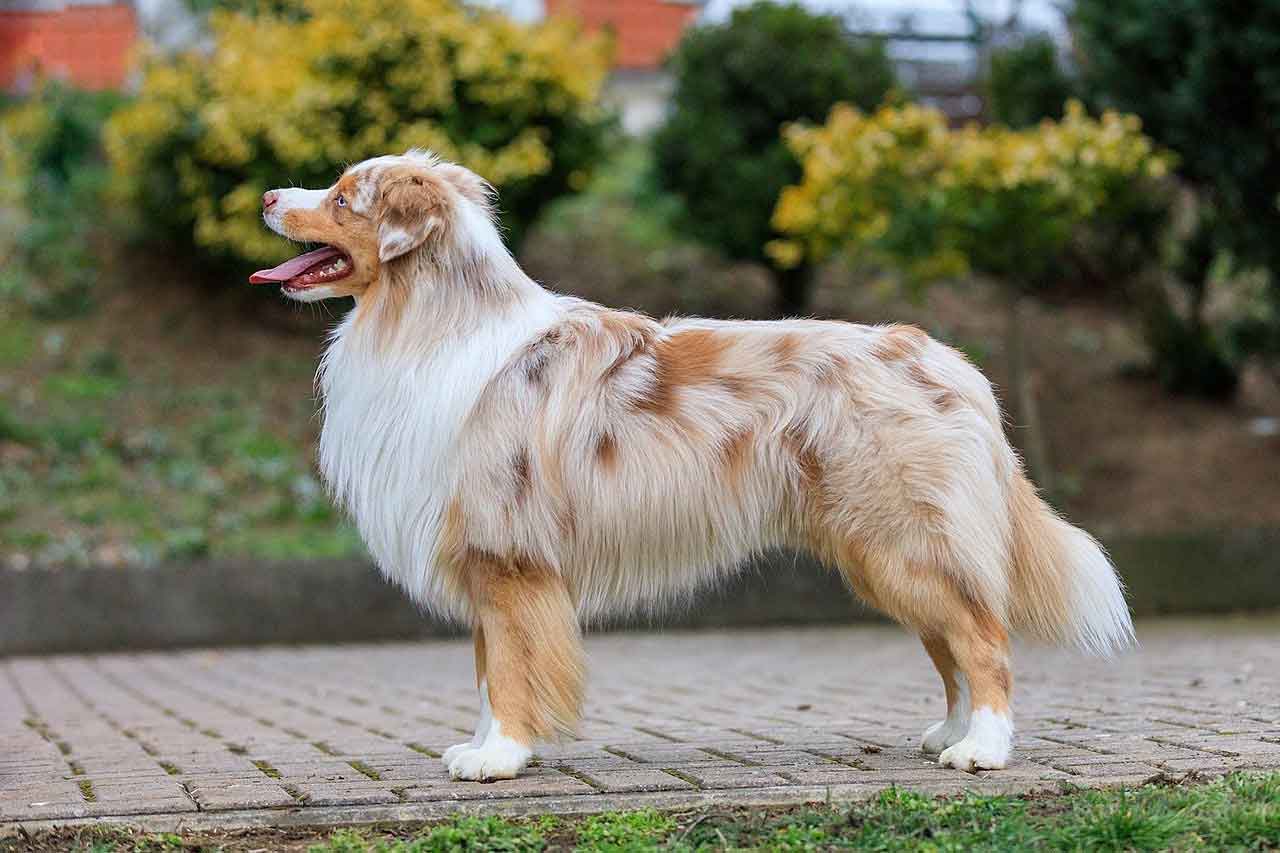
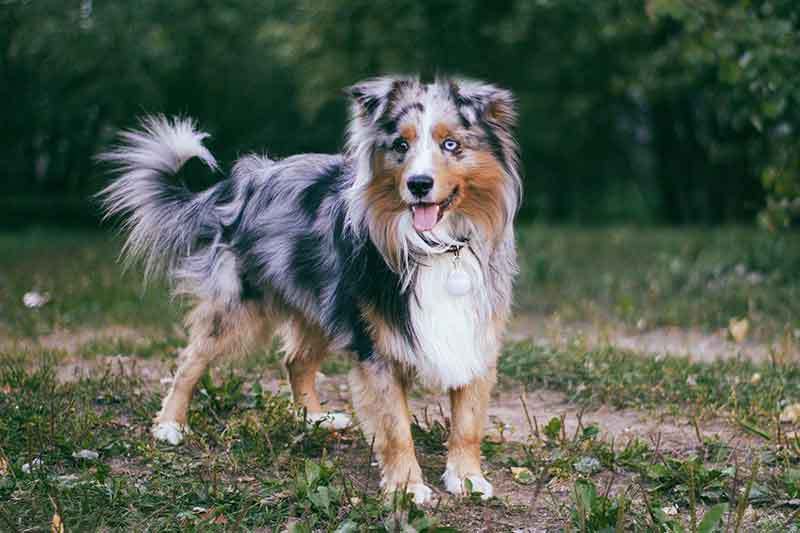
    The Miniature American Shepherd shares many physical traits with its predecessor the Australian Shepherd, only on a smaller scale. The females measure between 33 – 43 cm at shoulder; the males between 35,5 – 46 cm.. Despite its size, they are every inch a real herding dog: energetic, versatile, robust and extremely bright. Striking fur comes in black, blue merle, red and red merle. (Merle exhibits any amount of marbling, spots or mottling.) The Miniature American Shepherd they move with the smooth, agile stride of a dog built for hard work on rough terrain.

    Character and skills

    With his alert expression, attentive and intelligent, dogs Miniature American Shepherd they have all the qualities of a little Shepherd dog, with a pronounced instinct to lead and watch over the herds. Easy to train, able to respond to a variety of demands that allow them to evolve in different sports disciplines. the Miniature American Shepherd However, they are reserved for people who are not familiar to them.. But once you "know" them, becomes a wild playmate, and capable of real feats, thanks to its agility and small size.
    Like all working dogs, especially those able to work in their original profession, when in a situation with a herd of animals, their behavior changes and they become attentive and tireless helpers.

    Its small size, your cleanliness reduced to a minimum, their adaptability and listening skills, greatly facilitate your life and your education in the city. But, like all shepherds, you need to spend and "empty" your overflowing energy. Beautiful walks and runs in the forest are essential to maintain your tone, his physical form and his playful character.

    Health and nutrition

    This solid and sturdy dog, just like their ancestors, does not pose any particular problem in feeding. His health is that of a dog from generations of working dogs, although many buyers take the step of having a companion dog that is easy to live with. Never forget where it comes from, as you deserve regular physical activity to maintain your figure and strength.

    The Miniature American Shepherd is generally a healthy dog, and responsible breeders test their breed for health conditions, communicating with other breeders dedicated to working together for the health of the breed and the preservation of the unique qualities of the breed.

    Although the Miniature American Shepherd it is a relatively healthy breed, the following complications have been observed:

  • Juvenile cataracts
  • PRA (progressive retinal atrophy)
  • Iris Colobomas
  • PPM (persistent pupillary membrane)
  • Regular visits to the vet for checkups and parasite control help ensure a long and healthy life for the dog.

    Grooming

    The Miniature American Shepherd has a double coat, with a longer outer coat and a wool underlayer. The breed shows a good amount, even more so during shedding season, which can happen once or twice a year. Weekly brushing, daily during molting season, will help remove dirt and loose hair and keep the dog looking its best. Balls or tangles can be resolved with a finer brush or metal comb. As in all races, nails must be trimmed regularly, too long nails can cause discomfort to the dog.

    Training

    As in all races, early socialization and training classes for puppies are recommended, which help to ensure that the dog becomes a well-adjusted and well-behaved companion. Smart and willing to please, the Miniature American Shepherd is highly trainable and will reach its best potential as a partner when taught at least basic obedience.

    Physical exercises

    The Miniature American Shepherd he is active and athletic, and requires a moderate amount of exercise but is also very adaptable to your family's way of life. They do well as city dogs as long as their owners provide them with enough exercise.. They enjoy outings with their people that will occupy both their mind and their body. They enjoy and excel at many dog รขโ‚ฌโ€นรขโ‚ฌโ€นevents, including obedience, agility and tracking.

    Characteristics "Miniature American Shepherd"

    Coexistence is important that you have with your new friend. Before considering the acquisition of a dog of the breed "Miniature American Shepherd" you know certain factors. Not all breeds of dogs are apt to live in an apartment, you must take into account his character, their need for exercise, their interaction with other pets, their care and if you have small children, their level of tolerance towards them.

    Adaptation โ“˜

    3,0 of 5 stars (based on 1 review)

    friendly dog โ€‹โ€‹โ“˜

    4,0 of 5 stars (based on 1 review)

    hair loss โ“˜

    3,0 of 5 stars (based on 1 review)

    Affection level โ“˜

    5,0 of 5 stars (based on 1 review)

    Need for exercise โ“˜

    4,0 of 5 stars (based on 1 review)

    Social need โ“˜

    4,0 of 5 stars (based on 1 review)

    Home โ“˜

    3,0 of 5 stars (based on 1 review)

    Toilet โ“˜

    2,0 of 5 stars (based on 1 review)

    Friendly with strangers โ“˜

    4,0 of 5 stars (based on 1 review)

    barking โ“˜

    3,0 of 5 stars (based on 1 review)

    Health โ“˜

    4,0 of 5 stars (based on 1 review)

    Territorial โ“˜

    4,0 of 5 stars (based on 1 review)

    Cat friendly โ“˜

    3,0 of 5 stars (based on 1 review)

    Intelligence โ“˜

    5,0 of 5 stars (based on 1 review)

    Versatility โ“˜

    5,0 of 5 stars (based on 1 review)

    Child friendly โ“˜

    4,0 of 5 stars (based on 1 review)

    Surveillance โ“˜

    3,0 of 5 stars (based on 1 review)

    joy โ“˜

    4,0 of 5 stars (based on 1 review)

    Images "Miniature American Shepherd"

    Photos:

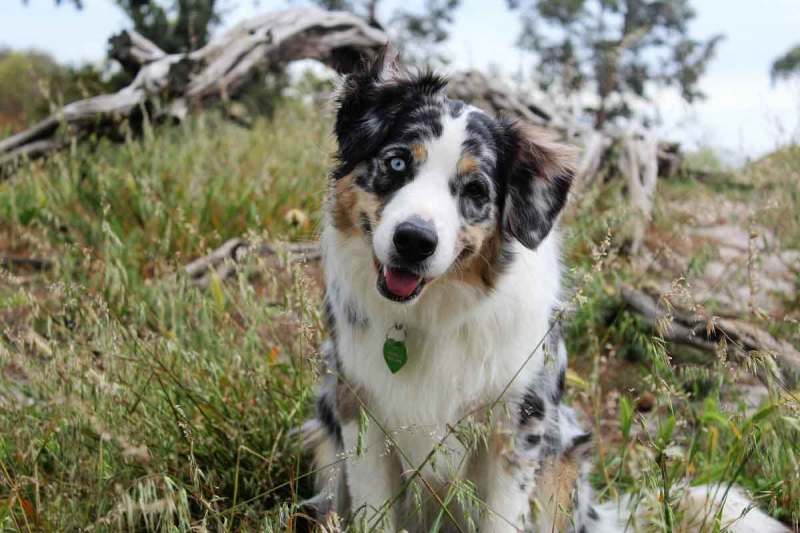
    1 – Blue Merle Miniature American Shepherd by Lextergrace, CC BY-SA 4.0, via Wikimedia Commons
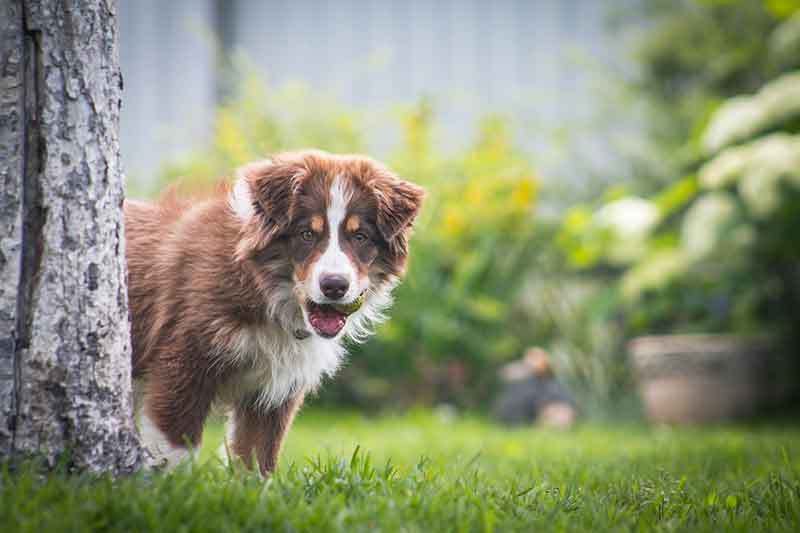
    2 – Miniature American Shepherd with Frisbee by Mullinspw, CC0, via Wikimedia Commons
    3 – Miniature american shepherd puppy by TanSinVic, CC BY-SA 4.0, via Wikimedia Commons
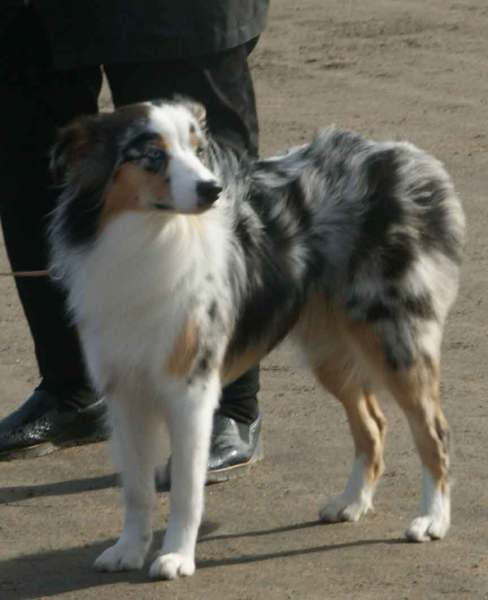
    4 – Miniature american shepherd by TanSinVic, CC BY-SA 4.0, via Wikimedia Commons
    5 – Miniature American Shepherd, blue merle, female by Canarian, CC BY-SA 4.0, via Wikimedia Commons
    6 – American miniature shepherd by https://pxhere.com/en/photo/1029669

    Videos "Miniature American Shepherd"

    Type and recognitions:

    • FCI CLASSIFICATION:
    • Group :
    • Section : . .

    Federations:

    • FCI โ“˜
    • AKC โ“˜

    FCI breed standard "Miniature American Shepherd"

    Origin:
    United States

    Date of publication of the valid original standard:
    04/09/2019

    Use:

    Utilization

    As the name suggests, is a herding dog. Can work in herds of farm animals (sheep, cows, horses).


    General appearance:

    The Miniature American Shepherd is a small sheepdog of the United States of America. It is slightly longer than it is tall with a moderate bone structure in proportion to its body size and weight without extremes.. His movements are fluid, easy and balanced. His exceptional agility combined with strength and ​​resistance allows you to work on a wide variety of terrain. This very versatile and energetic dog is an excellent athlete with great intelligence and a willingness to please those to whom he is present. dedicated. He is a faithful companion and a hard worker. His expression is attentive. Fur hairs, medium length and texture, can be solid in color or mixed with or without whiteness, with or without fires. Traditionally has no tail, shortened or natural short tail.
    A solid build with a mid-frame in relation to its size and weight. The structure of the dog reflects masculinity without being too rough for males.. Females appear feminine without being too light. Overall structure gives an impression of strength without being over the top.

    important proportions

    Length, measured from the tip of the sternum to the tip of the buttock, is slightly higher than the height, measured from the top of the cross to the ground.


    Behavior / temperament:
    The Miniature American Shepherd is an intelligent working dog. Has a pronounced instinct for behavior and keeping herds. He is an exceptional companion, versatile and very easy to educate. Although reserved with strangers, He is not shy. He is an energetic and long-lasting worker who adjusts his behavior and shows the right emotion for the task at hand. With his family he is protective, devoted and faithful.

    Head:

    ---

    Cranial region:

    Head

    The head must be clearly drawn and in proportion to the dog's body. The expression is alert, attentive and intelligent. The dog may express a reserved look and / or vigilant towards foreigners.

    Skull

    The skull is flat or slightly domed and may show a slight occipital protrusion. The width and length of the skull are equal.

    Depression links (stop)

    It is moderate but defined.

    facial region:

    Truffle

    The truffle is liver pigmentation for red or red merle and black subjects for black or blue merle subjects. Fully pigmented truffle is preferred.

    Snout

    Fades a bit of the truffle base and rounds out at the end. The length of the muzzle is equal to that of the skull in the profile. The top line of the skull and the chamfer line are slightly oblique to each other, and the top line of the skull forms a slight downward angle.

    Jaws / Teeth

    The teeth must be complete and in scissors. Dogs with broken teeth, missing or accidentally discolored will not be penalized.

    Eyes

    The eyes are obliquely set, in the form of almond, without projection or sunken and in proportion to the head. Whatever the color of the dress, all eye colors are allowed. Eyes are allowed, specks and specks. The edge of the eyelid has liver pigmentation for red or red merle subjects and black pigmentation for black or blue merle subjects.

    Ears

    The ears are triangular, medium-sized, attached to the top of the head. When is the dog attentive, fold back or to the side, ru รย รยพรยทรยฐ.

    Neck:

    The neck is solid and in proportion to the body, is of medium length and slightly curved. Neck fits well between shoulders.


    Body:

    Generality

    The body is firm and well muscled but without exaggeration.

    Back

    Firm and straight in static as well as in motion.

    Pork loin

    Strong and wide seen from above.

    Rump

    Moderately inclined.

    Breast

    The chest is full and deep. Reaches elbow with well-curved ribs.

    bottom line

    Moderately elevated.

    Tail:

    Traditionally has no tail, shortened or natural short tail. The long, uncut tail can form a slight curve when the dog is around. Resting. When the dog is moving, can be used with a slightly steeper curve.


    Tips

    Former members

    Generality

    The front legs are well muscled and balanced with the hindquarters.

    Shoulder

    Shoulders are long, plans, quite close to the withers and well inclined.

    Arm

    The humerus should be the same length as the scapula and form a right angle with it.

    Elbow

    The elbow joint is equidistant from the floor and the tourniquet. The elbows should be close to the ribs.

    Forearm

    They are straight and strong. The bone is oval instead of round.

    Metacarpus

    Metacarpals are short, thick and strong but still flexible, showing a slight angle seen from the side.

    Front feet

    The feet are oval, compact, with tight fingers. The toes are well arched. The pads are thick and elastic. Nails are short and hard. Lugs can be removed in countries that allow the practice.

    Later members

    Generality

    The width of the hindquarters is equal to that of the front hand at the shoulders. รยญรยปร‘ล’ angle, roughly right, formed by the scapula and humerus corresponds to that formed by the pelvis and thigh.

    Knee

    Hot flashes are clearly drawn.

    Hock

    The hocks are short, perpendicular to the ground and parallel to each other as seen from behind.

    Rear feet

    The feet are oval, compact, with tight fingers. The toes are well arched. The pads are thick and elastic. Nails are short and hard. Lugs can be removed in countries that allow the practice.

    Movement:

    The steps are fluid, clear and easy. The American Mini Shepherd shows great ease in his movements with well covered strides. The forelimb and hindlimb move in planes parallel to the median axis. As speed increases, front and hind legs converge toward the median plane, while the top remains firm and horizontal. The Miniature American Shepherd must be agile and able to change course and pace instantly.


    Mantle

    Fur

    The hair is of medium and long texture, straight to wavy. The inner layer varies according to the seasons. Hair is short and straight on the head and the front of the front legs. The back of the front legs and the panties are moderately provided. The mane and culture are more marked in males than in females. The ears, the feet, the back of the hocks and tail can be fixed. The dog must be presented with natural hair.

    Color

    The colors are varied and unique. In no order of preference, recognized colors are black, red, merle blue and merle red. The blackbird will be exposed with any number of stains, spots or stains. Undercoat may be slightly lighter than undercoat hair. Asymmetric markings are not a defect.
    No fire marks required (Sun tanning). When they are present, are allowed in the following locations: around the eyes, in feet, in the legs, below the neck, in the face, at the bottom of the ear, under the base of the tail, and panties can also emphasize the end result. The tone of the marks "fire" can range from creamy beige to black red, no preference.
    White markings are not mandatory and must not be invasive. They are limited to the mouth, cheeks, skull, neck, with a partial or full collar, chest, belly, forelimbs and hindquarters to the end of the hock. The tip of the tail may be white. The eyes must be completely surrounded by color. Rolling eyes are forbidden. The ears should preferably be completely covered with colored hair. If there is white in the ear, should not be more than 25% in one ear.


    Size and weight:

    Size and weight

    Height to the cross

    The size for males should be between 35,5 cm and 45,5 cm to the cross.
    The size for females should be between 33 cm and 43 cm to the cross.


    Fouls:

    Any deviation from the above mentioned criteria is considered to lack, and the severity of this is considered the degree of deviation from the standard and its consequences on the health and well-being of the dog and the dog's ability to perform its traditional task.

    Serious misconduct

    ▷Ears hanging or fully erect.
    ▷25 to 50% unpigmented truffle.
    ▷Atypical hair.
    ▷White markings covering more than 25% from the surface of the ears.
    ▷The hair roots of a white necklace protruding from the cross.

    disqualifying fouls:

    ▷Aggressive or shy dog.
    ▷Lack of type.
    ▷Size at the withers outside the limits of the standard: less than 35,5 cm and more than 45,5 for males, less than 33 cm and more than 43 cm for females.
    ▷More than 50% unpigmented truffle.
    ▷Color no compatible, different from those allowed by the standard.
    ▷The color of the mucous membranes does not match the dress.
    ▷Non-pigmented hairs.
    ▷Eyes not completely colored.
    ▷White tasks in another place that is not specified in the standard.
    ▷The lowest or highest prognathism.
    ▷Cryptorchid or perro monorchid.


    N.B.:
    NB:
    • Any dog โ€‹โ€‹showing clear signs of physical or behavioral abnormalities must be disqualified..
    • The aforementioned fouls that are more pronounced or more marked are eliminatory..
    • Males should have two normal-appearing testicles fully descended into the scrotum..
    • Only functionally and clinically healthy dogs, with the typical conformation of the breed, should be used for parenting.

    Source: F.C.I - International Cynological Federation

    Alternative names:

    1. Miniature Australian Shepherd, MAS (English).
    2. Miniature Australian Shepherd (French).
    3. Miniature Australian Shepherd, Mini-Aussie (German).
    4. Miniature Australian Shepherd (Portuguese).
    5. Miniature Australian Shepherd (espaรฑol).

    โ–ท The world of Pets: Dogs, cats, birds, reptiles, amphibians

    Catalan Sheepdog
    Espaรฑa FCI 87 . Sheepdogs

    The Catalan Sheepdog He is friendly and has a strong protective instinct especially with children.

    Pastor Catalรกn

    Content

    Characteristics "Catalan Sheepdog"

    Coexistence is important that you have with your new friend. Before considering the acquisition of a dog of the breed "Catalan Sheepdog" you know certain factors. Not all breeds of dogs are apt to live in an apartment, you must take into account his character, their need for exercise, their interaction with other pets, their care and if you have small children, their level of tolerance towards them.

    Adaptation โ“˜

    4,0 of 5 stars (based on 1 review)

    friendly dog โ€‹โ€‹โ“˜

    4,0 of 5 stars (based on 1 review)

    hair loss โ“˜

    3,0 of 5 stars (based on 1 review)

    Affection level โ“˜

    4,0 of 5 stars (based on 1 review)

    Need for exercise โ“˜

    5,0 of 5 stars (based on 1 review)

    Social need โ“˜

    4,0 of 5 stars (based on 1 review)

    Home โ“˜

    3,0 of 5 stars (based on 1 review)

    Toilet โ“˜

    3,0 of 5 stars (based on 1 review)

    Friendly with strangers โ“˜

    2,0 of 5 stars (based on 1 review)

    barking โ“˜

    3,0 of 5 stars (based on 1 review)

    Health โ“˜

    5,0 of 5 stars (based on 1 review)

    Territorial โ“˜

    4,0 of 5 stars (based on 1 review)

    Cat friendly โ“˜

    3,0 of 5 stars (based on 1 review)

    Intelligence โ“˜

    4,0 of 5 stars (based on 1 review)

    Versatility โ“˜

    4,0 of 5 stars (based on 1 review)

    Child friendly โ“˜

    5,0 of 5 stars (based on 1 review)

    Surveillance โ“˜

    4,0 of 5 stars (based on 1 review)

    joy โ“˜

    3,0 of 5 stars (based on 1 review)

    Catalan Sheepdog History

    The Catalan Sheepdog (Sheepdog) It is a breed of dog of Catalonia, Spain. It was used above all to watch the herds during the day in the Pyrenees area and in the area occupied by the transhumance related to this area.

    Although little is known about the origins of the Catalan Shepherd, today it has become one of the sheepdog breeds, Iberian, more extended. For a long time he has lived geographically isolated and descends โ€“ probably- dogs shepherds who kept kinship with primitive Oriental races.

    Close relatives include the Pyrenean Shepherd and the Bergamasco Shepherd.

    Likewise, There are documentary sources to ensure that, at sites such as the Minferri dogs of measurement remains have been found with very similar in structure to the Catalan Shepherd, the find could be located in the 2000 to. C.

    Anyway that there are only drawings of 200 years ago that testify the existence of the Catalan Shepherd. I.e., their origin It is still an issue controversial.

    In 1919, Catalan Sheepdog, He was recognized by the Federation Cynologique Internationale as Spanish breed of dog.

    In 1929 wrote the first standard from two dogs, TAC and Iris, two copies a canine contest winners. However, all this could not stop the debacle of the race.

    With the advent of tourism in the Pyrenees which is where were more specimens of the breed, also arrived foreign dog breeds, and the Catalan Shepherd Dog became a type of small dog, underestimated front foreign dogs already wearing so many decades by selecting them and improving them, so it was abandoned and mixing with other races.

    During the Decade of 1970, an organization called Laketร nia took two dogs that remained with a very pure appearance, one from Solsona and the other from Berguedร  and selectively bred them to recover the breed. All current breeding dogs carry genes from these two specimens.

    In 1982 created the Catalan Atura Dog Club, This led to begin airing various breeders and 1982 be drafted a new standard that is the still existing today.

    Currently, the dog has been able to spread a lot when it was verified that it not only serves to take care of herds but also as a companion animal and more than 4.000 registered copies.

    Physical characteristics

    Its height the cross is of 47 to 55 cm in males and 45 to 53 cm in females.

    The hair is long, very little wavy or stretched. Usually rough, in some cases smooth. The subpelo is abundant, especially in the later third.

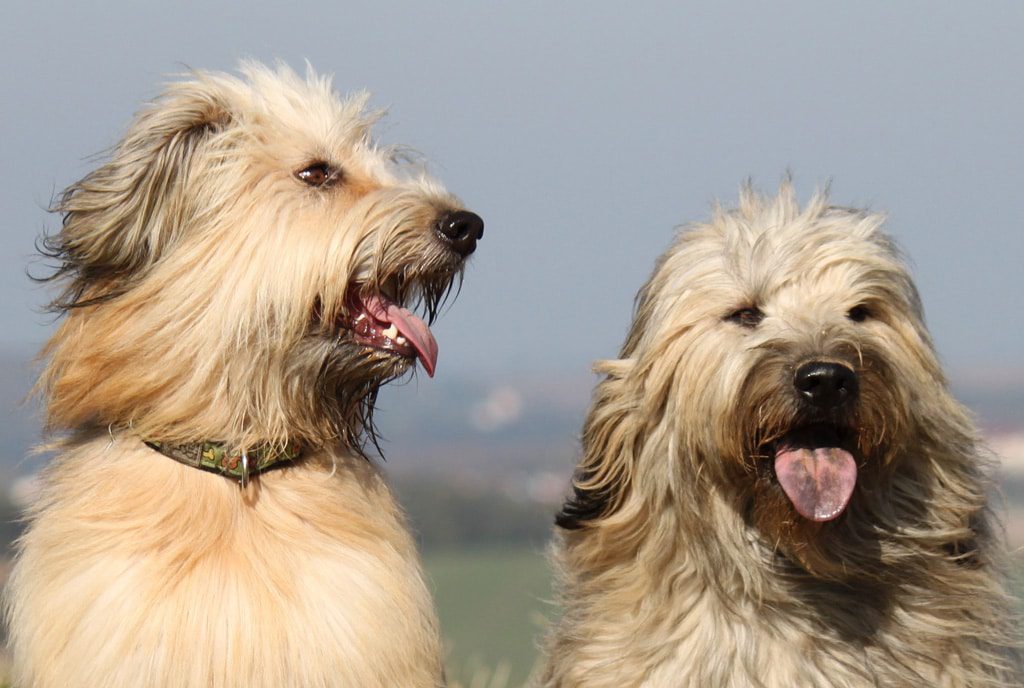
    In the head has beard, moustache, quiff and sobrecejas that allow to see the eyes. The tail is well provided with hair, just as the limbs. When they shed their hair, a typical phenomenon occurs, as it does in two times.

    during the first, change the hair in the front half of the dog, and gives the impression that it is two media with different hair dogs. In the second half, changing the rear half and returns to match.

    Regard to the color, They seem far to monochrome, and they can present lighter shades to extremities. Seen closely observes that the color is given by the mixture of hairs of different tones: neula, terrizo more or less reddish, grey, black and white.

    The basic colors that result from the mixture are:

    • Neula: In his clear tones, medium to dark.
    • Tierra: With hair color land, neula, black and white. With three clear tones, medium to dark.
    • Gris: Consisting of white hairs, Gray and black, with colors that can go the tetravalent to the gris-negro. If master black and only combines with white hairs, It gives a black appearance of frost.

    There are also copies with a mixture of black hairs, neula and reddish Earth that can dominate in some parts, giving the sensation of exemplary black and Tan.

    Character and skills Catalan Sheepdog

    Pastor Catalรกn, indispensable assistant for the current Catalan shepherds, is a typical shepherd dog fell, rustic, frugal, obedient, resistant, barking, vigorous and reserved with strangers.

    It is perfectly adapted different situations ranging from the comfort of a home, to the extreme climatic conditions of the high mountain, and this makes it an excellent conductor of flocks or a perfect Playmate.

    In Catalonia, It is still used as a sheepdog and thanks to its great intelligence not just limited to following the shepherd, but occasionally it replaces his master and is responsible for the solo lead and guarding the flock.

    In other countries, it is known more than anything as a companion and exhibition dog, always with a dial protective character in special with children.

    It is a dog very versatile and nice, She loves to play but you know when it is necessary to be quiet.

    Some specialists often describe it as a sullen and few friends but in reality is that attitude taken with strangers, at the slightest sign of trust he will show his affection.

    Catalan Shepherd is very easy of educate and train.

    Images of the Catalan Sheepdog

    Catalan Sheepdog videos

    Type and recognitions:

    • FCI CLASSIFICATION:
    • Group :
    • Section : . .

    Federations:

    • – FCI – Group 1 Herding dogs, Section 1 Sheepdogs โ“˜
    • – โ€‹KC – Grazing โ“˜
    • – UKC – Herding โ“˜

    FCI breed standard Catalan Sheepdog

    FCIFCI - Catalan Sheepdog
    Pastor

    Alternative names:

    1. Catalan shepherd (English).
    2. Berger catalan (French).
    3. (Katalanisch Gos d’Atura Catalร ; Spanisch Perro de Pastor Catalรกn) (German).
    4. (em catalรฃo: gos d’atura catalร ) (Portuguese).
    5. Gos d’Atura Catalร , Perro de pastor catalรกn (espaรฑol).

    โ–ท The world of Pets: Dogs, cats, birds, reptiles, amphibians

    Border Collie
    Gran Bretaรฑa FCI 297 . Sheepdogs

    Border Collie

    The Border Collie is regarded as the breed of smarter dogs que existe

    Content

    History

    The Border Collie takes its name from the region of Borders, the border region between Scotland and England, where he has been tending flocks of sheep since ancient times with extraordinary efficiency. For a long time, has remained there out of sight of international canine enthusiasts. So, the official rule was not registered with the FCI until 1976.

    The foundation of the ISDS (International Society of Sheep Dogs) in 1906 marked a turning point in this dog's history. The name of Border Collie then appeared in 1915 to describe these famous "sheepdogs", in recognition of the selection work carried out by the pastoralists of the border regions. The word "border" refers to the border, while the word "Collie" is used to describe a sheepdog.

    The Border Collie owes excellent performance in many disciplines to rigorous and uncompromising selection in a pastoral environment. The different breeds that have stabilized the border are mainly herder breeds (Old English Sheepdog (Bobtail), Bearded Collie…), but also hunting dogs, as the English Pointer and especially the Gordon Setter.

    Like this, the definitive pedigree of Border Collie, and therefore his right to breed dogs with pedigree, directly depends on your herding skills.

    Physical characteristics

    The Border Collie is a dog of medium size, well proportioned, that can weigh between 16 and 23 kg. It has a double cloak of hair that supports various colors, variations of black, toasted and white though white should never be the predominant color, the fur is impermeable, It can be dense and coarse, or dense, soft. The body has athletic appearance, low chest, strong and agile.

    The height varies between 46,5 and 56 centimeters for males and between 46 and 53 centimeters in females. The tail is moderately long, slightly curved, well populated, with a lock of his hair white at the end of the same.

    There are two coat varieties, moderately long and short. In both, the outer layer is dense and has a medium texture; the inner layer is dense and soft, which gives it good protection against the inclement weather. In dogs that have a moderately long fur, the abundant hair is Manes, fringes and tail brush. In the face, ears, previous members (except for the fringes) and later members from hocks to the ground, the hair should be short and smooth.

    Character and skills

    He is loyal to his own and especially to whom he adopts as a leader, with whom he forges an unconditional bond. His gaze is one of his main characteristics., in moments of work he never separates her from her leader, denoting an unusual ability to concentrate in other dog breeds. He is happy when working, enjoy doing it.

    According to the classification made by Stanley Coren after analyzing the responses of more than 200 work of the AKC judges (ยซThe intelligence of dogsยป, Stanley city, Ediciones B, 1995), the Border Collie is the No. 1 from the list.

    It is a clever dog, very acute hearing, with a broad response capacity but, above all, It has a great agility and is owner of extreme intelligence, both functional and obedience.

    His strong herding instinct, coupled with his tenacity and resistance, It places it among the most required to bring races, controlling and driving flocks, proving the best breed of dog existing pastor.

    The Border Collie is regarded as the breed of more intelligent dogs que existe, next to the Golden Retriever and to the German Shepherd, that is why it is so easy to train.

    Itร‚ยดs awake, vigilant, responsive and intelligent. Affectionate and docile, sociable with humans and other animals. He possesses an innate curiosity. It is a working dog and requires exercise in large or open spaces. You need to feel that it is part of a group and it has a function in the same. As it is a herding breed, it needs a lot of daily physical activity..

    Slender, regular and easy, raising little toes, which gives the impression that move furtively and at high speed. The Agility It is a sport open to all those people who have one or more dogs (Whatever your race, with or without pedigree). It consists of the dogs led by their handlers being able to overcome a series of obstacles in order to demonstrate their intelligence., obedience, concentration, sociability and agility.

    The Border Collie stands out in this sport for its physical and mental characteristics. If any of these tests has been occasionally observed, couldn't help but realize that the Border Collie They are present in many of them and they always end up doing it well.

    Did you know??

    The Border Collie they are known as herding dogs, but a dog of this breed currently holds the Guinness World Record for the fastest car window opened by a dog. Striker, a Border Collie from hungary, non electric opened window 11,34 seconds. Awesome!

    Characteristics "Border Collie"

    Coexistence is important that you have with your new friend. Before considering the acquisition of a dog of the breed "Border Collie" you know certain factors. Not all breeds of dogs are apt to live in an apartment, you must take into account his character, their need for exercise, their interaction with other pets, their care and if you have small children, their level of tolerance towards them.

    Adaptation โ“˜

    5,0 of 5 stars (based on 1 review)

    friendly dog โ€‹โ€‹โ“˜

    3,0 of 5 stars (based on 1 review)

    hair loss โ“˜

    3,0 of 5 stars (based on 1 review)

    Affection level โ“˜

    5,0 of 5 stars (based on 1 review)

    Need for exercise โ“˜

    5,0 of 5 stars (based on 1 review)

    Social need โ“˜

    5,0 of 5 stars (based on 1 review)

    Home โ“˜

    2,0 of 5 stars (based on 1 review)

    Toilet โ“˜

    2,0 of 5 stars (based on 1 review)

    Friendly with strangers โ“˜

    3,0 of 5 stars (based on 1 review)

    barking โ“˜

    5,0 of 5 stars (based on 1 review)

    Health โ“˜

    3,0 of 5 stars (based on 1 review)

    Territorial โ“˜

    5,0 of 5 stars (based on 1 review)

    Cat friendly โ“˜

    3,0 of 5 stars (based on 1 review)

    Intelligence โ“˜

    5,0 of 5 stars (based on 1 review)

    Versatility โ“˜

    5,0 of 5 stars (based on 1 review)

    Child friendly โ“˜

    5,0 of 5 stars (based on 1 review)

    Surveillance โ“˜

    5,0 of 5 stars (based on 1 review)

    joy โ“˜

    5,0 of 5 stars (based on 1 review)

    Border Collie Images

    Videos ยซBorder Collieยป

    Type and recognitions:

    • FCI CLASSIFICATION:Group 1 –> Pastor and Boyeros dogs (except Swiss Cattle Dogs ) / Section 1 –> Pastor dogs. With working trial.
    • FCI 297
    • Federations: FCI โ“˜, AKC โ“˜, ANKC โ“˜, CKC โ“˜, โ€‹KC โ“˜, NZKC โ“˜, UKC โ“˜

    • FCI breed standard "Border Collie"

      Origin:
      Ireland, United Kingdom

      Date of publication of the valid original standard:
      24.06.1987

      Use:

      Shepherd dog.


      General appearance:

      Well proportioned; the silhouette is harmonious showing quality, grace and perfect balance, combined with enough substance to give the impression of resistance. Any tendency to coarseness or weakness are undesirable.


      Behavior / temperament:

      Tenacious, worker of great docility. Crafty, alert, obedient and intelligent. Neither nervous nor aggressive.

      Head:


      Cranial region:
      • Skull: Quite wide, the occiput is not pronounced.
      • Stop: Very defined.

      facial region:

      • Truffle: black, except in brown specimens (chocolate), in whom the nose may be brown.
      • In the blue specimens,  the nose must have a slaty color. The nostrils must be well developed.
      • Snout: Thinning towards the nose, moderately short and strong.
      • Jaws / teeth: Strong teeth and jaws with perfect and regular scissors bite, that is, the upper incisors closely overlap the lower incisors and are positioned vertically in the maxillae.
      • Cheeks: Neither full nor rounded.
      • Eyes: They must be well separated,  be oval in shape and of moderate size. Its color must be brown, except in the specimens "Merle",  in which one or both, or a part of one or both may be blue.  Sweet expression,  awake,  alert and intelligent.
      • Ears: Medium in size and texture,  placed well apart. They must be carried erect or semi-erect and attentive to the smallest noise.

      Neck:

      Long, strong and muscular, slightly arched and widening towards its insertion in the back.

      Body:

      Athletic in appearance. Slightly longer than the height at the withers.

      • Pork loin: Deep and muscular but not withdrawn.
      • Breast : Deep and quite wide, well arched ribs.

      Tail:

      Moderately long, the last vertebra must reach at least the tibiotarsal joint; low insertion,  well stocked with hair, ends up curving up, which completes the grace of the silhouette and the balance of the dog.  In a state of excitement, The tail can be raised but never taken over the dorsog>

      Tips

      Former members

      Seen from the front,  the forelimbs should be parallel to each other.  Of strong bones,  but not heavy.

      • Blades: Leaning well back.
      • Elbows: Glued to the body.
      • Metacarpus: Viewed from the side slightly inclined.
      • Front feet: Oval; thick footpads, strong and healthy; the fingers should be close together and arched; nails should be short and strong.
      Former members

      Spacious and muscular, its upper profile slopes slightly towards the insertion of the tail.

      • Thighs: Long, wide and muscular.
      • Knees: Well angulated.
      • Hocks: Strong and close to the ground.
      • Metatarsals: From the hock to the ground, the hind limbs should be well boned and parallel to each other when viewed from behind.
      • Hind feet: Oval, thick footpads, strong and healthy; the fingers should be close together and arched; nails should be short and strong.

      Movement:

      Libre, easy and indefatigable, raising your feet as little as possible, which gives the impression of caution and speed.

      Mantle

      • Fur: There are two varieties: Moderately long or short.

      In both, the outer layer is dense and has a medium texture; the undercoat is soft and dense, which gives you good protection against inclement weather. In dogs that have a moderately long coat, abundant hair forms manes, fringes and tail brush.  In the face, ears, previous members (except for the fringes) and later members from hocks to the ground, the hair should be short and smooth.

      • Color: Variety of colors are supported.  White color should never prevail.


      Size and weight:

      Ideal height:

      Males: 53 cm. (21 inches)

      females: slightly less.


      Fouls:

      Any deviation from the aforementioned criteria is considered as a fault and its severity is considered to the degree of the deviation to the standard and its consequences on the health and well-being of the dog., and the dog's ability to perform its traditional task.

      disqualifying fouls:

      โ€ข Aggressiveness or extreme shyness.
      โ€ข Any dog โ€‹โ€‹showing clear signs of physical or behavioral abnormalities.


      N.B.:

      Males should have two normal-looking testicles completely descended into the scrotum..

      โ€ข Only functionally and clinically healthy dogs, with the typical conformation of the breed, should be used for parenting.

      The latest changes are in bold.

      Source: F.C.I - International Cynological Federation

      Alternative names:

      1. Scottish Sheepdog (English).
      2. Border collie (French).
      3. Border collie (German).
      4. collie da fronteira (Portuguese).
      5. Collie de la frontera, Collie fronterizo (espaรฑol).